Matthew Trueblood
-
Posts
2,479 -
Joined
-
Last visited
-
Days Won
2
Content Type
Profiles
Joomla Posts 1
Chicago Cubs Videos
Chicago Cubs Free Agent & Trade Rumors, Notes, & Tidbits
2026 Chicago Cubs Top Prospects Ranking
News
2023 Chicago Cubs Draft Picks
Guides & Resources
2024 Chicago Cubs Draft Picks
The Chicago Cubs Players Project
2025 Chicago Cubs Draft Pick Tracker
2026 Chicago Cubs Draft Tracker: Picks & Bonuses
Blogs
Events
Forums
Store
Gallery
Everything posted by Matthew Trueblood
-
Miguel Amaya is Now, Officially, a Swing Changer—and It's Working
Matthew Trueblood posted an article in Cubs
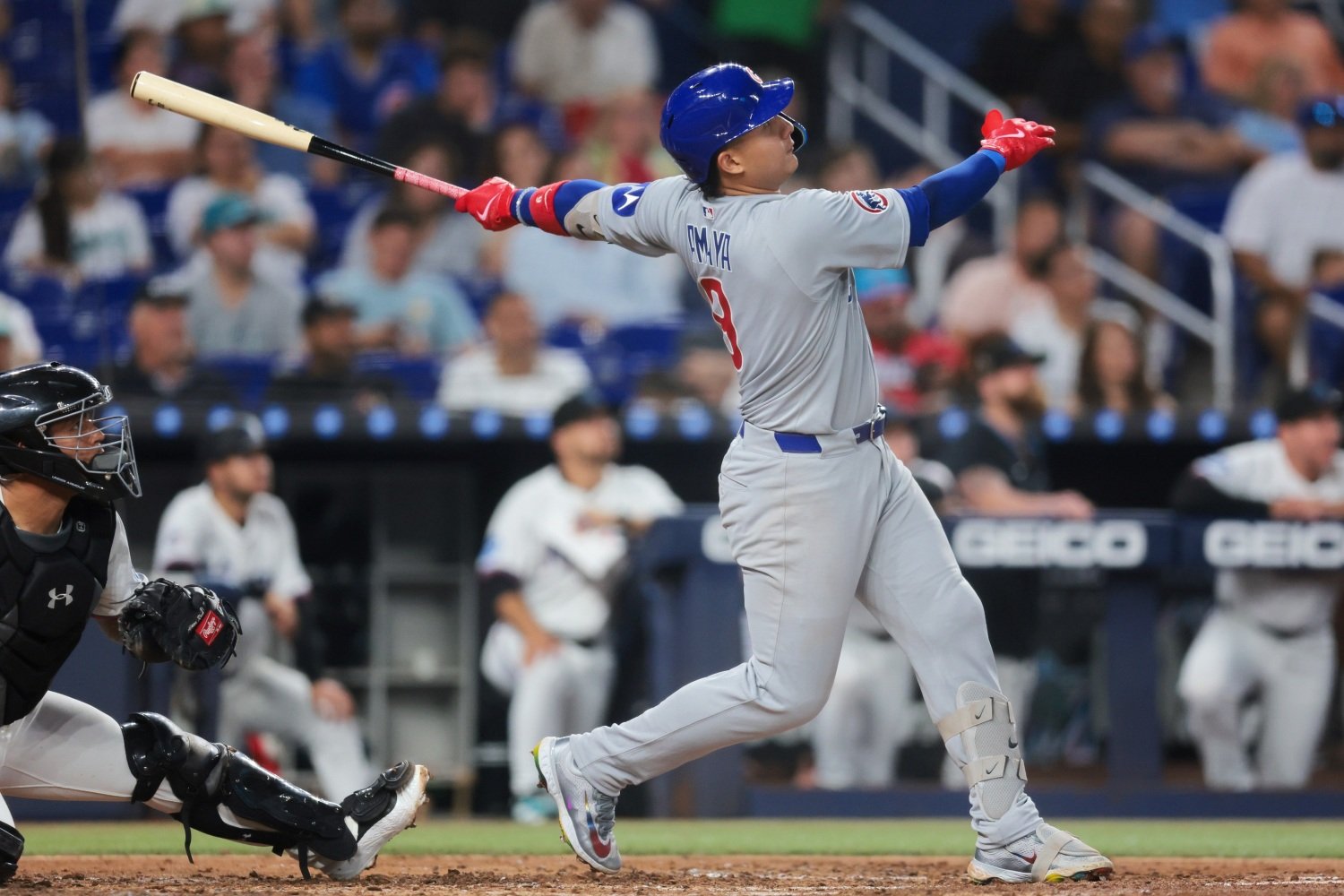 Although his new colleague has caught more headlines early this season, Miguel Amaya has been phenomenal at the plate. Carson Kelly is still slowly coming down from his extraordinarily hot start, but even as he does, Amaya is emerging as the backstop with the higher long-term offensive upside. Last season, we saw a glimpse of this, as he tapped into a vein of exceptional contact skills during the second half. In early July, with his career dangling in front of him by a thread, Amaya agreed to eliminate his leg kick and adopt a minimalist lower-half swing mechanic. For the balance of the campaign, he hit .282/.331/.468. In 173 plate appearances, he had 16 extra-base hits and only struck out 20 times. His plate discipline wobbled, and he went off the rails a bit in the final month of his first full major-league season, but Amaya demonstrated a real and valuable offensive adaptability. There was a minor problem, though. Amaya's new setup and lower-half move didn't necessarily fit his fast (but flat) swing path. He came up as one of the Cubs' best hitters in terms of raw bat speed, but without much loft in the swing. The result was a lot of relatively low-value batted balls, with inefficient contact resulting in some of that swing speed being wasted. He didn't find the launch-angle sweet spot very often, with a few too many pop-ups in 2023 and too many grounders in 2024. Nor was he pulling the ball as much as you want a player with above-average bat speed to do so. Ditching the leg kick gave him the opportunity to be earlier, but in practice, he just started later. He started elevating the ball better late last year, but he didn't start pulling it consistently. As you can see, that's changed this year. In fact, it's radically different. Amaya is now a dead-pull hitter, and he's also hitting the ball on the ground less often than he has since the very start of his career, two full years ago. That's how he's managed to generate a .287/.323/.529 line over his first 94 plate appearances of this season, despite not hitting the ball as hard as he did last year; striking out more than he did last year; and walking very rarely. The fascinating thing, though, is how he transformed that batted-ball profile, physically. Thanks to Statcast's new swing path, attack angle and attack direction metrics, we have a newly expanded ability to visualize hitters' swings and quantify their movements. In Amaya's case, this is especially revealing. Let's start with the headlines: One of the new numbers rolled out at Baseball Savant this week (Swing Path Tilt) can be thought of as the swing-change number. If a hitter has altered how they're hitting the ball, they might have changed their swing, or they might merely have changed their timing and their approach. To see which, check their swing tilt. If it's unchanged, the hitter hasn't really changed their swing. Swing path tilt gives the degrees by which a hitter's bat angles downward from an imaginary line running through the handle of the bat, parallel to the ground. The league's average tilt is 32°. Very flat swings sit in the mid- to high 20s, while very steep swings get to around 45°. Obviously, how much hitters tilt their swings varies based on which pitches they're swinging at (low pitches require more tilt; high ones demand a flat pass), but this one number can tell you whether the bat is moving materially differently than it has in the past. Amaya's has certainly changed. So, we're looking at an inarguably steeper swing, but importantly, this change didn't take hold as soon as Amaya made his stride change last summer. In August and September, his swing path tilt was just 31°, so he didn't steepen his swing when he altered the movement of his lower half. We can also study his Attack Angle, which gives the vertical angle of movement of the barrel of the bat at the contact point. A steep swing will beget a steep attack angle, of course, although they aren't perfectly correlated. Attack angle tells us not how the hitter orients their bat, but how they address the ball within the hitting zone. It is, in some ways, a timing metric, because the attack angle will change fairly dramatically throughout a swing, so if a hitter meets the ball just a bit farther in front of their body, the angle might be much higher—whereas if they start to catch it deeper, the attack angle will shrink toward 0°. Last summer, when Amaya changed his stance and stride, he only saw his attack angle go down. That's not necessarily bad news. Remember, he did strike out very rarely in the second half of last year, thanks to a huge boost in contact rate. Swings with flatter attack angles tend to be the ones you hear about as "long through the zone", with room for error on timing. You might mistime a swing with a flat attack angle, but instead of whiffing, merely mishit the ball. Still, it's noteworthy that the attack angles have jumped for him this year. We'll get back to that. Finally, there's attack direction—the horizontal angle of travel of the barrel at the contact point. In other words, has your bat yet passed the point where it's perpendicular to the incoming pitch, or not, and by how much? This is expressed in degrees, too, to either the pull side (if the bat has already passed that point of being perfectly square to the ball) or the opposite field. Amaya had, on average, met the ball slightly on the pull side, through the end of last year. This spring, there's nothing slight about that tendency. This isn't surprising, of course; we saw the spik in his pull rate, far above. Still, it's telling by how much the attack direction of the bat itself has changed. Let's talk about how he's moving in more detail, though. Statcast also furnished new visualizations this week, allowing us to see a hitter's swing from beginning (more or less, the moment their front foot lands in its final position) to end. That can help us see how, exactly, a hitter's swing path tilt, attack angle or attack direction might have changed. Here's what Amaya looked like in 2024 (left) and what he looks like in 2025, at the start of his swing. There's already a couple of slight differences here. Can you spot them? As you'd guess, for a player who has quieted his stride, we see that Amaya is more upright and less spread-out this year. He's got more weight left on his back side, and his front hip and foot haven't opened up as much as they did right away last year. Now, here's the moment in each season when his attack angle gets to 0°. Every swing has to start downward, of course, so it's good to check when a hitter's bat stops that angled descent and begins to get "on plane," as hitting people put it, with the pitch—and what their body looks like at that instant. We're starting to see the steepening of Amaya's swing come into play, here. Note that this year, his bat is not up to the same speed by the time he gets to attack angle 0. Indeed, his overall swing speed is down this year. Yet, he's closer to attack direction 0 already—and, crucially, look at the right side of each snapshot. The animated ball has entered the frame for 2024 Amaya. By the time he got on plane, last year, the ball was almost on top of him. This year, he's still working with some time. The steeper swing means that his arms aren't yet as extended and his bat isn't as fast, but he's going to be on plane better by the time the ball arrives, because he's started bringing the bat onto that plane earlier in the flight of the pitch. Now, here he is at contact, both last year and this year. Even at contact, Amaya's arms aren't as extended this year. In theory, that means less power—or at least, less exit velocity. We have seen that. Since his bat has been working uphill just a bit longer and is just a bit more past its point of flatness to the incoming pitch horizontally, though, he's pulling it more often—and specifically, pulling it in the air, much more often. His season-by-season Pulled Air%, according to Statcast, tells the story. 2023: 24.7% of batted balls in the air to the pull field 2024: 13.1% 2025: 30.9% As a pitcher must think about what happens if they miss their spot, too, hitters have to think about what happens if their timing is wrong. With his old swing, if Amaya was late, he was likely to hit a ground ball up the middle or to the right side. With his new one, that's almost impossible. A late Amaya will still line it up the middle or push the ball the other way. Here's the percentage of all his batted balls that have been grounders up the middle or to the opposite field, for each year of his career. 2023: 20.5% 2024: 24.1% 2025: 13.3% Meanwhile, if last year's Amaya was early, he'd have a chance to hit a hard line drive or fly ball—but it would probably be to center or left-center. He'd also be more likely to roll over and hit a grounder, because hey, look again at that contact point snapshot above: last year, he was closer to full extension and to rolling his wrists than he is at contact this season. This year, an early Amaya is more likely to loft the ball to left field, and while that can generate a few lazy fly balls, it can also generate this. MnJPazVfWGw0TUFRPT1fQVFaV1ZsVUhYZ29BQVFGUVVnQUhBMVZSQUZoUlVRSUFBVkpRQWdFRkJ3QUdBMWNB.mp4 Amaya has hit a bunch of balls better than that this year. He'll hit a bunch more. But if you build a steep, still-fast swing with a pull orientation and you're a bit early, you have a chance to occasionally mishit a home run. Last year, Amaya wasn't going to mishit a ball out of the park. Kelly's production has been a godsend to the Cubs. Amaya still has plenty to work on, including and especially plate discipline. After last year's change to his lower-half mechanics, though, we're seeing a true swing change in 2025, and it's turned Amaya into a much more dangerous hitter.
 -
Image courtesy of © Matt Marton-Imagn Images You had to figure something was up. Porter Hodge hadn't pitched Sunday, and in fact, he'd only gone once since last Wednesday. If he were fully healthy, Daniel Palencia would not have been on the mound for the ninth inning Monday night in Miami, when the Cuibs had a chance to secure a one-run win. On Tuesday afternoon, we found out what had been going on. Ian Happ is back with the team, after being down for 10 days with one of history's mildest oblique strains. Hodge, however, takes his place on the shelf, with the same injury. It's unlikely that the Cubs will be as lucky with Hodge as with Happ. All else being equal, pitchers will often miss more time with this type of injury, simply because an oblique strain requires rest until there's no longer any pain when throwing. That means that, even once Hodge gets past the injury itself, he'll need some time to ramp up on a rehab assignment—and as Javier Assad has already reminded us this year, there's no guarantee that the injury won't be reaggravated, even with a cautious and steady return schedule in place. For Hodge, the Cubs will swap in fungible righty sweeper specialist Ethan Roberts. It's a long way from being an even trade, and the team's scramble for bullpen help is likely to get more dire before it gets better. Meanwhile, Happ's return on the positional side means the end of the first big-league stint for Moisés Ballesteros. It wasn't the impressive or exciting first week Ballesteros might have hoped for, but he does look like a hitter with a chance to be good in the big leagues. Now that he's gotten a taste of big-league stuff, he'll need to go back to Triple-A Iowa and demonstrate a greater ability to consistently elevate the ball. Reinstalling Happ into the lineup is a relief. It slides several players back into places where they seem to fit more comfortably, and takes Seiya Suzuki off the field. Suzuki passed his first extended test as a left fielder, for the most part, but since he's prone to oblique strains and that malady seems to be spreading like wildfire, some workload management is in order for him. The Cubs are still right in the heart of a very friendly stretch of the schedule, and they've begun that stretch 5-2. As frustrating as all losses to bad teams are, there are lots of bad teams left on the slate in May, and the Cubs just need to continue winning series against them. It's increasingly clear that external pitching additions will be needed, but too soon to guess what they might look like. For now, Hodge's loss is a worrisome development, but Brad Keller had already stepped forward into a role similar to the one in which Hodge started the season, and Ryan Pressly has looked better lately. If the Cubs can convince Palencia that having a third pitch only helps if you throw it; if they continue to get yeoman's work from superannuated southpaws Drew Pomeranz and Caleb Thielbar; and if they can find just one of their rotating cast of low-leverage arms to stick and stabilize them a bit in the middle innings, they should be ok. A division title (or more) is very much within the reach of this team. It's just looking more expensive than the Ricketts family would probably prefer. View full article
-
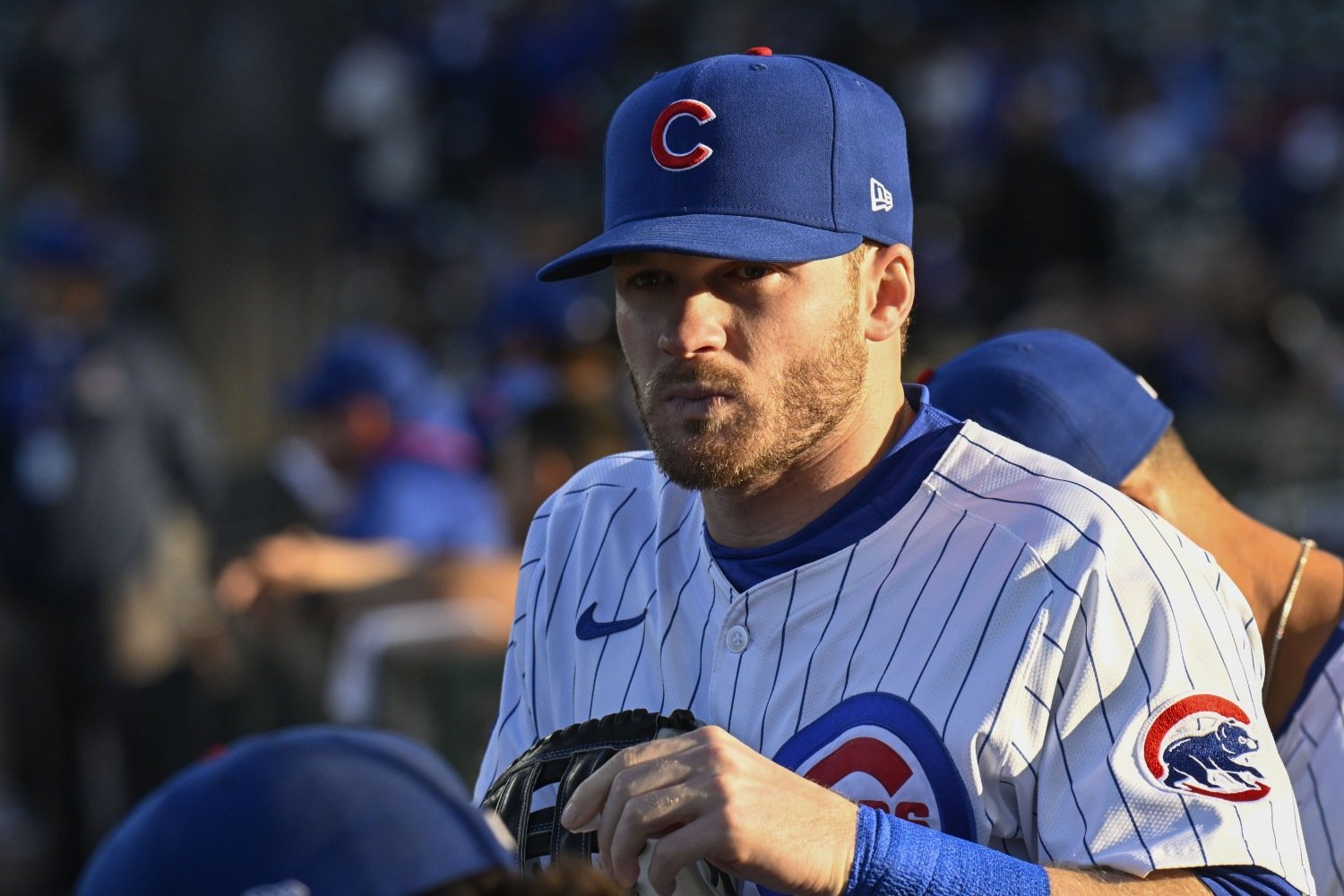 You had to figure something was up. Porter Hodge hadn't pitched Sunday, and in fact, he'd only gone once since last Wednesday. If he were fully healthy, Daniel Palencia would not have been on the mound for the ninth inning Monday night in Miami, when the Cuibs had a chance to secure a one-run win. On Tuesday afternoon, we found out what had been going on. Ian Happ is back with the team, after being down for 10 days with one of history's mildest oblique strains. Hodge, however, takes his place on the shelf, with the same injury. It's unlikely that the Cubs will be as lucky with Hodge as with Happ. All else being equal, pitchers will often miss more time with this type of injury, simply because an oblique strain requires rest until there's no longer any pain when throwing. That means that, even once Hodge gets past the injury itself, he'll need some time to ramp up on a rehab assignment—and as Javier Assad has already reminded us this year, there's no guarantee that the injury won't be reaggravated, even with a cautious and steady return schedule in place. For Hodge, the Cubs will swap in fungible righty sweeper specialist Ethan Roberts. It's a long way from being an even trade, and the team's scramble for bullpen help is likely to get more dire before it gets better. Meanwhile, Happ's return on the positional side means the end of the first big-league stint for Moisés Ballesteros. It wasn't the impressive or exciting first week Ballesteros might have hoped for, but he does look like a hitter with a chance to be good in the big leagues. Now that he's gotten a taste of big-league stuff, he'll need to go back to Triple-A Iowa and demonstrate a greater ability to consistently elevate the ball. Reinstalling Happ into the lineup is a relief. It slides several players back into places where they seem to fit more comfortably, and takes Seiya Suzuki off the field. Suzuki passed his first extended test as a left fielder, for the most part, but since he's prone to oblique strains and that malady seems to be spreading like wildfire, some workload management is in order for him. The Cubs are still right in the heart of a very friendly stretch of the schedule, and they've begun that stretch 5-2. As frustrating as all losses to bad teams are, there are lots of bad teams left on the slate in May, and the Cubs just need to continue winning series against them. It's increasingly clear that external pitching additions will be needed, but too soon to guess what they might look like. For now, Hodge's loss is a worrisome development, but Brad Keller had already stepped forward into a role similar to the one in which Hodge started the season, and Ryan Pressly has looked better lately. If the Cubs can convince Palencia that having a third pitch only helps if you throw it; if they continue to get yeoman's work from superannuated southpaws Drew Pomeranz and Caleb Thielbar; and if they can find just one of their rotating cast of low-leverage arms to stick and stabilize them a bit in the middle innings, they should be ok. A division title (or more) is very much within the reach of this team. It's just looking more expensive than the Ricketts family would probably prefer.
 -
Image courtesy of © Sam Navarro-Imagn Images Ben Brown was in trouble from the moment he picked up the ball and climbed the mound Monday night. The Marlins had just seen him a week earlier, and they laid in wait for him. As our Randy Holt detailed earlier Monday, Brown must work ahead in the count, and he fell behind on each of the first two batters. That forced him to throw each a heater with plenty of strike zone around it, and both Jesús Sánchez and Agustín Ramírez punished him mercilessly. The Cubs were down 2-0 before Brown could get an out, and things didn't get much better for him. Importantly, even if he had filled up the zone from the first pitch, Brown would have had a rough night. When a pitcher with such a shallow repertoire faces a team twice in a row, it's big trouble. The Marlins were not letting his fastball by them. They sat on that pitch, and if any hitter sits on Brown's fastball (with its unexceptional shape), they're going to hammer it. Brown did adjust, going to the curveball with unusual frequency after getting blitzed in the first inning. It worked, too—to an extent. Brown piled up 12 whiffs on the curve, in 23 Marlins swings, and caught them looking at six more strikes on it. After giving up back-to-back homers to lead off the game and nearly giving up a third in the first, he didn't allow a batted ball in the air in the second, third, or fourth. He entered the fifth frame with six strikeouts, no walks, and a chance to cruise through the bottom half of the Miami order, enjoying a 3-2 lead. Instead, the Marlins made a counteradjustment, and Brown was cooked. Connor Norby and Liam Hicks each sat on his curveball. Norby got one in the zone on the first pitch, and lined a double into the left-field corner. Hicks watched a fastball strike and Brown's show-me changeup for a ball, then took another curve in the zone and whipped a triple to the fence in right-center. The Fish had tied the game, and were immediately threatening to take the lead. Brown, with just the two (real) pitches in his arsenal, was out of ways to fool them. Craig Counsell, however, let him keep going. The starter recovered with a strikeout of Derek Hill, on which he located both pitches well: curves below the zone only, one fastball in the zone after two curves for a called strike and one (right after it) well above the zone, where it could only have been a whiff or a ball. Against Javier Sanoja, though, Brown threw two straight fastballs, each in the zone and below the belt, and Sanoja threw the knockout punch, sharply bouncing a single through the infield at 105 MPH. Only, Counsell still didn't move. Brown stayed in to face Sánchez for a third time, and Sánchez got a curve with too much of the zone on it and singled, too, scoring Sanoja (who had stolen second base). It was 5-3 Marlins, with a runner on, and still, Counsell didn't take down Brown. He got to face Ramírez a third time, too, and with three high-and-tight heaters and a curve near the dirt, he struck him out. That brought up Otto Lopez with two outs—and yet again, Counsell held his hook. Sánchez, too, stole second, and Lopez hit a hard one-hopper through the left side. Woof. Finally, Counsell lifted Brown, and as he stared out toward the outfield and awaited Caleb Thielbar, maybe he saw the horses that were well out of the barn, galloping out to the horizon. This is a thing, this year. League-wide, when pitchers have a tough day (defined, here, by a Game Score of under 45; Game Score is a simplistic tool for summarizing an outing based on outcomes and duration, created by Bil James in the 1980s, and the average is just over 50), they get to 21 batters faced a tidy 76% of the time. The Cubs, however, have now had 12 such starts this season—and Counsell has let those guys get to 21 batters faced on 11 of those 12 occasions. It's been Brown three times; Shota Imanaga, Jameson Taillon and Justin Steele twice each; and Colin Rea, Matthew Boyd and Cade Horton once each. The only one in the set not to get at least 21 batters was Steele, and that was in the second game of the Tokyo Series, so (for multiple reasons) it really doesn't count. Counsell has simply refused to pull struggling starters as early as the typical manager does. Eight of these 12 outings have even seen at least 22 batters faced, and four have gone as far as 24 of them. Counsell does not always operate this way. In fact, he was a fairly aggressive hookster for much of his time in Milwaukee. The difference, this year, is twofold: Rightfully, Counsell sets little store by his own bullpen. The Cubs struggle to hold late leads, and still haven't found a reliable high-leverage arm this year. They have a bevy of guys you can trust with a three-run lead, but no one you want to hand the ball to if you have no margin for error. If he can steal an extra inning, even at the expense of a run, he'll often do so. He even does this with cruising starters, whom he knows might be about to run into trouble; he's betting on their bad outcomes being better than the average expected ones from his relievers. The Cubs' offense is so good that he can afford to think about managing workloads in his pen and to give up some mid-game leads. With the Brewers, he often had teams who struggled to score consistently. As the Cubs proved by storming back to take a 7-6 lead Monday night, they have a high-octane lineup that can claw back lost advantages. It's much easier to stretch a starter if you know you'll score a few runs in the late innings, and usually, Counsell can count on that. The strategy has not always worked. The simple truth is that the Cubs' bullpen still isn't good enough, in ways sometimes glaring and sometimes more subtle. On Monday night, one of those subtle ways became very glaring, indeed, as Daniel Palencia (a sensationally talented hurler with a bit of a problem between the ears in big moments, and with too little trust in his own third pitch) gave up the game. Nor is their rotation very strong at the moment, with Steele, Imanaga and Javier Assad down. Losses like Monday night's are the kind this roster will continue to suffer until (at least) Imanaga returns to stabilize the rotation, or until external additions bolster the whole staff. In the meantime, we can debate the wisdom of Counsell's plans. He's gambling, and he's lost his bets (in one way or another) about as often as he's won them this year. This style of managing doesn't seem to suit his strengths, even though he's aware enough of its underpinnings to keep trying it, and it might be time to take a new tack. On balance, though, you can at least see what he's thinking—and it's clear that the real solution to this problem must come from the front office, not the top step of the dugout. View full article
-
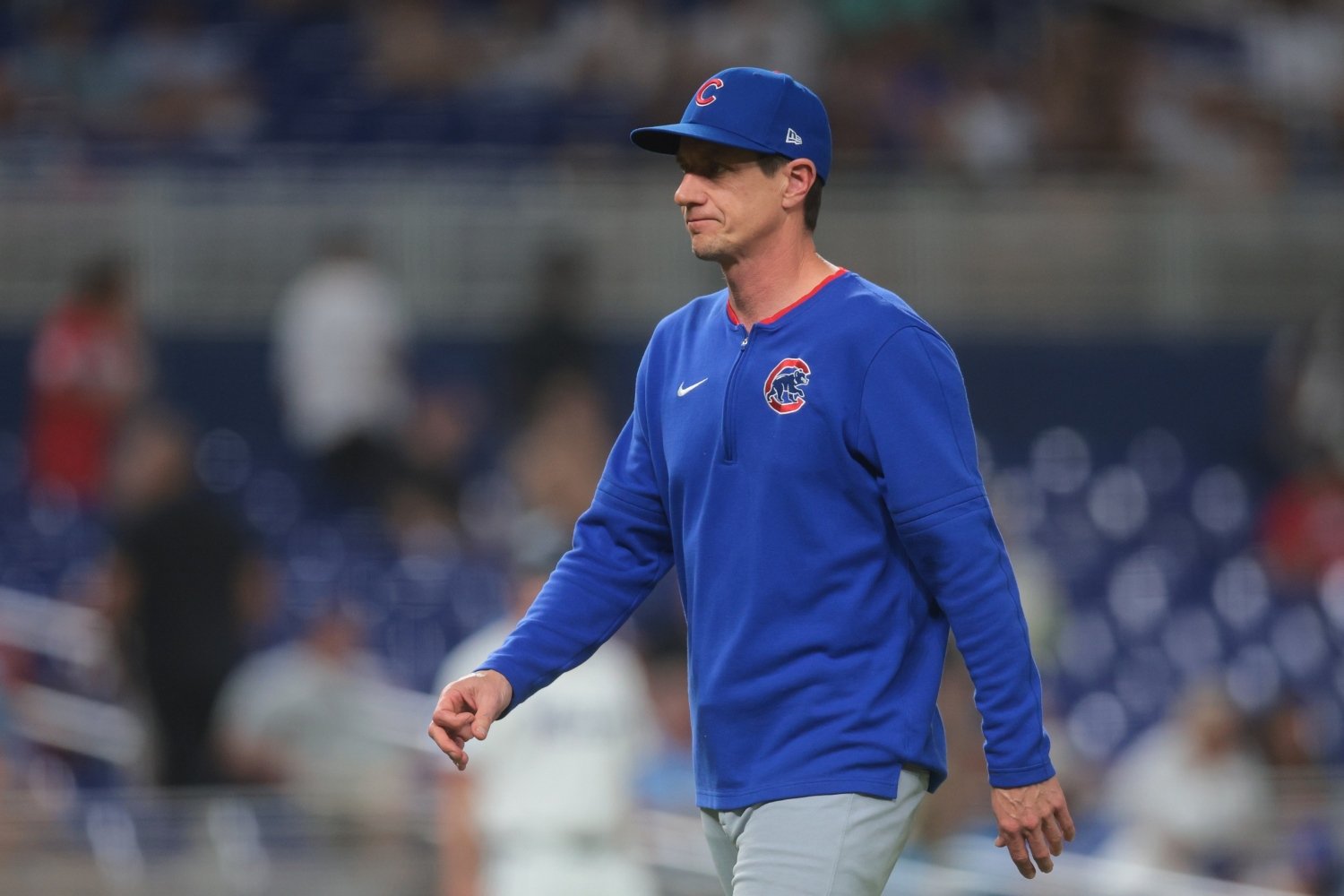 Ben Brown was in trouble from the moment he picked up the ball and climbed the mound Monday night. The Marlins had just seen him a week earlier, and they laid in wait for him. As our Randy Holt detailed earlier Monday, Brown must work ahead in the count, and he fell behind on each of the first two batters. That forced him to throw each a heater with plenty of strike zone around it, and both Jesús Sánchez and Agustín Ramírez punished him mercilessly. The Cubs were down 2-0 before Brown could get an out, and things didn't get much better for him. Importantly, even if he had filled up the zone from the first pitch, Brown would have had a rough night. When a pitcher with such a shallow repertoire faces a team twice in a row, it's big trouble. The Marlins were not letting his fastball by them. They sat on that pitch, and if any hitter sits on Brown's fastball (with its unexceptional shape), they're going to hammer it. Brown did adjust, going to the curveball with unusual frequency after getting blitzed in the first inning. It worked, too—to an extent. Brown piled up 12 whiffs on the curve, in 23 Marlins swings, and caught them looking at six more strikes on it. After giving up back-to-back homers to lead off the game and nearly giving up a third in the first, he didn't allow a batted ball in the air in the second, third, or fourth. He entered the fifth frame with six strikeouts, no walks, and a chance to cruise through the bottom half of the Miami order, enjoying a 3-2 lead. Instead, the Marlins made a counteradjustment, and Brown was cooked. Connor Norby and Liam Hicks each sat on his curveball. Norby got one in the zone on the first pitch, and lined a double into the left-field corner. Hicks watched a fastball strike and Brown's show-me changeup for a ball, then took another curve in the zone and whipped a triple to the fence in right-center. The Fish had tied the game, and were immediately threatening to take the lead. Brown, with just the two (real) pitches in his arsenal, was out of ways to fool them. Craig Counsell, however, let him keep going. The starter recovered with a strikeout of Derek Hill, on which he located both pitches well: curves below the zone only, one fastball in the zone after two curves for a called strike and one (right after it) well above the zone, where it could only have been a whiff or a ball. Against Javier Sanoja, though, Brown threw two straight fastballs, each in the zone and below the belt, and Sanoja threw the knockout punch, sharply bouncing a single through the infield at 105 MPH. Only, Counsell still didn't move. Brown stayed in to face Sánchez for a third time, and Sánchez got a curve with too much of the zone on it and singled, too, scoring Sanoja (who had stolen second base). It was 5-3 Marlins, with a runner on, and still, Counsell didn't take down Brown. He got to face Ramírez a third time, too, and with three high-and-tight heaters and a curve near the dirt, he struck him out. That brought up Otto Lopez with two outs—and yet again, Counsell held his hook. Sánchez, too, stole second, and Lopez hit a hard one-hopper through the left side. Woof. Finally, Counsell lifted Brown, and as he stared out toward the outfield and awaited Caleb Thielbar, maybe he saw the horses that were well out of the barn, galloping out to the horizon. This is a thing, this year. League-wide, when pitchers have a tough day (defined, here, by a Game Score of under 45; Game Score is a simplistic tool for summarizing an outing based on outcomes and duration, created by Bil James in the 1980s, and the average is just over 50), they get to 21 batters faced a tidy 76% of the time. The Cubs, however, have now had 12 such starts this season—and Counsell has let those guys get to 21 batters faced on 11 of those 12 occasions. It's been Brown three times; Shota Imanaga, Jameson Taillon and Justin Steele twice each; and Colin Rea, Matthew Boyd and Cade Horton once each. The only one in the set not to get at least 21 batters was Steele, and that was in the second game of the Tokyo Series, so (for multiple reasons) it really doesn't count. Counsell has simply refused to pull struggling starters as early as the typical manager does. Eight of these 12 outings have even seen at least 22 batters faced, and four have gone as far as 24 of them. Counsell does not always operate this way. In fact, he was a fairly aggressive hookster for much of his time in Milwaukee. The difference, this year, is twofold: Rightfully, Counsell sets little store by his own bullpen. The Cubs struggle to hold late leads, and still haven't found a reliable high-leverage arm this year. They have a bevy of guys you can trust with a three-run lead, but no one you want to hand the ball to if you have no margin for error. If he can steal an extra inning, even at the expense of a run, he'll often do so. He even does this with cruising starters, whom he knows might be about to run into trouble; he's betting on their bad outcomes being better than the average expected ones from his relievers. The Cubs' offense is so good that he can afford to think about managing workloads in his pen and to give up some mid-game leads. With the Brewers, he often had teams who struggled to score consistently. As the Cubs proved by storming back to take a 7-6 lead Monday night, they have a high-octane lineup that can claw back lost advantages. It's much easier to stretch a starter if you know you'll score a few runs in the late innings, and usually, Counsell can count on that. The strategy has not always worked. The simple truth is that the Cubs' bullpen still isn't good enough, in ways sometimes glaring and sometimes more subtle. On Monday night, one of those subtle ways became very glaring, indeed, as Daniel Palencia (a sensationally talented hurler with a bit of a problem between the ears in big moments, and with too little trust in his own third pitch) gave up the game. Nor is their rotation very strong at the moment, with Steele, Imanaga and Javier Assad down. Losses like Monday night's are the kind this roster will continue to suffer until (at least) Imanaga returns to stabilize the rotation, or until external additions bolster the whole staff. In the meantime, we can debate the wisdom of Counsell's plans. He's gambling, and he's lost his bets (in one way or another) about as often as he's won them this year. This style of managing doesn't seem to suit his strengths, even though he's aware enough of its underpinnings to keep trying it, and it might be time to take a new tack. On balance, though, you can at least see what he's thinking—and it's clear that the real solution to this problem must come from the front office, not the top step of the dugout.
 -
Image courtesy of © Kamil Krzaczynski-Imagn Images As you might have noticed, Nico Hoerner doesn't have a home run yet in 2025. In fact, he hasn't come especially close. He's only hit one ball more than 370 feet in the air this season, and that was to dead center at Wrigley Field last week—aided by a wind gusting out to center field. It didn't truly threaten to leave the park, and it needed a push even to force Derek Hill onto the warning track. Hill made the catch, looking rather unimpressed by the time it settled into his glove. This is the best Hoerner can hit a ball, and it barely topped 100 miles per hour, and he didn't get around on it. Nnk5R05fWGw0TUFRPT1fQlZkU1hGSUZBRk1BWFZGV1ZBQUhBQTlUQUZnQ1ZRQUFCUVFDQ1FvQ0NRTmNDQXBV.mp4 Only two other balls hit by Hoerner have pushed an outfielder as deep as the track this season. This one really did almost leave the park. bmJNUTdfWGw0TUFRPT1fQlFrQ1YxZFNYd0FBQUFBRFh3QUhCUUpXQUFCV0FsRUFDbFVIVlFKVVVnc0RCZ2NI.mp4 But that was to the part of the park where Wrigley is friendlier to hitters than any other park in the league. There's no big-league venue in which that ball is gone; it left his bat at a good-not-great 98 MPH. Here's the last instance, the least impressive of the bunch. M3k0Tk5fWGw0TUFRPT1fQWxOVkFBWU5WRllBWEFRS0JRQUhCbE1EQUFCWEFWWUFWQVFIVkFaUVV3SUhBRk5U.mp4 Even here, we're not so much marveling at Hoerner's warning track power as being forcefully reminded that left-center field at Citi Field is a short porch, just like that of Wrigley Field and Dodger Stadium. Hoerner has 146 batted balls 349 feet or shorter, and only nine that traveled 350 feet or more. Only Jacob Wilson Wilson, Steven Kwan, Luis Arraez, Bo Bichette and Jarren Duran have more of the former, and only Wilson and Arraez match him by having a mere nine of the latter. Hoerner stands firmly among the least powerful hitters in baseball. This is also a year with a pretty dead baseball. On average, the drag coefficient on the ball is up, dampening offense league-wide and taking flight distance off fly balls. It's harder to clear the fences than it has been, arguably, at any time since the dawn of Statcast in 2015. We have to seriously consider the question, then: What if Hoerner doesn't hit a home run all season? It's possible—and because he's a good hitter, except for his staggering dearth of pop, it would put him in position to make history. Thanks to batting sixth (most often) for one of the best offenses in the league, Hoerner enters play Monday night with 20 RBIs. That puts him on pace for 69 of them on the season, which would not only be the most by a player without a home run since 1987, but shatter that milestone. No one has amassed more than 53 RBIs in a season without clearing the fence (or even circling the bases on an inside-the-parker) since Ozzie Smith's famous 0-dinger, 75-ribbie campaign in the Rabbit Ball year of 1987. Given the myriad ways in which the game has changed since then, that record has felt utterly untouchable—but Hoerner is in position to challenge it. You can go all the way back to 1947 (before which baseball is functionally unrecognizable), and Smith's miniature miracle year is the only instance of a player driving in more than 56 runs without hitting a homer. The next fistful of entrants on the 77-year leaderboard are: Billy Goodman, 1949: 56 Willie Randolph, 1991: 54 Ozzie Smith, 1986: 54 Jason Kendall, 2005: 53 Matty Alou, 1968: 52 Goodman, 1955: 52 Dick Groat, 1965: 52 Bip Roberts, 1996: 52 Firstly, I think that in honor of his 1986 and 1987 seasons, Smith should get a belated Commissioner's Historic Achievement Award, like the ones Aaron Judge and Shohei Ohtani received from Rob Manfred a couple years ago. Secondly, though, this puts into perspective what kind of history Hoerner is chasing. He's in a unique position, and handling it in a historic way. It's an egg race, this kind of record chase. One homer would ruin it, in a wonderful way. Maybe Hoerner will make an adjustment at some point this year and get back to the handful of homers he hits in most seasons. With the ball flying like a lead balloon and Hoerner already a hair past his power peak (based not only on his age, but the hand injury from last year that is probably still affecting him), though, it's just possible we'll see one of the great achievements in the history of punch-and-judy hitters this year. Hoerner is a perfect little cog in this lineup, a cleanup man's assistant and second leadoff man rolled into one. It would surely be fun for Cubs fans, too, if he could bump the Hall of Fame Cardinals shortstop from this page of the obscure record book. View full article
-
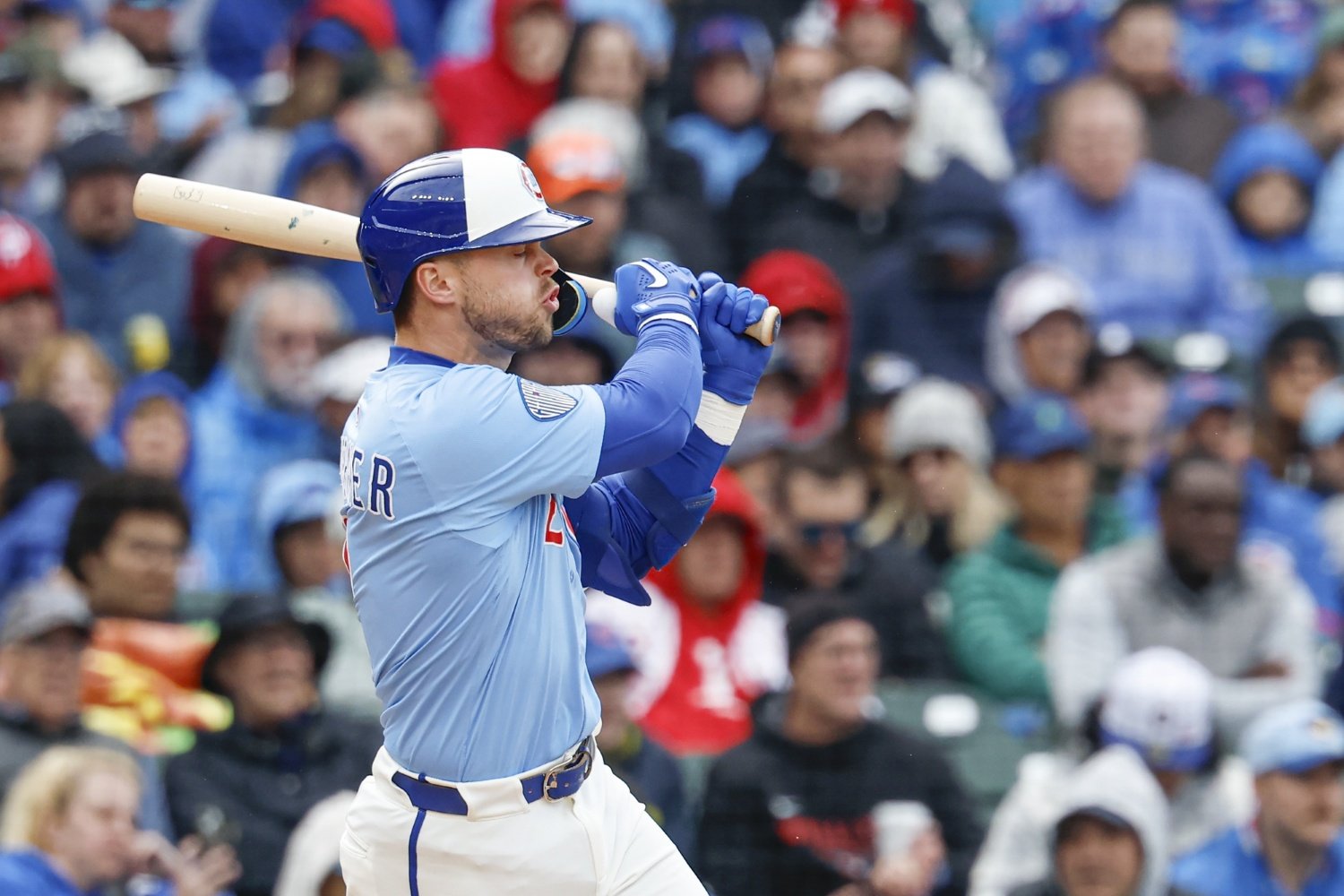 As you might have noticed, Nico Hoerner doesn't have a home run yet in 2025. In fact, he hasn't come especially close. He's only hit one ball more than 370 feet in the air this season, and that was to dead center at Wrigley Field last week—aided by a wind gusting out to center field. It didn't truly threaten to leave the park, and it needed a push even to force Derek Hill onto the warning track. Hill made the catch, looking rather unimpressed by the time it settled into his glove. This is the best Hoerner can hit a ball, and it barely topped 100 miles per hour, and he didn't get around on it. Nnk5R05fWGw0TUFRPT1fQlZkU1hGSUZBRk1BWFZGV1ZBQUhBQTlUQUZnQ1ZRQUFCUVFDQ1FvQ0NRTmNDQXBV.mp4 Only two other balls hit by Hoerner have pushed an outfielder as deep as the track this season. This one really did almost leave the park. bmJNUTdfWGw0TUFRPT1fQlFrQ1YxZFNYd0FBQUFBRFh3QUhCUUpXQUFCV0FsRUFDbFVIVlFKVVVnc0RCZ2NI.mp4 But that was to the part of the park where Wrigley is friendlier to hitters than any other park in the league. There's no big-league venue in which that ball is gone; it left his bat at a good-not-great 98 MPH. Here's the last instance, the least impressive of the bunch. M3k0Tk5fWGw0TUFRPT1fQWxOVkFBWU5WRllBWEFRS0JRQUhCbE1EQUFCWEFWWUFWQVFIVkFaUVV3SUhBRk5U.mp4 Even here, we're not so much marveling at Hoerner's warning track power as being forcefully reminded that left-center field at Citi Field is a short porch, just like that of Wrigley Field and Dodger Stadium. Hoerner has 146 batted balls 349 feet or shorter, and only nine that traveled 350 feet or more. Only Jacob Wilson Wilson, Steven Kwan, Luis Arraez, Bo Bichette and Jarren Duran have more of the former, and only Wilson and Arraez match him by having a mere nine of the latter. Hoerner stands firmly among the least powerful hitters in baseball. This is also a year with a pretty dead baseball. On average, the drag coefficient on the ball is up, dampening offense league-wide and taking flight distance off fly balls. It's harder to clear the fences than it has been, arguably, at any time since the dawn of Statcast in 2015. We have to seriously consider the question, then: What if Hoerner doesn't hit a home run all season? It's possible—and because he's a good hitter, except for his staggering dearth of pop, it would put him in position to make history. Thanks to batting sixth (most often) for one of the best offenses in the league, Hoerner enters play Monday night with 20 RBIs. That puts him on pace for 69 of them on the season, which would not only be the most by a player without a home run since 1987, but shatter that milestone. No one has amassed more than 53 RBIs in a season without clearing the fence (or even circling the bases on an inside-the-parker) since Ozzie Smith's famous 0-dinger, 75-ribbie campaign in the Rabbit Ball year of 1987. Given the myriad ways in which the game has changed since then, that record has felt utterly untouchable—but Hoerner is in position to challenge it. You can go all the way back to 1947 (before which baseball is functionally unrecognizable), and Smith's miniature miracle year is the only instance of a player driving in more than 56 runs without hitting a homer. The next fistful of entrants on the 77-year leaderboard are: Billy Goodman, 1949: 56 Willie Randolph, 1991: 54 Ozzie Smith, 1986: 54 Jason Kendall, 2005: 53 Matty Alou, 1968: 52 Goodman, 1955: 52 Dick Groat, 1965: 52 Bip Roberts, 1996: 52 Firstly, I think that in honor of his 1986 and 1987 seasons, Smith should get a belated Commissioner's Historic Achievement Award, like the ones Aaron Judge and Shohei Ohtani received from Rob Manfred a couple years ago. Secondly, though, this puts into perspective what kind of history Hoerner is chasing. He's in a unique position, and handling it in a historic way. It's an egg race, this kind of record chase. One homer would ruin it, in a wonderful way. Maybe Hoerner will make an adjustment at some point this year and get back to the handful of homers he hits in most seasons. With the ball flying like a lead balloon and Hoerner already a hair past his power peak (based not only on his age, but the hand injury from last year that is probably still affecting him), though, it's just possible we'll see one of the great achievements in the history of punch-and-judy hitters this year. Hoerner is a perfect little cog in this lineup, a cleanup man's assistant and second leadoff man rolled into one. It would surely be fun for Cubs fans, too, if he could bump the Hall of Fame Cardinals shortstop from this page of the obscure record book.
 -
Image courtesy of © Matt Marton-Imagn Images Yes, Matt Shaw hit four home runs in two games over the weekend. No, that is not why Shaw is coming back to the Cubs. Yes, he made some subtle but important mechanical adjustments during a one-month stint with Triple-A Iowa, during which he hit .286/.409/.560. No, that's not why Shaw is coming back to the Cubs. It's pretty simple, really: the Cubs just can't not try something new. As expected, Justin Turner is too decrepit to play third base in the majors at this point. (Despite a couple of thrilling flashes, he doesn't even look like he can hit in the majors anymore—but to whatever extent he can, he'll have to do so as a DH and/or backup first baseman.) As expected, Gage Workman's toolsy, loud spring training gave way to a regular season in which his bat made only whatever noise the wind makes. Much less expected, though, was Workman's utterly untenable glovework at the hot corner, and the fact that Jon Berti looks so out of position at third. Vidal Bruján was never likely to be good, exactly, but he's been surprisingly bad. Berti's bat is the kicker: Since May 2, he's 1-27, with seven strikeouts and only one walk. He was caught in his only attempt to steal a base during that timeframe. Workman is long gone, but Turner, Bruján and Berti will stick around, at least for now. The final impetus for Shaw's recall came when the team resigned itself to the fact that none of those three or Nicky Lopez would be able to stabilize the position. Lopez, always a glove-first guy and better cast up the middle, didn't play nearly good enough defense to make up for hitting a punchless 1-22 during his stint on the roster. It's he who will be jettisoned to make room for Shaw. Jason Ross did a fantastic job spotting the small changes Shaw has made since his demotion, and the numbers do look pretty. Color me unconvinced. I was skeptical of his leg kick even before he made his debut, and seeing how badly he struggled not only to be on time—that's the kind of thing one can easily fix—but to generate any meaningful amount of bat speed confirmed those concerns for me. It would be fair to hope that more distance from his oblique strain in February could unlock more swing speed, but it's worth noting that he only trended downward before going to Iowa. He's back not because he's swinging so much faster now (we don't have access to swing speed for the minor leagues, but his bat doesn't look any faster), but because all of the alternatives have proved themselves unable to top him—if not in raw bat speed, then in the utility thereof. The extra month of reps at third base should give us slightly better hope for his defense, which was disappointing in its own right on his first go-round. If he can merely bat ninth and make all the plays at the hot corner, that will be enough to help the Cubs. It might still not be the best thing for his development, because while his swing works against Triple-A pitching, it still doesn't look like one that will work in the majors. An overhaul is needed, but generally, such things must happen during the winter. The Cubs should have been more proactive with him last offseason, but the time for that has passed. They now need him merely to shore up the position, even if it's only defensively. His offensive floor and ceiling are each better than those of Lopez and Berti. Turner can't play third, and Bruján has not earned the team's trust in any facet. Shaw is left as the best of a bad set of options. Hopefully, he turns a corner after all, and they never need to think about this again. It's more likely that the team is shopping for help at third base this July, but before trying that, they'll give a second look to one of their best prospects (if that's still his rightful status). View full article
-
Matt Shaw to Join Chicago Cubs (Again) This Week; Nicky Lopez Departs
Matthew Trueblood posted an article in Cubs
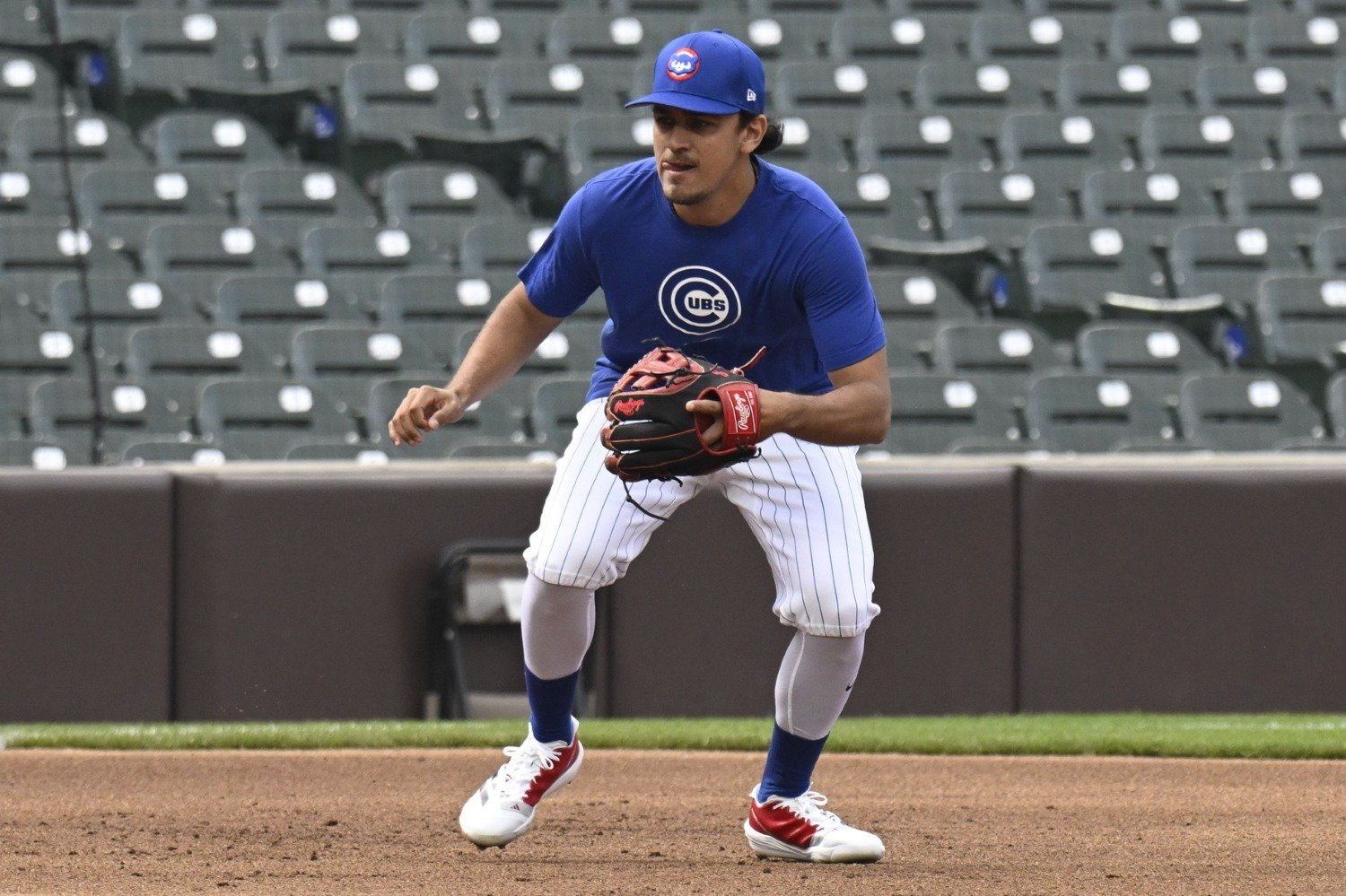 Yes, Matt Shaw hit four home runs in two games over the weekend. No, that is not why Shaw is coming back to the Cubs. Yes, he made some subtle but important mechanical adjustments during a one-month stint with Triple-A Iowa, during which he hit .286/.409/.560. No, that's not why Shaw is coming back to the Cubs. It's pretty simple, really: the Cubs just can't not try something new. As expected, Justin Turner is too decrepit to play third base in the majors at this point. (Despite a couple of thrilling flashes, he doesn't even look like he can hit in the majors anymore—but to whatever extent he can, he'll have to do so as a DH and/or backup first baseman.) As expected, Gage Workman's toolsy, loud spring training gave way to a regular season in which his bat made only whatever noise the wind makes. Much less expected, though, was Workman's utterly untenable glovework at the hot corner, and the fact that Jon Berti looks so out of position at third. Vidal Bruján was never likely to be good, exactly, but he's been surprisingly bad. Berti's bat is the kicker: Since May 2, he's 1-27, with seven strikeouts and only one walk. He was caught in his only attempt to steal a base during that timeframe. Workman is long gone, but Turner, Bruján and Berti will stick around, at least for now. The final impetus for Shaw's recall came when the team resigned itself to the fact that none of those three or Nicky Lopez would be able to stabilize the position. Lopez, always a glove-first guy and better cast up the middle, didn't play nearly good enough defense to make up for hitting a punchless 1-22 during his stint on the roster. It's he who will be jettisoned to make room for Shaw. Jason Ross did a fantastic job spotting the small changes Shaw has made since his demotion, and the numbers do look pretty. Color me unconvinced. I was skeptical of his leg kick even before he made his debut, and seeing how badly he struggled not only to be on time—that's the kind of thing one can easily fix—but to generate any meaningful amount of bat speed confirmed those concerns for me. It would be fair to hope that more distance from his oblique strain in February could unlock more swing speed, but it's worth noting that he only trended downward before going to Iowa. He's back not because he's swinging so much faster now (we don't have access to swing speed for the minor leagues, but his bat doesn't look any faster), but because all of the alternatives have proved themselves unable to top him—if not in raw bat speed, then in the utility thereof. The extra month of reps at third base should give us slightly better hope for his defense, which was disappointing in its own right on his first go-round. If he can merely bat ninth and make all the plays at the hot corner, that will be enough to help the Cubs. It might still not be the best thing for his development, because while his swing works against Triple-A pitching, it still doesn't look like one that will work in the majors. An overhaul is needed, but generally, such things must happen during the winter. The Cubs should have been more proactive with him last offseason, but the time for that has passed. They now need him merely to shore up the position, even if it's only defensively. His offensive floor and ceiling are each better than those of Lopez and Berti. Turner can't play third, and Bruján has not earned the team's trust in any facet. Shaw is left as the best of a bad set of options. Hopefully, he turns a corner after all, and they never need to think about this again. It's more likely that the team is shopping for help at third base this July, but before trying that, they'll give a second look to one of their best prospects (if that's still his rightful status).
-
- 1
-

-
- matt shaw
- nicky lopez
- (and 3 more)
-
I wish I could say I feel confident this will translate back to the majors. I don't think this adjustment is sufficient, or that he's gonna end up being able to help the Cubs much this year. But good analysis, Jason. I do think this is what you can do in-season, and then if/when it doesn't allow him to rake in the majors, you can go to work on a bigger, overdue set of changes this winter. Still have some hope for him as a prospect, partially because of the adaptability and the swing properties you point out here.
-
Image courtesy of © Gregory Fisher-Imagn Images Now that he's matriculated to the majors, Cade Horton can be studied a bit more completely than he was at Triple-A Iowa. With cleaner spin data and his arm angle to study, it's clear that Horton's primary pitch—what has been called a four-seam fastball, until now—is really a hard cutter. It's very similar to the offering Justin Steele used to become a frontline starter for the team three years ago. Unlike Steele's version of the pitch, though, Horton's hums in at 95.8 mph. That's harder than any starting pitcher's cutter, this year, and is only topped by four relievers: Emmanuel Clase, Brad Keller (oh, hey!), Graham Ashcraft, and Porter Hodge (wait; whoa!). It's fair to say that the extreme cut-ride fastball the team began to emphasize years ago has become the signature of their organizational pitching philosophy. Horton is, in that way, the quintessential post-pandemic Cubs pitching prospect. He has a deep arsenal and plus overall stuff, but he also has the quirks that have made such success stories of Steele and Hodge. Horton's secondary pitch does behave so much like a sweeper that it almost has to be labeled that way, but he uses it more like a true slider. The pitch labeled above as a slider, meanwhile, is more of a curve. His high arm slot makes taxonomizing a pitch with as much sweep as his slider has somewhat difficult. The only pitchers who use a higher average arm angle on sweepers than Horton showed on his in his first appearance are Nick Pivetta, Yuki Matsui, and Danny Coulombe. Either way, the story is the same: that main breaking ball—we'll just go along with calling it the sweeper—is a plus pitch on which much of his success will hinge. Last time out, Horton mislocated two key sweepers. One went for a single by Mark Vientos: The other, far more costly, went over the wall, for a three-run home run by Brett Baty. The Mets didn't provide much margin for error, though. They're a good lineup. On Friday, against the White Sox at Wrigley Field, Horton will get to pitch against a team that offers much more of a cushion. He still must learn to execute more efficiently, but as he hones that feel, he'll get a chance to dominate a weaker batting order—and do it with a huge, roaring crowd at his back. Horton's importance to this team swells with each passing day. They probably intend to shield him from high pitch counts within games or innings totals over the full season, but with Justin Steele gone, Shota Imanaga temporarily shelved, Javier Assad struggling to get back from oblique trouble and Jameson Taillon regressing a bit, Horton needs to step up. Friday will be his first chance to prove he can handle that responsibility, as he certainly showed the potential to do last weekend in New York. View full article
-
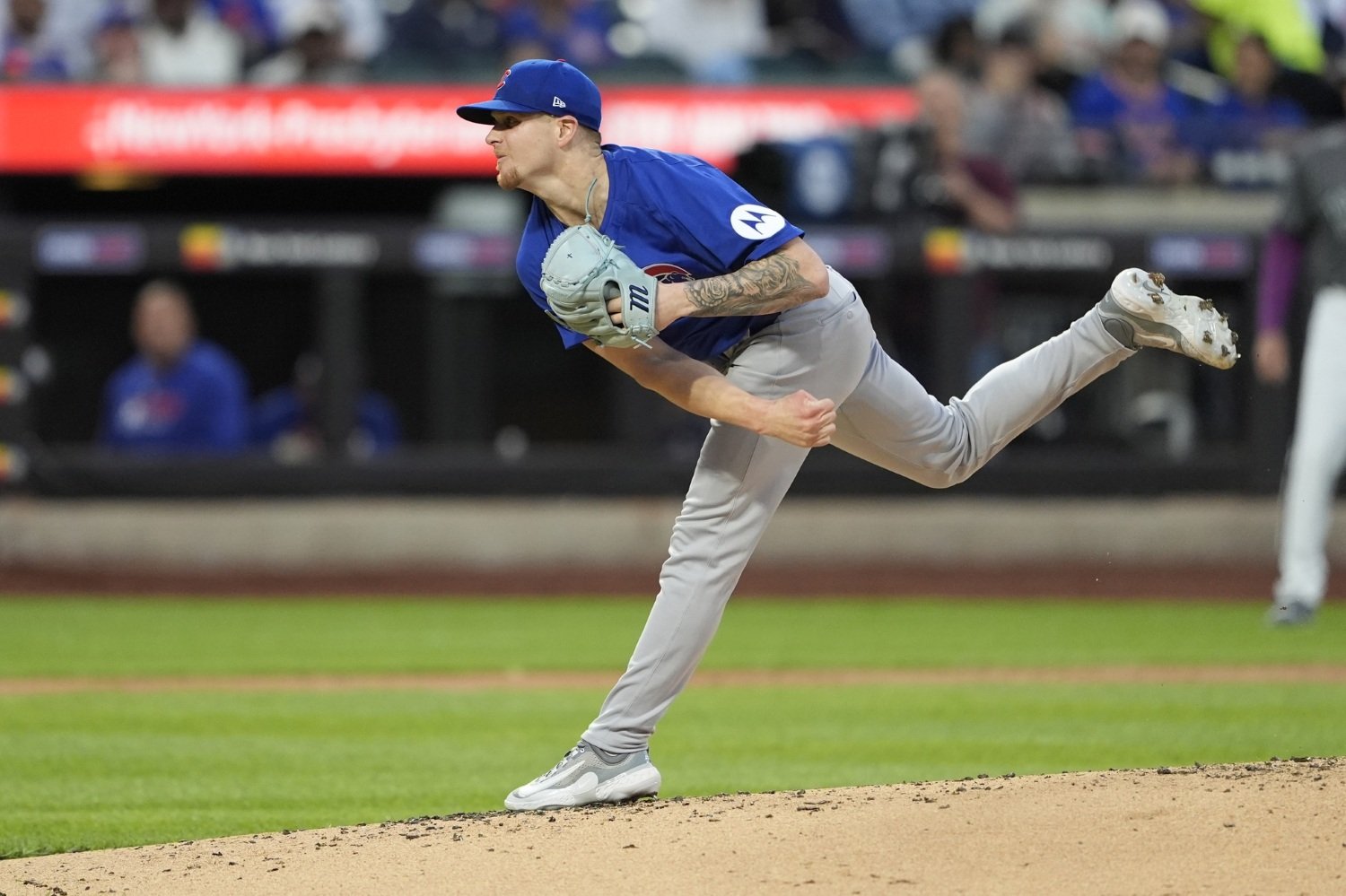 Now that he's matriculated to the majors, Cade Horton can be studied a bit more completely than he was at Triple-A Iowa. With cleaner spin data and his arm angle to study, it's clear that Horton's primary pitch—what has been called a four-seam fastball, until now—is really a hard cutter. It's very similar to the offering Justin Steele used to become a frontline starter for the team three years ago. Unlike Steele's version of the pitch, though, Horton's hums in at 95.8 mph. That's harder than any starting pitcher's cutter, this year, and is only topped by four relievers: Emmanuel Clase, Brad Keller (oh, hey!), Graham Ashcraft, and Porter Hodge (wait; whoa!). It's fair to say that the extreme cut-ride fastball the team began to emphasize years ago has become the signature of their organizational pitching philosophy. Horton is, in that way, the quintessential post-pandemic Cubs pitching prospect. He has a deep arsenal and plus overall stuff, but he also has the quirks that have made such success stories of Steele and Hodge. Horton's secondary pitch does behave so much like a sweeper that it almost has to be labeled that way, but he uses it more like a true slider. The pitch labeled above as a slider, meanwhile, is more of a curve. His high arm slot makes taxonomizing a pitch with as much sweep as his slider has somewhat difficult. The only pitchers who use a higher average arm angle on sweepers than Horton showed on his in his first appearance are Nick Pivetta, Yuki Matsui, and Danny Coulombe. Either way, the story is the same: that main breaking ball—we'll just go along with calling it the sweeper—is a plus pitch on which much of his success will hinge. Last time out, Horton mislocated two key sweepers. One went for a single by Mark Vientos: The other, far more costly, went over the wall, for a three-run home run by Brett Baty. The Mets didn't provide much margin for error, though. They're a good lineup. On Friday, against the White Sox at Wrigley Field, Horton will get to pitch against a team that offers much more of a cushion. He still must learn to execute more efficiently, but as he hones that feel, he'll get a chance to dominate a weaker batting order—and do it with a huge, roaring crowd at his back. Horton's importance to this team swells with each passing day. They probably intend to shield him from high pitch counts within games or innings totals over the full season, but with Justin Steele gone, Shota Imanaga temporarily shelved, Javier Assad struggling to get back from oblique trouble and Jameson Taillon regressing a bit, Horton needs to step up. Friday will be his first chance to prove he can handle that responsibility, as he certainly showed the potential to do last weekend in New York.
 -
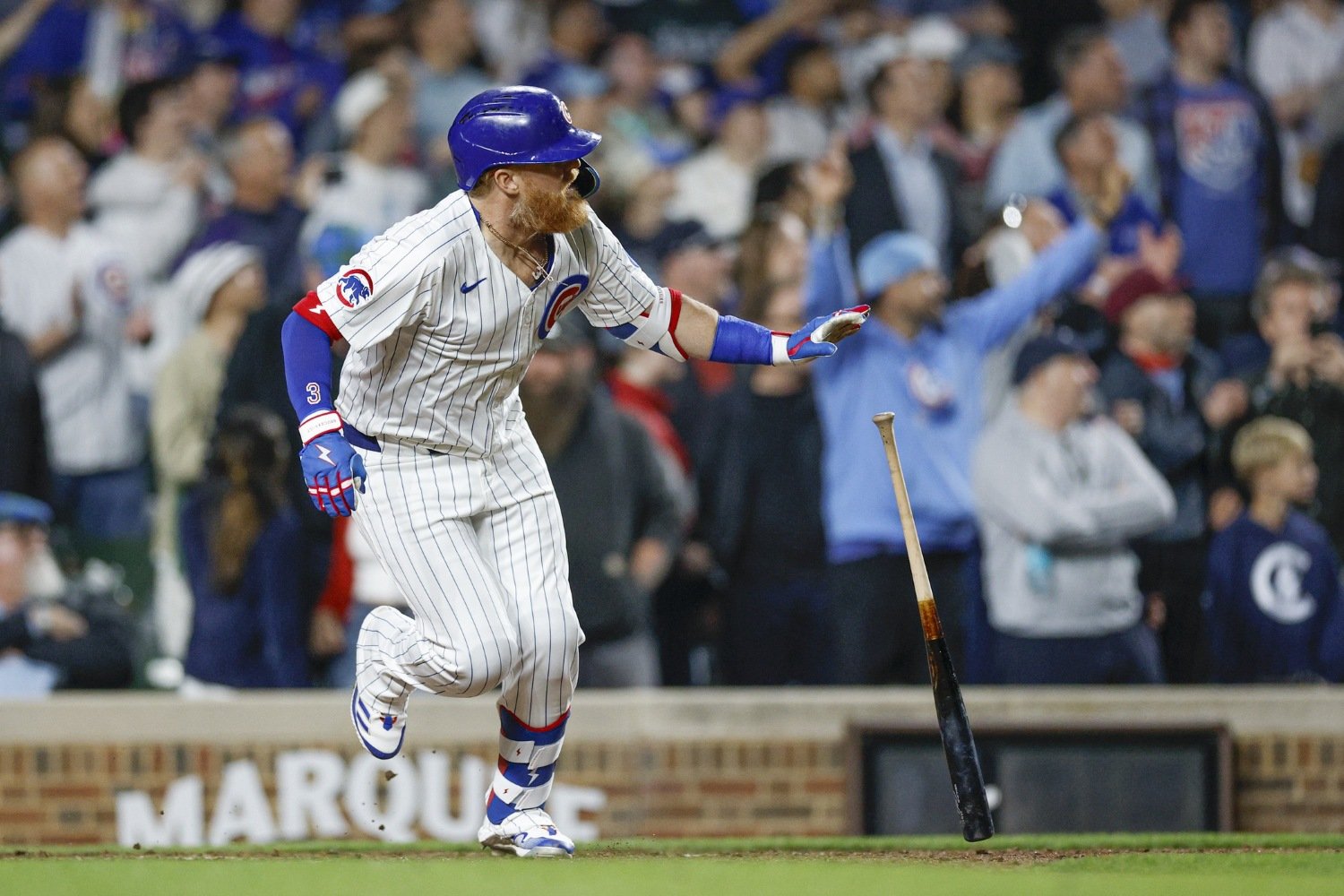 All season, Justin Turner has only pulled three non-ground balls. Two of them came in the same game, way back on April 2. The third came last night, when the Cubs could not have needed it any worse. Turner's two-rund double into Wrigley Field's deep left-field corner turned a 4-3 deficit into a 5-4 win, and was the payoff the Cubs have been waiting for from a player they signed to be much more than a mentor and a mascot. Until Tuesday night, that was all the quadragenarian had been. Even now, Turner is only hitting .169/.292/.186. He's been used occasionally at third base, but he doesn't actually look viable there. As a mere right-handed complement to Michael Busch at first and a bat off the bench, or as the backup plan at DH when one of the outfielders goes down, Turner has been an abject failure so far. Hopefully, Tuesday night's huge hit signaled a turnaround. For the moment, though, he's already been surpassed on the depth chart. When the Cubs signed Turner after missing out on Alex Bregman late in the offseason, they envisioned using him as the fill-in DH when scenarios just like the one they're experiencing now cropped up. Ian Happ has a balky oblique. He missed a few days (while still active) and then went on the injured list Tuesday, pushing Seiya Suzuki out to left field. Turner did start the first two of those contests as the DH, but on Monday night, Carson Kelly got that gig, while Miguel Amaya caught. Tuesday, with Happ leaving the active roster, the team called up prospect Moisés Ballesteros and inserted him into the lineup. Ballesteros didn't blow any doors off in his debut, but he's ready for the majors, and he can really hit. He's barely half Turner's age. If he has a strong week-long audition (and if Happ returns early next week from his stint on the shelf, as he hopes), will it be Ballesteros or Turner who sticks around? For the moment, the answer is probably Turner. Because Ballesteros is a lefty batter, he can't protect Busch from lefty hurlers. He's not even nominally capable of playing third, and if he's ever going to be a viable catcher in the majors, it'll be at some point a year or two from now. Turner's veteran presence exceeds that of Eric Hosmer, Trey Mancini, Tucker Barnhart and Yan Gomes, the other superannuated position players on whom the Cubs have had to cut bait early in recent seasons. They'll want to keep him around, for a while, to avoid spoiling the vibes of the clubhouse or lacking even a vaguely viable collection of warm bodies on the bench. Even a month from now, however, that math could look quite different. Certainly, by the All-Star break, Turner has to be hitting much better than this. Otherwise, the team will need to replace him with someone who will. Ballesteros can't be the whole replacement for Turner, but he can be part of the solution. The clock is always ticking on a player Turner's age, in the modern game. Right now, it's ticking very loudly, indeed. Tuesday night was a thrilling moment, for the team and for the player. It might buy the player some time. The team, however, has to keep exploring options, unless and until Turner makes it easier to plug him in as a valuable bat on a semi-regular basis.
 -
Image courtesy of © Kamil Krzaczynski-Imagn Images All season, Justin Turner has only pulled three non-ground balls. Two of them came in the same game, way back on April 2. The third came last night, when the Cubs could not have needed it any worse. Turner's two-rund double into Wrigley Field's deep left-field corner turned a 4-3 deficit into a 5-4 win, and was the payoff the Cubs have been waiting for from a player they signed to be much more than a mentor and a mascot. Until Tuesday night, that was all the quadragenarian had been. Even now, Turner is only hitting .169/.292/.186. He's been used occasionally at third base, but he doesn't actually look viable there. As a mere right-handed complement to Michael Busch at first and a bat off the bench, or as the backup plan at DH when one of the outfielders goes down, Turner has been an abject failure so far. Hopefully, Tuesday night's huge hit signaled a turnaround. For the moment, though, he's already been surpassed on the depth chart. When the Cubs signed Turner after missing out on Alex Bregman late in the offseason, they envisioned using him as the fill-in DH when scenarios just like the one they're experiencing now cropped up. Ian Happ has a balky oblique. He missed a few days (while still active) and then went on the injured list Tuesday, pushing Seiya Suzuki out to left field. Turner did start the first two of those contests as the DH, but on Monday night, Carson Kelly got that gig, while Miguel Amaya caught. Tuesday, with Happ leaving the active roster, the team called up prospect Moisés Ballesteros and inserted him into the lineup. Ballesteros didn't blow any doors off in his debut, but he's ready for the majors, and he can really hit. He's barely half Turner's age. If he has a strong week-long audition (and if Happ returns early next week from his stint on the shelf, as he hopes), will it be Ballesteros or Turner who sticks around? For the moment, the answer is probably Turner. Because Ballesteros is a lefty batter, he can't protect Busch from lefty hurlers. He's not even nominally capable of playing third, and if he's ever going to be a viable catcher in the majors, it'll be at some point a year or two from now. Turner's veteran presence exceeds that of Eric Hosmer, Trey Mancini, Tucker Barnhart and Yan Gomes, the other superannuated position players on whom the Cubs have had to cut bait early in recent seasons. They'll want to keep him around, for a while, to avoid spoiling the vibes of the clubhouse or lacking even a vaguely viable collection of warm bodies on the bench. Even a month from now, however, that math could look quite different. Certainly, by the All-Star break, Turner has to be hitting much better than this. Otherwise, the team will need to replace him with someone who will. Ballesteros can't be the whole replacement for Turner, but he can be part of the solution. The clock is always ticking on a player Turner's age, in the modern game. Right now, it's ticking very loudly, indeed. Tuesday night was a thrilling moment, for the team and for the player. It might buy the player some time. The team, however, has to keep exploring options, unless and until Turner makes it easier to plug him in as a valuable bat on a semi-regular basis. View full article
-
Image courtesy of © Rick Scuteri-Imagn Images It wasn't easy for Moises Ballesteros to force his way into the 2025 Chicago Cubs' plans. He's not yet ready to contribute meaningfully as a catcher, and even if he were, the Cubs are very happy with their combination of Carson Kelly and Miguel Amaya. Meanwhile, the left-handed Ballesteros is a tricky fit for either first base or designated hitter, since he makes an imperfect backup to the lefty-hitting Michael Busch and since Seiya Suzuki has been excellent and durable at DH. Knock loudly enough and long enough on the gate, though, and eventually, the majors will make way for you. That's exactly what Ballesteros has done. He raked last year at the two highest levels of the minor leagues, and then went to the Arizona Fall League and raked some more. He showed up in Des Moines this spring and hit .368/.420/.522 over his first 150 plate appearances, which gives him a .311 average and solid pop across his first 435 PAs for the Triple-A Iowa Cubs. He put himself squarely at the front of the line for the next opportunity that arose. Unfortunately, that opportunity comes in the form of Ian Happ landing on the injured list. Happ's oblique has been bothering him for several days and kept him out of the lineup since Saturday, and the Cubs now feel they need to place him on the shelf. He could stay there for a few weeks, since oblique issues requires a player to wait until they can take each step of their rehab without pain or reaggravation. It's bad news, because Happ is such a vital part of both the team's defensive phalanx in the outfield and their lineup. However, the fact that they can slide Suzuki out to left field on most days and play Ballesteros in Happ's stead as the DH is a wonderful luxury. Ballesteros, a short and explosive 21-year-old, comes up looking to prove that he can generate consistent power against the best pitchers in the world. He's just 5-foot-8, but has a 106.5 90th-percentile exit velocity this year, better than almost 80% of his Triple-A cohort. He's an aggressive hitter, but one with a good feel for contact against soft stuff, and he hasn't been overmatched against mid- and upper-90s heat since reaching Iowa. That doesn't mean he'll be a star for the team right away. He might not even become a part of their long-term plans, given his defensive shortcomings and the risk that his size will make it impossible for him to hit for sufficient power to carry such a profile. For now, however, he's a very good bit of backfill for a lineup that has been one of the best in baseball already. Presumably, Justin Turner will start over Ballesteros whenever the Cubs face a left-handed starting pitcher, as they're slated to do Wednesday. Against righties, though, Ballesteros will join a cluster of lefty bats that will make life very difficult for opposing staffs. Ideally, the team would lean a bit less to the left, since Pete Crow-Armstrong, Kyle Tucker, Busch and Ballesteros now figure to be among the five best hitters in the lineup against righties for a while. Carson Kelly and Dansby Swanson have been good enough to slide up in the order a bit if needed, though, and if nothing else, Ballesteros will restore the feeling of depth and danger that leeched out of the team when Happ exited the lineup and Crow-Armstrong moved to the leadoff spot over the weekend. The exact role Ballesteros will fill and the length of his stay are hard to predict. To be sure, though, he'll get a chance to chip in over the next fortnight, as the team tries to take advantage of the soft stretch ahead in their schedule. He's not yet on the 40-man roster, so the Cubs will have to jettison someone therefrom in the process of promoting him, but they still have plenty of detritus on the roster. Although the team will miss Happ for the duration of his absence, this is an exciting way to stop the gap he leaves. View full article
-
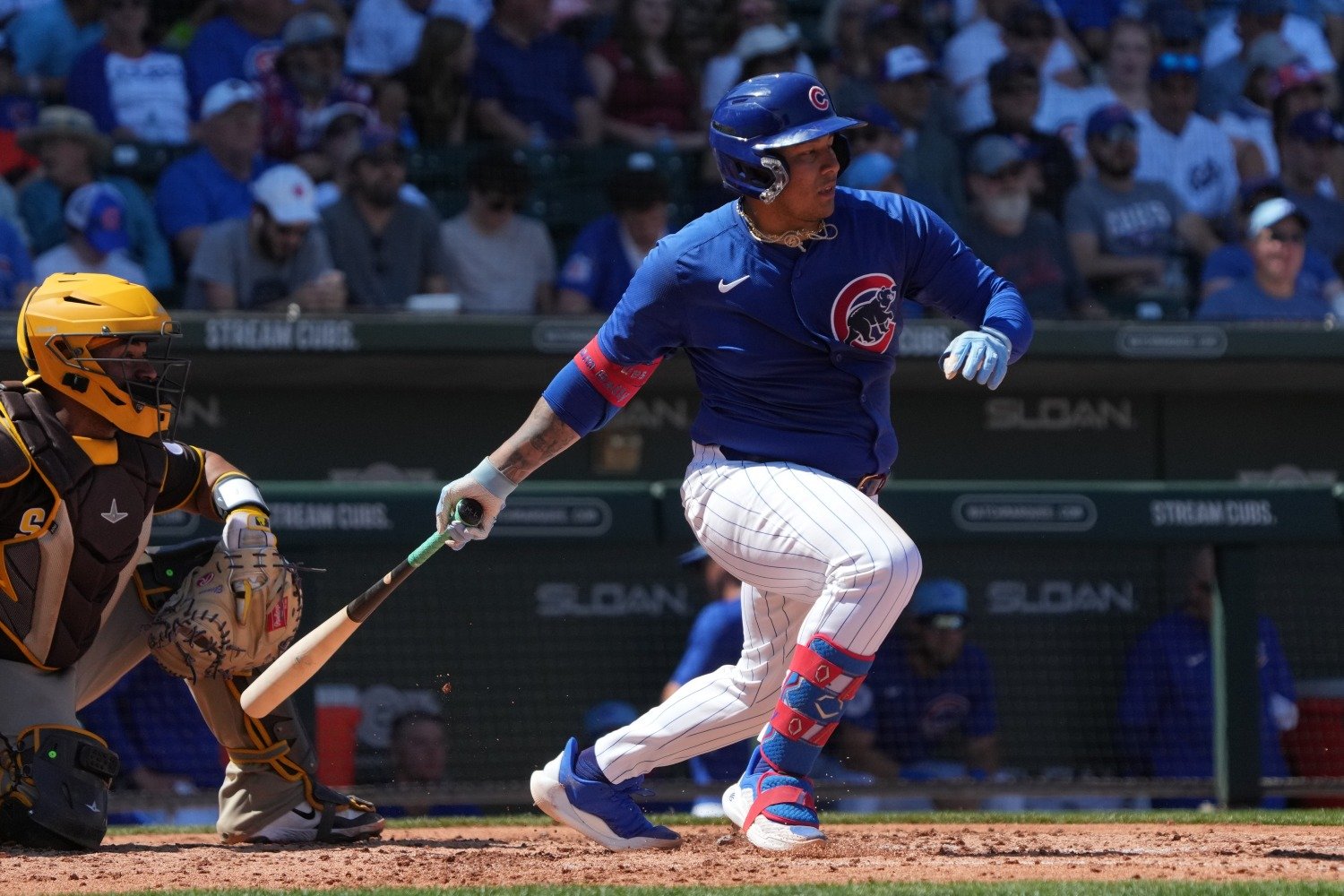 It wasn't easy for Moises Ballesteros to force his way into the 2025 Chicago Cubs' plans. He's not yet ready to contribute meaningfully as a catcher, and even if he were, the Cubs are very happy with their combination of Carson Kelly and Miguel Amaya. Meanwhile, the left-handed Ballesteros is a tricky fit for either first base or designated hitter, since he makes an imperfect backup to the lefty-hitting Michael Busch and since Seiya Suzuki has been excellent and durable at DH. Knock loudly enough and long enough on the gate, though, and eventually, the majors will make way for you. That's exactly what Ballesteros has done. He raked last year at the two highest levels of the minor leagues, and then went to the Arizona Fall League and raked some more. He showed up in Des Moines this spring and hit .368/.420/.522 over his first 150 plate appearances, which gives him a .311 average and solid pop across his first 435 PAs for the Triple-A Iowa Cubs. He put himself squarely at the front of the line for the next opportunity that arose. Unfortunately, that opportunity comes in the form of Ian Happ landing on the injured list. Happ's oblique has been bothering him for several days and kept him out of the lineup since Saturday, and the Cubs now feel they need to place him on the shelf. He could stay there for a few weeks, since oblique issues requires a player to wait until they can take each step of their rehab without pain or reaggravation. It's bad news, because Happ is such a vital part of both the team's defensive phalanx in the outfield and their lineup. However, the fact that they can slide Suzuki out to left field on most days and play Ballesteros in Happ's stead as the DH is a wonderful luxury. Ballesteros, a short and explosive 21-year-old, comes up looking to prove that he can generate consistent power against the best pitchers in the world. He's just 5-foot-8, but has a 106.5 90th-percentile exit velocity this year, better than almost 80% of his Triple-A cohort. He's an aggressive hitter, but one with a good feel for contact against soft stuff, and he hasn't been overmatched against mid- and upper-90s heat since reaching Iowa. That doesn't mean he'll be a star for the team right away. He might not even become a part of their long-term plans, given his defensive shortcomings and the risk that his size will make it impossible for him to hit for sufficient power to carry such a profile. For now, however, he's a very good bit of backfill for a lineup that has been one of the best in baseball already. Presumably, Justin Turner will start over Ballesteros whenever the Cubs face a left-handed starting pitcher, as they're slated to do Wednesday. Against righties, though, Ballesteros will join a cluster of lefty bats that will make life very difficult for opposing staffs. Ideally, the team would lean a bit less to the left, since Pete Crow-Armstrong, Kyle Tucker, Busch and Ballesteros now figure to be among the five best hitters in the lineup against righties for a while. Carson Kelly and Dansby Swanson have been good enough to slide up in the order a bit if needed, though, and if nothing else, Ballesteros will restore the feeling of depth and danger that leeched out of the team when Happ exited the lineup and Crow-Armstrong moved to the leadoff spot over the weekend. The exact role Ballesteros will fill and the length of his stay are hard to predict. To be sure, though, he'll get a chance to chip in over the next fortnight, as the team tries to take advantage of the soft stretch ahead in their schedule. He's not yet on the 40-man roster, so the Cubs will have to jettison someone therefrom in the process of promoting him, but they still have plenty of detritus on the roster. Although the team will miss Happ for the duration of his absence, this is an exciting way to stop the gap he leaves.
-
- 1
-
-
- moises ballesteros
- ian happ
- (and 1 more)
-
Image courtesy of © Kamil Krzaczynski-Imagn Images Last year, Daniel Palencia had a sinker. This year, he doesn't, but Statcast still thinks he does. In the past, Palencia has tinkered with a curveball, as well as his slider. He's stopped, but Statcast still thinks he's doing it. There are multiple pitch-classification systems out there, and while the league's own official system is doing a poor job of distinguishing Palencia's offerings from one another, Baseball Prospectus's system is doing just fine. Here's what Palencia's pitch movement array looked like in 2024, according to Baseball Savant. Here's the same readout for 2025. There are a couple of important differences, here. Pretty plainly, the system was already misreading his softest sliders as curveballs, largely because of the velocity gap between that pitch and his fastball—which, admittedly, can be more akin to most pitchers' curves than to sliders. There have been more of those this season, but they're no less plainly sliders than before. He's just a guy who adds and subtracts significantly on his breaking ball; the system is missing that. Look, too, though, at the so-called sinkers he throws. That's really what they were last year, when he was not only getting more run on the sinker, but more depth, too, thanks to a slight difference in movement created by the grip (and resulting seam-shift effects), rather than spin direction. This year, there's still more run on some of his heaters, but none of them have substantially more depth than the others—and there's no discernible difference in the spin direction and the actual movement direction between the two, as there has been in the past. No, the truth here is that Palencia is down to three pitches: four-seamer (albeit with exceptional horizontal movement variation, based mostly on location), slider, and splitter. Baseball Prospectus, with pitch classifications powered by PitchInfo rather than automated by Statcast, has it right. The results speak for themselves. Palencia has strikeout (25%) and walk (11.4%) rates that are more good than great, but his 1.54 ERA and 0.77 WHIP aren't made of smoke and mirrors. His slider has taken a massive jump in pitch grades this year. According to StuffPro, which Prospectus offers in the form of run value per 100 pitches thrown for each pitch type (meaning that 0 is average and a negative number is better), Palencia's slider has gone from -0.7 last year to -1.4 this year. His splitter has also improved slightly, and his four-seamer has the same grade as last year's four-seamer—but that's misleading. Last year, the four-seamer was just part of his fastball mix. He also had that sinker, which rated very poorly. With the sinker gone from the mix and the four-seamer measuring as the same quality, the overall fastball picture is a better one. Streamlining his mix a bit has helped Palencia continue ironing out his delivery and throwing more strikes, which has pulled down his previously worrisome walk rate. He's still not missing bats at an elite level, but the strikeouts he's gotten are plenty, given the change in the quality of opponents' contact. Palencia's average exit velocity allowed in 2023 and 2024 was 91.8 mph, with a nightmarish 47.7% of opponents' batted balls topping 95 mph in exit velocity. This season, so far, those marks are 88.7 mph and 35.7%, respectively. Batters' swing speeds against him are down, and their average contact point is roughly four inches closer to their center of mass than in the past. In other words, they're just not getting the bat out to a dangerous point by the time the ball enters the hitting zone. Palencia is overpowering them, even when they do manage to put the bat on the ball. However you break down his arsenal, Palencia is enjoying his best stretch of sustained big-league success to date. It's coming from an honest improvement in pitch quality—driven not primarily by movement changes, but by the tougher angles he presents after a move all the way to the first-base side of the rubber. Here's his average release point for each of his major pitch types in each of his big-league seasons, with 2025's circled. From a new angle, Palencia's naturally intense stuff is playing up gorgeously. He might never strike out as many batters as you'd guess, based on all that velocity, but he's found a formula for consistent success. If he can repeat this delivery, maintain this mix and stay healthy, he could be the Cubs' relief ace before the All-Star break—let alone October, when he could also loom large. View full article
-
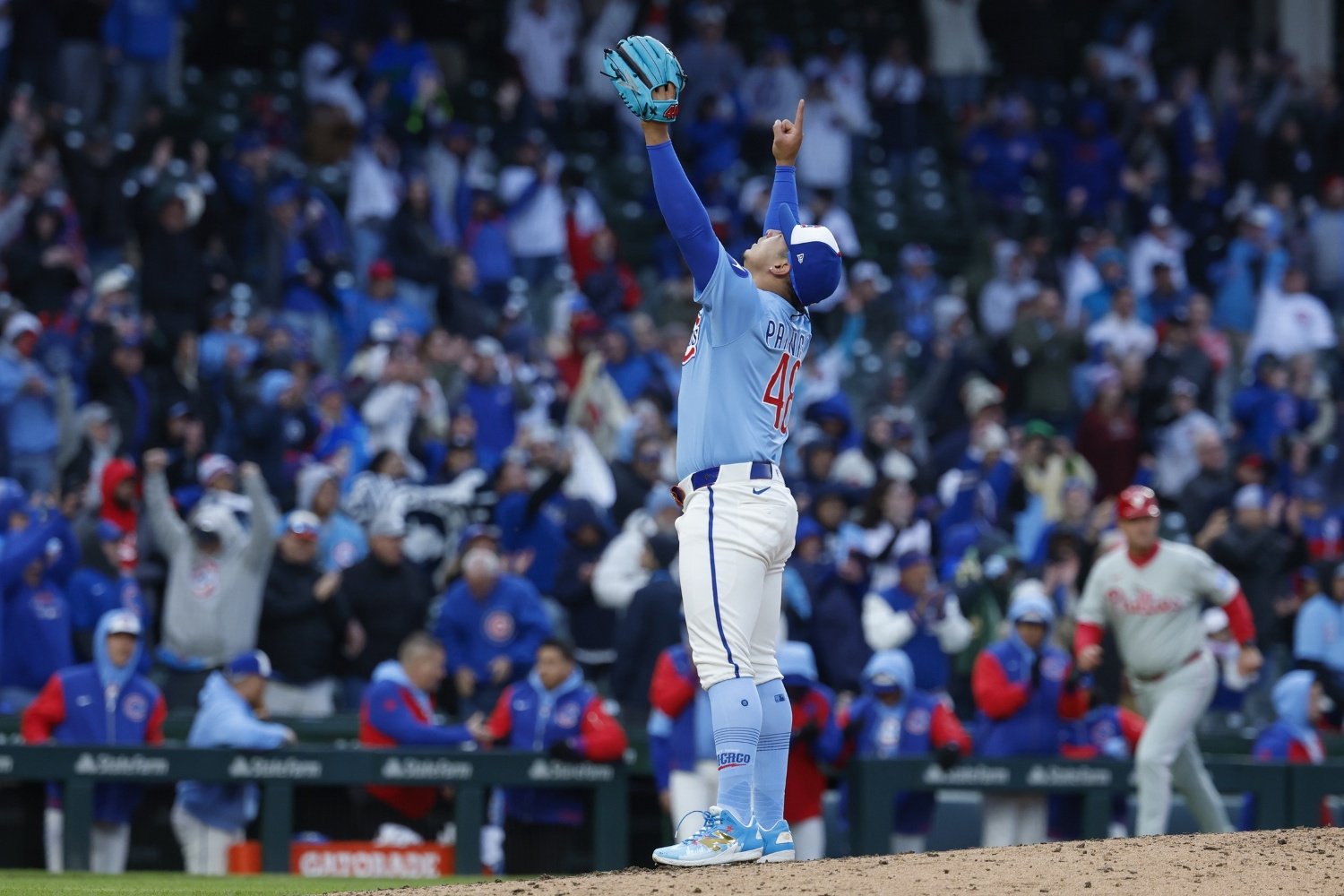 Last year, Daniel Palencia had a sinker. This year, he doesn't, but Statcast still thinks he does. In the past, Palencia has tinkered with a curveball, as well as his slider. He's stopped, but Statcast still thinks he's doing it. There are multiple pitch-classification systems out there, and while the league's own official system is doing a poor job of distinguishing Palencia's offerings from one another, Baseball Prospectus's system is doing just fine. Here's what Palencia's pitch movement array looked like in 2024, according to Baseball Savant. Here's the same readout for 2025. There are a couple of important differences, here. Pretty plainly, the system was already misreading his softest sliders as curveballs, largely because of the velocity gap between that pitch and his fastball—which, admittedly, can be more akin to most pitchers' curves than to sliders. There have been more of those this season, but they're no less plainly sliders than before. He's just a guy who adds and subtracts significantly on his breaking ball; the system is missing that. Look, too, though, at the so-called sinkers he throws. That's really what they were last year, when he was not only getting more run on the sinker, but more depth, too, thanks to a slight difference in movement created by the grip (and resulting seam-shift effects), rather than spin direction. This year, there's still more run on some of his heaters, but none of them have substantially more depth than the others—and there's no discernible difference in the spin direction and the actual movement direction between the two, as there has been in the past. No, the truth here is that Palencia is down to three pitches: four-seamer (albeit with exceptional horizontal movement variation, based mostly on location), slider, and splitter. Baseball Prospectus, with pitch classifications powered by PitchInfo rather than automated by Statcast, has it right. The results speak for themselves. Palencia has strikeout (25%) and walk (11.4%) rates that are more good than great, but his 1.54 ERA and 0.77 WHIP aren't made of smoke and mirrors. His slider has taken a massive jump in pitch grades this year. According to StuffPro, which Prospectus offers in the form of run value per 100 pitches thrown for each pitch type (meaning that 0 is average and a negative number is better), Palencia's slider has gone from -0.7 last year to -1.4 this year. His splitter has also improved slightly, and his four-seamer has the same grade as last year's four-seamer—but that's misleading. Last year, the four-seamer was just part of his fastball mix. He also had that sinker, which rated very poorly. With the sinker gone from the mix and the four-seamer measuring as the same quality, the overall fastball picture is a better one. Streamlining his mix a bit has helped Palencia continue ironing out his delivery and throwing more strikes, which has pulled down his previously worrisome walk rate. He's still not missing bats at an elite level, but the strikeouts he's gotten are plenty, given the change in the quality of opponents' contact. Palencia's average exit velocity allowed in 2023 and 2024 was 91.8 mph, with a nightmarish 47.7% of opponents' batted balls topping 95 mph in exit velocity. This season, so far, those marks are 88.7 mph and 35.7%, respectively. Batters' swing speeds against him are down, and their average contact point is roughly four inches closer to their center of mass than in the past. In other words, they're just not getting the bat out to a dangerous point by the time the ball enters the hitting zone. Palencia is overpowering them, even when they do manage to put the bat on the ball. However you break down his arsenal, Palencia is enjoying his best stretch of sustained big-league success to date. It's coming from an honest improvement in pitch quality—driven not primarily by movement changes, but by the tougher angles he presents after a move all the way to the first-base side of the rubber. Here's his average release point for each of his major pitch types in each of his big-league seasons, with 2025's circled. From a new angle, Palencia's naturally intense stuff is playing up gorgeously. He might never strike out as many batters as you'd guess, based on all that velocity, but he's found a formula for consistent success. If he can repeat this delivery, maintain this mix and stay healthy, he could be the Cubs' relief ace before the All-Star break—let alone October, when he could also loom large.
 -
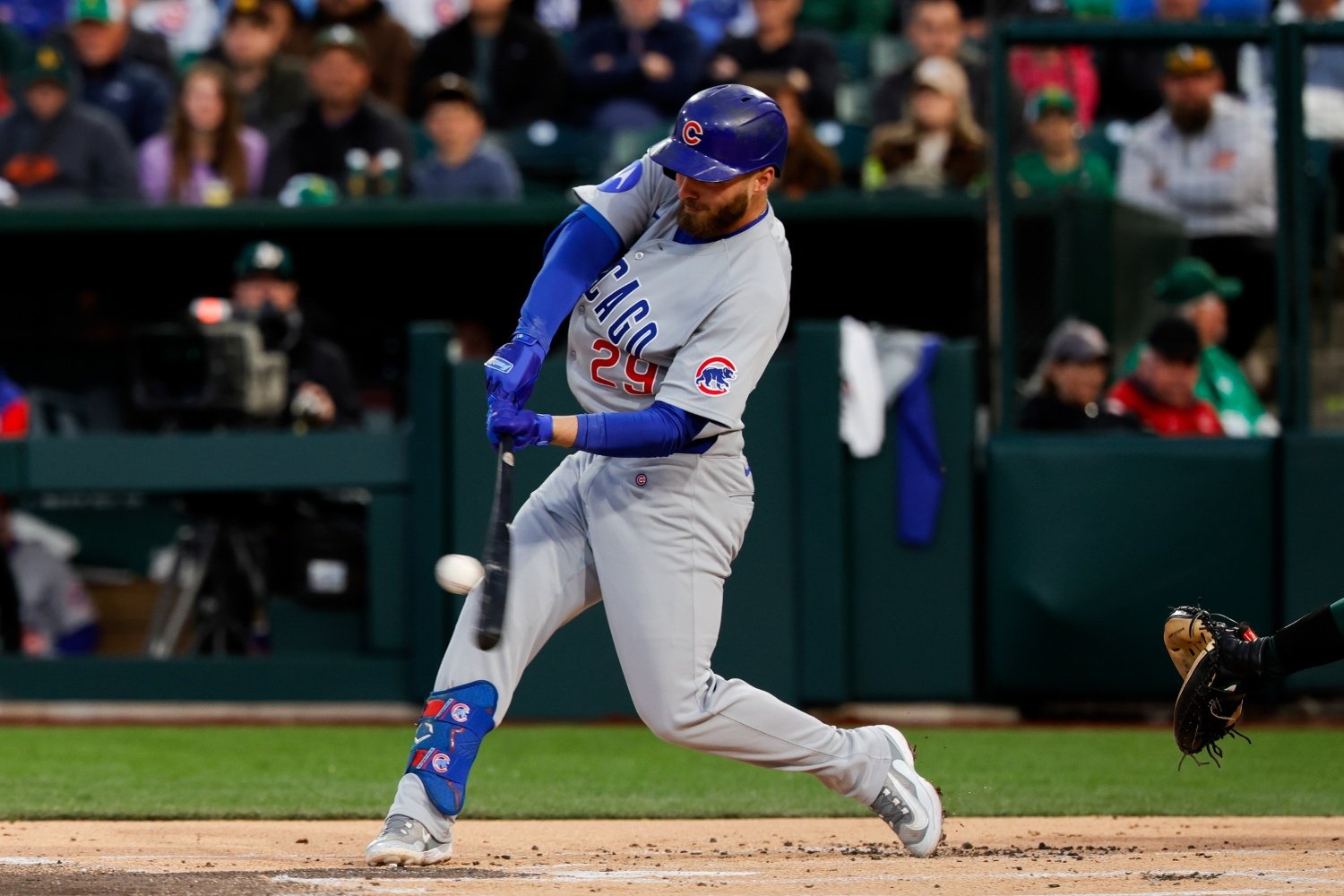 In his first 150 plate appearances of the season, Michael Busch is batting .262/.360/.500, with seven home runs and encouraging underlying numbers to support the topline ones. He's benefited from seeing fewer left-handed pitchers, with 87.3% of his plate appearances coming against righties—up from 82.4% last year. Since all his power comes when he has the platoon advantage (.211 career isolated power against righties; .108 against lefties), that, alone, has made a significant difference. It's impressive how much power Busch has generated, too, because he's swinging the bat slower than last year—when he was already below average—and hitting more ground balls, too. Busch has traded a bit of the violence in his swing for a more reliable delivery of the barrel to the ball, and it's working. He's always been a guy whose swing was geared to generate the best contact when lifting the ball. This year, by getting a few more pitches concentrated in the launch-angle band where he does the most damage, he's tapping into more power, naturally. That's come with more grounders, because he's being more aggressive, but his grounders have been harder-hit and have had slightly higher launch angles. (It might sound silly, but unless you're exceptionally fast, launch angle matters a great deal on ground balls. Hitting it anywhere north of -5° is quite a bit more valuable than hitting it straight into the ground, especially if you can hit it with any pace to speak of.) Here's Busch's distribution of batted balls by launch angle for 2024, with the color of each bar indicating the exit velocity and the height indicating the frequency of balls in that band. Here's the same visual for 2025. Fewer pop-ups and fewer balls hit straight down have helped him significantly. To produce that more tightly clustered, valuable distribution, though, he's had to make adjustments to his swing path, especially up in the zone. Last year, teams hammered away at a hole in his swing, up and away. He could briefly cover it, but only by guessing and cheating to hit that pitch. Because he was so aware of that issue, he also developed a problem below the zone at times—in that, trying to spot pitches down in the zone on which he could feast, he would sometimes chase too much below the zone, resulting in whiffs or weak contact. That's changed this year. Busch's swing is shorter (averaging 6.3 feet from its start to the contact point, as measured by Statcast) than it was last year (6.5 feet) in the top third of the zone, and his whiff rate on swings in that area is down from 23.5% to a mere 6.3%. M3lxUjZfWGw0TUFRPT1fQkFaWVVRVURWd01BQ0ZwV1Z3QUhWd0VDQUFCUkFBUUFDbFVNQVFjR0FWWlZWVk5X.mp4 You can see the way he steps out to the space just behind the plate with his back foot as he finishes that swing. That's rare, for a left-handed batter, because it slows you down in terms of getting out of the box—but it's a sign that he's transferring energy from the back side to the front well, and that he's maintaining balance and control in his lower half as he does so. Busch has been so much better against high pitches this year that it's gone from the thing most teams attack to the last thing they want to ponder. Here's his expected weighted on-base average by pitch location for 2024. Here's the same graphic for 2025. (Keep in mind, xwOBA is scaled to on-base percentage, so a figure around .350 is good; .400 is All-Star stuff.) With the adjustments he's made to cover the outside pitch, the new way to go after Busch is to come inside, where the slight diminution in his swing speed is hurting him—but plenty of pitchers simply aren't comfortable living there, and if Busch lays off, he'll earn plenty of walks or mistakes by just not swinging when they do try to attack him in that spot. Low and in is, of course, the wheelhouse for most lefties. Color Busch an unusual case. Part of the reason for that: he's moved deeper in the box, but closer to the plate this year. He hasn't changed where he wants to make contact, within the context of his own swing, but the shape of the swing itself has changed, and so has his spatial relationship to the zone itself. Starting deeper in the box means a deeper overall contact point, but with his shorter stride and flatter swing, it doesn't actually mean letting the ball travel deeper. Here's his 2024 setup and contact point visual. Here's the same thing for 2025, as he's gotten on top of the plate and bought himself an extra eyelash of a blink by dropping farther toward the catcher. Busch is making more contact within the zone (mostly up top, as we've seen). He's still capable of driving the ball, despite a more controlled and (admittedly) slower swing. He's become more able to cover the whole zone, and he can generate power to all fields, while paring down his strikeout rate. He's always been a patient hitter, so when you mix these ingredients together, the result is a hitter with an All-Star-caliber package of skills. Busch will fall shy of actual All-Star status this year, but if he keeps proving to be this good at making adjustments, he could finish the season with 30 home runs and enter next year as a household name—if not because of those nice, round numbers, then because he's also likely to get a chance for some postseason heroics come October.
 -
Image courtesy of © Sergio Estrada-Imagn Images In his first 150 plate appearances of the season, Michael Busch is batting .262/.360/.500, with seven home runs and encouraging underlying numbers to support the topline ones. He's benefited from seeing fewer left-handed pitchers, with 87.3% of his plate appearances coming against righties—up from 82.4% last year. Since all his power comes when he has the platoon advantage (.211 career isolated power against righties; .108 against lefties), that, alone, has made a significant difference. It's impressive how much power Busch has generated, too, because he's swinging the bat slower than last year—when he was already below average—and hitting more ground balls, too. Busch has traded a bit of the violence in his swing for a more reliable delivery of the barrel to the ball, and it's working. He's always been a guy whose swing was geared to generate the best contact when lifting the ball. This year, by getting a few more pitches concentrated in the launch-angle band where he does the most damage, he's tapping into more power, naturally. That's come with more grounders, because he's being more aggressive, but his grounders have been harder-hit and have had slightly higher launch angles. (It might sound silly, but unless you're exceptionally fast, launch angle matters a great deal on ground balls. Hitting it anywhere north of -5° is quite a bit more valuable than hitting it straight into the ground, especially if you can hit it with any pace to speak of.) Here's Busch's distribution of batted balls by launch angle for 2024, with the color of each bar indicating the exit velocity and the height indicating the frequency of balls in that band. Here's the same visual for 2025. Fewer pop-ups and fewer balls hit straight down have helped him significantly. To produce that more tightly clustered, valuable distribution, though, he's had to make adjustments to his swing path, especially up in the zone. Last year, teams hammered away at a hole in his swing, up and away. He could briefly cover it, but only by guessing and cheating to hit that pitch. Because he was so aware of that issue, he also developed a problem below the zone at times—in that, trying to spot pitches down in the zone on which he could feast, he would sometimes chase too much below the zone, resulting in whiffs or weak contact. That's changed this year. Busch's swing is shorter (averaging 6.3 feet from its start to the contact point, as measured by Statcast) than it was last year (6.5 feet) in the top third of the zone, and his whiff rate on swings in that area is down from 23.5% to a mere 6.3%. M3lxUjZfWGw0TUFRPT1fQkFaWVVRVURWd01BQ0ZwV1Z3QUhWd0VDQUFCUkFBUUFDbFVNQVFjR0FWWlZWVk5X.mp4 You can see the way he steps out to the space just behind the plate with his back foot as he finishes that swing. That's rare, for a left-handed batter, because it slows you down in terms of getting out of the box—but it's a sign that he's transferring energy from the back side to the front well, and that he's maintaining balance and control in his lower half as he does so. Busch has been so much better against high pitches this year that it's gone from the thing most teams attack to the last thing they want to ponder. Here's his expected weighted on-base average by pitch location for 2024. Here's the same graphic for 2025. (Keep in mind, xwOBA is scaled to on-base percentage, so a figure around .350 is good; .400 is All-Star stuff.) With the adjustments he's made to cover the outside pitch, the new way to go after Busch is to come inside, where the slight diminution in his swing speed is hurting him—but plenty of pitchers simply aren't comfortable living there, and if Busch lays off, he'll earn plenty of walks or mistakes by just not swinging when they do try to attack him in that spot. Low and in is, of course, the wheelhouse for most lefties. Color Busch an unusual case. Part of the reason for that: he's moved deeper in the box, but closer to the plate this year. He hasn't changed where he wants to make contact, within the context of his own swing, but the shape of the swing itself has changed, and so has his spatial relationship to the zone itself. Starting deeper in the box means a deeper overall contact point, but with his shorter stride and flatter swing, it doesn't actually mean letting the ball travel deeper. Here's his 2024 setup and contact point visual. Here's the same thing for 2025, as he's gotten on top of the plate and bought himself an extra eyelash of a blink by dropping farther toward the catcher. Busch is making more contact within the zone (mostly up top, as we've seen). He's still capable of driving the ball, despite a more controlled and (admittedly) slower swing. He's become more able to cover the whole zone, and he can generate power to all fields, while paring down his strikeout rate. He's always been a patient hitter, so when you mix these ingredients together, the result is a hitter with an All-Star-caliber package of skills. Busch will fall shy of actual All-Star status this year, but if he keeps proving to be this good at making adjustments, he could finish the season with 30 home runs and enter next year as a household name—if not because of those nice, round numbers, then because he's also likely to get a chance for some postseason heroics come October. View full article
-
Image courtesy of © Cody Scanlan/The Register / USA TODAY NETWORK via Imagn Images It's unfair and inaccurate to suggest that the Cubs have been totally incapable of developing starting pitchers over the last decade and a half. They can point proudly to the big wins of Kyle Hendricks and Justin Steele, and to smaller ones like Javier Assad. They're also good at the reclamation project, which is a form of development, too. Still, they've always ended up with players who had to succeed in non-traditional ways, or who took non-traditional paths to success. Steele was a very late bloomer, and has had to navigate the league as (basically) a two-pitch starter. When he first showed up, he did at least have plus velocity, but even that has been gone for two years now. Cade Horton is different. He had better be, I suppose, since unlike Steele or Hendricks or any other Cubs hurler in recent memory, he was a high first-round draft pick. He'll join the parent club in Queens this weekend when the Cubs take on the Mets, according to multiple reports, and when he does, he'll bring an unusually complete checklist of the stuff you look for with him. The funny thing is, in one crucial way, Horton is still very much the modern Cubs pitching prospect. Look at that fastball shape! He briefly got away from cutting it so much earlier this spring, but he's back to what is very much a Steele- or Porter Hodge-like cut-ride heater. His sinker is something much closer to what a hitter would expect his four-seamer to look like, but since he's likely to be throwing that new inclusion in his arsenal only as the occasional lane-changer, hitters aren't going to like seeing it, anyway. The breaking balls, here, are labeled as sweeper and slider. In truth, it's more of a slider and curve mix; the pitch-classification system is getting fooled a bit by the same dynamics of Horton's style that beget that cutting heater. Whatever you call them, though, the sweepier breaker is an immediate plus offering, especially paired with a fastball in the mid-90s (touching 97) that already has cut to it. At this stage, it's fair to call Horton a five-pitch guy, with a modicum of confidence in all those offerings. He's not going to throw the fastball and slider a combined 90% of the time, the way Steele does. He has several ways to get hitters out, even beyond a unique (and very lively) heater. The last Cubs pitching prospect with all this going for him was Jeff Samardzija. Like Horton, Samardzija came up to a Cubs team expecting to not only make the playoffs, but stay in them for a while. He didn't get his call until July, though, and then only as a reliever. In fact, Samardzija spent parts of four seasons in the bullpen, before an adjustment to when he broke his hands during his delivery and a refinement of his splitter turned him into a frontline starter with the team for two and a half years and made him about $100 million. That won't be Horton's journey. This version of the Cubs needs him to be a starter, or at least a scheduled long man fitting in with the starting rotation, so his stuff has to be ready much sooner than Samardzija's was. It sure looks like it will be, though. Unlike Adbert Alzolay (never healthy enough) or Caleb Kilian (never with enough depth in the skill set or enough good stuff between the ears), Horton has made it to the majors with a near-ace upside intact. He has his own significant health concerns, but the Cubs can't worry about that right now. We'll see the first 70 or 80 pitches of Horton's career this weekend. If he's the same guy in New York that he's been in Iowa, they'll be awfully impressive pitches, even to Francisco Lindor, Juan Soto and Pete Alonso. View full article
-
 It's unfair and inaccurate to suggest that the Cubs have been totally incapable of developing starting pitchers over the last decade and a half. They can point proudly to the big wins of Kyle Hendricks and Justin Steele, and to smaller ones like Javier Assad. They're also good at the reclamation project, which is a form of development, too. Still, they've always ended up with players who had to succeed in non-traditional ways, or who took non-traditional paths to success. Steele was a very late bloomer, and has had to navigate the league as (basically) a two-pitch starter. When he first showed up, he did at least have plus velocity, but even that has been gone for two years now. Cade Horton is different. He had better be, I suppose, since unlike Steele or Hendricks or any other Cubs hurler in recent memory, he was a high first-round draft pick. He'll join the parent club in Queens this weekend when the Cubs take on the Mets, according to multiple reports, and when he does, he'll bring an unusually complete checklist of the stuff you look for with him. The funny thing is, in one crucial way, Horton is still very much the modern Cubs pitching prospect. Look at that fastball shape! He briefly got away from cutting it so much earlier this spring, but he's back to what is very much a Steele- or Porter Hodge-like cut-ride heater. His sinker is something much closer to what a hitter would expect his four-seamer to look like, but since he's likely to be throwing that new inclusion in his arsenal only as the occasional lane-changer, hitters aren't going to like seeing it, anyway. The breaking balls, here, are labeled as sweeper and slider. In truth, it's more of a slider and curve mix; the pitch-classification system is getting fooled a bit by the same dynamics of Horton's style that beget that cutting heater. Whatever you call them, though, the sweepier breaker is an immediate plus offering, especially paired with a fastball in the mid-90s (touching 97) that already has cut to it. At this stage, it's fair to call Horton a five-pitch guy, with a modicum of confidence in all those offerings. He's not going to throw the fastball and slider a combined 90% of the time, the way Steele does. He has several ways to get hitters out, even beyond a unique (and very lively) heater. The last Cubs pitching prospect with all this going for him was Jeff Samardzija. Like Horton, Samardzija came up to a Cubs team expecting to not only make the playoffs, but stay in them for a while. He didn't get his call until July, though, and then only as a reliever. In fact, Samardzija spent parts of four seasons in the bullpen, before an adjustment to when he broke his hands during his delivery and a refinement of his splitter turned him into a frontline starter with the team for two and a half years and made him about $100 million. That won't be Horton's journey. This version of the Cubs needs him to be a starter, or at least a scheduled long man fitting in with the starting rotation, so his stuff has to be ready much sooner than Samardzija's was. It sure looks like it will be, though. Unlike Adbert Alzolay (never healthy enough) or Caleb Kilian (never with enough depth in the skill set or enough good stuff between the ears), Horton has made it to the majors with a near-ace upside intact. He has his own significant health concerns, but the Cubs can't worry about that right now. We'll see the first 70 or 80 pitches of Horton's career this weekend. If he's the same guy in New York that he's been in Iowa, they'll be awfully impressive pitches, even to Francisco Lindor, Juan Soto and Pete Alonso.
 -
Image courtesy of © Matt Marton-Imagn Images The big problem with baseball—the thing that convinces so many people (wrongly) that the game is less physically dramatic or demanding than other major team sports—is that, to the casual observer, it looks too non-confrontational. The loss of the collision between baserunner and catcher on plays at the plate is overblown, because those have always been rare plays, anyway. Most of the time, it looks too much like a game of skill and a battle with oneself. In basketball, football, hockey, and soccer, players use their bodies to block the progress of opponents, or at least to force them to move in very skilled, precise ways. The ball (or puck) in those sports is always being fought for, too, because it's the currency of the game. It must be possessed, in some sense, to score, and possessing it well turns it into a tool for your offense. One player passes to another or uses their fine control of the ball to advance past a defender or two. Those actions are all about helping the team in possession. In baseball, instead of physically preventing runners from rounding the bases to score or fielders from converting outs with their bodies, everyone on the field sends the ball as their emissary—and the ball, therefore, takes turns being the adversary of everyone within a play. When a pitcher winds up and fires home, they've done everything they can to constrain the number of valuable moves available to the hitter. They're trying to rush him, overpower him or fool him into messing up—the same way a good defender tackles a ball carrier, affects a jump shot, or forces a striker into a mishit shot on goal. The hitter, though, can cause plenty of problems themselves. With a hard-hit ball (or one to an undefended portion of the field, be it a bunt or a gapper), they force the defense to move and make a difficult play of their own, short not on physical space around them but on the opportunity to get themselves into a comfortable position for playmaking—and on time, of course. When you watch the game that way—thinking of the ball, in turns, as an agent of whichever side last asserted possession (pitcher; then batter; then defense, when the ball is cleanly held and can be thrown to the best base)—it makes more sense, as an analog to the other sports we enjoy so much. And one wonderful way to glimpse the game through that lens is to watch Pete Crow-Armstrong play center field, because of what you don't see when he's out there. In the top of the fourth inning on Wednesday, Ben Brown was in big trouble. In fairness, that was not entirely his fault. He'd issued a leadoff walk and allowed a single in the frame, but the big blow had been a double that didn't need to be one, by any means. Although LaMonte Wade Jr. struck the ball well toward Justin Turner at first base, Turner should have had a play on the ball. With each game the 40-year-old plays, it's increasingly plain that he's no longer up to the athletic demands of the league. That's a topic for another article, though. Sandwiched around the Wade double were a pair of strikeouts, so although the Giants led 2-0 and had runners on second and third, Brown needed just one more out to escape the jam with minimal damage. Unfortunately, he couldn't manage that. Christian Koss cracked a clean, line-drive single to center field, easily bringing home Wilmer Flores from third base. It was a no-brainer send for the third-base coach to have Wade try to score, too—but that fourth run would not go onto the board. Instead, despite giving up a hit, Brown did get out of the inning, right then and there. He owes the credit for that out to his center fielder. bmJNUTdfVjBZQUhRPT1fQndsWEJsQUZWMU1BWFFjQVZRQUhVQTRGQUFNRFZWSUFWd0FBQVZjTVZBY0hBbEVE.mp4 When we conceptualize the hard-hit ball as a challenge by the hitter directly to a fielder, this one looks like a firm and probing one. It left Koss's bat at 99 miles per hour, and Crow-Armstrong never had a chance to catch it. He had to go into damage mode immediately, running first to his left, then bending in toward the ball. It's easy for a fielder to end up waiting back for this ball a beat, without that inward bend of the run. It's even easier for them to field the ball a bit more tentatively than Crow-Armstrong did, or not to be able to square their body to the target of home plate. The ball was hit with pace. It didn't leave him as long as he made it look like he had to shape his response to it. Crow-Armstrong has a great arm, but whenever he makes a great throw, I find myself watching his feet. Here, notice the way he glides into position, slightly modulating his stride length and leaning his upper body to get himself squared up to the ball as it comes toward him, but not going from long and smooth to short and choppy. See the subtlety of his change of direction, coming to meet the ball on an arc that keeps his strides easy. Then, watch that crow hop. There is zero wasted motion from the time the ball reaches him to when he cuts loose his throw. He fluidly snaps up the bounding ball with his glove, and the transfer to his left hand is in progress instantly. His right foot crosses over one last time as he comes in, keeping his front shoulder in and giving room to his left foot for the quick step in behind. Then, the full stride into the throw comes, all without deceleration. That batted ball is a very difficult one on which to throw out a runner, especially with two outs. Wade didn't wait to see whether it would be caught, not only because it plainly wouldn't be, but because it wouldn't have mattered if it were. He was charging home right when the ball left the bat, and Koss placed a firmly struck ball on the opposite side of second from where Crow-Armstrong started, forcing him to begin his pursuit with a flat lateral run. That should have been enough to bring a second run home. Brown was unable to crowd or cajole Koss into a mishit. Koss left Crow-Armstrong no margin for error at all, to prevent the second run on the play. It's the equivalent of making a player hit a fadeaway from the baseline, over a 7-footer, with the shot clock running down, or of forcing a forward to take a clean touch off their chest and perfectly hit a ball to the corner of the goal with no room to wind up their leg for power. Crow-Armstrong made the play, anyway. He's also amid a hot streak at the plate, of course, but it's too early to say that Crow-Armstrong will be a consistently excellent run producer. What we can see for certain—what will be utterly inevitable, for as long as his youth and health hold up—is that Crow-Armstrong is a uniquely brilliant defender, capable of making plays even when the game steals space or time from him in a way that only a few players in each generation can. That makes baseball more fun. View full article
-
The Ferocious Ballet of Pete Crow-Armstrong Throwing Out Baserunners
Matthew Trueblood posted an article in Cubs
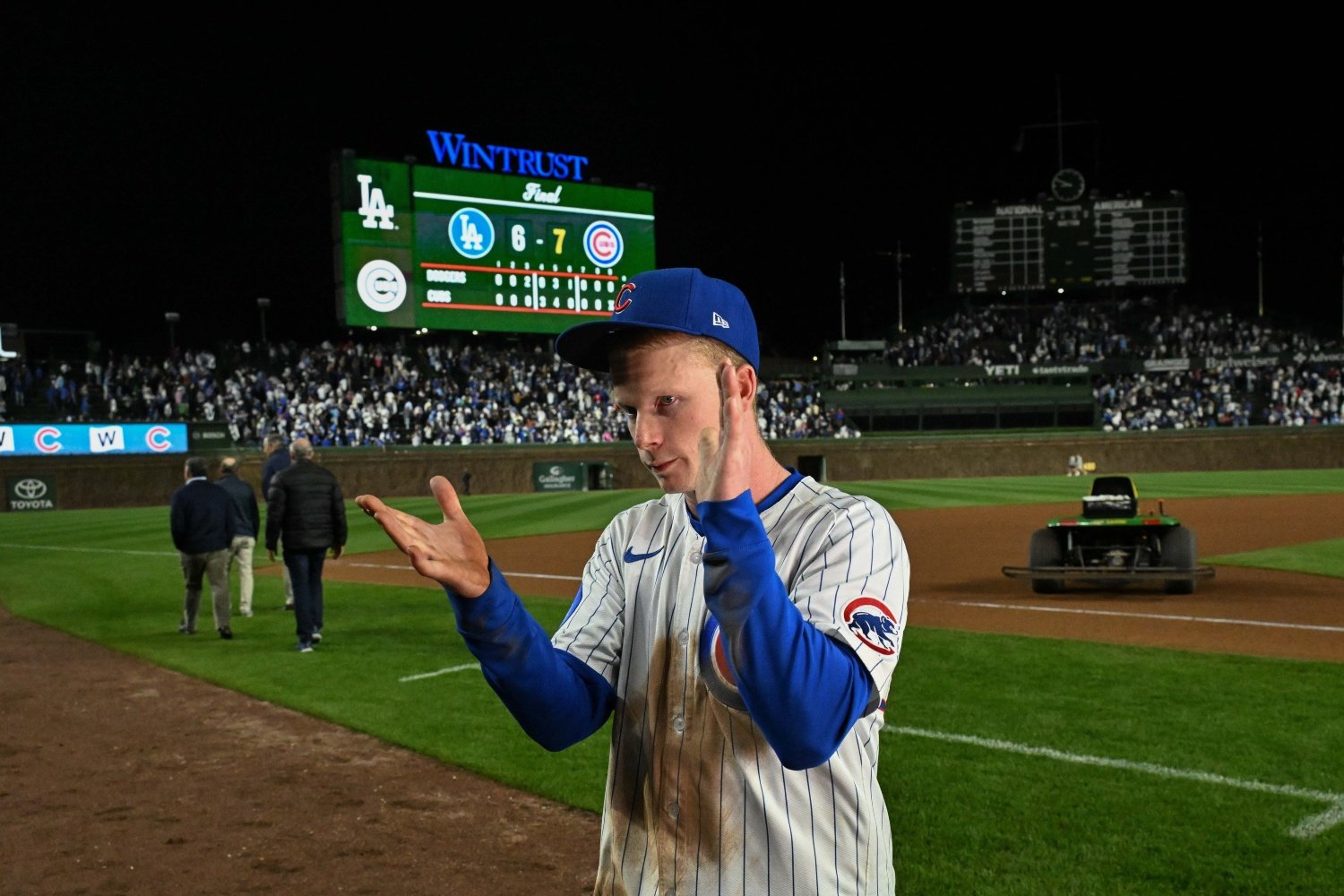 The big problem with baseball—the thing that convinces so many people (wrongly) that the game is less physically dramatic or demanding than other major team sports—is that, to the casual observer, it looks too non-confrontational. The loss of the collision between baserunner and catcher on plays at the plate is overblown, because those have always been rare plays, anyway. Most of the time, it looks too much like a game of skill and a battle with oneself. In basketball, football, hockey, and soccer, players use their bodies to block the progress of opponents, or at least to force them to move in very skilled, precise ways. The ball (or puck) in those sports is always being fought for, too, because it's the currency of the game. It must be possessed, in some sense, to score, and possessing it well turns it into a tool for your offense. One player passes to another or uses their fine control of the ball to advance past a defender or two. Those actions are all about helping the team in possession. In baseball, instead of physically preventing runners from rounding the bases to score or fielders from converting outs with their bodies, everyone on the field sends the ball as their emissary—and the ball, therefore, takes turns being the adversary of everyone within a play. When a pitcher winds up and fires home, they've done everything they can to constrain the number of valuable moves available to the hitter. They're trying to rush him, overpower him or fool him into messing up—the same way a good defender tackles a ball carrier, affects a jump shot, or forces a striker into a mishit shot on goal. The hitter, though, can cause plenty of problems themselves. With a hard-hit ball (or one to an undefended portion of the field, be it a bunt or a gapper), they force the defense to move and make a difficult play of their own, short not on physical space around them but on the opportunity to get themselves into a comfortable position for playmaking—and on time, of course. When you watch the game that way—thinking of the ball, in turns, as an agent of whichever side last asserted possession (pitcher; then batter; then defense, when the ball is cleanly held and can be thrown to the best base)—it makes more sense, as an analog to the other sports we enjoy so much. And one wonderful way to glimpse the game through that lens is to watch Pete Crow-Armstrong play center field, because of what you don't see when he's out there. In the top of the fourth inning on Wednesday, Ben Brown was in big trouble. In fairness, that was not entirely his fault. He'd issued a leadoff walk and allowed a single in the frame, but the big blow had been a double that didn't need to be one, by any means. Although LaMonte Wade Jr. struck the ball well toward Justin Turner at first base, Turner should have had a play on the ball. With each game the 40-year-old plays, it's increasingly plain that he's no longer up to the athletic demands of the league. That's a topic for another article, though. Sandwiched around the Wade double were a pair of strikeouts, so although the Giants led 2-0 and had runners on second and third, Brown needed just one more out to escape the jam with minimal damage. Unfortunately, he couldn't manage that. Christian Koss cracked a clean, line-drive single to center field, easily bringing home Wilmer Flores from third base. It was a no-brainer send for the third-base coach to have Wade try to score, too—but that fourth run would not go onto the board. Instead, despite giving up a hit, Brown did get out of the inning, right then and there. He owes the credit for that out to his center fielder. bmJNUTdfVjBZQUhRPT1fQndsWEJsQUZWMU1BWFFjQVZRQUhVQTRGQUFNRFZWSUFWd0FBQVZjTVZBY0hBbEVE.mp4 When we conceptualize the hard-hit ball as a challenge by the hitter directly to a fielder, this one looks like a firm and probing one. It left Koss's bat at 99 miles per hour, and Crow-Armstrong never had a chance to catch it. He had to go into damage mode immediately, running first to his left, then bending in toward the ball. It's easy for a fielder to end up waiting back for this ball a beat, without that inward bend of the run. It's even easier for them to field the ball a bit more tentatively than Crow-Armstrong did, or not to be able to square their body to the target of home plate. The ball was hit with pace. It didn't leave him as long as he made it look like he had to shape his response to it. Crow-Armstrong has a great arm, but whenever he makes a great throw, I find myself watching his feet. Here, notice the way he glides into position, slightly modulating his stride length and leaning his upper body to get himself squared up to the ball as it comes toward him, but not going from long and smooth to short and choppy. See the subtlety of his change of direction, coming to meet the ball on an arc that keeps his strides easy. Then, watch that crow hop. There is zero wasted motion from the time the ball reaches him to when he cuts loose his throw. He fluidly snaps up the bounding ball with his glove, and the transfer to his left hand is in progress instantly. His right foot crosses over one last time as he comes in, keeping his front shoulder in and giving room to his left foot for the quick step in behind. Then, the full stride into the throw comes, all without deceleration. That batted ball is a very difficult one on which to throw out a runner, especially with two outs. Wade didn't wait to see whether it would be caught, not only because it plainly wouldn't be, but because it wouldn't have mattered if it were. He was charging home right when the ball left the bat, and Koss placed a firmly struck ball on the opposite side of second from where Crow-Armstrong started, forcing him to begin his pursuit with a flat lateral run. That should have been enough to bring a second run home. Brown was unable to crowd or cajole Koss into a mishit. Koss left Crow-Armstrong no margin for error at all, to prevent the second run on the play. It's the equivalent of making a player hit a fadeaway from the baseline, over a 7-footer, with the shot clock running down, or of forcing a forward to take a clean touch off their chest and perfectly hit a ball to the corner of the goal with no room to wind up their leg for power. Crow-Armstrong made the play, anyway. He's also amid a hot streak at the plate, of course, but it's too early to say that Crow-Armstrong will be a consistently excellent run producer. What we can see for certain—what will be utterly inevitable, for as long as his youth and health hold up—is that Crow-Armstrong is a uniquely brilliant defender, capable of making plays even when the game steals space or time from him in a way that only a few players in each generation can. That makes baseball more fun.
 -
Image courtesy of © Kamil Krzaczynski-Imagn Images Some old dogs absolutely refuse to do anything but learn new tricks. They just keep learning new tricks, over and over, until even young dogs go, "Dude, chill." They're a rare breed, but when you're rounding out the pack of competitors in a modern playoff-hopeful bullpen, you badly need that kind of old dog. Caleb Thielbar is the alpha in that pack. Thielbar, 38, made it to the majors by way of independent ball. A Minnesota native, he went to South Dakota State University (hardly a baseball powerhouse) and was taken by the Brewers in the 2009 MLB Draft. He pitched for them at their complex in Arizona and in Helena, Mont., with their Pioneer League affiliate. In 2010, he split his time between Helena and High-A Wisconsin. After that year, the Brewers cut him, and at 24, he had his first chance to give up on baseball. Instead, he took up with the then-independent St. Paul Saints in 2011. The Twins spotted him while he was there, and signed him to a minor-league deal in August of that year. He steadily climbed through their system, and debuted in May 2013—more than three months past his 26th birthday. He was a solid reliever for his hometown team for the balance of that year and the bulk of 2014, but then things fizzled for him in 2015. He spent most of that season in the minors, and all of 2016 and 2017 back with the still-independent Saints. This was his second chance to give up on baseball. Thielbar got back into the affiliated ladder in 2018, though, signing with the Tigers. He spent all of that year and a chunk of 2019 in Detroit's system, pitching in Erie, Penn. and Toledo, Ohio, and then a bit of 2019 with the Triple-A Gwinnett affiliate of Atlanta. He put up some rather dazzling numbers, especially in the latter campaign, when he struck out 94 batters (29.5% of those he faced). He was less smoke-and-mirrors than he had been when he first scratched and clawed his way to the majors, by then. Counterintuitively, he was finding more and more raw stuff as he worked at his craft. He'd first come up as the guy wholly reliant on location and guile, and was tapping into nastier offerings in his early 30s. Still, he hadn't gotten back to the majors, and the time seemed ripe to hang it up. On the occasion of that third opportunity to give up on baseball, the 32-year-old was ready to do so. He had already taken a job as a pitching coach at a tiny Div. II school when he decided to take a last job as a doer of the job instead of a teacher, toiling for Team USA in a tournament in Arizona. He was so good there, though, that the Twins (and some other teams) wanted him again, after all. So, he came back to the game once more. Thielbar then hooked up with Driveline (only then, at 33), which helped vault his stuff even further forward. That's how, for instance, this happens. Because otherwise, to put it simply, this doesn't happen. Pitchers do not debut in the majors on the threshold of their late 20s, throwing 89-90 mph, and then steadily gain until they're sitting 93 and touching 95 at age 37. That's what Thielbar has done, though. It's how he carved out a slightly longer-lasting role in the Twins bullpen, and how he finally got to six years of big-league service time (yes, that's really all) at the end of last year, allowing him to hit free agency. It's not just the velocity, though. The remarkable thing about Thielbar is how willing and able he has been to adapt himself to pitching in different ways and different roles for so many years, and that's continued apace throughout the second act of his career. It's continued, and arguably even accelerated, since he joined the Cubs over the winter. Monday night was a bit of a crowning achievement. Yes, it was just an inning of work in a seven-run game, but Thielbar mowed down the Giants on 10 pitches. Half of those were curveballs, and his curveball was perfect. No, really, it was perfect. He threw five hooks. Three of them induced whiffs, and two went for called strikes. Since the start of the 2023 season, only three pitchers have used a curve at least five times in a start without any of them resulting in a foul, a ball, or a ball in play. Ronel Blanco and Nick Martinez each did it once last year, and then there's Thielbar. MTZxN3JfWGw0TUFRPT1fRGdaWkJWWU1BMU1BQzFOVVZnQUhBd0JYQUZrSFVsRUFVUUVDQ0ZZSEJnVUVWQUJV.mp4 It's not some galloping shock that Thielbar's curve is effective. It's the pitch that first got him to the majors, back when the fastball was nothing to write home about and there was nothing else worth mentioning in his arsenal, even if you were already writing home about something else. Thielbar's curve was a high-spin thing, back when spin rate was cutting-edge data, not even yet available to the public. It's waxed and waned over the years, though, and was less vital to his attack last year—partially because some of the spin on it dissipated with time. Well, the spin is back this year. Thielbar has cranked it back up from 2,487 rpm on average in 2024 to 2,621 rpm this year. It's also a whopping 1.5 mph firmer, and is dropping an extra inch en route to the plate. Put all that together, and it's little wonder it had such a good night Monday. In fact, it's not even surprising that the pitch has yielded a 50% whiff rate on opponents' swings this year. MTZxN3JfWGw0TUFRPT1fVkFRSEFGVUhBRlFBQ0FRSFZBQUhWMWRXQUZrRFZBUUFVd0FOVWxWVEJGVlZCVmRS.mp4 The tempting rise and hard bite of that pitch plays up, too, because Thielbar has also added an inch of carry to his fastball this year. Opponents can't as readily assume that if the ball appears to pop up out of his hand, it's going to be the curve; the fastball is doing more of that too. At an age when most pitchers lower their arm slots by several degrees, Thielbar has pushed his higher than ever—all the way to 55°. That makes the fastball-curve combination more deceptive, particularly given the spin profiles on each offering. By themselves, though, those pitches wouldn't be playing as well as they are lately. The heater isn't hot enough, and the curve separates from it so much that there should be some degree of diminishing return on their divergence. The breaking ball is clearly plus, but the fastball isn't, at least on its own. This is the part where we talk about Thielbar not quite adding a new pitch, but making a seldom-used one much more prominent in his arsenal this year. The slider you see depicted there is an offering he threw less than 1% of the time last year, and less than 6% of the time in 2023. He's had the sweeper (his best pitch, according to Baseball Prospectus's StuffPro) ever since returning to the majors in 2020, but the slider has been little-used and low-priority. That's history, now. Though classified as a slider everywhere I've checked, this newish offering is functionally a cutter, for Thielbar. Here's what his spin profile looked like in 2024, with measured spin direction on the left and observed movement direction on the right. The sweeper is a nasty pitch, but works mostly against lefties. Meanwhile, to get righties to offer at the curve more often and lefties to swing at the sweeper, he needed a pitch that would make it harder to distinguish the heater from the breaking stuff. Here's the same pair of charts for 2025. A pitch thrown with that kind of true backspin and just a bit of movement created by non-spin direction effects is almost always labeled a cutter. I can only surmise that Thielbar's tricks the system because of the depth he achieves on it, relative to his fastball, and because of his extreme arm angle, but the pitch comes in at almost 88 mph, too, so there's not much of a case to be made for calling it a slider. It's his cutter, and it helps him keep hitters on their back foot against the curve. MTZxN3JfWGw0TUFRPT1fRGdWWlhWWldWVllBWEZzRUFBQUhCQVJSQUZsUVVWVUFCQVpUQUFzREJBb0RCVk5m.mp4 Thielbar is also throwing the curve more than he has at any point in his career, give or take—and the fastball less than ever, unequivocally. With a true four-pitch mix for the first time in his life (at age 38), Thielbar can get very nasty with opposing hitters. Unlike most 38-year-olds, he's not just gutting it out on the ghost of his former stuff. He's throwing as well as ever, and it's harder than ever to figure out and hit his curve—which is bad luck for batters, since it's coming at them more than ever. MTZxN3JfWGw0TUFRPT1fQWdsWVZRRUZBRkFBREFFRlZnQUhCZ0JUQUFNQlZWQUFDZ01GQVZJRUNWQlFCMVpV.mp4 None of this should mislead you to think that Thielbar can be the Cubs' October relief ace, or anything. He's not that kind of acquisition. He'll either burn out before the postseason, or need a reset on the injured list at some point. Even the ageless lefty has to get old eventually, and for Thielbar, that's shown up over the last few years largely in the form of nagging injuries. Sometimes those have landed him on the shelf. At other times, they've merely led to inconsistent performances. Either way, there will be more adversity ahead for Thielbar. He got off to a rough start this year, but he's been thoroughly locked in over the last three or four weeks. With his widened arsenal and tweaks in spin and movement, he can still get outs—even high-leverage outs—for a World Series hopeful. Spamming secondary pitches often works even better in October than throughout the regular season, and Thielbar seems well-suited to that gambit. Monday night was proof of concept: Thielbar can be a devastating weapon in an improving relief corps for the Cubs. MTZxN3JfWGw0TUFRPT1fVlFFQUFRZFdWQU1BRHdZQlZBQUhBUUpXQUZnQUJWUUFDd01GQXdBTVZGQUhVd1pl.mp4 View full article