


Cubs Video
Entering 2025, the Cubs have plenty of money. It feels almost like all they have is money. They're roughly $40 million shy of where they intend to be, payroll-wise, to open 2025, and the problem they face is that the number of good ways to spend that much money on the free-agent market is dwindling—although it was never their preference to dive deeply into that pool, anyway.
This offseason has already seen the team acquire the linchpin bat they needed, in Kyle Tucker, and bolster both the starting rotation (Matthew Boyd) and the bullpen (Eli Morgan, Caleb Thielbar), all without trading any of their closest-to-the-majors prospects. They still need a relief ace and a frontline starting pitcher, though, and those things are grossly expensive in free agency—not only in terms of dollars, but in the number of years of guaranteed money key players are seeking.
For weeks now, in ruminating on this dilemma, I've circled back to one team as the most promising way for Jed Hoyer and company to resolve this dilemma: the San Diego Padres. With help from perspicacious Padres skeeter Will Holder, I think I've finally pinned down the best way for these two teams to assist one another.
The Padres, in short, are in a pickle. We knew that. After the death of owner Peter Seidler, the gravy train stopped (or at least slowed), but the franchise was already committed to several players on large, long-term contracts, and those obligations remain despite the team's reinstated spending constraints. While the Cubs face a stiff enough challenge (adding substantial talent without overpaying, in a market beginning to thin out), they have money to spend. Imagine if they were even further from done with their shopping, and had to cut costs, too.
Will continued:
The fit here is compelling, isn't it? The deal would look something like this:
CUBS RECEIVE:
- RHP Dylan Cease
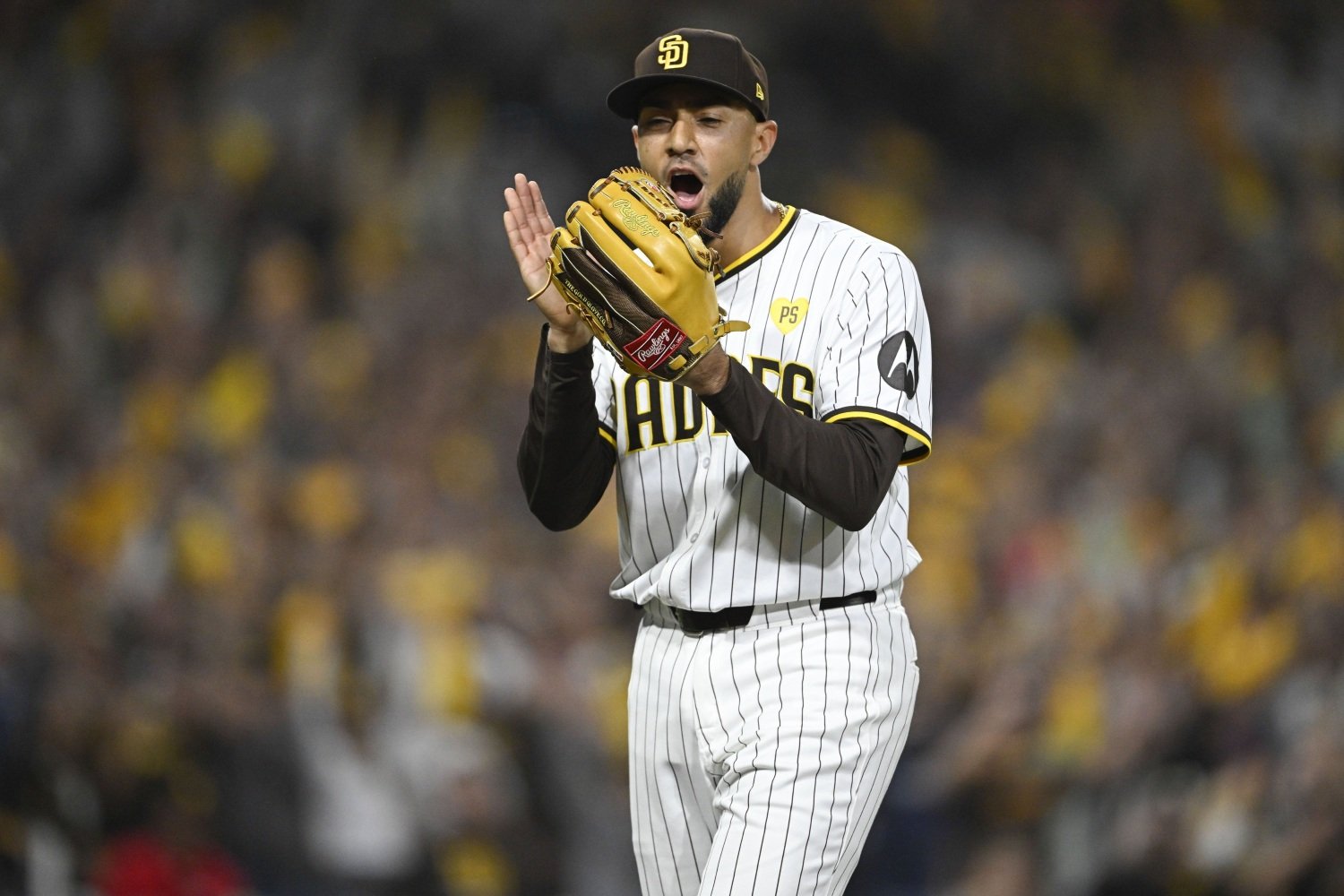
- RHP Robert Suarez
PADRES RECEIVE:
- OF Owen Caissie
- RHP Ben Brown
- RHP Javier Assad or LHP Jordan Wicks
This deal would make the Cubs about $24 million more expensive in 2025, and it would push in even more of the organization's chips on the success of this season. Cease will become a free agent after the campaign, one for which he'll be paid roughly $14 million in his final season of arbitration eligibility. The Cubs could try to sign him to an extension, of course, but as with Tucker, the chances of that feel slim. With another season similar to the one he just put up in San Diego, he'd be in line for an extremely lucrative free agency, probably topping $200 million in guaranteed money. Suarez, meanwhile, will make $10 million as a base salary, with incentives likely to push that figure to anywhere from $11-13 million if he serves as the primary closer—a likely outcome. After the season, he has a two-year, $16-million player option, so if he pitches well, he's likely to become a free agent, and if he gets hurt or goes off the rails, he's likely to be a long-term budget item with limited utility.
That's the bad news. The good news in this deal would be that Cease and Suarez would make the Cubs clear-cut NL Central favorites and a fairly imposing playoff opponent even for the Mets, Dodgers, and Phillies. With Cease at the front of their rotation, the team shouldn't miss Brown and either Assad or Wicks much, with whichever of the latter two they keep waiting alongside Cade Horton and Brandon Birdsell to reinforce a rotation of Cease, Justin Steele, Shota Imanaga, Jameson Taillon, and Boyd. Suarez has a 2.89 career ERA, and while his strikeout rates don't sparkle, he's shown good command and he throws 100 miles per hour. His stuff should limit hard contact a bit better than it actually does, and the Cubs are good at helping relievers make that particular improvement. He'd slot in as their relief ace, pushing Porter Hodge, Tyson Miller, Nate Pearson and the rest of the team's relievers into roles for which they're better suited.
Meanwhile, the Padres would shed all that money, nab their much-needed left fielder and collect long-term control of two solid arms, even if there's reliever risk attached to Brown and a lowish ceiling on Assad and Wicks. They'd gain the flexibility they need to round out an offseason that would keep them in the thick of playoff contention. It's not the absolute most they could get for Cease, but Suarez's contract—not just the high salary for one year, but the poisoned pill of that two-year option that makes it highly player-friendly—would be hard to move for value in its own trade. In this one, his inclusion would give the Padres the leverage to push for a low-level fourth piece, or to try to demand Kevin Alcántara instead of Caissie, if they're so inclined.
It's unlikely that this exact trade comes to fruition, of course—as unlikely as pointing due south by gazing at the horizon, without the aid of a compass. That's how guessing at offseason moves goes. We're using the information we have to get ourselves pointed in the right direction, knowing full well that we can't be precise without more and better data. Right now, what I can say with confidence is that the Cubs have money to spend and need to find the best way to use it, and that the Padres have money to move and need to get a lot of value out of moving it. That makes the two teams good trade partners, even in the specific shape of the right transaction is hard for us to pin down.





.thumb.JPG.19c99ddd60a76edf810c77d321439828.JPG)



Recommended Comments
Create an account or sign in to comment
You need to be a member in order to leave a comment
Create an account
Sign up for a new account in our community. It's easy!
Register a new accountSign in
Already have an account? Sign in here.
Sign In Now