


Matthew Trueblood
-
Posts
2,479 -
Joined
-
Last visited
-
Days Won
2
Content Type
Profiles
Joomla Posts 1
Chicago Cubs Videos
Chicago Cubs Free Agent & Trade Rumors, Notes, & Tidbits
2026 Chicago Cubs Top Prospects Ranking
News
2023 Chicago Cubs Draft Picks
Guides & Resources
2024 Chicago Cubs Draft Picks
The Chicago Cubs Players Project
2025 Chicago Cubs Draft Pick Tracker
2026 Chicago Cubs Draft Tracker: Picks & Bonuses
Blogs
Events
Forums
Store
Gallery
Everything posted by Matthew Trueblood
-
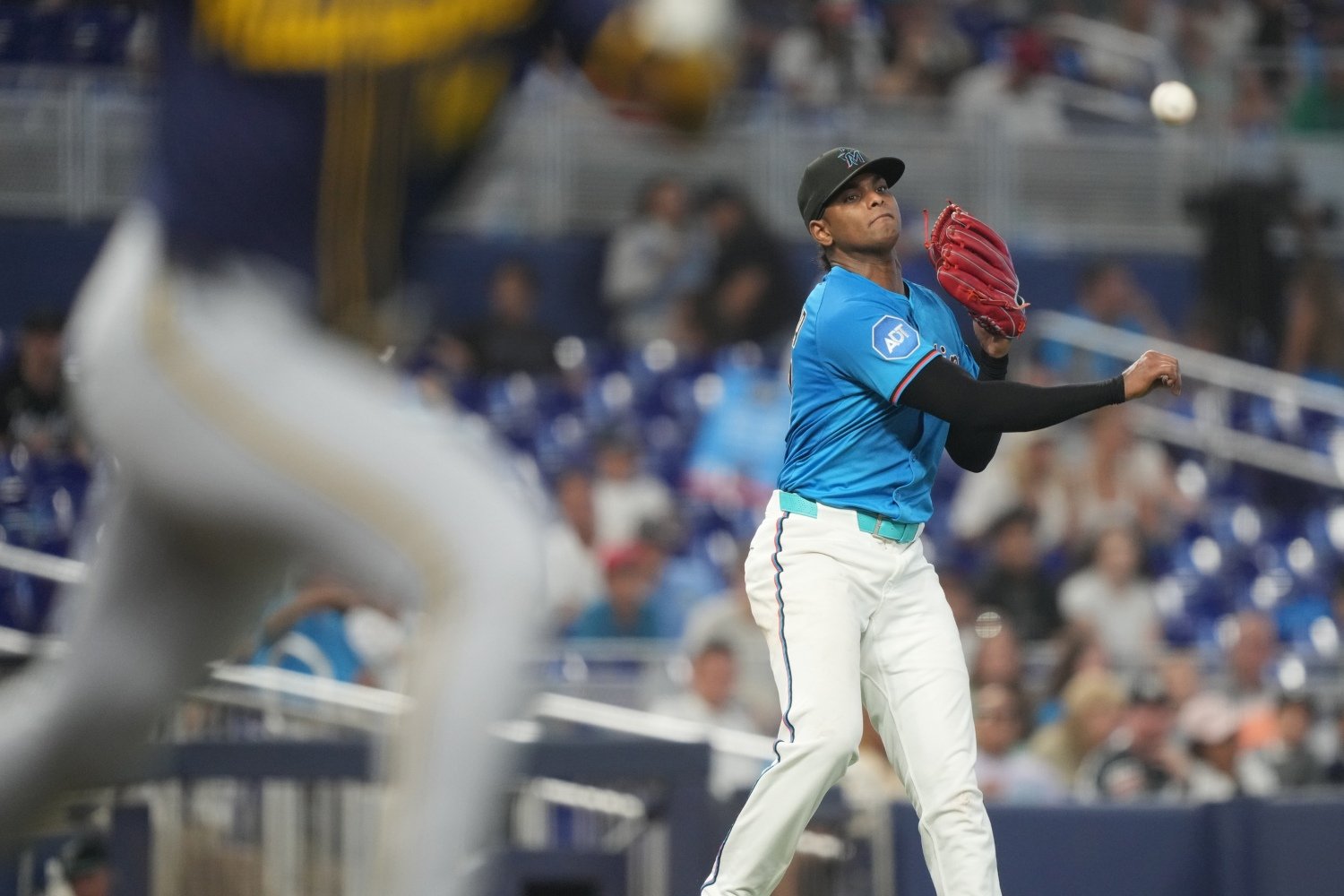 If the Chicago Cubs have their druthers at the 2025 MLB trade deadline, they'll reel in Marlins righthander Edward Cabrera to join the front end of their starting rotation. Cabrera has lowered his arm slot, gaining both more electricity in an already nasty arsenal and better command thereof. He's under team control for three years beyond 2025. The Cubs have scouted him closely and believe his stuff would play even better in front of their strong defensive group. Right now, though, Miami is holding out for both Owen Caissie and Jaxon Wiggins as the centerpieces of a deal for Cabrera, sources say, and the Cubs are unwilling to meet that asking price. Caissie is the team's top outfield prospect, and Wiggins is their best minor-league starter. Giving up both would leave a huge hole in the team's farm system, and the two teams are in a staring contest, each hoping the other blinks first. Since there's no guarantee that Cabrera's price tag will come down, the Chicago front office has also remained engaged with several other teams about controllable pitchers who would deliver huge impact down the stretch but can also be retained for another two or more seasons. Sources with knowledge of the discussions confirmed the team has talked to the Nationals about MacKenzie Gore, their southpaw ace, who is under one fewer year of team control than Cabrera—he can be a free agent after 2027—but has been more durable and consistently able to fill up the zone. The price tag on Gore is similar to that of Cabrera, though, and of the two, Miami is seen as the more likely trade partner. Nationals interim baseball chief Mike DeBartolo won't trade Gore unless he gets a deal he can't refuse. The Cubs have also stayed in touch with the Pirates, with whom they came close to striking a deal to acquire Mitch Keller earlier this summer. Keller is under team control, too, but his ceiling is lower than those of Gore or Cabrera and the contract extension he signed in March 2024 is more expensive than their remaining team control. As a result, a deal for Keller would likely include Caissie, but exclude Wiggins, which is the Cubs' preferred outcome. They're cultivating that as an alternative, but it's very much a fallback. The goal is to draw down the asking price on Cabrera. Meanwhile, the Twins' asking price on Joe Ryan is even higher than that for Cabrera or Gore, which (while not unfair, given Ryan's remaining control and his skill set) makes him off-limits for the Cubs. On the other hand, Jhoan Duran and Griffin Jax are relief aces under team control through 2027, and the price tags on each would be lower because of the difference of their roles and the utility thereof. The Cubs have discussed both with Minnesota, but they prefer Duran. In Caissie, Kevin Alcántara and Moisés Ballesteros, the Cubs have three strong prospects with ample experience at Triple-A Iowa, knocking loudly on the door to the majors. They don't have an ideal opening for any of the three, and they realize that the best utilization of the group lies in trading at least one to bolster this year's team as it pursues a division title, sources say. However, they're unwilling to trade any of the three for rental players. Thus, the hunt is on for a player who delivers value for the 2026 and 2027 versions of the team, and the front office is working hard to land someone who fits those criteria. There are a few wild cards in that picture, from the obvious (Sandy Alcantara, whose numbers still don't look good but whose stuff still impresses—and who would certainly not cost both Caissie and Wiggins) to the obscure (Jose Soriano, the Angels groundballer on whom the Cubs made calls earlier this year). The team is also ready, if needed, to pivot into a mode where they keep their top set of prospects and acquire a stack of rentals, instead. The problem there is that, with a thin farm system, they're actually better-positioned to acquire high-end players with control than to snag someone like Merrill Kelly. The second tier of Chicago prospects isn't as good as the parallel tiers for some of the other teams who will be talking to the Diamondbacks about Kelly. Finally, don't discount the possibility of the Cubs including an incumbent pitcher in a trade for one of these controllable arms. Specifically, one source suggested that Javier Assad might be bundled in with Caissie and more prospect capital to land Cabrera. Ben Brown is also available, if a team likes the idea of either helping him round out his arsenal to start or converting him to the bullpen. The team could even deal a pitcher in a separate deal, to recuperate prospect depth and create space, depending on their ability to land one of the big arms in their sights. These are the big fish the team is angling for, with the deadline just three and a half days away. Whether they can actually get any of them into the boat is, of course, the big question. It could come down to whether or not Hoyer is willing to make a rare exception and go beyond his comfort zone, in terms of value.
- 6 comments
-
- 1
-

-
- jhoan duran
- griffin jax
- (and 5 more)
-
Seiya Suzuki is an Overloaded Chess Piece. Can Cubs Provide Him Relief?
Matthew Trueblood posted an article in Cubs
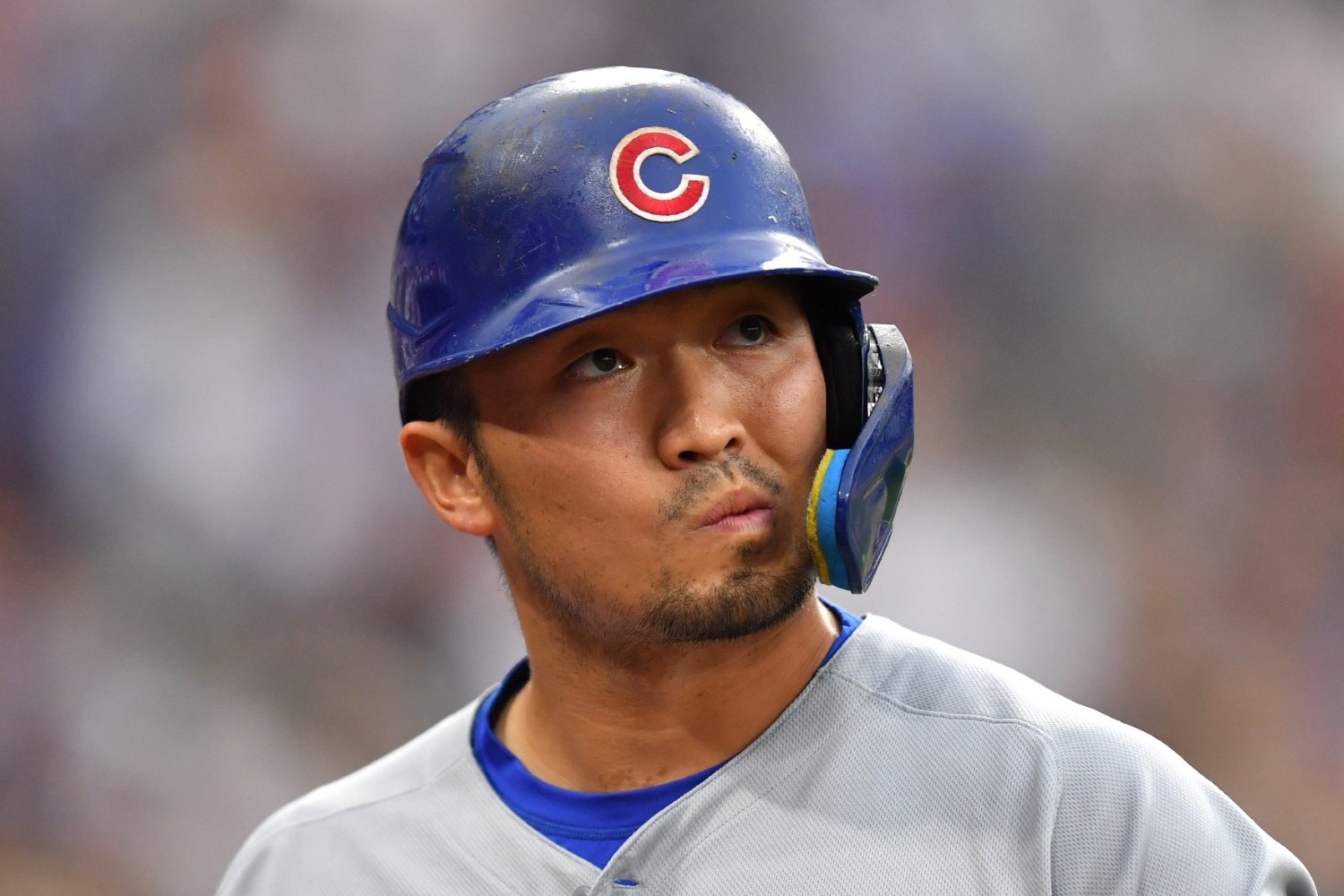 If the season ended today, Pete Crow-Armstrong would make a remarkable bit of baseball history. Right now, the highest slugging average ever for a player with an on-base percentage under .310 in a qualifying season is .531, by slugger Tony Armas of the 1984 Red Sox. Juan González slugged .529 in 1992, and Khris Davis slugged .524 in 2016. Crow-Armstrong, however, is slugging .554, despite his .303 on-base percentage. He's having the best power season ever, among players without any semblance of plate discipline—but, of course, that's a backhanded compliment. Specifically, Crow-Armstrong poses a major problem for the offense, because he's settled in as the regular cleanup hitter but he's an almost automatic out against lefties. He still gets to considerable power against southpaws, with 16 extra-base hits in 135 plate appearances, but his OBP against them is a ghastly .235. Obviously, he's been very good—from one end of the slash line to the other—against righties, but against lefties, he's killing them. Practically speaking, power and defense and even baserunning value be damned, there is no such thing as a playable hitter with a .235 OBP. Craig Counsell, therefore, needs to shield Crow-Armstrong from lefties as best he can. That, as much as the sheer power Crow-Armstrong has produced this year, motivated Counsell to move him to the place behind Seiya Suzuki in the batting order every day. Suzuki is the punisher. He's the one who makes a manager think twice about deploying a tough lefty against Kyle Tucker and Crow-Armstrong. Suzuki, who has taken an approach only slightly less aggressive than Crow-Armstrong's this year, is batting .261/.344/.530 against lefties. Because he's there, and because Tucker's splits usually aren't especially wide anyway, managers have every incentive to wait until after Suzuki to swap in their lefty. Moving Michael Busch up to the top of the order, between what are usually a couple of right-handed bats at the bottom of the lineup card and the Tucker-Suzuki danger zone, was partially justified by the fact that it puts two hitters between Busch (.190/.261/.317 against lefties) and Crow-Armstrong, instead of just one if they're batting fourth and sixth. This version of the lineup against righties limits the damage Crow-Armstrong's vulnerability to lefties can do, as best Counsell currently can. However, it doesn't do enough—because it can't. The league knows Crow-Armstrong will give them an out three times in every four trips if they just match him up left-on-left, and while Suzuki might deter them from going to their favorite southpaw early, they have no reason to hesitate about doing it once it's actually Crow-Armstrong's turn. Right now, Counsell is trying to use a mixture of Carson Kelly, Dansby Swanson and Ian Happ as protection for Crow-Armstrong. It's not enough; it's not nearly enough. Firstly, names matter in cases like these. Managers know the numbers, and receive them from their front offices, but they don't make decisions solely based on them. To spook them even slightly when they have a chance of setting up a .235 OBP matchup, you need a player whom they fear based on reputation and track record, rather than just theory. Kelly doesn't meet that threshold, and anyway, his breakout season has hinged more on hammering same-handed pitchers (.952 OPS against righties) than on attacking lefties (.760). Swanson is a strong hitter against lefties, but not such a strong one that he makes up for the free out teams get by swapping in a lefty to take down the guy in front of him. Happ has always been better batting left-handed, and remains so, and worse, everyone knows it. Could that lead the Cubs to be more aggressive than we'd expect in the trade market for Eugenio Suárez, or any other right-handed bat who could hammer lefties for them? Maybe; maybe not. Firstly, Suzuki and Tucker have slumped lately, which has exaggerated the impact of the weak link that is Crow-Armstrong any time a lefty comes in. When they're right, it doesn't matter as much if Crow-Armstrong makes a quick and empty out in such matchups. Secondly, while Kelly, Swanson, Happ, Nico Hoerner, Justin Turner and even the eventually returning Miguel Amaya are imperfect as lefty-mashing punishers behind Crow-Armstrong, they're much better options than many teams in a similar situation would have. Thirdly, the right target might not be out there, unless it be Suárez himself. Turner isn't going anywhere, so a right-hitting first baseman like Carlos Santana (technically a switch-hitter, but great against lefties) or Yandy Díaz is unlikely to come aboard. Righty outfield bats Taylor Ward, Harrison Bader and Ramón Laureano are each having good enough seasons to help in the middle of the order, but it would be hard to justify (or sell in the clubhouse) starting any of them over Happ against righties or pinch-hitting for him every time a lefty comes in. Bader could actually be a platoon partner for Crow-Armstrong himself, but it just doesn't seem practical or realistic that he would enter key games at the expense of the team's best defender, come September or October. Only at third base is there even a halfway open door to an upgrade who also bats right-handed. Finally, there's the upside and the long-term benefits of standing pat to consider. The Cubs hoped Turner would deliver punch against lefties, allowing them to sit Busch more often and softening the pain of any exposure Crow-Armstrong would suffer. All along, though, they've also had the option of getting rid of either Vidal Bruján or Jon Berti and calling up Kevin Alcántara, a righty-hitting center fielder who is batting .338/.427/.615 against lefties this year. That would mean sitting Crow-Armstrong against lefties and/or pinch-hitting for him when lefty relievers come in, but it's a compelling potential move—provided they don't trade Alcántara this week. Since even bringing in Suárez would eat into Matt Shaw's playing time, that has to be weighed in, too. It seems unlikely that Shaw will earn a place in the heart of the order, even against lefties and at the end of the season, but his recent surge is real and giving him everyday playing time has value of its own. He might hit lefties well enough to make an expensive external move feel foolish, anyway. Right now, Suzuki is being asked to protect hitters in both directions in the batting order. Tucker's OPS against lefties this season would be the worst of his career, and Busch and Crow-Armstrong are downright bad against them. The Cubs need two or three righty sluggers who can thwart teams when they try to slice neatly through the lefty-laden heart of the lineup. However, they might need to find those alternatives and complementary pieces within their own ranks, rather than going out and trading for a righty bat.
 -
Image courtesy of © Patrick Gorski-Imagn Images If the season ended today, Pete Crow-Armstrong would make a remarkable bit of baseball history. Right now, the highest slugging average ever for a player with an on-base percentage under .310 in a qualifying season is .531, by slugger Tony Armas of the 1984 Red Sox. Juan González slugged .529 in 1992, and Khris Davis slugged .524 in 2016. Crow-Armstrong, however, is slugging .554, despite his .303 on-base percentage. He's having the best power season ever, among players without any semblance of plate discipline—but, of course, that's a backhanded compliment. Specifically, Crow-Armstrong poses a major problem for the offense, because he's settled in as the regular cleanup hitter but he's an almost automatic out against lefties. He still gets to considerable power against southpaws, with 16 extra-base hits in 135 plate appearances, but his OBP against them is a ghastly .235. Obviously, he's been very good—from one end of the slash line to the other—against righties, but against lefties, he's killing them. Practically speaking, power and defense and even baserunning value be damned, there is no such thing as a playable hitter with a .235 OBP. Craig Counsell, therefore, needs to shield Crow-Armstrong from lefties as best he can. That, as much as the sheer power Crow-Armstrong has produced this year, motivated Counsell to move him to the place behind Seiya Suzuki in the batting order every day. Suzuki is the punisher. He's the one who makes a manager think twice about deploying a tough lefty against Kyle Tucker and Crow-Armstrong. Suzuki, who has taken an approach only slightly less aggressive than Crow-Armstrong's this year, is batting .261/.344/.530 against lefties. Because he's there, and because Tucker's splits usually aren't especially wide anyway, managers have every incentive to wait until after Suzuki to swap in their lefty. Moving Michael Busch up to the top of the order, between what are usually a couple of right-handed bats at the bottom of the lineup card and the Tucker-Suzuki danger zone, was partially justified by the fact that it puts two hitters between Busch (.190/.261/.317 against lefties) and Crow-Armstrong, instead of just one if they're batting fourth and sixth. This version of the lineup against righties limits the damage Crow-Armstrong's vulnerability to lefties can do, as best Counsell currently can. However, it doesn't do enough—because it can't. The league knows Crow-Armstrong will give them an out three times in every four trips if they just match him up left-on-left, and while Suzuki might deter them from going to their favorite southpaw early, they have no reason to hesitate about doing it once it's actually Crow-Armstrong's turn. Right now, Counsell is trying to use a mixture of Carson Kelly, Dansby Swanson and Ian Happ as protection for Crow-Armstrong. It's not enough; it's not nearly enough. Firstly, names matter in cases like these. Managers know the numbers, and receive them from their front offices, but they don't make decisions solely based on them. To spook them even slightly when they have a chance of setting up a .235 OBP matchup, you need a player whom they fear based on reputation and track record, rather than just theory. Kelly doesn't meet that threshold, and anyway, his breakout season has hinged more on hammering same-handed pitchers (.952 OPS against righties) than on attacking lefties (.760). Swanson is a strong hitter against lefties, but not such a strong one that he makes up for the free out teams get by swapping in a lefty to take down the guy in front of him. Happ has always been better batting left-handed, and remains so, and worse, everyone knows it. Could that lead the Cubs to be more aggressive than we'd expect in the trade market for Eugenio Suárez, or any other right-handed bat who could hammer lefties for them? Maybe; maybe not. Firstly, Suzuki and Tucker have slumped lately, which has exaggerated the impact of the weak link that is Crow-Armstrong any time a lefty comes in. When they're right, it doesn't matter as much if Crow-Armstrong makes a quick and empty out in such matchups. Secondly, while Kelly, Swanson, Happ, Nico Hoerner, Justin Turner and even the eventually returning Miguel Amaya are imperfect as lefty-mashing punishers behind Crow-Armstrong, they're much better options than many teams in a similar situation would have. Thirdly, the right target might not be out there, unless it be Suárez himself. Turner isn't going anywhere, so a right-hitting first baseman like Carlos Santana (technically a switch-hitter, but great against lefties) or Yandy Díaz is unlikely to come aboard. Righty outfield bats Taylor Ward, Harrison Bader and Ramón Laureano are each having good enough seasons to help in the middle of the order, but it would be hard to justify (or sell in the clubhouse) starting any of them over Happ against righties or pinch-hitting for him every time a lefty comes in. Bader could actually be a platoon partner for Crow-Armstrong himself, but it just doesn't seem practical or realistic that he would enter key games at the expense of the team's best defender, come September or October. Only at third base is there even a halfway open door to an upgrade who also bats right-handed. Finally, there's the upside and the long-term benefits of standing pat to consider. The Cubs hoped Turner would deliver punch against lefties, allowing them to sit Busch more often and softening the pain of any exposure Crow-Armstrong would suffer. All along, though, they've also had the option of getting rid of either Vidal Bruján or Jon Berti and calling up Kevin Alcántara, a righty-hitting center fielder who is batting .338/.427/.615 against lefties this year. That would mean sitting Crow-Armstrong against lefties and/or pinch-hitting for him when lefty relievers come in, but it's a compelling potential move—provided they don't trade Alcántara this week. Since even bringing in Suárez would eat into Matt Shaw's playing time, that has to be weighed in, too. It seems unlikely that Shaw will earn a place in the heart of the order, even against lefties and at the end of the season, but his recent surge is real and giving him everyday playing time has value of its own. He might hit lefties well enough to make an expensive external move feel foolish, anyway. Right now, Suzuki is being asked to protect hitters in both directions in the batting order. Tucker's OPS against lefties this season would be the worst of his career, and Busch and Crow-Armstrong are downright bad against them. The Cubs need two or three righty sluggers who can thwart teams when they try to slice neatly through the lefty-laden heart of the lineup. However, they might need to find those alternatives and complementary pieces within their own ranks, rather than going out and trading for a righty bat. View full article
-
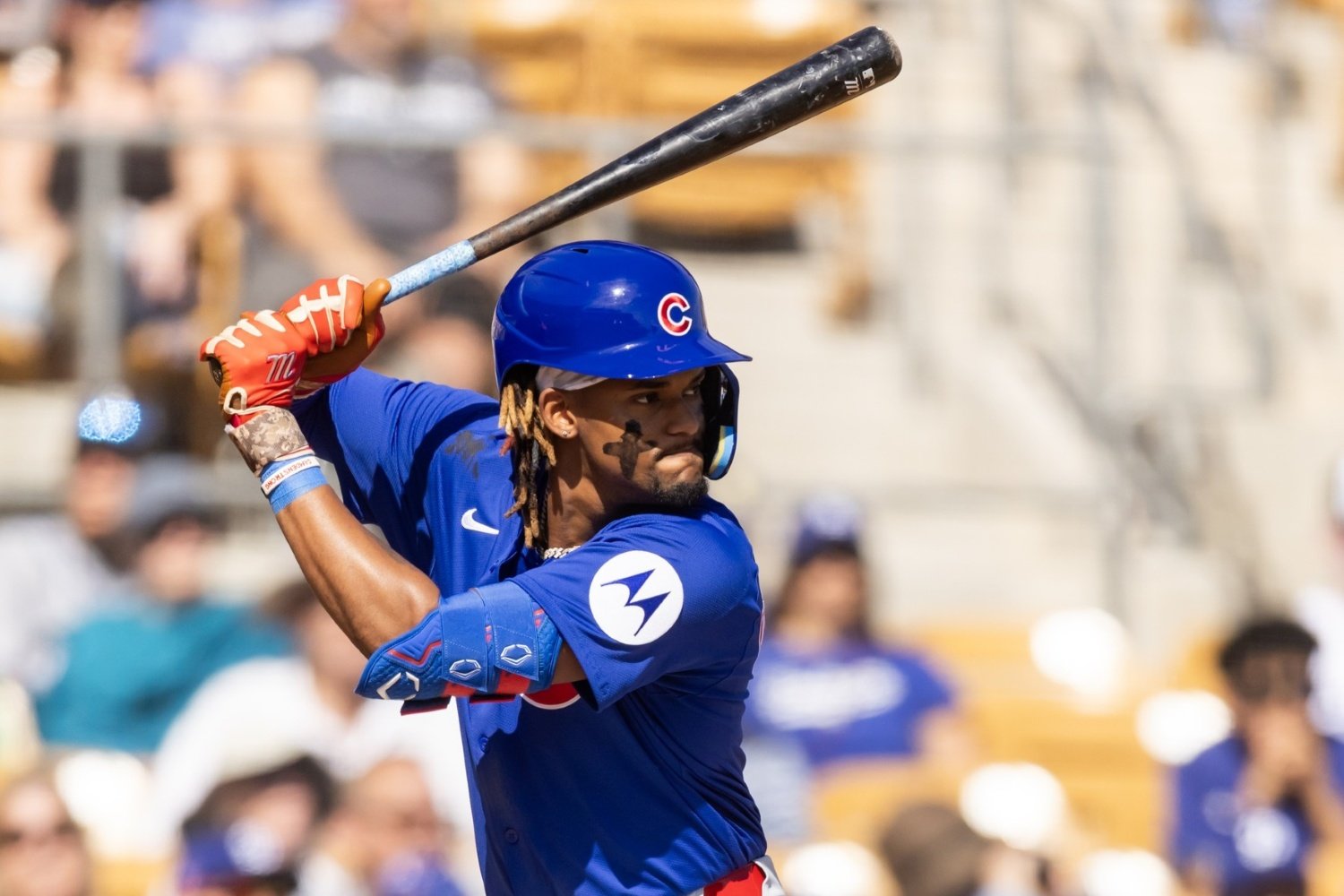 One fascinating dynamic, as the trade deadline looms closer by the hour, is that nearly all teams throughout Major League Baseball believe their rightful place is among the contenders. A few (like the Arizona Diamondbacks, who traded Josh Naylor to the Seattle Mariners Thursday night and have made Eugenio Suárez, Zac Gallen and Merrill Kelly available in talks) are ready to admit that this won't be their year, but vanishingly few teams are ready to accept even a medium-term rebuild. Arizona vociferously claims to be planning to contend in 2026. Ditto the Baltimore Orioles, even though they're open for business on impending free agents. The Minnesota Twins are ready to sell, but not to turn their attention beyond 2026. Even the West Sacramento Athletics are telling teams they prefer prospects who will be ready to contribute almost immediately. In such an environment, the Chicago Cubs are well-positioned. Their farm system isn't as deep as it needs to be, going forward, thanks to what look like some mid-round swings and misses from the last few drafts and some recent signees from the Dominican Republic and Venezuela who are struggling to find traction. Their Low-A affiliate in Myrtle Beach is full of players languishing, rather than smoothly scaling the professional baseball ladder. However, in the upper levels, there are some exciting players who have found the keys and unlocked their talent. Let's talk about a fistful of players who will be brought up often in trade conversations. The Bats in Iowa I won't bore you with a full recapitulation of Owen Caissie's torrid two months. He's been talked about a ton, and with good reason. Nor should it be surprising to anyone, by now, to hear Moisés Ballesteros come up in trade rumors. They've had such unreservedly good years that teams will be thrilled to bring them in, and either could be slotted right into a big-league lineup for the final two months of this season. Ballesteros, though, comes with those questions about his future as a catcher, on which hinges his hope for future stardom. Of the two, while Caissie is talked about more, I think Ballesteros might actually be the more likely to be traded. It's not hard to imagine a team looking at his bat and deciding to roll the dice on his receiving, especially with the automated ball-strike challenge system set to come to the majors in 2026. There are—count 'em—three other noteworthy hitters in Iowa, too. Kevin Alcántara is the most famous name in the second group, and now might be the Cubs' last chance to trade him for anything of substantial value. He's having a strong season with Iowa, not just in terms of surface-level stats (those are fine, but unremarkable, given his tools and experience) but in terms of the process stuff you wanted to see from him. Alcántara's been more aggressive on hittable pitches and more selective around the edges. His 90th-percentile exit velocity is up from 105 miles per hour to 107.6, a huge step forward, and he's whiffing less on breaking and offspeed stuff. That last part is his biggest bugaboo, and he doesn't have to be even average at it; he just has to get it out of the 'disastrous' zone, and he's done so against Triple-A pitching this year. The thing about Alcántara is, despite his youth, he's in his final year of optionability. He won't have much trade value at all this winter, absent a chance to show what he can do in the majors down the stretch, because he'll have to make the team out of spring training and next year and stay up from then on. As a result, the Cubs will be more open to moving him than a team would normally be with a player who shows these tools and has these limiting factors on their trade value. Much depends on what the team can really get done, but if they make the number and magnitude of moves they hope to make in the next week, Alcántara could be a name on the move. There's far less urgency to trade Jonathon Long, who isn't on the 40-man roster and doesn't even need to be added to it this winter. However, Long is a right-hitting first baseman, which is not the kind of profile you allow to stop a key trade from getting done. He's been very good this year for Iowa. After a tough adjustment period in June, he's raking again, and his season-long numbers include not just good results, but encouraging exit velocities (107 MPH 90th-percentile EV), solid approach metrics and above-average contact skills. I think the Cubs would prefer to keep him; he'd be a good candidate to be a part-time DH and platoon partner to Michael Busch next year. Again, though, his under-the-hood data will put him on some teams' wish lists and can't be treated as untouchable. James Triantos is a mess. That's ungenerous, and unfortunate, but so has his season been. Injuries have interrupted Triantos's efforts to establish himself at Triple A, but his approach is the real problem. He doesn't show good pitch recognition or plate discipline. While he still has the feel for contact and has shown an uptick in power this year, the tools just aren't translating to skills—and it doesn't feel especially likely that they will. Because he has to be added to the 40-man roster or be exposed to the Rule 5 Draft this winter, though, the Cubs might look to make him a throw-in somewhere. The Currency of the Game: Young Arms Jaxon Wiggins is the first name Hoyer will hear every time he picks up the phone this week. The Cubs don't have the depth (or the demonstrated ability to develop pitchers like this) to move a hurler like Wiggins without getting something huge in return, but then again, he's the kind of arm who can net a team something huge in return. The season he's having (striking out over 31% of opposing batters and allowing less than a baserunner per inning, and now thriving at Double-A Knoxville) is enough to put a pitcher very much on the map, as evidenced by his ascension into the top 100 on MLB Pipeline's latest update of that list. Beyond Wiggins, there aren't a lot of arms for whom teams will clamor when they call the Cubs. The rise of Ryan Gallagher has been excellently documented here at NSBB by Jason Ross, and Brandon Birdsell is back in the mix at Iowa, but Birdell is missing about 2 mph from his fastball so far. Gallagher is the guy teams will prefer, with a deep mix and a fastball shape that grades better than most Cubs pitching prospects' do. This is not an exhaustive list, but it's the top collection of names who could pry loose top assets for the team. The roster circumstances of (especially) Alcántara and Triantos might make moves more likely; the much-desired proximity of (especially) Caissie, Ballesteros and Long make them the chips who could level up a trade pursuit. It's pitching depth that makes or breaks organizations, though, and the Cubs have only a few hurlers teams will be excited to acquire. It will be interesting to see whether they feel that they can afford to move any of those arms.
 -
Image courtesy of © Mark J. Rebilas-Imagn Images One fascinating dynamic, as the trade deadline looms closer by the hour, is that nearly all teams throughout Major League Baseball believe their rightful place is among the contenders. A few (like the Arizona Diamondbacks, who traded Josh Naylor to the Seattle Mariners Thursday night and have made Eugenio Suárez, Zac Gallen and Merrill Kelly available in talks) are ready to admit that this won't be their year, but vanishingly few teams are ready to accept even a medium-term rebuild. Arizona vociferously claims to be planning to contend in 2026. Ditto the Baltimore Orioles, even though they're open for business on impending free agents. The Minnesota Twins are ready to sell, but not to turn their attention beyond 2026. Even the West Sacramento Athletics are telling teams they prefer prospects who will be ready to contribute almost immediately. In such an environment, the Chicago Cubs are well-positioned. Their farm system isn't as deep as it needs to be, going forward, thanks to what look like some mid-round swings and misses from the last few drafts and some recent signees from the Dominican Republic and Venezuela who are struggling to find traction. Their Low-A affiliate in Myrtle Beach is full of players languishing, rather than smoothly scaling the professional baseball ladder. However, in the upper levels, there are some exciting players who have found the keys and unlocked their talent. Let's talk about a fistful of players who will be brought up often in trade conversations. The Bats in Iowa I won't bore you with a full recapitulation of Owen Caissie's torrid two months. He's been talked about a ton, and with good reason. Nor should it be surprising to anyone, by now, to hear Moisés Ballesteros come up in trade rumors. They've had such unreservedly good years that teams will be thrilled to bring them in, and either could be slotted right into a big-league lineup for the final two months of this season. Ballesteros, though, comes with those questions about his future as a catcher, on which hinges his hope for future stardom. Of the two, while Caissie is talked about more, I think Ballesteros might actually be the more likely to be traded. It's not hard to imagine a team looking at his bat and deciding to roll the dice on his receiving, especially with the automated ball-strike challenge system set to come to the majors in 2026. There are—count 'em—three other noteworthy hitters in Iowa, too. Kevin Alcántara is the most famous name in the second group, and now might be the Cubs' last chance to trade him for anything of substantial value. He's having a strong season with Iowa, not just in terms of surface-level stats (those are fine, but unremarkable, given his tools and experience) but in terms of the process stuff you wanted to see from him. Alcántara's been more aggressive on hittable pitches and more selective around the edges. His 90th-percentile exit velocity is up from 105 miles per hour to 107.6, a huge step forward, and he's whiffing less on breaking and offspeed stuff. That last part is his biggest bugaboo, and he doesn't have to be even average at it; he just has to get it out of the 'disastrous' zone, and he's done so against Triple-A pitching this year. The thing about Alcántara is, despite his youth, he's in his final year of optionability. He won't have much trade value at all this winter, absent a chance to show what he can do in the majors down the stretch, because he'll have to make the team out of spring training and next year and stay up from then on. As a result, the Cubs will be more open to moving him than a team would normally be with a player who shows these tools and has these limiting factors on their trade value. Much depends on what the team can really get done, but if they make the number and magnitude of moves they hope to make in the next week, Alcántara could be a name on the move. There's far less urgency to trade Jonathon Long, who isn't on the 40-man roster and doesn't even need to be added to it this winter. However, Long is a right-hitting first baseman, which is not the kind of profile you allow to stop a key trade from getting done. He's been very good this year for Iowa. After a tough adjustment period in June, he's raking again, and his season-long numbers include not just good results, but encouraging exit velocities (107 MPH 90th-percentile EV), solid approach metrics and above-average contact skills. I think the Cubs would prefer to keep him; he'd be a good candidate to be a part-time DH and platoon partner to Michael Busch next year. Again, though, his under-the-hood data will put him on some teams' wish lists and can't be treated as untouchable. James Triantos is a mess. That's ungenerous, and unfortunate, but so has his season been. Injuries have interrupted Triantos's efforts to establish himself at Triple A, but his approach is the real problem. He doesn't show good pitch recognition or plate discipline. While he still has the feel for contact and has shown an uptick in power this year, the tools just aren't translating to skills—and it doesn't feel especially likely that they will. Because he has to be added to the 40-man roster or be exposed to the Rule 5 Draft this winter, though, the Cubs might look to make him a throw-in somewhere. The Currency of the Game: Young Arms Jaxon Wiggins is the first name Hoyer will hear every time he picks up the phone this week. The Cubs don't have the depth (or the demonstrated ability to develop pitchers like this) to move a hurler like Wiggins without getting something huge in return, but then again, he's the kind of arm who can net a team something huge in return. The season he's having (striking out over 31% of opposing batters and allowing less than a baserunner per inning, and now thriving at Double-A Knoxville) is enough to put a pitcher very much on the map, as evidenced by his ascension into the top 100 on MLB Pipeline's latest update of that list. Beyond Wiggins, there aren't a lot of arms for whom teams will clamor when they call the Cubs. The rise of Ryan Gallagher has been excellently documented here at NSBB by Jason Ross, and Brandon Birdsell is back in the mix at Iowa, but Birdell is missing about 2 mph from his fastball so far. Gallagher is the guy teams will prefer, with a deep mix and a fastball shape that grades better than most Cubs pitching prospects' do. This is not an exhaustive list, but it's the top collection of names who could pry loose top assets for the team. The roster circumstances of (especially) Alcántara and Triantos might make moves more likely; the much-desired proximity of (especially) Caissie, Ballesteros and Long make them the chips who could level up a trade pursuit. It's pitching depth that makes or breaks organizations, though, and the Cubs have only a few hurlers teams will be excited to acquire. It will be interesting to see whether they feel that they can afford to move any of those arms. View full article
- 3 replies
-
- 1
-

-
- jonathon long
- owen caissie
- (and 5 more)
-
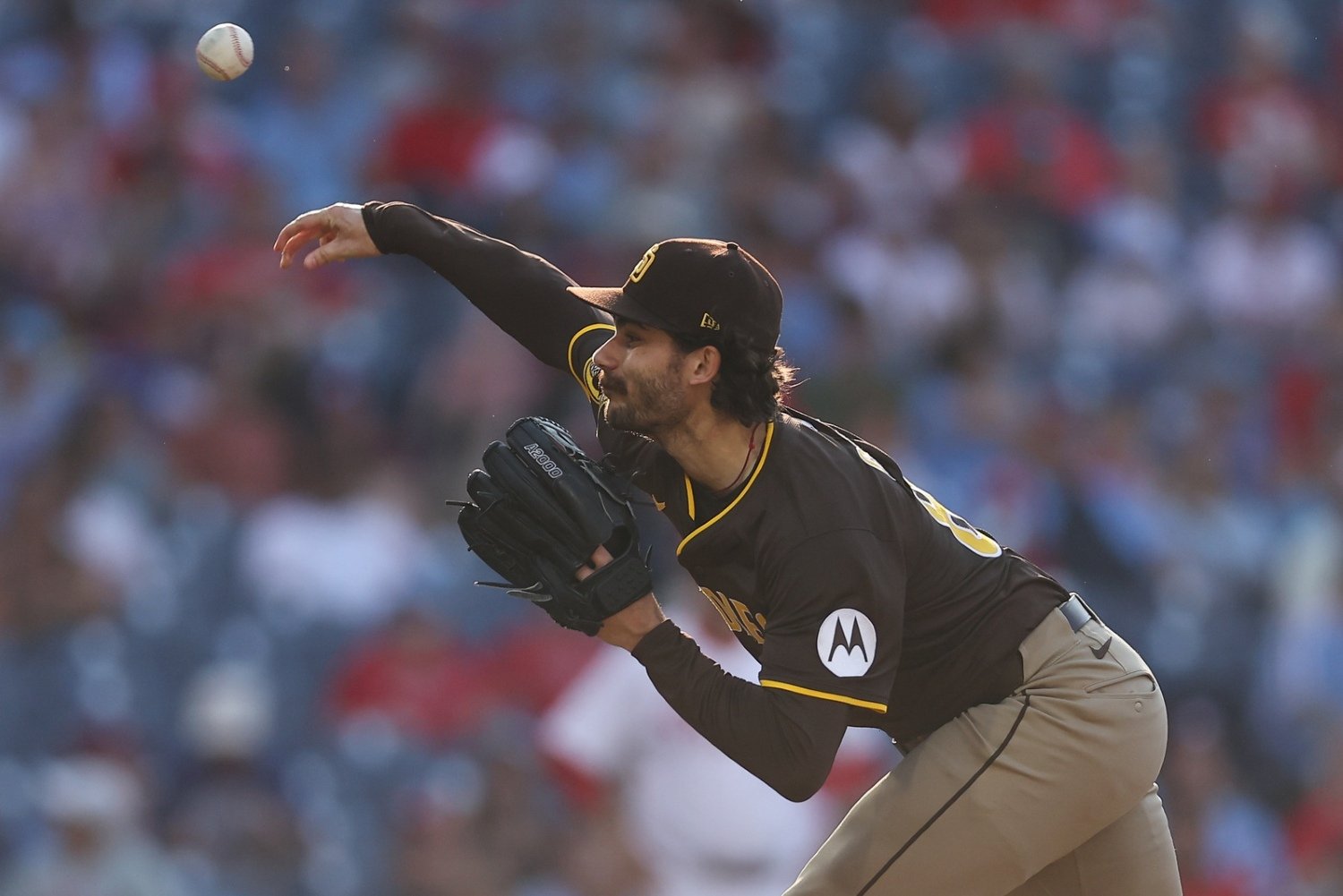 One week from the 2025 MLB trade deadline, it feels important that we identify not only whom the Cubs are most interested in, but who's out there in the wide world of options—and how all those possible targets compare to one another. Jed Hoyer and Carter Hawkins will not successfully plug every hole on this team or land their ideal players, so ranking all their options gives us a way to evaluate competing possibilities. For the sake of simplicity, I've ranked these 105 players from throughout the league according to their likely impact on the pursuit of a championship in 2025. That slightly reduces (but does not eliminate, for reasons we can discuss further as we go) the role of team control in these rankings, but leaves very present the role of contract status and roster flexibility. Here's the list, with the players to whom we've heard the Cubs meaningfully linked getting some real discussion and the rest merely getting identification. Joe Ryan, RHP, Twins: Although durability is a minor question, Ryan is pitching like an ace this year, and he's affordable—which would mean, for instance, that the Cubs could absorb some money on an underwater contract in a separate deal even after forking over much of their prospect capital to land Ryan. The big hurdle here is that, as an All-Star hurler with 2.5 years of team control remaining, Ryan would cost a ton. Start with Moisés Ballesteros and Jaxon Wiggins, and don't quite stop there. Eugenio Suárez, 3B, Diamondbacks: This one has been talked almost to death. Suffice it to say, here, that Suárez's power and positional fit make him extremely in-demand, which might mean that Arizona will get a return from him considerably richer than we usually see for rental bats. The Cubs very definitely have interest, but the price could balloon beyond their comfort zone. Dylan Cease, RHP, Padres: We discussed how this could come together earlier Thursday. It's a highly unlikely fit, based on the needs and constraints of each side. Emmanuel Clase, RHP, Guardians: It's not a reflection of this list being posted here that the Cubs are "in," to one degree or another, on the top handful of names on the board. That fact is just a reflection of the urgency the front office feels to shore up their weaknesses. Now, with that said, this is the first player listed whom I profoundly doubt will actually be dealt at all. One member of a big-league front office earnestly believes that Cleveland leaked their potential willingness to trade Clase or Cade Smith just to drive down what the Twins might get for their own top relievers, who are actually available. Speaking of which.... Jhoan Duran, RHP, Twins: The Cubs prefer Duran to Griffin Jax, as most clubs do. However, the price tag on him isn't much lower than that on Ryan, so if they can get together with Minnesota on a big deal, they might as well make it be for the starter. Edward Cabrera, RHP, Marlins: This, too, we have already discussed in detail this week. Cabrera is a whole new pitcher this year: new arm slot, new mix, new injury issues. (It was his shoulder the last two years. Now that he's dropped his slot a bit, it's his elbow.) He pitched very, very well in front of (among others) Cubs scouts in his latest start for Miami. Jacob deGrom, RHP, Rangers: Obviously, he could have a huge impact for someone, at the front end of the rotation come October. Just as obviously, his contract would be so burdensome that an acquiring team might have to move someone else just to accommodate him, and even more obviously, he's a major injury risk. Nathan Eovaldi, RHP, Rangers MacKenzie Gore, LHP, Nationals: The Cubs are monitoring this one closely, but the front-office shakeup in Washington (while enough to open the door to a possible deal at all) seems to have most parties a bit unsure of what the price tag will be, or how to meet it. Jarren Duran, OF, Red Sox Seth Lugo, RHP, Royals: Kansas City and the Cubs were in contact about Lugo way back at the beginning of the month. Then, for a bit, the Cubs hoped and believed they could move the Royals over to a discussion about Kris Bubic, a lefty under control through 2026 who's had an even better season than Lugo's. Now, with Bubic having had a shaky first start out of the break, that's back in a holding pattern, and it's Lugo on whom there's more momentum. The Royals love Owen Caissie; the Cubs won't give him up without getting a player under control beyond 2025. David Bednar, RHP, Pirates: Chicago has long loved Bednar, who's had some very visible wobbles the last two years but can be as unhittable as almost any relief ace in baseball—and has been, for most of this year. Ryan O’Hearn, 1B/OF, Orioles Merrill Kelly, RHP, Diamondbacks: As I reported earlier today, the Cubs will lean hard toward Kelly if they end up choosing between the two available rental starters from Arizona. While his stuff isn't especially sexy, Kelly is an underrated mid-rotation arm, and would be a great get. Kris Bubic, LHP, Royals: See the Lugo entry. Sandy Alcántara, RHP, Marlins: My sense is that the Cubs have cooled on Alcántara, partly because he hasn't yet locked things back in since returning from Tommy John surgery—and partly because the Marlins seem content to bet that he will and try trading him for more this winter. Jesús Sánchez, OF, Marlins Cade Smith, RHP, Guardians Robert Suárez, RHP, Padres: A move that might materialize as A.J. Preller tries to move money around and get all the items on his shopping list, this one would reinforce the Cubs' pen nicely. His peculiar contract structure would probably limit the prospect price, but the Cubs would have to spend big prospect capital elsewhere to get an affordable starter and/or bat after doing this. Ryan Helsley, RHP, Cardinals Griffin Jax, RHP, Twins Willi Castro, UTIL, Twins: Chicago has asked about him repeatedly and he's almost a lock to move. This would be a backup and/or insurance policy across the outfield, a platoon partner for both Matt Shaw and Nico Hoerner, and a well-liked clubhouse guy to round out the bench, all rolled into one. Drew Rasmussen, RHP, Rays: No buzz on this one recently, although there was a sense last month that the Rays would be open to moving Rasmussen. He's under contract through 2026, and comes with huge injury baggage, but he's a high-end starter when he can stay on the mound. Taylor Ward, OF, Angels Zac Gallen, RHP, Diamondbacks: See the Kelly entry. Pete Fairbanks, RHP, Rays: One report has the Rays hoping to retain Fairbanks, and he's very much the kind of player and person their clubhouse would miss as they chase a Wild Card berth in the American League. On the other hand, he's very much the kind of player the Rays usually end up cashing in while they can, regardless of what they say. The price tag on him is low enough to make him preferable to some of the other right-handed relievers of near-identical skill. Harrison Bader, OF, Twins: I mentioned earlier today that Bader is a fit the team has explored a bit. That doesn't mean he'll actually end up with the Cubs; he's more likely to go to a team with a more pronounced and urgent need. Carlos Santana, 1B/DH, Guardians Sonny Gray, RHP, Cardinals Ryan Jeffers, C, Twins Yandy Díaz, 1B, Rays: If Justin Turner weren't essential to the structural integrity of the Cubs clubhouse, this would be a good fit. But Turner stays, so Díaz isn't coming. Mitch Keller, RHP, Pirates: Hoyer and Ben Cherington have talked about deals that would send Keller to the Cubs alone, and about package deals that would include Bednar or others. Ultimately, though, the intradivisional trade stigma might foil any fit. The Yankees seem to like Keller more than the Cubs do, anyway. Ryan McMahon, 3B, Rockies: His glove is underrated. His bat is underrated. His contract, however, is a real drag on his trade value, and the Rockies seem to want to keep him, even amid a historically atrocious season. If that changes very near the deadline, the Cubs might already have directed the funds they can add to their payroll for the stretch run elsewhere. Charlie Morton, RHP, Orioles: Jason Ross wrote a great piece about why Morton is better than you think, especially lately. (Alas, we must note, Morton has backslid slightly since then.) Trevor Larnach, OF, Twins Cedric Mullins, OF, Orioles Luis Severino, RHP, Athletics: Still a possibility, but this idea had a bit more steam a fortnight ago. Aaron Bummer, LHP, Team from Suburban Atlanta Ramón Laureano, OF, Orioles: Righty bats who can back up Ian Happ, Kyle Tucker and Seiya Suzuki in case of injuries or (in Happ's case) shaky showings are a little-discussed profile the team is looking at. Like Bader, though, Laureano likely ends up somewhere else. Kyle Freeland, LHP, Rockies: It's been a highly volatile career for the hometown kid who stayed and signed an extension to be a pitcher at elevation. He's having a good campaign this year, though, and could fortify a rotation even in one of the long series in October. Zack Littell, RHP, Rays Adrian Houser, RHP, White Sox: His transformation has been a bit oversold. His surface numbers tell some kind lies. Still, he's intriguing; he'd deliver some stability at the back end of the Cubs' currently paper-thin rotation. They know him well, not only because Craig Counsell managed him in Milwaukee but because Houser finished last season with the Triple-A Iowa Cubs. Danny Coulombe, LHP, Twins John Schreiber, RHP, Royals: Two righty relievers in the middle of this list got significant bumps up on the basis of their roster flexibility. Schreiber is one. He can still be optioned to the minors, so though the team control isn't long-term and the sheer stuff is more seventh inning than ninth, he's a fantastic candidate to add to a team hoping that improved health will give them ample depth come September and October. Anthony Bender, RHP, Marlins: Bender is the other guy who gets the "still optionable" bump here. Both guys would have been in the 50s, anyway, but it's important to have the ability to shuttle fresh arms into the roster late in a season, with a close race on for the division crown. Nathaniel Lowe, 1B, Nationals Carlos Estévez, RHP, Royals: This is only the first year of a two-year deal worth $22 million, so if the Cubs do acquire him (likely as part of a Lugo or Bubic move), they'd want to make sure they weren't paying a premium in terms of talent. Dennis Santana, RHP, Pirates: Though less famous and less dominant than Bednar, Santana could be a tremendous pickup from Pittsburgh. He has a plus slider, and has figured out how to really fill up the zone over the last year and a half. He's under team control through 2026. Brock Burke, LHP, Angels Adolis García, OF, Rangers Michael Soroka, RHP, Nationals: I've consistently heard that the Cubs would have some interest in Soroka, at the right price. I wonder, though, if that was more true a few weeks ago, when he might have been an early move. Now, with Javier Assad getting ready to go back out on a rehab assignment, acquiring Soroka would feel almost like aiming too low. The Cubs are only likely to deal for one starter; they need to make it count. That said, the injury-prone Soroka has shown some really good stuff under the hood this year. Luis Robert Jr., OF, White Sox Phil Maton, RHP, Cardinals Andrew Kittredge, RHP, Orioles: Good stuff, a bit of interest from the Cubs this winter before he signed with Baltimore. The problem is, Kittredge would be yet another 35-year-old with recent injury stuff to worry about. The Cubs bullpen has enough of that already. Yoán Moncada, 3B, Angels: Health is the huge worry, of course. He's been healthy for a bit, now, though, and Moncada is raking this year. Amed Rosario, IF, Nationals JoJo Romero, LHP, Cardinals Gregory Soto, LHP, Orioles Jose Quintana, LHP, Brewers Nestor Cortes, LHP, Brewers: Yes, the best team in baseball also has two spare lefty starters they can trade you, if you need them. Taj Bradley, RHP, Rays: Tampa optioned Bradley to the minors Thursday. That's a somewhat surprising move, even amid an uneven season for him. It feels like a signal that they're ready to move on from him, and we know the Cubs have some level of interest. Pierce Johnson, RHP, That Team Near Atlanta: A former Cubs draftee, Johnson just keeps slinging that snarling curveball and getting people out with ruthless efficiency. The Cubs like him, but he's probably not even the second-most likely pitcher in that bullpen to end up witb Chicago. Jeffrey Springs, LHP, Athletics Dane Myers, OF, Marlins: Though already in his late 20s and more of a fourth outfielder than anything, Myers offers some tools and can stay under cheap team control for a while. He'd be an especially nice throw-in if the Cubs and Fish get together on a Cabrera trade. Randal Grichuk, OF, Diamondbacks Brock Stewart, RHP, Twins Kevin Ginkel, RHP, Diamondbacks: If Arizona is holding out fiercely for a player like Owen Caissie in talks for either Suárez or Kelly, don't be shocked if the Cubs finagle Ginkel as a second piece coming their way. Don't be fooled his hideous ERA this year, either. Ginkel still has a nasty slider and the skills to be a late-inning difference-maker. Sam Haggerty, OF, Rangers Seranthony Dominguez, RHP, Orioles JP Sears, LHP, Athletics Kyle Finnegan, RHP, Nationals: Why the Cubs didn't just sign Finnegan for around $7 million this winter, I'm really not sure. They liked him last July; they liked him this winter; they have circled back to Washington about him this July. He can be maddening to watch, with a hard but not bat-missing fastball and a splitter that makes many save opportunities long sweats, but he'd be a solid addition. Isiah Kiner-Falefa, SS, Pirates Jake Cronenworth, IF, Padres: This is a player who would be higher on the list, but for the fact that a team would have to take on his contract along with him and might find themselves needing to make some lateral move to make that work. He's a fine player, but he's 31 and under contract for five years beyond this one. Prellerism run amok. The Cubs would only take him on if it were part of a Cease deal, although if you believe he can still play a solid second base, he'd become a pretty interesting medium-term replacement for Hoerner. Wandy Peralta, LHP, Padres Tommy Pham, OF, Pirates Zach Eflin, RHP, Orioles Raisel Iglesias, RHP, Rich Men South of Richmond: This is one player whose name isn't out there in connection with the Cubs all that much, but about whom there's lots of chatter behind the scenes. He's something just this side of a reclamation project; the Cubs would just be trying to scoop him up without spending major prospect heft. Jorge Soler, DH/RF, Angels Josh Bell, 1B, Nationals Royce Lewis, 3B, Twins Michael A. Taylor, OF, White Sox: Another great clubhouse guy who'd also be a great defensive substitution or all-purpose backup to Pete Crow-Armstrong and company. Caleb Ferguson, LHP, Pirates Mike Tauchman, OF, White Sox Chris Paddack, RHP, Twins Tyler Kinley, RHP, Rockies Kenley Jansen, RHP, Angels Ke’Bryan Hayes, 3B, Pirates Miguel Andújar, 3B/DH, Athletics: His glove and legs are too leaden to make acquiring him to play in lieu of Matt Shaw viable. If the team wants just a bit more offensive depth from the right side, though, he could replace Vidal Bruján without anyone really noticing. Ramón Urías, 3B, Orioles Luis Rengifo, IF, Angels Austin Slater, OF, White Sox Enyel De Los Santos, RHP, The Team By the Highway: Going back two years, De Los Santos has popped up on the Cubs' radar multiple times. He's a very low-grade target, but if he shakes loose just when they have an opening, they might well decide to scoop him up this time. Luis Urías, 2B, Athletics Christian Vázquez, C, Twins Ty France, 1B, Twins Andrew Chafin, LHP, Nationals Aaron Civale, RHP, White Sox Nolan Arenado, 3B, Cardinals Andrew Heaney, LHP, Pirates Jakob Junis, RHP, Guardians Kyle Hendricks, RHP, Angels Sean Newcomb, LHP, Athletics Tomoyuki Sugano, RHP, Orioles Luis García, RHP, Nationals Tyler Anderson, LHP, Angels Obviously, not all of these players will be traded. Heck, it's likely that fewer than half of them are traded. Less obviously, some players not named here—some dark horses—will be dealt. This is just a guide—a way to loosely gauge, when you hear a rumor or see the Cubs make a transaction, where in the world of potential transactions that one falls.
 -
Image courtesy of © Bill Streicher-Imagn Images One week from the 2025 MLB trade deadline, it feels important that we identify not only whom the Cubs are most interested in, but who's out there in the wide world of options—and how all those possible targets compare to one another. Jed Hoyer and Carter Hawkins will not successfully plug every hole on this team or land their ideal players, so ranking all their options gives us a way to evaluate competing possibilities. For the sake of simplicity, I've ranked these 105 players from throughout the league according to their likely impact on the pursuit of a championship in 2025. That slightly reduces (but does not eliminate, for reasons we can discuss further as we go) the role of team control in these rankings, but leaves very present the role of contract status and roster flexibility. Here's the list, with the players to whom we've heard the Cubs meaningfully linked getting some real discussion and the rest merely getting identification. Joe Ryan, RHP, Twins: Although durability is a minor question, Ryan is pitching like an ace this year, and he's affordable—which would mean, for instance, that the Cubs could absorb some money on an underwater contract in a separate deal even after forking over much of their prospect capital to land Ryan. The big hurdle here is that, as an All-Star hurler with 2.5 years of team control remaining, Ryan would cost a ton. Start with Moisés Ballesteros and Jaxon Wiggins, and don't quite stop there. Eugenio Suárez, 3B, Diamondbacks: This one has been talked almost to death. Suffice it to say, here, that Suárez's power and positional fit make him extremely in-demand, which might mean that Arizona will get a return from him considerably richer than we usually see for rental bats. The Cubs very definitely have interest, but the price could balloon beyond their comfort zone. Dylan Cease, RHP, Padres: We discussed how this could come together earlier Thursday. It's a highly unlikely fit, based on the needs and constraints of each side. Emmanuel Clase, RHP, Guardians: It's not a reflection of this list being posted here that the Cubs are "in," to one degree or another, on the top handful of names on the board. That fact is just a reflection of the urgency the front office feels to shore up their weaknesses. Now, with that said, this is the first player listed whom I profoundly doubt will actually be dealt at all. One member of a big-league front office earnestly believes that Cleveland leaked their potential willingness to trade Clase or Cade Smith just to drive down what the Twins might get for their own top relievers, who are actually available. Speaking of which.... Jhoan Duran, RHP, Twins: The Cubs prefer Duran to Griffin Jax, as most clubs do. However, the price tag on him isn't much lower than that on Ryan, so if they can get together with Minnesota on a big deal, they might as well make it be for the starter. Edward Cabrera, RHP, Marlins: This, too, we have already discussed in detail this week. Cabrera is a whole new pitcher this year: new arm slot, new mix, new injury issues. (It was his shoulder the last two years. Now that he's dropped his slot a bit, it's his elbow.) He pitched very, very well in front of (among others) Cubs scouts in his latest start for Miami. Jacob deGrom, RHP, Rangers: Obviously, he could have a huge impact for someone, at the front end of the rotation come October. Just as obviously, his contract would be so burdensome that an acquiring team might have to move someone else just to accommodate him, and even more obviously, he's a major injury risk. Nathan Eovaldi, RHP, Rangers MacKenzie Gore, LHP, Nationals: The Cubs are monitoring this one closely, but the front-office shakeup in Washington (while enough to open the door to a possible deal at all) seems to have most parties a bit unsure of what the price tag will be, or how to meet it. Jarren Duran, OF, Red Sox Seth Lugo, RHP, Royals: Kansas City and the Cubs were in contact about Lugo way back at the beginning of the month. Then, for a bit, the Cubs hoped and believed they could move the Royals over to a discussion about Kris Bubic, a lefty under control through 2026 who's had an even better season than Lugo's. Now, with Bubic having had a shaky first start out of the break, that's back in a holding pattern, and it's Lugo on whom there's more momentum. The Royals love Owen Caissie; the Cubs won't give him up without getting a player under control beyond 2025. David Bednar, RHP, Pirates: Chicago has long loved Bednar, who's had some very visible wobbles the last two years but can be as unhittable as almost any relief ace in baseball—and has been, for most of this year. Ryan O’Hearn, 1B/OF, Orioles Merrill Kelly, RHP, Diamondbacks: As I reported earlier today, the Cubs will lean hard toward Kelly if they end up choosing between the two available rental starters from Arizona. While his stuff isn't especially sexy, Kelly is an underrated mid-rotation arm, and would be a great get. Kris Bubic, LHP, Royals: See the Lugo entry. Sandy Alcántara, RHP, Marlins: My sense is that the Cubs have cooled on Alcántara, partly because he hasn't yet locked things back in since returning from Tommy John surgery—and partly because the Marlins seem content to bet that he will and try trading him for more this winter. Jesús Sánchez, OF, Marlins Cade Smith, RHP, Guardians Robert Suárez, RHP, Padres: A move that might materialize as A.J. Preller tries to move money around and get all the items on his shopping list, this one would reinforce the Cubs' pen nicely. His peculiar contract structure would probably limit the prospect price, but the Cubs would have to spend big prospect capital elsewhere to get an affordable starter and/or bat after doing this. Ryan Helsley, RHP, Cardinals Griffin Jax, RHP, Twins Willi Castro, UTIL, Twins: Chicago has asked about him repeatedly and he's almost a lock to move. This would be a backup and/or insurance policy across the outfield, a platoon partner for both Matt Shaw and Nico Hoerner, and a well-liked clubhouse guy to round out the bench, all rolled into one. Drew Rasmussen, RHP, Rays: No buzz on this one recently, although there was a sense last month that the Rays would be open to moving Rasmussen. He's under contract through 2026, and comes with huge injury baggage, but he's a high-end starter when he can stay on the mound. Taylor Ward, OF, Angels Zac Gallen, RHP, Diamondbacks: See the Kelly entry. Pete Fairbanks, RHP, Rays: One report has the Rays hoping to retain Fairbanks, and he's very much the kind of player and person their clubhouse would miss as they chase a Wild Card berth in the American League. On the other hand, he's very much the kind of player the Rays usually end up cashing in while they can, regardless of what they say. The price tag on him is low enough to make him preferable to some of the other right-handed relievers of near-identical skill. Harrison Bader, OF, Twins: I mentioned earlier today that Bader is a fit the team has explored a bit. That doesn't mean he'll actually end up with the Cubs; he's more likely to go to a team with a more pronounced and urgent need. Carlos Santana, 1B/DH, Guardians Sonny Gray, RHP, Cardinals Ryan Jeffers, C, Twins Yandy Díaz, 1B, Rays: If Justin Turner weren't essential to the structural integrity of the Cubs clubhouse, this would be a good fit. But Turner stays, so Díaz isn't coming. Mitch Keller, RHP, Pirates: Hoyer and Ben Cherington have talked about deals that would send Keller to the Cubs alone, and about package deals that would include Bednar or others. Ultimately, though, the intradivisional trade stigma might foil any fit. The Yankees seem to like Keller more than the Cubs do, anyway. Ryan McMahon, 3B, Rockies: His glove is underrated. His bat is underrated. His contract, however, is a real drag on his trade value, and the Rockies seem to want to keep him, even amid a historically atrocious season. If that changes very near the deadline, the Cubs might already have directed the funds they can add to their payroll for the stretch run elsewhere. Charlie Morton, RHP, Orioles: Jason Ross wrote a great piece about why Morton is better than you think, especially lately. (Alas, we must note, Morton has backslid slightly since then.) Trevor Larnach, OF, Twins Cedric Mullins, OF, Orioles Luis Severino, RHP, Athletics: Still a possibility, but this idea had a bit more steam a fortnight ago. Aaron Bummer, LHP, Team from Suburban Atlanta Ramón Laureano, OF, Orioles: Righty bats who can back up Ian Happ, Kyle Tucker and Seiya Suzuki in case of injuries or (in Happ's case) shaky showings are a little-discussed profile the team is looking at. Like Bader, though, Laureano likely ends up somewhere else. Kyle Freeland, LHP, Rockies: It's been a highly volatile career for the hometown kid who stayed and signed an extension to be a pitcher at elevation. He's having a good campaign this year, though, and could fortify a rotation even in one of the long series in October. Zack Littell, RHP, Rays Adrian Houser, RHP, White Sox: His transformation has been a bit oversold. His surface numbers tell some kind lies. Still, he's intriguing; he'd deliver some stability at the back end of the Cubs' currently paper-thin rotation. They know him well, not only because Craig Counsell managed him in Milwaukee but because Houser finished last season with the Triple-A Iowa Cubs. Danny Coulombe, LHP, Twins John Schreiber, RHP, Royals: Two righty relievers in the middle of this list got significant bumps up on the basis of their roster flexibility. Schreiber is one. He can still be optioned to the minors, so though the team control isn't long-term and the sheer stuff is more seventh inning than ninth, he's a fantastic candidate to add to a team hoping that improved health will give them ample depth come September and October. Anthony Bender, RHP, Marlins: Bender is the other guy who gets the "still optionable" bump here. Both guys would have been in the 50s, anyway, but it's important to have the ability to shuttle fresh arms into the roster late in a season, with a close race on for the division crown. Nathaniel Lowe, 1B, Nationals Carlos Estévez, RHP, Royals: This is only the first year of a two-year deal worth $22 million, so if the Cubs do acquire him (likely as part of a Lugo or Bubic move), they'd want to make sure they weren't paying a premium in terms of talent. Dennis Santana, RHP, Pirates: Though less famous and less dominant than Bednar, Santana could be a tremendous pickup from Pittsburgh. He has a plus slider, and has figured out how to really fill up the zone over the last year and a half. He's under team control through 2026. Brock Burke, LHP, Angels Adolis García, OF, Rangers Michael Soroka, RHP, Nationals: I've consistently heard that the Cubs would have some interest in Soroka, at the right price. I wonder, though, if that was more true a few weeks ago, when he might have been an early move. Now, with Javier Assad getting ready to go back out on a rehab assignment, acquiring Soroka would feel almost like aiming too low. The Cubs are only likely to deal for one starter; they need to make it count. That said, the injury-prone Soroka has shown some really good stuff under the hood this year. Luis Robert Jr., OF, White Sox Phil Maton, RHP, Cardinals Andrew Kittredge, RHP, Orioles: Good stuff, a bit of interest from the Cubs this winter before he signed with Baltimore. The problem is, Kittredge would be yet another 35-year-old with recent injury stuff to worry about. The Cubs bullpen has enough of that already. Yoán Moncada, 3B, Angels: Health is the huge worry, of course. He's been healthy for a bit, now, though, and Moncada is raking this year. Amed Rosario, IF, Nationals JoJo Romero, LHP, Cardinals Gregory Soto, LHP, Orioles Jose Quintana, LHP, Brewers Nestor Cortes, LHP, Brewers: Yes, the best team in baseball also has two spare lefty starters they can trade you, if you need them. Taj Bradley, RHP, Rays: Tampa optioned Bradley to the minors Thursday. That's a somewhat surprising move, even amid an uneven season for him. It feels like a signal that they're ready to move on from him, and we know the Cubs have some level of interest. Pierce Johnson, RHP, That Team Near Atlanta: A former Cubs draftee, Johnson just keeps slinging that snarling curveball and getting people out with ruthless efficiency. The Cubs like him, but he's probably not even the second-most likely pitcher in that bullpen to end up witb Chicago. Jeffrey Springs, LHP, Athletics Dane Myers, OF, Marlins: Though already in his late 20s and more of a fourth outfielder than anything, Myers offers some tools and can stay under cheap team control for a while. He'd be an especially nice throw-in if the Cubs and Fish get together on a Cabrera trade. Randal Grichuk, OF, Diamondbacks Brock Stewart, RHP, Twins Kevin Ginkel, RHP, Diamondbacks: If Arizona is holding out fiercely for a player like Owen Caissie in talks for either Suárez or Kelly, don't be shocked if the Cubs finagle Ginkel as a second piece coming their way. Don't be fooled his hideous ERA this year, either. Ginkel still has a nasty slider and the skills to be a late-inning difference-maker. Sam Haggerty, OF, Rangers Seranthony Dominguez, RHP, Orioles JP Sears, LHP, Athletics Kyle Finnegan, RHP, Nationals: Why the Cubs didn't just sign Finnegan for around $7 million this winter, I'm really not sure. They liked him last July; they liked him this winter; they have circled back to Washington about him this July. He can be maddening to watch, with a hard but not bat-missing fastball and a splitter that makes many save opportunities long sweats, but he'd be a solid addition. Isiah Kiner-Falefa, SS, Pirates Jake Cronenworth, IF, Padres: This is a player who would be higher on the list, but for the fact that a team would have to take on his contract along with him and might find themselves needing to make some lateral move to make that work. He's a fine player, but he's 31 and under contract for five years beyond this one. Prellerism run amok. The Cubs would only take him on if it were part of a Cease deal, although if you believe he can still play a solid second base, he'd become a pretty interesting medium-term replacement for Hoerner. Wandy Peralta, LHP, Padres Tommy Pham, OF, Pirates Zach Eflin, RHP, Orioles Raisel Iglesias, RHP, Rich Men South of Richmond: This is one player whose name isn't out there in connection with the Cubs all that much, but about whom there's lots of chatter behind the scenes. He's something just this side of a reclamation project; the Cubs would just be trying to scoop him up without spending major prospect heft. Jorge Soler, DH/RF, Angels Josh Bell, 1B, Nationals Royce Lewis, 3B, Twins Michael A. Taylor, OF, White Sox: Another great clubhouse guy who'd also be a great defensive substitution or all-purpose backup to Pete Crow-Armstrong and company. Caleb Ferguson, LHP, Pirates Mike Tauchman, OF, White Sox Chris Paddack, RHP, Twins Tyler Kinley, RHP, Rockies Kenley Jansen, RHP, Angels Ke’Bryan Hayes, 3B, Pirates Miguel Andújar, 3B/DH, Athletics: His glove and legs are too leaden to make acquiring him to play in lieu of Matt Shaw viable. If the team wants just a bit more offensive depth from the right side, though, he could replace Vidal Bruján without anyone really noticing. Ramón Urías, 3B, Orioles Luis Rengifo, IF, Angels Austin Slater, OF, White Sox Enyel De Los Santos, RHP, The Team By the Highway: Going back two years, De Los Santos has popped up on the Cubs' radar multiple times. He's a very low-grade target, but if he shakes loose just when they have an opening, they might well decide to scoop him up this time. Luis Urías, 2B, Athletics Christian Vázquez, C, Twins Ty France, 1B, Twins Andrew Chafin, LHP, Nationals Aaron Civale, RHP, White Sox Nolan Arenado, 3B, Cardinals Andrew Heaney, LHP, Pirates Jakob Junis, RHP, Guardians Kyle Hendricks, RHP, Angels Sean Newcomb, LHP, Athletics Tomoyuki Sugano, RHP, Orioles Luis García, RHP, Nationals Tyler Anderson, LHP, Angels Obviously, not all of these players will be traded. Heck, it's likely that fewer than half of them are traded. Less obviously, some players not named here—some dark horses—will be dealt. This is just a guide—a way to loosely gauge, when you hear a rumor or see the Cubs make a transaction, where in the world of potential transactions that one falls. View full article
-
 Cubs "Strongly Prefer" Merrill Kelly to Zac Gallen The Diamondbacks are no longer walking the fence; they're likely to sell impending free agents over the next seven days. The Cubs are interested suitors, but while they'd be amenable to either at various costs, sources said the team would be more open to giving up what Arizona seems to want for Merrill Kelly than what they're asking for Zac Gallen. While Gallen's recent track record suggests a higher ceiling, the final two months of a fierce pennant race are a tough time to try to fix a struggling newcomer. Though less superficially impressive, Kelly has been consistently above-average, and he's struck out 24.2% of opposing batters this year. His underwhelming velocity is, obviously, not disqualifying for the Cubs, who remain one of the teams with the softest-tossing starters. There's also a sense that Kelly's style and recent adjustments better suit the Cubs' pitching philosophy, a source said, making him a more seamless potential addition to the rotation right away. What Would the Cubs Landing Dylan Cease Look Like? While it's a major longshot, there really is one possible sequence of moves that could bring Dylan Cease back to the organization that initially drafted him, sources with knowledge of teams' thinking say. The Chicago Cubs are interested in Cease, but at first blush, the fit between them and the San Diego Padres looks fraught. Both teams are contending in the National League, and in fact, they could end up going head-to-head in a Wild Card or Division Series this fall. Both have farm systems too thin and checkbooks too closely balanced to fill all their needs at this deadline without doing something creative, or something desperate. It would seem difficult for them to help each other out. However, sources who have played out the scenario say there's a narrow possibility of what would be a blockbuster series of moves by the Cubs. If Chicago could extract Eugenio Suárez from the Diamondbacks at a reasonable prospect cost, they might pivot and trade outfielder/DH Seiya Suzuki to San Diego for Cease and a prospect. That would be a shocking move, and it's very unlikely, but it gives an idea of what acquiring Cease might look like. The Padres need to either move Cease's money to free themselves up to make other improvements, or fill one of their key needs in the act of trading him. This would be the latter, as the team badly needs help in left field and Suzuki is having a terrific offensive season. Unlike Cease, he's also under contract for 2026. Suzuki makes more ($18 million) than Cease ($13.75 million) this year, and is owed another $18 million next season. The Cubs would need to include cash in the trade, or take on a second contract along with Cease, because San Diego's budget is inflexible. However, A.J. Preller is always interested in moves that net him a bit of extra team control, and his payroll headaches get a bit less severe this winter, with a handful of contracts expiring. For the Cubs, the upside of this double maneuver would be that acquiring Suárez would improve the lineup and make space for either Moisés Ballesteros or Owen Caissie to work into the mix, without blocking Matt Shaw. Shaw and either of the two young, left-handed bats would indirectly platoon with one another, with Suárez playing third against right-handed opposing starters and DH against left-handed ones. Meanwhile, the prospect included along with Cease would balance out the cost of trading from the farm system to land Suárez. Remember that, when the Cubs traded Mark Leiter Jr. last summer, they acquired Nate Pearson in a separate trade. They gave up Hunter Bigge in the deal that brought in Isaac Paredes, but in the Leiter trade, they got back Jack Neely. When they can, they like to balance present and future, whether they're buying or selling. General manager Carter Hawkins has emphasized the idea of allocating resources in certain directions while maintaining a present-future balance, rather than embracing the traditional idea of letting the future be degraded by the scramble to win now, one source said. This pair of moves would accomplish that, but of course, it's a difficult thing to do. The Cubs would be motivated by the massive increase in upside they'd get from adding Cease to their playoff rotation, but they'll have lots of competition for Suárez and the Padres might ultimately balk at what Chicago would demand in order to give up Suzuki for Cease. For what it's worth, Suzuki did list San Diego as one destination he would accept when the team talked to him about the possibility of a trade over the winter, sources confirmed. That doesn't automatically mean he would accept a deal in July, but that particular hurdle probably wouldn't be the one that thwarts a move. Cubs Have Checked in on Outfielders In the wake of a series in which Pete Crow-Armstrong and Kyle Tucker each missed a game with a sore knee, it's a bit clearer than it was before that the Cubs could use a bit more outfield depth. Because Suzuki has spent most of the season at DH and plays the outfield when he plays defense at all, the team didn't make a backup center fielder a priority this winter. Now, though, the team is quietly shopping for a supplemental piece in that vein. Sources said they checked in with the Twins on Willi Castro, but also on Harrison Bader. Castro has been a popular trade target on the Cubs-loving internet for some time, with a profile roughly similar to that of Vidal Bruján (switch-hitting utility man with speed, but inconsistent plate discipline) but much, much better (more power, especially). Bader, however, makes more sense than ever. Ian Happ's struggles this year make the notion of spelling him against some left-handed hurlers more appealing. Bader is also a direct potential platoon guy for Crow-Armstrong, who has an execrable .235 OBP against southpaws this year, and would be a good backup plan for Tucker, to boot. On a one-year deal worth roughly $6.5 million, Bader, 31, is hitting .251/.330/.435 this year, and he's added elite defense in his first extended time as a corner outfielder in the majors. Chicago could have competition for him from teams with more of an everyday need at that spot, but the fit is undeniable. Twins teammates and coaches, including and especially manager Rocco Baldelli, have also raved about Bader's role in the clubhouse. There's plenty of chatter behind the scenes, but so far, the trade deadline period has yielded no major action. It's hard not to feel like the Cubs are leaving it too late, especially since they play what could be a pivotal series against the Brewers in the days just before the deadline. For now, though, the team itself is trying to balance their ambitious ideas and the rising urgency of their needs with the understanding that being patient will probably yield the most helpful (or least regrettable) deals. When the dam breaks, they just need to be ready, and they're doing their best to lay all the groundwork needed for that.
-
- 1
-
-
- dylan cease
- harrison bader
- (and 4 more)
-
Image courtesy of © Rick Scuteri-Imagn Images Cubs "Strongly Prefer" Merrill Kelly to Zac Gallen The Diamondbacks are no longer walking the fence; they're likely to sell impending free agents over the next seven days. The Cubs are interested suitors, but while they'd be amenable to either at various costs, sources said the team would be more open to giving up what Arizona seems to want for Merrill Kelly than what they're asking for Zac Gallen. While Gallen's recent track record suggests a higher ceiling, the final two months of a fierce pennant race are a tough time to try to fix a struggling newcomer. Though less superficially impressive, Kelly has been consistently above-average, and he's struck out 24.2% of opposing batters this year. His underwhelming velocity is, obviously, not disqualifying for the Cubs, who remain one of the teams with the softest-tossing starters. There's also a sense that Kelly's style and recent adjustments better suit the Cubs' pitching philosophy, a source said, making him a more seamless potential addition to the rotation right away. What Would the Cubs Landing Dylan Cease Look Like? While it's a major longshot, there really is one possible sequence of moves that could bring Dylan Cease back to the organization that initially drafted him, sources with knowledge of teams' thinking say. The Chicago Cubs are interested in Cease, but at first blush, the fit between them and the San Diego Padres looks fraught. Both teams are contending in the National League, and in fact, they could end up going head-to-head in a Wild Card or Division Series this fall. Both have farm systems too thin and checkbooks too closely balanced to fill all their needs at this deadline without doing something creative, or something desperate. It would seem difficult for them to help each other out. However, sources who have played out the scenario say there's a narrow possibility of what would be a blockbuster series of moves by the Cubs. If Chicago could extract Eugenio Suárez from the Diamondbacks at a reasonable prospect cost, they might pivot and trade outfielder/DH Seiya Suzuki to San Diego for Cease and a prospect. That would be a shocking move, and it's very unlikely, but it gives an idea of what acquiring Cease might look like. The Padres need to either move Cease's money to free themselves up to make other improvements, or fill one of their key needs in the act of trading him. This would be the latter, as the team badly needs help in left field and Suzuki is having a terrific offensive season. Unlike Cease, he's also under contract for 2026. Suzuki makes more ($18 million) than Cease ($13.75 million) this year, and is owed another $18 million next season. The Cubs would need to include cash in the trade, or take on a second contract along with Cease, because San Diego's budget is inflexible. However, A.J. Preller is always interested in moves that net him a bit of extra team control, and his payroll headaches get a bit less severe this winter, with a handful of contracts expiring. For the Cubs, the upside of this double maneuver would be that acquiring Suárez would improve the lineup and make space for either Moisés Ballesteros or Owen Caissie to work into the mix, without blocking Matt Shaw. Shaw and either of the two young, left-handed bats would indirectly platoon with one another, with Suárez playing third against right-handed opposing starters and DH against left-handed ones. Meanwhile, the prospect included along with Cease would balance out the cost of trading from the farm system to land Suárez. Remember that, when the Cubs traded Mark Leiter Jr. last summer, they acquired Nate Pearson in a separate trade. They gave up Hunter Bigge in the deal that brought in Isaac Paredes, but in the Leiter trade, they got back Jack Neely. When they can, they like to balance present and future, whether they're buying or selling. General manager Carter Hawkins has emphasized the idea of allocating resources in certain directions while maintaining a present-future balance, rather than embracing the traditional idea of letting the future be degraded by the scramble to win now, one source said. This pair of moves would accomplish that, but of course, it's a difficult thing to do. The Cubs would be motivated by the massive increase in upside they'd get from adding Cease to their playoff rotation, but they'll have lots of competition for Suárez and the Padres might ultimately balk at what Chicago would demand in order to give up Suzuki for Cease. For what it's worth, Suzuki did list San Diego as one destination he would accept when the team talked to him about the possibility of a trade over the winter, sources confirmed. That doesn't automatically mean he would accept a deal in July, but that particular hurdle probably wouldn't be the one that thwarts a move. Cubs Have Checked in on Outfielders In the wake of a series in which Pete Crow-Armstrong and Kyle Tucker each missed a game with a sore knee, it's a bit clearer than it was before that the Cubs could use a bit more outfield depth. Because Suzuki has spent most of the season at DH and plays the outfield when he plays defense at all, the team didn't make a backup center fielder a priority this winter. Now, though, the team is quietly shopping for a supplemental piece in that vein. Sources said they checked in with the Twins on Willi Castro, but also on Harrison Bader. Castro has been a popular trade target on the Cubs-loving internet for some time, with a profile roughly similar to that of Vidal Bruján (switch-hitting utility man with speed, but inconsistent plate discipline) but much, much better (more power, especially). Bader, however, makes more sense than ever. Ian Happ's struggles this year make the notion of spelling him against some left-handed hurlers more appealing. Bader is also a direct potential platoon guy for Crow-Armstrong, who has an execrable .235 OBP against southpaws this year, and would be a good backup plan for Tucker, to boot. On a one-year deal worth roughly $6.5 million, Bader, 31, is hitting .251/.330/.435 this year, and he's added elite defense in his first extended time as a corner outfielder in the majors. Chicago could have competition for him from teams with more of an everyday need at that spot, but the fit is undeniable. Twins teammates and coaches, including and especially manager Rocco Baldelli, have also raved about Bader's role in the clubhouse. There's plenty of chatter behind the scenes, but so far, the trade deadline period has yielded no major action. It's hard not to feel like the Cubs are leaving it too late, especially since they play what could be a pivotal series against the Brewers in the days just before the deadline. For now, though, the team itself is trying to balance their ambitious ideas and the rising urgency of their needs with the understanding that being patient will probably yield the most helpful (or least regrettable) deals. When the dam breaks, they just need to be ready, and they're doing their best to lay all the groundwork needed for that. View full article
-
Image courtesy of © Maria Lysaker-Imagn Images If you want to know who anchors a team—who the truly revered and relied-upon leaders are—you can do a lot worse than simply walking into their clubhouse when they're on the road and looking around. Teams tend to organize themselves in particular ways, and clubhouse attendants assign lockers in ways that reflect very specific hierarchies. At Target Field, in Minneapolis, there's a standard set of stalls where the most respected or vital players on a visiting team go. In fact, it's a lot like that humorous image that gets passed around the internet every so often, stereotyping the criteria Little League coaches use to assign positions. You know this one? It's tongue-in-cheek, of course, but that meme captures a lot of truth. I can offer a similar key, if one wants to understand a big-league team's social dynamic, just by glancing around their clubhouse when they visit Minnesota. (Please forgive the roughness of the sketch; graphic design is not my passion.) As you enter the clubhouse, if you want to find the two players to whom the rest of the roster (and/or the organization, via the coaching staff and support staffers) shows deference and utmost respect, just look to your left and your right. For the 2015 Cubs, the two corner stalls to the right when one entered the clubhouse belonged to Jon Lester and David Ross. For the 2018 Rays, it was Charlie Morton and Sergio Romo. For the 2025 Brewers, it was Christian Yelich and Jose Quintana. These are guys the team wants the media to see and speak to, and who have (either written into their contract, or granted almost automatically because of how everyone feels about them) extra stalls and priority space in the room. To the left of the entrance, typically, is a player slightly less accomplished but equally tenured and respected. This was Todd Frazier, with the 2019 Mets. It's Rhys Hoskins on the 2025 Brewers. It was Wilson Ramos for those 2018 Rays. These are guys the team wants teammates to see, and not to be able to sneak past. For the 2025 Cubs, those highest-priority lockers in the corner by the entryway belonged to Justin Turner and Ryan Pressly, and the one to the left belonged to Drew Pomeranz. This is an unusually non-hierarchical clubhouse, in a way—or, perhaps more accurately, Turner, Pressly and Pomeranz are unusually commanding presences for relatively low-wattage on-field contributors. The near left corner, as you go in, is where you reliably find the guys who have earned pride of place and can take up multiple stalls, but whom the team relies on slightly less for vocal leadership. For the 2016 Mariners, that space belonged to Robinson Canó. For the 2019 Mets, it was Jacob deGrom and company. The 2025 Cubs put Dansby Swanson and Ian Happ there. That shouldn't lead you to think the team doesn't ask those guys to be leaders—indeed, usually that whole row if you turn left from the entrance is a set of trusted veterans, and this year's Cubs team went Pomeranz, Matthew Boyd, (a rehabbing) Jameson Taillon, Swanson and Happ down and around the corner. All of those guys have important roles to play, but the farther you get into that corner, the more the leadership is by example. Interestingly, this is where some teams slot in younger players they hope will grow into and embrace leadership roles, but the Cubs seem not to have felt any need to do so. Circling back to the spot just across from the big dogs' lockers in the corner, with the entrance to the players' lunch room between them, you find the guy everyone loves talking to. This was Tommy La Stella with the 2019 Angels and Chris Coghlan on the 2015 Cubs. It's often the backup catcher, including being Eric Haase for this year's Brewers. It's a place to put a communicator who naturally forms close friendships and is willing to reach across the subtle, sometimes troublesome positional (pitchers and hitters), racial, or linguistic divides that form in the room. For the 2025 Cubs, that locker belonged to Nico Hoerner. In that row next to Hoerner were Seiya Suzuki, Kyle Tucker, Jon Berti, Reese McGuire, Vidal Bruján and Carson Kelly. Starting next to Happ and extending to the back corner of the room up the left side were relievers Ethan Roberts, Brad Keller, Ryan Brasier, Caleb Thielbar, Daniel Palencia and Chris Flexen; starters Colin Rea, Shota Imanaga and Cade Horton; and then the younger position players on the roster, Michael Busch, Pete Crow-Armstrong and Matt Shaw. As you can see, if you compare all those names I rattled off and their positions to the sketch above, this team largely hewed to the same schematic all teams use when they come to Minnesota. They're not organized differently; they're built differently, with a rare mix of personalities and veteran statuses. I tell you all of that, because I think it does matter. When the Cubs talk about being creative this month, and when we envision the moves they might make, they face different things to consider. It might be harder for this team to upgrade on the bench or the bullpen, because they have vested considerable power and influence in Turner, Pressly and Pomeranz. On the other hand, they don't have to worry as much about offending or displacing players like Happ or Suzuki as other teams might, because they're not treating them as vital pieces. Expect them to think of replacing Berti or Bruján, but not Turner. Expect them to be more ready to drop Brasier or Roberts than to cut bait on Pressly or Pomeranz. The most important underlying truth of a clubhouse like theirs is that it doesn't have just a few power centers. Leadership and baseball integrity are spread diffusely through the room, especially with Crow-Armstrong creating his own center of gravity in that regard in his back corner. You'd normally expect to find a player of Tucker's stature in one of those prime real estate areas, and the fact that they're not leaning on him for that kind of leadership says a lot about how deep they are in that regard. They can be as nimble as any club over the next eight days. It's just that they might be better-positioned to trade an apparently key contributor than most teams, while also being less willing to bump an apparently ancillary piece off the roster. View full article
-
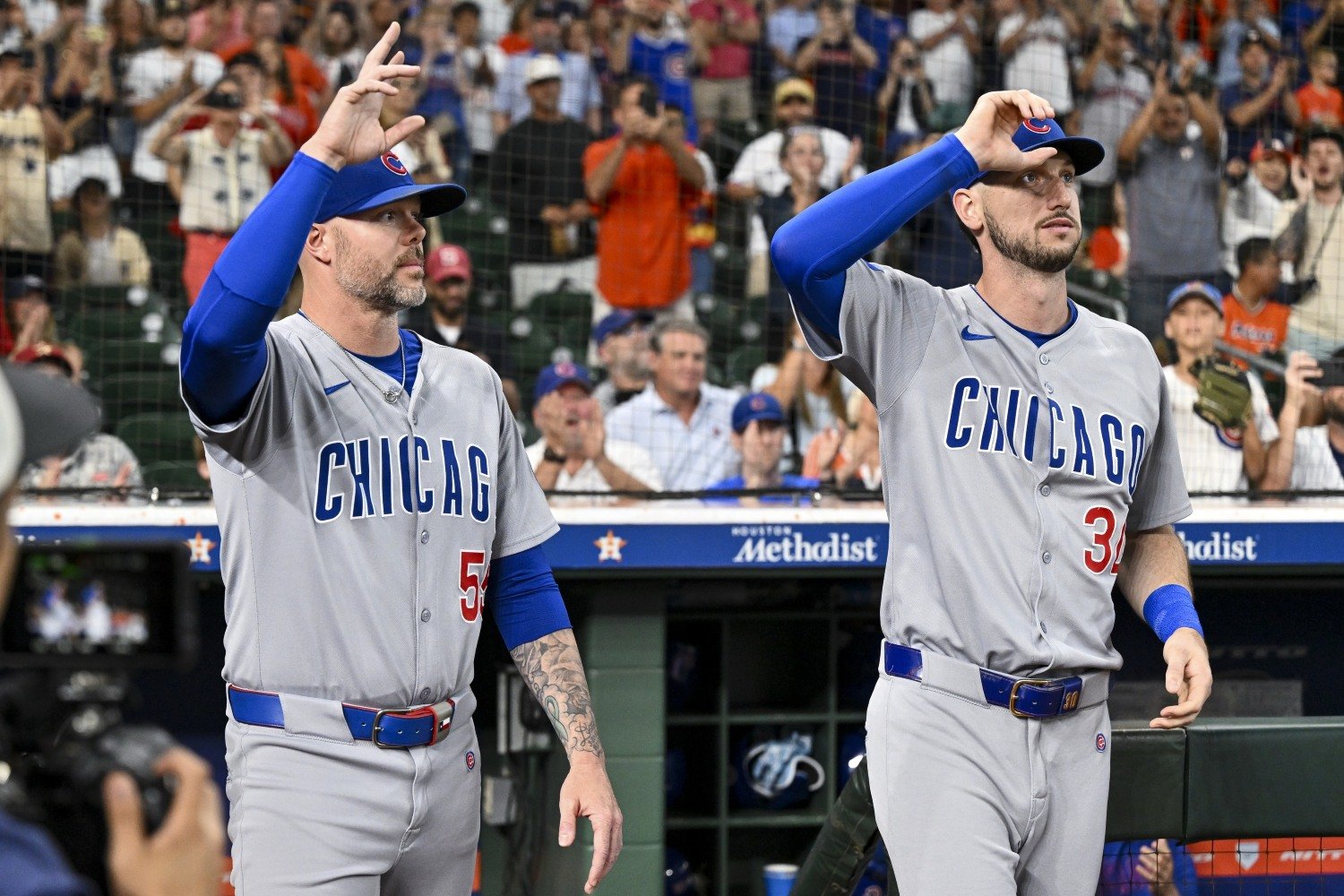 If you want to know who anchors a team—who the truly revered and relied-upon leaders are—you can do a lot worse than simply walking into their clubhouse when they're on the road and looking around. Teams tend to organize themselves in particular ways, and clubhouse attendants assign lockers in ways that reflect very specific hierarchies. At Target Field, in Minneapolis, there's a standard set of stalls where the most respected or vital players on a visiting team go. In fact, it's a lot like that humorous image that gets passed around the internet every so often, stereotyping the criteria Little League coaches use to assign positions. You know this one? It's tongue-in-cheek, of course, but that meme captures a lot of truth. I can offer a similar key, if one wants to understand a big-league team's social dynamic, just by glancing around their clubhouse when they visit Minnesota. (Please forgive the roughness of the sketch; graphic design is not my passion.) As you enter the clubhouse, if you want to find the two players to whom the rest of the roster (and/or the organization, via the coaching staff and support staffers) shows deference and utmost respect, just look to your left and your right. For the 2015 Cubs, the two corner stalls to the right when one entered the clubhouse belonged to Jon Lester and David Ross. For the 2018 Rays, it was Charlie Morton and Sergio Romo. For the 2025 Brewers, it was Christian Yelich and Jose Quintana. These are guys the team wants the media to see and speak to, and who have (either written into their contract, or granted almost automatically because of how everyone feels about them) extra stalls and priority space in the room. To the left of the entrance, typically, is a player slightly less accomplished but equally tenured and respected. This was Todd Frazier, with the 2019 Mets. It's Rhys Hoskins on the 2025 Brewers. It was Wilson Ramos for those 2018 Rays. These are guys the team wants teammates to see, and not to be able to sneak past. For the 2025 Cubs, those highest-priority lockers in the corner by the entryway belonged to Justin Turner and Ryan Pressly, and the one to the left belonged to Drew Pomeranz. This is an unusually non-hierarchical clubhouse, in a way—or, perhaps more accurately, Turner, Pressly and Pomeranz are unusually commanding presences for relatively low-wattage on-field contributors. The near left corner, as you go in, is where you reliably find the guys who have earned pride of place and can take up multiple stalls, but whom the team relies on slightly less for vocal leadership. For the 2016 Mariners, that space belonged to Robinson Canó. For the 2019 Mets, it was Jacob deGrom and company. The 2025 Cubs put Dansby Swanson and Ian Happ there. That shouldn't lead you to think the team doesn't ask those guys to be leaders—indeed, usually that whole row if you turn left from the entrance is a set of trusted veterans, and this year's Cubs team went Pomeranz, Matthew Boyd, (a rehabbing) Jameson Taillon, Swanson and Happ down and around the corner. All of those guys have important roles to play, but the farther you get into that corner, the more the leadership is by example. Interestingly, this is where some teams slot in younger players they hope will grow into and embrace leadership roles, but the Cubs seem not to have felt any need to do so. Circling back to the spot just across from the big dogs' lockers in the corner, with the entrance to the players' lunch room between them, you find the guy everyone loves talking to. This was Tommy La Stella with the 2019 Angels and Chris Coghlan on the 2015 Cubs. It's often the backup catcher, including being Eric Haase for this year's Brewers. It's a place to put a communicator who naturally forms close friendships and is willing to reach across the subtle, sometimes troublesome positional (pitchers and hitters), racial, or linguistic divides that form in the room. For the 2025 Cubs, that locker belonged to Nico Hoerner. In that row next to Hoerner were Seiya Suzuki, Kyle Tucker, Jon Berti, Reese McGuire, Vidal Bruján and Carson Kelly. Starting next to Happ and extending to the back corner of the room up the left side were relievers Ethan Roberts, Brad Keller, Ryan Brasier, Caleb Thielbar, Daniel Palencia and Chris Flexen; starters Colin Rea, Shota Imanaga and Cade Horton; and then the younger position players on the roster, Michael Busch, Pete Crow-Armstrong and Matt Shaw. As you can see, if you compare all those names I rattled off and their positions to the sketch above, this team largely hewed to the same schematic all teams use when they come to Minnesota. They're not organized differently; they're built differently, with a rare mix of personalities and veteran statuses. I tell you all of that, because I think it does matter. When the Cubs talk about being creative this month, and when we envision the moves they might make, they face different things to consider. It might be harder for this team to upgrade on the bench or the bullpen, because they have vested considerable power and influence in Turner, Pressly and Pomeranz. On the other hand, they don't have to worry as much about offending or displacing players like Happ or Suzuki as other teams might, because they're not treating them as vital pieces. Expect them to think of replacing Berti or Bruján, but not Turner. Expect them to be more ready to drop Brasier or Roberts than to cut bait on Pressly or Pomeranz. The most important underlying truth of a clubhouse like theirs is that it doesn't have just a few power centers. Leadership and baseball integrity are spread diffusely through the room, especially with Crow-Armstrong creating his own center of gravity in that regard in his back corner. You'd normally expect to find a player of Tucker's stature in one of those prime real estate areas, and the fact that they're not leaning on him for that kind of leadership says a lot about how deep they are in that regard. They can be as nimble as any club over the next eight days. It's just that they might be better-positioned to trade an apparently key contributor than most teams, while also being less willing to bump an apparently ancillary piece off the roster.
 -
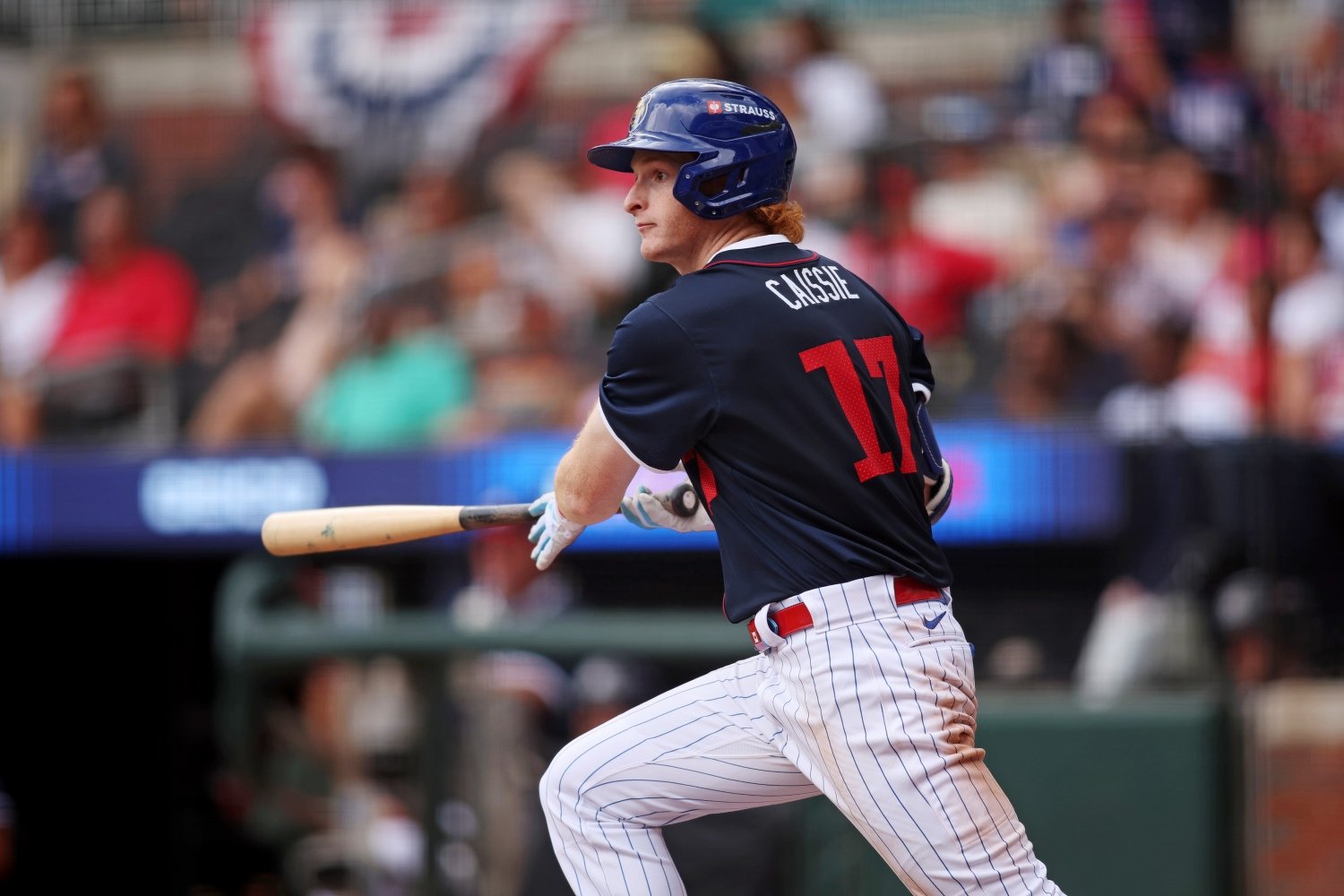 Top Cubs outfield prospect Owen Caissie is having the kind of month that liberates even the most blocked prospects. He had five hits Tuesday night in Louisville, including two doubles and a long home run. The latter was his 20th of the season, more than he hit all year in 2024. It was just the latest big night in a string of them recently. Since June 1, Caissie is batting .339/.436/.740, with 13 home runs. He's struck out just 25.5% of the time and walked in 13.4% of his plate appearances. That kind of hot streak isn't so much a hot streak, as a completed practicum on the desk of one's adviser. It's Graduation Day in the form of a stat line. That doesn't mean that Caissie has a bulletproof claim to future All-Star selections or MVP trophies, of course. He's not old, even for a prospect, but nor is he all that young for his level. He turned 23 earlier this month. He's nearing 900 plate appearances at the Triple-A level, and that's after spending an entire year at Double A, too. After a patient and lengthy apprenticeship, he's ready for the majors, but teams have consistently downgraded him slightly on two bases: The slow pace of his progress up the ladder; most top-100 prospects figure out a level and get the nod from their organization to be challenged at the next one faster than Caissie has. His strikeout rate. For much of his pro career, he's flirted with 30% strikeout rates, and when any hitter whiffs that often in the minors, teams (and their evaluation models) take notice. Again, though, Caissie's power is starting to show up so consistently that strikeouts can be a welcome price to pay. Just as importantly: he's striking out less often lately, and dramatically so. Despite the reservations so many scouts and analysts have had, then, Caissie's stock is on the rise. He's about to break into the major leagues, one way or another, and his performance lately (paired with a good overall track record and his scouting report) has him trending toward a new echelon of prospect value. Even a few weeks ago, Caissie was not a viable centerpiece in a major trade. Right now, he might be. From the Cubs' perspective, the timing couldn't be better. It wasn't (and isn't) just Caissie about whom other teams raised real questions in early trade discussions, and some of Jed Hoyer's top targets seemed like they could be out of reach. Now that Caissie has scouts talking in more glowing terms ("he's turned a corner down there," said one evaluator from an interested team after seeing him last week), he gets a different set of conversations started. The most interesting of those conversations centers around Edward Cabrera. The electric-armed Marlins righthander made his first start since July 11 on Tuesday night, after his elbow barked a bit in his final start before the All-Star break. The Cubs had a scouting presence in Miami to see him, and Cabrera was superb, holding the Padres to one run on five hits in 5 2/3 innings. He struck out six and did not issue a walk. Chicago covets Cabrera, whom one league source called a "priority target" for them. The Marlins have long been interested in Caissie, whom they almost acquired in a one-for-one deal that would have sent Jesús Luzardo to the Cubs this winter. Both teams ended up uneasy with the medicals in that deal, and they couldn't circle back to an agreement at the time, but sources said the relationship between the front offices was undamaged by the collapse of that transaction. Caissie still wouldn't be enough to land Cabrera on his own. Whereas Luzardo was just two years from free agency and was coming off an uneven season last winter, Cabrera has three years of control beyond this fall, and this has been his breakout campaign. He's also made some major changes this year, which help explain his surge in success and which we can break down in greater detail here if the Cubs do end up acquiring him. For now, suffice it to say that Cabrera's stock has risen, too, and that any deal for him would need to involve both Caissie and either Jefferson Rojas or Jaxon Wiggins. That's a hefty price, of course. All three of those players are within the top five on our current Cubs Top Prospects list, and giving up two such players in a deal is hard—especially when one of them is already on the doorstep of the majors. A month ago, though, Caissie would not have been a sufficient headliner for a package to acquire a player with Cabrera's mixture of recent track record and upside. That he now gets you a foot in the door is a mark of important progress. Since we're here, let's discuss a few other pitchers whom various sources say are on the Cubs' radar, along with Cabrera. The name of Rays starter Taj Bradley has popped up recently in some rumors, but all sources I talked to were skeptical that any move is forthcoming there. Tampa reliever Pete Fairbanks is a much more plausible target. As recently as this weekend, sources close to the situation indicated that there was momentum between the Cubs and the Royals regarding lefty Kris Bubic. Right now, though, the team is doing more background work and waiting to see what Bubic's next start looks like, after his velocity was down substantially in his first appearance of the second half. The Royals are another team who has been on the higher end with regard to Caissie, so if the Cubs want to make their dollar stretch on the trade market this summer, talking to both Kansas City and Miami about him makes sense. Of course, some fans will hope that Caissie's breakout keeps him with the team, rather than shuffling him out the door. With Kyle Tucker hitting free agency this fall, there's a chance the Cubs will need to replace him in the corner outfield mix next year, and Seiya Suzuki and Ian Happ will both be free agents after 2026. Keeping Caissie would hedge some bets. If he stays hot and the right offer comes together, though, the safe bet is still that he's playing in the majors, somewhere other than Chicago, come mid-August.
 -
Image courtesy of © Brett Davis-Imagn Images Top Cubs outfield prospect Owen Caissie is having the kind of month that liberates even the most blocked prospects. He had five hits Tuesday night in Louisville, including two doubles and a long home run. The latter was his 20th of the season, more than he hit all year in 2024. It was just the latest big night in a string of them recently. Since June 1, Caissie is batting .339/.436/.740, with 13 home runs. He's struck out just 25.5% of the time and walked in 13.4% of his plate appearances. That kind of hot streak isn't so much a hot streak, as a completed practicum on the desk of one's adviser. It's Graduation Day in the form of a stat line. That doesn't mean that Caissie has a bulletproof claim to future All-Star selections or MVP trophies, of course. He's not old, even for a prospect, but nor is he all that young for his level. He turned 23 earlier this month. He's nearing 900 plate appearances at the Triple-A level, and that's after spending an entire year at Double A, too. After a patient and lengthy apprenticeship, he's ready for the majors, but teams have consistently downgraded him slightly on two bases: The slow pace of his progress up the ladder; most top-100 prospects figure out a level and get the nod from their organization to be challenged at the next one faster than Caissie has. His strikeout rate. For much of his pro career, he's flirted with 30% strikeout rates, and when any hitter whiffs that often in the minors, teams (and their evaluation models) take notice. Again, though, Caissie's power is starting to show up so consistently that strikeouts can be a welcome price to pay. Just as importantly: he's striking out less often lately, and dramatically so. Despite the reservations so many scouts and analysts have had, then, Caissie's stock is on the rise. He's about to break into the major leagues, one way or another, and his performance lately (paired with a good overall track record and his scouting report) has him trending toward a new echelon of prospect value. Even a few weeks ago, Caissie was not a viable centerpiece in a major trade. Right now, he might be. From the Cubs' perspective, the timing couldn't be better. It wasn't (and isn't) just Caissie about whom other teams raised real questions in early trade discussions, and some of Jed Hoyer's top targets seemed like they could be out of reach. Now that Caissie has scouts talking in more glowing terms ("he's turned a corner down there," said one evaluator from an interested team after seeing him last week), he gets a different set of conversations started. The most interesting of those conversations centers around Edward Cabrera. The electric-armed Marlins righthander made his first start since July 11 on Tuesday night, after his elbow barked a bit in his final start before the All-Star break. The Cubs had a scouting presence in Miami to see him, and Cabrera was superb, holding the Padres to one run on five hits in 5 2/3 innings. He struck out six and did not issue a walk. Chicago covets Cabrera, whom one league source called a "priority target" for them. The Marlins have long been interested in Caissie, whom they almost acquired in a one-for-one deal that would have sent Jesús Luzardo to the Cubs this winter. Both teams ended up uneasy with the medicals in that deal, and they couldn't circle back to an agreement at the time, but sources said the relationship between the front offices was undamaged by the collapse of that transaction. Caissie still wouldn't be enough to land Cabrera on his own. Whereas Luzardo was just two years from free agency and was coming off an uneven season last winter, Cabrera has three years of control beyond this fall, and this has been his breakout campaign. He's also made some major changes this year, which help explain his surge in success and which we can break down in greater detail here if the Cubs do end up acquiring him. For now, suffice it to say that Cabrera's stock has risen, too, and that any deal for him would need to involve both Caissie and either Jefferson Rojas or Jaxon Wiggins. That's a hefty price, of course. All three of those players are within the top five on our current Cubs Top Prospects list, and giving up two such players in a deal is hard—especially when one of them is already on the doorstep of the majors. A month ago, though, Caissie would not have been a sufficient headliner for a package to acquire a player with Cabrera's mixture of recent track record and upside. That he now gets you a foot in the door is a mark of important progress. Since we're here, let's discuss a few other pitchers whom various sources say are on the Cubs' radar, along with Cabrera. The name of Rays starter Taj Bradley has popped up recently in some rumors, but all sources I talked to were skeptical that any move is forthcoming there. Tampa reliever Pete Fairbanks is a much more plausible target. As recently as this weekend, sources close to the situation indicated that there was momentum between the Cubs and the Royals regarding lefty Kris Bubic. Right now, though, the team is doing more background work and waiting to see what Bubic's next start looks like, after his velocity was down substantially in his first appearance of the second half. The Royals are another team who has been on the higher end with regard to Caissie, so if the Cubs want to make their dollar stretch on the trade market this summer, talking to both Kansas City and Miami about him makes sense. Of course, some fans will hope that Caissie's breakout keeps him with the team, rather than shuffling him out the door. With Kyle Tucker hitting free agency this fall, there's a chance the Cubs will need to replace him in the corner outfield mix next year, and Seiya Suzuki and Ian Happ will both be free agents after 2026. Keeping Caissie would hedge some bets. If he stays hot and the right offer comes together, though, the safe bet is still that he's playing in the majors, somewhere other than Chicago, come mid-August. View full article
-
 A little over three weeks ago, I made one of my occasional appearances on the excellent Wrigleyville Nation podcast. One thing I said during our conversation on that show was that if Ben Brown made another bulk appearance for the 2025 Cubs, it would mean something had gone horribly wrong. Monday night, they finally felt they could delay the inevitable no longer, and tried Brown again. Not only did they get blown out (thanks especially to Brown getting rocked by the historically inept Royals offense), but the Brewers won their late game, pushing Milwaukee into sole possession of first place for the first time this year. That was a fitting way for the transfer of power to happen. Ever since a day or two after I made that doomed pronouncement on the podcast, it's been increasingly clear that this would happen—the reemergence of Brown, in the wake of the injury Jameson Taillon suffered during between-starts work the same week of the aforementioned show, and the Brewers catching the Cubs. With Taillon down, keeping Brown away would have had to mean consistently starting Jordan Wicks or Chris Flexen until the team could find some reinforcement for the starting rotation. What they should have done, of course, was go get that reinforcement right away—and, to give the limited credit due in this case, they did try to do so. The Cubs have been one of the two or three most active teams in the league in terms of trade discussions, sources in front offices throughout the game agree, and that's been true since the beginning of this month—even while other clubs were more focused on the MLB Draft and were somewhat hard to engage. Nonetheless, the team's failure to get anything done reflects two real problems—one very specific, and thus relatively small, for it can't last any longer; and one very general, very big, and very troubling. The small, specific problem that's almost done being one is the misgiven confidence the organization has had in Brown as a starter. He won the fifth starter job over Colin Rea during spring, when he shouldn't have. He has been given more chances than either his performance or his arsenal merits, and because they were unduly confident in him, they didn't go and reinforce their starting depth in a meaningful way after Javier Assad and Justin Steele (then Shota Imanaga) got hurt early in the season. While the Brewers were making a sagacious little move to pick up Quinn Priester, the Cubs were still rolling loaded, snake-eyed dice on Brown and his two pitches—one of which just isn't very good, except in an aesthetic sense. Happily, they can't persist in that particular delusion any longer. Brown was farmed out to Iowa with a 6.13 ERA in 16 appearances and almost 80 innings. After a month's reset during which he only pitched in two games, he came back to the majors and watched that number rise to 6.48. His trade value is regrettably shot, but the team will surely wise up and move him to the bullpen (probably with another stint in Iowa to acclimate to that role) or throw him into a trade over the next nine days. It was foolish to have come into this season so ready to give him the ball for extended outings, but that error has become such a searing wound that it will probably cauterize itself. The much bigger problem, and the one that doesn't appear as easy to fix, is that Jed Hoyer (and, to some extent, the ownership and business operations staff supporting him) is bad at acknowledging when they're in a position of weakness and resigning themselves to making deals without leverage. Hoyer is so value-focused that he misses opportunities to make the team better, not once or twice a year, but six or seven times. We saw the team hold onto Willson Contreras at the 2022 trade deadline, rather than take the best deal they could make for him. We've seen them pull out of multiple trades based on medicals or final details (going all the way back to Hoyer's first offseason in charge, when a trade that would have sent Kris Bryant to the Mets was scrapped at the last second, and coming forward to this past offseason, when two different deals for young starters fell apart). We've seen Hoyer fail to manage upward and gain the flexibility needed to finish contracts for (among others) Alex Bregman and Tanner Scott, and fail in his capacity as a salesman to win over those players on the terms his bosses did authorize. Never for a moment would the Cubs have considered giving up what the Brewers did for Priester. They didn't have a tradeable draft pick, anyway, but that's not really the point. Milwaukee was in a tough situation, and when they got Priester from the Red Sox, most of the baseball world raised an eyebrow. Especially devoted Brewers fans nearly raised torches and pitchforks; the trade felt like an overpay. Firstly, though, the team badly needed some kind of competent starting pitching help. And secondly, they had chosen their target carefully, and they rapidly finished his development even while running him out every fifth game as a starter. Scouting, player development, and an aggressive, decisive executive netted the team a pitcher who has already given them 95 innings of a 3.33 ERA and is under team control through 2030. That Hoyer won't overpay, ever, is why the Cubs are in second place, and why they gave the ball to Brown again (behind the thin cover of an opener) on the night when they dropped from the top of the Central. It has to change, and fast, because the Cubs are in a position of weakness now. Nine days from the trade deadline, they're playing from behind, and the team they're chasing is hotter, deeper, and more well-rounded than they are. Chicago needs to make a major upgrade, and yes, Hoyer will have to overpay for it. Whether he has the stomach for that remains to be seen. What happens when he shies away from taking the necessary risks involved in running a winning team, we just saw.
 -
Image courtesy of © Kamil Krzaczynski-Imagn Images A little over three weeks ago, I made one of my occasional appearances on the excellent Wrigleyville Nation podcast. One thing I said during our conversation on that show was that if Ben Brown made another bulk appearance for the 2025 Cubs, it would mean something had gone horribly wrong. Monday night, they finally felt they could delay the inevitable no longer, and tried Brown again. Not only did they get blown out (thanks especially to Brown getting rocked by the historically inept Royals offense), but the Brewers won their late game, pushing Milwaukee into sole possession of first place for the first time this year. That was a fitting way for the transfer of power to happen. Ever since a day or two after I made that doomed pronouncement on the podcast, it's been increasingly clear that this would happen—the reemergence of Brown, in the wake of the injury Jameson Taillon suffered during between-starts work the same week of the aforementioned show, and the Brewers catching the Cubs. With Taillon down, keeping Brown away would have had to mean consistently starting Jordan Wicks or Chris Flexen until the team could find some reinforcement for the starting rotation. What they should have done, of course, was go get that reinforcement right away—and, to give the limited credit due in this case, they did try to do so. The Cubs have been one of the two or three most active teams in the league in terms of trade discussions, sources in front offices throughout the game agree, and that's been true since the beginning of this month—even while other clubs were more focused on the MLB Draft and were somewhat hard to engage. Nonetheless, the team's failure to get anything done reflects two real problems—one very specific, and thus relatively small, for it can't last any longer; and one very general, very big, and very troubling. The small, specific problem that's almost done being one is the misgiven confidence the organization has had in Brown as a starter. He won the fifth starter job over Colin Rea during spring, when he shouldn't have. He has been given more chances than either his performance or his arsenal merits, and because they were unduly confident in him, they didn't go and reinforce their starting depth in a meaningful way after Javier Assad and Justin Steele (then Shota Imanaga) got hurt early in the season. While the Brewers were making a sagacious little move to pick up Quinn Priester, the Cubs were still rolling loaded, snake-eyed dice on Brown and his two pitches—one of which just isn't very good, except in an aesthetic sense. Happily, they can't persist in that particular delusion any longer. Brown was farmed out to Iowa with a 6.13 ERA in 16 appearances and almost 80 innings. After a month's reset during which he only pitched in two games, he came back to the majors and watched that number rise to 6.48. His trade value is regrettably shot, but the team will surely wise up and move him to the bullpen (probably with another stint in Iowa to acclimate to that role) or throw him into a trade over the next nine days. It was foolish to have come into this season so ready to give him the ball for extended outings, but that error has become such a searing wound that it will probably cauterize itself. The much bigger problem, and the one that doesn't appear as easy to fix, is that Jed Hoyer (and, to some extent, the ownership and business operations staff supporting him) is bad at acknowledging when they're in a position of weakness and resigning themselves to making deals without leverage. Hoyer is so value-focused that he misses opportunities to make the team better, not once or twice a year, but six or seven times. We saw the team hold onto Willson Contreras at the 2022 trade deadline, rather than take the best deal they could make for him. We've seen them pull out of multiple trades based on medicals or final details (going all the way back to Hoyer's first offseason in charge, when a trade that would have sent Kris Bryant to the Mets was scrapped at the last second, and coming forward to this past offseason, when two different deals for young starters fell apart). We've seen Hoyer fail to manage upward and gain the flexibility needed to finish contracts for (among others) Alex Bregman and Tanner Scott, and fail in his capacity as a salesman to win over those players on the terms his bosses did authorize. Never for a moment would the Cubs have considered giving up what the Brewers did for Priester. They didn't have a tradeable draft pick, anyway, but that's not really the point. Milwaukee was in a tough situation, and when they got Priester from the Red Sox, most of the baseball world raised an eyebrow. Especially devoted Brewers fans nearly raised torches and pitchforks; the trade felt like an overpay. Firstly, though, the team badly needed some kind of competent starting pitching help. And secondly, they had chosen their target carefully, and they rapidly finished his development even while running him out every fifth game as a starter. Scouting, player development, and an aggressive, decisive executive netted the team a pitcher who has already given them 95 innings of a 3.33 ERA and is under team control through 2030. That Hoyer won't overpay, ever, is why the Cubs are in second place, and why they gave the ball to Brown again (behind the thin cover of an opener) on the night when they dropped from the top of the Central. It has to change, and fast, because the Cubs are in a position of weakness now. Nine days from the trade deadline, they're playing from behind, and the team they're chasing is hotter, deeper, and more well-rounded than they are. Chicago needs to make a major upgrade, and yes, Hoyer will have to overpay for it. Whether he has the stomach for that remains to be seen. What happens when he shies away from taking the necessary risks involved in running a winning team, we just saw. View full article
-
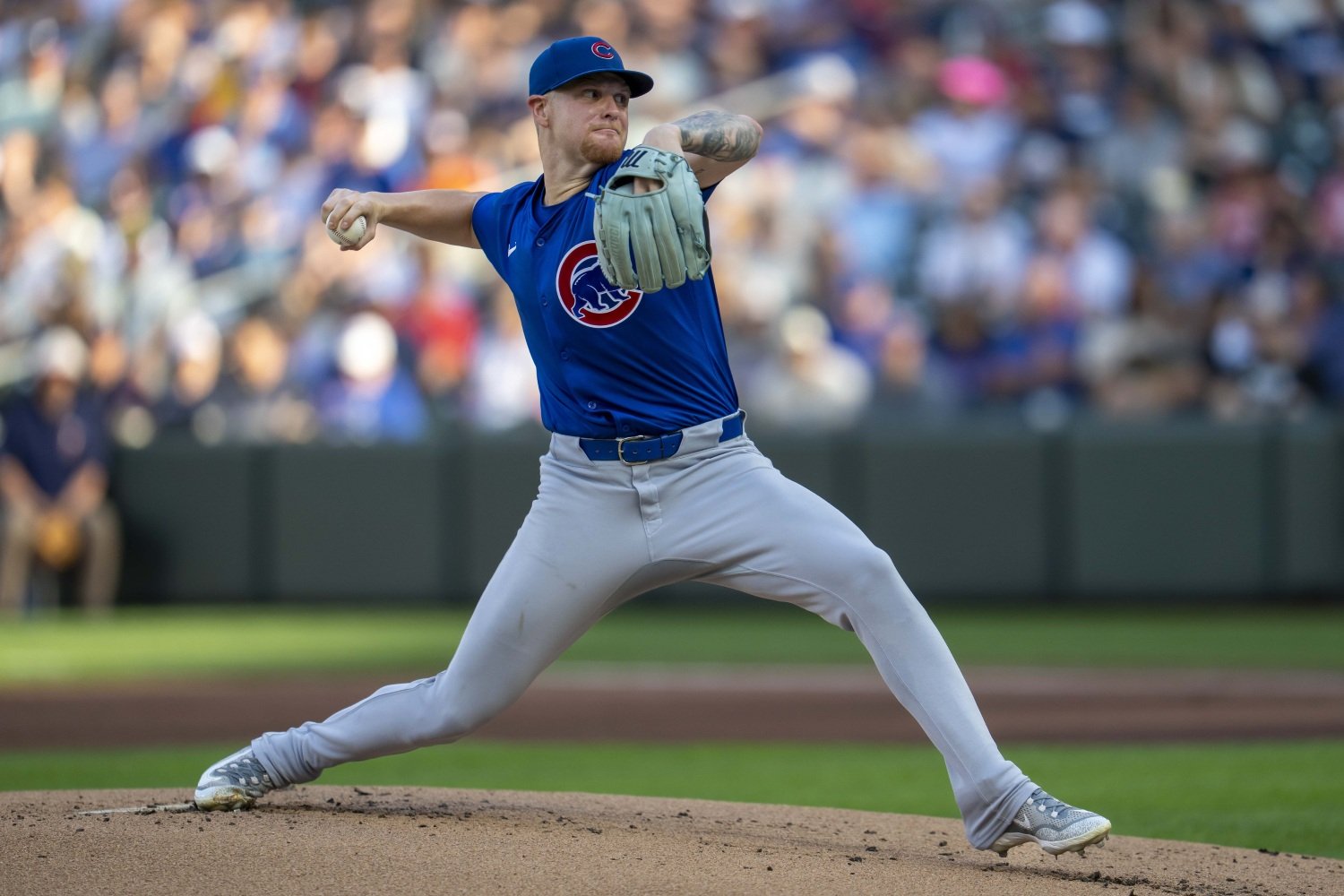 The moment when Cade Horton's potential first jumped up a level came last year with Triple-A Iowa, when he first began to find the changeup he now sports in the majors. Even by his own reckoning, though, the pivotal moment for him came when he found that he could trust that pitch against big-league bats, last month in Miami. "I thought it was in a good place in Triple A, and then got here, and it was really the Miami start where I got a good feel for it," Horton said earlier this month, during the Cubs' trip to Minnesota. "From there, it's just kind of taken off, to where I'm able to repeat that pitch. It's been huge for me." Since then, that pitch has been a staple in Horton's arsenal to lefties, and it hasn't stopped dominating opposing batters. On the contrary: an eye-popping 59.6% of swings at the pitch have come up empty. The changeup was virtually non-existent when the Cubs drafted Horton in the first round of the 2022 MLB Draft, but now, it's a vital weapon. Did that change how he has to think about himself as a pitcher, and how he operates? "Not necessarily. I think it's more, I just use the changeup more to lefties," he said. Indeed, 112 of the 116 he's thrown in the majors have been to left-handed batters; he's not (yet) the type of hurler who will go to the changeup right-on-right. "So that's been the big key, is being able to have that pitch that runs away from them. That opens up fastballs in and fastballs away. The slider's more for righties, and that's why I've been working on the sinker and trying to set up the pitch away from them." In other words, Horton prefers to use his fledgling sinker to attack righties inside, setting up the slider. The changeup, coming from his high three-quarters slot and with his natural tendency to supinate (the direction of forearm movement that better facilitates breaking balls, rather than arm-side movement), has more run than tumble, which makes it the type of change that's harder to throw with conviction to same-handed batters. As Horton alluded to, his slider (Statcast, as shown above, labels most of those as sweepers, but the ones labeled sweeper and slider are both what Horton calls his slider) is the go-to pitch against righties. However, he's not kidding around when it comes to making the sinker a meaningful part of his arsenal to them. In two starts this month, the sinker has emerged as a key third pitch to righties, with his fastball becoming less predominant. He's had to do that, of course, because his fastball isn't a traditional four-seamer at all. It's much closer to being a power cutter—and indeed, some classification systems call it one. Horton didn't set out to create this type of heater, but now that he has one, he understands the value of steering the sinker in on righties to set up both the fastball and the slider away. "I think it just naturally happened," Horton said of his change in fastball shape, which happened after the Cubs selected and signed him but isn't the product of conscious pitch design. "Just getting around the ball more and creating that cut action—which I don't think is a bad thing. I think it plays against lefties, and then it runs off the barrel to righties." The fascinating thing is that, now that he has the changeup (and his curveball, which stands in for the slider against lefties), he offers three different looks to hitters of each type—but they all come from one basic spin axis. Horton's changeup, sinker and slider each rely on considerable seam-shifted wake. They start on similar spin-based movement paths as his four-seamer and curve, but are deflected based on the orientation of the seams and the action of the air on the ball. The chart above shows, on the left, initial spin direction, meaning what the pitcher actually imparts on the ball. Bars at the top of the clock graphic indicate the frequency of pitches thrown with backspin, which will "rise" (drop less than gravity would normally dictate) en route to the plate. Bars at the bottom show the frequency of pitches with topspin, like a true overhand curveball. Bars on the nine o'clock side show the frequency of pitches whose spin would push them toward the first-base side of the plate, away from a righty batter; bars on the three o'clock side show the frequency of those with spin pushing them toward a righty batter. On the right, instead of spin direction, we see the actual movement direction of pitches. The difference between the two is explained by seam effects. Notice how, on the left, Horton's pitches cluster mostly around the 12:30 and 7:30 parts of the clock. That means that it's relatively hard for hitters to distinguish even between, say, his four-seamer and his slider, because they enjoy "spin mirroring"—the ball is spinning along very close to the same axis, so even though the directions of spin on the two offerings are opposites, it's hard to see the difference. A change in spin axis can make a visual difference for a batter, but telling which direction a ball is spinning along a similar axis is very hard. Compounding that difficulty, though, is that Horton also has pitches that diverge from each other in ways spin can't explain. Thus, even for a lefty batter (who rarely sees the slider and only needs to worry about the curve), there are mutliple layers of trouble. He could be throwing the fastball or the curve, and spin mirroring would make it hard to tell which. He could also be throwing the changeup, and because it has a similar spin axis to the fastball (and a near-identical arm angle; Horton has worked hard to match release points on those two offerings) and the two pitches veer opposite directions due to release angle and seam effects, they end up in very different spots. That's how you miss bats with your changeup almost 60% of the time, without elite movement on the pitch. The slider is an especially nasty version of the same problem, because for a righty, it's like dealing with the curveball problem and the changeup problem for lefties, rolled into one pitch. It's shielded by spin mirroring, especially now that he has the sinker working, but it also has the seam-effect sweep that mirrors the changeup's run. Unlike the changeup or the fastball shape, the slider has been like this since Horton was an amateur. "It's kind of always been that way," he said. "I don't think too much about metrics. I think more about executing a pitch. I know where my slider works, and it's down and away, so it's just about executing to that spot." That's really what it comes down to, for him. He's only gotten hurt in the majors when he's made mistakes over the heart of the plate. With that blooming movement spread from such a tricky set of spin orientations, he's one of the game's more deceptive hurlers, and he also happens to throw 96-98 with life on the fastball. "It's just all about executing: Where are my misses? The hits I'm giving up, where are the fastballs?" he said. To him, the next step is simply to eliminate those, and to continue honing his feel for putting batters away with the heater. "Just execution. Two-strike execution is big, maybe getting to the top of the zone, making quality pitches." Over time, if he can sharpen his command a bit, Horton could jump another level and become an ace by learning to use all of his pitches to both left- and right-handed batters in certain situations. For now, though, if he can avoid the worst of the missed locations he's had over his first two and a half months in the majors, he can be a solid mid-rotation starter on a playoff-bound Cubs team. For a rookie, that's plenty.
 -
Image courtesy of © Jesse Johnson-Imagn Images The moment when Cade Horton's potential first jumped up a level came last year with Triple-A Iowa, when he first began to find the changeup he now sports in the majors. Even by his own reckoning, though, the pivotal moment for him came when he found that he could trust that pitch against big-league bats, last month in Miami. "I thought it was in a good place in Triple A, and then got here, and it was really the Miami start where I got a good feel for it," Horton said earlier this month, during the Cubs' trip to Minnesota. "From there, it's just kind of taken off, to where I'm able to repeat that pitch. It's been huge for me." Since then, that pitch has been a staple in Horton's arsenal to lefties, and it hasn't stopped dominating opposing batters. On the contrary: an eye-popping 59.6% of swings at the pitch have come up empty. The changeup was virtually non-existent when the Cubs drafted Horton in the first round of the 2022 MLB Draft, but now, it's a vital weapon. Did that change how he has to think about himself as a pitcher, and how he operates? "Not necessarily. I think it's more, I just use the changeup more to lefties," he said. Indeed, 112 of the 116 he's thrown in the majors have been to left-handed batters; he's not (yet) the type of hurler who will go to the changeup right-on-right. "So that's been the big key, is being able to have that pitch that runs away from them. That opens up fastballs in and fastballs away. The slider's more for righties, and that's why I've been working on the sinker and trying to set up the pitch away from them." In other words, Horton prefers to use his fledgling sinker to attack righties inside, setting up the slider. The changeup, coming from his high three-quarters slot and with his natural tendency to supinate (the direction of forearm movement that better facilitates breaking balls, rather than arm-side movement), has more run than tumble, which makes it the type of change that's harder to throw with conviction to same-handed batters. As Horton alluded to, his slider (Statcast, as shown above, labels most of those as sweepers, but the ones labeled sweeper and slider are both what Horton calls his slider) is the go-to pitch against righties. However, he's not kidding around when it comes to making the sinker a meaningful part of his arsenal to them. In two starts this month, the sinker has emerged as a key third pitch to righties, with his fastball becoming less predominant. He's had to do that, of course, because his fastball isn't a traditional four-seamer at all. It's much closer to being a power cutter—and indeed, some classification systems call it one. Horton didn't set out to create this type of heater, but now that he has one, he understands the value of steering the sinker in on righties to set up both the fastball and the slider away. "I think it just naturally happened," Horton said of his change in fastball shape, which happened after the Cubs selected and signed him but isn't the product of conscious pitch design. "Just getting around the ball more and creating that cut action—which I don't think is a bad thing. I think it plays against lefties, and then it runs off the barrel to righties." The fascinating thing is that, now that he has the changeup (and his curveball, which stands in for the slider against lefties), he offers three different looks to hitters of each type—but they all come from one basic spin axis. Horton's changeup, sinker and slider each rely on considerable seam-shifted wake. They start on similar spin-based movement paths as his four-seamer and curve, but are deflected based on the orientation of the seams and the action of the air on the ball. The chart above shows, on the left, initial spin direction, meaning what the pitcher actually imparts on the ball. Bars at the top of the clock graphic indicate the frequency of pitches thrown with backspin, which will "rise" (drop less than gravity would normally dictate) en route to the plate. Bars at the bottom show the frequency of pitches with topspin, like a true overhand curveball. Bars on the nine o'clock side show the frequency of pitches whose spin would push them toward the first-base side of the plate, away from a righty batter; bars on the three o'clock side show the frequency of those with spin pushing them toward a righty batter. On the right, instead of spin direction, we see the actual movement direction of pitches. The difference between the two is explained by seam effects. Notice how, on the left, Horton's pitches cluster mostly around the 12:30 and 7:30 parts of the clock. That means that it's relatively hard for hitters to distinguish even between, say, his four-seamer and his slider, because they enjoy "spin mirroring"—the ball is spinning along very close to the same axis, so even though the directions of spin on the two offerings are opposites, it's hard to see the difference. A change in spin axis can make a visual difference for a batter, but telling which direction a ball is spinning along a similar axis is very hard. Compounding that difficulty, though, is that Horton also has pitches that diverge from each other in ways spin can't explain. Thus, even for a lefty batter (who rarely sees the slider and only needs to worry about the curve), there are mutliple layers of trouble. He could be throwing the fastball or the curve, and spin mirroring would make it hard to tell which. He could also be throwing the changeup, and because it has a similar spin axis to the fastball (and a near-identical arm angle; Horton has worked hard to match release points on those two offerings) and the two pitches veer opposite directions due to release angle and seam effects, they end up in very different spots. That's how you miss bats with your changeup almost 60% of the time, without elite movement on the pitch. The slider is an especially nasty version of the same problem, because for a righty, it's like dealing with the curveball problem and the changeup problem for lefties, rolled into one pitch. It's shielded by spin mirroring, especially now that he has the sinker working, but it also has the seam-effect sweep that mirrors the changeup's run. Unlike the changeup or the fastball shape, the slider has been like this since Horton was an amateur. "It's kind of always been that way," he said. "I don't think too much about metrics. I think more about executing a pitch. I know where my slider works, and it's down and away, so it's just about executing to that spot." That's really what it comes down to, for him. He's only gotten hurt in the majors when he's made mistakes over the heart of the plate. With that blooming movement spread from such a tricky set of spin orientations, he's one of the game's more deceptive hurlers, and he also happens to throw 96-98 with life on the fastball. "It's just all about executing: Where are my misses? The hits I'm giving up, where are the fastballs?" he said. To him, the next step is simply to eliminate those, and to continue honing his feel for putting batters away with the heater. "Just execution. Two-strike execution is big, maybe getting to the top of the zone, making quality pitches." Over time, if he can sharpen his command a bit, Horton could jump another level and become an ace by learning to use all of his pitches to both left- and right-handed batters in certain situations. For now, though, if he can avoid the worst of the missed locations he's had over his first two and a half months in the majors, he can be a solid mid-rotation starter on a playoff-bound Cubs team. For a rookie, that's plenty. View full article
-
 The third Wild Card berth is becoming a blight on the trade deadline—perhaps more with each passing year. As teams wrestle with the question of whether to buy or sell, many stay astride the fence (or refuse to consider relocating to the selling side) much longer than they did under any previous playoff format. Purists are well within their rights to rebuke the new system as one that treats middle-of-the-pack demi-losers like champions, but teams know that the playoff dollars still fill up the coffers either way—and that most fans aren't purists, anyway. Thus, as teams like the Chicago Cubs scour the trade market in search of help in multiple departments of their roster this month, the pickings are slim. By any reasonable reckoning, the Twins need a bit of a shakeup, and they're not in any position to hope for more than a road Wild Card series this fall. Yet, they're not fully committed to selling, thanks to a string of three series wins before the All-Star break. The Royals just traded for Adam Frazier, which more assuredly reflects a general confusion within the organization than signals either a buying or a selling posture, but they certainly haven't declared themselves open for business. The Rangers, the Guardians, the Reds, the Diamondbacks and even the Angels remain in various states of self-delusion; the number of teams who are ready and willing to talk about trading present value for the hope of more in the future can be counted on one hand. We knew it would be this way; this is the new annual dance. Even 13 days before the deadline, clarity is promised to no one, and easy, early-2000s-vintage buyer-and-seller trades aren't in vogue anymore. The Cubs, however, are among the handful of teams who can't afford to simply hope the right such deal burbles up by accident in the shadow of the deadline near the end of the month. They've already begun engaging teams about trades that would break out of the traditional box for July moves, by doing some one-stop shopping and/or by swapping current big-leaguers out for others. Sources familiar with talks identified the Diamondbacks and the Athletics as teams with whom the Cubs have discussed multi-player deals in which they would check off more than one box on their shopping list. All permutations of such moves differ from one another, but the broad rationale for this approach is as follows: The Cubs have spent the last four years trying to build a sustainable winner, which means not mortgaging the farm every time they're in a winning position. They have money to spend at this deadline—perhaps as much as $15 million they can add to the payroll, which is the equivalent of about $35 million in full-season salary for the players in question. By bundling a veteran on an expensive deal with another player on a cheaper contract or with more team control, the Chicago front office is hoping to find a discount on the players they acquire. Taking on two players in a trade makes it incrementally easier to send back prospects who require 40-man roster spots, and taking on money always greases the skids. Other front offices are aware of those reasons why the Cubs might prefer such deals, too, of course. Trades like those have become very rare over the last decade-plus, because many front offices believe they get more for players by moving them individually in almost all cases. If the needle could be threaded, though, it could be a game-changer in the NL Central. The obvious names who might be involved in a deal like this with the A's are Luis Severino, Luis Urías and Mason Miller. Two-thirds of a year into a three-year deal worth $67 million, Severino has become a distraction in West Sacramento, not by being a bad guy, but by not shutting up about how lousy the conditions and circumstances of the team's extremely temporary home are. Though the Athletics need to keep their payroll above a certain threshold to avoid a bare-knuckled fight with the MLB Players Association and the loss of their revenue-sharing recipient status, Severino has begun to look like an unappealing way to spend those dollars. His surface-level numbers look ugly this year, but the Cubs could happily slot him into the back half of their rotation if they got a little bit of cash in the deal to offset his salary. Urías, of course, is a former Brewers infielder who played under Craig Counsell for multiple seasons. He's made a significant swing change since then, though, and is hitting .239/.320/.363 this year. That would be underwhelming for a third baseman, but the Cubs are already getting very underwhelming output from Matt Shaw and from similar bench pieces Jon Berti and Vidal Bruján. The big catch, of course, would be Miller. One of the hardest-throwing pitchers in the sport, he also sports a wicked slider and has struck out over 40% of opposing batters since the start of 2024. He's issued a few more walks this year than last and his ERA isn't as pretty as it was in the past, but Miller belongs on any list of the 10 most dominant relievers in the league. He's under team control for four seasons beyond 2025, though he'll be arbitration-eligible for all of them as a Super Two player. Teams are calling about Miller, and don't feel as roundly rejected as they were last summer. A multi-player trade with Arizona, meanwhile, would almost certainly center on Eugenio Suárez, plus either Zac Gallen or Merrill Kelly. It's been a brutal season for Gallen (one reason why Arizona is even leaning toward selling at the deadline), but his stuff is still interesting and the remnants of the great pitcher he's been for much of his career still peek out from time to time. He would be one solid potential addition to the Cubs rotation, and Kelly (by means of having had a better year thus far) might be an even more exciting one at this point. Meanwhile, Suárez would be a major offensive upgrade over Shaw at the hot corner and would make the team's lineup almost impossible to navigate. A deal combining any two of Gallen, Kelly and Suárez would cost the Cubs a heavy prospect price, but the one-stop shop could be worth it. Right now, that kind of deal feels more far-fetched than a multi-piece swap with the A's, but if the Cubs were willing to deal one of their top tier of young non-stars (Cade Horton, Owen Caissie, Shaw, or Kevin Alcántara), that could change. Similar deals bundling Jhoan Duran or Joe Ryan with Willi Castro or Chris Paddack, of the Twins; Seth Lugo and Carlos Estévez or Jonathan India; and Mitch Keller with David Bednar or Ke'Bryan Hayes make varying levels of sense, too. However, there's no indication yet that the Cubs have found traction with Minnesota, Kansas City or Pittsburgh on this kind of trade. Trading for multiple players from one team (each of whom would individually improve the Cubs' chances to reach the World Series) would make even trading Caissie, Moisés Ballesteros, Cade Horton or Jefferson Rojas palatable, while for the sellers, getting access to that caliber of prospect has been a priority in all talks with the Cubs. Something big will happen before the July 31 trade deadline. The big question is what shape the Cubs' biggest move will take. Since their needs exceed their means, creativity could be in order.
- 9 comments
-
- 2
-
-
- eugenio suarez
- mason miller
- (and 5 more)
-
Image courtesy of © Jayne Kamin-Oncea-Imagn Images The third Wild Card berth is becoming a blight on the trade deadline—perhaps more with each passing year. As teams wrestle with the question of whether to buy or sell, many stay astride the fence (or refuse to consider relocating to the selling side) much longer than they did under any previous playoff format. Purists are well within their rights to rebuke the new system as one that treats middle-of-the-pack demi-losers like champions, but teams know that the playoff dollars still fill up the coffers either way—and that most fans aren't purists, anyway. Thus, as teams like the Chicago Cubs scour the trade market in search of help in multiple departments of their roster this month, the pickings are slim. By any reasonable reckoning, the Twins need a bit of a shakeup, and they're not in any position to hope for more than a road Wild Card series this fall. Yet, they're not fully committed to selling, thanks to a string of three series wins before the All-Star break. The Royals just traded for Adam Frazier, which more assuredly reflects a general confusion within the organization than signals either a buying or a selling posture, but they certainly haven't declared themselves open for business. The Rangers, the Guardians, the Reds, the Diamondbacks and even the Angels remain in various states of self-delusion; the number of teams who are ready and willing to talk about trading present value for the hope of more in the future can be counted on one hand. We knew it would be this way; this is the new annual dance. Even 13 days before the deadline, clarity is promised to no one, and easy, early-2000s-vintage buyer-and-seller trades aren't in vogue anymore. The Cubs, however, are among the handful of teams who can't afford to simply hope the right such deal burbles up by accident in the shadow of the deadline near the end of the month. They've already begun engaging teams about trades that would break out of the traditional box for July moves, by doing some one-stop shopping and/or by swapping current big-leaguers out for others. Sources familiar with talks identified the Diamondbacks and the Athletics as teams with whom the Cubs have discussed multi-player deals in which they would check off more than one box on their shopping list. All permutations of such moves differ from one another, but the broad rationale for this approach is as follows: The Cubs have spent the last four years trying to build a sustainable winner, which means not mortgaging the farm every time they're in a winning position. They have money to spend at this deadline—perhaps as much as $15 million they can add to the payroll, which is the equivalent of about $35 million in full-season salary for the players in question. By bundling a veteran on an expensive deal with another player on a cheaper contract or with more team control, the Chicago front office is hoping to find a discount on the players they acquire. Taking on two players in a trade makes it incrementally easier to send back prospects who require 40-man roster spots, and taking on money always greases the skids. Other front offices are aware of those reasons why the Cubs might prefer such deals, too, of course. Trades like those have become very rare over the last decade-plus, because many front offices believe they get more for players by moving them individually in almost all cases. If the needle could be threaded, though, it could be a game-changer in the NL Central. The obvious names who might be involved in a deal like this with the A's are Luis Severino, Luis Urías and Mason Miller. Two-thirds of a year into a three-year deal worth $67 million, Severino has become a distraction in West Sacramento, not by being a bad guy, but by not shutting up about how lousy the conditions and circumstances of the team's extremely temporary home are. Though the Athletics need to keep their payroll above a certain threshold to avoid a bare-knuckled fight with the MLB Players Association and the loss of their revenue-sharing recipient status, Severino has begun to look like an unappealing way to spend those dollars. His surface-level numbers look ugly this year, but the Cubs could happily slot him into the back half of their rotation if they got a little bit of cash in the deal to offset his salary. Urías, of course, is a former Brewers infielder who played under Craig Counsell for multiple seasons. He's made a significant swing change since then, though, and is hitting .239/.320/.363 this year. That would be underwhelming for a third baseman, but the Cubs are already getting very underwhelming output from Matt Shaw and from similar bench pieces Jon Berti and Vidal Bruján. The big catch, of course, would be Miller. One of the hardest-throwing pitchers in the sport, he also sports a wicked slider and has struck out over 40% of opposing batters since the start of 2024. He's issued a few more walks this year than last and his ERA isn't as pretty as it was in the past, but Miller belongs on any list of the 10 most dominant relievers in the league. He's under team control for four seasons beyond 2025, though he'll be arbitration-eligible for all of them as a Super Two player. Teams are calling about Miller, and don't feel as roundly rejected as they were last summer. A multi-player trade with Arizona, meanwhile, would almost certainly center on Eugenio Suárez, plus either Zac Gallen or Merrill Kelly. It's been a brutal season for Gallen (one reason why Arizona is even leaning toward selling at the deadline), but his stuff is still interesting and the remnants of the great pitcher he's been for much of his career still peek out from time to time. He would be one solid potential addition to the Cubs rotation, and Kelly (by means of having had a better year thus far) might be an even more exciting one at this point. Meanwhile, Suárez would be a major offensive upgrade over Shaw at the hot corner and would make the team's lineup almost impossible to navigate. A deal combining any two of Gallen, Kelly and Suárez would cost the Cubs a heavy prospect price, but the one-stop shop could be worth it. Right now, that kind of deal feels more far-fetched than a multi-piece swap with the A's, but if the Cubs were willing to deal one of their top tier of young non-stars (Cade Horton, Owen Caissie, Shaw, or Kevin Alcántara), that could change. Similar deals bundling Jhoan Duran or Joe Ryan with Willi Castro or Chris Paddack, of the Twins; Seth Lugo and Carlos Estévez or Jonathan India; and Mitch Keller with David Bednar or Ke'Bryan Hayes make varying levels of sense, too. However, there's no indication yet that the Cubs have found traction with Minnesota, Kansas City or Pittsburgh on this kind of trade. Trading for multiple players from one team (each of whom would individually improve the Cubs' chances to reach the World Series) would make even trading Caissie, Moisés Ballesteros, Cade Horton or Jefferson Rojas palatable, while for the sellers, getting access to that caliber of prospect has been a priority in all talks with the Cubs. Something big will happen before the July 31 trade deadline. The big question is what shape the Cubs' biggest move will take. Since their needs exceed their means, creativity could be in order. View full article
-
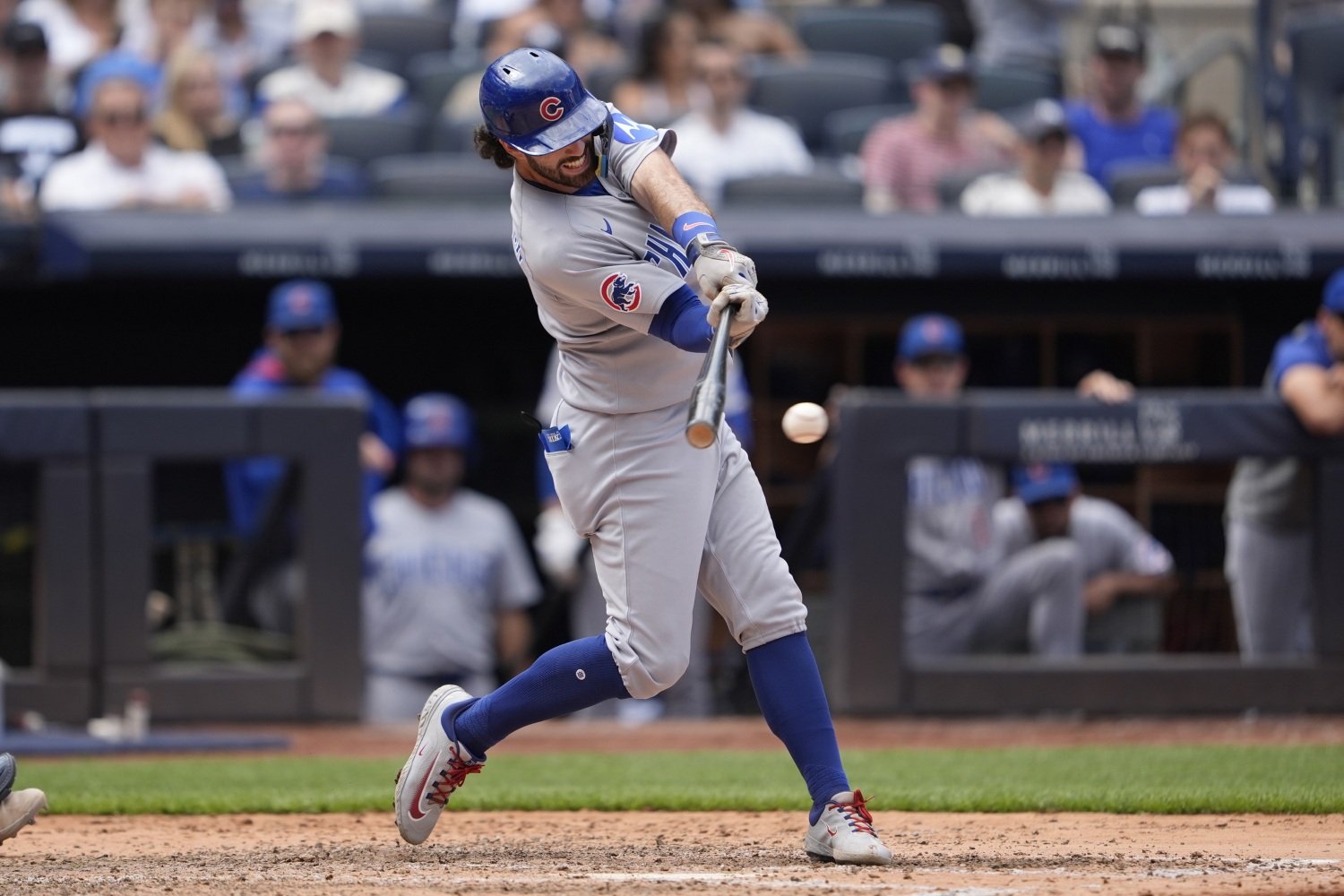 "At the end of the day, hitting the ball hard is obviously the goal every time you have an at-bat," Dansby Swanson said last Thursday in Minnesota, before the final game of the Cubs' series against the Twins. "If I had a joystick, probably, things would look a lot different." In other words, Swanson, 31, knows his process has been better than his results this year. He enters the second half batting a respectable .253/.301/.429, but those numbers aren't massive improvements on the .242/.312/.390 line he posted last year. That's a bit perplexing, because Swanson is achieving his goal (hitting the ball hard) on 47.8% of his balls in play this year, which would be a career best. He's already matched last year's total of 16 home runs, and his expected numbers are well ahead of his actual ones. If he could get that joystick out and move the ball around a bit more, he'd be enjoying plenty of extra singles and doubles, but as we all know, that's not how it works. Two things about Swanson's season are particularly interesting, though. Firstly, there's the fact that he does have more of a joystick to hand than he has in the past, in a way. He also has his turbo button back. Plagued by a knee sprain that lingered and a sports hernia he played through all year, Swanson lost a step last year, and his swing was a bit more rigid than usual. His sprint speed sagged from a four-year baseline of 28.4 feet per second to 27.8. That could have turned out to be age-related decline, but unsurprisingly, he's bounced back to 28.3 feet per second this year. His bat speed is actually down, relative to last year, but that's because he's exercising more bat control late in his swing than he could muster in his compromised state in 2024. At times, his barrel was out of his control last year; his core muscles weren't strong enough to give him smooth command of the whole movement. This year, that's changed. Here's a Statcast visualization of his swing at the contact point, for both 2024 and 2025. These are composite images, so they don't tell the story of any one swing, but they're pretty good illustrations of what's different. Note the cleaner transfer of weight happening in the image on the right. Swanson hits off his front foot, when he's right; he strides open but then pushes hard off his back foot and lunges into the pitch to generate rotation. That movement has been much more stable and smooth this year, with both the knee and the muscles in his lower abdomen (which absorb and transfer lots of energy during the process of the front foot landing and the hips and shoulders rotating) stronger than they were before. He's actually caught the ball slightly farther in front of his center of mass this year, but with less extension of his arms at the contact point, which means he has more margin for error with his timing. One reason for the subtle change in contact point is that his swing is a bit flatter through the hitting zone, but Swanson said that was just what happened when he started locking in on the ball better. "Your body's really smart," he explained, "and it unfolds how it wants to unfold in order to get to certain pitches. It's not necessarily anything that I've consciously put any thought into. [It's] just kind of trusting athleticism." The results, then, will come, if Swanson just keeps contacting the ball the way he has all season. He doesn't need to sweat the batted-ball luck. Expected batting averages (xBA) and slugging averages (xSLG) can be misleading, but in his case, his xBA of .272 feels fairer than his actual figure, and so does his xSLG of .481. If he can sustain this process, he'll collect hits at a higher rate in the second half. More mysterious, perhaps, is the fact that Swanson is also drawing walks at the lowest rate of his career. He's also striking out more this year. We've seen him get to more power this year, and we know that Seiya Suzuki has undergone a similar transformation (more slug, less on-base skill). Is Swanson a similar case? No. And here's where things get odd. Whenever a batter is drawing fewer walks, you can ask a standard set of questions to determine why. Let's run through them. Is he simply seeing more strikes? This happens often. Pitchers might decide they no longer fear a hitter, or that they have a particular plan to get him out within the zone, or they might be desperate not to put him on base for free. It would be a neat narrative fit if the presence of Kyle Tucker and the breakouts of Pete Crow-Armstrong and Michael Busch had left Swanson (who often bats between two of the three) seeing a ton of strikes from pitchers, especially right-handers. Surely, though, you didn't think it would be that easy. Swanson saw 52.7% of pitches in the zone in 2024. It's down to 51.6% in 2025. Is he chasing more often outside the zone? That's the natural second thought, right? Is the approach just getting raggedy? Is hunting pitches to hit leading a hitter to expand the zone? In fact, this is more like question 1A than question 2. But it's also not where we're going to find our answer. Swanson chased 24.0% of pitches outside the zone in 2024; it's 23.9% this year. Is he swinging more inside the zone? Another common issue, which isn't even always an issue. A player might decide not to miss their pitch in the zone so much, and start swinging more when they get that meaty offering. Often, that means more hits; it just means fewer walks. But, there's been no meaningful change here. Swanson swung at 71.0% of pitches inside the zone in 2024, and has swung at 72.5% of them in 2025. Is he whiffing a lot more? This actually isn't a very reliable indicator—whiffing more means deeper counts, so if you maintain a disciplined approach, you're likely to walk more often if there's some swing-and-miss in your game than if you're a great contact hitter. Still, it's worth checking on, and there's a little bit of signal here. Swanson's overall rate of whiffs per swing is up from 28.7% to 29.9%, and since (as we've seen) his swing rate has held pretty static, that does mean more strikes that can end an at-bat. His contact rate within the zone is identical to last year's, but he's coming up empty considerably more often when he chases. That does matter, but it's not enough to explain a drop from a career walk rate of 8.9% to 6.8%. Is he being more aggressive early in counts? Sometimes, a hitter isn't swinging more in total, but they're swinging more at the first pitch or two in a plate appearance. Normally, for this to have any impact on walk rate, those swings should result in more balls in play, which would also mean a lower strikeout rate. We don't see that in Swanson's case, though—which shouldn't surprise us, because he's not getting more aggressive early. Swanson's 40.5% swing rate on 0-0, 0-1 and 1-0 pitches this year is the same as his rate for 2023 and 2024. Those are the big five questions, and their answers don't really give us satisfying insight into why Swanson hasn't walked much this year. Swanson was at a loss to explain it, too, other than to note the importance of sequencing. "Chase rate doesn't always indicate whether you're walking or not," he said. "It's when those chase things happen, because if you're chasing with two strikes, obviously, that's when strikeouts go up. It really depends on what counts, and what you're not chasing. Part of it, too, is if you get good pitches, you want to be able to hit them." All fair, and maybe there's something there. Swanson's personal Put-Away Rate (the percentage of two-strike pitches that resulted in a strikeout) is up this year, from 20.4% in 2024 to 23.8%. Before he can draw a walk, sometimes, he's punching himself out by chasing inopportunely. Meanwhile, although the frequency with which he's reached advantageous counts (2-0, 3-1, 3-0) is noticeably higher this year than in past campaigns, his swing rate when ahead in the count is up, too, from 51.8% to 53.1%. That's not a bad thing, per se—although, by the numbers, swinging when way ahead is a losing proposition. If Swanson is putting good, aggressive swings those pitches in counts that already favor him, the result should be more power, and we've seen plenty of power from him this year. Remember, though, that his bat speed is down this year. That's true even if we isolate hitter-friendly counts; he averaged 72.4 mph on swings in those counts last year but is down to 71.2 this year. Swanson's bum luck on batted balls is just that. His swing is in good shape, and he's recognizing hittable strikes well. His SEAGER rating this year is a robust 21.1, right back where it was in 2023 after a troublesome dip in 2023. (SEAGER evaluates the balance between selectivity and aggression for hitters.) If he keeps doing everything exactly the same way, he'll put up better numbers in the second half, and he seems very confident about that. To reach another level, though, he could (and perhaps should) change his mental approach to counts in which he's earned the advantage. Accepting a few more walks from those positions of strength would make him more productive, and force the next adjustment from opposing pitchers.
 -
Image courtesy of © Gregory Fisher-Imagn Images "At the end of the day, hitting the ball hard is obviously the goal every time you have an at-bat," Dansby Swanson said last Thursday in Minnesota, before the final game of the Cubs' series against the Twins. "If I had a joystick, probably, things would look a lot different." In other words, Swanson, 31, knows his process has been better than his results this year. He enters the second half batting a respectable .253/.301/.429, but those numbers aren't massive improvements on the .242/.312/.390 line he posted last year. That's a bit perplexing, because Swanson is achieving his goal (hitting the ball hard) on 47.8% of his balls in play this year, which would be a career best. He's already matched last year's total of 16 home runs, and his expected numbers are well ahead of his actual ones. If he could get that joystick out and move the ball around a bit more, he'd be enjoying plenty of extra singles and doubles, but as we all know, that's not how it works. Two things about Swanson's season are particularly interesting, though. Firstly, there's the fact that he does have more of a joystick to hand than he has in the past, in a way. He also has his turbo button back. Plagued by a knee sprain that lingered and a sports hernia he played through all year, Swanson lost a step last year, and his swing was a bit more rigid than usual. His sprint speed sagged from a four-year baseline of 28.4 feet per second to 27.8. That could have turned out to be age-related decline, but unsurprisingly, he's bounced back to 28.3 feet per second this year. His bat speed is actually down, relative to last year, but that's because he's exercising more bat control late in his swing than he could muster in his compromised state in 2024. At times, his barrel was out of his control last year; his core muscles weren't strong enough to give him smooth command of the whole movement. This year, that's changed. Here's a Statcast visualization of his swing at the contact point, for both 2024 and 2025. These are composite images, so they don't tell the story of any one swing, but they're pretty good illustrations of what's different. Note the cleaner transfer of weight happening in the image on the right. Swanson hits off his front foot, when he's right; he strides open but then pushes hard off his back foot and lunges into the pitch to generate rotation. That movement has been much more stable and smooth this year, with both the knee and the muscles in his lower abdomen (which absorb and transfer lots of energy during the process of the front foot landing and the hips and shoulders rotating) stronger than they were before. He's actually caught the ball slightly farther in front of his center of mass this year, but with less extension of his arms at the contact point, which means he has more margin for error with his timing. One reason for the subtle change in contact point is that his swing is a bit flatter through the hitting zone, but Swanson said that was just what happened when he started locking in on the ball better. "Your body's really smart," he explained, "and it unfolds how it wants to unfold in order to get to certain pitches. It's not necessarily anything that I've consciously put any thought into. [It's] just kind of trusting athleticism." The results, then, will come, if Swanson just keeps contacting the ball the way he has all season. He doesn't need to sweat the batted-ball luck. Expected batting averages (xBA) and slugging averages (xSLG) can be misleading, but in his case, his xBA of .272 feels fairer than his actual figure, and so does his xSLG of .481. If he can sustain this process, he'll collect hits at a higher rate in the second half. More mysterious, perhaps, is the fact that Swanson is also drawing walks at the lowest rate of his career. He's also striking out more this year. We've seen him get to more power this year, and we know that Seiya Suzuki has undergone a similar transformation (more slug, less on-base skill). Is Swanson a similar case? No. And here's where things get odd. Whenever a batter is drawing fewer walks, you can ask a standard set of questions to determine why. Let's run through them. Is he simply seeing more strikes? This happens often. Pitchers might decide they no longer fear a hitter, or that they have a particular plan to get him out within the zone, or they might be desperate not to put him on base for free. It would be a neat narrative fit if the presence of Kyle Tucker and the breakouts of Pete Crow-Armstrong and Michael Busch had left Swanson (who often bats between two of the three) seeing a ton of strikes from pitchers, especially right-handers. Surely, though, you didn't think it would be that easy. Swanson saw 52.7% of pitches in the zone in 2024. It's down to 51.6% in 2025. Is he chasing more often outside the zone? That's the natural second thought, right? Is the approach just getting raggedy? Is hunting pitches to hit leading a hitter to expand the zone? In fact, this is more like question 1A than question 2. But it's also not where we're going to find our answer. Swanson chased 24.0% of pitches outside the zone in 2024; it's 23.9% this year. Is he swinging more inside the zone? Another common issue, which isn't even always an issue. A player might decide not to miss their pitch in the zone so much, and start swinging more when they get that meaty offering. Often, that means more hits; it just means fewer walks. But, there's been no meaningful change here. Swanson swung at 71.0% of pitches inside the zone in 2024, and has swung at 72.5% of them in 2025. Is he whiffing a lot more? This actually isn't a very reliable indicator—whiffing more means deeper counts, so if you maintain a disciplined approach, you're likely to walk more often if there's some swing-and-miss in your game than if you're a great contact hitter. Still, it's worth checking on, and there's a little bit of signal here. Swanson's overall rate of whiffs per swing is up from 28.7% to 29.9%, and since (as we've seen) his swing rate has held pretty static, that does mean more strikes that can end an at-bat. His contact rate within the zone is identical to last year's, but he's coming up empty considerably more often when he chases. That does matter, but it's not enough to explain a drop from a career walk rate of 8.9% to 6.8%. Is he being more aggressive early in counts? Sometimes, a hitter isn't swinging more in total, but they're swinging more at the first pitch or two in a plate appearance. Normally, for this to have any impact on walk rate, those swings should result in more balls in play, which would also mean a lower strikeout rate. We don't see that in Swanson's case, though—which shouldn't surprise us, because he's not getting more aggressive early. Swanson's 40.5% swing rate on 0-0, 0-1 and 1-0 pitches this year is the same as his rate for 2023 and 2024. Those are the big five questions, and their answers don't really give us satisfying insight into why Swanson hasn't walked much this year. Swanson was at a loss to explain it, too, other than to note the importance of sequencing. "Chase rate doesn't always indicate whether you're walking or not," he said. "It's when those chase things happen, because if you're chasing with two strikes, obviously, that's when strikeouts go up. It really depends on what counts, and what you're not chasing. Part of it, too, is if you get good pitches, you want to be able to hit them." All fair, and maybe there's something there. Swanson's personal Put-Away Rate (the percentage of two-strike pitches that resulted in a strikeout) is up this year, from 20.4% in 2024 to 23.8%. Before he can draw a walk, sometimes, he's punching himself out by chasing inopportunely. Meanwhile, although the frequency with which he's reached advantageous counts (2-0, 3-1, 3-0) is noticeably higher this year than in past campaigns, his swing rate when ahead in the count is up, too, from 51.8% to 53.1%. That's not a bad thing, per se—although, by the numbers, swinging when way ahead is a losing proposition. If Swanson is putting good, aggressive swings those pitches in counts that already favor him, the result should be more power, and we've seen plenty of power from him this year. Remember, though, that his bat speed is down this year. That's true even if we isolate hitter-friendly counts; he averaged 72.4 mph on swings in those counts last year but is down to 71.2 this year. Swanson's bum luck on batted balls is just that. His swing is in good shape, and he's recognizing hittable strikes well. His SEAGER rating this year is a robust 21.1, right back where it was in 2023 after a troublesome dip in 2023. (SEAGER evaluates the balance between selectivity and aggression for hitters.) If he keeps doing everything exactly the same way, he'll put up better numbers in the second half, and he seems very confident about that. To reach another level, though, he could (and perhaps should) change his mental approach to counts in which he's earned the advantage. Accepting a few more walks from those positions of strength would make him more productive, and force the next adjustment from opposing pitchers. View full article
-
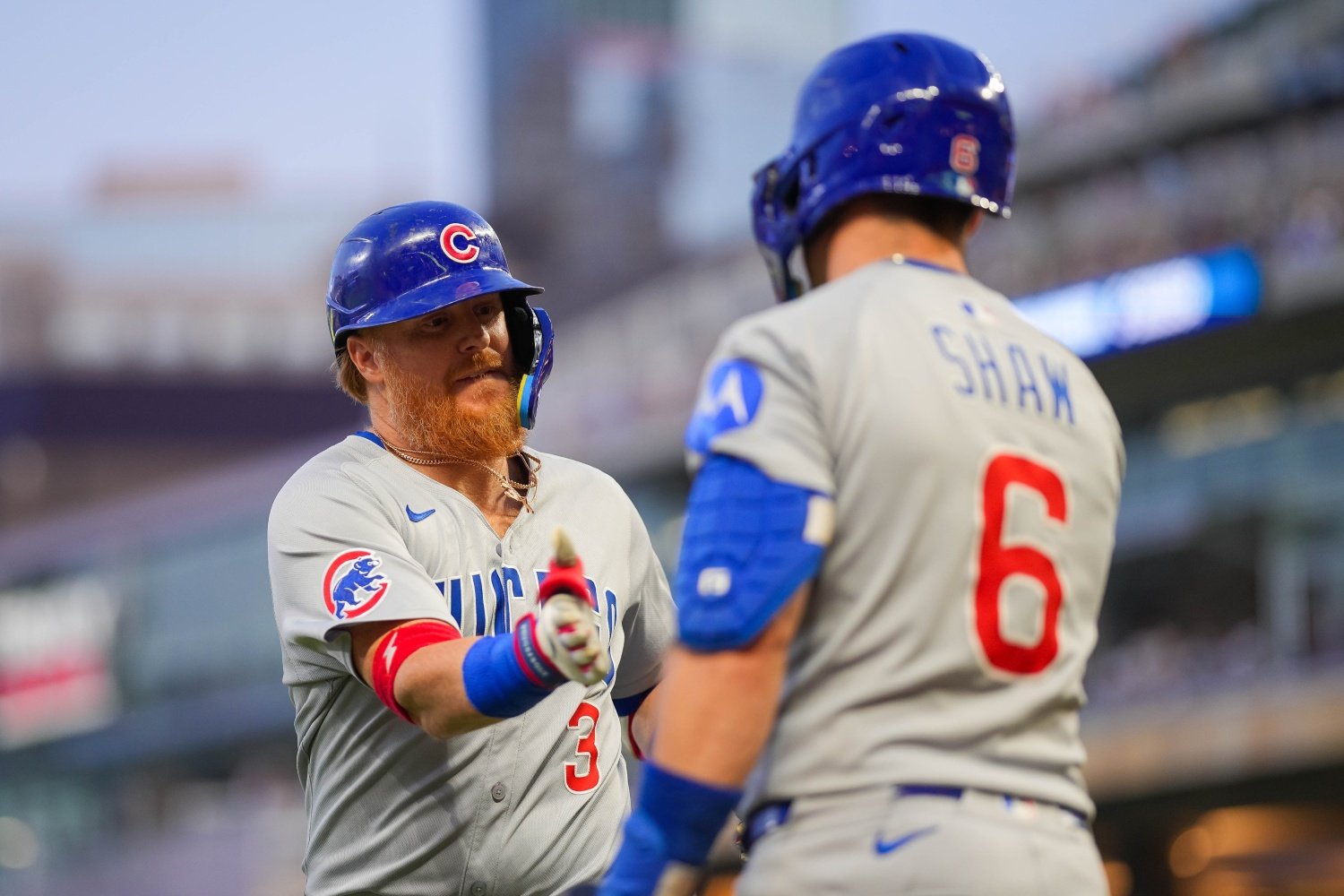 It's never a bad thing to enter the All-Star break in first place in one's division, and that's where the Cubs are this week. They had to scramble for two straight wins in New York to stay ahead of the Milwaukee Brewers over the weekend, but they managed that, and they get a chance to reset the odometers on some of their higher-mileage players with four days off before they resume play Friday afternoon against the Boston Red Sox. They're clear sellers in good position to make the postseason. On the other hand, by now, it should be clear to all involved that this team is not a juggernaut. Unlike past years (when, for instance, the Dodgers routinely won 105 or more games), there might not be a juggernaut on the major-league landscape this summer, but if there is one, it's not the Cubs. Some version of this team—with Seiya Suzuki's power exploding onto the scene the way it has; Pete Crow-Armstrong enjoying the biggest star turn in the big leagues; and Matthew Boyd staying both healthy and excellent to date—might have cruised to a division title, but that version of the team also would have needed Ian Happ and Matt Shaw to be consistently productive and their top three starters (Justin Steele, Shota Imanaga and Jameson Taillon) to rack up healthy innings. As things stand, the fight for the NL Central will be a brawl settled only in the final week, and any deep playoff run depends not only on winning that fight, but on getting reinforcements between now and then to deepen multiple thin places on the roster. The Cubs started 38-22; they're just 19-17 since. A fairly soft schedule should give them room for error over the final two months, but they have to earn that by getting better, too. They have needs in all four key demographics of the roster—rotation, bullpen, lineup, and bench—and beyond. Let's rank those needs, from most dire to most manageable, so we know where to direct the bulk of our energy and attention in the fortnight to come. 1. Starting Pitching Few fan bases love to nitpick the notion of a playoff-caliber starter more than Cubs fans—which is particularly odd, given that the Cubs are not a team who routinely even makes it to October. The idea that anyone should feel nervous about giving the ball to Imanaga or Boyd because of their lack of overpowering sheer stuff, or to Cade Horton because of his lack of experience, is foolish. Still, this comes in as the top need for the team, and it's not even especially close. One reason is obvious: the Brewers are mounting a serious challenge, there's a long stretch without off days coming for the team in August, and the Cubs can't afford to be short on rotation depth. Ideally, they would go to a six-man rotation for a good chunk of the second half. Right now, that's a logistical nightmare even in concept. In practice, it would be impossible. They need at least one good buttress at the back end of the rotation, and they would do very well to acquire two capable starters, one of whom is more of a frontline arm. Ideally, that pitcher would have team control beyond this year, since it's not at all clear that the team will be able to count on more innings from Boyd, Imanaga, Taillon and Steele in 2026 than they're getting in 2025. Of course, what I'm describing is wildly expensive. The team could use two good starters, and might even want to get that done, but there's virtually no chance that they will, because they have other needs to fill. Craig Counsell will, in all likelihood, have to settle for one new arm and hope it's of the higher-echelon variety—or at least that whoever it is can take the ball whenever injury or exhaustion catches up to Boyd or Horton. 2. Relief Pitching For the umpteenth year in a row, Jed Hoyer has proved that he knows where to look to cobble together a solid relief corps from scrapheap scoop-ups and under-the-radar homegrown hurlers, even after Opening Day. You remember Tyson Miller and Jorge López from 2024, and Michael Fulmer and Julien Merryweather from 2023, but it goes back much farther than that. This year, it's been not only offseason additions Caleb Thielbar and Brad Keller, but on-the-run minor-league acquisitions Drew Pomeranz and Chris Flexen. The thing is, that particular brand of bullpen magic doesn't even last a full season. Fulmer got hurt. López got hurt. Adbert Alzolay wore down at just the wrong moment in 2023. The cracks are already showing in this year's group, and even where cracks aren't showing, they're forming. The cumulative age of Ryan Pressly, Ryan Brasier, Thielbar and Pomeranz (147) is greater than the length of time since the mound moved back to 60 feet, 6 inches. As good as they've been, at times, they're all significant risks for injury. Keller and Flexen, meanwhile, are candidates for significant regression, even after we acknowledge that Keller's stuff has ticked up tremendously after his winter transformation and a spring transition to the bullpen. With Daniel Palencia anchoring the unit, the temptation to slide this need further down the board is there, but it's important to resist it. The Cubs need bullpen help, if they want to hold enough leads to get to the finish line in front of the pack in the Central. They just can't afford to pay much for it. 3. A Competent Third Baseman This is where the real trouble starts, because in July, it's never your top need that derails you. You can address that, even if it ends up feeling like a watery solution. It's when you get this far down the checklist and you still feel like the need is pressing that there's a real problem afoot, and that's the case right now in Chicago. Matt Shaw was probably overrated by prospect hounds this offseason. In fairness to the Cubs, they seemed to know that even coming in; that's why they bid heavily for Alex Bregman. In the end, though, neither the front office nor ownership were willing to flex on the structure of their offer enough to entice Bregman to choose them over the Red Sox, and they're paying a dear price for that now. Shaw might yet turn into a good big-league player—there's plenty of reason to worry about that, but it's far too early to rule out the possibility—but he's not ready to be that kind of player yet. The team needs to upgrade that position, because they're not getting enough offense from second base or left field to stomach a .556 OPS at the hot corner. Nor does Shaw look ready to turn the corner. Unfortunately, this might just not be in the cards. The Cubs have traded for third basemen at each of the last two deadlines, and Hoyer's track record with those moves is brutal. Shaw is almost exactly the player Nick Madrigal was two years ago, when the team traded for Jeimer Candelario to rotate Madrigal out of the spot—but Candelario played so poorly that the team often ended up sticking with Madrigal and his stellar glove, anyway. That was when they had a healthy Steele, Taillon, and even Marcus Stroman; they didn't need to go make a splash on the pitching side. Now, they have a thinning farm system and two more pressing needs. Shaw might just have to keep sucking up precious outs at the bottom of the batting order, because the team can't afford to replace him. 4. A Bench Overhaul If anything, Hoyer's track record with building or upgrading the bench is even worse than that with trades for third basemen in July. The team is barely out of the shadow of the Trey Mancini and Tucker Barnhart calamities, and they're staring at a bench that has managed to be even more dysfunctional: Justin Turner, Jon Berti and Vidal Bruján have been a combined 11 runs worse than average, according to Baseball Reference, even as Craig Counsell has done everything in his power to limit their playing time. You can't truly hide players on benches as shallow as those run by every big-league team, at this point, and the Cubs need players their manager feels less compelled to hide. The good news here is that checking this box should be easy. It's hard to find a frontline starter, an ace reliever or a solid third baseman whose team is willing to trade them at this time of year. It's relatively easy to be a more useful player than Berti has been this season. Throwing a little money at the problem might help; plenty of bad teams are looking to get a few million dollars cheaper as they slog toward the end of lost seasons. The Cubs have room to absorb some money and acquire a good bench piece without giving up much talent. 5. Organizational Depth at Both Ends of the Battery This feels like a mere bonus item, but it's not. The Cubs are too thin at the upper reaches of their farm system, in terms of reliable, big-league-caliber pitchers and catchers. That could bite them even down the stretch, but it's a problem that will linger into the offseason, too. They should try to find an optionable arm or two and a castoff or blocked catcher whom they can snatch up cheaply, to head off this issue before it becomes a truly glaring problem at a terrible time. There's good news about all of these needs: the Cubs are proving to be very good at coaching players at the big-league level. Suzuki, Crow-Armstrong, Carson Kelly and others demonstrate the team's savvy with hitters, who have tapped into more power under the team's coaching infrastructure this year. Tommy Hottovy is widely respected throughout the game for his work with pitchers, and Boyd, Colin Rea and Keller are just a few of his success stories this year, alone. Quintin Berry and Jose Javier have them running the bases as well as any team in baseball and positioning themselves quite well afield. Counsell's coaching staff is doing its thing. That means that, for instance, one should hold out some real hope for a player like Ryan McMahon, should the team acquire him to stop the gap at third base. Chris Paddack of the Twins is a good candidate to be that secondary starting pitching acquisition, using money more than prospect capital, and he would do well under Hottovy. However, these needs are real, and they've shown up on the field recently. The Cubs have the lead, but the Brewers have the momentum in the race for the Central division crown—and if you don't believe in that kind of thing, then substitute 'depth' for 'momentum'. It comes to the same thing. The Brewers also have a deeper farm system, which gives them more ways to improve between now and the end of the season than the Cubs have. That's why it's important for Chicago to nail this deadline, by knowing how to order their priorities and where to allocate their resources.
- 17 comments
-
- 1
-
-
- brad keller
- matt shaw
- (and 1 more)
-
Image courtesy of © Brad Rempel-Imagn Images It's never a bad thing to enter the All-Star break in first place in one's division, and that's where the Cubs are this week. They had to scramble for two straight wins in New York to stay ahead of the Milwaukee Brewers over the weekend, but they managed that, and they get a chance to reset the odometers on some of their higher-mileage players with four days off before they resume play Friday afternoon against the Boston Red Sox. They're clear sellers in good position to make the postseason. On the other hand, by now, it should be clear to all involved that this team is not a juggernaut. Unlike past years (when, for instance, the Dodgers routinely won 105 or more games), there might not be a juggernaut on the major-league landscape this summer, but if there is one, it's not the Cubs. Some version of this team—with Seiya Suzuki's power exploding onto the scene the way it has; Pete Crow-Armstrong enjoying the biggest star turn in the big leagues; and Matthew Boyd staying both healthy and excellent to date—might have cruised to a division title, but that version of the team also would have needed Ian Happ and Matt Shaw to be consistently productive and their top three starters (Justin Steele, Shota Imanaga and Jameson Taillon) to rack up healthy innings. As things stand, the fight for the NL Central will be a brawl settled only in the final week, and any deep playoff run depends not only on winning that fight, but on getting reinforcements between now and then to deepen multiple thin places on the roster. The Cubs started 38-22; they're just 19-17 since. A fairly soft schedule should give them room for error over the final two months, but they have to earn that by getting better, too. They have needs in all four key demographics of the roster—rotation, bullpen, lineup, and bench—and beyond. Let's rank those needs, from most dire to most manageable, so we know where to direct the bulk of our energy and attention in the fortnight to come. 1. Starting Pitching Few fan bases love to nitpick the notion of a playoff-caliber starter more than Cubs fans—which is particularly odd, given that the Cubs are not a team who routinely even makes it to October. The idea that anyone should feel nervous about giving the ball to Imanaga or Boyd because of their lack of overpowering sheer stuff, or to Cade Horton because of his lack of experience, is foolish. Still, this comes in as the top need for the team, and it's not even especially close. One reason is obvious: the Brewers are mounting a serious challenge, there's a long stretch without off days coming for the team in August, and the Cubs can't afford to be short on rotation depth. Ideally, they would go to a six-man rotation for a good chunk of the second half. Right now, that's a logistical nightmare even in concept. In practice, it would be impossible. They need at least one good buttress at the back end of the rotation, and they would do very well to acquire two capable starters, one of whom is more of a frontline arm. Ideally, that pitcher would have team control beyond this year, since it's not at all clear that the team will be able to count on more innings from Boyd, Imanaga, Taillon and Steele in 2026 than they're getting in 2025. Of course, what I'm describing is wildly expensive. The team could use two good starters, and might even want to get that done, but there's virtually no chance that they will, because they have other needs to fill. Craig Counsell will, in all likelihood, have to settle for one new arm and hope it's of the higher-echelon variety—or at least that whoever it is can take the ball whenever injury or exhaustion catches up to Boyd or Horton. 2. Relief Pitching For the umpteenth year in a row, Jed Hoyer has proved that he knows where to look to cobble together a solid relief corps from scrapheap scoop-ups and under-the-radar homegrown hurlers, even after Opening Day. You remember Tyson Miller and Jorge López from 2024, and Michael Fulmer and Julien Merryweather from 2023, but it goes back much farther than that. This year, it's been not only offseason additions Caleb Thielbar and Brad Keller, but on-the-run minor-league acquisitions Drew Pomeranz and Chris Flexen. The thing is, that particular brand of bullpen magic doesn't even last a full season. Fulmer got hurt. López got hurt. Adbert Alzolay wore down at just the wrong moment in 2023. The cracks are already showing in this year's group, and even where cracks aren't showing, they're forming. The cumulative age of Ryan Pressly, Ryan Brasier, Thielbar and Pomeranz (147) is greater than the length of time since the mound moved back to 60 feet, 6 inches. As good as they've been, at times, they're all significant risks for injury. Keller and Flexen, meanwhile, are candidates for significant regression, even after we acknowledge that Keller's stuff has ticked up tremendously after his winter transformation and a spring transition to the bullpen. With Daniel Palencia anchoring the unit, the temptation to slide this need further down the board is there, but it's important to resist it. The Cubs need bullpen help, if they want to hold enough leads to get to the finish line in front of the pack in the Central. They just can't afford to pay much for it. 3. A Competent Third Baseman This is where the real trouble starts, because in July, it's never your top need that derails you. You can address that, even if it ends up feeling like a watery solution. It's when you get this far down the checklist and you still feel like the need is pressing that there's a real problem afoot, and that's the case right now in Chicago. Matt Shaw was probably overrated by prospect hounds this offseason. In fairness to the Cubs, they seemed to know that even coming in; that's why they bid heavily for Alex Bregman. In the end, though, neither the front office nor ownership were willing to flex on the structure of their offer enough to entice Bregman to choose them over the Red Sox, and they're paying a dear price for that now. Shaw might yet turn into a good big-league player—there's plenty of reason to worry about that, but it's far too early to rule out the possibility—but he's not ready to be that kind of player yet. The team needs to upgrade that position, because they're not getting enough offense from second base or left field to stomach a .556 OPS at the hot corner. Nor does Shaw look ready to turn the corner. Unfortunately, this might just not be in the cards. The Cubs have traded for third basemen at each of the last two deadlines, and Hoyer's track record with those moves is brutal. Shaw is almost exactly the player Nick Madrigal was two years ago, when the team traded for Jeimer Candelario to rotate Madrigal out of the spot—but Candelario played so poorly that the team often ended up sticking with Madrigal and his stellar glove, anyway. That was when they had a healthy Steele, Taillon, and even Marcus Stroman; they didn't need to go make a splash on the pitching side. Now, they have a thinning farm system and two more pressing needs. Shaw might just have to keep sucking up precious outs at the bottom of the batting order, because the team can't afford to replace him. 4. A Bench Overhaul If anything, Hoyer's track record with building or upgrading the bench is even worse than that with trades for third basemen in July. The team is barely out of the shadow of the Trey Mancini and Tucker Barnhart calamities, and they're staring at a bench that has managed to be even more dysfunctional: Justin Turner, Jon Berti and Vidal Bruján have been a combined 11 runs worse than average, according to Baseball Reference, even as Craig Counsell has done everything in his power to limit their playing time. You can't truly hide players on benches as shallow as those run by every big-league team, at this point, and the Cubs need players their manager feels less compelled to hide. The good news here is that checking this box should be easy. It's hard to find a frontline starter, an ace reliever or a solid third baseman whose team is willing to trade them at this time of year. It's relatively easy to be a more useful player than Berti has been this season. Throwing a little money at the problem might help; plenty of bad teams are looking to get a few million dollars cheaper as they slog toward the end of lost seasons. The Cubs have room to absorb some money and acquire a good bench piece without giving up much talent. 5. Organizational Depth at Both Ends of the Battery This feels like a mere bonus item, but it's not. The Cubs are too thin at the upper reaches of their farm system, in terms of reliable, big-league-caliber pitchers and catchers. That could bite them even down the stretch, but it's a problem that will linger into the offseason, too. They should try to find an optionable arm or two and a castoff or blocked catcher whom they can snatch up cheaply, to head off this issue before it becomes a truly glaring problem at a terrible time. There's good news about all of these needs: the Cubs are proving to be very good at coaching players at the big-league level. Suzuki, Crow-Armstrong, Carson Kelly and others demonstrate the team's savvy with hitters, who have tapped into more power under the team's coaching infrastructure this year. Tommy Hottovy is widely respected throughout the game for his work with pitchers, and Boyd, Colin Rea and Keller are just a few of his success stories this year, alone. Quintin Berry and Jose Javier have them running the bases as well as any team in baseball and positioning themselves quite well afield. Counsell's coaching staff is doing its thing. That means that, for instance, one should hold out some real hope for a player like Ryan McMahon, should the team acquire him to stop the gap at third base. Chris Paddack of the Twins is a good candidate to be that secondary starting pitching acquisition, using money more than prospect capital, and he would do well under Hottovy. However, these needs are real, and they've shown up on the field recently. The Cubs have the lead, but the Brewers have the momentum in the race for the Central division crown—and if you don't believe in that kind of thing, then substitute 'depth' for 'momentum'. It comes to the same thing. The Brewers also have a deeper farm system, which gives them more ways to improve between now and the end of the season than the Cubs have. That's why it's important for Chicago to nail this deadline, by knowing how to order their priorities and where to allocate their resources. View full article
- 17 replies
-
- 1
-
-
- brad keller
- matt shaw
- (and 1 more)
-
Image courtesy of © Eric Hartline-Imagn Images Though losing Miguel Amaya for two months to an oblique strain was a major blow to the Cubs, they've been very, very lucky. Plugged in to fill the gap left by Amaya, Reese McGuire has been everything they might have fairly hoped he would be. He's only running a .246 on-base percentage in his limited playing time, but he's run into five homers—and, much more importantly, he's been a defensive stalwart. In fact, he's been a revelation behind the plate. McGuire has played relatively little—some 60 catchers have been behind the plate for more opponent plate appearances—but made a huge impact. Runners have 12 steals against him, but have been caught seven times. In total, McGuire has 11 Runner Kills, adding a few plays like this one to those thwarted thieves. V0FkOFlfWGw0TUFRPT1fVXdKVlUxSU1Wd1VBWEZvTEJRQUhBUVlDQUFBQ1ZsTUFBMWRRVkF0UkF3ZGRBbEJm.mp4 That was the third Guardians runner McGuire had thrown out in that game, alone. The first came in the heels of a leadoff single by Steven Kwan in the first inning: V0FkOFlfWGw0TUFRPT1fQUFOWlhBQUZCUW9BWFFkVUF3QUhWd2RSQUFNR0FGQUFVUVpXVVFkUUFsSURVUVJV.mp4 And the second via disguised pitchout in a key spot with runners on the corners in the fifth. V0FkOFlfWGw0TUFRPT1fQVFRQUIxUlNVZ3NBV1ZZRFhnQUhWQWRlQUFNQlVWZ0FVMXdFQ1FBR0ExVUJCd29D.mp4 His arm has been plus. So have his blocking skills been, behind home plate, such that his pitchers know they can afford to bury one even with a key runner on third base. TDZXMWJfWGw0TUFRPT1fQVFnRFZsQUhBZ3NBQUZVTFZnQUhCUU1DQUZsWFV3VUFWMVlHQkZjQVVGWlJBMUFB.mp4 Give him special credit, on that one, for the awareness it took to keep the ball in front of him, then force the runner back to the base—then still turn and make the throw in time to convert the strikeout. Later in that same game against Pittsburgh, he called (and Drew Pomeranz had the conviction to throw) another ball in the dirt, which he blocked with aplomb. TDZXMWJfWGw0TUFRPT1fQmdsWVZGY0dWd1VBRFZJRkJRQUhDUUFEQUFOV1Yxa0FWRkpYVmdwWEExY0JWQU5R.mp4 The Cubs still lost that game, of course, but they had a chance to win it in the bottom half of the frame, thanks to the double play Oneil Cruz hit into on the pitch right after this one. McGuire's presence behind the plate has meant fewer bases gained for opponents, in addition to more outs. And finally, he's also been the only Cubs catcher who's framed pitches with above-average aptitude this year. Here are the numbers, according to Baseball Prospectus. (Statcast is even more in favor of McGuire, relative to the other two.) McGuire: 0.6 FrmR Amaya: 0.0 Carson Kelly: -3.5 Combine his good framing with the ability to stifle the running game and the confidence he inspires in his batterymates, and Cubs pitchers have a 3.60 ERA with McGuire behind the plate this season. That's better than either Amaya (4.37) or Kelly (3.72). Opponents' OPS (.672 with McGuire back there; .710 for Amaya; .729 for Kelly) throws their effects on run prevention into equally stark relief. Thus, while McGuire's offensive contributions have been relatively limited, he's a key cog in the team's machine; he makes them better at run prevention. That makes for an uncomfortable looming decision. When Amaya does return from the injured list, the team will have to make room on their 26-man roster for him. The natural way to do so is to designate McGuire for assignment, because he's their current backup catcher and the nature of the modern bench is such that carrying three backstops is virtually impossible. McGuire can't be sent to the minors without being offered to the rest of the league via waivers, and could elect free agency even if he clears—which, at this point, is unlikely. Picking McGuire over Amaya certainly isn't a viable path, with Amaya also being out of options and having both youth and longer-term team control on his side. He's a better offensive player than McGuire, too. If nothing else changes, the Cubs will have to waive (and surely lose) McGuire. That comes with its own problems, though. To wit: they'd be down to two trustworthy big-league catchers in their organization, and would have no good way to backfill if either Amaya or Kelly got hurt later in the campaign. This is why teams are always hunting catching depth, and especially catching depth that can be sent to the minors without being exposed to the other 29 teams. Chicago does, of course, have Moisés Ballesteros, who came up briefly earlier this year to fill in as the DH and who has continued to catch in about two-thirds of his games since returning to Triple-A Iowa. However, if they really trusted Ballesteros behind the dish, he'd have come back when Amaya went down. He didn't. Ballesteros will still be (will have to be) a sufficient emergency option for the final two months, if and when Amaya returns and McGuire goes elsewhere. Since the Cubs plainly feel he needs more seasoning (or that his future is as a DH, anyway), though, they won't sleep especially well on any day that includes a hard foul tip off the mask or the bare hand of either Kelly or Amaya. It might also be that, because Ballesteros is important as their only real catching depth at this stage, they feel unable to pull the trigger even on an otherwise strong trade offer that would include sending him elsewhere. That's the bad news. The good news is, given how good he's been behind the plate and the fact that he still has one year of team control remaining, the Cubs might be able to include McGuire in a trade somewhere right as Amaya returns. Sure, his offense has been lousy, but that's been in limited playing time, and he's showing the well-rounded defensive competence teams crave from their catchers for two years running. He wouldn't fetch any major piece, of course, but he could be thrown in to sweeten a deal with a team in need of some stability beyond 2025 at the catcher spot—or in a swap with a club who could send the Cubs a less accomplished or helpful spare catcher, but one who can be optioned to Iowa unless and until needed. The downside of that strategy is that unless it's the second type of move, you're ensuring the loss of McGuire and merely hoping to either stay healthy or survive with Ballesteros late in the season. It's possible the team will feel obligated to simply pick a moment of roster bloat for other teams at which to bring Amaya back, and try to sneak him through waivers—the risk of losing him being worth the chance that they wouldn't, as opposed to taking any action that guaranteed the former. McGuire has added significant value for the Cubs over the last two months, giving their run-prevention some needed help. His days in the organization are likely dwindling, but hopefully, the team will find a way to maintain some depth behind the plate—and perhaps even extract one final drop of value from a very successful minor-league signing. View full article
-
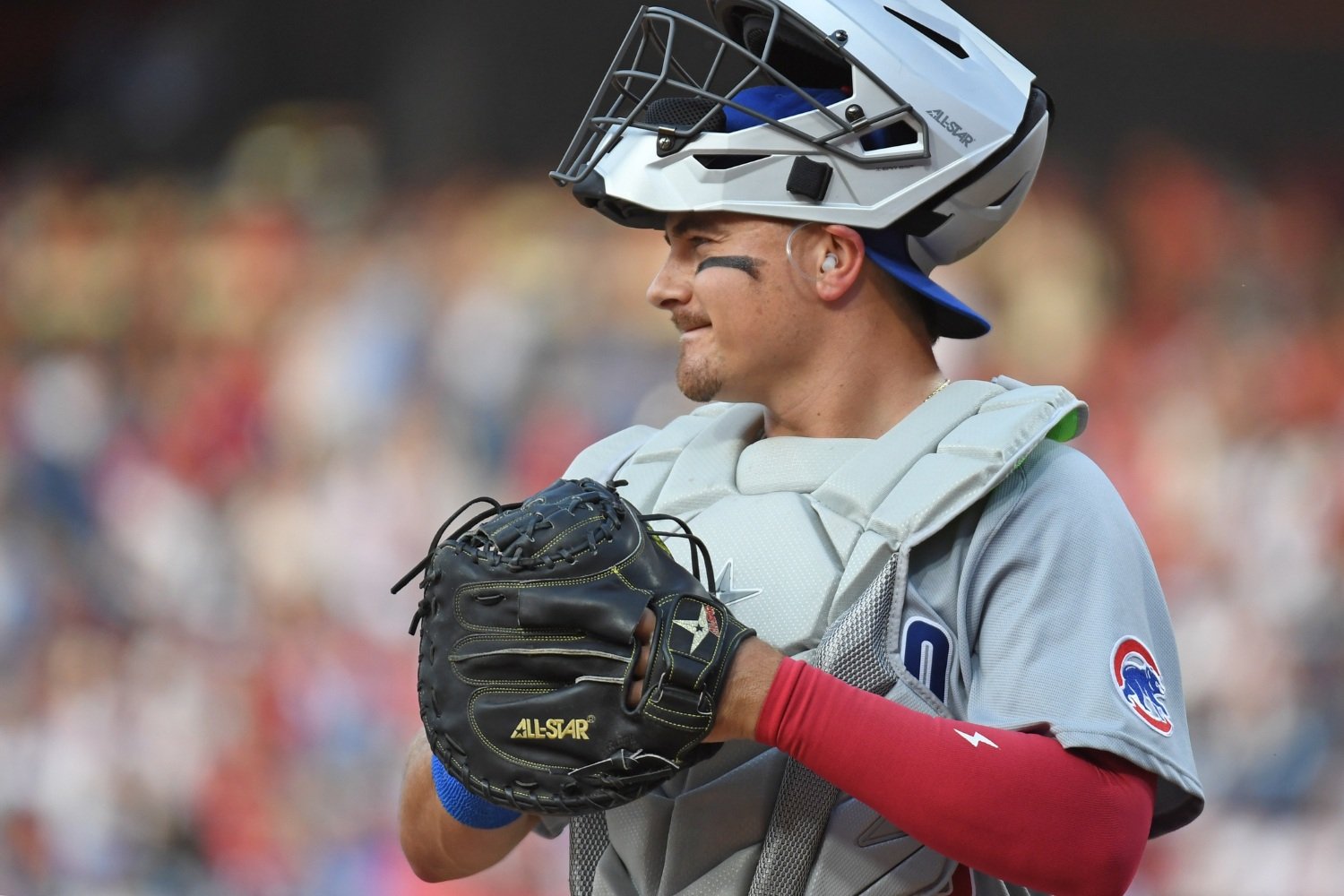 Though losing Miguel Amaya for two months to an oblique strain was a major blow to the Cubs, they've been very, very lucky. Plugged in to fill the gap left by Amaya, Reese McGuire has been everything they might have fairly hoped he would be. He's only running a .246 on-base percentage in his limited playing time, but he's run into five homers—and, much more importantly, he's been a defensive stalwart. In fact, he's been a revelation behind the plate. McGuire has played relatively little—some 60 catchers have been behind the plate for more opponent plate appearances—but made a huge impact. Runners have 12 steals against him, but have been caught seven times. In total, McGuire has 11 Runner Kills, adding a few plays like this one to those thwarted thieves. V0FkOFlfWGw0TUFRPT1fVXdKVlUxSU1Wd1VBWEZvTEJRQUhBUVlDQUFBQ1ZsTUFBMWRRVkF0UkF3ZGRBbEJm.mp4 That was the third Guardians runner McGuire had thrown out in that game, alone. The first came in the heels of a leadoff single by Steven Kwan in the first inning: V0FkOFlfWGw0TUFRPT1fQUFOWlhBQUZCUW9BWFFkVUF3QUhWd2RSQUFNR0FGQUFVUVpXVVFkUUFsSURVUVJV.mp4 And the second via disguised pitchout in a key spot with runners on the corners in the fifth. V0FkOFlfWGw0TUFRPT1fQVFRQUIxUlNVZ3NBV1ZZRFhnQUhWQWRlQUFNQlVWZ0FVMXdFQ1FBR0ExVUJCd29D.mp4 His arm has been plus. So have his blocking skills been, behind home plate, such that his pitchers know they can afford to bury one even with a key runner on third base. TDZXMWJfWGw0TUFRPT1fQVFnRFZsQUhBZ3NBQUZVTFZnQUhCUU1DQUZsWFV3VUFWMVlHQkZjQVVGWlJBMUFB.mp4 Give him special credit, on that one, for the awareness it took to keep the ball in front of him, then force the runner back to the base—then still turn and make the throw in time to convert the strikeout. Later in that same game against Pittsburgh, he called (and Drew Pomeranz had the conviction to throw) another ball in the dirt, which he blocked with aplomb. TDZXMWJfWGw0TUFRPT1fQmdsWVZGY0dWd1VBRFZJRkJRQUhDUUFEQUFOV1Yxa0FWRkpYVmdwWEExY0JWQU5R.mp4 The Cubs still lost that game, of course, but they had a chance to win it in the bottom half of the frame, thanks to the double play Oneil Cruz hit into on the pitch right after this one. McGuire's presence behind the plate has meant fewer bases gained for opponents, in addition to more outs. And finally, he's also been the only Cubs catcher who's framed pitches with above-average aptitude this year. Here are the numbers, according to Baseball Prospectus. (Statcast is even more in favor of McGuire, relative to the other two.) McGuire: 0.6 FrmR Amaya: 0.0 Carson Kelly: -3.5 Combine his good framing with the ability to stifle the running game and the confidence he inspires in his batterymates, and Cubs pitchers have a 3.60 ERA with McGuire behind the plate this season. That's better than either Amaya (4.37) or Kelly (3.72). Opponents' OPS (.672 with McGuire back there; .710 for Amaya; .729 for Kelly) throws their effects on run prevention into equally stark relief. Thus, while McGuire's offensive contributions have been relatively limited, he's a key cog in the team's machine; he makes them better at run prevention. That makes for an uncomfortable looming decision. When Amaya does return from the injured list, the team will have to make room on their 26-man roster for him. The natural way to do so is to designate McGuire for assignment, because he's their current backup catcher and the nature of the modern bench is such that carrying three backstops is virtually impossible. McGuire can't be sent to the minors without being offered to the rest of the league via waivers, and could elect free agency even if he clears—which, at this point, is unlikely. Picking McGuire over Amaya certainly isn't a viable path, with Amaya also being out of options and having both youth and longer-term team control on his side. He's a better offensive player than McGuire, too. If nothing else changes, the Cubs will have to waive (and surely lose) McGuire. That comes with its own problems, though. To wit: they'd be down to two trustworthy big-league catchers in their organization, and would have no good way to backfill if either Amaya or Kelly got hurt later in the campaign. This is why teams are always hunting catching depth, and especially catching depth that can be sent to the minors without being exposed to the other 29 teams. Chicago does, of course, have Moisés Ballesteros, who came up briefly earlier this year to fill in as the DH and who has continued to catch in about two-thirds of his games since returning to Triple-A Iowa. However, if they really trusted Ballesteros behind the dish, he'd have come back when Amaya went down. He didn't. Ballesteros will still be (will have to be) a sufficient emergency option for the final two months, if and when Amaya returns and McGuire goes elsewhere. Since the Cubs plainly feel he needs more seasoning (or that his future is as a DH, anyway), though, they won't sleep especially well on any day that includes a hard foul tip off the mask or the bare hand of either Kelly or Amaya. It might also be that, because Ballesteros is important as their only real catching depth at this stage, they feel unable to pull the trigger even on an otherwise strong trade offer that would include sending him elsewhere. That's the bad news. The good news is, given how good he's been behind the plate and the fact that he still has one year of team control remaining, the Cubs might be able to include McGuire in a trade somewhere right as Amaya returns. Sure, his offense has been lousy, but that's been in limited playing time, and he's showing the well-rounded defensive competence teams crave from their catchers for two years running. He wouldn't fetch any major piece, of course, but he could be thrown in to sweeten a deal with a team in need of some stability beyond 2025 at the catcher spot—or in a swap with a club who could send the Cubs a less accomplished or helpful spare catcher, but one who can be optioned to Iowa unless and until needed. The downside of that strategy is that unless it's the second type of move, you're ensuring the loss of McGuire and merely hoping to either stay healthy or survive with Ballesteros late in the season. It's possible the team will feel obligated to simply pick a moment of roster bloat for other teams at which to bring Amaya back, and try to sneak him through waivers—the risk of losing him being worth the chance that they wouldn't, as opposed to taking any action that guaranteed the former. McGuire has added significant value for the Cubs over the last two months, giving their run-prevention some needed help. His days in the organization are likely dwindling, but hopefully, the team will find a way to maintain some depth behind the plate—and perhaps even extract one final drop of value from a very successful minor-league signing.


