


Cubs Video
There might not be a better-connected baseball reporter in the Chicago media sphere than Levine, of 670 The Score. That's no denigration of any of the other great beat writers covering the Cubs or White Sox, many of whom know their individual teams a bit better than Levine knows either one. It's just a fact, reflecting the fact that he's been covering baseball in the city for longer than most of the rest of either beat has been alive, and that he has cultivated valuable relationships in front offices and with agents throughout the game.
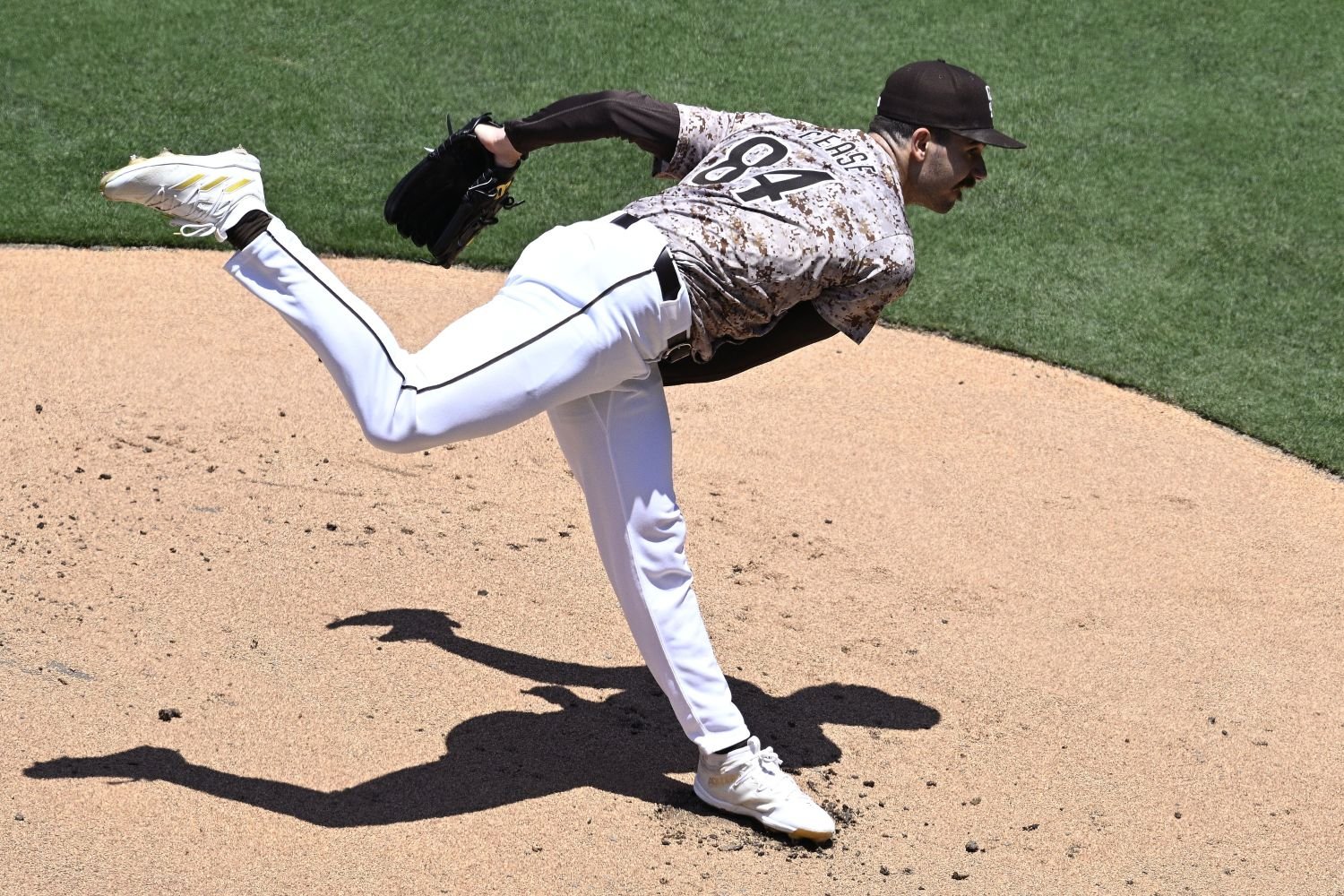
That's why it was fairly stunning when, in the first segment of Levine's weekly Inside the Clubhouse show Saturday, he contended that the Cubs would be likely to trade Justin Steele to acquire Dylan Cease of the Padres. The thrust of his argument was a rhetorical question he posed to his co-host, Ryan McGuffey: "Would you rather have two years of Steele or one year of Cease?" He made the case that the Padres, who do want to win in 2025, would be uninterested in anything shy of top Cubs prospect Matt Shaw in exchange for Cease, and that the Cubs would and should trade Steele for the final year of Cease's team control, in the hopes that he could secure a pennant for them before leaving in free agency next winter.
As ideas go, this one is creative, and it's not Levine's wont to toss such things out without having discussed it with someone inside one of the organizations in question. In this case, though, he got the wrong end of the stick. Two crucial facts undermine the case for this trade.
Firstly, Justin Steele is not two years from free agency; he's three years away. It's possible that Levine was forwarding someone else's vaguely-worded or ill-explained expectation that 2027 (which should be the final season of Steele's team control) will be pulverized by a work stoppage, but teams are nowhere near confident enough of that to shape trade valuations and decisions around it at this point. More likely, Levine and/or a league source got their wires crossed, because Steele is in his second year of arbitration eligibility and already agreed to a handsome $6.55-million salary for 2025. Ordinarily, of course, players reach arbitration after they attain three years of MLB service time, and become free agents after three passes through arbitration.
Steele, however, was a Super Two player for 2024, so he won't reach six years of service until the end of 2027. Thus, he gets four seasons of arbitration eligibility. That both makes a huge difference in his value to the Cubs (relative to if he really were set to become a free agent after 2026) and, somewhat perversely, makes him harder to take on for the Padres. The latter brings us to the second problem with Levine's idea: The Padres do want to contend this year, but they need to cut substantial salary to make room for the additions they still badly need to make, and Steele doesn't accommodate that need. Swapping Cease out for him would only save the Friars $7.2 million. That's not insignificant, but if A.J. Preller does elect to trade Cease, he'll want to realize more savings than that.
When the Padres signed Michael King to a one-year deal to avoid arbitration, they structured it such that almost half that amount will be paid near the end of 2025, between the third and fourth disbursals of revenue-sharing money for the year and after they pull in any playoff revenues they can generate. That $3.75-million buyout on a mutual option will be assigned to the 2026 budget. They did the same thing with Elias Díaz, whom they inked for $3.5 million but who will get $2 million of that as the buyout on another mutual option. Those deals give them more space to be creative between now and Opening Day, and don't necessarily signify that the team is penniless or illiquid, but they do underscore the fact that Preller needs to make some cuts before making any additions.
He'll also want to load up with good, young talents making the league's minimum salary, or something very close to it. It's roster space (just 36 of the 40 slots on the roster are filled) the Padres have, and money they lack. They might well be able to sign a good player with the money they save by trading Cease, but they don't need a good player to get back to where they were in 2024; they need three or four. This is why I've talked about these two teams as good trade partners all winter. The Cubs have excess depth at a low cost, and the Padres have high-end talents who could help put the Cubs over the top.
If a Cease-to-the-Cubs trade happens, it will almost certainly center on one of Javier Assad and Ben Brown and one of Owen Caissie, Kevin Alcántara, or James Triantos, with a third piece involved. That's the kind of framework that works for both teams. Once we're clear on how much team control Steele still has left, it's plain that he has no place in this conversation. Neither team's situation is a fit for that idea, and the gap in quality between Cease and Steele isn't large enough to make the ends of the string meet.





Recommended Comments
Create an account or sign in to comment
You need to be a member in order to leave a comment
Create an account
Sign up for a new account in our community. It's easy!
Register a new accountSign in
Already have an account? Sign in here.
Sign In Now