


Cubs Video
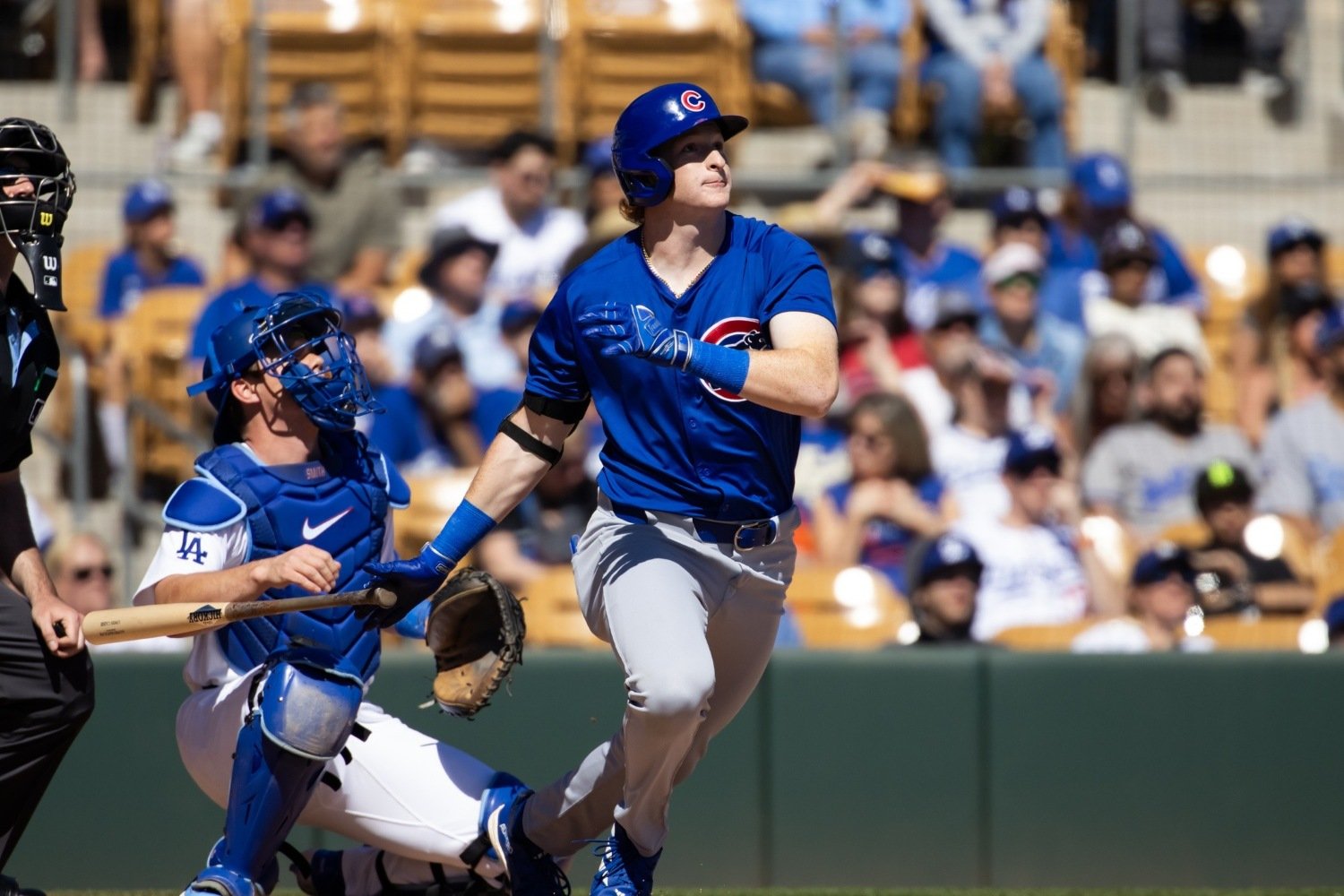
If the Cubs are going to end up getting meaningful value out of the Yu Darvish trade, it will come in the form of Owen Caissie—be that as a middle-of-the-order bat for years to come, or as a trade chip in the near future. Caissie, 22, has gotten a full season of playing time at each of the top two levels of the minor leagues, at a young age. Since the start of 2023, he's batted .283/.387/.495, with 41 home runs in 1,077 plate appearances. Those are strong numbers, especially accounting for his youth.
The news is not all good, though, which is why Caissie's stature on most industry rankings of top prospects is moving in the wrong direction. Eric Longenhagen and the prospect team at FanGraphs reduced his Future Value grade from 50 in 2024 to 45 on this year's list, which is basically their way of saying he no longer profiles as a first-division starter in the majors. He was 65th on Baseball Prospectus's 2024 Top 101 prospects list, but dipped back to 77th this year, in what is his fourth appearance on their list. (Usually, making that list four times is a mixed blessing; really successful prospects nearly always graduate before getting that far.)
Caissie was 47th on Baseball America's Top 100 list for 2024, but fell to 64th for 2025. He was also 47th on MLB Pipeline's list last year, and slid to 54th for them. He did not even make Keith Law's top 100 list for The Athletic, which was true last season, too. It's not as though he's become a non-prospect, but Caissie is no longer a premium prospect, either. The hopes for future stardom are dimming.
At the root of those doubts lies Caissie's trouble with strikeouts. He's fanned 29.7% of the time since the start of last year, and while he actually slightly reduced that number in climbing from Double A to Triple A in 2024, it was still a high number. He walks a lot, at 13.6% over the last two years, but big-league pitchers tend to attack a player and fill up the strike zone much more than even guys in the high minors can. Caissie's whiff rate of 21.5% on swings at pitches within the strike zone last year placed him in the 24th percentile among Triple-A hitters. That isn't such a catastrophic miss rate as to be disqualifying, but it puts a lot of pressure on a player's swing decisions and power utility. Being in the bottom quartile for contact in the majors is fine, but Caissie was in that range among a cohort that contains plenty of guys with no real future in the majors—and against pitchers considerably worse than the ones he'll face when he matriculates to MLB.
Worse, right now, Caissie's swing decisions and power utility simply aren't elite, the way you'd like them to be for a player of his profile. He chased 27.3% of pitches outside the zone last year. That was slightly better than an average Triple-A hitter, but again, that's not the preferred measuring stick when looking at a player who will need to excel in that area. He did post a maximum exit velocity of 115.4 miles per hour, and has gotten at least that high in each of the last three years as a pro, which attests to the raw power in his huge frame and fast swing. However, his 90th-percentile exit velocity was just 106.7 miles per hour. That's fine, too—but the dream with Caissie was that he would mature into a top-of-the-scale power guy, and that number is not top-of-the-scale.
To put that figure in an even more intimate context, Matt Shaw (in a much smaller sample, to be fair) had a 90th-percentile exit velocity of 106.3 miles per hour in Iowa. If you wondered for even a moment why the Cubs' moves this winter made room for the more versatile, well-rounded Shaw instead of Caissie, paradoxically, this might be the number to look at. Power is not at the core of Shaw's game, the way it is for Caissie, yet he's nearly Caissie's equal in actually getting to power.
None of this has to be permanent. One reason why many analysts like to note and track maximum exit velocities is because they reliably reflect a player's potential, and Caissie's potential is certainly greater than Shaw's. The latter had a maximum exit velocity of just 109.5 MPH in Iowa last year. Caissie definitely has the ability to tap into elite power; it's just a probability problem. He doesn't seem especially likely, at this moment, to reach that ceiling.
An underrated athlete, Caissie is a playable corner outfielder, although his speed has already diminished and seems likely to further erode as he carves out his niche in the majors. He isn't so plodding as to be useless if he doesn't hit 40 homers per season. Right now, though, he projects to be more of a 20-homer guy, with his value undercut by the strikeout vulnerability and a likely need to be sheltered from left-handed pitchers. He's very young; this can change. He still has a chance to consolidate his skills better and better match his expected value to his tools-based upside.
Whether that will happen with the Cubs is another question. Depending on how this season unfolds—on the outside chance of a Kyle Tucker extension, on the further progress and establishment of Pete Crow-Armstrong, and on Kevin Alcántara's development, among other things—Caissie could be a solid trade chip, either in the next few weeks or during the summer. The likelihood that he's dealt is no higher than that Alcántara is, perhaps, but it's probably higher than (say) the 12% estimate I continue to give on the chances of a long-term deal with Tucker. It's good for any system to have an Owen Caissie in it, and it will be interesting (if, indeed, he's in the organization next month) to see whether he plays a lot of first base this spring. By no means is he a goner, and his future value is real. It's just a bit less certain, or a bit less exciting, than it looked a year or two ago.





Recommended Comments
Create an account or sign in to comment
You need to be a member in order to leave a comment
Create an account
Sign up for a new account in our community. It's easy!
Register a new accountSign in
Already have an account? Sign in here.
Sign In Now