Matthew Trueblood
-
Posts
2,479 -
Joined
-
Last visited
-
Days Won
2
Content Type
Profiles
Joomla Posts 1
Chicago Cubs Videos
Chicago Cubs Free Agent & Trade Rumors, Notes, & Tidbits
2026 Chicago Cubs Top Prospects Ranking
News
2023 Chicago Cubs Draft Picks
Guides & Resources
2024 Chicago Cubs Draft Picks
The Chicago Cubs Players Project
2025 Chicago Cubs Draft Pick Tracker
2026 Chicago Cubs Draft Tracker: Picks & Bonuses
Blogs
Events
Forums
Store
Gallery
Everything posted by Matthew Trueblood
-
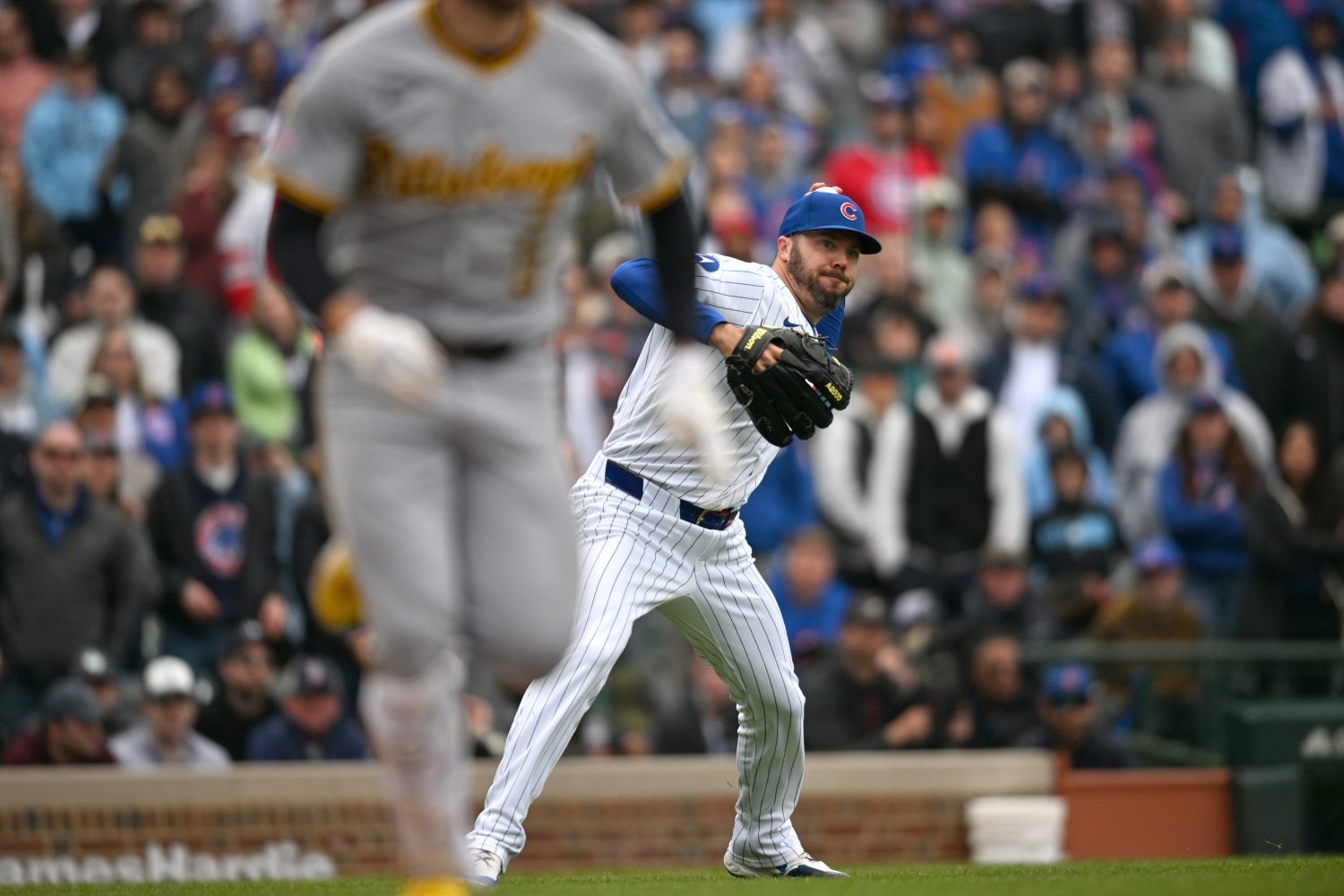 The first problem is that Tyler Austin got hurt. That's outside Jed Hoyer's control, except in that signing a player who was compelled to seek his baseball fortune on another continent half a decade ago and who's now well into his mid-30s was an embrace of some injury risk. Austin's knee injury in spring training left the Cubs without the backup first baseman Hoyer thought he'd provided to Craig Counsell, and Jonathon Long's minor injury during camp was enough to scupper the option of bringing him north when the season began. Hoyer continues to build bad, dysfunctional benches, and the lack of a true utility man—Matt Shaw fills that role on a healthy version of the roster, while Scott Kingery does so for this injury-diminished one, but neither is quite as versatile as the ideal do-everything guy—is on him. However, he caught a bad break with Austin going down, and the best management of his young bats and his two incumbent catchers was the way he did things this winter. Let's assign him just 10% of the blame for the Cubs' needless and costly loss Saturday at Wrigley Field, and move along. Counsell was left without great options, too. He faced a situation in the seventh inning of that game for which the only reasonable response was the move he made. The Cubs were rallying. After starting the game by falling behind 3-0, they'd battled back to make it 3-2, and the tying run stood at third base with two outs. Michael Busch was due, but the Pirates went to lefty reliever Gregory Soto, a brutal matchup for the platoon-vulnerable Busch. Moreover, Busch was mired in an 0-for-30 slump. You can't ask a player fighting his hitting demons that hard to try to win a left-on-left battle with the game on the line, when you have a competent alternative on the bench. Counsell went to Carson Kelly, gaining the platoon edge, even though Kelly is not one of those catchers with much experience as a first baseman. Kelly didn't cash in the chance, but that was the right call by Counsell. Kelly looked fine while he remained in the game as the first baseman, too. The trouble really began in the ninth, when Kelly drew a two-out walk. He represented the winning run, so Counsell pinch-ran for him with Shaw, gaining much more speed. This could have come into play even in a small way, like beating out a would-be fielder's choice on a slow ground ball, so it was a worthwhile risk. Again, though, it didn't pay off. Alex Bregman extended the game with a tying single, but Shaw was stranded at third and had to take over at first base on defense in extra innings. We can assign some blame to Counsell and his coaching staff, because somewhere during the spring—especially after the relatively early injury to Austin—they should have gotten in lots of extra work with Shaw or one of the other members of the bench corps at the cold corner. Kelly took most of those reps, but there are lots of ways a catcher can end up being unavailable in a moment like that. One option for the staff should have been to bring Conforto or Ian Happ in from the outfield to play first, with Shaw taking over an outfield corner. Failing that, Shaw should have gotten many more reps on the not-so-basic basics of first base. None of that happened. I assign 20% of the blame for Saturday's loss to the coaching staff. The rest, though, must be divided between Caleb Thielbar and Shaw. The Cubs did a marvelous job in the top of the 10th inning, holding the visitors scoreless. They missed their chance to walk them off in the bottom of the 10th, but they were very close to getting out of the top of the 11th unscathed, too. With two runners on and two outs, Thielbar induced a dribbler from Pirates infielder Brandon Lowe, who looked overmatched in the left-on-left matchup. It should have ended the inning and set up the home side to even the series with a walkoff victory. Instead: calamity. Everything two players can do wrong on a routine play, Thielbar and Shaw did wrong on this one. To start in a good place, though: they both had excellent initial reactions. Shaw, playing an unfamiliar position and surely positioned farther from the base than was comfortable with a lefty batter at the plate, broke quickly toward first on contact. This is actually a good chance to heap another 5% of the blame on the coaching staff. With a lefty batter up and a key run at first base, playing the first baseman that far off the line is almost never correct. Maybe, with the lefty Thielbar on the mound, Lowe's spray chart told them to move the first baseman toward the hole, but Shaw is not 'the first baseman' when you're drawing up those spray charts and positioning plans. He should have been told to play closer to the bag. We'll soon see why that matters. Thielbar fielded the ball cleanly, and although it meant turning his back to the runner, he was in position to make a throw with plenty of time. Shaw, for his part, found the bag fast. That's your job, on a play like this, as the first baseman: get to the spot quickly and have your head up, ready for the throw. Look at all the time Thielbar has. There's no need to rush here. There's also plenty of time for the move Shaw still needs to make. A highly seasoned first baseman might have aimed to get their right foot onto the base right away, but this is a perfectly acceptable way to do what we discussed a moment ago: find the base without staring down at the ground. You angle toward the bag, let your left foot locate the pillow, then quickly turn to put the right foot there instead, setting up to receive a throw by putting your left foot forward. That's where the trouble starts. Shaw has his moment to get the feet right, but he doesn't take it. He's not used to being at first, receiving this kind of hard, time-pressured, high-stakes throw, and he's not comfortable turning his hips and shoulders the way a first baseman must, to be ready for a throw that's anywhere but right at you. It's easy to see some of that in the way Shaw freezes and carries his weight as he braces for the throw. It's harder to see this, but I think it also becomes a problem for Thielbar, right about here. He's already rushing a little. He didn't appropriately calm himself in the moment it took to scoop the ball, and he's more worried about getting the ball there on time than he should be. But now, he's also looking at an unusual target. Shaw isn't set up correctly, and visually, it's much harder to pick out where you want the throw to go. A better first baseman is already bringing the glove up to set a target, but even without that, his body is telling Thielbar he's ready. Shaw's positioning is sending the opposite message. Perhaps because of that (or perhaps just because he hurried it), Thielbar will drop too low with his arm slot and throw wide. This is a guy who comes way over the top, off the mound. Dropping down to throw like an infielder isn't usually a problem for him, but here, it becomes one. The ball is running away from Shaw, and the inexperienced infielder's footwork is going to cost him everything, now. Here's the last frame before the ball skips in the dirt, then off his glove. It's a bad throw. I'm not sure he could have gotten the out if he'd set up better, except by inducing a slightly better throw. I think he could have, because he'd have been able to stretch diagonally toward the ball and cut it off as it tailed away from him. He'd have had a much greater range with the stretch, in general. This is why first basemen stretch with their non-glove foot anchored to the bag in almost all situations, in a nutshell. But certainly, it would have been a tough and impressive play to snare this ball and get Lowe. Take note of his foot being on top of the base, instead of shoved up against its edge, and you can also see that he had a bit more stretch available than it appears. What should have been easy, though, was stopping the ball. If he has the right foot on the base, it's routine to come off the bag and collect the throw, even if he's ultimately unable to hold the base. As it is, the reach across his body necessitated by having the left foot there means he's going to fall down as he tries for this, no matter what. His stretch radius is cut way, way down, so he needed to give up the base early here and just snatch the ball up like a grounder. Out of position and out of his depth, he failed that, too. The ball skipped away and the winning run scored. Even having made multiple layers of excuse for his being forced into duty at an unfamiliar spot and placed in the wrong spot to start the play, I have to give Shaw 40% of the blame for this loss. He had a difficult but doable path to getting the out on this play. He had a much wider and easy path to keeping the ball with him and holding the go-ahead run at third base. All it would have taken was better fundamental play, and a big-leaguer shouldn't have to be told which foot to place on first base when readying for a throw. He failed a simple test of either poise or baseball IQ, at a crucial moment in a divisional game. The rest of the blame—25%—goes to Thielbar. It was a bad throw. He's an asset to a team battling major pitching injury trouble, and he made the first half of a fine play, but it was a bad throw at a dreadful time. Losses like Saturday's are symbolic of the team's failures on multiple levels, but ultimately, you have to leave most of the blame at the feet of two players who have to be better than that. If the Cubs want to get back to the postseason this year, they need to spend the summer building a more functional roster and getting healthy. They have to put their players in better positions to succeed. But most of all, they have to get these things right. They're not nearly good enough to go anywhere worth going while flubbing the fundamentals.
 -
Image courtesy of © Ken Blaze-Imagn Images Hitting is problem-solving. After all, you're standing there in a box, not allowed to move beyond it, armed with a seemingly powerful but unwieldy club, and you've got a projectile coming at you at bone-breaking speed. You can't be sure where it'll be when it passes you, or even that it won't come find that spot between your third and fourth ribs that leaves you wincing every time you run for a week. You can't do more than guess (albeit in an educated way) which way the thing might swerve en route. If you don't find ways to consistently whack that projectile off into corners and empty spaces, you lose your job. You've got a problem, all right. You'd better have some ideas to solve them. The above are some of the problems of sheer difficulty in hitting well. The reactive nature of the exercise, the excellence of modern big-league defense, and the nuances of situations pose plenty of difficulties. There's another problem every hitter eventually runs into, too, though: to attack pitches and be as dangerous as possible in the box, eventually, you have to risk hurting yourself. In fact, as the league has become increasingly fast and ferocious, those types of injuries are becoming more common. Higher pitch velocities mean that hitters have to swing faster, too, and for many, rotating fast and explosively enough to win your showdown with a pitcher eventually means losing a battle with the integrity of your own muscle tissues. Over the last decade, strains to key muscles in the torso have become much more common in hitters. Last season, in fact, was a bonanza for these things—oblique strains, intercostal strains, abdominal strains, and so on. In May 2025, Miguel Amaya became one of the victims of that trend. He was hurt, by coincidence, on a throw in Cincinnati, but the way he pushed his limits with his swing speed contributed to the damage. That injury derailed Amaya's season. He missed nearly three months, then sprained his ankle in his first game back in August. It was a disaster—not just because it stopped him cold during a great season, but because it's had a noticeable, even eye-popping hangover effect this spring. Last year, Amaya's average swing speed was 72.2 miles per hour. That's above-average, especially for a catcher—those guys are selected for defense, after all. It formed a downward trend, from 73.7 MPH in 2023 and 72.9 in 2024, but it was still a strong number. Of course, nearly all of the swings making up that average came before he suffered that oblique strain. This season, Amaya has served in a similar role as the one he had last year, splitting time with Carson Kelly. He's been very patient—much more so than in the past, with his swing rate nosediving from 54% to 38%—so he's only lodged 29 competitive swings on the season. In them, though, he's averaging just 68.4 MPH of bat speed. He's topped out just over 76 MPH. Every possible sign says Amaya has gone from a plus to a minus with regard to bat speed. He's lost a ton of it. Obviously, that doesn't mean he can't be at least somewhat effective. Firstly, to support that claim, we can point to the fact that he's batting .294/.400/.529 this year. Swinging less is as good as swinging slower is bad; it can produce walks and put you in hitter-friendly counts. Once you have the advantage on the pitcher, maybe you can sit on a certain pitch type, and the feeling that the pitch might swerve in the wrong direction on you goes away. If Amaya squares the ball up much better because his swings are more on target, he can make up for this big loss of bat speed. Slower swings are also, by and large, more likely to result in contact, as are shorter ones. Amaya's bat path has been flatter and more direct this year, so he's found some hits in two-strike counts. He's not hitting the ball hard as often, but he can make up for that with a better-organized approach. The other caveat that matters is that Amaya might yet recover the lost bat speed. The samples here are tiny; he could warm up with the weather and get back to cutting it loose. However, for any catcher moving into their late 20s and for any player coming off a severe injury to their torso, a loss of bat speed shouldn't surprise us—and it's best to assume that it will be at least partially permanent. Amaya can still be a very useful player for the Cubs, but he might have to learn to do it as a slower swinger. It's just the next problem to solve. View full article
-
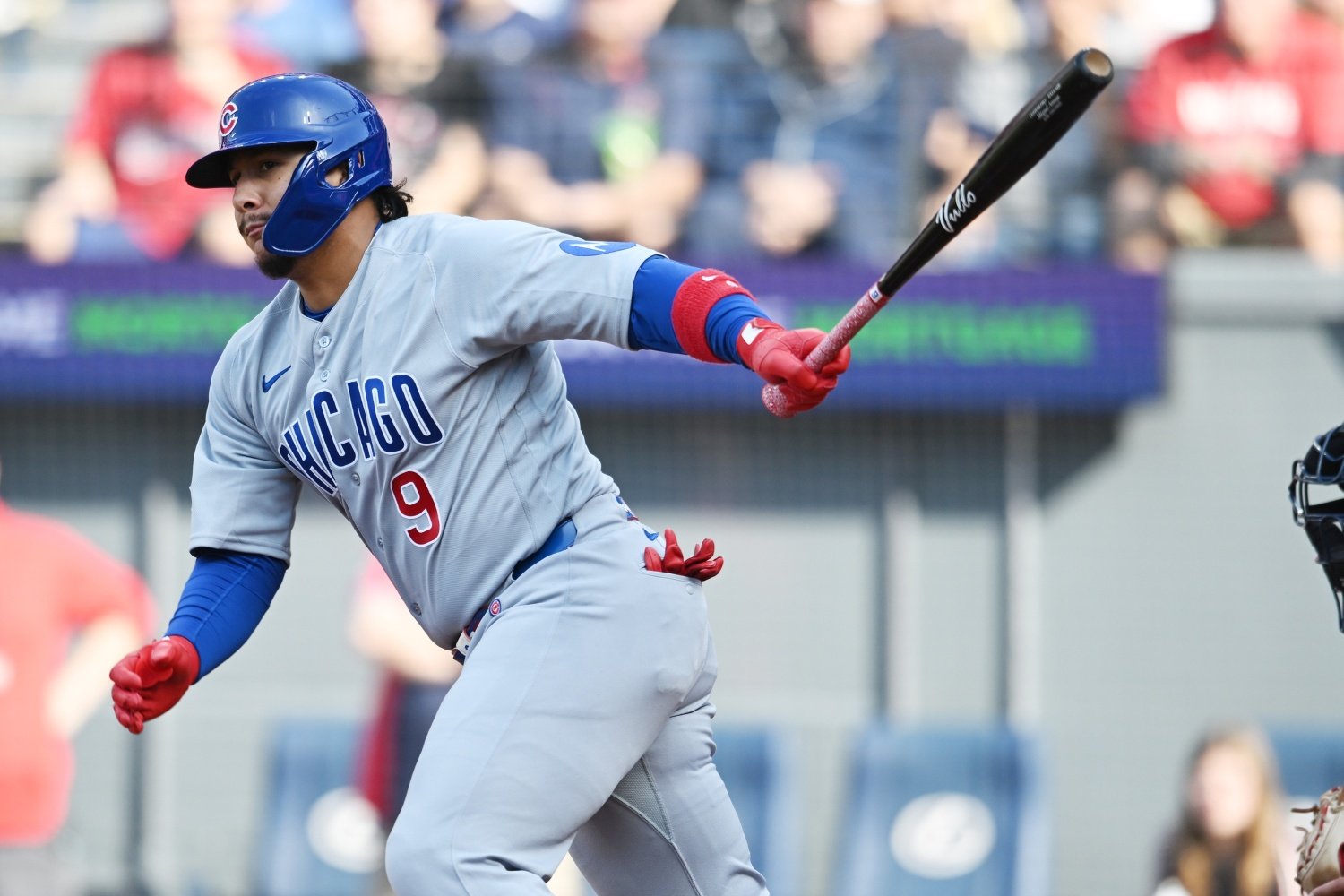 Hitting is problem-solving. After all, you're standing there in a box, not allowed to move beyond it, armed with a seemingly powerful but unwieldy club, and you've got a projectile coming at you at bone-breaking speed. You can't be sure where it'll be when it passes you, or even that it won't come find that spot between your third and fourth ribs that leaves you wincing every time you run for a week. You can't do more than guess (albeit in an educated way) which way the thing might swerve en route. If you don't find ways to consistently whack that projectile off into corners and empty spaces, you lose your job. You've got a problem, all right. You'd better have some ideas to solve them. The above are some of the problems of sheer difficulty in hitting well. The reactive nature of the exercise, the excellence of modern big-league defense, and the nuances of situations pose plenty of difficulties. There's another problem every hitter eventually runs into, too, though: to attack pitches and be as dangerous as possible in the box, eventually, you have to risk hurting yourself. In fact, as the league has become increasingly fast and ferocious, those types of injuries are becoming more common. Higher pitch velocities mean that hitters have to swing faster, too, and for many, rotating fast and explosively enough to win your showdown with a pitcher eventually means losing a battle with the integrity of your own muscle tissues. Over the last decade, strains to key muscles in the torso have become much more common in hitters. Last season, in fact, was a bonanza for these things—oblique strains, intercostal strains, abdominal strains, and so on. In May 2025, Miguel Amaya became one of the victims of that trend. He was hurt, by coincidence, on a throw in Cincinnati, but the way he pushed his limits with his swing speed contributed to the damage. That injury derailed Amaya's season. He missed nearly three months, then sprained his ankle in his first game back in August. It was a disaster—not just because it stopped him cold during a great season, but because it's had a noticeable, even eye-popping hangover effect this spring. Last year, Amaya's average swing speed was 72.2 miles per hour. That's above-average, especially for a catcher—those guys are selected for defense, after all. It formed a downward trend, from 73.7 MPH in 2023 and 72.9 in 2024, but it was still a strong number. Of course, nearly all of the swings making up that average came before he suffered that oblique strain. This season, Amaya has served in a similar role as the one he had last year, splitting time with Carson Kelly. He's been very patient—much more so than in the past, with his swing rate nosediving from 54% to 38%—so he's only lodged 29 competitive swings on the season. In them, though, he's averaging just 68.4 MPH of bat speed. He's topped out just over 76 MPH. Every possible sign says Amaya has gone from a plus to a minus with regard to bat speed. He's lost a ton of it. Obviously, that doesn't mean he can't be at least somewhat effective. Firstly, to support that claim, we can point to the fact that he's batting .294/.400/.529 this year. Swinging less is as good as swinging slower is bad; it can produce walks and put you in hitter-friendly counts. Once you have the advantage on the pitcher, maybe you can sit on a certain pitch type, and the feeling that the pitch might swerve in the wrong direction on you goes away. If Amaya squares the ball up much better because his swings are more on target, he can make up for this big loss of bat speed. Slower swings are also, by and large, more likely to result in contact, as are shorter ones. Amaya's bat path has been flatter and more direct this year, so he's found some hits in two-strike counts. He's not hitting the ball hard as often, but he can make up for that with a better-organized approach. The other caveat that matters is that Amaya might yet recover the lost bat speed. The samples here are tiny; he could warm up with the weather and get back to cutting it loose. However, for any catcher moving into their late 20s and for any player coming off a severe injury to their torso, a loss of bat speed shouldn't surprise us—and it's best to assume that it will be at least partially permanent. Amaya can still be a very useful player for the Cubs, but he might have to learn to do it as a slower swinger. It's just the next problem to solve.
 -
Image courtesy of © Nathan Ray Seebeck-Imagn Images Back in May 2024, I wrote about Nico Hoerner's potential (or, as I myopically believed back then, lack thereof) to hit more doubles. The issues I noted at the time are still real and salient: that hitting the ball to center and right field, while good for a batter trying to maintain a high contact rate and make good swing decisions, tends to come with limits on sheer exit velocity; and that defenses have gotten better at taking away extra-base hits on balls directed toward the gaps. Here's a chart from that article that's worth reproducing. It shows the league-wide trends in outcomes on line drives hit to the gaps from 2016-24. Without updating the visual itself, let me assure you: the trends have continued apace. Hoerner hasn't tapped into some new source of raw power. He has, however, slowly developed a bit more practical power. Without generating more extra-base hits (he had 37 in 2022, 40 in 2023, 43 in 2024 and 40 in 2025), he's maintained his rate of compiling those and increased the rate at which he hits singles. I chronicled the changes to his batted-ball profile that facilitated that increase last fall. In short, he figured out how to start pulling the ball on a line, and while that didn't lead to a sudden surge in isolated power, it augmented his slugging average, because it buoyed his batting average and the slugging rose with it. This year, he's made a further, subtle change that might just allow him to hit for (a little) more extra-base power without sacrificing his elite contact rate or singles rate. It looks like this. Hoerner has moved slightly off the plate this year. He's also widened his stance slightly. According to Statcast measurements, the distance between his feet in his stance is up to 32.8 inches in 2026, from 28.9 inches in 2025 and 26.7 inches in 2024. That means a shorter stride to what is an almost identical ending position. These numbers are my estimates, because Statcast doesn't report them officially, but Hoerner's stride (the distance his front foot moves from his initial stance to its position at contact) is down from 24.2 inches in 2024 and 19.2 inches last year to 15.5 inches. A wider stance and shorter stride allow Hoerner to stay slightly more upright, and to flatten his swing more easily when needed. His swing speed is actually down this year, but he's creating more sharp contact down the lines. It comes from this change, because this change lets him hit with a stronger base, so he can let the ball travel or go get it as pitch type and location dictate. The adjustment that changed everything for Hoerner last year was to catch the ball out front a bit more often. He's always capable of letting it travel deep into the hitting zone, which means contacting the ball when his swing is still leveling out or just beginning to rise. In 2024, 38.0% of his swings had an attack angle of 2° or less, and just 27.8% of them had an attack angle of 10° or more. Last year, he shifted those numbers to 34.6% and 33.9%, respectively, which led to all those line-drive singles to left field—and began to open things up for him to hit more doubles. He's doing that same thing this year, with one new wrinkle. While his distribution of attack angles is the same as it was in 2025, the results on the balls he hits at very low attack angles have improved dramatically. Already, he's poked four doubles down the right-field line this year, but 'poked' is perhaps the wrong word. More of his opposite-field contact this year looks like this: WnhxdjlfWGw0TUFRPT1fRHdZSFhRWlJVUW9BV2dNS0J3QUhWQTVXQUFNRkFGVUFCbFZRQVZjSEJBcGNVVlpY.mp4 From the center-field camera, that looks a lot like the quintessential Hoerner swing, and again, he's not generating better bat speed or anything. However, he's hitting the ball much better when it gets deep on him, because that wider stance and shorter stride mean earlier stability and greater strength in the back half of his hitting zone. For as long as I can remember, old-school baseball people have repeated the maxim that a good hitter uses the big part of the field to find hits. Maybe so, but to find extra-base hits, a hitter like Hoerner needs to use the small parts. He hit a home run Wednesday night in Tampa on a hanging breaking ball by Joe Boyle. It was a pitch on which he could flatten out and get his arms extended more than in the past, because of his slight stance and stride alteration, but it was also a rare feat. He hit it out on a swing at just 67.8 miles per hour. Since the start of 2025, only 141 home runs have been hit on swings slower than 68 MPH, and only 20 batters have hit more than one such dinger. Hoerner hadn't done it in that span, until Wednesday. The guys who do it even semi-regularly—Wilmer Flores led the way with six of them last year; Isaac Paredes is tied for second—do it by pulling the ball a ton. Hoerner won't and shouldn't lean all the way into that kind of approach, but he does need to be able to shoot the corners for extra-base hits—be they those doubles to right or the occasional homer to left. Changing the way he sets up in the box has helped him move closer to that goal. There will be more adjustments, of course, as the league tries new ways to pitch to this new version of Hoerner, but for now, he's enjoying the fruits of a cleverly improved style of hitting. View full article
-
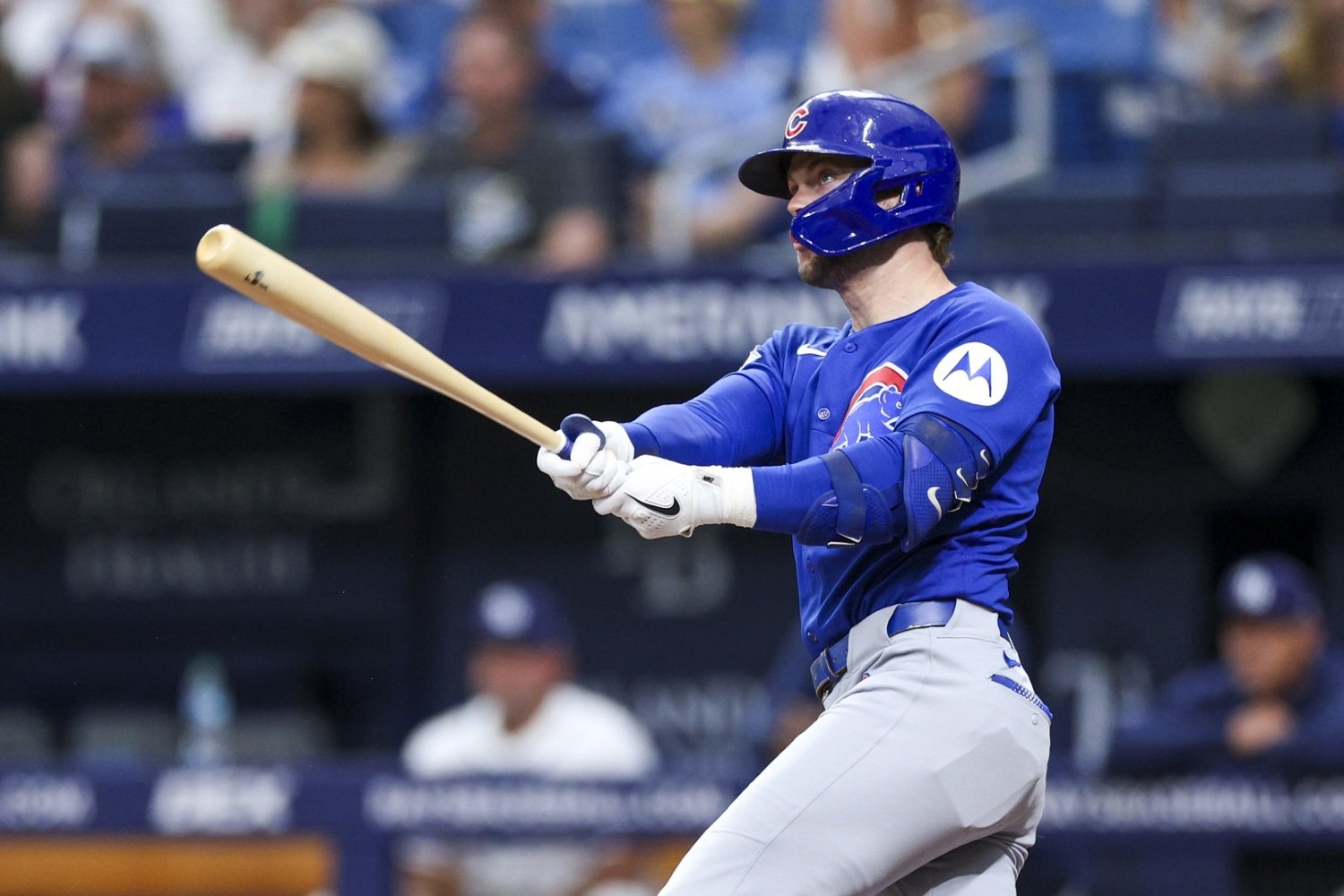 Back in May 2024, I wrote about Nico Hoerner's potential (or, as I myopically believed back then, lack thereof) to hit more doubles. The issues I noted at the time are still real and salient: that hitting the ball to center and right field, while good for a batter trying to maintain a high contact rate and make good swing decisions, tends to come with limits on sheer exit velocity; and that defenses have gotten better at taking away extra-base hits on balls directed toward the gaps. Here's a chart from that article that's worth reproducing. It shows the league-wide trends in outcomes on line drives hit to the gaps from 2016-24. Without updating the visual itself, let me assure you: the trends have continued apace. Hoerner hasn't tapped into some new source of raw power. He has, however, slowly developed a bit more practical power. Without generating more extra-base hits (he had 37 in 2022, 40 in 2023, 43 in 2024 and 40 in 2025), he's maintained his rate of compiling those and increased the rate at which he hits singles. I chronicled the changes to his batted-ball profile that facilitated that increase last fall. In short, he figured out how to start pulling the ball on a line, and while that didn't lead to a sudden surge in isolated power, it augmented his slugging average, because it buoyed his batting average and the slugging rose with it. This year, he's made a further, subtle change that might just allow him to hit for (a little) more extra-base power without sacrificing his elite contact rate or singles rate. It looks like this. Hoerner has moved slightly off the plate this year. He's also widened his stance slightly. According to Statcast measurements, the distance between his feet in his stance is up to 32.8 inches in 2026, from 28.9 inches in 2025 and 26.7 inches in 2024. That means a shorter stride to what is an almost identical ending position. These numbers are my estimates, because Statcast doesn't report them officially, but Hoerner's stride (the distance his front foot moves from his initial stance to its position at contact) is down from 24.2 inches in 2024 and 19.2 inches last year to 15.5 inches. A wider stance and shorter stride allow Hoerner to stay slightly more upright, and to flatten his swing more easily when needed. His swing speed is actually down this year, but he's creating more sharp contact down the lines. It comes from this change, because this change lets him hit with a stronger base, so he can let the ball travel or go get it as pitch type and location dictate. The adjustment that changed everything for Hoerner last year was to catch the ball out front a bit more often. He's always capable of letting it travel deep into the hitting zone, which means contacting the ball when his swing is still leveling out or just beginning to rise. In 2024, 38.0% of his swings had an attack angle of 2° or less, and just 27.8% of them had an attack angle of 10° or more. Last year, he shifted those numbers to 34.6% and 33.9%, respectively, which led to all those line-drive singles to left field—and began to open things up for him to hit more doubles. He's doing that same thing this year, with one new wrinkle. While his distribution of attack angles is the same as it was in 2025, the results on the balls he hits at very low attack angles have improved dramatically. Already, he's poked four doubles down the right-field line this year, but 'poked' is perhaps the wrong word. More of his opposite-field contact this year looks like this: WnhxdjlfWGw0TUFRPT1fRHdZSFhRWlJVUW9BV2dNS0J3QUhWQTVXQUFNRkFGVUFCbFZRQVZjSEJBcGNVVlpY.mp4 From the center-field camera, that looks a lot like the quintessential Hoerner swing, and again, he's not generating better bat speed or anything. However, he's hitting the ball much better when it gets deep on him, because that wider stance and shorter stride mean earlier stability and greater strength in the back half of his hitting zone. For as long as I can remember, old-school baseball people have repeated the maxim that a good hitter uses the big part of the field to find hits. Maybe so, but to find extra-base hits, a hitter like Hoerner needs to use the small parts. He hit a home run Wednesday night in Tampa on a hanging breaking ball by Joe Boyle. It was a pitch on which he could flatten out and get his arms extended more than in the past, because of his slight stance and stride alteration, but it was also a rare feat. He hit it out on a swing at just 67.8 miles per hour. Since the start of 2025, only 141 home runs have been hit on swings slower than 68 MPH, and only 20 batters have hit more than one such dinger. Hoerner hadn't done it in that span, until Wednesday. The guys who do it even semi-regularly—Wilmer Flores led the way with six of them last year; Isaac Paredes is tied for second—do it by pulling the ball a ton. Hoerner won't and shouldn't lean all the way into that kind of approach, but he does need to be able to shoot the corners for extra-base hits—be they those doubles to right or the occasional homer to left. Changing the way he sets up in the box has helped him move closer to that goal. There will be more adjustments, of course, as the league tries new ways to pitch to this new version of Hoerner, but for now, he's enjoying the fruits of a cleverly improved style of hitting.
 -
Javier Assad's Improved Changeup Could Take Him to the Next Level
Matthew Trueblood posted an article in Cubs
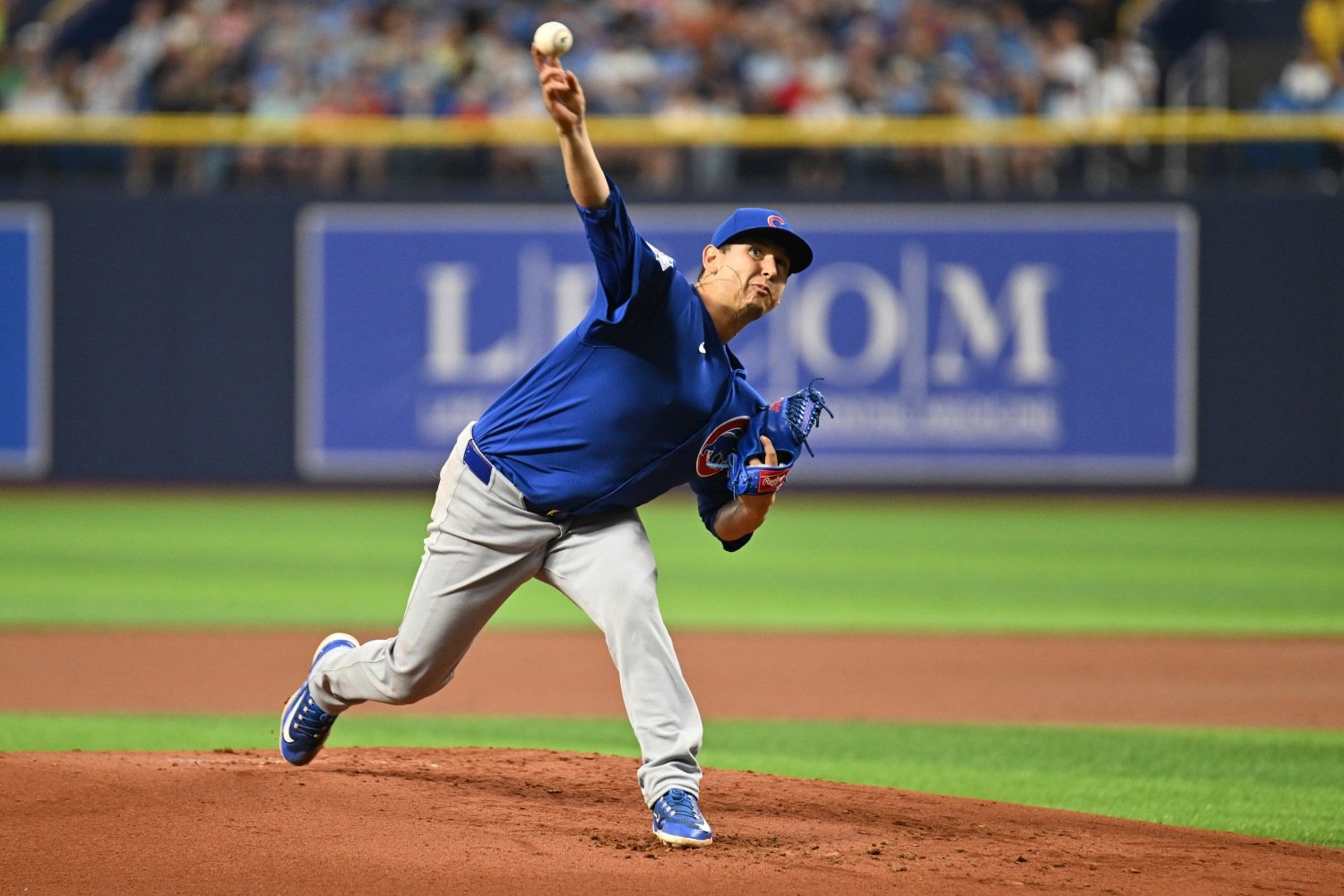 The fastest player in the league hit a sharp one-hopper, almost perfectly placed. With a runner going and Nico Hoerner breaking toward second base to cover a potential throw Tuesday night, Chandler Simpson hit behind the runner. It was still (more or less) up the middle, but Hoerner was moving away from the play. He changed direction gorgeously and speared the ball cleanly on a dive. However, his internal clock got overwound, as he processed the way he'd had to arrest his own momentum and the fact that Simpson gets up the line better than almost anyone else in the league. He rushed and bobbled the exchange, and wasn't able to get the out. It's too bad. He had time, after all, but no way to know that. That play is notable in only one way, really: It's the only hit Javier Assad gave up on Tuesday night. In his first start in the stead of injured Cubs ace Cade Horton, Assad got 17 outs, issued two walks and allowed Simpson to collect that one infield single. With slightly better luck—or if the Cubs had played things more traditionally, with Dansby Swanson covering second with a left-handed batter at the plate—he could easily have gotten through at least six innings without giving up a knock. That's how good he was. Assad only struck out three Rays batters, and the Rays are a team prone to a fair number of whiffs, so don't get ahead of yourself. However, in addition to showing great command of his sinker and feeling out the whole seven-pitch mix that makes him effective in multiple roles, Assad broke out something especially intriguing Tuesday night: a better changeup. Though I can't fully confirm this, it sure looks like Assad has gone to more of a kick-change, after being a standard-issue circle-change guy in the past. The pitch has about two inches more depth than it did in the past, despite being slightly firmer. He throws it with similar initial spin to his fastball, but it deflects more than it used to from that flight plan. This wasn't an anomaly born of pitching in the dome at Tropicana Field, either. He's shown this pitch and its movement profile all spring, including during his stint with Triple-A Iowa. He just got a chance to put it on full display Tuesday. TUFYS05fWGw0TUFRPT1fQVFGUlhBQldWQVFBWGxzTEJ3QUhWMUpUQUFBSEJRSUFWbEFDQUFvRVYxWlFWQXRW.mp4 A changeup that good would be a difference-maker for Assad. He's an adroit, fascinating pitcher who manages contact by surprising opposing batters constantly, but he's never really had an out pitch against hitters on either side. If the changeup can develop into that caliber of a weapon—especially given the way he leans on a sinker, which isn't a pitch you want to feature too heavily against opposite-handed batters. A changeup with enough separation from the sinker to miss bats would be huge for him; it could make his mysterious brand of success more conventional and sustainable. Though Statcast erroneously tagged them all as cutters, Assad also showed feel for his cutter-slider slurry Tuesday. He has both of those pitches, at this point, taking a bit off to achieve more movement at sometimes and speeding it up to get in on the hands of a lefty or freeze a righty sitting on his sinker. He's become a true seven-pitch guy. His sweeper and curveball are virtually show-me pitches, forcing hitters to cover a wider velocity band and a larger hitting zone but rarely serving as out pitches. He'll try to use his sinker, cutter and four-seamer to get most of his big outs, but bringing along the changeup could turn him into a reliable mid-rotation stud. Unexpectedly, the Cubs need that kind of step forward from him pretty badly. Therefore, while it was just the first step of a long journey, Tuesday felt like movement in the right direction.
 -
Image courtesy of © Jonathan Dyer-Imagn Images The fastest player in the league hit a sharp one-hopper, almost perfectly placed. With a runner going and Nico Hoerner breaking toward second base to cover a potential throw Tuesday night, Chandler Simpson hit behind the runner. It was still (more or less) up the middle, but Hoerner was moving away from the play. He changed direction gorgeously and speared the ball cleanly on a dive. However, his internal clock got overwound, as he processed the way he'd had to arrest his own momentum and the fact that Simpson gets up the line better than almost anyone else in the league. He rushed and bobbled the exchange, and wasn't able to get the out. It's too bad. He had time, after all, but no way to know that. That play is notable in only one way, really: It's the only hit Javier Assad gave up on Tuesday night. In his first start in the stead of injured Cubs ace Cade Horton, Assad got 17 outs, issued two walks and allowed Simpson to collect that one infield single. With slightly better luck—or if the Cubs had played things more traditionally, with Dansby Swanson covering second with a left-handed batter at the plate—he could easily have gotten through at least six innings without giving up a knock. That's how good he was. Assad only struck out three Rays batters, and the Rays are a team prone to a fair number of whiffs, so don't get ahead of yourself. However, in addition to showing great command of his sinker and feeling out the whole seven-pitch mix that makes him effective in multiple roles, Assad broke out something especially intriguing Tuesday night: a better changeup. Though I can't fully confirm this, it sure looks like Assad has gone to more of a kick-change, after being a standard-issue circle-change guy in the past. The pitch has about two inches more depth than it did in the past, despite being slightly firmer. He throws it with similar initial spin to his fastball, but it deflects more than it used to from that flight plan. This wasn't an anomaly born of pitching in the dome at Tropicana Field, either. He's shown this pitch and its movement profile all spring, including during his stint with Triple-A Iowa. He just got a chance to put it on full display Tuesday. TUFYS05fWGw0TUFRPT1fQVFGUlhBQldWQVFBWGxzTEJ3QUhWMUpUQUFBSEJRSUFWbEFDQUFvRVYxWlFWQXRW.mp4 A changeup that good would be a difference-maker for Assad. He's an adroit, fascinating pitcher who manages contact by surprising opposing batters constantly, but he's never really had an out pitch against hitters on either side. If the changeup can develop into that caliber of a weapon—especially given the way he leans on a sinker, which isn't a pitch you want to feature too heavily against opposite-handed batters. A changeup with enough separation from the sinker to miss bats would be huge for him; it could make his mysterious brand of success more conventional and sustainable. Though Statcast erroneously tagged them all as cutters, Assad also showed feel for his cutter-slider slurry Tuesday. He has both of those pitches, at this point, taking a bit off to achieve more movement at sometimes and speeding it up to get in on the hands of a lefty or freeze a righty sitting on his sinker. He's become a true seven-pitch guy. His sweeper and curveball are virtually show-me pitches, forcing hitters to cover a wider velocity band and a larger hitting zone but rarely serving as out pitches. He'll try to use his sinker, cutter and four-seamer to get most of his big outs, but bringing along the changeup could turn him into a reliable mid-rotation stud. Unexpectedly, the Cubs need that kind of step forward from him pretty badly. Therefore, while it was just the first step of a long journey, Tuesday felt like movement in the right direction. View full article
-
Image courtesy of © Andrew Dolph / USA TODAY NETWORK via Imagn Images The news is bad. The news, by now, is barely news, but that doesn't make it any less bad. Four days after Cade Horton left his start against the Guardians in the second inning, the team announced that he will undergo season-ending elbow surgery. He flew to Dallas to consult with Dr. Keith Meister, who recommended the procedure. Whether the operation will be the modified version of Tommy John that involves placing an artificial internal brace or a full-fledged Tommy John isn't immediately clear, and doesn't need to be decided until the time of the procedure. Either way, though, Horton will pitch again no sooner than June of 2027. It's a devastating blow for the Cubs, who had penciled Horton in as one of their top two starters for this season. It's also a major setback for Horton himself. A second Tommy John surgery is not terribly uncommong in the modern game, and pitchers return to at least their previous level even after a second operation about two-thirds of the time. In fact, the Cubs were set to face Rays right-hander Drew Rasmussen Tuesday night, before he left the team to be at the birth of his daughter. Rasmussen has undergone three major elbow procedures—two Tommy Johns and an internal brace variant. Jameson Taillon has had the surgery twice. So has Justin Steele, whom the team hopes to see return to the mound by the early part of June. Needing the operation twice in as short a span as Horton has, though, is especially worrisome. He had Tommy John in college at Oklahoma. He also suffered a significant shoulder injury in 2024 and lost the end of last season to a ribcage injury. It's possible that Horton will simply never be able to withstand a full season's workload in a big-league rotation. At the very least, the Cubs will have to wait until 2028 to try to get him there. The setback is huge, not least because the Cubs have few similarly intriguing pitching prospects on whom to next pin their hopes. Instead, they'll have to hope they have better luck avoiding the injury bug the rest of the way, with one of their best options crossed off before Tax Day. Until two years ago, the Cubs believed they had an edge on the rest of the league when it came to averting Tommy John. If that had been true, it would have been a valuable advantage, to be sure. Instead, though, it seems that they enjoyed only the watery protection of having a bunch of pitchers selected for durability and without ligament-vaporizing velocity. Now, they've been dealt a series of big blows, from the depths of the farm system (teenage prospect Nazier Mule) to the most important arms on the parent club (Steele, Horton, Adbert Alzolay), in a sobering lesson: The Sword of Jobe eventually falls on a large and growing share of big-league pitchers. Horton is the latest victim, but he won't be the last. The Cubs will have to start acquiring and developing more pitchers of a caliber near his, to position themselves better to weather the inevitable losses. For now, they'll hope the return of Steele and the depth they'd stored up for this season (Colin Rea, Javier Assad and Ben Brown, plus (perhaps, eventually) prospect Jaxon Wiggins) can keep them afloat without their ace. View full article
-
Ugh: Cade Horton Will Undergo Season-Ending Elbow Surgery
Matthew Trueblood posted an article in Cubs
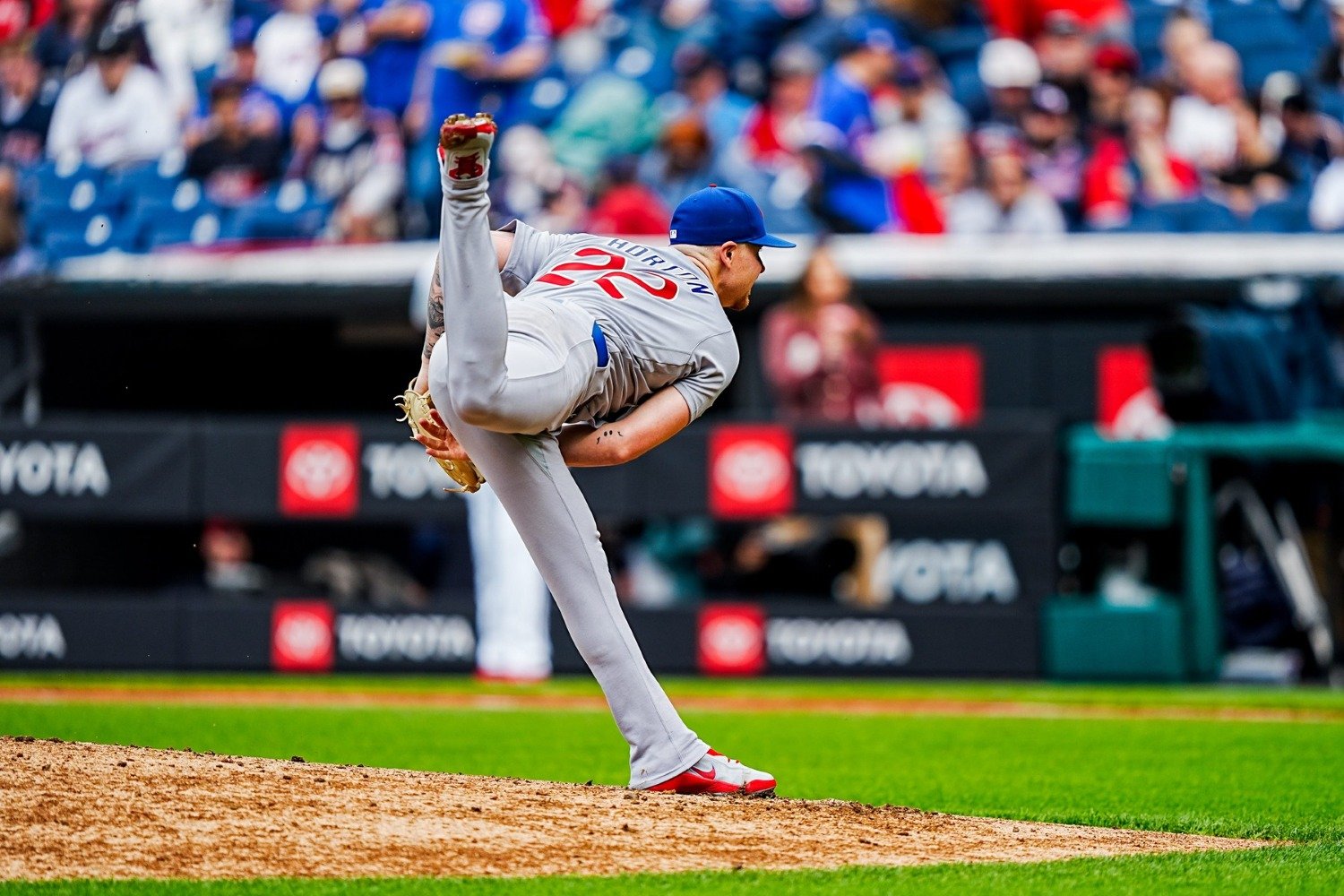 The news is bad. The news, by now, is barely news, but that doesn't make it any less bad. Four days after Cade Horton left his start against the Guardians in the second inning, the team announced that he will undergo season-ending elbow surgery. He flew to Dallas to consult with Dr. Keith Meister, who recommended the procedure. Whether the operation will be the modified version of Tommy John that involves placing an artificial internal brace or a full-fledged Tommy John isn't immediately clear, and doesn't need to be decided until the time of the procedure. Either way, though, Horton will pitch again no sooner than June of 2027. It's a devastating blow for the Cubs, who had penciled Horton in as one of their top two starters for this season. It's also a major setback for Horton himself. A second Tommy John surgery is not terribly uncommong in the modern game, and pitchers return to at least their previous level even after a second operation about two-thirds of the time. In fact, the Cubs were set to face Rays right-hander Drew Rasmussen Tuesday night, before he left the team to be at the birth of his daughter. Rasmussen has undergone three major elbow procedures—two Tommy Johns and an internal brace variant. Jameson Taillon has had the surgery twice. So has Justin Steele, whom the team hopes to see return to the mound by the early part of June. Needing the operation twice in as short a span as Horton has, though, is especially worrisome. He had Tommy John in college at Oklahoma. He also suffered a significant shoulder injury in 2024 and lost the end of last season to a ribcage injury. It's possible that Horton will simply never be able to withstand a full season's workload in a big-league rotation. At the very least, the Cubs will have to wait until 2028 to try to get him there. The setback is huge, not least because the Cubs have few similarly intriguing pitching prospects on whom to next pin their hopes. Instead, they'll have to hope they have better luck avoiding the injury bug the rest of the way, with one of their best options crossed off before Tax Day. Until two years ago, the Cubs believed they had an edge on the rest of the league when it came to averting Tommy John. If that had been true, it would have been a valuable advantage, to be sure. Instead, though, it seems that they enjoyed only the watery protection of having a bunch of pitchers selected for durability and without ligament-vaporizing velocity. Now, they've been dealt a series of big blows, from the depths of the farm system (teenage prospect Nazier Mule) to the most important arms on the parent club (Steele, Horton, Adbert Alzolay), in a sobering lesson: The Sword of Jobe eventually falls on a large and growing share of big-league pitchers. Horton is the latest victim, but he won't be the last. The Cubs will have to start acquiring and developing more pitchers of a caliber near his, to position themselves better to weather the inevitable losses. For now, they'll hope the return of Steele and the depth they'd stored up for this season (Colin Rea, Javier Assad and Ben Brown, plus (perhaps, eventually) prospect Jaxon Wiggins) can keep them afloat without their ace.
 -
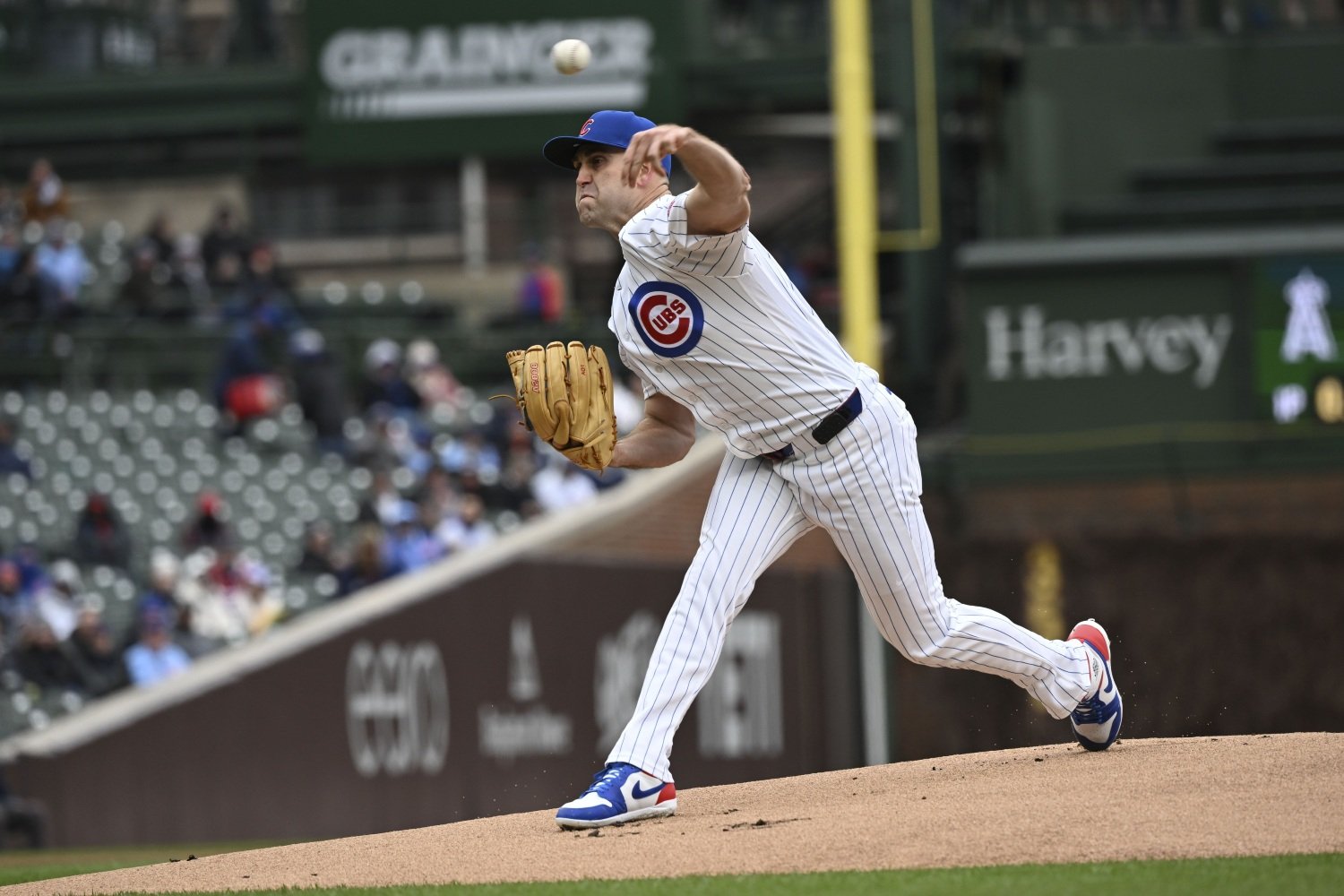 Cubs fans everywhere are spending their Mondays with a weekend-long case of the Sunday scaries that won't go away. Cade Horton walked off the mound Friday in the second inning, with what has been dubbed a forearm strain—but until the team reveals the results of the imaging Horton underwent Monday morning, the specter of that preliminary diagnosis being upgraded to a torn ulnar collateral ligament and a prescription for season-ending elbow surgery hangs grayer and gloomier over the team than the roof of Tropicana Field will throughout the next few days. To add injury to injury, the team placed left-handed starter and Opening Day assignee Matthew Boyd on the injured list Monday, with a biceps strain. Those are less likely to turn into season-ending tsuris than what Horton is dealing with, and there's no indication that the team is worried about the structural integrity of Boyd's arm. On the other hand, though, this is no minor malady. Over the last 10 seasons, biceps strains suffered during the season (eliminating those so late in the year that there were few games less to miss and those to a pitcher's non-throwing arm) have usually led to an absence of a month or more. Boyd, 35, has a long injury history and has missed long stretches during the last several seasons, so he's not a good candidate to come back on a faster-than-average timeline. Unfortunately, the Cubs should brace for at least six weeks without the starter who gave them nearly 180 innings of stellar work in 2025. Anticipating some of this trouble, the team retained Colin Rea and Shota Imanaga this winter. They also traded for Edward Cabrera, a pitcher one tier better in terms of stuff and ceiling than Rea or Imanaga, which cushions the blow of losing both Horton and Boyd at this early stage a bit. Rea and Javier Assad now step into the starting rotation, and each is likely to be there for at least a month, because that's about as soon as we're likely to see either Horton or Boyd. It's just as likely that only one of the two is back before, say, June. Rea and Assad are better depth options than many teams have, in the event of such a double-whammy. However, tapping both to join the rotation this early was miles from the planned route through the 162-game gauntlet. Rea's move to starting thins out the team's bullpen. Assad's arrival in the majors leaves only Jaxon Wiggins as a starter in Iowa about whom anyone might feel excited, and he comes with huge question marks. That's not to mention the even more daunting concern: that Horton and Boyd were the members of the initial quintet about whom one might typically have had the least worry a few weeks ago. Jameson Taillon suffered multiple injuries last year. His arm's odometer shows a higher number than anyone else on the staff, and non-arm injuries are an ever-present threat at this stage of his career. Imanaga wasn't the same pitcher after suffering a hamstring strain last May, and statistically, pitchers who suffer a hamstring strain are about 25% likely to suffer another. Cabrera's health history is perhaps the biggest reason he was available to the Cubs this winter, via trade. Ben Brown is still in the bullpen, and could be called upon if and when the team needs to plug yet another hole in its rotation. Justin Steele is on track to return some time around Memorial Day, barring a setback. The Cubs are in real jeopardy now, though. They've spotted the deeper Brewers three games in the NL Central, and Milwaukee has won those games despite dealing with injury issues of their own. More losses almost certainly lie ahead for Chicago, and their patchwork rotation has to support an offense that hasn't found its groove through the first nine games. Lucas Giolito remains available in free agency. Consider the Cubs a prime candidate to sign him, if he's healthy and can ramp up quickly this spring. That's an expensive and high-risk solution to a problem the team didn't want to be dealing with, though—so it might have to wait. Unhappily, it feels increasingly likely that the moment will come when they need to make some form of semi-desperate addition, be it Giolito or a trade acquisition. Boyd and Horton are a brutal first two dominoes to fall in the rotation, not least because they won't be the last.
 -
Image courtesy of © Matt Marton-Imagn Images Cubs fans everywhere are spending their Mondays with a weekend-long case of the Sunday scaries that won't go away. Cade Horton walked off the mound Friday in the second inning, with what has been dubbed a forearm strain—but until the team reveals the results of the imaging Horton underwent Monday morning, the specter of that preliminary diagnosis being upgraded to a torn ulnar collateral ligament and a prescription for season-ending elbow surgery hangs grayer and gloomier over the team than the roof of Tropicana Field will throughout the next few days. To add injury to injury, the team placed left-handed starter and Opening Day assignee Matthew Boyd on the injured list Monday, with a biceps strain. Those are less likely to turn into season-ending tsuris than what Horton is dealing with, and there's no indication that the team is worried about the structural integrity of Boyd's arm. On the other hand, though, this is no minor malady. Over the last 10 seasons, biceps strains suffered during the season (eliminating those so late in the year that there were few games less to miss and those to a pitcher's non-throwing arm) have usually led to an absence of a month or more. Boyd, 35, has a long injury history and has missed long stretches during the last several seasons, so he's not a good candidate to come back on a faster-than-average timeline. Unfortunately, the Cubs should brace for at least six weeks without the starter who gave them nearly 180 innings of stellar work in 2025. Anticipating some of this trouble, the team retained Colin Rea and Shota Imanaga this winter. They also traded for Edward Cabrera, a pitcher one tier better in terms of stuff and ceiling than Rea or Imanaga, which cushions the blow of losing both Horton and Boyd at this early stage a bit. Rea and Javier Assad now step into the starting rotation, and each is likely to be there for at least a month, because that's about as soon as we're likely to see either Horton or Boyd. It's just as likely that only one of the two is back before, say, June. Rea and Assad are better depth options than many teams have, in the event of such a double-whammy. However, tapping both to join the rotation this early was miles from the planned route through the 162-game gauntlet. Rea's move to starting thins out the team's bullpen. Assad's arrival in the majors leaves only Jaxon Wiggins as a starter in Iowa about whom anyone might feel excited, and he comes with huge question marks. That's not to mention the even more daunting concern: that Horton and Boyd were the members of the initial quintet about whom one might typically have had the least worry a few weeks ago. Jameson Taillon suffered multiple injuries last year. His arm's odometer shows a higher number than anyone else on the staff, and non-arm injuries are an ever-present threat at this stage of his career. Imanaga wasn't the same pitcher after suffering a hamstring strain last May, and statistically, pitchers who suffer a hamstring strain are about 25% likely to suffer another. Cabrera's health history is perhaps the biggest reason he was available to the Cubs this winter, via trade. Ben Brown is still in the bullpen, and could be called upon if and when the team needs to plug yet another hole in its rotation. Justin Steele is on track to return some time around Memorial Day, barring a setback. The Cubs are in real jeopardy now, though. They've spotted the deeper Brewers three games in the NL Central, and Milwaukee has won those games despite dealing with injury issues of their own. More losses almost certainly lie ahead for Chicago, and their patchwork rotation has to support an offense that hasn't found its groove through the first nine games. Lucas Giolito remains available in free agency. Consider the Cubs a prime candidate to sign him, if he's healthy and can ramp up quickly this spring. That's an expensive and high-risk solution to a problem the team didn't want to be dealing with, though—so it might have to wait. Unhappily, it feels increasingly likely that the moment will come when they need to make some form of semi-desperate addition, be it Giolito or a trade acquisition. Boyd and Horton are a brutal first two dominoes to fall in the rotation, not least because they won't be the last. View full article
-
Oh No: Cade Horton Leaves in 2nd Inning of Cubs Game Against Guardians
Matthew Trueblood posted an article in Cubs
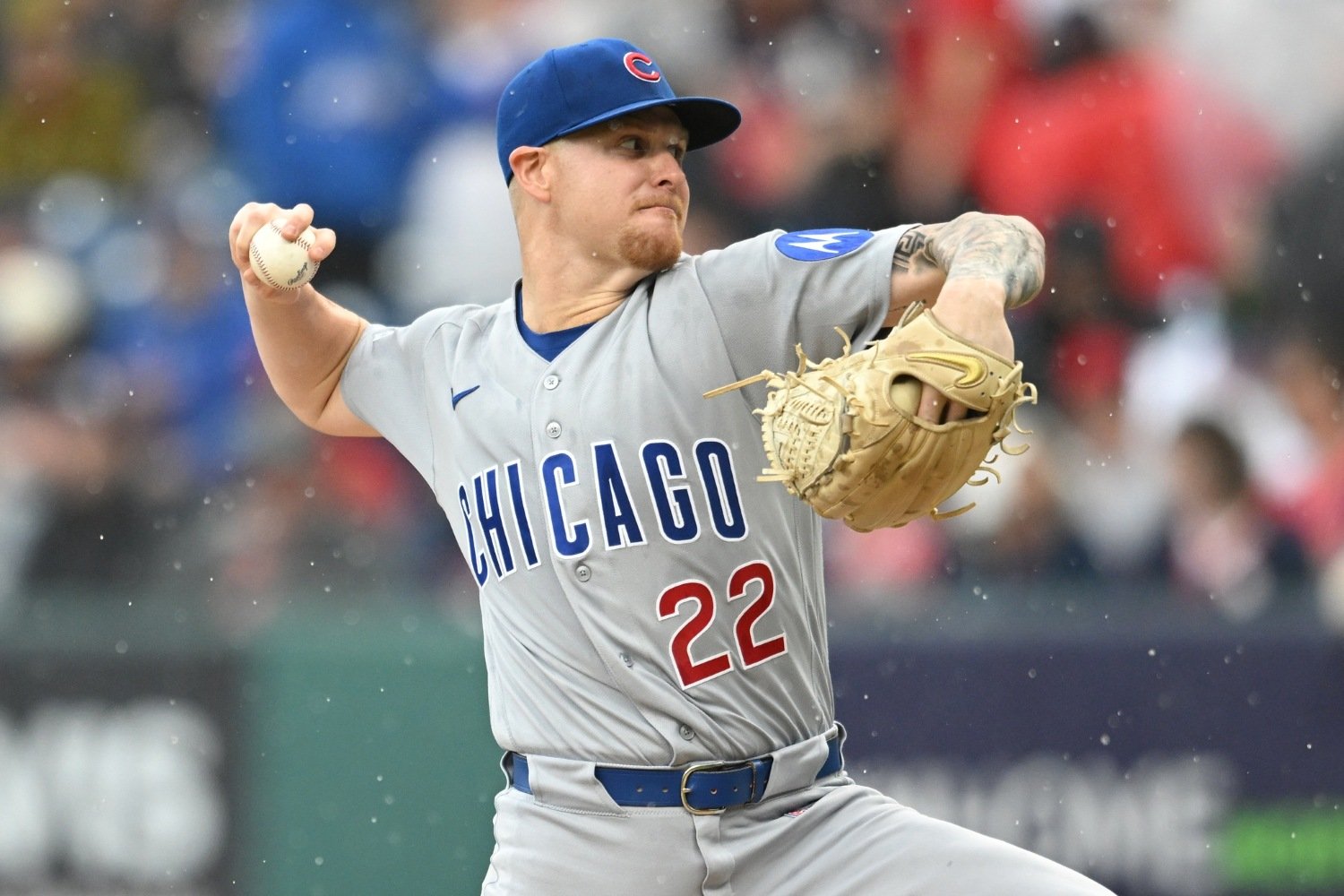 The Cubs amassed pretty good starting rotation depth this winter, all things considered. They entered the season with a fully healthy group of five: Matthew Boyd, Cade Horton, Shota Imanaga, Edward Cabreras and Jameson Taillon. Behind them, as depth, the team has Colin Rea and Ben Brown in the big-league bullpen and Javier Assad waiting in the Triple-A Iowa rotation. You can't be much better-positioned to withstand an injury than that, in the modern game, especially given that the team will get Justin Steele back after his 2025 Tommy John surgery, sometime this summer. Take the best arm out of any pitching staff, though, and it looks a lot weaker, immediately. That might be what the Cubs are facing now. On Friday, Cade Horton departed in the middle of an at-bat in the bottom of the second inning, feeling obvious discomfort and calling the trainer to the mound before leaving. His fastball velocity nosed down sharply immediately before he left, too. We'll update when we know more about what's happening, but it's not too early to harbor deep concerns here. Should Horton miss significant time, the Cubs would be without their ace and the rest of the rotation would immediately seem stretched and strained—just as they were around this time last year, when they lost Steele. UPDATE: If you were hoping the issue was a simple blister or that Horton was dealing with a lingering cold or flu, you'll have to let that hope go. The issue is in his forearm, the team announced. Now, the question is of severity. A trip to the injured list is virtually guaranteed, any time a pitcher leaves a game with a forearm problem. Presumably, Horton will be sent for imaging, and much of the Cubs' upside for this season will hinge on the outcome thereof.
 -
Image courtesy of © Allan Henry-Imagn Images It's not that Kevin Alcántara is guaranteed to succeed in the big leagues. That's a mile from being true. Alcántara came to the Cubs in the Anthony Rizzo trade with the Yankees in 2021, and in the years since, he's climbed the minor-league ladder impressively enough to get his hands on the final rung a time or two. In both 2024 and 2025, he got late-season cups of coffee with the parent club, and he's gotten more than a full season's worth of plate appearances at Triple-A Iowa, despite injury interruptions. If he were a can't-miss guy, though, he'd already have landed a spot in the big-league lineup. Instead, in addition to those injury problems, Alcántara has battled inconsistency born of an aggressive approach; too much swing-and-miss against top-tier pitchers; and a tendency to hit the ball on the ground too much. He has very impressive bat speed, but doesn't apply it all that well. He's a good athlete and a fine corner outfielder, but he looks a bit stretched in center. No, Alcántara hasn't proved he can be a big-league regular. If he pans out, he could still be a star, but it's gotten very difficult to buy into that vision. He's spent too long struggling to clear the final hurdle posed by the minors, let alone hitting in the majors. The chances that he ends up as a complementary piece, rather than a key contributor, have risen significantly. Because the Cubs want to give him whatever time remains to find his way to his ceiling (and need to keep his trade value up), they've eschewed opportunities to bring Alcántara up for any extended period in less than a full-time role. Instead, they keep asking him to work through things in Iowa, where it's easy for him to play wherever and whenever he needs to, as long as he's healthy. Understandable though that impulse is, though, it's becoming increasingly self-defeating. It's time for the team to shift their mindset when it comes to Alcántara, for the mutual benefit of player and team. Once they make that mental change, the next step will be a change to the roster makeup—facilitated by a new and vital developmental tool. The Cubs need an outfielder who can both hit and field well. Specifically, though, what they need is a righty bat who can mash lefties for them. Michael Conforto doesn't fit the bill. Neither does Matt Shaw. So great is Craig Counsell's trust in Scott Kingery and Dylan Carlson that in the first week of games, the two combined for zero plate appearances. Once Seiya Suzuki returns from the injured list, there will still be room for a player with the right skillset. They can play center field against some lefty starters, and right field against some others, with Pete Crow-Armstrong getting occasional days off and Moisés Ballesteros getting others (with Suzuki sliding to DH). Alcántara could be that guy, and he'd do it well. Since the start of 2024, he's taken 224 plate appearances in the regular season against left-handed pitchers, and he's batted .286/.383/.510 in them, with 10 home runs. His worst showing in that span was in 2024; he's thoroughly bashed lefties since the start of last year. There are two problems with calling up a player like him to fill a part-time role, as a platoon player. One is that it might blunt his development, but again, Alcántara is reaching the point where that consideration needs to be set on the back burner. He's trending toward being that kind of player anyway, and the team has a short-term need that supersedes the long-term goal of making this one player a star. The other is that, if we grant the premise that this role is an important one for the team to fill better than they currently can, it's nonetheless a difficult role in which to thrive. In other words, even if you're willing to subjugate Alcántara's development to the roster value of having him in the big leagues, you're left with the dilemma of getting him ready to succeed in uneven playing time. One object addresses both problems: the Trajekt machine. Like almost every other team in the league, the Cubs have a Trajekt setup in their hitting cages at Wrigley Field, where players can take what amount to live reps against pitchers. Using data to inform spin direction, speed and location and video to mimic the visual experience, Trajekt lets hitters simulate actually facing the pitcher to whom the machine is tailored at a given moment. Players and teams swear by the technology. It makes practice much more valuable as preparation for games. Here's what you do: call up Alcántara, and give him a full-time job—just not on the field. He'll play there once or twice a week, when the Cubs face a southpaw, but the rest of the time, his duty will be to simulate playing. Trajekt systems don't travel with teams (yet), so he'd have to get through road trips with standard work against a batting practice pitcher, but during homestands, he would take several at-bats against big-league lefties each day; they just wouldn't all count. In fact, he'd get more exposure to the pitching the team should most want him to get ready to face as a big-leaguer than he does in the minors, where Trajekt machines are just fond memories from spring training. If the tool is as powerful as everyone says it is, the Cubs should leverage it this way. Alcántara should be able to stay in rhythm (more or less) as well as any other player. He should be able to hammer left-handed pitchers when the right opportunities arise. He'd pile up service time and the team might lose Carlson as they move him off the active roster, but with the assistance of Trajekt, they should be able to extract on-field value from Alcántara and lose very little (if any) developmental momentum. All teams are reluctant to bring up a player with the upside of being a full-time player to fit a part-time job, but they should be less so. The Cubs, in particular, should jettison one of the low-ceiling veterans they don't trust anyway and call up Alcántara to get 150 or so plate appearances over the balance of the season—and another 300, all simulating the ones for which they want him to be most ready, in the tunnel before and during home games. View full article
-
Kevin Alcántara Should Spend His Season in Chicago, Starting Right Now
Matthew Trueblood posted an article in Cubs
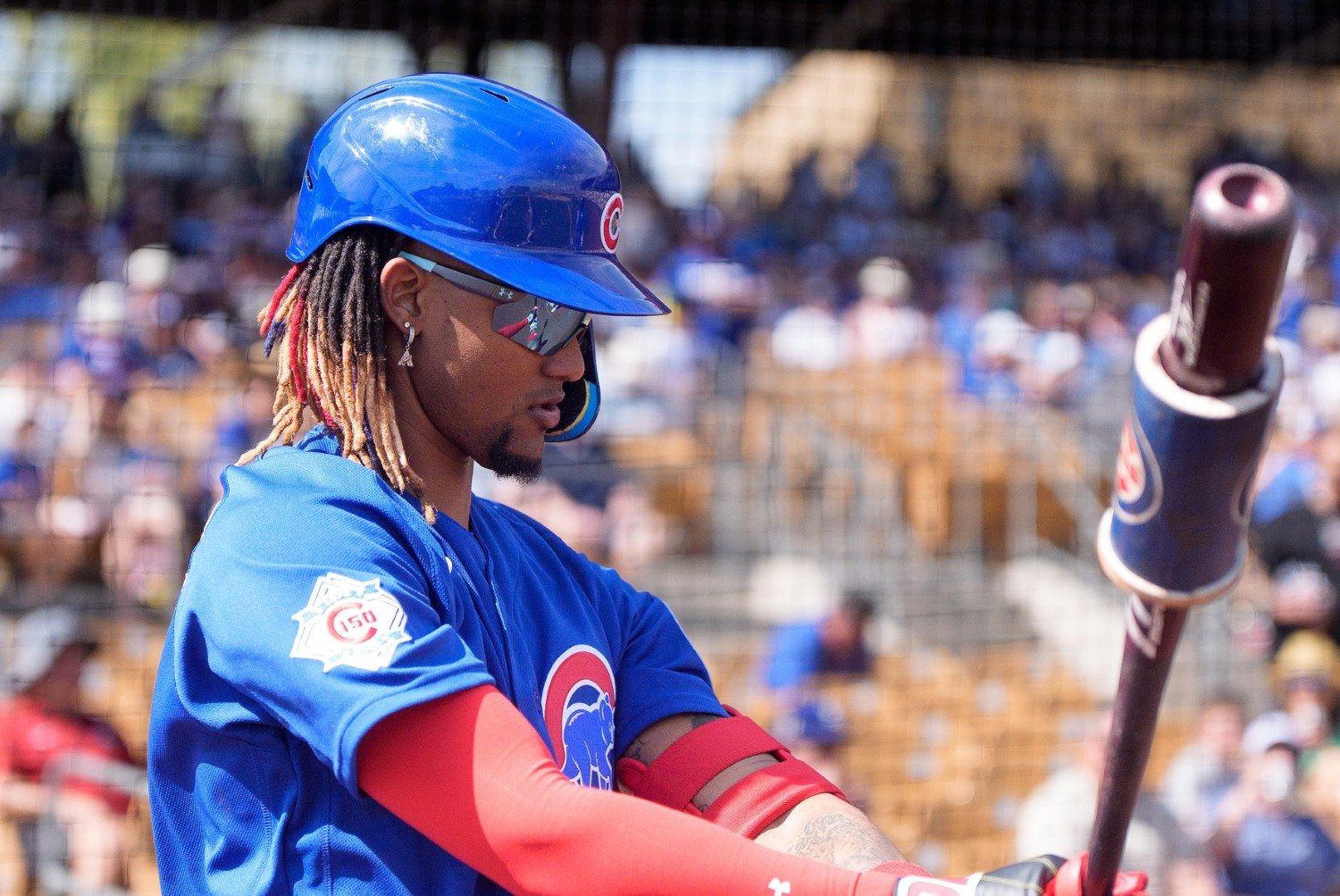 It's not that Kevin Alcántara is guaranteed to succeed in the big leagues. That's a mile from being true. Alcántara came to the Cubs in the Anthony Rizzo trade with the Yankees in 2021, and in the years since, he's climbed the minor-league ladder impressively enough to get his hands on the final rung a time or two. In both 2024 and 2025, he got late-season cups of coffee with the parent club, and he's gotten more than a full season's worth of plate appearances at Triple-A Iowa, despite injury interruptions. If he were a can't-miss guy, though, he'd already have landed a spot in the big-league lineup. Instead, in addition to those injury problems, Alcántara has battled inconsistency born of an aggressive approach; too much swing-and-miss against top-tier pitchers; and a tendency to hit the ball on the ground too much. He has very impressive bat speed, but doesn't apply it all that well. He's a good athlete and a fine corner outfielder, but he looks a bit stretched in center. No, Alcántara hasn't proved he can be a big-league regular. If he pans out, he could still be a star, but it's gotten very difficult to buy into that vision. He's spent too long struggling to clear the final hurdle posed by the minors, let alone hitting in the majors. The chances that he ends up as a complementary piece, rather than a key contributor, have risen significantly. Because the Cubs want to give him whatever time remains to find his way to his ceiling (and need to keep his trade value up), they've eschewed opportunities to bring Alcántara up for any extended period in less than a full-time role. Instead, they keep asking him to work through things in Iowa, where it's easy for him to play wherever and whenever he needs to, as long as he's healthy. Understandable though that impulse is, though, it's becoming increasingly self-defeating. It's time for the team to shift their mindset when it comes to Alcántara, for the mutual benefit of player and team. Once they make that mental change, the next step will be a change to the roster makeup—facilitated by a new and vital developmental tool. The Cubs need an outfielder who can both hit and field well. Specifically, though, what they need is a righty bat who can mash lefties for them. Michael Conforto doesn't fit the bill. Neither does Matt Shaw. So great is Craig Counsell's trust in Scott Kingery and Dylan Carlson that in the first week of games, the two combined for zero plate appearances. Once Seiya Suzuki returns from the injured list, there will still be room for a player with the right skillset. They can play center field against some lefty starters, and right field against some others, with Pete Crow-Armstrong getting occasional days off and Moisés Ballesteros getting others (with Suzuki sliding to DH). Alcántara could be that guy, and he'd do it well. Since the start of 2024, he's taken 224 plate appearances in the regular season against left-handed pitchers, and he's batted .286/.383/.510 in them, with 10 home runs. His worst showing in that span was in 2024; he's thoroughly bashed lefties since the start of last year. There are two problems with calling up a player like him to fill a part-time role, as a platoon player. One is that it might blunt his development, but again, Alcántara is reaching the point where that consideration needs to be set on the back burner. He's trending toward being that kind of player anyway, and the team has a short-term need that supersedes the long-term goal of making this one player a star. The other is that, if we grant the premise that this role is an important one for the team to fill better than they currently can, it's nonetheless a difficult role in which to thrive. In other words, even if you're willing to subjugate Alcántara's development to the roster value of having him in the big leagues, you're left with the dilemma of getting him ready to succeed in uneven playing time. One object addresses both problems: the Trajekt machine. Like almost every other team in the league, the Cubs have a Trajekt setup in their hitting cages at Wrigley Field, where players can take what amount to live reps against pitchers. Using data to inform spin direction, speed and location and video to mimic the visual experience, Trajekt lets hitters simulate actually facing the pitcher to whom the machine is tailored at a given moment. Players and teams swear by the technology. It makes practice much more valuable as preparation for games. Here's what you do: call up Alcántara, and give him a full-time job—just not on the field. He'll play there once or twice a week, when the Cubs face a southpaw, but the rest of the time, his duty will be to simulate playing. Trajekt systems don't travel with teams (yet), so he'd have to get through road trips with standard work against a batting practice pitcher, but during homestands, he would take several at-bats against big-league lefties each day; they just wouldn't all count. In fact, he'd get more exposure to the pitching the team should most want him to get ready to face as a big-leaguer than he does in the minors, where Trajekt machines are just fond memories from spring training. If the tool is as powerful as everyone says it is, the Cubs should leverage it this way. Alcántara should be able to stay in rhythm (more or less) as well as any other player. He should be able to hammer left-handed pitchers when the right opportunities arise. He'd pile up service time and the team might lose Carlson as they move him off the active roster, but with the assistance of Trajekt, they should be able to extract on-field value from Alcántara and lose very little (if any) developmental momentum. All teams are reluctant to bring up a player with the upside of being a full-time player to fit a part-time job, but they should be less so. The Cubs, in particular, should jettison one of the low-ceiling veterans they don't trust anyway and call up Alcántara to get 150 or so plate appearances over the balance of the season—and another 300, all simulating the ones for which they want him to be most ready, in the tunnel before and during home games.
 -
 It takes a lot of reps to become a good big-league outfielder. A good, instinctive athlete can go to those positions and avoid embarrassing themselves, using speed, leaping ability and/or that great eye for ballistic movement that every baseball player must have to get this far, but those only allow one to make up for mistakes and for slow first steps on ordinary plays. A good outfielder, of course, is one who can be acutely aware of the situation (where a throw should go in each of several scenarios in which they get the ball, for instance) and who can turn balls with a real chance to be hits into outs, but that takes time. With no fewer than a few hundred fly balls (and often, a thousand or more) can a player learn to anticipate and read swings, or to intuit the way spin and wind will change the trajectory of a ball. Those things make the difference between a tolerable outfielder and a genuinely helpful one. Unsurprisingly, Matt Shaw is merely the former, so far. He's navigated some cold, windy days during his first stint in right field in the majors, and no hit has fallen in on which it felt like there was even a remote chance of making a play. However, although it has sometimes looked like it, Shaw also hasn't been challenged. The Nationals and the Angels obligingly hit all their really dangerous fly balls out of the park, altogether. Every chance Shaw has had has been easy. We can't draw overly confident conclusions from those reps, because one thing any smart novice will do is avail themselves of their margin for error. Still, it's impossible not to notice the slow (and often mistaken) first steps and the meandering routes Shaw has taken toward every fly ball hit his way so far. He's done two things exceptionally well: Keep his feet moving, thereby letting him constantly adjust as he figures out the ball's flight plan and as it's pushed and pulled by the wind; and React and move at the end of plays, putting himself in position to catch the ball and sure-handedly spearing it. Neither of those things is to be taken for granted. More experienced outfielders often make the mistake of planting a foot too soon or stopping under the ball on a windy day; Shaw knows better than to trust his own eyes. Meanwhile, most newbies to the outfield will slightly panic or show less instinctive capacity to adjust their final movement, leading to bobbles and drops. Impressively, Shaw has actually used that final moment of flight to make up for mistakes, a couple of times, rather than to compound them. NXk5bk1fWGw0TUFRPT1fQlFkUUFBWUdYd1lBRFFRQVZ3QUhCdzlYQUFCV1dnTUFCbFFHQWxZSEF3VlFVUVJU.mp4 An underrated raw athlete, Shaw showed good late explosion here. Even as he jumped, though, he realized he still didn't have the ball judged quite right. His initial thought was to go straight up and catch the ball above his head, but it was carrying past him. With a subtle turn and good body control, he caught the ball behind his body, instead. It was a really good play, with the elements and his inexperience working against him. However, it also shouldn't have been necessary. Part of the reason he misread the ball as he leapt is because he leapt too soon, which was a means of recovering after a shaky route. For all but the very most routine play Shaw has made so far, I went to the video clip and captured the first moment after Marquee switched from the center-field camera to the one high and behind home plate. (Marquee is not especially good at doing this quickly. so we're often missing a blink's worth of extra time that another broadcast might give us to see how the fielder first reacts to the ball off the bat, but we'll do what we can with what we have.) I then traced, as best I could, the route Shaw took to the place where he eventually made the play. This route looks relatively direct, and it's far from his most adventurous of the season, as we'll soon see. Part of that is because it was hit hard and to his left, in a fairly obvious way. Shaw has, so far, thought just about everything hit to him was going to be more to his right (toward center field, that is) than it really proved to be. That problem was mitigated on this play, because even though he had to make a late adjustment to get far enough toward the line and far enough back, it was clear right away that those were the directions he needed to head. You've seen the result already, so we'll move on. Again, the leap wasn't quite timed right or oriented right, but only a part of that goes to Shaw's lack of nous for the outfield. Another, larger part must be put down to the wind. Here's another play from the same Opening Day contest. Arguably, this is the toughest ball hit his way so far, and he still caught it fairly easily. It, too, was easier than he made it look, though. Shaw is playing the outfield a bit the way he played third base, in that his first step is always in. At third, his signature move last year was to come in with an angled step, then give ground to stab a ball even as it passed him. Though it hasn't burned him yet, that won't work long-term in the outfield. On this play, he came in perhaps 5-8 feet before bending back as he chased the ball toward the gap. He also had to make a secondary redirection, because he'd been so focused on turning around from coming in to get deep enough that he hadn't angled enough toward the 'Hefty' door in right-center. He still flagged it down, though. In between those two plays came this one, which really helps one see how well he adjusts—and how much work lies ahead to reduce the need for adjustments. This ball was hit very high, so he had more than enough time to get beneath the ball, but look at the way he (again) starts with a step in, forcing himself to turn around when it's hit over his head, and the way he turns the wrong lateral direction and has to loop back toward the line. We can, again, ascribe some of that to the wind, and Shaw should be commended for taking a route close enough to correct to be able to scamper under the ball when the wind pushed it a bit. Still, a more experienced outfielder can anticipate some of this. Shaw is still learning. Let's be done with Opening Day. Here's a play from Tuesday night. Already, a little learning is evident, though it almost costs him this time. Shaw takes a long time to draw a bead on this ball, but holds his position while he does so, so he doesn't get going in the wrong direction. He comes in readily but soon realizes he needs to tack harder toward the line, and jogs under the ball. The wind did a little bit of redirection here, but this is a clear case of Shaw needing to read the spin of the ball better, too. He didn't have this one off the bat. If it were less of a lazy fly ball, it probably would have been the first should-be out to fall in against him. Finally, let's look at two plays from Wednesday's win. The first is another instance of Shaw taking a long time to get a first read and then having to adjust his route toward the line, though it's all in a smaller space and with slightly less hangtime than on the previous play. The second is more similar to the final play we studied from Opening Day. Again, Shaw's default step is in and to his right, and he eventually find that he needs to go back and to his left. Route efficiency is not all it was cracked up to be, in the earliest days of Statcast and before that. Just as catchers have found that a more kinetic, seemingly obvious and noisy set of mechanics are at least as effective a way to frame pitches as the old freeze-and-hold method, modern outfielders prize the ability to get themselves moving. Last summer, Brewers outfielder Isaac Collins (another diminutive converted infielder) found considerable success by hopping in time with the delivery of each pitch, as infielders do. He sometimes took the wrong first step, but his jumps were so good—that is, he got moving so effectively, sometimes before the ball even met the bat—that he was a plus-plus left fielder for much of the season. That's the goal for Shaw, too. Collins was a few grosses ahead of Shaw in reps even by this time last year, though, having played over 2,000 innings in the outfield during his long minor-league career. Shaw, then, is doing something that can work, even if he'll sometimes look a little bit lost or overzealous. He's not yet ready to convert those fledgling skills into real value, in the form of catching anything that isn't routine, but he's demonstrated a strong grasp of the rudiments. He hasn't actually helped the Cubs win any games with his glove, and that's probably months away from happening—but it's fair to be encouraged by what we've seen so far, anyway.
 -
Image courtesy of © Patrick Gorski-Imagn Images It takes a lot of reps to become a good big-league outfielder. A good, instinctive athlete can go to those positions and avoid embarrassing themselves, using speed, leaping ability and/or that great eye for ballistic movement that every baseball player must have to get this far, but those only allow one to make up for mistakes and for slow first steps on ordinary plays. A good outfielder, of course, is one who can be acutely aware of the situation (where a throw should go in each of several scenarios in which they get the ball, for instance) and who can turn balls with a real chance to be hits into outs, but that takes time. With no fewer than a few hundred fly balls (and often, a thousand or more) can a player learn to anticipate and read swings, or to intuit the way spin and wind will change the trajectory of a ball. Those things make the difference between a tolerable outfielder and a genuinely helpful one. Unsurprisingly, Matt Shaw is merely the former, so far. He's navigated some cold, windy days during his first stint in right field in the majors, and no hit has fallen in on which it felt like there was even a remote chance of making a play. However, although it has sometimes looked like it, Shaw also hasn't been challenged. The Nationals and the Angels obligingly hit all their really dangerous fly balls out of the park, altogether. Every chance Shaw has had has been easy. We can't draw overly confident conclusions from those reps, because one thing any smart novice will do is avail themselves of their margin for error. Still, it's impossible not to notice the slow (and often mistaken) first steps and the meandering routes Shaw has taken toward every fly ball hit his way so far. He's done two things exceptionally well: Keep his feet moving, thereby letting him constantly adjust as he figures out the ball's flight plan and as it's pushed and pulled by the wind; and React and move at the end of plays, putting himself in position to catch the ball and sure-handedly spearing it. Neither of those things is to be taken for granted. More experienced outfielders often make the mistake of planting a foot too soon or stopping under the ball on a windy day; Shaw knows better than to trust his own eyes. Meanwhile, most newbies to the outfield will slightly panic or show less instinctive capacity to adjust their final movement, leading to bobbles and drops. Impressively, Shaw has actually used that final moment of flight to make up for mistakes, a couple of times, rather than to compound them. NXk5bk1fWGw0TUFRPT1fQlFkUUFBWUdYd1lBRFFRQVZ3QUhCdzlYQUFCV1dnTUFCbFFHQWxZSEF3VlFVUVJU.mp4 An underrated raw athlete, Shaw showed good late explosion here. Even as he jumped, though, he realized he still didn't have the ball judged quite right. His initial thought was to go straight up and catch the ball above his head, but it was carrying past him. With a subtle turn and good body control, he caught the ball behind his body, instead. It was a really good play, with the elements and his inexperience working against him. However, it also shouldn't have been necessary. Part of the reason he misread the ball as he leapt is because he leapt too soon, which was a means of recovering after a shaky route. For all but the very most routine play Shaw has made so far, I went to the video clip and captured the first moment after Marquee switched from the center-field camera to the one high and behind home plate. (Marquee is not especially good at doing this quickly. so we're often missing a blink's worth of extra time that another broadcast might give us to see how the fielder first reacts to the ball off the bat, but we'll do what we can with what we have.) I then traced, as best I could, the route Shaw took to the place where he eventually made the play. This route looks relatively direct, and it's far from his most adventurous of the season, as we'll soon see. Part of that is because it was hit hard and to his left, in a fairly obvious way. Shaw has, so far, thought just about everything hit to him was going to be more to his right (toward center field, that is) than it really proved to be. That problem was mitigated on this play, because even though he had to make a late adjustment to get far enough toward the line and far enough back, it was clear right away that those were the directions he needed to head. You've seen the result already, so we'll move on. Again, the leap wasn't quite timed right or oriented right, but only a part of that goes to Shaw's lack of nous for the outfield. Another, larger part must be put down to the wind. Here's another play from the same Opening Day contest. Arguably, this is the toughest ball hit his way so far, and he still caught it fairly easily. It, too, was easier than he made it look, though. Shaw is playing the outfield a bit the way he played third base, in that his first step is always in. At third, his signature move last year was to come in with an angled step, then give ground to stab a ball even as it passed him. Though it hasn't burned him yet, that won't work long-term in the outfield. On this play, he came in perhaps 5-8 feet before bending back as he chased the ball toward the gap. He also had to make a secondary redirection, because he'd been so focused on turning around from coming in to get deep enough that he hadn't angled enough toward the 'Hefty' door in right-center. He still flagged it down, though. In between those two plays came this one, which really helps one see how well he adjusts—and how much work lies ahead to reduce the need for adjustments. This ball was hit very high, so he had more than enough time to get beneath the ball, but look at the way he (again) starts with a step in, forcing himself to turn around when it's hit over his head, and the way he turns the wrong lateral direction and has to loop back toward the line. We can, again, ascribe some of that to the wind, and Shaw should be commended for taking a route close enough to correct to be able to scamper under the ball when the wind pushed it a bit. Still, a more experienced outfielder can anticipate some of this. Shaw is still learning. Let's be done with Opening Day. Here's a play from Tuesday night. Already, a little learning is evident, though it almost costs him this time. Shaw takes a long time to draw a bead on this ball, but holds his position while he does so, so he doesn't get going in the wrong direction. He comes in readily but soon realizes he needs to tack harder toward the line, and jogs under the ball. The wind did a little bit of redirection here, but this is a clear case of Shaw needing to read the spin of the ball better, too. He didn't have this one off the bat. If it were less of a lazy fly ball, it probably would have been the first should-be out to fall in against him. Finally, let's look at two plays from Wednesday's win. The first is another instance of Shaw taking a long time to get a first read and then having to adjust his route toward the line, though it's all in a smaller space and with slightly less hangtime than on the previous play. The second is more similar to the final play we studied from Opening Day. Again, Shaw's default step is in and to his right, and he eventually find that he needs to go back and to his left. Route efficiency is not all it was cracked up to be, in the earliest days of Statcast and before that. Just as catchers have found that a more kinetic, seemingly obvious and noisy set of mechanics are at least as effective a way to frame pitches as the old freeze-and-hold method, modern outfielders prize the ability to get themselves moving. Last summer, Brewers outfielder Isaac Collins (another diminutive converted infielder) found considerable success by hopping in time with the delivery of each pitch, as infielders do. He sometimes took the wrong first step, but his jumps were so good—that is, he got moving so effectively, sometimes before the ball even met the bat—that he was a plus-plus left fielder for much of the season. That's the goal for Shaw, too. Collins was a few grosses ahead of Shaw in reps even by this time last year, though, having played over 2,000 innings in the outfield during his long minor-league career. Shaw, then, is doing something that can work, even if he'll sometimes look a little bit lost or overzealous. He's not yet ready to convert those fledgling skills into real value, in the form of catching anything that isn't routine, but he's demonstrated a strong grasp of the rudiments. He hasn't actually helped the Cubs win any games with his glove, and that's probably months away from happening—but it's fair to be encouraged by what we've seen so far, anyway. View full article
-
One was a strike. "Definitely," from the perspective of Swanson in the moment, is far too strong. That was also the highest-leverage pitch of the four, which is why it was worth challenging. The model is useful; I love it. But it's not utterly exhaustive. I feel strongly that if you bake in how good Soriano is, the weather and the spot in the lineup, you'd get a recommendation of challenging all four pitches.
-
Image courtesy of © Patrick Gorski-Imagn Images Dansby Swanson went 0-for-4 Tuesday night. The box score says he was 0-for-3 with a walk, but we're not counting at-bats here. Four times, Swanson unequivocally should have challenged called strikes against him. Four times, he accepted the call, instead, hurting his team in the name of either avoiding the risk of losing a challenge or demonstrating a resiliency that proved less valuable than flipping a strike to a ball. Swanson did reach on an error in the bottom of the second inning, the only time he came up in a relatively unimportant situation all night. Obviously, he got pretty lucky to reach base that time, when Jeimer Candelario made a bad throw on a routine ground ball to third base. He'd already made his set of possible outcomes worse, though, by not challenging a pitch that was clearly off the outside corner in a 2-0 count. To be fair, that was a spot where you'd need to be quite sure in order to lodge a well-founded challenge. According to Oyster Analytics's Challenge Dashboard, the break-even confidence rate in issuing a challenge so early in the game with some cushion in the count and no one on base is over 75%. Swanson should have been roughly that sure, but technically speaking, the location of the pitch called a strike against him didn't give him a great chance to be, and José Soriano was pretty nasty in the early going. Let's forgive him this one. In the bottom of the fourth, Swanson came to bat in a much more pivotal spot. The game remained scoreless, thanks to cold air, a stiff in-blowing wind, and Soriano's electric stuff. Ian Happ was on second base, though, so although there were two outs, Swanson had a chance to break the tie with a single. In a 2-2 count, he took a pitch right on the lower outside edge, which was called a strike to end the inning. In fairness to Soriano, it was stellar execution. As you can see, Oyster Analytics rates this as another near-coin flip for Swanson, but in a very different way. Whereas he would have needed to be 75% confident to be justified in challenging in the second inning, this time, the break-even line was south of 30%. Based on the location, Swanson could hardly have been more sure than that, but in this case, he should have issued the challenge, anyway. (In reading the evaluation panel at the right in these images from Oyster, you have to remember that the would-be challenger's confidence will vary somewhat from what they can estimate.) Given the margin of error in confidence for Swanson and the tenor of the game to that point—the latter of which the model doesn't address, so we're not adjusting for Soriano being on his game or runs being at a premium—it was a good challenge opportunity. Swanson was up again in the seventh inning with a runner on, though it was Hoerner at first base and there was only one out. Much had changed, by then. The Cubs had fallen behind 2-0, and they'd lost one of their two challenges, so the break-even rates were much affected. On 1-1, though, he took a pitch well above the zone, which was called a strike. As any Cubs fan old enough to remember the nuggets of wisdom supplied by Steve Stone knows, 1-1 is a pivotal count. Swanson fell behind 1-2, when he should have been ahead 2-1. He had to be a bit better than a coin flip to challenge, but he should have been quite sure of this one. The top and bottom of the zone probably still feel a bit less certain than the lateral edges, even for batters themselves, but Swanson had a chance to gain count leverage at a moment when he represented the tying run. He let that chance go by, and ultimately struck out. In the bottom of the ninth, Swanson came up once more, as the Cubs' last chance. They had only three strikes left to their name, so although Swanson batted with the bases empty and the team needed a baserunner to get any semblance of a rally started, he should have had a hair trigger on called strikes around the edges. Instead, on 1-0, he let one of his team's three remaining strikes be stolen from him. This time, the Oyster model gives him no quarter whatsoever. This was the most glaring of a series of examples of his passivity Tuesday night. He was lucky that a wild Jordan Romano walked him, anyway, giving the team at least an extra breath of a chance. Even if a couple of these were borderline calls, according to the math, the broader narrative matters. Swanson needs to be more proactive about ABS challenges. He had chances to give his team better scoring opportunities Tuesday night, and he missed them. It wasn't the difference between winning and losing; it's no more of a problem than some of his teammates' poor swings. The biggest individual mistake in losing them the game was Pete Crow-Armstrong failing to catch or corral Candelario's double in the top of the sixth; that's a bigger-magnitude play than almost any ABS challenge will be. These cases are more along the lines of a poor swing decision or bad location on a key pitch. Still, they can be decisive, and it's hard to refute the fact that Swanson cost his team expected offensive value in Tuesday's loss. Swanso didn't help himself all night. He didn't force Angels pitchers into the zone against him; he chased several pitches below the zone. He could have done a bit more to force their hand when he did lay off pitches at the edges, though. Though its novelty exceeds its sheer impact, ABS is a new place where teams can either accrue value or leak it. So far, the Cubs aren't using the system well. Only the Royals have challenged a lower percentage of called strikes against them than have Cubs batters. That needs to change, as Swanson's experience Tuesday illustrated. View full article
-
Dansby Swanson Needs to Stand Up for Himself, and for His Team
Matthew Trueblood posted an article in Cubs
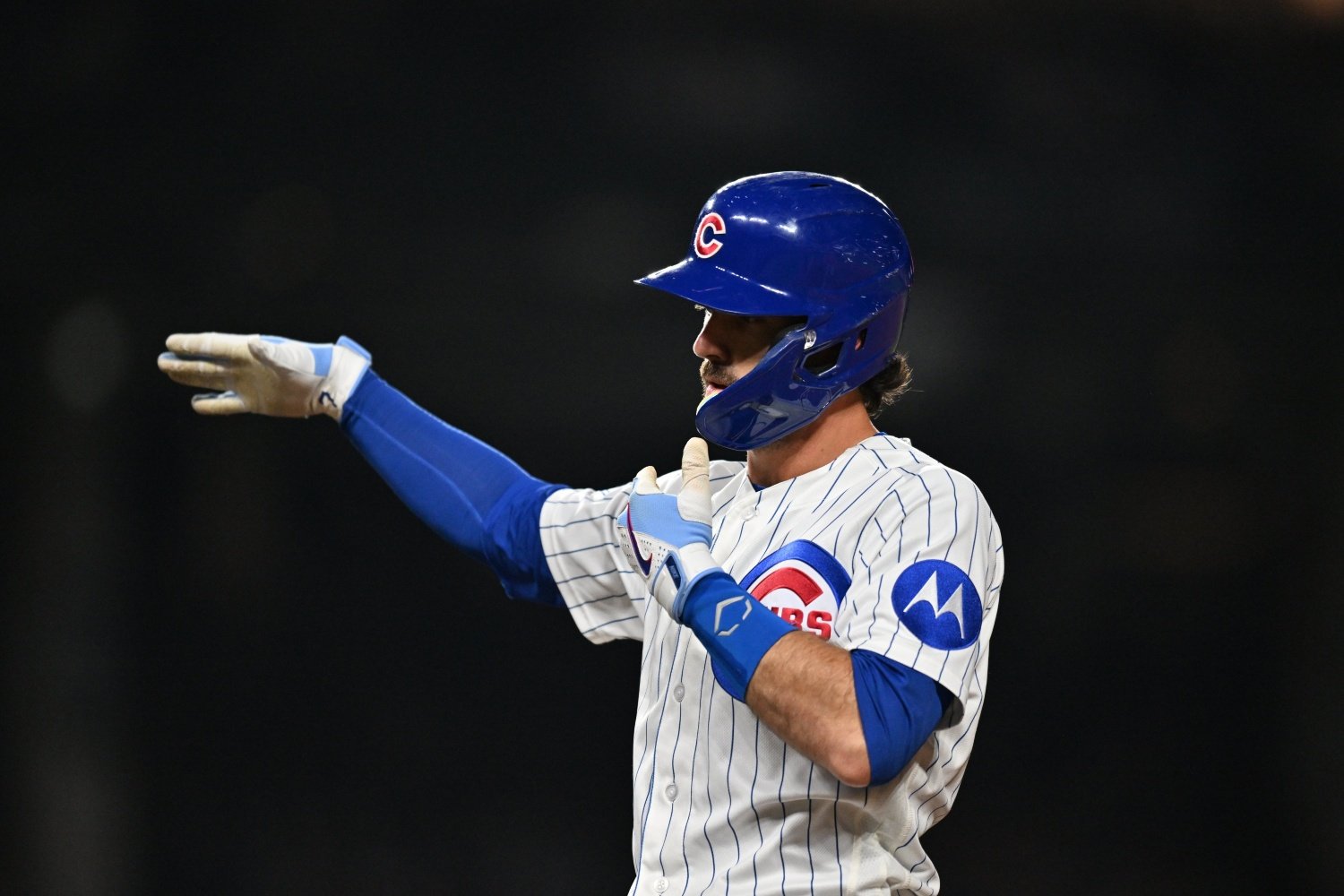 Dansby Swanson went 0-for-4 Tuesday night. The box score says he was 0-for-3 with a walk, but we're not counting at-bats here. Four times, Swanson unequivocally should have challenged called strikes against him. Four times, he accepted the call, instead, hurting his team in the name of either avoiding the risk of losing a challenge or demonstrating a resiliency that proved less valuable than flipping a strike to a ball. Swanson did reach on an error in the bottom of the second inning, the only time he came up in a relatively unimportant situation all night. Obviously, he got pretty lucky to reach base that time, when Jeimer Candelario made a bad throw on a routine ground ball to third base. He'd already made his set of possible outcomes worse, though, by not challenging a pitch that was clearly off the outside corner in a 2-0 count. To be fair, that was a spot where you'd need to be quite sure in order to lodge a well-founded challenge. According to Oyster Analytics's Challenge Dashboard, the break-even confidence rate in issuing a challenge so early in the game with some cushion in the count and no one on base is over 75%. Swanson should have been roughly that sure, but technically speaking, the location of the pitch called a strike against him didn't give him a great chance to be, and José Soriano was pretty nasty in the early going. Let's forgive him this one. In the bottom of the fourth, Swanson came to bat in a much more pivotal spot. The game remained scoreless, thanks to cold air, a stiff in-blowing wind, and Soriano's electric stuff. Ian Happ was on second base, though, so although there were two outs, Swanson had a chance to break the tie with a single. In a 2-2 count, he took a pitch right on the lower outside edge, which was called a strike to end the inning. In fairness to Soriano, it was stellar execution. As you can see, Oyster Analytics rates this as another near-coin flip for Swanson, but in a very different way. Whereas he would have needed to be 75% confident to be justified in challenging in the second inning, this time, the break-even line was south of 30%. Based on the location, Swanson could hardly have been more sure than that, but in this case, he should have issued the challenge, anyway. (In reading the evaluation panel at the right in these images from Oyster, you have to remember that the would-be challenger's confidence will vary somewhat from what they can estimate.) Given the margin of error in confidence for Swanson and the tenor of the game to that point—the latter of which the model doesn't address, so we're not adjusting for Soriano being on his game or runs being at a premium—it was a good challenge opportunity. Swanson was up again in the seventh inning with a runner on, though it was Hoerner at first base and there was only one out. Much had changed, by then. The Cubs had fallen behind 2-0, and they'd lost one of their two challenges, so the break-even rates were much affected. On 1-1, though, he took a pitch well above the zone, which was called a strike. As any Cubs fan old enough to remember the nuggets of wisdom supplied by Steve Stone knows, 1-1 is a pivotal count. Swanson fell behind 1-2, when he should have been ahead 2-1. He had to be a bit better than a coin flip to challenge, but he should have been quite sure of this one. The top and bottom of the zone probably still feel a bit less certain than the lateral edges, even for batters themselves, but Swanson had a chance to gain count leverage at a moment when he represented the tying run. He let that chance go by, and ultimately struck out. In the bottom of the ninth, Swanson came up once more, as the Cubs' last chance. They had only three strikes left to their name, so although Swanson batted with the bases empty and the team needed a baserunner to get any semblance of a rally started, he should have had a hair trigger on called strikes around the edges. Instead, on 1-0, he let one of his team's three remaining strikes be stolen from him. This time, the Oyster model gives him no quarter whatsoever. This was the most glaring of a series of examples of his passivity Tuesday night. He was lucky that a wild Jordan Romano walked him, anyway, giving the team at least an extra breath of a chance. Even if a couple of these were borderline calls, according to the math, the broader narrative matters. Swanson needs to be more proactive about ABS challenges. He had chances to give his team better scoring opportunities Tuesday night, and he missed them. It wasn't the difference between winning and losing; it's no more of a problem than some of his teammates' poor swings. The biggest individual mistake in losing them the game was Pete Crow-Armstrong failing to catch or corral Candelario's double in the top of the sixth; that's a bigger-magnitude play than almost any ABS challenge will be. These cases are more along the lines of a poor swing decision or bad location on a key pitch. Still, they can be decisive, and it's hard to refute the fact that Swanson cost his team expected offensive value in Tuesday's loss. Swanso didn't help himself all night. He didn't force Angels pitchers into the zone against him; he chased several pitches below the zone. He could have done a bit more to force their hand when he did lay off pitches at the edges, though. Though its novelty exceeds its sheer impact, ABS is a new place where teams can either accrue value or leak it. So far, the Cubs aren't using the system well. Only the Royals have challenged a lower percentage of called strikes against them than have Cubs batters. That needs to change, as Swanson's experience Tuesday illustrated.
 -
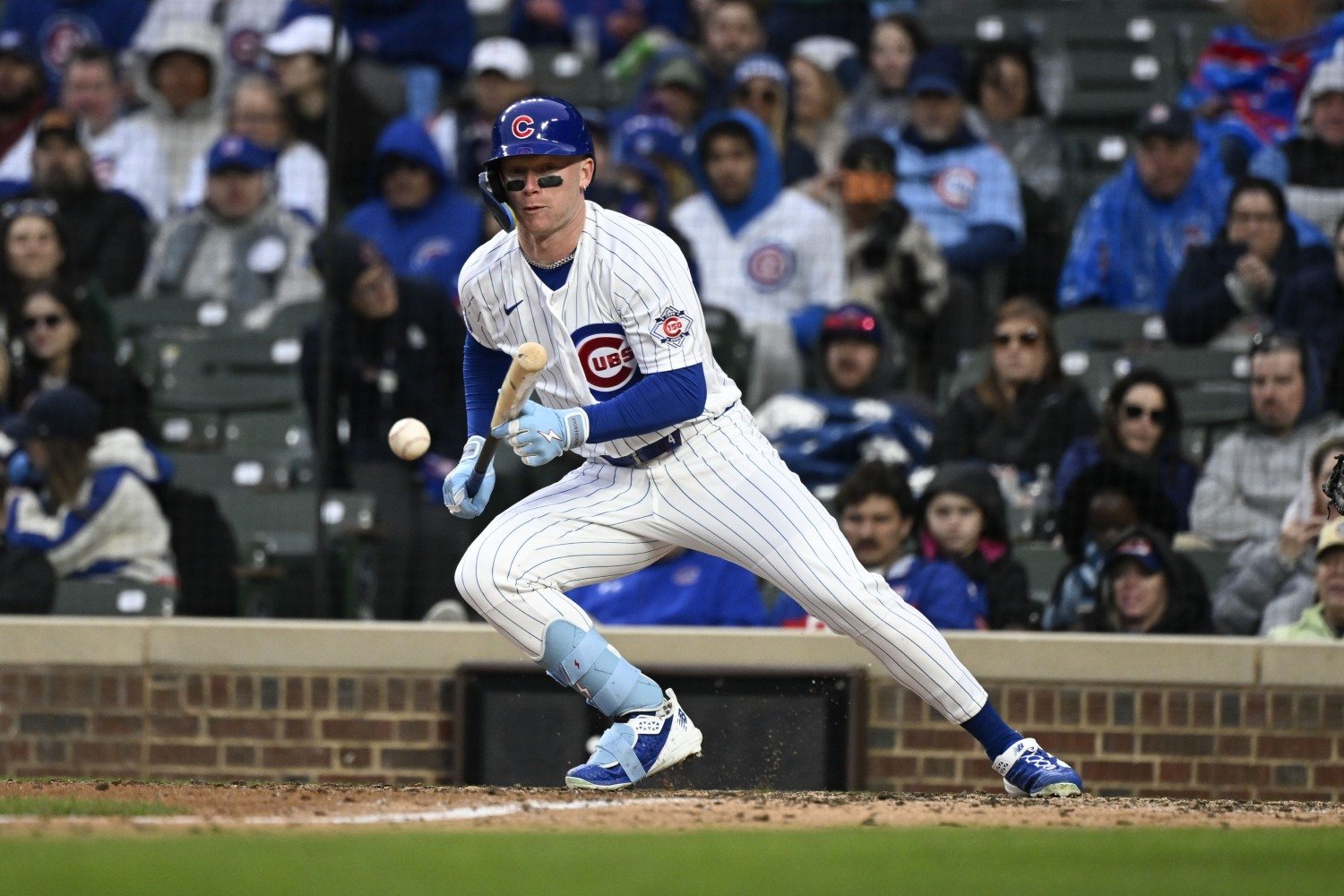 Pete Crow-Armstrong has yet to register a Barrel in the regular season, according to Statcast. All of his hits on the young year have been ground balls: two hit hard past the first baseman, two gorgeous bunts up the third-base line, and one seeing-eye bouncer the second baseman could only knock down in Monday night's win over the Angels. He's hit a number of pop-ups and lazy fly balls. He often still seems to be swinging too much, leading to unproductive contact. However, Crow-Armstrong has also drawn two walks in his 18 plate appearances so far, so he has a .389 OBP. He walked twice in 22 plate appearances in the Cactus League, and twice in 21 trips in the World Baseball Classic. For calendar year 2026, Crow-Armstrong has almost exactly a 10% walk rate—roughly double his career mark in the majors through 2025. He's seen 226 pitches across the three types of competition in which he's participated, and swung at 55.3% of them. That's down from a rate just over 60% in each of the last two years. By now, it should be clear that Crow-Armstrong will never be a patient hitter, in the style of Ian Happ or Alex Bregman. Even swing rates just below 50% and walk rates around 9%—the typical outputs of Dansby Swanson, for context—are probably too much to hope for. Crow-Armstrong will both create and waste offensive opportunities by swinging; he's going to be much more eager than the average batter. The relevant question is: If it's his hyper-aggressiveness that stands between him and stardom (and it is), how much must he mitigate it to get around the problem? In other words, at what swing rate can Crow-Armstrong be a reliably excellent overall hitter? The answer is much, much higher than it is for most batters. Guys who make a lot of contact (like Nico Hoerner) should err a bit on the side of patience, but Crow-Armstrong has a highly optimized power swing and is going to whiff at a fairly high rate. To make up for that, he needs to go to the plate ready to do damage—especially since he has the bat path to hit more home runs than his frame or his raw bat speed would imply. He also has elite speed, and a near-mad desire to use it. That makes it especially valuable when he reaches base, because he's very likely to steal a base (or two), or to do something similarly game-breaking. (On Monday night, he scored from first on a single when he wasn't even running with the pitch, although it was a high blooper that probably should have been caught.) Ideally, of course, such a player would draw a lot of walks and maximize their OBP, but failing that, putting the ball in play by swinging early in the count leverages his speed well. The bunts Crow-Armstrong laid down in the first two games of the year were exemplars of that, but he can also reach on unintentional infield singles, errors and fielder's choices, and stretch some hits by 90 feet. All of that makes it good that Crow-Armstrong swings more than most hitters. In the past, though, he's swung so much that he sometimes limits his ability to get a good pitch and put the barrel on it. Is ratcheting that baseline swing rate down from 60% to 55% enough to change that? Much depends on the shape of his added patience. Crow-Armstrong is swinging a bit less early in counts this spring, and then increasing his aggressiveness as he protects the plate late. His feel for contact outside the zone is better than one would guess, for a player so focused on that lift-and-pull swing, which allows him to foul off pitches until he earns either a mistake or a miss that doesn't tempt him. On Monday night, he took an 11-pitch walk in which the balls were pitches 1, 5, 7, and 11. None of them were close to the zone; he swung at everything that was. But because he fouled off enough pitches to stay alive, he did earn those bad and un-tempting misses. In his second at-bat against Angels starter Ryan Johnson, Crow-Armstrong took pitches 1 and 4, but swung at everything even remotely close. He fouled off four offerings, then hit the aforementioned, unimpressive single up the middle. Many pitches Crow-Armstrong will face have a better putaway pitch than Johnson. Falling behind and fouling off four or five pitches per plate appearance is no sustainable formula for success. However, these two at-bats are good glimpses of how Crow-Armstrong can swing a lot without giving away at-bats. If he can spoil some two-strike pitches, be smart about sitting on certain pitches when the situation demands it, utilize the occasional bunt, and be even an iota more patient than he's been in the past, he has the tools to be that 30-homer, 30-steal guy the Cubs saw him become last year—the one in whom they've now invested $115 million. The swing rate might have to come down a hair more, in order for him to continue actualizing his power. For now, though, Crow-Armstrong seems to have made some small modulations in his approach—and because he's a physical freak with plenty of value in his legs, his glove and his unconventional hitting profile, small modulations might beget big gains in consistency.
 -
Image courtesy of © Matt Marton-Imagn Images Pete Crow-Armstrong has yet to register a Barrel in the regular season, according to Statcast. All of his hits on the young year have been ground balls: two hit hard past the first baseman, two gorgeous bunts up the third-base line, and one seeing-eye bouncer the second baseman could only knock down in Monday night's win over the Angels. He's hit a number of pop-ups and lazy fly balls. He often still seems to be swinging too much, leading to unproductive contact. However, Crow-Armstrong has also drawn two walks in his 18 plate appearances so far, so he has a .389 OBP. He walked twice in 22 plate appearances in the Cactus League, and twice in 21 trips in the World Baseball Classic. For calendar year 2026, Crow-Armstrong has almost exactly a 10% walk rate—roughly double his career mark in the majors through 2025. He's seen 226 pitches across the three types of competition in which he's participated, and swung at 55.3% of them. That's down from a rate just over 60% in each of the last two years. By now, it should be clear that Crow-Armstrong will never be a patient hitter, in the style of Ian Happ or Alex Bregman. Even swing rates just below 50% and walk rates around 9%—the typical outputs of Dansby Swanson, for context—are probably too much to hope for. Crow-Armstrong will both create and waste offensive opportunities by swinging; he's going to be much more eager than the average batter. The relevant question is: If it's his hyper-aggressiveness that stands between him and stardom (and it is), how much must he mitigate it to get around the problem? In other words, at what swing rate can Crow-Armstrong be a reliably excellent overall hitter? The answer is much, much higher than it is for most batters. Guys who make a lot of contact (like Nico Hoerner) should err a bit on the side of patience, but Crow-Armstrong has a highly optimized power swing and is going to whiff at a fairly high rate. To make up for that, he needs to go to the plate ready to do damage—especially since he has the bat path to hit more home runs than his frame or his raw bat speed would imply. He also has elite speed, and a near-mad desire to use it. That makes it especially valuable when he reaches base, because he's very likely to steal a base (or two), or to do something similarly game-breaking. (On Monday night, he scored from first on a single when he wasn't even running with the pitch, although it was a high blooper that probably should have been caught.) Ideally, of course, such a player would draw a lot of walks and maximize their OBP, but failing that, putting the ball in play by swinging early in the count leverages his speed well. The bunts Crow-Armstrong laid down in the first two games of the year were exemplars of that, but he can also reach on unintentional infield singles, errors and fielder's choices, and stretch some hits by 90 feet. All of that makes it good that Crow-Armstrong swings more than most hitters. In the past, though, he's swung so much that he sometimes limits his ability to get a good pitch and put the barrel on it. Is ratcheting that baseline swing rate down from 60% to 55% enough to change that? Much depends on the shape of his added patience. Crow-Armstrong is swinging a bit less early in counts this spring, and then increasing his aggressiveness as he protects the plate late. His feel for contact outside the zone is better than one would guess, for a player so focused on that lift-and-pull swing, which allows him to foul off pitches until he earns either a mistake or a miss that doesn't tempt him. On Monday night, he took an 11-pitch walk in which the balls were pitches 1, 5, 7, and 11. None of them were close to the zone; he swung at everything that was. But because he fouled off enough pitches to stay alive, he did earn those bad and un-tempting misses. In his second at-bat against Angels starter Ryan Johnson, Crow-Armstrong took pitches 1 and 4, but swung at everything even remotely close. He fouled off four offerings, then hit the aforementioned, unimpressive single up the middle. Many pitches Crow-Armstrong will face have a better putaway pitch than Johnson. Falling behind and fouling off four or five pitches per plate appearance is no sustainable formula for success. However, these two at-bats are good glimpses of how Crow-Armstrong can swing a lot without giving away at-bats. If he can spoil some two-strike pitches, be smart about sitting on certain pitches when the situation demands it, utilize the occasional bunt, and be even an iota more patient than he's been in the past, he has the tools to be that 30-homer, 30-steal guy the Cubs saw him become last year—the one in whom they've now invested $115 million. The swing rate might have to come down a hair more, in order for him to continue actualizing his power. For now, though, Crow-Armstrong seems to have made some small modulations in his approach—and because he's a physical freak with plenty of value in his legs, his glove and his unconventional hitting profile, small modulations might beget big gains in consistency. View full article
-
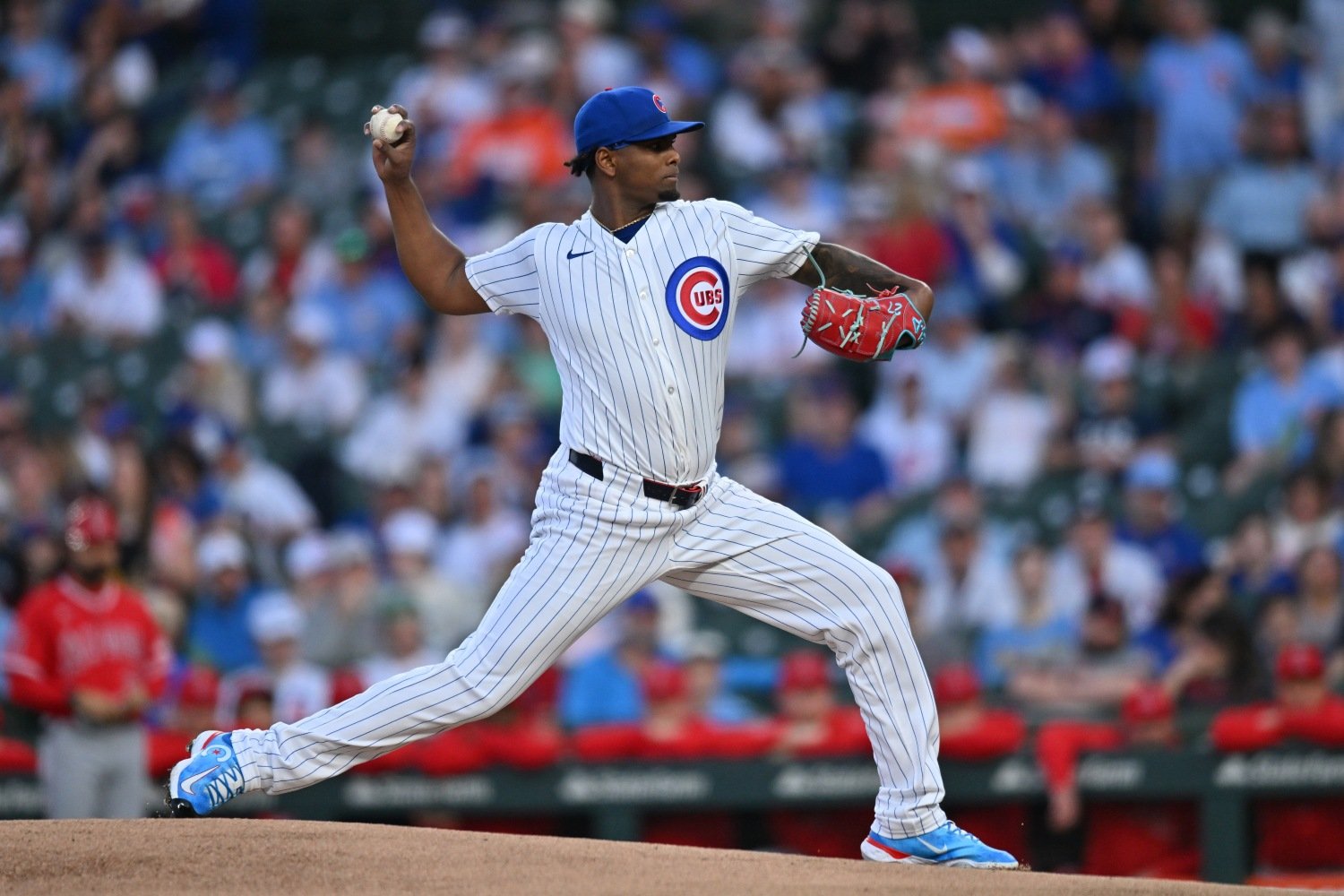 No rain or thick, heavy gray coldness scumbled the skies as the Cubs played their first night game of 2026. In fact, the North Side of Chicago put on one of the great shows of which it's more capable than many people credit, proclaiming itself a four-season city with a gorgeous little summer preview. The outfield walls are still covered only in brown, but the skies were a soft, sometimes inscrutable purple-and-orange as sunset came Monday night, leaving Wrigley Field aglow in a way that often has to wait until nearly Memorial Day. Under such auspicious skies, Edward Cabrera clambered to the top of the cairn for the first time in Cubs pinstripes. Cabrera, 27, has become a bit less heralded an acquisition than it seemed he would be when the Cubs first pulled the trigger on a deal with the Marlins in January. At the time, he seemed a vital infusion of high-end stuff for the starting rotation, and there was little else about the team's offseason about which any fans were excited. Since then, the team has signed Alex Bregman to a five-year free-agent deal and extended both Pete Crow-Armstrong and Nico Hoerner through 2032, making Cabrera seem a bit less like a headliner. In truth, though, he might be as important as anyone to the team's pursuit of its first full-season division title in almost a decade—and he showed why on Monday. In six efficient innings, Cabrera struck out five visiting Angels batters and only allowed two baserunners: one walk, and one hit, a harmless single on a curveball he left up in the fourth inning. He wasn't razor-sharp, in terms of command, but his stuff overwhelmed his opponents. His fastball sat right around 97 miles per hour, and he got 15 whiffs on 40 swings, with most of them coming on his dazzling array of breaking stuff and his signature changeup. Let's take a moment, though, to talk about that heater. Cabrera made only very sparing use of his sinker Monday night, and threw 22 four-seamers out of his 80 total pitches. Only twice last year did he throw more four-seamers in a game. It seems clear, as we discussed early in spring training, that Cabrera will throw more heaters—and particularly more four-seamers, despite the lousy Stuff grades and generally tepid results that pitch has tended to get—this season than he did in his final campaign with the Marlins. That will continue to surprise some, who watched Cabrera enjoy a breakout in 2025 partially by throttling back on the usage of the four-seamer. Its share of his total pitch count Monday night was roughly double what he averaged last year. Again, though, the Cubs throw more four-seamers than any other team in baseball; it should surprise no one to see them work with a newcomer to find the ways in which that pitch will work for him. As the lineup turned over, he did lean more into his changeup, which is one argument in favor of throwing the fastball more. By forcing hitters—he used the heat especially often against Mike Trout and Jorge Soler, strapping sluggers known for their bat speed but never great high-fastball hitters—to respect that pitch, Cabrera can get more mileage out of everything else, up to and including right-on-right changeups, especially as he gets deeper into outings. Cabrera's slider also got five whiffs for him, on just nine swings. He threw the pitch exclusively to right-handed batters, and he had a new spin profile on it. Though thrown at the same velocity as it had last year, the pitch acted a bit more like a cutter, with less glove-side movement but more backspin, making it harder for the batter to distinguish from his fastball than it was last year. That pitch has been the subject of a bit of a quest for Cabrera over the last year. He had a home base to which he repeatedly returned in terms of movement, but four separate times in 2025, he had two-start stints in which he tired something new with it. In the plot below, the point highlighted with red text shows where Cabrera's slider was working in Monday's outing. Around that, I've identified where he most often worked over the last two years, as well as each of the excursions he attempted toward new slider frontiers. He might yet go back to what he was doing before, but the change to the spin characteristics of the pitch suggests that the Cubs view a more cutterish slider as worth a try. For one night, at least, it worked like a charm. The curveball was also working. Cabrera threw that pitch 13 times, and got three whiffs (on five swings) and four called strikes with it. The most important thing was that, in addition to being able to take something off and land it in the zone, he showed the ability to get the pitch up to 87-88 miles per hour at times. That's a level of power on the curve few pitchers can match, and last year, he was at his best with that offering when he threw it hardest. Velocity Band No. Horiz. Mvmt. IVB Whiff Rate RV/100 < 83 MPH 115 11.2 -10.5 36.1 0.89 83-85 MPH 280 11 -11.2 43.6 1.06 85+ MPH 157 10.6 -10.9 50 2.35 If a pitch isn't losing movement as it gets harder, it's little wonder that it generates more whiffs and better results. Cabrera did see the velocity on the curve decline sharply later in his outing Monday night, which is only logical. It might make sense, as he shifts to a more fastball-forward pitch mix, to blend the curve in with the heater early in outings, then go more changeup- and slider-heavy as the game wears on, since those pitches' effectiveness depend less on velocity than do his heat and his hook. Really, though, Monday night was about more than these nuts and bolts. It was a chance to celebrate (and fantasize about) the future the Cubs are trying to build. The offense put up plenty of runs, and the team won comfortably. More than that, Cabrera looked in control, and when he needed it, he got great defensive support from the defense behind him—a group that, like Cabrera, will be in Chicago for quite a while. The team dropped two games to a dreadful Nationals club to start the season, but in their two wins, Cabrera and Cade Horton have worked quickly, shown exceptional stuff and athleticism, and been surrounded and supported by what is now the locked-in core of what the team hopes is its next champion. Under the pale but pleasant twilight sky Monday night, it was easy to believe that that bright a day is dawning for the Cubs.
 -
Image courtesy of © Patrick Gorski-Imagn Images No rain or thick, heavy gray coldness scumbled the skies as the Cubs played their first night game of 2026. In fact, the North Side of Chicago put on one of the great shows of which it's more capable than many people credit, proclaiming itself a four-season city with a gorgeous little summer preview. The outfield walls are still covered only in brown, but the skies were a soft, sometimes inscrutable purple-and-orange as sunset came Monday night, leaving Wrigley Field aglow in a way that often has to wait until nearly Memorial Day. Under such auspicious skies, Edward Cabrera clambered to the top of the cairn for the first time in Cubs pinstripes. Cabrera, 27, has become a bit less heralded an acquisition than it seemed he would be when the Cubs first pulled the trigger on a deal with the Marlins in January. At the time, he seemed a vital infusion of high-end stuff for the starting rotation, and there was little else about the team's offseason about which any fans were excited. Since then, the team has signed Alex Bregman to a five-year free-agent deal and extended both Pete Crow-Armstrong and Nico Hoerner through 2032, making Cabrera seem a bit less like a headliner. In truth, though, he might be as important as anyone to the team's pursuit of its first full-season division title in almost a decade—and he showed why on Monday. In six efficient innings, Cabrera struck out five visiting Angels batters and only allowed two baserunners: one walk, and one hit, a harmless single on a curveball he left up in the fourth inning. He wasn't razor-sharp, in terms of command, but his stuff overwhelmed his opponents. His fastball sat right around 97 miles per hour, and he got 15 whiffs on 40 swings, with most of them coming on his dazzling array of breaking stuff and his signature changeup. Let's take a moment, though, to talk about that heater. Cabrera made only very sparing use of his sinker Monday night, and threw 22 four-seamers out of his 80 total pitches. Only twice last year did he throw more four-seamers in a game. It seems clear, as we discussed early in spring training, that Cabrera will throw more heaters—and particularly more four-seamers, despite the lousy Stuff grades and generally tepid results that pitch has tended to get—this season than he did in his final campaign with the Marlins. That will continue to surprise some, who watched Cabrera enjoy a breakout in 2025 partially by throttling back on the usage of the four-seamer. Its share of his total pitch count Monday night was roughly double what he averaged last year. Again, though, the Cubs throw more four-seamers than any other team in baseball; it should surprise no one to see them work with a newcomer to find the ways in which that pitch will work for him. As the lineup turned over, he did lean more into his changeup, which is one argument in favor of throwing the fastball more. By forcing hitters—he used the heat especially often against Mike Trout and Jorge Soler, strapping sluggers known for their bat speed but never great high-fastball hitters—to respect that pitch, Cabrera can get more mileage out of everything else, up to and including right-on-right changeups, especially as he gets deeper into outings. Cabrera's slider also got five whiffs for him, on just nine swings. He threw the pitch exclusively to right-handed batters, and he had a new spin profile on it. Though thrown at the same velocity as it had last year, the pitch acted a bit more like a cutter, with less glove-side movement but more backspin, making it harder for the batter to distinguish from his fastball than it was last year. That pitch has been the subject of a bit of a quest for Cabrera over the last year. He had a home base to which he repeatedly returned in terms of movement, but four separate times in 2025, he had two-start stints in which he tired something new with it. In the plot below, the point highlighted with red text shows where Cabrera's slider was working in Monday's outing. Around that, I've identified where he most often worked over the last two years, as well as each of the excursions he attempted toward new slider frontiers. He might yet go back to what he was doing before, but the change to the spin characteristics of the pitch suggests that the Cubs view a more cutterish slider as worth a try. For one night, at least, it worked like a charm. The curveball was also working. Cabrera threw that pitch 13 times, and got three whiffs (on five swings) and four called strikes with it. The most important thing was that, in addition to being able to take something off and land it in the zone, he showed the ability to get the pitch up to 87-88 miles per hour at times. That's a level of power on the curve few pitchers can match, and last year, he was at his best with that offering when he threw it hardest. Velocity Band No. Horiz. Mvmt. IVB Whiff Rate RV/100 < 83 MPH 115 11.2 -10.5 36.1 0.89 83-85 MPH 280 11 -11.2 43.6 1.06 85+ MPH 157 10.6 -10.9 50 2.35 If a pitch isn't losing movement as it gets harder, it's little wonder that it generates more whiffs and better results. Cabrera did see the velocity on the curve decline sharply later in his outing Monday night, which is only logical. It might make sense, as he shifts to a more fastball-forward pitch mix, to blend the curve in with the heater early in outings, then go more changeup- and slider-heavy as the game wears on, since those pitches' effectiveness depend less on velocity than do his heat and his hook. Really, though, Monday night was about more than these nuts and bolts. It was a chance to celebrate (and fantasize about) the future the Cubs are trying to build. The offense put up plenty of runs, and the team won comfortably. More than that, Cabrera looked in control, and when he needed it, he got great defensive support from the defense behind him—a group that, like Cabrera, will be in Chicago for quite a while. The team dropped two games to a dreadful Nationals club to start the season, but in their two wins, Cabrera and Cade Horton have worked quickly, shown exceptional stuff and athleticism, and been surrounded and supported by what is now the locked-in core of what the team hopes is its next champion. Under the pale but pleasant twilight sky Monday night, it was easy to believe that that bright a day is dawning for the Cubs. View full article
-
Image courtesy of © Patrick Gorski-Imagn Images Matt Shaw will never be the Chicago Cubs' starting second baseman, shortstop or third baseman. When the team signed Alex Bregman to a five-year deal this winter, Shaw was asked to start learning the outfield, and when they struck a deal with Nico Hoerner that will keep him in the fold at second base through 2032, that became the only imaginable way in which Shaw will find consistent playing time for the team, barring injuries. Of course, Pete Crow-Armstrong is also locked in as the team's center fielder for the foreseeable future, so Shaw essentially has to become a competent corner outfielder to be more than a utility man for the Cubs. That could, of course, mean that the Cubs will soon look to trade Shaw, who remains under team control through 2031. For the moment, though, let's focus on the implications of the team's recent moves should he stay in town, and let's further assume that Bregman, Hoerner and Dansby Swanson are healthy enough to force him to be an outfielder. That leaves two questions to answer: Can Shaw become sufficiently adept in the outfield itself to avoid causing major damage to the defense? Can he hit enough to justify giving him regular playing time in positions where the team will need significant offensive production? The first answer is likely to be 'yes'. Shaw is a good athlete, and though he's small and has a weak arm, he's shown decent aptitude in limited opportunities there this spring. With speed and skills, he should be able to offset his deficiencies and play average or better defense in (especially) left field. He played a couple of balls quite well in right field on Opening Day, despite gusting wind. Offensively, though, the standard in either corner is quite high, and Shaw hasn't yet shown the ability to meet it. He batted .226/.295/.394 last year. There was a prolonged period in the second half in which he tapped into much more power and it was possible to envision him being a valuable bat in a corner spot, but even then, his plate discipline was shaky and he was too whiff-prone. The big leg kick he brought with him to the majors had to be adapted, but even after he did so, he seemed to be overstriding. He wasn't well-balanced, and he wasn't keeping his head still enough to see the ball well. To be a useful right or left fielder, Shaw has to be better and more consistent at the plate this year. The league figured him out after his July/August power binge, and countered his adjustments; he'll have to adjust again. This spring, he hit .320/.417/.500 in the Cactus League, but all that matters is what happens once the games count—and that, in turn, will be determined by whether Shaw can make adjustments that yield better pitch selection, more contact, and/or more power. In that regard, there's good news and bad news, so far. Shaw has made a major adjustment this spring to shorten his stride and (thereby) improve his stability in the box. That should mean better pitch recognition and a better contact rate, over time. Here's a comparison of his stance and stride for 2025 with the one he's shown (in an extremely limited sample, of course, but the difference is real and intentional) in 2026. As you can see, he's dramatically reduced the length of his stride, and he's also a bit closer to the plate and a bit deeper in the batter's box. All of these things are good, in the long run, for his odds of making good swing decisions and making contact on swings. The sample is too small for the results to say anything meaningful about the efficacy of the changes yet, but for this, we don't really need stats. We just need proof that he's changing the math—the physics, the geometry, and the algebra—of his duel with opposing pitchers. We have it. For what it's worth, Shaw is also swinging a bit more steeply this season. That's a noisier thing, over a sample of a game or two, and it might not remain true, but it's noteworthy because his swing appeared to have that extra tilt even in the spring. A steeper swing would yield a greater amount of damage at the same bat speed. That, alas, brings us to the bad news: Shaw's bat speed so far is dreadful. On 14 competitive swings, Shaw's average bat speed is 65.8 miles per hour. Last year, his monthly bat speeds ranged from 68.4 MPH to 70.5. Again, it's too early to treat this as something lasting and real, but directionally, it makes a sad sort of sense. Shaw's highest bat speeds last year were when he was striding most aggressively; he got a lot of bat speed from the sheer momentum of his attack. Shortening the stride increases control but lowers momentum. Increasing tilt improves the chances of squaring the ball up but decreases sheer torque. Shaw will, surely, swing faster than this as he settles in and gets going this year. Still, if he doesn't get back up to at least that 69 MPH range, he has little hope of having average power. That applies extra pressure to control the strike zone well, minimizing strikeouts and increasing walks. He might well prove able to do that; those are the things his tweaks this spring should augment. It's just a troublesome signal, for a player whose value will have to come in large part from his bat for the foreseeable future. View full article
-
Do You Want the Good News or the Bad News About Matt Shaw's Changes?
Matthew Trueblood posted an article in Cubs
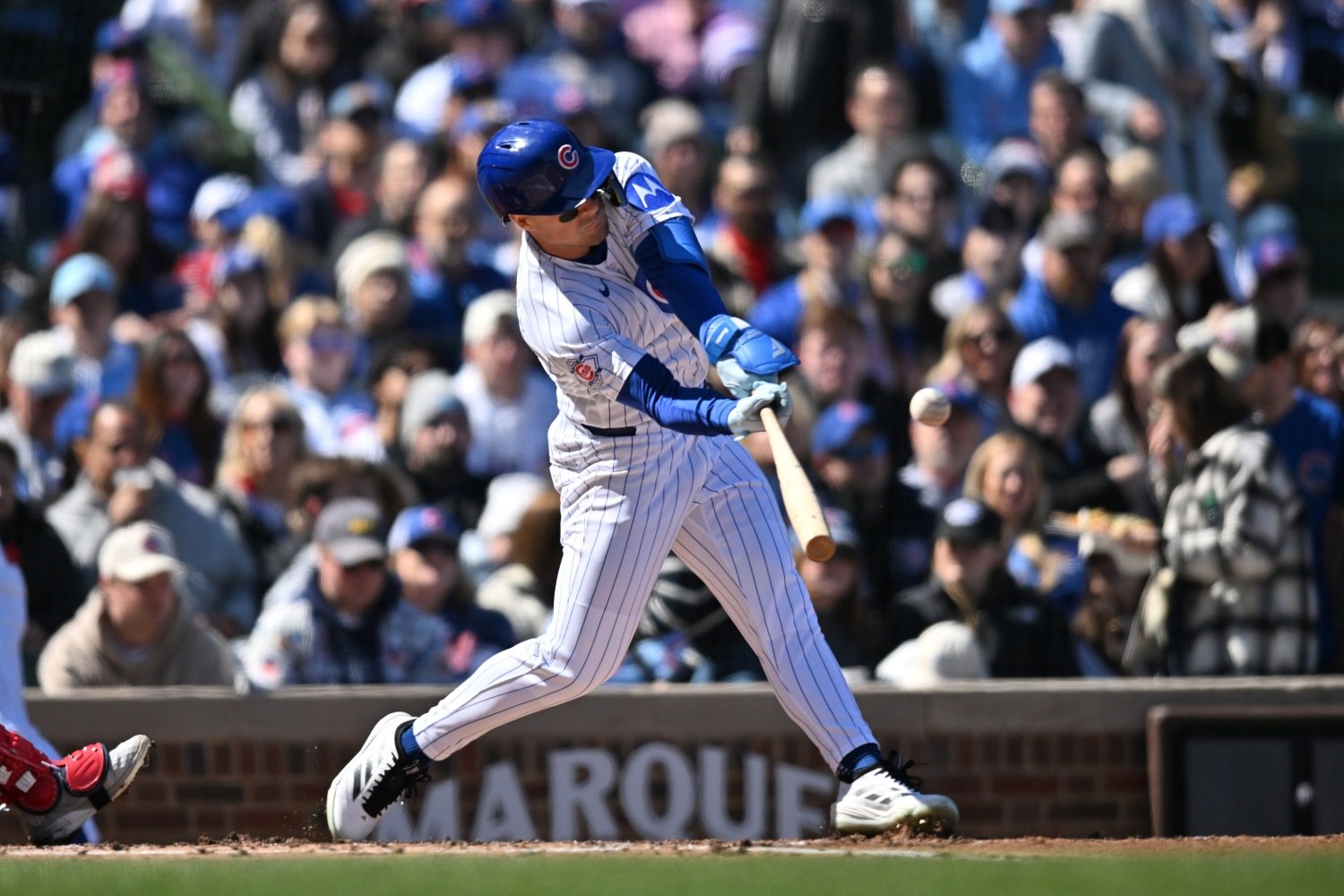 Matt Shaw will never be the Chicago Cubs' starting second baseman, shortstop or third baseman. When the team signed Alex Bregman to a five-year deal this winter, Shaw was asked to start learning the outfield, and when they struck a deal with Nico Hoerner that will keep him in the fold at second base through 2032, that became the only imaginable way in which Shaw will find consistent playing time for the team, barring injuries. Of course, Pete Crow-Armstrong is also locked in as the team's center fielder for the foreseeable future, so Shaw essentially has to become a competent corner outfielder to be more than a utility man for the Cubs. That could, of course, mean that the Cubs will soon look to trade Shaw, who remains under team control through 2031. For the moment, though, let's focus on the implications of the team's recent moves should he stay in town, and let's further assume that Bregman, Hoerner and Dansby Swanson are healthy enough to force him to be an outfielder. That leaves two questions to answer: Can Shaw become sufficiently adept in the outfield itself to avoid causing major damage to the defense? Can he hit enough to justify giving him regular playing time in positions where the team will need significant offensive production? The first answer is likely to be 'yes'. Shaw is a good athlete, and though he's small and has a weak arm, he's shown decent aptitude in limited opportunities there this spring. With speed and skills, he should be able to offset his deficiencies and play average or better defense in (especially) left field. He played a couple of balls quite well in right field on Opening Day, despite gusting wind. Offensively, though, the standard in either corner is quite high, and Shaw hasn't yet shown the ability to meet it. He batted .226/.295/.394 last year. There was a prolonged period in the second half in which he tapped into much more power and it was possible to envision him being a valuable bat in a corner spot, but even then, his plate discipline was shaky and he was too whiff-prone. The big leg kick he brought with him to the majors had to be adapted, but even after he did so, he seemed to be overstriding. He wasn't well-balanced, and he wasn't keeping his head still enough to see the ball well. To be a useful right or left fielder, Shaw has to be better and more consistent at the plate this year. The league figured him out after his July/August power binge, and countered his adjustments; he'll have to adjust again. This spring, he hit .320/.417/.500 in the Cactus League, but all that matters is what happens once the games count—and that, in turn, will be determined by whether Shaw can make adjustments that yield better pitch selection, more contact, and/or more power. In that regard, there's good news and bad news, so far. Shaw has made a major adjustment this spring to shorten his stride and (thereby) improve his stability in the box. That should mean better pitch recognition and a better contact rate, over time. Here's a comparison of his stance and stride for 2025 with the one he's shown (in an extremely limited sample, of course, but the difference is real and intentional) in 2026. As you can see, he's dramatically reduced the length of his stride, and he's also a bit closer to the plate and a bit deeper in the batter's box. All of these things are good, in the long run, for his odds of making good swing decisions and making contact on swings. The sample is too small for the results to say anything meaningful about the efficacy of the changes yet, but for this, we don't really need stats. We just need proof that he's changing the math—the physics, the geometry, and the algebra—of his duel with opposing pitchers. We have it. For what it's worth, Shaw is also swinging a bit more steeply this season. That's a noisier thing, over a sample of a game or two, and it might not remain true, but it's noteworthy because his swing appeared to have that extra tilt even in the spring. A steeper swing would yield a greater amount of damage at the same bat speed. That, alas, brings us to the bad news: Shaw's bat speed so far is dreadful. On 14 competitive swings, Shaw's average bat speed is 65.8 miles per hour. Last year, his monthly bat speeds ranged from 68.4 MPH to 70.5. Again, it's too early to treat this as something lasting and real, but directionally, it makes a sad sort of sense. Shaw's highest bat speeds last year were when he was striding most aggressively; he got a lot of bat speed from the sheer momentum of his attack. Shortening the stride increases control but lowers momentum. Increasing tilt improves the chances of squaring the ball up but decreases sheer torque. Shaw will, surely, swing faster than this as he settles in and gets going this year. Still, if he doesn't get back up to at least that 69 MPH range, he has little hope of having average power. That applies extra pressure to control the strike zone well, minimizing strikeouts and increasing walks. He might well prove able to do that; those are the things his tweaks this spring should augment. It's just a troublesome signal, for a player whose value will have to come in large part from his bat for the foreseeable future.