


Cubs Video
Hitting is problem-solving. After all, you're standing there in a box, not allowed to move beyond it, armed with a seemingly powerful but unwieldy club, and you've got a projectile coming at you at bone-breaking speed. You can't be sure where it'll be when it passes you, or even that it won't come find that spot between your third and fourth ribs that leaves you wincing every time you run for a week. You can't do more than guess (albeit in an educated way) which way the thing might swerve en route. If you don't find ways to consistently whack that projectile off into corners and empty spaces, you lose your job. You've got a problem, all right. You'd better have some ideas to solve them.
The above are some of the problems of sheer difficulty in hitting well. The reactive nature of the exercise, the excellence of modern big-league defense, and the nuances of situations pose plenty of difficulties. There's another problem every hitter eventually runs into, too, though: to attack pitches and be as dangerous as possible in the box, eventually, you have to risk hurting yourself.
In fact, as the league has become increasingly fast and ferocious, those types of injuries are becoming more common. Higher pitch velocities mean that hitters have to swing faster, too, and for many, rotating fast and explosively enough to win your showdown with a pitcher eventually means losing a battle with the integrity of your own muscle tissues.
Over the last decade, strains to key muscles in the torso have become much more common in hitters. Last season, in fact, was a bonanza for these things—oblique strains, intercostal strains, abdominal strains, and so on.

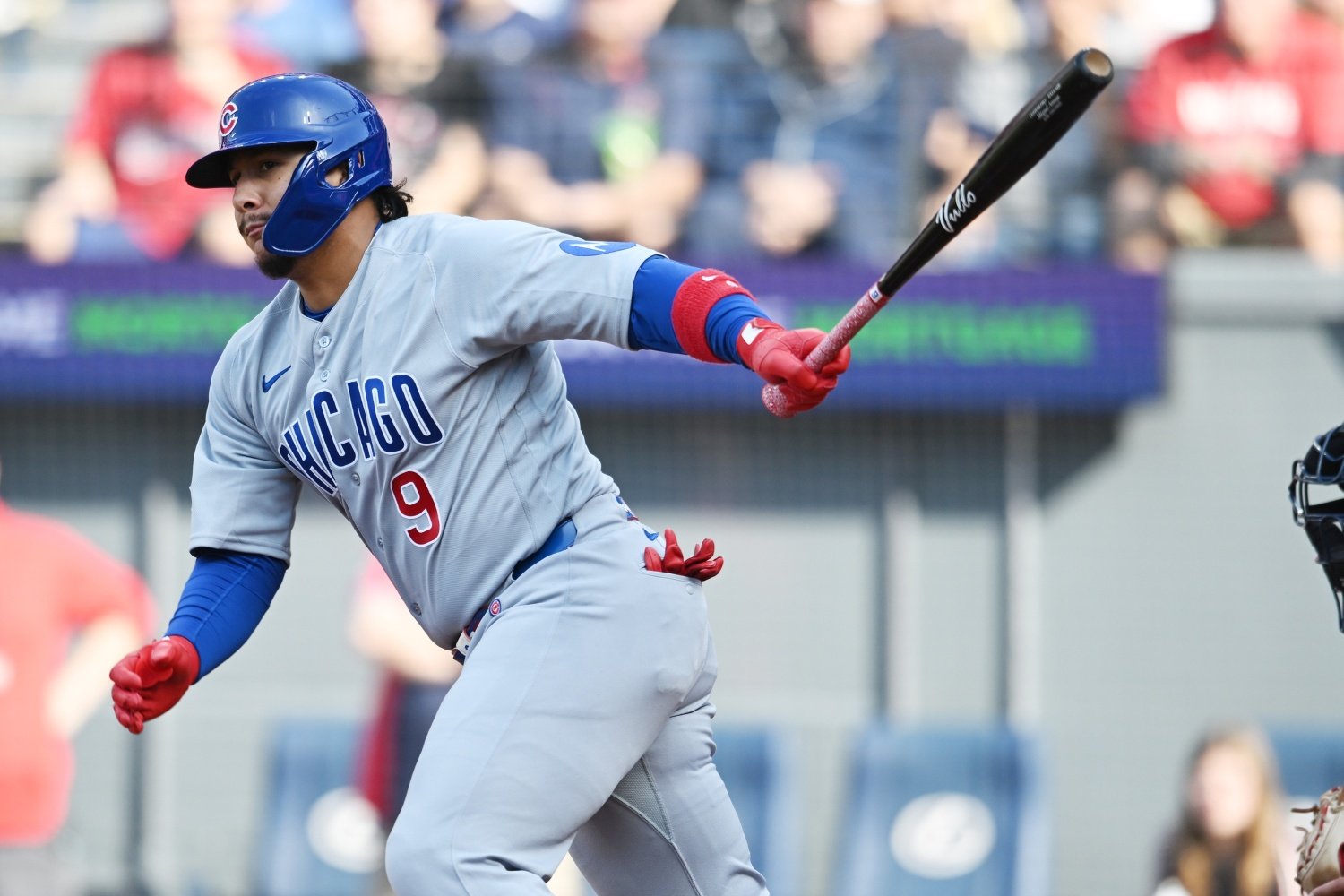
In May 2025, Miguel Amaya became one of the victims of that trend. He was hurt, by coincidence, on a throw in Cincinnati, but the way he pushed his limits with his swing speed contributed to the damage. That injury derailed Amaya's season. He missed nearly three months, then sprained his ankle in his first game back in August. It was a disaster—not just because it stopped him cold during a great season, but because it's had a noticeable, even eye-popping hangover effect this spring.
Last year, Amaya's average swing speed was 72.2 miles per hour. That's above-average, especially for a catcher—those guys are selected for defense, after all. It formed a downward trend, from 73.7 MPH in 2023 and 72.9 in 2024, but it was still a strong number. Of course, nearly all of the swings making up that average came before he suffered that oblique strain.
This season, Amaya has served in a similar role as the one he had last year, splitting time with Carson Kelly. He's been very patient—much more so than in the past, with his swing rate nosediving from 54% to 38%—so he's only lodged 29 competitive swings on the season. In them, though, he's averaging just 68.4 MPH of bat speed. He's topped out just over 76 MPH. Every possible sign says Amaya has gone from a plus to a minus with regard to bat speed. He's lost a ton of it.
Obviously, that doesn't mean he can't be at least somewhat effective. Firstly, to support that claim, we can point to the fact that he's batting .294/.400/.529 this year. Swinging less is as good as swinging slower is bad; it can produce walks and put you in hitter-friendly counts. Once you have the advantage on the pitcher, maybe you can sit on a certain pitch type, and the feeling that the pitch might swerve in the wrong direction on you goes away. If Amaya squares the ball up much better because his swings are more on target, he can make up for this big loss of bat speed.
Slower swings are also, by and large, more likely to result in contact, as are shorter ones. Amaya's bat path has been flatter and more direct this year, so he's found some hits in two-strike counts. He's not hitting the ball hard as often, but he can make up for that with a better-organized approach.
The other caveat that matters is that Amaya might yet recover the lost bat speed. The samples here are tiny; he could warm up with the weather and get back to cutting it loose. However, for any catcher moving into their late 20s and for any player coming off a severe injury to their torso, a loss of bat speed shouldn't surprise us—and it's best to assume that it will be at least partially permanent. Amaya can still be a very useful player for the Cubs, but he might have to learn to do it as a slower swinger. It's just the next problem to solve.





Recommended Comments
Create an account or sign in to comment
You need to be a member in order to leave a comment
Create an account
Sign up for a new account in our community. It's easy!
Register a new accountSign in
Already have an account? Sign in here.
Sign In Now