Brandon Glick
-
Posts
1,153 -
Joined
-
Last visited
Content Type
Profiles
Joomla Posts 1
Chicago Cubs Videos
Chicago Cubs Free Agent & Trade Rumors, Notes, & Tidbits
2026 Chicago Cubs Top Prospects Ranking
News
2023 Chicago Cubs Draft Picks
Guides & Resources
2024 Chicago Cubs Draft Picks
The Chicago Cubs Players Project
2025 Chicago Cubs Draft Pick Tracker
2026 Chicago Cubs Draft Tracker: Picks & Bonuses
Blogs
Events
Forums
Store
Gallery
Everything posted by Brandon Glick
-
I absolutely agree that, in the very short-term, Mastrobuoni may be the better call. Especially since he's a little more versatile defensively. But unless you really, truly believe this Cubs team is at (at the very least) a contender to get to the NLCS, and Mastro's bat is the difference between getting there and not, I don't think calling him up to keep PCA down is in the team's best long-term interest. There is legitimate, non-zero value in bringing a guy up for the famous "cup of coffee" in September to allow him to see what the best guys in the majors do, and apply that to a full offseason of prep. That being said, you can absolutely make the case that the extra roster spot over the offseason is more valuable than PCA getting big league exposure BECAUSE he's already pro-ready. If he was a rawer prospect, I'd actually argue more for him to come up and get the chance to really see what it'll take to succeed at the highest level.
-
Tiger nailed it (again) - you just don't know if PCA will be as great in the majors as he has been in the minor leagues. It's a massive jump between the two levels. Again, I'm on team "bring him up", but more so as a specialist. There's no need to force him to be an everyday starter right now.
-
Agreed. You'd have to imagine they go into the offseason expecting to put PCA on the 40 man after Spring Training (if he's not already on it). Still, keeping that extra spot open for an under-the-radar guy can be important -- look at Tauchman this year.
-
I like the mentality of this, especially in a playoff push. But there is value to keeping guys on the 40-man who may not be quite ready yet. Development takes time. It's a tough balancing act of contending at all costs v.s. future benefits.
-
I don't disagree - would love to see him get a few chances. Could help his development down the line. Really the only thing stopping the Cubs once the calendar reaches August is whether they want to burn the spot on the 40-man roster.
-
Saw this too - his bat is so much more advanced than anticipated. Wouldn't be surprising to see him get a couple of starts down the stretch. Very exciting!
-
Pete Crow-Armstrong True blue-chip prospect, with an 80-grade glove and 65+ speed. If his plate discipline carries into the majors, he'll be a perennial 3+ WAR guy. Owen Caissie Best bat in the system. Improvement in strikeout rates makes me think he's gaining feel for the zone. His glove is improving in right field. This kid is a stud. Cade Horton Best arm the Cubs have had in the system in a LONG time. Hopefully his relative freshness after barely pitching in college means he'll stay healthy and durable for a long while. His slider is a top ten pitch in all of minor league baseball. Kevin Alcantara It's rare that five-tool guys also have high baseball IQs, but that's Alcantara in a nutshell. If he stays healthy, he's capable of becoming an even better prospect at his peak than PCA is right now. Jordan Wicks A lefty pitching prospect with a dominant changeup and a history of adjusting to whatever challenge the next level throws at him. If Steele is Lester and Horton is Arrieta, this guy is the next Hendricks. Ben Brown Didn't love the Robertson trade when it happened, but Brown has really shown something here in 2023. He's struggled with his command pretty deeply at Triple-A, but his raw stuff is as good as anyone's. And that hammer curveball is something to behold. Matt Shaw This is a pick right out of the Theo Epstein era. High-quality college bat with an advanced feel capable of quickly ascending through the minors. He'll probably have to move to third with the middle infield blocked off, but Shaw's bat should play anywhere. Matt Mervis I haven't lost faith. He's a big lefty bat with great discipline and hitting more line drives than ever. His cup of coffee in May wasn't great, but Mervis has a chance to be the Cubs first basemen of the future if he can bring his plate approach from Triple-A into the majors. James Triantos It speaks volumes to the Cubs' depth that I have this guy all the way down at 9th. His bat stays in the zone for an exceptionally long period, and his feel for hitting may be the best in the entire system. Finding him a long-term defensive home would do wonders for his chances of being the big leagues in short order. Alexander Canario God that injury over the winter sucked. He had a massive breakout season in 2022, and his power is the most prodigious on the farm. If he's ever fully healthy again, he should resume his spot as the rightful heir to right field in Wrigley. Moises Ballesteros If Triantos isn't the guy with the best feel for hitting in the system, it's this guy. Who knows if he can stick at catcher long-term, but his bat is beyond advanced for his age and level. One of my favorite players in the system. Brennan Davis Man. This hurts. And even 12 is probably generous after the last two years of injuries and underperformance. If he can ever get right again, his tools are as loud as anyone from the previous core. 2024 is make or break for the former top prospect. Jackson Ferris I'm the down-man on this guy. I liked the Cubs' strategy in the 2022 draft of going under-slot college pitcher (Horton) and over-slot high school guy, but my opinions on them have flipped (Horton has impressed, Ferris has not). He's got a ton of projectability, but that deliver is so complex that I wonder how he'll respond to the inevitable simplification of it. Haydn McGeary I don't know how I could put this guy any lower. After an obscene college career, he's just taken every level of minor league baseball to task this year. Incredible hand-eye coordination and easy loft in his swing makes me think we'll see him in the majors shortly (against all odds for a 15th round pick last year). Cristian Hernandez My hype for him has been waning, but it's important to remember he's a 19 year old in A-ball. He's got time to make good on his incredible talents. Jefferson Rojas He's flying up my list, and will probably be top ten in the system by the offseason. Pablo Aliendo He's slowed down after a torrid start at the plate this year, but he's got legit catching chops and could pair with Amaya down the road as an elite two-way catching tandem. Brandon Birdsell He's just having a monster season at High-A. He'll be in the Double-A rotation before the year is out, and he's quickly becoming one of the most important starting pitching prospects in the system. Michael Arias A converted shortstop with an elite fastball and funky delivery. He's got a ton of relief risk, but he'll be an impact arm some way or another. Kohl Franklin He has a top three changeup in the system in my eyes, and is one of the few arms the Cubs have that poses practically zero relief risk. I still have a lot of faith that he'll be a back-end starter in Wrigley for a long time to come.
-
Definitely a threat with their pitching staff. I'd like to think the Cubs can match up with them pretty nicely, but Stroman's recent struggles and Sandy's recent uptick do not bode well for a potential series. Would be a fascinating matchup between two of the few teams in the majors who don't use homers as their primary means of scoring.
-
You're totally right. I think my head is in NFL mode after the Bears' preseason game 😅 (which now uses the 7 seed system anyways, so it was probably just a projection of the nightmares I have of having to face the Braves in the playoffs for the next decade).
-
Shame. This is the most important award in all of sports. There has never been a more important trophy in the Cubs' history than the one Bellinger will receive for CPOY.
-
Agreed that he's not the perfect candidate given his youth, but in a year where the NL lacks the obvious narrative-driven story the AL has (Liam Hendricks beating cancer), a guy rediscovering the height of his powers is a cool story. And yes, the Cubs need to make every effort to keep him. The lefty power and gold glove in the middle of the lineup is an enormous piece to have for the next half-decade. I have no idea what his number will be given his past struggles and meh peripherals this year, but the Matt Olson contract (8-162) seems like a reasonable compromise.
-
The Chicago Cubs are competitive into the second half of the season for the first time in years. If they keep this up, who might they face come October, and how could they match up with them? Image courtesy of Jovanny Hernandez / Milwaukee Journal Sentinel / USA TODAY NETWORK The Cubs are in good position in the push for a berth in the National League playoffs. They enter the new week 3.5 games out of the division lead, and just a half-game out of the final Wild Card spot. They’ve proved their mettle in a prolonged hot stretch since the All-Star break, taking two of three from the World Series-favorite Atlanta Braves and three of four from the Reds (to usurp them in the standings, albeit not permanently). Combining all of that with a favorable schedule on tap, the Cubs appear ready to forge ahead into the playoffs for the first time since 2020. If we can make the bold assumption that the Cubs do meander into the big dance, what will they be staring down as they try (against VERY stacked odds) to make it back to the Fall Classic? First things first: the top two seeds in the National League are all but sewn up by the Braves and Dodgers, respectively. The Cubs are a whopping 14 games behind Atlanta for the best record in the NL, and 9.5 behind the Dodgers. That makes Chicago highly unlikely to secure a first-round bye in the playoffs. From there, the Cubs have two relatively straightforward paths: win the division, or secure one of the three Wild Cards. If the Cubs take the Central, they’d become the third seed, matching them up with the six seed (the Wild Card with the worst record). Looking at their prospective opponents in that scenario, it’s likely the Cubs would face one of their division rivals in the Brewers or Reds, though the resurgent Padres and Marlins are also within shouting distance of the playoffs. The Diamondbacks are also only a few games back, but they’ve been mired in an abysmal slump since July 1, and appear to be fading fast. It’s reasonable to suspect one of the Phillies or Giants (holders of the top two Wild Card spots currently) could fall back a seed or two, but we’ll assume they hold steady and match up as the four and five seeds. If the Cubs can’t quite capture the division flag, but do sneak in as a Wild Card (again, assuming they would grab the six seed in this scenario), they would play the winner of their division - either the Brewers or the Reds. So, against these likeliest of opponents (the Brewers, Reds, Padres and Marlins), who do the Cubs stand the best chance against? 1. Milwaukee Brewers So far this year: 3-4 Games left: Six The Brewers are a good team, anchored once again by their pitching staff. Corbin Burnes and Freddy Peralta are fronting the rotation, old friend Wade Miley is having a fine bounce-back season after an injury-plagued sojourn on the North Side, and Brandon Woodruff was just activated off the 60-day IL. Their bullpen is also pretty lights-out, with Devin Williams and flamethrowing wizard/warlock/magician Abner Uribe shutting things down late in games. However, their offense has been… well, offensive, with Willy Adames and Rowdy Tellez particularly struggling after years of solid production. For a Cubs team geared to win with defense and timely hitting, the Brewers pose a massive threat. They're wired to win the close, low-scoring affairs that become more prominent in the playoffs. 2. Cincinnati Reds So far this year: 4-5 Games left: Three The Reds are the antithesis of the Brewers: electric offense, horrendous pitching. The lineup is loaded from top to bottom, with young studs like Elly De La Cruz and Spencer Steer solidifying their major-league credentials. Joey Votto is also having a resurgent year, posting an .842 OPS across 42 games. Their pitching staff, on the other hand, is downright atrocious. Rookie Andrew Abbott is the only starter with a sub-3.00 ERA, and most of the pitchers on the team are sporting ERAs starting with a 4 or a 5. The bullpen, while anchored by a dominant Alexis Diaz, is also a mess, ranking 17th in the majors in ERA even with their closer’s contributions. This is the team the Cubs should want to play in the Wild Card round, as their inexperience and unreliable pitching should do them no favors against a team led by World Series champions Dansby Swanson and Cody Bellinger. 3. San Diego Padres So far this year: 4-3 Games left: Zero The fact that this is the one team on this list against whom the Cubs have a winning record this year (so far) is emblematic of the Padres’ wildly disappointing season as a whole. They are, on paper, perhaps the most talented team in all of baseball, with a trio of aces in the rotation (Yu Darvish, Joe Musgrove, Blake Snell); one of the best relief pitchers in the league (Josh Hader); and an absurd cache of talent in the lineup (Manny Machado, Fernando Tatis Jr., Juan Soto, Xander Boegarts, Ha-Seong Kim… it just goes on and on). They’ve been burned by injuries and poor performances all over the roster, but this team is still the scariest on this list. Any one of their star hitters can take over a three-game series, and their rotation is uniquely suited to throw out an ace-caliber arm every game in the Wild Card Series. This team is currently sub-.500 and the farthest away from a playoff spot of everyone here, but that means that if they do get in, they’ll likely be riding a wave of momentum. Hopefully, the Cubs can avoid them in the first round. 4. Miami Marlins So far this year: 2-4 Games left: Zero A somewhat similar profile to the Brewers (good pitching, anemic hitting), though closer to average on both ends rather than the Brewers’ extremes. The Miami lineup has some legitimately good players, notably including former Cub Jorge Soler and batting champion Luis Arraez. The pitching staff has some big names, but reigning NL Cy Young Award winner Sandy Alcantara has been less consistent in his brilliance this year, and wunderkind Eury Perez has been on a tight innings limit since May. You’d have to feel good about this matchup, especially since it would mean the Cubs won the division and are playing at Wrigley in October (a stark contrast for a team based in Florida). If the Cubs were to beat their first-round opponent, they’d go on to face the Dodgers (if they are the three seed) or the Braves (if they are the six seed) in the National League Division Series. While further analysis of those potential series would be warranted, it’s a “cross that bridge when you come to it” situation--especially since, all things considered, the Cubs are probably losing either of those series. Both teams are top three in team OPS (the Braves are shockingly secure in first place, with an almost unfathomable .840 OPS as a team), and their pitching staffs are much deeper than the Cubs’ Justin Steele-plus-a-hope-and-a-prayer construction. Regardless of that, though, anything can happen once you’re in the playoffs, and the Cubs can make some serious noise if they get there this year. Although the more important thing for fans to focus on is how the Cubs perform here in crunch time down the stretch, rooting for a potential playoff opponent (even if it’s a division rival) has its own merit. View full article
-
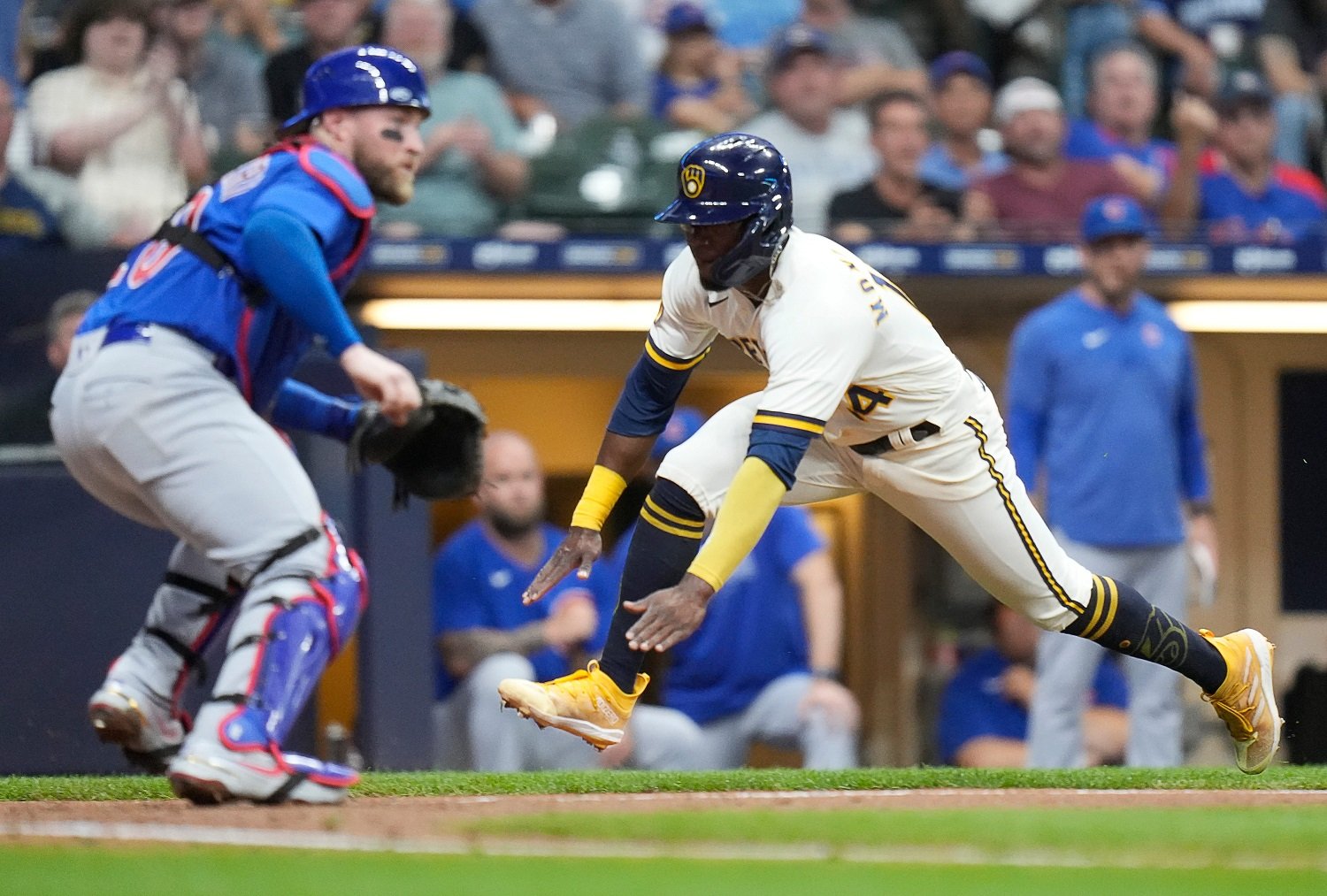 The Cubs are in good position in the push for a berth in the National League playoffs. They enter the new week 3.5 games out of the division lead, and just a half-game out of the final Wild Card spot. They’ve proved their mettle in a prolonged hot stretch since the All-Star break, taking two of three from the World Series-favorite Atlanta Braves and three of four from the Reds (to usurp them in the standings, albeit not permanently). Combining all of that with a favorable schedule on tap, the Cubs appear ready to forge ahead into the playoffs for the first time since 2020. If we can make the bold assumption that the Cubs do meander into the big dance, what will they be staring down as they try (against VERY stacked odds) to make it back to the Fall Classic? First things first: the top two seeds in the National League are all but sewn up by the Braves and Dodgers, respectively. The Cubs are a whopping 14 games behind Atlanta for the best record in the NL, and 9.5 behind the Dodgers. That makes Chicago highly unlikely to secure a first-round bye in the playoffs. From there, the Cubs have two relatively straightforward paths: win the division, or secure one of the three Wild Cards. If the Cubs take the Central, they’d become the third seed, matching them up with the six seed (the Wild Card with the worst record). Looking at their prospective opponents in that scenario, it’s likely the Cubs would face one of their division rivals in the Brewers or Reds, though the resurgent Padres and Marlins are also within shouting distance of the playoffs. The Diamondbacks are also only a few games back, but they’ve been mired in an abysmal slump since July 1, and appear to be fading fast. It’s reasonable to suspect one of the Phillies or Giants (holders of the top two Wild Card spots currently) could fall back a seed or two, but we’ll assume they hold steady and match up as the four and five seeds. If the Cubs can’t quite capture the division flag, but do sneak in as a Wild Card (again, assuming they would grab the six seed in this scenario), they would play the winner of their division - either the Brewers or the Reds. So, against these likeliest of opponents (the Brewers, Reds, Padres and Marlins), who do the Cubs stand the best chance against? 1. Milwaukee Brewers So far this year: 3-4 Games left: Six The Brewers are a good team, anchored once again by their pitching staff. Corbin Burnes and Freddy Peralta are fronting the rotation, old friend Wade Miley is having a fine bounce-back season after an injury-plagued sojourn on the North Side, and Brandon Woodruff was just activated off the 60-day IL. Their bullpen is also pretty lights-out, with Devin Williams and flamethrowing wizard/warlock/magician Abner Uribe shutting things down late in games. However, their offense has been… well, offensive, with Willy Adames and Rowdy Tellez particularly struggling after years of solid production. For a Cubs team geared to win with defense and timely hitting, the Brewers pose a massive threat. They're wired to win the close, low-scoring affairs that become more prominent in the playoffs. 2. Cincinnati Reds So far this year: 4-5 Games left: Three The Reds are the antithesis of the Brewers: electric offense, horrendous pitching. The lineup is loaded from top to bottom, with young studs like Elly De La Cruz and Spencer Steer solidifying their major-league credentials. Joey Votto is also having a resurgent year, posting an .842 OPS across 42 games. Their pitching staff, on the other hand, is downright atrocious. Rookie Andrew Abbott is the only starter with a sub-3.00 ERA, and most of the pitchers on the team are sporting ERAs starting with a 4 or a 5. The bullpen, while anchored by a dominant Alexis Diaz, is also a mess, ranking 17th in the majors in ERA even with their closer’s contributions. This is the team the Cubs should want to play in the Wild Card round, as their inexperience and unreliable pitching should do them no favors against a team led by World Series champions Dansby Swanson and Cody Bellinger. 3. San Diego Padres So far this year: 4-3 Games left: Zero The fact that this is the one team on this list against whom the Cubs have a winning record this year (so far) is emblematic of the Padres’ wildly disappointing season as a whole. They are, on paper, perhaps the most talented team in all of baseball, with a trio of aces in the rotation (Yu Darvish, Joe Musgrove, Blake Snell); one of the best relief pitchers in the league (Josh Hader); and an absurd cache of talent in the lineup (Manny Machado, Fernando Tatis Jr., Juan Soto, Xander Boegarts, Ha-Seong Kim… it just goes on and on). They’ve been burned by injuries and poor performances all over the roster, but this team is still the scariest on this list. Any one of their star hitters can take over a three-game series, and their rotation is uniquely suited to throw out an ace-caliber arm every game in the Wild Card Series. This team is currently sub-.500 and the farthest away from a playoff spot of everyone here, but that means that if they do get in, they’ll likely be riding a wave of momentum. Hopefully, the Cubs can avoid them in the first round. 4. Miami Marlins So far this year: 2-4 Games left: Zero A somewhat similar profile to the Brewers (good pitching, anemic hitting), though closer to average on both ends rather than the Brewers’ extremes. The Miami lineup has some legitimately good players, notably including former Cub Jorge Soler and batting champion Luis Arraez. The pitching staff has some big names, but reigning NL Cy Young Award winner Sandy Alcantara has been less consistent in his brilliance this year, and wunderkind Eury Perez has been on a tight innings limit since May. You’d have to feel good about this matchup, especially since it would mean the Cubs won the division and are playing at Wrigley in October (a stark contrast for a team based in Florida). If the Cubs were to beat their first-round opponent, they’d go on to face the Dodgers (if they are the three seed) or the Braves (if they are the six seed) in the National League Division Series. While further analysis of those potential series would be warranted, it’s a “cross that bridge when you come to it” situation--especially since, all things considered, the Cubs are probably losing either of those series. Both teams are top three in team OPS (the Braves are shockingly secure in first place, with an almost unfathomable .840 OPS as a team), and their pitching staffs are much deeper than the Cubs’ Justin Steele-plus-a-hope-and-a-prayer construction. Regardless of that, though, anything can happen once you’re in the playoffs, and the Cubs can make some serious noise if they get there this year. Although the more important thing for fans to focus on is how the Cubs perform here in crunch time down the stretch, rooting for a potential playoff opponent (even if it’s a division rival) has its own merit.
 -
The Cubs are in the heat of a division (and Wild Card) race, and I’m here talking about the most important award in baseball: the Comeback Player of the Year award. Image courtesy of © Jeff Curry-USA TODAY Sports This Cubs team has some pretty exciting talents on it: Justin Steele will all but certainly finish top ten in the Cy Young voting, the middle infield combo of Dansby Swanson and Nico Hoerner may double-up on gold gloves, and Tucker Barnhart is batting .308 in the second half (through 13 at-bats…). However, without any doubt, the most valuable player on this iteration of the Chicago Cubs is Cody Bellinger, a former MVP and Rookie of the Year for the Dodgers who was only available because they non-tendered him following a couple of injury-plagued campaigns. The Cubs have had a long history of legendary players winning the most prestigious awards in the sport, from Greg Maddux and Jake Arrieta winning the Cy Young to Ernie Banks and Kris Bryant winning Most Valuable Player. But for all of the legacies that have been formed and solidified on the North Side, there has never been a Comeback Player of the Year in the Cubs pantheon. The award, developed in 2005 as part of an MLB sponsored partnership with Pfizer for Viagra, has been won by luminaries and journeymen alike, including Albert Pujols last year and Daniel Bard in 2020. Counterpoint: Why Christian Yelich is the Comeback Player of the Year Now, after an arduous wait of 18 years, Cubs fans finally have something to look forward to: their first eventual Comeback Player of the Year award winner. Cody Bellinger is having a monstrous season, posting a 3.9 fWAR alongside a .329/.379/.559 triple-slash line. He’s added 18 home runs and 17 stolen bases, while playing his normally apt center field and first base defense. Digging in a little further, you’ll find that Bellinger has a 150 weighted runs created-plus (wRC+), meaning he’s been 50% better than the average hitter this year (for reference, he was at a 161 wRC+ during his MVP-winning season in 2019). He’s also impressed with his plate discipline, striking out a career-low 15.6% of the time, while walking in 7.5% of his plate appearances. Overall, he’s been the 15th most valuable offensive player in all of baseball this year according to bWAR, and all the names on the list above him are established stars (like Freddie Freeman and Ronald Acuna Jr.) or young players having breakout seasons (like Corbin Carrol); in other words, Bellinger’s company are candidates for awards like the MVP or Rookie of the Year, rather than competition for the illustrious Comeback Player of the Year title. Now, there are other contenders for the award. As much as Cubs fans may adamantly argue that this is a one-horse race, other players have come back from their own struggles and setbacks to return to their former glory, namely a player up in Wrigley North: Christian Yelich. Yelich is having a fine season for the division-leading Brewers, and he just peaked with an absurdly hot July (he slashed .333/.389/.626 for an OPS of 1.015). But who won July Player of the Month in the National League? Cody Bellinger. Who is playing on the hottest team in baseball, that’s on the precipice of usurping the division lead to cap off an incredible comeback from an abysmal start to the season? Cody Bellinger. And who, pray tell, is the guy playing on a one-year prove-it deal rather than simply living up to the status of a $200 million contract? Why, that would be one Cody James Bellinger. Admittedly, his batted-ball metrics aren’t quite as elite as his golden years in Los Angeles, and he’s almost certainly been one of the biggest beneficiaries of the new shift rules, but his overall numbers don’t lie - Cody Bellinger is (basically) back. And in case you need any more proof that he’s locked up this honor, remember that this award, more than any other, favors one thing first and foremost: the narrative. Bellinger was a prodigy, a top-15 prospect in all of baseball at the time he was recalled to replace an injured Adrian Gonzales in 2017. He was unstoppable for the next three years, culminating in that legendary 2019 season. But then, during the Dodgers’ march to the 2020 World Series (the Covid season), Bellinger dislocated his shoulder on a home run celebration in Game 7 of the NLCS. He fell off the proverbial offensive cliff the next two years, posting a combined 68 wRC+ in 2021 and 2022, resulting in his eventual unceremonious non-tender off the Dodgers’ roster. But now, Bellinger is healthy again. He’s swinging like the top prospect of old, and he’s only getting hotter as the season goes on. The Cubs, like Bellinger, have been a fun story this season, garnering (positive) national attention for the first time in years. The team is winning again, and Bellinger is the main catalyst as to why. Though both he and the team will claim that the playoff push is more important, we all know what truly matters for this season: Cody Bellinger rightly hoisting his 2023 National League Comeback Player of the Year trophy come November. View full article
-
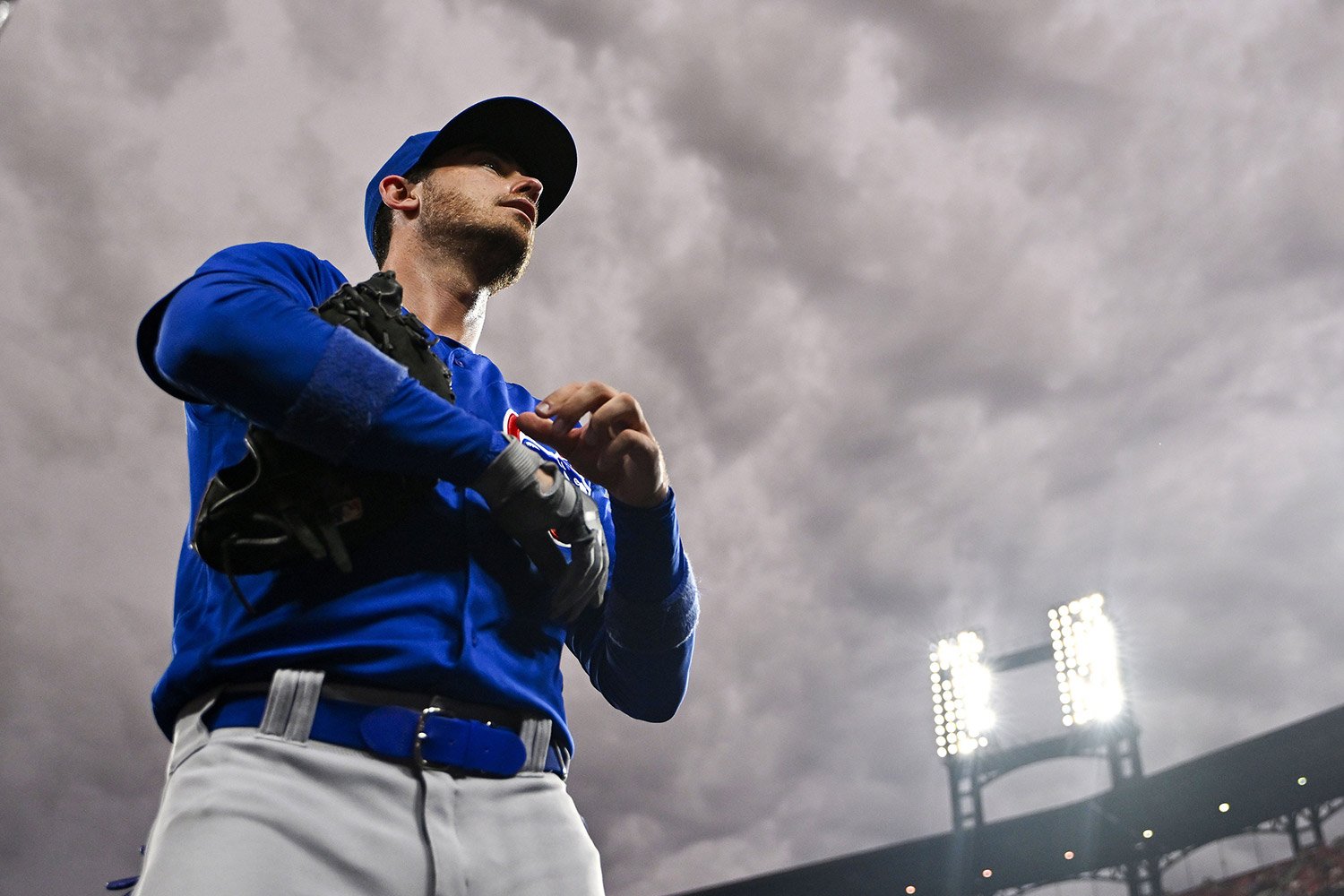 This Cubs team has some pretty exciting talents on it: Justin Steele will all but certainly finish top ten in the Cy Young voting, the middle infield combo of Dansby Swanson and Nico Hoerner may double-up on gold gloves, and Tucker Barnhart is batting .308 in the second half (through 13 at-bats…). However, without any doubt, the most valuable player on this iteration of the Chicago Cubs is Cody Bellinger, a former MVP and Rookie of the Year for the Dodgers who was only available because they non-tendered him following a couple of injury-plagued campaigns. The Cubs have had a long history of legendary players winning the most prestigious awards in the sport, from Greg Maddux and Jake Arrieta winning the Cy Young to Ernie Banks and Kris Bryant winning Most Valuable Player. But for all of the legacies that have been formed and solidified on the North Side, there has never been a Comeback Player of the Year in the Cubs pantheon. The award, developed in 2005 as part of an MLB sponsored partnership with Pfizer for Viagra, has been won by luminaries and journeymen alike, including Albert Pujols last year and Daniel Bard in 2020. Counterpoint: Why Christian Yelich is the Comeback Player of the Year Now, after an arduous wait of 18 years, Cubs fans finally have something to look forward to: their first eventual Comeback Player of the Year award winner. Cody Bellinger is having a monstrous season, posting a 3.9 fWAR alongside a .329/.379/.559 triple-slash line. He’s added 18 home runs and 17 stolen bases, while playing his normally apt center field and first base defense. Digging in a little further, you’ll find that Bellinger has a 150 weighted runs created-plus (wRC+), meaning he’s been 50% better than the average hitter this year (for reference, he was at a 161 wRC+ during his MVP-winning season in 2019). He’s also impressed with his plate discipline, striking out a career-low 15.6% of the time, while walking in 7.5% of his plate appearances. Overall, he’s been the 15th most valuable offensive player in all of baseball this year according to bWAR, and all the names on the list above him are established stars (like Freddie Freeman and Ronald Acuna Jr.) or young players having breakout seasons (like Corbin Carrol); in other words, Bellinger’s company are candidates for awards like the MVP or Rookie of the Year, rather than competition for the illustrious Comeback Player of the Year title. Now, there are other contenders for the award. As much as Cubs fans may adamantly argue that this is a one-horse race, other players have come back from their own struggles and setbacks to return to their former glory, namely a player up in Wrigley North: Christian Yelich. Yelich is having a fine season for the division-leading Brewers, and he just peaked with an absurdly hot July (he slashed .333/.389/.626 for an OPS of 1.015). But who won July Player of the Month in the National League? Cody Bellinger. Who is playing on the hottest team in baseball, that’s on the precipice of usurping the division lead to cap off an incredible comeback from an abysmal start to the season? Cody Bellinger. And who, pray tell, is the guy playing on a one-year prove-it deal rather than simply living up to the status of a $200 million contract? Why, that would be one Cody James Bellinger. Admittedly, his batted-ball metrics aren’t quite as elite as his golden years in Los Angeles, and he’s almost certainly been one of the biggest beneficiaries of the new shift rules, but his overall numbers don’t lie - Cody Bellinger is (basically) back. And in case you need any more proof that he’s locked up this honor, remember that this award, more than any other, favors one thing first and foremost: the narrative. Bellinger was a prodigy, a top-15 prospect in all of baseball at the time he was recalled to replace an injured Adrian Gonzales in 2017. He was unstoppable for the next three years, culminating in that legendary 2019 season. But then, during the Dodgers’ march to the 2020 World Series (the Covid season), Bellinger dislocated his shoulder on a home run celebration in Game 7 of the NLCS. He fell off the proverbial offensive cliff the next two years, posting a combined 68 wRC+ in 2021 and 2022, resulting in his eventual unceremonious non-tender off the Dodgers’ roster. But now, Bellinger is healthy again. He’s swinging like the top prospect of old, and he’s only getting hotter as the season goes on. The Cubs, like Bellinger, have been a fun story this season, garnering (positive) national attention for the first time in years. The team is winning again, and Bellinger is the main catalyst as to why. Though both he and the team will claim that the playoff push is more important, we all know what truly matters for this season: Cody Bellinger rightly hoisting his 2023 National League Comeback Player of the Year trophy come November.
 -
Yea, not great. REALLY wish the Cubs would've added a back-end guy at the deadline. Alas, they'll have to make due. Unfortunately, the team will be HEAVILY relying on Stroman to come back completely healthy if it wants to make any noise. That's a lot to put on a 32 year-old groundball pitcher.
-
Oh I can certainly understand the prospect fatigue with him (and any prospect in general who takes a long time to figure their stuff out, if they ever do). I can't speak for other Cubs' prospect people, though from what I can surmise the reason he's well liked is because the Cubs FO really loves him (and anyone with any sort of inside connection who hears that would obviously be inclined to feel similarly). For me personally, I think Franklin has some of the best, call it "pitchability", in the system. He's a high IQ pitcher. He can work his way in and out of jams that most SP prospects don't have the composure for. It's his command that betrays him (which of course, is absolutely a huge red flag and something he needs to reign in over the next 16 months to remain on the radar). His changeup is so high floor that he can be a split-neutral guy from the get-go (which is extremely valuable for a pitcher who would theoretically go through an order two+ times every outing). There's no doubt his curve has been bumpier than most. But that's the prospecting game. Most of these guys bust and drop off the radar forever. It's not about perfectly identifying a guy, it's about finding the ones who seem likeliest to overcome all the hurdles on the way to becoming a big league-caliber player. Franklin's experience with struggling at every level should help him as he makes his way to Triple A, but he definitely has to speed up his process and growing pains.
-
"...But he’s only listed here because he’s Rule 5 eligible after the season and will need to be put on the 40-man roster anyways over the offseason to be protected (if the Cubs feel the need to protect him, of course)." Franklin is far from a finished product, and I would never advocate for him to be in the majors this year, but he's a legitimate prospect. Obviously you want the results to be there for all prospects, but a lot of the time these guys in the minors are working on tweaks to their pitch shapes/deliveries/pitch mixes/etc. that get in the way of direct results. It's a developmental curve for a reason - it's not a linear path to becoming an MLB-caliber player.
-
Justin Steele. The rebirth of Jameson Taillon. The high-functioning ghost of Kyle Hendricks. And… what else? Image courtesy of © David Banks-USA TODAY Sports The Cubs’ rotation right now, heading down the stretch here in 2023 and in the heat of a playoff chase, is far from settled. Justin Steele has been a lockdown option atop the rotation, but he’s already gone past his previous career high in innings (119 innings pitched last year, 121 already this year). Jameson Taillon has seemingly rediscovered himself thanks to a reworked pitch mix. Still, his massive first-half struggles raise questions about his ability to keep up his recent performance (2.67 ERA in five starts in July, 3.00 ERA in two starts in August) through the end of the season. Kyle Hendricks has been a highly valuable innings eater, but he’s coming off a capsular tear in his throwing shoulder and was ineffective over the previous two seasons. Beyond that trio, already littered with their own asterisks, the Cubs have a lot of questions to answer in their rotation. Marcus Stroman started this year on fire, earning a deserved all-star selection for his first-half performance (2.38 ERA in 102 innings through June). But ever since the blister issue in London against the St. Louis Cardinals, he’s struggled mightily (he has a 10.13 ERA in just 16 second-half innings!), and now he’s on the IL with a hip inflammation issue that the Cubs are praying is the source of his downtick in performance. Drew Smyly similarly started the year hot (3.15 ERA in 60 innings in April and May), coming off a scorching second half-last season (2.83 ERA in 57 and ⅓ innings). However, he’s been absolutely torched recently, giving up a preposterously high 7.22 ERA since May 28. He’s also been almost unbelievably susceptible to the long ball, giving up 1.76 home runs per nine (which, among pitchers who have thrown at least 100 innings this year, ranks ninth-worst in all of baseball). The Cubs are responding in accordance with all of this information, moving Smyly to the bullpen and giving long-man Javier Assad another chance to lock down a spot in the rotation. Assad has been exceptional in long-relief, but he’s generally been a two-pitch pitcher that will need to expand his arsenal beyond the fastball/cutter combo (and occasional slider and changeup) to make it through the second and third time in an order. Beyond him, the Cubs have some intriguing, though perhaps not-quite-ready, options available in-house to try and fill the void at the back end of the rotation that currently exists. Ben Brown. Brown was all but certainly the next man up following his dominant start to the year at Double-A Tennessee (0.45 ERA in 20 innings pitched there). However, his recent strike-throwing troubles at Triple-A (40 walks in 65 innings) suggest he still has some refinement to work through before he’s ready. It’s also possible he’d be better utilized out of the big league bullpen this year, given his incredible fastball/curveball mix. And, of course, he was just placed on the Injured List, squashing any chance of him contributing in the immediate future. Jordan Wicks. Armed with a 60-grade changeup and above-average command, Wicks is the most MLB-ready pitcher in the Cubs’ system at the moment. He hasn’t been dominant at Triple-A this year (4.24 ERA in 23 and ⅓ innings, with some meh peripherals to match), but his profile and diverse arsenal of pitches could make him a viable fifth starter down the stretch. Riley Thompson. This is a name you’ve probably heard here and there as he’s steadily climbed the ladder over the years, though he’s having a tough go of it in his first taste of Triple-A this season (4.95 ERA in 60 innings, with an ugly 6.10 FIP). He was an exciting prospect following two really strong seasons in A ball to begin his career, but he lost two crucial years to the pandemic and still has yet to regain his footing. Hopefully, the Cubs can help him get there because the fastball/slider/curveball combo is genuinely exciting. Still, it would take a catastrophe of biblical proportions to see him on the big league team this year. Kohl Franklin. Full disclosure, I love this kid. In my eyes, he has a top-three changeup in the system, and he started the season in such an electric way at High-A this year (2.79 ERA in 19 and ⅓ innings, with a sizzling 13.97 strikeouts per nine innings). He’s hit a speed bump at Double-A, mostly because of a spotty walk rate (4.58 walks per nine innings) which has always been his most glaring issue. He’s a true starting pitching prospect, but he’s only listed here because he’s Rule 5 eligible after the season and will need to be put on the 40-man roster anyways over the offseason to be protected (if the Cubs feel the need to protect him, of course). Cade Horton. He won’t get called up, having just made it to Double-A, and he’s already thrown 65 and ⅓ innings this year after barely pitching in college. However, his arm is undeniably special, and he will (hopefully) be a staple of future Cubs rotations. He just won’t be able to help out this year, unfortunately. On top of the guys listed, Hayden Wesneski and Caleb Kilian are already in the big league bullpen assisting as openers and in long-relief. With Smyly moving out of the rotation, chances are one of them could join Assad in the rotation, at least until Stroman returns. The Cubs will need a strong effort out of whatever five they choose to start in the hunt for a playoff spot. However, it’s fair to lob a little criticism at the front office for not trying to plug this hole with a rental starter at the deadline (when the Stroman and Smyly issues were already apparent and actively hurting the team). Who do you want to see the Cubs give a chance to this year? No pressure on answering that question. It’s only a spot in the playoffs on the line. View full article
- 4 replies
-
- 1
-

-
- justin steele
- jameson taillon
- (and 2 more)
-
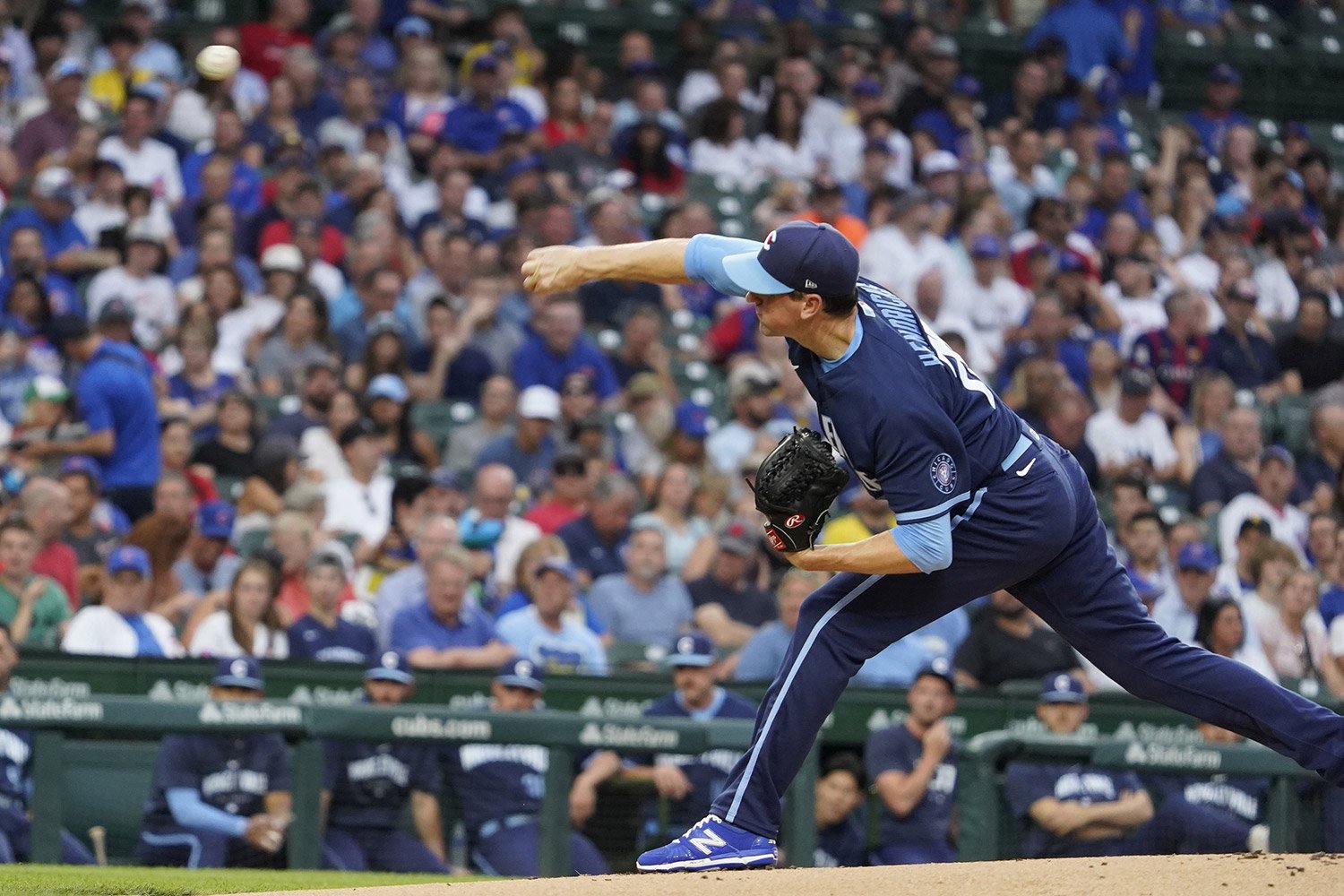 The Cubs’ rotation right now, heading down the stretch here in 2023 and in the heat of a playoff chase, is far from settled. Justin Steele has been a lockdown option atop the rotation, but he’s already gone past his previous career high in innings (119 innings pitched last year, 121 already this year). Jameson Taillon has seemingly rediscovered himself thanks to a reworked pitch mix. Still, his massive first-half struggles raise questions about his ability to keep up his recent performance (2.67 ERA in five starts in July, 3.00 ERA in two starts in August) through the end of the season. Kyle Hendricks has been a highly valuable innings eater, but he’s coming off a capsular tear in his throwing shoulder and was ineffective over the previous two seasons. Beyond that trio, already littered with their own asterisks, the Cubs have a lot of questions to answer in their rotation. Marcus Stroman started this year on fire, earning a deserved all-star selection for his first-half performance (2.38 ERA in 102 innings through June). But ever since the blister issue in London against the St. Louis Cardinals, he’s struggled mightily (he has a 10.13 ERA in just 16 second-half innings!), and now he’s on the IL with a hip inflammation issue that the Cubs are praying is the source of his downtick in performance. Drew Smyly similarly started the year hot (3.15 ERA in 60 innings in April and May), coming off a scorching second half-last season (2.83 ERA in 57 and ⅓ innings). However, he’s been absolutely torched recently, giving up a preposterously high 7.22 ERA since May 28. He’s also been almost unbelievably susceptible to the long ball, giving up 1.76 home runs per nine (which, among pitchers who have thrown at least 100 innings this year, ranks ninth-worst in all of baseball). The Cubs are responding in accordance with all of this information, moving Smyly to the bullpen and giving long-man Javier Assad another chance to lock down a spot in the rotation. Assad has been exceptional in long-relief, but he’s generally been a two-pitch pitcher that will need to expand his arsenal beyond the fastball/cutter combo (and occasional slider and changeup) to make it through the second and third time in an order. Beyond him, the Cubs have some intriguing, though perhaps not-quite-ready, options available in-house to try and fill the void at the back end of the rotation that currently exists. Ben Brown. Brown was all but certainly the next man up following his dominant start to the year at Double-A Tennessee (0.45 ERA in 20 innings pitched there). However, his recent strike-throwing troubles at Triple-A (40 walks in 65 innings) suggest he still has some refinement to work through before he’s ready. It’s also possible he’d be better utilized out of the big league bullpen this year, given his incredible fastball/curveball mix. And, of course, he was just placed on the Injured List, squashing any chance of him contributing in the immediate future. Jordan Wicks. Armed with a 60-grade changeup and above-average command, Wicks is the most MLB-ready pitcher in the Cubs’ system at the moment. He hasn’t been dominant at Triple-A this year (4.24 ERA in 23 and ⅓ innings, with some meh peripherals to match), but his profile and diverse arsenal of pitches could make him a viable fifth starter down the stretch. Riley Thompson. This is a name you’ve probably heard here and there as he’s steadily climbed the ladder over the years, though he’s having a tough go of it in his first taste of Triple-A this season (4.95 ERA in 60 innings, with an ugly 6.10 FIP). He was an exciting prospect following two really strong seasons in A ball to begin his career, but he lost two crucial years to the pandemic and still has yet to regain his footing. Hopefully, the Cubs can help him get there because the fastball/slider/curveball combo is genuinely exciting. Still, it would take a catastrophe of biblical proportions to see him on the big league team this year. Kohl Franklin. Full disclosure, I love this kid. In my eyes, he has a top-three changeup in the system, and he started the season in such an electric way at High-A this year (2.79 ERA in 19 and ⅓ innings, with a sizzling 13.97 strikeouts per nine innings). He’s hit a speed bump at Double-A, mostly because of a spotty walk rate (4.58 walks per nine innings) which has always been his most glaring issue. He’s a true starting pitching prospect, but he’s only listed here because he’s Rule 5 eligible after the season and will need to be put on the 40-man roster anyways over the offseason to be protected (if the Cubs feel the need to protect him, of course). Cade Horton. He won’t get called up, having just made it to Double-A, and he’s already thrown 65 and ⅓ innings this year after barely pitching in college. However, his arm is undeniably special, and he will (hopefully) be a staple of future Cubs rotations. He just won’t be able to help out this year, unfortunately. On top of the guys listed, Hayden Wesneski and Caleb Kilian are already in the big league bullpen assisting as openers and in long-relief. With Smyly moving out of the rotation, chances are one of them could join Assad in the rotation, at least until Stroman returns. The Cubs will need a strong effort out of whatever five they choose to start in the hunt for a playoff spot. However, it’s fair to lob a little criticism at the front office for not trying to plug this hole with a rental starter at the deadline (when the Stroman and Smyly issues were already apparent and actively hurting the team). Who do you want to see the Cubs give a chance to this year? No pressure on answering that question. It’s only a spot in the playoffs on the line.
 -
I think this encapsulates a lot of what the fans are feeling - this team has momentum right now. The farm is doing well, risky moves like the Belli and Dansby signings are paying off, and guys like Amaya and Madrigal are playing their way into a future roster spot. It would sting like hell if this doesn't continue; hopefully there's a few big offseason moves and prospect graduations to put the Cubs back on the WS contention path.
-
I hear this - all of me wants Belli in right and PCA in center for the next half-decade. But whether they re-sign Bellinger or not, I think it's fair to evaluate this season as some sort of success since the team is competitive again AND guys like Belli (and Swanson) have been excellent moves.
-
Brilliantly put. I think there's actually semblance of confidence now in the front office that they have an actual direction. It's not aimless anymore.
- 20 replies
-
- 1
-

-
- jeimer candelario
- cubs
- (and 1 more)
-
If a guy being two spots out of the top 10 (with 2 of the guys ahead of him draft picks from this year) on one list means PCA is a worse prospect than before, then the Cubs need to pack it up
-
Absolutely - I definitely don't think it's as black and white as "this season was perfect" or "this season was a waste". Everyone will have their own scales on how they feel, but I think it's a good thing that the scales are still being balanced as opposed to thrown out the window in July like the last two years.