


Brandon Glick
-
Posts
1,153 -
Joined
-
Last visited
Content Type
Profiles
Joomla Posts 1
Chicago Cubs Videos
Chicago Cubs Free Agent & Trade Rumors, Notes, & Tidbits
2026 Chicago Cubs Top Prospects Ranking
News
2023 Chicago Cubs Draft Picks
Guides & Resources
2024 Chicago Cubs Draft Picks
The Chicago Cubs Players Project
2025 Chicago Cubs Draft Pick Tracker
2026 Chicago Cubs Draft Tracker: Picks & Bonuses
Blogs
Events
Forums
Store
Gallery
Everything posted by Brandon Glick
-
Don't you go getting soft on me now, Tom. Who else is gonna take me to task this offseason when I argue the Cubs should trade Alzolay at the peak of his value?
- 22 replies
-
- 1
-

-
- david ross
- jed hoyer
- (and 2 more)
-
For the first point, my argument wasn't meant to be "1 for 1" replacements. It was more so a general statement that Rossy has been exceptionally slow to adjust to slumps and momentum of hitters. Injuries are part of baseball and that's not Rossy's fault. I'm upset that Tauchman can slump for 6 weeks and still get consistent starts in center when a better defender (and hotter hitter) in PCA is sitting right there. Apologies for the confusion. The bullpen management issue is much bigger. Ross has a "circle of trust" that he doesn't deviate from. Leiter and Alzolay might not have the track record or name value of Hader or Williams, but they were just as effective up until late August. It's what the Cubs have been doing for years - taking scrapheap guys and making them very effective. But no reliever can hold up under the constant duress and usage Ross has put his top 3/4 guys under. You have 8 bullpen members - you have to let them pitch to keep the other guys fresh (or keep the starters in games longer). The rotation struggles are... yea, that's a Hoyer problem. The team needed reinforcements at the deadline and he failed to pull the trigger.
-
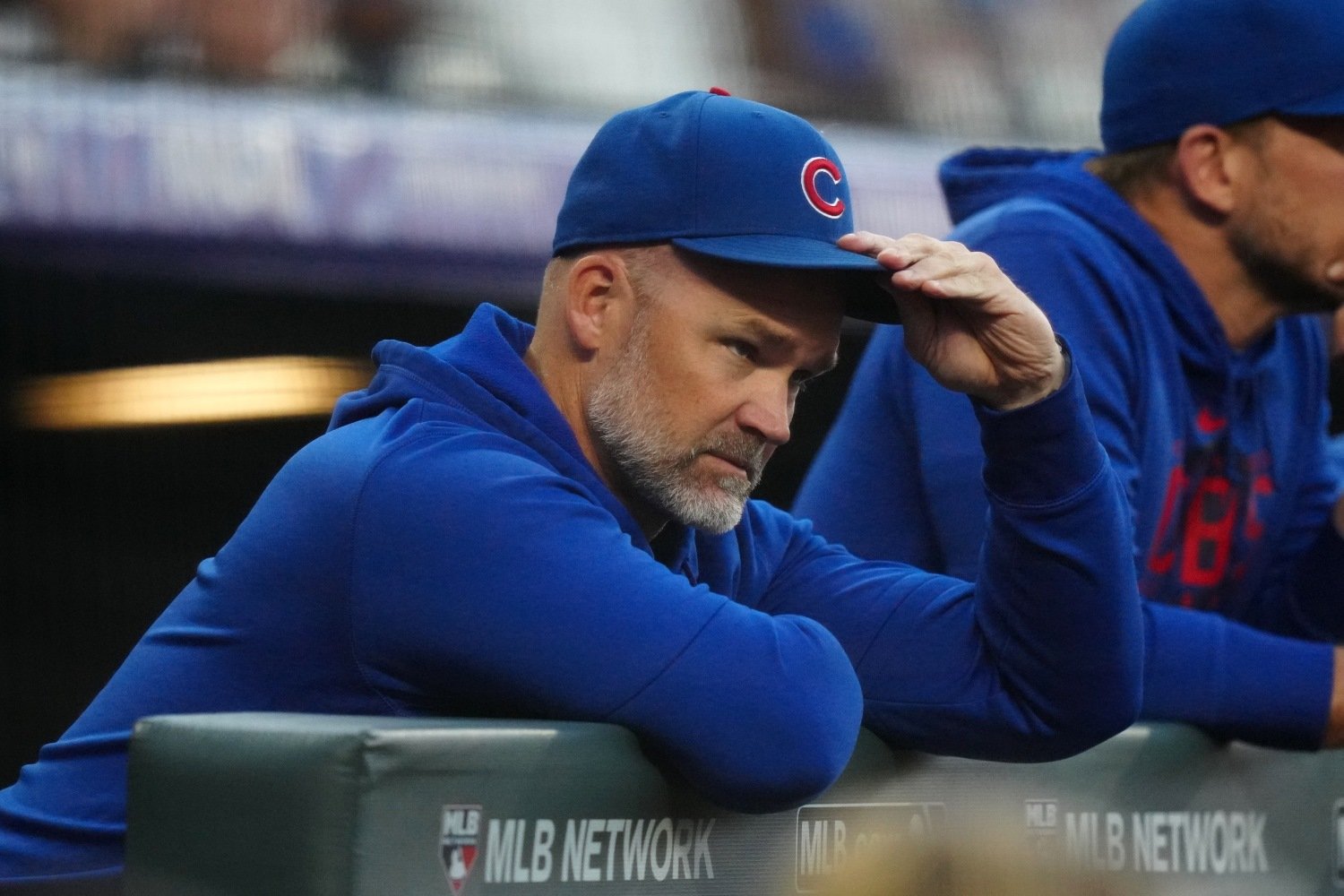 Before I get into the meat of this piece and go all scorched-earth on who I consider the main culprit in this difficult end to the season, it’s fair to note that there has just been some unusually bad luck baked into what’s happening to the Cubs lately. It’s hard to explain in detail if you haven’t been watching the games, but this is a pretty good representation of the last two or so weeks for the squad. There are many people at fault for what’s happening right now. Star players are struggling, the bullpen is ailing and collapsing, and there’s simply not enough major league-ready depth capable of helping to weather the storm. For those of you who want to blame Dansby Swanson for his horrific struggles at the plate in the second half (and, alas, some untimely defensive slipups), or Mike Tauchman’s magic wearing out, or the Adbert Alzolay and Michael Fulmer injuries, or the deep struggles at the back end of the rotation, go ahead. It’s all fair game. But there are two main people to whom I think most will point: Jed Hoyer and David Ross. Now, I am unequivocally not a Jed Hoyer apologist. I have been among his biggest detractors since he took over for Theo Epstein, and would have been standing in the front row of the angry mob calling for his job if the Cubs had not been competitive again this year. However, the Cubs have been competitive this year--more so than even some of my wildest expectations. They were in the division race until the beginning of September and primed for a top-two wild card spot until Game 150 (with a chance, still, to climb back into that position). That, following two years of a lean rebuilding period, is a success, especially when you consider that so much of this team’s identity is directly tied to moves that Hoyer made: the Cody Bellinger reclamation project, the surprising buy-side Jeimer Candelario trade (even if he’s struggled), the Swanson signing and more. Admittedly, a lot of Hoyer’s moves haven’t worked out. We all know what happened with the Eric Hosmer/Trey Mancini first base experiment. Jameson Taillon is somehow in contention with Tyler Chatwood and Edwin Jackson for the worst contract the Cubs have given a free-agent pitcher over the last 20 years. Tucker Barnhart is going to be collecting really nice paychecks from the Cubs over the next year and a half to sit on his couch. Yet, despite all of those failed transactions and more, I struggle to blame Hoyer. He spent a lot of money in free agency, bought at the trade deadline and was aggressive in calling up prospects this year. He gave this team a real chance to win. Any long-term job security questions for Hoyer will be answered in time. Most of them will depend on the success of the farm system he has so carefully rebuilt since that fateful 2021 trade deadline fire sale. For now, though, I’m willing to say that the boss of the front office has been satisfactory in his job performance here in 2023. That leaves us with one David Ross, current manager of the Chicago Cubs. I have a soft spot for the man affectionately called “Rossy”; his home run in Game 7 of the World Series in 2016 is arguably the greatest final at-bat in a career ever. He signed my Anthony Rizzo jersey at a 2015 game in Cincinnati where rookie Kyle Schwarber hit home runs in the ninth and thirteenth innings to steal a win for the Cubbies. He’s beloved in the clubhouse, and has been a Chicago legend since signing on to be Jon Lester’s personal catcher. None of that excuses what is setting up to be an all-time choke job, late in the 2023 season. There is no excuse for the blatant mismanagement of both players and important moments he’s displayed in his fourth year on the job. From ill-timed bunts to running his best relievers into the ground, Ross has followed in the footsteps of his predecessor, Joe Maddon, and his infamous 2016 playoff run. Indeed, any winning the Cubs are doing right now is despite their manager, not because of him. Here’s a particular quote that Ross gave following his inexplicable refusal to use Alexander Canario for two weeks following his initial call-up: “Look, we’re in a really good position to win. The guys that got us here are going to play. And the guys that are on the bench, if they’ve got roles, they’ll fill in those roles … Canario got called up for a September call-up. He’ll play when he’s needed and fills in nicely or the game gets out of hand one way or the other–get some at-bats, get in the outfield. I think the future is bright for a lot of our minor leaguers that are coming up, but now’s not the time that I’m trying to get those guys at-bats.” Now, admittedly, Hoyer may have pulled the trigger on calling up Canario in particular too early. It’s more than acceptable to argue he wasn’t ready for the majors following his gruesome offseason injuries. What isn’t acceptable is that Ross would rather play Mike Tauchman, he of the .220 batting average since August, in the leadoff spot and in center field when he has literally one of the best defensive outfielders in all of baseball in Pete Crow-Armstrong just sitting on his bench. Loyalty is a valuable thing in baseball and life, and seeing it from your manager can do wonders for your confidence when you’re struggling. Ross knows this as a long-time player, and it’s part of why the Cubs have given him such a long leash to develop as a manager. But that loyalty has eroded into pure stubbornness, with Ross so clearly convinced in his ways that he is unable to see that his regular starters need a rest more than a vote of confidence. The team is paying the price now. Off to the IL are overused and taxed late-inning relievers Alzolay and Fulmer. Candelario is similarly unable to play with a back injury, and now Nick Madrigal is dealing with hamstring problems. Bellinger hasn’t looked all the way back in center field defensively since his leg injury in Houston in May; Swanson hasn’t looked right at the plate in weeks. Whatever momentum Canario and PCA were bringing to the majors following their hot stretches at Triple-A Iowa has all but vanished. The Cubs are ready to be competitive again, right now. Hoyer has put together a roster that has a window that’s in the process of being propped open. The time for Ross to improve as a manager is up. If he’s not ready now, then the Cubs need to move on. Over the next two weeks, Ross will be managing for his job. If he can’t get out of his own way, the Cubs need to make sure he stays out of theirs.
 -
The Cubs were riding high less than a month ago, well-positioned in the second Wild Card spot with an outside chance at stealing the division or usurping the Phillies for the fourth seed in the NL. Now, the team is on the precipice of an epic September collapse, with plenty of blame to go around. Image courtesy of © Ron Chenoy-USA TODAY Sports Before I get into the meat of this piece and go all scorched-earth on who I consider the main culprit in this difficult end to the season, it’s fair to note that there has just been some unusually bad luck baked into what’s happening to the Cubs lately. It’s hard to explain in detail if you haven’t been watching the games, but this is a pretty good representation of the last two or so weeks for the squad. There are many people at fault for what’s happening right now. Star players are struggling, the bullpen is ailing and collapsing, and there’s simply not enough major league-ready depth capable of helping to weather the storm. For those of you who want to blame Dansby Swanson for his horrific struggles at the plate in the second half (and, alas, some untimely defensive slipups), or Mike Tauchman’s magic wearing out, or the Adbert Alzolay and Michael Fulmer injuries, or the deep struggles at the back end of the rotation, go ahead. It’s all fair game. But there are two main people to whom I think most will point: Jed Hoyer and David Ross. Now, I am unequivocally not a Jed Hoyer apologist. I have been among his biggest detractors since he took over for Theo Epstein, and would have been standing in the front row of the angry mob calling for his job if the Cubs had not been competitive again this year. However, the Cubs have been competitive this year--more so than even some of my wildest expectations. They were in the division race until the beginning of September and primed for a top-two wild card spot until Game 150 (with a chance, still, to climb back into that position). That, following two years of a lean rebuilding period, is a success, especially when you consider that so much of this team’s identity is directly tied to moves that Hoyer made: the Cody Bellinger reclamation project, the surprising buy-side Jeimer Candelario trade (even if he’s struggled), the Swanson signing and more. Admittedly, a lot of Hoyer’s moves haven’t worked out. We all know what happened with the Eric Hosmer/Trey Mancini first base experiment. Jameson Taillon is somehow in contention with Tyler Chatwood and Edwin Jackson for the worst contract the Cubs have given a free-agent pitcher over the last 20 years. Tucker Barnhart is going to be collecting really nice paychecks from the Cubs over the next year and a half to sit on his couch. Yet, despite all of those failed transactions and more, I struggle to blame Hoyer. He spent a lot of money in free agency, bought at the trade deadline and was aggressive in calling up prospects this year. He gave this team a real chance to win. Any long-term job security questions for Hoyer will be answered in time. Most of them will depend on the success of the farm system he has so carefully rebuilt since that fateful 2021 trade deadline fire sale. For now, though, I’m willing to say that the boss of the front office has been satisfactory in his job performance here in 2023. That leaves us with one David Ross, current manager of the Chicago Cubs. I have a soft spot for the man affectionately called “Rossy”; his home run in Game 7 of the World Series in 2016 is arguably the greatest final at-bat in a career ever. He signed my Anthony Rizzo jersey at a 2015 game in Cincinnati where rookie Kyle Schwarber hit home runs in the ninth and thirteenth innings to steal a win for the Cubbies. He’s beloved in the clubhouse, and has been a Chicago legend since signing on to be Jon Lester’s personal catcher. None of that excuses what is setting up to be an all-time choke job, late in the 2023 season. There is no excuse for the blatant mismanagement of both players and important moments he’s displayed in his fourth year on the job. From ill-timed bunts to running his best relievers into the ground, Ross has followed in the footsteps of his predecessor, Joe Maddon, and his infamous 2016 playoff run. Indeed, any winning the Cubs are doing right now is despite their manager, not because of him. Here’s a particular quote that Ross gave following his inexplicable refusal to use Alexander Canario for two weeks following his initial call-up: “Look, we’re in a really good position to win. The guys that got us here are going to play. And the guys that are on the bench, if they’ve got roles, they’ll fill in those roles … Canario got called up for a September call-up. He’ll play when he’s needed and fills in nicely or the game gets out of hand one way or the other–get some at-bats, get in the outfield. I think the future is bright for a lot of our minor leaguers that are coming up, but now’s not the time that I’m trying to get those guys at-bats.” Now, admittedly, Hoyer may have pulled the trigger on calling up Canario in particular too early. It’s more than acceptable to argue he wasn’t ready for the majors following his gruesome offseason injuries. What isn’t acceptable is that Ross would rather play Mike Tauchman, he of the .220 batting average since August, in the leadoff spot and in center field when he has literally one of the best defensive outfielders in all of baseball in Pete Crow-Armstrong just sitting on his bench. Loyalty is a valuable thing in baseball and life, and seeing it from your manager can do wonders for your confidence when you’re struggling. Ross knows this as a long-time player, and it’s part of why the Cubs have given him such a long leash to develop as a manager. But that loyalty has eroded into pure stubbornness, with Ross so clearly convinced in his ways that he is unable to see that his regular starters need a rest more than a vote of confidence. The team is paying the price now. Off to the IL are overused and taxed late-inning relievers Alzolay and Fulmer. Candelario is similarly unable to play with a back injury, and now Nick Madrigal is dealing with hamstring problems. Bellinger hasn’t looked all the way back in center field defensively since his leg injury in Houston in May; Swanson hasn’t looked right at the plate in weeks. Whatever momentum Canario and PCA were bringing to the majors following their hot stretches at Triple-A Iowa has all but vanished. The Cubs are ready to be competitive again, right now. Hoyer has put together a roster that has a window that’s in the process of being propped open. The time for Ross to improve as a manager is up. If he’s not ready now, then the Cubs need to move on. Over the next two weeks, Ross will be managing for his job. If he can’t get out of his own way, the Cubs need to make sure he stays out of theirs. View full article
-
Coming up on what are the two most important weeks of Cubs baseball in years, it’s time to do a quick check-in on the players currently fighting injuries. That's been a major factor in the team's recent slump, and getting a couple key players back could keep them afloat long enough to reach the postseason. Image courtesy of © Charles LeClaire-USA TODAY Sports The Cubs have enjoyed pretty good health this year, all things considered. The wheels have seemed to come off at just the wrong time, though. Let's round up the wounded soldiers. The 60-Day Injured List Crew 60 Days and Counting These guys aren’t going to return this season, but there remains hope that they can stick around and help the Cubs in the years to come. Ben Leeper: Not technically on the 60-day list since he isn’t on the 40-man roster, but Leeper is out for the year following Tommy John surgery in the spring. He’s a talented arm, but his path to the majors is now cloudy at best. Codi Heuer: The expectation was he’d return late this year after an unusually complicated Tommy John surgery, but then he had some setbacks in rehab before ultimately suffering a fractured right elbow in June, prematurely ending his comeback. Any hopes that he would be a one-for-one replacement with Craig Kimbrel as the closer have been dashed, but hopefully Heuer can return to Chicago at some point as an impact reliever. Ethan Roberts: Another Tommy John surgery patient, Roberts has been throwing live batting practice over the last month and could get into some game action down the stretch. That won’t be in Chicago, but the surprise reliever on the 2022 Opening Day roster should be back with the Cubs sometime next year. Our Time is Up These guys are currently on the 60-Day IL, though they have a chance to return before season’s end. Brandon Hughes: The surprisingly dominant lefty reliever from last year is back at Triple-A Iowa following a clean-up procedure on his knee, though he’s struggling badly with an 8.53 ERA in 6 ⅓ innings since his return. Unless he rights the ship immediately, he probably won’t be in Chicago this year, though the Cubs’ recent bullpen injuries and struggles could compel a sooner-than-expected return. Nick Burdi: Burdi rejoined Iowa along with Hughes at the beginning of September, as his recovery from a burst appendix (ouch) was halted by ulnar nerve irritation in August. He’s pitching much better than his lefty counterpart, with a 1.59 ERA in 5 ⅔ innings, and the righty with a 100-mph fastball could be on the mound at Wrigley again in short order. The 10/15-Day Injured List Crew These players are currently on the 10- or 15-Day IL, depending on if they are a position player or pitcher, respectively. However, their importance to the team and less-serious nature of their injuries almost guarantee their return to the Cubs before the season is over. Jeimer Candelario: The big-ticket trade deadline acquisition this year, Candelario struggled for all of August before the Cubs finally gave him a chance to rest, citing a lower back strain as his purpose for heading to the injured list. There haven’t been many updates on his status or condition since then, and he was only doing light work as of the weekend, though the Cubs were hoping that the switch-hitting corner infielder would only require a near-minimum stay on the IL. Michael Fulmer: Fulmer was just on the injured list for a right forearm strain, and apparently, the Cubs brought him back too quickly, as the team placed him back there with the same issue on Saturday. At this point, you’d hope it’s just another minimum stay, but with Fulmer looking to cash in during free agency in a couple months, it’s possible he plays it a bit more cautious this time around. It’s hard to say what his timeline looks like regardless, as he clearly wasn’t fully back the first time the Cubs activated him. Adbert Alzolay: The Cubs newly-minted closer landed on the IL on September 10 with a right forearm strain, following some unusually difficult outings and blown saves. The good news, though, is that he’s already back to playing catch as of Saturday, so hopefully the ninth inning for the Cubs will become less tumultuous in the near future. Day-to-Day Players This list is for players not currently on the Injured List, but who are being held out of game action for a few days while dealing with nagging injuries. Nick Madrigal: The (shockingly) slick-fielding third baseman was held out of Sunday night’s game against the Diamondbacks with a hamstring issue, a notoriously fickle injury for athletes requiring quick-twitch movements. However, the report from manager David Ross is that Madrigal is mostly just dealing with cramping and subsequent tightness, so it seems Madrigal and the Cubs may have dodged the worst case scenario. The Cubs are tired. They're banged-up. They're limping toward the finish line, and over the last week and a half, they've been passed by a couple of teams who look fresher and more steady on their feet. The race isn't over, though, and even slight reinforcements from one or two of these guys could still rescue a Wild Card spot. View full article
-
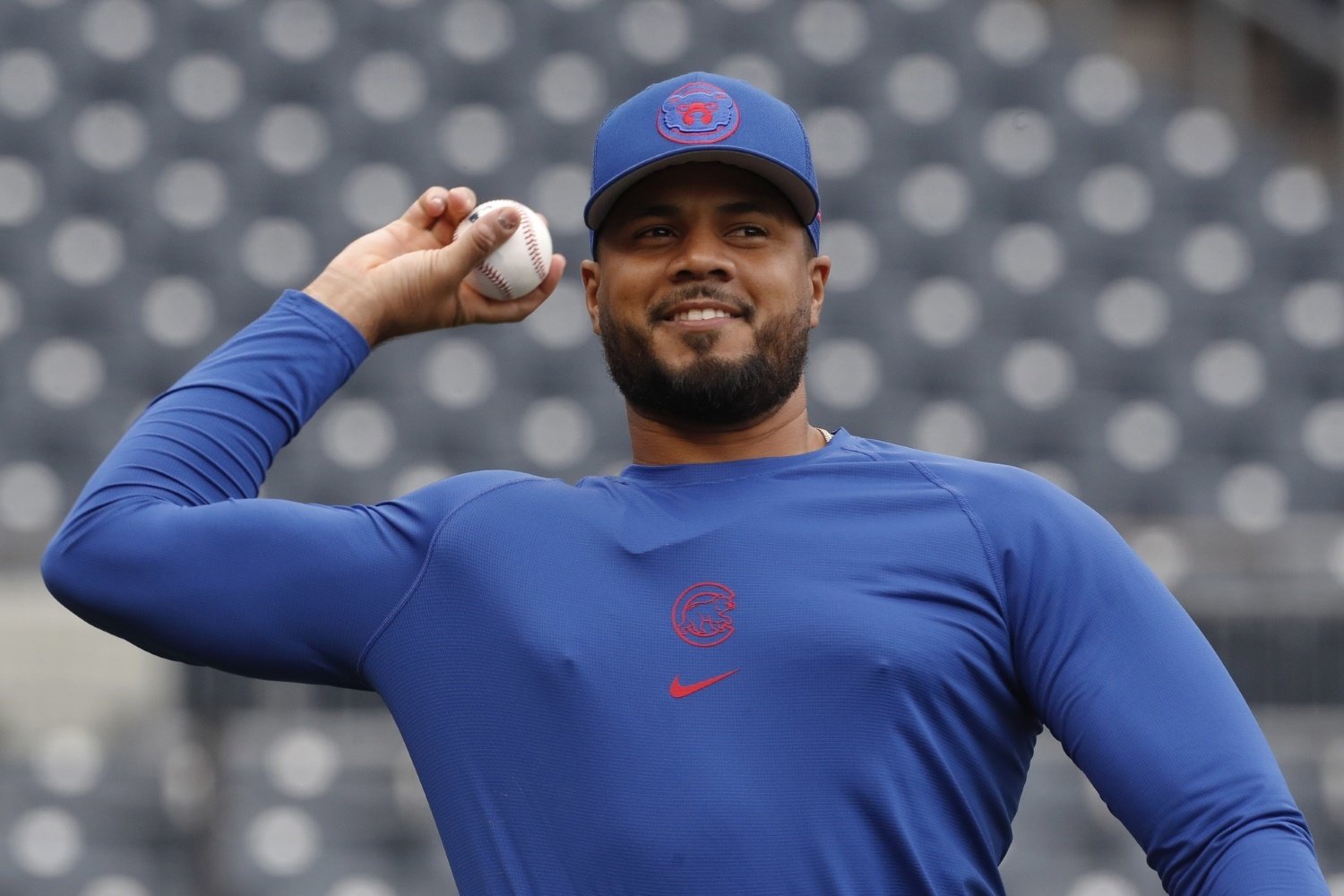 The Cubs have enjoyed pretty good health this year, all things considered. The wheels have seemed to come off at just the wrong time, though. Let's round up the wounded soldiers. The 60-Day Injured List Crew 60 Days and Counting These guys aren’t going to return this season, but there remains hope that they can stick around and help the Cubs in the years to come. Ben Leeper: Not technically on the 60-day list since he isn’t on the 40-man roster, but Leeper is out for the year following Tommy John surgery in the spring. He’s a talented arm, but his path to the majors is now cloudy at best. Codi Heuer: The expectation was he’d return late this year after an unusually complicated Tommy John surgery, but then he had some setbacks in rehab before ultimately suffering a fractured right elbow in June, prematurely ending his comeback. Any hopes that he would be a one-for-one replacement with Craig Kimbrel as the closer have been dashed, but hopefully Heuer can return to Chicago at some point as an impact reliever. Ethan Roberts: Another Tommy John surgery patient, Roberts has been throwing live batting practice over the last month and could get into some game action down the stretch. That won’t be in Chicago, but the surprise reliever on the 2022 Opening Day roster should be back with the Cubs sometime next year. Our Time is Up These guys are currently on the 60-Day IL, though they have a chance to return before season’s end. Brandon Hughes: The surprisingly dominant lefty reliever from last year is back at Triple-A Iowa following a clean-up procedure on his knee, though he’s struggling badly with an 8.53 ERA in 6 ⅓ innings since his return. Unless he rights the ship immediately, he probably won’t be in Chicago this year, though the Cubs’ recent bullpen injuries and struggles could compel a sooner-than-expected return. Nick Burdi: Burdi rejoined Iowa along with Hughes at the beginning of September, as his recovery from a burst appendix (ouch) was halted by ulnar nerve irritation in August. He’s pitching much better than his lefty counterpart, with a 1.59 ERA in 5 ⅔ innings, and the righty with a 100-mph fastball could be on the mound at Wrigley again in short order. The 10/15-Day Injured List Crew These players are currently on the 10- or 15-Day IL, depending on if they are a position player or pitcher, respectively. However, their importance to the team and less-serious nature of their injuries almost guarantee their return to the Cubs before the season is over. Jeimer Candelario: The big-ticket trade deadline acquisition this year, Candelario struggled for all of August before the Cubs finally gave him a chance to rest, citing a lower back strain as his purpose for heading to the injured list. There haven’t been many updates on his status or condition since then, and he was only doing light work as of the weekend, though the Cubs were hoping that the switch-hitting corner infielder would only require a near-minimum stay on the IL. Michael Fulmer: Fulmer was just on the injured list for a right forearm strain, and apparently, the Cubs brought him back too quickly, as the team placed him back there with the same issue on Saturday. At this point, you’d hope it’s just another minimum stay, but with Fulmer looking to cash in during free agency in a couple months, it’s possible he plays it a bit more cautious this time around. It’s hard to say what his timeline looks like regardless, as he clearly wasn’t fully back the first time the Cubs activated him. Adbert Alzolay: The Cubs newly-minted closer landed on the IL on September 10 with a right forearm strain, following some unusually difficult outings and blown saves. The good news, though, is that he’s already back to playing catch as of Saturday, so hopefully the ninth inning for the Cubs will become less tumultuous in the near future. Day-to-Day Players This list is for players not currently on the Injured List, but who are being held out of game action for a few days while dealing with nagging injuries. Nick Madrigal: The (shockingly) slick-fielding third baseman was held out of Sunday night’s game against the Diamondbacks with a hamstring issue, a notoriously fickle injury for athletes requiring quick-twitch movements. However, the report from manager David Ross is that Madrigal is mostly just dealing with cramping and subsequent tightness, so it seems Madrigal and the Cubs may have dodged the worst case scenario. The Cubs are tired. They're banged-up. They're limping toward the finish line, and over the last week and a half, they've been passed by a couple of teams who look fresher and more steady on their feet. The race isn't over, though, and even slight reinforcements from one or two of these guys could still rescue a Wild Card spot.
 -
With top prospect Pete-Crow Armstrong ascending to the big leagues, the Cubs’ riches in the farm system are starting to bear fruit. What is the biggest debut now on tap for the Cubs in the near future? Image courtesy of © Dan Powers/USA TODAY NETWORK-Wisconsin / USA TODAY NETWORK I’ll ask you to think back to the Cubs teams of the Theo Epstein era. After three years of ugly tanking, the Cubs had the top farm system in the game, augmented by two top-10 prospects in particular: Javier Baez and Kris Bryant. Baez would go on to make his highly-anticipated debut on August 5, 2014, showcasing the full array of his talents (namely going 1-6 with a monster home run). The Cubs, knowing the rest of their top prospects were soon to follow, loaded up over the 2014-2015 offseason, preparing for a number of years of true contention. Well, Bryant made good on those assumptions, destroying Spring Training pitching in 2015 and then laying waste to Triple-A over the first two weeks of the season. He followed Baez up to the big leagues on April 17, 2015, solidifying the Cubs’ plans of finally winning again. The question now stands: who will be the Bryant to Pete Crow-Armstrong’s self-proclaimed Baez? Below is a list of prospects who stand a chance of giving that same feeling Bryant did when he finally made his fateful debut. Now, this is not necessarily the top five guys in the system, nor the guys closest to the major leagues. Instead, look at this list as a collection of the most electrifying and exciting talents the Cubs have, and an expectation on just how pumped the Wrigley faithful will be to see these guys playing in Chicago. #5: Matt Shaw The Cubs’ first round pick in 2023, Shaw has blitzed three levels of minor league baseball (Rookie ball, High-A, and Double-A) to the tune of a 1.035 OPS this season. He’ll be a consensus top-100 prospect by the time the offseason rankings come around, and I’d wager that a number of them will have him closer to the top 50 than to the bottom of the list. The biggest question surrounding Shaw during the draft was his long-term defensive home, with most suspecting a move to the other side of the second-base bag would be the plan for the team who drafted him. But Shaw’s bat has been so far ahead of the curve that he might already be knocking on the door of the majors come Spring Training. With Nico Hoerner and Dansby Swanson patrolling the middle of the infield, could Shaw expedite the call-up process with a full-time move to third base? Bryant was drafted in 2013 and made it to the Major Leagues at the beginning of his second full season in pro ball. Shaw may be on the precipice of making his debut even quicker than the 2016 National League MVP did. #4: Michael Arias There are a lot of talented arms in the Cubs’ farm system, so do not take it lightly when I say that Arias may have the most raw talent of all of them. It’s hard to appreciate a 97-mile-per-hour bowling ball sinker from a sidearm slot without video, so please watch him toss five innings of no hit ball here so we’re all on the same page. The Cubs have remained dedicated to working Arias as a starter in 2023, and the 21-year-old righty has delivered with 81 innings pitched across 22 starts. He’ll continue to have his workload ramped up, though it’s a promising sign that the former shortstop prospect has been able to handle this much already. His 51 walks in those innings are a concern, but the 110 strikeouts he’s fired jump off the page all the same. The real reason he’s on this list, though, is the demeanor he has on the mound. In the same way that Jordan Wicks has been described as a “bulldog” by some, Arias pitches with his heart on his sleeve and rides on waves of momentum. He’ll have some really fun outings at Wrigley Field, if the team elects to keep him and bring him along. #3: Cade Horton The top pitching prospect in the organization (and almost certainly the number one prospect for the Cubs once PCA graduates), Horton has the look of a long-term ace. He has two plus-plus pitches (his fastball and his wipeout slider), and simply has the “it” factor you want in the guy leading your pitching staff. He possesses an intimidating presence on the mound, and has a knack for pitching out of tough spots. That pedigree has been earned as well, as Horton has been utterly dominant in his first full season with the Cubs. Across three levels (Low-A, High-A and Double-A), Horton has a 2.65 ERA in 88 innings, pristine marks matched by his strikeout (117) and walk (27) totals. The big righty also has a .191 batting average against and sharp 1.00 WHIP. In other words, he can’t be hit, and he never really walks anyone. He’ll be good for a very long time. The biggest thing going for Horton, though? It’s been a long, long, time since the Cubs have had a homegrown pitcher this talented make their debut. Though he’ll fall short of the national hype Stephen Strasburg generated before his historically great debut, Wrigley will be rocking when Horton takes the mound for the first time. #2: Kevin Alcantara Odds are, when offseason lists come out, both Shaw and Horton will be ranked above Alcantara. That isn’t what we’re here to discuss, though. This guy is nicknamed “The Jaguar” for a reason. He’s a performance artist on the diamond, with the top-end speed to go with his love of making highlights. The five-tool righty has 12 homers and 15 steals this year, though those numbers are suppressed by the injury issues that cropped up for the 21-year-old earlier in the summer. He posted an .807 OPS in 95 games at High-A (a league in which he was two years younger than the average player), showcasing his raw talents, even if his approach needs some work. He’s also got the arm, speed, and glove to stick in center long-term, though assuming PCA is out there, he’ll make for a fine corner outfielder with instincts like these. Alcantara may be the farthest away from the majors on this list (it’s either him or Arias), but there’s no one else on here with the showmanship of The Jaguar. It’s more Baez-esque than even PCA, and if I had to guess the one guy to become synonymous with the Cubs over the course of his career, it’d be Alcantara. #1: Owen Caissie I’m sort of flying in the face of my methodology with this pick and placement, as Caissie is probably the most serene player out of everyone listed here. But, I mean, look at this light tower power. This is Schwarberian in nature. Caissie has been outrageous in his breakout 2023 year, putting up a .916 OPS and 21 home runs at Double-A as a (recently turned) 21-year-old. His second half numbers have been even more ludicrous, as he’s got a 150 wRC+ and 16.5% walk rate backing up his prodigious power numbers. The strikeout numbers over the full year have been concerning, but there will always be a swing-and-miss element to the game of someone who hits the ball as hard as Caissie does. (If that homer looked odd, it’s because Caissie hit the ball on a 16-degree launch angle at 117 miles per hour. No, that isn’t a typo.) Caissie isn’t as consistent as Shaw, as emotional as Arias, or as dominant as Horton. Nor is he as much of an entertainer as Alcantara. None of that matters. He’s going to be a fixture in lineups at the Friendly Confines for years to come, and he’ll make a living driving in Pete Crow-Armstrong with moonshots the way Bryant once did with Baez. View full article
-
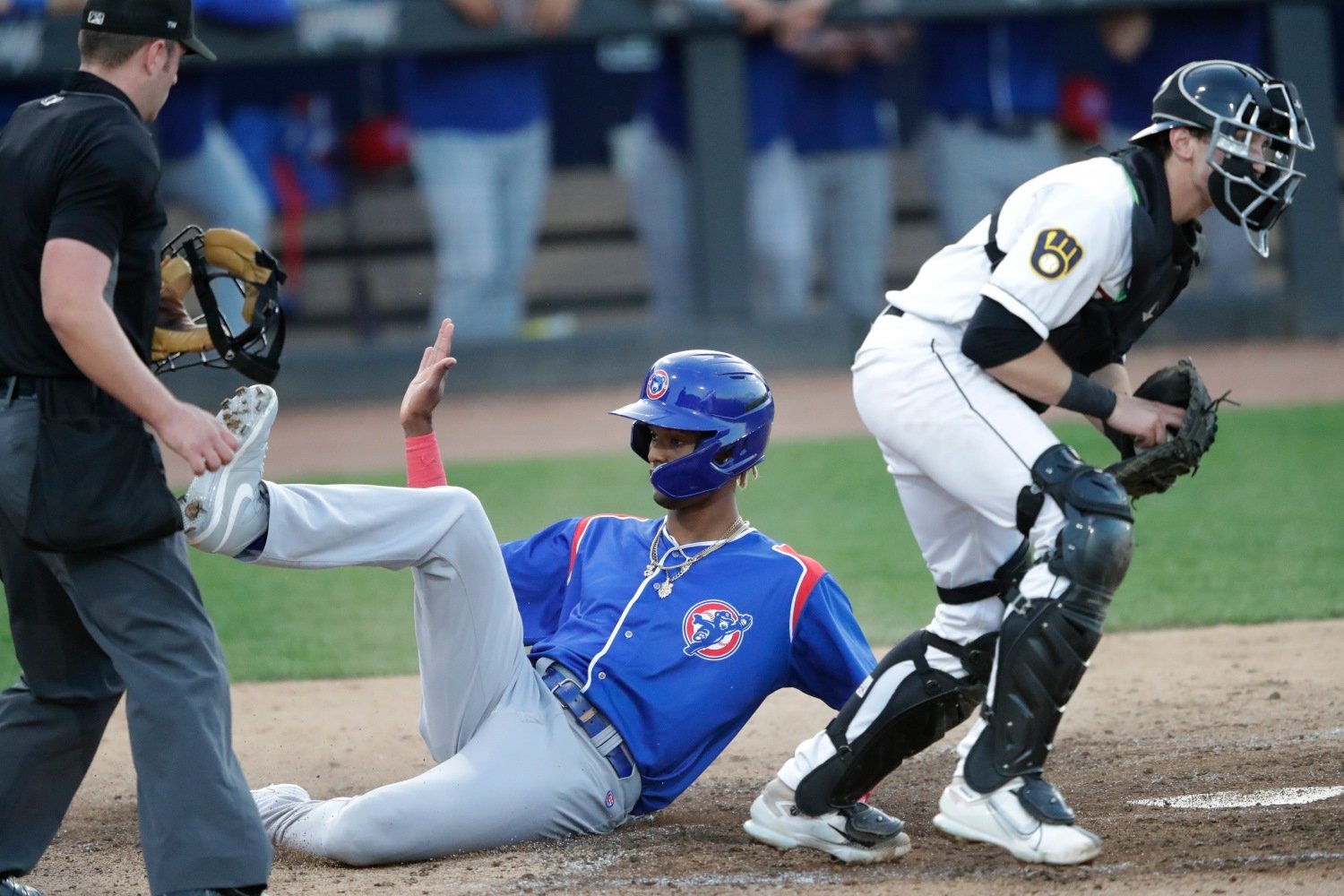 I’ll ask you to think back to the Cubs teams of the Theo Epstein era. After three years of ugly tanking, the Cubs had the top farm system in the game, augmented by two top-10 prospects in particular: Javier Baez and Kris Bryant. Baez would go on to make his highly-anticipated debut on August 5, 2014, showcasing the full array of his talents (namely going 1-6 with a monster home run). The Cubs, knowing the rest of their top prospects were soon to follow, loaded up over the 2014-2015 offseason, preparing for a number of years of true contention. Well, Bryant made good on those assumptions, destroying Spring Training pitching in 2015 and then laying waste to Triple-A over the first two weeks of the season. He followed Baez up to the big leagues on April 17, 2015, solidifying the Cubs’ plans of finally winning again. The question now stands: who will be the Bryant to Pete Crow-Armstrong’s self-proclaimed Baez? Below is a list of prospects who stand a chance of giving that same feeling Bryant did when he finally made his fateful debut. Now, this is not necessarily the top five guys in the system, nor the guys closest to the major leagues. Instead, look at this list as a collection of the most electrifying and exciting talents the Cubs have, and an expectation on just how pumped the Wrigley faithful will be to see these guys playing in Chicago. #5: Matt Shaw The Cubs’ first round pick in 2023, Shaw has blitzed three levels of minor league baseball (Rookie ball, High-A, and Double-A) to the tune of a 1.035 OPS this season. He’ll be a consensus top-100 prospect by the time the offseason rankings come around, and I’d wager that a number of them will have him closer to the top 50 than to the bottom of the list. The biggest question surrounding Shaw during the draft was his long-term defensive home, with most suspecting a move to the other side of the second-base bag would be the plan for the team who drafted him. But Shaw’s bat has been so far ahead of the curve that he might already be knocking on the door of the majors come Spring Training. With Nico Hoerner and Dansby Swanson patrolling the middle of the infield, could Shaw expedite the call-up process with a full-time move to third base? Bryant was drafted in 2013 and made it to the Major Leagues at the beginning of his second full season in pro ball. Shaw may be on the precipice of making his debut even quicker than the 2016 National League MVP did. #4: Michael Arias There are a lot of talented arms in the Cubs’ farm system, so do not take it lightly when I say that Arias may have the most raw talent of all of them. It’s hard to appreciate a 97-mile-per-hour bowling ball sinker from a sidearm slot without video, so please watch him toss five innings of no hit ball here so we’re all on the same page. The Cubs have remained dedicated to working Arias as a starter in 2023, and the 21-year-old righty has delivered with 81 innings pitched across 22 starts. He’ll continue to have his workload ramped up, though it’s a promising sign that the former shortstop prospect has been able to handle this much already. His 51 walks in those innings are a concern, but the 110 strikeouts he’s fired jump off the page all the same. The real reason he’s on this list, though, is the demeanor he has on the mound. In the same way that Jordan Wicks has been described as a “bulldog” by some, Arias pitches with his heart on his sleeve and rides on waves of momentum. He’ll have some really fun outings at Wrigley Field, if the team elects to keep him and bring him along. #3: Cade Horton The top pitching prospect in the organization (and almost certainly the number one prospect for the Cubs once PCA graduates), Horton has the look of a long-term ace. He has two plus-plus pitches (his fastball and his wipeout slider), and simply has the “it” factor you want in the guy leading your pitching staff. He possesses an intimidating presence on the mound, and has a knack for pitching out of tough spots. That pedigree has been earned as well, as Horton has been utterly dominant in his first full season with the Cubs. Across three levels (Low-A, High-A and Double-A), Horton has a 2.65 ERA in 88 innings, pristine marks matched by his strikeout (117) and walk (27) totals. The big righty also has a .191 batting average against and sharp 1.00 WHIP. In other words, he can’t be hit, and he never really walks anyone. He’ll be good for a very long time. The biggest thing going for Horton, though? It’s been a long, long, time since the Cubs have had a homegrown pitcher this talented make their debut. Though he’ll fall short of the national hype Stephen Strasburg generated before his historically great debut, Wrigley will be rocking when Horton takes the mound for the first time. #2: Kevin Alcantara Odds are, when offseason lists come out, both Shaw and Horton will be ranked above Alcantara. That isn’t what we’re here to discuss, though. This guy is nicknamed “The Jaguar” for a reason. He’s a performance artist on the diamond, with the top-end speed to go with his love of making highlights. The five-tool righty has 12 homers and 15 steals this year, though those numbers are suppressed by the injury issues that cropped up for the 21-year-old earlier in the summer. He posted an .807 OPS in 95 games at High-A (a league in which he was two years younger than the average player), showcasing his raw talents, even if his approach needs some work. He’s also got the arm, speed, and glove to stick in center long-term, though assuming PCA is out there, he’ll make for a fine corner outfielder with instincts like these. Alcantara may be the farthest away from the majors on this list (it’s either him or Arias), but there’s no one else on here with the showmanship of The Jaguar. It’s more Baez-esque than even PCA, and if I had to guess the one guy to become synonymous with the Cubs over the course of his career, it’d be Alcantara. #1: Owen Caissie I’m sort of flying in the face of my methodology with this pick and placement, as Caissie is probably the most serene player out of everyone listed here. But, I mean, look at this light tower power. This is Schwarberian in nature. Caissie has been outrageous in his breakout 2023 year, putting up a .916 OPS and 21 home runs at Double-A as a (recently turned) 21-year-old. His second half numbers have been even more ludicrous, as he’s got a 150 wRC+ and 16.5% walk rate backing up his prodigious power numbers. The strikeout numbers over the full year have been concerning, but there will always be a swing-and-miss element to the game of someone who hits the ball as hard as Caissie does. (If that homer looked odd, it’s because Caissie hit the ball on a 16-degree launch angle at 117 miles per hour. No, that isn’t a typo.) Caissie isn’t as consistent as Shaw, as emotional as Arias, or as dominant as Horton. Nor is he as much of an entertainer as Alcantara. None of that matters. He’s going to be a fixture in lineups at the Friendly Confines for years to come, and he’ll make a living driving in Pete Crow-Armstrong with moonshots the way Bryant once did with Baez.
 -
Originally positioned as the fifth starter in the rotation on Opening Day, Hayden Wesneski has had a tumultuous 2023 season. With the Cubs on the brink of the playoffs, how does “Wesnasty” factor into their plans? Image courtesy of © Charles LeClaire-USA TODAY Sports The career of Hayden Wesneski has been a rollercoaster since the Cubs acquired him for Scott Effross at the 2022 Trade Deadline. He struggled against Triple-A hitters, to the tune of a 5.66 ERA in 20 ⅔ innings at Iowa, before getting called up in September and catching a heater, throwing 33 innings of 2.18 ERA ball. He then came into Spring Training this year in a heated battle with, among others, Adrian Sampson for the fifth spot in the rotation. Wesneski left no doubt about who won that competition, completely dominating with 22 strikeouts and a 2.12 ERA across 17 innings in the Cactus League. From there, you know what happened. Wesneski struggled badly out of the gate, allowing 22 earned runs in just 39 ⅓ innings across eight starts in April and May, and he was sent down to the minors to tweak things, namely his severe struggles against lefties. The Cubs have since recalled him and stashed him in the bullpen as a multi-inning arm, but what comes next for a guy who was supposed to be a staple of the next half-decade of Cubs rotations? First things first: the stats. Wesneski has been absolutely smoked by lefties this year. In 134 at-bats against opposing lefties, he’s given up a .313/.374/.649 slash line. That, my dear friends, is a 1.023 OPS for left-handed batters. For reference, Ronald Acuña Jr., arguably the National League MVP frontrunner, has a 1.002 OPS this year. So, by at least that metric, left-handed batters have hit Wesneski better than Acuña has hit overall. Woof. It’s not all bad news, though. Wesneski is still his usual self against right-handed hitters. They’ve only slashed .185/.247/.312 (.560 OPS) against Wesneski in 173 at-bats this year, meaning the average righty is hitting him about as well as Tucker Barnhart has hit this year (he had a .541 OPS for the Cubs). So, clearly, the thinking by the Cubs to get Wesneski in more match-up protected spots out of the bullpen has some evidentiary rationale behind it. However, if Wesneski is ever going to be anything more than a mop-up arm, the Cubs have to figure out how to help him get lefties out. Looking at his Statcast data, we can see some interesting trends. Wesneski is throwing his sweeper and four-seam fastball more than ever this year, mostly at the expense of his sinker. The percentages are even more stark since his shift into the bullpen, highlighting a purposeful change by the Cubs pitching infrastructure to try and make Wesneski’s most effective pitches play up in relief. The idea, at least in the most raw sense, has worked, as his fastball velocity is up one mile per hour from last year (91.8 to 92.8) and his off-speed velocity is way down, dropping 2.7 miles per hour from 2022 to 2023 (87.2 to 84.5). In theory, this starker change in velocity and simpler pitch mix should make Wesneski more reliable, but is that actually what’s happened? Well, not exactly. His sweeper is performing fine against lefties - he’s thrown 158 this year to lefties, yielding a .200 batting average against and .400 slugging percentage against (and only a .356 expected slugging). However, his fastball is getting CRUSHED by left-handed hitters. In 220 fastballs thrown to lefties this year, Wesneski has given up a .387 batting average and a .790 slugging average (though I guess it’s only a .682 expected slugging… so, progress?). That is downright unacceptable, especially when you realize how good those pitches are to righties (the sweeper has generated a laughable .086 batting average in 298 pitches, and the fastball is at .237 across 166 pitches). So, what’s the saving grace? Perhaps it lies in his changeup, which he only throws to lefties anyway (seriously; he has thrown five changeups to righties, versus 64 to lefties). That pitch is working well since he added it to his repertoire in Triple A earlier this year: lefties are batting .200 against it. Does that mean a changeup-sweeper combo is Wesneski’s path forward? Is that even feasible, when those pitches average 84.3 and 81.3 miles per hour, respectively? In truth, Wesneski is in his best position right now on the big-league team. He's a righty-whiffing weapon with multi-inning capabilities that give him enough value to stick around on the postseason roster, even if he isn’t the first (or second or third) guy you’d trust in a high-leverage spot. Yet, if he’s ever going to contribute to the Cubs in the way they envisioned when they traded Effross for him, he unequivocally has to find something that works against left-handed hitters. Whether that’s improving his dismal cutter, adding more run to his sinker to differentiate it from his four-seamer, or some out-of-the-box solution like throwing a screwball, this offseason is make-or-break time for the young righty. View full article
-
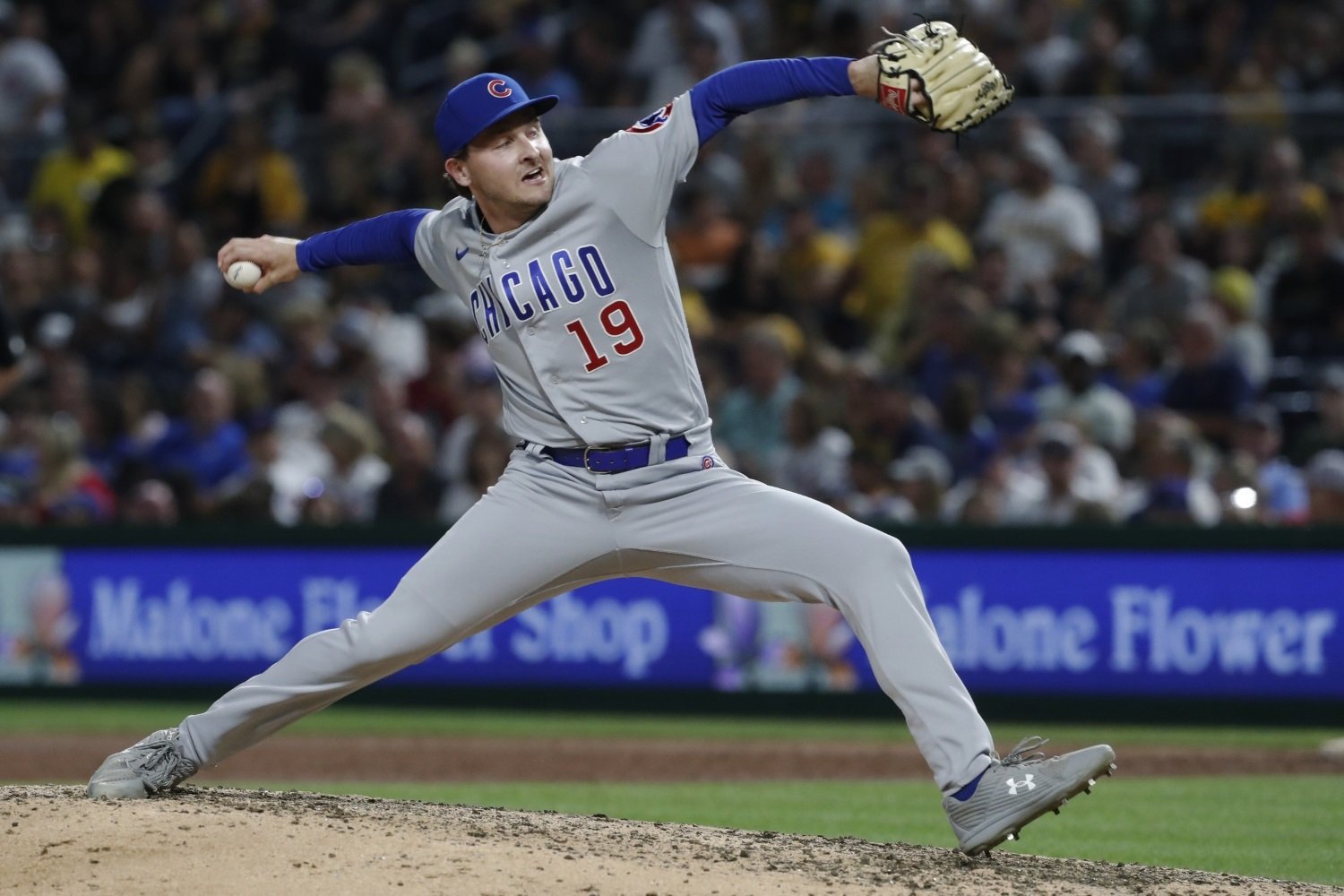 The career of Hayden Wesneski has been a rollercoaster since the Cubs acquired him for Scott Effross at the 2022 Trade Deadline. He struggled against Triple-A hitters, to the tune of a 5.66 ERA in 20 ⅔ innings at Iowa, before getting called up in September and catching a heater, throwing 33 innings of 2.18 ERA ball. He then came into Spring Training this year in a heated battle with, among others, Adrian Sampson for the fifth spot in the rotation. Wesneski left no doubt about who won that competition, completely dominating with 22 strikeouts and a 2.12 ERA across 17 innings in the Cactus League. From there, you know what happened. Wesneski struggled badly out of the gate, allowing 22 earned runs in just 39 ⅓ innings across eight starts in April and May, and he was sent down to the minors to tweak things, namely his severe struggles against lefties. The Cubs have since recalled him and stashed him in the bullpen as a multi-inning arm, but what comes next for a guy who was supposed to be a staple of the next half-decade of Cubs rotations? First things first: the stats. Wesneski has been absolutely smoked by lefties this year. In 134 at-bats against opposing lefties, he’s given up a .313/.374/.649 slash line. That, my dear friends, is a 1.023 OPS for left-handed batters. For reference, Ronald Acuña Jr., arguably the National League MVP frontrunner, has a 1.002 OPS this year. So, by at least that metric, left-handed batters have hit Wesneski better than Acuña has hit overall. Woof. It’s not all bad news, though. Wesneski is still his usual self against right-handed hitters. They’ve only slashed .185/.247/.312 (.560 OPS) against Wesneski in 173 at-bats this year, meaning the average righty is hitting him about as well as Tucker Barnhart has hit this year (he had a .541 OPS for the Cubs). So, clearly, the thinking by the Cubs to get Wesneski in more match-up protected spots out of the bullpen has some evidentiary rationale behind it. However, if Wesneski is ever going to be anything more than a mop-up arm, the Cubs have to figure out how to help him get lefties out. Looking at his Statcast data, we can see some interesting trends. Wesneski is throwing his sweeper and four-seam fastball more than ever this year, mostly at the expense of his sinker. The percentages are even more stark since his shift into the bullpen, highlighting a purposeful change by the Cubs pitching infrastructure to try and make Wesneski’s most effective pitches play up in relief. The idea, at least in the most raw sense, has worked, as his fastball velocity is up one mile per hour from last year (91.8 to 92.8) and his off-speed velocity is way down, dropping 2.7 miles per hour from 2022 to 2023 (87.2 to 84.5). In theory, this starker change in velocity and simpler pitch mix should make Wesneski more reliable, but is that actually what’s happened? Well, not exactly. His sweeper is performing fine against lefties - he’s thrown 158 this year to lefties, yielding a .200 batting average against and .400 slugging percentage against (and only a .356 expected slugging). However, his fastball is getting CRUSHED by left-handed hitters. In 220 fastballs thrown to lefties this year, Wesneski has given up a .387 batting average and a .790 slugging average (though I guess it’s only a .682 expected slugging… so, progress?). That is downright unacceptable, especially when you realize how good those pitches are to righties (the sweeper has generated a laughable .086 batting average in 298 pitches, and the fastball is at .237 across 166 pitches). So, what’s the saving grace? Perhaps it lies in his changeup, which he only throws to lefties anyway (seriously; he has thrown five changeups to righties, versus 64 to lefties). That pitch is working well since he added it to his repertoire in Triple A earlier this year: lefties are batting .200 against it. Does that mean a changeup-sweeper combo is Wesneski’s path forward? Is that even feasible, when those pitches average 84.3 and 81.3 miles per hour, respectively? In truth, Wesneski is in his best position right now on the big-league team. He's a righty-whiffing weapon with multi-inning capabilities that give him enough value to stick around on the postseason roster, even if he isn’t the first (or second or third) guy you’d trust in a high-leverage spot. Yet, if he’s ever going to contribute to the Cubs in the way they envisioned when they traded Effross for him, he unequivocally has to find something that works against left-handed hitters. Whether that’s improving his dismal cutter, adding more run to his sinker to differentiate it from his four-seamer, or some out-of-the-box solution like throwing a screwball, this offseason is make-or-break time for the young righty.
 -
The Cubs have been getting by thanks to the contributions of the young guys on the pitching staff, but they’re sorely missing Justin Steele’s partner in crime atop the rotation. And yet, if Marcus Stroman does make a return, might he do so out of the bullpen? Image courtesy of © David Banks-USA TODAY Sports Assuming you haven’t been living under a rock since the Trade Deadline this year, you know that Marcus Stroman has been on the Injured List since early August with what was originally hip inflammation, which turned into a much more problematic issue of fractured rib cartilage. It’s a “non-baseball” injury, as the club describes it, meaning there’s no real precedent to determine how long Stroman will be out and what he’ll look like on the mound when he’s back. However, the good news is Stroman has been doing work at the team’s Arizona complex, throwing live bullpens Friday and Monday. If all goes well, the report is that Stro should find his way back to the big leagues this weekend. Now, your first thought is probably: “Wait a second. Stroman has been out since the beginning of last month and he’s not even going to go on a rehab assignment?”. Turns out, that’s great intuition you have, as the Cubs agree that there’s not enough time in the season to get the righty stretched back out for a starter’s workload. So, as Bruce Levine explained on the “Inside the Clubhouse” podcast for 670 The Score, Stroman is actually going to return to Chicago as a reliever. “It’s Marcus Stroman’s spot to try to find if and when he comes back,” Levine said. “The inside stuff on Stroman is he threw a 29-pitch simulated game yesterday, or two days ago. He’s gonna pitch again Monday, try to build up his pitch count [reports say Stroman threw close to 40 pitches Monday]. He comes back, he’s not a starting pitcher yet. He’s not gonna be a starting pitcher, there’s not enough time for him to build it up. He’s gonna go in the bullpen if he goes anywhere, okay. Do they have a spot for a starting pitcher who’s never been a reliever? …Never been a reliever and could go in there and maybe give you some long innings and wait four or five days again to give you long innings.” If that role that Levine is describing for Stroman sounds familiar, it’s because it’s Keegan Thompson's long-man role… the same Keegan Thompson who was just optioned to the minor leagues on Friday for Brad Boxberger. Javier Assad also filled a version of that role, but he’s now a fixture in the rotation, conveniently having been slotted there as a replacement for Stroman in the first place. The closest things the Cubs have to a long man in the pen currently are nominal starting pitchers Hayden Wesneski and Drew Smyly, though both have recently been tasked with (and are succeeding much more at) shorter relief appearances. As such, Stroman could easily slot in and fill the gap as the bullpen’s three-plus inning arm, or possibly function as a piggyback starter if the Cubs want to limit Assad’s or Jordan Wicks’s innings down the stretch ahead of the playoffs. However, it stands to reason that Stroman could also perform other jobs in the pen, at least if the Cubs are comfortable with the current five-man setup in the rotation and truly believe Stroman can’t be ramped up in time to start a playoff game. As has been discussed ad nauseum, the Cubs’ top-flight late-inning guys (namely, Mark Leiter Jr., Julian Merryweather, Michael Fulmer, and Adbert Alzolay) have been worked into the ground recently, and they’ve all required extra rest or seen their effectiveness dip over the last few weeks. What if the Cubs give Stroman a chance to take some of the pressure off those other arms? It’d be an interesting experiment, to say the least, though not without merit, as the Cubs have successfully transitioned other struggling starting pitchers (Smyly and Wesneski) into useful relief arms. Though he’d probably be a poor choice to bring into a “dirty” inning due to his lower strikeout numbers relative to some of the arms in the pen, Stroman’s penchant for ground balls and low walk rates should make him effective even at the end of games in high-leverage spots. If the Cubs are really looking to maximize whatever help Stroman is healthy enough to give them, perhaps asking him to empty the reserves in one-inning spurts could prove to be the smart play. Regardless of how they use him though, it’ll just be nice to see No. 0 back on the mound this year. Though we likely won’t see the same dominant force on the mound who earned an All-Star bid in the first half of this season, a healthy Stroman is a valuable piece for this Cubs team. And, hey, wouldn’t it be pretty cool to watch Justin Steele and Stroman combine for nine shutout innings in Game One of the Wild Card Series? Just a thought. View full article
-
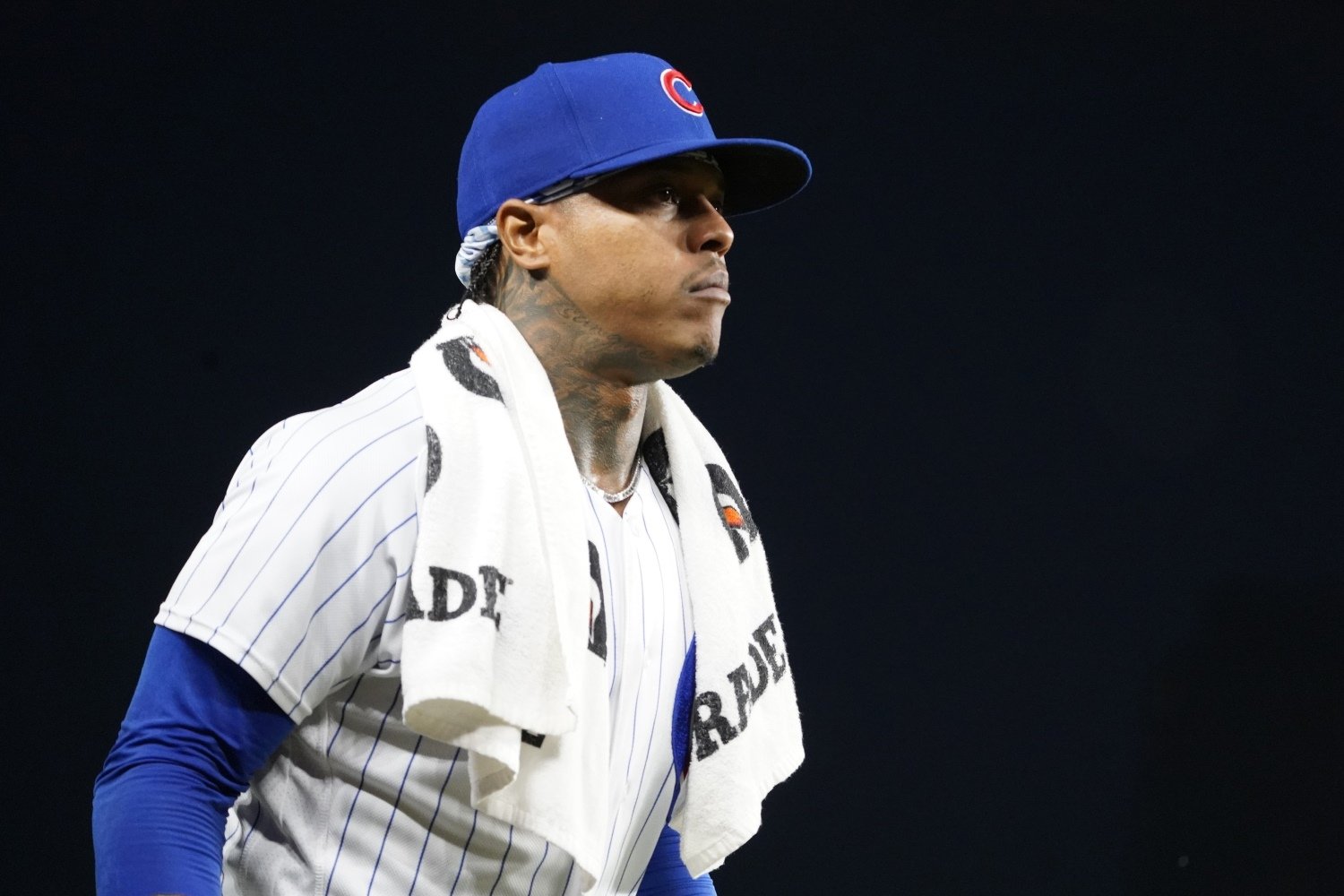 Assuming you haven’t been living under a rock since the Trade Deadline this year, you know that Marcus Stroman has been on the Injured List since early August with what was originally hip inflammation, which turned into a much more problematic issue of fractured rib cartilage. It’s a “non-baseball” injury, as the club describes it, meaning there’s no real precedent to determine how long Stroman will be out and what he’ll look like on the mound when he’s back. However, the good news is Stroman has been doing work at the team’s Arizona complex, throwing live bullpens Friday and Monday. If all goes well, the report is that Stro should find his way back to the big leagues this weekend. Now, your first thought is probably: “Wait a second. Stroman has been out since the beginning of last month and he’s not even going to go on a rehab assignment?”. Turns out, that’s great intuition you have, as the Cubs agree that there’s not enough time in the season to get the righty stretched back out for a starter’s workload. So, as Bruce Levine explained on the “Inside the Clubhouse” podcast for 670 The Score, Stroman is actually going to return to Chicago as a reliever. “It’s Marcus Stroman’s spot to try to find if and when he comes back,” Levine said. “The inside stuff on Stroman is he threw a 29-pitch simulated game yesterday, or two days ago. He’s gonna pitch again Monday, try to build up his pitch count [reports say Stroman threw close to 40 pitches Monday]. He comes back, he’s not a starting pitcher yet. He’s not gonna be a starting pitcher, there’s not enough time for him to build it up. He’s gonna go in the bullpen if he goes anywhere, okay. Do they have a spot for a starting pitcher who’s never been a reliever? …Never been a reliever and could go in there and maybe give you some long innings and wait four or five days again to give you long innings.” If that role that Levine is describing for Stroman sounds familiar, it’s because it’s Keegan Thompson's long-man role… the same Keegan Thompson who was just optioned to the minor leagues on Friday for Brad Boxberger. Javier Assad also filled a version of that role, but he’s now a fixture in the rotation, conveniently having been slotted there as a replacement for Stroman in the first place. The closest things the Cubs have to a long man in the pen currently are nominal starting pitchers Hayden Wesneski and Drew Smyly, though both have recently been tasked with (and are succeeding much more at) shorter relief appearances. As such, Stroman could easily slot in and fill the gap as the bullpen’s three-plus inning arm, or possibly function as a piggyback starter if the Cubs want to limit Assad’s or Jordan Wicks’s innings down the stretch ahead of the playoffs. However, it stands to reason that Stroman could also perform other jobs in the pen, at least if the Cubs are comfortable with the current five-man setup in the rotation and truly believe Stroman can’t be ramped up in time to start a playoff game. As has been discussed ad nauseum, the Cubs’ top-flight late-inning guys (namely, Mark Leiter Jr., Julian Merryweather, Michael Fulmer, and Adbert Alzolay) have been worked into the ground recently, and they’ve all required extra rest or seen their effectiveness dip over the last few weeks. What if the Cubs give Stroman a chance to take some of the pressure off those other arms? It’d be an interesting experiment, to say the least, though not without merit, as the Cubs have successfully transitioned other struggling starting pitchers (Smyly and Wesneski) into useful relief arms. Though he’d probably be a poor choice to bring into a “dirty” inning due to his lower strikeout numbers relative to some of the arms in the pen, Stroman’s penchant for ground balls and low walk rates should make him effective even at the end of games in high-leverage spots. If the Cubs are really looking to maximize whatever help Stroman is healthy enough to give them, perhaps asking him to empty the reserves in one-inning spurts could prove to be the smart play. Regardless of how they use him though, it’ll just be nice to see No. 0 back on the mound this year. Though we likely won’t see the same dominant force on the mound who earned an All-Star bid in the first half of this season, a healthy Stroman is a valuable piece for this Cubs team. And, hey, wouldn’t it be pretty cool to watch Justin Steele and Stroman combine for nine shutout innings in Game One of the Wild Card Series? Just a thought.
 -
After months of speculation on how they'd manage their prospects, the Cubs have announced that they’re all-in on 2023. Pete Crow-Armstrong, the number one prospect in the organization, is coming up to the Chicago Cubs. Image courtesy of © Isaiah J. Downing-USA TODAY Sports In case you somehow missed the news, yes, that Pete Crow-Armstrong (he of the 80-grade center field glove and 70-grade speed) is going to be playing in Chicago. He slots right into the roster spot formerly given over to Alexander Canario, who saw no playing time of note during his brief stint. Unlike Canario, the expectation should be that the Cubs will use PCA early and often. Perhaps he's not yet an everyday player, but this is a guy with a mountainous pedigree and the talent to match. He will immediately become the best outfield defender the Cubs have--yes, even more than their trio of Gold Glovers (Ian Happ, Seiya Suzuki (who won five NBP Gold Gloves while playing in Japan), and Cody Bellinger. Even on days when PCA gets to fulfill Canario’s role of left bench, he’ll be a hugely important late-game weapon as a pinch-runner and defensive substitute. We saw that happen, albeit in somewhat star-crossed fashion, in his debut Monday night. The basic profile on PCA at the plate is that he’s got a good eye, but strikes out a little too much right now (which is certainly a consequence of his uppercut swing). He also generates surprisingly easy power, which you can see at the 0:25 mark in the video embedded below, though you should do yourself the favor of watching the whole thing. This year, across Double-A Tennessee and Triple-A Iowa, PCA has accrued exactly 500 at-bats, posting an impressive .283/.365/.511 slash line, good for a 126 wRC+. He’s got 37 steals in 47 tries, though his speed shows up even more out of the batter's box, with all of the doubles (26 on the year) and triples (7) he legs out. Throw 20 home runs into the mix, and you’ve got a player who’s exceeded even the loftiest expectations and who should become an annual fixture in center field at the Friendly Confines. Okay, now that we have all of the effusive praise out of the way, it’s unfortunately time to reel in expectations a bit. For as good and talented as PCA is, he’s not a finished product. His strikeout rate ballooned up to 33.6% while at Iowa, and he only spent 34 games there. In a year in which the Cubs weren’t trying to extract value at the margins for every additional win they can gather, PCA would likely be finishing out the season at the highest level of the minor leagues. Crow-Armstrong’s lofted swing also introduces some natural holes that major-league pitchers will be sure to exploit, particularly up in the zone. He has the bat speed and plate approach that are required to catch up to those big-league fastballs above the numbers, but the adjustment period for him as he learns how the best pitchers in the world will attack him will take time. That uppercut motion does play in his favor for pitches low in the zone, though, and he’s got an uncanny ability to see spin out of the pitcher’s hand. As a result, you’re unlikely to see PCA be “fooled” badly by a pitch very often. It also helps that he’s got a true all-fields approach on his swing, buoyed by shocking power to the opposite field. This is normally the point where I’d dig into PCA’s exit velocities against certain pitch types and his effectiveness against pitchers with unique arm slots, but unfortunately the Statcast data on all of those niche topics is limited for minor-league guys. You can dig into everything they have on PCA here, but for now, based purely on the eye test and memory, you should feel confident that PCA will post competent metrics even as he figures out the big leagues. For all the data, industry hype, and highlights PCA has and will continue to generate, I want to conclude by taking this all in as what we all ultimately are: baseball fans. This is, without doubt, the most exciting prospect to debut for the Cubs since the days of Kris Bryant and Javier Baez. This guy is absolutely electric on the diamond, with the high baseball-IQ to match his athletic instincts. The Cubs are doing this because they’re competitive again for the first time since the window slammed shut on that championship core, signifying the end of a short but painful rebuild that saw franchise legends get unceremoniously shipped out of town for prospects. Crow-Armstrong won’t singlehandedly bring the Cubs back to the zenith of the baseball world this year, but he has a chance to be the face of the team that eventually does get there. For now though, let’s just enjoy watching a guy play the game we love with a passion rivaled only by the fans he'll play for. View full article
-
Next Starts Now: Pete Crow-Armstrong's Strengths, Weaknesses, and Role
Brandon Glick posted an article in Cubs
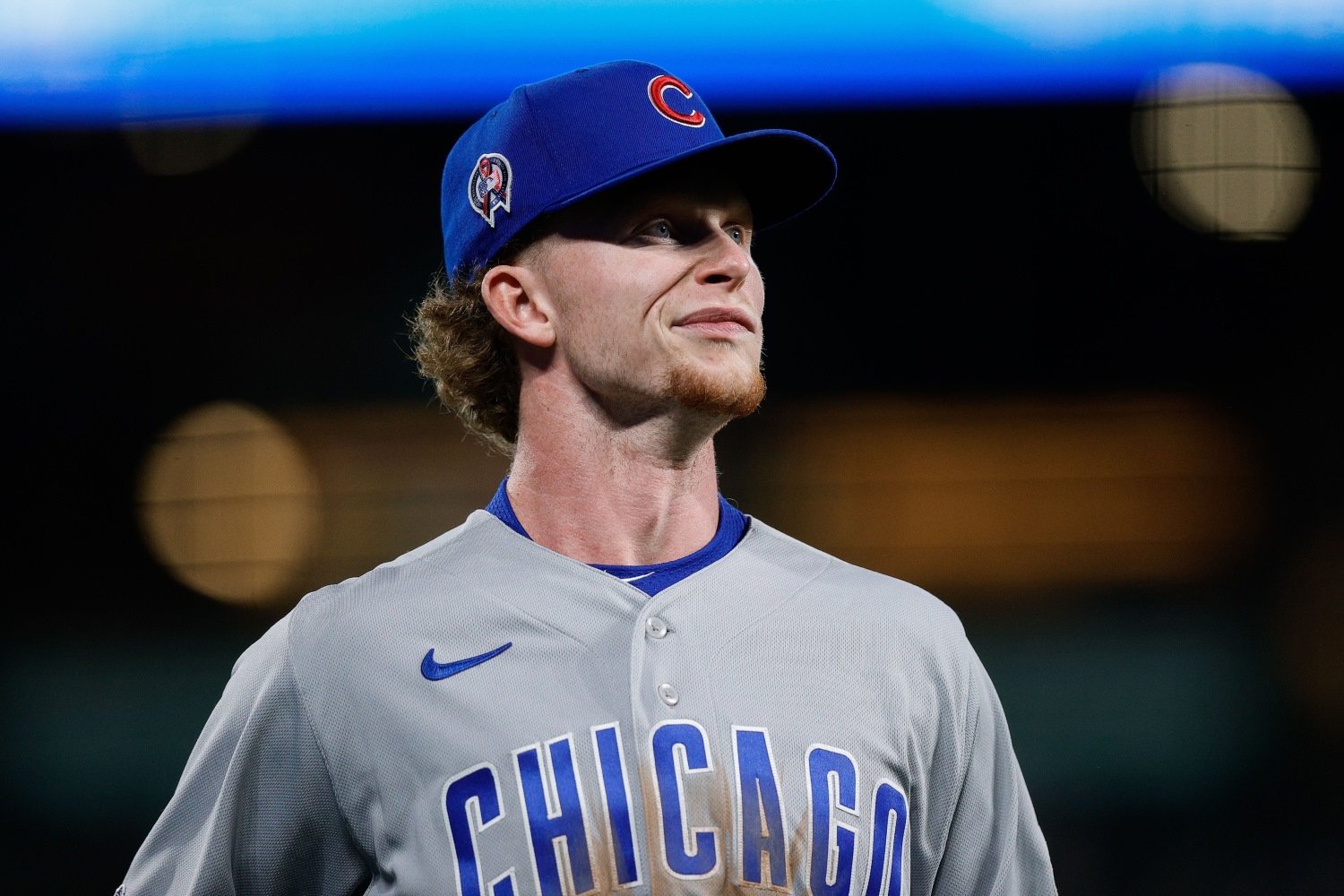 In case you somehow missed the news, yes, that Pete Crow-Armstrong (he of the 80-grade center field glove and 70-grade speed) is going to be playing in Chicago. He slots right into the roster spot formerly given over to Alexander Canario, who saw no playing time of note during his brief stint. Unlike Canario, the expectation should be that the Cubs will use PCA early and often. Perhaps he's not yet an everyday player, but this is a guy with a mountainous pedigree and the talent to match. He will immediately become the best outfield defender the Cubs have--yes, even more than their trio of Gold Glovers (Ian Happ, Seiya Suzuki (who won five NBP Gold Gloves while playing in Japan), and Cody Bellinger. Even on days when PCA gets to fulfill Canario’s role of left bench, he’ll be a hugely important late-game weapon as a pinch-runner and defensive substitute. We saw that happen, albeit in somewhat star-crossed fashion, in his debut Monday night. The basic profile on PCA at the plate is that he’s got a good eye, but strikes out a little too much right now (which is certainly a consequence of his uppercut swing). He also generates surprisingly easy power, which you can see at the 0:25 mark in the video embedded below, though you should do yourself the favor of watching the whole thing. This year, across Double-A Tennessee and Triple-A Iowa, PCA has accrued exactly 500 at-bats, posting an impressive .283/.365/.511 slash line, good for a 126 wRC+. He’s got 37 steals in 47 tries, though his speed shows up even more out of the batter's box, with all of the doubles (26 on the year) and triples (7) he legs out. Throw 20 home runs into the mix, and you’ve got a player who’s exceeded even the loftiest expectations and who should become an annual fixture in center field at the Friendly Confines. Okay, now that we have all of the effusive praise out of the way, it’s unfortunately time to reel in expectations a bit. For as good and talented as PCA is, he’s not a finished product. His strikeout rate ballooned up to 33.6% while at Iowa, and he only spent 34 games there. In a year in which the Cubs weren’t trying to extract value at the margins for every additional win they can gather, PCA would likely be finishing out the season at the highest level of the minor leagues. Crow-Armstrong’s lofted swing also introduces some natural holes that major-league pitchers will be sure to exploit, particularly up in the zone. He has the bat speed and plate approach that are required to catch up to those big-league fastballs above the numbers, but the adjustment period for him as he learns how the best pitchers in the world will attack him will take time. That uppercut motion does play in his favor for pitches low in the zone, though, and he’s got an uncanny ability to see spin out of the pitcher’s hand. As a result, you’re unlikely to see PCA be “fooled” badly by a pitch very often. It also helps that he’s got a true all-fields approach on his swing, buoyed by shocking power to the opposite field. This is normally the point where I’d dig into PCA’s exit velocities against certain pitch types and his effectiveness against pitchers with unique arm slots, but unfortunately the Statcast data on all of those niche topics is limited for minor-league guys. You can dig into everything they have on PCA here, but for now, based purely on the eye test and memory, you should feel confident that PCA will post competent metrics even as he figures out the big leagues. For all the data, industry hype, and highlights PCA has and will continue to generate, I want to conclude by taking this all in as what we all ultimately are: baseball fans. This is, without doubt, the most exciting prospect to debut for the Cubs since the days of Kris Bryant and Javier Baez. This guy is absolutely electric on the diamond, with the high baseball-IQ to match his athletic instincts. The Cubs are doing this because they’re competitive again for the first time since the window slammed shut on that championship core, signifying the end of a short but painful rebuild that saw franchise legends get unceremoniously shipped out of town for prospects. Crow-Armstrong won’t singlehandedly bring the Cubs back to the zenith of the baseball world this year, but he has a chance to be the face of the team that eventually does get there. For now though, let’s just enjoy watching a guy play the game we love with a passion rivaled only by the fans he'll play for.
-
- 2
-

-
- pete crow armstrong
- alexander canario
- (and 3 more)
-
You know that was never my point. You questioned my clarification of Canario as a "top prospect" and I provided my reasoning behind it. I never once made the argument he should receive special favor because of his status. The point, as simply as I can explain it: he was called up to the majors. Insofar as you actually want to see this guy be successful, he has to be playing. He's a young guy and missed almost an entire year. You can't just claim "he needs to be better" without giving him a chance to show that. If you think he isn't ready, let him play in the minors. If you think he is, let him play in the majors. Canario AND the Cubs gain absolutely nothing having him sit around watching. If you're just gonna waste the last roster spot, call up a Mastrobuoni who at least has some defensive versatility. There's no reason to have a guy who at least has a chance to become an important part of the team lose out on development time because Rossy has his circle of trust.
-
I don't understand this take. He suffered multiple career threatening injuries on the same play as a 22 year old. He comes back against all odds in the same year and catches fire. He needs to be playing! He missed a crucial development year because of the injuries! No one's saying he's going fall apart as a baseball player because he's sitting for two weeks. That's never been the argument. But baseball is a sport about finding a rhythm. How the hell is a guy supposed to do that after a year off rehabbing injuries and then sitting around? Send him to the minors if he's not ready. It's really that simple. And if you don't think Canario is a legit prospect... you just haven't been paying attention. Or you want him to fail.
- 16 replies
-
- 1
-
-
- alexander canario
- seiya suzuki
- (and 1 more)
-
Absolutely. He's stubborn and trusts his baseball instinct. That's fine. My problem is that Canario NEEDS development time badly. He missed most of a crucial year because of injuries. Him sitting around and watching other guys play isn't of any use to him. He needs the ABs. If that's in Iowa, so be it, but while he's here he might as well play at least a little.
-
"Top" prospect as in guy who was consensus top 10 in the system and garnering league-wide Top 100/honorable mention consideration before his winter ball injuries following a ridiculous 2022 season. Felt like it was a fair label. The second point I disagree with - yes the minor leagues function as a means of developing guys for the majors, but if a guy isn't going to play in the majors, why not keep developing him in the minors. This isn't some 30 year old journeyman a la Wisdom. This is a guy who has a legitimate chance to be a staple of the next half-decade of Cubs teams. You can argue that he isn't good enough to play in the majors yet... but then he shouldn't be here at all. Simple as that.
- 16 replies
-
- 1
-
-
- alexander canario
- seiya suzuki
- (and 1 more)
-
Give us your Wrigley tips and tricks!
Brandon Glick replied to Brock Beauchamp's topic in Chicago Cubs Talk
All of this is incredibly helpful - thank you! HUGE shout out especially on the Spot Hero call. Looks like a lifesaver -
Give us your Wrigley tips and tricks!
Brandon Glick replied to Brock Beauchamp's topic in Chicago Cubs Talk
A section of the Wrigley Field guide will include a history on bars in the Wrigleyville area! There's actually a bar/pub crawl in the area that goes in depth too: https://brewsandclues.com/tour/chicago-cubs-bar-crawl/ -
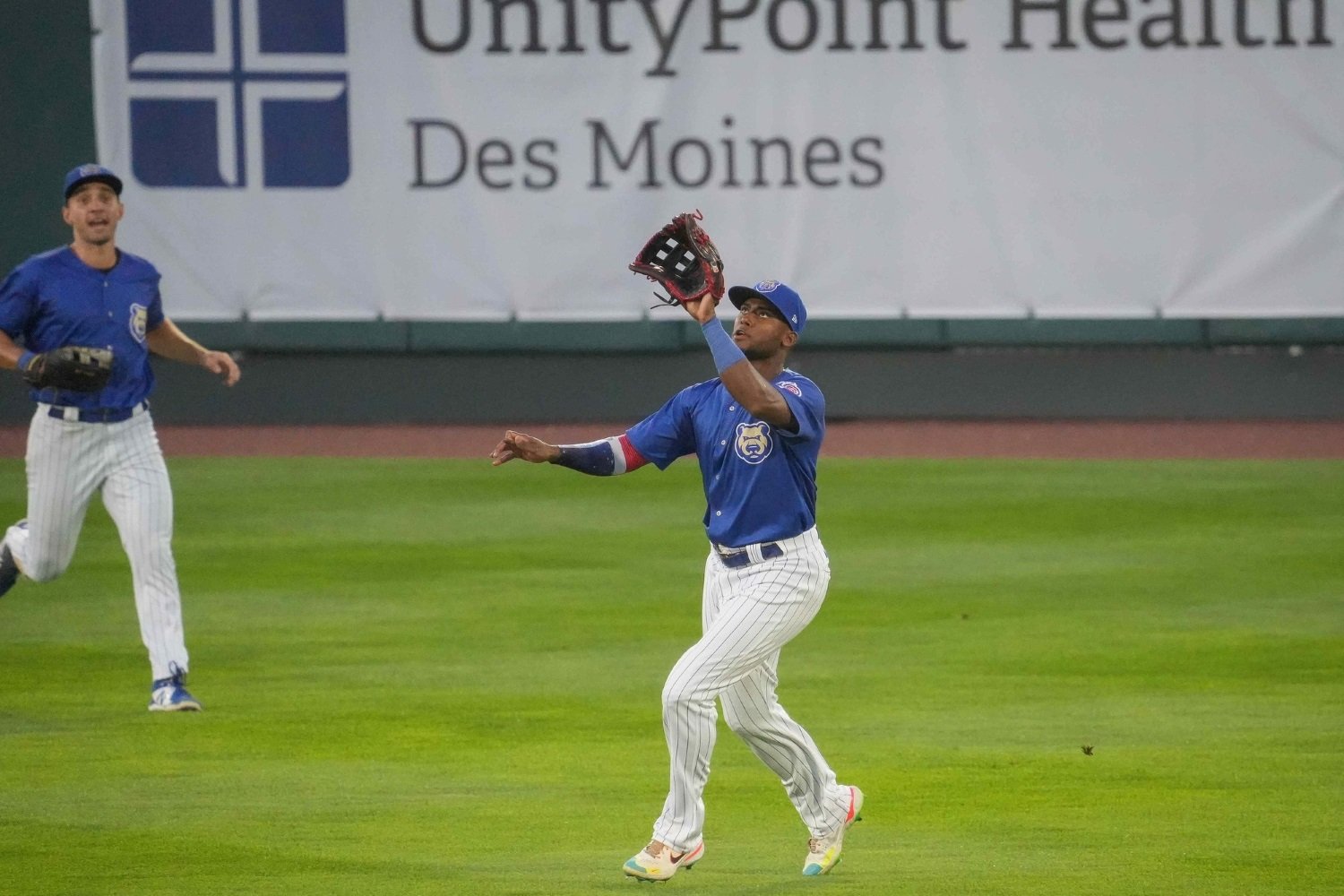 As one of the people banging the drum for Alexander Canario to get called up when he went on his recent heater at Triple-A Iowa, I was ecstatic to see the Cubs opt for the high-risk, high-reward outfielder when the September roster expansions came. He fills a void on this team--namely, monstrous, gargantuan power--that should, at the very least, position him to be a valuable pinch-hitter and platoon option. Instead, Canario has all of one at-bat since being recalled on September 1: a strikeout in a meaningless plate appearance in a blowout, against one of the most dominant closers in the sport today (Camilo Doval). Why isn’t the kid getting any playing time? To hear it from the boss himself, David Ross attempted to explain his rationale behind sitting a prospect who was scorching hot for three weeks: “Look, we’re in a really good position to win. The guys that got us here are going to play. And the guys that are on the bench, if they’ve got roles, they’ll fill in those roles. Canario got called up for a September call-up. He’ll play when he’s needed and [he] fills in nicely or the game gets out of hand one way or the other–get some at-bats, get in the outfield. I think the future is bright for a lot of our minor leaguers that are coming up, but now’s not the time that I’m trying to get those guys at-bats.” Now, there’s a lot of validity imbued in that familiar Rossy stubbornness. Seiya Suzuki is on an absolute tear right now (1.077 OPS over his last 26 games), and Ian Happ is playing really nicely as well (.840 OPS in his last 100 at-bats). Those are the two everyday guys at Canario’s primary positions, left field and right field, and there’s not much sense in sitting them when they’re just as hot as Canario was. No one is advocating for Cody Bellinger to take a day off, and Canario only has limited experience playing center field in the minor leagues, anyway. Beyond them, though, a lot of the Cubs’ regulars are struggling badly. Jeimer Candelario, the big trade deadline acquisition when the Cubs surprisingly bought this year, has a paltry .600 OPS over the last month, with an equally egregious 29% strikeout rate to match. Dansby Swanson has been even worse at the plate, with a .595 OPS in the last 30 days brought down by an ugly .295 slugging percentage. The list keeps going: Nick Madrigal (.638 OPS in the last 30 days), Christopher Morel (.454 OPS), Miguel Amaya (.595 OPS) and others are all in prolonged cold stretches with the bat right now. None of those guys play positions Canario is suited for, but there’s enough positional flexibility on this roster to at least get the top prospect in the lineup against lefties. Now, I need to make it clear: no one is (or at least, no one should be) advocating for Canario to see everyday playing time. Ross is absolutely correct that the Cubs are in position for the playoffs for the first time since 2020 because of their regular starters. Those guys need the chance to work through funks and slumps. However, wins right now are more important than they’ve been in a long while for this team, and willingly playing guys who are producing negative value at the plate isn’t exactly “Manager of the Year”-level coaching. Canario, by the way, is also an important factor in this whole equation. Yes, the needs of the major-league team come first and foremost, but this is a guy who was on his way to being a blue-chip prospect before the freak injuries in winter ball set him back. He needs to be playing (nearly) every day for the sake of his development, not to mention continuing to get his legs back under him, and having him sit on the bench for weeks at a time while Mike Tauchman slashes .178/.294/.205 over his last 23 games played is organizational malpractice. If Canario isn’t going to sniff the field--because of front office dictation, Ross’s hard-headedness, or simply because he isn’t ready--then send him back to Iowa. Let the kid play and keep developing, so that he can, one day, actually contribute to the major league team (and use his roster spot on a guy who will actually contribute right now!). Despite all of this, the Cubs are still winning. Canario isn’t going to be the reason the team makes or misses the playoffs. However, Ross has a habit of grinding his “circle of trust” guys into the dust (gee, wonder where he learned that habit from), and getting a couple of the normal starters a few breathers before the playoffs would kill two birds with one stone, assuming he actually puts Canario in the lineup in those players’ places. Hopefully, the ridiculously powerful outfielder can find himself in a few more games before the regular season ends, lest the Cubs convince themselves that the “Mahomes development plan” is the best way for prospects to learn.
 -
Alexander Canario was called up to the major leagues as a top prospect with lots of power… and he isn’t playing. What is the vendetta David Ross and the front office have against him? Image courtesy of © Bryon Houlgrave/The Register / USA TODAY NETWORK As one of the people banging the drum for Alexander Canario to get called up when he went on his recent heater at Triple-A Iowa, I was ecstatic to see the Cubs opt for the high-risk, high-reward outfielder when the September roster expansions came. He fills a void on this team--namely, monstrous, gargantuan power--that should, at the very least, position him to be a valuable pinch-hitter and platoon option. Instead, Canario has all of one at-bat since being recalled on September 1: a strikeout in a meaningless plate appearance in a blowout, against one of the most dominant closers in the sport today (Camilo Doval). Why isn’t the kid getting any playing time? To hear it from the boss himself, David Ross attempted to explain his rationale behind sitting a prospect who was scorching hot for three weeks: “Look, we’re in a really good position to win. The guys that got us here are going to play. And the guys that are on the bench, if they’ve got roles, they’ll fill in those roles. Canario got called up for a September call-up. He’ll play when he’s needed and [he] fills in nicely or the game gets out of hand one way or the other–get some at-bats, get in the outfield. I think the future is bright for a lot of our minor leaguers that are coming up, but now’s not the time that I’m trying to get those guys at-bats.” Now, there’s a lot of validity imbued in that familiar Rossy stubbornness. Seiya Suzuki is on an absolute tear right now (1.077 OPS over his last 26 games), and Ian Happ is playing really nicely as well (.840 OPS in his last 100 at-bats). Those are the two everyday guys at Canario’s primary positions, left field and right field, and there’s not much sense in sitting them when they’re just as hot as Canario was. No one is advocating for Cody Bellinger to take a day off, and Canario only has limited experience playing center field in the minor leagues, anyway. Beyond them, though, a lot of the Cubs’ regulars are struggling badly. Jeimer Candelario, the big trade deadline acquisition when the Cubs surprisingly bought this year, has a paltry .600 OPS over the last month, with an equally egregious 29% strikeout rate to match. Dansby Swanson has been even worse at the plate, with a .595 OPS in the last 30 days brought down by an ugly .295 slugging percentage. The list keeps going: Nick Madrigal (.638 OPS in the last 30 days), Christopher Morel (.454 OPS), Miguel Amaya (.595 OPS) and others are all in prolonged cold stretches with the bat right now. None of those guys play positions Canario is suited for, but there’s enough positional flexibility on this roster to at least get the top prospect in the lineup against lefties. Now, I need to make it clear: no one is (or at least, no one should be) advocating for Canario to see everyday playing time. Ross is absolutely correct that the Cubs are in position for the playoffs for the first time since 2020 because of their regular starters. Those guys need the chance to work through funks and slumps. However, wins right now are more important than they’ve been in a long while for this team, and willingly playing guys who are producing negative value at the plate isn’t exactly “Manager of the Year”-level coaching. Canario, by the way, is also an important factor in this whole equation. Yes, the needs of the major-league team come first and foremost, but this is a guy who was on his way to being a blue-chip prospect before the freak injuries in winter ball set him back. He needs to be playing (nearly) every day for the sake of his development, not to mention continuing to get his legs back under him, and having him sit on the bench for weeks at a time while Mike Tauchman slashes .178/.294/.205 over his last 23 games played is organizational malpractice. If Canario isn’t going to sniff the field--because of front office dictation, Ross’s hard-headedness, or simply because he isn’t ready--then send him back to Iowa. Let the kid play and keep developing, so that he can, one day, actually contribute to the major league team (and use his roster spot on a guy who will actually contribute right now!). Despite all of this, the Cubs are still winning. Canario isn’t going to be the reason the team makes or misses the playoffs. However, Ross has a habit of grinding his “circle of trust” guys into the dust (gee, wonder where he learned that habit from), and getting a couple of the normal starters a few breathers before the playoffs would kill two birds with one stone, assuming he actually puts Canario in the lineup in those players’ places. Hopefully, the ridiculously powerful outfielder can find himself in a few more games before the regular season ends, lest the Cubs convince themselves that the “Mahomes development plan” is the best way for prospects to learn. View full article
-
I think all your arguments have plenty of validity. In no way am I attempting to degrade your opinion on things (as I know you are not on mine either). My stance ultimately comes down to this: there are SO many prospects in minor league baseball, and the path from the lowest levels to the major leagues is STEEP. It's absurdly difficult to project guys out years in advance, especially as the talent level across all of baseball continues to rise exponentially. Having strategies with prospects (like drafting college bats) or playing to your organization's strengths (like the way Cleveland and Tampa do with drafting and developing young pitchers) are ways to mitigate the risk of a prospect falling off the development curve. But there is never a way to ensure that any given player - no matter how much of a "can't miss" guy he is - will truly succeed at the major league level. That's what makes prospecting so hard.
- 4 replies
-
- 1
-
-
- pete crow armstrong
- matt mervis
- (and 1 more)
-
Of course, it's fine to disagree (welcome to the world of prospecting). But to take the point that we colloquially refer to prospects as "busts" or "successes" (after their development arcs have been completed) and then suggest that that's how all of prospecting works is a clear misrepresentation of the main argument of the article (and of course, that may be a failure of my own to properly articulate said argument). There are innumerable "generational" prospects who fail (Mark Appel for instance) and a ton of "organizational depth" guys who last a long time in the bigs (e.g, Kyle Hendricks). It's a guessing game for fans, and a reason why every organization invests so heavily in player development. Also - a TON of guys from the first rebuild didn't pan out: Albert Almora, Arismendy Alcantara, arguably Soler (at least before he got to the Braves in '21), Billy McKinney, and the list goes on and on. Obviously the Cubs had a strategy when drafting college bats with more advanced feel in that era, but to suggest that they "gamed" the prospect system completely disregards the fact that 1) they got extraordinarily lucky with some of their top guys panning out rather quickly and 2) the strategy didn't hold up whatsoever. If you ask anyone who's studied prospects for a long time (with any sense of humility about it), they'll be the first to tell you that there is no such thing as a "guarantee" when it comes to prospects.
- 4 replies
-
- 2
-
-
- pete crow armstrong
- matt mervis
- (and 1 more)
-
Absolutely - this is a great point. These "values" are assigned to prospects as a means of tiering them, but so often prospects in the same tier are there for a multitude of reasons; some have 1 big carrying tool and a lot of lagging ones, some are a jack of all trades, master of none, and others simply just aren't beloved because of their baseball "acumen". It's arbitrary on a grand scale, and incredibly complex on an individual one. Of course... all of this is what makes the prospect side of the game so fun.
