


Brandon Glick
-
Posts
1,153 -
Joined
-
Last visited
Content Type
Profiles
Joomla Posts 1
Chicago Cubs Videos
Chicago Cubs Free Agent & Trade Rumors, Notes, & Tidbits
2026 Chicago Cubs Top Prospects Ranking
News
2023 Chicago Cubs Draft Picks
Guides & Resources
2024 Chicago Cubs Draft Picks
The Chicago Cubs Players Project
2025 Chicago Cubs Draft Pick Tracker
2026 Chicago Cubs Draft Tracker: Picks & Bonuses
Blogs
Events
Forums
Store
Gallery
Everything posted by Brandon Glick
-
Brandon and Ethan discuss the highs and lows of the Cubs' 2-2 start through the first four games of the regular season.
-
In the wake of Justin Steele's injury, Shota Imanaga delivered a dazzling debut that should give confidence to every Cubs fan. Brandon and Ethan break down his first career MLB start, as well as how Imanaga compares to other Japanese baseball luminaries.
-
In the wake of Justin Steele's injury, Shota Imanaga delivered a dazzling debut that should give confidence to every Cubs fan. Brandon and Ethan break down his first career MLB start, as well as how Imanaga compares to other Japanese baseball luminaries. View full video
-
Compared to the other sports games on the market, I think it's easy to say the Show is the best when it comes to actually rewarding you for playing the game (helps that it's not developed by EA). Still, the grind to get good players is infuriating at times. It feels like the game doesn't really respect your time. Alas, such is the nature of "live service games".
-
As much as I agree on taking Jed to task, I'm not sure I'd give him the boot based on MLB the Show diamond dynasty rankings. ALTHOUGH, that would be an objectively hilarious reason for an exec to get fired.
-
They've definitely been encouraging some more micro-transactions on the periphery to get a better team, but beyond that, the game is as fundamentally solid as ever. Would love to see an actual update to franchise mode though once in a while...
- 8 replies
-
- 1
-

-
- yan gomes
- luke little
- (and 2 more)
-
For what it's worth, almost no one has a George Kirby in their rotation. But, without Steele, the Cubs definitely don't have that guy who you feel confident in every time he takes the mound.
- 2 replies
-
- 1
-
-
- justin steele
- jordan wicks
- (and 3 more)
-
Brandon and Ethan discuss this year's version of the popular video game, and which Cubs are rated fairly or are being underrated by Sony San Diego Studios.
-
Brandon and Ethan discuss this year's version of the popular video game, and which Cubs are rated fairly or are being underrated by Sony San Diego Studios. View full video
- 8 replies
-
- 1
-
-
- yan gomes
- luke little
- (and 2 more)
-
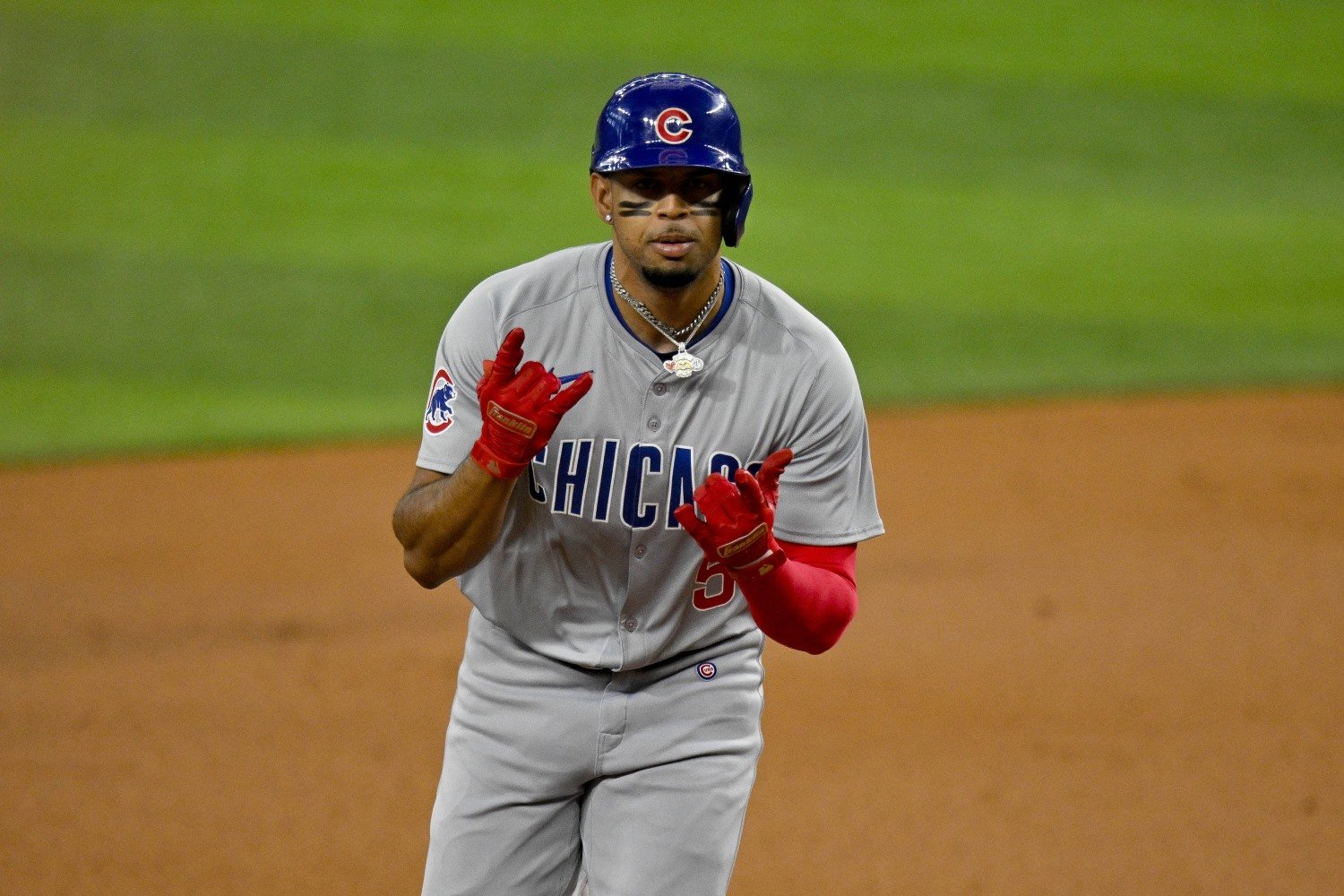 Happy Monday, everyone! Admittedly, it’s a lot easier to say that now that the weather is getting nicer and baseball is being played again. I hope you all had a good holiday weekend and got to spend time with family or enjoy some R & R. Just a quick note up front: I’m going to slash the back-end stuff for this week (i.e., the administrative bullets and entertainment section), since there’s so much baseball stuff to talk about. Those sections will make their triumphant return in next week’s column, and we’ll have plenty to talk about, since by that time, the March Madness Finals matchup will be set. For now: onward, with baseball! The Chicago Cubs went 1-2 in their Opening Weekend series with the Texas Rangers, which, on the surface, isn’t a terrible outcome against the defending World Series champions. Of course, if you watched any of the games, you know that record barely explains the quality of play (or lack thereof) the Cubs exhibited this week. Even Game 3, which the Cubs won by a final score of 9-5, was marred by rage-inducing defensive blunders. Let’s start with the positives though. Craig Counsell did an excellent job with lineup construction, moving Ian Happ all over the place and keeping Seiya Suzuki and Cody Bellinger as the big boppers in the two and three holes in the lineup. After years of watching David Ross stubbornly craft the same batting orders day in and day out, it’s nice to see a manager who likes to play matchups and give different guys more opportunities. So far, only six players have more than one hit on offense: Miguel Amaya (in four at-bats), Dansby Swanson (nine ABs), Cody Bellinger (10 ABs), Seiya Suzuki (15 ABs), Christopher Morel (14 ABs), and Ian Happ (12 ABs). Only the latter three have at least three hits, with Morel and Happ tied for the team lead with five. The Cubs had eight extra-base hits in the Rangers series, though only two of those were homers (one by Morel, one by Swanson). The Cubs don’t expect to hit dingers at a league-leading clip this year, but this series was living proof that hitting the ball over the wall can be the great equalizer in baseball (the Rangers had five home runs in the series). Before we get into his defensive struggles, it’s worth praising Morel’s bat. He’s struck out just once so far, and his plate approach looks calmer than ever. The next step for the young slugger was always going to be about growth with his discipline (i.e., could he go from just “try to swing at strikes” to “swing only at pitches you can do damage on"), and this series was a very positive sign in that regard. Alas, those defensive struggles were real for Morel, who played the latter two games of the series at third base. He had a costly throwing error in the second inning of Game 3, which forced starter Jordan Wicks to throw 18 additional pitches in the inning (on top of giving up two unearned runs). Morel’s athleticism, arm strength and speed are all off the charts. If his instincts and ability to slow the game down ever improve at the hot corner, he could be more than just an “average” defensive third baseman. Who knows if or when that will happen, though. And as long as the Cubs keep giving him runway to play there, they’ll have to live through the growing pains. Speaking of Wicks, he looked plenty good in his first start of the season against a loaded lineup on Sunday. His final line of five runs, five hits, and three walks surrendered in four innings doesn’t tell the whole story, as only two of those runs were earned and he struck out six Rangers. He got a whopping 19(!!) whiffs in 85 pitches, folks. This kid has the stuff to be a fixture in this rotation for a long time. In case you can’t tell, I’ve been putting off discussing the Justin Steele injury. I honestly don’t know what to say that hasn’t been said. It sucks, plain and simple. Thankfully, it’s only a Grade 1 hamstring strain, so he should be back sometime in May, but hamstrings are notoriously fickle for athletes requiring explosive movements. Steele is as irreplaceable as anyone on the roster, so we’ll just have to hope the Cubs can weather the storm for the next six weeks or so. That entire Opening Day game was heart-wrenching. It started off fun, with Morel smoking a triple against Nathan Eovaldi early and Steele looking to be in midseason form. Then Steele got hurt. And, after the Cubs got an extraordinarily lucky call from the umpire on a foul ball in the ninth, they immediately blew the lead in the bottom of the inning. Ultimately, it ended on a Jonah Heim walkoff single. Even in the darkest days, there are silver linings, and thankfully, the Cubs made the move to call up pitching prospect Ben Brown to take Steele’s place. We don’t know exactly what capacity he’ll be appearing in just yet, but boy would it be fun to see him take some starts while Jameson Taillon rehabs his back injury. I also have no interest in discussing the Saturday game, in which the Cubs got blown out 11-2. If you want to read up on it, and dive deep into Kyle Hendricks’ performance in the game, you can do so here. Kind of a sour note to end on, but all in all, the Cubs looked competent this weekend against a very strong opponent. There were a lot of silly mistakes, and the team desperately needs the middle infield tandem of Swanson and Nico Hoerner to clean up its act in the field and at the plate, but the sky isn’t falling after just three games. There’s plenty of season left: April is just beginning. Elsewhere in baseball, Opening Week was plenty eventful. Major injuries, prospect call-ups, and blowouts may have defined this late-March stretch for the Cubs, but they were truly just a microcosm of what’s been going on around the league. Who had the New York Yankees sweeping the Houston Astros in a four-game series in dominant fashion? As much as I hate to say it, Juan Soto looks pretty good in pinstripes. The Detroit Tigers swept the Chicago White Sox, all in low-scoring, one-run games. The White Sox's competitive window closed almost before it was ever really open, and it’s almost hard not to feel bad for their crappy fortune. Almost. The Milwaukee Brewers and Pittsburgh Pirates also swept their Opening Weekend series, with the Brewers utterly dominating the Mets (eight runs given up in three games), and the Pirates posting a +14 run differential against the Miami Marlins in a four-game sample. The St. Louis Cardinals gave up 23 runs in four games against the mighty Los Angeles Dodgers, so while it’s too early to completely mock their rebuilt rotation, it’s probably safe to say the Cardinals are going to need to score a lot of runs in order to be competitive this year. Lastly, and I’m really just sharing this because I took him at +2000 to win AL CY Young: George Kirby is ridiculous. Everyone talks about Spencer Strider as the best young ace in the game, but I’m telling you all, Kirby is the real deal. He’ll be the best pitcher in baseball over the next decade. We’ll wrap it up there, folks. The Cubs play six games this week: a three-game series against the Colorado Rockies and a three-game series against the Los Angeles Dodgers, both at the Friendly Confines. Those two teams represent the polar opposites of the competitive baseball spectrum, so going .500 this week wouldn’t be the worst outcome, but it’s also not unreasonable to hope for something better. Either way, I’m looking forward to some April baseball! Have a great week, everyone! Go, Cubs, Go!
- 2 comments
-
- 1
-
-
- justin steele
- jordan wicks
- (and 3 more)
-
With Opening Week in the books, the Cubs season is officially underway. Let’s take a look at all that happened this week in the world of baseball. Image courtesy of © Jerome Miron-USA TODAY Sports Happy Monday, everyone! Admittedly, it’s a lot easier to say that now that the weather is getting nicer and baseball is being played again. I hope you all had a good holiday weekend and got to spend time with family or enjoy some R & R. Just a quick note up front: I’m going to slash the back-end stuff for this week (i.e., the administrative bullets and entertainment section), since there’s so much baseball stuff to talk about. Those sections will make their triumphant return in next week’s column, and we’ll have plenty to talk about, since by that time, the March Madness Finals matchup will be set. For now: onward, with baseball! The Chicago Cubs went 1-2 in their Opening Weekend series with the Texas Rangers, which, on the surface, isn’t a terrible outcome against the defending World Series champions. Of course, if you watched any of the games, you know that record barely explains the quality of play (or lack thereof) the Cubs exhibited this week. Even Game 3, which the Cubs won by a final score of 9-5, was marred by rage-inducing defensive blunders. Let’s start with the positives though. Craig Counsell did an excellent job with lineup construction, moving Ian Happ all over the place and keeping Seiya Suzuki and Cody Bellinger as the big boppers in the two and three holes in the lineup. After years of watching David Ross stubbornly craft the same batting orders day in and day out, it’s nice to see a manager who likes to play matchups and give different guys more opportunities. So far, only six players have more than one hit on offense: Miguel Amaya (in four at-bats), Dansby Swanson (nine ABs), Cody Bellinger (10 ABs), Seiya Suzuki (15 ABs), Christopher Morel (14 ABs), and Ian Happ (12 ABs). Only the latter three have at least three hits, with Morel and Happ tied for the team lead with five. The Cubs had eight extra-base hits in the Rangers series, though only two of those were homers (one by Morel, one by Swanson). The Cubs don’t expect to hit dingers at a league-leading clip this year, but this series was living proof that hitting the ball over the wall can be the great equalizer in baseball (the Rangers had five home runs in the series). Before we get into his defensive struggles, it’s worth praising Morel’s bat. He’s struck out just once so far, and his plate approach looks calmer than ever. The next step for the young slugger was always going to be about growth with his discipline (i.e., could he go from just “try to swing at strikes” to “swing only at pitches you can do damage on"), and this series was a very positive sign in that regard. Alas, those defensive struggles were real for Morel, who played the latter two games of the series at third base. He had a costly throwing error in the second inning of Game 3, which forced starter Jordan Wicks to throw 18 additional pitches in the inning (on top of giving up two unearned runs). Morel’s athleticism, arm strength and speed are all off the charts. If his instincts and ability to slow the game down ever improve at the hot corner, he could be more than just an “average” defensive third baseman. Who knows if or when that will happen, though. And as long as the Cubs keep giving him runway to play there, they’ll have to live through the growing pains. Speaking of Wicks, he looked plenty good in his first start of the season against a loaded lineup on Sunday. His final line of five runs, five hits, and three walks surrendered in four innings doesn’t tell the whole story, as only two of those runs were earned and he struck out six Rangers. He got a whopping 19(!!) whiffs in 85 pitches, folks. This kid has the stuff to be a fixture in this rotation for a long time. In case you can’t tell, I’ve been putting off discussing the Justin Steele injury. I honestly don’t know what to say that hasn’t been said. It sucks, plain and simple. Thankfully, it’s only a Grade 1 hamstring strain, so he should be back sometime in May, but hamstrings are notoriously fickle for athletes requiring explosive movements. Steele is as irreplaceable as anyone on the roster, so we’ll just have to hope the Cubs can weather the storm for the next six weeks or so. That entire Opening Day game was heart-wrenching. It started off fun, with Morel smoking a triple against Nathan Eovaldi early and Steele looking to be in midseason form. Then Steele got hurt. And, after the Cubs got an extraordinarily lucky call from the umpire on a foul ball in the ninth, they immediately blew the lead in the bottom of the inning. Ultimately, it ended on a Jonah Heim walkoff single. Even in the darkest days, there are silver linings, and thankfully, the Cubs made the move to call up pitching prospect Ben Brown to take Steele’s place. We don’t know exactly what capacity he’ll be appearing in just yet, but boy would it be fun to see him take some starts while Jameson Taillon rehabs his back injury. I also have no interest in discussing the Saturday game, in which the Cubs got blown out 11-2. If you want to read up on it, and dive deep into Kyle Hendricks’ performance in the game, you can do so here. Kind of a sour note to end on, but all in all, the Cubs looked competent this weekend against a very strong opponent. There were a lot of silly mistakes, and the team desperately needs the middle infield tandem of Swanson and Nico Hoerner to clean up its act in the field and at the plate, but the sky isn’t falling after just three games. There’s plenty of season left: April is just beginning. Elsewhere in baseball, Opening Week was plenty eventful. Major injuries, prospect call-ups, and blowouts may have defined this late-March stretch for the Cubs, but they were truly just a microcosm of what’s been going on around the league. Who had the New York Yankees sweeping the Houston Astros in a four-game series in dominant fashion? As much as I hate to say it, Juan Soto looks pretty good in pinstripes. The Detroit Tigers swept the Chicago White Sox, all in low-scoring, one-run games. The White Sox's competitive window closed almost before it was ever really open, and it’s almost hard not to feel bad for their crappy fortune. Almost. The Milwaukee Brewers and Pittsburgh Pirates also swept their Opening Weekend series, with the Brewers utterly dominating the Mets (eight runs given up in three games), and the Pirates posting a +14 run differential against the Miami Marlins in a four-game sample. The St. Louis Cardinals gave up 23 runs in four games against the mighty Los Angeles Dodgers, so while it’s too early to completely mock their rebuilt rotation, it’s probably safe to say the Cardinals are going to need to score a lot of runs in order to be competitive this year. Lastly, and I’m really just sharing this because I took him at +2000 to win AL CY Young: George Kirby is ridiculous. Everyone talks about Spencer Strider as the best young ace in the game, but I’m telling you all, Kirby is the real deal. He’ll be the best pitcher in baseball over the next decade. We’ll wrap it up there, folks. The Cubs play six games this week: a three-game series against the Colorado Rockies and a three-game series against the Los Angeles Dodgers, both at the Friendly Confines. Those two teams represent the polar opposites of the competitive baseball spectrum, so going .500 this week wouldn’t be the worst outcome, but it’s also not unreasonable to hope for something better. Either way, I’m looking forward to some April baseball! Have a great week, everyone! Go, Cubs, Go! View full article
-
Behind Justin Steele, Kyle Hendricks and Shota Imanaga will be the most important starters on the North Side this season. Ethan and Brandon discuss just how vital they are to the Cubs' success.
-
Behind Justin Steele, Kyle Hendricks and Shota Imanaga will be the most important starters on the North Side this season. Ethan and Brandon discuss just how vital they are to the Cubs' success. View full video
-
On the morning of Opening Day, the Chicago Cubs are but one of 30 teams trying to do the impossible. Image courtesy of © Jerome Miron-USA TODAY Sports Ever since 2016, Opening Day has felt a little more liberating, hasn’t it? The pressure that once came with having the longest championship drought in professional sports is now gone; in its place is the lesser, lighter pressure that comes with being a professional sports team at all. There’s a concrete but agreeably remote expectation to win, rather than just an abstract hope that it will one day happen. And yet, this Opening Day feels different than most. Maybe it’s the lingering hype from the Cubs re-signing Cody Bellinger, well after pitchers and catchers first reported to camp. Perhaps it’s leftover angst from the team’s collapse down the stretch last season, when they ultimately missed out on the final Wild Card spot by one game after entering September with more than a 90% chance of making the playoffs. It could also be excitement for Craig Counsell’s first season as the manager, or the development of a budding farm system filled with impact prospects. It’s impossible to say exactly what makes this year feel so rejuvenating. The last few seasons have been a slog for the Cubs (remember Frank Schwindel being the story of the second half in 2021?), and there’s no guarantee 2024 will be different. Hopefully, this team will rise to meet the expectations set before it, which start with an NL Central crown and end with another World Series trophy on the mantle. No matter how this season unfolds, this moment is always fun. There’s always that little bit of hope that things might break our way. Combine that with the blind faith that fanaticism creates, and you have a recipe for over-the-top belief that this team, despite all of its flaws, can go all the way. That’s the Promise of A New Baseball Season. No team has been truly ravaged by injuries yet, nor has any one franchise established itself as an oppressively dominant force. As star-studded as the Los Angeles Dodgers are, or as deep as the Atlanta Braves go, there’s no guarantee they can handle the pressure that comes with being the championship favorites. On paper, the Cubs don’t quite stack up to the titans of the National League, but in practice… well, that’s the Promise of A New Baseball Season. In 2024, the Cubs will have plenty of concerns to assuage if they want to be taken seriously. Their depth is enviable around the diamond, but do they have the star-level contributors to get them over the hump of mediocrity? Can they withstand an injury to Justin Steele, or a few down months from Dansby Swanson? Are Michael Busch and Christopher Morel capable of handling the infield corners, offensively and defensively? Is their bullpen capable of holding down the fort for an entire 162-game season? Only time will tell if the answer to those questions is affirmative or negative, but for now, it’s easy to hope for the best; that’s the Promise of A New Baseball Season. There are many trials and tribulations yet to beset the Cubs in 2024, and potentially even more memorable moments that have yet to happen. No one - no fan, player, front office staffer, national pundit, or even local beat writer - has any clue what’s going to happen this season. There’s a reason they play the games, after all. And it’s that shared fog - the universal unknown enveloping all of baseball - that makes everything so exhilarating. All of us, perhaps against our better judgment, can squint just hard enough to see a future where the Cubs really do pull it off and win the 2024 World Series. That’s the Promise of A New Baseball Season. For now, today is Game One of 162. The Cubs are playing the defending World Series champions: the Texas Rangers. On paper, they’ll probably lose this series. Can they handle the offensive onslaught of Cory Seager and Marcus Semien? Can the lineup score enough runs in a hostile environment to keep up with the reigning champs? Even if it feels impossible, no one really knows if they’ll win or lose. They have to actually play the games for us to find that out. If things break their way, maybe the Cubs will steal a game this series. Maybe, just maybe, it all starts with one win. That’s the Promise of A New Baseball Season. View full article
-
 Ever since 2016, Opening Day has felt a little more liberating, hasn’t it? The pressure that once came with having the longest championship drought in professional sports is now gone; in its place is the lesser, lighter pressure that comes with being a professional sports team at all. There’s a concrete but agreeably remote expectation to win, rather than just an abstract hope that it will one day happen. And yet, this Opening Day feels different than most. Maybe it’s the lingering hype from the Cubs re-signing Cody Bellinger, well after pitchers and catchers first reported to camp. Perhaps it’s leftover angst from the team’s collapse down the stretch last season, when they ultimately missed out on the final Wild Card spot by one game after entering September with more than a 90% chance of making the playoffs. It could also be excitement for Craig Counsell’s first season as the manager, or the development of a budding farm system filled with impact prospects. It’s impossible to say exactly what makes this year feel so rejuvenating. The last few seasons have been a slog for the Cubs (remember Frank Schwindel being the story of the second half in 2021?), and there’s no guarantee 2024 will be different. Hopefully, this team will rise to meet the expectations set before it, which start with an NL Central crown and end with another World Series trophy on the mantle. No matter how this season unfolds, this moment is always fun. There’s always that little bit of hope that things might break our way. Combine that with the blind faith that fanaticism creates, and you have a recipe for over-the-top belief that this team, despite all of its flaws, can go all the way. That’s the Promise of A New Baseball Season. No team has been truly ravaged by injuries yet, nor has any one franchise established itself as an oppressively dominant force. As star-studded as the Los Angeles Dodgers are, or as deep as the Atlanta Braves go, there’s no guarantee they can handle the pressure that comes with being the championship favorites. On paper, the Cubs don’t quite stack up to the titans of the National League, but in practice… well, that’s the Promise of A New Baseball Season. In 2024, the Cubs will have plenty of concerns to assuage if they want to be taken seriously. Their depth is enviable around the diamond, but do they have the star-level contributors to get them over the hump of mediocrity? Can they withstand an injury to Justin Steele, or a few down months from Dansby Swanson? Are Michael Busch and Christopher Morel capable of handling the infield corners, offensively and defensively? Is their bullpen capable of holding down the fort for an entire 162-game season? Only time will tell if the answer to those questions is affirmative or negative, but for now, it’s easy to hope for the best; that’s the Promise of A New Baseball Season. There are many trials and tribulations yet to beset the Cubs in 2024, and potentially even more memorable moments that have yet to happen. No one - no fan, player, front office staffer, national pundit, or even local beat writer - has any clue what’s going to happen this season. There’s a reason they play the games, after all. And it’s that shared fog - the universal unknown enveloping all of baseball - that makes everything so exhilarating. All of us, perhaps against our better judgment, can squint just hard enough to see a future where the Cubs really do pull it off and win the 2024 World Series. That’s the Promise of A New Baseball Season. For now, today is Game One of 162. The Cubs are playing the defending World Series champions: the Texas Rangers. On paper, they’ll probably lose this series. Can they handle the offensive onslaught of Cory Seager and Marcus Semien? Can the lineup score enough runs in a hostile environment to keep up with the reigning champs? Even if it feels impossible, no one really knows if they’ll win or lose. They have to actually play the games for us to find that out. If things break their way, maybe the Cubs will steal a game this series. Maybe, just maybe, it all starts with one win. That’s the Promise of A New Baseball Season.
 -
I think the question was asked in the case of an "all hell breaks loose" emergency. If things go even 1% according to plan this year, Happ will be the left fielder.
- 13 replies
-
- 1
-
-
- ian happ
- cody bellinger
- (and 3 more)
-
Happ actually played a touch of third base in college and high school, so this idea isn't totally out of left field (pun completely intended). I have a very hard time believing the Cubs would sacrifice a Gold Glove at one spot just to get average play at two spots (assuming Morel can even handle LF on a full time basis), but part of Happ's prospect profile was his versatility. I think it would take a lot of things going wrong at 3B to see Happ there though.
-
100%. Having those 2-4 WAR guys with super high floors is a very valuable thing. The Cubs' issue that most of their roster is filled with those kinds of guys rather than the Betts/Freeman/Ohtani level of star, but there's no reason to see Happ as anything other a valuable piece of the team.
-
My thoughts exactly. If Busch stinks (or Morel can't handle third, pushing Busch back there), Belli is the obvious next guy up at 1B. But for now, my guess would be Bellinger handling LF in the short-term if Happ is out.
-
Watch as Brandon and Ethan discuss the announcement of the Cubs' starting five pitchers for Opening Day. View full video
-
Watch as Brandon and Ethan discuss the announcement of the Cubs' starting five pitchers for Opening Day.
-
The NL Central projects to be a competitive (albeit mediocre) division this season. Though loaded with young talent, the Pittsburgh Pirates have the look of the worst team among the five. Image courtesy of © Kim Klement Neitzel-USA TODAY Sports The Pittsburgh Pirates finished in fourth place in the NL Central last season, posting a 76-86 record. Their -98 run differential was third-worst in the National League, and the fourth-worst in all of baseball. Pittsburgh’s biggest issue was on the mound, where they posted a 4.60 ERA (21st in MLB) and 1,363 strikeouts (20th). That’s not to say the Pirates were any better at the plate, where they hit just 159 home runs (28th) and batted just .239 as a team (24th). The team had a relatively quiet offseason, outside of re-signing outfielder Andrew McCutchen to a one-year, $5 million deal and handing ace Mitch Keller a four-year, $71.5 million extension. As always, the team mostly sat out the free agent market, making a few notable moves around the margins while barely losing anyone of note. (They didn't really have anyone to lose.) As such, the team will be mostly banking on major internal improvements to take the next step forward in 2024. Projected Record FanGraphs (ZiPS): 77-85 (5th in NL Central) Baseball Prospectus (PECOTA): 73-89 (5th in NL Central) Key Additions LHP Aroldis Chapman LHP Martín Pérez LHP Marco Gonzales OF Michael A. Taylor 1B Rowdy Tellez C Yasmani Grandal Key Losses RHP Vince Velasquez RHP Duane Underwood Jr. RHP Chase DeJong IF Miguel Andújar RHP Johan Oviedo (Tommy John Surgery) C Endy Rodriguez (UCL Surgery) Projected Opening Day Lineup C Henry Davis 1B Rowdy Tellez 2B Jared Triolo SS Oneil Cruz 3B Ke’Bryan Hayes LF Jack Suwinski CF Michael A. Taylor RF Bryan Reynolds DH Andrew McCutchen Projected Opening Day Pitching Staff: Rotation RHP Mitch Keller LHP Martín Pérez LHP Marco Gonzales LHP Bailey Falter RHP Jared Jones Projected Opening Day Pitching Staff: Key Relievers LHP Josh Fleming (Long Relief) LHP Aroldis Chapman (Setup) LHP Ryan Borucki RHP David Bednar (Closer) Scouting Report While the Pirates went 76-86 last season, they played like a 71-91 team according to Pythagorean Win-Loss. They started last season on a scintillating 20-9 run, but they ran out of gas quickly and didn’t have another winning month until September. However, they did play well in the second half of 2023, finishing their post-All-Star break schedule with a 35-37 record. Most of the Pirates’ upside currently exists in their farm system. Last year, McCutchen led the team with a 115 wRC+, which was tied for lowest leading mark on any team in baseball last season (Bobby Witt Jr., Kansas City Royals). Their best players on the major-league roster are catcher Henry Davis, a former first overall selection; third baseman Ke’Bryan Hayes, who finally ended Nolan Arenado’s Gold Glove hegemony at the hot corner in the National League last season; shortstop Oneil Cruz, a 6-7 behemoth with a true five-tool profile but massive swing-and-miss issues; left fielder Jack Suwinski, who was a big-time three-true-outcomes guy with 26 homers, a 32.2% K%, and a 14% BB% in 2023; and right fielder Bryan Reynolds, a one-time All Star who’s posted a 113 OPS+ or better in every season of his career (besides the pandemic-shortened 2020 season). Of all those guys, though, only Cruz has true star potential. He hit 17 home runs in just 361 plate appearances in his rookie season, but he struck out 35% of the time and only posted a 105 wRC+. After missing nearly all of last season with a broken leg, he returned to Spring Training this year in mid-season form, hitting seven home runs but striking out 14 times in 49 plate appearances. If he can get his contact issues under control, he’ll be a force to be reckoned with and a perennial MVP candidate. If not, he’ll be a Patrick Wisdom-esque shortstop, though his floor is higher because of his rocket arm and blazing speed. On the pitching side of things, the team is patiently awaiting the arrival of franchise savior Paul Skenes, who will pitch for Triple-A Indianapolis out of Spring Training this year despite being selected first overall in the 2023 MLB Draft just nine months ago. Jared Jones, FanGraphs’s 62nd overall prospect, made the team after not allowing a run in the Grapefruit League. He’s got a high-90s fastball and good command up in the zone, though his secondaries need a lot of refining. As such, Jones will likely see some inflated ERA and home run totals in his rookie season, but he should also rack up plenty of strikeouts. The team’s ace, Mitch Keller, signed the aforementioned extension early in the spring, securing his spot atop the rotation as the team waits out Skenes’s ascendence to the majors. Keller is coming off a career year with 3.3 fWAR, and though his 4.21 ERA and 4.18 xERA aren’t much to gawk over, his 3.80 FIP is suggestive of a better pitcher than the results showed. A couple notable splits to look out for: Keller’s struggles on the road (5.35 ERA in 104 road innings; 2.90 ERA in 90 home innings) and in the second half (5.59 ERA in 77 second-half innings; 3.31 ERA in 117 first-half innings). He can be a valuable innings eater in the Pirates rotation for years to come, but he’ll have to maintain his performance across a full 162-game slate to be worth the team's investment. Other than them, though, the Pirates don’t have many pitchers to speak of. David Bednar remains one of the best closers in the game, and Aroldis Chapman had a bounce-back year last season with the Royals and Texas Rangers, but this team is lacking impact arms for now. This will probably be another “retooling” year for the Bucs, as they hope for some internal improvements from their young bats and try to flip some veteran arms at the trade deadline for prospects. Skenes is on his way, and when that day comes, the division will quiver with fear. Until then, though, the Pirates remain on the periphery of the Wild Card and NL Central races. View full article
-
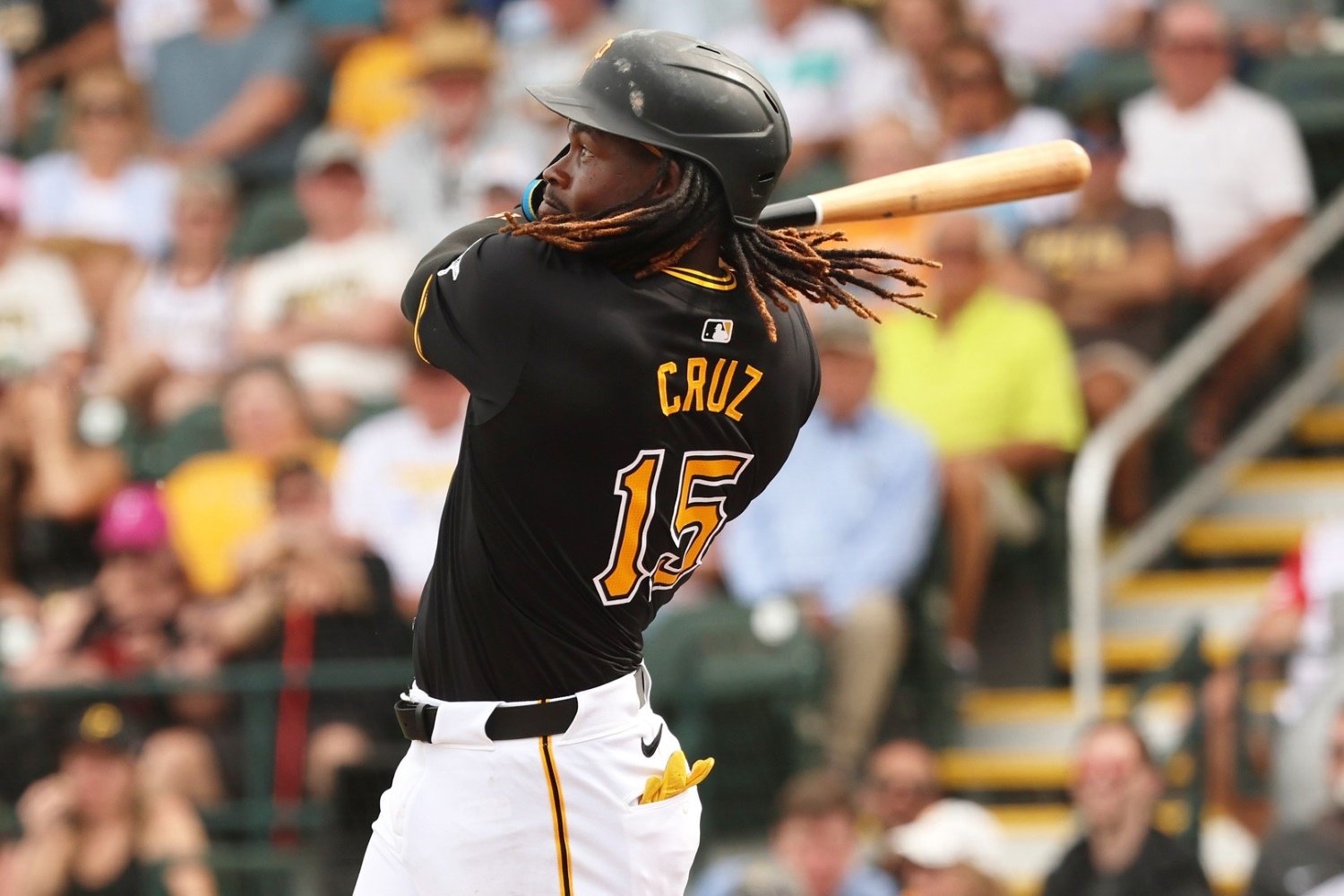 The Pittsburgh Pirates finished in fourth place in the NL Central last season, posting a 76-86 record. Their -98 run differential was third-worst in the National League, and the fourth-worst in all of baseball. Pittsburgh’s biggest issue was on the mound, where they posted a 4.60 ERA (21st in MLB) and 1,363 strikeouts (20th). That’s not to say the Pirates were any better at the plate, where they hit just 159 home runs (28th) and batted just .239 as a team (24th). The team had a relatively quiet offseason, outside of re-signing outfielder Andrew McCutchen to a one-year, $5 million deal and handing ace Mitch Keller a four-year, $71.5 million extension. As always, the team mostly sat out the free agent market, making a few notable moves around the margins while barely losing anyone of note. (They didn't really have anyone to lose.) As such, the team will be mostly banking on major internal improvements to take the next step forward in 2024. Projected Record FanGraphs (ZiPS): 77-85 (5th in NL Central) Baseball Prospectus (PECOTA): 73-89 (5th in NL Central) Key Additions LHP Aroldis Chapman LHP Martín Pérez LHP Marco Gonzales OF Michael A. Taylor 1B Rowdy Tellez C Yasmani Grandal Key Losses RHP Vince Velasquez RHP Duane Underwood Jr. RHP Chase DeJong IF Miguel Andújar RHP Johan Oviedo (Tommy John Surgery) C Endy Rodriguez (UCL Surgery) Projected Opening Day Lineup C Henry Davis 1B Rowdy Tellez 2B Jared Triolo SS Oneil Cruz 3B Ke’Bryan Hayes LF Jack Suwinski CF Michael A. Taylor RF Bryan Reynolds DH Andrew McCutchen Projected Opening Day Pitching Staff: Rotation RHP Mitch Keller LHP Martín Pérez LHP Marco Gonzales LHP Bailey Falter RHP Jared Jones Projected Opening Day Pitching Staff: Key Relievers LHP Josh Fleming (Long Relief) LHP Aroldis Chapman (Setup) LHP Ryan Borucki RHP David Bednar (Closer) Scouting Report While the Pirates went 76-86 last season, they played like a 71-91 team according to Pythagorean Win-Loss. They started last season on a scintillating 20-9 run, but they ran out of gas quickly and didn’t have another winning month until September. However, they did play well in the second half of 2023, finishing their post-All-Star break schedule with a 35-37 record. Most of the Pirates’ upside currently exists in their farm system. Last year, McCutchen led the team with a 115 wRC+, which was tied for lowest leading mark on any team in baseball last season (Bobby Witt Jr., Kansas City Royals). Their best players on the major-league roster are catcher Henry Davis, a former first overall selection; third baseman Ke’Bryan Hayes, who finally ended Nolan Arenado’s Gold Glove hegemony at the hot corner in the National League last season; shortstop Oneil Cruz, a 6-7 behemoth with a true five-tool profile but massive swing-and-miss issues; left fielder Jack Suwinski, who was a big-time three-true-outcomes guy with 26 homers, a 32.2% K%, and a 14% BB% in 2023; and right fielder Bryan Reynolds, a one-time All Star who’s posted a 113 OPS+ or better in every season of his career (besides the pandemic-shortened 2020 season). Of all those guys, though, only Cruz has true star potential. He hit 17 home runs in just 361 plate appearances in his rookie season, but he struck out 35% of the time and only posted a 105 wRC+. After missing nearly all of last season with a broken leg, he returned to Spring Training this year in mid-season form, hitting seven home runs but striking out 14 times in 49 plate appearances. If he can get his contact issues under control, he’ll be a force to be reckoned with and a perennial MVP candidate. If not, he’ll be a Patrick Wisdom-esque shortstop, though his floor is higher because of his rocket arm and blazing speed. On the pitching side of things, the team is patiently awaiting the arrival of franchise savior Paul Skenes, who will pitch for Triple-A Indianapolis out of Spring Training this year despite being selected first overall in the 2023 MLB Draft just nine months ago. Jared Jones, FanGraphs’s 62nd overall prospect, made the team after not allowing a run in the Grapefruit League. He’s got a high-90s fastball and good command up in the zone, though his secondaries need a lot of refining. As such, Jones will likely see some inflated ERA and home run totals in his rookie season, but he should also rack up plenty of strikeouts. The team’s ace, Mitch Keller, signed the aforementioned extension early in the spring, securing his spot atop the rotation as the team waits out Skenes’s ascendence to the majors. Keller is coming off a career year with 3.3 fWAR, and though his 4.21 ERA and 4.18 xERA aren’t much to gawk over, his 3.80 FIP is suggestive of a better pitcher than the results showed. A couple notable splits to look out for: Keller’s struggles on the road (5.35 ERA in 104 road innings; 2.90 ERA in 90 home innings) and in the second half (5.59 ERA in 77 second-half innings; 3.31 ERA in 117 first-half innings). He can be a valuable innings eater in the Pirates rotation for years to come, but he’ll have to maintain his performance across a full 162-game slate to be worth the team's investment. Other than them, though, the Pirates don’t have many pitchers to speak of. David Bednar remains one of the best closers in the game, and Aroldis Chapman had a bounce-back year last season with the Royals and Texas Rangers, but this team is lacking impact arms for now. This will probably be another “retooling” year for the Bucs, as they hope for some internal improvements from their young bats and try to flip some veteran arms at the trade deadline for prospects. Skenes is on his way, and when that day comes, the division will quiver with fear. Until then, though, the Pirates remain on the periphery of the Wild Card and NL Central races.
- 2 comments
-
- 1
-
-
- pirates
- paul skenes
- (and 4 more)
-
It's amazing how much of a "high-floor" player Happ is. Even some of his worst traits are 50th percentile. He's, as Joe Maddon would say, a "pro's pro".
- 13 replies
-
- 1
-
-
- ian happ
- cody bellinger
- (and 3 more)
-
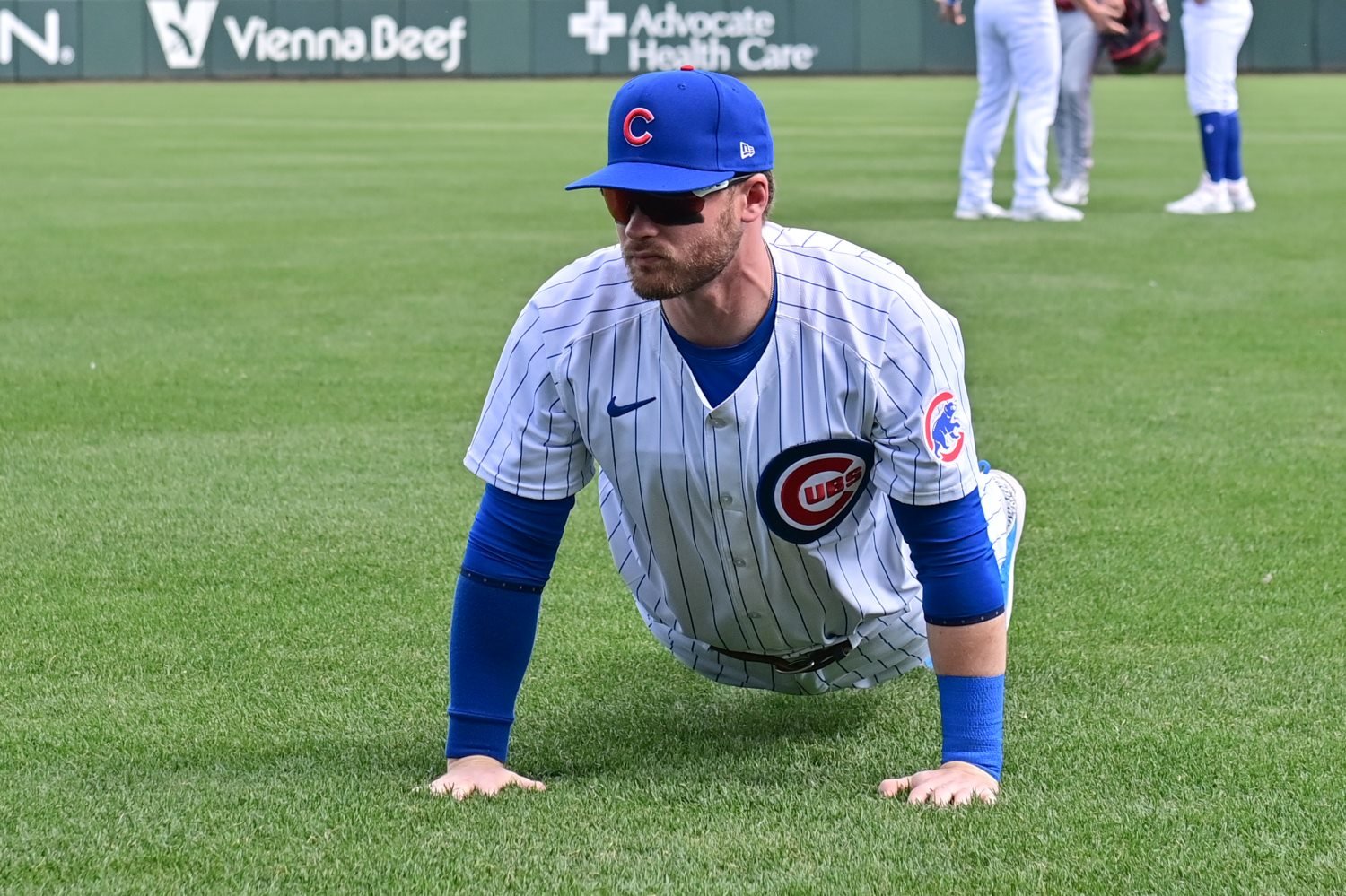 Ian Happ has been the Cubs’ everyday starter in left field since mid-2021. He’s posted an above-average OPS+ in every season of his career, and his OPS has never fallen below .750. He’s as consistent as they come at the plate, and he’s improved dramatically as a switch-hitter over the last few seasons. In his career, Happ bats .244 as a righty, and .250 as a lefty. 2021: 148 G, 465 ABs, .226/.323/.434, 103 OPS+, 1.7 WAR, -2 DRS 2022: 158 G, 573 ABs, .271/.342/.440, 117 OPS+, 4.4 WAR, 14 DRS 2023: 158 G, 580 ABs, .248/.360/.431, 112 OPS+, 3.0 WAR, 2 DRS Happ has just two hits in 22 at-bats in the Cactus League this year, but fretting over his slow start isn’t worth our time. He’s been on the mend from a hamstring injury that manager Craig Counsell said won’t impact his status for Opening Day, and he returned to the lineup over the weekend looking fresh. And, for what it’s worth, Happ has a history of turning bad Spring Training performances into strong regular seasons: in 2022, he batted .190 in Arizona, and went on to earn his first All Star appearance a few months later. Beyond his impact at the plate, Happ has also turned himself into a premier defender. Though left field isn’t as demanding a position as most of the others on the diamond, Happ posted a career-high 14 Defensive Runs Saved in 2022 before following it up with a 2 DRS season last year. In both years, he was awarded with the NL Gold Glove Award for left fielders. Happ still presents some of the defensive versatility that defined his prospect profile, but the Cubs appear content to keep him stationed out in left field next to a pair of strong defenders, Cody Bellinger and Seiya Suzuki. The North Siders’ rotation this year, once again, is made up of hurlers who adopt a “pitch to contact” approach, and most of the starters are particularly adept at coaxing fly balls out of opposing hitters. Having a strong outfield defense is paramount to making the entire run-prevention operation work this year, and you’d be hard-pressed to find a better trio of gloves than the Cubs will run out beyond the infield on a daily basis. Happ’s strongest skill remains his on-base percentage. Last season, Happ finished first among all Cubs who had at least 350 at-bats with a .360 OBP, which followed up his second-place finish in 2022 (behind only Willson Contreras). Thanks to his blend of power and patience, he can be a credible option almost anywhere in the lineup, though Counsell has gone on record saying that Happ will bat ahead of the Cubs’ sluggers, namely Bellinger and Christopher Morel. It remains to be seen if that sticks for all of 2024, but No. 8 lengthens the lineup from any spot just by working counts and making pitchers labor during his plate appearances. Beyond Happ, the Cubs have Mike Tauchman currently slated as the fourth outfielder. He’s played 60-plus career games in each of the three outfield spots, including 134 in left field, his most of any position. He was worth 2.1 WAR in 401 plate appearances last year, including a perfectly average 100 OPS+. Tauchman is at his best as a reserve outfielder who can fill in at any of the three outfield spots on any given day, though he did fill in admirably in center field for Cody Bellinger in the middle of last season after Bellinger suffered a knee injury. The Cubs also have Miles Mastrobuoni and Morel, who are capable of playing the outfield corners in a pinch. Non-roster invitee David Peralta, who has appeared in 854 career games in left field, could be a quick Band-Aid in the event that Happ can’t gut it out for a few days. Even Garrett Cooper, who locked down the final bench spot on the Opening Day roster following Patrick Wisdom’s injury, has played 615 innings in the corners of the outfield. Nevertheless, should Happ be forced to miss significant time, the Cubs’ best bet for reinforcements lies in their farm system. Pete Crow-Armstrong is knocking on the door of Wrigley Field, and his arrival in the majors could push Bellinger to left field if the Cubs want to keep PCA’s speed and glove in center field. Also at Triple-A Iowa are Alexander Canario and Brennen Davis, who each have experience in left field and come equipped with very strong throwing arms. The 2024 Chicago Cubs will rely on Ian Happ to be a consistent contributor at the plate and in the field. He’s an on-base machine who’s capable of hitting well from both sides of the plate, and he also happens to be the National League’s reigning two-time Gold Glover in left field. That kind of presence might be hard to replace in an extended absence, but the Cubs are surprisingly well-equipped to handle a Happ-less period. Let's hope it doesn't come to that, anyway.
- 13 comments
-
- 1
-

-
- ian happ
- cody bellinger
- (and 3 more)
