


Brandon Glick
-
Posts
1,153 -
Joined
-
Last visited
Content Type
Profiles
Joomla Posts 1
Chicago Cubs Videos
Chicago Cubs Free Agent & Trade Rumors, Notes, & Tidbits
2026 Chicago Cubs Top Prospects Ranking
News
2023 Chicago Cubs Draft Picks
Guides & Resources
2024 Chicago Cubs Draft Picks
The Chicago Cubs Players Project
2025 Chicago Cubs Draft Pick Tracker
2026 Chicago Cubs Draft Tracker: Picks & Bonuses
Blogs
Events
Forums
Store
Gallery
Everything posted by Brandon Glick
-
Despite missing out on the playoffs in a year in which they bought at the Trade Deadline, Cody Bellinger’s re-signing has provided vindication for the Cubs front office's decisions last July. Image courtesy of © Charles LeClaire-USA TODAY Sports Eight years ago Monday, the Chicago Cubs made a similar move to this one, re-signing beloved center fielder Dexter Fowler for the 2016 season and reintroducing him to the team--to much fanfare--at camp in Mesa. Though the Cody Bellinger extension may not lead to the same results that Fowler’s did - 2016 was a pretty special season, in case you forgot - it’s still a vitally important move that should make the Cubs the presumptive NL Central favorites heading into the 2024 season. The roster implications are enormous, as the Cubs can now give Pete Crow-Armstrong more time to develop in the minors while taking pressure off Michael Busch and Christopher Morel to be lineup-carrying bats as they attempt to find permanent defensive homes. The team had to bid adieu to promising left-handed reliever Bailey Horn to clear a 40-man roster spot for Bellinger, and they'll assume a $30 million hit to their CBT, but whatever downsides are present are mitigated by the team-friendly aspects of his three-year, $80-million contract, including player options after the first and second seasons. The contract is, of course, a huge win by Jed Hoyer and the front office in their staredown with agent Scott Boras. The Cubs got to bring last year’s team MVP back on their own terms, all while not handing out a long-term contract that would’ve hindered their financial and personnel flexibility. That isn’t the only reason they won with this deal, though. The brain trust also retained a clubhouse and fan favorite who should help galvanize a club with serious expectations in 2024. Beyond even that, though, the front office also received massive vindication for their decision to go for it at the trade deadline last summer. Once Bellinger hurt his knee in Houston in May, rumors swirled for months that the Cubs would, for the third year in a row, sell at the deadline. Instead, Hoyer and company made the bold call to swing for the fences, bringing in rental bat Jeimer Candelario (for prospects Kevin Made and DJ Herz) and reliever José Cuas (for outfielder Nelson Velázquez) ahead of the stretch run of the regular season. By all accounts, those moves failed to accomplish their ultimate goal, as the Cubs collapsed in September and missed out on the final Wild Card spot by one game in the standings. It’s easy to say, with hindsight in hand, that the Cubs should have sold, unloading assets like Bellinger for a few extra prospects. They missed the playoffs anyway, and by choosing to sell, they’d have a higher draft pick and more prospects in hand right now. From a pure roster construction standpoint, selling was the right path to take. However, ignoring the importance of just bringing competitive baseball back to Chicago, that choice to retain Bellinger finally received its ultimate payoff over the weekend. Make no mistake about it: Had the Cubs traded Bellinger away, there is very little chance he would agree to this contract with the team. There is precedent for trading away rentals only to re-sign them - the Yankees did it with the Cubs back in 2016, when they traded Aroldis Chapman to Chicago before re-signing him during the offseason, and the Cubs had done it right before that, with Jason Hammel - but those occasions are rare and often require special circumstances. The Yankees had to hand Chapman the largest-ever (at the time) reliever contract to lure him back to New York. If Bellinger had made the playoffs with an acquiring team, or if he had merely loved their city or clubhouse or fans, odds are he would’ve stuck around with them rather than wait out an entire offseason for the Cubs to capitulate on his contract demands. He'd also have been more expensive and less willing to sign a short-term deal. Because of the hypothetical trade, he'd have been ineligible to receive a qualifying offer in November, and if he'd signed the kind of deal he's now signed, he'd have had to consider having draft compensation attached to him if he opted out in the future. Bellinger might’ve fetched a relative haul at the deadline last summer--certainly more than Candelario cost the Cubs in terms of prospect talent. Yet, somehow, the Cubs improved for 2024 by choosing to buy short-term assets in 2023. Bellinger is back, for this upcoming season at least, and the North Siders are all the better for it. Whatever happens this season, Jed Hoyer has bought himself some much-needed goodwill and patience with Cubs fans. View full article
-
Love the comment and love the enthusiasm! I think the Bellinger really galvanized the players and the fan base, and came at a pretty good time all things considered (even though I wouldn't have complained back in December...). Agreed that I think Wisdom is mostly likely to go. Definitely not a long term piece for the club, though he has his niche value. Even if the team can't win it all this year, I'd be thrilled just to be in the hunt again. Give me a playoff berth, give me October baseball at Wrigley, and let's see what happens!
- 12 replies
-
- 1
-

-
- cody bellinger
- matt mervis
- (and 3 more)
-
My thoughts exactly. I like Thompson, but once the Cubs cut bait with Brandon Hughes, I think whatever goodwill remained from his 2022 performance went out the window
- 12 replies
-
- 1
-
-
- cody bellinger
- matt mervis
- (and 3 more)
-
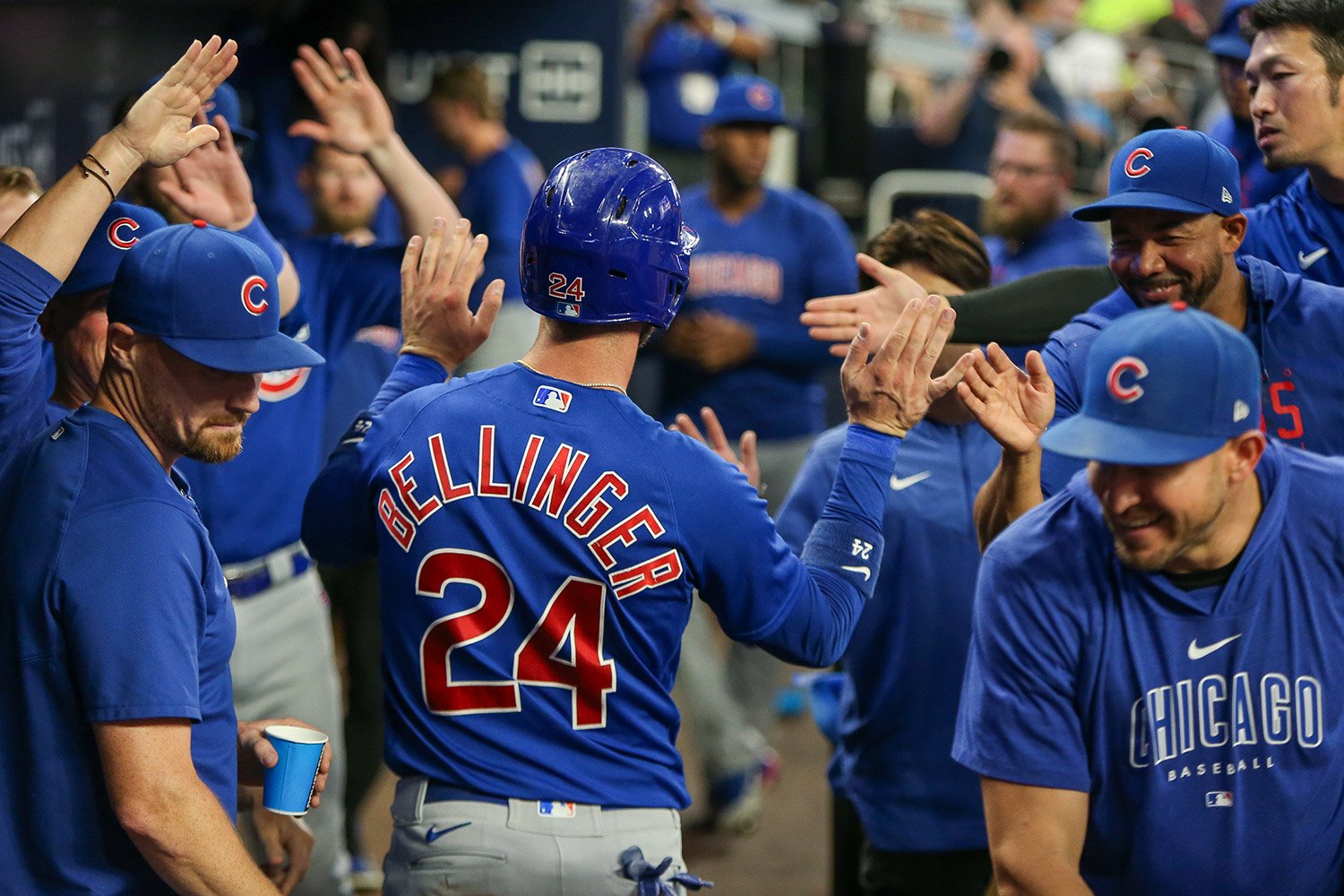 In case you (somehow) missed the news, Cody Bellinger is returning to the Chicago Cubs on a Carlos Correa-esque three-year deal, per ESPN’s Jeff Passan. Whether Bellinger is wearing Cubbie blue for the next three years or just in 2024, the immediate fallout is the same: the Cubs just got a lot better for 2024, and their chances of winning a very winnable division just shot up. It’s the kind of move a team with serious expectations for this upcoming season needed to make, and even if it leaves the Cubs short of the Los Angeles Dodgers-Atlanta Braves tier of super teams, it firmly entrenches them as contenders in an otherwise wide-open National League. In terms of accounting, the deal is technically a three-year, $80 million pact. However, due to its opt-out heavy language, Bellinger will count for a flat $30 million against the competitive balance tax this season (as well as next season, should he opt-in for 2025; his salary in 2026 is just $20 million). Of course, once the deal is official, Bellinger will also need to be placed back on the Cubs’ 40-man roster and, eventually, the 26-man roster once Spring Training is concluded. A slight issue arises here, as the organization’s 40-man is currently full. Given Bellinger’s versatility as an outfielder and first basemen, that’s likely where the Cubs will pull from to make a spot for the former NL MVP. Nick Madrigal, Patrick Wisdom, Miles Mastrobuoni, Matt Mervis, Luis Vasquez, and Brennen Davis could reasonably be DFA’d or traded in the coming days as the final terms on Bellinger’s contract are finalized. If the Cubs would prefer to keep their entire trove of position players at camp, they could deplete their pitching depth, likely picking from any of Keegan Thompson, Caleb Kilian, or Jose Cuas to risk losing on waivers. Nick Madrigal The diminutive infielder has some versatility, having played at second base in the minor leagues before impressing in limited work at third base last season. His high-contact approach has been spotty in the major leagues, though, and the team’s infield situation was already crowded before Bellinger agreed to return. Patrick Wisdom Perhaps the most likely player to be DFA’d among the group, Wisdom is pretty much limited to platoon duty at this point in his career. He can hit lefties as well as anyone on the roster, though, and his ability to play third and first base in a pinch may give him enough value in the eyes of the front office to stick around. Miles Mastrobuoni As a lefty bat with super-utility potential in the field, the former Tampa Bay Ray is likely safe even with the left-handed Bellinger back in town. However, outside of a hot stretch down the stretch last year, Mastrobuoni struggled at the plate in 2023, and his leash will be shorter this year. Matt Mervis Somehow, the Cubs just can’t seem to find the space for this guy. Mervis is a powerful lefty who slashed .309/.379/.605 with 36 home runs in the minors in 2022, but he really struggled in a ~100 plate appearance cup of coffee in the majors last year. He could make for an intriguing trade candidate if the Cubs try to do more than release someone. Luis Vasquez It’s highly unlikely, after the Cubs protected him over the offseason and his offensive breakout last year, that Vasquez is in real danger of being DFA’d. He’s got legitimate fielding chops in the middle of the infield, but if the Cubs find a taker wanting to buy on Vasquez’s everyday potential, they could upgrade more than just their lineup with the Bellinger move. Brennen Davis Off to a scorching start this spring, Davis is likely on his last legs with the Cubs after a few injury-plagued seasons. His prospect stock had major helium after he won the Cubs’ Minor Leaguer of the Year award in 2019, but the pandemic and injuries have sapped his hype. With Alexander Canario and Pete Crow-Armstrong already on the 40-man, Davis could be out if the plan is to play Bellinger primarily in center field. Keegan Thompson Arguably the Cubs’ best pitcher in 2022 when he took off in a long-relief role out of the bullpen, Thompson simply hasn’t been able to get back on track after a slow start last season. When right, the righty is as valuable as anyone in the bullpen. Still, the Cubs’ competition for the remaining few reliever slots on the Opening Day roster is already off and running. Thompson’s time may be running out in Chicago. Caleb Kilian With minor-league options remaining, Killian shouldn’t be in real danger of losing his roster spot due to the move for Bellinger. Still, significant struggles in the major leagues have given the Cubs reason to pause on their expectations for the former San Francisco Giants prospect. His stuff still grades out as elite, and if he can ever learn proper command, he’ll be a force in the rotation, but Killian is starting to encroach on thin-ice territory. Jose Cuas The return in the ill-fated Nelson Velasquez trade last summer, Cuas should also be safe due to his remaining minor-league options. The Cubs traded for him due to his unique arm angle, and he could be a surprise in the Opening Day bullpen if he harnesses his unique stuff. What do you think? Who do you think the Cubs should be willing to let go, and who should they be sure to hold onto in the wake of the Cody Bellinger news?
- 12 comments
-
- 1
-
-
- cody bellinger
- matt mervis
- (and 3 more)
-
With the 2023 National League Comeback Player of the Year back in tow, what is the domino effect of sliding Bellinger back onto the 40-man roster? Image courtesy of © Brett Davis-USA TODAY Sports In case you (somehow) missed the news, Cody Bellinger is returning to the Chicago Cubs on a Carlos Correa-esque three-year deal, per ESPN’s Jeff Passan. Whether Bellinger is wearing Cubbie blue for the next three years or just in 2024, the immediate fallout is the same: the Cubs just got a lot better for 2024, and their chances of winning a very winnable division just shot up. It’s the kind of move a team with serious expectations for this upcoming season needed to make, and even if it leaves the Cubs short of the Los Angeles Dodgers-Atlanta Braves tier of super teams, it firmly entrenches them as contenders in an otherwise wide-open National League. In terms of accounting, the deal is technically a three-year, $80 million pact. However, due to its opt-out heavy language, Bellinger will count for a flat $30 million against the competitive balance tax this season (as well as next season, should he opt-in for 2025; his salary in 2026 is just $20 million). Of course, once the deal is official, Bellinger will also need to be placed back on the Cubs’ 40-man roster and, eventually, the 26-man roster once Spring Training is concluded. A slight issue arises here, as the organization’s 40-man is currently full. Given Bellinger’s versatility as an outfielder and first basemen, that’s likely where the Cubs will pull from to make a spot for the former NL MVP. Nick Madrigal, Patrick Wisdom, Miles Mastrobuoni, Matt Mervis, Luis Vasquez, and Brennen Davis could reasonably be DFA’d or traded in the coming days as the final terms on Bellinger’s contract are finalized. If the Cubs would prefer to keep their entire trove of position players at camp, they could deplete their pitching depth, likely picking from any of Keegan Thompson, Caleb Kilian, or Jose Cuas to risk losing on waivers. Nick Madrigal The diminutive infielder has some versatility, having played at second base in the minor leagues before impressing in limited work at third base last season. His high-contact approach has been spotty in the major leagues, though, and the team’s infield situation was already crowded before Bellinger agreed to return. Patrick Wisdom Perhaps the most likely player to be DFA’d among the group, Wisdom is pretty much limited to platoon duty at this point in his career. He can hit lefties as well as anyone on the roster, though, and his ability to play third and first base in a pinch may give him enough value in the eyes of the front office to stick around. Miles Mastrobuoni As a lefty bat with super-utility potential in the field, the former Tampa Bay Ray is likely safe even with the left-handed Bellinger back in town. However, outside of a hot stretch down the stretch last year, Mastrobuoni struggled at the plate in 2023, and his leash will be shorter this year. Matt Mervis Somehow, the Cubs just can’t seem to find the space for this guy. Mervis is a powerful lefty who slashed .309/.379/.605 with 36 home runs in the minors in 2022, but he really struggled in a ~100 plate appearance cup of coffee in the majors last year. He could make for an intriguing trade candidate if the Cubs try to do more than release someone. Luis Vasquez It’s highly unlikely, after the Cubs protected him over the offseason and his offensive breakout last year, that Vasquez is in real danger of being DFA’d. He’s got legitimate fielding chops in the middle of the infield, but if the Cubs find a taker wanting to buy on Vasquez’s everyday potential, they could upgrade more than just their lineup with the Bellinger move. Brennen Davis Off to a scorching start this spring, Davis is likely on his last legs with the Cubs after a few injury-plagued seasons. His prospect stock had major helium after he won the Cubs’ Minor Leaguer of the Year award in 2019, but the pandemic and injuries have sapped his hype. With Alexander Canario and Pete Crow-Armstrong already on the 40-man, Davis could be out if the plan is to play Bellinger primarily in center field. Keegan Thompson Arguably the Cubs’ best pitcher in 2022 when he took off in a long-relief role out of the bullpen, Thompson simply hasn’t been able to get back on track after a slow start last season. When right, the righty is as valuable as anyone in the bullpen. Still, the Cubs’ competition for the remaining few reliever slots on the Opening Day roster is already off and running. Thompson’s time may be running out in Chicago. Caleb Kilian With minor-league options remaining, Killian shouldn’t be in real danger of losing his roster spot due to the move for Bellinger. Still, significant struggles in the major leagues have given the Cubs reason to pause on their expectations for the former San Francisco Giants prospect. His stuff still grades out as elite, and if he can ever learn proper command, he’ll be a force in the rotation, but Killian is starting to encroach on thin-ice territory. Jose Cuas The return in the ill-fated Nelson Velasquez trade last summer, Cuas should also be safe due to his remaining minor-league options. The Cubs traded for him due to his unique arm angle, and he could be a surprise in the Opening Day bullpen if he harnesses his unique stuff. What do you think? Who do you think the Cubs should be willing to let go, and who should they be sure to hold onto in the wake of the Cody Bellinger news? View full article
- 12 replies
-
- 1
-
-
- cody bellinger
- matt mervis
- (and 3 more)
-
Drew Smyly and Luke Little are the Lefty Relievers You've Been Waiting For
Brandon Glick posted an article in Cubs
 Last year at this time, the Chicago Cubs had one left-handed reliever projected to make the Opening Day roster: Brandon Hughes. When he was sidelined with an injury in spring training, the Cubs elected to open the season with no lefties in their bullpen. They did have Mark Leiter Jr., who has had noticeable reverse-splits in his career thanks to his dominant splitter, but for most of 2023, former manager David Ross had no southpaws to deploy (outside of a few cameos from Anthony Kay). By the end of the 2023 season, that finally changed, thanks to Drew Smyly’s move out of the rotation and Luke Little’s ascension through the minor-league ranks. The two lefties are quite different in their styles. Little is a 6’8” behemoth with a rocket fastball. Smyly is a crafty veteran with a hammer curve. They both saw success in the Chicago bullpen late last year. Craig Counsell, long known for his brilliant bullpen usage in Milwaukee, will have to get creative in his utilization of the two lefties, but they will give the Cubs a luxury they’ve rarely had in recent years. Little’s calling card ability is his proclivity for strikeouts; in his professional career, he’s never dipped below 13.8 strikeouts per nine innings (K/9), which includes a 14.8 K/9 in 63 2/3 innings in the minors and a 16.2 K/9 in 6 2/3 innings in the Major League last year. The profundity he’s shown for missing bats has, in turn, also made him incredibly difficult to hit, as he has never allowed more than 5.9 hits per nine innings in any of his three professional seasons to date. The massive southpaw has proven preternatural at leveraging his frame and extending towards home plate. Little’s height naturally means his pitched will travel downward more than most, but his throwing platform is what makes him so difficult to hit. With his velocity and frame, the ball “spikes” into the ground out of his hand, the same way it does for elite servers in tennis. It’s the biggest reason why Little has been nearly impossible to square up: in 147 professional innings between the majors and minors, Little has allowed just two home runs. Contrast that with Smyly, who’s been more of a finesse pitcher in recent years and has always conceded more fly balls than most (43.9% fly ball percentage last season). At this point in his career, Smyly is a three-pitch pitcher, primarily using a fastball (38.7% usage last season) and curveball (49.4%), while mixing in a cutter (12.0%). However, Smyly is attempting to expand his arsenal, adding a slider and “splutter” to his pitch mix in an attempt to compete for the fifth starter gig in spring training this year. Should Smyly lose that competition, he should seamlessly slot back into the bullpen, where he pitched to a 2.81 ERA in 16 innings in September. Following an ugly start against the Detroit Tigers on August 22, he was moved to the ’pen for the rest of the season. His starting prospects aren’t completely dead. He posted a 3.27 ERA through his first 13 starts last season. Then everything started to unravel in mid-June. Over his final 10 starts, Smyly was tagged for an unsightly 7.83 ERA. Now, something peculiar about Smyly in 2023 was that he had reverse splits that were rather pronounced. He held righties to a .241/.312/.446 slash line (better than the league average .253/.328/.428 when the hitter had the platoon advantage), but opposing lefties hit him at a clip nearly equivalent to Mike Trout’s career OPS: .338/.405/.576. Smyly’s new pitches should help alleviate some of that lefty-on-lefty crime, but if he remains a reliever, the Cubs can play a little match-up protection game as Smyly hones his repertoire. Little’s splits exist in a very small sample at the major-league level, but they track with his career minor league performance: in 11 batters faced, Little held lefties to a .111/.182/.222 batting line with four strikeouts. Against 19 opposing righties, Little surrendered a .267/.421/.333 line with eight strikeouts. As a fastball-slider only pitcher, Little will always have a more difficult time beating righties (neither of his pitches moves away from them), but he has shown unusual maturity for challenging them on the inside third of the plate that bodes well for his future success. Cubs fans should feel confident that Counsell will get the best out of his relievers this year after making such a habit of it with the Brewers. If Smyly handle his platoon advantage, and Little learns to beat righties away, then both pitchers (and the Cubs bullpen) will be better for it. Just simply having both players available, though, is a nice change of pace after years of lacking a quality southpaw reliever.
 -
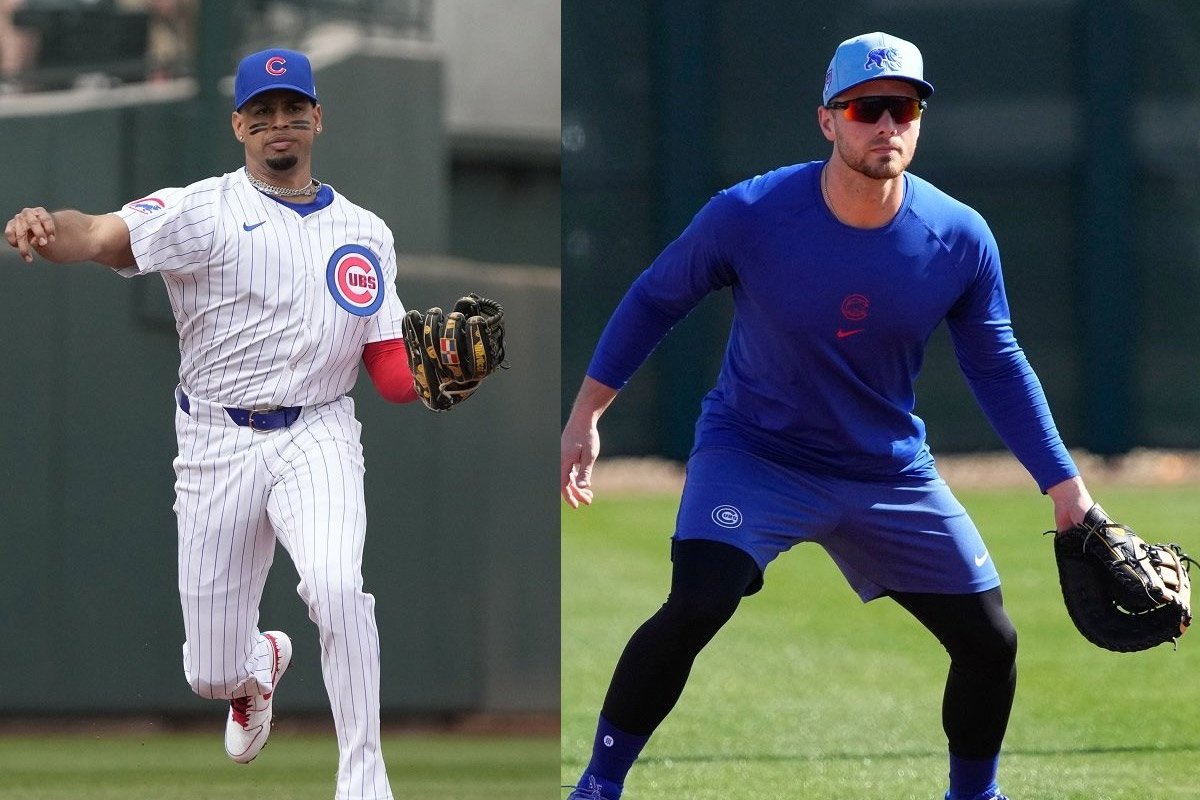 Things are far from settled on the positional side for the Chicago Cubs this year. Two of the biggest bats still on the market - Cody Bellinger and Matt Chapman - are premier fielders at the two most unsettled spots in the Cubs’ lineup: first base and third base. There’s been plenty said about Bellinger, who had a Comeback Player of the Year-winning season with the Cubs in 2023, and his fit with the Cubs. He could easily play center field while top prospect Pete Crow-Armstrong gets a little more seasoning in the minors, or he could immediately take over as the full-time first basemen if PCA is ready right out of the gate this year. His lefty bat would also do wonders for a lineup dominated by righties. For all those reasons, the Cubs are still the presumed favorites to sign the former National League MVP when he finally puts pen to paper. For now, though, Bellinger remains a free agent, and the Cubs must move forward with the guys on the roster. As such, the current projected starters at the infield corners at Wrigley Field are Christopher Morel and Michael Busch. Morel’s profile is well-known around here. He’s a power-hitting “utility” player who hit 26 home runs and posted an .826 OPS in 429 at-bats in his sophomore season. He’s as toolsy as any player the Cubs have had since Javier Baez; in 2023, he had 90th percentile-or-better marks in average exit velocity, barrel percentage, and hard hit percentage, according to Statcast. When Morel connects, few players in baseball can do as much damage as he can with one swing. Beyond his bat, though, Morel is a gifted athlete. His elite top sprint speed gave way to a 94th percentile added value via baserunning, and his arm strength is nearly peerless. He has the profile of an elite defender at nearly any position, making it so frustrating that he has yet to find a long-term defensive home. 24-year-olds with Morel’s athleticism shouldn’t be starting the lion's share of their games at designated hitter, yet that’s exactly what the Dominican Republic native did last year. Morel’s defensive flexibility has, to this point, resulted from his inability to find a long-term defensive home rather than a benefit of his unique physical gifts. The Cubs and Morel both sound ready to commit him to one position, and both sides apparently want that defensive home to be at the hot corner. According to manager Craig Counsell, he’ll be getting the “majority” of the team’s work there in Spring Training, hoping he’ll run away with the job that has been available since Kris Bryant was shipped out of town. As for Busch, the team acquired him in a larger trade that involved top pitching prospect Jackson Ferris going back to the Los Angeles Dodgers. It was a hefty price for a 26-year-old who has yet to establish himself at the major league level, though the bat is, assuredly, for real. In each season of his minor league climb, Busch’s OPS rose, starting with a .496 mark in 2019 (in a tiny, ten-game sample) before peaking last year at 1.049. Busch should seamlessly fit into the middle of the Cubs’ order as a lefty with power, likely sandwiched between any three of Seiya Suzuki, Dansby Swanson, and Ian Happ. He could immediately step into Cody Bellinger’s spot in the four-hole, though he likely must prove his major league bona fides to Counsell before being trusted. Of course, should the Cubs get one of Boras’ star position players, Busch would make for a top-flight hitter in the bottom third of the lineup. He has played every position on the infield besides shortstop in his professional career, and he’s even logged a few innings in left and right field each season. Like Morel, his defensive “versatility” isn’t so Ben Zobrist-esque as it is an inability to lock down one spot permanently. Still, Busch is an instinctual fielder who makes routine plays without any headaches. If he does take over first base full-time in 2024, he won’t be the second coming of Anthony Rizzo at the cold corner, but he’ll be a huge improvement over the outright disaster that was the Trey Mancini-Eric Hosmer combo. The Cubs have other options beyond those two: Miles Mastrobuoni, Nick Madrigal, Matt Mervis, and the recently signed Dom Smith can all play at least one of the corner infield positions, and the possibility of Bellinger returning still exists. Mastrobuoni is a versatile defender and can supply a left-handed bat to the lineup (and he finished 2023 on a hot stretch). Madrigal is a high-contact bat who finished fifth among all third basemen with eight DRS last season. Mervis is a powerful lefty who slashed .309/.379/.605 with 36 home runs in the minors in 2022. And Smith is a former top prospect with two seasons on his résumé with an OPS over .880. Like Morel and Busch, those guys have their caveats - even more so than the two projected starters - but they’re valuable depth and competition if nothing else. However, if the Cubs lineup is going to be as potent as possible, with or without Bellinger, then it has to find a way to include Busch and Morel regularly. If that means forcing both guys into a trial by fire at their new, permanent defensive homes on the infield corners, then so be it.
-
- 1
-
-
- christopher morel
- michael busch
- (and 3 more)
-
With Spring Training closing in on the calendar and the “Boras Four” still at large, the Cubs need to prepare to open 2024 with a pair of youngsters as the infield bookends. Image courtesy of Rick Scuteri, USA Today Things are far from settled on the positional side for the Chicago Cubs this year. Two of the biggest bats still on the market - Cody Bellinger and Matt Chapman - are premier fielders at the two most unsettled spots in the Cubs’ lineup: first base and third base. There’s been plenty said about Bellinger, who had a Comeback Player of the Year-winning season with the Cubs in 2023, and his fit with the Cubs. He could easily play center field while top prospect Pete Crow-Armstrong gets a little more seasoning in the minors, or he could immediately take over as the full-time first basemen if PCA is ready right out of the gate this year. His lefty bat would also do wonders for a lineup dominated by righties. For all those reasons, the Cubs are still the presumed favorites to sign the former National League MVP when he finally puts pen to paper. For now, though, Bellinger remains a free agent, and the Cubs must move forward with the guys on the roster. As such, the current projected starters at the infield corners at Wrigley Field are Christopher Morel and Michael Busch. Morel’s profile is well-known around here. He’s a power-hitting “utility” player who hit 26 home runs and posted an .826 OPS in 429 at-bats in his sophomore season. He’s as toolsy as any player the Cubs have had since Javier Baez; in 2023, he had 90th percentile-or-better marks in average exit velocity, barrel percentage, and hard hit percentage, according to Statcast. When Morel connects, few players in baseball can do as much damage as he can with one swing. Beyond his bat, though, Morel is a gifted athlete. His elite top sprint speed gave way to a 94th percentile added value via baserunning, and his arm strength is nearly peerless. He has the profile of an elite defender at nearly any position, making it so frustrating that he has yet to find a long-term defensive home. 24-year-olds with Morel’s athleticism shouldn’t be starting the lion's share of their games at designated hitter, yet that’s exactly what the Dominican Republic native did last year. Morel’s defensive flexibility has, to this point, resulted from his inability to find a long-term defensive home rather than a benefit of his unique physical gifts. The Cubs and Morel both sound ready to commit him to one position, and both sides apparently want that defensive home to be at the hot corner. According to manager Craig Counsell, he’ll be getting the “majority” of the team’s work there in Spring Training, hoping he’ll run away with the job that has been available since Kris Bryant was shipped out of town. As for Busch, the team acquired him in a larger trade that involved top pitching prospect Jackson Ferris going back to the Los Angeles Dodgers. It was a hefty price for a 26-year-old who has yet to establish himself at the major league level, though the bat is, assuredly, for real. In each season of his minor league climb, Busch’s OPS rose, starting with a .496 mark in 2019 (in a tiny, ten-game sample) before peaking last year at 1.049. Busch should seamlessly fit into the middle of the Cubs’ order as a lefty with power, likely sandwiched between any three of Seiya Suzuki, Dansby Swanson, and Ian Happ. He could immediately step into Cody Bellinger’s spot in the four-hole, though he likely must prove his major league bona fides to Counsell before being trusted. Of course, should the Cubs get one of Boras’ star position players, Busch would make for a top-flight hitter in the bottom third of the lineup. He has played every position on the infield besides shortstop in his professional career, and he’s even logged a few innings in left and right field each season. Like Morel, his defensive “versatility” isn’t so Ben Zobrist-esque as it is an inability to lock down one spot permanently. Still, Busch is an instinctual fielder who makes routine plays without any headaches. If he does take over first base full-time in 2024, he won’t be the second coming of Anthony Rizzo at the cold corner, but he’ll be a huge improvement over the outright disaster that was the Trey Mancini-Eric Hosmer combo. The Cubs have other options beyond those two: Miles Mastrobuoni, Nick Madrigal, Matt Mervis, and the recently signed Dom Smith can all play at least one of the corner infield positions, and the possibility of Bellinger returning still exists. Mastrobuoni is a versatile defender and can supply a left-handed bat to the lineup (and he finished 2023 on a hot stretch). Madrigal is a high-contact bat who finished fifth among all third basemen with eight DRS last season. Mervis is a powerful lefty who slashed .309/.379/.605 with 36 home runs in the minors in 2022. And Smith is a former top prospect with two seasons on his résumé with an OPS over .880. Like Morel and Busch, those guys have their caveats - even more so than the two projected starters - but they’re valuable depth and competition if nothing else. However, if the Cubs lineup is going to be as potent as possible, with or without Bellinger, then it has to find a way to include Busch and Morel regularly. If that means forcing both guys into a trial by fire at their new, permanent defensive homes on the infield corners, then so be it. View full article
-
Pete Crow-ArmstrongCade HortonOwen CaissieMatt ShawKevin AlcantaraBen BrownJordan WicksMichael BuschMatt MervisMoises BallesterosJames TriantosAlexander CanarioJefferson RojasBrennen DavisCristian HernandezJaxon WigginsJosh RiveraHaydn McGearyDerniche ValdezBrandon Birdsell
-
I'm hoping so too. I was really excited when the Cubs got him at the deadline in 2022 (even if I was bummed to see efross go) and I had high hopes for him last year. If he can get his cutter-changeup combo to be more effective in and away from lefties this year, he's the dark horse in this competition.
-
After years of carrying one or zero left-handed relievers, the Cubs will have a pair of (very) different southpaws in their bullpen in 2024. Image courtesy of © Matt Marton-USA TODAY Sports Last year at this time, the Chicago Cubs had one left-handed reliever projected to make the Opening Day roster: Brandon Hughes. When he was sidelined with an injury in spring training, the Cubs elected to open the season with no lefties in their bullpen. They did have Mark Leiter Jr., who has had noticeable reverse-splits in his career thanks to his dominant splitter, but for most of 2023, former manager David Ross had no southpaws to deploy (outside of a few cameos from Anthony Kay). By the end of the 2023 season, that finally changed, thanks to Drew Smyly’s move out of the rotation and Luke Little’s ascension through the minor-league ranks. The two lefties are quite different in their styles. Little is a 6’8” behemoth with a rocket fastball. Smyly is a crafty veteran with a hammer curve. They both saw success in the Chicago bullpen late last year. Craig Counsell, long known for his brilliant bullpen usage in Milwaukee, will have to get creative in his utilization of the two lefties, but they will give the Cubs a luxury they’ve rarely had in recent years. Little’s calling card ability is his proclivity for strikeouts; in his professional career, he’s never dipped below 13.8 strikeouts per nine innings (K/9), which includes a 14.8 K/9 in 63 2/3 innings in the minors and a 16.2 K/9 in 6 2/3 innings in the Major League last year. The profundity he’s shown for missing bats has, in turn, also made him incredibly difficult to hit, as he has never allowed more than 5.9 hits per nine innings in any of his three professional seasons to date. The massive southpaw has proven preternatural at leveraging his frame and extending towards home plate. Little’s height naturally means his pitched will travel downward more than most, but his throwing platform is what makes him so difficult to hit. With his velocity and frame, the ball “spikes” into the ground out of his hand, the same way it does for elite servers in tennis. It’s the biggest reason why Little has been nearly impossible to square up: in 147 professional innings between the majors and minors, Little has allowed just two home runs. Contrast that with Smyly, who’s been more of a finesse pitcher in recent years and has always conceded more fly balls than most (43.9% fly ball percentage last season). At this point in his career, Smyly is a three-pitch pitcher, primarily using a fastball (38.7% usage last season) and curveball (49.4%), while mixing in a cutter (12.0%). However, Smyly is attempting to expand his arsenal, adding a slider and “splutter” to his pitch mix in an attempt to compete for the fifth starter gig in spring training this year. Should Smyly lose that competition, he should seamlessly slot back into the bullpen, where he pitched to a 2.81 ERA in 16 innings in September. Following an ugly start against the Detroit Tigers on August 22, he was moved to the ’pen for the rest of the season. His starting prospects aren’t completely dead. He posted a 3.27 ERA through his first 13 starts last season. Then everything started to unravel in mid-June. Over his final 10 starts, Smyly was tagged for an unsightly 7.83 ERA. Now, something peculiar about Smyly in 2023 was that he had reverse splits that were rather pronounced. He held righties to a .241/.312/.446 slash line (better than the league average .253/.328/.428 when the hitter had the platoon advantage), but opposing lefties hit him at a clip nearly equivalent to Mike Trout’s career OPS: .338/.405/.576. Smyly’s new pitches should help alleviate some of that lefty-on-lefty crime, but if he remains a reliever, the Cubs can play a little match-up protection game as Smyly hones his repertoire. Little’s splits exist in a very small sample at the major-league level, but they track with his career minor league performance: in 11 batters faced, Little held lefties to a .111/.182/.222 batting line with four strikeouts. Against 19 opposing righties, Little surrendered a .267/.421/.333 line with eight strikeouts. As a fastball-slider only pitcher, Little will always have a more difficult time beating righties (neither of his pitches moves away from them), but he has shown unusual maturity for challenging them on the inside third of the plate that bodes well for his future success. Cubs fans should feel confident that Counsell will get the best out of his relievers this year after making such a habit of it with the Brewers. If Smyly handle his platoon advantage, and Little learns to beat righties away, then both pitchers (and the Cubs bullpen) will be better for it. Just simply having both players available, though, is a nice change of pace after years of lacking a quality southpaw reliever. View full article
-
Chicago Cubs 2024 Spring Training Position Battles: The 5th Starter
Brandon Glick posted an article in Cubs
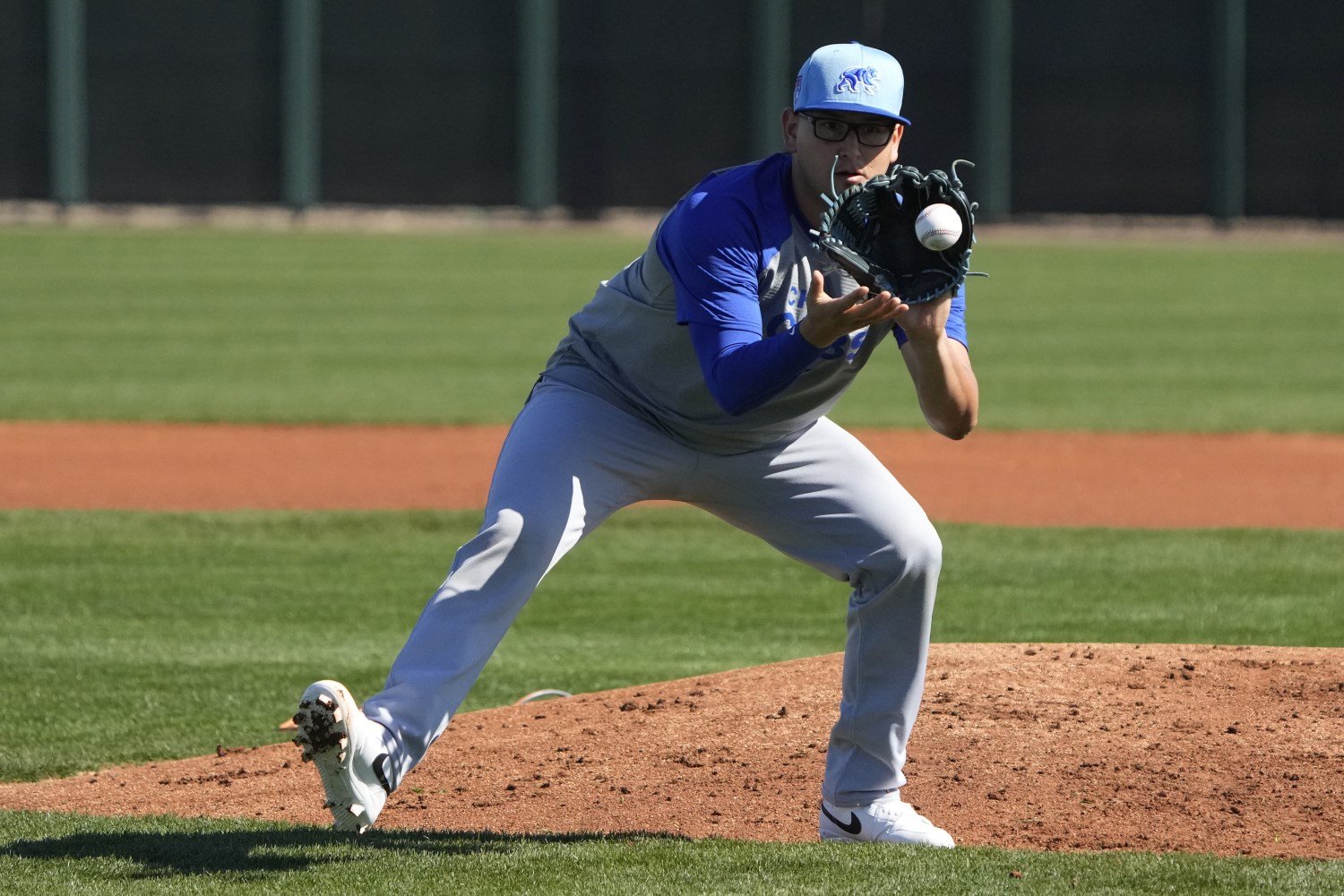 As things currently stand, there are four Cubs who are locked into their places in the rotation following their 2023 seasons: Justin Steele (2023 stats - 30 GS, 173.1 IP, 3.06 ERA, 3.02 FIP, 176 SO, 3.8 WAR) Kyle Hendricks (2023 stats - 24 GS, 137.0 IP, 3.74 ERA, 3.81 FIP, 93 SO, 1.5 WAR) Jameson Taillon (2023 stats - 29 GS, 154.1 IP, 4.84 ERA, 4.61 FIP, 140 SO, -0.1 WAR) Shota Imanaga (2023 stats, in Japan - 24 GS, 159 IP, 2.66 ERA, 3.43 FIP, 188 SO) Behind them are a bevy of options, each of whom bring different pedigrees and repertoires to the table. Though each pitcher will likely have to take a start or two in 2024 (a full, 162 game season is often replete with injuries and fatigue), there will be one pitcher who earns the full-time starting gig out of spring training. The Favorite Javier Assad: 2023 stats - 32 G (10 GS), 109.1 IP, 3.05 ERA, 4.29 FIP, 94 SO, 2.3 WAR 2024 Projections: ZiPS - 17 GS, 114.1 IP, 4.33 ERA, 4.73 FIP, 91 SO, 0.9 WAR PECOTA - 15 GS, 95 IP, 4.83 ERA, 5.02 DRA, 73 SO, 0.4 WARP It’s time to acknowledge the brilliant season Javier Assad had. North Side Baseball’s Cubs Rookie of the Year in 2023, Assad pitched brilliantly while filling in for both Keegan Thompson (injuries, ineffectiveness) and Marcus Stroman (injury) in the bullpen and rotation, respectively. He gets by on a deep arsenal, as he threw six different pitches last year at least 65 times each. All of those pitches had different use cases, as he threw the slider almost exclusively to righties (to the tune of a 44.9% whiff rate) and the changeup exclusively to lefties. He also has three distinct fastballs. The four-seamer is primarily used on lefties (72.5% of the ones he threw last year were to them); the sinker is reserved for righties (68.2%) and the cutter has a nearly even split. Those three pitches all average between 89 and 93 miles per hour, with spin rates ranging from 1900 to 2100 revolutions per minute. Assad really improved his batted-ball profile last year, increasing his groundball rate (41.4% in 2022 to 47.3% in 2023), pulled ball percentage (40.5% to 30.9%) and weak contact rate (5.2% to 7.1%), all of which helped offset a spike in barrels surrendered (5.2% to 9.0%). If he can keep his pitch mix diverse and play to the strengths of the Cubs’ defense (up the middle, in the infield), Assad should have the fast track to being the fifth starter out of camp. The Sleeper Jordan Wicks: 2023 stats - 7 G (7 GS), 34.2 IP, 4.41 ERA, 4.70 FIP, 24 SO, 0.3 WAR 2024 Projections: ZiPS - 25 GS, 110.1 IP, 4.41 ERA, 4.37 FIP, 94 SO, 1.3 WAR PECOTA - 19 GS, 81 IP, 4.85 ERA, 5.04 DRA, 67 SO, 0.4 WARP Wicks is the prospect of the group, still maintaining his rookie eligibility heading into 2024. The relatively soft-tossing lefty has a devastating changeup-curveball combination that enabled him to fill in admirably down the stretch (during a playoff push) last season, and his six-pitch repertoire produced three pitches with an expected batting average below .225: the changeup (.212 xBA), the sinker (.224) and the curveball (.106). In his September cup of coffee, Wicks’s average exit velocity (88.1 mph), walk rate (7.5%), barrel percentage (6.3%), hard-hit percentage (33%), and groundball rate (50%) all would have been well-above average had he faced enough batters to qualify. His other stats are limited due to the sample being just over 30 innings, but rest assured that Wicks did everything his profile suggested he could do, while he steadily rose through the minors since being picked 21st overall in the 2021 Draft. If it’s not going to be Assad (perhaps so manager Craig Counsell can deploy him out of the bullpen), Wicks should be the heavy favorite for the final spot in the rotation. He doesn’t have the same pronounced lefty-righty splits of the other options below, and his durability (and ability to throw 100+ pitches in an outing) gives him a greater ceiling than Assad as a starter. If Wicks can mold his slider into an out-pitch against opposing left-handed batters (who hit .333 off of it in 2023), he’ll be in business. The Others Hayden Wesneski: 2023 stats - 34 G (11 GS), 89.1 IP, 4.63 ERA, 5.48 FIP, 83 SO, 0.3 WAR 2024 Projections: ZiPS - 17 GS, 101.2 IP, 4.51 ERA, 4.41 FIP, 94 SO, 1.1 WAR PECOTA - 8 GS, 66 IP, 4.29 ERA, 4.52 DRA, 58 SO, 0.6 WARP Right off the bat, ZiPS is the high man on Wesneski’s starting prospects this year, as no other projection service has him exceeding 70 innings pitched nor ten games starting. As such, ZiPS is also the most generous in terms of his projected strikeouts and WAR, whereas PECOTA falls more in line with the consensus prediction for Wesneski in 2024. It may be helpful to view ZiPS’ projection as Wesneski’s ceiling this season, and PECOTA’s as a median outcome. The book on Wesneski is well-known by now: he completely owns opposing righties, but he gets owned by lefties. In 134 at-bats against opposite-handed batters in 2023, he gave up a .313/.374/.649 slash line. That’s a 1.023 OPS. In other words, lefties facing Wesneski had a higher OPS than Ronald Acuña Jr., the reigning National League MVP, did last season (1.012). In contrast, righties only slashed .202/.269/.348 against “Wesnasty,” in 173 at-bats, meaning the average righty hit him about as well as Luis Torrens (who had a .618 OPS for the Cubs in 2023). The pitch mix for Wesneski is also familiar, as he primarily throws a fastball, a sinker and his sweeper. That sweeper is performing fine against lefties: he threw 158 last year to lefties, yielding a .200 batting average against and .400 slugging percentage against. However, his fastball is a problem: in 220 fastballs thrown to lefties in 2023, Wesneski gave up a .387 batting average and a .790 slugging average. In contrast, those pitches have performed admirably against opposing righties (the sweeper generated a .086 batting average in 298 pitches, and the fastball accrued a .237 average across 166 pitches). Unless the former Yankees prospect can figure out how to get the hard stuff by lefties, he’s always going to be a liability in the rotation. If he shows up to spring training with an improved changeup or cutter, then perhaps he can live up to his ZiPS projection. At this point in time, though, it feels like Wesneski is destined for match-up duty out of the pen. Drew Smyly: 2023 stats - 41 G (23 GS), 142.1 IP, 5.00 ERA, 4.96 FIP, 141 SO, 0.0 WAR 2024 Projections: ZiPS - 21 GS, 121 IP, 4.54 ERA, 4.63 FIP, 116 SO, 1.3 WAR PECOTA - 0 GS, 47 IP, 4.47 ERA, 4.47 DRA, 43 SO, 0.3 WARP Smyly has always been more of a fly ball pitcher, though his splits were as pronounced as ever last season: 34.8% ground ball percentage, 43.9% fly ball percentage. That skill set isn’t an issue when the pitcher is keeping the ball in the park, as Smyly did at the end of 2022, when he had a sub-10% home run per fly ball ratio in the second half, but it is when the pitcher is giving up 1.6 home runs per nine innings. Opponents' average exit velocity and number of batted balls exceeding 95+ miles per hour both jumped up for Smyly from 2022 to 2023. At this point in his career, Smyly is a three-pitch pitcher, primarily using a fastball (38.7% usage last season) and curveball (49.4%), while mixing in a cutter (12.0%). While starting, Smyly tends to use the cutter a lot more (over 20% usage in 2022). Given his limited repertoire, middling velocity (average 92.0 mph fastball last year), and ability to hold opposing lefties down, Smyly is best suited for the bullpen to start the year. Of course, if his attempted offseason repertoire adjustments take hold, the equation changes. The Big Question For the first time in a long time, the Cubs have significant depth in the rotation. An injury to Steele or Imanaga will hurt, of course, but it doesn’t automatically sink the season. Assad is likely to win the job after his impressive second half performance in 2023, but any of the above options would be fine as a fill-in choice, too. As pitching coach Tommy Hottovy explains: ““The more options we have, and the more flexibility that we have going into the season, [it's] always going to be the best way to start the season off. And then things always end up working themselves out.” However, the big question lies beyond what's currently on the roster. Pitching prospects Ben Brown and Caleb Kilian are both set to begin the 2024 season in Triple-A Iowa, and chances are they’ll be stretched out as starters while the Cubs try to put off their (potential) respective transitions to the bullpen. Kilian has struggled mightily in his few bites at the big-league apple, compiling a 12.42 ERA in six appearances (four starts). He’s got premium velocity and sharp bite on his breaking pitches, but until and unless he learns better pitch sequencing and finally reigns in his control, Killian will remain destined to be a reliever--if he be a big-league hurler at all. Likewise, Brown struggled at Triple-A last year, posting a 5.70 ERA in 73 innings pitched. Armed with a mid-to-high-90s fastball and hammer curveball, he, too, could make for an effective reliever (or trade bait). The big fish in the minors is top pitching prospect Cade Horton, who, after stunning fans and pundits alike by being picked seventh overall in the 2022 Draft, has become a consensus top-30 prospect in baseball. As per North Side Baseball’s scouting report: “It was clear that with a fastball that sits comfortably in the mid-90s and flashes 98 mph, Horton's velocity wasn't an issue. We also knew about the slider: it's good. It was nice to see that Horton continued working on the changeup. While not a pitch he used often, it was a pitch he began to throw more and more as the season went along, specifically against left-handed hitters. Overall, the goateed pitcher struck out 117 hitters, walked just 27, and had a 2.65 ERA throughout 88 innings and 21 starts. It should be no shock that he was eventually named the 2023 Cubs MiLB Pitcher of the Year.” Lastly, the Cubs are still being mentioned as suitors for the two remaining aces on the free agent market, Blake Snell and Jordan Montgomery. As two of the Four Borasmen (Matt Chapman and Cody Bellinger being the others), it’s no surprise they’re lingering on the market even as pitchers and catchers report across the game, but they will need to sign soon to get a full preseason in with their new teams. The Cubs will likely focus on the positional duo in that quartet, but don’t be shocked if the North Siders make a play for one of the left-handed starters if the long-term deals they desire aren’t out there. How are you feeling about the Cubs' rotation depth? Which other starting pitchers excite you, in 2024 and beyond?
 -
After some offseason shuffling in the rotation, the Chicago Cubs are set to have a fierce and lengthy spring training battle for the fifth starter job. Image courtesy of © Rick Scuteri-USA TODAY Sports As things currently stand, there are four Cubs who are locked into their places in the rotation following their 2023 seasons: Justin Steele (2023 stats - 30 GS, 173.1 IP, 3.06 ERA, 3.02 FIP, 176 SO, 3.8 WAR) Kyle Hendricks (2023 stats - 24 GS, 137.0 IP, 3.74 ERA, 3.81 FIP, 93 SO, 1.5 WAR) Jameson Taillon (2023 stats - 29 GS, 154.1 IP, 4.84 ERA, 4.61 FIP, 140 SO, -0.1 WAR) Shota Imanaga (2023 stats, in Japan - 24 GS, 159 IP, 2.66 ERA, 3.43 FIP, 188 SO) Behind them are a bevy of options, each of whom bring different pedigrees and repertoires to the table. Though each pitcher will likely have to take a start or two in 2024 (a full, 162 game season is often replete with injuries and fatigue), there will be one pitcher who earns the full-time starting gig out of spring training. The Favorite Javier Assad: 2023 stats - 32 G (10 GS), 109.1 IP, 3.05 ERA, 4.29 FIP, 94 SO, 2.3 WAR 2024 Projections: ZiPS - 17 GS, 114.1 IP, 4.33 ERA, 4.73 FIP, 91 SO, 0.9 WAR PECOTA - 15 GS, 95 IP, 4.83 ERA, 5.02 DRA, 73 SO, 0.4 WARP It’s time to acknowledge the brilliant season Javier Assad had. North Side Baseball’s Cubs Rookie of the Year in 2023, Assad pitched brilliantly while filling in for both Keegan Thompson (injuries, ineffectiveness) and Marcus Stroman (injury) in the bullpen and rotation, respectively. He gets by on a deep arsenal, as he threw six different pitches last year at least 65 times each. All of those pitches had different use cases, as he threw the slider almost exclusively to righties (to the tune of a 44.9% whiff rate) and the changeup exclusively to lefties. He also has three distinct fastballs. The four-seamer is primarily used on lefties (72.5% of the ones he threw last year were to them); the sinker is reserved for righties (68.2%) and the cutter has a nearly even split. Those three pitches all average between 89 and 93 miles per hour, with spin rates ranging from 1900 to 2100 revolutions per minute. Assad really improved his batted-ball profile last year, increasing his groundball rate (41.4% in 2022 to 47.3% in 2023), pulled ball percentage (40.5% to 30.9%) and weak contact rate (5.2% to 7.1%), all of which helped offset a spike in barrels surrendered (5.2% to 9.0%). If he can keep his pitch mix diverse and play to the strengths of the Cubs’ defense (up the middle, in the infield), Assad should have the fast track to being the fifth starter out of camp. The Sleeper Jordan Wicks: 2023 stats - 7 G (7 GS), 34.2 IP, 4.41 ERA, 4.70 FIP, 24 SO, 0.3 WAR 2024 Projections: ZiPS - 25 GS, 110.1 IP, 4.41 ERA, 4.37 FIP, 94 SO, 1.3 WAR PECOTA - 19 GS, 81 IP, 4.85 ERA, 5.04 DRA, 67 SO, 0.4 WARP Wicks is the prospect of the group, still maintaining his rookie eligibility heading into 2024. The relatively soft-tossing lefty has a devastating changeup-curveball combination that enabled him to fill in admirably down the stretch (during a playoff push) last season, and his six-pitch repertoire produced three pitches with an expected batting average below .225: the changeup (.212 xBA), the sinker (.224) and the curveball (.106). In his September cup of coffee, Wicks’s average exit velocity (88.1 mph), walk rate (7.5%), barrel percentage (6.3%), hard-hit percentage (33%), and groundball rate (50%) all would have been well-above average had he faced enough batters to qualify. His other stats are limited due to the sample being just over 30 innings, but rest assured that Wicks did everything his profile suggested he could do, while he steadily rose through the minors since being picked 21st overall in the 2021 Draft. If it’s not going to be Assad (perhaps so manager Craig Counsell can deploy him out of the bullpen), Wicks should be the heavy favorite for the final spot in the rotation. He doesn’t have the same pronounced lefty-righty splits of the other options below, and his durability (and ability to throw 100+ pitches in an outing) gives him a greater ceiling than Assad as a starter. If Wicks can mold his slider into an out-pitch against opposing left-handed batters (who hit .333 off of it in 2023), he’ll be in business. The Others Hayden Wesneski: 2023 stats - 34 G (11 GS), 89.1 IP, 4.63 ERA, 5.48 FIP, 83 SO, 0.3 WAR 2024 Projections: ZiPS - 17 GS, 101.2 IP, 4.51 ERA, 4.41 FIP, 94 SO, 1.1 WAR PECOTA - 8 GS, 66 IP, 4.29 ERA, 4.52 DRA, 58 SO, 0.6 WARP Right off the bat, ZiPS is the high man on Wesneski’s starting prospects this year, as no other projection service has him exceeding 70 innings pitched nor ten games starting. As such, ZiPS is also the most generous in terms of his projected strikeouts and WAR, whereas PECOTA falls more in line with the consensus prediction for Wesneski in 2024. It may be helpful to view ZiPS’ projection as Wesneski’s ceiling this season, and PECOTA’s as a median outcome. The book on Wesneski is well-known by now: he completely owns opposing righties, but he gets owned by lefties. In 134 at-bats against opposite-handed batters in 2023, he gave up a .313/.374/.649 slash line. That’s a 1.023 OPS. In other words, lefties facing Wesneski had a higher OPS than Ronald Acuña Jr., the reigning National League MVP, did last season (1.012). In contrast, righties only slashed .202/.269/.348 against “Wesnasty,” in 173 at-bats, meaning the average righty hit him about as well as Luis Torrens (who had a .618 OPS for the Cubs in 2023). The pitch mix for Wesneski is also familiar, as he primarily throws a fastball, a sinker and his sweeper. That sweeper is performing fine against lefties: he threw 158 last year to lefties, yielding a .200 batting average against and .400 slugging percentage against. However, his fastball is a problem: in 220 fastballs thrown to lefties in 2023, Wesneski gave up a .387 batting average and a .790 slugging average. In contrast, those pitches have performed admirably against opposing righties (the sweeper generated a .086 batting average in 298 pitches, and the fastball accrued a .237 average across 166 pitches). Unless the former Yankees prospect can figure out how to get the hard stuff by lefties, he’s always going to be a liability in the rotation. If he shows up to spring training with an improved changeup or cutter, then perhaps he can live up to his ZiPS projection. At this point in time, though, it feels like Wesneski is destined for match-up duty out of the pen. Drew Smyly: 2023 stats - 41 G (23 GS), 142.1 IP, 5.00 ERA, 4.96 FIP, 141 SO, 0.0 WAR 2024 Projections: ZiPS - 21 GS, 121 IP, 4.54 ERA, 4.63 FIP, 116 SO, 1.3 WAR PECOTA - 0 GS, 47 IP, 4.47 ERA, 4.47 DRA, 43 SO, 0.3 WARP Smyly has always been more of a fly ball pitcher, though his splits were as pronounced as ever last season: 34.8% ground ball percentage, 43.9% fly ball percentage. That skill set isn’t an issue when the pitcher is keeping the ball in the park, as Smyly did at the end of 2022, when he had a sub-10% home run per fly ball ratio in the second half, but it is when the pitcher is giving up 1.6 home runs per nine innings. Opponents' average exit velocity and number of batted balls exceeding 95+ miles per hour both jumped up for Smyly from 2022 to 2023. At this point in his career, Smyly is a three-pitch pitcher, primarily using a fastball (38.7% usage last season) and curveball (49.4%), while mixing in a cutter (12.0%). While starting, Smyly tends to use the cutter a lot more (over 20% usage in 2022). Given his limited repertoire, middling velocity (average 92.0 mph fastball last year), and ability to hold opposing lefties down, Smyly is best suited for the bullpen to start the year. Of course, if his attempted offseason repertoire adjustments take hold, the equation changes. The Big Question For the first time in a long time, the Cubs have significant depth in the rotation. An injury to Steele or Imanaga will hurt, of course, but it doesn’t automatically sink the season. Assad is likely to win the job after his impressive second half performance in 2023, but any of the above options would be fine as a fill-in choice, too. As pitching coach Tommy Hottovy explains: ““The more options we have, and the more flexibility that we have going into the season, [it's] always going to be the best way to start the season off. And then things always end up working themselves out.” However, the big question lies beyond what's currently on the roster. Pitching prospects Ben Brown and Caleb Kilian are both set to begin the 2024 season in Triple-A Iowa, and chances are they’ll be stretched out as starters while the Cubs try to put off their (potential) respective transitions to the bullpen. Kilian has struggled mightily in his few bites at the big-league apple, compiling a 12.42 ERA in six appearances (four starts). He’s got premium velocity and sharp bite on his breaking pitches, but until and unless he learns better pitch sequencing and finally reigns in his control, Killian will remain destined to be a reliever--if he be a big-league hurler at all. Likewise, Brown struggled at Triple-A last year, posting a 5.70 ERA in 73 innings pitched. Armed with a mid-to-high-90s fastball and hammer curveball, he, too, could make for an effective reliever (or trade bait). The big fish in the minors is top pitching prospect Cade Horton, who, after stunning fans and pundits alike by being picked seventh overall in the 2022 Draft, has become a consensus top-30 prospect in baseball. As per North Side Baseball’s scouting report: “It was clear that with a fastball that sits comfortably in the mid-90s and flashes 98 mph, Horton's velocity wasn't an issue. We also knew about the slider: it's good. It was nice to see that Horton continued working on the changeup. While not a pitch he used often, it was a pitch he began to throw more and more as the season went along, specifically against left-handed hitters. Overall, the goateed pitcher struck out 117 hitters, walked just 27, and had a 2.65 ERA throughout 88 innings and 21 starts. It should be no shock that he was eventually named the 2023 Cubs MiLB Pitcher of the Year.” Lastly, the Cubs are still being mentioned as suitors for the two remaining aces on the free agent market, Blake Snell and Jordan Montgomery. As two of the Four Borasmen (Matt Chapman and Cody Bellinger being the others), it’s no surprise they’re lingering on the market even as pitchers and catchers report across the game, but they will need to sign soon to get a full preseason in with their new teams. The Cubs will likely focus on the positional duo in that quartet, but don’t be shocked if the North Siders make a play for one of the left-handed starters if the long-term deals they desire aren’t out there. How are you feeling about the Cubs' rotation depth? Which other starting pitchers excite you, in 2024 and beyond? View full article
-
In a weak NL Central, with a roster flush with talent and more on the way from the minors, the Cubs have serious expectations heading into the 2024 season. The last time the Cubs won the division was in 2020, or the shortened, 60-game pandemic season. Before then, it was in 2017, the year they were outclassed by the Los Angeles Dodgers in the NLCS. For all the talk about how great the last Cubs’ competitive window under Theo Epstein was, they only secured three NL Central titles and won six playoff series (including Wild Card games). However, at least one of those series wins ended the longest drought in professional sports history. Now, on the brink of Spring Training in 2024, the Chicago Cubs are back in a competitive window. The “not a rebuild” that began in earnest during the 2021 Trade Deadline (though one could argue that it was the Yu Darvish trade in December of 2020 that got the wheels rolling) finally reached its end when the Cubs traded for Jeimer Candelario last season, bucking industry predictions and buying as the calendar flipped to August. The team has acquired significant players to beef up the roster - Shota Imanaga, Michael Busch, and Hector Neris - and rumors still have them pegged as a likely landing spot for at least one of the “Boras Four.” The state of the division also resides in the Cubs’ favor. The St. Louis Cardinals, who finished last in the division in 2023, are the projected favorite, with a lineup led by 36-year-old Paul Goldschmidt and 32-year-old Nolan Arenado (as well as a rotation helmed by Sonny Gray, 34). The Milwaukee Brewers added some exciting pieces, including Rhys Hoskins and Gary Sanchez. Still, they’re also down their two longtime aces, Brandon Woodruff (non-tendered due to injury) and Corbin Burnes (traded to Baltimore), and their manager (Craig Counsell, who came to Chicago). The Cincinnati Reds are loaded with young infielders, but their outfield and bullpen leave much to be desired. The Pittsburgh Pirates aren’t awful, but they don’t have many exciting pieces, and calling their rotation average is probably generous. The Cubs have their flaws, too: first base and third base are currently unsettled (even if Busch steps up and fills one of the corners), the rotation could use one more sure thing, the middle-relief facet of the bullpen is in flux, and the lineup currently has a Cody Bellinger-sized hole. A big-ticket free agent signing or top prospect promotion could and should assuage some of those concerns, but they wouldn’t render the Cubs perfect. Even with a few moves that would make them NL Central favorites, the Cubs would still be looking up at the Atlanta Braves and Dodgers in the pantheon of the National League. However, just because they’ll likely be stopped short of the World Series doesn’t mean the North Siders don’t have expectations this year. By all accounts, they should make whatever transactions necessary to enter the regular season as heavy favorites in the central, and they should aggressively promote prospects and buy on the trade market to reinforce an incomplete roster. The Cubs' next competitive window is now, even if Jed Hoyer and the rest of the front office are trying to put it off. Winning in sports is often based on circumstance as much as it is internal and deliberate maneuvering, and the Cubs are being presented with fortuitous division circumstances at this very moment. Anything other than a postseason appearance this year would be an abject failure. This isn’t another “retooling” season where winning is a byproduct of luck; winning every game should be the goal. The Cubs have benefited from playing with house money in the last few years. In 2024, they’ll be expected to win. View full article
-
For the First Time Since 2020, the Cubs Aren't Playing With House Money
Brandon Glick posted an article in Cubs
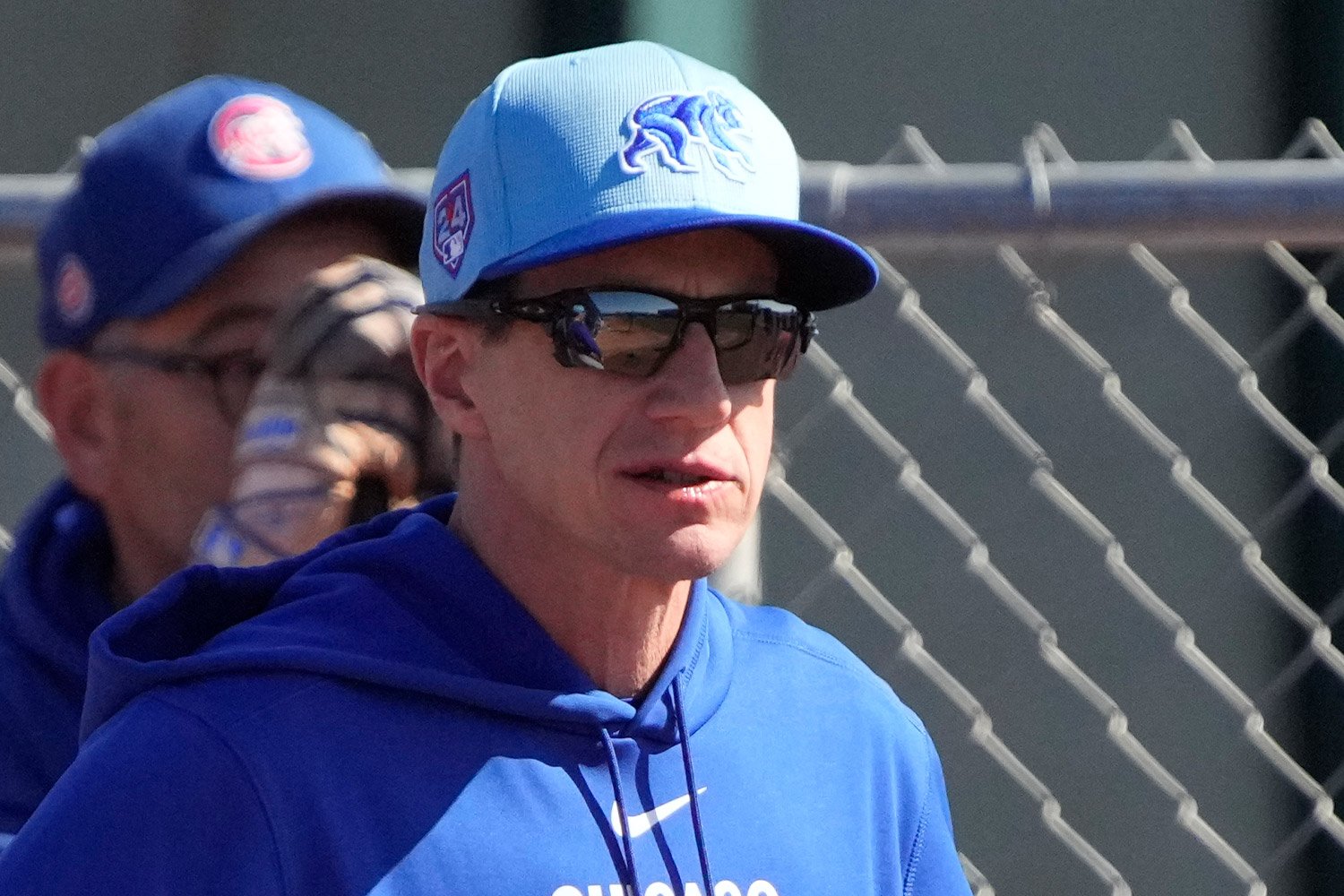 The last time the Cubs won the division was in 2020, or the shortened, 60-game pandemic season. Before then, it was in 2017, the year they were outclassed by the Los Angeles Dodgers in the NLCS. For all the talk about how great the last Cubs’ competitive window under Theo Epstein was, they only secured three NL Central titles and won six playoff series (including Wild Card games). However, at least one of those series wins ended the longest drought in professional sports history. Now, on the brink of Spring Training in 2024, the Chicago Cubs are back in a competitive window. The “not a rebuild” that began in earnest during the 2021 Trade Deadline (though one could argue that it was the Yu Darvish trade in December of 2020 that got the wheels rolling) finally reached its end when the Cubs traded for Jeimer Candelario last season, bucking industry predictions and buying as the calendar flipped to August. The team has acquired significant players to beef up the roster - Shota Imanaga, Michael Busch, and Hector Neris - and rumors still have them pegged as a likely landing spot for at least one of the “Boras Four.” The state of the division also resides in the Cubs’ favor. The St. Louis Cardinals, who finished last in the division in 2023, are the projected favorite, with a lineup led by 36-year-old Paul Goldschmidt and 32-year-old Nolan Arenado (as well as a rotation helmed by Sonny Gray, 34). The Milwaukee Brewers added some exciting pieces, including Rhys Hoskins and Gary Sanchez. Still, they’re also down their two longtime aces, Brandon Woodruff (non-tendered due to injury) and Corbin Burnes (traded to Baltimore), and their manager (Craig Counsell, who came to Chicago). The Cincinnati Reds are loaded with young infielders, but their outfield and bullpen leave much to be desired. The Pittsburgh Pirates aren’t awful, but they don’t have many exciting pieces, and calling their rotation average is probably generous. The Cubs have their flaws, too: first base and third base are currently unsettled (even if Busch steps up and fills one of the corners), the rotation could use one more sure thing, the middle-relief facet of the bullpen is in flux, and the lineup currently has a Cody Bellinger-sized hole. A big-ticket free agent signing or top prospect promotion could and should assuage some of those concerns, but they wouldn’t render the Cubs perfect. Even with a few moves that would make them NL Central favorites, the Cubs would still be looking up at the Atlanta Braves and Dodgers in the pantheon of the National League. However, just because they’ll likely be stopped short of the World Series doesn’t mean the North Siders don’t have expectations this year. By all accounts, they should make whatever transactions necessary to enter the regular season as heavy favorites in the central, and they should aggressively promote prospects and buy on the trade market to reinforce an incomplete roster. The Cubs' next competitive window is now, even if Jed Hoyer and the rest of the front office are trying to put it off. Winning in sports is often based on circumstance as much as it is internal and deliberate maneuvering, and the Cubs are being presented with fortuitous division circumstances at this very moment. Anything other than a postseason appearance this year would be an abject failure. This isn’t another “retooling” season where winning is a byproduct of luck; winning every game should be the goal. The Cubs have benefited from playing with house money in the last few years. In 2024, they’ll be expected to win.
 -
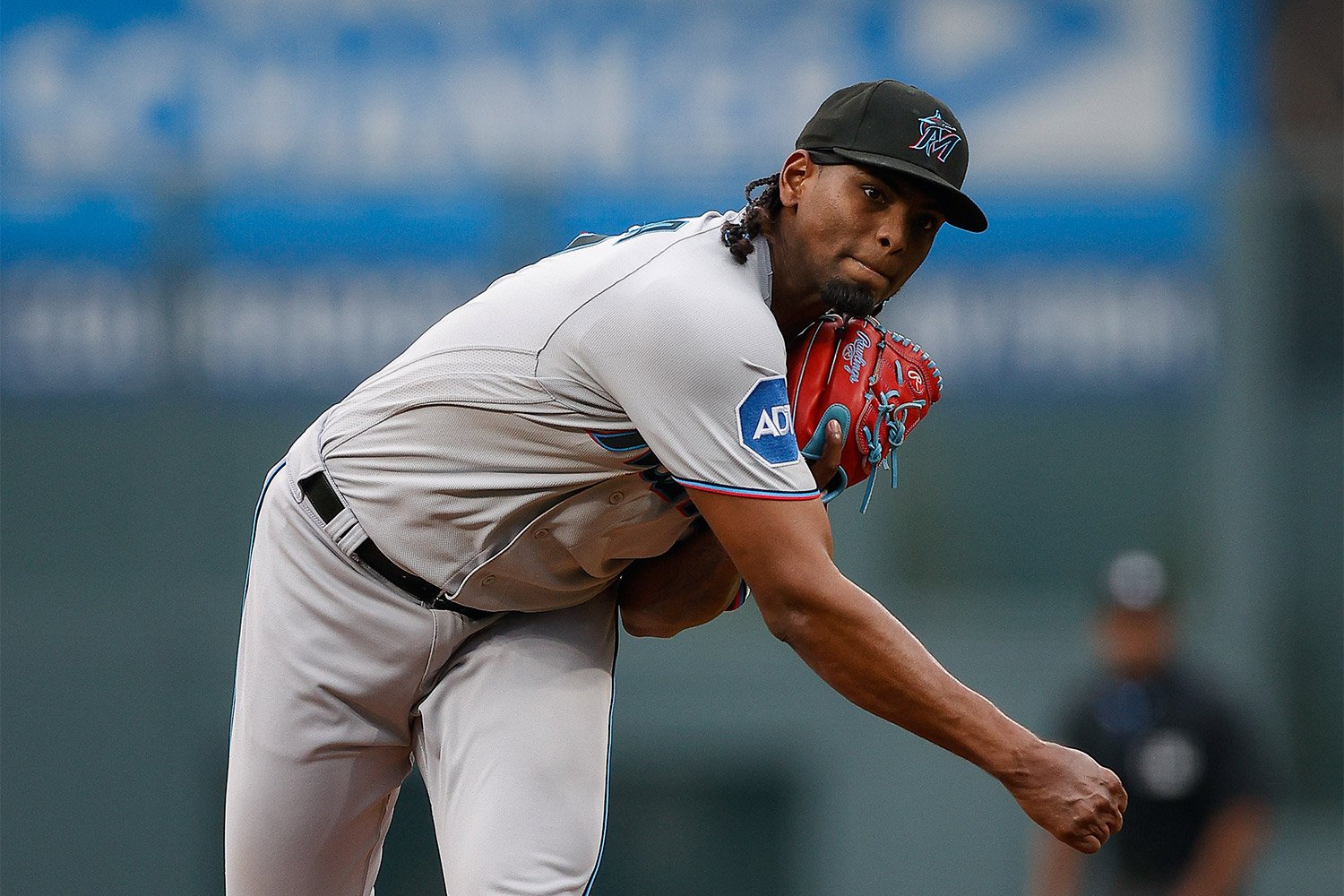 The North Siders have already made a few moves to beef up their pitching staff, signing Shota Imanaga and Hector Neris for the rotation and bullpen, respectively. They also added Yency Almonte in the Michael Busch-Jackson Ferris swap. Combined with the expected internal improvements of the younger pitchers on the roster - Jordan Wicks, Luke Little, and Daniel Palencia chief among them - the team appears to be doing the necessary work to trot out an above-average run-prevention crew next season. However, it’s worth noting a lot of the offseason work has merely been about replacing lost talent; Marcus Stroman departed for New York after opting out of the final year of his contract, and Michael Fulmer recently signed with the Boston Red Sox as he rehabs his late-season UCL tear. On the margins, Brad Boxberger had his mutual option declined, Michael Rucker was designated for assignment (and subsequently traded to the Philadelphia Phillies), the San Diego Padres plucked Jeremiah Estrada off waivers, Brandon Hughes signed with the Arizona Diamondbacks after he was non-tendered, and Codi Heuer is still lingering on the free agent market after his non-tender. The Cubs are probably neutral right now regarding the added pitching talent versus the loss this offseason. If they want to improve, they should probably turn their attention to Miami, where the Marlins currently house some intriguing arms that shouldn’t cost too much relative to the rest of the trade market. Edward Cabrera Cabrera is a 25-year-old starting pitcher with a 4.01 career ERA who isn’t arbitration-eligible until 2026. If you need more of a sales pitch than that, he posted a 3.01 ERA in 71 ⅔ innings with a 1.074 WHIP and 137 ERA+ last year. This year, his ERA rose to 4.24 in 99 ⅔ innings, though he improved his FIP (4.59 in 2022 to 4.43 in 2023), his homers allowed per nine innings (1.3 to 1.0), and strikeouts per nine innings (9.4 to 10.7). Another sign that points to positive regression is his batting average on balls in play: after posting a .207 figure in 2022, his BABIP inflated to .285 this year. If Cabrera is going to improve beyond his current third or fourth starter role, he’ll have to limit the free passes he issues (15.2% walk rate in 2023) and get his exit velocity numbers back to 2022 levels (85.3 miles per hour). Even if he can’t be projected as a future front-line starter, he’s still an extremely valuable piece that will cost a pretty penny on the trade market. Rarely are starters available amid their athletic primes and under team control for five-plus years. Expect If the Cubs are going to make a move for him, the price will be unsightly. Proposed Trade: Cubs Receiver: Edward Cabrera Marlins Receive: Christopher Morel, Ben Brown Somewhat limiting his trade value is that Cabrera missed a chunk of last season with a right shoulder injury. His age and relatively clean past bill of health should assuage most concerns, but shoulder issues for pitchers are always frightening. Ken Rosenthal cited Texas Rangers infielder Ezequiel Duran as "the kind of player the Marlins likely would want for Cabrera." However, it’s worth noting that the Rangers hold Duran in higher regard than the rest of the league. Duran is a former top-100 prospect who broke out during the Rangers’ World Series campaign in 2023, posting a .768 OPS (106 OPS+) in 122 games. Like Cabrera, Duran is team-controlled through the 2028 season, making him a valuable long-term asset. The Cubs' closest analog to Duran - a high-upside, established major leaguer with plenty of team control - is Morel. The 24-year-old hit 26 homers and slashed .247/.313/.508 in a strong sophomore season. Like Duran, Morel can play all over the diamond, though Duran’s versatility is more of a skillset than a consequence of finding a long-term defensive home. Morel comfortably fits the Marlins’ top need of a power bat, though the Cubs aren’t exactly flush with those, either. It would be interesting to see if the Cubs could convince the Marlins to take a pure prospect (Own Cassie?) rather than a young major leaguer, but it would require one of their top bats regardless. The inclusion of Brown is more than just a sweetener, though Cabrera would overstuff an already deep cache of starting pitchers in Chicago. The Marlins could be more patient with Brown as he develops as a starter, or they could take the plunge and try to convert him into a dominant fastball-curveball reliever. Tanner Scott Tanner Scott was a longtime Baltimore Orioles prospect and reliever before getting traded to the Marlins in 2022 for a few low-level prospects. After a breakout season in Miami in 2023, he’ll cost a lot more from a prospective trade partner. Scott posted a 2.31 ERA in 74 appearances last year (78 innings pitched), backed by a sterling 2.17 FIP and 195 ERA+. He struck out 12 batters per nine innings, walked 2.8 batters per nine innings, and gave up just 0.3 home runs per nine innings. In other words, he was a dominant, workhorse reliever. After accruing just one save in five years in Baltimore, he’s got 32 in his two years with the Marlins (12 in 2023). As a lefty reliever, he’d also provide extra value to a Cubs team with only a few lefties in the pen (Luke Little, Drew Smyly). Proposed Trade: Cubs Receiver: Tanner Scott Marlins Receive: Alexander Canario OR Matt Mervis & Caleb Killian OR Hayden Wesneski & Patrick Wisdom There are a variety of trade packages here, depending on the Marlins’ internal valuations of the Cubs’ fringe prospects. Still, they all accomplish the same thing: the Marlins receive a power bat and young arm, while the Cubs get Scott without sacrificing a fundamental piece of their 2024 roster. Scott only has two years of arbitration left before he hits free agency, and his closer bona fides aren’t as established as someone like Emmanuel Clase, so he won’t be able to garner a top-100 prospect on his own. That being said, he’s still an effective left-handed reliever under 30, which is a pretty attractive set of characteristics to have on the trade market. The Cubs probably won’t fret too much over parting with Wisdom or Mervis now that Michael Busch is in town and likely manning first or third base. Losing Killian or Wesneski before giving them a full chance to work through their early-career hiccups would sting, but this is a win-now move, and the two right-handers are currently the Cubs’ 8th and 9th starters and probably destined for mop-up/long-man duty in the bullpen for the foreseeable future anyways. Canario is the biggest name on here, and the Cubs would be remiss to lose someone with such a high-level, blue-chip skill (his power). However, at least the outfield is locked down for the next few years, with Seiya Suzuki, Pete Crow-Armstrong, and Ian Happ all under contract, and the Cubs have a wave of young position players coming up through the minors behind Canario. Making either of these moves for Scott or Cabrera (or perhaps both) would be more of a luxury than a necessity, especially in the face of the Cubs’ ongoing pursuits of Cody Bellinger and Matt Chapman on the free-agent market. “There’s no such thing as enough pitching” is a typical phrase for a reason, though, and the Cubs would be wise to grab another established arm before the season begins.
 -
With pitchers and catchers set to report for the Cubs on February 14th, the team could look to bring in a few more reinforcements on the mound ahead of the 2024 season. Image courtesy of © Isaiah J. Downing-USA TODAY Sports The North Siders have already made a few moves to beef up their pitching staff, signing Shota Imanaga and Hector Neris for the rotation and bullpen, respectively. They also added Yency Almonte in the Michael Busch-Jackson Ferris swap. Combined with the expected internal improvements of the younger pitchers on the roster - Jordan Wicks, Luke Little, and Daniel Palencia chief among them - the team appears to be doing the necessary work to trot out an above-average run-prevention crew next season. However, it’s worth noting a lot of the offseason work has merely been about replacing lost talent; Marcus Stroman departed for New York after opting out of the final year of his contract, and Michael Fulmer recently signed with the Boston Red Sox as he rehabs his late-season UCL tear. On the margins, Brad Boxberger had his mutual option declined, Michael Rucker was designated for assignment (and subsequently traded to the Philadelphia Phillies), the San Diego Padres plucked Jeremiah Estrada off waivers, Brandon Hughes signed with the Arizona Diamondbacks after he was non-tendered, and Codi Heuer is still lingering on the free agent market after his non-tender. The Cubs are probably neutral right now regarding the added pitching talent versus the loss this offseason. If they want to improve, they should probably turn their attention to Miami, where the Marlins currently house some intriguing arms that shouldn’t cost too much relative to the rest of the trade market. Edward Cabrera Cabrera is a 25-year-old starting pitcher with a 4.01 career ERA who isn’t arbitration-eligible until 2026. If you need more of a sales pitch than that, he posted a 3.01 ERA in 71 ⅔ innings with a 1.074 WHIP and 137 ERA+ last year. This year, his ERA rose to 4.24 in 99 ⅔ innings, though he improved his FIP (4.59 in 2022 to 4.43 in 2023), his homers allowed per nine innings (1.3 to 1.0), and strikeouts per nine innings (9.4 to 10.7). Another sign that points to positive regression is his batting average on balls in play: after posting a .207 figure in 2022, his BABIP inflated to .285 this year. If Cabrera is going to improve beyond his current third or fourth starter role, he’ll have to limit the free passes he issues (15.2% walk rate in 2023) and get his exit velocity numbers back to 2022 levels (85.3 miles per hour). Even if he can’t be projected as a future front-line starter, he’s still an extremely valuable piece that will cost a pretty penny on the trade market. Rarely are starters available amid their athletic primes and under team control for five-plus years. Expect If the Cubs are going to make a move for him, the price will be unsightly. Proposed Trade: Cubs Receiver: Edward Cabrera Marlins Receive: Christopher Morel, Ben Brown Somewhat limiting his trade value is that Cabrera missed a chunk of last season with a right shoulder injury. His age and relatively clean past bill of health should assuage most concerns, but shoulder issues for pitchers are always frightening. Ken Rosenthal cited Texas Rangers infielder Ezequiel Duran as "the kind of player the Marlins likely would want for Cabrera." However, it’s worth noting that the Rangers hold Duran in higher regard than the rest of the league. Duran is a former top-100 prospect who broke out during the Rangers’ World Series campaign in 2023, posting a .768 OPS (106 OPS+) in 122 games. Like Cabrera, Duran is team-controlled through the 2028 season, making him a valuable long-term asset. The Cubs' closest analog to Duran - a high-upside, established major leaguer with plenty of team control - is Morel. The 24-year-old hit 26 homers and slashed .247/.313/.508 in a strong sophomore season. Like Duran, Morel can play all over the diamond, though Duran’s versatility is more of a skillset than a consequence of finding a long-term defensive home. Morel comfortably fits the Marlins’ top need of a power bat, though the Cubs aren’t exactly flush with those, either. It would be interesting to see if the Cubs could convince the Marlins to take a pure prospect (Own Cassie?) rather than a young major leaguer, but it would require one of their top bats regardless. The inclusion of Brown is more than just a sweetener, though Cabrera would overstuff an already deep cache of starting pitchers in Chicago. The Marlins could be more patient with Brown as he develops as a starter, or they could take the plunge and try to convert him into a dominant fastball-curveball reliever. Tanner Scott Tanner Scott was a longtime Baltimore Orioles prospect and reliever before getting traded to the Marlins in 2022 for a few low-level prospects. After a breakout season in Miami in 2023, he’ll cost a lot more from a prospective trade partner. Scott posted a 2.31 ERA in 74 appearances last year (78 innings pitched), backed by a sterling 2.17 FIP and 195 ERA+. He struck out 12 batters per nine innings, walked 2.8 batters per nine innings, and gave up just 0.3 home runs per nine innings. In other words, he was a dominant, workhorse reliever. After accruing just one save in five years in Baltimore, he’s got 32 in his two years with the Marlins (12 in 2023). As a lefty reliever, he’d also provide extra value to a Cubs team with only a few lefties in the pen (Luke Little, Drew Smyly). Proposed Trade: Cubs Receiver: Tanner Scott Marlins Receive: Alexander Canario OR Matt Mervis & Caleb Killian OR Hayden Wesneski & Patrick Wisdom There are a variety of trade packages here, depending on the Marlins’ internal valuations of the Cubs’ fringe prospects. Still, they all accomplish the same thing: the Marlins receive a power bat and young arm, while the Cubs get Scott without sacrificing a fundamental piece of their 2024 roster. Scott only has two years of arbitration left before he hits free agency, and his closer bona fides aren’t as established as someone like Emmanuel Clase, so he won’t be able to garner a top-100 prospect on his own. That being said, he’s still an effective left-handed reliever under 30, which is a pretty attractive set of characteristics to have on the trade market. The Cubs probably won’t fret too much over parting with Wisdom or Mervis now that Michael Busch is in town and likely manning first or third base. Losing Killian or Wesneski before giving them a full chance to work through their early-career hiccups would sting, but this is a win-now move, and the two right-handers are currently the Cubs’ 8th and 9th starters and probably destined for mop-up/long-man duty in the bullpen for the foreseeable future anyways. Canario is the biggest name on here, and the Cubs would be remiss to lose someone with such a high-level, blue-chip skill (his power). However, at least the outfield is locked down for the next few years, with Seiya Suzuki, Pete Crow-Armstrong, and Ian Happ all under contract, and the Cubs have a wave of young position players coming up through the minors behind Canario. Making either of these moves for Scott or Cabrera (or perhaps both) would be more of a luxury than a necessity, especially in the face of the Cubs’ ongoing pursuits of Cody Bellinger and Matt Chapman on the free-agent market. “There’s no such thing as enough pitching” is a typical phrase for a reason, though, and the Cubs would be wise to grab another established arm before the season begins. View full article
-
Where the Cubs Bullpen Stands After Latest High-Leverage Addition
Brandon Glick posted an article in Cubs
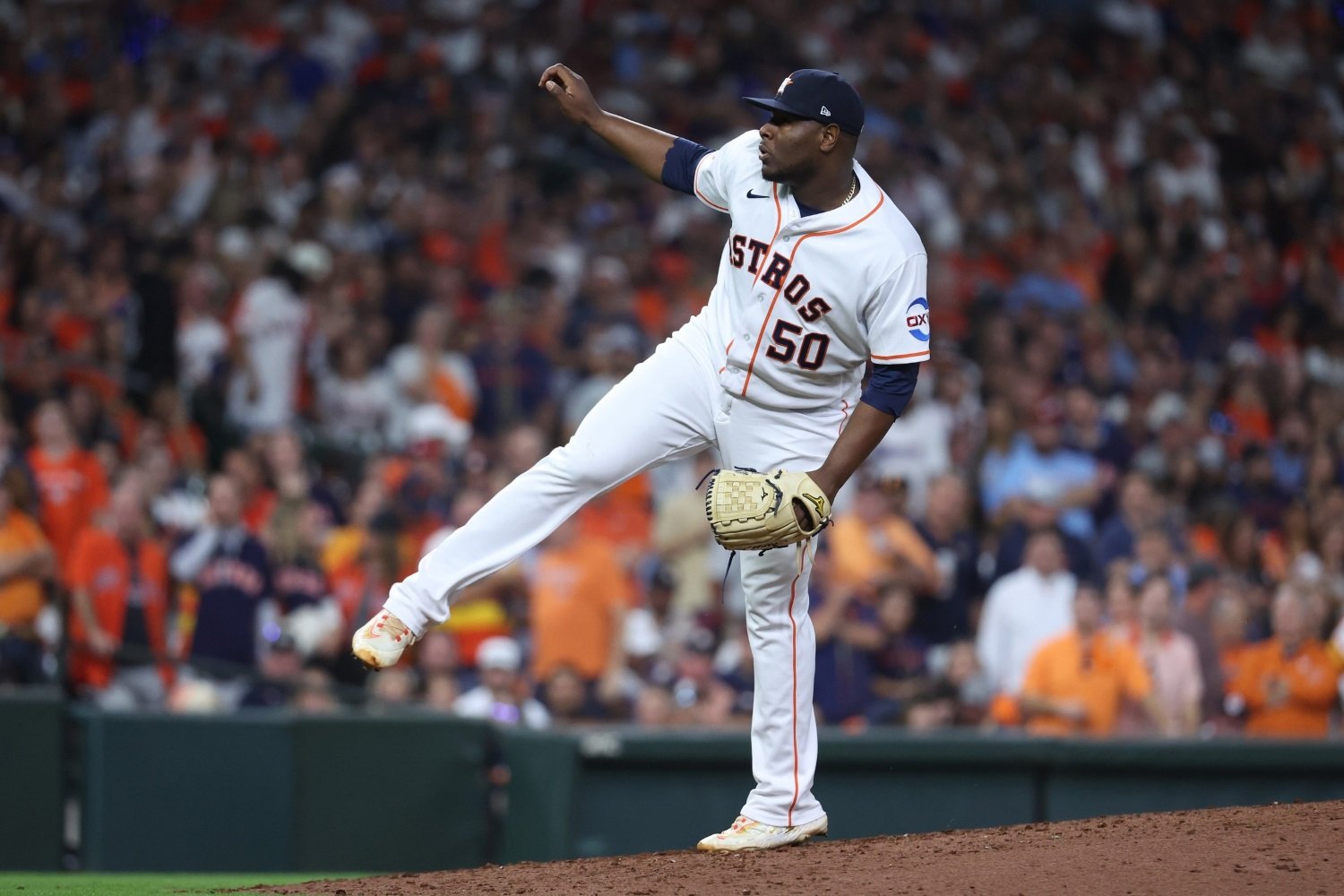 It's never quite this simple, but the nature of bullpen analysis always seems to be that we treat them as hierarchical structures. So, let's sort through this one that way. The Established, Late-Inning Crew Adbert Alzolay The Cubs’ brand new, homegrown closer had a dominant finish to the 2023 season, posting a 2.67 ERA in 64 innings pitched. His ERA+ was an absurd 168 (meaning he was 68% better than a league-average pitcher) while finishing out 38 games, 22 of which went for saves. Armed with a mid-90s fastball and a lethal slider, Alzolay has firmly entrenched himself as the Cubs’ closer of the present and future. If the team finds itself in contention at the deadline, they could make a move for another ninth-inning arm, but for now, expect to see Alzolay finishing games as the Cubs try to position themselves for that very situation. Hector Neris The newest addition to the Cubs’ bullpen, Neris signed a one-year, $9-million contract over the weekend to be one of the setup men to Alzolay. He posted a ridiculous 1.71 ERA in 71 appearances, though that comes with the caveat of a 3.83 FIP and a well-below average 31.7% groundball rate. However, when you can throw a splitter like this, odds are you’ll have some sort of consistent success. Neris provides plenty of insurance should Alzolay get injured or take a step back this year (he has 89 saves in his career), but his true value will come as a versatile bridge in the late innings. Opponents posted just a .569 OPS against the former Astros reliever last year, and his OPS against was below .650 in each of the seventh through ninth innings. Julian Merryweather Merryweather broke out with the Cubs in 2023, supplying Chicago with career bests across the board. His 3.38 ERA in 72 innings was a top-three mark in the bullpen, and he was the hardest thrower of that group (not including Daniel Palencia, who only threw 28 ⅓ innings in the majors last year). Merryweather’s strikeout rate ballooned up to 32.3% last year, while his walk rate stayed consistent at 11.9%. As long as he can maintain that level of control, the former Blue Jays castoff should continue to be a dominant force in the seventh and eighth innings at Wrigley. The Match-Up Arms Mark Leiter Jr./strong> Leiter Jr. is the nominal “lefty” in the bullpen, as he held opposing left-handers to a .185/.265/.302 slash line in 182 plate appearances. His splitter is his greatest weapon, as the pitch produced a .127 expected batting average last year, making it one of the 20 or so best “out-pitches” in baseball. He faltered some down the stretch as fatigue hit and his splitter lost its effectiveness, but until and unless the Cubs add a true lefty (with traditional splits) to the pen, Leiter’s job is secure. Yency Almonte The “other” piece in the Michael Busch trade, Almonte is to righties what Leiter Jr. is to lefties. Almonte’s splits aren’t as drastic as the ones Leiter is rocking, but limiting his exposure to opposing right-handed batters is when he’s thrived most in his career. Over the last two seasons, Almonte’s strikeout rate against righties is 27.9%, compared to just 16.5% for lefties. Similarly, he’s walked only 8.6% of right-handers, compared to 12.4% of left-handers. The former Dodger is out of minor league options, so he’ll stick around as long as the Cubs believe in his stuff, but for now he’ll mostly be limited to match-up duty. The Power Arms Luke Little In his 6 2/3-inning cup of coffee last year, Little struck out 12 and walked four. It was par for the course for the dominant 6-foot-8 lefty, who’s got overpowering stuff but lacks elite control. He only gave up five hits, and in his last two seasons in the minors, Little has allowed just one home run. As long as he can keep the walks to a minimum, Little should be a fixture in the bullpen for years to come, and his talent for keeping the ball in the park should make him a top candidate to assume the closer role should Alzolay struggle during his first full season in that spotlight. Daniel Palencia Equipped with a 100-mph fastball and the best raw stuff of any of the Cubs’ relievers, Palencia rose rapidly through the organization after converting from being a starting pitcher. Palencia posted a 4.45 ERA in 28 ⅓ innings last year, though his 4.00 FIP and 89.6 mph average exit velocity better express his talent and ability to manage contact. His .224 expected batting average was also in the 70th percentile, mostly on the back of his slider (.200 xBA). The Cubs will be hoping the 24-year-old fireballer can expand his repertoire and show a greater ability to pitch out of jams, but Palencia enters 2024 as perhaps the highest-upside arm in the bullpen. The Swing-Men (and Others) Drew Smyly & Hayden Wesneski Both former starters will enter 2024 as candidates for the fifth starter role in the Cubs’ rotation, though Smyly and Wesneski found more success last year after moving into the pen. Both benefited from matchup protection (Smyly works better against lefties and low-contact righties, Wesneski struggles against all opposing left-handed hitters) and simplified pitch mixes, though the Cubs will be hoping to keep both stretched out enough for inevitable injuries and openings in the rotation. Wesneski is obviously the higher-upside arm, making the back-end of some Top-100 prospect lists this time last offseason, and if he ever figures out a pitch mix that works against left-handers, watch out. José Cuas, Javier Assad, Carl Edwards Jr. Keegan Thompson Cuas was the Cubs’ return in the Nelson Velázquez trade last summer, and he’ll have a chance to break camp with the big-league roster. More likely, he’ll go to Triple-A Iowa as a depth option, working on his stuff and honing his funky delivery before an as-needed call back to Chicago. Assad could return to the bullpen, but after his surprising run in the rotation last year, he should be the favorite to take on the fifth starter role behind Justin Steele, Shota Imanaga, Jameson Taillon, and Kyle Hendricks. Perhaps Jordan Wicks or one of Smyly or Wesneski takes it from him and pushes Assad back into his long-man role as a reliever, but for now, Assad is penciled in as one of the starters. Edwards, Thompson, and others will go to Spring Training as depth arms with minimal chance of being with the Cubs on Opening Day. They’ll all provide valuable depth should things go awry, but the Cubs have done good work giving themselves plenty of options for the bullpen. Does Neris make you feel good enough about this relief corps? Is there anyone else you want to see the team add before spring training gets going? Since we're down to 16 days before that happens, it's time to answer that question.
 -
With Hector Neris in tow, the Chicago Cubs’ bullpen is beginning to take shape for 2024. Let’s take a look at where things stand as of the end of January. Image courtesy of © Troy Taormina-USA TODAY Sports It's never quite this simple, but the nature of bullpen analysis always seems to be that we treat them as hierarchical structures. So, let's sort through this one that way. The Established, Late-Inning Crew Adbert Alzolay The Cubs’ brand new, homegrown closer had a dominant finish to the 2023 season, posting a 2.67 ERA in 64 innings pitched. His ERA+ was an absurd 168 (meaning he was 68% better than a league-average pitcher) while finishing out 38 games, 22 of which went for saves. Armed with a mid-90s fastball and a lethal slider, Alzolay has firmly entrenched himself as the Cubs’ closer of the present and future. If the team finds itself in contention at the deadline, they could make a move for another ninth-inning arm, but for now, expect to see Alzolay finishing games as the Cubs try to position themselves for that very situation. Hector Neris The newest addition to the Cubs’ bullpen, Neris signed a one-year, $9-million contract over the weekend to be one of the setup men to Alzolay. He posted a ridiculous 1.71 ERA in 71 appearances, though that comes with the caveat of a 3.83 FIP and a well-below average 31.7% groundball rate. However, when you can throw a splitter like this, odds are you’ll have some sort of consistent success. Neris provides plenty of insurance should Alzolay get injured or take a step back this year (he has 89 saves in his career), but his true value will come as a versatile bridge in the late innings. Opponents posted just a .569 OPS against the former Astros reliever last year, and his OPS against was below .650 in each of the seventh through ninth innings. Julian Merryweather Merryweather broke out with the Cubs in 2023, supplying Chicago with career bests across the board. His 3.38 ERA in 72 innings was a top-three mark in the bullpen, and he was the hardest thrower of that group (not including Daniel Palencia, who only threw 28 ⅓ innings in the majors last year). Merryweather’s strikeout rate ballooned up to 32.3% last year, while his walk rate stayed consistent at 11.9%. As long as he can maintain that level of control, the former Blue Jays castoff should continue to be a dominant force in the seventh and eighth innings at Wrigley. The Match-Up Arms Mark Leiter Jr./strong> Leiter Jr. is the nominal “lefty” in the bullpen, as he held opposing left-handers to a .185/.265/.302 slash line in 182 plate appearances. His splitter is his greatest weapon, as the pitch produced a .127 expected batting average last year, making it one of the 20 or so best “out-pitches” in baseball. He faltered some down the stretch as fatigue hit and his splitter lost its effectiveness, but until and unless the Cubs add a true lefty (with traditional splits) to the pen, Leiter’s job is secure. Yency Almonte The “other” piece in the Michael Busch trade, Almonte is to righties what Leiter Jr. is to lefties. Almonte’s splits aren’t as drastic as the ones Leiter is rocking, but limiting his exposure to opposing right-handed batters is when he’s thrived most in his career. Over the last two seasons, Almonte’s strikeout rate against righties is 27.9%, compared to just 16.5% for lefties. Similarly, he’s walked only 8.6% of right-handers, compared to 12.4% of left-handers. The former Dodger is out of minor league options, so he’ll stick around as long as the Cubs believe in his stuff, but for now he’ll mostly be limited to match-up duty. The Power Arms Luke Little In his 6 2/3-inning cup of coffee last year, Little struck out 12 and walked four. It was par for the course for the dominant 6-foot-8 lefty, who’s got overpowering stuff but lacks elite control. He only gave up five hits, and in his last two seasons in the minors, Little has allowed just one home run. As long as he can keep the walks to a minimum, Little should be a fixture in the bullpen for years to come, and his talent for keeping the ball in the park should make him a top candidate to assume the closer role should Alzolay struggle during his first full season in that spotlight. Daniel Palencia Equipped with a 100-mph fastball and the best raw stuff of any of the Cubs’ relievers, Palencia rose rapidly through the organization after converting from being a starting pitcher. Palencia posted a 4.45 ERA in 28 ⅓ innings last year, though his 4.00 FIP and 89.6 mph average exit velocity better express his talent and ability to manage contact. His .224 expected batting average was also in the 70th percentile, mostly on the back of his slider (.200 xBA). The Cubs will be hoping the 24-year-old fireballer can expand his repertoire and show a greater ability to pitch out of jams, but Palencia enters 2024 as perhaps the highest-upside arm in the bullpen. The Swing-Men (and Others) Drew Smyly & Hayden Wesneski Both former starters will enter 2024 as candidates for the fifth starter role in the Cubs’ rotation, though Smyly and Wesneski found more success last year after moving into the pen. Both benefited from matchup protection (Smyly works better against lefties and low-contact righties, Wesneski struggles against all opposing left-handed hitters) and simplified pitch mixes, though the Cubs will be hoping to keep both stretched out enough for inevitable injuries and openings in the rotation. Wesneski is obviously the higher-upside arm, making the back-end of some Top-100 prospect lists this time last offseason, and if he ever figures out a pitch mix that works against left-handers, watch out. José Cuas, Javier Assad, Carl Edwards Jr. Keegan Thompson Cuas was the Cubs’ return in the Nelson Velázquez trade last summer, and he’ll have a chance to break camp with the big-league roster. More likely, he’ll go to Triple-A Iowa as a depth option, working on his stuff and honing his funky delivery before an as-needed call back to Chicago. Assad could return to the bullpen, but after his surprising run in the rotation last year, he should be the favorite to take on the fifth starter role behind Justin Steele, Shota Imanaga, Jameson Taillon, and Kyle Hendricks. Perhaps Jordan Wicks or one of Smyly or Wesneski takes it from him and pushes Assad back into his long-man role as a reliever, but for now, Assad is penciled in as one of the starters. Edwards, Thompson, and others will go to Spring Training as depth arms with minimal chance of being with the Cubs on Opening Day. They’ll all provide valuable depth should things go awry, but the Cubs have done good work giving themselves plenty of options for the bullpen. Does Neris make you feel good enough about this relief corps? Is there anyone else you want to see the team add before spring training gets going? Since we're down to 16 days before that happens, it's time to answer that question. View full article
-
The Cubs have been exceptionally patient this offseason, much to the chagrin of their fans. Though things have finally gotten kickstarted, the front office largely appears content to bet the outcome of their 2024 season on the development of the players already on the team. Image courtesy of © Kamil Krzaczynski-USA TODAY Sports After the signing of Shota Imanaga, the Cubs made another surprising move, trading tantalizing pitching prospect Jackson Ferris and toolsy teenager Zyhir Hope to the Los Angeles Dodgers for third baseman Michael Busch and reliever Yency Almonte. Those were two savvy moves, as the Cubs got Imanaga on a four-year contract worth well below what he was projected to get, and in Busch, they plucked a top-75 prospect in all of baseball from a team with a surplus of corner infielders and power hitters. It fit perfectly into Jed Hoyer’s M.O., as the Cubs waited out the market to land talented players for relatively good prices. The team will make more moves as the offseason progresses. Hoyer himself said this was just the “fourth of the fifth” inning of the Cubs’ offseason, and the roster will be fleshed out in greater detail than it is now. Plenty of free-agent targets still exist, like an expenditure on reliever Robert Stephenson or a reunion with Cody Bellinger. The trade market is bustling, too, as Cleveland, Miami, the White Sox, and others have attractive starters to dangle as trade bait. Whatever the Cubs do from here, though, they’ve already announced to their fans and to the baseball world that they’re comfortable slow-playing their rise to contention. Armed with a farm system most analysts agree is in the top three in the game and led by new manager Craig Counsell, the North Siders are betting big on their ability to develop players internally. It’s not a crazy concept, predicated on blind faith. In the 2023 season alone, the Cubs saw career seasons or baseline-establishing breakouts from Christopher Morel, Nico Hoerner, and Seiya Suzuki on the positional side. On the pitching front, Justin Steele became an All-Star; Javier Assad became an invaluable swingman between the rotation and bullpen; Adbert Alzolay firmly established himself as the team’s closer; and Jordan Wicks came up to the big leagues in September during a playoff race and performed admirably. The minor leagues have seen an even greater abundance of breakthroughs, as Pete Crow-Armstrong and Cade Horton have been joined by Kevin Alcántara, Matt Shaw, Owen Caissie, Ben Brown, Moises Ballesteros, and James Triantos on various Top 100 prospect lists around the baseball world. The trade for Busch (a Top 100 prospect in his own right) saw the Cubs deal out Ferris, a supremely talented left-handed starting pitching prospect. When was the last time the Cubs had such a surplus of young starting pitchers that they were able to consider it a position of strength for the organization? Nevertheless, the Cubs were an 83-win team last year, falling a single victory shy of making the playoffs. The NL Central is as available for the taking as it's ever been, with last year’s champion, the Milwaukee Brewers, losing Counsell, Brandon Woodruff and more this winter. The Cubs’ willingness to let the big fish on the market swim by may keep the accounting books clean, but the team currently projects to finish in the same bracket of Wild Card contenders as last year, according to the recent 2024 ZiPS projections. Staking their season on the improvements of their in-house guys is both a show of faith in their coaching staff and players, and a commentary on the state of the league. The Dodgers and Atlanta Braves are the best teams in the National League, by a country mile. There is no move (or collection of moves) the Cubs could make in a single offseason that would put their roster on par with the NL East's and NL West's defending champions, at least on paper. Why shell out tens of millions of dollars and multiple top-100 prospects for a few players who wouldn’t push the needle beyond the Cubs’ current ceiling of being the NL’s three seed? Looking ahead to next season, Ian Happ, Hoerner, Suzuki, Dansby Swanson, and the catching tandem of Yan Gomes and Miguel Amaya are locked into everyday spots in the lineup. Steele, Imanaga, Kyle Hendricks and Jameson Taillon are locked into the rotation, while Alzolay, Assad, Julian Merryweather and Mark Leiter Jr. figure to be fixtures in the bullpen. That leaves four spots in the lineup (plus four additional bench slots), one rotation spot and half of a bullpen to fill out before Opening Day on Mar. 28. There are still signings and trades to come, to be sure, but most of those roster openings will be filled by players already repping a Cubs uniform. The Cubs won’t enter next season as a prohibitive favorite to win anything, barring a massive trade for Shane Bieber and Emmanuel Clase of the Cleveland Guardians that puts Chicago in the driver’s seat in the NL Central. However, the roster is already good enough to compete for a Wild Card, and the team is just an All-Star season from Wicks or an unexpected Silver Slugger-caliber campaign from Shaw away from prying their window of contention wide open. Do you share the sense that most of the team's strategy for the coming year is to bank on internal progress? How are you feeling, four weeks out from spring training and with so much left unsettled? View full article
- 2 replies
-
- 1
-
-
- jed hoyer
- shota imanaga
- (and 2 more)
-
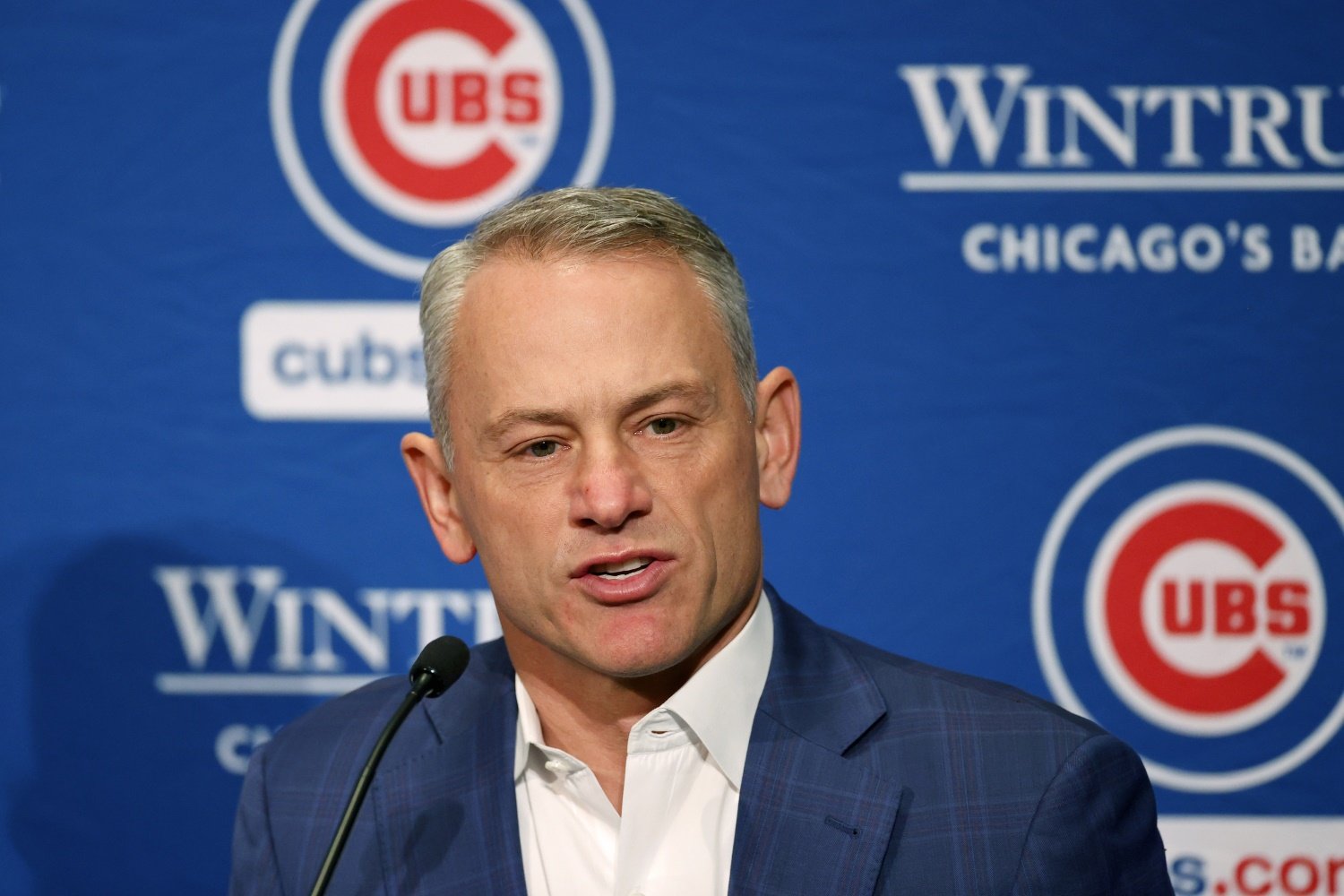 After the signing of Shota Imanaga, the Cubs made another surprising move, trading tantalizing pitching prospect Jackson Ferris and toolsy teenager Zyhir Hope to the Los Angeles Dodgers for third baseman Michael Busch and reliever Yency Almonte. Those were two savvy moves, as the Cubs got Imanaga on a four-year contract worth well below what he was projected to get, and in Busch, they plucked a top-75 prospect in all of baseball from a team with a surplus of corner infielders and power hitters. It fit perfectly into Jed Hoyer’s M.O., as the Cubs waited out the market to land talented players for relatively good prices. The team will make more moves as the offseason progresses. Hoyer himself said this was just the “fourth of the fifth” inning of the Cubs’ offseason, and the roster will be fleshed out in greater detail than it is now. Plenty of free-agent targets still exist, like an expenditure on reliever Robert Stephenson or a reunion with Cody Bellinger. The trade market is bustling, too, as Cleveland, Miami, the White Sox, and others have attractive starters to dangle as trade bait. Whatever the Cubs do from here, though, they’ve already announced to their fans and to the baseball world that they’re comfortable slow-playing their rise to contention. Armed with a farm system most analysts agree is in the top three in the game and led by new manager Craig Counsell, the North Siders are betting big on their ability to develop players internally. It’s not a crazy concept, predicated on blind faith. In the 2023 season alone, the Cubs saw career seasons or baseline-establishing breakouts from Christopher Morel, Nico Hoerner, and Seiya Suzuki on the positional side. On the pitching front, Justin Steele became an All-Star; Javier Assad became an invaluable swingman between the rotation and bullpen; Adbert Alzolay firmly established himself as the team’s closer; and Jordan Wicks came up to the big leagues in September during a playoff race and performed admirably. The minor leagues have seen an even greater abundance of breakthroughs, as Pete Crow-Armstrong and Cade Horton have been joined by Kevin Alcántara, Matt Shaw, Owen Caissie, Ben Brown, Moises Ballesteros, and James Triantos on various Top 100 prospect lists around the baseball world. The trade for Busch (a Top 100 prospect in his own right) saw the Cubs deal out Ferris, a supremely talented left-handed starting pitching prospect. When was the last time the Cubs had such a surplus of young starting pitchers that they were able to consider it a position of strength for the organization? Nevertheless, the Cubs were an 83-win team last year, falling a single victory shy of making the playoffs. The NL Central is as available for the taking as it's ever been, with last year’s champion, the Milwaukee Brewers, losing Counsell, Brandon Woodruff and more this winter. The Cubs’ willingness to let the big fish on the market swim by may keep the accounting books clean, but the team currently projects to finish in the same bracket of Wild Card contenders as last year, according to the recent 2024 ZiPS projections. Staking their season on the improvements of their in-house guys is both a show of faith in their coaching staff and players, and a commentary on the state of the league. The Dodgers and Atlanta Braves are the best teams in the National League, by a country mile. There is no move (or collection of moves) the Cubs could make in a single offseason that would put their roster on par with the NL East's and NL West's defending champions, at least on paper. Why shell out tens of millions of dollars and multiple top-100 prospects for a few players who wouldn’t push the needle beyond the Cubs’ current ceiling of being the NL’s three seed? Looking ahead to next season, Ian Happ, Hoerner, Suzuki, Dansby Swanson, and the catching tandem of Yan Gomes and Miguel Amaya are locked into everyday spots in the lineup. Steele, Imanaga, Kyle Hendricks and Jameson Taillon are locked into the rotation, while Alzolay, Assad, Julian Merryweather and Mark Leiter Jr. figure to be fixtures in the bullpen. That leaves four spots in the lineup (plus four additional bench slots), one rotation spot and half of a bullpen to fill out before Opening Day on Mar. 28. There are still signings and trades to come, to be sure, but most of those roster openings will be filled by players already repping a Cubs uniform. The Cubs won’t enter next season as a prohibitive favorite to win anything, barring a massive trade for Shane Bieber and Emmanuel Clase of the Cleveland Guardians that puts Chicago in the driver’s seat in the NL Central. However, the roster is already good enough to compete for a Wild Card, and the team is just an All-Star season from Wicks or an unexpected Silver Slugger-caliber campaign from Shaw away from prying their window of contention wide open. Do you share the sense that most of the team's strategy for the coming year is to bank on internal progress? How are you feeling, four weeks out from spring training and with so much left unsettled?
- 2 comments
-
- 1
-
-
- jed hoyer
- shota imanaga
- (and 2 more)
-
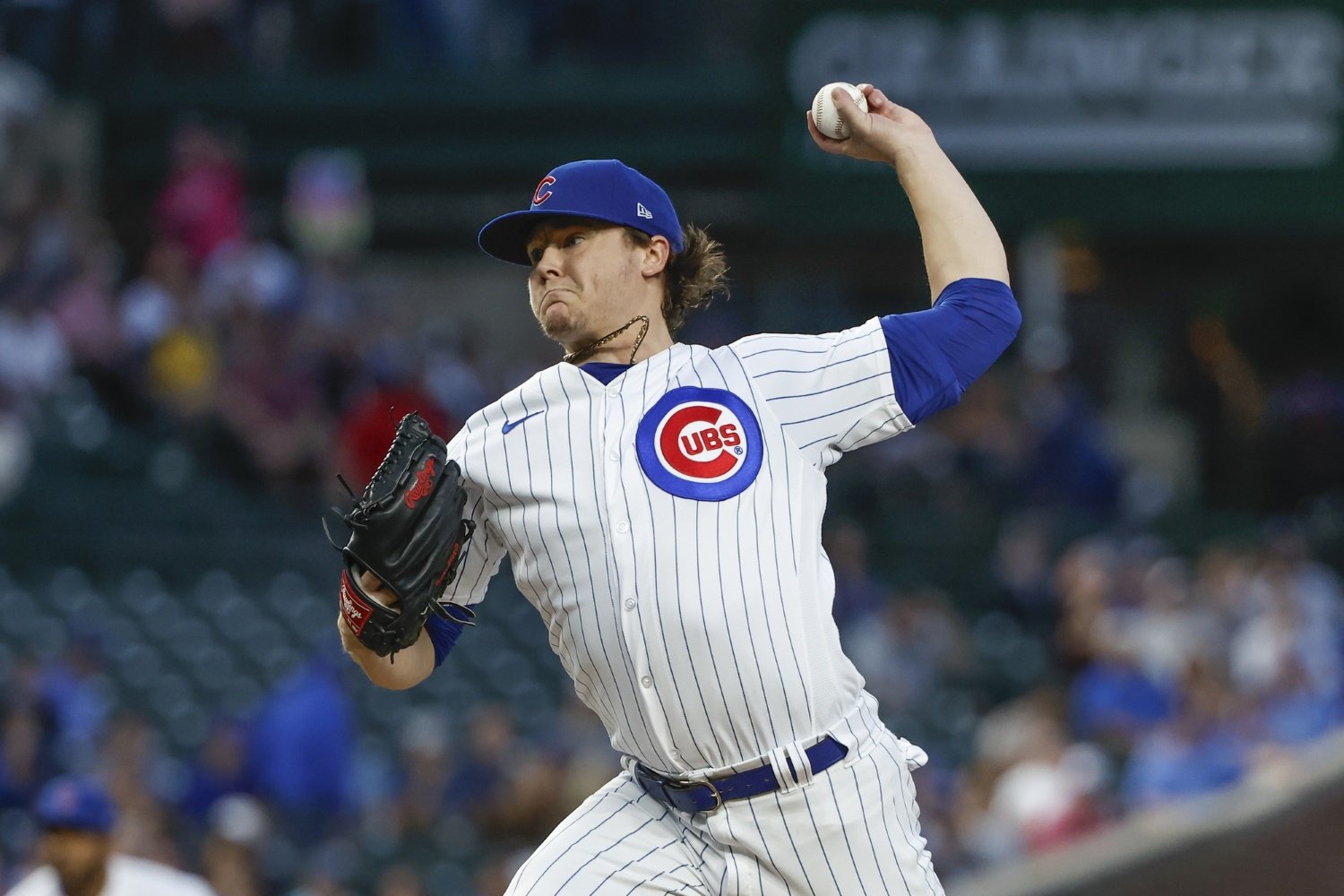 For context: if the arbitration deadline passes without the player and team reaching a deal, then the two parties exchange official offers and await an arbitration hearing. (Technically, they're allowed to continue negotiating until the hearing begins, but most teams now pursue a "file-and-trial" policy wherein once numbers are exchanged, no compromises are available.) In that hearing, both the player and team make the case for the salary they submitted for a one-year contract for the player, after which a panel of three neutral arbitrators decides in either the team’s favor or the player’s. The Cubs have had a habit of avoiding those hearings whenever possible. Over the past 30 years, only two Cubs have been brought to arbitration hearings (Ryan Theriot in 2008, Pedro Strop in 2015). It turns out old habits really do die hard, as the Cubs avoided arbitration with each of their six arb-eligible players for the 2024 season. Justin Steele - 1 year, $4 million Year of arbitration: 1 of 4 Steele was the Cubs’ big breakout in 2023, as he finished fifth in NL Cy Young voting and made his first career All-Star team. Emerging as the ace of the staff, the Mississippi native became the long-awaited homegrown success story on the pitching side, and he’s all but certain to be the first pitcher to start Opening Day for the Cubs as an original draft pick of the team since Jeff Samardzija in 2014. Steele finished last season with a 3.06 ERA and 176 strikeouts in 173 ⅓ innings, all career-best totals. Adbert Alzolay - 1 year, $2.11 million Year of arbitration: 1 of 3 If Steele was the big breakout in the rotation last season, Alzolay was the dominant story out of the bullpen. After years of dealing with injuries and shuffling in and out of the rotation on his way to the big leagues, Alzolay finally settled into the closer role in July and (except for his stint on the injured list) never relinquished the gig. He finished 2023 with 22 saves (38 games finished), while putting up a 2.65 ERA and 67 strikeouts in 58 appearances. If the Cubs are to be competitive in 2024, they’ll need a repeat performance from their homegrown closer. Mike Tauchman - 1 year, $1.95 million Year of arbitration: 1 of 3 The 33-year old Tauchman was one of the most fun stories in all of baseball last season, as he quickly gained a foothold in the Cubs’ outfield after fizzling out with the Yankees and Giants. He was originally called up as an injury replacement for Cody Bellinger, after the former Dodger injured his knee in May, but he stuck around to produce a .252/.363/.377 slash line in 108 games. Tauchman proved to be a valuable fourth outfielder in 2023, which should remain valuable to the Cubs even if both Bellinger and top prospect Pete Crow-Armstrong are on the Opening Day roster. Nick Madrigal - 1 year, $1.81 million Year of arbitration: 2 of 4 Following the DFA of reliever Codi Heuer earlier in the offseason, Madrigal is all that remains from the ill-fated Craig Kimbrel trade, though the soon-to-be 27-year-old finally established some major-league credentials last season. When available, his defense was shockingly brilliant at third base (10 Outs Above Average), and his blue-chip tool of being a contact maven remained intact, as his contact rate (92.2%) was among the best figures in baseball. Where Madrigal fits on the roster after the Michael Busch trade is anyone’s guess, but the diminutive infielder can still provide value on the diamond. Mark Leiter Jr. - 1 year, $1.5 million Year of arbitration: 1 of 3 Leiter was a mystery coming into last season, having been DFA’d the prior winter to make room on the 40-man roster. It’s a good thing the Cubs were able to retain him in the organization, as Leiter, 32, delivered a 3.50 ERA and 77 strikeouts in 64 ⅓ innings. His splitter ranked among the best pitches in all of baseball in 2023, which helped him dominate left-handed batters to the tune of a .185 average against and .568 OPS. He did struggle in September after he lost a feel for his best pitch due to fatigue, though the Cubs are hoping he’ll regain his top form after a full offseason to rest. Julian Merryweather - 1 year, $1.175 million Year of arbitration: 1 of 3 Yet another bullpen breakout in 2023, Merryweather was a late-offseason pickup last year, as the Cubs plucked him off waivers from the Blue Jays. The hardest thrower in the bullpen (besides Daniel Palencia, perhaps), Merryweather gave the Cubs a 3.38 ERA and 98 strikeouts in 72 innings. He’ll slot back into the late-game reliever rotation alongside Leiter to form the bridge to Alzolay, giving the Cubs some much-needed stability in their bullpen. The Cubs saved a small amount on these deals, relative to these players' projected arbitration salaries from MLB Trade Rumors. The question, now, is whether they'll turn out to be a good value or not, and that has much more to do with their performance than with their payment. Which of these deals stand out to you? How are you feeling about the Cubs' middle class, in terms of service time, heading into 2024?
 -
The deadline to settle arbitration deals this offseason passed on Thursday night, and the Cubs avoided arbitration with all of their eligible players. Let's take a look at the terms, and consider the implications. Image courtesy of © Kamil Krzaczynski-USA TODAY Sports For context: if the arbitration deadline passes without the player and team reaching a deal, then the two parties exchange official offers and await an arbitration hearing. (Technically, they're allowed to continue negotiating until the hearing begins, but most teams now pursue a "file-and-trial" policy wherein once numbers are exchanged, no compromises are available.) In that hearing, both the player and team make the case for the salary they submitted for a one-year contract for the player, after which a panel of three neutral arbitrators decides in either the team’s favor or the player’s. The Cubs have had a habit of avoiding those hearings whenever possible. Over the past 30 years, only two Cubs have been brought to arbitration hearings (Ryan Theriot in 2008, Pedro Strop in 2015). It turns out old habits really do die hard, as the Cubs avoided arbitration with each of their six arb-eligible players for the 2024 season. Justin Steele - 1 year, $4 million Year of arbitration: 1 of 4 Steele was the Cubs’ big breakout in 2023, as he finished fifth in NL Cy Young voting and made his first career All-Star team. Emerging as the ace of the staff, the Mississippi native became the long-awaited homegrown success story on the pitching side, and he’s all but certain to be the first pitcher to start Opening Day for the Cubs as an original draft pick of the team since Jeff Samardzija in 2014. Steele finished last season with a 3.06 ERA and 176 strikeouts in 173 ⅓ innings, all career-best totals. Adbert Alzolay - 1 year, $2.11 million Year of arbitration: 1 of 3 If Steele was the big breakout in the rotation last season, Alzolay was the dominant story out of the bullpen. After years of dealing with injuries and shuffling in and out of the rotation on his way to the big leagues, Alzolay finally settled into the closer role in July and (except for his stint on the injured list) never relinquished the gig. He finished 2023 with 22 saves (38 games finished), while putting up a 2.65 ERA and 67 strikeouts in 58 appearances. If the Cubs are to be competitive in 2024, they’ll need a repeat performance from their homegrown closer. Mike Tauchman - 1 year, $1.95 million Year of arbitration: 1 of 3 The 33-year old Tauchman was one of the most fun stories in all of baseball last season, as he quickly gained a foothold in the Cubs’ outfield after fizzling out with the Yankees and Giants. He was originally called up as an injury replacement for Cody Bellinger, after the former Dodger injured his knee in May, but he stuck around to produce a .252/.363/.377 slash line in 108 games. Tauchman proved to be a valuable fourth outfielder in 2023, which should remain valuable to the Cubs even if both Bellinger and top prospect Pete Crow-Armstrong are on the Opening Day roster. Nick Madrigal - 1 year, $1.81 million Year of arbitration: 2 of 4 Following the DFA of reliever Codi Heuer earlier in the offseason, Madrigal is all that remains from the ill-fated Craig Kimbrel trade, though the soon-to-be 27-year-old finally established some major-league credentials last season. When available, his defense was shockingly brilliant at third base (10 Outs Above Average), and his blue-chip tool of being a contact maven remained intact, as his contact rate (92.2%) was among the best figures in baseball. Where Madrigal fits on the roster after the Michael Busch trade is anyone’s guess, but the diminutive infielder can still provide value on the diamond. Mark Leiter Jr. - 1 year, $1.5 million Year of arbitration: 1 of 3 Leiter was a mystery coming into last season, having been DFA’d the prior winter to make room on the 40-man roster. It’s a good thing the Cubs were able to retain him in the organization, as Leiter, 32, delivered a 3.50 ERA and 77 strikeouts in 64 ⅓ innings. His splitter ranked among the best pitches in all of baseball in 2023, which helped him dominate left-handed batters to the tune of a .185 average against and .568 OPS. He did struggle in September after he lost a feel for his best pitch due to fatigue, though the Cubs are hoping he’ll regain his top form after a full offseason to rest. Julian Merryweather - 1 year, $1.175 million Year of arbitration: 1 of 3 Yet another bullpen breakout in 2023, Merryweather was a late-offseason pickup last year, as the Cubs plucked him off waivers from the Blue Jays. The hardest thrower in the bullpen (besides Daniel Palencia, perhaps), Merryweather gave the Cubs a 3.38 ERA and 98 strikeouts in 72 innings. He’ll slot back into the late-game reliever rotation alongside Leiter to form the bridge to Alzolay, giving the Cubs some much-needed stability in their bullpen. The Cubs saved a small amount on these deals, relative to these players' projected arbitration salaries from MLB Trade Rumors. The question, now, is whether they'll turn out to be a good value or not, and that has much more to do with their performance than with their payment. Which of these deals stand out to you? How are you feeling about the Cubs' middle class, in terms of service time, heading into 2024? View full article
-
- 1
-
-
- justin steele
- julian merryweather
- (and 4 more)
-
 I promise, I’d like to be more positive than this. I like it when the Cubs are good, and when they’re adding good players to their team. Unfortunately, the Cubs haven’t been good for a few years now, and they haven’t added a single player to the team, let alone a good one, all winter. There’s real cognitive dissonance at play here, especially when you consider how close the Cubs felt to making some noise late last season. Hell, the team shocked everyone by buying at the 2023 trade deadline, opting to bring in talent like third basemen Jeimer Candelario (now on the Reds) rather than shipping away obvious trade bait like Marcus Stroman or Cody Bellinger. It all serves to make their inactivity this deep into the offseason that much more confusing. We’ve talked at length about the Cubs’ penchant for patience, and their desire to find a good deal. Belaboring those points here will only induce more aggravation than is necessary. Instead, it’s time to look at Cubs’ decision-making process through the macro lens of the sport itself. The Collective Bargaining Agreement is meant (in part) to act as a set of guardrails, to protect players, owners, and, ideally, the long-term parity of baseball. Within that lengthy legislation is a set of clauses specifically designed to level the playing field between the two prevailing classes of MLB franchises: the big-market teams and the small-market teams. Dive into the nitty-gritty of the details if you like, but the most important thing to highlight is that small-market teams receive a collection of assets to help them compete with the (should-be) free spenders of the league. Those assets include, but are not limited to: competitive-balance picks in the amateur draft, extra cap space in their international signing bonus pool, and revenue-sharing dollars. Not all of the compensatory allowances are directly funneled into the baseball operations side of a franchise; there have been many reports of small-market owners simply pocketing their slice of the revenue-sharing pie. Regardless, the reason those teams get these accommodations in the first place is because of the hypothetical difference between their payrolls, and the payrolls of teams like the Yankees, Dodgers, and Cubs. Spending doesn’t guarantee anything (the 2023 Mets and Padres could host a seminar on that topic), but it does create a floor. The more money allocated to the payroll, the better the players on the team will be. Inexpensive, young talent will always be the lifeblood of the sport, but established veterans capable of producing at a consistent, All-Star level are required to navigate the tumult of an entire season, regardless of their cost. Thus, small-market teams field competitive rosters by leveraging their additional resources on the prospect side of things, and big-market teams do so by spending money on players who have already established themselves at the MLB level. In effect, the Cubs are actively putting themselves at a disadvantage by not outspending their rivals to a degree commensurate with their financial advantages. The only times the Cubs have exceeded the luxury-tax threshold in the last 20 years wer in their World Series championship season (when they barely exceeded it, by roughly $3 million) of 2016, and in their massively disappointing 2019 decline-phase campaign. Paying the luxury tax isn’t a prerequisite to winning the World Series, but being willing to do so aids in the ability to flesh out a roster during competitive windows. Artificially capping the budget, whether it’s by the mandate of the Ricketts family or the front office’s internal philosophy, is keeping the Cubs in the middle class of MLB teams: they’re too big to receive competitive-balance considerations, but unwilling to spend with the tycoons on the coasts. The Cubs have done good work to get to this new competitive window so quickly, after slamming the last one closed. The farm system is among the best in baseball, the long-term accounting books are clean, and there’s a symbiotic relationship being developed between manager Craig Counsell and the front office. All the pieces are in place to challenge the league’s elite organizations. The question now is whether the Cubs will actually allow themselves to do what’s necessary to get there.
 -
The 2023-24 MLB offseason is more than halfway over, and every single team has added at least one player to their major-league roster. Every team, that is, except the Chicago Cubs. Image courtesy of © David Banks-USA TODAY Sports I promise, I’d like to be more positive than this. I like it when the Cubs are good, and when they’re adding good players to their team. Unfortunately, the Cubs haven’t been good for a few years now, and they haven’t added a single player to the team, let alone a good one, all winter. There’s real cognitive dissonance at play here, especially when you consider how close the Cubs felt to making some noise late last season. Hell, the team shocked everyone by buying at the 2023 trade deadline, opting to bring in talent like third basemen Jeimer Candelario (now on the Reds) rather than shipping away obvious trade bait like Marcus Stroman or Cody Bellinger. It all serves to make their inactivity this deep into the offseason that much more confusing. We’ve talked at length about the Cubs’ penchant for patience, and their desire to find a good deal. Belaboring those points here will only induce more aggravation than is necessary. Instead, it’s time to look at Cubs’ decision-making process through the macro lens of the sport itself. The Collective Bargaining Agreement is meant (in part) to act as a set of guardrails, to protect players, owners, and, ideally, the long-term parity of baseball. Within that lengthy legislation is a set of clauses specifically designed to level the playing field between the two prevailing classes of MLB franchises: the big-market teams and the small-market teams. Dive into the nitty-gritty of the details if you like, but the most important thing to highlight is that small-market teams receive a collection of assets to help them compete with the (should-be) free spenders of the league. Those assets include, but are not limited to: competitive-balance picks in the amateur draft, extra cap space in their international signing bonus pool, and revenue-sharing dollars. Not all of the compensatory allowances are directly funneled into the baseball operations side of a franchise; there have been many reports of small-market owners simply pocketing their slice of the revenue-sharing pie. Regardless, the reason those teams get these accommodations in the first place is because of the hypothetical difference between their payrolls, and the payrolls of teams like the Yankees, Dodgers, and Cubs. Spending doesn’t guarantee anything (the 2023 Mets and Padres could host a seminar on that topic), but it does create a floor. The more money allocated to the payroll, the better the players on the team will be. Inexpensive, young talent will always be the lifeblood of the sport, but established veterans capable of producing at a consistent, All-Star level are required to navigate the tumult of an entire season, regardless of their cost. Thus, small-market teams field competitive rosters by leveraging their additional resources on the prospect side of things, and big-market teams do so by spending money on players who have already established themselves at the MLB level. In effect, the Cubs are actively putting themselves at a disadvantage by not outspending their rivals to a degree commensurate with their financial advantages. The only times the Cubs have exceeded the luxury-tax threshold in the last 20 years wer in their World Series championship season (when they barely exceeded it, by roughly $3 million) of 2016, and in their massively disappointing 2019 decline-phase campaign. Paying the luxury tax isn’t a prerequisite to winning the World Series, but being willing to do so aids in the ability to flesh out a roster during competitive windows. Artificially capping the budget, whether it’s by the mandate of the Ricketts family or the front office’s internal philosophy, is keeping the Cubs in the middle class of MLB teams: they’re too big to receive competitive-balance considerations, but unwilling to spend with the tycoons on the coasts. The Cubs have done good work to get to this new competitive window so quickly, after slamming the last one closed. The farm system is among the best in baseball, the long-term accounting books are clean, and there’s a symbiotic relationship being developed between manager Craig Counsell and the front office. All the pieces are in place to challenge the league’s elite organizations. The question now is whether the Cubs will actually allow themselves to do what’s necessary to get there. View full article

