


matto1233
-
Posts
313 -
Joined
-
Last visited
Content Type
Profiles
Joomla Posts 1
Chicago Cubs Videos
Chicago Cubs Free Agent & Trade Rumors, Notes, & Tidbits
2026 Chicago Cubs Top Prospects Ranking
News
2023 Chicago Cubs Draft Picks
Guides & Resources
2024 Chicago Cubs Draft Picks
The Chicago Cubs Players Project
2025 Chicago Cubs Draft Pick Tracker
2026 Chicago Cubs Draft Pick Tracker
Blogs
Events
Forums
Store
Gallery
Everything posted by matto1233
-
 Today, we’re going to try something new. Last offseason, I wrote seven different Remember Some Cubs pieces on the following players: Mark DeRosa, Mike Fontenot, Mark Bellhorn, Steve Trachsel, Chris Coghlan, Carlos Marmol, and Matt Murton. All players who played on the Cubs in the 21st century, or, in Trachsel’s case, just before, if you exclude a brief appearance with the Cubs in 2007. As someone born in 1995, I remember watching all those players except Trachsel. However, I have fond memories of taking the mound with him in Major League Baseball, Featuring Ken Griffey Jr. on the Nintendo 64, and getting crushed by my older brothers. We will go in the way back machine to kick off this offseason’s Remember Some Cubs series. So far back, we can rename the series to Remember Some White Stockings for today. We’re going to talk about Ross Barnes and his season for the 1876 Chicago White Stockings. Charles Roscoe Barnes was born on May 8, 1850, in Mount Morris, New York, about 60 miles east of Buffalo. At 18, he started playing baseball with the Rockford Forest Citys. Barnes officially became a professional in 1871 when the Boston Red Stockings signed him to play. This was the inaugural season of the National Association, which is widely considered the first professional baseball league, as far back as FanGraphs logs stats. In his five years with the Red Stockings, Barnes led all position players in FanGraphs WAR (20.8), batting average (.390), wRC+ (159), runs (459), and stolen bases (73). His signing with the Chicago White Stockings after the 1875 season prompted the formation of the National League. In the 1876 season, the second baseman had his best season. Barnes led all position players in fWAR with 6.6. The next closest player, teammate Cap Anson, was at 4.0. He led the league in batting average, hitting .429, while the next closest person, George Hall, hit .366. He scored 126 runs, which, of course, led the league. George Wright finished second, and he scored 72 runs. According to a 2022 article by Jayson Stark in The Athletic, only four players in baseball history have led their league by 30 or more runs: Aaron Judge, Rickey Henderson, Babe Ruth, and Ross Barnes. Barnes' 54-run lead remains a record. The White Stockings, of course, won the first-ever National League pennant. To avoid regurgitating his fantastic work, you should check out what Nate Silver wrote about Barnes in 2007. Silver created a method to examine how good a player’s sustained peak was, then compared that to the next best player in baseball at the time. Barnes was the best player in baseball for four of the top six seasons, and the gap between the best player and their next closest competitor was the largest. How was Barnes so successful? According to his SABR profile, Barnes mastered the art of what is called the “fair-foul” hit. Back then, baseball had different rules, including that if a ball landed fair, no matter where on the field it landed, and then rolled into playing territory, it was a fair ball. Barnes was great at using this to his advantage to rack up hits. This fact has caused some dispute over Barnes’ true baseball skill. The National League banned the fair-foul hit in 1877, and his batting average plummeted from .438 in 1876 to .272 in 1877 in just 99 plate appearances. His lack of playing time stemmed from, it would seem, an illness. The SABR profile quotes a Chicago Tribune article from May 19 that said Barnes was so sick that he was “physically incapable of exertion.” Rumors also surfaced via the Chicago Times that he was lying about the illness. Regardless, he was never the same. He didn’t play the 1878 season before signing with the Cincinnati Reds for the 1879 season and posting a .266 batting average. He then took another season off before rejoining the Red Stockings in 1881, where he hit .271. Illness or not, he was just never the same player. Barnes still should be remembered whether or not he was overly reliant on the fair-foul hit. The hit was legal during his six-year run as the best player in baseball, and nobody else was able to utilize the success that he did despite everyone being free to do so. I’m confident that Ross Barnes is the best player I never even knew existed.
 -
The Cubs can pursue one of the best hitters in baseball and his name isn't Juan Soto. Image courtesy of © Troy Taormina-Imagn Images As Juan Soto continued to do Juan Soto things for the New York Yankees throughout October, I continued to be sad about the reality: he will not be a Chicago Cub this offseason. There’s been very little linking the two parties, and given recent precedent, I have no reason to believe that the Cubs will emerge as a front-runner. I would love to be wrong here more than I ever have. To keep twisting the knife, it feels like it would be a hand-in-glove fit, too. The Cubs sorely need to add some pop to their lineup, and right field is likely one of their few spots to do it, with Seiya Suzuki sliding over to designated hitter. What if I told you someone else was available that wouldn’t require a $600 million contract? Chandler Rome of The Athletic has recently speculated that Kyle Tucker could be on the move. While he is certainly not as good as Soto, Tucker would still be a huge upgrade for the Cubs’ lineup. For those unfamiliar, since his first full season in 2020, Tucker has been one of the best players in all of baseball. His 146 wRC+ is tenth in that timeframe, according to FanGraphs. His 20.9 WAR is 13th. He is a unique blend of, well, everything. He’s struck out only 16 percent of the time for his career, which means he typically carries a fairly high batting average. He’s always had an average to slightly above average walk rate, but that has been slowly improving over time: it ballooned to 16.5 percent in 339 plate appearances this year, leading to a career-high 180 wRC+. His career isolated power of .242 would have led the Cubs this year by quite a bit, and he’s also stolen 66 bases in the past three seasons combined. It should be reiterated that it is, of course, speculation that Tucker would even be available. However, the more you think about it, the more sense it makes. The Astros have one impending free agent this offseason in Alex Bregman. Tucker is a free agent the following offseason. If they want to try to recoup value for some of these guys, the time is now, and Tucker would almost have to be that guy. The issue? The Astros made the playoffs this year and would almost certainly be looking for guys who could contribute to the team now. Who might that be? For one, I’d imagine the Astros would immediately demand Pete Crow-Armstrong be the centerpiece of this deal, and the Cubs would likely refuse to do that. For me, PCA showed enough with the bat at times this season to make him untouchable in this deal. But what about Kevin Alcantara? He could immediately slide into the Astros’ everyday lineup in any outfield spot where Houston figures to be thin. He might be the kind of cost-controlled player Houston would covet in a deal like this. Unfortunately, it wouldn’t stop there. The Astros would likely ask for two guys who could help the major league roster next season and seasons beyond that. What about Jordan Wicks or Ben Brown to help them fortify their pitching staff? Lastly, Houston would probably go for someone a bit further away from the majors to start restocking their farm system. Would the Cubs also be willing to part with someone like James Triantos or Cam Smith? It should be mentioned that all of this likely hinges on Cody Bellinger’s looming contract decision. Should he opt-in, things will be cluttered in the Cubs’ pool of position players, but they could get creative. What if they traded Michael Busch to the Astros instead of Alcantara? This would open up first base for Bellinger to play full-time. It feels like a lot for Kyle Tucker when laid out like this. On the flip side, if the Cubs want to improve, they must be creative. They have a lot of prospect capital. It might be time to start cashing that in if they aren’t going to spend extravagantly in free agency. What do you think? Is this too much for one year of Kyle Tucker? Too little? What would you give up? View full article
-
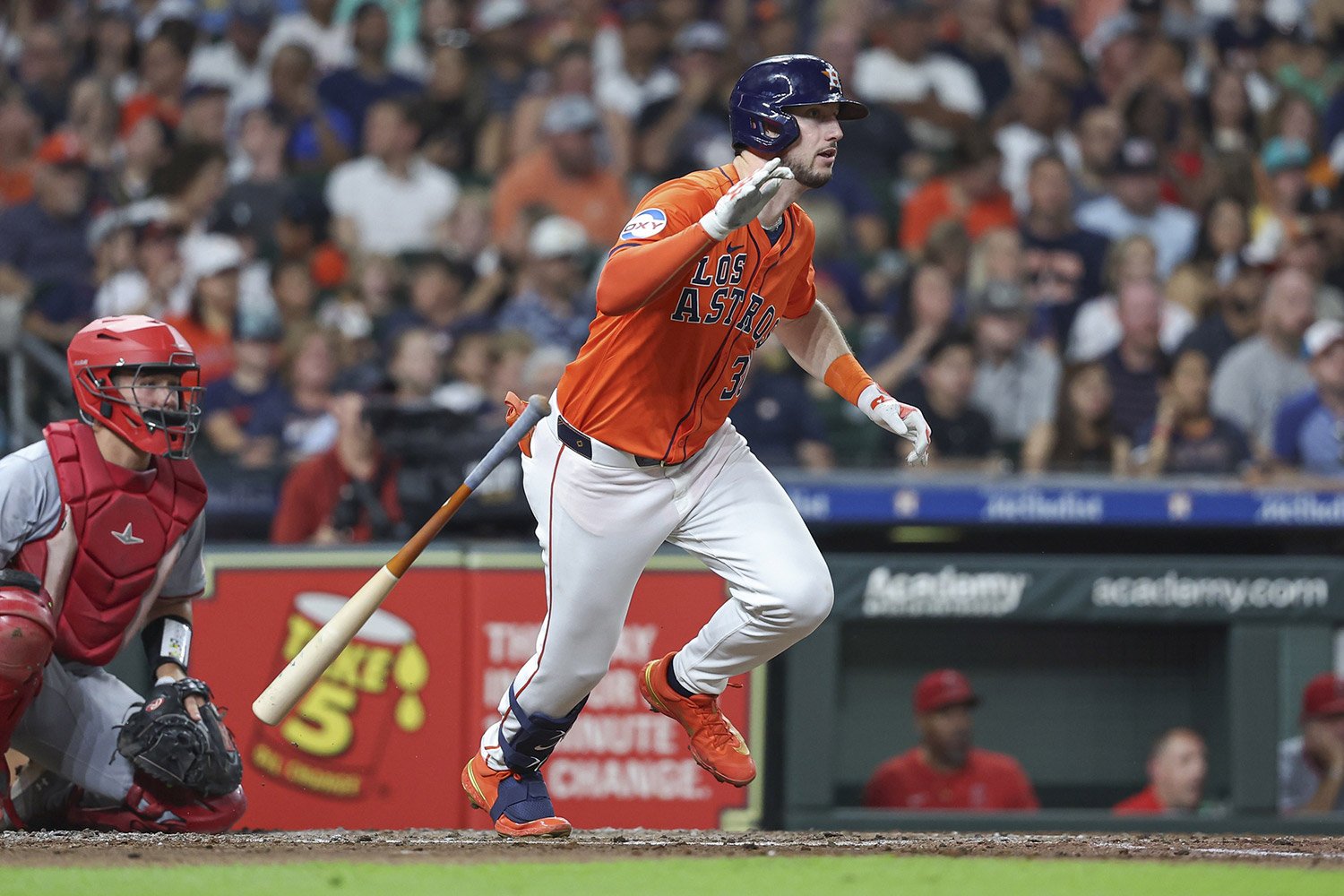 As Juan Soto continued to do Juan Soto things for the New York Yankees throughout October, I continued to be sad about the reality: he will not be a Chicago Cub this offseason. There’s been very little linking the two parties, and given recent precedent, I have no reason to believe that the Cubs will emerge as a front-runner. I would love to be wrong here more than I ever have. To keep twisting the knife, it feels like it would be a hand-in-glove fit, too. The Cubs sorely need to add some pop to their lineup, and right field is likely one of their few spots to do it, with Seiya Suzuki sliding over to designated hitter. What if I told you someone else was available that wouldn’t require a $600 million contract? Chandler Rome of The Athletic has recently speculated that Kyle Tucker could be on the move. While he is certainly not as good as Soto, Tucker would still be a huge upgrade for the Cubs’ lineup. For those unfamiliar, since his first full season in 2020, Tucker has been one of the best players in all of baseball. His 146 wRC+ is tenth in that timeframe, according to FanGraphs. His 20.9 WAR is 13th. He is a unique blend of, well, everything. He’s struck out only 16 percent of the time for his career, which means he typically carries a fairly high batting average. He’s always had an average to slightly above average walk rate, but that has been slowly improving over time: it ballooned to 16.5 percent in 339 plate appearances this year, leading to a career-high 180 wRC+. His career isolated power of .242 would have led the Cubs this year by quite a bit, and he’s also stolen 66 bases in the past three seasons combined. It should be reiterated that it is, of course, speculation that Tucker would even be available. However, the more you think about it, the more sense it makes. The Astros have one impending free agent this offseason in Alex Bregman. Tucker is a free agent the following offseason. If they want to try to recoup value for some of these guys, the time is now, and Tucker would almost have to be that guy. The issue? The Astros made the playoffs this year and would almost certainly be looking for guys who could contribute to the team now. Who might that be? For one, I’d imagine the Astros would immediately demand Pete Crow-Armstrong be the centerpiece of this deal, and the Cubs would likely refuse to do that. For me, PCA showed enough with the bat at times this season to make him untouchable in this deal. But what about Kevin Alcantara? He could immediately slide into the Astros’ everyday lineup in any outfield spot where Houston figures to be thin. He might be the kind of cost-controlled player Houston would covet in a deal like this. Unfortunately, it wouldn’t stop there. The Astros would likely ask for two guys who could help the major league roster next season and seasons beyond that. What about Jordan Wicks or Ben Brown to help them fortify their pitching staff? Lastly, Houston would probably go for someone a bit further away from the majors to start restocking their farm system. Would the Cubs also be willing to part with someone like James Triantos or Cam Smith? It should be mentioned that all of this likely hinges on Cody Bellinger’s looming contract decision. Should he opt-in, things will be cluttered in the Cubs’ pool of position players, but they could get creative. What if they traded Michael Busch to the Astros instead of Alcantara? This would open up first base for Bellinger to play full-time. It feels like a lot for Kyle Tucker when laid out like this. On the flip side, if the Cubs want to improve, they must be creative. They have a lot of prospect capital. It might be time to start cashing that in if they aren’t going to spend extravagantly in free agency. What do you think? Is this too much for one year of Kyle Tucker? Too little? What would you give up?
 -
Isaac Paredes has a less-than-stellar partial season with the Cubs in 2024. To succeed again, he needs to go back to what he did with the Rays: pull fly balls. Image courtesy of © Rafael Suanes-Imagn Images The thought process behind the move was clear when the Chicago Cubs acquired Isaac Paredes from the Tampa Bay Rays on July 28. Viewing from afar, the Cubs were swapping out an underperforming third baseman with a very high ceiling in Christopher Morel for an overperforming one who has probably already realized his ceiling in Paredes. Paredes is a free agent as soon as 2028, while Morel is as soon as 2029, so the Cubs gave up one year of team control and two relief prospects in Ty Johnson and Hunter Bigge for the swap. The Cubs likely felt that Paredes guaranteed the team more production from the hot corner for the next few seasons. That wasn’t a crazy thought, either. The Cubs’ new third baseman boasts a 123 wRC+ since 2022, according to FanGraphs, which is 40th in all of baseball, right around names like Christian Yelich, Fernando Tatis Jr., and Randy Arozarena. Morel, on the other hand, was costing the Cubs defensively at third base and couldn’t seem to translate the ability to hit the ball hard into consistent offensive results. As a team trying to win now, the Cubs couldn’t afford to wait around for him to figure it out. Paredes did outperform Morel for the remainder of 2024, at least. That says more about how bad Morel was in Tampa Bay than anything else. Paredes posted a wRC+ of 86 with the Cubs, while Morel posted a putrid 59 wRC+ down in Florida. Comparisons to Morel won’t make Cubs fans feel secure in who their third baseman is for 2025; however, Paredes didn’t get the raw results in his two months with the Cubs to warrant security. What do the numbers beneath the hood say? A brief refresher on how Paredes succeeds: he hits the ball in the air. A lot. He also pulls the ball. A lot. This enables him to hit a whole lot of home runs that just barely sneak over the left-field fence, but hey, a home run is a home run, right? This gives him well above-average home run totals. His 17.4 percent career strikeout rate and 11 percent career walk rate combine to give him a well above-average .333 on-base percentage for his career. He’s patient, puts the bat on the ball, and does so in a way that maximizes his power, resulting in a good offensive player. The issue with this kind of offensive profile is that the line between the numbers he was posting with Tampa Bay and those he posted with the Cubs is razor-thin. Consider that his average exit velocity last year was 85mph, per Baseball Savant. That was 244th among 252 qualified players and put him around names like Nicky Lopez, Nico Hoerner, and Brayan Rocchio. Those guys have their uses as players, sure, but slugging third basemen, they are not. Let’s look at Paredes’ batted ball data before and after the trade. All stats courtesy of FanGraphs: Time LD% GB% FB% Before Trade 20.5% 29.0% 50.5% After Trade 30.1% 33.6% 36.3% He increased his line drive rate by roughly 50 percent! As a matter of fact, that 30.1 percent line drive rate was second only to Aaron Judge during this timeframe. That’s good, right? Recall how poorly he rates in average exit velocity. Baseball Savant said his average exit velocity on those line drives was 89.5mph, 167th of 186 players who hit at least 25 line drives during this time frame. This led to a .585 wOBA on line drives, which sounds good, but was only 137th of those 189 players. He had 28 hits on those line drives, and just six were extra-base hits, all of which were doubles. He doesn’t hit the ball hard enough to do much more damage than a single on a line drive. With that said, more line drives should never really be seen as a bad thing. Even if they are just singles, more singles are good! The issue here is that it cut into what made him good. Not only did he hit fewer fly balls, he also didn’t hit them to the pull side nearly as often, and his output on fly balls, and thus his home run total, suffered as a result. Here are his fly balls by batted ball direction and his wRC+ on fly balls before and after the trade: Time Pull% Cent% Oppo% wRC+ Before Trade 45.3% 31.3% 23.3% 96 After Trade 37.7% 34.0% 28.3% -7 Combine this lessened pull rate with softer contact on his fly balls, as well as fewer fly balls in general, and you have a player who was only able to hit three home runs in 212 plate appearances with the Cubs after clubbing 16 in 429 plate appearances with the Rays. Where does this leave Paredes for 2025? He’ll almost certainly be the Opening Day third baseman. He has enough of a track record that the Cubs won’t give up on him after 212 subpar plate appearances, and besides, they have plenty of other issues to address, like catcher and the bullpen. I hope that more line drives weren’t an initiative inspired by the Cubs. I assume he got in his head a bit, knowing that Wrigley Field has a very deep left-field corner, and tried to hit more line drives to compensate. But Paredes is who he is at this point. He has discovered a way to maximize what is mostly subpar batted ball quality, and he does so impressively. He needs to get back to that to be a long-term option for the Cubs at the hot corner. View full article
-
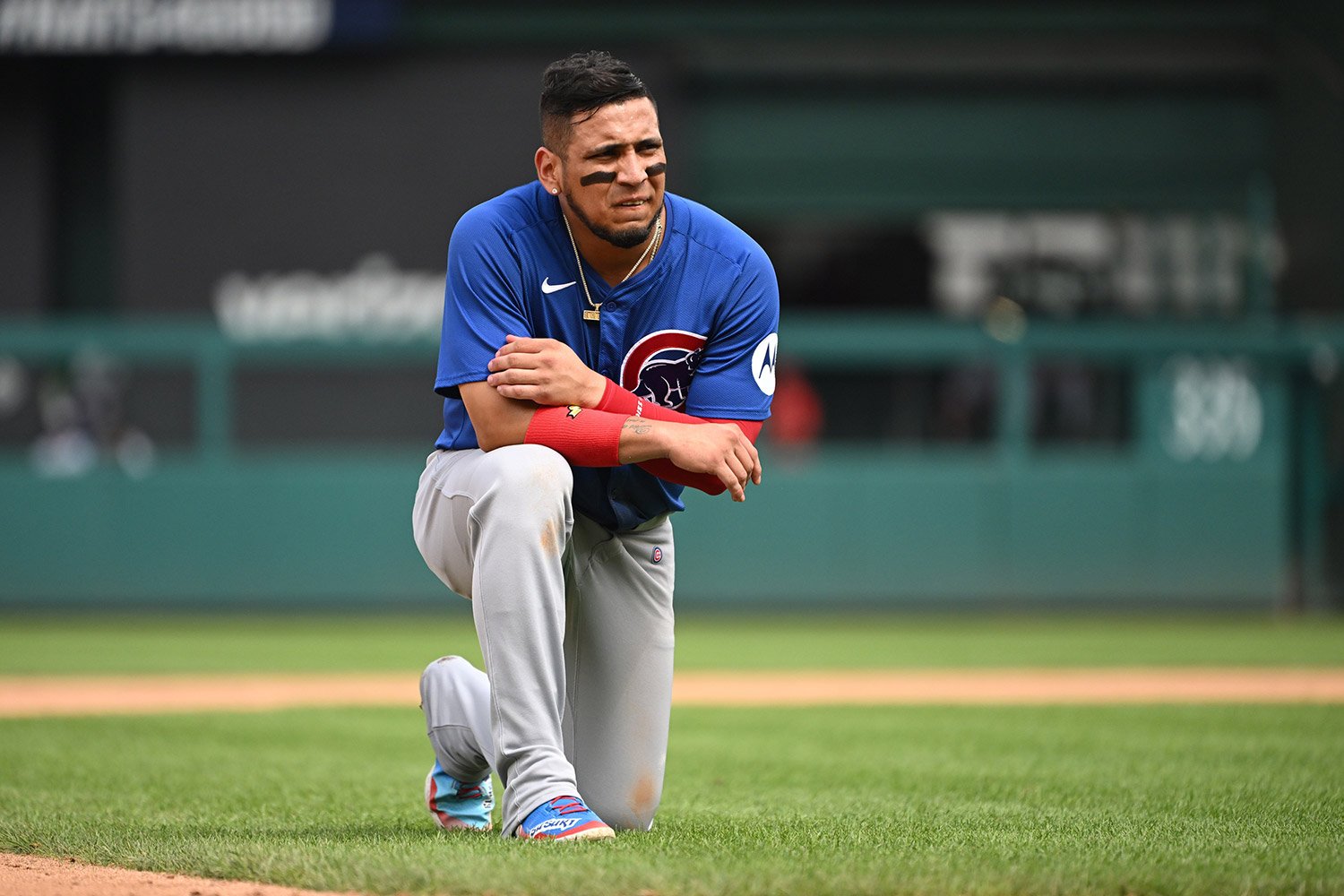 The thought process behind the move was clear when the Chicago Cubs acquired Isaac Paredes from the Tampa Bay Rays on July 28. Viewing from afar, the Cubs were swapping out an underperforming third baseman with a very high ceiling in Christopher Morel for an overperforming one who has probably already realized his ceiling in Paredes. Paredes is a free agent as soon as 2028, while Morel is as soon as 2029, so the Cubs gave up one year of team control and two relief prospects in Ty Johnson and Hunter Bigge for the swap. The Cubs likely felt that Paredes guaranteed the team more production from the hot corner for the next few seasons. That wasn’t a crazy thought, either. The Cubs’ new third baseman boasts a 123 wRC+ since 2022, according to FanGraphs, which is 40th in all of baseball, right around names like Christian Yelich, Fernando Tatis Jr., and Randy Arozarena. Morel, on the other hand, was costing the Cubs defensively at third base and couldn’t seem to translate the ability to hit the ball hard into consistent offensive results. As a team trying to win now, the Cubs couldn’t afford to wait around for him to figure it out. Paredes did outperform Morel for the remainder of 2024, at least. That says more about how bad Morel was in Tampa Bay than anything else. Paredes posted a wRC+ of 86 with the Cubs, while Morel posted a putrid 59 wRC+ down in Florida. Comparisons to Morel won’t make Cubs fans feel secure in who their third baseman is for 2025; however, Paredes didn’t get the raw results in his two months with the Cubs to warrant security. What do the numbers beneath the hood say? A brief refresher on how Paredes succeeds: he hits the ball in the air. A lot. He also pulls the ball. A lot. This enables him to hit a whole lot of home runs that just barely sneak over the left-field fence, but hey, a home run is a home run, right? This gives him well above-average home run totals. His 17.4 percent career strikeout rate and 11 percent career walk rate combine to give him a well above-average .333 on-base percentage for his career. He’s patient, puts the bat on the ball, and does so in a way that maximizes his power, resulting in a good offensive player. The issue with this kind of offensive profile is that the line between the numbers he was posting with Tampa Bay and those he posted with the Cubs is razor-thin. Consider that his average exit velocity last year was 85mph, per Baseball Savant. That was 244th among 252 qualified players and put him around names like Nicky Lopez, Nico Hoerner, and Brayan Rocchio. Those guys have their uses as players, sure, but slugging third basemen, they are not. Let’s look at Paredes’ batted ball data before and after the trade. All stats courtesy of FanGraphs: Time LD% GB% FB% Before Trade 20.5% 29.0% 50.5% After Trade 30.1% 33.6% 36.3% He increased his line drive rate by roughly 50 percent! As a matter of fact, that 30.1 percent line drive rate was second only to Aaron Judge during this timeframe. That’s good, right? Recall how poorly he rates in average exit velocity. Baseball Savant said his average exit velocity on those line drives was 89.5mph, 167th of 186 players who hit at least 25 line drives during this time frame. This led to a .585 wOBA on line drives, which sounds good, but was only 137th of those 189 players. He had 28 hits on those line drives, and just six were extra-base hits, all of which were doubles. He doesn’t hit the ball hard enough to do much more damage than a single on a line drive. With that said, more line drives should never really be seen as a bad thing. Even if they are just singles, more singles are good! The issue here is that it cut into what made him good. Not only did he hit fewer fly balls, he also didn’t hit them to the pull side nearly as often, and his output on fly balls, and thus his home run total, suffered as a result. Here are his fly balls by batted ball direction and his wRC+ on fly balls before and after the trade: Time Pull% Cent% Oppo% wRC+ Before Trade 45.3% 31.3% 23.3% 96 After Trade 37.7% 34.0% 28.3% -7 Combine this lessened pull rate with softer contact on his fly balls, as well as fewer fly balls in general, and you have a player who was only able to hit three home runs in 212 plate appearances with the Cubs after clubbing 16 in 429 plate appearances with the Rays. Where does this leave Paredes for 2025? He’ll almost certainly be the Opening Day third baseman. He has enough of a track record that the Cubs won’t give up on him after 212 subpar plate appearances, and besides, they have plenty of other issues to address, like catcher and the bullpen. I hope that more line drives weren’t an initiative inspired by the Cubs. I assume he got in his head a bit, knowing that Wrigley Field has a very deep left-field corner, and tried to hit more line drives to compensate. But Paredes is who he is at this point. He has discovered a way to maximize what is mostly subpar batted ball quality, and he does so impressively. He needs to get back to that to be a long-term option for the Cubs at the hot corner.
 -
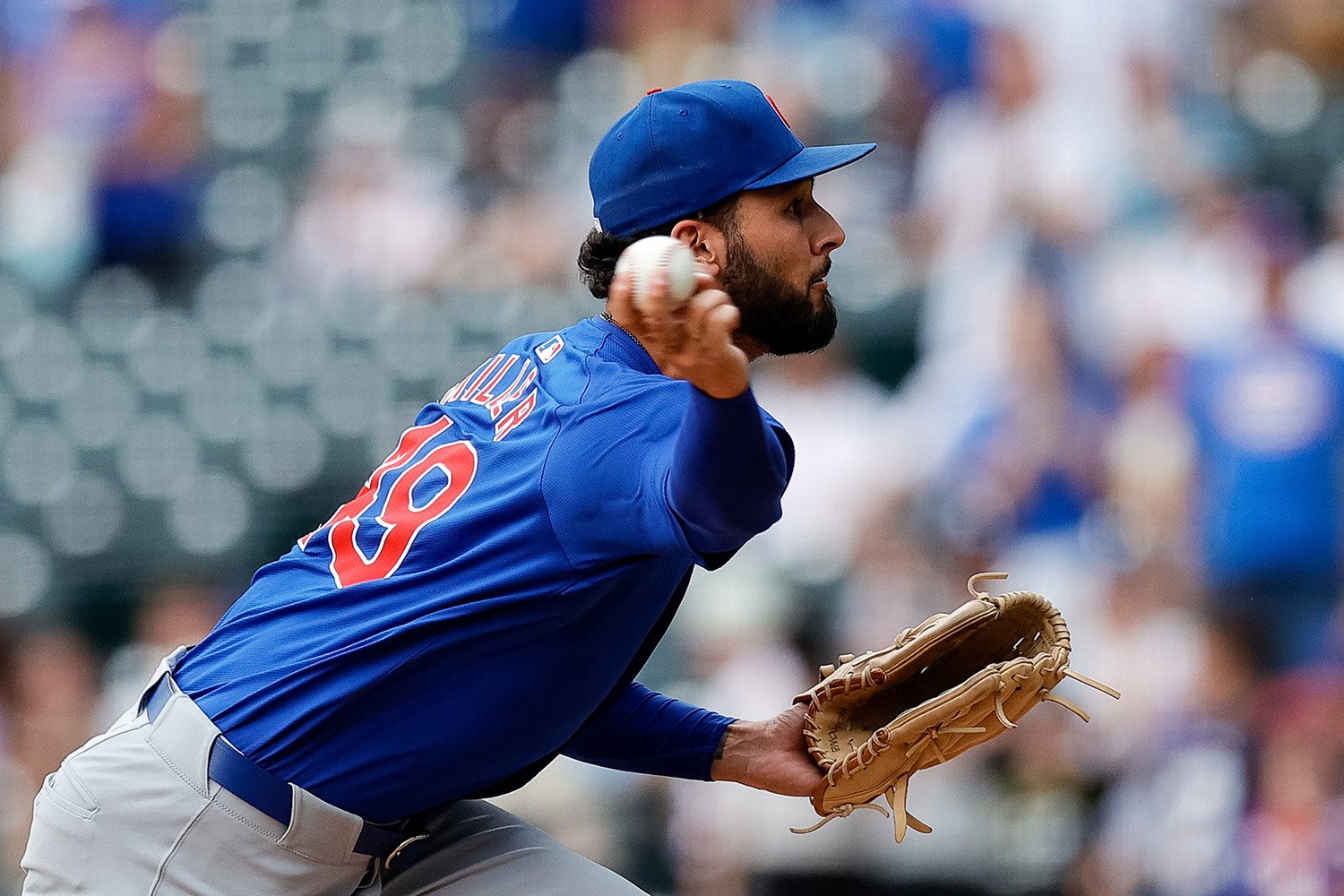 While the Chicago Cubs otherwise got off to a fantastic start to the 2024 season, it’s easy to remember just how much better that start could have been. There was the blown save in the season's first game against the Rangers. There was the lost 8-0 lead in San Diego. The backbreaker against the Marlins was in the first game of a doubleheader. All lost opportunities for a team that ended up being on the wrong side of the playoff picture. All in April To be fair, the bullpen did right itself: a rough first half gave way to a much better second half with a 3.51 ERA, good for eighth in baseball, according to FanGraphs. However, the damage was done. At that point, the Cubs had dug themselves enough of a hole thanks to bullpen meltdowns like the ones previously mentioned. Thus, it’s fair to assume that fortifying the bullpen will be at the top of Jed Hoyer’s offseason shopping list. He basically admitted as much in his press conference a few weeks back and took some level of responsibility for the instability of the bullpen early on. Hoyer said he didn’t give the team enough depth to withstand the early season struggles from Adbert Alzolay or the early season injury to Julian Merryweather. Indeed, this proved to be true. It also seems this isn’t the first time we’ve witnessed this phenomenon. Under Jed Hoyer, the Cubs have frequently pitched very poorly out of the bullpen in the first half, only to improve in the second half significantly: Year First Half Bullpen ERA Second Half Bullpen ERA 2020 5.30 (23rd) 3.53 (5th) 2021 3.40 (5th) 5.61 (28th) 2022 4.30 (24th) 3.86 (17th) 2023 4.01 (16th) 3.67 (8th) 2024 4.01 (16th) 3.51 (8th) In every season except for 2021, when they traded their three best bullpen arms, Andrew Chafin, Craig Kimbrel, and Ryan Tepera, at the trade deadline, the Cubs dramatically improved their bullpen ERA from the first half to the second half. What, exactly, does this mean? My first thought was that this would be a league-wide finding. All teams take time to find their go-to guys out of the bullpen in a given season. Do you think the Yankees thought Luke Weaver would be closing playoff games? But once they find those guys, they ride them more in the second half to much better results. Believe it or not, this does not appear to be the case: Year First Half Bullpen ERA Second Half Bullpen ERA 2020 4.36 4.52 2021 4.19 4.14 2022 3.86 3.85 2023 4.10 4.26 2024 3.97 3.98 It seems pretty random to me. In some cases, it was worse, and in some cases, it was better. In most instances, the difference is pretty small. This regime can build a good bullpen. They have done it on the fly mid-season multiple times! How do they translate that to the offseason? Why haven’t they been able to do so to this point? The Cubs have demonstrated the ability to identify and bring in bullpen arms that they think can help. They did so this season with Tyson Miller and Jorge Lopez. They need to build more contingency plans in the offseason so they don’t have to do so mid-season. This wasn’t just a blip on the radar of 2024 failures for Jed Hoyer and this front office but rather a consistent shortcoming that has to be addressed for next season.
 -
The Cubs tend to figure out their bullpen in the second half of the season but can they find a way to get there earlier in the season? Image courtesy of © Isaiah J. Downing-Imagn Images While the Chicago Cubs otherwise got off to a fantastic start to the 2024 season, it’s easy to remember just how much better that start could have been. There was the blown save in the season's first game against the Rangers. There was the lost 8-0 lead in San Diego. The backbreaker against the Marlins was in the first game of a doubleheader. All lost opportunities for a team that ended up being on the wrong side of the playoff picture. All in April To be fair, the bullpen did right itself: a rough first half gave way to a much better second half with a 3.51 ERA, good for eighth in baseball, according to FanGraphs. However, the damage was done. At that point, the Cubs had dug themselves enough of a hole thanks to bullpen meltdowns like the ones previously mentioned. Thus, it’s fair to assume that fortifying the bullpen will be at the top of Jed Hoyer’s offseason shopping list. He basically admitted as much in his press conference a few weeks back and took some level of responsibility for the instability of the bullpen early on. Hoyer said he didn’t give the team enough depth to withstand the early season struggles from Adbert Alzolay or the early season injury to Julian Merryweather. Indeed, this proved to be true. It also seems this isn’t the first time we’ve witnessed this phenomenon. Under Jed Hoyer, the Cubs have frequently pitched very poorly out of the bullpen in the first half, only to improve in the second half significantly: Year First Half Bullpen ERA Second Half Bullpen ERA 2020 5.30 (23rd) 3.53 (5th) 2021 3.40 (5th) 5.61 (28th) 2022 4.30 (24th) 3.86 (17th) 2023 4.01 (16th) 3.67 (8th) 2024 4.01 (16th) 3.51 (8th) In every season except for 2021, when they traded their three best bullpen arms, Andrew Chafin, Craig Kimbrel, and Ryan Tepera, at the trade deadline, the Cubs dramatically improved their bullpen ERA from the first half to the second half. What, exactly, does this mean? My first thought was that this would be a league-wide finding. All teams take time to find their go-to guys out of the bullpen in a given season. Do you think the Yankees thought Luke Weaver would be closing playoff games? But once they find those guys, they ride them more in the second half to much better results. Believe it or not, this does not appear to be the case: Year First Half Bullpen ERA Second Half Bullpen ERA 2020 4.36 4.52 2021 4.19 4.14 2022 3.86 3.85 2023 4.10 4.26 2024 3.97 3.98 It seems pretty random to me. In some cases, it was worse, and in some cases, it was better. In most instances, the difference is pretty small. This regime can build a good bullpen. They have done it on the fly mid-season multiple times! How do they translate that to the offseason? Why haven’t they been able to do so to this point? The Cubs have demonstrated the ability to identify and bring in bullpen arms that they think can help. They did so this season with Tyson Miller and Jorge Lopez. They need to build more contingency plans in the offseason so they don’t have to do so mid-season. This wasn’t just a blip on the radar of 2024 failures for Jed Hoyer and this front office but rather a consistent shortcoming that has to be addressed for next season. View full article
-
Most Improved. What does that mean to you? Maybe it's a player who struggled in 2023 and returned with better numbers in 2024. Or, maybe it's a guy who did very little for the first two months of the season and then turned it on in the second half? That's why we like getting multiple voters and ways of thinking. Find out who our choice was for 2024. As the MLB playoffs continue without the Chicago Cubs, it’s important to remember that this season wasn’t a complete loss. Plenty of guys made significant strides in the major leagues that might make us all more bullish on their outlook for next season, when hope will spring anew. Let’s take a look at the voting results for the Cubs’ most improved player. Honorable Mention Seiya Suzuki - 132 G, .283/.366/.482, 21 HR, 73 RBI, 74 R Suzuki received only one vote, but it was a first place vote, and candidly, that vote was me! So let me defend my selection a bit. He had a career year! 3.5 fWAR and 21 home runs are both career highs. However, that seems less impressive when you compare those figures to last year’s figures of 3.2 fWAR and 20 home runs. Here’s the thing: so much of last season’s production came in the second half of the season that it was fair to wonder what version of Suzuki we would see in 2024. The inconsistent but potentially great version? Or the one that is a top 30 hitter in baseball? He answered this question by posting a wRC+ of 130 or greater in every month except for May, when he was coming back from an injury. Make no mistake about it, Seiya Suzuki is one of the better hitters in baseball, and he proved that this season. Porter Hodge - 39 G, 43.0 IP, 52 K, 19 BB, 1.88 ERA, 0.88 WHIP One year ago, Hodge was coming off of a season in Double-A Tennessee where he posted a 5.13 ERA. Now, he has to be considered the favorite to be penciled in as the Chicago Cubs’ closer for the 2025 season. Stuff has never been the question for the flame-throwing reliever - it’s command. Hodge kept his walk rate to a bad but bearable 11.6%in the big leagues this season, down from 13.6% in Tennessee last year, and his K-BB% was 20.1%, up from 15.0%. Javier Assad - 29 G, 147 IP, 124 K, 63 BB, 3.73 ERA, 1.40 WHIP Assad had a higher ERA this year (3.73) than last (3.05) thanks, in part, to a higher walk rate. That might not feel like an improvement, however, continuing to induce soft contact and limit runs in a much larger sample size with the big league team is a meaningful development. He threw 147 innings in 29 starts with the Cubs this year, up from 109 ⅓ innings in 10 starts and 32 appearances overall last season. Dansby Swanson - 149 G, .242/.312/.390, 16 HR, 66 RBI, 82 R The Cubs’ shortstop certainly had a huge mid-season improvement in 2024. After posting just a 79 wRC+ in the first half of the season, Swanson hit for a scintillating 124 wRC+ after the midsummer classic. Part of that 124 second half wRC+ was buoyed by a .335 BABIP, but he did also drop his strikeout rate to 20.7 percent, which would be a career best for a full season. At the very least, he has given us all a much better taste in our mouths heading into 2025. The Top 3 #3: Miguel Amaya - 117 G, .232/.288/.357, 8 HR, 47 RBI, 32 R Similar to Swanson, Amaya had a really rough first half of the season. So much so that the catching position was looking like a real question mark heading into 2025. Thankfully, the Cubs’ catcher answered the bell in the second half of the season, posting a 113 wRC+, up from a lowly 60 in the first half. He made a meaningful swing adjustment right around the time the results got better, which you can read more about here. Improving the outlook at the catcher position should be one of the main priorities for Jed Hoyer this offseason. Amaya, at least, continues to be an intriguing player behind the plate for the Cubs going forward. #2: Jameson Taillon - 28 G, 165 ⅓ IP, 125 SO, 33 BB, 3.27 ERA, 1.13 WHIP After subpar results in his first season as a Cub, there was plenty of reason to believe that Taillon would be better in year two. I’m happy to say that he was absolutely much better in year two. He gave up fewer home runs in more innings pitched, trimmed his walk rate, and cut his ERA from 4.84 to 3.27, which was 16th among qualified pitchers this season. He was reliable, taking the mound just about every fifth day for the Cubs after an early season injury. The Cubs should feel very comfortable with Jameson Taillon being in their rotation heading into the 2025 season. Winner Pete Crow-Armstrong - 123 G, .237/.286/.384, 10 HR, 47 RBI, 46 R After a rough debut at the big league level last season, it was fair to question what kind of production the Cubs would get from Pete Crow-Armstrong this year. After Cody Bellinger cracked a rib and PCA was forced into action with the Cubs, it was fair to question what the Cubs would get from PCA over the course of his career. He hit just .203/.253/.329 in the first half, which included a lowly month of June where he hit .145/.192/.203. Then, it all clicked. The Cubs’ rookie was an above average hitter in the second half of the season, to the tune of a .262/.310/.425 line. The defense is as good as advertised, and he was a menace on the bases, stealing 27 bases in 30 tries. Combine all of that and the youngster was worth 2.7 fWAR, which was fifth among position players on the Cubs. The sky's the limit for PCA going forward. How do you feel about our choice for Cubs Most Improved Player in 2024? How would you rank the players? Let us know down below. View full article
-
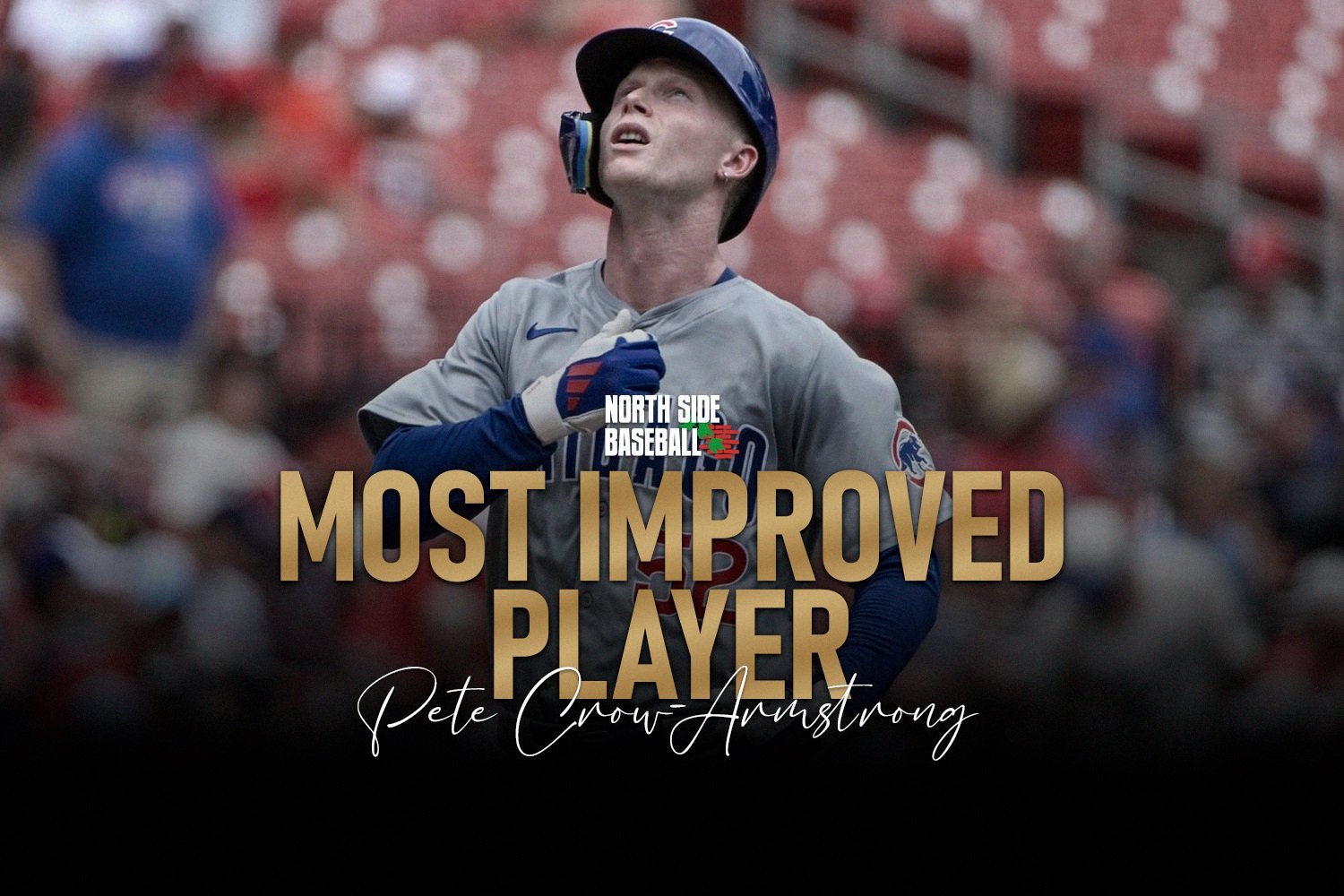 As the MLB playoffs continue without the Chicago Cubs, it’s important to remember that this season wasn’t a complete loss. Plenty of guys made significant strides in the major leagues that might make us all more bullish on their outlook for next season, when hope will spring anew. Let’s take a look at the voting results for the Cubs’ most improved player. Honorable Mention Seiya Suzuki - 132 G, .283/.366/.482, 21 HR, 73 RBI, 74 R Suzuki received only one vote, but it was a first place vote, and candidly, that vote was me! So let me defend my selection a bit. He had a career year! 3.5 fWAR and 21 home runs are both career highs. However, that seems less impressive when you compare those figures to last year’s figures of 3.2 fWAR and 20 home runs. Here’s the thing: so much of last season’s production came in the second half of the season that it was fair to wonder what version of Suzuki we would see in 2024. The inconsistent but potentially great version? Or the one that is a top 30 hitter in baseball? He answered this question by posting a wRC+ of 130 or greater in every month except for May, when he was coming back from an injury. Make no mistake about it, Seiya Suzuki is one of the better hitters in baseball, and he proved that this season. Porter Hodge - 39 G, 43.0 IP, 52 K, 19 BB, 1.88 ERA, 0.88 WHIP One year ago, Hodge was coming off of a season in Double-A Tennessee where he posted a 5.13 ERA. Now, he has to be considered the favorite to be penciled in as the Chicago Cubs’ closer for the 2025 season. Stuff has never been the question for the flame-throwing reliever - it’s command. Hodge kept his walk rate to a bad but bearable 11.6%in the big leagues this season, down from 13.6% in Tennessee last year, and his K-BB% was 20.1%, up from 15.0%. Javier Assad - 29 G, 147 IP, 124 K, 63 BB, 3.73 ERA, 1.40 WHIP Assad had a higher ERA this year (3.73) than last (3.05) thanks, in part, to a higher walk rate. That might not feel like an improvement, however, continuing to induce soft contact and limit runs in a much larger sample size with the big league team is a meaningful development. He threw 147 innings in 29 starts with the Cubs this year, up from 109 ⅓ innings in 10 starts and 32 appearances overall last season. Dansby Swanson - 149 G, .242/.312/.390, 16 HR, 66 RBI, 82 R The Cubs’ shortstop certainly had a huge mid-season improvement in 2024. After posting just a 79 wRC+ in the first half of the season, Swanson hit for a scintillating 124 wRC+ after the midsummer classic. Part of that 124 second half wRC+ was buoyed by a .335 BABIP, but he did also drop his strikeout rate to 20.7 percent, which would be a career best for a full season. At the very least, he has given us all a much better taste in our mouths heading into 2025. The Top 3 #3: Miguel Amaya - 117 G, .232/.288/.357, 8 HR, 47 RBI, 32 R Similar to Swanson, Amaya had a really rough first half of the season. So much so that the catching position was looking like a real question mark heading into 2025. Thankfully, the Cubs’ catcher answered the bell in the second half of the season, posting a 113 wRC+, up from a lowly 60 in the first half. He made a meaningful swing adjustment right around the time the results got better, which you can read more about here. Improving the outlook at the catcher position should be one of the main priorities for Jed Hoyer this offseason. Amaya, at least, continues to be an intriguing player behind the plate for the Cubs going forward. #2: Jameson Taillon - 28 G, 165 ⅓ IP, 125 SO, 33 BB, 3.27 ERA, 1.13 WHIP After subpar results in his first season as a Cub, there was plenty of reason to believe that Taillon would be better in year two. I’m happy to say that he was absolutely much better in year two. He gave up fewer home runs in more innings pitched, trimmed his walk rate, and cut his ERA from 4.84 to 3.27, which was 16th among qualified pitchers this season. He was reliable, taking the mound just about every fifth day for the Cubs after an early season injury. The Cubs should feel very comfortable with Jameson Taillon being in their rotation heading into the 2025 season. Winner Pete Crow-Armstrong - 123 G, .237/.286/.384, 10 HR, 47 RBI, 46 R After a rough debut at the big league level last season, it was fair to question what kind of production the Cubs would get from Pete Crow-Armstrong this year. After Cody Bellinger cracked a rib and PCA was forced into action with the Cubs, it was fair to question what the Cubs would get from PCA over the course of his career. He hit just .203/.253/.329 in the first half, which included a lowly month of June where he hit .145/.192/.203. Then, it all clicked. The Cubs’ rookie was an above average hitter in the second half of the season, to the tune of a .262/.310/.425 line. The defense is as good as advertised, and he was a menace on the bases, stealing 27 bases in 30 tries. Combine all of that and the youngster was worth 2.7 fWAR, which was fifth among position players on the Cubs. The sky's the limit for PCA going forward. How do you feel about our choice for Cubs Most Improved Player in 2024? How would you rank the players? Let us know down below.
 -
Cubs Short Season Minor League Hitter of the Year - 2024
matto1233 posted an article in Minor Leagues
 The first awards we are going to hand out are the short-season minor-league awards. These awards go to players for their statistics in the Dominican Summer League (DSL) or the Arizona Complex League (ACL). NorthSide Baseball writers voted for these awards using only ACL or DSL stats. It does not include full-season stats. We will highlight the top vote getters, but first we'll note a few hitters who received votes and deserve to be recognized. Others Receiving Votes Alexey Lumpuy, 20 - DSL Cubs Blue - 45 G, .257/.397/.534, 5 2B, 12 3B, 4 HR, 40 R, 19 RBI, 26 BB, 42 K Derik Alcantara, 19 - ACL Cubs, DSL Cubs Blue - 27 G, .344/.418/.462, 5 2B, 0 3B, 2 HR, 17 R, 26 RBI, 13 BB, 9 K Darlyn De Leon, 19 - DSL Cubs Blue - 41 G, .307/.428/.395, 6 2B, 2 3B, 0 HR, 29 R, 7 RBI, 22 BB, 25 K Honorable Mention Edgardo De Leon, 17 - DSL Cubs Red - 48 G, .277/.431/.433, 7 2B, 0 3B, 5 HR, 31 R, 27 RBI, 32 BB, 44 K After signing with the Cubs as an international free agent this past winter, De Leon flashed a good eye at the plate with a 17.7 percent walk rate. He flashed some positional versatility as well, appearing at first base, third base, and in the outfield in the Dominican Summer League. He was second on the team in OPS, which is impressive for someone that is just 17 years of age. Given his performance in his first season in professional baseball, De Leon has established himself as someone to watch going forward. Jose Escobar, 19 - ACL Cubs - 47 G, .303/.435/.465, 4 2B, 5 3B, 3 HR, 35 R, 19 RBI, 30 BB, 23 K Unlike De Leon, this is Jose Escobar’s third year in professional baseball, but his first year as a breakout player. After spending the 2022 season in the Dominican Summer League and the 2023 season in the Arizona Complex League, Escobar impressed about in his 47 games in the ACL this year to get the call up to the Myrtle Beach Pelicans, where he proceeded to hit an impressive .209/.357/.478. Given his age, don’t be surprised to see the young second baseman on some Cubs prospect boards for the 2025 season. Joan Delgado, 19 - ACL Cubs - 53 G, .281/.364/.538, 7 2B, 8 3B, 6 HR, 45 R, 29 RBI, 19 BB, 65 K Delgado, an outfielder from Venezuela, impressed in his first season stateside. An international free agent signee in 2022, Delgado spent his first two seasons in the Dominican Summer League before coming over to the Arizona Complex League for this summer. He’ll have to trim his strikeout rate, which has been well above 30 percent in each of his three professional seasons, but a high strikeout rate is a bit more palatable when it comes with a 10.2 percent walk rate and .538 slugging percentage. I’d look for Delgado to make his debut for the Myrtle Beach Pelicans next summer. Second Place Eriandys Ramon, 21 - ACL Cubs - 47 G, .340/.368/.566, 12 2B, 6 3B, 4 HR, 31 R, 23 RBI, 7 BB, 33 K After posting a .710 OPS in the Dominican Summer League last season, Ramon impressed enough in his 47 games with the ACL Cubs that he was ranked 30th on FanGraphs’ midseason Cubs top prospect list, and also earned himself a promotion to Myrtle Beach to play with the Pelicans. The outfielder posted a .184/.273/.306 line in 110 plate appearances there. At 21, he’s still a little old for A ball, but given that the Cubs only signed him last June, and that he can play shortstop, I’d expect him to remain around the fringes of prospect lists until we see what he can do in a full season in Myrtle Beach next season. Winner Anderson Suriel, 21 - ACL Cubs - 38 G, .344/.416/.680, 12 2B, 3 3B, 8 HR, 26 R, 38 RBI, 13 BB, 30 K Suriel, like Ramon, is old for a short season team. He made his professional debut in the Dominican Summer League in 2021 before heading to Arizona for the 2022 and 2023 seasons, where he posted a .619 and .672 OPS, respectively. In 2024, however, it all seemed to click, leading to eight home runs, which led the team, in just 143 plate appearances. His .680 slugging percentage also led the team, and his 1.096 OPS was the best on the team by .141 points. He finally got the call to Myrtle Beach where he proceeded to hit a less gaudy .245/.351/.367, however, given the less hitter friendly environment of the Carolina League, that was still a line that was 18 percent above league average. As someone that will play first base or corner outfield in the big leagues, Suriel will have to hit, so 2024 was a huge development for him. How do you feel about our selection for Short-Season Minor League Hitter of the Year? How would you rank them? Leave your thoughts below.
 -
With the baseball season over for the Cubs, it's time to start handing out awards. We'll start with the short season leagues, then the full-season minor leagues, and then the big leagues. The first awards we are going to hand out are the short-season minor-league awards. These awards go to players for their statistics in the Dominican Summer League (DSL) or the Arizona Complex League (ACL). NorthSide Baseball writers voted for these awards using only ACL or DSL stats. It does not include full-season stats. We will highlight the top vote getters, but first we'll note a few hitters who received votes and deserve to be recognized. Others Receiving Votes Alexey Lumpuy, 20 - DSL Cubs Blue - 45 G, .257/.397/.534, 5 2B, 12 3B, 4 HR, 40 R, 19 RBI, 26 BB, 42 K Derik Alcantara, 19 - ACL Cubs, DSL Cubs Blue - 27 G, .344/.418/.462, 5 2B, 0 3B, 2 HR, 17 R, 26 RBI, 13 BB, 9 K Darlyn De Leon, 19 - DSL Cubs Blue - 41 G, .307/.428/.395, 6 2B, 2 3B, 0 HR, 29 R, 7 RBI, 22 BB, 25 K Honorable Mention Edgardo De Leon, 17 - DSL Cubs Red - 48 G, .277/.431/.433, 7 2B, 0 3B, 5 HR, 31 R, 27 RBI, 32 BB, 44 K After signing with the Cubs as an international free agent this past winter, De Leon flashed a good eye at the plate with a 17.7 percent walk rate. He flashed some positional versatility as well, appearing at first base, third base, and in the outfield in the Dominican Summer League. He was second on the team in OPS, which is impressive for someone that is just 17 years of age. Given his performance in his first season in professional baseball, De Leon has established himself as someone to watch going forward. Jose Escobar, 19 - ACL Cubs - 47 G, .303/.435/.465, 4 2B, 5 3B, 3 HR, 35 R, 19 RBI, 30 BB, 23 K Unlike De Leon, this is Jose Escobar’s third year in professional baseball, but his first year as a breakout player. After spending the 2022 season in the Dominican Summer League and the 2023 season in the Arizona Complex League, Escobar impressed about in his 47 games in the ACL this year to get the call up to the Myrtle Beach Pelicans, where he proceeded to hit an impressive .209/.357/.478. Given his age, don’t be surprised to see the young second baseman on some Cubs prospect boards for the 2025 season. Joan Delgado, 19 - ACL Cubs - 53 G, .281/.364/.538, 7 2B, 8 3B, 6 HR, 45 R, 29 RBI, 19 BB, 65 K Delgado, an outfielder from Venezuela, impressed in his first season stateside. An international free agent signee in 2022, Delgado spent his first two seasons in the Dominican Summer League before coming over to the Arizona Complex League for this summer. He’ll have to trim his strikeout rate, which has been well above 30 percent in each of his three professional seasons, but a high strikeout rate is a bit more palatable when it comes with a 10.2 percent walk rate and .538 slugging percentage. I’d look for Delgado to make his debut for the Myrtle Beach Pelicans next summer. Second Place Eriandys Ramon, 21 - ACL Cubs - 47 G, .340/.368/.566, 12 2B, 6 3B, 4 HR, 31 R, 23 RBI, 7 BB, 33 K After posting a .710 OPS in the Dominican Summer League last season, Ramon impressed enough in his 47 games with the ACL Cubs that he was ranked 30th on FanGraphs’ midseason Cubs top prospect list, and also earned himself a promotion to Myrtle Beach to play with the Pelicans. The outfielder posted a .184/.273/.306 line in 110 plate appearances there. At 21, he’s still a little old for A ball, but given that the Cubs only signed him last June, and that he can play shortstop, I’d expect him to remain around the fringes of prospect lists until we see what he can do in a full season in Myrtle Beach next season. Winner Anderson Suriel, 21 - ACL Cubs - 38 G, .344/.416/.680, 12 2B, 3 3B, 8 HR, 26 R, 38 RBI, 13 BB, 30 K Suriel, like Ramon, is old for a short season team. He made his professional debut in the Dominican Summer League in 2021 before heading to Arizona for the 2022 and 2023 seasons, where he posted a .619 and .672 OPS, respectively. In 2024, however, it all seemed to click, leading to eight home runs, which led the team, in just 143 plate appearances. His .680 slugging percentage also led the team, and his 1.096 OPS was the best on the team by .141 points. He finally got the call to Myrtle Beach where he proceeded to hit a less gaudy .245/.351/.367, however, given the less hitter friendly environment of the Carolina League, that was still a line that was 18 percent above league average. As someone that will play first base or corner outfield in the big leagues, Suriel will have to hit, so 2024 was a huge development for him. How do you feel about our selection for Short-Season Minor League Hitter of the Year? How would you rank them? Leave your thoughts below. View full article
-
 To a point, it feels like the 2024 season was almost the exact same story as the 2023 season for the Chicago Cubs. A good April gave way to a very poor May and June. The team clawed back into the Wild Card race with a good July and August, but ultimately ran out of steam in September to miss the playoffs. There was an offense that didn’t hit a lot of home runs, and a pitching staff that was above-average, but plagued by bullpen issues just when they could least afford them. There is one more parallel between the 2023 and 2024 seasons that I feel has flown under the radar a bit: run differential. For the second season in a row, the Cubs are set to underperform their expected record, based on runs scored and allowed, by several games. Last year, the Cubs outscored their opponents by 96 runs. That was more than the Milwaukee Brewers, who won the division, and more than all three of the teams who made the playoffs ahead of them via the Wild Card. From that run differential, they had an expected record of 90-72, seven games better than the 83-79 record with which they actually finished. This year, it’s not quite as dramatic. The Cubs have outscored their opponents by 67 runs. That gives them an expected record of 85-71, which is five games better than their actual record of 80-76. To be clear, the disparity this season is a bit less frustrating, considering the circumstances. The Brewers, as well as all four teams ahead of them in the Wild Card race, have a better run differential. Playing to their run differential would still not have made them a playoff team this year, or at least, it would still only have them scrambling to make up multiple games over the final week. Regardless, this is a trend worth examining. Run differential, while not the end-all, be-all of team quality, can be one of many ways to determine if a team is overachieving or underachieving. This is due to the amount of statistical noise present in a one- or even two-run win--or loss. One really good performance from one player can swing those games. Winning games by four, five, or six runs requires several of those performances, which is where truly elite teams separate themselves from the pack. When discussing run differential, there are three reasons usually given for why a team might overperform or underperform. One is strategic decisions. The Cubs fired David Ross after last year and replaced him with Craig Counsell, who was thought of as one of the best managers in baseball and whose Brewers teams had a history of overperforming their run differentials. Despite this, the Cubs saw no improvement in this area, so I am going to rule this one out, though I do think it begs for a larger discussion over the role a manager has, both in this area and in general. Second would be the bullpen. Believe it or not, the Cubs actually have the 11th-best bullpen ERA in baseball over the past two seasons, according to FanGraphs. They have a better bullpen ERA this season than the Phillies, Diamondbacks, and Orioles, who will all be playing baseball in October, and who are all within two games of their expected record this season. This is not a strength for the Cubs, but over the course of two entire seasons, it has not been a weakness, either. The third reason would be clutch performance. On offense, the Cubs have hovered around the same wRC+ in high-, medium-, and low-leverage situations. Pitching, on the other hand, is a different story: Year and Situation wOBA Allowed 2024 Low Leverage .291 2024 Medium Leverage .309 2024 High Leverage .338 2023 Low Leverage .303 2023 Medium Leverage .312 2023 High Leverage .351 Wow! Cubs pitchers have been considerably worse in high-leverage situations than in low-leverage situations over the past two seasons. It’s kind of weird that this has happened twice, right? If you’re wondering whether or not this is a league-wide trend, it isn’t: per FanGraphs, MLB as a whole posts its lowest wOBA in high-leverage situations. That makes sense. Most of the time, teams use their best pitchers in those spots, to whatever extent they can do so. All of the potential reasons for this type of phenomenon would require another full article. I consider myself to be a pretty practical person. Most studies have shown that the ability to perform in clutch situations isn’t really a thing, so I am unlikely to chalk this up to Cubs’ pitchers lacking some kind of “it” factor. The staff as a whole allowed a .303 wOBA in all situations this year, so I am inclined to believe that if we up this sample size, the wOBA allowed in high, medium, and low leverage situations would all end up at about .303. In the same way that if I flip a coin 10 times and they all land on heads, the odds of my next flip being tails is still 50 percent, I believe this will regress toward normalcy in the future. But, still. It is really weird that this has happened twice. I’ll still say that I think this is most likely luck. However, I do wonder if this tells us something about the Cubs’ lack of top-flight arms. They've lacked the kind of shutdown arms other teams deploy in those big spots, at least for stretches of the last two years. The signal amid the noise here is saying: Invest in more certainty in the bullpen, one way or another.
 -
The underlying numbers say the Cubs should be better than this. Then again, they also said that last year. Image courtesy of © David Richard-Imagn Images To a point, it feels like the 2024 season was almost the exact same story as the 2023 season for the Chicago Cubs. A good April gave way to a very poor May and June. The team clawed back into the Wild Card race with a good July and August, but ultimately ran out of steam in September to miss the playoffs. There was an offense that didn’t hit a lot of home runs, and a pitching staff that was above-average, but plagued by bullpen issues just when they could least afford them. There is one more parallel between the 2023 and 2024 seasons that I feel has flown under the radar a bit: run differential. For the second season in a row, the Cubs are set to underperform their expected record, based on runs scored and allowed, by several games. Last year, the Cubs outscored their opponents by 96 runs. That was more than the Milwaukee Brewers, who won the division, and more than all three of the teams who made the playoffs ahead of them via the Wild Card. From that run differential, they had an expected record of 90-72, seven games better than the 83-79 record with which they actually finished. This year, it’s not quite as dramatic. The Cubs have outscored their opponents by 67 runs. That gives them an expected record of 85-71, which is five games better than their actual record of 80-76. To be clear, the disparity this season is a bit less frustrating, considering the circumstances. The Brewers, as well as all four teams ahead of them in the Wild Card race, have a better run differential. Playing to their run differential would still not have made them a playoff team this year, or at least, it would still only have them scrambling to make up multiple games over the final week. Regardless, this is a trend worth examining. Run differential, while not the end-all, be-all of team quality, can be one of many ways to determine if a team is overachieving or underachieving. This is due to the amount of statistical noise present in a one- or even two-run win--or loss. One really good performance from one player can swing those games. Winning games by four, five, or six runs requires several of those performances, which is where truly elite teams separate themselves from the pack. When discussing run differential, there are three reasons usually given for why a team might overperform or underperform. One is strategic decisions. The Cubs fired David Ross after last year and replaced him with Craig Counsell, who was thought of as one of the best managers in baseball and whose Brewers teams had a history of overperforming their run differentials. Despite this, the Cubs saw no improvement in this area, so I am going to rule this one out, though I do think it begs for a larger discussion over the role a manager has, both in this area and in general. Second would be the bullpen. Believe it or not, the Cubs actually have the 11th-best bullpen ERA in baseball over the past two seasons, according to FanGraphs. They have a better bullpen ERA this season than the Phillies, Diamondbacks, and Orioles, who will all be playing baseball in October, and who are all within two games of their expected record this season. This is not a strength for the Cubs, but over the course of two entire seasons, it has not been a weakness, either. The third reason would be clutch performance. On offense, the Cubs have hovered around the same wRC+ in high-, medium-, and low-leverage situations. Pitching, on the other hand, is a different story: Year and Situation wOBA Allowed 2024 Low Leverage .291 2024 Medium Leverage .309 2024 High Leverage .338 2023 Low Leverage .303 2023 Medium Leverage .312 2023 High Leverage .351 Wow! Cubs pitchers have been considerably worse in high-leverage situations than in low-leverage situations over the past two seasons. It’s kind of weird that this has happened twice, right? If you’re wondering whether or not this is a league-wide trend, it isn’t: per FanGraphs, MLB as a whole posts its lowest wOBA in high-leverage situations. That makes sense. Most of the time, teams use their best pitchers in those spots, to whatever extent they can do so. All of the potential reasons for this type of phenomenon would require another full article. I consider myself to be a pretty practical person. Most studies have shown that the ability to perform in clutch situations isn’t really a thing, so I am unlikely to chalk this up to Cubs’ pitchers lacking some kind of “it” factor. The staff as a whole allowed a .303 wOBA in all situations this year, so I am inclined to believe that if we up this sample size, the wOBA allowed in high, medium, and low leverage situations would all end up at about .303. In the same way that if I flip a coin 10 times and they all land on heads, the odds of my next flip being tails is still 50 percent, I believe this will regress toward normalcy in the future. But, still. It is really weird that this has happened twice. I’ll still say that I think this is most likely luck. However, I do wonder if this tells us something about the Cubs’ lack of top-flight arms. They've lacked the kind of shutdown arms other teams deploy in those big spots, at least for stretches of the last two years. The signal amid the noise here is saying: Invest in more certainty in the bullpen, one way or another. View full article
-
I’m not ruing the Taillon’s of the world. He was a good signing! I acknowledged as much. My point is that guys like Taillon should be added to take a team from 80 wins to 90, or 90 wins to 100, not from 70 to 80. Retrospectively, that lever was pulled in the wrong offseason. Now we have a situation where the team is going to pay the luxury tax and not make the playoffs, which, whether we like it or not, will most likely affect future spending. That is a failure. And Taillon has two more seasons on this deal at the age of 33 and 34 with velocity that is trending downwards. ZiPS projects him for a 4.41 and 4.51 ERA the next two seasons, respectively. He was added, provided value in the first two seasons, and it was wasted on middling teams.
-
This is a good point, and one I can agree with. Though the article is written in regards to the Cubs pursuing Anthony Santander instead Juan Soto. I am fully on board with them pursuing a catcher or bullpen reinforcements. Swapping out Bellinger for Santander is just not the move for me.
-
In my defense, I am not sure I have complained about the slow nature of the rebuild on this site. Regardless, I think people are allowed to change their minds on account of two things: 1. Hoyer is investing in players at the wrong times. Dansby Swanson is a good player, and by $/WAR, was a good investment. Same for Taillon and Suzuki. However, because Hoyer hasn’t added other guys around them, or because there wasn’t MLB ready young talent on the roster, what will theoretically be the most productive years of those guys’ contracts have now been wasted and they’re all on the other side of 30. 2. Clearly, it isn’t working. They’re going to miss the playoffs for the second straight season. Trading out Bellinger/Wisdom for Santander isn’t changing that. It’s just repeating the same mistake from the past couple of off seasons. Falling in love with the 4/$100m contract over the mega deals is exactly how we ended up here. They don’t need more supporting players. They need an all star level player.
-
 Looking ahead to the looming offseason, the Chicago Cubs have their work cut out for them. While technically not mathematically eliminated from playoff contention, a couple of late-inning losses to the Colorado Rockies this weekend basically sealed the deal: there will be no postseason baseball in Chicago. Last week, I re-examined the Cody Bellinger contract through the lens of the San Francisco Giants awarding Matt Chapman with a contract extension. Basically, if the Cubs were ever deciding between whether or not they wanted to bring back Bellinger last offseason, or pivot and sign Chapman to cover their glaring hole at third base, they picked wrong. This brings me to one player to whom the Cubs have been connected for this coming offseason. Sahadev Sharma has suggested that Anthony Santander might be a good fit for the Cubs. On paper, sure, that makes sense. The Cubs are in need of a bat to solidify their lineup. Santander’s 131 wRC+ would trail only Seiya Suzuki among Cubs players with at least 50 plate appearances. (Hilariously, I applied that threshold only to exclude Christian Bethancourt, who is rocking a 159 wRC+ as a Cub.) His 41 home runs are almost double the next-highest Cub. I hate it. There is one large, obvious reason to disdain the Cubs potentially having interest in Santander: There is a younger, significantly better player, also available in free agency, who plays the same position. I’m sure you’re familiar with the work of Juan Soto. There seems to be no smoke to the Cubs pursuing the superstar right fielder, and recently, MLB.com’s Mark Feinsand said he doesn’t see the Cubs going big enough to sign him. I, along with many other Cubs fans, am tired of a big-market franchise like the Cubs so consistently playing in the middle tier of free agency. To some degree, though, I have simply accepted the fact that the Cubs won’t be a player for Soto. Despite that, I still don’t think Santander makes sense for them. Consider the fact that they already have a right fielder, under contract for two more seasons after this one, whom they moved to designated hitter after a string of very questionable defensive plays. I’m also sure you’re familiar with the work of Seiya Suzuki: PLAYER wRC+ FIELDING RUN VALUE fWAR Seiya Suzuki 132 -2 2.9 Anthony Santander 131 -4 3.1 So, the Orioles’ right fielder is no better with the bat, while being just as bad in the field, while being just as valuable as the Cubs’ current (and likely future) right fielder. All of this also ignores the fact that between Suzuki, Dansby Swanson, Nico Hoerner, and Ian Happ, the Cubs have four positions locked down and anchored to expensive contracts for the next two seasons. Those players are certainly good, but not superstars. Why add another of that player type into the mix? Simply put, the Cubs aren’t one Anthony Santander away from being a playoff baseball team. They don’t need Anthony Santander, because they already have Anthony Santander; he’s just named Seiya Suzuki. I’m concerned that signing the free agent will be repeating the Bellinger mistake from last offseason on an even larger scale. Speaking of Bellinger, this all likely hinges on the former MVP’s contract decision for 2025. It would be a step backward to clear that money off of the books and then immediately replace it with a guy like Santander. All of this is to say that, if it were between signing Santander and doing nothing, I honestly might prefer nothing. At least that gives the team some flexibility going forward and leaves some room for prospects to play. As Mike tells Walt in season three of Breaking Bad, no more half-measures. Now, I am saying this to Jed Hoyer. Give me Juan Soto or some other applicable superstar, or give me nothing. Anything else is a half-measure.
 -
In the sticky, confused web of decisions facing the Cubs this winter, one big-ticket free agent feels like a trap to me. Image courtesy of © Tommy Gilligan-Imagn Images Looking ahead to the looming offseason, the Chicago Cubs have their work cut out for them. While technically not mathematically eliminated from playoff contention, a couple of late-inning losses to the Colorado Rockies this weekend basically sealed the deal: there will be no postseason baseball in Chicago. Last week, I re-examined the Cody Bellinger contract through the lens of the San Francisco Giants awarding Matt Chapman with a contract extension. Basically, if the Cubs were ever deciding between whether or not they wanted to bring back Bellinger last offseason, or pivot and sign Chapman to cover their glaring hole at third base, they picked wrong. This brings me to one player to whom the Cubs have been connected for this coming offseason. Sahadev Sharma has suggested that Anthony Santander might be a good fit for the Cubs. On paper, sure, that makes sense. The Cubs are in need of a bat to solidify their lineup. Santander’s 131 wRC+ would trail only Seiya Suzuki among Cubs players with at least 50 plate appearances. (Hilariously, I applied that threshold only to exclude Christian Bethancourt, who is rocking a 159 wRC+ as a Cub.) His 41 home runs are almost double the next-highest Cub. I hate it. There is one large, obvious reason to disdain the Cubs potentially having interest in Santander: There is a younger, significantly better player, also available in free agency, who plays the same position. I’m sure you’re familiar with the work of Juan Soto. There seems to be no smoke to the Cubs pursuing the superstar right fielder, and recently, MLB.com’s Mark Feinsand said he doesn’t see the Cubs going big enough to sign him. I, along with many other Cubs fans, am tired of a big-market franchise like the Cubs so consistently playing in the middle tier of free agency. To some degree, though, I have simply accepted the fact that the Cubs won’t be a player for Soto. Despite that, I still don’t think Santander makes sense for them. Consider the fact that they already have a right fielder, under contract for two more seasons after this one, whom they moved to designated hitter after a string of very questionable defensive plays. I’m also sure you’re familiar with the work of Seiya Suzuki: PLAYER wRC+ FIELDING RUN VALUE fWAR Seiya Suzuki 132 -2 2.9 Anthony Santander 131 -4 3.1 So, the Orioles’ right fielder is no better with the bat, while being just as bad in the field, while being just as valuable as the Cubs’ current (and likely future) right fielder. All of this also ignores the fact that between Suzuki, Dansby Swanson, Nico Hoerner, and Ian Happ, the Cubs have four positions locked down and anchored to expensive contracts for the next two seasons. Those players are certainly good, but not superstars. Why add another of that player type into the mix? Simply put, the Cubs aren’t one Anthony Santander away from being a playoff baseball team. They don’t need Anthony Santander, because they already have Anthony Santander; he’s just named Seiya Suzuki. I’m concerned that signing the free agent will be repeating the Bellinger mistake from last offseason on an even larger scale. Speaking of Bellinger, this all likely hinges on the former MVP’s contract decision for 2025. It would be a step backward to clear that money off of the books and then immediately replace it with a guy like Santander. All of this is to say that, if it were between signing Santander and doing nothing, I honestly might prefer nothing. At least that gives the team some flexibility going forward and leaves some room for prospects to play. As Mike tells Walt in season three of Breaking Bad, no more half-measures. Now, I am saying this to Jed Hoyer. Give me Juan Soto or some other applicable superstar, or give me nothing. Anything else is a half-measure. View full article
-
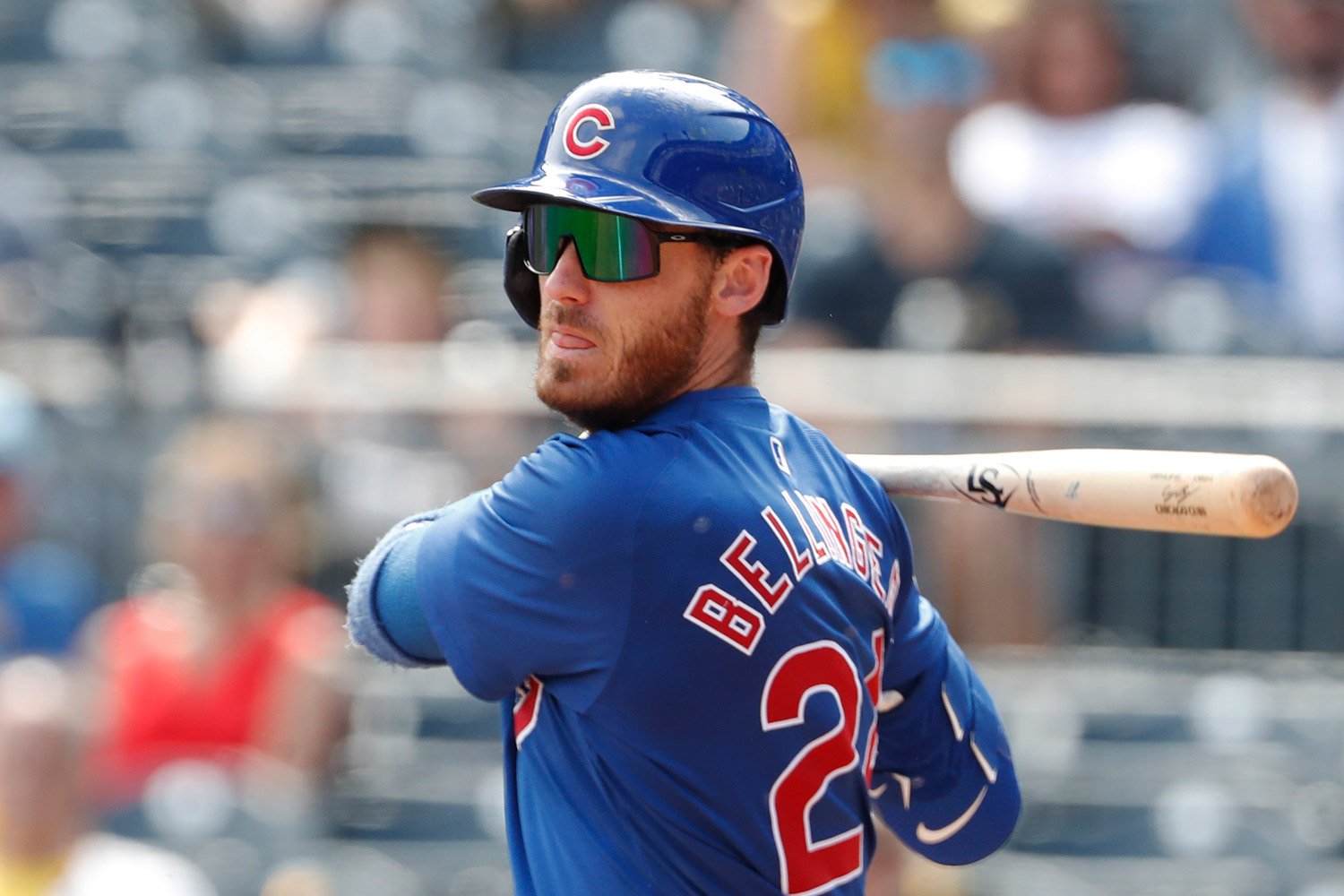 With the Chicago Cubs now six games out of the final playoff position heading into Sunday’s action, FanGraphs lists their odds of making the playoffs at under one percent. I don’t think anyone can argue with that, either. Not only would they have to pass both the Mets and the Braves, but both teams also hold the tiebreaker over the Cubs, effectively putting the deficit at six games with about 20 remaining. With all of that said, I’d say it’s about time to shift the perspective that I write with. One quick way of doing that is looking into what this team could have done differently, from a personnel standpoint, to have had a better season. This year feels disappointing. However, it’s important to remember that FanGraphs projected them for 82.3 wins to begin with, which is about where they will end up, barring any major winning or losing streak over the last couple of weeks. This team didn’t make the playoffs because they were probably never good enough. Somewhat related to all of this, the San Francisco Giants and Matt Chapman agreed on a contract extension earlier this week. As you might recall, the Cubs were connected to Chapman this past offseason before eventually agreeing to bring Cody Bellinger back. Their interest in Chapman was most likely an insurance policy in case they didn’t come to terms with Bellinger, but at the time, it certainly felt like the Cubs would most likely bring one of the two in to help bolster the lineup. In January, I compared the two players to help understand who might be a better acquisition for the Cubs. It was a fascinating comparison. Bellinger had a fantastic year last season, thanks to overperformance on fly balls. Chapman had a bit of a down year, thanks to underperformance on fly balls. Bellinger got much better results than Chapman, but Chapman had better-expected stats because Bellinger was pulling fly balls while Chapman was not. Ultimately, I concluded that Chapman might be the better investment. Looking at this year, it’s clear the Cubs made the wrong decision here: PLAYER wOBA xwOBA fWAR Matt Chapman .337 .344 4.6 Cody Bellinger .324 .296 1.7 Now, one of the WAR differences is health. Bellinger has had two separate stints on the injured list, resulting in about 100 more plate appearances for Chapman. The offensive results haven’t been drastically different, but Chapman makes up for that in defense, which is a huge part of the equation. With Pete Crow-Armstrong seizing the center field role for the foreseeable future, Bellinger has been playing right field. He has significantly less value in right, where defense isn’t as valuable and better offensive players typically reside. The fit was always a bit tricky with the potential emergence of PCA. Which brings me back to the decision this past offseason to re-sign Bellinger and not bring in Chapman. I’m sure part of that decision was wanting to give a defensive home to Christopher Morel. That did not pay off at all. That ultimately resulted in the trade for Isaac Paredes, which, to this point, has also not paid off at all. The Cubs are 29th in baseball in fWAR from their third basemen this season. The only team worse is the lowly White Sox. The Giants, Chapman’s current team, are second in baseball. I’ll admit, I was happy when the Cubs brought Bellinger back—thrilled, even. Having him back for just one season would give the Cubs an excellent insurance policy should PCA prove he wasn’t ready or would be a bust. I wrote as much here. Clearly, I was wrong, and so were the Cubs. The ramifications of this one decision are fascinating. Christopher Morel would likely still be a Cub in a part-time role. Isaac Paredes would not be on the team. They would probably be closer to a playoff spot. And they might still feel the ramifications of that decision next season if Cody Bellinger opts into his $27.5m salary. The Cubs probably hope he doesn’t. The Giants, on the other hand, gave Chapman a well-earned extension to make sure he’s back.
 -
Last offseason, super-agent Scott Boras had several high-profile free agents on the market. Did the Cubs target the right one? Image courtesy of © Charles LeClaire-Imagn Images With the Chicago Cubs now six games out of the final playoff position heading into Sunday’s action, FanGraphs lists their odds of making the playoffs at under one percent. I don’t think anyone can argue with that, either. Not only would they have to pass both the Mets and the Braves, but both teams also hold the tiebreaker over the Cubs, effectively putting the deficit at six games with about 20 remaining. With all of that said, I’d say it’s about time to shift the perspective that I write with. One quick way of doing that is looking into what this team could have done differently, from a personnel standpoint, to have had a better season. This year feels disappointing. However, it’s important to remember that FanGraphs projected them for 82.3 wins to begin with, which is about where they will end up, barring any major winning or losing streak over the last couple of weeks. This team didn’t make the playoffs because they were probably never good enough. Somewhat related to all of this, the San Francisco Giants and Matt Chapman agreed on a contract extension earlier this week. As you might recall, the Cubs were connected to Chapman this past offseason before eventually agreeing to bring Cody Bellinger back. Their interest in Chapman was most likely an insurance policy in case they didn’t come to terms with Bellinger, but at the time, it certainly felt like the Cubs would most likely bring one of the two in to help bolster the lineup. In January, I compared the two players to help understand who might be a better acquisition for the Cubs. It was a fascinating comparison. Bellinger had a fantastic year last season, thanks to overperformance on fly balls. Chapman had a bit of a down year, thanks to underperformance on fly balls. Bellinger got much better results than Chapman, but Chapman had better-expected stats because Bellinger was pulling fly balls while Chapman was not. Ultimately, I concluded that Chapman might be the better investment. Looking at this year, it’s clear the Cubs made the wrong decision here: PLAYER wOBA xwOBA fWAR Matt Chapman .337 .344 4.6 Cody Bellinger .324 .296 1.7 Now, one of the WAR differences is health. Bellinger has had two separate stints on the injured list, resulting in about 100 more plate appearances for Chapman. The offensive results haven’t been drastically different, but Chapman makes up for that in defense, which is a huge part of the equation. With Pete Crow-Armstrong seizing the center field role for the foreseeable future, Bellinger has been playing right field. He has significantly less value in right, where defense isn’t as valuable and better offensive players typically reside. The fit was always a bit tricky with the potential emergence of PCA. Which brings me back to the decision this past offseason to re-sign Bellinger and not bring in Chapman. I’m sure part of that decision was wanting to give a defensive home to Christopher Morel. That did not pay off at all. That ultimately resulted in the trade for Isaac Paredes, which, to this point, has also not paid off at all. The Cubs are 29th in baseball in fWAR from their third basemen this season. The only team worse is the lowly White Sox. The Giants, Chapman’s current team, are second in baseball. I’ll admit, I was happy when the Cubs brought Bellinger back—thrilled, even. Having him back for just one season would give the Cubs an excellent insurance policy should PCA prove he wasn’t ready or would be a bust. I wrote as much here. Clearly, I was wrong, and so were the Cubs. The ramifications of this one decision are fascinating. Christopher Morel would likely still be a Cub in a part-time role. Isaac Paredes would not be on the team. They would probably be closer to a playoff spot. And they might still feel the ramifications of that decision next season if Cody Bellinger opts into his $27.5m salary. The Cubs probably hope he doesn’t. The Giants, on the other hand, gave Chapman a well-earned extension to make sure he’s back. View full article
-
He's been through a lot to get this far, and he finds success in a much more interesting way than many of his contemporaries. Image courtesy of © Jeff Le-USA TODAY Sports The second-half success of the Chicago Cubs bullpen has been much discussed--as it should be. Their 2.55 second-half bullpen ERA leads baseball. Their 1.9 Fangraphs WAR is fourth. Jorge López and Tyson Miller have been fantastic additions, and Porter Hodge looks like a good, dependable, homegrown arm. There’s been one other, less heralded hurler who has helped the team fortify their relief corps, too: Ethan Roberts. Roberts had been something of an afterthought, after making the Opening Day roster two seasons ago and succumbing to Tommy John surgery just 7 ⅔ innings into his major-league career. After taking 2023 off to rehab, he’s back in 2024, contributing 12 innings to the major-league bullpen to this point. While 12 innings aren't much to go on, the bespectacled righthander has allowed just one earned run in those frames--the glasses, and also the innings. But frankly, I am not even here to talk about Roberts’s success, and whether or not it will continue. I am simply here to talk about how fun he is to watch. At 5’10” and 180 pounds, he doesn’t look like a typical major-league pitcher. This already endears me to him. I’ve always found satisfaction in athletes who succeed despite what many would consider an undersized frame. Of course, if someone is that small, they probably aren’t throwing especially hard. Roberts doesn’t, which I also take satisfaction in, in the era of so many high-velocity fastballs. Among 652 pitchers who have thrown at least 100 pitches this season, Roberts’s average pitch velocity of 84.3 mph is 630th, according to Baseball Savant. A flamethrower, he is not. Apart from a four-seam fastball that he has thrown just nine times all season, Roberts is primarily a two-pitch pitcher. Per Baseball Savant, he features a cutter that he throws 34.7 percent of the time, and a sweeper that he throws 61 percent of the time. Throwing a sweeper that often is already an anomaly. As a matter of fact, only one pitcher, Bailey Horn, has thrown a sweeper more often this season. Not only does Roberts throw his sweeper often, he also gets a ton of movement on the pitch. It drops 3.6” more than the average sweeper at a similar velocity. That’s 18th of 110 pitchers who have thrown at least 100 sweepers. Where this sweeper really shines, though, is in the horizontal movement. Roberts’ sweeper has 4.9 more inches of break than the average sweeper at a similar velocity. This leads all of baseball. In fact, the next-closest pitcher, Greg Weissert, is at 4.4”. To better visualize this, here is a chart of all 110 of those sweepers from Baseball Savant. The horizontal movement relative to the average is on the x-axis, and the vertical movements is on the y-axis. Roberts’s sweeper is the dot that I circled on the far right: Let’s combine everything. Roberts throws his sweeper more than almost every other pitcher in baseball. It has more horizontal movement, adjusting for certain factors, than any other sweeper in baseball. In what’s been a mostly joyless Cubs season, I have taken some joy in seeing Roberts spin his sweeper up there and watching hitters try to hit it. Here’s Addison Barger coming up completely empty on a beautifully located back-foot sweeper: anEyMmdfWGw0TUFRPT1fVndrREJsRlJVUU1BQUZzTFhnQUFVZzVSQUFBSFYxSUFCVlJVQWdzTUNGQUFWbEZm.mp4 Here he is getting a sword out of Brandon Crawford on another beautifully located two-strike sweeper: NjROOHZfWGw0TUFRPT1fVjFSU1hWWUZVMUVBQ0ZvRUJRQUFCVk5VQUZsVEIxVUFVd0ZUVkFFRVZWVlhVd0ZR.mp4 To be clear, all of this alone doesn’t make Roberts a successful major-league pitcher. His wOBA allowed and his whiff rate on the sweeper are only slightly above-average. But when executed, it works, and it is just an absolute joy to watch happen. Despite his size, and despite his lack of velocity, Ethan Roberts is here and succeeding in the major leagues. I’m not sure if it will continue. He has some favorable peripherals, and some unfavorable ones. Whether he sticks around or not, I have thoroughly enjoyed watching him come in and spin wiffle balls up there. Seeing guys pump 100-mph fastballs is a lot of fun. Watching Ethan Roberts pitch is just as much so. View full article
-
 The second-half success of the Chicago Cubs bullpen has been much discussed--as it should be. Their 2.55 second-half bullpen ERA leads baseball. Their 1.9 Fangraphs WAR is fourth. Jorge López and Tyson Miller have been fantastic additions, and Porter Hodge looks like a good, dependable, homegrown arm. There’s been one other, less heralded hurler who has helped the team fortify their relief corps, too: Ethan Roberts. Roberts had been something of an afterthought, after making the Opening Day roster two seasons ago and succumbing to Tommy John surgery just 7 ⅔ innings into his major-league career. After taking 2023 off to rehab, he’s back in 2024, contributing 12 innings to the major-league bullpen to this point. While 12 innings aren't much to go on, the bespectacled righthander has allowed just one earned run in those frames--the glasses, and also the innings. But frankly, I am not even here to talk about Roberts’s success, and whether or not it will continue. I am simply here to talk about how fun he is to watch. At 5’10” and 180 pounds, he doesn’t look like a typical major-league pitcher. This already endears me to him. I’ve always found satisfaction in athletes who succeed despite what many would consider an undersized frame. Of course, if someone is that small, they probably aren’t throwing especially hard. Roberts doesn’t, which I also take satisfaction in, in the era of so many high-velocity fastballs. Among 652 pitchers who have thrown at least 100 pitches this season, Roberts’s average pitch velocity of 84.3 mph is 630th, according to Baseball Savant. A flamethrower, he is not. Apart from a four-seam fastball that he has thrown just nine times all season, Roberts is primarily a two-pitch pitcher. Per Baseball Savant, he features a cutter that he throws 34.7 percent of the time, and a sweeper that he throws 61 percent of the time. Throwing a sweeper that often is already an anomaly. As a matter of fact, only one pitcher, Bailey Horn, has thrown a sweeper more often this season. Not only does Roberts throw his sweeper often, he also gets a ton of movement on the pitch. It drops 3.6” more than the average sweeper at a similar velocity. That’s 18th of 110 pitchers who have thrown at least 100 sweepers. Where this sweeper really shines, though, is in the horizontal movement. Roberts’ sweeper has 4.9 more inches of break than the average sweeper at a similar velocity. This leads all of baseball. In fact, the next-closest pitcher, Greg Weissert, is at 4.4”. To better visualize this, here is a chart of all 110 of those sweepers from Baseball Savant. The horizontal movement relative to the average is on the x-axis, and the vertical movements is on the y-axis. Roberts’s sweeper is the dot that I circled on the far right: Let’s combine everything. Roberts throws his sweeper more than almost every other pitcher in baseball. It has more horizontal movement, adjusting for certain factors, than any other sweeper in baseball. In what’s been a mostly joyless Cubs season, I have taken some joy in seeing Roberts spin his sweeper up there and watching hitters try to hit it. Here’s Addison Barger coming up completely empty on a beautifully located back-foot sweeper: anEyMmdfWGw0TUFRPT1fVndrREJsRlJVUU1BQUZzTFhnQUFVZzVSQUFBSFYxSUFCVlJVQWdzTUNGQUFWbEZm.mp4 Here he is getting a sword out of Brandon Crawford on another beautifully located two-strike sweeper: NjROOHZfWGw0TUFRPT1fVjFSU1hWWUZVMUVBQ0ZvRUJRQUFCVk5VQUZsVEIxVUFVd0ZUVkFFRVZWVlhVd0ZR.mp4 To be clear, all of this alone doesn’t make Roberts a successful major-league pitcher. His wOBA allowed and his whiff rate on the sweeper are only slightly above-average. But when executed, it works, and it is just an absolute joy to watch happen. Despite his size, and despite his lack of velocity, Ethan Roberts is here and succeeding in the major leagues. I’m not sure if it will continue. He has some favorable peripherals, and some unfavorable ones. Whether he sticks around or not, I have thoroughly enjoyed watching him come in and spin wiffle balls up there. Seeing guys pump 100-mph fastballs is a lot of fun. Watching Ethan Roberts pitch is just as much so.
 -
Because of the defense, PCA is arguably already a more valuable player than Tauchman, and I don’t think the bat will get any worse. If the fate of next year’s team is Tauchman in CF every day, then next year’s team won’t be competing for the playoffs anyway. He likely wouldn’t bring back anything crazy valuable NOW, but Fernando Tatis and Yordan Alvarez weren’t crazy valuable when they were traded for a post-prime James Shields and Josh Fields, respectively. Obviously, that has a small chance of happening, but the Rays adage is that you have to extract the most value out of every player, from roster spot #1 to roster spot #26, and I’d agree with Trueblood that the Cubs didn’t do that here.
-
He did have a 114 wRC+ in April in a tiny sample size. It could be an ebb and flow but it also feels consistent with what he needs to do to be a productive big leaguer.
-
The counterpoint to this would be: 1) the swinging strike rate is a LITTLE bit better in the second half at 13.7 percent, and is down to 11.2 percent in August. 2) the walk rate is low, however, it is a function of him both getting so many pitches in the zone and swinging at so many pitches in the zone. In the second half, that strategy has resulted in better production, so until the hits stop coming, I won’t be too worried about it.

