


Matthew Trueblood
-
Posts
2,426 -
Joined
-
Last visited
-
Days Won
2
Content Type
Profiles
Joomla Posts 1
Chicago Cubs Videos
Chicago Cubs Free Agent & Trade Rumors, Notes, & Tidbits
2026 Chicago Cubs Top Prospects Ranking
News
2023 Chicago Cubs Draft Picks
Guides & Resources
2024 Chicago Cubs Draft Picks
The Chicago Cubs Players Project
2025 Chicago Cubs Draft Pick Tracker
2026 Chicago Cubs Draft Tracker: Picks & Bonuses
Blogs
Events
Forums
Store
Gallery
Everything posted by Matthew Trueblood
-
Until this season, one could make an argument that David Ross hadn't been given enough talent or a sufficiently clear mandate to evaluate him as the Cubs' manager. That argument was flimsy, but it could be made. It's no longer valid, and Ross's managerial heat should be red-hot. Image courtesy of © Jayne Kamin-Oncea-USA TODAY Sports The latest (but far from first) example of Ross's ineptitude came Tuesday night. Many managers throughout baseball history have had the unfortunate tendency to place too much trust in a starter who appeared to be cruising, but Ross (like most of his counterparts in the last decade or so) has proved not to have that particular itch. Alas, he's replaced it with an equally lethal vice: he sticks far too long with relievers who seem to be cruising. In a tie game on Tuesday night, that took the form of Ross sending Javier Assad out to begin a sixth inning of work in the top of the ninth. That was inexcusable, inexplicable, and indefensible. Over five innings of sparkling relief, Assad had kept his pitch count low, and he'd looked great. That's irrelevant. It was the ninth inning of a tie game, at home. That has to be a spot in which you give the ball to a fresh, trusted high-leverage reliever, especially when the incumbent hurler is a reliever who had already pitched what would have been a fine start. If this were a rare occurrence, we could easily forgive it. On the contrary, Ross routinely tries to get an extra inning out of a reliever if they look good in a given frame. I wrote last month about multi-inning relievers as a staple of the Cubs' bullpen strategy, but this is something different. This is asking a pitcher who clearly had been intended to be used for a certain stretch being asked to go three more outs. Often, perhaps wanting to reinforce his gesture of faith, Ross won't even warm up a reliever behind the guy he's riding. That was the case Tuesday night, which is why even after Paul DeJong led off the inning with the go-ahead home run, Assad couldn't be yanked to keep the deficit to a minimum. He had to be left in for three more batters, while Michael Rucker hurriedly got warm, and in that time, the Cardinals shoved another run across the plate, rendering the Cubs' comeback hopes desperately remote. If, in turn, this were Ross's only quirk or foible, it would be forgivable, and perhaps it would be more worthwhile to talk about how the front office might correct the systematic errors. That, sadly, is not the case, either. Ross routinely burns out his club during hot streaks, making them vulnerable to long cold spells. He received ample praise during the last two months of each of the last two seasons for the spunk shown by teams with no hope of winning anything, but that praise was overcooked, and it overlooked the sluggish, sloppy, non-competitive baseball played for long stretches in the middle of each of those seasons, helping to ensure that the final two months were irrelevant. If he were the extraordinary clubhouse man with the magic touch that some imagine, his teams wouldn't go through such long and miserable slogs. They might still have lost a lot, but it didn't need to look as helpless and listless as it often did. He's too loyal to veterans (like Jason Heyward) and doesn't show savvy in his construction of lineups. He's made some utterly head-scratching decisions in recent weeks offensively, too, bunting ill-advisedly and missing pivotal pinch-hit opportunities. Because of his status as a beloved leader on the World Series champion team of 2016, and because he did a fine job of keeping the team together over the short and absurd COVID season of 2020, Ross has been given a long leash. That has to be over now. An immediate firing isn't necessarily in order, but any careful observer has to be down on him as a long-term managerial fit for a team that is now ready to seriously contend. He was probably never the right choice for the job, and he's had a fair chance to beat that rap. It hasn't happened, and the Cubs have lost too many winnable games already in 2023 because they have the wrong man on the top step of the dugout. View full article
-
David Ross is Not the Manager the Cubs Need to Turn the Corner
Matthew Trueblood posted an article in Cubs
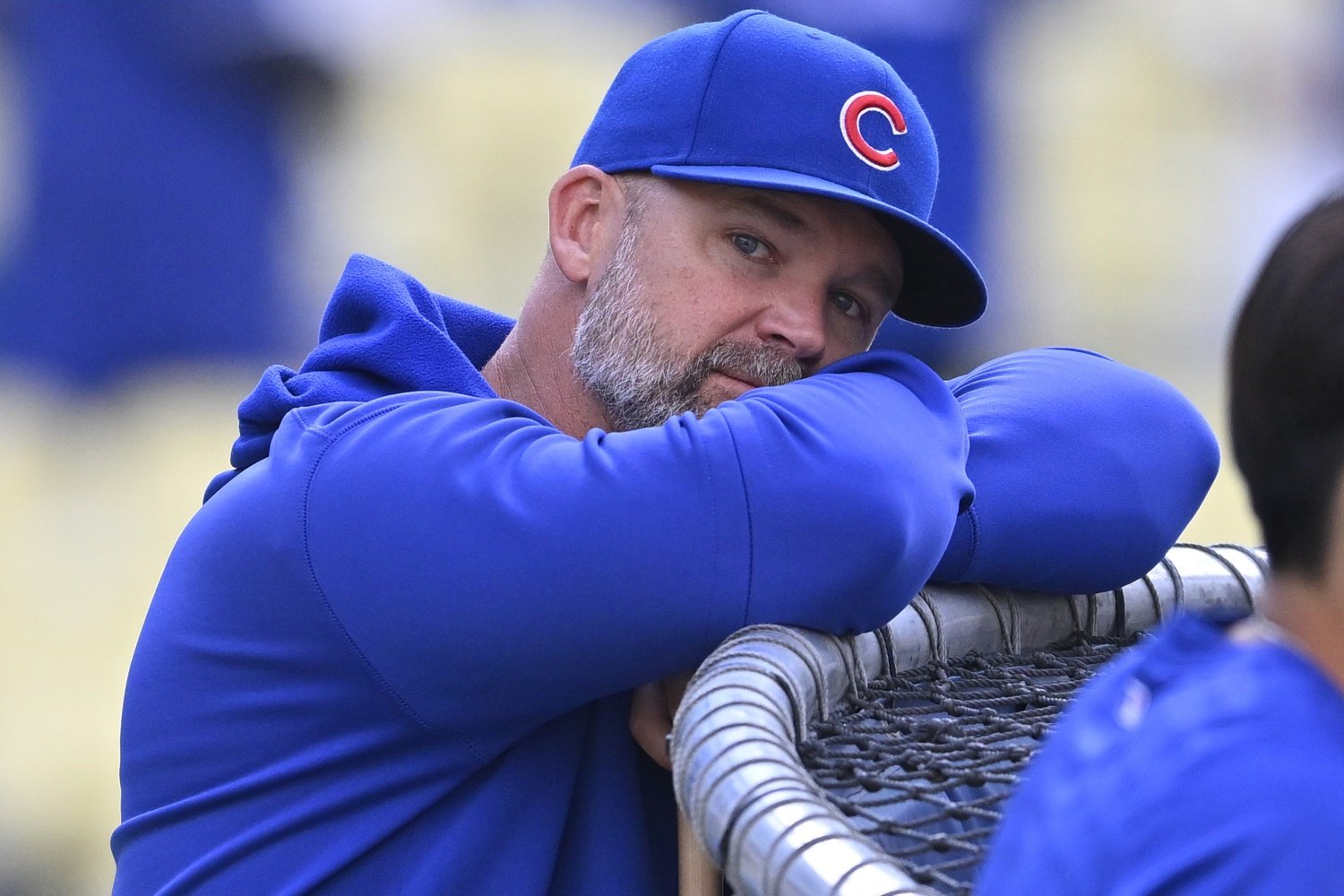 The latest (but far from first) example of Ross's ineptitude came Tuesday night. Many managers throughout baseball history have had the unfortunate tendency to place too much trust in a starter who appeared to be cruising, but Ross (like most of his counterparts in the last decade or so) has proved not to have that particular itch. Alas, he's replaced it with an equally lethal vice: he sticks far too long with relievers who seem to be cruising. In a tie game on Tuesday night, that took the form of Ross sending Javier Assad out to begin a sixth inning of work in the top of the ninth. That was inexcusable, inexplicable, and indefensible. Over five innings of sparkling relief, Assad had kept his pitch count low, and he'd looked great. That's irrelevant. It was the ninth inning of a tie game, at home. That has to be a spot in which you give the ball to a fresh, trusted high-leverage reliever, especially when the incumbent hurler is a reliever who had already pitched what would have been a fine start. If this were a rare occurrence, we could easily forgive it. On the contrary, Ross routinely tries to get an extra inning out of a reliever if they look good in a given frame. I wrote last month about multi-inning relievers as a staple of the Cubs' bullpen strategy, but this is something different. This is asking a pitcher who clearly had been intended to be used for a certain stretch being asked to go three more outs. Often, perhaps wanting to reinforce his gesture of faith, Ross won't even warm up a reliever behind the guy he's riding. That was the case Tuesday night, which is why even after Paul DeJong led off the inning with the go-ahead home run, Assad couldn't be yanked to keep the deficit to a minimum. He had to be left in for three more batters, while Michael Rucker hurriedly got warm, and in that time, the Cardinals shoved another run across the plate, rendering the Cubs' comeback hopes desperately remote. If, in turn, this were Ross's only quirk or foible, it would be forgivable, and perhaps it would be more worthwhile to talk about how the front office might correct the systematic errors. That, sadly, is not the case, either. Ross routinely burns out his club during hot streaks, making them vulnerable to long cold spells. He received ample praise during the last two months of each of the last two seasons for the spunk shown by teams with no hope of winning anything, but that praise was overcooked, and it overlooked the sluggish, sloppy, non-competitive baseball played for long stretches in the middle of each of those seasons, helping to ensure that the final two months were irrelevant. If he were the extraordinary clubhouse man with the magic touch that some imagine, his teams wouldn't go through such long and miserable slogs. They might still have lost a lot, but it didn't need to look as helpless and listless as it often did. He's too loyal to veterans (like Jason Heyward) and doesn't show savvy in his construction of lineups. He's made some utterly head-scratching decisions in recent weeks offensively, too, bunting ill-advisedly and missing pivotal pinch-hit opportunities. Because of his status as a beloved leader on the World Series champion team of 2016, and because he did a fine job of keeping the team together over the short and absurd COVID season of 2020, Ross has been given a long leash. That has to be over now. An immediate firing isn't necessarily in order, but any careful observer has to be down on him as a long-term managerial fit for a team that is now ready to seriously contend. He was probably never the right choice for the job, and he's had a fair chance to beat that rap. It hasn't happened, and the Cubs have lost too many winnable games already in 2023 because they have the wrong man on the top step of the dugout.
 -
The Cardinals came to Wrigley Field dead. They were 11-24, ensnared in controversy and grief. If the Cubs don't take care of business over the final two games of this series, though, the dead might rise again. Chicago's offense needs to turn that same trick. It took so long for the Cubs to promote Matt Mervis and Christopher Morel from Iowa to the majors that their legend outran their likely impact--even despite Morel having shown his flaws at the MLB level last year. Mervis, Morel, and Miguel Amaya do add a slightly stronger feeling of upside to the bottom of the Cubs lineup, but the reality is that they all slot into that part of the lineup for a reason. The last two weeks and change have thrown cold water on those who got overly enthusiastic about the team's hot start at the plate. Over the last 14 days, the Cubs are hitting .243/.318/.373. They're 24th in wRC+ over that span, and 25th in isolated power. They have the seventh-highest strikeout in MLB in that period. This, of course, is the real identity of this offense, and that's the problem. Even their best hitters have the kind of flaws that prevent one from being a devastating offensive force. Nico Hoerner lacks power Ian Happ can't hit left-handed pitching, and is a little light on power for a guy who bats third every day. Dansby Swanson runs extraordinarily hot and cold at the plate. Seiya Suzuki, a year and a month into his MLB career, hasn't yet found the approach to fully unlock his ability. The one potential exception is Cody Bellinger, who has shown the ability to be a genuine superstar in the past and is hitting like one this spring. He's been the bright spot during this rough fortnight for the team, but even he has seen his plate discipline crack. He has a strikeout rate just under 30 percent and a walk rate just over 6 percent in those 14 days, which bears watching. This is all by design. During the offseason, the front office pivoted consciously to building a team that relies on pitching and defense to win games. Eventually, the goal is to have a juggernaut offense to go with that run prevention, but everyone knew this year's team would have to win close, low-scoring games. Alas: they aren't doing so. They're not only 2-8 in one-run games, but 2-3 in two-run ones. That rate--40 to 45 percent of games being decided by two runs or fewer--is definitely in the range the team should expect over the final 127 contests of their season. They need to win half of them or more, in order to even play meaningful baseball in September. To do that, they're going to need to find the right offensive formula. That probably means more Morel, and much less Nick Madrigal. The latter has been brutal in every possible regard, since a superficially hot start. He's limited defensively, and has been a disaster on the bases. He doesn't help the team by adding missing pop at the bottom of the lineup, either. Morel can do everything Madrigal can do, but better. (Of course, it's now possible that both will need to play fairly often for a while, until we hear more about Hoerner's hamstring issues.) It probably also depends on either Mervis or Suzuki developing into a full-fledged power threat. Patrick Wisdom and Bellinger are a decent start on hitting for sufficient power overall, but we've already talked about the problems that might be creeping in for Bellinger, and Wisdom's vulnerabilities--unable to handle premium velocity, far too many strikeouts--are obvious and problematic for anyone who dreams on sliding him up to, for instance, Trey Mancini's unproductive place in the batting order. Beyond that, though, there remain questions about how this team starts consistently scoring enough runs to support even one of the league's best pitching-and-defense combinations. Willson Contreras didn't beat the Cubs Monday night. Jordan Hicks did. That can't happen as often as it has lately, if the team wants to stay in contention in the NL Central. View full article
-
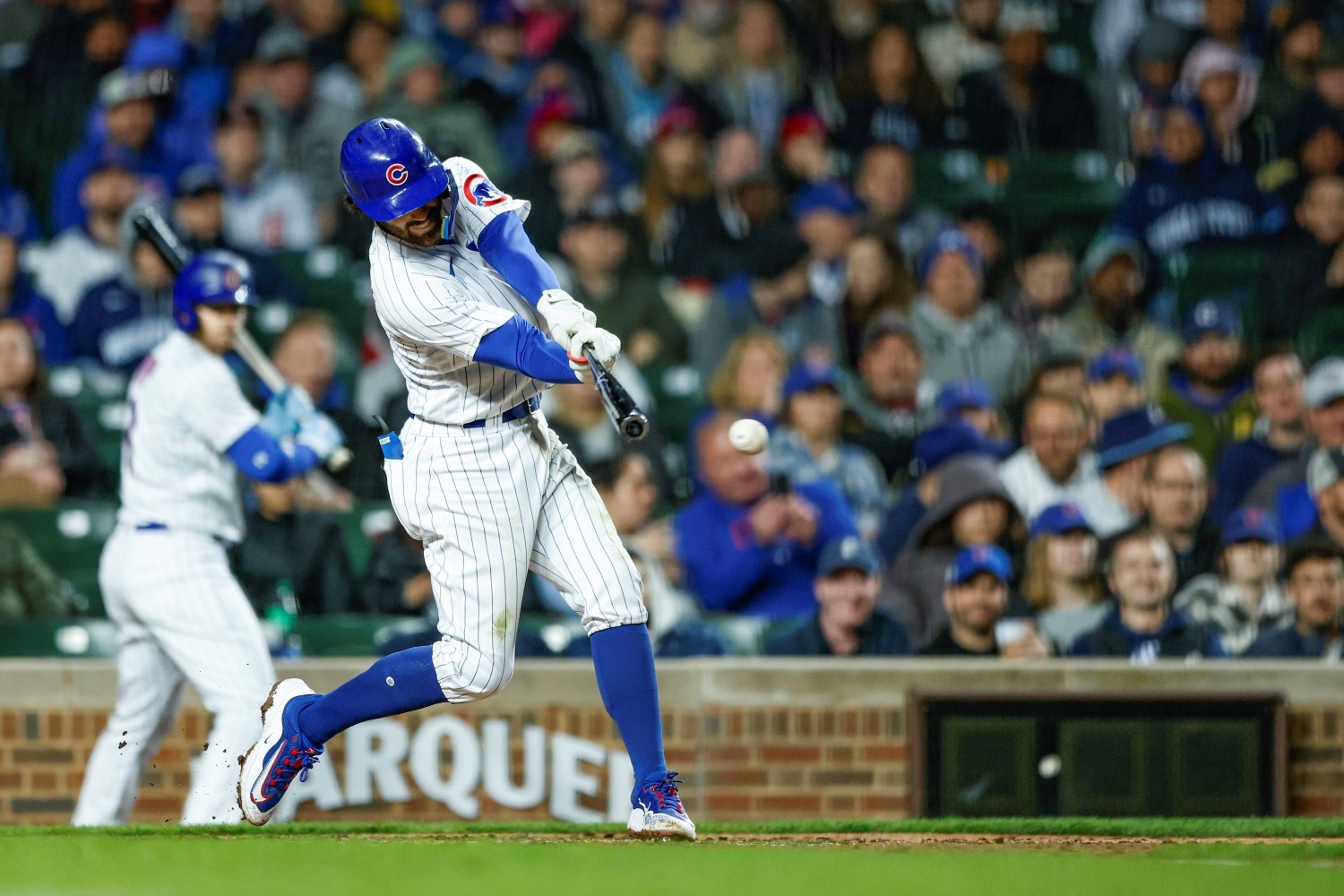 It took so long for the Cubs to promote Matt Mervis and Christopher Morel from Iowa to the majors that their legend outran their likely impact--even despite Morel having shown his flaws at the MLB level last year. Mervis, Morel, and Miguel Amaya do add a slightly stronger feeling of upside to the bottom of the Cubs lineup, but the reality is that they all slot into that part of the lineup for a reason. The last two weeks and change have thrown cold water on those who got overly enthusiastic about the team's hot start at the plate. Over the last 14 days, the Cubs are hitting .243/.318/.373. They're 24th in wRC+ over that span, and 25th in isolated power. They have the seventh-highest strikeout in MLB in that period. This, of course, is the real identity of this offense, and that's the problem. Even their best hitters have the kind of flaws that prevent one from being a devastating offensive force. Nico Hoerner lacks power Ian Happ can't hit left-handed pitching, and is a little light on power for a guy who bats third every day. Dansby Swanson runs extraordinarily hot and cold at the plate. Seiya Suzuki, a year and a month into his MLB career, hasn't yet found the approach to fully unlock his ability. The one potential exception is Cody Bellinger, who has shown the ability to be a genuine superstar in the past and is hitting like one this spring. He's been the bright spot during this rough fortnight for the team, but even he has seen his plate discipline crack. He has a strikeout rate just under 30 percent and a walk rate just over 6 percent in those 14 days, which bears watching. This is all by design. During the offseason, the front office pivoted consciously to building a team that relies on pitching and defense to win games. Eventually, the goal is to have a juggernaut offense to go with that run prevention, but everyone knew this year's team would have to win close, low-scoring games. Alas: they aren't doing so. They're not only 2-8 in one-run games, but 2-3 in two-run ones. That rate--40 to 45 percent of games being decided by two runs or fewer--is definitely in the range the team should expect over the final 127 contests of their season. They need to win half of them or more, in order to even play meaningful baseball in September. To do that, they're going to need to find the right offensive formula. That probably means more Morel, and much less Nick Madrigal. The latter has been brutal in every possible regard, since a superficially hot start. He's limited defensively, and has been a disaster on the bases. He doesn't help the team by adding missing pop at the bottom of the lineup, either. Morel can do everything Madrigal can do, but better. (Of course, it's now possible that both will need to play fairly often for a while, until we hear more about Hoerner's hamstring issues.) It probably also depends on either Mervis or Suzuki developing into a full-fledged power threat. Patrick Wisdom and Bellinger are a decent start on hitting for sufficient power overall, but we've already talked about the problems that might be creeping in for Bellinger, and Wisdom's vulnerabilities--unable to handle premium velocity, far too many strikeouts--are obvious and problematic for anyone who dreams on sliding him up to, for instance, Trey Mancini's unproductive place in the batting order. Beyond that, though, there remain questions about how this team starts consistently scoring enough runs to support even one of the league's best pitching-and-defense combinations. Willson Contreras didn't beat the Cubs Monday night. Jordan Hicks did. That can't happen as often as it has lately, if the team wants to stay in contention in the NL Central.
 -
"How do you tell somebody that you care about deeply, 'I told you so.'?", asked Michael Scott, rhetorically. "Gently, with a rose? In a funny way, like it's a hilarious joke? Or do you just let it go, because saying it would just make things worse? Probably the funny way." Cubs fans are in a similar dilemma Monday. The Cubs begin their season series against the Cardinals Monday night at Wrigley Field, which means that Willson Contreras is coming back to town. He arrives at a personal nadir, and the team he chose (and who chose him) this winter is at a collective one. Contreras has been moved semi-permanently into the designated hitter role, having had his beloved catching duties stripped amid the Cards' dreadful start. The Cardinals themselves are off to their worst start in about 50 years. Until this weekend, it was an interesting and thorny question how the fans should react when Contreras is announced for his first at-bat after departing via free agency. After all, he made All-Star teams and hit big home runs for the Cubs. He was one of the faces of the young team that won the World Series, and that then won two more division titles (even if one came in the farcical 2020 campaign) before collapsing. Yet, after signing with St. Louis this winter, he said some things that felt (from the tunnel-vision perspective of a Cubs fan) needlessly antagonistic toward his former employers. Contreras was flawed as a player and immature as a person, and Cubs fans don't need to spend the series venerating him, let alone the whole year. For Monday night, though, the first time he steps to the plate, they should stand and applaud. There are few virtues more noble than generosity of spirit, and given what his new team has just put him through, an ovation in honor of the good he did while he was a Cub is the generous thing to do. View full article
-
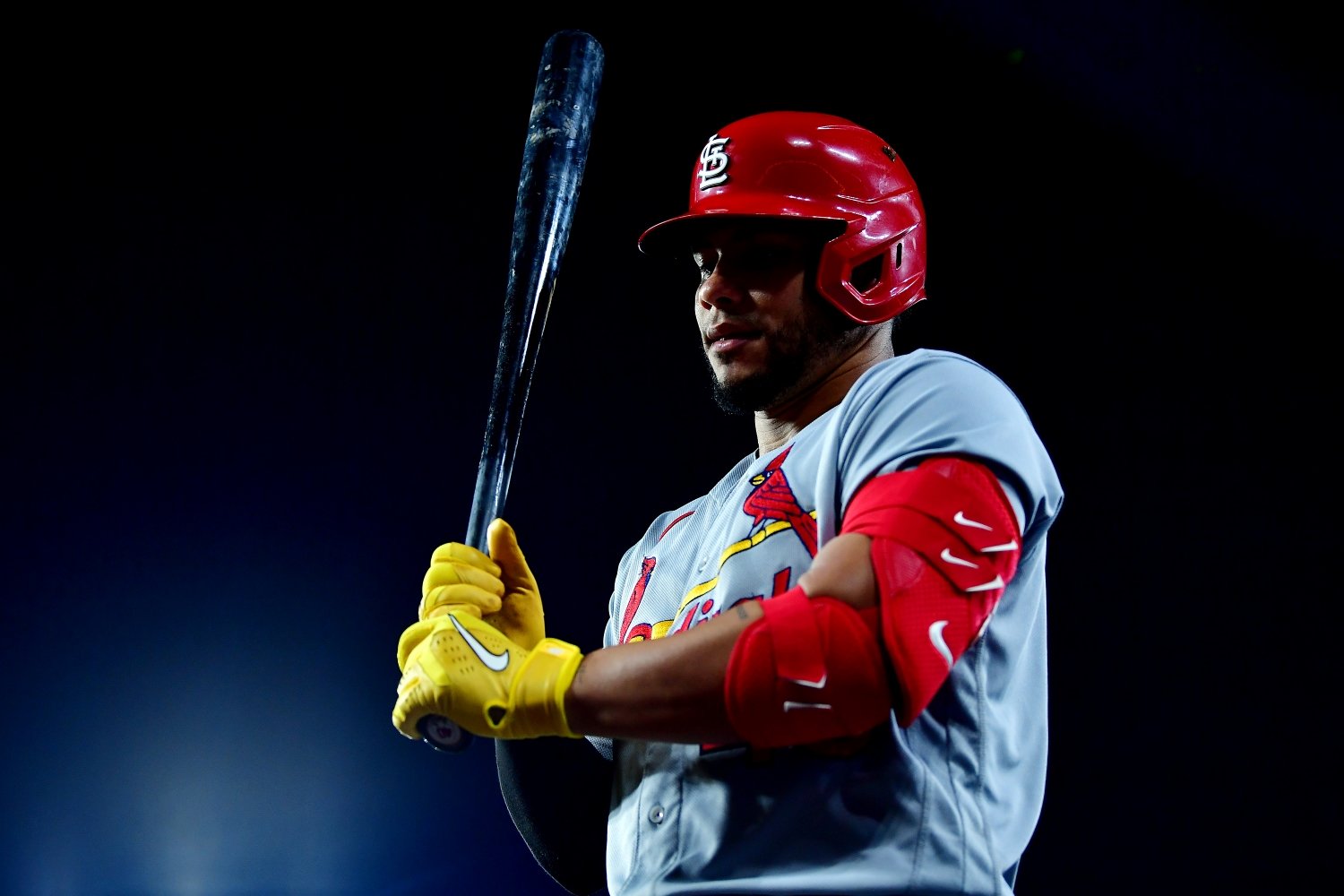 The Cubs begin their season series against the Cardinals Monday night at Wrigley Field, which means that Willson Contreras is coming back to town. He arrives at a personal nadir, and the team he chose (and who chose him) this winter is at a collective one. Contreras has been moved semi-permanently into the designated hitter role, having had his beloved catching duties stripped amid the Cards' dreadful start. The Cardinals themselves are off to their worst start in about 50 years. Until this weekend, it was an interesting and thorny question how the fans should react when Contreras is announced for his first at-bat after departing via free agency. After all, he made All-Star teams and hit big home runs for the Cubs. He was one of the faces of the young team that won the World Series, and that then won two more division titles (even if one came in the farcical 2020 campaign) before collapsing. Yet, after signing with St. Louis this winter, he said some things that felt (from the tunnel-vision perspective of a Cubs fan) needlessly antagonistic toward his former employers. Contreras was flawed as a player and immature as a person, and Cubs fans don't need to spend the series venerating him, let alone the whole year. For Monday night, though, the first time he steps to the plate, they should stand and applaud. There are few virtues more noble than generosity of spirit, and given what his new team has just put him through, an ovation in honor of the good he did while he was a Cub is the generous thing to do.
 -
Even during his rough start to the season, a few moments have demonstrated just how good a hitter Seiya Suzuki is. On this Cubs roster, however, Suzuki needs to be a source of significant power. Can he become a true slugger? On its face, that's an almost silly question. Seiya Suzuki is 28 years old, and has been a proven power hitter for much of his professional career. He hit 38 home runs in his final season in Nippon Professional Baseball, in Japan, and averaged 29.5 homers over his last six years there. He has above-average exit velocity and launch angle numbers for his short career in MLB. Power is part of his profile. So far, though, Suzuki hasn't shown the ability to consistently tap into all that power. It's easy to chalk those problems up to the injuries with which he's dealt throughout his time in MLB, or to the shortened spring trainings (one by the lockout, one by injury) he's had, but there's an undeniable approach problem here. Suzuki isn't swinging enough, especially early in counts, and even more importantly, he doesn't seem to have a locked-in, aggressive swing designed for damage when he gets ahead. Of the 338 batters with at least 50 plate appearances this season, only three--Steven Kwan, Adley Rutschman, and Jesus Aguilar--swing at the first pitch less often than Suzuki, who has done so just 9.9 percent of the time. Last year, the only players with 400 or more plate appearances who swung at the first pitch less frequently were Kwan and Brendan Donovan. Suzuki is taking an extremely patient approach, and that's not inherently bad--as the presence of Kwan and Rutschman on these lists attests. Nor is the strategy irrational, exactly, on Suzuki's part. This year, he's seeing strikes on just 47.2 percent of first pitches. That's in the 16th percentile of the league, and well below both Kwan and Rutschman. He's not giving away as many strikes that way as you might fear, given the negative context of this broader conversation. Here's the catch: to be this patient on the first pitch, you need to make contact at a high rate. Last year, six qualifying hitters (502 or more PA) swung at fewer than 20 percent of first pitches. Five of them--Kwan, Luis Arraez, Jose Ramirez, D.J. LeMahieu, and J.P. Crawford--made contact on at least 84 percent of their total swings. Only Aguilar was that patient early in the count and maintained a lowish contact rate (73 percent), and it hurt him. The story is the same this year. A lot of good hitters--Kwan, Rutschman, T.J. Friedl, Jonathan India, Masataka Yoshida, Alex Verdugo, Xander Bogaerts--are swinging very rarely at the first pitch, but all of those guys have contact rates north of 80 percent. Suzuki makes contact on 77.4 percent of his swings, for his MLB career. That's a little bit above the league average, but not enough to support the kind of patience he's shown so far. He's so unwilling to get aggressive early in counts that he's ending up in too many unfavorable ones, and that's steering his strikeout rate too high, relative to his walk rate and power. His walk rate has hovered right around the league average in his career to date, which isn't high enough to make up for a strikeout rate higher than average. There was an at-bat last week, when the Cubs were in Washington, that perfectly illustrated what is great about the current version of Suzuki. Against high-octane lefty MacKenzie Gore, with a runner on second and two outs, Suzuki fell behind 0-2, fouled off a couple of high fastballs, spat on a low curve, and then hammered this slider. It was foul, too, but it left his bat at over 114 miles per hour, on a line. 2c45fb34-ff0c-4c49-ac17-660611ef7c31.mp4 That meant that Gore was very likely to go back to the fastball. Neither breaking pitch had gotten him a positive result, and the slider drew a downright scary one. Suzuki was ready for the heat, and even though it was 97 at the top of the zone, he hit a beautiful line drive for an RBI single. 212d4560-2693-46ab-a21e-9beb42d86475.mp4 That's gorgeous hitting. It's why he's been useful even while suffering a power outage to open the season. It's not a symptom of the power deficiency, either. It's about the best he could have done with that pitch. With that kind of pure hitting ability, Suzuki's talent is tantalizing. Still, he has to drive the ball more often, and doing so means swinging more often. He's had 536 plate appearances in MLB, and 300 of them have reached two strikes. That's far, far too high a rate to allow a player to hit for meaningful power, because once you reach two strikes, you have to be ready for pitches like that high fastball, and a single becomes just about the best possible outcome. Indeed, Suzuki has a .295 slugging percentage (and .093 isolated power) in those 300 two-strike plate appearances. If everyone else in the lineup delivers the power of which they're capable, the Cubs can get by without plus power production from Suzuki. That's unlikely, though, and certainly hasn't been the case thus far. The team needs their cleanup hitter to hit like one, and that means that Suzuki needs to start guessing and getting aggressive a bit more often. View full article
-
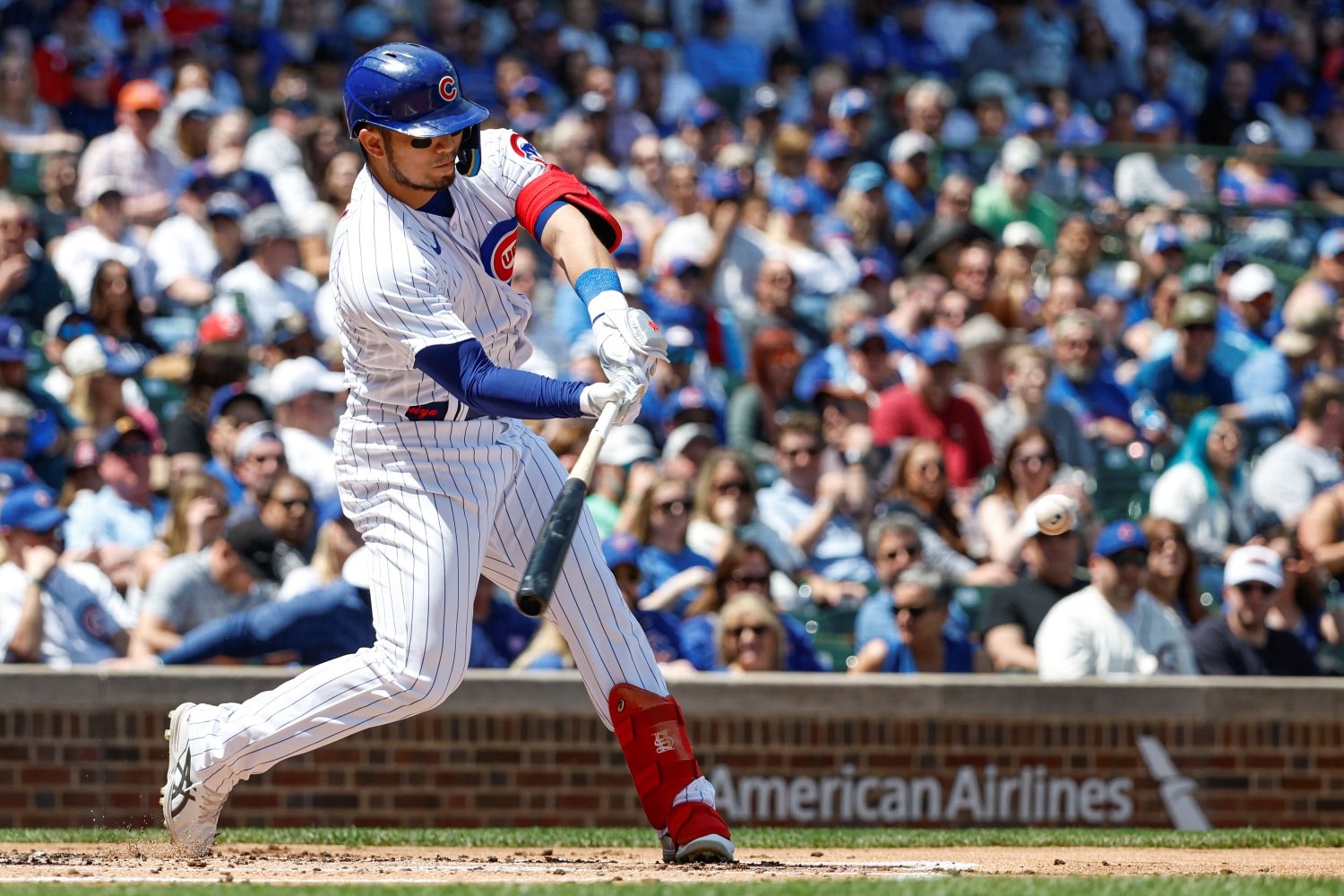 On its face, that's an almost silly question. Seiya Suzuki is 28 years old, and has been a proven power hitter for much of his professional career. He hit 38 home runs in his final season in Nippon Professional Baseball, in Japan, and averaged 29.5 homers over his last six years there. He has above-average exit velocity and launch angle numbers for his short career in MLB. Power is part of his profile. So far, though, Suzuki hasn't shown the ability to consistently tap into all that power. It's easy to chalk those problems up to the injuries with which he's dealt throughout his time in MLB, or to the shortened spring trainings (one by the lockout, one by injury) he's had, but there's an undeniable approach problem here. Suzuki isn't swinging enough, especially early in counts, and even more importantly, he doesn't seem to have a locked-in, aggressive swing designed for damage when he gets ahead. Of the 338 batters with at least 50 plate appearances this season, only three--Steven Kwan, Adley Rutschman, and Jesus Aguilar--swing at the first pitch less often than Suzuki, who has done so just 9.9 percent of the time. Last year, the only players with 400 or more plate appearances who swung at the first pitch less frequently were Kwan and Brendan Donovan. Suzuki is taking an extremely patient approach, and that's not inherently bad--as the presence of Kwan and Rutschman on these lists attests. Nor is the strategy irrational, exactly, on Suzuki's part. This year, he's seeing strikes on just 47.2 percent of first pitches. That's in the 16th percentile of the league, and well below both Kwan and Rutschman. He's not giving away as many strikes that way as you might fear, given the negative context of this broader conversation. Here's the catch: to be this patient on the first pitch, you need to make contact at a high rate. Last year, six qualifying hitters (502 or more PA) swung at fewer than 20 percent of first pitches. Five of them--Kwan, Luis Arraez, Jose Ramirez, D.J. LeMahieu, and J.P. Crawford--made contact on at least 84 percent of their total swings. Only Aguilar was that patient early in the count and maintained a lowish contact rate (73 percent), and it hurt him. The story is the same this year. A lot of good hitters--Kwan, Rutschman, T.J. Friedl, Jonathan India, Masataka Yoshida, Alex Verdugo, Xander Bogaerts--are swinging very rarely at the first pitch, but all of those guys have contact rates north of 80 percent. Suzuki makes contact on 77.4 percent of his swings, for his MLB career. That's a little bit above the league average, but not enough to support the kind of patience he's shown so far. He's so unwilling to get aggressive early in counts that he's ending up in too many unfavorable ones, and that's steering his strikeout rate too high, relative to his walk rate and power. His walk rate has hovered right around the league average in his career to date, which isn't high enough to make up for a strikeout rate higher than average. There was an at-bat last week, when the Cubs were in Washington, that perfectly illustrated what is great about the current version of Suzuki. Against high-octane lefty MacKenzie Gore, with a runner on second and two outs, Suzuki fell behind 0-2, fouled off a couple of high fastballs, spat on a low curve, and then hammered this slider. It was foul, too, but it left his bat at over 114 miles per hour, on a line. 2c45fb34-ff0c-4c49-ac17-660611ef7c31.mp4 That meant that Gore was very likely to go back to the fastball. Neither breaking pitch had gotten him a positive result, and the slider drew a downright scary one. Suzuki was ready for the heat, and even though it was 97 at the top of the zone, he hit a beautiful line drive for an RBI single. 212d4560-2693-46ab-a21e-9beb42d86475.mp4 That's gorgeous hitting. It's why he's been useful even while suffering a power outage to open the season. It's not a symptom of the power deficiency, either. It's about the best he could have done with that pitch. With that kind of pure hitting ability, Suzuki's talent is tantalizing. Still, he has to drive the ball more often, and doing so means swinging more often. He's had 536 plate appearances in MLB, and 300 of them have reached two strikes. That's far, far too high a rate to allow a player to hit for meaningful power, because once you reach two strikes, you have to be ready for pitches like that high fastball, and a single becomes just about the best possible outcome. Indeed, Suzuki has a .295 slugging percentage (and .093 isolated power) in those 300 two-strike plate appearances. If everyone else in the lineup delivers the power of which they're capable, the Cubs can get by without plus power production from Suzuki. That's unlikely, though, and certainly hasn't been the case thus far. The team needs their cleanup hitter to hit like one, and that means that Suzuki needs to start guessing and getting aggressive a bit more often.
 -
We're now, technically, one day past the 25th anniversary of Kerry Wood's dazzling domination of the Houston Astros, on May 6, 1998. For such an important anniversary of such a noteworthy game, though, we felt a full weekend of festivities was appropriate. I've already written nearly 4,000 words about this historic performance, in two pieces (Part I and Part II) that broke down the first 17 thoughts I had while rewatching the carnage on YouTube this week. In today's finale, I have eight more notions to share, as we all continue to (try to) make sense of how good Kerry Wood really was that day. 18. The ivy on the outfield walls was already fully verdant. Generally, we see the ivy turn from brown to green over the course of a week or two (or, if the team goes on a well-timed road trip, we simply perceive that some magical switch was flipped between home games) during mid-May. There are some years when it's nearly Memorial Day before the ivy really comes in and gives the Friendly Confines their feelings of both friendliness and confinement. Before that, when everything is brown beneath the wire of the baskets and the grey of the skies, Wrigley doesn't look especially inviting, and it doesn't seem to enfold you the way it does once summer comes. The winter of 1997-98, though, is still the warmest one Chicago has seen since 1932. The spring was one of the 10 warmest the city has experienced since data collection began in 1873. Thus, by May 6, the ivy was in bloom, and the juniper bushes that made up the batter's eye in center field were lush and lively. Much more than it usually would, the game already had that sense of enclosure and separation from the city's noise and busyness that comes once Wrigley trades in its winter coat for its summer finery. I'm not sure whether that affected the action on the field. There were far too many other things going on to say so, anyway. I only know that it had a major effect on the aesthetics and the beauty of the thing, both in real time and upon revisitation. What Wood was doing felt surreal; it felt uncanny. The light and the color of the environment, altered by the strange weather patterns of the previous several months, only heightened that feeling. 19. In the seventh inning, Wood showed real fatigue. With just over 80 pitches thrown through six frames, there was plenty left in Wood's tank, overall. Still, he had to face the heart of the dangerous Astros batting order for the third time in the seventh, and his mental and physical inexperience with this kind of challenge began to show. He'd experienced a systematic mechanical problem in the previous frame, as I wrote about last time. In the seventh, though, he started to genuinely spray the ball around the strike zone a bit. Pitches weren't just missing because he was slightly mistiming his release; they were ending up in places that those offerings never should have gone. In that moment, though, his sheer stuff took over, and the Astros crumpled in the face of their mounting adversity. Wood's fastball still had both run and carry. He wasn't making mistakes in the heart of the zone, but nor were his misses so ugly that they could simply give up on them out of the hand. He started varying his pitch mix more, sprinkling in the breaking balls he'd reserved for one handedness of batter the first two times through to the other type of opponent. He worked backward a bit more. Sandy Martinez noticed his pitcher beginning to struggle, and brought him back from the brink by challenging him to do some things differently even in the midst of a run of success. Wood, to his credit, trusted both his teammate and his talent. 20. It absolutely poured throughout the bottom of the seventh inning. Without trying to--indeed, at times, despite consciously trying not to--I've developed a minor theme in this revue: How could this game have turned out to be a little bit more remarkable than it already is? We've discussed the infamous ground ball that eluded the distracted, headwrecked Kevin Orie, and we've discussed the overcompensation for one mechanical problem that generated another and precipitated the Craig Biggio plunking. We've already touched on a couple of the ways he might have gotten to 21 strikeouts, surpassing even Roger Clemens. This is one instance in which I want to consider the opposite. It would have been very easy, and it might even have been more safe and proper, to stop this game in the bottom of the seventh inning. The rain began some time in the sixth, grew a bit heavier as the Astros feebly battled with Wood in the seventh, and came down hard during the Cubs' turn at bat in that inning. If there weren't already a whiff of history in the air, I think the umpires probably would have called for a rain delay, even on a getaway day for the Astros. The game could well have ended 1-0 Cubs, with Wood getting credit for a complete game but just 15 strikeouts, which is what he had at the end of seven frames. Does that mean the umpires erred by allowing the game to continue? I don't think so. The field held up reasonably well. The rain stopped (very briefly) and seemed to fluctuate considerably in its vociferousness throughout the rest of the game. There were only about two innings where it was mostly raining, and raining hard enough to merit serious consideration of a stoppage. Again, though, it never even seemed to be entertained, which speaks both to the changing standards for what will truncate a game 25 years later and to the umpiring crew's awareness that something special was in progress. 21. Wood had thrown 102 pitches in seven innings of work in his previous start. In the top of the eighth, en route to striking out the side, he eclipsed 110 pitches. At the time, this was quietly unusual, but it would be another few years before such a scenario would prompt announcers to openly consider whether the pitch count might dictate the pitcher's exit. To have any 20-year-old in your starting rotation was atypical, even then, though (as I documented in part one) much less so than it would be now. To have one consistently throwing over 100 pitches in a game, regardless of their level, is now unthinkable. That's the other weird thing about this game--about the fact of it, and about rewatching it. It's a bit like watching Better Call Saul, or (if you don't care much for prestige TV) a movie like Lincoln. You know, even as you watch a character experience some stirring triumphs and some seemingly dazzling breakthroughs, that tragedy lurks ahead. Wood didn't blow out his elbow, or embark on an injury-plagued career as a whole, because he threw a ton of pitches in the pursuit of this one accomplishment. The frequency with which the team asked him to work deep into games and fight through lineups even on days when his command was spotty, though, contributed enormously to that fate. Ultimately, Wood had a great career. Many pitchers who suffered similar injuries at young ages were unable to come anywhere close to matching his longevity and overall value. Still, there's something heartbreaking and unsettling about the fact that this game was the best he would ever have. He might have happier, even more important baseball memories--like his victory in Game 5 of the 2003 NLDS, or closing out the division-clinching win in 2008--but he was never again as truly brilliant as he was in his rookie season. That's an indictment of the way the Cubs handled him. 22. In the eighth inning, Wood prefigured Carlos Zambrano's no-hitter in 2008. Because of that Ricky Gutierrez ground ball, this game did not stop the Cubs' no-hitter drought, one that dated back to Milt Pappas in 1972. The man who slayed that dragon was Wood's eventual teammate (and another hurler the Cubs abused with overwork at a very young age), Carlos Zambrano. That no-no was not, by any means, a performance on par with what Wood did in this game, but it was a stellar example of the concept of effective wildness. Zambrano struck out 10 that day, and in the late innings, he was getting whiffs from Houston hitters on balls that made no sense. The offering at which Darin Erstad flailed to finish the thing was, famously, about a 58-footer. It didn't matter. Something about his motion, his demeanor, the movement and velocity on everything he threw, and the energy of that game made the Astros Silly Putty in Zambrano's hands. So it was for Wood, by the time the top of the eighth came in this contest. In fact, "contest" is too strong a word for the matchup by that point. Whatever wrestling there was to do was only between Wood and himself. The Astros had been beaten. Third baseman Jay Howell, a lefty batter, took an Erstad-caliber three-quarter swing at a pitch Wood threw by him. It wasn't the fastball, and it wasn't the big-breaking curve. It was a sweeper, which (both then and now) is a pitch best reserved for same-handed hitters. It was almost non-competitive. If he'd held very still, it might have hit Howell. He'd seen so many good heaters from Wood, though, that he tried desperately to catch up to one, only to find himself way ahead of a pitch that was nowhere near his lumber. At that point, precision didn't matter. Wood wasn't really hitting his spots, but he was around the zone enough to force the Astros to keep swinging, and they were so bumfuzzled that no swing was likely to end well for them. 23. Those Last Three Non-Strikeouts, No. 3: Craig Biggio, Top 9. In part two, I talked about the only three of the last 17 outs Wood recorded that involved contact. As I mentioned above, it's a small acknowledgment of the fact that there exists some frontier not yet explored. Wood, Clemens, Randy Johnson, and Max Scherzer have fanned 20 in a game, but on one has struck out 21, and Wood did have a couple guys get away from him (in that they put the ball in play) after reaching two strikes. Biggio didn't even let things get that far, in the ninth. Wood struck out pinch-hitter Bill Speiers to start that frame, giving him 19 for the game. He was falling behind hitters increasingly often by that point, though, due to the fatigue and the mounting challenge of showing hitters something they hadn't already seen and measured. Biggio took ball one, then grounded out to shortstop on the second pitch. That's a compelling reminder: to do what Wood did that day also requires the cooperation of one's opponent. A team with a very aggressive approach might not put itself in any better position to score runs or win the game, but they certainly do decrease the likelihood of racking up strikeouts. Swings help a pitcher who's not throwing strikes, obviously, but they carry an inherent risk of contact, and contact ruins the pursuit of 20 strikeouts in a game. The Astros were very helpful, though, at least in the early and middle innings. Wood actually got more called strikes (30) than whiffs on the day. Houston tried to wait out the occasionally wild rookie, and he made them pay. In the final couple of innings, though, the lineup tried to change tack. They got much more aggressive, which imperiled Wood's chase for 20 strikeouts. In the ninth, Wood threw 12 pitches. Three of them were balls, but Speiers, Biggio, and Derek Bell swung at the other nine. They were trying to deny him immortality, and Biggio did manage to make him merely one in the pantheon, rather than the standalone god of strikeouts. As a unit, though, they were unable to stop the inevitable. 24. At the end of the game, the Cubs didn't seem at all sure of how to celebrate. When Bell went down swinging for strikeout No. 20, Wood turned his back to the plate and gave a small but earnest fist pump. Then he turned back and shook hands with the elated Martinez. He didn't act like, for instance, Zambrano at the end of his no-hitter, with gesticulations and hollering. Nor did the rest of the Cubs. Yet, it wasn't an ordinary postgame high-five line. Mark Grace threw his arm around Wood in a jocund bit of celebration. Players clustered closer to the pitcher and slapped him harder on the back than would be typical. It was a funny little reinforcement of the strangeness of what had just taken place. Everyone knows how to celebrate a no-hitter, because every time a pitcher takes the mound, they dream of throwing a no-hitter. A one-hitter with a historic number of strikeouts is different. It's not something anyone can anticipate until it comes very close to active fruition. It's also not exactly a no-hitter. Players don't mob their pitcher and celebrate raucously every time they throw a complete game. That celebration has been reserved, by custom, for the special case of no-hitters or perfect games. Thus, the immediate vibe when Wood finished his masterpiece was slightly awkward. As we can still feel all these years later, it was so amazing as to be disorienting, and no one knew quite what to do with their hands. 25. In a very hurried postgame interview, Wood said he didn't know he'd struck out 20. I remember listening to the full radio broadcast of a no-hitter thrown by Cleveland twirler Sonny Siebert, in 1966. (This is how I spend my time; it's why you're getting this series of posts.) One of the most stunning things, I thought, was how quickly they managed to grab Siebert after his moment of triumph and hold him still for a few reportorial questions. The modern model is to let the announcers contextualize the moment a bit and vamp for a minute or two, so that an on-field reporter has time to grab an interview subject, get them the necessary equipment to be heard, and set up a camera position. Obviously, with Siebert, that last thing wasn't an obstacle, so maybe it was easier to quickly conduct an interview. Wood, though, was escorted very, very quickly from his uncertain celebration to the dugout area on the third-base side, where WGN had him on a headset with Chip Caray and Steve Stone in moments. The interview felt abrupt, and Wood seemed sheepish, and the reason for the latter became clear when Caray and Stone asked when he became aware of chasing the strikeout record. Wood said he hadn't--not that he hadn't realized it early, or that he hadn't focused on it, but that he was just learning he'd struck out 20 Astros from the men interviewing him. I don't know whether to believe him. I don't know what it says about that game if he really was unaware of the implications of his relentless dominance. If it's true, it certainly makes the feat more impressive, because what he definitely did know was that he'd allowed an early hit. That much information was on the scoreboard out in center field. If Wood really sustained the concentration and the conviction that he showed through the final out without the carrot of a record ahead of him, he was a mental giant that day. If he was engaging in a bit of false modesty, in an interview that was thrust upon him exceptionally quickly, that's fine, too. It's still telling, and endearing. It's just that those two possibilities and their implications are opposites of one another--and we'll probably never know which was the reality. View full article
-
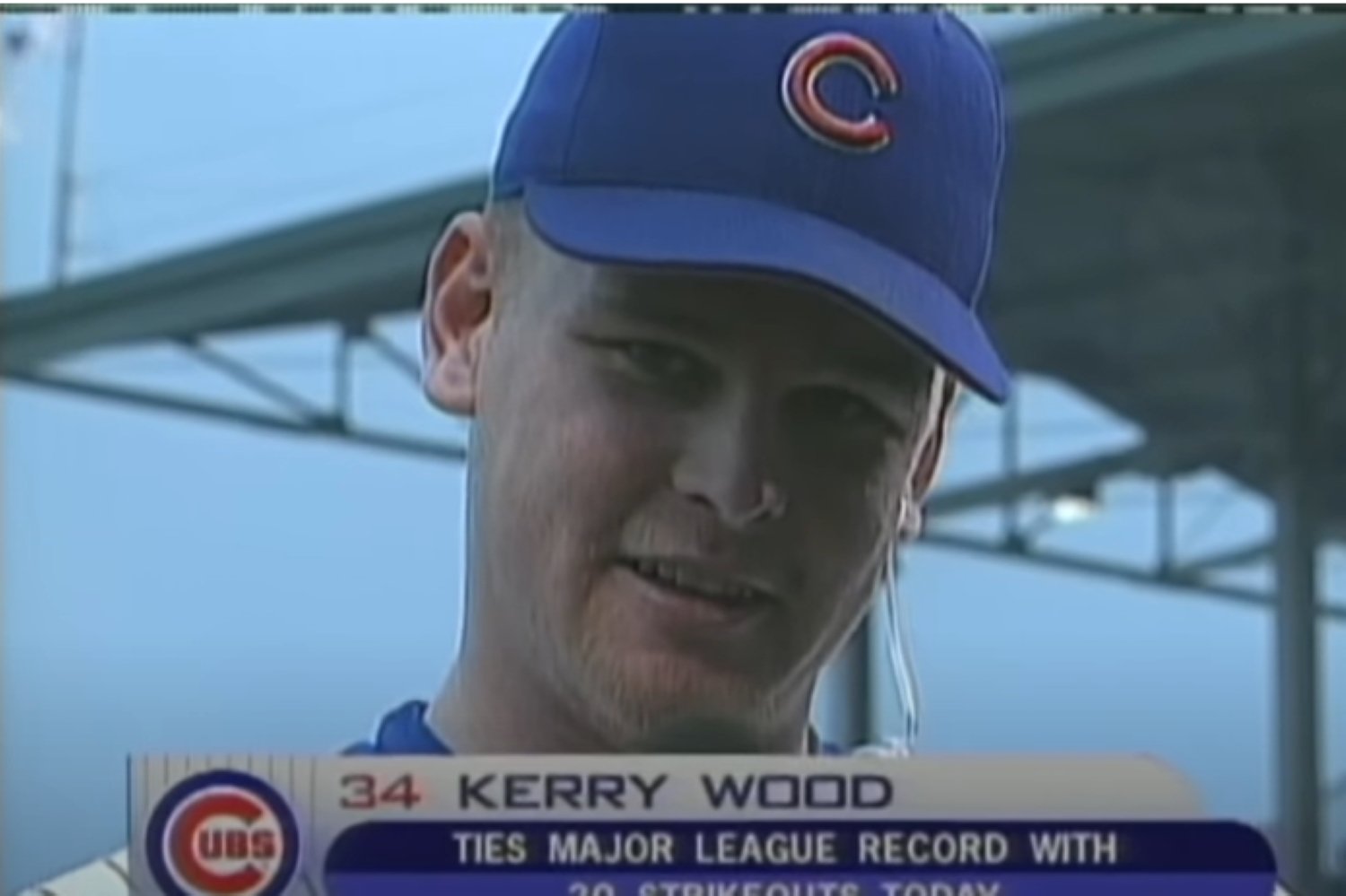 I've already written nearly 4,000 words about this historic performance, in two pieces (Part I and Part II) that broke down the first 17 thoughts I had while rewatching the carnage on YouTube this week. In today's finale, I have eight more notions to share, as we all continue to (try to) make sense of how good Kerry Wood really was that day. 18. The ivy on the outfield walls was already fully verdant. Generally, we see the ivy turn from brown to green over the course of a week or two (or, if the team goes on a well-timed road trip, we simply perceive that some magical switch was flipped between home games) during mid-May. There are some years when it's nearly Memorial Day before the ivy really comes in and gives the Friendly Confines their feelings of both friendliness and confinement. Before that, when everything is brown beneath the wire of the baskets and the grey of the skies, Wrigley doesn't look especially inviting, and it doesn't seem to enfold you the way it does once summer comes. The winter of 1997-98, though, is still the warmest one Chicago has seen since 1932. The spring was one of the 10 warmest the city has experienced since data collection began in 1873. Thus, by May 6, the ivy was in bloom, and the juniper bushes that made up the batter's eye in center field were lush and lively. Much more than it usually would, the game already had that sense of enclosure and separation from the city's noise and busyness that comes once Wrigley trades in its winter coat for its summer finery. I'm not sure whether that affected the action on the field. There were far too many other things going on to say so, anyway. I only know that it had a major effect on the aesthetics and the beauty of the thing, both in real time and upon revisitation. What Wood was doing felt surreal; it felt uncanny. The light and the color of the environment, altered by the strange weather patterns of the previous several months, only heightened that feeling. 19. In the seventh inning, Wood showed real fatigue. With just over 80 pitches thrown through six frames, there was plenty left in Wood's tank, overall. Still, he had to face the heart of the dangerous Astros batting order for the third time in the seventh, and his mental and physical inexperience with this kind of challenge began to show. He'd experienced a systematic mechanical problem in the previous frame, as I wrote about last time. In the seventh, though, he started to genuinely spray the ball around the strike zone a bit. Pitches weren't just missing because he was slightly mistiming his release; they were ending up in places that those offerings never should have gone. In that moment, though, his sheer stuff took over, and the Astros crumpled in the face of their mounting adversity. Wood's fastball still had both run and carry. He wasn't making mistakes in the heart of the zone, but nor were his misses so ugly that they could simply give up on them out of the hand. He started varying his pitch mix more, sprinkling in the breaking balls he'd reserved for one handedness of batter the first two times through to the other type of opponent. He worked backward a bit more. Sandy Martinez noticed his pitcher beginning to struggle, and brought him back from the brink by challenging him to do some things differently even in the midst of a run of success. Wood, to his credit, trusted both his teammate and his talent. 20. It absolutely poured throughout the bottom of the seventh inning. Without trying to--indeed, at times, despite consciously trying not to--I've developed a minor theme in this revue: How could this game have turned out to be a little bit more remarkable than it already is? We've discussed the infamous ground ball that eluded the distracted, headwrecked Kevin Orie, and we've discussed the overcompensation for one mechanical problem that generated another and precipitated the Craig Biggio plunking. We've already touched on a couple of the ways he might have gotten to 21 strikeouts, surpassing even Roger Clemens. This is one instance in which I want to consider the opposite. It would have been very easy, and it might even have been more safe and proper, to stop this game in the bottom of the seventh inning. The rain began some time in the sixth, grew a bit heavier as the Astros feebly battled with Wood in the seventh, and came down hard during the Cubs' turn at bat in that inning. If there weren't already a whiff of history in the air, I think the umpires probably would have called for a rain delay, even on a getaway day for the Astros. The game could well have ended 1-0 Cubs, with Wood getting credit for a complete game but just 15 strikeouts, which is what he had at the end of seven frames. Does that mean the umpires erred by allowing the game to continue? I don't think so. The field held up reasonably well. The rain stopped (very briefly) and seemed to fluctuate considerably in its vociferousness throughout the rest of the game. There were only about two innings where it was mostly raining, and raining hard enough to merit serious consideration of a stoppage. Again, though, it never even seemed to be entertained, which speaks both to the changing standards for what will truncate a game 25 years later and to the umpiring crew's awareness that something special was in progress. 21. Wood had thrown 102 pitches in seven innings of work in his previous start. In the top of the eighth, en route to striking out the side, he eclipsed 110 pitches. At the time, this was quietly unusual, but it would be another few years before such a scenario would prompt announcers to openly consider whether the pitch count might dictate the pitcher's exit. To have any 20-year-old in your starting rotation was atypical, even then, though (as I documented in part one) much less so than it would be now. To have one consistently throwing over 100 pitches in a game, regardless of their level, is now unthinkable. That's the other weird thing about this game--about the fact of it, and about rewatching it. It's a bit like watching Better Call Saul, or (if you don't care much for prestige TV) a movie like Lincoln. You know, even as you watch a character experience some stirring triumphs and some seemingly dazzling breakthroughs, that tragedy lurks ahead. Wood didn't blow out his elbow, or embark on an injury-plagued career as a whole, because he threw a ton of pitches in the pursuit of this one accomplishment. The frequency with which the team asked him to work deep into games and fight through lineups even on days when his command was spotty, though, contributed enormously to that fate. Ultimately, Wood had a great career. Many pitchers who suffered similar injuries at young ages were unable to come anywhere close to matching his longevity and overall value. Still, there's something heartbreaking and unsettling about the fact that this game was the best he would ever have. He might have happier, even more important baseball memories--like his victory in Game 5 of the 2003 NLDS, or closing out the division-clinching win in 2008--but he was never again as truly brilliant as he was in his rookie season. That's an indictment of the way the Cubs handled him. 22. In the eighth inning, Wood prefigured Carlos Zambrano's no-hitter in 2008. Because of that Ricky Gutierrez ground ball, this game did not stop the Cubs' no-hitter drought, one that dated back to Milt Pappas in 1972. The man who slayed that dragon was Wood's eventual teammate (and another hurler the Cubs abused with overwork at a very young age), Carlos Zambrano. That no-no was not, by any means, a performance on par with what Wood did in this game, but it was a stellar example of the concept of effective wildness. Zambrano struck out 10 that day, and in the late innings, he was getting whiffs from Houston hitters on balls that made no sense. The offering at which Darin Erstad flailed to finish the thing was, famously, about a 58-footer. It didn't matter. Something about his motion, his demeanor, the movement and velocity on everything he threw, and the energy of that game made the Astros Silly Putty in Zambrano's hands. So it was for Wood, by the time the top of the eighth came in this contest. In fact, "contest" is too strong a word for the matchup by that point. Whatever wrestling there was to do was only between Wood and himself. The Astros had been beaten. Third baseman Jay Howell, a lefty batter, took an Erstad-caliber three-quarter swing at a pitch Wood threw by him. It wasn't the fastball, and it wasn't the big-breaking curve. It was a sweeper, which (both then and now) is a pitch best reserved for same-handed hitters. It was almost non-competitive. If he'd held very still, it might have hit Howell. He'd seen so many good heaters from Wood, though, that he tried desperately to catch up to one, only to find himself way ahead of a pitch that was nowhere near his lumber. At that point, precision didn't matter. Wood wasn't really hitting his spots, but he was around the zone enough to force the Astros to keep swinging, and they were so bumfuzzled that no swing was likely to end well for them. 23. Those Last Three Non-Strikeouts, No. 3: Craig Biggio, Top 9. In part two, I talked about the only three of the last 17 outs Wood recorded that involved contact. As I mentioned above, it's a small acknowledgment of the fact that there exists some frontier not yet explored. Wood, Clemens, Randy Johnson, and Max Scherzer have fanned 20 in a game, but on one has struck out 21, and Wood did have a couple guys get away from him (in that they put the ball in play) after reaching two strikes. Biggio didn't even let things get that far, in the ninth. Wood struck out pinch-hitter Bill Speiers to start that frame, giving him 19 for the game. He was falling behind hitters increasingly often by that point, though, due to the fatigue and the mounting challenge of showing hitters something they hadn't already seen and measured. Biggio took ball one, then grounded out to shortstop on the second pitch. That's a compelling reminder: to do what Wood did that day also requires the cooperation of one's opponent. A team with a very aggressive approach might not put itself in any better position to score runs or win the game, but they certainly do decrease the likelihood of racking up strikeouts. Swings help a pitcher who's not throwing strikes, obviously, but they carry an inherent risk of contact, and contact ruins the pursuit of 20 strikeouts in a game. The Astros were very helpful, though, at least in the early and middle innings. Wood actually got more called strikes (30) than whiffs on the day. Houston tried to wait out the occasionally wild rookie, and he made them pay. In the final couple of innings, though, the lineup tried to change tack. They got much more aggressive, which imperiled Wood's chase for 20 strikeouts. In the ninth, Wood threw 12 pitches. Three of them were balls, but Speiers, Biggio, and Derek Bell swung at the other nine. They were trying to deny him immortality, and Biggio did manage to make him merely one in the pantheon, rather than the standalone god of strikeouts. As a unit, though, they were unable to stop the inevitable. 24. At the end of the game, the Cubs didn't seem at all sure of how to celebrate. When Bell went down swinging for strikeout No. 20, Wood turned his back to the plate and gave a small but earnest fist pump. Then he turned back and shook hands with the elated Martinez. He didn't act like, for instance, Zambrano at the end of his no-hitter, with gesticulations and hollering. Nor did the rest of the Cubs. Yet, it wasn't an ordinary postgame high-five line. Mark Grace threw his arm around Wood in a jocund bit of celebration. Players clustered closer to the pitcher and slapped him harder on the back than would be typical. It was a funny little reinforcement of the strangeness of what had just taken place. Everyone knows how to celebrate a no-hitter, because every time a pitcher takes the mound, they dream of throwing a no-hitter. A one-hitter with a historic number of strikeouts is different. It's not something anyone can anticipate until it comes very close to active fruition. It's also not exactly a no-hitter. Players don't mob their pitcher and celebrate raucously every time they throw a complete game. That celebration has been reserved, by custom, for the special case of no-hitters or perfect games. Thus, the immediate vibe when Wood finished his masterpiece was slightly awkward. As we can still feel all these years later, it was so amazing as to be disorienting, and no one knew quite what to do with their hands. 25. In a very hurried postgame interview, Wood said he didn't know he'd struck out 20. I remember listening to the full radio broadcast of a no-hitter thrown by Cleveland twirler Sonny Siebert, in 1966. (This is how I spend my time; it's why you're getting this series of posts.) One of the most stunning things, I thought, was how quickly they managed to grab Siebert after his moment of triumph and hold him still for a few reportorial questions. The modern model is to let the announcers contextualize the moment a bit and vamp for a minute or two, so that an on-field reporter has time to grab an interview subject, get them the necessary equipment to be heard, and set up a camera position. Obviously, with Siebert, that last thing wasn't an obstacle, so maybe it was easier to quickly conduct an interview. Wood, though, was escorted very, very quickly from his uncertain celebration to the dugout area on the third-base side, where WGN had him on a headset with Chip Caray and Steve Stone in moments. The interview felt abrupt, and Wood seemed sheepish, and the reason for the latter became clear when Caray and Stone asked when he became aware of chasing the strikeout record. Wood said he hadn't--not that he hadn't realized it early, or that he hadn't focused on it, but that he was just learning he'd struck out 20 Astros from the men interviewing him. I don't know whether to believe him. I don't know what it says about that game if he really was unaware of the implications of his relentless dominance. If it's true, it certainly makes the feat more impressive, because what he definitely did know was that he'd allowed an early hit. That much information was on the scoreboard out in center field. If Wood really sustained the concentration and the conviction that he showed through the final out without the carrot of a record ahead of him, he was a mental giant that day. If he was engaging in a bit of false modesty, in an interview that was thrust upon him exceptionally quickly, that's fine, too. It's still telling, and endearing. It's just that those two possibilities and their implications are opposites of one another--and we'll probably never know which was the reality.
 -
Kerry Wood's 20-strikeout gem turns 25 years old Saturday, and it's a perfect moment to savor and ponder the wonder of that performance. Here's part two of a three-part series totaling 25 thoughts about that game. As I wrote in part one, I went to YouTube and rewatched the entire game in which Kerry Wood did the almost unthinkable to the Astros. That installment contained my first nine important thoughts as I watched. Today, we'll run through the next eight. 10. "Only" six of his first 10 outs came via strikeout. Wood struck out the first five batters he faced, but only one of the next five out he got came that way. After Ricky Gutierrez hit his cheap single past the distracted and distressed Kevin Orie, the flow of the inning led to a Shane Reynolds sacrifice bunt. In that early phase of the game, of course, Wood wasn't chasing 20 strikeouts, by any means. but as we view the thing in hindsight, even one sac bunt makes the ultimate achievement seem more miraculous. It sounds silly on its face, then, but it's actually salient. To get to 20 punchouts by the end of the day after recording just six of the first 10 outs that way, he had to fan 14 of the final 17 he set down. Back then, we only intuitively understood the difficulty of doing something like that. Given the concrete understanding of the times through the order penalty that we have now, it's even more incredible that he managed it. 11. Wood's windup would make you double-take in 2023. Without runners on, Wood utilized a full windup. It's funny how jarring that is, visually, just a quarter-century later. For years now, even starters have tended to work exclusively out of the stretch. More pervasive still is the drop step. Most windups are primarily about starting the counterrotation of a delivery. The pitcher steps to their glove side with the front foot, rocking into a motion that turns them away from home plate to load up for the violent unwinding of the pitch itself. What Wood did was not wholly uncommon at the time, but it looks bizarre to a modern eye. He was much more linear. He set up with his shoulders square to the batter, and his left foot didn't move to the side and then swoop or twist around. It went straight backward. Then, he pushed off from a place just behind the rubber, and the resulting delivery did involve rotation, but it seemed much more geared toward getting his bodily momentum going toward the plate. Watching him, it's easy to see both the value and the downside of that style. Mostly, though, it's just arresting because of the way the state of the art has changed since. 12. His curveball was a game-changer. There's a peculiar parallel to be drawn between Wood and Clayton Kershaw. Because one is left-handed and one is right-handed, it's not often you'll see Wood compared with Kershaw. Their deliveries are not similar. Wood wore 34, and after this game, the natural comparison for him was Nolan Ryan, whereas Kershaw (the lefty who came up to the Dodgers) was naturally compared to Sandy Koufax. Yet, there's something to it. Both are from, more or less, Dallas. Both were top-10 picks in the first round, and debuted with considerable fanfare at age 20. More importantly, though, they shared a repertoire. Neither man ever had much success finding a changeup. Instead, they each learned to bully same-handed batters with their rising heat and wicked slider, and they each realized they could just use their big, slow, 12-to-6 curveball as a change of pace to neutralize opposite-handed ones. In the fifth inning, Wood struck out Dave Clark on three absolute yakkers. As Chip Caray and Steve Stone noted, Clark had a well-earned reputation as a guy who tagged fastballs. He'd hit a ball almost to the warning track in his first at-bat. He posed a challenge to Wood. That second time through, though, Wood showed that he would have stuff enough to meet that kind of challenge. The curve was as devastating as his slider, but shockingly different from it. Most pitchers who throw two breaking balls (many recent Cleveland starters, like Carlos Carrasco and Corey Kluber, are good examples) clearly get there by using some shared building blocks. Wood, like Kershaw a decade later, had such disparate breakers that they almost seemed to belong to two different pitchers living in the same body. 13. The lights went on in the fifth inning. This game began under sunny skies, but it would end very differently. Ominous clouds rushed in, and the lights were more than a prophylactic measure by the middle of the game. Ordinarily, during an afternoon game at Wrigley, the shadows become an obstacle for hitters as the game reaches the later innings. In early May, that moment can come as early as the sixth inning. In this one, Wood wouldn't have any shadows to help him out. On the other hand, of course, the Astros had to cut the gloom of a day that was about to get nigh unplayable. The Wrigley lights at that time weren't especially strong. By the sixth inning, and especially later on, there would be actual rain with which to contend. Was that a greater challenge for Wood, who had to find a handle on the ball even as it got wet out there, or for Houston batters? Ordinarily, I might call it a wash, but on that day, it was clearly only adding to the bewilderment of the Astros. Wood could be even more effective via wildness, once they got uneasy about seeing the ball out of his hand. 14. We have no velocity readings on him, save a few spare mentions. It seems as though, somewhere in the park, Wood's pitch speeds were being posted. Caray alluded to the kid's 98-mile-per-hour heat in passing early in the game, and that might have been the kind of thing pulled from a scouting report or discussions with Cubs personnel before the game, but late in the going, he makes reference to Wood's previous pitch having been 98, too. Yet, Caray doesn't feel compelled to repeatedly make note of that number. The WGN cameras never show us a number on a ballpark scoreboard--let alone the idea of putting the figure on a chyron. This was even a year or two before the permanent score bug took up residence in the upper corner of the WGN Cubs broadcasts. One could see the score, inning, outs, and baserunners only every so often, when there would be a quiet moment and the truck would throw that information up for a few seconds. This was before high-definition, so a useful score had to be of a decent size. It was also in a different age for aspect ratios and average TV sizes, so every pixel was valuable real estate on the screen. It makes sense that broadcasts waited a while before beginning to constantly display the score and other information. Still, it's disorienting. The modern baseball fan has learned to use the score bug as a reliable and perpetual crutch. To keep up throughout Wood's masterpiece, one needed to keep the count in one's head much of the time. The same close attention was required to judge the umpire's zone, or to gauge whether Wood was adding or subtracting on his fastball, or whether he had reshaped that last breaking ball to give the hitter a new wrinkle. I'm not pining for those days, but they invited a different, more tactile and intimate engagement with the action than does the modern game, with so much valuable information positioned for easy reference and another gold mine's worth just a few keyboard taps away. 15. Those Last Three Non-Strikeouts, No. 1: Brad Ausmus, Top 6. As I watched, I found myself increasingly engrossed by what-if scenarios. Don't get me wrong; I'm not pleading for this game to have somehow been even more majestic or historic. I just can't help wondering about whether it could have been. To that end, we'll spend a moment with each of the remaining hitters who did manage to put the ball in play against Wood. The first came when Ausmus led off the top of the sixth inning. Wood had him in a two-strike count, but he was beginning to battle the command of his slider. On 2-2, feeling that Ausmus was seeing that pitch too well to chase it far outside the zone, Martinez and Wood chose a fastball on the outside corner. Ausmus stung it, but right to Mickey Morandini at second base. It was an easy out, but not a strikeout, when perhaps it could have been. 16. Wood started to tire and overthrow in the sixth inning. The most fragile moment of the game, by far, was the top of the sixth inning. Wood started pulling stuff, especially the slider, as his command cracked a bit under the strain of working deep into the game. That showed up in Ausmus's at-bat, but also to Craig Biggio, who came up with nobody on and two outs. An overcorrection to that problem led to Wood hitting Biggio, the second and final baserunner of the day. This is another one of those small moments that make me wonder whether and how the game could have been even more exceptional. Biggio, with his customary Kevlar-looking elbow guard, had no compunction about letting the ball hit him. As we've already established, Gutierrez's hit was a cheapie--correctly categorized, according to the rules and customs of scoring, but a should-be out. If we embrace the idea that that hit shouldn't count against Wood in the enclosed green fields of the mind, the only thing left to make this a non-perfect game is that Biggio plunking. I think it's good that it happened, though. It stands as a lone reminder of the fact that Wood did have to work through something. He did experience some adversity, even in the midst of one of the best-pitched games ever. Hitting Biggio was a result he deserved, because he lost his control within that frame and his attempt to fix that led to a misfire. Even a few months later, maybe he could have made an easier, smaller adjustment, and avoided that. But the same wisdom that might have permitted that tweak probably would have come at the cost of the intensity and the lethalness of his stuff. 17. Those Last Three Non-Strikeouts, No. 2: Derek Bell, Top 6. You can't do something as astounding as what Wood did without a little help from a lot of people. The Cubs played good defense that day. Jerry Meals had an oceanic strike zone. Crucially, though, the Astros also helped him out. Right after that plunking of Biggio, Derek Bell swung at the first pitch. It's one of the worst swing decisions in baseball history. Wood was working out of the stretch for just the second time that day, and the first time since the third inning. Biggio represented the tying run, and he had good speed. Why not force him to throw a few more strikes, given the shakiness of his command during the sixth? If Bell thought he might pounce on a get-me-over fastball and hit a go-ahead homer, he was immediately and resoundingly thwarted. He hit a lazy foul pop fly, to end the inning. He did avoid striking out, but in multiple ways, Bell only nudged Wood along the path to the eventual peak he reached. That'll do it for another batch of thoughts about this wonderful game. I want to hear your own memories, experiences, and observations, too. Drop them here, and come back tomorrow for part three. View full article
-
25 Thoughts on the 25th Anniversary of Kerry Wood's 20-K Game - PART II
Matthew Trueblood posted an article in Cubs
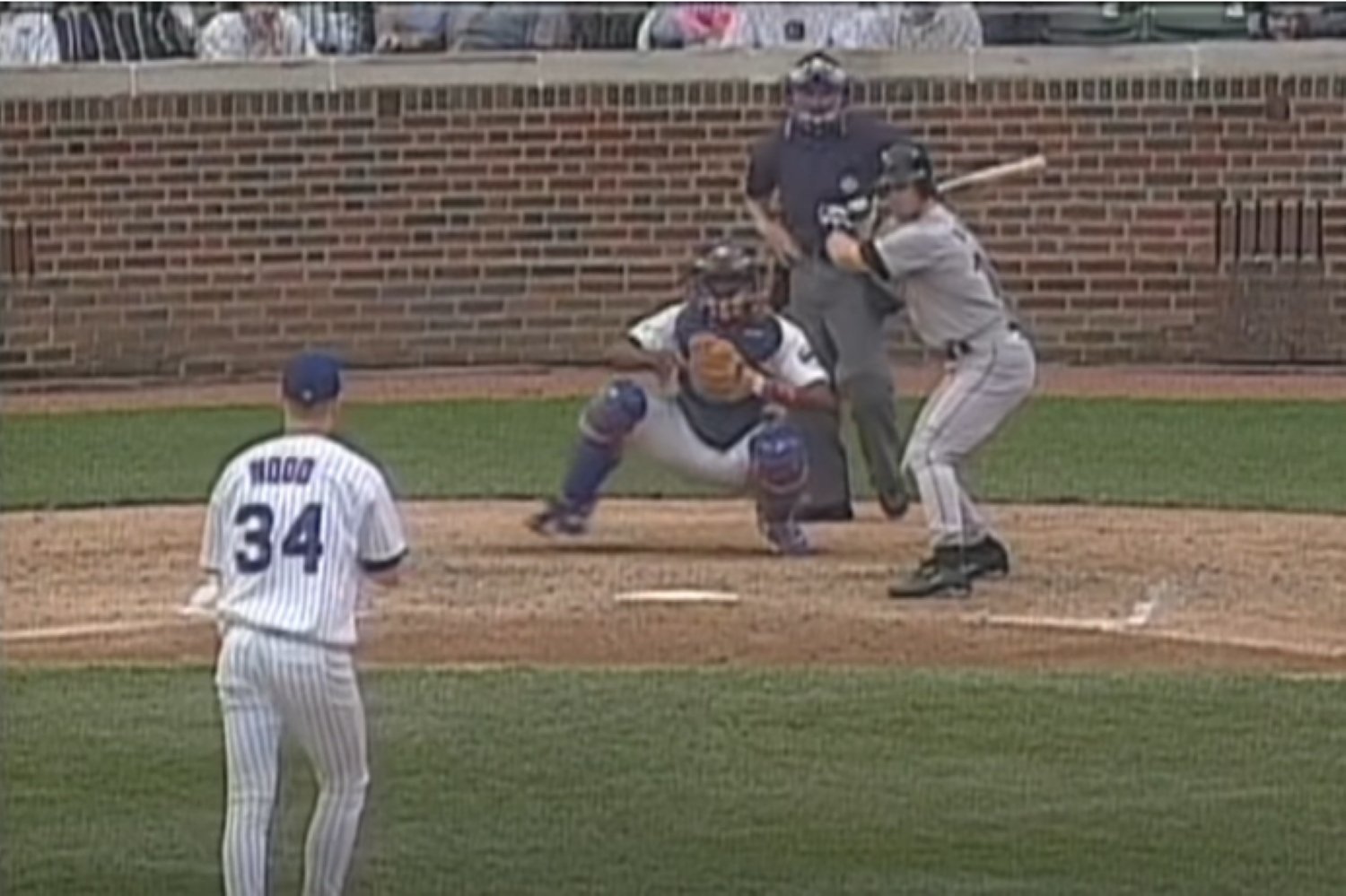 As I wrote in part one, I went to YouTube and rewatched the entire game in which Kerry Wood did the almost unthinkable to the Astros. That installment contained my first nine important thoughts as I watched. Today, we'll run through the next eight. 10. "Only" six of his first 10 outs came via strikeout. Wood struck out the first five batters he faced, but only one of the next five out he got came that way. After Ricky Gutierrez hit his cheap single past the distracted and distressed Kevin Orie, the flow of the inning led to a Shane Reynolds sacrifice bunt. In that early phase of the game, of course, Wood wasn't chasing 20 strikeouts, by any means. but as we view the thing in hindsight, even one sac bunt makes the ultimate achievement seem more miraculous. It sounds silly on its face, then, but it's actually salient. To get to 20 punchouts by the end of the day after recording just six of the first 10 outs that way, he had to fan 14 of the final 17 he set down. Back then, we only intuitively understood the difficulty of doing something like that. Given the concrete understanding of the times through the order penalty that we have now, it's even more incredible that he managed it. 11. Wood's windup would make you double-take in 2023. Without runners on, Wood utilized a full windup. It's funny how jarring that is, visually, just a quarter-century later. For years now, even starters have tended to work exclusively out of the stretch. More pervasive still is the drop step. Most windups are primarily about starting the counterrotation of a delivery. The pitcher steps to their glove side with the front foot, rocking into a motion that turns them away from home plate to load up for the violent unwinding of the pitch itself. What Wood did was not wholly uncommon at the time, but it looks bizarre to a modern eye. He was much more linear. He set up with his shoulders square to the batter, and his left foot didn't move to the side and then swoop or twist around. It went straight backward. Then, he pushed off from a place just behind the rubber, and the resulting delivery did involve rotation, but it seemed much more geared toward getting his bodily momentum going toward the plate. Watching him, it's easy to see both the value and the downside of that style. Mostly, though, it's just arresting because of the way the state of the art has changed since. 12. His curveball was a game-changer. There's a peculiar parallel to be drawn between Wood and Clayton Kershaw. Because one is left-handed and one is right-handed, it's not often you'll see Wood compared with Kershaw. Their deliveries are not similar. Wood wore 34, and after this game, the natural comparison for him was Nolan Ryan, whereas Kershaw (the lefty who came up to the Dodgers) was naturally compared to Sandy Koufax. Yet, there's something to it. Both are from, more or less, Dallas. Both were top-10 picks in the first round, and debuted with considerable fanfare at age 20. More importantly, though, they shared a repertoire. Neither man ever had much success finding a changeup. Instead, they each learned to bully same-handed batters with their rising heat and wicked slider, and they each realized they could just use their big, slow, 12-to-6 curveball as a change of pace to neutralize opposite-handed ones. In the fifth inning, Wood struck out Dave Clark on three absolute yakkers. As Chip Caray and Steve Stone noted, Clark had a well-earned reputation as a guy who tagged fastballs. He'd hit a ball almost to the warning track in his first at-bat. He posed a challenge to Wood. That second time through, though, Wood showed that he would have stuff enough to meet that kind of challenge. The curve was as devastating as his slider, but shockingly different from it. Most pitchers who throw two breaking balls (many recent Cleveland starters, like Carlos Carrasco and Corey Kluber, are good examples) clearly get there by using some shared building blocks. Wood, like Kershaw a decade later, had such disparate breakers that they almost seemed to belong to two different pitchers living in the same body. 13. The lights went on in the fifth inning. This game began under sunny skies, but it would end very differently. Ominous clouds rushed in, and the lights were more than a prophylactic measure by the middle of the game. Ordinarily, during an afternoon game at Wrigley, the shadows become an obstacle for hitters as the game reaches the later innings. In early May, that moment can come as early as the sixth inning. In this one, Wood wouldn't have any shadows to help him out. On the other hand, of course, the Astros had to cut the gloom of a day that was about to get nigh unplayable. The Wrigley lights at that time weren't especially strong. By the sixth inning, and especially later on, there would be actual rain with which to contend. Was that a greater challenge for Wood, who had to find a handle on the ball even as it got wet out there, or for Houston batters? Ordinarily, I might call it a wash, but on that day, it was clearly only adding to the bewilderment of the Astros. Wood could be even more effective via wildness, once they got uneasy about seeing the ball out of his hand. 14. We have no velocity readings on him, save a few spare mentions. It seems as though, somewhere in the park, Wood's pitch speeds were being posted. Caray alluded to the kid's 98-mile-per-hour heat in passing early in the game, and that might have been the kind of thing pulled from a scouting report or discussions with Cubs personnel before the game, but late in the going, he makes reference to Wood's previous pitch having been 98, too. Yet, Caray doesn't feel compelled to repeatedly make note of that number. The WGN cameras never show us a number on a ballpark scoreboard--let alone the idea of putting the figure on a chyron. This was even a year or two before the permanent score bug took up residence in the upper corner of the WGN Cubs broadcasts. One could see the score, inning, outs, and baserunners only every so often, when there would be a quiet moment and the truck would throw that information up for a few seconds. This was before high-definition, so a useful score had to be of a decent size. It was also in a different age for aspect ratios and average TV sizes, so every pixel was valuable real estate on the screen. It makes sense that broadcasts waited a while before beginning to constantly display the score and other information. Still, it's disorienting. The modern baseball fan has learned to use the score bug as a reliable and perpetual crutch. To keep up throughout Wood's masterpiece, one needed to keep the count in one's head much of the time. The same close attention was required to judge the umpire's zone, or to gauge whether Wood was adding or subtracting on his fastball, or whether he had reshaped that last breaking ball to give the hitter a new wrinkle. I'm not pining for those days, but they invited a different, more tactile and intimate engagement with the action than does the modern game, with so much valuable information positioned for easy reference and another gold mine's worth just a few keyboard taps away. 15. Those Last Three Non-Strikeouts, No. 1: Brad Ausmus, Top 6. As I watched, I found myself increasingly engrossed by what-if scenarios. Don't get me wrong; I'm not pleading for this game to have somehow been even more majestic or historic. I just can't help wondering about whether it could have been. To that end, we'll spend a moment with each of the remaining hitters who did manage to put the ball in play against Wood. The first came when Ausmus led off the top of the sixth inning. Wood had him in a two-strike count, but he was beginning to battle the command of his slider. On 2-2, feeling that Ausmus was seeing that pitch too well to chase it far outside the zone, Martinez and Wood chose a fastball on the outside corner. Ausmus stung it, but right to Mickey Morandini at second base. It was an easy out, but not a strikeout, when perhaps it could have been. 16. Wood started to tire and overthrow in the sixth inning. The most fragile moment of the game, by far, was the top of the sixth inning. Wood started pulling stuff, especially the slider, as his command cracked a bit under the strain of working deep into the game. That showed up in Ausmus's at-bat, but also to Craig Biggio, who came up with nobody on and two outs. An overcorrection to that problem led to Wood hitting Biggio, the second and final baserunner of the day. This is another one of those small moments that make me wonder whether and how the game could have been even more exceptional. Biggio, with his customary Kevlar-looking elbow guard, had no compunction about letting the ball hit him. As we've already established, Gutierrez's hit was a cheapie--correctly categorized, according to the rules and customs of scoring, but a should-be out. If we embrace the idea that that hit shouldn't count against Wood in the enclosed green fields of the mind, the only thing left to make this a non-perfect game is that Biggio plunking. I think it's good that it happened, though. It stands as a lone reminder of the fact that Wood did have to work through something. He did experience some adversity, even in the midst of one of the best-pitched games ever. Hitting Biggio was a result he deserved, because he lost his control within that frame and his attempt to fix that led to a misfire. Even a few months later, maybe he could have made an easier, smaller adjustment, and avoided that. But the same wisdom that might have permitted that tweak probably would have come at the cost of the intensity and the lethalness of his stuff. 17. Those Last Three Non-Strikeouts, No. 2: Derek Bell, Top 6. You can't do something as astounding as what Wood did without a little help from a lot of people. The Cubs played good defense that day. Jerry Meals had an oceanic strike zone. Crucially, though, the Astros also helped him out. Right after that plunking of Biggio, Derek Bell swung at the first pitch. It's one of the worst swing decisions in baseball history. Wood was working out of the stretch for just the second time that day, and the first time since the third inning. Biggio represented the tying run, and he had good speed. Why not force him to throw a few more strikes, given the shakiness of his command during the sixth? If Bell thought he might pounce on a get-me-over fastball and hit a go-ahead homer, he was immediately and resoundingly thwarted. He hit a lazy foul pop fly, to end the inning. He did avoid striking out, but in multiple ways, Bell only nudged Wood along the path to the eventual peak he reached. That'll do it for another batch of thoughts about this wonderful game. I want to hear your own memories, experiences, and observations, too. Drop them here, and come back tomorrow for part three.
 -
Hey, we’re the same age! I got Cubs pilled one year earlier, but yes. Really a huge moment for making the Cubs relevant.
-
This Saturday marks the 25th anniversary of one of the most extraordinary performances in Cubs history. To celebrate, I re-watched the full masterpiece Kerry Wood spun against the Astros on May 6, 1998. Here are 25 thoughts that sparked as I did so. The idea here is to marinate in the nostalgia and the thrill of that day, but also to see the bigger picture and tie the receding past to our present a bit. Our very first thought is in that latter vein. Kerry Wood had a sweeper. This spring, the talk of the baseball world has been the sweeper, which has been sold as an innovation on the slider. It’s even been reclassified as a distinct pitch. That’s a flawed idea. Hardly anything in baseball is truly new, but more importantly, the word ‘slider’ was never meant to describe just one type of pitch. Big-league pitchers have thrown sliders with varying shapes and speeds ever since the pitch evolved into something concretely different from the curveball. Since the concept of the sweeper is here to stay, though, it’s worth noting that Wood was absolutely throwing one on May 6, 1998. He had two or three breaking balls going that day, but one of them was reserved (almost; a topic for later) for right-handed batters; was firm enough to fool hitters into thinking fastball; and had exceptional, mostly horizontal movement, especially given Wood’s three-quarters arm angle. That’s a sweeper, by the new definition. We just didn’t have that word for it then, and the Astros also didn’t have an answer for it. The Unlikely Partner in Crime. Those 1998 Cubs are an indelible memory, to fans of a certain age. That was the first year in almost a decade that the team had been relevant, and they wouldn’t be again for a few years. You can probably name most of that lineup, even though it was a bit of a hodgepodge. The team had two catchers for most of the season. Sandy Martinez wasn’t either of them. Scott Servais and Tyler Houston got the bulk of the work. Martinez only made 20 starts behind the plate, and it turned out to be the last time he would even get 100 plate appearances in the majors in any season. On that Wednesday afternoon, though, Martinez was Wood’s batterymate. In one of those funny things that happened a lot in that era, a narrative had crept up that Wood was unable to control the running game. Over his first four starts, he’d actually only allowed one steal, and one runner had been caught stealing. Nonetheless, that was the justification Chip Caray and Steve Stone gave for Martinez starting over Servais. This game was never going to be about Sandy Martinez. He did a fine job, though. Wood shook him off just twice all day, and even on those occasions, the two ended up agreeing on the pitch Martinez originally called. Also, his peculiar catching stance (with his knees collapsed way inward, his feet set wide, and his backside nearly on the ground) makes for some unforgettable images from the game. A stirring opening salvo. Wood’s first pitch of the game, to Craig Biggio, was the kind of thing that ensures everyone is fully awake on a sleepy spring afternoon. It seemed to cross up, or at least overwhelm, Martinez. It terrified Biggio. And it hit Jerry Meals, the home-plate umpire for the day, right in the mask. In hindsight, that was the perfect way to announce what was coming. Wood would be too much for everyone to handle for the rest of the day. Even before a small crowd, on one of those forebodingly pleasant early afternoons in May during an unusually warm Chicago spring, Wood was amped up, and his fastball had the proverbial extra yard on it. It’s still wild to consider Wood’s age that day. Wood didn’t turn 21 until six weeks after this game. Even then, it was exciting and rare just to have a starting pitcher take the mound in the majors at age 20, but it happened. Somewhere in the majors, it happened, every year. In every season of integrated baseball prior to 2012, at least one start was made by a 20-year-old hurler. Since then, it’s been about as common as not to go a whole year without a starter that young. No one under 21 started a game in 2012, or from 2014-16. No one has done it since the start of 2021, and even in 2020, the only start by anyone that young was a five-out appearance by the Padres’ Luis Patiño. Wood was a phenom then. Now, he would be an impossibility, Wood worked from the middle of the pitching rubber. One of my pet fascinations, when watching any pitcher, is where they set up on the pitching rubber. The factors that dictate that decision–their arsenal, their mechanics, and their objectives–are some of the most important information we can have about any moundsman. Later in his career, Wood moved way over to the first-base side of the rubber. That left room for the run on his fastball, and because his breaking ball was more or less 12-to-6 during his second and third acts, it worked fine from that angle. The youthful Wood didn't need to accommodate armside movement on the fastball, though. His heater was a high-rise pitch that, without being at all a cut fastball, held its lane. He also had that sweeping slider, and to make sure it looked like it was coming in over the plate (before darting away), he pitched from the center of the mound. Jerry Meals had an extremely generous strike zone. Before the top of the first was over, it was clear that Jerry Meals would make it a good day to be a pitcher. The outside corner to right-handed hitters, especially, was open for business, and Martinez got several strikes out there as the day progressed. Sometimes, he would set up to receive the pitch off the corner, in a way that would be obvious and unconscionable to an umpire today, but Meals was permissive, as long as Wood hit the spot his catcher set. This doesn't diminish the show Wood put on, by any means. It's just one of those things that would be foolish to forget. As is true of wunderkinds being on the mound at all, a different, slightly less efficient, much more freewheeling sporting culture at the time made wider the spectrum of possibilities on any given afternoon. The plan was to attack all four quadrants of the zone with his fastball. One of the tricky things about looking back at baseball prior to when we began to have PITCHf/x data is trying to tease out which things were different precisely because we didn't have PITCHf/x data. One result of being able to precisely track and map every pitch thrown by a given hurler has been to see where guys' combinations of arm slot, spin, and movement tend to carry the ball when they don't hit their spot perfectly. As a result, if you watch carefully, there are few pitchers in modern baseball who try to attack the entire zone with any of their pitches. You're far more likely to see a guy aim for one or two spots with a given offering, and another one or two with another, and another one or two with a third. Pitchers, catchers, hitters, coaches, and analysts all understand the throwing motion and the likelihood of executing various pitches in various locations. They mostly eliminate the idea of trying to throw a given pitch to an area of the zone in which the data suggests they're unlikely to have success. There were people who, with only hand-drawn charts of pitch selection and location, had already figured this out by 1998. Tom House was talking about it in public as far back as the early 1990s. Still, it wasn't the prevailing mindset. One reason why pitchers throw harder now than they did then is that they have swapped a bit of the touch and the body control required to use the whole zone with their fastball. Wood, like most pitchers of the 1990s, made that tradeoff only occasionally. He sought to use both edges and work up and down on each side, all with his fastball. That day, he had command to all of those spots. Shane Reynolds had it going that day, too. A great pitching performance is always elevated slightly if the opposing pitcher is also sharp. Reynolds might have been the most underrated starter of the late 1990s, and he showed what he could do against the Cubs, although it was immediately clear he couldn't quite keep up with Wood. Reynolds allowed an early run, although it was unearned, and the Cubs managed a few hits and a walk. Through four innings, though, Reynolds had eight punchouts, matching Wood K for K. He'd worked hard to harness his breaking stuff during the spring of 1998, and was enjoying the fruits of that labor. His curve and slider were both biting, and they allowed him to really toy with Cubs hitters who were trying to spot his forkball out of the hand. The home halves of each inning were fairly quick. Reynolds's strong work kept the game in rhythm and ensured that Wood, working with the narrowest possible lead, would stay locked in. Kevin Orie committed his infamous non-error because he took his bat to the field with him. If you're reading this, you probably know that this game ended up a one-hitter for Wood, and that the one hit was a medium-speed ground ball off the bat of Ricky Gutierrez. Leather even scraped leather, as the ball skipped past a reaching Kevin Orie. The official scorer's call was hit all the way, and it was probably the right one. Still, Orie should have made the play. He probably would have, too, except that Kevin Orie was having a miserable time already. Houston was unavailable to catch for much of May, not only because of a hamstring injury that would eventually shelve him for a month, but because the Cubs were starting to view him as a potential replacement for Orie at third base. Orie had been fine in his first taste of MLB in 1997, and he got off to a hot start in 1998. Just after the midway point of April, though, he fell into a slump from which his career would not recover. By May 6, he was 4 for his last 46, without an extra-base hit. When he struck out with a runner on base to end the bottom of the second, he was visibly frustrated. Gutierrez was the leadoff hitter of the top of the third, and Orie had yet to clear his head when the ball was hit just a hair too far to his left. Here, we'll stop for today. I'll offer 16 more thoughts in two more parts this weekend, to round out a full reminiscence about the fateful game. For now, I leave us all something to consider. If Orie makes that play, Wood is chasing a no-hitter, at least into the middle innings. No-hitters are much less rare than 20-strikeout games, though. If Wood had managed a no-hitter (or even a perfect game; that's for next time), would we remember the game much differently? Is it almost more special, more poignant, because it was not perfect in that broader way, but merely in terms of the dominance Wood inflicted on the Astros? It's an interesting counterfactual, one way or the other. View full article
- 4 replies
-
- 1
-

-
- kerry wood
- sandy martinez
- (and 3 more)
-
25 Thoughts on the 25th Anniversary of Kerry Wood's 20-K Game - PART I
Matthew Trueblood posted an article in Cubs
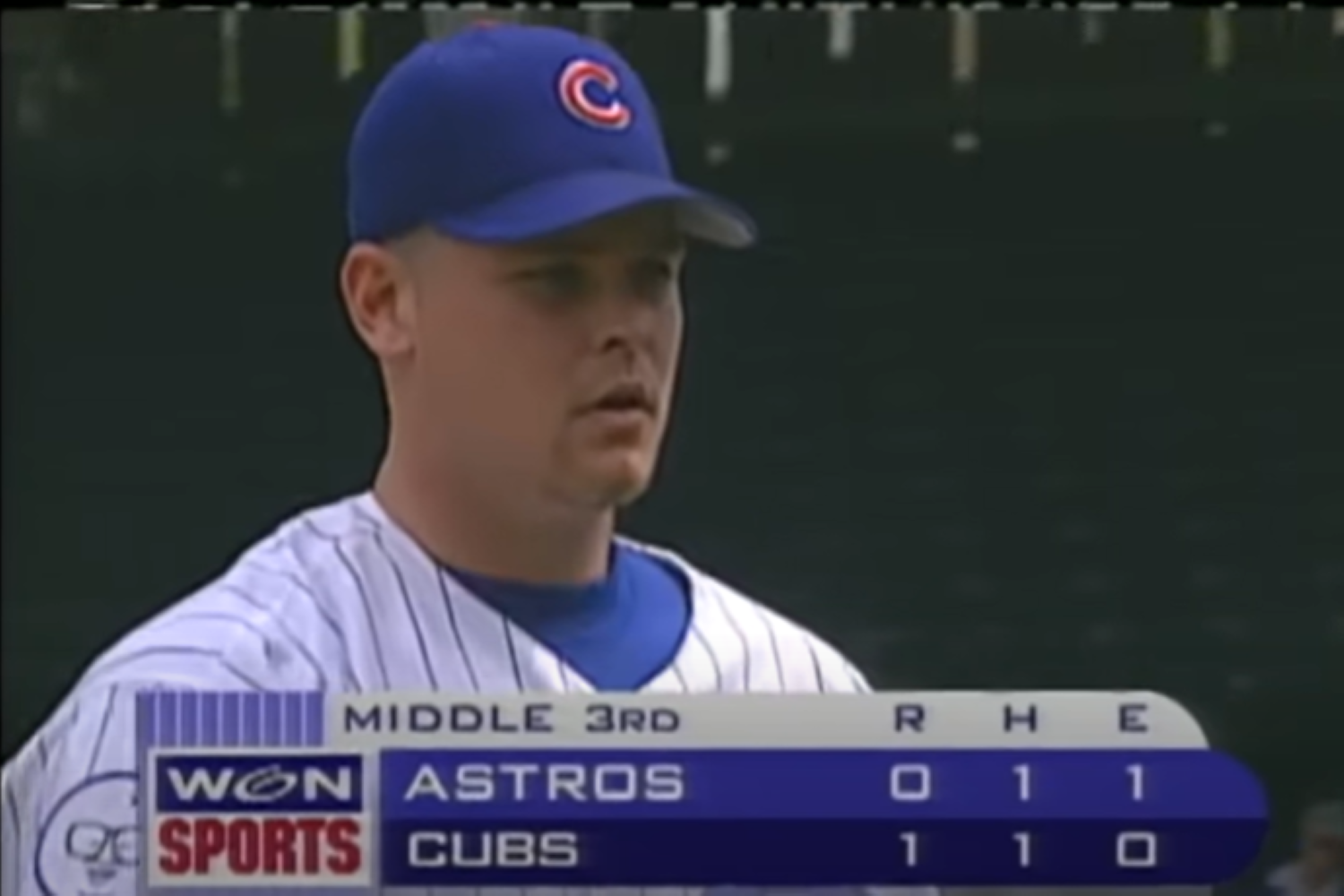 The idea here is to marinate in the nostalgia and the thrill of that day, but also to see the bigger picture and tie the receding past to our present a bit. Our very first thought is in that latter vein. Kerry Wood had a sweeper. This spring, the talk of the baseball world has been the sweeper, which has been sold as an innovation on the slider. It’s even been reclassified as a distinct pitch. That’s a flawed idea. Hardly anything in baseball is truly new, but more importantly, the word ‘slider’ was never meant to describe just one type of pitch. Big-league pitchers have thrown sliders with varying shapes and speeds ever since the pitch evolved into something concretely different from the curveball. Since the concept of the sweeper is here to stay, though, it’s worth noting that Wood was absolutely throwing one on May 6, 1998. He had two or three breaking balls going that day, but one of them was reserved (almost; a topic for later) for right-handed batters; was firm enough to fool hitters into thinking fastball; and had exceptional, mostly horizontal movement, especially given Wood’s three-quarters arm angle. That’s a sweeper, by the new definition. We just didn’t have that word for it then, and the Astros also didn’t have an answer for it. The Unlikely Partner in Crime. Those 1998 Cubs are an indelible memory, to fans of a certain age. That was the first year in almost a decade that the team had been relevant, and they wouldn’t be again for a few years. You can probably name most of that lineup, even though it was a bit of a hodgepodge. The team had two catchers for most of the season. Sandy Martinez wasn’t either of them. Scott Servais and Tyler Houston got the bulk of the work. Martinez only made 20 starts behind the plate, and it turned out to be the last time he would even get 100 plate appearances in the majors in any season. On that Wednesday afternoon, though, Martinez was Wood’s batterymate. In one of those funny things that happened a lot in that era, a narrative had crept up that Wood was unable to control the running game. Over his first four starts, he’d actually only allowed one steal, and one runner had been caught stealing. Nonetheless, that was the justification Chip Caray and Steve Stone gave for Martinez starting over Servais. This game was never going to be about Sandy Martinez. He did a fine job, though. Wood shook him off just twice all day, and even on those occasions, the two ended up agreeing on the pitch Martinez originally called. Also, his peculiar catching stance (with his knees collapsed way inward, his feet set wide, and his backside nearly on the ground) makes for some unforgettable images from the game. A stirring opening salvo. Wood’s first pitch of the game, to Craig Biggio, was the kind of thing that ensures everyone is fully awake on a sleepy spring afternoon. It seemed to cross up, or at least overwhelm, Martinez. It terrified Biggio. And it hit Jerry Meals, the home-plate umpire for the day, right in the mask. In hindsight, that was the perfect way to announce what was coming. Wood would be too much for everyone to handle for the rest of the day. Even before a small crowd, on one of those forebodingly pleasant early afternoons in May during an unusually warm Chicago spring, Wood was amped up, and his fastball had the proverbial extra yard on it. It’s still wild to consider Wood’s age that day. Wood didn’t turn 21 until six weeks after this game. Even then, it was exciting and rare just to have a starting pitcher take the mound in the majors at age 20, but it happened. Somewhere in the majors, it happened, every year. In every season of integrated baseball prior to 2012, at least one start was made by a 20-year-old hurler. Since then, it’s been about as common as not to go a whole year without a starter that young. No one under 21 started a game in 2012, or from 2014-16. No one has done it since the start of 2021, and even in 2020, the only start by anyone that young was a five-out appearance by the Padres’ Luis Patiño. Wood was a phenom then. Now, he would be an impossibility, Wood worked from the middle of the pitching rubber. One of my pet fascinations, when watching any pitcher, is where they set up on the pitching rubber. The factors that dictate that decision–their arsenal, their mechanics, and their objectives–are some of the most important information we can have about any moundsman. Later in his career, Wood moved way over to the first-base side of the rubber. That left room for the run on his fastball, and because his breaking ball was more or less 12-to-6 during his second and third acts, it worked fine from that angle. The youthful Wood didn't need to accommodate armside movement on the fastball, though. His heater was a high-rise pitch that, without being at all a cut fastball, held its lane. He also had that sweeping slider, and to make sure it looked like it was coming in over the plate (before darting away), he pitched from the center of the mound. Jerry Meals had an extremely generous strike zone. Before the top of the first was over, it was clear that Jerry Meals would make it a good day to be a pitcher. The outside corner to right-handed hitters, especially, was open for business, and Martinez got several strikes out there as the day progressed. Sometimes, he would set up to receive the pitch off the corner, in a way that would be obvious and unconscionable to an umpire today, but Meals was permissive, as long as Wood hit the spot his catcher set. This doesn't diminish the show Wood put on, by any means. It's just one of those things that would be foolish to forget. As is true of wunderkinds being on the mound at all, a different, slightly less efficient, much more freewheeling sporting culture at the time made wider the spectrum of possibilities on any given afternoon. The plan was to attack all four quadrants of the zone with his fastball. One of the tricky things about looking back at baseball prior to when we began to have PITCHf/x data is trying to tease out which things were different precisely because we didn't have PITCHf/x data. One result of being able to precisely track and map every pitch thrown by a given hurler has been to see where guys' combinations of arm slot, spin, and movement tend to carry the ball when they don't hit their spot perfectly. As a result, if you watch carefully, there are few pitchers in modern baseball who try to attack the entire zone with any of their pitches. You're far more likely to see a guy aim for one or two spots with a given offering, and another one or two with another, and another one or two with a third. Pitchers, catchers, hitters, coaches, and analysts all understand the throwing motion and the likelihood of executing various pitches in various locations. They mostly eliminate the idea of trying to throw a given pitch to an area of the zone in which the data suggests they're unlikely to have success. There were people who, with only hand-drawn charts of pitch selection and location, had already figured this out by 1998. Tom House was talking about it in public as far back as the early 1990s. Still, it wasn't the prevailing mindset. One reason why pitchers throw harder now than they did then is that they have swapped a bit of the touch and the body control required to use the whole zone with their fastball. Wood, like most pitchers of the 1990s, made that tradeoff only occasionally. He sought to use both edges and work up and down on each side, all with his fastball. That day, he had command to all of those spots. Shane Reynolds had it going that day, too. A great pitching performance is always elevated slightly if the opposing pitcher is also sharp. Reynolds might have been the most underrated starter of the late 1990s, and he showed what he could do against the Cubs, although it was immediately clear he couldn't quite keep up with Wood. Reynolds allowed an early run, although it was unearned, and the Cubs managed a few hits and a walk. Through four innings, though, Reynolds had eight punchouts, matching Wood K for K. He'd worked hard to harness his breaking stuff during the spring of 1998, and was enjoying the fruits of that labor. His curve and slider were both biting, and they allowed him to really toy with Cubs hitters who were trying to spot his forkball out of the hand. The home halves of each inning were fairly quick. Reynolds's strong work kept the game in rhythm and ensured that Wood, working with the narrowest possible lead, would stay locked in. Kevin Orie committed his infamous non-error because he took his bat to the field with him. If you're reading this, you probably know that this game ended up a one-hitter for Wood, and that the one hit was a medium-speed ground ball off the bat of Ricky Gutierrez. Leather even scraped leather, as the ball skipped past a reaching Kevin Orie. The official scorer's call was hit all the way, and it was probably the right one. Still, Orie should have made the play. He probably would have, too, except that Kevin Orie was having a miserable time already. Houston was unavailable to catch for much of May, not only because of a hamstring injury that would eventually shelve him for a month, but because the Cubs were starting to view him as a potential replacement for Orie at third base. Orie had been fine in his first taste of MLB in 1997, and he got off to a hot start in 1998. Just after the midway point of April, though, he fell into a slump from which his career would not recover. By May 6, he was 4 for his last 46, without an extra-base hit. When he struck out with a runner on base to end the bottom of the second, he was visibly frustrated. Gutierrez was the leadoff hitter of the top of the third, and Orie had yet to clear his head when the ball was hit just a hair too far to his left. Here, we'll stop for today. I'll offer 16 more thoughts in two more parts this weekend, to round out a full reminiscence about the fateful game. For now, I leave us all something to consider. If Orie makes that play, Wood is chasing a no-hitter, at least into the middle innings. No-hitters are much less rare than 20-strikeout games, though. If Wood had managed a no-hitter (or even a perfect game; that's for next time), would we remember the game much differently? Is it almost more special, more poignant, because it was not perfect in that broader way, but merely in terms of the dominance Wood inflicted on the Astros? It's an interesting counterfactual, one way or the other.
 -
Two Nights, Two Chances Tell the Tale of Two Young Seasons for the Cubs
Matthew Trueblood posted an article in Cubs
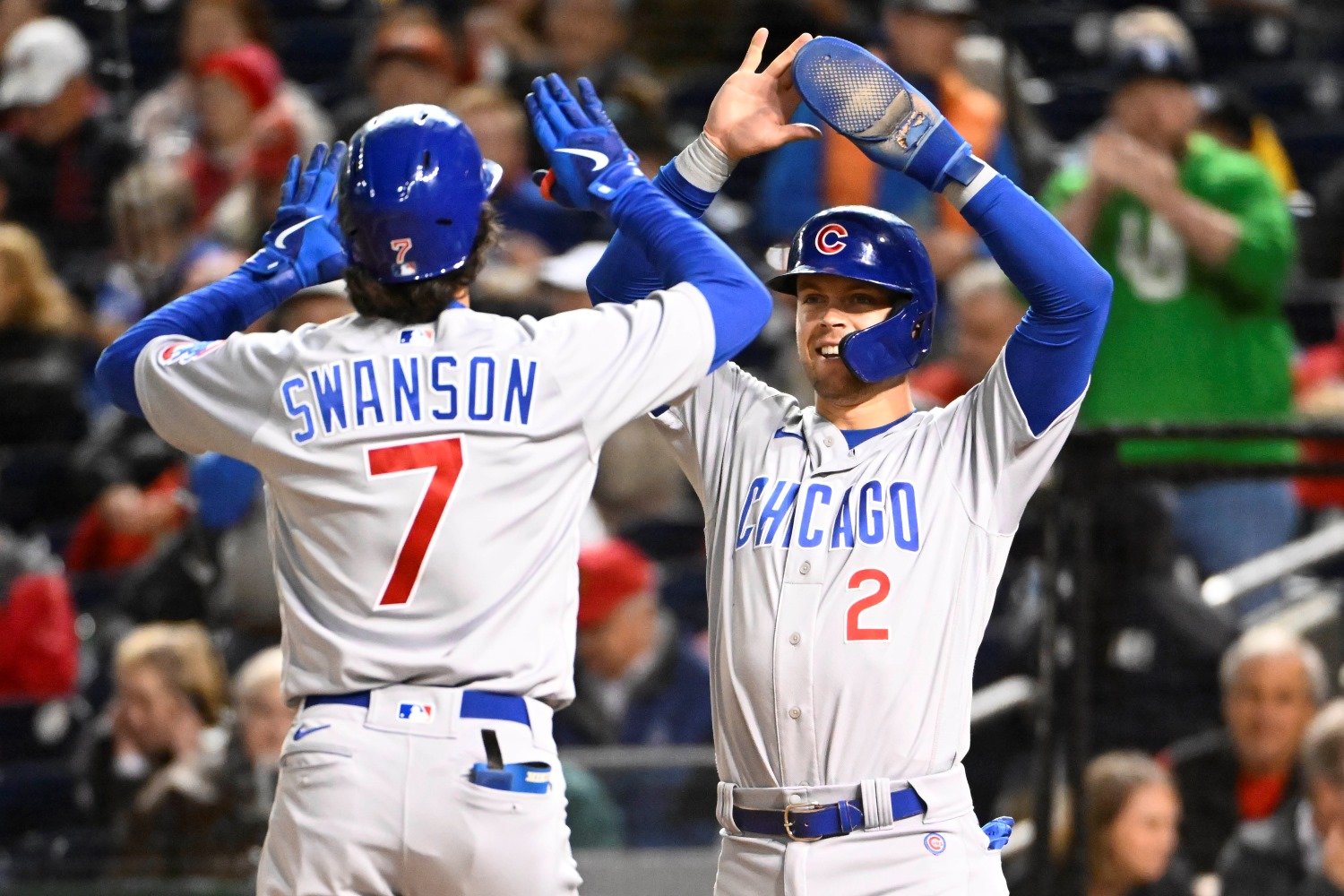 In the top of the fifth inning Monday night, the Cubs had MacKenzie Gore right where they wanted him. They'd pushed across two runs with some great two-out hitting in the top of the first, and forced him into a second long inning in the top of the third. They had a 2-1 lead entering that fifth frame, and Gore had already thrown 86 pitches. That was, quietly, a pivotal moment in the game. It's so subtle you could easily miss it, but that's a crease in the origami of a contest that can change the shape of it radically. With Nico Hoerner leading off and facing Gore for the third time, that was a huge opportunity to gain some cushion in a tight game. The window of that opportunity can close with a sharp snap, though. When facing a starter who has struggled and whose pitch count is climbing, there's always a risk that the opposing manager will lift them for a fresh and more formidable reliever, before you can cash in on the work you've done to that point. That the Cubs pushed Gore, who is more or less Washington's ace this year, to that edge as early as the start of the fifth was to their advantage, because it made it harder for Dave Martinez to pull the trigger on a pitching change. No manager wants to turn to his bullpen early on a night when he had his best starter going--least of all when his pitching staff is rather thin, overall, and he's just opening a four-game series. Still, the clock was ticking. The Cubs needed to score quickly. Hoerner and Dansby Swanson made it happen. In a fairly long at-bat, Hoerner managed a bloop single. Swanson, on a 1-0 pitch, got a fastball and ripped it into the bullpen beyond the left-field fence, and just like that, the game opened up. It folded in the Cubs' favor. It's so simple as to defy analysis, but in the dichotomy between doing and not doing damage at that kind of moment lie many wins. On Tuesday night, the Cubs felt the scrape of the other side of that dichotomy. They had their chance in the top of the sixth. (There's the first mistake. By failing to put more pressure on Trevor Williams in their first two trips through the order, they used up more of the true clock of baseball--outs. Martinez could count down from 12 much more comfortably than from 15.) A one-out walk by Ian Happ was enough to get Williams out of there, in favor of fellow ex-Cub Carl Edwards, Jr. Already, the window of opportunity threatened to close, with the Nationals ahead 1-0. Cody Bellinger, however, has been good enough to break right through some closed windows this year. He not only doubled Happ around to third, but did so on a high, inside, cutting fastball from Edwards--a pitch even the best previous versions of Bellinger were not able to consistently hit with such authority. His resurgent April and early May are as exciting as Swanson's killer instincts. After that, though, things took a too-predictable turn. Edwards, whose repertoire lends itself more to reverse platoon splits than ever after the addition of a changeup to the mix, intentionally walked Seiya Suzuki, loading the bases for Edwin Rios. David Ross wisely pinch-hit Trey Mancini for Rios, in a perverse reclamation of the anti-platoon advantage. Mancini had a good at-bat, too. He worked a deep count, laying off a couple of tough would-be putaway pitches and fouling off fastballs up in the zone. Ultimately, though, Edwards struck him out, on a high changeup--a mistake pitch that turned out to be unhittable. After that, Eric Hosmer was due. To be fair to the much-maligned Hosmer, he didn't strike out, and he didn't go down on one or two pitches. He got ahead in the count, 2-0. He fouled off a couple of high fastballs, too. Ultimately, though, he hit a somewhat pathetic pop-up to shortstop, on which the launch angle was higher than the exit velocity. In the long season, Swanson will come to the plate in big moments, and he'll end up failing to come through, just as Mancini and Hosmer did Tuesday night. Already, each of those guys have had nights where they came up with big hits in those situations. That doesn't mean they'll all balance out, though. There will be more good moments for Swanson than for Mancini, and more for Mancini than for Hosmer. It's those moments that turn out to be inflection points in games at which the difference between those guys becomes most clear. Tuesday night was always likely to be a Cubs loss. It was a night that saw Hoerner's on-base streak snapped, and on which Keegan Thompson simply didn't have his good stuff. The stark contrast between Monday and Tuesday isn't about the potential that either particular outcome could have been reversed. It's about the fact that Swanson represents the team's existing commitment to winning close games, whereas Mancini and Hosmer represent their unwillingness to deepen that commitment. Matt Mervis would not have been anywhere near a sure thing to come through in the sixth inning Tuesday, but he'd have given the team a better shot than Hosmer.
 -
Things are coming to a head for the Cubs, their lineup, and the reinforcements upon whom the front office has been so reluctant to call. In the first two games of the Nationals series, that was thrown into sharper relief than ever. In the top of the fifth inning Monday night, the Cubs had MacKenzie Gore right where they wanted him. They'd pushed across two runs with some great two-out hitting in the top of the first, and forced him into a second long inning in the top of the third. They had a 2-1 lead entering that fifth frame, and Gore had already thrown 86 pitches. That was, quietly, a pivotal moment in the game. It's so subtle you could easily miss it, but that's a crease in the origami of a contest that can change the shape of it radically. With Nico Hoerner leading off and facing Gore for the third time, that was a huge opportunity to gain some cushion in a tight game. The window of that opportunity can close with a sharp snap, though. When facing a starter who has struggled and whose pitch count is climbing, there's always a risk that the opposing manager will lift them for a fresh and more formidable reliever, before you can cash in on the work you've done to that point. That the Cubs pushed Gore, who is more or less Washington's ace this year, to that edge as early as the start of the fifth was to their advantage, because it made it harder for Dave Martinez to pull the trigger on a pitching change. No manager wants to turn to his bullpen early on a night when he had his best starter going--least of all when his pitching staff is rather thin, overall, and he's just opening a four-game series. Still, the clock was ticking. The Cubs needed to score quickly. Hoerner and Dansby Swanson made it happen. In a fairly long at-bat, Hoerner managed a bloop single. Swanson, on a 1-0 pitch, got a fastball and ripped it into the bullpen beyond the left-field fence, and just like that, the game opened up. It folded in the Cubs' favor. It's so simple as to defy analysis, but in the dichotomy between doing and not doing damage at that kind of moment lie many wins. On Tuesday night, the Cubs felt the scrape of the other side of that dichotomy. They had their chance in the top of the sixth. (There's the first mistake. By failing to put more pressure on Trevor Williams in their first two trips through the order, they used up more of the true clock of baseball--outs. Martinez could count down from 12 much more comfortably than from 15.) A one-out walk by Ian Happ was enough to get Williams out of there, in favor of fellow ex-Cub Carl Edwards, Jr. Already, the window of opportunity threatened to close, with the Nationals ahead 1-0. Cody Bellinger, however, has been good enough to break right through some closed windows this year. He not only doubled Happ around to third, but did so on a high, inside, cutting fastball from Edwards--a pitch even the best previous versions of Bellinger were not able to consistently hit with such authority. His resurgent April and early May are as exciting as Swanson's killer instincts. After that, though, things took a too-predictable turn. Edwards, whose repertoire lends itself more to reverse platoon splits than ever after the addition of a changeup to the mix, intentionally walked Seiya Suzuki, loading the bases for Edwin Rios. David Ross wisely pinch-hit Trey Mancini for Rios, in a perverse reclamation of the anti-platoon advantage. Mancini had a good at-bat, too. He worked a deep count, laying off a couple of tough would-be putaway pitches and fouling off fastballs up in the zone. Ultimately, though, Edwards struck him out, on a high changeup--a mistake pitch that turned out to be unhittable. After that, Eric Hosmer was due. To be fair to the much-maligned Hosmer, he didn't strike out, and he didn't go down on one or two pitches. He got ahead in the count, 2-0. He fouled off a couple of high fastballs, too. Ultimately, though, he hit a somewhat pathetic pop-up to shortstop, on which the launch angle was higher than the exit velocity. In the long season, Swanson will come to the plate in big moments, and he'll end up failing to come through, just as Mancini and Hosmer did Tuesday night. Already, each of those guys have had nights where they came up with big hits in those situations. That doesn't mean they'll all balance out, though. There will be more good moments for Swanson than for Mancini, and more for Mancini than for Hosmer. It's those moments that turn out to be inflection points in games at which the difference between those guys becomes most clear. Tuesday night was always likely to be a Cubs loss. It was a night that saw Hoerner's on-base streak snapped, and on which Keegan Thompson simply didn't have his good stuff. The stark contrast between Monday and Tuesday isn't about the potential that either particular outcome could have been reversed. It's about the fact that Swanson represents the team's existing commitment to winning close games, whereas Mancini and Hosmer represent their unwillingness to deepen that commitment. Matt Mervis would not have been anywhere near a sure thing to come through in the sixth inning Tuesday, but he'd have given the team a better shot than Hosmer. View full article
-
On Saturday, the Cubs sent one of the least successful Triple-A pitchers of the young season to the mound to try to win a game against a big-league team. They got what they deserved, and they have just one more day to prove they learned from their failure. Look, once you reach MLB, there are many ways to be successful. No single statistic (other than runs allowed, and even that only over a very large sample) marks a player as either a credible big-leaguer or not. However, when trying to figure out which pitchers in the minor leagues have a serious chance to pitch well in the majors, there are some key indicators on which teams can and should rely. The easiest of these is swinging-strike rate. How often a pitcher misses bats, against hitters who haven’t yet demonstrated that they have big-league talent at the plate, is a good barometer for how well that pitcher might hold up against the best competition in the world. Of the 310 pitchers who have compiled at least 10 innings of work in Triple A this spring, Caleb Kilian ranks 300th in swinging-strike rate. Only 6.6 percent of the 198 pitches he’s thrown for the Iowa Cubs have resulted in whiffs. Of the 10 guys worse than him, six are at least 27 years old, meaning it’s unlikely that they have any future in MLB. Three play for the Rockies’ affiliate in Albuquerque, at an even higher elevation than Denver, where breaking balls defy their names. It would be unfair to say, based solely on his lack of whiffs in a small sample, that Kilian will never be a viable big-league pitcher. It was also unfair, though, to thrust him into the crucible of a big-league test with so little recent success to lend him confidence or a guide. Most importantly, it was unfair to the team he joined–one that earnestly intends to compete for the playoffs this year. Kilian is not in any position to contribute to that goal. The team had ample time to plan for the game. They even skipped Kilian’s last start with the I-Cubs, because they knew they would be recalling him and wanted his workload carefully managed before that time. Given that they had all that time and notice, this was an inexcusable error. They could, fairly easily, have manipulated things to give Javier Assad the spot start again. They could have called up Ben Brown, who just earned a promotion from Double-A Tennessee to Iowa anyway, and who has been dominant thus far this year. They just created a 40-man roster spot by designating Luis Torrens for assignment Friday, and could easily have given that place to either Riley Thompson or Roenis Elias (who has since departed the organization, opting to go pitch in Korea). Even having Keegan Thomspon start and get eight or nine outs to open a bullpen game would have made more sense. The team does face a real 40-man roster crunch, in the medium term, and that surely informed their choice not to add Thompson or Elías yet. Even that crunch is of their own making, though. They have been too slow to give up on or move proactively with multiple players. As many teams throughout the league currently do, they value optionality and flexibility too highly. They wait too long to make decisive moves and evaluate players too slowly. That made starting Kilian superficially appealing, when it never should have been on the table. Even after Kilian allowed seven runs while recording only 10 outs, they nearly pulled out Saturday’s game, but they fell short. On a road trip that needed to end no worse than 4-3, the Cubs have started 1-4. This trip seemed like a chance for the Cubs to prove their worthiness for a playoff challenge, by piling up wins and closing ground on the hot-starting Pirates and Brewers. Instead, it suddenly feels like a test of whether they really want this badly enough–not in the dugout or the clubhouse, but upstairs. Kilian was an ugly mistake. Christopher Morel is running an OPS only a hair under 1.300 in Iowa, proving that he’s too good for the level. Matt Mervis hit a double on a 98-mile-per-hour fastball Saturday and put up an exit velocity over 114 miles per hour on another double Sunday, the latest data points in his refutation to those who list a dozen reasons why his minor-league production won’t translate to the Majors. The front office needs to take the roster seriously, and make the moves a team with serious ambitions would. Otherwise, they deserve the accusations of unseriousness that will soon come their way. They get their next great chance to do that on Thursday, when they have no announced starting pitcher and the man lined up to receive the bump is Nick Neidert. Remember that list of 310 Triple-A chuckers? One of the 10 guys worse than Kilian at forcing whiffs this year is his Iowa teammate, Neidert. Even the Nationals, whose offense is exactly as advertised, can do damage against Nick Neidert. Brown, unlike Neidert, doesn't require the team to add him to the 40-man roster in order to join the squad. Brown, unlike Neidert, has gotten whiffs on over 19 percent of his pitches this year--although his were all thrown in Double A. It's unlikely that the Cubs could get more than nine outs from Brown in a start Thursday, but the healthy response to that is: so what? Better three innings of one-run ball than five innings of five-run ball. If not Brown, the Cubs could recall Assad to make a short start on short rest, after he pitched 4 2/3 innings and threw 72 pitches Sunday (though only if they placed someone on the injured list in a corresponding move; Yan Gomes could be a candidate). They could also elect to use Michael Fulmer as a short-work starter, while calling up a short reliever like Tyler Duffey to give them an inning as part of a bullpen game. What they can't do, if they want the fans or the players in the clubhouse to take this season seriously, is send out another undeserving minor leaguer in an important big-league contest. View full article
-
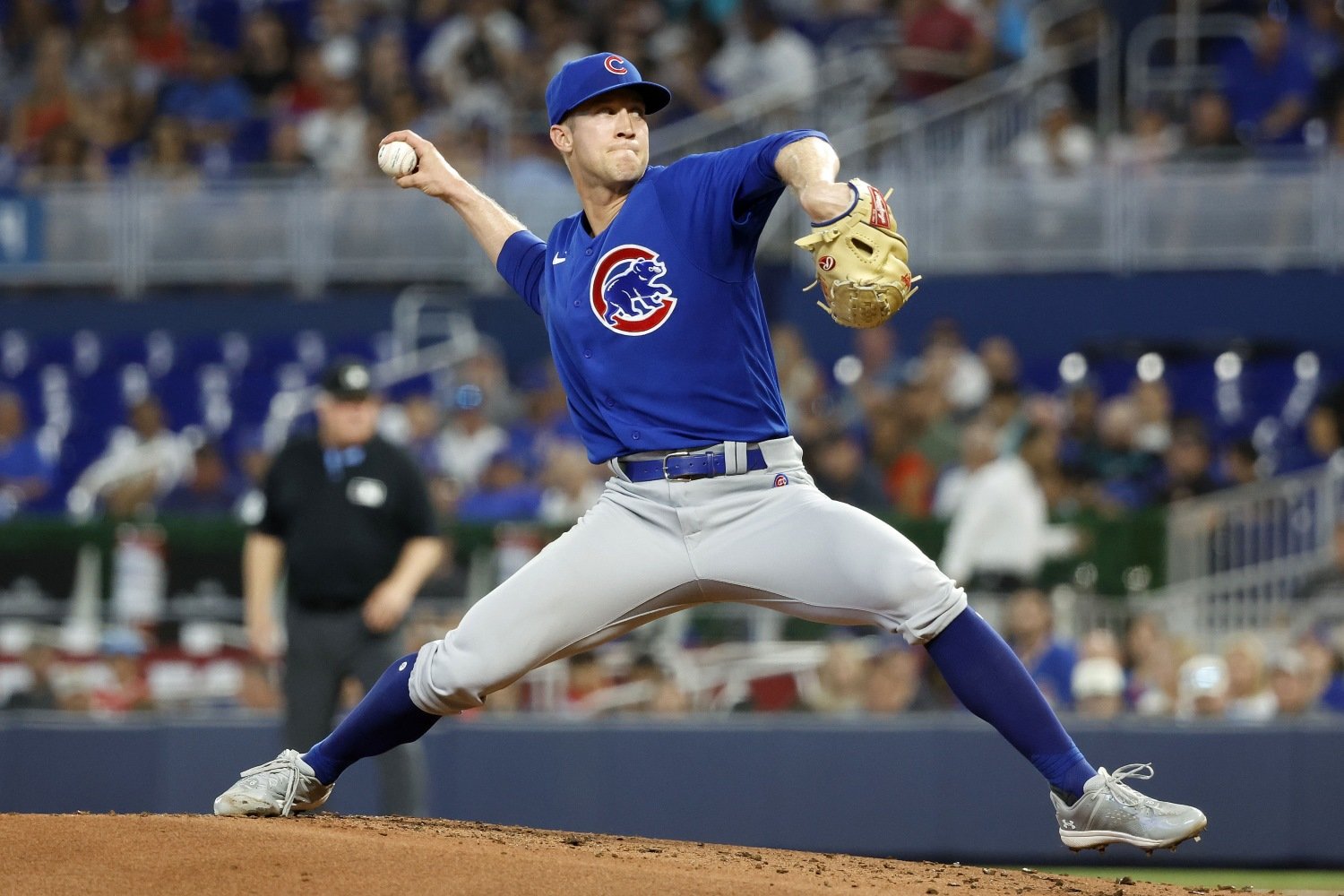 Look, once you reach MLB, there are many ways to be successful. No single statistic (other than runs allowed, and even that only over a very large sample) marks a player as either a credible big-leaguer or not. However, when trying to figure out which pitchers in the minor leagues have a serious chance to pitch well in the majors, there are some key indicators on which teams can and should rely. The easiest of these is swinging-strike rate. How often a pitcher misses bats, against hitters who haven’t yet demonstrated that they have big-league talent at the plate, is a good barometer for how well that pitcher might hold up against the best competition in the world. Of the 310 pitchers who have compiled at least 10 innings of work in Triple A this spring, Caleb Kilian ranks 300th in swinging-strike rate. Only 6.6 percent of the 198 pitches he’s thrown for the Iowa Cubs have resulted in whiffs. Of the 10 guys worse than him, six are at least 27 years old, meaning it’s unlikely that they have any future in MLB. Three play for the Rockies’ affiliate in Albuquerque, at an even higher elevation than Denver, where breaking balls defy their names. It would be unfair to say, based solely on his lack of whiffs in a small sample, that Kilian will never be a viable big-league pitcher. It was also unfair, though, to thrust him into the crucible of a big-league test with so little recent success to lend him confidence or a guide. Most importantly, it was unfair to the team he joined–one that earnestly intends to compete for the playoffs this year. Kilian is not in any position to contribute to that goal. The team had ample time to plan for the game. They even skipped Kilian’s last start with the I-Cubs, because they knew they would be recalling him and wanted his workload carefully managed before that time. Given that they had all that time and notice, this was an inexcusable error. They could, fairly easily, have manipulated things to give Javier Assad the spot start again. They could have called up Ben Brown, who just earned a promotion from Double-A Tennessee to Iowa anyway, and who has been dominant thus far this year. They just created a 40-man roster spot by designating Luis Torrens for assignment Friday, and could easily have given that place to either Riley Thompson or Roenis Elias (who has since departed the organization, opting to go pitch in Korea). Even having Keegan Thomspon start and get eight or nine outs to open a bullpen game would have made more sense. The team does face a real 40-man roster crunch, in the medium term, and that surely informed their choice not to add Thompson or Elías yet. Even that crunch is of their own making, though. They have been too slow to give up on or move proactively with multiple players. As many teams throughout the league currently do, they value optionality and flexibility too highly. They wait too long to make decisive moves and evaluate players too slowly. That made starting Kilian superficially appealing, when it never should have been on the table. Even after Kilian allowed seven runs while recording only 10 outs, they nearly pulled out Saturday’s game, but they fell short. On a road trip that needed to end no worse than 4-3, the Cubs have started 1-4. This trip seemed like a chance for the Cubs to prove their worthiness for a playoff challenge, by piling up wins and closing ground on the hot-starting Pirates and Brewers. Instead, it suddenly feels like a test of whether they really want this badly enough–not in the dugout or the clubhouse, but upstairs. Kilian was an ugly mistake. Christopher Morel is running an OPS only a hair under 1.300 in Iowa, proving that he’s too good for the level. Matt Mervis hit a double on a 98-mile-per-hour fastball Saturday and put up an exit velocity over 114 miles per hour on another double Sunday, the latest data points in his refutation to those who list a dozen reasons why his minor-league production won’t translate to the Majors. The front office needs to take the roster seriously, and make the moves a team with serious ambitions would. Otherwise, they deserve the accusations of unseriousness that will soon come their way. They get their next great chance to do that on Thursday, when they have no announced starting pitcher and the man lined up to receive the bump is Nick Neidert. Remember that list of 310 Triple-A chuckers? One of the 10 guys worse than Kilian at forcing whiffs this year is his Iowa teammate, Neidert. Even the Nationals, whose offense is exactly as advertised, can do damage against Nick Neidert. Brown, unlike Neidert, doesn't require the team to add him to the 40-man roster in order to join the squad. Brown, unlike Neidert, has gotten whiffs on over 19 percent of his pitches this year--although his were all thrown in Double A. It's unlikely that the Cubs could get more than nine outs from Brown in a start Thursday, but the healthy response to that is: so what? Better three innings of one-run ball than five innings of five-run ball. If not Brown, the Cubs could recall Assad to make a short start on short rest, after he pitched 4 2/3 innings and threw 72 pitches Sunday (though only if they placed someone on the injured list in a corresponding move; Yan Gomes could be a candidate). They could also elect to use Michael Fulmer as a short-work starter, while calling up a short reliever like Tyler Duffey to give them an inning as part of a bullpen game. What they can't do, if they want the fans or the players in the clubhouse to take this season seriously, is send out another undeserving minor leaguer in an important big-league contest.
 -
The Cubs lost a tough game in Miami Friday night. In one sense, it was just one of those nights, but in another, it was a reminder of what this team still lacks, and of the flaws in their formula for wins. It’s true that the Cubs only scored two runs Friday night, and grounded into three double plays. In the first inning alone, both Dansby Swanson and Ian Happ hit long fly balls that died harmlessly in the glove of Marlins center fielder Jazz Chisholm. Some nights just aren’t your night. It’s easy to dismiss the loss a bit on that basis. On the other hand, entering this season, everyone around the Cubs acknowledged that they would need to win some 2-1 games in order to compete this year. When Eric Hosmer snuck a grounder through the right side of the Miami infield in the top of the seventh, the Cubs had a 2-1 lead. Letting the game slip away from there is the kind of thing the team can’t afford, if they want to convert their solid start into a serious push for a playoff berth. Marcus Stroman was good, but the excellent command of his sinker that defined his first several starts of the year was a bit looser, and the Marlins made some hard contact against him early. Sending him out for the bottom of the seventh was the right call on the part of David Ross, and Stroman got a little unlucky in that frame. Still, he allowed the Marlins to tie things again. In his last two starts, he’s found trouble the third time through the opponent’s order. One of Stroman’s strategies–especially over the last three starts–has been to introduce and expand the use of his four-seamer as he gets into the lineup for the second and third time. He experimented a lot with the four-seamer early last year, but went away from it during his stellar second half. That he’s bringing it back this year is a sign of how good he’s feeling. He’s trying to use the whole strike zone, and change the eye levels of hitters. He might need to start doing it a bit earlier in games, though, when his velocity and movement are at their best. He’s been beaten on the four-seamer near the end of each of the last two appearances, and seeing that pitch doesn’t seem to be keeping hitters off his sinker, either. Again, Ross did nothing wrong by trying to get Stroman through seven innings. Normally, it would have been a good time to proactively lift him, but this was not a normal night. With Caleb Kilian making the spot start on Saturday, the team needed whatever length it could get out of its ace. Nor was Ross wrong, exactly, in any of the relievers he elected to use once Stroman departed. Presumably, Keegan Thompson was down, since he’d pitched on Sunday, Tuesday, and Thursday, and has yet to pitch on back-to-back days in 2023. Mark Leiter, Jr. was the right man to get the team out of the jam in the seventh inning. That Ross then called on Michael Fulmer and Michael Rucker in the eighth and ninth, however, does highlight the fact that this team still lacks clarity in their bullpen hierarchy. They’ll need some reinforcements, in order to stay in contention. They’ll need some guys who are more comfortable than Rucker appears to be when pitching in high-leverage situations. They’ll need someone who can work on consecutive days. Unlikely though it might seem that they will stay in the thick of it throughout the season, the Marlins are currently in position to fight for the same Wild Card berths in the NL that the Cubs might pursue. A series-opening loss to them, in such a tight game, was an uncomfortable reminder that the front office has intentionally constructed the Cubs to be a team with a thin margin for error. Having to win 2-1 with any regularity is a hard way to contend; that’s why preseason playoff odds reports had them as such longshots. The offense has been better than expected so far, of course. That could change the equation, and make losses like this one much more palatable. If Cody Bellinger can sustain this resurgence; if Nico Hoerner can get on base at close to a .400 clip all season; and if Christopher Morel and Matt Mervis add depth and power to the lineup, then this team can start overwhelming opponents and leave themselves more ways to win. Right now, though, the jury is out on the validity of that strong start, and Friday’s loss remains a tough one to accept. View full article
-
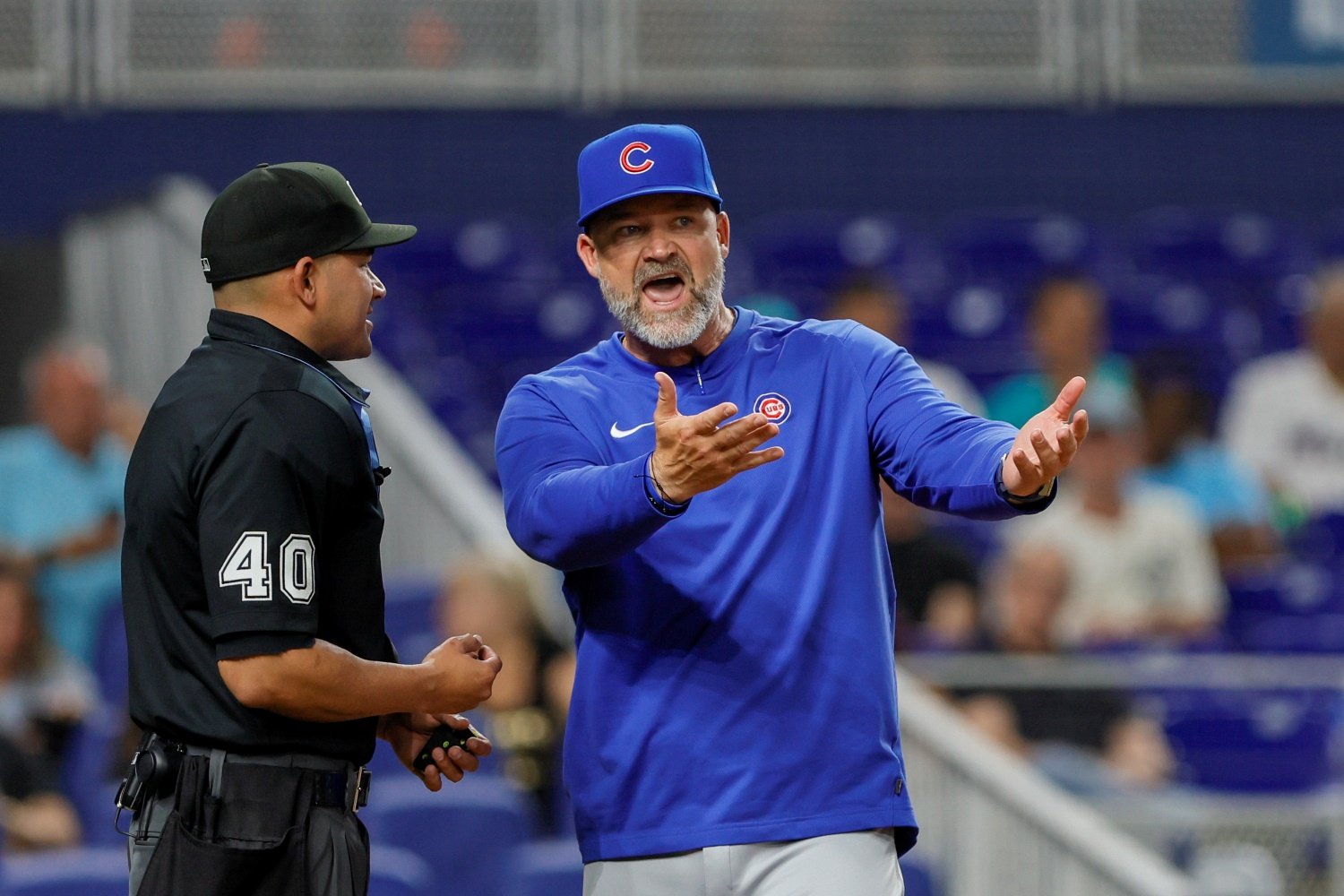 It’s true that the Cubs only scored two runs Friday night, and grounded into three double plays. In the first inning alone, both Dansby Swanson and Ian Happ hit long fly balls that died harmlessly in the glove of Marlins center fielder Jazz Chisholm. Some nights just aren’t your night. It’s easy to dismiss the loss a bit on that basis. On the other hand, entering this season, everyone around the Cubs acknowledged that they would need to win some 2-1 games in order to compete this year. When Eric Hosmer snuck a grounder through the right side of the Miami infield in the top of the seventh, the Cubs had a 2-1 lead. Letting the game slip away from there is the kind of thing the team can’t afford, if they want to convert their solid start into a serious push for a playoff berth. Marcus Stroman was good, but the excellent command of his sinker that defined his first several starts of the year was a bit looser, and the Marlins made some hard contact against him early. Sending him out for the bottom of the seventh was the right call on the part of David Ross, and Stroman got a little unlucky in that frame. Still, he allowed the Marlins to tie things again. In his last two starts, he’s found trouble the third time through the opponent’s order. One of Stroman’s strategies–especially over the last three starts–has been to introduce and expand the use of his four-seamer as he gets into the lineup for the second and third time. He experimented a lot with the four-seamer early last year, but went away from it during his stellar second half. That he’s bringing it back this year is a sign of how good he’s feeling. He’s trying to use the whole strike zone, and change the eye levels of hitters. He might need to start doing it a bit earlier in games, though, when his velocity and movement are at their best. He’s been beaten on the four-seamer near the end of each of the last two appearances, and seeing that pitch doesn’t seem to be keeping hitters off his sinker, either. Again, Ross did nothing wrong by trying to get Stroman through seven innings. Normally, it would have been a good time to proactively lift him, but this was not a normal night. With Caleb Kilian making the spot start on Saturday, the team needed whatever length it could get out of its ace. Nor was Ross wrong, exactly, in any of the relievers he elected to use once Stroman departed. Presumably, Keegan Thompson was down, since he’d pitched on Sunday, Tuesday, and Thursday, and has yet to pitch on back-to-back days in 2023. Mark Leiter, Jr. was the right man to get the team out of the jam in the seventh inning. That Ross then called on Michael Fulmer and Michael Rucker in the eighth and ninth, however, does highlight the fact that this team still lacks clarity in their bullpen hierarchy. They’ll need some reinforcements, in order to stay in contention. They’ll need some guys who are more comfortable than Rucker appears to be when pitching in high-leverage situations. They’ll need someone who can work on consecutive days. Unlikely though it might seem that they will stay in the thick of it throughout the season, the Marlins are currently in position to fight for the same Wild Card berths in the NL that the Cubs might pursue. A series-opening loss to them, in such a tight game, was an uncomfortable reminder that the front office has intentionally constructed the Cubs to be a team with a thin margin for error. Having to win 2-1 with any regularity is a hard way to contend; that’s why preseason playoff odds reports had them as such longshots. The offense has been better than expected so far, of course. That could change the equation, and make losses like this one much more palatable. If Cody Bellinger can sustain this resurgence; if Nico Hoerner can get on base at close to a .400 clip all season; and if Christopher Morel and Matt Mervis add depth and power to the lineup, then this team can start overwhelming opponents and leave themselves more ways to win. Right now, though, the jury is out on the validity of that strong start, and Friday’s loss remains a tough one to accept.
 -
Marcus Stroman began this season on a mission to get more ground balls. He's done that, but the real secret to his brilliant April has been the unexpected number of strikeouts that he met on the road to Groundersville. In an interview at the beginning of spring training, Marcus Stroman dropped a line that became an instant favorite for Cubs fans who wanted to revel in the shiny novelty of their new middle infield. In discussing how good it would feel to pitch in front of Dansby Swanson and Nico Hoerner, Stroman affected a rustic accent and said, "That sanker gon' be sankin'." He was, in other words, going to be more comfortable pitching to contact, knowing that his stuff will naturally induce ground balls, and that his adept defenders would reliably snatch those up and convert them into outs. He hasn't been wrong about that, really. Thus far, 29.5 percent of his sinkers have been in the bottom third of the strike zone, a higher share than he's ever posted in a month in which he threw the pitch at least 100 times. Batters have put the ball on the ground a hair over 60 percent of the time. The sank is real. The real secret ingredient in the formula that has yielded a 2.17 ERA through five starts for Stroman, though, is not the grounder. It's the strikeout. Stroman has fanned 26.1 percent of opposing batters, a rate he's only eclipsed over a full month once in his career. Both the ground ball (as in the case of the top of the third inning on Opening Day, when Hoerner and Swanson turned a crucial double play for him) and the strikeout have gotten him out of jams during this good stretch. Let's examine the ways in which he's achieved those strikeouts. Firstly, we have to point to that command of the sinker, and the great work Yan Gomes has done with Stroman. Of his 30 total strikeouts, Stroman has gotten 12 by freezing his opponent on a two-strike pitch. It's basically impossible to sustain a 40-percent backward-K rate, and Stroman has never even been above 30 in any previous season, but it's worked out that way so far because of the way Gomes has eased the strike zone open at the edges for his hurler. Stroman has done his part, though, by so consistently hitting his spots. There's more to the story, though. His big breaking ball (called, in various quarters, a sweeper, slurve, or pure slider) has induced more whiffs from righties than it did last season. His sinker itself has done so, too, thanks to his improving ability to manipulate that pitch. He seems to have learned to deaden the spin on the pitch a bit when he wants to target the low, outside corner of the zone against righties, and to let it rip and spin madly in on them when he works to the third-base side of home plate. Gomes and Stroman have masterfully used the sinker and the slider in tandem against righties all year. Against lefties, it's a whole different story. That's typical, in one sense. Most pitchers are really two different guys, with two different arsenals and pitch mixes, based on the handedness of the batter. Stroman takes it to a bit of an extreme, though. He's essentially a two-pitch guy against righties, but against lefties, he throws no fewer than five pitches, and if you believe that he really utilizes a distinct two-seamer and sinker, you can call it six. The key development for him against lefties this year has been the emergence of his cutter as a bat-missing offering. As you can see above, he's throwing that pitch more against them this year, but it's also been more effective. When he's able to locate the sinker as consistently as he has, the cutter becomes devastating, because it's so easy to misread it as a sinker out of his hand. The tight, gyro spin on the pitch doesn't yield extraordinary movement, but what movement it does have appears late and sharp to the hitter. 0070a1a0-752f-413e-94cb-6099d1a65956.mp4 There are plenty of small, lurking things that Stroman will need to clean up in order to sustain this level of success. At the end of his last outing against the Dodgers, they showed the danger for him when an opposing lineup can see a lot of pitches early in the game and cover the bottom of the zone well. Stroman was forced to elevate a bit to try to change their eye levels, and he's never going to be as comfortable up there as when he's pounding the bottom of the zone. He's also walked too many hitters, but given the command he's showing, that seems like a correctable flaw. Overall, this has a chance to be Stroman's best season, and that's saying quite a lot. He's figured out how to attack hitters and minimize the risk of damage at a whole new level, and the remaining challenges are just some small tweaks and further tightening his execution. View full article
-
 In an interview at the beginning of spring training, Marcus Stroman dropped a line that became an instant favorite for Cubs fans who wanted to revel in the shiny novelty of their new middle infield. In discussing how good it would feel to pitch in front of Dansby Swanson and Nico Hoerner, Stroman affected a rustic accent and said, "That sanker gon' be sankin'." He was, in other words, going to be more comfortable pitching to contact, knowing that his stuff will naturally induce ground balls, and that his adept defenders would reliably snatch those up and convert them into outs. He hasn't been wrong about that, really. Thus far, 29.5 percent of his sinkers have been in the bottom third of the strike zone, a higher share than he's ever posted in a month in which he threw the pitch at least 100 times. Batters have put the ball on the ground a hair over 60 percent of the time. The sank is real. The real secret ingredient in the formula that has yielded a 2.17 ERA through five starts for Stroman, though, is not the grounder. It's the strikeout. Stroman has fanned 26.1 percent of opposing batters, a rate he's only eclipsed over a full month once in his career. Both the ground ball (as in the case of the top of the third inning on Opening Day, when Hoerner and Swanson turned a crucial double play for him) and the strikeout have gotten him out of jams during this good stretch. Let's examine the ways in which he's achieved those strikeouts. Firstly, we have to point to that command of the sinker, and the great work Yan Gomes has done with Stroman. Of his 30 total strikeouts, Stroman has gotten 12 by freezing his opponent on a two-strike pitch. It's basically impossible to sustain a 40-percent backward-K rate, and Stroman has never even been above 30 in any previous season, but it's worked out that way so far because of the way Gomes has eased the strike zone open at the edges for his hurler. Stroman has done his part, though, by so consistently hitting his spots. There's more to the story, though. His big breaking ball (called, in various quarters, a sweeper, slurve, or pure slider) has induced more whiffs from righties than it did last season. His sinker itself has done so, too, thanks to his improving ability to manipulate that pitch. He seems to have learned to deaden the spin on the pitch a bit when he wants to target the low, outside corner of the zone against righties, and to let it rip and spin madly in on them when he works to the third-base side of home plate. Gomes and Stroman have masterfully used the sinker and the slider in tandem against righties all year. Against lefties, it's a whole different story. That's typical, in one sense. Most pitchers are really two different guys, with two different arsenals and pitch mixes, based on the handedness of the batter. Stroman takes it to a bit of an extreme, though. He's essentially a two-pitch guy against righties, but against lefties, he throws no fewer than five pitches, and if you believe that he really utilizes a distinct two-seamer and sinker, you can call it six. The key development for him against lefties this year has been the emergence of his cutter as a bat-missing offering. As you can see above, he's throwing that pitch more against them this year, but it's also been more effective. When he's able to locate the sinker as consistently as he has, the cutter becomes devastating, because it's so easy to misread it as a sinker out of his hand. The tight, gyro spin on the pitch doesn't yield extraordinary movement, but what movement it does have appears late and sharp to the hitter. 0070a1a0-752f-413e-94cb-6099d1a65956.mp4 There are plenty of small, lurking things that Stroman will need to clean up in order to sustain this level of success. At the end of his last outing against the Dodgers, they showed the danger for him when an opposing lineup can see a lot of pitches early in the game and cover the bottom of the zone well. Stroman was forced to elevate a bit to try to change their eye levels, and he's never going to be as comfortable up there as when he's pounding the bottom of the zone. He's also walked too many hitters, but given the command he's showing, that seems like a correctable flaw. Overall, this has a chance to be Stroman's best season, and that's saying quite a lot. He's figured out how to attack hitters and minimize the risk of damage at a whole new level, and the remaining challenges are just some small tweaks and further tightening his execution.
 -
How His Pitch Grips and Movement Make Drew Smyly So Deceptive
Matthew Trueblood posted an article in Cubs
 Friday's flirtation with a perfect game earned Drew Smyly an amount of press far exceeding what he's used to. We got a good breakdown of the unusual shape of Smyly's curve from MLB.com Cubs beat writer Jordan Bastian, for instance. We can go a bit farther, by adding this: no pitcher in baseball gets more armside movement on their curveball than Smyly. Devin Williams's screwball (which some, erroneously, call a changeup) would be an exception to that, of course, but Williams helps illustrate what makes Smyly so unique. Whereas Williams turns his hand over hard and creates what is essentially a high-spin breaking ball that moves the opposite of the usual direction, Smyly throws a true and fairly simple knuckle curve. The way he does so, though, leads to something more like the tumble of a changeup than the bite of an average curveball. That allows the ball to fade like a changeup. The spin direction of the pitch is almost perfectly downward, but the seam orientation carries it to his arm side, away from right-handed batters. You can see a little bit of what leads to all that in this video, but pay attention to the fastball grip Smyly uses, too. That grip helps explain the other mystery of Smyly's pitch mix. Nominally, he has a sinker. That's how all the major pitch-classification systems label his fastball. As Smyly says in the video, though, his heat rises. The seam orientation does make it, technically, a two-seam fastball. Because he grips the pitch across the seams, though, he's able to create pure backspin out of the hand on it. That results in movement that's nothing like a sinker. If we count Smyly's fastball as a sinker, it has the least run and the most rising action in the league, except for Josh Hader. If, however, we treat it as a four-seamer, it's almost perfectly average in both dimensions of movement. Most of all, because the pitch moves like a four-seamer but gives the hitter just two seams to read visually, it's deceptive, That's the same principle that makes his curve so unusual. What hitters see and how the pitch behaves don't match. That's incredible, because it seems to take advantage of the very things that make the modern game harder than the version played 20 years ago or so. Hitters have tools they never had in the past, to train their eyes and interpret the data flying at them alongside and on the baseball. They see and read the seams. They need that information to be trustworthy, in order to hit at their best. Smyly's offerings violate that trust. That dynamic has not only helped him generate whiffs, but made opponents' swings more tentative--leading to a lot of weak contact. Without the complication of having faced the same opponent less than a week ago, it seems likely that Smyly will also bust out his cutter at least a handful of times--unlike last week, when he assiduously avoided everything but the fastball and curve. Presumably, too, he will have something less than the perfect command of those main two pitches he demonstrated last time. Movement and deception are on Smyly's side. He doesn't rely on sheer power. The last remaining variable for him is location. Again, he's unlikely ever to replicate the nearly perfect control he had last week, when he was able to attack all four quadrants of the zone with his fastball and could use his curve both to steal strikes in the zone and to induce whiffs. That's fine. The Cubs just need him to be a consistent fourth starter. Already, with good health and a mature knowledge of his own stuff, he's been that kind of pitcher.
 -
It's unlikely that Drew Smyly will ever have another game as great as the one he threw Friday afternoon at Wrigley Field. As he prepares to follow up that outing with a strong one against the fearsome Padres, though, let's take another moment to talk about what makes him special on the mound. Friday's flirtation with a perfect game earned Drew Smyly an amount of press far exceeding what he's used to. We got a good breakdown of the unusual shape of Smyly's curve from MLB.com Cubs beat writer Jordan Bastian, for instance. We can go a bit farther, by adding this: no pitcher in baseball gets more armside movement on their curveball than Smyly. Devin Williams's screwball (which some, erroneously, call a changeup) would be an exception to that, of course, but Williams helps illustrate what makes Smyly so unique. Whereas Williams turns his hand over hard and creates what is essentially a high-spin breaking ball that moves the opposite of the usual direction, Smyly throws a true and fairly simple knuckle curve. The way he does so, though, leads to something more like the tumble of a changeup than the bite of an average curveball. That allows the ball to fade like a changeup. The spin direction of the pitch is almost perfectly downward, but the seam orientation carries it to his arm side, away from right-handed batters. You can see a little bit of what leads to all that in this video, but pay attention to the fastball grip Smyly uses, too. That grip helps explain the other mystery of Smyly's pitch mix. Nominally, he has a sinker. That's how all the major pitch-classification systems label his fastball. As Smyly says in the video, though, his heat rises. The seam orientation does make it, technically, a two-seam fastball. Because he grips the pitch across the seams, though, he's able to create pure backspin out of the hand on it. That results in movement that's nothing like a sinker. If we count Smyly's fastball as a sinker, it has the least run and the most rising action in the league, except for Josh Hader. If, however, we treat it as a four-seamer, it's almost perfectly average in both dimensions of movement. Most of all, because the pitch moves like a four-seamer but gives the hitter just two seams to read visually, it's deceptive, That's the same principle that makes his curve so unusual. What hitters see and how the pitch behaves don't match. That's incredible, because it seems to take advantage of the very things that make the modern game harder than the version played 20 years ago or so. Hitters have tools they never had in the past, to train their eyes and interpret the data flying at them alongside and on the baseball. They see and read the seams. They need that information to be trustworthy, in order to hit at their best. Smyly's offerings violate that trust. That dynamic has not only helped him generate whiffs, but made opponents' swings more tentative--leading to a lot of weak contact. Without the complication of having faced the same opponent less than a week ago, it seems likely that Smyly will also bust out his cutter at least a handful of times--unlike last week, when he assiduously avoided everything but the fastball and curve. Presumably, too, he will have something less than the perfect command of those main two pitches he demonstrated last time. Movement and deception are on Smyly's side. He doesn't rely on sheer power. The last remaining variable for him is location. Again, he's unlikely ever to replicate the nearly perfect control he had last week, when he was able to attack all four quadrants of the zone with his fastball and could use his curve both to steal strikes in the zone and to induce whiffs. That's fine. The Cubs just need him to be a consistent fourth starter. Already, with good health and a mature knowledge of his own stuff, he's been that kind of pitcher. View full article
