


Matthew Trueblood
-
Posts
2,427 -
Joined
-
Last visited
-
Days Won
2
Content Type
Profiles
Joomla Posts 1
Chicago Cubs Videos
Chicago Cubs Free Agent & Trade Rumors, Notes, & Tidbits
2026 Chicago Cubs Top Prospects Ranking
News
2023 Chicago Cubs Draft Picks
Guides & Resources
2024 Chicago Cubs Draft Picks
The Chicago Cubs Players Project
2025 Chicago Cubs Draft Pick Tracker
2026 Chicago Cubs Draft Tracker: Picks & Bonuses
Blogs
Events
Forums
Store
Gallery
Everything posted by Matthew Trueblood
-
Every season is its own entity. We shouldn't spend all our time comparing the present to the past, or situating each moment in the context of other ones. Yet, the lifeblood of the game is its history, and we understand baseball better when we let ourselves appreciate the connections between one season, one series, one generation and another. Image courtesy of © David Banks-USA TODAY Sports After the sweep of the Pirates that fully restored the Cubs to contention in the underwhelming NL Central. Wrigley Field filled up for the weekend series against the Orioles. The holiday helped, and so did the fact that Baltimore fans travel well in both numbers and enthusiasm, but the environment had much to do with the fact that the Cubs are still relevant. It was reminiscent, to fans of a certain age, of another interleague series in June, 20 years ago. The 2003 Cubs started hotter than the 2023 edition has, but their division was a bit more competitive, too. When the schedule brought the mighty Yankees to town on the second weekend in June, the team was leading the Central, but far from being the heavy favorites. Excitement abounded, but it was a nervous excitement. There was the specter of Sammy Sosa's corked bat to worry about, but there was also a certain level of worry that the Bronx Bombers would come in and make clear that the would-be contending Cubs weren't really up to that standard. New York did win the opener on Friday in that series, but that would be the high point of the weekend for them. On Saturday, with Roger Clemens going for his 300th career win, the Cubs spoiled the party. The Yanks led 1-0 at the seventh-inning stretch, but after a Sammy Sosa single and a Moises Alou walk, Joe Torre lifted Clemens in favor of Juan Acevedo. On Acevedo's first pitch, Eric Karros cracked a three-run home run, giving the Cubs a lead they would not relinquish. The following half-inning, with the bases loaded and two outs, Mike Remlinger struck out Jason Giambi for the first of two times in the series, helping Chicago lock down the win for Kerry Wood, who struck out 11. The next night, on ESPN's Sunday Night Baseball, the Cubs won again, snuffing out a ninth-inning visitor rally when Joe Borowski picked off pinch-runner Charles Gipson, who represented the tying run with two outs. It was the first landmark of a near-magical season. It was surprising confirmation that the Cubs were legitimate, even if they also had obvious flaws. As it turned out, this weekend's series against Baltimore was a similar statement. The Orioles came in as one of the best and most celebrated teams in baseball, and there was every reason to fear that they would thump the Cubs. Instead, the Cubs showed that they can play even with great teams, just as they did against the Rays last month. Parallels run even deeper. The return of Cody Bellinger brought clarity to the team's first-base situation, after two-plus months of uncertainty. In 2003, a collision between Wood and Hee-Seop Choi delivered a similar (although sad and scary) resolution. Choi was concussed, and would never be the same hitter he'd been to that point in the season. Karros, therefore, became the everyday first baseman. Furthermore, just as Remlinger and Borowski began to cement their credentials as sufficient backend relievers in that series, the Cubs got affirming performances from Julian Merryweather, Mark Leiter, Jr., and Adbert Alzolay during this one. Although they won the last two 20 years ago and the first two this time, the outcome and the galvanic feeling is the same. None of that means that the 2023 Cubs are exactly like the 2003 team. There are plenty of salient differences. The similarities have begun to accumulate, though, from the strength of the starting rotation to the fact that the race is shaping up to be more than two teams fighting for just one playoff berth. It also looks like the team's offensive weak link will be the same as that one's: third base. In 2003, GM Jim Hendry addressed that weakness by trading for Aramis Ramirez. This season, if the Cubs are going to make a midseason lineup upgrade, it almost has to come at the same position. Maybe the Rockies, finally ready to reckon with the long road they face back to relevance, will be willing to trade Ryan McMahon. He'd be the long-term acquisition to truly match the Ramirez trade. Former Cubs prospect Jeimer Candelario is having a good bounceback season with the Nationals, and figures to be available as a short-term fix. Either way, though, and even if the team doesn't elect to be as aggressive in July as that one was, this weekend served notice that this team, like that one, marks an overdue return to serious playoff consideration for a franchise that had been adrift over the previous few campaigns. View full article
-
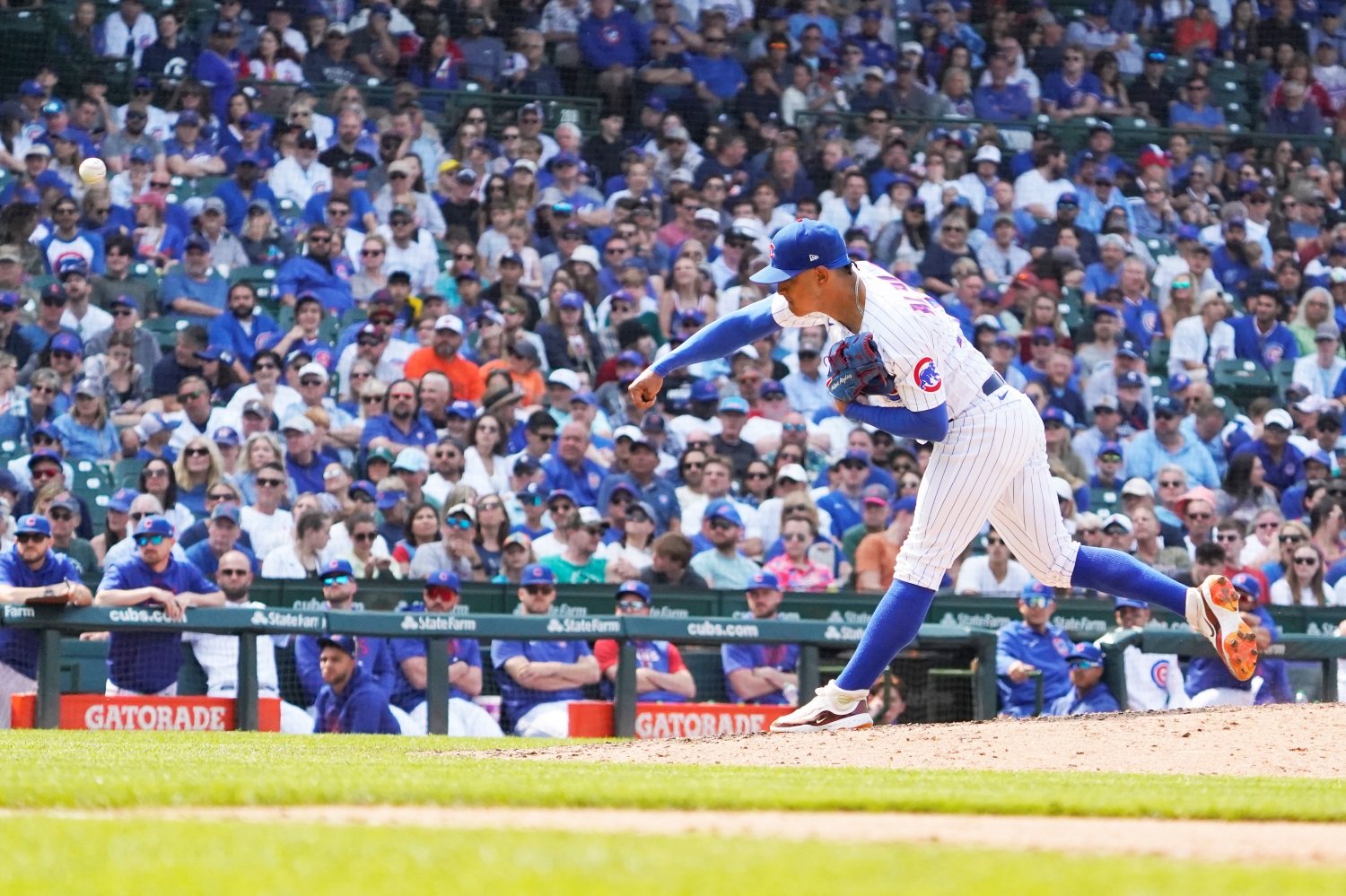 After the sweep of the Pirates that fully restored the Cubs to contention in the underwhelming NL Central. Wrigley Field filled up for the weekend series against the Orioles. The holiday helped, and so did the fact that Baltimore fans travel well in both numbers and enthusiasm, but the environment had much to do with the fact that the Cubs are still relevant. It was reminiscent, to fans of a certain age, of another interleague series in June, 20 years ago. The 2003 Cubs started hotter than the 2023 edition has, but their division was a bit more competitive, too. When the schedule brought the mighty Yankees to town on the second weekend in June, the team was leading the Central, but far from being the heavy favorites. Excitement abounded, but it was a nervous excitement. There was the specter of Sammy Sosa's corked bat to worry about, but there was also a certain level of worry that the Bronx Bombers would come in and make clear that the would-be contending Cubs weren't really up to that standard. New York did win the opener on Friday in that series, but that would be the high point of the weekend for them. On Saturday, with Roger Clemens going for his 300th career win, the Cubs spoiled the party. The Yanks led 1-0 at the seventh-inning stretch, but after a Sammy Sosa single and a Moises Alou walk, Joe Torre lifted Clemens in favor of Juan Acevedo. On Acevedo's first pitch, Eric Karros cracked a three-run home run, giving the Cubs a lead they would not relinquish. The following half-inning, with the bases loaded and two outs, Mike Remlinger struck out Jason Giambi for the first of two times in the series, helping Chicago lock down the win for Kerry Wood, who struck out 11. The next night, on ESPN's Sunday Night Baseball, the Cubs won again, snuffing out a ninth-inning visitor rally when Joe Borowski picked off pinch-runner Charles Gipson, who represented the tying run with two outs. It was the first landmark of a near-magical season. It was surprising confirmation that the Cubs were legitimate, even if they also had obvious flaws. As it turned out, this weekend's series against Baltimore was a similar statement. The Orioles came in as one of the best and most celebrated teams in baseball, and there was every reason to fear that they would thump the Cubs. Instead, the Cubs showed that they can play even with great teams, just as they did against the Rays last month. Parallels run even deeper. The return of Cody Bellinger brought clarity to the team's first-base situation, after two-plus months of uncertainty. In 2003, a collision between Wood and Hee-Seop Choi delivered a similar (although sad and scary) resolution. Choi was concussed, and would never be the same hitter he'd been to that point in the season. Karros, therefore, became the everyday first baseman. Furthermore, just as Remlinger and Borowski began to cement their credentials as sufficient backend relievers in that series, the Cubs got affirming performances from Julian Merryweather, Mark Leiter, Jr., and Adbert Alzolay during this one. Although they won the last two 20 years ago and the first two this time, the outcome and the galvanic feeling is the same. None of that means that the 2023 Cubs are exactly like the 2003 team. There are plenty of salient differences. The similarities have begun to accumulate, though, from the strength of the starting rotation to the fact that the race is shaping up to be more than two teams fighting for just one playoff berth. It also looks like the team's offensive weak link will be the same as that one's: third base. In 2003, GM Jim Hendry addressed that weakness by trading for Aramis Ramirez. This season, if the Cubs are going to make a midseason lineup upgrade, it almost has to come at the same position. Maybe the Rockies, finally ready to reckon with the long road they face back to relevance, will be willing to trade Ryan McMahon. He'd be the long-term acquisition to truly match the Ramirez trade. Former Cubs prospect Jeimer Candelario is having a good bounceback season with the Nationals, and figures to be available as a short-term fix. Either way, though, and even if the team doesn't elect to be as aggressive in July as that one was, this weekend served notice that this team, like that one, marks an overdue return to serious playoff consideration for a franchise that had been adrift over the previous few campaigns.
 -
It's getting hot in Wrigleyville. The Cubs are still below .500, but they've reeled off a more substantial cluster of wins than it seemed they might all season. Of all the good things suddenly happening there, though, the best news is that Nico Hoerner is raking again. Image courtesy of © David Banks-USA TODAY Sports Quietly, one of the biggest problems with the problematic Cubs offense throughout May was the fact that Nico Hoerner fell off a cliff. His hamstring injury surely contributed, and coming back as quickly as possible from it might have come at some cost in effectiveness, but the results care nothing for the reasons. From May 1 through June 8 (the day the Cubs finished being swept by the Angels), Hoerner batted an execrable .222/.294/.315. In 119 trips to the plate, he had just six extra-base hits and 10 walks. Even during that atrocious stretch, Hoerner was a net positive at the plate, according to Win Probability Added. His skill set creates problems for teams when there are runners on base, and especially when the opponent can't afford to let those runners score. Still, he was essentially neutralized for that long period, and the Cubs got an OBP around .300 from a player who was routinely written into the lineup as the leadoff hitter. Dysfunction, like most forms of unhappiness, rolls downhill. Since the first game of the series by the Bay that might be a pivot point in the Cubs' season, though, Hoerner has been himself again--the dangerous, well-rounded, relentless presence he was over the first few weeks of April. After sitting to start that game, he came in and got the game-winning hit, and he hasn't looked back. In his last eight contests, he's batting .364/.400/.424. That doesn't mean we're out of the woods with him. Hoerner's strikeout rate is creeping up, as he tries to find his way to more patience and power. He hasn't actually realized those benefits in exchange for his losses, though, and for a long time, he seemed to be caught in a middle ground that (given his basic skill set) is much less fruitful than operating at extremes. Recently, Hoerner seems to have realized that. In early June, he steadily began giving up exit velocity, in order to get the ball off the ground and on a line more often. Here are two charts, showing rolling averages for 50-plate appearance stretches in both exit velocity and Sweet Spot percentage (the share of batted balls that were hit within the band of the most valuable launch angles, according to Statcast). In a vacuum, a falling average exit velocity is a bad sign, and it indicates that Hoerner's hot streak might be nothing more than a blip. Even in the most generous reading, it sets a fairly low ceiling on his production, because this version of Hoerner (a familiar one, to fans who have watched him closely throughout his career) has virtually no power. Again, though, he's a player who doesn't benefit much from plotting a conservative or conventional course. He has an extreme skill set, and should pursue an extreme approach. He'll probably never be Luis Arraez, but trading some power to give himself a significantly better chance of hitting a single each time up makes as much sense for Hoerner as it does for Arraez. Happily, he even has a dimension of value Arraez lacks, because once he reaches base, he can more often steal a base, or take an extra one on a batted ball. Every player is, to some extent, undergoing constant change. No offensive plan is static and invulnerable to adjustments by opponents. Hoerner (who is still so young and has had his career altered and tossed about by organizational emergencies, a global pandemic, and multiple injuries) has an especially protean approach, and that figures to continue for another year or two. That, after all, is why both he and the Cubs were most comfortable with a contract extension that neither paid him like a superstar nor locked the team into a long-term commitment. He might yet have major roisters and ruts even within this season. For the moment, though, he's been the catalyst of a crucial resurgence by the Cubs offense. It's been a delight, if nothing else, to see the unique talent he possesses on full display for the first time in six weeks. View full article
-
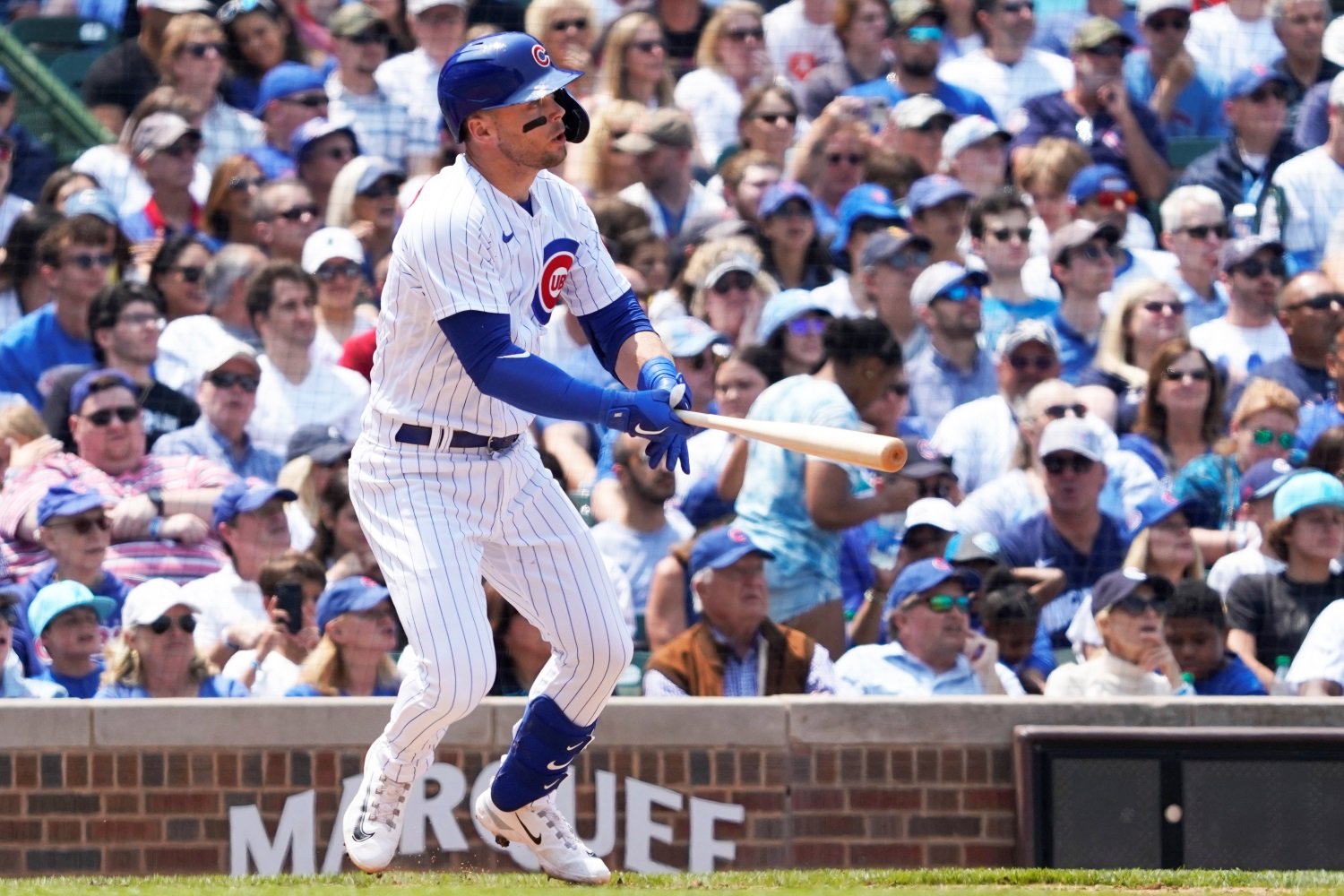 Quietly, one of the biggest problems with the problematic Cubs offense throughout May was the fact that Nico Hoerner fell off a cliff. His hamstring injury surely contributed, and coming back as quickly as possible from it might have come at some cost in effectiveness, but the results care nothing for the reasons. From May 1 through June 8 (the day the Cubs finished being swept by the Angels), Hoerner batted an execrable .222/.294/.315. In 119 trips to the plate, he had just six extra-base hits and 10 walks. Even during that atrocious stretch, Hoerner was a net positive at the plate, according to Win Probability Added. His skill set creates problems for teams when there are runners on base, and especially when the opponent can't afford to let those runners score. Still, he was essentially neutralized for that long period, and the Cubs got an OBP around .300 from a player who was routinely written into the lineup as the leadoff hitter. Dysfunction, like most forms of unhappiness, rolls downhill. Since the first game of the series by the Bay that might be a pivot point in the Cubs' season, though, Hoerner has been himself again--the dangerous, well-rounded, relentless presence he was over the first few weeks of April. After sitting to start that game, he came in and got the game-winning hit, and he hasn't looked back. In his last eight contests, he's batting .364/.400/.424. That doesn't mean we're out of the woods with him. Hoerner's strikeout rate is creeping up, as he tries to find his way to more patience and power. He hasn't actually realized those benefits in exchange for his losses, though, and for a long time, he seemed to be caught in a middle ground that (given his basic skill set) is much less fruitful than operating at extremes. Recently, Hoerner seems to have realized that. In early June, he steadily began giving up exit velocity, in order to get the ball off the ground and on a line more often. Here are two charts, showing rolling averages for 50-plate appearance stretches in both exit velocity and Sweet Spot percentage (the share of batted balls that were hit within the band of the most valuable launch angles, according to Statcast). In a vacuum, a falling average exit velocity is a bad sign, and it indicates that Hoerner's hot streak might be nothing more than a blip. Even in the most generous reading, it sets a fairly low ceiling on his production, because this version of Hoerner (a familiar one, to fans who have watched him closely throughout his career) has virtually no power. Again, though, he's a player who doesn't benefit much from plotting a conservative or conventional course. He has an extreme skill set, and should pursue an extreme approach. He'll probably never be Luis Arraez, but trading some power to give himself a significantly better chance of hitting a single each time up makes as much sense for Hoerner as it does for Arraez. Happily, he even has a dimension of value Arraez lacks, because once he reaches base, he can more often steal a base, or take an extra one on a batted ball. Every player is, to some extent, undergoing constant change. No offensive plan is static and invulnerable to adjustments by opponents. Hoerner (who is still so young and has had his career altered and tossed about by organizational emergencies, a global pandemic, and multiple injuries) has an especially protean approach, and that figures to continue for another year or two. That, after all, is why both he and the Cubs were most comfortable with a contract extension that neither paid him like a superstar nor locked the team into a long-term commitment. He might yet have major roisters and ruts even within this season. For the moment, though, he's been the catalyst of a crucial resurgence by the Cubs offense. It's been a delight, if nothing else, to see the unique talent he possesses on full display for the first time in six weeks.
 -
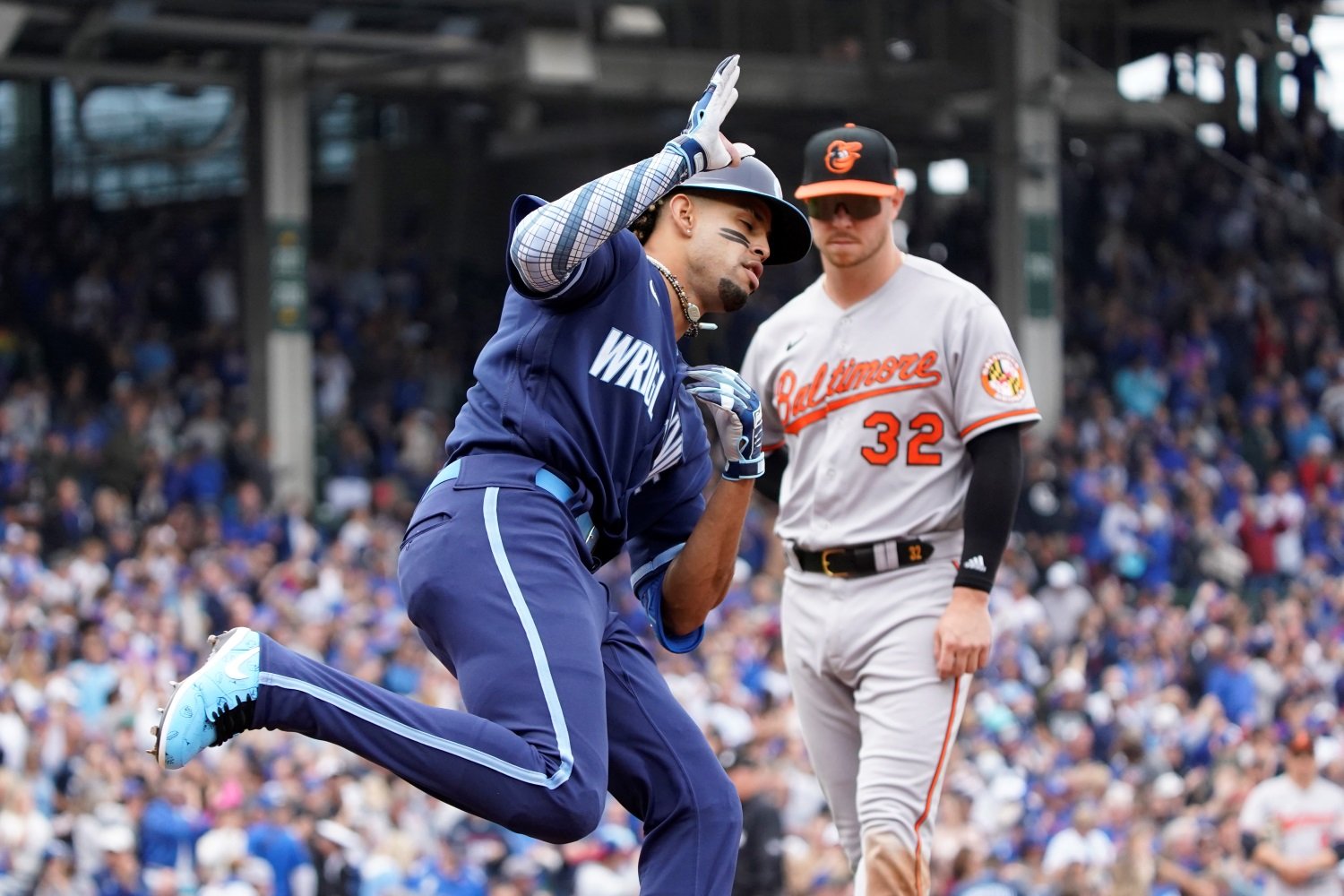 The 2023 Cubs dug themselves a deep hole, in one regard. When they finished limping out of Los Angeles after a sweep at the hands of the Angels, the team was 26-36, and they were losing contact even with the unimposing leaders of the NL Central. The Wild Card was even further from their reach. A week ago, when Cubs fans said, "We're starting over," they sounded the way Boog does when a two-run homer in the eighth wipes out a hard-won Cubs advantage. It was a threat, to the jobs of both Jed Hoyer and David Ross. It was a curse. Since then, despite a few notable red flags that still wave, the team has won six games out of seven. They've cut their divisional deficit by more than half, and they look like they're finally hitting their stride, for real, for the first time. Cody Bellinger returned to the lineup Thursday. Justin Steele re-joins the starting rotation Saturday. The Cardinals are all but out of it, but the other four teams in the NL Central are clustered within three games of one another. The Cubs are in fourth place, but it's easy to make a case that they have the talent and the resources to make up the small gap on all three of the others over the balance of the campaign. We're starting over, and now, that sounds much more like a hopeful statement. Again, this isn't a moment for unrestrained or undimmed optimism. There are pitfalls aplenty ahead of this team. As I wrote recently, Cubs starters don't miss bats. I mean they really, really don't miss bats. For the season, only the Rockies, Cardinals, Royals, and Giants get fewer whiffs as a percentage of all pitches by starters than do the Cubs. Shorten that to the last month, and it's just the Cardinals and Rockies below them. The story is the same even if you change the denominator from total pitches to swings. That might sound like a picayune issue, for a team whose starting rotation still seems to be its strength and spine, but then again, that's part of the problem: how good can a pitching-and-defense specialist club be if its pitchers mostly lack the most valuable skill in pitching? Steele's return can ameliorate that particular shortfall, but not eliminate it. The Cubs have to find some power in their rotation as the season progresses. They also need more power at the plate, which makes their hot streak against the Pirates and Orioles at Wrigley Field this week especially uplifting. Swapping out Matt Mervis for Mike Tauchman on at least a semi-permanent basis diminishes the power upside of the lineup, but what it does for their floor and their on-base percentage makes up for that. Mervis got a fair shake; he'll have to earn another one in Iowa. As is the case when Sciambi exclaims it, starting over now doesn't really mean wiping away what just happened. It merely illustrates that the outcome of this endeavor will be determined by things in the future, rather than in the past. We have more information now than we had in April, or in May, or even than we had a week ago. We know much more about the bullpen, including who might be called upon to reinforce it and who can be trusted in high-leverage situations, than we did in March. We know much more about the viability of various bench options. We know Christopher Morel's power isn't going to disappear as the league gets another good look at him, even if it occasionally hibernates. What we don't know, obviously, is whether this team can stay healthy enough to take control of their weak division. It's clear that they need their full rotation and a supermajority of their five key lineup cogs in order to be credible playoff opponents to any NL teams from the other divisions, and they have only for a few moments enjoyed those luxuries thus far. We don't know, either, whether they'll find creative ways to get materially better over the next month and a half. Still, a week ago, this season felt like the first five innings of Wednesday's game against Pittsburgh--the one in which the visitors leaped out to a 5-1 lead. It was frustrating, and with an overarching sense of doom attached to it. Now, it feels more like the sixth inning of that game, when the Cubs stormed back to take the lead. It's too early to say that they have an edge, but in a metaphorical sense, the comeback is in full flower. We're starting over.
 -
Article: We're Starting Over
Matthew Trueblood posted a topic in North Side Baseball Front Page News
Among Boog Sciambi's miniature trademark calls, my favorite comes when a game is tied up, especially in the middle innings. "We're starting over," he says. It's versatile, too. He just changes his tone and inflection, based on whether the Cubs just erased a deficit or blew a lead. Two and a half months into the 2023 season, guess what? We're starting over. Image courtesy of © David Banks-USA TODAY Sports The 2023 Cubs dug themselves a deep hole, in one regard. When they finished limping out of Los Angeles after a sweep at the hands of the Angels, the team was 26-36, and they were losing contact even with the unimposing leaders of the NL Central. The Wild Card was even further from their reach. A week ago, when Cubs fans said, "We're starting over," they sounded the way Boog does when a two-run homer in the eighth wipes out a hard-won Cubs advantage. It was a threat, to the jobs of both Jed Hoyer and David Ross. It was a curse. Since then, despite a few notable red flags that still wave, the team has won six games out of seven. They've cut their divisional deficit by more than half, and they look like they're finally hitting their stride, for real, for the first time. Cody Bellinger returned to the lineup Thursday. Justin Steele re-joins the starting rotation Saturday. The Cardinals are all but out of it, but the other four teams in the NL Central are clustered within three games of one another. The Cubs are in fourth place, but it's easy to make a case that they have the talent and the resources to make up the small gap on all three of the others over the balance of the campaign. We're starting over, and now, that sounds much more like a hopeful statement. Again, this isn't a moment for unrestrained or undimmed optimism. There are pitfalls aplenty ahead of this team. As I wrote recently, Cubs starters don't miss bats. I mean they really, really don't miss bats. For the season, only the Rockies, Cardinals, Royals, and Giants get fewer whiffs as a percentage of all pitches by starters than do the Cubs. Shorten that to the last month, and it's just the Cardinals and Rockies below them. The story is the same even if you change the denominator from total pitches to swings. That might sound like a picayune issue, for a team whose starting rotation still seems to be its strength and spine, but then again, that's part of the problem: how good can a pitching-and-defense specialist club be if its pitchers mostly lack the most valuable skill in pitching? Steele's return can ameliorate that particular shortfall, but not eliminate it. The Cubs have to find some power in their rotation as the season progresses. They also need more power at the plate, which makes their hot streak against the Pirates and Orioles at Wrigley Field this week especially uplifting. Swapping out Matt Mervis for Mike Tauchman on at least a semi-permanent basis diminishes the power upside of the lineup, but what it does for their floor and their on-base percentage makes up for that. Mervis got a fair shake; he'll have to earn another one in Iowa. As is the case when Sciambi exclaims it, starting over now doesn't really mean wiping away what just happened. It merely illustrates that the outcome of this endeavor will be determined by things in the future, rather than in the past. We have more information now than we had in April, or in May, or even than we had a week ago. We know much more about the bullpen, including who might be called upon to reinforce it and who can be trusted in high-leverage situations, than we did in March. We know much more about the viability of various bench options. We know Christopher Morel's power isn't going to disappear as the league gets another good look at him, even if it occasionally hibernates. What we don't know, obviously, is whether this team can stay healthy enough to take control of their weak division. It's clear that they need their full rotation and a supermajority of their five key lineup cogs in order to be credible playoff opponents to any NL teams from the other divisions, and they have only for a few moments enjoyed those luxuries thus far. We don't know, either, whether they'll find creative ways to get materially better over the next month and a half. Still, a week ago, this season felt like the first five innings of Wednesday's game against Pittsburgh--the one in which the visitors leaped out to a 5-1 lead. It was frustrating, and with an overarching sense of doom attached to it. Now, it feels more like the sixth inning of that game, when the Cubs stormed back to take the lead. It's too early to say that they have an edge, but in a metaphorical sense, the comeback is in full flower. We're starting over. View full article-
- 2
-

-
- christopher morel
- cody bellinger
- (and 1 more)
-
Do We Need to Account More for the Schedule When Assessing the Cubs?
Matthew Trueblood posted an article in Cubs
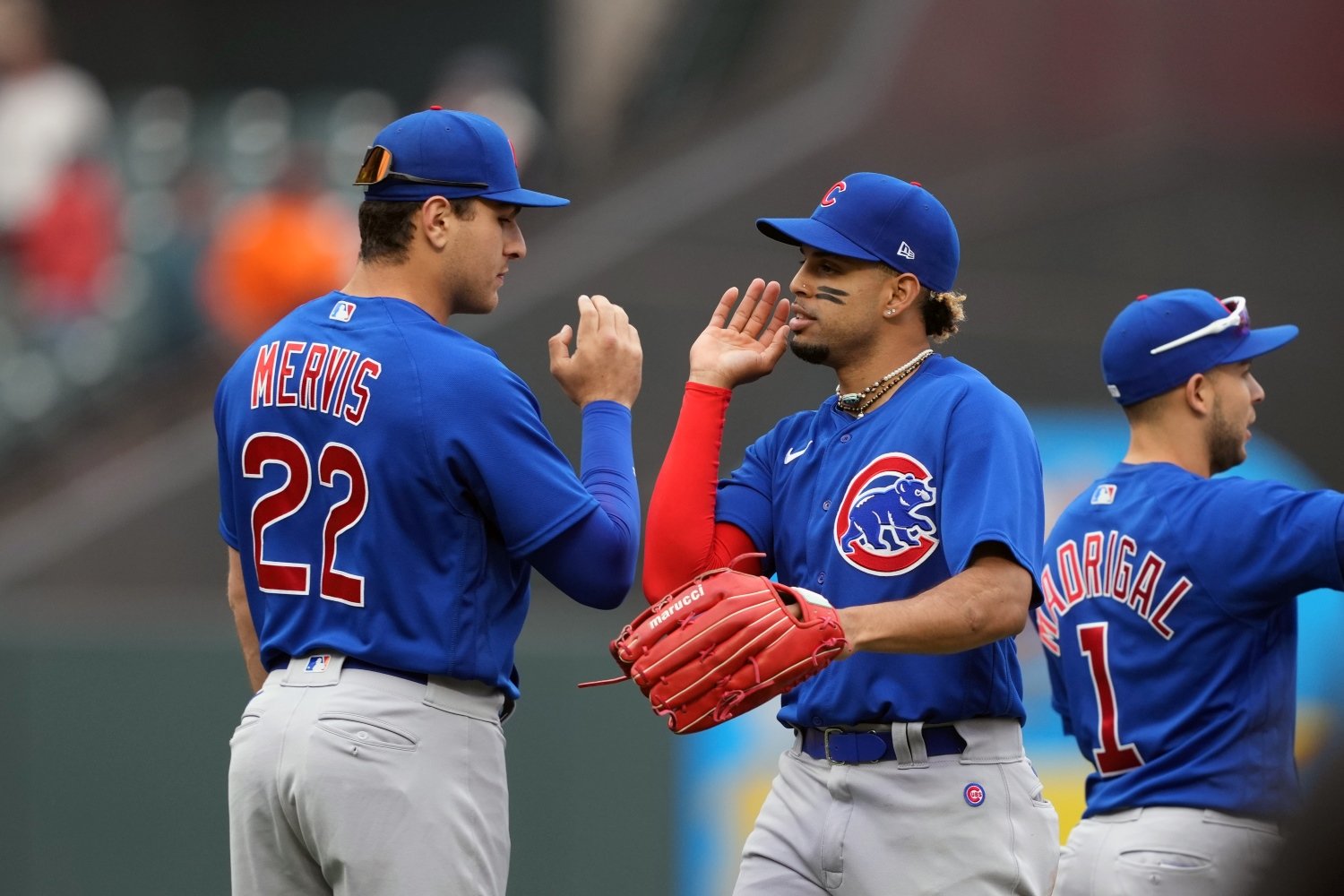 We can’t make any meaningful predictions about the balance of the season based on those games, though, because the Cubs are now done with that division. They’ve also played the Dodgers, Padres, Marlins. Twins, and Rays for the last time. Entering Tuesday, though, they still haven’t tested themselves against the surprising division leaders, the Pirates. The new MLB schedule structure, with fewer intradivisional contests and all 29 other teams on the schedule every year, is an invisible hand guiding the progress of all of our observations and assessments thus far. In light of that, maybe we—or at least some plurality of us, as baseball fans—are being too quick and too confident in our evaluations of teams, a fortnight past Memorial Day. It feels like this infuriating, frequently flat, underachieving pattern is the identity of the 2023 Cubs, but perhaps that’s an overconfident judgment. After all, the Rays, the Twins, the Dodgers, the Padres, the top four teams in the AL West, and even the Marlins appear to be legitimate contenders. Meanwhile (unlike, for instance, the Brewers and Pirates), the Cubs haven’t yet gotten to face the Royals, Rockies, or Tigers. Please don’t read that as a sophist’s plea that the Cubs are actually good, or at least that they have been to this point. There are counterexamples to these samples of the schedule. Besides, we can’t assume that each of the league’s lousiest or most dominant teams are perfectly described by their records, any more than we can assume the same of the Cubs. All I want to communicate—and the only takeaway from the above that I wholeheartedly endorse—is that it might be earlier than we believe, in terms of learning about the way this season will unfold. Before we throw ourselves fully into the abyss of another July concerned only with the performance of potential trade chips, then, we should watch carefully for another four weeks. Between now and the All-Star break, the Cubs have a tough schedule. The only team they face during that period that was expected to be bad before the season began is the aforementioned Pirates, the team they (instead) find themselves chasing, and whom they host at Wrigley this week. We'll learn much more about the team, from its mentals to its fundamentals, as they see a new set of opponents and respond to a changing set of circumstances. All of this happens during every season, but the longer circuits of the new schedule should mean that we mark fewer laps by the same point in terms of games played. It’s not too late, because it’s not as late as it was the same number of games into each of the last 20 previous seasons. That doesn’t mean the Cubs are in good shape, or that the problems that have been so often on display during the first 40 percent of this campaign aren’t real. It just means that we have a bit more to learn than we did back when teams played fewer opponents and spent half their season staring across at the same four logos in the opposing dugouts. Thank Rob Manfred for small favors.
 -
The Cubs’ seasonal arc, to date, can be traced by checking in on them against each of their AL West opponents. Early on, they had exciting and emotional wins over the Rangers and Mariners, and then an affirming sweep of the A’s. By contrast, excruciating and deflating losses to the Astros and Mariners have defined the last month. Image courtesy of © Darren Yamashita-USA TODAY Sports We can’t make any meaningful predictions about the balance of the season based on those games, though, because the Cubs are now done with that division. They’ve also played the Dodgers, Padres, Marlins. Twins, and Rays for the last time. Entering Tuesday, though, they still haven’t tested themselves against the surprising division leaders, the Pirates. The new MLB schedule structure, with fewer intradivisional contests and all 29 other teams on the schedule every year, is an invisible hand guiding the progress of all of our observations and assessments thus far. In light of that, maybe we—or at least some plurality of us, as baseball fans—are being too quick and too confident in our evaluations of teams, a fortnight past Memorial Day. It feels like this infuriating, frequently flat, underachieving pattern is the identity of the 2023 Cubs, but perhaps that’s an overconfident judgment. After all, the Rays, the Twins, the Dodgers, the Padres, the top four teams in the AL West, and even the Marlins appear to be legitimate contenders. Meanwhile (unlike, for instance, the Brewers and Pirates), the Cubs haven’t yet gotten to face the Royals, Rockies, or Tigers. Please don’t read that as a sophist’s plea that the Cubs are actually good, or at least that they have been to this point. There are counterexamples to these samples of the schedule. Besides, we can’t assume that each of the league’s lousiest or most dominant teams are perfectly described by their records, any more than we can assume the same of the Cubs. All I want to communicate—and the only takeaway from the above that I wholeheartedly endorse—is that it might be earlier than we believe, in terms of learning about the way this season will unfold. Before we throw ourselves fully into the abyss of another July concerned only with the performance of potential trade chips, then, we should watch carefully for another four weeks. Between now and the All-Star break, the Cubs have a tough schedule. The only team they face during that period that was expected to be bad before the season began is the aforementioned Pirates, the team they (instead) find themselves chasing, and whom they host at Wrigley this week. We'll learn much more about the team, from its mentals to its fundamentals, as they see a new set of opponents and respond to a changing set of circumstances. All of this happens during every season, but the longer circuits of the new schedule should mean that we mark fewer laps by the same point in terms of games played. It’s not too late, because it’s not as late as it was the same number of games into each of the last 20 previous seasons. That doesn’t mean the Cubs are in good shape, or that the problems that have been so often on display during the first 40 percent of this campaign aren’t real. It just means that we have a bit more to learn than we did back when teams played fewer opponents and spent half their season staring across at the same four logos in the opposing dugouts. Thank Rob Manfred for small favors. View full article
-
Have you noticed that players play through fewer bouts of soreness or tsuris than they did even 10 years ago? Do you see rehab assignments that don't feel necessary in the first place stretch out to a full week? Do you want to see teams be a bit less conservative with injuries? You know who's to blame? It's Mike Tauchman. Image courtesy of © Darren Yamashita-USA TODAY Sports Ok, wait. That's mean. It's not Mike Tauchman's fault that Cody Bellinger isn't back with the Cubs yet. It's not, that is, the corporeal, actual Mike Tauchman. Rather, it's the idea of Mike Tauchman, and the bountiful conceptions of Mike Tauchman throughout professional baseball right now. See, Mike Tauchman is good. That's a slightly generous characterization, but it's not wrong. That Tauchman is batting .259/.389/.310 shouldn't surprise us, other than for his lack of power, because Tauchman has had successful big-league stints before. He's not a consistently strong offensive player, but he has plate discipline on his side. On the bases and in the field, he's both a good overall athlete and a smart, skillful player. He had a four-win half-season for the Yankees in 2019, before his career got derailed for a while. If the expansion of MLB had continued at the pace that it established as normal from 1961 througb 1998, Tauchman would probably be a starting outfielder somewhere. At the very least, there would be fewer Tauchmans waiting on the waiver wire at all times. Instead, it's now been a quarter-century since the last expansion. Most of the league's expansions to this point in history have been fueled less by a desire to grow the game and explore new markets than by accident and force. They often needed to head off lawsuits, for various reasons, from cities spurned during the sport's team relocation glory days. The owners colluded against the players in the 1980s, and were caught, and that was why they expanded for 1993--to make up for the money lost in a resultant lawsuit, by extracting a huge expansion fee from each of the new teams. No obvious impetus has compelled the lords of the realm to expand recently, though,. Many people were hurt by the long pax Seliga in labor relations, but the one inarguable benefit was that the game kept being played, maintained high levels of popularity, and pounced on new potential revenue streams. Thus, it's been 25 years since the last expansion, and will be at least another three before the next. In the interim, the league's roots in various international markets have deepened. The population of baseball-playing countries has risen. Playing ball has become increasingly lucrative. All of that means that the minors now overflow with guys like Tauchman, and will continue to teem for a while yet. We often hear expansion discussed for its impact on offense (it's harder to find big-league pitchers than hitters, which is why every expansion in the sport's history has spurred at least some increase in offense over the short term) and on the aging curve (a surfeit of young players makes it hard to hang around even in your mid-30s, anymore). Rarely, though, do we think about how the lack of recent expansion informs the seemingly small and picayune roster choices teams make. Why do players play through injuries less often than they used to? To be sure, one reason is that teams take a constitutionally more conservative approach to everything, post-Moneyball. Another, though, is that there's less of a dropoff between any given starter and their likely replacement than the one we tend to remember. With every passing year in which the number of available roster spots doesn't grow, the surplus of good players grows. The Cubs don't even get credit, per se, for the success Tauchman has had as he's replaced Bellinger. This is just what has happened. The replacement level is higher, in an absolute sense, than it was five years ago, and it was higher then than five years before. This is the same reason that leads teams to bring along injured players more cautiously, and to let them take unusually long rehab stints even at the end of short stays on the injured list. Often, there's a roster crunch to consider--a player the team will need to risk losing in order to put their injured player back into the mix. Even when there isn't that obstacle to a move, though, there's always the gentle but firm pressure to wait and see, applied by the combination of surprising competence from a backup or minor-league pickup and the knowledge that a few extra days to recuperate never hurt anyone who was dealing with a bruise, a strain, or a subluxation. Why have the Cubs had such strong finishes to the last two seasons, after being sellers at the trade deadline? It's the same answer. The team doesn't have a special gift for finding guys like Frank Schwindel, Patrick Wisdom, Rafael Ortega, Mark Leiter, Jr., or Tauchman, and they don't even show unusual perspicacity in trades. There's just a wealth of fringe-average MLB talent floating around the league right now, and opportunity can be the only missing ingredient for some players--at least to permit them a few good months. View full article
-
Mike Tauchman is Why Everyone is Careful With Injuries Anymore
Matthew Trueblood posted an article in Cubs
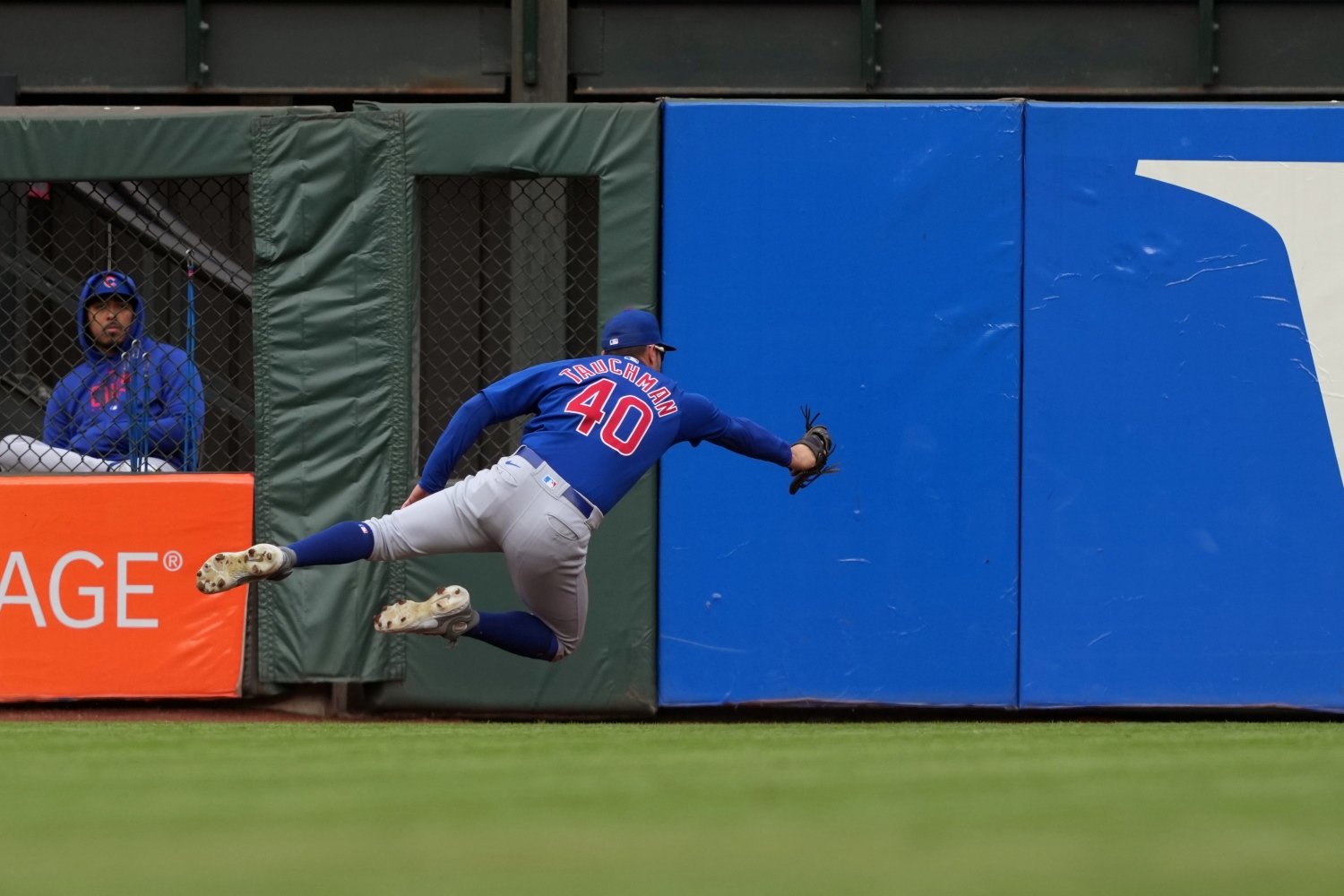 Ok, wait. That's mean. It's not Mike Tauchman's fault that Cody Bellinger isn't back with the Cubs yet. It's not, that is, the corporeal, actual Mike Tauchman. Rather, it's the idea of Mike Tauchman, and the bountiful conceptions of Mike Tauchman throughout professional baseball right now. See, Mike Tauchman is good. That's a slightly generous characterization, but it's not wrong. That Tauchman is batting .259/.389/.310 shouldn't surprise us, other than for his lack of power, because Tauchman has had successful big-league stints before. He's not a consistently strong offensive player, but he has plate discipline on his side. On the bases and in the field, he's both a good overall athlete and a smart, skillful player. He had a four-win half-season for the Yankees in 2019, before his career got derailed for a while. If the expansion of MLB had continued at the pace that it established as normal from 1961 througb 1998, Tauchman would probably be a starting outfielder somewhere. At the very least, there would be fewer Tauchmans waiting on the waiver wire at all times. Instead, it's now been a quarter-century since the last expansion. Most of the league's expansions to this point in history have been fueled less by a desire to grow the game and explore new markets than by accident and force. They often needed to head off lawsuits, for various reasons, from cities spurned during the sport's team relocation glory days. The owners colluded against the players in the 1980s, and were caught, and that was why they expanded for 1993--to make up for the money lost in a resultant lawsuit, by extracting a huge expansion fee from each of the new teams. No obvious impetus has compelled the lords of the realm to expand recently, though,. Many people were hurt by the long pax Seliga in labor relations, but the one inarguable benefit was that the game kept being played, maintained high levels of popularity, and pounced on new potential revenue streams. Thus, it's been 25 years since the last expansion, and will be at least another three before the next. In the interim, the league's roots in various international markets have deepened. The population of baseball-playing countries has risen. Playing ball has become increasingly lucrative. All of that means that the minors now overflow with guys like Tauchman, and will continue to teem for a while yet. We often hear expansion discussed for its impact on offense (it's harder to find big-league pitchers than hitters, which is why every expansion in the sport's history has spurred at least some increase in offense over the short term) and on the aging curve (a surfeit of young players makes it hard to hang around even in your mid-30s, anymore). Rarely, though, do we think about how the lack of recent expansion informs the seemingly small and picayune roster choices teams make. Why do players play through injuries less often than they used to? To be sure, one reason is that teams take a constitutionally more conservative approach to everything, post-Moneyball. Another, though, is that there's less of a dropoff between any given starter and their likely replacement than the one we tend to remember. With every passing year in which the number of available roster spots doesn't grow, the surplus of good players grows. The Cubs don't even get credit, per se, for the success Tauchman has had as he's replaced Bellinger. This is just what has happened. The replacement level is higher, in an absolute sense, than it was five years ago, and it was higher then than five years before. This is the same reason that leads teams to bring along injured players more cautiously, and to let them take unusually long rehab stints even at the end of short stays on the injured list. Often, there's a roster crunch to consider--a player the team will need to risk losing in order to put their injured player back into the mix. Even when there isn't that obstacle to a move, though, there's always the gentle but firm pressure to wait and see, applied by the combination of surprising competence from a backup or minor-league pickup and the knowledge that a few extra days to recuperate never hurt anyone who was dealing with a bruise, a strain, or a subluxation. Why have the Cubs had such strong finishes to the last two seasons, after being sellers at the trade deadline? It's the same answer. The team doesn't have a special gift for finding guys like Frank Schwindel, Patrick Wisdom, Rafael Ortega, Mark Leiter, Jr., or Tauchman, and they don't even show unusual perspicacity in trades. There's just a wealth of fringe-average MLB talent floating around the league right now, and opportunity can be the only missing ingredient for some players--at least to permit them a few good months.
 -
For years, careful observers have noticed that Kyle Hendricks relies not on one changeup, but on two distinct ones: a traditional, fading one, and one with less movement but a highly deceptive cut to it, away from a right-handed batter. Now, though, it doesn't even take a careful observer. Image courtesy of © Darren Yamashita-USA TODAY Sports No pitcher in the last decade has better embodied the archetype of the touch-and-feel, command-over-stuff starter than Kyle Hendricks. He's an outlier in the modern game, with a fastball that sits in the 80s and no devastating breaking ball. His changeup has always made up for that. It's always been the equalizer, making his sinker and four-seamer each seem faster because of its deceptiveness and movement, forcing hitters to get caught in between the speeds of his heat and that change. Of course, one reason why it's been so effective was that it was never really just one pitch. Rather, Hendricks has long had at least two variations on his cambio, and he would manipulate the pitch to hit slightly different parts of the zone (or the area beyond it) or to better contrast it with the previous offering, even within an at-bat. In a map of his pitch movement from 2021 and 2022, it's easy to see how the changeup's spread is greater than those of his other pitches, and the shape of its distribution different. This year, however, Hendricks is fully committing to that bit. There's no longer a smooth spectrum here. He's using two fully distinct changeups. The genius of that approach becomes even clearer, though, when one breaks him down into two pitchers: one facing left-handed batters, and one facing righties. Against lefties, Hendricks has deployed his four-seamer and his curveball to great effect, to set up the version of the changeup with more depth and greater armside movement. Against righties, though, Hendricks is basically a two-pitch pitcher, and he uses the changeup almost like a mini-slider. It still doesn't actually have gloveside movement and it's not dropping much based on spin, but it looks like a cutter or slider relative to his sinker. He still sneaks in his typical changeup, diving in toward the hitter's back foot, but that's almost an afterthought. It's one changeup for lefties, and another for lefties. In the race to stay relevant in a league with an average fastball velocity 5 miles per hour harder than his, this is how Hendricks is winning. Notably, too, no spin difference gives away which version of the changeup is coming. He's using the same spin direction on each type of changeup, but by shifting the seams, he achieves a big difference in actual movement. Crucially, in the graphic above, the changeups that end up with movement somewhat close to that of the four-seamer (on the right-hand side) aren't the ones thrown to lefties, who actually see the four-seamer. On the contrary, those are the changeups he's throwing to righties, off of the sinker that has such different movement than its spin direction implies. The ones he throws to lefties are the diving ones that pair with the sinker in the graphic, and therefore play well against the four-seamer and the curveball. This full separation of the two changeups has been underway for a while now. What's new is that Hendricks has cut out the middle ground between them--that bridge that connected the two lobes of the pitch movement scatter plot in 2021-22. He's figured out which hitters are primed to be attacked by each type of pitch, and he has sufficient feel to avoid getting caught between the two offerings. On Saturday night, Hendricks was masterful. He had command of everything, and the Giants looked almost helpless, even as they struck out only three times. If the Cubs' most tenured player can keep this up, they have to seriously consider keeping him through the trade deadline and exercising what is, effectively, a $14.5-million option for 2024. View full article
-
Kyle Hendricks's Two Changeups Have Finalized Their Divorce
Matthew Trueblood posted an article in Cubs
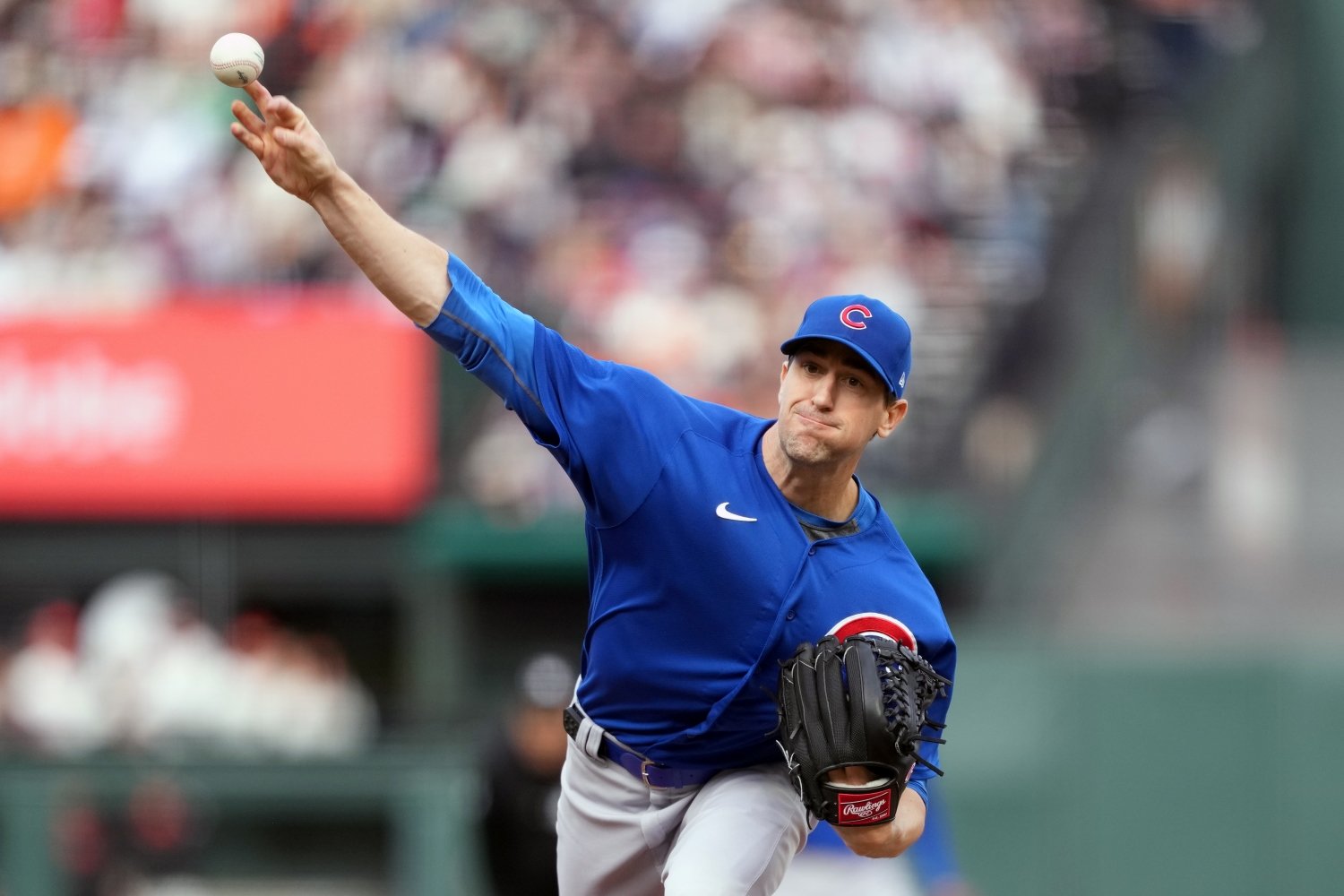 No pitcher in the last decade has better embodied the archetype of the touch-and-feel, command-over-stuff starter than Kyle Hendricks. He's an outlier in the modern game, with a fastball that sits in the 80s and no devastating breaking ball. His changeup has always made up for that. It's always been the equalizer, making his sinker and four-seamer each seem faster because of its deceptiveness and movement, forcing hitters to get caught in between the speeds of his heat and that change. Of course, one reason why it's been so effective was that it was never really just one pitch. Rather, Hendricks has long had at least two variations on his cambio, and he would manipulate the pitch to hit slightly different parts of the zone (or the area beyond it) or to better contrast it with the previous offering, even within an at-bat. In a map of his pitch movement from 2021 and 2022, it's easy to see how the changeup's spread is greater than those of his other pitches, and the shape of its distribution different. This year, however, Hendricks is fully committing to that bit. There's no longer a smooth spectrum here. He's using two fully distinct changeups. The genius of that approach becomes even clearer, though, when one breaks him down into two pitchers: one facing left-handed batters, and one facing righties. Against lefties, Hendricks has deployed his four-seamer and his curveball to great effect, to set up the version of the changeup with more depth and greater armside movement. Against righties, though, Hendricks is basically a two-pitch pitcher, and he uses the changeup almost like a mini-slider. It still doesn't actually have gloveside movement and it's not dropping much based on spin, but it looks like a cutter or slider relative to his sinker. He still sneaks in his typical changeup, diving in toward the hitter's back foot, but that's almost an afterthought. It's one changeup for lefties, and another for lefties. In the race to stay relevant in a league with an average fastball velocity 5 miles per hour harder than his, this is how Hendricks is winning. Notably, too, no spin difference gives away which version of the changeup is coming. He's using the same spin direction on each type of changeup, but by shifting the seams, he achieves a big difference in actual movement. Crucially, in the graphic above, the changeups that end up with movement somewhat close to that of the four-seamer (on the right-hand side) aren't the ones thrown to lefties, who actually see the four-seamer. On the contrary, those are the changeups he's throwing to righties, off of the sinker that has such different movement than its spin direction implies. The ones he throws to lefties are the diving ones that pair with the sinker in the graphic, and therefore play well against the four-seamer and the curveball. This full separation of the two changeups has been underway for a while now. What's new is that Hendricks has cut out the middle ground between them--that bridge that connected the two lobes of the pitch movement scatter plot in 2021-22. He's figured out which hitters are primed to be attacked by each type of pitch, and he has sufficient feel to avoid getting caught between the two offerings. On Saturday night, Hendricks was masterful. He had command of everything, and the Giants looked almost helpless, even as they struck out only three times. If the Cubs' most tenured player can keep this up, they have to seriously consider keeping him through the trade deadline and exercising what is, effectively, a $14.5-million option for 2024.
 -
The Cubs ace's ERA actually rose Friday night. He got the team 20 outs and claimed his seventh win, but because he allowed two earned runs, he ticked up to 2.42 for the season. That's a fair reflection of how he pitched, too. He wasn't dominant. He didn't have his best stuff. Yet, he found something that worked, and he cleaved to it. Image courtesy of © D. Ross Cameron-USA TODAY Sports By now, it's clear to everyone that Marcus Stroman is not a typical modern frontline starter. Mostly, he just doesn't miss bats the way most such pitchers do. He lacks elite velocity, and the only pitch with which he gets whiffs with any regularity is his slider--but even that doesn't generate those at the same rate as other top-end sliders. Because of that, when he has anything less than his very best stuff, Stroman is in some peril of having a blowup start. He had a few such outings last year, which marred an otherwise fine season for him. This season, though, he has a degree of touch, feel, and willingness to adapt that few pitchers show, and that was missing for much of last year. In his previous start on this road trip, against the Padres, Stroman took the unusual and somewhat extreme step of going away from his slider almost entirely. He didn't have command of it, and although he's been extremely dependent upon it against righties this year, he was willing to simply set it aside for one start and find other ways to get outs. On Friday night, he seemed to have shaky command of almost everything. He issued four walks in a game for the first time all season. Dealing with a heavily left-handed San Francisco lineup, he had to utilize his full pitch mix, and that's always a test of a pitcher's command and poise. Stroman found something that worked for him, though: his split-change. He threw 12 of them, more than he had thrown in any outing since one of his World Baseball Classic appearances in March. The Giants swung at seven of them, whiffing three times. They hit one foul ball and put three in play, all of them weakly hit. Noticing that his best pitch just wasn't working allowed Stroman to put up a solid start in San Diego. Realizing that his fifth-best pitch was working well allowed him to put up a solid one in San Francisco. That capacity for altering the approach between innings, and sometimes even within them, is how a pitcher like Stroman can be an ace even in the strikeout-happy modern era. To hear Stroman tell it, much of the credit for that actually goes to his catchers. He says that he never shakes off Yan Gomes or Tucker Barnhart, so one theory here would be that it's really those two who have noticed and adjusted to things within outings. (That might also be a good reminder of the value of having Gomes and Barnhart back there, as opposed to Willson Contreras.) It's not really that simple, though. A catcher's call is not theirs alone, and doesn't spring from their brain to their fingertips without any previous life. Often, these types of changes happen during conversations between innings. That's where Stroman, the coaches, and the catchers can communicate and retrench, based on what happened in the previous frame. Still, there's value in the mindset Stroman articulates when he says that he doesn't shake off his catchers. It's a trust exercise. Between innings, Stroman can tell his batterymate what he feels is working, and what isn't. He can talk to them about how he'd prefer to attack specific hitters, and how he'd like them to set up to receive a particular pitch in a certain count. Those conversations can all happen, and then, when he trots across the foul line, Stroman can entrust himself completely to his catchers. That simplifies things for him on the mound, and adds a level of commitment and synergy to the relationship between pitcher and catcher that can easily be lost when trying to negotiate the same questions from a distance of 60 feet. This season, then, is partially a testament to Stroman's improved feel, and his greater comfort within the Cubs clubhouse and dugout. It's also partially a testament to Gomes and Barnhart. Whatever the primary driver, though, Stroman is having one of the best seasons of his illustrious career, and whether the Cubs elect to extend him or trade him, the timing could not be better, for anyone involved. View full article
-
A New Level of Self-Awareness Has Pushed Marcus Stroman to New Heights
Matthew Trueblood posted an article in Cubs
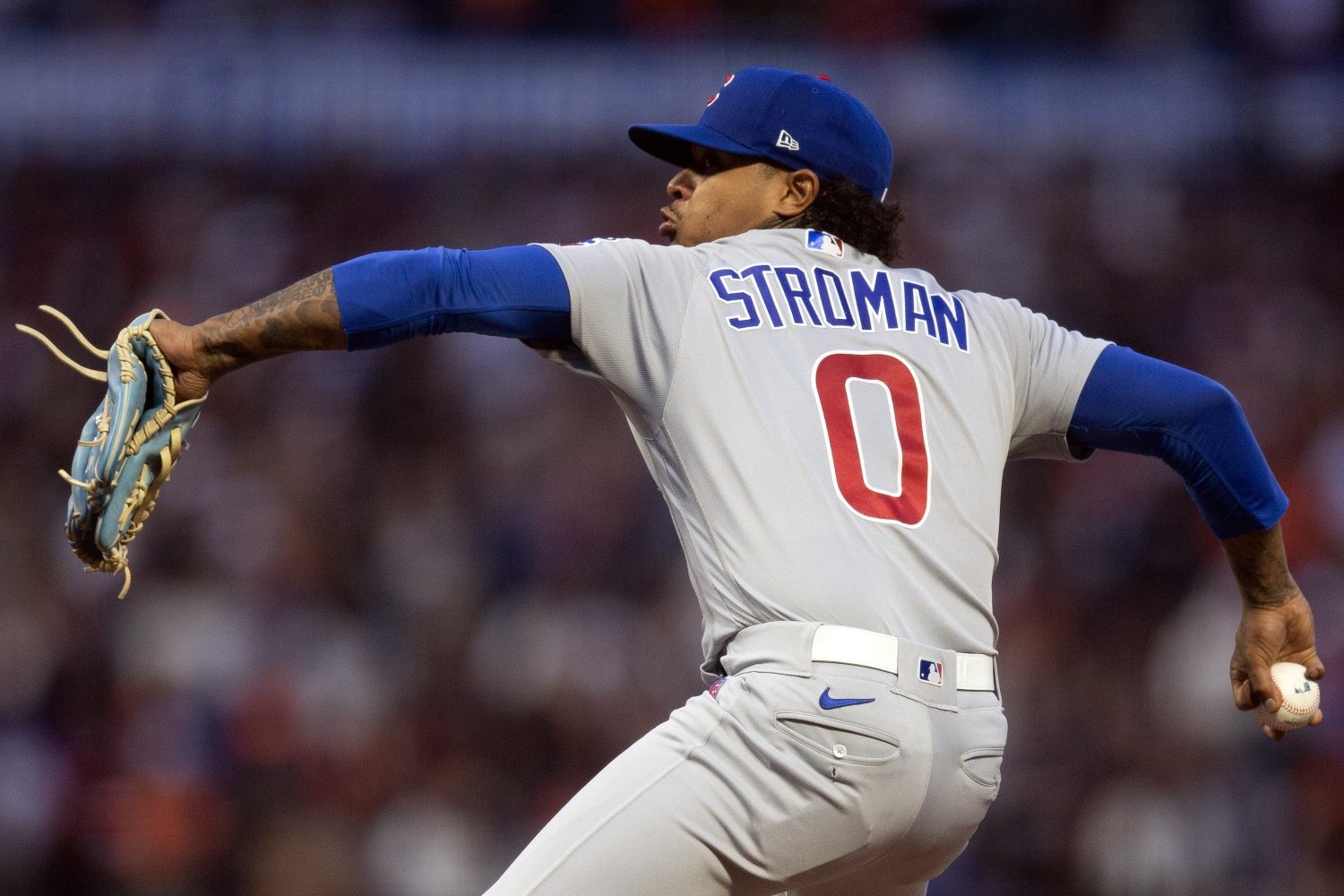 By now, it's clear to everyone that Marcus Stroman is not a typical modern frontline starter. Mostly, he just doesn't miss bats the way most such pitchers do. He lacks elite velocity, and the only pitch with which he gets whiffs with any regularity is his slider--but even that doesn't generate those at the same rate as other top-end sliders. Because of that, when he has anything less than his very best stuff, Stroman is in some peril of having a blowup start. He had a few such outings last year, which marred an otherwise fine season for him. This season, though, he has a degree of touch, feel, and willingness to adapt that few pitchers show, and that was missing for much of last year. In his previous start on this road trip, against the Padres, Stroman took the unusual and somewhat extreme step of going away from his slider almost entirely. He didn't have command of it, and although he's been extremely dependent upon it against righties this year, he was willing to simply set it aside for one start and find other ways to get outs. On Friday night, he seemed to have shaky command of almost everything. He issued four walks in a game for the first time all season. Dealing with a heavily left-handed San Francisco lineup, he had to utilize his full pitch mix, and that's always a test of a pitcher's command and poise. Stroman found something that worked for him, though: his split-change. He threw 12 of them, more than he had thrown in any outing since one of his World Baseball Classic appearances in March. The Giants swung at seven of them, whiffing three times. They hit one foul ball and put three in play, all of them weakly hit. Noticing that his best pitch just wasn't working allowed Stroman to put up a solid start in San Diego. Realizing that his fifth-best pitch was working well allowed him to put up a solid one in San Francisco. That capacity for altering the approach between innings, and sometimes even within them, is how a pitcher like Stroman can be an ace even in the strikeout-happy modern era. To hear Stroman tell it, much of the credit for that actually goes to his catchers. He says that he never shakes off Yan Gomes or Tucker Barnhart, so one theory here would be that it's really those two who have noticed and adjusted to things within outings. (That might also be a good reminder of the value of having Gomes and Barnhart back there, as opposed to Willson Contreras.) It's not really that simple, though. A catcher's call is not theirs alone, and doesn't spring from their brain to their fingertips without any previous life. Often, these types of changes happen during conversations between innings. That's where Stroman, the coaches, and the catchers can communicate and retrench, based on what happened in the previous frame. Still, there's value in the mindset Stroman articulates when he says that he doesn't shake off his catchers. It's a trust exercise. Between innings, Stroman can tell his batterymate what he feels is working, and what isn't. He can talk to them about how he'd prefer to attack specific hitters, and how he'd like them to set up to receive a particular pitch in a certain count. Those conversations can all happen, and then, when he trots across the foul line, Stroman can entrust himself completely to his catchers. That simplifies things for him on the mound, and adds a level of commitment and synergy to the relationship between pitcher and catcher that can easily be lost when trying to negotiate the same questions from a distance of 60 feet. This season, then, is partially a testament to Stroman's improved feel, and his greater comfort within the Cubs clubhouse and dugout. It's also partially a testament to Gomes and Barnhart. Whatever the primary driver, though, Stroman is having one of the best seasons of his illustrious career, and whether the Cubs elect to extend him or trade him, the timing could not be better, for anyone involved.
 -
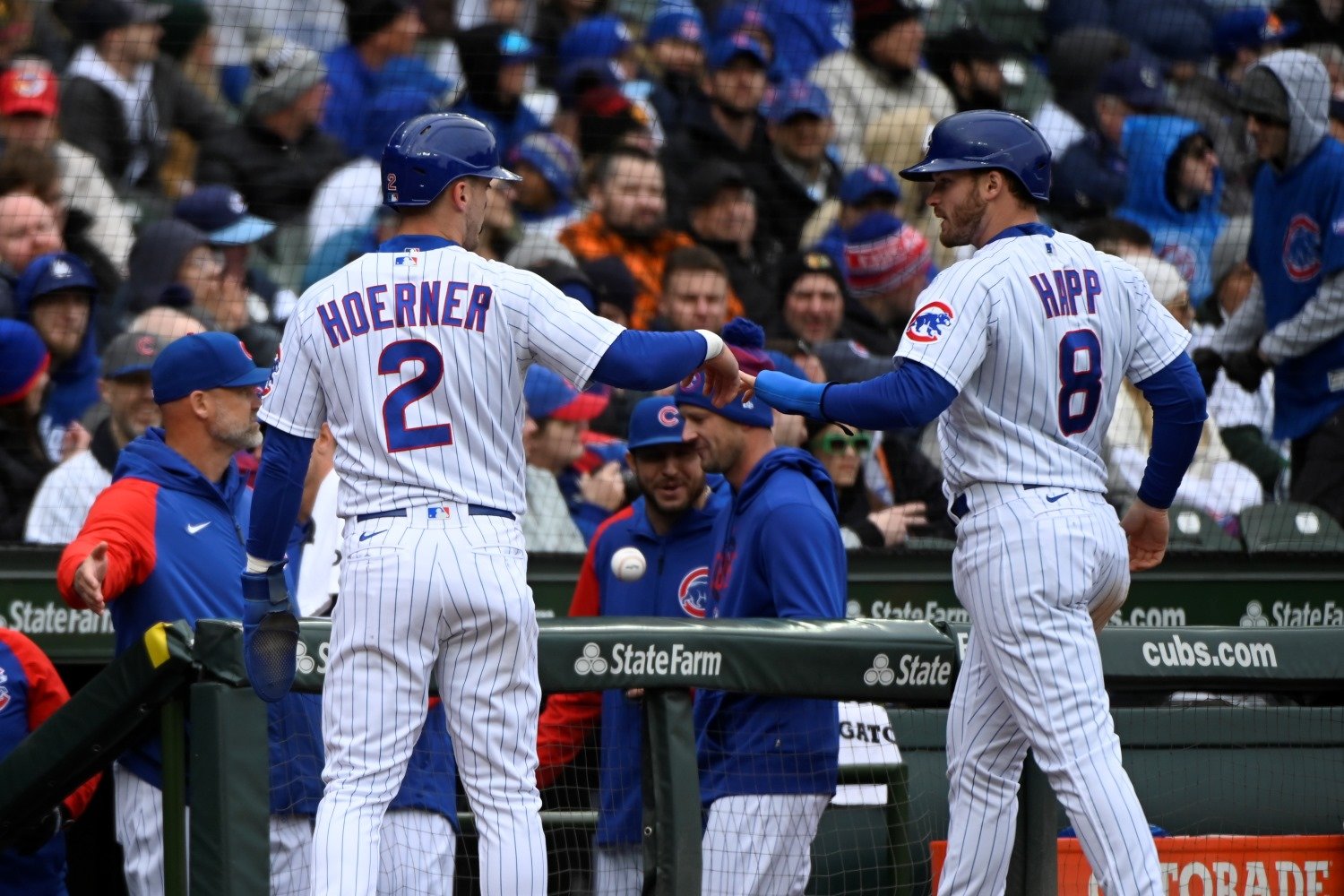 While many fans prefer to blame the anonymous guys and the free-agent misfires at the bottom of the order for the Cubs' problems of run production, the fact is that the top of their lineup is just as deficient. Nico Hoerner, Dansby Swanson, Ian Happ, and Seiya Suzuki would all be fine as the fifth-best hitter in a competitive lineup. Suzuki and Swanson could each be an acceptable third-best. Instead, those guys are the four best hitters in the lineup each day, and they tend to get the top four spots in the lineup. That made sense when they began the season scorching-hot, but that time has passed, and there they all remain. Hoerner and Happ, especially, need to have their roles adjusted in the short term to reflect what's really happening for this team. Hoerner is batting .231/.304/.357 since the beginning of May. Obviously, that's not good enough for a leadoff hitter. He's slowly learning to finish his walks, instead of getting antsy in three-ball counts, and he's still making contact at an elite rate, but teams have learned how to align their defenses against him and he lacks the baseline ability to hit it hard over any of those defenders on a regular basis. There's always something redeeming to mention with Hoerner, even when he's struggling. During this six-week slump (including a 10-day stint on the injured list), he's still posted a positive Win Probability Added, a testament to his ability to keep his mind and body controlled and to make contact when tight situations demand it. That doesn't qualify a batter to take the highest number of plate appearances on the team, though. A different problem afflicts Happ, but it's no less pernicious. His power is just gone. Since the team finished its first West Coast trip (the high-water mark of their season, 11-6) and came home in mid-April, Happ is batting .245/.383/.333. By comparison, Hoerner looks like a slugger. In 183 plate appearances, Happ has nine extra-base hits, and only two of those are homers. He's avoided having his strikeout rate soar (as it always did in the past, when he struggled), and he's walking at an exceptional rate--hence the .383 OBP. By and large, the Cubs are controlling the strike zone as well as might have been expected. The punch is gone, though. In light of all that, Happ needs to go back to the top of the order. Hoerner can slide down to complement a strikeout-heavy, power-dependent segment of the lineup, around sixth. There, he can continue to come up with clutch hits, and he'll be well-positioned to create some rallies with his legs. (Alas: that assumes that he still has that capability. Hoerner stole 10 bases by the end of April, but only has four since, and just two (in one game) since coming back from his hamstring issue. It's possible that, either mentally or physically, that leg injury has compromised him on the bases.) The experiment David Ross tried atop the batting order was a worthwhile one. If the alchemy had worked, Hoerner-Swanson-Happ would have been the perfect ignition sequence for the lineup each day. It has an irresistible old-school feeling to it, without being unjustifiable based on numbers. Unlike several other things about this scuffling team, this isn't Ross's fault. The experiment yielded a result, though, and now it's time to act on that result. Against most right-handed starters, the Cubs should use the following lineup, until Cody Bellinger returns to the team: Ian Happ - LF Dansby Swanson - SS Mike Tauchman - CF Seiya Suzuki - RF Matt Mervis - 1B Nico Hoerner - 2B Yan Gomes - C Miguel Amaya - DH Christopher Morel - 3B That's not a good lineup, even if you (mostly) buy into the solid at-bats Tauchman has taken thus far and think Mervis will figure some things out if given a longer leash and some better opportunities. (I meet both of those criteria, for the record.) It's just the best the team can do in the short term. Once Bellinger does get back, he can slide into the third spot and reclaim center field, and Tauchman can slide down to fifth, pushing Mervis to seventh. Tauchman would be the DH, in that case, relegating Morel back to the bench. Against lefties, the formula could look like this: Ian Happ - LF Dansby Swanson - SS Seiya Suzuki - RF Trey Mancini - 1B Nico Hoerner - 2B Yan Gomes - C Patrick Wisdom - 3B Miguel Amaya - DH Christopher Morel - CF In another fortnight, it could be that Amaya has made a sufficient case to hit more like fifth against righties, and fourth against lefties. For now, though, the team just needs to put him in the lineup every day, to try to keep some semblance of danger and energy in the mix. Sliding Happ up and Hoerner down, meanwhile, has the potential to kickstart one or both, by encouraging them to change their approaches slightly and giving them some different matchups as the game progresses. The temptation to call this a "deck chairs on the Titanic" situation is powerful. Plainly, moving this group of personnel around a little bit won't change what seems to be a significant problem of collective approach and player development, let alone addressing the apparent talent shortfall. Still, it needs to be done. The formulation of the deck chairs and the sinking ship has become a popular skewer, but it's simplistic and cynical. It assumes that there's always an available, more valuable alternative activity. It also assumes that the value of acknowledging an inevitability and still rebelling against it is zero. Neither assumption holds, most of the time, and they certainly don't hold here. The Cubs have called up the guys they hoped would be major reinforcements. They can't realistically make a trade to upgrade the roster right now. They have to sink or swim with the guys they have. More importantly, perhaps, if much more abstractly, they can't just give up. It would be no more fruitful to start trying to sell off pieces than it would be to try to force a buying-type trade right now. Nor can the team afford another second half of utter despair and disinterest. Yes, it's likely that the Cubs will continue losing and miss the playoffs. Fans need to stare that reality in the face, without allowing it to steer them toward notions of tanking or purposelessness. In the remaining seven weeks before the deadline, every run and every win counts. Jed Hoyer maintains better leverage, especially for trades that involve players on expiring contracts (like Bellinger and Marcus Stroman), if the team at least clings to the fringes of contention. Numbers also dictate much about the trade market, even if any baseball person you ask insists that teams make decisions based on evaluations much more broad than that. There's nothing to lose by trying to find a more successful permutation of the players on the roster, and there's something to gain by doing so, even if those gains are likely to be painfully small or petty. Getting Hoerner out of the top of the lineup and making Happ the new tablesetter are worthwhile steps.
 -
The Cubs offense is, as it has seemed to be more often than not over the last half-decade, utterly broken. Since May 1, the team is batting .222/.311/.357. Their leadoff hitter has, alas, been part of the problem, and it's time to shake up the lineup in a more substantial way. Image courtesy of © Matt Marton-USA TODAY Sports While many fans prefer to blame the anonymous guys and the free-agent misfires at the bottom of the order for the Cubs' problems of run production, the fact is that the top of their lineup is just as deficient. Nico Hoerner, Dansby Swanson, Ian Happ, and Seiya Suzuki would all be fine as the fifth-best hitter in a competitive lineup. Suzuki and Swanson could each be an acceptable third-best. Instead, those guys are the four best hitters in the lineup each day, and they tend to get the top four spots in the lineup. That made sense when they began the season scorching-hot, but that time has passed, and there they all remain. Hoerner and Happ, especially, need to have their roles adjusted in the short term to reflect what's really happening for this team. Hoerner is batting .231/.304/.357 since the beginning of May. Obviously, that's not good enough for a leadoff hitter. He's slowly learning to finish his walks, instead of getting antsy in three-ball counts, and he's still making contact at an elite rate, but teams have learned how to align their defenses against him and he lacks the baseline ability to hit it hard over any of those defenders on a regular basis. There's always something redeeming to mention with Hoerner, even when he's struggling. During this six-week slump (including a 10-day stint on the injured list), he's still posted a positive Win Probability Added, a testament to his ability to keep his mind and body controlled and to make contact when tight situations demand it. That doesn't qualify a batter to take the highest number of plate appearances on the team, though. A different problem afflicts Happ, but it's no less pernicious. His power is just gone. Since the team finished its first West Coast trip (the high-water mark of their season, 11-6) and came home in mid-April, Happ is batting .245/.383/.333. By comparison, Hoerner looks like a slugger. In 183 plate appearances, Happ has nine extra-base hits, and only two of those are homers. He's avoided having his strikeout rate soar (as it always did in the past, when he struggled), and he's walking at an exceptional rate--hence the .383 OBP. By and large, the Cubs are controlling the strike zone as well as might have been expected. The punch is gone, though. In light of all that, Happ needs to go back to the top of the order. Hoerner can slide down to complement a strikeout-heavy, power-dependent segment of the lineup, around sixth. There, he can continue to come up with clutch hits, and he'll be well-positioned to create some rallies with his legs. (Alas: that assumes that he still has that capability. Hoerner stole 10 bases by the end of April, but only has four since, and just two (in one game) since coming back from his hamstring issue. It's possible that, either mentally or physically, that leg injury has compromised him on the bases.) The experiment David Ross tried atop the batting order was a worthwhile one. If the alchemy had worked, Hoerner-Swanson-Happ would have been the perfect ignition sequence for the lineup each day. It has an irresistible old-school feeling to it, without being unjustifiable based on numbers. Unlike several other things about this scuffling team, this isn't Ross's fault. The experiment yielded a result, though, and now it's time to act on that result. Against most right-handed starters, the Cubs should use the following lineup, until Cody Bellinger returns to the team: Ian Happ - LF Dansby Swanson - SS Mike Tauchman - CF Seiya Suzuki - RF Matt Mervis - 1B Nico Hoerner - 2B Yan Gomes - C Miguel Amaya - DH Christopher Morel - 3B That's not a good lineup, even if you (mostly) buy into the solid at-bats Tauchman has taken thus far and think Mervis will figure some things out if given a longer leash and some better opportunities. (I meet both of those criteria, for the record.) It's just the best the team can do in the short term. Once Bellinger does get back, he can slide into the third spot and reclaim center field, and Tauchman can slide down to fifth, pushing Mervis to seventh. Tauchman would be the DH, in that case, relegating Morel back to the bench. Against lefties, the formula could look like this: Ian Happ - LF Dansby Swanson - SS Seiya Suzuki - RF Trey Mancini - 1B Nico Hoerner - 2B Yan Gomes - C Patrick Wisdom - 3B Miguel Amaya - DH Christopher Morel - CF In another fortnight, it could be that Amaya has made a sufficient case to hit more like fifth against righties, and fourth against lefties. For now, though, the team just needs to put him in the lineup every day, to try to keep some semblance of danger and energy in the mix. Sliding Happ up and Hoerner down, meanwhile, has the potential to kickstart one or both, by encouraging them to change their approaches slightly and giving them some different matchups as the game progresses. The temptation to call this a "deck chairs on the Titanic" situation is powerful. Plainly, moving this group of personnel around a little bit won't change what seems to be a significant problem of collective approach and player development, let alone addressing the apparent talent shortfall. Still, it needs to be done. The formulation of the deck chairs and the sinking ship has become a popular skewer, but it's simplistic and cynical. It assumes that there's always an available, more valuable alternative activity. It also assumes that the value of acknowledging an inevitability and still rebelling against it is zero. Neither assumption holds, most of the time, and they certainly don't hold here. The Cubs have called up the guys they hoped would be major reinforcements. They can't realistically make a trade to upgrade the roster right now. They have to sink or swim with the guys they have. More importantly, perhaps, if much more abstractly, they can't just give up. It would be no more fruitful to start trying to sell off pieces than it would be to try to force a buying-type trade right now. Nor can the team afford another second half of utter despair and disinterest. Yes, it's likely that the Cubs will continue losing and miss the playoffs. Fans need to stare that reality in the face, without allowing it to steer them toward notions of tanking or purposelessness. In the remaining seven weeks before the deadline, every run and every win counts. Jed Hoyer maintains better leverage, especially for trades that involve players on expiring contracts (like Bellinger and Marcus Stroman), if the team at least clings to the fringes of contention. Numbers also dictate much about the trade market, even if any baseball person you ask insists that teams make decisions based on evaluations much more broad than that. There's nothing to lose by trying to find a more successful permutation of the players on the roster, and there's something to gain by doing so, even if those gains are likely to be painfully small or petty. Getting Hoerner out of the top of the lineup and making Happ the new tablesetter are worthwhile steps. View full article
-
After losing a third straight game Wednesday night in Anaheim, the Cubs are now 26-35. They lag the division-leading Brewers by 7.5 games and have a 7.9-percent chance of reaching the postseason, according to FanGraphs. Worse news, though, might be coming from Pittsburgh and Cincinnati. Image courtesy of © Kareem Elgazzar/The Enquirer / USA TODAY NETWORK The last time the Cubs tore everything down and rebuilt, they eventually built a juggernaut. Of course, it helped that their apotheosis coincided with a nadir for the Cardinals, but no one in the NL Central had any chance of stopping the 2015-18 Cubs from claiming at least a few playoff appearances. As has been pointed out many times before, the Cubs are the only team in their division who do not receive competitive-balance picks in the draft each year. That's because they so dwarf the rest of the division in spending power and opportunity that the others need those picks just to keep up with the Cubs--when the Cubs are being run well. Alas, lately, the Cubs are not being run well. They're building something, but it doesn't look like another juggernaut, and this time, they could face stiffer competition from the rest of the division, even as they get back to contention. The Reds called up Elly De La Cruz this week, part of a scintillating set of prospect promotions. Cincinnati is also a team on a hot streak, having pulled two and a half games ahead of the Cubs in the standings and beating some good teams to get there. Meanwhile, though the red flags are still waving on either side of the Jolly Roger, the Pirates are staying afloat. They've yet to make the same kind of move the Reds did, but their farm system is just as deep as those of the Reds and Cubs, and their success this year (even if it doesn't last) will only speed up their surge back toward the top of the table. They also pick first in next month's draft, and will probably walk away from that with elite LSU outfield prospect Dylan Crews--not a bad facsimile of Kris Bryant, a decade later. The Reds and Pirates are, based on market size and recent history, supposed to be the easy teams for the Cubs to overwhelm and outpace. They're the lesser lights of the NL Central. If even they currently have an edge, and certainly if they're both being assembled intelligently and with ample young talent, then there could be big trouble ahead. At the moment, I would rank the outlooks for the five teams who make up the NL Central over the next five years (2024-28) as follows: Brewers Cardinals Reds Cubs Pirates Those are, obviously, far from authoritative or objective rankings. There's a great deal of guesswork involved--not only in terms of which team's stars might age best or whose prospects might matriculate to the majors most successfully, but at which teams will spend aggressively in free agency or make important personnel moves. Still, the above feels right to me. The Brewers clearly have the best team in the division for 2023, and hardly any of that roster is gone after this year. Even if they're unable to extend any of Corbin Burnes, Brandon Woodruff, and Willy Adames, they will have the options of retaining them to fuel their 2024 run or trading one or more of them to add to their stockpile of young talent--a collection that already includes one of the three best prospects in baseball, in Jackson Chourio, and a pilfered star in catcher William Contreras. Milwaukee will never spend even an above-average amount of money in a given year, but when they're competitive, they will outspend their market size. Meanwhile, their front office is as sharp and frugal as any small-market outfit this side of the Rays. The only serious threat I see to their staying power is the possibility that Craig Counsell will leave after this season, when his contract ends. However ugly things have gotten for the Cardinals in 2023, they're still the Cardinals. Even in this state of relative chaos and confusion, they have a more consistent identity and set of processes than the Cubs have ever had. Even coming into this season, I was dubious of their corner-infield core, because it was always possible that Nolan Arenado and Paul Goldschmidt would age suddenly and poorly, together. That looks like it might be happening. The Willson Contreras contract, like several recent almost-big forays into free agency by John Mozeliak, was questionable the moment it was signed, and is going badly. Yet, the Cardinals have a bevy of young players, and they'll have a rare opportunity this year to let the kids about whom they want the most information play for a while. Then, they'll land their highest draft pick of this century in 2024. Over the winter, they're going to have a ton of money to spend, and the Cardinals (whatever MLB's calculations of market size might say) have the wherewithal to really make a splash when the situation calls for it. No team in the division should scare Cubs fans more than the Reds, though--not because they have a better outlook than the Cubs, but because they have a better outlook than the Cubs and they're the Reds. A tiny-market team whose owners are as bungling and penurious as Milwaukee's Mark Attanasio is patient and committed, the Fightin' Castellinis should be almost impervious to the knocking, doorbell-ringing, and battering rams of opportunity. Instead, they seem to be seizing the moment. Over the last two years, the Reds have run the same set of plays the Cubs have, minus the impactful free-agent additions. They've traded every piece of what was a quasi-competitive core, save the injured and massively expensive Joey Votto, and they've gotten back a set of stellar prospects in the deals. Their aggressiveness on the trade market has netted them the core of a new contending team, and if they splurge even on one or two guys to improve their depth and balance out the risk profile of a team as young as their current roster, look out. Somehow, they've beaten the Cubs at their own game, without even playing part of it. Even the Pirates are dangerous, as their first 64 games of this season illustrate. Their farm system, like that of the Cubs, leans a bit more toward depth than toward star power, and the questions even about key current contributors to the big-league team are a little more pressing than are the similar ones about the Brewers or Cubs. They're only going to get better over the next few years, though. How much better is the real question, and why I ranked them last. I'm still deeply skeptical about their ownership, and even about the degree to which they're caught up to the rest of the league in terms of some key aspects of scouting and player development. That said, walk through this division, and it's easy to see how it could go from the second-weakest in MLB to one of the strongest over the next two or three years. The Cubs have their work cut out for them. There's still a way for the Cubs to become the preeminent team in this division, of course. It could even happen quickly, and they could form the dynasty that didn't quite come together under Theo Epstein before being disassembled by Jed Hoyer. It's just that doing so would be extremely expensive, based on what they have and the commitments they've already made, and that it will also be difficult, both because of the inherent difficulty of turning a good farm system into a good team and because of the ascendancy of most of the rest of their rivals. Right now, it's hard to trust that Tom Ricketts will consistently shell out the money required to thread that needle. It's hard to feel sure that Hoyer knows how to spend the resources correctly even if he gets them. It's hard to believe David Ross will make whatever roster Hoyer does put together into the best version of itself. There's just very little in which a Cubs fan can have great confidence right now. Two months ago, Reds fans felt the same way. Right now, Cardinals fans do. Still, there's an obduracy to the Cubs' struggles that feels awfully daunting, given the status of the rest of this group. View full article
-
Where Do the Cubs Project in the NL Central Over the Next Five Years?
Matthew Trueblood posted an article in Cubs
 The last time the Cubs tore everything down and rebuilt, they eventually built a juggernaut. Of course, it helped that their apotheosis coincided with a nadir for the Cardinals, but no one in the NL Central had any chance of stopping the 2015-18 Cubs from claiming at least a few playoff appearances. As has been pointed out many times before, the Cubs are the only team in their division who do not receive competitive-balance picks in the draft each year. That's because they so dwarf the rest of the division in spending power and opportunity that the others need those picks just to keep up with the Cubs--when the Cubs are being run well. Alas, lately, the Cubs are not being run well. They're building something, but it doesn't look like another juggernaut, and this time, they could face stiffer competition from the rest of the division, even as they get back to contention. The Reds called up Elly De La Cruz this week, part of a scintillating set of prospect promotions. Cincinnati is also a team on a hot streak, having pulled two and a half games ahead of the Cubs in the standings and beating some good teams to get there. Meanwhile, though the red flags are still waving on either side of the Jolly Roger, the Pirates are staying afloat. They've yet to make the same kind of move the Reds did, but their farm system is just as deep as those of the Reds and Cubs, and their success this year (even if it doesn't last) will only speed up their surge back toward the top of the table. They also pick first in next month's draft, and will probably walk away from that with elite LSU outfield prospect Dylan Crews--not a bad facsimile of Kris Bryant, a decade later. The Reds and Pirates are, based on market size and recent history, supposed to be the easy teams for the Cubs to overwhelm and outpace. They're the lesser lights of the NL Central. If even they currently have an edge, and certainly if they're both being assembled intelligently and with ample young talent, then there could be big trouble ahead. At the moment, I would rank the outlooks for the five teams who make up the NL Central over the next five years (2024-28) as follows: Brewers Cardinals Reds Cubs Pirates Those are, obviously, far from authoritative or objective rankings. There's a great deal of guesswork involved--not only in terms of which team's stars might age best or whose prospects might matriculate to the majors most successfully, but at which teams will spend aggressively in free agency or make important personnel moves. Still, the above feels right to me. The Brewers clearly have the best team in the division for 2023, and hardly any of that roster is gone after this year. Even if they're unable to extend any of Corbin Burnes, Brandon Woodruff, and Willy Adames, they will have the options of retaining them to fuel their 2024 run or trading one or more of them to add to their stockpile of young talent--a collection that already includes one of the three best prospects in baseball, in Jackson Chourio, and a pilfered star in catcher William Contreras. Milwaukee will never spend even an above-average amount of money in a given year, but when they're competitive, they will outspend their market size. Meanwhile, their front office is as sharp and frugal as any small-market outfit this side of the Rays. The only serious threat I see to their staying power is the possibility that Craig Counsell will leave after this season, when his contract ends. However ugly things have gotten for the Cardinals in 2023, they're still the Cardinals. Even in this state of relative chaos and confusion, they have a more consistent identity and set of processes than the Cubs have ever had. Even coming into this season, I was dubious of their corner-infield core, because it was always possible that Nolan Arenado and Paul Goldschmidt would age suddenly and poorly, together. That looks like it might be happening. The Willson Contreras contract, like several recent almost-big forays into free agency by John Mozeliak, was questionable the moment it was signed, and is going badly. Yet, the Cardinals have a bevy of young players, and they'll have a rare opportunity this year to let the kids about whom they want the most information play for a while. Then, they'll land their highest draft pick of this century in 2024. Over the winter, they're going to have a ton of money to spend, and the Cardinals (whatever MLB's calculations of market size might say) have the wherewithal to really make a splash when the situation calls for it. No team in the division should scare Cubs fans more than the Reds, though--not because they have a better outlook than the Cubs, but because they have a better outlook than the Cubs and they're the Reds. A tiny-market team whose owners are as bungling and penurious as Milwaukee's Mark Attanasio is patient and committed, the Fightin' Castellinis should be almost impervious to the knocking, doorbell-ringing, and battering rams of opportunity. Instead, they seem to be seizing the moment. Over the last two years, the Reds have run the same set of plays the Cubs have, minus the impactful free-agent additions. They've traded every piece of what was a quasi-competitive core, save the injured and massively expensive Joey Votto, and they've gotten back a set of stellar prospects in the deals. Their aggressiveness on the trade market has netted them the core of a new contending team, and if they splurge even on one or two guys to improve their depth and balance out the risk profile of a team as young as their current roster, look out. Somehow, they've beaten the Cubs at their own game, without even playing part of it. Even the Pirates are dangerous, as their first 64 games of this season illustrate. Their farm system, like that of the Cubs, leans a bit more toward depth than toward star power, and the questions even about key current contributors to the big-league team are a little more pressing than are the similar ones about the Brewers or Cubs. They're only going to get better over the next few years, though. How much better is the real question, and why I ranked them last. I'm still deeply skeptical about their ownership, and even about the degree to which they're caught up to the rest of the league in terms of some key aspects of scouting and player development. That said, walk through this division, and it's easy to see how it could go from the second-weakest in MLB to one of the strongest over the next two or three years. The Cubs have their work cut out for them. There's still a way for the Cubs to become the preeminent team in this division, of course. It could even happen quickly, and they could form the dynasty that didn't quite come together under Theo Epstein before being disassembled by Jed Hoyer. It's just that doing so would be extremely expensive, based on what they have and the commitments they've already made, and that it will also be difficult, both because of the inherent difficulty of turning a good farm system into a good team and because of the ascendancy of most of the rest of their rivals. Right now, it's hard to trust that Tom Ricketts will consistently shell out the money required to thread that needle. It's hard to feel sure that Hoyer knows how to spend the resources correctly even if he gets them. It's hard to believe David Ross will make whatever roster Hoyer does put together into the best version of itself. There's just very little in which a Cubs fan can have great confidence right now. Two months ago, Reds fans felt the same way. Right now, Cardinals fans do. Still, there's an obduracy to the Cubs' struggles that feels awfully daunting, given the status of the rest of this group.
 -
On Wednesday night, the Cubs turn to Jameson Taillon and ask him to help save their sinking season. Last time out, the right-hander won his first game as a Cub, thanks to (for now) giving up on some changes he and the team tried to make after he signed this winter. What can we learn from that? Image courtesy of © Ray Acevedo-USA TODAY Sports If the Cubs signed Jameson Taillon because they thought they could reinvent him or turn him into an ace, then they were foolish and irresponsible with their $68 million. Several teams and a great many players suffer from this systematic error lately. Because of the revolution in player development and technology-driven instruction, many parties within the game have begun to think of every player as an optimizable asset--a piece of wet clay that can be endlessly reshaped and altered. Even some of the would-be balls of clay think that way. In reality, by the stage of a career that someone like Taillon (or, say, Tyler Chatwood) has reached when they achieve free agency, that clay has dried out naturally, or it's been kiln-fired to create a nice piece of pottery. It's taken on shape and function, beauty and identity, but it no longer has that easy fluidity. It's not as malleable as it used to be. Smart teams know that, and they pay for what players who sign as major free agents already are, not what they might quasi-magically become. Taillon, who has had two Tommy John surgeries already and had made a major repertoire change in the process of returning from his second (after being traded from the Pirates to the Yankees), was excited by the potential the Cubs saw in him, They pitched him on another, miniature overhaul of his arsenal, and he was on board. It flopped. Starting with his outing against the Reds on May 27, though, Taillon has reverted to a version of himself that has had lots of success in MLB--a comfortable, familiar version, with plenty of value in its own right. To the relief of everyone, it looks like trying to reshape this particular clay has not broken it. Here's Taillon's pitch usage against right-handed batters by start this year. And here's the same against lefties. The Cubs had encouraged Taillon to become more of a sinker-cutter guy. That's not surprising. The Yankees utilize four-seamers as often as almost any team in baseball, whereas the Cubs lean toward the sinker and cutter extreme. The thing is, the very innovation that turned Taillon into such a solid starter for New York was ditching the overreliance on sinkers that held him back during his time with the Pirates. To think he would find success (or at least immediate success) by going back to what hadn't really worked for him was an odd error in judgment by the Cubs' pitching brain trust. Trying that was a significant risk, too, because it could have proved to be impossible to just go back to what had been working for him. However, with Yan Gomes as his guide, Taillon seemed to snap right back into his Yankee form. It's not just about pitch mix, either. Because of the movement profile (release point, arm angle, spin, seam orientation) on his stuff, he's an extreme fly-ball pitcher. He's embracing that again now. He's gotten back to using the top of the strike zone consistently. A fly-ball guy has to keep the ball up, to get more pop-ups and lazy fly balls, and fewer hard line drives and homers. Here's where Taillon's pitches were located in his starts prior to May 27: And here are his locations from the last two outings: There's plenty of cause to feel optimistic about Taillon. He should be able to sustain these changes, because they're really just about getting back to something with which he'd gotten comfortable over the previous two years. It might be too little, or too late, or both, but these adjustments were necessary, and they're the right ones. Hopefully, Taillon and the Cubs can keep making adjustments, and that might even include reintroducing some of the changes they envisioned over the offseason. For now, though, the team needs the best version of Taillon he can give them every turn, and that best version is one more akin to what he was before arriving than to that into which the team tried to transform him. View full article
-
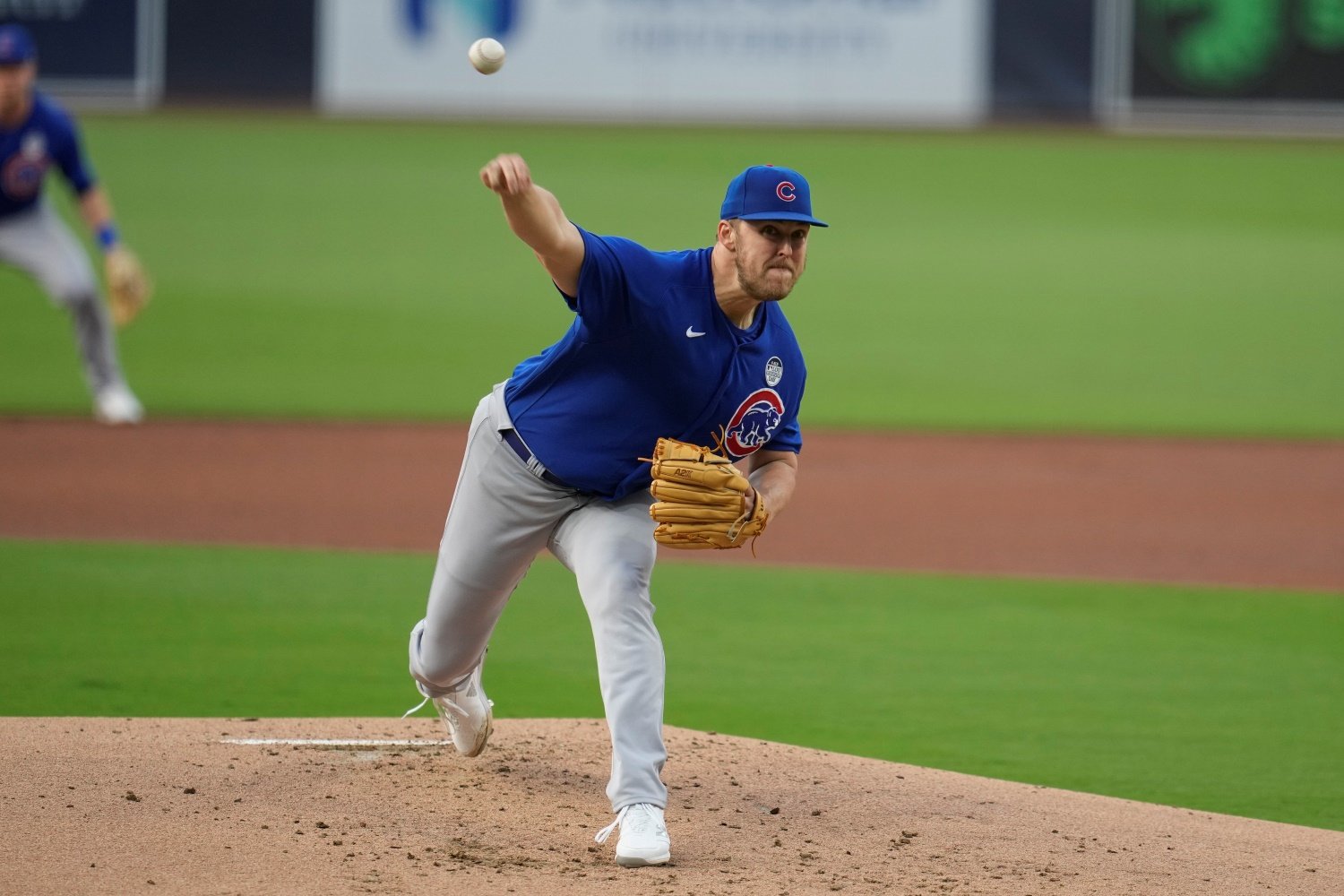 If the Cubs signed Jameson Taillon because they thought they could reinvent him or turn him into an ace, then they were foolish and irresponsible with their $68 million. Several teams and a great many players suffer from this systematic error lately. Because of the revolution in player development and technology-driven instruction, many parties within the game have begun to think of every player as an optimizable asset--a piece of wet clay that can be endlessly reshaped and altered. Even some of the would-be balls of clay think that way. In reality, by the stage of a career that someone like Taillon (or, say, Tyler Chatwood) has reached when they achieve free agency, that clay has dried out naturally, or it's been kiln-fired to create a nice piece of pottery. It's taken on shape and function, beauty and identity, but it no longer has that easy fluidity. It's not as malleable as it used to be. Smart teams know that, and they pay for what players who sign as major free agents already are, not what they might quasi-magically become. Taillon, who has had two Tommy John surgeries already and had made a major repertoire change in the process of returning from his second (after being traded from the Pirates to the Yankees), was excited by the potential the Cubs saw in him, They pitched him on another, miniature overhaul of his arsenal, and he was on board. It flopped. Starting with his outing against the Reds on May 27, though, Taillon has reverted to a version of himself that has had lots of success in MLB--a comfortable, familiar version, with plenty of value in its own right. To the relief of everyone, it looks like trying to reshape this particular clay has not broken it. Here's Taillon's pitch usage against right-handed batters by start this year. And here's the same against lefties. The Cubs had encouraged Taillon to become more of a sinker-cutter guy. That's not surprising. The Yankees utilize four-seamers as often as almost any team in baseball, whereas the Cubs lean toward the sinker and cutter extreme. The thing is, the very innovation that turned Taillon into such a solid starter for New York was ditching the overreliance on sinkers that held him back during his time with the Pirates. To think he would find success (or at least immediate success) by going back to what hadn't really worked for him was an odd error in judgment by the Cubs' pitching brain trust. Trying that was a significant risk, too, because it could have proved to be impossible to just go back to what had been working for him. However, with Yan Gomes as his guide, Taillon seemed to snap right back into his Yankee form. It's not just about pitch mix, either. Because of the movement profile (release point, arm angle, spin, seam orientation) on his stuff, he's an extreme fly-ball pitcher. He's embracing that again now. He's gotten back to using the top of the strike zone consistently. A fly-ball guy has to keep the ball up, to get more pop-ups and lazy fly balls, and fewer hard line drives and homers. Here's where Taillon's pitches were located in his starts prior to May 27: And here are his locations from the last two outings: There's plenty of cause to feel optimistic about Taillon. He should be able to sustain these changes, because they're really just about getting back to something with which he'd gotten comfortable over the previous two years. It might be too little, or too late, or both, but these adjustments were necessary, and they're the right ones. Hopefully, Taillon and the Cubs can keep making adjustments, and that might even include reintroducing some of the changes they envisioned over the offseason. For now, though, the team needs the best version of Taillon he can give them every turn, and that best version is one more akin to what he was before arriving than to that into which the team tried to transform him.
 -
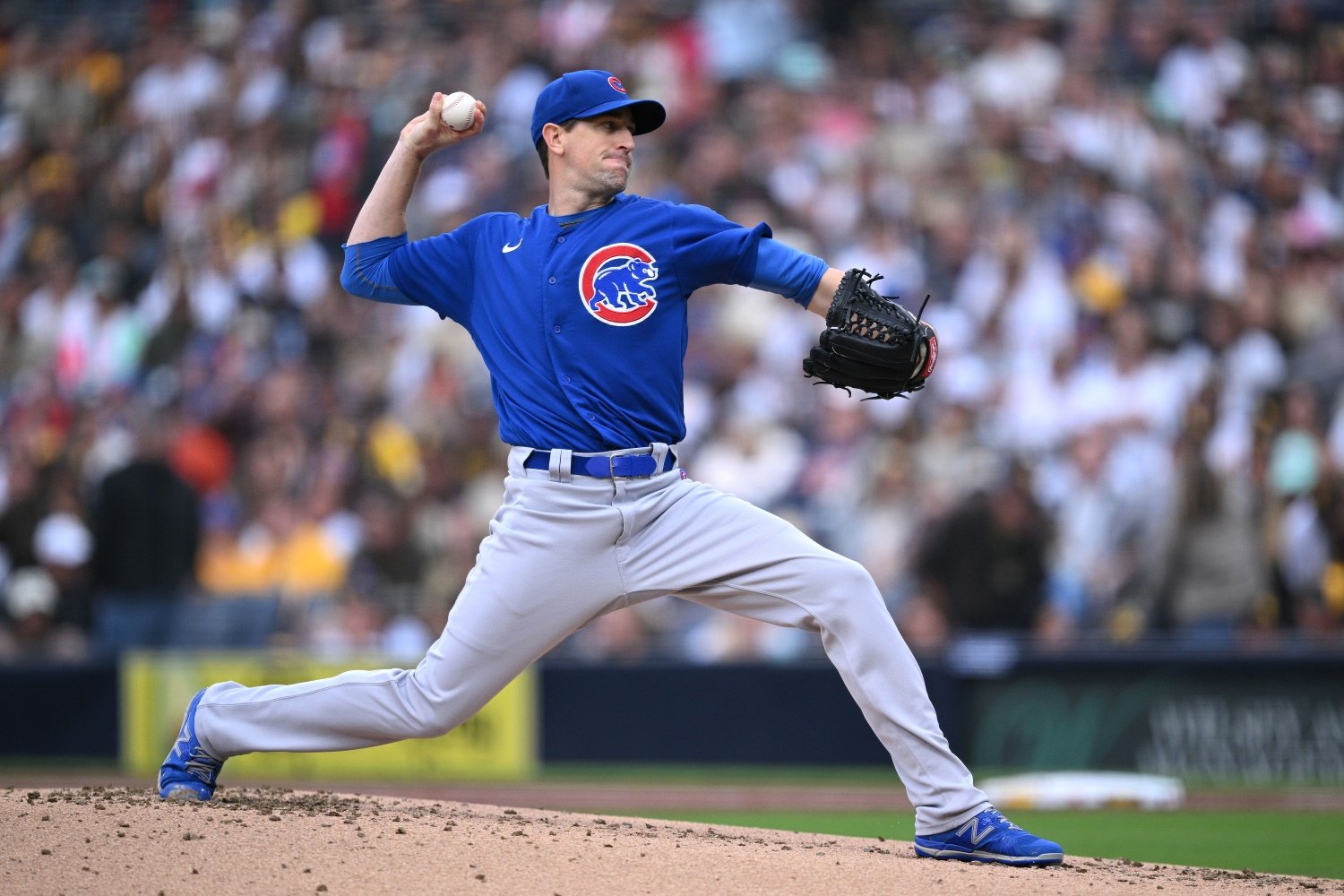 When home-plate umpire Phil Cuzzi gave a slightly generous outside corner to Padres southpaw Blake Snell early Monday, the trouble started bubbling up quickly. Cuzzi's calls helped ensure that nothing came of an early Cubs rally. Then, in the bottom of the second inning, Cuzzi did not make the same mistakes on a couple of Kyle Hendricks pitches just off the plate. David Ross blew up, earning an ejection for arguing balls and strikes, but that was as ineffectual as it almost always is. Three pitches later, Gary Sanchez hit a two-run home run, and the Padres were off and running. Fans obsessing over umpire zones is one of the most tired things about the culture of baseball in 2023. Often, the strike zones shown on TV broadcasts are misleading (though more often vertically than horizontally, where the conflict arose Monday night). More importantly, the actual impact of a missed call here and there is much smaller than fans have come to believe, and the errors balance out to a much greater degree than most people realize. Then, too, there's the fact that certain pitchers and catchers can significantly influence the way the umpire sees some offerings on the edges of the zone. When teams argue with umpires, though, it's something different than when fans do so. Politicking and fighting over the zone by players and coaches isn't just a matter of relentlessly airing grievances and pressing selfish interests. Different teams rely on winning at the edges of the zone, and specifically on getting calls there, to different extents. Unfortunately, it's become a perennial part of the Cubs' identity that they depend more on those calls than almost anyone else. That leads to more bickering, more frustration, and the risk of losing games because of the distraction that ensued when the umpire becomes the center of anyone's attention. Why is this so? It's a byproduct of the well-known weakness of the Cubs pitching staff, which is an inability to miss bats. In 2023, only the Rockies have induced whiffs on fewer opponent swings on pitches within the strike zone than have the Cubs. As has been often documented, the Cubs don't have as many hard-throwing hurlers as other teams, and they don't throw as many of the pitches (especially sliders and four-seamers) that induce whiffs as most other teams do. In the modern game, hitters do too much damage when they make contact for a pitching staff to survive long with a below-average strikeout rate. Thus, since the Cubs can't get whiffs within the zone, they need to either induce a lot of swings outside the zone or get a very high number of called strikes. Alas, they have a below-average O-Swing %, according to Pitch Info, ranking 20th in MLB. Hendricks only got six swings and misses against San Diego Monday night. Marcus Stroman only got five on Sunday, though he still managed to have an excellent outing. In a four-game series, Cubs starters combined for just 34 swings and misses, be they on pitches inside or outside the zone. When that element is missing from your game, you become more dependent on umpires and on catcher framing, and since one of those things varies more from one night to the next than the other does, it becomes an unhealthy area of focus. Cubs hitters have a similar problem, though. Overall, the lineup has hitters who make contact at about an average rate, but some of that comes from guys who make a lot of contact when they expand the zone. As a team, the Cubs rank sixth in MLB in out-of-zone contact rate, but they're 24th in making contact within the zone. They also swing less often than an average team, both inside and outside the zone. In short, the offense is forcing umpires to make a lot of calls, and they can't afford even the occasional miss on a ball off the edge, because they whiff too often within the zone (and don't have the power to consistently score enough without winning the battle for the strike zone). On the pitching side, this is clearly a problem of roster construction. The Cubs have tried to live too long without the velocity and the strikeout stuff that define the modern game. They have to zig back toward the league, because their years-long attempt to zag has only cornered them into needing an elite defense, an elite defensive catcher, and a friendly umpire to win more often than not. It's less clear whether the offensive problem is also one of talent identification and acquisition, or one of approach. Maybe the team just needs to better grasp the situations in which they need to be dialed into a certain part of the zone, versus those in which they need to seek contact wherever it can be found. Maybe they're not adequately anticipating what pitchers will try to do against them. Watching them, it often feels as though that's the case, but it's a hard thing to quantify or falsify. It could be that the hitters just aren't good enough to execute a relatively sound plan. It's fine to have a few pitchers on the staff who depend on getting called strikes more heavily than most. When virtually the entire staff leans on that, though, it makes the team vulnerable to especially good or patient offenses; a bad night for the umpire behind the dish; or plain old bad luck. Worse, when one of those things does pop up and the team has a tough game, they end up tied in mental knots. Fighting with umpires is counterproductive, even when it's necessary, because it externalizes the team's locus of control and sets them up for failure. Phil Cuzzi didn't beat the Cubs Monday night. Gary Sanchez, Manny Machado, and the rest of the Padres did. If there were any culprits in the loss beyond those in the home whites, they were in the Cubs dugout, and back in Chicago in their offices. It's important to understand that this team's exposure to umpire influence is its own fault, and that they won't win anything when they let themselves believe that umpires are winning or losing the game for them.
 -
Monday night found Cubs pitchers struggling to miss bats and paying both an actual and a psychological price for it. Meanwhile, their hitters struck out 12 times and were similarly compromised. Unfortunately, that's nothing new, for a team that still lags the league in generating whiffs on the mound and in controlling the zone at the plate. Image courtesy of © Orlando Ramirez-USA TODAY Sports When home-plate umpire Phil Cuzzi gave a slightly generous outside corner to Padres southpaw Blake Snell early Monday, the trouble started bubbling up quickly. Cuzzi's calls helped ensure that nothing came of an early Cubs rally. Then, in the bottom of the second inning, Cuzzi did not make the same mistakes on a couple of Kyle Hendricks pitches just off the plate. David Ross blew up, earning an ejection for arguing balls and strikes, but that was as ineffectual as it almost always is. Three pitches later, Gary Sanchez hit a two-run home run, and the Padres were off and running. Fans obsessing over umpire zones is one of the most tired things about the culture of baseball in 2023. Often, the strike zones shown on TV broadcasts are misleading (though more often vertically than horizontally, where the conflict arose Monday night). More importantly, the actual impact of a missed call here and there is much smaller than fans have come to believe, and the errors balance out to a much greater degree than most people realize. Then, too, there's the fact that certain pitchers and catchers can significantly influence the way the umpire sees some offerings on the edges of the zone. When teams argue with umpires, though, it's something different than when fans do so. Politicking and fighting over the zone by players and coaches isn't just a matter of relentlessly airing grievances and pressing selfish interests. Different teams rely on winning at the edges of the zone, and specifically on getting calls there, to different extents. Unfortunately, it's become a perennial part of the Cubs' identity that they depend more on those calls than almost anyone else. That leads to more bickering, more frustration, and the risk of losing games because of the distraction that ensued when the umpire becomes the center of anyone's attention. Why is this so? It's a byproduct of the well-known weakness of the Cubs pitching staff, which is an inability to miss bats. In 2023, only the Rockies have induced whiffs on fewer opponent swings on pitches within the strike zone than have the Cubs. As has been often documented, the Cubs don't have as many hard-throwing hurlers as other teams, and they don't throw as many of the pitches (especially sliders and four-seamers) that induce whiffs as most other teams do. In the modern game, hitters do too much damage when they make contact for a pitching staff to survive long with a below-average strikeout rate. Thus, since the Cubs can't get whiffs within the zone, they need to either induce a lot of swings outside the zone or get a very high number of called strikes. Alas, they have a below-average O-Swing %, according to Pitch Info, ranking 20th in MLB. Hendricks only got six swings and misses against San Diego Monday night. Marcus Stroman only got five on Sunday, though he still managed to have an excellent outing. In a four-game series, Cubs starters combined for just 34 swings and misses, be they on pitches inside or outside the zone. When that element is missing from your game, you become more dependent on umpires and on catcher framing, and since one of those things varies more from one night to the next than the other does, it becomes an unhealthy area of focus. Cubs hitters have a similar problem, though. Overall, the lineup has hitters who make contact at about an average rate, but some of that comes from guys who make a lot of contact when they expand the zone. As a team, the Cubs rank sixth in MLB in out-of-zone contact rate, but they're 24th in making contact within the zone. They also swing less often than an average team, both inside and outside the zone. In short, the offense is forcing umpires to make a lot of calls, and they can't afford even the occasional miss on a ball off the edge, because they whiff too often within the zone (and don't have the power to consistently score enough without winning the battle for the strike zone). On the pitching side, this is clearly a problem of roster construction. The Cubs have tried to live too long without the velocity and the strikeout stuff that define the modern game. They have to zig back toward the league, because their years-long attempt to zag has only cornered them into needing an elite defense, an elite defensive catcher, and a friendly umpire to win more often than not. It's less clear whether the offensive problem is also one of talent identification and acquisition, or one of approach. Maybe the team just needs to better grasp the situations in which they need to be dialed into a certain part of the zone, versus those in which they need to seek contact wherever it can be found. Maybe they're not adequately anticipating what pitchers will try to do against them. Watching them, it often feels as though that's the case, but it's a hard thing to quantify or falsify. It could be that the hitters just aren't good enough to execute a relatively sound plan. It's fine to have a few pitchers on the staff who depend on getting called strikes more heavily than most. When virtually the entire staff leans on that, though, it makes the team vulnerable to especially good or patient offenses; a bad night for the umpire behind the dish; or plain old bad luck. Worse, when one of those things does pop up and the team has a tough game, they end up tied in mental knots. Fighting with umpires is counterproductive, even when it's necessary, because it externalizes the team's locus of control and sets them up for failure. Phil Cuzzi didn't beat the Cubs Monday night. Gary Sanchez, Manny Machado, and the rest of the Padres did. If there were any culprits in the loss beyond those in the home whites, they were in the Cubs dugout, and back in Chicago in their offices. It's important to understand that this team's exposure to umpire influence is its own fault, and that they won't win anything when they let themselves believe that umpires are winning or losing the game for them. View full article
-
Whatever else has gone on in this mixed bag of a season, the Cubs have to be thrilled with what they've gotten from Dansby Swanson. The biggest thing they did this winter appears to be the thing they did best, and it's paying off in a huge way. With Swanson, however, it's worth asking: Can it last? Image courtesy of © Ray Acevedo-USA TODAY Sports A major and important narrative around Dansby Swanson, when he hit free agency last fall, was his inconsistency at the plate. Often, hitters get slapped with "inconsistent" in error, and just as often, "inconsistent" is a euphemism for bad. In Swanson's case, though, it genuinely felt like he was a good bet to produce average-ish offense for the season--but that it would come with high peaks and low valleys. Here's a chart that tracks a rolling average of Swanson's expected wOBA (xwOBA; essentially, overall production at the plate, adjusted for what would have been expected based on how often he swung and missed and on the quality of his contact on batted balls) over 50-plate appearance windows throughout 2021. As you can see, he was capable of getting very, very hot, but he could crater to well below the league average (that red line) for noticeable stretches, including a true meltdown that September. Though his bat came back to life for the memorable 2021 postseason, Swanson started 2022 cold, as well. His chart for that season is less extreme, but paints a similar picture. He got hotter than ever in late June that year, and did manage not to bottom out as completely when things went badly, in mid-August and in late September. Still, one can see how he struggles with prolonged stretches of below-average expected production. This season, with a new team and a new role, Swanson has taken a new approach. Obviously, he's been very good, but he also seems to be a bit less hot-and-cold. This could still easily change, of course, but so far, Swanson has only very briefly and very mildly slumped this year. At the other end of the spectrum, when he's hot (as he is now), he seems to be every bit as able to dominate as he's ever been. So much of this is due to his impressively disciplined approach. Last month, The Athletic writer Eno Sarris used data to show that players who join new teams--especially via free agency--tend to swing more upon arrival than they did before, perhaps in an effort to impress people and earn their big paydays. Swanson has not only resistend that, but gone the other direction. He swung at nearly half of all pitches last year, but that number is down to 44 percent this year--a career low. He's attacking the first pitch less often. He's expanding the strike zone less often. Pick an indicator of a calm, patient approach at the plate, and Swanson is demonstrating it. None of that means that he will never slump. Even with an increasingly refined approach, he could tire as the long season goes on, especially given his insistence upon playing every day at the diamond's second-most demanding defensive position. Fatigue has seemed to play a role in his previous slumps. He'll have to meet the challenge of playing that often and being this good even as he nears an age at which players at his position usually begin to decline. Still, this start is extraordinary, and there couldn't be a more thoroughly encouraging set of signs. Swanson has been as advertised defensively, and he's been the OBP threat (with enough slug to cash in unlikely rallies started by the bottom of the order) the Cubs have needed in the top two spots in the order for years. With an improved approach, he might have put his truly disastrous month-long slumps behind him, and if so, he's taking the step from star to superstar on our watch. View full article
-
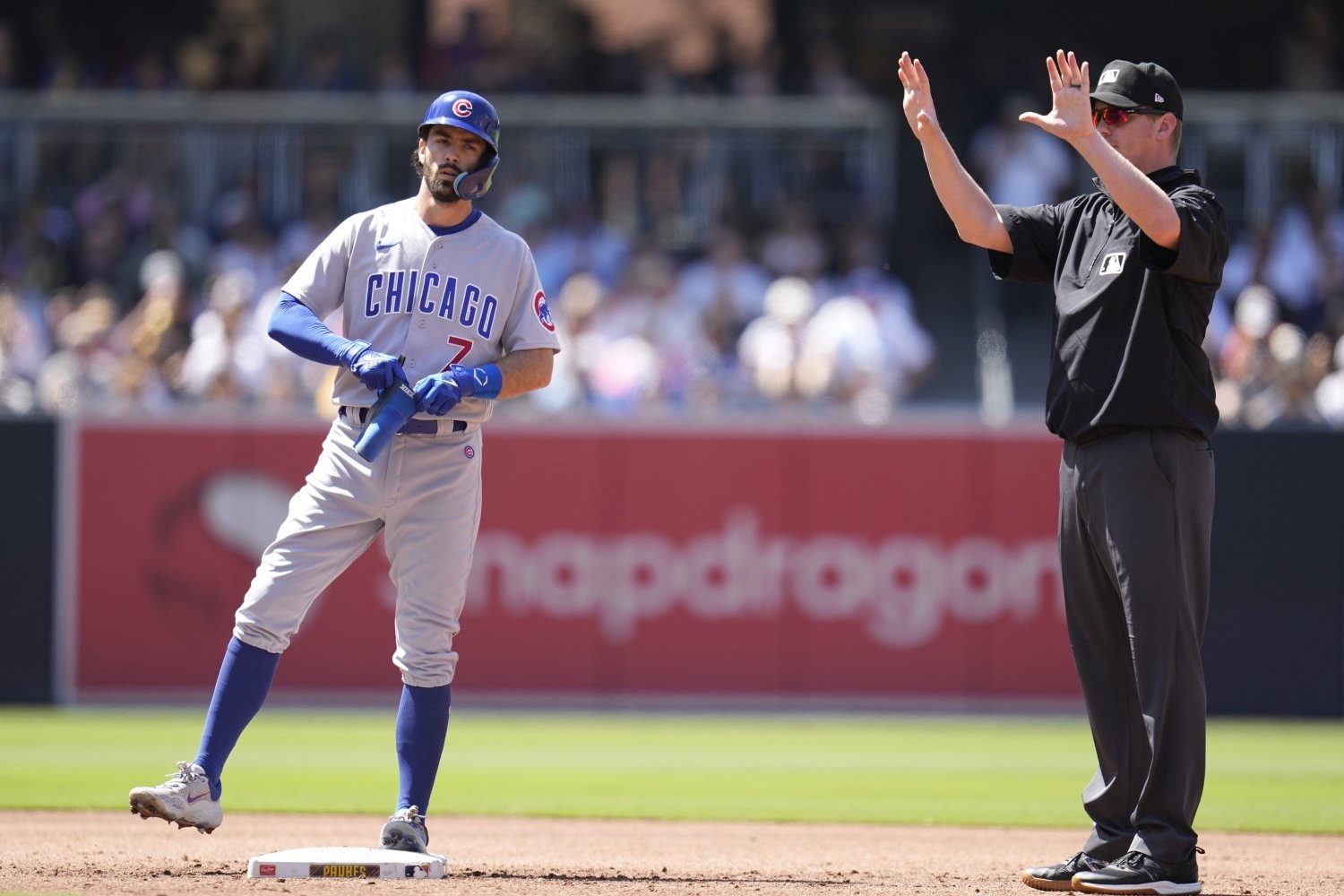 A major and important narrative around Dansby Swanson, when he hit free agency last fall, was his inconsistency at the plate. Often, hitters get slapped with "inconsistent" in error, and just as often, "inconsistent" is a euphemism for bad. In Swanson's case, though, it genuinely felt like he was a good bet to produce average-ish offense for the season--but that it would come with high peaks and low valleys. Here's a chart that tracks a rolling average of Swanson's expected wOBA (xwOBA; essentially, overall production at the plate, adjusted for what would have been expected based on how often he swung and missed and on the quality of his contact on batted balls) over 50-plate appearance windows throughout 2021. As you can see, he was capable of getting very, very hot, but he could crater to well below the league average (that red line) for noticeable stretches, including a true meltdown that September. Though his bat came back to life for the memorable 2021 postseason, Swanson started 2022 cold, as well. His chart for that season is less extreme, but paints a similar picture. He got hotter than ever in late June that year, and did manage not to bottom out as completely when things went badly, in mid-August and in late September. Still, one can see how he struggles with prolonged stretches of below-average expected production. This season, with a new team and a new role, Swanson has taken a new approach. Obviously, he's been very good, but he also seems to be a bit less hot-and-cold. This could still easily change, of course, but so far, Swanson has only very briefly and very mildly slumped this year. At the other end of the spectrum, when he's hot (as he is now), he seems to be every bit as able to dominate as he's ever been. So much of this is due to his impressively disciplined approach. Last month, The Athletic writer Eno Sarris used data to show that players who join new teams--especially via free agency--tend to swing more upon arrival than they did before, perhaps in an effort to impress people and earn their big paydays. Swanson has not only resistend that, but gone the other direction. He swung at nearly half of all pitches last year, but that number is down to 44 percent this year--a career low. He's attacking the first pitch less often. He's expanding the strike zone less often. Pick an indicator of a calm, patient approach at the plate, and Swanson is demonstrating it. None of that means that he will never slump. Even with an increasingly refined approach, he could tire as the long season goes on, especially given his insistence upon playing every day at the diamond's second-most demanding defensive position. Fatigue has seemed to play a role in his previous slumps. He'll have to meet the challenge of playing that often and being this good even as he nears an age at which players at his position usually begin to decline. Still, this start is extraordinary, and there couldn't be a more thoroughly encouraging set of signs. Swanson has been as advertised defensively, and he's been the OBP threat (with enough slug to cash in unlikely rallies started by the bottom of the order) the Cubs have needed in the top two spots in the order for years. With an improved approach, he might have put his truly disastrous month-long slumps behind him, and if so, he's taking the step from star to superstar on our watch.
 -
The Cubs offense failed to score Saturday night, as Yu Darvish and the Padres steamrolled through a lineup that reflected David Ross's sense of helplessness in that matchup with his hitters going the way they are. Is yet another miniature shakeup in the cards? Image courtesy of © David Banks-USA TODAY Sports Though it sounds like Justin Steele's forearm strain is mild enough not to warrant major concern, the Cubs placed him on the injured list Saturday. That was to be expected. It was a mild surprise, though, that they called up Miguel Amaya again to take Steele's place on the roster, rather than replacing him in a simple one-for-one with another pitcher. It means that, at least in the very short term, the team is back to carrying 14 position players and just 12 pitchers, and it raises urgent questions about the roster status of a couple of position players. Edwin Rios got a very rare start Saturday, and went 0-3 with three strikeouts. He's spent all but 14 days of this season on the roster, having been optioned to Iowa on May 5 and called back up May 19, yet he's only taken 34 plate appearances. By and large, Ross hasn't trusted him, and he's hurt the team more by being a nearly dead roster spot than by performing poorly. When he has gotten his limited opportunities, however, he's also failed to make anything of them. He's batting .071/.235/.214 on the year. Ríos should be farmed out again as soon as possible, but realistically, he has nothing to prove at Triple A. Designating him for assignment when the team returns Codi Heuer from his rehab assignment and the 60-day injured list would be an easy way to create the necessary roster spot. It's possible the team could retain him even in that case, because he signed for more than the minimum on a guaranteed deal this winter, and has never been outrighted before. If he cleared waivers, which is plausible, the Cubs would have the right to stash him in Iowa without carrying him on the 40-man roster. Tucker Barnhart is, in some ways, similar to Ríos. His batting line for the year looks terrible, as he also struck out three times in three trips last night to fall to .156/.257/.172 on the year. The sample for him is 74 plate appearances, which is more robust, but still relatively tiny. Unlike Ríos, he does have the excuse of being a catcher (and the defensive value that comes with manning that spot) to soften the shock of those numbers, but they remain unacceptably miserable. At 32 years of age, Barnhart isn't likely to bounce back much at all. Amaya's return to the big leagues suggests that the Cubs take a similarly dim view of their backup catcher. It might not mean that they want to get rid of Barnhart urgently, but it certainly means that they intend to use him in a more limited way. When Yan Gomes needs a day off but a lefty or split-neutral righty is on the mound for the opponents, it might be Amaya who gets the nod over Barnhart. When a lefty comes into a game Barnhart started, Amaya will probably pinch-hit for him. Even then, this call-up has to reflect some amount of peril for Barnhart. Heuer looks like the next likely addition to the roster, and a hitter (Ríos) will probably have to go when that happens. That might yet be delayed a bit, though, because Heuer gave up two more runs in Iowa Saturday and has an ERA of 10.00 there. His stuff has looked good, and he seems healthy, but the team probably wants to see his results catch up to that stuff on a more consistent basis. After that, depending on how his progression continues, Cody Bellinger could soon return to the roster, creating a decision point about Barnhart. Sending Amaya back to Iowa would be a bummer, but losing Barnhart (who can't be optioned or retained via outright assignment) would shorten the Cubs' MLB-capable catching depth a bit too much. That's one reason why they tried to retain and play Luis Torrens early in the season--keeping their powder dry at a position where there just aren't that many qualified options. The Cubs erred this winter, whiffing big-time on too many of their fringe additions to the roster. It's clear that they tried to get much more left-handed, anticipating a bigger effect from the restrictions on defensive shifting than we have actually seen, but they focused too much on that goal and too little on just finding players who could hit. Barnhart wasn't brought in for his bat, anyway, but Ríos and Eric Hosmer both were, and neither has panned out at all. Nor did Torrens, or (sliding up the scale of money involved a bit) Trey Mancini. Mike Tauchman and Miles Mastrobuoni have been better, but the team had to keep Tauchman in the minors until a long-term space opened up on the roster, because he's out of options and they'll lose him if they have to designate him for assignment. That Mastrobuoni has batted leadoff at times for Ross is less egregious than many fans seem to believe, because his on-base skills are decent, but it seems to come out of the same misbegotten mentality--matchups rather than talent, batting a lefty with patience atop the order against a tough righty even if it means losing at-bats for better overall hitters--that brought all of these uninspiring extras into the fold over the offseason. Whatever its flaws, the construction with which the Cubs opened the season is the most dynamic one this lineup can achieve, and they need to re-commit themselves to it. Nico Hoerner - 2b Dansby Swanson - ss Ian Happ - lf Seiya Suzuki - rf Cody Bellinger - cf Once Bellinger returns, this needs to be the lineup at least until the trade deadline. In the bottom half, Ross and the front office can continue to mix and match, platoon, and experiment, but those five should stay right there against both lefties and righties. Even until Bellinger gets back, the top four there should be inviolate. In the long run, the team needs to embrace the fact that its short-term upside and its long-term health both require the same actions: let the kids play. Matt Mervis needs to get daily action. Amaya needs to siphon off time at catcher and at designated hitter, from Barnhart and Trey Mancini. Christopher Morel needs to get a chance to prove that he can (or can't) more rapidly adjust against big-league pitchers, and Nelson Velazquez needs to come back up whenever an injury or other move creates an opening for him. Velázquez has traded a tiny share of his power to trim his strikeout rate this year, and it's working. That ought to be rewarded. If Morel can prove himself as a more competent defensive third baseman than has yet been in evidence, Velázquez could even take the place of Mastrobuoni--the very exchange of theoretical matchup value for real talent that we're looking for. In the meantime, the clock ticks. The Cubs' offense was never supposed to be the team's primary area of strength, but right now, it looks like an enfeebling weakness. Until they start carrying a riskier but more compelling corps of hitters, and especially until they start putting those hitters in better positions to succeed, that isn't going to change. The trade deadline is only eight weeks away. View full article
