Matthew Trueblood
-
Posts
2,481 -
Joined
-
Last visited
-
Days Won
2
Content Type
Profiles
Joomla Posts 1
Chicago Cubs Videos
Chicago Cubs Free Agent & Trade Rumors, Notes, & Tidbits
2026 Chicago Cubs Top Prospects Ranking
News
2023 Chicago Cubs Draft Picks
Guides & Resources
2024 Chicago Cubs Draft Picks
The Chicago Cubs Players Project
2025 Chicago Cubs Draft Pick Tracker
2026 Chicago Cubs Draft Tracker: Picks & Bonuses
Blogs
Events
Forums
Store
Gallery
Everything posted by Matthew Trueblood
-
Yesterday, we discussed whether the man the Cubs acquired in the David Robertson trade back in 2022 could play an important role out of the team's bullpen in 2024. Today, let's dig a bit deeper into his stuff, to better anchor that conversation to reality. Image courtesy of © Rick Scuteri-USA TODAY Sports The good news is that Ben Brown has a genuinely unique fastball. The lanky righthander has a high release point, good velocity, and plenty of movement, and it's particularly unusual to see the combination of the three that he sports. He marries that heater with a bevy of other offerings, including two or three different breaking balls (which ones they are depends on who you ask and when you take your measurements) and a rudimentary changeup. The bad news, in a sense, is that Brown has a genuinely unique fastball. There are some reasons why most pitchers don't have the combination of characteristics that Brown has on the pitch, and they're not all matters of genetics. In 2023, fewer than half of the fastballs Brown threw were in the strike zone, which would have been in the lowest 16 percent of MLB for fastball zone rate. It's easy to dismiss that as more of an item to check off his developmental checklist--firm up fastball command--than a problem with the way he throws, but realistically, those characteristics help drive the difficulty he has with landing the pitch in the zone. Brown releases the ball from about 6.75 feet above the ground, even coming down the mound as he delivers. Only a fistful of pitchers release their fastball higher, and doing so creates some problems for the hitter. By general acclaim, Jordan Montgomery's similarly high release point is part of what makes him so tough to pick up. The same is true of Blake Snell, Pete Fairbanks, and Justin Verlander. However, throwing from that high forces a pitcher to steer the ball downhill rather steeply. Teams have fallen in love with Vertical Approach Angle (VAA) over the last few years as a way of better evaluating fastball movement. Those who prize that often prefer lower release points, because they tend to lead to flatter fastballs at the top of the zone. Guys like Paul Sewald and Jose Cuas miss more bats with their fastballs because their arm angles scream sink, so their riding fastballs seem to hop over swings. Operating at extremes is a good thing, in this regard. It's ok that Brown's VAA will never be especially impressive, because by using such a high release, he produces a different, harder-to-quantify but equally real source of deception. The problem is that that release point also creates a related but separate issue: it's hard to throw strikes with a pitch that wants to rise and run, from that high off the ground. Hence Brown's difficulty filling up the zone with the heater, and his inflated walk totals in Iowa last year. Then there's the matter of the movement he generates, itself. Most hurlers with such high release points stay behind the ball and spin it so well that it resists gravity more en route to the plate than Brown's does. Of those with similar slots, the only ones whose movement numbers are similar to Brown's are lefties who don't throw nearly as hard as he does: Austin Gomber, Will Smith, and Brandon Williamson. Brown's height plays into this. He gets more armside movement on his pitch, for instance, because throwing from that height doesn't require him to come over the top as much as it does for others. His arm slot isn't quite as high as you'd think, given the raw release point. Again, that makes him unique, and uniqueness is good. It'll only matter, though, if he can harness that uniqueness and operationalize it for use at the highest level of the sport. He got whiffs on an encouraging percentage of swings with the fastball in Triple A in 2023, but translating that to MLB requires him to keep working hard to improve. He has to be in the zone more, so that he can get the same whiff rate on swings while inducing more swings, and being in the zone will be vital to getting the chases he needs to make the breaking stuff play up the way it should. All of the above makes using him as an MLB reliever in 2024 even more interesting. First of all, because this unique fastball gives him some funk that should lend him effectiveness in a limited role, he can contribute there while he works on polishing his game. Secondly, working with Tommy Hottovy and the team's big-league coaching staff throughout the year is likely to give him the best possible chance to solve this riddle. Thirdly, the (likely tough) feedback provided by big-league hitters might help him understand the depth of needed adjustments. Finally, though, he could also make sure that whatever changes he does make are friendly to the effectiveness of the rest of his repertoire. Brown might be limited to a bullpen role forever, because of this unique but problematic fastball. His best chance to avoid that fate, though, is probably to get some time as an apprentice in relief, the better to figure out how he could work as a starter before facing the real challenge of doing that at the highest level. Let's kick this subject around some more. Let us know what you've seen from Brown's fastball, or just weigh in on his rightful place in a much more crowded Cubs pitching hierarchy than we've been accustomed to in the last half-decade or so. View full article
-
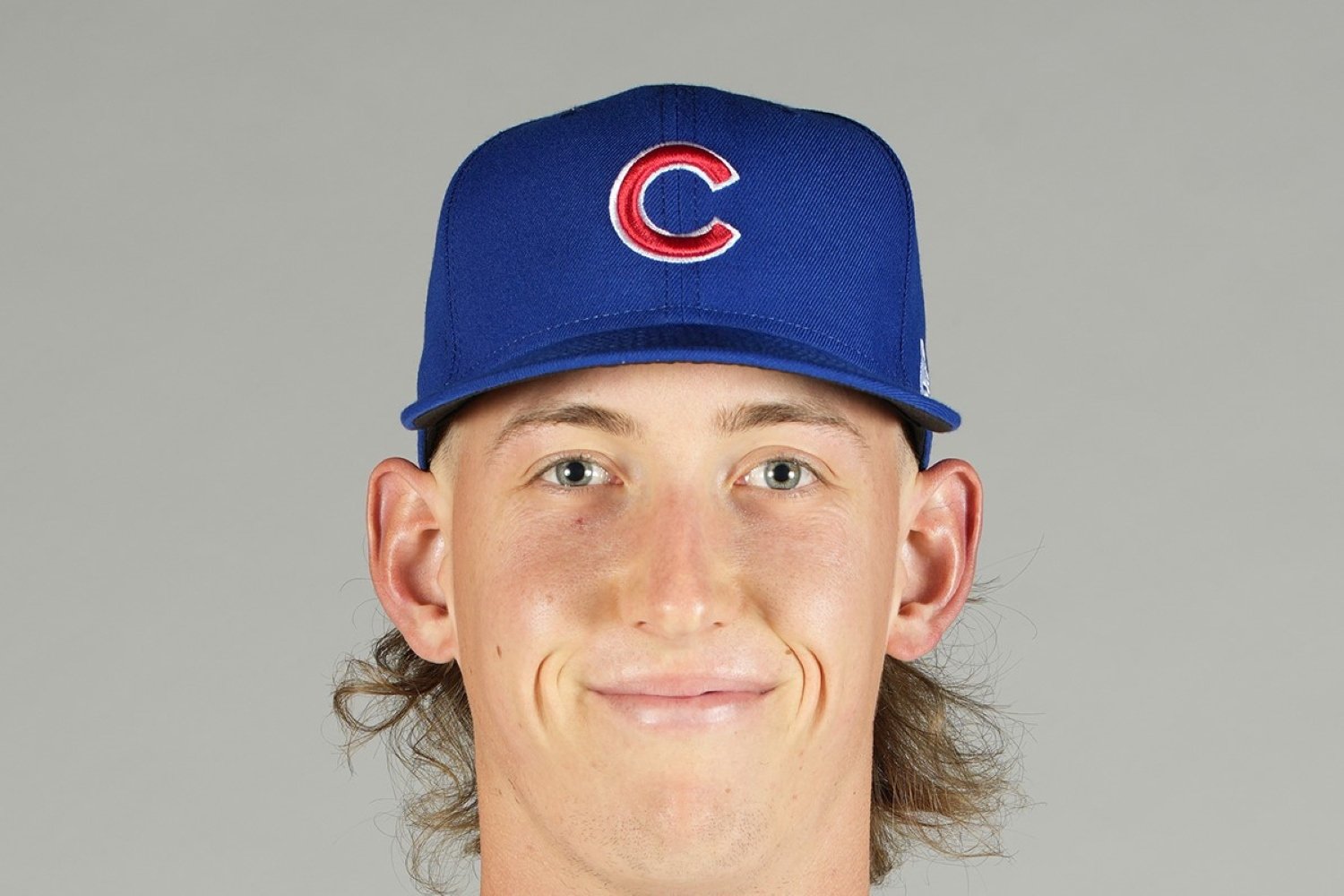 The good news is that Ben Brown has a genuinely unique fastball. The lanky righthander has a high release point, good velocity, and plenty of movement, and it's particularly unusual to see the combination of the three that he sports. He marries that heater with a bevy of other offerings, including two or three different breaking balls (which ones they are depends on who you ask and when you take your measurements) and a rudimentary changeup. The bad news, in a sense, is that Brown has a genuinely unique fastball. There are some reasons why most pitchers don't have the combination of characteristics that Brown has on the pitch, and they're not all matters of genetics. In 2023, fewer than half of the fastballs Brown threw were in the strike zone, which would have been in the lowest 16 percent of MLB for fastball zone rate. It's easy to dismiss that as more of an item to check off his developmental checklist--firm up fastball command--than a problem with the way he throws, but realistically, those characteristics help drive the difficulty he has with landing the pitch in the zone. Brown releases the ball from about 6.75 feet above the ground, even coming down the mound as he delivers. Only a fistful of pitchers release their fastball higher, and doing so creates some problems for the hitter. By general acclaim, Jordan Montgomery's similarly high release point is part of what makes him so tough to pick up. The same is true of Blake Snell, Pete Fairbanks, and Justin Verlander. However, throwing from that high forces a pitcher to steer the ball downhill rather steeply. Teams have fallen in love with Vertical Approach Angle (VAA) over the last few years as a way of better evaluating fastball movement. Those who prize that often prefer lower release points, because they tend to lead to flatter fastballs at the top of the zone. Guys like Paul Sewald and Jose Cuas miss more bats with their fastballs because their arm angles scream sink, so their riding fastballs seem to hop over swings. Operating at extremes is a good thing, in this regard. It's ok that Brown's VAA will never be especially impressive, because by using such a high release, he produces a different, harder-to-quantify but equally real source of deception. The problem is that that release point also creates a related but separate issue: it's hard to throw strikes with a pitch that wants to rise and run, from that high off the ground. Hence Brown's difficulty filling up the zone with the heater, and his inflated walk totals in Iowa last year. Then there's the matter of the movement he generates, itself. Most hurlers with such high release points stay behind the ball and spin it so well that it resists gravity more en route to the plate than Brown's does. Of those with similar slots, the only ones whose movement numbers are similar to Brown's are lefties who don't throw nearly as hard as he does: Austin Gomber, Will Smith, and Brandon Williamson. Brown's height plays into this. He gets more armside movement on his pitch, for instance, because throwing from that height doesn't require him to come over the top as much as it does for others. His arm slot isn't quite as high as you'd think, given the raw release point. Again, that makes him unique, and uniqueness is good. It'll only matter, though, if he can harness that uniqueness and operationalize it for use at the highest level of the sport. He got whiffs on an encouraging percentage of swings with the fastball in Triple A in 2023, but translating that to MLB requires him to keep working hard to improve. He has to be in the zone more, so that he can get the same whiff rate on swings while inducing more swings, and being in the zone will be vital to getting the chases he needs to make the breaking stuff play up the way it should. All of the above makes using him as an MLB reliever in 2024 even more interesting. First of all, because this unique fastball gives him some funk that should lend him effectiveness in a limited role, he can contribute there while he works on polishing his game. Secondly, working with Tommy Hottovy and the team's big-league coaching staff throughout the year is likely to give him the best possible chance to solve this riddle. Thirdly, the (likely tough) feedback provided by big-league hitters might help him understand the depth of needed adjustments. Finally, though, he could also make sure that whatever changes he does make are friendly to the effectiveness of the rest of his repertoire. Brown might be limited to a bullpen role forever, because of this unique but problematic fastball. His best chance to avoid that fate, though, is probably to get some time as an apprentice in relief, the better to figure out how he could work as a starter before facing the real challenge of doing that at the highest level. Let's kick this subject around some more. Let us know what you've seen from Brown's fastball, or just weigh in on his rightful place in a much more crowded Cubs pitching hierarchy than we've been accustomed to in the last half-decade or so.
 -
By broad consensus, the Cubs need more pitching depth to avoid a reprise of the disappointing finish they experienced in 2023. Given the track record of their new manager, one partial solution to the problem might be to do something their old one refused to. Image courtesy of © Kamil Krzaczynski-USA TODAY Sports The Cubs didn't ultimately decide to move on from David Ross until they realized they had a real chance to get Craig Counsell as his replacement. For many fans and neutral observers, though, the Rubicon was really crossed during the late stages of the season, when Ross responded to some late-season call-ups by letting young players waste away on the bench. "We're not developing players right now," Ross said in mid-September, when asked whether Pete Crow-Armstrong would play regularly after his arrival from Triple-A Iowa. The underlying mentality--that the priority was winning games down the stretch, not giving Crow-Armstrong time to learn and adjust to big-league pitching--was sound, but it was so woefully incomplete as to be counterproductive. A good manager develops players and pursues the playoffs at the same time. They're not insecure or uncomfortable with complexity. They think in pages, rather than paragraphs or simple sentences, and they know how to juggle torches and chew gum at the same time. One of the reasons why the Brewers have cruised past the Cubs more often than not over the last half-decade is that Counsell is that kind of multi-track mind. He's always been better at balancing the competing interests and contradictory tasks that fall to a manager of a team trying to be good both in the present and in the future. To take one example, along with longtime pitching coach Chris Hook, Counsell masterfully onboarded and utilized some young Brewers hurlers during his tenure there--including by having some starting pitching prospects work, first, as relievers. Counsell is far from the inventor of this developmental stratagem. It's almost as old as the professional game, and Earl Weaver popularized it during his long run of success with the Orioles in the 1970s. In Weaver's book, Weaver on Strategy, he gives this as his Eighth Law: "The best place for a rookie pitcher is in long relief." He believed in easing guys with starter upside into the mix as penmen. Rhetorically, that's not far from what Ross said in September. In practice, though, Weaver was being more open-minded, and more proactive. He made his evaluations by giving players a chance to sink or to swim, and he trusted the Baltimore higher-ups to put talented people under his charge so that he wasn't placing that probationary opportunity in undeserving places. Counsell's way of working in the likes of Brandon Woodruff and Corbin Burnes was different than what Weaver did with guys like Dennis Martinez and Scott McGregor, because the game is far different now. In 2018, Burnes made 30 appearances with the Brewers, and 20 of them last three outs or fewer. That still leaves 10, and he did stretch out to as many as three innings, but in short, Counsell and the Brewers brought up a highly-touted pitching prospect to work mostly in short relief, as a means of apprenticing with the parent club. Woodruff worked as much more of a true long man that year, even making four spot starts along the way. These weren't any kind of capitulation on promising arms. Using them in relief was just a convenient way to kill two birds with one stone: deepening the team's bullpen, and giving Counsell and Hook much more thorough and intimate knowledge of both hurlers than they'd have had before. A team fortunate enough to develop a surfeit of good pitchers should let some of them reach the majors in relief, as a means of managing growth and dispersing opportunities, and because it's the best way to leverage that extremely valuable strength. Let's talk, then, about Ben Brown and Cade Horton. The Cubs view both as starting pitchers, in the long run. If the team has a successful winter, though, neither will be in line for starts any time in the first half in Chicago. Maybe the highest short-term use of them is to promote them to the big-league bullpen and lend the club that depth and swing-and-miss that would otherwise be in deficit without some significant external investment. Is bringing these two top pitching prospects up to buttress the bullpen the right way to address the team's reliever needs going into 2024? Or should they take the plunge and pay for someone like Josh Hader or Robert Stephenson? Let's weigh the options together. View full article
-
 The Cubs didn't ultimately decide to move on from David Ross until they realized they had a real chance to get Craig Counsell as his replacement. For many fans and neutral observers, though, the Rubicon was really crossed during the late stages of the season, when Ross responded to some late-season call-ups by letting young players waste away on the bench. "We're not developing players right now," Ross said in mid-September, when asked whether Pete Crow-Armstrong would play regularly after his arrival from Triple-A Iowa. The underlying mentality--that the priority was winning games down the stretch, not giving Crow-Armstrong time to learn and adjust to big-league pitching--was sound, but it was so woefully incomplete as to be counterproductive. A good manager develops players and pursues the playoffs at the same time. They're not insecure or uncomfortable with complexity. They think in pages, rather than paragraphs or simple sentences, and they know how to juggle torches and chew gum at the same time. One of the reasons why the Brewers have cruised past the Cubs more often than not over the last half-decade is that Counsell is that kind of multi-track mind. He's always been better at balancing the competing interests and contradictory tasks that fall to a manager of a team trying to be good both in the present and in the future. To take one example, along with longtime pitching coach Chris Hook, Counsell masterfully onboarded and utilized some young Brewers hurlers during his tenure there--including by having some starting pitching prospects work, first, as relievers. Counsell is far from the inventor of this developmental stratagem. It's almost as old as the professional game, and Earl Weaver popularized it during his long run of success with the Orioles in the 1970s. In Weaver's book, Weaver on Strategy, he gives this as his Eighth Law: "The best place for a rookie pitcher is in long relief." He believed in easing guys with starter upside into the mix as penmen. Rhetorically, that's not far from what Ross said in September. In practice, though, Weaver was being more open-minded, and more proactive. He made his evaluations by giving players a chance to sink or to swim, and he trusted the Baltimore higher-ups to put talented people under his charge so that he wasn't placing that probationary opportunity in undeserving places. Counsell's way of working in the likes of Brandon Woodruff and Corbin Burnes was different than what Weaver did with guys like Dennis Martinez and Scott McGregor, because the game is far different now. In 2018, Burnes made 30 appearances with the Brewers, and 20 of them last three outs or fewer. That still leaves 10, and he did stretch out to as many as three innings, but in short, Counsell and the Brewers brought up a highly-touted pitching prospect to work mostly in short relief, as a means of apprenticing with the parent club. Woodruff worked as much more of a true long man that year, even making four spot starts along the way. These weren't any kind of capitulation on promising arms. Using them in relief was just a convenient way to kill two birds with one stone: deepening the team's bullpen, and giving Counsell and Hook much more thorough and intimate knowledge of both hurlers than they'd have had before. A team fortunate enough to develop a surfeit of good pitchers should let some of them reach the majors in relief, as a means of managing growth and dispersing opportunities, and because it's the best way to leverage that extremely valuable strength. Let's talk, then, about Ben Brown and Cade Horton. The Cubs view both as starting pitchers, in the long run. If the team has a successful winter, though, neither will be in line for starts any time in the first half in Chicago. Maybe the highest short-term use of them is to promote them to the big-league bullpen and lend the club that depth and swing-and-miss that would otherwise be in deficit without some significant external investment. Is bringing these two top pitching prospects up to buttress the bullpen the right way to address the team's reliever needs going into 2024? Or should they take the plunge and pay for someone like Josh Hader or Robert Stephenson? Let's weigh the options together.
 -
I don't think the third piece would be quite on that level. Maybe more like Canario or Arias, depending on their appetite for risk and upside. Or maybe it's Brown or Wicks and Shaw, and they don't want Morel at all. But yeah, the potential fits are equal parts fascinating and improbable. Sure would make a compelling new roster though.
-
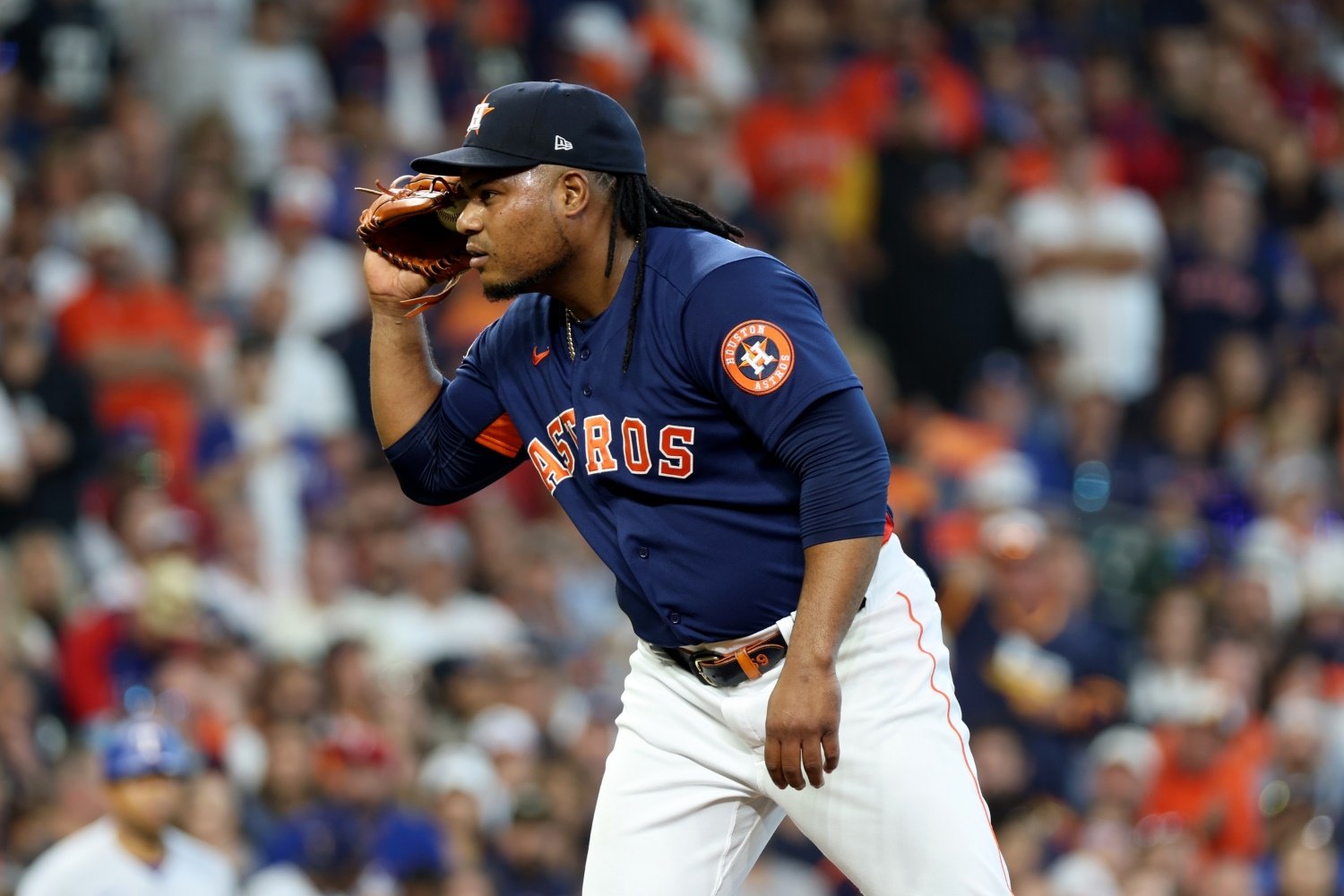 To be clear, The Athletic Astros beat writer Chandler Rome didn't say the Astros are looking to trade Framber Valdez. On the contrary, they're still viewing themselves as right in the thick of their competitive window, even if the Rangers' win over them in the ALCS and their thinning farm system suggest that that reign of terror is finally heading into its decline phase. However, given some salary constraints we discussed last week in the context of a different Houston-related trade rumor, Rome still views Valdez as a possible trade candidate. That would be a fascinating trade market, and as enticing a target for the Cubs as has yet been named. Valdez, 30, ran out of steam in a visible and worrisome way late in this season, but he's one of the best starting pitchers in baseball. In the age of the 160-inning ace, he's averaged just a whisker under 200 innings over the last two regular seasons, and another 37 frames across the two postseasons. In the last four seasons, he's received Cy Young votes three times. With two years of team control left and a projected salary between $12 million and $13 million for 2024 via arbitration, Valdez would cost more to acquire than Tyler Glasnow, Corbin Burnes, or Shane Bieber. He's also worth much more. One of the elite ground-ball guys in the game, he fired a no-hitter in 2023, and dazzled in the 2022 World Series, contributing as much as anyone to the Astros pulling out that championship. Lest his rough second half and his age worry you, he threw harder than ever in 2023, with his sinker averaging north of 95 miles per hour. It's the curveball that makes Valdez great. The pitch is nicknamed 'the Ax', and that's fitting, because its violent downward chop cuts through hitters so ruthlessly. Few breaking balls are both bat-missers and ground-ball getters, but Valdez's curve manages that trick. He was almost a two-pitch starting southpaw (like Drew Smyly and Justin Steele) until a few years ago, but he's brought along (first) his changeup and (especially in 2023) his cutter to such an extent that he's now a fairly legitimate four-pitch guy. The cutter firmed up significantly after an in-season mental adjustment, and works a lot like a slider off his sinker against fellow lefties. Again, the Astros are trying to thread the needle. Any trade for Valdez would need to include young talent they believe will help them in the short term, as well as in years beyond 2025. Christopher Morel probably isn't a great fit there, though he could certainly find playing time in the short term and they could try to groom him as the replacement for Alex Bregman after Bregman hits free agency next fall. It's likely that the lead piece in a trade would have to be someone like Jordan Wicks or Ben Brown--a level above the top pitching names the Cubs figure to make available in trades for Glasnow or Bieber. With Valdez, though, the Cubs' pressure to add to the starting rotation would essentially disappear. They'd have one of the game's most durable aces, and someone from whom Justin Steele might still learn a trick or two. Any other additions the team made--be it Shohei Ohtani, Josh Hader, re-signing Cody Bellinger, or something completely off our radar--would get more exciting with Valdez as the anchor of the rotation. It's worth discussing, even if it's unlikely that the deal will actually materialize. What do you think? Is two years enough club control to make you willing to trade Wicks or Brown? Do you prefer Valdez, Glasnow, Bieber, or a bigger splash in the free-agent starter market than the Cubs appear to have planned?
 -
Names are flying through the MLB trade rumor mill on the eve of the Winter Meetings. One stands out, though, as both an especially unexpected and an especially impactful potential target for the Cubs. That would be a fascinating trade market, and as enticing a target for the Cubs as has yet been named. Valdez, 30, ran out of steam in a visible and worrisome way late in this season, but he's one of the best starting pitchers in baseball. In the age of the 160-inning ace, he's averaged just a whisker under 200 innings over the last two regular seasons, and another 37 frames across the two postseasons. In the last four seasons, he's received Cy Young votes three times. With two years of team control left and a projected salary between $12 million and $13 million for 2024 via arbitration, Valdez would cost more to acquire than Tyler Glasnow, Corbin Burnes, or Shane Bieber. He's also worth much more. One of the elite ground-ball guys in the game, he fired a no-hitter in 2023, and dazzled in the 2022 World Series, contributing as much as anyone to the Astros pulling out that championship. Lest his rough second half and his age worry you, he threw harder than ever in 2023, with his sinker averaging north of 95 miles per hour. It's the curveball that makes Valdez great. The pitch is nicknamed 'the Ax', and that's fitting, because its violent downward chop cuts through hitters so ruthlessly. Few breaking balls are both bat-missers and ground-ball getters, but Valdez's curve manages that trick. He was almost a two-pitch starting southpaw (like Drew Smyly and Justin Steele) until a few years ago, but he's brought along (first) his changeup and (especially in 2023) his cutter to such an extent that he's now a fairly legitimate four-pitch guy. The cutter firmed up significantly after an in-season mental adjustment, and works a lot like a slider off his sinker against fellow lefties. Again, the Astros are trying to thread the needle. Any trade for Valdez would need to include young talent they believe will help them in the short term, as well as in years beyond 2025. Christopher Morel probably isn't a great fit there, though he could certainly find playing time in the short term and they could try to groom him as the replacement for Alex Bregman after Bregman hits free agency next fall. It's likely that the lead piece in a trade would have to be someone like Jordan Wicks or Ben Brown--a level above the top pitching names the Cubs figure to make available in trades for Glasnow or Bieber. With Valdez, though, the Cubs' pressure to add to the starting rotation would essentially disappear. They'd have one of the game's most durable aces, and someone from whom Justin Steele might still learn a trick or two. Any other additions the team made--be it Shohei Ohtani, Josh Hader, re-signing Cody Bellinger, or something completely off our radar--would get more exciting with Valdez as the anchor of the rotation. It's worth discussing, even if it's unlikely that the deal will actually materialize. What do you think? Is two years enough club control to make you willing to trade Wicks or Brown? Do you prefer Valdez, Glasnow, Bieber, or a bigger splash in the free-agent starter market than the Cubs appear to have planned? View full article
-
On Friday, Jeff Passan rolled out his preview of the Winter Meetings at ESPN+. Within it were several juicy Cubs tidbits, not least an unexpected connection to one of the market's top left-handed starters. Image courtesy of © Jerome Miron-USA TODAY Sports It's true that this is the first time we've heard the Cubs tied to Jordan Montgomery, the erstwhile Yankees and Cardinals southpaw who made such a strong impression by fronting the Rangers rotation in October. That doesn't make this actually surprising, though, because the guy does a lot of the things the Cubs want starting pitchers to do. As much as fans have fixated on the apparent need for more whiffs from the starting rotation in 2024, that's not necessarily the Cubs' priority. Contrariwise, the team prizes durability, pitchability, and the ability to fill up the strike zone. It's not by pure coincidence that they went out into last winter's free-agent market and came back with Jameson Taillon. It's not an accident that Kyle Hendricks is the final on-field holdover of the 2016 team. It's not Justin Steele's internal wiring that led to the halving of his walk rate and his command-over-stuff breakout in 2023. Whereas many teams lock in on specific, stuff-oriented pitch characteristics, the Cubs prefer a holistic and fundamentally old-school approach--even if they use extremely modern and quantitative methods to make sure that approach works. Montgomery fits into all of that gorgeously. He runs below-average strikeout rates, which will dent his value on the market even as his postseason brilliance gooses it. He also limits walks and induces lots of weak or harmless contact, though. Moreover, he takes the ball every fifth day. Since the start of 2020, Montgomery has made 104 regular-season starts--more than all but eight other pitchers in MLB. He's 19th in innings pitched over that span. While the Cubs have quietly become great at finding high-velocity, great-stuff arms in relief, they continue to prefer things other than raw power or movement in the rotation. That's why Montgomery, who sits right around 93 miles per hour with a sinker that doesn't really miss bats (but which he does command very well), figures to appeal to them as much as to almost any other team in MLB. I think the team believes that some of the movements that generate extreme velocities and elite spin also tend to generate physical problems. They believe in guys with pitching-specific athleticism, who can succeed without pushing the limits of their tissues as hard as some others do. It's not as though Montgomery is without an injury history. He underwent Tommy John surgery five years ago. Other than that, though, he has an impressively clean record. The only starts he's missed since coming back from that operation were when he was shelved with COVID in 2021. When on the mound, he also pitches in a distinctly Cubs style. Though he utilizes a sinker as his primary fastball, Montgomery works with the pitch up in the zone, just as Kyle Hendricks and other Cubs have recently had some success doing. It doesn't miss bats, but it induces weak contact and plenty of ground balls. By contrast, and partially because of the combination of his over-the-top delivery fastball command, his changeup and curveball each miss plenty of bats. The curve isn't one of those hissing, 3,000-RPM things, though. It has perfect spin mirroring with the sinker, but tumbles, a bit the way Drew Smyly's works. It doesn't back up, as Smyly's sometimes does, but it has the same unorthodox hook-behind-the-navel effect on hitters. His changeup is especially funky. Of the 139 pitchers who threw at least 200 changeups in 2023, only six had less arm-side run on that pitch than Montgomery, and only two got less drop on it. What he throws is a true, floating straight change, a pitch that befuddles right-handed batters because it looks so much like his sinker out of the hand and then feels like it never gets to them. The Cubs (led by Hendricks's famous cut-change) had the changeups with the least run in the league last year, and they were sixth in changeups with the least downward movement. None of this means that Montgomery will actually sign with the Cubs. They have irons in many fires when it comes to upgrading the rotation, and they also have to bolster their lineup this winter, all without breaking the bank too badly. Still, it shouldn't shock anyone to see these parties mentioned in connection with one another, because they could not be a more serendipitous match on a pure profile level. Dating apps would run these two at each other like zoo breeders locking endangered animals in one small habitat. Whether that actually results in consummation is uncertain even for Farmers Only and the zoo, though, so we shouldn't expect it to be automatic here, either. View full article
-
Jordan Montgomery and What the Cubs Want From a Starting Pitcher
Matthew Trueblood posted an article in Cubs
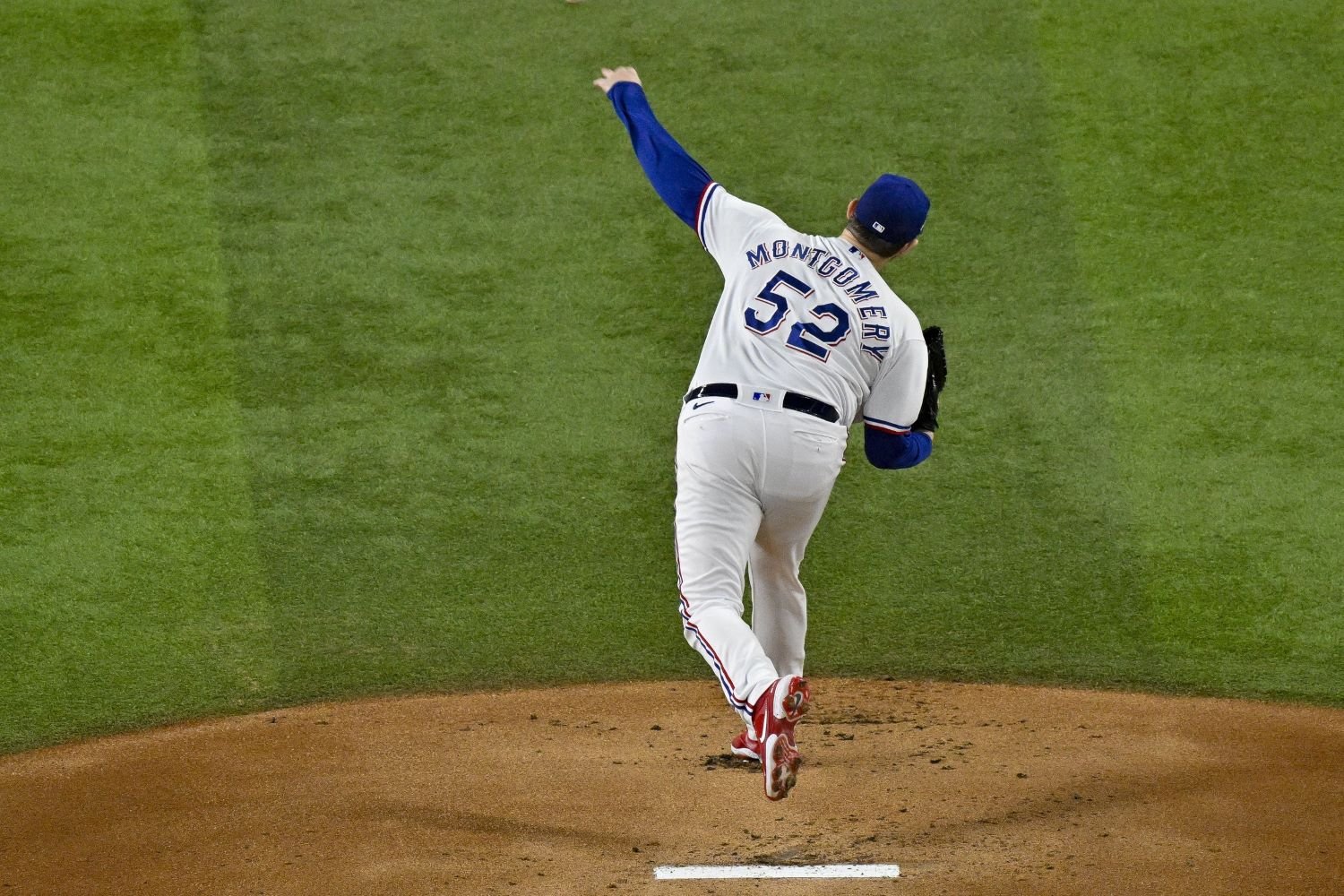 It's true that this is the first time we've heard the Cubs tied to Jordan Montgomery, the erstwhile Yankees and Cardinals southpaw who made such a strong impression by fronting the Rangers rotation in October. That doesn't make this actually surprising, though, because the guy does a lot of the things the Cubs want starting pitchers to do. As much as fans have fixated on the apparent need for more whiffs from the starting rotation in 2024, that's not necessarily the Cubs' priority. Contrariwise, the team prizes durability, pitchability, and the ability to fill up the strike zone. It's not by pure coincidence that they went out into last winter's free-agent market and came back with Jameson Taillon. It's not an accident that Kyle Hendricks is the final on-field holdover of the 2016 team. It's not Justin Steele's internal wiring that led to the halving of his walk rate and his command-over-stuff breakout in 2023. Whereas many teams lock in on specific, stuff-oriented pitch characteristics, the Cubs prefer a holistic and fundamentally old-school approach--even if they use extremely modern and quantitative methods to make sure that approach works. Montgomery fits into all of that gorgeously. He runs below-average strikeout rates, which will dent his value on the market even as his postseason brilliance gooses it. He also limits walks and induces lots of weak or harmless contact, though. Moreover, he takes the ball every fifth day. Since the start of 2020, Montgomery has made 104 regular-season starts--more than all but eight other pitchers in MLB. He's 19th in innings pitched over that span. While the Cubs have quietly become great at finding high-velocity, great-stuff arms in relief, they continue to prefer things other than raw power or movement in the rotation. That's why Montgomery, who sits right around 93 miles per hour with a sinker that doesn't really miss bats (but which he does command very well), figures to appeal to them as much as to almost any other team in MLB. I think the team believes that some of the movements that generate extreme velocities and elite spin also tend to generate physical problems. They believe in guys with pitching-specific athleticism, who can succeed without pushing the limits of their tissues as hard as some others do. It's not as though Montgomery is without an injury history. He underwent Tommy John surgery five years ago. Other than that, though, he has an impressively clean record. The only starts he's missed since coming back from that operation were when he was shelved with COVID in 2021. When on the mound, he also pitches in a distinctly Cubs style. Though he utilizes a sinker as his primary fastball, Montgomery works with the pitch up in the zone, just as Kyle Hendricks and other Cubs have recently had some success doing. It doesn't miss bats, but it induces weak contact and plenty of ground balls. By contrast, and partially because of the combination of his over-the-top delivery fastball command, his changeup and curveball each miss plenty of bats. The curve isn't one of those hissing, 3,000-RPM things, though. It has perfect spin mirroring with the sinker, but tumbles, a bit the way Drew Smyly's works. It doesn't back up, as Smyly's sometimes does, but it has the same unorthodox hook-behind-the-navel effect on hitters. His changeup is especially funky. Of the 139 pitchers who threw at least 200 changeups in 2023, only six had less arm-side run on that pitch than Montgomery, and only two got less drop on it. What he throws is a true, floating straight change, a pitch that befuddles right-handed batters because it looks so much like his sinker out of the hand and then feels like it never gets to them. The Cubs (led by Hendricks's famous cut-change) had the changeups with the least run in the league last year, and they were sixth in changeups with the least downward movement. None of this means that Montgomery will actually sign with the Cubs. They have irons in many fires when it comes to upgrading the rotation, and they also have to bolster their lineup this winter, all without breaking the bank too badly. Still, it shouldn't shock anyone to see these parties mentioned in connection with one another, because they could not be a more serendipitous match on a pure profile level. Dating apps would run these two at each other like zoo breeders locking endangered animals in one small habitat. Whether that actually results in consummation is uncertain even for Farmers Only and the zoo, though, so we shouldn't expect it to be automatic here, either.
 -
BTW, for those who read Baseball Prospectus and saw the phenomenal work Robert Orr did earlier this month to create a metric for selective aggression at the plate (SEAGER, it's called): Check where Paredes ranked last year. https://docs.google.com/spreadsheets/d/1FIyLmBeGhoG9iV2viQIjM-K1qzZJPQqP7CR7EgUUUEI/edit#gid=0
-
I thought about Bellinger in this vein, too! I didn't end up including it in the piece, but thank you. Definitely an interesting part of the conversation. I also kinda wonder if that reflects a predilection the Cubs have developed for guys who pull it in the air, even at the expense of raw exit velo. What he costs is obviously the question, and I don't have a strong feel for it. I think it might be less than you would guess, but I understand the reluctance to give up big stuff for a guy whose flaws stand out pretty sharply and who has a short track record.
-
The only things for sure are taxes, death and trouble... oh, and the Rays trading away players before they get expensive. The latest name to hit the trade rumor mill is familiar to the Cubs, and could be a perfect fit. Image courtesy of © Nathan Ray Seebeck-USA TODAY Sports Because he's just shy of three years of MLB service times, Isaac Paredes is already hitting arbitration this winter. The slugging third baseman is projected to earn $3.2 million via the system in 2024, according to MLB Trade Rumors. That figure, alone, shouldn't scare the Rays off, and it won't. As a part of a large group of arbitration-eligible players and in a winter in which they want to cut back their payroll, though, Paredes and the Rays are already growing apart. The Cubs originally signed Paredes out of his native México in 2015, and traded him to the Tigers in 2017, as part of the deal that brought them Alex Avila and Justin Wilson. Later, the Tigers ill-advisedly dealt him to Tampa Bay, in exchange for Austin Meadows. Now, Paredes is coming off two season with the Rays in which he's hit 51 home runs and 40 doubles and drawn 102 walks, in just over 950 total plate appearances. Somehow, he's still only turning 25 in February. The power and patience are legitimate, even if he doesn't come by it conventionally. Paredes isn't a guy who hits the ball unusually hard, or who hits it hard unusually often. Instead, he does something that can be just as valuable: seek his pitch and put it in the air to the pull field. Paredes has a good eye at the plate. He has historically run low chase rates, and he makes contact at an above-average clip both within and outside the strike zone. That's the foundation of a productive offensive profile, but its utility depends on the ability to hit the ball hard. The Rays acquired Paredes right on the eve of Opening Day in 2022, so they didn't get a chance to immediately implement a change in his approach. Here's the frequency with which he swung at pitches in various locations that season: You can't be especially effective with that passive an approach to the outer third of the plate, unless you have truly lethal power when you do swing. Paredes managed 20 home runs in 2022, but his overall batting line of .205/.304/.435 was underwhelming. His value was tied to playing a passable third base and providing power from the bottom half of the batting order. Together, the player and the team made a significant change in 2023. Here's where he swung in various zones this year: He actually chased a good bit more in 2023, and his strikeout rate crept up a tiny bit, but everything else got better. After 44.1 percent of his career strikeouts through 2022 were called punchouts, only 13.5 percent of his 2023 ones were. Using those great contact skills and a dedication to lifting the ball, he managed to find many more singles on "bad balls", which weren't really so bad for him. Here's every batted ball he hit with a launch angle between 10 and 40 degrees in 2022: And here's the transformation he made in 2023, with this more aggressive approach: In reacting to these rumors, Michael Cerami of Bleacher Nation made the reasonable observation that Paredes not hitting the ball hard is a bit of a red flag, given how power-reliant his profile is. However, considering all the above, I think the fairest conclusion is that he's an average-plus hitter who probably got slightly lucky on batted balls last year, but who decidedly got unlucky on them in 2022. He's under team control for four more seasons, albeit at arbitration-set salaries the whole way. Because contact is such a driver of his offensive skillset, he's likely to age poorly after his mid-20s, so don't think of him as a new cornerstone for a decade to come. As a trade candidate right now, though, he's exciting. He'd thrive at Wrigley Field, just as he did in Tampa, as long as the Cubs are smart enough to stick with the approach changes he made this season. What do you think of Paredes as a solution to the Cubs' uncertain third-base situation? Drop a comment and discuss how much you'd be willing to trade for him. View full article
-
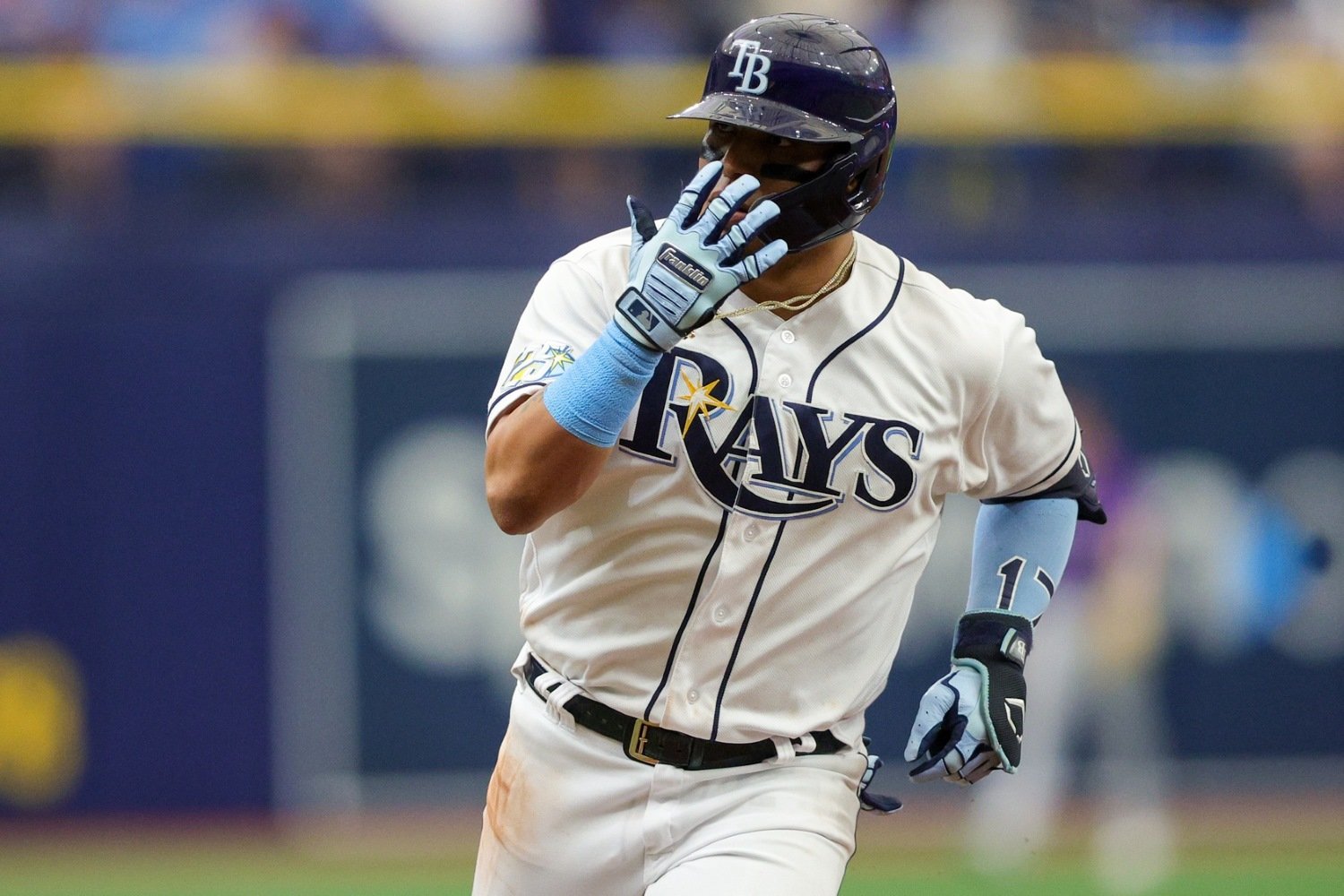 Because he's just shy of three years of MLB service times, Isaac Paredes is already hitting arbitration this winter. The slugging third baseman is projected to earn $3.2 million via the system in 2024, according to MLB Trade Rumors. That figure, alone, shouldn't scare the Rays off, and it won't. As a part of a large group of arbitration-eligible players and in a winter in which they want to cut back their payroll, though, Paredes and the Rays are already growing apart. The Cubs originally signed Paredes out of his native México in 2015, and traded him to the Tigers in 2017, as part of the deal that brought them Alex Avila and Justin Wilson. Later, the Tigers ill-advisedly dealt him to Tampa Bay, in exchange for Austin Meadows. Now, Paredes is coming off two season with the Rays in which he's hit 51 home runs and 40 doubles and drawn 102 walks, in just over 950 total plate appearances. Somehow, he's still only turning 25 in February. The power and patience are legitimate, even if he doesn't come by it conventionally. Paredes isn't a guy who hits the ball unusually hard, or who hits it hard unusually often. Instead, he does something that can be just as valuable: seek his pitch and put it in the air to the pull field. Paredes has a good eye at the plate. He has historically run low chase rates, and he makes contact at an above-average clip both within and outside the strike zone. That's the foundation of a productive offensive profile, but its utility depends on the ability to hit the ball hard. The Rays acquired Paredes right on the eve of Opening Day in 2022, so they didn't get a chance to immediately implement a change in his approach. Here's the frequency with which he swung at pitches in various locations that season: You can't be especially effective with that passive an approach to the outer third of the plate, unless you have truly lethal power when you do swing. Paredes managed 20 home runs in 2022, but his overall batting line of .205/.304/.435 was underwhelming. His value was tied to playing a passable third base and providing power from the bottom half of the batting order. Together, the player and the team made a significant change in 2023. Here's where he swung in various zones this year: He actually chased a good bit more in 2023, and his strikeout rate crept up a tiny bit, but everything else got better. After 44.1 percent of his career strikeouts through 2022 were called punchouts, only 13.5 percent of his 2023 ones were. Using those great contact skills and a dedication to lifting the ball, he managed to find many more singles on "bad balls", which weren't really so bad for him. Here's every batted ball he hit with a launch angle between 10 and 40 degrees in 2022: And here's the transformation he made in 2023, with this more aggressive approach: In reacting to these rumors, Michael Cerami of Bleacher Nation made the reasonable observation that Paredes not hitting the ball hard is a bit of a red flag, given how power-reliant his profile is. However, considering all the above, I think the fairest conclusion is that he's an average-plus hitter who probably got slightly lucky on batted balls last year, but who decidedly got unlucky on them in 2022. He's under team control for four more seasons, albeit at arbitration-set salaries the whole way. Because contact is such a driver of his offensive skillset, he's likely to age poorly after his mid-20s, so don't think of him as a new cornerstone for a decade to come. As a trade candidate right now, though, he's exciting. He'd thrive at Wrigley Field, just as he did in Tampa, as long as the Cubs are smart enough to stick with the approach changes he made this season. What do you think of Paredes as a solution to the Cubs' uncertain third-base situation? Drop a comment and discuss how much you'd be willing to trade for him.
 -
I think you'd find that a lot of the people who want Woodruff are also gaga for Glasnow. As someone who emphatically does not think Woodruff would be a good pickup for them and who's lower than most on Glasnow, I won't presume to speak for either bloc, but I think your perception of those folks' take is a little off. By contrast, your framing of the expected innings Glasnow might throw is off, but not by a little. 120-150? Look, that'd be great! But the range we should *project* for him is more like 90-120. The 120 he threw last year are the most he's ever managed in MLB, and he hasn't thrown more than that overall since the years he divided between AAA and the big leagues in 2016 and 2017.
-
With just five days left before the MLB Winter Meetings get fully underway in Nashville, trade rumors are picking up steam. Here's why the ones around the Cubs continue to center on the Rays' gawky ace. Image courtesy of © Gregory Fisher-USA TODAY Sports By now, you've probably heard about Tyler Glasnow's gaudy strikeout rates. That's the selling point for him. It's why he's drawn so much interest, despite his lack of durability and the fact that he becomes a free agent after 2024, a season in which he'll make $25 million. Every team, especially in 2023, loves pitchers who strike people out. There's not much subtlety to it, but it's the way of the pitching world. As the Rays have shopped Glasnow and rumors have intensified, though, the Cubs are standing out (along with the Dodgers and Reds, and a couple presumed dark horses) from the field. They clearly have an interest that runs deeper than the sheer strikeout stuff, and an attraction to him that chips away at the conservatism that has historically led Jed Hoyer to prefer safer, sturdier, lower-ceiling starters. What fuels that? Some of the answer is in Glasnow's unique physicality and delivery. Only a handful of other pitchers in MLB get further down the mound and release their pitches closer to home plate than does the long, fluid Glasnow. This can sometimes feel like a small thing, but compare these overhead 3D visualizations of two pitchers' pitches. First, here's Glasnow. Now, here's Justin Verlander--another tall right-handed hurler with mid-90s heat and two breaking balls that work off of it. From this digital bird's eye, you can see how big a difference extension can make. Glasnow's hand is a foot and a half closer to home than is Verlander's on an average fastball. Note the white and pink dots along the flight paths of the pitches, too. Because of the greater extension Glasnow achieves, hitters can't recognize and differentiate his offerings with as much distance between them and the ball (and thus, with as much time to decide on whether to attack) as they can against Verlander's stuff. Glasnow pays a kinetic price for the intensity of his delivery. His injury history makes that clear. However, he also gets a real benefit from it. Of the 506 pitchers who threw at least 200 fastballs last year, Glasnow ranked 72nd in raw velocity, but 25th in perceived velocity, according to Statcast. That he throws that hard with that much extension also helps engender swings (and especially swings and misses) on his breaking stuff. The Cubs don't generally go wild for extension. Whereas Glasnow's Rays ranked first in MLB in that regard in 2023, Chicago was 26th. It's something they've been trying to balance out a bit, though, and as Craig Counsell comes down from Milwaukee to take the helm, he might also bring along his predilections in these small things. The Brewers ranked second to Tampa in extension this year. One thing for which the Cubs already do go wild, though, is cutting action on four-seam fastballs. Famously, some sources reclassified Justin Steele's fastball as a cutter this year, and that's with good reason. If you count that heater as a four-seamer, though, the Cubs had more cut (or less armside run, to flip things around) on their four-seam fastballs in 2023 than any other team in MLB. Of the 359 hurlers who threw at least 200 four-seamers this year, Glasnow ranked 11th in cut on the pitch. In that way, he would fit their pitching philosophy perfectly, and Tommy Hottovy would love working with him. None of this means Glasnow is a perfect trade target. The injuries that have plagued him throughout his career should give any team pause about trading significant talent to get him, but it sure seems like the price tag will be substantial. That's the nature of the marketplace for starting pitching throughout MLB over the last few years, as the proliferation of guys like Glasnow (great, but fragile) has created an artificially high level of consistent demand for starters. In all likelihood, what he gets traded for will make fans of whichever team lands him wince. Still, there are clear matches between the Cubs and this particular hurler. They have the organizational depth to trade for him without that wince being too long-lasting, too. While Glasnow is a deeply imperfect pitcher, his unique characteristics make him alluring in a way few other available starters are. View full article
-
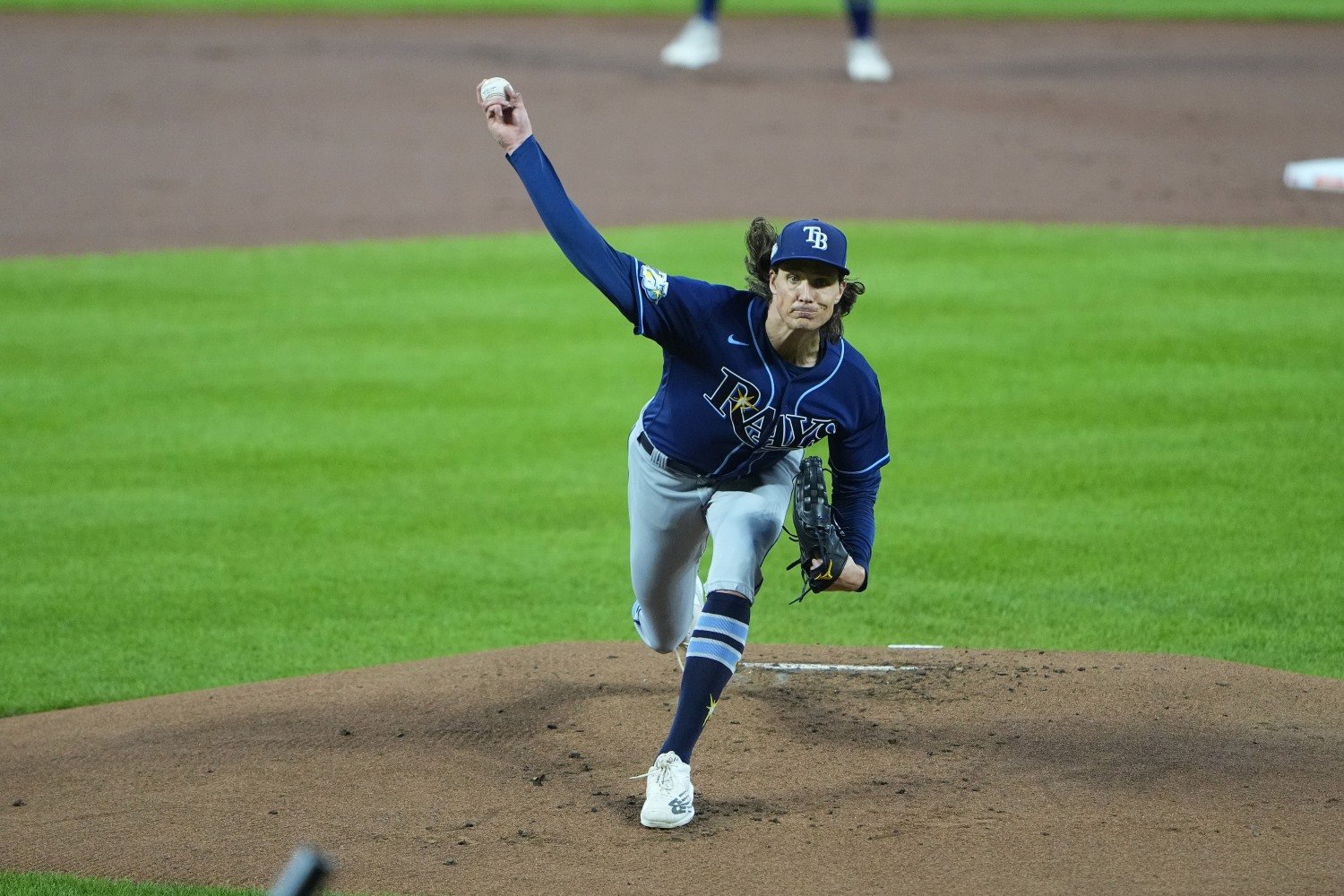 By now, you've probably heard about Tyler Glasnow's gaudy strikeout rates. That's the selling point for him. It's why he's drawn so much interest, despite his lack of durability and the fact that he becomes a free agent after 2024, a season in which he'll make $25 million. Every team, especially in 2023, loves pitchers who strike people out. There's not much subtlety to it, but it's the way of the pitching world. As the Rays have shopped Glasnow and rumors have intensified, though, the Cubs are standing out (along with the Dodgers and Reds, and a couple presumed dark horses) from the field. They clearly have an interest that runs deeper than the sheer strikeout stuff, and an attraction to him that chips away at the conservatism that has historically led Jed Hoyer to prefer safer, sturdier, lower-ceiling starters. What fuels that? Some of the answer is in Glasnow's unique physicality and delivery. Only a handful of other pitchers in MLB get further down the mound and release their pitches closer to home plate than does the long, fluid Glasnow. This can sometimes feel like a small thing, but compare these overhead 3D visualizations of two pitchers' pitches. First, here's Glasnow. Now, here's Justin Verlander--another tall right-handed hurler with mid-90s heat and two breaking balls that work off of it. From this digital bird's eye, you can see how big a difference extension can make. Glasnow's hand is a foot and a half closer to home than is Verlander's on an average fastball. Note the white and pink dots along the flight paths of the pitches, too. Because of the greater extension Glasnow achieves, hitters can't recognize and differentiate his offerings with as much distance between them and the ball (and thus, with as much time to decide on whether to attack) as they can against Verlander's stuff. Glasnow pays a kinetic price for the intensity of his delivery. His injury history makes that clear. However, he also gets a real benefit from it. Of the 506 pitchers who threw at least 200 fastballs last year, Glasnow ranked 72nd in raw velocity, but 25th in perceived velocity, according to Statcast. That he throws that hard with that much extension also helps engender swings (and especially swings and misses) on his breaking stuff. The Cubs don't generally go wild for extension. Whereas Glasnow's Rays ranked first in MLB in that regard in 2023, Chicago was 26th. It's something they've been trying to balance out a bit, though, and as Craig Counsell comes down from Milwaukee to take the helm, he might also bring along his predilections in these small things. The Brewers ranked second to Tampa in extension this year. One thing for which the Cubs already do go wild, though, is cutting action on four-seam fastballs. Famously, some sources reclassified Justin Steele's fastball as a cutter this year, and that's with good reason. If you count that heater as a four-seamer, though, the Cubs had more cut (or less armside run, to flip things around) on their four-seam fastballs in 2023 than any other team in MLB. Of the 359 hurlers who threw at least 200 four-seamers this year, Glasnow ranked 11th in cut on the pitch. In that way, he would fit their pitching philosophy perfectly, and Tommy Hottovy would love working with him. None of this means Glasnow is a perfect trade target. The injuries that have plagued him throughout his career should give any team pause about trading significant talent to get him, but it sure seems like the price tag will be substantial. That's the nature of the marketplace for starting pitching throughout MLB over the last few years, as the proliferation of guys like Glasnow (great, but fragile) has created an artificially high level of consistent demand for starters. In all likelihood, what he gets traded for will make fans of whichever team lands him wince. Still, there are clear matches between the Cubs and this particular hurler. They have the organizational depth to trade for him without that wince being too long-lasting, too. While Glasnow is a deeply imperfect pitcher, his unique characteristics make him alluring in a way few other available starters are.
 -
Aha! But you can't. 😄 We do have to be careful not to make the perfect the enemy of the good here. There are a lot of tremendous fits for the Cubs who (like Tucker) are absolutely, positively unavailable, or who (like Yamamoto, to pick one) are simply gonna sign elsewhere instead of with them. I like Bregman as a (yes, certainly imperfect for this roster, but) very good answer at a position where they have the opening, at a reasonable cost.
-
The early trade buzz around the Cubs took a turn for the somewhat bizarre last week, when they were tenuously connected to an All-Star-caliber American League infielder. This week, there's a more plausible candidate with very similar credentials. Bregman is a good candidate, in terms of striking the delicate balance between having substantial trade value, not being locked in beyond the coming season, and having a lot of real dollars attached to him. Because of the structure of his deal, trading him would only clear $20 million from Houston's books for tax purposes, but the difference between that and his real salary (so, $8.5 million) could become a cushion that Jim Crane would use to pay any bills if the team just edged over the threshold for this year. After 2024, it's not just Bregman who leaves. So, too, does Justin Verlander, for whom the Astros are on the hook for over $18 million next year. They'll have the flexibility to duck right back under the threshold, but in order to be willing to clear it even for one year, Crane might ask his front office to save him money en route. Because the push factors making Bregman (theoretically) available are stronger than is the case with Bichette, the asking price would be lower. He's older, more expensive, and will hit free agency again sooner. He also has a lower ceiling than Bichette, who has been very good but not yet a true superstar in his time in MLB, and who will be just 26 years old in 2024. The Cubs wouldn't be getting as dynamic a player, but the certainty and the smaller transaction cost with Bregman matter. Bregman is already a third baseman, and a fine one. The Cubs wouldn't need to make a position change and hope it went well, and they wouldn't be asking for someone's house so they could use it as a car. While his power has sagged slightly since his peak, Bregman controls the strike zone as well as any hitter in baseball. Of the 201 batters with at least 750 plate appearances since the start of 2022, Bregman has the 12th-highest walk rate and 10th-lowest strikeout rate. Arguably, there's no one in baseball who puts together tougher at-bats. Unlike many other players who are almost as good at those plate-discipline skills, he also gets the ball in the air at a high rate. That doesn't mean he's without risk. Again, his power is diminished, relative to his best seasons, and it's fair to wonder if some of that power was more about the extremely aerodynamic ball the league used in 2018 and 2019 than about Bregman himself. He pulled the ball much less last season than in the past, which had something to do with an intentional change in approach but might also indicate that his bat is starting to decline. Nonetheless, the fit here is obvious. Bregman does well the things the Cubs prize most from their hitters. In the Killer Tofu lineup they keep threatening to build (lethal, but without beef), Bregman would make a lot of sense. The question is what the Astros would want in return for him, but even there, a match might be found with relative ease. Houston is suddenly in need of some upper-level pitching depth, and the Cubs have that to spare, given an opportunity like this. What do you think of Bregman as a potential Cubs acquisition? How far should the Cubs go to make this happen? Let's chop it up. View full article
-
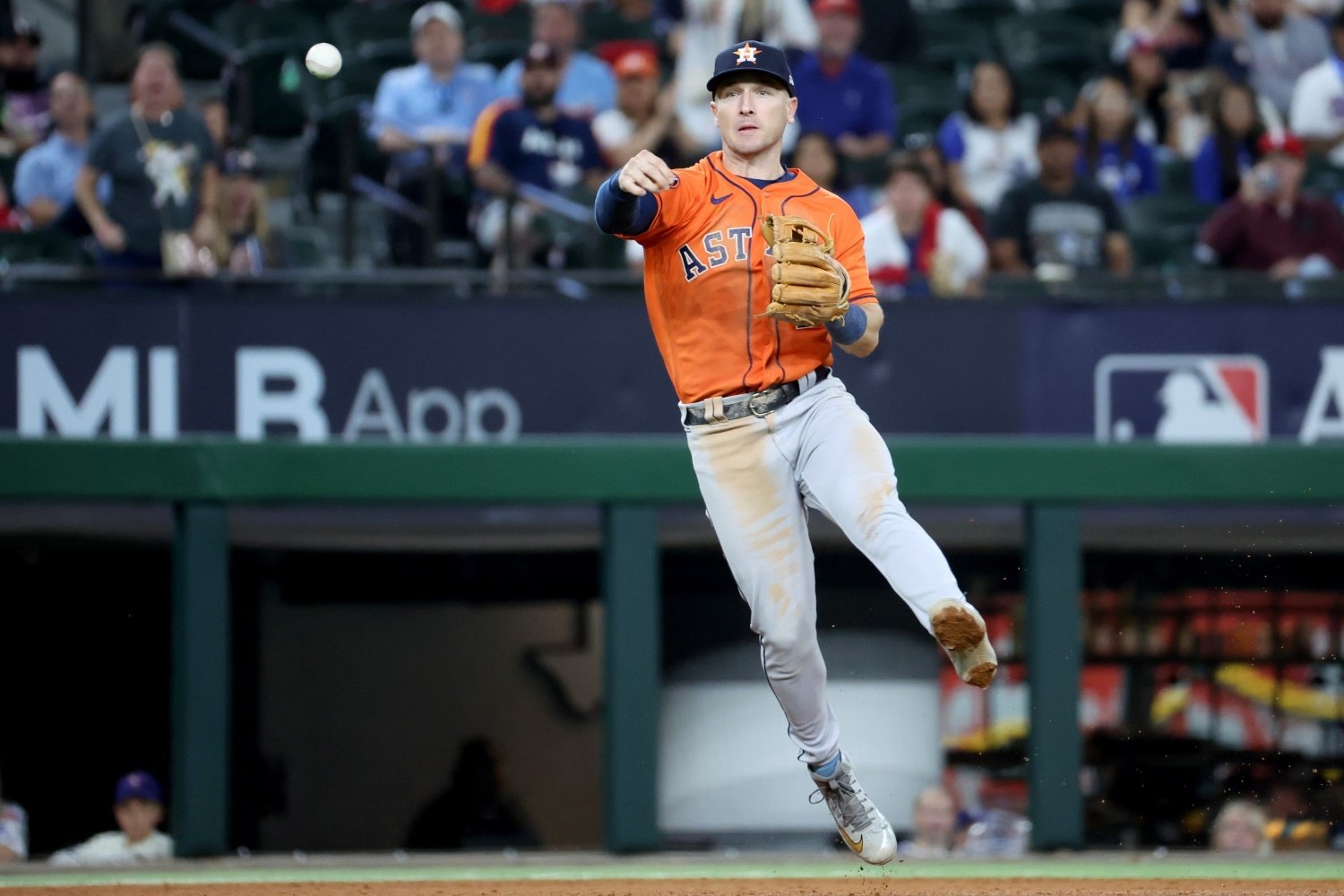 It remains hard to see how, given the competitive posture of the Toronto Blue Jays and the two years of team control they still hold over Bo Bichette, the Cubs could acquire the young star at a price commensurate with his value to them. They'd be paying the exorbitant price a contender ought to extract when trading a key player at a premium position with multiple years of control left, and they'd then be moving Bichette from shortstop to third base, where his replacement level is inevitably lower. There are just enough variables moved around, though, to make rumors that Alex Bregman is available much more plausible. Under contract for just one more season, Bregman is due $28.5 million in 2024, and while he remains an incredible player, it's been four full seasons since he was a superstar and MVP candidate in 2018 and 2019. The Astros have not paid the competitive balance tax since that tax gained some real teeth, over a decade ago. The only year in which they exceeded the tax was 2020--when the league furloughed the tax to allow teams to save money during the pandemic. Without any additions or further subtractions, the team stands just a few million dollars below the first threshold for 2024; they have to move some money. Bregman is a good candidate, in terms of striking the delicate balance between having substantial trade value, not being locked in beyond the coming season, and having a lot of real dollars attached to him. Because of the structure of his deal, trading him would only clear $20 million from Houston's books for tax purposes, but the difference between that and his real salary (so, $8.5 million) could become a cushion that Jim Crane would use to pay any bills if the team just edged over the threshold for this year. After 2024, it's not just Bregman who leaves. So, too, does Justin Verlander, for whom the Astros are on the hook for over $18 million next year. They'll have the flexibility to duck right back under the threshold, but in order to be willing to clear it even for one year, Crane might ask his front office to save him money en route. Because the push factors making Bregman (theoretically) available are stronger than is the case with Bichette, the asking price would be lower. He's older, more expensive, and will hit free agency again sooner. He also has a lower ceiling than Bichette, who has been very good but not yet a true superstar in his time in MLB, and who will be just 26 years old in 2024. The Cubs wouldn't be getting as dynamic a player, but the certainty and the smaller transaction cost with Bregman matter. Bregman is already a third baseman, and a fine one. The Cubs wouldn't need to make a position change and hope it went well, and they wouldn't be asking for someone's house so they could use it as a car. While his power has sagged slightly since his peak, Bregman controls the strike zone as well as any hitter in baseball. Of the 201 batters with at least 750 plate appearances since the start of 2022, Bregman has the 12th-highest walk rate and 10th-lowest strikeout rate. Arguably, there's no one in baseball who puts together tougher at-bats. Unlike many other players who are almost as good at those plate-discipline skills, he also gets the ball in the air at a high rate. That doesn't mean he's without risk. Again, his power is diminished, relative to his best seasons, and it's fair to wonder if some of that power was more about the extremely aerodynamic ball the league used in 2018 and 2019 than about Bregman himself. He pulled the ball much less last season than in the past, which had something to do with an intentional change in approach but might also indicate that his bat is starting to decline. Nonetheless, the fit here is obvious. Bregman does well the things the Cubs prize most from their hitters. In the Killer Tofu lineup they keep threatening to build (lethal, but without beef), Bregman would make a lot of sense. The question is what the Astros would want in return for him, but even there, a match might be found with relative ease. Houston is suddenly in need of some upper-level pitching depth, and the Cubs have that to spare, given an opportunity like this. What do you think of Bregman as a potential Cubs acquisition? How far should the Cubs go to make this happen? Let's chop it up.
 -
We're nearly to the end of November, and the Cubs haven't yet checked off any of the major items on their winter shopping list. It's not time to panic, but perhaps now is a good time to clarify their hierarchy of needs for 2024. Image courtesy of © Isaiah J. Downing-USA TODAY Sports It's not especially hard to list the things the Cubs most need in order to be a competitive team next season. Because of their offensive and defensive strength on the middle infield and in the outfield corners, those positions are spoken-for. Catcher is a slightly more complicated story, but it sure doesn't seem like they will (or need to) make improvement there a priority. Positionally, they have some degree of need for five things: A third baseman A first baseman Center field depth Starting pitching Relief pitching They also have a couple of needs that are orthogonal to position, but which can be viewed as equally important: More power (especially left-handed power) in their lineup More swing-and-miss from their starting pitchers It's hard to argue that they're already adequate in all of those ways, or that they're seriously deficient in any other one. This is clearly the checklist for Jed Hoyer and Carter Hawkins this winter. Since checking that many boxes in one offseason walks the line between difficult and impossible, though, the front office needs to do some triage and address the most glaring and valuable needs most aggressively. Thus, it's worth trying to put all of the above in order. I'll tackle this task by addressing the issues in the order of urgency and magnitude of needed improvement I perceive, from greatest to least. You can offer your own opinions on that ranking, though, and prescribe your own solutions. 1. Starting Pitching (with an emphasis on whiffs) Right off the bat, I'm cheating a bit. This item combines one of the positional needs with one of the production-oriented ones. That's the nature of upgrading a roster, though: you get better at various skills and in various areas by acquiring new players at various positions. To that end, I'm focused most on how well the Cubs can deeper their rotation this winter, without sacrificing upside to raise their floor. Obviously, a number of names have already swirled through the rumor mill this month. The Cubs don't seem to be frontrunners for Yoshinobu Yamamoto, and (by Scott Boras's design, I think) no one is talking much yet about what specific shape Blake Snell's market will take. The most intriguing (though that's an importantly different thing than 'best') names who have come up in close connection with the Cubs are trade candidates Tyler Glasnow and Shane Bieber. Glasnow is a baseball Tantalus, with strikeout rates that make any starter this side of Jacob deGrom blush--but a health record not even deGrom would envy. He gives up a lot of hard contact, but that's only when hitters actually make contact, and he's thrown enough strikes to be dominant for most of the last half-decade when he's been able to take the ball. The problem is that he's owed $25 million, would still cost something valuable in exchange with Tampa Bay, and has never thrown more than 120 innings in a professional season. Like Glasnow, Bieber has a troubling recent injury history. Like Glasnow, he's a free agent after next season. Like Glasnow, he pitches for a team strapped for cash and uninterested in paying him big money in 2024. That's where the similarities end. Bieber is one of the best in baseball at pounding the strike zone, but (though he's only 28 years old) he's no longer the strikeout machine he could be at his best. He would be a solid upgrade at the top of the Cubs' rotation, but it seems very unlikely that he'll ever regain the form that garnered him a Cy Young Award in 2020 and serious consideration for the same in 2019 and 2022. His stuff is diminished. To me, neither Glasnow nor Bieber is an ideal solution. The ideal solutions to this twinned problem are hugely expensive, though, so the Cubs might shy away from them. The good news is that, though doing too little is a real danger and doing nothing would be a dereliction of duty, the Cubs do have sound depth in the rotation already. Javier Assad doesn't miss as many bats as you'd like. His ceiling in the rotation is relatively low. Still, his stuff is good enough to frequently induce soft contact, and he has a blend of athleticism and competitive intellect that allows him to outpitch his raw talent. If Assad is the fifth starter entering 2024, the Cubs needn't feel badly about it. 2. (Left-Handed) Power Here's where, pointedly, I'm not being position-specific. The Cubs need a great hitter to round out their lineup, and ideally two of them. It would be best if their best offensive addition were a left-handed hitter. It's fine if they're just a DH, though; the team doesn't need a premium defender at any position as badly as they need an elite hitter at any position. Yes, that sounds a lot like Shohei Ohtani. It also sounds like Juan Soto. Their costs would be very different, in that you'd have to trade talent (baseball's least renewable resource) in order to get Soto, whereas Ohtani would cost (almost) only cash. Because Soto is a free agent next winter, though, his price tag might be lower than Ohtani's by a wide enough margin to make paying in the more valuable currency worth it. By ranking this need above the need for a first baseman, I'm nodding in the direction of those extremely lofty targets, and away from Cody Bellinger. As serendipitous as their season together was, Bellinger and the Cubs are an imperfect fit going forward. I'm not sure whether or not the front office realizes that. They like Bellinger's playing style, and they've seemed wary of power-over-hit guys ever since the championship core went to seed due (in part) to their all-or-nothing tendencies. Bellinger is the antithesis of that, at least among guys who hit for some power. I've wrestled with the underlying batted-ball data on Bellinger for months now, and while I think the narrative that he doesn't hit the ball hard enough to consistently generate power going forward is flawed, I'm forced to acknowledge that there's a lot of real risk there. What we saw last season was a mixture of good performance and good luck for Bellinger, but crucially, it was also a season of very good health. We've seen how bad things can go for him when his body breaks down. That his expected stats were underwhelming even when he stayed healthy only reinforces the argument that he's a risk to get hurt again and lose a lot of his value in short order. 3. First Base While he's not left-handed, Pete Alonso would solve a lot of problems for the Cubs, if only in the short term. His numbers at Wrigley Field are something out of a video game, and that's not pure coincidence. The close fences in the power alley in left-center field mesh perfectly with Alonso's skill set. I would still surrender more to get Soto than to get Alonso, but because of the positional fit, the gap in what I think it would be appropriate for the Cubs to give up for each is very small. Failing that big a get, though, I still think the team needs a stabilizer at the cold corner. Unlike the other side of the diamond, first has no clear short-term solutions in place. That (not a genuine belief that he's a good fit for it, offensively or defensively) is why the team has asked Christopher Morel to pick up a first baseman's mitt this winter. I'm not out on Morel's bat (though I tend to agree with the growing feeling that his greatest value to the Cubs is as a trade chip, because he could play a fine second base somewhere else in the league) or ready to give up on Matt Mervis entirely, but the Cubs need to set a much higher floor at that position than they have done so far. 4. Relief Pitching Depth How much do you want to bet on the health of Adbert Alzolay's elbow and elbow-adjacent structures? That's the key question here, for me, and the answer I give is: as little as possible. Alzolay was a joy to watch in 2023, and his talent is beyond doubt. His durability is much more suspect. You can enter a season with a relief ace who poses this much injury risk when expectations are low or when your depth is superb, but neither of those things is true of the 2024 Cubs. They need someone who will at least co-captain the bullpen with Alzolay and Merryweather. They probably need to land two trustworthy relievers, all told, shoving the likes of Mark Leiter Jr. and Jose Cuas (with their impressive talent but inconsistent results) down toward the end of the bullpen bench. 5. Third Base Assuming they find a big bat elsewhere on the diamond, I think the Cubs have an adequate assemblage of talent at third base. To many, that will sound a bit optimistic, but the facts are that Nick Madrigal and Patrick Wisdom (between them) do a lot of things well. On a rate basis, no one in baseball was a better defender at third than Madrigal in 2023. That doesn't quite compute, but even the eye test would tell you that Madrigal was very good with the glove--surprisingly so, given his below-average raw arm strength. Madrigal's contact-centered approach and dearth of power make it tough to stomach him as an everyday corner infielder. Wisdom's power can make up for that, though, if the two are used optimally. David Ross deserves a modicum of credit for occasionally finding a good balance between them last year, but I trust Craig Counsell to do so in a more complete, yearlong way. Add Matt Shaw, B.J. Murray, and James Triantos to the list of possible contributors, and this team has a nice mixture of depth, upside, and certainty at third. It shouldn't escape your notice that, whereas the Cubs only kept Wisdom at the non-tender deadline once he agreed to a deal to avoid arbitration in advance, the team unblinkingly tendered Madrigal a contract. 6. Center Field This one should be non-controversial. With Pete Crow-Armstrong almost sure to claim the bulk of the playing time by midseason, the need for this buttress is limited to the early portion of the season. In my opinion, though, it's further curtailed by the fact that Mike Tauchman is a capable bridge starter, himself. By the end of 2023, the magic of the Summer of Mike Tauchman had faded, but again, the team tendered him a deal earlier this month, so they believe he can be a solid contributor in the right role. According to Baseball Prospectus's Defensive Runs Prevented (DRP), Tauchman was a slightly below-average defender in center last season. He acquitted himself fine, though, thanks to an arm that nudged him back toward average and good offensive value. His power was fleeting and seems unlikely to return in 2024, but he still has on-base skills. Notably, Tauchman also racked up 4.2 Baserunning Runs (BRR), making plays on the bases once he got there. If the Cubs are going to make an external addition to this mix, it should be either very inexpensive, or someone versatile--like Bellinger was last season. It's clear that the Cubs need to make multiple high-impact moves this winter, and tack on a couple of smaller but vital ones to finish off a division-winning roster. It's just not clear which ones they'll actually make, and that question depends greatly on how they sort out these needs and opportunities. What do you think of my ranking? Let's keep the stove warm while we wait for the floodgates to open. View full article
-
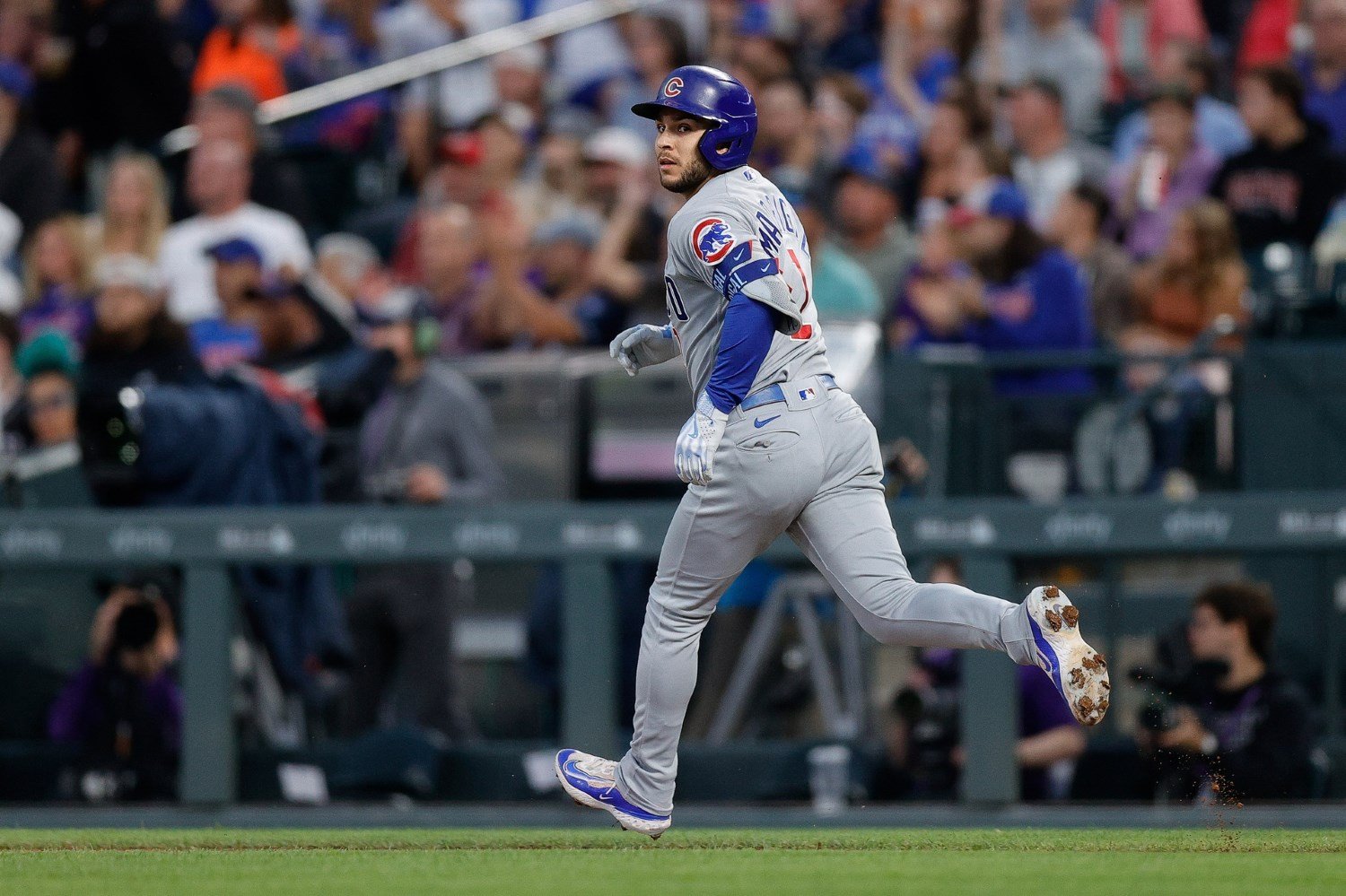 It's not especially hard to list the things the Cubs most need in order to be a competitive team next season. Because of their offensive and defensive strength on the middle infield and in the outfield corners, those positions are spoken-for. Catcher is a slightly more complicated story, but it sure doesn't seem like they will (or need to) make improvement there a priority. Positionally, they have some degree of need for five things: A third baseman A first baseman Center field depth Starting pitching Relief pitching They also have a couple of needs that are orthogonal to position, but which can be viewed as equally important: More power (especially left-handed power) in their lineup More swing-and-miss from their starting pitchers It's hard to argue that they're already adequate in all of those ways, or that they're seriously deficient in any other one. This is clearly the checklist for Jed Hoyer and Carter Hawkins this winter. Since checking that many boxes in one offseason walks the line between difficult and impossible, though, the front office needs to do some triage and address the most glaring and valuable needs most aggressively. Thus, it's worth trying to put all of the above in order. I'll tackle this task by addressing the issues in the order of urgency and magnitude of needed improvement I perceive, from greatest to least. You can offer your own opinions on that ranking, though, and prescribe your own solutions. 1. Starting Pitching (with an emphasis on whiffs) Right off the bat, I'm cheating a bit. This item combines one of the positional needs with one of the production-oriented ones. That's the nature of upgrading a roster, though: you get better at various skills and in various areas by acquiring new players at various positions. To that end, I'm focused most on how well the Cubs can deeper their rotation this winter, without sacrificing upside to raise their floor. Obviously, a number of names have already swirled through the rumor mill this month. The Cubs don't seem to be frontrunners for Yoshinobu Yamamoto, and (by Scott Boras's design, I think) no one is talking much yet about what specific shape Blake Snell's market will take. The most intriguing (though that's an importantly different thing than 'best') names who have come up in close connection with the Cubs are trade candidates Tyler Glasnow and Shane Bieber. Glasnow is a baseball Tantalus, with strikeout rates that make any starter this side of Jacob deGrom blush--but a health record not even deGrom would envy. He gives up a lot of hard contact, but that's only when hitters actually make contact, and he's thrown enough strikes to be dominant for most of the last half-decade when he's been able to take the ball. The problem is that he's owed $25 million, would still cost something valuable in exchange with Tampa Bay, and has never thrown more than 120 innings in a professional season. Like Glasnow, Bieber has a troubling recent injury history. Like Glasnow, he's a free agent after next season. Like Glasnow, he pitches for a team strapped for cash and uninterested in paying him big money in 2024. That's where the similarities end. Bieber is one of the best in baseball at pounding the strike zone, but (though he's only 28 years old) he's no longer the strikeout machine he could be at his best. He would be a solid upgrade at the top of the Cubs' rotation, but it seems very unlikely that he'll ever regain the form that garnered him a Cy Young Award in 2020 and serious consideration for the same in 2019 and 2022. His stuff is diminished. To me, neither Glasnow nor Bieber is an ideal solution. The ideal solutions to this twinned problem are hugely expensive, though, so the Cubs might shy away from them. The good news is that, though doing too little is a real danger and doing nothing would be a dereliction of duty, the Cubs do have sound depth in the rotation already. Javier Assad doesn't miss as many bats as you'd like. His ceiling in the rotation is relatively low. Still, his stuff is good enough to frequently induce soft contact, and he has a blend of athleticism and competitive intellect that allows him to outpitch his raw talent. If Assad is the fifth starter entering 2024, the Cubs needn't feel badly about it. 2. (Left-Handed) Power Here's where, pointedly, I'm not being position-specific. The Cubs need a great hitter to round out their lineup, and ideally two of them. It would be best if their best offensive addition were a left-handed hitter. It's fine if they're just a DH, though; the team doesn't need a premium defender at any position as badly as they need an elite hitter at any position. Yes, that sounds a lot like Shohei Ohtani. It also sounds like Juan Soto. Their costs would be very different, in that you'd have to trade talent (baseball's least renewable resource) in order to get Soto, whereas Ohtani would cost (almost) only cash. Because Soto is a free agent next winter, though, his price tag might be lower than Ohtani's by a wide enough margin to make paying in the more valuable currency worth it. By ranking this need above the need for a first baseman, I'm nodding in the direction of those extremely lofty targets, and away from Cody Bellinger. As serendipitous as their season together was, Bellinger and the Cubs are an imperfect fit going forward. I'm not sure whether or not the front office realizes that. They like Bellinger's playing style, and they've seemed wary of power-over-hit guys ever since the championship core went to seed due (in part) to their all-or-nothing tendencies. Bellinger is the antithesis of that, at least among guys who hit for some power. I've wrestled with the underlying batted-ball data on Bellinger for months now, and while I think the narrative that he doesn't hit the ball hard enough to consistently generate power going forward is flawed, I'm forced to acknowledge that there's a lot of real risk there. What we saw last season was a mixture of good performance and good luck for Bellinger, but crucially, it was also a season of very good health. We've seen how bad things can go for him when his body breaks down. That his expected stats were underwhelming even when he stayed healthy only reinforces the argument that he's a risk to get hurt again and lose a lot of his value in short order. 3. First Base While he's not left-handed, Pete Alonso would solve a lot of problems for the Cubs, if only in the short term. His numbers at Wrigley Field are something out of a video game, and that's not pure coincidence. The close fences in the power alley in left-center field mesh perfectly with Alonso's skill set. I would still surrender more to get Soto than to get Alonso, but because of the positional fit, the gap in what I think it would be appropriate for the Cubs to give up for each is very small. Failing that big a get, though, I still think the team needs a stabilizer at the cold corner. Unlike the other side of the diamond, first has no clear short-term solutions in place. That (not a genuine belief that he's a good fit for it, offensively or defensively) is why the team has asked Christopher Morel to pick up a first baseman's mitt this winter. I'm not out on Morel's bat (though I tend to agree with the growing feeling that his greatest value to the Cubs is as a trade chip, because he could play a fine second base somewhere else in the league) or ready to give up on Matt Mervis entirely, but the Cubs need to set a much higher floor at that position than they have done so far. 4. Relief Pitching Depth How much do you want to bet on the health of Adbert Alzolay's elbow and elbow-adjacent structures? That's the key question here, for me, and the answer I give is: as little as possible. Alzolay was a joy to watch in 2023, and his talent is beyond doubt. His durability is much more suspect. You can enter a season with a relief ace who poses this much injury risk when expectations are low or when your depth is superb, but neither of those things is true of the 2024 Cubs. They need someone who will at least co-captain the bullpen with Alzolay and Merryweather. They probably need to land two trustworthy relievers, all told, shoving the likes of Mark Leiter Jr. and Jose Cuas (with their impressive talent but inconsistent results) down toward the end of the bullpen bench. 5. Third Base Assuming they find a big bat elsewhere on the diamond, I think the Cubs have an adequate assemblage of talent at third base. To many, that will sound a bit optimistic, but the facts are that Nick Madrigal and Patrick Wisdom (between them) do a lot of things well. On a rate basis, no one in baseball was a better defender at third than Madrigal in 2023. That doesn't quite compute, but even the eye test would tell you that Madrigal was very good with the glove--surprisingly so, given his below-average raw arm strength. Madrigal's contact-centered approach and dearth of power make it tough to stomach him as an everyday corner infielder. Wisdom's power can make up for that, though, if the two are used optimally. David Ross deserves a modicum of credit for occasionally finding a good balance between them last year, but I trust Craig Counsell to do so in a more complete, yearlong way. Add Matt Shaw, B.J. Murray, and James Triantos to the list of possible contributors, and this team has a nice mixture of depth, upside, and certainty at third. It shouldn't escape your notice that, whereas the Cubs only kept Wisdom at the non-tender deadline once he agreed to a deal to avoid arbitration in advance, the team unblinkingly tendered Madrigal a contract. 6. Center Field This one should be non-controversial. With Pete Crow-Armstrong almost sure to claim the bulk of the playing time by midseason, the need for this buttress is limited to the early portion of the season. In my opinion, though, it's further curtailed by the fact that Mike Tauchman is a capable bridge starter, himself. By the end of 2023, the magic of the Summer of Mike Tauchman had faded, but again, the team tendered him a deal earlier this month, so they believe he can be a solid contributor in the right role. According to Baseball Prospectus's Defensive Runs Prevented (DRP), Tauchman was a slightly below-average defender in center last season. He acquitted himself fine, though, thanks to an arm that nudged him back toward average and good offensive value. His power was fleeting and seems unlikely to return in 2024, but he still has on-base skills. Notably, Tauchman also racked up 4.2 Baserunning Runs (BRR), making plays on the bases once he got there. If the Cubs are going to make an external addition to this mix, it should be either very inexpensive, or someone versatile--like Bellinger was last season. It's clear that the Cubs need to make multiple high-impact moves this winter, and tack on a couple of smaller but vital ones to finish off a division-winning roster. It's just not clear which ones they'll actually make, and that question depends greatly on how they sort out these needs and opportunities. What do you think of my ranking? Let's keep the stove warm while we wait for the floodgates to open.
 -
Sonny Gray to Cards Per Heyman
Matthew Trueblood replied to Rex Buckingham's topic in Chicago Cubs Talk
Gosh, the Cards are betting heavily on having four twos, rather than a three and three fours, with all this. I can't believe they didn't go bigger--Snell or Yamamoto would have been the guys, for me. And Gray is so reliant on called strikes! And [gestures at Willson's framing numbers]! -
As the Cubs look ahead to their first season with Craig Counsell at the helm, one key question is whether (and to what extent) they can weaponize his brilliance with regard to bullpen management. One of his key assets for 2024 will be the slender, slider-slinging sage who struck out 98 batters in relief in 2023. Image courtesy of © Sam Greene/The Enquirer / USA TODAY NETWORK In a lengthy appearance on the Elite Baseball Development Podcast, Julian Merryweather told the story of his development as a pitcher and a person, how his mentality and arsenal have evolved, and what he did to achieve the breakout we saw from him this past season. The Cubs recently tendered Merryweather a contract for 2024, alongside fellow arbitration-eligible relievers Mark Leiter Jr. and Adbert Alzolay, so everything he had to say feels important. First of all, Merryweather's demeanor on the show was exactly what you'd expect, given the one he assumes on the mound. There, he always looks stoic (lower-case 's'), like he regards retiring opponents as a grim duty, although perhaps not a regrettable one. On the show, he was affable and engaging, but there was no hint of goofiness or irrepressible energy to him. On the contrary, in talking about his personal development, he mentioned spending time reading books about Stoicism (capital 'S', belonging to the famous philosophical tradition). He came off as the same even-keeled, intelligent creature he seemed to be when the Cubs called upon him so many times at key moments throughout the season. Interestingly, while Cubs fans quickly became familiar with him as a slider maven, he and host Eric Cressey recalled that Merryweather was primarily a fastball-changeup guy in his amateur days. Merryweather explained that he just didn't much need anything else, at those levels. Since he's been in pro ball, though, he's typically been a four-pitch pitcher, which is unusual for relievers. As the two noted, Merryweather's move to the bullpen had as much to do with the pressure the Blue Jays felt to justify acquiring him for former MVP Josh Donaldson as with anything else, and some of his injury issues stemmed from that transition, rather than the injuries forcing the move. Now, he seems to have full command of his three most important offerings. He threw his slider more often than any other pitch in 2023, but he not only utilized the changeup to great effect, but expressed his continued faith in it as a weapon--including in right-on-right confrontations with hitters. That's not unwarranted confidence. Last year, there were 386 offspeed pitches thrown at least 50 times by their owner. Merryweather's spin-deadening changeup yielded the sixth-lowest expected weighted on-base average (xwOBA) in that cohort, according to Statcast. The pitch might have limited utility, now that he's a reliever and will be asked to face righties more often than lefties, but it remains devastating. So is his slider, which has almost unbounded value. The challenge for Merryweather in 2024 will be to locate his fastball better. That was the pitch on which he got hit hard, and that's always been his problem. He throws hard and generates good spin on the pitch, but it flattens out at times and gets hammered. It doesn't yield significant numbers of whiffs, especially for such an aesthetically impressive offering. That was the one topic Cressey and Merryweather neglected a bit during the show. However, they lent some wonderful insights into the difficulty of being a big-league reliever, and into how Merryweather made both mechanical and training changes to become more durable in 2023. With some changes to his delivery (especially in his lower half), Merryweather felt that he got stronger and more efficient in his movements, which helped avoid a kinetic chain reaction that contributed to oblique injuries in previous campaigns. Even more interesting, though, was the long conversation between the two about the routines Merryweather developed to deal with the vicissitudes of being a reliever and having to be available every day. Merryweather spoke specifically about doing daily work, without wanting to be spent when the call came down to the bullpen. He's wired well for the gig he now has, in that he doesn't like to go more than a day or two without getting on a mound to make some pitches, anyway. However, he had to learn (as most big-league relievers do) how to stay fresh on a daily basis. His regimen and his thought process in creating it were fascinating to learn about. Check out the whole show here. What do you think of Merryweather as a co-ace of next year's relief corps? The insights he shared here allow for a little greater confidence that he can repeat 2023's success, but there's always risk around a hard-throwing reliever. Let's chat about the Chicago bullpen. View full article
-
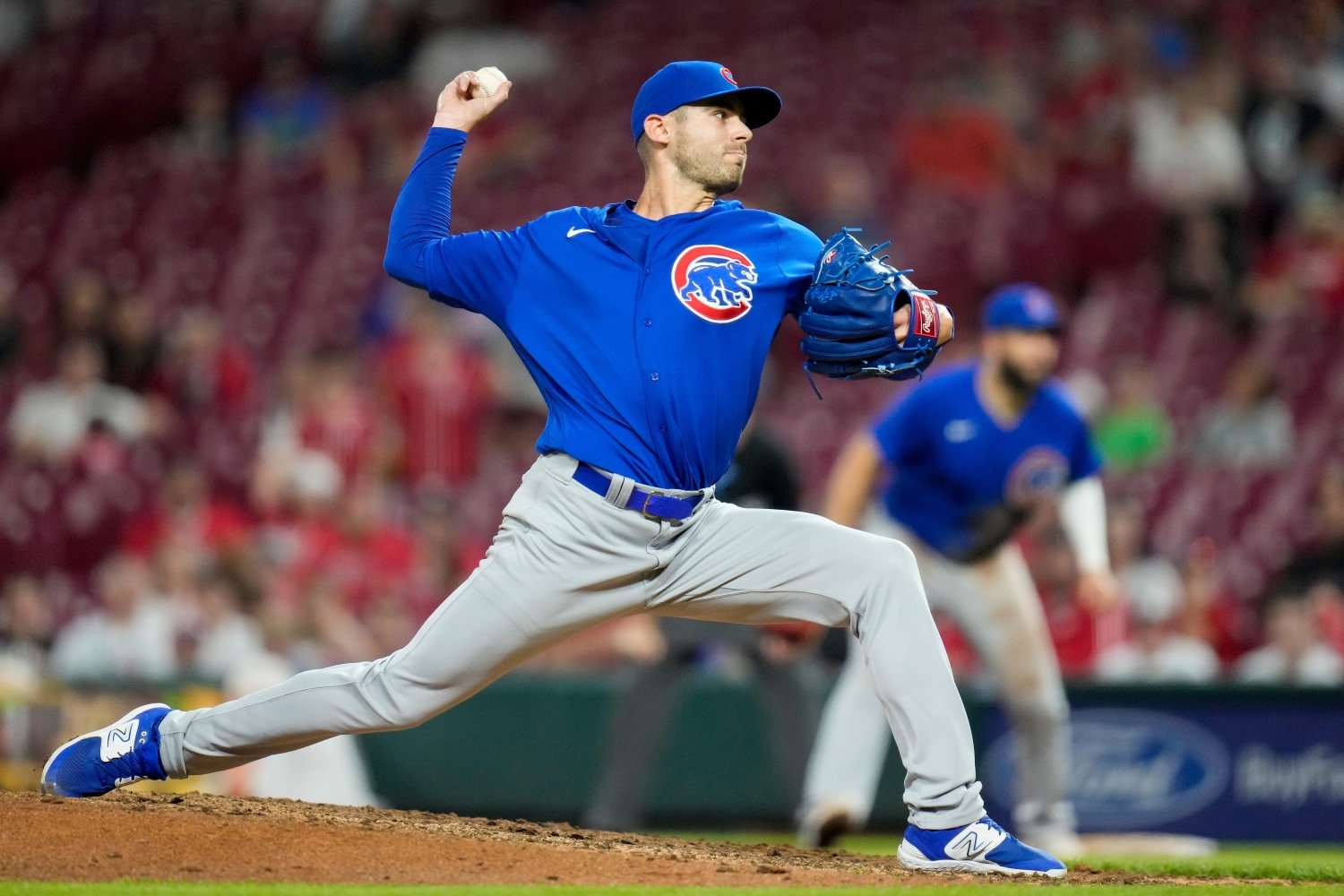 In a lengthy appearance on the Elite Baseball Development Podcast, Julian Merryweather told the story of his development as a pitcher and a person, how his mentality and arsenal have evolved, and what he did to achieve the breakout we saw from him this past season. The Cubs recently tendered Merryweather a contract for 2024, alongside fellow arbitration-eligible relievers Mark Leiter Jr. and Adbert Alzolay, so everything he had to say feels important. First of all, Merryweather's demeanor on the show was exactly what you'd expect, given the one he assumes on the mound. There, he always looks stoic (lower-case 's'), like he regards retiring opponents as a grim duty, although perhaps not a regrettable one. On the show, he was affable and engaging, but there was no hint of goofiness or irrepressible energy to him. On the contrary, in talking about his personal development, he mentioned spending time reading books about Stoicism (capital 'S', belonging to the famous philosophical tradition). He came off as the same even-keeled, intelligent creature he seemed to be when the Cubs called upon him so many times at key moments throughout the season. Interestingly, while Cubs fans quickly became familiar with him as a slider maven, he and host Eric Cressey recalled that Merryweather was primarily a fastball-changeup guy in his amateur days. Merryweather explained that he just didn't much need anything else, at those levels. Since he's been in pro ball, though, he's typically been a four-pitch pitcher, which is unusual for relievers. As the two noted, Merryweather's move to the bullpen had as much to do with the pressure the Blue Jays felt to justify acquiring him for former MVP Josh Donaldson as with anything else, and some of his injury issues stemmed from that transition, rather than the injuries forcing the move. Now, he seems to have full command of his three most important offerings. He threw his slider more often than any other pitch in 2023, but he not only utilized the changeup to great effect, but expressed his continued faith in it as a weapon--including in right-on-right confrontations with hitters. That's not unwarranted confidence. Last year, there were 386 offspeed pitches thrown at least 50 times by their owner. Merryweather's spin-deadening changeup yielded the sixth-lowest expected weighted on-base average (xwOBA) in that cohort, according to Statcast. The pitch might have limited utility, now that he's a reliever and will be asked to face righties more often than lefties, but it remains devastating. So is his slider, which has almost unbounded value. The challenge for Merryweather in 2024 will be to locate his fastball better. That was the pitch on which he got hit hard, and that's always been his problem. He throws hard and generates good spin on the pitch, but it flattens out at times and gets hammered. It doesn't yield significant numbers of whiffs, especially for such an aesthetically impressive offering. That was the one topic Cressey and Merryweather neglected a bit during the show. However, they lent some wonderful insights into the difficulty of being a big-league reliever, and into how Merryweather made both mechanical and training changes to become more durable in 2023. With some changes to his delivery (especially in his lower half), Merryweather felt that he got stronger and more efficient in his movements, which helped avoid a kinetic chain reaction that contributed to oblique injuries in previous campaigns. Even more interesting, though, was the long conversation between the two about the routines Merryweather developed to deal with the vicissitudes of being a reliever and having to be available every day. Merryweather spoke specifically about doing daily work, without wanting to be spent when the call came down to the bullpen. He's wired well for the gig he now has, in that he doesn't like to go more than a day or two without getting on a mound to make some pitches, anyway. However, he had to learn (as most big-league relievers do) how to stay fresh on a daily basis. His regimen and his thought process in creating it were fascinating to learn about. Check out the whole show here. What do you think of Merryweather as a co-ace of next year's relief corps? The insights he shared here allow for a little greater confidence that he can repeat 2023's success, but there's always risk around a hard-throwing reliever. Let's chat about the Chicago bullpen.
 -
There are reasons to pause a moment before pouncing on the idea of signing Shohei Ohtani as a free agent this winter. If you're worried about the prospect on the basis of his salary and the Cubs' budget, though, stop it. Image courtesy of © Wendell Cruz-USA TODAY Sports It sounds outlandish, but this weekend, 670 The Score baseball insider Bruce Levine reported that the Angels' internal estimate of the annual revenue Shohei Ohtani generated for them was $100 million. I can't confirm that figure, but everyone to whom I have spoken puts the number between $70 million and $90 million. Having Ohtani not only raises the national profile of any team, but instantly creates huge marketing and advertisement opportunities in Japan. There's a feature-length documentary about the man on ESPN+ and (outside the US) Disney+ right now. This is not a normal free agent. Given all that, this shouldn't surprise you, but it's an important thing to know: For many teams, there are two budgets for 2024 right now. There's one number the front office knows they need to stick to, and then there's another one, anywhere from $20 million to $40 million higher, that they need to stick to if they sign Ohtani. Entering the offseason, the Cubs know they're likely to exceed the first threshold of the competitive-balance tax rules in 2024. To stay below the second threshold, though, they would need to spend no more than $257 million. That's probably their de facto cap. If they sign Ohtani, that changes. The new ceiling is the third threshold, at $277 million. Beyond that, the penalties get especially draconian, so it's unlikely that signing Ohtani would earn Jed Hoyer and Carter Hawkins any more wiggle room than that, but they would be given the flexibility to go all the way to the third threshold if they reeled in the biggest fish to hit open water since Alex Rodríguez. Part of that is the knowledge (held by all parties) that Ohtani has massive leverage, and that he will want to see evidence of a team's willingness and ability to field a consistent contender before signing. Another part, though, is the simple math described above. Realistically, he has no chance to get more than $55 million per year, and a relatively small chance to get even $50 million per year. That would just break baseball's salary scale too badly. If he's worth (taking a moving average from uncertain sources) $80 million per year, then merely having him on board is worth over $20 million each season. Again, there are legitimate concerns here. The Rickettses might be willing to spend that way on an Ohtani-led team in the short term, but spuriously claim major losses and snap the purse shut in a few years if things don't go perfectly. Either way, Ohtani is a massive investment, and even for a team spending $300 million per year, a $50-million player is as big a problem if he's hurt or ineffective as he is a boon if he's playing as advertised. The threat that he'll be permanently diminished as a pitcher by this second elbow surgery is real. So is the danger that he'll age quickly at the plate, given all the extra energy he's put into the two-way project over the last half-decade. On balance, though, those are gambles well worth taking. The bonus any team gets by being the ones to take it almost offsets all the downside, anyway. View full article