


Matthew Trueblood
-
Posts
2,481 -
Joined
-
Last visited
-
Days Won
2
Content Type
Profiles
Joomla Posts 1
Chicago Cubs Videos
Chicago Cubs Free Agent & Trade Rumors, Notes, & Tidbits
2026 Chicago Cubs Top Prospects Ranking
News
2023 Chicago Cubs Draft Picks
Guides & Resources
2024 Chicago Cubs Draft Picks
The Chicago Cubs Players Project
2025 Chicago Cubs Draft Pick Tracker
2026 Chicago Cubs Draft Tracker: Picks & Bonuses
Blogs
Events
Forums
Store
Gallery
Everything posted by Matthew Trueblood
-
The Chicago Cubs have nosed back over .500, thanks to a three-game winning streak on the heels of dropping the first two contests of their season. Their fifth starter gave them an encouraging first outing Tuesday night. Image courtesy of © Matt Marton-USA TODAY Sports One year ago Wednesday, I wrote about Javier Assad's pitch mix, as he tried to establish himself as a multi-inning (but fairly high-leverage) relief weapon for the Cubs. Specifically, I recommended that he lean considerably harder on his sinker and slider against right-handed batters, and on his four-seamer and changeup against left-handed ones. He was, at the time, a kitchen-sink guy, and it didn't seem likely to be a sustainably successful approach. In one sense, I was demonstrably wrong. For the second year in a row, Assad was effective, despite less-than-dominant peripheral numbers. He entered 2024 with nearly 150 innings of big-league work under his belt, and a 3.06 ERA, despite a more pedestrian 4.34 FIP. His six-pitch mix--four-seamer, sinker, changeup, cutter, slider, curve--doesn't include any superior weapons, but he found ways to defy the regression monster all the way through his first full season. To really keep that monster at bay, though, a player has to be proactive about adjustments. If you wait until the league figures you out to start making changes, you'll fall behind in the constant battle for an advantage. Thus, although we have to be careful not to extrapolate too much from a single (frigid) game's worth of data compiled against the execrable Rockies, it's worth taking note of some big changes Assad made in his 2024 debut Tuesday night. Firstly, his pitch mix was drastically different. Here's how Assad's pitch usage broke down by handedness in 2023. Batter Hand BF P 4Seam% Sink2Seam% Cutter% Slider% Curve% Change% Righty 274 1012 11.40% 40.40% 22.50% 25.00% 0.70% 0.00% Lefty 239 948 30.00% 17.90% 32.00% 0.60% 10.80% 8.80% Here's the same breakdown for Tuesday's 89-pitch effort. Batter Hand BF P 4Seam% Sink2Seam% Cutter% Slider% Curve% Change% Righty 12 45 4.40% 42.20% 8.90% 42.20% 2.20% 0.00% Lefty 10 44 50.00% 13.60% 18.20% 2.30% 4.50% 11.40% This version of Assad is essentially the one I proposed last year, but as a starter. He went pretty much right after lefties with his fastball, and he dramatically increased his slider usage against righties, each at the expense of the cutter. It led to six scoreless innings in which he allowed just six baserunners and struck out five. Again, this is the Rockies, and it was a miserable night for baseball--especially if you were a hitter. We can't assume that what worked Tuesday will work going forward. Still, this is a significant development. Going away from a kitchen-sink approach doesn't have to mean giving up the advantages Assad gleaned from his previous style. He can pitch with touch and feel even within this framework. To wit, if you cut his four-seamer samples for each of his three big-league seasons in half based on their horizontal movement, and then examine the movement patterns, he was getting more rising action on the half of his heaters that cut more (i,e., effectively creating a cut-ride look) last night than he had in either previous campaign: 17.5 inches of induced vertical break, compared to 16.0 inches in 2022 and 2023. He got a couple of called strikes in the up-and-away quadrant of the zone to lefties Tuesday, with the pitch virtually acting as a harder backdoor cutter, with less chance of a mistake in the heart of the zone. Assad also seems to have tweaked his slider, in addition to throwing it more often. The sample is too small to assume this will hold, but the slider had two more inches of sweep and a bit more depth Tuesday night than it had in 2022 and 2023. When you consider that it was also playing off more sinkers (as opposed to the cutter), that adjustment means hitters really have to feel like they're covering a plate about two feet wide. Miguel Amaya did well to steal Assad a couple of called strikes at the low, outside corner of the zone, making things even tougher on the helpless Colorado hitters. I don't believe Assad can pitch to an ERA just over 3.00 again this year. If he's able to persist with these changes in pitch mix and movement using his excellent pitchability, though, I do think he can stay on the low side of 4.00. That would be a huge development for the Cubs, since they need him more acutely than expected in the early going. We're going to see at least another handful of Assad starts, and perhaps several more than that. We'll have plenty of chances to suss out how real his transformation is, but given what we've seen so far, it's fair to be a bit more optimistic than we expected to be. View full article
-
When the Chicago Cubs ponied up an unprecedented sum (somewhere on the other side of $40 million) for the best managerial free agent in recent memory, they conferred significant power upon him. He's using it. Image courtesy of © Jerome Miron-USA TODAY Sports Whereas the Cubs were persistently cautious about investing playing time in Christopher Morel over the last two seasons, Craig Counsell immediately made it clear that he wanted him in the lineup every day. Before Counsell came aboard, the team envisioned an offseason move that could land Morel permanently at first base, but Counsell elected to give him a wide-open lane via which to reach the everyday job at third. Right from the jump, in spring training, Counsell batted Morel in the cleanup spot alongside other regulars, marking him as a linchpin of the lineup. A contract like Counsell's implicitly includes the right to much more influence on roster construction than the typical modern manager has, and you can see that Counsell has that, in places. He's not an old-fashioned manager (or 1990s NFL-style coach-slash-GM), but the faith the Cubs showed by paying this much for his services naturally extends itself into the selection of players. Morel is here, and certainly is playing third base, as much because of Counsell as because of any attachment to him Jed Hoyer or Carter Hawkins harbor. It's been fascinating to watch Counsell solve a problem of his own voluntary creation within games. Except when grounder-friendly lefty Justin Steele was on the mound on Opening Day, Counsell has stuck to Morel as his starting third baseman, and he's locked him into the cleanup spot. As soon as possible within each competitive contest, though, he's lifted Morel for Nick Madrigal. The last two days, that's meant letting Madrigal occupy the cleanup spot (between Cody Bellinger and Dansby Swanson) for the last three or four innings, but if Counsell were desperately disturbed by the prospect of having Madrigal come up in a big spot, he wouldn't keep writing Morel in as the cleanup guy, or at the hot corner. Last week at Baseball Prospectus, I wrote about this very subject, although with the lens inverted: I foresaw a setup whereby Morel would sit the first part of the game and come in midway through, to maximize the leverage of some offensive situation in which he might contribute. The main point is the same, though: managers have traditionally been too reluctant to make early tactical substitutions. Counsell is exploring that frontier in his treatment of Morel and Madrigal, and the radical nature of his approach would make it tough to support for any skipper with less power and leverage than this one has. Counsell also told Mike Tauchman he would be on the 26-man roster right at the beginning of camp, even as many fans speculated that he would be a casualty if and when the team re-signed Bellinger. Not only is Tauchman around, but he's started a game in each corner already, spelling and saving the legs of Ian Happ and Seiya Suzuki. Tauchman is a Counsell-style player, and guaranteeing his spot on the roster was no happenstance. While fans might have wrung their hands over the possibility that Tauchman would spend a big chunk of another season as the leadoff man, Counsell properly noticed that he's a useful fourth outfielder and lineup lengthener against right-handed pitching. Taking Happ and Suzuki off their feet defensively for a game each in the early going is also a hallmark of Counsell's style. He thinks well ahead and views the whole calendar of the season--the full, 162-game grind--as carefully as any manager in baseball. This is also why he let Ben Brown stay out there and wear hideous numbers in his big-league debut, and why he asked Drew Smyly for two innings to close out the win in the home opener. Unlike David Ross, Counsell assiduously avoids "chasing" wins by using high-leverage arms when the team is trailing, and he tries to reserve his best hurlers for the moments when they matter most. Expect Counsell to keep getting chances to shape the roster, and to use that roster in creative and interesting ways. If Morel can't improve at least somewhat, the team's experiment with him at third base will end soon, but Counsell seems likely to keep batting him fourth most days, either way. If that means bringing on Madrigal at the earliest moment when that opportunity presents itself, so be it. Over the last 50 seasons, only four teams have given 50 or more plate appearances to substitutes in the cleanup spot from the fifth inning on. Only 13 have allotted 40 or more such plate appearances. Only 36 have had at least 30. Madrigal already has two sub plate appearances, through four games. Counsell believes he can consistently find the right moment to make that substitution, and coming from him, that's a bold but credible choice. When he was at the helm of a series of Brewers teams who kicked out the Cubs at the sprinting finish of the marathon season, Counsell owned September. Brewers fans took to calling the month "Craigtember," because he had learned his own roster and managed his resources so much better than many of his colleagues that his team had a persistent advantage in that month. The Cubs are hoping the same thing will be true in 2024, and Counsell has set just such a tone with his selection and deployment of the roster in the very early going. View full article
- 1 reply
-
- 1
-

-
- christopher morel
- mike tauchman
- (and 2 more)
-
Craig Counsell Got to Shape This Roster, and He's Using It Fearlessly
Matthew Trueblood posted an article in Cubs
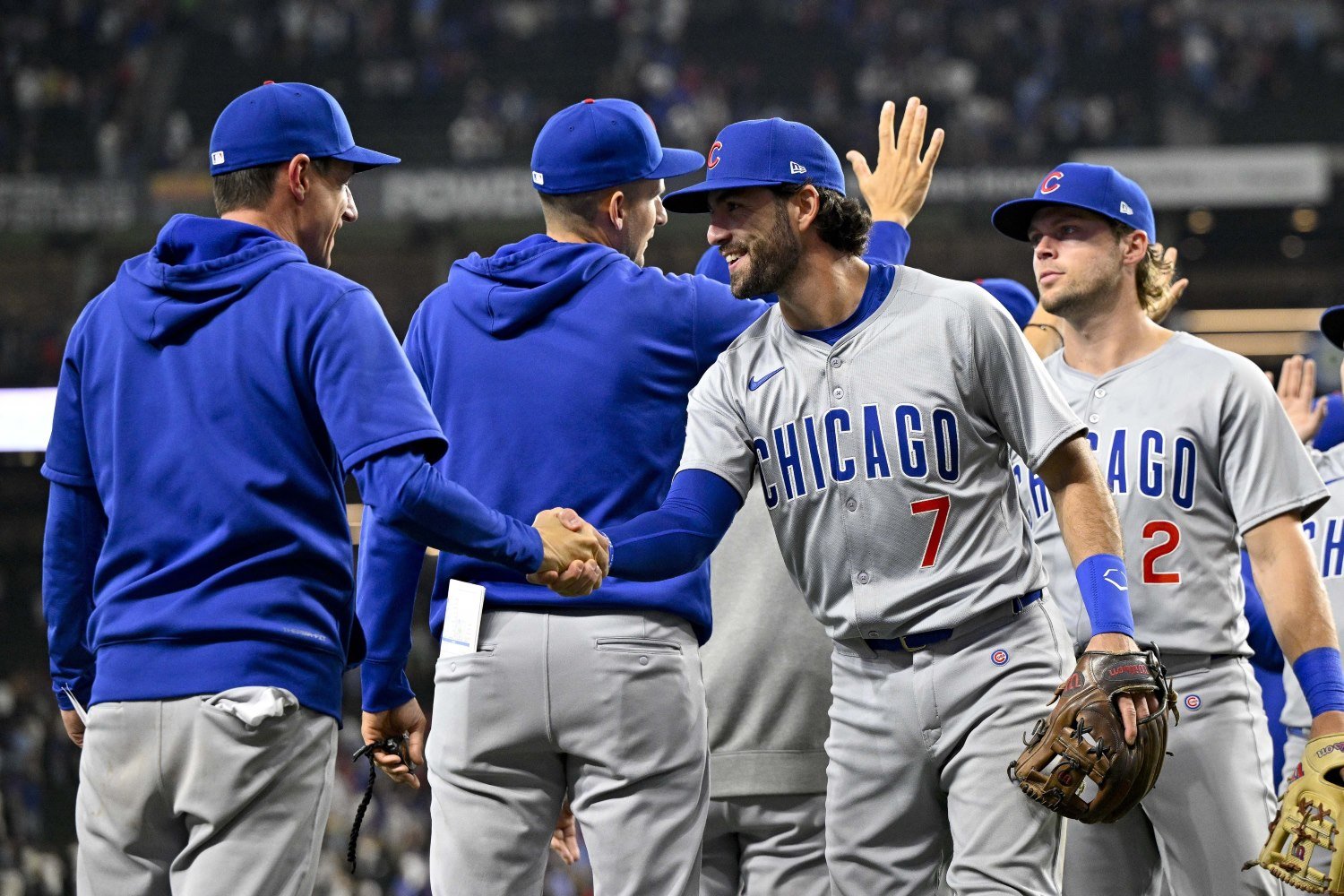 Whereas the Cubs were persistently cautious about investing playing time in Christopher Morel over the last two seasons, Craig Counsell immediately made it clear that he wanted him in the lineup every day. Before Counsell came aboard, the team envisioned an offseason move that could land Morel permanently at first base, but Counsell elected to give him a wide-open lane via which to reach the everyday job at third. Right from the jump, in spring training, Counsell batted Morel in the cleanup spot alongside other regulars, marking him as a linchpin of the lineup. A contract like Counsell's implicitly includes the right to much more influence on roster construction than the typical modern manager has, and you can see that Counsell has that, in places. He's not an old-fashioned manager (or 1990s NFL-style coach-slash-GM), but the faith the Cubs showed by paying this much for his services naturally extends itself into the selection of players. Morel is here, and certainly is playing third base, as much because of Counsell as because of any attachment to him Jed Hoyer or Carter Hawkins harbor. It's been fascinating to watch Counsell solve a problem of his own voluntary creation within games. Except when grounder-friendly lefty Justin Steele was on the mound on Opening Day, Counsell has stuck to Morel as his starting third baseman, and he's locked him into the cleanup spot. As soon as possible within each competitive contest, though, he's lifted Morel for Nick Madrigal. The last two days, that's meant letting Madrigal occupy the cleanup spot (between Cody Bellinger and Dansby Swanson) for the last three or four innings, but if Counsell were desperately disturbed by the prospect of having Madrigal come up in a big spot, he wouldn't keep writing Morel in as the cleanup guy, or at the hot corner. Last week at Baseball Prospectus, I wrote about this very subject, although with the lens inverted: I foresaw a setup whereby Morel would sit the first part of the game and come in midway through, to maximize the leverage of some offensive situation in which he might contribute. The main point is the same, though: managers have traditionally been too reluctant to make early tactical substitutions. Counsell is exploring that frontier in his treatment of Morel and Madrigal, and the radical nature of his approach would make it tough to support for any skipper with less power and leverage than this one has. Counsell also told Mike Tauchman he would be on the 26-man roster right at the beginning of camp, even as many fans speculated that he would be a casualty if and when the team re-signed Bellinger. Not only is Tauchman around, but he's started a game in each corner already, spelling and saving the legs of Ian Happ and Seiya Suzuki. Tauchman is a Counsell-style player, and guaranteeing his spot on the roster was no happenstance. While fans might have wrung their hands over the possibility that Tauchman would spend a big chunk of another season as the leadoff man, Counsell properly noticed that he's a useful fourth outfielder and lineup lengthener against right-handed pitching. Taking Happ and Suzuki off their feet defensively for a game each in the early going is also a hallmark of Counsell's style. He thinks well ahead and views the whole calendar of the season--the full, 162-game grind--as carefully as any manager in baseball. This is also why he let Ben Brown stay out there and wear hideous numbers in his big-league debut, and why he asked Drew Smyly for two innings to close out the win in the home opener. Unlike David Ross, Counsell assiduously avoids "chasing" wins by using high-leverage arms when the team is trailing, and he tries to reserve his best hurlers for the moments when they matter most. Expect Counsell to keep getting chances to shape the roster, and to use that roster in creative and interesting ways. If Morel can't improve at least somewhat, the team's experiment with him at third base will end soon, but Counsell seems likely to keep batting him fourth most days, either way. If that means bringing on Madrigal at the earliest moment when that opportunity presents itself, so be it. Over the last 50 seasons, only four teams have given 50 or more plate appearances to substitutes in the cleanup spot from the fifth inning on. Only 13 have allotted 40 or more such plate appearances. Only 36 have had at least 30. Madrigal already has two sub plate appearances, through four games. Counsell believes he can consistently find the right moment to make that substitution, and coming from him, that's a bold but credible choice. When he was at the helm of a series of Brewers teams who kicked out the Cubs at the sprinting finish of the marathon season, Counsell owned September. Brewers fans took to calling the month "Craigtember," because he had learned his own roster and managed his resources so much better than many of his colleagues that his team had a persistent advantage in that month. The Cubs are hoping the same thing will be true in 2024, and Counsell has set just such a tone with his selection and deployment of the roster in the very early going.
 -
The Chicago Cubs' lineup is only going to produce adequately if they get big hits from their rookie first baseman. Sunday provided some interesting insight into his upside, and into what he still needs to learn. Image courtesy of © Jerome Miron-USA TODAY Sports If you just looked at the exit velocity and launch angle, Michael Busch appears to have gotten unlucky in the third inning Sunday. He sent Rangers center fielder back to the warning track on a long fly ball, hit at 106 miles per hour. If it flew exactly the same distance, to the same part of the park, it would have been a home run at Wrigley Field--and at 19 other MLB parks. It just died a bit shy of the deep wall to the left of dead center in Arlington. Fans who were watching, though, know that the fault was not in his stars, but in his start time. Busch was up with Dansby Swanson in scoring position, in a game the Cubs led 3-2. He had gotten ahead of Texas starter Jon Gray 2-0, and he got a fastball, middle-middle, at 94 miles per hour. Busch 2 0 FA MdMd F8 106 EV 3 31 24.mp4 It's a well-struck ball, sure, but a ball in that spot, in that count, with a chance to drive in a run, has to be pulled. There's no reason to be using the big part of the field when it's 2-0, and when you have as discerning an eye as Busch does. He needed to be sitting fastball, and if he got a fat one, it needed to be bouncing around in the corner or spilling a fan's beer. Otherwise, he could always hold his fire and wait for a cookie on 2-1 or 3-0. Hitters have a saying: You have to be yes, yes, yes, no. You can't start with the intention of taking a pitch, ever, and then catch up to the ball. You have to think 'swing' until some visual cue tells you to take, or take all the way without reserving an alternative. Obviously, the cues to which that change of plan can be pegged and the degree of aggressiveness in one's mindset will change slightly based on count, opponent, defensive alignment, and game situation, based on expectations and payoffs, but you have to get started on time and find ways to stop when necessary. If you have any other mental machinery in place, you'll never survive against big-league pitchers, with their overwhelming velocity, devastating secondary options, and ability to command the lot. I'm not suggesting Busch doesn't have that mental machinery, or that he wasn't thinking 'yes, yes, yes' going into that 2-0 pitch. Clearly, though, he didn't quite have an aggressive enough mindset to get the bat head out and pull that ball into the gap, or over the wall. Busch generates good opposite-field power, which is why he's able to wait back and take such a patient tack at the plate. Sometimes, though, that's a double-edged sword. If that hit had happened, and then the rest of the game had been perfectly normal, I wouldn't remark on this. Even veteran sluggers are sometimes late on fastballs--even ones in the middle of the zone, at non-elite velocities, with the count in their favor. One swing indicates little. Over his next three plate appearances, though, Busch swung at the next five pitches he saw. I went through all the games since the start of 2023 for which we have pitch-by-pitch data on Busch's plate appearances. Do you know how many other times he swung at six straight pitches, across any number of trips to the plate? None. In fact, he never swung at six out of any seven pitches, or six out of eight. Busch is as patient as hitters come. It's a huge part of his game. Clearly, he himself was frustrated by that fly out that could have been more, because it pulled him out of his most comfortable and fruitful approach for most of the rest of the game. Crucially, though, when he came up in the ninth, Busch returned to himself. Under plenty of pressure, in a tie game and with no one on base and one out, he drew a six-pitch walk against José Leclerc. Maybe that marks a minor retreat, back to the approach with which he's more comfortable, anyway, but it suited the situation gorgeously. For the second time in his first three games as a Cub, he scored the go-ahead run for the team in the ninth inning. He's going to get on base plenty, because he's a disciplined hitter and gets back into his comfort zone quickly when something throws off his equilibrium. The big question for Busch is whether he can also be that other guy--the one who drives an RBI double or two-run homer in that third-inning situation, when aggressiveness is the order of the moment. If so, he can be a star, not much less productive than Anthony Rizzo was. We've already seen evidence of his raw power, two-strike approach, and even baserunning nous. If not, then he'll be confined to the bottom half of the lineup, where his job will be to keep lengthening games and ensuring extra chances for the real boppers at the top of the lineup. That's not a bad floor. Still, Sunday's game was a good reminder both of the impressiveness of his ceiling, and of the work left for him to reach it. View full article
-
Michael Busch's Missed Sunday Moment and Rookie Adjustments
Matthew Trueblood posted an article in Cubs
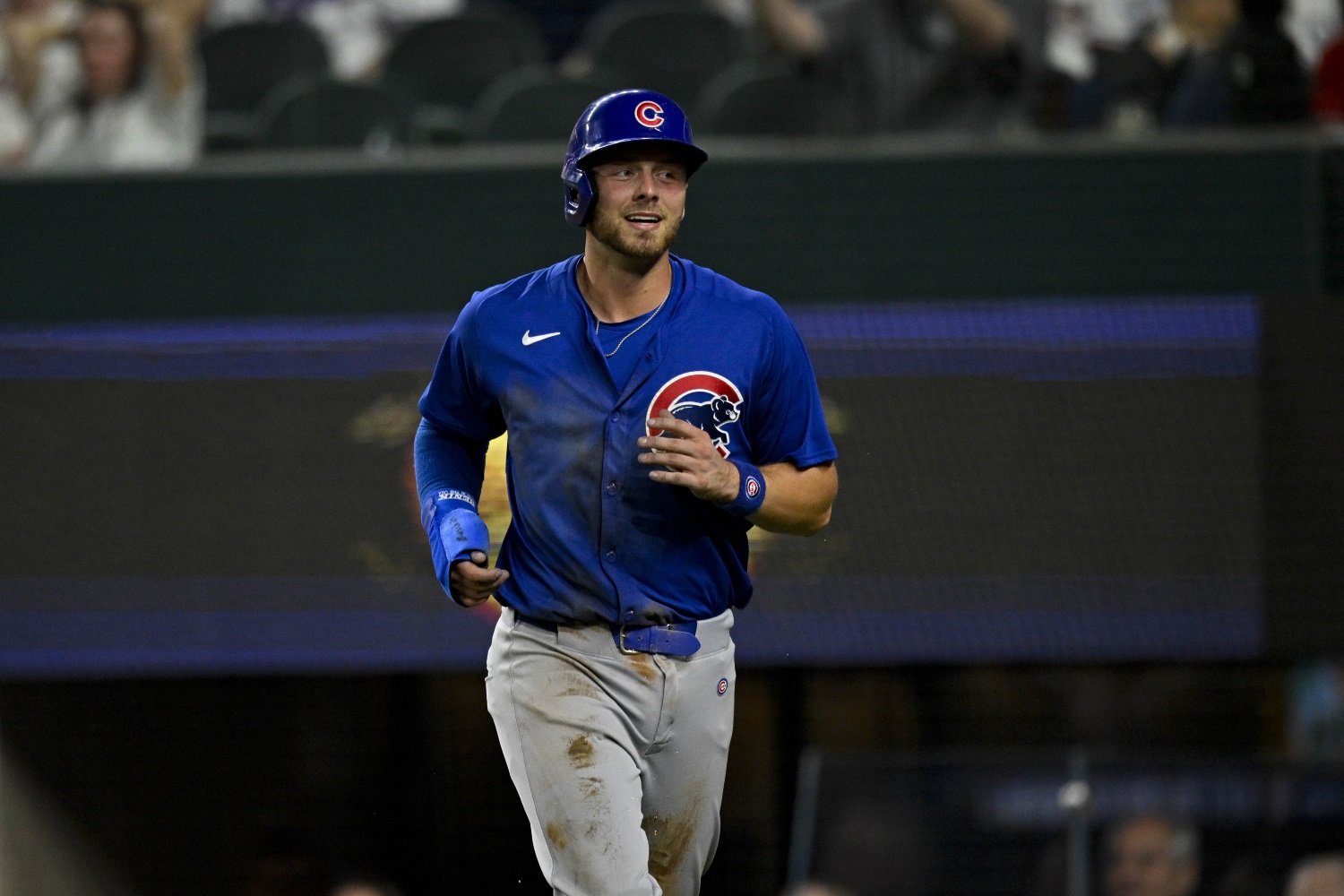 If you just looked at the exit velocity and launch angle, Michael Busch appears to have gotten unlucky in the third inning Sunday. He sent Rangers center fielder back to the warning track on a long fly ball, hit at 106 miles per hour. If it flew exactly the same distance, to the same part of the park, it would have been a home run at Wrigley Field--and at 19 other MLB parks. It just died a bit shy of the deep wall to the left of dead center in Arlington. Fans who were watching, though, know that the fault was not in his stars, but in his start time. Busch was up with Dansby Swanson in scoring position, in a game the Cubs led 3-2. He had gotten ahead of Texas starter Jon Gray 2-0, and he got a fastball, middle-middle, at 94 miles per hour. Busch 2 0 FA MdMd F8 106 EV 3 31 24.mp4 It's a well-struck ball, sure, but a ball in that spot, in that count, with a chance to drive in a run, has to be pulled. There's no reason to be using the big part of the field when it's 2-0, and when you have as discerning an eye as Busch does. He needed to be sitting fastball, and if he got a fat one, it needed to be bouncing around in the corner or spilling a fan's beer. Otherwise, he could always hold his fire and wait for a cookie on 2-1 or 3-0. Hitters have a saying: You have to be yes, yes, yes, no. You can't start with the intention of taking a pitch, ever, and then catch up to the ball. You have to think 'swing' until some visual cue tells you to take, or take all the way without reserving an alternative. Obviously, the cues to which that change of plan can be pegged and the degree of aggressiveness in one's mindset will change slightly based on count, opponent, defensive alignment, and game situation, based on expectations and payoffs, but you have to get started on time and find ways to stop when necessary. If you have any other mental machinery in place, you'll never survive against big-league pitchers, with their overwhelming velocity, devastating secondary options, and ability to command the lot. I'm not suggesting Busch doesn't have that mental machinery, or that he wasn't thinking 'yes, yes, yes' going into that 2-0 pitch. Clearly, though, he didn't quite have an aggressive enough mindset to get the bat head out and pull that ball into the gap, or over the wall. Busch generates good opposite-field power, which is why he's able to wait back and take such a patient tack at the plate. Sometimes, though, that's a double-edged sword. If that hit had happened, and then the rest of the game had been perfectly normal, I wouldn't remark on this. Even veteran sluggers are sometimes late on fastballs--even ones in the middle of the zone, at non-elite velocities, with the count in their favor. One swing indicates little. Over his next three plate appearances, though, Busch swung at the next five pitches he saw. I went through all the games since the start of 2023 for which we have pitch-by-pitch data on Busch's plate appearances. Do you know how many other times he swung at six straight pitches, across any number of trips to the plate? None. In fact, he never swung at six out of any seven pitches, or six out of eight. Busch is as patient as hitters come. It's a huge part of his game. Clearly, he himself was frustrated by that fly out that could have been more, because it pulled him out of his most comfortable and fruitful approach for most of the rest of the game. Crucially, though, when he came up in the ninth, Busch returned to himself. Under plenty of pressure, in a tie game and with no one on base and one out, he drew a six-pitch walk against José Leclerc. Maybe that marks a minor retreat, back to the approach with which he's more comfortable, anyway, but it suited the situation gorgeously. For the second time in his first three games as a Cub, he scored the go-ahead run for the team in the ninth inning. He's going to get on base plenty, because he's a disciplined hitter and gets back into his comfort zone quickly when something throws off his equilibrium. The big question for Busch is whether he can also be that other guy--the one who drives an RBI double or two-run homer in that third-inning situation, when aggressiveness is the order of the moment. If so, he can be a star, not much less productive than Anthony Rizzo was. We've already seen evidence of his raw power, two-strike approach, and even baserunning nous. If not, then he'll be confined to the bottom half of the lineup, where his job will be to keep lengthening games and ensuring extra chances for the real boppers at the top of the lineup. That's not a bad floor. Still, Sunday's game was a good reminder both of the impressiveness of his ceiling, and of the work left for him to reach it.
 -
The Chicago Cubs' ace southpaw was forced from his Opening Day start with a strained left hamstring, and Craig Counsell is already forecasting a stint on the injured list. How can the team weather this massive blow? Image courtesy of © Jerome Miron-USA TODAY Sports Though the team has insisted otherwise, and proved their faith by refusing to meet an extremely low asking price for Jordan Montgomery earlier this week, the Cubs' pitching was thin even entering Opening Day. Their modest projected win totals in each of the major projection systems (always right around .500, always second in the compact NL Central race) have been held down by those systems' mistrust of their pitching. The Cubs and their fans pinned their hopes for confounding those expectations to Justin Steele. Now, those hopes have been punctured. If this ain't a mess, it'll do til the mess gets here. That Counsell called Steele's hamstring injury a strain right after the game and admitted he expects him to go on the injured list, even before the hurler goes for an MRI Friday, is tellingly ominous. The Cubs have to assume (and act as though) they will be without Steele for a month or more, especially because this injury comes at such an inopportune time. It could force him to spend a long time ramping back up to be ready to start, even after he gets the leg healthy. In the meantime, and with Jameson Taillon also on the shelf, the Cubs have Kyle Hendricks, Shota Imanaga, Jordan Wicks, Javier Assad, and a big old question mark in their starting rotation. They've stated a (wise) desire to give Imanaga an extra day whenever possible, as he adapts to the tighter rotation schedule of Stateside ball after a decade in NPB, so shortening the rotation will be a non-option, even given the off days they have early in their schedule. The Cubs need a fifth starter, and they will need them for a while. It's Ben Brown time. The easiest choices would be to call up a reliever like Daniel Palencia and install veteran southpaw Drew Smyly, or to change course and recall Hayden Wesneski, after he planned to go to Triple-A Iowa and stretch out to start, but the Cubs shouldn't do either. They need real upside in their rotation, especially with Steele removed from it. Brown looked terrific this spring. He's already on the 40-man roster. He has great stuff. He could make his debut Wednesday, against the hopelessly bad Colorado Rockies in what figures to be a chilly Wrigley Field. That's a nice, soft landing. If the Cubs are destined to make the playoffs this year, they need Brown to make a fistful of good starts (or more). They need Cade Horton to come up later this summer and be good, too. Those guys are the quiet, not-quite-confident answers reasonable people have given to the questions raised by projection systems about the team's pitching outlook, even before the Steele injury. The team's need for them has come much sooner than expected, but they need to resist the temptation to shy away and default to more conventional, easier choices. Within a fortnight or so, Taillon might be ready to re-join the rotation, bumping Brown back to Iowa. In the meantime, they should be angling to learn more about one of their most important young arms. How would you fill the void left by Steele's injury? What is your level of concern over the Cubs' ace, and/or over Taillon? Jump in below to steer the discussion. View full article
- 22 replies
-
- 1
-
-
- justin steele
- ben brown
- (and 2 more)
-
Who Should Take Justin Steele's Rotation Spot in the Coming Weeks?
Matthew Trueblood posted an article in Cubs
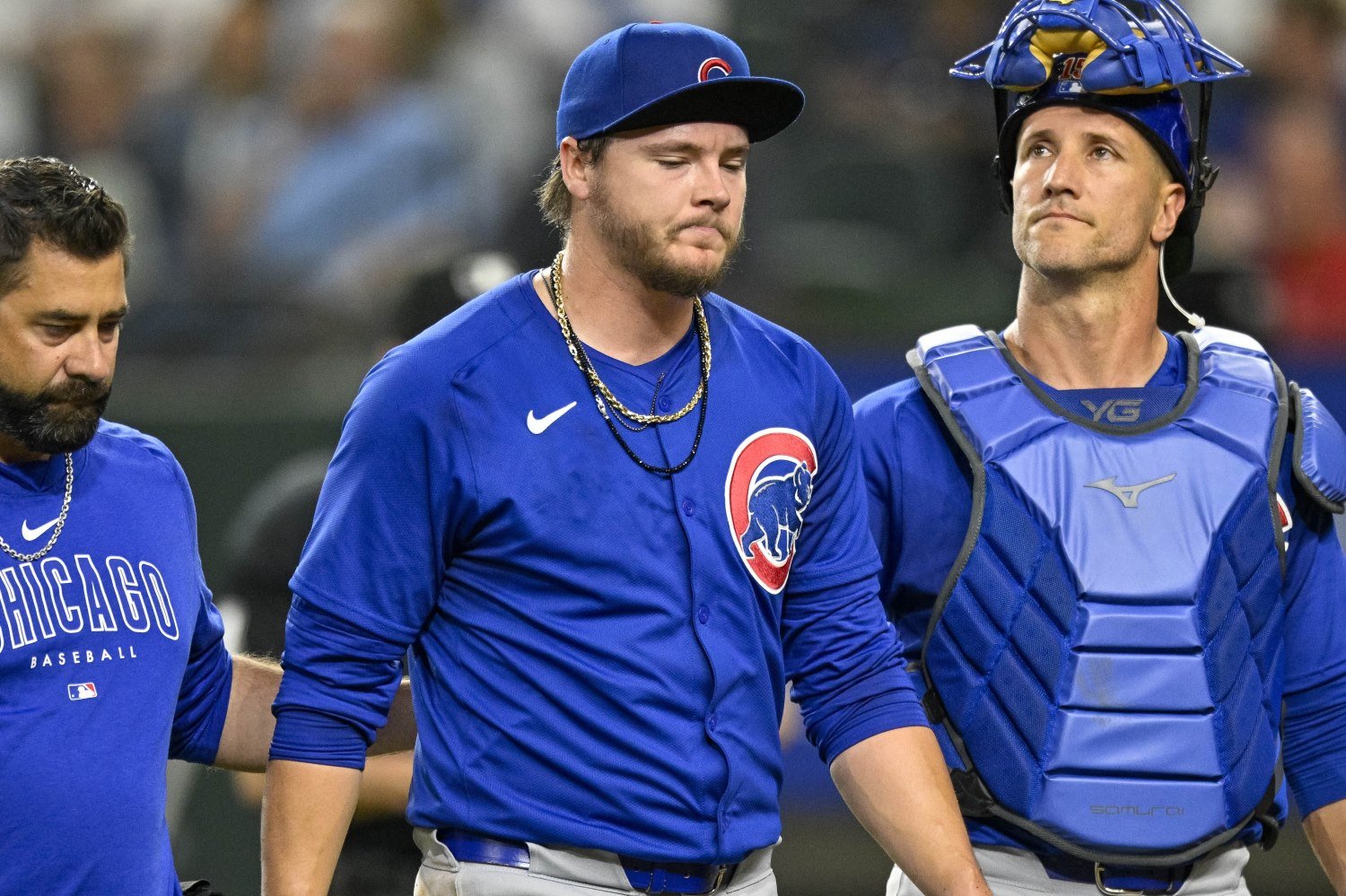 Though the team has insisted otherwise, and proved their faith by refusing to meet an extremely low asking price for Jordan Montgomery earlier this week, the Cubs' pitching was thin even entering Opening Day. Their modest projected win totals in each of the major projection systems (always right around .500, always second in the compact NL Central race) have been held down by those systems' mistrust of their pitching. The Cubs and their fans pinned their hopes for confounding those expectations to Justin Steele. Now, those hopes have been punctured. If this ain't a mess, it'll do til the mess gets here. That Counsell called Steele's hamstring injury a strain right after the game and admitted he expects him to go on the injured list, even before the hurler goes for an MRI Friday, is tellingly ominous. The Cubs have to assume (and act as though) they will be without Steele for a month or more, especially because this injury comes at such an inopportune time. It could force him to spend a long time ramping back up to be ready to start, even after he gets the leg healthy. In the meantime, and with Jameson Taillon also on the shelf, the Cubs have Kyle Hendricks, Shota Imanaga, Jordan Wicks, Javier Assad, and a big old question mark in their starting rotation. They've stated a (wise) desire to give Imanaga an extra day whenever possible, as he adapts to the tighter rotation schedule of Stateside ball after a decade in NPB, so shortening the rotation will be a non-option, even given the off days they have early in their schedule. The Cubs need a fifth starter, and they will need them for a while. It's Ben Brown time. The easiest choices would be to call up a reliever like Daniel Palencia and install veteran southpaw Drew Smyly, or to change course and recall Hayden Wesneski, after he planned to go to Triple-A Iowa and stretch out to start, but the Cubs shouldn't do either. They need real upside in their rotation, especially with Steele removed from it. Brown looked terrific this spring. He's already on the 40-man roster. He has great stuff. He could make his debut Wednesday, against the hopelessly bad Colorado Rockies in what figures to be a chilly Wrigley Field. That's a nice, soft landing. If the Cubs are destined to make the playoffs this year, they need Brown to make a fistful of good starts (or more). They need Cade Horton to come up later this summer and be good, too. Those guys are the quiet, not-quite-confident answers reasonable people have given to the questions raised by projection systems about the team's pitching outlook, even before the Steele injury. The team's need for them has come much sooner than expected, but they need to resist the temptation to shy away and default to more conventional, easier choices. Within a fortnight or so, Taillon might be ready to re-join the rotation, bumping Brown back to Iowa. In the meantime, they should be angling to learn more about one of their most important young arms. How would you fill the void left by Steele's injury? What is your level of concern over the Cubs' ace, and/or over Taillon? Jump in below to steer the discussion.
- 22 comments
-
- 1
-
-
- justin steele
- ben brown
- (and 2 more)
-
As everyone expected, the new rules confining infielders to the dirt and to their traditional sides of second base had an impact on the batting average on ground balls in MLB last year. It wasn't an across-the-board effect, though. Image courtesy of © Rick Scuteri-USA TODAY Sports One of my predictions about the new rules that took effect last season was that we would see more hits than in previous years, not just on scalded line drives off the bats of left-handed hitters, but from righties, too. I expected that, with second basemen unable to swing to the left side of second and shortstops forced not only to play a step closer to the middle of the diamond but to stay off the outfield grass (where many of them used to position themselves against hard-hitting or slow-footed righties), we would see a few more balls sneak through, but also that more batters would reach on infield hits or errors. I was way, way wrong. Rob Mains broke down the effects of the rules changes (including the shift ban) in Baseball Prospectus 2024, and one of his fascinating findings was that the increase in BABIP throughout baseball in 2023 was not confined to grounders (liners and even fly balls also turned into hits slightly more often), but was confined to left-handed batters. Righties saw virtually no change in BABIP on grounders or liners, and only a small bump on fly balls. As I read Rob's excellent essay, I immediately thought, "Ok, but that doesn't account for errors. There were, surely, more errors." There weren't. On the contrary, on pulled ground balls by right-handed batters, the Out Rate (1-((H+ROE-HR)/Balls in Play)) was 76.4 percent, the highest for the 20-plus years for which we have good data on batted ball trajectory and direction. The league's aggregate fielding percentage was the highest it's been in that time. Despite fielders theoretically having to move five or six steps instead of three or four more often, and despite having their range cut down by half a step because they can't play as deep and have to account for a greater distance between themselves and either their teammate or the foul line, we saw the left sides of big-league infields play better than ever in 2023. Next, I checked to see whether there was a change in the quality of contact the league made. Maybe righty batters, who never have had as strong an incentive to use the whole field as lefty ones, hit weaker or bouncier grounders (ones with launch angles south of about -8 degrees, where expected BABIP begins to plunge because even hard-hit balls are two- or three-hoppers), or otherwise had lower expected value on them. Nope. Albeit by an infinitesimal amount, the league's righties hit harder pulled grounders and had a higher probability of hitting them 95 miles per hour or harder than in any previous year of the Statcast Era. The launch angle was the same. Based on exit velocity and launch angle, the expected singles rate of right-handed hitters' pulled grounders last year was 21.9%, the highest on record. The actual singles rate was 17.7%, the lowest on record. Go figure. Contact just as good against theoretically suboptimal infield alignments produced, if anything, worse results than in the past. I like being wrong, sometimes. Being wrong means learning something, and baseball is one of my favorite things to learn about. We can't say anything for certain here, and we shouldn't rush to overstate these effects, but I think we just learned that shifts against right-handed batters were only hurting team defense, anyway. Maybe that was because too many weak-armed second basemen were being asked to make backhanded plays on the far side of second base, even if they were mostly ones that should have been routine-looking. Maybe there was discomfort or miscommunication between the middle infielders in their interactions on the left side of second that was absent when the shortstop made the move in the opposite direction, because the angles at which they'd move toward each other on balls hit between them were so different and their relative depths had to be much more similar than on the right side. Maybe third basemen were being needlessly marginalized by the pinch of the shortstop covering the hole with the shift on. Any way you slice it, it's a fun finding. It might also give us a bit more confidence in Christopher Morel, as he fights to make up for what figure to be way too many errors early in his trial at the hot corner. We did just see Nick Madrigal have a defensively superb season in 2023, and this could be part of the reason. The circumscription of positioning didn't erase the major strides the league has made in identifying the best places for each fielder to play against each batter; the left side of every infield might have benefited from being in great position even after a rule came in forcing them to be a bit less algorithmically perfected than in the recent past. If it can work for Madrigal, maybe it can work for Morel, too. On the flip side, one thing the Cubs need to take away from this is to ensure that their righty batters are pulling fewer ground balls, period. They had the eighth-most such batted balls in MLB in 2023, which is no recipe for success. Swanson hit 118 grounders to the left side, 11th-most in MLB among righty batters, and Nico Hoerner hit 110, 15th-most. Combined, the two hit just .215 on those batted balls, so it's not like either specializes in blasting one-hoppers through the hole. Hoerner, of course, does much of his best work when he uses the opposite field. Swanson simply has to drive the ball in the air more often; his 44.1% ground-ball rate was the highest he'd posted since 2018. We could still see some of this change. With the effects of the pitch clock on baserunning and the increasing value of defensive range, we're going to see the league get faster over the next half-decade. A version of MLB with more speedy right-handed batters could be one that finally makes life hard on trapped left-side infielders. The margin for error could shrink so much that it does finally start forcing guys to play a step too shallow, or to rush throws. So far, though, banning the shift has only made shortstops and third basemen better. Research assistance provided by TruMedia. View full article
-
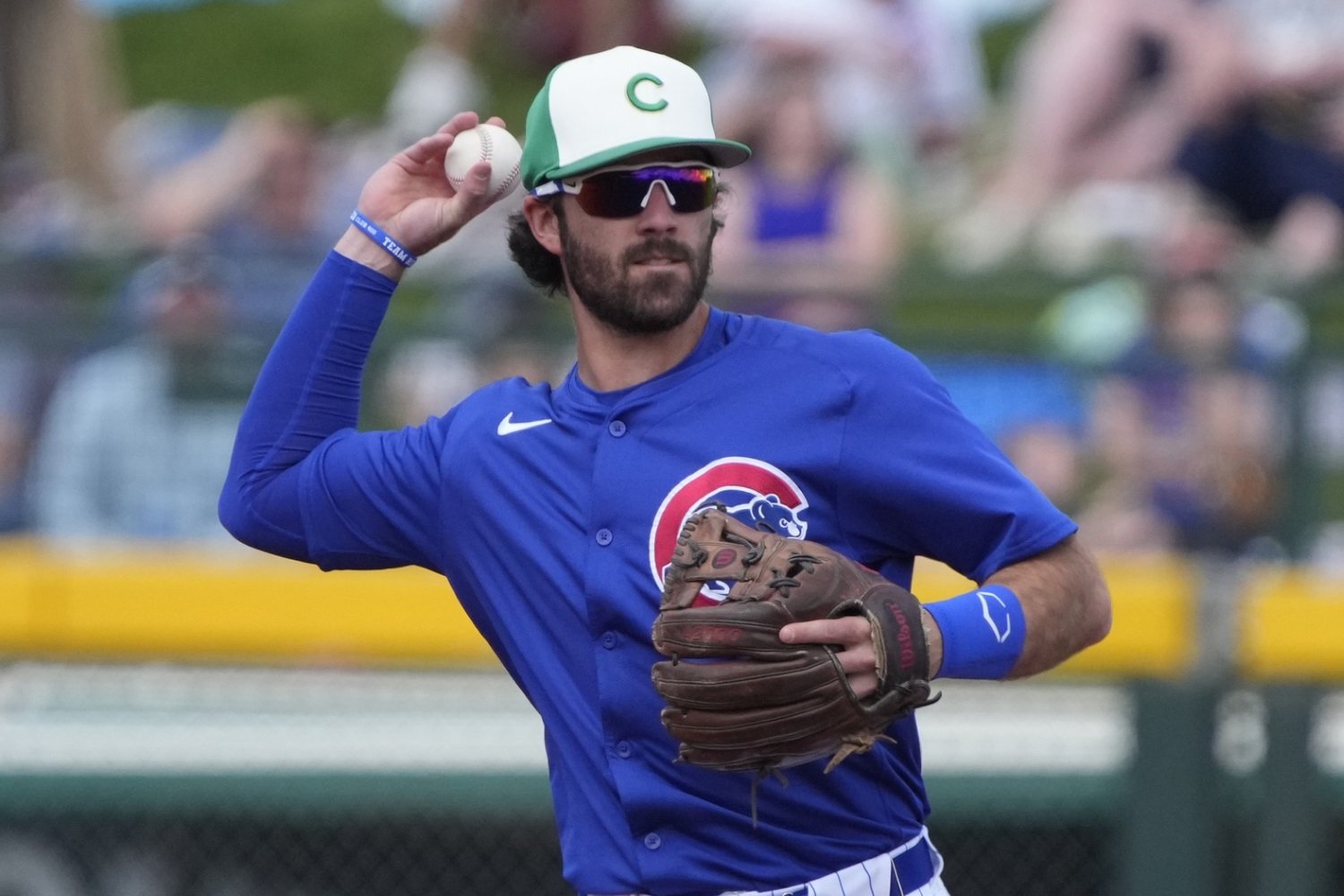 One of my predictions about the new rules that took effect last season was that we would see more hits than in previous years, not just on scalded line drives off the bats of left-handed hitters, but from righties, too. I expected that, with second basemen unable to swing to the left side of second and shortstops forced not only to play a step closer to the middle of the diamond but to stay off the outfield grass (where many of them used to position themselves against hard-hitting or slow-footed righties), we would see a few more balls sneak through, but also that more batters would reach on infield hits or errors. I was way, way wrong. Rob Mains broke down the effects of the rules changes (including the shift ban) in Baseball Prospectus 2024, and one of his fascinating findings was that the increase in BABIP throughout baseball in 2023 was not confined to grounders (liners and even fly balls also turned into hits slightly more often), but was confined to left-handed batters. Righties saw virtually no change in BABIP on grounders or liners, and only a small bump on fly balls. As I read Rob's excellent essay, I immediately thought, "Ok, but that doesn't account for errors. There were, surely, more errors." There weren't. On the contrary, on pulled ground balls by right-handed batters, the Out Rate (1-((H+ROE-HR)/Balls in Play)) was 76.4 percent, the highest for the 20-plus years for which we have good data on batted ball trajectory and direction. The league's aggregate fielding percentage was the highest it's been in that time. Despite fielders theoretically having to move five or six steps instead of three or four more often, and despite having their range cut down by half a step because they can't play as deep and have to account for a greater distance between themselves and either their teammate or the foul line, we saw the left sides of big-league infields play better than ever in 2023. Next, I checked to see whether there was a change in the quality of contact the league made. Maybe righty batters, who never have had as strong an incentive to use the whole field as lefty ones, hit weaker or bouncier grounders (ones with launch angles south of about -8 degrees, where expected BABIP begins to plunge because even hard-hit balls are two- or three-hoppers), or otherwise had lower expected value on them. Nope. Albeit by an infinitesimal amount, the league's righties hit harder pulled grounders and had a higher probability of hitting them 95 miles per hour or harder than in any previous year of the Statcast Era. The launch angle was the same. Based on exit velocity and launch angle, the expected singles rate of right-handed hitters' pulled grounders last year was 21.9%, the highest on record. The actual singles rate was 17.7%, the lowest on record. Go figure. Contact just as good against theoretically suboptimal infield alignments produced, if anything, worse results than in the past. I like being wrong, sometimes. Being wrong means learning something, and baseball is one of my favorite things to learn about. We can't say anything for certain here, and we shouldn't rush to overstate these effects, but I think we just learned that shifts against right-handed batters were only hurting team defense, anyway. Maybe that was because too many weak-armed second basemen were being asked to make backhanded plays on the far side of second base, even if they were mostly ones that should have been routine-looking. Maybe there was discomfort or miscommunication between the middle infielders in their interactions on the left side of second that was absent when the shortstop made the move in the opposite direction, because the angles at which they'd move toward each other on balls hit between them were so different and their relative depths had to be much more similar than on the right side. Maybe third basemen were being needlessly marginalized by the pinch of the shortstop covering the hole with the shift on. Any way you slice it, it's a fun finding. It might also give us a bit more confidence in Christopher Morel, as he fights to make up for what figure to be way too many errors early in his trial at the hot corner. We did just see Nick Madrigal have a defensively superb season in 2023, and this could be part of the reason. The circumscription of positioning didn't erase the major strides the league has made in identifying the best places for each fielder to play against each batter; the left side of every infield might have benefited from being in great position even after a rule came in forcing them to be a bit less algorithmically perfected than in the recent past. If it can work for Madrigal, maybe it can work for Morel, too. On the flip side, one thing the Cubs need to take away from this is to ensure that their righty batters are pulling fewer ground balls, period. They had the eighth-most such batted balls in MLB in 2023, which is no recipe for success. Swanson hit 118 grounders to the left side, 11th-most in MLB among righty batters, and Nico Hoerner hit 110, 15th-most. Combined, the two hit just .215 on those batted balls, so it's not like either specializes in blasting one-hoppers through the hole. Hoerner, of course, does much of his best work when he uses the opposite field. Swanson simply has to drive the ball in the air more often; his 44.1% ground-ball rate was the highest he'd posted since 2018. We could still see some of this change. With the effects of the pitch clock on baserunning and the increasing value of defensive range, we're going to see the league get faster over the next half-decade. A version of MLB with more speedy right-handed batters could be one that finally makes life hard on trapped left-side infielders. The margin for error could shrink so much that it does finally start forcing guys to play a step too shallow, or to rush throws. So far, though, banning the shift has only made shortstops and third basemen better. Research assistance provided by TruMedia.
 -
One potential reason to let CEJ opt out could be the impending addition of a pitcher who's not currently in the organization........... That's where my head is at the moment. I wonder if they try to bring Edwards back on the other side of what could be a rocky 40-man reorganization just after Opening Day. We'll see.
- 1 reply
-
- 1
-
-
- carl edwards jr
- dominic smith
- (and 1 more)
-
We now know the starting rotation for the first week or two of the 2024 Chicago Cubs' season. Manager Craig Counsell made the right choices among his existing options, but the team needs a much better one. Every team hopes to develop and retain a pitcher like Javier Assad. In his first 147 big-league innings, Assad has a 3.06 ERA, working in every role the modern game has dreamt up. Without elite stuff, he's generated tremendous results so far, including the ninth-best ERA among the 127 pitchers who threw at least 100 innings in 2023. He doesn't pile up strikeouts, but he's great at forcing harmless contact, with lots of grounders and pop-ups and relatively few line drives coming off opponents' bats. Those are the reasons why Counsell and company elected to give Assad the fifth and final spot in the team's starting rotation to open the season, with Jameson Taillon shelved by back problems for the short term. Assad has an ERA of 7.00 this spring, but Drew Smyly's is even worse, and Hayden Wesneski has done nothing to change the minds of those who mentally moved him to the reliever column after his uneven 2023 and struggles against opposite-handed batters. Assad has a deep pitch mix, the deep respect of his teammates, and a recent track record of being a good starter in the big leagues. No one else they have in camp checks all those boxes. Crucially, though, a player who checks them all much more forcefully is available. J.D. Martinez and Blake Snell have each signed elsewhere, but one more Scott Boras domino has yet to fall: Jordan Montgomery, the workhorse lefty stranded on the free-agent market and looking likely to sign after the season begins so as to be ineligible for the qualifying offer this fall. Montgomery doesn't have exceptional strikeout rates, either, but that's the only knock against him, and it's a weak one. He doesn't walk hitters, doesn't give up much hard contact in his own right, and doesn't miss turns in the rotation. Last year, between the regular season and the postseason, Montgomery threw roughly 210 innings. The reason why the Cubs lag the Cardinals in the NL Central projected standings at Baseball Prospectus is that the site's PECOTA projection system views their pitching staff as below-average. Their projected DRA- (adjusted Deserved Run Average, where 100 is average and lower is better) is 102. Montgomery is projected for a 93 DRA- this season; Assad's is 106 and Smyly's is 102. Though it would probably push them up to the line of the second competitive-balance tax threshold, and could even nudge them past it, the Cubs should sign Montgomery. If it's still possible to get him on a medium- or long-term deal, in order to lower the annual average value and stay below that second threshold, they should do that. Letting Snell and Martinez sign with NL rivals at the prices they ultimately commanded was a huge missed opportunity; Jed Hoyer can make up for it by reeling in Montgomery to complete his offseason. Unless and until Taillon returns, Montgomery could slot into Assad's designated starting slot, freeing up the young righthander to piggyback with Jordan Wicks and to work in other long relief situations. He'd instantly upgrade the team's starting mix and stabilize the shakiest unit on the team. When Taillon does come back, the Cubs needn't jettison Wicks or anyone else. They can just flex out to a six-man starting rotation, something they quietly did for short stretches last year and that Counsell did for an entire season in 2021, with the Brewers. We don't have publicly available Statcast data on Assad's spring. It's possible he's worked on things to mitigate the high walk rate he's posted in his big-league career and/or to miss more bats, but it's hard to evaluate that from outside the organization. He's looked like the same guy on video, which is no insult, given the success he's had in his young career, but it means that he'll continue to be vulnerable in the same ways he has been so far--and that means his good luck could run out relatively soon. Despite the costs involved, the Cubs need to sign Montgomery and commit themselves more seriously to winning in 2024. Assad can contribute plenty without being locked into a starting role, and if they haven't upgraded their depth when worse injuries than Taillon's balky back spring up later this year, the team will regret it. View full article
- 5 replies
-
- 2
-
-

-
- javier assad
- jordan wicks
- (and 4 more)
-
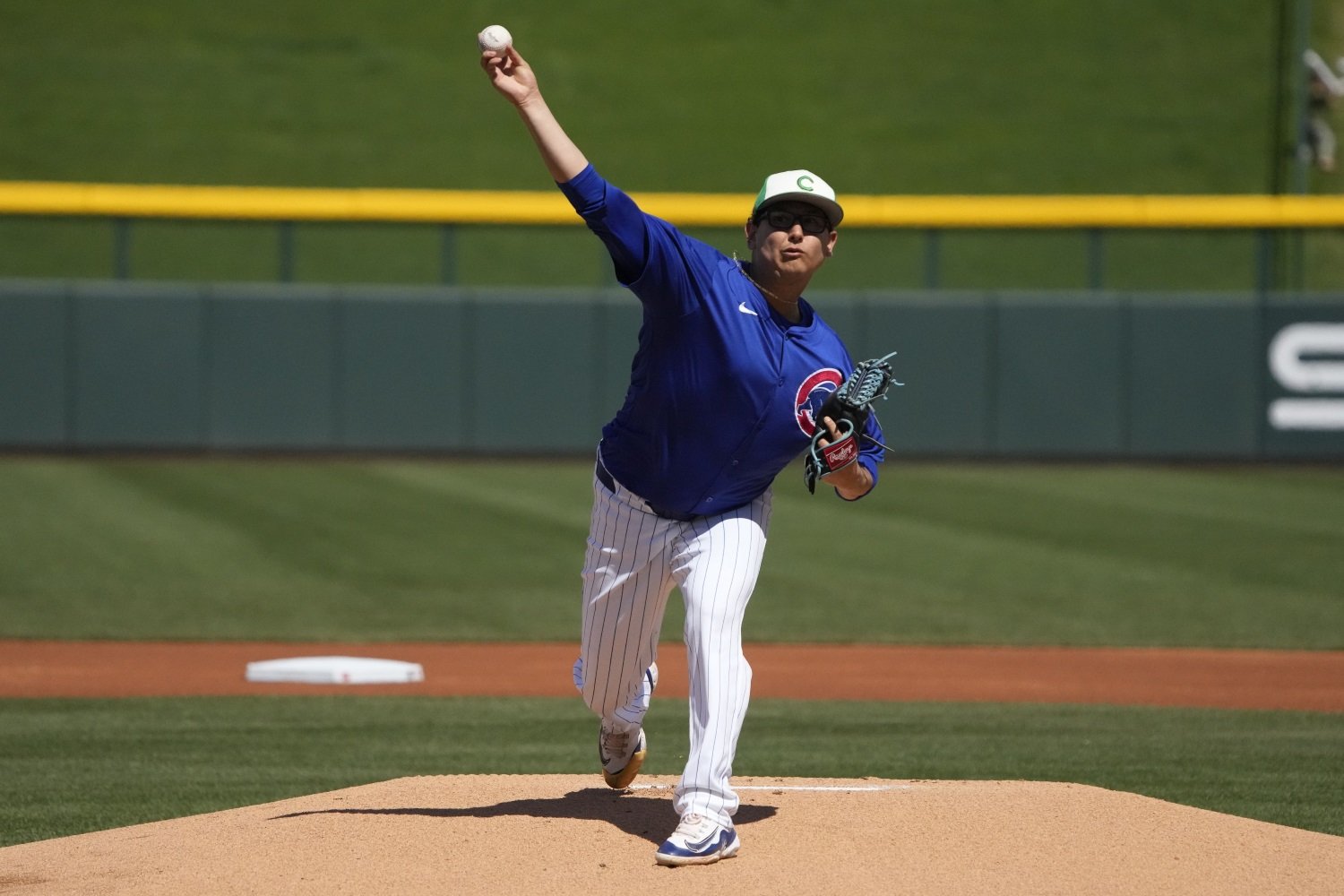 Every team hopes to develop and retain a pitcher like Javier Assad. In his first 147 big-league innings, Assad has a 3.06 ERA, working in every role the modern game has dreamt up. Without elite stuff, he's generated tremendous results so far, including the ninth-best ERA among the 127 pitchers who threw at least 100 innings in 2023. He doesn't pile up strikeouts, but he's great at forcing harmless contact, with lots of grounders and pop-ups and relatively few line drives coming off opponents' bats. Those are the reasons why Counsell and company elected to give Assad the fifth and final spot in the team's starting rotation to open the season, with Jameson Taillon shelved by back problems for the short term. Assad has an ERA of 7.00 this spring, but Drew Smyly's is even worse, and Hayden Wesneski has done nothing to change the minds of those who mentally moved him to the reliever column after his uneven 2023 and struggles against opposite-handed batters. Assad has a deep pitch mix, the deep respect of his teammates, and a recent track record of being a good starter in the big leagues. No one else they have in camp checks all those boxes. Crucially, though, a player who checks them all much more forcefully is available. J.D. Martinez and Blake Snell have each signed elsewhere, but one more Scott Boras domino has yet to fall: Jordan Montgomery, the workhorse lefty stranded on the free-agent market and looking likely to sign after the season begins so as to be ineligible for the qualifying offer this fall. Montgomery doesn't have exceptional strikeout rates, either, but that's the only knock against him, and it's a weak one. He doesn't walk hitters, doesn't give up much hard contact in his own right, and doesn't miss turns in the rotation. Last year, between the regular season and the postseason, Montgomery threw roughly 210 innings. The reason why the Cubs lag the Cardinals in the NL Central projected standings at Baseball Prospectus is that the site's PECOTA projection system views their pitching staff as below-average. Their projected DRA- (adjusted Deserved Run Average, where 100 is average and lower is better) is 102. Montgomery is projected for a 93 DRA- this season; Assad's is 106 and Smyly's is 102. Though it would probably push them up to the line of the second competitive-balance tax threshold, and could even nudge them past it, the Cubs should sign Montgomery. If it's still possible to get him on a medium- or long-term deal, in order to lower the annual average value and stay below that second threshold, they should do that. Letting Snell and Martinez sign with NL rivals at the prices they ultimately commanded was a huge missed opportunity; Jed Hoyer can make up for it by reeling in Montgomery to complete his offseason. Unless and until Taillon returns, Montgomery could slot into Assad's designated starting slot, freeing up the young righthander to piggyback with Jordan Wicks and to work in other long relief situations. He'd instantly upgrade the team's starting mix and stabilize the shakiest unit on the team. When Taillon does come back, the Cubs needn't jettison Wicks or anyone else. They can just flex out to a six-man starting rotation, something they quietly did for short stretches last year and that Counsell did for an entire season in 2021, with the Brewers. We don't have publicly available Statcast data on Assad's spring. It's possible he's worked on things to mitigate the high walk rate he's posted in his big-league career and/or to miss more bats, but it's hard to evaluate that from outside the organization. He's looked like the same guy on video, which is no insult, given the success he's had in his young career, but it means that he'll continue to be vulnerable in the same ways he has been so far--and that means his good luck could run out relatively soon. Despite the costs involved, the Cubs need to sign Montgomery and commit themselves more seriously to winning in 2024. Assad can contribute plenty without being locked into a starting role, and if they haven't upgraded their depth when worse injuries than Taillon's balky back spring up later this year, the team will regret it.
 -
In this final week before Opening Day, let's take a moment to preview the 2024 season for the Chicago Cubs' rivals. Today, it's the upstart Cincinnati Reds under the spotlight. Image courtesy of © Kareem Elgazzar/The Enquirer / USA TODAY NETWORK At various points throughout the 2023 season, I posited that the Cincinnati Reds would be the first Major League Baseball team to reach the postseason on vibes alone. Coming out of a lengthy rebuild (with a brief, half-hearted, COVID-ruined attempt at contention mixed in there), the arrival of multiple high-end prospects had the Reds’ stock on the rise. Ultimately, they ended up only one game worse than the Cubs, with an 82-80 finish. It didn’t result in a playoff spot, though, as they finished 10 games out of the division race and two back of the wild card. While they didn't make a postseason appearance last year, the 20-game improvement does leave plenty of room for optimism in the Queen City. They ranked fourth in the National League in ISO (.170) and eighth in collective wRC+ (98). The pitching will need to improve, however. The Reds were third-worst in the NL in ERA (3.83), which was largely due to a shallow starting group (5.43 ERA). One imagines that a full season of the likes of Elly De La Cruz, Christian Encarnacion-Strand, and Matt McLain could boost the offense, while additions Frankie Montas, Nick Martinez, Emilio Pagán, and Brent Suter could improve the pitching outcomes. They’re not division favorites, but they’re very much in the mix. Projected Record: 79-83 (FanGraphs), 78-84 (Baseball Prospectus) Key Additions: Jeimer Candelario Frankie Montas Nick Martinez Brent Suter Emilio Pagán Key Subtractions: Joey Votto Nick Senzel Harrison Bader Curt Casali Derek Law Projected Opening Day Lineup: 😄 Tyler Stephenson 1B: Christian Encarnacion-Strand 2B: Matt McLain SS: Elly De La Cruz 3B: Jeimer Candelario LF: Spencer Steer CF: TJ Friedl RF: Will Benson DH: Jonathan India Projected Opening Day Pitching Staff: Starting Pitchers Hunter Greene Graham Ashcraft Frankie Montas Andrew Abbott Nick Martinez Bullpen Lucas Sims (Setup) Emilio Pagán (Setup) Brent Suter (Setup) Alexis Díaz (Closer) Scouting Report The Reds’ cumulative .327 on-base percentage ranked 10th in MLB in 2023. Their 190 steals were the top number (24 more than the next-closest team). So the first thing you need to know about this squad is that they create traffic, then havoc. De La Cruz alone swiped 35 bags in only 98 games. McLain had a season of 27 in Double-A in 2022. Steer and India even combined for 29 last year. You’re going to see a lot of movement from this team. As far as their power profile goes, the .170 ISO was obviously one of the better figures in the bigs (11th overall), but it’s not necessarily over-the-fence pop, as their 198 homers sat 14th. There’s gap power and there’s speed. It’s a tough matchup for any staff to deal with. Where the Reds’ struggles could manifest is on the bump. Health was an issue, even more so than performance. Cincinnati used 17 different starters last year, with Ashcraft’s 26 pacing the group. Ashcraft and Greene – two of the projected stalwarts in a high-upside rotation – each missed time. Nick Lodolo – the other of that group – missed almost the entire year. When healthy, it’s a group with a sky-high ceiling. Greene as the ace & Ashcraft, Lodolo, and Andrew Abbott behind him is a group that could be the envy of most of baseball. But given the health concerns, it’s hard to put too much faith in that coming to fruition. That's why the team added Montas and Martinez. The aim is to give them more innings on the front end and take some pressure off what should be a formidable bullpen. Martinez may end up in a swing role, but it’s one he played well in San Diego. Suter and Pagán, while each past their prime, offer rubber-armed reliability in the relief mix. With that pair in tow next to Sims and Alexis Díaz, there’s a lot of stability for Cincinnati late in games. Their middle-relief corps offers volume, too. Sam Moll, Ian Gibaut, Tejay Antone, and Buck Farmer are just a few names in a group that runs deep. So even if the Reds continue to struggle on the mound, it won’t be because they didn’t attempt to avoid it. Ultimately, this roster will rely very heavily on upside. Both the offense and pitching present a great deal of it, but growing pains will also be part of all of this. If there’s a troubling aspect for an exciting club such as this, it’s that the NL Central does boast some of the beefier farm systems in all of baseball. So while they may have the most talent arriving at the top stage at present, the other squads aren’t going to be too far behind. One Big Question: How will David Bell configure the lineup? It’s not so much about the batting order as it is the players on the field. In declining his option, the Reds let Joey Votto walk and essentially announced Encarnacion-Strand as their starting first baseman, leaving Noelvi Marte on the opposite corner. Things became more complicated, though, as they signed Jeimer Candelario in free agency. With those three, in conjunction with McLain, De La Cruz, Steer, and India, the Reds essentially have seven players for five spots. Marte’s PED suspension clarifies things a bit, at least. The only worse way to get greater clarity is injury, and McClain has a still-nebulous shoulder problem that is doing just that. From the jump, Cincinnati will roll out a group that features Encarnacion-Strand at first, De La Cruz at short, and Candelario at third. Steer and India could be mixed in at first, second, or third, when not serving as the team’s DH. Upon Marte’s and McClain's return, however, it’s going to be fascinating to watch how Bell manages his group. Injuries happen. Poor performance happens. Suspensions – apparently – happen. But if this group is fully healthy and performing well, it’s going to be quite a murky setup for the man on the bench to handle daily. The Reds aren't the Cubs' biggest threat in the NL Central this year. They are, however, an interesting and competitive team. The head-to-head matchups between these two could go a long way to determining which (if either) makes it over the hump and into October this time. View full article
-
The Chicago Cubs' beloved, longest-tenured veteran sailed through the first four innings of his penultimate preseason start Tuesday night, but ran into some telling trouble in the fifth. Image courtesy of © Matt Kartozian-USA TODAY Sports It was pretty clear that Kyle Hendricks's priority Tuesday night was sharpening certain pitches and experimenting with some uncomfortable sequences, rather than getting out the Arizona Diamondbacks. Still, he looked terrific over the first four innings. Using his curveball much more often than he does during the regular season, he sliced through the visitors' lineup the first one and a half times, stealing strikes with the hook and inducing plenty of weak contact with his more traditional sinker and changeups. In the fifth inning, though, the wheels came off entirely. Hendricks gave up four runs and didn't get out of the frame, as Arizona made solid contact on a handful of his mistakes and found the lines and gaps for multiple extra-base hits. The results don't matter, but the process within that inning reflected some important truths about Hendricks at this stage of his career--ones that are becoming inescapable and less easily mitigated than they used to be. Watching Hendricks (especially as a seasoned Cubs fan) is a joy, because you can really think along with him from pitch to pitch. By now, his arsenal and the way it works are intimately familiar, and it's possible to get inside his head as he stares in at the batter and calls his own game. That also makes it uniquely obvious when something isn't quite working right, though, and it can add a bit of anxiety and frustration when he comes off the rails, because the reasons for that are plain but not necessarily fixable. On Tuesday night, Hendricks started running into trouble in the fifth because he lost command of his sinker to the glove side. That's a tough pitch to execute, even for a control artist like Hendricks, and he had a couple of those offerings leak right over the middle of the plate after he tried to target the upper, first-base side quadrant of the zone with them. Seeing him for a second and third time in the contest, the Diamondbacks didn't miss those mistakes. That's a tough problem to work around, because Hendricks's four-seamer is a pitch with limited and situational utility. He needs the sinker to be consistent, and times when his command of it has gotten loose have grown steadily more frequent over the last four or five years. Most of his problems have come to the arm side, and late in his outing, he did also start missing when he targeted that side of the plate, but it can be especially easy for lefties to tee off on him when he struggles to work the hard stuff across to the inner edge against them. Despite his changeup-forward repertoire, Hendricks hasn't generally been a reverse-split guy during his career. He was in 2023, though, as he neutralized lefties by staying away, away, away from them, enticing and teasing them with stuff they couldn't hit with any real authority. He showed that deft touch until the fifth inning Tuesday night, too, but got whacked around by lefties in the unfortunate frame. His ability to command the sinker deeper into games will be crucial this year. Over the last three years, when the fatigue has tended to loosen up his command a bit earlier than in the past, opponents have hit Hendricks hard the third time through the order. As has been discussed over the last few years (and as I documented neatly last summer), Hendricks's changeup is really two different pitches, and that was another thing that gave him trouble in the troublesome fifth Tuesday night. His nickel-curve style changeup to righties--one that behaves like a low-intensity, dipping cutter--continued to work throughout the game. It moved the way he wants it to, and he basically put it right where he wanted to put it. His more traditional, tumble-and-fade lefty changeup, however, was on the fritz, even before the fifth. It looked like it might have been intentional. Hendricks threw a couple of changeups to lefties that had the shape of the one he usually throws to righties, tacking gently toward their back foot instead of running off the plate away from them. It makes some sense if he wants to gain a feel for using both flavors of the cambio against lefties; it does set up and play off of some locations where he'd like to throw his sinker against them. Still, in the fifth inning, the Diamondbacks took advantage of it. They started sitting on the pitch, and whereas it found the ends of their bats for lazy outs in the early going, they got the barrel to it late. If Hendricks was doing an experiment, he gained valuable data, but if he wants to be able to use that version of his change to opposite-handed batters, he'll need to sequence and locate differently to get less confident swings. At the very end of the long fifth frame, two more good Arizona swings drew my attention. Hendricks left a curveball up in the meat of the zone, spinning lazily, and gave up a single through the left side. That was the first time he'd executed the pitch so poorly all night. No pitcher stays perfectly sharp and fresh throughout a full-length start, so mistakes like those are inevitable, but maybe that's another important datum. Hendricks might not be able to count on the curve later in a game, because his misses with it have always tended to be high and arm-side, which is the much more dangerous way to miss with a slow hook like that one. He doesn't bury it in the dirt, so he needs to know he's going to hit his mark with it or catch a hitter totally off-guard before committing to it. The other pitch of note was one Lourdes Gurriel, Jr. smacked down the right-field line for a double, chasing Hendricks. It came on a first-pitch changeup, with that signature dip and slide away from him, but Gurriel had been sitting on it and was thinking about the opposite field with it. That's another thing worth watching with him, and might be a reason why Craig Counsell will simply have to be proactive about taking him out the third time through an opposing lineup all year. The first couple times a hitter sees Hendricks within a game, he's likely to struggle, because while Hendricks's stuff isn't overpowering, he's too good at locating and tunneling his stuff for the hitter to put him on a particular pitch. Guys do their best to be ready for both the sinker and the changeup (whichever shape), but their inability to feel conviction about one or the other is key to the soft contact they tend to make. Gurriel went to the plate that third time confident that he could spot and attack Hendricks on the first pitch, believing he knew which pitch he would see and in what spot, as well as where he could best redirect it. That's been a sticky problem for Hendricks lately, because the arsenal is really relatively thin, and because he's had to bust out the curve earlier than he'd like in most of his starts since 2020, leaving little left with which to surprise a hitter late in a start. Baseball Prospectus's PECOTA projection system pegs Hendricks for an uninspiring 4.61 ERA this year, even after his resurgent 2023. Things like the above are why. It's not destiny, but it is reality. If the Cubs want to get anything close to the 3.74 ERA he gave them last year, Counsell needs to be more aggressive about pulling Hendricks than David Ross tended to be. Mostly, though, whether Hendricks can continue to be a solid starter depends on how well he makes some of the adjustments outlined above, after using this start to tune himself up and discover some of what will work (and what won't) in the coming campaign. View full article
-
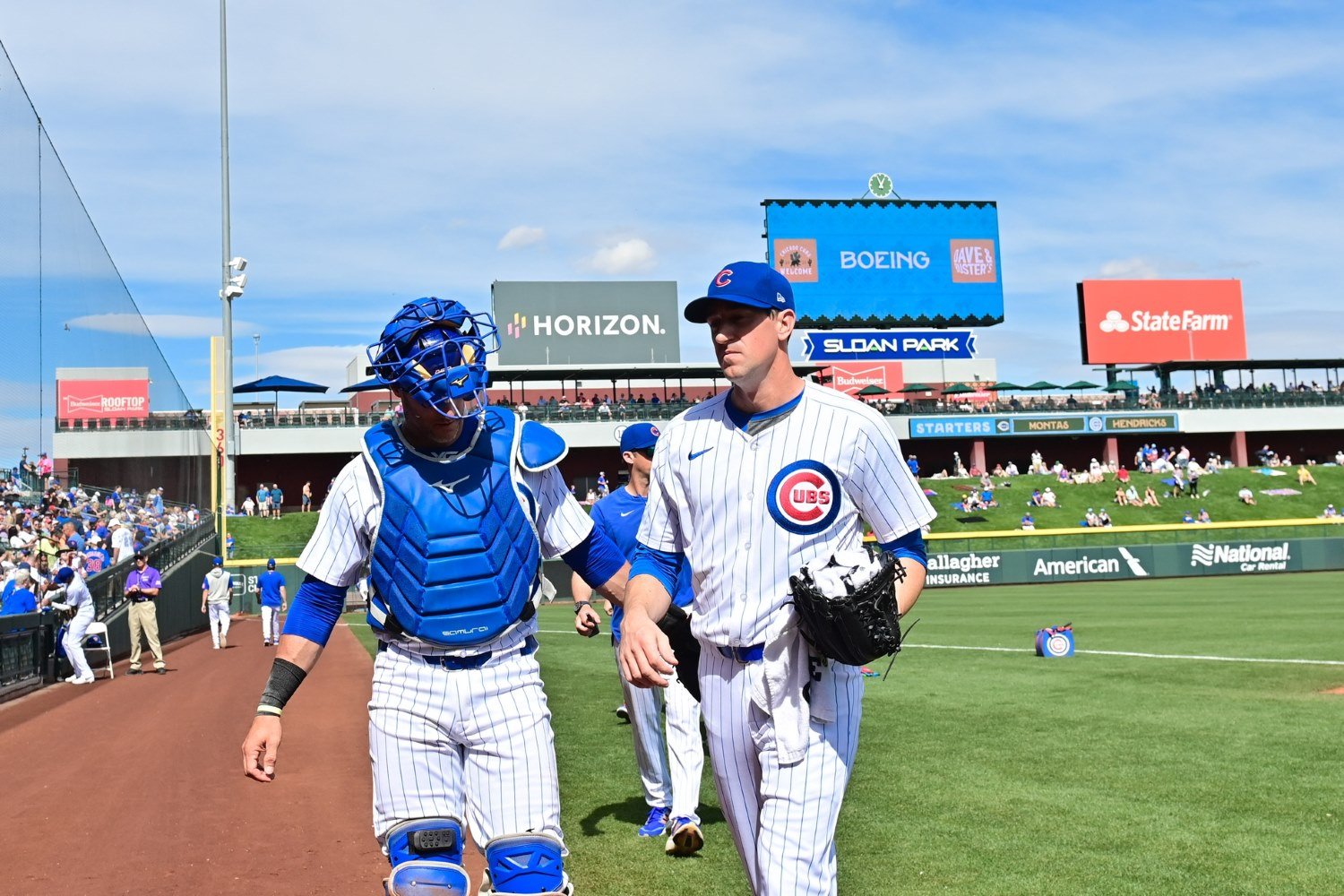 It was pretty clear that Kyle Hendricks's priority Tuesday night was sharpening certain pitches and experimenting with some uncomfortable sequences, rather than getting out the Arizona Diamondbacks. Still, he looked terrific over the first four innings. Using his curveball much more often than he does during the regular season, he sliced through the visitors' lineup the first one and a half times, stealing strikes with the hook and inducing plenty of weak contact with his more traditional sinker and changeups. In the fifth inning, though, the wheels came off entirely. Hendricks gave up four runs and didn't get out of the frame, as Arizona made solid contact on a handful of his mistakes and found the lines and gaps for multiple extra-base hits. The results don't matter, but the process within that inning reflected some important truths about Hendricks at this stage of his career--ones that are becoming inescapable and less easily mitigated than they used to be. Watching Hendricks (especially as a seasoned Cubs fan) is a joy, because you can really think along with him from pitch to pitch. By now, his arsenal and the way it works are intimately familiar, and it's possible to get inside his head as he stares in at the batter and calls his own game. That also makes it uniquely obvious when something isn't quite working right, though, and it can add a bit of anxiety and frustration when he comes off the rails, because the reasons for that are plain but not necessarily fixable. On Tuesday night, Hendricks started running into trouble in the fifth because he lost command of his sinker to the glove side. That's a tough pitch to execute, even for a control artist like Hendricks, and he had a couple of those offerings leak right over the middle of the plate after he tried to target the upper, first-base side quadrant of the zone with them. Seeing him for a second and third time in the contest, the Diamondbacks didn't miss those mistakes. That's a tough problem to work around, because Hendricks's four-seamer is a pitch with limited and situational utility. He needs the sinker to be consistent, and times when his command of it has gotten loose have grown steadily more frequent over the last four or five years. Most of his problems have come to the arm side, and late in his outing, he did also start missing when he targeted that side of the plate, but it can be especially easy for lefties to tee off on him when he struggles to work the hard stuff across to the inner edge against them. Despite his changeup-forward repertoire, Hendricks hasn't generally been a reverse-split guy during his career. He was in 2023, though, as he neutralized lefties by staying away, away, away from them, enticing and teasing them with stuff they couldn't hit with any real authority. He showed that deft touch until the fifth inning Tuesday night, too, but got whacked around by lefties in the unfortunate frame. His ability to command the sinker deeper into games will be crucial this year. Over the last three years, when the fatigue has tended to loosen up his command a bit earlier than in the past, opponents have hit Hendricks hard the third time through the order. As has been discussed over the last few years (and as I documented neatly last summer), Hendricks's changeup is really two different pitches, and that was another thing that gave him trouble in the troublesome fifth Tuesday night. His nickel-curve style changeup to righties--one that behaves like a low-intensity, dipping cutter--continued to work throughout the game. It moved the way he wants it to, and he basically put it right where he wanted to put it. His more traditional, tumble-and-fade lefty changeup, however, was on the fritz, even before the fifth. It looked like it might have been intentional. Hendricks threw a couple of changeups to lefties that had the shape of the one he usually throws to righties, tacking gently toward their back foot instead of running off the plate away from them. It makes some sense if he wants to gain a feel for using both flavors of the cambio against lefties; it does set up and play off of some locations where he'd like to throw his sinker against them. Still, in the fifth inning, the Diamondbacks took advantage of it. They started sitting on the pitch, and whereas it found the ends of their bats for lazy outs in the early going, they got the barrel to it late. If Hendricks was doing an experiment, he gained valuable data, but if he wants to be able to use that version of his change to opposite-handed batters, he'll need to sequence and locate differently to get less confident swings. At the very end of the long fifth frame, two more good Arizona swings drew my attention. Hendricks left a curveball up in the meat of the zone, spinning lazily, and gave up a single through the left side. That was the first time he'd executed the pitch so poorly all night. No pitcher stays perfectly sharp and fresh throughout a full-length start, so mistakes like those are inevitable, but maybe that's another important datum. Hendricks might not be able to count on the curve later in a game, because his misses with it have always tended to be high and arm-side, which is the much more dangerous way to miss with a slow hook like that one. He doesn't bury it in the dirt, so he needs to know he's going to hit his mark with it or catch a hitter totally off-guard before committing to it. The other pitch of note was one Lourdes Gurriel, Jr. smacked down the right-field line for a double, chasing Hendricks. It came on a first-pitch changeup, with that signature dip and slide away from him, but Gurriel had been sitting on it and was thinking about the opposite field with it. That's another thing worth watching with him, and might be a reason why Craig Counsell will simply have to be proactive about taking him out the third time through an opposing lineup all year. The first couple times a hitter sees Hendricks within a game, he's likely to struggle, because while Hendricks's stuff isn't overpowering, he's too good at locating and tunneling his stuff for the hitter to put him on a particular pitch. Guys do their best to be ready for both the sinker and the changeup (whichever shape), but their inability to feel conviction about one or the other is key to the soft contact they tend to make. Gurriel went to the plate that third time confident that he could spot and attack Hendricks on the first pitch, believing he knew which pitch he would see and in what spot, as well as where he could best redirect it. That's been a sticky problem for Hendricks lately, because the arsenal is really relatively thin, and because he's had to bust out the curve earlier than he'd like in most of his starts since 2020, leaving little left with which to surprise a hitter late in a start. Baseball Prospectus's PECOTA projection system pegs Hendricks for an uninspiring 4.61 ERA this year, even after his resurgent 2023. Things like the above are why. It's not destiny, but it is reality. If the Cubs want to get anything close to the 3.74 ERA he gave them last year, Counsell needs to be more aggressive about pulling Hendricks than David Ross tended to be. Mostly, though, whether Hendricks can continue to be a solid starter depends on how well he makes some of the adjustments outlined above, after using this start to tune himself up and discover some of what will work (and what won't) in the coming campaign.
 -
Good hitters manage the count and avoid the ones that favor pitchers. No one can avoid getting behind sometimes, though, so it's important to have success even in those difficult circumstances. The Chicago Cubs' projected leadoff hitter started doing that last year. Image courtesy of © Matt Marton-USA TODAY Sports Of the 218 hitters who saw at least 1,500 pitches last year, Ian Happ was just south of average in the percentage of pitches seen in pitcher-friendly counts (0-1, 0-2, 1-2, and 2-2), at 36.7 percent. He's a patient and intelligent hitter, and he worked hard to get ahead, knowing the benefits of having the count in his favor. That helped him rack up 99 walks, easily a career-high total and second only to Juan Soto in the National League. Importantly, though, Happ got to some of those walks by being a tougher out when he did fall behind--especially from the left side, when facing right-handed pitchers. The numbers tell a clear story. Ian Happ, Behind in Count as LHH, 2021-23 Seasons Swing % Contact % Ball % AVG OBP SLG 95+ EV % 2021-22 54.1 70.4 39.8 0.174 0.187 0.323 36.8 2023 48.3 75 44.1 0.238 0.248 0.393 39.4 Although it feels counterintuitive, it's often beneficial to be more patient when behind in the count. Pitchers start hunting the chase for a strikeout in those counts. They don't give you much to hit. Conventional wisdom tells hitters to protect the plate in these situations, but Happ found success by zeroing in more than ever on areas of the zone in which he could do damage, and letting others go. As that increased ball rate shows, he didn't just produce more when ending plate appearances behind in the count; he also got back into good counts more often by being more selective. As this indicates, it wasn't about hunting any particular kind of pitch. Even when behind in the count, Happ was diligent about using his scouting reports. He sought specific pitches to hit against each pitcher he faced, knowing their tendencies and where a pitch he could handle might be. Until last year, he'd been in a more defensive mode in those counts, and the only damage he had done came when a pitcher made a genuine mistake. You can see this not only in the heat maps of his raw production, but in the way he covered the zone. Without thinking primarily about protecting the plate, he still did so, because he knew where pitchers were likely to try to get him out within the zone. This is a level of maturity and adaptability in the batter's box that eludes many hitters for their entire careers. It only came after several years of inconsistency and failure for Happ, but tellingly, perhaps, it also came after his first highly successful full season, in 2022. For a hitter with the right disposition, a year like Happ's 2022 isn't a platform on which to try to stand flat-footed and hold on as long as possible. It's a springboard. Happ actually had a lower OPS+ in 2023 than in 2022, but things like the above help us see past the raw numbers. He was better last year than the year before, not worse. He's still very limited as a right-handed hitter, and should bat in the lower half of the order against lefty starters for this Cubs team. He did improve his approach from that side last year, too, but not to the extent that he was actually good. Against righties, though, he's their rightful leadoff hitter. Happ's DRC+, which is Baseball Prospectus's flagship offensive metric and which goes a bit beyond the actual stat line (modeling the tradeoffs a hitter makes in terms of strikeout and walk rates, contact quality, etc.) to assess hitter value, climbed from 100 in 2022 to 111 in 2023. That was the best number he's posted in a season with more than 200 plate appearances. He should be expected to stay that productive (or more so) in 2024, because while he's no longer the scary power threat he was early in his career, he's a much, much more well-rounded hitter and a much tougher out than he was even a year or two ago. View full article
-
How Ian Happ Got Much Better in Pitchers' Counts in 2023
Matthew Trueblood posted an article in Cubs
 Of the 218 hitters who saw at least 1,500 pitches last year, Ian Happ was just south of average in the percentage of pitches seen in pitcher-friendly counts (0-1, 0-2, 1-2, and 2-2), at 36.7 percent. He's a patient and intelligent hitter, and he worked hard to get ahead, knowing the benefits of having the count in his favor. That helped him rack up 99 walks, easily a career-high total and second only to Juan Soto in the National League. Importantly, though, Happ got to some of those walks by being a tougher out when he did fall behind--especially from the left side, when facing right-handed pitchers. The numbers tell a clear story. Ian Happ, Behind in Count as LHH, 2021-23 Seasons Swing % Contact % Ball % AVG OBP SLG 95+ EV % 2021-22 54.1 70.4 39.8 0.174 0.187 0.323 36.8 2023 48.3 75 44.1 0.238 0.248 0.393 39.4 Although it feels counterintuitive, it's often beneficial to be more patient when behind in the count. Pitchers start hunting the chase for a strikeout in those counts. They don't give you much to hit. Conventional wisdom tells hitters to protect the plate in these situations, but Happ found success by zeroing in more than ever on areas of the zone in which he could do damage, and letting others go. As that increased ball rate shows, he didn't just produce more when ending plate appearances behind in the count; he also got back into good counts more often by being more selective. As this indicates, it wasn't about hunting any particular kind of pitch. Even when behind in the count, Happ was diligent about using his scouting reports. He sought specific pitches to hit against each pitcher he faced, knowing their tendencies and where a pitch he could handle might be. Until last year, he'd been in a more defensive mode in those counts, and the only damage he had done came when a pitcher made a genuine mistake. You can see this not only in the heat maps of his raw production, but in the way he covered the zone. Without thinking primarily about protecting the plate, he still did so, because he knew where pitchers were likely to try to get him out within the zone. This is a level of maturity and adaptability in the batter's box that eludes many hitters for their entire careers. It only came after several years of inconsistency and failure for Happ, but tellingly, perhaps, it also came after his first highly successful full season, in 2022. For a hitter with the right disposition, a year like Happ's 2022 isn't a platform on which to try to stand flat-footed and hold on as long as possible. It's a springboard. Happ actually had a lower OPS+ in 2023 than in 2022, but things like the above help us see past the raw numbers. He was better last year than the year before, not worse. He's still very limited as a right-handed hitter, and should bat in the lower half of the order against lefty starters for this Cubs team. He did improve his approach from that side last year, too, but not to the extent that he was actually good. Against righties, though, he's their rightful leadoff hitter. Happ's DRC+, which is Baseball Prospectus's flagship offensive metric and which goes a bit beyond the actual stat line (modeling the tradeoffs a hitter makes in terms of strikeout and walk rates, contact quality, etc.) to assess hitter value, climbed from 100 in 2022 to 111 in 2023. That was the best number he's posted in a season with more than 200 plate appearances. He should be expected to stay that productive (or more so) in 2024, because while he's no longer the scary power threat he was early in his career, he's a much, much more well-rounded hitter and a much tougher out than he was even a year or two ago.
 -
Well we're gonna have to clean up that hashtag, at the very least.
-
What if I told you I could raise a key Cubs contributor's on-base percentage by 10 to 20 points, and all it would cost was the already-crumbling illusion that baseball is a fully functioning sport? Image courtesy of © Benny Sieu-USA TODAY Sports Let me throw a couple of facts at you. At first, these will seem odd, disparate, and silly, but I promise to build a convincing connection between them. Josh Gibson, one of the best handful of players in baseball history, used a bat that was 41 inches long. That's a good five or six inches longer than any current player uses, but the rules still permit bats as long as 42 inches. Patrick Wisdom, one of the best handful of players on the 2022 Chicago Cubs, strikes out anywhere from 30 to 40 percent of the time. He wields bats ranging from 33 1/2 to 35 inches in length. In baseball history, there have been 1,763 documented instances of a batter reaching base on catcher interference. Nearly half of those have come in the last 30 years, though. Famously, Gibson (like his contemporary Babe Ruth) used a bat that mirrored his larger-than-life image among players and fans. Ruth's bats weighed in as heavy as 50 ounces, and were often nearly 40 inches long. That wasn't the norm even at the time, though, and in the modern game (with pitchers throwing much, much harder than they did then and a better understanding of the relative values of bat mass and bat speed in creating power), most hitters use something considerably smaller, even though most hitters are at least as big and strong as were Ruth or Gibson. Wisdom swings a good-sized stick, by modern standards, but he's six inches shy of Gibson. That's the game now. However, the game has also changed in other ways, including some fueled by equipment evolution. Above, I mentioned the 1,763 catcher interferences we have in the historical MLB record. Let's break it down further: Through 1946: 157 1947-71: 243 1972-81: 221 1982-91: 200 1992-2001: 191 2002-11: 194 2012-21: 387 2022: 74 2023: 96 For the first 60-plus years of well-documented baseball history (those where we can be pretty sure we're not missing a whole bunch of these types of plays), catcher interference was extremely rare. Catchers were sparsely protected, and their mitts were designed for conservative, close-contact catches right in front of the chest. They weren't eager to get hit by a batter attempting a swing, and they had very little reason to even risk it. In the 1970s, two members of the Cincinnati Reds began to change that. On one hand (literally), Johnny Bench revolutionized catching itself. An exceptional athlete who came along just as catcher equipment was also ready to take a quantum leap, Bench popularized a one-handed catching style and a different type of catcher's mitt, with a more fielder-like hinge and pocket. That, without even many of the involved parties realizing it, invented catcher framing. No longer was a catcher's influence over the umpire confined to politicking and a little bit of subtle leaning from a very inflexible position. Bench and the catchers who came after him began extending their arms forward to receive incoming pitches, and the ability to do that in a fairly fluid motion meant that they could start to sell strikes at the edges of the zone a bit more craftily. On the other side of the ledger stood Pete Rose, the most ruthless competitor baseball had seen in several decades. Rose realized that, as catchers (better protected by improved safety equipment and learning their new way to receive the ball) crept forward in the catcher's box, he could let his bat drag and seek to hit the ball just before it arrived in the mitt--perhaps making contact with that mitt along the way. By rule, when that happened, he got first base. Few players in baseball history have wanted every 90 feet they could get (by whatever means) worse than Rose, so he took it via catcher interference 30 times in his career, including once in the 1970 World Series. That probably sounds like a vanishingly small number, but Rose's total was not only the record at the time, but 10 more than anyone else in the history of the game. A couple of times a year, he would nick the mitt and take his base, and that was an extraordinary frequency for the first century and change of baseball history. Rose played in a different era, though. Back then, opportunities for that kind of collision were virtually non-existent. It was still common for batters to slide up in the batter's box, and still uncommon for catchers to be truly crowding in from behind. That's changed. So has ownership of the all-time record for reaches via catcher interference--to Jacoby Ellsbury, who didn't get there by having one of baseball's longest careers and highest raw totals of plate appearances. Rose and Ellsbury still stand essentially alone atop the career leaderboard, but Josh Reddick had 19 of these. Carl Crawford had 17. Cubs folk hero Tommy La Stella had 16, and another three (the most ever) in postseason play. Memorably, La Stella reached on catcher interference in a two-strike count against Max Scherzer in the Cubs' wild fifth-inning rally in Game 5 of the 2017 NLDS. The Astros' Kyle Tucker already has 12 of these (the same number accumulated by new Cubs manager Craig Counsell). Given his youth and talent, it's very likely that he'll join Rose and Ellsbury, or surpass them by a substantial margin. As the list above shows, the frequency of catcher interference has exploded in the last 15 years. Of the 36 games in baseball history featuring at least two such plays, 22 have come since 2008. The only one ever to include three came on April 15 of last year. PITCHf/x gave us a way to (first) quantify and (next) augment pitch framing, and catchers have responded by encroaching on the hitter's space more with each passing campaign. Hitters are standing closer to the plate, because if you want to hit for the power the modern game requires, you have to. They're also standing closer to the back of the batter's box, because if you want to catch up to 103-mile-per-hour fastballs, you have to. The confluence of those trends happens just behind home plate, where it's just much, much more likely (though still very unlikely!) for the bat and the catcher's mitt to run into one another. On Aug. 1, 2021, just after the fire sale that ended the run for the Cubs' championship core, Wisdom came to the plate in Washington, where the team was tied 5-5 with the Nationals in the top of the ninth. The leadoff man in the inning, he took a strike, fouled off the 0-1 offering, then watched three straight balls. He fouled off the first payoff pitch, and on the next one, his stick caught the side of catcher René Rivera's glove. Wisdom got first base, on what is still the only catcher interference of his career. He was promptly erased on a double play off the bat of Matt Duffy, and the Cubs lost in the bottom of the ninth, but he did start a rally that night. Wisdom's game is power, and it's important that he swing a stick that allows him to get to it. The big question about his bat, though, is whether he can consistently get on base more often than he has throughout his career so far. His lifetime OBP of .298 won't keep him in the lineup, and when the Cubs need him, they won't get much help from him if that's the rate at which he avoids outs. He's plenty strong, though. What if you gave Wisdom a bat six inches longer and a few ounces heavier than his current one and told him to cut it loose, just like he's been doing for the last three years? At the bare minimum, you'd force an opposing catcher to back off, and damage their ability to frame pitches against him. If the league were too slow to make that adjustment, he could get on base an extra handful of times in a short span. This would drive people nuts. It's gimmicky and it's silly. It's also a fun thought exercise, though, because it forces us to confront the fact that baseball's margins have dwindled to zero in one critical zone, and that the impact of that compression is greater than we'd tend to imagine. Wisdom is a good candidate for it because, given his size and his problems with strikeouts and OBP, he's the guy who can make legitimate use of a bat that big and derive the greatest benefits from the stunt. There's an element of physical intimidation in this ploy. There's an element of cheeky rules manipulation. Still, it's hardly playing dirty. Hitters are under attack, in the modern game, and one of the ways we hardly ever notice in which that's happening is that catchers are closing off the space in which they might try to work, from behind. This might create more space behind the plate for Wisdom's teammates, too. It might take away a pitcher's backdoor slider or their just-hang-on fastball at the knees. Forcing a catcher to adjust his depth more than he's comfortable might alter a few things about the interaction of pitcher, batter, catcher, and umpire, which is becoming the essential one of the game. It's very silly. It's also a serious proposal. Patrick Wisdom should start carrying a bigger club to the plate with him. View full article
- 7 replies
-
- 1
-
-
- patrick wisdom
- josh gibson
- (and 1 more)
-
 Let me throw a couple of facts at you. At first, these will seem odd, disparate, and silly, but I promise to build a convincing connection between them. Josh Gibson, one of the best handful of players in baseball history, used a bat that was 41 inches long. That's a good five or six inches longer than any current player uses, but the rules still permit bats as long as 42 inches. Patrick Wisdom, one of the best handful of players on the 2022 Chicago Cubs, strikes out anywhere from 30 to 40 percent of the time. He wields bats ranging from 33 1/2 to 35 inches in length. In baseball history, there have been 1,763 documented instances of a batter reaching base on catcher interference. Nearly half of those have come in the last 30 years, though. Famously, Gibson (like his contemporary Babe Ruth) used a bat that mirrored his larger-than-life image among players and fans. Ruth's bats weighed in as heavy as 50 ounces, and were often nearly 40 inches long. That wasn't the norm even at the time, though, and in the modern game (with pitchers throwing much, much harder than they did then and a better understanding of the relative values of bat mass and bat speed in creating power), most hitters use something considerably smaller, even though most hitters are at least as big and strong as were Ruth or Gibson. Wisdom swings a good-sized stick, by modern standards, but he's six inches shy of Gibson. That's the game now. However, the game has also changed in other ways, including some fueled by equipment evolution. Above, I mentioned the 1,763 catcher interferences we have in the historical MLB record. Let's break it down further: Through 1946: 157 1947-71: 243 1972-81: 221 1982-91: 200 1992-2001: 191 2002-11: 194 2012-21: 387 2022: 74 2023: 96 For the first 60-plus years of well-documented baseball history (those where we can be pretty sure we're not missing a whole bunch of these types of plays), catcher interference was extremely rare. Catchers were sparsely protected, and their mitts were designed for conservative, close-contact catches right in front of the chest. They weren't eager to get hit by a batter attempting a swing, and they had very little reason to even risk it. In the 1970s, two members of the Cincinnati Reds began to change that. On one hand (literally), Johnny Bench revolutionized catching itself. An exceptional athlete who came along just as catcher equipment was also ready to take a quantum leap, Bench popularized a one-handed catching style and a different type of catcher's mitt, with a more fielder-like hinge and pocket. That, without even many of the involved parties realizing it, invented catcher framing. No longer was a catcher's influence over the umpire confined to politicking and a little bit of subtle leaning from a very inflexible position. Bench and the catchers who came after him began extending their arms forward to receive incoming pitches, and the ability to do that in a fairly fluid motion meant that they could start to sell strikes at the edges of the zone a bit more craftily. On the other side of the ledger stood Pete Rose, the most ruthless competitor baseball had seen in several decades. Rose realized that, as catchers (better protected by improved safety equipment and learning their new way to receive the ball) crept forward in the catcher's box, he could let his bat drag and seek to hit the ball just before it arrived in the mitt--perhaps making contact with that mitt along the way. By rule, when that happened, he got first base. Few players in baseball history have wanted every 90 feet they could get (by whatever means) worse than Rose, so he took it via catcher interference 30 times in his career, including once in the 1970 World Series. That probably sounds like a vanishingly small number, but Rose's total was not only the record at the time, but 10 more than anyone else in the history of the game. A couple of times a year, he would nick the mitt and take his base, and that was an extraordinary frequency for the first century and change of baseball history. Rose played in a different era, though. Back then, opportunities for that kind of collision were virtually non-existent. It was still common for batters to slide up in the batter's box, and still uncommon for catchers to be truly crowding in from behind. That's changed. So has ownership of the all-time record for reaches via catcher interference--to Jacoby Ellsbury, who didn't get there by having one of baseball's longest careers and highest raw totals of plate appearances. Rose and Ellsbury still stand essentially alone atop the career leaderboard, but Josh Reddick had 19 of these. Carl Crawford had 17. Cubs folk hero Tommy La Stella had 16, and another three (the most ever) in postseason play. Memorably, La Stella reached on catcher interference in a two-strike count against Max Scherzer in the Cubs' wild fifth-inning rally in Game 5 of the 2017 NLDS. The Astros' Kyle Tucker already has 12 of these (the same number accumulated by new Cubs manager Craig Counsell). Given his youth and talent, it's very likely that he'll join Rose and Ellsbury, or surpass them by a substantial margin. As the list above shows, the frequency of catcher interference has exploded in the last 15 years. Of the 36 games in baseball history featuring at least two such plays, 22 have come since 2008. The only one ever to include three came on April 15 of last year. PITCHf/x gave us a way to (first) quantify and (next) augment pitch framing, and catchers have responded by encroaching on the hitter's space more with each passing campaign. Hitters are standing closer to the plate, because if you want to hit for the power the modern game requires, you have to. They're also standing closer to the back of the batter's box, because if you want to catch up to 103-mile-per-hour fastballs, you have to. The confluence of those trends happens just behind home plate, where it's just much, much more likely (though still very unlikely!) for the bat and the catcher's mitt to run into one another. On Aug. 1, 2021, just after the fire sale that ended the run for the Cubs' championship core, Wisdom came to the plate in Washington, where the team was tied 5-5 with the Nationals in the top of the ninth. The leadoff man in the inning, he took a strike, fouled off the 0-1 offering, then watched three straight balls. He fouled off the first payoff pitch, and on the next one, his stick caught the side of catcher René Rivera's glove. Wisdom got first base, on what is still the only catcher interference of his career. He was promptly erased on a double play off the bat of Matt Duffy, and the Cubs lost in the bottom of the ninth, but he did start a rally that night. Wisdom's game is power, and it's important that he swing a stick that allows him to get to it. The big question about his bat, though, is whether he can consistently get on base more often than he has throughout his career so far. His lifetime OBP of .298 won't keep him in the lineup, and when the Cubs need him, they won't get much help from him if that's the rate at which he avoids outs. He's plenty strong, though. What if you gave Wisdom a bat six inches longer and a few ounces heavier than his current one and told him to cut it loose, just like he's been doing for the last three years? At the bare minimum, you'd force an opposing catcher to back off, and damage their ability to frame pitches against him. If the league were too slow to make that adjustment, he could get on base an extra handful of times in a short span. This would drive people nuts. It's gimmicky and it's silly. It's also a fun thought exercise, though, because it forces us to confront the fact that baseball's margins have dwindled to zero in one critical zone, and that the impact of that compression is greater than we'd tend to imagine. Wisdom is a good candidate for it because, given his size and his problems with strikeouts and OBP, he's the guy who can make legitimate use of a bat that big and derive the greatest benefits from the stunt. There's an element of physical intimidation in this ploy. There's an element of cheeky rules manipulation. Still, it's hardly playing dirty. Hitters are under attack, in the modern game, and one of the ways we hardly ever notice in which that's happening is that catchers are closing off the space in which they might try to work, from behind. This might create more space behind the plate for Wisdom's teammates, too. It might take away a pitcher's backdoor slider or their just-hang-on fastball at the knees. Forcing a catcher to adjust his depth more than he's comfortable might alter a few things about the interaction of pitcher, batter, catcher, and umpire, which is becoming the essential one of the game. It's very silly. It's also a serious proposal. Patrick Wisdom should start carrying a bigger club to the plate with him.
- 7 comments
-
- 2
-
-

-
- patrick wisdom
- josh gibson
- (and 1 more)
-
 After an accidental hiatus of a few weeks, the gang is back together and TINAR rides again. We spent our return episode discussing myriad Chicago Cubs topics, including: -The return of Cody Bellinger, and the subsequent demotion of Pete Crow-Armstrong -Christopher Morel's work at third base -David Bote's predicament and perpetual place in Iowa -Who will claim the final rotation spot(s) -How good Shota Imanaga and Michael Busch have looked lately -Miles Mastrobuoni We also play a fun little Cubs trivia game at the end. The show is available on Apple Podcasts, Spotify, and wherever else you find such shows. Enjoy! Apple Podcasts: Spotify:
 -
The Cubs podcast you barely knew existed and assumed had ceased to exist still exists, baby! Image courtesy of Matt Trueblood via Spotify for Podcasters After an accidental hiatus of a few weeks, the gang is back together and TINAR rides again. We spent our return episode discussing myriad Chicago Cubs topics, including: -The return of Cody Bellinger, and the subsequent demotion of Pete Crow-Armstrong -Christopher Morel's work at third base -David Bote's predicament and perpetual place in Iowa -Who will claim the final rotation spot(s) -How good Shota Imanaga and Michael Busch have looked lately -Miles Mastrobuoni We also play a fun little Cubs trivia game at the end. The show is available on Apple Podcasts, Spotify, and wherever else you find such shows. Enjoy! Apple Podcasts: Spotify: View full article
-
- 1
-
-
- this is not a rebuild
- christopher morel
- (and 2 more)
-
Are Teams Paying for Volume From Hitters, But Not From Pitchers?
Matthew Trueblood posted an article in Cubs
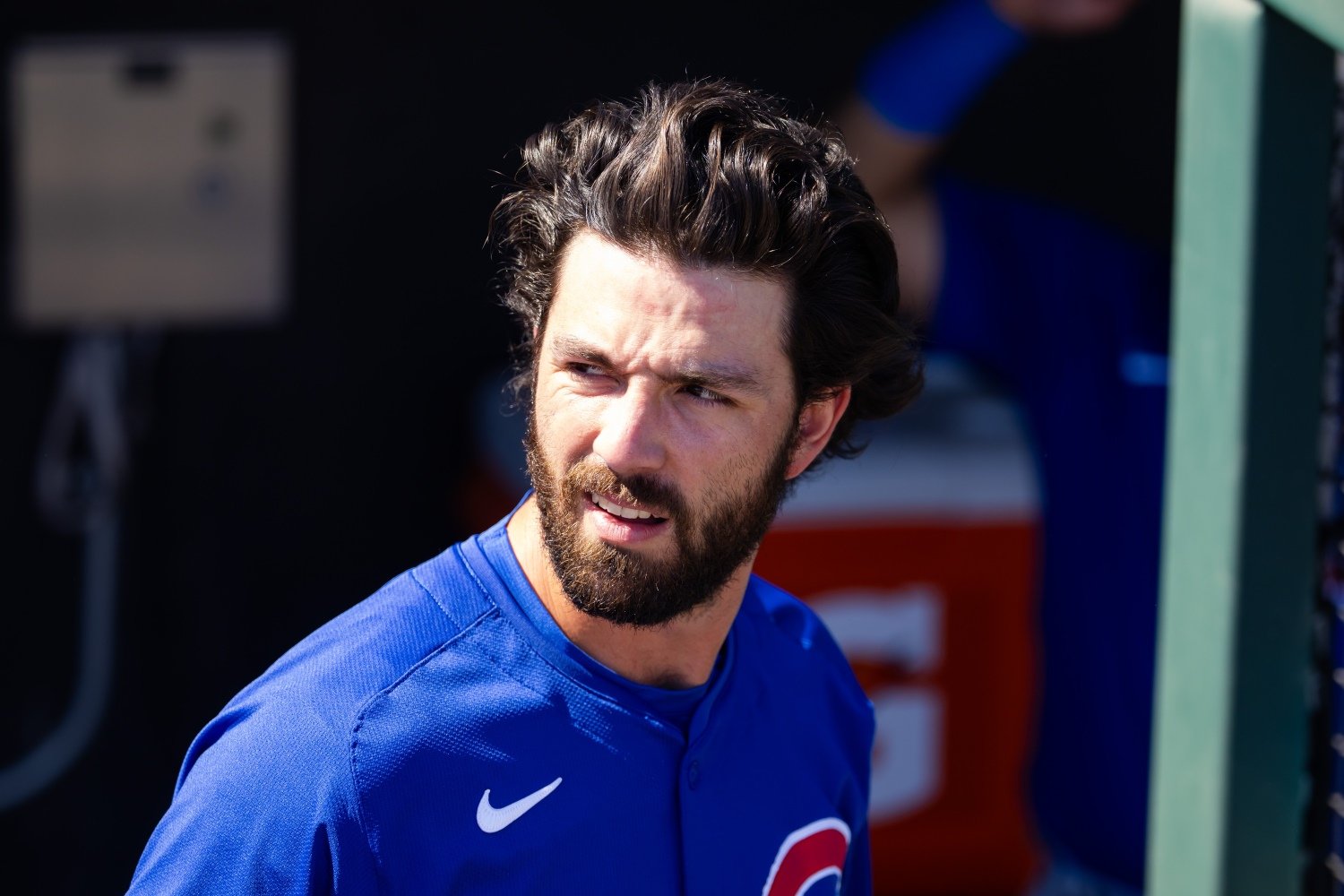 This MLB offseason has been marked by mixed signals. The owners want you to believe that the cliff they've reached with regard to traditional regional broadcasting is a crisis meriting major payroll reductions, but they have still spent lavishly--just not in traditional ways, or on traditional skill sets. It was inescapable that Shohei Ohtani would sign a record-setting megadeal, and he did, but it was curiously structured. The other monster contracts of the winter went to Yoshinobu Yamamoto and Tyler Glasnow. Meanwhile, Blake Snell and Jordan Montgomery remain unsigned, and players like Cody Bellinger, Matt Chapman, and Shota Imanaga signed relatively modest contracts--at least relative to the expectations of the marketplace at the beginning of the offseason. Ohtani, Yamamoto, and Glasnow have one very obvious thing in common: their new team, the Los Angeles Dodgers. That the Dodgers are paying Glasnow upward of $35 million per year and guaranteed Ohtani and Yamamoto a total north of $1 billion on longer-term deals, though, reflects the fact that there was robust demand for all of them. By contrast, Teoscar Hernández signed just a one-year deal with the Dodgers. There's something strange happening here. Teams are willing to spend big, but only on certain player types, and it's not just pitchers, because Snell and Montgomery are two of the best pitchers on the market, but they look poised to come in below expectations, whereas Yamamoto and Glasnow blew by even the most grandiose visions of their earning power. Here's the best way I can figure it: in the modern game, over 25 years past the last round of expansion and with the league awash in pitchers with excellent stuff, teams are happy to pay for excellence from their hurlers, rather than mere durability. The replacement level has risen so far that no one wants to overpay for a guy just because he might give them 180 or 200 innings. Instead, they prefer to buy their frames in small batches, with high dominance quotients. Snell is a tough nut to crack for multiple reasons, some having nothing to do with the broader market conditions. He's a unique starting pitcher in a unique situation. Montgomery really makes clear the state of affairs, though. He's not going to fan 30 percent of opposing batters, or run a 2.50 ERA, but he's almost automatic in terms of taking the ball when it's his turn and working deep into games, with average or better results. Eventually, he'll sign a robust deal of his own, but it won't come anywhere close to those signed by Yamamoto (in terms of total commitment) or Glasnow (in terms of annual average value). He's not as much in demand as a pitcher exactly like him would have been a decade ago. On the other hand, at the plate, teams are willing to pay a greater premium for durability than they used to. You can see that in the Cubs' pact with Dansby Swanson last winter, worth $177 million over seven years. Swanson is not a superstar, but he got paid at nearly a superstar rate because he routinely plays 160 games a year. As pitching staffs have expanded, benches have necessarily shrunk. Teams feel comfortable shuttling pitchers between Triple-A and MLB, because they can make decisions about who should go down or come up based on availability, but they get much more uneasy when it comes to trying the same juggling act with position players. After all, theoretically, a position player is available just about every day. How do you know when to option one and recall another? It's not just about who's on the roster, though, but about how a player can be used within it. Swanson, with his stellar defense and steady offensive production, can be written into the lineup whenever he's healthy. Maybe he'll carry the team for a fortnight and then slump for a month, but he solves one position on an everyday basis and will reliably be one of the best nine options for the manager without regard to matchups or circumstances. Platoons are hard to maintain in the modern game. Players who only post 130 times a year put pressure on the organization, by forcing them to play roster roulette on both sides of the runs ledger. It's not just Ohtani's unique duality of value that made him so desirable, but that he fits what teams want on both sides of the coin. He's a high-intensity, low-durability starting pitcher, and he's also an exceptionally durable designated hitter. He's averaged 635 plate appearances per year since the start of 2021, and he's looking likely to be in the lineup on Opening Day even after undergoing elbow surgery last fall. In the past, teams valued hitters based on their brilliance and pitchers based on their capacity. Now, it seems like that wisdom has been inverted. Unless and until the league expands again, we should expect it to stay that way. That means that some market inefficiencies might exist, and perhaps the Cubs should be trying to exploit them. Montgomery, I would argue, is being systematically undervalued by a league gone mad for per-batter dominance on the mound. Mitch Garver, who signed a very modest two-year deal with the Mariners just before Christmas, is an example of a position player being undervalued because he's not capable of racking up 550 plate appearances. There's a fundamental logic to the trends of the player market over the last few years, but it's not absolute, and if the Cubs are unwilling to match the Dodgers' huge offers to highly durable star hitters like Freddie Freeman or to overpowering but injury-vulnerable pitchers like Glasnow, they should zag against the league's zig and grab players like Montgomery, J.D. Martinez, and Brandon Belt. It's not too late to do that this very spring.
-
- 1
-
-
- mitch garver
- tyler glasnow
- (and 2 more)
-
Yeah, now that (I think) they've gotten much better on the scouting side and are routinely getting guys with real upside, the next step is to consistently convert that--and you're right, Alzolay is a great exemplar for that.
-
The Cubs did make a few moves to bolster their bullpen this winter, but they stayed well clear of the elite reliever market. They already have a top closer in whom they trust, and the reason is simple: his slider--er, sliders. Image courtesy of © Rick Scuteri-USA TODAY Sports Making the full-time move to a relief role in 2022 unlocked a lot of things for Adbert Alzolay. With an extra mile per hour or two on his fastball (thanks to being able to cut loose so much more in short bursts), everything has played up, but Alzolay's breakout 2023 campaign seemed to be primarily about his slider. Opponents whiffed on 40.6 percent of their swings against the slider, leading to 38 of his 67 strikeouts. Superficially, it was a power arsenal, and a neat pairing for the right-handed Venezuela native. In reality, though, Alzolay has developed three distinct breaking balls--his bread-and-butter slider, a cutter (thrown harder, and primarily to lefties) and a sweeper (slower, and primarily to righties). Those lesser cousins to the true slider play underrated roles in helping Alzolay dominate the way he did when he was healthy in 2023. Rounding out and defining that suite of breaking balls was a pivotal development for Alzolay last year. He found a consistent shape for the slider, and swapped out what had been a mostly ineffecitve curveball for the sweeper, while gaining greater utility on the cutter by focusing its deployment on left-handed batters. Unlike many relievers (who confine themselves to one fastball look in the simple showdown of a single inning), Alzolay employs both a four-seamer and a sinker, leaning toward the former against lefties and the latter against righties. The four-seam heater has above-average run to his arm side, so it and the slider pair nicely. For that same reason, though, when Alzolay wants to get up and in on a lefty, the cutter is highly valuable. It stops those hitters from eliminating that quadrant of the zone and sitting on the slider low and in, and it makes them less aggressive in their swings against the four-seamer on the outer half. Against righties, the slider's tight but sweepy shape is a good match for the sinker, but for bigger movement and a change of speeds that can make the sinker more effective inside, the sweeper was a key addition. Alzolay's curveball was, briefly, his best breaking pitch, but see how the sweeper has greater lift? That makes it a much better partner to his sinker than the curve could ever be, and the slider is better with his four-seamer than the curve is. Five-pitch relievers are a rarity for a reason. It can be viciously difficult to sustain the feel for that deep a repertoire, given the constraints of being a reliever. A closer like Alzolay doesn't have the luxury of doing side work on a fixed schedule. They don't get the same opportunities to implement new things or make adjustments. With the four-seamer, the sinker, the slider, the sweeper, and the cutter, though, Alzolay has enough ways to find outs to succeed in all kinds of game situations and against all kinds of hitters. He might not be as consistent as a conventional two-pitch monster with triple-digit heat and a slider with an optimal spin axis, because there will be days when one of his indispensable weapons will not be at full power. He's going to be versatile and impressive, though, and his steady improvement to reach this level of excellence in relief is a credit to both the player and the Cubs' pitching infrastructure, which improves with each passing season. Research assistance provided by TruMedia. View full article
