


Matthew Trueblood
-
Posts
2,481 -
Joined
-
Last visited
-
Days Won
2
Content Type
Profiles
Joomla Posts 1
Chicago Cubs Videos
Chicago Cubs Free Agent & Trade Rumors, Notes, & Tidbits
2026 Chicago Cubs Top Prospects Ranking
News
2023 Chicago Cubs Draft Picks
Guides & Resources
2024 Chicago Cubs Draft Picks
The Chicago Cubs Players Project
2025 Chicago Cubs Draft Pick Tracker
2026 Chicago Cubs Draft Tracker: Picks & Bonuses
Blogs
Events
Forums
Store
Gallery
Everything posted by Matthew Trueblood
-
As they begin a weeklong road trip to close out the first half, the Cubs are two months removed from their last series win on the road. The front office won't plot its trade market course until after these two series, but when they do, expect a couple of infielders to become focal points. Image courtesy of © Charles LeClaire-USA TODAY Sports When Cubs executive Jed Hoyer joined broadcasters Boog Sciambi and Jim Deshaies in the broadcast booth Saturday afternoon, the mess below them made clear the writing on the wall before them. Hoyer's frustration with a season full of bad injury luck and sloppy play was evident, as he gave an update on more bad injury luck (lower back soreness for Kyle Hendricks) and the team's sloppy play put them deep in a hole from which they were unable even to begin climbing out. During that interview, Hoyer used his favorite euphemism--"hard decisions"--a couple of times. He talked about how difficult it has been, on a couple of occasions since he took over the time, to feel pressed up to the trade deadline before he was able to confidently select between the courses of buying or selling at that deadline. He also mentioned, with a rueful chuckle, the crunch created by the league's decision to permanently move the MLB Draft into mid-July, forcing teams to wait until after the All-Star break to turn their full attention to the trade market. By laying out those threads, Hoyer all but invited fans to braid them up into a narrative that reads like this: The Cubs haven't fully committed to a single direction for this month's trade deadline, but they're heavily leaning toward selling. They'll make that determination for sure after this weekend's draft, and moves could start happening just after the All-Star break. In talking to members of two front offices who have been in contact with the Cubs recently, it sounds like that's exactly how things stand. This is largely a resource allocation thing, for the moment. The Cubs are closely watching a handful of farm systems belonging to rivals with whom they might match up on a trade soon, but many of their top staff in scouting and R&D are focused on the draft for the next week. Once that event takes place (starting Sunday), they and their potential suitors can start to match up and have more serious conversations. When they do, expect two names to come up with more frequency than you might have guessed: Nico Hoerner and Christopher Morel. For very different reasons, those two have drawn teams' interest, and the Cubs might feel that capitalizing on their trade value now is the best way to shake up their medium-term positional corps. Hoerner, of course, has two and a half years left on the contract extension he signed last spring. He's making $11.5 million this year and next, and $12 million in 2026. Compared to most extensions signed by arbitration-eligible players, this one is fairly frontloaded; that's how the Cubs got such a good deal on Hoerner's would-be free-agent season, the last one in the deal. That very characteristic will ensure that he retains some trade value, as long as some other team believes that his long recent slump (he's hitting an anemic .221/.295/.282 since missing a week in mid-May) belies a true talent level better reflected by he did before that (.269/.361/.391 through May 13) or even by what he did down the stretch last season (.297/.377/.391 after the 2023 All-Star break). The Cubs extended Hoerner successfully because his skill set (good defense up the middle, excellent contact skills, but very limited power) is one they value more highly than most of the other 29 teams. That said, there are a dozen or so teams who would have active interest in Hoerner, especially because of the affordability of the last two years of this deal. The Cubs will be unlikely to willingly eat the money attached to him this year, because they're very close to the first luxury tax threshold, but they could include a few million dollars in 2025 in order to ensure a solid return in a trade. Obviously, Morel is about as different a player from Hoerner as can be. He's had a difficult season, with some things to like but a lot of frustration. The team tried to help him transform from a low-OBP, high-strikeout slugger with 35-homer power into a more complete hitter, and eventually, that evolution could still play out. Right now, though, he's only benefited in one way (fewer strikeouts) and has seen both his raw hit tool and his game power take huge steps backward. By giving him a long audition at third base, too, the team has only confirmed to themselves and all potential suitors that he has no business playing there. Unlike Hoerner, though, Morel has a profile the rest of the league values (if anything) more highly than the Cubs do. His raw power is still impressive, and he's a good enough athlete to move back to second base (the only defensive position at which he's ever looked remotely at home) or settle into a corner outfield spot and acquit himself. Whereas the Cubs were unrealistic about his value as a headliner in trade talks this winter, they're now more clear-eyed about what he can be, what he can't be, and how he would fit into various trade scenarios. He's under team control for four more years beyond this one, and is likely to reach arbitration for the first time in 2026. While he can't command a controllable star as the centerpiece of a trade, Morel could be a secondary piece in such a deal. Alternatively, if the Cubs feel a need to get creative and clear some money, Morel could be attached to Cody Bellinger to make an acquiring team both more willing to surrender its own young talent and less wary of the poison pill that is Bellinger's pair of player options for 2025 and 2026. If you believe in the Cubs' player development staff at all, it makes sense for the team to open some space in its infield right now. Matt Shaw hasn't played since Jun. 27, and was briefly rumored to be promoted to Triple-A Iowa last week, but one way or another, he's knocking on the door. Shaw is undersized, and he has some work left to do, but in the right hands, he projects to be a better big-league hitter than Hoerner or Morel have been recently, and soon. It's fair to wonder whether the Cubs constitute "the right hands", but they believe they do, which is why they're increasingly open to moving one of their incumbents around the infield dirt. Even an undefeated week going into the All-Star break would not drag the Cubs up to .500, and since they're visiting two superior teams (the Orioles and Cardinals), a 3-3 or 2-4 trip is much more likely, anyway. A very strong surge into and out of the break could give Hoyer pause, but the team is positioning themselves as sellers behind the scenes, which is the only rational choice and an important one for them to maintain. They'll get one infusion of young talent beginning Sunday evening, and they need to focus on securing another one within the fortnight or so thereafter. View full article
-
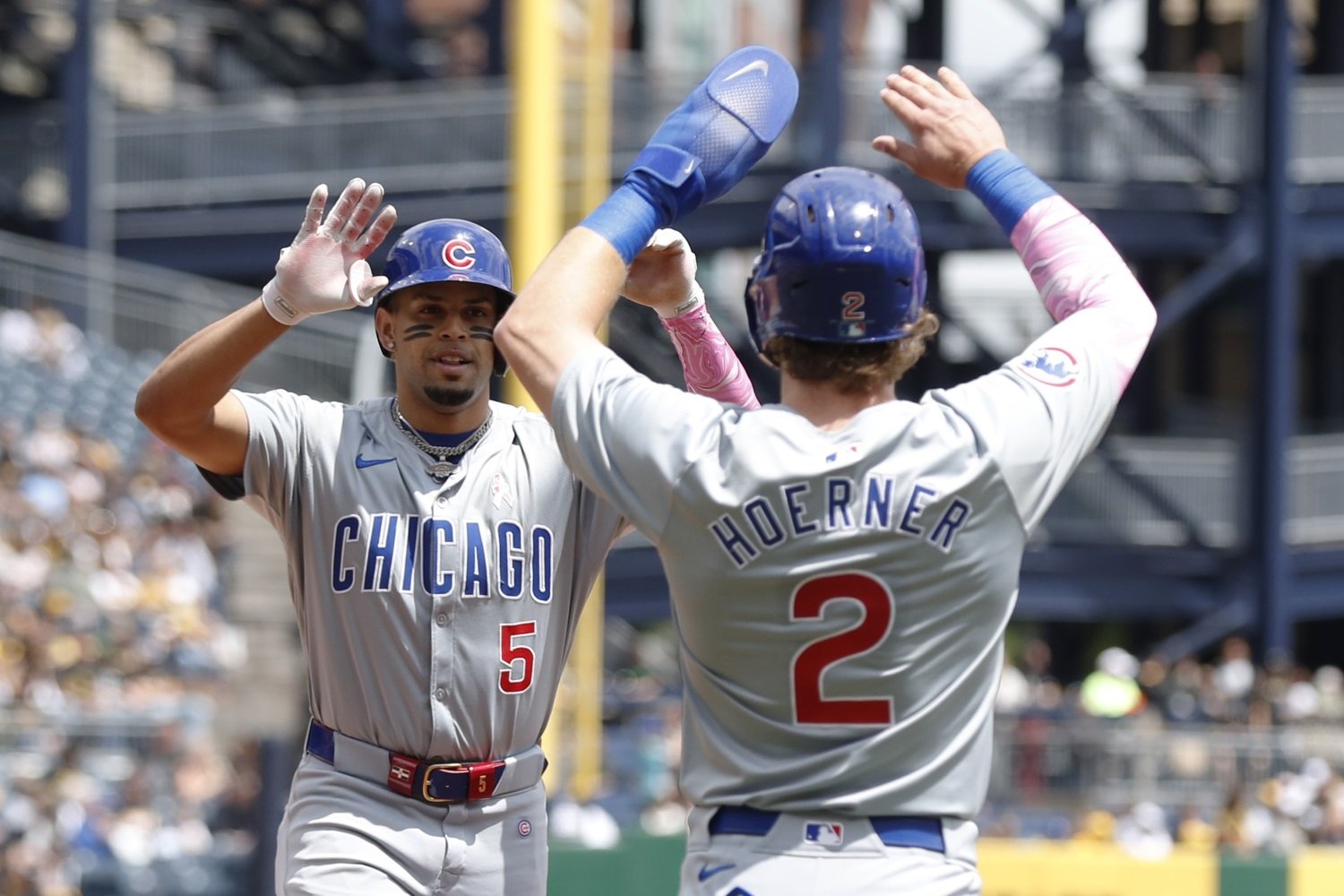 When Cubs executive Jed Hoyer joined broadcasters Boog Sciambi and Jim Deshaies in the broadcast booth Saturday afternoon, the mess below them made clear the writing on the wall before them. Hoyer's frustration with a season full of bad injury luck and sloppy play was evident, as he gave an update on more bad injury luck (lower back soreness for Kyle Hendricks) and the team's sloppy play put them deep in a hole from which they were unable even to begin climbing out. During that interview, Hoyer used his favorite euphemism--"hard decisions"--a couple of times. He talked about how difficult it has been, on a couple of occasions since he took over the time, to feel pressed up to the trade deadline before he was able to confidently select between the courses of buying or selling at that deadline. He also mentioned, with a rueful chuckle, the crunch created by the league's decision to permanently move the MLB Draft into mid-July, forcing teams to wait until after the All-Star break to turn their full attention to the trade market. By laying out those threads, Hoyer all but invited fans to braid them up into a narrative that reads like this: The Cubs haven't fully committed to a single direction for this month's trade deadline, but they're heavily leaning toward selling. They'll make that determination for sure after this weekend's draft, and moves could start happening just after the All-Star break. In talking to members of two front offices who have been in contact with the Cubs recently, it sounds like that's exactly how things stand. This is largely a resource allocation thing, for the moment. The Cubs are closely watching a handful of farm systems belonging to rivals with whom they might match up on a trade soon, but many of their top staff in scouting and R&D are focused on the draft for the next week. Once that event takes place (starting Sunday), they and their potential suitors can start to match up and have more serious conversations. When they do, expect two names to come up with more frequency than you might have guessed: Nico Hoerner and Christopher Morel. For very different reasons, those two have drawn teams' interest, and the Cubs might feel that capitalizing on their trade value now is the best way to shake up their medium-term positional corps. Hoerner, of course, has two and a half years left on the contract extension he signed last spring. He's making $11.5 million this year and next, and $12 million in 2026. Compared to most extensions signed by arbitration-eligible players, this one is fairly frontloaded; that's how the Cubs got such a good deal on Hoerner's would-be free-agent season, the last one in the deal. That very characteristic will ensure that he retains some trade value, as long as some other team believes that his long recent slump (he's hitting an anemic .221/.295/.282 since missing a week in mid-May) belies a true talent level better reflected by he did before that (.269/.361/.391 through May 13) or even by what he did down the stretch last season (.297/.377/.391 after the 2023 All-Star break). The Cubs extended Hoerner successfully because his skill set (good defense up the middle, excellent contact skills, but very limited power) is one they value more highly than most of the other 29 teams. That said, there are a dozen or so teams who would have active interest in Hoerner, especially because of the affordability of the last two years of this deal. The Cubs will be unlikely to willingly eat the money attached to him this year, because they're very close to the first luxury tax threshold, but they could include a few million dollars in 2025 in order to ensure a solid return in a trade. Obviously, Morel is about as different a player from Hoerner as can be. He's had a difficult season, with some things to like but a lot of frustration. The team tried to help him transform from a low-OBP, high-strikeout slugger with 35-homer power into a more complete hitter, and eventually, that evolution could still play out. Right now, though, he's only benefited in one way (fewer strikeouts) and has seen both his raw hit tool and his game power take huge steps backward. By giving him a long audition at third base, too, the team has only confirmed to themselves and all potential suitors that he has no business playing there. Unlike Hoerner, though, Morel has a profile the rest of the league values (if anything) more highly than the Cubs do. His raw power is still impressive, and he's a good enough athlete to move back to second base (the only defensive position at which he's ever looked remotely at home) or settle into a corner outfield spot and acquit himself. Whereas the Cubs were unrealistic about his value as a headliner in trade talks this winter, they're now more clear-eyed about what he can be, what he can't be, and how he would fit into various trade scenarios. He's under team control for four more years beyond this one, and is likely to reach arbitration for the first time in 2026. While he can't command a controllable star as the centerpiece of a trade, Morel could be a secondary piece in such a deal. Alternatively, if the Cubs feel a need to get creative and clear some money, Morel could be attached to Cody Bellinger to make an acquiring team both more willing to surrender its own young talent and less wary of the poison pill that is Bellinger's pair of player options for 2025 and 2026. If you believe in the Cubs' player development staff at all, it makes sense for the team to open some space in its infield right now. Matt Shaw hasn't played since Jun. 27, and was briefly rumored to be promoted to Triple-A Iowa last week, but one way or another, he's knocking on the door. Shaw is undersized, and he has some work left to do, but in the right hands, he projects to be a better big-league hitter than Hoerner or Morel have been recently, and soon. It's fair to wonder whether the Cubs constitute "the right hands", but they believe they do, which is why they're increasingly open to moving one of their incumbents around the infield dirt. Even an undefeated week going into the All-Star break would not drag the Cubs up to .500, and since they're visiting two superior teams (the Orioles and Cardinals), a 3-3 or 2-4 trip is much more likely, anyway. A very strong surge into and out of the break could give Hoyer pause, but the team is positioning themselves as sellers behind the scenes, which is the only rational choice and an important one for them to maintain. They'll get one infusion of young talent beginning Sunday evening, and they need to focus on securing another one within the fortnight or so thereafter.
 -
The Chicago Cubs have a slugger with one of the fastest bats in baseball, and he's leading the team, on pace for nearly 30 home runs. Overall, though, that bat speed is going to waste, because it's a swing without barrel control and he rarely meets the ball squarely. Image courtesy of © David Banks-USA TODAY Sports When MLB released Statcast bat-tracking data for public consumption earlier this season, the headlines for Cubs partisans wrote themselves. Christopher Morel swings extraordinarily fast! It was one of those insights from advanced baseball data that are so obvious to even a casual observer that they border on redundant, but which so pleasingly confirm our priors that they also stir our excitement and passion for the game. Maybe we could all be scouts after all. Yes, Christopher Morel's bat speed is awesome. Alas, 347 plate appearances into his first full and undisrupted big-league season, Morel is hitting an unproductive, unimpressive .195/.304/.370. Everyone knew that having one of the five or 10 fastest swings in baseball didn't automatically make a player an elite hitter, but seeing Morel struggle this way--despite a strikeout rate on the right side of average and a walk rate in excess of 11%--is unsettling. When Giancarlo Stanton or Jo Adell fails to dominate offensively in spite of the raw materials for top-of-the-scale power, it makes sense. They strike out over 30% of the time. Morel, though, keeps swinging very fast, making contact, and making outs anyway. The problem is exactly what you'd probably guess: in addition to being insufficiently selective within the zone (even if he does do fairly well at not chasing outside the zone), Morel is swinging too wildly. Every hitter has to calibrate their own balance between swinging hard and fast enough to put some juice into the ball, and controlling their bat path well enough to bring the big parts of the bat and the ball together. Morel is out of balance. He swings very hard, and without much of a spread in his swing speed. He attacks the ball in a way few other hitters are capable of--or at least that few others are willing to. That doesn't translate, though, when it comes to raw exit velocity. As you'd expect, swing speed is closely correlated with exit velocity, but Morel belongs to the class of hitters who create less velocity off the bat than the velocity of their bat would imply. The problem is inefficient collisions between bat and ball, because while Morel has made some adjustments and increased the rate at which he makes contact this year, he's also mishitting it more often. His average exit velocity is higher than in 2022 or 2023, but he's hitting fewer line drives, and more of his hard-hit balls are grounders. Statcast keeps a statistic to count how often a batter's swing and the incoming pitch meet cleanly enough to generate 80% or more of the possible exit velocity, based on the speed of each. Morel rates poorly. Hitters like Morel can be lethal when they get hot. Whether it be because they see the ball especially well for a while or because they get a series of fat pitches over a particular stretch, they can run into a number of balls and generate some big power numbers. When things go wrong, though, they can go very, very wrong. Morel's been in a slump since mid-May, with a line of .171/.301/.308, and it's largely because he's not squaring up the ball. Again, this is something hitters with fast swings struggle with. You'll square it up better and more consistently if you're willing to moderate your swing speed to meet the ball squarely, and if you're not, you accept a certain risk of imperfect contact and/or whiffs. Morel, though, ends up hitting the ball efficiently only in locations where the ball just isn't going to take off very often. Squaring the ball up when it's down and inside, out of the zone, is a recipe for hitting it hard right off your shoe top, as Morel is infamously prone to doing. Compare Morel to Heliot Ramos, who also has a very fast swing and is also below-average at squaring it up, overall. Ramos is striking out more than Morel, but he's hitting a robust .298/.373/.524. How? He's squaring the ball up when it's over the heart of the plate, where squared-up balls tend to be fair, tend to be hit in the air, and tend to turn into big hits. It's easy to get discouraged about Morel's overall batting line. It's also easy to get excited about his improved contact rate and obvious power potential. He has the most important raw material for producing pop. The truth, though, is right in the middle, in the worst possible way. He's made up of extremes, and while there are still ample reasons for hope, the truth of this moment is that he's an incomplete hitter, lost on the winding road from where he was the last two years to the destination he and the team envision. View full article
-
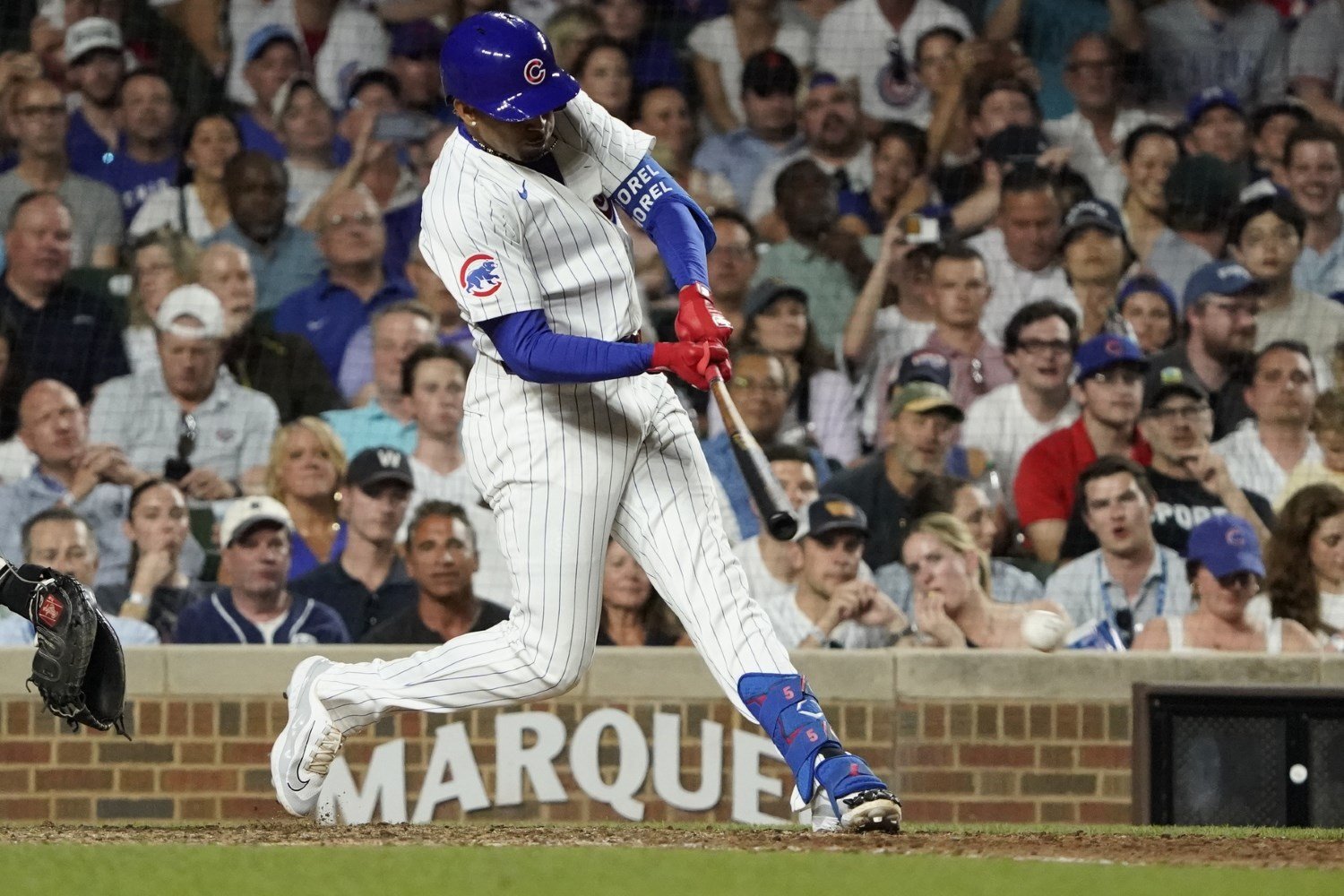 When MLB released Statcast bat-tracking data for public consumption earlier this season, the headlines for Cubs partisans wrote themselves. Christopher Morel swings extraordinarily fast! It was one of those insights from advanced baseball data that are so obvious to even a casual observer that they border on redundant, but which so pleasingly confirm our priors that they also stir our excitement and passion for the game. Maybe we could all be scouts after all. Yes, Christopher Morel's bat speed is awesome. Alas, 347 plate appearances into his first full and undisrupted big-league season, Morel is hitting an unproductive, unimpressive .195/.304/.370. Everyone knew that having one of the five or 10 fastest swings in baseball didn't automatically make a player an elite hitter, but seeing Morel struggle this way--despite a strikeout rate on the right side of average and a walk rate in excess of 11%--is unsettling. When Giancarlo Stanton or Jo Adell fails to dominate offensively in spite of the raw materials for top-of-the-scale power, it makes sense. They strike out over 30% of the time. Morel, though, keeps swinging very fast, making contact, and making outs anyway. The problem is exactly what you'd probably guess: in addition to being insufficiently selective within the zone (even if he does do fairly well at not chasing outside the zone), Morel is swinging too wildly. Every hitter has to calibrate their own balance between swinging hard and fast enough to put some juice into the ball, and controlling their bat path well enough to bring the big parts of the bat and the ball together. Morel is out of balance. He swings very hard, and without much of a spread in his swing speed. He attacks the ball in a way few other hitters are capable of--or at least that few others are willing to. That doesn't translate, though, when it comes to raw exit velocity. As you'd expect, swing speed is closely correlated with exit velocity, but Morel belongs to the class of hitters who create less velocity off the bat than the velocity of their bat would imply. The problem is inefficient collisions between bat and ball, because while Morel has made some adjustments and increased the rate at which he makes contact this year, he's also mishitting it more often. His average exit velocity is higher than in 2022 or 2023, but he's hitting fewer line drives, and more of his hard-hit balls are grounders. Statcast keeps a statistic to count how often a batter's swing and the incoming pitch meet cleanly enough to generate 80% or more of the possible exit velocity, based on the speed of each. Morel rates poorly. Hitters like Morel can be lethal when they get hot. Whether it be because they see the ball especially well for a while or because they get a series of fat pitches over a particular stretch, they can run into a number of balls and generate some big power numbers. When things go wrong, though, they can go very, very wrong. Morel's been in a slump since mid-May, with a line of .171/.301/.308, and it's largely because he's not squaring up the ball. Again, this is something hitters with fast swings struggle with. You'll square it up better and more consistently if you're willing to moderate your swing speed to meet the ball squarely, and if you're not, you accept a certain risk of imperfect contact and/or whiffs. Morel, though, ends up hitting the ball efficiently only in locations where the ball just isn't going to take off very often. Squaring the ball up when it's down and inside, out of the zone, is a recipe for hitting it hard right off your shoe top, as Morel is infamously prone to doing. Compare Morel to Heliot Ramos, who also has a very fast swing and is also below-average at squaring it up, overall. Ramos is striking out more than Morel, but he's hitting a robust .298/.373/.524. How? He's squaring the ball up when it's over the heart of the plate, where squared-up balls tend to be fair, tend to be hit in the air, and tend to turn into big hits. It's easy to get discouraged about Morel's overall batting line. It's also easy to get excited about his improved contact rate and obvious power potential. He has the most important raw material for producing pop. The truth, though, is right in the middle, in the worst possible way. He's made up of extremes, and while there are still ample reasons for hope, the truth of this moment is that he's an incomplete hitter, lost on the winding road from where he was the last two years to the destination he and the team envision.
 -
Here's what we know for sure: the 2024 Chicago Cubs have a lousy offense, and along with an injury-depleted bullpen, it's sealed their fate for this season. Much of the blame for that has flowed toward the heart of the order, which feels like it's missing a genuine star. Is that fair? Image courtesy of © Michael McLoone-USA TODAY Sports The Cubs are below-average just about across the board, when it comes to run creation. They don't hit for enough power. They don't collect hits on balls in play, which is because their swings are largely geared toward power they don't have. They don't make enough contact to compensate for those shortcomings. It's an underwhelming group. For my part, I have tended to focus criticism and doubt on the best hitters in that lineup, because they don't seem stout enough. This team was meant to be built around defense, but inherent in such an approach is a certain degree of lineup top-heaviness. You can't build around up-the-middle defense without accepting some below-average offensive work from those four positions (shortstop, second base, center field, and catcher), and that applies pressure to the players at the other positions to be more than above-average. The Dodgers are built this way. Admittedly, it's more about resource allocation than about an emphasis on fielding, but the result is the same. When healthy, they feature Mookie Betts, Shohei Ohtani, Freddie Freeman, Will Smith, and Teoscar Hernández at the top of the lineup. They've gotten good work from Jason Heyward near the bottom of that batting order this season, but for the most part, they're knowingly accepting subpar contributions from the last few slots in the order, because they spent huge money to give themselves the best top half of the lineup in MLB. The Yankees have taken a similar tack in recent years, and never more so than in 2024, as they're built around Aaron Judge, Juan Soto, and a whole lot of waiting for those two to come up to bat again. For the last few years, it's also been the Astros' modus operandi, with guys like Jake Meyers, Chas McCormick and Martín Maldonado getting ample playing time even when they weren't hitting. Houston has Kyle Tucker, Yordan Alvarez, José Altuve, and Alex Bregman to anchor their attack, so little else matters. To see how great hitters can cover for lousy ones, let's create a new mini-metric. It's a very simple one: in what percentage of a player's games do his total bases and walks drawn total four or more? That's not a perfect way to capture the value elite hitters create, but it does get us going in the right direction. Four total bases can come on a lone, solo homer, and that's not always especially valuable, but it is a run. It can be more than that. Why do teams value power so highly? It's because when a power hitter does his thing, he singlehandedly makes up for a teammate taking an 0-for-3. Four singles can be even more valuable than a homer, but that's very hard to do in a game. This way of boiling down offensive contributions within a game reflects the real value of hitting for average, avoiding making outs, and generating power, and balances them reasonably well, while keeping things simple. I'm calling this little number Big Game%. The average (among players with at least 100 plate appearances) Big Game% is 14.5 this year. Here's the (fairly satisfying) list of the 10 leading hitters in Big Game% for 2024. Player Big Game % Aaron Judge 42.90% Mike Trout 37.90% Kyle Tucker 35.00% Shohei Ohtani 34.10% Gunnar Henderson 32.50% Rafael Devers 31.00% Freddie Freeman 30.60% José Ramírez 30.40% Jarren Duran 30.10% Juan Soto 29.30% You won't find any Cubs there, and surely, you didn't expect to. The team leader in Big Game% is Seiya Suzuki, at 22.0%. He's 45th on the list, out of 365 qualifying hitters, and is one of four Cubs with above-average marks in both overall weighted on-base average (wOBA) and Big Game%. Joining him in that company are Ian Happ, Cody Bellinger, and Michael Busch. It's surprising, perhaps, to find not only those four, but below-average hitters Dansby Swanson, Christopher Morel, and Nico Hoerner at or above average in Big Game%. While they're not coming close to keeping pace with the league leaders in player Big Game% (the Dodgers, Yankees, Orioles, Astros, and Phillies) as a team, the Cubs have a good number of players seeing ample playing time and racking up an above-average frequency of Big Games. Here's the thing: they're not even coming close to making up for the ineptitude of their worst hitters. Mike Tauchman is a lovely, much-missed ingredient of a good offense, but as you can see, he's the keep-the-line-moving guy. He can catalyze an offense, but never carry it. Suzuki, Happ, and Morel, especially, make up for some bad hitters, but they're not stars of the caliber required to cancel out some of the worst hitters in all of baseball. Pete Crow-Armstrong, Miguel Amaya, and Tomás Nido are black holes on the lineup card. Not even pictured above are Nick Madrigal, Miles Mastrobuoni, and Yan Gomes, to whom the team has allocated 242 wasted plate appearances. Gomes and Mastrobuoni have Big Game rates similar to those of Crow-Armstrong and Amaya, but it would be far too generous to say that Madrigal does, too. He didn't have a single game this season that counts as Big by these criteria, which probably doesn't surprise any Cubs watchers. It's still plausible to read this as a problem with the best hitters on the team. Suzuki, Happ, and the rest are demonstrably incapable of carrying a team, the way that illustrious list of 10 (or Bryce Harper, 12th in Big Game%, or Pete Alson at 14th, or Christian Yelich at 17th, or Vladimir Guerrero Jr. at 20th) can often do. Just as importantly, though, they're being asked to make up for some of the very worst regular hitters in baseball--especially Crow-Armstrong and Amaya. The team is failing both to assemble a heart of the order on par with the best teams in baseball, and to put credible big-leaguers into the bottom third of the lineup. That's a recipe for persistent failure, and highlights how badly they need a positional overhaul this summer, fall, and winter. View full article
- 1 reply
-
- 1
-

-
- ian happ
- cody bellinger
- (and 5 more)
-
The Problem with the Cubs' Offense Might Not Be What We Thought It Was
Matthew Trueblood posted an article in Cubs
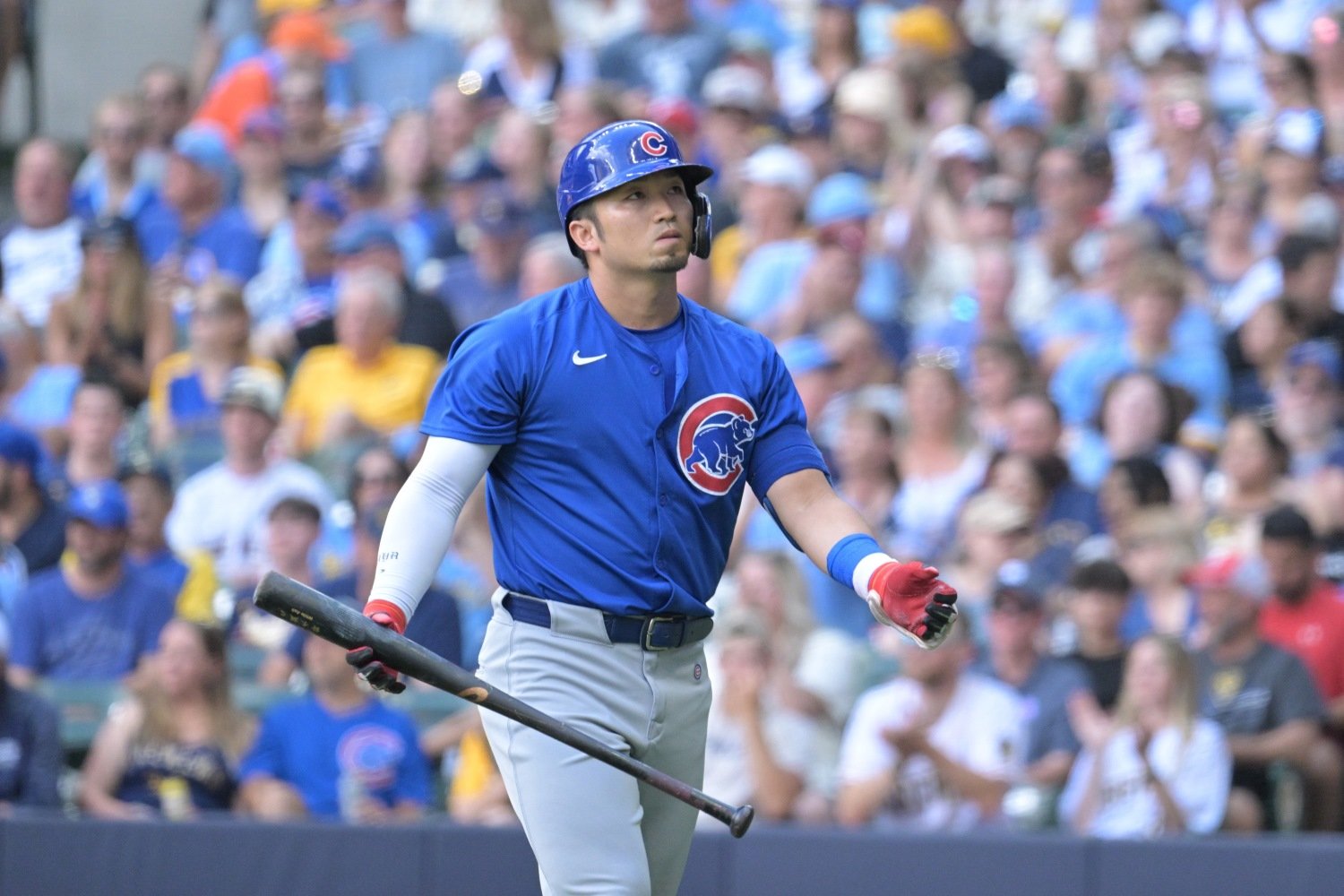 The Cubs are below-average just about across the board, when it comes to run creation. They don't hit for enough power. They don't collect hits on balls in play, which is because their swings are largely geared toward power they don't have. They don't make enough contact to compensate for those shortcomings. It's an underwhelming group. For my part, I have tended to focus criticism and doubt on the best hitters in that lineup, because they don't seem stout enough. This team was meant to be built around defense, but inherent in such an approach is a certain degree of lineup top-heaviness. You can't build around up-the-middle defense without accepting some below-average offensive work from those four positions (shortstop, second base, center field, and catcher), and that applies pressure to the players at the other positions to be more than above-average. The Dodgers are built this way. Admittedly, it's more about resource allocation than about an emphasis on fielding, but the result is the same. When healthy, they feature Mookie Betts, Shohei Ohtani, Freddie Freeman, Will Smith, and Teoscar Hernández at the top of the lineup. They've gotten good work from Jason Heyward near the bottom of that batting order this season, but for the most part, they're knowingly accepting subpar contributions from the last few slots in the order, because they spent huge money to give themselves the best top half of the lineup in MLB. The Yankees have taken a similar tack in recent years, and never more so than in 2024, as they're built around Aaron Judge, Juan Soto, and a whole lot of waiting for those two to come up to bat again. For the last few years, it's also been the Astros' modus operandi, with guys like Jake Meyers, Chas McCormick and Martín Maldonado getting ample playing time even when they weren't hitting. Houston has Kyle Tucker, Yordan Alvarez, José Altuve, and Alex Bregman to anchor their attack, so little else matters. To see how great hitters can cover for lousy ones, let's create a new mini-metric. It's a very simple one: in what percentage of a player's games do his total bases and walks drawn total four or more? That's not a perfect way to capture the value elite hitters create, but it does get us going in the right direction. Four total bases can come on a lone, solo homer, and that's not always especially valuable, but it is a run. It can be more than that. Why do teams value power so highly? It's because when a power hitter does his thing, he singlehandedly makes up for a teammate taking an 0-for-3. Four singles can be even more valuable than a homer, but that's very hard to do in a game. This way of boiling down offensive contributions within a game reflects the real value of hitting for average, avoiding making outs, and generating power, and balances them reasonably well, while keeping things simple. I'm calling this little number Big Game%. The average (among players with at least 100 plate appearances) Big Game% is 14.5 this year. Here's the (fairly satisfying) list of the 10 leading hitters in Big Game% for 2024. Player Big Game % Aaron Judge 42.90% Mike Trout 37.90% Kyle Tucker 35.00% Shohei Ohtani 34.10% Gunnar Henderson 32.50% Rafael Devers 31.00% Freddie Freeman 30.60% José Ramírez 30.40% Jarren Duran 30.10% Juan Soto 29.30% You won't find any Cubs there, and surely, you didn't expect to. The team leader in Big Game% is Seiya Suzuki, at 22.0%. He's 45th on the list, out of 365 qualifying hitters, and is one of four Cubs with above-average marks in both overall weighted on-base average (wOBA) and Big Game%. Joining him in that company are Ian Happ, Cody Bellinger, and Michael Busch. It's surprising, perhaps, to find not only those four, but below-average hitters Dansby Swanson, Christopher Morel, and Nico Hoerner at or above average in Big Game%. While they're not coming close to keeping pace with the league leaders in player Big Game% (the Dodgers, Yankees, Orioles, Astros, and Phillies) as a team, the Cubs have a good number of players seeing ample playing time and racking up an above-average frequency of Big Games. Here's the thing: they're not even coming close to making up for the ineptitude of their worst hitters. Mike Tauchman is a lovely, much-missed ingredient of a good offense, but as you can see, he's the keep-the-line-moving guy. He can catalyze an offense, but never carry it. Suzuki, Happ, and Morel, especially, make up for some bad hitters, but they're not stars of the caliber required to cancel out some of the worst hitters in all of baseball. Pete Crow-Armstrong, Miguel Amaya, and Tomás Nido are black holes on the lineup card. Not even pictured above are Nick Madrigal, Miles Mastrobuoni, and Yan Gomes, to whom the team has allocated 242 wasted plate appearances. Gomes and Mastrobuoni have Big Game rates similar to those of Crow-Armstrong and Amaya, but it would be far too generous to say that Madrigal does, too. He didn't have a single game this season that counts as Big by these criteria, which probably doesn't surprise any Cubs watchers. It's still plausible to read this as a problem with the best hitters on the team. Suzuki, Happ, and the rest are demonstrably incapable of carrying a team, the way that illustrious list of 10 (or Bryce Harper, 12th in Big Game%, or Pete Alson at 14th, or Christian Yelich at 17th, or Vladimir Guerrero Jr. at 20th) can often do. Just as importantly, though, they're being asked to make up for some of the very worst regular hitters in baseball--especially Crow-Armstrong and Amaya. The team is failing both to assemble a heart of the order on par with the best teams in baseball, and to put credible big-leaguers into the bottom third of the lineup. That's a recipe for persistent failure, and highlights how badly they need a positional overhaul this summer, fall, and winter.
- 1 comment
-
- 1
-
-
- ian happ
- cody bellinger
- (and 5 more)
-
A brief study on an interesting theory about the nature of teams who play close games. Image courtesy of © Benny Sieu-USA TODAY Sports As the 2024 Chicago Cubs flail and flounder, one major source of frustration for fans has been their woeful record in one-run games. No team in baseball has played as many as the Cubs' 33 such nailbiters, and they're 14-19 in those games. Flip that record, and they'd be at least in contention for a playoff berth this season, As it is, they're cellar-dwelling sellers as the league approaches trade season. Last week, 670 The Score midday host Dan Bernstein raised a reasonable hypothesis about this interminable string of narrow defeats: maybe bad teams just play more one-run games. In other words, maybe the Cubs' tendency to play tight contests (and lose them) isn't driving their dismal showing in the standings, but rather a symptom of their overall lack of quality. Almost two years ago, Jed Hoyer (now-infamously) said, "Good teams blow teams out." He hasn't built a team that does that. Is that why he's now at the helm of a sinking ship? This is a testable theory, so let's test it. Here's a chart showing each team's number of one-run games played this season, and their overall winning percentage. Mm. That's not especially compelling. The Cubs and A's do stand out, and so do the Dodgers, but are the Red Sox the beacon you would want to make the point that good teams play fewer one-run contests? The correlation between number of one-run games played and winning percentage is -0.25, and usually, the weakest correlation you can call real or meaningful is 0.20, in either direction. Yes, this season, bad teams are a little more likely to play one-run games than others are, but it's not a strong relationship. Does it hold up when we look at a full season--say, last season? Alas, not really. The correlation factor here is -0.17, so we're on the wrong side of that (blurry) bright line between significant and random. The really, really good teams do seem to stay out of such games, so that's something, but the teams who play the most close games seem to be ones who hew close to .500 overall. That makes sense, right? Teams who often play what we understand to be coin-flip games are probably aggressively average, rather than truly bad. I wanted to check one sub-hypothesis, which is that maybe a tendency to play a lot of close games early says something about a team, over and apart from what it says about them to play a lot of those kinds of games over a full season. Here's every team from 2014-23 (except 2020, of course), plotted according to their number of one-run games and winning percentage through the end of June. No relationship. None. And if you can believe it, when I look at the same large sample of teams and remove the filter for months, it gets even weaker. These data could hide the impact of the fluctuating run environment on the global frequency of one-run games, but there's nothing here to suggest a relationship on the whole. Maybe what Bernstein really meant--I think it's probably the better way to formulate the argument--is that very, very good teams (the kind the Cubs should aspire to be) play fewer one-run games than others. That's a little bit more well-supported by the data above, so let's try to pursue that thread. Here are all teams from 2021-23, with their one-run games played and overall winning percentages. I've highlighted the eight teams--the Dodgers, Yankees, Astros, Brewers, Phillies, Rays, Mariners, and Atlanta--whom the Cubs would do well to imitate, given their results over those seasons. I would argue that the Cubs should most want to emulate the Dodgers and Astros, who have combined to appear in 11 League Championship Series since 2017. Those two do seem to habitually avoid playing a lot of close games. One way or another, they play decisive ball. They blow teams out. For everyone else, though, it's a mixed bag. The Rays, Brewers, and Phillies prove that you can live pretty well playing close games. The Mariners have had an underrated run the last few years (and are leading the AL West in 2024) despite playing cardiac baseball. You can win this way. You just have to be better. One shape of team is fairly certain to play more close games, of course: one with good pitching but relatively poor offense. Every team helps create their own run environment, and if you keep the other team off the board especially well but don't score at a very high rate yourself, you end up in a lot of scrappy games. Both runs per game and runs allowed per game have a negative correlation with one-run game frequency at least as strong as that of winning percentage. If you're above-average at preventing runs and below-average at scoring them, your margins are sure to be thin. Then it's just a question of whether you win or lose those close contests. The Mariners, built so heavily around pitching the last few years, are an excellent example. The 2024 Cubs are a below-average offense, which makes for a lot of their close games. The reason why they lose them, as cruel as this sounds, is that their pitching is just on the wrong side of average, so once games end up being decided by narrow margins late, they're in deep water and can't swim. The offense is helping ensure that the Cubs play close games. So is the fact that the league run environment is spare in the first place. The pitching is the reason they're losing them, because they lack the depth to get to the right side of average and stop a few more teams, for just a few more outs. That's all pretty obvious, but at least we're not learning that we were entirely wrong about what ails this team. Neither unit is quite good enough, and that's adding up to a team that doesn't feel within 'quite' range of being good enough, any time soon. View full article
-
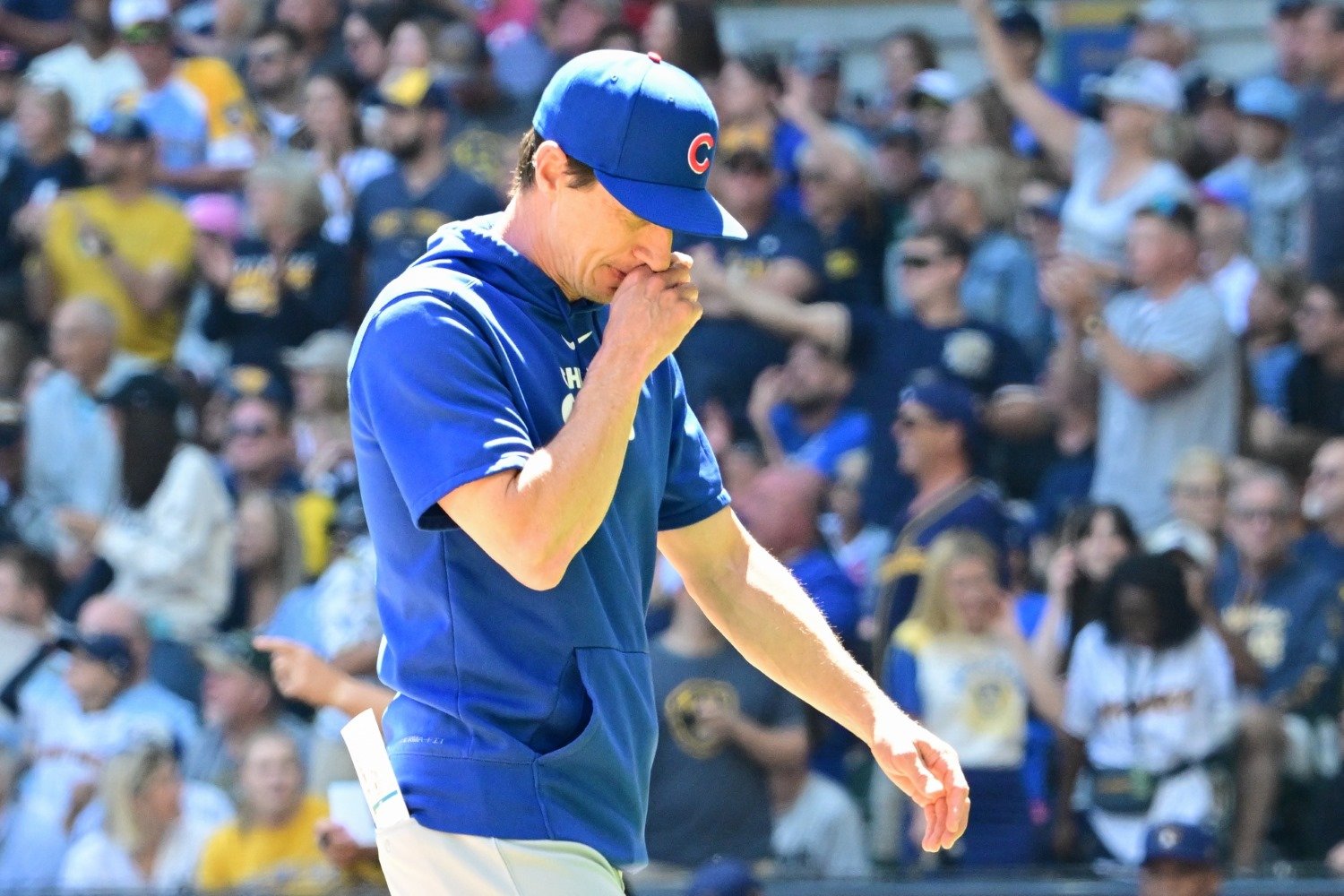 As the 2024 Chicago Cubs flail and flounder, one major source of frustration for fans has been their woeful record in one-run games. No team in baseball has played as many as the Cubs' 33 such nailbiters, and they're 14-19 in those games. Flip that record, and they'd be at least in contention for a playoff berth this season, As it is, they're cellar-dwelling sellers as the league approaches trade season. Last week, 670 The Score midday host Dan Bernstein raised a reasonable hypothesis about this interminable string of narrow defeats: maybe bad teams just play more one-run games. In other words, maybe the Cubs' tendency to play tight contests (and lose them) isn't driving their dismal showing in the standings, but rather a symptom of their overall lack of quality. Almost two years ago, Jed Hoyer (now-infamously) said, "Good teams blow teams out." He hasn't built a team that does that. Is that why he's now at the helm of a sinking ship? This is a testable theory, so let's test it. Here's a chart showing each team's number of one-run games played this season, and their overall winning percentage. Mm. That's not especially compelling. The Cubs and A's do stand out, and so do the Dodgers, but are the Red Sox the beacon you would want to make the point that good teams play fewer one-run contests? The correlation between number of one-run games played and winning percentage is -0.25, and usually, the weakest correlation you can call real or meaningful is 0.20, in either direction. Yes, this season, bad teams are a little more likely to play one-run games than others are, but it's not a strong relationship. Does it hold up when we look at a full season--say, last season? Alas, not really. The correlation factor here is -0.17, so we're on the wrong side of that (blurry) bright line between significant and random. The really, really good teams do seem to stay out of such games, so that's something, but the teams who play the most close games seem to be ones who hew close to .500 overall. That makes sense, right? Teams who often play what we understand to be coin-flip games are probably aggressively average, rather than truly bad. I wanted to check one sub-hypothesis, which is that maybe a tendency to play a lot of close games early says something about a team, over and apart from what it says about them to play a lot of those kinds of games over a full season. Here's every team from 2014-23 (except 2020, of course), plotted according to their number of one-run games and winning percentage through the end of June. No relationship. None. And if you can believe it, when I look at the same large sample of teams and remove the filter for months, it gets even weaker. These data could hide the impact of the fluctuating run environment on the global frequency of one-run games, but there's nothing here to suggest a relationship on the whole. Maybe what Bernstein really meant--I think it's probably the better way to formulate the argument--is that very, very good teams (the kind the Cubs should aspire to be) play fewer one-run games than others. That's a little bit more well-supported by the data above, so let's try to pursue that thread. Here are all teams from 2021-23, with their one-run games played and overall winning percentages. I've highlighted the eight teams--the Dodgers, Yankees, Astros, Brewers, Phillies, Rays, Mariners, and Atlanta--whom the Cubs would do well to imitate, given their results over those seasons. I would argue that the Cubs should most want to emulate the Dodgers and Astros, who have combined to appear in 11 League Championship Series since 2017. Those two do seem to habitually avoid playing a lot of close games. One way or another, they play decisive ball. They blow teams out. For everyone else, though, it's a mixed bag. The Rays, Brewers, and Phillies prove that you can live pretty well playing close games. The Mariners have had an underrated run the last few years (and are leading the AL West in 2024) despite playing cardiac baseball. You can win this way. You just have to be better. One shape of team is fairly certain to play more close games, of course: one with good pitching but relatively poor offense. Every team helps create their own run environment, and if you keep the other team off the board especially well but don't score at a very high rate yourself, you end up in a lot of scrappy games. Both runs per game and runs allowed per game have a negative correlation with one-run game frequency at least as strong as that of winning percentage. If you're above-average at preventing runs and below-average at scoring them, your margins are sure to be thin. Then it's just a question of whether you win or lose those close contests. The Mariners, built so heavily around pitching the last few years, are an excellent example. The 2024 Cubs are a below-average offense, which makes for a lot of their close games. The reason why they lose them, as cruel as this sounds, is that their pitching is just on the wrong side of average, so once games end up being decided by narrow margins late, they're in deep water and can't swim. The offense is helping ensure that the Cubs play close games. So is the fact that the league run environment is spare in the first place. The pitching is the reason they're losing them, because they lack the depth to get to the right side of average and stop a few more teams, for just a few more outs. That's all pretty obvious, but at least we're not learning that we were entirely wrong about what ails this team. Neither unit is quite good enough, and that's adding up to a team that doesn't feel within 'quite' range of being good enough, any time soon.
 -
It's July, and the Cubs Need to Be Extremely Proactive Sellers
Matthew Trueblood posted an article in Cubs
 Little mystery remains, because the choices the front office made this winter amounted to running back the same roster that won 83 games last season after a miraculous July turnaround that made them into contenders until the bottom fell out in September. The sample with which the Cubs front office can and should evaluate their own team is not half a season, but a season and a half, and that needs to be enough for them to see the obvious: they're not going anywhere with this group. That's not to cast aspersions on any of Nico Hoerner, Justin Steele, Ian Happ, Seiya Suzuki, Cody Bellinger, Jameson Taillon, or even Dansby Swanson, individually. That group just doesn't add up to an adequate core around which to build a legitimate or long-term winner, given the shape of the rest of their roster and aging curve's gravity beginning to tug some of them in the wrong direction. They're a very good supporting cast waiting only on the superstar around which the whole thing can revolve, but because this front office is eternally, deleteriously conservative, they aren't getting that player. They missed two chances to acquire such a player this winter, and the evidence that they even tried especially hard is mixed, at best. Jed Hoyer does not have it in him to add the kind of talent missing from this team, and despite so many revampings and reallocations that we've all lost count, the organization remains unable to develop their ostensibly promising young players into that kind of talent, either. The success stories (Ben Brown, Javier Assad, Jordan Wicks, Hoerner) all have to be qualified and caveated, while the failures (Hayden Wesneski, Miguel Amaya, Pete Crow-Armstrong) feel and appear abject. There's still time for all of those players, and a dozen others who have yet to debut, to take big steps forward, but the consistent improvement and the occasional breakout that good development organizations get from talented young players remain elusive for the Hoyer-run Cubs, as they were for the second half of the Theo Epstein Era. This weekend, the team needed to look no further than into the other dugout to see the team they have wanted (and, perhaps, ought) to be. The Brewers are multi-talented. They've been nimble and opportunistic, picking up Willy Adames and William Contreras in trades when hardly anyone else even realized they were available; Christian Yelich in a blockbuster trade the likes of which the Cubs last attempted with Nomar Garciaparra; and Rookie of the Year candidate Joey Ortiz in a trade for a player they had under team control for one more season. They've developed relief pitchers as successfully as the Cubs did for the decade prior to this season, but whereas the Cubs do it by finding guys with funky secondary skill sets and little velocity, they do it with guys who then strike out 30% of opposing batters and throw in the upper 90s. Most of all, because the Brewers not only have a fecund farm system but turn players who were not premium or high-bonus prospects into potential stars, they have a few of them on very team-friendly long-term deals. Freddy Peralta is still under team control on two team options after this season. Jackson Chourio, 20, could be retained at reasonable salaries until he's 30, if the Brewers want him for that long. They've done excellent scouting and player development, good coaching, and most importantly, proactive, fearless front-office work, across two and a half regimes. They're miles ahead of the Cubs, and not just in the 2024 NL Central standings. The Cubs, of course, had plenty to hold their attention in their own dugout Saturday, when the latest defensive calamities from a team theoretically built around defense prompted Justin Steele to explode into an expletive-laden exhortation as he stomped down the steps after a two-run inning. In that frame, Hoerner failed to execute a rundown properly, but Christopher Morel ensured the miscue would cost the team an out by flubbing his reception of Hoerner's tardy throw. Pete Crow-Armstrong didn't quite make a play that would have been extraordinary from an average center fielder, but which a player who had a .395 OPS for the month of June had better make in order to be a big-leaguer. Steele was right to be upset, but any satisfaction Cubs fans could find in his release of an emotion many of them have been feeling for weeks was extremely short-lived. On Sunday, another out-not-made by Morel (not an error, not quite even a misplay; just a ball that an above-average third baseman makes into an out, but on which he was nowhere close to doing so) and a fly ball Happ followed around the world but never could catch helped seal Kyle Hendricks's miserable fate, as the magic of Hendricks's June un-swoon faded and the Brewers crushed two home runs against him. It would be excruciating for the Cubs' decision-makers to have to lean into another rebuild, but they would be foolish not to sell--and sell aggressively--before this month ends. This would require a lot of proactivity and cleverness, and it's not clear that Hoyer is any more capable of that than he was of building a winning team. His only successful sell trades were, ultimately, reactive, and despite the ugly standings, these would have to be proactive. Already, we've brought you pieces advocating trading one of Happ and Suzuki; dealing Hoerner; or even getting value for Steele, while they can. Expect us to continue discussing those topics throughout the next 30 days. We'll also muse about whether the team can get any value in exchange for Héctor Neris, Drew Smyly, Mark Leiter Jr., or Tyson Miller, or even escape part of their financial obligations to one of the first two; what trying to trade Bellinger (with his complicated, player-friendly deal) would look like; and who should get the playing time trading any of those players might create. The team needs more information to make better decisions about key players for their future, so they had better make sure that those players have room in the lineup, rotation, or bullpen down the stretch. Most of those players are under team control well beyond this season, though, and a few of them have contractual situations that will make moving them difficult. The best guess is that Hoyer won't do very much, but it is the official editorial position of this website that he had better do so. The Cubs are bad in 2024. They probably won't be especially good in 2025, but there's still some room to make progress toward that goal by being aggressive immediately. If they sit on their hands and hope for things to get better, things will, instead, get much worse. There is a perfectly good chance that the next good Cubs team is five or six years away, and unless the front office wakes the [pick your word] up, that chance will only increase over the coming months.
- 17 comments
-
- 1
-
-
- justin steele
- nico hoerner
- (and 4 more)
-
Losing a series in Milwaukee over the weekend was the best thing that could possibly happen to the 2024 Chicago Cubs. They needed it, the way a person battling addiction needs to find rock bottom. The first step to solving a problem is admitting there is one. The Chicago Cubs are bad. Now, they can go about the business of becoming good. Image courtesy of © Michael McLoone-USA TODAY Sports Little mystery remains, because the choices the front office made this winter amounted to running back the same roster that won 83 games last season after a miraculous July turnaround that made them into contenders until the bottom fell out in September. The sample with which the Cubs front office can and should evaluate their own team is not half a season, but a season and a half, and that needs to be enough for them to see the obvious: they're not going anywhere with this group. That's not to cast aspersions on any of Nico Hoerner, Justin Steele, Ian Happ, Seiya Suzuki, Cody Bellinger, Jameson Taillon, or even Dansby Swanson, individually. That group just doesn't add up to an adequate core around which to build a legitimate or long-term winner, given the shape of the rest of their roster and aging curve's gravity beginning to tug some of them in the wrong direction. They're a very good supporting cast waiting only on the superstar around which the whole thing can revolve, but because this front office is eternally, deleteriously conservative, they aren't getting that player. They missed two chances to acquire such a player this winter, and the evidence that they even tried especially hard is mixed, at best. Jed Hoyer does not have it in him to add the kind of talent missing from this team, and despite so many revampings and reallocations that we've all lost count, the organization remains unable to develop their ostensibly promising young players into that kind of talent, either. The success stories (Ben Brown, Javier Assad, Jordan Wicks, Hoerner) all have to be qualified and caveated, while the failures (Hayden Wesneski, Miguel Amaya, Pete Crow-Armstrong) feel and appear abject. There's still time for all of those players, and a dozen others who have yet to debut, to take big steps forward, but the consistent improvement and the occasional breakout that good development organizations get from talented young players remain elusive for the Hoyer-run Cubs, as they were for the second half of the Theo Epstein Era. This weekend, the team needed to look no further than into the other dugout to see the team they have wanted (and, perhaps, ought) to be. The Brewers are multi-talented. They've been nimble and opportunistic, picking up Willy Adames and William Contreras in trades when hardly anyone else even realized they were available; Christian Yelich in a blockbuster trade the likes of which the Cubs last attempted with Nomar Garciaparra; and Rookie of the Year candidate Joey Ortiz in a trade for a player they had under team control for one more season. They've developed relief pitchers as successfully as the Cubs did for the decade prior to this season, but whereas the Cubs do it by finding guys with funky secondary skill sets and little velocity, they do it with guys who then strike out 30% of opposing batters and throw in the upper 90s. Most of all, because the Brewers not only have a fecund farm system but turn players who were not premium or high-bonus prospects into potential stars, they have a few of them on very team-friendly long-term deals. Freddy Peralta is still under team control on two team options after this season. Jackson Chourio, 20, could be retained at reasonable salaries until he's 30, if the Brewers want him for that long. They've done excellent scouting and player development, good coaching, and most importantly, proactive, fearless front-office work, across two and a half regimes. They're miles ahead of the Cubs, and not just in the 2024 NL Central standings. The Cubs, of course, had plenty to hold their attention in their own dugout Saturday, when the latest defensive calamities from a team theoretically built around defense prompted Justin Steele to explode into an expletive-laden exhortation as he stomped down the steps after a two-run inning. In that frame, Hoerner failed to execute a rundown properly, but Christopher Morel ensured the miscue would cost the team an out by flubbing his reception of Hoerner's tardy throw. Pete Crow-Armstrong didn't quite make a play that would have been extraordinary from an average center fielder, but which a player who had a .395 OPS for the month of June had better make in order to be a big-leaguer. Steele was right to be upset, but any satisfaction Cubs fans could find in his release of an emotion many of them have been feeling for weeks was extremely short-lived. On Sunday, another out-not-made by Morel (not an error, not quite even a misplay; just a ball that an above-average third baseman makes into an out, but on which he was nowhere close to doing so) and a fly ball Happ followed around the world but never could catch helped seal Kyle Hendricks's miserable fate, as the magic of Hendricks's June un-swoon faded and the Brewers crushed two home runs against him. It would be excruciating for the Cubs' decision-makers to have to lean into another rebuild, but they would be foolish not to sell--and sell aggressively--before this month ends. This would require a lot of proactivity and cleverness, and it's not clear that Hoyer is any more capable of that than he was of building a winning team. His only successful sell trades were, ultimately, reactive, and despite the ugly standings, these would have to be proactive. Already, we've brought you pieces advocating trading one of Happ and Suzuki; dealing Hoerner; or even getting value for Steele, while they can. Expect us to continue discussing those topics throughout the next 30 days. We'll also muse about whether the team can get any value in exchange for Héctor Neris, Drew Smyly, Mark Leiter Jr., or Tyson Miller, or even escape part of their financial obligations to one of the first two; what trying to trade Bellinger (with his complicated, player-friendly deal) would look like; and who should get the playing time trading any of those players might create. The team needs more information to make better decisions about key players for their future, so they had better make sure that those players have room in the lineup, rotation, or bullpen down the stretch. Most of those players are under team control well beyond this season, though, and a few of them have contractual situations that will make moving them difficult. The best guess is that Hoyer won't do very much, but it is the official editorial position of this website that he had better do so. The Cubs are bad in 2024. They probably won't be especially good in 2025, but there's still some room to make progress toward that goal by being aggressive immediately. If they sit on their hands and hope for things to get better, things will, instead, get much worse. There is a perfectly good chance that the next good Cubs team is five or six years away, and unless the front office wakes the [pick your word] up, that chance will only increase over the coming months. View full article
-
The Chicago Cubs' pitching staff has been depleted by injuries since before Opening Day, but it's getting worse by the day. The group is now a patchwork, and the team will have to scramble to stay afloat in the coming weeks. Image courtesy of © Darren Yamashita-USA TODAY Sports It was bad enough when Jameson Taillon had to open the season on the injured list, and then when he was joined there by Justin Steele after Steele's Opening Day hamstring strain. Barely a week later, Julian Merryweather was down with a serious ribcage injury, and the team has not been full strength since. Lately, though, things are taking a turn toward the darkly comic. In the last few days, alone, the team has lost their best remaining reliever (Mark Leiter Jr.) and their fifth starter (Javier Assad) to forearm strains. They've gotten Keegan Thompson and Colten Brewer, who are just barely big-league hurlers, back from injuries, and been compelled to thrust them directly into high-leverage work. They picked up reliever Vinny Nittoli while in San Francisco, after Nittoli was designated for assignment by the unfathomably bad Oakland Athletics, cleared waivers, and was released. Nittoli got a big-league deal, and could stick around for a while, because this team is even out of healthy arms to call up from Triple-A Iowa. Nittoli throws anywhere from five to seven different pitches, depending on how you interpret his data. Without question, he's a kitchen-sink guy, not unlike Assad, but his primary offering is a cutter that sits at just 90 miles per hour, and it's not clear whether he can throw strikes well enough to get big-leaguers out without living in the heart of the zone, where they will torch his underwhelming stuff. Nittoli does have a strikeout rate north of 31% for the season, but much of that work was done in Triple-A. In a brief stint with the A's, he had a nice-looking ERA and only walked 6.3% of opposing hitters, but his strikeout rate was also south of 16%. He's a low-slot, funky release point guy with heavy stuff, but he doesn't get as many grounders as that might imply. Little separates Nittoli from José Cuas, with whom the Cubs recently parted ways, other than his deeper repertoire. Porter Hodge is a very different story, of course. The rookie who (barely) closed out the team's win Thursday looks more like the typical modern high-leverage reliever, with a fastball that sits 95-97 and a sweeper that has fairly extreme movement. For Hodge, much of the challenge is just in throwing strikes. He comes from a pretty steep horizontal angle and is a big guy, and the movement profiles of his four-seamer and sweeper make filling up the zone difficult. If he can avoid walks, he should be an effective reliever. He might even emerge as the team's closer. Fastballs like his are rare; there are only a dozen pitchers anywhere in the league who have one quite like it. That chart includes some illustrious names, though of course, many of them (Tyler Glasnow and Dylan Cease, for instance) get a lot of their value from the extra inch or two of ride they get on the pitch, relative to Hodge. Pairing this kind of fastball with a sweeper, rather than a more vertical breaking ball, is especially unusual, and should make Hodge a headache for opposing batters. What it will not do, though, is generate the same kind of swing-and-miss that those overhand curveballs and gyro sliders do. He will therefore be susceptible to a little more fluky batted-ball luck than you'd think, for a pitcher with such a bully of a two-pitch mix. Nittoli (for however long he or Brewer stick around) and Hodge will be especially important pieces of the bullpen for a while, because Hayden Wesneski has had to be promoted to the starting rotation. The Cubs tried to avoid this, and understandably so. Wesneski just isn't a starter. That was clear by the end of 2023. This season, it's felt increasingly like his vulnerability to home runs will be disqualifying even in a relief role, but at least he has a chance of being good in that capacity. As a starter, he's going to get knocked around, and only because Assad, Jordan Wicks, Ben Brown, and Cade Horton are all hurt at once is he even getting this look again. No team would envy the position the Cubs are in. They brought some of this on themselves, by stubbornly refusing to spend more over the winter and reinforce themselves better. What they've run into would be hard for any club to overcome, though, so they have to get some grace from fans. They'll get none from opponents, though, so unless they get strong performances in key roles from Nittoli, Hodge, and Wesneski, the team remains very much in peril. They could be 10 games under .500 by the 4th of July, and while they should already be looking at ways to sell and pivot toward the future at the deadline, every loss over the next fortnight will force them further in that direction and damage their leverage in negotiations. View full article
-
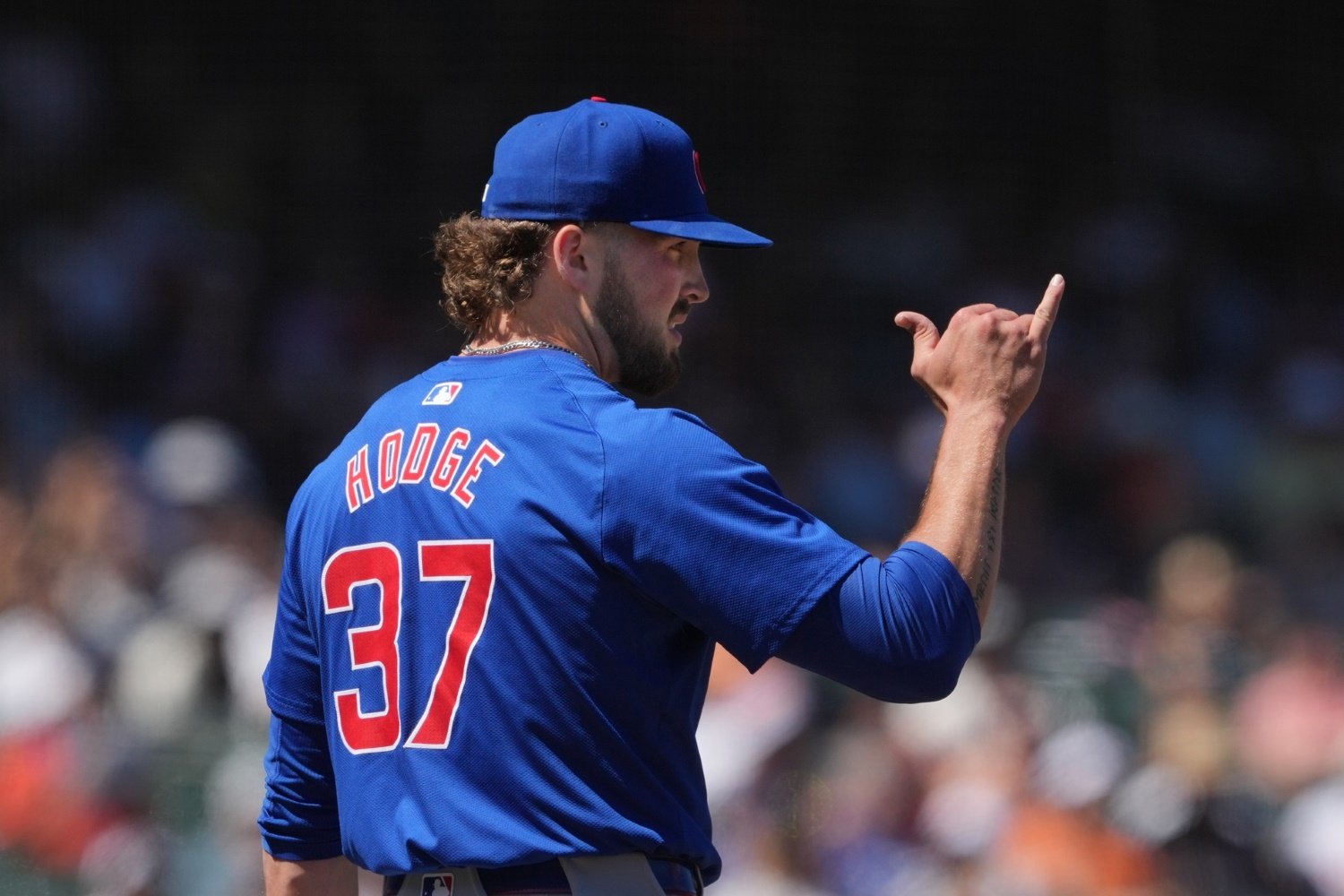 It was bad enough when Jameson Taillon had to open the season on the injured list, and then when he was joined there by Justin Steele after Steele's Opening Day hamstring strain. Barely a week later, Julian Merryweather was down with a serious ribcage injury, and the team has not been full strength since. Lately, though, things are taking a turn toward the darkly comic. In the last few days, alone, the team has lost their best remaining reliever (Mark Leiter Jr.) and their fifth starter (Javier Assad) to forearm strains. They've gotten Keegan Thompson and Colten Brewer, who are just barely big-league hurlers, back from injuries, and been compelled to thrust them directly into high-leverage work. They picked up reliever Vinny Nittoli while in San Francisco, after Nittoli was designated for assignment by the unfathomably bad Oakland Athletics, cleared waivers, and was released. Nittoli got a big-league deal, and could stick around for a while, because this team is even out of healthy arms to call up from Triple-A Iowa. Nittoli throws anywhere from five to seven different pitches, depending on how you interpret his data. Without question, he's a kitchen-sink guy, not unlike Assad, but his primary offering is a cutter that sits at just 90 miles per hour, and it's not clear whether he can throw strikes well enough to get big-leaguers out without living in the heart of the zone, where they will torch his underwhelming stuff. Nittoli does have a strikeout rate north of 31% for the season, but much of that work was done in Triple-A. In a brief stint with the A's, he had a nice-looking ERA and only walked 6.3% of opposing hitters, but his strikeout rate was also south of 16%. He's a low-slot, funky release point guy with heavy stuff, but he doesn't get as many grounders as that might imply. Little separates Nittoli from José Cuas, with whom the Cubs recently parted ways, other than his deeper repertoire. Porter Hodge is a very different story, of course. The rookie who (barely) closed out the team's win Thursday looks more like the typical modern high-leverage reliever, with a fastball that sits 95-97 and a sweeper that has fairly extreme movement. For Hodge, much of the challenge is just in throwing strikes. He comes from a pretty steep horizontal angle and is a big guy, and the movement profiles of his four-seamer and sweeper make filling up the zone difficult. If he can avoid walks, he should be an effective reliever. He might even emerge as the team's closer. Fastballs like his are rare; there are only a dozen pitchers anywhere in the league who have one quite like it. That chart includes some illustrious names, though of course, many of them (Tyler Glasnow and Dylan Cease, for instance) get a lot of their value from the extra inch or two of ride they get on the pitch, relative to Hodge. Pairing this kind of fastball with a sweeper, rather than a more vertical breaking ball, is especially unusual, and should make Hodge a headache for opposing batters. What it will not do, though, is generate the same kind of swing-and-miss that those overhand curveballs and gyro sliders do. He will therefore be susceptible to a little more fluky batted-ball luck than you'd think, for a pitcher with such a bully of a two-pitch mix. Nittoli (for however long he or Brewer stick around) and Hodge will be especially important pieces of the bullpen for a while, because Hayden Wesneski has had to be promoted to the starting rotation. The Cubs tried to avoid this, and understandably so. Wesneski just isn't a starter. That was clear by the end of 2023. This season, it's felt increasingly like his vulnerability to home runs will be disqualifying even in a relief role, but at least he has a chance of being good in that capacity. As a starter, he's going to get knocked around, and only because Assad, Jordan Wicks, Ben Brown, and Cade Horton are all hurt at once is he even getting this look again. No team would envy the position the Cubs are in. They brought some of this on themselves, by stubbornly refusing to spend more over the winter and reinforce themselves better. What they've run into would be hard for any club to overcome, though, so they have to get some grace from fans. They'll get none from opponents, though, so unless they get strong performances in key roles from Nittoli, Hodge, and Wesneski, the team remains very much in peril. They could be 10 games under .500 by the 4th of July, and while they should already be looking at ways to sell and pivot toward the future at the deadline, every loss over the next fortnight will force them further in that direction and damage their leverage in negotiations.
 -
A three-run lead disappeared in the blink of an eye for the Cubs Thursday afternoon, when an 0-2 fastball to Jorge Soler started a string of scoring plays that negated a 3-0 advantage the Cubs had built in the third frame. It was the latest in a string of instances recently in which the team's ace needed to trust a tertiary pitch a little bit more. Image courtesy of © Darren Yamashita-USA TODAY Sports It's fair to characterize Shota Imanaga's pitch usage this season as overwhelmingly reliant on two pitches: his good, high-ride, high-spin, flat-VAA fastball, and his unique lefty splitter. It's no surprise that he would lean on those offerings; he's been extremely effective that way. As recently as two starts ago, his ERA was under 2.00, and he was in the running for the NL Cy Young Award, not to mention Rookie of the Year. He was cruising again Thursday, with fewer than 60 pitches thrown through five scoreless innings and a comfortable lead with which to work. Then, after a couple of runners reached base and he got within one strike of getting out of the sixth unscathed, Imanaga gave up an automatic double to Jorge Soler. That put one run on the board. A wild pitch and an infield hit later, the score was tied. It was the 0-2 pitch on which Soler hit the ball on a hard line to the warning track in left-center that broke the inning open. After two quick, two-pitch outs against Soler early in the game, Imanaga went to five pitches in the third look, and Soler was finally able to take the measure of his high heat. As you can see, Soler had gotten a solitary glimpse of a sweeper in the second at-bat, and he saw a splitter in both the first and third times up. Six of the nine pitches Imanaga threw him, however, were fastballs. That's not unusual. Imanaga feels comfortable moving the fastball around the zone, and when he thinks a right-handed hitter is sitting on the splitter, he'll throw them a lot of heaters, trying to keep them on the defensive by varying the location. In choosing to stick to the fastball when the splitter doesn't feel like the right choice, though, Imanaga is overlooking the other viable option: his curve. Fifty times this year, he's thrown curves to righties, and he rarely gets hurt on the pitch: However, it's also the furthest possible thing from being an out pitch for him. In fact, he's only gotten one out with the curve against righties this year, and he's yet to get a strikeout with it. Why? Because he's using it exclusively as a show-me pitch, trying to steal a called strike early in counts. Of those 50 pitches: 38 were on the first pitch of a plate appearance 3 were on 0-1 3 were on 1-0 4 were on 1-1 Only twice all season has Imanaga thrown a righty a curveball as the fourth or later pitch in a plate appearance. On May 29, he threw one in the dirt on 2-2 against the Brewers' Gary Sánchez, and on Jun. 9, he threw a 2-1 curve to Stuart Fairchild, who fouled it off. Imanaga has no confidence at all in his curve, save as a change of speeds right at the front end of a plate appearance. He's not totally wrong to feel that way. The pitch is not devastating or sharp. In 11 swings, no righty has whiffed on the pitch all season. It's been six foul balls and five balls in play, and while none of those five have been very dangerous, that profile doesn't engender much confidence. However, the third time through and in such a big spot, you don't need a batter to whiff. Soler was clearly looking for a fastball he could get on top of, and keying on the ball up to know when it was that and not a splitter. In that moment, he might have jumped at the ball a bit and whiffed, even though no one else has yet. Many whiffs and mishits come from a hitter's anxiety, and the curve could increase and prey upon that anxiety for Imanaga in clutch situations. More likely, and more sustainably, though, Soler might have seen the curve as an errant fastball out of the hand and been locked up, leading to what would have been the 22nd called strike of the season on that pitch. Hitters don't just stare at those first-pitch curveballs because they're eager to get back to hitting Imanaga's almost unhittable fastball-splitter combo. They let it go because they're fooled, however briefly, by a pitch that departs from the profile and the expectations they have when they go up there against him. You're going to have hitters putting on more emergency hacks in two-strike counts than on 0-0, 0-1, or 1-0. But you're still going to get some freezes, and even when batters do swing, they'll suffer from having been ready for two other pitches, but not that one. Imanaga's curve, like his sweeper, is an extra pitch. His fastball and splitter are the big moneymakers. Yet, he has to learn to get more value from those breaking balls, and that means throwing them in more important stages of both an at-bat and a game. Thursday was a perfect object lesson in the importance of that adjustment. View full article
-
Shota Imanaga Needs to Make His Curveball More of a True Weapon
Matthew Trueblood posted an article in Cubs
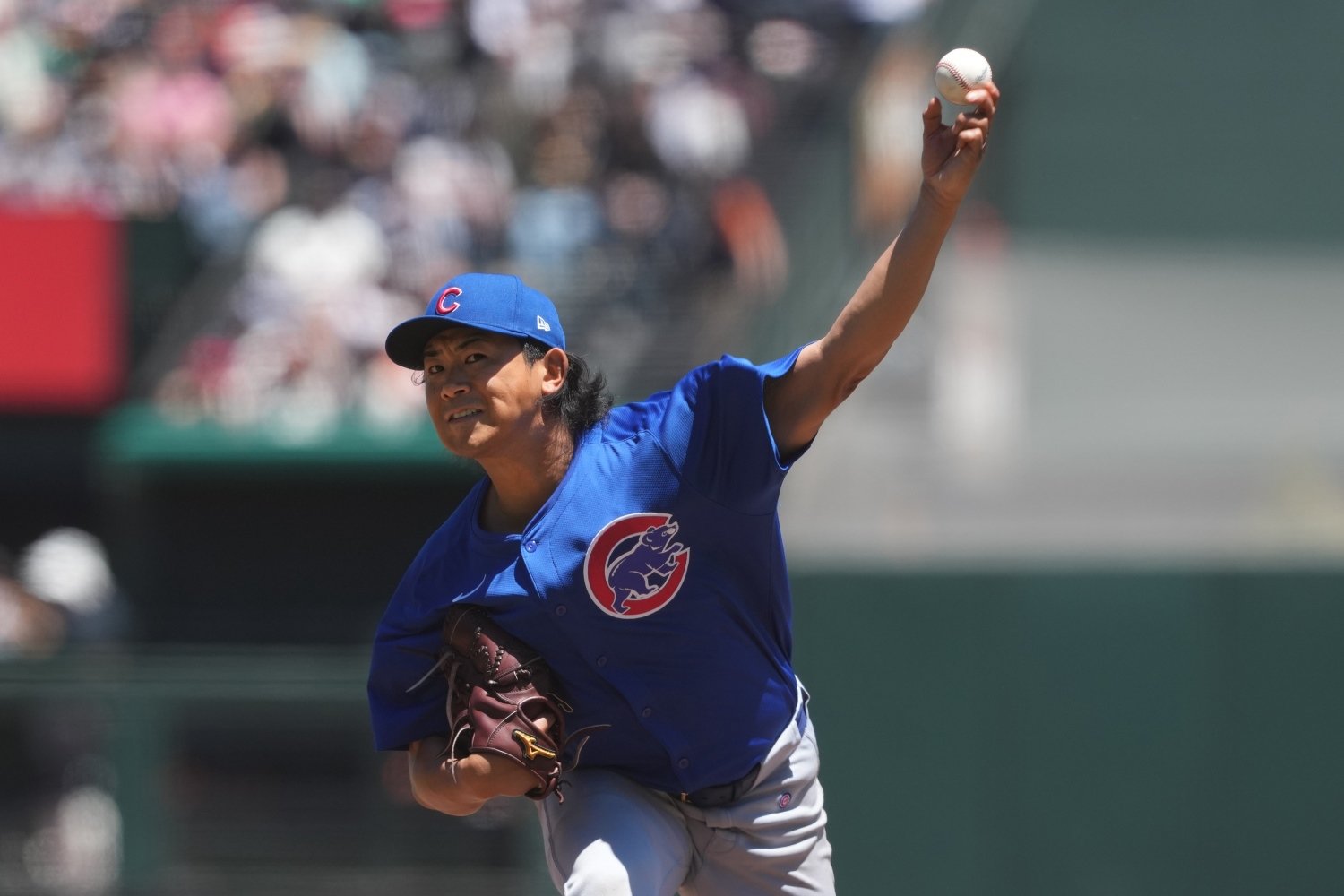 It's fair to characterize Shota Imanaga's pitch usage this season as overwhelmingly reliant on two pitches: his good, high-ride, high-spin, flat-VAA fastball, and his unique lefty splitter. It's no surprise that he would lean on those offerings; he's been extremely effective that way. As recently as two starts ago, his ERA was under 2.00, and he was in the running for the NL Cy Young Award, not to mention Rookie of the Year. He was cruising again Thursday, with fewer than 60 pitches thrown through five scoreless innings and a comfortable lead with which to work. Then, after a couple of runners reached base and he got within one strike of getting out of the sixth unscathed, Imanaga gave up an automatic double to Jorge Soler. That put one run on the board. A wild pitch and an infield hit later, the score was tied. It was the 0-2 pitch on which Soler hit the ball on a hard line to the warning track in left-center that broke the inning open. After two quick, two-pitch outs against Soler early in the game, Imanaga went to five pitches in the third look, and Soler was finally able to take the measure of his high heat. As you can see, Soler had gotten a solitary glimpse of a sweeper in the second at-bat, and he saw a splitter in both the first and third times up. Six of the nine pitches Imanaga threw him, however, were fastballs. That's not unusual. Imanaga feels comfortable moving the fastball around the zone, and when he thinks a right-handed hitter is sitting on the splitter, he'll throw them a lot of heaters, trying to keep them on the defensive by varying the location. In choosing to stick to the fastball when the splitter doesn't feel like the right choice, though, Imanaga is overlooking the other viable option: his curve. Fifty times this year, he's thrown curves to righties, and he rarely gets hurt on the pitch: However, it's also the furthest possible thing from being an out pitch for him. In fact, he's only gotten one out with the curve against righties this year, and he's yet to get a strikeout with it. Why? Because he's using it exclusively as a show-me pitch, trying to steal a called strike early in counts. Of those 50 pitches: 38 were on the first pitch of a plate appearance 3 were on 0-1 3 were on 1-0 4 were on 1-1 Only twice all season has Imanaga thrown a righty a curveball as the fourth or later pitch in a plate appearance. On May 29, he threw one in the dirt on 2-2 against the Brewers' Gary Sánchez, and on Jun. 9, he threw a 2-1 curve to Stuart Fairchild, who fouled it off. Imanaga has no confidence at all in his curve, save as a change of speeds right at the front end of a plate appearance. He's not totally wrong to feel that way. The pitch is not devastating or sharp. In 11 swings, no righty has whiffed on the pitch all season. It's been six foul balls and five balls in play, and while none of those five have been very dangerous, that profile doesn't engender much confidence. However, the third time through and in such a big spot, you don't need a batter to whiff. Soler was clearly looking for a fastball he could get on top of, and keying on the ball up to know when it was that and not a splitter. In that moment, he might have jumped at the ball a bit and whiffed, even though no one else has yet. Many whiffs and mishits come from a hitter's anxiety, and the curve could increase and prey upon that anxiety for Imanaga in clutch situations. More likely, and more sustainably, though, Soler might have seen the curve as an errant fastball out of the hand and been locked up, leading to what would have been the 22nd called strike of the season on that pitch. Hitters don't just stare at those first-pitch curveballs because they're eager to get back to hitting Imanaga's almost unhittable fastball-splitter combo. They let it go because they're fooled, however briefly, by a pitch that departs from the profile and the expectations they have when they go up there against him. You're going to have hitters putting on more emergency hacks in two-strike counts than on 0-0, 0-1, or 1-0. But you're still going to get some freezes, and even when batters do swing, they'll suffer from having been ready for two other pitches, but not that one. Imanaga's curve, like his sweeper, is an extra pitch. His fastball and splitter are the big moneymakers. Yet, he has to learn to get more value from those breaking balls, and that means throwing them in more important stages of both an at-bat and a game. Thursday was a perfect object lesson in the importance of that adjustment.
 -
The Cubs got another glimpse of the energy and dynamism their rookie outfielder can bring to the lineup Wednesday night. They also got another eyeful of the mounting evidence that he's never going to be a playable regular. Image courtesy of © Darren Yamashita-USA TODAY Sports It was, all in all, a pretty good night at the plate for Pete Crow-Armstrong. He snuck a ground ball through the right side for a second-inning RBI single, and in the fourth, he drew a leadoff walk, then raced around to score on a single after taking off on a steal attempt with the pitch. Even in the sixth inning, when he flew out, he put a fairly good swing on the ball. To be a viable regular, he will need to lift the ball with some authority more often, and he hit that fly ball 95.6 miles per hour off the bat. Alas, in the ninth, Crow-Armstrong struck out looking in a pretty non-competitive at-bat against Giants closer Camilo Doval, helping ensure that the Cubs' rally went for naught. That's been too familiar a sight all season--well, except for the "looking" part. By no means does Crow-Armstrong need to be a full-fledged star by now, with an above-average OPS. Growing pains were expected, even and especially as he's gotten more playing time over the last few weeks. The truly discouraging thing is that he's getting worse, rather than better, and that the cause of that struggle is a seemingly desperate aggressiveness that disqualifies any player from finding success. In April and May, Crow-Armstrong swung at just over 58% of the pitches he saw. That's too much; it makes it almost impossible to be a consistent big-league hitter. Not only does swinging that much beget too many strikeouts and too few walks, but by failing to be selective within the zone, it neuters a hitter's power. In June, in nearly the same amount of playing time as he had in the first two months combined, you know what Crow-Armstrong's swing rate is? It's 63.8%. SIXTY-THREE POINT EIGHT. That's insane, and indefensible. That's a player completely without a plan. I frequently compare Crow-Armstrong to Corey Patterson, a tooled-up but swing-happy center fielder who had an even higher prospect pedigree but ended up settling in as a fourth outfielder. In his Cubs tenure, the only month in which Patterson swung that much was August 2002. In Javier Báez's entire big-league career, he's never had a month where he swung 63% of the time. If Crow-Armstrong were making it all work anyway, we would still have to say that this feral approach is a bad idea. Maybe his two triples this week and last night's showing have given you some reason to imagine that he is making it work, to some extent. On the screen, he looks erratic but dangerous, and very exciting. Nope. He's batting .161/.203/.232 this month. You'd be better off sending up Kerry Wood (a .171/.196/.249 career hitter) than giving that playing time to the Cubs' center fielder right now. Crow-Armstrong doesn't even look like Patterson. He looks like a highly talented player in urgent danger of becoming unusable even as a bench asset, let alone as an everyday outfielder. He's swinging less often when counts reach two strikes, by no small margin, which is the opposite of the approach you want to see from a player who has yet to demonstrate any real plate discipline. He's just trying not to strike out, and even that isn't working. This isn't a call for Crow-Armstrong to be sent to the minors. The Cubs need the information about him they're gleaning from playing him fairly regularly of late. If he can't make a massive adjustment, though, they will eventually have to send him back to Iowa for another reset. There's a play roughly every other game on which Crow-Armstrong looks like one of the best and most electrifying players in MLB. Most of the time, though, he doesn't look like he even belongs on the same field as his teammates. That has to change, and soon. View full article
-
 It was, all in all, a pretty good night at the plate for Pete Crow-Armstrong. He snuck a ground ball through the right side for a second-inning RBI single, and in the fourth, he drew a leadoff walk, then raced around to score on a single after taking off on a steal attempt with the pitch. Even in the sixth inning, when he flew out, he put a fairly good swing on the ball. To be a viable regular, he will need to lift the ball with some authority more often, and he hit that fly ball 95.6 miles per hour off the bat. Alas, in the ninth, Crow-Armstrong struck out looking in a pretty non-competitive at-bat against Giants closer Camilo Doval, helping ensure that the Cubs' rally went for naught. That's been too familiar a sight all season--well, except for the "looking" part. By no means does Crow-Armstrong need to be a full-fledged star by now, with an above-average OPS. Growing pains were expected, even and especially as he's gotten more playing time over the last few weeks. The truly discouraging thing is that he's getting worse, rather than better, and that the cause of that struggle is a seemingly desperate aggressiveness that disqualifies any player from finding success. In April and May, Crow-Armstrong swung at just over 58% of the pitches he saw. That's too much; it makes it almost impossible to be a consistent big-league hitter. Not only does swinging that much beget too many strikeouts and too few walks, but by failing to be selective within the zone, it neuters a hitter's power. In June, in nearly the same amount of playing time as he had in the first two months combined, you know what Crow-Armstrong's swing rate is? It's 63.8%. SIXTY-THREE POINT EIGHT. That's insane, and indefensible. That's a player completely without a plan. I frequently compare Crow-Armstrong to Corey Patterson, a tooled-up but swing-happy center fielder who had an even higher prospect pedigree but ended up settling in as a fourth outfielder. In his Cubs tenure, the only month in which Patterson swung that much was August 2002. In Javier Báez's entire big-league career, he's never had a month where he swung 63% of the time. If Crow-Armstrong were making it all work anyway, we would still have to say that this feral approach is a bad idea. Maybe his two triples this week and last night's showing have given you some reason to imagine that he is making it work, to some extent. On the screen, he looks erratic but dangerous, and very exciting. Nope. He's batting .161/.203/.232 this month. You'd be better off sending up Kerry Wood (a .171/.196/.249 career hitter) than giving that playing time to the Cubs' center fielder right now. Crow-Armstrong doesn't even look like Patterson. He looks like a highly talented player in urgent danger of becoming unusable even as a bench asset, let alone as an everyday outfielder. He's swinging less often when counts reach two strikes, by no small margin, which is the opposite of the approach you want to see from a player who has yet to demonstrate any real plate discipline. He's just trying not to strike out, and even that isn't working. This isn't a call for Crow-Armstrong to be sent to the minors. The Cubs need the information about him they're gleaning from playing him fairly regularly of late. If he can't make a massive adjustment, though, they will eventually have to send him back to Iowa for another reset. There's a play roughly every other game on which Crow-Armstrong looks like one of the best and most electrifying players in MLB. Most of the time, though, he doesn't look like he even belongs on the same field as his teammates. That has to change, and soon.
 -
The Chicago Cubs have a great deal--multiple seasons' worth of eight-figure salaries, and a pair of full no-trade clauses--invested in the players who patrol their corner outfield positions. Each is a fine player. One or the other needs to go. There's just too much redundancy between the profiles of Ian Happ and Seiya Suzuki. Their contracts speak to the degree of similarity between them. Each is playing for $20 million in 2024, and the Cubs owe $36 million to Suzuki through 2026, while they're due to pay Happ $38 million over the same term. Each player has been a very good hitter when healthy and thriving, though each has also gone through fallow, frustrating stretches over the last two seasons. Recently, it's become gallingly clear that the two can't coexist for a Cubs team that hopes to accomplish anything serious. There was a risk of this going back a year or more, but the team tried to work around it, hoping for defensive improvements from Suzuki or more consistent power production from both as hitters. Neither thing has happened. Suzuki is not a big-league right fielder. He just can't track the ball well enough, can't consistently make plays at 80 percent of his maximal range, can't adequately handle difficult elements like unlucky light placement, bright sunshine, rain, wind, and outfield walls. That was on display again Monday night, on a play that helped cost the Cubs the game (albeit in a very subtle way). Seiya in SF.mp4 Suzuki's error in Atlanta late last September will live in Cubs infamy, but it doesn't come close to standing alone. He shows flashes of great defensive skill, but he's wildly inconsistent, and misses too many catchable balls in big moments. This conversation is over. If the Cubs are serious about winning, Suzuki can't finish the season as their right fielder, let alone head into 2025 as one. That means moving him either to designated hitter, or to left field. As the Cubs also try to develop young players Pete Crow-Armstrong and Michael Busch, sliding him into the DH spot is close to untenable, too, because it puts the squeeze to one of Crow-Armstrong, Busch, or Cody Bellinger on any given day. More importantly, though, Christopher Morel also isn't a big-league third baseman, so he'll soon need to start being the DH even more often. In short, the Cubs need to decide between Suzuki and Happ, make the one in whom they believe more strongly their left fielder, and trade the other. This is the best chance they'll get to extract significant value from a trade partner for either player, and it's the right moment to get greater clarity about their future in the outfield. There are even more aggressive, creative solutions on the table--moving Morel himself to right field, for instance--but they come with even bigger drawbacks than exploring a trade of either Happ or Suzuki. Yes, either player has the right to reject a trade, and yes, that hurts the Cubs a little bit. They'd need to find a trade fit that either player would be willing to accept, which would compromise their leverage in some negotiations. They could and should find such a fit, though. At this point, the no-trade clauses are just part of the sunk cost attached to each player, and should be treated as a hurdle to be cleared, rather than a brick wall to be stared at and bemoaned. The 2024 Cubs are not a serious contender, and shouldn't try to force their way back to that status. It won't work, and it will hurt the team in the long run to make the attempt. The team needs to reset and look forward, and part of that pivot should be an acknowledgment that their core is flawed and insufficient. Trading either Suzuki or Happ is an important step toward building a core that can actually accomplish something. Neither can play right field, and neither can hit like a star-caliber left fielder or DH. They need to discard one, create some space for young players, and gain either more young talent or new financial flexibility for building their roster from 2025 to the end of the decade. Delaying or eschewing that move only means persisting in the self-delusion that has mired them in this swamp of semi-competent non-contenderhood. View full article
-
The Cubs Must Trade One of Ian Happ and Seiya Suzuki Next Month
Matthew Trueblood posted an article in Cubs
 There's just too much redundancy between the profiles of Ian Happ and Seiya Suzuki. Their contracts speak to the degree of similarity between them. Each is playing for $20 million in 2024, and the Cubs owe $36 million to Suzuki through 2026, while they're due to pay Happ $38 million over the same term. Each player has been a very good hitter when healthy and thriving, though each has also gone through fallow, frustrating stretches over the last two seasons. Recently, it's become gallingly clear that the two can't coexist for a Cubs team that hopes to accomplish anything serious. There was a risk of this going back a year or more, but the team tried to work around it, hoping for defensive improvements from Suzuki or more consistent power production from both as hitters. Neither thing has happened. Suzuki is not a big-league right fielder. He just can't track the ball well enough, can't consistently make plays at 80 percent of his maximal range, can't adequately handle difficult elements like unlucky light placement, bright sunshine, rain, wind, and outfield walls. That was on display again Monday night, on a play that helped cost the Cubs the game (albeit in a very subtle way). Seiya in SF.mp4 Suzuki's error in Atlanta late last September will live in Cubs infamy, but it doesn't come close to standing alone. He shows flashes of great defensive skill, but he's wildly inconsistent, and misses too many catchable balls in big moments. This conversation is over. If the Cubs are serious about winning, Suzuki can't finish the season as their right fielder, let alone head into 2025 as one. That means moving him either to designated hitter, or to left field. As the Cubs also try to develop young players Pete Crow-Armstrong and Michael Busch, sliding him into the DH spot is close to untenable, too, because it puts the squeeze to one of Crow-Armstrong, Busch, or Cody Bellinger on any given day. More importantly, though, Christopher Morel also isn't a big-league third baseman, so he'll soon need to start being the DH even more often. In short, the Cubs need to decide between Suzuki and Happ, make the one in whom they believe more strongly their left fielder, and trade the other. This is the best chance they'll get to extract significant value from a trade partner for either player, and it's the right moment to get greater clarity about their future in the outfield. There are even more aggressive, creative solutions on the table--moving Morel himself to right field, for instance--but they come with even bigger drawbacks than exploring a trade of either Happ or Suzuki. Yes, either player has the right to reject a trade, and yes, that hurts the Cubs a little bit. They'd need to find a trade fit that either player would be willing to accept, which would compromise their leverage in some negotiations. They could and should find such a fit, though. At this point, the no-trade clauses are just part of the sunk cost attached to each player, and should be treated as a hurdle to be cleared, rather than a brick wall to be stared at and bemoaned. The 2024 Cubs are not a serious contender, and shouldn't try to force their way back to that status. It won't work, and it will hurt the team in the long run to make the attempt. The team needs to reset and look forward, and part of that pivot should be an acknowledgment that their core is flawed and insufficient. Trading either Suzuki or Happ is an important step toward building a core that can actually accomplish something. Neither can play right field, and neither can hit like a star-caliber left fielder or DH. They need to discard one, create some space for young players, and gain either more young talent or new financial flexibility for building their roster from 2025 to the end of the decade. Delaying or eschewing that move only means persisting in the self-delusion that has mired them in this swamp of semi-competent non-contenderhood.
 -
His Cubs career couldn't have gotten off to much rougher a start, but the burly righthander has enjoyed great success since late last season, and the surface-level numbers say he's been even better thus far in 2024. Are they right? Image courtesy of © David Banks-USA TODAY Sports Over his first 12 starts of 2024, Jameson Taillon has a sterling 2.90 ERA. In 68 1/3 innings, he's struck out 53 batters and walked 16. The Cubs have gotten a lot of disappointing or as-expected performances this year, but Taillon's stands out as one that exceeds the expectations most people held for him coming into the season. The biggest source of trouble for Taillon last year was a vulnerability to home runs, and he's limited those much better in 2024. On balance, though, his peripheral numbers don't show a huge improvement. On the contrary, his strikeout rate is significantly down. Why? And does that suggest that he's just getting luckier this season than last year? Well, first, let's address those home runs. Last year, they made up 4.1% of all opponent plate appearances against him. This season, that figure is down to 2.8%. The difference sounds tiny, but firstly, it works out to a difference of about nine homers over a full season, and secondly, the league average is just over 3%. That means that Taillon has gone from allowing significantly more homers than an average pitcher to actively preventing them. He hasn't done it by forcing opponents to hit the ball on the ground more often. They're elevating at just about the same rate as last season. One change, though, has been where those fly balls go. Taillon hasn't allowed opposing batters to pull the ball as much; they're hitting more of their flies to the big part of the ballpark. Against lefties, especially, he gave up way too many pulled fly balls last season. This year, he's made that much harder for them to do. Righties are still pulling it fairly often, but that was never Taillon's biggest problem, because he allows much, much harder contact to lefties than to righties. Since the start of 2023, opposing righty batters have an average exit velocity of 85.5 MPH and a sweet-spot exit velocity (the average on balls hit between 10 and 35 degrees) of 88.5 MPH. Lefties, by contrast, have an overall average of 90.9 and a sweet-spot average of 96.1. Of 130 pitchers with at least 250 batters faced when they own the platoon advantage since the start of last year, Taillon has yielded the sixth-lowest sweet-spot exit velocity. Flip the platoon advantage to the batter and keep the threshold the same, though, and Taillon allows the seventh-highest sweet-spot EV. That's an incredibly stark difference, but it's less dangerous and damning if Taillon can force lefties to hit the ball to the parts of the park where the fences are 400 feet away. It matters much less where righties hit it, because they're not hitting it well enough to go out, anyway. It also helps, regardless of batter handedness, to allow lower trajectories on the best-hit balls. Taillon has done that this year, too. Here's where he ranked in total sweet-spot exit velocity and well-hit launch angle (the average angle on all balls hit 95 miles per hour or harder) in 2023, along with some players who compare closely. If you want to be good while allowing a high Well-Hit Launch Angle (WHLA), you have to miss a lot of bats. Spencer Strider speaks for the viability of that set of tradeoffs, but also for the difficulty of it. If you don't throw 100, with a nasty slider and a strikeout rate over 30%, allowing a high Well-Hit Launch Angle will lead to a lot of home runs allowed, even if you stay on the right side of average in terms of Sweet-Spot Exit Velocity (SSEV). Now, here's the same chart for 2024, with Taillon in a new neighborhood. Obviously, you want to be in that lower left quadrant of the chart. That means you're better than average in terms of both WHLA and SSEV. Taillon has put himself there, without any decrease in SSEV of which to speak. Opponents' Barrel rate is down against him this year, because when they hit the ball hard, they aren't hitting it as high. As the others highlighted above show, even if you're just barely in the lower left quadrant, it tends to be a very valuable skill set. Taillon is finding ways to minimize damage on contact this year. Now, let's talk a little bit about his strikeout and walk rates. Taillon has changed his movement profile and pitch mix slightly in 2024, partially to achieve the very effect described above. To righties, Taillon has thrown more cutters and fewer sinkers this year than last. To lefties, it's been fewer cutters, and more curveballs. Part of that is because his cutter is becoming more slider-like; he's not throwing it like the same-plane, in-on-the-handle fastball that makes the pitch effective against opposite-handed batters. That's not the only change he's made this year, in terms of pitch shape. His sweeper has more depth; so does his curveball. He's not using his changeup much, preferring to lean into those curves against lefties, but when he does throw that change, it's more of a high-rise pitch than ever. All those changes, though, have done nothing to upgrade the individual evaluations of those offerings, and in fact, Taillon is inducing fewer whiffs per swing and fewer swings outside the zone than last year. He's allowing many fewer homers and fewer walks, but he's also down to an 18.3% strikeout rate. As you might guess, some advanced numbers don't really believe in Taillon, on the basis of all this. His DRA-, at Baseball Prospectus, is 108, a couple points worse than last season, when his ERA was two runs higher. (DRA- is scaled to 100, and lower is better.) Taillon isn't dominating hitters. Yet, he's having more holistic success, and by no small margin. Whether these small changes make his results sustainable, or whether he'll see some regression, is hard to predict. For now, all we can say is that he's been the pitcher they hoped they were paying for a year earlier, and that the Cubs badly need him to keep being that guy. View full article
-
 Over his first 12 starts of 2024, Jameson Taillon has a sterling 2.90 ERA. In 68 1/3 innings, he's struck out 53 batters and walked 16. The Cubs have gotten a lot of disappointing or as-expected performances this year, but Taillon's stands out as one that exceeds the expectations most people held for him coming into the season. The biggest source of trouble for Taillon last year was a vulnerability to home runs, and he's limited those much better in 2024. On balance, though, his peripheral numbers don't show a huge improvement. On the contrary, his strikeout rate is significantly down. Why? And does that suggest that he's just getting luckier this season than last year? Well, first, let's address those home runs. Last year, they made up 4.1% of all opponent plate appearances against him. This season, that figure is down to 2.8%. The difference sounds tiny, but firstly, it works out to a difference of about nine homers over a full season, and secondly, the league average is just over 3%. That means that Taillon has gone from allowing significantly more homers than an average pitcher to actively preventing them. He hasn't done it by forcing opponents to hit the ball on the ground more often. They're elevating at just about the same rate as last season. One change, though, has been where those fly balls go. Taillon hasn't allowed opposing batters to pull the ball as much; they're hitting more of their flies to the big part of the ballpark. Against lefties, especially, he gave up way too many pulled fly balls last season. This year, he's made that much harder for them to do. Righties are still pulling it fairly often, but that was never Taillon's biggest problem, because he allows much, much harder contact to lefties than to righties. Since the start of 2023, opposing righty batters have an average exit velocity of 85.5 MPH and a sweet-spot exit velocity (the average on balls hit between 10 and 35 degrees) of 88.5 MPH. Lefties, by contrast, have an overall average of 90.9 and a sweet-spot average of 96.1. Of 130 pitchers with at least 250 batters faced when they own the platoon advantage since the start of last year, Taillon has yielded the sixth-lowest sweet-spot exit velocity. Flip the platoon advantage to the batter and keep the threshold the same, though, and Taillon allows the seventh-highest sweet-spot EV. That's an incredibly stark difference, but it's less dangerous and damning if Taillon can force lefties to hit the ball to the parts of the park where the fences are 400 feet away. It matters much less where righties hit it, because they're not hitting it well enough to go out, anyway. It also helps, regardless of batter handedness, to allow lower trajectories on the best-hit balls. Taillon has done that this year, too. Here's where he ranked in total sweet-spot exit velocity and well-hit launch angle (the average angle on all balls hit 95 miles per hour or harder) in 2023, along with some players who compare closely. If you want to be good while allowing a high Well-Hit Launch Angle (WHLA), you have to miss a lot of bats. Spencer Strider speaks for the viability of that set of tradeoffs, but also for the difficulty of it. If you don't throw 100, with a nasty slider and a strikeout rate over 30%, allowing a high Well-Hit Launch Angle will lead to a lot of home runs allowed, even if you stay on the right side of average in terms of Sweet-Spot Exit Velocity (SSEV). Now, here's the same chart for 2024, with Taillon in a new neighborhood. Obviously, you want to be in that lower left quadrant of the chart. That means you're better than average in terms of both WHLA and SSEV. Taillon has put himself there, without any decrease in SSEV of which to speak. Opponents' Barrel rate is down against him this year, because when they hit the ball hard, they aren't hitting it as high. As the others highlighted above show, even if you're just barely in the lower left quadrant, it tends to be a very valuable skill set. Taillon is finding ways to minimize damage on contact this year. Now, let's talk a little bit about his strikeout and walk rates. Taillon has changed his movement profile and pitch mix slightly in 2024, partially to achieve the very effect described above. To righties, Taillon has thrown more cutters and fewer sinkers this year than last. To lefties, it's been fewer cutters, and more curveballs. Part of that is because his cutter is becoming more slider-like; he's not throwing it like the same-plane, in-on-the-handle fastball that makes the pitch effective against opposite-handed batters. That's not the only change he's made this year, in terms of pitch shape. His sweeper has more depth; so does his curveball. He's not using his changeup much, preferring to lean into those curves against lefties, but when he does throw that change, it's more of a high-rise pitch than ever. All those changes, though, have done nothing to upgrade the individual evaluations of those offerings, and in fact, Taillon is inducing fewer whiffs per swing and fewer swings outside the zone than last year. He's allowing many fewer homers and fewer walks, but he's also down to an 18.3% strikeout rate. As you might guess, some advanced numbers don't really believe in Taillon, on the basis of all this. His DRA-, at Baseball Prospectus, is 108, a couple points worse than last season, when his ERA was two runs higher. (DRA- is scaled to 100, and lower is better.) Taillon isn't dominating hitters. Yet, he's having more holistic success, and by no small margin. Whether these small changes make his results sustainable, or whether he'll see some regression, is hard to predict. For now, all we can say is that he's been the pitcher they hoped they were paying for a year earlier, and that the Cubs badly need him to keep being that guy.
 -
When Cody Bellinger hit free agency last winter, he found a market full of teams a bit more circumspect than he and his camp anticipated. That was because of his expected batted-ball numbers, and those look bad again this year. Yet, he keeps producing. How? Image courtesy of © David Banks-USA TODAY Sports Twice, in mid-April, Cody Bellinger batted second for the 2024 Chicago Cubs. In all other games, when he's been healthy and in there, he's batted third. Bellinger is the player Craig Counsell trusts most with the job traditionally treated as most important to scoring runs--the spot where Babe Ruth and Willie Mays batted most often, and where teams usually put their best power hitter. Obviously, tradition's grasp on the levers that steer teams' strategic decisions is looser than it used to be, and Bellinger doesn't bat third for quite the same reasons that Ruth or Mays did. However, he's still the linchpin of the lineup, particularly in terms of putting up crooked numbers. of the 79 innings in which the Cubs have put up multiple runs this season, Bellinger was involved 37 times--and that 47% participation rate is before you take out any of the big innings the team managed to put together during Bellinger's brief absence due to a rib injury in April. Yet, Bellinger's game hinges less on his power than you'd be inclined to assume, and certainly much less than it did when he was winning the 2019 NL MVP. He entered Sunday's action hitting .270/.332/.440, with just nine home runs and 23 total extra-base hits in 274 plate appearances, He's been an above-average hitter because, for the second year in a row, he's striking out just under 16 percent of the time, with a walk rate right around half that, rather than because he's still showing anything akin to the 40-homer power he had a few years ago. The Cubs need Bellinger to generate more power, and that's been a focus for him over the last month. He's still doing more with his contact and on-base skills than with his power, though, for a simple reason: he gets his power from a place that doesn't mesh all that well with his home park. There are, basically, two ways to hit for a lot of power in baseball. One is to swing viciously hard, creating very high exit velocities at an unusual rate. The other is to turn on the ball, lift it, and hit it to the pull field, where the fences are closer and the ball is more likely to fly over them, if it's well-struck. The era of power production we're in now features plenty of each kind of thumper, but it's been defined not by the guys who can hit it 117 miles per hour every so often, but by the ones who rack up 25 or 30 homers a year without that kind of raw pop. To help visualize the kind of power hitter Bellinger is, I offer two new spins on metrics you're already familiar with. First, for each, let's strip out walks and times hit by pitch, but not strikeouts. We want to evaluate what kind of contact a hitter makes when they swing, while discounting their production a bit for the whiffs they accept in exchange for better contact but not punishing them for taking bad pitches and drawing walks. Then, we can find the percentage of all other plate appearances that end in: Any batted ball with an exit velocity over 100 MPH; and, separately A ball hit at least 10 degrees upward and at least 95 MPH, to the pull field There's obviously overlap between these skills, but you might be surprised to see how loosely they correlate. One skill (hitting it very hard regularly) does not predict the other (lifting it to the pull field consistently). Some hitters do both things well, but plenty of others do one at the expense of the other, and of course, some do neither well. Here's a chart showing the EV 100+ Rate and the Pulled Hard in Air Rate for all hitters with at least 200 plate appearances this year. I've identified a fistful of hitters, including all qualifying Cubs (highlighted in blue) and a sampling of others who can help us understand the implications of landing in various sectors of the chart. In this pairing of skills, no hitter in baseball is more precisely average than Ian Happ. Compare him to Bellinger in your mind, and you're getting a sense of his degree of separation from the center. Obviously, the best hitters in baseball (before accounting for the ability to draw walks) are on the top right. The worst are in the bottom left. The most interesting quadrants, though, are the bottom right, where guys like Vladimir Guerrero Jr. and William Contreras reside, and the top left. That's where the Cubs have two interesting representatives, including Bellinger--the biggest departure from the relationship we might expect between these skills on the team. Two names present themselves as the closest and most important comparators to Bellinger, when it comes to this skill interaction: Isaac Paredes and José Altuve. That's probably a surprising duo, to most fans. Bellinger is a tall, upright, graceful-looking left-handed hitter with a swing clearly designed for liftoff. Altuve and Paredes are right-handed mesomorphs whose power seems to come out of nowhere. Yet, Bellinger's not hitting the ball especially hard more often than those hitters are. If you use swings (rather than non-walk plate appearances) as the denominator, he shifts position slightly getting closer to Anthony Santander and a little further from the likes of Eddie Rosario, Jeimer Candelario, and Marcus Semien, because Bellinger trades a bit of swing speed and raw exit velocity to avoid strikeouts the way he does. That very eagerness to avoid punchouts is what makes him importantly similar to the likes of Paredes and Altuve, though, and the fact that he gets to his power by hitting a high volume of balls to the pull field in the air makes them the best parallels to his approach. Here's the problem: Paredes has found success in Tampa Bay, where there's a short porch down the left-field line and where two of the parks within his division also reward his habit. Altuve has built a Hall of Fame career on lofting balls into the Crawford Boxes down the line at Minute Maid Park. At Wrigley Field, there's no short porch, and there are no Crawford Boxes. No Crawofrd Boxes.mp4 Although the dimensions of right-center are, by contrast, relatively cozy, everyone who has watched baseball at Wrigley Field often over the years knows that the ball just doesn't fly in that direction. Nor is the curvature of the wall as friendly in right as it is in left, where a flatter angle means a lot more cheap homers can be found just past the end of the well in the corner. And It Don't Fly There.mp4 That no left-handed hitter since Billy Williams has hit 40 home runs while calling Wrigley Field home is a testament to the Cubs' failures over the years, in some measure, but it's much more about the way the park works. There just isn't a lot of easy power to be found for lefties at the Friendly Confines, and the thing about hitters like Altuve and Paredes is that they're more dependent on their home park and its conduciveness to pull power than most guys are. Where does that leave Bellinger and the Cubs? Well, again, he gets plenty of value from his defensive versatility, and a good amount from his strikeout avoidance. Despite swinging a lot on a per-pitch basis, he works a solid number of walks. His short-term contract, despite all the flexibility and upside it reserves for Bellinger himself, is not underwater. However, the Cubs are on the precipice of a rebuild, and two of the players in whom they'll want to invest the most playing time for the balance of this season (and over the next few) are Pete Crow-Armstrong and Michael Busch. Those two guys play the very positions at which Bellinger is most valuable, and the fact that one of those spots (Busch's, at first base) requires a high bar to be cleared offensively is troublesome, given the ceiling Wrigley figures to set on Bellinger's power production. In other words, while he's still been a solid producer (and while this profile of hitter is very much a valid and valuable one), the Cubs should be looking to trade Bellinger this summer. They're not a good enough team to be thinking seriously about trying to make the 2024 postseason, and Bellinger is only in the way as they ponder longer-term plans. They were right to bring him back this winter, perhaps, but wrong to wait so long and very, very wrong not to better reinforce the roster around him. Now, though he'll bring back little in trade, they should move him. You can expect the team to get either a solid (though not thrilling) prospect or some short-term salary relief in a hypothetical deal for Bellinger. They would probably need to work out a conditional arrangement with the acquiring team whereby they'd pick up the majority of the money owed to Bellinger in the next two seasons, should he opt in each time he has that choice. A fit could still be found, though, because again, Bellinger has a valuable offensive profile and the ability to play multiple positions, making him a fit in many different places. Alas, this is likely to remain purely hypothetical. Because the Ricketts family is unlikely to dismiss Jed Hoyer and/or Carter Hawkins over the next several weeks, that regime will retain the ability to make decisions going into the deadline. They know they will be fired this fall if they sell this summer, though, so they'll hold onto Bellinger and other potential trade chips, in vain. The Cubs are in trouble, both because they were built with the expectation (now clearly frustrated) that they would be a good team in position to improve as this season progressed, and because the timing of recent leadership changes and renewed commitments means that they're ill-equipped to change that direction. Since they're also ill-equipped to do anything worthwhile in October, fans now stare right down the barrel of a summer spent cheering for veterans whose good performances will boost their eventual trade value, with the knowledge that that thin and distasteful basis for their enthusiasm is the only one left. It's fun to go to the park and cheer for your team. It's even fun to sit down with them on a hot summer afternoon, after cutting the grass and playing catch with the kids, knowing they're not going anywhere. Rooting in the shadow of what could be a three-year extension of this team's current five-year abyss, though, is joyless and crazymaking. Cubs fans deserve better, but they're not getting it any time soon. View full article
-
 Twice, in mid-April, Cody Bellinger batted second for the 2024 Chicago Cubs. In all other games, when he's been healthy and in there, he's batted third. Bellinger is the player Craig Counsell trusts most with the job traditionally treated as most important to scoring runs--the spot where Babe Ruth and Willie Mays batted most often, and where teams usually put their best power hitter. Obviously, tradition's grasp on the levers that steer teams' strategic decisions is looser than it used to be, and Bellinger doesn't bat third for quite the same reasons that Ruth or Mays did. However, he's still the linchpin of the lineup, particularly in terms of putting up crooked numbers. of the 79 innings in which the Cubs have put up multiple runs this season, Bellinger was involved 37 times--and that 47% participation rate is before you take out any of the big innings the team managed to put together during Bellinger's brief absence due to a rib injury in April. Yet, Bellinger's game hinges less on his power than you'd be inclined to assume, and certainly much less than it did when he was winning the 2019 NL MVP. He entered Sunday's action hitting .270/.332/.440, with just nine home runs and 23 total extra-base hits in 274 plate appearances, He's been an above-average hitter because, for the second year in a row, he's striking out just under 16 percent of the time, with a walk rate right around half that, rather than because he's still showing anything akin to the 40-homer power he had a few years ago. The Cubs need Bellinger to generate more power, and that's been a focus for him over the last month. He's still doing more with his contact and on-base skills than with his power, though, for a simple reason: he gets his power from a place that doesn't mesh all that well with his home park. There are, basically, two ways to hit for a lot of power in baseball. One is to swing viciously hard, creating very high exit velocities at an unusual rate. The other is to turn on the ball, lift it, and hit it to the pull field, where the fences are closer and the ball is more likely to fly over them, if it's well-struck. The era of power production we're in now features plenty of each kind of thumper, but it's been defined not by the guys who can hit it 117 miles per hour every so often, but by the ones who rack up 25 or 30 homers a year without that kind of raw pop. To help visualize the kind of power hitter Bellinger is, I offer two new spins on metrics you're already familiar with. First, for each, let's strip out walks and times hit by pitch, but not strikeouts. We want to evaluate what kind of contact a hitter makes when they swing, while discounting their production a bit for the whiffs they accept in exchange for better contact but not punishing them for taking bad pitches and drawing walks. Then, we can find the percentage of all other plate appearances that end in: Any batted ball with an exit velocity over 100 MPH; and, separately A ball hit at least 10 degrees upward and at least 95 MPH, to the pull field There's obviously overlap between these skills, but you might be surprised to see how loosely they correlate. One skill (hitting it very hard regularly) does not predict the other (lifting it to the pull field consistently). Some hitters do both things well, but plenty of others do one at the expense of the other, and of course, some do neither well. Here's a chart showing the EV 100+ Rate and the Pulled Hard in Air Rate for all hitters with at least 200 plate appearances this year. I've identified a fistful of hitters, including all qualifying Cubs (highlighted in blue) and a sampling of others who can help us understand the implications of landing in various sectors of the chart. In this pairing of skills, no hitter in baseball is more precisely average than Ian Happ. Compare him to Bellinger in your mind, and you're getting a sense of his degree of separation from the center. Obviously, the best hitters in baseball (before accounting for the ability to draw walks) are on the top right. The worst are in the bottom left. The most interesting quadrants, though, are the bottom right, where guys like Vladimir Guerrero Jr. and William Contreras reside, and the top left. That's where the Cubs have two interesting representatives, including Bellinger--the biggest departure from the relationship we might expect between these skills on the team. Two names present themselves as the closest and most important comparators to Bellinger, when it comes to this skill interaction: Isaac Paredes and José Altuve. That's probably a surprising duo, to most fans. Bellinger is a tall, upright, graceful-looking left-handed hitter with a swing clearly designed for liftoff. Altuve and Paredes are right-handed mesomorphs whose power seems to come out of nowhere. Yet, Bellinger's not hitting the ball especially hard more often than those hitters are. If you use swings (rather than non-walk plate appearances) as the denominator, he shifts position slightly getting closer to Anthony Santander and a little further from the likes of Eddie Rosario, Jeimer Candelario, and Marcus Semien, because Bellinger trades a bit of swing speed and raw exit velocity to avoid strikeouts the way he does. That very eagerness to avoid punchouts is what makes him importantly similar to the likes of Paredes and Altuve, though, and the fact that he gets to his power by hitting a high volume of balls to the pull field in the air makes them the best parallels to his approach. Here's the problem: Paredes has found success in Tampa Bay, where there's a short porch down the left-field line and where two of the parks within his division also reward his habit. Altuve has built a Hall of Fame career on lofting balls into the Crawford Boxes down the line at Minute Maid Park. At Wrigley Field, there's no short porch, and there are no Crawford Boxes. No Crawofrd Boxes.mp4 Although the dimensions of right-center are, by contrast, relatively cozy, everyone who has watched baseball at Wrigley Field often over the years knows that the ball just doesn't fly in that direction. Nor is the curvature of the wall as friendly in right as it is in left, where a flatter angle means a lot more cheap homers can be found just past the end of the well in the corner. And It Don't Fly There.mp4 That no left-handed hitter since Billy Williams has hit 40 home runs while calling Wrigley Field home is a testament to the Cubs' failures over the years, in some measure, but it's much more about the way the park works. There just isn't a lot of easy power to be found for lefties at the Friendly Confines, and the thing about hitters like Altuve and Paredes is that they're more dependent on their home park and its conduciveness to pull power than most guys are. Where does that leave Bellinger and the Cubs? Well, again, he gets plenty of value from his defensive versatility, and a good amount from his strikeout avoidance. Despite swinging a lot on a per-pitch basis, he works a solid number of walks. His short-term contract, despite all the flexibility and upside it reserves for Bellinger himself, is not underwater. However, the Cubs are on the precipice of a rebuild, and two of the players in whom they'll want to invest the most playing time for the balance of this season (and over the next few) are Pete Crow-Armstrong and Michael Busch. Those two guys play the very positions at which Bellinger is most valuable, and the fact that one of those spots (Busch's, at first base) requires a high bar to be cleared offensively is troublesome, given the ceiling Wrigley figures to set on Bellinger's power production. In other words, while he's still been a solid producer (and while this profile of hitter is very much a valid and valuable one), the Cubs should be looking to trade Bellinger this summer. They're not a good enough team to be thinking seriously about trying to make the 2024 postseason, and Bellinger is only in the way as they ponder longer-term plans. They were right to bring him back this winter, perhaps, but wrong to wait so long and very, very wrong not to better reinforce the roster around him. Now, though he'll bring back little in trade, they should move him. You can expect the team to get either a solid (though not thrilling) prospect or some short-term salary relief in a hypothetical deal for Bellinger. They would probably need to work out a conditional arrangement with the acquiring team whereby they'd pick up the majority of the money owed to Bellinger in the next two seasons, should he opt in each time he has that choice. A fit could still be found, though, because again, Bellinger has a valuable offensive profile and the ability to play multiple positions, making him a fit in many different places. Alas, this is likely to remain purely hypothetical. Because the Ricketts family is unlikely to dismiss Jed Hoyer and/or Carter Hawkins over the next several weeks, that regime will retain the ability to make decisions going into the deadline. They know they will be fired this fall if they sell this summer, though, so they'll hold onto Bellinger and other potential trade chips, in vain. The Cubs are in trouble, both because they were built with the expectation (now clearly frustrated) that they would be a good team in position to improve as this season progressed, and because the timing of recent leadership changes and renewed commitments means that they're ill-equipped to change that direction. Since they're also ill-equipped to do anything worthwhile in October, fans now stare right down the barrel of a summer spent cheering for veterans whose good performances will boost their eventual trade value, with the knowledge that that thin and distasteful basis for their enthusiasm is the only one left. It's fun to go to the park and cheer for your team. It's even fun to sit down with them on a hot summer afternoon, after cutting the grass and playing catch with the kids, knowing they're not going anywhere. Rooting in the shadow of what could be a three-year extension of this team's current five-year abyss, though, is joyless and crazymaking. Cubs fans deserve better, but they're not getting it any time soon.
 -
Willie Mays, the Buildings on Sheffield, and What We Really Want
Matthew Trueblood posted an article in Cubs
 When the news of Willie Mays's death began to spread and the broadcast teams covering the game between the Giants and Cubs at Wrigley Field realized they would need to relay the sad tidings on the air, both teams' booths made similar decisions. They alluded to the fact that, unlike most other extant parks throughout MLB, Mays played a great many games at Wrigley during his career. They paired that with shots of the field from a panoramic angle, to emphasize the juxtaposition of the news and the setting in which it was reaching so many people. Quickly, though, the Giants broadcast switched gears a bit. The truck went to shots mostly of the beautiful, soft colors of the early Chicago evening, with rays of sunlight scattering through clouds. It was meant to make you hope Mays was up there, already, smiling warmly down on his team and his fans. It was also a way to avoid the dissonance and discomfort of any meditation on Mays's time at Wrigley Field, in light of the fact that he didn't really play at the version of the park that exists now. While the Cubs are broadly lauded for preserving the essential character of the park through the massive renovation the Ricketts family undertook roughly a decade ago, much of that is wishful thinking-out-loud. It's not really the Ricketts family's fault, though. It's not anyone's. Wrigley has been updated in dozens of ways since the days of Mays. For most of his time playing there, no baskets overhung the outfield walls. There were no gaudy video boards, but there were also no lights on the roof. The brick walls behind home plate were further from the catcher's back and higher in Mays's time. The field itself was crowned, highest in shallow center, to optimize drainage. It shouldn't make any of us angry or upset that Wrigley Field is massively different now than it was 60 years ago. Yet, it does--or at least, it makes us blush in embarrassment a bit. That's because, so much of the time, we busy ourselves with the self-delusion that it's fundamentally the same as it was then. When anyone there Tuesday night (or anyone watching on TV) tried to drink in the panorama of the park and imagine Mays restored to the pastures in center field, it couldn't help but feel fraudulent. So much lip service is paid to the historicity of the park that confronting even inevitable, necessary change induces a little bit of unease. As if to underscore that state of affairs--to make the nostalgia even more visceral--a report Monday also indicated that three of the most familiar buildings along Sheffield Ave. (across from the right-field bleachers) will come down in the coming year or two, to be replaced by a new apartment building with (every report of it relayed this bit with truly baffling relish and salacity) pickleball courts on the premises. As the above tweet hints, this news isn't popular. Included in the buildings slated to come down are the one with the semi-iconic Eamus Catuli sign on its upper floor, and the one that once housed the solidly iconic TORCO signage. Each building is over a century old. They're as integral to Wrigleyville, as some fans harbor it in the important arena of treasured memory, as Wrigley itself. This plan is akin to knocking out the wall where you kept the tick marks to measure your kids' growth over the years, to make way for a new solarium. The thing is, what we all want is for time to stop. We don't want those buildings to be aging rapidly toward untenable status. We don't want Willie Mays to be dead; we barely tolerated him getting old at all. We want change, when change is needed, but we want it on our terms, and under tight control, and without the messiness and complications that always attend real-world change. We want to be 12 again, or 19. We want to be any age, really, but to know we'll wake up the next day and be exactly the same age--not a day older. It can't be that way. The game paused for a short moment of silence in memory of Mays Tuesday night, but it wasn't delayed or postponed. Those buildings on Sheffield will come down, and if it hadn't been for this reason, it would be for another, three or four years later. The fuzz of grass that used to block the bottom quarter of the screen when WGN got a low-angle cross-field shot of the manager in either dugout is gone, because now, the field is level. And it's good that the field gets more level all the time. It's good that fans in the nosebleed seats can see things they had no hope of seeing previously, in high definition on huge video boards. It's good that Cubs baseball is still at 1060 W. Addison, and preserving that address meant compromising elsewhere. If Willie Mays can be dead, three buildings that went up before his mother was born can come down. Time keeps going, and it's good that baseball (and baseball's neighborhoods) goes along for the ride. That doesn't invalidate your feelings, though. Willie Mays brought bountiful, wonderful change to Major League Baseball, and change has been a constant ever since. It's up to all of us to live with the changes that cause us pangs and embrace the changes that give us hope, while keeping alive memories of the good things that are destined to be lost, be it to make room for necessary change or because of sheer entropy. Baseball is life, and life is finite. Only the things we pass on to each other and share deeply outlive us. In that way, though, Willie Mays and the TORCO building can both live forever.
 -
On Tuesday evening, the baseball world received the heartbreaking news that Willie Mays had passed away, at age 93. Few people live so long, and still feel taken from us too soon, but that's how it feels with Mays. That the news broke while his Giants were playing at one of the few active parks in which he himself played made the moment especially poignant, but confusedly so. Image courtesy of © David Banks-USA TODAY Sports When the news of Willie Mays's death began to spread and the broadcast teams covering the game between the Giants and Cubs at Wrigley Field realized they would need to relay the sad tidings on the air, both teams' booths made similar decisions. They alluded to the fact that, unlike most other extant parks throughout MLB, Mays played a great many games at Wrigley during his career. They paired that with shots of the field from a panoramic angle, to emphasize the juxtaposition of the news and the setting in which it was reaching so many people. Quickly, though, the Giants broadcast switched gears a bit. The truck went to shots mostly of the beautiful, soft colors of the early Chicago evening, with rays of sunlight scattering through clouds. It was meant to make you hope Mays was up there, already, smiling warmly down on his team and his fans. It was also a way to avoid the dissonance and discomfort of any meditation on Mays's time at Wrigley Field, in light of the fact that he didn't really play at the version of the park that exists now. While the Cubs are broadly lauded for preserving the essential character of the park through the massive renovation the Ricketts family undertook roughly a decade ago, much of that is wishful thinking-out-loud. It's not really the Ricketts family's fault, though. It's not anyone's. Wrigley has been updated in dozens of ways since the days of Mays. For most of his time playing there, no baskets overhung the outfield walls. There were no gaudy video boards, but there were also no lights on the roof. The brick walls behind home plate were further from the catcher's back and higher in Mays's time. The field itself was crowned, highest in shallow center, to optimize drainage. It shouldn't make any of us angry or upset that Wrigley Field is massively different now than it was 60 years ago. Yet, it does--or at least, it makes us blush in embarrassment a bit. That's because, so much of the time, we busy ourselves with the self-delusion that it's fundamentally the same as it was then. When anyone there Tuesday night (or anyone watching on TV) tried to drink in the panorama of the park and imagine Mays restored to the pastures in center field, it couldn't help but feel fraudulent. So much lip service is paid to the historicity of the park that confronting even inevitable, necessary change induces a little bit of unease. As if to underscore that state of affairs--to make the nostalgia even more visceral--a report Monday also indicated that three of the most familiar buildings along Sheffield Ave. (across from the right-field bleachers) will come down in the coming year or two, to be replaced by a new apartment building with (every report of it relayed this bit with truly baffling relish and salacity) pickleball courts on the premises. As the above tweet hints, this news isn't popular. Included in the buildings slated to come down are the one with the semi-iconic Eamus Catuli sign on its upper floor, and the one that once housed the solidly iconic TORCO signage. Each building is over a century old. They're as integral to Wrigleyville, as some fans harbor it in the important arena of treasured memory, as Wrigley itself. This plan is akin to knocking out the wall where you kept the tick marks to measure your kids' growth over the years, to make way for a new solarium. The thing is, what we all want is for time to stop. We don't want those buildings to be aging rapidly toward untenable status. We don't want Willie Mays to be dead; we barely tolerated him getting old at all. We want change, when change is needed, but we want it on our terms, and under tight control, and without the messiness and complications that always attend real-world change. We want to be 12 again, or 19. We want to be any age, really, but to know we'll wake up the next day and be exactly the same age--not a day older. It can't be that way. The game paused for a short moment of silence in memory of Mays Tuesday night, but it wasn't delayed or postponed. Those buildings on Sheffield will come down, and if it hadn't been for this reason, it would be for another, three or four years later. The fuzz of grass that used to block the bottom quarter of the screen when WGN got a low-angle cross-field shot of the manager in either dugout is gone, because now, the field is level. And it's good that the field gets more level all the time. It's good that fans in the nosebleed seats can see things they had no hope of seeing previously, in high definition on huge video boards. It's good that Cubs baseball is still at 1060 W. Addison, and preserving that address meant compromising elsewhere. If Willie Mays can be dead, three buildings that went up before his mother was born can come down. Time keeps going, and it's good that baseball (and baseball's neighborhoods) goes along for the ride. That doesn't invalidate your feelings, though. Willie Mays brought bountiful, wonderful change to Major League Baseball, and change has been a constant ever since. It's up to all of us to live with the changes that cause us pangs and embrace the changes that give us hope, while keeping alive memories of the good things that are destined to be lost, be it to make room for necessary change or because of sheer entropy. Baseball is life, and life is finite. Only the things we pass on to each other and share deeply outlive us. In that way, though, Willie Mays and the TORCO building can both live forever. View full article
-
Does Wind Still Matter the Way it Once Did at Wrigley Field?
Matthew Trueblood posted an article in Cubs
 Making sense and use of weather data about baseball games is difficult. No publicly available sources give the temperature, humidity, wind speed, and wind direction for each pitch and batted ball. Instead, we have to try to use large samples of data to smooth out the fact that, within a given game, the temperature might change 15 degrees, and the wind might gust and die or swirl and reverse course. All of the data points within such a game will have the same weather data attached to them. Still, we do have (relatively) comprehensive data going back to 2004, and that gives us a large enough sample to do some of that analysis. When it comes to Wrigley Field and its (historically) highly weather-dependent influence on the run environment, that's an especially good sample for study, because roughly halfway through that period, the renovation happened. That's when the outfield walls and the bleachers were torn down and rebuilt, and when huge video boards increased the height and breadth of enclosing features above those bleachers. Since that happened, many observers believe, there have been some changes to the way the park plays, and to how the wind affects that. Let's not trust the wisdom of crowds on this one. There's too much noise competing with the signal. Instead, we can turn to the data, so let's do so. I've broken down all games into pre-renovation (2004-14) and post-renovation (2015-24), and created five wind designations for the games: Hard In: Blowing in at least 7 MPH Soft In: Blowing in, less than 7 MPH Crosswind and Calm Soft Out: Blowing out, less than 7 MPH Hard Out: Blowing out, at least 7 MPH Based on those dividing lines, here's how Wrigley Field has played: Pre- Post Wind Speed, Dir. AVG OBP SLG HR/FB Wind Speed, Dir. AVG OBP SLG HR/FB Hard In .246 .317 .374 9.3% Hard In .234 .315 .366 13.0% Soft In .252 .323 .400 11.4% Soft In .238 .317 .382 14.8% Calm or Crosswind .255 .325 .408 12.0% Calm or Crosswind .239 .317 .391 17.2% Soft Out .265 .332 .456 16.3% Soft Out .253 .320 .445 21.7% Hard Out .283 .348 .503 18.0% Hard Out .264 .335 .478 23.4% The trick here isn't in finding or presenting the data; it's in the many-layered interpretation of it. Overall, you might be tempted to note, offense is down at Wrigley in the last decade. Comparing these two decade-long data sets is treacherous, though, because within each, there have been changes in the league's overall run environment. From 2004-08, the league was very much still in the late stages of the double-expansion era, still juiced up a little, and runs still scored in bunches. Then, from roughly 2012-14, there was a deep valley for offense. The two stretches partially cancel out, but it's hard to strip those changes out of the numbers above. It's hard, too, because of how much has changed about the ways in which teams score runs over that 20-year period. At a glance, we would say that it's clearly easier to hit homers at Wrigley now, but that's not about Wrigley, per se. It's about, in equal measure, a game that has moved toward emphasizing power more with each passing year, and about the ball being very, very aerodynamic from 2016-19. In 2007, 11.2% of fly balls league-wide left the park. In 2017, that number was 17.7%. It's not Wrigley making more fly balls leave Wrigley; it's the hitters and the ball. So, strip that away, and the best we can do is compare the relationships between each row of that table, on the left side and on the right. Doing that, I would boil down the above to the following conclusion: power is a bit less elastic, less based on the wind, than it was before the renovation. The theories about the boards blocking some wind blowing in, but also stopping and creating eddies in the wind when it's blowing out, hold up. The effect is small, but yes, Wrigley's a little bit less of a wind-altered park than it used to be. While we're here, let's take a look at the same table, but using temperature instead of wind as the variable. Pre- Post- Temperature (deg. F) AVG OBP SLG HR/FB Temperature (deg. F) AVG OBP SLG HR/FB Under 60 .246 .322 .378 9.9% Under 60 .232 .317 .366 13.1% 60-70 .254 .322 .404 11.9% 60-70 .237 .314 .378 14.8% 70-80 .262 .328 .432 13.6% 70-80 .241 .316 .400 17.5% 80+ .273 .340 .466 15.8% 80+ .259 .329 .456 22.8% This data interests me more. Over the last decade, Wrigley has played more like a bandbox when the peak of summer has come. Looking at the pre-renovation numbers, you can make a strong argument that offense was more responsive to temperature than to wind. Looking at the post-renovation ones, you can say that the effects of temperature seem to be muted, now, until we hit the 80s--but then it's more dramatic than ever. The game is evolving away from being very responsive to weather effects. Strikeout rates and walk rates change little when the wind shifts or the mercury rises. From 2004-14, the average strikeout rate in games at Wrigley was around 19.5%. Since 2015, it's been around 23%. Walks are pretty much flat, but perhaps a tick higher, too. That difference makes the impact of weather smaller, and washes it out a bit. We can still say, I think, that some things have changed. Wind changes things less than it used to at Wrigley. Temperature does, too, except when it gets really hot--at which point, it has a bigger effect than ever. That's all only when contact is made, though, and the fact that the game involves less contact than it used to matters more than any of this. There are still crazy days at the park, when things like this happen. Happ Cheapie.mp4 Such games are much less common than they used to be, though. They're less common than they were in 2017, when Happ hit this dinger, and they were less common then than a decade before. Part of that is due to the changes in the architecture of the park and the surrounding city, but a greater part is due to the undercurrents of the game's evolution. Wrigley is less distinct and less fickle than it used to be, but that's true of all the other parks old enough not to smell like fresh paint and taxpayer dollars, too.


