


Matthew Trueblood
-
Posts
2,481 -
Joined
-
Last visited
-
Days Won
2
Content Type
Profiles
Joomla Posts 1
Chicago Cubs Videos
Chicago Cubs Free Agent & Trade Rumors, Notes, & Tidbits
2026 Chicago Cubs Top Prospects Ranking
News
2023 Chicago Cubs Draft Picks
Guides & Resources
2024 Chicago Cubs Draft Picks
The Chicago Cubs Players Project
2025 Chicago Cubs Draft Pick Tracker
2026 Chicago Cubs Draft Tracker: Picks & Bonuses
Blogs
Events
Forums
Store
Gallery
Everything posted by Matthew Trueblood
-
You are safe here. You control your breath, your center, and your reaction to vague rumors that start sizzling through the internet like there's more meat beneath them than there really is. You can do this. Image courtesy of © Gary A. Vasquez-Imagn Images Cody Bellinger is not about to be dumped in a financial maneuver. Put that loathsome thought far from your mind, and if that means disbelieving in that Lilliputian legend of the notes column Ken Rosenthal, then so be it. The Athletic's senior baseball writer is very good at his job, judicious with his reporting, and well-meaning enough, but he's not always right. In fact, in small particulars of rumors just firm enough to plug into pieces around this time of year, he's very often very wrong. It's an occupational hazard. This time, while he's hit on a legitimate possible transaction in a constellation of them coming up this offseason, he's wandered off the path when it comes to what such a deal would look like. Don't follow him, but don't worry about him, either. He'll find his way back and be ahead of you again before you know it. The Cubs are, in theory, open to trading Cody Bellinger. That has been true since he opted in; it was even true back in July. However, now as then, they feel no special necessity to move Bellinger, and they won't be doing so just to clear money—or even, as Rosenthal said in a podcast clip that has gotten a little too much air under it Thursday afternoon, "to move money around". The Cubs don't need to offload anyone's salary in order to do any of the things they're realistically willing to do this winter, anyway. If they were to plunge seriously into a pursuit of Juan Soto, it could be a different story, but they (misguidedly, we all agree, but that doesn't make it less true) long ago turned away from that possibility. Bellinger is arguably in the way of their effort to improve the lineup and the overall positional composition of the roster, but he's not financially in the way. He will be traded only if the front office finds a deal they judge to be expedient for baseball reasons, and probably only when or if they feel reasonably good about a second move that would make you pretty happy, like the signing of a big bat who more neatly fits their needs as a counterweight to the outgoing salary attached to Bellinger. Rosenthal is right about the most important part of his report, which is that Bellinger's trade value is likely to be complicated and fairly limited. Almost every team who has set out to trade a player with an opt-out left in their deal has found that it significantly eats into that player's value, which shouldn't surprise anyone. Opt-outs are hugely player-friendly clauses; teams love to hold optionality, and hate when a player can hold it against them. That said, Hoyer and Tom Ricketts do not themselves hate the deal to which Bellinger is signed. Not only is it the one they fought a months-long staring contest with Scott Boras to win less than a year ago, but the season he just had is exactly the kind of season that makes them glad they got this kind of deal done, rather than a longer-term one with less flexibility for the player. They have Bellinger for one or two more years at a fairly high annual salary, because they didn't want to have to have him for four more years right now, locked in at double the remaining guarantees on his deal. I do have to do some quick cleanup on Rosenthal's attempts to articulate the terms of Bellinger's contract, though, because the deal is a bit complicated and Rosenthal has fallen into line with many who have misunderstood and misstated its structure. Because each opt-out in the deal involved a buyout, people keep losing track of how much money is actually owed to Bellinger and when. In the clip from the web show Foul Territory that was posted on social media and seems to have people worried, Rosenthal alludes to Bellinger still having "$60 million over two; that's what he's guaranteed". That's not what he's guaranteed. Bellinger got $27.5 million of the $80 million total value of his deal in 2024. In fact, though, that first year guaranteed him $30 million. He could have taken a $2.5-million buyout for 2025 if he had opted out. Instead, he'll now make $27.5 million this year, after which he can either take a $5-million buyout (making his effective salary for the coming season $32.5 million, though his competitive-balance tax threshold number would be $30 million in that case) or stick around for a final year at $25 million. It's a $20-million decision. In other words, the money left to be paid to Bellinger if he opts in again next fall is $52.5 million, not $60 million. That's important. So, too, is the fact that if he does opt in again, his AAV for CBT purposes will continue to be $26.67 million, as it technically is now. With that cleared up, we can ask more straightforwardly: What is Bellinger, at either one year and $32.5 million (with a significant chunk of that payment pushed out to the end of next year, though) or two years and $52.5 million, worth in a trade? Because there are still teams who view him as a vaguely viable center fielder, and because he still hit pretty well during his healthy stretches of 2024, the answer to that question is: Eh. Something decent. There are two scenarios I can see where the Cubs do deal Bellinger. One would involve it happening quite soon, as both the Cubs and a trade partner firm up so-far fluid plans for the offseason and try to get their resources properly aligned. The name that makes the most sense is Ranger Suárez, who had a tough second half for the Phillies (5.65 ERA after the All-Star break); is not urgently needed in one of the game's best starting rotations; and is due a hefty sum (likely around $9 million) via arbitration in his final year of team control. Suárez barely fits into the Phillies rotation, but would be a solid No. 4 in the Cubs', with upside from there. He had location issues and lost the ability to miss bats with his sinker in that lousy second half, but the raw stuff was basically undiminished. He has a profile that would suit all the Cubs' pitching predilections. In all likelihood, the Cubs would have to chip in something else to achieve a swap of those two, but it would be a minimal something else—maybe as minimal as $2 million or something, rather than a player. The Phillies need help in the outfield, and Bellinger is a pretty good fit. That kind of trade would advance the Cubs' offseason objectives, because it would check one big box by giving them both upside and stability (if only in the short term) in their starting rotation. It would make them at least $15 million less expensive, too, but the object wouldn't be those savings. They would turn around, then, and spend that money and more on a player like Anthony Santander, Willy Adames, or Pete Alonso, depending on how each of their markets develop. If that sounds a little convoluted, compared to holding onto Bellinger and signing a starter akin to Suárez instead, your instincts aren't failing you. Getting Suárez (and this is just one example, but it's a salient one) would have the advantage of cost control, at the expense of a chance to get a player for a longer term. I regard this type of deal as basically unlikely, specifically because the Cubs would have to find a Goldilocks zone where they felt they were getting better by the exchange of Bellinger for some other hitter plus whatever Bellinger brought back in trade, after accounting for transaction costs. It's a possibility, though. The other scenario in which the team might trade Bellinger is more remote, and would come much later in the winter, but would be a bit more easily understandable. The team might simply wait out the market of any of the top sluggers on the market—the aforementioned Santander, Adames, or Alonso; Alex Bregman; Teoscar Hernández; or Christian Walker—and then jump in, if they liked the way one of those players' prices was falling. Trading Bellinger would then be a little more about getting money out of the way, and about getting Bellinger himself out of the picture, so they would simply try to get a prospect they liked (even if it be someone with warts, like already being on the 40-man roster and running out of options, or an injury that would make them more of a long-term play). That scenario would be predicated on the team having not dealt away undue amounts of their stock of young hitters; viewing the player they could scoop up in the free-agent freefall as a clear upgrade for their specific needs; and being comfortable with, again, the transaction costs involved in making an upgrade with built-in friction. It's somewhere on the wrong side of a coin flip that Bellinger is dealt this winter. If he is, it certainly will not be as part of a cost-cutting endeavor or a lateral step in the pursuit of serious contention. My stern advice about this rumor is, don't worry about it. Take it only as a sign that, in a winter I've said many times contains a wealth of possible paths to improvement for the resource-rich Cubs, this is one path they're considering, just in case it turns out to be the right one. Sometimes, a well-founded report gets a few degrees off course and leads to more worrying and confusion than it should have. View full article
-
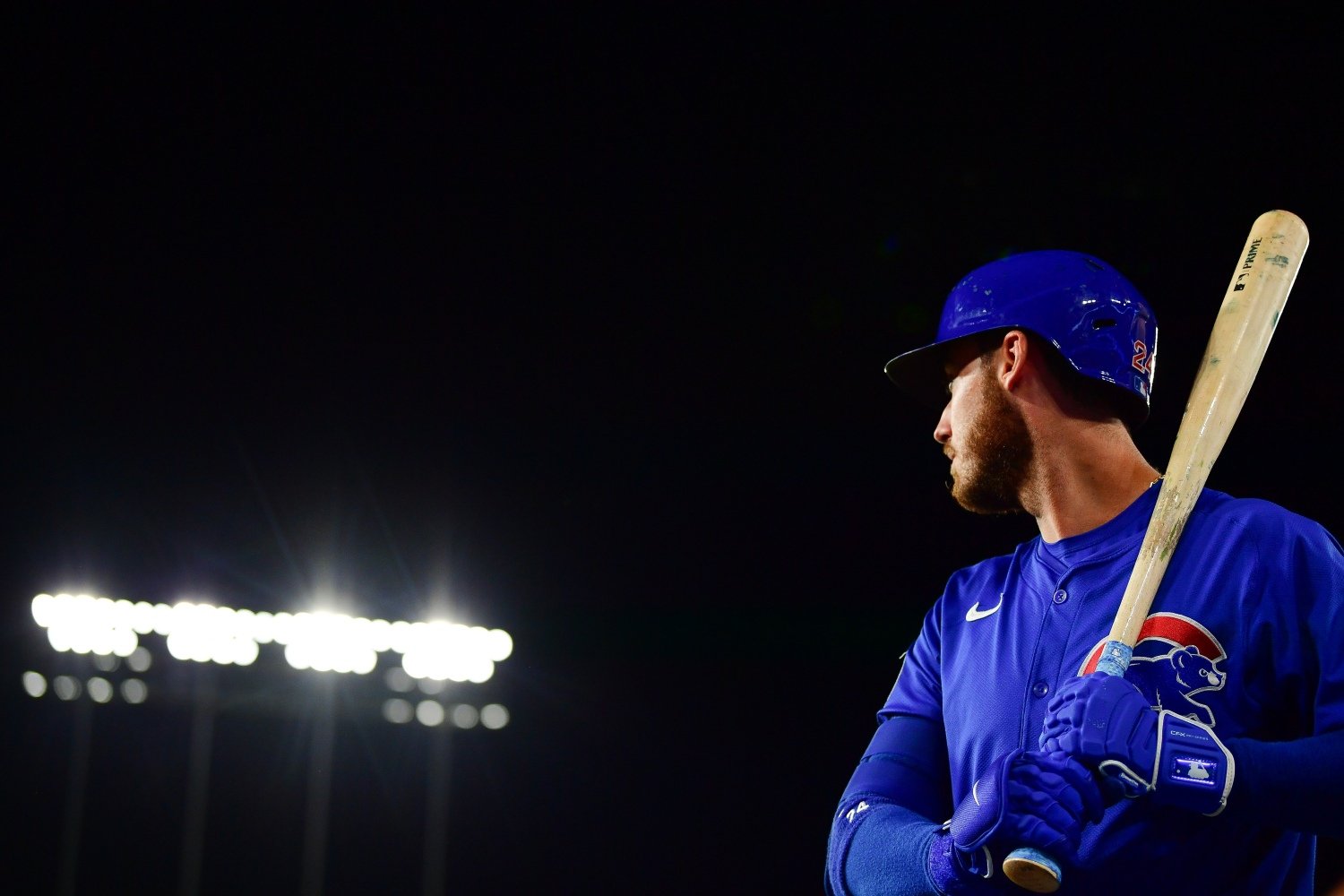 Cody Bellinger is not about to be dumped in a financial maneuver. Put that loathsome thought far from your mind, and if that means disbelieving in that Lilliputian legend of the notes column Ken Rosenthal, then so be it. The Athletic's senior baseball writer is very good at his job, judicious with his reporting, and well-meaning enough, but he's not always right. In fact, in small particulars of rumors just firm enough to plug into pieces around this time of year, he's very often very wrong. It's an occupational hazard. This time, while he's hit on a legitimate possible transaction in a constellation of them coming up this offseason, he's wandered off the path when it comes to what such a deal would look like. Don't follow him, but don't worry about him, either. He'll find his way back and be ahead of you again before you know it. The Cubs are, in theory, open to trading Cody Bellinger. That has been true since he opted in; it was even true back in July. However, now as then, they feel no special necessity to move Bellinger, and they won't be doing so just to clear money—or even, as Rosenthal said in a podcast clip that has gotten a little too much air under it Thursday afternoon, "to move money around". The Cubs don't need to offload anyone's salary in order to do any of the things they're realistically willing to do this winter, anyway. If they were to plunge seriously into a pursuit of Juan Soto, it could be a different story, but they (misguidedly, we all agree, but that doesn't make it less true) long ago turned away from that possibility. Bellinger is arguably in the way of their effort to improve the lineup and the overall positional composition of the roster, but he's not financially in the way. He will be traded only if the front office finds a deal they judge to be expedient for baseball reasons, and probably only when or if they feel reasonably good about a second move that would make you pretty happy, like the signing of a big bat who more neatly fits their needs as a counterweight to the outgoing salary attached to Bellinger. Rosenthal is right about the most important part of his report, which is that Bellinger's trade value is likely to be complicated and fairly limited. Almost every team who has set out to trade a player with an opt-out left in their deal has found that it significantly eats into that player's value, which shouldn't surprise anyone. Opt-outs are hugely player-friendly clauses; teams love to hold optionality, and hate when a player can hold it against them. That said, Hoyer and Tom Ricketts do not themselves hate the deal to which Bellinger is signed. Not only is it the one they fought a months-long staring contest with Scott Boras to win less than a year ago, but the season he just had is exactly the kind of season that makes them glad they got this kind of deal done, rather than a longer-term one with less flexibility for the player. They have Bellinger for one or two more years at a fairly high annual salary, because they didn't want to have to have him for four more years right now, locked in at double the remaining guarantees on his deal. I do have to do some quick cleanup on Rosenthal's attempts to articulate the terms of Bellinger's contract, though, because the deal is a bit complicated and Rosenthal has fallen into line with many who have misunderstood and misstated its structure. Because each opt-out in the deal involved a buyout, people keep losing track of how much money is actually owed to Bellinger and when. In the clip from the web show Foul Territory that was posted on social media and seems to have people worried, Rosenthal alludes to Bellinger still having "$60 million over two; that's what he's guaranteed". That's not what he's guaranteed. Bellinger got $27.5 million of the $80 million total value of his deal in 2024. In fact, though, that first year guaranteed him $30 million. He could have taken a $2.5-million buyout for 2025 if he had opted out. Instead, he'll now make $27.5 million this year, after which he can either take a $5-million buyout (making his effective salary for the coming season $32.5 million, though his competitive-balance tax threshold number would be $30 million in that case) or stick around for a final year at $25 million. It's a $20-million decision. In other words, the money left to be paid to Bellinger if he opts in again next fall is $52.5 million, not $60 million. That's important. So, too, is the fact that if he does opt in again, his AAV for CBT purposes will continue to be $26.67 million, as it technically is now. With that cleared up, we can ask more straightforwardly: What is Bellinger, at either one year and $32.5 million (with a significant chunk of that payment pushed out to the end of next year, though) or two years and $52.5 million, worth in a trade? Because there are still teams who view him as a vaguely viable center fielder, and because he still hit pretty well during his healthy stretches of 2024, the answer to that question is: Eh. Something decent. There are two scenarios I can see where the Cubs do deal Bellinger. One would involve it happening quite soon, as both the Cubs and a trade partner firm up so-far fluid plans for the offseason and try to get their resources properly aligned. The name that makes the most sense is Ranger Suárez, who had a tough second half for the Phillies (5.65 ERA after the All-Star break); is not urgently needed in one of the game's best starting rotations; and is due a hefty sum (likely around $9 million) via arbitration in his final year of team control. Suárez barely fits into the Phillies rotation, but would be a solid No. 4 in the Cubs', with upside from there. He had location issues and lost the ability to miss bats with his sinker in that lousy second half, but the raw stuff was basically undiminished. He has a profile that would suit all the Cubs' pitching predilections. In all likelihood, the Cubs would have to chip in something else to achieve a swap of those two, but it would be a minimal something else—maybe as minimal as $2 million or something, rather than a player. The Phillies need help in the outfield, and Bellinger is a pretty good fit. That kind of trade would advance the Cubs' offseason objectives, because it would check one big box by giving them both upside and stability (if only in the short term) in their starting rotation. It would make them at least $15 million less expensive, too, but the object wouldn't be those savings. They would turn around, then, and spend that money and more on a player like Anthony Santander, Willy Adames, or Pete Alonso, depending on how each of their markets develop. If that sounds a little convoluted, compared to holding onto Bellinger and signing a starter akin to Suárez instead, your instincts aren't failing you. Getting Suárez (and this is just one example, but it's a salient one) would have the advantage of cost control, at the expense of a chance to get a player for a longer term. I regard this type of deal as basically unlikely, specifically because the Cubs would have to find a Goldilocks zone where they felt they were getting better by the exchange of Bellinger for some other hitter plus whatever Bellinger brought back in trade, after accounting for transaction costs. It's a possibility, though. The other scenario in which the team might trade Bellinger is more remote, and would come much later in the winter, but would be a bit more easily understandable. The team might simply wait out the market of any of the top sluggers on the market—the aforementioned Santander, Adames, or Alonso; Alex Bregman; Teoscar Hernández; or Christian Walker—and then jump in, if they liked the way one of those players' prices was falling. Trading Bellinger would then be a little more about getting money out of the way, and about getting Bellinger himself out of the picture, so they would simply try to get a prospect they liked (even if it be someone with warts, like already being on the 40-man roster and running out of options, or an injury that would make them more of a long-term play). That scenario would be predicated on the team having not dealt away undue amounts of their stock of young hitters; viewing the player they could scoop up in the free-agent freefall as a clear upgrade for their specific needs; and being comfortable with, again, the transaction costs involved in making an upgrade with built-in friction. It's somewhere on the wrong side of a coin flip that Bellinger is dealt this winter. If he is, it certainly will not be as part of a cost-cutting endeavor or a lateral step in the pursuit of serious contention. My stern advice about this rumor is, don't worry about it. Take it only as a sign that, in a winter I've said many times contains a wealth of possible paths to improvement for the resource-rich Cubs, this is one path they're considering, just in case it turns out to be the right one. Sometimes, a well-founded report gets a few degrees off course and leads to more worrying and confusion than it should have.
 -
The Cubs made two more additions to the edges of their big-league roster Wednesday, as part of a week of enforced roster churn. The moves seem small, but when you widen the lens, their place in the grand scheme of team-building becomes much more clear. Image courtesy of © David Richard-Imagn Images At first blush, it's easy to wonder why the Cubs would want former Guardians righthander Eli Morgan badly enough to trade a raw but toolsy outfield prospect for him, and losing another righty reliever (Trey Wingenter) in the process. Morgan (since the start of 2023, minors and majors together, 126 innings, a 23.3% strikeout rate, an 8.0% walk rate and a 3.14 ERA) is better than Wingenter (95 innings, 31.1% strikeouts, 11.3% walks, 5.00 ERA), but is it really by enough to justify giving up Alfonsin Rosario? Likewise, in the sequence of moves they made Wednesday, the Cubs paid cash to the Angels (likely a nominal fee only slightly higher than the $50,000 waiver fee paid when a team claims a player) to acquire the previously DFAd Matt Thaiss, but had to designate Patrick Wisdom for assignment to make room on the roster. (Wisdom's departure was actually, technically in conjunction with the Morgan move, and Wingenter with the Thaiss one, but it will help us think through this more clearly to match pitcher to pitcher and hitter to hitter.) In a vacuum, Wisdom is probably a better player than Thaiss. He's been one of the Cubs' few relatively consistent sources of power over the last four years, especially from the right side of the plate. He can, believe it or not, still be optioned to the minors, and Thaiss can't. So, what gives? To understand these moves, it's important to keep your eyes on the prize. Eventually, the Cubs' goal is to get back to consistent winning. In fact, it's their goal to become a team that wins every year for a decade or more, for the first time in over a century. To do so, they obviously need help at the top of their roster, and these moves do virtually nothing to provide it. At most, they give the team about $1.5 million in new money to reallocate (the difference between the projected arbitration salaries of Wisdom and Wingenter and those of Morgan and Thaiss, less a loose estimate of the amount paid to the Angels in this process) and replace two players at the bottom end of the roster with two new ones. But. The baseball season is long. The calendar is well and truly stuffed, and it now stretches from mid-February through the beginning of November. That's underselling it, too, because for many players, the season doesn't end when the season ends. Take top Cubs catching prospect Moises Ballesteros, whom the team sent to the Arizona Fall League and who performed so admirably there that his already-high stock continues to rise. Ballesteros played 124 regular-season games, then 19 more in the AFL. His official total for plate appearances on the season was over 600, while primarily playing catcher, all at age 20. That doesn't include his spring training action (four games on the big-league side, several more than that on the minor-league side), All-Star appearances (he was selected to the Futures Game in Texas, and took part in the skills showcase there, too), or winter ball—yes, winter ball, which Ballesteros said he wanted to do near the end of the AFL slate. Ballesteros is a native of Venezuela, of course, and it's very common for players to want to go home and play in their country's primary league during the MLB offseason. The Cubs reportedly refused to give permission for Ballesteros to play for the Leones de Caracas last week, forcing him to rest and to have a few months' worth of offseason. That's the only responsible course of action they could have taken. He only turned 21 on Nov. 8. The workload he's already borne this year is hefty. Anything more would have been dangerous. Slowly, though, teams are likely to lose their ability to stop players from playing winter ball, at least without hurt feelings and fights. Ronald Acuna Jr. famously takes enormous pride in playing in the Venezuelan Winter League, where he had 48 plate appearances in 2022 and 104 in 2023. Acuna also always wants to be in the lineup for the Atlanta Braves, but twice in the last four years, he's torn his ACL. As games pile up, injury risk increases. This is not a baseball-only problem, by a long shot. There are, increasingly, huge demands falling on top players in all sports to keep playing, close to year-round. The NFL's schedule seems hilariously overlong at 17 games, with the four-round playoffs after that, but the league is already itching to expand to 18 contests. In soccer, the problem is perhaps even worse. In one calendar year, starting last fall and ending late this summer, Manchester City and Spain midfielder Rodri played 63 matches, and his offseason ended up lasting about three weeks. He fumed about it in the press in September, as fans and analysts questioned the latest round of expansion in the UEFA Champions League and the looming Club World Cup, which will further burden top teams with extra games. Then, early in the English Premier League season, Rodri tore his own ACL. He'll miss the rest of the season. As Rodri's and Acuna's cases exemplify, players are often aware of the risks associated with heavy use, and they harbor some resentment of them. Yet, they'll keep playing as long as their teams will have them, both because that's how one becomes unimaginably rich and because some of the games that are theoretically optional (winter ball for baseball players; international competition for soccer players) don't seem so to them. Acuna wants just as badly to thrive in the LVBP as in MLB, though he knows which of the two pays him a salary that will guarantee his grandchildren grow up spoiled, and therefore accedes at times when the team asks him not to overdo it. Ballesteros doesn't yet have the kind of power Acuna does, and when the Cubs didn't grant permission to play this winter, he was stuck. The very fact that the team turned him down is a reminder of how long his season already was, though. You can mentally add just a little bit of expected injury risk to Ballesteros heading into 2025, given his age, the mileage he just put on, and the position he plays. The Cubs weren't as stringent with two pitchers on their 40-man roster, Michael Arias and Daniel Palencia. Arias was a halfway-surprising addition to the roster to shelter him from the Rule 5 Draft last year, and he didn't have a strong 2024, so he's trying to make up some lost ground as his roster spot hangs in the balance. Palencia, by contrast, finished very strong this year. Yet, he, too, is pitching winter ball. Arias is in the Dominican Republic; Palencia is in Venezuela. Because Palencia was shelved twice with a scratchy shoulder this season, it makes sense that he and the team want to make up a few innings' worth of the missed time. However, in a highly optimistic projection of the Cubs' bullpen next season, Palencia would feature very prominently. You don't really want a player you might thus depend on down in winter ball, spending bullets—especially a guy who throws 100-plus miles per hour. It slightly increases the chances that Palencia has more arm trouble in 2025. This is where Thaiss and Morgan figure in so pivotally. Before Wednesday, the Cubs simply didn't have a viable backup catcher in their organization. Now they do. This will allow them to have Ballesteros start slow and catch less often in spring training, saving some of his energy and shielding his health for what they hope will be a second-half debut. That Thaiss, like Ballesteros, bats left-handed gives him matchup value and lets Craig Counsell seek small advantages. That's what the team brought him in for. It's valuable to rest other people, too, and in theory, Wisdom could have been part of that plan. In practice, though, that proved to be a role to which he was ill-suited. He needs regular at-bats to find his rhythm and produce according to his talent, and that's fine, but his talent isn't sufficient for the Cubs to try to carve out a regular role for him again. Wisdom must go somewhere in need of a slugger and without the slowly rising expectations the Cubs face. He couldn't help them manage the workloads of their infielders anymore, and once the team added Ben Cowles to the 40-man roster on Tuesday, they knew they would have a zero-friction option for the tail end of the bench if needed. Thaiss protects Ballesteros and answers a key roster question in a way Wisdom didn't. The same is somewhat true of Morgan. If Palencia ends up injured again early in 2025, or if the team needs to be proactive with him and keep him in the minors early to manage his workload, Morgan is a more credible stand-in for that job (albeit with radically different stuff effecting a different shape of value) than Wingenter would have been. He's more consistent, more durable, and he can be sent to the minor leagues. That means that, if and when Palencia is ready, the team need not sweat sending out Morgan, whereas keeping Wingenter to do the same placeholding would have meant losing a player altogether when bringing up Palencia. Matt Shaw is in Asia right now, playing in the Premier 12 tournament for Team USA. In 2026, there will be another World Baseball Classic. All these offseason attractions and opportunities are wonderful for the sport, but they put pressure on teams to amass more depth than they would otherwise need, and they sometimes put players in a tough spot. Checking off a positional area of need, even if it be in underwhelming and impermanent fashion, is one way to extract value in small, early winter moves. So is upgrading the relief corps while simultaneously getting more nimble, roster-wise. It all sounds silly, because baseball isn't as taxing on any given day as soccer, football, or basketball, but then, baseball plays so much more often. In the early years of the new playoff format, we have seen series after series become a war of attrition, with two teams who cleared 90 wins during the regular season suddenly casting about for parts and pieces because of injuries or fatigue-driven underperformance. Any team aspiring to win in the long run has to be cognizant of that looming risk, and ready to meet it. The Cubs' moves Wednesday made them incrementally more so. View full article
-
.png.370b18082baff19482c59c33e2c39ba3.png) At first blush, it's easy to wonder why the Cubs would want former Guardians righthander Eli Morgan badly enough to trade a raw but toolsy outfield prospect for him, and losing another righty reliever (Trey Wingenter) in the process. Morgan (since the start of 2023, minors and majors together, 126 innings, a 23.3% strikeout rate, an 8.0% walk rate and a 3.14 ERA) is better than Wingenter (95 innings, 31.1% strikeouts, 11.3% walks, 5.00 ERA), but is it really by enough to justify giving up Alfonsin Rosario? Likewise, in the sequence of moves they made Wednesday, the Cubs paid cash to the Angels (likely a nominal fee only slightly higher than the $50,000 waiver fee paid when a team claims a player) to acquire the previously DFAd Matt Thaiss, but had to designate Patrick Wisdom for assignment to make room on the roster. (Wisdom's departure was actually, technically in conjunction with the Morgan move, and Wingenter with the Thaiss one, but it will help us think through this more clearly to match pitcher to pitcher and hitter to hitter.) In a vacuum, Wisdom is probably a better player than Thaiss. He's been one of the Cubs' few relatively consistent sources of power over the last four years, especially from the right side of the plate. He can, believe it or not, still be optioned to the minors, and Thaiss can't. So, what gives? To understand these moves, it's important to keep your eyes on the prize. Eventually, the Cubs' goal is to get back to consistent winning. In fact, it's their goal to become a team that wins every year for a decade or more, for the first time in over a century. To do so, they obviously need help at the top of their roster, and these moves do virtually nothing to provide it. At most, they give the team about $1.5 million in new money to reallocate (the difference between the projected arbitration salaries of Wisdom and Wingenter and those of Morgan and Thaiss, less a loose estimate of the amount paid to the Angels in this process) and replace two players at the bottom end of the roster with two new ones. But. The baseball season is long. The calendar is well and truly stuffed, and it now stretches from mid-February through the beginning of November. That's underselling it, too, because for many players, the season doesn't end when the season ends. Take top Cubs catching prospect Moises Ballesteros, whom the team sent to the Arizona Fall League and who performed so admirably there that his already-high stock continues to rise. Ballesteros played 124 regular-season games, then 19 more in the AFL. His official total for plate appearances on the season was over 600, while primarily playing catcher, all at age 20. That doesn't include his spring training action (four games on the big-league side, several more than that on the minor-league side), All-Star appearances (he was selected to the Futures Game in Texas, and took part in the skills showcase there, too), or winter ball—yes, winter ball, which Ballesteros said he wanted to do near the end of the AFL slate. Ballesteros is a native of Venezuela, of course, and it's very common for players to want to go home and play in their country's primary league during the MLB offseason. The Cubs reportedly refused to give permission for Ballesteros to play for the Leones de Caracas last week, forcing him to rest and to have a few months' worth of offseason. That's the only responsible course of action they could have taken. He only turned 21 on Nov. 8. The workload he's already borne this year is hefty. Anything more would have been dangerous. Slowly, though, teams are likely to lose their ability to stop players from playing winter ball, at least without hurt feelings and fights. Ronald Acuna Jr. famously takes enormous pride in playing in the Venezuelan Winter League, where he had 48 plate appearances in 2022 and 104 in 2023. Acuna also always wants to be in the lineup for the Atlanta Braves, but twice in the last four years, he's torn his ACL. As games pile up, injury risk increases. This is not a baseball-only problem, by a long shot. There are, increasingly, huge demands falling on top players in all sports to keep playing, close to year-round. The NFL's schedule seems hilariously overlong at 17 games, with the four-round playoffs after that, but the league is already itching to expand to 18 contests. In soccer, the problem is perhaps even worse. In one calendar year, starting last fall and ending late this summer, Manchester City and Spain midfielder Rodri played 63 matches, and his offseason ended up lasting about three weeks. He fumed about it in the press in September, as fans and analysts questioned the latest round of expansion in the UEFA Champions League and the looming Club World Cup, which will further burden top teams with extra games. Then, early in the English Premier League season, Rodri tore his own ACL. He'll miss the rest of the season. As Rodri's and Acuna's cases exemplify, players are often aware of the risks associated with heavy use, and they harbor some resentment of them. Yet, they'll keep playing as long as their teams will have them, both because that's how one becomes unimaginably rich and because some of the games that are theoretically optional (winter ball for baseball players; international competition for soccer players) don't seem so to them. Acuna wants just as badly to thrive in the LVBP as in MLB, though he knows which of the two pays him a salary that will guarantee his grandchildren grow up spoiled, and therefore accedes at times when the team asks him not to overdo it. Ballesteros doesn't yet have the kind of power Acuna does, and when the Cubs didn't grant permission to play this winter, he was stuck. The very fact that the team turned him down is a reminder of how long his season already was, though. You can mentally add just a little bit of expected injury risk to Ballesteros heading into 2025, given his age, the mileage he just put on, and the position he plays. The Cubs weren't as stringent with two pitchers on their 40-man roster, Michael Arias and Daniel Palencia. Arias was a halfway-surprising addition to the roster to shelter him from the Rule 5 Draft last year, and he didn't have a strong 2024, so he's trying to make up some lost ground as his roster spot hangs in the balance. Palencia, by contrast, finished very strong this year. Yet, he, too, is pitching winter ball. Arias is in the Dominican Republic; Palencia is in Venezuela. Because Palencia was shelved twice with a scratchy shoulder this season, it makes sense that he and the team want to make up a few innings' worth of the missed time. However, in a highly optimistic projection of the Cubs' bullpen next season, Palencia would feature very prominently. You don't really want a player you might thus depend on down in winter ball, spending bullets—especially a guy who throws 100-plus miles per hour. It slightly increases the chances that Palencia has more arm trouble in 2025. This is where Thaiss and Morgan figure in so pivotally. Before Wednesday, the Cubs simply didn't have a viable backup catcher in their organization. Now they do. This will allow them to have Ballesteros start slow and catch less often in spring training, saving some of his energy and shielding his health for what they hope will be a second-half debut. That Thaiss, like Ballesteros, bats left-handed gives him matchup value and lets Craig Counsell seek small advantages. That's what the team brought him in for. It's valuable to rest other people, too, and in theory, Wisdom could have been part of that plan. In practice, though, that proved to be a role to which he was ill-suited. He needs regular at-bats to find his rhythm and produce according to his talent, and that's fine, but his talent isn't sufficient for the Cubs to try to carve out a regular role for him again. Wisdom must go somewhere in need of a slugger and without the slowly rising expectations the Cubs face. He couldn't help them manage the workloads of their infielders anymore, and once the team added Ben Cowles to the 40-man roster on Tuesday, they knew they would have a zero-friction option for the tail end of the bench if needed. Thaiss protects Ballesteros and answers a key roster question in a way Wisdom didn't. The same is somewhat true of Morgan. If Palencia ends up injured again early in 2025, or if the team needs to be proactive with him and keep him in the minors early to manage his workload, Morgan is a more credible stand-in for that job (albeit with radically different stuff effecting a different shape of value) than Wingenter would have been. He's more consistent, more durable, and he can be sent to the minor leagues. That means that, if and when Palencia is ready, the team need not sweat sending out Morgan, whereas keeping Wingenter to do the same placeholding would have meant losing a player altogether when bringing up Palencia. Matt Shaw is in Asia right now, playing in the Premier 12 tournament for Team USA. In 2026, there will be another World Baseball Classic. All these offseason attractions and opportunities are wonderful for the sport, but they put pressure on teams to amass more depth than they would otherwise need, and they sometimes put players in a tough spot. Checking off a positional area of need, even if it be in underwhelming and impermanent fashion, is one way to extract value in small, early winter moves. So is upgrading the relief corps while simultaneously getting more nimble, roster-wise. It all sounds silly, because baseball isn't as taxing on any given day as soccer, football, or basketball, but then, baseball plays so much more often. In the early years of the new playoff format, we have seen series after series become a war of attrition, with two teams who cleared 90 wins during the regular season suddenly casting about for parts and pieces because of injuries or fatigue-driven underperformance. Any team aspiring to win in the long run has to be cognizant of that looming risk, and ready to meet it. The Cubs' moves Wednesday made them incrementally more so.
At first blush, it's easy to wonder why the Cubs would want former Guardians righthander Eli Morgan badly enough to trade a raw but toolsy outfield prospect for him, and losing another righty reliever (Trey Wingenter) in the process. Morgan (since the start of 2023, minors and majors together, 126 innings, a 23.3% strikeout rate, an 8.0% walk rate and a 3.14 ERA) is better than Wingenter (95 innings, 31.1% strikeouts, 11.3% walks, 5.00 ERA), but is it really by enough to justify giving up Alfonsin Rosario? Likewise, in the sequence of moves they made Wednesday, the Cubs paid cash to the Angels (likely a nominal fee only slightly higher than the $50,000 waiver fee paid when a team claims a player) to acquire the previously DFAd Matt Thaiss, but had to designate Patrick Wisdom for assignment to make room on the roster. (Wisdom's departure was actually, technically in conjunction with the Morgan move, and Wingenter with the Thaiss one, but it will help us think through this more clearly to match pitcher to pitcher and hitter to hitter.) In a vacuum, Wisdom is probably a better player than Thaiss. He's been one of the Cubs' few relatively consistent sources of power over the last four years, especially from the right side of the plate. He can, believe it or not, still be optioned to the minors, and Thaiss can't. So, what gives? To understand these moves, it's important to keep your eyes on the prize. Eventually, the Cubs' goal is to get back to consistent winning. In fact, it's their goal to become a team that wins every year for a decade or more, for the first time in over a century. To do so, they obviously need help at the top of their roster, and these moves do virtually nothing to provide it. At most, they give the team about $1.5 million in new money to reallocate (the difference between the projected arbitration salaries of Wisdom and Wingenter and those of Morgan and Thaiss, less a loose estimate of the amount paid to the Angels in this process) and replace two players at the bottom end of the roster with two new ones. But. The baseball season is long. The calendar is well and truly stuffed, and it now stretches from mid-February through the beginning of November. That's underselling it, too, because for many players, the season doesn't end when the season ends. Take top Cubs catching prospect Moises Ballesteros, whom the team sent to the Arizona Fall League and who performed so admirably there that his already-high stock continues to rise. Ballesteros played 124 regular-season games, then 19 more in the AFL. His official total for plate appearances on the season was over 600, while primarily playing catcher, all at age 20. That doesn't include his spring training action (four games on the big-league side, several more than that on the minor-league side), All-Star appearances (he was selected to the Futures Game in Texas, and took part in the skills showcase there, too), or winter ball—yes, winter ball, which Ballesteros said he wanted to do near the end of the AFL slate. Ballesteros is a native of Venezuela, of course, and it's very common for players to want to go home and play in their country's primary league during the MLB offseason. The Cubs reportedly refused to give permission for Ballesteros to play for the Leones de Caracas last week, forcing him to rest and to have a few months' worth of offseason. That's the only responsible course of action they could have taken. He only turned 21 on Nov. 8. The workload he's already borne this year is hefty. Anything more would have been dangerous. Slowly, though, teams are likely to lose their ability to stop players from playing winter ball, at least without hurt feelings and fights. Ronald Acuna Jr. famously takes enormous pride in playing in the Venezuelan Winter League, where he had 48 plate appearances in 2022 and 104 in 2023. Acuna also always wants to be in the lineup for the Atlanta Braves, but twice in the last four years, he's torn his ACL. As games pile up, injury risk increases. This is not a baseball-only problem, by a long shot. There are, increasingly, huge demands falling on top players in all sports to keep playing, close to year-round. The NFL's schedule seems hilariously overlong at 17 games, with the four-round playoffs after that, but the league is already itching to expand to 18 contests. In soccer, the problem is perhaps even worse. In one calendar year, starting last fall and ending late this summer, Manchester City and Spain midfielder Rodri played 63 matches, and his offseason ended up lasting about three weeks. He fumed about it in the press in September, as fans and analysts questioned the latest round of expansion in the UEFA Champions League and the looming Club World Cup, which will further burden top teams with extra games. Then, early in the English Premier League season, Rodri tore his own ACL. He'll miss the rest of the season. As Rodri's and Acuna's cases exemplify, players are often aware of the risks associated with heavy use, and they harbor some resentment of them. Yet, they'll keep playing as long as their teams will have them, both because that's how one becomes unimaginably rich and because some of the games that are theoretically optional (winter ball for baseball players; international competition for soccer players) don't seem so to them. Acuna wants just as badly to thrive in the LVBP as in MLB, though he knows which of the two pays him a salary that will guarantee his grandchildren grow up spoiled, and therefore accedes at times when the team asks him not to overdo it. Ballesteros doesn't yet have the kind of power Acuna does, and when the Cubs didn't grant permission to play this winter, he was stuck. The very fact that the team turned him down is a reminder of how long his season already was, though. You can mentally add just a little bit of expected injury risk to Ballesteros heading into 2025, given his age, the mileage he just put on, and the position he plays. The Cubs weren't as stringent with two pitchers on their 40-man roster, Michael Arias and Daniel Palencia. Arias was a halfway-surprising addition to the roster to shelter him from the Rule 5 Draft last year, and he didn't have a strong 2024, so he's trying to make up some lost ground as his roster spot hangs in the balance. Palencia, by contrast, finished very strong this year. Yet, he, too, is pitching winter ball. Arias is in the Dominican Republic; Palencia is in Venezuela. Because Palencia was shelved twice with a scratchy shoulder this season, it makes sense that he and the team want to make up a few innings' worth of the missed time. However, in a highly optimistic projection of the Cubs' bullpen next season, Palencia would feature very prominently. You don't really want a player you might thus depend on down in winter ball, spending bullets—especially a guy who throws 100-plus miles per hour. It slightly increases the chances that Palencia has more arm trouble in 2025. This is where Thaiss and Morgan figure in so pivotally. Before Wednesday, the Cubs simply didn't have a viable backup catcher in their organization. Now they do. This will allow them to have Ballesteros start slow and catch less often in spring training, saving some of his energy and shielding his health for what they hope will be a second-half debut. That Thaiss, like Ballesteros, bats left-handed gives him matchup value and lets Craig Counsell seek small advantages. That's what the team brought him in for. It's valuable to rest other people, too, and in theory, Wisdom could have been part of that plan. In practice, though, that proved to be a role to which he was ill-suited. He needs regular at-bats to find his rhythm and produce according to his talent, and that's fine, but his talent isn't sufficient for the Cubs to try to carve out a regular role for him again. Wisdom must go somewhere in need of a slugger and without the slowly rising expectations the Cubs face. He couldn't help them manage the workloads of their infielders anymore, and once the team added Ben Cowles to the 40-man roster on Tuesday, they knew they would have a zero-friction option for the tail end of the bench if needed. Thaiss protects Ballesteros and answers a key roster question in a way Wisdom didn't. The same is somewhat true of Morgan. If Palencia ends up injured again early in 2025, or if the team needs to be proactive with him and keep him in the minors early to manage his workload, Morgan is a more credible stand-in for that job (albeit with radically different stuff effecting a different shape of value) than Wingenter would have been. He's more consistent, more durable, and he can be sent to the minor leagues. That means that, if and when Palencia is ready, the team need not sweat sending out Morgan, whereas keeping Wingenter to do the same placeholding would have meant losing a player altogether when bringing up Palencia. Matt Shaw is in Asia right now, playing in the Premier 12 tournament for Team USA. In 2026, there will be another World Baseball Classic. All these offseason attractions and opportunities are wonderful for the sport, but they put pressure on teams to amass more depth than they would otherwise need, and they sometimes put players in a tough spot. Checking off a positional area of need, even if it be in underwhelming and impermanent fashion, is one way to extract value in small, early winter moves. So is upgrading the relief corps while simultaneously getting more nimble, roster-wise. It all sounds silly, because baseball isn't as taxing on any given day as soccer, football, or basketball, but then, baseball plays so much more often. In the early years of the new playoff format, we have seen series after series become a war of attrition, with two teams who cleared 90 wins during the regular season suddenly casting about for parts and pieces because of injuries or fatigue-driven underperformance. Any team aspiring to win in the long run has to be cognizant of that looming risk, and ready to meet it. The Cubs' moves Wednesday made them incrementally more so. -
With which part? You quoted the whole article! 😄
-
In their second incremental but clearly positive move of the day, the Cubs added a left-handed bat to set a floor at catcher, and further clarified their fluid relief pitching depth chart. Image courtesy of © Jayne Kamin-Oncea-Imagn Images It was almost too obvious not to happen. When the Angels designated left-handed hitter and catcher Matt Thaiss for assignment to make room for Travis d'Arnaud last week, the fit between Thaiss and the Cubs was instantly visible. He's a stopgap backstop, someone to pair with Miguel Amaya in the short term and to ensure they don't have to rush Moises Ballesteros—unless they either acquire a different catcher via free agency or trade or find Ballesteros to be unexpectedly sound and ready, in which case Thaiss might never play a game in a Cubs uniform. As a roster spot placeholder in November, though, he's a no-brainer of an addition. Thaiss, 29, is a left-handed bat and a catcher, though attaching each label to him stretches their definitions slightly. He batted just .203/.323/.299 last season. He has both a disastrous tendency to swing and miss (even within the strike zone) and a lousy batted-ball profile. He doesn't hit the ball nearly hard enough, nor lift or pull it enough, to make up for an unavoidably high strikeout rate. However, he does have excellent plate discipline, rarely chasing pitches and working his way on base at a good rate, given his other shortcomings. Since Amaya is a right-handed batter whom the team hopes will be a lefty-masher anyway, Thaiss should never see a lefty in the Cubs roster mix. He's a .220/.332/.351 hitter against right-handed pitchers since the start of 2022. That's perfectly solid, from a catcher hitting at the bottom of the order, so the team just needs him to sustain that on-base ability. This is not an upside play; it's just about making the roster better than it was last year. No longer should one-third of the team's at-bats at catcher be an irredeemable sin against baseball, void of any production whatsoever. Unfortunately, Thaiss also isn't any help behind the plate, at least based on his track record. He's a subpar pitch framer and has thrown out just 16% of opposing base stealers since the start of 2023. This acquisition takes no real pressure off Amaya, but it does alleviate whatever pressure the team was feeling to find a backup who could be a bridge to Ballesteros, whom the team presumably has at least some hope of promoting within the first few months of next season. He has three years of team control remaining, but they will only come into play if the Cubs are able to draw a new level of play out of him on one side of the ledger or the other. They probably have better coaches than the Angels do, but not good enough to turn Thaiss into a player whom they'll want to keep around for very long. Thaiss is also out of minor-league options, which is why the Angels only got cash considerations from the Cubs in exchange for him. In order to stay in the organization, he'll have to show the Cubs he can be a credible big-leaguer. He's cleared that standard the last two years, though, despite his many shortcomings, and they had no backup catcher in place at all before making this move. Given the minimal cost, that made adding Thaiss appealing. It did involve an opportunity cost, of course, because the team had a full 40-man roster. As Thaiss comes in, out goes Trey Wingenter, the big, funky righty with electric stuff whom they claimed off waivers late in the 2024 season. Wingenter, too, is out of options, but as a reliever, he plays a position where being able to be shuttled to the minors is much more important than it is for catchers. After the team acquired Eli Morgan earlier in the day (and removed Patrick Wisdom from the roster), the Cubs basically balanced their scales here. Morgan, who has an option year, takes the place of Wingenter. Thaiss, who plays a more needed position, takes the place of Wisdom. In each transaction, the Cubs clearly get better. They get better only by a tiny fraction, but they do get better. They're perhaps $1.5 million cheaper, and they're better. The transactions cost them Alfonsin Rosario and however much cash they sent to the Angels, but those are small considerations. These are scene-setter moves, but they're solid ones. If, from here, the Cubs merely make another handful of slightly larger moves like these, fans will be rightfully livid come Opening Day. If, however, they go on to convert these small improvements into something genuinely valuable by making larger-scale additions at key positions of need, the deals will look very savvy. This neatly echoes the trade deadline, when the team seemed to be carefully canceling out certain transactions and just staying ahead by being pleased with the aspects that didn't cancel out. Back then, they gave up Hunter Bigge in one move, but got back Jack Neely in another. They gave up Josh Rivera in one deal, but brought in Ben Cowles in another. They gave up Mark Leiter Jr. in one move, but acquired Nate Pearson in another. After all that, they felt they were fairly tidily swapping Christopher Morel for Isaac Paredes, and Paredes is the more valuable player. Although the bigger moves will be the ones that determine the success or failure of Jed Hoyer's approach, these have been a series of well-executed maneuvers over a span of several months. The edges of the roster needed major upgrades this winter, and this week has already brought a few of them—with another few possible in the coming days and weeks. View full article
-
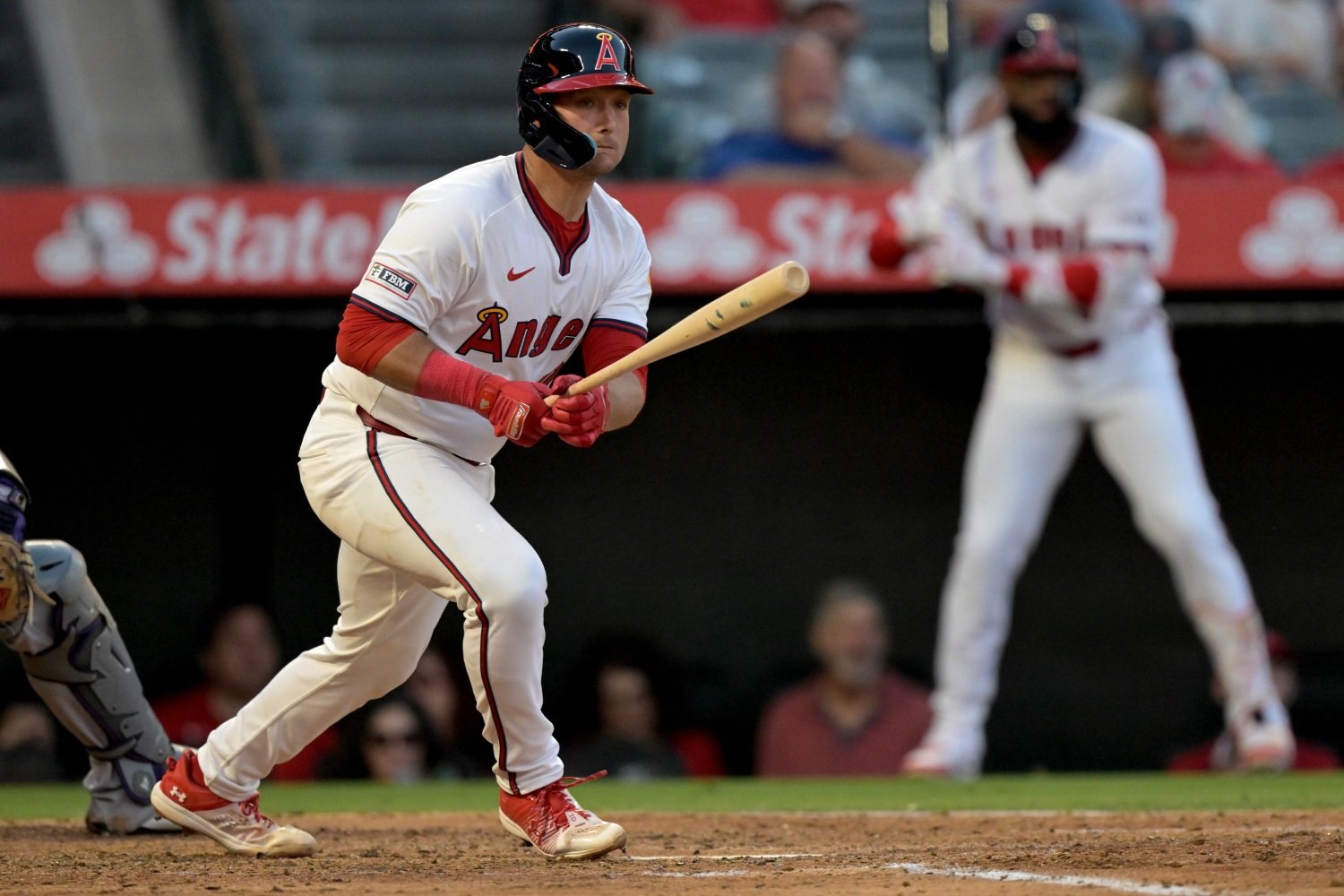 It was almost too obvious not to happen. When the Angels designated left-handed hitter and catcher Matt Thaiss for assignment to make room for Travis d'Arnaud last week, the fit between Thaiss and the Cubs was instantly visible. He's a stopgap backstop, someone to pair with Miguel Amaya in the short term and to ensure they don't have to rush Moises Ballesteros—unless they either acquire a different catcher via free agency or trade or find Ballesteros to be unexpectedly sound and ready, in which case Thaiss might never play a game in a Cubs uniform. As a roster spot placeholder in November, though, he's a no-brainer of an addition. Thaiss, 29, is a left-handed bat and a catcher, though attaching each label to him stretches their definitions slightly. He batted just .203/.323/.299 last season. He has both a disastrous tendency to swing and miss (even within the strike zone) and a lousy batted-ball profile. He doesn't hit the ball nearly hard enough, nor lift or pull it enough, to make up for an unavoidably high strikeout rate. However, he does have excellent plate discipline, rarely chasing pitches and working his way on base at a good rate, given his other shortcomings. Since Amaya is a right-handed batter whom the team hopes will be a lefty-masher anyway, Thaiss should never see a lefty in the Cubs roster mix. He's a .220/.332/.351 hitter against right-handed pitchers since the start of 2022. That's perfectly solid, from a catcher hitting at the bottom of the order, so the team just needs him to sustain that on-base ability. This is not an upside play; it's just about making the roster better than it was last year. No longer should one-third of the team's at-bats at catcher be an irredeemable sin against baseball, void of any production whatsoever. Unfortunately, Thaiss also isn't any help behind the plate, at least based on his track record. He's a subpar pitch framer and has thrown out just 16% of opposing base stealers since the start of 2023. This acquisition takes no real pressure off Amaya, but it does alleviate whatever pressure the team was feeling to find a backup who could be a bridge to Ballesteros, whom the team presumably has at least some hope of promoting within the first few months of next season. He has three years of team control remaining, but they will only come into play if the Cubs are able to draw a new level of play out of him on one side of the ledger or the other. They probably have better coaches than the Angels do, but not good enough to turn Thaiss into a player whom they'll want to keep around for very long. Thaiss is also out of minor-league options, which is why the Angels only got cash considerations from the Cubs in exchange for him. In order to stay in the organization, he'll have to show the Cubs he can be a credible big-leaguer. He's cleared that standard the last two years, though, despite his many shortcomings, and they had no backup catcher in place at all before making this move. Given the minimal cost, that made adding Thaiss appealing. It did involve an opportunity cost, of course, because the team had a full 40-man roster. As Thaiss comes in, out goes Trey Wingenter, the big, funky righty with electric stuff whom they claimed off waivers late in the 2024 season. Wingenter, too, is out of options, but as a reliever, he plays a position where being able to be shuttled to the minors is much more important than it is for catchers. After the team acquired Eli Morgan earlier in the day (and removed Patrick Wisdom from the roster), the Cubs basically balanced their scales here. Morgan, who has an option year, takes the place of Wingenter. Thaiss, who plays a more needed position, takes the place of Wisdom. In each transaction, the Cubs clearly get better. They get better only by a tiny fraction, but they do get better. They're perhaps $1.5 million cheaper, and they're better. The transactions cost them Alfonsin Rosario and however much cash they sent to the Angels, but those are small considerations. These are scene-setter moves, but they're solid ones. If, from here, the Cubs merely make another handful of slightly larger moves like these, fans will be rightfully livid come Opening Day. If, however, they go on to convert these small improvements into something genuinely valuable by making larger-scale additions at key positions of need, the deals will look very savvy. This neatly echoes the trade deadline, when the team seemed to be carefully canceling out certain transactions and just staying ahead by being pleased with the aspects that didn't cancel out. Back then, they gave up Hunter Bigge in one move, but got back Jack Neely in another. They gave up Josh Rivera in one deal, but brought in Ben Cowles in another. They gave up Mark Leiter Jr. in one move, but acquired Nate Pearson in another. After all that, they felt they were fairly tidily swapping Christopher Morel for Isaac Paredes, and Paredes is the more valuable player. Although the bigger moves will be the ones that determine the success or failure of Jed Hoyer's approach, these have been a series of well-executed maneuvers over a span of several months. The edges of the roster needed major upgrades this winter, and this week has already brought a few of them—with another few possible in the coming days and weeks.
 -
Very much prioritizing the construction of a better 2025 bullpen, the Cubs moved to land an optionable righty without a bat-missing out pitch, but who had sparkling numbers last year anyway. Image courtesy of © David Richard-Imagn Images Entering the offseason with needs all over the roster and knowing they have several promising but not yet established arms taking up space on their projected bullpen depth chart, the Cubs struck on Wednesday to slightly ease their roster crunch and create more good choices for themselves in the relief corps. With the acquisition of Eli Morgan, they gain a righty with three remaining years of team control and one more season in which he can be optioned to the minor leagues, but one without a devastating offering that guarantees outs late in games. Morgan, 29 next May, had a 1.93 ERA in 42 innings for Cleveland this year, but that didn't even make him one of the team's four most effective relievers. He has a four-seam fastball, a slider, and a changeup, all of which he can throw for strikes, but the heater only sits at 91-93 miles per hour, so he doesn't rack up strikeouts. Advanced metrics don't quite support the dazzling topline numbers he posted, which shouldn't come as much of a surprise. No one's true talent is a 1.93 ERA. Morgan doesn't work as a high-leverage reliever very often, because he runs a below-average strikeout rate. However, because he commands his changeup well and therefore keeps lefties relatively quiet, he can be a flexible, valuable middle reliever. He's projected to make just $1 million next season, and crucially, he can still be optioned to the minor leagues for one more year. That sets him apart from non-tender candidates in the Cubs' incumbent pen, like Trey Wingenter, Caleb Kilian, and Keegan Thompson. According to Sahadev Sharma of The Athletic, the Cubs will send an A-ball player to Cleveland to complete the deal. It won't be a high-octane move, but this makes the team's relief unit both stronger and more flexible. It also spells the end of Patrick Wisdom's time with the team. After four-plus years as a good organizational soldier with big power and a solid clubhouse influence, Wisdom was always going to be non-tendered Friday, if not released sooner. His removal from the roster makes room for Morgan, though, as the Cubs continue to have a full 40-man slate. If the season began tomorrow, the bullpen depth chart would look something like this: High-Leverage Porter Hodge Nate Pearson Medium-Leverage Locks Tyson Miller Luke Little Eli Morgan The Out of Options Crew Julian Merryweather Keegan Thompson Rob Zastryzny Caleb Kilian Trey Wingenter Upside Arms Not Guaranteed Full-Time Roles Daniel Palencia Jack Neely Gavin Hollowell Ethan Roberts As I've said before, I think they need to upgrade even more from here, which means non-tendering a couple of the players in the out-of-options bucket, and maybe Roberts, too. For now, though, Morgan is a clearly solid addition to the bridge from the team's rotation to the likes of Hodge, Pearson, and Miller. So Long, Fonz We now know whom the Cubs gave up to make this upgrade, and it's about the caliber of player we ought to have expected. Alfonsin Rosario, on whom they spent precisely the slot value after taking him in the sixth round in 2023. Rosario is a big, strong player from a South Carolina academy who flashed big tools in his first full pro season, but his strikeout rate was huge. No player who strikes out over 30 percent of the time in Low A is going to jump out as a strong prospect. He's got oodles of obvious talent, but there's at least as good a chance he never plays a game in MLB as that he ends up a productive regular. He'll have to make some huge adjustments to get to the majors from here, and while it's possible the Cubs could have coaxed those out of him, sometimes, it makes more sense to turn that potential value in real and immediate value instead. Rosario becomes the third member of the 2023 Draft class traded in deals with just that kind of exchange in mind. Josh Rivera (Nate Pearson) and Zyhir Hope (Michael Busch trade) went the same way. Whether that ends up being smart depends more on whether you're right about the player you acquire than on whether the player you trade away becomes an eventual star, so while Hope's stock has shot up and Rosario could find the key and turn all his tools into a dazzling profile, the more important questions are whether the team continues to get value from Busch; whether their tweaks with Pearson pay off with a full season of good health and effectiveness; and whether Morgan can repeat some of the results he posted in 2024. On balance, so far, they seem like good bets. View full article
-
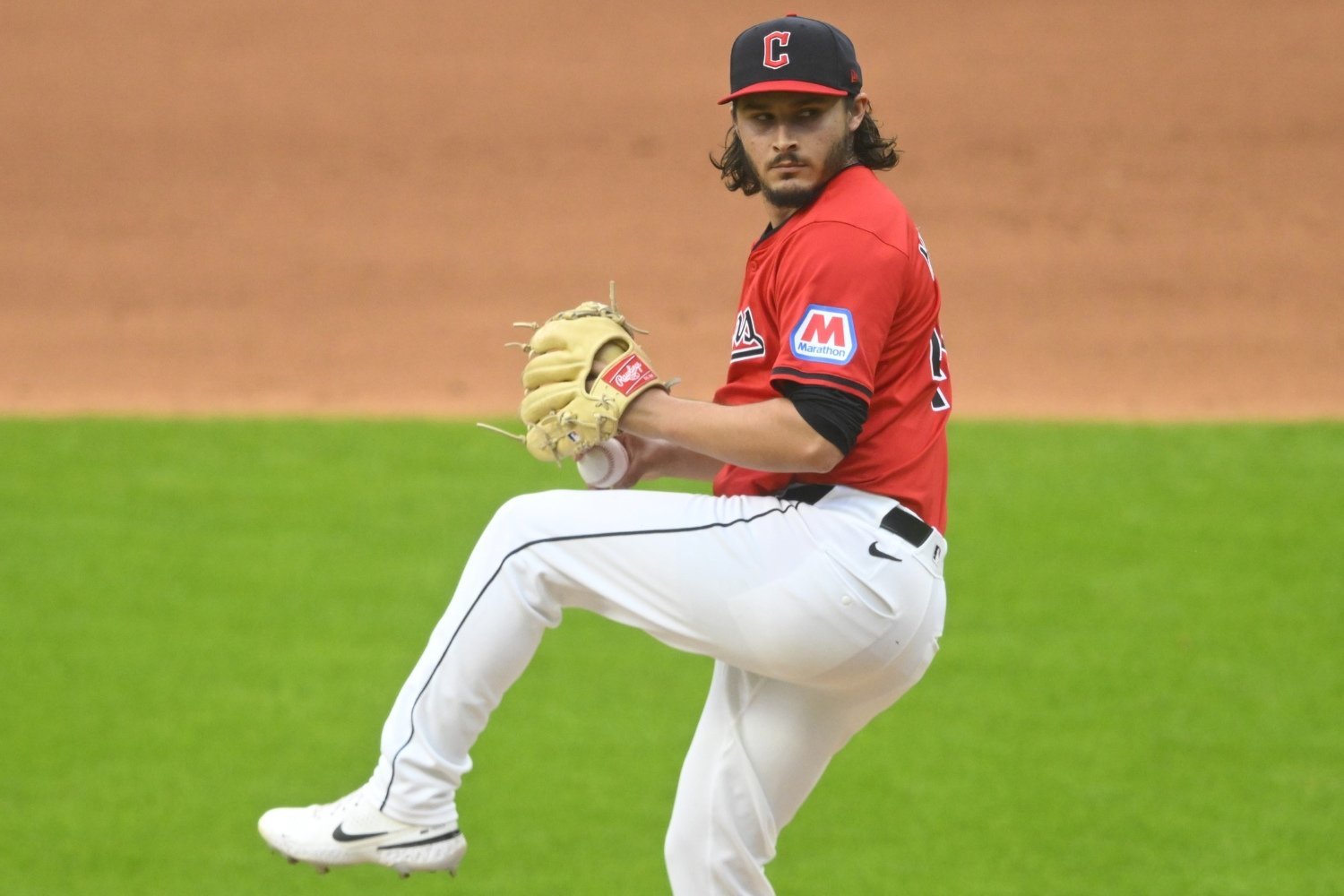 Entering the offseason with needs all over the roster and knowing they have several promising but not yet established arms taking up space on their projected bullpen depth chart, the Cubs struck on Wednesday to slightly ease their roster crunch and create more good choices for themselves in the relief corps. With the acquisition of Eli Morgan, they gain a righty with three remaining years of team control and one more season in which he can be optioned to the minor leagues, but one without a devastating offering that guarantees outs late in games. Morgan, 29 next May, had a 1.93 ERA in 42 innings for Cleveland this year, but that didn't even make him one of the team's four most effective relievers. He has a four-seam fastball, a slider, and a changeup, all of which he can throw for strikes, but the heater only sits at 91-93 miles per hour, so he doesn't rack up strikeouts. Advanced metrics don't quite support the dazzling topline numbers he posted, which shouldn't come as much of a surprise. No one's true talent is a 1.93 ERA. Morgan doesn't work as a high-leverage reliever very often, because he runs a below-average strikeout rate. However, because he commands his changeup well and therefore keeps lefties relatively quiet, he can be a flexible, valuable middle reliever. He's projected to make just $1 million next season, and crucially, he can still be optioned to the minor leagues for one more year. That sets him apart from non-tender candidates in the Cubs' incumbent pen, like Trey Wingenter, Caleb Kilian, and Keegan Thompson. According to Sahadev Sharma of The Athletic, the Cubs will send an A-ball player to Cleveland to complete the deal. It won't be a high-octane move, but this makes the team's relief unit both stronger and more flexible. It also spells the end of Patrick Wisdom's time with the team. After four-plus years as a good organizational soldier with big power and a solid clubhouse influence, Wisdom was always going to be non-tendered Friday, if not released sooner. His removal from the roster makes room for Morgan, though, as the Cubs continue to have a full 40-man slate. If the season began tomorrow, the bullpen depth chart would look something like this: High-Leverage Porter Hodge Nate Pearson Medium-Leverage Locks Tyson Miller Luke Little Eli Morgan The Out of Options Crew Julian Merryweather Keegan Thompson Rob Zastryzny Caleb Kilian Trey Wingenter Upside Arms Not Guaranteed Full-Time Roles Daniel Palencia Jack Neely Gavin Hollowell Ethan Roberts As I've said before, I think they need to upgrade even more from here, which means non-tendering a couple of the players in the out-of-options bucket, and maybe Roberts, too. For now, though, Morgan is a clearly solid addition to the bridge from the team's rotation to the likes of Hodge, Pearson, and Miller. So Long, Fonz We now know whom the Cubs gave up to make this upgrade, and it's about the caliber of player we ought to have expected. Alfonsin Rosario, on whom they spent precisely the slot value after taking him in the sixth round in 2023. Rosario is a big, strong player from a South Carolina academy who flashed big tools in his first full pro season, but his strikeout rate was huge. No player who strikes out over 30 percent of the time in Low A is going to jump out as a strong prospect. He's got oodles of obvious talent, but there's at least as good a chance he never plays a game in MLB as that he ends up a productive regular. He'll have to make some huge adjustments to get to the majors from here, and while it's possible the Cubs could have coaxed those out of him, sometimes, it makes more sense to turn that potential value in real and immediate value instead. Rosario becomes the third member of the 2023 Draft class traded in deals with just that kind of exchange in mind. Josh Rivera (Nate Pearson) and Zyhir Hope (Michael Busch trade) went the same way. Whether that ends up being smart depends more on whether you're right about the player you acquire than on whether the player you trade away becomes an eventual star, so while Hope's stock has shot up and Rosario could find the key and turn all his tools into a dazzling profile, the more important questions are whether the team continues to get value from Busch; whether their tweaks with Pearson pay off with a full season of good health and effectiveness; and whether Morgan can repeat some of the results he posted in 2024. On balance, so far, they seem like good bets.
 -
 Early this offseason, there are nothing but pessimistic sounds coming out of Cubs media, in terms of how much they might spend in free agency to make material progress and leave behind the unhappy medium space in which they've lived for the last two-plus years. At the GM Meetings at the beginning of November, Jed Hoyer stopped short of ruling out a pursuit of Juan Soto or Corbin Burnes, but he might as well have done so. A mere six weeks ago, everyone was doing simple salary math and coming up with huge numbers of available money. Now, suddenly, there's concern that the team might not make any significant splash in free agency. Swinging on these grapevines is natural, but the truth of the team's hot stove season probably lies somewhere between the extremes. However much they might prefer to emphasize trade options and flexibility and upgrades at the margins, the Cubs do have money to spend, and Hoyer does know that he needs to make the playoffs next year. Moves lie ahead. It's just a matter of which ones fit Hoyer's temperament and philosophy—not to mention, alas, his budget. Tuesday was the deadline for players who received qualifying offers to make their decisions about them, and of the 13 guys whose teams issued those offers, 12 declined them. Those players remain free agents, but will now cost draft picks for whichever team signs them. Those costs are small, of course, compared to the financial outlays signing most of them would require. Still, they are extra costs, and the Cubs made the ones they would face stiffer by going over the competitive-balance tax threshold this season. Will that make the team unwilling to even vie for these top talents? It certainly figures to put a damper on their pursuits, but no, it needn't necessarily run them off. So, let's take these 12 stars one by one, ranking them from the most likely to be a Cubs target all the way down to (sigh) Soto, who's just not going to be a Cub. 1. Max Fried, LHP Understandably, many fans have generalized the pessimism explicitly reported by beat writers about the team signing Soto or Burnes to apply it to all of the top-of-market targets, including Fried. I think that's premature. Fried's skill set suits the Cubs' predilections to a tee, in everything from fastball shape to handedness and pitch mix. When Hoyer makes a big expenditure, it's always for someone who perfectly fits the things he's already decided to emphasize, and this would match that pattern. I also don't think Fried will have as robust a market as hurlers like Burnes and Blake Snell, both because of his patchy injury history and (more importantly, probably) because the same things that make his pitch profile so attractive to the Cubs (cut more than rising action on the fastball, curveball well ahead of slider, and so on) make him incrementally less so to some of the other richest teams in the league; they look for different things. I think Fried is unlikely to reach $180 million in guarantees, and anywhere below that line, the Cubs will have some level of interest. 2. Christian Walker, 1B At any given moment, Hoyer has two or three standing offers out to free agents who are demanding long-term deals. The catch is, his offers usually aren't long-term in nature. He would happily do a deal like the Cody Bellinger one from last winter (whatever you think of that, specifically or in general) every offseason. This year, Walker is as good a candidate to end up signing that kind of deal as anyone on the market. While he's not as sexy as the best hitters available, he plays superb defense at first base and has legitimately plus power, without swinging at everything or striking out at a miserable rate. Sign Walker, and some of the far-fetched talk about trading Michael Busch or moving him back up the defensive spectrum to second base gets more plausible. Patrick Wisdom is probably not long for the organization, and they need to replace him with a much better version of him: that kind of right-handed power, but better plate discipline and contact rates. Walker would check that box. 3. Anthony Santander, OF/DH If it's not Walker, it might be Santander who gets caught out when the music stops this winter. He's aiming very high with his asking price, but the ground truth here is that he's a low-OBP slugger without much defensive value. That low OBP is the result of a very conscious and justifiable tradeoff to access elite power, and his switch-hitting would give any lineup a bit more balance, but the fact remains: he's a very good hitter, but not one on par with Soto or even Teoscar Hernández. If he ends up needing to sign a short-term deal (perhaps one structured much like Bellinger's), the Cubs could be in the mix. 4. Luis Severino, RHP He'll turn 31 over the winter, but it feels like Severino's just really hitting his stride. Yes, his success in 2024 feels a bit like smoke and mirrors, when you look at his strikeout, walk, and home run rates. Watch him work, though, and it's not at all hard to see how he outstrips those peripheral stats. He's extremely fastball-forward (probably too much so), which limits his punchouts, but because he can bully hitters with heat that reaches the upper 90s with four- or two-seam action, that's fine. He found a sweeper this year and became capable of using all four quadrants of the zone. He's matured as a pitcher, without losing the stuff. Yet, because (again) most of the other rich teams throughout the league value missing bats above all, he's not going to strike it megarich this winter. If the team is trying for Fried but doesn't end up matching with him, Severino could be the much cheaper fallback plan. 5. Nick Pivetta, RHP This is where the inflection point lies, for me. Depending on how they direct their priorities and on the development of the market, I could see the Cubs ending up with any of the four players above. I think they'll target Fried and be willing to pivot to Severino, unless the right opportunity to trade for a starting pitcher emerges. In that case, I think they'll shift their spending plan toward whichever of Walker and Santander gets frozen out by the market. Pivetta is where the fits get a bit shakier, and the odds get longer fast. I think his price tag would have to take a very unhappy tumble for the Cubs to get very interested. Pivetta misses a ton of bats, and his great vulnerability in 2024 was home runs. If Wrigley should happen to play extremely pitcher-friendly again next year, it's possible Pivetta would blossom into a Cy Young candidate there. The risk seems far too huge, though. His stuff is impressive, but he throws a lot of meatballs. To beat the dead horse, other big-market teams will salivate over the strikeout rate and the pitch mix, and it's unlikely Pivetta's price comes down as much as the Cubs would want it to. 6. Willy Adames, SS/3B/2B Plainly, giving out anohter Dansby Swanson-sized deal while very much still in the middle of the Swanson deal itself would be tricky. This would almost certainly require the team to trade Nico Hoerner, and Adames would have to be willing to play second base. I slot him in here above the other All-Star left sider willing to slide to second, though, because Adames and Craig Counsell had a genuinely terrific relationship in Milwaukee. Adames has the same leadership capacity as Swanson, but it's a more pliable, intense, and joyful approach, too. His base of offensive skills is much more stable and likely to sustain itself than Swanson's, too. This fit would be wonderful, if only the Ricketts family were willing to spend money like the Mets, Yankees, Dodgers, and Phillies all are. 7. Alex Bregman, 3B/2B It's not quite as tidy a fit, just because Bregman has more of the same skills the Cubs already have: great, great strike-zone control, but dubious power. He's also asking for an amount of money that the Cubs frankly won't go near, so his market would have to fall far short of his and Scott Boras's expectations to even open a discussion. I think there's some chance of that, but not enough to place him any higher on this list—and if that does happen, other teams would get awfully interested, too. 8. Sean Manaea, LHP Slightly oversold, Manaea's midseason arm slot change and conscious mimicry of Chris Sale is nonetheless fascinating. He's a good pitcher, and a Chicago-area native. However, because of the narrative around his late surge and his postseason performances, it feels less likely that Manaea's market fails to develop, the same way Severino's or Pivetta's might. As good as he is, the Cubs aren't going to pay top dollar or shell out another Jameson Taillon-shaped deal for Manaea. They'd get more intrigued if he ends up getting just two years, or if the annual average value sags as he stretches to three or four, but I don't think either thing will come to pass. 9. Pete Alonso, 1B As much as Alonso has loved slugging at Wrigley over the years, and as much as what the team needs most starkly is right-handed home-run power, the rest of the facts and details and timing of his free agency just don't fit. Alonso and Boras will be trying for a huge payday, and the Cubs are not going to be where they find it. As with Bellinger last year and Walker or Santander this year, Hoyer will swoop in if a short-term deal becomes a legitimate possibility, but that feels unlikely in this case. The fact that Alonso is a poor defender is a key mark against him here, too, especially given how good Busch got at the position as 2024 went along. 10. Teoscar Hernández, LF/RF Simply put, Hernández is going to get paid this winter. I've seen projections that he'll sign for roughly what Ian Happ got (three years, $61 million) when he signed his extension with the Cubs, but I think he's more likely to get five years than to have to settle for three. Hernández is a great makeup guy and a genuine slugger, but after Bellinger opted in, this became essentially impossible to make work for the Cubs. Only a truly shocking trade could bring this back into the realm of possibility. 11. Corbin Burnes, RHP Not happening. He's going to get $200 million, and the first $200-million deal in Cubs history is not going to go to a pitcher turning 30—unless it's issued by some unaffiliated successor to Hoyer. 12. Juan Soto, LF/RF Really, really not happening. He's going to get three times the guaranteed money the Cubs have ever given anyone. They should absolutely be in the mix for him. They absolutely are not anywhere near being in the mix for him. In total, I think there's something like a 40 percent chance that the Cubs sign a free agent with a qualifying offer attached to them. That might be much higher than most fans have come to believe, but it really is possible. It should be more than possible, but it is possible, and understanding which players are and aren't part of the set of realistic options is valuable for that reason.
 -
No, they're not all tied for last place. Image courtesy of © Kamil Krzaczynski-Imagn Images Early this offseason, there are nothing but pessimistic sounds coming out of Cubs media, in terms of how much they might spend in free agency to make material progress and leave behind the unhappy medium space in which they've lived for the last two-plus years. At the GM Meetings at the beginning of November, Jed Hoyer stopped short of ruling out a pursuit of Juan Soto or Corbin Burnes, but he might as well have done so. A mere six weeks ago, everyone was doing simple salary math and coming up with huge numbers of available money. Now, suddenly, there's concern that the team might not make any significant splash in free agency. Swinging on these grapevines is natural, but the truth of the team's hot stove season probably lies somewhere between the extremes. However much they might prefer to emphasize trade options and flexibility and upgrades at the margins, the Cubs do have money to spend, and Hoyer does know that he needs to make the playoffs next year. Moves lie ahead. It's just a matter of which ones fit Hoyer's temperament and philosophy—not to mention, alas, his budget. Tuesday was the deadline for players who received qualifying offers to make their decisions about them, and of the 13 guys whose teams issued those offers, 12 declined them. Those players remain free agents, but will now cost draft picks for whichever team signs them. Those costs are small, of course, compared to the financial outlays signing most of them would require. Still, they are extra costs, and the Cubs made the ones they would face stiffer by going over the competitive-balance tax threshold this season. Will that make the team unwilling to even vie for these top talents? It certainly figures to put a damper on their pursuits, but no, it needn't necessarily run them off. So, let's take these 12 stars one by one, ranking them from the most likely to be a Cubs target all the way down to (sigh) Soto, who's just not going to be a Cub. 1. Max Fried, LHP Understandably, many fans have generalized the pessimism explicitly reported by beat writers about the team signing Soto or Burnes to apply it to all of the top-of-market targets, including Fried. I think that's premature. Fried's skill set suits the Cubs' predilections to a tee, in everything from fastball shape to handedness and pitch mix. When Hoyer makes a big expenditure, it's always for someone who perfectly fits the things he's already decided to emphasize, and this would match that pattern. I also don't think Fried will have as robust a market as hurlers like Burnes and Blake Snell, both because of his patchy injury history and (more importantly, probably) because the same things that make his pitch profile so attractive to the Cubs (cut more than rising action on the fastball, curveball well ahead of slider, and so on) make him incrementally less so to some of the other richest teams in the league; they look for different things. I think Fried is unlikely to reach $180 million in guarantees, and anywhere below that line, the Cubs will have some level of interest. 2. Christian Walker, 1B At any given moment, Hoyer has two or three standing offers out to free agents who are demanding long-term deals. The catch is, his offers usually aren't long-term in nature. He would happily do a deal like the Cody Bellinger one from last winter (whatever you think of that, specifically or in general) every offseason. This year, Walker is as good a candidate to end up signing that kind of deal as anyone on the market. While he's not as sexy as the best hitters available, he plays superb defense at first base and has legitimately plus power, without swinging at everything or striking out at a miserable rate. Sign Walker, and some of the far-fetched talk about trading Michael Busch or moving him back up the defensive spectrum to second base gets more plausible. Patrick Wisdom is probably not long for the organization, and they need to replace him with a much better version of him: that kind of right-handed power, but better plate discipline and contact rates. Walker would check that box. 3. Anthony Santander, OF/DH If it's not Walker, it might be Santander who gets caught out when the music stops this winter. He's aiming very high with his asking price, but the ground truth here is that he's a low-OBP slugger without much defensive value. That low OBP is the result of a very conscious and justifiable tradeoff to access elite power, and his switch-hitting would give any lineup a bit more balance, but the fact remains: he's a very good hitter, but not one on par with Soto or even Teoscar Hernández. If he ends up needing to sign a short-term deal (perhaps one structured much like Bellinger's), the Cubs could be in the mix. 4. Luis Severino, RHP He'll turn 31 over the winter, but it feels like Severino's just really hitting his stride. Yes, his success in 2024 feels a bit like smoke and mirrors, when you look at his strikeout, walk, and home run rates. Watch him work, though, and it's not at all hard to see how he outstrips those peripheral stats. He's extremely fastball-forward (probably too much so), which limits his punchouts, but because he can bully hitters with heat that reaches the upper 90s with four- or two-seam action, that's fine. He found a sweeper this year and became capable of using all four quadrants of the zone. He's matured as a pitcher, without losing the stuff. Yet, because (again) most of the other rich teams throughout the league value missing bats above all, he's not going to strike it megarich this winter. If the team is trying for Fried but doesn't end up matching with him, Severino could be the much cheaper fallback plan. 5. Nick Pivetta, RHP This is where the inflection point lies, for me. Depending on how they direct their priorities and on the development of the market, I could see the Cubs ending up with any of the four players above. I think they'll target Fried and be willing to pivot to Severino, unless the right opportunity to trade for a starting pitcher emerges. In that case, I think they'll shift their spending plan toward whichever of Walker and Santander gets frozen out by the market. Pivetta is where the fits get a bit shakier, and the odds get longer fast. I think his price tag would have to take a very unhappy tumble for the Cubs to get very interested. Pivetta misses a ton of bats, and his great vulnerability in 2024 was home runs. If Wrigley should happen to play extremely pitcher-friendly again next year, it's possible Pivetta would blossom into a Cy Young candidate there. The risk seems far too huge, though. His stuff is impressive, but he throws a lot of meatballs. To beat the dead horse, other big-market teams will salivate over the strikeout rate and the pitch mix, and it's unlikely Pivetta's price comes down as much as the Cubs would want it to. 6. Willy Adames, SS/3B/2B Plainly, giving out anohter Dansby Swanson-sized deal while very much still in the middle of the Swanson deal itself would be tricky. This would almost certainly require the team to trade Nico Hoerner, and Adames would have to be willing to play second base. I slot him in here above the other All-Star left sider willing to slide to second, though, because Adames and Craig Counsell had a genuinely terrific relationship in Milwaukee. Adames has the same leadership capacity as Swanson, but it's a more pliable, intense, and joyful approach, too. His base of offensive skills is much more stable and likely to sustain itself than Swanson's, too. This fit would be wonderful, if only the Ricketts family were willing to spend money like the Mets, Yankees, Dodgers, and Phillies all are. 7. Alex Bregman, 3B/2B It's not quite as tidy a fit, just because Bregman has more of the same skills the Cubs already have: great, great strike-zone control, but dubious power. He's also asking for an amount of money that the Cubs frankly won't go near, so his market would have to fall far short of his and Scott Boras's expectations to even open a discussion. I think there's some chance of that, but not enough to place him any higher on this list—and if that does happen, other teams would get awfully interested, too. 8. Sean Manaea, LHP Slightly oversold, Manaea's midseason arm slot change and conscious mimicry of Chris Sale is nonetheless fascinating. He's a good pitcher, and a Chicago-area native. However, because of the narrative around his late surge and his postseason performances, it feels less likely that Manaea's market fails to develop, the same way Severino's or Pivetta's might. As good as he is, the Cubs aren't going to pay top dollar or shell out another Jameson Taillon-shaped deal for Manaea. They'd get more intrigued if he ends up getting just two years, or if the annual average value sags as he stretches to three or four, but I don't think either thing will come to pass. 9. Pete Alonso, 1B As much as Alonso has loved slugging at Wrigley over the years, and as much as what the team needs most starkly is right-handed home-run power, the rest of the facts and details and timing of his free agency just don't fit. Alonso and Boras will be trying for a huge payday, and the Cubs are not going to be where they find it. As with Bellinger last year and Walker or Santander this year, Hoyer will swoop in if a short-term deal becomes a legitimate possibility, but that feels unlikely in this case. The fact that Alonso is a poor defender is a key mark against him here, too, especially given how good Busch got at the position as 2024 went along. 10. Teoscar Hernández, LF/RF Simply put, Hernández is going to get paid this winter. I've seen projections that he'll sign for roughly what Ian Happ got (three years, $61 million) when he signed his extension with the Cubs, but I think he's more likely to get five years than to have to settle for three. Hernández is a great makeup guy and a genuine slugger, but after Bellinger opted in, this became essentially impossible to make work for the Cubs. Only a truly shocking trade could bring this back into the realm of possibility. 11. Corbin Burnes, RHP Not happening. He's going to get $200 million, and the first $200-million deal in Cubs history is not going to go to a pitcher turning 30—unless it's issued by some unaffiliated successor to Hoyer. 12. Juan Soto, LF/RF Really, really not happening. He's going to get three times the guaranteed money the Cubs have ever given anyone. They should absolutely be in the mix for him. They absolutely are not anywhere near being in the mix for him. In total, I think there's something like a 40 percent chance that the Cubs sign a free agent with a qualifying offer attached to them. That might be much higher than most fans have come to believe, but it really is possible. It should be more than possible, but it is possible, and understanding which players are and aren't part of the set of realistic options is valuable for that reason. View full article
-
I love healthy Merryweather but from what I've heard the optimism that he'll ever get back the stuff he lost last year is pretty low. Sad, man. I think he's a really thoughtful and dedicated worker, too. If he survives the winter, will be fascinating to see if the lightning is back in his arm come spring. Unfortunately, I wouldn't bet on it.
-
That's probably fair. I've been the low man on Thompson for a couple years now. (Though, I would argue, I've also been vindicated about him most of the time.)
-
This week, the Cubs have to add at least one prospect to their 40-man roster. That roster is already full, though, and the team has to make some external additions this winter, too. The team needs to create some space. Who ought to go? Image courtesy of © Jay Biggerstaff-Imagn Images How overstuffed are the Cubs with fringy big-leaguers? So much so that, by my rough and very unofficial count, they have a whopping 17 candidates for non-tender at the end of this week. That's especially crazy, given that they only have a dozen arbitration-eligible players, and the principal reason why teams cut players at the non-tender deadline is generally to save money on players eligible for arbitration but no longer producing at a rate commensurate with their expected pay. Because the Cubs badly need to upgrade at the top of their roster (1-2 spots), the bottom of it (2-3 spots), and the apron just beyond the edge of the 26-man roster, where players still on the 40-man work in the minors or sit on the injured list (3-4 spots), however, the team has much more of a roster crunch than they do a money crunch. Account for the need to add Owen Caissie and (in all likelihood) one other from a group of fringe prospects to the 40-man by Tuesday evening to protect them from the Rule 5 Draft next month, and the team needs to create about eight new openings to fill with better players going into 2025. That doesn't all have to happen at once, this week. It can be done via trades later in the winter, in some measure. However, because of this pressure, the team really should prepare to cut anywhere from five to 10 players this week. Obviously, not everyone is a candidate to be cut, even among the guys who don't have guaranteed contracts. There's no chance the Cubs non-tender Miguel Amaya, Pete Crow-Armstrong, Jordan Wicks, Javier Assad, Ben Brown, or Kevin Alcántara. Nor, in my opinion, should they even consider cutting ties with any of the following: Hayden Wesneski, Jack Neely, Daniel Palencia, Luke Little, Tyson Miller, or Nate Pearson. Even after taking those names off the board, though, the list of players who do make sense to remove—because of their expected salaries, the lack of minor-league options, or a sheer dearth of upside and trade value—is very long. Here it is, ranked from the players who most need to go to those who make at least a modicum of sense to keep. 1. Adbert Alzolay, RHP This one sucks, but should also be the easiest call in the bunch. The Cubs are in no position to sit around for a year with Alzolay taking up a roster spot (until he can be placed on the 60-day injured list in the spring) and earning over $2 million. Maybe the two sides would be interested in a reunion, after a non-tender, with Alzolay getting a two-year minor-league deal but a solid payday if and when he can reclaim a roster spot after Tommy John surgery. Short of that, though, it's time to say goodbye to the profoundly lovable but unreliable righty. 2. Nick Madrigal, 2B/3B Let us not forget: for a moment there, Madrigal made himself a plus defensive third baseman in 2023. That was impressive; I don't doubt his makeup. He also has one great skill, in the ability to put the ball in play relentlessly. Alas, he's proved conclusively that he can't make contact of sufficient quality to make that skill matter, especially because he also can't stay on the field. It would be malpractice to keep him around at a seven-figure salary for another low-ceiling season. 3. Keegan Thompson, RHP Though beloved for some occasionally glimpsable upside in certain corners, Thompson has been consistently inconsistent for years. He walks too many and strikes out too few, and the pitch mix is aggressively generic. He's also out of minor-league options, so he can no longer be the up-and-down last arm in the pen. 4. Caleb Kilian, RHP If success is waiting for this guy somewhere, it's time to let him seek it. That success will not come in Chicago. They've tried a lot of things, and so has he, and none of it has really worked. He, too, is out of options. If it weren't for a tiny wisp of a hope that he holds some trade value for a team who loves a certain kind of reclamation project, he'd be higher on this list. 5. Brennen Davis, OF Like most of the players above, Davis has shown great makeup and endeared himself to many Cubs fans over the last handful of years, despite a failure to produce anything on the field. The time for holding onto players who fall into that category is over. Davis is a tragic story, an obviously talented player repeatedly foiled by major injury issues. Maybe 2025 will be the year he stays healthy, but the Cubs should clear the roster spot, bet on upside somewhere else, and let Davis take his chances in some new scenery. 6. Patrick Wisdom, 3B/1B/DH As I wrote earlier this fall, Wisdom will be a slightly sad departure, because he's a beloved clubhouse presence and there was good reason to hope he would thrive in the role they carved out for him this past season. Alas, he turns out to be the kind of high-strikeout slugger who needs regular reps to find his rhythm and play to his potential, and he's neither a sufficiently high-ceiling bat nor an adequate defensive third baseman to merit regular playing time for the playoff-hopeful 2025 Cubs. Cutting ties with him will save the team just over $2 million to reallocate elsewhere, too. 7. Rob Zastryzny, LHP Just claimed two weeks ago from Milwaukee, Zastryzny is exactly the kind of lefty reliever you scoop up just to see what happens. If nothing does, a fortnight later, you waive them again and see whether they get claimed. Zastryzny could elect free agency even if he clears, though, so waiving him and non-tendering him come to the same thing. 8. Ethan Roberts, RHP Briefly a great story at the start of 2022, Roberts quickly became a sad story about how not everyone comes back from Tommy John surgery on time, or at anywhere near full strength. Roberts is diminutive, and when a guy like that comes back from a major injury with diminished velocity, it's not a good idea to bet on it coming back. His sweeper is impressive and fun, but it doesn't make him an actually helpful pitcher. 9. Trey Wingenter, RHP He throws very hard, and the overall stuff profile can be nasty. He's got the body type and the delivery rudiments to become one of the Cubs' beloved weird arm angle guys. There's some reason to hold out hope for him, but injuries have derailed his initial career trajectory, and he's out of options, so holding onto him might end up meaning cutting ties six weeks into the season, anyway. 10. Julian Merryweather, RHP The two injuries that made Merryweather unimpressive even when he was available in 2024 are a huge red flag, for a player whose career was headed toward injury-related ruin before his sunshine season of 2023. He really lost velocity, relative to the way he overpowered hitters last year. There is, again, plenty to like, and he has great makeup, but he's out of options and he seems to require careful handling to stay healthy and effective. That's a bad combination, especially for a pitcher now experienced enough to make a little bit of real money if they retain him and tender him a contract. 11. Gavin Hollowell, RHP Boy, does Hollowell offer a lot of funk. He's precisely the kind of dice-roll the Cubs like to take in the bullpen, and he still can be sent to Triple-A Iowa whenever he's not needed. On the other hand, he's very much the kind of pitcher you can readily find on the waiver wire every month or so. You hold onto him while the cost is minimal, but one type of cost that has to be accounted for is the opportunity cost of rostering him instead of seeking out more upside. 12. Mike Tauchman, OF We know how much Craig Counsell loves Tauchman—so much so that he sat him down and guaranteed him a role on the team at the beginning of spring training. By and large, the aging outfielder rewarded that faith, continuing to get on base and play non-damaging defense. However, his power continues to fade, and looked especially absent after he returned from a groin injury in the summer. He's not able to be optioned to the minors, he doesn't have durability to recommend him, and in his mid-30s, he seems very unlikely to recover lost power or athleticism. That doesn't make him useless, but the team might want to aim higher for what is effectively their 10th regular's spot. 13. Matt Mervis, 1B With Cody Bellinger back in the fold (along with Michael Busch, and factoring in Caissie as a left-handed corner bat even though he won't be playing first base next year), Mervis has relatively little utility. He's still only due the league-minimum, and then only while in the majors—but it's hard to imagine a good scenario in which he spends any significant time in the majors, so holding onto him would be mostly about inertia. That he can be optioned to Iowa is the best argument for retaining him. 14. Miles Mastrobuoni, UTIL To have any real value with as little power as Mastrobuoni has, you have to control the strike zone at an elite level, or make exceptional use of your speed, or truly excel at a high-value defensive position. Mastrobuoni just doesn't check any of those boxes. He's not a terrible utility player, but it doesn't make sense to keep him around when you have as many good infield prospects as the Cubs do. 15. Alexander Canario, OF Because he's shown elite bat speed, Canario probably has too much trade value to cut outright. He's demonstrated contact issues so profound that a future as a big-league regular seems unlikely, but he's not without some athleticism, and that bat speed means hig power on contact. He's out of options, though, and he doesn't profile as a very helpful bench piece right now. The Cubs should be shopping him aggressively, as soon as this week. 16. Michael Arias, RHP The stuff Arias is capable of really is exciting. He'd be a really good feather to put in the cap of the player-development team, turning a formerly released infielder into a big-league arm. That's the dream. The unexciting, rude awakening is that he walked 48 of the 286 batters he faced last year. If they hold onto him all winter, they're likely to end up waiving him in April and feeling bashful about the wasted time. 17. Luis Vázquez, SS He's not a much better player than Mastrobuoni, but Vázquez has a better glove at short and one more year of optionability left. He's almost not in the way enough to cut, especially given that the team doesn't have to (and won't) add James Triantos or Matt Shaw to the 40-man this year. Early in the season, he can be the insurance policy kept in Iowa in case of injury, without being a hurdle to any other major moves. The Cubs have some tough decisions ahead. It's unlikely they'll be as proactive as I believe they should be, but if it were me, eight or more of the names above would be off the roster by Saturday. That way, the team could move forward with the aggressive and creative winter that should be their focus. View full article
-
Ranking Cubs Non-Tender Candidates, from Most to Least Likely
Matthew Trueblood posted an article in Cubs
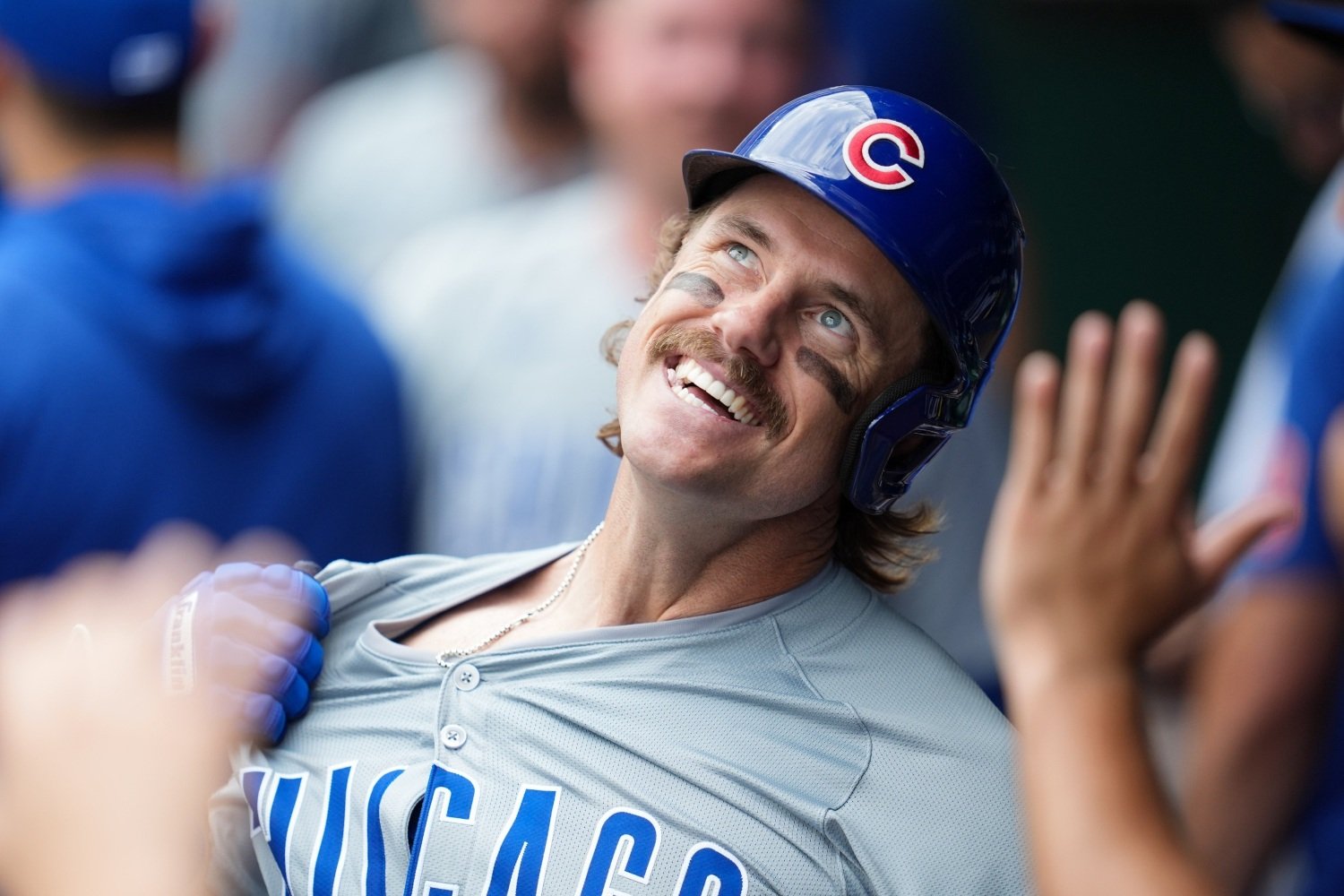 How overstuffed are the Cubs with fringy big-leaguers? So much so that, by my rough and very unofficial count, they have a whopping 17 candidates for non-tender at the end of this week. That's especially crazy, given that they only have a dozen arbitration-eligible players, and the principal reason why teams cut players at the non-tender deadline is generally to save money on players eligible for arbitration but no longer producing at a rate commensurate with their expected pay. Because the Cubs badly need to upgrade at the top of their roster (1-2 spots), the bottom of it (2-3 spots), and the apron just beyond the edge of the 26-man roster, where players still on the 40-man work in the minors or sit on the injured list (3-4 spots), however, the team has much more of a roster crunch than they do a money crunch. Account for the need to add Owen Caissie and (in all likelihood) one other from a group of fringe prospects to the 40-man by Tuesday evening to protect them from the Rule 5 Draft next month, and the team needs to create about eight new openings to fill with better players going into 2025. That doesn't all have to happen at once, this week. It can be done via trades later in the winter, in some measure. However, because of this pressure, the team really should prepare to cut anywhere from five to 10 players this week. Obviously, not everyone is a candidate to be cut, even among the guys who don't have guaranteed contracts. There's no chance the Cubs non-tender Miguel Amaya, Pete Crow-Armstrong, Jordan Wicks, Javier Assad, Ben Brown, or Kevin Alcántara. Nor, in my opinion, should they even consider cutting ties with any of the following: Hayden Wesneski, Jack Neely, Daniel Palencia, Luke Little, Tyson Miller, or Nate Pearson. Even after taking those names off the board, though, the list of players who do make sense to remove—because of their expected salaries, the lack of minor-league options, or a sheer dearth of upside and trade value—is very long. Here it is, ranked from the players who most need to go to those who make at least a modicum of sense to keep. 1. Adbert Alzolay, RHP This one sucks, but should also be the easiest call in the bunch. The Cubs are in no position to sit around for a year with Alzolay taking up a roster spot (until he can be placed on the 60-day injured list in the spring) and earning over $2 million. Maybe the two sides would be interested in a reunion, after a non-tender, with Alzolay getting a two-year minor-league deal but a solid payday if and when he can reclaim a roster spot after Tommy John surgery. Short of that, though, it's time to say goodbye to the profoundly lovable but unreliable righty. 2. Nick Madrigal, 2B/3B Let us not forget: for a moment there, Madrigal made himself a plus defensive third baseman in 2023. That was impressive; I don't doubt his makeup. He also has one great skill, in the ability to put the ball in play relentlessly. Alas, he's proved conclusively that he can't make contact of sufficient quality to make that skill matter, especially because he also can't stay on the field. It would be malpractice to keep him around at a seven-figure salary for another low-ceiling season. 3. Keegan Thompson, RHP Though beloved for some occasionally glimpsable upside in certain corners, Thompson has been consistently inconsistent for years. He walks too many and strikes out too few, and the pitch mix is aggressively generic. He's also out of minor-league options, so he can no longer be the up-and-down last arm in the pen. 4. Caleb Kilian, RHP If success is waiting for this guy somewhere, it's time to let him seek it. That success will not come in Chicago. They've tried a lot of things, and so has he, and none of it has really worked. He, too, is out of options. If it weren't for a tiny wisp of a hope that he holds some trade value for a team who loves a certain kind of reclamation project, he'd be higher on this list. 5. Brennen Davis, OF Like most of the players above, Davis has shown great makeup and endeared himself to many Cubs fans over the last handful of years, despite a failure to produce anything on the field. The time for holding onto players who fall into that category is over. Davis is a tragic story, an obviously talented player repeatedly foiled by major injury issues. Maybe 2025 will be the year he stays healthy, but the Cubs should clear the roster spot, bet on upside somewhere else, and let Davis take his chances in some new scenery. 6. Patrick Wisdom, 3B/1B/DH As I wrote earlier this fall, Wisdom will be a slightly sad departure, because he's a beloved clubhouse presence and there was good reason to hope he would thrive in the role they carved out for him this past season. Alas, he turns out to be the kind of high-strikeout slugger who needs regular reps to find his rhythm and play to his potential, and he's neither a sufficiently high-ceiling bat nor an adequate defensive third baseman to merit regular playing time for the playoff-hopeful 2025 Cubs. Cutting ties with him will save the team just over $2 million to reallocate elsewhere, too. 7. Rob Zastryzny, LHP Just claimed two weeks ago from Milwaukee, Zastryzny is exactly the kind of lefty reliever you scoop up just to see what happens. If nothing does, a fortnight later, you waive them again and see whether they get claimed. Zastryzny could elect free agency even if he clears, though, so waiving him and non-tendering him come to the same thing. 8. Ethan Roberts, RHP Briefly a great story at the start of 2022, Roberts quickly became a sad story about how not everyone comes back from Tommy John surgery on time, or at anywhere near full strength. Roberts is diminutive, and when a guy like that comes back from a major injury with diminished velocity, it's not a good idea to bet on it coming back. His sweeper is impressive and fun, but it doesn't make him an actually helpful pitcher. 9. Trey Wingenter, RHP He throws very hard, and the overall stuff profile can be nasty. He's got the body type and the delivery rudiments to become one of the Cubs' beloved weird arm angle guys. There's some reason to hold out hope for him, but injuries have derailed his initial career trajectory, and he's out of options, so holding onto him might end up meaning cutting ties six weeks into the season, anyway. 10. Julian Merryweather, RHP The two injuries that made Merryweather unimpressive even when he was available in 2024 are a huge red flag, for a player whose career was headed toward injury-related ruin before his sunshine season of 2023. He really lost velocity, relative to the way he overpowered hitters last year. There is, again, plenty to like, and he has great makeup, but he's out of options and he seems to require careful handling to stay healthy and effective. That's a bad combination, especially for a pitcher now experienced enough to make a little bit of real money if they retain him and tender him a contract. 11. Gavin Hollowell, RHP Boy, does Hollowell offer a lot of funk. He's precisely the kind of dice-roll the Cubs like to take in the bullpen, and he still can be sent to Triple-A Iowa whenever he's not needed. On the other hand, he's very much the kind of pitcher you can readily find on the waiver wire every month or so. You hold onto him while the cost is minimal, but one type of cost that has to be accounted for is the opportunity cost of rostering him instead of seeking out more upside. 12. Mike Tauchman, OF We know how much Craig Counsell loves Tauchman—so much so that he sat him down and guaranteed him a role on the team at the beginning of spring training. By and large, the aging outfielder rewarded that faith, continuing to get on base and play non-damaging defense. However, his power continues to fade, and looked especially absent after he returned from a groin injury in the summer. He's not able to be optioned to the minors, he doesn't have durability to recommend him, and in his mid-30s, he seems very unlikely to recover lost power or athleticism. That doesn't make him useless, but the team might want to aim higher for what is effectively their 10th regular's spot. 13. Matt Mervis, 1B With Cody Bellinger back in the fold (along with Michael Busch, and factoring in Caissie as a left-handed corner bat even though he won't be playing first base next year), Mervis has relatively little utility. He's still only due the league-minimum, and then only while in the majors—but it's hard to imagine a good scenario in which he spends any significant time in the majors, so holding onto him would be mostly about inertia. That he can be optioned to Iowa is the best argument for retaining him. 14. Miles Mastrobuoni, UTIL To have any real value with as little power as Mastrobuoni has, you have to control the strike zone at an elite level, or make exceptional use of your speed, or truly excel at a high-value defensive position. Mastrobuoni just doesn't check any of those boxes. He's not a terrible utility player, but it doesn't make sense to keep him around when you have as many good infield prospects as the Cubs do. 15. Alexander Canario, OF Because he's shown elite bat speed, Canario probably has too much trade value to cut outright. He's demonstrated contact issues so profound that a future as a big-league regular seems unlikely, but he's not without some athleticism, and that bat speed means hig power on contact. He's out of options, though, and he doesn't profile as a very helpful bench piece right now. The Cubs should be shopping him aggressively, as soon as this week. 16. Michael Arias, RHP The stuff Arias is capable of really is exciting. He'd be a really good feather to put in the cap of the player-development team, turning a formerly released infielder into a big-league arm. That's the dream. The unexciting, rude awakening is that he walked 48 of the 286 batters he faced last year. If they hold onto him all winter, they're likely to end up waiving him in April and feeling bashful about the wasted time. 17. Luis Vázquez, SS He's not a much better player than Mastrobuoni, but Vázquez has a better glove at short and one more year of optionability left. He's almost not in the way enough to cut, especially given that the team doesn't have to (and won't) add James Triantos or Matt Shaw to the 40-man this year. Early in the season, he can be the insurance policy kept in Iowa in case of injury, without being a hurdle to any other major moves. The Cubs have some tough decisions ahead. It's unlikely they'll be as proactive as I believe they should be, but if it were me, eight or more of the names above would be off the roster by Saturday. That way, the team could move forward with the aggressive and creative winter that should be their focus.
 -
 Jed Hoyer made clear last week that he believes strongly in Isaac Paredes, despite the false start Paredes suffered upon his arrival in a trade with the Rays back in July. After all, the two-time All-Star stabilized nicely after that; he's still quite young; and the weather at Wrigley was crazy last summer. (Did you hear about this? Crazy. No one understands it.) Thus, while Hoyer was clear about his willingness to get "creative" this winter, he didn't sound like a man ready to splash big money around to upgrade his infield. Upgrade it he must, though, because the Cubs are getting old at shortstop, and they need better balance and depth at second and third base. Paredes is worth believing in, to some extent, but his splits are as wide as Lake Shore Drive. For his career: vs. RHP: .218/.322/.411 vs. LHP: .274/.366/.456 Meanwhile. Nico Hoerner is coming off a season in which he had to finish with an .870 OPS in September just to drag his seasonal OPS up to .708. He also had surgery on his forearm after the season. Oh, and that .708 OPS is virtually identical to his career mark against right-handed pitchers. There's a clear role available here. The Cubs need a left-handed hitter who can play solid defense at second and/or third base, and they need it to be someone considerably better than Miles Mastrobuoni, this time. As it happens, there's just such a player available this winter, and he's one of the youngest free agents on the market, too. Hyeseong Kim—not to be confused with Ha-Seong Kim, to whom he is not related, although the two were once the double-play combo for the same team in the Korean Baseball Organization—won't turn 26 until late January, but he's going to be posted this winter by the Kiwoom Heroes, his current KBO team. Kim is a lefty batter and a lithe, speedy contact hitter, who batted .326/.383/.458 last season—and .335/.396/.446 in 2023. He's played mostly at second base in the KBO, with some time spent at shortstop and just a smattering of reps at third, but he could acquit himself at the hot corner as needed. He's unlikely to hit for much power, but very likely to get on base at a good rate. Since 2021, he's run an OBP north of .370 every year, and while the KBO's offensive climate is warmer than MLB's (with an aggregate average OBP for the league just over .340 for that four-year period), it can't explain away Kim's skills. He doesn't strike out much, even by the standards of the league. He draws plenty of walks, even by the standards of the league. He has 135 stolen bases and has been caught just 20 times in the last four seasons. Again, he's still only turning 26, so that speed is unlikely to disappear any time soon. Early projections have Kim coming over on a three- or four-year deal worth around $30 million, which would be strikingly similar to the pact Ha-Seong Kim signed with the Padres four years ago. At that price, and even at a 20% markup from that price, he'd be a steal. While Hoyer and company would have to sell him on the concept of playing nearly every day in a utility role (not unlike the one his former teammate took on in San Diego) rather than going elsewhere to be a traditional everyday player, it would be a great fit for both sides. Kim probably needs some protection from left-handed pitchers, and the Cubs need better lineup depth, especially against righties. It looks increasingly unlikely that the Cubs will bring in a player who rivals Seiya Suzuki as the best hitter in their lineup this offseason. If that turns out to be true, they badly need to bolster the batting order from the other end. Their bench and their lesser bats were often insufficient in 2024. Kim would be a salve for that ailment. He's far from the only solution, and in a world in which the team was ready to spend more aggressively, he probably wouldn't be the best one, but in this plane of existence, he might be the right addition.
 -
Here's one for those of you who wince when Nico Hoerner trade rumors come up. Image courtesy of © Yukihito Taguchi-Imagn Images Jed Hoyer made clear last week that he believes strongly in Isaac Paredes, despite the false start Paredes suffered upon his arrival in a trade with the Rays back in July. After all, the two-time All-Star stabilized nicely after that; he's still quite young; and the weather at Wrigley was crazy last summer. (Did you hear about this? Crazy. No one understands it.) Thus, while Hoyer was clear about his willingness to get "creative" this winter, he didn't sound like a man ready to splash big money around to upgrade his infield. Upgrade it he must, though, because the Cubs are getting old at shortstop, and they need better balance and depth at second and third base. Paredes is worth believing in, to some extent, but his splits are as wide as Lake Shore Drive. For his career: vs. RHP: .218/.322/.411 vs. LHP: .274/.366/.456 Meanwhile. Nico Hoerner is coming off a season in which he had to finish with an .870 OPS in September just to drag his seasonal OPS up to .708. He also had surgery on his forearm after the season. Oh, and that .708 OPS is virtually identical to his career mark against right-handed pitchers. There's a clear role available here. The Cubs need a left-handed hitter who can play solid defense at second and/or third base, and they need it to be someone considerably better than Miles Mastrobuoni, this time. As it happens, there's just such a player available this winter, and he's one of the youngest free agents on the market, too. Hyeseong Kim—not to be confused with Ha-Seong Kim, to whom he is not related, although the two were once the double-play combo for the same team in the Korean Baseball Organization—won't turn 26 until late January, but he's going to be posted this winter by the Kiwoom Heroes, his current KBO team. Kim is a lefty batter and a lithe, speedy contact hitter, who batted .326/.383/.458 last season—and .335/.396/.446 in 2023. He's played mostly at second base in the KBO, with some time spent at shortstop and just a smattering of reps at third, but he could acquit himself at the hot corner as needed. He's unlikely to hit for much power, but very likely to get on base at a good rate. Since 2021, he's run an OBP north of .370 every year, and while the KBO's offensive climate is warmer than MLB's (with an aggregate average OBP for the league just over .340 for that four-year period), it can't explain away Kim's skills. He doesn't strike out much, even by the standards of the league. He draws plenty of walks, even by the standards of the league. He has 135 stolen bases and has been caught just 20 times in the last four seasons. Again, he's still only turning 26, so that speed is unlikely to disappear any time soon. Early projections have Kim coming over on a three- or four-year deal worth around $30 million, which would be strikingly similar to the pact Ha-Seong Kim signed with the Padres four years ago. At that price, and even at a 20% markup from that price, he'd be a steal. While Hoyer and company would have to sell him on the concept of playing nearly every day in a utility role (not unlike the one his former teammate took on in San Diego) rather than going elsewhere to be a traditional everyday player, it would be a great fit for both sides. Kim probably needs some protection from left-handed pitchers, and the Cubs need better lineup depth, especially against righties. It looks increasingly unlikely that the Cubs will bring in a player who rivals Seiya Suzuki as the best hitter in their lineup this offseason. If that turns out to be true, they badly need to bolster the batting order from the other end. Their bench and their lesser bats were often insufficient in 2024. Kim would be a salve for that ailment. He's far from the only solution, and in a world in which the team was ready to spend more aggressively, he probably wouldn't be the best one, but in this plane of existence, he might be the right addition. View full article
-
There are three former aces fast approaching retirement, but who still have something left in the tank and intend to pitch in 2025. Surely, one or more of them are at least worth a call. Image courtesy of © Troy Taormina-Imagn Images Everything came apart for Justin Verlander in 2024. It was a sad thing to watch, for the 41-year-old future Hall of Famer. He has a strong argument for being the best pitcher of his generation. It wasn't as if the fire was entirely out, but it sure looked to be down to glowing embers. Verlander posted a 5.48 ERA in 17 starts, giving up 15 home runs in barely 90 innings, and he didn't even make the Astros' playoff roster. That said, he's still Justin Verlander. His fastball doesn't have the extra yard on it anymore, but he sat 92-95 and touched 97 with it, and it still has as much carry as any heater in the league. He still showed the ability to throw strikes. He just didn't miss bats the way he always has before—the way he needs to, at this point, to beat anybody. His strikeout rate fell below 20%. He looked very old. Now, Verlander is a free agent, and the Cubs are certainly one possible destination. In the past, they were on the short list of destinations he talked about, outside of the Tigers organization that brought him into professional baseball, and Houston, where he revived his career the first time. His price tag, which was genuinely astronomical the last time he hit free agency, should be lower, and any team materially more serious about contending in 2025 than the Cubs are isn't going to need Verlander. Is now the right time for the two sides to get together, at last? To answer that, we have to know how much the Cubs are willing to spend on what would be a part-time rotation role. With a pitcher like Verlander, at this stage of his career, you have to build the expectation of some time spent on the injured list into your projection. Speaking of pitchers like Verlander, though, we also have to consider alternatives, and there are two others like Verlander who deserve a close look. Max Scherzer is a year and a half Verlander's junior, but at times over the last few years, he's looked every bit as much like burnt toast. Even more curtailed by injury than Verlander's, he might have had an even more frustrating campaign. When he was actually on the mound, though, he proved much more effective. In nine starts, he maintained an ERA south of 4.00. His fastball only sits around 92 and touches no higher than 95, but velocity was never his chief weapon, as it could sometimes be for Verlander. Scherzer's slider and curveball both continue to miss bats at an impressive and valuable rate. He can still punch hitters out, because he still has these two theoretically plus secondary weapons. For Verlander, while the trace elements of his old self are there, the questions about viability and performance loom large. For Scherzer, it's a simpler (but not easier) test: Is he healthy? Can he stay healthy for even half a season's worth of work, and is it possible to time that healthy window such that it provides maximal impact on the pursuit of a championship? If so, he's still a solid starter who can dominate in short bursts and beat even good lineups, even if he's more vulnerable to the long ball than he used to be. If not, he'd be a waste of money and a roster spot. Both Verlander and Scherzer are headed for Cooperstown, whenever their careers wind down. Charlie Morton is a step shy of them. (Maybe two steps shy, even.) He just turned 41 this week, and for the last few years, he's shown heavy preference for Atlanta and the Rays, two teams close to his offseason home. Nor is there any particular reason either of those teams should cease to want him, just yet. He pitched 165 innings across 30 starts in 2024, and although his numbers showed significant decline, he was still useful. Morton's stuff is fading, if only slightly. His fastball still sits 94 and gets up to 97, but it's lost a little carry. His cutter isn't as biting. He had an uninspiring 4.19 ERA last year; his lowest strikeout rate since 2015; and his highest opponent home-run rate since 2010. For different reasons, though, neither Atlanta nor Tampa looks much disposed—or at least able—to bring Morton back this winter. It would be a good time for the Cubs to wade in and at least ask about his willingness to spend a twilight season on the North Side. Which of these three is most desirable depends on factors we just can't know right now. It hinges on how much scouts believe Verlander can move past whatever diminution afflicted him last year; whether or not Scherzer is capable of getting healthy and staying that way; and what price each player is placing on themselves as they hit the market. It makes nothing but sense, though, for the team to at least explore each possibility. They need a frontline starter, but they also need some help with depth, and these three deliver upside, veteran savvy, and a certain amount of safety, too. If nothing else, signing one of them should raise the floor of the possible outcome space for the Cubs heading into next season. View full article
-
Which of the Ancient Free-Agent Starters Should Cubs Sign This Winter?
Matthew Trueblood posted an article in Cubs
 Everything came apart for Justin Verlander in 2024. It was a sad thing to watch, for the 41-year-old future Hall of Famer. He has a strong argument for being the best pitcher of his generation. It wasn't as if the fire was entirely out, but it sure looked to be down to glowing embers. Verlander posted a 5.48 ERA in 17 starts, giving up 15 home runs in barely 90 innings, and he didn't even make the Astros' playoff roster. That said, he's still Justin Verlander. His fastball doesn't have the extra yard on it anymore, but he sat 92-95 and touched 97 with it, and it still has as much carry as any heater in the league. He still showed the ability to throw strikes. He just didn't miss bats the way he always has before—the way he needs to, at this point, to beat anybody. His strikeout rate fell below 20%. He looked very old. Now, Verlander is a free agent, and the Cubs are certainly one possible destination. In the past, they were on the short list of destinations he talked about, outside of the Tigers organization that brought him into professional baseball, and Houston, where he revived his career the first time. His price tag, which was genuinely astronomical the last time he hit free agency, should be lower, and any team materially more serious about contending in 2025 than the Cubs are isn't going to need Verlander. Is now the right time for the two sides to get together, at last? To answer that, we have to know how much the Cubs are willing to spend on what would be a part-time rotation role. With a pitcher like Verlander, at this stage of his career, you have to build the expectation of some time spent on the injured list into your projection. Speaking of pitchers like Verlander, though, we also have to consider alternatives, and there are two others like Verlander who deserve a close look. Max Scherzer is a year and a half Verlander's junior, but at times over the last few years, he's looked every bit as much like burnt toast. Even more curtailed by injury than Verlander's, he might have had an even more frustrating campaign. When he was actually on the mound, though, he proved much more effective. In nine starts, he maintained an ERA south of 4.00. His fastball only sits around 92 and touches no higher than 95, but velocity was never his chief weapon, as it could sometimes be for Verlander. Scherzer's slider and curveball both continue to miss bats at an impressive and valuable rate. He can still punch hitters out, because he still has these two theoretically plus secondary weapons. For Verlander, while the trace elements of his old self are there, the questions about viability and performance loom large. For Scherzer, it's a simpler (but not easier) test: Is he healthy? Can he stay healthy for even half a season's worth of work, and is it possible to time that healthy window such that it provides maximal impact on the pursuit of a championship? If so, he's still a solid starter who can dominate in short bursts and beat even good lineups, even if he's more vulnerable to the long ball than he used to be. If not, he'd be a waste of money and a roster spot. Both Verlander and Scherzer are headed for Cooperstown, whenever their careers wind down. Charlie Morton is a step shy of them. (Maybe two steps shy, even.) He just turned 41 this week, and for the last few years, he's shown heavy preference for Atlanta and the Rays, two teams close to his offseason home. Nor is there any particular reason either of those teams should cease to want him, just yet. He pitched 165 innings across 30 starts in 2024, and although his numbers showed significant decline, he was still useful. Morton's stuff is fading, if only slightly. His fastball still sits 94 and gets up to 97, but it's lost a little carry. His cutter isn't as biting. He had an uninspiring 4.19 ERA last year; his lowest strikeout rate since 2015; and his highest opponent home-run rate since 2010. For different reasons, though, neither Atlanta nor Tampa looks much disposed—or at least able—to bring Morton back this winter. It would be a good time for the Cubs to wade in and at least ask about his willingness to spend a twilight season on the North Side. Which of these three is most desirable depends on factors we just can't know right now. It hinges on how much scouts believe Verlander can move past whatever diminution afflicted him last year; whether or not Scherzer is capable of getting healthy and staying that way; and what price each player is placing on themselves as they hit the market. It makes nothing but sense, though, for the team to at least explore each possibility. They need a frontline starter, but they also need some help with depth, and these three deliver upside, veteran savvy, and a certain amount of safety, too. If nothing else, signing one of them should raise the floor of the possible outcome space for the Cubs heading into next season.
 -
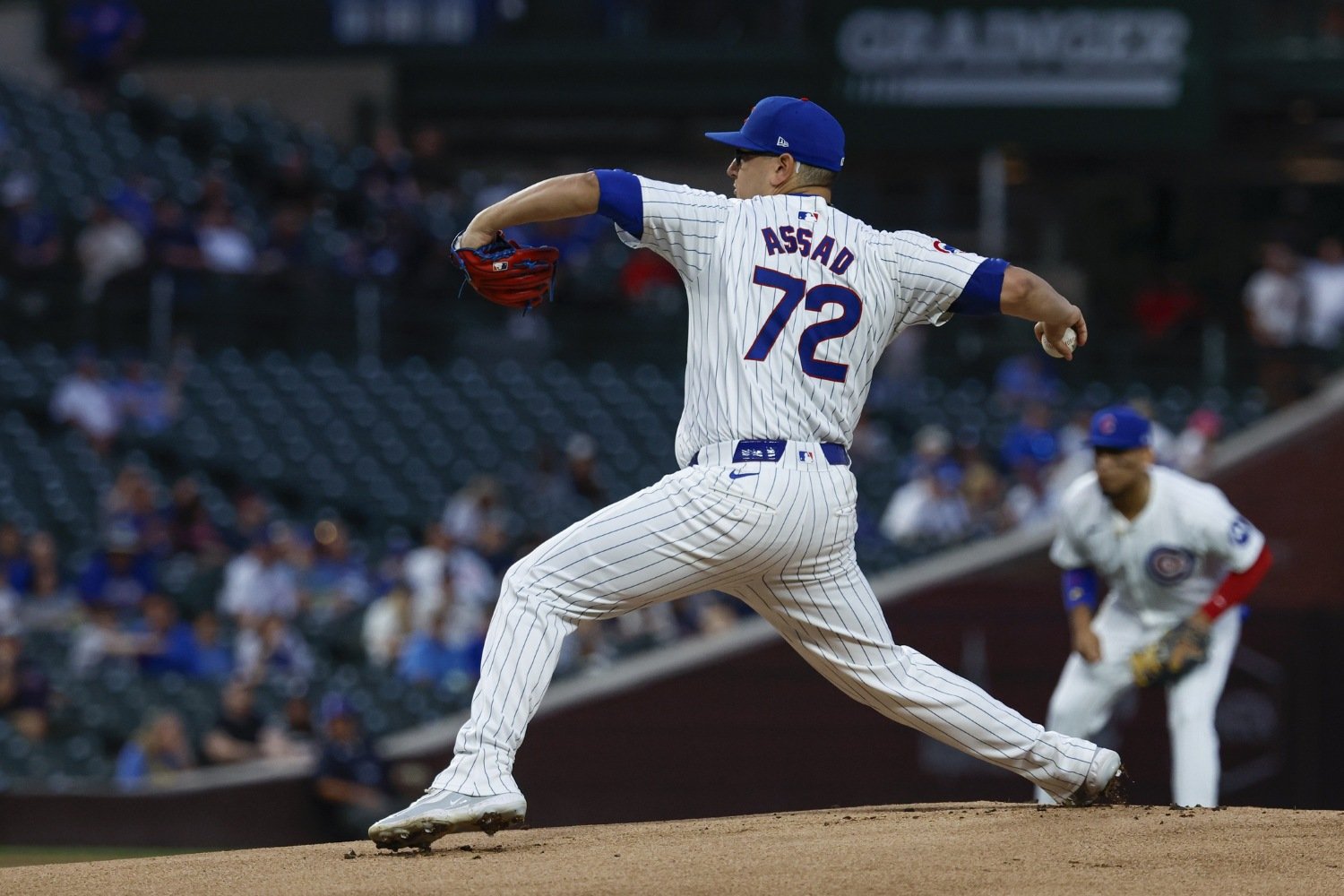 Though his season was hollowed out in the middle by a month lost to arm trouble, Javier Assad entered mid-August with things going swimmingly. Despite walking 10.5% of opposing batters and not striking out even a league-average number of them, he kept working out of trouble. Through 21 starts and 103 innings, he had a 3.24 ERA, and the Cubs were 12-9 when he took the ball. Then, he voluntarily derailed it all. Assad moved over from the middle of the pitching rubber to the far first-base edge, in a semi-gradual shift over the course of two starts. Here he is in a start against the Brewers, in early May: Assad in May.mp4 It was a conscious choice, aimed at opening up new angles for his attack on opposing hitters. Here's a pitch he threw after making the change, in August, for comparison: Assad in August.mp4 And here's the difference, in data form: He has a very deep arsenal, but not all of his pitches were working well from the release point he reached while pitching from the arm side of the rubber. His primary fastball, a sinker, had more room to run in on right-handed batters without getting obviously clear of home plate once he slid over. He could (and did) even try to aim that sinker off the outside corner and run it back, seeking to freeze hitters on that pitch and to play his four-seamer off of it for whiffs. With a more direct line to the plate, he clearly felt more empowered to throw his curveball, and he also ratcheted up usage of his sweeper, on the theory that once he had righties looking for the outside sinker, he could throw that sweeper and induce fruitless chases. There were lots of use cases, in theory, for the move to a new home on the rubber. Quickly, though, it became clear that it was actually a bad idea—maybe worse than bad. From Aug. 14 through the end of the season, Assad's ERA was 5.22. He got a bit less lucky, perhaps, because he did also substantially increase his ground-ball rate, but he got hit much, much harder, especially when hitters did elevate the ball. His migration yielded more strikes, but too many of them were in (or near) the middle of the zone, and opponents punished him for it. Even Stuff+ and Location+ testify to the folly of the lane change. He dipped from an 86 in Stuff and 100 in Location before the move to 83 and 98. It's understandable that, despite surface-level success, Assad and the Cubs went looking for better angles and better answers late in 2024. In fact, since too many players, organizations, and people wait until they're forced into a change before making one, we should applaud the proactivity of this move. It was worth a shot. Whether it will remain laudable, though, depends heavily on a simple question: Did they learn their lesson? Assad will never be the guy with plus stuff. He's unlikely to strike out 25% of opposing batters, even if he moves back to the bullpen. It's not how his game works. Nor is he a precision arm, in terms of location. However, he can be extremely effective at times. The key variable is the very thing Assad sacrificed by sliding over on the rubber in 2024: deception, and the tough angles that beget mishits. If he goes back to pitching where he was for the majority of 2024, Assad can still be a solid third or fourth starting pitcher. Working away at the corners will work better, and the batted balls he induces will be less dangerous, if he can get back to giving hitters those tough looks. They picked the ball up too early and too well against him in the late going. It fueled a derailment that plenty of analysts were waiting to see, from a pitcher they all swore would fall off the tightrope soon. While his poor stats tickled the confirmation bias region of the brains of many fans, though, they were at least as illusory as his great numbers prior thereto. When he's himself—the ball coming out of his hand well, in his usual spot on the mound, mentally strong and confident—Assad can be that solid mid-rotation starter. He just needs to walk back the small changes he made late in 2024. They weren't misbegotten, but they were failures, and it's important not to repeat the foible under what should be harsher demands of a team right in the thick of a postseason race.
 -
The Cubs' righty swingman might not be as good as his first-half numbers suggest, but it's pretty clear that his struggles down the stretch were a result of a reversible experiment that just didn't work. Image courtesy of © Kamil Krzaczynski-Imagn Images Though his season was hollowed out in the middle by a month lost to arm trouble, Javier Assad entered mid-August with things going swimmingly. Despite walking 10.5% of opposing batters and not striking out even a league-average number of them, he kept working out of trouble. Through 21 starts and 103 innings, he had a 3.24 ERA, and the Cubs were 12-9 when he took the ball. Then, he voluntarily derailed it all. Assad moved over from the middle of the pitching rubber to the far first-base edge, in a semi-gradual shift over the course of two starts. Here he is in a start against the Brewers, in early May: Assad in May.mp4 It was a conscious choice, aimed at opening up new angles for his attack on opposing hitters. Here's a pitch he threw after making the change, in August, for comparison: Assad in August.mp4 And here's the difference, in data form: He has a very deep arsenal, but not all of his pitches were working well from the release point he reached while pitching from the arm side of the rubber. His primary fastball, a sinker, had more room to run in on right-handed batters without getting obviously clear of home plate once he slid over. He could (and did) even try to aim that sinker off the outside corner and run it back, seeking to freeze hitters on that pitch and to play his four-seamer off of it for whiffs. With a more direct line to the plate, he clearly felt more empowered to throw his curveball, and he also ratcheted up usage of his sweeper, on the theory that once he had righties looking for the outside sinker, he could throw that sweeper and induce fruitless chases. There were lots of use cases, in theory, for the move to a new home on the rubber. Quickly, though, it became clear that it was actually a bad idea—maybe worse than bad. From Aug. 14 through the end of the season, Assad's ERA was 5.22. He got a bit less lucky, perhaps, because he did also substantially increase his ground-ball rate, but he got hit much, much harder, especially when hitters did elevate the ball. His migration yielded more strikes, but too many of them were in (or near) the middle of the zone, and opponents punished him for it. Even Stuff+ and Location+ testify to the folly of the lane change. He dipped from an 86 in Stuff and 100 in Location before the move to 83 and 98. It's understandable that, despite surface-level success, Assad and the Cubs went looking for better angles and better answers late in 2024. In fact, since too many players, organizations, and people wait until they're forced into a change before making one, we should applaud the proactivity of this move. It was worth a shot. Whether it will remain laudable, though, depends heavily on a simple question: Did they learn their lesson? Assad will never be the guy with plus stuff. He's unlikely to strike out 25% of opposing batters, even if he moves back to the bullpen. It's not how his game works. Nor is he a precision arm, in terms of location. However, he can be extremely effective at times. The key variable is the very thing Assad sacrificed by sliding over on the rubber in 2024: deception, and the tough angles that beget mishits. If he goes back to pitching where he was for the majority of 2024, Assad can still be a solid third or fourth starting pitcher. Working away at the corners will work better, and the batted balls he induces will be less dangerous, if he can get back to giving hitters those tough looks. They picked the ball up too early and too well against him in the late going. It fueled a derailment that plenty of analysts were waiting to see, from a pitcher they all swore would fall off the tightrope soon. While his poor stats tickled the confirmation bias region of the brains of many fans, though, they were at least as illusory as his great numbers prior thereto. When he's himself—the ball coming out of his hand well, in his usual spot on the mound, mentally strong and confident—Assad can be that solid mid-rotation starter. He just needs to walk back the small changes he made late in 2024. They weren't misbegotten, but they were failures, and it's important not to repeat the foible under what should be harsher demands of a team right in the thick of a postseason race. View full article
-
To win anything in 2025, the Chicago Cubs have to spend big money on pitching upgrades this winter. However, they also have to keep finding value in markets much less lucrative. Image courtesy of © Philip G. Pavely-Imagn Images If the team's front office is serious about contending, the Cubs will be major players for Max Fried, Roki Sasaki, and any number of second-tier pitchers who will be available via trade and free agency this winter. It's a clear need, and they have plenty of resources to allocate to that part of the roster. However, there are also valuable opportunities out there for teams this month, in the forms of the 500-plus players who became minor-league free agents five days after the end of the World Series. These are players who have completed at least six professional seasons, or who have been previously outrighted, and who end the season in the minors but off the 40-man roster of the organization to whom they then belong. It's not a glamorous path to free agency, and every pitcher who becomes available this way comes with noticeable warts. However, that doesn't mean they don't have talent, or that they can't emerge as solid contributors. Last week, I wrote about why the Cubs should consider two outfielders who could be the heirs to the legacy of Rafael Ortega, a minor-league free agent after 2020 who blossomed for the Cubs (however briefly, and ultimately inconsequentially) in 2021 and 2022. Today, let's turn our attention to the pitching sector of the same market. With players in this bracket, there's no expectation of big money being paid out. If a player is drawing interest from multiple clubs, it still tends to be tepid enough to avoid any bidding wars stretching even to $1 million. Usually, the winning inducement in such cases will be a slightly better incentive package, giving the player a bit more earning power if they have an unexpected breakout. Sometimes, getting a deal done can require a team to commit a 40-man roster spot to the player in question, but even that is very rare. By and large, these are the guys you sign to minor-league deals, with invites to big-league spring training and an opt-out date that works for both sides. They're the depth charges who can allow a team to act decisively when an opportunity or an urgent need arises, especially in the bullpen, before the trade market has had time to take shape. The Cubs could have used a couple of arms like the following half-dozen last year, when a rocky first few months from their relief corps thwarted their competitive vision. View full article
-
.png.d1a0f4542095e2b821e493daf2a073f2.png) If the team's front office is serious about contending, the Cubs will be major players for Max Fried, Roki Sasaki, and any number of second-tier pitchers who will be available via trade and free agency this winter. It's a clear need, and they have plenty of resources to allocate to that part of the roster. However, there are also valuable opportunities out there for teams this month, in the forms of the 500-plus players who became minor-league free agents five days after the end of the World Series. These are players who have completed at least six professional seasons, or who have been previously outrighted, and who end the season in the minors but off the 40-man roster of the organization to whom they then belong. It's not a glamorous path to free agency, and every pitcher who becomes available this way comes with noticeable warts. However, that doesn't mean they don't have talent, or that they can't emerge as solid contributors. Last week, I wrote about why the Cubs should consider two outfielders who could be the heirs to the legacy of Rafael Ortega, a minor-league free agent after 2020 who blossomed for the Cubs (however briefly, and ultimately inconsequentially) in 2021 and 2022. Today, let's turn our attention to the pitching sector of the same market. With players in this bracket, there's no expectation of big money being paid out. If a player is drawing interest from multiple clubs, it still tends to be tepid enough to avoid any bidding wars stretching even to $1 million. Usually, the winning inducement in such cases will be a slightly better incentive package, giving the player a bit more earning power if they have an unexpected breakout. Sometimes, getting a deal done can require a team to commit a 40-man roster spot to the player in question, but even that is very rare. By and large, these are the guys you sign to minor-league deals, with invites to big-league spring training and an opt-out date that works for both sides. They're the depth charges who can allow a team to act decisively when an opportunity or an urgent need arises, especially in the bullpen, before the trade market has had time to take shape. The Cubs could have used a couple of arms like the following half-dozen last year, when a rocky first few months from their relief corps thwarted their competitive vision.
If the team's front office is serious about contending, the Cubs will be major players for Max Fried, Roki Sasaki, and any number of second-tier pitchers who will be available via trade and free agency this winter. It's a clear need, and they have plenty of resources to allocate to that part of the roster. However, there are also valuable opportunities out there for teams this month, in the forms of the 500-plus players who became minor-league free agents five days after the end of the World Series. These are players who have completed at least six professional seasons, or who have been previously outrighted, and who end the season in the minors but off the 40-man roster of the organization to whom they then belong. It's not a glamorous path to free agency, and every pitcher who becomes available this way comes with noticeable warts. However, that doesn't mean they don't have talent, or that they can't emerge as solid contributors. Last week, I wrote about why the Cubs should consider two outfielders who could be the heirs to the legacy of Rafael Ortega, a minor-league free agent after 2020 who blossomed for the Cubs (however briefly, and ultimately inconsequentially) in 2021 and 2022. Today, let's turn our attention to the pitching sector of the same market. With players in this bracket, there's no expectation of big money being paid out. If a player is drawing interest from multiple clubs, it still tends to be tepid enough to avoid any bidding wars stretching even to $1 million. Usually, the winning inducement in such cases will be a slightly better incentive package, giving the player a bit more earning power if they have an unexpected breakout. Sometimes, getting a deal done can require a team to commit a 40-man roster spot to the player in question, but even that is very rare. By and large, these are the guys you sign to minor-league deals, with invites to big-league spring training and an opt-out date that works for both sides. They're the depth charges who can allow a team to act decisively when an opportunity or an urgent need arises, especially in the bullpen, before the trade market has had time to take shape. The Cubs could have used a couple of arms like the following half-dozen last year, when a rocky first few months from their relief corps thwarted their competitive vision. -
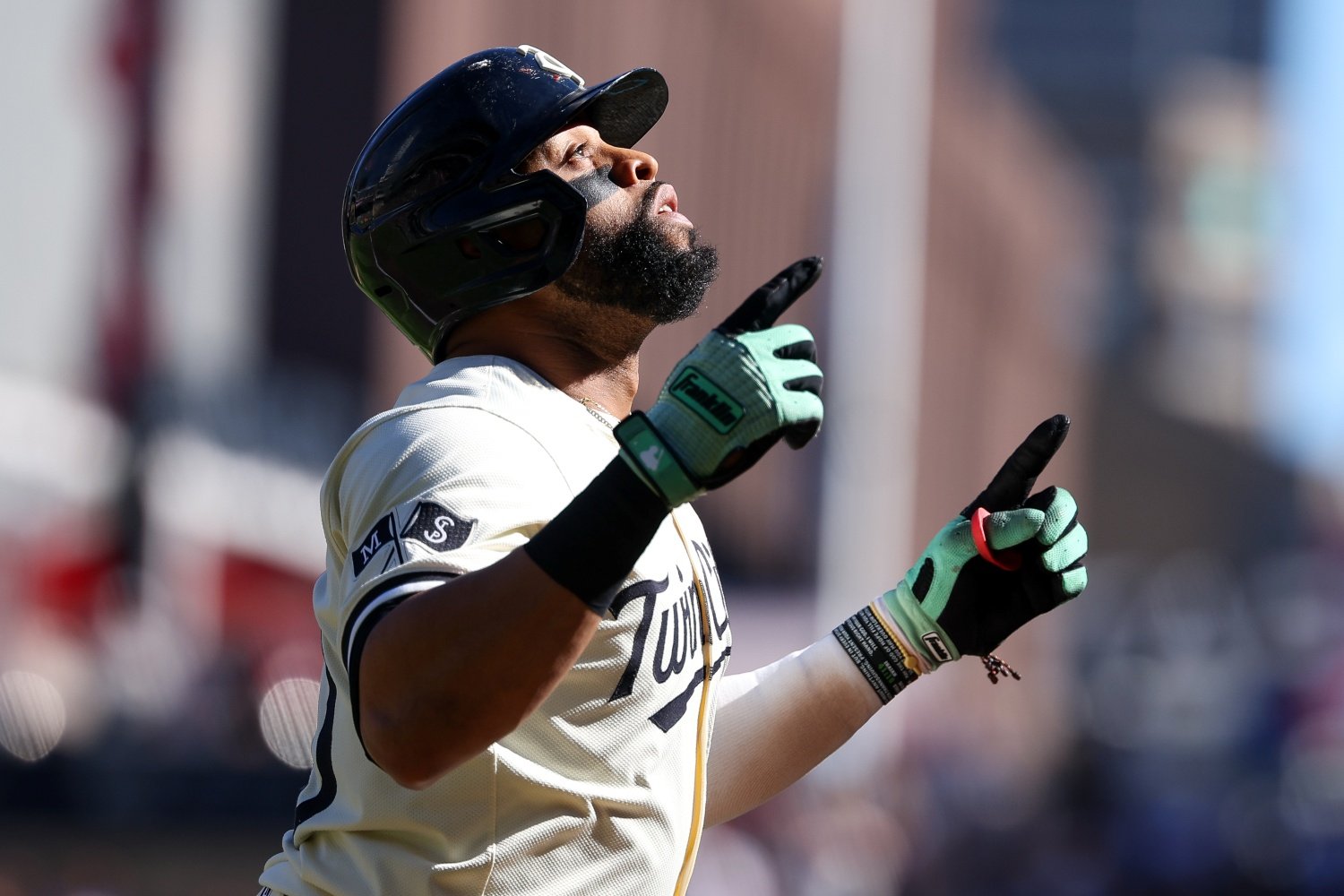 Don't listen to panic over the progress of prospects Zyhir Hope or Jackson Ferris with the Dodgers: the Cubs made out gorgeously in last winter's trade sending those two West in exchange for Michael Busch and Yency Almonte. Admittedly, it would have felt much better if Almonte had stayed healthy and stabilized the bullpen during its early turmoil, but Busch is more than enough to call the deal a win-win exchange. His rookie season was sensational, and although his ceiling is certainly shy of superstardom, he was a championship-caliber piece in 2024. There's cause to hope he can do the same thing in 2025. However, there are also valid cases being made in some quarters for moving Busch over to second base, or even for trading him. The former move would have to come as part of a double move in which the team also landed a slugging star like Teoscar Hernández, Anthony Santander, or Pete Alonso, with either the new player or Cody Bellinger taking over at first base and the overall lineup balance shifting slightly toward offense and away from defense. The latter would have to be part of a big move, bringing back either a high-level starting pitcher or a slugger who could directly replace Busch, probably with higher production but less team control. (Think a Mariners starting pitcher, or Vladimir Guerrero Jr. from the Blue Jays.) One player could make sense as an addition to this roster, though, while and before all of that plays out. Carlos Santana, the longtime Cleveland great who has become a journeyman in the late going of his career, is a switch-hitter who hits better against left-handed pitching. He's one of the best defensive first basemen in the game, even as he nears 40 years of age. He gives his teams some of the most consistently excellent at-bats in the game, and though he runs hot and cold, you can generally count on him to provide plus on-base skills and occasional power. He is also one of the most respected and beloved players in baseball. Putting him in the clubhouse has its own value, beyond the field. Santana would be a perfect opening salvo for this Cubs offseason. Some would read it as a resignation to too low-ceiling a winter plan, but it would be the opposite. Santana can act as a platoon partner for Busch. He can be a solid DH, in case of injury or as part of platoons and rotations at various spots. Signing him would also give the team increased leverage in all kinds of other conversations this winter. The trick here would be selling Santana on the fact that he'd get substantial playing time, because he can read Roster Resource just like the rest of us, and with Busch, Bellinger, and Seiya Suzuki all in their places for next year, there's not an obvious path to 600 plate appearances for him. While everyone in it is eager to tell you how good a clubhouse the Cubs have had the last two seasons, it seems to me that an ingredient or two have been missing from that group. Santana, with his professionalism and his gregariousness, could be the right addition to the mix. No matter what else the team did this winter, he would be a valuable addition. The only time he's ever been to the World Series, his team blew a 3-1 lead and lost, but maybe Santana would now be open to joining the club he couldn't beat, in search of a ring that would give his career a pleasing sense of completeness. At the very least, the Cubs should be checking in with him about it.
 -
Moves early in free agency tend to be slight overpays, based on on-field value. Maybe one way to succeed with them is to find players who provide considerable value beyond their raw performance. Image courtesy of © Matt Krohn-Imagn Images Don't listen to panic over the progress of prospects Zyhir Hope or Jackson Ferris with the Dodgers: the Cubs made out gorgeously in last winter's trade sending those two West in exchange for Michael Busch and Yency Almonte. Admittedly, it would have felt much better if Almonte had stayed healthy and stabilized the bullpen during its early turmoil, but Busch is more than enough to call the deal a win-win exchange. His rookie season was sensational, and although his ceiling is certainly shy of superstardom, he was a championship-caliber piece in 2024. There's cause to hope he can do the same thing in 2025. However, there are also valid cases being made in some quarters for moving Busch over to second base, or even for trading him. The former move would have to come as part of a double move in which the team also landed a slugging star like Teoscar Hernández, Anthony Santander, or Pete Alonso, with either the new player or Cody Bellinger taking over at first base and the overall lineup balance shifting slightly toward offense and away from defense. The latter would have to be part of a big move, bringing back either a high-level starting pitcher or a slugger who could directly replace Busch, probably with higher production but less team control. (Think a Mariners starting pitcher, or Vladimir Guerrero Jr. from the Blue Jays.) One player could make sense as an addition to this roster, though, while and before all of that plays out. Carlos Santana, the longtime Cleveland great who has become a journeyman in the late going of his career, is a switch-hitter who hits better against left-handed pitching. He's one of the best defensive first basemen in the game, even as he nears 40 years of age. He gives his teams some of the most consistently excellent at-bats in the game, and though he runs hot and cold, you can generally count on him to provide plus on-base skills and occasional power. He is also one of the most respected and beloved players in baseball. Putting him in the clubhouse has its own value, beyond the field. Santana would be a perfect opening salvo for this Cubs offseason. Some would read it as a resignation to too low-ceiling a winter plan, but it would be the opposite. Santana can act as a platoon partner for Busch. He can be a solid DH, in case of injury or as part of platoons and rotations at various spots. Signing him would also give the team increased leverage in all kinds of other conversations this winter. The trick here would be selling Santana on the fact that he'd get substantial playing time, because he can read Roster Resource just like the rest of us, and with Busch, Bellinger, and Seiya Suzuki all in their places for next year, there's not an obvious path to 600 plate appearances for him. While everyone in it is eager to tell you how good a clubhouse the Cubs have had the last two seasons, it seems to me that an ingredient or two have been missing from that group. Santana, with his professionalism and his gregariousness, could be the right addition to the mix. No matter what else the team did this winter, he would be a valuable addition. The only time he's ever been to the World Series, his team blew a 3-1 lead and lost, but maybe Santana would now be open to joining the club he couldn't beat, in search of a ring that would give his career a pleasing sense of completeness. At the very least, the Cubs should be checking in with him about it. View full article
.png.370b18082baff19482c59c33e2c39ba3.png)
.png.d1a0f4542095e2b821e493daf2a073f2.png)
