


Matthew Trueblood
-
Posts
2,481 -
Joined
-
Last visited
-
Days Won
2
Content Type
Profiles
Joomla Posts 1
Chicago Cubs Videos
Chicago Cubs Free Agent & Trade Rumors, Notes, & Tidbits
2026 Chicago Cubs Top Prospects Ranking
News
2023 Chicago Cubs Draft Picks
Guides & Resources
2024 Chicago Cubs Draft Picks
The Chicago Cubs Players Project
2025 Chicago Cubs Draft Pick Tracker
2026 Chicago Cubs Draft Tracker: Picks & Bonuses
Blogs
Events
Forums
Store
Gallery
Everything posted by Matthew Trueblood
-
Which Cubs Free-Agent Reliever Target Makes the Most Sense for Them?
Matthew Trueblood posted an article in Cubs
.png.f5ded6b707bce3ff43d4e7db1d3aa1d5.png) It's hard to keep a firm hold of all the rumors that have floated around, in a winter in which rumors have been abundant. That's a nice change of pace, after a few years in which the hot stove was so cold and unlit that even scuttlebutt was in short supply, but it's still a bit overwhelming. Better (but more unwieldy) yet, the Cubs are deeply involved—not only in the rumors, but in honest-to-God activity. This winter, they've brought in Kyle Tucker, Eli Morgan and Matt Thaiss via trades; signed Matthew Boyd and Carson Kelly as free agents; and made a Rule 5 Draft selection for the first time since 2020. (Remember the Gray Fenter Endeavor?) More even than that, rumors are still swirling about what the team did next, and it seems clear that some action is imminent. Before Christmas, the Cubs will trade Cody Bellinger (probably to the Yankees; probably in exchange for right-handed pitcher Will Warren), and sometime this week, they might well finish a trade with the Miami Marlins to complete their rotation by acquiring Jesús Luzardo. Nor will they necessarily be done, even after those moves come to fruition (or not). The big remaining checklist box for the team, once those pieces find their place, will be adding a power arm at the back end of the bullpen. Right now, that unit is theoretically fine, with Porter Hodge, Tyson Miller, and Nate Pearson anchoring a group made deeper not only by the addition of Morgan, but by the likely relegation to relief duty of some other arm in the wake of Boyd and (perhaps) Luzardo joining the rotation. Between theory and praxis lies a dangerous chasm, though, and the Cubs know they need to be better-positioned to hold late leads right from Opening Day in 2025. Cobbling together a strong pen only on the other side of Memorial Day is a recipe for annual disappointment, as demonstrated in 2019, 2023 and 2024. Thus, we've heard rumors of the Cubs taking interest in a higher caliber of reliever than is their custom. Yes, they signed Héctor Neris in late January to be one of the anchors of the 2024 pen, but that was a case of overpaying an aging hurler in a mere gesture toward real improvement. This time around, the focus is on finding someone at least as good as Hodge—in other words, a new relief ace. Three names have dominated that discussion, so far. Each has something significant to recommend them, though there's also a reason that each is available at a non-prohibitive price. A close study of the options should help us alight on a best choice in the set. A.J. Minter, LHP In this middle-class shopping space, Minter is the top left-handed reliever available. The bad news is, he had an injury-disrupted 2024 season and underwent season-ending hip surgery in mid-August. The good news is this: Minter has a fastball that sits 95 and touches higher, with plenty of rise and that cut-ride shape the Cubs love so dearly. He pairs it with a cutter that has slider shape but hums in at 90 miles per hour fairly often, and a changeup with good two-plane movement off the heater. He can miss bats with both secondary offerings, and has had slight reverse splits over the last few years. In other words, while he'd be plenty effective against lefties (especially as a lefty at Wrigley Field), he's someone you can also call upon with confidence against many solid right-handed batters. There's a chance his market will be held up until the other side of the New Year, when he might be ready to demonstrate his good health for interested teams. If the price is right, though, Minter would be a great addition to a relief corps that features just one southpaw (Luke Little, who comes with his own questions about durability) at the moment. MLB Trade Rumors projected him for a two-year, $16-million deal at the start of the offseason. Kyle Finnegan, RHP Let's not spend an overlong time on Finnegan today. If you want the details on what makes him an intriguing target, I wrote about it last week. In brief: Finnegan throws very hard, and has experience as a closer. He's tended to give up way too much hard contact, because he has the unfortunate habit of throwing his main non-fastball (a splitter) in the meaty part of the zone, and because he doesn't yet trust an overhauled slider that could become a major weapon for him. If he signs with any team who recognizes the potential in that breaking ball, he could take off, and the Nationals could end up feeling foolish for having non-tendered him to save a little under $8 million. It's never a bad idea to go year-to-year with a reliever, but Finnegan is one arm who might make sense on a multi-year deal, if he's amenable to one at a decent price. He's probably viewing this as a blessing in disguise, in that he was able to reach free agency a year earlier than he otherwise would have. He's a late bloomer who turned 33 in September. Two years and $16 million, the projection for Minter, is probably his ceiling, and it's worth a look. Kirby Yates, RHP Though he's been through an injury ringer and will turn 38 years old next March, Yates is much in demand, because when he's on the mound, he's nasty. He was one of the sport's elite relievers in 2018 and 2019, then got hurt, then managed to come back and become one of the sport's elite relievers again in 2023 and 2024. He walks more batters now than he did then, but he's fanned 33.6% of the batters he's faced since the start of the 2023 season. He gets there with a fastball that only averages 93 miles per hour, too. The interaction of Yates's arm angle and his fastball shape allows him to miss bats with that heater, despite its pedestrian speed, and he also baffles hitters with a splitter that somehow has precisely the same horizontal movement as the fastball, but far more vertical depth. It doesn't make sense for his splitter to be able to do that, given the low slot, but there he is, doing it. Yates would cost roughly as much over one year as Minter or Finnegan would over two. Whereas those guys would be complementary options with only the upside of becoming the team's closer, though, Yates would be the unquestioned one from the moment he signs. As long as they succeed in moving Cody Bellinger, he's the best target. The money he would cost shouldn't stop the team from doing any of the other things they're realistically likely to do, anyway, and he'd be the highest-impact option. The Tucker trade was one signal that the organization is turning away from its obsession with depth and embracing the value of individuals who can transform a segment of the roster. Yates would be another, and a crucial one for the confidence of everyone from fans to the players themselves as a difficult fight for the playoffs looms before them.
It's hard to keep a firm hold of all the rumors that have floated around, in a winter in which rumors have been abundant. That's a nice change of pace, after a few years in which the hot stove was so cold and unlit that even scuttlebutt was in short supply, but it's still a bit overwhelming. Better (but more unwieldy) yet, the Cubs are deeply involved—not only in the rumors, but in honest-to-God activity. This winter, they've brought in Kyle Tucker, Eli Morgan and Matt Thaiss via trades; signed Matthew Boyd and Carson Kelly as free agents; and made a Rule 5 Draft selection for the first time since 2020. (Remember the Gray Fenter Endeavor?) More even than that, rumors are still swirling about what the team did next, and it seems clear that some action is imminent. Before Christmas, the Cubs will trade Cody Bellinger (probably to the Yankees; probably in exchange for right-handed pitcher Will Warren), and sometime this week, they might well finish a trade with the Miami Marlins to complete their rotation by acquiring Jesús Luzardo. Nor will they necessarily be done, even after those moves come to fruition (or not). The big remaining checklist box for the team, once those pieces find their place, will be adding a power arm at the back end of the bullpen. Right now, that unit is theoretically fine, with Porter Hodge, Tyson Miller, and Nate Pearson anchoring a group made deeper not only by the addition of Morgan, but by the likely relegation to relief duty of some other arm in the wake of Boyd and (perhaps) Luzardo joining the rotation. Between theory and praxis lies a dangerous chasm, though, and the Cubs know they need to be better-positioned to hold late leads right from Opening Day in 2025. Cobbling together a strong pen only on the other side of Memorial Day is a recipe for annual disappointment, as demonstrated in 2019, 2023 and 2024. Thus, we've heard rumors of the Cubs taking interest in a higher caliber of reliever than is their custom. Yes, they signed Héctor Neris in late January to be one of the anchors of the 2024 pen, but that was a case of overpaying an aging hurler in a mere gesture toward real improvement. This time around, the focus is on finding someone at least as good as Hodge—in other words, a new relief ace. Three names have dominated that discussion, so far. Each has something significant to recommend them, though there's also a reason that each is available at a non-prohibitive price. A close study of the options should help us alight on a best choice in the set. A.J. Minter, LHP In this middle-class shopping space, Minter is the top left-handed reliever available. The bad news is, he had an injury-disrupted 2024 season and underwent season-ending hip surgery in mid-August. The good news is this: Minter has a fastball that sits 95 and touches higher, with plenty of rise and that cut-ride shape the Cubs love so dearly. He pairs it with a cutter that has slider shape but hums in at 90 miles per hour fairly often, and a changeup with good two-plane movement off the heater. He can miss bats with both secondary offerings, and has had slight reverse splits over the last few years. In other words, while he'd be plenty effective against lefties (especially as a lefty at Wrigley Field), he's someone you can also call upon with confidence against many solid right-handed batters. There's a chance his market will be held up until the other side of the New Year, when he might be ready to demonstrate his good health for interested teams. If the price is right, though, Minter would be a great addition to a relief corps that features just one southpaw (Luke Little, who comes with his own questions about durability) at the moment. MLB Trade Rumors projected him for a two-year, $16-million deal at the start of the offseason. Kyle Finnegan, RHP Let's not spend an overlong time on Finnegan today. If you want the details on what makes him an intriguing target, I wrote about it last week. In brief: Finnegan throws very hard, and has experience as a closer. He's tended to give up way too much hard contact, because he has the unfortunate habit of throwing his main non-fastball (a splitter) in the meaty part of the zone, and because he doesn't yet trust an overhauled slider that could become a major weapon for him. If he signs with any team who recognizes the potential in that breaking ball, he could take off, and the Nationals could end up feeling foolish for having non-tendered him to save a little under $8 million. It's never a bad idea to go year-to-year with a reliever, but Finnegan is one arm who might make sense on a multi-year deal, if he's amenable to one at a decent price. He's probably viewing this as a blessing in disguise, in that he was able to reach free agency a year earlier than he otherwise would have. He's a late bloomer who turned 33 in September. Two years and $16 million, the projection for Minter, is probably his ceiling, and it's worth a look. Kirby Yates, RHP Though he's been through an injury ringer and will turn 38 years old next March, Yates is much in demand, because when he's on the mound, he's nasty. He was one of the sport's elite relievers in 2018 and 2019, then got hurt, then managed to come back and become one of the sport's elite relievers again in 2023 and 2024. He walks more batters now than he did then, but he's fanned 33.6% of the batters he's faced since the start of the 2023 season. He gets there with a fastball that only averages 93 miles per hour, too. The interaction of Yates's arm angle and his fastball shape allows him to miss bats with that heater, despite its pedestrian speed, and he also baffles hitters with a splitter that somehow has precisely the same horizontal movement as the fastball, but far more vertical depth. It doesn't make sense for his splitter to be able to do that, given the low slot, but there he is, doing it. Yates would cost roughly as much over one year as Minter or Finnegan would over two. Whereas those guys would be complementary options with only the upside of becoming the team's closer, though, Yates would be the unquestioned one from the moment he signs. As long as they succeed in moving Cody Bellinger, he's the best target. The money he would cost shouldn't stop the team from doing any of the other things they're realistically likely to do, anyway, and he'd be the highest-impact option. The Tucker trade was one signal that the organization is turning away from its obsession with depth and embracing the value of individuals who can transform a segment of the roster. Yates would be another, and a crucial one for the confidence of everyone from fans to the players themselves as a difficult fight for the playoffs looms before them. -
It sure sounds like the Cubs intend to get a deal done with the Miami Marlins, to finish building a rotation heavily leaning left. What does it mean, and what will it beget? Image courtesy of © Jonathan Dyer-Imagn Images If the Cubs have their way, they will complete a trade with the Miami Marlins for left-handed starting pitcher Jesús Luzardo—and soon. Multiple reports from well-connected Chicago baseball reporter Bruce Levine in the last few days have connected the team to Luzardo, and sources confirm that these talks are ongoing. It seems like a good moment to run down what's appealing to the team about Luzardo, and what this would mean for the rest of their winter. Firstly, if you missed the piece I wrote yesterday morning about Luzardo's recent injury history, rough 2024, and needed adjustments, you can still catch up here. In brief: Luzardo is a fascinating fastball-changeup-slider guy, and although the Marlins are associated with pitching in the minds of many based on recent successes in scouting and acquiring good starters (Sandy Alcántara, Zac Gallen, Pablo López, etc.), they seem to have failed in really developing Luzardo into the best pitcher he can be. Luzardo would be the fourth lefty starter in the Cubs' rotation, joining Justin Steele, Shota Imanaga, and free-agent signee Matthew Boyd. The chances of ending up with four lefties in a rotation constructed without regard to handedness, based on the proportion of the population of big-league starters who throw with each hand, are right around 1.0%. This is no accident, and part of the reason may be a systematic handedness effect at Wrigley Field, as I documented earlier this offseason. The Cubs are building a rotation full of southpaws, intentionally and consciously, and they're probably wise to do so. That does come with some knock-on effects, though. For instance, the more left-handed pitchers you use, the more right-handed batters you're likely to face. That makes the left side of your infield defense especially vital, so if the Cubs do turn to rookie Matt Shaw as their regular third baseman in 2025, they'd better feel very, very good about his glove at that position. Reports suggest that they do, so all is well there, but it's an interesting wrinkle. It might make them incrementally more likely to go out and sign a strong defensive infielder like Josh Rojas in the next few weeks, knowing so many grounders will be heading that way. By contrast, facing a lot of right-handed batters makes your right fielder more important than your left fielder, defensively. Good thing, then, that the Cubs dealt for Kyle Tucker, a huge defensive upgrade over Seiya Suzuki. It also makes it a tiny bit easier to put Suzuki in left field, some days, at the expense of Ian Happ, who can DH more. This deal would be a big-time embrace of variance on the part of the Cubs, just as signing Boyd was. This is the kind of upside play in which the Dodgers have specialized for years. The Cubs jumping into that kind of risk-taking is exhilarating. It comes with a frisson of nervousness, because the chances that Luzardo can't get everything sorted back out or that he continues to struggle with injuries are a little too high for comfort. In that way, it would also be a leap of faith by the team, trusting its existing organizational pitching depth—guys like Javier Assad, Ben Brown, Jordan Wicks, Cade Horton, Brandon Birdsell, and more, who wouldn't be in the Opening Day starting five if Luzardo were in the fold but who would certainly end up being called upon over the course of the season. The deal is not done, and not yet imminent, to my eye. That could change almost instantly from here, though, because of the stage the teams have reached in negotiations. It wouldn't be the highest-aiming move the team could still make, but it would leave a little more of their powder dry than other moves might, and the Cubs are still in a mode of trying to create value, as much as acquiring it. Luzardo's potential to improve under better tutelage is a point of extreme interest for the team, and might make him the apple of their eyes as they try to leave themselves flexibility for the rest of the offseason. View full article
-
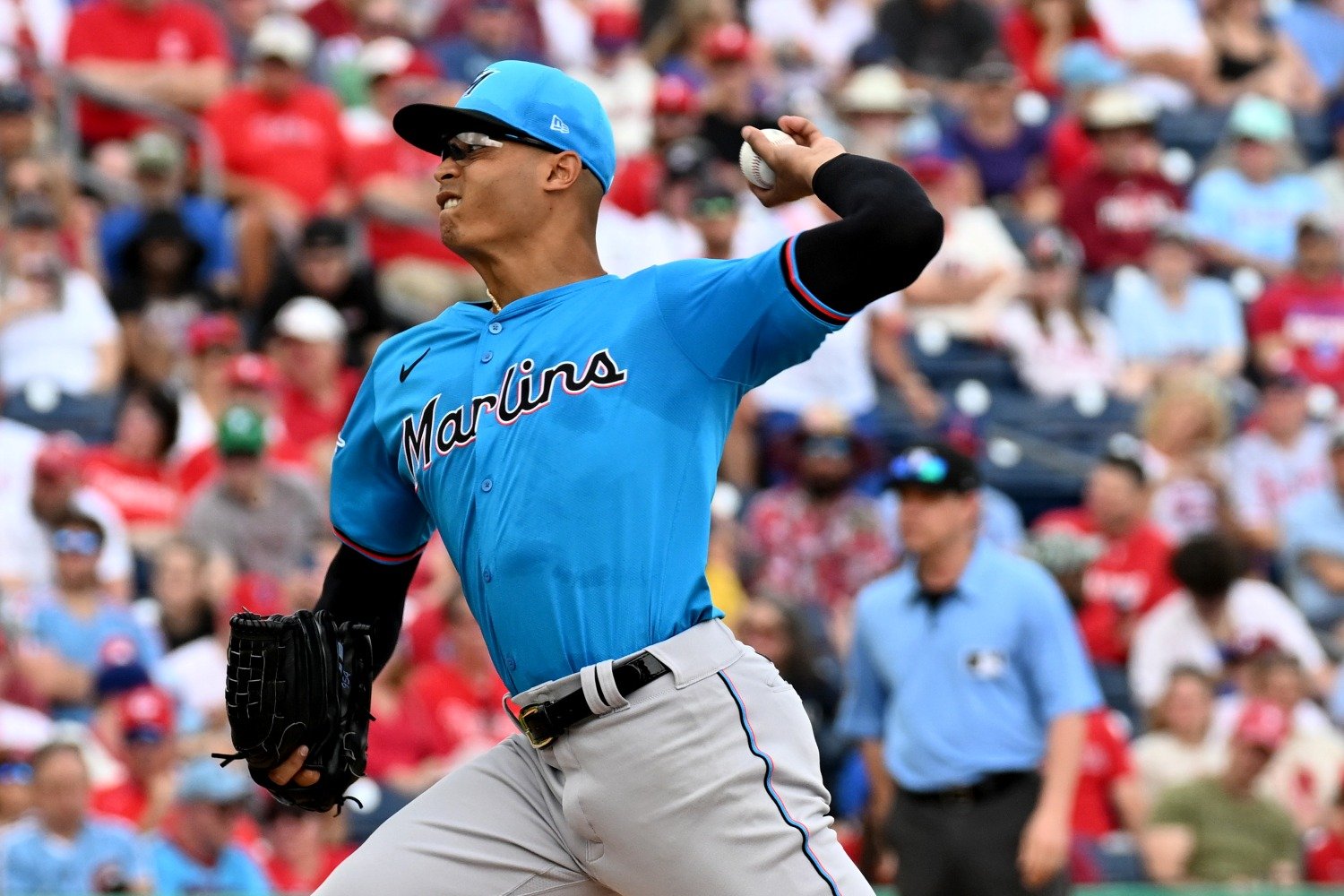 If the Cubs have their way, they will complete a trade with the Miami Marlins for left-handed starting pitcher Jesús Luzardo—and soon. Multiple reports from well-connected Chicago baseball reporter Bruce Levine in the last few days have connected the team to Luzardo, and sources confirm that these talks are ongoing. It seems like a good moment to run down what's appealing to the team about Luzardo, and what this would mean for the rest of their winter. Firstly, if you missed the piece I wrote yesterday morning about Luzardo's recent injury history, rough 2024, and needed adjustments, you can still catch up here. In brief: Luzardo is a fascinating fastball-changeup-slider guy, and although the Marlins are associated with pitching in the minds of many based on recent successes in scouting and acquiring good starters (Sandy Alcántara, Zac Gallen, Pablo López, etc.), they seem to have failed in really developing Luzardo into the best pitcher he can be. Luzardo would be the fourth lefty starter in the Cubs' rotation, joining Justin Steele, Shota Imanaga, and free-agent signee Matthew Boyd. The chances of ending up with four lefties in a rotation constructed without regard to handedness, based on the proportion of the population of big-league starters who throw with each hand, are right around 1.0%. This is no accident, and part of the reason may be a systematic handedness effect at Wrigley Field, as I documented earlier this offseason. The Cubs are building a rotation full of southpaws, intentionally and consciously, and they're probably wise to do so. That does come with some knock-on effects, though. For instance, the more left-handed pitchers you use, the more right-handed batters you're likely to face. That makes the left side of your infield defense especially vital, so if the Cubs do turn to rookie Matt Shaw as their regular third baseman in 2025, they'd better feel very, very good about his glove at that position. Reports suggest that they do, so all is well there, but it's an interesting wrinkle. It might make them incrementally more likely to go out and sign a strong defensive infielder like Josh Rojas in the next few weeks, knowing so many grounders will be heading that way. By contrast, facing a lot of right-handed batters makes your right fielder more important than your left fielder, defensively. Good thing, then, that the Cubs dealt for Kyle Tucker, a huge defensive upgrade over Seiya Suzuki. It also makes it a tiny bit easier to put Suzuki in left field, some days, at the expense of Ian Happ, who can DH more. This deal would be a big-time embrace of variance on the part of the Cubs, just as signing Boyd was. This is the kind of upside play in which the Dodgers have specialized for years. The Cubs jumping into that kind of risk-taking is exhilarating. It comes with a frisson of nervousness, because the chances that Luzardo can't get everything sorted back out or that he continues to struggle with injuries are a little too high for comfort. In that way, it would also be a leap of faith by the team, trusting its existing organizational pitching depth—guys like Javier Assad, Ben Brown, Jordan Wicks, Cade Horton, Brandon Birdsell, and more, who wouldn't be in the Opening Day starting five if Luzardo were in the fold but who would certainly end up being called upon over the course of the season. The deal is not done, and not yet imminent, to my eye. That could change almost instantly from here, though, because of the stage the teams have reached in negotiations. It wouldn't be the highest-aiming move the team could still make, but it would leave a little more of their powder dry than other moves might, and the Cubs are still in a mode of trying to create value, as much as acquiring it. Luzardo's potential to improve under better tutelage is a point of extreme interest for the team, and might make him the apple of their eyes as they try to leave themselves flexibility for the rest of the offseason.
 -
Earlier this month, the Cubs finalized their coaching staff for 2025 and hired new staff for their player-development department, plucking two staffers from the Yankees organization in the process. Now, we can see why, with hard data. Image courtesy of © Charles LeClaire-Imagn Images Craig Counsell lured Quintin Berry away from the Brewers earlier this offseason, but whereas Berry was the first-base coach for the Milwaukee speed demons in 2024, he'll move over and be the third-base coach under Counsell in 2025. One of his chief duties is outfield instruction and positioning while the Cubs are on defense. He'll play a role for the Cubs in helping spot tics and tells on opposing pitchers, but since he wouldn't be whispering in the ears of runners at first base, you already knew the team was planning something else to bolster their running game. Now, we know what shape that will take. After the Cubs hired José Javier (as their first-base coach) and Matt Talarico (offensive coordinator, base running, in the player-development department) away from the Yankees, the immediate word was that each was selected partially for their excellence in assisting runners. You could have been forgiven, though, if you wondered why the Yankees would be the organization to target for recruiting such specialists. After all, they stole just 88 bases in 114 attempts last season, good for 24th in MLB. As of Monday, we can see and articulate the reasons, pretty clearly. At Baseball Savant, they're rolled out new numbers, rating baserunners (and teams) and assigning value to their various skills. One of the juicy detailed data sets introduced in the new section: lead distance gained. It's a measurement of how many feet away from their starting base runners got between the first movement of a pitcher's delivery and the release of the ball, and they have columns both for all pitches in stolen-base situations and for only those pitches on which hitters actually attempt a steal. Here are the five teams who, on average, gained the most ground in the time from pitchers starting their delivery to their releasing the ball, when attempting a steal. Team Lead Distance Gained Yankees 14.1 Cardinals 13.4 Giants 13.1 Twins 12.6 Mets 12.6 These definitely aren't the best base-stealing teams in the league. On the contrary, they're five of the least strong. Some of this, then, is a selection bias: these teams only ran when they had their few good runners aboard and it was relatively easy to get a great lead. It runs deeper than that, though. For instance, among players who attempted 11 or more steals on the season, Anthony Volpe (not even especially fast or gifted in this area, with just 24 steals in 29 tries) led the league in lead distance gained from a pitcher's first move to their release. He gained, on average, a staggering 15.1 feet in that sliver of time. That's indicative of great preparation and of a process, and the Yankees have one that they teach exceptionally well. Here's a glimpse of it. Volpe Bounce.mp4 Technically, Volpe doesn't even get a great lead here—until Aaron Nola has committed to his delivery. Then there's a bounce, a slide, and zoom—he's off. The Yankees started implementing this as a base-stealing protocol back in 2022, and the rules changes in 2023 made the move exponentially more dangerous and valuable. Here's the pull quote from an article in The Athletic early that season. That piece identifies the primary architect of the maneuver, too: Talarico. And while it might not have been possible to transform the sluggardly sluggers populating the big-league lineup into valuable runners last year, the system works in a much more broad-scale way when even moderately athletic players are allowed to embrace and employ it. The 2024 Scranton/Wilkes-Barre RailRiders, the Yankees' Triple-A affiliate, led the International League by 34 steals, with 251 of them in 300 attempts. That was the affiliate where Javier worked as a defense and baserunning coach. Pete Crow-Armstrong and Nico Hoerner are obvious candidates to benefit from this, but so are Seiya Suzuki, Kyle Tucker, Matt Shaw, Ian Happ, and Michael Busch. The Cubs weren't bad at stealing bases in 2024, but they made three hires this winter that suggest that they intend to be a better one—perhaps one of the bast in baseball—in 2025. The rules are in their favor. Now, so is the technique. View full article
-
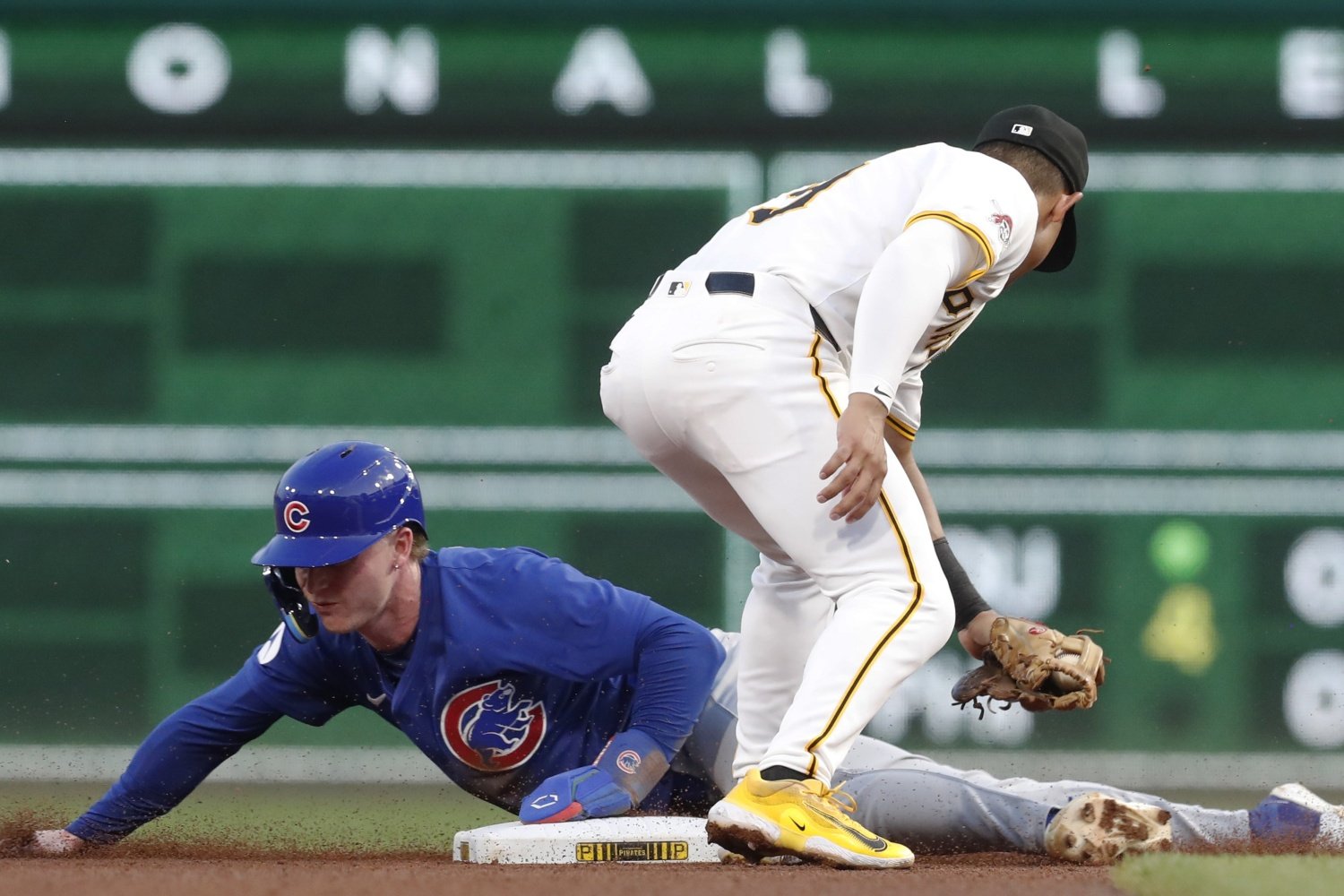 Craig Counsell lured Quintin Berry away from the Brewers earlier this offseason, but whereas Berry was the first-base coach for the Milwaukee speed demons in 2024, he'll move over and be the third-base coach under Counsell in 2025. One of his chief duties is outfield instruction and positioning while the Cubs are on defense. He'll play a role for the Cubs in helping spot tics and tells on opposing pitchers, but since he wouldn't be whispering in the ears of runners at first base, you already knew the team was planning something else to bolster their running game. Now, we know what shape that will take. After the Cubs hired José Javier (as their first-base coach) and Matt Talarico (offensive coordinator, base running, in the player-development department) away from the Yankees, the immediate word was that each was selected partially for their excellence in assisting runners. You could have been forgiven, though, if you wondered why the Yankees would be the organization to target for recruiting such specialists. After all, they stole just 88 bases in 114 attempts last season, good for 24th in MLB. As of Monday, we can see and articulate the reasons, pretty clearly. At Baseball Savant, they're rolled out new numbers, rating baserunners (and teams) and assigning value to their various skills. One of the juicy detailed data sets introduced in the new section: lead distance gained. It's a measurement of how many feet away from their starting base runners got between the first movement of a pitcher's delivery and the release of the ball, and they have columns both for all pitches in stolen-base situations and for only those pitches on which hitters actually attempt a steal. Here are the five teams who, on average, gained the most ground in the time from pitchers starting their delivery to their releasing the ball, when attempting a steal. Team Lead Distance Gained Yankees 14.1 Cardinals 13.4 Giants 13.1 Twins 12.6 Mets 12.6 These definitely aren't the best base-stealing teams in the league. On the contrary, they're five of the least strong. Some of this, then, is a selection bias: these teams only ran when they had their few good runners aboard and it was relatively easy to get a great lead. It runs deeper than that, though. For instance, among players who attempted 11 or more steals on the season, Anthony Volpe (not even especially fast or gifted in this area, with just 24 steals in 29 tries) led the league in lead distance gained from a pitcher's first move to their release. He gained, on average, a staggering 15.1 feet in that sliver of time. That's indicative of great preparation and of a process, and the Yankees have one that they teach exceptionally well. Here's a glimpse of it. Volpe Bounce.mp4 Technically, Volpe doesn't even get a great lead here—until Aaron Nola has committed to his delivery. Then there's a bounce, a slide, and zoom—he's off. The Yankees started implementing this as a base-stealing protocol back in 2022, and the rules changes in 2023 made the move exponentially more dangerous and valuable. Here's the pull quote from an article in The Athletic early that season. That piece identifies the primary architect of the maneuver, too: Talarico. And while it might not have been possible to transform the sluggardly sluggers populating the big-league lineup into valuable runners last year, the system works in a much more broad-scale way when even moderately athletic players are allowed to embrace and employ it. The 2024 Scranton/Wilkes-Barre RailRiders, the Yankees' Triple-A affiliate, led the International League by 34 steals, with 251 of them in 300 attempts. That was the affiliate where Javier worked as a defense and baserunning coach. Pete Crow-Armstrong and Nico Hoerner are obvious candidates to benefit from this, but so are Seiya Suzuki, Kyle Tucker, Matt Shaw, Ian Happ, and Michael Busch. The Cubs weren't bad at stealing bases in 2024, but they made three hires this winter that suggest that they intend to be a better one—perhaps one of the bast in baseball—in 2025. The rules are in their favor. Now, so is the technique.
 -
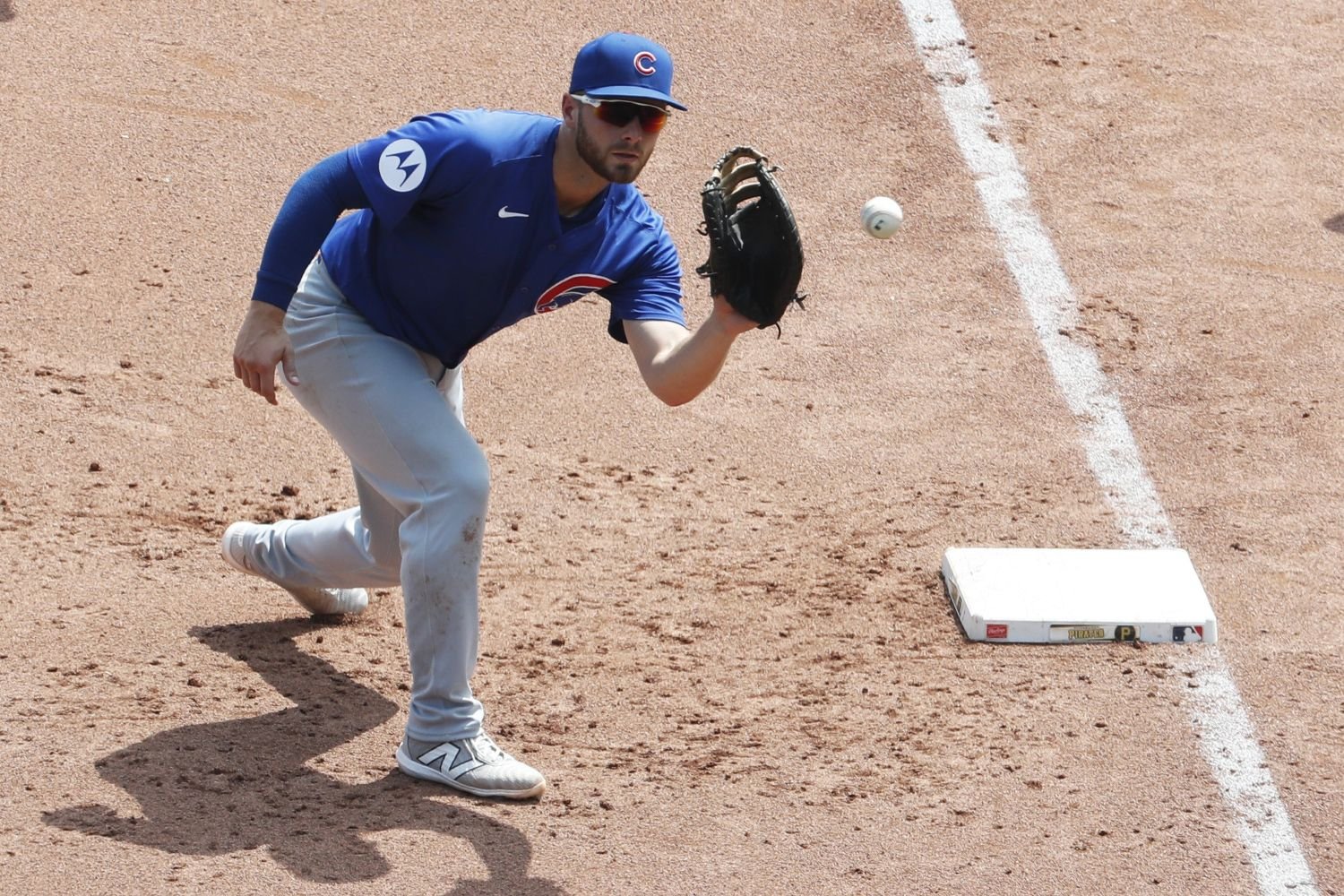 It's not wholly incomprehensible. A couple days after having acquired Kyle Tucker—without giving up Seiya Suzuki!—the Cubs still have not traded Cody Bellinger, and some fans (not indefensible) are trying to daydream a little. They want to have their cake and eat it, too. They're imagining a lineup the Cubs could deploy on a daily basis, against right-handed pitchers, if they simply hold onto Bellinger, accept the looming luxury-tax bill, and slide Michael Busch to the place vacated when the team traded third baseman Isaac Paredes as part of the Tucker trade. Ian Happ - LF Kyle Tucker - RF Seiya Suzuki - DH Cody Bellinger - 1B Dansby Swanson - SS Michael Busch - 3B Nico Hoerner - 2B Pete Crow-Armstrong - CF Miguel Amaya - C You have to admit, that does look like an awfully good lineup. Most fictional lineups do. Why would you bother drawing up a back-of-the-napkin lineup that didn't look really good? Ok, now take that napkin, wipe up whatever mess might be at hand, and throw it away. Because that lineup will never, ever happen. As it turns out, the world is not so easily bent to our whims and wants. The Cubs are as smart as you are. They've seen this possibility, and they've rejected it, because it's not really a possibility. Michael Busch is a solid player. He's coming off a really strong, encouraging, even exciting rookie season, during which he posted a 117 DRC+ (17% better than a league-average hitter), making excellent adjustments at the plate en route to delivering both power and plate discipline. He also blossomed as a first baseman. Early in the season, he was hard-handed and unsure of his footwork, despite having been a collegiate first baseman. It took two months for him to fully acclimate to his defensive duties. Over the second half, though, he might have been the National League's best defender at the position. At the very least, we can say that he was noticeably better than average with the leather. Because of his size and his athleticism (each of which are, loosely speaking, befitting a player at some spot other than first base), the temptation to try moving him back to second or third base (where he played more often in the minor leagues while part of the Dodgers organization) is understandable. It's just misgiven. Busch's improvements at first this year made it look like he might have upside at another position, but in truth, he doesn't. Busch has a weak arm. He's not as quick as he looks, and his size limits his range on reaching or diving plays. The Cubs like him a lot; they just don't like him at all at any position other than first base. They made that clear when they acquired him last winter, and they haven't wavered on it. Nor did the ill-fated experiment of trying to make Christopher Morel a third baseman last spring leave a good taste in their mouth for this kind of attempted glow-up. That's not to say that the Cubs won't attempt position changes for some players, even if it occasionally means sending a player back to a previously abandoned position or otherwise sliding them up the defensive spectrum, against the prevailing direction of such movements. It's one way to create value on a roster, and it's been fruitful for a number of teams recently. Mookie Betts is, suddenly, a middle infielder. Several teams are moving relievers back to the starting rotation, having identified them as possessing a deep enough pitch mix and some durability. The Padres moved Jake Cronenworth to first base almost full-time in 2023, but he was back to playing a lot of second base in 2024. In general, it's a good idea to consider moves like these. In this case, though, it's an idea worth forgetting. Busch just isn't up to it. He's not a Cronenworth-caliber versatile athlete. He's not a Betts-caliber super-freak. He's a good player. It will be best for everyone involved if fans stop making the perfect the enemy of that goodness. The Cubs are going to trade Bellinger, anyway (to the Yankees? For Will Warren? I still feel fairly confident that gets done.). They would do so even if they thought Busch could play another position, in all likelihood. They want to manage and massage their budget, and they want to spend the remaining money they do have mostly on pitching. I would guess they'll also sign either a lower-tier infielder (think Yoán Moncada or Josh Rojas) or an outfielder who can more credibly back up Crow-Armstrong in center (think Harrison Bader or Michael A. Taylor), but they intend to direct most of their resources to the pitching staff. There's also Matt Shaw to think of; the team views making more room for Shaw as an ancillary benefit of the Tucker trade. Busch is a solid player, and although the team might eventually look to plug a right-handed slugger in occasionally against lefty starters, he's not in danger of losing his deep foothold in the lineup. He could bat anywhere from first to seventh, on a given day, but he's going to be a big contributor to the 2025 Cubs. It just can't, won't, and shouldn't be anywhere on the infield, other than first base.
 -
Stop trying to make 'fetch' happen. It is not going to happen. Image courtesy of © Charles LeClaire-Imagn Images It's not wholly incomprehensible. A couple days after having acquired Kyle Tucker—without giving up Seiya Suzuki!—the Cubs still have not traded Cody Bellinger, and some fans (not indefensible) are trying to daydream a little. They want to have their cake and eat it, too. They're imagining a lineup the Cubs could deploy on a daily basis, against right-handed pitchers, if they simply hold onto Bellinger, accept the looming luxury-tax bill, and slide Michael Busch to the place vacated when the team traded third baseman Isaac Paredes as part of the Tucker trade. Ian Happ - LF Kyle Tucker - RF Seiya Suzuki - DH Cody Bellinger - 1B Dansby Swanson - SS Michael Busch - 3B Nico Hoerner - 2B Pete Crow-Armstrong - CF Miguel Amaya - C You have to admit, that does look like an awfully good lineup. Most fictional lineups do. Why would you bother drawing up a back-of-the-napkin lineup that didn't look really good? Ok, now take that napkin, wipe up whatever mess might be at hand, and throw it away. Because that lineup will never, ever happen. As it turns out, the world is not so easily bent to our whims and wants. The Cubs are as smart as you are. They've seen this possibility, and they've rejected it, because it's not really a possibility. Michael Busch is a solid player. He's coming off a really strong, encouraging, even exciting rookie season, during which he posted a 117 DRC+ (17% better than a league-average hitter), making excellent adjustments at the plate en route to delivering both power and plate discipline. He also blossomed as a first baseman. Early in the season, he was hard-handed and unsure of his footwork, despite having been a collegiate first baseman. It took two months for him to fully acclimate to his defensive duties. Over the second half, though, he might have been the National League's best defender at the position. At the very least, we can say that he was noticeably better than average with the leather. Because of his size and his athleticism (each of which are, loosely speaking, befitting a player at some spot other than first base), the temptation to try moving him back to second or third base (where he played more often in the minor leagues while part of the Dodgers organization) is understandable. It's just misgiven. Busch's improvements at first this year made it look like he might have upside at another position, but in truth, he doesn't. Busch has a weak arm. He's not as quick as he looks, and his size limits his range on reaching or diving plays. The Cubs like him a lot; they just don't like him at all at any position other than first base. They made that clear when they acquired him last winter, and they haven't wavered on it. Nor did the ill-fated experiment of trying to make Christopher Morel a third baseman last spring leave a good taste in their mouth for this kind of attempted glow-up. That's not to say that the Cubs won't attempt position changes for some players, even if it occasionally means sending a player back to a previously abandoned position or otherwise sliding them up the defensive spectrum, against the prevailing direction of such movements. It's one way to create value on a roster, and it's been fruitful for a number of teams recently. Mookie Betts is, suddenly, a middle infielder. Several teams are moving relievers back to the starting rotation, having identified them as possessing a deep enough pitch mix and some durability. The Padres moved Jake Cronenworth to first base almost full-time in 2023, but he was back to playing a lot of second base in 2024. In general, it's a good idea to consider moves like these. In this case, though, it's an idea worth forgetting. Busch just isn't up to it. He's not a Cronenworth-caliber versatile athlete. He's not a Betts-caliber super-freak. He's a good player. It will be best for everyone involved if fans stop making the perfect the enemy of that goodness. The Cubs are going to trade Bellinger, anyway (to the Yankees? For Will Warren? I still feel fairly confident that gets done.). They would do so even if they thought Busch could play another position, in all likelihood. They want to manage and massage their budget, and they want to spend the remaining money they do have mostly on pitching. I would guess they'll also sign either a lower-tier infielder (think Yoán Moncada or Josh Rojas) or an outfielder who can more credibly back up Crow-Armstrong in center (think Harrison Bader or Michael A. Taylor), but they intend to direct most of their resources to the pitching staff. There's also Matt Shaw to think of; the team views making more room for Shaw as an ancillary benefit of the Tucker trade. Busch is a solid player, and although the team might eventually look to plug a right-handed slugger in occasionally against lefty starters, he's not in danger of losing his deep foothold in the lineup. He could bat anywhere from first to seventh, on a given day, but he's going to be a big contributor to the 2025 Cubs. It just can't, won't, and shouldn't be anywhere on the infield, other than first base. View full article
-
Saturday's hot trade rumor had the Cubs in talks with the Marlins on a deal for the talented but oft-injured left-handed starter. It's a fascinating potential move—but a dangerous one. Image courtesy of © David Frerker-Imagn Images It's been clear all along that the Cubs intended to add another starting pitcher this winter, even after signing Matthew Boyd to join a rotation that included three established veterans and a bevy of younger options. Now, in the wake of the team's blockbuster deal for Kyle Tucker and the shadow of the likely Cody Bellinger trade, the team seems to be closing in on that higher-end acquisition. Names circulating include Luis Castillo of the Mariners and San Diego ace Dylan Cease, but on Saturday, 670 The Score's Bruce Levine brought forth another name that had long been in the mix: Marlins southpaw Jesús Luzardo. Luzardo, 27, has two years of team control remaining. He's often mentioned as a starter with big upside, because he's a lefty who (at his best) throws 97 miles per hour with a plus changeup. However, he's available not only because Miami is in the midst of a bone-scraping rebuild, but because he's been inconsistent and (worse) often hurt throughout his career. He pitched 179 innings with a 3.58 ERA and a 28.1% strikeout rate in 2023. In 2024, he managed just 12 starts, with an ERA of 5.00. His strikeout rate plunged to 21.2%, and (worse) his average fastball was 95.2 miles per hour, down from 96.7 in 2023. The Marlins and Cubs are uniquely perfect potential trade partners, because Miami is still working its way toward a nadir in its sudden reconstruction and Chicago has exactly what the Fish lack: high-upside, cost-controlled young hitters, including ones whose MLB service time clocks have not yet even begun to tick. Whereas Miami once had a clear surplus of exciting starters, though, their whole rotation is now populated by players with notable warts. Sandy Alcántara is the least complicated case, but he'll just be returning from Tommy John surgery in 2025. The rest all come with some degree of uncertainty, whether it centers on performance, injury, or both. It's probably still Luzardo who carries the most promise. The 2024 season was just a setback. Fortunately, the latter fact means the Cubs should be able to acquire him at a non-premium price, but the former could make him worth that splash—if the Cubs believe they can keep him healthy and get the best out of him. Let's figure out what the latter looks like, and whether the former is compatible with it. Luzardo's fastball lost some zip in 2024, but his two main secondary offerings—his slider and changeup—each degraded, too. His Stuff+ and StuffPro, the two leading pitch-modeling grading systems, each indicated that those pitches had gotten worse, based on movement, release point, and location. Here are his movement profiles for the last two seasons, side by side. Right away, you can see that Luzardo's fastball had a bit more rising action and a bit less arm-side run in 2024. The same was true of his changeup and sinker. Glance down at the lower lefthand corner of each image, and you can see a partial explanation of that: Luzardo raised his arm angle slightly this season. The adjustment was not for the better. You can see why the Marlins might have wanted Luzardo to raise that angle. Low-slot lefties often aren't able to live well in the starting rotation, against lineups that can be stacked with right-handed batters to neutralize them. Vertical profiles tend to work better for southpaw starters, and higher arm slots tend to produce those pitch shapes. The thing with Luzardo, though, is that he's a natural pronator. You can see that in the movement profiles above. Even his slider doesn't move to the glove side the way many pitchers' do. His four-seamer, sinker and changeup, by contrast, all move more to the arm side than do most pitches from hurlers with similar velocities and release points. If that's your natural movement signature, you might as well lean into it, with the lower slot Luzardo used to employ. The Cubs would certainly work with him to keep the release angle down, and they'd probably integrate his sinker more, too. Bringing his sinker along is especially key, not only because it suits his natural mechanics, but because of the way he attacks the zone. Here's his pitch location profile for his top four offerings for 2024. Notice the way his four-seamer primarily pounds the third-base side of the plate, inside on a righty and away from a lefty. Given the movement on it and the arm angle at which Luzardo works, that's not what you'd automatically expect, which is one reason why he's effective. Despite a very different natural fastball shape, he achieves a similar effect to fellow southpaw Justin Steele. But this quirk also means he has to lean on the sinker to attack the arm side of the plate with heat. Given his current pitch mix, as it played in 2024, that's not essential—but it could become so, as part of the team's plans to optimize him if they brought him aboard. Luzardo was better at keeping the sinker on that arm-side edge in 2023, rather than letting it stray over the plate. He also did better with his slider, which got to the lower inside corner to a righty (away from a lefty) more often. From the lower slot, he's capable of working with those pitches to force lefties into uncomfortable at-bats, and he can get righties thinking more about covering the whole plate, too. If the four-seamer will dominate inside to righties and away from lefties, the sinker is the pitch that can keep everyone honest and resolve the problems he's had with hard contact recently. This stuff doesn't automatically work, once conceived of, and the Marlins' reputation for pitcher development is strong. Here's the twist: some of that reputation is unearned. They're excellent at scouting pitchers, but not necessarily good at helping them unlock their talent. They traded Pablo López to the Twins two winters ago, and he quickly got better—especially by adopting a sweeper, which is exactly what I think the Cubs might encourage Luzardo to do. Ace upside is probably too generous a label to apply to Luzardo, but he can be right in line with Steele and Shota Imanaga, at his best. If the Cubs could keep him healthy, he'd make their rotation one of the best in the National League. For that, giving up James Triantos would not be too high a price. However, if the Marlins insist upon getting Owen Caissie or even Kevin Alcántara in the deal instead, the team might need to maintain the resolve to walk away. Luzardo is a big fish, but there are others in the sea, too. View full article
-
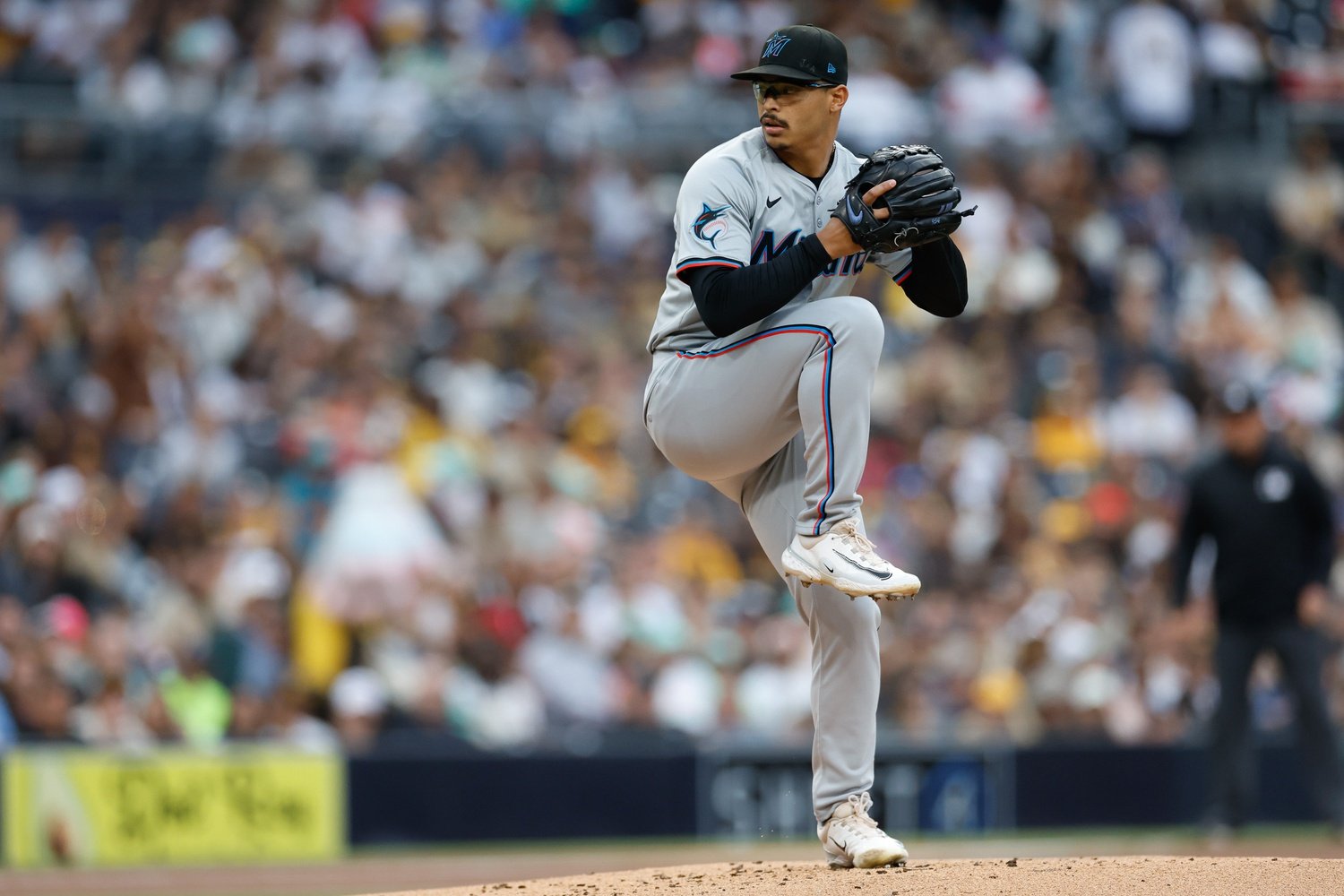 It's been clear all along that the Cubs intended to add another starting pitcher this winter, even after signing Matthew Boyd to join a rotation that included three established veterans and a bevy of younger options. Now, in the wake of the team's blockbuster deal for Kyle Tucker and the shadow of the likely Cody Bellinger trade, the team seems to be closing in on that higher-end acquisition. Names circulating include Luis Castillo of the Mariners and San Diego ace Dylan Cease, but on Saturday, 670 The Score's Bruce Levine brought forth another name that had long been in the mix: Marlins southpaw Jesús Luzardo. Luzardo, 27, has two years of team control remaining. He's often mentioned as a starter with big upside, because he's a lefty who (at his best) throws 97 miles per hour with a plus changeup. However, he's available not only because Miami is in the midst of a bone-scraping rebuild, but because he's been inconsistent and (worse) often hurt throughout his career. He pitched 179 innings with a 3.58 ERA and a 28.1% strikeout rate in 2023. In 2024, he managed just 12 starts, with an ERA of 5.00. His strikeout rate plunged to 21.2%, and (worse) his average fastball was 95.2 miles per hour, down from 96.7 in 2023. The Marlins and Cubs are uniquely perfect potential trade partners, because Miami is still working its way toward a nadir in its sudden reconstruction and Chicago has exactly what the Fish lack: high-upside, cost-controlled young hitters, including ones whose MLB service time clocks have not yet even begun to tick. Whereas Miami once had a clear surplus of exciting starters, though, their whole rotation is now populated by players with notable warts. Sandy Alcántara is the least complicated case, but he'll just be returning from Tommy John surgery in 2025. The rest all come with some degree of uncertainty, whether it centers on performance, injury, or both. It's probably still Luzardo who carries the most promise. The 2024 season was just a setback. Fortunately, the latter fact means the Cubs should be able to acquire him at a non-premium price, but the former could make him worth that splash—if the Cubs believe they can keep him healthy and get the best out of him. Let's figure out what the latter looks like, and whether the former is compatible with it. Luzardo's fastball lost some zip in 2024, but his two main secondary offerings—his slider and changeup—each degraded, too. His Stuff+ and StuffPro, the two leading pitch-modeling grading systems, each indicated that those pitches had gotten worse, based on movement, release point, and location. Here are his movement profiles for the last two seasons, side by side. Right away, you can see that Luzardo's fastball had a bit more rising action and a bit less arm-side run in 2024. The same was true of his changeup and sinker. Glance down at the lower lefthand corner of each image, and you can see a partial explanation of that: Luzardo raised his arm angle slightly this season. The adjustment was not for the better. You can see why the Marlins might have wanted Luzardo to raise that angle. Low-slot lefties often aren't able to live well in the starting rotation, against lineups that can be stacked with right-handed batters to neutralize them. Vertical profiles tend to work better for southpaw starters, and higher arm slots tend to produce those pitch shapes. The thing with Luzardo, though, is that he's a natural pronator. You can see that in the movement profiles above. Even his slider doesn't move to the glove side the way many pitchers' do. His four-seamer, sinker and changeup, by contrast, all move more to the arm side than do most pitches from hurlers with similar velocities and release points. If that's your natural movement signature, you might as well lean into it, with the lower slot Luzardo used to employ. The Cubs would certainly work with him to keep the release angle down, and they'd probably integrate his sinker more, too. Bringing his sinker along is especially key, not only because it suits his natural mechanics, but because of the way he attacks the zone. Here's his pitch location profile for his top four offerings for 2024. Notice the way his four-seamer primarily pounds the third-base side of the plate, inside on a righty and away from a lefty. Given the movement on it and the arm angle at which Luzardo works, that's not what you'd automatically expect, which is one reason why he's effective. Despite a very different natural fastball shape, he achieves a similar effect to fellow southpaw Justin Steele. But this quirk also means he has to lean on the sinker to attack the arm side of the plate with heat. Given his current pitch mix, as it played in 2024, that's not essential—but it could become so, as part of the team's plans to optimize him if they brought him aboard. Luzardo was better at keeping the sinker on that arm-side edge in 2023, rather than letting it stray over the plate. He also did better with his slider, which got to the lower inside corner to a righty (away from a lefty) more often. From the lower slot, he's capable of working with those pitches to force lefties into uncomfortable at-bats, and he can get righties thinking more about covering the whole plate, too. If the four-seamer will dominate inside to righties and away from lefties, the sinker is the pitch that can keep everyone honest and resolve the problems he's had with hard contact recently. This stuff doesn't automatically work, once conceived of, and the Marlins' reputation for pitcher development is strong. Here's the twist: some of that reputation is unearned. They're excellent at scouting pitchers, but not necessarily good at helping them unlock their talent. They traded Pablo López to the Twins two winters ago, and he quickly got better—especially by adopting a sweeper, which is exactly what I think the Cubs might encourage Luzardo to do. Ace upside is probably too generous a label to apply to Luzardo, but he can be right in line with Steele and Shota Imanaga, at his best. If the Cubs could keep him healthy, he'd make their rotation one of the best in the National League. For that, giving up James Triantos would not be too high a price. However, if the Marlins insist upon getting Owen Caissie or even Kevin Alcántara in the deal instead, the team might need to maintain the resolve to walk away. Luzardo is a big fish, but there are others in the sea, too.
 -
IT'S HAPPENING: Cubs to Acquire Outfielder Kyle Tucker from Astros
Matthew Trueblood posted an article in Cubs
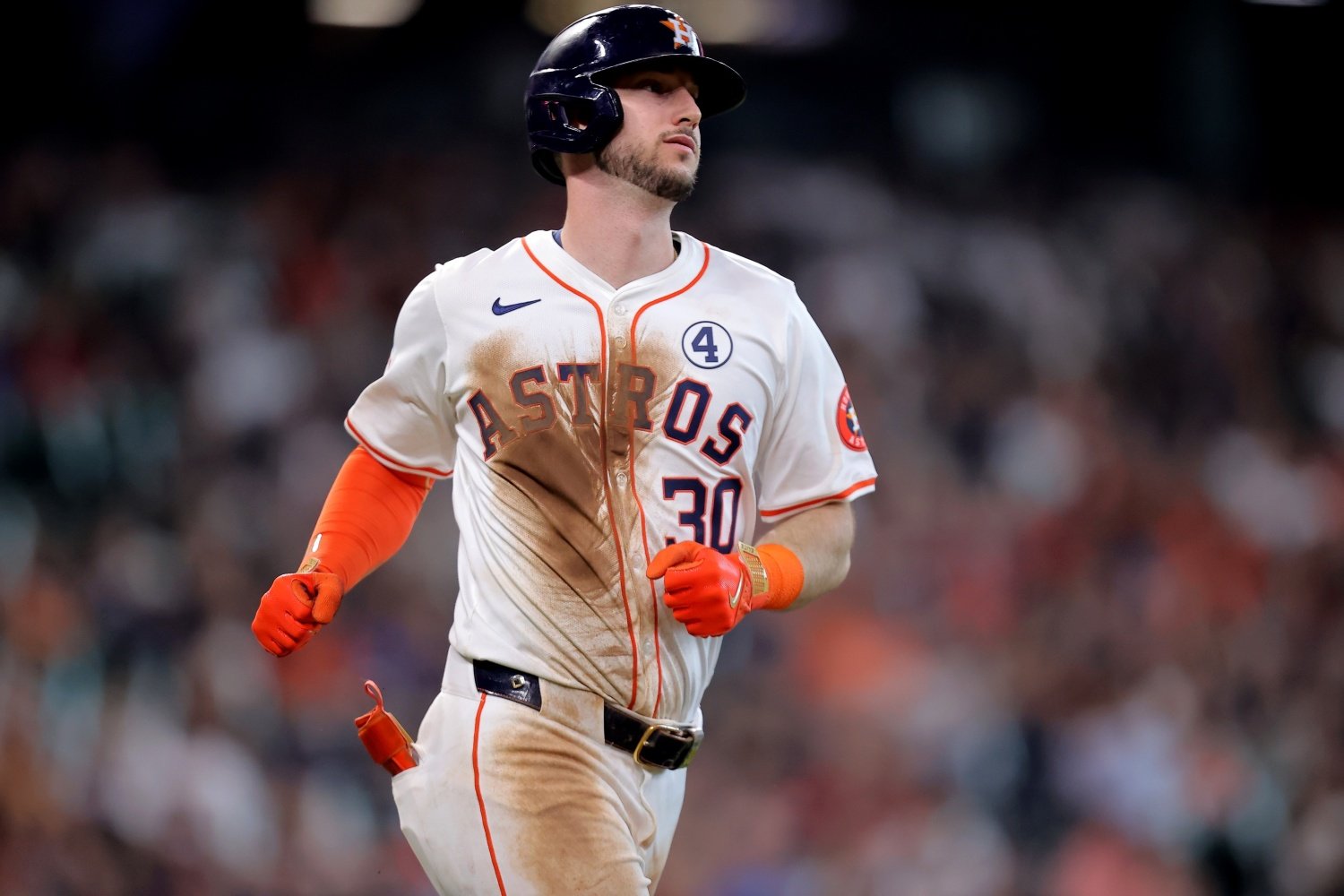 After multiple days of heavy rumors, the Cubs and Astros finally wound their way to an exchange on which they could agree. The Cubs will receive All-Star right fielder Kyle Tucker, set to turn 28 in January, on the heels of four seasons in which Tucker batted .280/.362/.527, made three All-Star teams and took home both a Gold Glove and a Silver Slugger. In return, Chicago will send third basemen Isaac Paredes and Cam Smith to Houston, surrendering the jewel acquisition of their trade deadline this past summer and their first-round pick in the 2024 MLB Draft. It's not a light package. The Cubs gave up Christopher Morel and two young pitchers to get Paredes, and Smith represents the least renewable resource in baseball: a first-round pick with star-level upside and some proximity to the majors. Wesneski, first acquired two and a half years ago for reliever Scott Effross, is a dynamic arm who still has a chance to mature into (if nothing more) a high-strikeout, high-leverage reliever. However, Tucker is the perfect target at the perfect time. He's been metronomic over the first several full seasons of his career, with between 23 and 30 home runs in each of the last four campaigns—even 2024, when he missed a long stretch of the second half with a fracture in his shin. Tucker maintains a very low strikeout rate, especially for a player with so much power. He showed the ability to accept his walks as soon as he arrived in the majors, but over the last two years, his walk rate has shot up, to a new level. He has a career OPS of .883 against right-handed pitchers and .840 against lefties, so he's essentially immune to the platoon disadvantage. He plays above-average defense in right field, and is both efficient and aggressive on the bases. He's one of the 10 best hitters in baseball, and perhaps one of the five or six best. This is just one move, in a series. The Cubs will trade Cody Bellinger to the Yankees in a related (but separate) trade for right-handed starting pitching prospect Will Warren, but it now appears that they'll retain Seiya Suzuki, thereby cementing Tucker and Suzuki as the core of their offense. They'll further add to the roster, because with this move, they push many poker chips into the middle of the table. Being very, very good in 2025 is now essential, because Tucker is likely to depart after the season as a free agent. The Cubs can and should try hard to extend him for a decade beyond the end of 2025, but traditionally, they haven't spent the kind of money that would take. Then again, until today, Jed Hoyer has not traditionally taken swings as big as this trade, anyway.
- 3 comments
-
- 1
-

-
- kyle tucker
- isaac paredes
- (and 2 more)
-
In a move that could radically alter the future of the franchise, the Chicago Cubs have pulled the trigger on their most aggressive trade in nearly a decade. They now have the star slugger their lineup has been missing since 2016. Image courtesy of © Erik Williams-Imagn Images After multiple days of heavy rumors, the Cubs and Astros finally wound their way to an exchange on which they could agree. The Cubs will receive All-Star right fielder Kyle Tucker, set to turn 28 in January, on the heels of four seasons in which Tucker batted .280/.362/.527, made three All-Star teams and took home both a Gold Glove and a Silver Slugger. In return, Chicago will send third basemen Isaac Paredes and Cam Smith to Houston, surrendering the jewel acquisition of their trade deadline this past summer and their first-round pick in the 2024 MLB Draft. It's not a light package. The Cubs gave up Christopher Morel and two young pitchers to get Paredes, and Smith represents the least renewable resource in baseball: a first-round pick with star-level upside and some proximity to the majors. Wesneski, first acquired two and a half years ago for reliever Scott Effross, is a dynamic arm who still has a chance to mature into (if nothing more) a high-strikeout, high-leverage reliever. However, Tucker is the perfect target at the perfect time. He's been metronomic over the first several full seasons of his career, with between 23 and 30 home runs in each of the last four campaigns—even 2024, when he missed a long stretch of the second half with a fracture in his shin. Tucker maintains a very low strikeout rate, especially for a player with so much power. He showed the ability to accept his walks as soon as he arrived in the majors, but over the last two years, his walk rate has shot up, to a new level. He has a career OPS of .883 against right-handed pitchers and .840 against lefties, so he's essentially immune to the platoon disadvantage. He plays above-average defense in right field, and is both efficient and aggressive on the bases. He's one of the 10 best hitters in baseball, and perhaps one of the five or six best. This is just one move, in a series. The Cubs will trade Cody Bellinger to the Yankees in a related (but separate) trade for right-handed starting pitching prospect Will Warren, but it now appears that they'll retain Seiya Suzuki, thereby cementing Tucker and Suzuki as the core of their offense. They'll further add to the roster, because with this move, they push many poker chips into the middle of the table. Being very, very good in 2025 is now essential, because Tucker is likely to depart after the season as a free agent. The Cubs can and should try hard to extend him for a decade beyond the end of 2025, but traditionally, they haven't spent the kind of money that would take. Then again, until today, Jed Hoyer has not traditionally taken swings as big as this trade, anyway. View full article
- 3 replies
-
- 1
-
-
- kyle tucker
- isaac paredes
- (and 2 more)
-
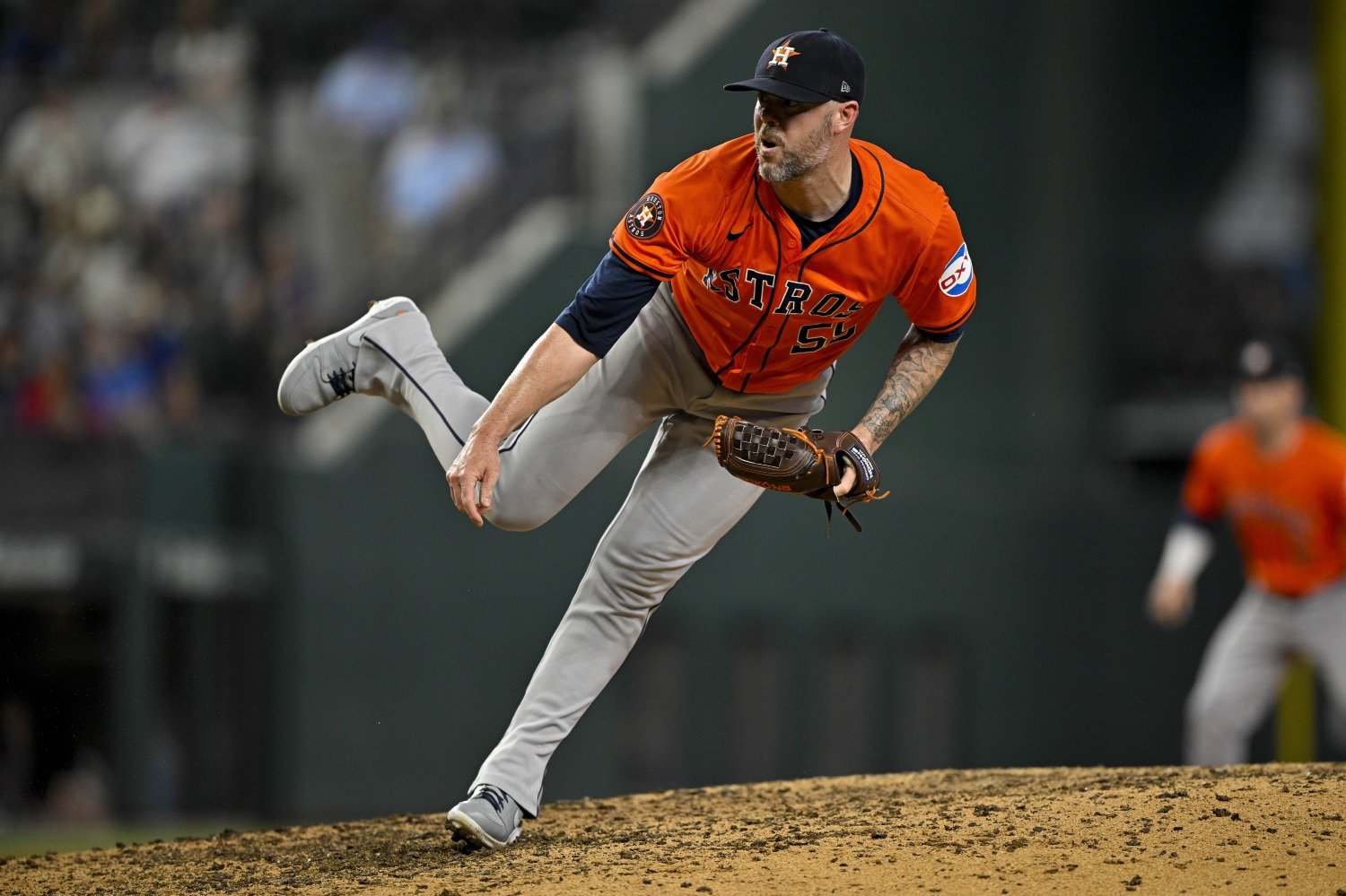 Although the reports are just confused and confusing enough to leave everyone bickering about the real nature of the demands, all indications are that the Astros want both Seiya Suzuki and Isaac Paredes in a trade for Kyle Tucker, whom the Cubs would then control for just one season before he hits free agency. Tucker might be worth those two, in an emerging paradigm of player value that disproportionately elevates stars at the expense of average-ish players, even though they're under team control for longer than he is and are solid contributors themselves. Houston (understandably) also wants to get a longer-term benefit from giving up such a superb player in the short term, though, and that has led to a long negotiation. The Cubs don't want to give up Matt Shaw, or even Cam Smith, in exchange for Tucker, at least without holding onto one of Suzuki and Paredes. While one report Thursday night juiced a new round of speculation and excitement, the chances that these two teams are unable to bridge the divide and end up deciding not to do business together is still significant. The path out of this encroaching stalemate could go through the Houston bullpen. Earlier this winter, multiple reports suggested that the team was looking to trade reliever Ryan Pressly, to whom they owe $14 million in the final year of his most recent contract extension. After Houston signed Josh Hader to a massive deal last winter, they have a surplus of talent in the bullpen, and with Bryan Abreu available to act as Hader's second in the relief wars, Pressly has gone from one of the game's elite closers to an expendable set-up man in short order. Because he's owed so much and because he's declined somewhat sharply over the last two years, Pressly has negative trade value. To move him in a separate deal, Houston would have to attach a prospect or eat as much as $4 million. Pressly struck out 31.9% or more of his opposing batters every year from 2018-22, but that figure plummeted to 27.6% in 2023 and 23.8% in 2024. His velocity has similarly flagged, from an average fastball at 95.4 miles per hour as recently as 2021 to 93.8 MPH in 2024. That's not a great case for the Cubs acquiring him, of course. Still, it could help balance the scales. With Tucker and Pressly going to Chicago and Paredes (but not Suzuki) going to Houston, the Astros would save something like $25 million for 2025. The Cubs would be taking on significant money, but they'd also have their lineup anchors in place, and they'd rebalance their books by trading Cody Bellinger—which they're treating as a prerequisite for acquiring Tucker, anyway. Meanwhile, bringing in Pressly would lighten the pressure to make any further additions to the bullpen, so it would effectively free up the money they would otherwise have had to earmark for that item on the to-do list. Under those circumstances, they'd probably be much more amenable to trading a top prospect—even if it be Shaw. Another structure could emerge, too, where the Cubs would send Owen Caissie, Cam Smith and Paredes to Houston, allowing them to retain Shaw and James Triantos with an eye to having one or both of them play third for the next several years. To circle back to Pressly, despite the dipping velocity and strikeout rate, this isn't exactly a Héctor Neris situation. For one thing, Pressly has a deep arsenal. As he's aged, he's added a sinker and a changeup to that mix, which included an elite fastball, slider, and curve at his best. Now, according to pitch modeling ratings, the fastball has sagged badly, to about average—but the curve and slider are still among the best in the game, and the changeup he just found in his early 30s is turning out to be an average-plus offering. The smart money says that, despite losing his ability to overpower and befuddle hitters, he can still get them out at a solid rate. If we assume the Cubs would go on, after this trade, to get Carson Kelly sewn up, we can loosely project a roster for 2025 based on the things we understand the team to be trying to do. Starting Lineup Ian Happ - LF Kyle Tucker - RF Seiya Suzuki - DH Michael Busch - 1B Dansby Swanson - SS Matt Shaw - 3B Pete Crow-Armstrong - CF Carson Kelly - C Nico Hoerner - 2B Bench Miguel Amaya - C Gage Workman - IF Alexander Canario - OF Miles Mastrobuoni - UTIL Starting Rotation Shota Imanaga Justin Steele Jameson Taillon Matthew Boyd Javier Assad Bullpen Ryan Pressly Porter Hodge Tyson Miller Nate Pearson Eli Morgan Julian Merryweather Luke Little Daniel Palencia This includes a trade of Cody Bellinger, but excludes any player received in exchange for him. It also leaves undreamt any dreams of adding another starter to the front end of the rotation, rather than to the back end (via the acquisition of Will Warren, perhaps). From this position, the Cubs could try to package more young talent (Kevin Alcántara, any of several strong pitchers just off the fringes of the MLB roster) or find a way to land Nico Hoerner in Seattle and get back Luis Castillo. The latter option would further risk the team's fortunes on the performance of young players, since Triantos would then need to come up and help the team almost right away. Not quite a juggernaut, the team above would nonetheless be markedly higher-ceiling and more dynamic than the one the Cubs have now. It would have to be accomplished by accepting some suboptimal arrangements and stretching the team's expected 2025 budget near its breaking point, and there is always a very real risk that this front office will back off when faced with that set of choices. However, if bringing Pressly into a Tucker trade could keep Shaw and/or Suzuki out of it, the Cubs have to explore that possibility. One way or another, we're likely to know by the end of this weekend whether anything will come of all that big Winter Meetings week talk.
 -
While there remain several paths forward for the Cubs this winter, their priority appears to be a trade for the All-Star Houston outfielder. Meeting the Astros' asking price will be tricky, though, and might require mutual creativity. Image courtesy of © Jerome Miron-Imagn Images Although the reports are just confused and confusing enough to leave everyone bickering about the real nature of the demands, all indications are that the Astros want both Seiya Suzuki and Isaac Paredes in a trade for Kyle Tucker, whom the Cubs would then control for just one season before he hits free agency. Tucker might be worth those two, in an emerging paradigm of player value that disproportionately elevates stars at the expense of average-ish players, even though they're under team control for longer than he is and are solid contributors themselves. Houston (understandably) also wants to get a longer-term benefit from giving up such a superb player in the short term, though, and that has led to a long negotiation. The Cubs don't want to give up Matt Shaw, or even Cam Smith, in exchange for Tucker, at least without holding onto one of Suzuki and Paredes. While one report Thursday night juiced a new round of speculation and excitement, the chances that these two teams are unable to bridge the divide and end up deciding not to do business together is still significant. The path out of this encroaching stalemate could go through the Houston bullpen. Earlier this winter, multiple reports suggested that the team was looking to trade reliever Ryan Pressly, to whom they owe $14 million in the final year of his most recent contract extension. After Houston signed Josh Hader to a massive deal last winter, they have a surplus of talent in the bullpen, and with Bryan Abreu available to act as Hader's second in the relief wars, Pressly has gone from one of the game's elite closers to an expendable set-up man in short order. Because he's owed so much and because he's declined somewhat sharply over the last two years, Pressly has negative trade value. To move him in a separate deal, Houston would have to attach a prospect or eat as much as $4 million. Pressly struck out 31.9% or more of his opposing batters every year from 2018-22, but that figure plummeted to 27.6% in 2023 and 23.8% in 2024. His velocity has similarly flagged, from an average fastball at 95.4 miles per hour as recently as 2021 to 93.8 MPH in 2024. That's not a great case for the Cubs acquiring him, of course. Still, it could help balance the scales. With Tucker and Pressly going to Chicago and Paredes (but not Suzuki) going to Houston, the Astros would save something like $25 million for 2025. The Cubs would be taking on significant money, but they'd also have their lineup anchors in place, and they'd rebalance their books by trading Cody Bellinger—which they're treating as a prerequisite for acquiring Tucker, anyway. Meanwhile, bringing in Pressly would lighten the pressure to make any further additions to the bullpen, so it would effectively free up the money they would otherwise have had to earmark for that item on the to-do list. Under those circumstances, they'd probably be much more amenable to trading a top prospect—even if it be Shaw. Another structure could emerge, too, where the Cubs would send Owen Caissie, Cam Smith and Paredes to Houston, allowing them to retain Shaw and James Triantos with an eye to having one or both of them play third for the next several years. To circle back to Pressly, despite the dipping velocity and strikeout rate, this isn't exactly a Héctor Neris situation. For one thing, Pressly has a deep arsenal. As he's aged, he's added a sinker and a changeup to that mix, which included an elite fastball, slider, and curve at his best. Now, according to pitch modeling ratings, the fastball has sagged badly, to about average—but the curve and slider are still among the best in the game, and the changeup he just found in his early 30s is turning out to be an average-plus offering. The smart money says that, despite losing his ability to overpower and befuddle hitters, he can still get them out at a solid rate. If we assume the Cubs would go on, after this trade, to get Carson Kelly sewn up, we can loosely project a roster for 2025 based on the things we understand the team to be trying to do. Starting Lineup Ian Happ - LF Kyle Tucker - RF Seiya Suzuki - DH Michael Busch - 1B Dansby Swanson - SS Matt Shaw - 3B Pete Crow-Armstrong - CF Carson Kelly - C Nico Hoerner - 2B Bench Miguel Amaya - C Gage Workman - IF Alexander Canario - OF Miles Mastrobuoni - UTIL Starting Rotation Shota Imanaga Justin Steele Jameson Taillon Matthew Boyd Javier Assad Bullpen Ryan Pressly Porter Hodge Tyson Miller Nate Pearson Eli Morgan Julian Merryweather Luke Little Daniel Palencia This includes a trade of Cody Bellinger, but excludes any player received in exchange for him. It also leaves undreamt any dreams of adding another starter to the front end of the rotation, rather than to the back end (via the acquisition of Will Warren, perhaps). From this position, the Cubs could try to package more young talent (Kevin Alcántara, any of several strong pitchers just off the fringes of the MLB roster) or find a way to land Nico Hoerner in Seattle and get back Luis Castillo. The latter option would further risk the team's fortunes on the performance of young players, since Triantos would then need to come up and help the team almost right away. Not quite a juggernaut, the team above would nonetheless be markedly higher-ceiling and more dynamic than the one the Cubs have now. It would have to be accomplished by accepting some suboptimal arrangements and stretching the team's expected 2025 budget near its breaking point, and there is always a very real risk that this front office will back off when faced with that set of choices. However, if bringing Pressly into a Tucker trade could keep Shaw and/or Suzuki out of it, the Cubs have to explore that possibility. One way or another, we're likely to know by the end of this weekend whether anything will come of all that big Winter Meetings week talk. View full article
-
Though no consequential hot stove news broke Thursday, below the surface, there were indicators that the Cubs were moving toward something big. One new name reached the public sphere, and it's one that has come up in connection with the team before. Image courtesy of © Bill Streicher-Imagn Images It's become clear, over the last two days, that the Cubs' major focus is to complete a trade for Houston Astros right fielder Kyle Tucker. They have sidelined multiple negotiations with free agents for the time being, hoping to get a deal done and have more clarity about their roster before needing to add a new signee to that group and create a space by designating someone for assignment, at what could be an inopportune time. All their energy is going toward big swings in the trade market, and Tucker is the prize. However, they view it as important to trade Cody Bellinger first, since Houston does not value him highly enough to warrant his inclusion in a Tucker deal. Thus, the linchpin of the team's tactical approach to grabbing Tucker is sending Bellinger to one of the other interested teams. The most likely of those, by far, is the Yankees, where Bellinger could fit at multiple spots and would reduce the Bombers' uncertainty in the lineup, without foreclosing any of the other options they're pursuing. That makes the reports of progress between Chicago and New York Thursday evening important ones, and the inclusion of pitching prospect Will Warren in those discussions is especially compelling. Warren, 25, has been on the Cubs' radar for a while. He's primarily a sinker-sweeper guy, and his stuff is nasty. He struck out 28% of opposing batters, even in a season in which he posted an ERA just under 6.00 in Triple A and a mark over 10.00 in the majors. Warren doesn't overpower hitters with sheer velocity, but his location of both the sinker and the sweeper is superb, and the movement on the two pitches combined with that command makes for a devastating attack. He also has an average four-seamer, a changeup, and a cutter, making his arsenal deep enough and his swing-and-miss sufficient to slot into the middle of a starting rotation at his best. As you might expect from someone who works east-and-west the way he does, Warren has a fairly low arm slot. He also has a bit of crossfire to his delivery, with a closed stride that forces his body to sweep around his front leg. That puts a lot of pressure on his four-seamer, when it comes to getting lefties out. To his credit, after a very rocky start to the season in Triple A, Warren did figure that out, emphasizing the four-seamer more after Jun. 1. Because his changeup separates from his sinker only in velocity, and not in terms of movement, he needs that four-seamer to set it up to lefties. The sinker does a fine job of putting right-handed hitters into a fork as a partner to his sweeper, but as the season progressed, he even ratcheted up the usage of that four-seamer to righties. He also virtually scrapped the cutter mid-season. This is adding up to rather a lot of changes. Did they help him pitch better as the year went on? In short: yes, but it still looks a bit messy. His season breaks down thusly: Through 5/31 (AAA): 205 batters faced, 44 1/3 innings, 48 strikeouts, 19 walks, 13 home runs allowed, 8.53 ERA, .918 opponent OPS Jun. 1-Jul. 25 (AAA): 220 BF, 51 1/3 IP, 67 SO, 16 BB, 5 HR, 4.03 ERA, .656 opp. OPS Jul. 30-Aug. 31 (MLB): 104 BF, 21 2/3 IP, 26 SO, 9 BB, 4 HR, 9.55 ERA, .985 opp. OPS Sep. 6-18 (AAA): 61 BF, 14 IP, 21 SO, 4 BB, 1 HR, 4.50 ERA, .662 opp. OPS After all that, he did make one more forgettable and meaningless appearance in the big leagues to finish the season, but it's not worth further muddying that water. Suffice it to say this: Once Warren tweaked his pitch mix, while he was in the minors, he had a ton of success. However, he's prone to the home run, and hasn't yet solved some of the more complex problems posed by high-level hitters. At least one scouting report also indicated that Warren's sweeper is a pitch uniquely ill-suited to the automated strike zone used for much of the season in Triple A, so he might have been even better than these numbers look once he sorted things out in the minors. Obviously, Warren is an intriguing arm, with plenty of potential bullpen utility if the starting thing doesn't work out. Predictably, he has significant platoon splits. He would slot somewhere in with Javier Assad, Brandon Birdsell, Ben Brown, Cade Horton, Hayden Wesneski, and Jordan Wicks, the Cubs' gratifyingly deep stable of back-end rotation arms with upside either in the middle of a rotation or the bully portion of a bullpen. Where he fits is a matter of scouting preferences and other considerations, but he'd increase the team's ability to trade from that sector of their roster, which might come in handy, be it in Tucker negotiations with Houston or in pursuit of Dylan Cease from San Diego. The Cubs hope not to have to eat more than $5 million in the Bellinger trade, to give themselves as much financial flexibility as possible when they turn their attention to other necessary moves. If they succeed in getting the Yankees to take on nearly all the money, Warren would probably be the only piece they get back. That's fine. He has clear flaws, just as the other pitchers in the mix he would join do. However, he'd be a strong return in a trade primarily motivated by the need to free up other options. View full article
-
 It's become clear, over the last two days, that the Cubs' major focus is to complete a trade for Houston Astros right fielder Kyle Tucker. They have sidelined multiple negotiations with free agents for the time being, hoping to get a deal done and have more clarity about their roster before needing to add a new signee to that group and create a space by designating someone for assignment, at what could be an inopportune time. All their energy is going toward big swings in the trade market, and Tucker is the prize. However, they view it as important to trade Cody Bellinger first, since Houston does not value him highly enough to warrant his inclusion in a Tucker deal. Thus, the linchpin of the team's tactical approach to grabbing Tucker is sending Bellinger to one of the other interested teams. The most likely of those, by far, is the Yankees, where Bellinger could fit at multiple spots and would reduce the Bombers' uncertainty in the lineup, without foreclosing any of the other options they're pursuing. That makes the reports of progress between Chicago and New York Thursday evening important ones, and the inclusion of pitching prospect Will Warren in those discussions is especially compelling. Warren, 25, has been on the Cubs' radar for a while. He's primarily a sinker-sweeper guy, and his stuff is nasty. He struck out 28% of opposing batters, even in a season in which he posted an ERA just under 6.00 in Triple A and a mark over 10.00 in the majors. Warren doesn't overpower hitters with sheer velocity, but his location of both the sinker and the sweeper is superb, and the movement on the two pitches combined with that command makes for a devastating attack. He also has an average four-seamer, a changeup, and a cutter, making his arsenal deep enough and his swing-and-miss sufficient to slot into the middle of a starting rotation at his best. As you might expect from someone who works east-and-west the way he does, Warren has a fairly low arm slot. He also has a bit of crossfire to his delivery, with a closed stride that forces his body to sweep around his front leg. That puts a lot of pressure on his four-seamer, when it comes to getting lefties out. To his credit, after a very rocky start to the season in Triple A, Warren did figure that out, emphasizing the four-seamer more after Jun. 1. Because his changeup separates from his sinker only in velocity, and not in terms of movement, he needs that four-seamer to set it up to lefties. The sinker does a fine job of putting right-handed hitters into a fork as a partner to his sweeper, but as the season progressed, he even ratcheted up the usage of that four-seamer to righties. He also virtually scrapped the cutter mid-season. This is adding up to rather a lot of changes. Did they help him pitch better as the year went on? In short: yes, but it still looks a bit messy. His season breaks down thusly: Through 5/31 (AAA): 205 batters faced, 44 1/3 innings, 48 strikeouts, 19 walks, 13 home runs allowed, 8.53 ERA, .918 opponent OPS Jun. 1-Jul. 25 (AAA): 220 BF, 51 1/3 IP, 67 SO, 16 BB, 5 HR, 4.03 ERA, .656 opp. OPS Jul. 30-Aug. 31 (MLB): 104 BF, 21 2/3 IP, 26 SO, 9 BB, 4 HR, 9.55 ERA, .985 opp. OPS Sep. 6-18 (AAA): 61 BF, 14 IP, 21 SO, 4 BB, 1 HR, 4.50 ERA, .662 opp. OPS After all that, he did make one more forgettable and meaningless appearance in the big leagues to finish the season, but it's not worth further muddying that water. Suffice it to say this: Once Warren tweaked his pitch mix, while he was in the minors, he had a ton of success. However, he's prone to the home run, and hasn't yet solved some of the more complex problems posed by high-level hitters. At least one scouting report also indicated that Warren's sweeper is a pitch uniquely ill-suited to the automated strike zone used for much of the season in Triple A, so he might have been even better than these numbers look once he sorted things out in the minors. Obviously, Warren is an intriguing arm, with plenty of potential bullpen utility if the starting thing doesn't work out. Predictably, he has significant platoon splits. He would slot somewhere in with Javier Assad, Brandon Birdsell, Ben Brown, Cade Horton, Hayden Wesneski, and Jordan Wicks, the Cubs' gratifyingly deep stable of back-end rotation arms with upside either in the middle of a rotation or the bully portion of a bullpen. Where he fits is a matter of scouting preferences and other considerations, but he'd increase the team's ability to trade from that sector of their roster, which might come in handy, be it in Tucker negotiations with Houston or in pursuit of Dylan Cease from San Diego. The Cubs hope not to have to eat more than $5 million in the Bellinger trade, to give themselves as much financial flexibility as possible when they turn their attention to other necessary moves. If they succeed in getting the Yankees to take on nearly all the money, Warren would probably be the only piece they get back. That's fine. He has clear flaws, just as the other pitchers in the mix he would join do. However, he'd be a strong return in a trade primarily motivated by the need to free up other options.
 -
The San Diego Padres are on the horns of a payroll dilemma. They want to contend in 2025, as usual, and they have a significant shopping list—but their proverbial bank account is overdrawn. Can they and the Cubs help each other? Image courtesy of © David Frerker-Imagn Images It's not time to break up the Padres just yet. They have a championship-caliber core, and they intend to continue leveraging it, chasing and pressuring the Dodgers. There's a problem, though: they don't have Dodger money, and right now, they have nearly Dodger-level financial commitments on the books. With Joe Musgrove out for the coming season following Tommy John surgery, San Diego needs another starting pitcher. They also need a starting catcher and a left fielder. How much do they have to spend in the pursuit of those needed pieces? How does -$3 million sound? From that situation has come a torrent of rumors about how the Padres can solve problems via the trade market, rather than signing players to fill all of the roles listed above. Two names have been mentioned most often, because each is under team control for just one more season and each is likely to make more than $14 million via arbitration: Luis Arraez and Dylan Cease. Trading Arraez would clear some money for San Diego, but that amount isn't enough to make up for the new hole it would open in their lineup—because Arraez's skill set and lack of defensive value don't leave him with much trade value. In other words, while a team might take on his money for 2025, finding a suitor who would give up one or more useful players or prospects in exchange for him is likely to prove impossible. The Padres need to find enough excess value in a deal to allow themselves to make a second trade, or some younger players they can insert directly into their lineup, as well as clearing money to spend on one key free agent or expensive trade target. Thus, Cease is drawing more attention, and is more likely to be dealt. He's set to make as much as $15 million in his final season before hitting free agency, after a first season with the Padres in which he was (for the fourth year in a row) a high-strikeout workhorse starter. He bounced back from a quietly weak 2023 with a terrific 2024 campaign, fueled by a much-needed tweak to his slider and the introduction of a sweeper that got him out of his traditionally vertical pitch shape profile. He's as durable as any starter in baseball, and he's learning to pitch more intelligently as he matures. His fastball also hums in at just under 100 miles per hour, even as he nears 30. Any trade for Cease would involve shedding his salary, but also getting San Diego multiple controllable pieces. The Cubs are perfectly positioned to be that kind of trade partner, depending on what happens with the Kyle Tucker trade rumors still percolating as of Thursday morning. They could send San Diego a big-league-ready bat like Owen Caissie for Cease, or they could gorgeously fill the Padres' need for a left fielder by trading them Seiya Suzuki, solving their own problem of player satisfaction and roles in the process. There are a couple of problems with each potential deal, though. Firstly, with the Suzuki version, the Cubs would want more back than Cease in exchange for Suzuki, who has two years of team control left instead of one. Suzuki is also going to be more expensive than Cease, so that trade would fill one spot while vacating another, but it wouldn't save San Diego money the way they would want. If San Diego added Wandy Peralta to the deal (rounding out the Cubs' bullpen with a fairly inexpensive and accomplished lefty) and the Cubs agreed to send a bit of money with Suzuki so that the net money in the trade was a savings, would it work for both sides? It's hard to say. In the other version of the trade, sending the ex-Padres farmhand Caissie back to San Diego in exchange for the ex-Cubs farmhand Cease, the issue would be whether San Diego views Caissie as sufficient compensation for Cease. They probably wouldn't. The Cubs could throw in a controllable, low-cost hurler (Javier Assad? Ben Brown? Jordan Wicks?), but would that tilt the balance too far the other way? It's probably a fair deal if the Cubs give up Assad and Caissie for Cease, but it applies a lot of pressure on the front office. Such a deal would dramatically raise the stakes of winning in 2025, for a team for whom those already feel very high. Pairing a Cease acquisition with a Tucker deal would be the most appealing way to justify each trade, since both of them feel like they could require slight overpays. The concept is, you let a little extra value go because you're adding these two superstars to the roster for a pivotal season. You're pushing all-in. It's a maneuver as difficult to pull off as it is risky, though, so if the Cubs even consider it, they should also consider simply widening their budget and bulking up via free agency. View full article
-
 It's not time to break up the Padres just yet. They have a championship-caliber core, and they intend to continue leveraging it, chasing and pressuring the Dodgers. There's a problem, though: they don't have Dodger money, and right now, they have nearly Dodger-level financial commitments on the books. With Joe Musgrove out for the coming season following Tommy John surgery, San Diego needs another starting pitcher. They also need a starting catcher and a left fielder. How much do they have to spend in the pursuit of those needed pieces? How does -$3 million sound? From that situation has come a torrent of rumors about how the Padres can solve problems via the trade market, rather than signing players to fill all of the roles listed above. Two names have been mentioned most often, because each is under team control for just one more season and each is likely to make more than $14 million via arbitration: Luis Arraez and Dylan Cease. Trading Arraez would clear some money for San Diego, but that amount isn't enough to make up for the new hole it would open in their lineup—because Arraez's skill set and lack of defensive value don't leave him with much trade value. In other words, while a team might take on his money for 2025, finding a suitor who would give up one or more useful players or prospects in exchange for him is likely to prove impossible. The Padres need to find enough excess value in a deal to allow themselves to make a second trade, or some younger players they can insert directly into their lineup, as well as clearing money to spend on one key free agent or expensive trade target. Thus, Cease is drawing more attention, and is more likely to be dealt. He's set to make as much as $15 million in his final season before hitting free agency, after a first season with the Padres in which he was (for the fourth year in a row) a high-strikeout workhorse starter. He bounced back from a quietly weak 2023 with a terrific 2024 campaign, fueled by a much-needed tweak to his slider and the introduction of a sweeper that got him out of his traditionally vertical pitch shape profile. He's as durable as any starter in baseball, and he's learning to pitch more intelligently as he matures. His fastball also hums in at just under 100 miles per hour, even as he nears 30. Any trade for Cease would involve shedding his salary, but also getting San Diego multiple controllable pieces. The Cubs are perfectly positioned to be that kind of trade partner, depending on what happens with the Kyle Tucker trade rumors still percolating as of Thursday morning. They could send San Diego a big-league-ready bat like Owen Caissie for Cease, or they could gorgeously fill the Padres' need for a left fielder by trading them Seiya Suzuki, solving their own problem of player satisfaction and roles in the process. There are a couple of problems with each potential deal, though. Firstly, with the Suzuki version, the Cubs would want more back than Cease in exchange for Suzuki, who has two years of team control left instead of one. Suzuki is also going to be more expensive than Cease, so that trade would fill one spot while vacating another, but it wouldn't save San Diego money the way they would want. If San Diego added Wandy Peralta to the deal (rounding out the Cubs' bullpen with a fairly inexpensive and accomplished lefty) and the Cubs agreed to send a bit of money with Suzuki so that the net money in the trade was a savings, would it work for both sides? It's hard to say. In the other version of the trade, sending the ex-Padres farmhand Caissie back to San Diego in exchange for the ex-Cubs farmhand Cease, the issue would be whether San Diego views Caissie as sufficient compensation for Cease. They probably wouldn't. The Cubs could throw in a controllable, low-cost hurler (Javier Assad? Ben Brown? Jordan Wicks?), but would that tilt the balance too far the other way? It's probably a fair deal if the Cubs give up Assad and Caissie for Cease, but it applies a lot of pressure on the front office. Such a deal would dramatically raise the stakes of winning in 2025, for a team for whom those already feel very high. Pairing a Cease acquisition with a Tucker deal would be the most appealing way to justify each trade, since both of them feel like they could require slight overpays. The concept is, you let a little extra value go because you're adding these two superstars to the roster for a pivotal season. You're pushing all-in. It's a maneuver as difficult to pull off as it is risky, though, so if the Cubs even consider it, they should also consider simply widening their budget and bulking up via free agency.
 -
You can't just mash a bunch of bad players into one body and come up with a useful bench piece. What the Cubs' Rule 5 choice asks us is: what if you can? Image courtesy of © GREG WOHLFORD/ERIE TIMES-NEWS / USA TODAY NETWORK The Cubs found a market inefficiency, here. Ever since the players union got its butt kicked in the negotiation of a new collective bargaining agreement for the 2007 season and eligibility for the Rule 5 Draft was pushed back a year for all players, it's been virtually impossible to find honest-to-God toolsheds worth taking in that annual ritual. Anyone with major upside, especially on the positional side, gets added to their organization's 40-man roster before they become eligible. But the Cubs found a workaround, by being willing to pick a player who is an extremely unusual level of messy. Gage Workman was the Tigers' fourth-round pick in the truncated 2020 MLB Draft, out of college. Like many players taken that year, his development was disrupted before it even really began. Unlike many players, that played a special kind of havoc for Worman, because he had fascinating tools but a whole lot of adjustments to make in order to become a viable high-level hitter. Unfortunately, he never found his way to those adjustments. Workman played third base in college but has mostly been a shortstop in pro ball, even though he stands 6-foot-4 and is solidly built. He's rangy and athletic, and there's some measure of raw power in his frame and his swing, especially from the left side. He entered the pros as a switch-hitter, but his right-handed swing was so hopeless that he now bats solely left-handed. Workman's hit tool has never come together. Without it, his value is extremely limited, which is why he was available to the Cubs in this draft. He struck out a discouraging 27.5% of the time in Double A this season, and that was after a half-season at that level (with a truly calamitous 38.8% punchout percentage) in 2023. He did also accept his walks, though, and he showed burgeoning power. For the year, against right-handed pitchers, he batted .290/.380/.509. His approach is emerging, and with it comes some mitigation of his major swing-and-miss issues. Still, Workman is a thoroughly weird prospect. He's a superb defender all around the infield, and a lefty bat, which makes him superficially appealing as a bench piece. In those ways, he's a bit like Nick Madrigal or Miles Mastrobuoni. Yet, he'll run a strikeout rate that looks like Patrick Wisdom's, and that's the size of the body here, too. Wisdom was a similarly scrapheap type of pickup for the Cubs, and he worked out gorgeously, really. Even he had demonstrated a much greater capacity to hit for power and attack high-level pitching than Workman has, though. This feels like a roll of the dice on a player who found some developmental momentum in the second half of this season. He batted .317/.398/.550 after Jul. 1 this summer. When something like that happens, especially for a player with an acknowledged baseline of impressive athleticism, there's always a chance it's highly auspicious. If that turns out to have been a toolsy player turning a corner, the Cubs will look like geniuses. If (as sure feels more likely) it was just a good stretch for a flawed prospect going past 600 plate appearances at one level, they'll probably return Workman to the Tigers org in the middle of spring training. All it costs to find out, for now, is a spot on a 40-man roster that has plenty of chaff to cut away, so it's worth a shot. This is a high-ceiling shot in a low-ceiling market. For that very reason, though, it has only very remote chances of working out. View full article
-
 The Cubs found a market inefficiency, here. Ever since the players union got its butt kicked in the negotiation of a new collective bargaining agreement for the 2007 season and eligibility for the Rule 5 Draft was pushed back a year for all players, it's been virtually impossible to find honest-to-God toolsheds worth taking in that annual ritual. Anyone with major upside, especially on the positional side, gets added to their organization's 40-man roster before they become eligible. But the Cubs found a workaround, by being willing to pick a player who is an extremely unusual level of messy. Gage Workman was the Tigers' fourth-round pick in the truncated 2020 MLB Draft, out of college. Like many players taken that year, his development was disrupted before it even really began. Unlike many players, that played a special kind of havoc for Worman, because he had fascinating tools but a whole lot of adjustments to make in order to become a viable high-level hitter. Unfortunately, he never found his way to those adjustments. Workman played third base in college but has mostly been a shortstop in pro ball, even though he stands 6-foot-4 and is solidly built. He's rangy and athletic, and there's some measure of raw power in his frame and his swing, especially from the left side. He entered the pros as a switch-hitter, but his right-handed swing was so hopeless that he now bats solely left-handed. Workman's hit tool has never come together. Without it, his value is extremely limited, which is why he was available to the Cubs in this draft. He struck out a discouraging 27.5% of the time in Double A this season, and that was after a half-season at that level (with a truly calamitous 38.8% punchout percentage) in 2023. He did also accept his walks, though, and he showed burgeoning power. For the year, against right-handed pitchers, he batted .290/.380/.509. His approach is emerging, and with it comes some mitigation of his major swing-and-miss issues. Still, Workman is a thoroughly weird prospect. He's a superb defender all around the infield, and a lefty bat, which makes him superficially appealing as a bench piece. In those ways, he's a bit like Nick Madrigal or Miles Mastrobuoni. Yet, he'll run a strikeout rate that looks like Patrick Wisdom's, and that's the size of the body here, too. Wisdom was a similarly scrapheap type of pickup for the Cubs, and he worked out gorgeously, really. Even he had demonstrated a much greater capacity to hit for power and attack high-level pitching than Workman has, though. This feels like a roll of the dice on a player who found some developmental momentum in the second half of this season. He batted .317/.398/.550 after Jul. 1 this summer. When something like that happens, especially for a player with an acknowledged baseline of impressive athleticism, there's always a chance it's highly auspicious. If that turns out to have been a toolsy player turning a corner, the Cubs will look like geniuses. If (as sure feels more likely) it was just a good stretch for a flawed prospect going past 600 plate appearances at one level, they'll probably return Workman to the Tigers org in the middle of spring training. All it costs to find out, for now, is a spot on a 40-man roster that has plenty of chaff to cut away, so it's worth a shot. This is a high-ceiling shot in a low-ceiling market. For that very reason, though, it has only very remote chances of working out.
 -
It's probably gotten easy to lose track of the Cubs' spending power, as rumors distorted by imperfect information have muddied the water with regard to their 2025 payroll plans. Let's reset a little bit. Image courtesy of © Charles LeClaire-Imagn Images Firstly, and this is not an estimate the team has put out publicly but I've talked to several people and am comfortable giving this general range: the Cubs intend to spend between $220 million and $235 million on their total payroll for 2025. They also want to stay below the competitive-balance tax threshold, but in this case, that won't be the main focus. The high end of their budgetary range is a bit south of the $241 million that marks the first threshold for the tax anyway, so they'll expect to come in below it. That's important to know. Here's the next key fact, in sequence: As things stand right now, including projected arbitration salaries and the Matthew Boyd deal from last month but not including the as-yet-unconfirmed Carson Kelly deal, the Cubs project to have a payroll right around $175 million. It's probably safer to call that $180 million, but that's the range. In other words, they can comfortably add anywhere from $40 million to $50 million more in 2025 payroll from here. If we assume they do get a deal done with Kelly and that he'll make somewhere just south of $10 million, we can say they have a solid $40 million with which to work, but probably no more. To get from here to where they want to be on $40 million isn't quite as easy as it sounds, though. Public remarks by Jed Hoyer and Carter Hawkins have made it fairly clear that the team still wants to add a starting pitcher and at least one solid reliever. We also know they are aware of the need to upgrade the offense, partially because Seiya Suzuki might not be willing to act as a regular DH. Those are high-dollar menu items, and obviously, they do not intend to just throw cash at the problem. Let's sketch out what they might do, though. We know they're in heavy on Kyle Tucker, should that trade actually materialize. While the possibility of that remains slim (and while visions of Brian Roberts and Jake Peavy should dance in your head today, as a prophylactic against premature excitement), it's a real possibility. That would be a coup, not least because it would end up being something like cash-neutral. The team would send out either Cody Bellinger or Suzuki in the process, and even if they gave up both Suzuki and Isaac Paredes and took back Ryan Pressly along with Tucker, that would add very little to their total payroll. It would cost them a lot in young talent, of course, but it would still be a game-changer, because it would leave that $40 million untouched. It could then be directed toward the aforementioned starter and reliever. Imagine, even, that the Cubs end up spending an eight-figure sum on Kyle Finnegan, as we're roughly guessing they will with Kelly. That would still leave them positioned to absorb as much as $25 million in order to bring on board a starting pitcher to complete their depth chart. There are any number of ways to do that, and they'd probably like to do it cheaper, but that amount of money would give them endless paths forward. A deal that nets them Luis Castillo of the Mariners would still be on the table in such a scenario, for instance. Assuming the Tucker deal remains just a nice dream, the needle needs some more careful threading. Any alternative move would come with some amount of added cost, and would mark a smaller upgrade to the positional corps. In such a case, though, they could turn all their attention and their expendable prospect capital toward acquiring Garrett Crochet, after all. He's cheap enough monetarily to have the same liberating effect on the rest of their key to-do list items as landing Tucker would have, but in a different way. The only substantial risk here is that, of the huge web of possibilities the team has cultivated over the last few weeks, they fail to bring any of the big things to fruition. The hurdle there isn't money; that's the good news. While the Ricketts family could and should spend much more money on the team each year, this offseason will be defined by what the front office does next. As this review should tell you, they won't be held back from anything they're seriously interested in by finances. Instead, they'll succeed or fail based on their ability to convert the possible into the actual, rather than letting these cool rumors turn into the next round of excruciating and (eventually) boring hypotheticals. View full article
-
 Firstly, and this is not an estimate the team has put out publicly but I've talked to several people and am comfortable giving this general range: the Cubs intend to spend between $220 million and $235 million on their total payroll for 2025. They also want to stay below the competitive-balance tax threshold, but in this case, that won't be the main focus. The high end of their budgetary range is a bit south of the $241 million that marks the first threshold for the tax anyway, so they'll expect to come in below it. That's important to know. Here's the next key fact, in sequence: As things stand right now, including projected arbitration salaries and the Matthew Boyd deal from last month but not including the as-yet-unconfirmed Carson Kelly deal, the Cubs project to have a payroll right around $175 million. It's probably safer to call that $180 million, but that's the range. In other words, they can comfortably add anywhere from $40 million to $50 million more in 2025 payroll from here. If we assume they do get a deal done with Kelly and that he'll make somewhere just south of $10 million, we can say they have a solid $40 million with which to work, but probably no more. To get from here to where they want to be on $40 million isn't quite as easy as it sounds, though. Public remarks by Jed Hoyer and Carter Hawkins have made it fairly clear that the team still wants to add a starting pitcher and at least one solid reliever. We also know they are aware of the need to upgrade the offense, partially because Seiya Suzuki might not be willing to act as a regular DH. Those are high-dollar menu items, and obviously, they do not intend to just throw cash at the problem. Let's sketch out what they might do, though. We know they're in heavy on Kyle Tucker, should that trade actually materialize. While the possibility of that remains slim (and while visions of Brian Roberts and Jake Peavy should dance in your head today, as a prophylactic against premature excitement), it's a real possibility. That would be a coup, not least because it would end up being something like cash-neutral. The team would send out either Cody Bellinger or Suzuki in the process, and even if they gave up both Suzuki and Isaac Paredes and took back Ryan Pressly along with Tucker, that would add very little to their total payroll. It would cost them a lot in young talent, of course, but it would still be a game-changer, because it would leave that $40 million untouched. It could then be directed toward the aforementioned starter and reliever. Imagine, even, that the Cubs end up spending an eight-figure sum on Kyle Finnegan, as we're roughly guessing they will with Kelly. That would still leave them positioned to absorb as much as $25 million in order to bring on board a starting pitcher to complete their depth chart. There are any number of ways to do that, and they'd probably like to do it cheaper, but that amount of money would give them endless paths forward. A deal that nets them Luis Castillo of the Mariners would still be on the table in such a scenario, for instance. Assuming the Tucker deal remains just a nice dream, the needle needs some more careful threading. Any alternative move would come with some amount of added cost, and would mark a smaller upgrade to the positional corps. In such a case, though, they could turn all their attention and their expendable prospect capital toward acquiring Garrett Crochet, after all. He's cheap enough monetarily to have the same liberating effect on the rest of their key to-do list items as landing Tucker would have, but in a different way. The only substantial risk here is that, of the huge web of possibilities the team has cultivated over the last few weeks, they fail to bring any of the big things to fruition. The hurdle there isn't money; that's the good news. While the Ricketts family could and should spend much more money on the team each year, this offseason will be defined by what the front office does next. As this review should tell you, they won't be held back from anything they're seriously interested in by finances. Instead, they'll succeed or fail based on their ability to convert the possible into the actual, rather than letting these cool rumors turn into the next round of excruciating and (eventually) boring hypotheticals.
 -
 The third-ever MLB Draft Lottery was held Tuesday afternoon in Dallas, and the Cubs got no help, again. For the third year in a row, they were in the mix to slide up and claim a lottery pick, but instead, they'll end up drafting 17th, after picking 13th in 2023 and 14th in 2024. Meanwhile, after the Reds caught a huge break and landed the second overall pick via the lottery last year (despite similar odds to do so to the Cubs'), the archrival Cardinals landed the fifth pick this time around, despite identical odds to the Cubs'. In short, three years in, this system has done nothing to change the Cubs' expected fortunes, except sliding them back a slot or two each year. Meanwhile, two divisional foes have gotten access to elite talent. It's a bummer, even if it's ludicrous to imagine that the process is somehow fixed or unfair. It's bad luck, but that bad luck sure feels cruel. Don't feel bad for the Cubs, though. This is their own fault—not only because they haven't built a team good enough to reach the postseason since 2018, but because they keep proving that they're capable of doing so, but don't take a sufficient interest in doing so until after the season gets going. In 2022, the Cubs hit the halfway point on pace for 66 wins. They won 74. In 2023, they were on pace for 76 halfway into the campaign, but ended up winning 83, and this season, they got to the same final number from an 81-game pace for 74. It's a good thing when your team wins games, and we shouldn't be in the business of chiding the team for winning more in the second halves of those campaigns, but doing so cost them draft position. It's not as clear—it's not guaranteed, like it used to be—but the team's odds to get high picks would have been far better if they hadn't played winning baseball in all those second halves. They've probably cost themselves about $2 million in spending power over the last three years by coming on strong after sluggish, sloppy starts that betray poor offseason roster construction—all of which might be tolerable, except that in none of those seasons have they ultimately been good enough to reach the postseason. The lesson Jed Hoyer and company should take from that is simple: they need to get aggressive, right now, rather than wait around and rebuild their bullpen on the fly next Memorial Day weekend. They need to enter the season with a 90-win projection, the way Craig Counsell demanded that they do, rather than hedge and hope. And if they don't do so, but rather flop out of the gate and seem headed for another 90-loss season at the midpoint of 2025, Hoyer should be fired, and the team should sell aggressively at the trade deadline, the better to avoid repeating the pattern of self-defeating victories late in lost seasons. There's a little bit of random chance in the distribution of wins throughout a season, of course. Even so, it's clear that the Cubs are spending too much of the first half of each season figuring out how best to align and adjust their roster in order to field a winner. They need to do that work now, in December and January, even though trying to do so comes with some added risks. Otherwise, they might end up attending another lottery next December, with similarly lousy odds to acquire game-changing talent.
 -
Resist the temptation to rage against the universe after an NL Central team soared up into the top five for the second year in a row, while the Cubs once again stayed right in the middle of the first round. It's bad luck, but that bad luck is the residue of the team's lousy designs. Image courtesy of © Tim Heitman-Imagn Images The third-ever MLB Draft Lottery was held Tuesday afternoon in Dallas, and the Cubs got no help, again. For the third year in a row, they were in the mix to slide up and claim a lottery pick, but instead, they'll end up drafting 17th, after picking 13th in 2023 and 14th in 2024. Meanwhile, after the Reds caught a huge break and landed the second overall pick via the lottery last year (despite similar odds to do so to the Cubs'), the archrival Cardinals landed the fifth pick this time around, despite identical odds to the Cubs'. In short, three years in, this system has done nothing to change the Cubs' expected fortunes, except sliding them back a slot or two each year. Meanwhile, two divisional foes have gotten access to elite talent. It's a bummer, even if it's ludicrous to imagine that the process is somehow fixed or unfair. It's bad luck, but that bad luck sure feels cruel. Don't feel bad for the Cubs, though. This is their own fault—not only because they haven't built a team good enough to reach the postseason since 2018, but because they keep proving that they're capable of doing so, but don't take a sufficient interest in doing so until after the season gets going. In 2022, the Cubs hit the halfway point on pace for 66 wins. They won 74. In 2023, they were on pace for 76 halfway into the campaign, but ended up winning 83, and this season, they got to the same final number from an 81-game pace for 74. It's a good thing when your team wins games, and we shouldn't be in the business of chiding the team for winning more in the second halves of those campaigns, but doing so cost them draft position. It's not as clear—it's not guaranteed, like it used to be—but the team's odds to get high picks would have been far better if they hadn't played winning baseball in all those second halves. They've probably cost themselves about $2 million in spending power over the last three years by coming on strong after sluggish, sloppy starts that betray poor offseason roster construction—all of which might be tolerable, except that in none of those seasons have they ultimately been good enough to reach the postseason. The lesson Jed Hoyer and company should take from that is simple: they need to get aggressive, right now, rather than wait around and rebuild their bullpen on the fly next Memorial Day weekend. They need to enter the season with a 90-win projection, the way Craig Counsell demanded that they do, rather than hedge and hope. And if they don't do so, but rather flop out of the gate and seem headed for another 90-loss season at the midpoint of 2025, Hoyer should be fired, and the team should sell aggressively at the trade deadline, the better to avoid repeating the pattern of self-defeating victories late in lost seasons. There's a little bit of random chance in the distribution of wins throughout a season, of course. Even so, it's clear that the Cubs are spending too much of the first half of each season figuring out how best to align and adjust their roster in order to field a winner. They need to do that work now, in December and January, even though trying to do so comes with some added risks. Otherwise, they might end up attending another lottery next December, with similarly lousy odds to acquire game-changing talent. View full article
-
 We got some newfound clarity about the options box the Cubs are trying to unpack this winter on Tuesday—but all we learned was that they enjoy no real clarity or simplicity at all. Seiya Suzuki's agent, Joel Wolfe of Wasserman, spoke to reporters and revealed that the team has already approached Suzuki with a list of teams, trying to ascertain to which of them he would accept a trade. The impetus for this bizarre exploration process, it turns out, is that Suzuki does not want to be an everyday designated hitter, which is the role in which he finished 2024 and for which he would project most neatly on the 2025 Cubs right now. To accommodate Suzuki without trading away a big bat, the team would have to put him back in right field and turn Cody Bellinger into a full-time DH, which would hurt the defense and could dampen the team's offensive production, as well. That, we can now see, is why the team has seemed so focused on trading Bellinger all winter, and why the last week has brought reports that they're considering parting with Suzuki instead. They aren't delusional. They know they need to improve their offense, not weaken it by trading away one of their best bats without adding someone in exchange. But the challenge of executing this difficult maneuver—of either trading Bellinger for positive value and acquiring a DH who can outhit him, or dealing Suzuki and finding anyone to deliver value commensurate with his superb bat, all without exceeding a budget that provides flexibility but is far from limitless—seems to have paralyzed them. They're pursuing huge ideas, like acquiring Houston's Kyle Tucker. They might also have their eyes on other targets, too, like Angels outfielder Taylor Ward (rumored to be part of a deal that didn't get completed Tuesday but might still be in progress) or one of the Rays' increasingly highly-paid veteran infielders, Brandon Lowe and Yandy Díaz. The problem is, these big ideas and the complicated series of options they need to evaluate are costing them time—and a sudden abundance of moves throughout the rest of the league is making that time costly. Max Fried signed with the Yankees Tuesday evening, for a price the Cubs were never going to match. Later, though, Nathan Eovaldi agreed to a three-year deal with the Rangers that the Cubs (once mentioned as a possible destination for Eovaldi) might have found much more palatable. The Guardians traded second baseman Andrés Giménez to Toronto, alleviating payroll pressure that would have made it easier to strike a deal with them for first baseman Josh Naylor. The Marlins swapped right-handed slugger Jake Burger to Texas, removing one option the Cubs might have pursued to assure themselves of sufficient power on the infield corners and platoon with Michael Busch. In most cases, you can't afford to kick yourself over every move made without you. The Cubs, as they so often have under Hoyer, are being excruciatingly patient, trying to work the right move and resisting any sense of panic about their ability to work one at all. Right now, though, understanding the pickle they landed in when Bellinger opted in for 2025 and Suzuki adopted this stance about his position and usage, the team needs to find a decisive strike, and soon. As alternative paths to the improvement they need in all four departments of the roster—starting lineup, bench, starting rotation, and bullpen—are foreclosed by other teams and players making their committal choices, the difficulty of doing enough to avoid another season of maddening averageness climbs. Wednesday will be pivotal for the Cubs. If the action slows down again league-wide, they can afford to take a deep breath and continue surveying options. They need to keep some suboptimal but appealing choices ready, though, because if a certain sequence of things unfolds on the final day of the Winter Meetings, they might soon be fighting their way out of a tough corner.
 -
The MLB Winter Meetings are bringing the hot stove to a full boil now, but as the temperature and the pressure rise, the Cubs seem to be staying cool—maybe too cool. Maybe frozen. Image courtesy of © Kamil Krzaczynski-Imagn Images We got some newfound clarity about the options box the Cubs are trying to unpack this winter on Tuesday—but all we learned was that they enjoy no real clarity or simplicity at all. Seiya Suzuki's agent, Joel Wolfe of Wasserman, spoke to reporters and revealed that the team has already approached Suzuki with a list of teams, trying to ascertain to which of them he would accept a trade. The impetus for this bizarre exploration process, it turns out, is that Suzuki does not want to be an everyday designated hitter, which is the role in which he finished 2024 and for which he would project most neatly on the 2025 Cubs right now. To accommodate Suzuki without trading away a big bat, the team would have to put him back in right field and turn Cody Bellinger into a full-time DH, which would hurt the defense and could dampen the team's offensive production, as well. That, we can now see, is why the team has seemed so focused on trading Bellinger all winter, and why the last week has brought reports that they're considering parting with Suzuki instead. They aren't delusional. They know they need to improve their offense, not weaken it by trading away one of their best bats without adding someone in exchange. But the challenge of executing this difficult maneuver—of either trading Bellinger for positive value and acquiring a DH who can outhit him, or dealing Suzuki and finding anyone to deliver value commensurate with his superb bat, all without exceeding a budget that provides flexibility but is far from limitless—seems to have paralyzed them. They're pursuing huge ideas, like acquiring Houston's Kyle Tucker. They might also have their eyes on other targets, too, like Angels outfielder Taylor Ward (rumored to be part of a deal that didn't get completed Tuesday but might still be in progress) or one of the Rays' increasingly highly-paid veteran infielders, Brandon Lowe and Yandy Díaz. The problem is, these big ideas and the complicated series of options they need to evaluate are costing them time—and a sudden abundance of moves throughout the rest of the league is making that time costly. Max Fried signed with the Yankees Tuesday evening, for a price the Cubs were never going to match. Later, though, Nathan Eovaldi agreed to a three-year deal with the Rangers that the Cubs (once mentioned as a possible destination for Eovaldi) might have found much more palatable. The Guardians traded second baseman Andrés Giménez to Toronto, alleviating payroll pressure that would have made it easier to strike a deal with them for first baseman Josh Naylor. The Marlins swapped right-handed slugger Jake Burger to Texas, removing one option the Cubs might have pursued to assure themselves of sufficient power on the infield corners and platoon with Michael Busch. In most cases, you can't afford to kick yourself over every move made without you. The Cubs, as they so often have under Hoyer, are being excruciatingly patient, trying to work the right move and resisting any sense of panic about their ability to work one at all. Right now, though, understanding the pickle they landed in when Bellinger opted in for 2025 and Suzuki adopted this stance about his position and usage, the team needs to find a decisive strike, and soon. As alternative paths to the improvement they need in all four departments of the roster—starting lineup, bench, starting rotation, and bullpen—are foreclosed by other teams and players making their committal choices, the difficulty of doing enough to avoid another season of maddening averageness climbs. Wednesday will be pivotal for the Cubs. If the action slows down again league-wide, they can afford to take a deep breath and continue surveying options. They need to keep some suboptimal but appealing choices ready, though, because if a certain sequence of things unfolds on the final day of the Winter Meetings, they might soon be fighting their way out of a tough corner. View full article
.png.f5ded6b707bce3ff43d4e7db1d3aa1d5.png)
