


Matthew Trueblood
-
Posts
2,479 -
Joined
-
Last visited
-
Days Won
2
Content Type
Profiles
Joomla Posts 1
Chicago Cubs Videos
Chicago Cubs Free Agent & Trade Rumors, Notes, & Tidbits
2026 Chicago Cubs Top Prospects Ranking
News
2023 Chicago Cubs Draft Picks
Guides & Resources
2024 Chicago Cubs Draft Picks
The Chicago Cubs Players Project
2025 Chicago Cubs Draft Pick Tracker
2026 Chicago Cubs Draft Tracker: Picks & Bonuses
Blogs
Events
Forums
Store
Gallery
Everything posted by Matthew Trueblood
-
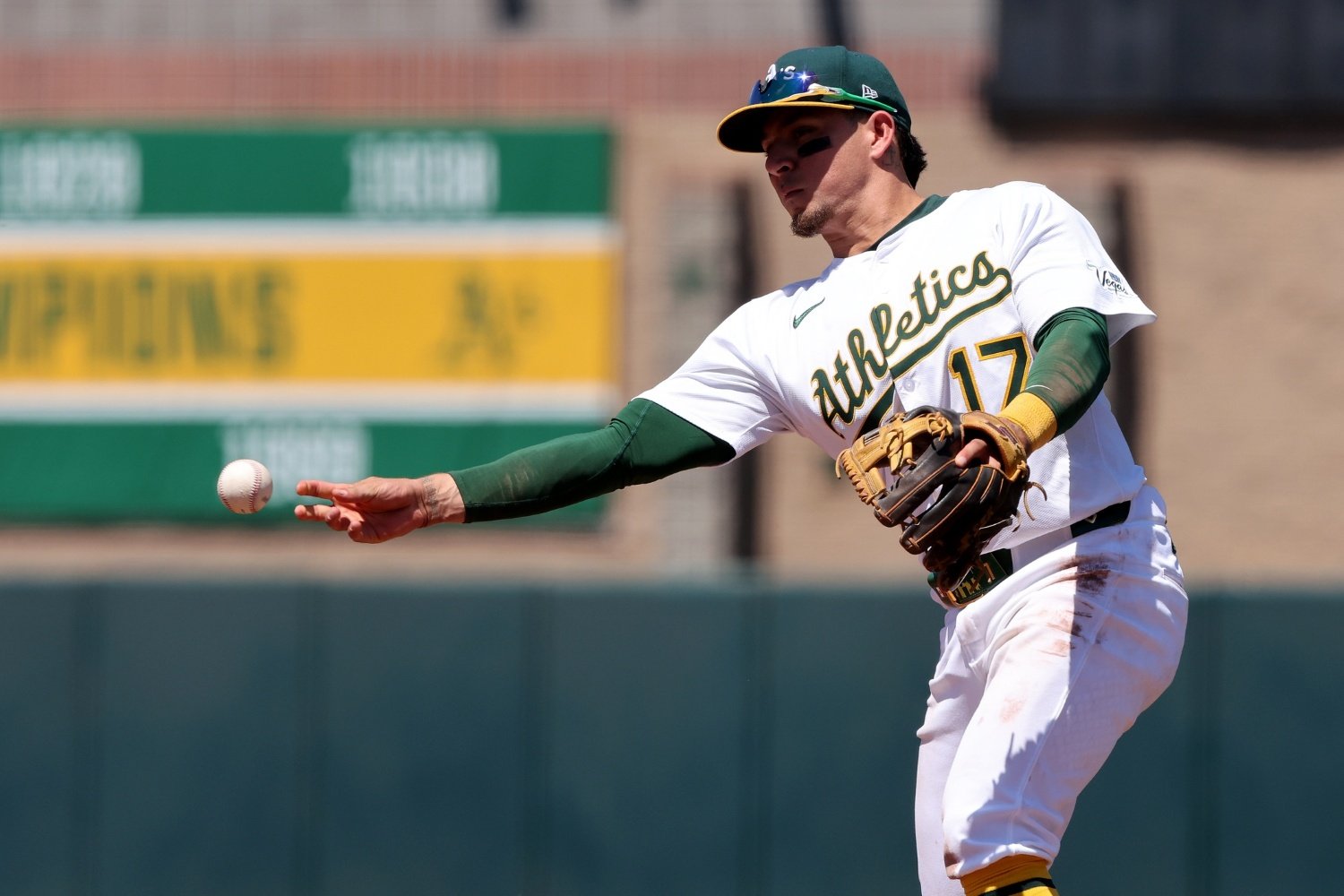 In a survey of their needs and chances to address them, the Cubs have made calls about players who would shore up their weaknesses on the bench and in the infield rotation, sources said this week. Two trade candidates on their radar are third baseman Luis Urías, of the West Sacramento Athletics, and utility man Willi Castro, of the Twins, and the Cubs have touched base with each of those teams this month. With Matt Shaw still struggling to generate the offense a team hopes to get from the hot corner, Chicago needs help there. Shaw has a more respectable .653 OPS since being recalled last month, but even that is underwhelming, and he's in a 4-for-40 funk that seems to confirm the staying power of the mechanical hurdles created by the huge leg kick he brought with him to the majors. Shaw is the obvious candidate for a short-term replacement, but Nico Hoerner, too, has been underwhelming. His singles-hitting profile is charming, but he's rapidly reaching the limits of it. At .288/.330/.354, his lack of power has gone from cute to glaring, and while it's fun that he's driven in 31 runs without a homer, that's a testament to the potency of the lineup around him, rather than to his actual utility. Both Urías and Castro offer versatility, and each would directly address the shortcomings of Shaw and Hoerner. Urías has had an up-and-down career, including a multi-year stint as a trusted member of Craig Counsell's Brewers teams (but one that ended on a slightly sour note). Now 28, he's due to become a free agent this fall, so the Athletics will take calls on him throughout the next six weeks. He's batting .253/.339/.394 this year, which looks underwhelming but far outstrips Shaw or Hoerner, and his feel for contact and the strike zone is very good. Urías was notable, through 2023, for a stretching, leaning stance, like he was trying to get a crick out of his back. It was an interesting setup, but it stopped working for him after a few injuries took him off the field and made it harder to maintain perfect timing. NFg3Z29fWGw0TUFRPT1fRGdVRlhWVUFCMUVBVzFGWFZnQUFBZ2NFQUZoVUFBUUFBUWNEVWxFTkIxWlhDUVpm.mp4 Last season, with the Mariners, he modified the stance to something a bit more traditional. His slightly arrhythmic, stomping leg kick, however, remained a signature of his swing. TndncW5fWGw0TUFRPT1fVlFsWFZ3SURCd01BQUZKUlVRQUFBUTVXQUFBRlZGUUFVVkFCVWdZSFVnSldVMVpl.mp4 This season, the stance has changed some more, but this time, an entire swing overhaul has accompanied it. Urías has altered his approach to contact the ball deeper, with a slightly flatter but notably faster swing. He's making solid contact about as consistently as any player in the league. Uk8yQktfWGw0TUFRPT1fVkFKWVhWUUZYd2NBRGxZSFVRQUhBZ2NBQUZnTVZBVUFDMVVBQUZFTkFnSUFCVllF.mp4 Though he's older than Isaac Paredes and isn't as good even right now as Paredes was during his best years in Tampa, Urías would be a somewhat Paredes-like pickup for this team—hopefully, with better results, since Paredes struggled for most of his brief Cubs tenure. The other important separator between the two is that, unlike Paredes, Urías wouldn't cost much in a deal. He doesn't come with club control or quite the consistent track record of Paredes, so the Cubs would merely have to make sure they make the best offer, if this is the avenue they choose. Castro, meanwhile, is a higher-upside, more compelling, lower-probability target. A switch-hitter, Castro, too, is 28. He, too, will hit free agency after the World Series. He's hitting a career-best .280/.362/.456 this year, and his right-handed swing has come along this year. His tools are a grade better than Urías's, almost across the board. He's best as a second baseman, defensively, but can play third or left with ease and shortstop, center or right in a pinch. There are two problems. Firstly, the Twins aren't yet ready to sell, according to multiple sources. They're 37-41, and in freefall, but unless they continue to struggle for the next month, they won't ship out anyone they believe is important to a potential playoff push. Castro is one of those players. Secondly, Castro has had durability problems. He's missed time this year with an oblique strain (yes, they happen to teams other than the Cubs, too), and with a sore wrist. He's dealing with the latter right now, so whether the Twins are willing to deal him might hinge on whether he can even get healthy (and remain productive) enough to command a worthwhile trade return. Either player would give the team the flexibility to either option Shaw back to Triple-A Iowa, or rotate the new hitter into the infield on a more balanced basis. Castro's ability to bat left-handed helps there. So do Urías's 57 games at second base this year; he's divided his time between second and third evenly over his career. Of course, either move also opens the possibility of trading Hoerner or Shaw to make a bigger splash on the pitching side, be it as part of the same transaction or in a separate one. Hoerner's contract extension runs out at the end of 2026. Dansby Swanson is likely to need to move off shortstop at that point, anyway. In light of that, the Cubs would consider trading Hoerner to a team interested in either a challenge deal or being involved in a three-team trade. They did so as recently as this winter, and are not viewing him as off-limits even in the context of a pennant race. One member of a rival front office pointed out that as Chicago lengthens its list of wants and needs on the summer shopping list, they'll quickly run into the limitations that come with having a solid but unspectacular farm system. To add a bat and multiple arms, as they hope to do, the team will need to move someone unexpected. That could be Hoerner, Shaw, or any of a number of other players. As a slightly sagging offense and their longstanding shortfall of pitching depth imperil their lead in the NL Central, they're widening their scope and accelerating their search for an upgrade to their roster. Urías and Castro are sensible targets, but no trade is considered imminent.
 -
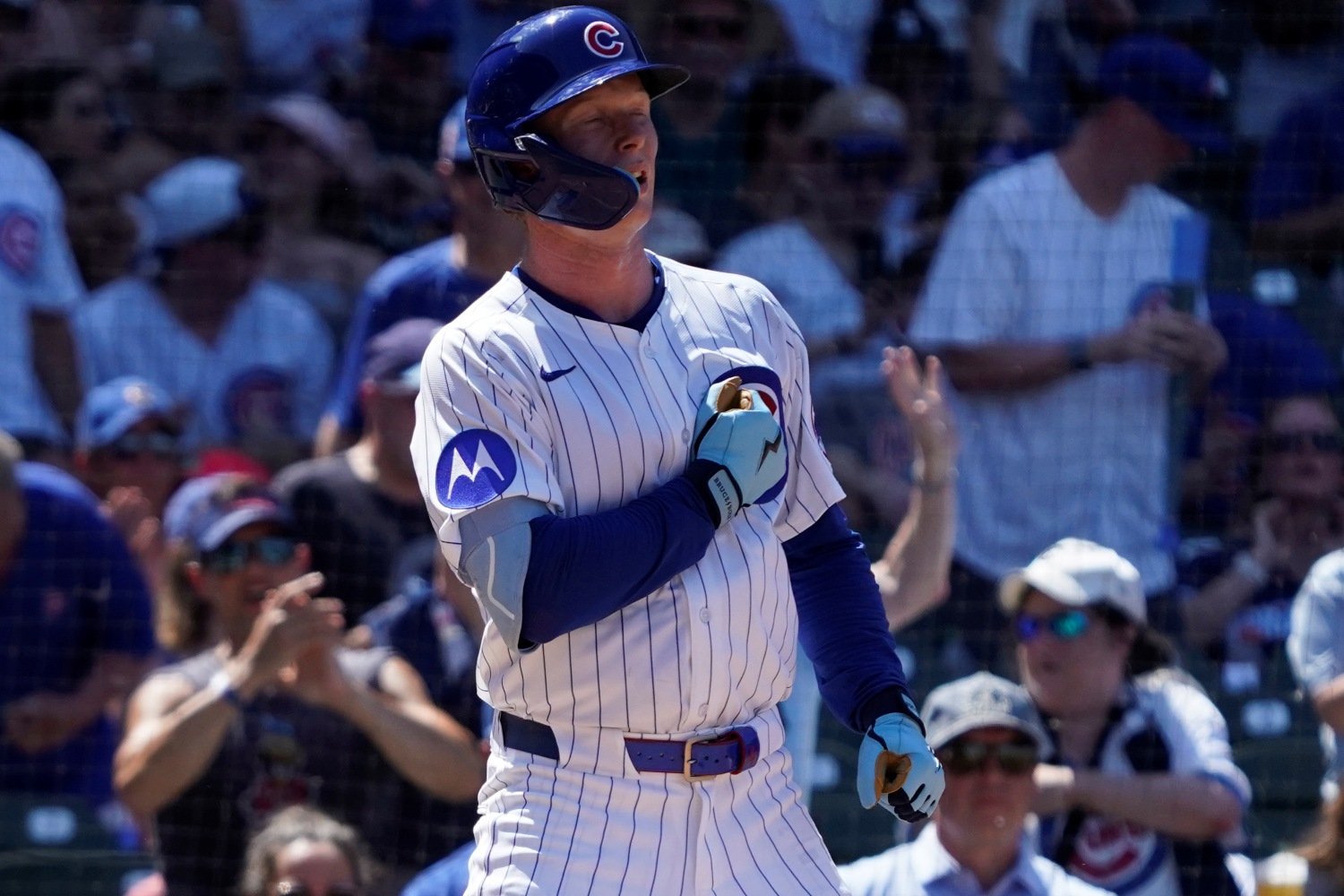 It's easy to get caught up in the hype, right now, because Pete Crow-Armstrong is having as good a season as any Cubs position player has had since Sammy Sosa was at his peak. That sounds hyperbolic, and in one way, it is: it's too early to say for certain that Crow-Armstrong can sustain this caliber of offensive production. He's hitting .267/.309/.557, but that on-base percentage is a telling number, and even it might be slightly kind to him. Over the last 30 days, the free-swinging center fielder has a .282 OBP, and his value has suddenly become very reliant on the unexpected explosion of power he's generating. On the other hand, there are no more than five non-catchers in the league who provide more value with their glove, so Crow-Armstrong's floor was higher than that of most young hitters, anyway. Now that he appears to be a genuine 30-homer slugger, and baking in the value he adds with sensational speed on the bases, it's hard to put more plodding or erratic players ahead of him—in All-Star balloting, or on ranking lists like this one. To give a sense of where things stand with Crow-Armstrong, here's a list of the 15 players I believe to be the best in the game, among those 25 years old or younger. This is just my own list, with limited influence from anyone inside the game, but it's a helpful way to frame this player in his shining moment. To consider what a contract extension for him might look like; where he has room to improve; and what already makes him special, it's helpful to draw some comparisons between Crow-Armstrong and his peers. Here goes. 1. Corbin Carroll, OF, Diamondbacks Cubs fans are well within their rights to hope Crow-Armstrong will win the MVP this year, and all comers must wrest the thing from Shohei Ohtani, but Carroll is one of the legitimate candidates beyond those two. He's not as strong a defender as Crow-Armstrong, and the Diamondbacks' good options in center field have kept him exclusively in right this year, but Carroll is the same kind of dynamic, slashing athlete Crow-Armstrong is. He's leading the National League in triples for what would be the third year in a row, and while some of that is due to Chase Field being unusually triples-friendly, the rest is that he's one of the game's great power/speed threats. He had a hiccup in the first half of last year, but for the lion's share of his tenure in the majors, Carroll has been an elite hitter. He has better strike-zone judgment than Crow-Armstrong; the same feel for contact; and more power. He's a balanced and lethal talent, to whom the Diamondbacks guaranteed $111 million over eight years. He can't become a free agent until after 2031, unless something goes horribly wrong in the meantime and Arizona declines a club option for that campaign. 2. Bobby Witt Jr., SS, Royals Plenty of people throughout baseball would put Witt first on this list. He can do most of what Carroll can, and he plays shortstop. The edges on his game are just a little bit more jagged. He steals bases, but is a bit too prone to getting caught for my tastes. He's good enough to stick at short for a long time, which is greatly to his credit, because he was a mess at that position when he first arrived in the majors. However, while some metrics now conisder him among the best defenders in the game at that spot, I would rate him as average there. He puts the ball in play at a very high rate and uses his speed to find hits, as well as driving the ball impressively. He's on a contract that runs at least through 2030, and he has player options at the end of it that could take the total value close to $300 million. It's more likely that he'll decline those options and end up making a new $300 million for his 30s, the way things are going now. 3. Gunnar Henderson, SS, Orioles He's still been very, very good this year, but Henderson has missed a bit of time and hasn't played at the transcendent level that made him a real threat to Witt and Aaron Judge in MVP consideration for most of 2024. Ranking him here is my bet on him climbing that one rung again and regaining a claim on the title of best young shortstop in the American League. A lefty batter, he's capable of just about everything Carroll is at the plate, with Witt's defensive profile. So far, he hasn't tapped into as much power as Carroll has; he doesn't lift the ball enough for that. The baserunning element also isn't there for him. Still, he's one of the game's brightest young stars, and it's easier than it should be to overlook him amid a stellar season that has only failed to live up to the historic standard he set for himself last summer. 4. Elly De La Cruz, SS, Reds The decisions get harder, rather than easier, starting right around here. De La Cruz has such wide error bars that it's hard to argue with folks who like any of the next three players on the list better than him. However, he's flashed the ability to impact a game on a level only one of them can match, and he can do it more often. His power is flashing the elite potential he's glimpsed throughout his short career, thanks in large part to better management of his oversized strike zone. I worry about his frame at shortstop, and about the logistics of switch-hitting at his size and with his athleticism. On balance, though, his speed and arm strength give him so many ways to be valuable that he still soars up this list. He could slide to third base or center field, and still be a superb fielder. He could continue to hit too many grounders, but he'd still end up with a lot of singles (and a whole lot of stolen bases) if he did. Again, too, the upside here is goofy. It's a switch-hitting shortstop who could go 40/40. It's the face of a franchise until 2040. It's hard to match. 5. Jackson Chourio, OF, Brewers Like Crow-Armstrong, Chourio can sometimes go into swing mode and help opponents get him out. Like Crow-Armstrong, he can also leave you utterly gobsmacked by the power he creates from a compact frame, and like Crow-Armstrong, he's a good defender in center field and an impactful athlete out there on the bases. His feel to hit is better than Crow-Armstrong's, and his track record of hitting at an elite level is longer. He's a player who could evolve in any of several different ways, which is nice; there's no one injury or developmental choice that I think can derail him. There's also a chance that he's essentially this generation's answer to Willie Mays. He moves that freakishly, and shows that much instinct and passion on the field. 6. Paul Skenes, RHP, Pirates I would have Skenes lower on this list. This is one place where I caved to some input from people who work in the game, and to the general facts on the ground. The market still loves starting pitchers, regardless of the risk they always pose and the ways that an ill-timed injury can set back an entire organization. Skenes has proved so good (and, for the moment, so durable) that there are few players anywhere in the league that any front office would covet more. I'm not sure that's the right mindset. I don't think he's actually any more likely to hold up and pitch 2,000 innings without blowing out or losing his stuff than were Stephen Strasburg or Gerrit Cole. Then again, there were rarely even 10 players in their age bracket that you'd have rather had than peak Strasburg or Cole, so maybe the insiders know what they're doing. For me, the next four names would all be above Skenes, but it's reasonable to put him here. 7. Jackson Merrill, OF, Padres How high you are on Merrill depends a little bit on how impressed you are with his defense, and a little bit on whether you think he can shake off the habit of getting banged up. If you're unconcerned on both fronts, he could sneak into the top five on this list. That's how good he's been, since he first set foot in the majors. He doesn't generate elite exit velocities or specialize in controlling the strike zone; he just has one of the game's great hit tools. Everything is hit on a line somewhere, and he uses his speed well on the bases. He's aggressive, smart, and profoundly talented. The smoothness of his last-minute conversion from shortstop to center field has me convinced that he'll be a plus outfielder for the next half-decade. He's also one of the better bets in the league to hit .300 over that span, which is like hitting .320 over most five-year spans of baseball history. 8. Julio Rodríguez, OF, Mariners Merrill signed a deal that guarantees him $135 million through at least 2034, but that's peanuts, compared to the contract Rodríguez extracted from the Mariners. He's under team control through at least 2029, but that could extend another five years or more—and the total dollars could stretch to the long side of $400 million, if Rodríguez produces an MVP-caliber season or two in the next three and a half years. Rodríguez is the most uncontroversially great defender on this list so far, which covers for the fact that his offensive tools outstrip his production most of the time. He's a free swinger and will get himself out at times, but only a handful of hitters in the league can rival his bat speed, so he has top-tier power lurking in his skill set, waiting to be actualized by some minor swing adjustments or a cleaned-up approach at the plate. 9. Pete Crow-Armstrong, CF, Cubs This is where Crow-Armstrong lands, for me. It's a massive leap from before the season, when he wouldn't have made my list of even 25 players in this age range, let alone the top 10. That's how much he's proved in half a year. Next, though, he has to demonstrate slightly improved plate discipline, or manage to hold onto all this newfound power. If he continues to get to first base at such a low rate, he'll gradually lose the value he's gotten so far from stealing bases brilliantly. Since he gets so much from robbing opposing hitters of knocks, though, he can stay among these ranks even if he merely keeps going at this rate. To rise into the top five, he would have to sand off the rough edges on his approach, which seems more like a long-term hope than something he's doing this year. 10. Riley Greene, OF, Tigers Speed makes everything else a player does well positively glow. Greene is one of those great players who can sometimes be overlooked, because speed isn't a part of their game. He's not slow, but he doesn't really steal bases, and he's a good but not game-altering defender in the outfield. At the plate, though, he can alter a game, alright. Greene is hitting .291/.345/.530 this year, at a home park that does nothing to accentuate his power. He's strikeout-prone, but he slugs with the best of them, and has a knack for hitting uncatchable line drives even when he's not clearing walls. He also has good instincts on the bases, and has done more than slouch from station to station once he gets on. Although there are plenty of hitters with gaudier numbers, there are few tougher outs in big moments than Greene. 11. James Wood, OF, Nationals Wood is simply a house of a human being, and he hits the ball as hard as almost anyone in baseball. He tends to hit a lot of grounders, and his hardest contact in the air usually goes to the opposite field. Nonetheless, he's on pace for 40 home runs in his age-22 season. He controls the zone well, too. He's already a merely acceptable corner outfielder, and might end up at first base or DH, but the bat is good enough to make you not care that much. Think "left-handed Vladimir Guerrero Jr.," and you're in the right neighborhood. 12. Hunter Greene, RHP, Reds Unlike Skenes, Greene does a lousy job of obscuring the risks associated with being a hard-throwing young starter. However, like Skenes, Greene can become the entire story of a game, and does so on a semi-regular basis when he's able to take the mound. His fastball-slider combination is one of the best the game has seen this decade, and he's shown impressive pitchability, rather than leaning always on sheer velocity. He's not as durable as you'd like a roster cornerstone to be, but they don't make pitchers like him who are, anymore. 13. Wyatt Langford, OF, Rangers It seems like Langford's profile is so stout as to be boring. He has plus plate discipline. He has plus power. He plays plus defense. He's a plus baserunner. In no category is he elite, though when he was drafted, his tools had scouts drooling. His rapid ascent to join the Rangers proved that polished college hitters are the best investments at the top of a draft class, but also served as a reminder that guys who seem to break the game itself in college fit right in with the Ian Happs of the world once they reach the extraordinary level of competition that is MLB. That said, as Langford makes adjustments, he's flashed the ability to be an explosive player, too. He's a tremendous blend of high floor and high ceiling. 14. Spencer Schwellenbach, RHP, Team from Outside Atlanta on Purpose Somehow, Schwellenbach never appeared on a preseason top-100 prospect list, at least among the major outlets. That already looks a bit embarrassing, for all involved. He's blossomed immediately into a six-pitch starter, who pounds the zone relentlessly and throws 97 with the fastball. In 36 starts, he's eclipsed 220 innings and has a 3.31 ERA. He strikes out almost one in four batters and walks fewer than one in 20. As with all pitchers, you have to worry about health and durability, but he's been incredibly good so far. 15. Masyn Winn, SS, Cardinals Small guy. Doesn't hit it all that hard. Fast, but not much of a basestealer. Why, then, does Winn make this list? He's an excellent defensive shortstop, is why. He's good at making contact and using the big part of the field, is why. He's still only 23 and is learning at the big-league level. Winn probably isn't a future superstar, but he's a first-division regular right now, and there are few players in this age bracket I would more confidently forecast to stay at that level or above it for the next 10 years. He'll have to shore up his offensive game some to emerge as a star, but Winn is a really helpful player already and has lots of ways to maintain that standing. That's my best estimate of how these players shake out, for now. Crow-Armstrong is already in excellent company, but because he has so many ways to affect the game at this point, he could yet reach another echelon. In the meantime, this helps make clear that it would be hugely expensive to extend him—but also how fortunate the Cubs are to have over five years of team control remaining, whether they succeed in extending him or not.
 -
Image courtesy of © David Banks-Imagn Images It's easy to get caught up in the hype, right now, because Pete Crow-Armstrong is having as good a season as any Cubs position player has had since Sammy Sosa was at his peak. That sounds hyperbolic, and in one way, it is: it's too early to say for certain that Crow-Armstrong can sustain this caliber of offensive production. He's hitting .267/.309/.557, but that on-base percentage is a telling number, and even it might be slightly kind to him. Over the last 30 days, the free-swinging center fielder has a .282 OBP, and his value has suddenly become very reliant on the unexpected explosion of power he's generating. On the other hand, there are no more than five non-catchers in the league who provide more value with their glove, so Crow-Armstrong's floor was higher than that of most young hitters, anyway. Now that he appears to be a genuine 30-homer slugger, and baking in the value he adds with sensational speed on the bases, it's hard to put more plodding or erratic players ahead of him—in All-Star balloting, or on ranking lists like this one. To give a sense of where things stand with Crow-Armstrong, here's a list of the 15 players I believe to be the best in the game, among those 25 years old or younger. This is just my own list, with limited influence from anyone inside the game, but it's a helpful way to frame this player in his shining moment. To consider what a contract extension for him might look like; where he has room to improve; and what already makes him special, it's helpful to draw some comparisons between Crow-Armstrong and his peers. Here goes. 1. Corbin Carroll, OF, Diamondbacks Cubs fans are well within their rights to hope Crow-Armstrong will win the MVP this year, and all comers must wrest the thing from Shohei Ohtani, but Carroll is one of the legitimate candidates beyond those two. He's not as strong a defender as Crow-Armstrong, and the Diamondbacks' good options in center field have kept him exclusively in right this year, but Carroll is the same kind of dynamic, slashing athlete Crow-Armstrong is. He's leading the National League in triples for what would be the third year in a row, and while some of that is due to Chase Field being unusually triples-friendly, the rest is that he's one of the game's great power/speed threats. He had a hiccup in the first half of last year, but for the lion's share of his tenure in the majors, Carroll has been an elite hitter. He has better strike-zone judgment than Crow-Armstrong; the same feel for contact; and more power. He's a balanced and lethal talent, to whom the Diamondbacks guaranteed $111 million over eight years. He can't become a free agent until after 2031, unless something goes horribly wrong in the meantime and Arizona declines a club option for that campaign. 2. Bobby Witt Jr., SS, Royals Plenty of people throughout baseball would put Witt first on this list. He can do most of what Carroll can, and he plays shortstop. The edges on his game are just a little bit more jagged. He steals bases, but is a bit too prone to getting caught for my tastes. He's good enough to stick at short for a long time, which is greatly to his credit, because he was a mess at that position when he first arrived in the majors. However, while some metrics now conisder him among the best defenders in the game at that spot, I would rate him as average there. He puts the ball in play at a very high rate and uses his speed to find hits, as well as driving the ball impressively. He's on a contract that runs at least through 2030, and he has player options at the end of it that could take the total value close to $300 million. It's more likely that he'll decline those options and end up making a new $300 million for his 30s, the way things are going now. 3. Gunnar Henderson, SS, Orioles He's still been very, very good this year, but Henderson has missed a bit of time and hasn't played at the transcendent level that made him a real threat to Witt and Aaron Judge in MVP consideration for most of 2024. Ranking him here is my bet on him climbing that one rung again and regaining a claim on the title of best young shortstop in the American League. A lefty batter, he's capable of just about everything Carroll is at the plate, with Witt's defensive profile. So far, he hasn't tapped into as much power as Carroll has; he doesn't lift the ball enough for that. The baserunning element also isn't there for him. Still, he's one of the game's brightest young stars, and it's easier than it should be to overlook him amid a stellar season that has only failed to live up to the historic standard he set for himself last summer. 4. Elly De La Cruz, SS, Reds The decisions get harder, rather than easier, starting right around here. De La Cruz has such wide error bars that it's hard to argue with folks who like any of the next three players on the list better than him. However, he's flashed the ability to impact a game on a level only one of them can match, and he can do it more often. His power is flashing the elite potential he's glimpsed throughout his short career, thanks in large part to better management of his oversized strike zone. I worry about his frame at shortstop, and about the logistics of switch-hitting at his size and with his athleticism. On balance, though, his speed and arm strength give him so many ways to be valuable that he still soars up this list. He could slide to third base or center field, and still be a superb fielder. He could continue to hit too many grounders, but he'd still end up with a lot of singles (and a whole lot of stolen bases) if he did. Again, too, the upside here is goofy. It's a switch-hitting shortstop who could go 40/40. It's the face of a franchise until 2040. It's hard to match. 5. Jackson Chourio, OF, Brewers Like Crow-Armstrong, Chourio can sometimes go into swing mode and help opponents get him out. Like Crow-Armstrong, he can also leave you utterly gobsmacked by the power he creates from a compact frame, and like Crow-Armstrong, he's a good defender in center field and an impactful athlete out there on the bases. His feel to hit is better than Crow-Armstrong's, and his track record of hitting at an elite level is longer. He's a player who could evolve in any of several different ways, which is nice; there's no one injury or developmental choice that I think can derail him. There's also a chance that he's essentially this generation's answer to Willie Mays. He moves that freakishly, and shows that much instinct and passion on the field. 6. Paul Skenes, RHP, Pirates I would have Skenes lower on this list. This is one place where I caved to some input from people who work in the game, and to the general facts on the ground. The market still loves starting pitchers, regardless of the risk they always pose and the ways that an ill-timed injury can set back an entire organization. Skenes has proved so good (and, for the moment, so durable) that there are few players anywhere in the league that any front office would covet more. I'm not sure that's the right mindset. I don't think he's actually any more likely to hold up and pitch 2,000 innings without blowing out or losing his stuff than were Stephen Strasburg or Gerrit Cole. Then again, there were rarely even 10 players in their age bracket that you'd have rather had than peak Strasburg or Cole, so maybe the insiders know what they're doing. For me, the next four names would all be above Skenes, but it's reasonable to put him here. 7. Jackson Merrill, OF, Padres How high you are on Merrill depends a little bit on how impressed you are with his defense, and a little bit on whether you think he can shake off the habit of getting banged up. If you're unconcerned on both fronts, he could sneak into the top five on this list. That's how good he's been, since he first set foot in the majors. He doesn't generate elite exit velocities or specialize in controlling the strike zone; he just has one of the game's great hit tools. Everything is hit on a line somewhere, and he uses his speed well on the bases. He's aggressive, smart, and profoundly talented. The smoothness of his last-minute conversion from shortstop to center field has me convinced that he'll be a plus outfielder for the next half-decade. He's also one of the better bets in the league to hit .300 over that span, which is like hitting .320 over most five-year spans of baseball history. 8. Julio Rodríguez, OF, Mariners Merrill signed a deal that guarantees him $135 million through at least 2034, but that's peanuts, compared to the contract Rodríguez extracted from the Mariners. He's under team control through at least 2029, but that could extend another five years or more—and the total dollars could stretch to the long side of $400 million, if Rodríguez produces an MVP-caliber season or two in the next three and a half years. Rodríguez is the most uncontroversially great defender on this list so far, which covers for the fact that his offensive tools outstrip his production most of the time. He's a free swinger and will get himself out at times, but only a handful of hitters in the league can rival his bat speed, so he has top-tier power lurking in his skill set, waiting to be actualized by some minor swing adjustments or a cleaned-up approach at the plate. 9. Pete Crow-Armstrong, CF, Cubs This is where Crow-Armstrong lands, for me. It's a massive leap from before the season, when he wouldn't have made my list of even 25 players in this age range, let alone the top 10. That's how much he's proved in half a year. Next, though, he has to demonstrate slightly improved plate discipline, or manage to hold onto all this newfound power. If he continues to get to first base at such a low rate, he'll gradually lose the value he's gotten so far from stealing bases brilliantly. Since he gets so much from robbing opposing hitters of knocks, though, he can stay among these ranks even if he merely keeps going at this rate. To rise into the top five, he would have to sand off the rough edges on his approach, which seems more like a long-term hope than something he's doing this year. 10. Riley Greene, OF, Tigers Speed makes everything else a player does well positively glow. Greene is one of those great players who can sometimes be overlooked, because speed isn't a part of their game. He's not slow, but he doesn't really steal bases, and he's a good but not game-altering defender in the outfield. At the plate, though, he can alter a game, alright. Greene is hitting .291/.345/.530 this year, at a home park that does nothing to accentuate his power. He's strikeout-prone, but he slugs with the best of them, and has a knack for hitting uncatchable line drives even when he's not clearing walls. He also has good instincts on the bases, and has done more than slouch from station to station once he gets on. Although there are plenty of hitters with gaudier numbers, there are few tougher outs in big moments than Greene. 11. James Wood, OF, Nationals Wood is simply a house of a human being, and he hits the ball as hard as almost anyone in baseball. He tends to hit a lot of grounders, and his hardest contact in the air usually goes to the opposite field. Nonetheless, he's on pace for 40 home runs in his age-22 season. He controls the zone well, too. He's already a merely acceptable corner outfielder, and might end up at first base or DH, but the bat is good enough to make you not care that much. Think "left-handed Vladimir Guerrero Jr.," and you're in the right neighborhood. 12. Hunter Greene, RHP, Reds Unlike Skenes, Greene does a lousy job of obscuring the risks associated with being a hard-throwing young starter. However, like Skenes, Greene can become the entire story of a game, and does so on a semi-regular basis when he's able to take the mound. His fastball-slider combination is one of the best the game has seen this decade, and he's shown impressive pitchability, rather than leaning always on sheer velocity. He's not as durable as you'd like a roster cornerstone to be, but they don't make pitchers like him who are, anymore. 13. Wyatt Langford, OF, Rangers It seems like Langford's profile is so stout as to be boring. He has plus plate discipline. He has plus power. He plays plus defense. He's a plus baserunner. In no category is he elite, though when he was drafted, his tools had scouts drooling. His rapid ascent to join the Rangers proved that polished college hitters are the best investments at the top of a draft class, but also served as a reminder that guys who seem to break the game itself in college fit right in with the Ian Happs of the world once they reach the extraordinary level of competition that is MLB. That said, as Langford makes adjustments, he's flashed the ability to be an explosive player, too. He's a tremendous blend of high floor and high ceiling. 14. Spencer Schwellenbach, RHP, Team from Outside Atlanta on Purpose Somehow, Schwellenbach never appeared on a preseason top-100 prospect list, at least among the major outlets. That already looks a bit embarrassing, for all involved. He's blossomed immediately into a six-pitch starter, who pounds the zone relentlessly and throws 97 with the fastball. In 36 starts, he's eclipsed 220 innings and has a 3.31 ERA. He strikes out almost one in four batters and walks fewer than one in 20. As with all pitchers, you have to worry about health and durability, but he's been incredibly good so far. 15. Masyn Winn, SS, Cardinals Small guy. Doesn't hit it all that hard. Fast, but not much of a basestealer. Why, then, does Winn make this list? He's an excellent defensive shortstop, is why. He's good at making contact and using the big part of the field, is why. He's still only 23 and is learning at the big-league level. Winn probably isn't a future superstar, but he's a first-division regular right now, and there are few players in this age bracket I would more confidently forecast to stay at that level or above it for the next 10 years. He'll have to shore up his offensive game some to emerge as a star, but Winn is a really helpful player already and has lots of ways to maintain that standing. That's my best estimate of how these players shake out, for now. Crow-Armstrong is already in excellent company, but because he has so many ways to affect the game at this point, he could yet reach another echelon. In the meantime, this helps make clear that it would be hugely expensive to extend him—but also how fortunate the Cubs are to have over five years of team control remaining, whether they succeed in extending him or not. View full article
-
Image courtesy of © David Banks-Imagn Images Home plate umpire Chad Whitson had to leave Saturday's game between the Mariners and Cubs at Wrigley Field after just five innings, with heat-related illness. The game-time temperature in Chicago was 94° Fahrenheit, with the heat index rising over 100° at times during the day. Umpires are, by far, the most frequent on-field personnel to succumb to heat in Major League Baseball, due to their considerably higher average age, relative to players; the fact that they must spend the whole game on the field, rather than taking turns in the dugouts as the teams do; and the extra equipment the home-plate umpire has to wear for safety. Because few fans take umpires' welfare especially seriously, their disproportionate share of the burden added on dangerously hot days has made the game's interaction with a rapidly warming world somewhat less popular a topic than it should be. With each passing year, though, it's becoming harder to ignore how dangerous it sometimes is to partake in MLB games during the heat of summer—and how much longer that portion of the summer is. According to the Environmental Protection Agency (EPA) and National Oceanic and Atmospheric Administration (NOAA), heat waves—multi-day events during which temperatures reach ranges dangerous for all humans and stay there for extended periods—occur almost three times as often as they did in the 1960s; roughly twice as often as they did in the 1980s; and over 30% more often than they did even in the first decade of the 21st century. Those heat waves last longer (4.3 days, up from 3.0 on a steady climb), are more intense (the temperature exceeds the normal range by more) and occur over a wider span of the year (with a heat wave season that lasts 10 weeks, up from less than 7 weeks even 30 years ago) than they used to. There is no good news here. None. There is no intelligent debate to be had about the existence, the urgency, or the enormity of climate change. It's happening. It's threatening human lives, and the American lifestyle, in myriad ways. It must be reckoned with, and it must be mitigated, even though it can't be stopped at this stage. The problem, if you're a baseball fan, is that baseball can do very little to mitigate this crisis. That's not the same as saying it can't do anything. It can, and it must. The league should create and abide by a policy of postponing games scheduled to take place under unsafe conditions with regard to heat and/or air quality, just as they do with rain and other forms of severe weather. There's already no rule proscribing heat-related delays or postponements, but they need to be considered more seriously, more often—because the number of occasions on which they are real threats to player safety, fan safety, and the quality and experience of the ballgame has risen sharply, and will continue to do so. In the meantime, of course, the league should bend itself to the task of using its might as a lobbying entity to support measures that reduce the impact of climate change and have a chance to slow down the warming trends. Many (though far from all) of the mitigations and partial solutions to this crisis must be large-scale, requiring corporate and/or government action, not just individuals or even teams making minor tweaks. Baseball should be telling that to leaders at home and abroad. That, alas, feels very unlikely right now. Neither the sport nor its fan base has even fully grappled with the fact that one of its teams has been displaced by a climate-related disaster, and that more such cases are soon to follow. Those should be the easy calls to action. It will be much harder, unless and until things get even worse, to stir this particular body to action when it comes to keeping people safe from our day-to-day, frog-in-a-pot problem: it's getting hotter. Slowly, but surely. And also, not that slowly. The game's preferred tactic, of course, is to retreat inside. If the West Sacramento Athletics accomplish a move to Las Vegas, as they hope to, it will be to a roofed and air-conditioned stadium. If the Rays regain their home at Tropicana Field, there will once again be eight teams who play home games under roofs at least some of the time, and the Vegas A's would be the ninth. However, such stadia are more expensive, take up more room, and are only Band-Aids on the bigger problem. Baseball is our summer game. It celebrates nature and thrives in it. An anodyne, indoor version of the game is not worth having, and neither is a world where we can only breathe fresh air or bear the temperatures indoors. Baseball is one place where we're feeling an ever-increasing crush from the world, telling us—in no uncertain terms—that something has to give. For the next several years, baseball will need to be played only when safe, which will mean building in more off days on the long calendar of the season and/or canceling more contests. For the several years after that, it will either be unplayable altogether; played only inside, like arena football; or played safely in the summers of a better world. We have to decide which of those it will be, right now, and watching Whitson be forced from Saturday's game should help us all make our choices. View full article
-
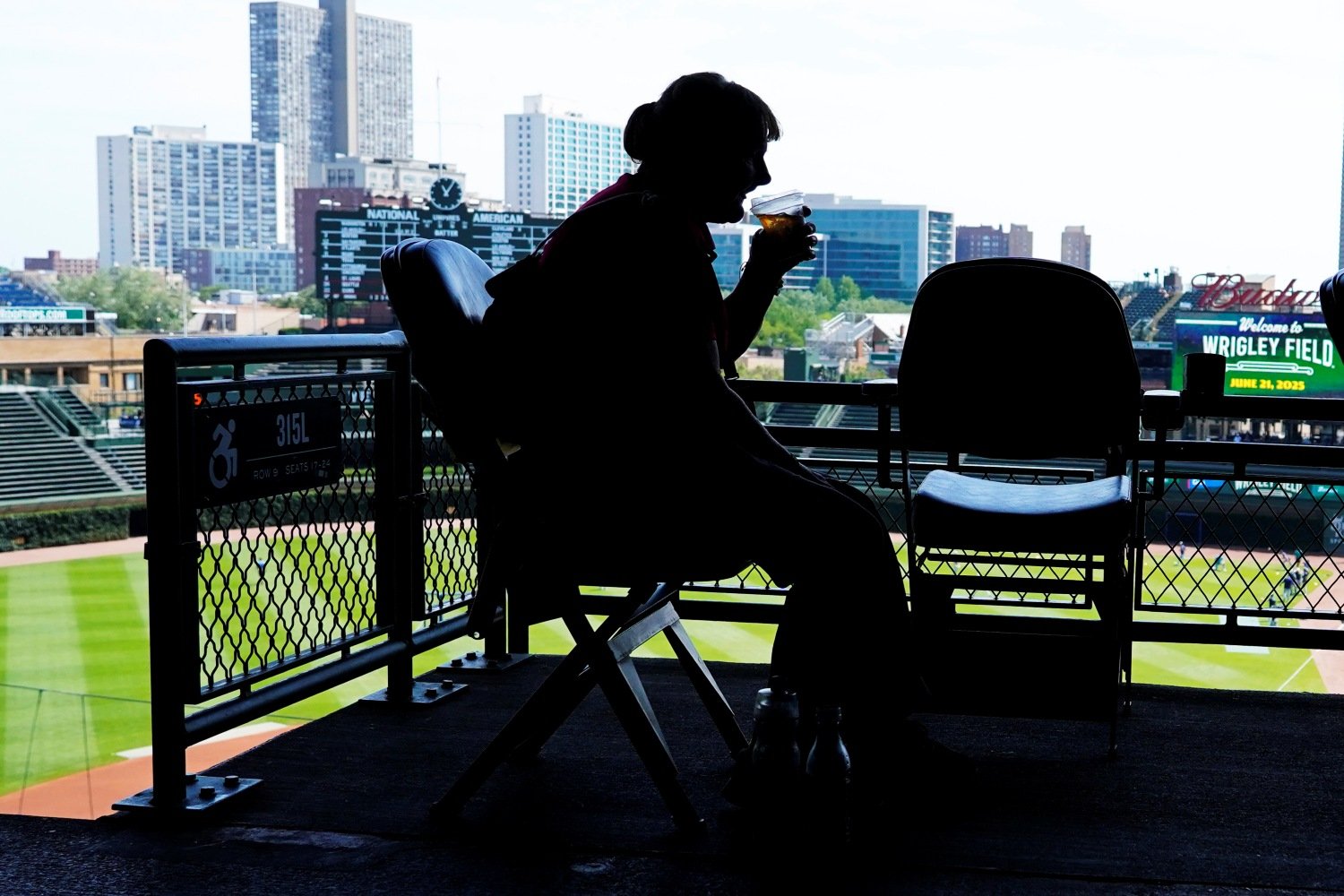 Home plate umpire Chad Whitson had to leave Saturday's game between the Mariners and Cubs at Wrigley Field after just five innings, with heat-related illness. The game-time temperature in Chicago was 94° Fahrenheit, with the heat index rising over 100° at times during the day. Umpires are, by far, the most frequent on-field personnel to succumb to heat in Major League Baseball, due to their considerably higher average age, relative to players; the fact that they must spend the whole game on the field, rather than taking turns in the dugouts as the teams do; and the extra equipment the home-plate umpire has to wear for safety. Because few fans take umpires' welfare especially seriously, their disproportionate share of the burden added on dangerously hot days has made the game's interaction with a rapidly warming world somewhat less popular a topic than it should be. With each passing year, though, it's becoming harder to ignore how dangerous it sometimes is to partake in MLB games during the heat of summer—and how much longer that portion of the summer is. According to the Environmental Protection Agency (EPA) and National Oceanic and Atmospheric Administration (NOAA), heat waves—multi-day events during which temperatures reach ranges dangerous for all humans and stay there for extended periods—occur almost three times as often as they did in the 1960s; roughly twice as often as they did in the 1980s; and over 30% more often than they did even in the first decade of the 21st century. Those heat waves last longer (4.3 days, up from 3.0 on a steady climb), are more intense (the temperature exceeds the normal range by more) and occur over a wider span of the year (with a heat wave season that lasts 10 weeks, up from less than 7 weeks even 30 years ago) than they used to. There is no good news here. None. There is no intelligent debate to be had about the existence, the urgency, or the enormity of climate change. It's happening. It's threatening human lives, and the American lifestyle, in myriad ways. It must be reckoned with, and it must be mitigated, even though it can't be stopped at this stage. The problem, if you're a baseball fan, is that baseball can do very little to mitigate this crisis. That's not the same as saying it can't do anything. It can, and it must. The league should create and abide by a policy of postponing games scheduled to take place under unsafe conditions with regard to heat and/or air quality, just as they do with rain and other forms of severe weather. There's already no rule proscribing heat-related delays or postponements, but they need to be considered more seriously, more often—because the number of occasions on which they are real threats to player safety, fan safety, and the quality and experience of the ballgame has risen sharply, and will continue to do so. In the meantime, of course, the league should bend itself to the task of using its might as a lobbying entity to support measures that reduce the impact of climate change and have a chance to slow down the warming trends. Many (though far from all) of the mitigations and partial solutions to this crisis must be large-scale, requiring corporate and/or government action, not just individuals or even teams making minor tweaks. Baseball should be telling that to leaders at home and abroad. That, alas, feels very unlikely right now. Neither the sport nor its fan base has even fully grappled with the fact that one of its teams has been displaced by a climate-related disaster, and that more such cases are soon to follow. Those should be the easy calls to action. It will be much harder, unless and until things get even worse, to stir this particular body to action when it comes to keeping people safe from our day-to-day, frog-in-a-pot problem: it's getting hotter. Slowly, but surely. And also, not that slowly. The game's preferred tactic, of course, is to retreat inside. If the West Sacramento Athletics accomplish a move to Las Vegas, as they hope to, it will be to a roofed and air-conditioned stadium. If the Rays regain their home at Tropicana Field, there will once again be eight teams who play home games under roofs at least some of the time, and the Vegas A's would be the ninth. However, such stadia are more expensive, take up more room, and are only Band-Aids on the bigger problem. Baseball is our summer game. It celebrates nature and thrives in it. An anodyne, indoor version of the game is not worth having, and neither is a world where we can only breathe fresh air or bear the temperatures indoors. Baseball is one place where we're feeling an ever-increasing crush from the world, telling us—in no uncertain terms—that something has to give. For the next several years, baseball will need to be played only when safe, which will mean building in more off days on the long calendar of the season and/or canceling more contests. For the several years after that, it will either be unplayable altogether; played only inside, like arena football; or played safely in the summers of a better world. We have to decide which of those it will be, right now, and watching Whitson be forced from Saturday's game should help us all make our choices.
 -
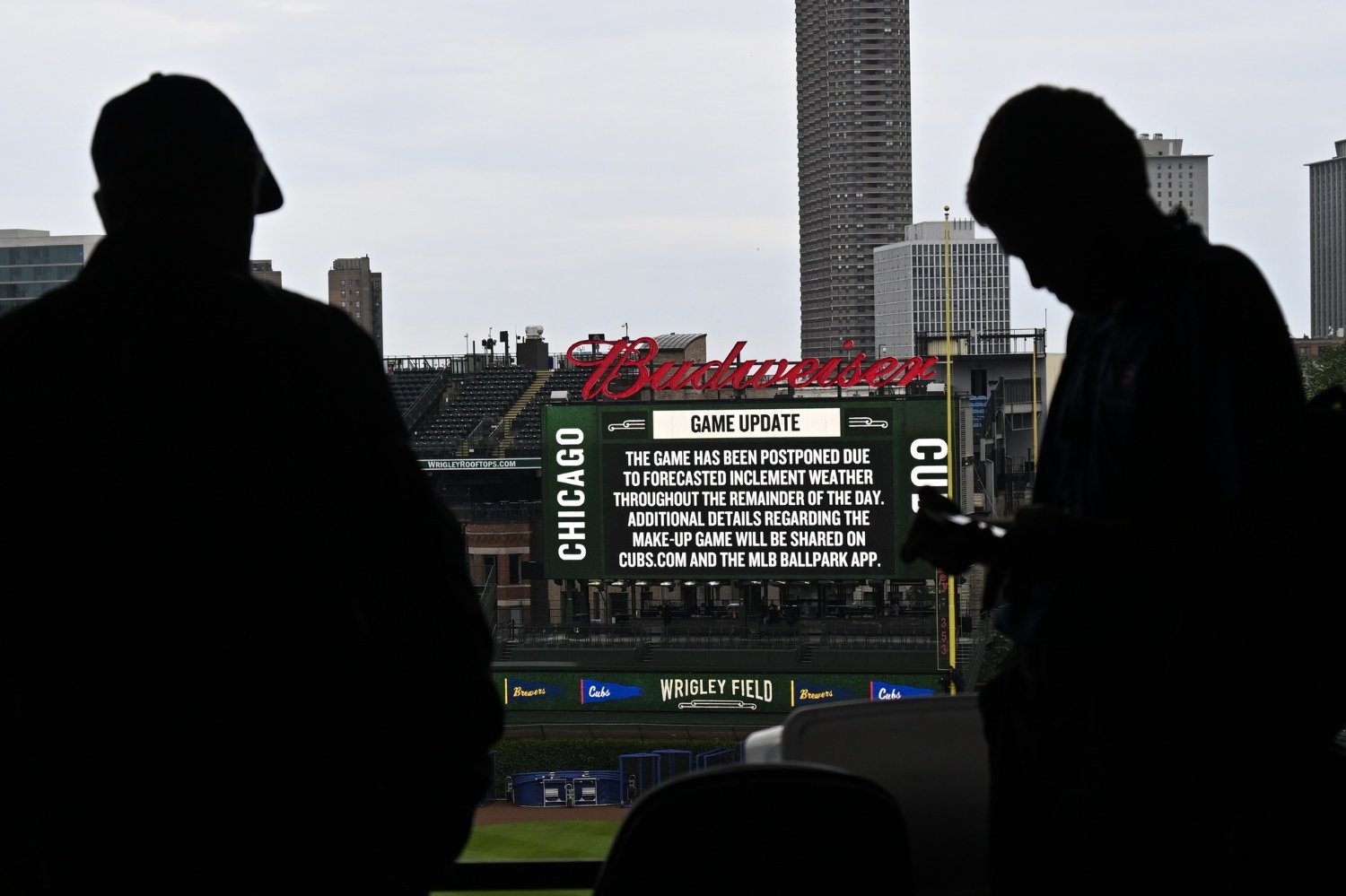 Rain washed out the middle game of what was slated to be a three-game series between the Cubs and Brewers at Wrigley Field Wednesday night. The contest will be made up at the front end of what is now a five-game series Aug. 18-21. Circle those dates on your calendar right now. In one sense, this postponement will create extra pressure on the Cubs during the dog days of the late summer. With a doubleheader Monday, Aug. 18, the team now plays 14 games in 13 days in the middle of that month and 23 games in 23 days from Aug. 12 through Sep. 3. That stretch will start with a trip to St. Louis (Aug. 8-10) and Toronto (Aug. 12-14). The Cubs will come home to play a weekend series against the Pirates and that five-game bullpen-burner against the Brewers, then head back out on the road for a three-stop West Coast swing through Anaheim, San Francisco and Colorado. After they come back from that trip (with the only off day in that whole window coming between the Angels and Giants series) and host the team from Georgia for three games beginning on Labor Day, they'll be feeling the grind pretty hard. In another sense, though, this is a welcome reprieve. Monday was their first off day since Jun. 2, and though they managed to go 7-6 over their first long stretch without a day off, they were set for another, tougher one beginning with Tuesday's game against the Crew. Instead, they get this extra breath of rest, and can take a fresh bullpen into their final game with Milwaukee; a weekend showdown with the Mariners; and a daunting seven-game trip to St. Louis and Houston. Moreover, because Jameson Taillon is sliding back to take the start Thursday, the Brewers will have to wait at least until the two teams see each other again at the end of July for their first live look at Cade Horton. The rookie righthander can use every extra day the schedule affords, given his low volume of professional innings to this point, and keeping a pitcher away from the eyes of a divisional opponent for as long as possible is always nice. One benefit of the new schedule format is that pitchers don't have to face the same lineup twice in a short span as often. Horton has yet to see any opposing team twice, and depending on when Shota Imanaga returns from the injured list, that now looks like it could remain true well into August. The final seven weeks of this season will be a full-fledged gauntlet for the Cubs. With this postponement and the fierce stretch it creates for them in the second half of August, the pressure to find a bit better depth for the pitching staff (and to manage that staff perfectly, avoiding losing helpful arms for as long as possible and keeping everyone at their best) rises a bit. The biggest takeaway from the rainout, though, might be just how much fun that August series at Wrigley Field will be. A five-game series between two contending division rivals is one of the most rare treats the game can give us. As long as the Cubs properly prepare for it, that quintet of games should be a chance to secure their grip on the division and gear up for the final six weeks of the campaign, with a humongous crowd and a unique energy seizing the ballpark.
 -
Image courtesy of © Matt Marton-Imagn Images Rain washed out the middle game of what was slated to be a three-game series between the Cubs and Brewers at Wrigley Field Wednesday night. The contest will be made up at the front end of what is now a five-game series Aug. 18-21. Circle those dates on your calendar right now. In one sense, this postponement will create extra pressure on the Cubs during the dog days of the late summer. With a doubleheader Monday, Aug. 18, the team now plays 14 games in 13 days in the middle of that month and 23 games in 23 days from Aug. 12 through Sep. 3. That stretch will start with a trip to St. Louis (Aug. 8-10) and Toronto (Aug. 12-14). The Cubs will come home to play a weekend series against the Pirates and that five-game bullpen-burner against the Brewers, then head back out on the road for a three-stop West Coast swing through Anaheim, San Francisco and Colorado. After they come back from that trip (with the only off day in that whole window coming between the Angels and Giants series) and host the team from Georgia for three games beginning on Labor Day, they'll be feeling the grind pretty hard. In another sense, though, this is a welcome reprieve. Monday was their first off day since Jun. 2, and though they managed to go 7-6 over their first long stretch without a day off, they were set for another, tougher one beginning with Tuesday's game against the Crew. Instead, they get this extra breath of rest, and can take a fresh bullpen into their final game with Milwaukee; a weekend showdown with the Mariners; and a daunting seven-game trip to St. Louis and Houston. Moreover, because Jameson Taillon is sliding back to take the start Thursday, the Brewers will have to wait at least until the two teams see each other again at the end of July for their first live look at Cade Horton. The rookie righthander can use every extra day the schedule affords, given his low volume of professional innings to this point, and keeping a pitcher away from the eyes of a divisional opponent for as long as possible is always nice. One benefit of the new schedule format is that pitchers don't have to face the same lineup twice in a short span as often. Horton has yet to see any opposing team twice, and depending on when Shota Imanaga returns from the injured list, that now looks like it could remain true well into August. The final seven weeks of this season will be a full-fledged gauntlet for the Cubs. With this postponement and the fierce stretch it creates for them in the second half of August, the pressure to find a bit better depth for the pitching staff (and to manage that staff perfectly, avoiding losing helpful arms for as long as possible and keeping everyone at their best) rises a bit. The biggest takeaway from the rainout, though, might be just how much fun that August series at Wrigley Field will be. A five-game series between two contending division rivals is one of the most rare treats the game can give us. As long as the Cubs properly prepare for it, that quintet of games should be a chance to secure their grip on the division and gear up for the final six weeks of the campaign, with a humongous crowd and a unique energy seizing the ballpark. View full article
-
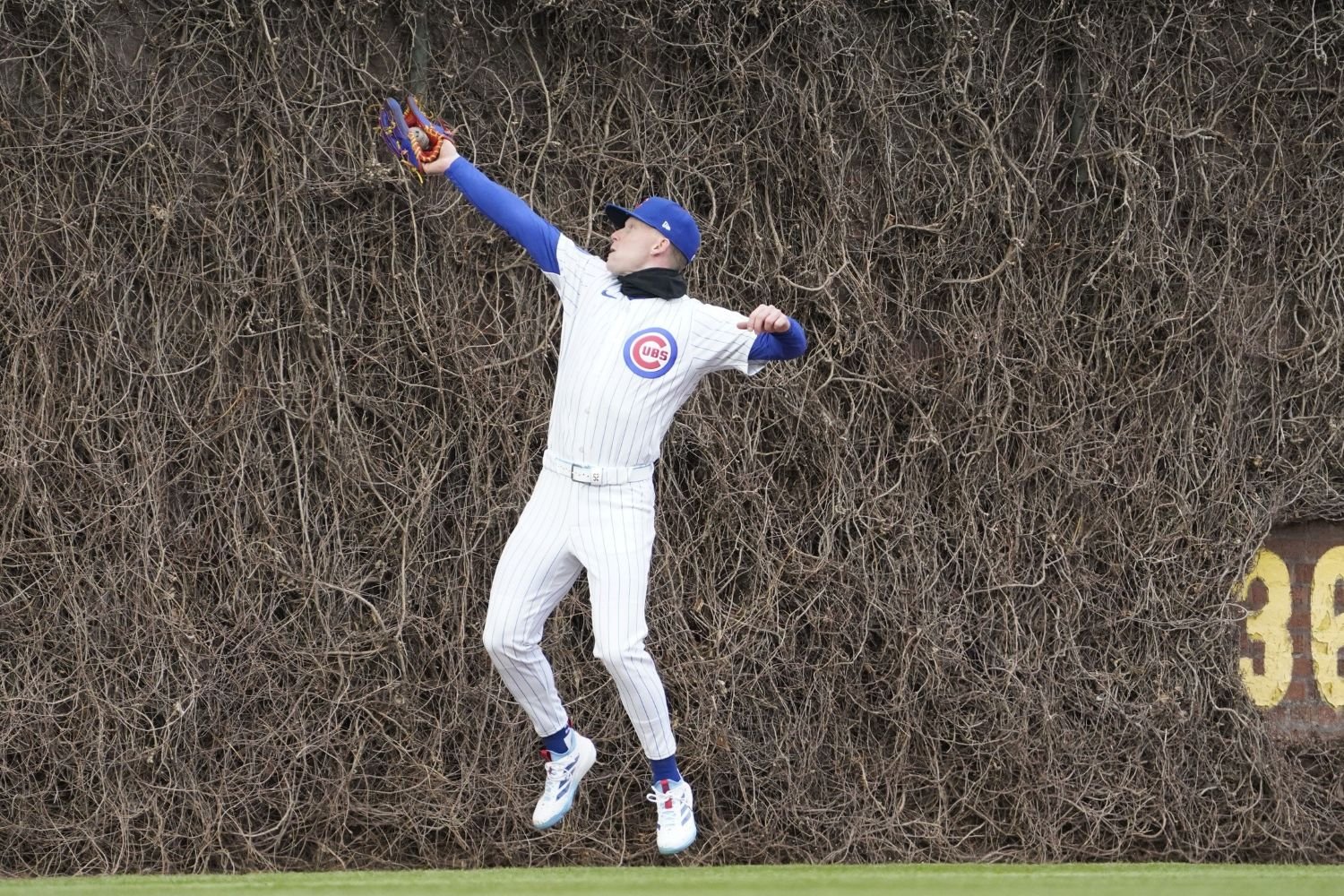 Look, Pete Crow-Armstrong doesn't have to be a technician to rate as one of the best defensive center fielders in baseball. He has what football people call "recovery speed"; he could afford to get a late break on a ball or take a wrong first step, and still get to most things. Last season, he covered 2.6 feet more than an average outfielder over the moment of time Statcast labels as the "Burst" period, from 1.6 to 3.0 seconds after the ball leaves the bat. That was the best number in the majors. Before that Burst period, though, comes the time from the crack of the bat to 1.5 seconds of hang time, which Statcast categorizes under Reaction. That's the window in which a fielder can get a head start on the ball, reducing the need for sheer speed to catch up to it. Last season, in his first extended stint in the majors, Crow-Armstrong was actually no better than a typical center fielder at getting moving in the right direction. It's not quite clear based on how the graphic pops up, so to guide you, Crow-Armstrong's dot in this chart is the topmost, reddest one in the column just to the left of that box. As you can see, he was essentially average in terms of Reaction. He did two things meaningfully better than most outfielders, over the first three seconds of the ball's flight. The first, of course, is that acceleration and closing speed, categorized under Burst. The second is route efficiency. Crow-Armstrong took more direct paths to the ball than a typical outfielder, which (combined with that sheer speed) allowed him to stretch his range beyond what would be implied by his initial jump. He was superb at getting to balls, even last year. He racked up lots of value that way. If you watched with a discerning eye, though, you could see him needing to make up for a fairly unremarkable first step, and you could see him taking big risks by crashing into walls or diving at full speed on hard-hit balls. He was never beating the ball to its spot, at the edges of his range, so much as catching up to it before it could quite reach its destination. This year, it's a different story. His Burst is now 3.0 feet better than an average outfielder, which means he's leading the league even more handily. However, he's also doing that after getting one of the better first steps in the league. Again, for clarity's sake: the dot corresponding to Crow-Armstrong is the bright red one to the left of his ear. You can see the migration here. Yes, he's actually taking much less efficient routes to the ball—but only because he's learned to gain so much ground early in the flight of the ball that he can make late adjustments and avoid having to catch any but the toughest balls at full sprint. He's reading the ball so well and so early that he's a full five feet ahead of an average outfielder within three seconds, so giving a bit of that back on some balls (to bend his run away from a wall, for instance, or to bring his body under control for a throw, or to avoid a collision with a teammate) is no loss. Here's just one, very subtle example of the difference this makes. Last year, in Colorado, he ran down a long fly ball to left-center field. NjQxMDNfVjBZQUhRPT1fQUFaVVUxSUFWUUVBQUFNSFVnQUFBdzVSQUZnRkFsa0FVd1JSQVFjTkF3UlZBbEZX.mp4 That's a fine play. Crow-Armstrong only had 4.4 seconds to cover 73 feet, and he had to angle slightly back toward the wall on the way. In the thin air of Coors Field in Denver, it's always especially tough to track a hard-hit ball with lots of hang time. He got to it, though, and still had his feet beneath him. On the other hand, he caught it at almost full speed, forcing him to spin and fire without loading anything into his throw, just to hold the trailing runner. Aaron Schunk got to third base on the play, with ease. Here's an almost identical play, from this April in West Sacramento. M3lxNHlfWGw0TUFRPT1fQXdsWlZ3VlNCQXNBV2xvS1ZBQUhBMVJmQUFBRkFBTUFBZ0FFVkFFRFV3QUVCd2RX.mp4 Crow-Armstrong had to cover 73 feet on this ball, too, but had a half-blink less time: 4.3 seconds. Yet, he's already decelerating when he gets to it. Not only did he face no threat of running headlong into Ian Happ or the wall, but if there had been baserunners aboard, he would have been in better position to make a play on them after running down the fly ball. All year, Crow-Armstrong has gotten not only to balls other players wouldn't reach, but to balls most players reach, under more control and via a safer route than they would take. Some of the credit for this goes to excellent outfield instructor Quintin Berry, but Crow-Armstrong deserves a heaping helping of praise, too. He's come in for his first full big-league season with a new level of refinement in his defensive game, turning him into the best version of himself—and the best all-around center fielder the league has seen since Kevin Kiermaier was in his prime. Crow-Armstrong's unexpected offensive breakout has drawn tons of attention, but don't overlook the way he's also stepped up his already strong fielding.
 -
Image courtesy of © David Banks-Imagn Images Look, Pete Crow-Armstrong doesn't have to be a technician to rate as one of the best defensive center fielders in baseball. He has what football people call "recovery speed"; he could afford to get a late break on a ball or take a wrong first step, and still get to most things. Last season, he covered 2.6 feet more than an average outfielder over the moment of time Statcast labels as the "Burst" period, from 1.6 to 3.0 seconds after the ball leaves the bat. That was the best number in the majors. Before that Burst period, though, comes the time from the crack of the bat to 1.5 seconds of hang time, which Statcast categorizes under Reaction. That's the window in which a fielder can get a head start on the ball, reducing the need for sheer speed to catch up to it. Last season, in his first extended stint in the majors, Crow-Armstrong was actually no better than a typical center fielder at getting moving in the right direction. It's not quite clear based on how the graphic pops up, so to guide you, Crow-Armstrong's dot in this chart is the topmost, reddest one in the column just to the left of that box. As you can see, he was essentially average in terms of Reaction. He did two things meaningfully better than most outfielders, over the first three seconds of the ball's flight. The first, of course, is that acceleration and closing speed, categorized under Burst. The second is route efficiency. Crow-Armstrong took more direct paths to the ball than a typical outfielder, which (combined with that sheer speed) allowed him to stretch his range beyond what would be implied by his initial jump. He was superb at getting to balls, even last year. He racked up lots of value that way. If you watched with a discerning eye, though, you could see him needing to make up for a fairly unremarkable first step, and you could see him taking big risks by crashing into walls or diving at full speed on hard-hit balls. He was never beating the ball to its spot, at the edges of his range, so much as catching up to it before it could quite reach its destination. This year, it's a different story. His Burst is now 3.0 feet better than an average outfielder, which means he's leading the league even more handily. However, he's also doing that after getting one of the better first steps in the league. Again, for clarity's sake: the dot corresponding to Crow-Armstrong is the bright red one to the left of his ear. You can see the migration here. Yes, he's actually taking much less efficient routes to the ball—but only because he's learned to gain so much ground early in the flight of the ball that he can make late adjustments and avoid having to catch any but the toughest balls at full sprint. He's reading the ball so well and so early that he's a full five feet ahead of an average outfielder within three seconds, so giving a bit of that back on some balls (to bend his run away from a wall, for instance, or to bring his body under control for a throw, or to avoid a collision with a teammate) is no loss. Here's just one, very subtle example of the difference this makes. Last year, in Colorado, he ran down a long fly ball to left-center field. NjQxMDNfVjBZQUhRPT1fQUFaVVUxSUFWUUVBQUFNSFVnQUFBdzVSQUZnRkFsa0FVd1JSQVFjTkF3UlZBbEZX.mp4 That's a fine play. Crow-Armstrong only had 4.4 seconds to cover 73 feet, and he had to angle slightly back toward the wall on the way. In the thin air of Coors Field in Denver, it's always especially tough to track a hard-hit ball with lots of hang time. He got to it, though, and still had his feet beneath him. On the other hand, he caught it at almost full speed, forcing him to spin and fire without loading anything into his throw, just to hold the trailing runner. Aaron Schunk got to third base on the play, with ease. Here's an almost identical play, from this April in West Sacramento. M3lxNHlfWGw0TUFRPT1fQXdsWlZ3VlNCQXNBV2xvS1ZBQUhBMVJmQUFBRkFBTUFBZ0FFVkFFRFV3QUVCd2RX.mp4 Crow-Armstrong had to cover 73 feet on this ball, too, but had a half-blink less time: 4.3 seconds. Yet, he's already decelerating when he gets to it. Not only did he face no threat of running headlong into Ian Happ or the wall, but if there had been baserunners aboard, he would have been in better position to make a play on them after running down the fly ball. All year, Crow-Armstrong has gotten not only to balls other players wouldn't reach, but to balls most players reach, under more control and via a safer route than they would take. Some of the credit for this goes to excellent outfield instructor Quintin Berry, but Crow-Armstrong deserves a heaping helping of praise, too. He's come in for his first full big-league season with a new level of refinement in his defensive game, turning him into the best version of himself—and the best all-around center fielder the league has seen since Kevin Kiermaier was in his prime. Crow-Armstrong's unexpected offensive breakout has drawn tons of attention, but don't overlook the way he's also stepped up his already strong fielding. View full article
-
Image courtesy of © Daniel Kucin Jr.-Imagn Images In their sweeping search for pitching help (one that will continue until the MLB trade deadline at the end of next month), the Chicago Cubs have contacted the Los Angeles Angels to inquire about at least two of their arms, according to sources with knowledge of the situation. The Angels have begun increasing their scouting of the Cubs farm system, in anticipation of a potential deal. The obvious name about whom teams will ask the Angels this summer is Yusei Kikuchi, whom Los Angeles signed to a hefty three-year, $63-million deal over the winter. A terrible pitching development organization, the Angels have given Kikuchi terrible advice, and the 34-year-old starter is barely surviving their mishandling. He has a 3.05 ERA, but that masks a strikeout rate (21.7%) that has dropped and a walk rate (12%) that has exploded, due to an ill-conceived change of pitch mix. Kikuchi had success down the stretch last year, after a midseason trade from the Blue Jays to the Houston Astros. That came when the Astros helped him hone his slider and increase its usage, so the Angels have elected to exaggerate that approach this year. Because they're not the Astros, though, they've been ham-fisted in their continued development of the pitch and the pitcher. Kikuchi's curveball and changeup are each better than his slider, according to StuffPro (Baseball Prospectus's grading model for individual pitches), but they've become tertiary elements of his approach this year. That's a mistake. Teams will circle Kikuchi and ask the Angels about him over the next six weeks, hoping to scoop him up for virtually nothing because Los Angeles invested so much and already has reason to worry that they mislaid those funds. Even the Angels likely know better than to sell him at such a low point in value, but this is the same team who traded Raisel Iglesias less than 10 months after signing him to a four-year deal, so the suitors will check in. Consider Kikuchi one way the Cubs could spend the money remaining in their budget, to preserve most of their depth in the farm system and improve their rotation both in 2025 and for the medium-term future. More compelling, however, is the other name about whom the Cubs have already asked the Angels—one who would require more of a return and would constitute a greater risk, but whose upside is considerably higher. José Soriano is 26 years old and has already had two Tommy John surgeries. Taken during the Rule 5 Draft in 2020 but returned by the Pirates the following fall, Soriano didn't make his big-league debut until 2023. At that point, he was a reliever with a triple-digit fastball but two big elbow scars and lousy command. In 2024, however, he stretched out a bit in spring training; made two early long relief outings; and then moved into the lackluster Angels rotation. Since then, he's made 35 starts totaling almost 200 innings, and his ERA is south of 3.50. His knuckle-curve, always a weapon with a uniquely roundhouse sort of shape, has turned out to pair nicely with his high-velocity, heavy sinker, so he's made those two offerings the centerpieces of a five-pitch mix. Soriano still has shaky control, but he can miss bats—and that's not even his signature skill. He owns the highest ground-ball rate in the majors, thanks to that nasty sinker. It makes him an ideal fit for the Cubs and their sturdy defense. It also allows him to pitch in and out of the trouble he makes for himself with walks and bad counts. For his career, Soriano has steep reverse platoon splits, which is odd to see from a righty who leans heavily on a sinker and a sweeping curve. The peculiar shape of his pitches, especially from a fairly standard three-quarters arm slot, stumps lefties. He actually needs more work against righties, but that's something the Cubs should be able to help with. Soriano has three years of team control left, beyond 2025. He'll get expensive in arbitration, and the combination of their poor outlook for contention in the AL West and his injury history should make the Angels willing to part with him—but only if the price is right, and here, "right" means "steep". The Cubs would almost certainly lose Ben Brown and at least one of their top three prospects at Triple-A Iowa in a deal for Soriano, and they'd be taking on a pitcher with ample upside but lots of risk. If his elbow blows out again, his career as a starter is over. Even if it doesn't, there will be times when he can't miss enough bats or gets the wrong bounces, and the tendency to walk too many hitters will bite him. Then again, Soriano is the kind of pitcher the team has not had in its rotation for too long: one with raw stuff that can dominate games. He's gone 14 innings over his last two starts, allowing just one run on eight hits and three walks. He fanned 18 in those two games, against the hot-hitting Athletics and the Yankees. He'd be a greater infusion of raw talent than the team can make almost any other way, and he'd cost them nothing, monetarily, at least for the balance of 2025. The Angels might prefer to move some money, so to avoid giving up the whole farm for Soriano, the Cubs could agree to take on a bad contract, like that of broken reliever Robert Stephenson. Los Angeles owes Stephenson the prorated portion of $11 million for this season, and another $11 million next year. Alternatively, to do some one-stop shopping (even if it means that the deal would become an expensive blockbuster, somewhat like the 2003 deal for Aramis Ramírez and Kenny Lofton), Chicago could seek to include Kenley Jansen or Luis Rengifo in the deal. One source said Jansen has already come up in discussions between the teams, but not necessarily in anything linked to either Kikuchi or Soriano. Though a recent surge has the Angels at a respectable 34-37, they'll fall out of contention long before the end of July. In sell mode, they might look to take some aggressive steps to restructure their core for the future, and the Cubs are one interested suitor. Though Kikuchi would be a much less costly and probably a sufficient move to secure a division title, Soriano looms as one of the most intriguing players who might become available under the right conditions next month. View full article
-
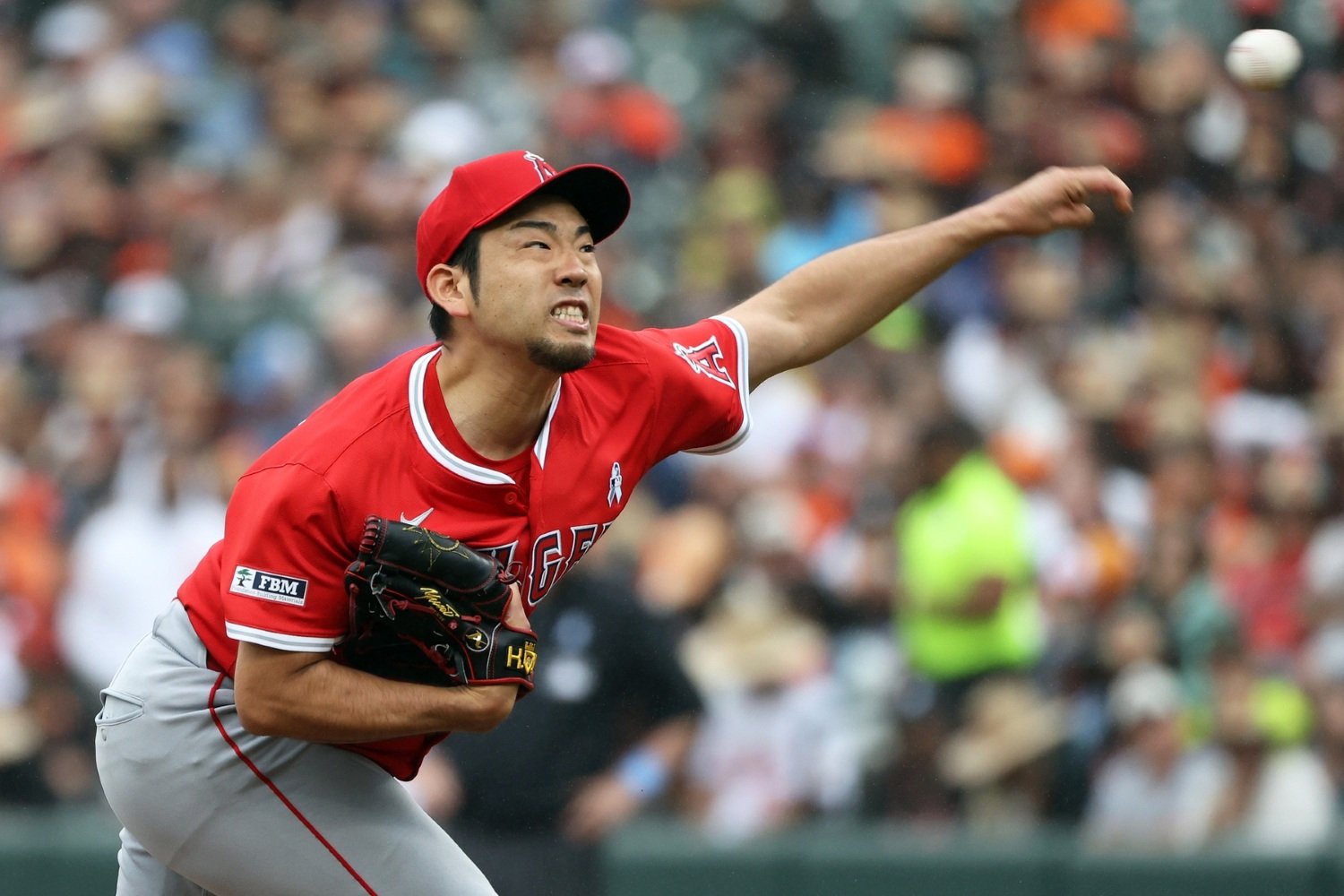 In their sweeping search for pitching help (one that will continue until the MLB trade deadline at the end of next month), the Chicago Cubs have contacted the Los Angeles Angels to inquire about at least two of their arms, according to sources with knowledge of the situation. The Angels have begun increasing their scouting of the Cubs farm system, in anticipation of a potential deal. The obvious name about whom teams will ask the Angels this summer is Yusei Kikuchi, whom Los Angeles signed to a hefty three-year, $63-million deal over the winter. A terrible pitching development organization, the Angels have given Kikuchi terrible advice, and the 34-year-old starter is barely surviving their mishandling. He has a 3.05 ERA, but that masks a strikeout rate (21.7%) that has dropped and a walk rate (12%) that has exploded, due to an ill-conceived change of pitch mix. Kikuchi had success down the stretch last year, after a midseason trade from the Blue Jays to the Houston Astros. That came when the Astros helped him hone his slider and increase its usage, so the Angels have elected to exaggerate that approach this year. Because they're not the Astros, though, they've been ham-fisted in their continued development of the pitch and the pitcher. Kikuchi's curveball and changeup are each better than his slider, according to StuffPro (Baseball Prospectus's grading model for individual pitches), but they've become tertiary elements of his approach this year. That's a mistake. Teams will circle Kikuchi and ask the Angels about him over the next six weeks, hoping to scoop him up for virtually nothing because Los Angeles invested so much and already has reason to worry that they mislaid those funds. Even the Angels likely know better than to sell him at such a low point in value, but this is the same team who traded Raisel Iglesias less than 10 months after signing him to a four-year deal, so the suitors will check in. Consider Kikuchi one way the Cubs could spend the money remaining in their budget, to preserve most of their depth in the farm system and improve their rotation both in 2025 and for the medium-term future. More compelling, however, is the other name about whom the Cubs have already asked the Angels—one who would require more of a return and would constitute a greater risk, but whose upside is considerably higher. José Soriano is 26 years old and has already had two Tommy John surgeries. Taken during the Rule 5 Draft in 2020 but returned by the Pirates the following fall, Soriano didn't make his big-league debut until 2023. At that point, he was a reliever with a triple-digit fastball but two big elbow scars and lousy command. In 2024, however, he stretched out a bit in spring training; made two early long relief outings; and then moved into the lackluster Angels rotation. Since then, he's made 35 starts totaling almost 200 innings, and his ERA is south of 3.50. His knuckle-curve, always a weapon with a uniquely roundhouse sort of shape, has turned out to pair nicely with his high-velocity, heavy sinker, so he's made those two offerings the centerpieces of a five-pitch mix. Soriano still has shaky control, but he can miss bats—and that's not even his signature skill. He owns the highest ground-ball rate in the majors, thanks to that nasty sinker. It makes him an ideal fit for the Cubs and their sturdy defense. It also allows him to pitch in and out of the trouble he makes for himself with walks and bad counts. For his career, Soriano has steep reverse platoon splits, which is odd to see from a righty who leans heavily on a sinker and a sweeping curve. The peculiar shape of his pitches, especially from a fairly standard three-quarters arm slot, stumps lefties. He actually needs more work against righties, but that's something the Cubs should be able to help with. Soriano has three years of team control left, beyond 2025. He'll get expensive in arbitration, and the combination of their poor outlook for contention in the AL West and his injury history should make the Angels willing to part with him—but only if the price is right, and here, "right" means "steep". The Cubs would almost certainly lose Ben Brown and at least one of their top three prospects at Triple-A Iowa in a deal for Soriano, and they'd be taking on a pitcher with ample upside but lots of risk. If his elbow blows out again, his career as a starter is over. Even if it doesn't, there will be times when he can't miss enough bats or gets the wrong bounces, and the tendency to walk too many hitters will bite him. Then again, Soriano is the kind of pitcher the team has not had in its rotation for too long: one with raw stuff that can dominate games. He's gone 14 innings over his last two starts, allowing just one run on eight hits and three walks. He fanned 18 in those two games, against the hot-hitting Athletics and the Yankees. He'd be a greater infusion of raw talent than the team can make almost any other way, and he'd cost them nothing, monetarily, at least for the balance of 2025. The Angels might prefer to move some money, so to avoid giving up the whole farm for Soriano, the Cubs could agree to take on a bad contract, like that of broken reliever Robert Stephenson. Los Angeles owes Stephenson the prorated portion of $11 million for this season, and another $11 million next year. Alternatively, to do some one-stop shopping (even if it means that the deal would become an expensive blockbuster, somewhat like the 2003 deal for Aramis Ramírez and Kenny Lofton), Chicago could seek to include Kenley Jansen or Luis Rengifo in the deal. One source said Jansen has already come up in discussions between the teams, but not necessarily in anything linked to either Kikuchi or Soriano. Though a recent surge has the Angels at a respectable 34-37, they'll fall out of contention long before the end of July. In sell mode, they might look to take some aggressive steps to restructure their core for the future, and the Cubs are one interested suitor. Though Kikuchi would be a much less costly and probably a sufficient move to secure a division title, Soriano looms as one of the most intriguing players who might become available under the right conditions next month.
 -
Image courtesy of © Kamil Krzaczynski-Imagn Images I'm out of ideas. The league is out of ideas. At this point, as utterly ludicrous as this would have sounded just a month or two ago, maybe Pete Crow-Armstrong is just going to hit 40 home runs this season. He neither cuts that kind of figure in the batter's box, nor has the polished, impressive approach that one expects from an elite power hitter in a slender body. Yet, there he is, twice a week, hitting a homer. I can't explain it. Neither can you. Entering Thursday night, Crow-Armstrong had hit two of the lowest home runs (in terms of the location of the pitch as it reached his hitting zone) in recent memory, anywhere in the league. That, though, makes sense. Crow-Armstrong has a steep swing, and it's operating at maximum efficiency when he can work down through the ball and then steeply uphill. If he can identify a breaking ball early (or anticipate it and guess right), he can drive it out of the park, even if it's ankle-high. That accords with what I discussed about his swing way back in mid-April, before he caught the heat that has burned through him for the last two solid months. I understand when he gets all the way down on a breaking ball and golfs it somewhere. QXdhMjJfWGw0TUFRPT1fQUZRRlVRRlJVQUFBWEZzSFZBQUhVdzRIQUFBR1VnSUFCMUpUVWxKUVZRWlJVMVlE.mp4 As the season has progressed, though, Crow-Armstrong has shown a remarkable capacity for adapting that swing plane and covering the whole zone. He can outguess a pitcher on a triple-digit fastball, just as he can on a backfoot curve, and he has shown the ability to flatten out his swing, get the bat head around that pitch even on the outer half, and apply some leverage to it. TUE3Uk5fWGw0TUFRPT1fVTFKUlVsRlJVbEFBQ1FGUVhnQUhBZ0plQUZrRkFWY0FBRmNHVkFCUVZGZFdBQXBm.mp4 That, I would not have guessed he could do, at least not this well. He's even shown the ability to climb the ladder a little bit and keep some loft in his swing on pitches in the upper third of the zone. Thursday night, though, he did something that broke the scale, and broke my brain. Here's the location plot for Crow-Armstrong's first 17 homers of 2025. It's what we'd expect, based on what we've already talked about. Crow-Armstrong gets to his power by getting through the ball and pulling it sharply. He doesn't hit 440-foot monsters, but many of his homers are no-doubters, because he hits them close to the foul line. He's hitting 380-foot fly balls to parts of the park where the fences tend to be just 340 feet away. He's doing it mostly (though not solely; not when he guesses right) on mistakes with lots of zone around them. Now, look at the top line of that animation of the strike zone. Then imagine another fuchsia dot, about two baseballs above it. That's where Andrew Heaney put a pitch Thursday night, on which Crow-Armstrong nonetheless got around, got his bat working uphill, and got the barrel. There's a highly technical hitting term for this: freaky nonsense. This is freaky nonsense. Crow-Armstrong had to sit on the high fastball, decide not to worry much about whether it was actually a strike, and unleash a swing that perfectly balanced the mandates of being flat enough to get to the ball and lofted enough to get some air under it. You can count on one hand the number of hitters in the league who can hit this pitch out of the park, and all of the guys corresponding with those fingers will be: Taller than Crow-Armstrong; and Unable to hit that ankle-high breaking ball out of the park. Somehow, Crow-Armstrong has used his feel for hitting and his sheer, ferocious athleticism to tap into an elite power tool. It shouldn't work, but it would be foolish to pretend it's all been a fluke, at this point. Swinging at pitches like these will still beget some ugly outs, including some in key situations. He'll run into some slumps. At this point, though, Crow-Armstrong has to be considered a legitimate frontrunner to win the Most Valuable Player Award, and he's extremely likely to hit 35 or 40 home runs. The Cubs made that extraordinary feat stand up and clung on to win Thursday night. Doing so also required a Seiya Suzuki home run and a clutch performance from the Cubs bullpen, in support of Jameson Taillon. Craig Counsell continues to push his luck with very slow hooks on his starters, by modern standards, and has put his relievers into needlessly stressful situations a few times lately. Thursday night was no exception, as Counsell let Taillon run out of steam in the seventh inning before rushing Brad Keller into the game. Keller walked in a run and was on the brink of blowing the lead altogether, but found the right pitch for a huge strikeout of Oneil Cruz to escape the jam he and his skipper had co-created. Interestingly, Counsell then deployed Daniel Palencia in the eighth inning, against the heart of the Pirates order, and let Ryan Pressly close down a one-run win and collect the save. It's not a full vote of renewed confidence in Pressly as the closer, but that was a good reminder of the fluidity with which Counsell prefers to approach his bullpen. It worked like a charm Thursday, so there should be no complaints. The Cubs offense needs to get out of neutral and fully back to life, but for one night at Wrigley Field, Crow-Armstrong exploring new realms of wonder was enough to get them into the win column. View full article
-
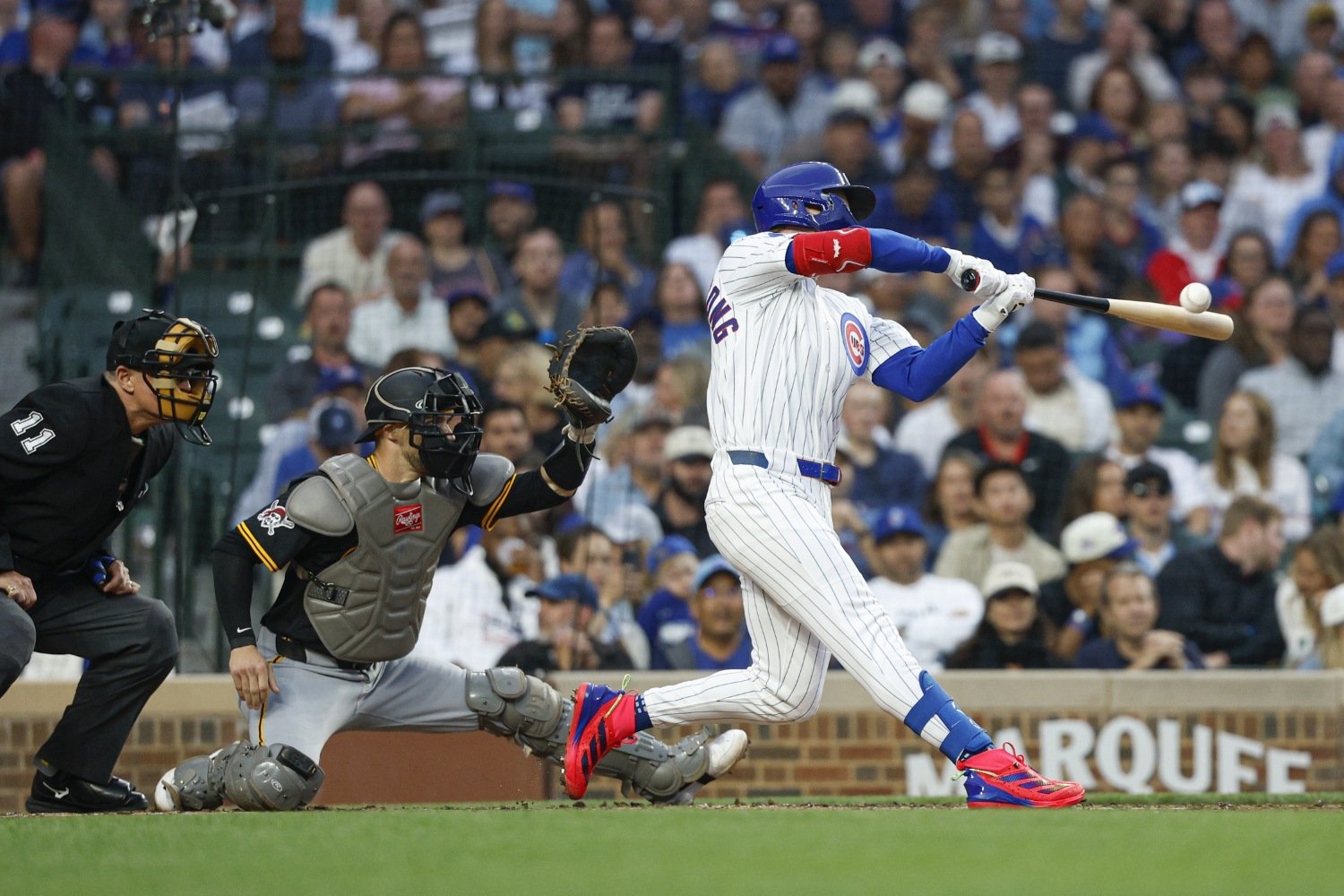 I'm out of ideas. The league is out of ideas. At this point, as utterly ludicrous as this would have sounded just a month or two ago, maybe Pete Crow-Armstrong is just going to hit 40 home runs this season. He neither cuts that kind of figure in the batter's box, nor has the polished, impressive approach that one expects from an elite power hitter in a slender body. Yet, there he is, twice a week, hitting a homer. I can't explain it. Neither can you. Entering Thursday night, Crow-Armstrong had hit two of the lowest home runs (in terms of the location of the pitch as it reached his hitting zone) in recent memory, anywhere in the league. That, though, makes sense. Crow-Armstrong has a steep swing, and it's operating at maximum efficiency when he can work down through the ball and then steeply uphill. If he can identify a breaking ball early (or anticipate it and guess right), he can drive it out of the park, even if it's ankle-high. That accords with what I discussed about his swing way back in mid-April, before he caught the heat that has burned through him for the last two solid months. I understand when he gets all the way down on a breaking ball and golfs it somewhere. QXdhMjJfWGw0TUFRPT1fQUZRRlVRRlJVQUFBWEZzSFZBQUhVdzRIQUFBR1VnSUFCMUpUVWxKUVZRWlJVMVlE.mp4 As the season has progressed, though, Crow-Armstrong has shown a remarkable capacity for adapting that swing plane and covering the whole zone. He can outguess a pitcher on a triple-digit fastball, just as he can on a backfoot curve, and he has shown the ability to flatten out his swing, get the bat head around that pitch even on the outer half, and apply some leverage to it. TUE3Uk5fWGw0TUFRPT1fVTFKUlVsRlJVbEFBQ1FGUVhnQUhBZ0plQUZrRkFWY0FBRmNHVkFCUVZGZFdBQXBm.mp4 That, I would not have guessed he could do, at least not this well. He's even shown the ability to climb the ladder a little bit and keep some loft in his swing on pitches in the upper third of the zone. Thursday night, though, he did something that broke the scale, and broke my brain. Here's the location plot for Crow-Armstrong's first 17 homers of 2025. It's what we'd expect, based on what we've already talked about. Crow-Armstrong gets to his power by getting through the ball and pulling it sharply. He doesn't hit 440-foot monsters, but many of his homers are no-doubters, because he hits them close to the foul line. He's hitting 380-foot fly balls to parts of the park where the fences tend to be just 340 feet away. He's doing it mostly (though not solely; not when he guesses right) on mistakes with lots of zone around them. Now, look at the top line of that animation of the strike zone. Then imagine another fuchsia dot, about two baseballs above it. That's where Andrew Heaney put a pitch Thursday night, on which Crow-Armstrong nonetheless got around, got his bat working uphill, and got the barrel. There's a highly technical hitting term for this: freaky nonsense. This is freaky nonsense. Crow-Armstrong had to sit on the high fastball, decide not to worry much about whether it was actually a strike, and unleash a swing that perfectly balanced the mandates of being flat enough to get to the ball and lofted enough to get some air under it. You can count on one hand the number of hitters in the league who can hit this pitch out of the park, and all of the guys corresponding with those fingers will be: Taller than Crow-Armstrong; and Unable to hit that ankle-high breaking ball out of the park. Somehow, Crow-Armstrong has used his feel for hitting and his sheer, ferocious athleticism to tap into an elite power tool. It shouldn't work, but it would be foolish to pretend it's all been a fluke, at this point. Swinging at pitches like these will still beget some ugly outs, including some in key situations. He'll run into some slumps. At this point, though, Crow-Armstrong has to be considered a legitimate frontrunner to win the Most Valuable Player Award, and he's extremely likely to hit 35 or 40 home runs. The Cubs made that extraordinary feat stand up and clung on to win Thursday night. Doing so also required a Seiya Suzuki home run and a clutch performance from the Cubs bullpen, in support of Jameson Taillon. Craig Counsell continues to push his luck with very slow hooks on his starters, by modern standards, and has put his relievers into needlessly stressful situations a few times lately. Thursday night was no exception, as Counsell let Taillon run out of steam in the seventh inning before rushing Brad Keller into the game. Keller walked in a run and was on the brink of blowing the lead altogether, but found the right pitch for a huge strikeout of Oneil Cruz to escape the jam he and his skipper had co-created. Interestingly, Counsell then deployed Daniel Palencia in the eighth inning, against the heart of the Pirates order, and let Ryan Pressly close down a one-run win and collect the save. It's not a full vote of renewed confidence in Pressly as the closer, but that was a good reminder of the fluidity with which Counsell prefers to approach his bullpen. It worked like a charm Thursday, so there should be no complaints. The Cubs offense needs to get out of neutral and fully back to life, but for one night at Wrigley Field, Crow-Armstrong exploring new realms of wonder was enough to get them into the win column.
 -
Let's be honest here. Maybe Vidal Bruján is a trifle more broadly talented than Emmanuel Rivera, but in practice, he's a worse player—especially for the current Chicago Cubs. The Cubs need a righty batter who can occasionally work their way on base without being deployed as a pinch-runner, and one who can capably handle the hot corner with the glove. Much though all Cubs fans wish that either Bruján or Jon Berti met those descriptions, right now, they don't. Emmanuel Rivera does, though. Rivera, who turns 29 at the end of this month, has hit just .232/.302/.275 for the Orioles this season, so it's hard to fault them for designating him for assignment. However, that's against a career line of .243/.306/.363—no star slugger's line, but a fine one for a solid defensive infielder off the bench. That's precisely what Rivera is. He's been worth 5 Defensive Runs Saved (DRS) even in very limited action for the Orioles at third this year. He can also play some first base. Against lefties, he's a career .254/.318/.381 hitter, much better than what Bruján can offer as a backup to Matt Shaw at third base. Rivera is a good floor to reset for third base. The Cubs should be able to acquire him for cash, and if the front office is smart, they'll place a quick call to Mike Elias in the wake of this news. View full rumor
-
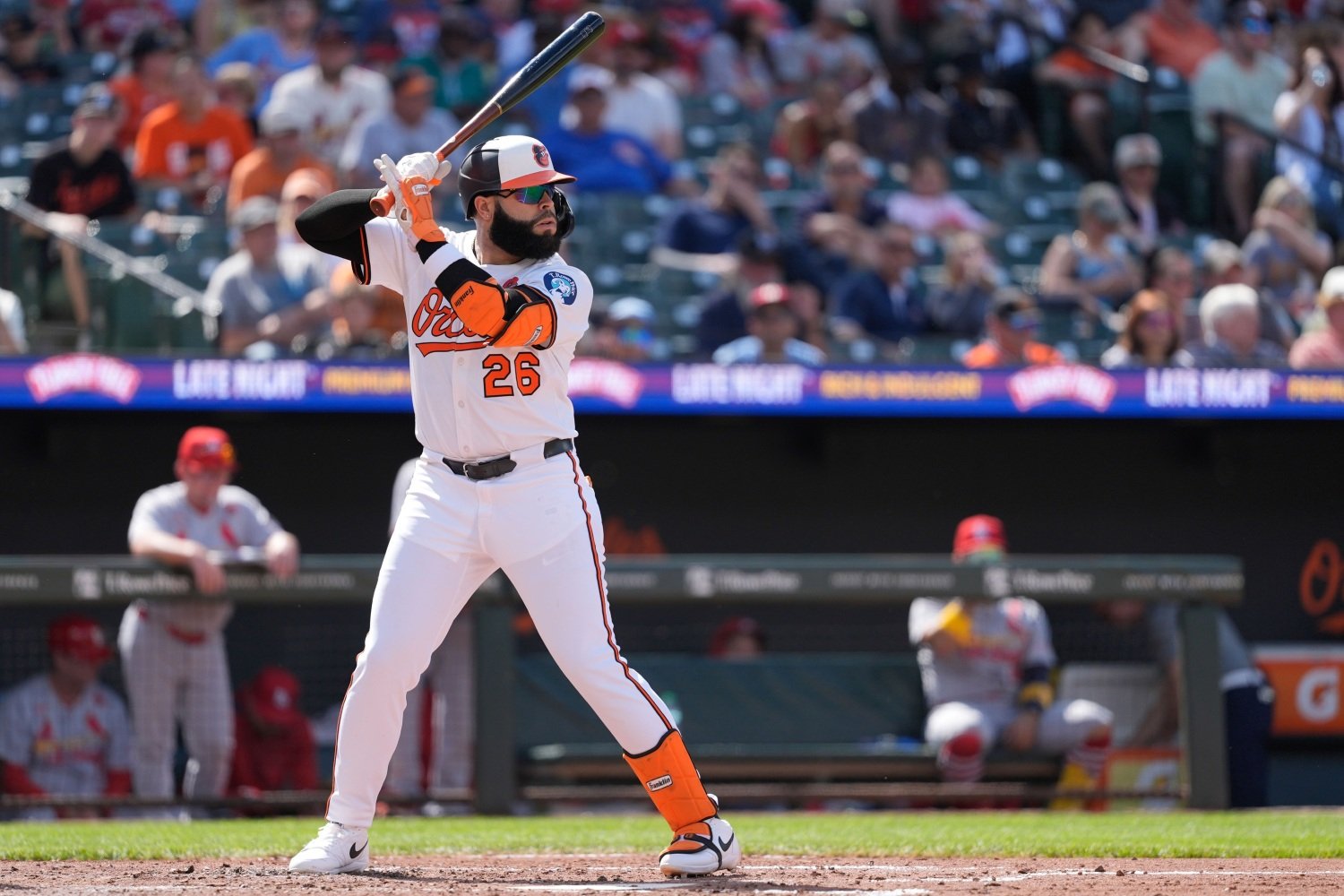 Let's be honest here. Maybe Vidal Bruján is a trifle more broadly talented than Emmanuel Rivera, but in practice, he's a worse player—especially for the current Chicago Cubs. The Cubs need a righty batter who can occasionally work their way on base without being deployed as a pinch-runner, and one who can capably handle the hot corner with the glove. Much though all Cubs fans wish that either Bruján or Jon Berti met those descriptions, right now, they don't. Emmanuel Rivera does, though. Rivera, who turns 29 at the end of this month, has hit just .232/.302/.275 for the Orioles this season, so it's hard to fault them for designating him for assignment. However, that's against a career line of .243/.306/.363—no star slugger's line, but a fine one for a solid defensive infielder off the bench. That's precisely what Rivera is. He's been worth 5 Defensive Runs Saved (DRS) even in very limited action for the Orioles at third this year. He can also play some first base. Against lefties, he's a career .254/.318/.381 hitter, much better than what Bruján can offer as a backup to Matt Shaw at third base. Rivera is a good floor to reset for third base. The Cubs should be able to acquire him for cash, and if the front office is smart, they'll place a quick call to Mike Elias in the wake of this news.
 -
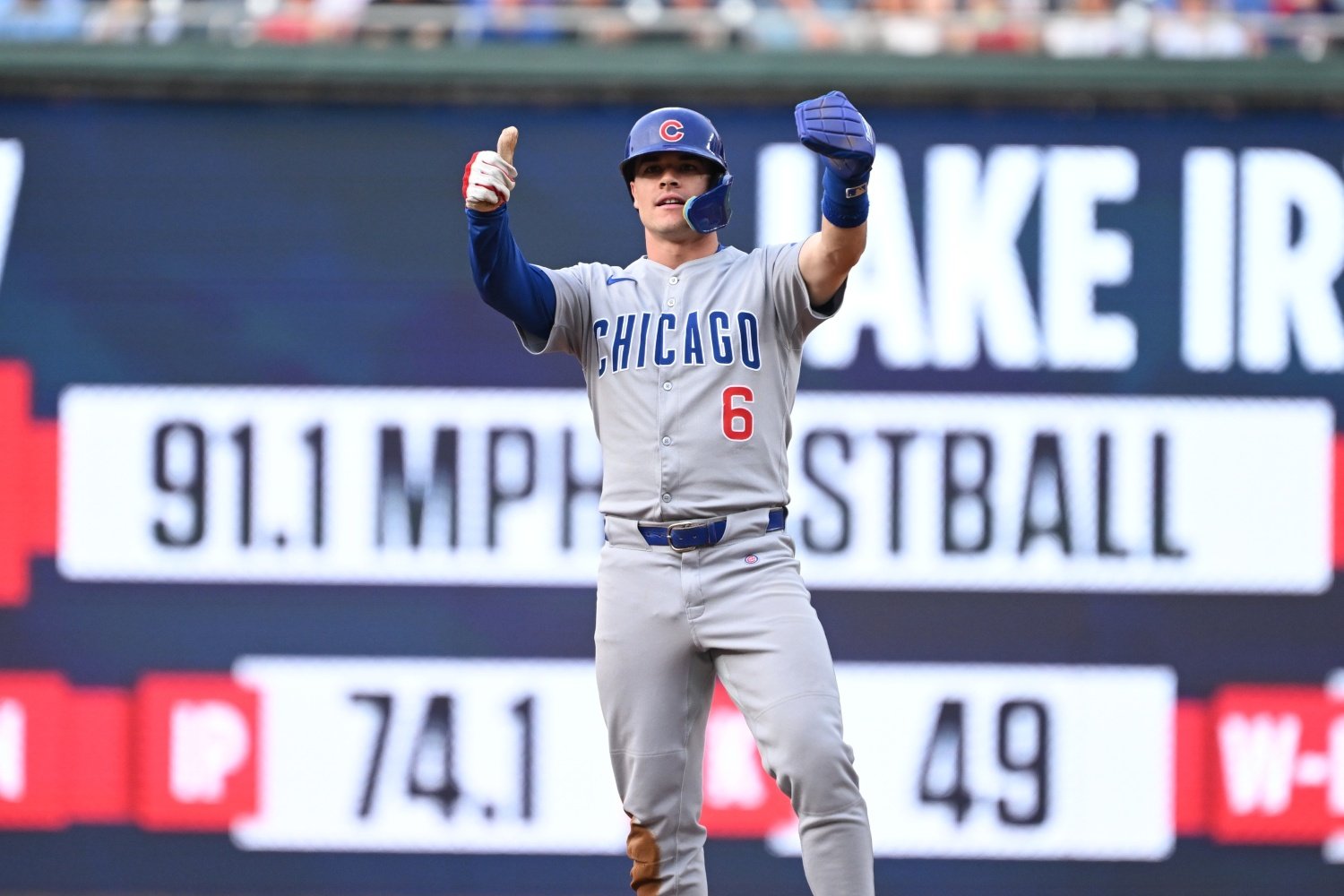 The halcyon days of the bottom of the Cubs batting order being an engine for the offense are drawing to a close. Pete Crow-Armstrong earned his way up to the middle of the lineup, which is the good kind of lost production from the lower third. Alas, the team has also seen the bad kind of diminished returns from that segment, as Miguel Amaya landed on the injured list and Carson Kelly has slowly regressed toward average. Dansby Swanson (.243/.289/.388 over the last month), Justin Turner (.270/.349/.405 in the same timeframe, but in limited playing time), Nico Hoerner (.282/.333/.359 over the last month) and Michael Busch (who only bats there when he plays against left-handed pitchers, which you don't really want him to do) are the other main contributors in spots seven through nine for Craig Counsell each day. That group is holding its own, and you never expect the bottom third of the order to hit like the top third, anyway, but the team needs a bit more consistent punch in front of the likes of Ian Happ, Kyle Tucker and Seiya Suzuki than that motley crew has been able to provide. Thankfully, that's exactly what New Matt Shaw has delivered. Since his return from his Iowa sojourn, Shaw is batting a scintillating .319/.356/.464. It's only been 73 plate appearances, but he's done everything well over the sample, and it's empowered the guys at the top of the order. Shaw's speed (seven steals in eight tries this year, all since being recalled last month) also makes him a pleasingly good traditional tablesetter. If this were all happening merely because of good luck, you'd still take it. Kelly's binge to begin the year was a bit lucky, but you don't look such gift horses in the mouth. In this case, though, the news is even better than that. Shaw, the team's top prospect when the season began and one of their most important young players, has materially improved, including making a secondary set of adjustments in the last two weeks after the initial round of them he made during his reset with Triple-A Iowa. Let's take a look at where Shaw set up in the batter's box in his first stint, back in March and April. I've also captured the placement of his feet when the pitcher releases the ball (the blue footprints, as opposed to the black ones showing his initial stance). We knew about this issue, but you can see it clearly here. Shaw is way off the plate; starts in a very closed position; and only turns himself farther away from the ball with his initial stride. Here, for the record, is where he ends up at the contact point, to show the distance his stride leg has to cover after that elaborate leg kick. Now, as we've previously chronicled, Shaw came back in May with a different plan. He was a bit deeper in the box (farther from the pitcher, closer to the catcher), but also a bit closer to the plate. That was an important change. His leg kick also reflects a very slightly more open setup, because he's actually slightly moving forward by the time the pitcher releases the ball. It's not hard to see why he can succeed more from this position, especially when you keep in mind that he's a short guy. He was too far from the plate to cover it well in April, save by striding far toward it and cutting himself off—which, in turn, cost him bat speed. That problem was ameliorated by the time he came back in mid-May, but not fully eliminated. He's still striding a bit closed here. As you can see, he's contacting the ball a bit deeper relative to the front of home plate, but he's also getting it just a bit (about an inch and a half) farther in front of his own body than he was before his demotion. This version of Shaw is in better position to cover the zone, but not yet in great position to do damage. He's still catching it too deep, and his bat speed didn't improve in May. It was 68.2 miles per hour in March and April and 68.5 mph in May. Now, though, let's look at what he's doing in June. Here's where he sets up, and where his foot is at release. Once again, Shaw has gotten noticeably closer to the plate. He's also more open in his setup, though, and there's been another timing change. His stride is coming forward more by the time the pitcher lets the ball go, so he's opening up more and getting out there after the ball sooner. The resulting contact point and final stride coordinates tell the full story. Shaw's contact point has moved almost six full inches forward, relative to his own body, relative to March and April. Being more open and striding straighter has meant not only moving forward sooner, but swinging faster: all the way up to 70.8 mph. His swing has more tilt. He's pulling the ball more, and with more loft. This is a hitter who, while still not long on over-the-fence power, can be genuinely dangerous. That doesn't mean Shaw won't go through another difficult round of adjustments. In all likelihood, he will. However, he's made a major breakthrough here, and it's his second in as many months. That's the kind of rapid adaptation that leads a hitter to have success even very early in their big-league career. Hoerner's lack of power and the somewhat stiff, unathletic games of the other players consigned to that bottom third of the order make Shaw's emergence as a sparkplug in that section vital to the team's offense. While they remain significantly diminished by pitching injuries, they have the firepower to work around that problem—as long as they keep getting big contributions from players like Shaw. This multi-phase evolution into a dynamic offensive player is a great sign for the short- and long-term future, not only for Shaw but for the Cubs as a whole. Shaw is still a shaky defensive third baseman, but if he can provide this kind of offense, it won't matter very much. The team just needs him to stay this eager and able to adjust.
 -
Image courtesy of © Rafael Suanes-Imagn Images The halcyon days of the bottom of the Cubs batting order being an engine for the offense are drawing to a close. Pete Crow-Armstrong earned his way up to the middle of the lineup, which is the good kind of lost production from the lower third. Alas, the team has also seen the bad kind of diminished returns from that segment, as Miguel Amaya landed on the injured list and Carson Kelly has slowly regressed toward average. Dansby Swanson (.243/.289/.388 over the last month), Justin Turner (.270/.349/.405 in the same timeframe, but in limited playing time), Nico Hoerner (.282/.333/.359 over the last month) and Michael Busch (who only bats there when he plays against left-handed pitchers, which you don't really want him to do) are the other main contributors in spots seven through nine for Craig Counsell each day. That group is holding its own, and you never expect the bottom third of the order to hit like the top third, anyway, but the team needs a bit more consistent punch in front of the likes of Ian Happ, Kyle Tucker and Seiya Suzuki than that motley crew has been able to provide. Thankfully, that's exactly what New Matt Shaw has delivered. Since his return from his Iowa sojourn, Shaw is batting a scintillating .319/.356/.464. It's only been 73 plate appearances, but he's done everything well over the sample, and it's empowered the guys at the top of the order. Shaw's speed (seven steals in eight tries this year, all since being recalled last month) also makes him a pleasingly good traditional tablesetter. If this were all happening merely because of good luck, you'd still take it. Kelly's binge to begin the year was a bit lucky, but you don't look such gift horses in the mouth. In this case, though, the news is even better than that. Shaw, the team's top prospect when the season began and one of their most important young players, has materially improved, including making a secondary set of adjustments in the last two weeks after the initial round of them he made during his reset with Triple-A Iowa. Let's take a look at where Shaw set up in the batter's box in his first stint, back in March and April. I've also captured the placement of his feet when the pitcher releases the ball (the blue footprints, as opposed to the black ones showing his initial stance). We knew about this issue, but you can see it clearly here. Shaw is way off the plate; starts in a very closed position; and only turns himself farther away from the ball with his initial stride. Here, for the record, is where he ends up at the contact point, to show the distance his stride leg has to cover after that elaborate leg kick. Now, as we've previously chronicled, Shaw came back in May with a different plan. He was a bit deeper in the box (farther from the pitcher, closer to the catcher), but also a bit closer to the plate. That was an important change. His leg kick also reflects a very slightly more open setup, because he's actually slightly moving forward by the time the pitcher releases the ball. It's not hard to see why he can succeed more from this position, especially when you keep in mind that he's a short guy. He was too far from the plate to cover it well in April, save by striding far toward it and cutting himself off—which, in turn, cost him bat speed. That problem was ameliorated by the time he came back in mid-May, but not fully eliminated. He's still striding a bit closed here. As you can see, he's contacting the ball a bit deeper relative to the front of home plate, but he's also getting it just a bit (about an inch and a half) farther in front of his own body than he was before his demotion. This version of Shaw is in better position to cover the zone, but not yet in great position to do damage. He's still catching it too deep, and his bat speed didn't improve in May. It was 68.2 miles per hour in March and April and 68.5 mph in May. Now, though, let's look at what he's doing in June. Here's where he sets up, and where his foot is at release. Once again, Shaw has gotten noticeably closer to the plate. He's also more open in his setup, though, and there's been another timing change. His stride is coming forward more by the time the pitcher lets the ball go, so he's opening up more and getting out there after the ball sooner. The resulting contact point and final stride coordinates tell the full story. Shaw's contact point has moved almost six full inches forward, relative to his own body, relative to March and April. Being more open and striding straighter has meant not only moving forward sooner, but swinging faster: all the way up to 70.8 mph. His swing has more tilt. He's pulling the ball more, and with more loft. This is a hitter who, while still not long on over-the-fence power, can be genuinely dangerous. That doesn't mean Shaw won't go through another difficult round of adjustments. In all likelihood, he will. However, he's made a major breakthrough here, and it's his second in as many months. That's the kind of rapid adaptation that leads a hitter to have success even very early in their big-league career. Hoerner's lack of power and the somewhat stiff, unathletic games of the other players consigned to that bottom third of the order make Shaw's emergence as a sparkplug in that section vital to the team's offense. While they remain significantly diminished by pitching injuries, they have the firepower to work around that problem—as long as they keep getting big contributions from players like Shaw. This multi-phase evolution into a dynamic offensive player is a great sign for the short- and long-term future, not only for Shaw but for the Cubs as a whole. Shaw is still a shaky defensive third baseman, but if he can provide this kind of offense, it won't matter very much. The team just needs him to stay this eager and able to adjust. View full article
-
 If the smoke doesn't clear and the mirrors don't break for just another week or so, Drew Pomeranz and Chris Flexen will stand alone in Cubs history. Even if their magic can't keep up any longer, though, they've already left a mark in the team's history books. Since 1975, the three longest scoreless streaks to begin a Cubs career by a relief pitcher are: Wade Davis, 2017: 17 1/3 innings Flexen, 2025: 16 1/3 innings Pomeranz, 2025: 14 2/3 innings Even if you're willing to go back five decades or more, there are just a few instances of a newcomer to the Cubs relief corps going longer before allowing their first run: Dick Selma (18 2/3 innings, 1969), Ted Abernathy (18 innings, 1965) and Jack Aker (18 innings, 1972). It's stunning that both Flexen (signed to a minor-league deal in February, after spring training began and Javier Assad's oblique strain first set back the rotation) and Pomeranz (picked up in a cash deal with Seattle on April 21) are even on the roster, let alone 31 innings into the project of boosting the bullpen without allowing an earned run. They're third and eighth on the team in win probability added (WPA) for pitchers, with a combined 1.2 that outstrips any individual Cubs hurler. (Shota Imanaga and Jameson Taillon are tied with 1.0 WPA apiece; they're the only ones with a better figure than Pomeranz's 0.8 so far this year.) Flexen has been used exclusively in low-leverage situations, save one appearance in which he was asked to absorb extra innings against the Rockies. Yet, he's performed perfectly, and the Cubs are 5-4 in games in which he pitches. (They even won that game against Colorado, when he allowed just one unearned run (the automatic runner) in two frames.) Pomeranz has a handful of high-leverage appearances, but has mostly been used to soak up middle relief work, too. Yet, the team is 9-7 when he pitches, too. It takes a special season for even one pitcher to show up and have such a long streak without giving up a run. That this year's team has two such guys is almost unfathomable. Flexen, like fellow scrap-heap signing Brad Keller, was a starter just last year. Pomeranz is appearing for the first time in the big leagues since 2021, and he didn't add two miles per hour or a new pitch. In fact, his stuff is down a tick, just as you'd guess after four years, and he still just throws a fastball and an overhand curve. At least Pomeranz has always had bat-missing stuff, with the fastball and curve stretching hitters' zone vertically and playing off each other so well that his strikeout rate of 28.3% is roughly in line with his career norms as a reliever. It's still hard to figure out how his walk rate is just 5.7%, and he's giving up a bunch of hard contact in the air, but he can strike people out. Flexen has a wide arsenal, and has been willing to deploy it even in a relief role, but his fastball is one of the fattest pitches in baseball. He should be getting hit way harder than he is, especially given his lousy 16.7% strikeout rate. Yet, there they both are. This isn't sustainable. The Cubs will need reinforcements for the relief corps, and it's unlikely that either Pomeranz or Flexen (let alone both) make a playoff roster for this team. It doesn't matter. Just by showing up and pitching as well as they already have, they've given the team a big boost. From here, a .500 record would get the Cubs into the postseason, and it might well win them the NL Central. That won't be their goal, of course, but in the long season, it's hugely valuable to work ahead. Flexen and Pomeranz have helped them get about a week ahead of schedule, from a wins perspective. If they crash out from here, it won't even matter much. They're still not being truly relied upon. The workload they've each taken on and the scoreless innings they've given while the team chipped away at early deficits or finished off blowout wins have already provided an advantage that can't be easily erased. Somehow, without missing many bats and with stuff that should be getting hit pretty hard, Flexen and Pomeranz have become symbols of the ways this Cubs team is soaring beyond its recent foibles and ensconcing itself in the top echelon of the league.
 -
Image courtesy of © Patrick Gorski-Imagn Images If the smoke doesn't clear and the mirrors don't break for just another week or so, Drew Pomeranz and Chris Flexen will stand alone in Cubs history. Even if their magic can't keep up any longer, though, they've already left a mark in the team's history books. Since 1975, the three longest scoreless streaks to begin a Cubs career by a relief pitcher are: Wade Davis, 2017: 17 1/3 innings Flexen, 2025: 16 1/3 innings Pomeranz, 2025: 14 2/3 innings Even if you're willing to go back five decades or more, there are just a few instances of a newcomer to the Cubs relief corps going longer before allowing their first run: Dick Selma (18 2/3 innings, 1969), Ted Abernathy (18 innings, 1965) and Jack Aker (18 innings, 1972). It's stunning that both Flexen (signed to a minor-league deal in February, after spring training began and Javier Assad's oblique strain first set back the rotation) and Pomeranz (picked up in a cash deal with Seattle on April 21) are even on the roster, let alone 31 innings into the project of boosting the bullpen without allowing an earned run. They're third and eighth on the team in win probability added (WPA) for pitchers, with a combined 1.2 that outstrips any individual Cubs hurler. (Shota Imanaga and Jameson Taillon are tied with 1.0 WPA apiece; they're the only ones with a better figure than Pomeranz's 0.8 so far this year.) Flexen has been used exclusively in low-leverage situations, save one appearance in which he was asked to absorb extra innings against the Rockies. Yet, he's performed perfectly, and the Cubs are 5-4 in games in which he pitches. (They even won that game against Colorado, when he allowed just one unearned run (the automatic runner) in two frames.) Pomeranz has a handful of high-leverage appearances, but has mostly been used to soak up middle relief work, too. Yet, the team is 9-7 when he pitches, too. It takes a special season for even one pitcher to show up and have such a long streak without giving up a run. That this year's team has two such guys is almost unfathomable. Flexen, like fellow scrap-heap signing Brad Keller, was a starter just last year. Pomeranz is appearing for the first time in the big leagues since 2021, and he didn't add two miles per hour or a new pitch. In fact, his stuff is down a tick, just as you'd guess after four years, and he still just throws a fastball and an overhand curve. At least Pomeranz has always had bat-missing stuff, with the fastball and curve stretching hitters' zone vertically and playing off each other so well that his strikeout rate of 28.3% is roughly in line with his career norms as a reliever. It's still hard to figure out how his walk rate is just 5.7%, and he's giving up a bunch of hard contact in the air, but he can strike people out. Flexen has a wide arsenal, and has been willing to deploy it even in a relief role, but his fastball is one of the fattest pitches in baseball. He should be getting hit way harder than he is, especially given his lousy 16.7% strikeout rate. Yet, there they both are. This isn't sustainable. The Cubs will need reinforcements for the relief corps, and it's unlikely that either Pomeranz or Flexen (let alone both) make a playoff roster for this team. It doesn't matter. Just by showing up and pitching as well as they already have, they've given the team a big boost. From here, a .500 record would get the Cubs into the postseason, and it might well win them the NL Central. That won't be their goal, of course, but in the long season, it's hugely valuable to work ahead. Flexen and Pomeranz have helped them get about a week ahead of schedule, from a wins perspective. If they crash out from here, it won't even matter much. They're still not being truly relied upon. The workload they've each taken on and the scoreless innings they've given while the team chipped away at early deficits or finished off blowout wins have already provided an advantage that can't be easily erased. Somehow, without missing many bats and with stuff that should be getting hit pretty hard, Flexen and Pomeranz have become symbols of the ways this Cubs team is soaring beyond its recent foibles and ensconcing itself in the top echelon of the league. View full article
-
 Often, in life, we encounter moments when there's a real problem afoot. We have an issue, affecting ourselves and/or people we care about deeply. Alas, we can't bear to admit the nature or the scope of that problem to ourselves. It's too dangerous. Maybe that problem is so inextricably tied to a relationship we value that we know that relationship would need to end in order for the problem to be solved. Maybe the problem is so all-consuming that if we fully examined it, we would never be able to face it and solve it. We have to shrink or distract from it, just to make it manageable or to direct our energy in more helpful directions. I think that's what you're doing right now, Cubs fans. I hear a somewhat baffling amount of talk about starting Michael Busch at first base even when the opponent schedules a left-handed starting pitcher, and I guess I vaguely understand why you're saying the same thing so often—but I also think you're deflecting a little bit. I think that, in a season in which the Cubs are a happy team with vibes as good as their 40-25 record, you might just want to rock the boat as little as possible, and this seems the right way. But here's the thing: What you really want is for Justin Turner to start actually hitting, or to be shown the door. Turner, 40, is hitting a decrepit .211/.302/.267, and it's hard to watch a slow-footed, defensively marginal first baseman hit that miserably. (It's a much more tolerable .267/.321/.370 since May 1, but for now, let's pretend Turner is actually as bad as his overall line looks.) What the Cubs need is a right-handed first baseman who hits more like .270/.340/.420, or so, as long as they're protected from righty hurlers. What they need is a stronger bench, overall. What they do not need—what no one, least of all Busch, needs—is more Michael Busch against left-handed pitchers. Some fans have pointed to his sparkling overall line this year (.276/.374/.515) as evidence that he's ready to play every day, regardless of the handedness of opposing hurlers. In so doing, though, they overlook two key factors: Busch has enjoyed the platoon advantage in 85.9% of his plate appearances this year, up from 82.4% last year; and He's a .229/.306/.328 career hitter against lefties, and this year, those numbers are a nightmarish .148/.281/.185. Last season, Busch did have relatively small platoon splits, for a lefty batter. However, he was leaving some value on the table against right-handed hurlers by constructing a swing and approach that worked against both types of pitcher. This year, he's gotten much better against righties, at the same time getting worse against lefties. Some of that is rooted in concrete adjustments. As Busch has modified his swing to cover a hole up and away, he's become a bit more susceptible to the ball down and in. He's moved slightly closer to the plate and slightly closed his stance, giving him a better angle to see the ball out of the hand of a right-handed pitcher but a tougher one from lefties. He's been more pull-conscious, which tends to shape one's swing more toward hitting opposite-handed pitching. There's also a simple matter of hitters like Busch benefiting from not having to face lefties, in the way they can prepare and stay locked in against righties. Busch's swing is fairly steep, both in his tilt of the barrel into the hitting zone and the arc of that barrel relative to the ground as he passes through the majority of that zone. Hitters like that will invariably struggle against same-handed pitchers, unless they also maintain something of a secondary, separate swing—almost like a switch-hitter. Maintaining their two swings, or the two versions of their one swing, is extra work, and one thing can interfere with the other. The more different a hitter's swing against lefties and against righties must be, the harder it is to do the one at which one is better if one is also frequently forced to do the one at which they're worse. Busch benefits disproportionately from not seeing lefties. He shouldn't be installed in the lineup more often against them. Instead, the Cubs should work hard either to help Turner continue his recent improvements, or to replace him with a more reliable righty batter who can man first base. The team does need an extra ingredient against southpaws. It's just not Busch, so please, stop calling for more of him in the sauce.
 -
Image courtesy of © Brad Mills-Imagn Images Often, in life, we encounter moments when there's a real problem afoot. We have an issue, affecting ourselves and/or people we care about deeply. Alas, we can't bear to admit the nature or the scope of that problem to ourselves. It's too dangerous. Maybe that problem is so inextricably tied to a relationship we value that we know that relationship would need to end in order for the problem to be solved. Maybe the problem is so all-consuming that if we fully examined it, we would never be able to face it and solve it. We have to shrink or distract from it, just to make it manageable or to direct our energy in more helpful directions. I think that's what you're doing right now, Cubs fans. I hear a somewhat baffling amount of talk about starting Michael Busch at first base even when the opponent schedules a left-handed starting pitcher, and I guess I vaguely understand why you're saying the same thing so often—but I also think you're deflecting a little bit. I think that, in a season in which the Cubs are a happy team with vibes as good as their 40-25 record, you might just want to rock the boat as little as possible, and this seems the right way. But here's the thing: What you really want is for Justin Turner to start actually hitting, or to be shown the door. Turner, 40, is hitting a decrepit .211/.302/.267, and it's hard to watch a slow-footed, defensively marginal first baseman hit that miserably. (It's a much more tolerable .267/.321/.370 since May 1, but for now, let's pretend Turner is actually as bad as his overall line looks.) What the Cubs need is a right-handed first baseman who hits more like .270/.340/.420, or so, as long as they're protected from righty hurlers. What they need is a stronger bench, overall. What they do not need—what no one, least of all Busch, needs—is more Michael Busch against left-handed pitchers. Some fans have pointed to his sparkling overall line this year (.276/.374/.515) as evidence that he's ready to play every day, regardless of the handedness of opposing hurlers. In so doing, though, they overlook two key factors: Busch has enjoyed the platoon advantage in 85.9% of his plate appearances this year, up from 82.4% last year; and He's a .229/.306/.328 career hitter against lefties, and this year, those numbers are a nightmarish .148/.281/.185. Last season, Busch did have relatively small platoon splits, for a lefty batter. However, he was leaving some value on the table against right-handed hurlers by constructing a swing and approach that worked against both types of pitcher. This year, he's gotten much better against righties, at the same time getting worse against lefties. Some of that is rooted in concrete adjustments. As Busch has modified his swing to cover a hole up and away, he's become a bit more susceptible to the ball down and in. He's moved slightly closer to the plate and slightly closed his stance, giving him a better angle to see the ball out of the hand of a right-handed pitcher but a tougher one from lefties. He's been more pull-conscious, which tends to shape one's swing more toward hitting opposite-handed pitching. There's also a simple matter of hitters like Busch benefiting from not having to face lefties, in the way they can prepare and stay locked in against righties. Busch's swing is fairly steep, both in his tilt of the barrel into the hitting zone and the arc of that barrel relative to the ground as he passes through the majority of that zone. Hitters like that will invariably struggle against same-handed pitchers, unless they also maintain something of a secondary, separate swing—almost like a switch-hitter. Maintaining their two swings, or the two versions of their one swing, is extra work, and one thing can interfere with the other. The more different a hitter's swing against lefties and against righties must be, the harder it is to do the one at which one is better if one is also frequently forced to do the one at which they're worse. Busch benefits disproportionately from not seeing lefties. He shouldn't be installed in the lineup more often against them. Instead, the Cubs should work hard either to help Turner continue his recent improvements, or to replace him with a more reliable righty batter who can man first base. The team does need an extra ingredient against southpaws. It's just not Busch, so please, stop calling for more of him in the sauce. View full article
-
Image courtesy of © Rick Osentoski-Imagn Images Cade Horton induced 17 whiffs from the Tigers Sunday. He struck out six in five innings of work, and on nine swings against his ever-improving changeup, Detroit batters whiffed six times. This is no longer a dismissable fluke. Even looking purely at release point, movement and velocity differential, Horton's changeup is a plus pitch. A guy who naturally supinates (turning the hand thumb-up, the way one must do to throw a good breaking ball), Horton naturally worked his way into a power cutter as his primary fastball, and he's had good facility with a sweeper and slider (or curve; call it whichever you prefer). Usually, though, it's hard for such pitchers to find a changeup that they can also locate, and which also flummoxes hitters at the game's highest level. Instead, the changeup has looked as good as anything else in Horton's repertoire, during his short tenure with the team thus far. The six whiffs Sunday make 20 in 29 swings at the pitch since he came to the majors. He doesn't get many called strikes with it, but when hitters do swing and even manage to make contact, it's extremely weak, non-dangerous contact, anyway. When you add this kind of changeup to the fastball and sweeper that are the guts of Horton's arsenal, you've built a full-fledged ace. That's ambitious, but also true. If Horton can harness what he's already shown in his short big-league career, and continue to polish the changeup, he's going to become the type of pitcher who can throw 180 innings, strike out that number or more, and post an ERA under 3.00 in a full season. He's emerging as the kind of controllable hurler the Cubs have only dreamed of, at least since the days of Jake Arrieta and Kyle Hendricks first finding their footing in 2014. The catch, of course, is that he's not on that level quite yet. He gave up four runs against the Tigers Sunday, and part of the reason was that he didn't quite trust his changeup enough. Let's take a look at the three at-bats he had against Detroit star Riley Greene, the third of which made all the difference in the outing. In the first, Horton went after Greene very effectively. After starting him with two of those cutting fastballs down and in to go 1-1, he went with a changeup all the way across on the outside corner, earning a foul tip to get ahead. He then crowded Greene with the kind of riding, up-and-in cutter he needs to continue to have as a staple. Greene fought it off foul, but Horton had forced him to change both lanes and eye levels. When he went back to the changeup at the bottom of the zone, it froze Greene for strike three. In his second look at Horton, Greene had to deal with two more changeups right away. Horton missed outside with the first, but got Greene to chase one that had superb depth and was on the plate for the second. Again, the two were at 1-1. This time, Horton followed that with a fastball away for a called strike. Thereafter, though, he tried to finish him off with the curve (or slider), the bigger and more vertical of his breaking pitches. It hung inside, and though it tied Greene up, he fileted the pitch into left field for a single. Greene won that battle, but Horton continued to look like he had good answers even for the star lefty batter. In his third look, though, with two runners on in the fifth inning, Horton got caught in a rookie mindset amid a situation that demanded veteran savvy. Perhaps worried that he'd overexposed the changeup, he tried to bully Greene with his heater, working in the meaty part of the zone. Four pitches; four fastballs. He got ahead 0-2, but after missing away, he tried to come back inside one more time. Greene, again, didn't slam the ball, but he got an even better chunk of it this time, for a clean opposite-field single that brought home two runs. The Cubs' offense stalled out Sunday, anyway. Horton never had a chance at the win. He could have kept the affair much closer, though, had he been willing to mix things up more in that third and final confrontation with Greene. His changeup is a weapon, but if he defaults to lesser weapons in big moments because he's not yet fully dedicated to the idea that his third or fourth pitch can be a bat-missing monster, then he won't fully realize the potential the change opens up for him. Whether the change would have worked against Greene in that fifth-inning jam is almost beside the point. It was the right thing to try, at least. Horton needs to develop more faith in his sweeper and his change, to match the real efficacy of those pitches when he does throw them. If he does, he'll be the best pitcher the Cubs have by the end of this season—or, failing that, the clear co-ace, alongside Shota Imanaga. If he doesn't, he'll continue to be fun and tantalizing, but he won't be quite the frontline playoff arm the Cubs could most use. View full article
-
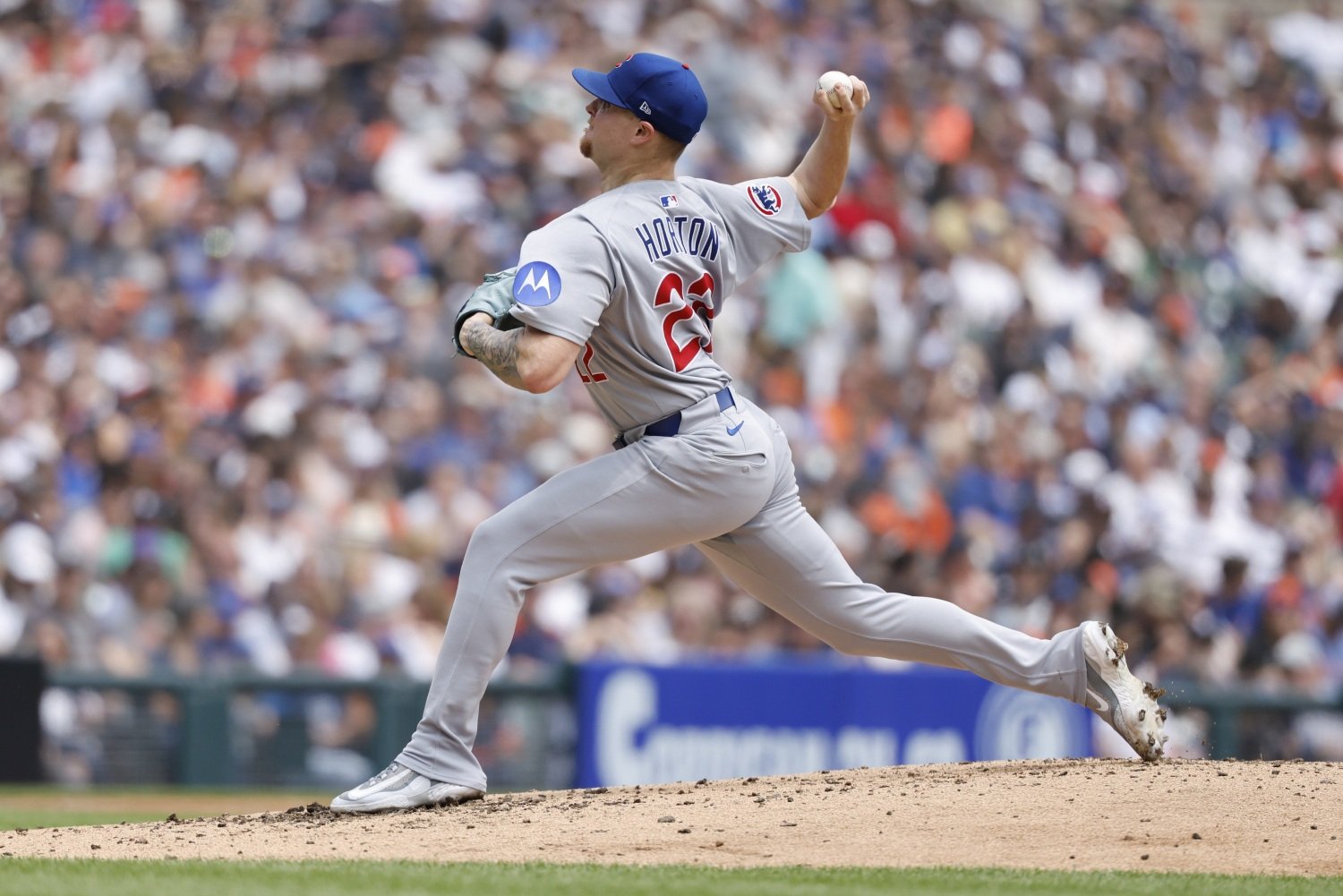 Cade Horton induced 17 whiffs from the Tigers Sunday. He struck out six in five innings of work, and on nine swings against his ever-improving changeup, Detroit batters whiffed six times. This is no longer a dismissable fluke. Even looking purely at release point, movement and velocity differential, Horton's changeup is a plus pitch. A guy who naturally supinates (turning the hand thumb-up, the way one must do to throw a good breaking ball), Horton naturally worked his way into a power cutter as his primary fastball, and he's had good facility with a sweeper and slider (or curve; call it whichever you prefer). Usually, though, it's hard for such pitchers to find a changeup that they can also locate, and which also flummoxes hitters at the game's highest level. Instead, the changeup has looked as good as anything else in Horton's repertoire, during his short tenure with the team thus far. The six whiffs Sunday make 20 in 29 swings at the pitch since he came to the majors. He doesn't get many called strikes with it, but when hitters do swing and even manage to make contact, it's extremely weak, non-dangerous contact, anyway. When you add this kind of changeup to the fastball and sweeper that are the guts of Horton's arsenal, you've built a full-fledged ace. That's ambitious, but also true. If Horton can harness what he's already shown in his short big-league career, and continue to polish the changeup, he's going to become the type of pitcher who can throw 180 innings, strike out that number or more, and post an ERA under 3.00 in a full season. He's emerging as the kind of controllable hurler the Cubs have only dreamed of, at least since the days of Jake Arrieta and Kyle Hendricks first finding their footing in 2014. The catch, of course, is that he's not on that level quite yet. He gave up four runs against the Tigers Sunday, and part of the reason was that he didn't quite trust his changeup enough. Let's take a look at the three at-bats he had against Detroit star Riley Greene, the third of which made all the difference in the outing. In the first, Horton went after Greene very effectively. After starting him with two of those cutting fastballs down and in to go 1-1, he went with a changeup all the way across on the outside corner, earning a foul tip to get ahead. He then crowded Greene with the kind of riding, up-and-in cutter he needs to continue to have as a staple. Greene fought it off foul, but Horton had forced him to change both lanes and eye levels. When he went back to the changeup at the bottom of the zone, it froze Greene for strike three. In his second look at Horton, Greene had to deal with two more changeups right away. Horton missed outside with the first, but got Greene to chase one that had superb depth and was on the plate for the second. Again, the two were at 1-1. This time, Horton followed that with a fastball away for a called strike. Thereafter, though, he tried to finish him off with the curve (or slider), the bigger and more vertical of his breaking pitches. It hung inside, and though it tied Greene up, he fileted the pitch into left field for a single. Greene won that battle, but Horton continued to look like he had good answers even for the star lefty batter. In his third look, though, with two runners on in the fifth inning, Horton got caught in a rookie mindset amid a situation that demanded veteran savvy. Perhaps worried that he'd overexposed the changeup, he tried to bully Greene with his heater, working in the meaty part of the zone. Four pitches; four fastballs. He got ahead 0-2, but after missing away, he tried to come back inside one more time. Greene, again, didn't slam the ball, but he got an even better chunk of it this time, for a clean opposite-field single that brought home two runs. The Cubs' offense stalled out Sunday, anyway. Horton never had a chance at the win. He could have kept the affair much closer, though, had he been willing to mix things up more in that third and final confrontation with Greene. His changeup is a weapon, but if he defaults to lesser weapons in big moments because he's not yet fully dedicated to the idea that his third or fourth pitch can be a bat-missing monster, then he won't fully realize the potential the change opens up for him. Whether the change would have worked against Greene in that fifth-inning jam is almost beside the point. It was the right thing to try, at least. Horton needs to develop more faith in his sweeper and his change, to match the real efficacy of those pitches when he does throw them. If he does, he'll be the best pitcher the Cubs have by the end of this season—or, failing that, the clear co-ace, alongside Shota Imanaga. If he doesn't, he'll continue to be fun and tantalizing, but he won't be quite the frontline playoff arm the Cubs could most use.
 -
Seiya Suzuki Hit Two Home Runs Saturday He'd Never Have Hit Before 2025
Matthew Trueblood posted an article in Cubs
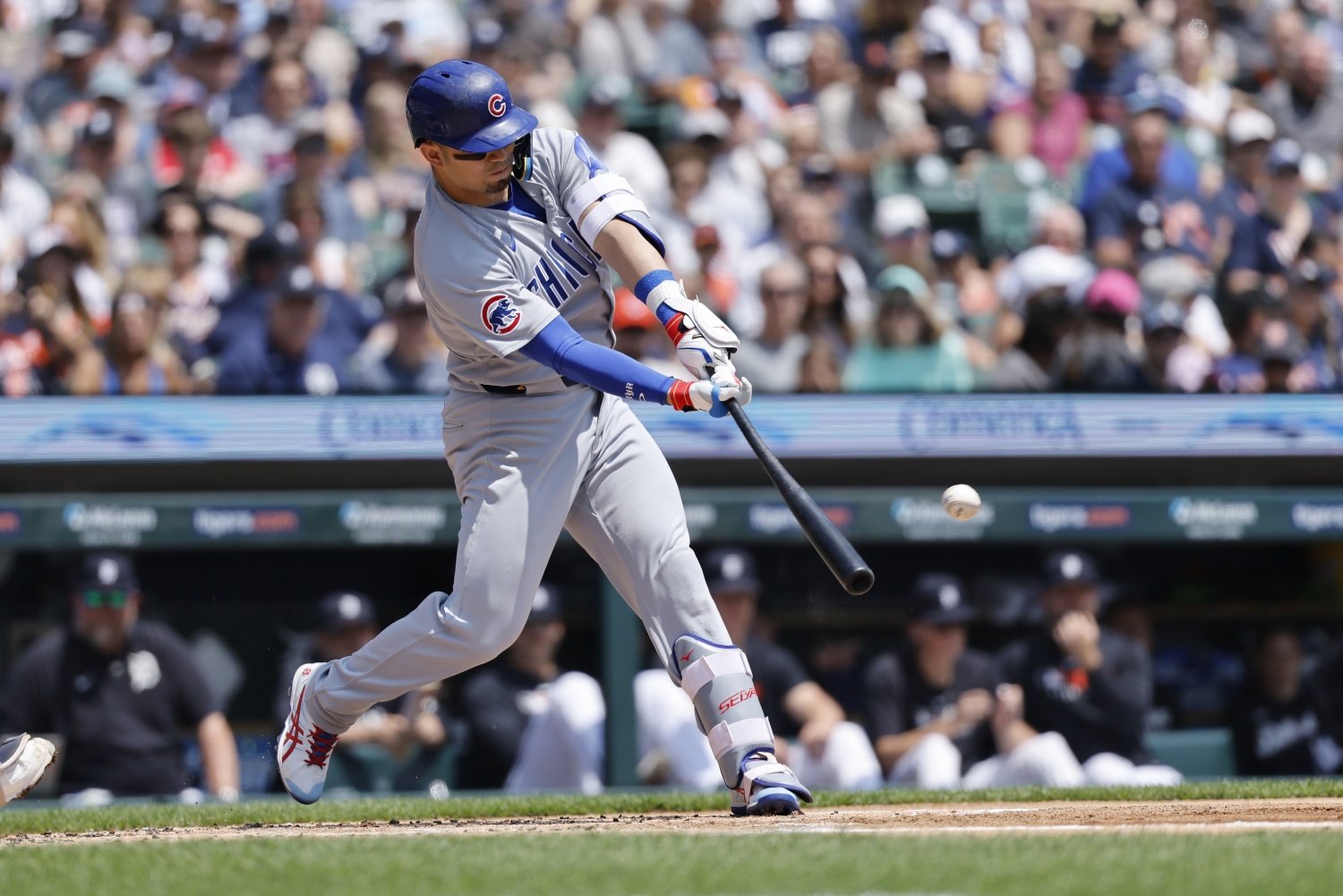 Cubs slugger Seiya Suzuki has always found his power at the top of the strike zone. Since coming to the United States from NPB in 2022, Suzuki has hunted in the top half of the zone for balls he could elevate with his hard, level swing, sending line drives from gap to gap and occasionally sending a ball flying far over the wall. He has a robust .594 career slugging average in the top third of the zone. In the past, if you wanted to get Suzuki out, you pounded him away—and occasionally, you'd come down and in on him. That area wasn't quite a hole for him, but if you worked in the lower and inner thirds of the zone, he didn't have a great way to truly punish you. His best swing, on those pitches, might result in a scalded ground ball through the left side. The real danger came if you left one out over the plate, and if you elevated the ball. Suzuki was more than a mistake hitter, but to hit homers, he needed to either catch a pitcher trying to sneak one past him above the belt or capitalize when they missed, badly, with a pitch aimed down and in. Here's his weighted on-base average (wOBA) by pitch location for the first three years of his Cubs tenure. The number in that lower left box is still very good, but again, we're talking about a lot of hard-hit singles and doubles. Entering 2025, in fact, Suzuki had only hit four home runs on balls in the lower third of the zone, which were also at least the width of a baseball closer to him than the center of home plate. He already has three such home runs this year, after hitting two of them Saturday alone. You're now better off trying Suzuki up and in, though the league doesn't seem to have fully realized that yet. Certainly, the Tigers thought they had a gameplan that would work, and were sorely mistaken. In the first inning, on a 3-2 pitch, Tyler Holton tried a changeup that needed to have the zone (lest he walk Suzuki). He kept it on the bottom rail, but Suzuki obliterated it. SzRsRGVfVjBZQUhRPT1fQmxWUlZGMEhWQUVBQ0ZJQVZnQUhCVkpRQUZrTVYxZ0FDd0VGVWxKUUJnQUdCQUZR.mp4 Later in the game, Chase Lee simply threw a sweeper that didn't sweep. Again, though, this is the kind of mistake Suzuki would only have punished with a single in the past. This year, these mistakes go a very, very long way. SzRsRGVfVjBZQUhRPT1fQjFOV1VGQURWUU1BRGxFSFVnQUhCd2RVQUFCV0JRSUFVd0FGQUFJRUJWRmNBRkJU.mp4 What's fueling this? Firstly, as I wrote last week, Suzuki is tapping into more of his power this year by geting more aggressive. With earlier swing decisions, he's catching the ball out front more, and that's leading to more loft and more of a pull tendency. Those are key ingredients in the cocktail of power. Secondly, though, he's just gotten more comfortable generating his typical bat speed on pitches down in the zone. In 2023, when bat-tracking was live only for the second half (but in which year that coincided with Suzuki's renaissance at the plate and his torrid finish to the season), he had an average bat speed of 70.4 miles per hour on pitches in the lower third of the zone and below. That's well below average, especially given that he swings harder than the average hitter overall. Most batters swing as fast or faster than their total average when chasing the ball down, because it lets them extend their arms more at contact. Suzuki was a rare case of the opposite—of needing the ball to come up to put his 'A' swing on it. Last year, that number rose to 71.6 miles per hour, but the resulting attack angle of his bat didn't appreciably change. In other words, though swinging faster, Suzuki was no earlier on the ball; he was making fractionally later decisions and trying to rush his barrel to the ball. This season, though, he's at 72.0 miles per hour on swings down in the zone, and his attack angle is up from 14° to 16°, with an accompanying change in attack direction. He's catching the ball two inches farther in front of his body, which means he's gained more extension by the time he meets the ball. All that has resulted in more power in the bottom portion of the zone—especially down and in—than he'd ever been able to create before. Suzuki is now on pace 40 home runs, after three seasons in which he never hit more than 21. He's gotten more aggressive, and yes, that's eroded his walk rate, but it's also put him in a position to crush the ball—including some balls he could only have managed singles against in the past.
 -
Image courtesy of © Rick Osentoski-Imagn Images Cubs slugger Seiya Suzuki has always found his power at the top of the strike zone. Since coming to the United States from NPB in 2022, Suzuki has hunted in the top half of the zone for balls he could elevate with his hard, level swing, sending line drives from gap to gap and occasionally sending a ball flying far over the wall. He has a robust .594 career slugging average in the top third of the zone. In the past, if you wanted to get Suzuki out, you pounded him away—and occasionally, you'd come down and in on him. That area wasn't quite a hole for him, but if you worked in the lower and inner thirds of the zone, he didn't have a great way to truly punish you. His best swing, on those pitches, might result in a scalded ground ball through the left side. The real danger came if you left one out over the plate, and if you elevated the ball. Suzuki was more than a mistake hitter, but to hit homers, he needed to either catch a pitcher trying to sneak one past him above the belt or capitalize when they missed, badly, with a pitch aimed down and in. Here's his weighted on-base average (wOBA) by pitch location for the first three years of his Cubs tenure. The number in that lower left box is still very good, but again, we're talking about a lot of hard-hit singles and doubles. Entering 2025, in fact, Suzuki had only hit four home runs on balls in the lower third of the zone, which were also at least the width of a baseball closer to him than the center of home plate. He already has three such home runs this year, after hitting two of them Saturday alone. You're now better off trying Suzuki up and in, though the league doesn't seem to have fully realized that yet. Certainly, the Tigers thought they had a gameplan that would work, and were sorely mistaken. In the first inning, on a 3-2 pitch, Tyler Holton tried a changeup that needed to have the zone (lest he walk Suzuki). He kept it on the bottom rail, but Suzuki obliterated it. SzRsRGVfVjBZQUhRPT1fQmxWUlZGMEhWQUVBQ0ZJQVZnQUhCVkpRQUZrTVYxZ0FDd0VGVWxKUUJnQUdCQUZR.mp4 Later in the game, Chase Lee simply threw a sweeper that didn't sweep. Again, though, this is the kind of mistake Suzuki would only have punished with a single in the past. This year, these mistakes go a very, very long way. SzRsRGVfVjBZQUhRPT1fQjFOV1VGQURWUU1BRGxFSFVnQUhCd2RVQUFCV0JRSUFVd0FGQUFJRUJWRmNBRkJU.mp4 What's fueling this? Firstly, as I wrote last week, Suzuki is tapping into more of his power this year by geting more aggressive. With earlier swing decisions, he's catching the ball out front more, and that's leading to more loft and more of a pull tendency. Those are key ingredients in the cocktail of power. Secondly, though, he's just gotten more comfortable generating his typical bat speed on pitches down in the zone. In 2023, when bat-tracking was live only for the second half (but in which year that coincided with Suzuki's renaissance at the plate and his torrid finish to the season), he had an average bat speed of 70.4 miles per hour on pitches in the lower third of the zone and below. That's well below average, especially given that he swings harder than the average hitter overall. Most batters swing as fast or faster than their total average when chasing the ball down, because it lets them extend their arms more at contact. Suzuki was a rare case of the opposite—of needing the ball to come up to put his 'A' swing on it. Last year, that number rose to 71.6 miles per hour, but the resulting attack angle of his bat didn't appreciably change. In other words, though swinging faster, Suzuki was no earlier on the ball; he was making fractionally later decisions and trying to rush his barrel to the ball. This season, though, he's at 72.0 miles per hour on swings down in the zone, and his attack angle is up from 14° to 16°, with an accompanying change in attack direction. He's catching the ball two inches farther in front of his body, which means he's gained more extension by the time he meets the ball. All that has resulted in more power in the bottom portion of the zone—especially down and in—than he'd ever been able to create before. Suzuki is now on pace 40 home runs, after three seasons in which he never hit more than 21. He's gotten more aggressive, and yes, that's eroded his walk rate, but it's also put him in a position to crush the ball—including some balls he could only have managed singles against in the past. View full article

