


Cubs Video
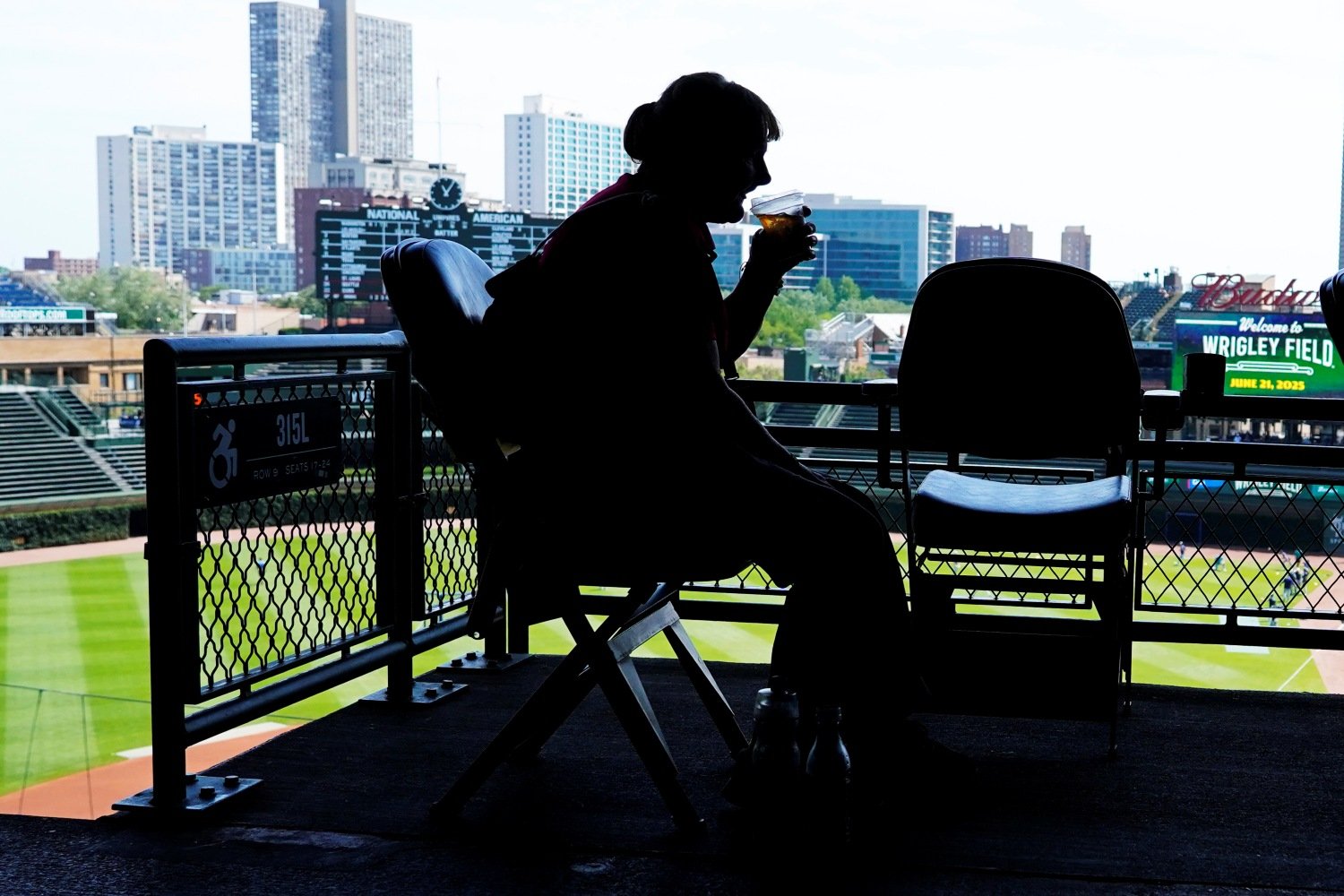
Home plate umpire Chad Whitson had to leave Saturday's game between the Mariners and Cubs at Wrigley Field after just five innings, with heat-related illness. The game-time temperature in Chicago was 94° Fahrenheit, with the heat index rising over 100° at times during the day. Umpires are, by far, the most frequent on-field personnel to succumb to heat in Major League Baseball, due to their considerably higher average age, relative to players; the fact that they must spend the whole game on the field, rather than taking turns in the dugouts as the teams do; and the extra equipment the home-plate umpire has to wear for safety.
Because few fans take umpires' welfare especially seriously, their disproportionate share of the burden added on dangerously hot days has made the game's interaction with a rapidly warming world somewhat less popular a topic than it should be. With each passing year, though, it's becoming harder to ignore how dangerous it sometimes is to partake in MLB games during the heat of summer—and how much longer that portion of the summer is.
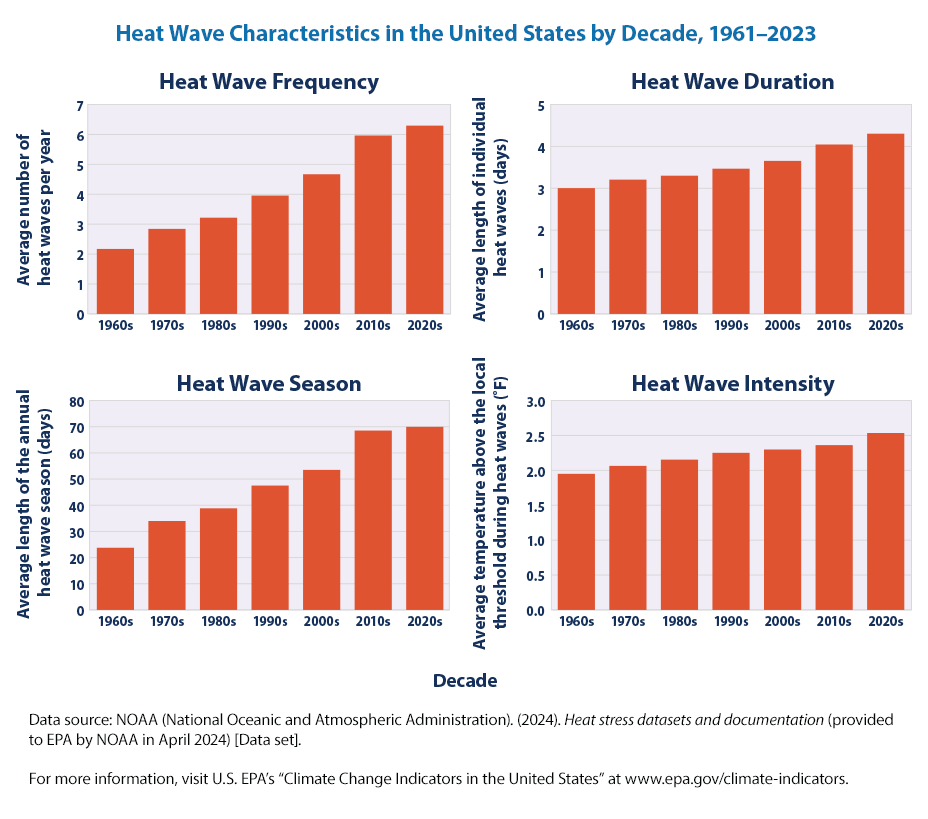
According to the Environmental Protection Agency (EPA) and National Oceanic and Atmospheric Administration (NOAA), heat waves—multi-day events during which temperatures reach ranges dangerous for all humans and stay there for extended periods—occur almost three times as often as they did in the 1960s; roughly twice as often as they did in the 1980s; and over 30% more often than they did even in the first decade of the 21st century. Those heat waves last longer (4.3 days, up from 3.0 on a steady climb), are more intense (the temperature exceeds the normal range by more) and occur over a wider span of the year (with a heat wave season that lasts 10 weeks, up from less than 7 weeks even 30 years ago) than they used to. There is no good news here. None.
There is no intelligent debate to be had about the existence, the urgency, or the enormity of climate change. It's happening. It's threatening human lives, and the American lifestyle, in myriad ways. It must be reckoned with, and it must be mitigated, even though it can't be stopped at this stage.
The problem, if you're a baseball fan, is that baseball can do very little to mitigate this crisis. That's not the same as saying it can't do anything. It can, and it must. The league should create and abide by a policy of postponing games scheduled to take place under unsafe conditions with regard to heat and/or air quality, just as they do with rain and other forms of severe weather. There's already no rule proscribing heat-related delays or postponements, but they need to be considered more seriously, more often—because the number of occasions on which they are real threats to player safety, fan safety, and the quality and experience of the ballgame has risen sharply, and will continue to do so.
In the meantime, of course, the league should bend itself to the task of using its might as a lobbying entity to support measures that reduce the impact of climate change and have a chance to slow down the warming trends. Many (though far from all) of the mitigations and partial solutions to this crisis must be large-scale, requiring corporate and/or government action, not just individuals or even teams making minor tweaks. Baseball should be telling that to leaders at home and abroad.
That, alas, feels very unlikely right now. Neither the sport nor its fan base has even fully grappled with the fact that one of its teams has been displaced by a climate-related disaster, and that more such cases are soon to follow. Those should be the easy calls to action. It will be much harder, unless and until things get even worse, to stir this particular body to action when it comes to keeping people safe from our day-to-day, frog-in-a-pot problem: it's getting hotter. Slowly, but surely. And also, not that slowly.
The game's preferred tactic, of course, is to retreat inside. If the West Sacramento Athletics accomplish a move to Las Vegas, as they hope to, it will be to a roofed and air-conditioned stadium. If the Rays regain their home at Tropicana Field, there will once again be eight teams who play home games under roofs at least some of the time, and the Vegas A's would be the ninth. However, such stadia are more expensive, take up more room, and are only Band-Aids on the bigger problem.
Baseball is our summer game. It celebrates nature and thrives in it. An anodyne, indoor version of the game is not worth having, and neither is a world where we can only breathe fresh air or bear the temperatures indoors. Baseball is one place where we're feeling an ever-increasing crush from the world, telling us—in no uncertain terms—that something has to give. For the next several years, baseball will need to be played only when safe, which will mean building in more off days on the long calendar of the season and/or canceling more contests. For the several years after that, it will either be unplayable altogether; played only inside, like arena football; or played safely in the summers of a better world. We have to decide which of those it will be, right now, and watching Whitson be forced from Saturday's game should help us all make our choices.






Recommended Comments
Create an account or sign in to comment
You need to be a member in order to leave a comment
Create an account
Sign up for a new account in our community. It's easy!
Register a new accountSign in
Already have an account? Sign in here.
Sign In Now