


Matthew Trueblood
-
Posts
2,479 -
Joined
-
Last visited
-
Days Won
2
Content Type
Profiles
Joomla Posts 1
Chicago Cubs Videos
Chicago Cubs Free Agent & Trade Rumors, Notes, & Tidbits
2026 Chicago Cubs Top Prospects Ranking
News
2023 Chicago Cubs Draft Picks
Guides & Resources
2024 Chicago Cubs Draft Picks
The Chicago Cubs Players Project
2025 Chicago Cubs Draft Pick Tracker
2026 Chicago Cubs Draft Tracker: Picks & Bonuses
Blogs
Events
Forums
Store
Gallery
Everything posted by Matthew Trueblood
-
Image courtesy of © Kiyoshi Mio-Imagn Images The list of comparable phenomena in the history of sports is short. Shohei Ohtani is the best baseball player ever, without a close or serious rival, and the way he's swept up the sport—advancing it as a global interest while simultaneously wrapping the whole apparatus around himself, becoming the center of its attention and the source of its gravity—has very few precedents. In whichever order you care to consider them, the people who have had a similarly profound impact on their sport to the one Ohtani is having on baseball right now are: Babe Ruth Tiger Woods Michael Jordan Pelé Simone Biles If we acknowledge the fundamental and irreconcilable differences between team and individual sports, we can cull that list down to Ruth, Jordan, and Pelé, and thus have a more serious conversation. Ohtani is transcending his sport in a way no one but those three has ever done, and in a way few are ever likely to do again. His latest trick, of course, was becoming the first player since 1906 to notch four extra-base hits in a World Series game—which he did in the first seven innings of Game 3, thereafter drawing a record five walks in the Dodgers' 18-inning triumph. He reached base nine times, and although the Blue Jays refused to let him be the one who sank the dagger into them, their inability to get him out (and unwillingness to even try, once he forced the game to final at-bat leverage with his game-tying seventh-inning home run) eventually led to Los Angeles's win. His next trick will be taking the ball to start Game 4 of the Series on the mound. Baseball is not a game one can take over as completely as is possible in basketball. The Jays had a mechanism to work around Ohtani that is much more robust than the double-team defense teams could sometimes run at Jordan at the peak of his powers. Ohtani, however, stretches baseball to its breaking point. He's far more impactful than Ruth was, even at his best. By being both a dominant pitcher and such an otherworldly offensive weapon, he's become more of an all-around force than any soccer player can consistently be. Jordan is the only real comparator—and it's becoming a more apt one almost by the day. Michael Jordan had a great career in the world's second-best basketball league before being drafted by the Chicago Bulls; he was a star in NCAA for the North Carolina Tar Heels. Jordan won a national title and was the National Player of the Year during his college years. He then won the Rookie of the Year Award in 1985, and he won the NBA MVP Award in his fourth season in the league. Shohei Ohtani had a great career in the world's second-best baseball league, before coming over to the United States. With the Nippon Ham Fighters, he won a Japan Series and was the Pacific League MVP in 2016. He then won the Rookie of the Year Award in 2018, and won his first MVP Award in his fourth season in the American League. Each player also achieved international glory. Jordan was on the 1984 Gold Medal-winning Team USA basketball team at the Seoul Olympics. Ohtani closed the championship game of the 2023 World Baseball Classic. However, each was driven—at first bemusedly, then furiously—by the desire to win the championship of the world's best league in their respective sport. Neither felt complete without it, even as each did things their sport had never seen before and achieved fame and wealth that sport had never before afforded to anyone. In their seventh seasons in those top leagues, each finally made it to the mountaintop. Jordan's victory, of course, felt more like the culmination of a long climb, whereas Ohtani seemed to take a running start and fly to the peak, but the result was the same. Each had quieted any possible (at least any halfway serious) critics, but neither was remotely satisfied. In fact, each came back (if anything) more driven the following year, and somehow got even better. In Ohtani's case, it was by sustaining the new level of offensive brilliance he'd reached in 2024 while returning to the mound. In Jordan's, it was by conserving his energy better during the regular season so he could explode for 34.5 points in over 41 minutes per game during the 1992 Playoffs. Ohtani won't be able to singlehandedly carry his team to a second straight title, as Jordan sometimes seemed to do. However, he won the NLCS MVP Award by finishing off the Brewers with the best single-game performance in baseball history. Now, in the first three games of his second World Series, he's batting .500/.667/1.417. He's relentlessly dominant. Even when they go miles out of their way to stop him from landing the killing blow, the opponents can't stop him from pushing his team to the win. Intentional walks to Ohtani led to the pivotal runs in Game 4 of the NLDS and Game 1 of the NLCS. Teams could double- and triple-team Jordan, but he still created scoring chances for the Bulls in ways they couldn't neutralize—and he still played shutdown defense, at times, taking the opponent's offense out of its rhythm. Ohtani is the only team-sport athlete who has matched Jordan narrative beat for narrative beat, and who can also match his all-around flair. Yes, LeBron James is a better basketball player than Jordan was. But he didn't have the chance to reinvent the game; Jordan had already invented a version of it that will last as long as the sport does. He also couldn't match the competitive ferocity or the results that Jordan produced. Similarly, no baseball player can now reinvent the game in any real sense. Ohtani has cracked it open and created whole new swaths of possibility. Nor, apparently, can an Ohtani surrounded by sufficient talent be stopped—because he's showing the same dangerously indomitable will Jordan had. It's a unique pleasure to watch the heir to Air Jordan's legacy at work. He's not as charismatic as Jordan could be, at least to English-speaking audiences, but it's clear that he has every bit of the ambition that set Jordan apart from lots of other extraordinarily talented people. He's on the precipice of his second straight World Series ring. Maybe another one (or four) awaits after that. Maybe, even after this long season, he'll go fight to win a second World Baseball Classic next spring, the same way Jordan went and won a second medal in Barcelona on the heels of his second NBA Finals. Maybe injury or the vagaries of the game will rob Ohtani of some of the glory Jordan achieved. By now, though, there's no more question that he's that same combination of freakish talent and utterly unwavering commitment to winning. It's almost psychotic. It's not the attitude of a perfectly well-adjusted person. It is, however, what the very best athletes are made of. View full article
-
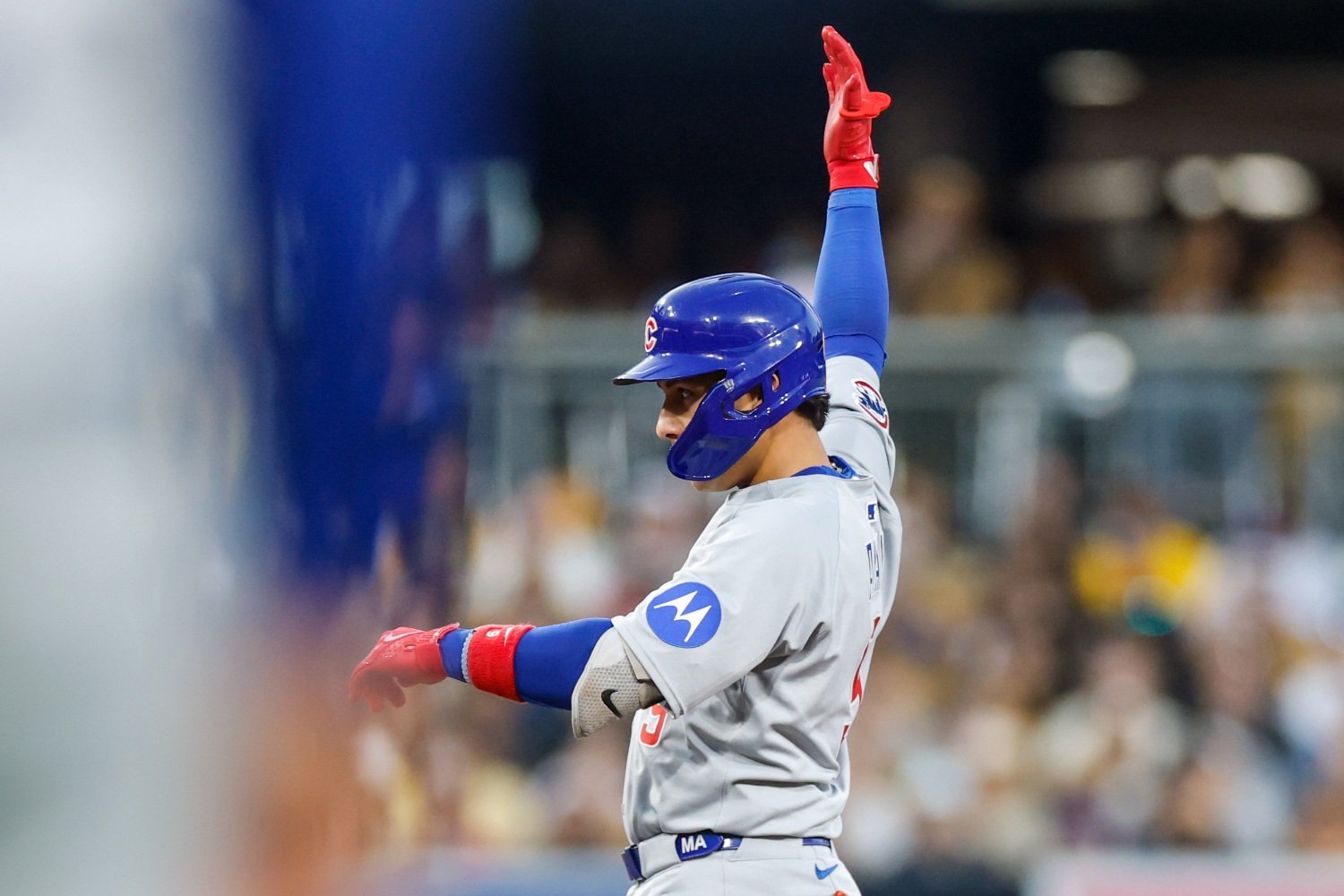 The offseason is right around the corner, and Miguel Amaya is poised to enter it with 2 years, 130 days of MLB service. That's very close to the cutoff for Super Two eligibility for arbitration in recent years, but according to a review of the players who make up the pool of candidates for that status, it's likely to fall roughly five days short of the line for 2025-26. Amaya, 26, is still an out-of-options player coming off an injury-shortened campaign, but he had a strong season and will be easy to bring back as half the projected catching corps for the 2026 Cubs. All players with between three and six years of MLB service time qualify for salary arbitration each winter. Amaya fell about six weeks shy of a full year of service (172 days on an active roster) in 2023, though, so although he's been credited with full service years in 2024 and 2025, he's not yet at three years. However, of all players with between two and three years of service who accrued at least half a season (86 days) in the foregoing year, 22% are made eligible for arbitration each winter, giving them a fourth year in that progressive system before they hit free agency. We don't yet have official confirmation of the cutoff, but a careful review of the nearly 180 players who fall into that service bracket (about 160 of whom amassed enough service time in 2025 to be eligible for the early entry into the arbitration ladder) suggests that this year's line will fall around 2 years, 135 days. That could break either way, by a few days, but it was 2 years, 132 days last fall and it looks as though it will slightly rise this time around. That leaves Amaya out in the cold, but makes the Cubs' life easier. They don't even have to make a decision about him as an arbitration-eligible earner. It would have been a pretty easy decision, anyway, but assuming he does come up short of the line, he won't even have to be tendered a contract ahead of the non-tender deadline next month. The Cubs can renew his contract at any salary north of the league minimum. They're likely to pay him around $800,000, which is roughly $650,000 less than the estimate of his arbitration earnings (should he qualify), according to Cot's Contracts. A bit over half a million dollars sounds like small potatoes for a big-market team like the Cubs, because it is. However, there are a couple of other considerations that make it more valuable than it sounds to them if he has to wait another year to start making seven-figure money. First, reaching arbitration a year early means boosting the platform for earnings in each subsequent year of arbitration. Amaya not being Super Two-eligible will save the team less than $700,000 in 2026, but that could easily be $3 million or more if he plays well and the Cubs end up wanting to keep him for the full term of his team control. It would just spread out across those years. Saving that much on Amaya also gives the team more leeway to bolster their catching depth organizationally, by signing a player to a split contract or a minor-league deal. They retained Reese McGuire on that kind of contract in 2025, which paid huge dividends when Amaya got hurt. It would be a further boon to the team to have such a player around in 2026, not only to give the team however much cover it needs to keep Moisés Ballesteros in the minors so he can develop as a catcher, but to fill in for Amaya should he go down again. Though he had an admirable overall season, Carson Kelly wore down once the lion's share of the catching duties passed to him. He had long stretches of unproductive at-bats at the plate; he's much better as Catcher 1-B in a tandem. As the main backstop, he's a bit underwhelming. Kelly also received $500,000 in performance bonuses from the team this year: $250,000 apiece for 81 and 91 games started. He would stand to do the same in 2026, so if the team can shift him into a smaller role, it will save them another modest but noticeable chunk of change—and they'll probably get better play out of him, to boot. Amaya is very likely to miss out on arbitration. One teammate with one day more service time—righty reliever Ethan Roberts—is guaranteed to do so. Roberts didn't get 86 days of service time in 2025, so even if the Super Two cutoff turns out to be 130 days or lower, it will be without having factored in Roberts, and he won't be eligible to go to arbitration. Unlike Amaya, Roberts has one minor-league option year remaining. He can still be sent to the minors when the team deems him not to be one of their best 13 pitchers at any given time in 2026, and since he'll be making the league minimum and have roster flexibility, Roberts might (improbably) survive yet another winter on the 40-man roster. He might be jettisoned right away, just to make room for the needed early moves (like re-adding players who finished the year on the 60-day injured list or adding players to shield them from the Rule 5 Draft in December). If he survives that, though, Roberts might sail right through the winter. Teams love optionable pitching depth. Small roster rules like these rarely make the entire decision on a given player for a team. They just nudge things a bit in one direction or another. For the Cubs, Amaya missing out on Super Two status looks like a money saver and a small squirt of grease for the wheels of their offseason. Roberts being disenfranchised by that wrinkle in the rules also makes him easier to keep. The Cubs will pay plenty of extra money and lose a bit of team control this fall, in good ways, but there will also be small wins in the early days of the offseason, like Amaya being as cheap as possible to retain and promote.
 -
Image courtesy of © David Frerker-Imagn Images The offseason is right around the corner, and Miguel Amaya is poised to enter it with 2 years, 130 days of MLB service. That's very close to the cutoff for Super Two eligibility for arbitration in recent years, but according to a review of the players who make up the pool of candidates for that status, it's likely to fall roughly five days short of the line for 2025-26. Amaya, 26, is still an out-of-options player coming off an injury-shortened campaign, but he had a strong season and will be easy to bring back as half the projected catching corps for the 2026 Cubs. All players with between three and six years of MLB service time qualify for salary arbitration each winter. Amaya fell about six weeks shy of a full year of service (172 days on an active roster) in 2023, though, so although he's been credited with full service years in 2024 and 2025, he's not yet at three years. However, of all players with between two and three years of service who accrued at least half a season (86 days) in the foregoing year, 22% are made eligible for arbitration each winter, giving them a fourth year in that progressive system before they hit free agency. We don't yet have official confirmation of the cutoff, but a careful review of the nearly 180 players who fall into that service bracket (about 160 of whom amassed enough service time in 2025 to be eligible for the early entry into the arbitration ladder) suggests that this year's line will fall around 2 years, 135 days. That could break either way, by a few days, but it was 2 years, 132 days last fall and it looks as though it will slightly rise this time around. That leaves Amaya out in the cold, but makes the Cubs' life easier. They don't even have to make a decision about him as an arbitration-eligible earner. It would have been a pretty easy decision, anyway, but assuming he does come up short of the line, he won't even have to be tendered a contract ahead of the non-tender deadline next month. The Cubs can renew his contract at any salary north of the league minimum. They're likely to pay him around $800,000, which is roughly $650,000 less than the estimate of his arbitration earnings (should he qualify), according to Cot's Contracts. A bit over half a million dollars sounds like small potatoes for a big-market team like the Cubs, because it is. However, there are a couple of other considerations that make it more valuable than it sounds to them if he has to wait another year to start making seven-figure money. First, reaching arbitration a year early means boosting the platform for earnings in each subsequent year of arbitration. Amaya not being Super Two-eligible will save the team less than $700,000 in 2026, but that could easily be $3 million or more if he plays well and the Cubs end up wanting to keep him for the full term of his team control. It would just spread out across those years. Saving that much on Amaya also gives the team more leeway to bolster their catching depth organizationally, by signing a player to a split contract or a minor-league deal. They retained Reese McGuire on that kind of contract in 2025, which paid huge dividends when Amaya got hurt. It would be a further boon to the team to have such a player around in 2026, not only to give the team however much cover it needs to keep Moisés Ballesteros in the minors so he can develop as a catcher, but to fill in for Amaya should he go down again. Though he had an admirable overall season, Carson Kelly wore down once the lion's share of the catching duties passed to him. He had long stretches of unproductive at-bats at the plate; he's much better as Catcher 1-B in a tandem. As the main backstop, he's a bit underwhelming. Kelly also received $500,000 in performance bonuses from the team this year: $250,000 apiece for 81 and 91 games started. He would stand to do the same in 2026, so if the team can shift him into a smaller role, it will save them another modest but noticeable chunk of change—and they'll probably get better play out of him, to boot. Amaya is very likely to miss out on arbitration. One teammate with one day more service time—righty reliever Ethan Roberts—is guaranteed to do so. Roberts didn't get 86 days of service time in 2025, so even if the Super Two cutoff turns out to be 130 days or lower, it will be without having factored in Roberts, and he won't be eligible to go to arbitration. Unlike Amaya, Roberts has one minor-league option year remaining. He can still be sent to the minors when the team deems him not to be one of their best 13 pitchers at any given time in 2026, and since he'll be making the league minimum and have roster flexibility, Roberts might (improbably) survive yet another winter on the 40-man roster. He might be jettisoned right away, just to make room for the needed early moves (like re-adding players who finished the year on the 60-day injured list or adding players to shield them from the Rule 5 Draft in December). If he survives that, though, Roberts might sail right through the winter. Teams love optionable pitching depth. Small roster rules like these rarely make the entire decision on a given player for a team. They just nudge things a bit in one direction or another. For the Cubs, Amaya missing out on Super Two status looks like a money saver and a small squirt of grease for the wheels of their offseason. Roberts being disenfranchised by that wrinkle in the rules also makes him easier to keep. The Cubs will pay plenty of extra money and lose a bit of team control this fall, in good ways, but there will also be small wins in the early days of the offseason, like Amaya being as cheap as possible to retain and promote. View full article
-
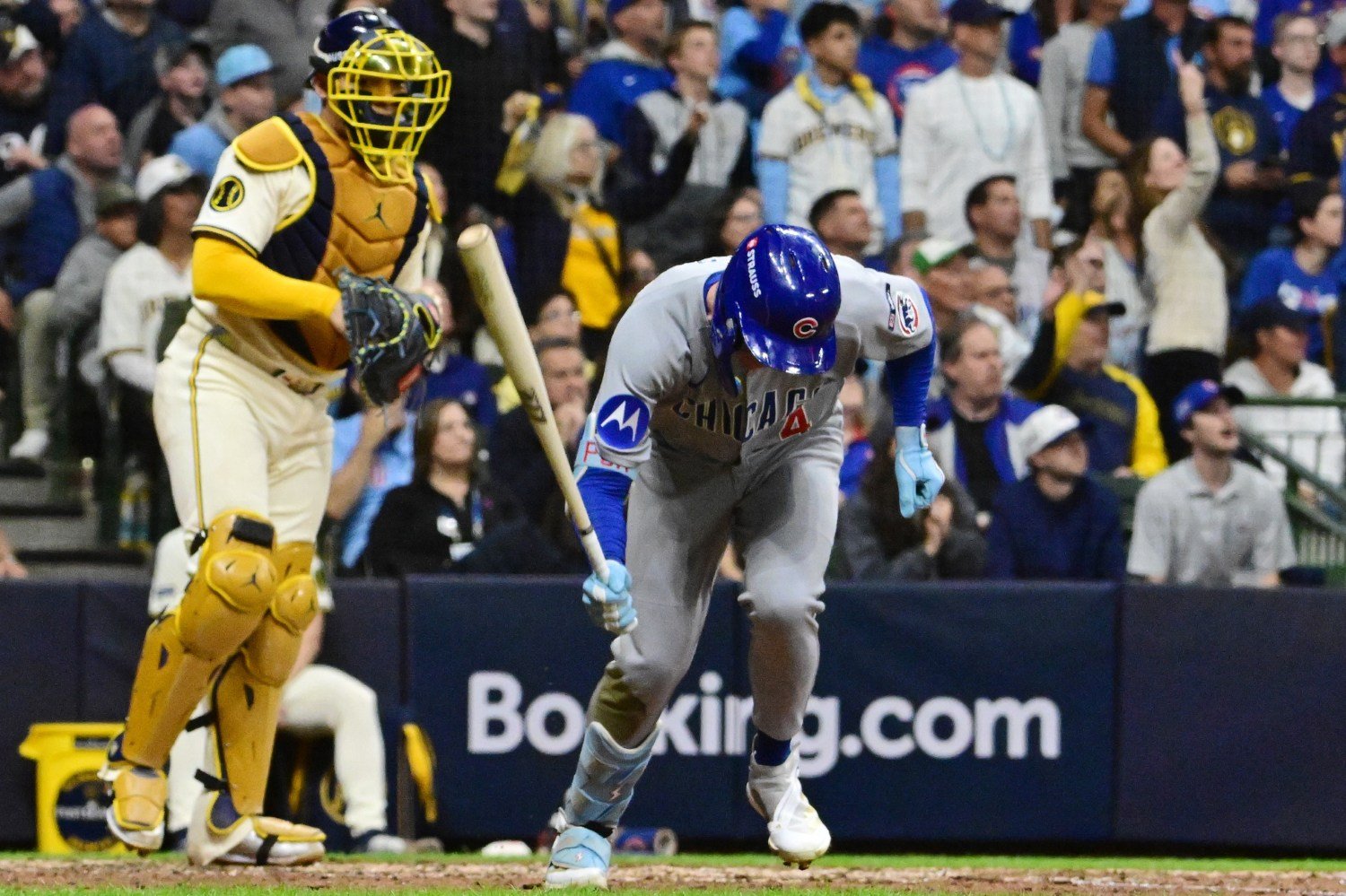 For Cubs fans of a certain age, there are a host of haunting 'what-if' scenarios attached to the team's 2003 season. On the whole, that was a great year, featuring the team's first division title in 14 years and almost as many postseason games (12) as they'd played from 1945 through 2002 (13). It was the last season of Sammy Sosa's prime, although also the start of his fall from grace. It was the peak season for Kerry Wood and Mark Prior. It felt like the beginning of something, and indeed, the franchise has 14 winning seasons in the 22 full campaigns beginning with that year. Yet, they also fell just shy of winning the team's first pennant in 58 years. The core they thought they were building around—Prior, Wood, Carlos Zambrano, Corey Patterson and Hee-Seop Choi—turned out to be much less robust than they'd hoped. They were right on the verge of a curse-breaking bit of magic, but instead, the season ended in heartbreak. Thanks both to what happened that year and what came afterward, Patterson became perhaps the best emblem of their not-quite-breakthrough. For much of the first half, Patterson looked like he was turning the corner toward stardom. He'd played a full season in 2002, but it had been a bumpy rookie ride. The extremely free-swinging lefty drew just 19 walks against 142 strikeouts, and his 49 extra-base hits didn't really make up for the lack of plate discipline—especially in the power-happy context of the league at that time. His athleticism made him fun to watch, when he could get anything going at the plate, but the slumps outnumbered the streaks. Though he played great defense in center field, Patterson entered 2003 as an enigma: the team needed a lot from him but wasn't sure what it could actually expect. All of that changed in 2003. New manager Dusty Baker took some pressure off Patterson by batting him in the lower third of the order early in the season, and that helped the youngster tap into his talent more fully. By June, he was often batting third, because he'd come on like a house afire. On July 6, he was batting .298/.329/.511. In 347 plate appearances, he was striking out as often as ever, but he'd roughly doubled his walk rate, with 15 of them in 347 plate appearances. He also had a whopping 37 extra-base hits during that half-season of breakout performance. Then, in a gasp and a sudden silence, he tore his ACL beating out an infield single and was lost for the balance of that season. When he came back the next year, it wasn't the same. Patterson was fine in 2004, but would never again be the kind of player he was in the first half of 2003. By 2006, he was an Oriole. Ever since, it's been almost impossible to answer the aching question: How would things have gone if Patterson hadn't gone down that summer? Was there yet another level of brilliance, just one more pivotal adjustment away? Could he have learned and grown in a way that would have paid dividends for the balance of his career? In short: did that injury scupper his push toward stardom, or was that dream doomed all along? The answer was probably always the sad, boring, unsatisfying one: Patterson swung too much, and was swinging too much even in his great half-season. He never learned to stop swinging so much, and was probably never going to learn to stop swinging so much. He didn't have the right people in his ear at the right ages, helping him understand how to handle big-league pitching and organize his strike zone. He probably would have run into trouble during the second half of that campaign. The Cubs traded for Kenny Lofton to replace Patterson, and he would post a .381 OBP for them. The 2003 team was almost certainly better for Patterson having gotten hurt, and his career probably wasn't that much altered. Pete Crow-Armstrong stayed healthy, and maybe the 2025 Cubs were worse for it. Crow-Armstrong was hitting .270/.308/.563 in late June, when he hit a bit of a skid until the week before the All-Star break. He bobbed back up coming out of the break, and was hitting .272/.309/.559 at the end of July. Thereafter, he batted an execrable .188/.237/.295 in 200 regular-season plate appearances, and was somehow even worse (.185/.214/.185) in 29 plate appearances in the playoffs. Crow-Armstrong is an even better fielder than Patterson was, but his glove didn't make up for the horrendousness of his stick late in the season; the Cubs would have been better off giving the job to Kevin Alcántara or trading for even a low-wattage replacement in August and September. The fascinating questions we're left with, then, center on the different fortunes of these two very similar young players at crucial moments in their careers. Crow-Armstrong swings too much, just like Patterson did. Did this midstream failure, with no physical externality to blame it on, teach him something important? Is his makeup better than Patterson's, to a sufficient extent to make him capable of adjusting where Patterson failed to? Will he get better instruction than Patterson did? Though the 2025 Cubs might have made it further or had an easier final stretch without him, will the team and the player be better off in the long run because he stayed healthy long enough to have his breakout season turn sour? It feels like a soft argument, but there's a decent case for it. Crow-Armstrong will probably always be overly aggressive at the plate. His swing rate certainly seems to be (at least partly) a matter of disposition; he hums with aggressiveness whenever he's on the field. However, he got ample chances to learn hard lessons in 2025. He didn't hit well in the postseason, but he did come up with a couple of clutch hits, one of which came directly as a result of a good plate appearance in which he demonstrated some patience; perhaps that reinforced good habits. His confidence should benefit from that small course correction. Sometimes, it also helps to get embarrassed. On the back-breaking home runs in the Brewers' Game 2 and Game 5 wins (by Jackson Chourio and Brice Turang, respectively), Crow-Armstrong raced back to the wall at Uecker Field in Milwaukee and leaped heroically—for balls that flew far over the wall and left Crow-Armstrong looking desperate and helpless and foolish at the base thereof. WU9xZzdfV0ZRVkV3dEdEUT09X1VBRlpVVndGQWxjQVdnTUJBQUFIQmxRRUFBQUJWZ1FBVjFjSEJBQU1BZ0FHVkFGUQ==.mp4 Whatever pride Crow-Armstrong stored for himself in his defense amid a brutal stretch at the plate, it had to be bruised by the end of the NLDS. He didn't even play well in the field in that series. It's very possible he was worn out, after a very long year and one of the league's heaviest all-around individual workloads. Still, he got a ton of chances to feel the flush of humiliation under a national spotlight, and even before that, he went through a humbling period of prolonged helplessness at the plate. Every player is different. Every person processes success and failure in their own ways. Crow-Armstrong might not benefit from what he just went through; maybe it would have been exactly what Patterson needed. However, despite the pain and ugliness of it, the best bet is that Crow-Armstrong will come out better for having stayed on the field throughout a miserable two-plus months to end 2025. It feels, by extension, like Patterson would have benefited from that, too. The 2003 Cubs might not have gone as far if he'd stayed on the field, and the 2025 Cubs might have been better with less Crow-Armstrong down the stretch. In the long run, though, it's going to be better for this version of the team that Crow-Armstrong had to wade hip-deep through the muck of that second half. They got lucky, in a funny little way, by having their most exciting young player fall flat on his face (almost literally) at the end of his breakout season.
 -
Image courtesy of © Benny Sieu-Imagn Images For Cubs fans of a certain age, there are a host of haunting 'what-if' scenarios attached to the team's 2003 season. On the whole, that was a great year, featuring the team's first division title in 14 years and almost as many postseason games (12) as they'd played from 1945 through 2002 (13). It was the last season of Sammy Sosa's prime, although also the start of his fall from grace. It was the peak season for Kerry Wood and Mark Prior. It felt like the beginning of something, and indeed, the franchise has 14 winning seasons in the 22 full campaigns beginning with that year. Yet, they also fell just shy of winning the team's first pennant in 58 years. The core they thought they were building around—Prior, Wood, Carlos Zambrano, Corey Patterson and Hee-Seop Choi—turned out to be much less robust than they'd hoped. They were right on the verge of a curse-breaking bit of magic, but instead, the season ended in heartbreak. Thanks both to what happened that year and what came afterward, Patterson became perhaps the best emblem of their not-quite-breakthrough. For much of the first half, Patterson looked like he was turning the corner toward stardom. He'd played a full season in 2002, but it had been a bumpy rookie ride. The extremely free-swinging lefty drew just 19 walks against 142 strikeouts, and his 49 extra-base hits didn't really make up for the lack of plate discipline—especially in the power-happy context of the league at that time. His athleticism made him fun to watch, when he could get anything going at the plate, but the slumps outnumbered the streaks. Though he played great defense in center field, Patterson entered 2003 as an enigma: the team needed a lot from him but wasn't sure what it could actually expect. All of that changed in 2003. New manager Dusty Baker took some pressure off Patterson by batting him in the lower third of the order early in the season, and that helped the youngster tap into his talent more fully. By June, he was often batting third, because he'd come on like a house afire. On July 6, he was batting .298/.329/.511. In 347 plate appearances, he was striking out as often as ever, but he'd roughly doubled his walk rate, with 15 of them in 347 plate appearances. He also had a whopping 37 extra-base hits during that half-season of breakout performance. Then, in a gasp and a sudden silence, he tore his ACL beating out an infield single and was lost for the balance of that season. When he came back the next year, it wasn't the same. Patterson was fine in 2004, but would never again be the kind of player he was in the first half of 2003. By 2006, he was an Oriole. Ever since, it's been almost impossible to answer the aching question: How would things have gone if Patterson hadn't gone down that summer? Was there yet another level of brilliance, just one more pivotal adjustment away? Could he have learned and grown in a way that would have paid dividends for the balance of his career? In short: did that injury scupper his push toward stardom, or was that dream doomed all along? The answer was probably always the sad, boring, unsatisfying one: Patterson swung too much, and was swinging too much even in his great half-season. He never learned to stop swinging so much, and was probably never going to learn to stop swinging so much. He didn't have the right people in his ear at the right ages, helping him understand how to handle big-league pitching and organize his strike zone. He probably would have run into trouble during the second half of that campaign. The Cubs traded for Kenny Lofton to replace Patterson, and he would post a .381 OBP for them. The 2003 team was almost certainly better for Patterson having gotten hurt, and his career probably wasn't that much altered. Pete Crow-Armstrong stayed healthy, and maybe the 2025 Cubs were worse for it. Crow-Armstrong was hitting .270/.308/.563 in late June, when he hit a bit of a skid until the week before the All-Star break. He bobbed back up coming out of the break, and was hitting .272/.309/.559 at the end of July. Thereafter, he batted an execrable .188/.237/.295 in 200 regular-season plate appearances, and was somehow even worse (.185/.214/.185) in 29 plate appearances in the playoffs. Crow-Armstrong is an even better fielder than Patterson was, but his glove didn't make up for the horrendousness of his stick late in the season; the Cubs would have been better off giving the job to Kevin Alcántara or trading for even a low-wattage replacement in August and September. The fascinating questions we're left with, then, center on the different fortunes of these two very similar young players at crucial moments in their careers. Crow-Armstrong swings too much, just like Patterson did. Did this midstream failure, with no physical externality to blame it on, teach him something important? Is his makeup better than Patterson's, to a sufficient extent to make him capable of adjusting where Patterson failed to? Will he get better instruction than Patterson did? Though the 2025 Cubs might have made it further or had an easier final stretch without him, will the team and the player be better off in the long run because he stayed healthy long enough to have his breakout season turn sour? It feels like a soft argument, but there's a decent case for it. Crow-Armstrong will probably always be overly aggressive at the plate. His swing rate certainly seems to be (at least partly) a matter of disposition; he hums with aggressiveness whenever he's on the field. However, he got ample chances to learn hard lessons in 2025. He didn't hit well in the postseason, but he did come up with a couple of clutch hits, one of which came directly as a result of a good plate appearance in which he demonstrated some patience; perhaps that reinforced good habits. His confidence should benefit from that small course correction. Sometimes, it also helps to get embarrassed. On the back-breaking home runs in the Brewers' Game 2 and Game 5 wins (by Jackson Chourio and Brice Turang, respectively), Crow-Armstrong raced back to the wall at Uecker Field in Milwaukee and leaped heroically—for balls that flew far over the wall and left Crow-Armstrong looking desperate and helpless and foolish at the base thereof. WU9xZzdfV0ZRVkV3dEdEUT09X1VBRlpVVndGQWxjQVdnTUJBQUFIQmxRRUFBQUJWZ1FBVjFjSEJBQU1BZ0FHVkFGUQ==.mp4 Whatever pride Crow-Armstrong stored for himself in his defense amid a brutal stretch at the plate, it had to be bruised by the end of the NLDS. He didn't even play well in the field in that series. It's very possible he was worn out, after a very long year and one of the league's heaviest all-around individual workloads. Still, he got a ton of chances to feel the flush of humiliation under a national spotlight, and even before that, he went through a humbling period of prolonged helplessness at the plate. Every player is different. Every person processes success and failure in their own ways. Crow-Armstrong might not benefit from what he just went through; maybe it would have been exactly what Patterson needed. However, despite the pain and ugliness of it, the best bet is that Crow-Armstrong will come out better for having stayed on the field throughout a miserable two-plus months to end 2025. It feels, by extension, like Patterson would have benefited from that, too. The 2003 Cubs might not have gone as far if he'd stayed on the field, and the 2025 Cubs might have been better with less Crow-Armstrong down the stretch. In the long run, though, it's going to be better for this version of the team that Crow-Armstrong had to wade hip-deep through the muck of that second half. They got lucky, in a funny little way, by having their most exciting young player fall flat on his face (almost literally) at the end of his breakout season. View full article
-
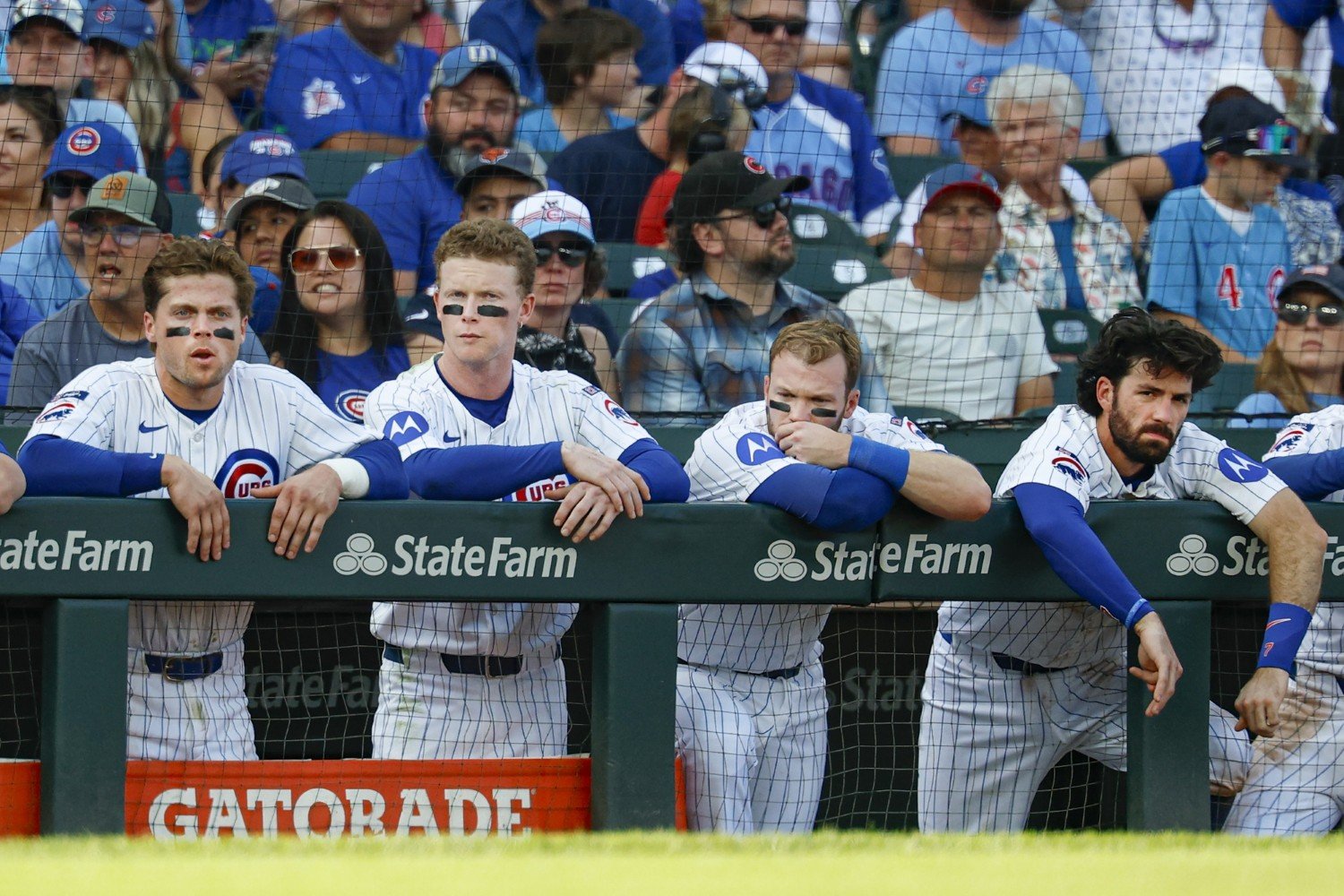 Nico Hoerner became the second Cubs second baseman to win a Fielding Bible Award Thursday, claiming the 2025 honor over Toronto Blue Jays star Andrés Giménez. Although center fielder Pete Crow-Armstrong lost out to Red Sox counterpart Ceddanne Rafaela, the Cubs also eked out the win for the first-ever Fielding Bible Award for teams. This is big news, and should be all you actually care about when it comes to defensive honors at the end of each MLB season. The Gold Gloves are voted on by coaches and managers, many of whom pay only dim attention to the actual quality of fielders at each position. Though the frequency of embarrassingly bad Gold Glove honorees has dropped over time, the Fielding Bible Awards (FBAs)—created by Sports Info Solutions (SIS) and voted on by a panel of experts while incorporating high-level defensive metrics—are still far and away better gauges of defensive excellence. The company recognizes just one winner for the whole of MLB each season, which also makes the honor more exclusive than the Gold Gloves are. Hoerner played exceptional defense at the keystone this season, earning his first FBA after being a down-ballot vote-getter in multiple previous campaigns. He's the first Cubs second baseman to earn the prize since Darwin Barney did so in 2012. He's the fifth Cub to win one of the awards overall, since they began to be handed out in 2006. In addition to Barney, Anthony Rizzo won at first base in 2016; Javier Báez won as the Multi-Position honoree in 2016, 2017 and 2018, and at shortstop in 2020; and Dansby Swanson won the 2024 award at shortstop. As I wrote in September, Hoerner did a masterful job this year of using positioning and an aggressive style to maximize his tools at second. In an interview with SIS editorial operations lead Mark Simon for the SIS Baseball podcast, Hoerner specifically mentioned that he felt he still hadn't regained his full arm strength after offseason elbow surgery, and the pride he took in being able to overcome that to claim this season's award as the best second baseman in the sport. In a mild upset, Crow-Armstrong lost out on an award on which he seemed to have the inside track for much of the year. He was brilliant in center field this year, but just as he went over an offensive cliff in the second half, he seemed to lose a quarter of a step in center, as well. He was still good, but Rafaela sped past him to claim the award. That leaves another empty checkbox for the Cubs' extremely hungry, talented center fielder heading into 2026, but there's little doubt that (given good health and good enough adjustments to remain a regular for years to come) there's an FBA in Crow-Armstrong's future. Despite the individual snub, Crow-Armstrong (along with third-place finishers for the left field and pitching awards, Ian Happ and Matthew Boyd, among others) did help the Cubs claim the inaugural Fielding Bible Award for team excellence. This season, the Cubs actually boasted the elite defense they attempted to field (but fell slightly short of) the previous two years. Swanson's physical tools are starting to feel slightly stretched at shortstop, but he's superbly smart and sure-handed, offsetting some of his physical limitations. Rookie Matt Shaw, though a mess at the plate, settled quickly into third base and was a plus defender there from mid-May onward. Michael Busch continues an impressive maturation into an above-average first baseman. Happ, Kyle Tucker and a much-improved Seiya Suzuki provided good support to Crow-Armstrong's superstar effort in the outfield. None of the three main corner outfielders are especially athletic, at this stage of their careers, but Happ and Tucker have good body control on slides and dives, while Happ and Suzuki bring plus arms. The injury suffered by Miguel Amaya could have significantly disrupted the team's defense behind the plate, but instead, it arguably improved it. Carson Kelly was great at preventing wild pitches and passed balls; Amaya replacement Reese McGuire became a lethal thrower when runners challenged him. McGuire was also a fine pitch framer. Boyd led the way, but Cubs pitchers also did a tremendous job as a unit at stopping the running game. Shota Imanaga and Colin Rea joined Boyd in excelling in that aspect, and Rea is a subtly great all-around fielder of his position. There just weren't holes in the team's defense, the way there have been at times in the past, and it made a big difference as they surged to 92 wins. Now, they have a major team-level award to validate that greatness. Extending Hoerner should be a priority for the Cubs this winter. They're likely to continue discussions with Crow-Armstrong about one, too. Those two are the centerpieces, at this point, of a league-best all-around defensive unit, but the nature of fielding is such that they'll need to continue refreshing their roster and infusing it with youth to make sure that they remain at the top of the heap in 2026.
 -
Image courtesy of © Kamil Krzaczynski-Imagn Images Nico Hoerner became the second Cubs second baseman to win a Fielding Bible Award Thursday, claiming the 2025 honor over Toronto Blue Jays star Andrés Giménez. Although center fielder Pete Crow-Armstrong lost out to Red Sox counterpart Ceddanne Rafaela, the Cubs also eked out the win for the first-ever Fielding Bible Award for teams. This is big news, and should be all you actually care about when it comes to defensive honors at the end of each MLB season. The Gold Gloves are voted on by coaches and managers, many of whom pay only dim attention to the actual quality of fielders at each position. Though the frequency of embarrassingly bad Gold Glove honorees has dropped over time, the Fielding Bible Awards (FBAs)—created by Sports Info Solutions (SIS) and voted on by a panel of experts while incorporating high-level defensive metrics—are still far and away better gauges of defensive excellence. The company recognizes just one winner for the whole of MLB each season, which also makes the honor more exclusive than the Gold Gloves are. Hoerner played exceptional defense at the keystone this season, earning his first FBA after being a down-ballot vote-getter in multiple previous campaigns. He's the first Cubs second baseman to earn the prize since Darwin Barney did so in 2012. He's the fifth Cub to win one of the awards overall, since they began to be handed out in 2006. In addition to Barney, Anthony Rizzo won at first base in 2016; Javier Báez won as the Multi-Position honoree in 2016, 2017 and 2018, and at shortstop in 2020; and Dansby Swanson won the 2024 award at shortstop. As I wrote in September, Hoerner did a masterful job this year of using positioning and an aggressive style to maximize his tools at second. In an interview with SIS editorial operations lead Mark Simon for the SIS Baseball podcast, Hoerner specifically mentioned that he felt he still hadn't regained his full arm strength after offseason elbow surgery, and the pride he took in being able to overcome that to claim this season's award as the best second baseman in the sport. In a mild upset, Crow-Armstrong lost out on an award on which he seemed to have the inside track for much of the year. He was brilliant in center field this year, but just as he went over an offensive cliff in the second half, he seemed to lose a quarter of a step in center, as well. He was still good, but Rafaela sped past him to claim the award. That leaves another empty checkbox for the Cubs' extremely hungry, talented center fielder heading into 2026, but there's little doubt that (given good health and good enough adjustments to remain a regular for years to come) there's an FBA in Crow-Armstrong's future. Despite the individual snub, Crow-Armstrong (along with third-place finishers for the left field and pitching awards, Ian Happ and Matthew Boyd, among others) did help the Cubs claim the inaugural Fielding Bible Award for team excellence. This season, the Cubs actually boasted the elite defense they attempted to field (but fell slightly short of) the previous two years. Swanson's physical tools are starting to feel slightly stretched at shortstop, but he's superbly smart and sure-handed, offsetting some of his physical limitations. Rookie Matt Shaw, though a mess at the plate, settled quickly into third base and was a plus defender there from mid-May onward. Michael Busch continues an impressive maturation into an above-average first baseman. Happ, Kyle Tucker and a much-improved Seiya Suzuki provided good support to Crow-Armstrong's superstar effort in the outfield. None of the three main corner outfielders are especially athletic, at this stage of their careers, but Happ and Tucker have good body control on slides and dives, while Happ and Suzuki bring plus arms. The injury suffered by Miguel Amaya could have significantly disrupted the team's defense behind the plate, but instead, it arguably improved it. Carson Kelly was great at preventing wild pitches and passed balls; Amaya replacement Reese McGuire became a lethal thrower when runners challenged him. McGuire was also a fine pitch framer. Boyd led the way, but Cubs pitchers also did a tremendous job as a unit at stopping the running game. Shota Imanaga and Colin Rea joined Boyd in excelling in that aspect, and Rea is a subtly great all-around fielder of his position. There just weren't holes in the team's defense, the way there have been at times in the past, and it made a big difference as they surged to 92 wins. Now, they have a major team-level award to validate that greatness. Extending Hoerner should be a priority for the Cubs this winter. They're likely to continue discussions with Crow-Armstrong about one, too. Those two are the centerpieces, at this point, of a league-best all-around defensive unit, but the nature of fielding is such that they'll need to continue refreshing their roster and infusing it with youth to make sure that they remain at the top of the heap in 2026. View full article
-
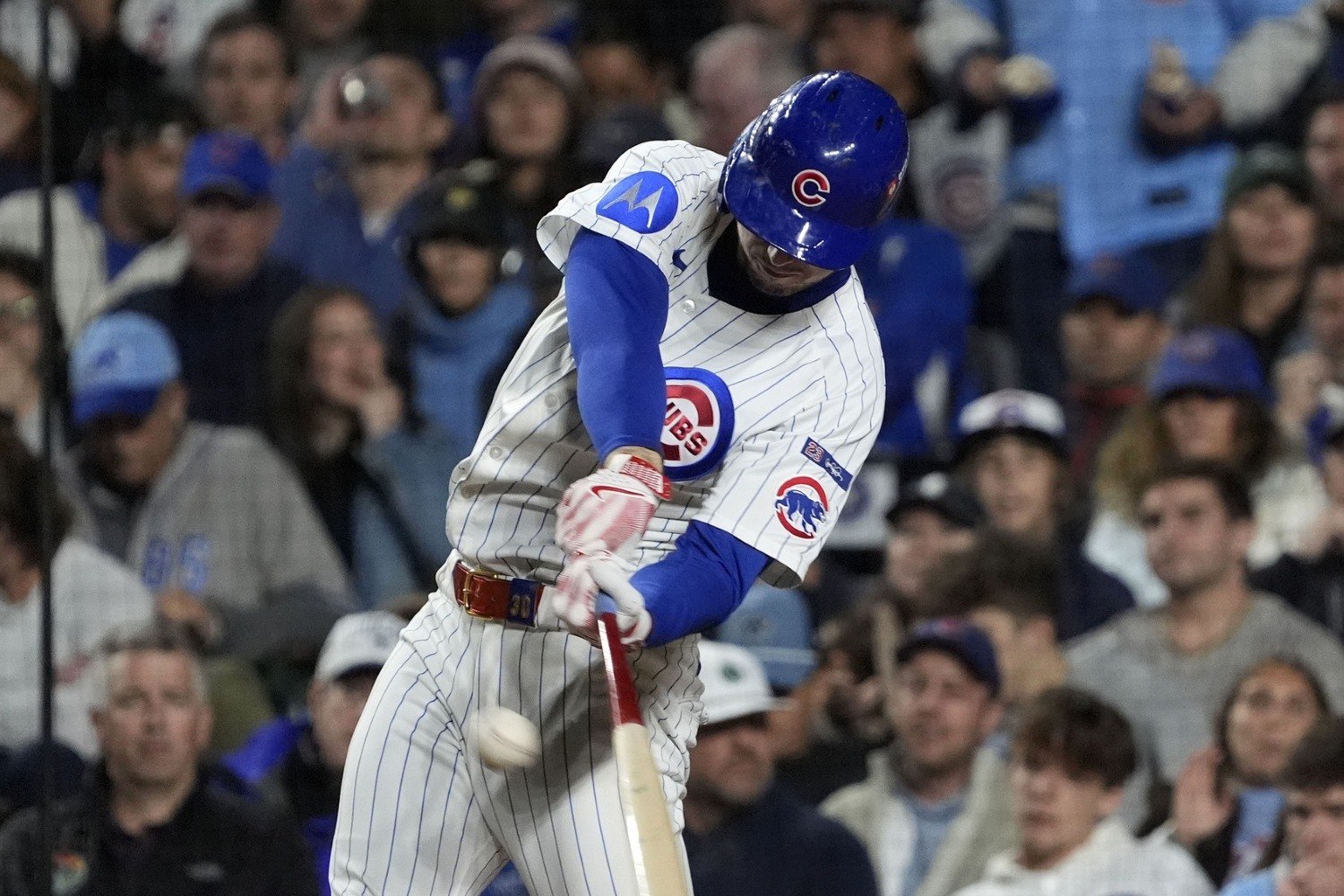 Since 1947, there have been 28 player-seasons in which a right-handed Cubs batter hit at least 35 home runs. That's a respectable number, though obviously, it's a bit inflated by the presence of two men: Sammy Sosa and Ernie Banks. Sosa had 10 35-homer seasons in a Cubs uniform; Banks had six. Still, there have been plenty of other sluggers who found significant success. Hank Sauer, Aramis Ramírez and Derrek Lee each had multiple 35-homer campaigns, too. By contrast, the only three 35-home run seasons by left-handed Cubs batters were: Billy Williams in 1970 Williams again in 1972 Kyle Schwarber in 2019 As I've discussed here before, the temptation is to imagine that Wrigley Field is truly symmetrical. Its marked dimensions are: 355 feet to the left-field corner 368 feet to left-center 400 feet to center 368 feet to right-center 353 feet to the right-field corner In reality, though, that symmetry is an illusion. The 400 marker is essentially in dead center, but the deepest part of the park is to its right, as the wall slopes away in that direction. (Wrigley is one of just a few parks in the league at which the farthest fence is not marked.) The "well" in the left-field corner is longer and flatter than the one in right field, which means the ball sneaks out of the park down that line better than to right. The wall arcs away more in right field, so that the 368 is farther toward center field in left than in right. The effects of the wind have always been better for hitters aiming for left field, too. When the wind blows in, it usually comes from right field, knocking down balls hit that way. When it blows out, it has a much more democratic positive effect on fly balls, and if anything, it often pushes it better toward left. Arguably, that's all been heightened by the renovations since 2015. Since 2021, pulled batted balls in the air at Wrigley have broken down by handedness as follows: Left-handed batters: .602 average, 1.290 slugging, 96.7 MPH exit velocity, 24° launch angle, 15.6% home runs Right-handed batters: .576, 1.258, 94.7 MPH, 24°, 17.2% home runs The raw numbers are better for lefties, but that's because we're working with a better selective sample. Despite hitting the ball two miles per hour harder at the same launch angle, lefty hitters are getting the ball out of the park less often. Hitting homers to right field at Wrigley is just too hard to make it a fair fight. Obviously, this doesn't mean the Cubs should abandon the effort to maintain lineup balance. In truth, though, they already have it. Michael Busch only managed 34 homers during the regular season, but he was arguably the Cubs' best hitter. Pete Crow-Armstrong had a brutal second half, but he'll be back in the lineup next year and still has significant offensive upside. Ian Happ is a better hitter from the left side. At least one of Moisés Ballesteros and Owen Caissie is likely to play a major role in 2026. That's plenty of left-handed talent. They're extremely unlikely to re-sign any of Kyle Tucker, Cody Bellinger or Schwarber, but they can get by without those guys. Tucker, in particular, proved not to be an especially good fit for Wrigley Field at this stage of his career. The lineup needs more right-handed thump, though. Seiya Suzuki leads the charge from that side, and was perfectly adequate in that regard in 2025. Dansby Swanson was better this year than in either of his previous campaigns with the Cubs, including hitting 24 home runs. Nico Hoerner was a great all-around hitter. However, the team's first-half power binge gave way to a second half with a dearth of punch from the right side. If Miguel Amaya comes back and has a healthy 2026, he and Carson Kelly could give them a bit more consistent production at catcher. Matt Shaw went on a tear during the second half, although it now reads more like a hiccup between long, bad stretches than like a turning of the corner toward stardom. Rather than put all their hope in the incumbent options, though, the Cubs need to sign a slugger this winter. Eugenio Suárez is the most obvious fit, but another intriguing one could be long-time Cubs nemesis Pete Alonso. Although reportedly looking for a seven-year deal, Alonso is much more likely to settle for a four-year pact this winter. He would make a tremendous addition to the heart of the Chicago order, as the team's DH against righties and a right-handed platoon partner for Busch at first base. Right-handed power is fairly expensive, but relatively plentiful. There are several ways to solve the problem. The Cubs just need to choose wisely.
 -
Image courtesy of © David Banks-Imagn Images Since 1947, there have been 28 player-seasons in which a right-handed Cubs batter hit at least 35 home runs. That's a respectable number, though obviously, it's a bit inflated by the presence of two men: Sammy Sosa and Ernie Banks. Sosa had 10 35-homer seasons in a Cubs uniform; Banks had six. Still, there have been plenty of other sluggers who found significant success. Hank Sauer, Aramis Ramírez and Derrek Lee each had multiple 35-homer campaigns, too. By contrast, the only three 35-home run seasons by left-handed Cubs batters were: Billy Williams in 1970 Williams again in 1972 Kyle Schwarber in 2019 As I've discussed here before, the temptation is to imagine that Wrigley Field is truly symmetrical. Its marked dimensions are: 355 feet to the left-field corner 368 feet to left-center 400 feet to center 368 feet to right-center 353 feet to the right-field corner In reality, though, that symmetry is an illusion. The 400 marker is essentially in dead center, but the deepest part of the park is to its right, as the wall slopes away in that direction. (Wrigley is one of just a few parks in the league at which the farthest fence is not marked.) The "well" in the left-field corner is longer and flatter than the one in right field, which means the ball sneaks out of the park down that line better than to right. The wall arcs away more in right field, so that the 368 is farther toward center field in left than in right. The effects of the wind have always been better for hitters aiming for left field, too. When the wind blows in, it usually comes from right field, knocking down balls hit that way. When it blows out, it has a much more democratic positive effect on fly balls, and if anything, it often pushes it better toward left. Arguably, that's all been heightened by the renovations since 2015. Since 2021, pulled batted balls in the air at Wrigley have broken down by handedness as follows: Left-handed batters: .602 average, 1.290 slugging, 96.7 MPH exit velocity, 24° launch angle, 15.6% home runs Right-handed batters: .576, 1.258, 94.7 MPH, 24°, 17.2% home runs The raw numbers are better for lefties, but that's because we're working with a better selective sample. Despite hitting the ball two miles per hour harder at the same launch angle, lefty hitters are getting the ball out of the park less often. Hitting homers to right field at Wrigley is just too hard to make it a fair fight. Obviously, this doesn't mean the Cubs should abandon the effort to maintain lineup balance. In truth, though, they already have it. Michael Busch only managed 34 homers during the regular season, but he was arguably the Cubs' best hitter. Pete Crow-Armstrong had a brutal second half, but he'll be back in the lineup next year and still has significant offensive upside. Ian Happ is a better hitter from the left side. At least one of Moisés Ballesteros and Owen Caissie is likely to play a major role in 2026. That's plenty of left-handed talent. They're extremely unlikely to re-sign any of Kyle Tucker, Cody Bellinger or Schwarber, but they can get by without those guys. Tucker, in particular, proved not to be an especially good fit for Wrigley Field at this stage of his career. The lineup needs more right-handed thump, though. Seiya Suzuki leads the charge from that side, and was perfectly adequate in that regard in 2025. Dansby Swanson was better this year than in either of his previous campaigns with the Cubs, including hitting 24 home runs. Nico Hoerner was a great all-around hitter. However, the team's first-half power binge gave way to a second half with a dearth of punch from the right side. If Miguel Amaya comes back and has a healthy 2026, he and Carson Kelly could give them a bit more consistent production at catcher. Matt Shaw went on a tear during the second half, although it now reads more like a hiccup between long, bad stretches than like a turning of the corner toward stardom. Rather than put all their hope in the incumbent options, though, the Cubs need to sign a slugger this winter. Eugenio Suárez is the most obvious fit, but another intriguing one could be long-time Cubs nemesis Pete Alonso. Although reportedly looking for a seven-year deal, Alonso is much more likely to settle for a four-year pact this winter. He would make a tremendous addition to the heart of the Chicago order, as the team's DH against righties and a right-handed platoon partner for Busch at first base. Right-handed power is fairly expensive, but relatively plentiful. There are several ways to solve the problem. The Cubs just need to choose wisely. View full article
-
 As the Cubs gear up for a pivotal winter, the first three major decisions they'll need to make are about the three pitchers on whom they hold club options. We've already talked at length about the complex, layered options in Shota Imanaga's deal, whereby the team has to either exercise a three-year, $57-million extension or let Imanaga choose between a $15-million player option and free agency. That one looks fairly easy, though, at least in terms of the first move. The Cubs should and will turn down that option, knowing that even if Imanaga elects free agency, they can extend him a qualifying offer, worth about $22 million. Imanaga would be wise to accept that deal, even if he first turns down the $15 million. If he doesn't, Chicago can recoup a draft pick when he signs elsewhere. Since Kyle Tucker is likely to net them an extra pick, too, they'd be amassing long-term assets while clearing money from the payroll, to reinvest elsewhere. The two tougher calls are on veteran arms Colin Rea and Andrew Kittredge. The deal to which Chicago signed Rea last winter includes a $6-million club option for 2026, with a $750,000 buyout. Thus, it would cost them just $5.25 million to bring him back. That's solid value, for a pitcher who thrived with the adjustments the Cubs recommended to him and who pitched much more than initially expected for them in 2025. On the other hand, Rea is a low-ceiling hurler. He'll turn 36 next summer, and he's had a strikeout rate below 20% in each of the last two seasons. As we discussed earlier this month, one of the key mandates for the front office this winter is to assemble a staff that will miss more bats. Rea doesn't fit well into that plan. Kittredge poses a similar dilemma. He signed a one-year deal with the Orioles last winter, worth $10 million. The first $9 million was paid in 2025, and there's a club option for 2026 worth $9 million, with a $1-million buyout. When the Cubs traded for Kittredge in July, they obtained that option, which ends up being an $8-million decision. Kittredge, too, is 35 years old, but he struck out 30.8% of opposing batters last year—and it was 34.0% with Chicago, after the deal (even including a low-strikeout showing in the postseason). Matthew Boyd, Jameson Taillon and Cade Horton can be penciled into next year's starting rotation. In the second half, Justin Steele will join that mix. If he stays healthy and develops the way they hope, Jaxon Wiggins will be a candidate to join the staff during the season, too. The safe bet is that Imanaga will be back with the team in 2026, one way or another. That leaves room for an offseason addition, but it also leaves Rea in a quasi-competition with Javier Assad for a back-end starter or swingman role. The Cubs have to plan for injuries and amass as much depth as possible. Still, it feels as though the call they make on Rea will tell us something about their plans for the offseason. If they keep him, they'll likely look to move on from Assad, or else trade one of Taillon, Boyd and Imanaga. The Kittredge option will be even more telling, in an even more direct way. If they retain him, they're almost certainly not going to bring back free agent Brad Keller. If they decline the option on Kittredge, it sends a signal: they're likely to make a strong push to keep Keller, after the breakout season he enjoyed in high-leverage relief for them in 2025. Shortly after the end of the World Series, we'll find out whether the Cubs will have Imanaga, Rea and/or Kittredge on their pitching staff for 2026. That will lend lots of clarity, because the paths forward with or without each hurler become much more defined.
 -
Image courtesy of © Matt Marton-Imagn Images As the Cubs gear up for a pivotal winter, the first three major decisions they'll need to make are about the three pitchers on whom they hold club options. We've already talked at length about the complex, layered options in Shota Imanaga's deal, whereby the team has to either exercise a three-year, $57-million extension or let Imanaga choose between a $15-million player option and free agency. That one looks fairly easy, though, at least in terms of the first move. The Cubs should and will turn down that option, knowing that even if Imanaga elects free agency, they can extend him a qualifying offer, worth about $22 million. Imanaga would be wise to accept that deal, even if he first turns down the $15 million. If he doesn't, Chicago can recoup a draft pick when he signs elsewhere. Since Kyle Tucker is likely to net them an extra pick, too, they'd be amassing long-term assets while clearing money from the payroll, to reinvest elsewhere. The two tougher calls are on veteran arms Colin Rea and Andrew Kittredge. The deal to which Chicago signed Rea last winter includes a $6-million club option for 2026, with a $750,000 buyout. Thus, it would cost them just $5.25 million to bring him back. That's solid value, for a pitcher who thrived with the adjustments the Cubs recommended to him and who pitched much more than initially expected for them in 2025. On the other hand, Rea is a low-ceiling hurler. He'll turn 36 next summer, and he's had a strikeout rate below 20% in each of the last two seasons. As we discussed earlier this month, one of the key mandates for the front office this winter is to assemble a staff that will miss more bats. Rea doesn't fit well into that plan. Kittredge poses a similar dilemma. He signed a one-year deal with the Orioles last winter, worth $10 million. The first $9 million was paid in 2025, and there's a club option for 2026 worth $9 million, with a $1-million buyout. When the Cubs traded for Kittredge in July, they obtained that option, which ends up being an $8-million decision. Kittredge, too, is 35 years old, but he struck out 30.8% of opposing batters last year—and it was 34.0% with Chicago, after the deal (even including a low-strikeout showing in the postseason). Matthew Boyd, Jameson Taillon and Cade Horton can be penciled into next year's starting rotation. In the second half, Justin Steele will join that mix. If he stays healthy and develops the way they hope, Jaxon Wiggins will be a candidate to join the staff during the season, too. The safe bet is that Imanaga will be back with the team in 2026, one way or another. That leaves room for an offseason addition, but it also leaves Rea in a quasi-competition with Javier Assad for a back-end starter or swingman role. The Cubs have to plan for injuries and amass as much depth as possible. Still, it feels as though the call they make on Rea will tell us something about their plans for the offseason. If they keep him, they'll likely look to move on from Assad, or else trade one of Taillon, Boyd and Imanaga. The Kittredge option will be even more telling, in an even more direct way. If they retain him, they're almost certainly not going to bring back free agent Brad Keller. If they decline the option on Kittredge, it sends a signal: they're likely to make a strong push to keep Keller, after the breakout season he enjoyed in high-leverage relief for them in 2025. Shortly after the end of the World Series, we'll find out whether the Cubs will have Imanaga, Rea and/or Kittredge on their pitching staff for 2026. That will lend lots of clarity, because the paths forward with or without each hurler become much more defined. View full article
-
I broadly agree. I do, however, think Ballesteros is still significantly higher than Long on pretty much any pref list you'll find—even without the defensive value he gets if he sticks at catcher. He bats lefty; Long bats righty. Long's shown reverse platoon splits in the minors, but I don't think that'll translate to the bigs. Long whiffs more, doesn't cover the whole zone as well, is more susceptible to spin. Plus, if two guys have had about the same amount of success at the same level and one is two years younger, the smart money is usually on the younger one being significantly better.
-
I think you felt it at the end there, the way you closed your comment: you're reading too much into the extremely limited big-league sample, and oversimplifying what the swing data tells us in context. Ballesteros has shown he can lift the ball, over larger samples against high-level competition outside the big leagues. The risk that he doesn't do so enough in the majors is real, but you're sweating it too much at this early stage. Given what he's shown us so far, we need at least another few hundred PAs to see how well he'll be able to tap into his power, but the balance of the evidence is positive, not negative.
-
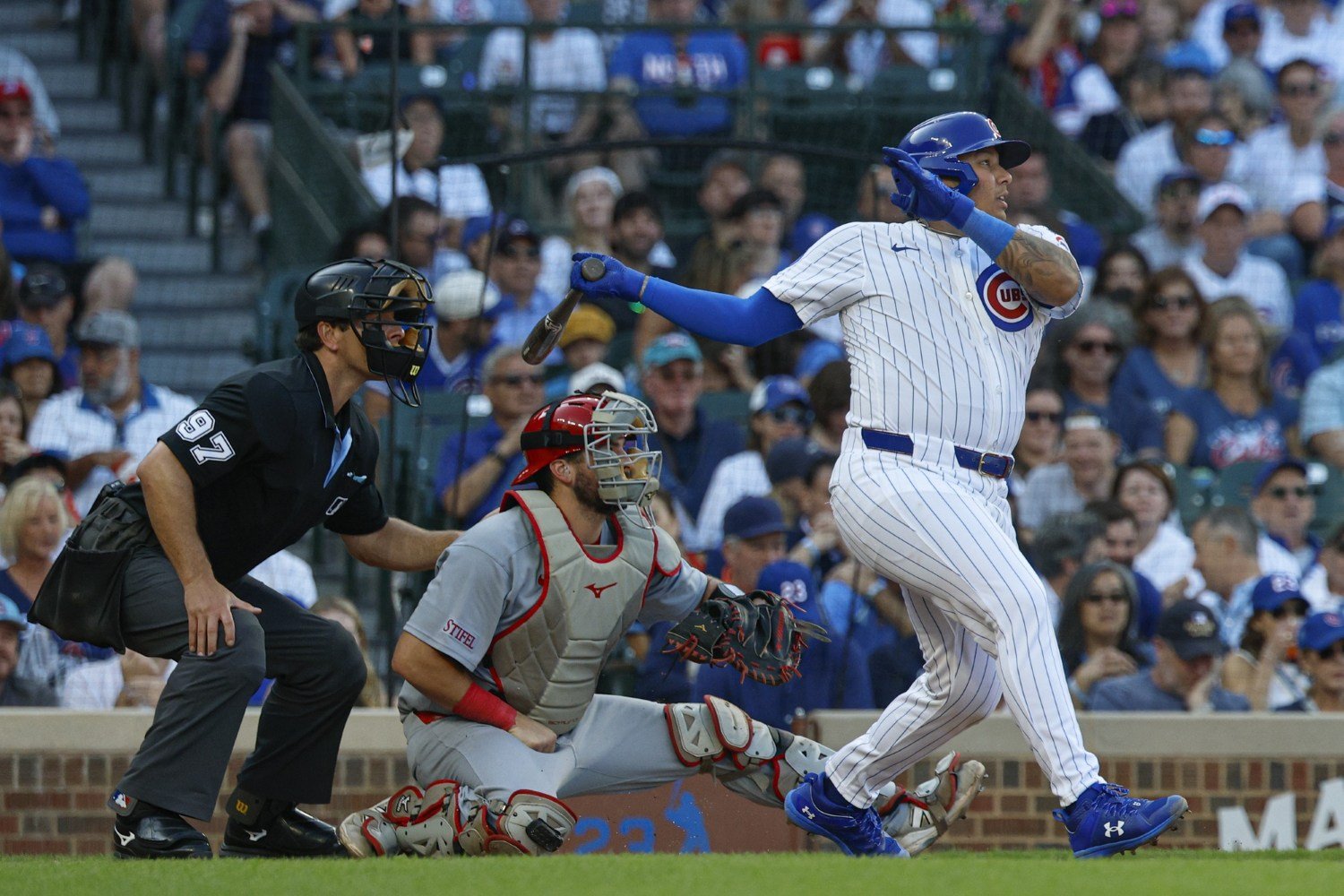 At the 2025 MLB trade deadline, the big hang-up the Cubs kept running into was simple: everyone wanted Moisés Ballesteros. The Nationals were interested in a package of Matt Shaw and Cade Horton in exchange for controllable southpaw MacKenzie Gore, but if Chicago wasn't willing to give up both of them, then Ballesteros had to be in the mix. When they talked to the Marlins about starters Edward Cabrera and Sandy Alcántara; when they talked to the Twins about pitchers Jhoan Duran, Griffin Jax and Joe Ryan; and when they talked to the Pirates about Mitch Keller and David Bednar, Ballesteros was the name that came up every time. The Rays were interested in Ballesteros, in any deal for Drew Rasmussen. The Athletics liked him when the two clubs briefly discussed Mason Miller. It's not that Ballesteros is a top-10 prospect, globally, or anything. By most estimates, he's something like a top-50 guy. The buzz around him is more about the combination of floor and ceiling. The lefty batter will turn 22 in November. He hit .316/.385/.473 at Triple-A Iowa and .298/.394/.474 in his limited time with the big-league club this year; those are sensational numbers for any 21-year-old. He put up a lot of them while trying to cut the mustard as a catcher, notching 593 innings behind the plate in the minors. That's probably not his long-term role, but increasingly, it looks like he can hit enough to be a good player even if he's a first baseman and/or designated hitter. Ballesteros has a really good swing. That was the key takeaway from his stint in Chicago, late in the campaign. His bat speed (72.7 miles per hour, on average, although in fewer than 100 competitive swings) is above average, and he does that with a short stroke that can handle the high fastball. He also showed the ability to turn on the ball and punish pitchers who miss with anything on the inner half, including hitting one home run in Pittsburgh in September that one simply can't hit if one doesn't have above-average power. dnZiVldfWGw0TUFRPT1fRGdWWlVsTlFCUUFBV1ZaWFh3QUhBZ1FEQUFBQ0FWWUFBRk1NQWxCWEJBVUhCUVFF.mp4 He has great feel for contact, especially within the strike zone, and he made progress even within the 2025 season in terms of not chasing outside the zone. Ballesteros looks like a good big-leaguer, and one who's ready to take over a full-time job in 2026. He's accumulated nearly 800 plate appearances with the Iowa Cubs; he doesn't need any more. Defensively, it doesn't look like Ballesteros will clear the bar to stick at catcher—but it's worth noting that one of his shortcomings (below-average framing skills) will be mitigated by the implementation of the ABS challenge system. He could use another full season of catching in the minors, if that's the plan for his long-term defensive home, but the likelihood that he's ever a plus behind the plate is remote, and his bat is so far ahead of the mitt that holding it back any longer to draw toward that improbable straight would be to misplay the hand. Thus, this winter, the Cubs will have to ponder trading him again. Interest in Ballesteros remains strong, and several of the teams to whom Jed Hoyer and Carter Hawkins spoke in July will be on the other end of the line again in November and December. They could move their young, budding slugger for the controllable pitching they so badly need, although Ballesteros alone won't command any of the players mentioned above, save perhaps Alcántara. It seems just as plausible, though, that they'll retain Ballesteros and promote him to a bigger gig for 2026. With Kyle Tucker likely to depart via free agency, Seiya Suzuki could be ticketed for a return to right field. That opens up the DH spot, and Ballesteros is a strong candidate to step into the breach. Fans will, naturally, prefer it if the team makes a splashy free-agent addition to fill the lineup spot vacated by Tucker. There are several good options out there. The front office might lock in, however, on a lower-tier target who could enmesh themselves in the lineup on a more versatile basis. That could be Harrison Bader, Andrew McCutchen, Lane Thomas, Mitch Garver, Rhys Hoskins or Starling Marte. Any of those guys might sign relatively cheaply. Bader and Thomas could factor in as platoon partners for Pete Crow-Armstrong, if the Cubs decide Kevin Alcántara isn't ready for that responsibility. The others would be more like half-time DH candidates, but they'd each have other ways to filter into the lineup—spelling Michael Busch or Ian Happ, for instance, depending on which of the group they sign. Integrating young hitters is always risky, but even teams with ample resources have to do it. The Cubs are no exception. They'll want to add a proven player who limits their exposure if Ballesteros struggles, but as the offseason looms, it looks more likely that they'll find a way to install him in their lineup next season than that they'll trade him, despite the demand for him on that market.
 -
Image courtesy of © Kamil Krzaczynski-Imagn Images At the 2025 MLB trade deadline, the big hang-up the Cubs kept running into was simple: everyone wanted Moisés Ballesteros. The Nationals were interested in a package of Matt Shaw and Cade Horton in exchange for controllable southpaw MacKenzie Gore, but if Chicago wasn't willing to give up both of them, then Ballesteros had to be in the mix. When they talked to the Marlins about starters Edward Cabrera and Sandy Alcántara; when they talked to the Twins about pitchers Jhoan Duran, Griffin Jax and Joe Ryan; and when they talked to the Pirates about Mitch Keller and David Bednar, Ballesteros was the name that came up every time. The Rays were interested in Ballesteros, in any deal for Drew Rasmussen. The Athletics liked him when the two clubs briefly discussed Mason Miller. It's not that Ballesteros is a top-10 prospect, globally, or anything. By most estimates, he's something like a top-50 guy. The buzz around him is more about the combination of floor and ceiling. The lefty batter will turn 22 in November. He hit .316/.385/.473 at Triple-A Iowa and .298/.394/.474 in his limited time with the big-league club this year; those are sensational numbers for any 21-year-old. He put up a lot of them while trying to cut the mustard as a catcher, notching 593 innings behind the plate in the minors. That's probably not his long-term role, but increasingly, it looks like he can hit enough to be a good player even if he's a first baseman and/or designated hitter. Ballesteros has a really good swing. That was the key takeaway from his stint in Chicago, late in the campaign. His bat speed (72.7 miles per hour, on average, although in fewer than 100 competitive swings) is above average, and he does that with a short stroke that can handle the high fastball. He also showed the ability to turn on the ball and punish pitchers who miss with anything on the inner half, including hitting one home run in Pittsburgh in September that one simply can't hit if one doesn't have above-average power. dnZiVldfWGw0TUFRPT1fRGdWWlVsTlFCUUFBV1ZaWFh3QUhBZ1FEQUFBQ0FWWUFBRk1NQWxCWEJBVUhCUVFF.mp4 He has great feel for contact, especially within the strike zone, and he made progress even within the 2025 season in terms of not chasing outside the zone. Ballesteros looks like a good big-leaguer, and one who's ready to take over a full-time job in 2026. He's accumulated nearly 800 plate appearances with the Iowa Cubs; he doesn't need any more. Defensively, it doesn't look like Ballesteros will clear the bar to stick at catcher—but it's worth noting that one of his shortcomings (below-average framing skills) will be mitigated by the implementation of the ABS challenge system. He could use another full season of catching in the minors, if that's the plan for his long-term defensive home, but the likelihood that he's ever a plus behind the plate is remote, and his bat is so far ahead of the mitt that holding it back any longer to draw toward that improbable straight would be to misplay the hand. Thus, this winter, the Cubs will have to ponder trading him again. Interest in Ballesteros remains strong, and several of the teams to whom Jed Hoyer and Carter Hawkins spoke in July will be on the other end of the line again in November and December. They could move their young, budding slugger for the controllable pitching they so badly need, although Ballesteros alone won't command any of the players mentioned above, save perhaps Alcántara. It seems just as plausible, though, that they'll retain Ballesteros and promote him to a bigger gig for 2026. With Kyle Tucker likely to depart via free agency, Seiya Suzuki could be ticketed for a return to right field. That opens up the DH spot, and Ballesteros is a strong candidate to step into the breach. Fans will, naturally, prefer it if the team makes a splashy free-agent addition to fill the lineup spot vacated by Tucker. There are several good options out there. The front office might lock in, however, on a lower-tier target who could enmesh themselves in the lineup on a more versatile basis. That could be Harrison Bader, Andrew McCutchen, Lane Thomas, Mitch Garver, Rhys Hoskins or Starling Marte. Any of those guys might sign relatively cheaply. Bader and Thomas could factor in as platoon partners for Pete Crow-Armstrong, if the Cubs decide Kevin Alcántara isn't ready for that responsibility. The others would be more like half-time DH candidates, but they'd each have other ways to filter into the lineup—spelling Michael Busch or Ian Happ, for instance, depending on which of the group they sign. Integrating young hitters is always risky, but even teams with ample resources have to do it. The Cubs are no exception. They'll want to add a proven player who limits their exposure if Ballesteros struggles, but as the offseason looms, it looks more likely that they'll find a way to install him in their lineup next season than that they'll trade him, despite the demand for him on that market. View full article
-
.png.8366177f8ea834bf6a39a8af95683911.png) If the Cubs were as good at scouting and player development as they keep telling fans (and themselves) they are, they'd have a pretty simple offseason ahead. They'd have amassed better homegrown pitching depth, and wouldn't be so obviously starved for swing-and-miss arms. They'd be in a position to place much more trust in their young bats, from the relatively established (Pete Crow-Armstrong, Miguel Amaya and Matt Shaw) to those still breaking slowly into the rotation (Kevin Alcántara, Moisés Ballesteros, and Owen Caissie). As things stand, though, they're in no position to compete with the Brewers in the NL Central—let alone to make a deeper push into October—without a significant talent infusion from outside the organization. Kyle Tucker is likely to sign elsewhere this winter. He's in line for a contract in excess of $300 million, partially because of his talent and partially because other options in free agency are fairly limited this year. The Cubs will have to replace his production just to get back to where they were this past season, and while that production is more replaceable than it appeared it would be around Memorial Day, it's still one of the two titanic challenges of their offseason. The other, of course, is getting up to speed (literally, in part) with better pitching talent. Reunions with Kyle Schwarber or Cody Bellinger are "extremely unlikely," according to league sources, and those fits would be imperfect, anyway. It's much more likely that the Cubs let Seiya Suzuki retake his place in right field in 2026, with Caissie or Ballesteros sliding in as the long side of a platoon at DH and occasionally spelling Suzuki or Ian Happ in an outfield corner. Alcántara is ready to play at least a complementary role in the majors, too, and could be both the platoon partner to Crow-Armstrong and a versatile weapon to shield Happ, Caissie and/or Ballesteros from difficult matchups. The more plausible (and perhaps wiser, anyway) path to a major infusion of offensive value might be a splurge at the hot corner. Alex Bregman reportedly plans to opt out of the last two years of his three-year, $120-million deal (in reality, after accounting for deferrals, worth much less than that) with the Red Sox, and will be a free agent for the second year in a row. Eugenio Suárez will also be a free agent at the end of the World Series. Bregman, 31, was worth 17 runs above an average hitter in 495 plate appearances this year, according to Baseball Reference. Suárez, 34, was 20 runs above average in 657 trips to the dish. Either player would command a big deal this winter, though of course, Bregman's would be a much longer-term and more lucrative engagement. Age and a streakier profile will limit Suárez's earning power a bit. Nonetheless, each had a season very much in line with their prime production in 2025. Bregman's DRC+ (the holistic offensive value metric from Baseball Prospectus; 100 is average, higher is better) was 117 this year and is 116 for his career; Suárez's 2025 DRC+ of 105 is identical to his career mark. While neither is a defensive wizard at third base, each figures to stick there and acquit themselves well for a few more years. Speaking of defensive wizards, entertaining signing either of the two star third basemen invites the question: What becomes of Matt Shaw? It's a fair one. The Cubs should, if they can, include Shaw in a package for a starting pitcher this winter. Though he made some admirable adjustments along the way, ultimately, Shaw's rookie season was a major disappointment to anyone who held out much hope for him as a hitter—and, for those of us who doubted him, a seeming confirmation. Shaw's combination of smallish stature, unorthodox mechanics and a disorganized approach left him with an 87 DRC+ for the season, and he was utterly overmatched in the postseason. He could settle in as a fine utility man without making significant strides from here, but that wouldn't help the Cubs much. He should have more upside than that, if he can develop on a steady arc into his mid-20s, but that's not guaranteed—as his extremely uneven first season showed. Without question, Shaw still has some trade value. It's unlikely that he could headline a deal for a pitcher like Edward Cabrera, Sandy Alcántara, or Pablo López, but he could be a strong second piece alongside one of the lefty bats (Caissie and Ballesteros) whom teams believe in more as hitters, or as a co-headliner with a player further from the majors. The Cubs need more power at the plate, and they need to bolster their pitching staff. To do both, in a winter with a thin free-agent class and major financial uncertainty looming for the sport, they need to be active in both the trade and free-agent markets. Dealing Shaw and signing either Bregman or Suárez would be the best way to plunge ahead.
If the Cubs were as good at scouting and player development as they keep telling fans (and themselves) they are, they'd have a pretty simple offseason ahead. They'd have amassed better homegrown pitching depth, and wouldn't be so obviously starved for swing-and-miss arms. They'd be in a position to place much more trust in their young bats, from the relatively established (Pete Crow-Armstrong, Miguel Amaya and Matt Shaw) to those still breaking slowly into the rotation (Kevin Alcántara, Moisés Ballesteros, and Owen Caissie). As things stand, though, they're in no position to compete with the Brewers in the NL Central—let alone to make a deeper push into October—without a significant talent infusion from outside the organization. Kyle Tucker is likely to sign elsewhere this winter. He's in line for a contract in excess of $300 million, partially because of his talent and partially because other options in free agency are fairly limited this year. The Cubs will have to replace his production just to get back to where they were this past season, and while that production is more replaceable than it appeared it would be around Memorial Day, it's still one of the two titanic challenges of their offseason. The other, of course, is getting up to speed (literally, in part) with better pitching talent. Reunions with Kyle Schwarber or Cody Bellinger are "extremely unlikely," according to league sources, and those fits would be imperfect, anyway. It's much more likely that the Cubs let Seiya Suzuki retake his place in right field in 2026, with Caissie or Ballesteros sliding in as the long side of a platoon at DH and occasionally spelling Suzuki or Ian Happ in an outfield corner. Alcántara is ready to play at least a complementary role in the majors, too, and could be both the platoon partner to Crow-Armstrong and a versatile weapon to shield Happ, Caissie and/or Ballesteros from difficult matchups. The more plausible (and perhaps wiser, anyway) path to a major infusion of offensive value might be a splurge at the hot corner. Alex Bregman reportedly plans to opt out of the last two years of his three-year, $120-million deal (in reality, after accounting for deferrals, worth much less than that) with the Red Sox, and will be a free agent for the second year in a row. Eugenio Suárez will also be a free agent at the end of the World Series. Bregman, 31, was worth 17 runs above an average hitter in 495 plate appearances this year, according to Baseball Reference. Suárez, 34, was 20 runs above average in 657 trips to the dish. Either player would command a big deal this winter, though of course, Bregman's would be a much longer-term and more lucrative engagement. Age and a streakier profile will limit Suárez's earning power a bit. Nonetheless, each had a season very much in line with their prime production in 2025. Bregman's DRC+ (the holistic offensive value metric from Baseball Prospectus; 100 is average, higher is better) was 117 this year and is 116 for his career; Suárez's 2025 DRC+ of 105 is identical to his career mark. While neither is a defensive wizard at third base, each figures to stick there and acquit themselves well for a few more years. Speaking of defensive wizards, entertaining signing either of the two star third basemen invites the question: What becomes of Matt Shaw? It's a fair one. The Cubs should, if they can, include Shaw in a package for a starting pitcher this winter. Though he made some admirable adjustments along the way, ultimately, Shaw's rookie season was a major disappointment to anyone who held out much hope for him as a hitter—and, for those of us who doubted him, a seeming confirmation. Shaw's combination of smallish stature, unorthodox mechanics and a disorganized approach left him with an 87 DRC+ for the season, and he was utterly overmatched in the postseason. He could settle in as a fine utility man without making significant strides from here, but that wouldn't help the Cubs much. He should have more upside than that, if he can develop on a steady arc into his mid-20s, but that's not guaranteed—as his extremely uneven first season showed. Without question, Shaw still has some trade value. It's unlikely that he could headline a deal for a pitcher like Edward Cabrera, Sandy Alcántara, or Pablo López, but he could be a strong second piece alongside one of the lefty bats (Caissie and Ballesteros) whom teams believe in more as hitters, or as a co-headliner with a player further from the majors. The Cubs need more power at the plate, and they need to bolster their pitching staff. To do both, in a winter with a thin free-agent class and major financial uncertainty looming for the sport, they need to be active in both the trade and free-agent markets. Dealing Shaw and signing either Bregman or Suárez would be the best way to plunge ahead. -
Image courtesy of © Brad Penner-Imagn Images, © Benny Sieu-Imagn Images, © Steven Bisig-Imagn Images If the Cubs were as good at scouting and player development as they keep telling fans (and themselves) they are, they'd have a pretty simple offseason ahead. They'd have amassed better homegrown pitching depth, and wouldn't be so obviously starved for swing-and-miss arms. They'd be in a position to place much more trust in their young bats, from the relatively established (Pete Crow-Armstrong, Miguel Amaya and Matt Shaw) to those still breaking slowly into the rotation (Kevin Alcántara, Moisés Ballesteros, and Owen Caissie). As things stand, though, they're in no position to compete with the Brewers in the NL Central—let alone to make a deeper push into October—without a significant talent infusion from outside the organization. Kyle Tucker is likely to sign elsewhere this winter. He's in line for a contract in excess of $300 million, partially because of his talent and partially because other options in free agency are fairly limited this year. The Cubs will have to replace his production just to get back to where they were this past season, and while that production is more replaceable than it appeared it would be around Memorial Day, it's still one of the two titanic challenges of their offseason. The other, of course, is getting up to speed (literally, in part) with better pitching talent. Reunions with Kyle Schwarber or Cody Bellinger are "extremely unlikely," according to league sources, and those fits would be imperfect, anyway. It's much more likely that the Cubs let Seiya Suzuki retake his place in right field in 2026, with Caissie or Ballesteros sliding in as the long side of a platoon at DH and occasionally spelling Suzuki or Ian Happ in an outfield corner. Alcántara is ready to play at least a complementary role in the majors, too, and could be both the platoon partner to Crow-Armstrong and a versatile weapon to shield Happ, Caissie and/or Ballesteros from difficult matchups. The more plausible (and perhaps wiser, anyway) path to a major infusion of offensive value might be a splurge at the hot corner. Alex Bregman reportedly plans to opt out of the last two years of his three-year, $120-million deal (in reality, after accounting for deferrals, worth much less than that) with the Red Sox, and will be a free agent for the second year in a row. Eugenio Suárez will also be a free agent at the end of the World Series. Bregman, 31, was worth 17 runs above an average hitter in 495 plate appearances this year, according to Baseball Reference. Suárez, 34, was 20 runs above average in 657 trips to the dish. Either player would command a big deal this winter, though of course, Bregman's would be a much longer-term and more lucrative engagement. Age and a streakier profile will limit Suárez's earning power a bit. Nonetheless, each had a season very much in line with their prime production in 2025. Bregman's DRC+ (the holistic offensive value metric from Baseball Prospectus; 100 is average, higher is better) was 117 this year and is 116 for his career; Suárez's 2025 DRC+ of 105 is identical to his career mark. While neither is a defensive wizard at third base, each figures to stick there and acquit themselves well for a few more years. Speaking of defensive wizards, entertaining signing either of the two star third basemen invites the question: What becomes of Matt Shaw? It's a fair one. The Cubs should, if they can, include Shaw in a package for a starting pitcher this winter. Though he made some admirable adjustments along the way, ultimately, Shaw's rookie season was a major disappointment to anyone who held out much hope for him as a hitter—and, for those of us who doubted him, a seeming confirmation. Shaw's combination of smallish stature, unorthodox mechanics and a disorganized approach left him with an 87 DRC+ for the season, and he was utterly overmatched in the postseason. He could settle in as a fine utility man without making significant strides from here, but that wouldn't help the Cubs much. He should have more upside than that, if he can develop on a steady arc into his mid-20s, but that's not guaranteed—as his extremely uneven first season showed. Without question, Shaw still has some trade value. It's unlikely that he could headline a deal for a pitcher like Edward Cabrera, Sandy Alcántara, or Pablo López, but he could be a strong second piece alongside one of the lefty bats (Caissie and Ballesteros) whom teams believe in more as hitters, or as a co-headliner with a player further from the majors. The Cubs need more power at the plate, and they need to bolster their pitching staff. To do both, in a winter with a thin free-agent class and major financial uncertainty looming for the sport, they need to be active in both the trade and free-agent markets. Dealing Shaw and signing either Bregman or Suárez would be the best way to plunge ahead. View full article
-
Image courtesy of © David Banks-Imagn Images As part of the current Collective Bargaining Agreement (which took effect in 2022), players throughout the majors who are not yet eligible for salary arbitration have some extra ways to accrue bonus pay and service time. Winning (or placing highly in the voting) for certain awards nets automatic, standard bonus amounts, and if a player wins the Rookie or the Year or MVP Award despite not having otherwise qualified for a full year of service time, they're retroactively granted the extra service time needed to do just that, moving them one year closer to free agency. In addition, a wins above replacement formula agreed upon by the players union and the owners distributes extra bonus money to players who produced major value for their teams during those early, team-controlled, often minimum-salary seasons of their careers. That money is all paid from the league's central fund, so when Cubs players receive those bonuses, it doesn't increase the team's payroll or affect their competitive-balance tax threshold number. However, these payments can be very important. They alter the leverage relationship between players and teams (tilting the power toward the former), but they also improve players' morale during seasons when there can otherwise be some resentment about salary. Once awards season is over, we'll get a specific announcement about who receives what allocations based on this new bonus pool. However, it's safe to guess the following: Cade Horton will finish first or second for the Rookie of the Year Award, and thereby get a full year's service time for his first full (partial) season with the parent club; Horton will make a little over $1 million in bonus money, for winning the award and for the WAR he accumulated; Pete Crow-Armstrong will finish somewhere in the top 10 in NL MVP voting (though only if he finishes in the top five will that net him a direct bonus), and net roughly $1 million in bonus money in total; and Michael Busch will make somewhere around $500,000 in bonus money for the WAR he accumulated as the team's star-caliber first baseman. Matt Shaw and Daniel Palencia could also net modest amounts of money via this system, but the big earners will be Horton, Crow-Armstrong and Busch. Since Horton will earn a full season of service time, he'll also become eligible for free agency after the 2030 season, the same autumn when Crow-Armstrong will be able to hit the market. Because the Cubs made it to the Division Series before losing this fall, every player who made a substantial contribution to the big-league team this year will also receive somewhere between $40,000 and $50,000, sometime this offseason. That's not life-changing money, for big-league ballplayers, but nor is it an unimportant amount, for a player still making the six-figure salaries at the bottom of the big-league pay scale. In short, a few of the Cubs' most important players are about to have their official earnings roughly double—or better. To Horton, the money is just one part of the windfall coming to him. He's also going to gain significant earning power, by getting one year closer to free agency. For the Cubs, this is good news, too. They just have to be savvy and humble enough to see the upside. If the Ricketts family is interested solely in trying to squeeze every marginal dollar possible out of Crow-Armstrong or Horton, it's a nightmare of a development, because extending either player on a long-term deal on team-friendly terms just got a lot harder. In fact, it's probably impossible. The endorsement opportunities available to each (especially Crow-Armstrong) and the major infusion of cash reduces the leverage the team has in any long-term contract negotiation almost to zero. It only hurts them, in that regard, that each is also a former first-round pick who got paid plenty of money on their way into professional baseball, in the first place. Horton's acceleration toward free agency will also make it harder to insist upon any concessions in contract talks. However, if the team has already made their peace with the fact that they aren't (and were never) in position to extract a very team-friendly deal from either player, this extra money should only grease the skids. Crow-Armstrong and Horton can each afford to acknowledge the fact that the Cubs gave them great opportunities and developmental support to facilitate their accomplishments, secure in the knowledge that they've gained a lot of earning power and won't even have to seriously consider a lowball offer. Busch is a totally different story. Already set to turn 28 this winter and playing a position that will make him undesirable as a free agent by the time he gets to the market, he just doesn't have much of a path to nine-figure career earnings in the modern game. That's unfortunate, but payouts like these cushion the harsh realities at hand. Busch and the Cubs are unlikely to strike a deal that keeps him in Chicago beyond 2029, when he can become a free agent, unless it be on very team-friendly terms. (Think back to the long-term deals signed by guys like Whit Merrifield and Jeff McNeil, after they bloomed exceptionally late.) For him, the extra earning power (however small, in a relative sense, it might remain) is nice. He'll play in 2026 as a pre-arbitration player, too. Not until 2027 will he qualify for arbitration, so whatever extra money he can make up front will be a welcome change. When it comes to players like Crow-Armstrong and Horton, expect to see fewer extensions in years to come, except in cases where teams are willing to pay market-rate prices even several years before a player reaches free agency. That's the new nature of the sport, for first-round picks who make it to the majors relatively young. With this bonus pool in place—and especially on a good team, where playoff shares provide a nice boost and there's a good chance of earning even bigger such shares in the future—there's much less incentive for a player to give their team a discount, unless the team is taking a big gamble by guaranteeing them money before they've demonstrated that they can succeed in the bigs. For players who made far less money as amateurs entering professional baseball or who don't find a foothold until their mid-20s, the leverage remains with teams. Palencia and Busch are candidates to sign team-friendly deals with the Cubs. The downside is that those deals would hold less potential to be game-changers for the team, because those players (based on their skill sets, ages and risk profiles) are unlikely to be star-caliber contributors as they gain earning power later in their careers. If the Cubs do strike long-term deals with either Crow-Armstrong or Horton, meanwhile, expect them to look a lot like the one Bobby Witt Jr. signed with the Royals prior to 2024. Witt was a former top pick over whom Kansas City had little leverage, and his extra earning power based on the bonus pools allowed him to drive an even harder bargain. He got nearly $300 million in guaranteed money, despite signing a deal several years before he could become a free agent. Fernando Tatis Jr. got a similar concession from the San Diego Padres. The Cubs won't pony up that much for either of their best pre-arbitration stars, because neither player is quite at the level of Witt or Tatis. However, the new reality of the game—which will be reaffirmed this winter, as extra money flows to these guys in ways the Cubs can't control—affects the terms of any deal. Don't expect team-friendly extensions for budding stars anymore. The Cubs missed that window, and they'll need a wide-open checkbook to keep their young core together if it gels into the winning machine they envision. View full article
-
 As part of the current Collective Bargaining Agreement (which took effect in 2022), players throughout the majors who are not yet eligible for salary arbitration have some extra ways to accrue bonus pay and service time. Winning (or placing highly in the voting) for certain awards nets automatic, standard bonus amounts, and if a player wins the Rookie or the Year or MVP Award despite not having otherwise qualified for a full year of service time, they're retroactively granted the extra service time needed to do just that, moving them one year closer to free agency. In addition, a wins above replacement formula agreed upon by the players union and the owners distributes extra bonus money to players who produced major value for their teams during those early, team-controlled, often minimum-salary seasons of their careers. That money is all paid from the league's central fund, so when Cubs players receive those bonuses, it doesn't increase the team's payroll or affect their competitive-balance tax threshold number. However, these payments can be very important. They alter the leverage relationship between players and teams (tilting the power toward the former), but they also improve players' morale during seasons when there can otherwise be some resentment about salary. Once awards season is over, we'll get a specific announcement about who receives what allocations based on this new bonus pool. However, it's safe to guess the following: Cade Horton will finish first or second for the Rookie of the Year Award, and thereby get a full year's service time for his first full (partial) season with the parent club; Horton will make a little over $1 million in bonus money, for winning the award and for the WAR he accumulated; Pete Crow-Armstrong will finish somewhere in the top 10 in NL MVP voting (though only if he finishes in the top five will that net him a direct bonus), and net roughly $1 million in bonus money in total; and Michael Busch will make somewhere around $500,000 in bonus money for the WAR he accumulated as the team's star-caliber first baseman. Matt Shaw and Daniel Palencia could also net modest amounts of money via this system, but the big earners will be Horton, Crow-Armstrong and Busch. Since Horton will earn a full season of service time, he'll also become eligible for free agency after the 2030 season, the same autumn when Crow-Armstrong will be able to hit the market. Because the Cubs made it to the Division Series before losing this fall, every player who made a substantial contribution to the big-league team this year will also receive somewhere between $40,000 and $50,000, sometime this offseason. That's not life-changing money, for big-league ballplayers, but nor is it an unimportant amount, for a player still making the six-figure salaries at the bottom of the big-league pay scale. In short, a few of the Cubs' most important players are about to have their official earnings roughly double—or better. To Horton, the money is just one part of the windfall coming to him. He's also going to gain significant earning power, by getting one year closer to free agency. For the Cubs, this is good news, too. They just have to be savvy and humble enough to see the upside. If the Ricketts family is interested solely in trying to squeeze every marginal dollar possible out of Crow-Armstrong or Horton, it's a nightmare of a development, because extending either player on a long-term deal on team-friendly terms just got a lot harder. In fact, it's probably impossible. The endorsement opportunities available to each (especially Crow-Armstrong) and the major infusion of cash reduces the leverage the team has in any long-term contract negotiation almost to zero. It only hurts them, in that regard, that each is also a former first-round pick who got paid plenty of money on their way into professional baseball, in the first place. Horton's acceleration toward free agency will also make it harder to insist upon any concessions in contract talks. However, if the team has already made their peace with the fact that they aren't (and were never) in position to extract a very team-friendly deal from either player, this extra money should only grease the skids. Crow-Armstrong and Horton can each afford to acknowledge the fact that the Cubs gave them great opportunities and developmental support to facilitate their accomplishments, secure in the knowledge that they've gained a lot of earning power and won't even have to seriously consider a lowball offer. Busch is a totally different story. Already set to turn 28 this winter and playing a position that will make him undesirable as a free agent by the time he gets to the market, he just doesn't have much of a path to nine-figure career earnings in the modern game. That's unfortunate, but payouts like these cushion the harsh realities at hand. Busch and the Cubs are unlikely to strike a deal that keeps him in Chicago beyond 2029, when he can become a free agent, unless it be on very team-friendly terms. (Think back to the long-term deals signed by guys like Whit Merrifield and Jeff McNeil, after they bloomed exceptionally late.) For him, the extra earning power (however small, in a relative sense, it might remain) is nice. He'll play in 2026 as a pre-arbitration player, too. Not until 2027 will he qualify for arbitration, so whatever extra money he can make up front will be a welcome change. When it comes to players like Crow-Armstrong and Horton, expect to see fewer extensions in years to come, except in cases where teams are willing to pay market-rate prices even several years before a player reaches free agency. That's the new nature of the sport, for first-round picks who make it to the majors relatively young. With this bonus pool in place—and especially on a good team, where playoff shares provide a nice boost and there's a good chance of earning even bigger such shares in the future—there's much less incentive for a player to give their team a discount, unless the team is taking a big gamble by guaranteeing them money before they've demonstrated that they can succeed in the bigs. For players who made far less money as amateurs entering professional baseball or who don't find a foothold until their mid-20s, the leverage remains with teams. Palencia and Busch are candidates to sign team-friendly deals with the Cubs. The downside is that those deals would hold less potential to be game-changers for the team, because those players (based on their skill sets, ages and risk profiles) are unlikely to be star-caliber contributors as they gain earning power later in their careers. If the Cubs do strike long-term deals with either Crow-Armstrong or Horton, meanwhile, expect them to look a lot like the one Bobby Witt Jr. signed with the Royals prior to 2024. Witt was a former top pick over whom Kansas City had little leverage, and his extra earning power based on the bonus pools allowed him to drive an even harder bargain. He got nearly $300 million in guaranteed money, despite signing a deal several years before he could become a free agent. Fernando Tatis Jr. got a similar concession from the San Diego Padres. The Cubs won't pony up that much for either of their best pre-arbitration stars, because neither player is quite at the level of Witt or Tatis. However, the new reality of the game—which will be reaffirmed this winter, as extra money flows to these guys in ways the Cubs can't control—affects the terms of any deal. Don't expect team-friendly extensions for budding stars anymore. The Cubs missed that window, and they'll need a wide-open checkbook to keep their young core together if it gels into the winning machine they envision.
 -
How Much Money Did Chicago Cubs Make Because of Their Playoff Run?
Matthew Trueblood posted an article in Cubs
 It was an extremely lucrative year for the Ricketts family, the owners of the Chicago Cubs, and there's a promise of more to come. The team hiked season-ticket prices, but still saw average attendance rise by over 1,200 fans per game. They got a windfall from the league in the form of reimbursement for two lost gates at Wrigley Field due to the team playing the Dodgers in Tokyo, which they didn't have to share the way they would ordinarily have to do. At midseason, they were announced as the hosts of the 2027 MLB All-Star Game, which will bring a new deluge of revenue and ensure that the market for season tickets remains fevered. They also, of course, made the postseason. That's hugely valuable, too. Though Tom Ricketts downplayed the financial benefits of even deep playoff runs after the team won the World Series in 2016, the facts are that teams make tens of millions from substantial playoff appearances—and get a meaningful boost even from a relatively brief run, like the one they made this October. Playing games at home in the playoffs is important. It's not as important as it might seem at a glance, because teams don't get to keep anywhere near the full amount they pull in for those games. The lion's share of gate revenues for the guaranteed games in a playoff series go to the players, and to central funds for the league and its alumni. For the non-guaranteed games (Game 3 of a Wild Card Series; Games 4 and 5 of a Division Series; Games 5-7 of a Championship Series or World Series), a small chunk of the revenue goes to the league, and then the two participating teams split the rest 50/50. So, for instance, if the Cubs made $4 million per game in ticket revenue for games played at Wrigley Field—a good enough estimate, at least for the early rounds—they saw very little of that for Games 1 and 2 of the Wild Card Series and Game 3 of the Division Series. Even for Game 3 of the Wild Card Series and Game 4 of the Division Series, they only got perhaps $1.5 million per game. However, there's also Game 5 of the NLDS (in the Brewers' more capacious, if less expensive, Uecker Field) for which to account, plus the smallish sums the team was able to rake in for each of the guaranteed games of each series. In total, from ticket revenue alone, the Cubs probably made about $7 million in extra revenue by getting to the playoffs this year. And that's just the tip of the iceberg. Postseason games are merchandise movers for teams, as fans who might he eschewed a purchase of a playoff entry t-shirt or a jersey even a week or two before give in to the buzz and splurge. They also make considerable sums on concessions and parking, the latter of which they can comfortably charge more for because of the imbalance of supply and demand when the ballpark is stuffed to its gills. The Rickettses also benefit from owning several businesses and properties near Wrigley Field, which fill up and start ringing like cash registers when the stadium is full and the atmosphere is festive. Some of that money, alas, the owners will refuse to count as earnings they feel compelled to reinvest in the team, but the parking, concessions, merchandise and other direct revenue (for instance, when the team opened Gallagher Way for limited numbers of fans to pay a cover charge and watch the team's away games during the Division Series) all show up on Crane Kenney's balance sheet. That's to say nothing of the huge ancillary benefits of making the playoffs. The Cubs will make more money from advertising and marketing partnerships for at least two years in the wake of this appearance. The combination of a playoff appearance and the confirmation of the 2027 All-Star Game made it easier to secure season-ticket renewals, and attendance is likely to rise yet again in 2026; that would be a fourth straight season of improvement. That they're doing that while adding premium seating spaces like the one above the batter's eye and opening the infamous sportsbook down the first-base line means the team's gameday revenues have likely not only risen each year since the end of the pandemic, but risen by eight-figure sums each year. In total, the value of this playoff run to the team is likely to be roughly $25 million, frontloaded but spread over the next two to three years. That's not small potatoes, even for a business with annual revenues north of $500 million. Ricketts would surely deny that number; he's likely to try to put it closer to $10 million. Ricketts lies often about his team's financial status, and what he says on the subject should be largely ignored. The Cubs made a ton of money this fall—a difference-making amount of money. The pressure is on; the money dries up if a team falls back to the middle of the pack after a season like this one. This extra infusion of cash should prompt the Cubs to exceed the luxury-tax threshold in 2026, especially having reset their status by not exceeding that number in 2025. The Ricketts family's investments have paid enormous dividends, for themselves. They now have to prove their commitment to making it do the same for fans of the team.
 -
Image courtesy of © Patrick Gorski-Imagn Images It was an extremely lucrative year for the Ricketts family, the owners of the Chicago Cubs, and there's a promise of more to come. The team hiked season-ticket prices, but still saw average attendance rise by over 1,200 fans per game. They got a windfall from the league in the form of reimbursement for two lost gates at Wrigley Field due to the team playing the Dodgers in Tokyo, which they didn't have to share the way they would ordinarily have to do. At midseason, they were announced as the hosts of the 2027 MLB All-Star Game, which will bring a new deluge of revenue and ensure that the market for season tickets remains fevered. They also, of course, made the postseason. That's hugely valuable, too. Though Tom Ricketts downplayed the financial benefits of even deep playoff runs after the team won the World Series in 2016, the facts are that teams make tens of millions from substantial playoff appearances—and get a meaningful boost even from a relatively brief run, like the one they made this October. Playing games at home in the playoffs is important. It's not as important as it might seem at a glance, because teams don't get to keep anywhere near the full amount they pull in for those games. The lion's share of gate revenues for the guaranteed games in a playoff series go to the players, and to central funds for the league and its alumni. For the non-guaranteed games (Game 3 of a Wild Card Series; Games 4 and 5 of a Division Series; Games 5-7 of a Championship Series or World Series), a small chunk of the revenue goes to the league, and then the two participating teams split the rest 50/50. So, for instance, if the Cubs made $4 million per game in ticket revenue for games played at Wrigley Field—a good enough estimate, at least for the early rounds—they saw very little of that for Games 1 and 2 of the Wild Card Series and Game 3 of the Division Series. Even for Game 3 of the Wild Card Series and Game 4 of the Division Series, they only got perhaps $1.5 million per game. However, there's also Game 5 of the NLDS (in the Brewers' more capacious, if less expensive, Uecker Field) for which to account, plus the smallish sums the team was able to rake in for each of the guaranteed games of each series. In total, from ticket revenue alone, the Cubs probably made about $7 million in extra revenue by getting to the playoffs this year. And that's just the tip of the iceberg. Postseason games are merchandise movers for teams, as fans who might he eschewed a purchase of a playoff entry t-shirt or a jersey even a week or two before give in to the buzz and splurge. They also make considerable sums on concessions and parking, the latter of which they can comfortably charge more for because of the imbalance of supply and demand when the ballpark is stuffed to its gills. The Rickettses also benefit from owning several businesses and properties near Wrigley Field, which fill up and start ringing like cash registers when the stadium is full and the atmosphere is festive. Some of that money, alas, the owners will refuse to count as earnings they feel compelled to reinvest in the team, but the parking, concessions, merchandise and other direct revenue (for instance, when the team opened Gallagher Way for limited numbers of fans to pay a cover charge and watch the team's away games during the Division Series) all show up on Crane Kenney's balance sheet. That's to say nothing of the huge ancillary benefits of making the playoffs. The Cubs will make more money from advertising and marketing partnerships for at least two years in the wake of this appearance. The combination of a playoff appearance and the confirmation of the 2027 All-Star Game made it easier to secure season-ticket renewals, and attendance is likely to rise yet again in 2026; that would be a fourth straight season of improvement. That they're doing that while adding premium seating spaces like the one above the batter's eye and opening the infamous sportsbook down the first-base line means the team's gameday revenues have likely not only risen each year since the end of the pandemic, but risen by eight-figure sums each year. In total, the value of this playoff run to the team is likely to be roughly $25 million, frontloaded but spread over the next two to three years. That's not small potatoes, even for a business with annual revenues north of $500 million. Ricketts would surely deny that number; he's likely to try to put it closer to $10 million. Ricketts lies often about his team's financial status, and what he says on the subject should be largely ignored. The Cubs made a ton of money this fall—a difference-making amount of money. The pressure is on; the money dries up if a team falls back to the middle of the pack after a season like this one. This extra infusion of cash should prompt the Cubs to exceed the luxury-tax threshold in 2026, especially having reset their status by not exceeding that number in 2025. The Ricketts family's investments have paid enormous dividends, for themselves. They now have to prove their commitment to making it do the same for fans of the team. View full article
-
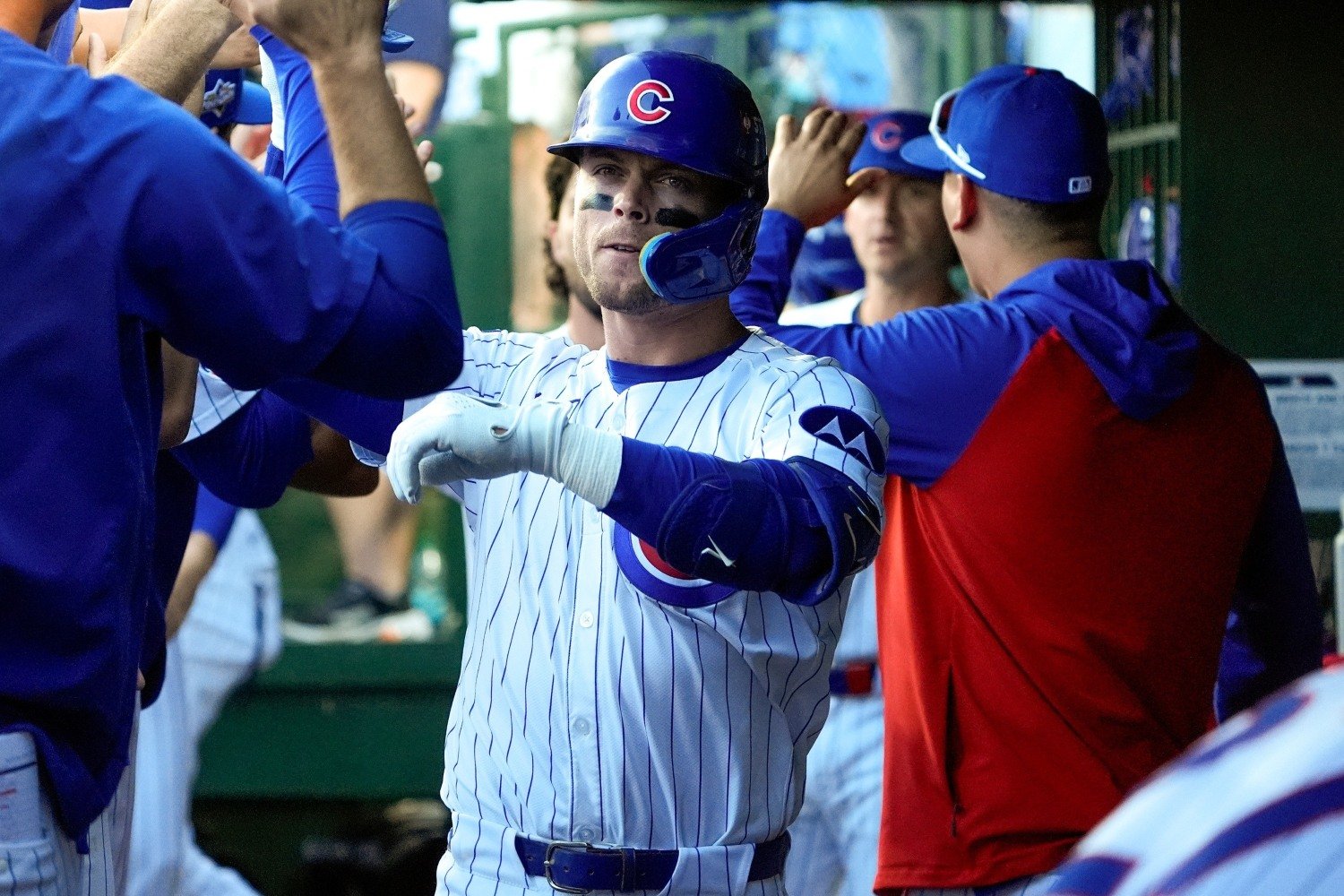 Nico Hoerner's maturation as a hitter was one of the best stories of the Cubs' 2025 season. Hoerner, 28, made myriad adjustments in the penultimate season of the contract extension he signed in March 2023. Already an excellent contact hitter, he reduced his punchout rate to 7.6%, the best of his career. He improved at pulling the ball and more consistently squared it up, leading to a surge in his batting average on balls in play. He traded some fly balls, as the season went along, but hit more sharp line drives over the head of the third baseman and fewer balls right into the ground. While there's always another set of difficult adjustments around the corner for good hitters—especially ones, like Hoerner, who lack power—Hoerner turned a corner in 2025. He was 13 runs better than average at the plate, according to Baseball Reference, a run more than he added in the previous two years, combined. According to DRC+, the holistic offensive value metric at Baseball Prospectus (which evaluates a player's real contribution in a slightly more process-focused way), he was measurably above average (a 105, where 100 is average and higher is better) for the first time in his career. He did all that, of course, while continuing to play stellar defense at second base and run the bases brilliantly. He made $11.5 million in each of the last two seasons and will make $12 million in 2026, under the terms of the three-year extension on which he and the Cubs agreed in 2023. After that, though, he's due to become a free agent. As essential as he's become to the team, though, they should head into this offseason with the goal of avoiding that eventuality. Given how well 2025 went (for the team, as much as for Hoerner, individually), it's important to lock up the key cogs in the new winning machinery of the franchise. It's not easy to find good comparable cases to Hoerner. Most players with as much overall value as he offers have skill sets that figure to age better than his will. Most players as good as he is who have this kind of skill set sign earlier, more team-friendly deals, and aren't in line for market-rate new deals as they head into their 30s. Two players stand out as reasonable comps for Hoerner, based on what he does well and where he is in his career as he seeks his next deal: José Ramírez and Jose Altuve. Those are big names, and their games (at their peak, at least; Altuve is now well past that) are more complete than Hoerner's. Each has a good chance to be a future Hall of Famer; Hoerner would need to turn the level he just established into his norm for most of a decade to get into the same discussion. Altuve has an MVP award; Ramírez is a perennial top-five finisher for the award. Hoerner has yet to so much as make an All-Star Game. Thus, we'll want to study the deals each of them signed, but there'll still be some work left to do to equate them with Hoerner. Altuve signed a five-year deal with the Astros last February, worth $125 million. That deal began this season, just before Altuve turned 35 years old. He's still a good and well-rounded player, but he's much more limited than he was at his best. His speed has faded, and so has his power. The Astros are trying to permanently move him to left field, because he's no longer a viable everyday second baseman. It's a bit of a legacy move, acknowledging the vital roles Altuve played in two World Series championships for Houston, but he's also a good player, even now. Ramírez still had two years of team control remaining when he signed an extension with Cleveland in April 2022. It included $116 million in new money over five extra years of control—the first of which was 2024, when he was 31. He hasn't substantially declined at all yet, and made his fifth straight All-Star team in 2025. That deal, like Altuve's, reflects some degree of shared sentiment between player and team. Whereas Altuve's probably overvalues him in the name of honoring a franchise icon, though, Ramírez's comes closer to undervaluing him. It was the only way he was going to be able to stay with the Guardians for the long haul. Hoerner's extension, should he sign one, will begin in 2027. That's his age-30 season. He's notably younger than both Ramírez and (especially) Altuve, but his skill set—with its heavy reliance on speed, defense and contact—isn't likely to age as well as theirs. Nor is he capable of the same high-end outcomes as those two. All of that virtually washes out. Here's a deal that could work for both sides. Signing bonus: $3 million 2027: $18 million 2028: $18 million 2029: $20 million 2030: $20 million 2031: $20 million 2032: $21 million club option, with a $6-million buyout That would be a five-year, $105-million deal, with the chance to be worth $120 million over six seasons. It would keep Hoerner in a Cubs uniform through (at least) his age-34 season, but the Cubs' costs would also stay under control. A year ago, this would have been far too rich a deal to consider offering to a power-shy player already locked up until the end of his 20s. The success of both Hoerner and the team, though, has changed the calculus. It's time to lock one of the club's stars into place, to make it easier to plan their path forward as a contender in the National League.
 -
Image courtesy of © David Banks-Imagn Images Nico Hoerner's maturation as a hitter was one of the best stories of the Cubs' 2025 season. Hoerner, 28, made myriad adjustments in the penultimate season of the contract extension he signed in March 2023. Already an excellent contact hitter, he reduced his punchout rate to 7.6%, the best of his career. He improved at pulling the ball and more consistently squared it up, leading to a surge in his batting average on balls in play. He traded some fly balls, as the season went along, but hit more sharp line drives over the head of the third baseman and fewer balls right into the ground. While there's always another set of difficult adjustments around the corner for good hitters—especially ones, like Hoerner, who lack power—Hoerner turned a corner in 2025. He was 13 runs better than average at the plate, according to Baseball Reference, a run more than he added in the previous two years, combined. According to DRC+, the holistic offensive value metric at Baseball Prospectus (which evaluates a player's real contribution in a slightly more process-focused way), he was measurably above average (a 105, where 100 is average and higher is better) for the first time in his career. He did all that, of course, while continuing to play stellar defense at second base and run the bases brilliantly. He made $11.5 million in each of the last two seasons and will make $12 million in 2026, under the terms of the three-year extension on which he and the Cubs agreed in 2023. After that, though, he's due to become a free agent. As essential as he's become to the team, though, they should head into this offseason with the goal of avoiding that eventuality. Given how well 2025 went (for the team, as much as for Hoerner, individually), it's important to lock up the key cogs in the new winning machinery of the franchise. It's not easy to find good comparable cases to Hoerner. Most players with as much overall value as he offers have skill sets that figure to age better than his will. Most players as good as he is who have this kind of skill set sign earlier, more team-friendly deals, and aren't in line for market-rate new deals as they head into their 30s. Two players stand out as reasonable comps for Hoerner, based on what he does well and where he is in his career as he seeks his next deal: José Ramírez and Jose Altuve. Those are big names, and their games (at their peak, at least; Altuve is now well past that) are more complete than Hoerner's. Each has a good chance to be a future Hall of Famer; Hoerner would need to turn the level he just established into his norm for most of a decade to get into the same discussion. Altuve has an MVP award; Ramírez is a perennial top-five finisher for the award. Hoerner has yet to so much as make an All-Star Game. Thus, we'll want to study the deals each of them signed, but there'll still be some work left to do to equate them with Hoerner. Altuve signed a five-year deal with the Astros last February, worth $125 million. That deal began this season, just before Altuve turned 35 years old. He's still a good and well-rounded player, but he's much more limited than he was at his best. His speed has faded, and so has his power. The Astros are trying to permanently move him to left field, because he's no longer a viable everyday second baseman. It's a bit of a legacy move, acknowledging the vital roles Altuve played in two World Series championships for Houston, but he's also a good player, even now. Ramírez still had two years of team control remaining when he signed an extension with Cleveland in April 2022. It included $116 million in new money over five extra years of control—the first of which was 2024, when he was 31. He hasn't substantially declined at all yet, and made his fifth straight All-Star team in 2025. That deal, like Altuve's, reflects some degree of shared sentiment between player and team. Whereas Altuve's probably overvalues him in the name of honoring a franchise icon, though, Ramírez's comes closer to undervaluing him. It was the only way he was going to be able to stay with the Guardians for the long haul. Hoerner's extension, should he sign one, will begin in 2027. That's his age-30 season. He's notably younger than both Ramírez and (especially) Altuve, but his skill set—with its heavy reliance on speed, defense and contact—isn't likely to age as well as theirs. Nor is he capable of the same high-end outcomes as those two. All of that virtually washes out. Here's a deal that could work for both sides. Signing bonus: $3 million 2027: $18 million 2028: $18 million 2029: $20 million 2030: $20 million 2031: $20 million 2032: $21 million club option, with a $6-million buyout That would be a five-year, $105-million deal, with the chance to be worth $120 million over six seasons. It would keep Hoerner in a Cubs uniform through (at least) his age-34 season, but the Cubs' costs would also stay under control. A year ago, this would have been far too rich a deal to consider offering to a power-shy player already locked up until the end of his 20s. The success of both Hoerner and the team, though, has changed the calculus. It's time to lock one of the club's stars into place, to make it easier to plan their path forward as a contender in the National League. View full article
-
Image courtesy of © Mark Hoffman/Milwaukee Journal Sentinel / USA TODAY NETWORK via Imagn Images Chicago Cubs pitchers walked batters at a lower rate than any other staff in baseball in 2025. They made use of a great team defense and pitched to contact, forcing opponents to beat them (if they could) with solo home runs. It often worked; that's how the Cubs won 92 games. In the NLDS, though, their luck finally ran out. First of all, the Brewers—baseball's most patient team—did force a few crucial walks. More importantly, though, they stayed dangerous in two-strike counts, and hit enough home runs to beat the Cubs—some of them solo, some of them three-run blasts. Brewers batters stacked up a shocking 10 hits in two-strike counts with two outs in the inning, including several of the pivotal plays of the series. Andrew Vaughn's series-altering homers in Games 2 and 5 each came in that situation. So did Jackson Chourio's three-run shot in Game 2 and William Contreras's first-inning volley in Game 5. Blake Perkins hit a full-count, two-out single to keep the rally going during the Brewers' destructive first inning in Game 1, and Chourio made it a blowout with a two-strike two-run single later in that frame. The Cubs worked ahead, but they could not put the Brewers away—not in at-bats, not in innings, and not in the series. It's why they're now at home. Plenty of credit for that belongs to Milwaukee; it's very much in their nature. They were the best two-out, two-strike offense in baseball this year, and they were in the top three in two-strike hitting regardless of base-out state. However, another major segment of the responsibility for the way all those pivotal at-bats unfolded has to be allocated to the Cubs. Chicago hurlers struck out 21.4% of opposing batters this season. That strikeout rate ranked 21st of the 30 big-league teams, the lowest of the 12 teams who qualified for the playoffs. The Red Sox, who fanned 22.1% of their opponents (18th-best) were the closest to them; the other 10 teams who made it to October finished in the top 13 in pitcher strikeout rate. When it comes to whiffs per swing, the Cubs were a ghastly 27th, and the identities of the three teams behind them tells the story: Rockies, Cardinals, Nationals. There are tradeoffs involved in chasing swing-and-miss arms. Those guys are very expensive to acquire, and very difficult to develop—to say nothing of keeping them healthy. That ability to limit walks stems in part from being willing to fill up the zone, which costs a few punchouts. Building the brilliant defense they have behind that staff is expensive, too; the Cubs are paying roughly $55 million in 2026 for the glove-over-bat profiles of key veterans Ian Happ, Dansby Swanson and Nico Hoerner. If you want to bolster your pitching, you have to be willing either to spend a lot more money or to lose some of that great fielding prowess. Nonetheless, this winter, the Cubs have to do it. Somehow, some way, they have to add lots of swings and misses to their pitching staff. They found out, late in the season and especially in October, just how far they can get with the kind of staff they've so assiduously constructed over the last several years: the Division Series. That constituted success in 2025, but it won't qualify as success in 2026. For now, that's the last season under contract for Happ, Hoerner, Seiya Suzuki, Jameson Taillon, Carson Kelly and Matthew Boyd. It's Swanson's age-32 season. The Cubs are steadily working in young hitters who they hope will make a big difference in the medium term, but they have to make some hay in 2026. On several levels, that's important to the long-term health of the franchise. Another second-place finish in the NL Central and second-round playoff exit would not be met as warmly, by fans or by ownership, one year from now. To avoid it, they have to induce more whiffs. Even the guys you think of as strikeout-capable on the Cubs roster struggled to punch people out during their brief playoff run this fall. Other than their top two left-handed relievers, no one missed bats the way the team needs to miss them to win more next October. Daniel Palencia: 3 strikeouts in 29 batters faced Brad Keller: 5 SO, 22 BF Andrew Kittredge: 3 SO, 21 BF Matthew Boyd: 9 SO, 45 BF Shota Imanaga: 6 SO, 30 BF Jameson Taillon: 7 SO, 32 BF Colin Rea: 3 SO, 33 BF Drew Pomeranz: 6 SO, 19 BF Caleb Thielbar: 5 SO, 16 BF Thielbar, Pomeranz and Keller are all impending free agents. Kittredge, Rea and Imanaga have club options on which the team will have to decide soon. There's every chance to remake this pitching staff this winter, except for one problem: there aren't a lot of great candidates to bolster the specific trait in which the team is deficient. Dylan Cease, Jack Flaherty and Michael King are the best strikeout guys in the starting pitching free-agent class; Framber Valdez and Ranger Suárez are great lefties oriented much more toward ground balls than toward punchouts. Zac Gallen and Brandon Woodruff could hit the open market, but there are reasons to harbor major reservations about the ability of either to return to their previous levels of performance, especially with regard to missing bats. There are a fistful of good options in the relief market. The Cubs could (and probably will) also explore the trade market, where guys like (stop me when this list sounds familiar) Edward Cabrera, Sandy Alcantara, Pablo López, Joe Ryan, Luis Severino, Sonny Gray, Drew Rasmussen, Jacob deGrom and MacKenzie Gore might become available. They should certainly also address their scouting and development paradigm, to try to grow more hard-throwing pitchers who can miss bats from within their system. The difference between their bullpen and most of the others in this year's playoff field is less about sheer performance and more about the fact that many of the other pens are largely homegrown and hard-throwing, whereas the Cubs cobbled together a bunch of free-agent pickups and waiver claims to get this far. Next year, they need a full season of Cade Horton, but that's far from sufficient. They'll hope to get a bunch of big-league innings (and strikeouts) from Jaxon Wiggins, and to find another good arm or two in their system, but they need to get better at filling the pipeline with such arms. One way or another, though, they're going to have to plunge some resources into boosting their ability to strike out opposing hitters, and that's going to be very expensive. Since they also need to reinforce their offense this winter, the bills are starting to pile up on Tom Ricketts's desk, even before he can finish counting the money he made during the team's foray into the playoffs this fall. Whether he elects to pay those bills or pay the penalties associated with refusing to, it's too early to tell—and for fans, the frustrating truth is that the penalties for not ponying up won't be paid by ownership, if that's the way it goes. Instead, they'll be paid by fans and the team on the field, in the form of missed opportunities to win more games and advance further next autumn. View full article
-
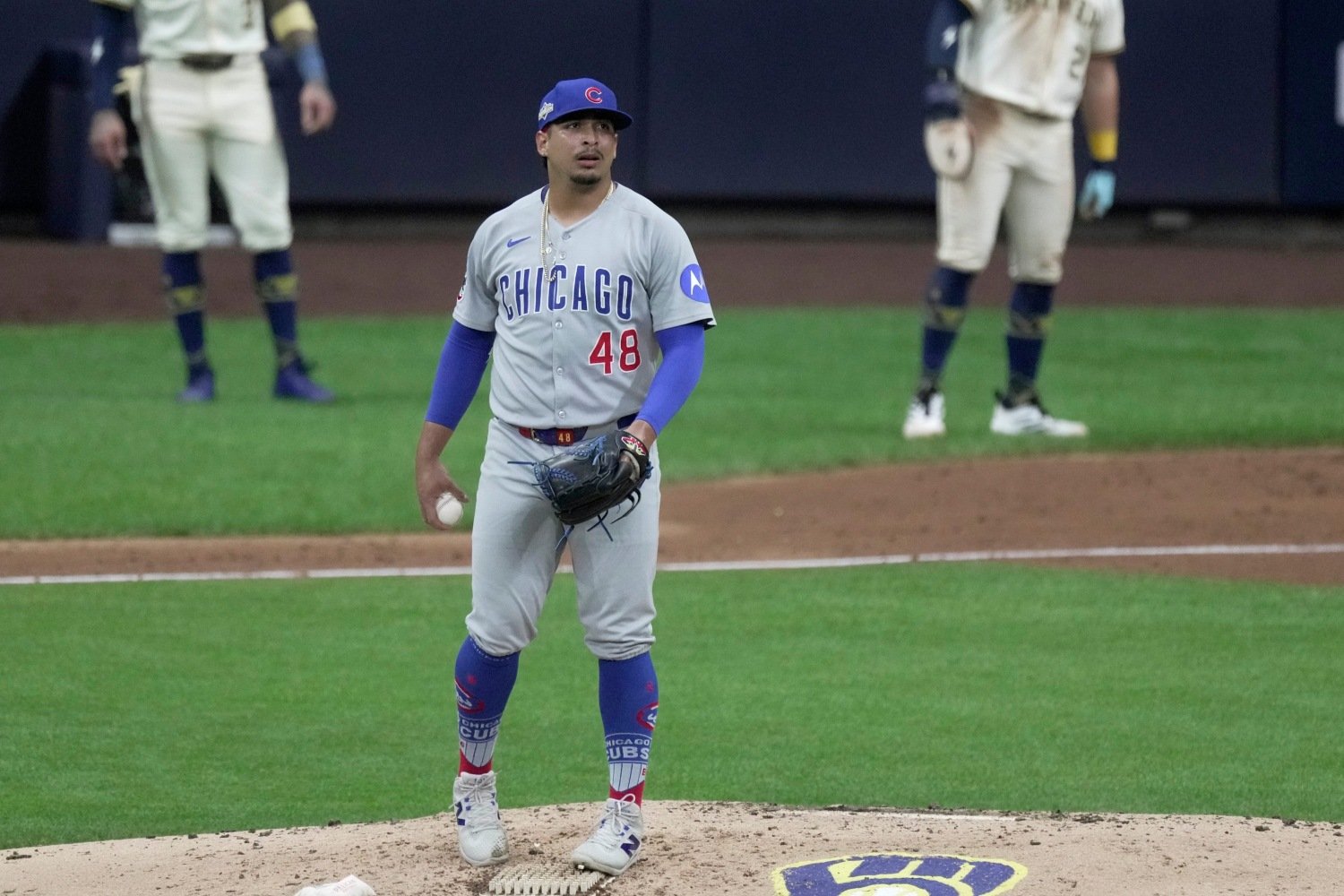 Chicago Cubs pitchers walked batters at a lower rate than any other staff in baseball in 2025. They made use of a great team defense and pitched to contact, forcing opponents to beat them (if they could) with solo home runs. It often worked; that's how the Cubs won 92 games. In the NLDS, though, their luck finally ran out. First of all, the Brewers—baseball's most patient team—did force a few crucial walks. More importantly, though, they stayed dangerous in two-strike counts, and hit enough home runs to beat the Cubs—some of them solo, some of them three-run blasts. Brewers batters stacked up a shocking 10 hits in two-strike counts with two outs in the inning, including several of the pivotal plays of the series. Andrew Vaughn's series-altering homers in Games 2 and 5 each came in that situation. So did Jackson Chourio's three-run shot in Game 2 and William Contreras's first-inning volley in Game 5. Blake Perkins hit a full-count, two-out single to keep the rally going during the Brewers' destructive first inning in Game 1, and Chourio made it a blowout with a two-strike two-run single later in that frame. The Cubs worked ahead, but they could not put the Brewers away—not in at-bats, not in innings, and not in the series. It's why they're now at home. Plenty of credit for that belongs to Milwaukee; it's very much in their nature. They were the best two-out, two-strike offense in baseball this year, and they were in the top three in two-strike hitting regardless of base-out state. However, another major segment of the responsibility for the way all those pivotal at-bats unfolded has to be allocated to the Cubs. Chicago hurlers struck out 21.4% of opposing batters this season. That strikeout rate ranked 21st of the 30 big-league teams, the lowest of the 12 teams who qualified for the playoffs. The Red Sox, who fanned 22.1% of their opponents (18th-best) were the closest to them; the other 10 teams who made it to October finished in the top 13 in pitcher strikeout rate. When it comes to whiffs per swing, the Cubs were a ghastly 27th, and the identities of the three teams behind them tells the story: Rockies, Cardinals, Nationals. There are tradeoffs involved in chasing swing-and-miss arms. Those guys are very expensive to acquire, and very difficult to develop—to say nothing of keeping them healthy. That ability to limit walks stems in part from being willing to fill up the zone, which costs a few punchouts. Building the brilliant defense they have behind that staff is expensive, too; the Cubs are paying roughly $55 million in 2026 for the glove-over-bat profiles of key veterans Ian Happ, Dansby Swanson and Nico Hoerner. If you want to bolster your pitching, you have to be willing either to spend a lot more money or to lose some of that great fielding prowess. Nonetheless, this winter, the Cubs have to do it. Somehow, some way, they have to add lots of swings and misses to their pitching staff. They found out, late in the season and especially in October, just how far they can get with the kind of staff they've so assiduously constructed over the last several years: the Division Series. That constituted success in 2025, but it won't qualify as success in 2026. For now, that's the last season under contract for Happ, Hoerner, Seiya Suzuki, Jameson Taillon, Carson Kelly and Matthew Boyd. It's Swanson's age-32 season. The Cubs are steadily working in young hitters who they hope will make a big difference in the medium term, but they have to make some hay in 2026. On several levels, that's important to the long-term health of the franchise. Another second-place finish in the NL Central and second-round playoff exit would not be met as warmly, by fans or by ownership, one year from now. To avoid it, they have to induce more whiffs. Even the guys you think of as strikeout-capable on the Cubs roster struggled to punch people out during their brief playoff run this fall. Other than their top two left-handed relievers, no one missed bats the way the team needs to miss them to win more next October. Daniel Palencia: 3 strikeouts in 29 batters faced Brad Keller: 5 SO, 22 BF Andrew Kittredge: 3 SO, 21 BF Matthew Boyd: 9 SO, 45 BF Shota Imanaga: 6 SO, 30 BF Jameson Taillon: 7 SO, 32 BF Colin Rea: 3 SO, 33 BF Drew Pomeranz: 6 SO, 19 BF Caleb Thielbar: 5 SO, 16 BF Thielbar, Pomeranz and Keller are all impending free agents. Kittredge, Rea and Imanaga have club options on which the team will have to decide soon. There's every chance to remake this pitching staff this winter, except for one problem: there aren't a lot of great candidates to bolster the specific trait in which the team is deficient. Dylan Cease, Jack Flaherty and Michael King are the best strikeout guys in the starting pitching free-agent class; Framber Valdez and Ranger Suárez are great lefties oriented much more toward ground balls than toward punchouts. Zac Gallen and Brandon Woodruff could hit the open market, but there are reasons to harbor major reservations about the ability of either to return to their previous levels of performance, especially with regard to missing bats. There are a fistful of good options in the relief market. The Cubs could (and probably will) also explore the trade market, where guys like (stop me when this list sounds familiar) Edward Cabrera, Sandy Alcantara, Pablo López, Joe Ryan, Luis Severino, Sonny Gray, Drew Rasmussen, Jacob deGrom and MacKenzie Gore might become available. They should certainly also address their scouting and development paradigm, to try to grow more hard-throwing pitchers who can miss bats from within their system. The difference between their bullpen and most of the others in this year's playoff field is less about sheer performance and more about the fact that many of the other pens are largely homegrown and hard-throwing, whereas the Cubs cobbled together a bunch of free-agent pickups and waiver claims to get this far. Next year, they need a full season of Cade Horton, but that's far from sufficient. They'll hope to get a bunch of big-league innings (and strikeouts) from Jaxon Wiggins, and to find another good arm or two in their system, but they need to get better at filling the pipeline with such arms. One way or another, though, they're going to have to plunge some resources into boosting their ability to strike out opposing hitters, and that's going to be very expensive. Since they also need to reinforce their offense this winter, the bills are starting to pile up on Tom Ricketts's desk, even before he can finish counting the money he made during the team's foray into the playoffs this fall. Whether he elects to pay those bills or pay the penalties associated with refusing to, it's too early to tell—and for fans, the frustrating truth is that the penalties for not ponying up won't be paid by ownership, if that's the way it goes. Instead, they'll be paid by fans and the team on the field, in the form of missed opportunities to win more games and advance further next autumn.

.png.8366177f8ea834bf6a39a8af95683911.png)
