.jpg.900f6d1bc80a5a156f3ba09ea0e4b3d7.jpg)

Jason Ross
-
Posts
8,154 -
Joined
-
Last visited
-
Days Won
74
Content Type
Profiles
Joomla Posts 1
Chicago Cubs Videos
Chicago Cubs Free Agent & Trade Rumors, Notes, & Tidbits
2026 Chicago Cubs Top Prospects Ranking
News
2023 Chicago Cubs Draft Picks
Guides & Resources
2024 Chicago Cubs Draft Picks
The Chicago Cubs Players Project
2025 Chicago Cubs Draft Pick Tracker
2026 Chicago Cubs Draft Tracker: Picks & Bonuses
Blogs
Events
Forums
Store
Gallery
Everything posted by Jason Ross
-
2025 Cubs Minor League Preview: Who Might Make it to Chicago?
Jason Ross posted an article in Minor Leagues
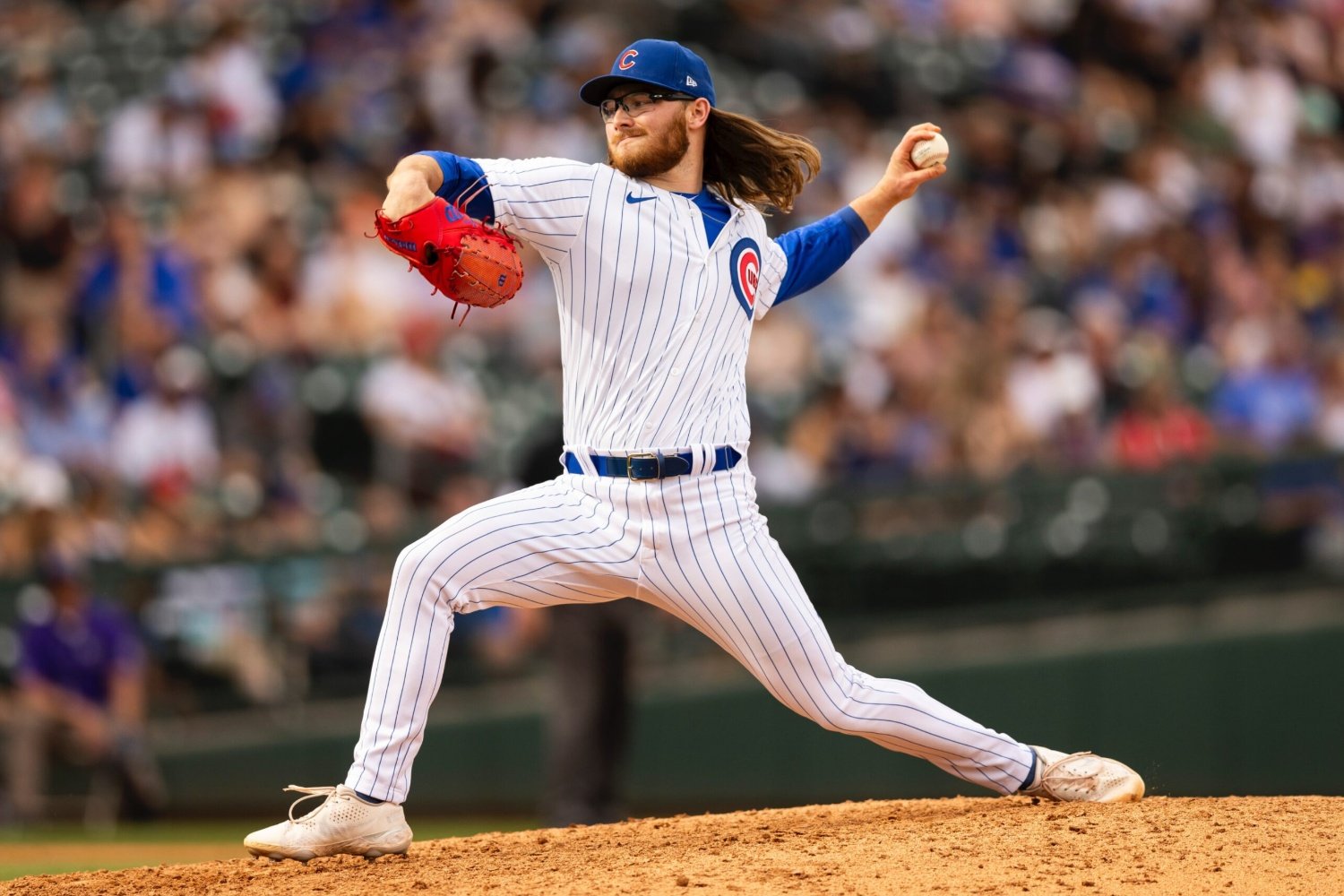 Baseball season is literally right around the corner, and if you've been focused mostly on the Chicago Cubs 26-man roster, their roster decisions, and who is thriving early on, I wouldn't blame you — this is arguably the most exciting Cubs team since 2018. With that said, the Cubs will have a pretty exciting minor league system in 2025 (as they've had over the last few years) and one that is worth monitoring as the season goes along. There is a lot of talent close to "the Show", but some intriguing prospects who are bubbling just below the surface. Over the next few days here at NSBB, we're going to take a look at some of the players who might break out, players who you might see in Chicago in 2025, and where, on those day-offs for the big league squad, you should spend your time paying attention to. I have already taken a look a few prospects who have the potential to breakout, so make sure you don't miss out on who I think could have big seasons in 2025. Today, I'll look at a few names that could make their way to Chicago throughout the season. Let's get this out of the way quickly — this article will not be another article on Kevin Alcantara, Matt Shaw, Moises Ballesteros, James Triantos or Cade Horton. At this point, I think it's pretty well assumed that if these names remain relatively healthy that they will make their way to Chicago for their MLB debuts. All of these names represent the Cubs "plan B" for injury for their MLB roster For example, if Michael Busch goes down in July, expect to see Caissie or Ballesteros fill in. If Pete Crow-Armstrong pulls a quad, it's likely that Alcantara will take over. The only thing standing in the way of these names making their debut with the Cubs would be seemingly their own injury issues or a mid-summer trade out of the organization. No, this article is about some of the others in the Cubs system who have a chance to make an impact. These players may not have the high-ceiling impact of Shaw or Alcantara, but could be the sneaky-important fringe players who help get the Cubs through a rough patch, fill a more specialized role, or burst on to the scene in a way we didn't have on our 2025 Vision Boards. Don't discount these names — they're a few guys who I think could really shake things up in a good way. Keep an eye out for reliever Riley Martin As the Cubs enter the year, their bullpen will likely only have a single left-hander among the group in former Minnesota Twin Caleb Thielbar. Coming off of a down season, which saw Thielbar's ERA climb from 3.21 (which is what he averaged from 2020-2023) to 5.31 last season, the reality is that the lefty doesn't have an iron-grip on the role for the entire season as of right now. There are reasons to believe he'll get it together, but if he can't, then the Cubs will have to look for alternatives. Luke Little is probably "next man up", but don't discount Riley Martin in this role. Martin is flat-out one of my favorite stories in the Cubs MiLB system. Signed for a few thousand dollars, I immediately wrote him off as a slot-savings signing. While he offered a fun curveball, the rest of the package seemed pretty uninspired on draft day, and coming out of Quincy, he felt like even more of a long-shot than your typical sixth-round pick. Maybe that's why I love his story so much. Martin already made the Cubs Spring Breakout Roster (where I wrote about him once before this offseason), but is in prime position to jump to the Cubs active roster if a left-handed option is needed. Featuring a plus-curveball with really impressive spin, and a fastball that has seen its velocity stick in the mid-90's, the lefty seems poised to make his debut this year. There's a bit of a concern with his control, as Martin did walk 16% of hitters in Triple-A, but he offset that by striking out 32% of hitters. He also gets a lot of ground balls (which makes sense — curveballs tend to result in grounders), which helps alleviate the walks with twin-killings. On top of that, Martin had a strong spring showing, both in MLB camp and in the Breakout game. It will only take a single injury or early Thielbar hiccups for Martin's name to be at the top of the list for potential replacements. Don't sleep on Frankie Scalzo Frankie Scalzo has been a name that you probably wouldn't have noticed if all you did was peruse top prospect lists. A former 14th round selection out of Grand Canyon, the righty hasn't made any top-20 lists, and isn't the flashiest arm coming out of the bullpen. Despite that, if you sorted the Cubs' MiLB system by ERA, you'd typically find the righty at or near the top of any list, in almost any season, since being drafted. He wouldn't be the first arm to be just good enough for minor league ball but not good enough to project to the majors, and heading into camp this year, that's probably in the tier I'd have put him in. Showing up in 2025, with a strong camp, and a nice showing at the Breakout game, I'm beginning to believe he's probably jumped a level and is likely to debut in Chicago. Sporting a fastball that can hit mid-90s regularly and flashes a bit better, it's his slider that's become a real weapon. As a fastball-slider guy, it's probable that he's going to be pigeonholed into being someone who struggles against left-handed hitters, which isn't perfect, but you can work with that profile. As Tyson Miller has already hit the IL with a hip impingement, it leaves room for Scalzo Jr. to jump up the internal reliever list. The Cubs will probably need a bunch of relievers in 2025 with how often players go down to ailments, so while it's fair to expect someone like Jack Neely to get the call above Scalzo to start, he isn't buried so far down that he couldn't play a role. Oh, also... he's got an 80-grade mustache. Does that play a role in my scouting? Guilty as charged. He passes the vibe check. Could Statcast darling Jonathon Long be a factor? I started this article off discussing why I didn't include Owen Caissie on this list, and then went on to outline how if Michael Busch were to go down, Caissie or Ballesteros would be called upon to be the backup. However, I think there could be a third name to that list: Jonathon Long. Long was a ninth-round pick out of Long Beach State, and all he's done since being drafted is hit. The right-handed hitter also, seemingly, checks off every box — he makes a lot of contact, he walks, he has strong exit velocities. He's everything you could want. Importantly, he started to turn his strong EV's into home runs last year in Tennessee, hitting out 17 bombs through 114 games. Maybe you quibble and say you'd like to see more, but I'll leave that to you. Where the questions on Long come in are when the discussion turns to his defensive home. Honestly, that's why I think he belongs on this list. While I don't think he's a natural fit at third, he could potentially force the issue here. He's seen some limited action at the hot corner through his time with the organization, and I'm curious as to who the team's backup plan is to Shaw if his struggles are deemed too much. James Triantos could be an option, but if Long is hitting the ball really well, it's not insane to think the Cubs could give him a look there, defensive questions be damned. With Caissie working back from offseason surgery, Long could be an early option at first, or even in the outfield, as he's played some left field, too. Long is defensively best suited for first, but again, the bat and injuries could force him into some other places. There's enough under the hood that he's not so much of a... Long-shot (I'll see myself out) to make the roster at some point. If he does, there's enough there to make you think he could hit so well he'd never go back. Who do you think might might the Chicago Cubs during the 2025 season? Are there some prospects you think could take the next step? Let us know in the comment section below!
 -
Just how you draw it up.
-
Just a question - if Pressley blows this save... Can he retroactively use his NTC and go back to Houston?
-
Goddamnit, I threw away my meme I made last night. I didn't think I'd need it any more. Just hit him. IDC.
-
Can you please come yell at my adult league team like this?
-
Arizona's infield defense doesn't feel that great.
-
Hodge came back big. Good job.
-
Big K
-
So, I play in an adult wood bat league. 99% of the time the MLB and the Lexington Adult Baseball League have nothing in common. Then you watch Ketel Marte do something like the backup second baseman in my league does (and listen, if you're the backup at second in an adult league, you suck)...and you feel a little bit like a true pro. Then the next pitch comes in at 95mph and you snap out of it. But for that moment...
-
It does. He's a great example of why LA matters. When you talk to some of the old-heads (not in age, more in philosophy) they'll complain that it's all about hitting more fly balls and strikeouts and yadda yadda. LA is really about extending the hit-window. Baseballs naturally go down, so swinging up creates a larger window. (This is also why Shota's fastball is so special - his arm angle and lack of drop create a special pitch to attack LA)
-
HEY KID!
-
My best hope is that Tucker is awesome and the Cubs make the playoffs in that vein. If Tucker is a 6 win guy, and the Cubs win the division you can't let him walk. (I mean, you shouldn't anyways, but then you kind of, optically, look horrible if you do)
-
Yep. Tucker is a very big LA guy. When he's going well, he's going to drive balls into gaps in the air and hit dongs. When he's not, he'll hit what looks like lazy flys. Should be fun on windy days in Chicago, for sure.
-
ALL HAIL KING TUCK
-
That throw lives with Ichiro and Yoenis. What. A. Gun. horsefeathers
-
God he's fast.
-
Perfect! I love having a fall guy.
-
Thanks! I have fun writing these. And doing the new pod!
-
I had Erian as my breakout P in the system. Nostradomas? Nah, just a regular man. (I'll delete this post in 2 months when I'm assuredly wrong)
-
-
Not sure if you all have seen, but the Yankees have designed and developed a new bat shape. https://awfulannouncing.com/mlb/michael-kay-yankees-bats-barrel-legal-chisholm-volpe.html
-
Lineup looks a little different tonight at 2b and 3b. Welcome to the Show, Workman!