.jpg.900f6d1bc80a5a156f3ba09ea0e4b3d7.jpg)

Jason Ross
-
Posts
8,149 -
Joined
-
Last visited
-
Days Won
74
Content Type
Profiles
Joomla Posts 1
Chicago Cubs Videos
Chicago Cubs Free Agent & Trade Rumors, Notes, & Tidbits
2026 Chicago Cubs Top Prospects Ranking
News
2023 Chicago Cubs Draft Picks
Guides & Resources
2024 Chicago Cubs Draft Picks
The Chicago Cubs Players Project
2025 Chicago Cubs Draft Pick Tracker
2026 Chicago Cubs Draft Tracker: Picks & Bonuses
Blogs
Events
Forums
Store
Gallery
Everything posted by Jason Ross
-
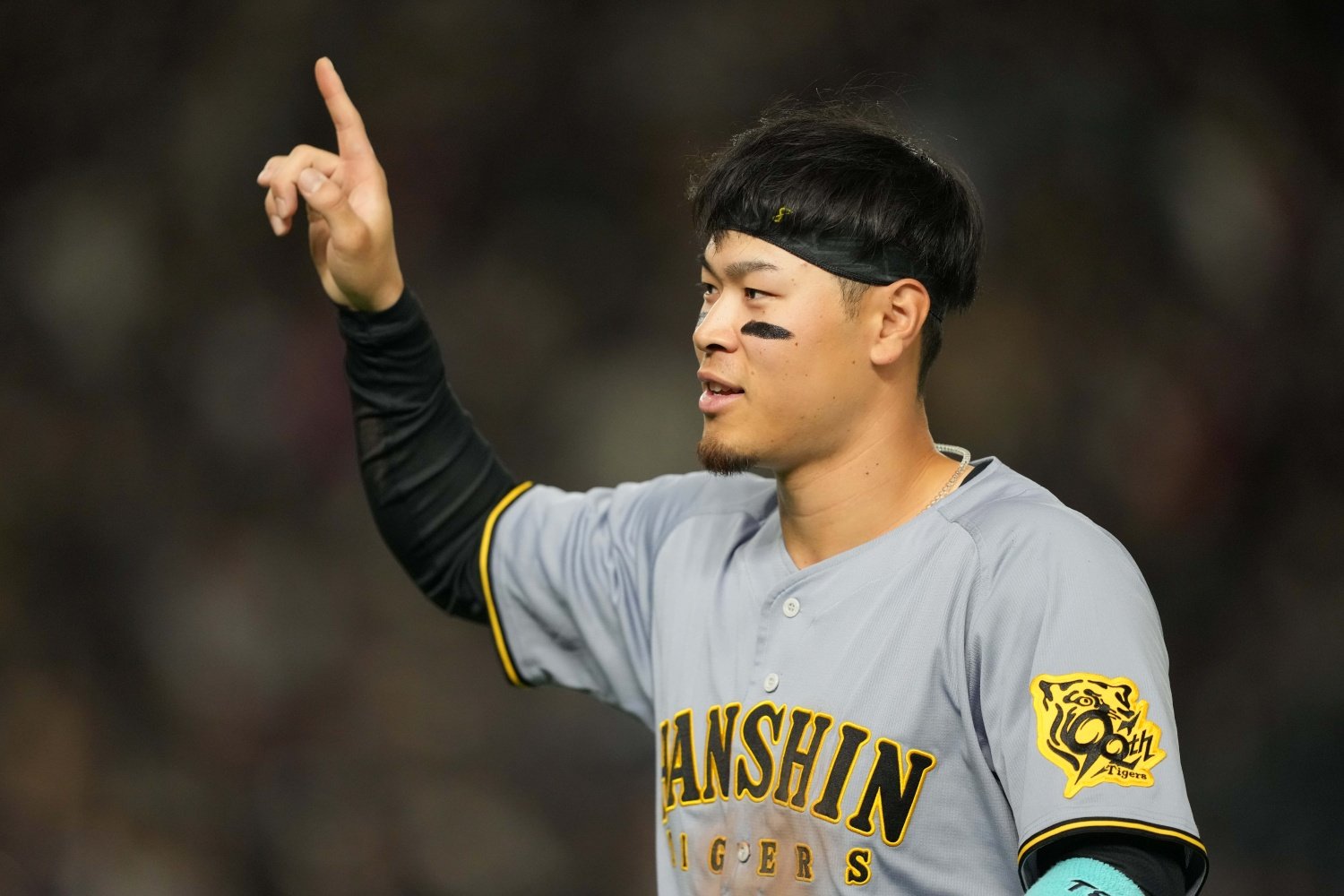 As the postseason comes to a crescendo with the Milwaukee Brewers and Tampa Bay Rays facing off in the 2026 World Series, the Chicago Cubs' offseason shopping remains on pause. When the hot stove does begin to crackle, though, they have a lot of things to accomplish in what will likely be a short time. Their need for starting pitching is well-documented. One of the names the Cubs will have some interest in is Japanese righty Kaima Taira. I profiled Taira the other day, highlighting his fit with the organization, but the portly right-handed pitcher isn't the only big name who will be headed Stateside. Teruaki Sato, one of Japan's leading home run hitters in 2026, will also be posted by his Nippon Professional Baseball club, the Hanshin Tigers, according to multiple reports. Will the Cubs be involved in Sato's free agency? Today, we'll take a deep dive into his profile: what he does well, what he does poorly, and whether or not there's a fit between the two sides. Teruaki Sato: The Positives No conversation about Teruaki Sato can omit his prodigious power. The left-handed slugger has mashed 163 home runs over the course of six years, which is about a 27-home run average, but that doesn't do him justice. First, of those 163 dongs, a whopping 79 have come in the last two seasons. Second, NPB is currently in the midst of a "dead ball era", which makes his power outburst even more impressive. There's really little debate over how impressive his power has been. It would be a mistake to compare Sato to his MLB counterparts right now, because the makeup of the Japanese top league is very different from the American one. Not only are they experiencing a dead ball, but the velocity of NPB pitchers just isn't where MLB pitching is. Instead, comparing Sato to countryman Munataki Murakami's last (full) season in Japan can give us the proper context for his power. In Murakami's last complete season (2025 was injury shortened), the left-handed hitter crushed 33 home runs in 610 plate appearances. Sato hit 39 this year, in 100 fewer trips. Not only did he out-homer Murakami, but the Tigers' star third baseman had a better hard-hit rate, while hitting the ball on the ground less often. His power should play in the American majors, too. While many hitters struggle against a specific type of pitch, Sato crushed every type of pitch last season. His worst slugging average was against breaking balls, but he still had an above-average OPS+ against them. His OPS+ against fastballs was 260 and he had a 186 OPS+ against offspeed stuff. This makes for a more well-rounded hitter at the plate, even if we can safely guess that not all of that will hold as the heat on the fastballs he sees is turned up significantly. One reason for the prodigious power is that he has a really clean, mechanical swing. There aren't a lot of moving parts. He's upright, takes a small leg kick and shows off a swing that has significant lift. He also pulls the ball at a very high clip. This results in loud contact to the pull side in the air. It's a perfect storm for home runs, and he uses it to great effect. Another strong aspect of Sato's game is that he's fairly athletic. No one will confuse him with Pete Crow-Armstrong on the bases, but he graded out well in advanced baserunning data. This should allow him to remain a viable defender for a while. He isn't likely to steal 20 bags against MLB pitchers (he didn't even do that in NPB), but he probably won't be a negative on the bases, giving him a bit higher of a floor than either Murakami or another recent import, Kazuma Okamoto. Defensively, Sato has some versatility, in that he's played both third base and the corner outfield extensively in Japan, logging 593 games at the hot corner and 269 in the outfield. This will give his new team some choices about where to play him. Teruaki Sato: The Negatives While Sato may have seemingly super-human power potential, the slugging comes with the downside that many power hitters have: low contact rates. Sato is a free swinger. He swings a lot, both in and outside of the zone. He also has a tendency to miss a lot, both in and out of the zone. This gives evaluators pause on what to make of the power. It's great if you can hit the ball a mile, but to do that, you actually have to hit the ball, and how often Sato will do that against MLB pitching is easily the biggest question mark around his game. Sato isn't the first Japanese hitter to face these questions recently. Murakami faced similar questions last offseason. All he did was post a 125 wRC+ and smack 35 home runs in his first season, proving that these questions may have been premature. While this may signal that high-strikeout hitters can survive, though, I'm not sure Sato has the same qualities that Murakami does to help him mitigate that flaw. It's true that Murakami had (and still has—he struck out over 35% of the time in 2026) contact issues, but he was much more a discerning hitter, walking almost two times more than Sato in their final NPB seasons. He accomplished this with a 23.6% chase rate in 2025, whereas Sato was nearly 10% higher. The White Sox first baseman walked 16.6% of the time to support his slugging in 2026, something we can't expect Sato to accomplish. Big-league pitchers are very good at exploiting weaknesses, and a high-swing, high-chase hitter is one who will get themselves out. Another issue is that while Sato feasted on all pitches, the whiff rate he showed on fastballs is worrisome. A 31.8% whiff rate on fastballs is a real issue. In MLB, the average whiff rate on fastballs in 2026 was 19.1%. Murakami, our point of comparison for Sato, led the league with a 37.9% mark. In his final two seasons in Japan, however, Murakami whiffed at 29.9% of heaters in 2024 and 27,1% in 2025. There's a legitimate fear that Sato swings through so many heaters that he can't access his power in the States. Looking at his heatmap, pitchers tend to throw fastballs up and out on the NPB star. With a swing that is clearly geared for loft, Sato struggles to get his bat to those offerings. This is pretty commonplace for hitters with his swing path. It's great that he crushes fastballs, but learning to stay away from these pitches will be a point of emphasis for him as he comes to America. For Sato to truly feast, he's going to have to make meaningful approach changes. His overall zone contact rates aren't the biggest red flag; he made contact in the zone at about 82%. Where he gets in trouble is that he swings at over half the pitches he sees. Against even better pitching, he's got to learn to be far more choosy. But he's going to have to make these adjustments immediately against some of the best pitchers in the world. It's possible, but no easy task, especially for a guy about to turn 28 years old. Defensively, it's great that Sato can play multiple positions, but he's really not a good third baseman. He's considered worse on the dirt than Kazuma Okamoto. Okamoto, who logged 1,200 innings at the hot corner in 2026, graded out as a -1 DRS and a 0 OAA. That's not bad, but it means that Sato isn't going to come Stateside and be a dynamic player with many ways to affect the game. This puts even more weight on the bat to be the carrying tool. Are Teruaki Sato and the Chicago Cubs a Good Fit? Positionally, the Chicago Cubs have multiple openings that Sato could slide right into. With the organization set to see Ian Happ and Seiya Suzuki leave via free agency this winter, Sato would have little internal competition at either corner outfield position. Currently, the only two players slotted into those spots are youngsters Matt Shaw and Pedro Ramirez, who both have bats that are more suited for the infield. Where things begin to fall apart is in the type of hitters the Cubs have gravitated toward under Jed Hoyer. They're not entirely against free swingers. Nico Hoerner (who was just awarded a six-year extension) and Pete Crow-Armstrong certainly like to swing the bat. They aren't afraid of high-swing prospects either; the aforementioned Shaw and Ramirez both like to swing. They even drafted two players (in Caden Sorrell and Myles Bailey) who have significant swing-and-miss in their game during the 2026 draft. But each of these hitters comes with something that Sato doesn't: they either are high-walk or high-contact hitters. Sato does not appear to be either of those things. The Cubs really value hitters who crush fastballs, which once again makes Sato's profile a tricky one to square with the organization's philosophy. It's true that the outfielder absolutely kills the pitch. However, the Cubs also had the third-lowest whiff rate on fastballs in 2026. Will they decide his whiff issues are too great? Or that they can be the change needed in his game? Chicago is also entering a season of a lot of turnover. Needing to rebuild most of their rotation (as well as multiple needs positionally) means the Cubs will have to do a lot of shopping this year. While I'd love to believe the organization was willing to join the $300-million club, what Tom Ricketts is actually willing to spend is pretty murky. Do the Cubs just go back to the first luxury-tax line and spend $70 million this offseason? Do they blow through the first threshold and spend over $100 million? What does the CBA do to any of this? All of these are unknowns as of now. Making things even tougher is pinpointing what Sato will make. On one hand, he offers better power and positional versatility that Murakami, but he has significantly worse approach numbers and is older. He's younger than Okamoto, has more power but a lower floor, and faces more questions about where he belongs on defense. A good bet is a shorter deal (four years or fewer, possibly an opt out) with around $15-20 million as an annual average value, but the market this offseason is pretty thin on offense, meaning it could go north of that estimate, both in years and salary. If the Cubs aren't planning to go nuts with the checkbook, it gets hard to justify the risk of Sato in a hurry. I don't want to sound too negative on Sato. He has some really loud power, the capability to be a pretty good corner outfielder, and enough athleticism to find a good deal of upside. But there's enough risk that it feels unlikely that the Chicago Cubs will use what resources they have to win a bidding war on a player who doesn't fit their normal profile. If the Cubs do add an NPB star, Taira feels like a more likely option. Regardless of where he sends up, Sato will probably hit a bunch of home runs. The question is really going to be what happens in his other 500 plate appearances. Would you like the look of Teruaki Sato in Cubs pinstripes? Or do you think he'll simply strike out too much for it to be a good idea? Let us know in the comment section below!
 -
Image courtesy of Darren Yamashita-Imagn Images As the postseason comes to a crescendo with the Milwaukee Brewers and Tampa Bay Rays facing off in the 2026 World Series, the Chicago Cubs' offseason shopping remains on pause. When the hot stove does begin to crackle, though, they have a lot of things to accomplish in what will likely be a short time. Their need for starting pitching is well-documented. One of the names the Cubs will have some interest in is Japanese righty Kaima Taira. I profiled Taira the other day, highlighting his fit with the organization, but the portly right-handed pitcher isn't the only big name who will be headed Stateside. Teruaki Sato, one of Japan's leading home run hitters in 2026, will also be posted by his Nippon Professional Baseball club, the Hanshin Tigers, according to multiple reports. Will the Cubs be involved in Sato's free agency? Today, we'll take a deep dive into his profile: what he does well, what he does poorly, and whether or not there's a fit between the two sides. Teruaki Sato: The Positives No conversation about Teruaki Sato can omit his prodigious power. The left-handed slugger has mashed 163 home runs over the course of six years, which is about a 27-home run average, but that doesn't do him justice. First, of those 163 dongs, a whopping 79 have come in the last two seasons. Second, NPB is currently in the midst of a "dead ball era", which makes his power outburst even more impressive. There's really little debate over how impressive his power has been. It would be a mistake to compare Sato to his MLB counterparts right now, because the makeup of the Japanese top league is very different from the American one. Not only are they experiencing a dead ball, but the velocity of NPB pitchers just isn't where MLB pitching is. Instead, comparing Sato to countryman Munataki Murakami's last (full) season in Japan can give us the proper context for his power. In Murakami's last complete season (2025 was injury shortened), the left-handed hitter crushed 33 home runs in 610 plate appearances. Sato hit 39 this year, in 100 fewer trips. Not only did he out-homer Murakami, but the Tigers' star third baseman had a better hard-hit rate, while hitting the ball on the ground less often. His power should play in the American majors, too. While many hitters struggle against a specific type of pitch, Sato crushed every type of pitch last season. His worst slugging average was against breaking balls, but he still had an above-average OPS+ against them. His OPS+ against fastballs was 260 and he had a 186 OPS+ against offspeed stuff. This makes for a more well-rounded hitter at the plate, even if we can safely guess that not all of that will hold as the heat on the fastballs he sees is turned up significantly. One reason for the prodigious power is that he has a really clean, mechanical swing. There aren't a lot of moving parts. He's upright, takes a small leg kick and shows off a swing that has significant lift. He also pulls the ball at a very high clip. This results in loud contact to the pull side in the air. It's a perfect storm for home runs, and he uses it to great effect. Another strong aspect of Sato's game is that he's fairly athletic. No one will confuse him with Pete Crow-Armstrong on the bases, but he graded out well in advanced baserunning data. This should allow him to remain a viable defender for a while. He isn't likely to steal 20 bags against MLB pitchers (he didn't even do that in NPB), but he probably won't be a negative on the bases, giving him a bit higher of a floor than either Murakami or another recent import, Kazuma Okamoto. Defensively, Sato has some versatility, in that he's played both third base and the corner outfield extensively in Japan, logging 593 games at the hot corner and 269 in the outfield. This will give his new team some choices about where to play him. Teruaki Sato: The Negatives While Sato may have seemingly super-human power potential, the slugging comes with the downside that many power hitters have: low contact rates. Sato is a free swinger. He swings a lot, both in and outside of the zone. He also has a tendency to miss a lot, both in and out of the zone. This gives evaluators pause on what to make of the power. It's great if you can hit the ball a mile, but to do that, you actually have to hit the ball, and how often Sato will do that against MLB pitching is easily the biggest question mark around his game. Sato isn't the first Japanese hitter to face these questions recently. Murakami faced similar questions last offseason. All he did was post a 125 wRC+ and smack 35 home runs in his first season, proving that these questions may have been premature. While this may signal that high-strikeout hitters can survive, though, I'm not sure Sato has the same qualities that Murakami does to help him mitigate that flaw. It's true that Murakami had (and still has—he struck out over 35% of the time in 2026) contact issues, but he was much more a discerning hitter, walking almost two times more than Sato in their final NPB seasons. He accomplished this with a 23.6% chase rate in 2025, whereas Sato was nearly 10% higher. The White Sox first baseman walked 16.6% of the time to support his slugging in 2026, something we can't expect Sato to accomplish. Big-league pitchers are very good at exploiting weaknesses, and a high-swing, high-chase hitter is one who will get themselves out. Another issue is that while Sato feasted on all pitches, the whiff rate he showed on fastballs is worrisome. A 31.8% whiff rate on fastballs is a real issue. In MLB, the average whiff rate on fastballs in 2026 was 19.1%. Murakami, our point of comparison for Sato, led the league with a 37.9% mark. In his final two seasons in Japan, however, Murakami whiffed at 29.9% of heaters in 2024 and 27,1% in 2025. There's a legitimate fear that Sato swings through so many heaters that he can't access his power in the States. Looking at his heatmap, pitchers tend to throw fastballs up and out on the NPB star. With a swing that is clearly geared for loft, Sato struggles to get his bat to those offerings. This is pretty commonplace for hitters with his swing path. It's great that he crushes fastballs, but learning to stay away from these pitches will be a point of emphasis for him as he comes to America. For Sato to truly feast, he's going to have to make meaningful approach changes. His overall zone contact rates aren't the biggest red flag; he made contact in the zone at about 82%. Where he gets in trouble is that he swings at over half the pitches he sees. Against even better pitching, he's got to learn to be far more choosy. But he's going to have to make these adjustments immediately against some of the best pitchers in the world. It's possible, but no easy task, especially for a guy about to turn 28 years old. Defensively, it's great that Sato can play multiple positions, but he's really not a good third baseman. He's considered worse on the dirt than Kazuma Okamoto. Okamoto, who logged 1,200 innings at the hot corner in 2026, graded out as a -1 DRS and a 0 OAA. That's not bad, but it means that Sato isn't going to come Stateside and be a dynamic player with many ways to affect the game. This puts even more weight on the bat to be the carrying tool. Are Teruaki Sato and the Chicago Cubs a Good Fit? Positionally, the Chicago Cubs have multiple openings that Sato could slide right into. With the organization set to see Ian Happ and Seiya Suzuki leave via free agency this winter, Sato would have little internal competition at either corner outfield position. Currently, the only two players slotted into those spots are youngsters Matt Shaw and Pedro Ramirez, who both have bats that are more suited for the infield. Where things begin to fall apart is in the type of hitters the Cubs have gravitated toward under Jed Hoyer. They're not entirely against free swingers. Nico Hoerner (who was just awarded a six-year extension) and Pete Crow-Armstrong certainly like to swing the bat. They aren't afraid of high-swing prospects either; the aforementioned Shaw and Ramirez both like to swing. They even drafted two players (in Caden Sorrell and Myles Bailey) who have significant swing-and-miss in their game during the 2026 draft. But each of these hitters comes with something that Sato doesn't: they either are high-walk or high-contact hitters. Sato does not appear to be either of those things. The Cubs really value hitters who crush fastballs, which once again makes Sato's profile a tricky one to square with the organization's philosophy. It's true that the outfielder absolutely kills the pitch. However, the Cubs also had the third-lowest whiff rate on fastballs in 2026. Will they decide his whiff issues are too great? Or that they can be the change needed in his game? Chicago is also entering a season of a lot of turnover. Needing to rebuild most of their rotation (as well as multiple needs positionally) means the Cubs will have to do a lot of shopping this year. While I'd love to believe the organization was willing to join the $300-million club, what Tom Ricketts is actually willing to spend is pretty murky. Do the Cubs just go back to the first luxury-tax line and spend $70 million this offseason? Do they blow through the first threshold and spend over $100 million? What does the CBA do to any of this? All of these are unknowns as of now. Making things even tougher is pinpointing what Sato will make. On one hand, he offers better power and positional versatility that Murakami, but he has significantly worse approach numbers and is older. He's younger than Okamoto, has more power but a lower floor, and faces more questions about where he belongs on defense. A good bet is a shorter deal (four years or fewer, possibly an opt out) with around $15-20 million as an annual average value, but the market this offseason is pretty thin on offense, meaning it could go north of that estimate, both in years and salary. If the Cubs aren't planning to go nuts with the checkbook, it gets hard to justify the risk of Sato in a hurry. I don't want to sound too negative on Sato. He has some really loud power, the capability to be a pretty good corner outfielder, and enough athleticism to find a good deal of upside. But there's enough risk that it feels unlikely that the Chicago Cubs will use what resources they have to win a bidding war on a player who doesn't fit their normal profile. If the Cubs do add an NPB star, Taira feels like a more likely option. Regardless of where he sends up, Sato will probably hit a bunch of home runs. The question is really going to be what happens in his other 500 plate appearances. Would you like the look of Teruaki Sato in Cubs pinstripes? Or do you think he'll simply strike out too much for it to be a good idea? Let us know in the comment section below! View full article
-
More than one way to skin a cat. He's got some pretty excellent extension. He hasn't shown any real "velocity" add, but 93mph and the extension which plays that up, plus a lot of pitches begins to paint the picture of a real future for him at the higher levels. I don't think Reid is ever going to be "very exciting"; the very exciting ones rarely throw a ton of pitches because they have a few pitches that carry the day. But the more you look at things like this you can see "MLB viable arm". And the Cubs need that. https://x.com/TheWrigleyWire/status/2113030197557477794
-
This isn't about teams "wanting" Nico. It isn't grading him as an overall player. It's grading his 2026 based on expectations and reality. A good reminder: a C+ remains an above-average grade, despite his below average offensive performance. Nothing is bashing. Would you like to make an actual argument over what he did that would constitute a B using just his 2026 season? I'd be glad to hear it.
-
Yeah, I don't hate Garrett. He's had some success and if the Cubs can use the fastball shape he has and reinvent him a little more into a Justin Steele type, you can find sneaky value there. I wouldn't enter with any "specific" expectations for him (like, I'm not handing him a rotation spot) but I'd group him in with the Javier Assad's and say "I've got one or two spots for you guys, battle it out in Spring Training" while the others sit in wait for the inevitable injuries. It's hard to find cheap starters who have some qualities you like. Cubs got him in early enough that they can give some directives before the lockout and that should probably help even more.
-
Braxton Garrett would not be one of those on the surface. His fastball velocity sits under 92mph. He's not really a guy who's stuff jumps off the page. He's a favorite of the pitching development side of things. He was a low-risk, controlled arm that the team wanted to get into the fold. I've heard they see parallels between what Garrett does as LHP and Steele. I wouldn't take that as Garrett = Steele, but that they have enough similarities in the shape of their fastball and arm slot that they like their chances of making him back into a viable MLB SP.
-
Context matters. Nico Hoerner was 12% worse than league average bats (100 wRC+). He's usually above average (he has a 106 wRC+ between '21-'25). We can contextualize the numbers, as I did; there's clearly some bad batted ball variance in there and the underlying data suggests "he'll be fine long term" but we can't just ignore that. The expectation was around ~20% better. Let's put this in more context. In terms of 2b who had at least 400 PAs he was: 21st in wRC+ 23rd in wOBA 5th in base running value 9th in DRS 7th in OAA 10th in fWAR of 20 qualified. He was good defensively, not elite like he has been. He was bad offensively, though the data says he'll likely be fine. But in terms of expectations and reality? Yeah, anyone giving him anything above a C+ feels to me like you're being a rosy-Hoerner-homer (in the nicest way). I love Hoerner, but his normal season is way above this. It's objectively his worst season of his career. I doubt Hoerner would give himself even a C+, to be fair. The dude is incredibly harsh on himself. I think he's a great player. I think the contract is fine. I think he'll be fine in 2027. But the expectations were an above average offensive player and a top-5 defender at his position with a likely top-5 finish in fWAR. He came in below all of that. Sure, it's better than many second baseman in baseball, but I'm grading on expectations and reality of an individual not a flat, equal grading scale. I have a very hard time giving someone who was 10th in the league at his position (20 qualified), when the expectation was much higher than that, above a C+.
-
Feels like a good idea. If you're not going to be a "pure" stuff guy, then the "throws a kitchen sink" is a viable option. Colin Rea has made a late-career out of being that type of a dude. We saw Janson Junk use "a billion different pitches" to effect at the end of the year.
-
Backing up this:
-
Someone who I trust very much has mentioned elsewhere that this probably isn't what went down. Nothing definitive but TIFWIW.
-
Long day of reading middle school writing leaves my brain mush. Do forgive.
-
I do think it matters. You can't have a coach who teaches one way and an organizational philosophy that teaches another. That's sports. If I have a coach who works best with horizontal movement, and a pitching direction of vertical teaching; they won't really mesh. Hoyer makes the moves but I think Zombro is going to be in that room on who they go after. They can't have a pitching coach who sees pitching in an entirely different way; it'll all fall apart. That said, the two seem to be perfectly fine. They're not 1:1 alike, but it's close enough. I thought Zombro might want someone who aligns even closer, but I'd take this as he's perfectly happy working with Hottovoy. Which is fine by me.
-
I did not. Never advocated and demanded it. I expected it because I thought it was an easy change; much easier to fire a coach than an entire team. I'm also a fan of new ideas where/when you can. But I was also careful to mention I didn't think it was a necessity, just that I can see why you'd do it. Whether you like him or not, whether you believe him or not, the Cubs have turned the keys to the pitching kingdom over to Zombro. And all I really want is to let the team see that out. There's just no reason for half measures. He either is the dude or he isn't and I'm a big fan of finding that out in 2027. If he wanted a new pitching coach...so be it. If he didn't (which I would assume he didn't) so be that.
-
Think we're just in "transfer window" mode. This is around when teams change coaching staffs and front offices generally. The Cubs hired Counsell on November 7th, as an example, in 2023. This feels like the right time to make those choices.
-
I thought he would be an easy fall guy and a place for Zombro to insert someone he wanted. I'd take this as Zombro and Hottovy work well together and that the Cubs generally don't blame Hottovy. I think that's fine; injuries aren't his fault and the young players on the farm are Zombro anyways. New ideas can be good, but a good working relationship is all I care about. The Cubs are kind of all in on Zombro so whomever he thinks is best is fine with me. We might as well let him cook.
-
Image courtesy of Mark J. Rebilas-Imagn Images Entering the 2026 season, there was little clarity on the future of longtime starting second baseman Nico Hoerner. After being drafted by the Chicago Cubs in the first round of the 2018 draft, he's become a mainstay of the Wrigley Field infield. His most recent extension (signed in 2024), which bought out his arbitration years, was set to expire at the end of the season and it was hard to tell if the team would look to extend another one of their infielders. Over the last two years his name had even come up in trade rumors, and while those don't seem to have gone far, it highlights that his future was at the very least in some doubt at. Things changed on March 29, when the then-28-year-old signed a six year, $141 million dollar extension to keep him in the Windy City for the bulk of his career. Immediately, Hoerner responded with one of the best months of his career, posting a sterling .291/.370/.449 line (good for a 130 wRC+) through April. It looked like he had unlocked a new gear, flashing some added power to go along with his Gold Glove defense. On May 6, things were going so well that the Chicago Sun-Times called him the "MVP" of the young season. Things hit a snag, however, as Hoerner went into a prolonged slump for much of the rest of the first half, finishing with a wRC+ that was below 80 at the All-Star Break. While he found some more juice in the second half, the overall numbers never fully rebounded, resulting in the worst full-season offensive year of his career. So, what went wrong? And more importantly, should the Cubs (and you) be concerned? First off, I think if we asked Hoerner about his 2026 season, he would be the first to tell you that it wasn't good enough. He admitted as much on July 24th this year; "I haven't produced," the second baseman said in an interview for MLB.com. "I haven't helped the team score runs." If he pulled up his own FanGraphs' page, he may even point you to his 74 wRC+ with runners in scoring position, or his 76 wRC+ in high-leverage as proof. But I think it's also important to remember that Hoerner is the ultimate competitor; he's not going to give himself a break regardless. I also wouldn't be surprised to learn that his standards for himself are so high that they're next-to-impossible to live up to. It's very hard to get to the highest levels of this sport, even harder to stay, and harder yet to have fully earned a $141 million dollar extension. Being ultra competitive is certainly one way to push yourself to get there, and more importantly, to stay there. But let me give everyone a moment of relief: The Cubs' Gold Glove second baseman was essentially the same guy in 2026 as he was in 2025 when he posted a 110 wRC+ and had a career high 4.8 fWAR. Below you'll see a chart comparing his two seasons and they are shockingly similar. In fact, his expected wOBA are identical between the two seasons. The two places that really stand out are his batting average and his BABIP. His batting average was 33 points lower from year to year, which is likely due to his BABIP being 38 points lower. Your first reaction may be to think that there is a reason for his BABIP dropping, which is exactly what you should think in instances like this. If a hitter is suddenly making worse contact, you can expect less balls to find their way down safely, and looking for that data will help to tell us whether this is simply luck or earned. However, that expected data is trying to tell us something that a deeper dive into his overall profile confirms: we should probably relax. Nico Hoerner's demise does not appear to be upon us. One place we can see this is simply in his expected batting average. Despite hitting .263 on the year, his expected batting average was .297. Much like the second baseman's xwOBA, it's literally identical to his actual batting average the season before. And the reason why is clear when we compare his overall profile from 2026 to years past: there's almost nothing separating him. He is a shockingly consistent player. So, what's the cause for the sharp difference in what we should have expected and what happened? It's most likely just a combination of balls finding gloves and bad variance. "Bad luck" can be a tough sell to some, but in this case, I'm not seeing any massive red flags moving forward. That's not to say that it was all perfect; anecdotally, we all remember really ugly plate appearances, times in which he probably could have (and should have) done better in a specific moment, or even weeks where it just wasn't clicking. But those are all normal ebbs and flows for any MLB player. When you take a 500-foot look at his season, zooming all the way out he looks just fine. He made about the same amount of contact, swung at the same amount of strikes, and hit the ball about as well as he's ever hit them. That isn't to say there aren't areas of improvement that can help him moving forward, though. One thing you can usually count on Hoerner to do is hit fastballs really well. Last year; not so much. Both in terms of actual production (.268 wOBA) and theoretical production (.319 xwOBA), he wasn't "right." A dive under the hood shows that he's just getting under the ball far too often on fastballs and is popping them up a bit too often. Pop-ups are akin to an automatic out, as much as a strikeout is in almost every case. He had 61 cases of making "poor/under" contact on four-seams last year which was third-most in the league. This is an area of his game he can clean up. Despite the struggles offensively, Hoerner remains an excellent defender, posting a +4 in DRS and a +9 OAA at second. While his DRS was a bit low compared to 2025, his OAA was exactly what it was in 2024 and I'm inclined to believe OAA over DRS anyway. He was not nearly as good at shortstop, but that's to be expected as he rounds out his 20s; his arm was never really strong enough for the position to begin with, though he did fill in for the injured Swanson admirably down the stretch. Baserunning-wise, he was yet again a positive force on the bases. He stole a few less bases, but this is mostly due to being on base less on the year. He still provided the team with nearly +4 runs of baserunning value according to Fangraphs, while his sprint speed stayed relatively the same as it's been. Eventually he'll slow down here, but there seems to be nothing imminent suggesting a decline in this phase of his game. Final Grade: C+ Ultimately, it's a little tricky to grade Hoerner's season on the whole. Regardless of the processes, he didn't provide a ton of offensive value for a good deal of the year. And while it's almost assuredly that bad variance is the primary culprit, it doesn't retroactively put runs on the board, either. Defensively, he was generally as good as ever and remains a positive on the bases, so despite the 88 wRC+, he was still worth 2.8 fWAR (which allowed him to finish tied for 10th in the league at his position) in total. So, while it may be hard to give a fair grade for 2026, I remain confident in him moving forward, remain happy with the extension, and expect he'll be much more like the guy he was between 2023-25. View full article
-
Cubs Don't Need to React Harshly to Nico Hoerner's Ugly 2026 Season
Jason Ross posted an article in Cubs
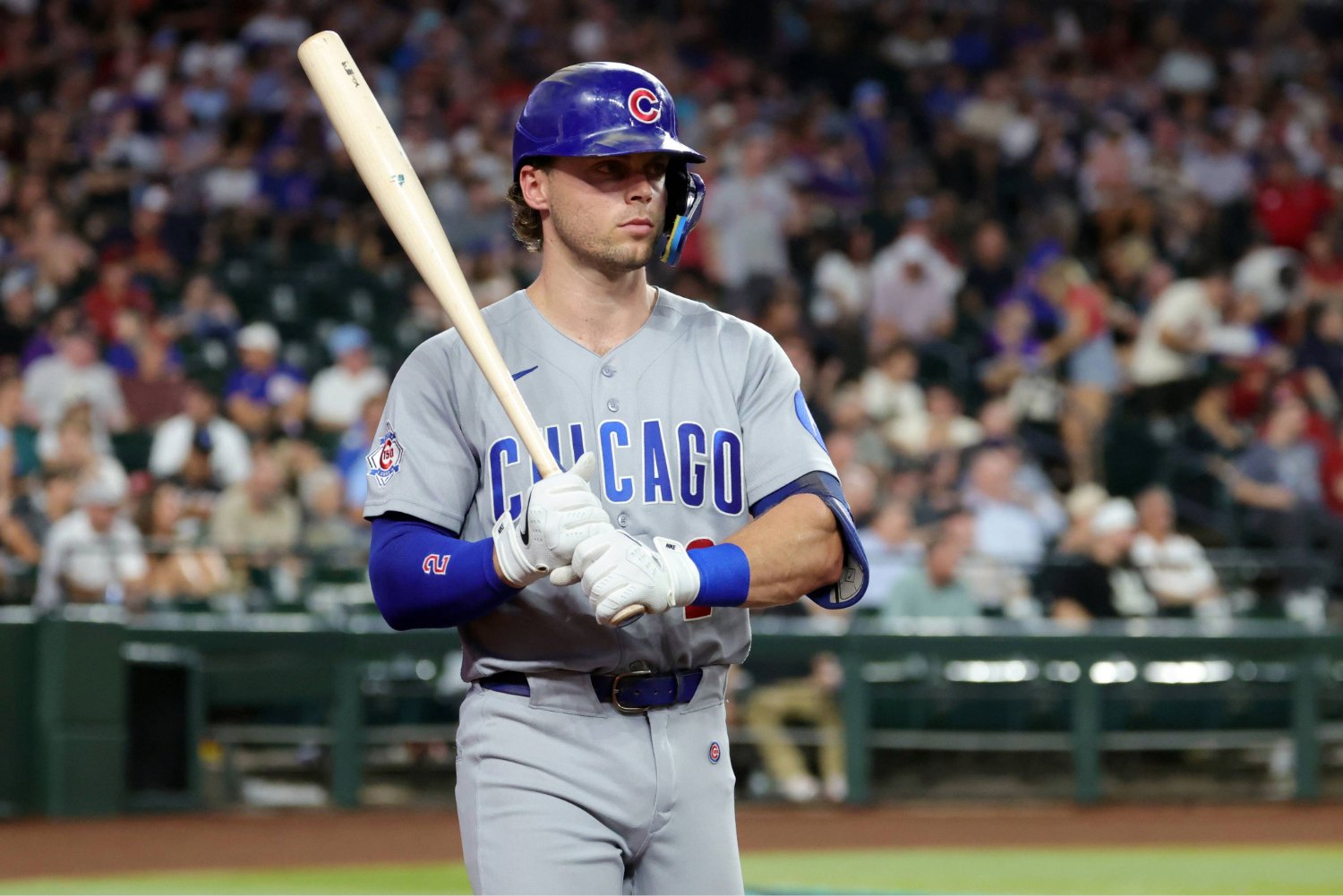 Entering the 2026 season, there was little clarity on the future of longtime starting second baseman Nico Hoerner. After being drafted by the Chicago Cubs in the first round of the 2018 draft, he's become a mainstay of the Wrigley Field infield. His most recent extension (signed in 2024), which bought out his arbitration years, was set to expire at the end of the season and it was hard to tell if the team would look to extend another one of their infielders. Over the last two years his name had even come up in trade rumors, and while those don't seem to have gone far, it highlights that his future was at the very least in some doubt at. Things changed on March 29, when the then-28-year-old signed a six year, $141 million dollar extension to keep him in the Windy City for the bulk of his career. Immediately, Hoerner responded with one of the best months of his career, posting a sterling .291/.370/.449 line (good for a 130 wRC+) through April. It looked like he had unlocked a new gear, flashing some added power to go along with his Gold Glove defense. On May 6, things were going so well that the Chicago Sun-Times called him the "MVP" of the young season. Things hit a snag, however, as Hoerner went into a prolonged slump for much of the rest of the first half, finishing with a wRC+ that was below 80 at the All-Star Break. While he found some more juice in the second half, the overall numbers never fully rebounded, resulting in the worst full-season offensive year of his career. So, what went wrong? And more importantly, should the Cubs (and you) be concerned? First off, I think if we asked Hoerner about his 2026 season, he would be the first to tell you that it wasn't good enough. He admitted as much on July 24th this year; "I haven't produced," the second baseman said in an interview for MLB.com. "I haven't helped the team score runs." If he pulled up his own FanGraphs' page, he may even point you to his 74 wRC+ with runners in scoring position, or his 76 wRC+ in high-leverage as proof. But I think it's also important to remember that Hoerner is the ultimate competitor; he's not going to give himself a break regardless. I also wouldn't be surprised to learn that his standards for himself are so high that they're next-to-impossible to live up to. It's very hard to get to the highest levels of this sport, even harder to stay, and harder yet to have fully earned a $141 million dollar extension. Being ultra competitive is certainly one way to push yourself to get there, and more importantly, to stay there. But let me give everyone a moment of relief: The Cubs' Gold Glove second baseman was essentially the same guy in 2026 as he was in 2025 when he posted a 110 wRC+ and had a career high 4.8 fWAR. Below you'll see a chart comparing his two seasons and they are shockingly similar. In fact, his expected wOBA are identical between the two seasons. The two places that really stand out are his batting average and his BABIP. His batting average was 33 points lower from year to year, which is likely due to his BABIP being 38 points lower. Your first reaction may be to think that there is a reason for his BABIP dropping, which is exactly what you should think in instances like this. If a hitter is suddenly making worse contact, you can expect less balls to find their way down safely, and looking for that data will help to tell us whether this is simply luck or earned. However, that expected data is trying to tell us something that a deeper dive into his overall profile confirms: we should probably relax. Nico Hoerner's demise does not appear to be upon us. One place we can see this is simply in his expected batting average. Despite hitting .263 on the year, his expected batting average was .297. Much like the second baseman's xwOBA, it's literally identical to his actual batting average the season before. And the reason why is clear when we compare his overall profile from 2026 to years past: there's almost nothing separating him. He is a shockingly consistent player. So, what's the cause for the sharp difference in what we should have expected and what happened? It's most likely just a combination of balls finding gloves and bad variance. "Bad luck" can be a tough sell to some, but in this case, I'm not seeing any massive red flags moving forward. That's not to say that it was all perfect; anecdotally, we all remember really ugly plate appearances, times in which he probably could have (and should have) done better in a specific moment, or even weeks where it just wasn't clicking. But those are all normal ebbs and flows for any MLB player. When you take a 500-foot look at his season, zooming all the way out he looks just fine. He made about the same amount of contact, swung at the same amount of strikes, and hit the ball about as well as he's ever hit them. That isn't to say there aren't areas of improvement that can help him moving forward, though. One thing you can usually count on Hoerner to do is hit fastballs really well. Last year; not so much. Both in terms of actual production (.268 wOBA) and theoretical production (.319 xwOBA), he wasn't "right." A dive under the hood shows that he's just getting under the ball far too often on fastballs and is popping them up a bit too often. Pop-ups are akin to an automatic out, as much as a strikeout is in almost every case. He had 61 cases of making "poor/under" contact on four-seams last year which was third-most in the league. This is an area of his game he can clean up. Despite the struggles offensively, Hoerner remains an excellent defender, posting a +4 in DRS and a +9 OAA at second. While his DRS was a bit low compared to 2025, his OAA was exactly what it was in 2024 and I'm inclined to believe OAA over DRS anyway. He was not nearly as good at shortstop, but that's to be expected as he rounds out his 20s; his arm was never really strong enough for the position to begin with, though he did fill in for the injured Swanson admirably down the stretch. Baserunning-wise, he was yet again a positive force on the bases. He stole a few less bases, but this is mostly due to being on base less on the year. He still provided the team with nearly +4 runs of baserunning value according to Fangraphs, while his sprint speed stayed relatively the same as it's been. Eventually he'll slow down here, but there seems to be nothing imminent suggesting a decline in this phase of his game. Final Grade: C+ Ultimately, it's a little tricky to grade Hoerner's season on the whole. Regardless of the processes, he didn't provide a ton of offensive value for a good deal of the year. And while it's almost assuredly that bad variance is the primary culprit, it doesn't retroactively put runs on the board, either. Defensively, he was generally as good as ever and remains a positive on the bases, so despite the 88 wRC+, he was still worth 2.8 fWAR (which allowed him to finish tied for 10th in the league at his position) in total. So, while it may be hard to give a fair grade for 2026, I remain confident in him moving forward, remain happy with the extension, and expect he'll be much more like the guy he was between 2023-25.
 -
On paper, it's probably a very good thing. I think in practice, what it actually does is going to be less than what people think it will. The new CBA is probably going to come with an IFA draft in some fashion. We can debate the good/bad of that in terms of a moral stand point, but it's something I fully expect the owners want and the players to budge on. What that does to IFA scouting is probably going to be a decent change. Having someone from an organization who's been pretty good at IFA scouting is a good start, but as we've seen with the MLB draft, there's a game-within-the-game aspect of it. I'd expect something like that in an IFA draft. How good Miller, or anyone, is at that part is going to be unknown.
-
Count me way out on Duran. 2024 was excellent and 2025 was mostly good, but the drop from '24 to '25 was already there. His approach numbers have also got to hell; and they were never good. 2024 is the clear outlier. He's now over 30 and appears to be capable of causing headaches for organizations. LF is not like SS or C where you look at the available options and think "is it worth it for me to deal with a headache?" because there are plenty of players who won't be headaches and are also risky profiles. In other words, outside of 2024, he was basically "Ian Happ" at the plate posting wRC+ of 122 in 2023 and 113 in 2025 with good LF defense. He's very platoon dependent as well, posting a 115 wRC+ against RHP over his career and a 71 vs LHP. I think the Cubs can find a different reclamation that I'd feel more comfortable with both on the field and off of it.

-
I'm fine losing Banner. Not to say he probably didn't have important roles, but secondary people leaving gives the organization a good chance to add new, fresh ideas. Carter Hawkins could go in the same way and would feel the same (there are some out there who I know cannot stand Hawkins so take that for what it's worth, too). Kantrovitz I'd sing a different tune. He's kind of "the guy" in many ways. I'd be very bummed to see the org need to replace him.
-
Yeah Ricketts sucks. I think all of the owners suck, to be fair, in one way or another. The Dodgers spend money but did so in what looks like a way that hides revenues. The Pirates steal revenue sharing. The Cubs don't act like a big market. And they all exploit kids in IFA.
-
I think we have to work from a very simple premise: neither side is doing anything altruistic or out of the goodness of their heart. When we can accept that, we can likely accept that any cap and floor concept proposed by the owners is not going to be paying players more. The only way that is going to happen is with outside forces and open, public knowledge of what revenues are there. The only way we can get open books is by dropping their anti-trust laws, laws that none of the other sports have, that also have a cap/floor. The reason an NFL salary cap works is that it is percentage based, and revenue streams are clear. If there is no loss of anti-trust, and to be very clear the MLB ownership has not proposed that in any shape or form, than any salary cap and floor in any discussion will not result in players making more money. How much money those teams actually make would be impossible to determine. Teams would hide things and cook books because they wouldn't be required to share their information. I can accept the cap/floor argument if the anti-trust is gone and they do it like the NFL. Open books, and a fair percentage split is fine. But anything short of that is not going to help players and we should know that. The numbers we throw around don't interest me much; they're just random hypotheticals made up by people looking for fairness. The owners are not looking for fairness; they are looking for profits. I also don't trust teams to not circumvent them. NHL teams have for 15+ years traded players who are effectively retired to make their "salary floor". They cooked weird long contracts (like signing 37 year olds to nine year deals) to spread out LT while front loading the actual pay. It allowed them to dump the cap number on a small market who then would reap the benefit of the "floor" while paying them the actual salary of "league minimum" while they stayed at home, effectively retired for half a decade. MLB teams will find a loop hole. They are already doing that with revenue sharing and where that money goes; both on the top end (Dodgers) and the bottom end (Pirates). Beyond that, the number of players a roster in a particular sport has is immaterial and we're moving goal posts. The point is that the salary cap has not created any more or less parity in those sports. It hasn't stopped a "clear best team". That is sports.
-
It really does. There's a lot of soft-skill stuff that seems to be what the Cubs look for. A lot of times they aren't just losing for the baseball player, but the person, too. That isn't to say the Cubs are solely unique in that, but they do appear to really put a good deal on clubhouse fits, personality and the man attached to the glove. Taima feels like his personality fits that. And I think that NPB pipeline thing matters a lot here. Unlike Sato (who I'm currently in the thrawls of a deep dive of right now), Taira feels much more Cub-like. And while I don't believe there is an NPB mandate, I doubt the Cubs want to lose both Japanese stars in one offseason with no replacement. If we're picking the available options, Taira is the guy there. (I'll also add another reason I don't think they'd do Sato is because the Hanshin Tigers have another OF'er who the Cubs probably would salivate over and think they'll be in on him when they post him in a year or so named Shota Morishita).
-
St. Louis pizza is gross. It uses provel cheese. Blech.
-
The only way a salary cap and a floor will increase pay for players is if the MLB drops it's Anti-Trust protections like the NFL and have open and public revenue. The Dodgers are already finding ways to shirk and skirt sharing revenue from their broadcast stream. The Cubs can claim "biblical losses" because they hide gameday revenue and classify things on and off the books for their benefit. All teams do this. Here's the rub: as long as the Anti-Trust is in place, anything would be an utter sham set by owners. And if you think owners are suggesting they lose this, or that they're trying to implement a floor/cap that would in any way be fair or benefit players, I have a bridge to sell you. Beyond that there is study after study that suggest MLB does not have a parity problem compared to other sports. If you're worried about the Dodgers, let me introduce you to the Patriots and the Chiefs. Or the Florida Panthers. The OKC Thunder. All sports have hegemons. But in total parity, the MLB is just fine compared to others with a cap and a floor. As Bertz said, the Dodgers spending *so* much more is probably a bit of an issue. But there are ways to solve that beyond lazy caps and floors the owners want.

.png.0daf60da857459f58d34ad8ed1e99a59.png)