Jason Ross
-
Posts
8,149 -
Joined
-
Last visited
-
Days Won
74
Content Type
Profiles
Joomla Posts 1
Chicago Cubs Videos
Chicago Cubs Free Agent & Trade Rumors, Notes, & Tidbits
2026 Chicago Cubs Top Prospects Ranking
News
2023 Chicago Cubs Draft Picks
Guides & Resources
2024 Chicago Cubs Draft Picks
The Chicago Cubs Players Project
2025 Chicago Cubs Draft Pick Tracker
2026 Chicago Cubs Draft Tracker: Picks & Bonuses
Blogs
Events
Forums
Store
Gallery
Everything posted by Jason Ross
-
Yeah, Shota is an interesting and frustrating pitcher. Really, his ability to be frustrating felt like a good microcosm of the Cubs' season; that he was the only "healthy" SP all year, that he gave up a lot of home runs, that he probably suffered from a little bad variance and that he was such a razor's edge type of player... I'm going to miss him as a human. And as a pitcher mostly. But I won't miss the home runs.
-
Shota Imanaga's 2026 in Review: A Successful (Final) Season in Chicago
Jason Ross posted an article in Cubs
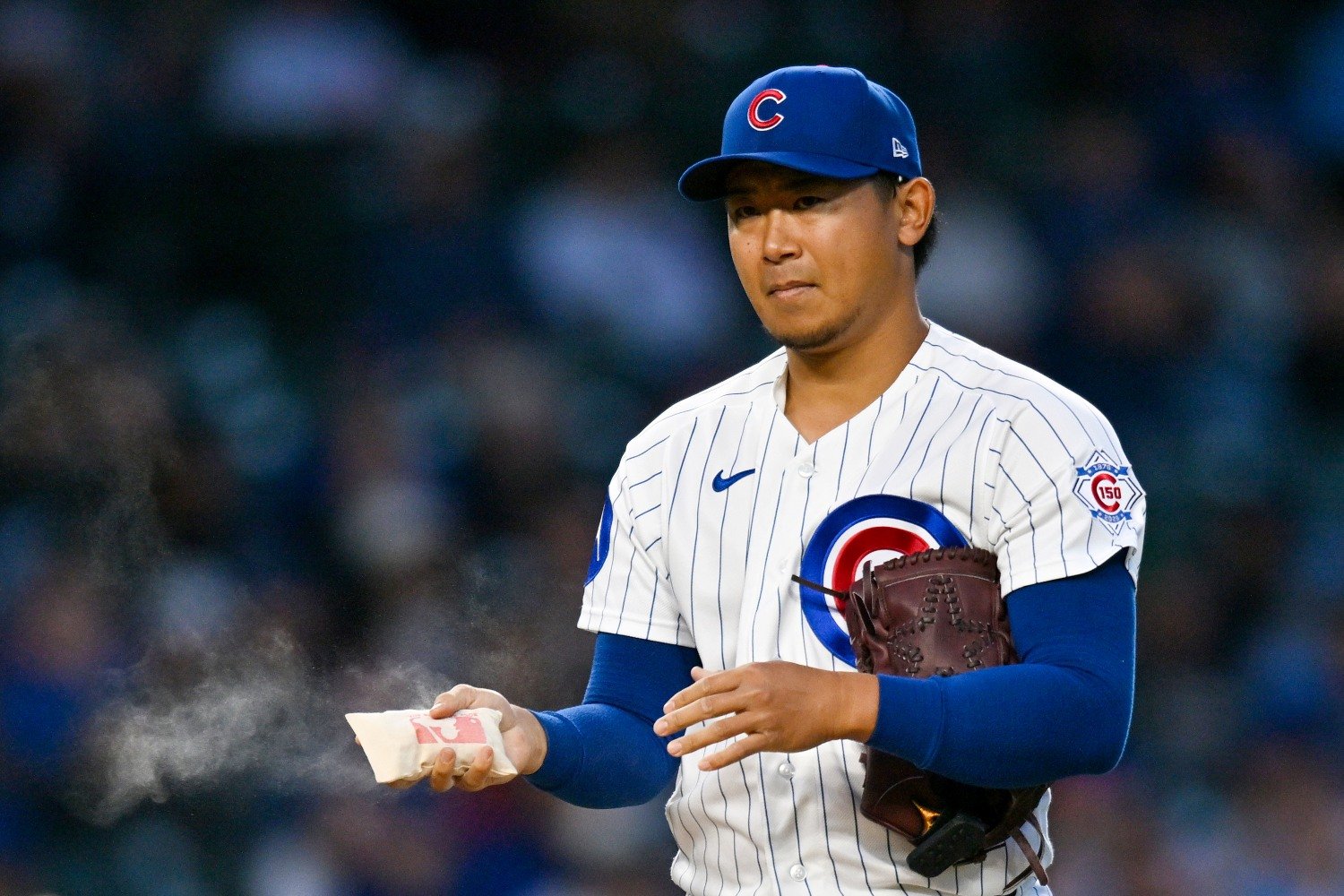 Shota Imanaga's three years in Chicago were punctuated with some of the highest highs and lowest lows a pitcher can have. Imanaga won over fans quickly on the North Side. His infectious personality shone through in his initial interview, and his first start at Wrigley Field saw him strike out nine Rockies over six frames. There was a time in early 2024 when Imanaga looked like a legitimate Cy Young candidate, and he finished fifth in his rookie season. The 2025 campaign had far more lows, as Imanaga struggled with injury early in the season. (possibly) tipping pitches, and became unpitchable at the end of the year as the team lost to division rivals Milwaukee in the NLDS. His 2025 was such a downer that both he and the Cubs turned down potential contract extensions, which saw the lefty play out the 2026 season on the one-year qualifying offer—Imanaga hoping to rehab his image, the Cubs hoping to avoid a disastrous long-term pact. The 2026 season was another volatile one, though it had more positives than negatives. On the positive side of things, Imanaga got his whiffs back, as he struck out 24.6% of opposing hitters (up from 20.6% in 2025). He continued to keep his walk total low, as well, providing an impressive combination of strike-throwing and whiff-getting, finishing in the 91st percentile for chase rate, 82nd percentile for whiffs and the 95th percentile for walks. The reason for the revival; health and better velocity, two things that likely go hand-in-hand. Imanaga avoided the Injury List and pitched a full compliment of games and innings. It's fair to assume that the diminished fastball velocity in 2025 was due, in some part, to the hamstring strain he suffered in May, which cost him almost two full months. In 2026, his velocity jumped (almost) a full mile per hour and was on par with what it was in 2024. The added health also aided in his mechanics, as the pitcher was able to increase his arm angle a few degrees, closer to what it was in 2024. The 2026 version was much closer to the 2024 version, and it showed. Another positive for the lefty was something the Cubs had to have: availability. Making 32 starts on the year and pitching 174 innings, Imanaga lead the team in both categories. In a season which saw Cade Horton, Edward Cabrera, Ben Brown, and most of their other starters spend copious amounts of time on the IL, simply being healthy was a massive positive. When other's couldn't, Imanaga still took the ball. But not everything was perfect. His warts showed at times, making him a somewhat frustrating watch. The biggest issue in Imanaga's game is how reliant he is on getting fly balls. Even with his increased velocity, his fastball sat at a pretty uninspiring 91.6 mph, meaning he has little room for error to begin with. Add in that his fastball works the best up in the zone, and any miss can turn what would have been a routine flyout into a big-fly home run. So while the diminutive pitcher has the ability to generate a lot of whiffs, he runs a pretty hefty home run rate, and 2026 saw him surrender the second-most gopher balls of any pitcher. For a team that lead the league in the statistic, Imanaga still managed to stick out like a sore thumb. Another glaring issue is that Imanaga just doesn't have a massive arsenal of out pitches. He's either fastball-splitter (to righties) or fastball-sweeper (to lefties). While most pitchers struggle against hitters a third time through, without a deep bag of tricks to pull from, Imanaga was more susceptible than others. Seeing hitters a first time, he struck out 29.3% of hitters and had a 3.22 xFIP. When facing hitters a third time through the order, those numbers fell off a cliff, to just a 12.2 K% and a 5.53 xFIP. So, while he was available to start every time through the rotation, he could provide length within games only when the offense left plenty of margin for error. With all of the negatives said, Imanaga was probably better than many gave him credit for. It's true he had terrible home-run numbers and it's also true that he was limited in length, but he still put together a pretty solid year. His 3.77 ERA doesn't appear to be luck-driven; his expected ERA was 3.80 and his xFIP was 3.74. While he gave up (more than) his fair share of bombs, he largely worked around them by limiting walks and free passes. His worst moments of the season came in moments where he was his own worst enemy; walking a hitter and then giving up a follow-up home run, like what happened during his August 30 start against the Reds. But those moments didn't define his season. They just highlighted why someone of his ilk is hard to sustain; he runs on a razor's edge. When things are going right, they can go very right, but any deviation, any slight disturbance in the force, and things could go wrong quickly. Overall 2026 Grade: B- Imanaga is both a benefit of the circumstances and a prisoner of them. His 2026 was better than the home runs he gave up suggested he was, because in a year when the Cubs needed someone (anyone) to stay healthy, he did. But those home runs still cost him (and the team), because in a season when the team needed someone to keep the ball in the ballpark, he could not. From a player getting $22.025 million, you'd have liked for him to have been a bit better on the margins. With that said, while he may have been slightly overpaid on the qualifying offer, it was also a one-year deal, and it's really hard to have a "bad" one-year deal. A B- is probably a bit rich, considering he didn't accrue even 2.0 fWAR and gave up the second-most homers of anyone, but a C+ felt a bit harsh for a starting pitcher who finished 24th-best in ERA for a team who desperately needed a pitcher to stay off the IL. Because of that, I'll give him the benefit of the doubt and give him a boost in his overall grade. Being available is an important skill, and he delivered it. However, it's also due to those flaws and the incredibly slim margins for success Imanaga has that he should find himself in a new organization come 2027. What did you think of Shota Imanaga's 2026 campaign? Do you think the good outweighed the bad? Let us know in the comment section!
-
Image courtesy of Patrick Gorski-Imagn Images Shota Imanaga's three years in Chicago were punctuated with some of the highest highs and lowest lows a pitcher can have. Imanaga won over fans quickly on the North Side. His infectious personality shone through in his initial interview, and his first start at Wrigley Field saw him strike out nine Rockies over six frames. There was a time in early 2024 when Imanaga looked like a legitimate Cy Young candidate, and he finished fifth in his rookie season. The 2025 campaign had far more lows, as Imanaga struggled with injury early in the season. (possibly) tipping pitches, and became unpitchable at the end of the year as the team lost to division rivals Milwaukee in the NLDS. His 2025 was such a downer that both he and the Cubs turned down potential contract extensions, which saw the lefty play out the 2026 season on the one-year qualifying offer—Imanaga hoping to rehab his image, the Cubs hoping to avoid a disastrous long-term pact. The 2026 season was another volatile one, though it had more positives than negatives. On the positive side of things, Imanaga got his whiffs back, as he struck out 24.6% of opposing hitters (up from 20.6% in 2025). He continued to keep his walk total low, as well, providing an impressive combination of strike-throwing and whiff-getting, finishing in the 91st percentile for chase rate, 82nd percentile for whiffs and the 95th percentile for walks. The reason for the revival; health and better velocity, two things that likely go hand-in-hand. Imanaga avoided the Injury List and pitched a full compliment of games and innings. It's fair to assume that the diminished fastball velocity in 2025 was due, in some part, to the hamstring strain he suffered in May, which cost him almost two full months. In 2026, his velocity jumped (almost) a full mile per hour and was on par with what it was in 2024. The added health also aided in his mechanics, as the pitcher was able to increase his arm angle a few degrees, closer to what it was in 2024. The 2026 version was much closer to the 2024 version, and it showed. Another positive for the lefty was something the Cubs had to have: availability. Making 32 starts on the year and pitching 174 innings, Imanaga lead the team in both categories. In a season which saw Cade Horton, Edward Cabrera, Ben Brown, and most of their other starters spend copious amounts of time on the IL, simply being healthy was a massive positive. When other's couldn't, Imanaga still took the ball. But not everything was perfect. His warts showed at times, making him a somewhat frustrating watch. The biggest issue in Imanaga's game is how reliant he is on getting fly balls. Even with his increased velocity, his fastball sat at a pretty uninspiring 91.6 mph, meaning he has little room for error to begin with. Add in that his fastball works the best up in the zone, and any miss can turn what would have been a routine flyout into a big-fly home run. So while the diminutive pitcher has the ability to generate a lot of whiffs, he runs a pretty hefty home run rate, and 2026 saw him surrender the second-most gopher balls of any pitcher. For a team that lead the league in the statistic, Imanaga still managed to stick out like a sore thumb. Another glaring issue is that Imanaga just doesn't have a massive arsenal of out pitches. He's either fastball-splitter (to righties) or fastball-sweeper (to lefties). While most pitchers struggle against hitters a third time through, without a deep bag of tricks to pull from, Imanaga was more susceptible than others. Seeing hitters a first time, he struck out 29.3% of hitters and had a 3.22 xFIP. When facing hitters a third time through the order, those numbers fell off a cliff, to just a 12.2 K% and a 5.53 xFIP. So, while he was available to start every time through the rotation, he could provide length within games only when the offense left plenty of margin for error. With all of the negatives said, Imanaga was probably better than many gave him credit for. It's true he had terrible home-run numbers and it's also true that he was limited in length, but he still put together a pretty solid year. His 3.77 ERA doesn't appear to be luck-driven; his expected ERA was 3.80 and his xFIP was 3.74. While he gave up (more than) his fair share of bombs, he largely worked around them by limiting walks and free passes. His worst moments of the season came in moments where he was his own worst enemy; walking a hitter and then giving up a follow-up home run, like what happened during his August 30 start against the Reds. But those moments didn't define his season. They just highlighted why someone of his ilk is hard to sustain; he runs on a razor's edge. When things are going right, they can go very right, but any deviation, any slight disturbance in the force, and things could go wrong quickly. Overall 2026 Grade: B- Imanaga is both a benefit of the circumstances and a prisoner of them. His 2026 was better than the home runs he gave up suggested he was, because in a year when the Cubs needed someone (anyone) to stay healthy, he did. But those home runs still cost him (and the team), because in a season when the team needed someone to keep the ball in the ballpark, he could not. From a player getting $22.025 million, you'd have liked for him to have been a bit better on the margins. With that said, while he may have been slightly overpaid on the qualifying offer, it was also a one-year deal, and it's really hard to have a "bad" one-year deal. A B- is probably a bit rich, considering he didn't accrue even 2.0 fWAR and gave up the second-most homers of anyone, but a C+ felt a bit harsh for a starting pitcher who finished 24th-best in ERA for a team who desperately needed a pitcher to stay off the IL. Because of that, I'll give him the benefit of the doubt and give him a boost in his overall grade. Being available is an important skill, and he delivered it. However, it's also due to those flaws and the incredibly slim margins for success Imanaga has that he should find himself in a new organization come 2027. What did you think of Shota Imanaga's 2026 campaign? Do you think the good outweighed the bad? Let us know in the comment section! View full article
-
There were things Bauers always did well. Good bat speed. Really good EV. Back in 2023, he started to show signs; more barrels, much better xwOBA but significant whiff%. He was striking out 34% of the time; you cannot sustain that. When Milwaukee got him they got him to swing with a better LA. Significantly more launch. The last two years have seen huge jumps for him in zone-contact. From under 80% to 87% (last year) and 84% (this year). His chase and o-swing isn't drastically different. What Milwaukee did was work heavily on the swing. Mechanically he's just found his swing. He's much more open. He has more air under his swing so when he does make contact (even if it's not a huge amount of contact) it's crushed. It allowed him to get to his really good batted ball data more often. That's not to be taken as like a deep-dive on him step-by-step, but I think this is really a story of "highly touted prospect who had good data but was missing something" and a team who fixed that thing he was missing. Swing with Yankees Swing with Brewers Moving forward, with a new organization he could always backslide into mechanical peril. But I think as long as you are a good organization and have a good understanding of swings and development, you can stay on top of that and keep the swing.
-
I would guess the lower number is only there for years. So like 5/$70m. You bring the AAV down with years, something I think Bauers probably does with his track record. I think to grab him short, you're going to have to pump that AAV. Sending him back out to FA in 3 years is probably a tough sell; 34-year old DH's don't get paid often. So you gotta buy him off it. I'm not 100% out on Bauers, under the hood there isn't much to dislike, I'm a bit skeptical on the whiff% but he chases so little he'll recoup that with walks. But that said, I'd need to know the team had $100m to spend before I advocated for it, and I think the Cubs can "throw spagehtti" at two-three veterans at LF/RF/DH and couple with Shaw/Pedro and be mostly fine. One guy you feel pretty good about, maybe someone else who gets DFA'd and needs to rehab their image. They need starting pitching and that's where I think $50-60m+ need to go. If not more. So that's where my aim is.
-
I think 2026 Ian Happ fits closer to what O'Hearn was, but O'Hearn was always bad against LHP and Ian Happ, while it was never his strong suit, was playable against lefties until this year. I'm not sure teams are going to look at Happ as a strict platoon hitter, and I don't know if Ian Happ, especially, is going to see himself as a strict platoon hitter. My guess on Bauers is $14-18m over with the term of three to five years. He feels like the type of player a mid-market overpays to get their "big boy bat" at a more discounted rate (DH, lack of track record). His wRC+ was top-7 in baseball. So I think someone will overpay a little to get that especially in his market. It's the kind of contract you see the Cincinnati Reds dole out (again, not a prediction, just more of a style/type). It's not a "nothing" contract (3/$54m is not cheap as an example) but it's probably a bit of an overpay to get him into Cincinnati while other teams balk at the position/track record.
-
I think O'Hearn was viewed as a very strong "platoon only" type. He had good numbers against them in 2025, but the Pirates immediately cut that way down and prior to 2025 was entirely unplayable against lefties. So while his 2025 was good against LHP, I don't think teams or the Pirates viewed him as anything but a pretty strict platoon hitter. Bauers crushed lefties last year to the same tune as he did RHP. He even made more contact against LHP while not losing a lick of power. If teams don't look at him as a platoon hitter he should out-cash O'Hearn by a healthy amount. I would not look at him as a platoon bat, myself.
-
I think he's going to get a good pay day by someone. FA is pretty deep on arms but thin on hitters. I think some teams are going to be scared away by the DH-factor, but at the same time, the scarcity of hitters makes me think someone is going to pay up. Let's assume he's mostly a good hitter moving forward and has seasons of decline (fWAR) of: 2.5, 2, 1.5, 1.0, .5 through age 32-36. That's 7.5 wins over five seasons. Teams are paying ~9.5m-11m per win. I think if you add in a little market scarcity, you'll see someone give him like five years and somewhere between $75-90m total. He also feels like a player I can see one of these "smaller" market teams (Pittsburgh, Athletic types...not a prediction just a type) getting excited about and going to grab him at higher than market value just to secure him. Just vibes though, could be wrong. There could be a 1-year heavy AAV+opt out situation for him to re-hit FA at age-32 if he's getting squeezed, but I don't think he will, If he was like, 29 and hitting FA I think he'd be more open to like a three year thing, but my guess is he'd rather have some years. In a market with less offense, he could look at lower pay, but just think in this market he'll get the years due to scarcity.
-
I think calling him "most likely a replacement level player" is probably too far. I think we should be a little skeptical, but we have to find reasons for the skepticism past "he hasn't done it before". He wouldn't be the first older breakout. For example, what red flags do we have? His 27% K% rate isn't great, but it's not super-high. Now the whiff numbers are really bad, but he tends to balance this out with swing choice. It's a good way to help fix that in some fashion. It's a normal, elevated K% for a power hitting player. His wOBA was .381, his xwOBA was .371. A .371 xwOBA is very good. He was good against both LHP and RHP. He didn't slow down and "get got" posting a 142 wRC+ in the first half a 143 wRC+ in the second. He posted elite-elite batted ball data and elite chase rates (93rd percentile). The one red flag I can find in his game is that he rocked a .339 BABIP. He had a .266 BA and a .253 xBA. I think we can probably think that the BABIP won't stick that high for someone with a 34th percentile sprint speed. Another thing, is that Bauers was expected to be good a while back. He was a 50 FV prospect. People loved the bat. It obviously took a long time for him to figure it out, but this isn't entirely out of left field, either of some guy everyone thought sucked from the start of time. Would I treat him like a 140 wRC+ hitter with track record? Hell no, he's 31 and did this once. But when we dive under the hood, there's barely any red flags here too that stand out, either. I think he'll probably be a pretty good hitter moving forward for a bit of time. He might see the whiff rate end up leading to higher and higher K's especially as the bat speed declines with age. 34+ might be a bit ugly. But I think the next 2-3 years is probably going to be pretty good for Bauers, too.
-
Yeah, totally agreed. I think you got me when I was mid-edit: I think giving Shaw a platoon buddy, but also a little rope to force his way against RHP more is about where I'm comfortable at. He should have some real MLB talent with him; someone you're comfortable with having a floor against RHP. But giving him just enough PT against RHP initially that if he can show proof-of-concept against them, that he can earn more as he goes.
-
I think it's fair to say that he may not add defensive value. I do think it's important to point out that even if he's not "adding" value, he can "add value" comparative to his peers. Even if his DEF value is net neutral, if he's able to not be, like, a -5 out there (as most of his peers are or are far worse) it's a way to close the gap on his wRC+, too. All of these are the reasons why I wouldn't hand him the starting spot, to be fair. But are reasons why I think I'd be very willing to give him a starring platoon role and some leeway to force his way as a starter if he can.
-
Absolutely. Arm strength is just one data point. Accuracy is another. Below is where Dansby Swanson lies as a SS. He's one of the weakest armed SS in baseball. We shouldn't directly compare RF or LF to SS; shortstops make a lot more throws and the positions are different. They require different things. I also don't want to compare Swanson to Shaw; not saying Shaw is as elite as Swanson is defensively even beyond the position issues. Mostly, just pointing out that if Shaw was somewhat under the average arm-strength at the position that we have seen multiple players on the roster (Ian Happ, Dansby Swanson and Nico Hoerner) all who have below average arms for their position find sustained defensive success. Matt Shaw can find ways to overcome it; namely good jumps, athleticism and arm accuracy. OAA and DRS are already picking up on his ability to potentially do that. We don't have a large enough sample size to just accept it as 100% fact, but it's certainly a reason to believe he's got a skillset to be someone who can, as well.

-
I think we're really splitting hairs here, overall don't you think? If I told you a rookie had a +3 DRS and a +2 OAA at any position, "I am bullish" on him at that position feels like a perfectly reasonable take, right? It just means optimistic. Now, Matt Shaw wasn't a "rookie" last year, but it was his first year at a position. In a small sample size, he did everything you could realistically ask of him from this aspect. While OAA doesn't take arm into account, DRS, does. The sample size might be misleading, and with a larger sample, we could see this play out more, but during his time, DRS rated it neutral. If we're that concerned about his ability to make throws from RF, then LF is just as viable and just as open. LF has an even lower barrier of entry at arm strength. The further left, the less strong an arm is, the further right the more strong (per the chart below). LF is averaging 87.4 mph and RF averages 90.7. Ian Happ has been a well above average defender in LF. He was one of the strongest last year. His average throw from LF was 84.6 mph. Matt Shaw was 85.1 mph from RF. So if Ian Happ can do it, I see no reason Shaw couldn't. Basically, I do agree that his arm will be below average for either position. I would argue I don't find it instantly disqualifying for either, especially when he's already showing the possibility that his range/OAA/DRS would likely more than make up for any issues if they kept at those levels. So with all of this, is there any reason we should be pessimistic about him handling a COF?
-
So far, in just his first few hundred innings in RF, he posted a +3 DRS and a +2 OAA. We should be careful making declarative statements on fielding in short samples; outliers are still real in the world of defense. But considering it's not his "natural" position and it's been quite some time there, I think there's a very real reason to believe he's good. He's very athletic (91st percentile sprint speed) and he had an above average arm (55th percentile) last year. Him being good out there makes sense as long as he can figure out the instincts of the position. In context only 5 (qualified) RF's had a better DRS and only 3 had a better OAA despite them playing 600+ more innings than Shaw. Shaw outpaces almost everyone in his small sample. Again, small samples and things can go up and down easily so I won't say "he's the fourth best defensive RF" or anything but I see no reason not to be bullish.
-
So, I'll preface this with this: I wouldn't hand Matt Shaw a COF spot without some real other options (not Kevin Alcantara, I mean like someone I am fairly confident will be good), but league LF OPS was .714 and league RF OPS was .723. If he managed either of those OPS over a full year, he'd have been above average at both and I think there's some reason to be bullish on his defense at either position. There's more caveats and things we can dive into: I'm not sure he's a killer against RHP, that there's some likely rust from his return and I think his PAs were more curated than anything, so his OPS on it's own probably looks better than it should in more full-time duty. On the flip side, wrist injuries can very much be lingering power-sappers for a while, which may have caused the poor September. But if we're going just on OPS, those OPS would have flown for COF spots last year using league data. So I'm not sure they're a red flag on their own.
-
A few PAs =/= overall approach. I think we can all agree he didn't look super great in those few games at the end of the season. At times, he was outright frustrating. I yelled at my TV over thar ****** bunt. It was a rough week for a lot of Cubs, especially the offense. But I also think we can point to some positives under the hood for Shaw as well that we can see when we zoom outside of a few PAs.
-
Anecdotally, I think there are definitely plays that stick out (I.E. his crappy ass bunt). In terms of on the field value, he was roughly as good as he was in 2025 as 2026. In 2025 he was worth 1.5 fWAR but did so in over 400 PA's. In 2026 he was worth about half of that in about half of the PA's. The reason he played less is that he was hurt, and while I usually say "we can't just extrapolate fWAR" I'm more willing here because Shaw moved positions and it most lines up with last year. I have no loyalty to Shaw myself. As a player he has value currently with a strong glove and good numbers against LHP. Upside against RHP is still there. As a human, I have little love for his off the field stuff. Sadly, I think there's a decent number of baseball players who have values off the field that don't align with mine, but Shaw definitely is more obvious with his. That said, the Cubs can't just punt everyone with bad values for free, and if there isn't a good move for him (another team values him properly) he's going to be here and the team needs to find the best use for him.
-
Oh yeah, the only "long term" commitment I'm making to Happ is one in which he understands that he's going to be used closer to a strict platoon hitter. He can come back for one year on the QO, or some sort of 2/3 year deal where he's taking a paycut. Good chance that isn't on the table, and fair for him. I get it. It's hard to want to be a platoon player and he can probably be a starter somewhere. I wouldn't blame him or the club. But that's where I'm valuing him as the Cubs if they gave me the reigns. As it comes to finding an upgrade, I think it'll be very difficult for the Cubs, though. At least a strict "Happ for player" upgrade in 2027. If we're looking for a RHP platoon guy, 13 OF'ers in baseball beat Happ's 127 wRC+ last year. Last year, 16 OF'ers in baseball beat Happ's 126 wRC+. When we combine the year, only 12 beat Happ. Of those 12, Springer and Arozerena are the only two FA's. That doesn't even factor in the defense. No one is close to Happ's LF defense (+10 DRS, +2 OAA) that is obviously available. Nor does it factor the laundry list of shopping they also need to do (SP, 2C, RF, DH). I think the Cubs *can* find better than Happ in 2027, but if its going to be better it feels like it's either going to be some sort of reclamation project (I.E. like a Jalen Duran as just an off the head example, not necessarily advocating for it) meaning there's real downside if it doesn't come off, or the team ends up robbing Pete to pay Paul and skimping more on their pitching (which feels...risky). So maybe to revise my words a bit: it's not impossible, but I think the prevailing outcome will be that the Cubs are going to take some sort of downgrade in LF. They can make up for it elsewhere, but in just "LF" terms, I think it's far more likely it's some sort of downgrade vs anything else.
- 27 replies
-
- 1
-

-
- ian happ
- seiya suzuki
- (and 1 more)
-
Ian Happ had the 17th best wRC+ of all LF'ers last year (min .300 PAs). Against RHP, only seven hit better. When we factor in defense and total offense, just nine LF'ers were more valuable. The only LF'er among those nine who is 100% available is Randy Arozarena, who is also a FA and this is the first time in half a decade he had a better overall season than Happ (last year he was .1 fWAR more but we're going to call this "virtually the same" as fractional fWAR is worthless to debate). I'm not advocating to sign Ian Happ to a five year contract in which we're paying him like an every day player here, but this idea that Ian Happ is so easily replaced is just not grounded in reality. The most likely scenario by letting Ian Happ walk is that the Cubs are going to be downgrading LF and I'm not sure people are understanding that right now. Even in a platoon situation, there just are so very few LF'ers who are going to be clear upgrades; just about anyone will be a downgrade.
- 27 replies
-
- 2
-
-
- ian happ
- seiya suzuki
- (and 1 more)
-
They're stark, but I'm not sure they're meaningful. His launch angle in games away from Sacramento last year was 3.3 (13.3 at home). His ISO was .200 points higher at home. He had a 4.4% barrel rate away from Sacramento and a 12.3% barrel rate at home. This isn't something that the field is creating, it's likely just a weird sample size where Butler just didn't hit well away from Sacramento and didn't swing well. He had a better EV away from home, his hard hit rate was the same, and his max ev was the same. If he were taking advantage of a short porch, I think we could worry. Instead, this just feels like a weird sample set. Something clicked for Butler again last year. Post ASB, over 255 PAs, he posted a 136 wRC+. The BABIP was a bit high, but the xWOBA was still over .350. He's definitely more of a DH than anything and definitely split heavy. But if you're looking for what should be a fairly cheap, platoon DH? You're probably in the right ballpark with Butler.
-
Yeah, he would definitely be a bit of a departure on that. I do think there's some reason to believe they'd be in: he's been shockingly split neutral, posting above a 140 wRC+ against both LHP and RHP. Teams may also generally devalue him as a DH-only and due to track record: he's 31 and while he's been absolutely a banger this year, it isn't like he's done this for half a decade. The Cubs are losing some real offensive thunder so Bauers could slide into the lineup and clean up some of it. None of this is to suggest the Cubs are going to go bananas and "Bauers or Bust" but that it does sound like he's a name on the radar and probably gives us a little insight into what they're looking at.
-
Yeah, he doesn't get nearly the walks. He does make more contact than Murakami but it's not a ton more. But it's another reason I'd be a bit concerned. He's a hyper aggressive hitter who has a tendency to chase a lot of breaking balls and whiff a lot overall. Murakami has proven you can find some success even if the whiff is an issue, but we've generally seen high whiff, high walk, elite batted ball guys have short spurts of success but rarely long term success. And Sato comes without the walks.
-
I think even with the body type they'd be in. They were definitely scouting him through the season, and while it was officially reported they were there once, I think it's probably more. They also have invested a ton into being a destination for NPB players and of all of the incoming Japanese players Taira feels like the most likely. He's a groundball merchant, has a weird arm angle, has a super cool fastball shape and generates good whiff. Has a bag of tricks already too as he threw 7 pitches last season. On top of that, he'll cost no draft pick comp, some of the red flags on durability questions probably drop the price and his posting time (NPB players usually get posted in November) may force his signing before the CBA lockout. Which, we know the Cubs will get some work done before then. Add it up? Yeah, I think they probably can overlook the body type (which was described by someone as "looking like a fire hydrant" and this is my favorite description ever). I doubt there is any "have to have a Japanese player" mandate internally, but with how much they've put into it, and losing both Suzuki and Shota, I'd imagine the team would like to capitalize on that momentum too. Got a little burned on my feelings about Imai last year; though have heard at least one place that part of his struggles may have been soft-skills related to the Astros (his stuff graded out pretty well, but the struggles persisted). Do think Taira ticks a lot of boxes and just from my first-glance a the upcoming offseason do think Taira will be high on the list for the Cubs.
-
The OF market is brutal. Today, my guess is that the Cubs, for better or worse, will feel like they can throw numbers at LF, RF and DH more than anything. With Ramirez and Shaw, you've got two already who can rotate in some fashion out there. And with the neediness of the rotation, I wonder how much money will be left over to solve COF anyways. There are probably enough platoon types that can take spaces. Lawrence Butler had a banger of an end to the season and I think he could be a name that they could trade for, as an example, fairly cheaply for DH. Don't take this as gospel, but someone who has some connections has mentioned Jake Bauers as someone he believes the Cubs will be in on as well. Bauers, who walks a lot, feels much more like a typical Cubs' target in this fashion than Sato. What the Cubs are willing to do with Bauers and how, is certainly debatable and how far they'd go is as well. But just a thing I've seen posited by someone who I at least trust enough to pass along.
-
For whatever we feel about Ian Happ, Happ was still a very productive hitter against RHP. He graded out as a +10 DRS and a +2 OAA. His "noodle arm" was in the 96th percentile last year in over all value and 49th percentile in strength. On the flip side, the Cubs have declined to play Kevin Alcantara outside of "sparingly" time and time again. I don't think it's without reason; they were far more willing to let Matt Shaw transition from 3b to RF, as an example. I've long thought that Alcantara was probably underrated by fans, but the organization, which has generally done a good job self-evaluating their young position players has declined to use him. I think we're both underrateding Ian Happ here and over valuing Alcantara. I wouldn't pay Happ long term money like an every day player and if that's his price tag. I'm with you on declining it. If he's willing to rebuild his value for a year as a more "platoon"-ish option, I'm in. Regardless, there's no way I'm turning over a COF to Alcantara right now and I don't think the Cubs have any intention of it right now, either. I do think Alcantara as a platoon option is fair. He might even work with Ian Happ. KA is currently playing winter ball and the team he's playing for has an open space in CF: he's probably got the inside track to start. Should be an interesting offseason for him.