.jpg.900f6d1bc80a5a156f3ba09ea0e4b3d7.jpg)

Jason Ross
-
Posts
8,154 -
Joined
-
Last visited
-
Days Won
74
Content Type
Profiles
Joomla Posts 1
Chicago Cubs Videos
Chicago Cubs Free Agent & Trade Rumors, Notes, & Tidbits
2026 Chicago Cubs Top Prospects Ranking
News
2023 Chicago Cubs Draft Picks
Guides & Resources
2024 Chicago Cubs Draft Picks
The Chicago Cubs Players Project
2025 Chicago Cubs Draft Pick Tracker
2026 Chicago Cubs Draft Tracker: Picks & Bonuses
Blogs
Events
Forums
Store
Gallery
Everything posted by Jason Ross
-
With the regular season ramping up with the Tokyo series, the end of Spring Training will be quickly upon us. Which Cubs prospects might break out once they return to the minors? Who might disappoint? Who should you spend your time watching? Image courtesy of Jordan Bastian/MLB.com With the regular season ramping up with the Tokyo series, the end of Spring Training will be quickly upon us. Which Cubs prospects might break out once they return to the minors? Who might disappoint? Who should you spend your time watching? Baseball season is literally right around the corner, and if you've been focused mostly on the Chicago Cubs 26-man roster, their camp cuts, and who makes it with the team until Opening Day stateside, I wouldn't blame you — this is arguably the most exciting Cubs team since 2018. With that said, the Cubs will have a pretty exciting minor league system in 2025 (as they've had over the last few years) and one that is worth monitoring as the season goes along. There is a lot of talent close to "the Show", but some intriguing prospects who are bubbling just below the surface. Over the next few days here at NSBB, we're going to take a look at some of the players who might break out, players who you might see in Chicago in 2025, and where, on those day-offs for the big league squad, you should spend your time paying attention to. For today, we're going to look at players in 2025 who might be just a little off the radar (i.e., just outside of the top-10 or 20 in the system) or new to the organization who might break out. Honorable Mentions: The reality of prospecting baseball players is you can essentially put anyone you want into this spot. Do you have a favorite under-20-year old hitter? Well, he probably fits this category, regardless of who that is. This could be a few of our more recent IFA signings, such as Derniche Valdez, Fernando Cruz, or Angel Cepeda, all of whom have some sort of combination of interesting tools that they just haven't fully put together yet. Any one of those players could find the magic and rocket up the rankings this season. It could also be a few of our more recent prep-picks, such recent mid-round selections like Ronny Cruz or Ty Southisene . This is a category ripe with names. Maybe you're more of a gambler (remember, folks, there's no such thing as a "true" pitching prospect), and you favor some of our young pitchers who have tantalizing stuff. Daniel Avitia and Brooks Caple, both of the 2024 draft, could knock down a door or two and find themselves a top-15 prospect by seasons end. There's a bevy of IFA names that could jump this list, as well. IFA pitchers have a tendency to manifest themselves out of thin air — suddenly, a kid who got a signing bonus in the low-thousands is pumping 98mph. I could really list something like 30 names here, especially with how the system is currently set up. The Cubs are top-heavy in the sense that most of their best prospects project to either start in Iowa or end in Iowa in 2025, and their lower levels are all fairly foggy. Breakout Prospect #1 - Cole Mathis, 1B/3B/DH Cole Mathis is someone who I think is going to have a really good 2025 season and someone who offers really fun upside if he can stick at third (which I'll get back to in a moment). The 54th selection out of the College of Charleston has a lot of positives in his game that would suggest he should hit the ground running. Mathis absolutely crushed the Cape Cod league, hitting 11 home runs, and had an OPS north of 1.000 during his stay, which clearly proves that the change from metal to wood bats will not sap this man's power. Beyond just the eye popping power numbers, per Greg Zumach, Mathis had an 84% contact rate with just a 16% chase rate. This is a hitter who has a strong sense of the zone, a strong approach, and big power. There's little not to like in the bat and these things go a long way in dispelling any fears that he spent his college career in a smaller conference. Perhaps the most interesting thing with Mathis is that the Cubs announced him as a third baseman when he was selected. Very quickly, however, their second-round selection went under the knife for Tommy John surgery. Obviously, the Cubs knew of this on draft-day, so they still believe, despite the surgery, that Mathis can handle third in the interim. I don't think the former Cougar standout is going to play third for a while, but he's been swinging since January, has been getting some work in the field and throwing in the MiLB camp, and I would expect him to get some time there around mid-season. So taking it all in, we've got a Statcast darling who's already proven he can swing wood bats against the best college can offer, and who has a path beyond being just a first baseman (though we'll see if he can stick at third long-term). I'm not sure if Mathis is going to start in Myrtle Beach or South Bend, but either level should be a level he's capable of putting up some fun numbers at if the Cape Cod production is any sort of a preview. If he can show the arm is healthy by the end of the year, that he's capable of handling third, and the bat plays against older pitchers, then there's a real chance we're looking at a top-five prospect in the system (with all of the likely graduations) by year's end. Breakout Prospect #2 - Cristian Hernandez, SS Cristian Hernandez entered 2024 as somewhat of an afterthought. The shortstop really struggled in his first 430 appearances in Myrtle Beach. While we can expect young players to struggle, the former IFA-darling had a sub-80 wRC+, showed weak barrel control and just looked a bit out of his element. It was fair to wonder if Hernandez was going to figure it out. It was clear pretty quickly last year that there had been a lot of work put in during the offseason. Displaying new mechanics, Hernandez was able to make far more contact, lowering his K% by nearly five points, doubling his ISO, and posting a pretty impressive 135 wRC+. It earned him a promotion to South Bend by the end of the season. Everything wasn't perfect, however, as the transition to a new level was once again a bit of a struggle for the young shortstop. He continued to make a lot of contact, but the contact quality was not up to snuff — there was a visible lack of punch during his 23 games in High-A, as he logged just three extra-base hits, none of which were home runs. That's okay — it's a small sample size, but it is something to note. I'm not sure we're ever going to see the monster-breakout that turns Hernandez into the "Mini-A-Rod" he was once called as a 16-year-old, but that doesn't mean he can't have a good 2025 campaign. Hernandez has good size and he's going to keep filling out. If he can parlay his new-found contact ability into some more power, then there's still a good contact-power-defense skillset for the Cubs prospect. The organization doesn't have a lot of prospects who are obvious star-level talents below Iowa currently, so he will be given a lot of runway. A Hernandez who swats 12-15 home runs annually could make a pretty significant jump up the boards still. Breakout Prospect #3 - Erian Rodriguez, SP This is a bit more of a "dart throw", but this is the kind of profile I'm willing to throw a dart on. Rodriguez is 22 years old, so he's not the youngest of prospects (not that he's "old"), and he's going to start to round into form physically. He's got much of what you'd want to see from a high end SP prospect: he's got the right size (6"3, 190 listed), he's got the right stuff (sits high-90's, with averages in the 95-96 range) and has made under-the-hood progress. A quick glance at his numbers, however, might have you wondering just why I've got him in this spot. His strikeout rates aren't particularly enticing, as they've hovered in the low-20% range. His walk rates, while not egregious, are a bit below average. So, what gives? Well, call it a hunch, because despite the middling strikeout and walk numbers, Rodriguez has really limited the home run ball, surrendering just three over 87 innings last year. This isn't new, either, as he gave up just five in just under 70 innings the year prior. He's running ground-ball rates in the mid-40's. It shows that there's some stuff in his arsenal that's really limiting and keeping hitters in check (Rodriguez has greatly improved his changeup). Ultimately, this story has a lot of hallmarks of what you'd expect to see right before someone broke out in a big way. He still needs to continue to progress and get that strikeout rate up — he doesn't need to be a strikeout monster if he's going to get a lot of ground balls and keep the ball in the park, but he can't be at 18% like he was in South Bend, either. With that said, if he can lift that strikeout rate to the 25% neighborhood, coupled with the proclivity for ground balls? That's a guy who shoots up boards fast. Who do you think is in line for a big season in 2025? Is there someone you like? Or maybe you disagree with my breakout picks? Lets us know in the comment section below! View full article
- 13 replies
-
- 2
-

-
- cole mathis
- erian rodriguez
- (and 1 more)
-
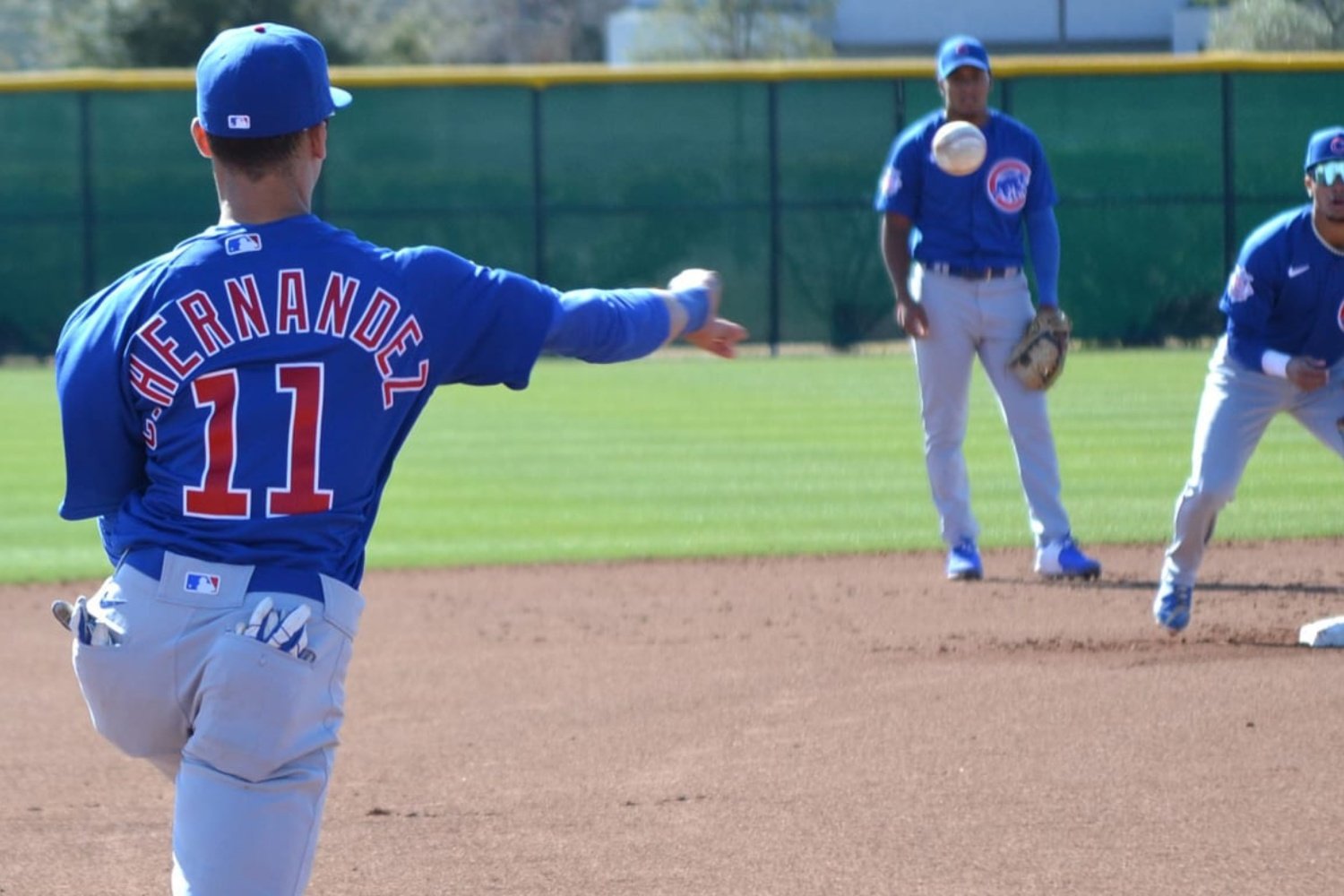 Baseball season is literally right around the corner, and if you've been focused mostly on the Chicago Cubs 26-man roster, their camp cuts, and who makes it with the team until Opening Day stateside, I wouldn't blame you — this is arguably the most exciting Cubs team since 2018. With that said, the Cubs will have a pretty exciting minor league system in 2025 (as they've had over the last few years) and one that is worth monitoring as the season goes along. There is a lot of talent close to "the Show", but some intriguing prospects who are bubbling just below the surface. Over the next few days here at NSBB, we're going to take a look at some of the players who might break out, players who you might see in Chicago in 2025, and where, on those day-offs for the big league squad, you should spend your time paying attention to. For today, we're going to look at players in 2025 who might be just a little off the radar (i.e., just outside of the top-10 or 20 in the system) or new to the organization who might break out. Honorable Mentions: The reality of prospecting baseball players is you can essentially put anyone you want into this spot. Do you have a favorite under-20-year old hitter? Well, he probably fits this category, regardless of who that is. This could be a few of our more recent IFA signings, such as Derniche Valdez, Fernando Cruz, or Angel Cepeda, all of whom have some sort of combination of interesting tools that they just haven't fully put together yet. Any one of those players could find the magic and rocket up the rankings this season. It could also be a few of our more recent prep-picks, such recent mid-round selections like Ronny Cruz or Ty Southisene . This is a category ripe with names. Maybe you're more of a gambler (remember, folks, there's no such thing as a "true" pitching prospect), and you favor some of our young pitchers who have tantalizing stuff. Daniel Avitia and Brooks Caple, both of the 2024 draft, could knock down a door or two and find themselves a top-15 prospect by seasons end. There's a bevy of IFA names that could jump this list, as well. IFA pitchers have a tendency to manifest themselves out of thin air — suddenly, a kid who got a signing bonus in the low-thousands is pumping 98mph. I could really list something like 30 names here, especially with how the system is currently set up. The Cubs are top-heavy in the sense that most of their best prospects project to either start in Iowa or end in Iowa in 2025, and their lower levels are all fairly foggy. Breakout Prospect #1 - Cole Mathis, 1B/3B/DH Cole Mathis is someone who I think is going to have a really good 2025 season and someone who offers really fun upside if he can stick at third (which I'll get back to in a moment). The 54th selection out of the College of Charleston has a lot of positives in his game that would suggest he should hit the ground running. Mathis absolutely crushed the Cape Cod league, hitting 11 home runs, and had an OPS north of 1.000 during his stay, which clearly proves that the change from metal to wood bats will not sap this man's power. Beyond just the eye popping power numbers, per Greg Zumach, Mathis had an 84% contact rate with just a 16% chase rate. This is a hitter who has a strong sense of the zone, a strong approach, and big power. There's little not to like in the bat and these things go a long way in dispelling any fears that he spent his college career in a smaller conference. Perhaps the most interesting thing with Mathis is that the Cubs announced him as a third baseman when he was selected. Very quickly, however, their second-round selection went under the knife for Tommy John surgery. Obviously, the Cubs knew of this on draft-day, so they still believe, despite the surgery, that Mathis can handle third in the interim. I don't think the former Cougar standout is going to play third for a while, but he's been swinging since January, has been getting some work in the field and throwing in the MiLB camp, and I would expect him to get some time there around mid-season. So taking it all in, we've got a Statcast darling who's already proven he can swing wood bats against the best college can offer, and who has a path beyond being just a first baseman (though we'll see if he can stick at third long-term). I'm not sure if Mathis is going to start in Myrtle Beach or South Bend, but either level should be a level he's capable of putting up some fun numbers at if the Cape Cod production is any sort of a preview. If he can show the arm is healthy by the end of the year, that he's capable of handling third, and the bat plays against older pitchers, then there's a real chance we're looking at a top-five prospect in the system (with all of the likely graduations) by year's end. Breakout Prospect #2 - Cristian Hernandez, SS Cristian Hernandez entered 2024 as somewhat of an afterthought. The shortstop really struggled in his first 430 appearances in Myrtle Beach. While we can expect young players to struggle, the former IFA-darling had a sub-80 wRC+, showed weak barrel control and just looked a bit out of his element. It was fair to wonder if Hernandez was going to figure it out. It was clear pretty quickly last year that there had been a lot of work put in during the offseason. Displaying new mechanics, Hernandez was able to make far more contact, lowering his K% by nearly five points, doubling his ISO, and posting a pretty impressive 135 wRC+. It earned him a promotion to South Bend by the end of the season. Everything wasn't perfect, however, as the transition to a new level was once again a bit of a struggle for the young shortstop. He continued to make a lot of contact, but the contact quality was not up to snuff — there was a visible lack of punch during his 23 games in High-A, as he logged just three extra-base hits, none of which were home runs. That's okay — it's a small sample size, but it is something to note. I'm not sure we're ever going to see the monster-breakout that turns Hernandez into the "Mini-A-Rod" he was once called as a 16-year-old, but that doesn't mean he can't have a good 2025 campaign. Hernandez has good size and he's going to keep filling out. If he can parlay his new-found contact ability into some more power, then there's still a good contact-power-defense skillset for the Cubs prospect. The organization doesn't have a lot of prospects who are obvious star-level talents below Iowa currently, so he will be given a lot of runway. A Hernandez who swats 12-15 home runs annually could make a pretty significant jump up the boards still. Breakout Prospect #3 - Erian Rodriguez, SP This is a bit more of a "dart throw", but this is the kind of profile I'm willing to throw a dart on. Rodriguez is 22 years old, so he's not the youngest of prospects (not that he's "old"), and he's going to start to round into form physically. He's got much of what you'd want to see from a high end SP prospect: he's got the right size (6"3, 190 listed), he's got the right stuff (sits high-90's, with averages in the 95-96 range) and has made under-the-hood progress. A quick glance at his numbers, however, might have you wondering just why I've got him in this spot. His strikeout rates aren't particularly enticing, as they've hovered in the low-20% range. His walk rates, while not egregious, are a bit below average. So, what gives? Well, call it a hunch, because despite the middling strikeout and walk numbers, Rodriguez has really limited the home run ball, surrendering just three over 87 innings last year. This isn't new, either, as he gave up just five in just under 70 innings the year prior. He's running ground-ball rates in the mid-40's. It shows that there's some stuff in his arsenal that's really limiting and keeping hitters in check (Rodriguez has greatly improved his changeup). Ultimately, this story has a lot of hallmarks of what you'd expect to see right before someone broke out in a big way. He still needs to continue to progress and get that strikeout rate up — he doesn't need to be a strikeout monster if he's going to get a lot of ground balls and keep the ball in the park, but he can't be at 18% like he was in South Bend, either. With that said, if he can lift that strikeout rate to the 25% neighborhood, coupled with the proclivity for ground balls? That's a guy who shoots up boards fast. Who do you think is in line for a big season in 2025? Is there someone you like? Or maybe you disagree with my breakout picks? Lets us know in the comment section below!
 -
Anyone Up? 3/18 Opening Day in Tokyo
Jason Ross replied to Outshined_One's topic in Fred Hornkohl Game Thread Forum
Shoot for 161-1 now. -
Well, there goes the dream of 162-0.
-
Will Benson has that international appeal.
-
Thing I'm a little bummed about - Brown has been working in other offerings outside of the fastball-deathball combo in the spring, but he's used the two exclusively today. Then as I type that he K's up arguably the best hitter in baseball.
-
Nice job getting to the ball...wild, rookie throw.
-
Brown a bit inconsistent. A bit unlucky, too. 75 mph EV hit for Smith (xBA is high but contact quality is low) and the error.
-
Can tell Imanaga is *just* a little off today. Which isn't a knock - season is starting early, and this is a weird way to kick it all off for routines for the year.
-
I really need there to be a damn option to delay ESPN notifications. The ESPN notifications come in before MLB.TV, but I'm also too forgetful to consistently turn them off and on.
-
Counsell said 75 pitches for Shota
-
Miggy!
-
I wonder if gun is running hot.
-
Spring Training Game Thread
Jason Ross replied to CubinNY's topic in Fred Hornkohl Game Thread Forum
I feel like every year we do this whole thing where people pick a player who didn't look good in glorified practice, get all worried about him, then said good player is a good player once the season starts and we all go about our merry way. Do I think the Cubs will score a boat load of runs? No - Yamamoto and Sasaki have good stuff. And while I suspect Sasaki will be more up and down at the start of his MLB career then when he settles in, as he is adjusting to some great hitters, I'm not betting against him like that, either. The dude has some gas and that splitter is so funky. Regardless, it seems silly to start acting like the Cubs offense is like, scary bad or incapable of scoring runs before they even play a game this year. On paper, they have a good offense. -
Spring Training Game Thread
Jason Ross replied to CubinNY's topic in Fred Hornkohl Game Thread Forum
I see a lot of ya'll talking about Amaya's defense/steals/etc...Reminded me of this (relatively quick) video from Foolish Baseball. Guy is quite good at baseball data and analytics and is really entertaining. This is a cool look into that discussion (do you steal on the pitcher or the catcher?). -
While the lineups for the Tokyo series have yet to be announced, it's safe to presume that the Cubs' top prospect will make his MLB debut in Japan and then be included on the Opening Day roster Stateside. What should we expect from the former first-round pick in 2025? Image courtesy of © Darren Yamashita-Imagn Images While the lineups for the Tokyo series have yet to be announced, it's safe to presume that the Cubs' top prospect will make his MLB debut in Japan and then be included on the Opening Day roster Stateside. What should we expect from the former first-round pick in 2025? Entering the offseason, it didn't look like Matt Shaw was poised to open the season with the big-league squad. With quality MLB starters in Isaac Paredes and Nico Hoerner manning the positions at which Shaw is most capable, it looked like the top prospect was going to end up in Iowa as insurance—until the Cubs shook up the roster with the Kyle Tucker trade. Out went entrenched starting third baseman Paredes, which created a Shaw-sized hole in the infield. With the rest of the offseason yielding only marginal infield alternatives, only an injury could have stopped the former first-round pick from claiming his position in the Opening Day lineup. This week, the Cubs announced Shaw would be making the trip to Japan, so (although another round of the same dilemmas, this time with more players involved and no more roster spots available, awaits when the team gets back to the States) it's officially Matt Shaw season on the North Side. Since he's clearly going to play at least these two games against the Dodgers, the question will now shift from "Can Shaw actually claim the position right away?" to "What is he going to do in 2025?" The reality is that there are a wide range of possible outcomes for Shaw this season. Many are good, but long periods of struggle are also very much on the table, and plenty of possible permutations land between the two extremes. It would be great if Shaw just showed up and crushed MLB pitching, but I think it's important to remember that such stories are few and far between in the annals of the game. We only have to look at the routes that Pete Crow-Armstrong and Michael Busch took to MLB stability to see how it may play out for the team's latest infusion of youth. Both Crow-Armstrong and Busch debuted in 2023, but struggled in tiny samples. Last year, both ended up with lots of big-league playing time, but each had ups and downs as the year went. The Cubs' speedy center fielder really struggled through his first run, posting a 64 wRC+ through the All-Star break and looking generally overmatched at the plate. Then, through a mechanical change and a better plate approach, a much better player emerged. While he slumped toward the end, that was a fun preview of what could be. Busch, conversely, saw the reverse: a strong start, followed by periods of struggle. By the end of the year, the Cubs' first baseman showed improved contact ability and was much better on defense. Both are somewhat cautionary tales about how prospects' rookie seasons will go. Looking league-wide, the most highly-touted prospects have encountered adversity, including Jackson Holliday, Jackson Chourio, and James Wood, so expecting that should be the default position. Shaw will probably see periods like this himself. Just looking at the schedule, Shaw is likely to see some flat-out amazing pitching in his first month as the Cubs will play the Dodgers (seven times), Arizona (7), San Diego (6), Texas (3) and Philadelphia (3) before the calendar turns into May. Those are some of the best pitching staffs on the planet, and it doesn't even take into account that the environment at Wrigley over that span is unlikely to be very hitter-friendly. Add in questions of how well his unique hitting mechanics are going to play at the highest level, and there's a good chance that Shaw's first month will be a series of hard lessons, rather than a stretch of sustained success. If this sounds like I'm being a bit of a Debbie Downer, the good news is that I think this is the normal progression for almost any offensive prospect in baseball today. Ultimately, I do think Shaw's game translates well to the highest level. Things like contact rate are great indicators of how a player can expect to handle MLB pitching, and Shaw has made high levels of contact at every stop. He's mashed fastballs, regardless of velocity. He's athletic and should add baserunning value. The ZiPS projection system he's going to be a stone's throw from being as good as Paredes, even as a rookie. While I think the first 45 days or so for Shaw may be rough, I also think we will see him turn the corner around May 12. That marks the end of the Cubs' incredibly tough first portion of the season, and should coincide with warmer temps at home. The Cubs may not play a single team with a winning record between May 12 and Jun. 5, as they will play Miami, Colorado, Cincinnati, and the Chicago White Sox over that span. It wouldn't be surprising to see Shaw go on a mini-heater then, consolidating his early learning and gaining confidence along the way. Already, Shaw has shown a penchant for working through new levels, even as he's made approach changes. Last season saw him struggle early in Tennessee, fighting to find his power after he worked on making better swing choices. Nonetheless, he was able to finish with a wRC+ at Double A north of 140, and at the end of the year, the Southern League gave him their MVP award. The righty then struggled initially in Iowa, only to once again finish his time with a wRC+ over 140. He's capable of taking in new information, processing it, and learning from it. You want to see that. What does this all mean? Have some patience. There will be days on which the kid is going to look bad at the plate. He's going to get fooled by some nasty stuff; he's going to expand the zone; and he's going to make mistakes. When he does, don't despair for him. It would have been easy for the Cubs to give up on Crow-Armstrong in mid-July last year and send him back to Iowa, but their patience paid off. The Cubs, as an organization, have shown an improving ability to transition young talent into becoming MLB players. Ben Brown, Porter Hodge, Justin Steele, Nico Hoerner, Crow-Armstrong, and Busch all count as success stories. By the end of the year, I feel pretty confident that the rookie is going to make some positive noise for the Cubs. Does that mean he's going to hit 20 bombs, carry a 115 wRC+ and win Rookie of the Year? Could be. But it could also be a situation in which the overall line is mediocre, sporting a wRC+ that starts with a nine and an OBP that is closer to .300 than .330. Yet, under the hood, improvement will keep going apace. By October, Shaw has a chance to be a key cog and a consistent performer. At that time of year, as they say, there are no rookies. Are you excited for Matt Shaw's 2025 debut? What are your predictions for his rookie year? Do you think he will win the Rookie of the Year? Let us know in the comment section below! View full article
-
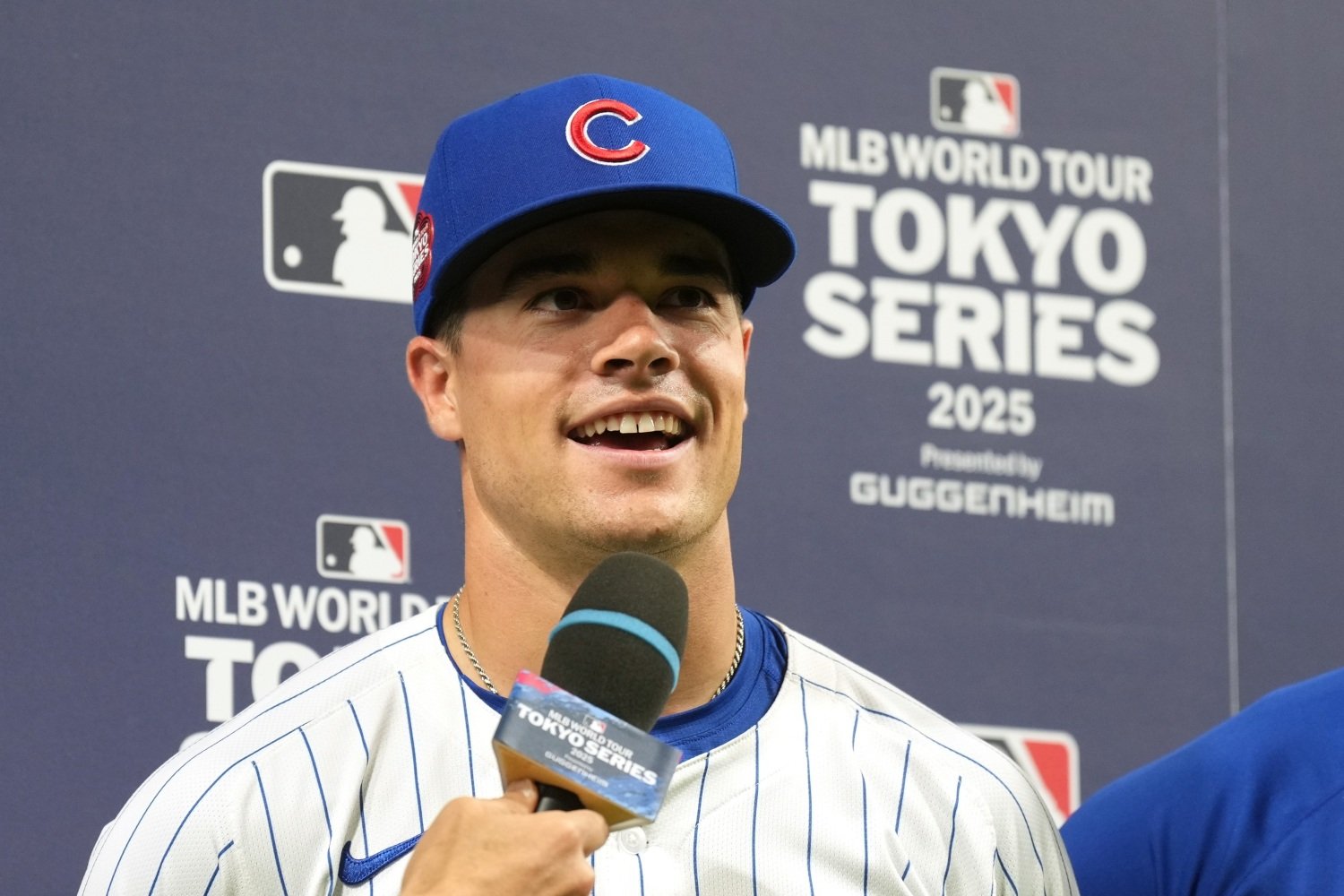 Entering the offseason, it didn't look like Matt Shaw was poised to open the season with the big-league squad. With quality MLB starters in Isaac Paredes and Nico Hoerner manning the positions at which Shaw is most capable, it looked like the top prospect was going to end up in Iowa as insurance—until the Cubs shook up the roster with the Kyle Tucker trade. Out went entrenched starting third baseman Paredes, which created a Shaw-sized hole in the infield. With the rest of the offseason yielding only marginal infield alternatives, only an injury could have stopped the former first-round pick from claiming his position in the Opening Day lineup. This week, the Cubs announced Shaw would be making the trip to Japan, so (although another round of the same dilemmas, this time with more players involved and no more roster spots available, awaits when the team gets back to the States) it's officially Matt Shaw season on the North Side. Since he's clearly going to play at least these two games against the Dodgers, the question will now shift from "Can Shaw actually claim the position right away?" to "What is he going to do in 2025?" The reality is that there are a wide range of possible outcomes for Shaw this season. Many are good, but long periods of struggle are also very much on the table, and plenty of possible permutations land between the two extremes. It would be great if Shaw just showed up and crushed MLB pitching, but I think it's important to remember that such stories are few and far between in the annals of the game. We only have to look at the routes that Pete Crow-Armstrong and Michael Busch took to MLB stability to see how it may play out for the team's latest infusion of youth. Both Crow-Armstrong and Busch debuted in 2023, but struggled in tiny samples. Last year, both ended up with lots of big-league playing time, but each had ups and downs as the year went. The Cubs' speedy center fielder really struggled through his first run, posting a 64 wRC+ through the All-Star break and looking generally overmatched at the plate. Then, through a mechanical change and a better plate approach, a much better player emerged. While he slumped toward the end, that was a fun preview of what could be. Busch, conversely, saw the reverse: a strong start, followed by periods of struggle. By the end of the year, the Cubs' first baseman showed improved contact ability and was much better on defense. Both are somewhat cautionary tales about how prospects' rookie seasons will go. Looking league-wide, the most highly-touted prospects have encountered adversity, including Jackson Holliday, Jackson Chourio, and James Wood, so expecting that should be the default position. Shaw will probably see periods like this himself. Just looking at the schedule, Shaw is likely to see some flat-out amazing pitching in his first month as the Cubs will play the Dodgers (seven times), Arizona (7), San Diego (6), Texas (3) and Philadelphia (3) before the calendar turns into May. Those are some of the best pitching staffs on the planet, and it doesn't even take into account that the environment at Wrigley over that span is unlikely to be very hitter-friendly. Add in questions of how well his unique hitting mechanics are going to play at the highest level, and there's a good chance that Shaw's first month will be a series of hard lessons, rather than a stretch of sustained success. If this sounds like I'm being a bit of a Debbie Downer, the good news is that I think this is the normal progression for almost any offensive prospect in baseball today. Ultimately, I do think Shaw's game translates well to the highest level. Things like contact rate are great indicators of how a player can expect to handle MLB pitching, and Shaw has made high levels of contact at every stop. He's mashed fastballs, regardless of velocity. He's athletic and should add baserunning value. The ZiPS projection system he's going to be a stone's throw from being as good as Paredes, even as a rookie. While I think the first 45 days or so for Shaw may be rough, I also think we will see him turn the corner around May 12. That marks the end of the Cubs' incredibly tough first portion of the season, and should coincide with warmer temps at home. The Cubs may not play a single team with a winning record between May 12 and Jun. 5, as they will play Miami, Colorado, Cincinnati, and the Chicago White Sox over that span. It wouldn't be surprising to see Shaw go on a mini-heater then, consolidating his early learning and gaining confidence along the way. Already, Shaw has shown a penchant for working through new levels, even as he's made approach changes. Last season saw him struggle early in Tennessee, fighting to find his power after he worked on making better swing choices. Nonetheless, he was able to finish with a wRC+ at Double A north of 140, and at the end of the year, the Southern League gave him their MVP award. The righty then struggled initially in Iowa, only to once again finish his time with a wRC+ over 140. He's capable of taking in new information, processing it, and learning from it. You want to see that. What does this all mean? Have some patience. There will be days on which the kid is going to look bad at the plate. He's going to get fooled by some nasty stuff; he's going to expand the zone; and he's going to make mistakes. When he does, don't despair for him. It would have been easy for the Cubs to give up on Crow-Armstrong in mid-July last year and send him back to Iowa, but their patience paid off. The Cubs, as an organization, have shown an improving ability to transition young talent into becoming MLB players. Ben Brown, Porter Hodge, Justin Steele, Nico Hoerner, Crow-Armstrong, and Busch all count as success stories. By the end of the year, I feel pretty confident that the rookie is going to make some positive noise for the Cubs. Does that mean he's going to hit 20 bombs, carry a 115 wRC+ and win Rookie of the Year? Could be. But it could also be a situation in which the overall line is mediocre, sporting a wRC+ that starts with a nine and an OBP that is closer to .300 than .330. Yet, under the hood, improvement will keep going apace. By October, Shaw has a chance to be a key cog and a consistent performer. At that time of year, as they say, there are no rookies. Are you excited for Matt Shaw's 2025 debut? What are your predictions for his rookie year? Do you think he will win the Rookie of the Year? Let us know in the comment section below!
 -
Spring Training Game Thread
Jason Ross replied to CubinNY's topic in Fred Hornkohl Game Thread Forum
Again, if it's Thompson, whatever, he was going to be DFA'd. Maybe the Tigers like him enough to take him on their 40-man, but I'm not entirely certain that they do, so I'm not really all that interested in going down a line where we're pawning players off on Detroit we have no idea of their interest. It's very easy for us to just say "well just send them Thompson" but that assumes a ton. Beyond that, I'm not sure there's any reason for the Cubs to need to option Gage Workman. If he's entirely out of his depth, like a 60 wRC+ and looks entirely lost, I'm not sure the Cubs are going to want to give up a prospect to option him. Workman is 25. My understanding is that they'd have to carry him on the 40-man - the Cubs are already in positions where they're DFA'ing Michael Arias and Alexander Canario - players they didn't want to carry on the 40 in Iowa or below. Workman, if he looks entirely lost in Chicago, is probably then in that same category as Canario - in the DFA bin - or in this case, in the "return to sender" bin. If he's not looking horrible, they'll carry him in that 4th bench spot, use his glove and let him sparingly. The Cubs weren't willing to keep Arias and Canario, I'd guess they'd be uninterested in carrying a similarly aged (to Canario) prospect who couldn't add value in Chicago, either. I'd guess the Cubs view him as a "free bench option" or a player they can ship back to Detroit if they don't want to keep him. -
Former Lance Lynn was underrated. I think 37 year old Lance Lynn is pretty accurately rated, however. He had career low K rates, average walk rates, and his HR/FB% seems a bit under what it should have been (he was at 19% the season before, down to 11% last year despite his barrel% going up to his career high). His xERA was 4.91 and his xFIP was 4.39. His wOBA was .319 but his xwOBA was .340. If you told me he could band aid a rotational spot for a portion of the season and wasn't a complete disaster I don't think that's a crazy concept. But I also don't think he's underrated any longer, either.

-
I don't really like Colin Rea, but I like Rea a bit more than Lynn currently. Lynn looks entirely toasted. The ERA was fine, but his Savant page is...real rough. He was not above the 50% mark on a single skill last year and he feels ripe for some real regression , It was a slight step up from the year prior, but I can't imagine a situation where signing him does anything for me. At best it's a lateral move, but then you're sticking with Rea in the BP which, I just think the Cubs have better options. And Lynn, at 37, probably isn't keen on "go hang out in Iowa" specially when Brown and Wicks are more likely callups. Ultimately, a one year deal isn't going to kill the Cubs, especially with the room they have under the LT, I just can't see a positive in this if it happens on an MLB deal. That isn't to say it's going to tank the Cubs, but it feels like an unforced error that probably doesn't work out positively, though it could be a quick reaction to an injury in which I'm more lenient on this. So in the end, it's either a somewhat odd "luxury" signing or an injury related signing - neither of which excite me.
-
Spring Training Game Thread
Jason Ross replied to CubinNY's topic in Fred Hornkohl Game Thread Forum
I always forget someone. Ryan Braiser has been my blindspot this year. I'll type up a mock bullpen and he won't even exist on it. -
Spring Training Game Thread
Jason Ross replied to CubinNY's topic in Fred Hornkohl Game Thread Forum
I guess if it's someone we're DFA'ing, then maybe? But even then, I just don't see any reason to engage with Detroit right now on giving something back if the plan is to keep Workman regardless. -
Spring Training Game Thread
Jason Ross replied to CubinNY's topic in Fred Hornkohl Game Thread Forum
He probably will struggle at times. But the cool thing about Workman is he offers an immediate floor of being a high level defender at 3b, SS, 2b and 1b. And the Cubs don't ask a lot about the fourth bench option (Luis Vazqeuz spent 25% of the year on the bench last season and barely played). I see no reason as of now to send a prospect to Detroit to keep him in Iowa, while also forcing through Brujan who has a pretty narrow pathway to relevancy in Chicago. Roll with Gage. If the glove doesn't show what it looks like it does, if he can't hit...he's not worth the fourth bench spot - and isn't an MLB player - then you return him to Detroit. If the glove is good, he'll offer a floor regardless of the bat struggles, and he probably wouldn't be playing much anyways. Keep him in the position and see the bat progression. -
Spring Training Game Thread
Jason Ross replied to CubinNY's topic in Fred Hornkohl Game Thread Forum
I think that's fine. Brujan is kind of whatever. He'd be nice depth, but he's probably more on the redundant side of things. For example, and injury and there's a prospect ahead of him. So, for example, if an OF'er goes down, Caissie or Alcantara will be next up. On the infield, it's Triantos. If the Cubs didn't have that kind of immediate depth, he could probably more easily find his way into a real spot, but the Cubs are set up in a way he'd probably need two injuries to get on the roster. -
Spring Training Game Thread
Jason Ross replied to CubinNY's topic in Fred Hornkohl Game Thread Forum
Probably Brujan. Workman can't be sent to the MiLB, and while Brujan can handle CF, I suspect that the Cubs, in an event of a PCA injury, would be okay with allowing Suzuki/Tucker/Happ/Berti to handle CF for a day or so before Alcantara took it over (he's already on the 40). Brujan hasn't looked awful this spring by any means, but he's been awful at the MLB level so far, is decently far removed from being a highly thought of prospect, and looks much closer to that dreaded Quad-A guy more than anything. There will be a few weeks where and injury can change the math, but I'd suspect today that the answer of "who goes" is Brujan be a notable amount.