Matthew Trueblood
-
Posts
2,481 -
Joined
-
Last visited
-
Days Won
2
Content Type
Profiles
Joomla Posts 1
Chicago Cubs Videos
Chicago Cubs Free Agent & Trade Rumors, Notes, & Tidbits
2026 Chicago Cubs Top Prospects Ranking
News
2023 Chicago Cubs Draft Picks
Guides & Resources
2024 Chicago Cubs Draft Picks
The Chicago Cubs Players Project
2025 Chicago Cubs Draft Pick Tracker
2026 Chicago Cubs Draft Tracker: Picks & Bonuses
Blogs
Events
Forums
Store
Gallery
Everything posted by Matthew Trueblood
-
Well, to give my own reporting to it, I feel pretty sure they will stay below the CBT 1 line. But they still have plenty to spend. Think $230 million, in real money not CBT value, and you're close. But yeah, I feel more confident that they're not dipping down into the $215 million range or something than I did before, because I was having a hard time squaring what I was hearing about their willingness to spend with the urgency of their interest in these trade possibilities. This reconciles those two things for me.
-
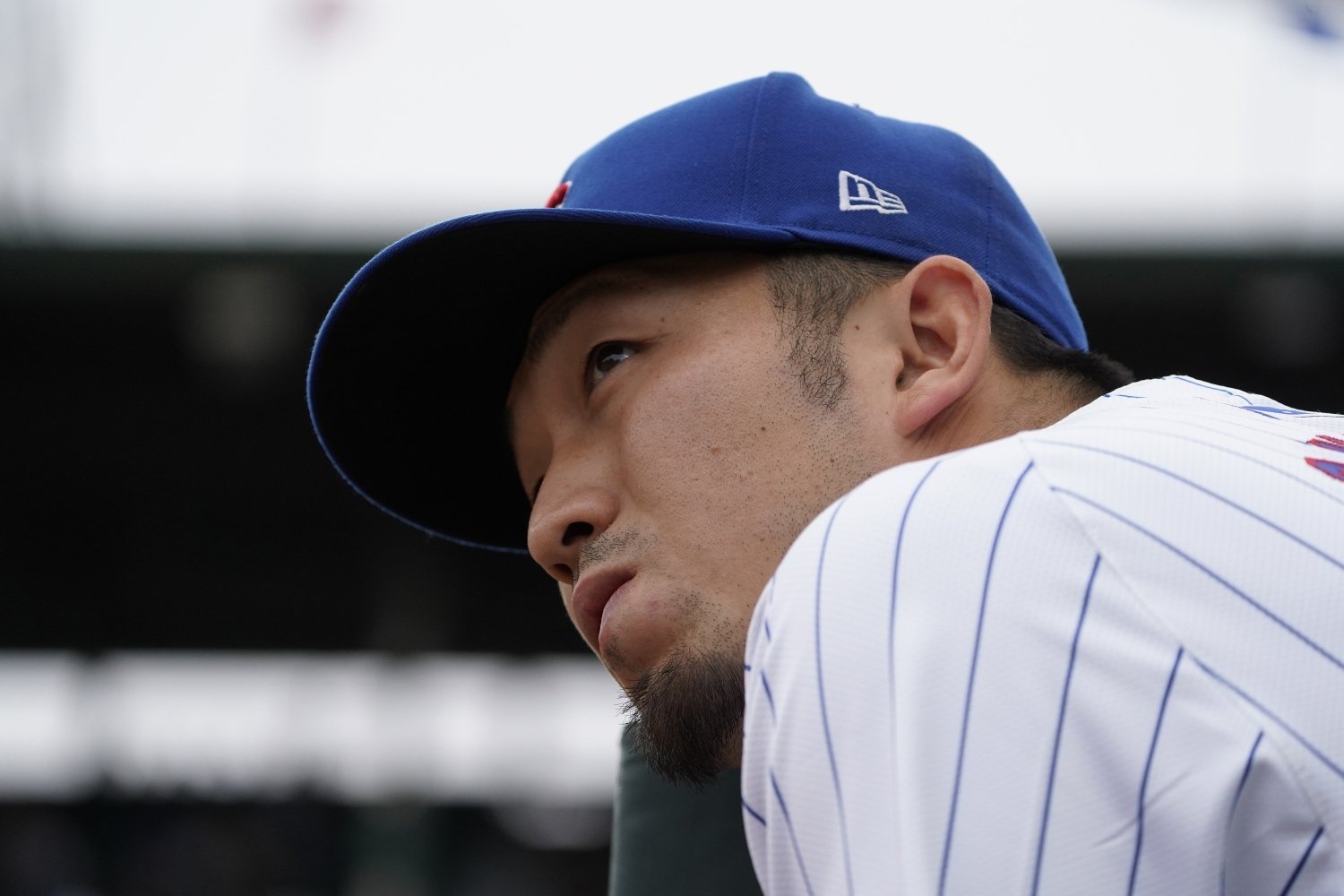 If we're being honest, it didn't make that much sense for the Cubs to take an interest in trading Cody Bellinger this winter. Sure, you could squint and see it, if they really wanted a major shakeup of their positional corps and/or if they believe they need a major infusion of pitching talent but need to stay budget-neutral. On balance, though, it's a confusing reality to which we've all been reconciling ourselves since Bellinger opted in to his deal after the World Series. It seems like Bellinger playing right field, with Seiya Suzuki at DH, Pete Crow-Armstrong in center and Ian Happ in left, was a really nice configuration. We even saw Suzuki find a gorgeous rhythm as the everyday DH down the stretch in 2024, batting .326/.433/.500 in 37 games and 171 plate appearances to finish the season after moving into that role. It's harder than a casual baseball fan might guess to find guys who can thrive as the DH. Suzuki, who was a disastrously bad right fielder beginning in early 2023, made the transition seamlessly, and it seemed like all parties should be fairly comfortable with keeping that good thing going. Now, we can all understand what was happening, and why the team has seemed so unsure of what to do for the last month. Ohhh. If Suzuki didn't like being a DH, it's a lot easier to see why some alternative arrangements would need to be explored. If it was difficult to grasp why the Cubs would want to trade Bellinger under our old understanding of the situation, their recently reported openness to trading Suzuki (and specifically, the idea that they were dead-set on trading one or the other) was downright inscrutable. If one tossed out the idea that they were just being extraordinarily cheap, it was inexplicable. Now, it's extremely explicable. A situation in which Suzuki is unwilling to be the everyday DH is a totally different set of problems than we thought Jed Hoyer was trying to solve. His bat was more than good enough, for the bulk of last season, to write him in at that spot and bring him back, shopping only for the player who might allow him to be clearly second-best in the lineup, rather than its anchor. However, if he feels he has to play the outfield (and, although his agent does not explicitly suggest this to be the case in the above, if he wants out unless he can be given that chance), then the Cubs have to do something big. Trading Bellinger is one solution, because then, Suzuki goes back to right field. Clearing the money owed to Bellinger gets important in a hurry if you think the Cubs have to replace his bat with a DH like Pete Alonso, Anthony Santander, or J.D. Martinez, in addition to spending young talent on further help for the starting rotation. Before that could happen, though, you'd think the Cubs would want some concrete reason to believe that he'll be better there than he was for the last year and a half he spent in that position. Moving Suzuki to left is not an option. Ian Happ has a no-trade clause he's much less likely to waive, and too much of his value comes from his superb defense to obliterate that value by sliding him to DH, all the while risking a big downgrade if the sun of right field turns out not to have been Suzuki's problem. That leaves the possibility of trading Suzuki himself. In light of this new information about his preferences (which sure sound strong), that feels much more plausible than it did a few days ago. Certainly, the team can't keep both Bellinger and Suzuki if the latter is unwilling to be the regular DH from here on out. Suzuki would have more trade value, of course, because he's a better hitter and is on a less expensive, less player-friendly contract. However, he'd also leave a bigger hole in the lineup and force you to do something bigger to replace him. It's a big dilemma, and now, we can well understand why the team has proceeded cautiously all along. This is bad news, I think, because the best version of the 2025 Cubs I foresaw before learning this had Suzuki as the DH almost all the time. Now, it seems like multiple major moves need to be made to get to a version that matches or betters that one. Still, it's enlightening, and thus something of a relief. Why have the Cubs acted a little weird all winter? This is why. And this could explain some of the really exciting possibilities being floated through the rumor mill, as neatly as it explains the more maddening notes.
 -
One partial, still-valid explanation of the Cubs' somewhat puzzling behavior and messaging this offseason is that they face constraints related to the payroll, imposed by ownership. On Tuesday, another, much more completely explanatory fact came to light. Image courtesy of © David Banks-Imagn Images If we're being honest, it didn't make that much sense for the Cubs to take an interest in trading Cody Bellinger this winter. Sure, you could squint and see it, if they really wanted a major shakeup of their positional corps and/or if they believe they need a major infusion of pitching talent but need to stay budget-neutral. On balance, though, it's a confusing reality to which we've all been reconciling ourselves since Bellinger opted in to his deal after the World Series. It seems like Bellinger playing right field, with Seiya Suzuki at DH, Pete Crow-Armstrong in center and Ian Happ in left, was a really nice configuration. We even saw Suzuki find a gorgeous rhythm as the everyday DH down the stretch in 2024, batting .326/.433/.500 in 37 games and 171 plate appearances to finish the season after moving into that role. It's harder than a casual baseball fan might guess to find guys who can thrive as the DH. Suzuki, who was a disastrously bad right fielder beginning in early 2023, made the transition seamlessly, and it seemed like all parties should be fairly comfortable with keeping that good thing going. Now, we can all understand what was happening, and why the team has seemed so unsure of what to do for the last month. Ohhh. If Suzuki didn't like being a DH, it's a lot easier to see why some alternative arrangements would need to be explored. If it was difficult to grasp why the Cubs would want to trade Bellinger under our old understanding of the situation, their recently reported openness to trading Suzuki (and specifically, the idea that they were dead-set on trading one or the other) was downright inscrutable. If one tossed out the idea that they were just being extraordinarily cheap, it was inexplicable. Now, it's extremely explicable. A situation in which Suzuki is unwilling to be the everyday DH is a totally different set of problems than we thought Jed Hoyer was trying to solve. His bat was more than good enough, for the bulk of last season, to write him in at that spot and bring him back, shopping only for the player who might allow him to be clearly second-best in the lineup, rather than its anchor. However, if he feels he has to play the outfield (and, although his agent does not explicitly suggest this to be the case in the above, if he wants out unless he can be given that chance), then the Cubs have to do something big. Trading Bellinger is one solution, because then, Suzuki goes back to right field. Clearing the money owed to Bellinger gets important in a hurry if you think the Cubs have to replace his bat with a DH like Pete Alonso, Anthony Santander, or J.D. Martinez, in addition to spending young talent on further help for the starting rotation. Before that could happen, though, you'd think the Cubs would want some concrete reason to believe that he'll be better there than he was for the last year and a half he spent in that position. Moving Suzuki to left is not an option. Ian Happ has a no-trade clause he's much less likely to waive, and too much of his value comes from his superb defense to obliterate that value by sliding him to DH, all the while risking a big downgrade if the sun of right field turns out not to have been Suzuki's problem. That leaves the possibility of trading Suzuki himself. In light of this new information about his preferences (which sure sound strong), that feels much more plausible than it did a few days ago. Certainly, the team can't keep both Bellinger and Suzuki if the latter is unwilling to be the regular DH from here on out. Suzuki would have more trade value, of course, because he's a better hitter and is on a less expensive, less player-friendly contract. However, he'd also leave a bigger hole in the lineup and force you to do something bigger to replace him. It's a big dilemma, and now, we can well understand why the team has proceeded cautiously all along. This is bad news, I think, because the best version of the 2025 Cubs I foresaw before learning this had Suzuki as the DH almost all the time. Now, it seems like multiple major moves need to be made to get to a version that matches or betters that one. Still, it's enlightening, and thus something of a relief. Why have the Cubs acted a little weird all winter? This is why. And this could explain some of the really exciting possibilities being floated through the rumor mill, as neatly as it explains the more maddening notes. View full article
-
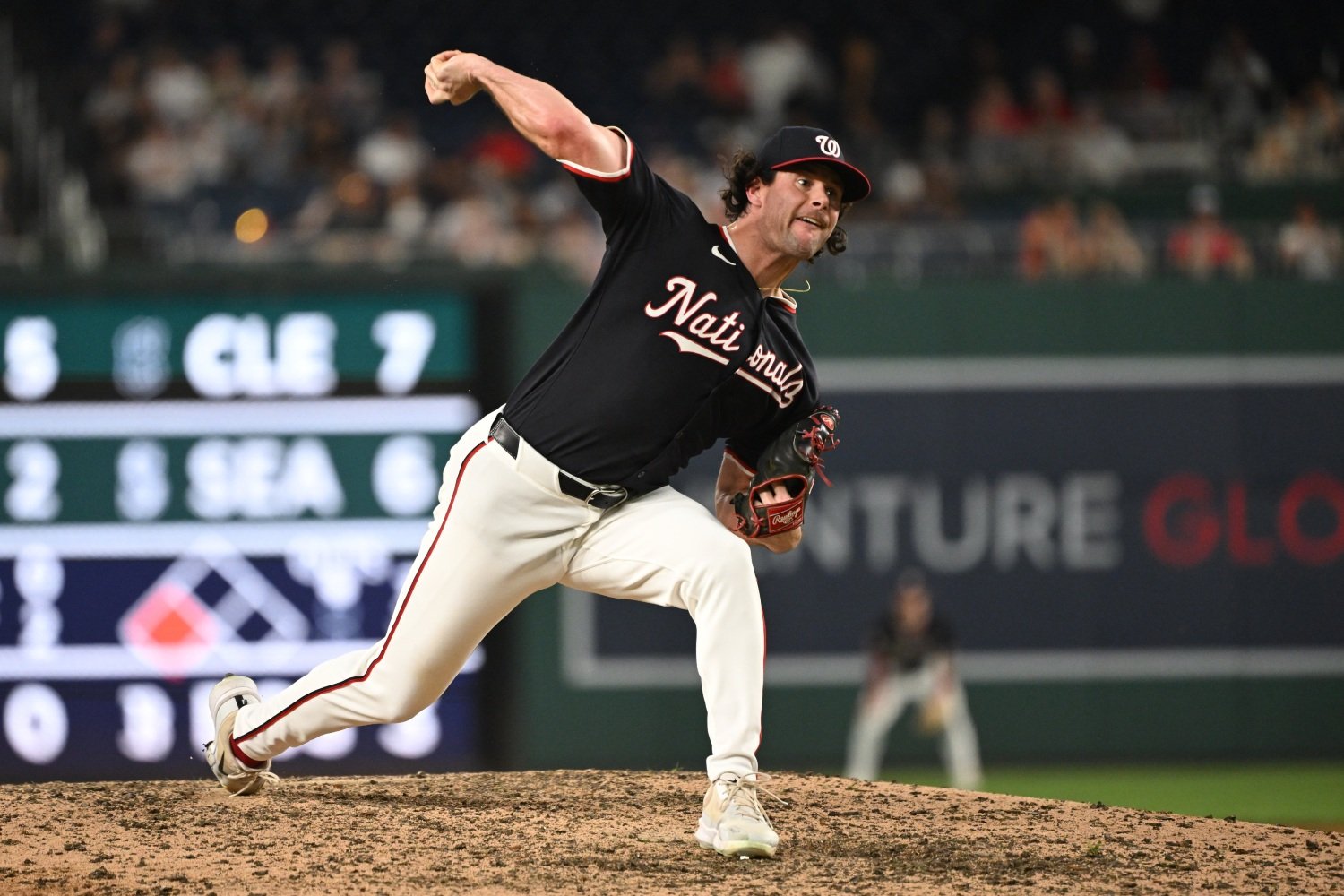 My big problem with Kyle Finnegan is this: dude throws his splitter for strikes too much. It's a strange-sounding complaint, when it first hits your ear (or your eyes, here), but it's legitimate. Last season, almost no one in baseball gave up more hard contact than Finnegan did, and the reason was simple: his splitter (a pitch that must dive and invite chases and rack up whiffs to be maximally effective) just hangs in the zone too much. Only three pitchers who threw at least 100 splitters this season had a higher Called Strike Probability on the pitch, on average, and all three of them were at least able to consistently induce grounders with theirs. Finnegan throws a lot of hittable, in-zone splitters, and while the pitch misses a tolerable number of bats per swing, it also gets hit hard when batters guess right—often, with some air under it. He makes up for this deficiency, principally, with a fastball that sits 97 and touches 99. That pitch can bully hitters and limit hard contact, such that he doesn't give up home runs at a truly calamitous rate. Because the splitter doesn't fool hitters enough or get out of the zone often enough, though, he throws a lot of heat. That limits his upside, because it keeps him to a below-average strikeout rate. Having (functionally) just two pitches and throwing them in this proportion is a recipe for giving up too much contact to be a closer, which is why Finnegan was non-tendered by the Nationals last month. He doesn't have the elite batted-ball profile or the elite command you'd need to see to expect dominance from a pitcher with subpar punchout percentages, and if a guy can't dominate, he shouldn't be a high-leverage reliever. Why, then, am I smiling at the idea of the Cubs signing him? I wasn't, as recently as a few hours ago! What's changed? In short: I looked harder at his slider. Here are Finnegan's pitch movement plots for the last two seasons. His splitter command was pretty shaky in 2024, which surely didn't help with the problem of insufficient whiffs. The more important data, though, are the yellow dots on the left here. Those depict Finnegan's slider, which underwent a huge change last season. In 2023, it was basically a cutter, humming in just under 90 miles per hour with some lift but little glove-side movement. This year, he cut four miles per hour off of it and reshaped it into a true gyro slider, with much greater depth. This pitch is miles better than the former version of itself. Finnegan's slider went from a 95 Stuff+ to a 112 when he made this tweak. His StuffPro and PitchPro numbers on the pitch at Baseball Prospectus (which reclassified the new slider as a sweeper) made a similar leap from 2023 to 2024, almost into elite territory. His breaking ball is a legitimate weapon, now. He just didn't throw it like he knew that. Finnegan commanded the pitch fine and executed it as or more consistently, relative to his splitter. Yet, he didn't ramp up his usage of the slider. I'm not sure why, and the Cubs should get an answer to that question before they commit to him. If he's open to busting out that pitch about three times as often in 2025, though, he could become one of the best relievers in the game, and the team should be all over him, even on a multi-year deal.
 -
The Cubs are reportedly interested in the hard-throwing ex-Nationals closer. Based on his profile from 2024, that would be a mistake—but his profile in 2025 doesn't have to look anything like the one from 2024. Image courtesy of © Rafael Suanes-Imagn Images My big problem with Kyle Finnegan is this: dude throws his splitter for strikes too much. It's a strange-sounding complaint, when it first hits your ear (or your eyes, here), but it's legitimate. Last season, almost no one in baseball gave up more hard contact than Finnegan did, and the reason was simple: his splitter (a pitch that must dive and invite chases and rack up whiffs to be maximally effective) just hangs in the zone too much. Only three pitchers who threw at least 100 splitters this season had a higher Called Strike Probability on the pitch, on average, and all three of them were at least able to consistently induce grounders with theirs. Finnegan throws a lot of hittable, in-zone splitters, and while the pitch misses a tolerable number of bats per swing, it also gets hit hard when batters guess right—often, with some air under it. He makes up for this deficiency, principally, with a fastball that sits 97 and touches 99. That pitch can bully hitters and limit hard contact, such that he doesn't give up home runs at a truly calamitous rate. Because the splitter doesn't fool hitters enough or get out of the zone often enough, though, he throws a lot of heat. That limits his upside, because it keeps him to a below-average strikeout rate. Having (functionally) just two pitches and throwing them in this proportion is a recipe for giving up too much contact to be a closer, which is why Finnegan was non-tendered by the Nationals last month. He doesn't have the elite batted-ball profile or the elite command you'd need to see to expect dominance from a pitcher with subpar punchout percentages, and if a guy can't dominate, he shouldn't be a high-leverage reliever. Why, then, am I smiling at the idea of the Cubs signing him? I wasn't, as recently as a few hours ago! What's changed? In short: I looked harder at his slider. Here are Finnegan's pitch movement plots for the last two seasons. His splitter command was pretty shaky in 2024, which surely didn't help with the problem of insufficient whiffs. The more important data, though, are the yellow dots on the left here. Those depict Finnegan's slider, which underwent a huge change last season. In 2023, it was basically a cutter, humming in just under 90 miles per hour with some lift but little glove-side movement. This year, he cut four miles per hour off of it and reshaped it into a true gyro slider, with much greater depth. This pitch is miles better than the former version of itself. Finnegan's slider went from a 95 Stuff+ to a 112 when he made this tweak. His StuffPro and PitchPro numbers on the pitch at Baseball Prospectus (which reclassified the new slider as a sweeper) made a similar leap from 2023 to 2024, almost into elite territory. His breaking ball is a legitimate weapon, now. He just didn't throw it like he knew that. Finnegan commanded the pitch fine and executed it as or more consistently, relative to his splitter. Yet, he didn't ramp up his usage of the slider. I'm not sure why, and the Cubs should get an answer to that question before they commit to him. If he's open to busting out that pitch about three times as often in 2025, though, he could become one of the best relievers in the game, and the team should be all over him, even on a multi-year deal. View full article
-
Jed Hoyer doesn't shell out prospect hauls for one-year rental stars, any more than he ponies up $300 million for free agent studs. Does that mean you should count the Cubs out if this superstar hits the trade block? Image courtesy of © Troy Taormina-Imagn Images One year ago, the Yankees traded for Juan Soto, giving up a handsome package in exchange for a single season of the services of one of the best hitters of his generation. It was a less daunting deal than it could have been, though, for the simple reason that there was just that one year of control to be had. Soto was, as everyone knew, headed for a highly lucrative free agency, and he and Scott Boras were not going to be dissuaded from that path. That dampened the trade market slightly. For instance, it chased the Cubs away from any serious effort to sign him, before they even considered one. As cautiously as Jed Hoyer approaches huge outlays for top-tier free agents, he's even more reluctant to splurge in the less renewable currency of young talent, by trading top prospects for players over whom he'll have only short-term control. Some players come at a discount because they won't be around long, and such players can hold some appeal for Hoyer and the Cubs, but they're not looking to deal for players at steep prices if they stand to lose them in short order. As the Dodgers eventually did, the team would surely have sought an extension with Tyler Glasnow as a condition of the trade, had they been the ones to pry him away from the Rays last winter. All of that is to say this: If Kyle Tucker of the Astros is not open to an extension this winter in lieu of hitting free agency next fall, then the Cubs are wildly unlikely to acquire him. Reports from the Houston beat at the Winter Meetings indicate that the Astros are lacking clear marching orders from ownership in terms of their 2025 payroll (wonder what that's like, sounds terrible), and that they're open to moving one of Tucker and fellow impending free agent, left-handed starter Framber Valdez. Both players are due significant salaries in their final year of team control, anyway, so moving them would give the team at least a modicum of financial flexibility, but the Astros also have one of the league's worst farm systems, and a blockbuster deal involving either Tucker or Valdez could help them replenish it, This is not, in other words, a Mookie Betts-type situation, where clearing salary will be the sole motivator in a trade and it might be possible to acquire a superstar at a deep discount. Tucker, should be traded, will command a top prospect or two in exchange. Still, it's possible to imagine the Cubs jumping into that fray. Tucker is not a Boras client; he's represented by Excel Sports Management. Quietly, that group can also be tough to hammer out pre-free agency extensions with. They've taken clients like Dansby Swanson, Jason Heyward, George Springer, and Andrew Benintendi all the way to free agency recently. Then again: Dansby Swanson, Jason Heyward. Another couple of Excel clients: Jameson Taillon, Joc Pederson. The Cubs have a solid relationship with that group. Plus, there are counterexamples to the above. Paul Goldschmidt and Pablo López are Excel clients who recently signed extensions with teams shortly after being acquired by those clubs in trades. So, let's imagine Tucker is open to an extension if traded to a team willing to spend big enough to keep him. What would such a deal look like—the trade, and then the contract attached to it? The Astros have a tall, slugging left-handed right fielder who will turn 28 in January; who has made the All-Star team in each of the last three seasons; who owns a Gold Glove Award and a Silver Slugger Award; and who has batted .280/.362/.527 over the last four seasons, with 112 home runs and 80 steals in 91 attempts. He's not Soto, but he's a better player than anyone on the Cubs. In fact, he's better than anyone the Cubs have had since the peaks of Kris Bryant and Javier Báez—but he's younger than Bryant was at that stage of his career, and has a much more well-rounded skill set than Báez did. In short, Tucker will cost whoever trades for him a hefty return. The Cubs' only refuge from the high expected cost is that they might be able to cover part of the value by swapping him out for a similar (though clearly inferior) player. Cody Bellinger has already been linked with the Astros in trade rumors, and while Houston's uncertain payroll situation makes it impossible that they would take on the bulk of Bellinger's contract, the Cubs could offer them a square deal: Bellinger and $15 million, such that they effectively take Tucker at the price of Bellinger and give Houston Bellinger at the price of Tucker. Then, they can add value from there to compensate Houston both for the difference between the projected production of the two players and the risk Houston will assume of Bellinger opting into his 2026 salary. That extra cost wouldn't be small. We're still talking about one player from the top four of the Cubs' top prospects list, and another from the third tier of the system. Houston could get more than that, maybe, from the right buyer without an onerous contract swap to include, and there's always a risk that they would prefer the cleaner deal. The theory here, though, is that Houston would pounce on this structure, because they're not looking to reload, retool, or take a step back in 2025. They want to continue their dominance of the AL West and push toward another World Series; they just acknowledge that they might need to trade one of their soon-to-be-free-agent stars to ensure the staying power of their hegemony. Bellinger is a better player for 2025 than they'd be likely to get from any other suitor in a Tucker trade. There is a clear difference favoring Tucker in terms of projections for 2025. Here are Steamer's forecasts for each: Bellinger: 582 PA, .258/.320/.430, 109 wRC+ Tucker: 669 PA, .276/.366/.510, 148 wRC+ Tucker is also the better defensive right fielder, even if Bellinger is probably the player you'd rather have if forced to use them in center field or at first base. Tucker is the better baserunner, too. There's a substantial gap here. Still, you wouldn't want to give up (say) Matt Shaw and Brandon Birdsell for one year's worth of that upgrade, especially given that you'd take on the heavier financial burden in that one season. Houston could get good talent elsewhere, though, so to get them engaged on a deal that clears Bellinger's money for 2026 and gets you the bump from Bellinger to Tucker in 2025, you'd have to offer a deal at that painfully high level. To justify that, naturally, you'd need to have Tucker not just for one year, but for the long run. Getting Tucker to eschew free agency would be an extremely expensive business. He has just one good comparator In the recent past, as a left-hitting outfielder playing at such a high level from ages 24-27: Christian Yelich, who signed a nine-year deal worth $215 million with the Brewers in early 2020. Yelich, though, was two more years from free agency than was Tucker, thanks to a previous extension signed with the Marlins before he was traded to Milwaukee. We can loosely peg the deal the Cubs might cobble together to the one Yelich signed almost five years ago, but it would have to be scaled up significantly. In all likelihood, a deal that would keep Tucker in Cubbie blue beyond 2025 would end up running 10 years and $340 million. He'd get roughly $16 million in 2025, then $35 million per year for nine more seasons, followed by a mutual option with a bulky buyout to push a little extra money out to the end of the deal. Yelich's contract included deferrals, but Tucker is in a strong position to resist those. The Cubs would have to be willing to go far beyond what they've done for any player in the past. Tucker and his representatives would have to be willing to forego the possibility that the Yankees would give him closer to $450 million one year later. If this all sounds wildly unlikely, you're getting the right idea. Tucker and the Cubs make a smart fit, but an improbable one. The tendencies of the Chicago front office, the fog of uncertainty under which Houston is working, and the multiple player evaluations the two sides would have to match up on make the logistics of a deal difficult. The Yankees might just trade for Tucker, instead, the same way they dealt for Soto last winter. They're not as fussy about keeping control when the opportunity to land a superstar arises as the Cubs are. Still, unless and until moves that preclude this one take place, it'll be worth keeping an eye on the Astros and the Cubs. They make strange but potentially fruitful bedfellows this winter. View full article
-
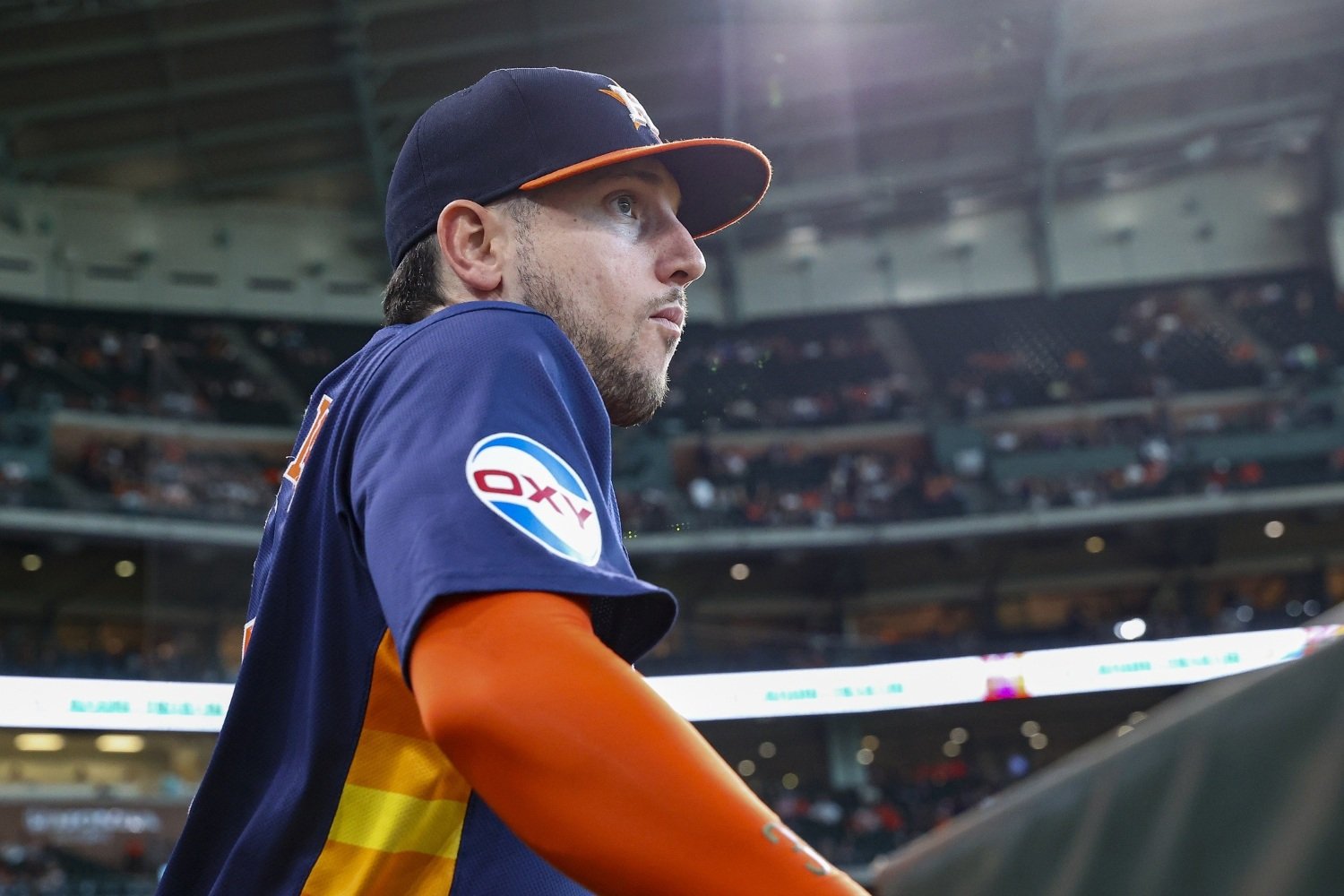 One year ago, the Yankees traded for Juan Soto, giving up a handsome package in exchange for a single season of the services of one of the best hitters of his generation. It was a less daunting deal than it could have been, though, for the simple reason that there was just that one year of control to be had. Soto was, as everyone knew, headed for a highly lucrative free agency, and he and Scott Boras were not going to be dissuaded from that path. That dampened the trade market slightly. For instance, it chased the Cubs away from any serious effort to sign him, before they even considered one. As cautiously as Jed Hoyer approaches huge outlays for top-tier free agents, he's even more reluctant to splurge in the less renewable currency of young talent, by trading top prospects for players over whom he'll have only short-term control. Some players come at a discount because they won't be around long, and such players can hold some appeal for Hoyer and the Cubs, but they're not looking to deal for players at steep prices if they stand to lose them in short order. As the Dodgers eventually did, the team would surely have sought an extension with Tyler Glasnow as a condition of the trade, had they been the ones to pry him away from the Rays last winter. All of that is to say this: If Kyle Tucker of the Astros is not open to an extension this winter in lieu of hitting free agency next fall, then the Cubs are wildly unlikely to acquire him. Reports from the Houston beat at the Winter Meetings indicate that the Astros are lacking clear marching orders from ownership in terms of their 2025 payroll (wonder what that's like, sounds terrible), and that they're open to moving one of Tucker and fellow impending free agent, left-handed starter Framber Valdez. Both players are due significant salaries in their final year of team control, anyway, so moving them would give the team at least a modicum of financial flexibility, but the Astros also have one of the league's worst farm systems, and a blockbuster deal involving either Tucker or Valdez could help them replenish it, This is not, in other words, a Mookie Betts-type situation, where clearing salary will be the sole motivator in a trade and it might be possible to acquire a superstar at a deep discount. Tucker, should be traded, will command a top prospect or two in exchange. Still, it's possible to imagine the Cubs jumping into that fray. Tucker is not a Boras client; he's represented by Excel Sports Management. Quietly, that group can also be tough to hammer out pre-free agency extensions with. They've taken clients like Dansby Swanson, Jason Heyward, George Springer, and Andrew Benintendi all the way to free agency recently. Then again: Dansby Swanson, Jason Heyward. Another couple of Excel clients: Jameson Taillon, Joc Pederson. The Cubs have a solid relationship with that group. Plus, there are counterexamples to the above. Paul Goldschmidt and Pablo López are Excel clients who recently signed extensions with teams shortly after being acquired by those clubs in trades. So, let's imagine Tucker is open to an extension if traded to a team willing to spend big enough to keep him. What would such a deal look like—the trade, and then the contract attached to it? The Astros have a tall, slugging left-handed right fielder who will turn 28 in January; who has made the All-Star team in each of the last three seasons; who owns a Gold Glove Award and a Silver Slugger Award; and who has batted .280/.362/.527 over the last four seasons, with 112 home runs and 80 steals in 91 attempts. He's not Soto, but he's a better player than anyone on the Cubs. In fact, he's better than anyone the Cubs have had since the peaks of Kris Bryant and Javier Báez—but he's younger than Bryant was at that stage of his career, and has a much more well-rounded skill set than Báez did. In short, Tucker will cost whoever trades for him a hefty return. The Cubs' only refuge from the high expected cost is that they might be able to cover part of the value by swapping him out for a similar (though clearly inferior) player. Cody Bellinger has already been linked with the Astros in trade rumors, and while Houston's uncertain payroll situation makes it impossible that they would take on the bulk of Bellinger's contract, the Cubs could offer them a square deal: Bellinger and $15 million, such that they effectively take Tucker at the price of Bellinger and give Houston Bellinger at the price of Tucker. Then, they can add value from there to compensate Houston both for the difference between the projected production of the two players and the risk Houston will assume of Bellinger opting into his 2026 salary. That extra cost wouldn't be small. We're still talking about one player from the top four of the Cubs' top prospects list, and another from the third tier of the system. Houston could get more than that, maybe, from the right buyer without an onerous contract swap to include, and there's always a risk that they would prefer the cleaner deal. The theory here, though, is that Houston would pounce on this structure, because they're not looking to reload, retool, or take a step back in 2025. They want to continue their dominance of the AL West and push toward another World Series; they just acknowledge that they might need to trade one of their soon-to-be-free-agent stars to ensure the staying power of their hegemony. Bellinger is a better player for 2025 than they'd be likely to get from any other suitor in a Tucker trade. There is a clear difference favoring Tucker in terms of projections for 2025. Here are Steamer's forecasts for each: Bellinger: 582 PA, .258/.320/.430, 109 wRC+ Tucker: 669 PA, .276/.366/.510, 148 wRC+ Tucker is also the better defensive right fielder, even if Bellinger is probably the player you'd rather have if forced to use them in center field or at first base. Tucker is the better baserunner, too. There's a substantial gap here. Still, you wouldn't want to give up (say) Matt Shaw and Brandon Birdsell for one year's worth of that upgrade, especially given that you'd take on the heavier financial burden in that one season. Houston could get good talent elsewhere, though, so to get them engaged on a deal that clears Bellinger's money for 2026 and gets you the bump from Bellinger to Tucker in 2025, you'd have to offer a deal at that painfully high level. To justify that, naturally, you'd need to have Tucker not just for one year, but for the long run. Getting Tucker to eschew free agency would be an extremely expensive business. He has just one good comparator In the recent past, as a left-hitting outfielder playing at such a high level from ages 24-27: Christian Yelich, who signed a nine-year deal worth $215 million with the Brewers in early 2020. Yelich, though, was two more years from free agency than was Tucker, thanks to a previous extension signed with the Marlins before he was traded to Milwaukee. We can loosely peg the deal the Cubs might cobble together to the one Yelich signed almost five years ago, but it would have to be scaled up significantly. In all likelihood, a deal that would keep Tucker in Cubbie blue beyond 2025 would end up running 10 years and $340 million. He'd get roughly $16 million in 2025, then $35 million per year for nine more seasons, followed by a mutual option with a bulky buyout to push a little extra money out to the end of the deal. Yelich's contract included deferrals, but Tucker is in a strong position to resist those. The Cubs would have to be willing to go far beyond what they've done for any player in the past. Tucker and his representatives would have to be willing to forego the possibility that the Yankees would give him closer to $450 million one year later. If this all sounds wildly unlikely, you're getting the right idea. Tucker and the Cubs make a smart fit, but an improbable one. The tendencies of the Chicago front office, the fog of uncertainty under which Houston is working, and the multiple player evaluations the two sides would have to match up on make the logistics of a deal difficult. The Yankees might just trade for Tucker, instead, the same way they dealt for Soto last winter. They're not as fussy about keeping control when the opportunity to land a superstar arises as the Cubs are. Still, unless and until moves that preclude this one take place, it'll be worth keeping an eye on the Astros and the Cubs. They make strange but potentially fruitful bedfellows this winter.
 -
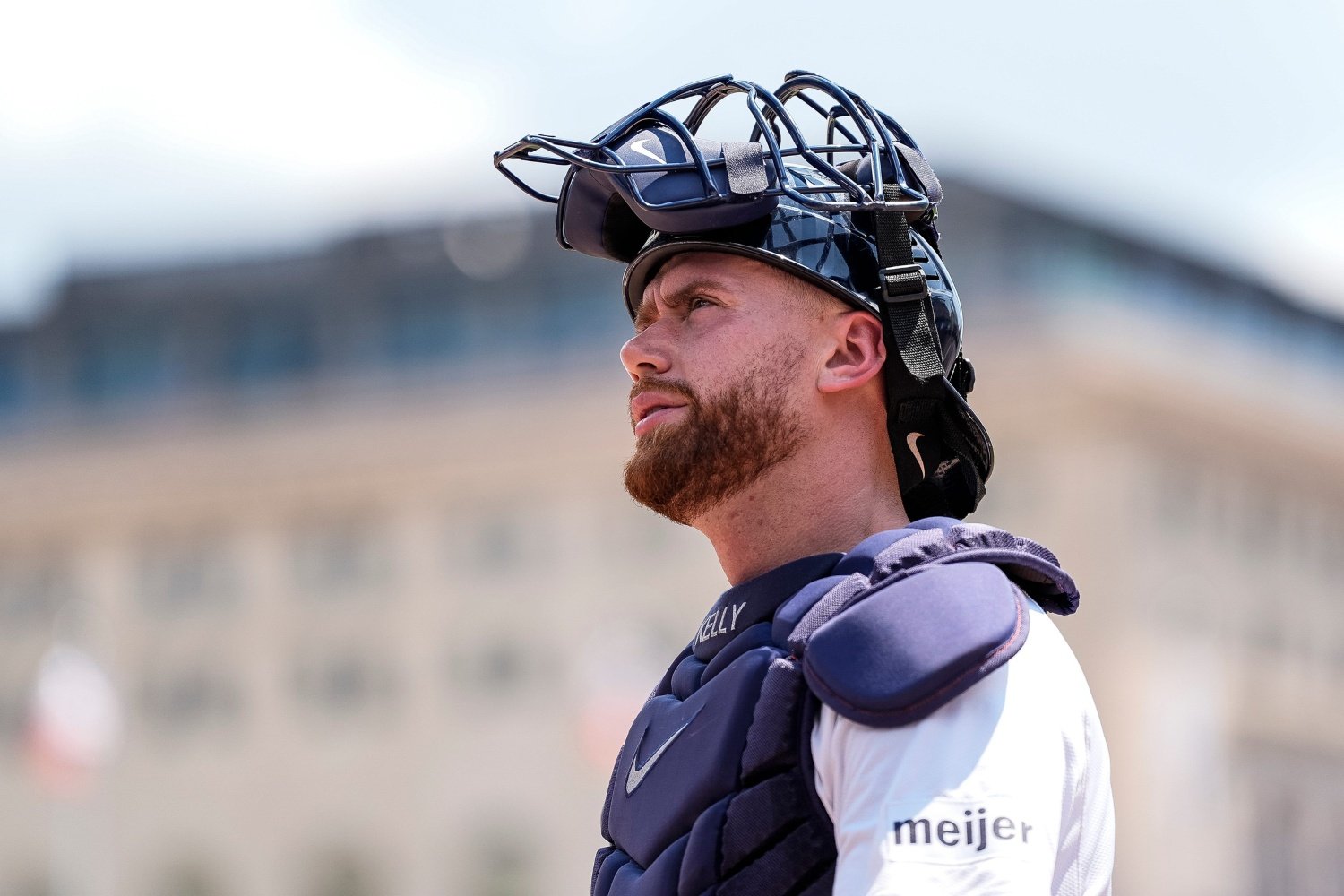 Though (as I laid out in my first post of the day) they did have a few options, the Cubs' best and dearest hope coming into Day One of the Winter Meetings was to get a deal done with free-agent backstop Carson Kelly. Now, they're on that precipice. Kelly, 30, hit .238/.313/.374 in 91 games and 313 plate appearances in 2024, which he began with the Tigers but finished with the Rangers after being traded in July. That batting line was about 5 percent worse than the league average, adjusting for park effects, and marks him out as a better hitter than most complementary catchers. With the Cubs, should this deal be completed, he'll settle into a fairly equitable time share with Miguel Amaya, and give the team solid defense to pair with that stick. I laid out a comparison of Kelly with Amaya, trade candidate Christian Vázquez, and already-signed free agents Danny Jansen and Kyle Higashioka in the piece linked above, showing that Kelly was the best of them in 2024, overall. He owed much of that value to his superbly accurate arm behind the plate, but he's also coming into his own as a hitter. Jansen was the best hitter in the bunch as recently as early this season, but he slumped badly in the second half and Kelly showed far more consistency with the bat. His swing speed distribution compares interestingly with Jansen's; note how he gets up into the zone where a hitter becomes truly dangerous (around 75 miles per hour) more often. Jansen is better at pulling fly balls, but Kelly makes hard contact more often and whiffs much, much less. His 17.6% strikeout rate was one feature that attracted the Cubs' interest; he'll be a catcher capable of handing the stick and keeping the line moving from the bottom of the order. Kelly also owns an .812 career OPS against left-handed pitchers, and has been over .800 each of the last two years. He'll probably draw most lefty assignments, while Miguel Amaya (career .701 OPS vs. RHP, .559 vs. LHP) will sit those days. Kelly will take on some right-handed starters, too, though, as the Cubs figure to try to balance their catching workload fairly evenly. The new rules (less time between pitches, which means more prolonged squatting; more frequent steal attempts) make catching a more demanding and grueling job than ever, and having someone the team can trust to take about half the playing time in reliably advantageous matchups would be huge for Chicago.
 -
The Cubs are on the verge of the move we foresaw and recommended this morning, as multiple reports indicate they're nearing a deal with free-agent catcher Carson Kelly. Image courtesy of © Junfu Han / USA TODAY NETWORK Though (as I laid out in my first post of the day) they did have a few options, the Cubs' best and dearest hope coming into Day One of the Winter Meetings was to get a deal done with free-agent backstop Carson Kelly. Now, they're on that precipice. Kelly, 30, hit .238/.313/.374 in 91 games and 313 plate appearances in 2024, which he began with the Tigers but finished with the Rangers after being traded in July. That batting line was about 5 percent worse than the league average, adjusting for park effects, and marks him out as a better hitter than most complementary catchers. With the Cubs, should this deal be completed, he'll settle into a fairly equitable time share with Miguel Amaya, and give the team solid defense to pair with that stick. I laid out a comparison of Kelly with Amaya, trade candidate Christian Vázquez, and already-signed free agents Danny Jansen and Kyle Higashioka in the piece linked above, showing that Kelly was the best of them in 2024, overall. He owed much of that value to his superbly accurate arm behind the plate, but he's also coming into his own as a hitter. Jansen was the best hitter in the bunch as recently as early this season, but he slumped badly in the second half and Kelly showed far more consistency with the bat. His swing speed distribution compares interestingly with Jansen's; note how he gets up into the zone where a hitter becomes truly dangerous (around 75 miles per hour) more often. Jansen is better at pulling fly balls, but Kelly makes hard contact more often and whiffs much, much less. His 17.6% strikeout rate was one feature that attracted the Cubs' interest; he'll be a catcher capable of handing the stick and keeping the line moving from the bottom of the order. Kelly also owns an .812 career OPS against left-handed pitchers, and has been over .800 each of the last two years. He'll probably draw most lefty assignments, while Miguel Amaya (career .701 OPS vs. RHP, .559 vs. LHP) will sit those days. Kelly will take on some right-handed starters, too, though, as the Cubs figure to try to balance their catching workload fairly evenly. The new rules (less time between pitches, which means more prolonged squatting; more frequent steal attempts) make catching a more demanding and grueling job than ever, and having someone the team can trust to take about half the playing time in reliably advantageous matchups would be huge for Chicago. View full article
-
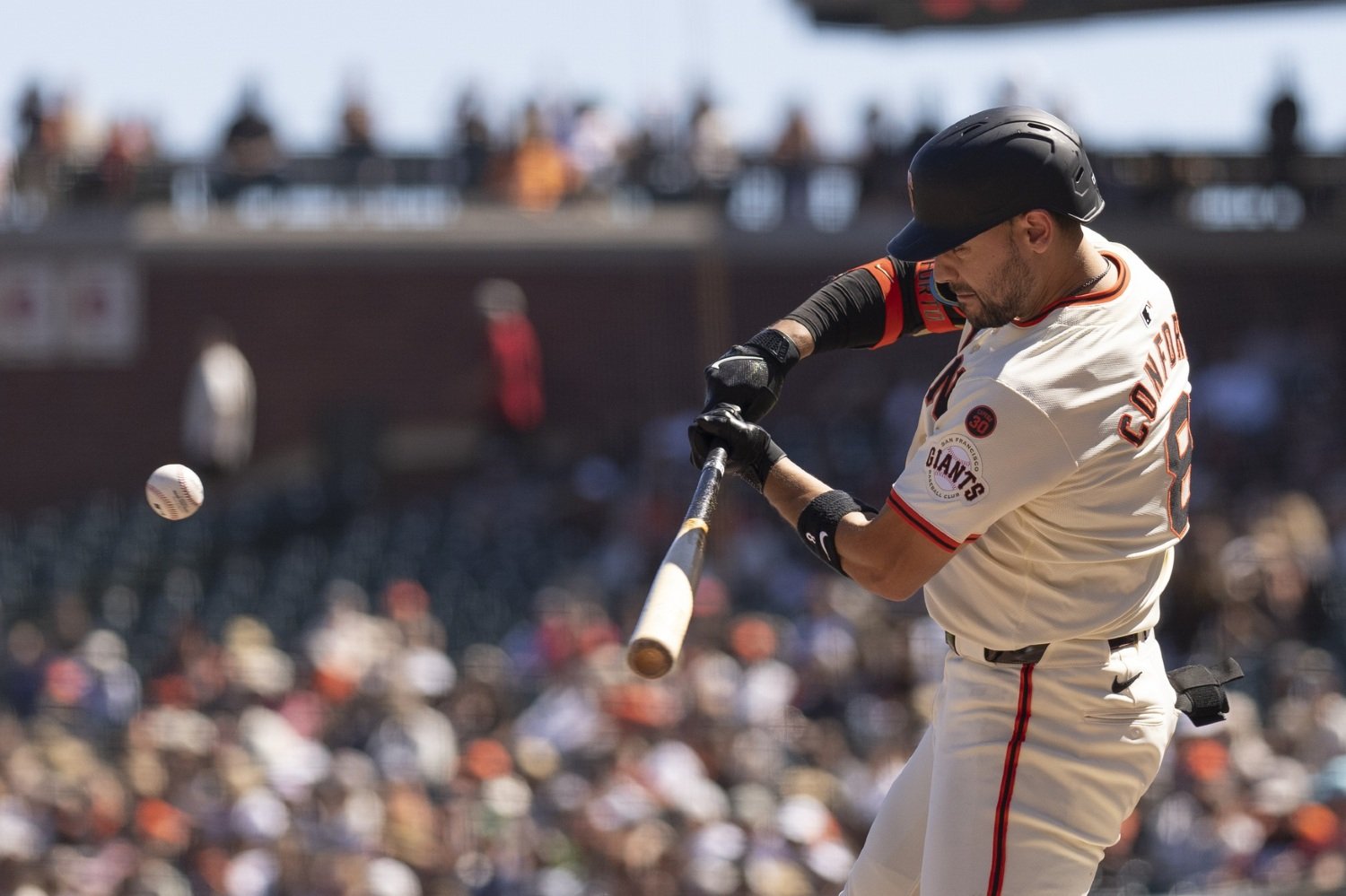 Other than players like Shohei Ohtani and Juan Soto, it's a little silly to fixate on any one free agent, from a fan perspective. The likelihood of landing that particular player is quite low, because (after all) the players in question are free to choose the team they prefer. For reasons financial, geographic, competitive or personal, plenty of players end up going somewhere else, even though they seemed like a great fit for the team. Getting upset each time that happens is a recipe for perpetual hot stove misery, and the point of the hot stove season is fun, not misery. Eventually, though, a team does have to find the best player and value they can, and act on it. Sit and watch too long, and good lanes close up for you. The good solutions to obvious problems grow thin, and the few still available become more costly, because the agents or team executives involved begin to sense that they can apply leverage in negotiations. After a flurry of moves this weekend, the Cubs might be approaching that territory—though it would be too much to suggest that they're there already. The Mets signed Clay Holmes to a three-year, $38-million contract Friday night. That was a tough break for the Cubs, and a good example of the phenomenon above, because the Mets intend to move Holmes to the starting rotation. That would have made it practically impossible for the Cubs to rationally match New York's offer, because Holmes (while a fine candidate for that increasingly popular conversion) was not a great fit for the Cubs' projected starting rotation. They couldn't do much to prevent missing out on Holmes. Nonetheless, it was a bitter pill to swallow, because Holmes was one of the best candidates for the bullpen upgrade the team clearly needs this winter. Losing out on him unavoidably reduces the number of good options available to the team, in one area in which that list was already a bit short. There are rumors that they're interested in Kirby Yates, who could be a great short-term fix, but if Holmes hadn't gotten a big offer to switch roles, he could have shored up the back of the Cubs pen through 2027. On Sunday, the market gave the Cubs another 1-2 punch to the proverbial gut, as Tyler O'Neill and Michael Conforto each signed reasonably-priced deals. O'Neill will make just under $50 million over the next three years with the Orioles, while Conforto—one of my favorite targets for the team should they trade Cody Bellinger, after he had a season in which his superficial stats failed to keep up with good batted-ball data and especially impressive bat-tracking numbers—landed with the dynastic Dodgers on a one-year deal that didn't even reach $20 million. That's this winter's answer to last year's Teoscar Hernández signing for Los Angeles, and another painful miss for the Cubs. Realistically, the team almost certainly felt like they couldn't sign a player like Conforto or O'Neill before trading Bellinger. Again, that would have put them in a tough position to deal with either teams or free agents, because the whole industry is aware of the self-defeating limits being placed on the team's spending by ownership and acquiesced to by their insufficiently assertive front office. Still, the missed opportunities are real. There are still plenty of ways the team can try to improve themselves, overall, even if and when they trade Bellinger. The number of viable options dwindled this weekend, though, and whereas it might have been easy to shrug off misses on players like Willy Adames or Shane Bieber due to their cost and fit on the roster, a few players who went elsewhere most recently cut deeper. Jed Hoyer faces a stern test, and Conforto, especially, would have gone a good distance toward helping him pass it. Instead, he'll have to thread the needle from a different angle.
 -
As the market keeps moving, the players signing in new places are starting to sting a little more. Good options who could have fit the Cubs nicely are coming off the board. Where do good options still exist? Image courtesy of © Stan Szeto-Imagn Images Other than players like Shohei Ohtani and Juan Soto, it's a little silly to fixate on any one free agent, from a fan perspective. The likelihood of landing that particular player is quite low, because (after all) the players in question are free to choose the team they prefer. For reasons financial, geographic, competitive or personal, plenty of players end up going somewhere else, even though they seemed like a great fit for the team. Getting upset each time that happens is a recipe for perpetual hot stove misery, and the point of the hot stove season is fun, not misery. Eventually, though, a team does have to find the best player and value they can, and act on it. Sit and watch too long, and good lanes close up for you. The good solutions to obvious problems grow thin, and the few still available become more costly, because the agents or team executives involved begin to sense that they can apply leverage in negotiations. After a flurry of moves this weekend, the Cubs might be approaching that territory—though it would be too much to suggest that they're there already. The Mets signed Clay Holmes to a three-year, $38-million contract Friday night. That was a tough break for the Cubs, and a good example of the phenomenon above, because the Mets intend to move Holmes to the starting rotation. That would have made it practically impossible for the Cubs to rationally match New York's offer, because Holmes (while a fine candidate for that increasingly popular conversion) was not a great fit for the Cubs' projected starting rotation. They couldn't do much to prevent missing out on Holmes. Nonetheless, it was a bitter pill to swallow, because Holmes was one of the best candidates for the bullpen upgrade the team clearly needs this winter. Losing out on him unavoidably reduces the number of good options available to the team, in one area in which that list was already a bit short. There are rumors that they're interested in Kirby Yates, who could be a great short-term fix, but if Holmes hadn't gotten a big offer to switch roles, he could have shored up the back of the Cubs pen through 2027. On Sunday, the market gave the Cubs another 1-2 punch to the proverbial gut, as Tyler O'Neill and Michael Conforto each signed reasonably-priced deals. O'Neill will make just under $50 million over the next three years with the Orioles, while Conforto—one of my favorite targets for the team should they trade Cody Bellinger, after he had a season in which his superficial stats failed to keep up with good batted-ball data and especially impressive bat-tracking numbers—landed with the dynastic Dodgers on a one-year deal that didn't even reach $20 million. That's this winter's answer to last year's Teoscar Hernández signing for Los Angeles, and another painful miss for the Cubs. Realistically, the team almost certainly felt like they couldn't sign a player like Conforto or O'Neill before trading Bellinger. Again, that would have put them in a tough position to deal with either teams or free agents, because the whole industry is aware of the self-defeating limits being placed on the team's spending by ownership and acquiesced to by their insufficiently assertive front office. Still, the missed opportunities are real. There are still plenty of ways the team can try to improve themselves, overall, even if and when they trade Bellinger. The number of viable options dwindled this weekend, though, and whereas it might have been easy to shrug off misses on players like Willy Adames or Shane Bieber due to their cost and fit on the roster, a few players who went elsewhere most recently cut deeper. Jed Hoyer faces a stern test, and Conforto, especially, would have gone a good distance toward helping him pass it. Instead, he'll have to thread the needle from a different angle. View full article
-
Two segments of the free-agent market have moved quickly this MLB offseason: that for starting pitchers, and that for catchers. The Cubs have made additions to each group, but are they still looking to make a bigger backstop splash? Image courtesy of © David Richard-Imagn Images Many Cubs fans had set their sights on catchers Danny Jansen or Kyle Higashioka this winter. Those fans were bitterly disappointed this week, when the Rangers signed Higashioka to a two-year deal and Jansen secured $8.5 million from the Rays on a one-year pact. Nowhere on most fans' radars was Gary Sánchez, but he could also have been a fit, so when he agreed to a one-year deal at the same value as Jansen's on Saturday night, it narrowed the path to upgrading behind the plate even further. The Cubs, of course, have the temporary and minor luxury of getting to decide just how badly they want that kind of upgrade. They also missed out on Travis d'Arnaud, after the erstwhile Atlanta catcher had his team option declined and ended up signing for two years with the Angels. On that very occasion, though, they were able to scoop up Angels castoff Matt Thaiss, a reclamation project and a refugee from one of the league's worst player-development and -instruction outfits. Thaiss, who could improve rapidly with some tweaks to his pitch framing, signed a split contract and is out of options. That means that the Cubs can feel fairly confident about retaining him even if they initially have to pass him through waivers at the end of spring training, because unless another team wants to claim him and make him their backup, he'll be more incentivized to stick around and keep the pay associated with the minor-league aspect of his deal. The first option facing the team, then, is simply to keep Thaiss, wait for Moises Ballesteros, and hope the combination of those two is sufficient support for what they hope will be a full season of the much-improved Miguel Amaya they saw in the second half of 2024. That's appealing, because from here, it's functionally free. The team can spend all of its available resources of money and young, expendable talent elsewhere on their roster. The downside is equally obvious: Thaiss (bat) and Ballesteros (glove) face major questions about their viability as even complementary MLB catchers. Most teams are struggling to find catching right now, but that doesn't mean any team should be complacent with one not-even-proven backstop atop their depth chart. When it comes to realistic external options, though, there are just two apparent remaining ones. The first is Twins catcher Christian Vázquez, whom I first flagged as a potential target in this trade speculation piece two months ago. Vázquez is the defensive specialist—not only among the players remaining available this winter, but arguably, among all of those who ever were or looked poised to be so. Rank all 56 catchers who were behind the plate for at least 300 innings last year, and Vázquez came in ninth in 2024 in Defensive Runs Prevented, according to Baseball Prospectus. He's one of the game's best pitch framers, and is deeply respected as a manager of the pitching staff and a partner in their daily preparation. Two winters ago, the Cubs vied to sign Vázquez, but the Twins were willing to offer a third guaranteed year, so they landed Vázquez. After consecutive poor seasons at the plate, his trade value is in the red, but that only means that the Cubs could acquire him for almost no talent and still pay him less than the Rays and Orioles will pay Jansen and Sánchez, respectively. The final option, though, is the most intriguing. Carson Kelly, the former Cardinals farmhand and potential Yadier Molina successor, was instead traded to Arizona in the Paul Goldschmidt trade several years ago. He's bounced around even more since then, including splitting 2024 between the Tigers and the Rangers, but Kelly, 30, had a very strong campaign in 2024. In fact, he's probably the player more fans tended to hope Jansen or Higashioka could be. Player Framing Runs Blocking Runs Throwing Runs Batting Runs Total M. Amaya -2.7 1.5 -1.5 -4.4 -7.1 D. Jansen -1.9 1 -1 2.1 0.2 C. Kelly -0.8 0.6 2 2.3 4.1 C. Vázquez 7.2 0.5 -0.2 -10.4 -2.9 K. Higashioka 4.3 -0.9 -0.4 0.5 3.5 If the Cubs believe in the swing transformation and the defensive improvements Amaya made in the second half of 2024, they might believe him to be the best of this set of players. Any way you slice the data, though, Kelly looks like one of the best. He's only a few months older than Jansen, and each of them are at a few years younger than Vázquez or Higashioka. Kelly might be looking for a multi-year deal, whereas Jansen chose a one-year prove-it opportunity over the chance of such a payday, but there are good reasons to prefer Kelly. His arm really stands out; Kelly is the only player in this set who was better than average at slowing the running game. (Thaiss, for what it's worth, was one of the very worst catchers in baseball at that this year.) He did it with just an average exchange time—that is, he got rid of the ball after catching it in only a roughly average fraction of a second. He also had a below-average arm, in terms of sheer throwing speed. Yet, he caught four more runners attempting to steal than expected, based on the lead distance and speed of the runners he was throwing against, according to Statcast. How? I'm glad I asked. Updated Catcher Throwing metrics at Baseball Savant break down the contributions of each aspect of a steal attempt to its success or failure. The runner's speed and position are included. So are the catcher's exchange time and throw strength, plus a teamwork element—things like great (or lousy) tags by the infielder, perhaps; it's really just anything other than the catcher's contributions. But among those contributions, there's one more delineated category: Accuracy. On 12 different throws, Kelly's throw accuracy added at least 20% to the chances of a caught stealing, relative to the expected accuracy from an average catcher. On only five throws did he lose at least that much value with an inaccurate throw, relative to the average expectation. Here's that trait in action. Kelly on the Money.mp4 Almost any big-league catcher can do that once, but Kelly does it consistently. Let's take a look at another one, and treat ourselves to a Javier Báez tag, for old times' sake. Kelly Nails Him.mp4 [DJ Khaled voice] Another one. Kelly Dime.mp4 Seriously, he makes throws like these a lot. These are two important things: Effective; and Beautiful. In a world in which runners are freshly emboldened by rules preventing pitchers from messing with their timing as much or throwing over repeatedly to keep them close; the bases into which they're sliding are bigger; and fielders can no longer halfway cheat by cutting off access to the base while they await a throw, there's no surer way to give your team a chance to record outs on steal attempts than dropping the ball into that imaginary bucket, about shin-high and just to the first-base side of the keystone. Kelly does it as well as anyone. It's wonderful that we have stats to capture this now, because accuracy might well turn out to be the biggest key to catcher throwing efficacy, but we don't even need the stats to grasp this. Just watch those videos, and know there are more like them. It's dazzling. Kelly has a near-elite ability to thwart the running game, at a time when that's rising in importance. Kelly's bat-tracking and batted-ball data were also better than Jansen's this year. Overall, I would rather have him than Jansen, so as long as he remains available, the Cubs have a path to a clear (if, perhaps, costly) upgrade at catcher. They could probably sign Kelly for two years and less than $20 million, but not much less. If they're not willing to spend that much on what would probably be just half a position's worth of playing time—even an obviously vital and fairly scarce one—then they'll have to either accept the all-glove, no-stick option of Vázquez or make do with Thaiss. Each option is viable, but requires a different set of other moves to work. The option that puts the least pressure on other moves would seem to be signing Kelly, but since free agents are just that, Kelly could elect to go elsewhere, as Jansen and others did. That's why having at least snared Thaiss and signed him to a deal that secures him as a floor for the secondary catching job was an important early step this winter. View full article
-
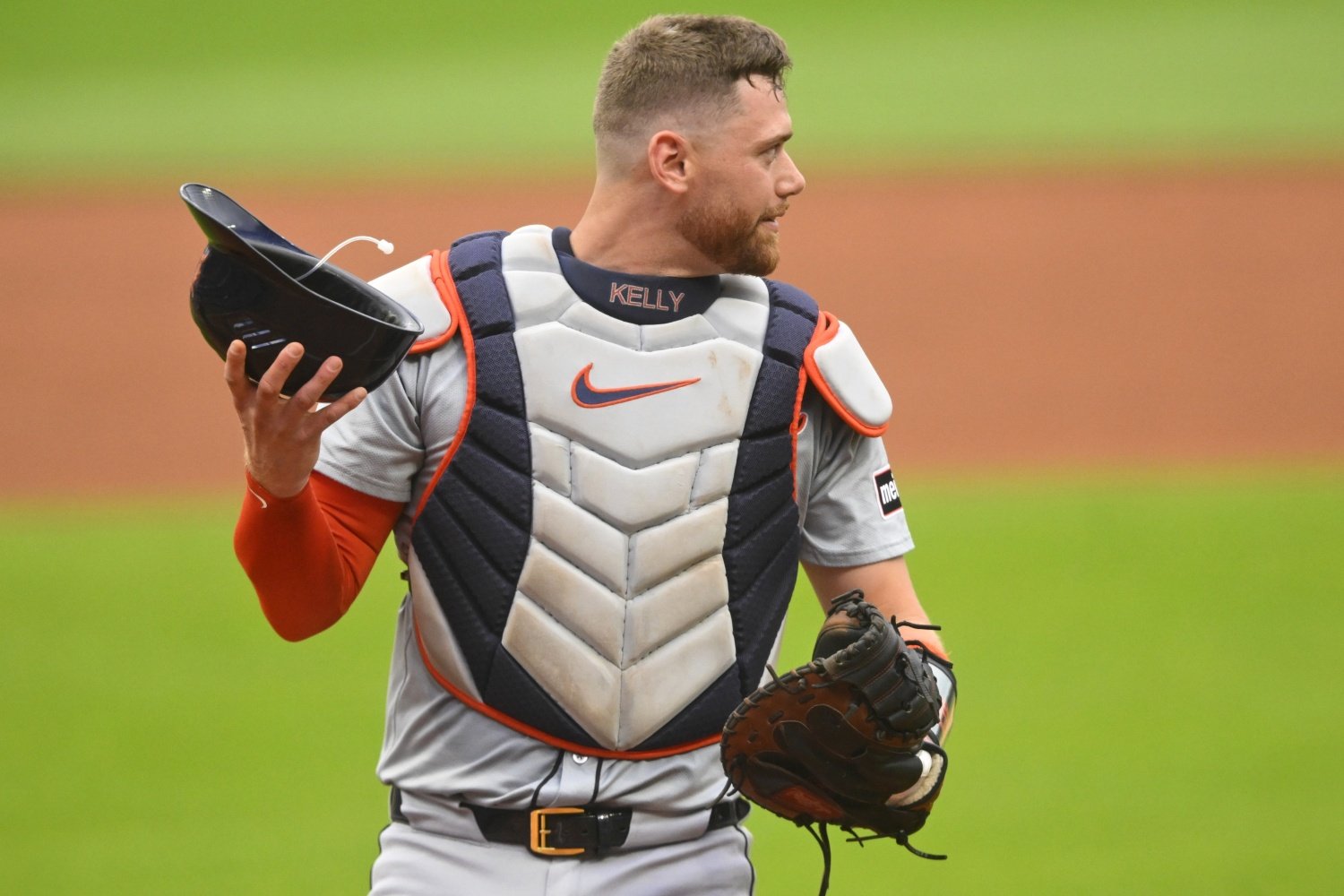 Many Cubs fans had set their sights on catchers Danny Jansen or Kyle Higashioka this winter. Those fans were bitterly disappointed this week, when the Rangers signed Higashioka to a two-year deal and Jansen secured $8.5 million from the Rays on a one-year pact. Nowhere on most fans' radars was Gary Sánchez, but he could also have been a fit, so when he agreed to a one-year deal at the same value as Jansen's on Saturday night, it narrowed the path to upgrading behind the plate even further. The Cubs, of course, have the temporary and minor luxury of getting to decide just how badly they want that kind of upgrade. They also missed out on Travis d'Arnaud, after the erstwhile Atlanta catcher had his team option declined and ended up signing for two years with the Angels. On that very occasion, though, they were able to scoop up Angels castoff Matt Thaiss, a reclamation project and a refugee from one of the league's worst player-development and -instruction outfits. Thaiss, who could improve rapidly with some tweaks to his pitch framing, signed a split contract and is out of options. That means that the Cubs can feel fairly confident about retaining him even if they initially have to pass him through waivers at the end of spring training, because unless another team wants to claim him and make him their backup, he'll be more incentivized to stick around and keep the pay associated with the minor-league aspect of his deal. The first option facing the team, then, is simply to keep Thaiss, wait for Moises Ballesteros, and hope the combination of those two is sufficient support for what they hope will be a full season of the much-improved Miguel Amaya they saw in the second half of 2024. That's appealing, because from here, it's functionally free. The team can spend all of its available resources of money and young, expendable talent elsewhere on their roster. The downside is equally obvious: Thaiss (bat) and Ballesteros (glove) face major questions about their viability as even complementary MLB catchers. Most teams are struggling to find catching right now, but that doesn't mean any team should be complacent with one not-even-proven backstop atop their depth chart. When it comes to realistic external options, though, there are just two apparent remaining ones. The first is Twins catcher Christian Vázquez, whom I first flagged as a potential target in this trade speculation piece two months ago. Vázquez is the defensive specialist—not only among the players remaining available this winter, but arguably, among all of those who ever were or looked poised to be so. Rank all 56 catchers who were behind the plate for at least 300 innings last year, and Vázquez came in ninth in 2024 in Defensive Runs Prevented, according to Baseball Prospectus. He's one of the game's best pitch framers, and is deeply respected as a manager of the pitching staff and a partner in their daily preparation. Two winters ago, the Cubs vied to sign Vázquez, but the Twins were willing to offer a third guaranteed year, so they landed Vázquez. After consecutive poor seasons at the plate, his trade value is in the red, but that only means that the Cubs could acquire him for almost no talent and still pay him less than the Rays and Orioles will pay Jansen and Sánchez, respectively. The final option, though, is the most intriguing. Carson Kelly, the former Cardinals farmhand and potential Yadier Molina successor, was instead traded to Arizona in the Paul Goldschmidt trade several years ago. He's bounced around even more since then, including splitting 2024 between the Tigers and the Rangers, but Kelly, 30, had a very strong campaign in 2024. In fact, he's probably the player more fans tended to hope Jansen or Higashioka could be. Player Framing Runs Blocking Runs Throwing Runs Batting Runs Total M. Amaya -2.7 1.5 -1.5 -4.4 -7.1 D. Jansen -1.9 1 -1 2.1 0.2 C. Kelly -0.8 0.6 2 2.3 4.1 C. Vázquez 7.2 0.5 -0.2 -10.4 -2.9 K. Higashioka 4.3 -0.9 -0.4 0.5 3.5 If the Cubs believe in the swing transformation and the defensive improvements Amaya made in the second half of 2024, they might believe him to be the best of this set of players. Any way you slice the data, though, Kelly looks like one of the best. He's only a few months older than Jansen, and each of them are at a few years younger than Vázquez or Higashioka. Kelly might be looking for a multi-year deal, whereas Jansen chose a one-year prove-it opportunity over the chance of such a payday, but there are good reasons to prefer Kelly. His arm really stands out; Kelly is the only player in this set who was better than average at slowing the running game. (Thaiss, for what it's worth, was one of the very worst catchers in baseball at that this year.) He did it with just an average exchange time—that is, he got rid of the ball after catching it in only a roughly average fraction of a second. He also had a below-average arm, in terms of sheer throwing speed. Yet, he caught four more runners attempting to steal than expected, based on the lead distance and speed of the runners he was throwing against, according to Statcast. How? I'm glad I asked. Updated Catcher Throwing metrics at Baseball Savant break down the contributions of each aspect of a steal attempt to its success or failure. The runner's speed and position are included. So are the catcher's exchange time and throw strength, plus a teamwork element—things like great (or lousy) tags by the infielder, perhaps; it's really just anything other than the catcher's contributions. But among those contributions, there's one more delineated category: Accuracy. On 12 different throws, Kelly's throw accuracy added at least 20% to the chances of a caught stealing, relative to the expected accuracy from an average catcher. On only five throws did he lose at least that much value with an inaccurate throw, relative to the average expectation. Here's that trait in action. Kelly on the Money.mp4 Almost any big-league catcher can do that once, but Kelly does it consistently. Let's take a look at another one, and treat ourselves to a Javier Báez tag, for old times' sake. Kelly Nails Him.mp4 [DJ Khaled voice] Another one. Kelly Dime.mp4 Seriously, he makes throws like these a lot. These are two important things: Effective; and Beautiful. In a world in which runners are freshly emboldened by rules preventing pitchers from messing with their timing as much or throwing over repeatedly to keep them close; the bases into which they're sliding are bigger; and fielders can no longer halfway cheat by cutting off access to the base while they await a throw, there's no surer way to give your team a chance to record outs on steal attempts than dropping the ball into that imaginary bucket, about shin-high and just to the first-base side of the keystone. Kelly does it as well as anyone. It's wonderful that we have stats to capture this now, because accuracy might well turn out to be the biggest key to catcher throwing efficacy, but we don't even need the stats to grasp this. Just watch those videos, and know there are more like them. It's dazzling. Kelly has a near-elite ability to thwart the running game, at a time when that's rising in importance. Kelly's bat-tracking and batted-ball data were also better than Jansen's this year. Overall, I would rather have him than Jansen, so as long as he remains available, the Cubs have a path to a clear (if, perhaps, costly) upgrade at catcher. They could probably sign Kelly for two years and less than $20 million, but not much less. If they're not willing to spend that much on what would probably be just half a position's worth of playing time—even an obviously vital and fairly scarce one—then they'll have to either accept the all-glove, no-stick option of Vázquez or make do with Thaiss. Each option is viable, but requires a different set of other moves to work. The option that puts the least pressure on other moves would seem to be signing Kelly, but since free agents are just that, Kelly could elect to go elsewhere, as Jansen and others did. That's why having at least snared Thaiss and signed him to a deal that secures him as a floor for the secondary catching job was an important early step this winter.
 -
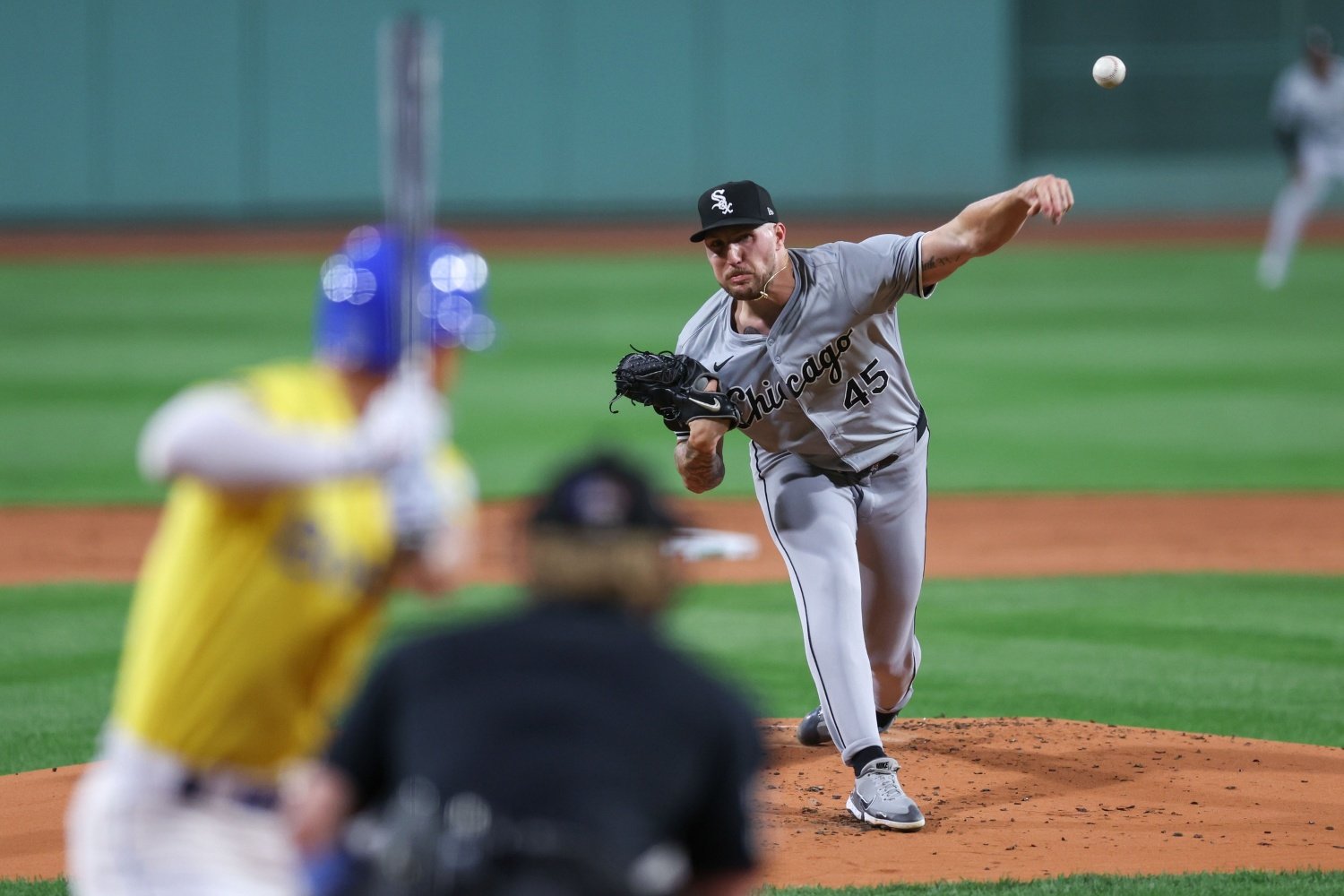 On Thursday afternoon, all hell broke loose for a bit on what is left of Cubs Twitter. Most of the good baseball talk these days is happening at Bluesky, but because Jeff Passan hasn't yet defected, those of us who want to instantly catch important news when it breaks are forced to spend some time on Twitter. And if you're one of those people, you surely encountered at least one of several reports that spilled out on Thursday afternoon and evening about a discussion between the Cubs, White Sox, and Mariners, on what would be a three-way trade involving Garrett Crochet coming to the Cubs and Nico Hoerner going to Seattle. Our own Jacob Zanolla was one of the first to report what he was hearing. Others chimed in with similar scraps, and pretty quickly, a speculative deal came into focus for the lovers of tea leaves and intrigue hovering around the hot stove. Because it was out in the social media atmosphere, the rumor took on a tangibility that made it feel very real and urgent for a lot of people. Alas, within a few more hours, there were multiple reports that the "deal" was "dead." Ok, let's unpack all that a little bit. Firstly, let me say: Jacob was not making things up, and I have no particular reason to think anyone else who tweeted seemingly corroborating reports was, either. I can confirm that those talks took place, not merely Thursday or late Wednesday night but in pieces over the last few weeks, and that the three teams were circling toward a potential deal by Thursday afternoon. It would, indeed, have involved Crochet and (most likely) Hoerner, with one headline prospect going from the Cubs to the White Sox, another going from Seattle to Chicago, and a few ancillary pieces changing hands along the way to balance things out. That much is true. If you follow me on Twitter or on Bluesky, you'll note that I neither tweeted nor skeeted on the subject. However, we did do some background work on it in the North Side Baseball Slack channel. For me, the available information did not rise to the level of reportability, but something was close enough that we started getting ducks in a row. Crucially, I think, fans should understand that it's not especially uncommon for a deal like this to get this close. When I say the rumor didn't quite feel reportable, I don't mean that there was any uncertainty about the existence of the discussions. I just didn't have something that met my own standard for newsworthiness, because trade talks get as far as I believe this one to have gotten happen all over the league, every week. Some of them never even escape the biome of the teams involved, but plenty of them do, and at that point, the external holders of the information have to decide what merits public mention. This is not a criticism of Jacob. I want to make that very clear. He and I don't consult on these subjects anyway, and while his contributions are highly valued and welcome, we would not lay claim to a report by Jacob the same way (say) The Athletic would claim and back one by Ken Rosenthal. He is free to speak with his own voice on Twitter and make his own calls about newsworthiness, as long as he's reporting accurate information. I believe he did just fine here. I just want to start by highlighting the fact that this trade was not especially close. The Cubs, alone, have been closer to another notable deal this winter than they were to completing this one. As far as I know, no one ever publicly reported even the possibility of that trade. Some of our perceptions about trade possibility and activity are distorted, if we ever assume we're hearing about everything—or even that there's a reliable difference between what is reported and what isn't, in terms of how real it got before fizzling out. Now, let's talk about how the deal "died," beginning with whether or not it actually did. As the headline probably tells you, that's not how I would characterize the situation, though my quibble is as much with our language for such situations as with the particulars of this one. Once you understand that this trade was never more advanced than a dozen others that will not-quite happen over the next week, you can see part of my nitpick easily enough. Did it really "live," exactly? Or was it just a gleam in someone's eye, noticed from across a room by an unrelated third party? (Let's, er, abort this metaphor right here. But you get my point.) My second issue is the larger one. Is the deal "dead," as some said? I wouldn't put it that way. Obviously, nothing has happened—no players have changed teams in some other fashion, for instance—to preclude the teams resuming talks. When discussions like these collapse, they tend to be hard to pick back up, because someone has shut something down and it might be a (literal) dealbreaker for someone else. But minds can change, and so can circumstances. I regard it as highly unlikely that the semi-reported deal goes on to get done, but it's not fully scuppered. I would say, instead, that it's been thwarted for now, by two separate problems: Getting the Mariners involved was meant to fix a stall reached by the Cubs and White Sox, rooted in the fact that the Cubs were unwilling to give up any combination of two top prospects the White Sox found satisfactory. They had already talked to Seattle about Hoerner, and folded them into the discussion with the idea of sending Hoerner there and having Seattle supply a second piece the White Sox would accept. Two problems sprang up in the attempt to make that work. Firstly, of the three or four names discussed as that second piece, the Sox and Mariners never came to an agreement on one. I won't divulge the names of any of those young players, but I think each side was being reasonable there. Secondly, the Cubs didn't want to send much in other value (either a supplemental, lower-tier prospect to the Sox, or money to the M's, or both) beyond Hoerner and one top prospect to satisfy the other two teams. As we have often discussed here, the Cubs front office does not like paying transaction costs. They would have had to step up in a significant way to bridge the gaps that existed. The Cubs are also distracted, in a way. Yesterday, we discussed how trading for Eli Morgan and signing Matthew Boyd has started to sharpen the positions on Hoyer's winter chess board. In truth, though, he still has multiple potential strategies available, and this move would have committed the Cubs to one path a bit too soon—at least in one reading of the facts. As was also reported Thursday, the team has plenty of irons in lower-tier free-agent fires, and they're juggling discussions about a possible Cody Bellinger trade (though no, it doesn't seem like Bellinger being part of this trade was much of an option; he would land in Seattle only under a totally different set of scenarios) as well as the pursuit of a high-ceiling player like Crochet. The World Chess Championship is happening right now, in Singapore. World Champion Ding Liren and challenger Gukesh Dommeraju have faced off in nine games, so far, of a possible 14, and I've watched a good amount of their match via various streaming platforms. Each has put some creative and dangerous ideas on the board over the last several games, but they've drawn each of the last six. In that entire run of play, there have only been two or three moments when one of them could have taken decisive control and found a win. They've missed them, even then, not because they weren't good enough at chess, but because they had to consider a wealth of options and remain cognizant of the risk of counterplay, all under the tick and tock of a clock. That's a bit like the situation the Cubs are in right now. As frustrating as the last two seasons have been, any baseball fan (and even some chess fans) can see that the Cubs entered this winter in a strong position. Hoyer has to find the move that can be decisive, at some point, or else his team won't get over the hump and back into the postseason next year. The clock is ticking on him, too. Right now, though, he can see multiple paths to victory, and his opponent—the rest of the league, basically—has some turns yet to play. The timing of this deal wasn't right, or at least, it didn't seem so yet to the parties involved. I wouldn't say it's dead, although it can certainly die in the coming days. Juan Soto will soon sign somewhere; that's a big turn for the other pieces on the board. There will be more, too. It's still possible for the board to rearrange itself a few moves down the road in such a way that these three teams face the same options under more conducive circumstances, or that their appetites for risk have risen. In any game of chess or MLB offseason, though, that circling back is unlikely. Thus, the Cubs have to look for other ways to seize the same kind of initiative, be it through direct negotiations with the White Sox on Crochet (giving up that richer prospect package, and hoping to make up the losses via a separate Hoerner trade) or with the Mariners and others on Bellinger (giving them access to more of the free-agent market again). In the meantime, keep taking reports from anyone but Passan with a grain of salt—not because everyone doing the reporting is a huckster (they're not!), but because a high standard for reporting rumors like these might be the only thing keeping any of us sane. If you really want to put yourself in Hoyer's shoes for a while, grab a chess board and a friend, and keep notifications turned on for Passan until he starts skeeting.
 -
For a day on which nothing actually happened, a lot sure did happen on Thursday, eh? Let's clean up a mess. Image courtesy of © Paul Rutherford-Imagn Images On Thursday afternoon, all hell broke loose for a bit on what is left of Cubs Twitter. Most of the good baseball talk these days is happening at Bluesky, but because Jeff Passan hasn't yet defected, those of us who want to instantly catch important news when it breaks are forced to spend some time on Twitter. And if you're one of those people, you surely encountered at least one of several reports that spilled out on Thursday afternoon and evening about a discussion between the Cubs, White Sox, and Mariners, on what would be a three-way trade involving Garrett Crochet coming to the Cubs and Nico Hoerner going to Seattle. Our own Jacob Zanolla was one of the first to report what he was hearing. Others chimed in with similar scraps, and pretty quickly, a speculative deal came into focus for the lovers of tea leaves and intrigue hovering around the hot stove. Because it was out in the social media atmosphere, the rumor took on a tangibility that made it feel very real and urgent for a lot of people. Alas, within a few more hours, there were multiple reports that the "deal" was "dead." Ok, let's unpack all that a little bit. Firstly, let me say: Jacob was not making things up, and I have no particular reason to think anyone else who tweeted seemingly corroborating reports was, either. I can confirm that those talks took place, not merely Thursday or late Wednesday night but in pieces over the last few weeks, and that the three teams were circling toward a potential deal by Thursday afternoon. It would, indeed, have involved Crochet and (most likely) Hoerner, with one headline prospect going from the Cubs to the White Sox, another going from Seattle to Chicago, and a few ancillary pieces changing hands along the way to balance things out. That much is true. If you follow me on Twitter or on Bluesky, you'll note that I neither tweeted nor skeeted on the subject. However, we did do some background work on it in the North Side Baseball Slack channel. For me, the available information did not rise to the level of reportability, but something was close enough that we started getting ducks in a row. Crucially, I think, fans should understand that it's not especially uncommon for a deal like this to get this close. When I say the rumor didn't quite feel reportable, I don't mean that there was any uncertainty about the existence of the discussions. I just didn't have something that met my own standard for newsworthiness, because trade talks get as far as I believe this one to have gotten happen all over the league, every week. Some of them never even escape the biome of the teams involved, but plenty of them do, and at that point, the external holders of the information have to decide what merits public mention. This is not a criticism of Jacob. I want to make that very clear. He and I don't consult on these subjects anyway, and while his contributions are highly valued and welcome, we would not lay claim to a report by Jacob the same way (say) The Athletic would claim and back one by Ken Rosenthal. He is free to speak with his own voice on Twitter and make his own calls about newsworthiness, as long as he's reporting accurate information. I believe he did just fine here. I just want to start by highlighting the fact that this trade was not especially close. The Cubs, alone, have been closer to another notable deal this winter than they were to completing this one. As far as I know, no one ever publicly reported even the possibility of that trade. Some of our perceptions about trade possibility and activity are distorted, if we ever assume we're hearing about everything—or even that there's a reliable difference between what is reported and what isn't, in terms of how real it got before fizzling out. Now, let's talk about how the deal "died," beginning with whether or not it actually did. As the headline probably tells you, that's not how I would characterize the situation, though my quibble is as much with our language for such situations as with the particulars of this one. Once you understand that this trade was never more advanced than a dozen others that will not-quite happen over the next week, you can see part of my nitpick easily enough. Did it really "live," exactly? Or was it just a gleam in someone's eye, noticed from across a room by an unrelated third party? (Let's, er, abort this metaphor right here. But you get my point.) My second issue is the larger one. Is the deal "dead," as some said? I wouldn't put it that way. Obviously, nothing has happened—no players have changed teams in some other fashion, for instance—to preclude the teams resuming talks. When discussions like these collapse, they tend to be hard to pick back up, because someone has shut something down and it might be a (literal) dealbreaker for someone else. But minds can change, and so can circumstances. I regard it as highly unlikely that the semi-reported deal goes on to get done, but it's not fully scuppered. I would say, instead, that it's been thwarted for now, by two separate problems: Getting the Mariners involved was meant to fix a stall reached by the Cubs and White Sox, rooted in the fact that the Cubs were unwilling to give up any combination of two top prospects the White Sox found satisfactory. They had already talked to Seattle about Hoerner, and folded them into the discussion with the idea of sending Hoerner there and having Seattle supply a second piece the White Sox would accept. Two problems sprang up in the attempt to make that work. Firstly, of the three or four names discussed as that second piece, the Sox and Mariners never came to an agreement on one. I won't divulge the names of any of those young players, but I think each side was being reasonable there. Secondly, the Cubs didn't want to send much in other value (either a supplemental, lower-tier prospect to the Sox, or money to the M's, or both) beyond Hoerner and one top prospect to satisfy the other two teams. As we have often discussed here, the Cubs front office does not like paying transaction costs. They would have had to step up in a significant way to bridge the gaps that existed. The Cubs are also distracted, in a way. Yesterday, we discussed how trading for Eli Morgan and signing Matthew Boyd has started to sharpen the positions on Hoyer's winter chess board. In truth, though, he still has multiple potential strategies available, and this move would have committed the Cubs to one path a bit too soon—at least in one reading of the facts. As was also reported Thursday, the team has plenty of irons in lower-tier free-agent fires, and they're juggling discussions about a possible Cody Bellinger trade (though no, it doesn't seem like Bellinger being part of this trade was much of an option; he would land in Seattle only under a totally different set of scenarios) as well as the pursuit of a high-ceiling player like Crochet. The World Chess Championship is happening right now, in Singapore. World Champion Ding Liren and challenger Gukesh Dommeraju have faced off in nine games, so far, of a possible 14, and I've watched a good amount of their match via various streaming platforms. Each has put some creative and dangerous ideas on the board over the last several games, but they've drawn each of the last six. In that entire run of play, there have only been two or three moments when one of them could have taken decisive control and found a win. They've missed them, even then, not because they weren't good enough at chess, but because they had to consider a wealth of options and remain cognizant of the risk of counterplay, all under the tick and tock of a clock. That's a bit like the situation the Cubs are in right now. As frustrating as the last two seasons have been, any baseball fan (and even some chess fans) can see that the Cubs entered this winter in a strong position. Hoyer has to find the move that can be decisive, at some point, or else his team won't get over the hump and back into the postseason next year. The clock is ticking on him, too. Right now, though, he can see multiple paths to victory, and his opponent—the rest of the league, basically—has some turns yet to play. The timing of this deal wasn't right, or at least, it didn't seem so yet to the parties involved. I wouldn't say it's dead, although it can certainly die in the coming days. Juan Soto will soon sign somewhere; that's a big turn for the other pieces on the board. There will be more, too. It's still possible for the board to rearrange itself a few moves down the road in such a way that these three teams face the same options under more conducive circumstances, or that their appetites for risk have risen. In any game of chess or MLB offseason, though, that circling back is unlikely. Thus, the Cubs have to look for other ways to seize the same kind of initiative, be it through direct negotiations with the White Sox on Crochet (giving up that richer prospect package, and hoping to make up the losses via a separate Hoerner trade) or with the Mariners and others on Bellinger (giving them access to more of the free-agent market again). In the meantime, keep taking reports from anyone but Passan with a grain of salt—not because everyone doing the reporting is a huckster (they're not!), but because a high standard for reporting rumors like these might be the only thing keeping any of us sane. If you really want to put yourself in Hoyer's shoes for a while, grab a chess board and a friend, and keep notifications turned on for Passan until he starts skeeting. View full article
-
Part of the value of the contract to which the Cubs agreed earlier this week lies in the clarity it provides them—the options it forecloses. Some observers don't seem to have noticed. Image courtesy of © Ken Blaze-Imagn Images There are a variety of valid analyses of the Cubs' agreement to sign Matthew Boyd to a two-year deal at the beginning of this week. Some fans appreciate the mixture of depth and upside he adds to the team's starting rotation, but others balk at the lack of star power and at a price tag that tends to suggest a lack of huge moves trailing in this one's wake. Both are reasonable positions. However, there's also a thread of conversation going around the internet that is not reasonable, and which we need to thwart. No matter what you might hear, or from whom, the Cubs are not going to deploy Boyd as a reliever—at least not unless or until he suffers some significant injury that alters his arc from here. Boyd has evolved nicely over his long career, from a lefty very much vulnerable to right-handed batters into a much more platoon-neutral one. He allowed just a .641 OPS to righties in 2024, easily the best of his career in seasons featuring any meaningful number of batters faced. He's developed his changeup into a weapon against those batters, and throws it more than he used to. Meanwhile, he's brought along his sinker, which works nicely out of his low slot as a weapon against lefties and allows him to be less reliant on his sweeping slider than he was earlier in his career. In short, while he might not be available every fifth day the way an ideal starting pitcher would be, it's his well-rounded skill set and ability to thrive as a starter that made him attractive to the team. He's started 168 of the 182 games in which he's appeared in his MLB career, and he's only become more viable as a starter in the last few years. You can also consider the terms of the deal and see the situation plainly: The Cubs didn't pony up $14.5 million per year to a player they envision as a reliever, given that even if he did slide into that role, Boyd's upside would be something less than that of a relief ace. While many Cubs fans (rightfully) hope and expect that the team will still try to add to the top of the rotation depth chart this winter, and while many of them (less rightfully) might prefer Javier Assad, Ben Brown, or Jordan Wicks as starters, the fact that this deal happened at all sends a clear message: the Cubs don't agree. Boyd got this deal because the Cubs (and at least one or two other teams in the market) view him as a starter, and a strong one. If he can harass lefties with his slider, sinker, and four-seamer and make the changeup work off his four-seamer consistently against righties, Boyd is simply a different pitcher than his somewhat ugly career stat line implies—and the team is betting big on that being the state of things. Part of the value of this move was that it headed off some other possibilities. Fans won't view it that way, and are certainly not obligated to do so, but that's a real consideration. For the third year in a row, Jed Hoyer and company entered this offseason with a huge spectrum of possible paths to building a better roster. Sometimes, all those possibilities pile up on one another and become an obstacle to decisive action, rather than facilitating it. Early moves (like the team's trade for Eli Morgan and the Boyd signing) sometimes help as much by partially checking off an item on a list as by actually solving a roster problem. There is still plenty left for the Cubs to do this winter. Signing Boyd narrowed the number of options available, but that should make it easier for the team to choose their next moves. To see that value clearly, though, you have to embrace the inevitability of Boyd being part of the team's starting rotation. It's not a fluid situation. He's locked in, just as Justin Steele, Shota Imanaga, and Jameson Taillon are. View full article
-
Let's Dispel a Misconception About Cubs' Matthew Boyd Deal
Matthew Trueblood posted an article in Cubs
 There are a variety of valid analyses of the Cubs' agreement to sign Matthew Boyd to a two-year deal at the beginning of this week. Some fans appreciate the mixture of depth and upside he adds to the team's starting rotation, but others balk at the lack of star power and at a price tag that tends to suggest a lack of huge moves trailing in this one's wake. Both are reasonable positions. However, there's also a thread of conversation going around the internet that is not reasonable, and which we need to thwart. No matter what you might hear, or from whom, the Cubs are not going to deploy Boyd as a reliever—at least not unless or until he suffers some significant injury that alters his arc from here. Boyd has evolved nicely over his long career, from a lefty very much vulnerable to right-handed batters into a much more platoon-neutral one. He allowed just a .641 OPS to righties in 2024, easily the best of his career in seasons featuring any meaningful number of batters faced. He's developed his changeup into a weapon against those batters, and throws it more than he used to. Meanwhile, he's brought along his sinker, which works nicely out of his low slot as a weapon against lefties and allows him to be less reliant on his sweeping slider than he was earlier in his career. In short, while he might not be available every fifth day the way an ideal starting pitcher would be, it's his well-rounded skill set and ability to thrive as a starter that made him attractive to the team. He's started 168 of the 182 games in which he's appeared in his MLB career, and he's only become more viable as a starter in the last few years. You can also consider the terms of the deal and see the situation plainly: The Cubs didn't pony up $14.5 million per year to a player they envision as a reliever, given that even if he did slide into that role, Boyd's upside would be something less than that of a relief ace. While many Cubs fans (rightfully) hope and expect that the team will still try to add to the top of the rotation depth chart this winter, and while many of them (less rightfully) might prefer Javier Assad, Ben Brown, or Jordan Wicks as starters, the fact that this deal happened at all sends a clear message: the Cubs don't agree. Boyd got this deal because the Cubs (and at least one or two other teams in the market) view him as a starter, and a strong one. If he can harass lefties with his slider, sinker, and four-seamer and make the changeup work off his four-seamer consistently against righties, Boyd is simply a different pitcher than his somewhat ugly career stat line implies—and the team is betting big on that being the state of things. Part of the value of this move was that it headed off some other possibilities. Fans won't view it that way, and are certainly not obligated to do so, but that's a real consideration. For the third year in a row, Jed Hoyer and company entered this offseason with a huge spectrum of possible paths to building a better roster. Sometimes, all those possibilities pile up on one another and become an obstacle to decisive action, rather than facilitating it. Early moves (like the team's trade for Eli Morgan and the Boyd signing) sometimes help as much by partially checking off an item on a list as by actually solving a roster problem. There is still plenty left for the Cubs to do this winter. Signing Boyd narrowed the number of options available, but that should make it easier for the team to choose their next moves. To see that value clearly, though, you have to embrace the inevitability of Boyd being part of the team's starting rotation. It's not a fluid situation. He's locked in, just as Justin Steele, Shota Imanaga, and Jameson Taillon are.
 -
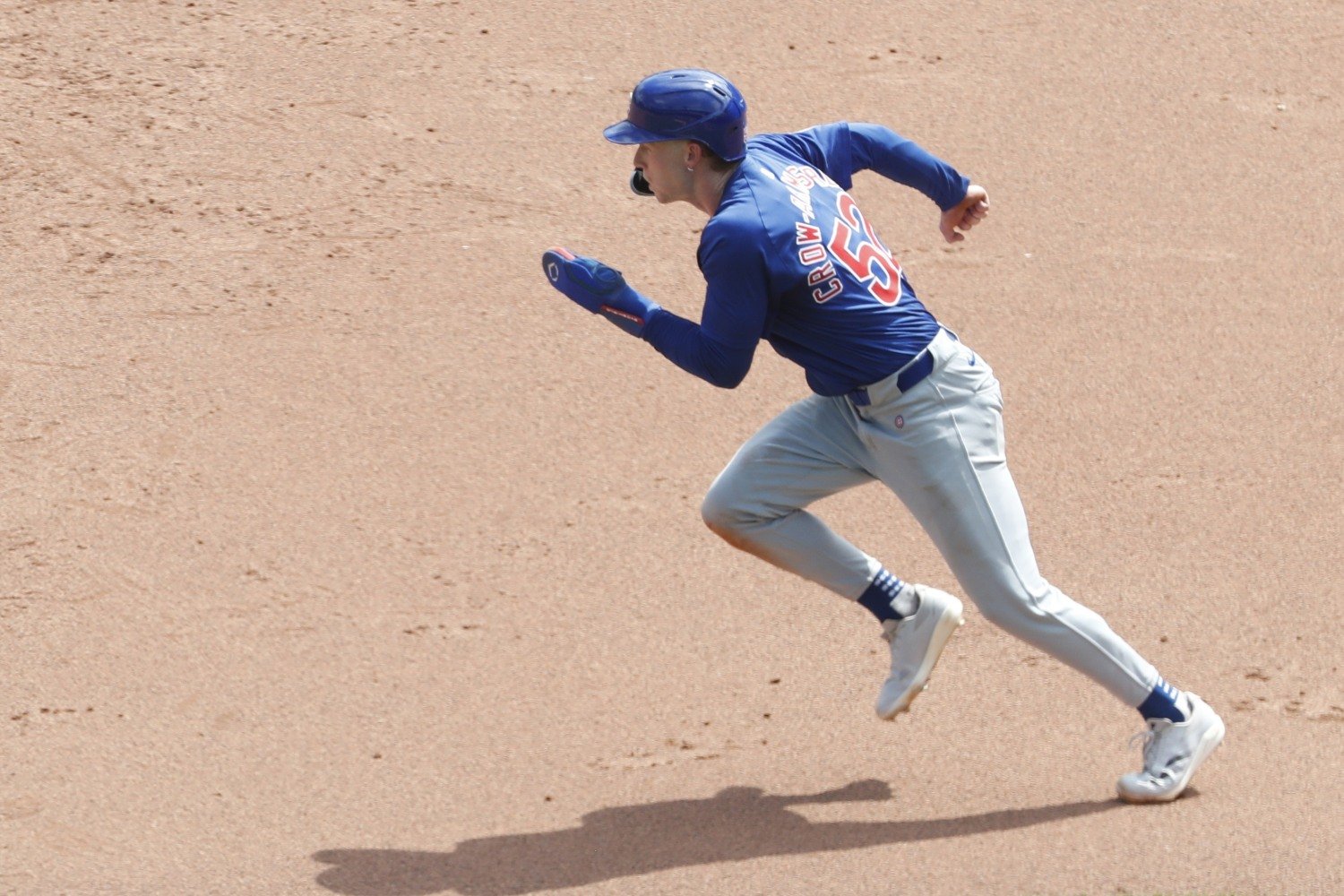 Somewhat infamously, in 2015, the Cubs waited until the day they could delay Kris Bryant's free agency by a year before they called him up. It wasn't even close to being the first case of such blatant service-time manipulation. It wasn't against the rules. It was, however, a little icky. Since Bryant went on to win the Rookie of the Year Award that season, under new rules added to the collective bargaining agreement three years ago, he would now be given a full season of service time, anyway. At the time, though, Bryant was left without a recourse, other than the grievance he and Scott Boras filed—and, predictably, years later, officially lost. It doesn't seem as though the team did that with Pete Crow-Armstrong. They did wait until almost the middle of September 2023 to call him up for the first time, but that appears to have been about bringing him along at the appropriate pace and about the competitive circumstances they faced in the moment. Besides, at that moment, it was hard to guess whether he'd be positioned to start the following season with the Cubs. If he did, though, he would certainly get over a year of service time in 2024. He didn't. After the Cubs re-signed Cody Bellinger in February, Crow-Armstrong began the season with Triple-A Iowa. He got the call when Bellinger was hurt colliding with the wall in April, but didn't play very well, and was sent back down three weeks later when the team got healthy again. More injuries made way for him again by mid-June, but Crow-Armstrong ended this season with 170 total days of MLB service time, counting 2023 and 2024. A full season of service time is 172 days. In other words, though he's only two years from reaching salary arbitration, Crow-Armstrong is still six years from free agency, just as if he were called up for the first time this April. It's a big deal for the Cubs, because that extra year of team control increases his trade value, their leverage in potential extension negotiations—and, if he pans out the way they hope he started to in the second half of 2024, one extra season of his services if no extension comes to fruition. Crow-Armstrong will turn 23 next March. The season in which these two days of service make a crucial difference, 2030, will be his age-28 campaign. There's every chance that that's still part of his peak; he's likely to remain an elite defensive center fielder at least through that campaign. Crow-Armstrong is penciled in as the team's starting center fielder for 2025, and he's a key X-factor in any projection of their success next year. His plate discipline is far, far behind his tools. It's still far from assured that he'll blossom into the star the team hopes he can be, but we've seen some glimpses of his upside. That the Cubs have (theoretical) control of his services for 2030 is welcome news, though Crow-Armstrong has every right to feel slightly put out about it.
 -
It's a small thing, but it's important: the Cubs still have control of their center fielder for up to six more seasons. Image courtesy of © Charles LeClaire-Imagn Images Somewhat infamously, in 2015, the Cubs waited until the day they could delay Kris Bryant's free agency by a year before they called him up. It wasn't even close to being the first case of such blatant service-time manipulation. It wasn't against the rules. It was, however, a little icky. Since Bryant went on to win the Rookie of the Year Award that season, under new rules added to the collective bargaining agreement three years ago, he would now be given a full season of service time, anyway. At the time, though, Bryant was left without a recourse, other than the grievance he and Scott Boras filed—and, predictably, years later, officially lost. It doesn't seem as though the team did that with Pete Crow-Armstrong. They did wait until almost the middle of September 2023 to call him up for the first time, but that appears to have been about bringing him along at the appropriate pace and about the competitive circumstances they faced in the moment. Besides, at that moment, it was hard to guess whether he'd be positioned to start the following season with the Cubs. If he did, though, he would certainly get over a year of service time in 2024. He didn't. After the Cubs re-signed Cody Bellinger in February, Crow-Armstrong began the season with Triple-A Iowa. He got the call when Bellinger was hurt colliding with the wall in April, but didn't play very well, and was sent back down three weeks later when the team got healthy again. More injuries made way for him again by mid-June, but Crow-Armstrong ended this season with 170 total days of MLB service time, counting 2023 and 2024. A full season of service time is 172 days. In other words, though he's only two years from reaching salary arbitration, Crow-Armstrong is still six years from free agency, just as if he were called up for the first time this April. It's a big deal for the Cubs, because that extra year of team control increases his trade value, their leverage in potential extension negotiations—and, if he pans out the way they hope he started to in the second half of 2024, one extra season of his services if no extension comes to fruition. Crow-Armstrong will turn 23 next March. The season in which these two days of service make a crucial difference, 2030, will be his age-28 campaign. There's every chance that that's still part of his peak; he's likely to remain an elite defensive center fielder at least through that campaign. Crow-Armstrong is penciled in as the team's starting center fielder for 2025, and he's a key X-factor in any projection of their success next year. His plate discipline is far, far behind his tools. It's still far from assured that he'll blossom into the star the team hopes he can be, but we've seen some glimpses of his upside. That the Cubs have (theoretical) control of his services for 2030 is welcome news, though Crow-Armstrong has every right to feel slightly put out about it. View full article
-
The speedy, smooth-fielding Korean infielder must sign with an MLB team by Jan. 3, 2025. The Cubs should at least give him a call. Image courtesy of © Mandi Wright-Imagn Images Three weeks ago, I wrote about why Hyeseong Kim could be a great fit for the Cubs this winter. Now, the second baseman has been officially posted by the Kiwoom Heroes, for whom he's played the last six seasons in the Korean Baseball Organization. He will have 30 days to sign with an MLB team, with the team who acquires him paying a posting fee to Kiwoom in the process. With a few moves already under the front office's belt in the time since the article linked above came out, let's revisit the argument for signing Kim and determine the extent to which he remains a good option. In short, both Nico Hoerner and Isaac Paredes are right-handed batters, and Paredes, in particular, has always sported significant platoon splits. Kim, who will turn 26 next month, is a left-handed hitter who's most likely to profile as a second baseman in the big leagues, but he should be capable of sliding over to third at least occasionally. Alternatively, the team could ask Hoerner to pick up some reps at third. In either case, the idea would be to reduce the playing time of both Paredes and Hoerner by about 30 percent, with all of that time coming out of their at-bats against right-handed pitchers. Kim would balance the lineup with what seems to be a high-end contact-and-plate discipline profile from the left side, boosted by good speed. He's light on power and would be a bottom-third hitter in a good lineup, but that's fine. Given the value he would provide with his glove and legs, he'd only need to show solid OBP skills against righties to be an especially useful player in the Cubs' circumstance. With Mike Tauchman out the door via non-tender, the lane for adding a medium-cost left-handed batter who heavily favors OBP over slugging in terms of value has only grown wider. Now that we know with some certainty that the team intends to spend slightly less than they did last year, the modestness of Kim's price tag should carry some extra appeal. Signing him could still be part of a complex of moves that involves sending out Hoerner (in addition to the more likely trade of Cody Bellinger), to save some money and ensure financial flexibility, but it would work just fine to bring Kim aboard merely as the 10th regular on the roster, akin to the role Tauchman ended up playing in the injury-riddled early stages of 2024 for the team—only he should be even more valuable than Tauchman, overall. It will be interesting to see where the bidding goes on Kim. Even by the lower standards of KBO, his batted-ball data didn't blow people away, so much of his value in MLB figures to hinge on sustaining great strikeout and walk rates. No one think he's a viable shortstop in the majors; he'll have his market constricted by the widespread belief that he's a second baseman. On the other hand, he had a power surge his last two years in the KBO, splitting plenty of gaps. He's younger than most free agents teams get a chance to sign. He could end up signing a deal as long as five years, but with an annual average value well under $10 million. If that be the case, despite their usual aversion to long-term commitments, the Cubs should at least stay involved. View full article
-
 Three weeks ago, I wrote about why Hyeseong Kim could be a great fit for the Cubs this winter. Now, the second baseman has been officially posted by the Kiwoom Heroes, for whom he's played the last six seasons in the Korean Baseball Organization. He will have 30 days to sign with an MLB team, with the team who acquires him paying a posting fee to Kiwoom in the process. With a few moves already under the front office's belt in the time since the article linked above came out, let's revisit the argument for signing Kim and determine the extent to which he remains a good option. In short, both Nico Hoerner and Isaac Paredes are right-handed batters, and Paredes, in particular, has always sported significant platoon splits. Kim, who will turn 26 next month, is a left-handed hitter who's most likely to profile as a second baseman in the big leagues, but he should be capable of sliding over to third at least occasionally. Alternatively, the team could ask Hoerner to pick up some reps at third. In either case, the idea would be to reduce the playing time of both Paredes and Hoerner by about 30 percent, with all of that time coming out of their at-bats against right-handed pitchers. Kim would balance the lineup with what seems to be a high-end contact-and-plate discipline profile from the left side, boosted by good speed. He's light on power and would be a bottom-third hitter in a good lineup, but that's fine. Given the value he would provide with his glove and legs, he'd only need to show solid OBP skills against righties to be an especially useful player in the Cubs' circumstance. With Mike Tauchman out the door via non-tender, the lane for adding a medium-cost left-handed batter who heavily favors OBP over slugging in terms of value has only grown wider. Now that we know with some certainty that the team intends to spend slightly less than they did last year, the modestness of Kim's price tag should carry some extra appeal. Signing him could still be part of a complex of moves that involves sending out Hoerner (in addition to the more likely trade of Cody Bellinger), to save some money and ensure financial flexibility, but it would work just fine to bring Kim aboard merely as the 10th regular on the roster, akin to the role Tauchman ended up playing in the injury-riddled early stages of 2024 for the team—only he should be even more valuable than Tauchman, overall. It will be interesting to see where the bidding goes on Kim. Even by the lower standards of KBO, his batted-ball data didn't blow people away, so much of his value in MLB figures to hinge on sustaining great strikeout and walk rates. No one think he's a viable shortstop in the majors; he'll have his market constricted by the widespread belief that he's a second baseman. On the other hand, he had a power surge his last two years in the KBO, splitting plenty of gaps. He's younger than most free agents teams get a chance to sign. He could end up signing a deal as long as five years, but with an annual average value well under $10 million. If that be the case, despite their usual aversion to long-term commitments, the Cubs should at least stay involved.
 -
Reported;y, the Cubs are a "viable" destination for one of the sport's best starting pitchers. But he wouldn't come cheap. Image courtesy of © Paul Rutherford-Imagn Images All offseason, close observers have been keenly aware that Garrett Crochet is going to be traded this winter. The chances that he remains in the White Sox organization come Opening Day are somewhere south of 10 percent. Most Cubs fans have also been vaguely aware of the fact that the North Side is a plausible landing spot for the current pride of the South Side club, since the Ricketts family seems disinclined to spend big money to catch up to the Dodgers, Yankees, Mets, and Phillies in terms of spending like legitimate big-market powerhouses. Now, however, the Winter Meetings are a mere few days away, and the trade market is beginning to percolate in earnest. Wednesday morning, albeit in vague and very on-brand form, Jon Morosi of MLB Network and FOX Sports brought that background notion rushing into the foreground. By no accident, this is a tweet short on specifics. Morosi, one of the most well-liked people in baseball media, is nonetheless something shy of a true news-breaking titan. He's prone to tweets like these, which include no new reportage (notice that he doesn't indicate having been told this by any particular source or having new information, per see) and trade on the automatic credence lent to everything he says by virtue of his role with two of the major news and coverage outlets attached to the league. This tweet shouldn't make you materially more confident or expectant of the Cubs being involved in Crochet trade negotiations, and while it tacitly invites you to imagine a bidding war between the Cubs and a divisional rival for the services of an elite White Sox southpaw (something we have seen before, after all!), I would advise against indulging that imagination, too. In this case, though, the seemingly unprompted update is still helpful in a small way: it makes more salient a consideration that probably already belonged near the front of our consciousness. The Cubs are definitely interested in Crochet—enamored of him, even, according to two sources in other front offices—and they have the MLB-ready, high-upside young position players the White Sox want in a trade. With Matthew Boyd providing expensive but potentially strong depth at the back end of the rotation, the Cubs are now poised to add an elite starter at the other end of it—but need to do so on a cost-effective basis. Crochet checks the boxes. What stands out most with Crochet is that, while he had a very fastball-forward approach last year, he has a deep arsenal that allows him to dominate hitters regardless of handedness or skill set. He didn't lean on one out pitch to rack up strikeouts in 2024; he has four pitches that all miss bats at a rate well above average. Crochet's fastball shape isn't that distinctly cut-ride option the Cubs prefer, but he more than makes up for it. His four-seamer sits 97 and touches 100, even as a starter, and his cutter and sweeper work off it gorgeously. His changeup plays off the heat and the cutter nicely, too. He even has a sinker he threw enough to force hitters to think about it last year. Pitch Type High% InZone% Miss% Vel HorzBrk IndVertBrk Fastball (4S) 49.0% 59.4% 31.4% 97.2 -7.9 15.2 Cutter 22.5% 53.2% 33.2% 91.6 3.7 5.7 Sweeper 17.1% 44.0% 42.7% 84.2 14.2 -0.5 Change 11.3% 25.4% 33.9% 91.0 -15.5 8.8 Fastball (2S) / Sinker 40.0% 44.0% 32.1% 97.9 -15.2 7.8 The wildest reality with Crochet is that he might yet have another level to reach. His ability to throw strikes with the cutter and even the sweeper could allow him to rely less on his fastball, and that pitch itself could be better-located, just by reorienting his approach to be more focused on attacking the top of the zone. Throwing fewer heaters, in particular, could resolve the slight home-run problem Crochet had against righties last year. Crochet does have a bit of a dead zone fastball, so his success with it depends on command and that overpowering velocity. The Cubs could have him lean more into the cutter and away from the four-seamer as a result, though he still needs the high, hard one to set up the rest of his arsenal. Either way, even though he might be squared up more than an average pitcher, it seems certain that Crochet would benefit from the superior Cubs defense, after he was often let down by the fielders behind him on the South Side in 2024. Crochet is an ace, without question, and his only question mark—whether he can be a durable starter across a full-season workload, including pitching into October—would be a less daunting one for the Cubs than for many teams, especially now that Boyd is on board to lend extra depth. The only real reason not to pounce on a Crochet trade is that it would cost the team a ton of young talent. With two years of team control remaining, Crochet would cost the team two of their top tier of highly-regarded position players already at Triple A, headlined by Matt Shaw, Moises Ballesteros, and Owen Caissie. If they only gave up one of those, it would only be because they threw in Cade Horton, Ben Brown or Brandon Birdsell instead—and even then, they'd also give up a significant third piece in the process. You can map the cost for Crochet pretty neatly onto the one the Cubs paid for José Quintana in 2017. Quintana pitched better than is generally remembered while with the Cubs, and to the extent he fell short of expectations, it was because the organization failed in their support of his ongoing development and good health, not because they were wrong to make that move. That deal doesn't deserve the malign with which it's remembered, but this one would be a much clearer win. Crochet's ability to lead a rotation deep into the postseason is bounded only by his health, not by his stuff or skills. There will always be such questions around great pitchers who become available. While it would sting for prospect lovers, this is the kind of trade the Cubs must make this winter: consolidating assets by dealing multiple young players with exciting but uncertain futures for a player with the demonstrated ability to dominate in the majors. Crochet is, arguably, the clearest opportunity to make such a move, and maybe the time for pulling the trigger is drawing near. View full article
-
What Would Garrett Crochet Cost the Cubs—and Would He Be Worth It?
Matthew Trueblood posted an article in Cubs
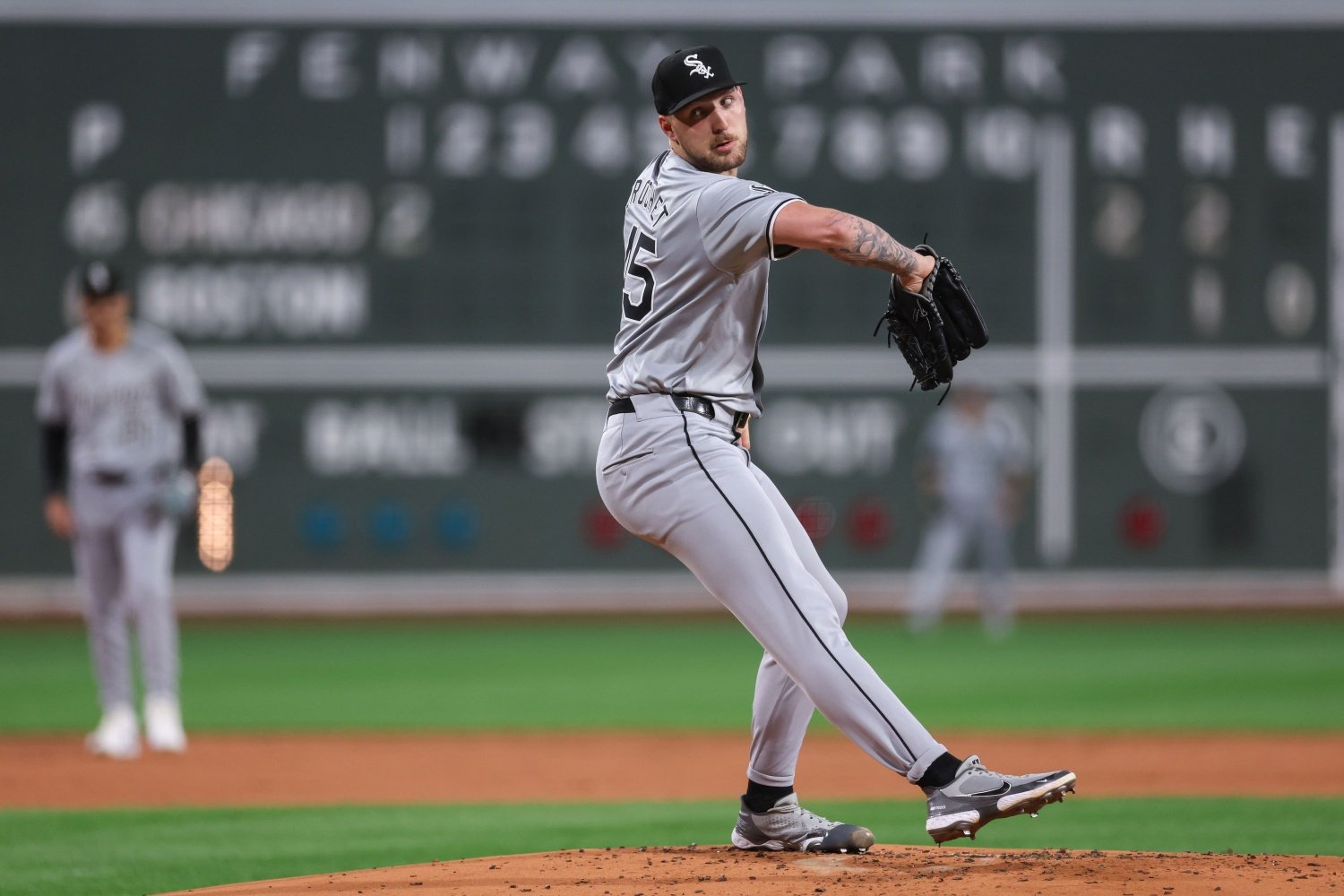 All offseason, close observers have been keenly aware that Garrett Crochet is going to be traded this winter. The chances that he remains in the White Sox organization come Opening Day are somewhere south of 10 percent. Most Cubs fans have also been vaguely aware of the fact that the North Side is a plausible landing spot for the current pride of the South Side club, since the Ricketts family seems disinclined to spend big money to catch up to the Dodgers, Yankees, Mets, and Phillies in terms of spending like legitimate big-market powerhouses. Now, however, the Winter Meetings are a mere few days away, and the trade market is beginning to percolate in earnest. Wednesday morning, albeit in vague and very on-brand form, Jon Morosi of MLB Network and FOX Sports brought that background notion rushing into the foreground. By no accident, this is a tweet short on specifics. Morosi, one of the most well-liked people in baseball media, is nonetheless something shy of a true news-breaking titan. He's prone to tweets like these, which include no new reportage (notice that he doesn't indicate having been told this by any particular source or having new information, per see) and trade on the automatic credence lent to everything he says by virtue of his role with two of the major news and coverage outlets attached to the league. This tweet shouldn't make you materially more confident or expectant of the Cubs being involved in Crochet trade negotiations, and while it tacitly invites you to imagine a bidding war between the Cubs and a divisional rival for the services of an elite White Sox southpaw (something we have seen before, after all!), I would advise against indulging that imagination, too. In this case, though, the seemingly unprompted update is still helpful in a small way: it makes more salient a consideration that probably already belonged near the front of our consciousness. The Cubs are definitely interested in Crochet—enamored of him, even, according to two sources in other front offices—and they have the MLB-ready, high-upside young position players the White Sox want in a trade. With Matthew Boyd providing expensive but potentially strong depth at the back end of the rotation, the Cubs are now poised to add an elite starter at the other end of it—but need to do so on a cost-effective basis. Crochet checks the boxes. What stands out most with Crochet is that, while he had a very fastball-forward approach last year, he has a deep arsenal that allows him to dominate hitters regardless of handedness or skill set. He didn't lean on one out pitch to rack up strikeouts in 2024; he has four pitches that all miss bats at a rate well above average. Crochet's fastball shape isn't that distinctly cut-ride option the Cubs prefer, but he more than makes up for it. His four-seamer sits 97 and touches 100, even as a starter, and his cutter and sweeper work off it gorgeously. His changeup plays off the heat and the cutter nicely, too. He even has a sinker he threw enough to force hitters to think about it last year. Pitch Type High% InZone% Miss% Vel HorzBrk IndVertBrk Fastball (4S) 49.0% 59.4% 31.4% 97.2 -7.9 15.2 Cutter 22.5% 53.2% 33.2% 91.6 3.7 5.7 Sweeper 17.1% 44.0% 42.7% 84.2 14.2 -0.5 Change 11.3% 25.4% 33.9% 91.0 -15.5 8.8 Fastball (2S) / Sinker 40.0% 44.0% 32.1% 97.9 -15.2 7.8 The wildest reality with Crochet is that he might yet have another level to reach. His ability to throw strikes with the cutter and even the sweeper could allow him to rely less on his fastball, and that pitch itself could be better-located, just by reorienting his approach to be more focused on attacking the top of the zone. Throwing fewer heaters, in particular, could resolve the slight home-run problem Crochet had against righties last year. Crochet does have a bit of a dead zone fastball, so his success with it depends on command and that overpowering velocity. The Cubs could have him lean more into the cutter and away from the four-seamer as a result, though he still needs the high, hard one to set up the rest of his arsenal. Either way, even though he might be squared up more than an average pitcher, it seems certain that Crochet would benefit from the superior Cubs defense, after he was often let down by the fielders behind him on the South Side in 2024. Crochet is an ace, without question, and his only question mark—whether he can be a durable starter across a full-season workload, including pitching into October—would be a less daunting one for the Cubs than for many teams, especially now that Boyd is on board to lend extra depth. The only real reason not to pounce on a Crochet trade is that it would cost the team a ton of young talent. With two years of team control remaining, Crochet would cost the team two of their top tier of highly-regarded position players already at Triple A, headlined by Matt Shaw, Moises Ballesteros, and Owen Caissie. If they only gave up one of those, it would only be because they threw in Cade Horton, Ben Brown or Brandon Birdsell instead—and even then, they'd also give up a significant third piece in the process. You can map the cost for Crochet pretty neatly onto the one the Cubs paid for José Quintana in 2017. Quintana pitched better than is generally remembered while with the Cubs, and to the extent he fell short of expectations, it was because the organization failed in their support of his ongoing development and good health, not because they were wrong to make that move. That deal doesn't deserve the malign with which it's remembered, but this one would be a much clearer win. Crochet's ability to lead a rotation deep into the postseason is bounded only by his health, not by his stuff or skills. There will always be such questions around great pitchers who become available. While it would sting for prospect lovers, this is the kind of trade the Cubs must make this winter: consolidating assets by dealing multiple young players with exciting but uncertain futures for a player with the demonstrated ability to dominate in the majors. Crochet is, arguably, the clearest opportunity to make such a move, and maybe the time for pulling the trigger is drawing near.
 -
Definitely intriguing in that role. I want to see the league as a whole, and the Counsell-led Cubs specifically, develop that role more. I do wonder if the future of it is as a second rotation, where you might have three two-inning guys (on the Cubs, it'd probably be Wesneski, Brown, Merryweather, as currently constructed? But you could find three on almost any team) who work on three-game (often four-day) rotations. You could get these guys to like 100 innings apiece that way, without the unpredictability and impediments to routine that are such underrated sources of the performance volatility and injury risk that come with most modern relief work.
-
I'd be wary of selling low, too, but keep in mind: none of the other 29 teams are run by basics. Haha. They aren't seeing the aesthetics; they're seeing that fastball that has remained string-straight through three iterations of his mound position and arm angle. I would guess his trade value will be basically the same a year from now, because I don't think he's got that fastball adjustment in him. I don't like to live by pitch modeling numbers, but he has a 51 Stuff+ on the four-seamer, and ugly numbers via both StuffPro and PitchPro, too. I wouldn't say his stuff is better than Miller's (although the sweeper CAN be) unless he and the Cubs can find a way to get him operating the four-seamer and the sweeper out of the lower arm slot he abandoned a year ago. He's a puzzle. It sure is tough to let go of the upside that comes with hitting 97 and having a plus breaking ball, though.