


Matthew Trueblood
-
Posts
2,479 -
Joined
-
Last visited
-
Days Won
2
Content Type
Profiles
Joomla Posts 1
Chicago Cubs Videos
Chicago Cubs Free Agent & Trade Rumors, Notes, & Tidbits
2026 Chicago Cubs Top Prospects Ranking
News
2023 Chicago Cubs Draft Picks
Guides & Resources
2024 Chicago Cubs Draft Picks
The Chicago Cubs Players Project
2025 Chicago Cubs Draft Pick Tracker
2026 Chicago Cubs Draft Tracker: Picks & Bonuses
Blogs
Events
Forums
Store
Gallery
Everything posted by Matthew Trueblood
-
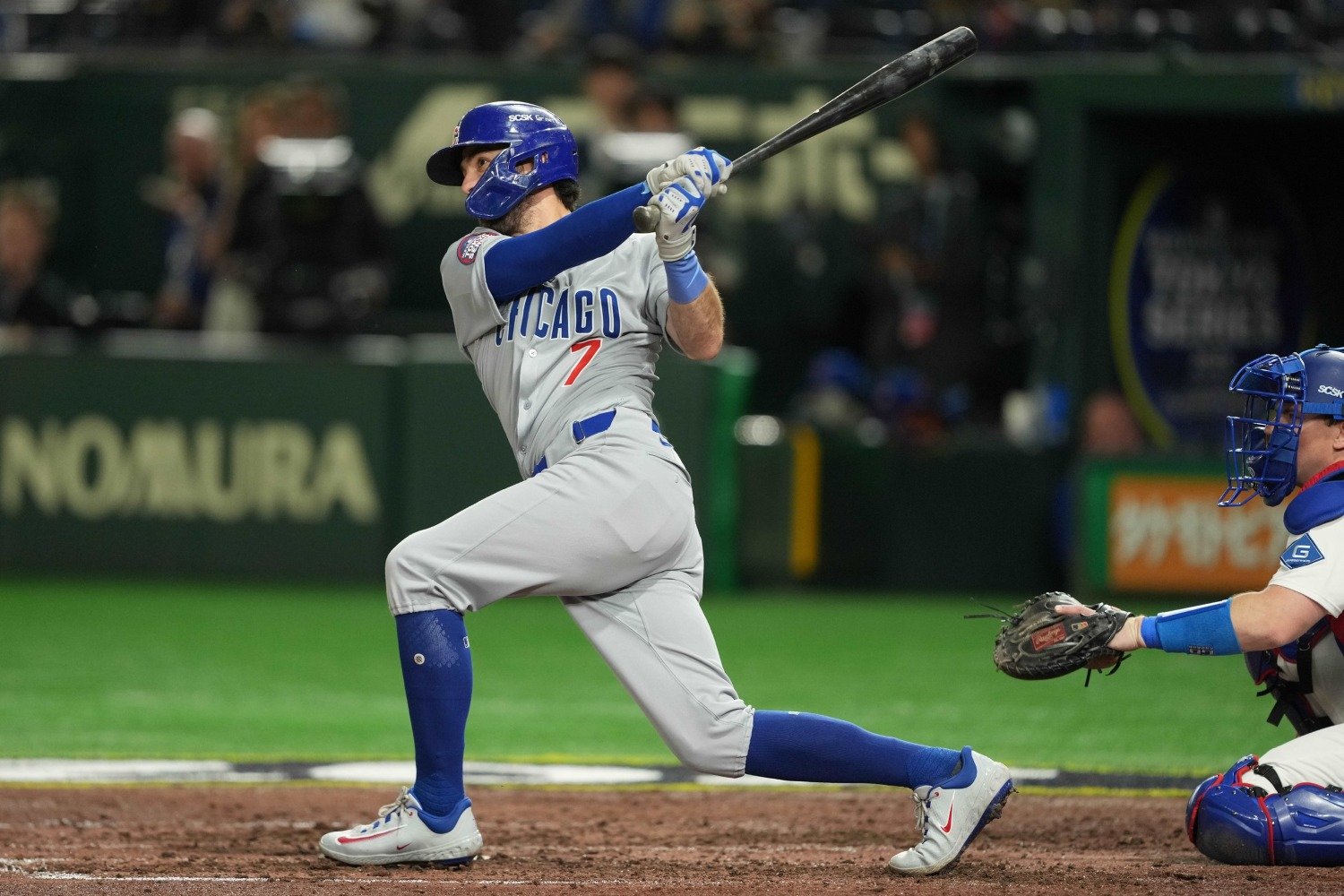 Dansby Swanson has been smart enough not to let pride prevent him from getting the treatment and rest he needs to maximize his value to the Cubs, even over the first two years of a huge seven-year contract that brings considerable pressure with it. He hadn't spent any time on the injured list since 2019 when he finally landed there in July 2023, with a heel contusion. Last May, a knee sprain sidelined Swanson again, though each time, he was only out for about two weeks. He always wants to be on the field, and when he can't be, he works hard until he's able to come back. Even for the balance of 2024, though, Swanson was not actually healthy. The stint on the injured list clearly did him some good, because he batted an anemic .209/.285/.341 before that break and a more tenable .252/.321/.405 after it. but there were times when it was evident that he still wasn't swinging or playing the field at full strength. Over the offseason, he underwent surgery to repair a sports hernia—an increasingly common injury in hitters, and one the public often misunderstands because of its name. Essentially, what Swanson was dealing with was a series of torn tissues in his lower abdomen and groin. "Sports hernia" is a catch-all term, because it's often hard to tell exactly what has been damaged—layers of the abdomen wall, muscles, tendons, ligaments, or some mixture thereof—until a surgeon goes in to fix the problem. Unlike other soft-tissue injuries (strained hamstrings, groins, or obliques, for instance), sports herniae tend to require surgery, both because non-muscular tissues are often involved and because that area is tough to target with the same kinds of therapy and non-surgical treatment that work in other places. The reason why this injury is becoming pervasive—only two players missed time with it from 2016 to 2019, according to Baseball Prospectus's Recovery Dashboard tool, but seven have done so since 2021, and that number doesn't even include Swanson—is obvious, but rarely discussed: playing baseball requires more explosion, more torque, and much more sheer, shearing athletic force than most players get credit for producing. Fans tend to be much less understanding of baseball injuries than of those that happen to NBA and NFL stars. Big collisions like the ones that inflict so much damage on football players are vanishingly rare in baseball, and the sport has far less full-speed changing of direction or sudden leaping than basketball. It looks less athletic, to the casual fan, than the other major American team sports—or at least much less dangerous. Your eyes are lying to you, now more than ever. The game has never been played faster, or by bigger, stronger men. While baseball has always celebrated its embrace of all body types, all that really means is that both very tall and very short people can play it, and that the occasional, highly-skilled fatso can skate by for a moment. Walk through a big-league clubhouse, and one thing becomes immediately clear: even the small guys aren't small. They're short, maybe, but broad backs, thick forearms and sculpted physiques are as common there as in a basketball locker room. In fact, since basketball is more about sheer length, many baseball players are much more compact, explosive raw athletes than their ectomorphic counterparts on the hardwood. Baseball's biggest athletic demands just look a bit less dramatic, to the naked and untrained eye. By now, no one paying any attention is blind to the dangers of throwing very hard, especially as part of a downhill motion, with gravity applying extra momentum and pressure to everything. Dr. Neal El Attrache has a really, really nice house because throwing is as bad for your arm as blocking is for your brain. It's much easier for fans to miss the sport's other vicious moves, though. Swinging a bat at the speed required to hit modern pitching pushes the human frame past red lines as reliably as generating competitive big-league velocity does for those pitchers. An exceptionally well-conditioned and coordinated athlete can mostly avoid catastrophic injury, but there are several places in the kinetic chain where any inefficiency (and even phenomenal ballplayers are at least fractionally inefficient, especially when hitting, because hitting requires subliminal, instantaneous reactions and adjustments that can't be perfectly planned, choreographed and repeated) can cause structural failure. It's not just sports herniae that are becoming more frequent. Hitters are suffering more oblique strains, too. Cubs fans know this all too well, having seen that injury take chunks out of Seiya Suzuki's last two seasons. A fistful of hitters have broken hamates or other bones in their hands over the last five years, not when they were hit by pitches, but from the force of their swing and its follow-through. How you swing can affect which of these injuries you're susceptible to, but it's hard not to expose yourself to the risk of at least one of them, over a long career. You have to create a torrent of force, put into and then drawn from the ground and passed up through your connective tissues, then redirected and applied to the ball by a tornadic rotation of the whole body. Triston Casas of the Red Sox said last year that doctors told him the force of his swing was so great that he was putting his own torso through a "car crash" worth of strain each day; it resulted in cracked cartilage in his ribcage. Last year, while playing with torn somethings in the very region where Swanson's particular swing is geared to find and transfer its rotational force, he was clearly compromised. To see it in action, let's compare two swings, each on sliders from left-handed pitchers; each breaking in on him, but with enough of the plate to be hittable; and each when he was behind in the count. The camera angles are even fairly similar, so we have a fighting chance of seeing things that are real and not just hallucinations created by altered perspectives. The first is from last Sept. 24: TGw3M2tfWGw0TUFRPT1fVndSV1ZBSUNBQUVBWGdkWEJBQUFBbElBQUZrRlUxQUFWd0ZYVWdBSEFWWUFCd2RS.mp4 The second is from Wednesday. bmJXV2RfWGw0TUFRPT1fQXdkWkJWUUNVd0lBV2dBRkJ3QUFCZ0pSQUFNQVZGTUFVVnhVQVFGV1ZRUldWbEZW.mp4 Notice that on the one from last year, Swanson's front hip opens a hair earlier, relative to the landing of his front foot. The rotation that creates his bat speed is earlier, slower, and less explosive. He transfers his weight less aggressively from his back foot to the front one, unwilling to compromise his balance at all. On the second, he's very fast and powerful about pushing off his back side once the front foot comes down, and his hip and shoulder rotations are separated more, creating more tension and more torque. He lets his barrel stay behind his hands a hair longer, but that's just a product of the other movements in his swing—and it means that when his bat does whip through the zone, it does so much faster. Swanson's swing speed on that pitch last September was 69.2 mph. On the one on which he doubled Wednesday, it was 71.9 mph, and that was in a two-strike count—when nearly all hitters, Swanson included, tend to reduce their swing speed slightly to have a better chance to make contact. He was incapable of the kind of explosion he showed on his RBI double Wednesday for much of 2024. Indeed, he only had nine batted balls that topped the exit velocity on that ball Wednesday (106.4 mph) in the second half. Hopefully. that's compelling evidence that hitting is a subtly violent and physically demanding act, but that premise invites questions: If Swanson was hurt, and he knew it, why did he keep playing all season? Why don't more players accept proactive rest, and why do so many play through injuries? Isn't hitting at less than 100% health virtually impossible? For the answer to that, refer back to the numbers we cited at the top of this story. Damaged or not, Swanson put up a .726 OPS after coming back from that early knee issue. Though you could also spot him twisting and firing a bit less fluidly in the field, he played a solid defensive shortstop. He was, in other words, far better than anyone the Cubs could realistically have called up or acquired to replace him. That doesn't dampen the reality of the difficulty of the sport or the severity of the injury; it just illustrates how many different ways there are to compensate for such things and succeed. At first glance, it seems paradoxical to say that players are doing something hugely difficult and physically dangerous, but also that they can do it at a big-league level even while diminished by a nagging injury. Yet, it's true. That's how good these guys are, and often, it's a good reminder of the width of the gap between the very best and those who make a meager living riding buses with Triple-A teams. Swanson, like other players, learned how to recruit other muscles to make up for some of the lost strength and explosiveness when he couldn't use his typical moves. It didn't make him whole, but he had the versatility to live that way. It changed the composition of his batted balls, but it didn't render him helpless. In the field, he made more plays than most backups could, despite needing to handle the ball in the hole differently because he needed to be a bit ginger after fielding it. Players hate missing time, even though they understand it's an unavoidable part of life in the long grind of a 162-game season, especially now that the game's athletic standard has risen sharply. They'll do what they can to work around an injury, especially if (as is the case with a sports hernia) it's one that won't heal with time and rest, anyway. Whenever possible, they'll keep taking the field, receive extra treatment to manage pain and maintain flexibility, and try to solve the problems their malady poses on their own. To some fans, this will seem selfish. To others, it will seem heroic. There's no right answer, because each player (and their margin for error and adjustment, and the alternative their team has available if they go down) is different. For Swanson, it made sense to play through the pain last year. That didn't mean the pain or the inhibition was trivial. Baseball is harder and more violent than it looks, especially if it's already taken a bite out of you. Still, because it's such a full-body sport and contains so many opportunities to gain a mental edge, it's possible to play it at the elite level required in the majors while one is considerably less than fully healthy—if you're good, and versatile, and want it badly enough.
 -
Much love, DDL. Mar. 28 will make nine years since our eldest son died. It's a pain everyone can imagine but only a few of us are unlucky enough to really know. Thanks for being vulnerable, and willing to process the feelings and the facts side by side. That's what life and baseball are both about.
- 3 replies
-
- 1
-

-
- pete crow armstrong
- justin steele
- (and 3 more)
-
'Fan how you wanna fan' is the worst advice the internet ever gave. Be better than the fan you want to be. After the Cubs were swept in the Tokyo Series, here's how. Image courtesy of © Darren Yamashita-Imagn Images The Cubs will come back home from Tokyo without a win, save the one they managed over the Yomiuri Giants in an exhibition game before they took on the Dodgers. By the end of the two-game regular-season series, it was hard not to feel the farce and foolishness of making these games count. In the future, if MLB wants to put on showcase events to continue boosting their footprint in Asia, they should do so by scheduling exhibition games, and find ways other than making the contests part of the season standings to exhort teams to send representative groups and put forth real effort. In the meantime, though, the Cubs will have to wear an 0-2 in the NL Central table for a week, before re-starting their regular season with four games in Arizona. That's not fun, but nor is it a big deal. In any two games against the Dodgers, a 1-1 record would be a fairly welcome result. In the odd, strained atmosphere that the Tokyo Dome provided and under the bizarre circumstances of having had to ramp up early, going 0-2 is not a real problem. Still, the hot takes will flow. You, dear reader, are better and smarter than those hot takers, but we all become like those with whom we surround ourselves, and social media is a bad influence. Here's your guide to resisting that influence: three storylines that will swirl around the Cubs for the next eight days that do not matter or deserve your agitated reaction, and one thing that does deserve serious consideration. Non-Story No. 1: Cam Smith Might Just Make the Astros! There are layers to this one. Firstly, there's a segment of Cubs Twitter (and, even if you've escaped that cesspool, of Cubs Bluesky and Cubs Facebook and Cubs whatever; is Mastodon still a thing?) who were never fully on board with the Kyle Tucker trade, because the Cubs only have him for one year. Now, two games into the 162 the team is promised with him, Tucker has only managed one hit, and the Cubs have no wins. He's struggled all spring, too. Meanwhile, the centerpiece of the package the team gave up to land Tucker is on the verge of beginning his first full professional season in the majors—a situation with few modern precedents that will have prospect-huggers especially concerned. Cam Smith was the Cubs' selection with the 14th overall pick in last summer's MLB Draft, and now, he might make the Opening Day roster for the Houston Astros. He could even do so as the right fielder, the very position the Cubs are only ephemerally filling by slotting in Tucker out there. Does this mean the team made a massive error by trading Smith? No. Obviously. Come on. Get real, here. Firstly, the fact that Smith could make the Houston roster says far more about the Houston roster than it does about Smith. Their outfield is such a mess that they've also entertained moving Jose Altuve to left field. They're depleted by injuries, and even if they weren't, they would be weak and thin on the positional side. This is not the team that went to seven straight ALCSes anymore. It's a greatly diminished shell of that club, which is the main reason why Smith will make the team. Secondly, you don't make a trade like this as some huge bet against Smith's future. The benefit of that trade was twofold: acquiring Tucker, and clearing Matt Shaw's path to playing time at third base. There's a good chance that the team is better both for having Tucker in right and for having Shaw instead of Isaac Paredes. To make that move, they had to give up something good, and Smith was that something good. Few evaluators are higher on Smith than on Shaw, though, and it's important to remember that Smith still only has 165 plate appearances in professional baseball, counting his appearances in the Grapefruit League. He's put up video game numbers this spring, but that's in a tiny sample, against pitchers who (on average) have pitched mostly in High A and Double A—the highest levels he reached in the pros last year, anyway. Smith is going to get exposed by big-league pitching if he makes this team, even if he eventually turns out to be really good. Finally—and this is where I invite you to expand your frame of reference beyond baseball, but it's cogent even within that narrow scope—worrying about whether or not other people are living better than you is immature and self-defeating. If you're a Cubs fan, what Cam Smith does is no longer your business. The success or failure of this trade will be determined by the performances of Tucker and Shaw. Do not 'fan how you wanna fan,' because most of the time, 'how you wanna fan' will include indulging in jealousy and attending to things beyond your circle of real control or care. Humans are wired up with all kinds of instincts and impulses that served our evolutionary ancestors well, but do nothing but harm and bring nothing but misery for our present selves. In life, and in baseball: Identify the level of rationalism and behavior toward which your instincts are pushing you, and then aim higher. In this case, that means not glowering jealously at Smith's career, no matter what. Feel free to lament the Cubs not signing Alex Bregman. The Cubs are lamenting not signing Bregman, whom they felt they had a good chance to land in free agency. Feel free to feel anxious about whether the Cubs will extend Tucker. They should, but I continue to think there's only about a 1-in-8 chance that they will. Lamenting trading Smith on the basis that he's on the fast track to the majors, however, is knuckleheaded nonsense. Non-Story No. 2: Justin Steele Not Looking Sharp in His First Outing Look, the Dodgers are a tough matchup for any starting pitcher—the more so if said hurler missed a start during spring training due to an illness, got battered on a day when the wind was howling out in Arizona just before leaving for Japan, and is pitching a regular-season game at a moment when they'd ordinarily be in the early or middle stages of building up in preseason play. If you want to take a critical tack on this one, the right way to do it is to wonder whether Steele should have started in this series at all. Jameson Taillon or Matthew Boyd might have been better candidates to pitch the front portion of the second game; they looked to be more built-up and ready for this. It seems to have been important to Steele to be part of this, though, and it was just one game. Despite his poor results and his shaky spring, don't spend your time wringing your hands with worry over Steele. He'll be fine. Non-Story No. 3: The Unproductive Starts for the Team's Top Sluggers Hopefully, the crack of the bat and the thwap of the ball against the wall on Tucker's late double Wednesday were enough to shake you from real concern about his tough couple of games, and even from your worries about his spring training stats. Undeniably, Tucker has been a little bit off—a little bit under the ball. That he's so consistently hit fly balls during this prolonged period of February and March struggle is a subtle but excellent sign, because it reinforces what we already know about Tucker: that he's an extreme air-ball hitter with an unusually good feel for contact, among such hitters. When most guys who hit for power go into a slump, strikeouts pile up. Tucker has put it in play. He's just popped the ball up too often, and occasionally, he's even gotten slightly underneath otherwise well-hit balls. He did that again in Japan. On Tuesday, he had a lineout that left his bat at over 95 miles per hour. Wednesday, he had flyouts at 99 mph and 97.3, just slightly missing them. Then, of course, came the laced opposite-field double at 104 mph. Tucker's zeroing in. He's going to hit, not just for average, but for the power the Cubs were missing during this short two-game stint. His quality of contact is just fine; he'll square the ball up a bit better when the season resumes. Seiya Suzuki's process was not nearly as good as Tucker's, but you should be even less worried about him. He was plainly pressing—expanding his zone in ways that we never see from him, in an effort to make something happen in his homecoming series. He'll be frustrated by having missed his chance for that cathartic moment, but after a couple more Cactus League games, he'll hit the ground running again in Arizona. He's a very, very good hitter, who just let outside pressure in under unique conditions. The One Thing You're Allowed to Worry About It's becoming an old saw of mine, while both I and he are still young, but so be it: Pete Crow-Armstrong simply can not swing this much. It's untenable, and if you're among the many believers that he's going to make big strides at the plate this year, you have to explain to me why you think his plate discipline will improve before you'll get me on board. Crow-Armstrong swung at 57.1% of the pitches he saw in the minors in 2022. That number was 52.8% in 2023 and 60.1% in 2024. In the big leagues, he swung at 53.4% of everything he saw in 2023 and 59.1% of it in 2024. He's swung at 53.5% of all pitches in the Cactus League this year and he went to Japan swinging more than ever. There are two types of hitters who can succeed with an approach that aggressive: Ones who blend plus or better power with plus or better feel for contact; and I lied to you, on purpose, as a trap. There's no second kind of hitter who can be good while swinging as much as this dude does. Right now, Crow-Armstrong doesn't have plus power, and he doesn't have plus feel for contact, so he's 0-for-2 on being the kind of unicorn who can sustain success as a regular while swinging indiscriminately. He could eventually be a plus power guy. I don't think he has any realistic chance to be a plus contact guy. His best chance to be a good hitter, overall, is to stop swinging so damned much—but the stark reality that he has come into this season utterly unreformed should worry his boosters profoundly. All the Cubs really need at this moment is rest. They should fly home and get back onto their regular clocks and routines. Hopefully, no one the team is serious about as a contributor this year will even appear in their next Cactus League game, coming up fast on Friday afternoon. Don't let these two losses (or goings-on in Florida, at least on the baseball front) intrude too much on your thoughts between now and then. Unless you're Pete Crow-Armstrong. Pete, if you're reading this, please try to resist the temptation to swing at it. View full article
-
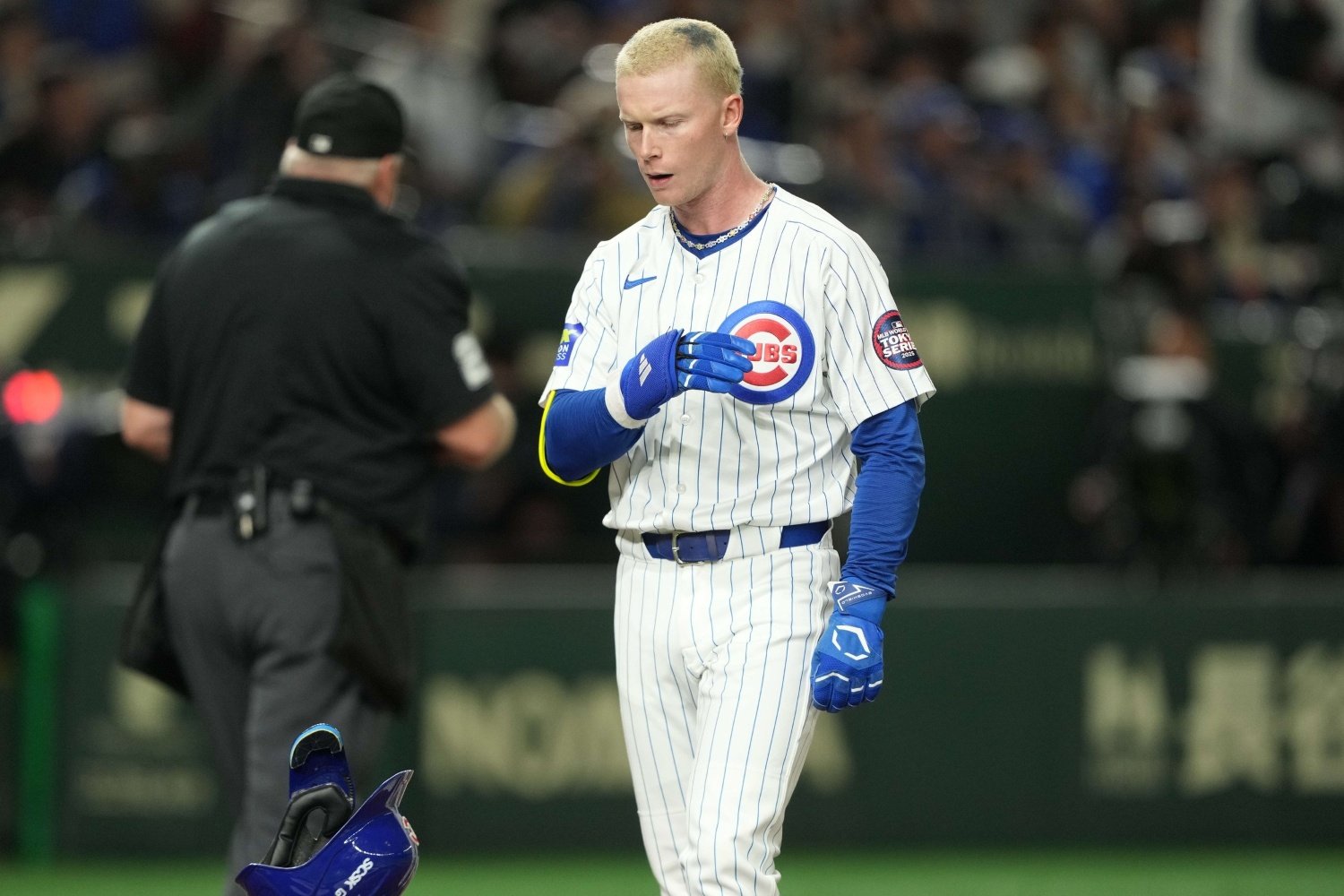 The Cubs will come back home from Tokyo without a win, save the one they managed over the Yomiuri Giants in an exhibition game before they took on the Dodgers. By the end of the two-game regular-season series, it was hard not to feel the farce and foolishness of making these games count. In the future, if MLB wants to put on showcase events to continue boosting their footprint in Asia, they should do so by scheduling exhibition games, and find ways other than making the contests part of the season standings to exhort teams to send representative groups and put forth real effort. In the meantime, though, the Cubs will have to wear an 0-2 in the NL Central table for a week, before re-starting their regular season with four games in Arizona. That's not fun, but nor is it a big deal. In any two games against the Dodgers, a 1-1 record would be a fairly welcome result. In the odd, strained atmosphere that the Tokyo Dome provided and under the bizarre circumstances of having had to ramp up early, going 0-2 is not a real problem. Still, the hot takes will flow. You, dear reader, are better and smarter than those hot takers, but we all become like those with whom we surround ourselves, and social media is a bad influence. Here's your guide to resisting that influence: three storylines that will swirl around the Cubs for the next eight days that do not matter or deserve your agitated reaction, and one thing that does deserve serious consideration. Non-Story No. 1: Cam Smith Might Just Make the Astros! There are layers to this one. Firstly, there's a segment of Cubs Twitter (and, even if you've escaped that cesspool, of Cubs Bluesky and Cubs Facebook and Cubs whatever; is Mastodon still a thing?) who were never fully on board with the Kyle Tucker trade, because the Cubs only have him for one year. Now, two games into the 162 the team is promised with him, Tucker has only managed one hit, and the Cubs have no wins. He's struggled all spring, too. Meanwhile, the centerpiece of the package the team gave up to land Tucker is on the verge of beginning his first full professional season in the majors—a situation with few modern precedents that will have prospect-huggers especially concerned. Cam Smith was the Cubs' selection with the 14th overall pick in last summer's MLB Draft, and now, he might make the Opening Day roster for the Houston Astros. He could even do so as the right fielder, the very position the Cubs are only ephemerally filling by slotting in Tucker out there. Does this mean the team made a massive error by trading Smith? No. Obviously. Come on. Get real, here. Firstly, the fact that Smith could make the Houston roster says far more about the Houston roster than it does about Smith. Their outfield is such a mess that they've also entertained moving Jose Altuve to left field. They're depleted by injuries, and even if they weren't, they would be weak and thin on the positional side. This is not the team that went to seven straight ALCSes anymore. It's a greatly diminished shell of that club, which is the main reason why Smith will make the team. Secondly, you don't make a trade like this as some huge bet against Smith's future. The benefit of that trade was twofold: acquiring Tucker, and clearing Matt Shaw's path to playing time at third base. There's a good chance that the team is better both for having Tucker in right and for having Shaw instead of Isaac Paredes. To make that move, they had to give up something good, and Smith was that something good. Few evaluators are higher on Smith than on Shaw, though, and it's important to remember that Smith still only has 165 plate appearances in professional baseball, counting his appearances in the Grapefruit League. He's put up video game numbers this spring, but that's in a tiny sample, against pitchers who (on average) have pitched mostly in High A and Double A—the highest levels he reached in the pros last year, anyway. Smith is going to get exposed by big-league pitching if he makes this team, even if he eventually turns out to be really good. Finally—and this is where I invite you to expand your frame of reference beyond baseball, but it's cogent even within that narrow scope—worrying about whether or not other people are living better than you is immature and self-defeating. If you're a Cubs fan, what Cam Smith does is no longer your business. The success or failure of this trade will be determined by the performances of Tucker and Shaw. Do not 'fan how you wanna fan,' because most of the time, 'how you wanna fan' will include indulging in jealousy and attending to things beyond your circle of real control or care. Humans are wired up with all kinds of instincts and impulses that served our evolutionary ancestors well, but do nothing but harm and bring nothing but misery for our present selves. In life, and in baseball: Identify the level of rationalism and behavior toward which your instincts are pushing you, and then aim higher. In this case, that means not glowering jealously at Smith's career, no matter what. Feel free to lament the Cubs not signing Alex Bregman. The Cubs are lamenting not signing Bregman, whom they felt they had a good chance to land in free agency. Feel free to feel anxious about whether the Cubs will extend Tucker. They should, but I continue to think there's only about a 1-in-8 chance that they will. Lamenting trading Smith on the basis that he's on the fast track to the majors, however, is knuckleheaded nonsense. Non-Story No. 2: Justin Steele Not Looking Sharp in His First Outing Look, the Dodgers are a tough matchup for any starting pitcher—the more so if said hurler missed a start during spring training due to an illness, got battered on a day when the wind was howling out in Arizona just before leaving for Japan, and is pitching a regular-season game at a moment when they'd ordinarily be in the early or middle stages of building up in preseason play. If you want to take a critical tack on this one, the right way to do it is to wonder whether Steele should have started in this series at all. Jameson Taillon or Matthew Boyd might have been better candidates to pitch the front portion of the second game; they looked to be more built-up and ready for this. It seems to have been important to Steele to be part of this, though, and it was just one game. Despite his poor results and his shaky spring, don't spend your time wringing your hands with worry over Steele. He'll be fine. Non-Story No. 3: The Unproductive Starts for the Team's Top Sluggers Hopefully, the crack of the bat and the thwap of the ball against the wall on Tucker's late double Wednesday were enough to shake you from real concern about his tough couple of games, and even from your worries about his spring training stats. Undeniably, Tucker has been a little bit off—a little bit under the ball. That he's so consistently hit fly balls during this prolonged period of February and March struggle is a subtle but excellent sign, because it reinforces what we already know about Tucker: that he's an extreme air-ball hitter with an unusually good feel for contact, among such hitters. When most guys who hit for power go into a slump, strikeouts pile up. Tucker has put it in play. He's just popped the ball up too often, and occasionally, he's even gotten slightly underneath otherwise well-hit balls. He did that again in Japan. On Tuesday, he had a lineout that left his bat at over 95 miles per hour. Wednesday, he had flyouts at 99 mph and 97.3, just slightly missing them. Then, of course, came the laced opposite-field double at 104 mph. Tucker's zeroing in. He's going to hit, not just for average, but for the power the Cubs were missing during this short two-game stint. His quality of contact is just fine; he'll square the ball up a bit better when the season resumes. Seiya Suzuki's process was not nearly as good as Tucker's, but you should be even less worried about him. He was plainly pressing—expanding his zone in ways that we never see from him, in an effort to make something happen in his homecoming series. He'll be frustrated by having missed his chance for that cathartic moment, but after a couple more Cactus League games, he'll hit the ground running again in Arizona. He's a very, very good hitter, who just let outside pressure in under unique conditions. The One Thing You're Allowed to Worry About It's becoming an old saw of mine, while both I and he are still young, but so be it: Pete Crow-Armstrong simply can not swing this much. It's untenable, and if you're among the many believers that he's going to make big strides at the plate this year, you have to explain to me why you think his plate discipline will improve before you'll get me on board. Crow-Armstrong swung at 57.1% of the pitches he saw in the minors in 2022. That number was 52.8% in 2023 and 60.1% in 2024. In the big leagues, he swung at 53.4% of everything he saw in 2023 and 59.1% of it in 2024. He's swung at 53.5% of all pitches in the Cactus League this year and he went to Japan swinging more than ever. There are two types of hitters who can succeed with an approach that aggressive: Ones who blend plus or better power with plus or better feel for contact; and I lied to you, on purpose, as a trap. There's no second kind of hitter who can be good while swinging as much as this dude does. Right now, Crow-Armstrong doesn't have plus power, and he doesn't have plus feel for contact, so he's 0-for-2 on being the kind of unicorn who can sustain success as a regular while swinging indiscriminately. He could eventually be a plus power guy. I don't think he has any realistic chance to be a plus contact guy. His best chance to be a good hitter, overall, is to stop swinging so damned much—but the stark reality that he has come into this season utterly unreformed should worry his boosters profoundly. All the Cubs really need at this moment is rest. They should fly home and get back onto their regular clocks and routines. Hopefully, no one the team is serious about as a contributor this year will even appear in their next Cactus League game, coming up fast on Friday afternoon. Don't let these two losses (or goings-on in Florida, at least on the baseball front) intrude too much on your thoughts between now and then. Unless you're Pete Crow-Armstrong. Pete, if you're reading this, please try to resist the temptation to swing at it.
 -
Six-foot-one, my ass. Image courtesy of © Brian Fluharty-Imagn Images When big-leaguers reported to spring training in mid-February, they all went through a new ritual that (presumably) will become a part of the annual routine, along with posing for a few dozen photos and meeting with developers of MLB: The Show. League officials rolled into each camp and assiduously measured them, taking accurate heights and accepting no manipulations in either direction—be it padding one's height by an inch out of vanity, or underselling it a bit to try to defend a smaller strike zone. With the automated ball-strike (ABS) system being test-driven in the Grapefruit and Cactus Leagues this year, accurate heights are required for calibration of the system, so there can be no more fudging. As it turns out, of the top 14 position players in the Cubs system right now (the 13 who made the Opening Day roster for the Tokyo Series, plus the injured Nico Hoerner), there are only four honest men. Kyle Tucker and Gage Workman stand a true 6-foot-4; Jon Berti is a legitimate 5-foot-10; and Justin Turner has had the courage, all along, to admit that he's one inch shy of that magical 6-foot threshold. While you might assume everyone else would be shorter, though—after all, before the advent of an automated zone, most of the social pressures and incentives would lead a player to slightly inflate their height, as anyone who's ever tried a dating app would tell you—the reality is that four of the other 10 Cubs got taller when heights were officially updated Monday. Let's talk about them, first. Seiya Suzuki, another player who had no problem admitting to being 5'11", never needed to be so modest. He's officially 6'0" now. Pete Crow-Armstrong, with whom it seems safe to rule out modesty as a motivating factor, allowed himself to be listed at 5'11" before this spring, but he, too, is now an even 6 feet tall. Miguel Amaya rises from 6'0" to 6'1". Little Matt Shaw isn't as little as we all thought: He's been listed at 5'9", but is now officially 5'10". These numbers both do and don't matter, of course. As the 5-foot-7 Jose Altuve and the 6-foot-7 Aaron Judge have so famously demonstrated to us, baseball lends itself to different flavors of success from players of very different sizes. However, that doesn't mean height doesn't factor into either evaluations or actual performances. There can be lots of fudging in the middle range of player heights, so don't read too much into the tallest columns in this chart, but consider the numbers of players 5-foot-8 (or shorter) and 5-foot-9 who have had above-average offensive seasons in the last 15 years, and compare it to those who are 5-foot-10 or 5-foot-11. So, Shaw no longer being in that column second from left (however trivial it might seem) does raise his ceiling a bit, actuarially. It's also interesting to note that Shaw and Crow-Armstrong are both on this list; it's possible one or both have genuinely grown an inch since the last time their heights were officially measured. At 23 and 22 respectively, they're still at an age where that can happen. Here's the list of those who were standing on tiptoes when they got measured in the past, or who just gave driver's license heights and hadn't been called on it until now: Vidal Bruján, who didn't have it to lose, gives up an inch, going from 5'10" to 5'9". Michael Busch, whom we all understood to be a bit short for first base, is that bit shorter, dropping from 6'1" to 6'0". Ian Happ's claim to be 6 feet is kaput; he joins Turner in the land of the 5'11". Nico Hoerner, who had absolutely everyone no one fooled, is not 6'1", as previously listed, but 5'11". He's the only Cub whose height gets a two-inch adjustment in either direction. Carson Kelly has been squatting too many years. Maybe he was once 6'2", as he'd been listed, but that was with all the cartilage in his knees and no pain hunching his back. Now, he's 6'1". Dansby Swanson, like Busch, gets to stay in the 6-footer club, but loses the extra inch he'd had above the line. It's a bit of a relief to stop pretending Hoerner is a big guy, even for a second baseman. He's sturdily built, and (this is what really sets him apart, because every big-leaguer this side of Nick Madrigal is much broader and stronger than you think) he carries it in a way that makes that easy to see even from a distance, but he's not big by big-league standards. That's part of why he doesn't generate the power some fans have long hoped and expected that he would. Hopefully, we can all now acknowledge that he never will, and lean into a better understanding of the kind of great player he can be: OBP, speed, and defense all the way. To me, these updates are interesting, because better information makes for better comprehension of the game. While the significance of any given player's height (and especially any change in that number) is likely to be minor, it's been hard to fully grasp the value of that datum until now, because we always knew there was so much noise in it. Now, if nothing else, we can trust the numbers enough to figure out just where and why height does factor into performance, in a more rigorous way. Plus, we can all chuckle a little at the idea that Hoerner was on the high side of six feet tall. Maybe in his cleats and with his coif in full bloom, he still is. View full article
-
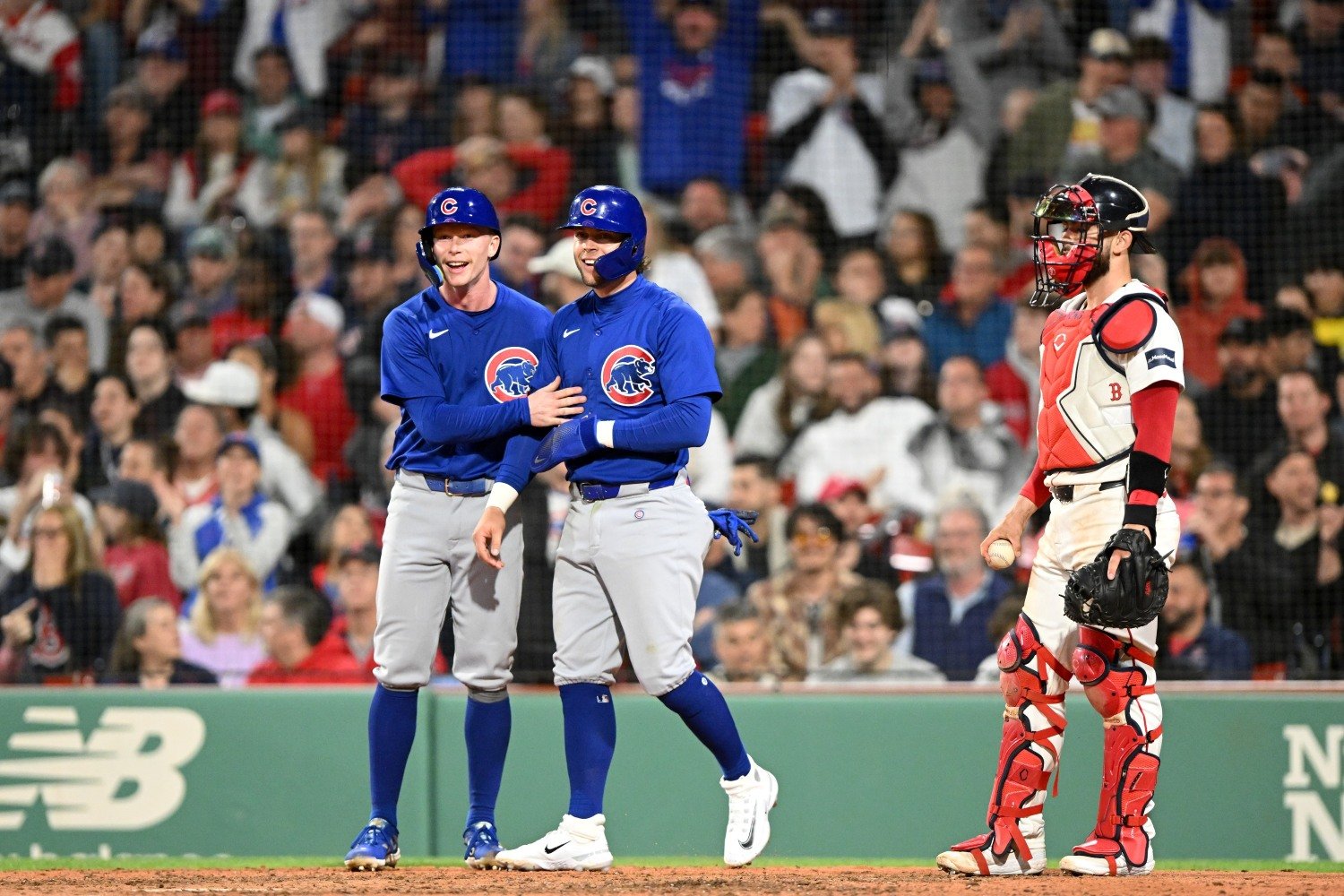 When big-leaguers reported to spring training in mid-February, they all went through a new ritual that (presumably) will become a part of the annual routine, along with posing for a few dozen photos and meeting with developers of MLB: The Show. League officials rolled into each camp and assiduously measured them, taking accurate heights and accepting no manipulations in either direction—be it padding one's height by an inch out of vanity, or underselling it a bit to try to defend a smaller strike zone. With the automated ball-strike (ABS) system being test-driven in the Grapefruit and Cactus Leagues this year, accurate heights are required for calibration of the system, so there can be no more fudging. As it turns out, of the top 14 position players in the Cubs system right now (the 13 who made the Opening Day roster for the Tokyo Series, plus the injured Nico Hoerner), there are only four honest men. Kyle Tucker and Gage Workman stand a true 6-foot-4; Jon Berti is a legitimate 5-foot-10; and Justin Turner has had the courage, all along, to admit that he's one inch shy of that magical 6-foot threshold. While you might assume everyone else would be shorter, though—after all, before the advent of an automated zone, most of the social pressures and incentives would lead a player to slightly inflate their height, as anyone who's ever tried a dating app would tell you—the reality is that four of the other 10 Cubs got taller when heights were officially updated Monday. Let's talk about them, first. Seiya Suzuki, another player who had no problem admitting to being 5'11", never needed to be so modest. He's officially 6'0" now. Pete Crow-Armstrong, with whom it seems safe to rule out modesty as a motivating factor, allowed himself to be listed at 5'11" before this spring, but he, too, is now an even 6 feet tall. Miguel Amaya rises from 6'0" to 6'1". Little Matt Shaw isn't as little as we all thought: He's been listed at 5'9", but is now officially 5'10". These numbers both do and don't matter, of course. As the 5-foot-7 Jose Altuve and the 6-foot-7 Aaron Judge have so famously demonstrated to us, baseball lends itself to different flavors of success from players of very different sizes. However, that doesn't mean height doesn't factor into either evaluations or actual performances. There can be lots of fudging in the middle range of player heights, so don't read too much into the tallest columns in this chart, but consider the numbers of players 5-foot-8 (or shorter) and 5-foot-9 who have had above-average offensive seasons in the last 15 years, and compare it to those who are 5-foot-10 or 5-foot-11. So, Shaw no longer being in that column second from left (however trivial it might seem) does raise his ceiling a bit, actuarially. It's also interesting to note that Shaw and Crow-Armstrong are both on this list; it's possible one or both have genuinely grown an inch since the last time their heights were officially measured. At 23 and 22 respectively, they're still at an age where that can happen. Here's the list of those who were standing on tiptoes when they got measured in the past, or who just gave driver's license heights and hadn't been called on it until now: Vidal Bruján, who didn't have it to lose, gives up an inch, going from 5'10" to 5'9". Michael Busch, whom we all understood to be a bit short for first base, is that bit shorter, dropping from 6'1" to 6'0". Ian Happ's claim to be 6 feet is kaput; he joins Turner in the land of the 5'11". Nico Hoerner, who had absolutely everyone no one fooled, is not 6'1", as previously listed, but 5'11". He's the only Cub whose height gets a two-inch adjustment in either direction. Carson Kelly has been squatting too many years. Maybe he was once 6'2", as he'd been listed, but that was with all the cartilage in his knees and no pain hunching his back. Now, he's 6'1". Dansby Swanson, like Busch, gets to stay in the 6-footer club, but loses the extra inch he'd had above the line. It's a bit of a relief to stop pretending Hoerner is a big guy, even for a second baseman. He's sturdily built, and (this is what really sets him apart, because every big-leaguer this side of Nick Madrigal is much broader and stronger than you think) he carries it in a way that makes that easy to see even from a distance, but he's not big by big-league standards. That's part of why he doesn't generate the power some fans have long hoped and expected that he would. Hopefully, we can all now acknowledge that he never will, and lean into a better understanding of the kind of great player he can be: OBP, speed, and defense all the way. To me, these updates are interesting, because better information makes for better comprehension of the game. While the significance of any given player's height (and especially any change in that number) is likely to be minor, it's been hard to fully grasp the value of that datum until now, because we always knew there was so much noise in it. Now, if nothing else, we can trust the numbers enough to figure out just where and why height does factor into performance, in a more rigorous way. Plus, we can all chuckle a little at the idea that Hoerner was on the high side of six feet tall. Maybe in his cleats and with his coif in full bloom, he still is.
 -
The home nine (playing about as far from home as one can) couldn't get the job done on Tuesday, as the Cubs lost their season opener to the defending World Series champions. A few revealing and intriguing things did happen along the way, though. Image courtesy of © Darren Yamashita-Imagn Images Every baseball game has little clues within it—little things that tell you something important about the much larger truths you're really chasing, like which teams are good and what matters in the sport. Even a game with a pageant atmosphere and a bunch of players still only half-ready can do that, and on Tuesday morning (Chicago time), we got to see the Cubs play a game that mattered. Here are a few of the clues we might have gleaned therefrom. 1. Jon Berti Runs Hot—Maybe Too Much So. No Cubs position player had a more eventful first game than Berti. It was clear that he had the adrenaline that should come with this kind of event coursing through him—but some of the effects of that were unfortunately messy. The Cubs grabbed an early 1-0 lead, but in the top of the fifth, a ground ball to third helped turn a small Dodgers rally into the winning one. On a could-be, maybe, double-play ball, Matt Shaw made a clean pick and good throw to second, but Berti (trying to do too much; the twin killing was not going to happen, anyway) overthrew Michael Busch badly. That brought home Shohei Ohtani with the go-ahead run, and since the ball went out of play, Teoscar Hernández was awarded second base. He came around to score on a single to widen the lead to 3-1. Berti sought his revenge in the bottom half of the inning, swinging aggressively enough against Yoshinobu Yamamoto to generate a 111.3-mph batted ball. That was not only the fastest by anyone in this game, but the fastest a ball has left Berti's bat since 2019. Alas, it was a ground ball, and turned into a relatively easy out. It's good to see Berti can generate that kind of jolt, in his mid-30s, but he'll need to get a little air under those to make them matter more in the future. Later in the game, a running Blake Treinen sinker hit Berti on the hand, which seemed to spike his adrenaline again. He stole second base on the first pitch of the ensuing at-bat, hungry to come around and halve the Dodger lead. He was stranded there, but his spunk was nice to see. He also made a fine defensive play crossing to the shortstop side of second in the late innings, partially making up for the critical error earlier. Berti looks like a valuable source of heat for this team, but will have to make good decisions in the field, the batter's box, and the basepath to maximize his utility as their utility man. 2. Ben Brown is Either Trading Some Velocity for a New Fastball Shape... or Has Just Lost Velocity. After Shota Imanaga shut the Dodgers out and allowed no hits (although four walks) in four innings, Ben Brown took over. The Dodgers touched him for those three runs and drew three walks over what turned out to be 2 2/3 innings, but Brown did strike out five and induce a game-high 14 swings and misses. The good news is that Brown, who seems to have slightly cleaned up his mechanics and raised his arm angle this year, looks healthy and benefited from a change to the shapes of his famous fastball-curve combination. Here's what his movement chart looked like in the game against the Brewers last May, when he struck out 10 and allowed no hits in seven innings. Now, here's the same chart for Tuesday's outing. According to Baseball Savant, Brown's fastball averaged two more inches of induced vertical break than it had last year. That's very good; he needs that. Last year, despite his great velocity and extension, the reality was that Brown's fastball tended not to stump hitters. It was about where they expected it to be when it reached the plate. A bit more hop on it could be a big plus. With his subtly altered release point, Brown also has less arm-side run on the fastball and a little bit more glove-side movement on his curve, which remains a tight and firm but versatile second weapon. Intentional or not, this change in his pitch shapes is interesting. It's even encouraging. It will have to make up, then, for the discouraging news, which is: Brown is down a tick or so from the velocity he boasted last year. He was missing some velocity all spring, but you could tell yourself then that it was a matter of missing adrenaline. In an international regular-season opener against some of the best players in the game, though, he was still missing that heat. If he consciously traded it for a better chance to stay healthy and these improved pitch shapes, that's fine, but it's still a sacrifice. If he's just plain missing that extra oomph, he's going to be diminished this season. He's not a pitcher who can live far below his customary level of power. 3. The Heart of the Order Wasn't Good Enough, but the Bottom Third Was Exciting. It's just one game. Let's call it a safe bet that Seiya Suzuki, Kyle Tucker, Michael Busch, and Matt Shaw will produce fairly well over the long haul. On Tuesday, though, they were the de facto bottom of the lineup, going 0-for-15 (plus Justin Turner's 0-1 pinch-hitting for Busch) and forestalling any meaningful rallies. On the other hand, the guys at the bottom of the order made some interesting things happen. Miguel Amaya not only had the RBI double that accounted for the Cubs' only run, but reached 80 mph on a swing that resulted in a fifth-inning groundout. Amaya isn't short on bat speed in general, but he only had 13 swings faster than that one last season. He's coming out of the gates showing that he still remembers how he consolidated his skills in the wake of his big lower-half mechanical change last summer. The other rookie who altered their swing last summer, Pete Crow-Armstrong, had one of the only two swings to top Amaya's for bat speed in the game, at 80.5 mph. (Unsurprisingly, the one who exceeded both of them was a Shohei Ohtani swing.) Crow-Armstrong swung faster than that just five times in 2024, and none of those came after he changed to a leg kick in the second half. He's quieted that leg kick back down this spring, and he's still far too twitchy with it. He's still not making good swing decisions. Being dangerous in the box is crucial, though, and Crow-Armstrong showed he's ready to be that way in 2025. The Cubs get another crack at the depleted Dodgers Wednesday morning, and a split in this series would be a perfectly acceptable outcome. Losing the first game put a bit of a damper on the day, but even in that contest, we got to see some things that point us toward a clearer understanding of the season ahead for the team. View full article
- 2 replies
-
- 2
-

-
- ben brown
- miguel amaya
- (and 3 more)
-
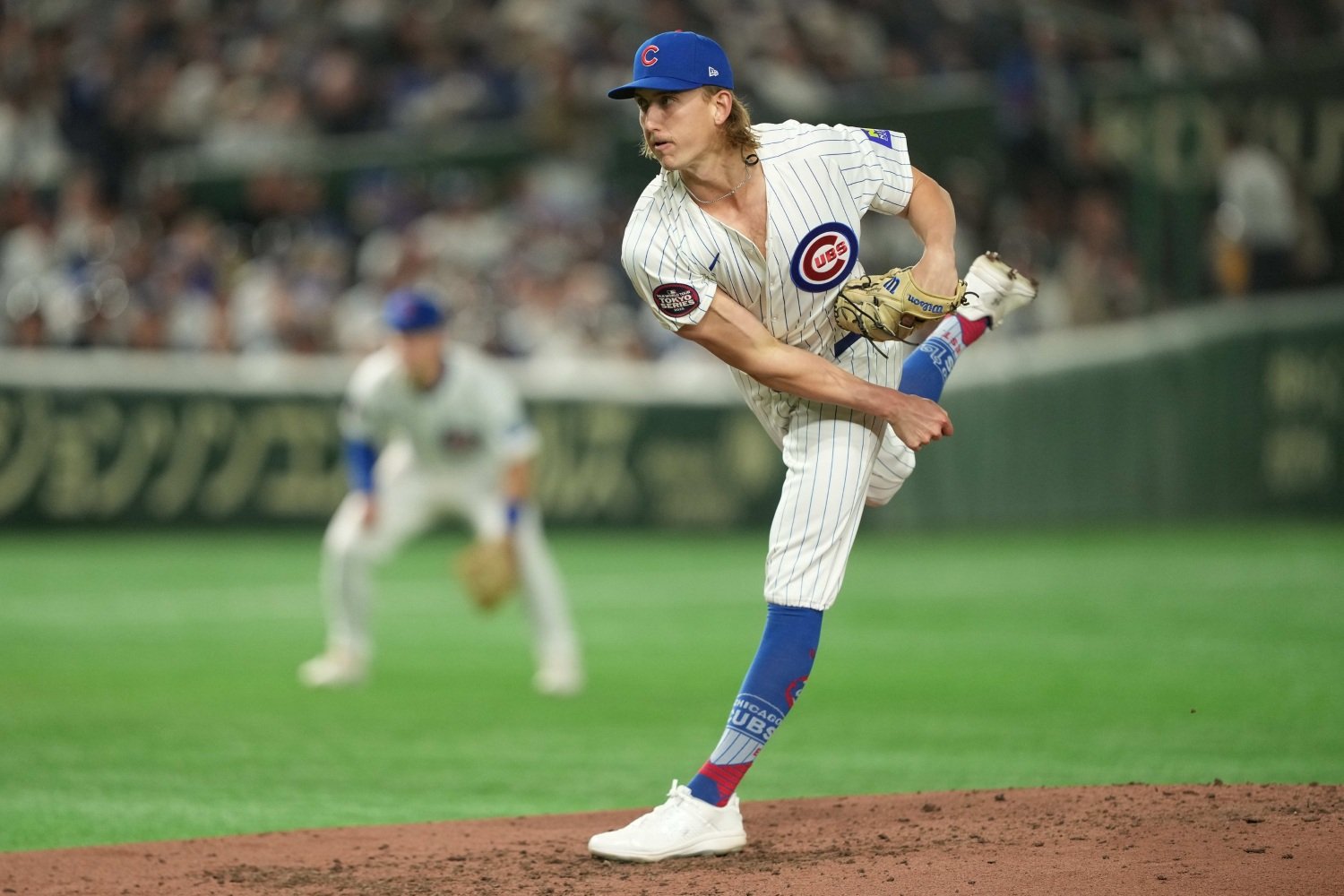 Every baseball game has little clues within it—little things that tell you something important about the much larger truths you're really chasing, like which teams are good and what matters in the sport. Even a game with a pageant atmosphere and a bunch of players still only half-ready can do that, and on Tuesday morning (Chicago time), we got to see the Cubs play a game that mattered. Here are a few of the clues we might have gleaned therefrom. 1. Jon Berti Runs Hot—Maybe Too Much So. No Cubs position player had a more eventful first game than Berti. It was clear that he had the adrenaline that should come with this kind of event coursing through him—but some of the effects of that were unfortunately messy. The Cubs grabbed an early 1-0 lead, but in the top of the fifth, a ground ball to third helped turn a small Dodgers rally into the winning one. On a could-be, maybe, double-play ball, Matt Shaw made a clean pick and good throw to second, but Berti (trying to do too much; the twin killing was not going to happen, anyway) overthrew Michael Busch badly. That brought home Shohei Ohtani with the go-ahead run, and since the ball went out of play, Teoscar Hernández was awarded second base. He came around to score on a single to widen the lead to 3-1. Berti sought his revenge in the bottom half of the inning, swinging aggressively enough against Yoshinobu Yamamoto to generate a 111.3-mph batted ball. That was not only the fastest by anyone in this game, but the fastest a ball has left Berti's bat since 2019. Alas, it was a ground ball, and turned into a relatively easy out. It's good to see Berti can generate that kind of jolt, in his mid-30s, but he'll need to get a little air under those to make them matter more in the future. Later in the game, a running Blake Treinen sinker hit Berti on the hand, which seemed to spike his adrenaline again. He stole second base on the first pitch of the ensuing at-bat, hungry to come around and halve the Dodger lead. He was stranded there, but his spunk was nice to see. He also made a fine defensive play crossing to the shortstop side of second in the late innings, partially making up for the critical error earlier. Berti looks like a valuable source of heat for this team, but will have to make good decisions in the field, the batter's box, and the basepath to maximize his utility as their utility man. 2. Ben Brown is Either Trading Some Velocity for a New Fastball Shape... or Has Just Lost Velocity. After Shota Imanaga shut the Dodgers out and allowed no hits (although four walks) in four innings, Ben Brown took over. The Dodgers touched him for those three runs and drew three walks over what turned out to be 2 2/3 innings, but Brown did strike out five and induce a game-high 14 swings and misses. The good news is that Brown, who seems to have slightly cleaned up his mechanics and raised his arm angle this year, looks healthy and benefited from a change to the shapes of his famous fastball-curve combination. Here's what his movement chart looked like in the game against the Brewers last May, when he struck out 10 and allowed no hits in seven innings. Now, here's the same chart for Tuesday's outing. According to Baseball Savant, Brown's fastball averaged two more inches of induced vertical break than it had last year. That's very good; he needs that. Last year, despite his great velocity and extension, the reality was that Brown's fastball tended not to stump hitters. It was about where they expected it to be when it reached the plate. A bit more hop on it could be a big plus. With his subtly altered release point, Brown also has less arm-side run on the fastball and a little bit more glove-side movement on his curve, which remains a tight and firm but versatile second weapon. Intentional or not, this change in his pitch shapes is interesting. It's even encouraging. It will have to make up, then, for the discouraging news, which is: Brown is down a tick or so from the velocity he boasted last year. He was missing some velocity all spring, but you could tell yourself then that it was a matter of missing adrenaline. In an international regular-season opener against some of the best players in the game, though, he was still missing that heat. If he consciously traded it for a better chance to stay healthy and these improved pitch shapes, that's fine, but it's still a sacrifice. If he's just plain missing that extra oomph, he's going to be diminished this season. He's not a pitcher who can live far below his customary level of power. 3. The Heart of the Order Wasn't Good Enough, but the Bottom Third Was Exciting. It's just one game. Let's call it a safe bet that Seiya Suzuki, Kyle Tucker, Michael Busch, and Matt Shaw will produce fairly well over the long haul. On Tuesday, though, they were the de facto bottom of the lineup, going 0-for-15 (plus Justin Turner's 0-1 pinch-hitting for Busch) and forestalling any meaningful rallies. On the other hand, the guys at the bottom of the order made some interesting things happen. Miguel Amaya not only had the RBI double that accounted for the Cubs' only run, but reached 80 mph on a swing that resulted in a fifth-inning groundout. Amaya isn't short on bat speed in general, but he only had 13 swings faster than that one last season. He's coming out of the gates showing that he still remembers how he consolidated his skills in the wake of his big lower-half mechanical change last summer. The other rookie who altered their swing last summer, Pete Crow-Armstrong, had one of the only two swings to top Amaya's for bat speed in the game, at 80.5 mph. (Unsurprisingly, the one who exceeded both of them was a Shohei Ohtani swing.) Crow-Armstrong swung faster than that just five times in 2024, and none of those came after he changed to a leg kick in the second half. He's quieted that leg kick back down this spring, and he's still far too twitchy with it. He's still not making good swing decisions. Being dangerous in the box is crucial, though, and Crow-Armstrong showed he's ready to be that way in 2025. The Cubs get another crack at the depleted Dodgers Wednesday morning, and a split in this series would be a perfectly acceptable outcome. Losing the first game put a bit of a damper on the day, but even in that contest, we got to see some things that point us toward a clearer understanding of the season ahead for the team.
- 2 comments
-
- 1
-
-
- ben brown
- miguel amaya
- (and 3 more)
-
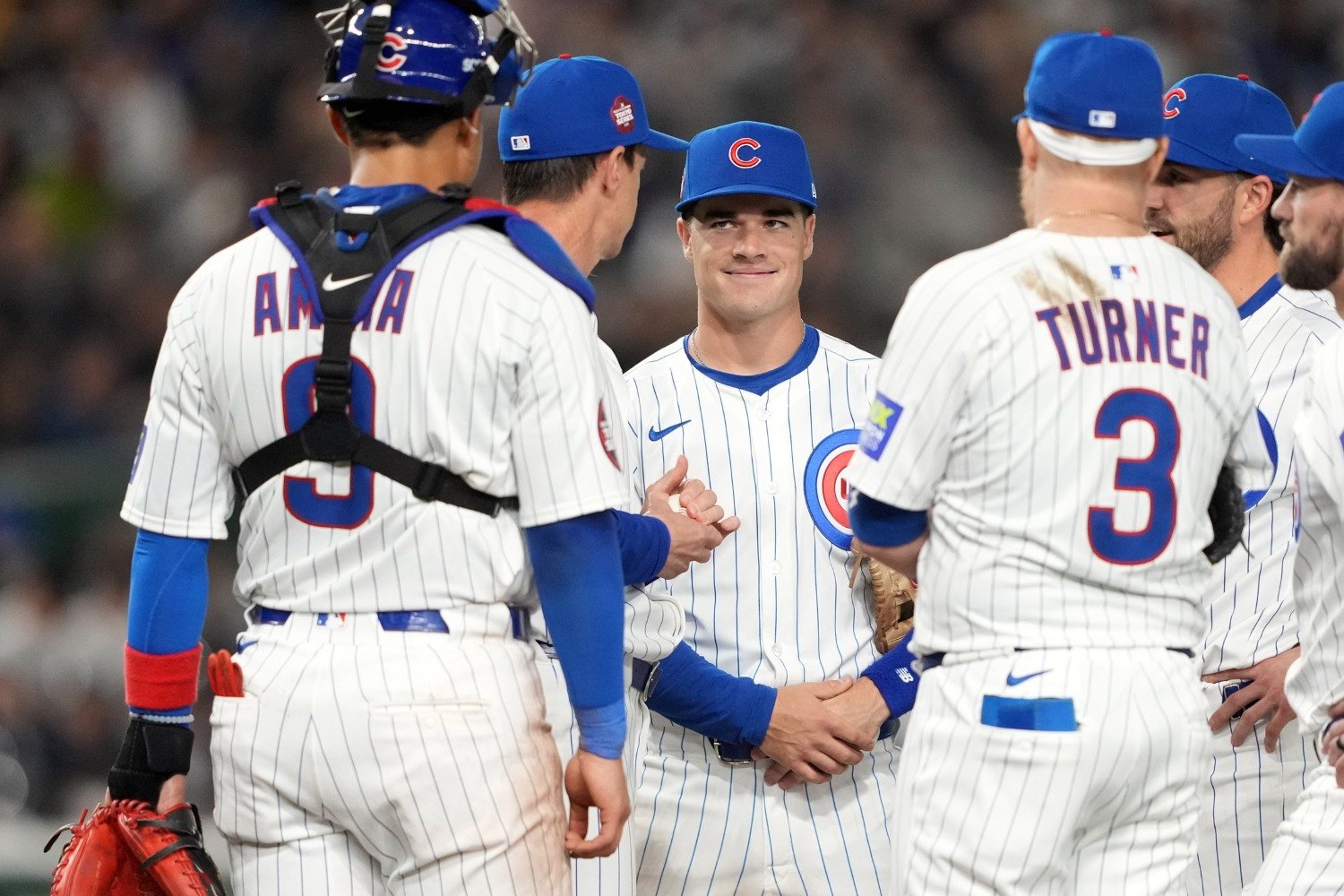 It's hard to surprise anyone with decisions about the roster for a series an ocean away from home. The guys you wanted got on the plane, more or less. The guys you didn't want stayed home, more or less. So, yes, Matt Shaw is officially active for the Tokyo Series, which begins at 5:10 AM Central, when Shota Imanaga takes his place on the mound for the (technically) homestanding Cubs against the Dodgers. In fact, Shaw is in the starting lineup for his big-league debut, batting fifth: CUBS LINEUP Ian Happ - LF Seiya Suzuki - DH Kyle Tucker - RF Michael Busch - 1B Matt Shaw - 3B Dansby Swanson - SS Pete Crow-Armstrong - CF Miguel Amaya - C Jon Berti - 2B Miguel Amaya draws the start behind the plate for the season opener, working with Imanaga, and Michael Busch gets the nod at first base—despite the extreme reverse splits of Dodgers starter Yoshinobu Yamamoto. Jon Berti is playing instead of Gage Workman, though—not that anyone particularly expected that Workman would get a start at second right away. It also feels like Craig Counsell has placed Kyle Tucker and Busch conspicuously side-by-side, inviting (tempting?) Dave Roberts to make an aggressive move to a lefty in the middle innings—one Counsell might counter by pinch-hitting Turner for Busch. To make room for Shaw on the 40-man roster, Keegan Thompson was designated for assignment. He still seems to have enough cachet around the game that he's likely to be traded to some team eager to roll the dice, rather than clearing or even reaching waivers, but the Cubs will only get a small amount of financial relief in any deal. Thompson was simply crowded out of the bullpen picture, and is out of minor-league options. Speaking of the pitching staff, in addition to Imanaga, the Cubs will carry the following hurlers for this short series: Justin Steele Ryan Pressly Ryan Brasier Porter Hodge Nate Pearson Julian Merryweather Tyson Miller Eli Morgan Ben Brown Caleb Thielbar Colin Rea Jordan Wicks That list just goes on forever, doesn't it? The Dodgers (how bold!) are only rostering 12 pitchers to survive this two-game series, but the Cubs went ahead and carried all 13 they're allowed. That makes for a truly wild-looking list, because it doesn't include veteran starters Jameson Taillon or Matthew Boyd, who pitched multiple innings in the exhibition games leading into this set. That leaves so many hurlers available that the team can't possibly complain about the taxing effect of having to fill important innings so early in the schedule, which is surely why the league has structured the roster rules for these series this way. In the same vein, bringing Brad Keller along and leaving him on the inactive list as part of the traveling party seems to be the team's way of kicking the can down the road when it comes to whether or not he'll be added to their 40-man roster and carried come Opening Day. He has an opt-out in his minor-league deal, so they can't hold onto him much longer without activating him, but since he's not yet on the 40-man and they already needed to create a spot for Shaw, the team has elected to wait and make a final decision on him closer to Mar. 27, when they'll play in Arizona to kick off the season in earnest. Keller is still all but assured of a spot; this is just procedural. With all those pitchers available, it wouldn't have made much sense to force another transaction right now. The Cubs have been fortunate to come this far in such an unusual camp with very few injuries. That could change any minute, though, so they're trying to keep their powder dry. The Dodgers will line up thusly against Imanaga. DODGERS LINEUP Shohei Ohtani - DH Tommy Edman - 2B Freddie Freeman - 1B Teoscar Hernández - RF Will Smith - C Enrique Hernández - LF Max Muncy - 3B Miguel Rojas - SS Andy Pages - CF This is certainly not the most imposing iteration of the Dodgers lineup the league will see this year. That Imanaga (and Steele, for that matter) is left-handed helps a bit, by inviting Roberts to use Kiké Hernández instead of Michael Conforto, but some of that is balanced by the fact that Tommy Edman hits considerably better right-handed. The real glaring omission here is Mookie Betts, who will be sidelined for this series after an illness that resulted in him losing over 10 pounds in the last week. That's a break for the Cubs. The stage is set; the chorus is intoning its overture. These games count, but they're also about the pageantry and the novelty. They belong to themselves, as much as to the rest of the coming season. Enjoy them, and savor the moment when the weight of a new season, solid and real, lands on your shoulder. It's Opening Day, even if (here in the States) the day really hasn't opened yet, and the opening is as much of ourselves to the season as of the season to us.
 -
WAKE UP! It's a beautiful day for a ball game, from Tokyo. The Cubs and Dodgers have set their rosters for this delightfully bizarre, meaningful-yet-preposterous two-game series, kicking off the 2025 season. A few interesting tidbits await. Image courtesy of © Darren Yamashita-Imagn Images It's hard to surprise anyone with decisions about the roster for a series an ocean away from home. The guys you wanted got on the plane, more or less. The guys you didn't want stayed home, more or less. So, yes, Matt Shaw is officially active for the Tokyo Series, which begins at 5:10 AM Central, when Shota Imanaga takes his place on the mound for the (technically) homestanding Cubs against the Dodgers. In fact, Shaw is in the starting lineup for his big-league debut, batting fifth: CUBS LINEUP Ian Happ - LF Seiya Suzuki - DH Kyle Tucker - RF Michael Busch - 1B Matt Shaw - 3B Dansby Swanson - SS Pete Crow-Armstrong - CF Miguel Amaya - C Jon Berti - 2B Miguel Amaya draws the start behind the plate for the season opener, working with Imanaga, and Michael Busch gets the nod at first base—despite the extreme reverse splits of Dodgers starter Yoshinobu Yamamoto. Jon Berti is playing instead of Gage Workman, though—not that anyone particularly expected that Workman would get a start at second right away. It also feels like Craig Counsell has placed Kyle Tucker and Busch conspicuously side-by-side, inviting (tempting?) Dave Roberts to make an aggressive move to a lefty in the middle innings—one Counsell might counter by pinch-hitting Turner for Busch. To make room for Shaw on the 40-man roster, Keegan Thompson was designated for assignment. He still seems to have enough cachet around the game that he's likely to be traded to some team eager to roll the dice, rather than clearing or even reaching waivers, but the Cubs will only get a small amount of financial relief in any deal. Thompson was simply crowded out of the bullpen picture, and is out of minor-league options. Speaking of the pitching staff, in addition to Imanaga, the Cubs will carry the following hurlers for this short series: Justin Steele Ryan Pressly Ryan Brasier Porter Hodge Nate Pearson Julian Merryweather Tyson Miller Eli Morgan Ben Brown Caleb Thielbar Colin Rea Jordan Wicks That list just goes on forever, doesn't it? The Dodgers (how bold!) are only rostering 12 pitchers to survive this two-game series, but the Cubs went ahead and carried all 13 they're allowed. That makes for a truly wild-looking list, because it doesn't include veteran starters Jameson Taillon or Matthew Boyd, who pitched multiple innings in the exhibition games leading into this set. That leaves so many hurlers available that the team can't possibly complain about the taxing effect of having to fill important innings so early in the schedule, which is surely why the league has structured the roster rules for these series this way. In the same vein, bringing Brad Keller along and leaving him on the inactive list as part of the traveling party seems to be the team's way of kicking the can down the road when it comes to whether or not he'll be added to their 40-man roster and carried come Opening Day. He has an opt-out in his minor-league deal, so they can't hold onto him much longer without activating him, but since he's not yet on the 40-man and they already needed to create a spot for Shaw, the team has elected to wait and make a final decision on him closer to Mar. 27, when they'll play in Arizona to kick off the season in earnest. Keller is still all but assured of a spot; this is just procedural. With all those pitchers available, it wouldn't have made much sense to force another transaction right now. The Cubs have been fortunate to come this far in such an unusual camp with very few injuries. That could change any minute, though, so they're trying to keep their powder dry. The Dodgers will line up thusly against Imanaga. DODGERS LINEUP Shohei Ohtani - DH Tommy Edman - 2B Freddie Freeman - 1B Teoscar Hernández - RF Will Smith - C Enrique Hernández - LF Max Muncy - 3B Miguel Rojas - SS Andy Pages - CF This is certainly not the most imposing iteration of the Dodgers lineup the league will see this year. That Imanaga (and Steele, for that matter) is left-handed helps a bit, by inviting Roberts to use Kiké Hernández instead of Michael Conforto, but some of that is balanced by the fact that Tommy Edman hits considerably better right-handed. The real glaring omission here is Mookie Betts, who will be sidelined for this series after an illness that resulted in him losing over 10 pounds in the last week. That's a break for the Cubs. The stage is set; the chorus is intoning its overture. These games count, but they're also about the pageantry and the novelty. They belong to themselves, as much as to the rest of the coming season. Enjoy them, and savor the moment when the weight of a new season, solid and real, lands on your shoulder. It's Opening Day, even if (here in the States) the day really hasn't opened yet, and the opening is as much of ourselves to the season as of the season to us. View full article
-
Cubs Have Had "Recent Contact" With Lance Lynn, But Deal Not Imminent
Matthew Trueblood posted an article in Cubs
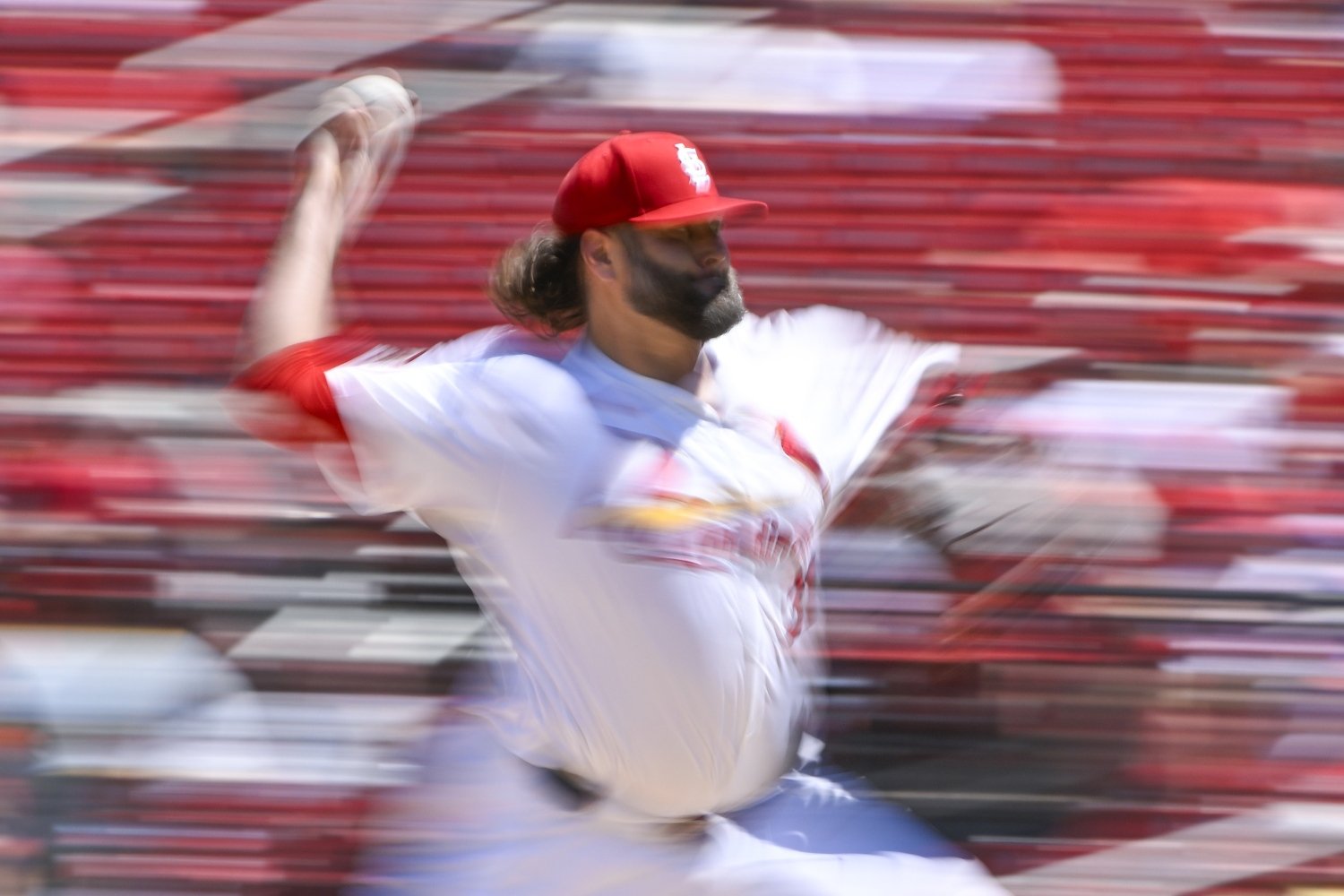 Right-handed pitcher Lance Lynn and the Cubs have had recent talks about a one-year deal, on the eve of a season that the team hopes will stretch more than seven full months, a source said. That (apparently) confirms a report from USA Today's Bob Nightengale, although Nightengale's report makes the deal sound closer than it is. A real agreement is "not imminent," the source emphasized. If the deal were to be completed, it would likely include a provision that Lynn begins the season with Triple-A Iowa, to ensure he's stretched out as far as possible before being called up. Chicago's front office is trying to head off problems that could stem from ramping up many of their pitchers earlier than they would otherwise need to. Already this spring, would-be starting rotation candidate Javier Assad has been sidelined by an oblique issue, although all reports so far are that it's very mild, and that Assad will be ready to re-join the active roster before the end of April. Pitching prospect Brandon Birdsell, meanwhile, has a more severe problem—a shoulder injury that could keep him off the mound for much of the season. That said, the team would not have put any pitcher on the plane to Tokyo whom they didn't consider healthy right now, and that group itself runs 17 players deep. Among starter-capable arms, Justin Steele, Shota Imanaga, Jameson Taillon, Matthew Boyd, Colin Rea, Jordan Wicks, and Ben Brown are in Japan with the team. Cody Poteet, Caleb Kilian, Cade Horton and Chris Flexen are the potential starters the team left in the States, and there could be an injury issue with one or more of them, but the depth at this moment isn't the primary motivation for the team in considering Lynn. Flexen's velocity is up a tick this spring, and he's throwing firmer versions of multiple secondary offerings, including a tighter, more vertical slider. The team is optimistic about Horton, who is expected to pitch in one of the team's two Spring Breakout games, the first of which is Thursday night. The hope, though, is that the team only needs very limited contributions from any of those hurlers this season. Last year, the Dodgers went to Seoul for a similar season-opening jewel event, and ended up using 40 pitchers over the course of the regular season. Only the hapless Miami Marlins used more. By October (and despite trading for key playoff contributors Jack Flaherty and Michael Kopech), the team nearly ran out of pitching, and had to gasp and stagger over the finish line of their World Series victory. They went into the season not only loaded with stars, but with injury-ravaged veteran James Paxton in their rotation and lefty long man Ryan Yarbrough eating innings out of the bullpen throughout the first half. They traded both players midseason, but without the 156 innings the two combined to pitch before the trade deadline, the Dodgers really would have run out of steam. They probably wouldn't have won the pennant, let alone the Series. Signing Lynn would be a measure akin to the Paxton deal, on the Cubs' part, but (obviously) at a lower cost and with less upside. It would be a way to take early innings off the plate of one or more of the pitchers the team will need to be in top form come October—assuming they make it that far. He might also be better than you're remembering. Last season, he posted a 3.84 ERA in 117 2/3 innings, with a modest but playable strikeout rate and his usual modest but playable pitch mix. His fastball is down to an average of just 92.3 miles per hour, but because of his release point and movement profile, his two most-used pitches (the four-seamer and his cutter) both grade as average or better. It's not a significant move, except in the context of the extra-long season the team has to survive, and the risks they know they're exposed to because of it. It hasn't yet come to fruition, but even if it does, it will merely be about better insuring themselves against injuries and early fatigue on the part of vital arms. Don't read any more into it than that.
 -
The burly righthander would be added depth for a pitching staff facing the unique challenge of being ready for a season by mid-March and trying to play until the end of October—but he's unlikely to be more than a transitory part of that long journey. Image courtesy of © Jeff Curry-Imagn Images Right-handed pitcher Lance Lynn and the Cubs have had recent talks about a one-year deal, on the eve of a season that the team hopes will stretch more than seven full months, a source said. That (apparently) confirms a report from USA Today's Bob Nightengale, although Nightengale's report makes the deal sound closer than it is. A real agreement is "not imminent," the source emphasized. If the deal were to be completed, it would likely include a provision that Lynn begins the season with Triple-A Iowa, to ensure he's stretched out as far as possible before being called up. Chicago's front office is trying to head off problems that could stem from ramping up many of their pitchers earlier than they would otherwise need to. Already this spring, would-be starting rotation candidate Javier Assad has been sidelined by an oblique issue, although all reports so far are that it's very mild, and that Assad will be ready to re-join the active roster before the end of April. Pitching prospect Brandon Birdsell, meanwhile, has a more severe problem—a shoulder injury that could keep him off the mound for much of the season. That said, the team would not have put any pitcher on the plane to Tokyo whom they didn't consider healthy right now, and that group itself runs 17 players deep. Among starter-capable arms, Justin Steele, Shota Imanaga, Jameson Taillon, Matthew Boyd, Colin Rea, Jordan Wicks, and Ben Brown are in Japan with the team. Cody Poteet, Caleb Kilian, Cade Horton and Chris Flexen are the potential starters the team left in the States, and there could be an injury issue with one or more of them, but the depth at this moment isn't the primary motivation for the team in considering Lynn. Flexen's velocity is up a tick this spring, and he's throwing firmer versions of multiple secondary offerings, including a tighter, more vertical slider. The team is optimistic about Horton, who is expected to pitch in one of the team's two Spring Breakout games, the first of which is Thursday night. The hope, though, is that the team only needs very limited contributions from any of those hurlers this season. Last year, the Dodgers went to Seoul for a similar season-opening jewel event, and ended up using 40 pitchers over the course of the regular season. Only the hapless Miami Marlins used more. By October (and despite trading for key playoff contributors Jack Flaherty and Michael Kopech), the team nearly ran out of pitching, and had to gasp and stagger over the finish line of their World Series victory. They went into the season not only loaded with stars, but with injury-ravaged veteran James Paxton in their rotation and lefty long man Ryan Yarbrough eating innings out of the bullpen throughout the first half. They traded both players midseason, but without the 156 innings the two combined to pitch before the trade deadline, the Dodgers really would have run out of steam. They probably wouldn't have won the pennant, let alone the Series. Signing Lynn would be a measure akin to the Paxton deal, on the Cubs' part, but (obviously) at a lower cost and with less upside. It would be a way to take early innings off the plate of one or more of the pitchers the team will need to be in top form come October—assuming they make it that far. He might also be better than you're remembering. Last season, he posted a 3.84 ERA in 117 2/3 innings, with a modest but playable strikeout rate and his usual modest but playable pitch mix. His fastball is down to an average of just 92.3 miles per hour, but because of his release point and movement profile, his two most-used pitches (the four-seamer and his cutter) both grade as average or better. It's not a significant move, except in the context of the extra-long season the team has to survive, and the risks they know they're exposed to because of it. It hasn't yet come to fruition, but even if it does, it will merely be about better insuring themselves against injuries and early fatigue on the part of vital arms. Don't read any more into it than that. View full article
-
It will be a bitter pill to swallow for some of the righthander's longtime boosters, but this move was inevitable, and the Cubs made the right decision this spring. Image courtesy of © Isaiah J. Downing-Imagn Images Matt Shaw made it onto the plane to Tokyo, but he hasn't yet (officially) made it onto the Chicago Cubs' 40-man roster. Presumably, that move will come soon, because as important to the team's future as he is, Shaw hasn't earned a place within the organization sufficiently prominent to have gotten him across the ocean if they didn't plan to actually use him. When the team does add him to the roster (making him eligible to play in the regular-season games next week that are the central purpose of the trip), it looks as though Keegan Thompson will be the roster casualty. Thompson is out of options, but got beaten out for the final places in the bullpen this spring by minor-league free agent Brad Keller, offseason trade acquisition Eli Morgan, and even young fireballer Daniel Palencia. Not so long ago, there was little to separate Thompson from fellow Southern product Justin Steele. In 2021, both were swingmen for the Cubs, and if anything, Thompson had slightly better numbers. Since then, though, the two hurlers' careers have diverged. Injuries are one culprit for Thompson's downward trend over the last few years, but not the only one. He always walked too many batters, and the two ways to make up for that are to consistently force weak contact or consistently strike batters out at an above-average rate. Thompson has only very inconsistently, very intermittently done either. Over the last few seasons, even when healthy, he's often ridden the shuttle between Des Moines and Chicago, and if the team had been better and more intentional about amassing pitching depth, he would have been jettisoned from the roster sooner. This winter, they finally got serious, adding not only Morgan, Keller, and starters Colin Rea and Matthew Boyd, but fellow relievers Ryan Pressly, Ryan Brasier, and Caleb Thielbar and swingman Cody Poteet. That was after trading for both Nate Pearson and Jack Neely during the summer. With a more robust collection of options, Thompson (who can't be sent to the minors without passing through waivers anymore) was never going to last long in the organization. He probably won't clear waivers, so the Cubs might try to trade him within the next week, but (of course) the return on such a deal would be minimal. This is healthy. Teams need to turn over their roster with some alacrity, to keep things fresh and ensure that they continuously improve. The Cubs have been guilty of some stagnation over the last several years, and Thompson has been a symbol thereof. He's tantalizing, in a sense, and his strikeout rate did tick up in 2024. His stuff has intrigued many fans. Nonetheless, he's mostly performed poorly, and the fact that they had no superior options for that roster spot over the last two years has been a constant indictment of their proactivity and perspicacity as an organization. Thompson has been the pitcher version of Nick Madrigal, Miles Mastrobuoni, and Patrick Wisdom. Now, like those three players, he's likely to be gone from the organization, which will signify the completion of a year of hard work by the front office to catch up. It's their own fault that they ever fell so far behind, but it's still good to see them make up as much ground as they have. There's better depth on both the position-player and the pitching sides of the clubhouse, and the fact that Thompson couldn't make the cut is an overdue but positive sign. Meanwhile, Shaw getting that 40-man spot will obviate further questions about his place on the active roster once the team comes home to start the bulk of the regular season. The Cubs have paid some lip service to the idea that they might continue evaluating him on this trip and option him to Iowa after it, but if they wanted to do that, they should and would have kept him in Arizona this week and saved themselves this 40-man spot for the next fortnight—and, perhaps, until mid- or late April. At this time of year, those roster spots are precious commodities. Being on the roster doesn't mean Shaw must automatically play every day. Gage Workman might well steal some starts from him at third base, while the team figures out how well Shaw can adapt his unique swing (with all that noise in the lower half and a quick but punchy bat path) to big-league pitching. The team has already crossed a Rubicon with Shaw, though, and the sensible choice now is to keep plunging forward. He'll be on the active roster next week, and unless his introduction to the majors goes mortifyingly badly, he'll stick around for the whole season. View full article
-
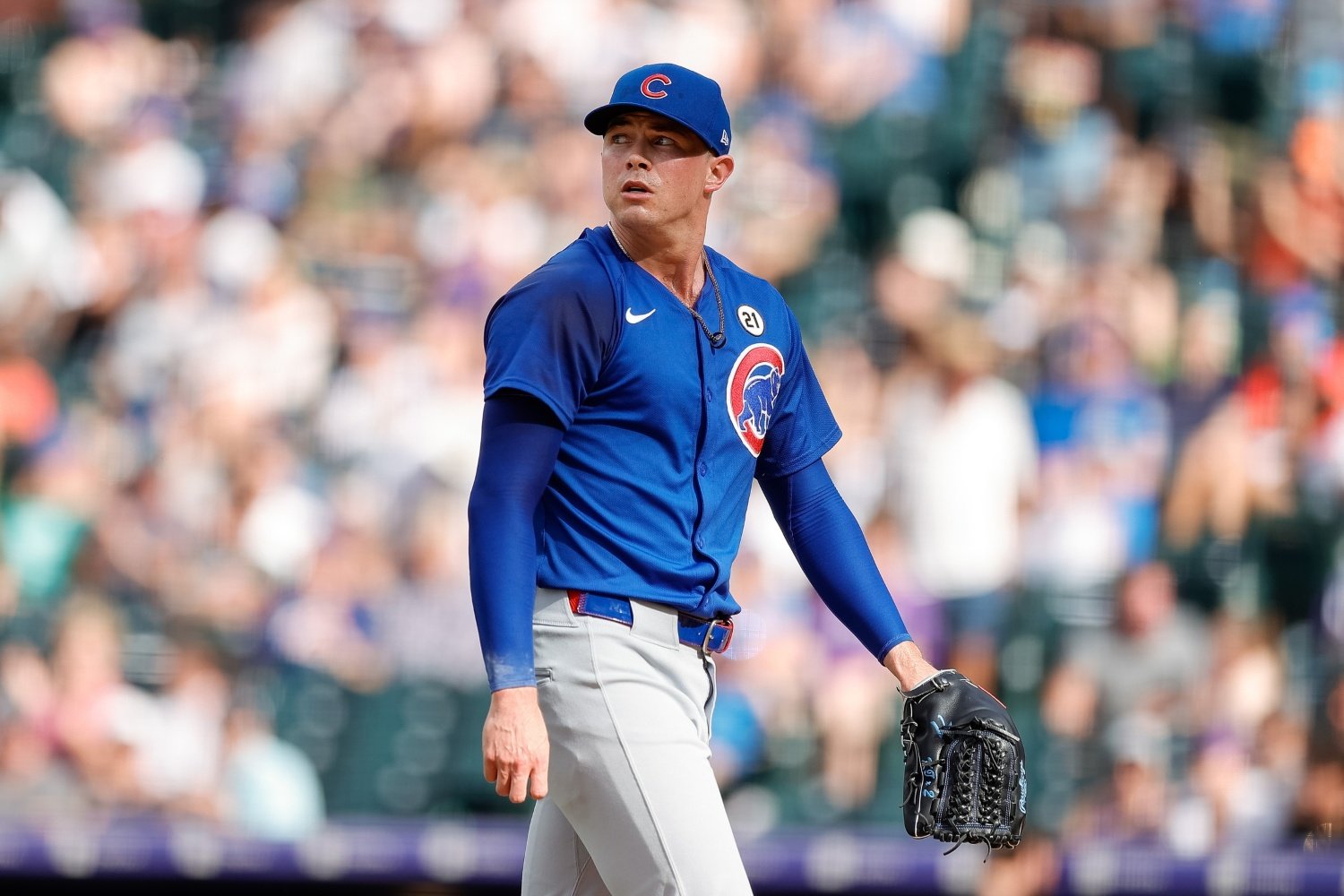 Matt Shaw made it onto the plane to Tokyo, but he hasn't yet (officially) made it onto the Chicago Cubs' 40-man roster. Presumably, that move will come soon, because as important to the team's future as he is, Shaw hasn't earned a place within the organization sufficiently prominent to have gotten him across the ocean if they didn't plan to actually use him. When the team does add him to the roster (making him eligible to play in the regular-season games next week that are the central purpose of the trip), it looks as though Keegan Thompson will be the roster casualty. Thompson is out of options, but got beaten out for the final places in the bullpen this spring by minor-league free agent Brad Keller, offseason trade acquisition Eli Morgan, and even young fireballer Daniel Palencia. Not so long ago, there was little to separate Thompson from fellow Southern product Justin Steele. In 2021, both were swingmen for the Cubs, and if anything, Thompson had slightly better numbers. Since then, though, the two hurlers' careers have diverged. Injuries are one culprit for Thompson's downward trend over the last few years, but not the only one. He always walked too many batters, and the two ways to make up for that are to consistently force weak contact or consistently strike batters out at an above-average rate. Thompson has only very inconsistently, very intermittently done either. Over the last few seasons, even when healthy, he's often ridden the shuttle between Des Moines and Chicago, and if the team had been better and more intentional about amassing pitching depth, he would have been jettisoned from the roster sooner. This winter, they finally got serious, adding not only Morgan, Keller, and starters Colin Rea and Matthew Boyd, but fellow relievers Ryan Pressly, Ryan Brasier, and Caleb Thielbar and swingman Cody Poteet. That was after trading for both Nate Pearson and Jack Neely during the summer. With a more robust collection of options, Thompson (who can't be sent to the minors without passing through waivers anymore) was never going to last long in the organization. He probably won't clear waivers, so the Cubs might try to trade him within the next week, but (of course) the return on such a deal would be minimal. This is healthy. Teams need to turn over their roster with some alacrity, to keep things fresh and ensure that they continuously improve. The Cubs have been guilty of some stagnation over the last several years, and Thompson has been a symbol thereof. He's tantalizing, in a sense, and his strikeout rate did tick up in 2024. His stuff has intrigued many fans. Nonetheless, he's mostly performed poorly, and the fact that they had no superior options for that roster spot over the last two years has been a constant indictment of their proactivity and perspicacity as an organization. Thompson has been the pitcher version of Nick Madrigal, Miles Mastrobuoni, and Patrick Wisdom. Now, like those three players, he's likely to be gone from the organization, which will signify the completion of a year of hard work by the front office to catch up. It's their own fault that they ever fell so far behind, but it's still good to see them make up as much ground as they have. There's better depth on both the position-player and the pitching sides of the clubhouse, and the fact that Thompson couldn't make the cut is an overdue but positive sign. Meanwhile, Shaw getting that 40-man spot will obviate further questions about his place on the active roster once the team comes home to start the bulk of the regular season. The Cubs have paid some lip service to the idea that they might continue evaluating him on this trip and option him to Iowa after it, but if they wanted to do that, they should and would have kept him in Arizona this week and saved themselves this 40-man spot for the next fortnight—and, perhaps, until mid- or late April. At this time of year, those roster spots are precious commodities. Being on the roster doesn't mean Shaw must automatically play every day. Gage Workman might well steal some starts from him at third base, while the team figures out how well Shaw can adapt his unique swing (with all that noise in the lower half and a quick but punchy bat path) to big-league pitching. The team has already crossed a Rubicon with Shaw, though, and the sensible choice now is to keep plunging forward. He'll be on the active roster next week, and unless his introduction to the majors goes mortifyingly badly, he'll stick around for the whole season.
 -
Many worry about how much power the Cubs' newest slugger can generate, without the cozy dimensions in each corner that he enjoyed in Houston. Let's assuage those worries. Image courtesy of © Thomas Shea-Imagn Images Every month or so, Baseball Savant rolls out something new and fun—another set of interesting data, or a new way to break down what was already available. This week, it's a new Batted Ball Profile leaderboard, which shows how each hitter's array of batted balls breaks down, not just by trajectory or direction, but by trajectory and direction. For instance, to no one's surprise, the hitter (of 288 qualifiers) for whom pulling the ball in the air made up the largest share of all his contact last year was Isaac Paredes. The Cubs, of course, traded for Paredes in July—then turned around and dealt him in December. That's despite the fact that, as offensive skills go, pulling the ball in the air consistently is an awfully valuable one—especially for a right-handed batter at Wrigley Field, where the ball carries much better to left field and the dimensions are subtly but importantly more hitter-friendly in that direction. Pulling it in the air often is the most reliable way to hit for power consistently, if you have any meaningful amount of power in the first place. Hitting to left at Wrigley is also valuable, in and of itself. If, instead of Pull Air%, you sort this leaderboard by Straight Air% (the share of all batted balls by a hitter that were in the air to center field), you get another Cub atop the leaderboard: Seiya Suzuki, at 32.0%, with no one else topping 30.0%. This is a slightly unfortunate fact, because although hitting the ball hard in the air is always valuable, doing it too much to the big part of the park limits one's ability to clear fences. This is why Suzuki has 80 career doubles and 14 triples, but just 55 home runs, despite plenty of raw power to hit 25 or 30 homers in a season. Like his issues with the sun in the outfield, it wasn't nearly as much of an issue when he played in Hiroshima, where the orientation of the park and the prevailing wind patterns meant the wind was almost always blowing out, so he hit more homers there. Now, though, it makes him more of a gap power guy than his build, his swing, or his exit velocities would suggest. You didn't come here to have your confidence in Suzuki vaguely and slightly downgraded, though. Let's slide over one more column on the Savant page, and sort all qualifying 2024 batters by the share of their contact that was hit in the air to the opposite field. Why, look here! It's another (now-)Cub, and the very one for whom Paredes was dealt. Firstly, note that these are mostly not guys who also lift the ball well to their pull field. They tend, in fact, to be guys who don't lift the ball a whole lot overall, and those who do (Taylor Ward, for instance) mostly would benefit quite a bit from finding a way to do it to the pull side much more often. A few of these guys (Edouard Julien, who takes a very patient approach, like Suzuki, which will often mean a deeper contact point and less proclivity to pull one's best-struck balls; Gleyber Torres and, ahem, Mike Tauchman, whose home parks were much more favorable to fly balls to their opposite field than to their pull field) might have been doing this consciously, but usually, you want to pull fly balls. Well, Tucker does so, at an above-average rate. It's just that he also lifts the ball to the opposite field at a rate no one else in baseball tops. The only other players with even 23% of their batted balls being in the air to the opposite field and 20% in the air to the pull side last year were Alex Bregman and Davis Schneider—and neither came close to Tucker, really, in either column. Now, we should avoid extrapolating too much, here. Tucker missed half the season, so his sample was smaller than many of the others on the list of qualifiers. If you zoom out and look at the last two, three, or four years, he does still rate as above-average at hitting it in the air to both the pull and opposite fields, but as you'd expect, it looks less extreme. Still, we know he made concrete adjustments last year, and if he maintains them, that flat, shallow wall in left-center at Wrigley Field is going to be very, very friendly to him in 2025. Let's take a moment to review one more thing. If you're a left-handed batter who wants to hit for a good average on balls in play, one key thing to avoid is pulling ground balls. Even in the age of the ban on infield shifts, pulled grounders by a lefty are outs a huge majority of the time; it's a short throw from that side of the diamond to first base. It's notable, then, that Tucker had the 11th-lowest share of his batted balls be pulled grounders last year. Of lefty batters, only Steven Kwan, Parker Meadows and Sal Frelick had lower pulled grounder rates—not because Tucker hits many grounders up the middle or the other way, but because he hits it on the ground so rarely, in general. We've seen a lot of lazy fly outs from Tucker this spring. When he's not going well, that will happen, and it will be frustrating. It's better than either of the alternatives when a player is struggling, though: better than whiffing when he's off, because that tends to signal less overall hitting acumen and strikeouts can't turn into hits even on windy or sunny days; and better than hitting grounders when he's off, because that would mean that when he's on, he only hits line drives. Tucker is an air-ball specialist. When he's right, he's going to hit for lots of power, and because his profile fits Wrigley Field so well—much better, for instance, than Suzuki's does—that will include a bunch of home runs. He's dangerous, to all fields, which is a wonderful thing for a hitter to be. View full article
-
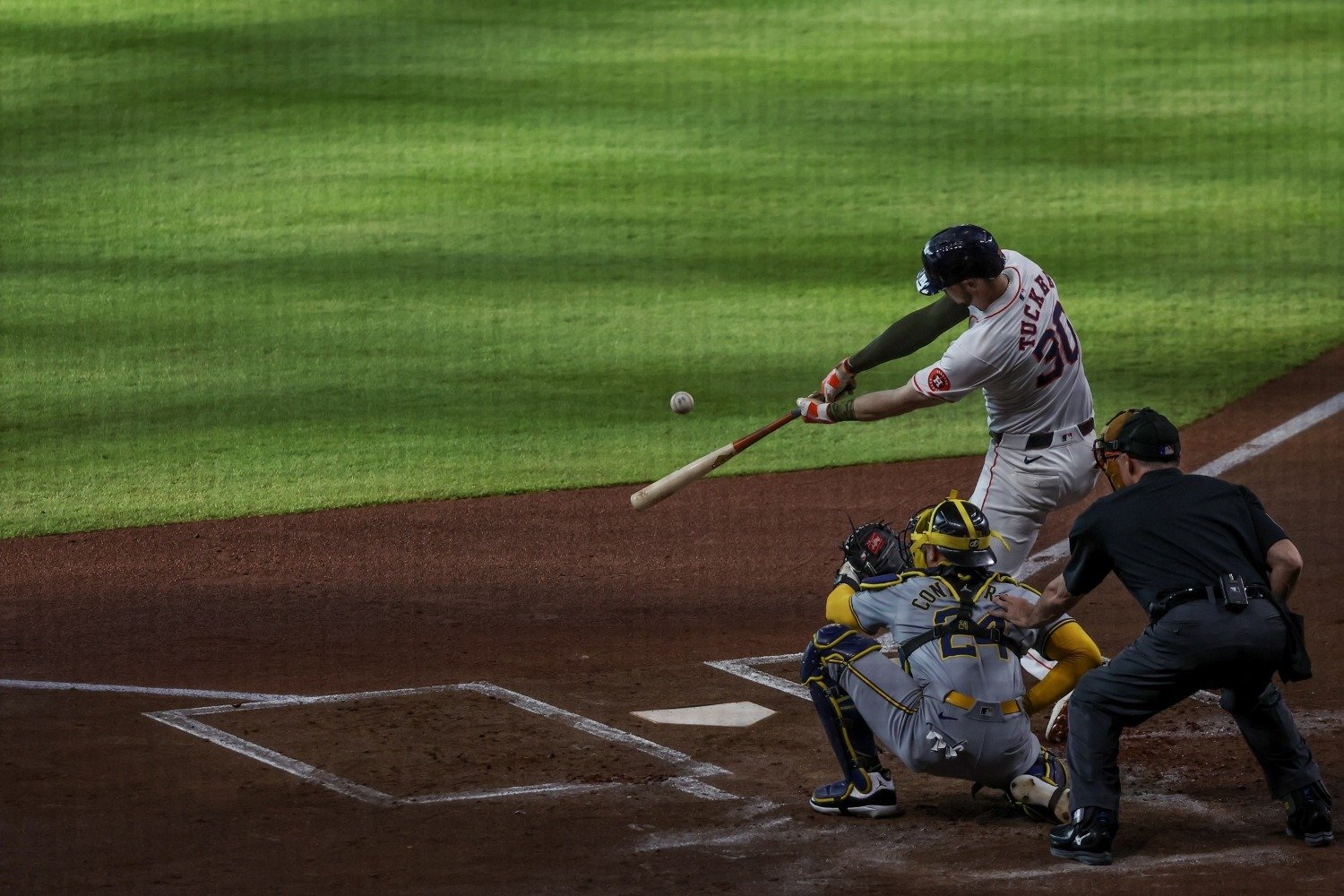 Every month or so, Baseball Savant rolls out something new and fun—another set of interesting data, or a new way to break down what was already available. This week, it's a new Batted Ball Profile leaderboard, which shows how each hitter's array of batted balls breaks down, not just by trajectory or direction, but by trajectory and direction. For instance, to no one's surprise, the hitter (of 288 qualifiers) for whom pulling the ball in the air made up the largest share of all his contact last year was Isaac Paredes. The Cubs, of course, traded for Paredes in July—then turned around and dealt him in December. That's despite the fact that, as offensive skills go, pulling the ball in the air consistently is an awfully valuable one—especially for a right-handed batter at Wrigley Field, where the ball carries much better to left field and the dimensions are subtly but importantly more hitter-friendly in that direction. Pulling it in the air often is the most reliable way to hit for power consistently, if you have any meaningful amount of power in the first place. Hitting to left at Wrigley is also valuable, in and of itself. If, instead of Pull Air%, you sort this leaderboard by Straight Air% (the share of all batted balls by a hitter that were in the air to center field), you get another Cub atop the leaderboard: Seiya Suzuki, at 32.0%, with no one else topping 30.0%. This is a slightly unfortunate fact, because although hitting the ball hard in the air is always valuable, doing it too much to the big part of the park limits one's ability to clear fences. This is why Suzuki has 80 career doubles and 14 triples, but just 55 home runs, despite plenty of raw power to hit 25 or 30 homers in a season. Like his issues with the sun in the outfield, it wasn't nearly as much of an issue when he played in Hiroshima, where the orientation of the park and the prevailing wind patterns meant the wind was almost always blowing out, so he hit more homers there. Now, though, it makes him more of a gap power guy than his build, his swing, or his exit velocities would suggest. You didn't come here to have your confidence in Suzuki vaguely and slightly downgraded, though. Let's slide over one more column on the Savant page, and sort all qualifying 2024 batters by the share of their contact that was hit in the air to the opposite field. Why, look here! It's another (now-)Cub, and the very one for whom Paredes was dealt. Firstly, note that these are mostly not guys who also lift the ball well to their pull field. They tend, in fact, to be guys who don't lift the ball a whole lot overall, and those who do (Taylor Ward, for instance) mostly would benefit quite a bit from finding a way to do it to the pull side much more often. A few of these guys (Edouard Julien, who takes a very patient approach, like Suzuki, which will often mean a deeper contact point and less proclivity to pull one's best-struck balls; Gleyber Torres and, ahem, Mike Tauchman, whose home parks were much more favorable to fly balls to their opposite field than to their pull field) might have been doing this consciously, but usually, you want to pull fly balls. Well, Tucker does so, at an above-average rate. It's just that he also lifts the ball to the opposite field at a rate no one else in baseball tops. The only other players with even 23% of their batted balls being in the air to the opposite field and 20% in the air to the pull side last year were Alex Bregman and Davis Schneider—and neither came close to Tucker, really, in either column. Now, we should avoid extrapolating too much, here. Tucker missed half the season, so his sample was smaller than many of the others on the list of qualifiers. If you zoom out and look at the last two, three, or four years, he does still rate as above-average at hitting it in the air to both the pull and opposite fields, but as you'd expect, it looks less extreme. Still, we know he made concrete adjustments last year, and if he maintains them, that flat, shallow wall in left-center at Wrigley Field is going to be very, very friendly to him in 2025. Let's take a moment to review one more thing. If you're a left-handed batter who wants to hit for a good average on balls in play, one key thing to avoid is pulling ground balls. Even in the age of the ban on infield shifts, pulled grounders by a lefty are outs a huge majority of the time; it's a short throw from that side of the diamond to first base. It's notable, then, that Tucker had the 11th-lowest share of his batted balls be pulled grounders last year. Of lefty batters, only Steven Kwan, Parker Meadows and Sal Frelick had lower pulled grounder rates—not because Tucker hits many grounders up the middle or the other way, but because he hits it on the ground so rarely, in general. We've seen a lot of lazy fly outs from Tucker this spring. When he's not going well, that will happen, and it will be frustrating. It's better than either of the alternatives when a player is struggling, though: better than whiffing when he's off, because that tends to signal less overall hitting acumen and strikeouts can't turn into hits even on windy or sunny days; and better than hitting grounders when he's off, because that would mean that when he's on, he only hits line drives. Tucker is an air-ball specialist. When he's right, he's going to hit for lots of power, and because his profile fits Wrigley Field so well—much better, for instance, than Suzuki's does—that will include a bunch of home runs. He's dangerous, to all fields, which is a wonderful thing for a hitter to be.
 -
They don't have to commit to playing either much, long-term. For these two games, though, it makes far more sense to role with one of the two veterans than with their potential rookie alternatives. Image courtesy of © Allan Henry-Imagn Images Undeniably, Gage Workman has had the best Cactus League showing of any of the Cubs in the mix for second or third base, so far. His tools have been on full display—especially plus power and a suite of defensive skills. Last week, I wrote that the team needs to hold onto him for the time being, and that remains my stance now. However, it's also important to note that in his 86 tracked pitches seen in games with Statcast systems rigged up to feed us public data, Workman has 19 whiffs. He's missed on seven of the nine offspeed pitches he's swung at, and done most of his damage on fastballs—while even missing those around 30% of the time. The eye test says this is not a sampling problem; he's had lots of swing-and-miss, especially against soft stuff, even in non-Statcast games. While his spring showing is encouraging, therefore, we should retain some skepticism about his ability to make consistent enough contact to contribute much in a regular-season big-league setting, especially right away—and especially against the best pitching the Dodgers have to offer, led by offspeed specialist Yoshinobu Yamamoto. Workman gives you the chance to run into one, but he could easily go 0-for-8 with six strikeouts once the games count; velocity ticks up for all the pitchers he faces; and those bedeviling slow or spin-centric pitches become more common. Matt Shaw, by contrast, has phenomenal feel for contact. We've already seen that this spring, including and especially in his two-hit performance Monday against the Guardians. It's much less clear, though, where he's going to get any meaningful power in the near term. Shaw's swing is so geared to reaction and hand-eye coordination that he's unlikely to turn on drive the ball much at all against big-league pitchers right now. Maybe the lingering effects of the minor oblique injury that slowed him at the start of camp partially explain that, but nonetheless, it's real. Shaw doesn't have an extra-base hit this spring, or even an especially strong bid for one. Meanwhile, Vidal Bruján has had a very well-roundedly impressive spring. He's batting .259/.344/.481, and while he's struck out 10 times in 32 plate appearances, that's much more about approach than having big holes in his swing—and he's balanced out some of those whiffs by walking four times. Bruján is a better defensive second baseman, at this moment, than either Workman or Shaw, and he has a better blend of offensive skills to offer. Unlike either of his teammates, he also has some experience facing pitchers of this caliber, and is more likely to make a good adjustment or two. Jon Berti, of course, is the safest (if lowest-ceiling) bet in this bunch. He's hit well and shown a good approach this spring, and he can capably man third base. Unlike any of the other three, he has a contract (and a service time accumulation) that makes him impossible to cut, anyway, but the smart thing would be for the team to treat him as a start for this series. That set of choices wouldn't foreclose any options for the team on the other side of their trip to Japan. When they get back, they'll still have a couple of days to play final Cactus League games and evaluate the readiness of Shaw and Nico Hoerner, and it's a virtual lock that at least one of Workman and Bruján is cut at that point. For now, though, Bruján and Berti give the team the best chance to win. Shaw and Workman, though miles more promising, aren't ready to put up much of a fight against Dodgers pitching in a huge showcase series. View full article
-
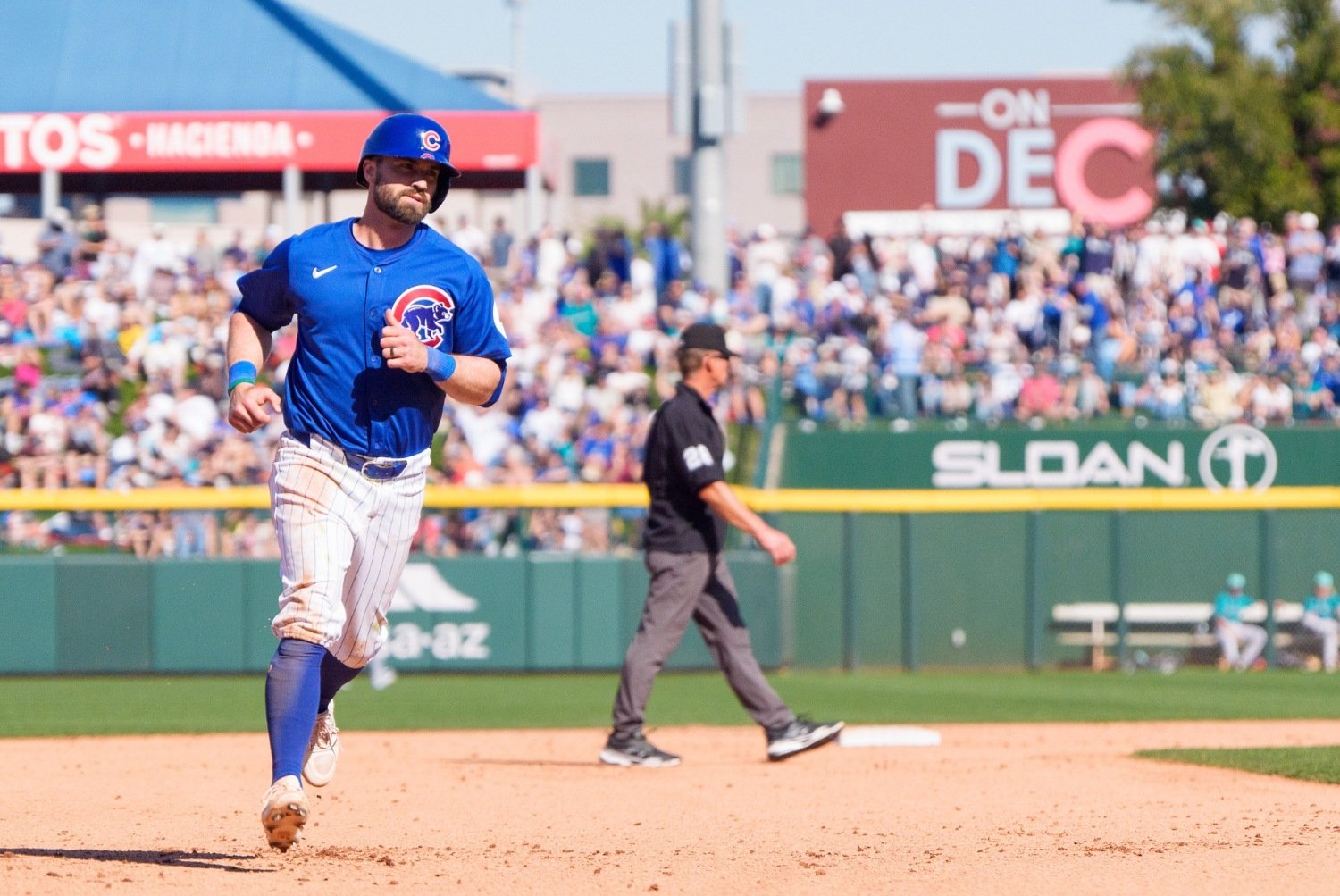 Undeniably, Gage Workman has had the best Cactus League showing of any of the Cubs in the mix for second or third base, so far. His tools have been on full display—especially plus power and a suite of defensive skills. Last week, I wrote that the team needs to hold onto him for the time being, and that remains my stance now. However, it's also important to note that in his 86 tracked pitches seen in games with Statcast systems rigged up to feed us public data, Workman has 19 whiffs. He's missed on seven of the nine offspeed pitches he's swung at, and done most of his damage on fastballs—while even missing those around 30% of the time. The eye test says this is not a sampling problem; he's had lots of swing-and-miss, especially against soft stuff, even in non-Statcast games. While his spring showing is encouraging, therefore, we should retain some skepticism about his ability to make consistent enough contact to contribute much in a regular-season big-league setting, especially right away—and especially against the best pitching the Dodgers have to offer, led by offspeed specialist Yoshinobu Yamamoto. Workman gives you the chance to run into one, but he could easily go 0-for-8 with six strikeouts once the games count; velocity ticks up for all the pitchers he faces; and those bedeviling slow or spin-centric pitches become more common. Matt Shaw, by contrast, has phenomenal feel for contact. We've already seen that this spring, including and especially in his two-hit performance Monday against the Guardians. It's much less clear, though, where he's going to get any meaningful power in the near term. Shaw's swing is so geared to reaction and hand-eye coordination that he's unlikely to turn on drive the ball much at all against big-league pitchers right now. Maybe the lingering effects of the minor oblique injury that slowed him at the start of camp partially explain that, but nonetheless, it's real. Shaw doesn't have an extra-base hit this spring, or even an especially strong bid for one. Meanwhile, Vidal Bruján has had a very well-roundedly impressive spring. He's batting .259/.344/.481, and while he's struck out 10 times in 32 plate appearances, that's much more about approach than having big holes in his swing—and he's balanced out some of those whiffs by walking four times. Bruján is a better defensive second baseman, at this moment, than either Workman or Shaw, and he has a better blend of offensive skills to offer. Unlike either of his teammates, he also has some experience facing pitchers of this caliber, and is more likely to make a good adjustment or two. Jon Berti, of course, is the safest (if lowest-ceiling) bet in this bunch. He's hit well and shown a good approach this spring, and he can capably man third base. Unlike any of the other three, he has a contract (and a service time accumulation) that makes him impossible to cut, anyway, but the smart thing would be for the team to treat him as a start for this series. That set of choices wouldn't foreclose any options for the team on the other side of their trip to Japan. When they get back, they'll still have a couple of days to play final Cactus League games and evaluate the readiness of Shaw and Nico Hoerner, and it's a virtual lock that at least one of Workman and Bruján is cut at that point. For now, though, Bruján and Berti give the team the best chance to win. Shaw and Workman, though miles more promising, aren't ready to put up much of a fight against Dodgers pitching in a huge showcase series.
 -
What if we decided to just trust projections—and demand that every hitter possible be fully qualified for their place in the batting order? Image courtesy of © Allan Henry-Imagn Images Building a batting order is a complicated business. There's emotion tied up in it, for players and for fans. There are interaction factors that make each decision about where to bat a given individual dependent (to one extent or another) on the decision about where to bat someone else. At the core of it, though, there's a pretty interesting truth: talent plays, and if you have players who mostly meet or exceed the league-wide standard for production at their spot on the lineup card, you're likely to score plenty of runs to win games. For today, then—just as a thought exercise—let's assume all the Cubs' key hitters are healthy, and also that the opposing pitcher for the day is split-neutral. Let's further assume (a bigger leap, this one) that projections are an accurate barometer of what we can expect from each Cubs batter. We'll use PECOTA, from Baseball Prospectus, and BP's holistic batting value metric, DRC+. It's indexed to 100, so that number represents a league-average hitter, and higher is better. Here, from best to worst, are all the relevant Cubs hitters, ranked by their projected DRC+ for 2025: Kyle Tucker: 142 Seiya Suzuki: 115 Ian Happ: 112 Gage Workman: 111 Justin Turner: 109 Nico Hoerner: 108 Michael Busch: 103 Miguel Amaya: 99 Dansby Swanson: 98 Matt Shaw: 95 Pete Crow-Armstrong: 93 Jon Berti: 89 Carson Kelly: 88 Kevin Alcántara: 87 Vidal Brujá: 84 First, let's acknowledge that this is a pretty good, deep set of hitters. Sure, PECOTA's chugging Gage Workman Kool-Aid in a way not even Marquee Sports Network is likely to match, but you can take 20 points off his projection and still feel decent about this group. To line them up right, for our little game, though, we need the league context for each place in the order. Here those are, for 2024: .255/.327/.412 - OPS+: 108 .254/.326/.429 - OPS+: 112 .257/.335/.442 - OPS+: 118 .245/.314/.423 - OPS+: 107 .244/.313/.402 - OPS+: 101 .240/.305/.386 - OPS+: 95 .240/.307/.384 - OPS+: 95 .227/.293/.362 - OPS+: 85 .222/.280/.337 - OPS+: 74 Noteworthy trends here, for those with sharp eyes: The league's No. 3 hitters were better than the No. 2 guys last year, although that has not always been the case in recent years. The cleanup hitter is no longer one of the best hitters in the lineup, at least to the extent that they used to be. The sixth and seventh guys are almost identical, making those spots easy to fill and a bit interchangeable. So, here's the game, which I call Lineup Sudoku. The rules are: If it can be avoided, no slotting a player into any place where their projected performance is worse than the league's average production. Where there are multiple candidates for a given spot and choosing any of them would still allow you to follow Rule 1, use the best player for that spot, and shove the other qualifiers further down the hierarchy of lineup positions. The way in which it's like Sudoku is that we can take each hitter and code them as an array of possibilities—valid places they can be put, versus those where they can't be. It's like the process of elimination that leads you gradually to the correct answer for each box of the game grids. Tucker can hit everywhere in the lineup, of course. Suzuki, perhaps problematically (if this were more than a bit of fun with an idea), is eligible to bat anywhere except third; so is Happ. Workman, Turner, and (surprise!) Hoerner all rate well enough to bat anywhere but second or third, which will become important here shortly. Michael Busch qualifies to bat fifth, but everyone else needs to bat sixth or lower—and starting with Crow-Armstrong, the bottom handful of guys can only bat eighth or lower. Bruján only qualifies to bat ninth, by our formula. For fun (and nothing more), let's start by building a Sudoku where we let Workman play ahead of Shaw and Turner get the nod over Busch. After all, that's what the projections are telling us! Ian Happ - LF Seiya Suzuki - DH Kyle Tucker - RF Gage Workman - 3B Justin Turner - 1B Nico Hoerner - 2B Miguel Amaya - C Dansby Swanson - SS Pete Crow-Armstrong - CF If we see this lineup at any point this season, something has surely gone haywire—although not, perhaps, in an altogether bad way. Presumably, under the constraints of reality, Workman would have to get very hot for quite a while to prompt Craig Counsell to bat him cleanup. Ok, let's inject some reality, but still hew to the rules of Lineup Sudoku. Shaw and Busch get their places back, but that creates some complications, because of the more limited number of spots for which they each qualify. It ends up looking like this: Ian Happ - LF Seiya Suzuki - DH Kyle Tucker - RF Nico Hoerner - 2B Michael Busch - 1B Miguel Amaya - C Dansby Swanson - SS Matt Shaw - 3B Pete Crow-Armstrong - CF This one is, somehow, less plausible, right? But we're very close to something imaginable. If Hoerner gets healthy and has the kind of strong season he's capable of, wherein he runs an OBP around .370, he could hit in the top segment of the order. It would just be first, rather than fourth, which better accords with both our traditional inclinations and the shape of the league's production at leadoff and cleanup, as shown above. Flip Hoerner and Happ, and you have a lineup that the team could actually lean into for a month or so at a time—assuming Amaya hits the way the model expects, anyway. As silly as it is, this exercise has a tiny amount of real value, in that it helps us grasp how much quality depth the Cubs have. Even if a player or two gets hurt, they should be able field hitters at least qualified for their place in the lineup on an everyday basis. Most of the guys in the lower half of the order, while confined to those spots based on their expected performance, easily clear the bar even of the lineup spot ahead of them. If you believe in Hoerner the way the projections do, getting and keeping him healthy is pivotal. With him, the Cubs have five regulars with above-average bats, plus Turner and Workman off the bench. However Counsell elects to line them up, this team has the sheer talent to be good offensively. View full article
-
- 1
-
-
- nico hoerner
- matt shaw
- (and 5 more)
-
 Building a batting order is a complicated business. There's emotion tied up in it, for players and for fans. There are interaction factors that make each decision about where to bat a given individual dependent (to one extent or another) on the decision about where to bat someone else. At the core of it, though, there's a pretty interesting truth: talent plays, and if you have players who mostly meet or exceed the league-wide standard for production at their spot on the lineup card, you're likely to score plenty of runs to win games. For today, then—just as a thought exercise—let's assume all the Cubs' key hitters are healthy, and also that the opposing pitcher for the day is split-neutral. Let's further assume (a bigger leap, this one) that projections are an accurate barometer of what we can expect from each Cubs batter. We'll use PECOTA, from Baseball Prospectus, and BP's holistic batting value metric, DRC+. It's indexed to 100, so that number represents a league-average hitter, and higher is better. Here, from best to worst, are all the relevant Cubs hitters, ranked by their projected DRC+ for 2025: Kyle Tucker: 142 Seiya Suzuki: 115 Ian Happ: 112 Gage Workman: 111 Justin Turner: 109 Nico Hoerner: 108 Michael Busch: 103 Miguel Amaya: 99 Dansby Swanson: 98 Matt Shaw: 95 Pete Crow-Armstrong: 93 Jon Berti: 89 Carson Kelly: 88 Kevin Alcántara: 87 Vidal Brujá: 84 First, let's acknowledge that this is a pretty good, deep set of hitters. Sure, PECOTA's chugging Gage Workman Kool-Aid in a way not even Marquee Sports Network is likely to match, but you can take 20 points off his projection and still feel decent about this group. To line them up right, for our little game, though, we need the league context for each place in the order. Here those are, for 2024: .255/.327/.412 - OPS+: 108 .254/.326/.429 - OPS+: 112 .257/.335/.442 - OPS+: 118 .245/.314/.423 - OPS+: 107 .244/.313/.402 - OPS+: 101 .240/.305/.386 - OPS+: 95 .240/.307/.384 - OPS+: 95 .227/.293/.362 - OPS+: 85 .222/.280/.337 - OPS+: 74 Noteworthy trends here, for those with sharp eyes: The league's No. 3 hitters were better than the No. 2 guys last year, although that has not always been the case in recent years. The cleanup hitter is no longer one of the best hitters in the lineup, at least to the extent that they used to be. The sixth and seventh guys are almost identical, making those spots easy to fill and a bit interchangeable. So, here's the game, which I call Lineup Sudoku. The rules are: If it can be avoided, no slotting a player into any place where their projected performance is worse than the league's average production. Where there are multiple candidates for a given spot and choosing any of them would still allow you to follow Rule 1, use the best player for that spot, and shove the other qualifiers further down the hierarchy of lineup positions. The way in which it's like Sudoku is that we can take each hitter and code them as an array of possibilities—valid places they can be put, versus those where they can't be. It's like the process of elimination that leads you gradually to the correct answer for each box of the game grids. Tucker can hit everywhere in the lineup, of course. Suzuki, perhaps problematically (if this were more than a bit of fun with an idea), is eligible to bat anywhere except third; so is Happ. Workman, Turner, and (surprise!) Hoerner all rate well enough to bat anywhere but second or third, which will become important here shortly. Michael Busch qualifies to bat fifth, but everyone else needs to bat sixth or lower—and starting with Crow-Armstrong, the bottom handful of guys can only bat eighth or lower. Bruján only qualifies to bat ninth, by our formula. For fun (and nothing more), let's start by building a Sudoku where we let Workman play ahead of Shaw and Turner get the nod over Busch. After all, that's what the projections are telling us! Ian Happ - LF Seiya Suzuki - DH Kyle Tucker - RF Gage Workman - 3B Justin Turner - 1B Nico Hoerner - 2B Miguel Amaya - C Dansby Swanson - SS Pete Crow-Armstrong - CF If we see this lineup at any point this season, something has surely gone haywire—although not, perhaps, in an altogether bad way. Presumably, under the constraints of reality, Workman would have to get very hot for quite a while to prompt Craig Counsell to bat him cleanup. Ok, let's inject some reality, but still hew to the rules of Lineup Sudoku. Shaw and Busch get their places back, but that creates some complications, because of the more limited number of spots for which they each qualify. It ends up looking like this: Ian Happ - LF Seiya Suzuki - DH Kyle Tucker - RF Nico Hoerner - 2B Michael Busch - 1B Miguel Amaya - C Dansby Swanson - SS Matt Shaw - 3B Pete Crow-Armstrong - CF This one is, somehow, less plausible, right? But we're very close to something imaginable. If Hoerner gets healthy and has the kind of strong season he's capable of, wherein he runs an OBP around .370, he could hit in the top segment of the order. It would just be first, rather than fourth, which better accords with both our traditional inclinations and the shape of the league's production at leadoff and cleanup, as shown above. Flip Hoerner and Happ, and you have a lineup that the team could actually lean into for a month or so at a time—assuming Amaya hits the way the model expects, anyway. As silly as it is, this exercise has a tiny amount of real value, in that it helps us grasp how much quality depth the Cubs have. Even if a player or two gets hurt, they should be able field hitters at least qualified for their place in the lineup on an everyday basis. Most of the guys in the lower half of the order, while confined to those spots based on their expected performance, easily clear the bar even of the lineup spot ahead of them. If you believe in Hoerner the way the projections do, getting and keeping him healthy is pivotal. With him, the Cubs have five regulars with above-average bats, plus Turner and Workman off the bench. However Counsell elects to line them up, this team has the sheer talent to be good offensively.
 -
Every time I read one of your comments, Bertz (like two years' worth now), I find myself agreeing with four assertions and mildly disagreeing with one. It's the absolutely perfect ratio. The one I mildly disagree with here is, I think Miguel Amaya can offer plus power, if and as he gets a better idea of how to blend his altered swing with an approach adjusted to what opposing pitchers want to do to him. The bat speed is there; the high-end EVs are; the launch angles are decent. Plus is probably too strong. But if he gets, say, the same 363 PA this year that he got last year, I wouldn't be shocked if the homers go from 8 in 2024 to 15 or so. That would be plenty.
-
He did it again Thursday, scoring from second base on an errant pitch that skipped away from the catcher at Sloan Park in Mesa. The young Cubs center fielder is a baserunning dynamo. What he will never be, is a leadoff hitter. By now, we're all well-trained students of the school of Sabermetrics 1.0, a movement that began in the 1970s and found its gear in earnest in the 1980s. One of the most famous of that first wave of data-driven insights into the game was the value of on-base percentage, as a better measurement of offensive efficacy than batting average. What matters most (not, by any means, the only thing that matters, but the thing that matters most) is how well a hitter avoids using up one of his team's 27 outs when he comes to the plate. A crucial corollary to that observation, of course, was the fact that many of the game's leadoff hitters were miscast. Too many teams used high-average, low-power, low-OBP guys atop the order, partly because they were fast (and speed at the top of the lineup has always been highly valued), but partly, too, because those batting averages fooled teams into thinking those guys were better hitters than they were. Sabermetrics tells us—started telling us 40 years ago, and largely won the argument as early as 20 years ago—that leadoff hitters need to get on base at a high rate, and that no team should position a player who makes a lot of outs into the spot that gets the most plate appearances. We've all internalized that, by now, and thus, when a young player like Pete Crow-Armstrong comes to the majors, no one really expects him to step right into the top spot in the batting order. By consensus, Crow-Armstrong (who had a .286 OBP last year) is not ready for that kind of job. Here's the thing, though: Somewhere, either right near the surface or deep down, pretty much all of us keep thinking that one day, maybe, he can progress far enough to merit that job. It's a shared goal for him, held by fans and analysts alike, because we all see things like what he did Thursday against the Royals, and imagine how much chaos he might create by batting leadoff every day. Somewhere in our brains, we all still share an instinct that speed has added value at the top of the lineup. This, therefore, will sound radical: It doesn't. It just doesn't. In fact, speed matters far more in the lower half of the modern lineup than in the top half. Back in 2004, when Tom Tango, Mitchel Lichtman and Andrew Dolphin published The Book: Playing the Percentages in Baseball, one of their less-heralded findings was that speed is usually leveraged best by placing the good runner fifth or sixth in the order, all else being equal. The changes to the landscape of the game have only made that truer in the intervening years. Crow-Armstrong has immense value on the bases, once he reaches safely. It's almost unimaginable, though, that he'll ever get on base enough to warrant hitting first. In a good enough developmental scenario to get him to the top third of a lineup, he'll probably profile more as a third hitter, where the power he might tap into more consistently and the high potential batting average could play up. In all the scenarios within a standard deviation of the top of the possibilities curve, though, this guy looks a lot like Kevin Kiermaier: a sensational glove, some slashing offensive contributions, and lots of speed, but nothing that should even tempt you to bat him shoulder-to-shoulder with the best hitters on a winning team. That's ok. It's really good, even. Right now, baserunning is the strongest aspect of Crow-Armstrong's game. It's not just Thursday. He's created chaos in other instances already this spring, and we saw lots of steals and few times caught stealing in 2024. We've all broken free of the delusion that players with high averages can lead off, even if they have poor OBPs. Next, we need to shake the false idea that speed plays best from the top of the order. That was true 70 years ago, 50 years ago, and even 30 years ago, to some extent, when the league's overall power level was lower, so small-ball strategies and the ability to take an extra base on a single mattered more; strikeouts were much less common and singles much more so, especially among the game's best hitters, so getting into scoring position with the heart of the order coming up mattered more; and the bottom of each batting order tended to contain one or two true zeros, sometimes including the pitcher, such that offenses relied more on creating runs in the short sequence from Nos. 1-5 in the lineup. That's not the game teams play in the majors anymore. Almost everyone who starts in the big leagues can hit double-digit home runs. Shortstops, catchers and center fielders (like Crow-Armstrong) are expected to make offensive contributions, which means that most functional lineups have the ability to score even when the lower third is coming up—especially if someone is on in front of them, gaining ground with great baserunning and disrupting the pitcher and the defense. Speed doesn't matter as much at the top of the lineup as it once did, and it never mattered quite as much as we imagined. Crow-Armstrong doesn't fit the profile of a leadoff hitter, and he almost certainly never will. Letting him bat sixth (and perhaps, eventually, move up to third, if his bat takes off) is the best way to make use of his skills, and that's a good way to unlearn some of the incorrect things we all grew up believing about the nature of speed and its place in a baseball offense. I was @Mitch Widmeier's guest on Episode 2 of the North Side Baseball podcast, where we had a good discussion about this topic that reminded me to write it up. That episode should drop soon. Be the first to find it, by subscribing to our YouTube channel and to the podcast feed on Apple Podcasts or Spotify. View full article
-
.png.21b1cf7b63bbd4019bd8e6f39e907c35.png) By now, we're all well-trained students of the school of Sabermetrics 1.0, a movement that began in the 1970s and found its gear in earnest in the 1980s. One of the most famous of that first wave of data-driven insights into the game was the value of on-base percentage, as a better measurement of offensive efficacy than batting average. What matters most (not, by any means, the only thing that matters, but the thing that matters most) is how well a hitter avoids using up one of his team's 27 outs when he comes to the plate. A crucial corollary to that observation, of course, was the fact that many of the game's leadoff hitters were miscast. Too many teams used high-average, low-power, low-OBP guys atop the order, partly because they were fast (and speed at the top of the lineup has always been highly valued), but partly, too, because those batting averages fooled teams into thinking those guys were better hitters than they were. Sabermetrics tells us—started telling us 40 years ago, and largely won the argument as early as 20 years ago—that leadoff hitters need to get on base at a high rate, and that no team should position a player who makes a lot of outs into the spot that gets the most plate appearances. We've all internalized that, by now, and thus, when a young player like Pete Crow-Armstrong comes to the majors, no one really expects him to step right into the top spot in the batting order. By consensus, Crow-Armstrong (who had a .286 OBP last year) is not ready for that kind of job. Here's the thing, though: Somewhere, either right near the surface or deep down, pretty much all of us keep thinking that one day, maybe, he can progress far enough to merit that job. It's a shared goal for him, held by fans and analysts alike, because we all see things like what he did Thursday against the Royals, and imagine how much chaos he might create by batting leadoff every day. Somewhere in our brains, we all still share an instinct that speed has added value at the top of the lineup. This, therefore, will sound radical: It doesn't. It just doesn't. In fact, speed matters far more in the lower half of the modern lineup than in the top half. Back in 2004, when Tom Tango, Mitchel Lichtman and Andrew Dolphin published The Book: Playing the Percentages in Baseball, one of their less-heralded findings was that speed is usually leveraged best by placing the good runner fifth or sixth in the order, all else being equal. The changes to the landscape of the game have only made that truer in the intervening years. Crow-Armstrong has immense value on the bases, once he reaches safely. It's almost unimaginable, though, that he'll ever get on base enough to warrant hitting first. In a good enough developmental scenario to get him to the top third of a lineup, he'll probably profile more as a third hitter, where the power he might tap into more consistently and the high potential batting average could play up. In all the scenarios within a standard deviation of the top of the possibilities curve, though, this guy looks a lot like Kevin Kiermaier: a sensational glove, some slashing offensive contributions, and lots of speed, but nothing that should even tempt you to bat him shoulder-to-shoulder with the best hitters on a winning team. That's ok. It's really good, even. Right now, baserunning is the strongest aspect of Crow-Armstrong's game. It's not just Thursday. He's created chaos in other instances already this spring, and we saw lots of steals and few times caught stealing in 2024. We've all broken free of the delusion that players with high averages can lead off, even if they have poor OBPs. Next, we need to shake the false idea that speed plays best from the top of the order. That was true 70 years ago, 50 years ago, and even 30 years ago, to some extent, when the league's overall power level was lower, so small-ball strategies and the ability to take an extra base on a single mattered more; strikeouts were much less common and singles much more so, especially among the game's best hitters, so getting into scoring position with the heart of the order coming up mattered more; and the bottom of each batting order tended to contain one or two true zeros, sometimes including the pitcher, such that offenses relied more on creating runs in the short sequence from Nos. 1-5 in the lineup. That's not the game teams play in the majors anymore. Almost everyone who starts in the big leagues can hit double-digit home runs. Shortstops, catchers and center fielders (like Crow-Armstrong) are expected to make offensive contributions, which means that most functional lineups have the ability to score even when the lower third is coming up—especially if someone is on in front of them, gaining ground with great baserunning and disrupting the pitcher and the defense. Speed doesn't matter as much at the top of the lineup as it once did, and it never mattered quite as much as we imagined. Crow-Armstrong doesn't fit the profile of a leadoff hitter, and he almost certainly never will. Letting him bat sixth (and perhaps, eventually, move up to third, if his bat takes off) is the best way to make use of his skills, and that's a good way to unlearn some of the incorrect things we all grew up believing about the nature of speed and its place in a baseball offense. I was @Mitch Widmeier's guest on Episode 2 of the North Side Baseball podcast, where we had a good discussion about this topic that reminded me to write it up. That episode should drop soon. Be the first to find it, by subscribing to our YouTube channel and to the podcast feed on Apple Podcasts or Spotify.
By now, we're all well-trained students of the school of Sabermetrics 1.0, a movement that began in the 1970s and found its gear in earnest in the 1980s. One of the most famous of that first wave of data-driven insights into the game was the value of on-base percentage, as a better measurement of offensive efficacy than batting average. What matters most (not, by any means, the only thing that matters, but the thing that matters most) is how well a hitter avoids using up one of his team's 27 outs when he comes to the plate. A crucial corollary to that observation, of course, was the fact that many of the game's leadoff hitters were miscast. Too many teams used high-average, low-power, low-OBP guys atop the order, partly because they were fast (and speed at the top of the lineup has always been highly valued), but partly, too, because those batting averages fooled teams into thinking those guys were better hitters than they were. Sabermetrics tells us—started telling us 40 years ago, and largely won the argument as early as 20 years ago—that leadoff hitters need to get on base at a high rate, and that no team should position a player who makes a lot of outs into the spot that gets the most plate appearances. We've all internalized that, by now, and thus, when a young player like Pete Crow-Armstrong comes to the majors, no one really expects him to step right into the top spot in the batting order. By consensus, Crow-Armstrong (who had a .286 OBP last year) is not ready for that kind of job. Here's the thing, though: Somewhere, either right near the surface or deep down, pretty much all of us keep thinking that one day, maybe, he can progress far enough to merit that job. It's a shared goal for him, held by fans and analysts alike, because we all see things like what he did Thursday against the Royals, and imagine how much chaos he might create by batting leadoff every day. Somewhere in our brains, we all still share an instinct that speed has added value at the top of the lineup. This, therefore, will sound radical: It doesn't. It just doesn't. In fact, speed matters far more in the lower half of the modern lineup than in the top half. Back in 2004, when Tom Tango, Mitchel Lichtman and Andrew Dolphin published The Book: Playing the Percentages in Baseball, one of their less-heralded findings was that speed is usually leveraged best by placing the good runner fifth or sixth in the order, all else being equal. The changes to the landscape of the game have only made that truer in the intervening years. Crow-Armstrong has immense value on the bases, once he reaches safely. It's almost unimaginable, though, that he'll ever get on base enough to warrant hitting first. In a good enough developmental scenario to get him to the top third of a lineup, he'll probably profile more as a third hitter, where the power he might tap into more consistently and the high potential batting average could play up. In all the scenarios within a standard deviation of the top of the possibilities curve, though, this guy looks a lot like Kevin Kiermaier: a sensational glove, some slashing offensive contributions, and lots of speed, but nothing that should even tempt you to bat him shoulder-to-shoulder with the best hitters on a winning team. That's ok. It's really good, even. Right now, baserunning is the strongest aspect of Crow-Armstrong's game. It's not just Thursday. He's created chaos in other instances already this spring, and we saw lots of steals and few times caught stealing in 2024. We've all broken free of the delusion that players with high averages can lead off, even if they have poor OBPs. Next, we need to shake the false idea that speed plays best from the top of the order. That was true 70 years ago, 50 years ago, and even 30 years ago, to some extent, when the league's overall power level was lower, so small-ball strategies and the ability to take an extra base on a single mattered more; strikeouts were much less common and singles much more so, especially among the game's best hitters, so getting into scoring position with the heart of the order coming up mattered more; and the bottom of each batting order tended to contain one or two true zeros, sometimes including the pitcher, such that offenses relied more on creating runs in the short sequence from Nos. 1-5 in the lineup. That's not the game teams play in the majors anymore. Almost everyone who starts in the big leagues can hit double-digit home runs. Shortstops, catchers and center fielders (like Crow-Armstrong) are expected to make offensive contributions, which means that most functional lineups have the ability to score even when the lower third is coming up—especially if someone is on in front of them, gaining ground with great baserunning and disrupting the pitcher and the defense. Speed doesn't matter as much at the top of the lineup as it once did, and it never mattered quite as much as we imagined. Crow-Armstrong doesn't fit the profile of a leadoff hitter, and he almost certainly never will. Letting him bat sixth (and perhaps, eventually, move up to third, if his bat takes off) is the best way to make use of his skills, and that's a good way to unlearn some of the incorrect things we all grew up believing about the nature of speed and its place in a baseball offense. I was @Mitch Widmeier's guest on Episode 2 of the North Side Baseball podcast, where we had a good discussion about this topic that reminded me to write it up. That episode should drop soon. Be the first to find it, by subscribing to our YouTube channel and to the podcast feed on Apple Podcasts or Spotify. -
 Countless times, it seems, Caleb Kilian has had enough success in the upper minors to get the Cubs organization or its fans intrigued. Then, he comes up to the majors and is a major disappointment, or he gets hurt, and he ends up in the minors again, having done nothing to actually help the Chicago Cubs win games. It's enough to make a person want, badly, to give up on him, because there's no sign that Kilian will ever cobble together the stuff, command, and mental skills necessary to turn from intriguing to valuable. However, even as one of the foremost Kilian skeptics, I have been guilty in these very digital pages of Kilian optimism. Why does he get so many chances? Why do some (really, almost all of us, in one turn or another) keep falling for this? That, detective, is the right question. When a pitcher comes to the big leagues, we have to go largely off their scouting reports, and what we've all gleaned from watching them in a limited capacity in the minors. There's Statcast data even in Triple A now, but not all velocity, spin, or movement is created equal, and some of the key details—arm angle, extension, spin axis, vertical approach angle, and so on—that we can readily access for big-league pitchers are much harder (or impossible) to find at that level than once a hurler reaches the bigs. If a player's stuff doesn't play when they first come up, though, we'll tend not to get excited if they go back down, have some success, and come back up, even if their raw pitching data looks promising—unless that data is also remarkably different from what it was the last time we saw them. Kilian is the king of reinvention. No, wait, that's too simple a statement. Kilian is not reinventing himself. Kilian is, more like, just an empty vessel, and someone keeps pouring semi-random assortments of pitch shapes into him every year. It's utterly disorienting, and it makes him as hard to give up on as he is to get excited about. I really, fully, permanently have given up on Kilian, in his 2022 and 2023 iterations. I'm not sure I ever drew a final conclusion on 2024 Kilian, though I certainly didn't progress beyond my natural stance of deep suspicion. The thing is, 2025 Kilian seems to be another beast altogether. Here's the average horizontal and vertical movement, by pitch type, for Kilian in 2022. Bigger data points mean the pitch indicated was a larger part of Kilian's arsenal. This was the fastball-forward iteration of Kilian-bot, a ChatGPT rendition of Roy Halladay—technically, all the same pitches, but none of the feel, which it turns out was what made Roy Halladay good all along. This was the first version Cubs fans saw in the majors, when Kilian came up in May amid considerable hype and promptly squandered it all. That was a doomed experiment. He had a 10.32 ERA in three big-league starts, and his confidence was so shattered by the failure that he struggled even once he returned to the minors. No matter. Here's his 2023 plot: Look, you said stop relying so heavily on three fastballs, and he did, ok? This is a six-pitch guy, with more vert on his four-seam fastball and more comfort with the curveball. He even added a slider, with a fair amount of sweep to it. In the process, of course, he gave up some of the natural heaviness of his sinker, but his control of that pitch was lousy, anyway. He has the rudiments of a changeup brewing. This (or a streamlined portion of this, since the idea in the latter half of 2023 was that he would come up again as a short reliever) was the guy who tricked me into writing the piece linked above, wondering if this might work after all. It did not. His 2023 big-league ERA was 16.88, and his ERA at Iowa ballooned to 4.56. He stopped missing bats even against minor-league hitters. Dump it all out on the floor. Let's try rearranging the pieces and putting them back together. Here's Kilian.2024: It's the same six pitches, technically, but it's really all different. The cutter is practically gone; he tightened up the slider into something he could occasionally throw for strikes instead. The curveball is a little more two-plane, working off an increasingly four-seam fastball shape, and he's building confidence in that changeup. This was all (or almost all) after he recovered from a major shoulder injury, so it was a minor victory just to get back onto the mound and earn another cup of big-league coffee. Minor victories are the only kind he achieved, though. His ERAs with both Iowa and Chicago were better, but he was still short on strikeouts and not throwing enough strikes to make up for the inability to consistently miss bats. Like any good iterative programming process, though, this one learned from having gotten a bit closer last year than in previous ones. Here's what Kilian's stuff looks like so far in 2025: Hold me back, now. Hold me back a little, because I almost want to believe! That's more ride than his fastball has ever shown before. He's letting go of the sinker and changeup, and you know why? Because he's a natural supinator, and the Cubs hired motor preferences maven Tyler Zombro last fall, and they're no longer going to try to force-fit every pitcher into a mold that requires them to work against their arm's internal wiring on at least one or two of their pitches. Instead, they're leaning harder on the pitches guys are predisposed to throw well. In Kilian's case, that's the slider and the curve, and look at those babies. The curve has a crazy amount of depth, far more than it's shown in the past. The slider is no longer even vaguely sweeper-like; it's a sharp vertical thing. He's throwing his fastball as hard as ever, too. The slider is a much firmer offering now than when it was slurvy or sweepish. Getting rid of the cutter to embrace a truer slider sure looks good on him. The series of catridges and chips stuffed into Kilian this year is the best one yet. I feel good saying that. And hey, good news! He's struck out 10 of the 31 batters he's faced this spring, while walking just one. That has to be good, right? Is this finally the breakout? Well, he's also given up 12 hits (and therefore, five runs) in six innings of work. And it's spring training. The Cubs have already technically optioned Kilian to Triple A, though he continues to pitch for the parent club in the Cactus League. He's not going to be an immediate contributor. I doubt he's even one of the top 17 or 18 pitchers the team intends to depend upon this year. Nonetheless, he has promise again. I've been kidding, all this time, mocking the idea of reinvention and calling Kilian a vapid robot. This is a game played by human beings, and the human being that is Caleb Kilian has shown admirable resiliency and openness to change. He wants to make this work, and every single year, he has shown up with a bunch of new ideas about how to make that happen. It hasn't happened yet, and both the fan base and the organization have let go of their most cherished hopes that it'll happen. Nonetheless, until they need his 40-man roster spot for someone else, Kilian can be kept in the organization, and whatever failures of mental toughness he might have shown when thrust into the big leagues at odd times in the past, he's at least partially made up for them by being so relentless in his quest to get better. The team has enough depth, now, not to be reliant on him, but that doesn't mean they aren't pulling for him, a little bit.
 -
The Cubs righty has been very impressive this spring, not least because his arsenal seems to have been overhauled. You know, again. (Again.) Image courtesy of © Rick Scuteri-Imagn Images Countless times, it seems, Caleb Kilian has had enough success in the upper minors to get the Cubs organization or its fans intrigued. Then, he comes up to the majors and is a major disappointment, or he gets hurt, and he ends up in the minors again, having done nothing to actually help the Chicago Cubs win games. It's enough to make a person want, badly, to give up on him, because there's no sign that Kilian will ever cobble together the stuff, command, and mental skills necessary to turn from intriguing to valuable. However, even as one of the foremost Kilian skeptics, I have been guilty in these very digital pages of Kilian optimism. Why does he get so many chances? Why do some (really, almost all of us, in one turn or another) keep falling for this? That, detective, is the right question. When a pitcher comes to the big leagues, we have to go largely off their scouting reports, and what we've all gleaned from watching them in a limited capacity in the minors. There's Statcast data even in Triple A now, but not all velocity, spin, or movement is created equal, and some of the key details—arm angle, extension, spin axis, vertical approach angle, and so on—that we can readily access for big-league pitchers are much harder (or impossible) to find at that level than once a hurler reaches the bigs. If a player's stuff doesn't play when they first come up, though, we'll tend not to get excited if they go back down, have some success, and come back up, even if their raw pitching data looks promising—unless that data is also remarkably different from what it was the last time we saw them. Kilian is the king of reinvention. No, wait, that's too simple a statement. Kilian is not reinventing himself. Kilian is, more like, just an empty vessel, and someone keeps pouring semi-random assortments of pitch shapes into him every year. It's utterly disorienting, and it makes him as hard to give up on as he is to get excited about. I really, fully, permanently have given up on Kilian, in his 2022 and 2023 iterations. I'm not sure I ever drew a final conclusion on 2024 Kilian, though I certainly didn't progress beyond my natural stance of deep suspicion. The thing is, 2025 Kilian seems to be another beast altogether. Here's the average horizontal and vertical movement, by pitch type, for Kilian in 2022. Bigger data points mean the pitch indicated was a larger part of Kilian's arsenal. This was the fastball-forward iteration of Kilian-bot, a ChatGPT rendition of Roy Halladay—technically, all the same pitches, but none of the feel, which it turns out was what made Roy Halladay good all along. This was the first version Cubs fans saw in the majors, when Kilian came up in May amid considerable hype and promptly squandered it all. That was a doomed experiment. He had a 10.32 ERA in three big-league starts, and his confidence was so shattered by the failure that he struggled even once he returned to the minors. No matter. Here's his 2023 plot: Look, you said stop relying so heavily on three fastballs, and he did, ok? This is a six-pitch guy, with more vert on his four-seam fastball and more comfort with the curveball. He even added a slider, with a fair amount of sweep to it. In the process, of course, he gave up some of the natural heaviness of his sinker, but his control of that pitch was lousy, anyway. He has the rudiments of a changeup brewing. This (or a streamlined portion of this, since the idea in the latter half of 2023 was that he would come up again as a short reliever) was the guy who tricked me into writing the piece linked above, wondering if this might work after all. It did not. His 2023 big-league ERA was 16.88, and his ERA at Iowa ballooned to 4.56. He stopped missing bats even against minor-league hitters. Dump it all out on the floor. Let's try rearranging the pieces and putting them back together. Here's Kilian.2024: It's the same six pitches, technically, but it's really all different. The cutter is practically gone; he tightened up the slider into something he could occasionally throw for strikes instead. The curveball is a little more two-plane, working off an increasingly four-seam fastball shape, and he's building confidence in that changeup. This was all (or almost all) after he recovered from a major shoulder injury, so it was a minor victory just to get back onto the mound and earn another cup of big-league coffee. Minor victories are the only kind he achieved, though. His ERAs with both Iowa and Chicago were better, but he was still short on strikeouts and not throwing enough strikes to make up for the inability to consistently miss bats. Like any good iterative programming process, though, this one learned from having gotten a bit closer last year than in previous ones. Here's what Kilian's stuff looks like so far in 2025: Hold me back, now. Hold me back a little, because I almost want to believe! That's more ride than his fastball has ever shown before. He's letting go of the sinker and changeup, and you know why? Because he's a natural supinator, and the Cubs hired motor preferences maven Tyler Zombro last fall, and they're no longer going to try to force-fit every pitcher into a mold that requires them to work against their arm's internal wiring on at least one or two of their pitches. Instead, they're leaning harder on the pitches guys are predisposed to throw well. In Kilian's case, that's the slider and the curve, and look at those babies. The curve has a crazy amount of depth, far more than it's shown in the past. The slider is no longer even vaguely sweeper-like; it's a sharp vertical thing. He's throwing his fastball as hard as ever, too. The slider is a much firmer offering now than when it was slurvy or sweepish. Getting rid of the cutter to embrace a truer slider sure looks good on him. The series of catridges and chips stuffed into Kilian this year is the best one yet. I feel good saying that. And hey, good news! He's struck out 10 of the 31 batters he's faced this spring, while walking just one. That has to be good, right? Is this finally the breakout? Well, he's also given up 12 hits (and therefore, five runs) in six innings of work. And it's spring training. The Cubs have already technically optioned Kilian to Triple A, though he continues to pitch for the parent club in the Cactus League. He's not going to be an immediate contributor. I doubt he's even one of the top 17 or 18 pitchers the team intends to depend upon this year. Nonetheless, he has promise again. I've been kidding, all this time, mocking the idea of reinvention and calling Kilian a vapid robot. This is a game played by human beings, and the human being that is Caleb Kilian has shown admirable resiliency and openness to change. He wants to make this work, and every single year, he has shown up with a bunch of new ideas about how to make that happen. It hasn't happened yet, and both the fan base and the organization have let go of their most cherished hopes that it'll happen. Nonetheless, until they need his 40-man roster spot for someone else, Kilian can be kept in the organization, and whatever failures of mental toughness he might have shown when thrust into the big leagues at odd times in the past, he's at least partially made up for them by being so relentless in his quest to get better. The team has enough depth, now, not to be reliant on him, but that doesn't mean they aren't pulling for him, a little bit. View full article
.png.21b1cf7b63bbd4019bd8e6f39e907c35.png)
