Matthew Trueblood
-
Posts
2,479 -
Joined
-
Last visited
-
Days Won
2
Content Type
Profiles
Joomla Posts 1
Chicago Cubs Videos
Chicago Cubs Free Agent & Trade Rumors, Notes, & Tidbits
2026 Chicago Cubs Top Prospects Ranking
News
2023 Chicago Cubs Draft Picks
Guides & Resources
2024 Chicago Cubs Draft Picks
The Chicago Cubs Players Project
2025 Chicago Cubs Draft Pick Tracker
2026 Chicago Cubs Draft Tracker: Picks & Bonuses
Blogs
Events
Forums
Store
Gallery
Everything posted by Matthew Trueblood
-
Image courtesy of © Sam Navarro-Imagn Images Daniel Palencia has pitched seven scoreless innings this spring. The first three were virtually meaningless Cactus League warmups. The last four have been some of the biggest games of his life, serving as the closer for Team Venezuela in its first-ever run to the finals of the World Baseball Classic. He closed down wins for his country in both the quarterfinals against Japan on Saturday and the semifinals against Italy on Monday. Now, there's a tough question at hand. Relievers don't work three times in four days during March. That simply doesn't happen. It's not even something rubber-armed guys do to get ready for that pattern when it arises during the regular season; it's viewed as a greater risk than it's worth. However, Palencia has pitched twice in the last three days, including Monday night. If Venezuela has a late lead it needs to protect, will he be available to pitch? The answer isn't clear. Team USA closer Mason Miller is in a similar situation, having pitched both Thursday and Saturday, but he has an extra day of rest in his would-be three-appearance window—and still, neither he nor the team is yet committing to him being able to go. Miller did need a combined 40 pitches to get through his outings Thursday and Saturday, though. Palencia has yet to throw more than 17 pitches in a WBC game, and only needed 13 and 15 to mow down Japan and Italy, respectively. With hard throwers, in particular, a heavy early workload feels risky. There's no getting around the fact that Cubs fans have divided allegiances, because for many of them, the top priority is having Palencia healthy for the full regular season and (they hope) postseason ahead. Indeed, realistically, that's the nature of the relationship between MLB and international baseball right now: the latter is subservient to the former. Major League Baseball puts on the WBC; the event has little hope of real independence from the league. In my opinion, though, if the right moment comes, Palencia has to be on that mound. The Cubs should contact Venezuelan manager Omar López expressly to tell him that he has their blessing to go to his closer. This could easily be the biggest baseball moment of Palencia's life—even bigger than winning a World Series in the States. He deserves the opportunity, and international baseball needs that boost in legitimacy. Players take extended breaks from the top soccer clubs in the world several times each season to reunite with their national teams for various competitions and qualifiers. Sometimes, guys get hurt during international duty, as happened to Seiya Suzuki in the quarterfinals of the WBC. Other times, when a player needed a true break, playing for their country further wears them out instead, and they need to be lightly used for a period after returning from abroad. It's never fun when these things happen, but there's little expectation from fans that clubs will exercise power over the player or some national federation to prevent them from playing. That's the culture we need to pursue with baseball. If players want to play winter ball in Australia or in the Caribbean, they shouldn't need their MLB team's permission. When players join their national teams for the WBC or the Olympics, they shouldn't be constrained in usage by the dictates of their home club. We can move forward, toward a less MLB-centric baseball world. It can be a more vibrant world, and a more immersive one. Injury risk is a part of the game, but it should be a shared burden, and letting players and lesser leagues have more power to decide when and how players are used would do that—while also fostering the growth of shared benefits, like a game with greater global popularity and a more year-round calendar. It's clear that pitching for Venezuela is important to Palencia. He looks strong. He's been efficient. He has a chance to create the memory of a lifetime Tuesday night, if the right situation arises. If that happens, López should give him that chance, and the Cubs and their fans should be rooting unreservedly for a showdown between Palencia and Alex Bregman or Pete Crow-Armstrong with everything on the line. View full article
-
Image courtesy of © Rick Scuteri-Imagn Images The numbers aren't pretty. Corbin Martin has allowed seven hits, four walks and six runs this spring, and he's only gotten 17 outs. He wasn't in pole position for a spot in the Opening Day bullpen, anyway, but it now seems nearly certain that he'll start the season at Triple-A Iowa. Some of those numbers are the results of a multi-layered effort to change his profile on the mound, though. When the time comes—as it always does, for the Cubs, usually by around Memorial Day—Martin could be the guy who's ready to step in and fill vital middle-relief innings for them. First of all, Martin has moved over on the mound this spring. His arm slot is little altered from last season with the Orioles, but whereas he started on the third-base side of the rubber in 2025, he's on the first-base side this spring: One reason for that change: Martin is also working to add a sinker to his pitch mix. His natural fastball is a hard cutter, with plenty of ride but considerable glove-side movement relative to most heaters. That shape is unchanged, but Martin is trying to complement it with a sinker that runs much more to his arm side. Moving to the first-base side makes room for that pitch to move across the plate and still be a strike. His changeup also moves a lot in that direction, so two pitches can benefit from the shift in mound position. When Martin signed, I noted that his best complements for the fastball were a cutter (a more breaking ball-flavored one, which Statcast tagged as a slider at around 91 MPH) and a 12-to-6 curveball to which he switched midseason last year. Interestingly, this spring, he's gone away from that cutter/slider, and back to a slower sweeper-like offering. The curveball is still there, but it's not as sharp as it was last summer. Keeping that sweeper on the plate from his new place on the mound will be tough. If he can locate the fastball well and tunnel the sweeper off it, he should get a good number of hopeless chases from right-handed batters, but looking at all this, it's not hard to see why Martin has struggled during Cactus League play. He's reinventing himself on the mound, in pursuit of a more complete arsenal that can generate sustainable success in the majors. All of it could be scrapped, if it doesn't work. Martin could move back to the other side of the slab and pare his mix back down, if erratic outings like Sunday's (0.2 IP, 3 H, 4 ER, 2 BB, 2 SO) continue. However, if he and the team are seeing the progress they want from these changes, Martin might simply need more time to prepare himself for an important summertime contribution. View full article
-
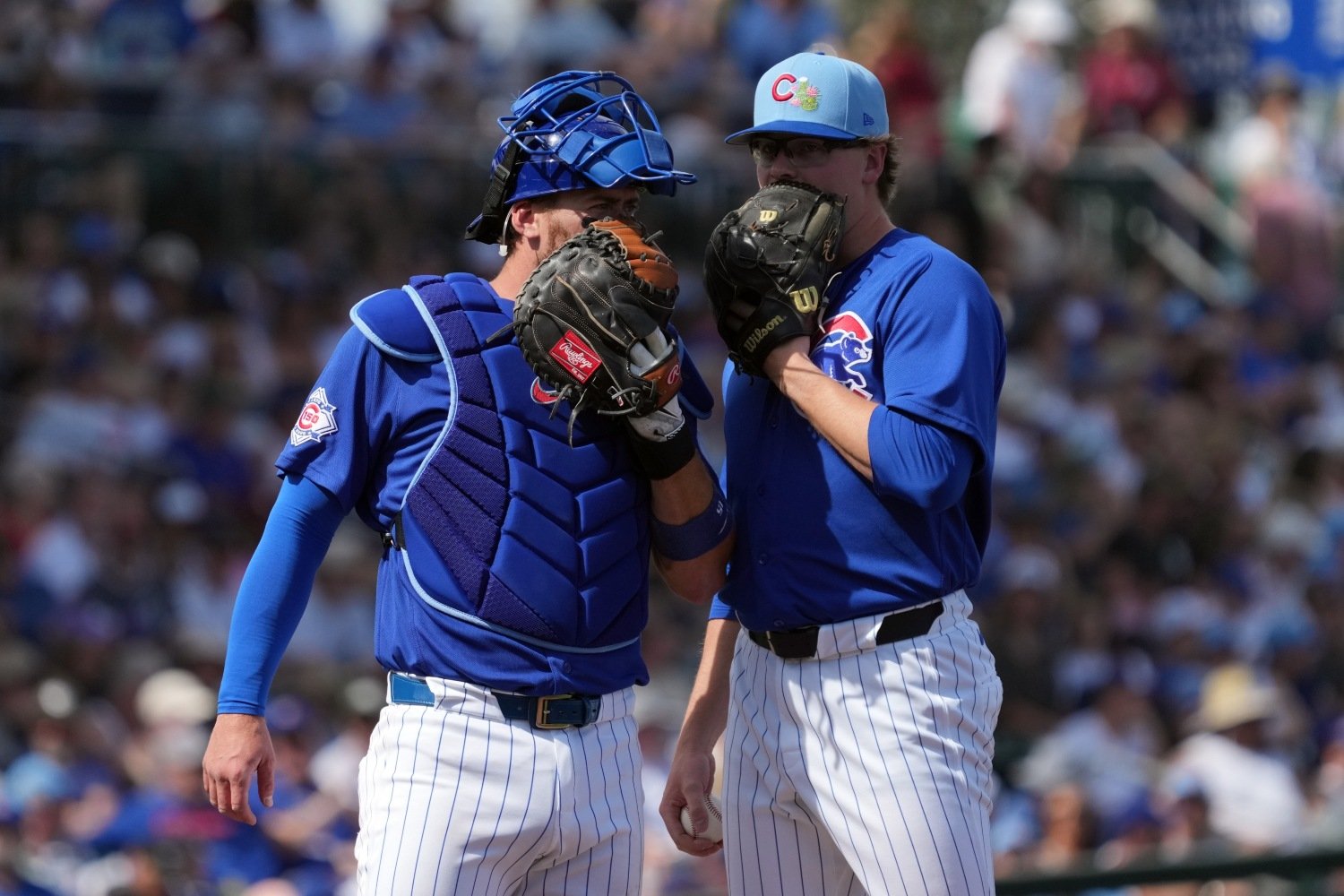 The numbers aren't pretty. Corbin Martin has allowed seven hits, four walks and six runs this spring, and he's only gotten 17 outs. He wasn't in pole position for a spot in the Opening Day bullpen, anyway, but it now seems nearly certain that he'll start the season at Triple-A Iowa. Some of those numbers are the results of a multi-layered effort to change his profile on the mound, though. When the time comes—as it always does, for the Cubs, usually by around Memorial Day—Martin could be the guy who's ready to step in and fill vital middle-relief innings for them. First of all, Martin has moved over on the mound this spring. His arm slot is little altered from last season with the Orioles, but whereas he started on the third-base side of the rubber in 2025, he's on the first-base side this spring: One reason for that change: Martin is also working to add a sinker to his pitch mix. His natural fastball is a hard cutter, with plenty of ride but considerable glove-side movement relative to most heaters. That shape is unchanged, but Martin is trying to complement it with a sinker that runs much more to his arm side. Moving to the first-base side makes room for that pitch to move across the plate and still be a strike. His changeup also moves a lot in that direction, so two pitches can benefit from the shift in mound position. When Martin signed, I noted that his best complements for the fastball were a cutter (a more breaking ball-flavored one, which Statcast tagged as a slider at around 91 MPH) and a 12-to-6 curveball to which he switched midseason last year. Interestingly, this spring, he's gone away from that cutter/slider, and back to a slower sweeper-like offering. The curveball is still there, but it's not as sharp as it was last summer. Keeping that sweeper on the plate from his new place on the mound will be tough. If he can locate the fastball well and tunnel the sweeper off it, he should get a good number of hopeless chases from right-handed batters, but looking at all this, it's not hard to see why Martin has struggled during Cactus League play. He's reinventing himself on the mound, in pursuit of a more complete arsenal that can generate sustainable success in the majors. All of it could be scrapped, if it doesn't work. Martin could move back to the other side of the slab and pare his mix back down, if erratic outings like Sunday's (0.2 IP, 3 H, 4 ER, 2 BB, 2 SO) continue. However, if he and the team are seeing the progress they want from these changes, Martin might simply need more time to prepare himself for an important summertime contribution.
 -
Image courtesy of © Matt Kartozian-Imagn Images Michael Busch has only challenged two calls this spring under the new ABS system, but he's won both times. Just as importantly, he's mounted them, even though (based on the array of pitches he's seen and taken) Statcast's model for predicting how many challenges each hitter would utilize only expects him to have challenged 0.8 pitches—and to have won 0.5 of those 0.8. Meanwhile, only one challenge has been issued against him, and it was lost. Obviously, the data set is far to small to say for certain that Busch has a skill when it comes to challenging. Besides, the magnitude of added value we're talking about here is quite small. Busch flipped called strikes on an 0-1 and a 1-1 pitch to balls, and saw one 2-1 pitch stay a ball despite a challenge. The total number of added calls in his favor, relative to the model's expectation, is 3.5, which isn't a big deal, unless the calls in question are hugely high-leverage. There's a bit of bonus value in taking away one of the other team's challenges by getting them to challenge in error, but that, too, is a small thing. So, why is this worth discussing? Firstly, it seems virtually certain that someone will benefit significantly from the ABS system this year, both at a team level and at an individual one. Last season, Triple-A players successfully overturned 4,628 calls, which is a lot of accumulated impact, even if it came in tiny increments. The value of those changes will accrue unevenly, based on good plate discipline for batters, good command by pitchers, and (yes, still) good framing by catchers, plus great gameplanning and strategic communication by teams and their coaches. Secondly, though, there's some reason to believe that Busch will be uniquely good at utilizing this system. First, he's 5-foot-11, which appears to be an advantage in a world with an ABS system. Pitchers will go through an adjustment period to recalibrate the top of the zone, but it's lower under ABS than it often was before that system went into effect, and for shorter hitters, that will include an especially apparent shift. Furthermore, though, Busch has a particular combination of stance and movement in the batter's box that could make the system very valuable to him. Though it's subtle, Busch hits from a moderate crouch. (See the first image above, on the left.) That won't determine where his strike zone stops and starts, as it would have in the past—ABS sets an identical zone based on height for each batter. It does, however, set the pitcher's sights a bit, and it's still likely to influence the umpire somewhat. Once Busch gets moving, an even more pronounced effect happens. Though he's not a huge leg-kick guy and starts with his feet only moderately far apart, he takes a longish stride. By his contact point (see the middle image), the center of his front foot is over 3 1/2 feet in front of the center of his back foot. Combine the crouch and the length of his stride, and Busch gets very deep into his legs. Again, refer to that center image, and note how low his left shin gets to the ground. That's part of his natural stroke, but it sets a low bottom rail for his zone, visually. Though his knees are bound to be lower than those of the towering Oneil Cruz, when you compare a composite animation of those two players' swings, you can immediately see that more than height separates them. The umpire isn't consciously looking at the way Busch's body moves into his hitting position when they decide whether the pitch is at the knees or below them, but there's a sense impression happening even in that instant of ball reaching mitt and a call needing to be made. This hasn't been a huge problem for Busch, but because he also dips that back leg and sinks into his hitting position even on takes (see the image on the right, above), he sometimes gets balls called strikes just below the zone. akQ5ZVpfV0ZRVkV3dEdEUT09X0JWUlJYUUlNQlFzQUFGQUhYd0FIVkZJRUFBTURWRmtBQ3dCWFV3Y05Vd1pkVmxFSA==.mp4 This year, Busch will get a chance to challenge those. On the rare occasions when an umpire is fooled, the sharp-eyed Busch can rectify the problem, knowing his own zone and what distortion might have led to a bad call. On the other hand, the catcher is in position to get fooled more than the umpire—which could be great for the Cubs. It's not a natural thing to think of much in terms of the ramifications of implementing this system, but Busch took 109 pitches for balls along the bottom edges of the zone last year that were actually balls, but not by much. He has a patient approach and a good feel for that part of the zone. He could frustrate opposing pitchers and catchers, though, because they often thought they deserved a strike, even when they didn't. NHlNNU9fWGw0TUFRPT1fQndNQVhBQldYMWNBV1ZzSFZBQUhWQVJRQUZsWFZ3SUFWQUZVVkZVRlZGSlZVbE5m.mp4 Some of that is just Busch's great approach, but another piece is the way he stands in the box and moves toward the ball, even on non-swings. He's going to draw a higher-than-average number of mistaken challenges this year, and each lost challenge by an opponent has big value for the team. Even one such loss forces the other side to get more conservative in their challenges, and a second one robs them of the right to challenge at all the rest of the way. We've only really talked about the bottom of the zone, because the effects at the top of the zone seem fairly straightforward. There, too, though, Busch will get the benefit of some calls, because he strides so low that even more pitches look high than actually are. He might draw some bad challenges that way, too, since (again) the top of the ABS zone is a ball's width or so lower than most players are used to. The Cubs have to be good at the little things this year. Winning more challenges and/or inducing bad challenges by opponents will be one way to carve out the advantages they need. Busch looks like one of the players best positioned to do just that. View full article
-
So Far, No Hitter Has Benefited More from ABS Than Michael Busch
Matthew Trueblood posted an article in Cubs
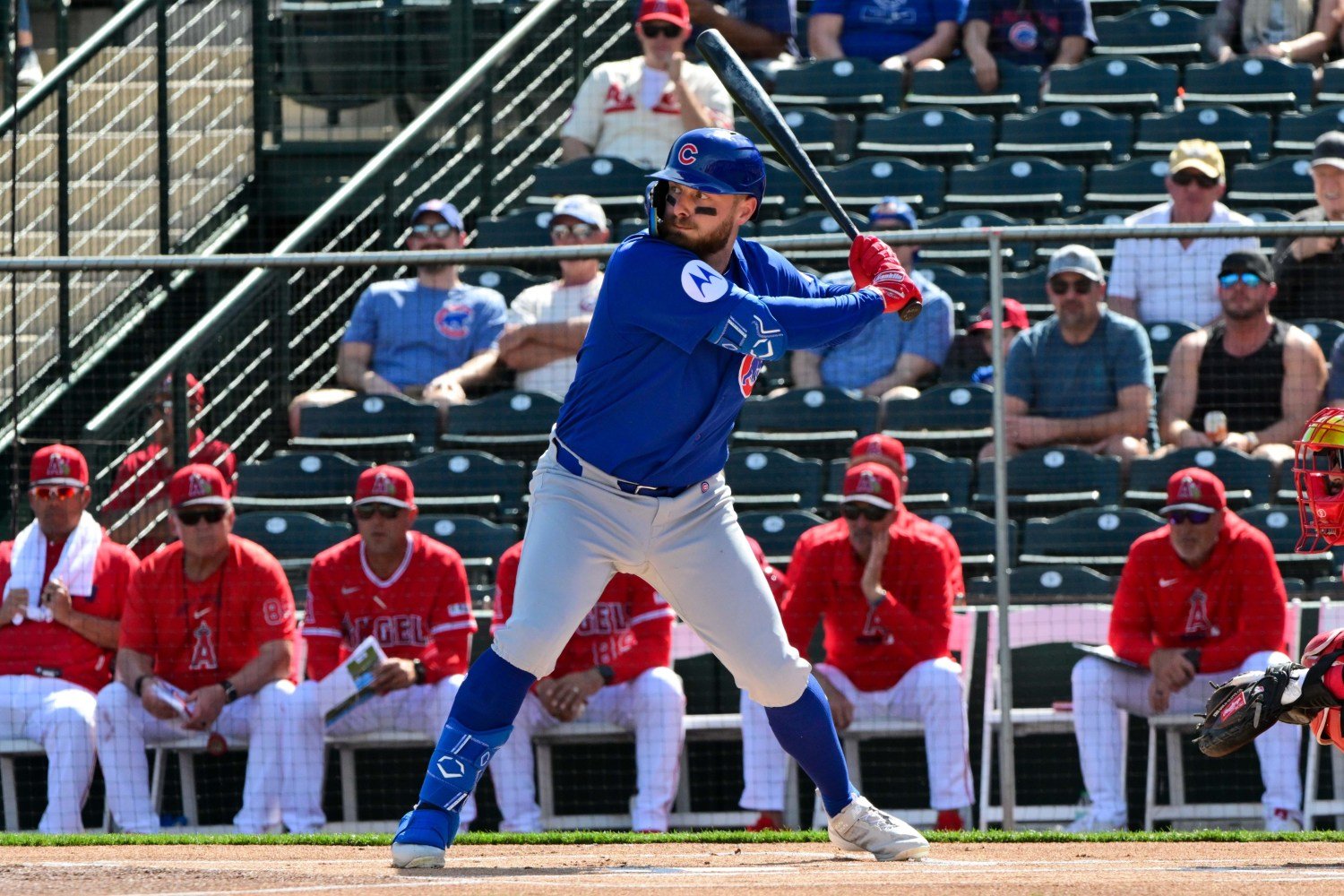 Michael Busch has only challenged two calls this spring under the new ABS system, but he's won both times. Just as importantly, he's mounted them, even though (based on the array of pitches he's seen and taken) Statcast's model for predicting how many challenges each hitter would utilize only expects him to have challenged 0.8 pitches—and to have won 0.5 of those 0.8. Meanwhile, only one challenge has been issued against him, and it was lost. Obviously, the data set is far to small to say for certain that Busch has a skill when it comes to challenging. Besides, the magnitude of added value we're talking about here is quite small. Busch flipped called strikes on an 0-1 and a 1-1 pitch to balls, and saw one 2-1 pitch stay a ball despite a challenge. The total number of added calls in his favor, relative to the model's expectation, is 3.5, which isn't a big deal, unless the calls in question are hugely high-leverage. There's a bit of bonus value in taking away one of the other team's challenges by getting them to challenge in error, but that, too, is a small thing. So, why is this worth discussing? Firstly, it seems virtually certain that someone will benefit significantly from the ABS system this year, both at a team level and at an individual one. Last season, Triple-A players successfully overturned 4,628 calls, which is a lot of accumulated impact, even if it came in tiny increments. The value of those changes will accrue unevenly, based on good plate discipline for batters, good command by pitchers, and (yes, still) good framing by catchers, plus great gameplanning and strategic communication by teams and their coaches. Secondly, though, there's some reason to believe that Busch will be uniquely good at utilizing this system. First, he's 5-foot-11, which appears to be an advantage in a world with an ABS system. Pitchers will go through an adjustment period to recalibrate the top of the zone, but it's lower under ABS than it often was before that system went into effect, and for shorter hitters, that will include an especially apparent shift. Furthermore, though, Busch has a particular combination of stance and movement in the batter's box that could make the system very valuable to him. Though it's subtle, Busch hits from a moderate crouch. (See the first image above, on the left.) That won't determine where his strike zone stops and starts, as it would have in the past—ABS sets an identical zone based on height for each batter. It does, however, set the pitcher's sights a bit, and it's still likely to influence the umpire somewhat. Once Busch gets moving, an even more pronounced effect happens. Though he's not a huge leg-kick guy and starts with his feet only moderately far apart, he takes a longish stride. By his contact point (see the middle image), the center of his front foot is over 3 1/2 feet in front of the center of his back foot. Combine the crouch and the length of his stride, and Busch gets very deep into his legs. Again, refer to that center image, and note how low his left shin gets to the ground. That's part of his natural stroke, but it sets a low bottom rail for his zone, visually. Though his knees are bound to be lower than those of the towering Oneil Cruz, when you compare a composite animation of those two players' swings, you can immediately see that more than height separates them. The umpire isn't consciously looking at the way Busch's body moves into his hitting position when they decide whether the pitch is at the knees or below them, but there's a sense impression happening even in that instant of ball reaching mitt and a call needing to be made. This hasn't been a huge problem for Busch, but because he also dips that back leg and sinks into his hitting position even on takes (see the image on the right, above), he sometimes gets balls called strikes just below the zone. akQ5ZVpfV0ZRVkV3dEdEUT09X0JWUlJYUUlNQlFzQUFGQUhYd0FIVkZJRUFBTURWRmtBQ3dCWFV3Y05Vd1pkVmxFSA==.mp4 This year, Busch will get a chance to challenge those. On the rare occasions when an umpire is fooled, the sharp-eyed Busch can rectify the problem, knowing his own zone and what distortion might have led to a bad call. On the other hand, the catcher is in position to get fooled more than the umpire—which could be great for the Cubs. It's not a natural thing to think of much in terms of the ramifications of implementing this system, but Busch took 109 pitches for balls along the bottom edges of the zone last year that were actually balls, but not by much. He has a patient approach and a good feel for that part of the zone. He could frustrate opposing pitchers and catchers, though, because they often thought they deserved a strike, even when they didn't. NHlNNU9fWGw0TUFRPT1fQndNQVhBQldYMWNBV1ZzSFZBQUhWQVJRQUZsWFZ3SUFWQUZVVkZVRlZGSlZVbE5m.mp4 Some of that is just Busch's great approach, but another piece is the way he stands in the box and moves toward the ball, even on non-swings. He's going to draw a higher-than-average number of mistaken challenges this year, and each lost challenge by an opponent has big value for the team. Even one such loss forces the other side to get more conservative in their challenges, and a second one robs them of the right to challenge at all the rest of the way. We've only really talked about the bottom of the zone, because the effects at the top of the zone seem fairly straightforward. There, too, though, Busch will get the benefit of some calls, because he strides so low that even more pitches look high than actually are. He might draw some bad challenges that way, too, since (again) the top of the ABS zone is a ball's width or so lower than most players are used to. The Cubs have to be good at the little things this year. Winning more challenges and/or inducing bad challenges by opponents will be one way to carve out the advantages they need. Busch looks like one of the players best positioned to do just that.
 -
 When healthy, Hunter Harvey has consistently demonstrated the ability to dominate big-league batters. He has a 3.11 career ERA and has struck out 26.8% of the hitters he's faced. However, good health never seems to last long for him, which made him available relatively cheaply this winter. The Cubs pounced, signing him to a deal worth $6 million in guaranteed money and up to $1.375 million more in incentives. It wasn't a minor deal; that's a significant outlay for a team that rarely ponies up for relievers. Harvey didn't allow an earned run in any of his 12 appearances last year, but making only 12 appearances tells the story. Strains of his teres major (a back/shoulder muscle) and adductor (groin) cost him all but about a month in the middle of the season. They also cut into his raw stuff a bit. Harvey hit 98 miles per hour or higher on the radar gun 60 times in a much healthier 2024; he didn't get there at all in 2025. This spring, the fully healthy version of Harvey has reported for duty. On Wednesday, he averaged 98.1 miles per hour with his heater, and threw four of his six heaters at 98 or higher. That much velocity makes him a nightmare for opposing batters. To be fair, Wednesday's game was Harvey's first time on a Cactus League mound since Mar. 1. He'd been working in side sessions in between, but the long layoff probably helped him ramp up the velocity the way he did. Nor is his splitter showing the depth that makes it a bat-misser so far. His slider has been solid, but not spectacular. If he can sustain anything close to this kind of heat, though, he's going to be the dominant setup man to closer Daniel Palencia for as much of the season as he can hold up for. If Harvey can stay healthy and maintain this velocity over a substantial chunk of the season, he'll probably meet most of the incentive thresholds in his contract—because that version of Harvey would also get plenty of chances to close games as the season wears on. For now, it's only wise to modulate expectations. Harvey is healthy and firing on all cylinders right now, but that can change at a moment's notice. On balance, we should still expect Phil Maton to be the best setup man on the team, despite Harvey's demonstrated upside. However, spring is about optimistic stories like this. It's not just velocity. Harvey's fastball has impressive shape, too, with rising action and a bit less run than it showed last year. His secondaries still have to fall into line, and he has to pass the daily test of availability over a long season. If he were a good bet to do that, given the stuff he's flashing already in mid-March, he would not have been available at anywhere near as good a price as the Cubs got on him. Still, the proof of concept represented by an outing like Wednesday's is cause for celebration. The Cubs' bullpen will be a key to their efforts to topple the mighty Milwaukeeans in the NL Central; Harvey looks ready to lead the charge.
 -
Image courtesy of © Rick Scuteri-Imagn Images When healthy, Hunter Harvey has consistently demonstrated the ability to dominate big-league batters. He has a 3.11 career ERA and has struck out 26.8% of the hitters he's faced. However, good health never seems to last long for him, which made him available relatively cheaply this winter. The Cubs pounced, signing him to a deal worth $6 million in guaranteed money and up to $1.375 million more in incentives. It wasn't a minor deal; that's a significant outlay for a team that rarely ponies up for relievers. Harvey didn't allow an earned run in any of his 12 appearances last year, but making only 12 appearances tells the story. Strains of his teres major (a back/shoulder muscle) and adductor (groin) cost him all but about a month in the middle of the season. They also cut into his raw stuff a bit. Harvey hit 98 miles per hour or higher on the radar gun 60 times in a much healthier 2024; he didn't get there at all in 2025. This spring, the fully healthy version of Harvey has reported for duty. On Wednesday, he averaged 98.1 miles per hour with his heater, and threw four of his six heaters at 98 or higher. That much velocity makes him a nightmare for opposing batters. To be fair, Wednesday's game was Harvey's first time on a Cactus League mound since Mar. 1. He'd been working in side sessions in between, but the long layoff probably helped him ramp up the velocity the way he did. Nor is his splitter showing the depth that makes it a bat-misser so far. His slider has been solid, but not spectacular. If he can sustain anything close to this kind of heat, though, he's going to be the dominant setup man to closer Daniel Palencia for as much of the season as he can hold up for. If Harvey can stay healthy and maintain this velocity over a substantial chunk of the season, he'll probably meet most of the incentive thresholds in his contract—because that version of Harvey would also get plenty of chances to close games as the season wears on. For now, it's only wise to modulate expectations. Harvey is healthy and firing on all cylinders right now, but that can change at a moment's notice. On balance, we should still expect Phil Maton to be the best setup man on the team, despite Harvey's demonstrated upside. However, spring is about optimistic stories like this. It's not just velocity. Harvey's fastball has impressive shape, too, with rising action and a bit less run than it showed last year. His secondaries still have to fall into line, and he has to pass the daily test of availability over a long season. If he were a good bet to do that, given the stuff he's flashing already in mid-March, he would not have been available at anywhere near as good a price as the Cubs got on him. Still, the proof of concept represented by an outing like Wednesday's is cause for celebration. The Cubs' bullpen will be a key to their efforts to topple the mighty Milwaukeeans in the NL Central; Harvey looks ready to lead the charge. View full article
-
5 Questions Still Unanswered About Cubs Position Players This Spring
Matthew Trueblood posted an article in Cubs
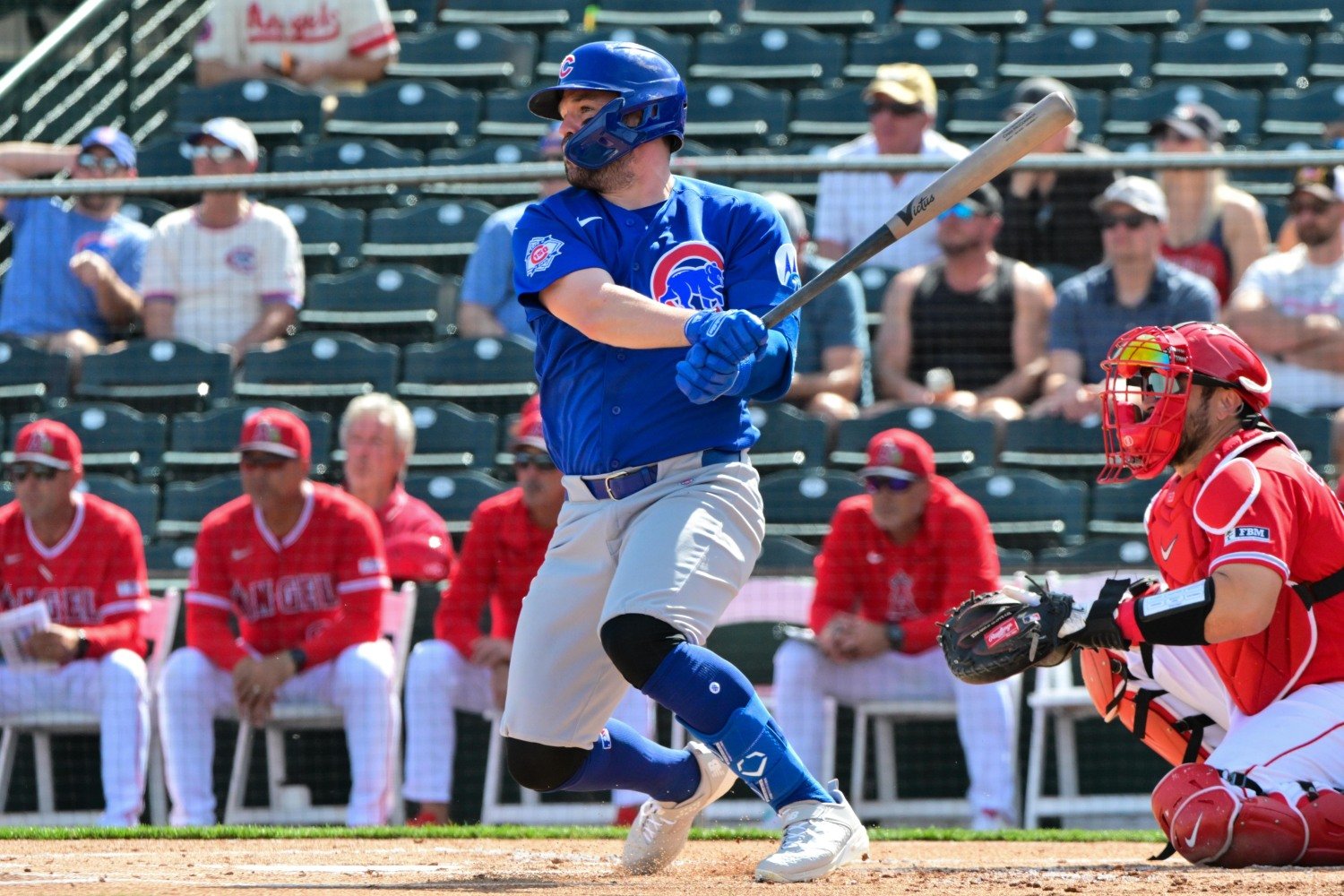 This has been a very tricky spring for forecasting the Chicago Cubs' Opening Day roster—and even (since that exercise is a bit of rosterbation, really, and not an especially vital question) the broader utility plan for the team's positional corps. With two key players away from the team to participate in the World Baseball Classic and another having been severely delayed in reporting to camp, there have been variables for which Craig Counsell has had to account when filling out Cactus League lineup cards that wouldn't exist most springs, let alone during the regular season. There are also a greater-than-usual number of veterans vying for a roster spot, and often, the evaluation of such candidates goes far beyond what we can see on the field each day. Rather than make any overconfident predictions, then, let's pause today to ask some questions. Here are five things the Cubs need to know by the time they head north, but which (even if they have a strong inkling) fans don't yet have much clue about with two weeks to go. 1. Will Moisés Ballesteros Be on the Roster? This one is very important, because it has implications for other questions we'll consider, too. Ballesteros reported to camp late due to visa issues beyond his control, but has hit the ground running at the plate. In 65 pitches seen, he's been patient (44.6% swing rate), hit the ball hard (105.9 MPH 90th-percentile exit velocity) and made lots of contact (17.3% whiff rate). If he's destined to be the team's primary designated hitter, he'll have no trouble being ready for the season, despite the late start. However, of his six Cactus League games, he's been behind the plate for five of them. Surprisingly, it looks like Ballesteros might be a viable catcher after all, which changes a lot of things for the team. Firstly, they already have two veteran, roster-locked catchers. Secondly, if Ballesteros is showing them enough to be seriously considered as a backstop, he probably needs a bit more seasoning at the position at Triple-A Iowa, anyway. It's not terribly hard to imagine a scenario in which he's farmed out to begin the year, at this point. He could come up in the event of an injury to either another option at DH or one of the incumbent catchers, or (if everyone is healthy and Ballesteros forces the issue) in the wake of a trade of either Miguel Amaya or Carson Kelly fairly early in the season. That's pure speculation—but the chance of that trip to Des Moines for Ballesteros looks very real right now. 2. Is Michael Conforto Going to Make the Team? This could not be tied any more closely to the first question. Conforto signed a minor-league deal with the Cubs late last month, coming in as an additional option from the left side in the DH equation. He's also an outfielder, but a litany of injuries has turned him from a plus defender in the corners to a nearly untenable one. He can't, in other words, be the team's fourth outfielder, and given how much time Matt Shaw has spent in the outfield so far, he was never likely to be that guy for this team, anyway. However, if Ballesteros is out of the mix to begin the year, Conforto could fit nicely as a DH and occasional right fielder against right-handed pitchers. He's not having an especially encouraging spring in terms of performance. He's swung at 46.9% of the pitches he's seen, but whiffed on a hideous 36.9% of those swings. When he does connect, he's only generating a 90th-percentile exit velocity a bit north of 101 MPH—not what you want from a bat-first player whose profile leans on power. Again, though, he's the type of player the team might evaluate as much on work in the cage or on data not available to the public as on even pitch-by-pitch results in Cactus League action. If you need proof that he's using a different process than he would in the regular season, look no further than the fact that he's never swung at a 46.9% rate in a big-league season. 3. Who'll Win That Fourth Outfielder Job? The fight for the right to back up Pete Crow-Armstrong in center field and provide defensive support in the corners began as a four-man fracas. It's now down to three, with one of them being a new entrant and two of the original combatants having been eliminated. Justin Dean and Kevin Alcántara are both optionable, and will be sent down—assuming they aren't traded (a possibility for Alcántara) or designated for assignment when a roster spot is needed for a non-roster player. That leaves Chas McCormick and Dylan Carlson leading the roster battle, with Shaw having jumped into the fray, as well. Shaw was always likely to make the team, but what role he has within it will determine the makeup of the rest of the bench. If he's a solid center fielder, there's at least some chance that neither Carlson nor McCormick makes the team. So far, Carlson has been the best of the three on the field. He's swung at just 43.3% of the pitches he's seen and whiffed on just 17.2% of those swings. His 90th-percentile exit velocity is around 105 MPH. Counsell has spread the former top Cardinals prospect's work evenly around the outfield, and he's moving well. McCormick, meanwhile, has been much more anxious to make an impression, with mixed results. He's swinging freely (62.5% of pitches seen), and whiffing often (36.9% of swings). His 90th-percentile exit velocity is nearly identical to Carlson's, but given the other key indicators, it's less impressive. However, once more, the team might be judging these guys based more on defense, baserunning and factors that don't show up in Cactus League Statcast metrics than on those numbers, so it's too early to call the race. For what it's worth, McCormick has only gotten one start in center field, the most important position to cover for whoever wins the battle. 4. Where Will Nico Hoerner Hit This Season? Counsell has generally preferred to keep his star second baseman lower in the batting order than most fans would like. Hoerner batted leadoff 65 times in 2024, but that was largely because of a paucity of good options. He batted first or second just 28 times last year, while slotting in sixth 52 times; seventh 37 times; and eighth 26 times. This spring, all seven of Hoerner's starts have come in the first two spots in the batting order. The signal in that data is masked by the noise of other priorities during spring training, like veteran players wanting to get done for the day as soon as possible—and like the absence of Alex Bregman for the last two weeks. Still, it's an interesting development. It's easy to imagine Hoerner leading off against left-handed starters for this team. It would be much more surprising if he hit first (or, more likely, second) against righties, but you can certainly make the case for him, based on the way he finished 2025. That version of the lineup might go: Michael Busch - 1b Nico Hoerner - 2b Alex Bregman - 3b Pete Crow-Armstrong - cf Seiya Suzuki - rf Ian Happ - lf Miguel Amaya - c Michael Conforto - dh Dansby Swanson - ss It's a bit funky, pushing a guy who's in the lineup just to hit down to No. 8 and leaving Happ out of the top five from what is traditionally his stronger side. All seven times Happ has been in the lineup, he's batted third, so maybe a more realistic permutation would be: Busch Hoerner Happ Bregman Suzuki Crow-Armstrong Amaya Conforto Swanson Either way, moving Hoerner up would highlight how deep the addition of Bregman has made the Cubs lineup. It would also be a big bet on Hoerner's anachronistic skill set to keep playing near the top of its range of outcomes, though. Seeing him slide back down in the lineup against righties feels more likely. 5. Will Anyone Be Ready to Back Up Busch? When the Cubs signed Tyler Austin this winter, it appeared that they had a platoon partner in place again for their slugging left-handed first baseman—even as Counsell insisted that he intends to play Busch every day this season. Now, with Austin down, it looks like the sincerity of that pledge will be more sternly tested. Busch has started against three lefties already this spring, and seems likely to be the true everyday guy at the cold corner when the season begins. The question, really, is what the contingency plan will look like. The diminutive Shaw is the team's utility infielder, and makes a poor candidate to play first base. Neither Kelly nor Amaya has ever appeared in a big-league game at first. Nor has Conforto. If the season began today, the Cubs might be inclined to keep Ballesteros, after all—letting him be the backup first baseman, as well as the part-time DH and occasional catcher. That solution is far from optimal, too. Ballesteros is even shorter than Shaw, and not especially mobile. He bats left-handed, so he doesn't shield the team from platoon issues for Busch—only from an injury to him. Austin and Jonathon Long both getting hurt has left the team with an interesting hole in the corner areas of the bench. At this moment, if I had to bet, I would guess that Shaw, Conforto, Carlson and Ballesteros will all make the team when the Cubs break camp. It wouldn't be an exceptionally efficient roster. It's very hard to get Conforto and Ballesteros into any of the same lineups, and they don't complement each other especially well in terms of matchup play. However, all the questions above carry big ramifications, and none of them have clear answers right now. Much could change in the final two weeks of spring training. For a team with division title aspirations, the stakes of that potential change are very high.
 -
Image courtesy of © Matt Kartozian-Imagn Images This has been a very tricky spring for forecasting the Chicago Cubs' Opening Day roster—and even (since that exercise is a bit of rosterbation, really, and not an especially vital question) the broader utility plan for the team's positional corps. With two key players away from the team to participate in the World Baseball Classic and another having been severely delayed in reporting to camp, there have been variables for which Craig Counsell has had to account when filling out Cactus League lineup cards that wouldn't exist most springs, let alone during the regular season. There are also a greater-than-usual number of veterans vying for a roster spot, and often, the evaluation of such candidates goes far beyond what we can see on the field each day. Rather than make any overconfident predictions, then, let's pause today to ask some questions. Here are five things the Cubs need to know by the time they head north, but which (even if they have a strong inkling) fans don't yet have much clue about with two weeks to go. 1. Will Moisés Ballesteros Be on the Roster? This one is very important, because it has implications for other questions we'll consider, too. Ballesteros reported to camp late due to visa issues beyond his control, but has hit the ground running at the plate. In 65 pitches seen, he's been patient (44.6% swing rate), hit the ball hard (105.9 MPH 90th-percentile exit velocity) and made lots of contact (17.3% whiff rate). If he's destined to be the team's primary designated hitter, he'll have no trouble being ready for the season, despite the late start. However, of his six Cactus League games, he's been behind the plate for five of them. Surprisingly, it looks like Ballesteros might be a viable catcher after all, which changes a lot of things for the team. Firstly, they already have two veteran, roster-locked catchers. Secondly, if Ballesteros is showing them enough to be seriously considered as a backstop, he probably needs a bit more seasoning at the position at Triple-A Iowa, anyway. It's not terribly hard to imagine a scenario in which he's farmed out to begin the year, at this point. He could come up in the event of an injury to either another option at DH or one of the incumbent catchers, or (if everyone is healthy and Ballesteros forces the issue) in the wake of a trade of either Miguel Amaya or Carson Kelly fairly early in the season. That's pure speculation—but the chance of that trip to Des Moines for Ballesteros looks very real right now. 2. Is Michael Conforto Going to Make the Team? This could not be tied any more closely to the first question. Conforto signed a minor-league deal with the Cubs late last month, coming in as an additional option from the left side in the DH equation. He's also an outfielder, but a litany of injuries has turned him from a plus defender in the corners to a nearly untenable one. He can't, in other words, be the team's fourth outfielder, and given how much time Matt Shaw has spent in the outfield so far, he was never likely to be that guy for this team, anyway. However, if Ballesteros is out of the mix to begin the year, Conforto could fit nicely as a DH and occasional right fielder against right-handed pitchers. He's not having an especially encouraging spring in terms of performance. He's swung at 46.9% of the pitches he's seen, but whiffed on a hideous 36.9% of those swings. When he does connect, he's only generating a 90th-percentile exit velocity a bit north of 101 MPH—not what you want from a bat-first player whose profile leans on power. Again, though, he's the type of player the team might evaluate as much on work in the cage or on data not available to the public as on even pitch-by-pitch results in Cactus League action. If you need proof that he's using a different process than he would in the regular season, look no further than the fact that he's never swung at a 46.9% rate in a big-league season. 3. Who'll Win That Fourth Outfielder Job? The fight for the right to back up Pete Crow-Armstrong in center field and provide defensive support in the corners began as a four-man fracas. It's now down to three, with one of them being a new entrant and two of the original combatants having been eliminated. Justin Dean and Kevin Alcántara are both optionable, and will be sent down—assuming they aren't traded (a possibility for Alcántara) or designated for assignment when a roster spot is needed for a non-roster player. That leaves Chas McCormick and Dylan Carlson leading the roster battle, with Shaw having jumped into the fray, as well. Shaw was always likely to make the team, but what role he has within it will determine the makeup of the rest of the bench. If he's a solid center fielder, there's at least some chance that neither Carlson nor McCormick makes the team. So far, Carlson has been the best of the three on the field. He's swung at just 43.3% of the pitches he's seen and whiffed on just 17.2% of those swings. His 90th-percentile exit velocity is around 105 MPH. Counsell has spread the former top Cardinals prospect's work evenly around the outfield, and he's moving well. McCormick, meanwhile, has been much more anxious to make an impression, with mixed results. He's swinging freely (62.5% of pitches seen), and whiffing often (36.9% of swings). His 90th-percentile exit velocity is nearly identical to Carlson's, but given the other key indicators, it's less impressive. However, once more, the team might be judging these guys based more on defense, baserunning and factors that don't show up in Cactus League Statcast metrics than on those numbers, so it's too early to call the race. For what it's worth, McCormick has only gotten one start in center field, the most important position to cover for whoever wins the battle. 4. Where Will Nico Hoerner Hit This Season? Counsell has generally preferred to keep his star second baseman lower in the batting order than most fans would like. Hoerner batted leadoff 65 times in 2024, but that was largely because of a paucity of good options. He batted first or second just 28 times last year, while slotting in sixth 52 times; seventh 37 times; and eighth 26 times. This spring, all seven of Hoerner's starts have come in the first two spots in the batting order. The signal in that data is masked by the noise of other priorities during spring training, like veteran players wanting to get done for the day as soon as possible—and like the absence of Alex Bregman for the last two weeks. Still, it's an interesting development. It's easy to imagine Hoerner leading off against left-handed starters for this team. It would be much more surprising if he hit first (or, more likely, second) against righties, but you can certainly make the case for him, based on the way he finished 2025. That version of the lineup might go: Michael Busch - 1b Nico Hoerner - 2b Alex Bregman - 3b Pete Crow-Armstrong - cf Seiya Suzuki - rf Ian Happ - lf Miguel Amaya - c Michael Conforto - dh Dansby Swanson - ss It's a bit funky, pushing a guy who's in the lineup just to hit down to No. 8 and leaving Happ out of the top five from what is traditionally his stronger side. All seven times Happ has been in the lineup, he's batted third, so maybe a more realistic permutation would be: Busch Hoerner Happ Bregman Suzuki Crow-Armstrong Amaya Conforto Swanson Either way, moving Hoerner up would highlight how deep the addition of Bregman has made the Cubs lineup. It would also be a big bet on Hoerner's anachronistic skill set to keep playing near the top of its range of outcomes, though. Seeing him slide back down in the lineup against righties feels more likely. 5. Will Anyone Be Ready to Back Up Busch? When the Cubs signed Tyler Austin this winter, it appeared that they had a platoon partner in place again for their slugging left-handed first baseman—even as Counsell insisted that he intends to play Busch every day this season. Now, with Austin down, it looks like the sincerity of that pledge will be more sternly tested. Busch has started against three lefties already this spring, and seems likely to be the true everyday guy at the cold corner when the season begins. The question, really, is what the contingency plan will look like. The diminutive Shaw is the team's utility infielder, and makes a poor candidate to play first base. Neither Kelly nor Amaya has ever appeared in a big-league game at first. Nor has Conforto. If the season began today, the Cubs might be inclined to keep Ballesteros, after all—letting him be the backup first baseman, as well as the part-time DH and occasional catcher. That solution is far from optimal, too. Ballesteros is even shorter than Shaw, and not especially mobile. He bats left-handed, so he doesn't shield the team from platoon issues for Busch—only from an injury to him. Austin and Jonathon Long both getting hurt has left the team with an interesting hole in the corner areas of the bench. At this moment, if I had to bet, I would guess that Shaw, Conforto, Carlson and Ballesteros will all make the team when the Cubs break camp. It wouldn't be an exceptionally efficient roster. It's very hard to get Conforto and Ballesteros into any of the same lineups, and they don't complement each other especially well in terms of matchup play. However, all the questions above carry big ramifications, and none of them have clear answers right now. Much could change in the final two weeks of spring training. For a team with division title aspirations, the stakes of that potential change are very high. View full article
-
Image courtesy of © Rick Scuteri-Imagn Images One surefire way to earn the scorn of a big-league player or manager is to take spring training results seriously. They don't matter, and although fans' instincts are often to hunt for the rare times and places when they do matter, players and teams roll their eyes at such efforts. Front offices, coaches and managers do have to evaluate players during Cactus and Grapefruit League games, and players do have to find ways to measure success and progress, but they're unanimous in their disinterest in doing so based on wins and losses, runs scored or allowed, or individual statistics. For those fans who do flinch when they see an ugly stat line even in March, though, it's been a rough couple of days around the Cubs. Shota Imanaga continues to get hit hard in Arizona. Matthew Boyd gave up three runs (and two homers) in Team USA's win over Novena México on Monday night. On Tuesday, should-be ace Cade Horton was the latest to run into some worrisome hard contact, giving up three homers and walking two over 3 2/3 innings against the Texas Rangers in a Cactus League game at Surprise Stadium. Horton's outing is the most important one to understand, and the surest way to distinguish signal from noise in spring training appearances. He gave up not only three homers, but eight balls hit at 100 miles per hour or harder, so the Rangers were locked in on his stuff. He did get seven whiffs on 29 swings, but when Texas batters connected, there was trouble. Because the one knock on Horton during his superb rookie season was a lack of high-end swing-and-miss skills, seeing batters do damage when they connect feels a bit ominous. Here's why it isn't. These are the pitch movement scatterplots for each of Horton's three spring outings to date: These tell a pretty clear story, if you know how to read them. First, look at the first appearance he made in the Cactus League, last month against the Rockies. That day, he only threw 26 pitches, and his emphasis was on commanding his hard, cut-ride fastball. He threw all five of his pitches, but not in their usual mixture; he just wanted to establish the heater and his slider. Last week against Team Italy, Horton's focus was on bringing out and gaining a feel for his changeup, the fourth pitch in his arsenal when he came up last year but a staple for him against left-handed batters by the end of the season. Note, too, though, that his fastball shape was quite inconsistent that day. It's good to be able to manipulate the fastball, but Horton was really not commanding that pitch in the Cubs' exhibition contest with Italy ahead of the World Baseball Classic. That brings us to Tuesday's game, on the right in the graphic above. Horton threw 60 pitches, and showed more consistent feel for the shapes of both his fastball and his slider. The two pitches that should draw your attention most, though, are the sinker and the curveball. Horton threw each about twice as often as he normally would, at the expense of his changeup, fastball and slider. He leaned hard on that sinker to righties and on the curve to lefties. His velocities and shapes on all five offerings are similar to what they were last year; he just got funky with usage on Tuesday. When pitchers talk about "working on stuff" during spring games, this is what they mean. Horton did get hit hard, and most of the damage came on his cutter/four-seamer. However, much of that was because he spent the day focused on gaining a feel for his sinker and his curve, which require slightly different feel and which he consciously threw more than was competitively optimal, in order to better prepare himself for the season ahead. Horton might experience some regression this season, after that dazzling first ride of the senior circuit last summer. However, his spring numbers need not concern anyone, because getting outs isn't his top priority right now. Instead, piece by piece, he's assembling the version of himself that can be ready to throw 85-plus pitches during his first regular-season start, with feel for all five of his offerings and the best ways to use them. To do that, he has to do some things during preparatory games that aren't consistent with putting up great numbers. That's why spring training is valuable, but also why it can be misleading for fans reading too much into the results. View full article
-
Why You Don't Need to Sweat Cade Horton's Ugly Spring Numbers
Matthew Trueblood posted an article in Cubs
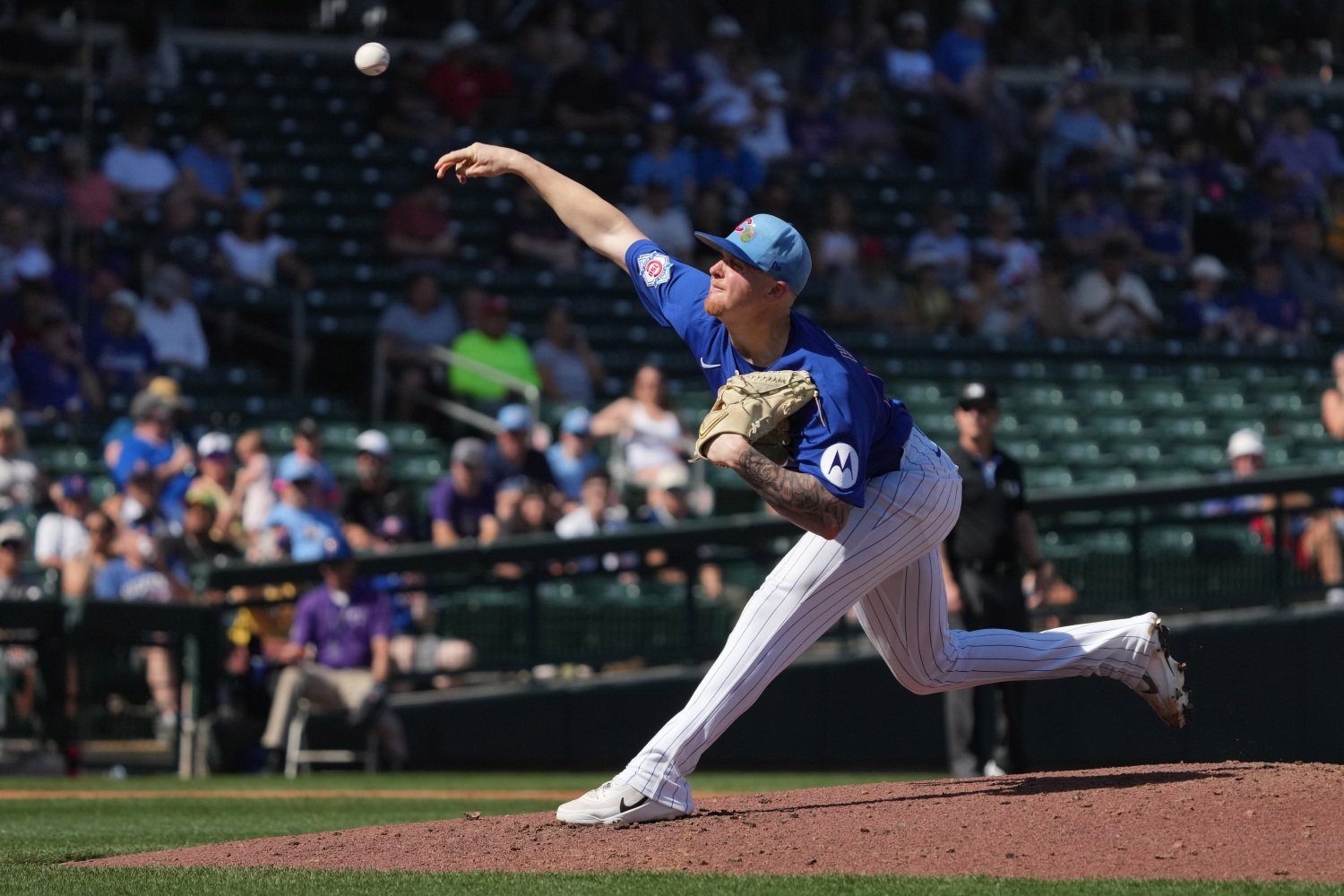 One surefire way to earn the scorn of a big-league player or manager is to take spring training results seriously. They don't matter, and although fans' instincts are often to hunt for the rare times and places when they do matter, players and teams roll their eyes at such efforts. Front offices, coaches and managers do have to evaluate players during Cactus and Grapefruit League games, and players do have to find ways to measure success and progress, but they're unanimous in their disinterest in doing so based on wins and losses, runs scored or allowed, or individual statistics. For those fans who do flinch when they see an ugly stat line even in March, though, it's been a rough couple of days around the Cubs. Shota Imanaga continues to get hit hard in Arizona. Matthew Boyd gave up three runs (and two homers) in Team USA's win over Novena México on Monday night. On Tuesday, should-be ace Cade Horton was the latest to run into some worrisome hard contact, giving up three homers and walking two over 3 2/3 innings against the Texas Rangers in a Cactus League game at Surprise Stadium. Horton's outing is the most important one to understand, and the surest way to distinguish signal from noise in spring training appearances. He gave up not only three homers, but eight balls hit at 100 miles per hour or harder, so the Rangers were locked in on his stuff. He did get seven whiffs on 29 swings, but when Texas batters connected, there was trouble. Because the one knock on Horton during his superb rookie season was a lack of high-end swing-and-miss skills, seeing batters do damage when they connect feels a bit ominous. Here's why it isn't. These are the pitch movement scatterplots for each of Horton's three spring outings to date: These tell a pretty clear story, if you know how to read them. First, look at the first appearance he made in the Cactus League, last month against the Rockies. That day, he only threw 26 pitches, and his emphasis was on commanding his hard, cut-ride fastball. He threw all five of his pitches, but not in their usual mixture; he just wanted to establish the heater and his slider. Last week against Team Italy, Horton's focus was on bringing out and gaining a feel for his changeup, the fourth pitch in his arsenal when he came up last year but a staple for him against left-handed batters by the end of the season. Note, too, though, that his fastball shape was quite inconsistent that day. It's good to be able to manipulate the fastball, but Horton was really not commanding that pitch in the Cubs' exhibition contest with Italy ahead of the World Baseball Classic. That brings us to Tuesday's game, on the right in the graphic above. Horton threw 60 pitches, and showed more consistent feel for the shapes of both his fastball and his slider. The two pitches that should draw your attention most, though, are the sinker and the curveball. Horton threw each about twice as often as he normally would, at the expense of his changeup, fastball and slider. He leaned hard on that sinker to righties and on the curve to lefties. His velocities and shapes on all five offerings are similar to what they were last year; he just got funky with usage on Tuesday. When pitchers talk about "working on stuff" during spring games, this is what they mean. Horton did get hit hard, and most of the damage came on his cutter/four-seamer. However, much of that was because he spent the day focused on gaining a feel for his sinker and his curve, which require slightly different feel and which he consciously threw more than was competitively optimal, in order to better prepare himself for the season ahead. Horton might experience some regression this season, after that dazzling first ride of the senior circuit last summer. However, his spring numbers need not concern anyone, because getting outs isn't his top priority right now. Instead, piece by piece, he's assembling the version of himself that can be ready to throw 85-plus pitches during his first regular-season start, with feel for all five of his offerings and the best ways to use them. To do that, he has to do some things during preparatory games that aren't consistent with putting up great numbers. That's why spring training is valuable, but also why it can be misleading for fans reading too much into the results.
 -
Image courtesy of © Rick Scuteri-Imagn Images Seiya Suzuki takes a lot of pitches. His swing rate hovers around 40% each year, which is markedly below the league average. That earns him a good number of walks, but it also means lots of called strikes. That's the price he pays for his selectivity. He gains more than he loses with his takes, but they're a source of much of the positive and negative offensive value he creates. In 2026, those takes will be affected by a new variable: the automated ball-strike (ABS) challenge system. The less often a hitter swings, the more they'll interact with that system. Thus, Suzuki will be one of the Cubs most exposed to it, for better (he can challenge bad calls on pitches just outside the zone that are called strikes) and for worse (when he gets a bit lucky on a ball that should have been called a strike, the opposing catcher can appeal it). New teammate Alex Bregman is almost exactly as patient as Suzuki is, so he, too, will have to navigate the system well. Let's explore how these two will have to adjust to life under a partially computer-optimized zone, starting with Suzuki. Here's the bad news: Suzuki will have to adjust his sights and his swing a bit to adapt to the shifting zone in 2026. Last season, most of the balls called strikes just outside the edges of the zone to him were above the top of the strike zone. He can continue to let those go, and get aggressive with challenges there. However, at the bottom of the zone, he got away with some takes that were called balls, but which will be strikes this year, if umpires respond to the codified zones and/or if catchers are quick to challenge against him in those zones. This is bad news because Suzuki's swing and approach have always been geared toward owning the top of the zone. His patience on low pitches is part of a plan, and he's done best when he's dedicated himself to that. Because he has a slightly flatter-than-average swing, he naturally gets to the ball better when it's around or just above the belt. He has to be sitting on the low pitch to hit it solidly, and that makes him more vulnerable up at the top rail of the zone. He's also prone to rolling over on that low ball. Needing to swing more in that range is dangerous for him. The good news, though, is that he can afford to lock in more on the bottom third of the zone if he can be confident enough to challenge some calls along the top edge of the zone. Moving the measurement of pitch location back to the middle of the plate (rather than the front) will mean everything shows up as very slightly lower than it did last year, which evens out the above somewhat, but more importantly, the codified ABS zone simply stops lower on the typical player's body than has generally been called. The zone is shrinking, and it's shrinking more at the top of the one (especially for players under 6 feet tall) than anywhere else. Speaking of such players, let's turn our attention to Bregman, whose official listed height was 6 feet in 2024, 5-foot-11 in 2025 and now 5-foot-10 in 2026. With his even flatter swing, Bregman can handle the high pitch even better than Suzuki can, but unlike Suzuki, he doesn't particularly hunt in vertical layers of the zone. Instead, he assiduously avoids chasing off the edges of the plate. With anticipation and good hands, he can manipulate the contact point and tilt of his swing, but because it's so flat that he's prone to weak contact via balls on the handle or out at the end of the bat, he focuses his plate discipline on attacking the ball based on horizontal location. Since hardly anyone knows the zone as well as Bregman does (and because of that orientation of his approach), he's in position to get a more unmitigated benefit from the system and its changes. He can afford to keep being extremely selective at the top of the zone, and he's in position to harvest lots of extra balls off the plate away, where most of his erroneous called strikes were last season. Winning teams will find ways to gain value from this system; others will lose it. Suzuki is a good example of a hitter who has to make a substantial adjustment to thrive under the new framework, but Bregman is sitting pretty, even doing things the same way he's been doing them for a decade. View full article
-
ABS Will Force Seiya Suzuki into a New Set of Adjustments
Matthew Trueblood posted an article in Cubs
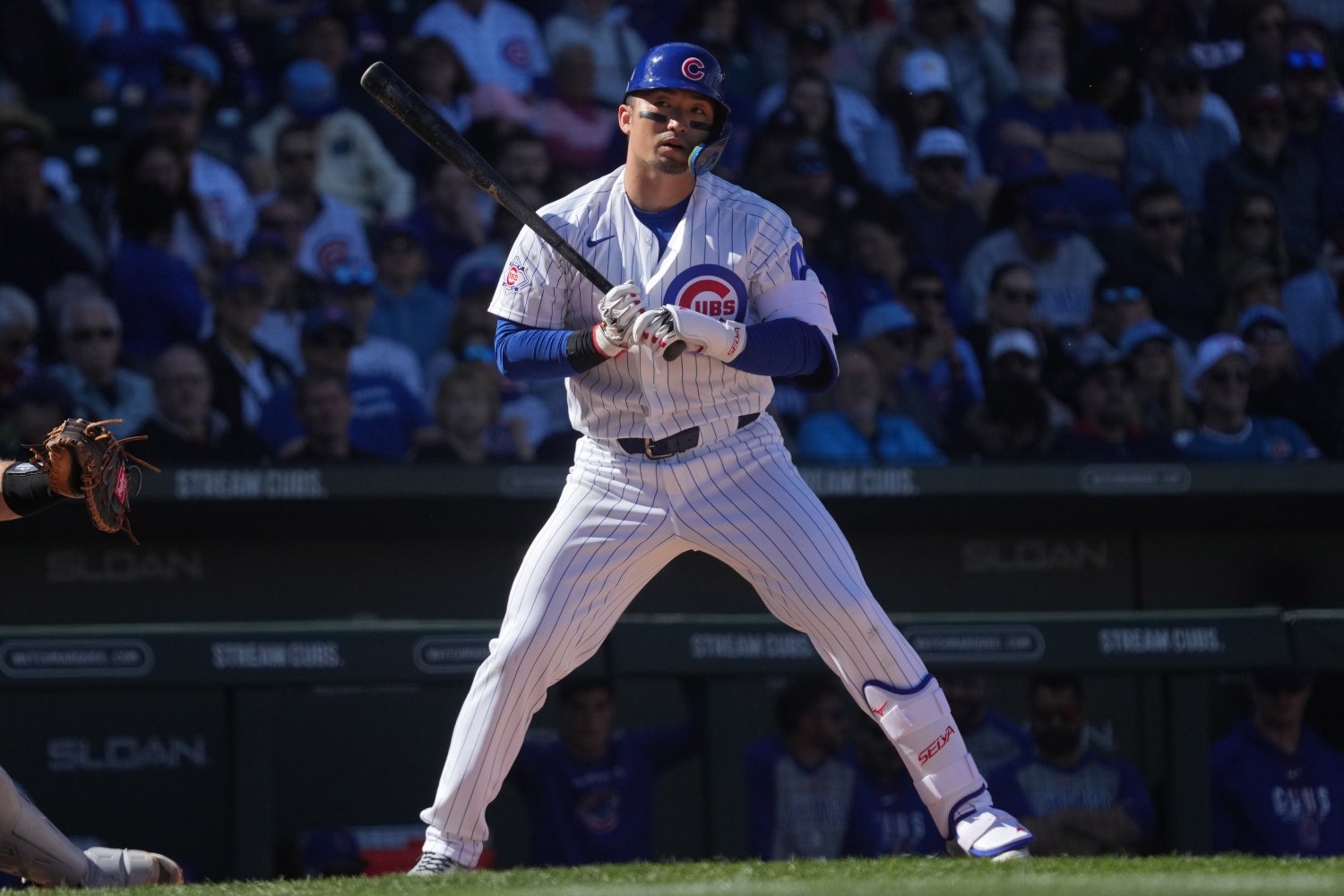 Seiya Suzuki takes a lot of pitches. His swing rate hovers around 40% each year, which is markedly below the league average. That earns him a good number of walks, but it also means lots of called strikes. That's the price he pays for his selectivity. He gains more than he loses with his takes, but they're a source of much of the positive and negative offensive value he creates. In 2026, those takes will be affected by a new variable: the automated ball-strike (ABS) challenge system. The less often a hitter swings, the more they'll interact with that system. Thus, Suzuki will be one of the Cubs most exposed to it, for better (he can challenge bad calls on pitches just outside the zone that are called strikes) and for worse (when he gets a bit lucky on a ball that should have been called a strike, the opposing catcher can appeal it). New teammate Alex Bregman is almost exactly as patient as Suzuki is, so he, too, will have to navigate the system well. Let's explore how these two will have to adjust to life under a partially computer-optimized zone, starting with Suzuki. Here's the bad news: Suzuki will have to adjust his sights and his swing a bit to adapt to the shifting zone in 2026. Last season, most of the balls called strikes just outside the edges of the zone to him were above the top of the strike zone. He can continue to let those go, and get aggressive with challenges there. However, at the bottom of the zone, he got away with some takes that were called balls, but which will be strikes this year, if umpires respond to the codified zones and/or if catchers are quick to challenge against him in those zones. This is bad news because Suzuki's swing and approach have always been geared toward owning the top of the zone. His patience on low pitches is part of a plan, and he's done best when he's dedicated himself to that. Because he has a slightly flatter-than-average swing, he naturally gets to the ball better when it's around or just above the belt. He has to be sitting on the low pitch to hit it solidly, and that makes him more vulnerable up at the top rail of the zone. He's also prone to rolling over on that low ball. Needing to swing more in that range is dangerous for him. The good news, though, is that he can afford to lock in more on the bottom third of the zone if he can be confident enough to challenge some calls along the top edge of the zone. Moving the measurement of pitch location back to the middle of the plate (rather than the front) will mean everything shows up as very slightly lower than it did last year, which evens out the above somewhat, but more importantly, the codified ABS zone simply stops lower on the typical player's body than has generally been called. The zone is shrinking, and it's shrinking more at the top of the one (especially for players under 6 feet tall) than anywhere else. Speaking of such players, let's turn our attention to Bregman, whose official listed height was 6 feet in 2024, 5-foot-11 in 2025 and now 5-foot-10 in 2026. With his even flatter swing, Bregman can handle the high pitch even better than Suzuki can, but unlike Suzuki, he doesn't particularly hunt in vertical layers of the zone. Instead, he assiduously avoids chasing off the edges of the plate. With anticipation and good hands, he can manipulate the contact point and tilt of his swing, but because it's so flat that he's prone to weak contact via balls on the handle or out at the end of the bat, he focuses his plate discipline on attacking the ball based on horizontal location. Since hardly anyone knows the zone as well as Bregman does (and because of that orientation of his approach), he's in position to get a more unmitigated benefit from the system and its changes. He can afford to keep being extremely selective at the top of the zone, and he's in position to harvest lots of extra balls off the plate away, where most of his erroneous called strikes were last season. Winning teams will find ways to gain value from this system; others will lose it. Suzuki is a good example of a hitter who has to make a substantial adjustment to thrive under the new framework, but Bregman is sitting pretty, even doing things the same way he's been doing them for a decade.
 -
Image courtesy of © Rick Scuteri-Imagn Images In his two innings of work Wednesday against the Brewers in Maryvale, Jaxon Wiggins looked like a big-leaguer with front-of-the-rotation upside. He allowed just one baserunner (a walk) and struck out two. His fastball sat at 98 miles per hour and nearly touched 100. His hard slider (or cutter, depending on whom you ask) looked good, and his curveball continued to flash depth that makes it scary. Perhaps most importantly, Wiggins showed the ability to fill up the strike zone with that fastball, which has not just velocity but plenty of carry and life on it. He got just three whiffs from a contact-oriented Brewers lineup, but he also delivered seven called strikes, including six on the heater. If he can throw enough strikes to limit walks and put hitters into two-strike counts, he'll rack up plenty of strikeouts, even against teams who specialize in the avoidance of them. Wiggins's easiest comp might be Nick Pivetta, of the Padres. Like Pivetta, he throws hard, with a high-rise heater, and like Pivetta, he has huge break on his curveball. To get a sense of how extreme Pivetta is in terms of pitch movement, consider this plot of pitchers who threw a qualifying number of four-seamers last year. Now, contrast that with a plot of the movements of curveballs thrown by pitchers who fired enough of them to qualify. Stretching the vertical movement differential that way is good. It creates the chance to miss bats. However, Pivetta loses a little bit of the theoretical, in-a-vacuum value of his high-rise heat and big-breaking curve because he works from an extreme over-the-top angle. That makes his pitches' vertical movement less deceptive—less unexpected—than it would be from even a slightly lower slot. As it happens, Wiggins pitches from that slightly lower slot. With just a hair less spine tilt and a slightly less exaggerated overhand action, Wiggins makes the interaction between his curveball and his fastball more deceptive than Pivetta's. However, that's not the only effect of that change in slot. There's a cost to it, in that Wiggins's fastball runs quite a bit more to his arm side than does Pivetta's. The latter is a cut-ride shape, which allows Pivetta to keep it over the plate and to attack both sides of the zone with it when his command is good. Wiggins will always struggle to execute his four-seamer to the glove side, which introduces a limitation. However, there are also benefits of that lower slot that go beyond the ride on the fastball being more surprising to the hitter. Wiggins's second pitch isn't the curve; that's his third or fourth option. Rather, he leans hard on his hard slider or cutter, and that pitch works better because he doesn't come so completely over the top that he's locked into only vertical movement separation. That changeup is also unlocked by not having such a high arm angle. Wiggins is never going to have Pivetta-caliber cut on his heater, let alone anything like what teammate Cade Horton does with his power cutter/four-seamer. However, like Horton (and unlike Pivetta), Wiggins has the makings of four good pitches that each hit one cardinal direction on the movement compass. His arm slot permits that vicious four-seamer to set up both breaking balls and the changeup. That's not to suggest, however, that he's ready to show up in the majors and have Horton-like success. To his credit, he's taken the critical first step in controlling his arsenal, by learning to throw his fastball for strikes. He can locate the slider/cutter well enough to get outs, too. However, both his change and his curve are wildly inconsistent. He doesn't know how to change his targets on those offerings, or even to consistently attack any one quadrant with them. He's at least two big developmental mile markers from Horton Territory: Throwing those two pitches for strikes with life, forcing hitters to honor them; and Learning to consistently throw strike-to-ball versions of them that induce chases for weak contact and whiffs, as well as the versions that land in the zone and compel the hitter to prepare themselves to swing. On a remarkably talented pitcher's developmental checklist, these items can get checked off surprisingly quickly. Wiggins might be doing all of this well enough to come up and dominate within a few months. Right now, though, he's merely tantalizing. The chance to rapidly become an ace is there, but the current reality is a long way from that hoped-for eventuality. Wednesday was a lovely glimpse of what's to come, but also a reminder that it's not yet here. View full article
-
Jaxon Wiggins's Developmental Checklist is on Full Display
Matthew Trueblood posted an article in Cubs
 In his two innings of work Wednesday against the Brewers in Maryvale, Jaxon Wiggins looked like a big-leaguer with front-of-the-rotation upside. He allowed just one baserunner (a walk) and struck out two. His fastball sat at 98 miles per hour and nearly touched 100. His hard slider (or cutter, depending on whom you ask) looked good, and his curveball continued to flash depth that makes it scary. Perhaps most importantly, Wiggins showed the ability to fill up the strike zone with that fastball, which has not just velocity but plenty of carry and life on it. He got just three whiffs from a contact-oriented Brewers lineup, but he also delivered seven called strikes, including six on the heater. If he can throw enough strikes to limit walks and put hitters into two-strike counts, he'll rack up plenty of strikeouts, even against teams who specialize in the avoidance of them. Wiggins's easiest comp might be Nick Pivetta, of the Padres. Like Pivetta, he throws hard, with a high-rise heater, and like Pivetta, he has huge break on his curveball. To get a sense of how extreme Pivetta is in terms of pitch movement, consider this plot of pitchers who threw a qualifying number of four-seamers last year. Now, contrast that with a plot of the movements of curveballs thrown by pitchers who fired enough of them to qualify. Stretching the vertical movement differential that way is good. It creates the chance to miss bats. However, Pivetta loses a little bit of the theoretical, in-a-vacuum value of his high-rise heat and big-breaking curve because he works from an extreme over-the-top angle. That makes his pitches' vertical movement less deceptive—less unexpected—than it would be from even a slightly lower slot. As it happens, Wiggins pitches from that slightly lower slot. With just a hair less spine tilt and a slightly less exaggerated overhand action, Wiggins makes the interaction between his curveball and his fastball more deceptive than Pivetta's. However, that's not the only effect of that change in slot. There's a cost to it, in that Wiggins's fastball runs quite a bit more to his arm side than does Pivetta's. The latter is a cut-ride shape, which allows Pivetta to keep it over the plate and to attack both sides of the zone with it when his command is good. Wiggins will always struggle to execute his four-seamer to the glove side, which introduces a limitation. However, there are also benefits of that lower slot that go beyond the ride on the fastball being more surprising to the hitter. Wiggins's second pitch isn't the curve; that's his third or fourth option. Rather, he leans hard on his hard slider or cutter, and that pitch works better because he doesn't come so completely over the top that he's locked into only vertical movement separation. That changeup is also unlocked by not having such a high arm angle. Wiggins is never going to have Pivetta-caliber cut on his heater, let alone anything like what teammate Cade Horton does with his power cutter/four-seamer. However, like Horton (and unlike Pivetta), Wiggins has the makings of four good pitches that each hit one cardinal direction on the movement compass. His arm slot permits that vicious four-seamer to set up both breaking balls and the changeup. That's not to suggest, however, that he's ready to show up in the majors and have Horton-like success. To his credit, he's taken the critical first step in controlling his arsenal, by learning to throw his fastball for strikes. He can locate the slider/cutter well enough to get outs, too. However, both his change and his curve are wildly inconsistent. He doesn't know how to change his targets on those offerings, or even to consistently attack any one quadrant with them. He's at least two big developmental mile markers from Horton Territory: Throwing those two pitches for strikes with life, forcing hitters to honor them; and Learning to consistently throw strike-to-ball versions of them that induce chases for weak contact and whiffs, as well as the versions that land in the zone and compel the hitter to prepare themselves to swing. On a remarkably talented pitcher's developmental checklist, these items can get checked off surprisingly quickly. Wiggins might be doing all of this well enough to come up and dominate within a few months. Right now, though, he's merely tantalizing. The chance to rapidly become an ace is there, but the current reality is a long way from that hoped-for eventuality. Wednesday was a lovely glimpse of what's to come, but also a reminder that it's not yet here.
 -
Image courtesy of © Rick Scuteri-Imagn Images With both Tyler Austin and Jonathon Long dealing with injuries, non-roster invitee Chas McCormick has gained an inside track on an Opening Day role with the Cubs. McCormick, 30, is a seasoned veteran with ample experience in center field, and he bats right-handed, so he can (at least theoretically) swap in to shield starting center fielder Pete Crow-Armstrong from tough matchups against left-handed pitchers. McCormick also hit a ball 110.8 miles per hour off Angels starter José Soriano in a game last week, harder than any he's hit in a big-league game in his career. However, he's also come into camp swinging rather desperately, trying to create flashes just like that double against the Angels but not demonstrating the improved approach he needs to succeed sustainably. He's swung at 43 of the 71 pitches he's seen this spring—almost 61% of them. A whopping 19 of those swings have been whiffs or foul tips. He might make the team purely because of his defensive utility, but he's not truly showing that he's ready to regain his footing at the plate, after batting .211/.273/.301 since the start of 2024. That makes the lineup Craig Counsell wrote Tuesday against Team Italy important. Matt Shaw, who had previously made three starts in right field and two each at second and third base, patrolled center field in the exhibition game leading into the World Baseball Classic. He was neither notably good nor a disaster there, and he also got two hits in the game—though he made a baserunning mistake (not his first of the spring, and an increasingly sore subject for Counsell). It's just one game, so it's far, far too early to make any kind of assessment. The simple fact of his standing out there, however, carries some heavy implications. If the Cubs can get Shaw more reps in center over the fortnight for which Pete Crow-Armstrong will be absent from camp, and if he shows himself to be capable there, the roster math changes. The team claimed infielder Ben Cowles from the Blue Jays on Sunday, the third time they've acquired him. They first dealt for Cowles at the 2024 trade deadline, when they shipped Mark Leiter Jr. to the Yankees, and after losing him on waivers to the White Sox last September, they reclaimed him in January—only to waive and lose him again in February, then scoop him up once more to open March. Cowles, 26, can be optioned to the minors, but as the four times he's been waived in the last six months attest, he's a fringe guy. If McCormick does assert himself as a solid candidate for the roster, he'll need a spot on the 40-man reserve list, and Cowles could easily be the casualty. However, the Cubs wouldn't keep bringing him in if they didn't like some of the things Cowles does. He's a solid defender at shortstop, second base and third base. He's not a good hitter, but he has a modicum of both speed and pop—though the latter would be muted at the big-league level. If Shaw keeps playing center field and looks good there, the chances of the team making him the backup center fielder and letting Cowles (rather than McCormick) take up the final spot on the roster. Even better, perhaps, would be the scenario in which Pedro Ramirez—unlike Cowles, a good contact-oriented hitter who also hits from both sides of the plate—claims that utility infield role. Unless Shaw can handle center, the team needs a righty-batting guy who will do so, not only to insure them against an injury to Crow-Armstrong but to give them someone who can hit lefties at that position. McCormick, Dylan Carlson, Justin Dean and Kevin Alcántara are all auditioning for that job, but none has come into camp looking so good as to make the decision clear. If they have to give one of their bench spots to one of those guys, Shaw will be the utility infielder, with occasional time in right field mixed in. The results of the converted third baseman's trial in center, then, will determine from which pool the team selects the last member of their bench cohort. View full article
-
- 1
-

-
- matt shaw
- chas mccormick
- (and 1 more)
-
Matt Shaw's Audition in Center Field Could Shape Cubs' Bench Decision
Matthew Trueblood posted an article in Cubs
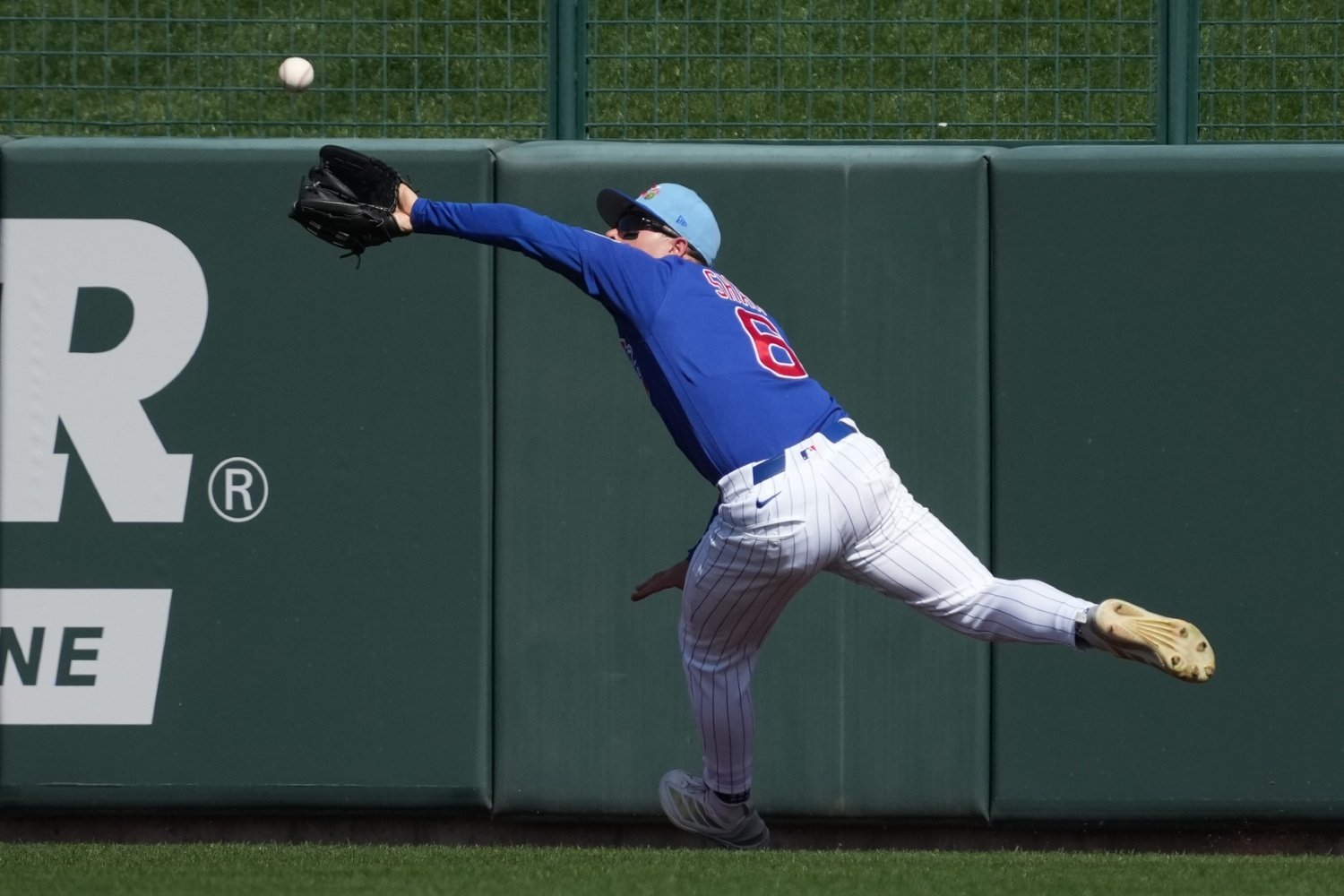 With both Tyler Austin and Jonathon Long dealing with injuries, non-roster invitee Chas McCormick has gained an inside track on an Opening Day role with the Cubs. McCormick, 30, is a seasoned veteran with ample experience in center field, and he bats right-handed, so he can (at least theoretically) swap in to shield starting center fielder Pete Crow-Armstrong from tough matchups against left-handed pitchers. McCormick also hit a ball 110.8 miles per hour off Angels starter José Soriano in a game last week, harder than any he's hit in a big-league game in his career. However, he's also come into camp swinging rather desperately, trying to create flashes just like that double against the Angels but not demonstrating the improved approach he needs to succeed sustainably. He's swung at 43 of the 71 pitches he's seen this spring—almost 61% of them. A whopping 19 of those swings have been whiffs or foul tips. He might make the team purely because of his defensive utility, but he's not truly showing that he's ready to regain his footing at the plate, after batting .211/.273/.301 since the start of 2024. That makes the lineup Craig Counsell wrote Tuesday against Team Italy important. Matt Shaw, who had previously made three starts in right field and two each at second and third base, patrolled center field in the exhibition game leading into the World Baseball Classic. He was neither notably good nor a disaster there, and he also got two hits in the game—though he made a baserunning mistake (not his first of the spring, and an increasingly sore subject for Counsell). It's just one game, so it's far, far too early to make any kind of assessment. The simple fact of his standing out there, however, carries some heavy implications. If the Cubs can get Shaw more reps in center over the fortnight for which Pete Crow-Armstrong will be absent from camp, and if he shows himself to be capable there, the roster math changes. The team claimed infielder Ben Cowles from the Blue Jays on Sunday, the third time they've acquired him. They first dealt for Cowles at the 2024 trade deadline, when they shipped Mark Leiter Jr. to the Yankees, and after losing him on waivers to the White Sox last September, they reclaimed him in January—only to waive and lose him again in February, then scoop him up once more to open March. Cowles, 26, can be optioned to the minors, but as the four times he's been waived in the last six months attest, he's a fringe guy. If McCormick does assert himself as a solid candidate for the roster, he'll need a spot on the 40-man reserve list, and Cowles could easily be the casualty. However, the Cubs wouldn't keep bringing him in if they didn't like some of the things Cowles does. He's a solid defender at shortstop, second base and third base. He's not a good hitter, but he has a modicum of both speed and pop—though the latter would be muted at the big-league level. If Shaw keeps playing center field and looks good there, the chances of the team making him the backup center fielder and letting Cowles (rather than McCormick) take up the final spot on the roster. Even better, perhaps, would be the scenario in which Pedro Ramirez—unlike Cowles, a good contact-oriented hitter who also hits from both sides of the plate—claims that utility infield role. Unless Shaw can handle center, the team needs a righty-batting guy who will do so, not only to insure them against an injury to Crow-Armstrong but to give them someone who can hit lefties at that position. McCormick, Dylan Carlson, Justin Dean and Kevin Alcántara are all auditioning for that job, but none has come into camp looking so good as to make the decision clear. If they have to give one of their bench spots to one of those guys, Shaw will be the utility infielder, with occasional time in right field mixed in. The results of the converted third baseman's trial in center, then, will determine from which pool the team selects the last member of their bench cohort.
 -
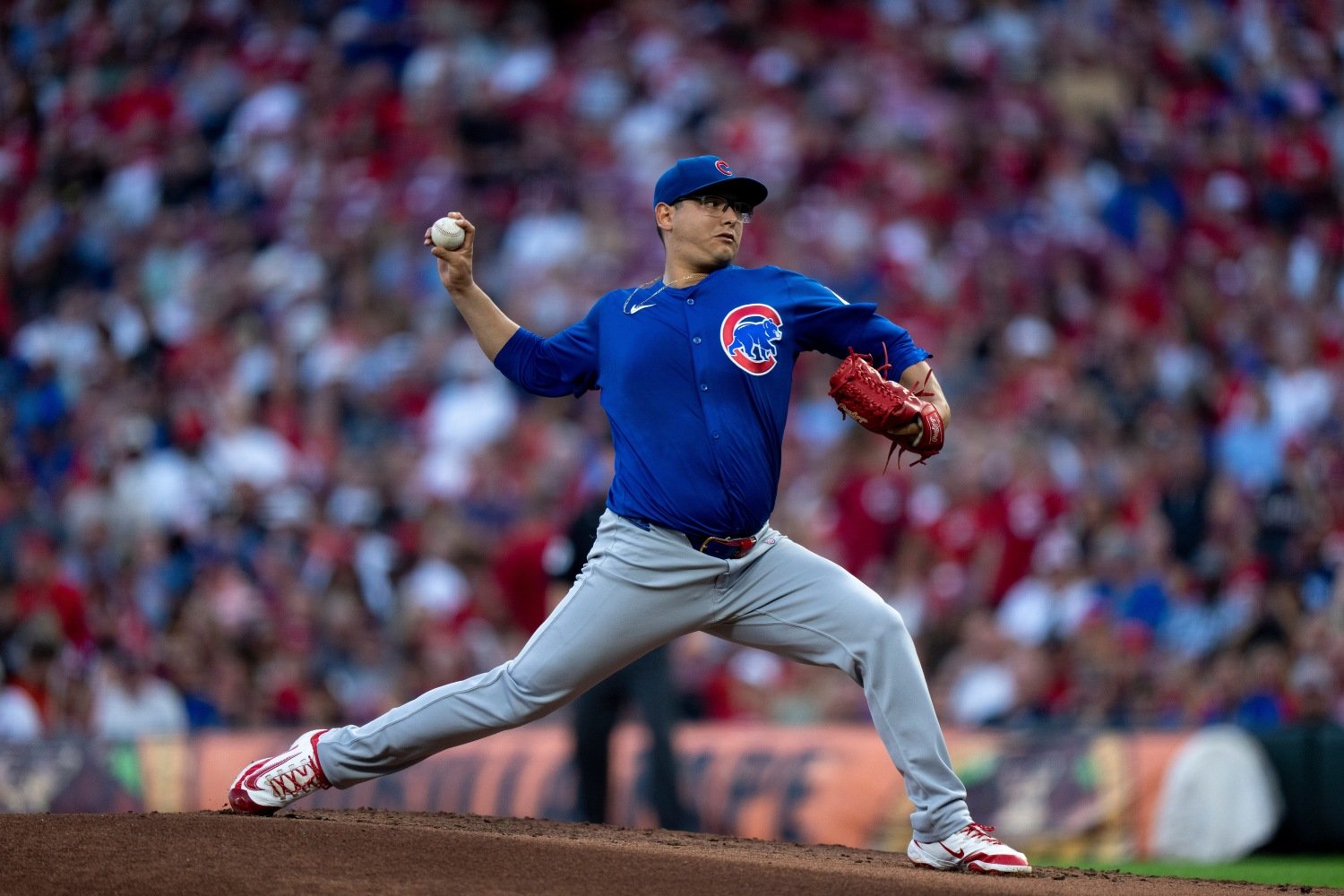 This July, Javier Assad will turn 29 years old. A player that old, with as much big-league playing and service time as Assad has, rarely has to face the prospect of being optioned to the minor leagues. Yet, despite having pitched well whenever he's been healthy enough to do so, that's exactly what Assad might face this spring. He's gone from Cubs camp right now, preparing for his stint with Novena México in the World Baseball Classic, and while he's away, other pitchers will be jockeying for position in the battle for a final spot in the team's bullpen come Opening Day. Barring injuries, the starting rotation to begin the season will include Cade Horton, Edward Cabrera, Matthew Boyd, Shota Imanaga and Jameson Taillon. Colin Rea will be available to move into the rotation in the event of an injury, and can be the long man in the bullpen in the meantime. Phil Maton, Hunter Harvey, Caleb Thielbar, Hoby Milner and Jacob Webb can be kept out of the mix only by injuries, because none of them are eligible to be sent to the minors. Daniel Palencia is thus eligible, but won't be sent out. That leaves just one spot up for grabs. Because of his age (and because the team does, at least, have Ben Brown slated to lead the Triple-A Iowa rotation), Assad should get an edge over the other optionable arms in the mix for that job who are already on the 40-man roster. He's performed well, anyway, albeit in extremely limited looks. Beating out the likes of Luke Little or Jack Neely is no problem for him. However, the team also has a handful of promising non-roster invitees in camp, bidding for that same spot. Collin Snider, Trent Thornton and Corbin Martin are the biggest names in that mix. If the team doesn't add one of that group to the 40-man roster (and thus put them on the active big-league list; none of them can be optioned), they could lose them via an opt-out or an upward mobility clause in their contract. Therefore, if any of the three pitch well in Assad's absence, they could sail right past him and into position to make the roster, with the burly Assad shunted to Iowa. If it comes down to it, holding onto a player who looks good in camp is worth letting Assad molder a bit longer in the minors. He could also remain stretched out to pitch multiple innings—perhaps even to start, if needed. It's not the best thing for Assad, at this point in his career, but it could well be the best thing for the Cubs. So far, the most likely person to supplant Assad seems to be Snider. The low-slot righty has his velocity back, after injuries compromised him last season. He's averaged 95 miles per hour with his cutting heater, and has looked solid with three flavors of breaking ball moving off of that pitch. Assad, for his own part, has been sharp, sitting 94 with his four-seamer and sinker and using six pitches. His four-seamer has a bit less carry, but in his case, that's ok. He needs the bloom of other shapes that play off his fastballs, more than he needs the optimized version of those heaters. Thornton is behind the other pitchers in camp, as he recovers from an Achilles injury he suffered last summer. Martin's impressions in camp have been mild, and optionable lefty Ryan Rolison looks much more optionable after a disastrous appearance Monday. Assad probably only has to beat out Snider, but for the next week or two, Snider will be in camp, getting more chances to catch the eye of Craig Counsell and Jed Hoyer. Assad won't. At this moment, it's likely that Assad will begin 2026 in Triple-A, where (somewhat surprisingly) he's only ever pitched 66 2/3 innings. Unless he's traded, he'll almost certainly spend the majority of the season with the Chicago Cubs, but on Opening Day, he might be left behind. It's the nature of the game, but if the Cubs are ever going to get much out Assad, they need to do so this year.
 -
Image courtesy of © Albert Cesare/The Enquirer / USA TODAY NETWORK via Imagn Images This July, Javier Assad will turn 29 years old. A player that old, with as much big-league playing and service time as Assad has, rarely has to face the prospect of being optioned to the minor leagues. Yet, despite having pitched well whenever he's been healthy enough to do so, that's exactly what Assad might face this spring. He's gone from Cubs camp right now, preparing for his stint with Novena México in the World Baseball Classic, and while he's away, other pitchers will be jockeying for position in the battle for a final spot in the team's bullpen come Opening Day. Barring injuries, the starting rotation to begin the season will include Cade Horton, Edward Cabrera, Matthew Boyd, Shota Imanaga and Jameson Taillon. Colin Rea will be available to move into the rotation in the event of an injury, and can be the long man in the bullpen in the meantime. Phil Maton, Hunter Harvey, Caleb Thielbar, Hoby Milner and Jacob Webb can be kept out of the mix only by injuries, because none of them are eligible to be sent to the minors. Daniel Palencia is thus eligible, but won't be sent out. That leaves just one spot up for grabs. Because of his age (and because the team does, at least, have Ben Brown slated to lead the Triple-A Iowa rotation), Assad should get an edge over the other optionable arms in the mix for that job who are already on the 40-man roster. He's performed well, anyway, albeit in extremely limited looks. Beating out the likes of Luke Little or Jack Neely is no problem for him. However, the team also has a handful of promising non-roster invitees in camp, bidding for that same spot. Collin Snider, Trent Thornton and Corbin Martin are the biggest names in that mix. If the team doesn't add one of that group to the 40-man roster (and thus put them on the active big-league list; none of them can be optioned), they could lose them via an opt-out or an upward mobility clause in their contract. Therefore, if any of the three pitch well in Assad's absence, they could sail right past him and into position to make the roster, with the burly Assad shunted to Iowa. If it comes down to it, holding onto a player who looks good in camp is worth letting Assad molder a bit longer in the minors. He could also remain stretched out to pitch multiple innings—perhaps even to start, if needed. It's not the best thing for Assad, at this point in his career, but it could well be the best thing for the Cubs. So far, the most likely person to supplant Assad seems to be Snider. The low-slot righty has his velocity back, after injuries compromised him last season. He's averaged 95 miles per hour with his cutting heater, and has looked solid with three flavors of breaking ball moving off of that pitch. Assad, for his own part, has been sharp, sitting 94 with his four-seamer and sinker and using six pitches. His four-seamer has a bit less carry, but in his case, that's ok. He needs the bloom of other shapes that play off his fastballs, more than he needs the optimized version of those heaters. Thornton is behind the other pitchers in camp, as he recovers from an Achilles injury he suffered last summer. Martin's impressions in camp have been mild, and optionable lefty Ryan Rolison looks much more optionable after a disastrous appearance Monday. Assad probably only has to beat out Snider, but for the next week or two, Snider will be in camp, getting more chances to catch the eye of Craig Counsell and Jed Hoyer. Assad won't. At this moment, it's likely that Assad will begin 2026 in Triple-A, where (somewhat surprisingly) he's only ever pitched 66 2/3 innings. Unless he's traded, he'll almost certainly spend the majority of the season with the Chicago Cubs, but on Opening Day, he might be left behind. It's the nature of the game, but if the Cubs are ever going to get much out Assad, they need to do so this year. View full article
-
Image courtesy of © Mark J. Rebilas-Imagn Images In his second game of the Cactus League season, Moisés Ballesteros collected two hits on hard-hit balls to left field. Admittedly, the first—a two-run first-inning double hit on a line toward flummoxed left fielder Will Benson—should have been caught, but even if it had been, one would have been compelled to remark on the impressive process of the swing. On a 2-2 slider bending toward his back foot, Ballesteros inside-outed the ball with real authority, at 95 miles per hour and with a 20° launch angle. It was very pretty hitting. The next inning (this game was utter spring chaos), Ballesteros was up against the same pitcher (Reds starter Brady Singer) and got another 2-2 slider. This one, however, stayed up above the belt. Ballesteros found the center of it, hitting a 105-MPH screamer through the open left side of the infield, with a 7° launch angle. This one was an objectively worse pitch by Singer, but playing off the previous at-bat, it would have drawn a whiff or a mishit from many young hitters, because it looked so much like an offering from which it ended up being so disparate in location and required swing path. For Ballesteros, though, it was no problem. There are hitters who take that second, hanging slider out of the park, even in a two-strike count, but almost all of them fail to do anything good on that first, better-executed one. There are hitters who turn on that first one and lace it into the right-field corner, thereby avoiding the need for a defender to get turned around in order to produce a double, but almost all of them foul off or freeze up on that second one. It takes an exceptionally adaptable swing (and a smart, balanced two-strike approach) to create both of the hits Ballesteros found Monday. That's the unique value he adds to the Cubs offense. Swing paths are all the rage in the analysis of hitters right now, within front offices and beyond them. The swing can now be quantified, in ways we were barely beginning to imagine even 10 years ago. Teams have metrics they don't share with the public, of course, but even the ones that are available at Baseball Savant are now enough to describe a batter's stroke in fine detail. The simplest measurement to which we now have access is bat speed, but there are other valuable ones, too—like swing tilt. Every swing has to describe a path downward, then upward, swooshing and slashing from behind the hitter's head or shoulder, through the strike zone and out around their front side. Every swing is a reaction to what the hitter sees, so the angles at which they swing change all the time—but it's also a practiced and calculated motion, so each hitter also demonstrates an average swing path that defines how they address the ball. It's reported at Savant as the angle between the barrel of the bat and an imaginary line parallel to the ground running through the handle, captured over the final 40 milliseconds before the intercept point (real or, on whiffs, hypothetical) between bat and ball. The league's average swing tilt is roughly 32°, but it ranges from under 25° to over 40°. More importantly, for our purposes today, players themselves use different swing paths, and we can use splits to gain more insight into their swings than the snapshot provided by a single number. On a four-seamer, for instance, most hitters will use a flatter swing—more on why in a moment. Almost universally, hitters use their steepest swings against curveballs. Though it's far from a perfect gauge, one way to tell how adaptable a batter's swing is is by looking at how much their swing path differs from one pitch type to another. There are multiple reasons for different swings against different pitch types, of course. The first is timing. A four-seam fastball is coming at you quicker than a breaking ball is, but unless you knew that heater was coming and got started early, you have the same budgets of time and space to spend getting the barrel to the baseball. A flat swing is a more direct one, and while it's often not technically as fast (as measured on Savant, which uses the rotational velocity of the barrel at the intercept point) as a steeper swing, it can still be quicker. What hitters want most is barrel accuracy, and the surest way to get the sweet spot on a fastball is usually to flatten out your swing a little bit. To think about why curves engender steep swings, keep the above in mind, but further, consider the second reason why swing tilt differs by pitch type: location. A pitch up in the zone requires a flatter swing to produce contact than does one at the belt, and that pitch at the belt requires a flatter one than a pitch down at the knees. None of that is new, ground-breaking information. We're just agreeing on foundational concepts. Now, consider where most four-seamers are thrown: above the belt. Meanwhile, most curveballs (and sliders, for that matter; changeups and sinkers introduce another dynamic that we'll mostly save for another day) are down in the zone, or below it. You need a steep swing to get to them. In fact, most hitters have pretty small differences in average swing tilt based on pitch type, and much larger ones based on pitch height. I've told you all of that to tell you this: Ballesteros has perhaps the most plastic swing in the Cubs' lineup, which will make him an invaluable part thereof this year. As proof (beyond those two lovely but ultimately unimportant hits on Monday in Goodyear, Ariz.), I offer this: No hitter on the Cubs last season had a greater difference between their swing tilt on four-seamers and their tilt on curveballs than did Ballesteros. Admittedly, his sample was small, but he averaged 27° of tilt against four-seam fastballs and 34° against curves. Expect that margin to shrink as he gets more playing time, but not so much that he won't still stand out. By pitch height. he's just as remarkable. Only Nico Hoerner matched the 15° spread in tilt from Ballesteros, who had: a 20° average tilt on high pitches; a 29° tilt on middle-of-the-vertical zone pitches; and a 35° tilt on low pitches. Remember that slider from Singer he hit for a double? Here's what he looked like at contact on that pitch: Now, here's another pitch he hit hard the opposite way—his first big-league homer, last summer. As the kids used to (but no longer) say, get you a man who can do both. Ballesteros is that kind of hitter, and they're hard to find. That doesn't mean he's perfect, of course. In fact, let's talk a little more about the nature of swing tilt manipulation, including the tradeoffs involved. For these purposes, we'll set aside pitch types and look only at pitch height. Remember, Ballesteros has about a 15° difference in tilt between his swings at high pitches and his swings at low ones. Looking beyond the Cubs, that's still above average; the average split is about 12°. However, Ballesteros is not an outlier in baseball as a whole. Here are four hitters who excel at this kind of swing adjustment based on location: Luis Arraez: 26° High / 37° Mid / 46° Low Cody Bellinger: 22°/32°/38° Matt Chapman: 15°/25°/32° Ernie Clement: 23°/32°/39° With the possible exception of Chapman, these names won't surprise you. They're famous for their feel for contact, and specifically for getting more than you'd expect out of their swings, relative to their raw bat speed. Certainly, if Ballesteros can be anything like what Bellinger was at his best with the Cubs, the team will flourish. Alas, it's not this simple. There's a specific penalty we need to account for: the high-pitch swing speed loss. We touched on this earlier. A pitch coming at you at the top of the zone (or above) is likely to be a fastball, which jams you up for time, but even if it isn't, it forces you into a tough spot for space. Every hitter's swing has to be able to punish mistakes in the middle of the plate, and the body can much more naturally adjust to a ball down—what you've always heard broadcasters call "dropping the head of the bat on it". When most hitters flatten out their swings to attack a pitch up, though, they lose bat speed. It's a shorter swing, and it can still work, but it's just not as easy to forge a productive collaboration between gravity, your musculature and that very blunt tool in your hands on a flat, high swing as it is on steeper ones where the barrel can dip farther below the hands. Different hitters pay different high-pitch bat speed penalties, but mostly, that's a product of choices they make. The baseline for this is around 2 MPH of swing speed, but if you choose not to manipulate your swing tilt as much as other batters do, you can minimize that. Two former Cubs illustrate that option: Christopher Morel: HIGH: 23°, 76.1 MPH / MID: 27°, 76.1 MPH / LOW: 30°, 75.5 MPH Kyle Schwarber: 26°, 76.5 / 30°, 77.6 / 34°, 76.7 As you can see, neither player sacrifices bat speed to flatten their swing at the top of the zone. That means a much smaller variability in tilt than others have, which is why they're more prone to mis-hitting the ball or whiffing, but with the right approach—good pitch selection, tailored to your swing and its most productive zones—holding onto your bat speed on high offerings can be worthwhile. Schwarber and Morel are a nice pair for illustrating just how important a great approach is to such hitters, though. Though each of those two have below-average ranges of swing tilt, there are guys who are even more extreme in that regard—and who are, therefore, even more extreme in their discipline of only swinging at what they want. Seiya Suzuki and Juan Soto belong to a class of hitters who can't manipulate their bat paths much and still do what they want to do at the plate, so they adopt an extremely selective approach, instead. The more you adapt your swing path to the pitch, the more bat speed you generally give up at the top of the zone. Ballesteros is one example; a fellow left-handed hitter in the NL Central is another. Moisés Ballesteros: HIGH: 20°, 69.4 MPH / MID: 29°, 73.2 MPH / LOW: 35°, 73.4 MPH Brice Turang: 22°, 66.4 / 32°, 71.1 / 37°, 72.3 If you're giving up four miles per hour of bat speed at the top of the zone, you're probably being too aggressive with the adjustment of your swing path. Ballesteros's case gives us a chance to talk about one more dynamic in play, though, which is the baseline tilt of one's swing. How steeply you swing when the ball is exactly where you want it is a major factor in determining how much you need to adjust to handle offerings at the top of the zone—but that needn't be a primary consideration when deciding what type of swing is best. In general, steeper swings are better swings. They handle the ball down and in the middle of the zone better, and they still have some loft left in them after the hitter adjusts at the top of the zone. There's some tilt number—let's say 24°, but you could pick anything from 22 to 25—at which you're unavoidably giving up extra bat speed; it's physics. Steep swingers can lose less speed at the top of the zone, because they don't run into that sub-25° restriction. Guys with slow, steep swings—think Michael Busch—can have big trouble handling the ball up and in, but if they have any semblance of a plan at the plate, they derive more benefit from that steep attack than damage from having a hole in their zone. In fact, you know who's absolutely perfect in this regard, giving up virtually no bat speed at the top of the zone because they're still swinging fairly steeply there but also getting to the ball consistently? It will not shock you. Shohei Ohtani: HIGH: 29°, 74.6 MPH / MID: 37°, 76.5 MPH / LOW: 43°, 74.6 MPH Ballesteros is no Ohtani. He's not Busch, either. His swing is flatter, but it still has plenty of bendability. He shows a facility for seeing the ball and changing his bat path—what old-school scouts call "smart hands"—few players in the league can match. The last step in his development at the plate could be more about selectivity than about manipulating the barrel. Maybe a perfect Ballesteros has a slightly steeper upper-zone swing, but look at that second hit from Monday, or the homer from last year: he derives real value from getting on top of the ball. No, his key will be to swing less often up there. Some 369 hitters saw at least 100 pitches in the shadow of the top of the strike zone at Triple A last year. Ballesteros had the fifth-highest swing rate in that cohort. For a guy who stands 5-foot-8, in the age of the ABS system, that shouldn't happen. Ballesteros can afford to be more picky, and to use his right to challenge pitches occasionally to thwart bad calls. The top of the zone (especially to short hitters) is where fans will feel the greatest difference between baseball before the ABS challenge system and baseball with it. For Ballesteros, the fact that few pitchers will be able to hit the top of his zone should be a huge advantage. The plasticity of Ballesteros's swing will make him a linchpin of the Cubs offense in 2026. If he also learns to let the ball along the top rail of the zone sail by a bit more often, he could turn a corner quickly and become a massive offensive weapon. Either way, though, the team has to be very pleased that he made it through a thorny entry process and landed on American soil in his hitting shoes. View full article
-
 In his second game of the Cactus League season, Moisés Ballesteros collected two hits on hard-hit balls to left field. Admittedly, the first—a two-run first-inning double hit on a line toward flummoxed left fielder Will Benson—should have been caught, but even if it had been, one would have been compelled to remark on the impressive process of the swing. On a 2-2 slider bending toward his back foot, Ballesteros inside-outed the ball with real authority, at 95 miles per hour and with a 20° launch angle. It was very pretty hitting. The next inning (this game was utter spring chaos), Ballesteros was up against the same pitcher (Reds starter Brady Singer) and got another 2-2 slider. This one, however, stayed up above the belt. Ballesteros found the center of it, hitting a 105-MPH screamer through the open left side of the infield, with a 7° launch angle. This one was an objectively worse pitch by Singer, but playing off the previous at-bat, it would have drawn a whiff or a mishit from many young hitters, because it looked so much like an offering from which it ended up being so disparate in location and required swing path. For Ballesteros, though, it was no problem. There are hitters who take that second, hanging slider out of the park, even in a two-strike count, but almost all of them fail to do anything good on that first, better-executed one. There are hitters who turn on that first one and lace it into the right-field corner, thereby avoiding the need for a defender to get turned around in order to produce a double, but almost all of them foul off or freeze up on that second one. It takes an exceptionally adaptable swing (and a smart, balanced two-strike approach) to create both of the hits Ballesteros found Monday. That's the unique value he adds to the Cubs offense. Swing paths are all the rage in the analysis of hitters right now, within front offices and beyond them. The swing can now be quantified, in ways we were barely beginning to imagine even 10 years ago. Teams have metrics they don't share with the public, of course, but even the ones that are available at Baseball Savant are now enough to describe a batter's stroke in fine detail. The simplest measurement to which we now have access is bat speed, but there are other valuable ones, too—like swing tilt. Every swing has to describe a path downward, then upward, swooshing and slashing from behind the hitter's head or shoulder, through the strike zone and out around their front side. Every swing is a reaction to what the hitter sees, so the angles at which they swing change all the time—but it's also a practiced and calculated motion, so each hitter also demonstrates an average swing path that defines how they address the ball. It's reported at Savant as the angle between the barrel of the bat and an imaginary line parallel to the ground running through the handle, captured over the final 40 milliseconds before the intercept point (real or, on whiffs, hypothetical) between bat and ball. The league's average swing tilt is roughly 32°, but it ranges from under 25° to over 40°. More importantly, for our purposes today, players themselves use different swing paths, and we can use splits to gain more insight into their swings than the snapshot provided by a single number. On a four-seamer, for instance, most hitters will use a flatter swing—more on why in a moment. Almost universally, hitters use their steepest swings against curveballs. Though it's far from a perfect gauge, one way to tell how adaptable a batter's swing is is by looking at how much their swing path differs from one pitch type to another. There are multiple reasons for different swings against different pitch types, of course. The first is timing. A four-seam fastball is coming at you quicker than a breaking ball is, but unless you knew that heater was coming and got started early, you have the same budgets of time and space to spend getting the barrel to the baseball. A flat swing is a more direct one, and while it's often not technically as fast (as measured on Savant, which uses the rotational velocity of the barrel at the intercept point) as a steeper swing, it can still be quicker. What hitters want most is barrel accuracy, and the surest way to get the sweet spot on a fastball is usually to flatten out your swing a little bit. To think about why curves engender steep swings, keep the above in mind, but further, consider the second reason why swing tilt differs by pitch type: location. A pitch up in the zone requires a flatter swing to produce contact than does one at the belt, and that pitch at the belt requires a flatter one than a pitch down at the knees. None of that is new, ground-breaking information. We're just agreeing on foundational concepts. Now, consider where most four-seamers are thrown: above the belt. Meanwhile, most curveballs (and sliders, for that matter; changeups and sinkers introduce another dynamic that we'll mostly save for another day) are down in the zone, or below it. You need a steep swing to get to them. In fact, most hitters have pretty small differences in average swing tilt based on pitch type, and much larger ones based on pitch height. I've told you all of that to tell you this: Ballesteros has perhaps the most plastic swing in the Cubs' lineup, which will make him an invaluable part thereof this year. As proof (beyond those two lovely but ultimately unimportant hits on Monday in Goodyear, Ariz.), I offer this: No hitter on the Cubs last season had a greater difference between their swing tilt on four-seamers and their tilt on curveballs than did Ballesteros. Admittedly, his sample was small, but he averaged 27° of tilt against four-seam fastballs and 34° against curves. Expect that margin to shrink as he gets more playing time, but not so much that he won't still stand out. By pitch height. he's just as remarkable. Only Nico Hoerner matched the 15° spread in tilt from Ballesteros, who had: a 20° average tilt on high pitches; a 29° tilt on middle-of-the-vertical zone pitches; and a 35° tilt on low pitches. Remember that slider from Singer he hit for a double? Here's what he looked like at contact on that pitch: Now, here's another pitch he hit hard the opposite way—his first big-league homer, last summer. As the kids used to (but no longer) say, get you a man who can do both. Ballesteros is that kind of hitter, and they're hard to find. That doesn't mean he's perfect, of course. In fact, let's talk a little more about the nature of swing tilt manipulation, including the tradeoffs involved. For these purposes, we'll set aside pitch types and look only at pitch height. Remember, Ballesteros has about a 15° difference in tilt between his swings at high pitches and his swings at low ones. Looking beyond the Cubs, that's still above average; the average split is about 12°. However, Ballesteros is not an outlier in baseball as a whole. Here are four hitters who excel at this kind of swing adjustment based on location: Luis Arraez: 26° High / 37° Mid / 46° Low Cody Bellinger: 22°/32°/38° Matt Chapman: 15°/25°/32° Ernie Clement: 23°/32°/39° With the possible exception of Chapman, these names won't surprise you. They're famous for their feel for contact, and specifically for getting more than you'd expect out of their swings, relative to their raw bat speed. Certainly, if Ballesteros can be anything like what Bellinger was at his best with the Cubs, the team will flourish. Alas, it's not this simple. There's a specific penalty we need to account for: the high-pitch swing speed loss. We touched on this earlier. A pitch coming at you at the top of the zone (or above) is likely to be a fastball, which jams you up for time, but even if it isn't, it forces you into a tough spot for space. Every hitter's swing has to be able to punish mistakes in the middle of the plate, and the body can much more naturally adjust to a ball down—what you've always heard broadcasters call "dropping the head of the bat on it". When most hitters flatten out their swings to attack a pitch up, though, they lose bat speed. It's a shorter swing, and it can still work, but it's just not as easy to forge a productive collaboration between gravity, your musculature and that very blunt tool in your hands on a flat, high swing as it is on steeper ones where the barrel can dip farther below the hands. Different hitters pay different high-pitch bat speed penalties, but mostly, that's a product of choices they make. The baseline for this is around 2 MPH of swing speed, but if you choose not to manipulate your swing tilt as much as other batters do, you can minimize that. Two former Cubs illustrate that option: Christopher Morel: HIGH: 23°, 76.1 MPH / MID: 27°, 76.1 MPH / LOW: 30°, 75.5 MPH Kyle Schwarber: 26°, 76.5 / 30°, 77.6 / 34°, 76.7 As you can see, neither player sacrifices bat speed to flatten their swing at the top of the zone. That means a much smaller variability in tilt than others have, which is why they're more prone to mis-hitting the ball or whiffing, but with the right approach—good pitch selection, tailored to your swing and its most productive zones—holding onto your bat speed on high offerings can be worthwhile. Schwarber and Morel are a nice pair for illustrating just how important a great approach is to such hitters, though. Though each of those two have below-average ranges of swing tilt, there are guys who are even more extreme in that regard—and who are, therefore, even more extreme in their discipline of only swinging at what they want. Seiya Suzuki and Juan Soto belong to a class of hitters who can't manipulate their bat paths much and still do what they want to do at the plate, so they adopt an extremely selective approach, instead. The more you adapt your swing path to the pitch, the more bat speed you generally give up at the top of the zone. Ballesteros is one example; a fellow left-handed hitter in the NL Central is another. Moisés Ballesteros: HIGH: 20°, 69.4 MPH / MID: 29°, 73.2 MPH / LOW: 35°, 73.4 MPH Brice Turang: 22°, 66.4 / 32°, 71.1 / 37°, 72.3 If you're giving up four miles per hour of bat speed at the top of the zone, you're probably being too aggressive with the adjustment of your swing path. Ballesteros's case gives us a chance to talk about one more dynamic in play, though, which is the baseline tilt of one's swing. How steeply you swing when the ball is exactly where you want it is a major factor in determining how much you need to adjust to handle offerings at the top of the zone—but that needn't be a primary consideration when deciding what type of swing is best. In general, steeper swings are better swings. They handle the ball down and in the middle of the zone better, and they still have some loft left in them after the hitter adjusts at the top of the zone. There's some tilt number—let's say 24°, but you could pick anything from 22 to 25—at which you're unavoidably giving up extra bat speed; it's physics. Steep swingers can lose less speed at the top of the zone, because they don't run into that sub-25° restriction. Guys with slow, steep swings—think Michael Busch—can have big trouble handling the ball up and in, but if they have any semblance of a plan at the plate, they derive more benefit from that steep attack than damage from having a hole in their zone. In fact, you know who's absolutely perfect in this regard, giving up virtually no bat speed at the top of the zone because they're still swinging fairly steeply there but also getting to the ball consistently? It will not shock you. Shohei Ohtani: HIGH: 29°, 74.6 MPH / MID: 37°, 76.5 MPH / LOW: 43°, 74.6 MPH Ballesteros is no Ohtani. He's not Busch, either. His swing is flatter, but it still has plenty of bendability. He shows a facility for seeing the ball and changing his bat path—what old-school scouts call "smart hands"—few players in the league can match. The last step in his development at the plate could be more about selectivity than about manipulating the barrel. Maybe a perfect Ballesteros has a slightly steeper upper-zone swing, but look at that second hit from Monday, or the homer from last year: he derives real value from getting on top of the ball. No, his key will be to swing less often up there. Some 369 hitters saw at least 100 pitches in the shadow of the top of the strike zone at Triple A last year. Ballesteros had the fifth-highest swing rate in that cohort. For a guy who stands 5-foot-8, in the age of the ABS system, that shouldn't happen. Ballesteros can afford to be more picky, and to use his right to challenge pitches occasionally to thwart bad calls. The top of the zone (especially to short hitters) is where fans will feel the greatest difference between baseball before the ABS challenge system and baseball with it. For Ballesteros, the fact that few pitchers will be able to hit the top of his zone should be a huge advantage. The plasticity of Ballesteros's swing will make him a linchpin of the Cubs offense in 2026. If he also learns to let the ball along the top rail of the zone sail by a bit more often, he could turn a corner quickly and become a massive offensive weapon. Either way, though, the team has to be very pleased that he made it through a thorny entry process and landed on American soil in his hitting shoes.
 -
Image courtesy of © Matt Kartozian-Imagn Images When the Cubs traded for Edward Cabrera in January, many assumed the team would continue the work Cabrera began in Miami last year, under former Cubs assistant pitching coach Daniel Moskos: ratcheting down the usage of his four-seam fastball. For most of his career, despite being thrown nearly 100 miles per hour, Cabrera's four-seamer has been his worst pitch. Given his arm angle—even the lower angle to which he adjusted last season—he doesn't have any more ride (that apparent rising action, as the backspin of a fastball defies gravity) than a hitter expects to see. It does run more to his arm side than they'd anticipate, which is good for something, but only if the pitch is well-located and well-mixed with his other offerings. When it isn't, the heater can get hammered. Last season, Cabrera favored his sinker over the four-seamer for the first time. It was just part of a broader shift in deployment of his arsenal, which saw him throw his very effective changeup and curveball plenty, but mix in his slider and sinker more, pushing the four-seamer all the way to fifth in his personal pecking order. It was a strategy of avoidance—of minimizing a weakness by making it as small a slice of his game as possible. In his first outing of the Cactus League season, though, the four-seamer was Cabrera's most-used pitch. He leaned on it harder than he has in any season since 2021, his rookie year. If you're married to the idea that the Cubs' optimization plan for Cabrera involves continuing to push him away from the four-seamer, it's easy to explain that away. Guys work on things during spring. They don't always behave the way they will when the games count. Admittedly, it would be surprising if Cabrera does lean anywhere near this heavily on the four-seamer come the regular season. However, you should still take his pitch usage Friday seriously. It wasn't a fluke, because it's very much the way the Cubs do things. The last two established, American starters the Cubs brought in (the ones to whom we can easily make a direct comparison) were Matthew Boyd and Colin Rea. Here's what happened to Boyd's pitch usage last year. And here's the same chart for Rea. Widening the lens only makes the emphasis clearer. Last season, the Cubs' four-seamer usage was 40.4%. That was the highest rate of any team in the league, by a significant margin. Last year, Rea said that the first thing the Cubs told him was how his arsenal could work better by working differently, playing off his four-seamer. No team in the majors likes four-seamers like this one does. Every pitcher is different. Chicago won't push the four-seamer as hard with Cabrera as they did with Rea; it wouldn't make sense. Don't assume, though, that the team will entirely alter its philosophy to suit one new arm. On the contrary, they're likely to assimilate that arm into their pitching philosophy. Cabrera is about to learn how to use his four-seamer better. If the Cubs didn't believe fervently that that's possible, they almost certainly wouldn't have dealt for him. One could argue that that approach is overconfident. The Cubs have had plenty of developmental wins lately, but when people in the know list the savviest organizations in the game in matters of pitching, the Cubs are never the first name out of their mouth. Asking a player who just figured out something important and turned a corner in their career to pivot dramatically toward a different plan—one that goes against his documented strengths, no less—is awfully bold. However, this is how the Cubs have had success over the last several years. They identify guys they believe can benefit from a change in pitch mix, and then they help them achieve that benefit—and the four-seamer is almost always at the center of the action. Besides, there's always utility in a pitch that sits 97 and often touches higher. Cabrera's stuff is electricity itself, and the four-seamer carries as much current as anything he throws. The Cubs are unlikely to let the value of that intense an offering go unrealized, even if other pitches net Cabrera more whiffs. He might not stick to it all year, but he's going throw the four-seamer more often early on, not less so. Get comfortable with discomfort, because if you'd hoped the flamethrower would lean even more into his curveball and changeup, you're destined for disappointment. The heater powers the Cubs' attack, and while Cabrera is unusual, he's not so unique as to be an outright exception to that rule. View full article
-
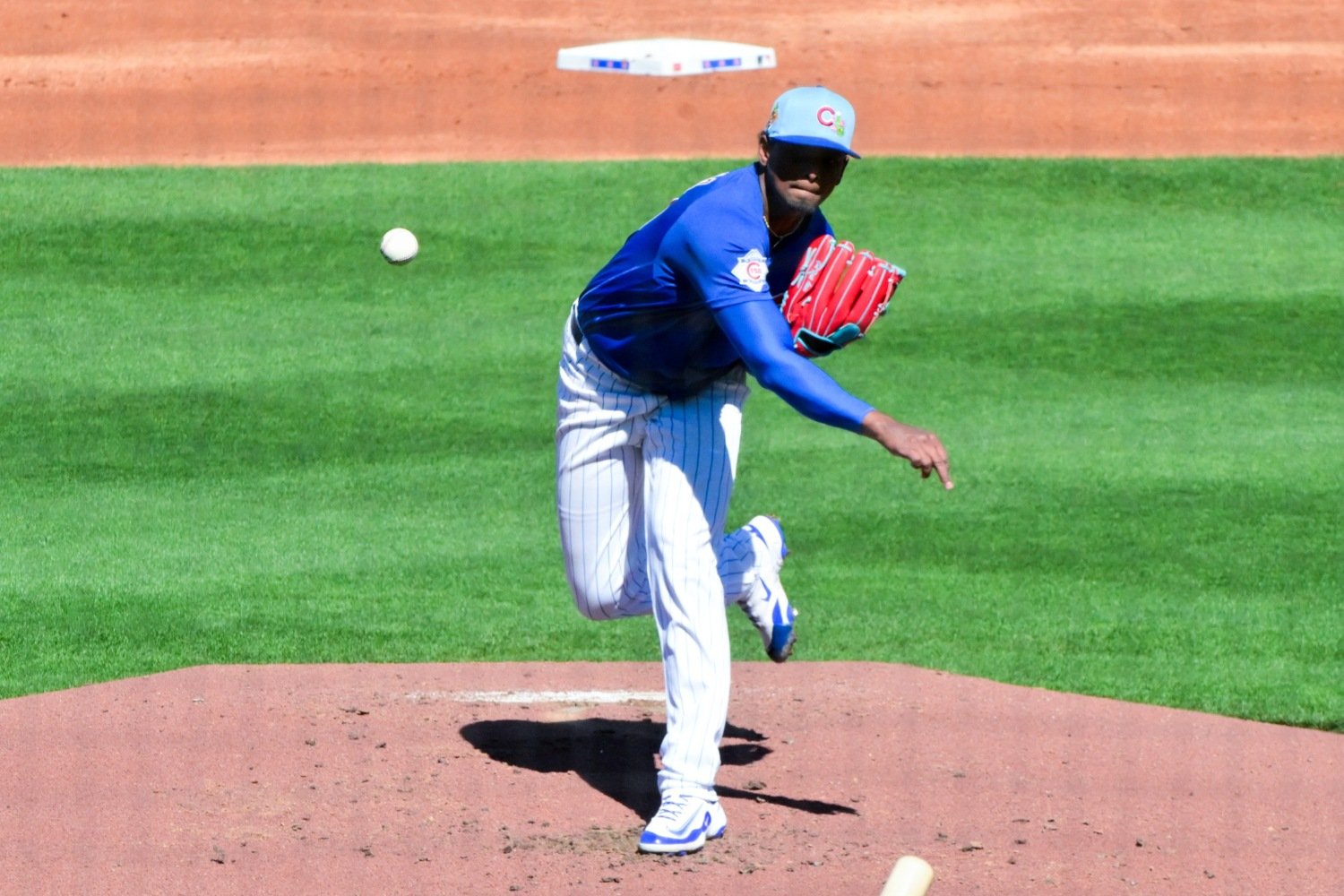 When the Cubs traded for Edward Cabrera in January, many assumed the team would continue the work Cabrera began in Miami last year, under former Cubs assistant pitching coach Daniel Moskos: ratcheting down the usage of his four-seam fastball. For most of his career, despite being thrown nearly 100 miles per hour, Cabrera's four-seamer has been his worst pitch. Given his arm angle—even the lower angle to which he adjusted last season—he doesn't have any more ride (that apparent rising action, as the backspin of a fastball defies gravity) than a hitter expects to see. It does run more to his arm side than they'd anticipate, which is good for something, but only if the pitch is well-located and well-mixed with his other offerings. When it isn't, the heater can get hammered. Last season, Cabrera favored his sinker over the four-seamer for the first time. It was just part of a broader shift in deployment of his arsenal, which saw him throw his very effective changeup and curveball plenty, but mix in his slider and sinker more, pushing the four-seamer all the way to fifth in his personal pecking order. It was a strategy of avoidance—of minimizing a weakness by making it as small a slice of his game as possible. In his first outing of the Cactus League season, though, the four-seamer was Cabrera's most-used pitch. He leaned on it harder than he has in any season since 2021, his rookie year. If you're married to the idea that the Cubs' optimization plan for Cabrera involves continuing to push him away from the four-seamer, it's easy to explain that away. Guys work on things during spring. They don't always behave the way they will when the games count. Admittedly, it would be surprising if Cabrera does lean anywhere near this heavily on the four-seamer come the regular season. However, you should still take his pitch usage Friday seriously. It wasn't a fluke, because it's very much the way the Cubs do things. The last two established, American starters the Cubs brought in (the ones to whom we can easily make a direct comparison) were Matthew Boyd and Colin Rea. Here's what happened to Boyd's pitch usage last year. And here's the same chart for Rea. Widening the lens only makes the emphasis clearer. Last season, the Cubs' four-seamer usage was 40.4%. That was the highest rate of any team in the league, by a significant margin. Last year, Rea said that the first thing the Cubs told him was how his arsenal could work better by working differently, playing off his four-seamer. No team in the majors likes four-seamers like this one does. Every pitcher is different. Chicago won't push the four-seamer as hard with Cabrera as they did with Rea; it wouldn't make sense. Don't assume, though, that the team will entirely alter its philosophy to suit one new arm. On the contrary, they're likely to assimilate that arm into their pitching philosophy. Cabrera is about to learn how to use his four-seamer better. If the Cubs didn't believe fervently that that's possible, they almost certainly wouldn't have dealt for him. One could argue that that approach is overconfident. The Cubs have had plenty of developmental wins lately, but when people in the know list the savviest organizations in the game in matters of pitching, the Cubs are never the first name out of their mouth. Asking a player who just figured out something important and turned a corner in their career to pivot dramatically toward a different plan—one that goes against his documented strengths, no less—is awfully bold. However, this is how the Cubs have had success over the last several years. They identify guys they believe can benefit from a change in pitch mix, and then they help them achieve that benefit—and the four-seamer is almost always at the center of the action. Besides, there's always utility in a pitch that sits 97 and often touches higher. Cabrera's stuff is electricity itself, and the four-seamer carries as much current as anything he throws. The Cubs are unlikely to let the value of that intense an offering go unrealized, even if other pitches net Cabrera more whiffs. He might not stick to it all year, but he's going throw the four-seamer more often early on, not less so. Get comfortable with discomfort, because if you'd hoped the flamethrower would lean even more into his curveball and changeup, you're destined for disappointment. The heater powers the Cubs' attack, and while Cabrera is unusual, he's not so unique as to be an outright exception to that rule.
 -
Image courtesy of © Rick Scuteri-Imagn Images Shota Imanaga averaged 93 miles per hour on his four-seam fastball in his first outing of Cactus League play Tuesday. That was eye-opening for many, because Imanaga often struggled just to crack 90 MPH late last season. In most of his second-half starts, he averaged north of that number, but not by much—and he rarely even touched 92 or 93 miles per hour. On Tuesday, he lived right around 93 and touched 94. It's easy to imagine how that uptick in velocity might offer relief from the vulnerability to home runs that plagued him down the stretch. Truthfully, though, velocity isn't a big factor for Imanaga. He got hit hard after his return from a hamstring strain last year, but that had much more to do with command and pitch shape than with speed. Whenever something gets out of whack for the southpaw, homers will be the source of the tsuris, because he lives on a fastball with deceptive rising action and a splitter that will get hammered if not well-executed and well-located. When he does have that ride on the heater and is commanding the splitter, though, he can have success even at 89-91 on the radar gun. Alas, last season, Imanaga tried a mechanical tweak that didn't work. and it compromised the shape of his heater and the ability to throw the splitter with the action and the location that makes it play as well as possible. His average arm angle in 2024 was 40°, but in 2025, it dipped to 36°. The result was more run on the four-seamer, but (if anything) less carry, and a splitter that didn't tumble as steeply as it had in his excellent first season with Chicago. On Tuesday, those shapes were back. Imanaga's stuff had more vertical separation, because the fastball was more consistently showing that ride. Here's a comparison between his start in Milwaukee last May (which he left with the injury that would sideline him for several weeks), and the one he had against the Padres this week. Obviously, the splitter and sweeper also dropped less than did the fastball, but on balance, this is a better version of Imanaga. He can stretch the zone vertically more effectively this way, because he can more often tease the top of the zone with that fastball. Imanaga's release point was also slightly higher Tuesday, and his release was closer to the center of the mound. We don't have arm angle data for spring games, but Imanaga seems to have raised his arm slot again. That's good news. Broadly, the league is trending toward lower arm slots, which lend themselves better to some forms of pitch design and deception. In Imanaga's case, though, throwing from a high three-quarters slot (but a low sheer release height, because of his diminutive stature and the way he drives down the mound in his delivery) maximizes the utility of his repertoire. By no means is this a guarantee that the Cubs will have their 2024 co-ace back in full this season. However, it's a good sign that he appears to have corrected what amounted to a flaw in his mechanics, and that his arm is feeling so strong that he's already pushing the mid-90s in February. Imanaga looks likely to be a key contributor over the first stage of the season. On a staff that will try to protect key young arms and that won't have Justin Steele early on, that's exceptionally valuable. Imanaga's good first Cactus League outing was a major step toward a successful first month for his team. View full article
-
Shota Imanaga's Arm Angle is Back Up, Along with His Velocity
Matthew Trueblood posted an article in Cubs
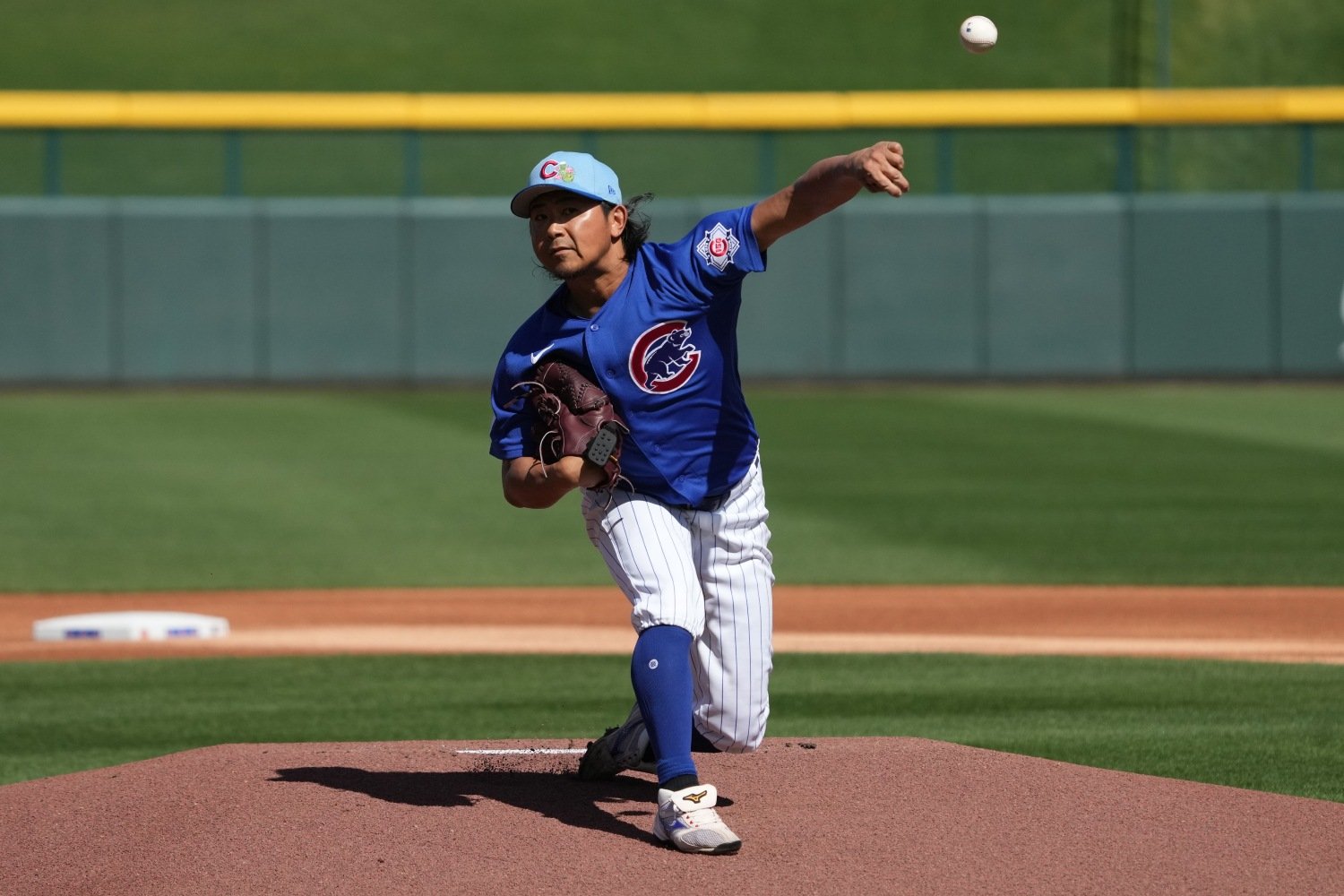 Shota Imanaga averaged 93 miles per hour on his four-seam fastball in his first outing of Cactus League play Tuesday. That was eye-opening for many, because Imanaga often struggled just to crack 90 MPH late last season. In most of his second-half starts, he averaged north of that number, but not by much—and he rarely even touched 92 or 93 miles per hour. On Tuesday, he lived right around 93 and touched 94. It's easy to imagine how that uptick in velocity might offer relief from the vulnerability to home runs that plagued him down the stretch. Truthfully, though, velocity isn't a big factor for Imanaga. He got hit hard after his return from a hamstring strain last year, but that had much more to do with command and pitch shape than with speed. Whenever something gets out of whack for the southpaw, homers will be the source of the tsuris, because he lives on a fastball with deceptive rising action and a splitter that will get hammered if not well-executed and well-located. When he does have that ride on the heater and is commanding the splitter, though, he can have success even at 89-91 on the radar gun. Alas, last season, Imanaga tried a mechanical tweak that didn't work. and it compromised the shape of his heater and the ability to throw the splitter with the action and the location that makes it play as well as possible. His average arm angle in 2024 was 40°, but in 2025, it dipped to 36°. The result was more run on the four-seamer, but (if anything) less carry, and a splitter that didn't tumble as steeply as it had in his excellent first season with Chicago. On Tuesday, those shapes were back. Imanaga's stuff had more vertical separation, because the fastball was more consistently showing that ride. Here's a comparison between his start in Milwaukee last May (which he left with the injury that would sideline him for several weeks), and the one he had against the Padres this week. Obviously, the splitter and sweeper also dropped less than did the fastball, but on balance, this is a better version of Imanaga. He can stretch the zone vertically more effectively this way, because he can more often tease the top of the zone with that fastball. Imanaga's release point was also slightly higher Tuesday, and his release was closer to the center of the mound. We don't have arm angle data for spring games, but Imanaga seems to have raised his arm slot again. That's good news. Broadly, the league is trending toward lower arm slots, which lend themselves better to some forms of pitch design and deception. In Imanaga's case, though, throwing from a high three-quarters slot (but a low sheer release height, because of his diminutive stature and the way he drives down the mound in his delivery) maximizes the utility of his repertoire. By no means is this a guarantee that the Cubs will have their 2024 co-ace back in full this season. However, it's a good sign that he appears to have corrected what amounted to a flaw in his mechanics, and that his arm is feeling so strong that he's already pushing the mid-90s in February. Imanaga looks likely to be a key contributor over the first stage of the season. On a staff that will try to protect key young arms and that won't have Justin Steele early on, that's exceptionally valuable. Imanaga's good first Cactus League outing was a major step toward a successful first month for his team.