Matthew Trueblood
-
Posts
2,479 -
Joined
-
Last visited
-
Days Won
2
Content Type
Profiles
Joomla Posts 1
Chicago Cubs Videos
Chicago Cubs Free Agent & Trade Rumors, Notes, & Tidbits
2026 Chicago Cubs Top Prospects Ranking
News
2023 Chicago Cubs Draft Picks
Guides & Resources
2024 Chicago Cubs Draft Picks
The Chicago Cubs Players Project
2025 Chicago Cubs Draft Pick Tracker
2026 Chicago Cubs Draft Tracker: Picks & Bonuses
Blogs
Events
Forums
Store
Gallery
Everything posted by Matthew Trueblood
-
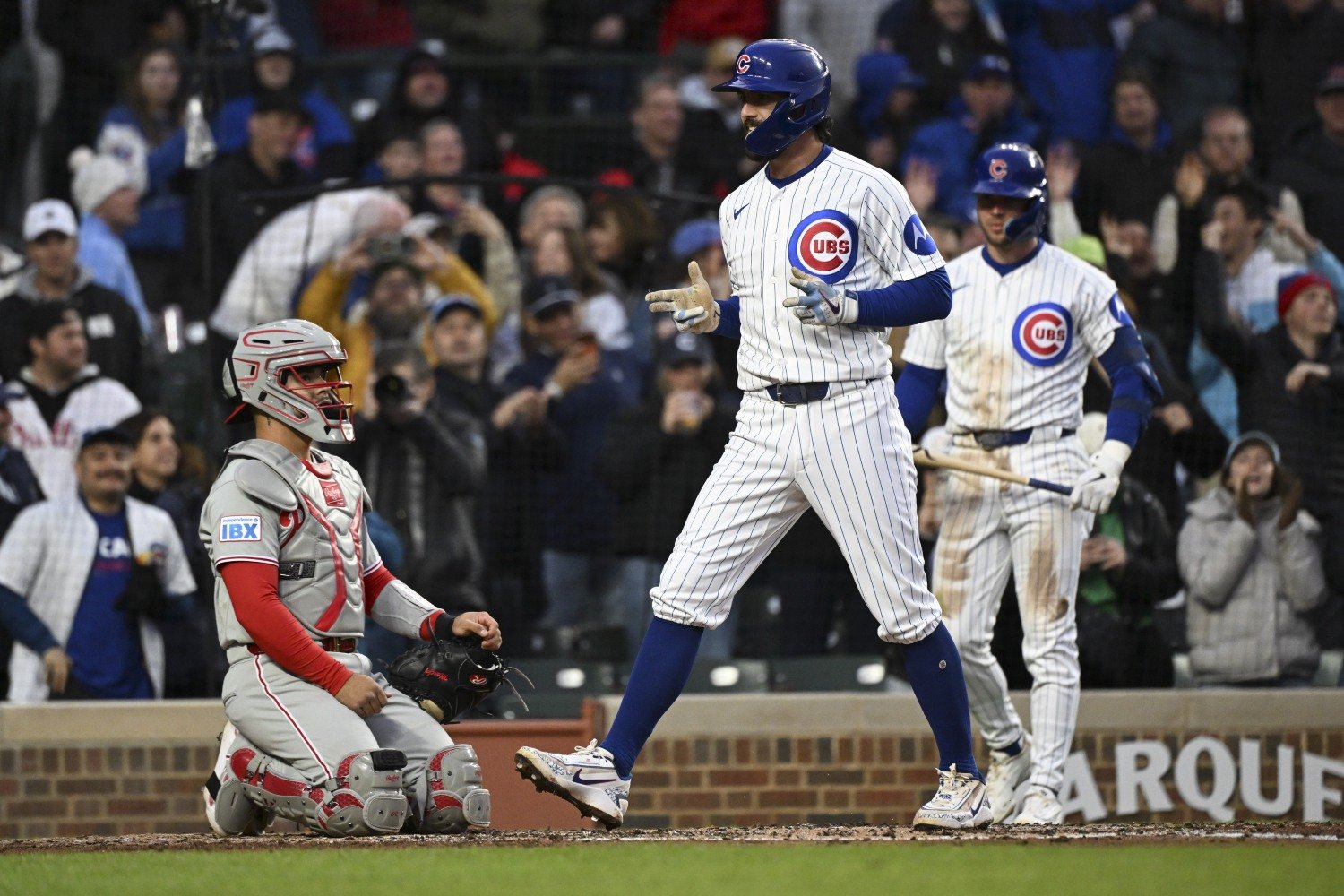
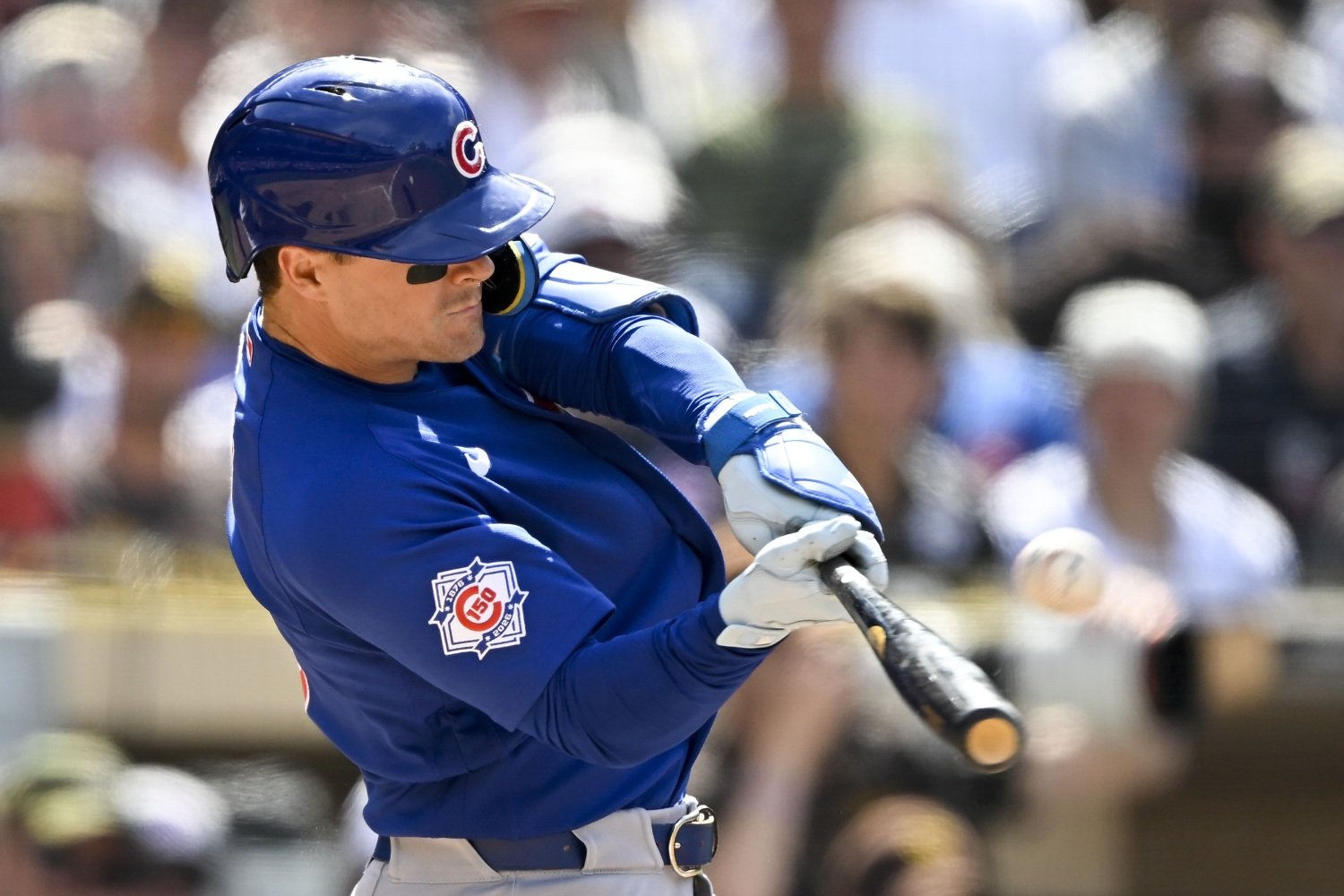 Coming into this season, the weakness of the Cubs' bench was a glaring problem. Little was expected of Michael Conforto or Dylan Carlson, but with Seiya Suzuki starting the year on the injured list, the team was compelled to hope for at least some amount of help from each. Because Craig Counsell didn't trust Carlson, he instead moved Matt Shaw into an outfield role, which forced the team to carry Scott Kingery for the first few weeks of the campaign. Of Shaw himself, no one knew quite what to expect. His rookie season was so uneven and so pockmarked by big changes in mechanics and approach that projecting his offense was difficult, and he had lost his regular defensive home when the team signed Alex Bregman. Kingery and Carlson are gone, now, but the former has been replaced with Nicky Lopez, who's just Scott Kingery in a mirror. He, too, is a glove-over-bat utility infielder whose glove is merely good, not great. He, too, is a quasi-local product. He just happens to bat left-handed. Suzuki is back and has taken nicely to a restored home in right field, while rookie Moisés Ballesteros has been terrific as the DH. That's slightly reduced the role of Shaw and significantly reduced what the team is asking of Conforto, which is for the best. However, Counsell has tried hard to keep finding regular playing time for Shaw, and the sophomore is rewarding his manager's proactive show of faith. He's ironed out some of his early wrinkles in the outfield, still taking shaky routes but making most of the plays asked of him thanks to good jumps and his above-average speed. Lately, he's also been called upon more often on the dirt. Nagging injuries for Alex Bregman and Dansby Swanson have prompted Counsell to slot Shaw in at third and second base, where he's much more comfortable. In Wednesday's final game of a road trip to face the Dodgers and Padres, Shaw started at second, with Nico Hoerner moving to shortstop to fill in for Swanson. He and Conforto were the catalysts of a key victory, as they continue to play better than was expected. Shaw collected three hits against the Padres; Conforto had a double and scored twice, including the go-ahead run in the top of the sixth. Shaw is the big story, though. He, too, had a double, his sixth of the year. Then, in the top of the eighth, he got just enough of a Jason Adam fastball that caught just too much of the upper third of the zone. Often, when a player hits a high heater a long way, we say they got on top of the ball. That couldn't have been less true in Shaw's case: he clipped the ball with a 41° launch angle, arcing high down the left-field line. Because he caught it flush enough to hit it 101.2 miles per hour, though, it carried just beyond the reach of Padres left fielder Nick Castellanos and into the stands for a homer. ek13cW9fWGw0TUFRPT1fVXdjRFZ3VldBbGNBQ3dNQVVBQUhCUUJmQUFOVVZnY0FCMU1OVWxZTVVnc0RCQWRR.mp4 In that swing, one can glimpse a lot of what this season has been for Shaw. He got a good pitch to hit and made solid contact. He's still somewhat constrained by below-average bat speed, which has gotten even worse this year, and all three of his homers on the young season have been hit down the lines and just barely gotten out. Yet, he's increased the loft in his swing and his approach, which has given him slightly more consistency in adjusting to and producing against tough pitchers. Last season, we never saw a version of Shaw who could both collect hits to the center of the diamond and the opposite way and turn around mistakes for power. The combination of his mechanics, his pitch selection and and his timing never permitted that. This season, he's increased the tilt in his swing and is working to catch the ball out front more when he's able to anticipate the pitch type. That combination has made him a more complete hitter. Shaw still has much to work on, and he's gotten pretty lucky en route to his nice-looking numbers so far. However, he's made genuine improvements, too. If he can even settle in at the levels suggested by his preseason projections and his expected stats for this year (something like .270/.335/.400), the Cubs will gladly take it. On Wednesday, the emergence of that version of Shaw made the telling difference in what ended up a one-run win.
 -
Image courtesy of © David Frerker-Imagn Images Pete Crow-Armstrong had, arguably, the two biggest at-bats of the night in the Cubs' 8-3 win over the Padres Tuesday. The impact of one was obvious: he slammed a three-run homer that broke open the game in the top of the seventh inning. The other was a subtler achievement, but a vital one in itself—for the team, in that moment; for Crow-Armstrong, individually; and for the team, again, because of just how important Crow-Armstrong is to them. Let's start at the end, for once. In the seventh inning, the Cubs were clinging to a 4-3 lead. 'Clinging' is the cliche word for such a game state, but for the current Cubs, it's no exaggeration. A one-run lead, for this team at this time, is no lead at all—especially in San Diego, where the hosts have made a habit of revealing the Cubs' frailties each time they visit over the past few years. However, with runners on the corners and two outs, Craig Counsell pinch-hit Alex Bregman (who'd had the night off, to that point) and got the payoff he needed: an opposite-field single to double the team's cushion. That also gave Crow-Armstrong a chance to do bigger damage. Wandy Peralta started Crow-Armstrong with a slider below the zone. Crow-Armstrong took it for ball one. That, alone, was noteworthy. Crow-Armstrong is, famously, the league's most swing-happy star, and sometimes its most swing-happy player of any quality. For his career, he's offered at the first pitch over half the time (51.6%); the league averages about 30%. This year, though—to his credit, though not (yet) to his consistent actual benefit—he's swinging a little bit less. On the first pitch, it's down to 48.6%. Overall, it's down from 60% to 58%, which doesn't sound like much. It's not much, in a vacuum. For Crow-Armstrong, though, maybe it could be enough. At any rate, he's making an adjustment, which is important and valuable. The strike zone is smaller. Most players are swinging less. Certainly, the guy who swings more than anyone should be following that particular trend. He is. Anyway (and it might seem like this nullifies some of the above; I think it just reminds us to place it in context), Peralta came back with a changeup below the zone, and this time, Crow-Armstrong obliged him with a chase. That drew the count level at 1-1, and it gave Peralta and Padres catcher Luis Campusano the confidence to try the left-on-left changeup again. Big mistake. The pitch wasn't nearly as well-executed as its older sibling, and Crow-Armstrong punished it. Fool a hitter once, and you can reasonably hope to fool them again with the same trick, the data says. They don't tell you that if you throw a meatball the second time, the success rate of running it back goes through the floor, while the ball tends to go over the wall. That home run was crucial for the Cubs. It took much of the pressure and worry out of the final nine outs of the game. Hoby Milner had come on in the bottom of the sixth (more on that later); he pitched a smooth seventh. Lefty Ryan Rolison closed out the Padres with two strong, scoreless innings. That's the formula for this team to win games right now: blow teams out, so whoever's available in relief that night can pitch with as little pressure as possible. When Cade Horton was lost for the season to elbow surgery in early April, Cubs fans had little with which to console themselves. Horton was one of the joys of last season's run back to the playoffs, but his fragility was always at issue. The team handled him very carefully in the second half, but he still broke and missed the tail end of the regular season, plus the team's brief appearance in the playoffs. Injuries have never been far from the center of the discussion around Horton, and in the wake of this latest major one, his career prospects are somewhat muddied. It's bad, bad news. One of the ways the team hoped to weather the loss of Horton, though, was the impending return of fellow two-time elbow surgery survivor Justin Steele. For a long period from mid-January through the time of Horton's injury, Steele appeared to be ahead of schedule and sailing toward a return to the rotation around Memorial Day. If he could be back around then, the team might just be able to swat away the injury bugs, despite all the bites they were inflicting. Several relievers hit the injured list throughout the first half of the month, making everything harder, but Steele's return would ease some of that trouble, too. Getting him back could push Colin Rea back into a relief role, lightening the burden on the rest of the pen. On Tuesday, the Cubs announced that they've shut down Steele's throwing program, just when a rehab assignment should have been coming into view on the horizon. This isn't some galloping surprise; setbacks are normal for pitchers trying to return from a second elbow reconstruction. Then again, failing to return at all is also normal for pitchers in that situation. It's impossible to know, now, when the team might get Steele back, but it would be foolish to assume he'll pitch for the major-league team any time before the Fourth of July. Meanwhile, the hits keep coming in the bullpen. The team was just beginning to feel they'd found something nice in homegrown lefty Riley Martin, when he had to return to Chicago in the early part of this road trip and was shelved by elbow inflammation. For a long while, this team will have to survive with a patchwork pen, because they won't be back to full strength for some time—if ever. Daniel Palencia's return is on the horizon, and Phil Maton is already back, but Hunter Harvey and Caleb Thielbar are not as close. Nor will it feel safe to say Palencia has dodged a bigger problem until he actually returns and strings together some healthy outings; lat injuries can be very tricky. Thus, the team needs the likes of Corbin Martin (who earned a save Friday against the Dodgers) and Rolison (who got the win in that same game over the weekend and now has six scoreless innings across three appearances) to keep delivering solid outings. We talked about the good reasons for optimism about Martin when he signed a minor-league deal late in the offseason, and about how good Rolison looked early in spring training, but still, these are little-known journeymen. As Maton gets his legs back under him (literally) and Palencia once again shoulders the load (literally) in the ninth inning, the roles of these spare pieces will become less vital, but right now, this is how Counsell has to live. That makes every insurance run count double, for the foreseeable future. It also made the sixth inning Tuesday night an exhilarating, painful sequence. The Cubs took the lead in the top half of the frame, 4-2 (more on that, again, later), and Edward Cabrera got the first two Padres batters of the bottom half with no trouble at all. It looked like Cabrera, who had only thrown 85 pitches and was past the dangerous top four in the San Diego lineup for the third time already, should be able to get them through the sixth, and maybe even start the seventh. Then, Ty France happened. France is not a great overall hitter or a good defender anywhere but first base, but he's beloved by every team he joins. Part of that is his personality, which is jocular and energetic and good for the dugout vibes. Another part, though, is the fact that he's a great clutch hitter. With two outs, the Padres needed a baserunner and a tone change, and France delivered. On a 2-2 count, he fouled off a sinker that was running way in on him. France is an expert at getting hit by pitches, and he probably should have withheld his swing and let that pitch do so, but he'd already committed—and besides, the thing came in at 98 MPH. Cabrera had been trying to end the inning with an exclamation point. Feeling (perhaps rightly) that they now had France set up for a breaking ball away, Cabrera and Carson Kelly chose to go with the big righty's slider on the second 2-2 offering. That pitch takes on some extra importance for Cabrera this season, especially against righties; more on that another time. But he missed with this one, leaving it in the middle of the zone. France scalded a single to left field, extending the inning—and the frustration of that at-bat got into Cabrera's head. He threw three straight non-competitive pitches to Gavin Sheets, the third of which hit him. He got Campusano into a 2-2 count, too, but left a changeup up and in. The Padres catcher expertly scooped a liner into left field to score France, and the inning had officially gotten away from the Cubs. It looked like the game would surely follow. Cabrera, furious with himself, went down the tunnel behind the dugout and slammed his glove after Counsel removed him from the game. Milner came on to clean up the mess, but the Cubs were into their bullpen before they'd wanted to be—and you can see, now, why that's going to be a bigger problem for this team than for most good ones, over the next few months. Now, let's complete our journey backward in time, because I still have one more promise to fulfill. We said we would talk about two Crow-Armstrong at-bats, and all of the above informs the importance of this second (well, first, in that it came before the one we talked about first; third, in that it came after two other at-bats in the game; are you having fun with this game of non-sequential storytelling?) one. If the Cubs are going to win during this stretch in which their pitching is thin, they'll have to get more from Crow-Armstrong than they got from (give or take) the start of last August through the beginning of last week. Crow-Armstrong's offensive struggles got a lot of media attention early this year—probably too much, given that most of his value will always reside in his incredible defensive work, but you can understand why he came under some scrutiny. The Cubs, after all, bet $115 million on him this spring, and he had a long stretch there in which his OPS was well under .600. Although he's hit near the bottom of the order for some time now and isn't the linchpin of the offense, Crow-Armstrong has to give them some offensive value, too, because they're going to have to win some games 8-6, in addition to the ones they win 8-3. They need to score a lot, to make up for the fact that their injury-depleted staff will inevitably give up runs in bunches at times over the coming weeks and months. That means getting something substantial from every player who has a regular job—even their defensive ace. Crow-Armstrong is actually trending the right way, and again, the concerns might have been exaggerated a bit, all along. He's digging himself out of an early hole a bit later than he did last year, but he did have to do it last year, too. He might not be a hitter who can find his swing and hit his stride on Opening Day; he might be one of those who warms with the weather. At any rate, Crow-Armstrong is already coming out of his early funk, and mere competence from him will do. When he delivers in clutch moments, the team will win, because they're built to need just one or two such unexpected contributions to win on a given day. On Tuesday, the first such contribution he made came not with the decisive homer, but in setting up the scoreboard-flipping rally the inning before. Kelly had led off the frame with a single, but Nicky Lopez (in for Dansby Swanson, who was removed with glute tightness) laid down a dreadful would-be sacrifice bunt, allowing the Padres to easily take down the lead runner, instead. That brought up Crow-Armstrong with a runner on first and one out. Padres starter Walker Buehler had abused him earlier in the game, working him into deep counts and then getting hopeless-looking chases with curveballs in the dirt for a pair of strikeouts. It looked like another bad night in the annals of Crow-Armstrong's spring, especially because he now had to face his kryptonite: any left-handed pitcher. Reliever Kyle Hart might have thought his job would be easy. He might just have failed to execute. Whatever the case, though, he didn't get the same obliging chases from Crow-Armstrong. On five pitches, he got just one swing, on a sweeper. The other four missed the zone, and Crow-Armstrong took his hase. That seems like a small moment, in which the pitcher did most of the work. In truth, though, there have been plenty of times over the last several months when pitchers' plans were clearly to keep throwing junk below the zone and let Crow-Armstrong get himself out. This time, he didn't do it, and that's becoming a bit of a pattern. He's walked and gotten a hit in three straight games, and four out of five on this tough West Coast swing. Since April 7, he's batting .257/.337/.392; that's all the Cubs really need from him. His walk in the sixth forced the Padres to go to their third pitcher of the night, David Morgan. With two outs, Nico Hoerner laced a hustle double to right-center, scoring both Lopez and Crow-Armstrong to give the Cubs the lead, 4-2. It was a huge hit by Hoerner, who has been the team's offensive hero all year, but it was made possible by a good at-bat from Crow-Armstrong. The Cubs are trying to prove they're robust enough to withstand all these pitching injuries. They've done so admirably so far. Tuesday night was a great win for them, not just because they needed to snap a sudden three-game losing skein, but because of the way they won. If this team is going to achieve its goals for the year, it needs Crow-Armstrong to string together good at-bats. Not all of them have to be as electrifying as the homer in the seventh, though. The quieter wins matter, too. View full article
-
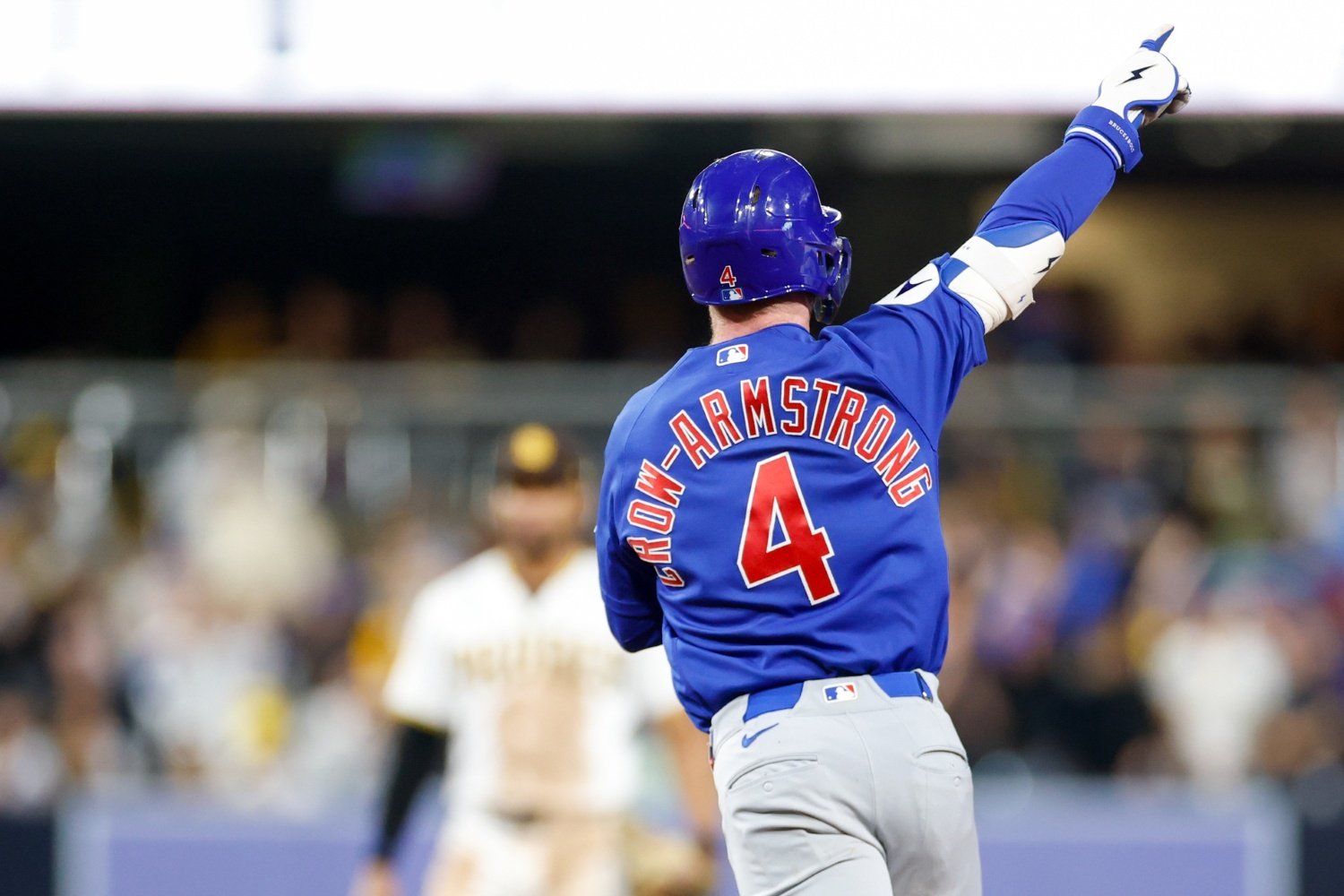 Pete Crow-Armstrong had, arguably, the two biggest at-bats of the night in the Cubs' 8-3 win over the Padres Tuesday. The impact of one was obvious: he slammed a three-run homer that broke open the game in the top of the seventh inning. The other was a subtler achievement, but a vital one in itself—for the team, in that moment; for Crow-Armstrong, individually; and for the team, again, because of just how important Crow-Armstrong is to them. Let's start at the end, for once. In the seventh inning, the Cubs were clinging to a 4-3 lead. 'Clinging' is the cliche word for such a game state, but for the current Cubs, it's no exaggeration. A one-run lead, for this team at this time, is no lead at all—especially in San Diego, where the hosts have made a habit of revealing the Cubs' frailties each time they visit over the past few years. However, with runners on the corners and two outs, Craig Counsell pinch-hit Alex Bregman (who'd had the night off, to that point) and got the payoff he needed: an opposite-field single to double the team's cushion. That also gave Crow-Armstrong a chance to do bigger damage. Wandy Peralta started Crow-Armstrong with a slider below the zone. Crow-Armstrong took it for ball one. That, alone, was noteworthy. Crow-Armstrong is, famously, the league's most swing-happy star, and sometimes its most swing-happy player of any quality. For his career, he's offered at the first pitch over half the time (51.6%); the league averages about 30%. This year, though—to his credit, though not (yet) to his consistent actual benefit—he's swinging a little bit less. On the first pitch, it's down to 48.6%. Overall, it's down from 60% to 58%, which doesn't sound like much. It's not much, in a vacuum. For Crow-Armstrong, though, maybe it could be enough. At any rate, he's making an adjustment, which is important and valuable. The strike zone is smaller. Most players are swinging less. Certainly, the guy who swings more than anyone should be following that particular trend. He is. Anyway (and it might seem like this nullifies some of the above; I think it just reminds us to place it in context), Peralta came back with a changeup below the zone, and this time, Crow-Armstrong obliged him with a chase. That drew the count level at 1-1, and it gave Peralta and Padres catcher Luis Campusano the confidence to try the left-on-left changeup again. Big mistake. The pitch wasn't nearly as well-executed as its older sibling, and Crow-Armstrong punished it. Fool a hitter once, and you can reasonably hope to fool them again with the same trick, the data says. They don't tell you that if you throw a meatball the second time, the success rate of running it back goes through the floor, while the ball tends to go over the wall. That home run was crucial for the Cubs. It took much of the pressure and worry out of the final nine outs of the game. Hoby Milner had come on in the bottom of the sixth (more on that later); he pitched a smooth seventh. Lefty Ryan Rolison closed out the Padres with two strong, scoreless innings. That's the formula for this team to win games right now: blow teams out, so whoever's available in relief that night can pitch with as little pressure as possible. When Cade Horton was lost for the season to elbow surgery in early April, Cubs fans had little with which to console themselves. Horton was one of the joys of last season's run back to the playoffs, but his fragility was always at issue. The team handled him very carefully in the second half, but he still broke and missed the tail end of the regular season, plus the team's brief appearance in the playoffs. Injuries have never been far from the center of the discussion around Horton, and in the wake of this latest major one, his career prospects are somewhat muddied. It's bad, bad news. One of the ways the team hoped to weather the loss of Horton, though, was the impending return of fellow two-time elbow surgery survivor Justin Steele. For a long period from mid-January through the time of Horton's injury, Steele appeared to be ahead of schedule and sailing toward a return to the rotation around Memorial Day. If he could be back around then, the team might just be able to swat away the injury bugs, despite all the bites they were inflicting. Several relievers hit the injured list throughout the first half of the month, making everything harder, but Steele's return would ease some of that trouble, too. Getting him back could push Colin Rea back into a relief role, lightening the burden on the rest of the pen. On Tuesday, the Cubs announced that they've shut down Steele's throwing program, just when a rehab assignment should have been coming into view on the horizon. This isn't some galloping surprise; setbacks are normal for pitchers trying to return from a second elbow reconstruction. Then again, failing to return at all is also normal for pitchers in that situation. It's impossible to know, now, when the team might get Steele back, but it would be foolish to assume he'll pitch for the major-league team any time before the Fourth of July. Meanwhile, the hits keep coming in the bullpen. The team was just beginning to feel they'd found something nice in homegrown lefty Riley Martin, when he had to return to Chicago in the early part of this road trip and was shelved by elbow inflammation. For a long while, this team will have to survive with a patchwork pen, because they won't be back to full strength for some time—if ever. Daniel Palencia's return is on the horizon, and Phil Maton is already back, but Hunter Harvey and Caleb Thielbar are not as close. Nor will it feel safe to say Palencia has dodged a bigger problem until he actually returns and strings together some healthy outings; lat injuries can be very tricky. Thus, the team needs the likes of Corbin Martin (who earned a save Friday against the Dodgers) and Rolison (who got the win in that same game over the weekend and now has six scoreless innings across three appearances) to keep delivering solid outings. We talked about the good reasons for optimism about Martin when he signed a minor-league deal late in the offseason, and about how good Rolison looked early in spring training, but still, these are little-known journeymen. As Maton gets his legs back under him (literally) and Palencia once again shoulders the load (literally) in the ninth inning, the roles of these spare pieces will become less vital, but right now, this is how Counsell has to live. That makes every insurance run count double, for the foreseeable future. It also made the sixth inning Tuesday night an exhilarating, painful sequence. The Cubs took the lead in the top half of the frame, 4-2 (more on that, again, later), and Edward Cabrera got the first two Padres batters of the bottom half with no trouble at all. It looked like Cabrera, who had only thrown 85 pitches and was past the dangerous top four in the San Diego lineup for the third time already, should be able to get them through the sixth, and maybe even start the seventh. Then, Ty France happened. France is not a great overall hitter or a good defender anywhere but first base, but he's beloved by every team he joins. Part of that is his personality, which is jocular and energetic and good for the dugout vibes. Another part, though, is the fact that he's a great clutch hitter. With two outs, the Padres needed a baserunner and a tone change, and France delivered. On a 2-2 count, he fouled off a sinker that was running way in on him. France is an expert at getting hit by pitches, and he probably should have withheld his swing and let that pitch do so, but he'd already committed—and besides, the thing came in at 98 MPH. Cabrera had been trying to end the inning with an exclamation point. Feeling (perhaps rightly) that they now had France set up for a breaking ball away, Cabrera and Carson Kelly chose to go with the big righty's slider on the second 2-2 offering. That pitch takes on some extra importance for Cabrera this season, especially against righties; more on that another time. But he missed with this one, leaving it in the middle of the zone. France scalded a single to left field, extending the inning—and the frustration of that at-bat got into Cabrera's head. He threw three straight non-competitive pitches to Gavin Sheets, the third of which hit him. He got Campusano into a 2-2 count, too, but left a changeup up and in. The Padres catcher expertly scooped a liner into left field to score France, and the inning had officially gotten away from the Cubs. It looked like the game would surely follow. Cabrera, furious with himself, went down the tunnel behind the dugout and slammed his glove after Counsel removed him from the game. Milner came on to clean up the mess, but the Cubs were into their bullpen before they'd wanted to be—and you can see, now, why that's going to be a bigger problem for this team than for most good ones, over the next few months. Now, let's complete our journey backward in time, because I still have one more promise to fulfill. We said we would talk about two Crow-Armstrong at-bats, and all of the above informs the importance of this second (well, first, in that it came before the one we talked about first; third, in that it came after two other at-bats in the game; are you having fun with this game of non-sequential storytelling?) one. If the Cubs are going to win during this stretch in which their pitching is thin, they'll have to get more from Crow-Armstrong than they got from (give or take) the start of last August through the beginning of last week. Crow-Armstrong's offensive struggles got a lot of media attention early this year—probably too much, given that most of his value will always reside in his incredible defensive work, but you can understand why he came under some scrutiny. The Cubs, after all, bet $115 million on him this spring, and he had a long stretch there in which his OPS was well under .600. Although he's hit near the bottom of the order for some time now and isn't the linchpin of the offense, Crow-Armstrong has to give them some offensive value, too, because they're going to have to win some games 8-6, in addition to the ones they win 8-3. They need to score a lot, to make up for the fact that their injury-depleted staff will inevitably give up runs in bunches at times over the coming weeks and months. That means getting something substantial from every player who has a regular job—even their defensive ace. Crow-Armstrong is actually trending the right way, and again, the concerns might have been exaggerated a bit, all along. He's digging himself out of an early hole a bit later than he did last year, but he did have to do it last year, too. He might not be a hitter who can find his swing and hit his stride on Opening Day; he might be one of those who warms with the weather. At any rate, Crow-Armstrong is already coming out of his early funk, and mere competence from him will do. When he delivers in clutch moments, the team will win, because they're built to need just one or two such unexpected contributions to win on a given day. On Tuesday, the first such contribution he made came not with the decisive homer, but in setting up the scoreboard-flipping rally the inning before. Kelly had led off the frame with a single, but Nicky Lopez (in for Dansby Swanson, who was removed with glute tightness) laid down a dreadful would-be sacrifice bunt, allowing the Padres to easily take down the lead runner, instead. That brought up Crow-Armstrong with a runner on first and one out. Padres starter Walker Buehler had abused him earlier in the game, working him into deep counts and then getting hopeless-looking chases with curveballs in the dirt for a pair of strikeouts. It looked like another bad night in the annals of Crow-Armstrong's spring, especially because he now had to face his kryptonite: any left-handed pitcher. Reliever Kyle Hart might have thought his job would be easy. He might just have failed to execute. Whatever the case, though, he didn't get the same obliging chases from Crow-Armstrong. On five pitches, he got just one swing, on a sweeper. The other four missed the zone, and Crow-Armstrong took his hase. That seems like a small moment, in which the pitcher did most of the work. In truth, though, there have been plenty of times over the last several months when pitchers' plans were clearly to keep throwing junk below the zone and let Crow-Armstrong get himself out. This time, he didn't do it, and that's becoming a bit of a pattern. He's walked and gotten a hit in three straight games, and four out of five on this tough West Coast swing. Since April 7, he's batting .257/.337/.392; that's all the Cubs really need from him. His walk in the sixth forced the Padres to go to their third pitcher of the night, David Morgan. With two outs, Nico Hoerner laced a hustle double to right-center, scoring both Lopez and Crow-Armstrong to give the Cubs the lead, 4-2. It was a huge hit by Hoerner, who has been the team's offensive hero all year, but it was made possible by a good at-bat from Crow-Armstrong. The Cubs are trying to prove they're robust enough to withstand all these pitching injuries. They've done so admirably so far. Tuesday night was a great win for them, not just because they needed to snap a sudden three-game losing skein, but because of the way they won. If this team is going to achieve its goals for the year, it needs Crow-Armstrong to string together good at-bats. Not all of them have to be as electrifying as the homer in the seventh, though. The quieter wins matter, too.
 -
Yes we do.
-
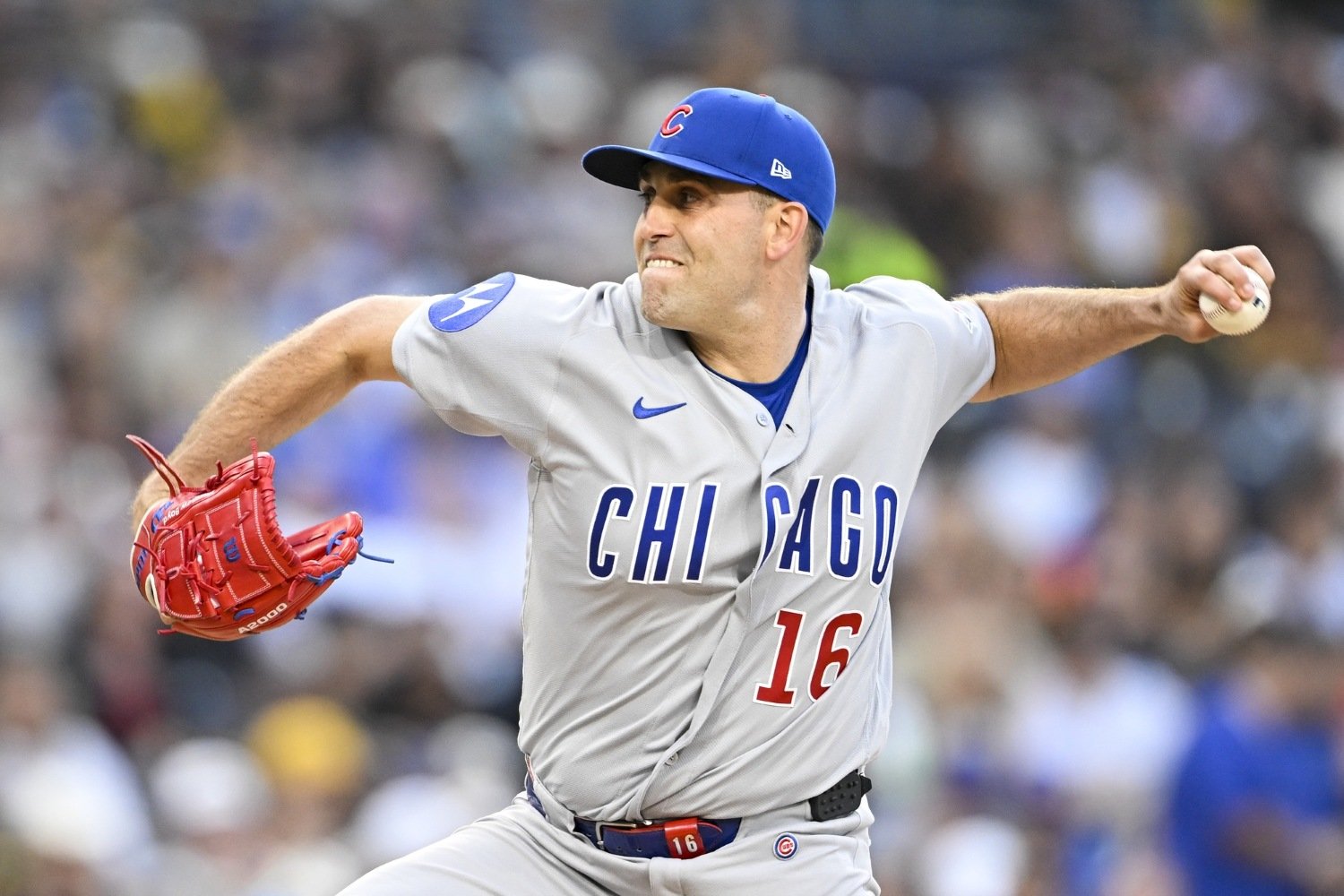 In defense of Matthew Boyd and Moisés Ballesteros, neither was put in a position to succeed on Monday night. Craig Counsell tried to force-fit his young designated hitter into the extremely valuable defensive position he played in the minors, but Ballesteros is a poor receiver—a poor defender behind the plate, in general. He's still young enough to dream on him eventually developing as a catcher, if that's what the team wanted to most, but what the team wants most is to win in 2026, so they have him in the majors, where he can be a key cog in their lineup. Ballesteros is a star-caliber hitter, so the team decided it would be an untenable waste to send him to Triple-A Iowa to start the season. That was a right and reasonable choice, but it came with a cost. Ballesteros isn't a big-league catcher right now, and has no business catching for a team that wants to win games. He doesn't inspire confidence in his pitchers with the way he receives pitches, calls the game, blocks pitches in the dirt or handles the running game. The team is trying to find reps for him behind the plate so that they don't have to entirely let go of the glimmer, but each time they do so, it hurts the team. Pairing Ballesteros with Boyd to form the battery Monday night was especially peculiar. Boyd lives at the edges of the zone and succeeds with contrasts in movement and speed. He's not strictly reliant on piling up called strikes, but he needs opposing batters to be antsy in the box. He needs them to feel defensive about the zone, and he needs them to be off-balance. Putting a rookie who struggles with every aspect of the defensive art of catching made it unlikely that Boyd would have a good night; putting Ballesteros behind the plate made it unlikely that he would have a good one. The trouble began in the bottom of the first. Boyd missed inside with his fourth pitch of the day, to the Padres' Ramón Laureano, and immediately, he tapped the bill of his cap to challenge it. He knew he was wrong almost right away, but you can't take back a challenge once you issue one. Boyd's regret was obvious. He was flustered by an inability to locate the way he wanted to in the first at-bat of the game, and any pitcher is still burning off some pent-up adrenaline for the first handful of pitches in a game. Further frustrated by his folly, Boyd lost Laureano on the next pitch. One batter later, he laid a 1-0 fastball so nicely in the middle of the zone to Jackson Merrill that he was lucky only to surrender an RBI single. He never really settled in. With a chance to escape a major jam having surrendered just that one run, he made a mistake to Ty France (an excellent clutch hitter), and it became a 3-0 game. Ballesteros did what he does best in the top of the third, though, changing the game with one fell stroke. The bases were loaded, and Padres starter Randy Vásquez tried to crowd Ballesteros with his a cutterish slider. He failed, because Ballesteros is a short guy with short levers who stands way off the plate. Come to think of it, trying to attack him there was foolish, anyway. Ballesteros launched a grand slam to right field to thrust the Cubs into the lead. But he was quickly put back into his place, and the Cubs with him. Boyd allowed a double by Manny Machado and a single by Xander Bogaerts with one out in the third. Machado had to hold at third on the Bogaerts hit, so there was hope to avoid giving up a run, but on a 1-1 pitch to Miguel Andujar, Boyd missed with a backdoor curveball. It wasn't that close a miss, just as the pitch in the first hadn't been that close. Because he felt like his pitcher had executed his pitch (and perhaps misjudged his own position when he caught the ball), though, Ballesteros challenged again. The Cubs were thwarted, and that left them out of challenges for the rest of the game. Ballesteros's bad decision—the pitch wasn't high-leverage enough to challenge unless Ballesteros were about 69% confident of an overturn. Given the location of the pitch, it was a coin flip. In trying to bail out his struggling starter, he put the team behind the 8-ball, instead. The Padres would score just once in the third, but in the fifth, they chased Boyd immediately, with a Machado double. Ben Brown came on and collected two quick, harmless outs—and he should have had the third, with the lead intact. Unfortunately, home plate umpire Dan Merzel missed on what should clearly have been strike three to France. It's not Merzel's fault. Brown missed his spot badly, and Ballesteros (too small to reach subtly on a ball like this) made it look like a bad pitch. More importantly, though, the Cubs had questioned him on two previous occasions on which he was right, so they'd lost the right to challenge. That's not on him; it's on Boyd and Ballesteros. Brown, coming in for his share of blame, then walked France on a non-competitive pitch. On a 1-2 count to Nick Castellanos, he lost focus on France, who stole second—a process made much easier by Ballesteros choosing to appeal for a check-swing strike instead of throwing through against one of the slowest players in baseball. (Castellanos didn't go around.) On a two-run Castellanos single, the Padres retook the lead, for good. Along the way, they had one more real chance to flip the script again. In the top of the seventh, Pete Crow-Armstrong drew a leadoff walk. He stole second and advanced on a convoluted fielder's choice, so he carried the tying run at third base with one out. Michael Busch went down on strikes, though, which left it up to Alex Bregman. Here's a visual look at that showdown, between Bregman and Padres reliever Jason Adam. Each of the first two pitches of the showdown were sliders just off the outer edge of the plate. Merzel called the first one a strike. It was pretty clear Bregman knew it wasn't one, but he had no recourse. When Adam repeated his pitch type and location, Bregman had no choice but to swing, but he came up empty. He battled from there, a little, but the Cubs' best chance to level things went by the wayside because they couldn't challenge a call. Ballesteros is a bad framer, but he did well with the ABS system last year at Iowa. Boyd is a savvy veteran who knows better than to challenge a pitch himself, especially in that early situation. Because each slipped just a little bit, though, a game got away from the team Monday night. It was a brutal way to lose a game, not least because Ballesteros being installed behind the plate in the first place seemed to set all the wheels of it in motion. The Cubs got too cute in a game against a good team. They'll have to be smarter, as well as better, to rebound and take the series.
 -
Image courtesy of © Denis Poroy-Imagn Images In defense of Matthew Boyd and Moisés Ballesteros, neither was put in a position to succeed on Monday night. Craig Counsell tried to force-fit his young designated hitter into the extremely valuable defensive position he played in the minors, but Ballesteros is a poor receiver—a poor defender behind the plate, in general. He's still young enough to dream on him eventually developing as a catcher, if that's what the team wanted to most, but what the team wants most is to win in 2026, so they have him in the majors, where he can be a key cog in their lineup. Ballesteros is a star-caliber hitter, so the team decided it would be an untenable waste to send him to Triple-A Iowa to start the season. That was a right and reasonable choice, but it came with a cost. Ballesteros isn't a big-league catcher right now, and has no business catching for a team that wants to win games. He doesn't inspire confidence in his pitchers with the way he receives pitches, calls the game, blocks pitches in the dirt or handles the running game. The team is trying to find reps for him behind the plate so that they don't have to entirely let go of the glimmer, but each time they do so, it hurts the team. Pairing Ballesteros with Boyd to form the battery Monday night was especially peculiar. Boyd lives at the edges of the zone and succeeds with contrasts in movement and speed. He's not strictly reliant on piling up called strikes, but he needs opposing batters to be antsy in the box. He needs them to feel defensive about the zone, and he needs them to be off-balance. Putting a rookie who struggles with every aspect of the defensive art of catching made it unlikely that Boyd would have a good night; putting Ballesteros behind the plate made it unlikely that he would have a good one. The trouble began in the bottom of the first. Boyd missed inside with his fourth pitch of the day, to the Padres' Ramón Laureano, and immediately, he tapped the bill of his cap to challenge it. He knew he was wrong almost right away, but you can't take back a challenge once you issue one. Boyd's regret was obvious. He was flustered by an inability to locate the way he wanted to in the first at-bat of the game, and any pitcher is still burning off some pent-up adrenaline for the first handful of pitches in a game. Further frustrated by his folly, Boyd lost Laureano on the next pitch. One batter later, he laid a 1-0 fastball so nicely in the middle of the zone to Jackson Merrill that he was lucky only to surrender an RBI single. He never really settled in. With a chance to escape a major jam having surrendered just that one run, he made a mistake to Ty France (an excellent clutch hitter), and it became a 3-0 game. Ballesteros did what he does best in the top of the third, though, changing the game with one fell stroke. The bases were loaded, and Padres starter Randy Vásquez tried to crowd Ballesteros with his a cutterish slider. He failed, because Ballesteros is a short guy with short levers who stands way off the plate. Come to think of it, trying to attack him there was foolish, anyway. Ballesteros launched a grand slam to right field to thrust the Cubs into the lead. But he was quickly put back into his place, and the Cubs with him. Boyd allowed a double by Manny Machado and a single by Xander Bogaerts with one out in the third. Machado had to hold at third on the Bogaerts hit, so there was hope to avoid giving up a run, but on a 1-1 pitch to Miguel Andujar, Boyd missed with a backdoor curveball. It wasn't that close a miss, just as the pitch in the first hadn't been that close. Because he felt like his pitcher had executed his pitch (and perhaps misjudged his own position when he caught the ball), though, Ballesteros challenged again. The Cubs were thwarted, and that left them out of challenges for the rest of the game. Ballesteros's bad decision—the pitch wasn't high-leverage enough to challenge unless Ballesteros were about 69% confident of an overturn. Given the location of the pitch, it was a coin flip. In trying to bail out his struggling starter, he put the team behind the 8-ball, instead. The Padres would score just once in the third, but in the fifth, they chased Boyd immediately, with a Machado double. Ben Brown came on and collected two quick, harmless outs—and he should have had the third, with the lead intact. Unfortunately, home plate umpire Dan Merzel missed on what should clearly have been strike three to France. It's not Merzel's fault. Brown missed his spot badly, and Ballesteros (too small to reach subtly on a ball like this) made it look like a bad pitch. More importantly, though, the Cubs had questioned him on two previous occasions on which he was right, so they'd lost the right to challenge. That's not on him; it's on Boyd and Ballesteros. Brown, coming in for his share of blame, then walked France on a non-competitive pitch. On a 1-2 count to Nick Castellanos, he lost focus on France, who stole second—a process made much easier by Ballesteros choosing to appeal for a check-swing strike instead of throwing through against one of the slowest players in baseball. (Castellanos didn't go around.) On a two-run Castellanos single, the Padres retook the lead, for good. Along the way, they had one more real chance to flip the script again. In the top of the seventh, Pete Crow-Armstrong drew a leadoff walk. He stole second and advanced on a convoluted fielder's choice, so he carried the tying run at third base with one out. Michael Busch went down on strikes, though, which left it up to Alex Bregman. Here's a visual look at that showdown, between Bregman and Padres reliever Jason Adam. Each of the first two pitches of the showdown were sliders just off the outer edge of the plate. Merzel called the first one a strike. It was pretty clear Bregman knew it wasn't one, but he had no recourse. When Adam repeated his pitch type and location, Bregman had no choice but to swing, but he came up empty. He battled from there, a little, but the Cubs' best chance to level things went by the wayside because they couldn't challenge a call. Ballesteros is a bad framer, but he did well with the ABS system last year at Iowa. Boyd is a savvy veteran who knows better than to challenge a pitch himself, especially in that early situation. Because each slipped just a little bit, though, a game got away from the team Monday night. It was a brutal way to lose a game, not least because Ballesteros being installed behind the plate in the first place seemed to set all the wheels of it in motion. The Cubs got too cute in a game against a good team. They'll have to be smarter, as well as better, to rebound and take the series. View full article
-
Image courtesy of © Patrick Gorski-Imagn Images By mid-May 2024, the Cubs were in trouble. They'd built their bullpen plans around three right-handed pitchers: flamethrower Julian Merryweather, coming off a 2023 season in which he'd gone from an unnoticed waiver claim to a relief ace; analytics darling Yency Almonte, part of the Michael Busch trade; and Héctor Neris, a free-agent reclamation project whom the team hoped would rediscover the swing-and-miss that made him a dominant closer in Houston. Within a month and a half, Merryweather and Almonte were sidelined by injuries from which they still haven't really recovered, and Neris was clearly a failed experiment. In desperation, Jed Hoyer scooped up former Cubs farmhand Tyson Miller, who was on the outside looking in for the Mariners at the time. Miller's funky delivery and command of a terrific cutting fastball/sweeper combination turned out to be more than enough to offset his lack of velocity, though, and he became one part of a rebuilt Chicago bullpen. Miller pitched 50 1/3 innings in 49 appearances for Chicago that year, with a 22.5% strikeout rate, a 5.3% walk rate, and a 2.15 ERA. Along with fellow scrapheap find Jorge López and developmental breakthrough Porter Hodge, Miller saved that bullpen—though it wasn't quite enough to save the season. Last spring, the crisis arrived even sooner. Ryan Pressly was a flop, just as Neris had been. It was Hodge's turn to get hurt and never be the same. Ryan Brasier and Eli Morgan, too, had been waylaid by arm trouble. The team had rousing successes in Caleb Thielbar and Brad Keller, but they were short on healthy arms and pitchers who could absorb innings to keep Craig Counsell from having to overuse his best relievers. Hoyer found salvation in Seattle again, this time purchasing the rights to Drew Pomeranz. The two-pitch southpaw pitched 57 times for Counsell, with a 2.17 ERA and similarly solid strikeout and walk numbers. He gave the team time to find the hierarchy that worked for them the rest of the year, headlined by Keller, emerging homegrown star Daniel Palencia, and trade deadline acquisition Andrew Kittredge—along with Pomeranz and Thielbar. Those are just a few examples of Hoyer finding improbable ways to assemble viable bullpens on the fly. Mark Leiter Jr., Rowan Wick and Scott Effross also number among his success stories. On the other hand, it can be too easy to forget all the acquisitions who didn't hurt the team as glaringly or cost as much to sign as Pressly, Neris, Almonte or Morgan, but who also didn't yield what the front office hoped for—guys like Nate Pearson, Michael Fulmer, and José Cuas. In some important degree, the Cubs' bullpen magic has been the product of good luck and/or good timing. Even having gotten it broadly right over the last three years doesn't guarantee that the team will do so again. That's a scary notion, because lo, they already need to do it again. Palencia, Hunter Harvey, and Phil Maton have already hit the injured list, along with lower-upside options Ethan Roberts and Hodge. Injuries to the starting rotation have drawn Colin Rea and Javier Assad into that duty and away from the pen, though Wednesday's return of Matthew Boyd put Assad in the pen again for now. On Thursday, the team might have suffered another loss, as Thielbar left in the ninth inning of the team's game against the Phillies with a hamstring problem. The relief pitching scaffolds Hoyer built this winter have already crumbled. He'll have to go out and find an arm outside the organization, and the sooner, the better. However, his track record only goes a short way in providing real confidence about the outcome of that addition. The Cubs need relief help, right away, but the odds of them nailing yet another such move feel lousy, The good news, of course, is that Ben Brown is settling into his new role gorgeously. Having failed in an extended audition as a starter last season and not having earned even a top-7 spot on the rotation depth chart this spring, Brown is now a reliever in full. He's taking to it marvelously. Brown's fastball is up a tick, sitting just under 97 MPH. His curveball, meanwhile, is as firm as ever, but with slightly more depth. After two years of trying to get the changeup right, he's leaning more into the two-seamer this season, creating the lane change he's long needed to keep right-handed batters off the two main pitches in his arsenal. As a result, he's running numbers similar to what Pomeranz and Miller gave the Cubs over the last two seasons, but in more volume. If the team stops needing him to give them multiple innings within games, there might even be another gear, but this version of him is already a viable stand-in for Palencia and Maton. With some luck, the team will get at least one of their top right-handed relievers back soon, and keep them healthy the rest of the way. To survive their current barrage of injuries, though, they need outside help, and that means that risk lies ahead. They've done some things right already. There are encouraging signs about the usefulness of homegrown lefty Riley Martin and minor-league signing Corbin Martin, each of whom are (for the moment) healthy. Brown is what they need him to be. With so many pitchers already hurt, though, what they have so far is necessary but not sufficient. View full article
-
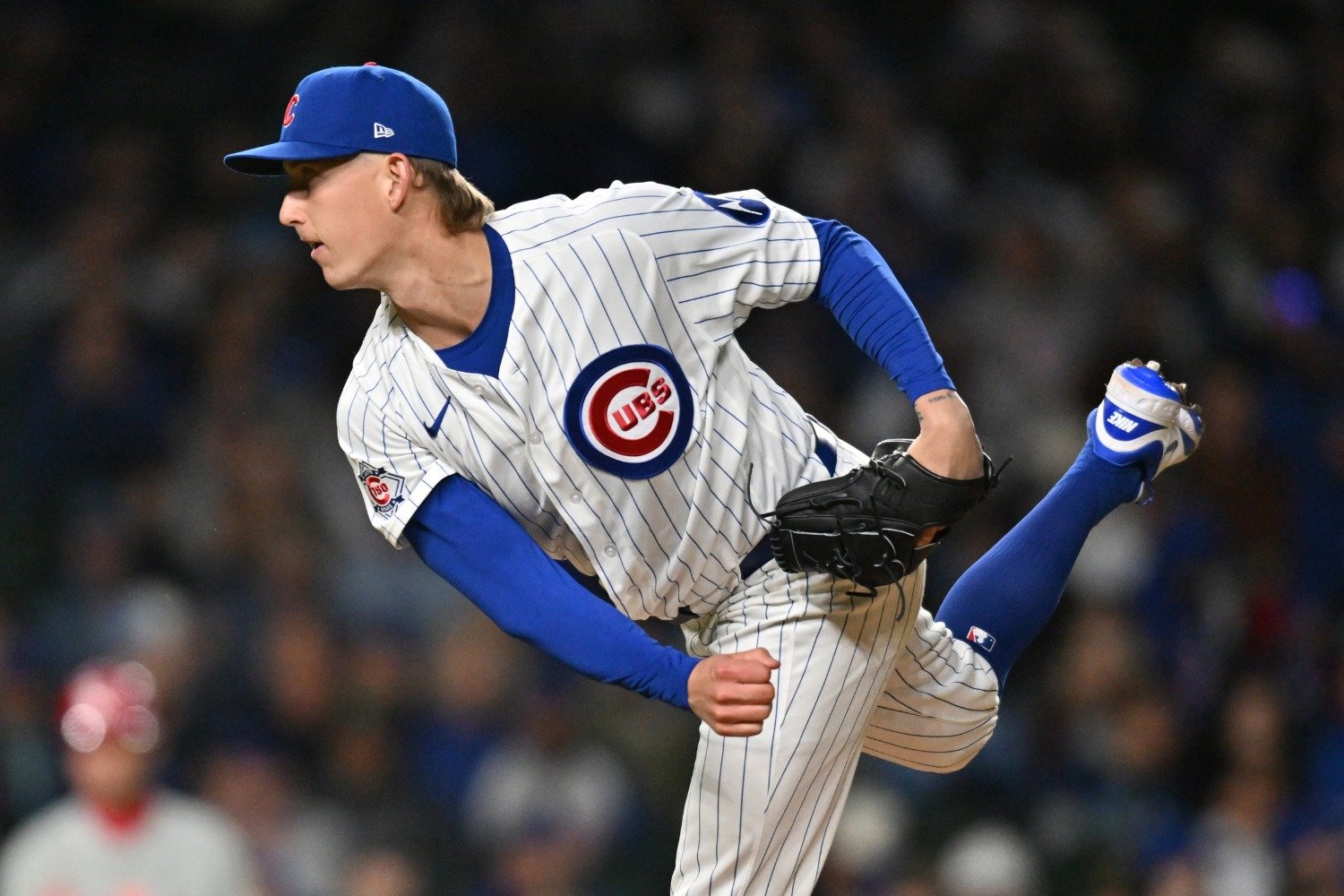 By mid-May 2024, the Cubs were in trouble. They'd built their bullpen plans around three right-handed pitchers: flamethrower Julian Merryweather, coming off a 2023 season in which he'd gone from an unnoticed waiver claim to a relief ace; analytics darling Yency Almonte, part of the Michael Busch trade; and Héctor Neris, a free-agent reclamation project whom the team hoped would rediscover the swing-and-miss that made him a dominant closer in Houston. Within a month and a half, Merryweather and Almonte were sidelined by injuries from which they still haven't really recovered, and Neris was clearly a failed experiment. In desperation, Jed Hoyer scooped up former Cubs farmhand Tyson Miller, who was on the outside looking in for the Mariners at the time. Miller's funky delivery and command of a terrific cutting fastball/sweeper combination turned out to be more than enough to offset his lack of velocity, though, and he became one part of a rebuilt Chicago bullpen. Miller pitched 50 1/3 innings in 49 appearances for Chicago that year, with a 22.5% strikeout rate, a 5.3% walk rate, and a 2.15 ERA. Along with fellow scrapheap find Jorge López and developmental breakthrough Porter Hodge, Miller saved that bullpen—though it wasn't quite enough to save the season. Last spring, the crisis arrived even sooner. Ryan Pressly was a flop, just as Neris had been. It was Hodge's turn to get hurt and never be the same. Ryan Brasier and Eli Morgan, too, had been waylaid by arm trouble. The team had rousing successes in Caleb Thielbar and Brad Keller, but they were short on healthy arms and pitchers who could absorb innings to keep Craig Counsell from having to overuse his best relievers. Hoyer found salvation in Seattle again, this time purchasing the rights to Drew Pomeranz. The two-pitch southpaw pitched 57 times for Counsell, with a 2.17 ERA and similarly solid strikeout and walk numbers. He gave the team time to find the hierarchy that worked for them the rest of the year, headlined by Keller, emerging homegrown star Daniel Palencia, and trade deadline acquisition Andrew Kittredge—along with Pomeranz and Thielbar. Those are just a few examples of Hoyer finding improbable ways to assemble viable bullpens on the fly. Mark Leiter Jr., Rowan Wick and Scott Effross also number among his success stories. On the other hand, it can be too easy to forget all the acquisitions who didn't hurt the team as glaringly or cost as much to sign as Pressly, Neris, Almonte or Morgan, but who also didn't yield what the front office hoped for—guys like Nate Pearson, Michael Fulmer, and José Cuas. In some important degree, the Cubs' bullpen magic has been the product of good luck and/or good timing. Even having gotten it broadly right over the last three years doesn't guarantee that the team will do so again. That's a scary notion, because lo, they already need to do it again. Palencia, Hunter Harvey, and Phil Maton have already hit the injured list, along with lower-upside options Ethan Roberts and Hodge. Injuries to the starting rotation have drawn Colin Rea and Javier Assad into that duty and away from the pen, though Wednesday's return of Matthew Boyd put Assad in the pen again for now. On Thursday, the team might have suffered another loss, as Thielbar left in the ninth inning of the team's game against the Phillies with a hamstring problem. The relief pitching scaffolds Hoyer built this winter have already crumbled. He'll have to go out and find an arm outside the organization, and the sooner, the better. However, his track record only goes a short way in providing real confidence about the outcome of that addition. The Cubs need relief help, right away, but the odds of them nailing yet another such move feel lousy, The good news, of course, is that Ben Brown is settling into his new role gorgeously. Having failed in an extended audition as a starter last season and not having earned even a top-7 spot on the rotation depth chart this spring, Brown is now a reliever in full. He's taking to it marvelously. Brown's fastball is up a tick, sitting just under 97 MPH. His curveball, meanwhile, is as firm as ever, but with slightly more depth. After two years of trying to get the changeup right, he's leaning more into the two-seamer this season, creating the lane change he's long needed to keep right-handed batters off the two main pitches in his arsenal. As a result, he's running numbers similar to what Pomeranz and Miller gave the Cubs over the last two seasons, but in more volume. If the team stops needing him to give them multiple innings within games, there might even be another gear, but this version of him is already a viable stand-in for Palencia and Maton. With some luck, the team will get at least one of their top right-handed relievers back soon, and keep them healthy the rest of the way. To survive their current barrage of injuries, though, they need outside help, and that means that risk lies ahead. They've done some things right already. There are encouraging signs about the usefulness of homegrown lefty Riley Martin and minor-league signing Corbin Martin, each of whom are (for the moment) healthy. Brown is what they need him to be. With so many pitchers already hurt, though, what they have so far is necessary but not sufficient.
 -
Just that he doesn't think in numerical terms about it all. He's plenty smart enough to, and he accepts that kind of feedback, but he isn't consciously going, "The new rules make the zone smaller. I'm going to swing less often, because that's the best way to take advantage of this change." It's more like, he has his zone organized, spatially, and when he does lay off that high pitch and it's not called a strike, he's both getting reinforcement of his swing decisions and moving further ahead in the count, forcing pitchers to come into the meat of the zone, where he can do the real damage. It's a little more physical and a little less statistical than the way I presented it.
-
Image courtesy of © Matt Marton-Imagn Images Have you seen the new Peacock show "The Miniature Wife"? Yeah, me neither. It's baseball season. The NBA playoffs are here. My nephew played the lead in his high school's production of Anastasia last weekend, and I have a new niece and a new nephew to fawn over, and I really should clean out the garden beds now that it's finally warming up. And did I mention that it's baseball season? There's a lot going on! I feel a little (no pun intended) (ok, pun intended, don't pretend you didn't see that one coming) like I've seen the show, though, because I've been watching so much of this season's baseball. Elizabeth Banks plays a shrunken person in the show, but if she were a strike zone instead of a wife, the show would be exactly like an MLB game in 2026. I assume so, at least. You know what? Actually, I don't know enough about the show to make any further meaningful assumptions. Let's all agree to binge "The Miniature Wife" together in November. Until then, it's time to focus on The Miniature Strike Zone. This season brought the implementation of the ABS challenge system, and with it has come a smaller strike zone. The change actually began in 2025, when the league informed umpires they would be evaluated based on a smaller margin for error in advance of the onset of the computerized zone. Tightening tolerances at the edges and corners created a slightly smaller zone. This year, with the zone still called by humans but now actually, tangibly reinforced by computers, the effect has run in the same direction, but even more markedly. For several years, now, the league has trended toward filling up the strike zone more. Fastballs are harder and livelier than ever; pitchers have better command of their non-fastballs than ever; and fielders are better-positioned than ever. You have to pitch more carefully, because hitters are also more powerful and more focused on hitting for power than ever, but on balance, the league has found the incentives favor throwing more pitches in the zone, so that's what they've been doing. This year, that trend has been stopped cold. It's not that the league has stopped trying to fill up the zone, though. It's that the zone itself has gotten smaller. Hitters have noticed, too. The league's average swing rate is down. Twice as many batters have substantially reduced their swing rate so far this year (at least two percentage points lower than last year, with a qualifying number of plate appearances in each campaign) as have substantially increased it. Dansby Swanson isn't just participating in that trend; he's one of the foremost drivers of it. In fact, only two batters (Ceddanne Rafaela and Royce Lewis) have lowered their swing rates more than Swanson has in 2026. Last year, he swung at 50.3% of the pitches he saw. This spring, that number is down to 38.6%. He's being radically patient, in response to the shrinking of a zone he already understood well, but couldn't always cover. Though umpires aren't perfect (and neither batters nor catchers challenge often enough to make them so by correcting their mistakes), theoretically, the top of Swanson's strike zone now is about 38.52 inches above the ground. (I say "about", here, not because two places after the decimal is too few to have the precision right, but because we only have Swanson's reported height of 6 feet to work with; the league has his height down to the millimeter.) The bottom of his zone is now roughly 19.44 inches above the ground. The first thing you should notice is that that's only 19 inches from high to low. Traditionally, we've thought about the strike zone as being taller than that, even for batters around Swanson's height. When you picture the zone in your head, you probably think of a rectangle taller than it is wide, by a noticeable margin. Well, it's now more like a square. Because any pitch that touches even the edge of the zone is called a strike if challenged, we can say that Swanson's zone is now basically 22.8 inches (the 17-inch width of home plate, plus the diameter of a baseball on each side) by 24.9 inches (19.1 inches, or a hair less, plus the same ball's width high and low). That's a lot like a square. It leaves Swanson needing to cover as much as he always has from east to west, but less from north to south. He's taking full advantage of that, too. I looked at pitches in each of the zones about two balls' width wide along the top and bottom of Swanson's newly concretized zone, and at the pitches in between those railings. Swanson is swinging less in each of the three locales, but especially down at the bottom of the zone—and he's benefiting from the new shape of his zone, especially at the top. 2025 Pitch Height Swing Rate Swings RV/100 Take Rate Takes RV/100 1.4-1.9 ft. 48.0 -5.8 52.0 1.2 1.9-3.4 ft. 64.1 -1.3 35.9 -0.2 3.4-3.9 ft. 63.8 -1.7 36.2 0.0 2026 Pitch Height Swing Rate Swings RV/100 Take Rate Takes RV/100 1.4-1.9 ft. 25.7 0.0 74.3 1.0 1.9-3.4 ft. 54.1 -2.2 45.9 1.1 3.4-3.9 ft. 50.0 -13.6 50.0 2.6 At his best, Swanson is a guy who wants to see the ball up and attack it there. He has a relatively steep swing for a high-ball hitter, with plenty of tilt in his bat path and a combination of contact point and attack angle that says he's always trying to launch the ball. He's a low-average, high-power hitter. However, he often gets himself in trouble because (in the process of trying to see the ball up) he chases too many pitches above the zone. His zone now stops much lower than it used to, which makes it easier for him to be more selective up there, even as he maintains the aggressive mindset of seeing it up to make the high-value contact he seeks. Setting the pitches at which he didn't swing along the top of his new zone side-by-side really shows how the altered zone is making his life easier. He's gotten a handful of calls, already, on pitches up and in that would have been—were—strikes last year. That takes a lot of pressure off him, as he looks for that belt-high pitch he can belt. Along the bottom rail of the zone, it's harder to see the clear benefit in terms of extra calls, but Swanson can afford to let a few more called strikes accumulate there than he used to be able to. Not having to sweat the top of the zone makes the bottom edge of the zone less important. He's ahead in counts more often. He can be more selective, then aggressive on the pitches that enter his happy zone. I've talked to Dansby Swanson a couple of times. Based on those conversations, I don't think this is quite how he's thinking about the changes to his approach this season. Whether you conceptualize it this way or not, though, this is what's happening. Swanson doesn't have exceptionally good feel for the barrel, like teammates Nico Hoerner and Alex Bregman do. He's still going to swing and miss quite a bit, and he's never likely to run a very high BABIP. Some younger versions of him could do that, but this one can't. Instead, Swanson's upside at the plate lies in his ability to hit the ball over the wall, without losing contact with all of his other skills. He has a well-engineered power hitter's swing, even though he's a fairly fast, glove-first shortstop and has never had elite bat speed. With this change in the league's rules and the shape of the strike zone, the best version of Swanson can emerge. It's just not the version you might have thought would be the best form of him. Right now, Swanson is batting .187/.337/.400. He probably won't finish the season with such an extreme-looking line, but yes: Dansby Swanson really is a little bit like Rob Deer and Carlos Peña. Those guys swung for the fences, and they knew they would strike out a lot. By also walking a lot, though, they kept themselves viable even when the ball wasn't clearing the fences. When it did, they became star-caliber sluggers. A smaller zone means Swanson can focus that unique swing on pitches in a smaller space, and he's been very smart about doing so. If he continues to, he can still produce the 25-homer power that first made him a star in Atlanta, and he can walk enough to be a plus OBP guy, too. It might come with an ugly batting average, because the called strikes and the whiffs will add up to a rising strikeout rate, but that might be the best version of this late-career Swanson. I'm not sure we want ABS to turn many players into peak Rob Deer. It might be a sign of something troubling, just as "The Miniature Wife" leaves me with an inarticulable unease. There might need to be tweaks to this new, robot-influenced zone. For now, though, it's allowed Swanson to draw 18 walks and hit 5 homers in just 23 games. Well-utilized by a savvy veteran, the system is turning out to be a boon to the patient power hitter. View full article
-
It Turns Out ABS is a Machine That Turns Dansby Swansons into Rob Deers
Matthew Trueblood posted an article in Cubs
 Have you seen the new Peacock show "The Miniature Wife"? Yeah, me neither. It's baseball season. The NBA playoffs are here. My nephew played the lead in his high school's production of Anastasia last weekend, and I have a new niece and a new nephew to fawn over, and I really should clean out the garden beds now that it's finally warming up. And did I mention that it's baseball season? There's a lot going on! I feel a little (no pun intended) (ok, pun intended, don't pretend you didn't see that one coming) like I've seen the show, though, because I've been watching so much of this season's baseball. Elizabeth Banks plays a shrunken person in the show, but if she were a strike zone instead of a wife, the show would be exactly like an MLB game in 2026. I assume so, at least. You know what? Actually, I don't know enough about the show to make any further meaningful assumptions. Let's all agree to binge "The Miniature Wife" together in November. Until then, it's time to focus on The Miniature Strike Zone. This season brought the implementation of the ABS challenge system, and with it has come a smaller strike zone. The change actually began in 2025, when the league informed umpires they would be evaluated based on a smaller margin for error in advance of the onset of the computerized zone. Tightening tolerances at the edges and corners created a slightly smaller zone. This year, with the zone still called by humans but now actually, tangibly reinforced by computers, the effect has run in the same direction, but even more markedly. For several years, now, the league has trended toward filling up the strike zone more. Fastballs are harder and livelier than ever; pitchers have better command of their non-fastballs than ever; and fielders are better-positioned than ever. You have to pitch more carefully, because hitters are also more powerful and more focused on hitting for power than ever, but on balance, the league has found the incentives favor throwing more pitches in the zone, so that's what they've been doing. This year, that trend has been stopped cold. It's not that the league has stopped trying to fill up the zone, though. It's that the zone itself has gotten smaller. Hitters have noticed, too. The league's average swing rate is down. Twice as many batters have substantially reduced their swing rate so far this year (at least two percentage points lower than last year, with a qualifying number of plate appearances in each campaign) as have substantially increased it. Dansby Swanson isn't just participating in that trend; he's one of the foremost drivers of it. In fact, only two batters (Ceddanne Rafaela and Royce Lewis) have lowered their swing rates more than Swanson has in 2026. Last year, he swung at 50.3% of the pitches he saw. This spring, that number is down to 38.6%. He's being radically patient, in response to the shrinking of a zone he already understood well, but couldn't always cover. Though umpires aren't perfect (and neither batters nor catchers challenge often enough to make them so by correcting their mistakes), theoretically, the top of Swanson's strike zone now is about 38.52 inches above the ground. (I say "about", here, not because two places after the decimal is too few to have the precision right, but because we only have Swanson's reported height of 6 feet to work with; the league has his height down to the millimeter.) The bottom of his zone is now roughly 19.44 inches above the ground. The first thing you should notice is that that's only 19 inches from high to low. Traditionally, we've thought about the strike zone as being taller than that, even for batters around Swanson's height. When you picture the zone in your head, you probably think of a rectangle taller than it is wide, by a noticeable margin. Well, it's now more like a square. Because any pitch that touches even the edge of the zone is called a strike if challenged, we can say that Swanson's zone is now basically 22.8 inches (the 17-inch width of home plate, plus the diameter of a baseball on each side) by 24.9 inches (19.1 inches, or a hair less, plus the same ball's width high and low). That's a lot like a square. It leaves Swanson needing to cover as much as he always has from east to west, but less from north to south. He's taking full advantage of that, too. I looked at pitches in each of the zones about two balls' width wide along the top and bottom of Swanson's newly concretized zone, and at the pitches in between those railings. Swanson is swinging less in each of the three locales, but especially down at the bottom of the zone—and he's benefiting from the new shape of his zone, especially at the top. 2025 Pitch Height Swing Rate Swings RV/100 Take Rate Takes RV/100 1.4-1.9 ft. 48.0 -5.8 52.0 1.2 1.9-3.4 ft. 64.1 -1.3 35.9 -0.2 3.4-3.9 ft. 63.8 -1.7 36.2 0.0 2026 Pitch Height Swing Rate Swings RV/100 Take Rate Takes RV/100 1.4-1.9 ft. 25.7 0.0 74.3 1.0 1.9-3.4 ft. 54.1 -2.2 45.9 1.1 3.4-3.9 ft. 50.0 -13.6 50.0 2.6 At his best, Swanson is a guy who wants to see the ball up and attack it there. He has a relatively steep swing for a high-ball hitter, with plenty of tilt in his bat path and a combination of contact point and attack angle that says he's always trying to launch the ball. He's a low-average, high-power hitter. However, he often gets himself in trouble because (in the process of trying to see the ball up) he chases too many pitches above the zone. His zone now stops much lower than it used to, which makes it easier for him to be more selective up there, even as he maintains the aggressive mindset of seeing it up to make the high-value contact he seeks. Setting the pitches at which he didn't swing along the top of his new zone side-by-side really shows how the altered zone is making his life easier. He's gotten a handful of calls, already, on pitches up and in that would have been—were—strikes last year. That takes a lot of pressure off him, as he looks for that belt-high pitch he can belt. Along the bottom rail of the zone, it's harder to see the clear benefit in terms of extra calls, but Swanson can afford to let a few more called strikes accumulate there than he used to be able to. Not having to sweat the top of the zone makes the bottom edge of the zone less important. He's ahead in counts more often. He can be more selective, then aggressive on the pitches that enter his happy zone. I've talked to Dansby Swanson a couple of times. Based on those conversations, I don't think this is quite how he's thinking about the changes to his approach this season. Whether you conceptualize it this way or not, though, this is what's happening. Swanson doesn't have exceptionally good feel for the barrel, like teammates Nico Hoerner and Alex Bregman do. He's still going to swing and miss quite a bit, and he's never likely to run a very high BABIP. Some younger versions of him could do that, but this one can't. Instead, Swanson's upside at the plate lies in his ability to hit the ball over the wall, without losing contact with all of his other skills. He has a well-engineered power hitter's swing, even though he's a fairly fast, glove-first shortstop and has never had elite bat speed. With this change in the league's rules and the shape of the strike zone, the best version of Swanson can emerge. It's just not the version you might have thought would be the best form of him. Right now, Swanson is batting .187/.337/.400. He probably won't finish the season with such an extreme-looking line, but yes: Dansby Swanson really is a little bit like Rob Deer and Carlos Peña. Those guys swung for the fences, and they knew they would strike out a lot. By also walking a lot, though, they kept themselves viable even when the ball wasn't clearing the fences. When it did, they became star-caliber sluggers. A smaller zone means Swanson can focus that unique swing on pitches in a smaller space, and he's been very smart about doing so. If he continues to, he can still produce the 25-homer power that first made him a star in Atlanta, and he can walk enough to be a plus OBP guy, too. It might come with an ugly batting average, because the called strikes and the whiffs will add up to a rising strikeout rate, but that might be the best version of this late-career Swanson. I'm not sure we want ABS to turn many players into peak Rob Deer. It might be a sign of something troubling, just as "The Miniature Wife" leaves me with an inarticulable unease. There might need to be tweaks to this new, robot-influenced zone. For now, though, it's allowed Swanson to draw 18 walks and hit 5 homers in just 23 games. Well-utilized by a savvy veteran, the system is turning out to be a boon to the patient power hitter.
 -
Nico Hoerner and the Power of the Pulled Line-Drive Approach
Matthew Trueblood posted an article in Cubs
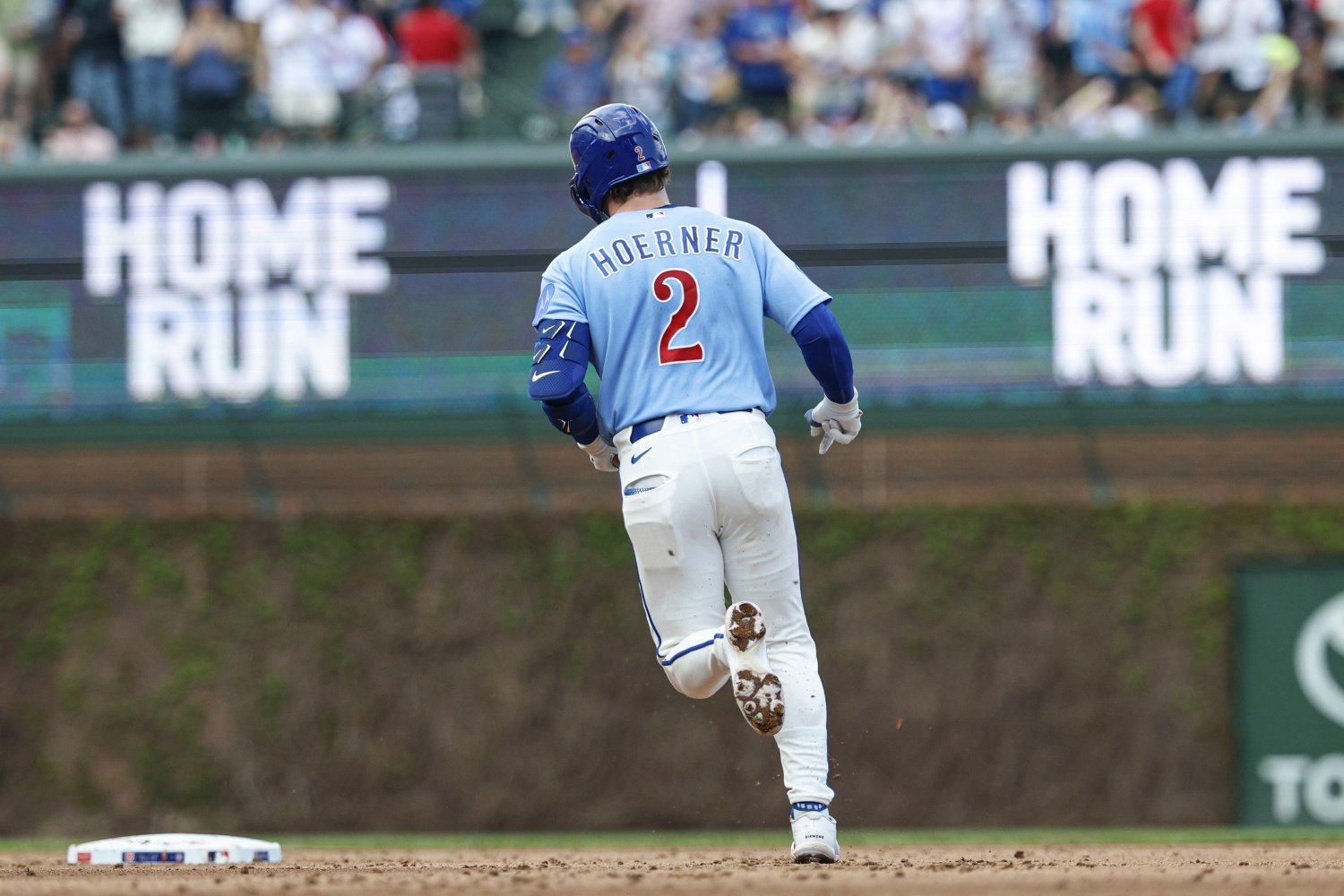 If you want to play with some selective endpoints, you can end up pretty deeply impressed by Nico Hoerner these days. He blasted his fourth home run of the season in the Cubs' seventh straight win on Tuesday night, and since last August 24—I did warn you the endpoints would be selective—he's batting .327/.384/.505 in 245 regular-season plate appearances. Kick in a tremendous postseason showing, you're up to .339/.388/.510 in 278 trips to the dish. He has 26 extra-base hits in that span. He's hit 8 homers. The topic of Hoerner's power potential has been an almost constant point of discussion over the last few years. I wrote about the very low apparent ceiling for it in May 2024, based on his inability to reach high-end exit velocities and the way defenses have evolved to cut off balls better as they head for the gaps. I also wrote about the way Hoerner's hands work (relative to one another and to the bat) in the context of his bat control and contact skills in early 2023, which included a discussion of how that style of swing consciously trades power for contact and opposite-field value. By last September, however, it was clear Hoerner had made some adjustments. He'd locked into a new approach that, without sacrificing the ability to go the other way or to make good swing decisions and draw the occasional walk, produced many more line drives to left field. It boosted his batting average more than his isolated power, but once you're pulling the ball in the air a bit more, power increases almost on its own. Back at the beginning of spring training, Randy Holt wrote about the questions posed by Hoerner's late-season power surge, and tried to assess the likelihood that it would carry over. About a week into the season, I followed up with a partial answer, based on some changes Hoerner brought into this campaign: a slightly wider stance and a shorter stride, giving him more early stability and the capacity to hit the ball hard down the lines, rather than toward center field. Now, it's time to synthesize all that into a firm answer to an increasingly pressing question: Is Hoerner a full-fledged power hitter now? He is, and he isn't. Oh, man. That's not the satisfying answer we all wanted, is it? Ok, let me try again. Yes, Hoerner has found the best way to unlock power in his game. Those adjustments we saw last year did quite a bit of the work; his stance adjustments this spring have completed the job. Here's a side-by-side comparison of the batted balls over 88 MPH in exit velocity Hoerner produced from the start of last season through August 15, and the ones hit at least that hard that he's produced since, by launch angle. To spot the differences, note that he's not hitting balls hard into the ground or popping them up. Next, note the right edge of the curve described by the chart. He's hitting it slightly harder, at the high end, and he's clustering his hard contact in a productive launch-angle band. Now, here's his spray chart heatmap for those same batted balls, with the same dividing dateline. Fewer of these well-hit balls are going to right field. More are going deeper into left, left-center, and center. That larger, brighter blob blooming in shallower left field on the right is the surest sign of his overall progress; those are the balls his approach is now focused on generating. He'll always be better at producing hard-hit singles to left field than at slugging; it's what he does best. His bat speed is below-average, and that's not going to change. He's not going to hit 30 home runs; he very well might never even hit 20. A couple years ago, though, it looked like Horner was destined to hit anywhere from .280 to .310 and slug anywhere from .350 to .390. Now, I think, you can safely bump the latter number up to .420, and maybe even .450. He's gotten a bit of good fortune over these 280ish plate appearances; he's hit a couple of wall-scrapers that just barely carried out of the park. However, Hoerner's power surge is real. Why? Because he's dedicated himself to the pulled line drive. Lock in on that outcome, and the rest of what's needed falls into place. Most line-drive hitters like to hit it right back where it came from, and that's what Hoerner used to do, too. The guys with low bat speed who still hit for good power (including recent ex-Cubs Cody Bellinger and Isaac Paredes) aren't line-drive guys; they focus on pulling fly balls. The pulled line drive is not a popular approach, because it takes a special kind of hitter—and a particular set of constraints eliminating the chances of being other ones—to execute it. Hoerner is that special a hitter, though, and as he's embraced that, he's become more dangerous, in multiple facets. He's hit four home runs this year. Could he hit 10 or 12 more, before the year is out, without trading in the other things he's doing well? At long last, that answer is "yes". It might not make him a full-fledged MVP candidate, but this power boost does make Hoerner a legitimate All-Star, and it's already making the contract extension he and the team signed feel like a huge win for the Cubs.
 -
Image courtesy of © Kamil Krzaczynski-Imagn Images If you want to play with some selective endpoints, you can end up pretty deeply impressed by Nico Hoerner these days. He blasted his fourth home run of the season in the Cubs' seventh straight win on Tuesday night, and since last August 24—I did warn you the endpoints would be selective—he's batting .327/.384/.505 in 245 regular-season plate appearances. Kick in a tremendous postseason showing, you're up to .339/.388/.510 in 278 trips to the dish. He has 26 extra-base hits in that span. He's hit 8 homers. The topic of Hoerner's power potential has been an almost constant point of discussion over the last few years. I wrote about the very low apparent ceiling for it in May 2024, based on his inability to reach high-end exit velocities and the way defenses have evolved to cut off balls better as they head for the gaps. I also wrote about the way Hoerner's hands work (relative to one another and to the bat) in the context of his bat control and contact skills in early 2023, which included a discussion of how that style of swing consciously trades power for contact and opposite-field value. By last September, however, it was clear Hoerner had made some adjustments. He'd locked into a new approach that, without sacrificing the ability to go the other way or to make good swing decisions and draw the occasional walk, produced many more line drives to left field. It boosted his batting average more than his isolated power, but once you're pulling the ball in the air a bit more, power increases almost on its own. Back at the beginning of spring training, Randy Holt wrote about the questions posed by Hoerner's late-season power surge, and tried to assess the likelihood that it would carry over. About a week into the season, I followed up with a partial answer, based on some changes Hoerner brought into this campaign: a slightly wider stance and a shorter stride, giving him more early stability and the capacity to hit the ball hard down the lines, rather than toward center field. Now, it's time to synthesize all that into a firm answer to an increasingly pressing question: Is Hoerner a full-fledged power hitter now? He is, and he isn't. Oh, man. That's not the satisfying answer we all wanted, is it? Ok, let me try again. Yes, Hoerner has found the best way to unlock power in his game. Those adjustments we saw last year did quite a bit of the work; his stance adjustments this spring have completed the job. Here's a side-by-side comparison of the batted balls over 88 MPH in exit velocity Hoerner produced from the start of last season through August 15, and the ones hit at least that hard that he's produced since, by launch angle. To spot the differences, note that he's not hitting balls hard into the ground or popping them up. Next, note the right edge of the curve described by the chart. He's hitting it slightly harder, at the high end, and he's clustering his hard contact in a productive launch-angle band. Now, here's his spray chart heatmap for those same batted balls, with the same dividing dateline. Fewer of these well-hit balls are going to right field. More are going deeper into left, left-center, and center. That larger, brighter blob blooming in shallower left field on the right is the surest sign of his overall progress; those are the balls his approach is now focused on generating. He'll always be better at producing hard-hit singles to left field than at slugging; it's what he does best. His bat speed is below-average, and that's not going to change. He's not going to hit 30 home runs; he very well might never even hit 20. A couple years ago, though, it looked like Horner was destined to hit anywhere from .280 to .310 and slug anywhere from .350 to .390. Now, I think, you can safely bump the latter number up to .420, and maybe even .450. He's gotten a bit of good fortune over these 280ish plate appearances; he's hit a couple of wall-scrapers that just barely carried out of the park. However, Hoerner's power surge is real. Why? Because he's dedicated himself to the pulled line drive. Lock in on that outcome, and the rest of what's needed falls into place. Most line-drive hitters like to hit it right back where it came from, and that's what Hoerner used to do, too. The guys with low bat speed who still hit for good power (including recent ex-Cubs Cody Bellinger and Isaac Paredes) aren't line-drive guys; they focus on pulling fly balls. The pulled line drive is not a popular approach, because it takes a special kind of hitter—and a particular set of constraints eliminating the chances of being other ones—to execute it. Hoerner is that special a hitter, though, and as he's embraced that, he's become more dangerous, in multiple facets. He's hit four home runs this year. Could he hit 10 or 12 more, before the year is out, without trading in the other things he's doing well? At long last, that answer is "yes". It might not make him a full-fledged MVP candidate, but this power boost does make Hoerner a legitimate All-Star, and it's already making the contract extension he and the team signed feel like a huge win for the Cubs. View full article
-
Image courtesy of © David Richard-Imagn Images Pete Crow-Armstrong is the best defensive center fielder in baseball. As recently as last season, there was at least a modicum of debate about that—Ceddanne Rafaela of the Red Sox won the prestigious Fielding Bible Award for center field, and might even have deserved it. Now, though, Crow-Armstrong is leaving even Rafaela behind, and doing things in outfield defense that are barely even possible. On plays Statcast rates as 2 Stars or higher on its difficulty scale (i.e., plays where the chance of the ball being caught was under 90% but higher than 0%, based on the model's estimates using fielder location data and the hang time of the batted ball), Crow-Armstrong is 9-for-12 so far. That's a sensational 75% success rate, close to the 77.5% rate he put up on such plays last year. No other player was higher than 73.5% last season, so if he keeps this up, he's got a good chance to pace the league in that regard again. For one thing, though, that underrates him. Crow-Armstrong has one actual missed opportunity to make a catch this season. You probably remember it. In the Angels series in the first week of the campaign, Crow-Armstrong misplayed a sinking liner by Jeimer Candelario into a double. At worst, he should have stopped it and held Candelario to a single, but the ball was catchable. That was a mistake; even the best of us make one. Here's one of the other two balls rated as catchable (although the Catch Probability was just 5%) by Statcast. UHY2YTlfWGw0TUFRPT1fQmxCWlhRRUVCUWNBV1ZaVVVRQUhVRk5mQUFNRUJRSUFCVkVNQlFZQkNRUlFCZ1ZW.mp4 The model does try to account for the presence of the outfield wall, which is why the Catch Probability on this one was so low, but let's be real: the chance of making that catch is 0.0%, for anyone. Crow-Armstrong got a good jump and a fine read, but if he'd kept running fast enough to catch that ball, he'd have dislodged his shoulder (and perhaps an internal organ or two) in the subsequent collision with the wall. It's fine; other players are also having 5% plays counted against them when the real chance was none. But it's important to me that you know about this dynamic in defensive metrics. Here's the other play the system says he had a 5% chance to make, but missed. R0JyUVlfWGw0TUFRPT1fQkFGUlZWVUJVUVVBQ1ZvRFh3QUhWUU5YQUZrR1ZBY0FBMUlCQVZJR0FRWlFVZ29B.mp4 Once again, Crow-Armstrong slows—even stops—shy of the wall to play this ball. It looks less makeable than it might have looked if he'd been chasing down a would-be walkoff hit with two outs; maybe there's a universe in which a player never breaks stride, gets the right footing as they plant their foot in the wall (no time to flatten the angle of body to wall and glide up unassisted) and snares this ball, but it would be the catch of the century. It'd also risk a broken wrist, or ribs. The real catch probability (lower-case letters, since my model is not official) on this is 0.001%. Meanwhile, on several plays since the start of 2025, Crow-Armstrong has seemed to do the scarcely possible. He runs underneath high flies very well, but lots of fast players can do that. Byron Buxton, of the Twins, is excellent at using his speed to make up for slow breaks and at adjusting his body when needed to make a tough catch. Crow-Armstrong, though, takes away a stunning number of singles and doubles on line drives, by breaking exceptionally quickly and accelerating both faster and more relentlessly than any other outfielder in pursuit of a ball daring to seek purchase on the outfield grass. It's not the 120-foot runs on high drives that make Crow-Armstrong extraordinary; it's the plays like this one. NHlLcTZfWGw0TUFRPT1fVlFGV0JRVlhBd01BQUZKV1ZnQUhCUUpTQUFNQ1ZBQUFBVlVBQ0FkVUExQlJDRlFF (1).mp4 Statcast's Outfield Jump leaderboard tells a fascinating story about Crow-Armstrong's excellence. It grades players on the amount of ground they cover (in any direction) in the first 1.5 seconds after contact (Reaction); and in the next 1.5 seconds (Burst); and on the ground they gain or lose, relative to average fielders, via the efficiency of their routes to the ball (Route). It gives each of these in feet above average, and then gives a total—both relative to average, and raw. This season, Crow-Armstrong sits atop that Jump leaderboard. He gains 5.2 feet of ground across the three components, relative to the average outfielder, with a good (+1.8 feet) initial reaction but an otherworldly (+3.2 feet) burst in that secondary moment of pursuit. He's also more efficient in his routes than the average outfielder—and, again, here we risk underrating him. The more a player moves in that 3-second window, the more likely they are to waste at least a little bit of that movement. That's not a new idea, or even a bad thing; it's part of the conscious tradeoff outfielders make all the time. However, Crow-Armstrong doesn't lose efficiency to his remarkably quick response on fly balls. He shoots himself at the ball's landing spot like he's a missile-defense system, and he never misses. That 5.2 feet of ground covered relative to the average is impressive, but barely beats out Chandler Simpson and Jacob Young (the dots breaking the scale, off the right and lower edges of the graph above, respectively, with their incredibly fast but noisy starts after balls) to top the leaderboard. The raw number of territory Crow-Armstrong covers in that 3-second window, though, is the more astonishing one: 40.1 feet. That's not a number anyone else in the league is terribly close to. Second on the list is Simpson, who plays left field instead of center and only covers 38.6 feet. In fact, going back to the dawn of this tracking of outfielders in 2016, no one has covered 40 feet in those 3 seconds over a full season, or even done so in a partial campaign as an overzealous rookie. Crow-Armstrong is stretching the boundaries of the possible. He's a seaplane, in this way, flying just above a rising tide. In 2016, the median figure for ground covered in that window was 32.5 feet, and it stayed fairly flat through 2021 (32.6 feet). Since then, though, teams have accelerated their move toward younger, faster, better-instructed outfielders. The median ground covered in those 3 seconds over the last four seasons (and so far this year) go like this: 2022: 33.0 ft. 2023: 33.0 2024: 33.4 2025: 33.4 2026: 34.1 The sample for this year is still small, and the number is likely to come down a bit. Even so, the trend is clear. It's harder than ever to be 5 feet better at chasing after a fly ball than your peers in the big leagues, because those peers are getting better by the minute. Last summer, Isaac Collins of the Brewers became an Outfield Jump star by taking the practice of timing a hop to put oneself in the air when a pitch passed through the hitting zone from the infield dirt to his place in the outfield. A handful of players around the league now emulate Collins, making the outfield a more explosive, reactive area of the field than it was even a few years ago. To be a plus center fielder, you have to be able to cover at least 12 yards in 3 seconds, and (of course) you have to move in the right direction to flag down the ball every time. Crow-Armstrong is breaking the scale. He might not keep his average ground covered over 40 feet all season, and even if he does, someone else might come along and do it soon, too. The tide is rising. Somehow, though, even at a moment when outfield defense is getting much better, Crow-Armstrong is widening the gap between himself and the rest of the group. He catches everything; he catches some things that don't even register at remotely catchable. He's also brilliant at playing balls off the wall, charging ground-ball singles, and setting up under fly balls to get off the best possible throw. He can change a game with his defense in center field in a way no other player in the league can, because he's taken his game to a new level over the last year. It's not a matter of raw talent, though he's always had the tools he needed out there. It's about the way he's shaved all the rough edges off his game, until he stands well clear of a pack that leaves much less room for clearance than it used to. View full article
-
Outfield Defense is a Rising Tide. Pete Crow-Armstrong is an Airplane.
Matthew Trueblood posted an article in Cubs
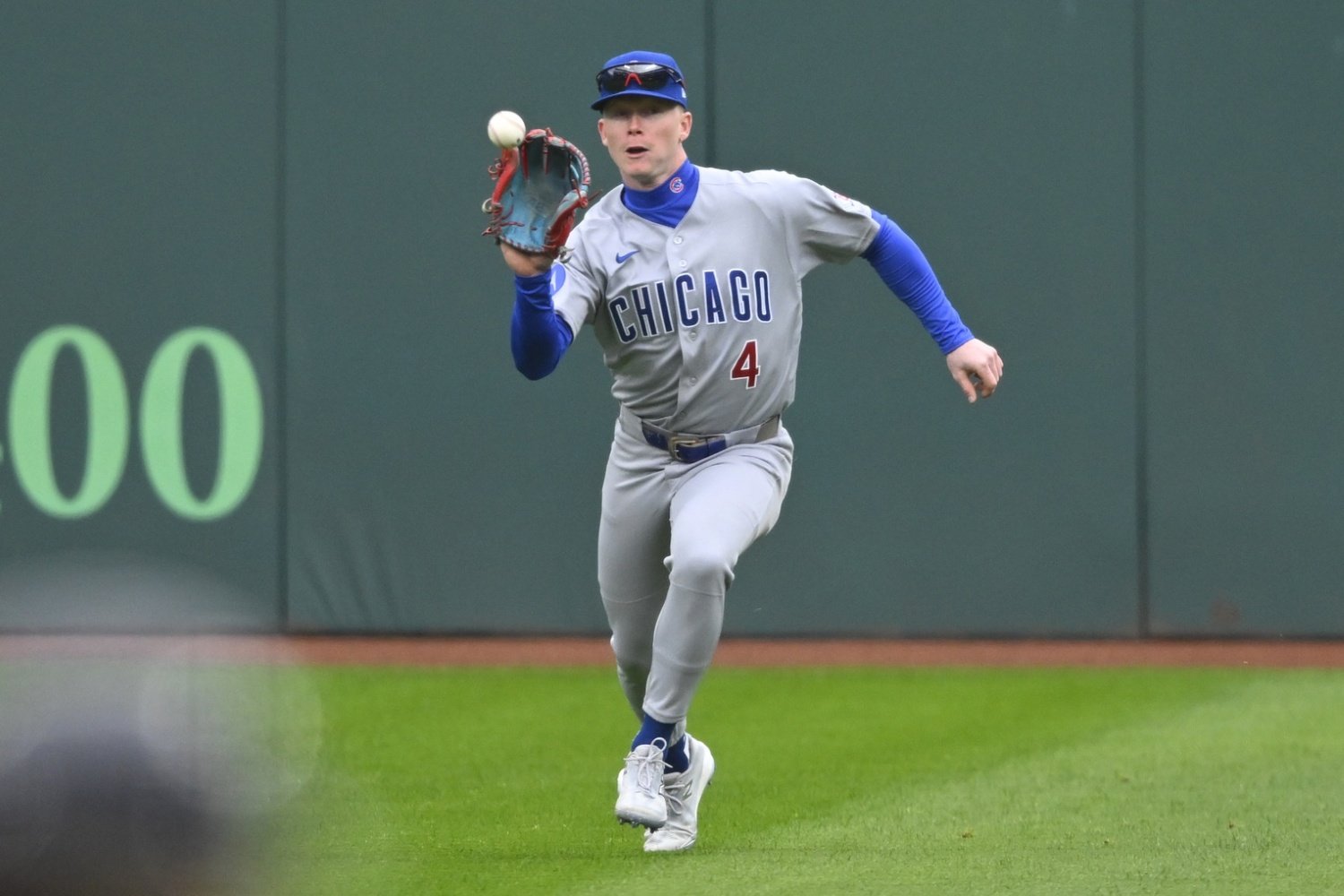 Pete Crow-Armstrong is the best defensive center fielder in baseball. As recently as last season, there was at least a modicum of debate about that—Ceddanne Rafaela of the Red Sox won the prestigious Fielding Bible Award for center field, and might even have deserved it. Now, though, Crow-Armstrong is leaving even Rafaela behind, and doing things in outfield defense that are barely even possible. On plays Statcast rates as 2 Stars or higher on its difficulty scale (i.e., plays where the chance of the ball being caught was under 90% but higher than 0%, based on the model's estimates using fielder location data and the hang time of the batted ball), Crow-Armstrong is 9-for-12 so far. That's a sensational 75% success rate, close to the 77.5% rate he put up on such plays last year. No other player was higher than 73.5% last season, so if he keeps this up, he's got a good chance to pace the league in that regard again. For one thing, though, that underrates him. Crow-Armstrong has one actual missed opportunity to make a catch this season. You probably remember it. In the Angels series in the first week of the campaign, Crow-Armstrong misplayed a sinking liner by Jeimer Candelario into a double. At worst, he should have stopped it and held Candelario to a single, but the ball was catchable. That was a mistake; even the best of us make one. Here's one of the other two balls rated as catchable (although the Catch Probability was just 5%) by Statcast. UHY2YTlfWGw0TUFRPT1fQmxCWlhRRUVCUWNBV1ZaVVVRQUhVRk5mQUFNRUJRSUFCVkVNQlFZQkNRUlFCZ1ZW.mp4 The model does try to account for the presence of the outfield wall, which is why the Catch Probability on this one was so low, but let's be real: the chance of making that catch is 0.0%, for anyone. Crow-Armstrong got a good jump and a fine read, but if he'd kept running fast enough to catch that ball, he'd have dislodged his shoulder (and perhaps an internal organ or two) in the subsequent collision with the wall. It's fine; other players are also having 5% plays counted against them when the real chance was none. But it's important to me that you know about this dynamic in defensive metrics. Here's the other play the system says he had a 5% chance to make, but missed. R0JyUVlfWGw0TUFRPT1fQkFGUlZWVUJVUVVBQ1ZvRFh3QUhWUU5YQUZrR1ZBY0FBMUlCQVZJR0FRWlFVZ29B.mp4 Once again, Crow-Armstrong slows—even stops—shy of the wall to play this ball. It looks less makeable than it might have looked if he'd been chasing down a would-be walkoff hit with two outs; maybe there's a universe in which a player never breaks stride, gets the right footing as they plant their foot in the wall (no time to flatten the angle of body to wall and glide up unassisted) and snares this ball, but it would be the catch of the century. It'd also risk a broken wrist, or ribs. The real catch probability (lower-case letters, since my model is not official) on this is 0.001%. Meanwhile, on several plays since the start of 2025, Crow-Armstrong has seemed to do the scarcely possible. He runs underneath high flies very well, but lots of fast players can do that. Byron Buxton, of the Twins, is excellent at using his speed to make up for slow breaks and at adjusting his body when needed to make a tough catch. Crow-Armstrong, though, takes away a stunning number of singles and doubles on line drives, by breaking exceptionally quickly and accelerating both faster and more relentlessly than any other outfielder in pursuit of a ball daring to seek purchase on the outfield grass. It's not the 120-foot runs on high drives that make Crow-Armstrong extraordinary; it's the plays like this one. NHlLcTZfWGw0TUFRPT1fVlFGV0JRVlhBd01BQUZKV1ZnQUhCUUpTQUFNQ1ZBQUFBVlVBQ0FkVUExQlJDRlFF (1).mp4 Statcast's Outfield Jump leaderboard tells a fascinating story about Crow-Armstrong's excellence. It grades players on the amount of ground they cover (in any direction) in the first 1.5 seconds after contact (Reaction); and in the next 1.5 seconds (Burst); and on the ground they gain or lose, relative to average fielders, via the efficiency of their routes to the ball (Route). It gives each of these in feet above average, and then gives a total—both relative to average, and raw. This season, Crow-Armstrong sits atop that Jump leaderboard. He gains 5.2 feet of ground across the three components, relative to the average outfielder, with a good (+1.8 feet) initial reaction but an otherworldly (+3.2 feet) burst in that secondary moment of pursuit. He's also more efficient in his routes than the average outfielder—and, again, here we risk underrating him. The more a player moves in that 3-second window, the more likely they are to waste at least a little bit of that movement. That's not a new idea, or even a bad thing; it's part of the conscious tradeoff outfielders make all the time. However, Crow-Armstrong doesn't lose efficiency to his remarkably quick response on fly balls. He shoots himself at the ball's landing spot like he's a missile-defense system, and he never misses. That 5.2 feet of ground covered relative to the average is impressive, but barely beats out Chandler Simpson and Jacob Young (the dots breaking the scale, off the right and lower edges of the graph above, respectively, with their incredibly fast but noisy starts after balls) to top the leaderboard. The raw number of territory Crow-Armstrong covers in that 3-second window, though, is the more astonishing one: 40.1 feet. That's not a number anyone else in the league is terribly close to. Second on the list is Simpson, who plays left field instead of center and only covers 38.6 feet. In fact, going back to the dawn of this tracking of outfielders in 2016, no one has covered 40 feet in those 3 seconds over a full season, or even done so in a partial campaign as an overzealous rookie. Crow-Armstrong is stretching the boundaries of the possible. He's a seaplane, in this way, flying just above a rising tide. In 2016, the median figure for ground covered in that window was 32.5 feet, and it stayed fairly flat through 2021 (32.6 feet). Since then, though, teams have accelerated their move toward younger, faster, better-instructed outfielders. The median ground covered in those 3 seconds over the last four seasons (and so far this year) go like this: 2022: 33.0 ft. 2023: 33.0 2024: 33.4 2025: 33.4 2026: 34.1 The sample for this year is still small, and the number is likely to come down a bit. Even so, the trend is clear. It's harder than ever to be 5 feet better at chasing after a fly ball than your peers in the big leagues, because those peers are getting better by the minute. Last summer, Isaac Collins of the Brewers became an Outfield Jump star by taking the practice of timing a hop to put oneself in the air when a pitch passed through the hitting zone from the infield dirt to his place in the outfield. A handful of players around the league now emulate Collins, making the outfield a more explosive, reactive area of the field than it was even a few years ago. To be a plus center fielder, you have to be able to cover at least 12 yards in 3 seconds, and (of course) you have to move in the right direction to flag down the ball every time. Crow-Armstrong is breaking the scale. He might not keep his average ground covered over 40 feet all season, and even if he does, someone else might come along and do it soon, too. The tide is rising. Somehow, though, even at a moment when outfield defense is getting much better, Crow-Armstrong is widening the gap between himself and the rest of the group. He catches everything; he catches some things that don't even register at remotely catchable. He's also brilliant at playing balls off the wall, charging ground-ball singles, and setting up under fly balls to get off the best possible throw. He can change a game with his defense in center field in a way no other player in the league can, because he's taken his game to a new level over the last year. It's not a matter of raw talent, though he's always had the tools he needed out there. It's about the way he's shaved all the rough edges off his game, until he stands well clear of a pack that leaves much less room for clearance than it used to.
 -
Anyone know of anyone who keeps stats on Mound Ball?
-
Catch Prob usually won't be posted until the day after a game, on the fielder's fielding tab on their Savant page. You can always try pestering Mike Petriello or Tom Tango on social media! But no guarantees.
-
Image courtesy of © Eric Hartline-Imagn Images It's about to get a little nutty at Wrigley Field. The Cubs have managed to win four games in a row this week, flipping the narrative that had begun to surround a rocky start to the season. However, even as they've done so, they've been further depleted by injury. Matthew Boyd and Cade Horton have already been sidelined for a fortnight. One by one, though, they've also lost a number of key relievers: Phil Maton, Hunter Harvey, Ethan Roberts, and Daniel Palencia. That was after starting the season down Jordan Wicks and Porter Hodge, the latter of whom will miss the entire season after undergoing elbow surgery. At Triple-A Iowa, starter Jaxon Wiggins and reliever Gavin Hollowell have also been sidelined. As a result, the team already has several pitchers in the mix to whom they were hoping not to turn until summer. The latest addition, righty Corbin Martin, was with the team on a minor-league deal and joins the 40-man roster at the expense of Horton, who was transferred to the 60-day injured list to make room. Now, however, Martin can't be optioned back to the minors without being exposed to waivers. The team didn't want to recall him this soon, since that makes it much more likely that they'll lose him amid a roster crunch sometime soon. They had little choice, though. Thus, starter Javier Assad takes the ball Sunday, with a simple task: eat some innings. The Cubs' bullpen has just four (Jacob Webb, Caleb Thielbar, Hoby Milner and Ben Brown) of the eight members with whom they began the season. They're missing their top three right-handed options, and Brown (who became the de facto righty relief ace when Palencia went down) threw 38 pitches Saturday to secure their win over New York. Webb's combination of recent usage and wavering effectiveness will make Craig Counsell unlikely to turn to him with much enthusiasm in the late innings. Other than Thielbar and Milner, the team has no one fresh whom you want trying to hold a lead Sunday. Pitcher TUE WED THU FRI SAT TOT Brown, B 0 17 0 0 38 55 Webb, J 15 0 0 25 0 40 Thielbar 18 0 0 0 14 32 Milner 0 10 0 10 0 20 Little 0 19 0 0 0 19 Martin, R. 6 0 0 12 0 18 Rolison 11 0 0 0 0 11 Martin, C. 0 0 0 0 0 0 Assad himself is the team's seventh starting pitching option. He'll be asked, however, to pitch more like a No. 3: soak up innings and keep the team in the game. As long as he can do so, Counsell can piece together the final three-plus innings without overusing Ryan Rolison or Corbin Martin. Martin (the righty, not to be confused with the younger, optionable, left-handed Riley Martin) showed impressive stuff in his brief time with Iowa. His cut-ride fastball and knuckle-curve make a fascinating pair, and though he's thrown them just a few times, his sinker and changeup show startling amounts of arm-side run coming from his arm slot and branching from his main arsenal. That only makes it more important that the team not ask him to throw 45 pitches to get them six or seven outs. With Palencia and Harvey, especially, likely to be out for a while, the team badly needs right-handed relief depth, and Martin looks capable of being a solid middle reliever. Losing him before the end of April would put them at real risk of bullpen collapse. Counsell needs Assad to get him into the sixth inning Sunday, so he can mix and match and keep the pitch counts on each of the relievers he uses low. A lefty-heavy bullpen is a small problem. One running out of options altogether is a larger one, and it's a problem the team is on the cusp of running into at full speed, early in a long season. For a little while, every pitching appearance will be higher-leverage than it seems, because the team will have a need that reaches beyond that day: for the pitcher to come through the outing healthy, and for them to get the number of outs Counsell is asking for, so they don't stretch a thin staff past its breaking point. View full article
-
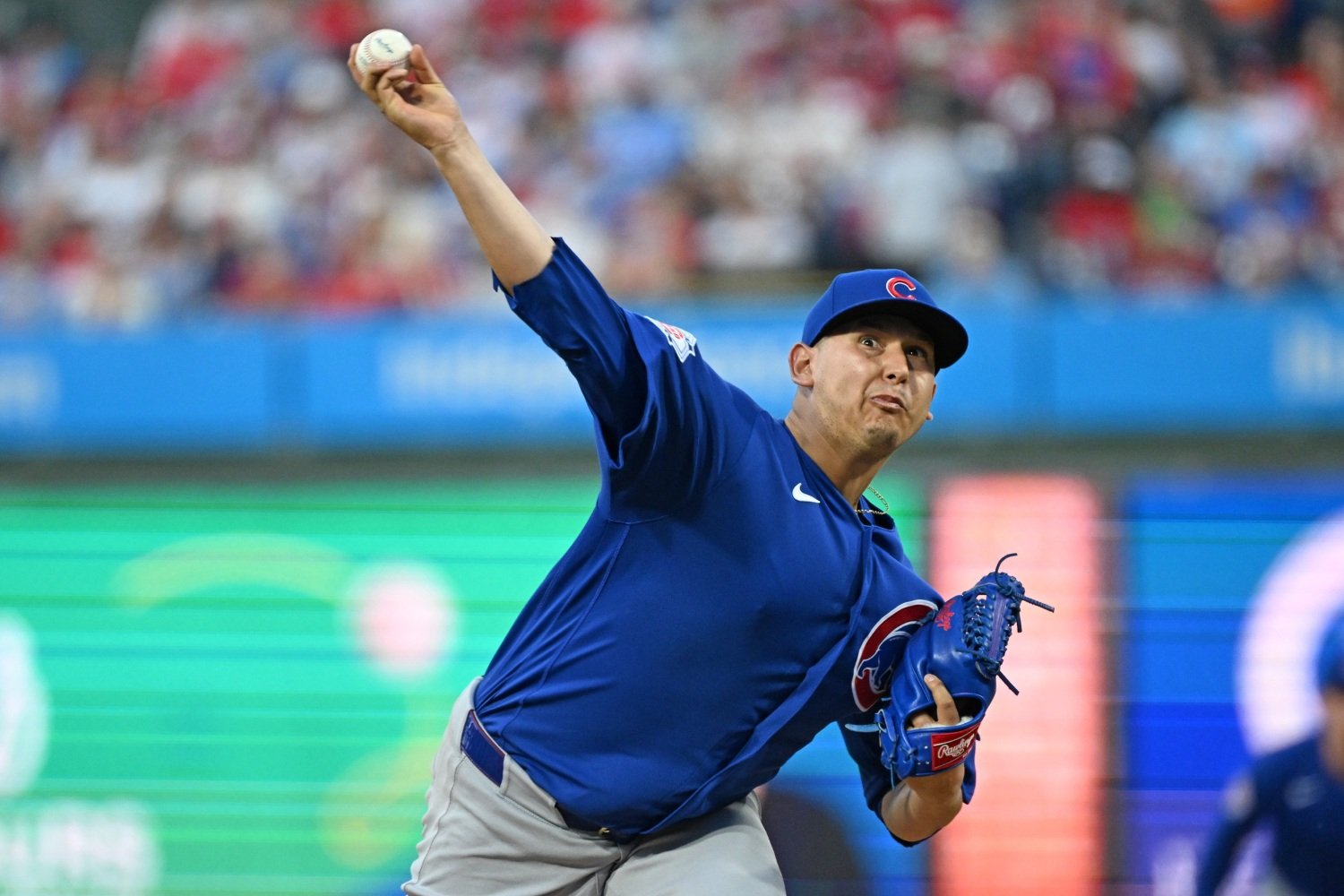 It's about to get a little nutty at Wrigley Field. The Cubs have managed to win four games in a row this week, flipping the narrative that had begun to surround a rocky start to the season. However, even as they've done so, they've been further depleted by injury. Matthew Boyd and Cade Horton have already been sidelined for a fortnight. One by one, though, they've also lost a number of key relievers: Phil Maton, Hunter Harvey, Ethan Roberts, and Daniel Palencia. That was after starting the season down Jordan Wicks and Porter Hodge, the latter of whom will miss the entire season after undergoing elbow surgery. At Triple-A Iowa, starter Jaxon Wiggins and reliever Gavin Hollowell have also been sidelined. As a result, the team already has several pitchers in the mix to whom they were hoping not to turn until summer. The latest addition, righty Corbin Martin, was with the team on a minor-league deal and joins the 40-man roster at the expense of Horton, who was transferred to the 60-day injured list to make room. Now, however, Martin can't be optioned back to the minors without being exposed to waivers. The team didn't want to recall him this soon, since that makes it much more likely that they'll lose him amid a roster crunch sometime soon. They had little choice, though. Thus, starter Javier Assad takes the ball Sunday, with a simple task: eat some innings. The Cubs' bullpen has just four (Jacob Webb, Caleb Thielbar, Hoby Milner and Ben Brown) of the eight members with whom they began the season. They're missing their top three right-handed options, and Brown (who became the de facto righty relief ace when Palencia went down) threw 38 pitches Saturday to secure their win over New York. Webb's combination of recent usage and wavering effectiveness will make Craig Counsell unlikely to turn to him with much enthusiasm in the late innings. Other than Thielbar and Milner, the team has no one fresh whom you want trying to hold a lead Sunday. Pitcher TUE WED THU FRI SAT TOT Brown, B 0 17 0 0 38 55 Webb, J 15 0 0 25 0 40 Thielbar 18 0 0 0 14 32 Milner 0 10 0 10 0 20 Little 0 19 0 0 0 19 Martin, R. 6 0 0 12 0 18 Rolison 11 0 0 0 0 11 Martin, C. 0 0 0 0 0 0 Assad himself is the team's seventh starting pitching option. He'll be asked, however, to pitch more like a No. 3: soak up innings and keep the team in the game. As long as he can do so, Counsell can piece together the final three-plus innings without overusing Ryan Rolison or Corbin Martin. Martin (the righty, not to be confused with the younger, optionable, left-handed Riley Martin) showed impressive stuff in his brief time with Iowa. His cut-ride fastball and knuckle-curve make a fascinating pair, and though he's thrown them just a few times, his sinker and changeup show startling amounts of arm-side run coming from his arm slot and branching from his main arsenal. That only makes it more important that the team not ask him to throw 45 pitches to get them six or seven outs. With Palencia and Harvey, especially, likely to be out for a while, the team badly needs right-handed relief depth, and Martin looks capable of being a solid middle reliever. Losing him before the end of April would put them at real risk of bullpen collapse. Counsell needs Assad to get him into the sixth inning Sunday, so he can mix and match and keep the pitch counts on each of the relievers he uses low. A lefty-heavy bullpen is a small problem. One running out of options altogether is a larger one, and it's a problem the team is on the cusp of running into at full speed, early in a long season. For a little while, every pitching appearance will be higher-leverage than it seems, because the team will have a need that reaches beyond that day: for the pitcher to come through the outing healthy, and for them to get the number of outs Counsell is asking for, so they don't stretch a thin staff past its breaking point.
 -
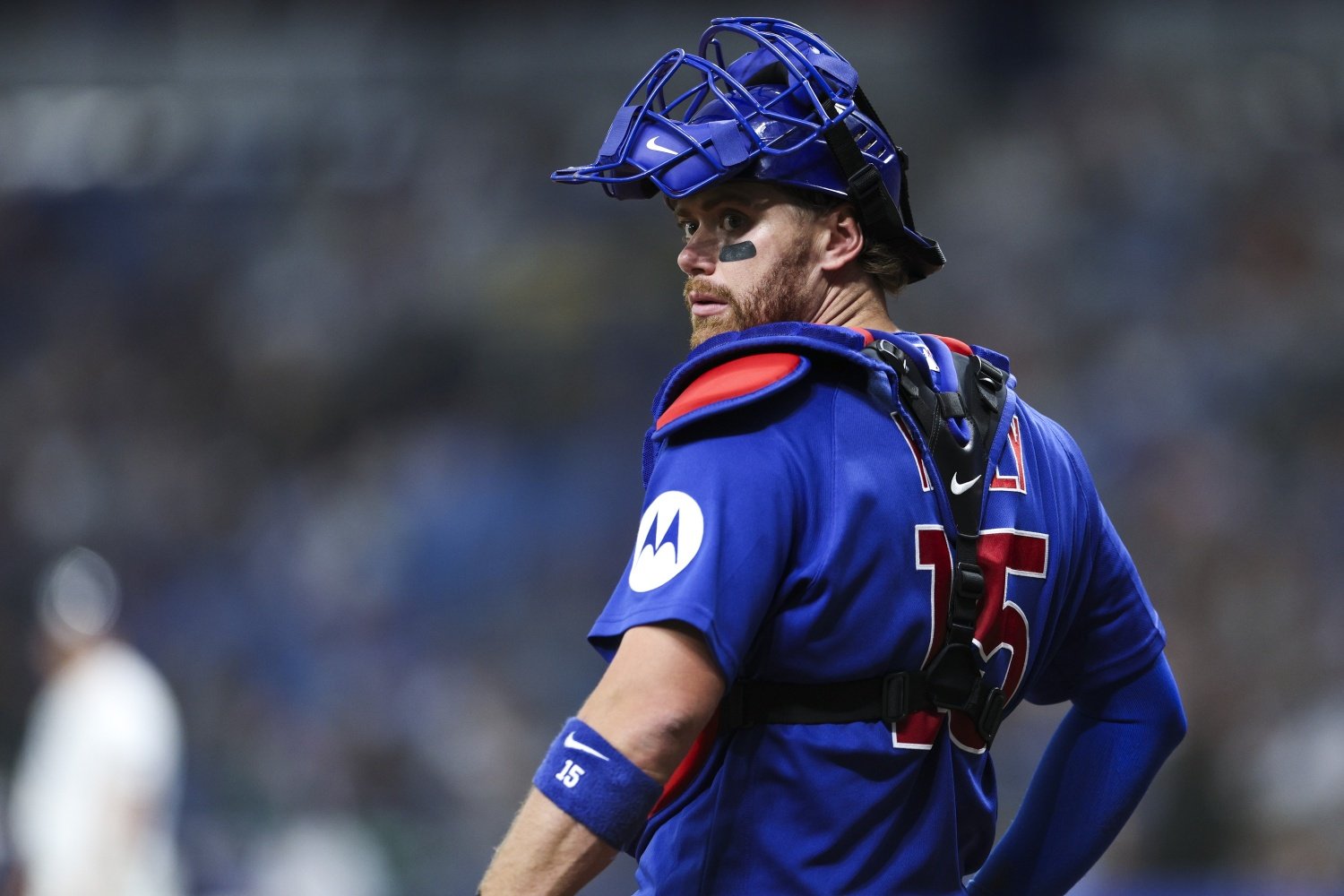 In the last decade—and especially on this side of the COVID-19 disruption—we've seen MLB teams move from the traditional starter-backup catching arrangement to one much closer to an even timeshare. The Cubs signed Carons Kelly in late 2024 to accommodate their move toward that very model. With Miguel Amaya establishing himself as (they hoped) the catcher of the present and future, Chicago looked to Kelly to provide stability and keep Amaya's workload relatively low, given his long history of injury trouble. To whatever extent the goal was to keep Amaya healthy, the plan failed. The younger backstop went down with an oblique strain in May, then came back and immediately suffered an ankle sprain in August. Amaya is still dealing with the effects of those injuries, and his track record says he might never be able to carry even an 80-game burden at catcher. Fortunately, though, the Cubs got more than they could reasonably have hoped for from Kelly. A stance and stride adjustment last spring helped Kelly get off to a blazing start at the plate. He struggled after Amaya went down, as his own workload suddenly spiked, but he remained a solid defensive backstop and manager of the game plan on the field. He wasn't a zero in the lineup, either; he just lost the thunder that he showed early in the campaign. Maybe that will happen again this season. The Cubs will be similarly out of good complementary options if Amaya gets hurt again, so the risk that Kelly ends up overloaded remains real. So far, though, he's batting a stellar .333/.455/.467, in 55 plate appearances. Over the last two seasons, he was not only superficially usable at catcher, but genuinely above-average at the plate, according to Baseball Prospectus's DRC+. He ran a 106 in his 2024 season, divided between the Detroit Tigers and Texas. In 2025, that figure held firm, at 104. This season, that figure is up to 118. He's been a weapon in a lineup that has needed him, as some of the players on whom the team expected to rely more heavily have gotten off to slow starts. Shortening his stride unlocked some power for Kelly, but the bulk of his changes came in 2024, before the Cubs got ahold of him. He got more aggressive in the strike zone, without chasing more, and he made more contact on those in-zone swings, to boot. He's held onto those improvements in his first year-plus with the Cubs, taking his offensive game to a new level. Kelly has always had a good eye at the plate. His 10.1% walk rate since the start of 2024 is the same as the one he posted from 2021-23. His strikeout rate has come down, though, from 21.4% to 18.1%, even as he's hit the ball harder. Now that we have bat-tracking data, it's fairly easy to see just how well Kelly's hand-eye coordination serves him. It's not just about making contact; he's squared the ball up on over 28% of his swings since the start of 2024. (The definition of squaring a ball up, for these purposes, is getting at least 80% of the possible exit velocity out of a given swing, based on the velocity of the incoming pitch and the speed of the swing.) This year, although the sample is far too small to assume it will hold, that number is over 38%. The league averages just under 26%. Kelly's bat speed is nothing special, but because he consistently hits it solidly, he doesn't need that lightning-fast rotation. As he's come to understand that about himself, he's gotten better at making good swing decisions and putting the ball in play. He's also been a star behind the plate. Last season, he excelled at blocking pitches in the dirt and preventing runners from advancing on them. He doesn't have an especially strong arm, but as is true of his lack of plus bat speed, he makes up for deficient talent with a surfeit of skill; he's one of the most accurate throwers in the game. He's a slightly below-average pitch framer, but this season, he's found a way to overcome that—and then some. Kelly has challenged nine called balls behind the plate this year, and gotten seven calls overturned. Statcast's model gives him 13 expected challenges, meaning there were some called balls (because he's not a great framer, especially along the lateral edges and at the top of the zone) he could plausibly have also challenged. However, the same model only suggests he should have won 7 of those challenges, so he's merely saved four expected confirmations (and four lost challenges for the Cubs) by being judicious. When hitters have challenged calls against Kelly, meanwhile, they've paid a dear price. Opposing batters are just 3-for-12 when challenging called strikes with Kelly catching this season. In one knot at the very bottom of the zone, he's induced five bad challenges by hitters. The Pirates wasted their challenges as a team on Sunday by challenging two near-identical pitches on which Kelly caught the ball somewhat snatchily, but which turned out to be legitimate strikes. Here's one of them, right away in the first inning: NnlNNzNfWGw0TUFRPT1fVWxCUVZWUlJVRkVBRGdjS1VRQUhDQVJXQUZoUVV3TUFCQVlNQXdSUUFBWUhCQW9B.mp4 And here's the other, in the seventh, just before the Cubs got some momentum and came back to win the game. NnlNNzNfVjBZQUhRPT1fVkFCVEJnRUVYd0VBWEZJQ0FnQUhDUUJTQUFCV1dsa0FWd2NIVVFzQUJGRlhVVkJm.mp4 It might look inelegant, but this style of framing works, and this year, it's become even more valuable than it was in the past. When Kelly catches a ball like that and the umpire makes the right call, there's still one party left who might be fooled: the poor hitter. After what they felt was an especially good take, watching the ball almost into the mitt, many hitters feel overconfident about their own zone judgment, especially when a catcher moves their mitt in an obvious way. Coaxing batters into bad challenges that cost their team the right to appeal decisions later in games is one new way catchers can create value under the ABS system, and lo, Kelly is doing it. He'll be most productive if the team continues to use Amaya as close to half the time as possible. Even if that does continue, he won't have an OPS near 1.000 all season. Kelly has made real and tangible improvements, though, and he's one of those players whose makeup and a key adjustment or two allows them to enjoy a later prime than others. You'll never hear him talked about as an All-Star, let alone an MVP candidate, because constraints on volume make him more effective. Like the 6th Man of the Year in the NBA or the Relief Pitcher Award coming to the BBWAA awards suite this season, though, an award for players who provide value by giving a team length, strength and depth while also playing at a near-elite level during their limited time on the field might ought to exist. If it did, Kelly would be a candidate for it. He's been that good since joining the Cubs, and he has a chance to be even better in 2026 than he was in 2025.
 -
Image courtesy of © Nathan Ray Seebeck-Imagn Images In the last decade—and especially on this side of the COVID-19 disruption—we've seen MLB teams move from the traditional starter-backup catching arrangement to one much closer to an even timeshare. The Cubs signed Carons Kelly in late 2024 to accommodate their move toward that very model. With Miguel Amaya establishing himself as (they hoped) the catcher of the present and future, Chicago looked to Kelly to provide stability and keep Amaya's workload relatively low, given his long history of injury trouble. To whatever extent the goal was to keep Amaya healthy, the plan failed. The younger backstop went down with an oblique strain in May, then came back and immediately suffered an ankle sprain in August. Amaya is still dealing with the effects of those injuries, and his track record says he might never be able to carry even an 80-game burden at catcher. Fortunately, though, the Cubs got more than they could reasonably have hoped for from Kelly. A stance and stride adjustment last spring helped Kelly get off to a blazing start at the plate. He struggled after Amaya went down, as his own workload suddenly spiked, but he remained a solid defensive backstop and manager of the game plan on the field. He wasn't a zero in the lineup, either; he just lost the thunder that he showed early in the campaign. Maybe that will happen again this season. The Cubs will be similarly out of good complementary options if Amaya gets hurt again, so the risk that Kelly ends up overloaded remains real. So far, though, he's batting a stellar .333/.455/.467, in 55 plate appearances. Over the last two seasons, he was not only superficially usable at catcher, but genuinely above-average at the plate, according to Baseball Prospectus's DRC+. He ran a 106 in his 2024 season, divided between the Detroit Tigers and Texas. In 2025, that figure held firm, at 104. This season, that figure is up to 118. He's been a weapon in a lineup that has needed him, as some of the players on whom the team expected to rely more heavily have gotten off to slow starts. Shortening his stride unlocked some power for Kelly, but the bulk of his changes came in 2024, before the Cubs got ahold of him. He got more aggressive in the strike zone, without chasing more, and he made more contact on those in-zone swings, to boot. He's held onto those improvements in his first year-plus with the Cubs, taking his offensive game to a new level. Kelly has always had a good eye at the plate. His 10.1% walk rate since the start of 2024 is the same as the one he posted from 2021-23. His strikeout rate has come down, though, from 21.4% to 18.1%, even as he's hit the ball harder. Now that we have bat-tracking data, it's fairly easy to see just how well Kelly's hand-eye coordination serves him. It's not just about making contact; he's squared the ball up on over 28% of his swings since the start of 2024. (The definition of squaring a ball up, for these purposes, is getting at least 80% of the possible exit velocity out of a given swing, based on the velocity of the incoming pitch and the speed of the swing.) This year, although the sample is far too small to assume it will hold, that number is over 38%. The league averages just under 26%. Kelly's bat speed is nothing special, but because he consistently hits it solidly, he doesn't need that lightning-fast rotation. As he's come to understand that about himself, he's gotten better at making good swing decisions and putting the ball in play. He's also been a star behind the plate. Last season, he excelled at blocking pitches in the dirt and preventing runners from advancing on them. He doesn't have an especially strong arm, but as is true of his lack of plus bat speed, he makes up for deficient talent with a surfeit of skill; he's one of the most accurate throwers in the game. He's a slightly below-average pitch framer, but this season, he's found a way to overcome that—and then some. Kelly has challenged nine called balls behind the plate this year, and gotten seven calls overturned. Statcast's model gives him 13 expected challenges, meaning there were some called balls (because he's not a great framer, especially along the lateral edges and at the top of the zone) he could plausibly have also challenged. However, the same model only suggests he should have won 7 of those challenges, so he's merely saved four expected confirmations (and four lost challenges for the Cubs) by being judicious. When hitters have challenged calls against Kelly, meanwhile, they've paid a dear price. Opposing batters are just 3-for-12 when challenging called strikes with Kelly catching this season. In one knot at the very bottom of the zone, he's induced five bad challenges by hitters. The Pirates wasted their challenges as a team on Sunday by challenging two near-identical pitches on which Kelly caught the ball somewhat snatchily, but which turned out to be legitimate strikes. Here's one of them, right away in the first inning: NnlNNzNfWGw0TUFRPT1fVWxCUVZWUlJVRkVBRGdjS1VRQUhDQVJXQUZoUVV3TUFCQVlNQXdSUUFBWUhCQW9B.mp4 And here's the other, in the seventh, just before the Cubs got some momentum and came back to win the game. NnlNNzNfVjBZQUhRPT1fVkFCVEJnRUVYd0VBWEZJQ0FnQUhDUUJTQUFCV1dsa0FWd2NIVVFzQUJGRlhVVkJm.mp4 It might look inelegant, but this style of framing works, and this year, it's become even more valuable than it was in the past. When Kelly catches a ball like that and the umpire makes the right call, there's still one party left who might be fooled: the poor hitter. After what they felt was an especially good take, watching the ball almost into the mitt, many hitters feel overconfident about their own zone judgment, especially when a catcher moves their mitt in an obvious way. Coaxing batters into bad challenges that cost their team the right to appeal decisions later in games is one new way catchers can create value under the ABS system, and lo, Kelly is doing it. He'll be most productive if the team continues to use Amaya as close to half the time as possible. Even if that does continue, he won't have an OPS near 1.000 all season. Kelly has made real and tangible improvements, though, and he's one of those players whose makeup and a key adjustment or two allows them to enjoy a later prime than others. You'll never hear him talked about as an All-Star, let alone an MVP candidate, because constraints on volume make him more effective. Like the 6th Man of the Year in the NBA or the Relief Pitcher Award coming to the BBWAA awards suite this season, though, an award for players who provide value by giving a team length, strength and depth while also playing at a near-elite level during their limited time on the field might ought to exist. If it did, Kelly would be a candidate for it. He's been that good since joining the Cubs, and he has a chance to be even better in 2026 than he was in 2025. View full article
-
I've written about Nico Hoerner's grip position (and the way it changed throughout his swing at the time) before! You're late to the party, fella! 😄
-
The Cubs Are Executing Their Plan at the Plate. It's Not Working.
Matthew Trueblood posted an article in Cubs
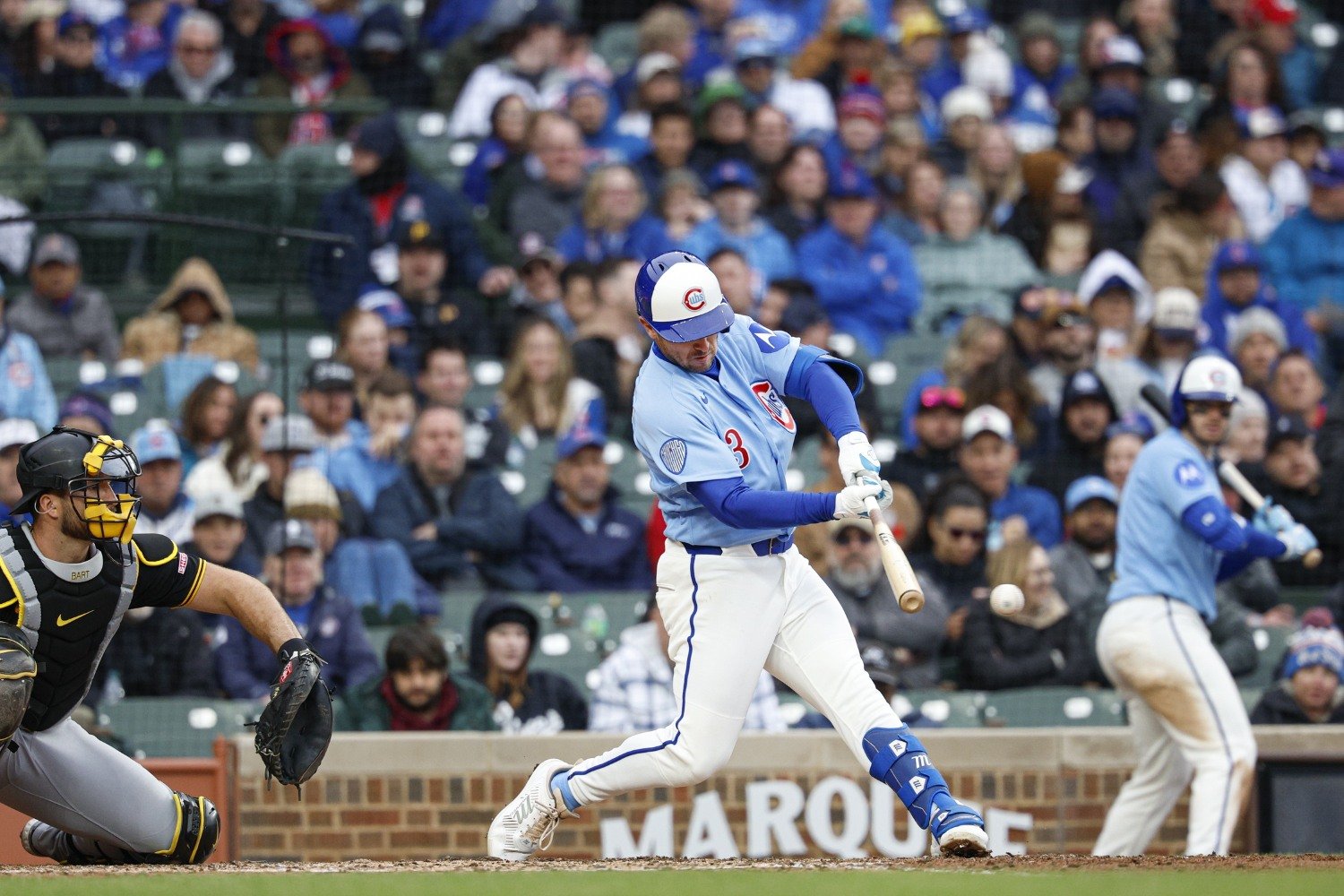 Last season, no team in baseball topped the Chicago Cubs when it came to lifting the ball to the pull field. The North Siders pulled and elevated 21.8% of their batted balls. It's their signature skill, because they don't like to emphasize raw bat speed and the line-to-line lethality that comes with it. Always focused on controlling the strike zone and accepting their walks, the Cubs preach a swing designed to lift and pull, so that batters can live with a bit less bat speed than their counterparts elsewhere in the league and (hopefully) focus more on building a successful approach. (It doesn't hurt that a lineup full of such players is likely to be at least a little bit cheaper than one filled with similarly talented but toolsier sluggers.) That plan comes with drawbacks, though. The team right behind the Cubs in terms of pulling the ball in the air most often in 2025 was the Cleveland Guardians—hardly the best company one could hope to keep. It's good to pull the ball in the air, but the more you zero in on doing so, the greater the tradeoffs you make along the way. A team with an average rate in that respect might do much more damage than the average club when they do so, or much less, and that will determine whether they're good at that aspect of offense or not. The Cubs are playing a numbers game, filling the sky with pulled hits and relying on plenty of them falling or carrying out of the park. That probabilistic approach makes sense, but one more focused on payoffs might be equally productive. In small segments of a season, the variance of a concerted effort to hit pulled fly balls becomes more obvious. The Cubs trail only the Diamondbacks and the Twins in the share of their batted balls that are pulled in the air this year, but they're much less productive than they were in 2025—or, perhaps more saliently, they're equally as frustrating and unproductive as they were in their worst stretches last year. It's not that they're not able to execute their offensive gameplan; it's that that execution isn't paying off. The Cubs rank sixth in MLB in the percentage of plate appearances ending with a pulled batted ball with an exit velocity of at least 90 miles per hour and a launch angle between 0° and 50°. We're eliminating softly hit balls and pop-ups here, and still, the Cubs are sixth in baseball at producing them. Now, here are the Run Value figures for those batted balls for each of the top 10 teams in that frequency. In other words, this is the number of runs above average (for all plate appearances) produced by well-struck, pulled batted balls for the teams who hit the most such balls. Dodgers - 44 Diamondbacks - 28 Padres - 31 Guardians - 34 Angels - 35 Cubs - 21 Royals - 26 Rangers - 29 Rockies - 33 Yankees - 33 Chicago stands out like a sore thumb. The Cubs just aren't getting results when they hit these balls, on which the expected level of returned value is quite high. To visualize it a different way, here are all 30 teams plotted by the percentage of plate appearances ending in this type of batted ball, and per-100 run value thereupon. The Dodgers are the best in the league at hitting those high-value balls, and they get above-average bang for their buck, too. That's no surprise. The Cubs have been doing a slightly watery Dodgers impression, offensively, for at least three years now. The Astros lead the league in rate of return, without regard to how often they produce pulled air balls; we can partially chalk that up to their short-porched home park. The Reds, clearly, need to rethink their offense. They don't hit nearly enough of these balls, and they don't get as much value per pulled air ball as they should, given that it should only be their very best contact that looks like that. The Cubs, though, are arguably the anti-sweet spot. They're spending a large share of their plate appearances in pursuit of the rich rewards of pulling it sharply, but they're not getting juice from the extra squeezing. Their weighted on-base average on these batted balls (.682) is the lowest in baseball. Again, you still want to pull the ball with authority, as much as you can. A .682 wOBA means ending a plate appearance with the same expectation of contribution to scoring as if you took a pitch outside the strike zone. Trying to do this as much as they do comes with costs, though, and the costs the Cubs are paying are outweighing the returns they're enjoying—because those returns have been, in the peculiar relative sense we're talking about here—are paltry. No team in baseball is getting less from pulling the ball hard and on a line. Is this just bad luck? Is it the pitcher-friendliness of Wrigley Field, especially in the cold weather of March and April? Or is this team too focused on producing a particular kind of batted ball, at the expense of producing lots of hits and runs? The answer is: all of the above. The ball is relatively dead again this year, as it was in 2025. It's not a great time to be an offense dependent on hitting fly balls to the pull field. Nor is the modern Wrigley a good place to be doing so. It's still, in an important and overriding way, a good strategy, but the Cubs are executing it under conditions—and perhaps with personnel—ill-suited to let them get the most out of it. There's a lot of season left, and this devotion to the objective of producing high-expected value batted balls should be good for the team over the balance of it. For now, though, it's part of why they've been frustrating, and why they're losing games. Approaches unusually focused on pulled air balls lead to more easy outs than others, when things are going wrong. That can narrow your path to victory. For three years in a row, Cubs teams trying to get back over the hump have been easily outpaced by Brewers teams with less offensive talent. Those teams had more ways to spark rallies and score runs than this team has. It forces Cubs fans to be patient, but the team can't afford to just wait for things to change. They need to think about how to be more flexible and resilient, even as they anticipate the positive kind of regression.
 -
Image courtesy of © Kamil Krzaczynski-Imagn Images Last season, no team in baseball topped the Chicago Cubs when it came to lifting the ball to the pull field. The North Siders pulled and elevated 21.8% of their batted balls. It's their signature skill, because they don't like to emphasize raw bat speed and the line-to-line lethality that comes with it. Always focused on controlling the strike zone and accepting their walks, the Cubs preach a swing designed to lift and pull, so that batters can live with a bit less bat speed than their counterparts elsewhere in the league and (hopefully) focus more on building a successful approach. (It doesn't hurt that a lineup full of such players is likely to be at least a little bit cheaper than one filled with similarly talented but toolsier sluggers.) That plan comes with drawbacks, though. The team right behind the Cubs in terms of pulling the ball in the air most often in 2025 was the Cleveland Guardians—hardly the best company one could hope to keep. It's good to pull the ball in the air, but the more you zero in on doing so, the greater the tradeoffs you make along the way. A team with an average rate in that respect might do much more damage than the average club when they do so, or much less, and that will determine whether they're good at that aspect of offense or not. The Cubs are playing a numbers game, filling the sky with pulled hits and relying on plenty of them falling or carrying out of the park. That probabilistic approach makes sense, but one more focused on payoffs might be equally productive. In small segments of a season, the variance of a concerted effort to hit pulled fly balls becomes more obvious. The Cubs trail only the Diamondbacks and the Twins in the share of their batted balls that are pulled in the air this year, but they're much less productive than they were in 2025—or, perhaps more saliently, they're equally as frustrating and unproductive as they were in their worst stretches last year. It's not that they're not able to execute their offensive gameplan; it's that that execution isn't paying off. The Cubs rank sixth in MLB in the percentage of plate appearances ending with a pulled batted ball with an exit velocity of at least 90 miles per hour and a launch angle between 0° and 50°. We're eliminating softly hit balls and pop-ups here, and still, the Cubs are sixth in baseball at producing them. Now, here are the Run Value figures for those batted balls for each of the top 10 teams in that frequency. In other words, this is the number of runs above average (for all plate appearances) produced by well-struck, pulled batted balls for the teams who hit the most such balls. Dodgers - 44 Diamondbacks - 28 Padres - 31 Guardians - 34 Angels - 35 Cubs - 21 Royals - 26 Rangers - 29 Rockies - 33 Yankees - 33 Chicago stands out like a sore thumb. The Cubs just aren't getting results when they hit these balls, on which the expected level of returned value is quite high. To visualize it a different way, here are all 30 teams plotted by the percentage of plate appearances ending in this type of batted ball, and per-100 run value thereupon. The Dodgers are the best in the league at hitting those high-value balls, and they get above-average bang for their buck, too. That's no surprise. The Cubs have been doing a slightly watery Dodgers impression, offensively, for at least three years now. The Astros lead the league in rate of return, without regard to how often they produce pulled air balls; we can partially chalk that up to their short-porched home park. The Reds, clearly, need to rethink their offense. They don't hit nearly enough of these balls, and they don't get as much value per pulled air ball as they should, given that it should only be their very best contact that looks like that. The Cubs, though, are arguably the anti-sweet spot. They're spending a large share of their plate appearances in pursuit of the rich rewards of pulling it sharply, but they're not getting juice from the extra squeezing. Their weighted on-base average on these batted balls (.682) is the lowest in baseball. Again, you still want to pull the ball with authority, as much as you can. A .682 wOBA means ending a plate appearance with the same expectation of contribution to scoring as if you took a pitch outside the strike zone. Trying to do this as much as they do comes with costs, though, and the costs the Cubs are paying are outweighing the returns they're enjoying—because those returns have been, in the peculiar relative sense we're talking about here—are paltry. No team in baseball is getting less from pulling the ball hard and on a line. Is this just bad luck? Is it the pitcher-friendliness of Wrigley Field, especially in the cold weather of March and April? Or is this team too focused on producing a particular kind of batted ball, at the expense of producing lots of hits and runs? The answer is: all of the above. The ball is relatively dead again this year, as it was in 2025. It's not a great time to be an offense dependent on hitting fly balls to the pull field. Nor is the modern Wrigley a good place to be doing so. It's still, in an important and overriding way, a good strategy, but the Cubs are executing it under conditions—and perhaps with personnel—ill-suited to let them get the most out of it. There's a lot of season left, and this devotion to the objective of producing high-expected value batted balls should be good for the team over the balance of it. For now, though, it's part of why they've been frustrating, and why they're losing games. Approaches unusually focused on pulled air balls lead to more easy outs than others, when things are going wrong. That can narrow your path to victory. For three years in a row, Cubs teams trying to get back over the hump have been easily outpaced by Brewers teams with less offensive talent. Those teams had more ways to spark rallies and score runs than this team has. It forces Cubs fans to be patient, but the team can't afford to just wait for things to change. They need to think about how to be more flexible and resilient, even as they anticipate the positive kind of regression. View full article
-
Image courtesy of © Patrick Gorski-Imagn Images The first problem is that Tyler Austin got hurt. That's outside Jed Hoyer's control, except in that signing a player who was compelled to seek his baseball fortune on another continent half a decade ago and who's now well into his mid-30s was an embrace of some injury risk. Austin's knee injury in spring training left the Cubs without the backup first baseman Hoyer thought he'd provided to Craig Counsell, and Jonathon Long's minor injury during camp was enough to scupper the option of bringing him north when the season began. Hoyer continues to build bad, dysfunctional benches, and the lack of a true utility man—Matt Shaw fills that role on a healthy version of the roster, while Scott Kingery does so for this injury-diminished one, but neither is quite as versatile as the ideal do-everything guy—is on him. However, he caught a bad break with Austin going down, and the best management of his young bats and his two incumbent catchers was the way he did things this winter. Let's assign him just 10% of the blame for the Cubs' needless and costly loss Saturday at Wrigley Field, and move along. Counsell was left without great options, too. He faced a situation in the seventh inning of that game for which the only reasonable response was the move he made. The Cubs were rallying. After starting the game by falling behind 3-0, they'd battled back to make it 3-2, and the tying run stood at third base with two outs. Michael Busch was due, but the Pirates went to lefty reliever Gregory Soto, a brutal matchup for the platoon-vulnerable Busch. Moreover, Busch was mired in an 0-for-30 slump. You can't ask a player fighting his hitting demons that hard to try to win a left-on-left battle with the game on the line, when you have a competent alternative on the bench. Counsell went to Carson Kelly, gaining the platoon edge, even though Kelly is not one of those catchers with much experience as a first baseman. Kelly didn't cash in the chance, but that was the right call by Counsell. Kelly looked fine while he remained in the game as the first baseman, too. The trouble really began in the ninth, when Kelly drew a two-out walk. He represented the winning run, so Counsell pinch-ran for him with Shaw, gaining much more speed. This could have come into play even in a small way, like beating out a would-be fielder's choice on a slow ground ball, so it was a worthwhile risk. Again, though, it didn't pay off. Alex Bregman extended the game with a tying single, but Shaw was stranded at third and had to take over at first base on defense in extra innings. We can assign some blame to Counsell and his coaching staff, because somewhere during the spring—especially after the relatively early injury to Austin—they should have gotten in lots of extra work with Shaw or one of the other members of the bench corps at the cold corner. Kelly took most of those reps, but there are lots of ways a catcher can end up being unavailable in a moment like that. One option for the staff should have been to bring Conforto or Ian Happ in from the outfield to play first, with Shaw taking over an outfield corner. Failing that, Shaw should have gotten many more reps on the not-so-basic basics of first base. None of that happened. I assign 20% of the blame for Saturday's loss to the coaching staff. The rest, though, must be divided between Caleb Thielbar and Shaw. The Cubs did a marvelous job in the top of the 10th inning, holding the visitors scoreless. They missed their chance to walk them off in the bottom of the 10th, but they were very close to getting out of the top of the 11th unscathed, too. With two runners on and two outs, Thielbar induced a dribbler from Pirates infielder Brandon Lowe, who looked overmatched in the left-on-left matchup. It should have ended the inning and set up the home side to even the series with a walkoff victory. Instead: calamity. Everything two players can do wrong on a routine play, Thielbar and Shaw did wrong on this one. To start in a good place, though: they both had excellent initial reactions. Shaw, playing an unfamiliar position and surely positioned farther from the base than was comfortable with a lefty batter at the plate, broke quickly toward first on contact. This is actually a good chance to heap another 5% of the blame on the coaching staff. With a lefty batter up and a key run at first base, playing the first baseman that far off the line is almost never correct. Maybe, with the lefty Thielbar on the mound, Lowe's spray chart told them to move the first baseman toward the hole, but Shaw is not 'the first baseman' when you're drawing up those spray charts and positioning plans. He should have been told to play closer to the bag. We'll soon see why that matters. Thielbar fielded the ball cleanly, and although it meant turning his back to the runner, he was in position to make a throw with plenty of time. Shaw, for his part, found the bag fast. That's your job, on a play like this, as the first baseman: get to the spot quickly and have your head up, ready for the throw. Look at all the time Thielbar has. There's no need to rush here. There's also plenty of time for the move Shaw still needs to make. A highly seasoned first baseman might have aimed to get their right foot onto the base right away, but this is a perfectly acceptable way to do what we discussed a moment ago: find the base without staring down at the ground. You angle toward the bag, let your left foot locate the pillow, then quickly turn to put the right foot there instead, setting up to receive a throw by putting your left foot forward. That's where the trouble starts. Shaw has his moment to get the feet right, but he doesn't take it. He's not used to being at first, receiving this kind of hard, time-pressured, high-stakes throw, and he's not comfortable turning his hips and shoulders the way a first baseman must, to be ready for a throw that's anywhere but right at you. It's easy to see some of that in the way Shaw freezes and carries his weight as he braces for the throw. It's harder to see this, but I think it also becomes a problem for Thielbar, right about here. He's already rushing a little. He didn't appropriately calm himself in the moment it took to scoop the ball, and he's more worried about getting the ball there on time than he should be. But now, he's also looking at an unusual target. Shaw isn't set up correctly, and visually, it's much harder to pick out where you want the throw to go. A better first baseman is already bringing the glove up to set a target, but even without that, his body is telling Thielbar he's ready. Shaw's positioning is sending the opposite message. Perhaps because of that (or perhaps just because he hurried it), Thielbar will drop too low with his arm slot and throw wide. This is a guy who comes way over the top, off the mound. Dropping down to throw like an infielder isn't usually a problem for him, but here, it becomes one. The ball is running away from Shaw, and the inexperienced infielder's footwork is going to cost him everything, now. Here's the last frame before the ball skips in the dirt, then off his glove. It's a bad throw. I'm not sure he could have gotten the out if he'd set up better, except by inducing a slightly better throw. I think he could have, because he'd have been able to stretch diagonally toward the ball and cut it off as it tailed away from him. He'd have had a much greater range with the stretch, in general. This is why first basemen stretch with their non-glove foot anchored to the bag in almost all situations, in a nutshell. But certainly, it would have been a tough and impressive play to snare this ball and get Lowe. Take note of his foot being on top of the base, instead of shoved up against its edge, and you can also see that he had a bit more stretch available than it appears. What should have been easy, though, was stopping the ball. If he has the right foot on the base, it's routine to come off the bag and collect the throw, even if he's ultimately unable to hold the base. As it is, the reach across his body necessitated by having the left foot there means he's going to fall down as he tries for this, no matter what. His stretch radius is cut way, way down, so he needed to give up the base early here and just snatch the ball up like a grounder. Out of position and out of his depth, he failed that, too. The ball skipped away and the winning run scored. Even having made multiple layers of excuse for his being forced into duty at an unfamiliar spot and placed in the wrong spot to start the play, I have to give Shaw 40% of the blame for this loss. He had a difficult but doable path to getting the out on this play. He had a much wider and easy path to keeping the ball with him and holding the go-ahead run at third base. All it would have taken was better fundamental play, and a big-leaguer shouldn't have to be told which foot to place on first base when readying for a throw. He failed a simple test of either poise or baseball IQ, at a crucial moment in a divisional game. The rest of the blame—25%—goes to Thielbar. It was a bad throw. He's an asset to a team battling major pitching injury trouble, and he made the first half of a fine play, but it was a bad throw at a dreadful time. Losses like Saturday's are symbolic of the team's failures on multiple levels, but ultimately, you have to leave most of the blame at the feet of two players who have to be better than that. If the Cubs want to get back to the postseason this year, they need to spend the summer building a more functional roster and getting healthy. They have to put their players in better positions to succeed. But most of all, they have to get these things right. They're not nearly good enough to go anywhere worth going while flubbing the fundamentals. View full article