.jpg.900f6d1bc80a5a156f3ba09ea0e4b3d7.jpg)

Jason Ross
-
Posts
8,153 -
Joined
-
Last visited
-
Days Won
74
Content Type
Profiles
Joomla Posts 1
Chicago Cubs Videos
Chicago Cubs Free Agent & Trade Rumors, Notes, & Tidbits
2026 Chicago Cubs Top Prospects Ranking
News
2023 Chicago Cubs Draft Picks
Guides & Resources
2024 Chicago Cubs Draft Picks
The Chicago Cubs Players Project
2025 Chicago Cubs Draft Pick Tracker
2026 Chicago Cubs Draft Tracker: Picks & Bonuses
Blogs
Events
Forums
Store
Gallery
Everything posted by Jason Ross
-
He was banged up at times, but would expect he won't be used as often here. I don't think he'll be used very often against RHP. And he really only has to make it through a one year contract. He had 445 PA's in 2024. So it's very doable.
-
Top-5 1b in baseball offensively.
-
I don't think that's necessarily the plan. Austin can handle some corner OF in theory, and DH, and 1b. I think it'll be a fluid situation. Busch will probably sit against some lefties, but I don't think it's as simple as "Busch and Austin". I suspect the Cubs will use data and determine the best lineup daily.
-
He absolutely murdered LHP in Japan. He was one of their absolute best hitters for the last half decade. Should we expect the 170 wRC+ to carry over exactly? Probably not. But he's made a lot of changes to his swing and approach and I think him being a good hitter against LHP seems very possible. I think he'll be much closer to what we hoped Justin Turner was last year - someone who will give you a strong at bat against LHP while tacking on 10 or so home runs.
-
There were reports he'd play 2b. I have a feeling, though, that money talks.
-
Per Cerami: According to one source, Cubs do have legitimate interest in bringing back Bellinger.
-
Cerami: Cubs Finalizing Edward Cabrera Trade
Jason Ross replied to ILMindState's topic in Chicago Cubs Talk
They did. 18 year old in AZ complex league. Big power. Big whiff. 1b only. -
Image courtesy of © Jim Rassol-Imagn Images On Wednesday afternoon, the Cubs finally addressed their starting rotation, completing a trade with the Maimi Marlins for right-handed pitcher Edward Cabrera. The Marlins and the Cubs have long been apparent bedfellows, with Chicago almost dealing for Jesús Luzardo last year and Cabrera last summer, and they finally consummated a deal. There will be plenty of discourse on the price, and losing Owen Caissie could come back and hurt the Cubs at some point, but what the Cubs are actually getting in Cabrera is just as important. Cabrera, 27, is a 6-foot-5 right-handed pitcher who signed with the Marlins as an international free agent way in 2015. He gained significant prospect hype, making the Baseball America, Baseball Prospectus and MLB Pipeline Top 100 lists for three straight seasons from 2020-22. However, it took a while for him to stick in the Marlins rotation, due to a combination of control issues and injuries. That changed in 2025, when Cabrera and Marlins pitching coach Daniel Moskos (hired away from the Cubs in Nov. 2024) made a significant change in arm slot, which seemingly unlocked Cabrera's potential. By shifting his arm slot lower, Cabrera created a significant change in his movement profile, giving him significantly more horizontal movement than he had before—and tons of vertical movement on his curveball.. Here's Cabrera's new-look curveball in a game against the Milwaukee Brewers in July. On a 2-2 count, and after a (barely) too-low changeup, Cabrera used his hammer to get the punchout. The added depth and how the pitch plays off his changeup earned a chase on this pitch. FanGraphs's Stuff+ agrees the pitch has gotten better, shape-wise. While it was always strong, sitting at a career 109 on their scale, it jumped to a 119 last year. ZU44b25fWGw0TUFRPT1fVlFOVkJsTlZVbFFBQ1ZOUVVRQUhWQTVXQUZrQUJ3Y0FVVkFOQ1ZVQ0FGWlRWbGRX.mp4 While Cabrera's best pitch now is his curveball, his arm slot change also improved his changeup, taking the shape of that pitch from below-average to plus. Changeups are great for right-handed-pitchers to attack left-handed hitters, and it's always been a staple for him. Here, Cabrera used his changeup with strong arm-side run to strikeout the dangerous Lamonte Wade Jr. WEQyTTJfWGw0TUFRPT1fVUFSVUFGSU1Wd1FBWGxKV1ZRQUhBVklEQUFCVUFRSUFWbGNCVVFNQVVnY0dDRllF.mp4 The Marlins and Cabrera were effectively able to change his pitch mix last season to utilize his arm slot optimally, moving away from his 98-mph fastball and highlighting a sinker-slider combination that would better attack righties. The fireballer can now more effectively attack both sides of the plate, which sows doubt and creates deception. None of this matters if there isn't proof of real applicability attached to those adjustments, but there was plenty of that in 2025. Cabrera posted his best ERA (3.53), FIP (3.83) and xFIP (3.62). One thing that could be easy to miss: none of this resulted in a lower strikeout rate. While his per-inning strikeout rate decreased slightly, because his walk rate was so much lower (13.3% career prior, 8.3% last year), he faced fewer hitters per inning and his per-batter faced rate stayed pretty much the same. It was easily his best season. There are still places to improve. The batted-ball data against Cabrera isn't great. He gives up a lot of hard hit balls and isn't great at limiting barrels. With his stuff, one might hope for better chase rates on pitches outside the zone. The Cubs are a team who love cutting action on fastballs, and adding a cutter to Cabrera's arsenal might also continue to help against lefty batters, while allowing him to use his sinker (which he likely throws a little too often to lefties) less often against them. Cabrera is making progress, but is not a finished project. Beyond some cleanup work, there's another red flag in Cabrera's game: injuries. Cabrera has had a fairly lengthy injury record, and last year was no different, as he missed time twice with elbow-related issues. It's tempting to worry that he's on the verge of needing Tommy John surgery, but while any pitcher is seemingly one throw away from exploding, the risk might not be as severe as it seems. Remember, Cabrera significantly dropped his arm slot last year. Typically, that will result in more stress in the elbow versus the shoulder. We shouldn't ignore these, but it could also be that a new motion created some added soreness as the pitcher got used to the changes. Hopefully for his (and the Cubs') sake, this is a transition to a new mechanical signature, rather than something more serious. The Cubs reviewed his medicals before approving this trade, and they appear to believe he's healthier than Luzardo was a year ago. Moving forward, it's fair to be cautiously optimistic about what the Cubs have acquired. The team has clearly prioritized pitchers with lower arm slots, such as Phil Maton, Hoby Milner and Colin Snider this offseason, and Cabrera will fit that mold. He's young and has plenty of upside. There is clear risk here, because he's never fully established himself as a No. 2 in the rotation, but he has the hallmarks of someone capable of breaking out. He also adds much-needed swing-and-miss stuff, and could form a very fun 1-2 punch with Cade Horton atop the Cubs' rotation for the next three years. What do you think of the Edward Cabrera trade? Are you excited? Do you foresee him establishing himself as a top-of-the-rotation arm in Chicago? Sound off in the comments below! View full article
-
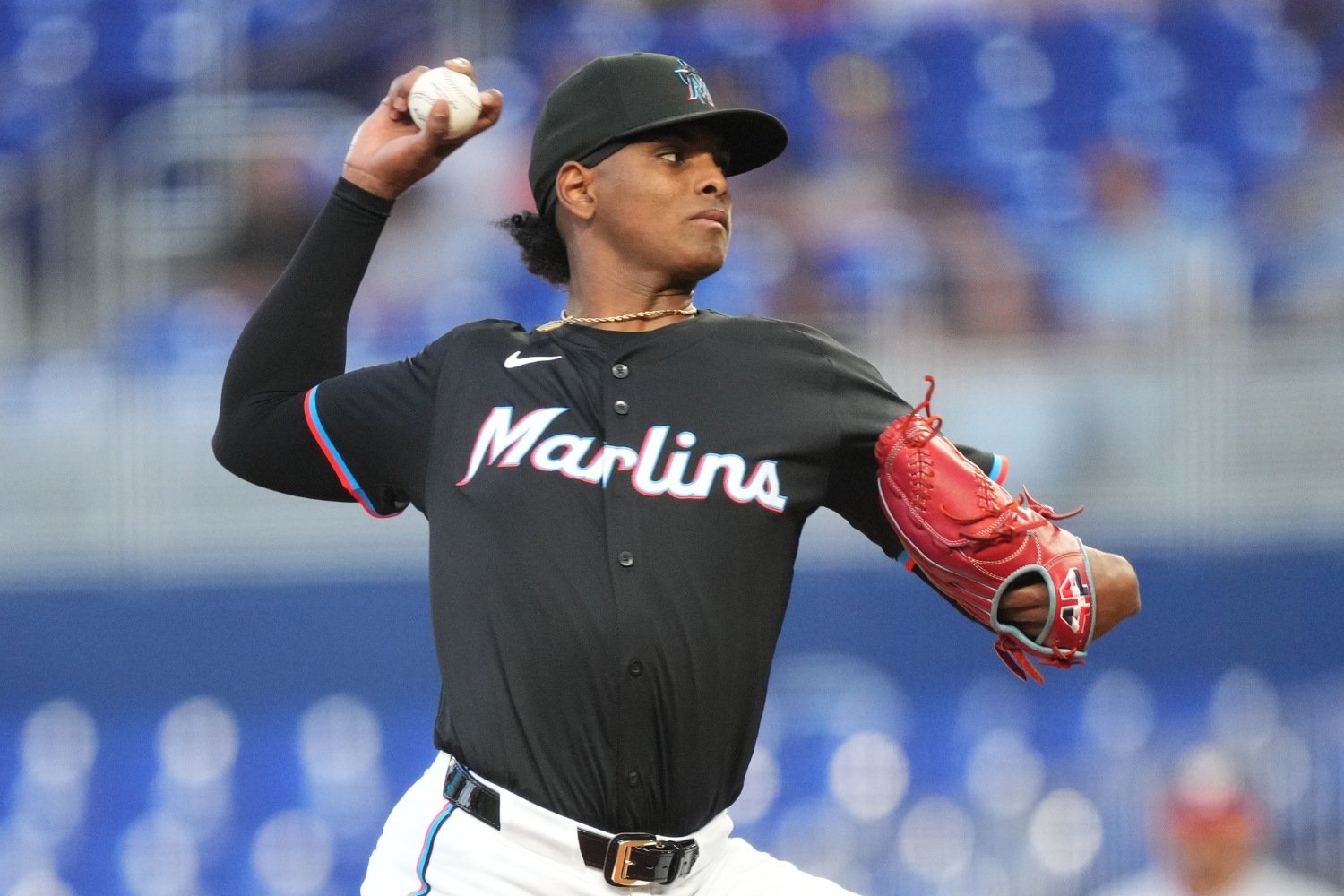 On Wednesday afternoon, the Cubs finally addressed their starting rotation, completing a trade with the Maimi Marlins for right-handed pitcher Edward Cabrera. The Marlins and the Cubs have long been apparent bedfellows, with Chicago almost dealing for Jesús Luzardo last year and Cabrera last summer, and they finally consummated a deal. There will be plenty of discourse on the price, and losing Owen Caissie could come back and hurt the Cubs at some point, but what the Cubs are actually getting in Cabrera is just as important. Cabrera, 27, is a 6-foot-5 right-handed pitcher who signed with the Marlins as an international free agent way in 2015. He gained significant prospect hype, making the Baseball America, Baseball Prospectus and MLB Pipeline Top 100 lists for three straight seasons from 2020-22. However, it took a while for him to stick in the Marlins rotation, due to a combination of control issues and injuries. That changed in 2025, when Cabrera and Marlins pitching coach Daniel Moskos (hired away from the Cubs in Nov. 2024) made a significant change in arm slot, which seemingly unlocked Cabrera's potential. By shifting his arm slot lower, Cabrera created a significant change in his movement profile, giving him significantly more horizontal movement than he had before—and tons of vertical movement on his curveball.. Here's Cabrera's new-look curveball in a game against the Milwaukee Brewers in July. On a 2-2 count, and after a (barely) too-low changeup, Cabrera used his hammer to get the punchout. The added depth and how the pitch plays off his changeup earned a chase on this pitch. FanGraphs's Stuff+ agrees the pitch has gotten better, shape-wise. While it was always strong, sitting at a career 109 on their scale, it jumped to a 119 last year. ZU44b25fWGw0TUFRPT1fVlFOVkJsTlZVbFFBQ1ZOUVVRQUhWQTVXQUZrQUJ3Y0FVVkFOQ1ZVQ0FGWlRWbGRX.mp4 While Cabrera's best pitch now is his curveball, his arm slot change also improved his changeup, taking the shape of that pitch from below-average to plus. Changeups are great for right-handed-pitchers to attack left-handed hitters, and it's always been a staple for him. Here, Cabrera used his changeup with strong arm-side run to strikeout the dangerous Lamonte Wade Jr. WEQyTTJfWGw0TUFRPT1fVUFSVUFGSU1Wd1FBWGxKV1ZRQUhBVklEQUFCVUFRSUFWbGNCVVFNQVVnY0dDRllF.mp4 The Marlins and Cabrera were effectively able to change his pitch mix last season to utilize his arm slot optimally, moving away from his 98-mph fastball and highlighting a sinker-slider combination that would better attack righties. The fireballer can now more effectively attack both sides of the plate, which sows doubt and creates deception. None of this matters if there isn't proof of real applicability attached to those adjustments, but there was plenty of that in 2025. Cabrera posted his best ERA (3.53), FIP (3.83) and xFIP (3.62). One thing that could be easy to miss: none of this resulted in a lower strikeout rate. While his per-inning strikeout rate decreased slightly, because his walk rate was so much lower (13.3% career prior, 8.3% last year), he faced fewer hitters per inning and his per-batter faced rate stayed pretty much the same. It was easily his best season. There are still places to improve. The batted-ball data against Cabrera isn't great. He gives up a lot of hard hit balls and isn't great at limiting barrels. With his stuff, one might hope for better chase rates on pitches outside the zone. The Cubs are a team who love cutting action on fastballs, and adding a cutter to Cabrera's arsenal might also continue to help against lefty batters, while allowing him to use his sinker (which he likely throws a little too often to lefties) less often against them. Cabrera is making progress, but is not a finished project. Beyond some cleanup work, there's another red flag in Cabrera's game: injuries. Cabrera has had a fairly lengthy injury record, and last year was no different, as he missed time twice with elbow-related issues. It's tempting to worry that he's on the verge of needing Tommy John surgery, but while any pitcher is seemingly one throw away from exploding, the risk might not be as severe as it seems. Remember, Cabrera significantly dropped his arm slot last year. Typically, that will result in more stress in the elbow versus the shoulder. We shouldn't ignore these, but it could also be that a new motion created some added soreness as the pitcher got used to the changes. Hopefully for his (and the Cubs') sake, this is a transition to a new mechanical signature, rather than something more serious. The Cubs reviewed his medicals before approving this trade, and they appear to believe he's healthier than Luzardo was a year ago. Moving forward, it's fair to be cautiously optimistic about what the Cubs have acquired. The team has clearly prioritized pitchers with lower arm slots, such as Phil Maton, Hoby Milner and Colin Snider this offseason, and Cabrera will fit that mold. He's young and has plenty of upside. There is clear risk here, because he's never fully established himself as a No. 2 in the rotation, but he has the hallmarks of someone capable of breaking out. He also adds much-needed swing-and-miss stuff, and could form a very fun 1-2 punch with Cade Horton atop the Cubs' rotation for the next three years. What do you think of the Edward Cabrera trade? Are you excited? Do you foresee him establishing himself as a top-of-the-rotation arm in Chicago? Sound off in the comments below!
 -
At least based on the recent scuttle, there does seem to be movement on the Cubs and the top-of-the-market bats. Trading for a cost-controlled SP seems to line up with that. We're still "wait until we see it" stage, but if you wanted one of those four hitters, this feels like how it'd happen.
-
Rogers as well.
-
Looks like Bruce agrees.
-
One Bo Bichette, please!
-
Cerami: Cubs Finalizing Edward Cabrera Trade
Jason Ross replied to ILMindState's topic in Chicago Cubs Talk
This could be me an Owen Caissie. I've been begging the Cubs to draft Owen Caissie since 2020 - they didn't. Then I begged them to trade for Owen Caissie in the Darvish deal...and they did. Then they pulled the rug out from under me right when I thought he was going to be a starter for the Cubs. -
Cerami: Cubs Finalizing Edward Cabrera Trade
Jason Ross replied to ILMindState's topic in Chicago Cubs Talk
That...isn't a bad price. -
Cerami: Cubs Finalizing Edward Cabrera Trade
Jason Ross replied to ILMindState's topic in Chicago Cubs Talk
I just got done diving deep into his stuff. His curve is horsefeathers nasty man. It's a beast. -
Cerami: Cubs Finalizing Edward Cabrera Trade
Jason Ross replied to ILMindState's topic in Chicago Cubs Talk
Then again, based on Bob's off-season good chance Owen Caissie is getting married right now and he isn't even in this trade. -
Cerami: Cubs Finalizing Edward Cabrera Trade
Jason Ross replied to ILMindState's topic in Chicago Cubs Talk
Well, the teams haven't announced it. Cerami broke it - likely someone tipped him off. I would guess the parties here are pretty confident that the medicals will be alright or it'd have been more like the Luzardo/Caissie trade last offseason as opposed to this. -
Cerami: Cubs Finalizing Edward Cabrera Trade
Jason Ross replied to ILMindState's topic in Chicago Cubs Talk
Yes. Especially in the offseason with players who may or may not be in the country. -
Cerami: Cubs Finalizing Edward Cabrera Trade
Jason Ross replied to ILMindState's topic in Chicago Cubs Talk
Sign me up for A, with the belief it's likely probably B. -
Cerami: Cubs Finalizing Edward Cabrera Trade
Jason Ross replied to ILMindState's topic in Chicago Cubs Talk
No, you worded it fine. I was just saying - the Cubs aren't going to trade Taillon at any point. I think he's here for the year. They might move a depth piece like Assad, but someone who's Taillon good probably won't be sold for savings now that they have enough money to sign a bat to almost whatever and stay under the LT. -
Cerami: Cubs Finalizing Edward Cabrera Trade
Jason Ross replied to ILMindState's topic in Chicago Cubs Talk
Hoyer talked ad nauseum about not liking the prices at the deadline for SP's and depth in the rotation. I don't think they're moving Taillon for money if they move Asaad. Nor at the deadline. -
Cerami: Cubs Finalizing Edward Cabrera Trade
Jason Ross replied to ILMindState's topic in Chicago Cubs Talk
I could see it if his market falls apart, but I have a feeling the Blue Jays like him a lot. Also some rumors the Dodgers could jump in on a short-term AAV thing. I suspect that the Cubs are more looking at Bregman and Bichette - hopefully the latter. I think if they got Bichette I'd be over the moon. He fits the team fairly well. -
Cerami: Cubs Finalizing Edward Cabrera Trade
Jason Ross replied to ILMindState's topic in Chicago Cubs Talk
It could be Rojas. That would hurt a bit. Hernandez could fit that mold too. Or even a Southesene type. Hard to tell if this is speculation or reporting as well. -
Cerami: Cubs Finalizing Edward Cabrera Trade
Jason Ross replied to ILMindState's topic in Chicago Cubs Talk
Yeah, I'd guess there isn't anything imminent on the FA front. The Cubs don't feel like a team who jumps the market and jumping the Bichette/Tucker/Bregman/Bellinger quagmire doesn't feel like them. That said, with the game of musical chairs currently, it feels like the team isn't going to sit it out entirely and will make real plays here (I think more on the infielders).