.jpg.900f6d1bc80a5a156f3ba09ea0e4b3d7.jpg)

Jason Ross
-
Posts
8,153 -
Joined
-
Last visited
-
Days Won
74
Content Type
Profiles
Joomla Posts 1
Chicago Cubs Videos
Chicago Cubs Free Agent & Trade Rumors, Notes, & Tidbits
2026 Chicago Cubs Top Prospects Ranking
News
2023 Chicago Cubs Draft Picks
Guides & Resources
2024 Chicago Cubs Draft Picks
The Chicago Cubs Players Project
2025 Chicago Cubs Draft Pick Tracker
2026 Chicago Cubs Draft Tracker: Picks & Bonuses
Blogs
Events
Forums
Store
Gallery
Everything posted by Jason Ross
-
He read my article today and got mad.
-
Chicago Cubs 2026 Top 20 Prospects, No. 10: James Triantos
Jason Ross replied to Jason Ross's topic in Cubs Minor League Talk
I'll admit that Triantos just isn't my favorite prospect and probably hasn't been for a bit. He's alright, but I have a bunch of concerns about his batted ball profile. It's probably not entirely logical either, because I know high contact, high swing guys do this. But the year last year was pretty rough, and it kind of confirmed some of my issues I already had, even if it's not entirely fair. I tried to find a way to punt him out of my personal top-10, though ultimately couldn't find an adequate replacement. That said, not giving up on him, either. Still think there's an MLB guy in there, and I like that swing change. I hadn't even really noticed it until looking into him for this; took some time looking through X/Twitter and so I am probably more hopeful than I've been. That's a clean swing and I like a little added loft into his game. -
Chicago Cubs 2026 Top 20 Prospects, No. 10: James Triantos
Jason Ross posted an article in Minor Leagues
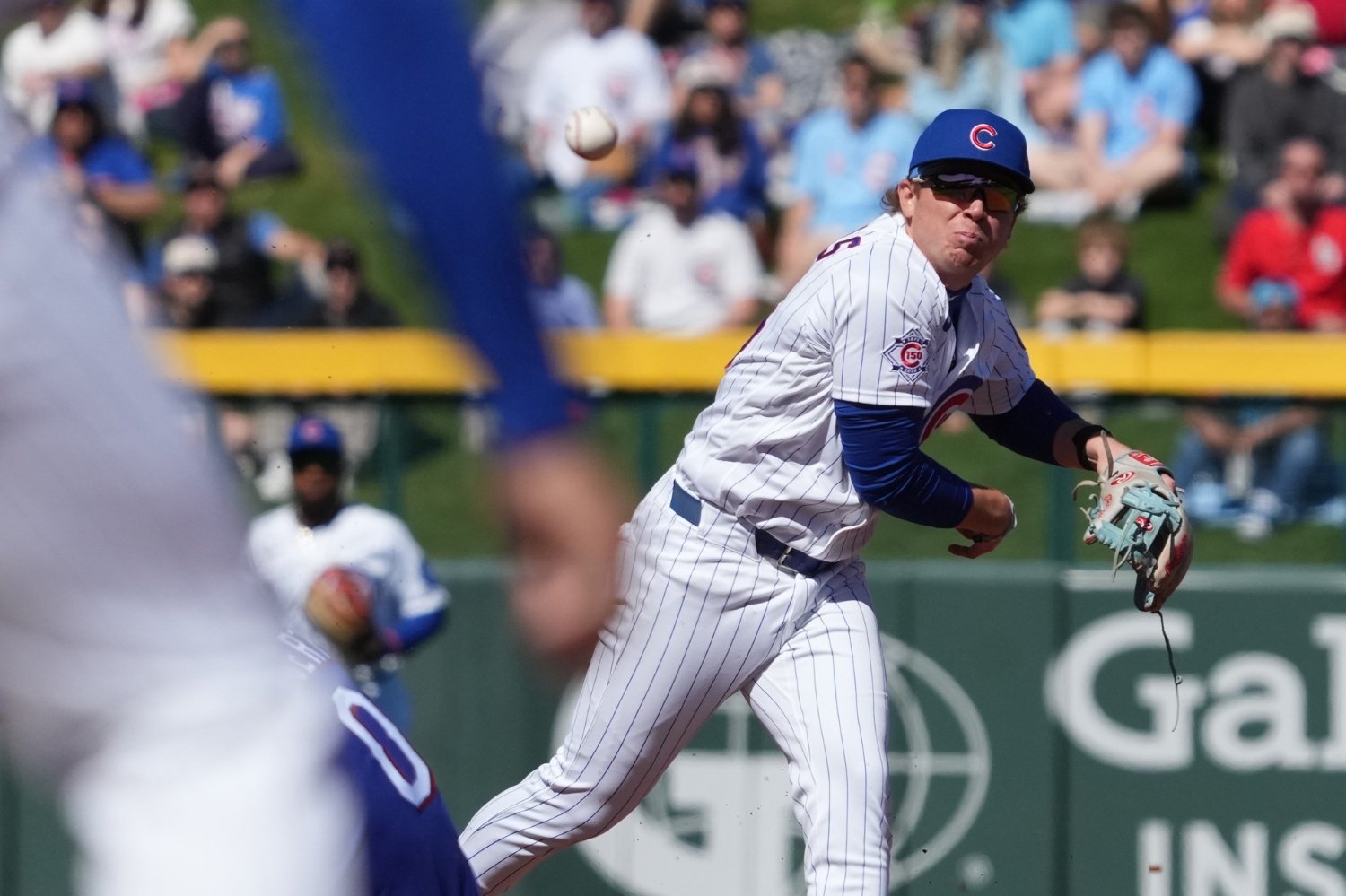 We've already explored the 11th- through 20th-ranked prospects in the Cubs system, as voted on by our North Side Baseball writers, in two installments (Nos. 11-15, and Nos. 16-20). Today, we continue our look at our top-20 by diving deep on our 10th-ranked prospect: infielder James Triantos. #10 - James Triantos (Iowa Cubs, Triple-A) Triantos, 23, saw a full season of Triple-A action in 2025 after a strong 2024. While at Double-A Tennessee, the former second-round pick showed improved power, posting a career-high .137 ISO. Power has been one of the knocks on the infielder's game, so seeing him begin to flash some pop while in Tennessee provided hope that he could marry his contact-oriented approach with just enough pop to create the ultimate version of himself. Sadly, his first extended look at Iowa was not what he or the Cubs had hoped, putting his place in the organization a bit in limbo as we enter the 2026 season. What To Like One thing Triantos has never struggled with is making contact, and a lot of it. Even during his time in Iowa last year in which the player struggled, Triantos only struck out 15% of the time. On top of the low punchout rate, Triantos showcased a 90th-percentile whiff rate and 82nd-percentile zone contact rate. He makes a lot of contact, regardless of whether it's in the zone or out of it. One of the things the diminutive hitter has struggled with has been selectivity. This isn't unique to Triantos; it's something many high-contact hitters need to learn—that not everything you can hit is something you should hit. While the overall numbers didn't really get much better, his swing decisions did ,and that is a positive sign for the future. From the beginning of the season to the end of the year, he lowered his chase rate and his overall swing rate, which is a good thing; he needs to be a little bit choosier at the plate. His bat control is good enough that he's able to get deeper into a count and still make contact. Another thing he does well: he hits the fastball. Triantos's best outcomes were on fastballs last year. His overall wOBA of .312 was disappointing, but a .337 wOBA when making contact with fastballs was better. By being more picky at the plate, he can also hunt these pitches a little more successfully. While you'd love to see his numbers against other types of pitches be better than where they are, getting to the fastball is a good first-step as he continues to grow as a hitter. What To Work On: While Triantos clearly can hit the ball often, his quality of contact is just not where it needs to be right now. While some of these things can be explained away as the cost of a contact-oriented approach, he's never going to survive at the next level if he doesn't hit the ball with a bit more authority. On the 2025 season, James had just a 76 wRC+ against Triple-A pitching. For any organization to think he's ready, he's going to need to show (at least) the ability to dominate at the highest level of the minors. Sadly, because he will offer limited defensive ability (despite his versatility), his bat is going to have to be a bit stronger. One reason why his batted-ball data is so poor could be a leg injury suffered early in the season. Triantos has a pretty quiet swing and doesn't generate a lot of power to begin with, but if you cut a leg out from under him, it's going to be even worse. We shouldn't attribute everything to this, but it could be a mitigating factor, and something to keep in the back of our minds. What's Next: Another full year of hitting in Iowa is on tap, barring his turning a corner. While Triantos once looked like a virtual lock to make an MLB roster one day due to his versatility and bat-to-ball skills, his 2025 season threw that into question. The good news is that he's still quite young, still has versatility, and if he can show an offensive game 10% or so better than league average, he'll quickly put his name back onto broader prospect radars. One thing to keep an eye on: there's video out there of what looks like an overhauled swing entering this spring. We'll have to see what he looks like in games and what this means, but he appears to be a little less upright, and his hands seem to have been raised. It's a setup and swing geared toward a little extra loft, as well. Compare the video below with the video above, from August 2025. I don't think Triantos profiles as a big-league regular. He's probably best at second base (despite a plus arm), but he's not particularly great at any position. His arm is strong enough for third, but he isn't a particularly adroit fielder. His legs are good enough for center field, but he hasn't found a home there, and against the best pitching in the world, his bat probably doesn't have enough oomph to be a starter on a good team. With that said, he's got a great chance of being "just good enough" to play second,. third and anywhere in the outfield, while flashing enough contact ability and speed that if you squint hard and believe even harder, he can offer sneaky value. There's still upside in Triantos, even if 2025 didn't really go to plan. What do you think of James Triantos? Do you like his new mechanics? What are your projections? Let us know in the comment section below!
 -
Image courtesy of © Rick Scuteri-Imagn Images We've already explored the 11th- through 20th-ranked prospects in the Cubs system, as voted on by our North Side Baseball writers, in two installments (Nos. 11-15, and Nos. 16-20). Today, we continue our look at our top-20 by diving deep on our 10th-ranked prospect: infielder James Triantos. #10 - James Triantos (Iowa Cubs, Triple-A) Triantos, 23, saw a full season of Triple-A action in 2025 after a strong 2024. While at Double-A Tennessee, the former second-round pick showed improved power, posting a career-high .137 ISO. Power has been one of the knocks on the infielder's game, so seeing him begin to flash some pop while in Tennessee provided hope that he could marry his contact-oriented approach with just enough pop to create the ultimate version of himself. Sadly, his first extended look at Iowa was not what he or the Cubs had hoped, putting his place in the organization a bit in limbo as we enter the 2026 season. What To Like One thing Triantos has never struggled with is making contact, and a lot of it. Even during his time in Iowa last year in which the player struggled, Triantos only struck out 15% of the time. On top of the low punchout rate, Triantos showcased a 90th-percentile whiff rate and 82nd-percentile zone contact rate. He makes a lot of contact, regardless of whether it's in the zone or out of it. One of the things the diminutive hitter has struggled with has been selectivity. This isn't unique to Triantos; it's something many high-contact hitters need to learn—that not everything you can hit is something you should hit. While the overall numbers didn't really get much better, his swing decisions did ,and that is a positive sign for the future. From the beginning of the season to the end of the year, he lowered his chase rate and his overall swing rate, which is a good thing; he needs to be a little bit choosier at the plate. His bat control is good enough that he's able to get deeper into a count and still make contact. Another thing he does well: he hits the fastball. Triantos's best outcomes were on fastballs last year. His overall wOBA of .312 was disappointing, but a .337 wOBA when making contact with fastballs was better. By being more picky at the plate, he can also hunt these pitches a little more successfully. While you'd love to see his numbers against other types of pitches be better than where they are, getting to the fastball is a good first-step as he continues to grow as a hitter. What To Work On: While Triantos clearly can hit the ball often, his quality of contact is just not where it needs to be right now. While some of these things can be explained away as the cost of a contact-oriented approach, he's never going to survive at the next level if he doesn't hit the ball with a bit more authority. On the 2025 season, James had just a 76 wRC+ against Triple-A pitching. For any organization to think he's ready, he's going to need to show (at least) the ability to dominate at the highest level of the minors. Sadly, because he will offer limited defensive ability (despite his versatility), his bat is going to have to be a bit stronger. One reason why his batted-ball data is so poor could be a leg injury suffered early in the season. Triantos has a pretty quiet swing and doesn't generate a lot of power to begin with, but if you cut a leg out from under him, it's going to be even worse. We shouldn't attribute everything to this, but it could be a mitigating factor, and something to keep in the back of our minds. What's Next: Another full year of hitting in Iowa is on tap, barring his turning a corner. While Triantos once looked like a virtual lock to make an MLB roster one day due to his versatility and bat-to-ball skills, his 2025 season threw that into question. The good news is that he's still quite young, still has versatility, and if he can show an offensive game 10% or so better than league average, he'll quickly put his name back onto broader prospect radars. One thing to keep an eye on: there's video out there of what looks like an overhauled swing entering this spring. We'll have to see what he looks like in games and what this means, but he appears to be a little less upright, and his hands seem to have been raised. It's a setup and swing geared toward a little extra loft, as well. Compare the video below with the video above, from August 2025. I don't think Triantos profiles as a big-league regular. He's probably best at second base (despite a plus arm), but he's not particularly great at any position. His arm is strong enough for third, but he isn't a particularly adroit fielder. His legs are good enough for center field, but he hasn't found a home there, and against the best pitching in the world, his bat probably doesn't have enough oomph to be a starter on a good team. With that said, he's got a great chance of being "just good enough" to play second,. third and anywhere in the outfield, while flashing enough contact ability and speed that if you squint hard and believe even harder, he can offer sneaky value. There's still upside in Triantos, even if 2025 didn't really go to plan. What do you think of James Triantos? Do you like his new mechanics? What are your projections? Let us know in the comment section below! View full article
-
Yeah, Clement feels like a product of the moment. He had some memorable moments in the playoffs and he got picked that way.
-
2025-2026 Offseason Top Prospects Lists
Jason Ross replied to CaliforniaRaisin's topic in Cubs Minor League Talk
Yeah, I think I can understand why someone may like Conrad. He's going to more likely stick at a premium position where as Rojas is going to most likely move off of it. Rojas isn't coming off a great first look at Double-A either. Looking at recent Cub first rounders from college they've made their way to Double-A quickly, so while Conrad hasn't taken a swing yet, if he follows that pathway, good chance the two intersect there. I'd have Rojas above Conrad right now. I also am very encouraged with his swing adjustments. But I also expect there's a good chance by seasons end Conrad is going to be the top prospect in the system by easy consensus. -
Chicago Cubs 2026 Top Prospect Rankings: #11-15
Jason Ross replied to Jason Ross's topic in Cubs Minor League Talk
Yeah, I have some love for Will Sanders. Really, if he can turn into a Colin Rea who doesn't need to go across the seas to find his spot in baseball, I think that's a great outcome. And not a bad one for him, either. Rea is a useful pitcher on an MLB team and I think one that goes a little underrated either as a member of the rotation or BP. I'm hoping he can make it, he's a fun little arm and I think he's someone who I'd like to see get some run with the Cubs someday -
Chicago Cubs 2026 Top Prospect Rankings: #11-15
Jason Ross replied to Jason Ross's topic in Cubs Minor League Talk
It could. HS prep arms are by far the riskiest thing you can pick due to injury and development. The Cubs had been taking prep arms like JP Wheat, Nazier Mule, etc at times and none of those guys are really hitting. They have moments but they haven't really figured it all out. College arms are less malleable in that they don't have as much perceived ceiling but they are at lot closer to what they will be. I think with NIL, we're going to see less prep players in general though. Before it was "get paid today, or maybe in three years" where as now it's "I can get paid for three years and then get paid again".- 6 replies
-
- 1
-

-
- will sanders
- kaleb wing
- (and 3 more)
-
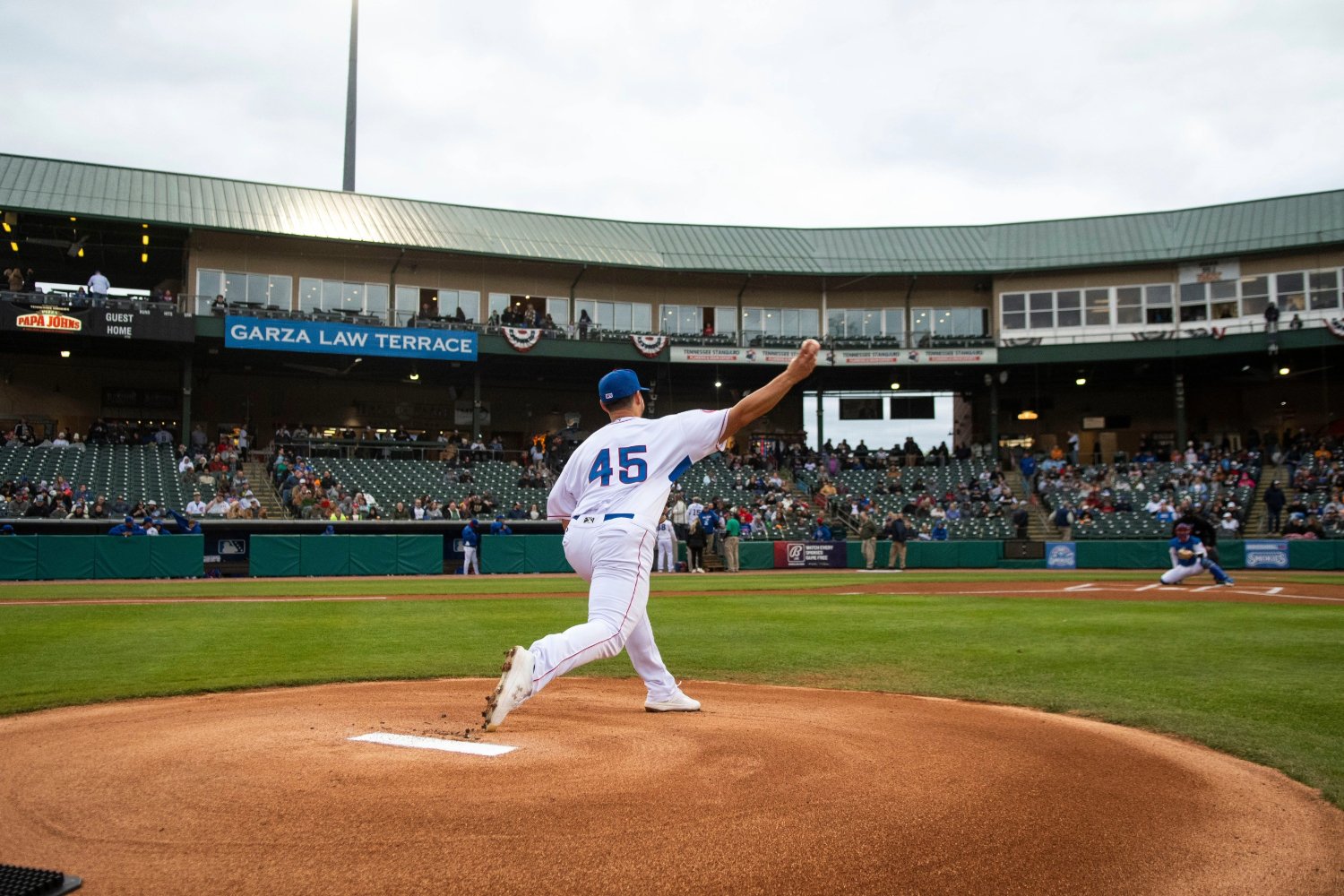 While the Chicago Cubs' minor-league depth has taken a hit with recent graduations and trades, there are still a handful of interesting prospects to be found outside the top 10 names on our list. You can find Part 1 (prospects #16-20) right here. #15: Will Sanders (Triple-A) Will Sanders may not be the most exciting prospect in the Cubs' system, but sometimes players like him can fly under the radar because the things they do well don't immediately stand out. Our 15th-ranked prospect is not a stuff monster, nor does he induce a ton of swing-and-miss. What he does offer is steady pitchability and a kitchen-sink approach. Baseball America's scouting report has Sanders sitting 92-94 mph (touching 97) on his fastball, but with below-average shape. Sanders also throws a splitter, a slider, and a curveball. The Cubs pitcher of whom Sanders most reminds me is Colin Rea. That's not a bad thing—quite the opposite, really. Rea doesn't overwhelm hitters with stuff, but confuses them by throwing enough pitches that separate themselves to stay one step ahead of his opposition. That's probably the path forward for Sanders: continuing to refine a deep repertoire of good-enough offerings and moving between long relief and the rotation as needed. Those types of arms can be your saving grace in the dog days of a 162-game season. By the end of last season, Cubs fans were clamoring for more Colin Rea. As the team stumbled down the stretch with pitching fatigue and injuries, Rea was ever available, steady and capable. While Sanders may not excite anyone, if he can continue to grow in a similar fashion, he can carve out a long and valuable career. #14: Kaleb Wing (Scotts Valley High School) Kaleb Wing is a different type of pitcher than we've seen the Cubs draft recently: an over-slot, high-upside prep arm. Lanky and projectable, the right-handed pitcher has both stuff and pedigree. He's already hitting 94-96 mph (though sitting 90-92 on average) on the gun as a teenager, and his father pitched in the White Sox organization. Wing saw his draft stock soar in the lead up to the draft—enough to impress the Cubs' brass, who gave him a $1.5 million signing bonus. According to BA, Wing already throws four pitches. It'll be interesting to see how the Cubs continue to develop that arsenal. Wing has yet to make his professional debut, but should see time with Myrtle Beach in 2026. He's probably a year or two away from reaching the upper tier of Cubs prospect lists, but it's clear that the organization likes the pitcher a lot. #13: Angel Cepeda (Myrtle Beach) Angel Cepeda had an uneven season with the Myrtle Beach Pelicans, but ended the campaign the way you'd hope to see a prospect do so: on fire. Cepeda is another former six-figure international free-agent signing and had a strong year overall, posting a 116 wRC+ in his stop at Low-A, but those numbers bury the lede. Over his final 132 plate appearances, Cepeda posted a blistering 157 wRC+, with a .331 batting average, four home runs, six doubles and two triples. Perhaps the best part of that torrid stretch was that the right-handed hitter saw a significant reduction in strikeouts, dropping from a 33.7% strikeout rate before the warm-up to a 26.6% rate after. One of the biggest green-flag indicators a hitter can wave is to make more contact, and Cepeda was able to do that as a 19-year-old in a very tough hitting environment. Obviously, there are still things to work on, but Cepeda offers a bit of a projectable frame and the kind of bat that could survive at third base. While he's played a lot of shortstop, it's likely that the 6-foot-1 teenager will eventually have to move off the position as he adds weight. He uses a pretty simple setup at the plate, so if his pitch recognition skills continue to get better, he shouldn't have many flaws mechanically. It shouldn't surprise anyone if, at the end of the season, Cepeda jumps into a lot of internal top-five rankings. #12: Cole Mathis (Low-A) Cole Mathis was supposed to be one of the fastest movers from the 2024 Cubs draft class, but sadly, that has not been the case. Mathis had some of the best batted-ball data from his class, and had already shown success in the Cape Cod League with wooden bats, so the hope was that as he transitioned from a two-way player at the College of Charleston, he would take off immediately in pro ball. Instead, 2025 was a year where Mathis struggled with injury (as he came off Tommy John surgery) and to be productive in the lineup. While he did post a 121 wRC+ during his time in Myrtle Beach, his .221 batting average left a lot to be desired. Also, when put in the context that Low-A is usually a level college hitters cruise through (Kane Kepley,. the Cubs' 2025 second-round pick whose bat was not considered his calling card, posted a 180 wRC+ there), Mathis just didn't crush the level like you'd have thought he could. This caused Mathis to get some run during the Arizona Fall League, where he posted a more encouraging .280/.439/.400 line—though that was still somewhat lacking in the power department. The hope with Mathis is that the elbow injury and recovery sapped his power, because the approach was clearly there. Mathis walked 13% of the time at Myrtle Beach and had 15 free passes while in the AFL. If he can show the power that his batted ball data in college suggested he may be able to produce, he can be someone who refills his prospect balloon with helium in the 2026 campaign, If he doesn't show that, however, he'll have to hope his glove improves rapidly at the hot corner. #11: Brandon Birdsell (Triple-A) Brandon Birdsell entered the 2025 season with hopes of making his MLB debut, but those were quickly dashed. Despite being a non-roster invitee to camp, he was placed on the 60-day IL before he ever really got going. He was eventually able to get back on the mound in June, pitching a few times in the Complex league and then moving his way up to Iowa, making his season debut at Triple-A in mid-July. Things seemed back on track for the righty, but was again shutdown after a start on August 7. By the end of the month, the team announced the devastating news: Tommy John surgery was on tap for the Cubs' pitching prospect. Injury is nothing new to the right handed pitcher, as in 2021, a rotator cuff injury dropped his draft status and Birdsell opted to return to Texas Tech for another year. Prior to this, the righty had Tommy John once prior, requiring the surgery as a sophomore in high school. A long injury history is never a great thing and all of these were reasons the talented pitcher was even available to be selected by the Cubs to begin with. For 2026, it's pretty unlikely we'll see him take a mound. While it's unknown whether or not he required a full UCL reconstruction or a a brace (similar to Justin Steele), it's probable that 2026 will be a full-on rehab season for the 25-year-old, with the prevailing hope that he can rebound in 2027. Coming back from a second TJS puts his future in doubt; he was never an overpowering guy, but always got results that were better than you'd expect due to a funky delivery. He was a fun, under-the-radar type, but his future now is pretty murky. If he can bounce back with authority, he won't be so old that it'd be impossible for the organization to find a pathway to the majors for him. But he'll have a lot to prove once healthy. What do you think of this batch of prospects? Which on is your favorite? Do you think someone missed the cut? Let us know in the comment section below!
 -
Image courtesy of © Angelina Alcantar/News Sentinel / USA TODAY NETWORK While the Chicago Cubs' minor-league depth has taken a hit with recent graduations and trades, there are still a handful of interesting prospects to be found outside the top 10 names on our list. You can find Part 1 (prospects #16-20) right here. #15: Will Sanders (Triple-A) Will Sanders may not be the most exciting prospect in the Cubs' system, but sometimes players like him can fly under the radar because the things they do well don't immediately stand out. Our 15th-ranked prospect is not a stuff monster, nor does he induce a ton of swing-and-miss. What he does offer is steady pitchability and a kitchen-sink approach. Baseball America's scouting report has Sanders sitting 92-94 mph (touching 97) on his fastball, but with below-average shape. Sanders also throws a splitter, a slider, and a curveball. The Cubs pitcher of whom Sanders most reminds me is Colin Rea. That's not a bad thing—quite the opposite, really. Rea doesn't overwhelm hitters with stuff, but confuses them by throwing enough pitches that separate themselves to stay one step ahead of his opposition. That's probably the path forward for Sanders: continuing to refine a deep repertoire of good-enough offerings and moving between long relief and the rotation as needed. Those types of arms can be your saving grace in the dog days of a 162-game season. By the end of last season, Cubs fans were clamoring for more Colin Rea. As the team stumbled down the stretch with pitching fatigue and injuries, Rea was ever available, steady and capable. While Sanders may not excite anyone, if he can continue to grow in a similar fashion, he can carve out a long and valuable career. #14: Kaleb Wing (Scotts Valley High School) Kaleb Wing is a different type of pitcher than we've seen the Cubs draft recently: an over-slot, high-upside prep arm. Lanky and projectable, the right-handed pitcher has both stuff and pedigree. He's already hitting 94-96 mph (though sitting 90-92 on average) on the gun as a teenager, and his father pitched in the White Sox organization. Wing saw his draft stock soar in the lead up to the draft—enough to impress the Cubs' brass, who gave him a $1.5 million signing bonus. According to BA, Wing already throws four pitches. It'll be interesting to see how the Cubs continue to develop that arsenal. Wing has yet to make his professional debut, but should see time with Myrtle Beach in 2026. He's probably a year or two away from reaching the upper tier of Cubs prospect lists, but it's clear that the organization likes the pitcher a lot. #13: Angel Cepeda (Myrtle Beach) Angel Cepeda had an uneven season with the Myrtle Beach Pelicans, but ended the campaign the way you'd hope to see a prospect do so: on fire. Cepeda is another former six-figure international free-agent signing and had a strong year overall, posting a 116 wRC+ in his stop at Low-A, but those numbers bury the lede. Over his final 132 plate appearances, Cepeda posted a blistering 157 wRC+, with a .331 batting average, four home runs, six doubles and two triples. Perhaps the best part of that torrid stretch was that the right-handed hitter saw a significant reduction in strikeouts, dropping from a 33.7% strikeout rate before the warm-up to a 26.6% rate after. One of the biggest green-flag indicators a hitter can wave is to make more contact, and Cepeda was able to do that as a 19-year-old in a very tough hitting environment. Obviously, there are still things to work on, but Cepeda offers a bit of a projectable frame and the kind of bat that could survive at third base. While he's played a lot of shortstop, it's likely that the 6-foot-1 teenager will eventually have to move off the position as he adds weight. He uses a pretty simple setup at the plate, so if his pitch recognition skills continue to get better, he shouldn't have many flaws mechanically. It shouldn't surprise anyone if, at the end of the season, Cepeda jumps into a lot of internal top-five rankings. #12: Cole Mathis (Low-A) Cole Mathis was supposed to be one of the fastest movers from the 2024 Cubs draft class, but sadly, that has not been the case. Mathis had some of the best batted-ball data from his class, and had already shown success in the Cape Cod League with wooden bats, so the hope was that as he transitioned from a two-way player at the College of Charleston, he would take off immediately in pro ball. Instead, 2025 was a year where Mathis struggled with injury (as he came off Tommy John surgery) and to be productive in the lineup. While he did post a 121 wRC+ during his time in Myrtle Beach, his .221 batting average left a lot to be desired. Also, when put in the context that Low-A is usually a level college hitters cruise through (Kane Kepley,. the Cubs' 2025 second-round pick whose bat was not considered his calling card, posted a 180 wRC+ there), Mathis just didn't crush the level like you'd have thought he could. This caused Mathis to get some run during the Arizona Fall League, where he posted a more encouraging .280/.439/.400 line—though that was still somewhat lacking in the power department. The hope with Mathis is that the elbow injury and recovery sapped his power, because the approach was clearly there. Mathis walked 13% of the time at Myrtle Beach and had 15 free passes while in the AFL. If he can show the power that his batted ball data in college suggested he may be able to produce, he can be someone who refills his prospect balloon with helium in the 2026 campaign, If he doesn't show that, however, he'll have to hope his glove improves rapidly at the hot corner. #11: Brandon Birdsell (Triple-A) Brandon Birdsell entered the 2025 season with hopes of making his MLB debut, but those were quickly dashed. Despite being a non-roster invitee to camp, he was placed on the 60-day IL before he ever really got going. He was eventually able to get back on the mound in June, pitching a few times in the Complex league and then moving his way up to Iowa, making his season debut at Triple-A in mid-July. Things seemed back on track for the righty, but was again shutdown after a start on August 7. By the end of the month, the team announced the devastating news: Tommy John surgery was on tap for the Cubs' pitching prospect. Injury is nothing new to the right handed pitcher, as in 2021, a rotator cuff injury dropped his draft status and Birdsell opted to return to Texas Tech for another year. Prior to this, the righty had Tommy John once prior, requiring the surgery as a sophomore in high school. A long injury history is never a great thing and all of these were reasons the talented pitcher was even available to be selected by the Cubs to begin with. For 2026, it's pretty unlikely we'll see him take a mound. While it's unknown whether or not he required a full UCL reconstruction or a a brace (similar to Justin Steele), it's probable that 2026 will be a full-on rehab season for the 25-year-old, with the prevailing hope that he can rebound in 2027. Coming back from a second TJS puts his future in doubt; he was never an overpowering guy, but always got results that were better than you'd expect due to a funky delivery. He was a fun, under-the-radar type, but his future now is pretty murky. If he can bounce back with authority, he won't be so old that it'd be impossible for the organization to find a pathway to the majors for him. But he'll have a lot to prove once healthy. What do you think of this batch of prospects? Which on is your favorite? Do you think someone missed the cut? Let us know in the comment section below! View full article
- 6 replies
-
- 1
-
-
- will sanders
- kaleb wing
- (and 3 more)
-
Everyone knew Imanaga would give up home runs since he came over 2+ years ago; it's what happens when you throw fastballs up. If you miss just a little they go far. This isn't a newsflash. It's like being upset if PCA struck out twice in a ST game; he's going to do that a bunch this season. These are "water is wet" comments. Shota will give up home runs, even more so during ST in the desert dry air. Even if he's closer to 2024 Shota, he's going to give up more HRs than others. It's apart of his game. It's a feature and a bug. His velocity is back. That's all that matters right now. We don't have to act like a player is "awful" because he is having rough ST numbers. He's much healthier, the arm angle is up and the velocity is up. That's good news. A bunch of those HRs will turn into FBs especially in the cold weather.
-
It's Spring. Kyle Tucker had something like 1 hit and then went bananas in April. We don't need to do this every time an established MLB player has a not great outing in the spring. He averaged 92.7mph. That's really all that mattered.
-
Its unlikely he will have enough juice to replace Nico next year at the start. He was pretty raw in Tennessee last year, so he's probably going to need to spend 3 months there at minimum to make sure it's not a hot streak (unless he's bananas good). He might see MLB in 2027 but it won't really be as Nico's replacement. Instead that will be Shaw.
-
Also I'm not a "spring training results matter" guy but Jefferson Rojas is really trying to get me to consider changing that. Hes looked incredibly comfortable this off-season. And seeing that he's made the pre-pitch changes it gives me hope for what he can do in Double-A.
-
Ben Brown's sinker is now getting classified as such by Savant. It's also sitting at a near identically velo reading as his fastball. That's a pretty heavy sinker. Also, he snuck in a real changeup today! Just one, but hello!
-
Yeah, like I said, it's possible, but not probable for April. I do suspect they will want some starts in Iowa.
-
Justin Steele threw a bullpen yesterday and today, was medically cleared by team doctors. Sounds like he's officially on the road to a comeback. And with a month to go, I think it's possible (not probable) he could be back in April.
-
2026 MLB Draft
Jason Ross replied to CaliforniaRaisin's topic in MLB Draft, International Signings, Amateur Baseball
UCLA is stupid good this year. Jeeze. -
Yes. I think Snider at 95mph is almost a guarantee add. That puts him on the inside track for "Brad Keller, 2026" (though not *as* good).
-
Colin Snider hitting 94.7mph
-
2026 MLB Draft
Jason Ross replied to CaliforniaRaisin's topic in MLB Draft, International Signings, Amateur Baseball
Jaxon Jelkin is absolutely dealing today for Kentucky. 6IP, 6K, 1BB, 1H so far. Under 70 pitches through 6. Not only do we know the Cubs cannot resist a Jaxon, his low arm slot is Cub-coded. -
Most others are right on what they normally do, and a few like Jamo have had below-average velocity. The gun is likely fine. A good reminder that the Cubs are on a second season, and a first full-offseason with Tyler Zombro and a stronger connection to Tread Athletics, and Zombro has been given increased duties and roles within the organization as a whole pitching wise. Also the Cubs haven't only played at Sloan. I think the readings are probably fine.
-
Chicago Cubs 2026 Top Prospect Rankings: #16-20
Jason Ross replied to Jason Ross's topic in Cubs Minor League Talk
I love Southisene, but I have to see some more power. He can probably find a career as a 2b with elite approach if he can hit five home runs, but right now, he's yet to hit one professionally and that's a bit of an issue. He's super fun and last year when he and Kepley were going bananas it was a fun top of the lineup. I just hope he can find that power because I want to love him more. -
Chicago Cubs 2026 Top Prospect Rankings: #16-20
Jason Ross replied to Jason Ross's topic in Cubs Minor League Talk
Appreciate it! It feels good for there to be a lot of baseball to talk about again. I'm really excited about the season. Plus I've been able to upgrade my PC with an extra vertical monitor and a few other upgrades, so any excuse to use my new toys is one I can get behind right now.- 7 replies
-
- 2
-
-
- erian rodriguez
- ty southisene
- (and 2 more)
-
His Triple-A numbers were very split-heavy and in the direction you'd expect.