

.jpg.900f6d1bc80a5a156f3ba09ea0e4b3d7.jpg)

Jason Ross
-
Posts
8,154 -
Joined
-
Last visited
-
Days Won
74
Content Type
Profiles
Joomla Posts 1
Chicago Cubs Videos
Chicago Cubs Free Agent & Trade Rumors, Notes, & Tidbits
2026 Chicago Cubs Top Prospects Ranking
News
2023 Chicago Cubs Draft Picks
Guides & Resources
2024 Chicago Cubs Draft Picks
The Chicago Cubs Players Project
2025 Chicago Cubs Draft Pick Tracker
2026 Chicago Cubs Draft Tracker: Picks & Bonuses
Blogs
Events
Forums
Store
Gallery
Everything posted by Jason Ross
-
I'm unsure of what 1b experiment you think Owen Caissie has ever had; he's logged zero innings at 1b in his MiLB career He's played more CF than he has 1b..People have suggested down the road he might be a 1b, but he's not a 1b yet. With that said, Cody Bellinger is more than capable of playing 1b so sitting Busch just means Bellinger slides to 1b and Caissie takes RF. I don't think sitting on the bench even for a few weeks at the end of the year matters though. PCA isn't worse off for it, neither is Canario. 20 or so PA's don't make differences. So even if Caissie started 4 times, the experience would likely be no better or worse for him long term.
-
They have done it a lot at the MiLB level with these guys. Did it with PCA last year in a playoff run. Calling up Caissie, giving him 4-6 starts? Feels like something they'd do.
-
Oh I know! I just wanted to clarify.
-
I'm a fan of letting someone, even for two weeks, just see the MLB lifestyle. You meet your future teammates in a non-pressure situation. You see what MLB pitching is like. I doubt it changes much, and for his career, will almost assuredly be meaningless, but I think there's probably benefit to it. Especially someone like Caissie who is raking and has been for 190 PA's now. Ultimately, like I said, I don't think it changes what Owen Caissie is or isn't as a professional, so however the Cubs handle it is whatever.
-
I mean, we're in the last two weeks. There's like 4 series left. Every day PA's right now probably don't exist, but they're not important. His career trajectory isn't going to be any different because he got 20 more PA's. The Cubs aren't going to the playoffs. You can sit Happ and Bellinger and Busch a few games. They've played a full season...we know what they are. Give Caissie a taste of the MLB. Let him get used to the MLB life. Let him see what 20 PA's of MLB pitching looks like. There's literally zero harm right now. And if he doesn't get it? There's no harm there either. Much like the above, there's no reason to believe his career trajectory is going to change because of it. But it's probably beneficial for him to get a taste.
-
I wrote one of those articles, and it feels like you're taking the wrong things away from it. There isn't a bigger Owen Caissie champion on the planet than me...I've been yelling off rooftops about him since the 2020 draft (before he was selected by San Diego and well before he was a Cub prospect). Caissie is a really good prospect and I think has been somewhat underrated by many. Caissie has a .380 wOBA since MiLB ASB. He's pulling the ball more. He's hitting in the air more. He's hitting for more power. Contact rates aren't great, but probably expected with a shift of approach and will probably trend up as he gets more comfortable bridging the old and the new. He's probably the most exciting power bat the Cubs have had in their system in the last 7-8 years. We should probably expect him to struggle on his initial call up because everyone is struggling right now. The best prospects on the planet have sucked for a while upon callups. But that's not really being negative so much as being realistic. Given time and patience, we've seen PCA go from unbearable to watch at the plate to being legitimately good. Caissie will likely need that himself. But might as well bring him up now and let him start processing.
-
Minor League Discussion & Boxes, 9-15-24
Jason Ross replied to CaliforniaRaisin's topic in Cubs Minor League Talk
Injuries will occur. Figure, Matt Shaw needs one injury to either: 1. Nico Hoerner 2. Dansby Swanson 3. Isaac Parades And he's going to get a starting spot for a few weeks or a month+. Not necessarily at the position the player is hurt, but they'd shift things around to give him a spot. Same for Owen Caissie. If Bellinger (if he opts in) or his replacement, or Happ, or Busch get dinged up, he's the next guy. Someone is getting hurt for a few weeks and they'll get their chance. That's all you really need. PCA managed to bully his way into 110 games (and will get 120 or more under his belt), and will probably finish with 400 PA's this year and the Cubs had a full outfield. Shaw and Caissie can find 250-300 PA's next year. I don't think the Cubs will hurt for the ability to get these guys acclimated and space. -
Three Iowa Cubs Hitters With Something To Prove By Season's End
Jason Ross posted an article in Minor Leagues
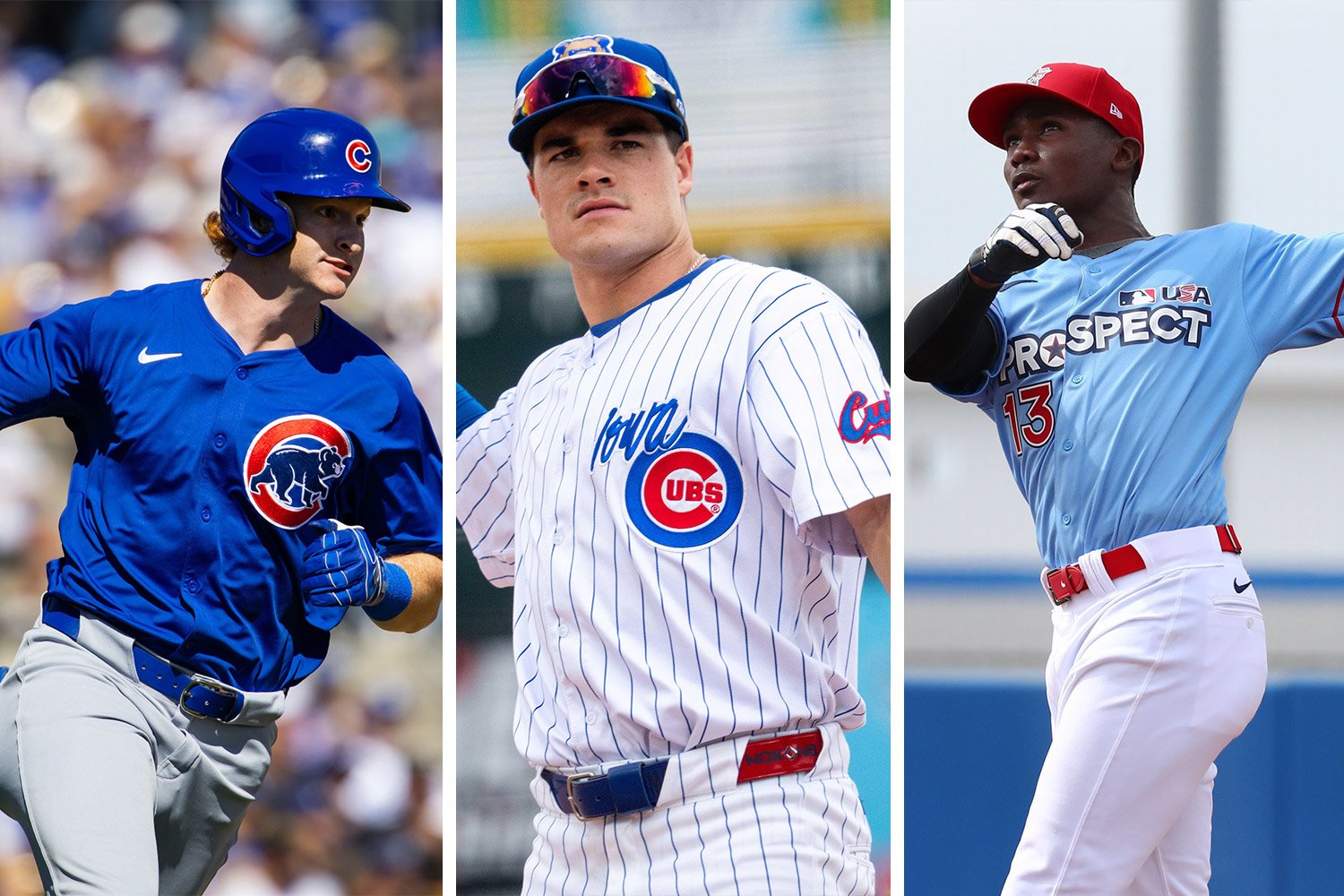 Overall, the Cubs have had a nice year from a hitting prospect point of view. Pete Crow-Armstrong is finding his footing as a solid MLB player (if not more with the progress in his offensive game), and down on the farm, most of the Cubs best-and-brightest have been shades of "good" to "great" on the season on the whole. Even newly drafted players like Cam Smith have shown out. However, despite that, the last few weeks can be difference makers for a few prospects in Iowa regarding how their 2025 starts. Having something to prove isn't always bad or good; these prospects may need to show continued development, ingratiate themselves at a new level, or show a spark down the stretch. These three weeks don't replace the entire year but would allow these prospects to end the year on a high note while forming a foundation for their 2025 years. Owen Caissie, OF (Triple-A) As of writing this article, Owen Caissie remains a member of the Iowa Cubs, but there's belief that he could be called up before action on Friday. Regardless, the outfielder has an important few weeks leading up to the end of the season. Caissie, since the MiLB All-Star break, has begun to pull the ball more (over 43% of the time), has hit the ball in the air more (an increase of over 10% with a 5% increase in launch angle), and these have seemingly resulted in a large increase in his isolated power. There has been a loss of contact rate over that time, though, so things aren't perfect, but we're starting to see the power project meet the results. Regarding who Caissie is as a prospect, it's starting to feel like we're rounding third and headed home regarding who the outfielder is as a total package. The left-handed slugger with a strong few weeks (either at Iowa or Chicago) gives the Cubs even more to think about than he's already done in 2024. While I think it's fair to assume that Caissie will struggle upon an initial call-up to Chicago (as we have seen many of the best prospects across baseball do), a solid first impression and good data would give the team positive vibes heading into the next season. I highly doubt any of these results will result in the Cubs feeling so confident that he's handed a DH or right field spot on Opening Day without the Cubs looking to address either position (if Bellinger opts out) outside the organization. Still, with a good last few weeks, it wouldn't be shocking to see Caissie as the "next man up" in the vein of Ben Brown or Pete Crow-Armstrong if an injury would occur early in the season to an outfielder or Michael Busch. Owen Caissie is starting to round himself out as a power hitter, and a few more weeks of data could go a long way into helping him see Chicago sooner rather than later on a permanent basis. Matt Shaw, 2B/3B (Triple-A) Matt Shaw is starting to settle into Iowa after initial struggles. He's posted a .403 wOBA over his last 30 days at his new home, with a solid 75% contact rate, a near 15% barrel rate, and an in-zone whiff rate of only 16%. He's posting a .236 ISO over that span and a 10% walk rate, culminating in a wRC+ over 140 in his last 72 plate appearances. Despite starting cold, Shaw has turned it on, and it looks like he could be getting close to being MLB-ready. So what could a few more weeks do for Shaw? The Cubs are currently in an interesting spot with Shaw (not necessarily a bad one). After trading for Isaac Paredes and solving their third base situation for what should be (at least) the next three seasons, Shaw is almost assuredly ticketed for second base at the next level, a position that is (in theory) settled for the next two seasons with incumbent Nico Hoerner signed through the 2026 season. It's possible (though not probable) that the Cubs would be willing to move Hoerner and give Shaw the position outright if they feel the return (who the team has been rumored to have entertained offers for around the deadline) is worthwhile. Hoerner, who is cost-controlled and a solid player, would appeal to many teams, even if he's never going to be a great hitter. A team that is second-base needy could be convinced to part with something reasonably interesting in return for the gold glover, Ultimately, I think it's pretty unlikely that the Cubs would not go that route. The Cubs have put a premium on defense, and Nico Hoerner should continue to be a 3- or 4-win player. Even if the Cubs are pretty unlikely to be that aggressive with Matt Shaw, three more weeks of strong numbers would likely put Shaw on a similar path as Caissie - one that would allow Shaw to be the "next man up" in the case of an injury to any of Nico Hoerner, Dansby Swanson, or Paredes. The more Shaw can do at Triple-A to force the issue, the better it will be for everyone involved. Ed Howard, SS (Triple-A) Like the aforementioned Shaw and Caissie, Ed Howard cannot prove he's MLB-ready by the end of the year. There has been a bit of a misconception as to why he's currently in Triple-A, though (it's not that he's skipping Double-A), it's that the Cubs are hoping to catch lightning in a bottle a second time with the shortstop. A few years ago, Luis Vazquez was a similarly aged prospect who was seen as a glove-only player struggling to find his footing in High-A. Promoted to Iowa for a few weeks at the end of the 2021 season, Vazquez seemed to "click" offensively the next year. If you ask Vazquez, and others have...he'd tell you this short time gave him a foundation and a platform to succeed later as it showed him the flaws in his offensive game. Vazquez would then turn his ship around into a prospect who's made his MLB debut and could see himself as a backup infielder on an MLB roster as soon as next year. I suspect Howard is in Iowa to do the same: learn for a few weeks, then return to South Bend or Tennessee to start fresh next year. Ed Howard, now 22, had some short runs of success this year but has fallen back on hard times since his promotion. The Cubs have to try something there. I don't think he will stick at Iowa next year, regardless of how good a few weeks go. But I think he has something to prove to himself and the organization, and a successful run (or at least one heavy on the "learning) could be very important for him and his future. Are the Cubs at the point of releasing him this offseason? Probably not (though he wouldn't be the first 2020 prep first-rounder to find his route out of professional baseball if it were to happen), as I don't think they'd be crazy enough to think that his only saving grace would be a successful three-week stint two levels above where he was struggling. But I also think the team is at a point where they need to get him going if he's going to have a real future, and they can't afford to let a 22-year-old continue to learn in South Bend without a kick in the pants in some way. A good few weeks of learning could show the Cubs to have a little more faith in the former top pick and give Howard the confidence or the knowledge to replicate Luis Vazquez's path to being prospect-relevant.
 -
With the season just a few weeks away from ending, which Cub prospects can still prove something to the team over that time? With the season just a few weeks away from ending, which Cub prospects can still prove something to the team over that time? Overall, the Cubs have had a nice year from a hitting prospect point of view. Pete Crow-Armstrong is finding his footing as a solid MLB player (if not more with the progress in his offensive game), and down on the farm, most of the Cubs best-and-brightest have been shades of "good" to "great" on the season on the whole. Even newly drafted players like Cam Smith have shown out. However, despite that, the last few weeks can be difference makers for a few prospects in Iowa regarding how their 2025 starts. Having something to prove isn't always bad or good; these prospects may need to show continued development, ingratiate themselves at a new level, or show a spark down the stretch. These three weeks don't replace the entire year but would allow these prospects to end the year on a high note while forming a foundation for their 2025 years. Owen Caissie, OF (Triple-A) As of writing this article, Owen Caissie remains a member of the Iowa Cubs, but there's belief that he could be called up before action on Friday. Regardless, the outfielder has an important few weeks leading up to the end of the season. Caissie, since the MiLB All-Star break, has begun to pull the ball more (over 43% of the time), has hit the ball in the air more (an increase of over 10% with a 5% increase in launch angle), and these have seemingly resulted in a large increase in his isolated power. There has been a loss of contact rate over that time, though, so things aren't perfect, but we're starting to see the power project meet the results. Regarding who Caissie is as a prospect, it's starting to feel like we're rounding third and headed home regarding who the outfielder is as a total package. The left-handed slugger with a strong few weeks (either at Iowa or Chicago) gives the Cubs even more to think about than he's already done in 2024. While I think it's fair to assume that Caissie will struggle upon an initial call-up to Chicago (as we have seen many of the best prospects across baseball do), a solid first impression and good data would give the team positive vibes heading into the next season. I highly doubt any of these results will result in the Cubs feeling so confident that he's handed a DH or right field spot on Opening Day without the Cubs looking to address either position (if Bellinger opts out) outside the organization. Still, with a good last few weeks, it wouldn't be shocking to see Caissie as the "next man up" in the vein of Ben Brown or Pete Crow-Armstrong if an injury would occur early in the season to an outfielder or Michael Busch. Owen Caissie is starting to round himself out as a power hitter, and a few more weeks of data could go a long way into helping him see Chicago sooner rather than later on a permanent basis. Matt Shaw, 2B/3B (Triple-A) Matt Shaw is starting to settle into Iowa after initial struggles. He's posted a .403 wOBA over his last 30 days at his new home, with a solid 75% contact rate, a near 15% barrel rate, and an in-zone whiff rate of only 16%. He's posting a .236 ISO over that span and a 10% walk rate, culminating in a wRC+ over 140 in his last 72 plate appearances. Despite starting cold, Shaw has turned it on, and it looks like he could be getting close to being MLB-ready. So what could a few more weeks do for Shaw? The Cubs are currently in an interesting spot with Shaw (not necessarily a bad one). After trading for Isaac Paredes and solving their third base situation for what should be (at least) the next three seasons, Shaw is almost assuredly ticketed for second base at the next level, a position that is (in theory) settled for the next two seasons with incumbent Nico Hoerner signed through the 2026 season. It's possible (though not probable) that the Cubs would be willing to move Hoerner and give Shaw the position outright if they feel the return (who the team has been rumored to have entertained offers for around the deadline) is worthwhile. Hoerner, who is cost-controlled and a solid player, would appeal to many teams, even if he's never going to be a great hitter. A team that is second-base needy could be convinced to part with something reasonably interesting in return for the gold glover, Ultimately, I think it's pretty unlikely that the Cubs would not go that route. The Cubs have put a premium on defense, and Nico Hoerner should continue to be a 3- or 4-win player. Even if the Cubs are pretty unlikely to be that aggressive with Matt Shaw, three more weeks of strong numbers would likely put Shaw on a similar path as Caissie - one that would allow Shaw to be the "next man up" in the case of an injury to any of Nico Hoerner, Dansby Swanson, or Paredes. The more Shaw can do at Triple-A to force the issue, the better it will be for everyone involved. Ed Howard, SS (Triple-A) Like the aforementioned Shaw and Caissie, Ed Howard cannot prove he's MLB-ready by the end of the year. There has been a bit of a misconception as to why he's currently in Triple-A, though (it's not that he's skipping Double-A), it's that the Cubs are hoping to catch lightning in a bottle a second time with the shortstop. A few years ago, Luis Vazquez was a similarly aged prospect who was seen as a glove-only player struggling to find his footing in High-A. Promoted to Iowa for a few weeks at the end of the 2021 season, Vazquez seemed to "click" offensively the next year. If you ask Vazquez, and others have...he'd tell you this short time gave him a foundation and a platform to succeed later as it showed him the flaws in his offensive game. Vazquez would then turn his ship around into a prospect who's made his MLB debut and could see himself as a backup infielder on an MLB roster as soon as next year. I suspect Howard is in Iowa to do the same: learn for a few weeks, then return to South Bend or Tennessee to start fresh next year. Ed Howard, now 22, had some short runs of success this year but has fallen back on hard times since his promotion. The Cubs have to try something there. I don't think he will stick at Iowa next year, regardless of how good a few weeks go. But I think he has something to prove to himself and the organization, and a successful run (or at least one heavy on the "learning) could be very important for him and his future. Are the Cubs at the point of releasing him this offseason? Probably not (though he wouldn't be the first 2020 prep first-rounder to find his route out of professional baseball if it were to happen), as I don't think they'd be crazy enough to think that his only saving grace would be a successful three-week stint two levels above where he was struggling. But I also think the team is at a point where they need to get him going if he's going to have a real future, and they can't afford to let a 22-year-old continue to learn in South Bend without a kick in the pants in some way. A good few weeks of learning could show the Cubs to have a little more faith in the former top pick and give Howard the confidence or the knowledge to replicate Luis Vazquez's path to being prospect-relevant. View full article
-
- 1
-

-
- owen caissie
- ed howard
- (and 1 more)
-
Minor League Discussion & Boxes, 9-12-24
Jason Ross replied to CaliforniaRaisin's topic in Cubs Minor League Talk
Pretty fringe, yes. He throws a good amount of strikes and I think he's beating hitters with that more so than other things at the level he's at. I'm hoping an offseason and a pitch lab session can get him to find a pitch he can add to generate something to put him truly on the prospect map. He's been a pretty big work in progress since draft day with his body so there's some precedent there for being someone who's malleable. Which gives me some hope. -
It depends on how Bob is defining "front office". While they're "separate" I don't think they're separate, if that makes sense. Business and baseball overlap in many ways. The Cubs, for example, are in an uncertain RSN future currently with Marquee (business). But we also know that in 2020 Covid hurt business and the Cubs slashed payroll (baseball). There being friction between the two would be real. If Bob is considering baseball ops and business ops "front office" in general, it could be the friction. It also might not be. But in the past, Crane hasn't been against causing some friction, so I think it's worth at least allowing into the realm of realistic possibilities in terms of where the "friction" could be. I really don't know where the friction is myself. Hell, it could be super overblow.
-
I wonder if the "internal friction" is Jed and Crane Kenney. Crane seems like someone who you could have friction with...maybe moreso than ownership.
-
Yeah, I don't think Bob's wrong here. Just mostly...the general caveat people give when anything Nightengale is brought up.
-
https://www.usatoday.com/story/sports/mlb/columnist/bob-nightengale/2024/09/08/mlb-standings-trade-deadline-michael-kopech/75128155007/ Figured there's two things important in this blurb; 1. That there is "internal" friction. Hard to tell what that internal friction is...is it Hawkins and Hoyer? Is it ownership and the FO? 2. That Hoyer will return in 2025. I know many would like that to be a different case, but does seem as though this is the confirmation he'll return. Obviously the caveat here is "Bob Nightingale wrote it" and there's a bit of hesitancy to always buy his information. With that said, this feels significant regardless.
-
That is about the luckiest inning I've ever seen.
-
Yes. Exactly this. He's had under 30 good PA's with the Cubs. It's been super fun! And I hope he keeps it up. But like...it's a good 30 PA's. The Cubs should make sure they upgrade over him.
-
He's a free agent at years end. I suspect it's his last year with the Cubs. Another team will probably sign him to some sort of a prove-it MilB camp invite deal in hopes that he "finds it" but yeah, it's looking like the end of the line.
-
James Triantos hasn't played third base for over a full year because he was really bad at it.
-
I like Shaw. I like Triantos. This is a horrible idea. The solution to "Parades is in a slump" is almost assuredly not letting Triantos (88 wRC+ in Triple-A) or Matt Shaw (currently hurt), both of whom probably have shown they aren't 3b (Triantos has logged 7 games there since 2022 and Shaw has since moved back to 2b) there at the MLB level. It's more probable that the guy who's had a 124 wRC+ over his last (nearly) 1500 PA's gets it together than either of those rookies do in September in their first go.
-
Midseason Prospect List Updates
Jason Ross replied to CaliforniaRaisin's topic in Cubs Minor League Talk
I think Caissie is currently working on jumping the power finally. Early in the season, the contact wasn't really an issue. And it really hasn't been in the past. The K's have been, but a lot of that has been hyper-passivity. His contact % through May was almost 72%. But his ISO was .132. We've seen a pretty stark shift over the months. And since the ASB, his c ontact rate has dipped, but his swing% has jumped (5%) and his ISO has skyrocketed to almost .300. His pull rate has increased significantly as well. Over the last two months his FB% has jumped from the low 20's in April/May to well over 35 since July 20th. His LA has jumped 4%, from 12 to over 15%. I think the hope is that as he works through what is clearly a bit of an approach/swing change designed to lift the ball more and pull more. Hopefully we're starting to see "end game" Caissie, who puts together acceptable enough contact rates of around 70% with elite power numbers that his body should be capable of doing, while pulling the baseball more and more. -
Minor League Discussion & Boxes, 8-21-24
Jason Ross replied to CaliforniaRaisin's topic in Cubs Minor League Talk
With no data on LA yet, his swing looks less flat to the eye test than it had gotten at FSU. He had basically fallen into a super flat bat path. Getting that swing tweaked is a big step into getting into the Cam Smith you'd hope he'd become. So that's good to see. -
Minor League Discussion & Boxes, 8-20-24
Jason Ross replied to CaliforniaRaisin's topic in Cubs Minor League Talk
Oh, I don't really agree with what I was saying - more so where I think he's going to rank on industry-wide areas. I think he'll find himself as a top-12 or so prospect in the Cubs system but that many people will be bearish with him overall. Development is anything but linear. Players struggle and grow at different rates and different rates at different levels. But I suspect the industry will remain "lower" on him than more Cub-centric blogs and rankings for the reasons I explained. I like Hernandez I just think writers will be cautious but that it might not mean much. -
I think Herz is getting really, really lucky. He's throwing a lot of pitches belt high. And the most frequent zone of strikes is "middle-middle". Regardless of velo, MLB hitters hit mid-mid a ton. His mid-mid wOBA is under .300 but his xwOBA is in the ,330. League mid-mid is a wOBA over .400! 56% of his mid-mid pitches are fastballs. League mid-mid is 38%. Now, Maybe DJ Herz is capable of throwing his fastball mid-mid more than others by a lot and get away with it, but there's not much in his profile to suggest it. Savant has his fastball run value in the 63rd percentile - above average but not something you'd assume to see a .100+ point better-than-league-averageon-mid-mid pitches. Hitters in general have a ,338 wOBA against his fastball, league average on fastballs is .336 - there should be no reason he's so much better when tossing the pitch right down the shoot. The lowest swing% he has in in 0-0 counts and he's throwing more fastballs in that count than any other count that isn't 3-0 and 2-0. He's also below average on mid-mid swings. So what you have is a guy who's throwing a lot of mid-mid fastballs early in the count and hitters who are letting them go. He's getting ahead of hitters because of that. League wide numbers jump significantly if you get ahead 0-1 or your numbers dip significantly if you get behind 1-0. Even when hitters are swinging at his mid-mid stuff he's getting favorable results despite not having a fastball profile that would suggest that to be the case. Eventually, this is going to catch up to DJ Herz. Hitters are going to swing more often early in the count. They'll likely get used to a funky delivery and hit his fastball around league average (the way his total fastball wOBA mirrors league average) in mid-mid situations. When that happens he's going to regress. He'll either start to get tagged or be forced off piping fastballs early in the count which could cause him to go with a former pitch mix that was more conducive to the walk totals rising. Regardless, I don't think this is a pattern for long term success. He's not a dumpster fire of an MLB player, but I think he's going to eventually get found out. When that happens, I think he's going to have to find a new way to get guys out and based on his history of strike throwing, my confidence on that is...iffy at best.

-
Minor League Discussion & Boxes, 8-20-24
Jason Ross replied to CaliforniaRaisin's topic in Cubs Minor League Talk
My best guess on the Cristian Hernandez thing is two fold: 1. I think he's always going to carry the weight of "baby-A-Rod" regardless of how much we know these things shouldn't matter. When you set hype at that level, even really smart people can be blinded or let down due to a bias. 2. I think he's going to bear the weight of his slow start to his professional career. Realistically, starting him at Myrtle at 18, the assumption would be 1 year = 1 level up. Being that he's still at South Bend, even though we know development isn't linear, and that he's still young and has plenty of time, I think people are going to remain cautious on their rankings. I'd expect, even this winter, people to be safe with their rankings. It's easier to claim breakout and be hyped about him if he crushes it in 2025 rather than be the guy who boosts him up only for him to struggle based on his past. -
Cubs DFA Neris. Cleared Waivers. Jack Nealy called up.
Jason Ross replied to Jason Ross's topic in Chicago Cubs Talk
He wasn't claimed. So another team will have to sign him, then we will only get a pro-rated league-minimum credit back. I'd guess we don't.

