


Brandon Glick
-
Posts
1,153 -
Joined
-
Last visited
Content Type
Profiles
Joomla Posts 1
Chicago Cubs Videos
Chicago Cubs Free Agent & Trade Rumors, Notes, & Tidbits
2026 Chicago Cubs Top Prospects Ranking
News
2023 Chicago Cubs Draft Picks
Guides & Resources
2024 Chicago Cubs Draft Picks
The Chicago Cubs Players Project
2025 Chicago Cubs Draft Pick Tracker
2026 Chicago Cubs Draft Tracker: Picks & Bonuses
Blogs
Events
Forums
Store
Gallery
Everything posted by Brandon Glick
-
As Kris Bryant tore through the minor league ranks after being drafted in 2013, the Cubs tasked Luis Valbuena with holding down the fort at the hot corner. The 2016-era teams are obviously the most fascinating from the last quarter century, but I've recently become interested in the pre-World Series teams (i.e., the ~2007-2014 teams) and what they did and didn't do that led to that fateful squad. Over on the Players Project, we've recently examined players like Jeff Samardzija and Junior Lake, and today, I wanted to write a full retrospective on the player who came just before Kris Bryant. Luis Valbuena originally signed as a 19-year-old with the Seattle Mariners out Venezuela, raised by a single mother. He spent a few seasons working his way through their farm system, ultimately arriving at the big leagues for a September cup of coffee in 2008. Before he could make any noise in Seattle, though, the team traded him that offseason in a three-team deal with the Guardians and Mets. His tenure in Cleveland lasted through parts of three seasons, though he was DFAed once top prospect Jason Kipnis (another former Cub) was promoted in 2011. He was traded to the Blue Jays in November, for whom he never suited up. The Cubs claimed Valbuena off waivers the day before Opening Day in 2012, marking the end of Theo Epstein and Jed Hoyer's first offseason with the club. Valbuena finally got some run time with the team after being recalled from Triple-A in June, slashing .219/.310/.340 in 90 games (303 plate appearances) as a 26-year-old. His performance left a lot to be desired. Still, the Cubs had little going on at the hot corner following Aramis Ramirez's departure (he signed with the Brewers following the 2011 season), so Valbuena got the nod as the Opening Day starter there in 2013. Just take a look at that lineup: 1. David DeJesus, CF 2. Starlin Castro, SS 3. Anthony Rizzo, 1B 4. Alfonso Soriano, LF 5. Nate Schierholtz, RF 6. Welington Castillo, C 7. Luis Valbuena, 3B 8. Brent Lillibridge, 2B 9. Jeff Samardzija, P Those are some NAMES right there. It's pretty amazing that in just three short years, every single one of those players was traded away and replaced besides Rizzo. That "five-year plan" Epstein had looked insane at the time, but he somehow pulled it off. I digress. Valbuena played in 108 games (391 plate appearances) in 2013, both career highs. His 1.2 WAR was also a career-best at the time, as were his 12 home runs, 37 RBI, and 95 OPS+. It was still an underwhelming profile, but it was clear that Valbuena was improving. And, come 2014, Valbuena was the undisputed starter at third base, and he authored arguably the finest season of his career. He slashed .249/.341/.435 in 547 plate appearances, besting his previous career marks from the previous season. Of course, he was simply biding his time as the starter while a young prospect named Kris Bryant, the second overall pick in the 2013 MLB Draft, worked his way up the farm system, but Valbuena became a key component of those early-Epstein-era years. He also held off Mike Olt, a top third base prospect at one point (and another entrant into our Player's Project database). On a personal note, the very first Cubs game I ever went to at Wrigley Field was on July 23, 2014 (I had seen other Cubs games when they were on the road, but I lived in New York at the time). In an otherwise nondescript game — besides the fact it was sub-50 degrees in the middle of July — Valbuena produced the only offense the Cubs got in an 8-3 loss, hitting a three-run home run off Ian Kennedy in the fourth inning to tie the affair at three apiece. It's a fond memory I still hold close, even as I now have much easier access to Wrigley and Cubs home games. Perhaps his most important contribution to the team came off the field, as he (and pitcher Dan Straily) were dealt to the Houston Astros on January 19, 2015, in exchange for center fielder Dexter Fowler. Of course, Fowler would go on to be one of the most notable figures of the 2016 team as the leadoff hitter, and his leadoff home run against Corey Kluber in Game 7 of the World Series remains one of the most electrifying moments in baseball history (I am completely non-biased). Valbuena played two very productive seasons in Houston (accruing 4.9 WAR), earning himself a two-year contract in free agency with the Los Angeles Angels. His MLB playing days ended when he was DFA'd by the Angels in August 2018. Tragically, Valbuena died on December 6, 2018, at just 33 years old. A group of robbers ambushed him and fellow professional baseball players José Castillo and Carlos Rivero on a highway in Venezuela following a game with Venezuelan winter team Cardenales de Lara. The car overturned, killing both Valbuena and Castillo. In all, he authored an impressive 11-year career and is heralded as one of the best Venezuelan players from his era. View full player
-
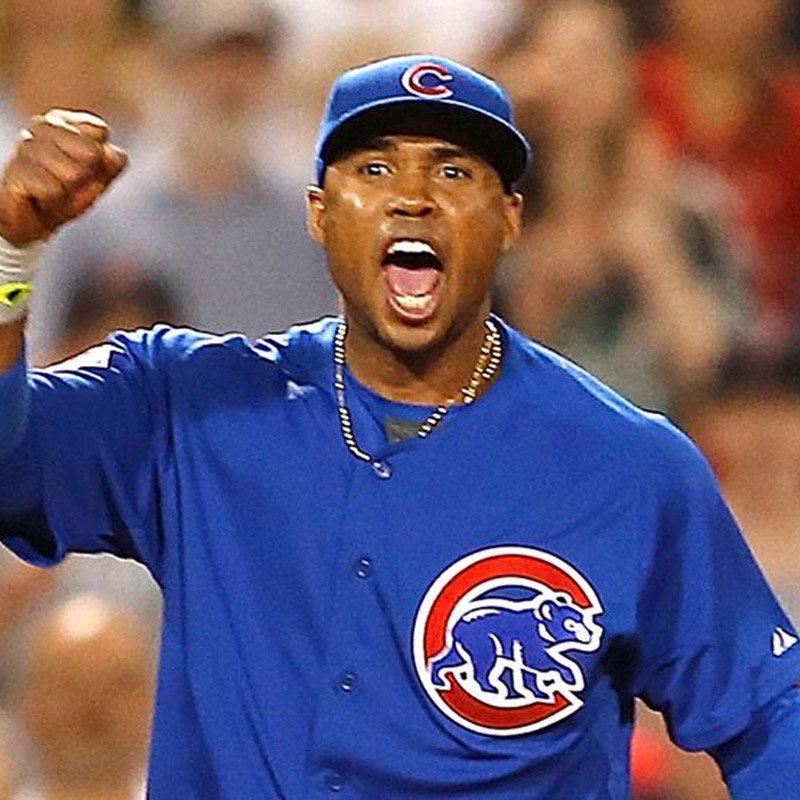 As Kris Bryant tore through the minor league ranks after being drafted in 2013, the Cubs tasked Luis Valbuena with holding down the fort at the hot corner. The 2016-era teams are obviously the most fascinating from the last quarter century, but I've recently become interested in the pre-World Series teams (i.e., the ~2007-2014 teams) and what they did and didn't do that led to that fateful squad. Over on the Players Project, we've recently examined players like Jeff Samardzija and Junior Lake, and today, I wanted to write a full retrospective on the player who came just before Kris Bryant. Luis Valbuena originally signed as a 19-year-old with the Seattle Mariners out Venezuela, raised by a single mother. He spent a few seasons working his way through their farm system, ultimately arriving at the big leagues for a September cup of coffee in 2008. Before he could make any noise in Seattle, though, the team traded him that offseason in a three-team deal with the Guardians and Mets. His tenure in Cleveland lasted through parts of three seasons, though he was DFAed once top prospect Jason Kipnis (another former Cub) was promoted in 2011. He was traded to the Blue Jays in November, for whom he never suited up. The Cubs claimed Valbuena off waivers the day before Opening Day in 2012, marking the end of Theo Epstein and Jed Hoyer's first offseason with the club. Valbuena finally got some run time with the team after being recalled from Triple-A in June, slashing .219/.310/.340 in 90 games (303 plate appearances) as a 26-year-old. His performance left a lot to be desired. Still, the Cubs had little going on at the hot corner following Aramis Ramirez's departure (he signed with the Brewers following the 2011 season), so Valbuena got the nod as the Opening Day starter there in 2013. Just take a look at that lineup: 1. David DeJesus, CF 2. Starlin Castro, SS 3. Anthony Rizzo, 1B 4. Alfonso Soriano, LF 5. Nate Schierholtz, RF 6. Welington Castillo, C 7. Luis Valbuena, 3B 8. Brent Lillibridge, 2B 9. Jeff Samardzija, P Those are some NAMES right there. It's pretty amazing that in just three short years, every single one of those players was traded away and replaced besides Rizzo. That "five-year plan" Epstein had looked insane at the time, but he somehow pulled it off. I digress. Valbuena played in 108 games (391 plate appearances) in 2013, both career highs. His 1.2 WAR was also a career-best at the time, as were his 12 home runs, 37 RBI, and 95 OPS+. It was still an underwhelming profile, but it was clear that Valbuena was improving. And, come 2014, Valbuena was the undisputed starter at third base, and he authored arguably the finest season of his career. He slashed .249/.341/.435 in 547 plate appearances, besting his previous career marks from the previous season. Of course, he was simply biding his time as the starter while a young prospect named Kris Bryant, the second overall pick in the 2013 MLB Draft, worked his way up the farm system, but Valbuena became a key component of those early-Epstein-era years. He also held off Mike Olt, a top third base prospect at one point (and another entrant into our Player's Project database). On a personal note, the very first Cubs game I ever went to at Wrigley Field was on July 23, 2014 (I had seen other Cubs games when they were on the road, but I lived in New York at the time). In an otherwise nondescript game — besides the fact it was sub-50 degrees in the middle of July — Valbuena produced the only offense the Cubs got in an 8-3 loss, hitting a three-run home run off Ian Kennedy in the fourth inning to tie the affair at three apiece. It's a fond memory I still hold close, even as I now have much easier access to Wrigley and Cubs home games. Perhaps his most important contribution to the team came off the field, as he (and pitcher Dan Straily) were dealt to the Houston Astros on January 19, 2015, in exchange for center fielder Dexter Fowler. Of course, Fowler would go on to be one of the most notable figures of the 2016 team as the leadoff hitter, and his leadoff home run against Corey Kluber in Game 7 of the World Series remains one of the most electrifying moments in baseball history (I am completely non-biased). Valbuena played two very productive seasons in Houston (accruing 4.9 WAR), earning himself a two-year contract in free agency with the Los Angeles Angels. His MLB playing days ended when he was DFA'd by the Angels in August 2018. Tragically, Valbuena died on December 6, 2018, at just 33 years old. A group of robbers ambushed him and fellow professional baseball players José Castillo and Carlos Rivero on a highway in Venezuela following a game with Venezuelan winter team Cardenales de Lara. The car overturned, killing both Valbuena and Castillo. In all, he authored an impressive 11-year career and is heralded as one of the best Venezuelan players from his era.
 -
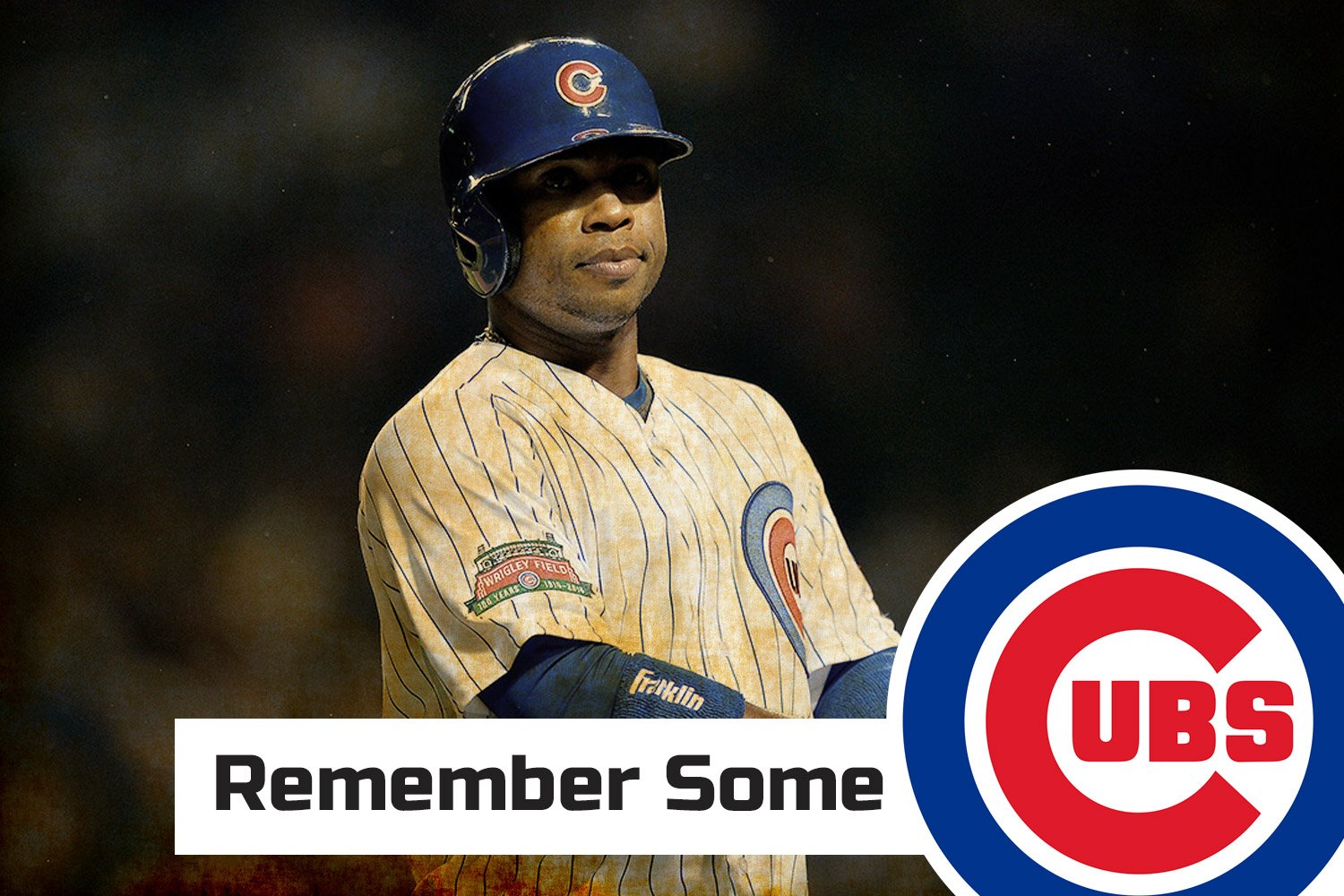 The 2016-era teams are obviously the most fascinating from the last quarter century, but I've recently become interested in the pre-World Series teams (i.e., the ~2007-2014 teams) and what they did and didn't do that led to that fateful squad. Over on the Players Project, we've recently examined players like Jeff Samardzija and Junior Lake, and today, I wanted to write a full retrospective on the player who came just before Kris Bryant. Luis Valbuena originally signed as a 19-year-old with the Seattle Mariners out Venezuela, raised by a single mother. He spent a few seasons working his way through their farm system, ultimately arriving at the big leagues for a September cup of coffee in 2008. Before he could make any noise in Seattle, though, the team traded him that offseason in a three-team deal with the Guardians and Mets. His tenure in Cleveland lasted through parts of three seasons, though he was DFAed once top prospect Jason Kipnis (another former Cub) was promoted in 2011. He was traded to the Blue Jays in November, for whom he never suited up. The Cubs claimed Valbuena off waivers the day before Opening Day in 2012, marking the end of Theo Epstein and Jed Hoyer's first offseason with the club. Valbuena finally got some run time with the team after being recalled from Triple-A in June, slashing .219/.310/.340 in 90 games (303 plate appearances) as a 26-year-old. His performance left a lot to be desired. Still, the Cubs had little going on at the hot corner following Aramis Ramirez's departure (he signed with the Brewers following the 2011 season), so Valbuena got the nod as the Opening Day starter there in 2013. Just take a look at that lineup: 1. David DeJesus, CF 2. Starlin Castro, SS 3. Anthony Rizzo, 1B 4. Alfonso Soriano, LF 5. Nate Schierholtz, RF 6. Welington Castillo, C 7. Luis Valbuena, 3B 8. Brent Lillibridge, 2B 9. Jeff Samardzija, P Those are some NAMES right there. It's pretty amazing that in just three short years, every single one of those players was traded away and replaced besides Rizzo. That "five-year plan" Epstein had looked insane at the time, but he somehow pulled it off. I digress. Valbuena played in 108 games (391 plate appearances) in 2013, both career highs. His 1.2 WAR was also a career-best at the time, as were his 12 home runs, 37 RBI, and 95 OPS+. It was still an underwhelming profile, but it was clear that Valbuena was improving. And, come 2014, Valbuena was the undisputed starter at third base, and he authored arguably the finest season of his career. He slashed .249/.341/.435 in 547 plate appearances, besting his previous career marks from the previous season. Of course, he was simply biding his time as the starter while a young prospect named Kris Bryant, the second overall pick in the 2013 MLB Draft, worked his way up the farm system, but Valbuena became a key component of those early-Epstein-era years. He also held off Mike Olt, a top third base prospect at one point (and another entrant into our Player's Project database). On a personal note, the very first Cubs game I ever went to at Wrigley Field was on July 23, 2014 (I had seen other Cubs games when they were on the road, but I lived in New York at the time). In an otherwise nondescript game — besides the fact it was sub-50 degrees in the middle of July — Valbuena produced the only offense the Cubs got in an 8-3 loss, hitting a three-run home run off Ian Kennedy in the fourth inning to tie the affair at three apiece. It's a fond memory I still hold close, even as I now have much easier access to Wrigley and Cubs home games. Perhaps his most important contribution to the team came off the field, as he (and pitcher Dan Straily) were dealt to the Houston Astros on January 19, 2015, in exchange for center fielder Dexter Fowler. Of course, Fowler would go on to be one of the most notable figures of the 2016 team as the leadoff hitter, and his leadoff home run against Corey Kluber in Game 7 of the World Series remains one of the most electrifying moments in baseball history (I am completely non-biased). Valbuena played two very productive seasons in Houston (accruing 4.9 WAR), earning himself a two-year contract in free agency with the Los Angeles Angels. His MLB playing days ended when he was DFA'd by the Angels in August 2018. Tragically, Valbuena died on December 6, 2018, at just 33 years old. A group of robbers ambushed him and fellow professional baseball players José Castillo and Carlos Rivero on a highway in Venezuela following a game with Venezuelan winter team Cardenales de Lara. The car overturned, killing both Valbuena and Castillo. In all, he authored an impressive 11-year career and is heralded as one of the best Venezuelan players from his era.
 -
As Kris Bryant tore through the minor league ranks after being drafted in 2013, the Cubs tasked Valbuena with holding down the fort at the hot corner. The 2016-era teams are obviously the most fascinating from the last quarter century, but I've recently become interested in the pre-World Series teams (i.e., the ~2007-2014 teams) and what they did and didn't do that led to that fateful squad. Over on the Players Project, we've recently examined players like Jeff Samardzija and Junior Lake, and today, I wanted to write a full retrospective on the player who came just before Kris Bryant. Luis Valbuena originally signed as a 19-year-old with the Seattle Mariners out Venezuela, raised by a single mother. He spent a few seasons working his way through their farm system, ultimately arriving at the big leagues for a September cup of coffee in 2008. Before he could make any noise in Seattle, though, the team traded him that offseason in a three-team deal with the Guardians and Mets. His tenure in Cleveland lasted through parts of three seasons, though he was DFAed once top prospect Jason Kipnis (another former Cub) was promoted in 2011. He was traded to the Blue Jays in November, for whom he never suited up. The Cubs claimed Valbuena off waivers the day before Opening Day in 2012, marking the end of Theo Epstein and Jed Hoyer's first offseason with the club. Valbuena finally got some run time with the team after being recalled from Triple-A in June, slashing .219/.310/.340 in 90 games (303 plate appearances) as a 26-year-old. His performance left a lot to be desired. Still, the Cubs had little going on at the hot corner following Aramis Ramirez's departure (he signed with the Brewers following the 2011 season), so Valbuena got the nod as the Opening Day starter there in 2013. Just take a look at that lineup: 1. David DeJesus, CF 2. Starlin Castro, SS 3. Anthony Rizzo, 1B 4. Alfonso Soriano, LF 5. Nate Schierholtz, RF 6. Welington Castillo, C 7. Luis Valbuena, 3B 8. Brent Lillibridge, 2B 9. Jeff Samardzija, P Those are some NAMES right there. It's pretty amazing that in just three short years, every single one of those players was traded away and replaced besides Rizzo. That "five-year plan" Epstein had looked insane at the time, but he somehow pulled it off. I digress. Valbuena played in 108 games (391 plate appearances) in 2013, both career highs. His 1.2 WAR was also a career-best at the time, as were his 12 home runs, 37 RBI, and 95 OPS+. It was still an underwhelming profile, but it was clear that Valbuena was improving. And, come 2014, Valbuena was the undisputed starter at third base, and he authored arguably the finest season of his career. He slashed .249/.341/.435 in 547 plate appearances, besting his previous career marks from the previous season. Of course, he was simply biding his time as the starter while a young prospect named Kris Bryant, the second overall pick in the 2013 MLB Draft, worked his way up the farm system, but Valbuena became a key component of those early-Epstein-era years. He also held off Mike Olt, a top third base prospect at one point (and another entrant into our Player's Project database). On a personal note, the very first Cubs game I ever went to at Wrigley Field was on July 23, 2014 (I had seen other Cubs games when they were on the road, but I lived in New York at the time). In an otherwise nondescript game — besides the fact it was sub-50 degrees in the middle of July — Valbuena produced the only offense the Cubs got in an 8-3 loss, hitting a three-run home run off Ian Kennedy in the fourth inning to tie the affair at three apiece. It's a fond memory I still hold close, even as I now have much easier access to Wrigley and Cubs home games. Perhaps his most important contribution to the team came off the field, as he (and pitcher Dan Straily) were dealt to the Houston Astros on January 19, 2015, in exchange for center fielder Dexter Fowler. Of course, Fowler would go on to be one of the most notable figures of the 2016 team as the leadoff hitter, and his leadoff home run against Corey Kluber in Game 7 of the World Series remains one of the most electrifying moments in baseball history (I am completely non-biased). Valbuena played two very productive seasons in Houston (accruing 4.9 WAR), earning himself a two-year contract in free agency with the Los Angeles Angels. His MLB playing days ended when he was DFA'd by the Angels in August 2018. Tragically, Valbuena died on December 6, 2018, at just 33 years old. A group of robbers ambushed him and fellow professional baseball players José Castillo and Carlos Rivero on a highway in Venezuela following a game with Venezuelan winter team Cardenales de Lara. The car overturned, killing both Valbuena and Castillo. In all, he authored an impressive 11-year career and is heralded as one of the best Venezuelan players from his era. View full article
-
Travis Alan Wood is an eight-year MLB veteran, who pitched five seasons in a Chicago Cubs uniform. Before making the jump to the pros, Wood was a decorated high school player, winning the Arkansas Gatorade Player of the Year award in baseball in both 2004 and 2005. He was an All-State honoree in each of his three seasons on the varsity team at Bryant High School, and he would choose to skip college in favor of playing in the pros after being selected in the second round (60th overall) by the Cincinnati Reds in the 2005 MLB Draft. Though he didn't appear on any top prospect lists, the Reds did add him to their 40-man roster in the 2009 offseason to keep Wood from being selected in the Rule 5 Draft. Mid-way through the following season, Wood made his MLB debut against the Cubs, pitching to a no-decision on June 30, 2010. In just his third start in the big leagues, Wood nearly threw a perfect game, notching 24 straight outs agains the Phillies before catcher Carlos Ruiz doubled to start the bottom of the ninth inning. Prior to the start of the 2012 season, the Cubs acquired Wood (and outfielder Dave Sappelt and second baseman Ronald Torreyes) in exchange for lefty reliever Sean Marshall. The trade, completed on Dec. 23, 2011, was one of the first made by Theo Epstein after his takeover of the team's front office after the 2011 season. In his half-decade in Chicago, Wood was a valuable swingman, making 98 starts and 122 appearances out of the bullpen. He earned his first and only career All-Star selection in 2013, and he concluded that season with a 3.11 ERA in 200.0 innings pitched. However, his best season came in 2016, when he pitched exclusively out of the 'pen, making 77 appearances and pitching to a 2.95 ERA as manager Joe Maddon's preferred LOOGY. Perhaps the best part about Wood is that he wasn't just a reliable pitcher, but also a valuable hitter; in his career, he earned 5.1 WAR for his work on the mound, and 2.0 WAR for his work at the plate and in the field. He had multiple seasons with an OPS above .700, and he hit 11 home runs in the regular season throughout his career. A few fun facts about Wood's time with the Cubs: on May 19, 2013, Wood became the first Cub since Mordecai Brown to start a season with nine straight quality starts. Also, his famous home run in Game 2 of the NLDS in 2016 against the Giants was just the second time a relief pitcher has hit a home run in the playoffs, after Rosy Ryan in Game 3 of the 1924 World Series. That home run probably stands as his most memorable moment while in a Cubs uniform, but it shouldn't be forgotten that he allowed just two runs in 6 1/3 innings out of the bullpen during the team's march to a title. Following the high of winning that World Series, Wood signed a two-year deal with the Royals in free agency in 2017, though he would only last half-a-season in Kansas City before getting dealt to the Padres at the trade deadline (in the Trevor Cahill deal). Wood's playing days officially came to an end in spring training prior to the 2018 season, when he tore his ACL while pitching for the Detroit Tigers. View full player
-
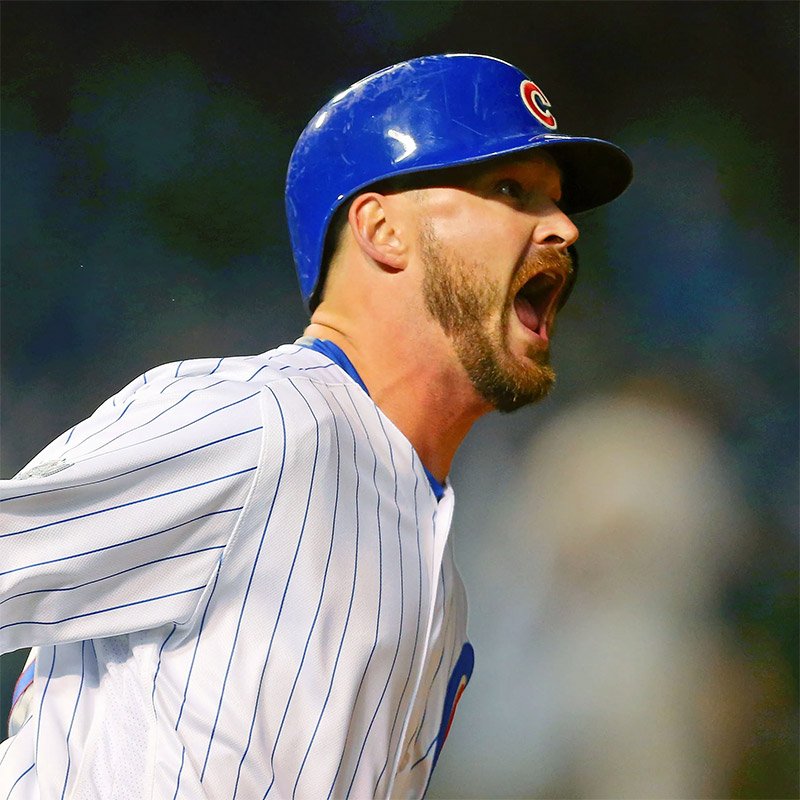 Travis Alan Wood is an eight-year MLB veteran, who pitched five seasons in a Chicago Cubs uniform. Before making the jump to the pros, Wood was a decorated high school player, winning the Arkansas Gatorade Player of the Year award in baseball in both 2004 and 2005. He was an All-State honoree in each of his three seasons on the varsity team at Bryant High School, and he would choose to skip college in favor of playing in the pros after being selected in the second round (60th overall) by the Cincinnati Reds in the 2005 MLB Draft. Though he didn't appear on any top prospect lists, the Reds did add him to their 40-man roster in the 2009 offseason to keep Wood from being selected in the Rule 5 Draft. Mid-way through the following season, Wood made his MLB debut against the Cubs, pitching to a no-decision on June 30, 2010. In just his third start in the big leagues, Wood nearly threw a perfect game, notching 24 straight outs agains the Phillies before catcher Carlos Ruiz doubled to start the bottom of the ninth inning. Prior to the start of the 2012 season, the Cubs acquired Wood (and outfielder Dave Sappelt and second baseman Ronald Torreyes) in exchange for lefty reliever Sean Marshall. The trade, completed on Dec. 23, 2011, was one of the first made by Theo Epstein after his takeover of the team's front office after the 2011 season. In his half-decade in Chicago, Wood was a valuable swingman, making 98 starts and 122 appearances out of the bullpen. He earned his first and only career All-Star selection in 2013, and he concluded that season with a 3.11 ERA in 200.0 innings pitched. However, his best season came in 2016, when he pitched exclusively out of the 'pen, making 77 appearances and pitching to a 2.95 ERA as manager Joe Maddon's preferred LOOGY. Perhaps the best part about Wood is that he wasn't just a reliable pitcher, but also a valuable hitter; in his career, he earned 5.1 WAR for his work on the mound, and 2.0 WAR for his work at the plate and in the field. He had multiple seasons with an OPS above .700, and he hit 11 home runs in the regular season throughout his career. A few fun facts about Wood's time with the Cubs: on May 19, 2013, Wood became the first Cub since Mordecai Brown to start a season with nine straight quality starts. Also, his famous home run in Game 2 of the NLDS in 2016 against the Giants was just the second time a relief pitcher has hit a home run in the playoffs, after Rosy Ryan in Game 3 of the 1924 World Series. That home run probably stands as his most memorable moment while in a Cubs uniform, but it shouldn't be forgotten that he allowed just two runs in 6 1/3 innings out of the bullpen during the team's march to a title. Following the high of winning that World Series, Wood signed a two-year deal with the Royals in free agency in 2017, though he would only last half-a-season in Kansas City before getting dealt to the Padres at the trade deadline (in the Trevor Cahill deal). Wood's playing days officially came to an end in spring training prior to the 2018 season, when he tore his ACL while pitching for the Detroit Tigers.
 -
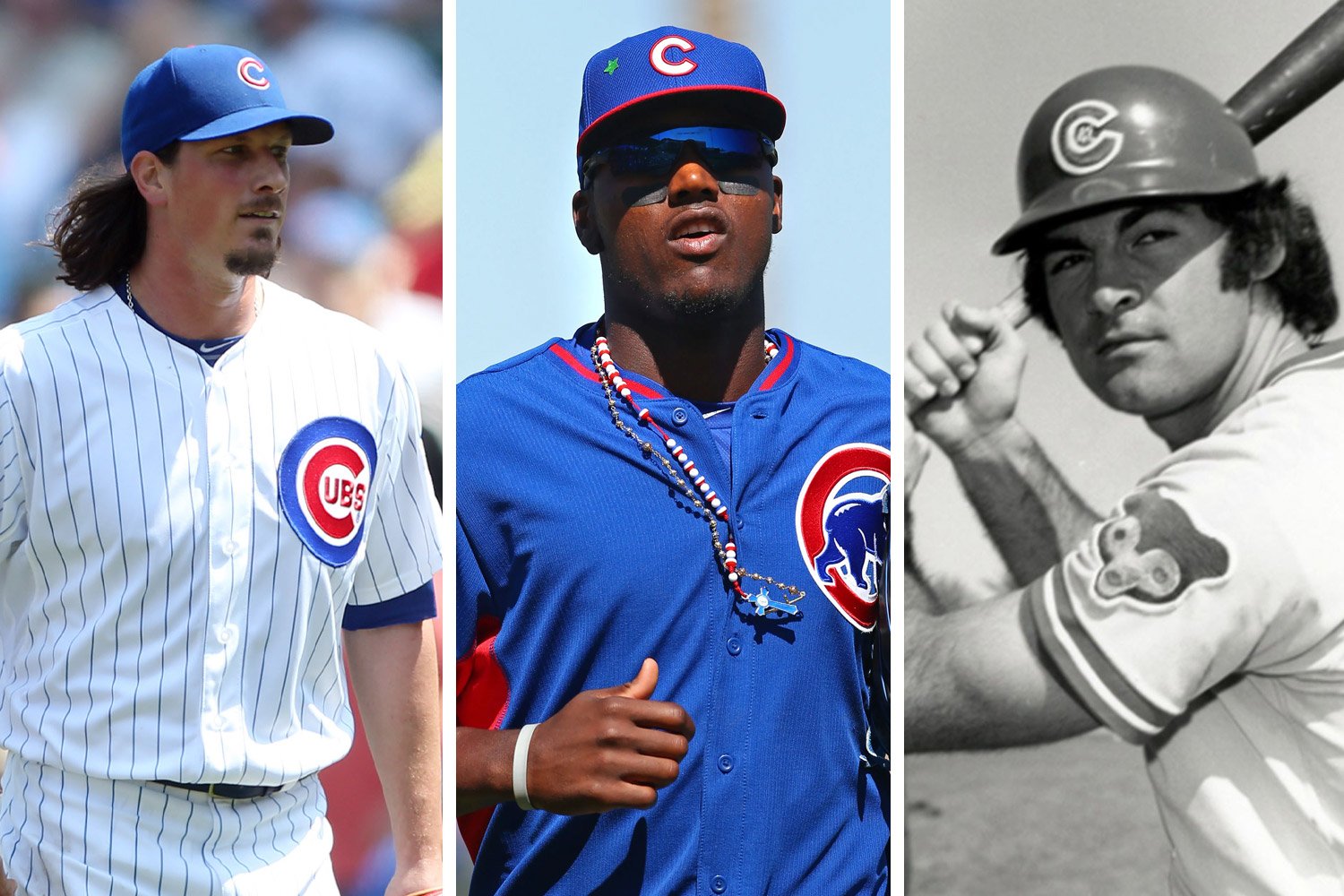 What is the Players Project? It's a community-driven, wiki-style project focusing on Cubs players of all stripes. It's open to all North Side Baseball users, and we've had contributions from current players, past players, and players who never even made the major leagues but played in the Cubs’ farm system. Create your favorite player today! Welcome back, everyone! Happy New Year to you all — we've seen some really fun players added to our in-house Cubs database over the holiday season, so I wanted to highlight some of the most fascinating entries. As a reminder, any user here on the site can hop in right away and add their favorite player to the system. Perhaps your next entry will be featured in a future round-up! Jeff Samardzija, a.k.a "Shark," was one of the best players for a series of bad Cubs teams. Case in point: In 2014, he set a major league record for the lowest ERA (1.46) by a winless pitcher through his first ten starts. That 2014 season was pretty wild for him, as he rejected a big extension offer from the Cubs before being flipped to the Athletics before the trade deadline... which prevented him from participating in his only All-Star game. Oh, and don't forget that he was one of the best two-sport collegiate athletes ever and was supposed to be a first-round pick in the NFL draft as a receiver. Anyone remember the summer of 2013? The Cubs weren't anything special then, but it did seem like something special was brewing in Wrigleyville: Junior Lake. The young Dominican outfielder took Chicago by storm with his tremendous debut, hitting nearly .500 over his first week in the majors. Of course, Lake's tenure with the Cubs never panned out after that initial honeymoon, and he was gone by 2015, but those first few months were a sight to behold. Tony La Russa is well known around these parts as the Hall of Fame manager who won two World Series titles with the St. Louis Cardinals, but did you know he played one game for the team on Opening Day in 1973? He never even took an at-bat for the Cubs, but he did pinch run for Ron Santo in the bottom of the ninth in a one-run game. He would later score the winning, walk-off run on a bases-loaded walk drawn by Rick Monday. As far as pinch-running appearances go, that's a pretty good one. Of course, other entries, like Matt Garza and Jason Heyward, continue filling up our database. The Chicago Cubs Players Project is open to all North Side Baseball users. If you're a Cubs history buff or just want to dive into the background of your favorite player, come on board! Please stop by the Players Project by hitting the button below! Are you interested in Cubs history? Then check out the Chicago Cubs Players Project, a community-driven project to discover and collect great information on every player to wear a Cubs uniform!
 -
It's 2025, so it's time to take a look at what's new on the Chicago Cubs Players Project here on North Side Baseball! What is the Players Project? It's a community-driven, wiki-style project focusing on Cubs players of all stripes. It's open to all North Side Baseball users, and we've had contributions from current players, past players, and players who never even made the major leagues but played in the Cubs’ farm system. Create your favorite player today! Welcome back, everyone! Happy New Year to you all — we've seen some really fun players added to our in-house Cubs database over the holiday season, so I wanted to highlight some of the most fascinating entries. As a reminder, any user here on the site can hop in right away and add their favorite player to the system. Perhaps your next entry will be featured in a future round-up! Jeff Samardzija, a.k.a "Shark," was one of the best players for a series of bad Cubs teams. Case in point: In 2014, he set a major league record for the lowest ERA (1.46) by a winless pitcher through his first ten starts. That 2014 season was pretty wild for him, as he rejected a big extension offer from the Cubs before being flipped to the Athletics before the trade deadline... which prevented him from participating in his only All-Star game. Oh, and don't forget that he was one of the best two-sport collegiate athletes ever and was supposed to be a first-round pick in the NFL draft as a receiver. Anyone remember the summer of 2013? The Cubs weren't anything special then, but it did seem like something special was brewing in Wrigleyville: Junior Lake. The young Dominican outfielder took Chicago by storm with his tremendous debut, hitting nearly .500 over his first week in the majors. Of course, Lake's tenure with the Cubs never panned out after that initial honeymoon, and he was gone by 2015, but those first few months were a sight to behold. Tony La Russa is well known around these parts as the Hall of Fame manager who won two World Series titles with the St. Louis Cardinals, but did you know he played one game for the team on Opening Day in 1973? He never even took an at-bat for the Cubs, but he did pinch run for Ron Santo in the bottom of the ninth in a one-run game. He would later score the winning, walk-off run on a bases-loaded walk drawn by Rick Monday. As far as pinch-running appearances go, that's a pretty good one. Of course, other entries, like Matt Garza and Jason Heyward, continue filling up our database. The Chicago Cubs Players Project is open to all North Side Baseball users. If you're a Cubs history buff or just want to dive into the background of your favorite player, come on board! Please stop by the Players Project by hitting the button below! Are you interested in Cubs history? Then check out the Chicago Cubs Players Project, a community-driven project to discover and collect great information on every player to wear a Cubs uniform! View full article
-
Junior Osvaldo Lake played professional baseball for four seasons, spending parts of three of those campaigns with the Cubs. Junior Lake signed with the Cubs as a relatively unheralded free agent in 2007 as a 17-year-old out of the Dominican Republic. He quickly switched off shortstop and made the transition to the outfield, where his prodigious arm talent would have a chance to player better. He never quite reached top prospect lists, but his scouting report reads like that of a modern NBA prospect: loud tools and endless athleticism, but poor fundamentals and a lack of in-game IQ. He progressed all the way to Triple-A by the end of the 2012 season, though a stress fracture in his rib during Spring Training prevented him from making the Opening Day roster in 2013. Nevertheless, Lake made his MLB debut on July 19, 2013, going 3-for-4 with a stolen base in an impressive introduction. His first week in the big leagues hardly could have gone better, as he batted .484 with two home runs over his first seven games. Since 1900, Lake is tied for the third-most hits (15) in a player's first seven major league games. After Alfonso Soriano was traded at the deadline that season, Lake took over full-time in left field for the Cubs. Despite playing in just 64 games as a rookie, Lake ended the season as one of the Cubs' most prolific contributors, slashing .284/.332/.428 (112 wRC+) with six home runs, four stolen bases, all totaling up to a 1.2 bWAR. He was rewarded for those efforts with the left field job on Opening Day 2014, but his rookie season proved to be nothing more than a tantalizing fluke. In 108 games in 2014, he posted a .597 OPS and was worth -1.3 WAR. He was optioned back to Triple-A on August 16, 2014, and he would play just 30 more games for the Cubs over the next year, before being traded to Baltimore in exchange for reliever Tommy Hunter at the 2015 trade deadline. Lake's story began as a huge development win when he broke out in his rookie season, but his lack of polish contributed to a disappointing career in the big leagues. His time with the Cubs prematurely ended when the team got off to a hot start in 2015, aided by the production from the team's core of offensive prospects, like Kris Bryant and Javier Baez. Lake couldn't establish himself quickly enough, and a team on the rise chose to move on before the outfielder could prove his worth. Lake has continued his playing career in the Mexican League since 2017. He played for Toros de Tijuana in 2024, slashing .257/.353/.457 with 15 home runs, 40 RBI, and 15 stolen bases. He is expected to continue playing in the league in 2025. View full player
-
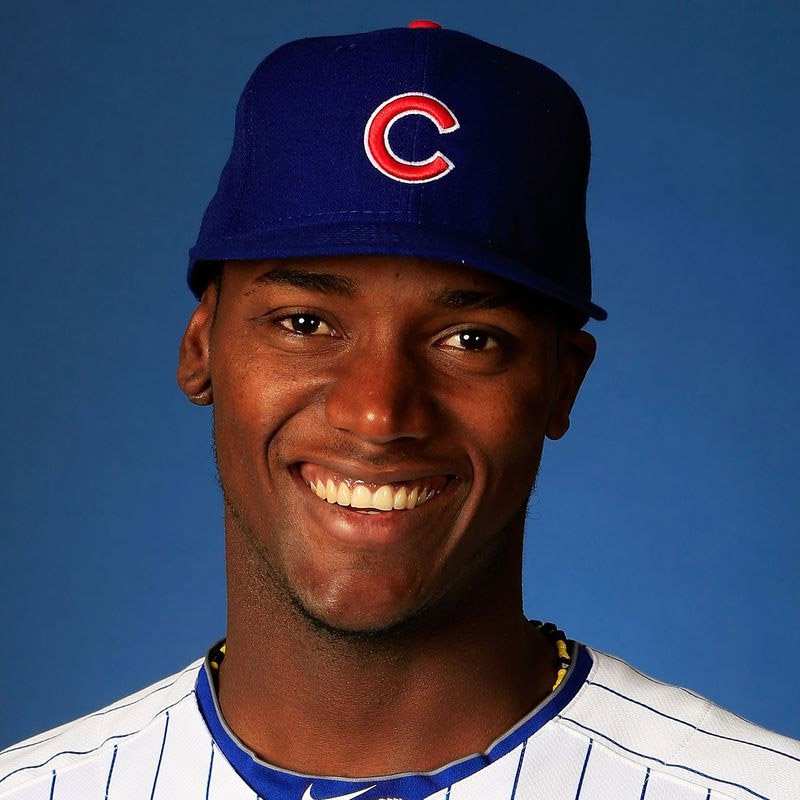 Junior Osvaldo Lake played professional baseball for four seasons, spending parts of three of those campaigns with the Cubs. Junior Lake signed with the Cubs as a relatively unheralded free agent in 2007 as a 17-year-old out of the Dominican Republic. He quickly switched off shortstop and made the transition to the outfield, where his prodigious arm talent would have a chance to player better. He never quite reached top prospect lists, but his scouting report reads like that of a modern NBA prospect: loud tools and endless athleticism, but poor fundamentals and a lack of in-game IQ. He progressed all the way to Triple-A by the end of the 2012 season, though a stress fracture in his rib during Spring Training prevented him from making the Opening Day roster in 2013. Nevertheless, Lake made his MLB debut on July 19, 2013, going 3-for-4 with a stolen base in an impressive introduction. His first week in the big leagues hardly could have gone better, as he batted .484 with two home runs over his first seven games. Since 1900, Lake is tied for the third-most hits (15) in a player's first seven major league games. After Alfonso Soriano was traded at the deadline that season, Lake took over full-time in left field for the Cubs. Despite playing in just 64 games as a rookie, Lake ended the season as one of the Cubs' most prolific contributors, slashing .284/.332/.428 (112 wRC+) with six home runs, four stolen bases, all totaling up to a 1.2 bWAR. He was rewarded for those efforts with the left field job on Opening Day 2014, but his rookie season proved to be nothing more than a tantalizing fluke. In 108 games in 2014, he posted a .597 OPS and was worth -1.3 WAR. He was optioned back to Triple-A on August 16, 2014, and he would play just 30 more games for the Cubs over the next year, before being traded to Baltimore in exchange for reliever Tommy Hunter at the 2015 trade deadline. Lake's story began as a huge development win when he broke out in his rookie season, but his lack of polish contributed to a disappointing career in the big leagues. His time with the Cubs prematurely ended when the team got off to a hot start in 2015, aided by the production from the team's core of offensive prospects, like Kris Bryant and Javier Baez. Lake couldn't establish himself quickly enough, and a team on the rise chose to move on before the outfielder could prove his worth. Lake has continued his playing career in the Mexican League since 2017. He played for Toros de Tijuana in 2024, slashing .257/.353/.457 with 15 home runs, 40 RBI, and 15 stolen bases. He is expected to continue playing in the league in 2025.
 -
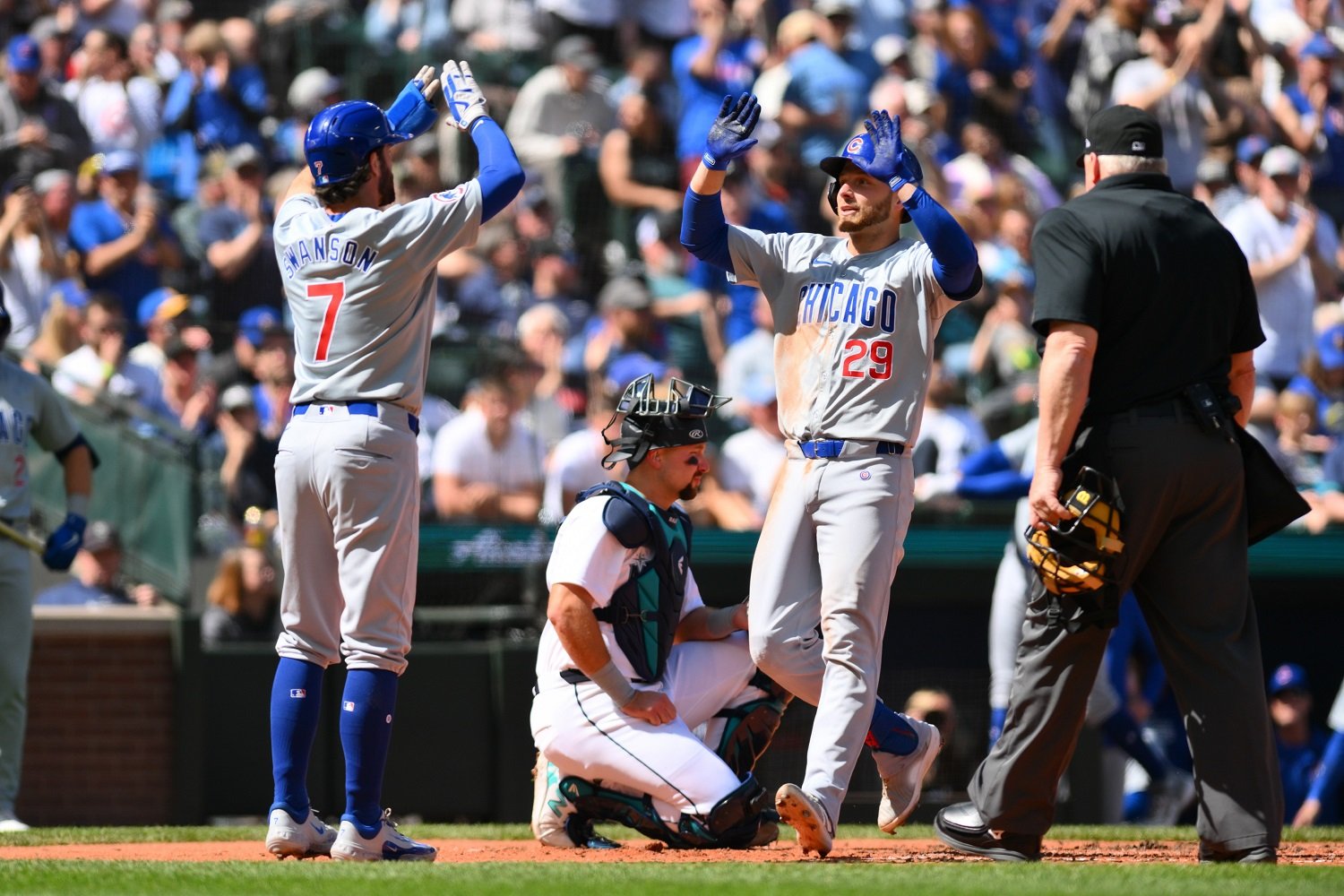 Welcome back, and Happy New Years, everyone! Over the last week, we've looked at the 25 most viewed articles from North Side Baseball in 2024, and today, we're finally concluding the series with the top five. Offseason banter again rules the day, with Cody Bellinger-related topics appearing twice yet again. However, the number one spot is a bit of a stunner, and the discourse surrounding that topic is sure to continue in earnest for the next half-decade. If you missed any of the previous installments, you can find them here: Top 21-25 Articles Top 16-20 Articles Top 11-15 Articles Top 6-10 Articles On we go to the Top 5. #5: It’s Come Down to This: Cody Bellinger vs. Matt Chapman Matt Ostrowski January 29 Spoiler alert: it's going to be a Matt-centric list today, though Matt O. breaks up Trueblood's reign of terror in the top ten by claiming the fifth spot. Last offseason, the Cubs were eerily quiet outside of a trade for Michael Busch and the signing of Shota Imanaga, and they very clearly needed to replace the loss of Bellinger in the lineup. With just he and Matt Chapman left standing among the big-name free agents, Matt broke down how both sluggers fit with the Cubs. He advocated that the team lean towards Chapman, which looks like the right call (by a long shot) in hindsight. #4: The Cubs Will Absolutely, Unequivocally Re-Spend the Money They Saved on Cody Bellinger Matthew Trueblood December 18 About one year later, the Cubs got out from under the contract they ended up giving to Bellinger in what amounted to a salary dump with the Yankees. A large section of the fanbase was upset with the return (30-year-old reliever Cody Poteet) in the trade, and thus Matt came to reassure them that the Cubs would certainly use the money they saved to continue upgrading the roster. That hasn't happened quite yet, but it will any day now... right? #3: No, Michael Busch Can’t, Won’t, and Shouldn’t Move to Third Base - Or Second, Either Matthew Trueblood December 15 Just before the team traded Bellinger, fans were trying to optimize the lineup in such a way that he, Kyle Tucker, Seiya Suzuki, and Michael Busch could all coexist. Busch, who established himself as a quality defensive first baseman in 2024, clearly benefits the Cubs most when he plays at the cold corner, and Trueblood established as much in this piece. Of course, with Bellinger (and Matt Mervis) now gone, Busch has no immediate threats to his playing time. #2: Cubs Pick Up a Bizarre Nick Madrigal-Miles Mastrobuoni-Patrick Wisdom Megazord in 2024 MLB Rule 5 Draft Matthew Trueblood December 11 The Cubs aren't usually the most active team in the world when it comes to the Rule 5 Draft, but they did select Gage Workman from the Tigers this year. Matt broke down his fit with the roster, as well as the unholy combination of traits that turn him into something of an amalgam of all the utility players the Cubs have had in recent years. Hopefully, he'll have more success with the Cubs than they guys he'll be replacing. #1: The Dansby Swanson Contract Looks Like Both a Mistake and an Error Matthew Trueblood May 28 And here we arrive, at the #1 spot on our list. The most popular article from 2024 was Matt's condemnation of the Dansby Swanson contract, which looked especially porous at the time of his writing. Swanson recovered afterwards to post a 4.0 WAR season, but he hasn't quite lived up the lofty expectations of a $177 million deal. 2025 will be a crucial year for the shortstop and team, as they're set to be favorites in the division for the first time since Swanson came aboard. And that's it, folks! Thanks for joining us on this trip down memory lane? What was your favorite article from 2024? What topics do you want to see covered in 2025? Let us know!
 -
Finally, we've arrived at the top five in our annual countdown of the most popular articles on the site. Image courtesy of © Steven Bisig-Imagn Images Welcome back, and Happy New Years, everyone! Over the last week, we've looked at the 25 most viewed articles from North Side Baseball in 2024, and today, we're finally concluding the series with the top five. Offseason banter again rules the day, with Cody Bellinger-related topics appearing twice yet again. However, the number one spot is a bit of a stunner, and the discourse surrounding that topic is sure to continue in earnest for the next half-decade. If you missed any of the previous installments, you can find them here: Top 21-25 Articles Top 16-20 Articles Top 11-15 Articles Top 6-10 Articles On we go to the Top 5. #5: It’s Come Down to This: Cody Bellinger vs. Matt Chapman Matt Ostrowski January 29 Spoiler alert: it's going to be a Matt-centric list today, though Matt O. breaks up Trueblood's reign of terror in the top ten by claiming the fifth spot. Last offseason, the Cubs were eerily quiet outside of a trade for Michael Busch and the signing of Shota Imanaga, and they very clearly needed to replace the loss of Bellinger in the lineup. With just he and Matt Chapman left standing among the big-name free agents, Matt broke down how both sluggers fit with the Cubs. He advocated that the team lean towards Chapman, which looks like the right call (by a long shot) in hindsight. #4: The Cubs Will Absolutely, Unequivocally Re-Spend the Money They Saved on Cody Bellinger Matthew Trueblood December 18 About one year later, the Cubs got out from under the contract they ended up giving to Bellinger in what amounted to a salary dump with the Yankees. A large section of the fanbase was upset with the return (30-year-old reliever Cody Poteet) in the trade, and thus Matt came to reassure them that the Cubs would certainly use the money they saved to continue upgrading the roster. That hasn't happened quite yet, but it will any day now... right? #3: No, Michael Busch Can’t, Won’t, and Shouldn’t Move to Third Base - Or Second, Either Matthew Trueblood December 15 Just before the team traded Bellinger, fans were trying to optimize the lineup in such a way that he, Kyle Tucker, Seiya Suzuki, and Michael Busch could all coexist. Busch, who established himself as a quality defensive first baseman in 2024, clearly benefits the Cubs most when he plays at the cold corner, and Trueblood established as much in this piece. Of course, with Bellinger (and Matt Mervis) now gone, Busch has no immediate threats to his playing time. #2: Cubs Pick Up a Bizarre Nick Madrigal-Miles Mastrobuoni-Patrick Wisdom Megazord in 2024 MLB Rule 5 Draft Matthew Trueblood December 11 The Cubs aren't usually the most active team in the world when it comes to the Rule 5 Draft, but they did select Gage Workman from the Tigers this year. Matt broke down his fit with the roster, as well as the unholy combination of traits that turn him into something of an amalgam of all the utility players the Cubs have had in recent years. Hopefully, he'll have more success with the Cubs than they guys he'll be replacing. #1: The Dansby Swanson Contract Looks Like Both a Mistake and an Error Matthew Trueblood May 28 And here we arrive, at the #1 spot on our list. The most popular article from 2024 was Matt's condemnation of the Dansby Swanson contract, which looked especially porous at the time of his writing. Swanson recovered afterwards to post a 4.0 WAR season, but he hasn't quite lived up the lofty expectations of a $177 million deal. 2025 will be a crucial year for the shortstop and team, as they're set to be favorites in the division for the first time since Swanson came aboard. And that's it, folks! Thanks for joining us on this trip down memory lane? What was your favorite article from 2024? What topics do you want to see covered in 2025? Let us know! View full article
-
Finally, we've arrived at the top ten of our stroll down memory lane from the 2024 season. Image courtesy of © Matt Marton-Imagn Images Yet again, the offseason continues to dominate the discourse here on North Side Baseball. From trade rumors to trade candidates, Cubs fans have partaken in a number of discussions about the team's roster construction this year. These are the articles that placed just outside the top five on our best performers list in 2024. #10: Kyle Hendricks Can’t be on the Active Roster Right Now Matthew Trueblood April 16 It was a tough topic to discuss, especially so early in the season, but Kyle Hendricks was clearly out of gas as the 2024 season began. He simply wasn't getting people out with any efficiency, and the Cubs did eventually listen to Matt's advice to stash Hendricks on the IL for a bit while he tried to figure things out. He returned and continued to start in the back-end of the rotation for the remainder of the year, but his ineffectiveness in 2024 all but guaranteed the end of his tenure in Chicago. He has since signed with the Angels. #9: Why Cubs Fans Should Keep a Close, Fond Eye on Christopher Morel Bailey Hall September 17 Christopher Morel was a fan favorite prior to his trade to the Tampa Bay Rays at the trade deadline. In this piece, Bailey vouches for Cubs fans to keep rooting for the energetic, exuberant slugger, even as he plays in Florida. It's hard not to believe in his prodigious talent and affable character. #8: Cubs Trade Candidate Breakdown: Seiya Suzuki Brandon Glick November 11 Speaking from personal experience, this was not a popular article in the traditional sense of the word. Readers did not agree with the idea of trading Seiya Suzuki — FYI, I didn't either, and said as much in the piece — advocating for the Cubs to alter their roster through some other means this offseason. Well, they got their wish, as the Cubs swapped out Cody Bellinger and brought in Kyle Tucker to reshape their outfield while keeping Suzuki in the mix. #7: Cody Bellinger Trade Rumors: A Breakdown of Yankees Pitching Prospect Will Warren Matthew Trueblood December 13 Speaking of Bellinger, there were a lot of rumors surrounding him as the Winter Meetings came to a close. Matt performed a deep dive on the most popular name that kept popping up in the Bellinger-Yankees rumors: Will Warren. Instead, the Cubs opted to focus on cost-cutting, eating just $5 million of Bellinger's remaining contract and landing 30-year-old reliever Cody Poteet in return. #6: It Feels Like This is the Crucial Piece of Info We’ve Been Missing All Along about Cubs Offseason Matthew Trueblood December 10 As the Winter Meetings began, the Cubs were operating all too familiarly like a small-market club rather than a big-market behemoth. As Matt laid out in this piece, that was, in part, due to Suzuki's preference to keep playing the field rather than being a full-time DH. How the Cubs resolve that conundrum with Tucker in tow will be fascinating to watch, especially if Suzuki's agent, Joel Wolfe, doesn't back off his demands. What do you remember from Kyle Hendricks' time with the Cubs? Do you think the team has made the right moves this offseason, particularly with the outfield logjam they're facing? Let's discuss. View full article
-
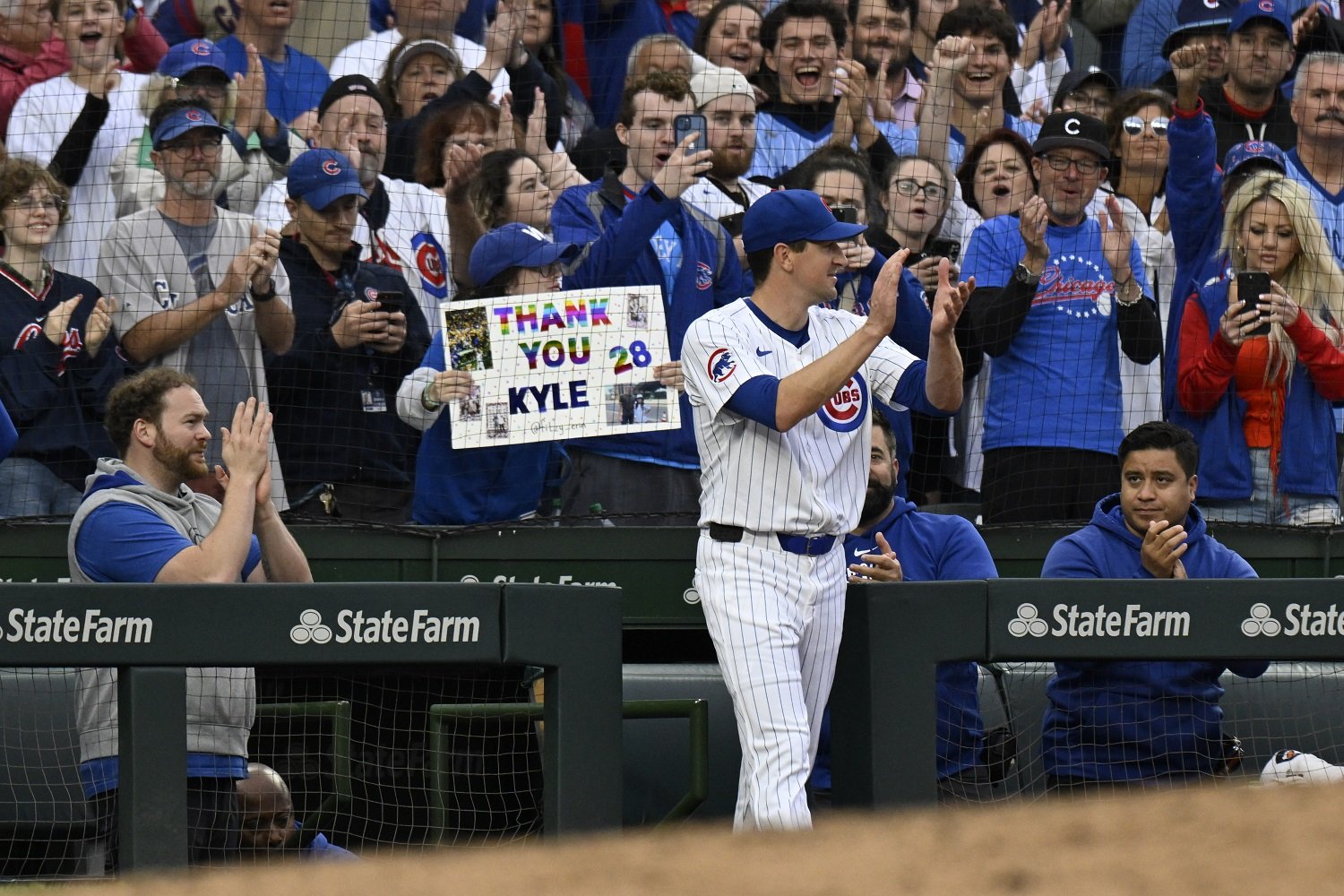 Yet again, the offseason continues to dominate the discourse here on North Side Baseball. From trade rumors to trade candidates, Cubs fans have partaken in a number of discussions about the team's roster construction this year. These are the articles that placed just outside the top five on our best performers list in 2024. #10: Kyle Hendricks Can’t be on the Active Roster Right Now Matthew Trueblood April 16 It was a tough topic to discuss, especially so early in the season, but Kyle Hendricks was clearly out of gas as the 2024 season began. He simply wasn't getting people out with any efficiency, and the Cubs did eventually listen to Matt's advice to stash Hendricks on the IL for a bit while he tried to figure things out. He returned and continued to start in the back-end of the rotation for the remainder of the year, but his ineffectiveness in 2024 all but guaranteed the end of his tenure in Chicago. He has since signed with the Angels. #9: Why Cubs Fans Should Keep a Close, Fond Eye on Christopher Morel Bailey Hall September 17 Christopher Morel was a fan favorite prior to his trade to the Tampa Bay Rays at the trade deadline. In this piece, Bailey vouches for Cubs fans to keep rooting for the energetic, exuberant slugger, even as he plays in Florida. It's hard not to believe in his prodigious talent and affable character. #8: Cubs Trade Candidate Breakdown: Seiya Suzuki Brandon Glick November 11 Speaking from personal experience, this was not a popular article in the traditional sense of the word. Readers did not agree with the idea of trading Seiya Suzuki — FYI, I didn't either, and said as much in the piece — advocating for the Cubs to alter their roster through some other means this offseason. Well, they got their wish, as the Cubs swapped out Cody Bellinger and brought in Kyle Tucker to reshape their outfield while keeping Suzuki in the mix. #7: Cody Bellinger Trade Rumors: A Breakdown of Yankees Pitching Prospect Will Warren Matthew Trueblood December 13 Speaking of Bellinger, there were a lot of rumors surrounding him as the Winter Meetings came to a close. Matt performed a deep dive on the most popular name that kept popping up in the Bellinger-Yankees rumors: Will Warren. Instead, the Cubs opted to focus on cost-cutting, eating just $5 million of Bellinger's remaining contract and landing 30-year-old reliever Cody Poteet in return. #6: It Feels Like This is the Crucial Piece of Info We’ve Been Missing All Along about Cubs Offseason Matthew Trueblood December 10 As the Winter Meetings began, the Cubs were operating all too familiarly like a small-market club rather than a big-market behemoth. As Matt laid out in this piece, that was, in part, due to Suzuki's preference to keep playing the field rather than being a full-time DH. How the Cubs resolve that conundrum with Tucker in tow will be fascinating to watch, especially if Suzuki's agent, Joel Wolfe, doesn't back off his demands. What do you remember from Kyle Hendricks' time with the Cubs? Do you think the team has made the right moves this offseason, particularly with the outfield logjam they're facing? Let's discuss.
 -
Anthony La Russa Jr., known in the baseball sphere as Tony La Russa, is a Hall of Fame manager, and is well known by Cubs fans as the manager of the St. Louis Cardinals from 1996-2011. He also played one game for the Cubs in the 1973 season. This is going to be a shorter entry than others, if only because La Russa's mark on baseball came after his playing days, which were relatively short and unremarkable. He played in 34 games in the 1963 season with the Kansas City Athletics as a "bonus baby", slashing just .250/.346/.318. He wouldn't return to the big leagues for five full seasons(!), appearing in brief cups of coffee with the now-Oakland A's in 1968 and 1969 before establishing himself as a bench player in 1970. The team traded him to the Atlanta Braves late in the 1971 season, whom he took just seven at-bats for. While with Atlanta's Triple-A affiliate in 1972, the Braves traded La Russa to the Cubs for reliever Tom Phoebus (who never appeared in a major league game again following the deal). La Russa made the team out of Spring Training in 1973, and was on the Chicago Cubs' Opening Day roster in 1973. Other names on that squad include Cubs luminaries Billy Williams, Ron Santo, Fergie Jenkins, and Rick Monday. Thus, on Friday, April 6, 1973, La Russa made his Cubs debut, as a pinch-runner in the ninth inning of a 2-1 ballgame against the Montreal Expos. After Joe Pepitone and Ron Santo got on base to start the inning, TLR pinch ran for the latter (Cleo James ran for the former), and moved over to third base thanks walks worked by Glenn Beckert and Randy Hundley. With the game tied at 2-2, Monday came up with the bases loaded and drew his own walk, sending La Russa to the plate for the walk-off run. Yes, in his only career appearance with the Cubs, La Russa scored the winning run. His time with the big league squad wouldn't last much longer, as he was optioned to Triple-A Wichita in mid-April when reliever Dave LaRoche was activated of the disabled list. He finished out that 1973 season with the Cubs, and played four more minor league seasons with the Pirates, White Sox, and Cardinals before hanging up his cleats as a player. That, of course, would give way to an illustrious managerial career that spanned from 1979-2022 (with a decade hiatus between 2011-21). View full player
-
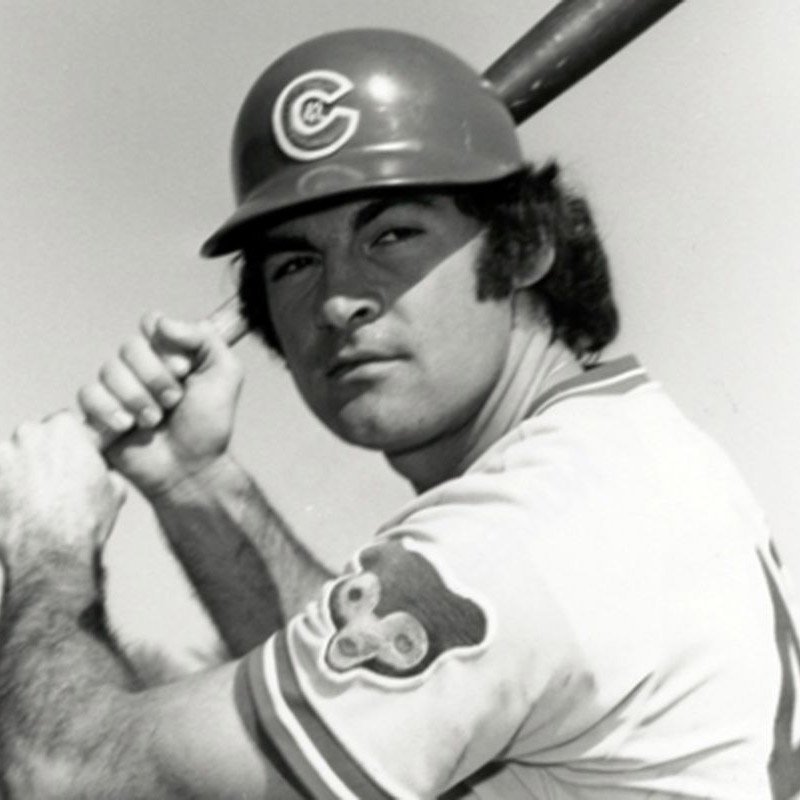 Anthony La Russa Jr., known in the baseball sphere as Tony La Russa, is a Hall of Fame manager, and is well known by Cubs fans as the manager of the St. Louis Cardinals from 1996-2011. He also played one game for the Cubs in the 1973 season. This is going to be a shorter entry than others, if only because La Russa's mark on baseball came after his playing days, which were relatively short and unremarkable. He played in 34 games in the 1963 season with the Kansas City Athletics as a "bonus baby", slashing just .250/.346/.318. He wouldn't return to the big leagues for five full seasons(!), appearing in brief cups of coffee with the now-Oakland A's in 1968 and 1969 before establishing himself as a bench player in 1970. The team traded him to the Atlanta Braves late in the 1971 season, whom he took just seven at-bats for. While with Atlanta's Triple-A affiliate in 1972, the Braves traded La Russa to the Cubs for reliever Tom Phoebus (who never appeared in a major league game again following the deal). La Russa made the team out of Spring Training in 1973, and was on the Chicago Cubs' Opening Day roster in 1973. Other names on that squad include Cubs luminaries Billy Williams, Ron Santo, Fergie Jenkins, and Rick Monday. Thus, on Friday, April 6, 1973, La Russa made his Cubs debut, as a pinch-runner in the ninth inning of a 2-1 ballgame against the Montreal Expos. After Joe Pepitone and Ron Santo got on base to start the inning, TLR pinch ran for the latter (Cleo James ran for the former), and moved over to third base thanks walks worked by Glenn Beckert and Randy Hundley. With the game tied at 2-2, Monday came up with the bases loaded and drew his own walk, sending La Russa to the plate for the walk-off run. Yes, in his only career appearance with the Cubs, La Russa scored the winning run. His time with the big league squad wouldn't last much longer, as he was optioned to Triple-A Wichita in mid-April when reliever Dave LaRoche was activated of the disabled list. He finished out that 1973 season with the Cubs, and played four more minor league seasons with the Pirates, White Sox, and Cardinals before hanging up his cleats as a player. That, of course, would give way to an illustrious managerial career that spanned from 1979-2022 (with a decade hiatus between 2011-21).
 -
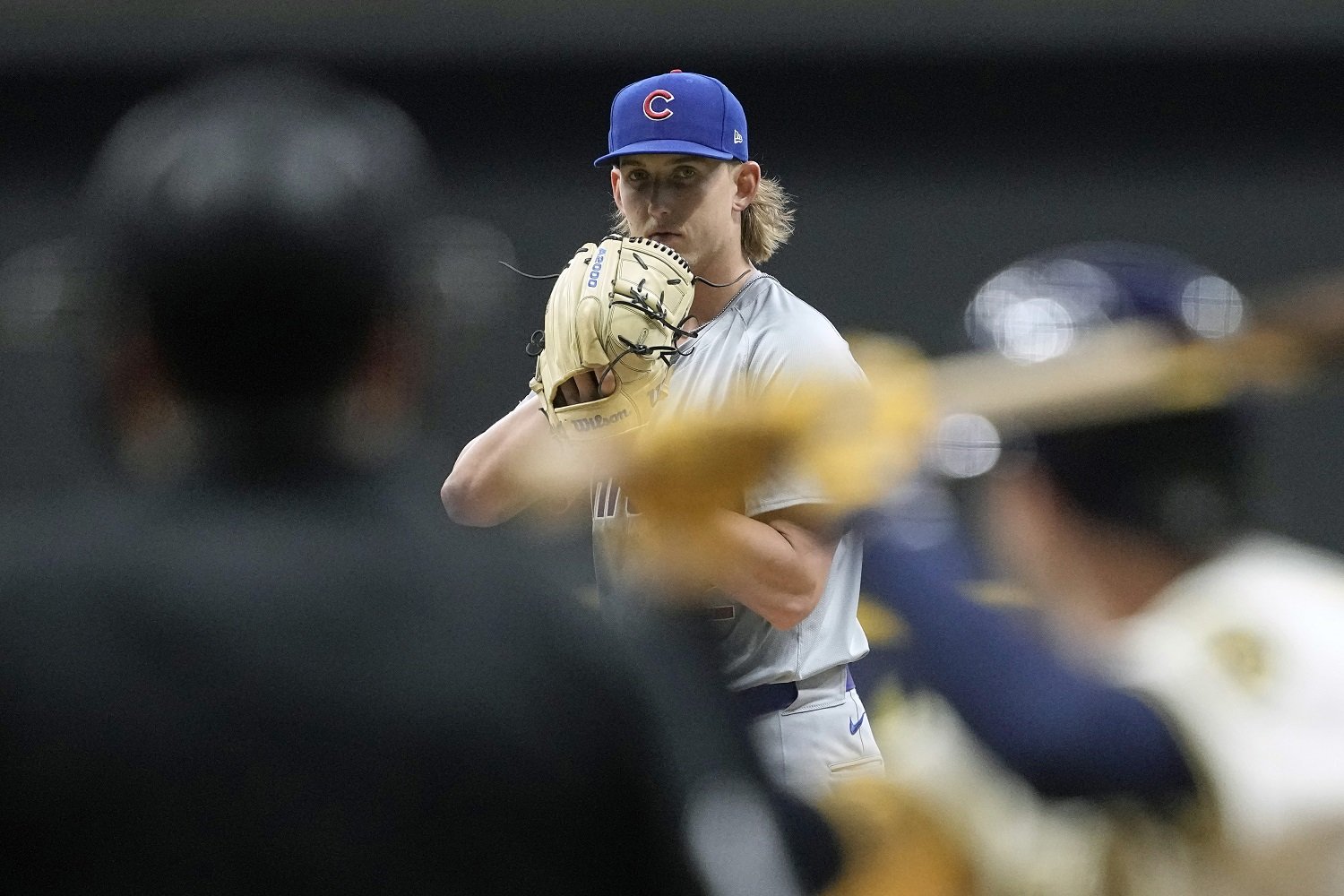 Injuries were the highlight of the 2024 season for the Cubs, as they watched numerous key contributors go down for extended periods of time. Trades (and trade rumors) have dominated the offseason, from the team's addition of Kyle Tucker to the constant rumors swirling around Seiya Suzuki and the rest of the outfield gang. All that and more can be found in today's five articles that placed just outside the top ten in North Side Baseball's 2024 popularity contest. #15: The Cubs Must Trade One of Ian Happ and Seiya Suzuki Next Month Matthew Trueblood June 25 Turns out, the Cubs didn't have to trade either Suzuki or Ian Happ, as they've since traded Cody Bellinger and brought in Tucker. Nevertheless, back in June, it was apparent that the Cubs weren't going anywhere, and were primed to be sellers by the trade deadline. As eight-figure outfielders with similar profiles — Happ having the better glove, Suzuki the more powerful bat — Matt argued that it would do the Cubs good to capitalize and fill another area of need on the roster by trading one of their expensive but redundant outfielders. #14: Breaking Down the MLB Trade Rumors Candidates and How They Fit on the Chicago Cubs Randy Holt November 2 As the offseason began, Randy took a look at the best trade candidates on the market, and whether or not the Cubs would be wise to pursue them. He ruled out a few names, like Devin Williams (division rival) and Jordan Montgomery (too expensive), but he did correctly point out that the Cubs would need to do something to address the Isaac Paredes problem at third base. He also gets bonus points for nailing the team's interest in Jesus Luzardo, whom the Cubs nearly grabbed before he was dealt to the Phillies. #13: Trade with Astros Could be Path to Elusive Lineup for Chicago Cubs Matthew Trueblood November 5 Yet another offseason preview article, and yet another accurate prediction from Trueblood. He perfectly noted that Paredes was a perfect fit for the Astros and the Crawford boxes in left field at the Minute Maid Park, though he didn't quite aim high enough with his expected return. In all fairness, after Bellinger opted-in to his contract for 2025, not many people were expecting the Cubs to target another outfielder in a trade. #12: Projecting the Cubs 2024 Opening Day Roster, v. 2.0 Matthew Trueblood January 17 Ah, the wide-eyed optimism of a new year with a new season on the horizon. Matt's predictions were mostly spot-on, though the Cubs did aggressively play Christopher Morel at third base before trading him, and Cody Bellinger came back to spell Mike Tauchman in center field. Surely we won't all fall susceptible to the promise that perpetually arrives every year this time around, right? #11: Injury Ends 2024 Season for Key Cubs Pitcher, but his Future Remains Bright Brandon Glick September 2 Ben Brown only threw 55 1/3 innings in 2024, but they were tantalizing ones to say the least, Seeing him get shut down for good in early September stung, but it was the right choice as the Cubs hobbled to a disappointing 83-79 finish for the second straight year. His career is only just getting started, and he has to be considered one of the favorites for the fifth starter job in 2025, until and unless the Cubs add a starter via trade this offseason. Which of these articles do you recall? What were your favorite topics from the year of 2024?
 -
Into the Top 15 we go as we continue looking at the most viewed North Side Baseball articles from 2024. Image courtesy of © Jeff Hanisch-Imagn Images Injuries were the highlight of the 2024 season for the Cubs, as they watched numerous key contributors go down for extended periods of time. Trades (and trade rumors) have dominated the offseason, from the team's addition of Kyle Tucker to the constant rumors swirling around Seiya Suzuki and the rest of the outfield gang. All that and more can be found in today's five articles that placed just outside the top ten in North Side Baseball's 2024 popularity contest. #15: The Cubs Must Trade One of Ian Happ and Seiya Suzuki Next Month Matthew Trueblood June 25 Turns out, the Cubs didn't have to trade either Suzuki or Ian Happ, as they've since traded Cody Bellinger and brought in Tucker. Nevertheless, back in June, it was apparent that the Cubs weren't going anywhere, and were primed to be sellers by the trade deadline. As eight-figure outfielders with similar profiles — Happ having the better glove, Suzuki the more powerful bat — Matt argued that it would do the Cubs good to capitalize and fill another area of need on the roster by trading one of their expensive but redundant outfielders. #14: Breaking Down the MLB Trade Rumors Candidates and How They Fit on the Chicago Cubs Randy Holt November 2 As the offseason began, Randy took a look at the best trade candidates on the market, and whether or not the Cubs would be wise to pursue them. He ruled out a few names, like Devin Williams (division rival) and Jordan Montgomery (too expensive), but he did correctly point out that the Cubs would need to do something to address the Isaac Paredes problem at third base. He also gets bonus points for nailing the team's interest in Jesus Luzardo, whom the Cubs nearly grabbed before he was dealt to the Phillies. #13: Trade with Astros Could be Path to Elusive Lineup for Chicago Cubs Matthew Trueblood November 5 Yet another offseason preview article, and yet another accurate prediction from Trueblood. He perfectly noted that Paredes was a perfect fit for the Astros and the Crawford boxes in left field at the Minute Maid Park, though he didn't quite aim high enough with his expected return. In all fairness, after Bellinger opted-in to his contract for 2025, not many people were expecting the Cubs to target another outfielder in a trade. #12: Projecting the Cubs 2024 Opening Day Roster, v. 2.0 Matthew Trueblood January 17 Ah, the wide-eyed optimism of a new year with a new season on the horizon. Matt's predictions were mostly spot-on, though the Cubs did aggressively play Christopher Morel at third base before trading him, and Cody Bellinger came back to spell Mike Tauchman in center field. Surely we won't all fall susceptible to the promise that perpetually arrives every year this time around, right? #11: Injury Ends 2024 Season for Key Cubs Pitcher, but his Future Remains Bright Brandon Glick September 2 Ben Brown only threw 55 1/3 innings in 2024, but they were tantalizing ones to say the least, Seeing him get shut down for good in early September stung, but it was the right choice as the Cubs hobbled to a disappointing 83-79 finish for the second straight year. His career is only just getting started, and he has to be considered one of the favorites for the fifth starter job in 2025, until and unless the Cubs add a starter via trade this offseason. Which of these articles do you recall? What were your favorite topics from the year of 2024? View full article
-
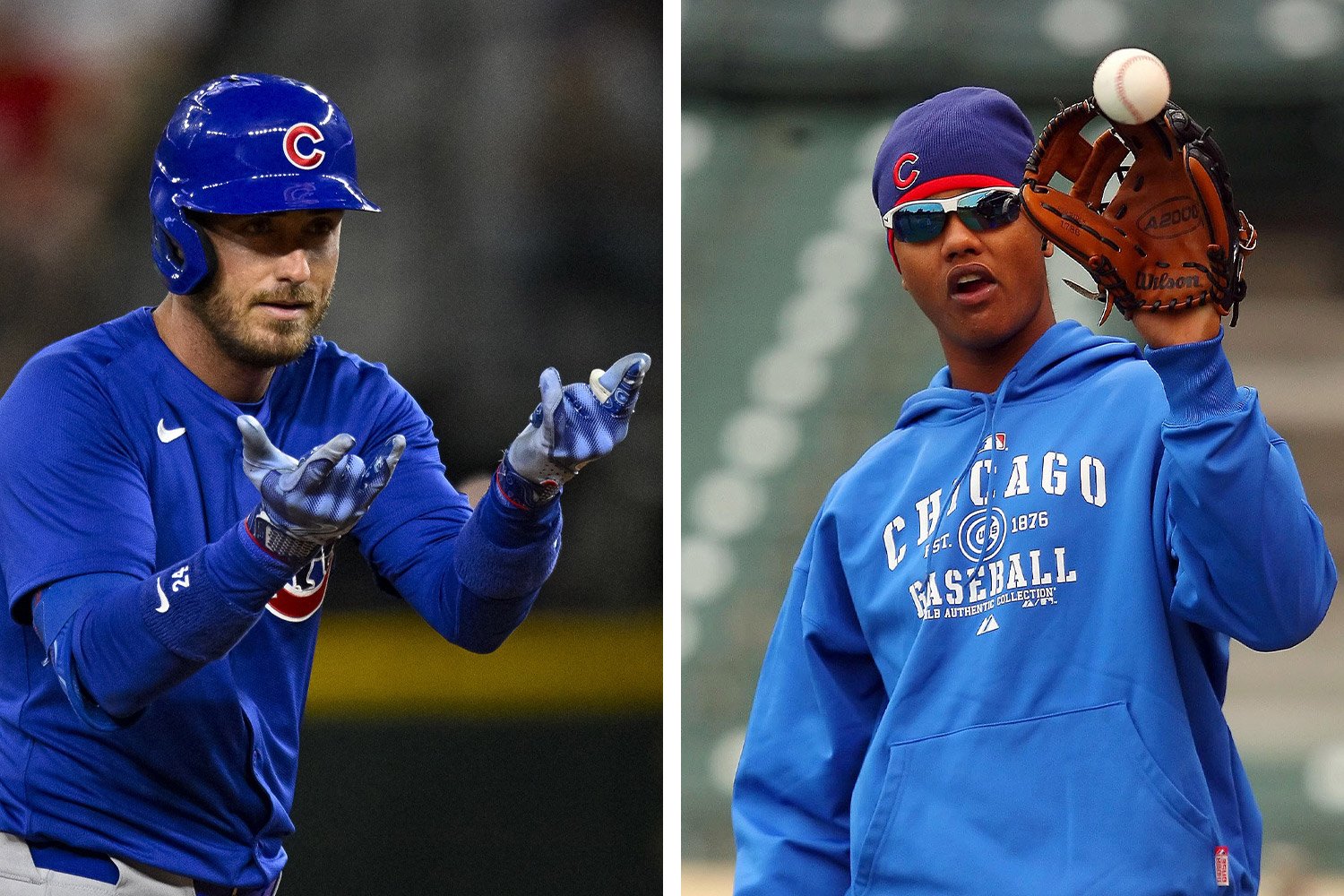 The Cubs’ outfield has received a makeover this offseason, notably highlighted by the Kyle Tucker and Cody Bellinger trades. While they paid a fair price for the former, it’s very easy to question the return they got for the latter — reliever Cody Poteet and salary relief — given that Bellinger finished tenth in NL MVP voting just one year ago. Some have argued that the Cubs made the right move prioritizing financial flexibility in the Bellinger trade (and correctly noted that other factors, including playing time limitations, played a factor in the deal). In contrast, others (including myself) have lambasted the Cubs for not getting a better return by flexing their monetary muscles and eating more of Bellinger’s deal. Regardless of what side of the aisle you come down on, the Bellinger trade is astonishingly similar to the Starlin Castro trade from nine years back. At that time, the Cubs were coming off a shocking 2015 season in which they beat multiple division rivals and advanced to the NLCS. They doubled down on their core in the offseason, adding Jason Heyward and John Lackey (among others) to supplement a championship roster. However, one of the most notable transactions they completed was a subtraction, as they shipped Castro off to New York in return for reliever Adam Warren and infielder Brendan Ryan. Castro was tasked with playing second base opposite Didi Gregorius, Derek Jeter’s replacement at shortstop, and performed admirably, racking up 3.2 WAR and 289 hits during his two-year tenure with the Yankees. The Cubs, meanwhile, received practically nothing from Warren (5.91 ERA/5.83 FIP in 35 innings) before they shipped him back to the Yankees at the 2016 trade deadline in the deal that brought Aroldis Chapman to Chicago. They also received nothing from Ryan, who didn’t play a single game in a Cubs uniform. Of course, the Castro trade wasn’t made with the hopes that Warren would be the savior of the Cubs’ bullpen. Instead, Chicago executed that deal to open up second base and salary for their eventual signing of Ben Zobrist, as well as some extra playing time for Javier Baez at the keystone position. In that sense, the deal worked out magnificently, as Baez won co-NLCS MVP with Jon Lester, and Zobrist went on to win the most important World Series MVP of all time thanks to his clutch hit in the tenth inning of Game 7 of the 2016 World Series. Before we start daydreaming about the Cubs’ utilizing some of their newfound funds on the eventual 2025 World Series MVP, it’s important to note that Poteet isn’t a zero. He has plenty of starting pitching experience and usually sees an uptick in his stuff and results after moving to the bullpen. The odds that he blows up and gets traded back to the Yankees at the 2025 trade deadline are slim to none. Likewise, the Cubs have already found their Bellinger replacement: Kyle Tucker. The former Houston Astro will be the everyday right fielder in Chicago this upcoming season, and there’s not much more room in the outfield with Ian Happ, Pete Crow-Armstrong, and Seiya Suzuki all in the mix, too. If the team allocates those funds elsewhere, it’ll almost certainly be for a starting pitcher. I still submit that the best use of that money would have been to eat more of Bellinger’s contract to coax a better return out of the Yankees, but that’s water under the bridge at this point. All the front office can do from here is capitalize on a deep roster that finally has some superstar power. Salary dumping fan-favorite players with All-Star pedigree on the New York Yankees to acquire a middling reliever and open up a spot for a new star isn’t exactly what I’d consider to be a favorite pastime of mine. Still, the Cubs clearly have an affinity for it. Let’s just hope it works out as well as last time.
 -
Cody Bellinger is with the Yankees now, and the Cubs’ decision to salary dump him is ominously similar to their handling of Starlin Castro one decade ago. Image courtesy of © Jerome Miron-Imagn Images / © Dennis Wierzbicki-Imagn Images The Cubs’ outfield has received a makeover this offseason, notably highlighted by the Kyle Tucker and Cody Bellinger trades. While they paid a fair price for the former, it’s very easy to question the return they got for the latter — reliever Cody Poteet and salary relief — given that Bellinger finished tenth in NL MVP voting just one year ago. Some have argued that the Cubs made the right move prioritizing financial flexibility in the Bellinger trade (and correctly noted that other factors, including playing time limitations, played a factor in the deal). In contrast, others (including myself) have lambasted the Cubs for not getting a better return by flexing their monetary muscles and eating more of Bellinger’s deal. Regardless of what side of the aisle you come down on, the Bellinger trade is astonishingly similar to the Starlin Castro trade from nine years back. At that time, the Cubs were coming off a shocking 2015 season in which they beat multiple division rivals and advanced to the NLCS. They doubled down on their core in the offseason, adding Jason Heyward and John Lackey (among others) to supplement a championship roster. However, one of the most notable transactions they completed was a subtraction, as they shipped Castro off to New York in return for reliever Adam Warren and infielder Brendan Ryan. Castro was tasked with playing second base opposite Didi Gregorius, Derek Jeter’s replacement at shortstop, and performed admirably, racking up 3.2 WAR and 289 hits during his two-year tenure with the Yankees. The Cubs, meanwhile, received practically nothing from Warren (5.91 ERA/5.83 FIP in 35 innings) before they shipped him back to the Yankees at the 2016 trade deadline in the deal that brought Aroldis Chapman to Chicago. They also received nothing from Ryan, who didn’t play a single game in a Cubs uniform. Of course, the Castro trade wasn’t made with the hopes that Warren would be the savior of the Cubs’ bullpen. Instead, Chicago executed that deal to open up second base and salary for their eventual signing of Ben Zobrist, as well as some extra playing time for Javier Baez at the keystone position. In that sense, the deal worked out magnificently, as Baez won co-NLCS MVP with Jon Lester, and Zobrist went on to win the most important World Series MVP of all time thanks to his clutch hit in the tenth inning of Game 7 of the 2016 World Series. Before we start daydreaming about the Cubs’ utilizing some of their newfound funds on the eventual 2025 World Series MVP, it’s important to note that Poteet isn’t a zero. He has plenty of starting pitching experience and usually sees an uptick in his stuff and results after moving to the bullpen. The odds that he blows up and gets traded back to the Yankees at the 2025 trade deadline are slim to none. Likewise, the Cubs have already found their Bellinger replacement: Kyle Tucker. The former Houston Astro will be the everyday right fielder in Chicago this upcoming season, and there’s not much more room in the outfield with Ian Happ, Pete Crow-Armstrong, and Seiya Suzuki all in the mix, too. If the team allocates those funds elsewhere, it’ll almost certainly be for a starting pitcher. I still submit that the best use of that money would have been to eat more of Bellinger’s contract to coax a better return out of the Yankees, but that’s water under the bridge at this point. All the front office can do from here is capitalize on a deep roster that finally has some superstar power. Salary dumping fan-favorite players with All-Star pedigree on the New York Yankees to acquire a middling reliever and open up a spot for a new star isn’t exactly what I’d consider to be a favorite pastime of mine. Still, the Cubs clearly have an affinity for it. Let’s just hope it works out as well as last time. View full article
-
Jeffrey Alan Samardzija, known to many Cubs fans simply as "Shark", pitched for the North Siders for six-and-a-half seasons, earning an All-Star nod in his final campaign with the team in 2014. Before plying his trade in Chicago, Samardzija was a two-sport star at the University of Notre Dame. He was the Fighting Irish's best wide receiver on the football team and best pitcher on their baseball team. He made numerous All-American teams in both sports, and ended his collegiate career in 2006 as the all-time record holder for receiving yards at Notre Dame with 2,593 (he has since fallen to third). He was drafted by the Cubs in the fifth round (149th overall) of the 2006 MLB Draft. After finishing out his senior season with the Fighting Irish football team, Samardzija made the decision to forgo the NFL Draft in Jan. 2007, a full six months after he was initially drafted. In order to lure him towards turning professional in baseball, the Cubs handed him a historic five-year contract before he ever played a game in the system. The deal was for $10 million, included two club option years worth more than $6.5 million, and came equipped with a full no-trade clause, the first of its kind for a prospect. He would spend 1.5 seasons in the minors before making his MLB debut with the Cubs on July 25, 2008, against the Miami Marlins. In his Cubs career, Samardzija totaled a 3.97 ERA (3.80 FIP) in 666.0 innings. He didn't establish himself as a starter until the 2012 season, as he made 128 appearances (five starts) from 2008-11. Once he did enter the rotation, he was one of the best players on a downtrodden team, and he took the bump on Opening Day in both 2013 and 2014. He was named National League Co-Player of the Week for August 19–25, 2013, after recording a 2–0 record and 1.59 ERA in 17 innings pitched. In 2014, he set a major league record for lowest ERA (1.46) by a winless pitcher through his first ten starts. Samardzija's Cubs tenure effectively ended in June of that season when he rejected a five-year, $85 million extension offer. He was viewed as the best starting pitcher on the trade market that summer, with one-and-a-half years of club control remaining. Chicago notably rebuked multiple offers from the New York Yankees, among others, before deciding to deal him in July. Samardzija earned his first and only career All-Star appearance in 2014 thanks to his work with the Cubs, though he wasn't allowed to participate in the game due to the trade that sent him to the then-Oakland Athletics (along with Jason Hammel) for Addison Russell, Billy McKinney, Dan Straily, and cash. He was excellent in his half-season in Oakland, accruing a 3.14 ERA in 111 2/3 innings, though the A's fell short of the ultimate goal when they lost to the Kansas City Royals in the AL Wild Card Game. After the season, he was traded to the Chicago White Sox (where he performed terribly for one year), and then struck it rich with a five-year contract worth $90 million with the San Francisco Giants in free agency prior to the 2016 season. After the Giants released Samardzija at the end of the 2020 season, he retired shortly thereafter. He concluded his career with a 4.15 ERA in 1,645 1/3 innings across 13 seasons, accruing an 80-106 record and 1,449 strikeouts in that time. View full player
-
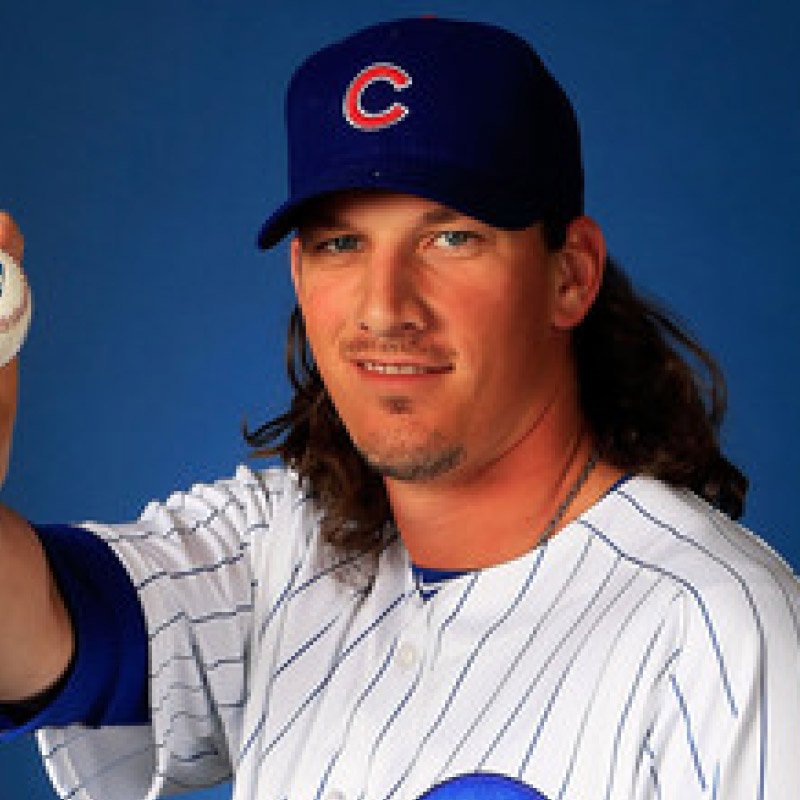 Jeffrey Alan Samardzija, known to many Cubs fans simply as "Shark", pitched for the North Siders for six-and-a-half seasons, earning an All-Star nod in his final campaign with the team in 2014. Before plying his trade in Chicago, Samardzija was a two-sport star at the University of Notre Dame. He was the Fighting Irish's best wide receiver on the football team and best pitcher on their baseball team. He made numerous All-American teams in both sports, and ended his collegiate career in 2006 as the all-time record holder for receiving yards at Notre Dame with 2,593 (he has since fallen to third). He was drafted by the Cubs in the fifth round (149th overall) of the 2006 MLB Draft. After finishing out his senior season with the Fighting Irish football team, Samardzija made the decision to forgo the NFL Draft in Jan. 2007, a full six months after he was initially drafted. In order to lure him towards turning professional in baseball, the Cubs handed him a historic five-year contract before he ever played a game in the system. The deal was for $10 million, included two club option years worth more than $6.5 million, and came equipped with a full no-trade clause, the first of its kind for a prospect. He would spend 1.5 seasons in the minors before making his MLB debut with the Cubs on July 25, 2008, against the Miami Marlins. In his Cubs career, Samardzija totaled a 3.97 ERA (3.80 FIP) in 666.0 innings. He didn't establish himself as a starter until the 2012 season, as he made 128 appearances (five starts) from 2008-11. Once he did enter the rotation, he was one of the best players on a downtrodden team, and he took the bump on Opening Day in both 2013 and 2014. He was named National League Co-Player of the Week for August 19–25, 2013, after recording a 2–0 record and 1.59 ERA in 17 innings pitched. In 2014, he set a major league record for lowest ERA (1.46) by a winless pitcher through his first ten starts. Samardzija's Cubs tenure effectively ended in June of that season when he rejected a five-year, $85 million extension offer. He was viewed as the best starting pitcher on the trade market that summer, with one-and-a-half years of club control remaining. Chicago notably rebuked multiple offers from the New York Yankees, among others, before deciding to deal him in July. Samardzija earned his first and only career All-Star appearance in 2014 thanks to his work with the Cubs, though he wasn't allowed to participate in the game due to the trade that sent him to the then-Oakland Athletics (along with Jason Hammel) for Addison Russell, Billy McKinney, Dan Straily, and cash. He was excellent in his half-season in Oakland, accruing a 3.14 ERA in 111 2/3 innings, though the A's fell short of the ultimate goal when they lost to the Kansas City Royals in the AL Wild Card Game. After the season, he was traded to the Chicago White Sox (where he performed terribly for one year), and then struck it rich with a five-year contract worth $90 million with the San Francisco Giants in free agency prior to the 2016 season. After the Giants released Samardzija at the end of the 2020 season, he retired shortly thereafter. He concluded his career with a 4.15 ERA in 1,645 1/3 innings across 13 seasons, accruing an 80-106 record and 1,449 strikeouts in that time.
 -
Jason Alias Heyward, known cheekily as “The J-Hey Kid”, was a first-round pick (14th overall) of the Atlanta Braves in the 2007 MLB Draft. He began his minor-league career at just 17 years old, appearing in three minor-league All-Star games and winning two Minor League Player of the Year awards. By the time 2010 rolled around, multiple media outlets named Heyward the top prospect in baseball. He won the Braves’ right-field job as a 20-year-old rookie that year, making his debut on Opening Day against the Cubs. His first at-bat proved to be a memorable one. That home run proved to be a positive omen, as Heyward went on to earn an All-Star nod as the National League’s starting right fielder during his rookie campaign (though he would miss the festivities due to a thumb injury). That would actually be the only All-Star honor in Heyward’s career (er, so far), though he continued to produce at an above-average level for years. In his first five seasons in Atlanta, he racked up 23.0 bWAR, slashing .262/.351/.429 (117 wRC+) while winning the first two of five career Gold Gloves. In Nov. 2014, just one year out from free agency, Atlanta dealt Heyward to the Cardinals, for a package highlighted by Shelby Miller. For Atlanta, the hope was that they'd find a long-term ace. For St. Louis, Heyward had to replace the tragically deceased Oscar Taveras. Heyward thrived in his lone season in St. Louis, accruing a career-best 6.9 bWAR and hitting for a .797 OPS (122 wRC+) in 2015. After losing to the Cubs in the NLDS, Heyward deemed their future to be bright and the money to be right; he joined the franchise in free agency. It remains the largest deal in Cubs history (for now): $184 million, spread out over eight years. At this point, a lot of emotions will bubble to the surface. Heyward was, for all intents and purposes, not worth his contract in terms of on-field production. Though he won his final two Gold Gloves in 2016 and 2017—and continued to provide stellar defensive value after, totaling 35 Fielding Run Value (FRV) in his time in Chicago—he was a disaster at the plate. From 2016-22, Heyward slashed .245/.323/.377 (88 wRC+)—which, I have to be honest, is significantly better than I remember. Over the four-year stretch from 2017-20, Heyward actually posted a .752 OPS, which, when coupled with his defensive skills, made him worth 8.2 bWAR. Is that good enough for a guy getting paid $23 million per year? No, but it was only in the final two years of his time on the North Side that he really fell off (-0.3 bWAR, 67 wRC+). That was all after a truly lost 2016, though, too. Of course, his most memorable moment with the Cubs didn’t even happen on the field. During Game 7 of the 2016 World Series, Heyward gave the famous “Rain Delay Speech” during the 17-minute, weather-induced intermission before extra-innings began. He rallied a team that had just squandered a three-run lead with four outs to go, and the Cubs returned in the top of the tenth to bring home two runs, including the lead-taking RBI by World Series MVP Ben Zobrist. Heyward batted just .150 in that World Series (and had a sub-.350 OPS in the 2016 postseason), but that speech defined his Cubs legacy. Sure, the Cubs would have liked to get some more production in the ensuing seasons, but that was a $184 million speech, and it was worth every penny. Heyward was a model citizen away from the game, and served as an invaluable mentor to the team’s young players once the World Series core was traded away. While it can’t be ignored, Heyward’s bat was the only thing that lagged behind during his time with the Cubs. Toward the end of the 2022 season, Jed Hoyer confirmed that Heyward would be released. He took a one-year deal with the Dodgers in free agency and had his best season in years while serving as part of an outfield platoon for the NL West champs. He re-signed with Los Angeles for the 2024 season, though he was released in August. He joined the Houston Astros for the stretch run, posting a .756 OPS in limited work for the best team in the AL West. Heyward will be awarded a ring for his services with the Dodgers in 2024, and he is currently a free agent. It’s possible that Heyward’s playing career has come to an end. If so, he’ll be remembered with bittersweet fondness for his time with the Cubs, who probably don’t win that 2016 championship without him. View full player
-
 Jason Alias Heyward, known cheekily as “The J-Hey Kid”, was a first-round pick (14th overall) of the Atlanta Braves in the 2007 MLB Draft. He began his minor-league career at just 17 years old, appearing in three minor-league All-Star games and winning two Minor League Player of the Year awards. By the time 2010 rolled around, multiple media outlets named Heyward the top prospect in baseball. He won the Braves’ right-field job as a 20-year-old rookie that year, making his debut on Opening Day against the Cubs. His first at-bat proved to be a memorable one. That home run proved to be a positive omen, as Heyward went on to earn an All-Star nod as the National League’s starting right fielder during his rookie campaign (though he would miss the festivities due to a thumb injury). That would actually be the only All-Star honor in Heyward’s career (er, so far), though he continued to produce at an above-average level for years. In his first five seasons in Atlanta, he racked up 23.0 bWAR, slashing .262/.351/.429 (117 wRC+) while winning the first two of five career Gold Gloves. In Nov. 2014, just one year out from free agency, Atlanta dealt Heyward to the Cardinals, for a package highlighted by Shelby Miller. For Atlanta, the hope was that they'd find a long-term ace. For St. Louis, Heyward had to replace the tragically deceased Oscar Taveras. Heyward thrived in his lone season in St. Louis, accruing a career-best 6.9 bWAR and hitting for a .797 OPS (122 wRC+) in 2015. After losing to the Cubs in the NLDS, Heyward deemed their future to be bright and the money to be right; he joined the franchise in free agency. It remains the largest deal in Cubs history (for now): $184 million, spread out over eight years. At this point, a lot of emotions will bubble to the surface. Heyward was, for all intents and purposes, not worth his contract in terms of on-field production. Though he won his final two Gold Gloves in 2016 and 2017—and continued to provide stellar defensive value after, totaling 35 Fielding Run Value (FRV) in his time in Chicago—he was a disaster at the plate. From 2016-22, Heyward slashed .245/.323/.377 (88 wRC+)—which, I have to be honest, is significantly better than I remember. Over the four-year stretch from 2017-20, Heyward actually posted a .752 OPS, which, when coupled with his defensive skills, made him worth 8.2 bWAR. Is that good enough for a guy getting paid $23 million per year? No, but it was only in the final two years of his time on the North Side that he really fell off (-0.3 bWAR, 67 wRC+). That was all after a truly lost 2016, though, too. Of course, his most memorable moment with the Cubs didn’t even happen on the field. During Game 7 of the 2016 World Series, Heyward gave the famous “Rain Delay Speech” during the 17-minute, weather-induced intermission before extra-innings began. He rallied a team that had just squandered a three-run lead with four outs to go, and the Cubs returned in the top of the tenth to bring home two runs, including the lead-taking RBI by World Series MVP Ben Zobrist. Heyward batted just .150 in that World Series (and had a sub-.350 OPS in the 2016 postseason), but that speech defined his Cubs legacy. Sure, the Cubs would have liked to get some more production in the ensuing seasons, but that was a $184 million speech, and it was worth every penny. Heyward was a model citizen away from the game, and served as an invaluable mentor to the team’s young players once the World Series core was traded away. While it can’t be ignored, Heyward’s bat was the only thing that lagged behind during his time with the Cubs. Toward the end of the 2022 season, Jed Hoyer confirmed that Heyward would be released. He took a one-year deal with the Dodgers in free agency and had his best season in years while serving as part of an outfield platoon for the NL West champs. He re-signed with Los Angeles for the 2024 season, though he was released in August. He joined the Houston Astros for the stretch run, posting a .756 OPS in limited work for the best team in the AL West. Heyward will be awarded a ring for his services with the Dodgers in 2024, and he is currently a free agent. It’s possible that Heyward’s playing career has come to an end. If so, he’ll be remembered with bittersweet fondness for his time with the Cubs, who probably don’t win that 2016 championship without him.
 -
While technically still an active player, Heyward gave the prime of his career to the Cubs, and in exchange they gave him the largest contract in franchise history. Image courtesy of © Tommy Gilligan-Imagn Images Before we dive into the nitty-gritty of Jason Heyward’s time with the Cubs, I want to note that this article (and others like it) is done in conjunction with North Side Baseball’s Chicago Cubs Players Project. It’s a wiki-style project that anyone—including you, dear reader—can contribute to. There, we’re chronicling the careers of every player who’s ever put on a Cubs uniform (including, for example, Mike Olt), and adding any personal memories or particularly favorite experiences fans have from that player’s tenure. It’s a community project, and we hope you’ll contribute to it. Jason Heyward, known cheekily as “The J-Hey Kid”, was a first-round pick (14th overall) of the Atlanta Braves in the 2007 MLB Draft. He began his minor-league career at just 17 years old, appearing in three minor-league All-Star games and winning two Minor League Player of the Year awards. By the time 2010 rolled around, multiple media outlets named Heyward the top prospect in baseball. He won the Braves’ right-field job as a 20-year-old rookie that year, making his debut on Opening Day against the Cubs. His first at-bat proved to be a memorable one. That home run proved to be a positive omen, as Heyward went on to earn an All-Star nod as the National League’s starting right fielder during his rookie campaign (though he would miss the festivities due to a thumb injury). That would actually be the only All-Star honor in Heyward’s career (er, so far), though he continued to produce at an above-average level for years. In his first five seasons in Atlanta, he racked up 23.0 bWAR, slashing .262/.351/.429 (117 wRC+) while winning the first two of five career Gold Gloves. In Nov. 2014, just one year out from free agency, Atlanta dealt Heyward to the Cardinals, for a package highlighted by Shelby Miller. For Atlanta, the hope was that they'd find a long-term ace. For St. Louis, Heyward had to replace the tragically deceased Oscar Taveras. Heyward thrived in his lone season in St. Louis, accruing a career-best 6.9 bWAR and hitting for a .797 OPS (122 wRC+) in 2015. After losing to the Cubs in the NLDS, Heyward deemed their future to be bright and the money to be right; he joined the franchise in free agency. It remains the largest deal in Cubs history (for now): $184 million, spread out over eight years. At this point, a lot of emotions will bubble to the surface. Heyward was, for all intents and purposes, not worth his contract in terms of on-field production. Though he won his final two Gold Gloves in 2016 and 2017—and continued to provide stellar defensive value after, totaling 35 Fielding Run Value (FRV) in his time in Chicago—he was a disaster at the plate. From 2016-22, Heyward slashed .245/.323/.377 (88 wRC+)—which, I have to be honest, is significantly better than I remember. Over the four-year stretch from 2017-20, Heyward actually posted a .752 OPS, which, when coupled with his defensive skills, made him worth 8.2 bWAR. Is that good enough for a guy getting paid $23 million per year? No, but it was only in the final two years of his time on the North Side that he really fell off (-0.3 bWAR, 67 wRC+). That was all after a truly lost 2016, though, too. Of course, his most memorable moment with the Cubs didn’t even happen on the field. During Game 7 of the 2016 World Series, Heyward gave the famous “Rain Delay Speech” during the 17-minute, weather-induced intermission before extra-innings began. He rallied a team that had just squandered a three-run lead with four outs to go, and the Cubs returned in the top of the tenth to bring home two runs, including the lead-taking RBI by World Series MVP Ben Zobrist. Heyward batted just .150 in that World Series (and had a sub-.350 OPS in the 2016 postseason), but that speech defined his Cubs legacy. Sure, the Cubs would have liked to get some more production in the ensuing seasons, but that was a $184 million speech, and it was worth every penny. Heyward was a model citizen away from the game, and served as an invaluable mentor to the team’s young players once the World Series core was traded away. While it can’t be ignored, Heyward’s bat was the only thing that lagged behind during his time with the Cubs. Toward the end of the 2022 season, Jed Hoyer confirmed that Heyward would be released. He took a one-year deal with the Dodgers in free agency and had his best season in years while serving as part of an outfield platoon for the NL West champs. He re-signed with Los Angeles for the 2024 season, though he was released in August. He joined the Houston Astros for the stretch run, posting a .756 OPS in limited work for the best team in the AL West. Heyward will be awarded a ring for his services with the Dodgers in 2024, and he is currently a free agent. It’s possible that Heyward’s playing career has come to an end. If so, he’ll be remembered with bittersweet fondness for his time with the Cubs, who probably don’t win that 2016 championship without him. View full article
