


Cubs Video
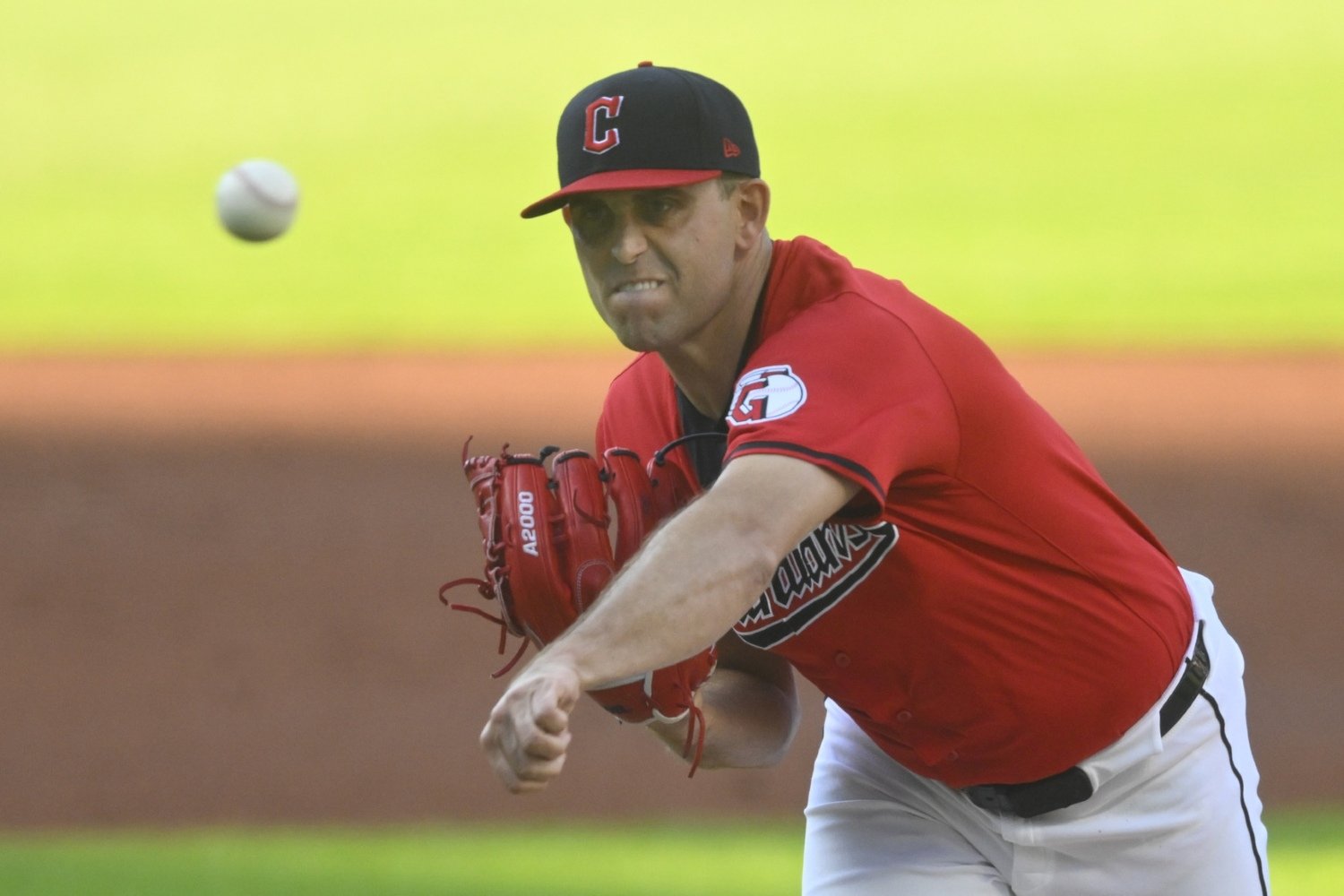
In the very early hours of Monday morning, the Cubs landed their first big free-agent fish of the offseason, agreeing with starter Matthew Boyd on a two-year, $29 million deal.
On the surface, the move feels somewhat similar to the John Lackey deal the Cubs executed almost a decade ago. Both contracts were of the same length at a similar face value, for veteran pitchers coming off sub-3.00 ERA seasons. Lackey had a 2.77 ERA in 2015 with the St. Louis Cardinals; Boyd had a 2.72 ERA in 2024 with the Cleveland Guardians. There are two main differences in the circumstances surrounding both signings: Lackey was far more reliable than Boyd is now, and the Cubs’ rotation was already well-defined when Lackey climbed aboard.
Tackling that first point: Lackey, who was 37 years old at the time of his deal with the Cubs, pitched a whopping 359 innings over his two years in Chicago. Before signing with the team, he pitched 218 innings in 2015, 198 innings in 2014, and 189.1 innings in 2013. He was, by all accounts, a workhorse starter.
Boyd, on the other hand, is anything but. Between 2017-19, Boyd pitched 490 2/3 innings for the Detroit Tigers (posting an unsightly 4.70 ERA and matching 4.41 FIP). Since then, though, he’s thrown just 263 total innings, with a similarly disappointing 4.65 ERA and 4.38 FIP. Over the last five seasons, he hasn’t exceeded 80 innings pitched in any campaign.
Of course, injuries have been the cause. He missed nearly a season and a half with a torn flexor tendon issue, which required surgery after taking a while to diagnose. He then tore his UCL in the summer of 2023 and had Tommy John surgery. Boyd returned to pitch nearly 40 innings at the end of the regular season with the AL Central champions this past season, striking out over a quarter of the hitters he faced. He was then even better in the postseason, allowing just one run across three starts and 11 2/3 innings.
Even though he appeared healthy at the conclusion of this year’s campaign, it’s hard to call Boyd anything but an injury risk, especially since he’ll turn 34 before pitchers and catchers report in February. For a team that just went through a season where seemingly every pitcher not named Shota Imanaga spent meaningful time on the Injured List, Boyd’s signing raises a lot of questions.
Those questions are especially relevant to the second point introduced above—the Cubs’ current rotation is littered with upside and problems.
Back when Lackey inked his deal, the Cubs were coming off an NLCS appearance. Jake Arrieta had established himself as a true ace alongside Jon Lester with one of the greatest halves of baseball ever, while youngster Kyle Hendricks and veteran Jason Hammel were locked in at the back end of the rotation. The team had a clear and obvious need for a No. 3 starter, and Lackey’s track record—in both the regular season and playoffs—aligned perfectly with what the team was looking for.
Of course, Hendricks broke out and finished third in Cy Young voting in 2016, giving the team a trio of aces to build around, but Lackey more than held up his end of the bargain. He provided the Cubs with a strong 3.35 ERA (3.81 FIP) in 188 ⅓ innings in his first season on the North Side. For all intents and purposes, the contract was an unmitigated success, even though Lackey struggled in the final season of his career in 2017.
On the other hand, the modern iteration of the Cubs don’t have that strong top end of the rotation. Imanaga and Justin Steele—both southpaws, like Boyd—are penciled in as the team’s No. 1 and 2 starters, but they aren’t the surefire aces that Lester and Arrieta were a decade ago. Jameson Taillon recovered from a down year in 2023 to have a strong season in 2024, though relying on him to start two games in a seven-game series in the playoffs doesn’t sound very comforting. Javier Assad has broken out since joining the rotation at the tail end of the 2023 campaign, but he’s also not going to be a middle-of-the-rotation savior.
Beyond that, the Cubs have a lot of young starting pitching depth with some upside, including Jordan Wicks (another lefty), Hayden Wesneski, Cade Horton, Ben Brown, and Brandon Birdsell. Boyd is a better bet than any of those pitchers to contribute in a meaningful way in 2025, but his price tag ($14.5 million per year) and injury history make him the kind of option that makes one a little less giddy and a little more stressed than those younger arms.
What the Cubs need, in a painfully obvious way, is an ace—someone to take the ball in Game 1 of any postseason series, as well as on Opening Day. Imanaga and Steele are great pitchers, but they’re better-suited to do battle with Carlos Rodón and Luis Gil than with Gerrit Cole, for example.
Blake Snell is already on the Dodgers, though Corbin Burnes and Max Fried are both still lingering on the free-agent market. Roki Sasaki casts a shadow over the entire offseason. Garrett Crochet might not be any more certain a No. 1 starter than Steele or Imanaga, given his own workload questions, but having three pitchers of that caliber is better than having two.
Maybe the key to understanding the Boyd signing is not to think of it as analogous to Lackey's arrival, but rather, to the deal they signed the previous winter, bringing back Hammel on a two-year, $20-million deal after having traded him that summer. The Lackey deal was, in truth, a good bit richer than this one is, once you account for the inflation the market has seen since. Hammel's is a cleaner financial comparator, and since Hammel was a pitcher similar to Boyd, too, the whole thing feels a bit neater.
Pivot from thinking of this move as akin to Lackey's to considering it similar to Hammel's, and the real thrust of the issue comes into view: the Cubs are building their 2015 rotation, not their 2016 one, and that highlights the way Steele and Imanaga pale in comparison to Lester and Arrieta. Great teams win around the margins with moves like this, but you can only be a great team by having the best players in the sport. If they’re serious about making a postseason push next year, it’s time for the Cubs to bring in a pitcher of that caliber. The value of the Boyd signing will depend on whether or not they now execute that second maneuver.





Recommended Comments
There are no comments to display.
Create an account or sign in to comment
You need to be a member in order to leave a comment
Create an account
Sign up for a new account in our community. It's easy!
Register a new accountSign in
Already have an account? Sign in here.
Sign In Now