


Brandon Glick
-
Posts
1,153 -
Joined
-
Last visited
Content Type
Profiles
Joomla Posts 1
Chicago Cubs Videos
Chicago Cubs Free Agent & Trade Rumors, Notes, & Tidbits
2026 Chicago Cubs Top Prospects Ranking
News
2023 Chicago Cubs Draft Picks
Guides & Resources
2024 Chicago Cubs Draft Picks
The Chicago Cubs Players Project
2025 Chicago Cubs Draft Pick Tracker
2026 Chicago Cubs Draft Tracker: Picks & Bonuses
Blogs
Events
Forums
Store
Gallery
Everything posted by Brandon Glick
-
The veteran lefty serves as a fine back-end starter, but the Cubs need more in order to compete with the elite teams in the National League. Image courtesy of © David Richard-Imagn Images In the very early hours of Monday morning, the Cubs landed their first big free-agent fish of the offseason, agreeing with starter Matthew Boyd on a two-year, $29 million deal. On the surface, the move feels somewhat similar to the John Lackey deal the Cubs executed almost a decade ago. Both contracts were of the same length at a similar face value, for veteran pitchers coming off sub-3.00 ERA seasons. Lackey had a 2.77 ERA in 2015 with the St. Louis Cardinals; Boyd had a 2.72 ERA in 2024 with the Cleveland Guardians. There are two main differences in the circumstances surrounding both signings: Lackey was far more reliable than Boyd is now, and the Cubs’ rotation was already well-defined when Lackey climbed aboard. Tackling that first point: Lackey, who was 37 years old at the time of his deal with the Cubs, pitched a whopping 359 innings over his two years in Chicago. Before signing with the team, he pitched 218 innings in 2015, 198 innings in 2014, and 189.1 innings in 2013. He was, by all accounts, a workhorse starter. Boyd, on the other hand, is anything but. Between 2017-19, Boyd pitched 490 2/3 innings for the Detroit Tigers (posting an unsightly 4.70 ERA and matching 4.41 FIP). Since then, though, he’s thrown just 263 total innings, with a similarly disappointing 4.65 ERA and 4.38 FIP. Over the last five seasons, he hasn’t exceeded 80 innings pitched in any campaign. Of course, injuries have been the cause. He missed nearly a season and a half with a torn flexor tendon issue, which required surgery after taking a while to diagnose. He then tore his UCL in the summer of 2023 and had Tommy John surgery. Boyd returned to pitch nearly 40 innings at the end of the regular season with the AL Central champions this past season, striking out over a quarter of the hitters he faced. He was then even better in the postseason, allowing just one run across three starts and 11 2/3 innings. Even though he appeared healthy at the conclusion of this year’s campaign, it’s hard to call Boyd anything but an injury risk, especially since he’ll turn 34 before pitchers and catchers report in February. For a team that just went through a season where seemingly every pitcher not named Shota Imanaga spent meaningful time on the Injured List, Boyd’s signing raises a lot of questions. Those questions are especially relevant to the second point introduced above—the Cubs’ current rotation is littered with upside and problems. Back when Lackey inked his deal, the Cubs were coming off an NLCS appearance. Jake Arrieta had established himself as a true ace alongside Jon Lester with one of the greatest halves of baseball ever, while youngster Kyle Hendricks and veteran Jason Hammel were locked in at the back end of the rotation. The team had a clear and obvious need for a No. 3 starter, and Lackey’s track record—in both the regular season and playoffs—aligned perfectly with what the team was looking for. Of course, Hendricks broke out and finished third in Cy Young voting in 2016, giving the team a trio of aces to build around, but Lackey more than held up his end of the bargain. He provided the Cubs with a strong 3.35 ERA (3.81 FIP) in 188 ⅓ innings in his first season on the North Side. For all intents and purposes, the contract was an unmitigated success, even though Lackey struggled in the final season of his career in 2017. On the other hand, the modern iteration of the Cubs don’t have that strong top end of the rotation. Imanaga and Justin Steele—both southpaws, like Boyd—are penciled in as the team’s No. 1 and 2 starters, but they aren’t the surefire aces that Lester and Arrieta were a decade ago. Jameson Taillon recovered from a down year in 2023 to have a strong season in 2024, though relying on him to start two games in a seven-game series in the playoffs doesn’t sound very comforting. Javier Assad has broken out since joining the rotation at the tail end of the 2023 campaign, but he’s also not going to be a middle-of-the-rotation savior. Beyond that, the Cubs have a lot of young starting pitching depth with some upside, including Jordan Wicks (another lefty), Hayden Wesneski, Cade Horton, Ben Brown, and Brandon Birdsell. Boyd is a better bet than any of those pitchers to contribute in a meaningful way in 2025, but his price tag ($14.5 million per year) and injury history make him the kind of option that makes one a little less giddy and a little more stressed than those younger arms. What the Cubs need, in a painfully obvious way, is an ace—someone to take the ball in Game 1 of any postseason series, as well as on Opening Day. Imanaga and Steele are great pitchers, but they’re better-suited to do battle with Carlos Rodón and Luis Gil than with Gerrit Cole, for example. Blake Snell is already on the Dodgers, though Corbin Burnes and Max Fried are both still lingering on the free-agent market. Roki Sasaki casts a shadow over the entire offseason. Garrett Crochet might not be any more certain a No. 1 starter than Steele or Imanaga, given his own workload questions, but having three pitchers of that caliber is better than having two. Maybe the key to understanding the Boyd signing is not to think of it as analogous to Lackey's arrival, but rather, to the deal they signed the previous winter, bringing back Hammel on a two-year, $20-million deal after having traded him that summer. The Lackey deal was, in truth, a good bit richer than this one is, once you account for the inflation the market has seen since. Hammel's is a cleaner financial comparator, and since Hammel was a pitcher similar to Boyd, too, the whole thing feels a bit neater. Pivot from thinking of this move as akin to Lackey's to considering it similar to Hammel's, and the real thrust of the issue comes into view: the Cubs are building their 2015 rotation, not their 2016 one, and that highlights the way Steele and Imanaga pale in comparison to Lester and Arrieta. Great teams win around the margins with moves like this, but you can only be a great team by having the best players in the sport. If they’re serious about making a postseason push next year, it’s time for the Cubs to bring in a pitcher of that caliber. The value of the Boyd signing will depend on whether or not they now execute that second maneuver. View full article
-
The Chicago Cubs Need More Than Matthew Boyd. Do They Know That?
Brandon Glick posted an article in Cubs
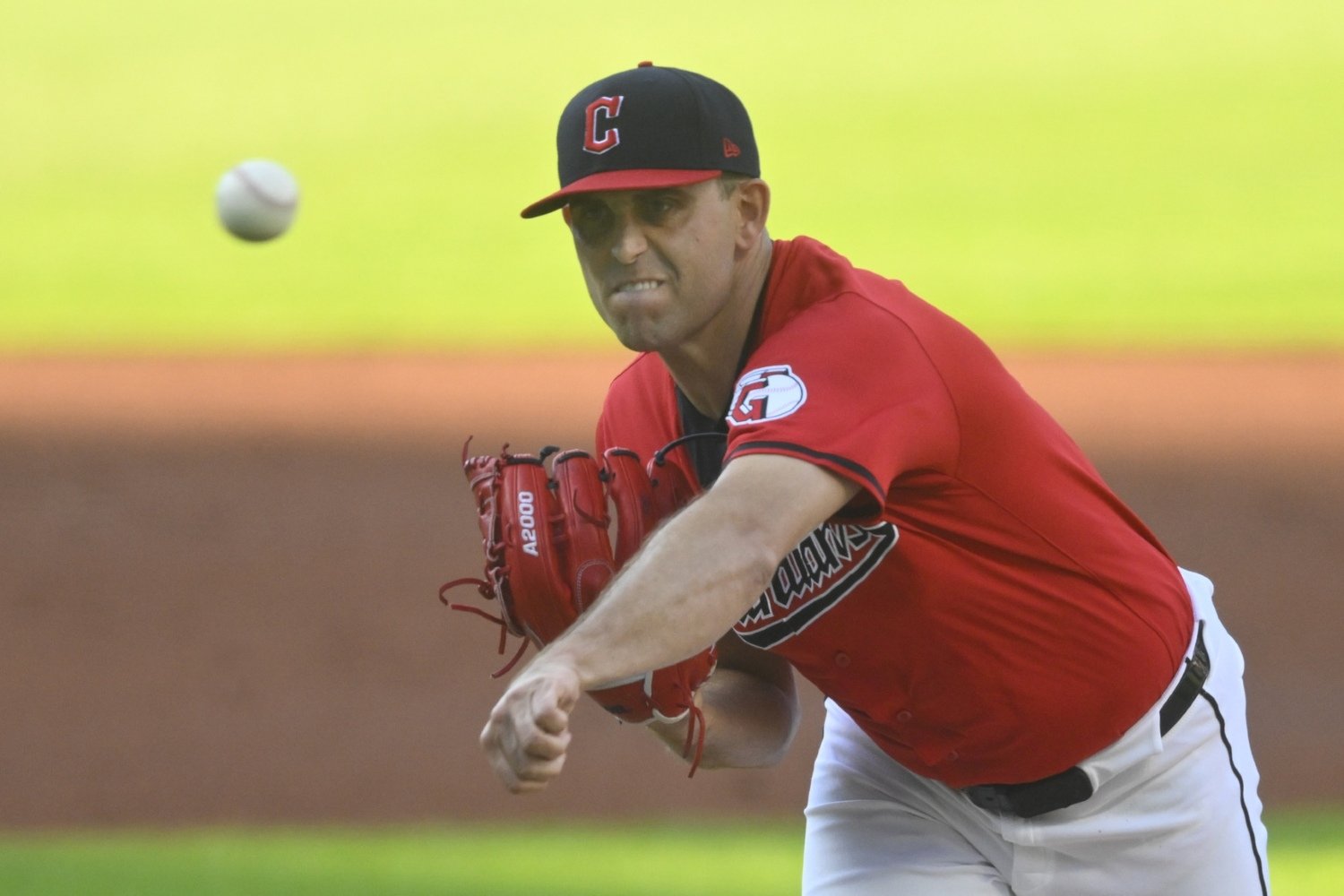 In the very early hours of Monday morning, the Cubs landed their first big free-agent fish of the offseason, agreeing with starter Matthew Boyd on a two-year, $29 million deal. On the surface, the move feels somewhat similar to the John Lackey deal the Cubs executed almost a decade ago. Both contracts were of the same length at a similar face value, for veteran pitchers coming off sub-3.00 ERA seasons. Lackey had a 2.77 ERA in 2015 with the St. Louis Cardinals; Boyd had a 2.72 ERA in 2024 with the Cleveland Guardians. There are two main differences in the circumstances surrounding both signings: Lackey was far more reliable than Boyd is now, and the Cubs’ rotation was already well-defined when Lackey climbed aboard. Tackling that first point: Lackey, who was 37 years old at the time of his deal with the Cubs, pitched a whopping 359 innings over his two years in Chicago. Before signing with the team, he pitched 218 innings in 2015, 198 innings in 2014, and 189.1 innings in 2013. He was, by all accounts, a workhorse starter. Boyd, on the other hand, is anything but. Between 2017-19, Boyd pitched 490 2/3 innings for the Detroit Tigers (posting an unsightly 4.70 ERA and matching 4.41 FIP). Since then, though, he’s thrown just 263 total innings, with a similarly disappointing 4.65 ERA and 4.38 FIP. Over the last five seasons, he hasn’t exceeded 80 innings pitched in any campaign. Of course, injuries have been the cause. He missed nearly a season and a half with a torn flexor tendon issue, which required surgery after taking a while to diagnose. He then tore his UCL in the summer of 2023 and had Tommy John surgery. Boyd returned to pitch nearly 40 innings at the end of the regular season with the AL Central champions this past season, striking out over a quarter of the hitters he faced. He was then even better in the postseason, allowing just one run across three starts and 11 2/3 innings. Even though he appeared healthy at the conclusion of this year’s campaign, it’s hard to call Boyd anything but an injury risk, especially since he’ll turn 34 before pitchers and catchers report in February. For a team that just went through a season where seemingly every pitcher not named Shota Imanaga spent meaningful time on the Injured List, Boyd’s signing raises a lot of questions. Those questions are especially relevant to the second point introduced above—the Cubs’ current rotation is littered with upside and problems. Back when Lackey inked his deal, the Cubs were coming off an NLCS appearance. Jake Arrieta had established himself as a true ace alongside Jon Lester with one of the greatest halves of baseball ever, while youngster Kyle Hendricks and veteran Jason Hammel were locked in at the back end of the rotation. The team had a clear and obvious need for a No. 3 starter, and Lackey’s track record—in both the regular season and playoffs—aligned perfectly with what the team was looking for. Of course, Hendricks broke out and finished third in Cy Young voting in 2016, giving the team a trio of aces to build around, but Lackey more than held up his end of the bargain. He provided the Cubs with a strong 3.35 ERA (3.81 FIP) in 188 ⅓ innings in his first season on the North Side. For all intents and purposes, the contract was an unmitigated success, even though Lackey struggled in the final season of his career in 2017. On the other hand, the modern iteration of the Cubs don’t have that strong top end of the rotation. Imanaga and Justin Steele—both southpaws, like Boyd—are penciled in as the team’s No. 1 and 2 starters, but they aren’t the surefire aces that Lester and Arrieta were a decade ago. Jameson Taillon recovered from a down year in 2023 to have a strong season in 2024, though relying on him to start two games in a seven-game series in the playoffs doesn’t sound very comforting. Javier Assad has broken out since joining the rotation at the tail end of the 2023 campaign, but he’s also not going to be a middle-of-the-rotation savior. Beyond that, the Cubs have a lot of young starting pitching depth with some upside, including Jordan Wicks (another lefty), Hayden Wesneski, Cade Horton, Ben Brown, and Brandon Birdsell. Boyd is a better bet than any of those pitchers to contribute in a meaningful way in 2025, but his price tag ($14.5 million per year) and injury history make him the kind of option that makes one a little less giddy and a little more stressed than those younger arms. What the Cubs need, in a painfully obvious way, is an ace—someone to take the ball in Game 1 of any postseason series, as well as on Opening Day. Imanaga and Steele are great pitchers, but they’re better-suited to do battle with Carlos Rodón and Luis Gil than with Gerrit Cole, for example. Blake Snell is already on the Dodgers, though Corbin Burnes and Max Fried are both still lingering on the free-agent market. Roki Sasaki casts a shadow over the entire offseason. Garrett Crochet might not be any more certain a No. 1 starter than Steele or Imanaga, given his own workload questions, but having three pitchers of that caliber is better than having two. Maybe the key to understanding the Boyd signing is not to think of it as analogous to Lackey's arrival, but rather, to the deal they signed the previous winter, bringing back Hammel on a two-year, $20-million deal after having traded him that summer. The Lackey deal was, in truth, a good bit richer than this one is, once you account for the inflation the market has seen since. Hammel's is a cleaner financial comparator, and since Hammel was a pitcher similar to Boyd, too, the whole thing feels a bit neater. Pivot from thinking of this move as akin to Lackey's to considering it similar to Hammel's, and the real thrust of the issue comes into view: the Cubs are building their 2015 rotation, not their 2016 one, and that highlights the way Steele and Imanaga pale in comparison to Lester and Arrieta. Great teams win around the margins with moves like this, but you can only be a great team by having the best players in the sport. If they’re serious about making a postseason push next year, it’s time for the Cubs to bring in a pitcher of that caliber. The value of the Boyd signing will depend on whether or not they now execute that second maneuver.
 -
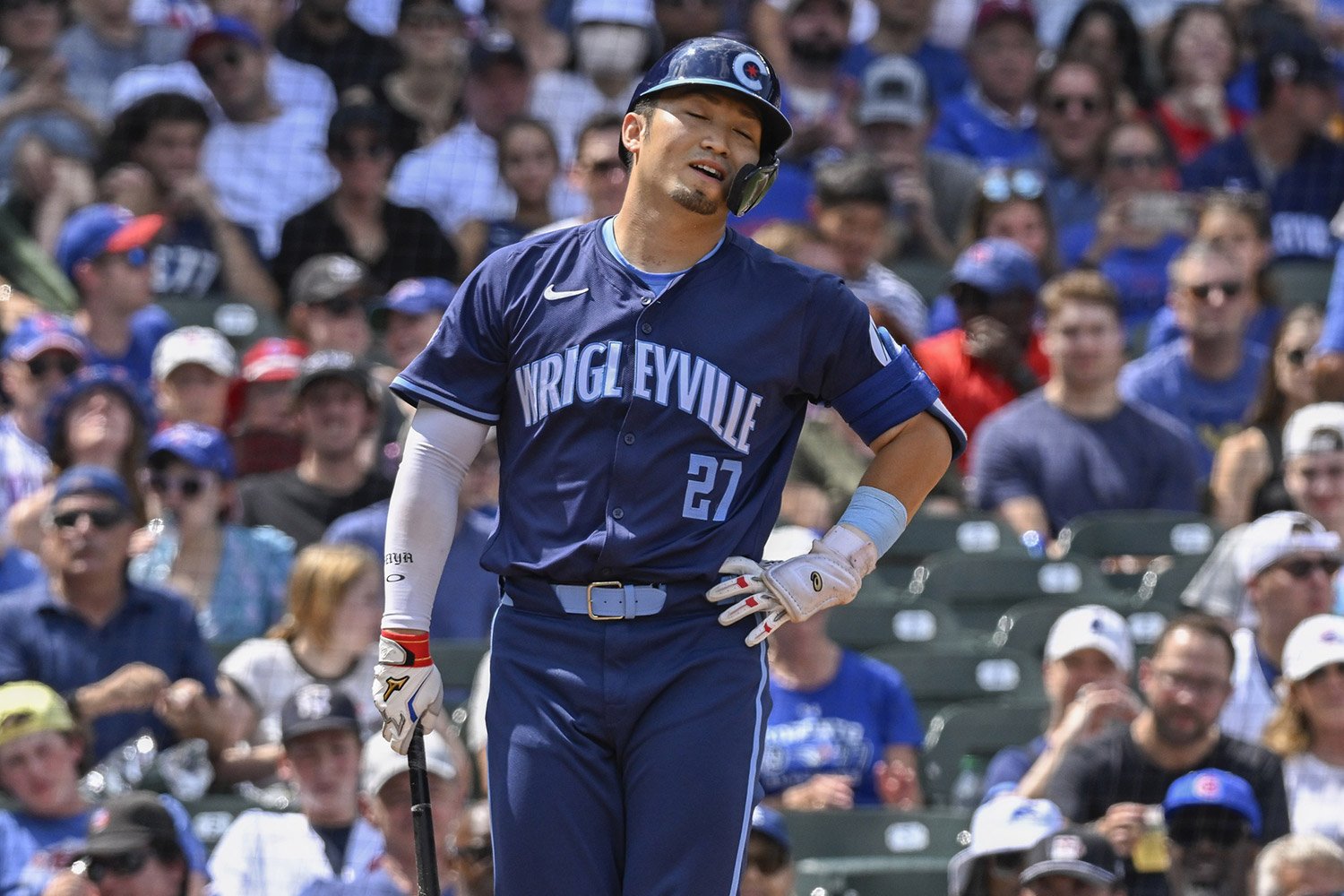 This series of articles is a primer for the release of our new "You're The Cubs GM!" tool, where you play the role of Jed Hoyer and build your own Cubs offseason. Please visit the tool here and join in on the fun! Well, everyone, it’s my first day on the job running baseball operations for the Chicago Cubs. First things first: man, it’s nice not to have Jed Hoyer around, right? I mean, I’m no Theo Esptein, but neither is that guy. Remember when he traded World Series hero Anthony Rizzo for Kevin Alcántara and a guy who stopped playing baseball immediately after? Good times. Anyway, the team has finished 83-79 in back-to-back years and fell short of making the postseason both times. In fact, the Cubs haven’t made the playoffs since the pandemic-shortened 2020 season and haven’t won a playoff game in seven years. I guess I have my work cut out for me. Up top, let’s establish who the surefire keepers are on this roster and the salaries they’ll run us in 2025. Justin Steele ($6.4 million) and Shota Imanaga ($13.5 million) are a great 1-2 punch atop the rotation, and that pair of lefty starters isn’t going anywhere. Javier Assad ($800,000) has erupted since moving to the rotation at the end of the 2023 season, and given that he isn’t even arbitration-eligible until 2026, he’s sticking around. I’d also like to keep Jordan Wicks ($800,000) and Ben Brown ($800,000) around as starting pitching depth, and a couple of cheap options in the bullpen, like Tyson Miller ($800,000), Porter Hodge ($800,000), and Julian Merryweather ($1.225 million). And since I have an affinity for big lefties who throw 100 MPH and don’t give up home runs, I guess I’ll keep Luke Little ($800,000) in tow, too. Oh, and in case you’re wondering how I’m keeping track of all this, North Side Baseball has an exceptionally intuitive payroll tracker for the Cubs that you can alter to your heart’s content. Anyone can use it to see what moves the team can make while remaining under budget. Honestly, I’m really glad it’s there to keep armchair GMs distracted. Otherwise, my job security would not be looking too hot. Back to the topic, I also have a few guys on the position-player side of things whom I want to keep. Miguel Amaya ($800,000) and Michael Busch ($800,000) are steals at their respective salaries, though we will need to add a partner at catcher for the former. (Er, a better one than Matt Thaiss.) I love Nico Hoerner ($11.5 million) and his elite glove and speed, and Dansby Swanson’s contract ($28 million) makes him untradable, so the middle infield isn’t getting a shakeup. Isaac Paredes ($6.9 million) was just added by my predecessor at last season’s trade deadline. His success track record is intriguing enough to avoid wanting to sell low on him. In the outfield, Ian Happ ($21 million), Pete Crow-Armstrong ($800,000), and the recently opted-in Cody Bellinger ($27.5 million) are all locks for starting jobs in 2025 and should form an incredible defensive outfield triumvirate—assuming course, that Bellinger isn't dealt. That leaves Seiya Suzuki ($19 million) as the odd man out, though thankfully, in response to an article I wrote last week discussing his status on the Cubs, I received numerous very polite and constructive comments informing me that I shouldn’t trade a hitter whose OPS has improved in every single season since he came Stateside. If only I had said something exactly to that effect multiple times in the article. Thank goodness the people who kindly decide to personally message me about what a dolt I also have the time to read the entire article instead of just the headline. So, Suzuki will be staying and hopefully joining Imanaga to lure Roki Sasaki to the good half of the Windy City (though I won't project that here). My predecessor got the expulsion of Nick Madrigal and Patrick Wisdom right. I would have kept Mike Tauchman, the Platonic ideal of the fourth outfielder, but that call broke the other way. To recap where we’re at: we have every position accounted for, except a second catcher and a starting third baseman (yes, in the last two sentences, I’ve decided to overrule Counsell and plant Paredes on the bench until he starts hitting again), and two more bench bats. On the pitching side, we’ve got three starters penciled in, plus a competition for the fifth spot in the rotation between Wicks, Brown, and probably Cade Horton. In the bullpen, we’ve got four relievers that are staying, and I’ll throw the rejuvenated Keegan Thompson ($1 million) a bone and hold onto him as a long-man. That means Wisdom, Madrigal, Jameson Taillon, Caleb Killian, Nate Pearson, and Ethan Roberts are all gone. Almost all of those guys can be traded for something, though let’s pretend that I’m a prospect mogul and don’t bring anyone back to the big league roster for ease. That leaves our projected 2025 payroll at $150.8 million, roughly 30% below my top range of $220 million. Thankfully, the payroll tracker has suggested guidelines for each notable free agent’s salary, which means they have to accept that number if I want them to. I don’t have to do any negotiating (I fold in negotiations like Batman when he gets his back broken by Bane in The Dark Knight Rises). I’m first giving the Brewers a huge F-U for the second consecutive offseason and signing Willy Adames ($26.60 million) as my starting third baseman. His power and previously elite defensive metrics make him a heck of a consolation prize for my soon-to-fail pursuit of Juan Soto (I already know he will NOT be laughing at my jokes about Aaron Judge using the juice). I’ll also snag Kyle Higashioka ($7.50 million), coming off a career year, to serve as another veteran mentor for Amaya behind the dish. That leaves just one utility/bench spot left, and you better believe I’m giving it to top prospect Matt Shaw ($800,000). I don’t care if he bats .051 in spring training. He’s making the team out of camp. On the pitching side, I’ll assume that the loser of the Wicks-Brown battle goes to the bullpen, with Horton remaining in Triple-A, lurking as a potential mid-season call-up. I’ll also give Hayden Wesneski ($800,000) another crack at a swingman job because I think his sweeper is fun to watch. I know what you’re thinking, and I agree: amazingly, I never landed a GM job before this. So, with about $30 million in payroll left to spend one spot in the rotation and the bullpen open, I’ll sign Max Fried ($26.0 million) to serve as the third lefty ace in the rotation. To preserve some payroll space for any in-season additions, I’ll add a league minimum salary in Daniel Palencia ($800,000) to round out the ‘pen. Hence, I have crafted a championship-caliber roster while remaining under budget AND adding some prospect depth to the farm system. This, folks, is why they pay me the small bucks. You can see my entire offseason roadmap here. As a reminder, you can engage in this same endeavor using the NSBB payroll tracker here. Be sure to post your offseason blueprint to the forums so our community members can discuss it! What do you think of this offseason plan? Do you think you can do better? Then build your own Cubs roster and hit the button below! Start Your Payroll Blueprint Now
 -
Should the Chicago Cubs beef up their rotation by signing a former Brewers Cy Young winner? View full video
-
Should the Chicago Cubs beef up their rotation by signing a former Brewers Cy Young winner?
-
The 2018 AL and 2023 NL Cy Young award winner is a hot commodity this winter. Is he the right pitcher to front the Chicago rotation? Image courtesy of © Stan Szeto-Imagn Images We’ve taken a look at most of the top pitchers in free agency already this offseason. Each of them present some combination of an elite track record, a very high price tag, and the daunting proposition of paying a pitcher deep into his 30s. Blake Snell is no different. He’s a 31-year-old southpaw with two Cy Young awards to his name. In all three of his career stops, he’s been a well-above-average pitcher. Yet, he feels like the furthest reach of any of the market’s aces for the Cubs. Snell’s career has been up-and-down to this point, with absurd highs (one of only seven pitchers to have won a Cy Young in both leagues), and middling lows (4.06 ERA in 285 ⅔ innings from 2019-21). However, he’s found the next gear over the past three seasons, with a 2.82 ERA (2.98 FIP) in 412 innings between the San Diego Padres and San Francisco Giants. His 32.5% strikeout rate is among the top marks in the league in that window, as is his .191 batting average against. He’s also done a significantly better job in recent years in limiting the long ball, and his home run percentage (e.g., percentage of all plate appearances in which he allowed a homer) was down to a career-low 1.4% in 2024. Though he obviously benefited from playing in spacious Oracle Park, his home run rates were also down across the board in his final few seasons in San Diego. Snell threw his four-seam fastball 46% of the time last year, utilizing a changeup, curveball, and slider for the other half of his arsenal. Considering he’s also made 19 or more starts in every non-pandemic season of his career (and has eclipsed 100 innings in seven consecutive full seasons), he looks the part as the perfect addition for any team in need of a No. 1 starter. Plus, even if his profile isn’t without blemishes, unlike other free-agent aces—namely, Corbin Burnes and Max Fried—Snell doesn’t come attached to the qualifying offer this offseason, by virtue of having declined it following the 2023 season. So, why is a pitcher of this caliber not a seamless fit in Chicago? Well, for one, they already have lefties Justin Steele (3.07 ERA in 134 2/3 innings in 2024) and Shota Imanaga (2.91 ERA in 173 1/3 innings) under team control for the next three seasons. Righties Javier Assad (3.73 in 147 innings) and Jameson Taillon (3.27 ERA in 165 ⅓ innings) are steady middle-of-the-rotation options with multiple years left in arbitration (Assad) or on their contracts (Taillon), as well. With those four entrenched, young arms like Jordan Wicks, Ben Brown, and Cade Horton will get the first crack at winning the fifth starter job out of spring training. Brandon Birdsell and Hayden Wesneski will also be in the discussion, and the Cubs figure to add a minor-league free agent to the mix. (Brad Keller continues to be an obvious fit.) There’s a promising combination of depth and upside littering the pitching staff, though of course, a team can never have too many starting pitchers. That certainly doesn't preclude strengthening the depth chart from the top down, but the expense associated with doing so might be more substantial than the famously conservative Hoyer prefers to accept. Snell’s market is, unsurprisingly, moving quickly. He reportedly met with the Red Sox and Dodgers this week, and remains in talks with the Giants and new President of Baseball Operations Buster Posey. After being denied the long-term deal he felt he deserved last offseason, Snell is surely looking to sign a lucrative contract early this winter, and by all accounts, the Red Sox appear to be the most aggressive bidder for his services. Other teams with top-of-the-rotation needs—the Orioles (if they lose Burnes), the Mets, and the Padres (sans Joe Musgrove), to name a few—will also have a say in the matter. Snell could feasibly land a contract in the same range as Carlos Rodón did a few years back (six years, $162 million), which will push smaller-market pursuers to the periphery of the discussion. The Cubs are returning a lion's share of their roster from last year, meaning they don’t have an astronomical amount of payroll space available. They have room to add at least one non-Juan Soto free agent, but Snell probably isn’t the guy they’re going to spend that money on, even if he is as good as anyone else on the market. Still, the team would only benefit from adding a frontline arm. A 1-2-3 punch of Snell, Steele, and Imanaga would be able to stand up to any pitching staff in baseball. It remains to be seen how the Cubs choose to allocate their finite resources in a crucial offseason, but there would be worse ways than on the two-time Cy Young award winner. View full article
-
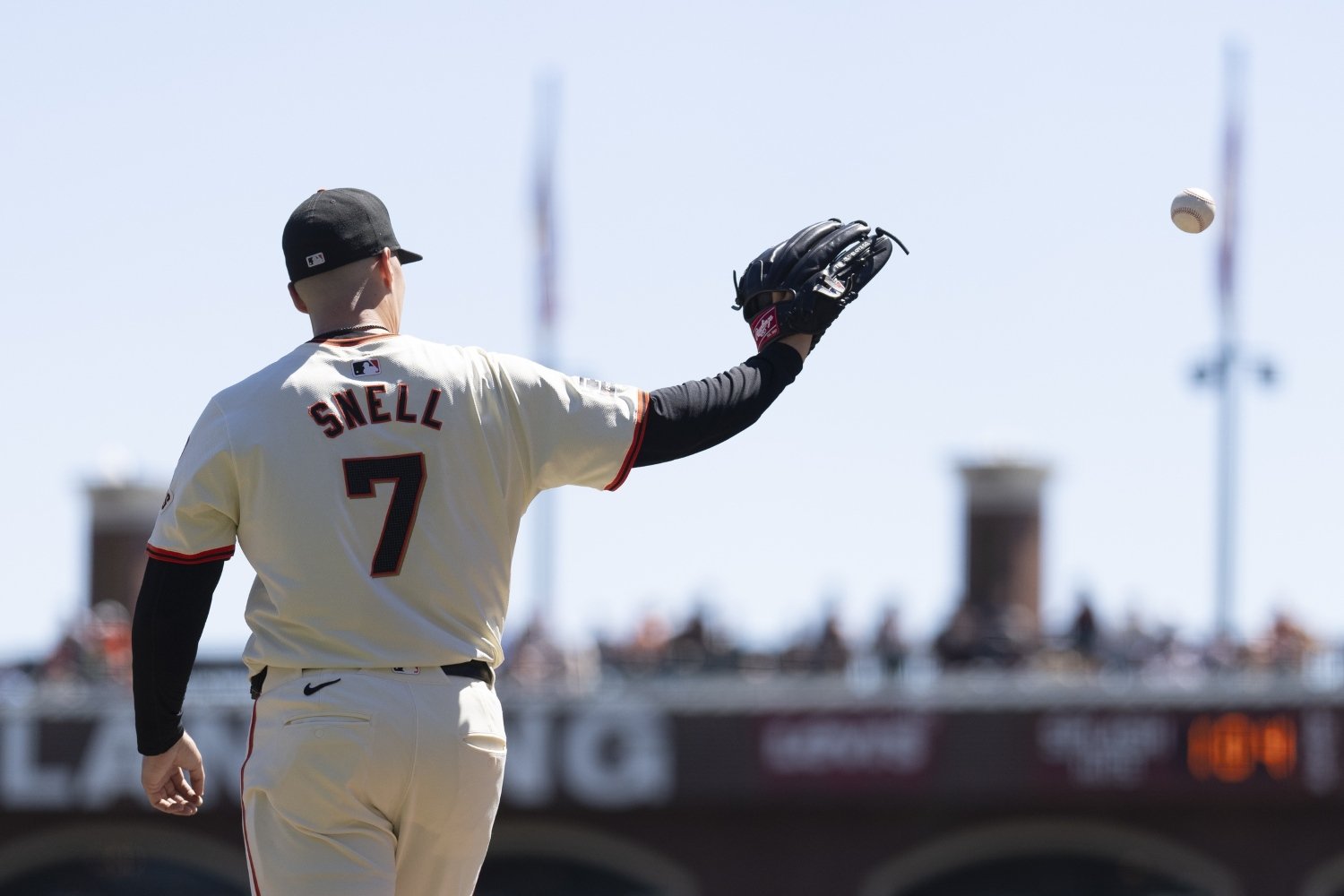 We’ve taken a look at most of the top pitchers in free agency already this offseason. Each of them present some combination of an elite track record, a very high price tag, and the daunting proposition of paying a pitcher deep into his 30s. Blake Snell is no different. He’s a 31-year-old southpaw with two Cy Young awards to his name. In all three of his career stops, he’s been a well-above-average pitcher. Yet, he feels like the furthest reach of any of the market’s aces for the Cubs. Snell’s career has been up-and-down to this point, with absurd highs (one of only seven pitchers to have won a Cy Young in both leagues), and middling lows (4.06 ERA in 285 ⅔ innings from 2019-21). However, he’s found the next gear over the past three seasons, with a 2.82 ERA (2.98 FIP) in 412 innings between the San Diego Padres and San Francisco Giants. His 32.5% strikeout rate is among the top marks in the league in that window, as is his .191 batting average against. He’s also done a significantly better job in recent years in limiting the long ball, and his home run percentage (e.g., percentage of all plate appearances in which he allowed a homer) was down to a career-low 1.4% in 2024. Though he obviously benefited from playing in spacious Oracle Park, his home run rates were also down across the board in his final few seasons in San Diego. Snell threw his four-seam fastball 46% of the time last year, utilizing a changeup, curveball, and slider for the other half of his arsenal. Considering he’s also made 19 or more starts in every non-pandemic season of his career (and has eclipsed 100 innings in seven consecutive full seasons), he looks the part as the perfect addition for any team in need of a No. 1 starter. Plus, even if his profile isn’t without blemishes, unlike other free-agent aces—namely, Corbin Burnes and Max Fried—Snell doesn’t come attached to the qualifying offer this offseason, by virtue of having declined it following the 2023 season. So, why is a pitcher of this caliber not a seamless fit in Chicago? Well, for one, they already have lefties Justin Steele (3.07 ERA in 134 2/3 innings in 2024) and Shota Imanaga (2.91 ERA in 173 1/3 innings) under team control for the next three seasons. Righties Javier Assad (3.73 in 147 innings) and Jameson Taillon (3.27 ERA in 165 ⅓ innings) are steady middle-of-the-rotation options with multiple years left in arbitration (Assad) or on their contracts (Taillon), as well. With those four entrenched, young arms like Jordan Wicks, Ben Brown, and Cade Horton will get the first crack at winning the fifth starter job out of spring training. Brandon Birdsell and Hayden Wesneski will also be in the discussion, and the Cubs figure to add a minor-league free agent to the mix. (Brad Keller continues to be an obvious fit.) There’s a promising combination of depth and upside littering the pitching staff, though of course, a team can never have too many starting pitchers. That certainly doesn't preclude strengthening the depth chart from the top down, but the expense associated with doing so might be more substantial than the famously conservative Hoyer prefers to accept. Snell’s market is, unsurprisingly, moving quickly. He reportedly met with the Red Sox and Dodgers this week, and remains in talks with the Giants and new President of Baseball Operations Buster Posey. After being denied the long-term deal he felt he deserved last offseason, Snell is surely looking to sign a lucrative contract early this winter, and by all accounts, the Red Sox appear to be the most aggressive bidder for his services. Other teams with top-of-the-rotation needs—the Orioles (if they lose Burnes), the Mets, and the Padres (sans Joe Musgrove), to name a few—will also have a say in the matter. Snell could feasibly land a contract in the same range as Carlos Rodón did a few years back (six years, $162 million), which will push smaller-market pursuers to the periphery of the discussion. The Cubs are returning a lion's share of their roster from last year, meaning they don’t have an astronomical amount of payroll space available. They have room to add at least one non-Juan Soto free agent, but Snell probably isn’t the guy they’re going to spend that money on, even if he is as good as anyone else on the market. Still, the team would only benefit from adding a frontline arm. A 1-2-3 punch of Snell, Steele, and Imanaga would be able to stand up to any pitching staff in baseball. It remains to be seen how the Cubs choose to allocate their finite resources in a crucial offseason, but there would be worse ways than on the two-time Cy Young award winner.
 -
The Brewers' shortstop is a power-hitting threat with a glove that will play anywhere on the infield. The fit may not be seamless, but the Cubs could use someone with his profile.
-
The Brewers' shortstop is a power-hitting threat with a glove that will play anywhere on the infield. The fit may not be seamless, but the Cubs could use someone with his profile. View full video
-
In a world where armchair GMs can actually run the team, what moves should the Cubs make this offseason to establish themselves as a true contender? This series of articles is a primer for the release of our new "You're The Cubs GM!" tool, where you play the role of Jed Hoyer and build your own Cubs offseason. Please visit the tool here and join in on the fun! Well, everyone, it’s my first day on the job running baseball operations for the Chicago Cubs. First things first: man it’s nice not to have Jed Hoyer around, right? I mean, I’m no Theo Esptein, but neither is that guy. Remember when he traded World Series hero Anthony Rizzo for Kevin Alcántara and a guy who stopped playing baseball immediately after? Good times. Anyway, the team has finished 83-79 in back-to-back years and fell short of making the postseason both times. In fact, the Cubs haven’t made the playoffs since the pandemic-shortened 2020 season and haven’t won a playoff game in seven years. Guess I have my work cut out for me. Up top, let’s establish who the surefire keepers are on this roster, and the salaries they’ll run us in 2025. Justin Steele ($6.4 million) and Shota Imanaga ($13.5 million) are a great 1-2 punch atop the rotation, and that pair of lefty starters isn’t going anywhere. Javier Assad ($800,000) has erupted since moving to the rotation at the end of the 2023 season, and given that he isn’t even arbitration-eligible until 2026, he’s sticking around. I’d also like to keep Jordan Wicks ($800,000) and Ben Brown ($800,000) around as starting pitching depth, and a couple of cheap options in the bullpen, like Tyson Miller ($800,000), Porter Hodge ($800,000), and Julian Merryweather ($1.225 million). And since I have an affinity for big lefties who throw 100 MPH and don’t give up home runs, I guess I’ll keep Luke Little ($800,000) in tow, too. Oh, and in case you’re wondering how I’m keeping track of all this: North Side Baseball has an exceptionally intuitive payroll tracker for the Cubs that you can alter to your heart’s content. Anyone can use it to see what moves the team can make while remaining under budget. Honestly, I’m really glad it’s there to keep armchair GMs distracted. Otherwise, my job security would not be looking too hot. Back to the topic at hand, I also have a few guys on the position-player side of things whom I want to keep. Miguel Amaya ($800,000) and Michael Busch ($800,000) at their respective salaries are steals, though we will need to add a partner at catcher for the former. (Er, a better one than Matt Thaiss.) I personally love Nico Hoerner ($11.5 million) and his elite glove and speed, and Dansby Swanson’s contract ($28 million) makes him untradable, so the middle infield isn’t getting a shakeup. Isaac Paredes ($6.9 million) was just added by my predecessor at last season’s trade deadline, and his track record of success is intriguing enough to avoid wanting to sell low on him. In the outfield, Ian Happ ($21 million), Pete Crow-Armstrong ($800,000) and the recently opted-in Cody Bellinger ($27.5 million) are all locks for starting jobs in 2025 and should form an incredible defensive outfield triumvirate—assuming, of course, that Bellinger isn't dealt. That leaves Seiya Suzuki ($19 million) as the odd man out, though thankfully, in response to an article I wrote last week discussing his status on the Cubs, I received numerous very polite and totally constructive comments informing me that I shouldn’t trade a hitter whose OPS has improved in every single season since he came Stateside. If only I had said something exactly to that effect multiple times in the article. Thank goodness the people who kindly decide to personally message me about what a dolt I am also have the time to read the entire article, instead of just the headline. So, Suzuki will be staying, and hopefully joining Imanaga in an attempt to lure Roki Sasaki over to the good half of the Windy City (though I won't project that here). My predecessor got the expulsion of Nick Madrigal and Patrick Wisdom right. I would have kept Mike Tauchman, the Platonic ideal of the fourth outfielder, but that call broke the other way. To recap where we’re at: we have every position accounted for, except a second catcher, a starting third baseman (yes, in the last two sentences I’ve decided to overrule Counsell and plant Paredes on the bench until he starts hitting again), and two more bench bats. On the pitching side, we’ve got three starters penciled in, plus a competition for the fifth spot in the rotation between Wicks, Brown, and probably Cade Horton. In the bullpen, we’ve got four relievers that are definitely staying, and I’ll throw the rejuvenated Keegan Thompson ($1 million) a bone and hold onto him as a long-man. That means Wisdom, Madrigal, Jameson Taillon, Caleb Killian, Nate Pearson, and Ethan Roberts are all gone. Almost all of those guys can be traded for something, though let’s just pretend that I’m a prospect mogul and don’t bring anyone back to the big league roster for the sake of ease. That leaves our projected 2025 payroll at $150.8 million, roughly 30% below my top range of $220 million. Thankfully, the payroll tracker has suggested guidelines for each notable free agent’s salary, which means they have to accept that number if I want them to and I don’t have to do any negotiating (I fold in negotiations like Batman when he gets his back broken by Bane in The Dark Knight Rises). The first thing I’m doing is giving the Brewers a huge F-U for the second consecutive offseason and signing Willy Adames ($26.60 million) to be my starting third baseman. His power and previously elite defensive metrics make him a heck of a consolation prize for my soon-to-fail pursuit of Juan Soto (I already know he will NOT be laughing at my jokes about Aaron Judge using the juice). I’ll also snag Kyle Higashioka ($7.50 million) coming off a career year to serve as yet another veteran mentor for Amaya behind the dish. That leaves just one utility/bench spot left, and you better believe I’m giving it to top prospect Matt Shaw ($800,000). I don’t care if he bats .051 in spring training. He’s making the team out of camp. On the pitching side, I’ll assume that the loser of the Wicks-Brown battle goes to the bullpen, with Horton remaining in Triple-A, lurking as a potential mid-season call up. I’ll also give Hayden Wesneski ($800,000) another crack at a swingman job because I think his sweeper is fun to watch. I know what you’re thinking, and I agree: it’s amazing I never landed a GM job before this. So, with about $30 million in payroll left to spend and one spot in the rotation and the bullpen open, I’ll sign Max Fried ($26.0 million) to serve as the third lefty ace in the rotation. To preserve a bit of payroll space for any in-season additions, I’ll add one more league minimum salary in Daniel Palencia ($800,000) to round out the ‘pen. Hence, I have crafted a championship-caliber roster while remaining under budget AND adding some prospect depth to the farm system. This, folks, is why they pay me the small bucks. You can see my entire offseason roadmap here. And, as a reminder, you can engage in this same endeavor using the NSBB payroll tracker here. Be sure to post your offseason blueprint to the forums so our community members can discuss! What do you think of this offseason plan? Do you think you can do better? Then build your own Cubs roster and hit the button below! Start Your Payroll Blueprint Now View full article
-
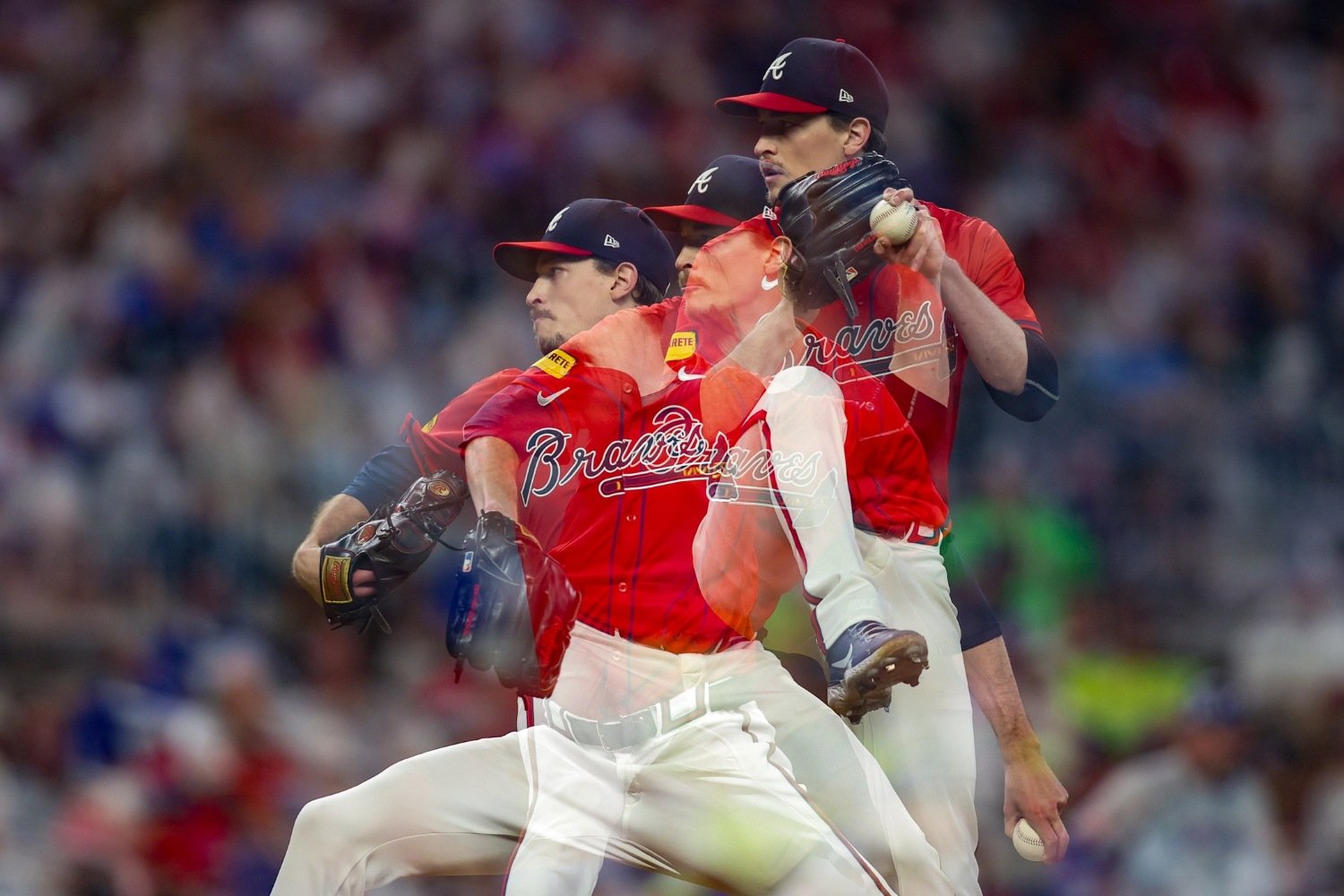 Much like our breakdown of Corbin Burnes’ fit with the Cubs, I’m going into this piece operating under four assumptions: the Cubs want to add a high-level starter from outside the organization; they’re willing to accept any qualifying offer penalties associated with said starting pitcher; they won’t win the Roki Sasaki sweepstakes; and Jed Hoyer is willing to spend a lot of money on a pitcher in his 30s. None of those assumptions are safe to make (least of all the last one), but it isn’t hard to imagine the Cubs bending a couple of their usual free agent rules for a player like Max Fried. Fried has been the ace of the Atlanta Braves for the last half-decade. He's posted a 3.07 ERA in 884 1/3 innings since debuting in 2017, so someone is going to pony up for his services this offseason. Exactly how large the contract he gets is in question. Some pundits have projected deals as long as seven years, with annual salary numbers in the $25-$30 million range being floated. Fried probably won't crack the $200-million barrier—not with Blake Snell, Burnes, and Sasaki clogging up the free-agent marketplace, not to mention cheaper alternatives like Garrett Crochet on the trade front—but something along the lines of what Jon Lester got in 2014 (six years, $155 million) is probably in the ballpark. The southpaw does come with a few flaws, including injuries that cost him large chunks of the 2018 and 2023 seasons. His forearm issues from last year are still a concern, especially since he'll be 31 on Opening Day 2025, but his 174-inning showing in 2024 proves that Fried is still capable of being a workhorse. Over his career, Fried has earned that label, pitching 165 or more innings in every season since 2019 (besides 2023, due to injury, and 2020 due to the pandemic-shortened schedule). He's also thrown six complete games and four shutouts in that time. Pair his capacity for working deep in games with a career 140 ERA+, 23.9% strikeout rate, 6.8% walk rate, and huge 53.7% groundball rate (including a career-high 58.2% figure this past season), and you have the profile of a pitcher who should both age gracefully and remain dominant when handed the ball. As I said back in that Burnes primer: “The Cubs very clearly fit that category of teams that need another starter, as rookie import Shota Imanaga—the team’s MVP for the 2024 season—was the only pitcher who remained reliable and healthy for the entirety of the 2024 campaign. Justin Steele still clearly has ace potential and should be a fixture on the North Side for years to come, but he failed to crack 135 innings pitched this year while dealing with elbow and hamstring injuries that bookended his season. Javier Assad proved himself worthy of a long-term spot in the rotation, but he blew past his career high in innings with 147 this year, and he declined in September as that workload piled up. Jameson Taillon still has two years on his contract and certainly had a strong second season with the team, but some of his success has to be chalked up to the pitcher-friendly way that Wrigley Field played all season.” Even with quality depth that includes names like Ben Brown, Jordan Wicks, Cade Horton, and Brandon Birdsell, the Cubs could use a surefire guy to pair with Imanaga and Steele. Adding Fried would mean putting three lefties at the top of the rotation, but the presence of Taillon, Assad, and perhaps Horton would lessen any worries about the North Siders becoming too southpaw-heavy. The aforementioned Lester contract also serves as a convenient touchstone for where the Cubs are these days. Back in 2014, the Cubs went 73-89, finishing last in the NL Central. However, Anthony Rizzo had established himself as a regular, Javier Báez had made his much-anticipated debut, and a wave of über-talented prospects like Kris Bryant and Kyle Schwarber were on their way. The team surprisingly won the Lester sweepstakes in free agency, announcing to the rest of the baseball world that they were ready to emerge from their rebuild. Now, a decade later, the Cubs finished the season 83-79 and in second place in the division. Michael Busch has established himself at the cold corner. Pete Crow-Armstrong has made his much-anticipated debut and is locked in as the starting center fielder. A wave of talented prospects, including Matt Shaw and Owen Caissie, are on their way. Feasibly, the team can win the Max Fried sweepstakes in free agency, officially putting this latest rebuild behind them. It’s poetic when things mirror each other, isn’t it? Of course, signing Fried doesn’t mean the Cubs will win the 2026 World Series, but it does get them closer to that goal. If his high price tag and status as a qualifying offer recipient don’t scare off the Cubs, there are a lot of reasons to like the idea of Fried pitching in the Friendly Confines. And, hey, perhaps Dansby Swanson can convince his 2021 World Series champion teammate to make the same move from Atlanta to Chicago.
 -
The ace lefty is coming off another great season in which he proved he was healthy once again. Does he make sense as the third southpaw ace in the Cubs’ rotation? Image courtesy of © Brett Davis-Imagn Images Much like our breakdown of Corbin Burnes’ fit with the Cubs, I’m going into this piece operating under four assumptions: the Cubs want to add a high-level starter from outside the organization; they’re willing to accept any qualifying offer penalties associated with said starting pitcher; they won’t win the Roki Sasaki sweepstakes; and Jed Hoyer is willing to spend a lot of money on a pitcher in his 30s. None of those assumptions are safe to make (least of all the last one), but it isn’t hard to imagine the Cubs bending a couple of their usual free agent rules for a player like Max Fried. Fried has been the ace of the Atlanta Braves for the last half-decade. He's posted a 3.07 ERA in 884 1/3 innings since debuting in 2017, so someone is going to pony up for his services this offseason. Exactly how large the contract he gets is in question. Some pundits have projected deals as long as seven years, with annual salary numbers in the $25-$30 million range being floated. Fried probably won't crack the $200-million barrier—not with Blake Snell, Burnes, and Sasaki clogging up the free-agent marketplace, not to mention cheaper alternatives like Garrett Crochet on the trade front—but something along the lines of what Jon Lester got in 2014 (six years, $155 million) is probably in the ballpark. The southpaw does come with a few flaws, including injuries that cost him large chunks of the 2018 and 2023 seasons. His forearm issues from last year are still a concern, especially since he'll be 31 on Opening Day 2025, but his 174-inning showing in 2024 proves that Fried is still capable of being a workhorse. Over his career, Fried has earned that label, pitching 165 or more innings in every season since 2019 (besides 2023, due to injury, and 2020 due to the pandemic-shortened schedule). He's also thrown six complete games and four shutouts in that time. Pair his capacity for working deep in games with a career 140 ERA+, 23.9% strikeout rate, 6.8% walk rate, and huge 53.7% groundball rate (including a career-high 58.2% figure this past season), and you have the profile of a pitcher who should both age gracefully and remain dominant when handed the ball. As I said back in that Burnes primer: “The Cubs very clearly fit that category of teams that need another starter, as rookie import Shota Imanaga—the team’s MVP for the 2024 season—was the only pitcher who remained reliable and healthy for the entirety of the 2024 campaign. Justin Steele still clearly has ace potential and should be a fixture on the North Side for years to come, but he failed to crack 135 innings pitched this year while dealing with elbow and hamstring injuries that bookended his season. Javier Assad proved himself worthy of a long-term spot in the rotation, but he blew past his career high in innings with 147 this year, and he declined in September as that workload piled up. Jameson Taillon still has two years on his contract and certainly had a strong second season with the team, but some of his success has to be chalked up to the pitcher-friendly way that Wrigley Field played all season.” Even with quality depth that includes names like Ben Brown, Jordan Wicks, Cade Horton, and Brandon Birdsell, the Cubs could use a surefire guy to pair with Imanaga and Steele. Adding Fried would mean putting three lefties at the top of the rotation, but the presence of Taillon, Assad, and perhaps Horton would lessen any worries about the North Siders becoming too southpaw-heavy. The aforementioned Lester contract also serves as a convenient touchstone for where the Cubs are these days. Back in 2014, the Cubs went 73-89, finishing last in the NL Central. However, Anthony Rizzo had established himself as a regular, Javier Báez had made his much-anticipated debut, and a wave of über-talented prospects like Kris Bryant and Kyle Schwarber were on their way. The team surprisingly won the Lester sweepstakes in free agency, announcing to the rest of the baseball world that they were ready to emerge from their rebuild. Now, a decade later, the Cubs finished the season 83-79 and in second place in the division. Michael Busch has established himself at the cold corner. Pete Crow-Armstrong has made his much-anticipated debut and is locked in as the starting center fielder. A wave of talented prospects, including Matt Shaw and Owen Caissie, are on their way. Feasibly, the team can win the Max Fried sweepstakes in free agency, officially putting this latest rebuild behind them. It’s poetic when things mirror each other, isn’t it? Of course, signing Fried doesn’t mean the Cubs will win the 2026 World Series, but it does get them closer to that goal. If his high price tag and status as a qualifying offer recipient don’t scare off the Cubs, there are a lot of reasons to like the idea of Fried pitching in the Friendly Confines. And, hey, perhaps Dansby Swanson can convince his 2021 World Series champion teammate to make the same move from Atlanta to Chicago. View full article
-
Brandon Glick’s 2025 Payroll Blueprint:
Brandon Glick replied to Brandon Glick's topic in Chicago Cubs Talk
The Cubs don't have infinite money, everyone. The payroll tracker gives you $220 million to work with (as a projection). You can't keep Taillon AND sign Fried AND Soto AND whoever else. You need to make sacrifices. That's the point. -
Brandon Glick’s 2025 Payroll Blueprint:
Brandon Glick replied to Brandon Glick's topic in Chicago Cubs Talk
If you've watched Assad take the mound at all since late-2023, you'd feel more than comfortable with him as the No. 4. He's running a 125 ERA+ as a starter in his career. That's... unreal for a "4". And Wicks is a stand in. Put Cade Horton there. Put Ben Brown. I don't care. There's going to be a competition for that 5th spot in the rotation no matter what the Cubs do. -
Brandon Glick’s 2025 Payroll Blueprint:
Brandon Glick replied to Brandon Glick's topic in Chicago Cubs Talk
Paredes is coming off a horrendous second half. The Cubs would be selling low on him. There's no reason to trade him this offseason. Better to hold onto him as a utility player and let him rebuild value if that's the route you wanna go. -
Brandon Glick’s 2025 Payroll Blueprint:
Brandon Glick replied to Brandon Glick's topic in Chicago Cubs Talk
If you'd seriously rather have Taillon than Fried, bless your heart. And Paredes is a fine player, but in a world where the Cubs get Adames and keep all four outfielders, I don't know where he's gonna play. -
The Japanese phenom will officially be posted some time this offseason. It may feel inevitable that he’ll be wearing Dodger Blue come 2025, but maybe Cubs fans shouldn’t lose hope just yet. Image courtesy of © Sam Navarro-Imagn Images It was just last year that Yoshinobu Yamamoto left Nippon Professional Baseball and became the most coveted free agent in the sport. He was the most-hyped Japanese import since Shohei Ohtani, who had made the trek to MLB seven years ago. Notably, Yamamoto signed for 12 years and $325 million as a true free agent, while Ohtani was made available via the international amateur posting system and had to settle for a minor-league contract with the Los Angeles Angels. Now, the latest Japanese superstar is coming to America, and he has elected to follow in Ohtani's footsteps. Per his current team, the Chiba Lotte Marines, Roki Sasaki will be posted in the coming months (or, more likely, in the next handful of weeks). Sasaki first became a household name in the States while dominating the 2023 World Baseball Classic, at 21 years old. He struck out 11 hitters in just 7 2/3 innings, forming an unstoppable triumvirate of aces with Yamamoto and Ohtani that would pave the way to Japan's third WBC title. In total, his Nippon Professional Baseball résumé reads like a video game stat line: 29-15 record, 2.10 ERA, 505 strikeouts, 88 walks, all in 394 2/3 innings in 64 starts over four seasons. However, because no player is perfect, there are injury concerns with Sasaki, including a torn oblique and lingering right arm soreness that cost him a number of starts in 2024. His career high in innings is 129 1/3 (set back in 2022), and he had just 111 this year, across 18 starts. Nevertheless, he’s going to garner the attention of every franchise in MLB, thanks to his combination of dominance on the mound and the cheapness of his salary. What's fascinating about the Marines' decision to post Sasaki now is the financial ramifications of doing so. Because he's not yet 25 years old, the Japanese star can only sign a minimal deal this offseason. Depending on when he's posted, Sasaki will be eligible for a signing bonus maxing out at roughly $5-$7 million, with smaller-market teams having a larger pool of international bonus money available to them. Had Sasaki and the Marines waited until 2026 to access the posting system, the pitcher could have received a contract in excess of $400 million, with the Marines reaping the rewards of the associated 20% posting fee. Just last year, the Orix Blue Wave were given more than $50 million as part of the Yamamoto signing. Sasaki badly wanted to make the trip Stateside, though, and his contract compelled the team to allow that. The heavy assumption around the game right now is that Sasaki will join Ohtani and Yamamoto as a member of the Los Angeles Dodgers. Those two combined to sign contracts exceeding $1 billion with L.A. last offseason, and it isn't hard to imagine Sasaki wanting to form the greatest international triumvirate in the sport's long history. It should be expected that Sasaki will end up in L.A. The West Coast is often favored by Japanese players, given its relative proximity to their home nation, and the Dodgers' status as baseball's best team should be appealing to a player who has yet to win a Pacific League pennant with the Marines. However, there's one team located in the middle of the country that should be a sneaky suitor for the Japanese phenom. The Chicago Cubs have made tremendous strides in turning their brand into an international one, and they are one of just five major league teams that has employed 10 or more Japanese players. Ever since signing Kosuke Fukodome back in 2007, the Cubs' pipeline of notable Japanese players is strong: So Taguchi, Koji Uehara, Hisanori Takashi, Munenori Kawaski, Yu Darvish, Kyuji Fujikawa, Tsuyoshi Wada, Seiya Suzuki, and Shota Imanaga. Those latter two players are arguably the Cubs' best hitter and pitcher right now, and they'll surely make a sales pitch to Sasaki, as Ohtani and Yamamoto are doing for the Dodgers. They're also exiting (we hope) their latest rebuild, posting consecutive 83-79 seasons and loaded with one of the best farm systems in the sport. For what it's worth, the Cubs also have more than $1 million more in extra international signing bonus room than the Dodgers do. It might not mean a lot to someone who is already artificially limiting how much he can earn, but Sasaki will be demanding a majority of any team's bonus pool. Having more to spend means the Cubs can give Sasaki more and have a little left over to spend on another player. Both the Dodgers and Cubs have a need in the rotation for another surefire starter, and (assuming Ohtani is fully healthy in 2025), Sasaki could choose to form a triumvirate in L.A. or a 1-2 combo in the Windy City with Imanaga. Plus, the Cubs could offer Sasaki a plausible lane to developing into the staff ace, assuming he delivers on his huge potential. Unlike the race for Juan Soto, money won’t be the deciding factor for Sasaki. The Cubs have no excuse to not go full bore in their pursuit of the “The Monster of the Reiwa Era.” It isn't everyday a team can land a generational ace for the same cost as Hunter Renfroe's player option. There are a lot of paths the Wrigley Field inhabitants can take towards having a successful offseason, though none are as straightforward as landing Sasaki. View full article
-
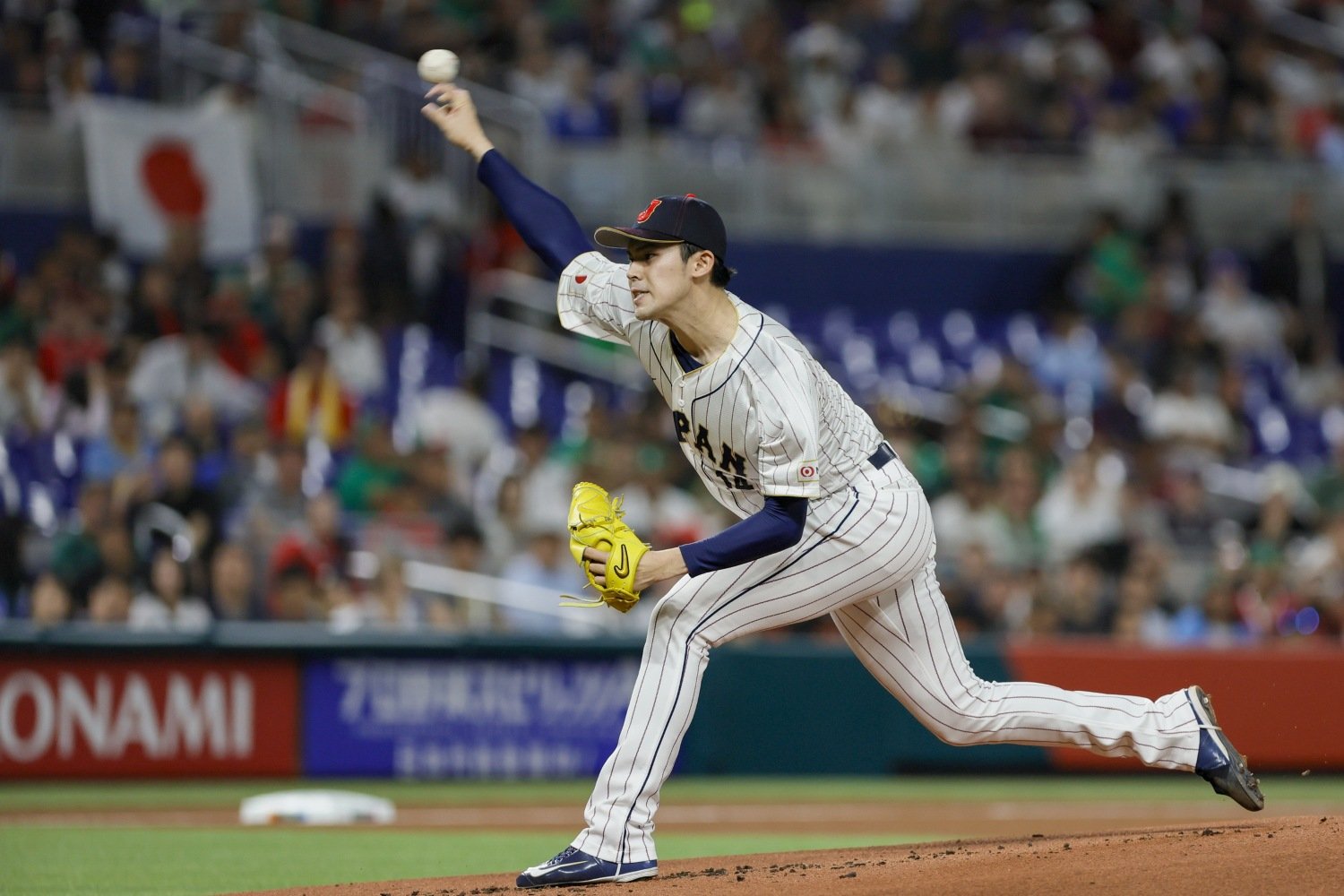 It was just last year that Yoshinobu Yamamoto left Nippon Professional Baseball and became the most coveted free agent in the sport. He was the most-hyped Japanese import since Shohei Ohtani, who had made the trek to MLB seven years ago. Notably, Yamamoto signed for 12 years and $325 million as a true free agent, while Ohtani was made available via the international amateur posting system and had to settle for a minor-league contract with the Los Angeles Angels. Now, the latest Japanese superstar is coming to America, and he has elected to follow in Ohtani's footsteps. Per his current team, the Chiba Lotte Marines, Roki Sasaki will be posted in the coming months (or, more likely, in the next handful of weeks). Sasaki first became a household name in the States while dominating the 2023 World Baseball Classic, at 21 years old. He struck out 11 hitters in just 7 2/3 innings, forming an unstoppable triumvirate of aces with Yamamoto and Ohtani that would pave the way to Japan's third WBC title. In total, his Nippon Professional Baseball résumé reads like a video game stat line: 29-15 record, 2.10 ERA, 505 strikeouts, 88 walks, all in 394 2/3 innings in 64 starts over four seasons. However, because no player is perfect, there are injury concerns with Sasaki, including a torn oblique and lingering right arm soreness that cost him a number of starts in 2024. His career high in innings is 129 1/3 (set back in 2022), and he had just 111 this year, across 18 starts. Nevertheless, he’s going to garner the attention of every franchise in MLB, thanks to his combination of dominance on the mound and the cheapness of his salary. What's fascinating about the Marines' decision to post Sasaki now is the financial ramifications of doing so. Because he's not yet 25 years old, the Japanese star can only sign a minimal deal this offseason. Depending on when he's posted, Sasaki will be eligible for a signing bonus maxing out at roughly $5-$7 million, with smaller-market teams having a larger pool of international bonus money available to them. Had Sasaki and the Marines waited until 2026 to access the posting system, the pitcher could have received a contract in excess of $400 million, with the Marines reaping the rewards of the associated 20% posting fee. Just last year, the Orix Blue Wave were given more than $50 million as part of the Yamamoto signing. Sasaki badly wanted to make the trip Stateside, though, and his contract compelled the team to allow that. The heavy assumption around the game right now is that Sasaki will join Ohtani and Yamamoto as a member of the Los Angeles Dodgers. Those two combined to sign contracts exceeding $1 billion with L.A. last offseason, and it isn't hard to imagine Sasaki wanting to form the greatest international triumvirate in the sport's long history. It should be expected that Sasaki will end up in L.A. The West Coast is often favored by Japanese players, given its relative proximity to their home nation, and the Dodgers' status as baseball's best team should be appealing to a player who has yet to win a Pacific League pennant with the Marines. However, there's one team located in the middle of the country that should be a sneaky suitor for the Japanese phenom. The Chicago Cubs have made tremendous strides in turning their brand into an international one, and they are one of just five major league teams that has employed 10 or more Japanese players. Ever since signing Kosuke Fukodome back in 2007, the Cubs' pipeline of notable Japanese players is strong: So Taguchi, Koji Uehara, Hisanori Takashi, Munenori Kawaski, Yu Darvish, Kyuji Fujikawa, Tsuyoshi Wada, Seiya Suzuki, and Shota Imanaga. Those latter two players are arguably the Cubs' best hitter and pitcher right now, and they'll surely make a sales pitch to Sasaki, as Ohtani and Yamamoto are doing for the Dodgers. They're also exiting (we hope) their latest rebuild, posting consecutive 83-79 seasons and loaded with one of the best farm systems in the sport. For what it's worth, the Cubs also have more than $1 million more in extra international signing bonus room than the Dodgers do. It might not mean a lot to someone who is already artificially limiting how much he can earn, but Sasaki will be demanding a majority of any team's bonus pool. Having more to spend means the Cubs can give Sasaki more and have a little left over to spend on another player. Both the Dodgers and Cubs have a need in the rotation for another surefire starter, and (assuming Ohtani is fully healthy in 2025), Sasaki could choose to form a triumvirate in L.A. or a 1-2 combo in the Windy City with Imanaga. Plus, the Cubs could offer Sasaki a plausible lane to developing into the staff ace, assuming he delivers on his huge potential. Unlike the race for Juan Soto, money won’t be the deciding factor for Sasaki. The Cubs have no excuse to not go full bore in their pursuit of the “The Monster of the Reiwa Era.” It isn't everyday a team can land a generational ace for the same cost as Hunter Renfroe's player option. There are a lot of paths the Wrigley Field inhabitants can take towards having a successful offseason, though none are as straightforward as landing Sasaki.
 -
Article coming soon. C: Miguel Amaya ($0.80M) 1B: Michael Busch ($0.80M) 2B: Nico Horner ($11.50M) 3B: Willy Adames ($26.60M) SS: Dansby Swanson ($28.00M) LF: Ian Happ ($21.00M) CF: Pete Crow-Armstrong ($0.80M) RF: Seiya Suzuki ($19.00M) DH: Cody Bellinger ($27.50M) 4th OF: Mike Tauchman ($2.90M) Utility: Isaac Paredes ($6.90M) Utility: Matt Shaw ($0.80M) Backup C: Kyle Higashioka ($7.50M) SP1: Shota Imanaga ($13.50M) SP2: Justin Steele ($6.40M) SP3: Max Fried ($26.0M) SP4: Javier Assad ($0.80M) SP5: Jordan Wicks ($0.80M) RP: Daniel Palencia ($0.80M) RP: Julian Merryweather ($1.30M) RP: Tyson Miller ($0.80M) RP: Porter Hodge ($0.80M) RP: Keegan Thompson ($1.00M) RP: Hayden Wesneski ($0.80M) RP: Ben Brown ($0.80M) RP: Luke Little ($0.80M) Payroll is 5.14% under budget
-
The Braves ace has a long history of elite pitching sandwiched between a few injury-plagued seasons. Would he make sense atop the Cubs' rotation?
-
The Braves ace has a long history of elite pitching sandwiched between a few injury-plagued seasons. Would he make sense atop the Cubs' rotation? View full video
-
The World Series-winning outfielder may leave the Dodgers in free agency. Do the Cubs make sense as a fit, given their need for a right-handed power bat?
-
The World Series-winning outfielder may leave the Dodgers in free agency. Do the Cubs make sense as a fit, given their need for a right-handed power bat? View full video
-
Kosuke Fukodome was a star for the Chunichi Dragons of the Nippon Professional Baseball League (NPB) after being drafted by them in the first round of the 1998 NPB draft. He helped lead them to a championship in his rookie season and famously stopped another Japanese baseball icon, Hideki Matsui, from winning the league Triple Crown in 2002 by winning the batting title with a .343 average. Eventually, he would go on to win the Central League MVP award in 2006, after he hit .351 with 31 home runs and 104 RBIs. After his star turn in the NPB, Fukodome became a free agent after the 2007 season, and he signed with the Cubs on December 11 of that same year. The Cubs gave him a four-year, $48 million contract to be their primary right fielder, as he was set to replace Jacque Jones (traded to Detroit) and Cliff Floyd (contract option declined). Fukodome told reporters at the time that he chose the Cubs specifically because he wanted to be remembered as the first Japanese-born player to play for the historic franchise. Kosuke would make his MLB debut on March 31, 2008 against the Brewers. His debut was a choice one: he went three-for-three that featured a double on the first pitch he saw, and of course he hit a legendary game-tying, three-run homer off Eric Gagné (the only relief pitcher of the last 30 years to win a Cy Young award) in the bottom of the ninth. In what is perhaps the single-most niche trivia answer of all time, Kosuke Fukodome is the only batter to ever hit a home run on opening day off of a relief pitcher who had previously won a Cy Young award. Fukodome earned an all-star selection for his first-half efforts, and would eventually go on to finish sixth in the rookie of the year balloting. However, much like the modern Cubs' Japanese-born star, Seiya Suzuki, Fukodome had a hot start to his debut season that fizzled out as the year wore on. He batted .327 in April of 2008, and then each subsequent month had a lower batting average than the last, culminating in a ghastly .178 batting average in September of his rookie season (he was also helpless against the Dodgers in the NLDS that year, going just one-for-ten with four strikeouts at the plate). Though he never quite lived up to the promise that first month showed, he was a valuable part of the roster in the years that followed. In his sophomore season, Kosuke moved to center field after the Cubs traded for Milton Bradley [in hindsight: yikes], and eventually usurped Alfonso Soriano for the leadoff gig in the batting order. Despite putting up a rather mediocre 4.7 WAR in four seasons with the Cubs, he was a fan favorite for his energy and love of the game, and his jersey was actually the best selling on the Cubs for multiple months during the 2010 season. Fukodome's tenure with the franchise ended when they traded him to the now-Cleveland Guardians at the 2011 trade deadline, receiving outfield prospect Abner Abreu and pitching prospect Carlton Smith in return. He would go on to finish his stateside career with the White Sox (on a major-league deal) and Yankees (minor-league deal) in 2012. He returned to the NPB and played for the Hanshin Tigers (where he had a late-career resurgence), before ultimately ending his career with two more years with his original team, the Dragons. Fukodome retired on September 23, 2022 at the age of 45. In a slightly-more interesting trivia fact, he was the final active player in the NPB who had played at least one game in the 1990s. Of course, Fukodome's impact on the Cubs stretches far, far beyond whatever on-field value he provided the team. He paved the way for many more Japanese stars to follow, especially in relation to the Cubs. He helped the team make pitches to both Yu Darvish and Suzuki, and though it's unclear if he's doing the same in the Cubs' pursuit of Shohei Ohtani, his comfortability with and love of Chicago and Cubs fans have made the team a premier destination for NPB stars. It may be a rudimentary assessment of things (someone was going to the be the first Japanese player on the Cubs), but without Fukodome, there’s no telling if the Cubs would have ever had So Taguchi, Koji Uehara, Hisanori Takashi, Munenori Kawaski, Darvish, Kyuji Fujikawa, Tsuyoshi Wada, or Suzuki. That pipeline, even more than his time with the team, is Kosuke Fukodome’s Cubs legacy. View full player
-
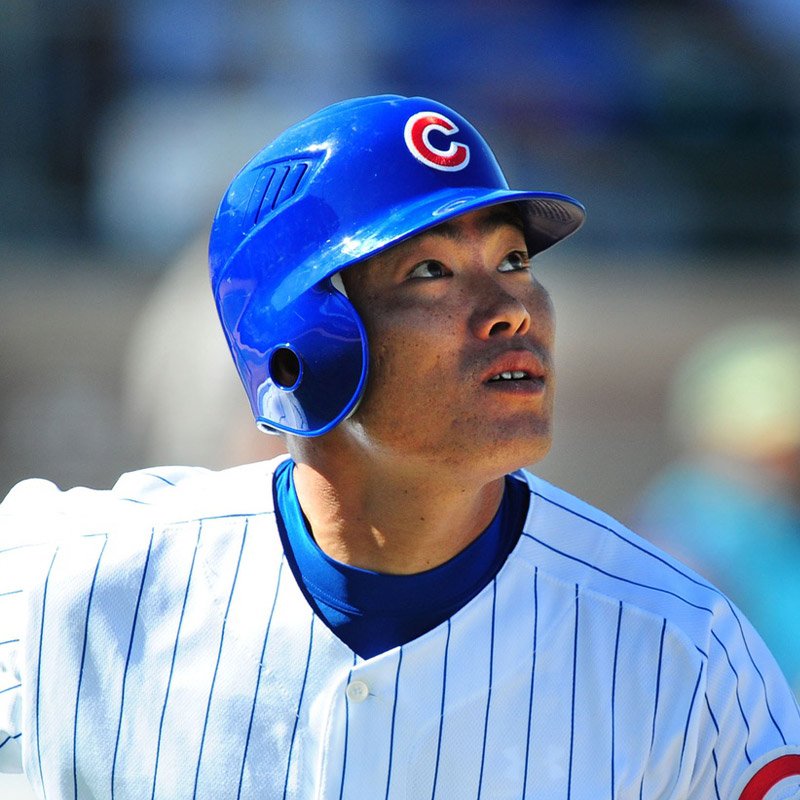 Kosuke Fukodome was a star for the Chunichi Dragons of the Nippon Professional Baseball League (NPB) after being drafted by them in the first round of the 1998 NPB draft. He helped lead them to a championship in his rookie season and famously stopped another Japanese baseball icon, Hideki Matsui, from winning the league Triple Crown in 2002 by winning the batting title with a .343 average. Eventually, he would go on to win the Central League MVP award in 2006, after he hit .351 with 31 home runs and 104 RBIs. After his star turn in the NPB, Fukodome became a free agent after the 2007 season, and he signed with the Cubs on December 11 of that same year. The Cubs gave him a four-year, $48 million contract to be their primary right fielder, as he was set to replace Jacque Jones (traded to Detroit) and Cliff Floyd (contract option declined). Fukodome told reporters at the time that he chose the Cubs specifically because he wanted to be remembered as the first Japanese-born player to play for the historic franchise. Kosuke would make his MLB debut on March 31, 2008 against the Brewers. His debut was a choice one: he went three-for-three that featured a double on the first pitch he saw, and of course he hit a legendary game-tying, three-run homer off Eric Gagné (the only relief pitcher of the last 30 years to win a Cy Young award) in the bottom of the ninth. In what is perhaps the single-most niche trivia answer of all time, Kosuke Fukodome is the only batter to ever hit a home run on opening day off of a relief pitcher who had previously won a Cy Young award. Fukodome earned an all-star selection for his first-half efforts, and would eventually go on to finish sixth in the rookie of the year balloting. However, much like the modern Cubs' Japanese-born star, Seiya Suzuki, Fukodome had a hot start to his debut season that fizzled out as the year wore on. He batted .327 in April of 2008, and then each subsequent month had a lower batting average than the last, culminating in a ghastly .178 batting average in September of his rookie season (he was also helpless against the Dodgers in the NLDS that year, going just one-for-ten with four strikeouts at the plate). Though he never quite lived up to the promise that first month showed, he was a valuable part of the roster in the years that followed. In his sophomore season, Kosuke moved to center field after the Cubs traded for Milton Bradley [in hindsight: yikes], and eventually usurped Alfonso Soriano for the leadoff gig in the batting order. Despite putting up a rather mediocre 4.7 WAR in four seasons with the Cubs, he was a fan favorite for his energy and love of the game, and his jersey was actually the best selling on the Cubs for multiple months during the 2010 season. Fukodome's tenure with the franchise ended when they traded him to the now-Cleveland Guardians at the 2011 trade deadline, receiving outfield prospect Abner Abreu and pitching prospect Carlton Smith in return. He would go on to finish his stateside career with the White Sox (on a major-league deal) and Yankees (minor-league deal) in 2012. He returned to the NPB and played for the Hanshin Tigers (where he had a late-career resurgence), before ultimately ending his career with two more years with his original team, the Dragons. Fukodome retired on September 23, 2022 at the age of 45. In a slightly-more interesting trivia fact, he was the final active player in the NPB who had played at least one game in the 1990s. Of course, Fukodome's impact on the Cubs stretches far, far beyond whatever on-field value he provided the team. He paved the way for many more Japanese stars to follow, especially in relation to the Cubs. He helped the team make pitches to both Yu Darvish and Suzuki, and though it's unclear if he's doing the same in the Cubs' pursuit of Shohei Ohtani, his comfortability with and love of Chicago and Cubs fans have made the team a premier destination for NPB stars. It may be a rudimentary assessment of things (someone was going to the be the first Japanese player on the Cubs), but without Fukodome, there’s no telling if the Cubs would have ever had So Taguchi, Koji Uehara, Hisanori Takashi, Munenori Kawaski, Darvish, Kyuji Fujikawa, Tsuyoshi Wada, or Suzuki. That pipeline, even more than his time with the team, is Kosuke Fukodome’s Cubs legacy.
