


matto1233
-
Posts
321 -
Joined
-
Last visited
Content Type
Profiles
Joomla Posts 1
Chicago Cubs Videos
Chicago Cubs Free Agent & Trade Rumors, Notes, & Tidbits
2026 Chicago Cubs Top Prospects Ranking
News
2023 Chicago Cubs Draft Picks
Guides & Resources
2024 Chicago Cubs Draft Picks
The Chicago Cubs Players Project
2025 Chicago Cubs Draft Pick Tracker
2026 Chicago Cubs Draft Tracker: Picks & Bonuses
Blogs
Events
Forums
Store
Gallery
Everything posted by matto1233
-
With the Chicago Cubs continuing to lose games, and mostly in completely gut-wrenching fashion, it’s hard to consider the idea of them buying at the trade deadline. But according to most reports, that’s still the plan, and Jed Hoyer’s job status might not be able to afford to do anything other than buying and attempting to make the playoffs, anyway. Still, context does matter. The Cubs, ideally, are a team on the upswing. No matter how you feel about the current major league roster, they have what FanGraphs rates as the best farm system in baseball. In a perfect world, the future is brighter, perhaps as soon as next season. Maybe that’s wishful thinking. Maybe it’s reality. This all got me thinking: Is there anyone out there that the Cubs could trade for, which might help them this season but also for next year or years beyond? Miguel Amaya and Yan Gomes have combined to be worth -1.4 Fangraphs WAR so far this year, and there aren’t many internal options for improvement, depending on your opinion of Moises Ballesteros and how close to the majors he really is. Let’s look at two guys who could fortify this year’s team, but also for future seasons, at the Cubs’ biggest position of need. Danny Jansen Let’s address the obvious up front: Jansen is a free agent at the end of this season. Acquiring him won’t necessarily be a move for future seasons unless you fully plan on paying him this offseason. All that said, I absolutely believe that Jansen will be available, and with the current state of the Cubs’ depth chart at catcher, they have to show interest. Jansen, who turned 29 earlier this season, has been one of the better catchers in baseball since the 2021 season. Much of that value comes from the offensive side of the ball, where he elevates the ball a lot. He has had over a 50 percent fly-ball rate in the past three seasons, while the major league average has come in at about 37 percent: this, plus his low strikeout rate, results in many long balls. While he isn’t exactly Yadier Molina behind the plate, Jansen isn’t a slouch, either. According to Baseball Savant, he has been a little below average in throwing runners out over the past four seasons, and he is about average as a pitch framer. He really excels in blocking pitches, as Baseball Savant estimates he has saved seven runs since 2021, which is tied for fifth in all of baseball. I know most probably won’t jump at the proposition of trading for a catcher who will soon be 30 in what is starting to feel like a lost season, especially when you have to pay him this offseason to keep him. But the fact is that the catching situation has to be rectified, and Jansen is the closest thing to an easy solution. Getting him in-house this season could build that relationship while getting a feel for how he fits with the team and the pitching staff. Alejandro Kirk Another Toronto Blue Jay! Except this time, he’s younger, at 25 years old, and won’t be a free agent until after the 2026 season. Naturally, this also means he would cost significantly more to acquire. Your own personal taste for acquiring Kirk probably depends on what you think of him as a hitter. He was an above-average hitter in both 2021 and 2022 because he hit the ball hard, though a high ground ball rate kept his slug down. Last year, his hard-hit rate dropped, which resulted in a decrease in production, and now, this year, he is suddenly hitting the ball in the air much more than usual. wRC+ Hard Hit % FB% GB% 2022 129 45.0% 30.8% 50.0% 2023 96 38.3% 30.1% 50.2% 2024 70 38.4% 36.4% 41.4% You’d think an elevated fly ball rate would be a good thing, particularly at the expense of his ground ball rate. Unfortunately, per FanGraphs, he has a -14 wRC+ on fly balls, thanks to a lousy 8.3 percent pull rate. Still, Kirk’s ability to put the ball in play (11.2 percent strikeout rate for his career) coupled with a good eye at the plate (10.6 percent walk rate) suggest that the backbone of a solid hitter is here. Regardless, this all ignores where his real value lies, which is his defense. According to Baseball Savant, he has been worth four catcher framing runs above average, which is top five in all of baseball. He has also caught 29 percent of would-be base stealers, which would certainly be a major upgrade from Miguel Amaya’s three percent caught stealing rate. Assuming the Blue Jay looks to sell, I’d have to believe both of these guys would be available. Given the state of the rest of their roster, they’d likely look for major league-ready players or something close to it. What would you all be willing to give up? View full article
-
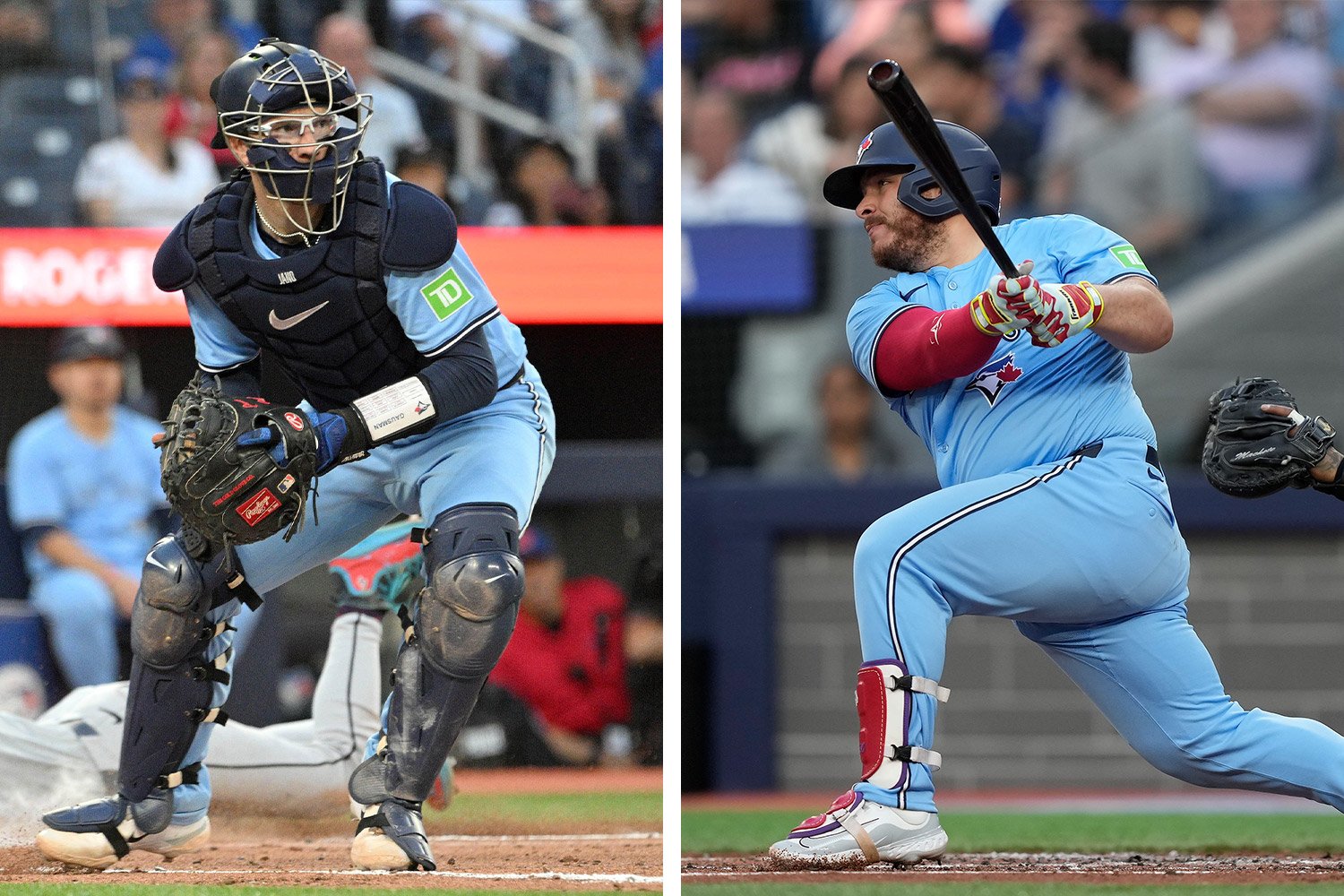 Still, context does matter. The Cubs, ideally, are a team on the upswing. No matter how you feel about the current major league roster, they have what FanGraphs rates as the best farm system in baseball. In a perfect world, the future is brighter, perhaps as soon as next season. Maybe that’s wishful thinking. Maybe it’s reality. This all got me thinking: Is there anyone out there that the Cubs could trade for, which might help them this season but also for next year or years beyond? Miguel Amaya and Yan Gomes have combined to be worth -1.4 Fangraphs WAR so far this year, and there aren’t many internal options for improvement, depending on your opinion of Moises Ballesteros and how close to the majors he really is. Let’s look at two guys who could fortify this year’s team, but also for future seasons, at the Cubs’ biggest position of need. Danny Jansen Let’s address the obvious up front: Jansen is a free agent at the end of this season. Acquiring him won’t necessarily be a move for future seasons unless you fully plan on paying him this offseason. All that said, I absolutely believe that Jansen will be available, and with the current state of the Cubs’ depth chart at catcher, they have to show interest. Jansen, who turned 29 earlier this season, has been one of the better catchers in baseball since the 2021 season. Much of that value comes from the offensive side of the ball, where he elevates the ball a lot. He has had over a 50 percent fly-ball rate in the past three seasons, while the major league average has come in at about 37 percent: this, plus his low strikeout rate, results in many long balls. While he isn’t exactly Yadier Molina behind the plate, Jansen isn’t a slouch, either. According to Baseball Savant, he has been a little below average in throwing runners out over the past four seasons, and he is about average as a pitch framer. He really excels in blocking pitches, as Baseball Savant estimates he has saved seven runs since 2021, which is tied for fifth in all of baseball. I know most probably won’t jump at the proposition of trading for a catcher who will soon be 30 in what is starting to feel like a lost season, especially when you have to pay him this offseason to keep him. But the fact is that the catching situation has to be rectified, and Jansen is the closest thing to an easy solution. Getting him in-house this season could build that relationship while getting a feel for how he fits with the team and the pitching staff. Alejandro Kirk Another Toronto Blue Jay! Except this time, he’s younger, at 25 years old, and won’t be a free agent until after the 2026 season. Naturally, this also means he would cost significantly more to acquire. Your own personal taste for acquiring Kirk probably depends on what you think of him as a hitter. He was an above-average hitter in both 2021 and 2022 because he hit the ball hard, though a high ground ball rate kept his slug down. Last year, his hard-hit rate dropped, which resulted in a decrease in production, and now, this year, he is suddenly hitting the ball in the air much more than usual. wRC+ Hard Hit % FB% GB% 2022 129 45.0% 30.8% 50.0% 2023 96 38.3% 30.1% 50.2% 2024 70 38.4% 36.4% 41.4% You’d think an elevated fly ball rate would be a good thing, particularly at the expense of his ground ball rate. Unfortunately, per FanGraphs, he has a -14 wRC+ on fly balls, thanks to a lousy 8.3 percent pull rate. Still, Kirk’s ability to put the ball in play (11.2 percent strikeout rate for his career) coupled with a good eye at the plate (10.6 percent walk rate) suggest that the backbone of a solid hitter is here. Regardless, this all ignores where his real value lies, which is his defense. According to Baseball Savant, he has been worth four catcher framing runs above average, which is top five in all of baseball. He has also caught 29 percent of would-be base stealers, which would certainly be a major upgrade from Miguel Amaya’s three percent caught stealing rate. Assuming the Blue Jay looks to sell, I’d have to believe both of these guys would be available. Given the state of the rest of their roster, they’d likely look for major league-ready players or something close to it. What would you all be willing to give up?
 -
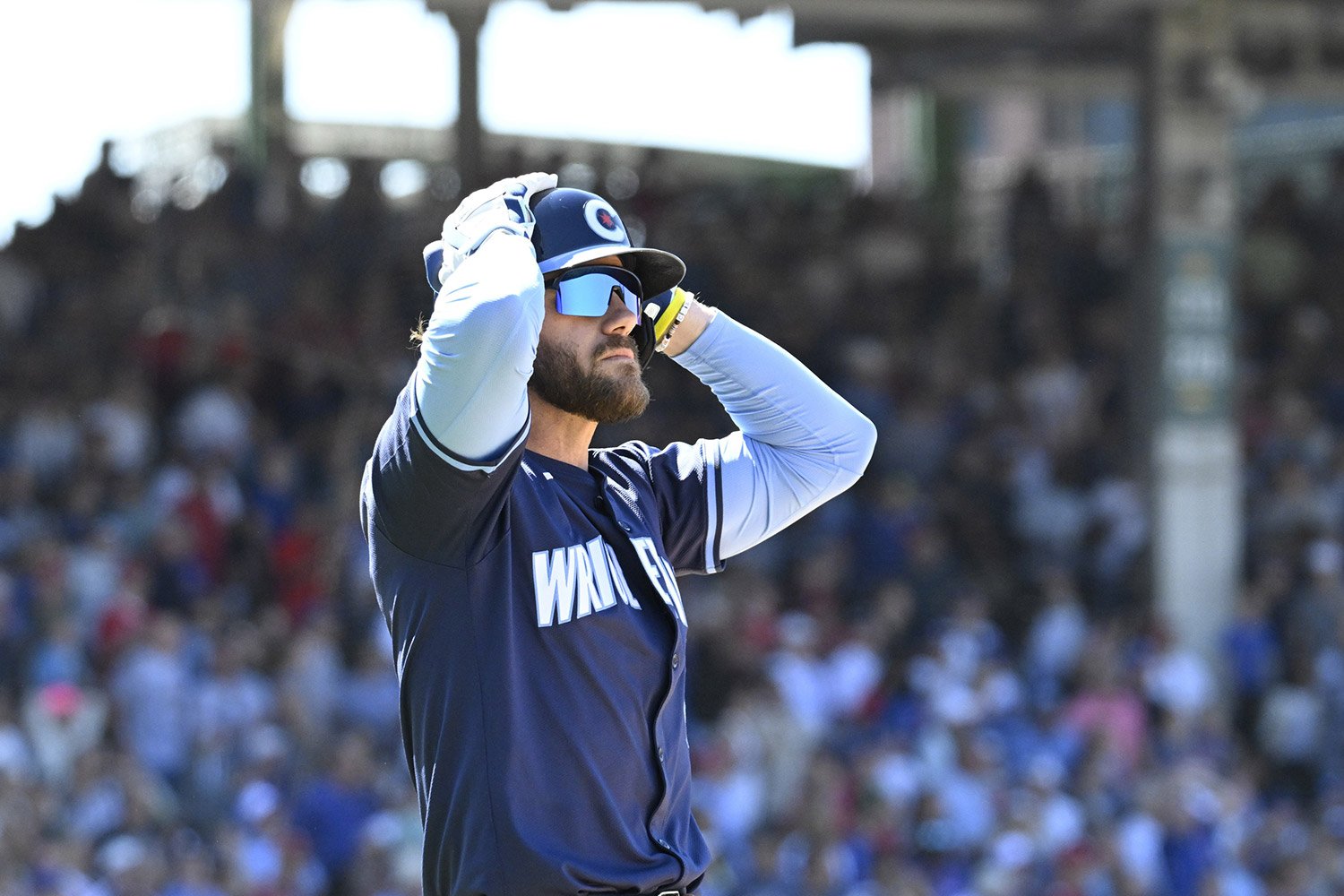 The Cubs haven’t been blowing anybody out, but they haven’t exactly been getting blown out, either. Every game seems winnable, only for us all to watch the bullpen blow something like a 2-1 lead late or for the offense to continually fail to come up with any kind of big hit on the rare occasion that they get runners on base to begin with. Literally, as I typed that paragraph, Seiya Suzuki and Ian Happ led off the bottom of the second inning against the Cardinals with singles, only for the next three hitters to go strikeout, fly out, strikeout. That’s just the way it’s been going lately for the Cubs. However, this is mostly the same group of guys that put together an above-average offense for the Cubs just last season. What gives? Well, according to FanGraphs, there is one obvious thing: the Cubs are 29th in baseball in line drive rate. The only team below them, the Miami Marlins, are 28th in baseball in total runs scored. I could point to that, declare that is the issue, and move on, but there’s more than one way to skin a cat when it comes to hitting in baseball. After all, the team that is 28th in line drive rate, the Kansas City Royals, is fifth in baseball in runs scored. So clearly, it isn’t much of an issue for them. Before I get much further, let me explain something about batted balls. As evidenced by the Royals, not hitting line drives isn’t, by itself, a bad thing. You probably already know this, but just in case, typically, line drives get guys on base from a batted ball standpoint. Fly balls result in home runs the most often but are also converted to outs most often. Ground balls are somewhere in between, but generally, the worst of the three unless you’re prime Billy Hamilton. You hope they find a hole, but typically, it’ll just be a single or, if you’re lucky, a double or triple down the line. Here are the league-wide stats on each type of batted ball so far this season: Batting Average Slugging Percentage Homeruns Groundballs .242 .266 0 Fly balls .207 .608 2,115 Line Drives .695 .890 46 Back to the Cubs, who, as a reminder, are 28th in line drive rate. You’d think this would lead to a low batting average, and it has. They are 27th in baseball in batting average. The good news? They’re fifth in fly ball rate! So, while they might not be hitting for a high average, they surely hit a ton of home runs. Right? Wrong! As you most likely know since you’re reading a Cubs article on a Cubs website, the Cubs are 20th in MLB in home runs, and with 67 of them, they are a far cry from the Yankees and Orioles at the top of the list, who both have over 100. Even worse, since that extremely arbitrary date of April 27, the Cubs are 24th in baseball in home runs. They are 25th in baseball in wRC+ on fly balls this season. Hitting so many balls in the air has not been a profitable venture for the Cubs. Let me explain another thing about batted balls that you likely already know: not all fly balls are created equal! Ideally, you want to hit a fly ball to the pull side for two main reasons. The most obvious is that the fence is shorter over there than it is to center field. Second, because the bat has more time to pick up speed when you pull the ball, balls hit to the pull side are usually hit harder than those hit to the opposite field. Here are the baseball-wide stats on fly ball location so far this season: Batting Average Slugging Percentage Home runs Pulled .402 1.371 1,413 Center .167 .442 466 Opposite .119 .274 236 So, back to the Cubs this year. They’re hitting a lot of fly balls. But they aren’t hitting a lot of home runs, nor are they particularly productive on those fly balls. If you’ve been following to this point, you’ve probably come to the correct conclusion: a whole lot of those fly balls that the Cubs are hitting aren’t pulled or even to center field. 42.3 percent of them, to be precise, are hit to the opposite field, which is third in baseball and just 0.4 percentage points behind the Washington Nationals, who lead the way. If you’re curious who the biggest offenders of this are, I am glad you asked. I’ll limit this table to the active roster, minus David Bote, since he has such a small sample size: Player Fly Ball Rate Fly Ball wRC+ Pulled % Center % Oppo % Mike Tauchman 44.2% 52 8.3% 36.1% 55.6% Miguel Amaya 32.4% 38 25.7% 22.9% 51.4% Nico Hoerner 32.5% -21 14.1% 39.1% 46.9% Yan Gomes 45.3% 45 8.3% 45.8% 45.8% Patrick Wisdom 70.2% 124 30.3% 24.2% 45.5% Ian Happ 39.2% 103 24.2% 30.6% 45.2% Michael Busch 43.7% 154 23.1% 34.6% 42.3% Dansby Swanson 29.9% 202 20.5% 38.6% 40.9% Cody Bellinger 51.6% 85 40.6% 24.0% 35.4% Christopher Morel 39.6% 174 33.3% 33.3% 33.3% Seiya Suzuki 49.6% 153 21.0% 48.6% 32.3% Pete Crow-Armstrong 36.5% -21 43.5% 26.1% 30.4% Mike Tauchman and the catching situation stick out like a sore thumb here, and while most people wouldn’t say Tauchman has been the issue with the offense, he does have just a 76 wRC+ since the start of May. It’s also not a coincidence that the consensus three best hitters on the team, Bellinger, Morel, and Suzuki, are towards the bottom of this list. One other thing that isn’t captured on that chart but stuck out to me is that from the start of the season to April 26, Michael Busch was hitting just 29.9 percent of his fly balls to the opposite field. Since then? Fifty-six percent of them have been hit to the opposite field, and just 12 percent have been hit to the pull side, which might help explain some of his struggles. To recap, the Cubs aren’t hitting for average because they aren’t hitting many line drives. Thus, they have struggled to string hits together and score runs. They’re instead hitting a lot of fly balls, but they aren’t getting the home run output that a team typically would since they are not hitting them to the pull side. It’s been a lot of lazy fly balls to the opposite field. All of this results in a team struggling to score runs and nothing but a miserable watching experience for us fans.
 -
I won’t mince words with you: the Chicago Cubs are really hard to watch right now. With a starting rotation that has the seventh-best ERA in the major leagues, they are in every game. But with a bullpen ERA that is 25th and an offense that is 28th in runs scored since April 27, every game is an unwatchable, torturous slog. The Cubs haven’t been blowing anybody out, but they haven’t exactly been getting blown out, either. Every game seems winnable, only for us all to watch the bullpen blow something like a 2-1 lead late or for the offense to continually fail to come up with any kind of big hit on the rare occasion that they get runners on base to begin with. Literally, as I typed that paragraph, Seiya Suzuki and Ian Happ led off the bottom of the second inning against the Cardinals with singles, only for the next three hitters to go strikeout, fly out, strikeout. That’s just the way it’s been going lately for the Cubs. However, this is mostly the same group of guys that put together an above-average offense for the Cubs just last season. What gives? Well, according to FanGraphs, there is one obvious thing: the Cubs are 29th in baseball in line drive rate. The only team below them, the Miami Marlins, are 28th in baseball in total runs scored. I could point to that, declare that is the issue, and move on, but there’s more than one way to skin a cat when it comes to hitting in baseball. After all, the team that is 28th in line drive rate, the Kansas City Royals, is fifth in baseball in runs scored. So clearly, it isn’t much of an issue for them. Before I get much further, let me explain something about batted balls. As evidenced by the Royals, not hitting line drives isn’t, by itself, a bad thing. You probably already know this, but just in case, typically, line drives get guys on base from a batted ball standpoint. Fly balls result in home runs the most often but are also converted to outs most often. Ground balls are somewhere in between, but generally, the worst of the three unless you’re prime Billy Hamilton. You hope they find a hole, but typically, it’ll just be a single or, if you’re lucky, a double or triple down the line. Here are the league-wide stats on each type of batted ball so far this season: Batting Average Slugging Percentage Homeruns Groundballs .242 .266 0 Fly balls .207 .608 2,115 Line Drives .695 .890 46 Back to the Cubs, who, as a reminder, are 28th in line drive rate. You’d think this would lead to a low batting average, and it has. They are 27th in baseball in batting average. The good news? They’re fifth in fly ball rate! So, while they might not be hitting for a high average, they surely hit a ton of home runs. Right? Wrong! As you most likely know since you’re reading a Cubs article on a Cubs website, the Cubs are 20th in MLB in home runs, and with 67 of them, they are a far cry from the Yankees and Orioles at the top of the list, who both have over 100. Even worse, since that extremely arbitrary date of April 27, the Cubs are 24th in baseball in home runs. They are 25th in baseball in wRC+ on fly balls this season. Hitting so many balls in the air has not been a profitable venture for the Cubs. Let me explain another thing about batted balls that you likely already know: not all fly balls are created equal! Ideally, you want to hit a fly ball to the pull side for two main reasons. The most obvious is that the fence is shorter over there than it is to center field. Second, because the bat has more time to pick up speed when you pull the ball, balls hit to the pull side are usually hit harder than those hit to the opposite field. Here are the baseball-wide stats on fly ball location so far this season: Batting Average Slugging Percentage Home runs Pulled .402 1.371 1,413 Center .167 .442 466 Opposite .119 .274 236 So, back to the Cubs this year. They’re hitting a lot of fly balls. But they aren’t hitting a lot of home runs, nor are they particularly productive on those fly balls. If you’ve been following to this point, you’ve probably come to the correct conclusion: a whole lot of those fly balls that the Cubs are hitting aren’t pulled or even to center field. 42.3 percent of them, to be precise, are hit to the opposite field, which is third in baseball and just 0.4 percentage points behind the Washington Nationals, who lead the way. If you’re curious who the biggest offenders of this are, I am glad you asked. I’ll limit this table to the active roster, minus David Bote, since he has such a small sample size: Player Fly Ball Rate Fly Ball wRC+ Pulled % Center % Oppo % Mike Tauchman 44.2% 52 8.3% 36.1% 55.6% Miguel Amaya 32.4% 38 25.7% 22.9% 51.4% Nico Hoerner 32.5% -21 14.1% 39.1% 46.9% Yan Gomes 45.3% 45 8.3% 45.8% 45.8% Patrick Wisdom 70.2% 124 30.3% 24.2% 45.5% Ian Happ 39.2% 103 24.2% 30.6% 45.2% Michael Busch 43.7% 154 23.1% 34.6% 42.3% Dansby Swanson 29.9% 202 20.5% 38.6% 40.9% Cody Bellinger 51.6% 85 40.6% 24.0% 35.4% Christopher Morel 39.6% 174 33.3% 33.3% 33.3% Seiya Suzuki 49.6% 153 21.0% 48.6% 32.3% Pete Crow-Armstrong 36.5% -21 43.5% 26.1% 30.4% Mike Tauchman and the catching situation stick out like a sore thumb here, and while most people wouldn’t say Tauchman has been the issue with the offense, he does have just a 76 wRC+ since the start of May. It’s also not a coincidence that the consensus three best hitters on the team, Bellinger, Morel, and Suzuki, are towards the bottom of this list. One other thing that isn’t captured on that chart but stuck out to me is that from the start of the season to April 26, Michael Busch was hitting just 29.9 percent of his fly balls to the opposite field. Since then? Fifty-six percent of them have been hit to the opposite field, and just 12 percent have been hit to the pull side, which might help explain some of his struggles. To recap, the Cubs aren’t hitting for average because they aren’t hitting many line drives. Thus, they have struggled to string hits together and score runs. They’re instead hitting a lot of fly balls, but they aren’t getting the home run output that a team typically would since they are not hitting them to the pull side. It’s been a lot of lazy fly balls to the opposite field. All of this results in a team struggling to score runs and nothing but a miserable watching experience for us fans. View full article
- 2 replies
-
- 1
-

-
- michael busch
- mike tauchman
- (and 2 more)
-
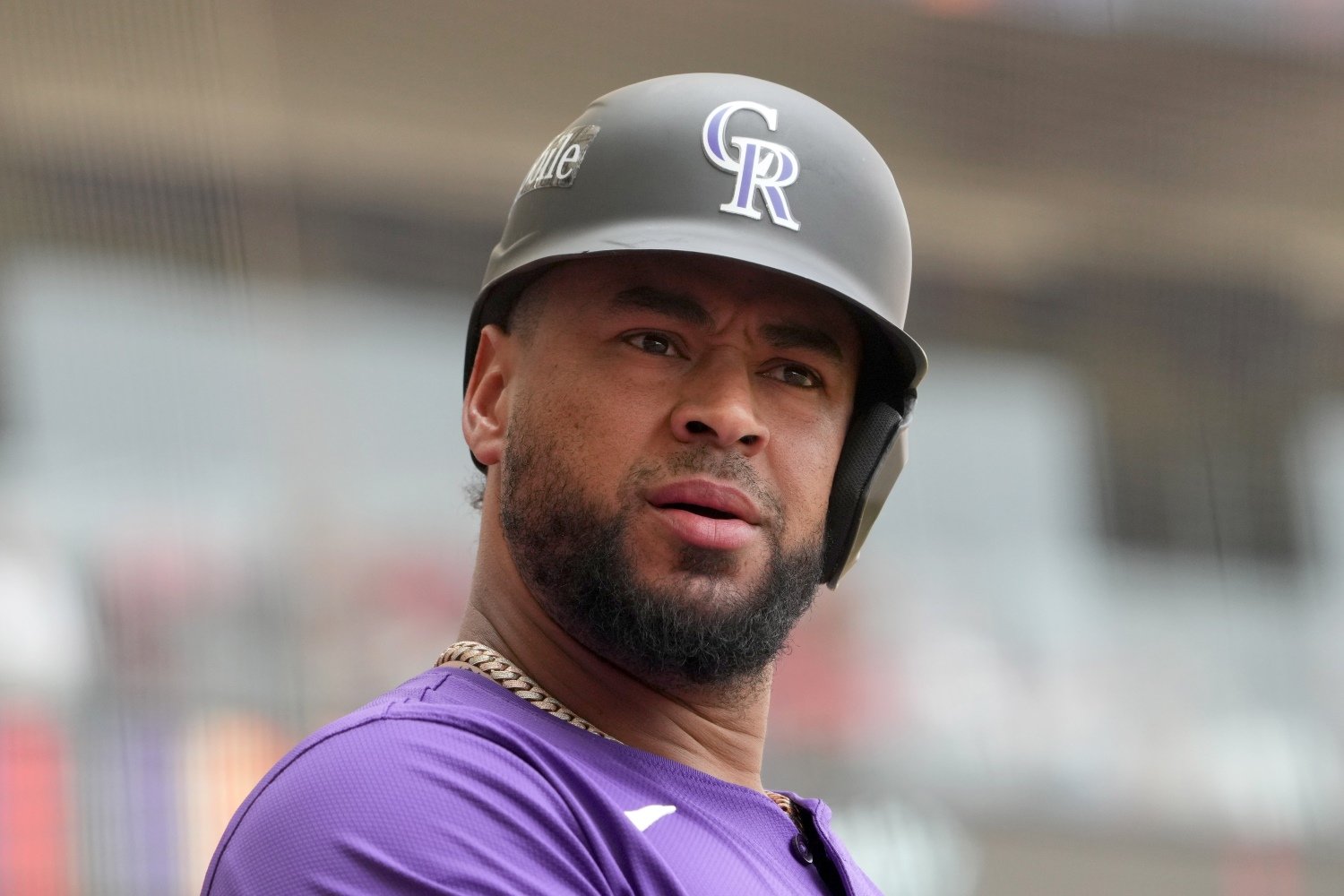 Believe it or not, we are significantly closer to the 2024 MLB Trade Deadline than we are removed from Opening Day. While the Cubs aren’t quite where they’d like to be, they find themselves just a half-game out of the last playoff spot going into Wednesday’s action, thanks to a whole lot of mediocrity in the National League. I sure don’t have a lot of faith in this current iteration of the Cubs to make a run in the postseason, but as we all saw with the Diamondbacks last year, if you can get into the playoffs, you can certainly get hot and make a run. With the trade deadline just seven short weeks away, the Colorado Rockies are one of a few teams who will definitely be sellers, though they have surprised us all before. What players do they have that might interest the Cubs? The most obvious, hand-in-glove fit, would be Elías Díaz. The Rockies’ catcher was named an All-Star last season for the first time in his career, and was even named the Most Valuable Player in the Midsummer Classic, though I would caution anyone against getting too excited about that. Díaz made it into the All-Star Game purely because every team has to have one representative, which is still a silly rule. He finished the 2023 season with a negative WAR of -0.2, and an 81 wRC+, according to FanGraphs. As a reminder, 100 is considered an average wRC+. To give Díaz credit, he is off to a much better start this season, with a 109 wRC+ and 1.4 WAR. However, those numbers seem to me to be heavily supported by some good fortune. His Barrel% and hard-hit rate are both down from last year, and his .350 BABIP would be a career-best mark. Thus, his .344 wOBA far outpaces his .285 xwOBA, where about .320 is considered average, suggesting that he is still a below-average hitter. He has thrown out 11 of 37 potential base stealers, though, which is something the Cubs have come under fire for recently. Miguel Amaya has thrown out just five of 43 base stealers. Yan Gomez has thrown out three of 21, and as our own Matthew Trueblood has recently pointed out, it’s even worse than that: five of those instances of caught stealing were pickoffs, and not actual throws by the catcher. According to Baseball Savant, Díaz has been worth two runs above average when it comes to throwing runners out. Gomes has been worth zero, and Amaya has been worth -4. With all of that said, I am not actually sure Díaz would be a great fit. Like Gomes, he is a free agent this offseason, so it doesn’t solve for anything in the medium term. I am not convinced he’ll be sufficiently better than either Gomes or Amaya to justify either designating Gomes for assignment and eating the money that the Cubs owe him, getting playing time over Amaya (who probably does have a future with the Cubs and needs to continue getting reps for development), or rostering three catchers. But I could probably be convinced. Elsewhere on the Rockies’ roster is Ryan McMahon, who is an interesting fit if the Cubs decide that they have seen enough of Christopher Morel at third base. The Rockies’ third baseman has hit 20 or more home runs in every full big-league season since he debuted, though park-neutral stats rate him as roughly an average hitter. He would certainly be an upgrade defensively, as he is fourth among third basemen in Outs Above Average and Defensive Runs Saved since 2019, per FanGraphs. The pop from the left side of the plate would be nice, as would a third baseman whose presence wouldn’t elevate my heart rate every time the ball was hit that way. With all of that said, he is probably a utility guy on a good team. He does have some experience playing both second and first base. I feel like the Cubs have the type of roster where they could utilize him well as a late-inning defensive replacement or platoon player. He is much closer to average as a hitter against righties (95 wRC+) than against lefties (78 wRC+). Alas, he is paid like a starter, and would be a longer-term investment: he is under contract for three more seasons (and $44 million) after this one. Unfortunately, the Rockies are pretty thin in the bullpen, but they do have a couple of pieces that could be interesting to the Cubs. Victor Vodnik has pitched to a 2.68 ERA so far this year, mostly thanks to a high ground-ball rate and low home run rate. Nick Mears strikes out 26.7 percent of hitters he faces, but also walks 12.2 percent of them, so you’d have to take the good with the bad. They also have Kris Bryant, who is an interesting buy-low/change-of-scenery guy who is on a bad contract and could probably be had for very little. Kidding! I am kidding. I promise.
 -
The Chicago Cubs need help. They need multiple pieces of help. As they teeter on the verge of becoming sellers themselves, though, there remain a couple of surefire sellers who have pieces that might help the North Siders turn things around. One such team is one of the most familiar cellar-dwellers in baseball. Image courtesy of © Kirby Lee-USA TODAY Sports Believe it or not, we are significantly closer to the 2024 MLB Trade Deadline than we are removed from Opening Day. While the Cubs aren’t quite where they’d like to be, they find themselves just a half-game out of the last playoff spot going into Wednesday’s action, thanks to a whole lot of mediocrity in the National League. I sure don’t have a lot of faith in this current iteration of the Cubs to make a run in the postseason, but as we all saw with the Diamondbacks last year, if you can get into the playoffs, you can certainly get hot and make a run. With the trade deadline just seven short weeks away, the Colorado Rockies are one of a few teams who will definitely be sellers, though they have surprised us all before. What players do they have that might interest the Cubs? The most obvious, hand-in-glove fit, would be Elías Díaz. The Rockies’ catcher was named an All-Star last season for the first time in his career, and was even named the Most Valuable Player in the Midsummer Classic, though I would caution anyone against getting too excited about that. Díaz made it into the All-Star Game purely because every team has to have one representative, which is still a silly rule. He finished the 2023 season with a negative WAR of -0.2, and an 81 wRC+, according to FanGraphs. As a reminder, 100 is considered an average wRC+. To give Díaz credit, he is off to a much better start this season, with a 109 wRC+ and 1.4 WAR. However, those numbers seem to me to be heavily supported by some good fortune. His Barrel% and hard-hit rate are both down from last year, and his .350 BABIP would be a career-best mark. Thus, his .344 wOBA far outpaces his .285 xwOBA, where about .320 is considered average, suggesting that he is still a below-average hitter. He has thrown out 11 of 37 potential base stealers, though, which is something the Cubs have come under fire for recently. Miguel Amaya has thrown out just five of 43 base stealers. Yan Gomez has thrown out three of 21, and as our own Matthew Trueblood has recently pointed out, it’s even worse than that: five of those instances of caught stealing were pickoffs, and not actual throws by the catcher. According to Baseball Savant, Díaz has been worth two runs above average when it comes to throwing runners out. Gomes has been worth zero, and Amaya has been worth -4. With all of that said, I am not actually sure Díaz would be a great fit. Like Gomes, he is a free agent this offseason, so it doesn’t solve for anything in the medium term. I am not convinced he’ll be sufficiently better than either Gomes or Amaya to justify either designating Gomes for assignment and eating the money that the Cubs owe him, getting playing time over Amaya (who probably does have a future with the Cubs and needs to continue getting reps for development), or rostering three catchers. But I could probably be convinced. Elsewhere on the Rockies’ roster is Ryan McMahon, who is an interesting fit if the Cubs decide that they have seen enough of Christopher Morel at third base. The Rockies’ third baseman has hit 20 or more home runs in every full big-league season since he debuted, though park-neutral stats rate him as roughly an average hitter. He would certainly be an upgrade defensively, as he is fourth among third basemen in Outs Above Average and Defensive Runs Saved since 2019, per FanGraphs. The pop from the left side of the plate would be nice, as would a third baseman whose presence wouldn’t elevate my heart rate every time the ball was hit that way. With all of that said, he is probably a utility guy on a good team. He does have some experience playing both second and first base. I feel like the Cubs have the type of roster where they could utilize him well as a late-inning defensive replacement or platoon player. He is much closer to average as a hitter against righties (95 wRC+) than against lefties (78 wRC+). Alas, he is paid like a starter, and would be a longer-term investment: he is under contract for three more seasons (and $44 million) after this one. Unfortunately, the Rockies are pretty thin in the bullpen, but they do have a couple of pieces that could be interesting to the Cubs. Victor Vodnik has pitched to a 2.68 ERA so far this year, mostly thanks to a high ground-ball rate and low home run rate. Nick Mears strikes out 26.7 percent of hitters he faces, but also walks 12.2 percent of them, so you’d have to take the good with the bad. They also have Kris Bryant, who is an interesting buy-low/change-of-scenery guy who is on a bad contract and could probably be had for very little. Kidding! I am kidding. I promise. View full article
-
I think this is really interesting. Personally, I think that everyone wants every starting pitcher to be an “ace,” when in reality, there are maybe 10-15 of those in MLB at any given time. The fact is that a starting pitcher that can consistently post 3ish WAR seasons, a guy one would traditionally call a mid-rotation starter, is still one of the 30 or so best pitchers in baseball. Case in point - Marcus Stroman is 31st in fWAR for pitchers over the past five years.
- 3 replies
-
- 1
-
-
- jordan wicks
- javier assad
- (and 4 more)
-
Cubs Minor League Relief Pitcher of the Month: May 2024
matto1233 posted an article in Minor Leagues
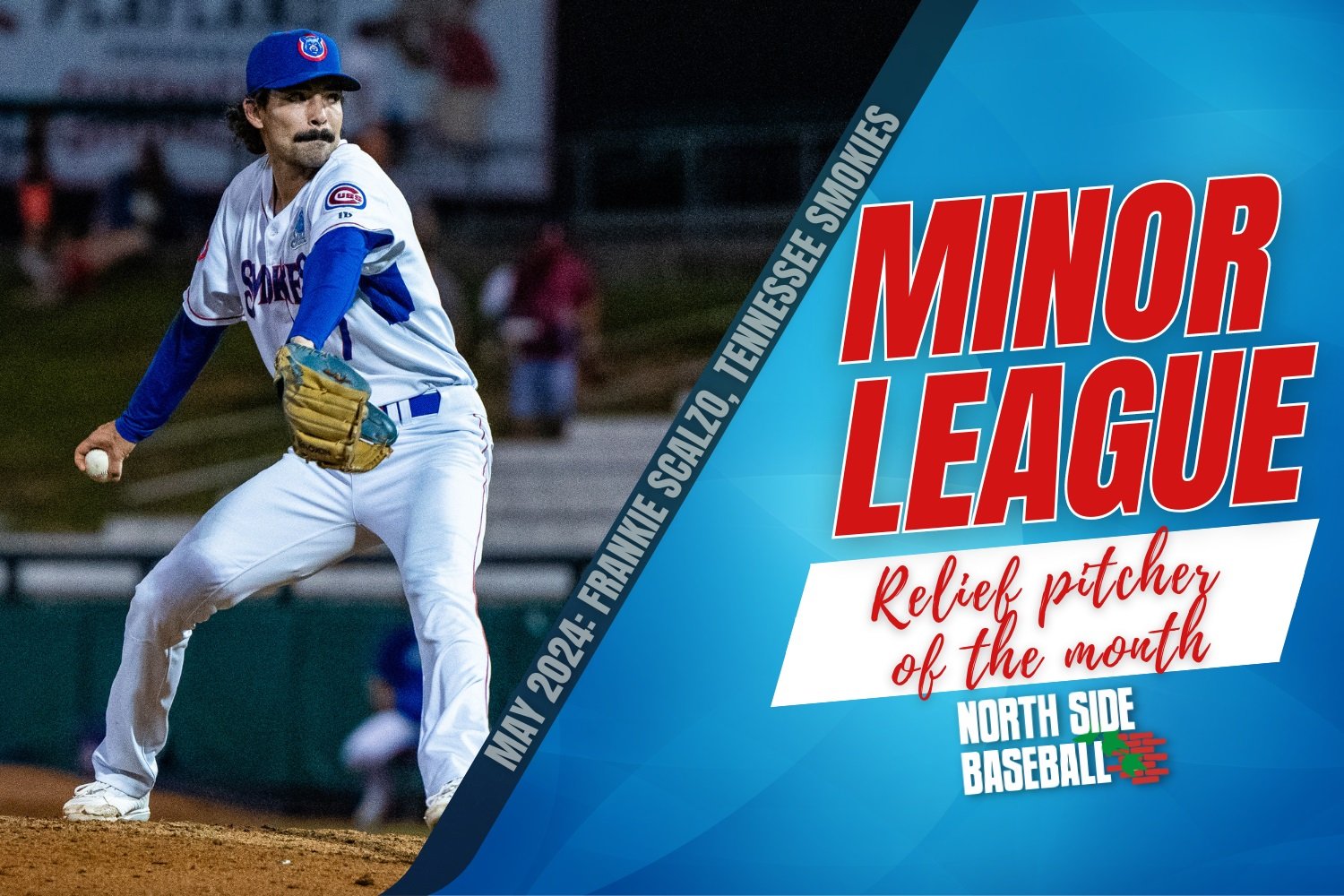 We believe that it is appropriate to let people know when relief pitchers do their job well. Seemingly, relief pitchers only get talked about when they blow a save or have a rough outing. Honorable Mention RHP Ethan Roberts - ACL Cubs/Tennessee Smokies/Iowa Cubs - 7 G, 0.00 ERA, 0.91 WHIP, 7 2/3 IP, 3 H, 4 BB, 9 K Only having 7 2/3 IP is keeping Roberts in the honorable mention section, but it certainly is worth mentioning: Ethan Roberts is back. In case you have forgotten, after making the Cubs’ Opening Day roster in 2022, Roberts got into nine games for the team that year before succumbing to Tommy John Surgery. After one scoreless appearance for the ACL Cubs, and then one scoreless appearance for the Tennessee Smokies, Roberts is now at AAA with the Iowa Cubs, where he has struck out nine batters in six innings pitched. Top Three Relief Pitchers for May 2024 3. RHP Nico Zeglin - Myrtle Beach Pelicans - 6 G, 2.84 ERA, 0.947 WHIP, 12 ⅔ IP, 10 H, 2 BB, 18 K Zeglin pitched the past two seasons in the Independent Leagues before the Cubs signed him to a minor league contract in April. So far, the early returns have been fantastic. At age 24, Zeglin is old for Class A ball, but we’ll have to see how long he sticks around. His strikeout to walk ratio is 12th among 196 Carolina League pitchers with at least 10 innings pitched, and his 63.9% ground ball ratio is fourth. Striking a lot of guys out, walking few, and keeping the ball on the ground is a great recipe for success in a reliever. 2. RHP Fraimin Marte - ACL Cubs - 6 G, 0.96 ERA, 0.75 WHIP, 9 1/3 IP, 5 H, 2 BB, 12 K Marte is a 22-year-old in Rookie ball for the Cubs, but I try not to exclude people based on prospect status, and his performance is certainly worthy of an inclusion here, in my opinion. Anyone that is striking out a good number of guys while walking so few out of the bullpen is going to get attention. We’ll see if it sticks for Marte, or what his future is with the Cubs, but he absolutely deserves his flowers for the numbers that he posted this past May. 1. RHP Frankie Scalzo, Jr. - Tennessee Smokies - 9 G, 0.00 ERA, 0.48 WHIP, 10 1/3 IP, 4 H, 1 BB, 6 K Congrats to Scalzo for winning both the April and the May award for Minor League Relief Pitcher of the Month. The guy just refuses to allow a run, as he is now up to 20 ⅔ IP on the season without an earned run allowed. Scalzo was a 14th round pick out of Grand Canyon in 2021, and made his way to Class AA after pitching to a 2.31 ERA in Class High A last season. The thing that absolutely fascinates me about Scalzo is that he has had this rung of success without striking a ton of guys out. His 18.4 percent strikeout rate is one of the lowest in the Southern League, but he allowed just a .114 batting average against him in May and he walked only one opposing hitter. Independent of his pitching, his mustache is an 80 on the 20-80 scouting scale.
 -
Today, we complete our May 2024 awards series by touting the Cubs minor league bullpen arms that performed well in May. Image courtesy of Tennessee Smokies We believe that it is appropriate to let people know when relief pitchers do their job well. Seemingly, relief pitchers only get talked about when they blow a save or have a rough outing. Honorable Mention RHP Ethan Roberts - ACL Cubs/Tennessee Smokies/Iowa Cubs - 7 G, 0.00 ERA, 0.91 WHIP, 7 2/3 IP, 3 H, 4 BB, 9 K Only having 7 2/3 IP is keeping Roberts in the honorable mention section, but it certainly is worth mentioning: Ethan Roberts is back. In case you have forgotten, after making the Cubs’ Opening Day roster in 2022, Roberts got into nine games for the team that year before succumbing to Tommy John Surgery. After one scoreless appearance for the ACL Cubs, and then one scoreless appearance for the Tennessee Smokies, Roberts is now at AAA with the Iowa Cubs, where he has struck out nine batters in six innings pitched. Top Three Relief Pitchers for May 2024 3. RHP Nico Zeglin - Myrtle Beach Pelicans - 6 G, 2.84 ERA, 0.947 WHIP, 12 ⅔ IP, 10 H, 2 BB, 18 K Zeglin pitched the past two seasons in the Independent Leagues before the Cubs signed him to a minor league contract in April. So far, the early returns have been fantastic. At age 24, Zeglin is old for Class A ball, but we’ll have to see how long he sticks around. His strikeout to walk ratio is 12th among 196 Carolina League pitchers with at least 10 innings pitched, and his 63.9% ground ball ratio is fourth. Striking a lot of guys out, walking few, and keeping the ball on the ground is a great recipe for success in a reliever. 2. RHP Fraimin Marte - ACL Cubs - 6 G, 0.96 ERA, 0.75 WHIP, 9 1/3 IP, 5 H, 2 BB, 12 K Marte is a 22-year-old in Rookie ball for the Cubs, but I try not to exclude people based on prospect status, and his performance is certainly worthy of an inclusion here, in my opinion. Anyone that is striking out a good number of guys while walking so few out of the bullpen is going to get attention. We’ll see if it sticks for Marte, or what his future is with the Cubs, but he absolutely deserves his flowers for the numbers that he posted this past May. 1. RHP Frankie Scalzo, Jr. - Tennessee Smokies - 9 G, 0.00 ERA, 0.48 WHIP, 10 1/3 IP, 4 H, 1 BB, 6 K Congrats to Scalzo for winning both the April and the May award for Minor League Relief Pitcher of the Month. The guy just refuses to allow a run, as he is now up to 20 ⅔ IP on the season without an earned run allowed. Scalzo was a 14th round pick out of Grand Canyon in 2021, and made his way to Class AA after pitching to a 2.31 ERA in Class High A last season. The thing that absolutely fascinates me about Scalzo is that he has had this rung of success without striking a ton of guys out. His 18.4 percent strikeout rate is one of the lowest in the Southern League, but he allowed just a .114 batting average against him in May and he walked only one opposing hitter. Independent of his pitching, his mustache is an 80 on the 20-80 scouting scale. View full article
- 1 reply
-
- 1
-
-
- frankie scalzo
- fraiman marte
- (and 2 more)
-
We continue to look back at the top performers throughout the Cubs organization by reviewing the top minor league pitchers during the month. The Cubs had a few minor league pitchers who had strong months in May. In fact, we have an Honorable Mention who had a 0.00 ERA! In addition, the minor leagues are filled with intriguing stories and varying level of "prospect." This list contains four names. There are players who have been a professional for less than a year and there are 30-somethings. Get to know more about four Cubs minor league pitchers who pitched well in May. Honorable Mention RHP Nick Dean - Myrtle Beach Pelicans/South Bend Cubs - 3 GS, 0.00 ERA, 0.46 WHIP, 15 2/3 IP, 5 H, 2 BB, 10 K Dean, a 19th round draft pick out of the University of Maryland in last summer’s amateur draft, did well enough in his first seven appearances (4 GS, 27 IP, 9 BB, 36 K, 2.33 ERA) for the Class A Myrtle Beach Pelicans that he earned a mid-May call up to Class A+ ball to pitch for the South Bend Cubs. He continued his run of solid performances with two starts of five innings each, only giving up three hits in total, to go along with one walk, six strikeouts, and no runs allowed, but sample size is keeping him in the honorable mention section here. His 18.3 percent swinging strike rate was one of the better figures in the league in Class A ball. However, it has fallen to a good but not quite elite 12.3 percent in South Bend, according to Fangraphs, which rates his changeup as a 60 on the 40-80 scouting scale. May’s Top 3 Cubs MiLB Starting Pitchers of the Month 3. RHP Connor Noland - Tennessee Smokies - 5 GS, 2.00 ERA, 0.89 WHIP, 27 IP, 17 H, 7 BB, 24 K Fun fact about Noland: he started four games at quarterback for the Arkansas Razorbacks in the 2018 football season. Back to his baseball ability, the former Razorback followed up a rocky start to the season with a great month of May. The Southern League, which the Smokies play in, is a pitchers league, but Noland’s 2.00 ERA was still good for seventh among qualified Southern League pitchers, his 0.89 WHIP was good for fourth, and his .179 batting average against was good for fifth. The ninth round draft pick in the 2022 amateur draft succeeds by keeping the ball on the ground, as his 52.8 percent ground ball rate (51 percent in May) so far this season is fifth best in the Southern League, per Fangraphs. 2. RHP Will Sanders - South Bend Cubs - 5 GS, 1.74 ERA, 0.97 WHIP, 20 2/3 IP, 11 H, 9 BB, 19 K At age 22, the former fourth round draft pick in last year’s draft is likely a bit old for the Class A+ Midwest League, but if his May results are any indication, he might not be around much longer. After a brutal start to the season, Sanders cut his walk rate about in half and held opposing hitters to just a .541 OPS in the month of May. He’ll have to work on continuing to trim the high walk rate, but it’s a good sign that he still managed to strike out 26 hitters in 24 ⅔ innings (this is if you include a long relief stint out of the bullpen on May 31, which wasn’t included above because it wasn’t a start) in May while clearly working on improving his control. 1. RHP Kyle McGowin - Tennessee Smokies - 4 GS, 1.93 ERA, 0.73 WHIP, 23 1/3 IP, 13 H, 4 BB, 26 K If McGowin’s name sounds particularly familiar, well, that is because he does have major league experience! But not for the Cubs. McGowin made 48 appearances for the Washington Nationals from 2018 to 2021, including two appearances against the Cubs. All of that is to say that the veteran right-hander is not a prospect. The Cubs signed him out of an independent league earlier this month. With that said, his performance has been too good not to award him with the Minor League Starting Pitcher of the Month here. Besides: pitching depth is pitching depth. Of the 69 Southern League pitchers with at least 20 innings pitched, McGowin’s 1.93 ERA is ninth. His 29.9 percent strikeout rate is 11th. His 4.6 percent walk rate is eighth. And his 1.72 FIP leads the league. He isn’t walking guys, he’s striking guys out, and he is preventing runs at an elite level. We can’t be sure if it will continue, but for the month of May, he certainly looked like a guy that was way too good for AA. View full article
-
Cubs Minor League Starting Pitcher of the Month: May 2024
matto1233 posted an article in Minor Leagues
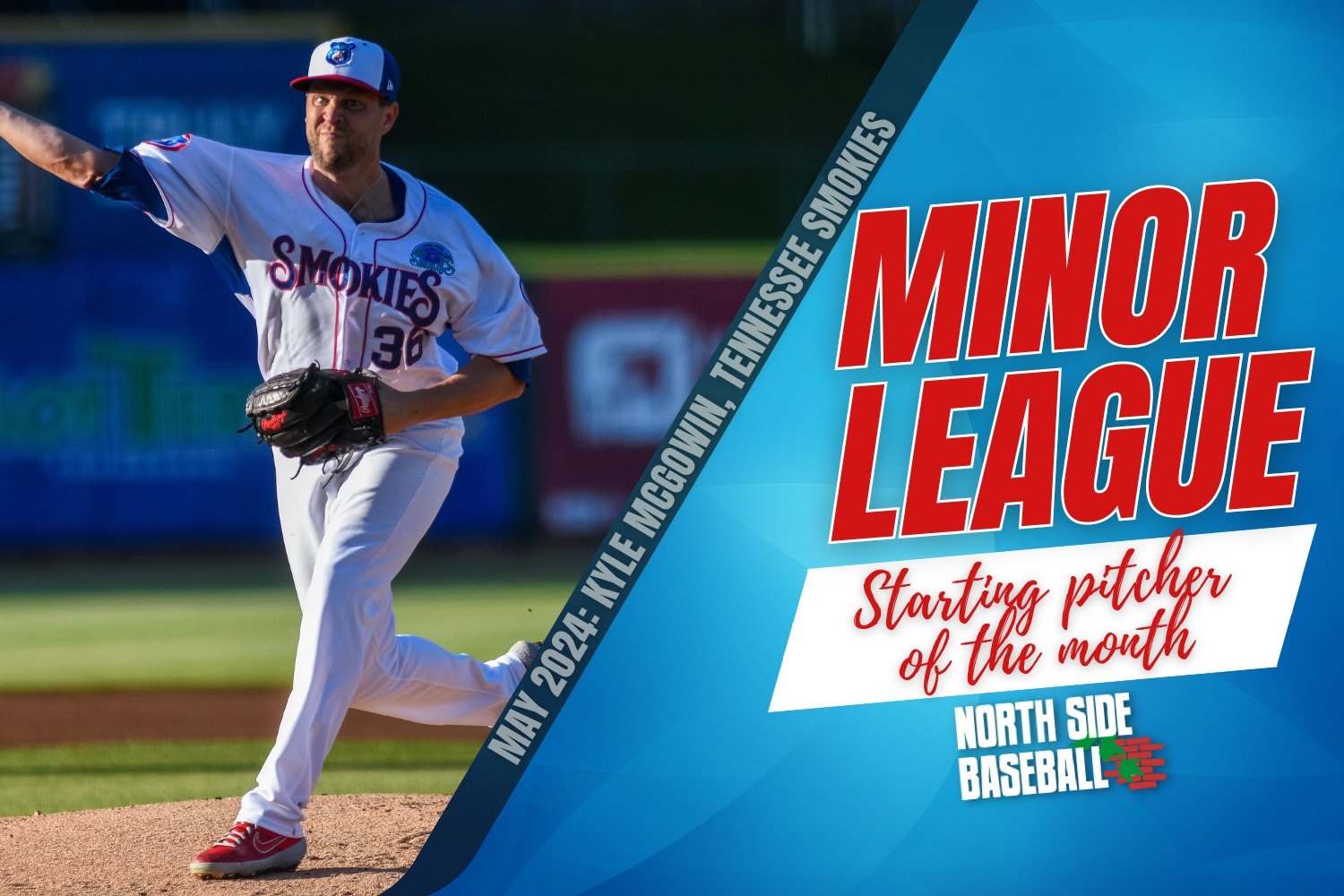 The Cubs had a few minor league pitchers who had strong months in May. In fact, we have an Honorable Mention who had a 0.00 ERA! In addition, the minor leagues are filled with intriguing stories and varying level of "prospect." This list contains four names. There are players who have been a professional for less than a year and there are 30-somethings. Get to know more about four Cubs minor league pitchers who pitched well in May. Honorable Mention RHP Nick Dean - Myrtle Beach Pelicans/South Bend Cubs - 3 GS, 0.00 ERA, 0.46 WHIP, 15 2/3 IP, 5 H, 2 BB, 10 K Dean, a 19th round draft pick out of the University of Maryland in last summer’s amateur draft, did well enough in his first seven appearances (4 GS, 27 IP, 9 BB, 36 K, 2.33 ERA) for the Class A Myrtle Beach Pelicans that he earned a mid-May call up to Class A+ ball to pitch for the South Bend Cubs. He continued his run of solid performances with two starts of five innings each, only giving up three hits in total, to go along with one walk, six strikeouts, and no runs allowed, but sample size is keeping him in the honorable mention section here. His 18.3 percent swinging strike rate was one of the better figures in the league in Class A ball. However, it has fallen to a good but not quite elite 12.3 percent in South Bend, according to Fangraphs, which rates his changeup as a 60 on the 40-80 scouting scale. May’s Top 3 Cubs MiLB Starting Pitchers of the Month 3. RHP Connor Noland - Tennessee Smokies - 5 GS, 2.00 ERA, 0.89 WHIP, 27 IP, 17 H, 7 BB, 24 K Fun fact about Noland: he started four games at quarterback for the Arkansas Razorbacks in the 2018 football season. Back to his baseball ability, the former Razorback followed up a rocky start to the season with a great month of May. The Southern League, which the Smokies play in, is a pitchers league, but Noland’s 2.00 ERA was still good for seventh among qualified Southern League pitchers, his 0.89 WHIP was good for fourth, and his .179 batting average against was good for fifth. The ninth round draft pick in the 2022 amateur draft succeeds by keeping the ball on the ground, as his 52.8 percent ground ball rate (51 percent in May) so far this season is fifth best in the Southern League, per Fangraphs. 2. RHP Will Sanders - South Bend Cubs - 5 GS, 1.74 ERA, 0.97 WHIP, 20 2/3 IP, 11 H, 9 BB, 19 K At age 22, the former fourth round draft pick in last year’s draft is likely a bit old for the Class A+ Midwest League, but if his May results are any indication, he might not be around much longer. After a brutal start to the season, Sanders cut his walk rate about in half and held opposing hitters to just a .541 OPS in the month of May. He’ll have to work on continuing to trim the high walk rate, but it’s a good sign that he still managed to strike out 26 hitters in 24 ⅔ innings (this is if you include a long relief stint out of the bullpen on May 31, which wasn’t included above because it wasn’t a start) in May while clearly working on improving his control. 1. RHP Kyle McGowin - Tennessee Smokies - 4 GS, 1.93 ERA, 0.73 WHIP, 23 1/3 IP, 13 H, 4 BB, 26 K If McGowin’s name sounds particularly familiar, well, that is because he does have major league experience! But not for the Cubs. McGowin made 48 appearances for the Washington Nationals from 2018 to 2021, including two appearances against the Cubs. All of that is to say that the veteran right-hander is not a prospect. The Cubs signed him out of an independent league earlier this month. With that said, his performance has been too good not to award him with the Minor League Starting Pitcher of the Month here. Besides: pitching depth is pitching depth. Of the 69 Southern League pitchers with at least 20 innings pitched, McGowin’s 1.93 ERA is ninth. His 29.9 percent strikeout rate is 11th. His 4.6 percent walk rate is eighth. And his 1.72 FIP leads the league. He isn’t walking guys, he’s striking guys out, and he is preventing runs at an elite level. We can’t be sure if it will continue, but for the month of May, he certainly looked like a guy that was way too good for AA.
 -
Fair! Perhaps not articulated super well by me, or lost in the inclusion of Hudson/Megill, but the Brewers do all of the above better than the Cubs. Which is frustrating. The Cubs do seem to be getting better, but even with the acquisition of Counsell, the gap between the organizations still feels so frustratingly far. It can go beyond the pitching, too. Imagine how much better the Cubs would look if it was them that had traded a fringe top 100 prospect for William Contreras? The Brewers just seem to get value everywhere.
-
Why are we discounting them because two guys have a bulk of the WAR? They still had to acquire those guys. The Brewers still traded for Hader before he had much hype as a prospect. The Cubs picked Rob Zastryzny before the Brewers selected Williams. Third on that list is Hoby Milner, who’s been reliable for them for three years now and they got for nothing. Besides, they have neither Hader nor Williams this year and the bullpen is still well above average. I get what you’re saying, and I agree to a point. Obviously, you need to get the big swings correct, too. However, getting fringe roster decisions correct is how you avoid still paying guys like Trey Mancini and Tucker Barnhart when they haven’t been on your team in almost a year. Or how you avoid feeling like you have to pay a guy like Hector Neris $9m. This stuff compounds, and makes the big decisions either easier or harder.
-
I certainly don’t think Counsell deserves all of the blame, either. As a matter of fact, I do think he is a better manager than Ross. Just not in any significant way. The team will hit again, but I think the first two months have revealed that Ross wasn’t the problem last year, and Counsell isn’t the fix this year. Guess we’ll see what the rest of the year brings!
-
Losing people like Megill, Hudson, and Estrada is less of the issue and more of a symptom of the overall issue. There’s no indication that losing relievers that break out has been the Cubs’ problem. However, finding those types of guys is something the Brewers, and other teams, have been far better at than the Cubs in the past eight years or so. Sorting by reliever WAR on Fangraphs from 2018, when the Brewers won their first division title during this stretch, to now, I think is pretty revealing. It goes Dodgers, Yankees, Rays, Padres, Astros, Brewers. Five of the top six are teams with a lot of resources, or some of the more respected front offices in baseball. There’s just no reason why the Cubs can’t be in that conversation, and seeing the Brewers do this so much better than them is frustrating. Even more so after the Cubs stole their manager.
-
I’d strongly disagree on the overperformance piece. Megill has a 2.57 ERA to go along with a 2.13 FIP, 2.33 xERA, and is striking out 31.6 percent of batters faced. Hudson has a 0.59 ERA to go along with a 2.08 FIP, a 1.99 xERA, and he is striking out 32,1 percent of batters faced. None of those numbers, to me, scream that a major regression is coming. We can quibble about stuff and ceilings, but the Cubs could have just had all six of those guys.
-
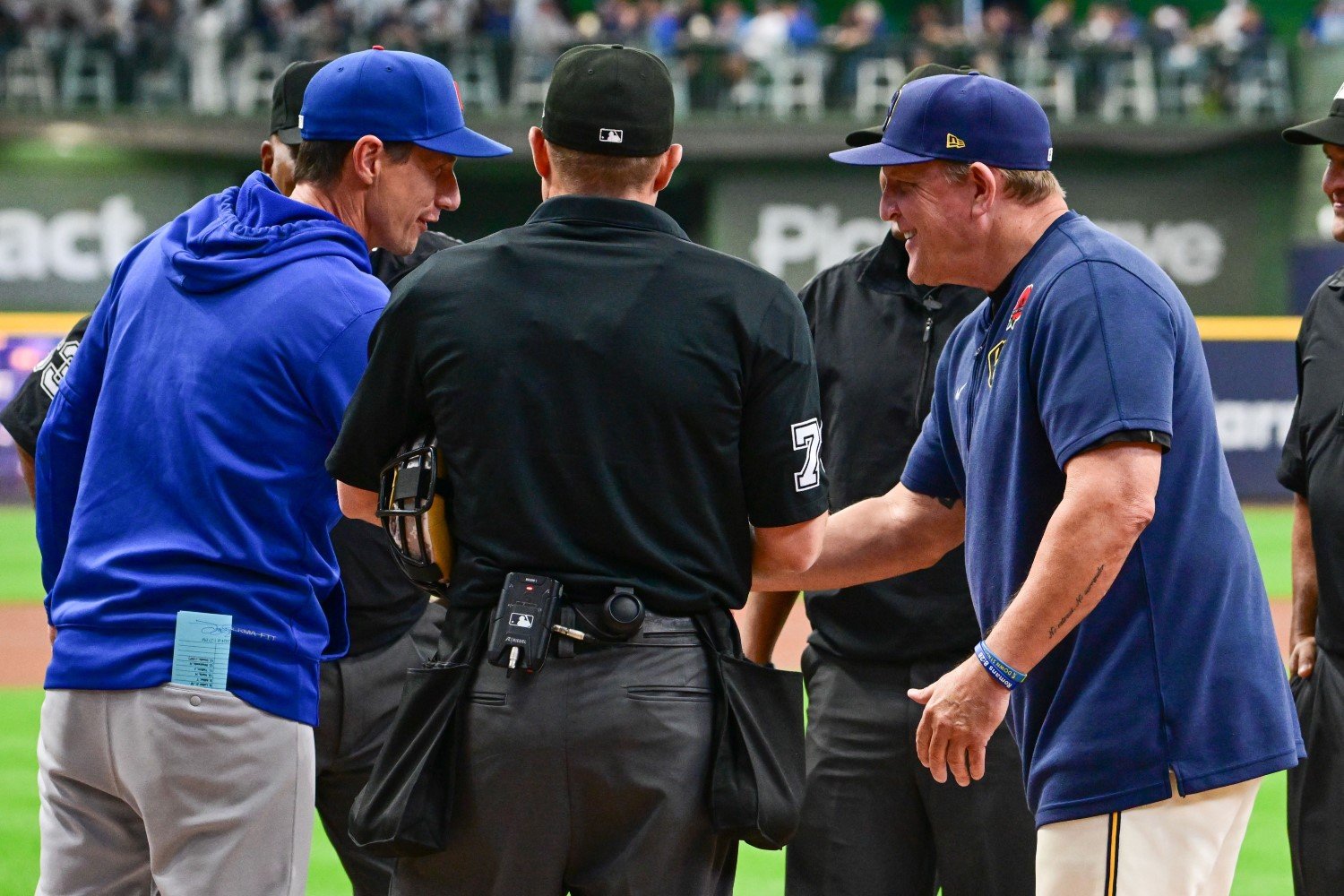 With the Chicago Cubs making their first trip of the season to Milwaukee this week to face the Brewers, there has been much discussion about Craig Counsell and his decision to leave the Brewers to manage the Cubs last offseason. In firing David Ross and making Counsell the highest-paid manager in baseball, the Cubs surprised many, and announced emphatically that they were ready to make moves. Counsell, many thought, would come in and help the Cubs address a bullpen that blew a league-high 10 saves in September and October last season, during their freefall out of a playoff position. The Brewers consistently had a good bullpen under Counsell, and they usually posted a stellar record in one-run games. The Cubs went just 21-24 in one-run contests last season, compared to the Brewers’ 29-18. Well, so far... nothing is different for the Cubs. The offense is completely broken. The bullpen, while it has been better of late, is worse than it was last year. Heading into Monday’s disaster, they had a 4.25 ERA, which was 22nd in baseball, according to FanGraphs. Last year, it was 3.85. Also, the team is 11-10 in games decided by one run. To make matters worse, the Brewers continue to roll. At 31-23, they're 3.5 games better than the Northsiders, and their bullpen ERA of 3.57 and WAR of 1.7 both place them as a top-10 relief corps in baseball. Their top two relievers by FanGraphs WAR, Trevor Megill and Bryan Hudson, were both pitchers in the Cubs’ organization as recently as three seasons ago. They’ve combined for 1.4 WAR. The Cubs’ entire bullpen is at 0.8. Unreliable relief work was a constant issue last season. Yet, the only deadline addition to help that group was José Cuas. The only fresh faces in the bullpen to open this season were Héctor Neris and Yency Almonte. It should have been obvious that the bullpen was going to be a problem this year, too. Counsell isn’t the one who has to go out there and get outs. Despite the fact that he is now in the Cubs’ dugout and not the Brewers’, the bullpen special sauce--and the better-run organization--remains in Milwaukee. This is even with a payroll that hovers around half that of the big-market Cubs. To be fair, the Cubs have had much more success developing pitchers of late. It’s just impossible not to be frustrated at seeing guys who were so recently in the Cubs’ employ excelling like this for the Brewers, even after poaching their manager. Let this all be a reminder that failure (and success, too) is organization-wide, and let it also serve as an apology to Ross. I am sure there were some things he could have done differently last season to prevent the team's September swoon, but he also could have simply been given better players. Jed Hoyer went out this offseason and brought back Cody Bellinger, replaced Marcus Stroman with Shota Imanaga, installed Michael Busch at first base, and added Almonte and Neris to the bullpen. Somehow, a lot of us believed that a new face in the dugout was going to be enough to propel this team to the playoffs. That could still happen, but thus far, the identity of this team is very much akin to that of last year's. The bats won’t always be as bad as they have been of late. I’ll even venture to say that the bullpen will get better, once the Cubs get healthier. On the flip side, though, I’d guess that Javier Assad and Imanaga will eventually start allowing some runs, so it all might cancel out anyway. To be clear, I don’t believe that much of this is Counsell’s fault, but in the same way, I didn’t believe that much of last season’s collapse was on Ross. So far, the early returns of the Counsell Era just aren’t much different from the Ross Era: a very average baseball team.
 -
Maybe the genius of the Chicago Cubs' new $40-million skipper is only beginning to reveal itself. Maybe the glorious future of the franchise is close at hand, and it's just not yet visible to us. Then again, maybe we all owe David Ross an apology. Image courtesy of © Benny Sieu-USA TODAY Sports With the Chicago Cubs making their first trip of the season to Milwaukee this week to face the Brewers, there has been much discussion about Craig Counsell and his decision to leave the Brewers to manage the Cubs last offseason. In firing David Ross and making Counsell the highest-paid manager in baseball, the Cubs surprised many, and announced emphatically that they were ready to make moves. Counsell, many thought, would come in and help the Cubs address a bullpen that blew a league-high 10 saves in September and October last season, during their freefall out of a playoff position. The Brewers consistently had a good bullpen under Counsell, and they usually posted a stellar record in one-run games. The Cubs went just 21-24 in one-run contests last season, compared to the Brewers’ 29-18. Well, so far... nothing is different for the Cubs. The offense is completely broken. The bullpen, while it has been better of late, is worse than it was last year. Heading into Monday’s disaster, they had a 4.25 ERA, which was 22nd in baseball, according to FanGraphs. Last year, it was 3.85. Also, the team is 11-10 in games decided by one run. To make matters worse, the Brewers continue to roll. At 31-23, they're 3.5 games better than the Northsiders, and their bullpen ERA of 3.57 and WAR of 1.7 both place them as a top-10 relief corps in baseball. Their top two relievers by FanGraphs WAR, Trevor Megill and Bryan Hudson, were both pitchers in the Cubs’ organization as recently as three seasons ago. They’ve combined for 1.4 WAR. The Cubs’ entire bullpen is at 0.8. Unreliable relief work was a constant issue last season. Yet, the only deadline addition to help that group was José Cuas. The only fresh faces in the bullpen to open this season were Héctor Neris and Yency Almonte. It should have been obvious that the bullpen was going to be a problem this year, too. Counsell isn’t the one who has to go out there and get outs. Despite the fact that he is now in the Cubs’ dugout and not the Brewers’, the bullpen special sauce--and the better-run organization--remains in Milwaukee. This is even with a payroll that hovers around half that of the big-market Cubs. To be fair, the Cubs have had much more success developing pitchers of late. It’s just impossible not to be frustrated at seeing guys who were so recently in the Cubs’ employ excelling like this for the Brewers, even after poaching their manager. Let this all be a reminder that failure (and success, too) is organization-wide, and let it also serve as an apology to Ross. I am sure there were some things he could have done differently last season to prevent the team's September swoon, but he also could have simply been given better players. Jed Hoyer went out this offseason and brought back Cody Bellinger, replaced Marcus Stroman with Shota Imanaga, installed Michael Busch at first base, and added Almonte and Neris to the bullpen. Somehow, a lot of us believed that a new face in the dugout was going to be enough to propel this team to the playoffs. That could still happen, but thus far, the identity of this team is very much akin to that of last year's. The bats won’t always be as bad as they have been of late. I’ll even venture to say that the bullpen will get better, once the Cubs get healthier. On the flip side, though, I’d guess that Javier Assad and Imanaga will eventually start allowing some runs, so it all might cancel out anyway. To be clear, I don’t believe that much of this is Counsell’s fault, but in the same way, I didn’t believe that much of last season’s collapse was on Ross. So far, the early returns of the Counsell Era just aren’t much different from the Ross Era: a very average baseball team. View full article
-
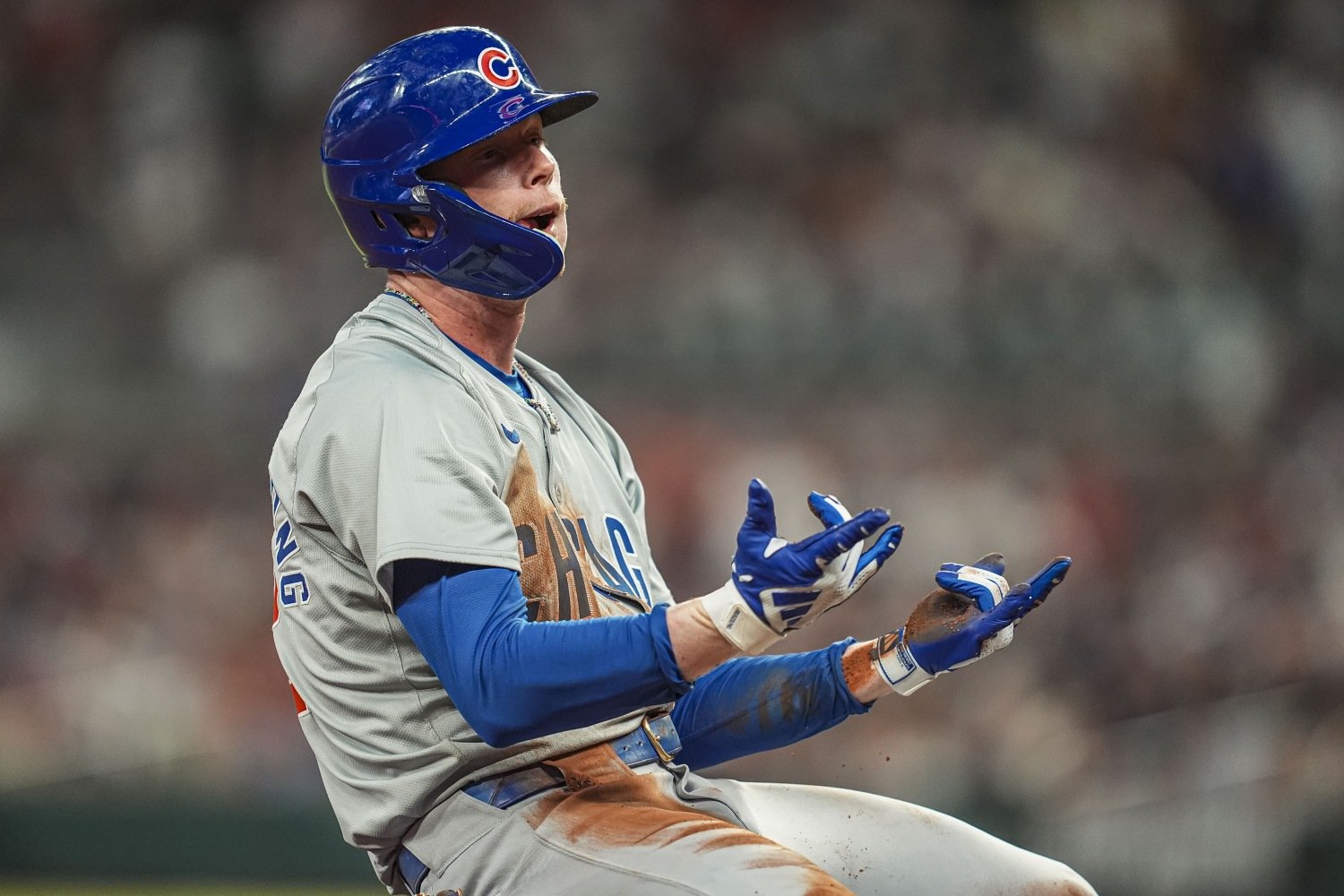 After Pete Crow-Armstrong's hitless 19-plate appearance debut for the Chicago Cubs last season, it was evident to everyone that he had some work to do. Specifically, the top prospect looked overmatched against fastballs: he made contact just 47.4 percent of the time when he swung at four-seam fastballs in the strike zone, according to FanGraphs. I don’t think I need to add context to that figure. To put it simply, it's really bad. So bad was it, in fact, that it was absolutely no secret what Crow-Armstrong was working on this offseason. “He’s been with DK, [hitting coach] Dustin Kelly, in Arizona, working on getting his swing a little bit more simple, being able to handle the high fastball a little bit more effectively and just changing some of his mechanics and approach from that standpoint,” general manager Carter Hawkins said at Cubs Convention in January. Suffice to say, expectations were low for Crow-Armstrong when he was forced onto the big-league roster after an injury to Cody Bellinger in April. He wasn’t exactly lighting Triple-A Iowa on fire to that point. But to the surprise of many, the young center fielder more than held his own both in center field and at the plate for the Cubs. Looking at some of the under-the-hood numbers, it’s hard not to be excited about just how valuable a player he can develop into. The easiest place to see if Crow-Armstrong is making adjustments is his performance against those high fastballs that Hawkins mentioned in his quote above. In 2023, 75 percent of his swings on four and two-seam fastballs in the top third of the strike zone, or above the strike zone, resulted in a miss, per Baseball Savant. In 2024, that number fell to 26.7 percent. In turn, that helped his overall performance against fastballs improve tremendously. After posting a .139 wOBA against all fastballs last year, he's put up a .287 wOBA against them in 2024. To be clear, that is still well below-average, but given Crow-Armstrong’s elite defense in center field, it’s important to remember that he doesn’t have to be Juan Soto at the plate to be a good player. With just an 89 wRC+, the youngster is currently the Cubs’ sixth-most valuable position player, according to FanGraphs WAR--higher than Ian Happ, Christopher Morel and Seiya Suzuki. According to Baseball Reference WAR, he is their second-most valuable position player, with only Mike Tauchman being more productive. Keep in mind, this is in just 23 games and 63 plate appearances for Crow-Armstrong, significantly less time than any other regular. Of course, looking at WAR in such a small sample size can be a misleading practice. If we want to look at this from a big-picture point of view, this illustrates, to me, just how high Crow-Armstrong’s floor is. He doesn’t have to be a great hitter. He doesn’t even have to be above-average. His defense in center field is so good that he can still be one of the 50 or so best players in baseball with just a mediocre bat. It might not seem an exciting outcome for such a highly-rated prospect, but I can’t stop thinking about Kevin Kiermaier when I watch Crow-Armstrong play. From Kiermaier’s rookie season in 2014 through 2017, he was the 36th-most valuable player in baseball, according to FanGraphs WAR. That was despite a 107 wRC+ and 1,734 plate appearances, both of which are lower than anyone ahead of him on that list. Extend the time frame from 2014 to the present day and Kiermaier is still 36th. That is how valuable really good defense at a premium position like center field can be, and I think if you told any Cubs fan they could lock production like that in from Crow-Armstrong for the next decade, they would probably take it. What makes it all more exciting, however, is that that feels like a worst-case scenario. If Crow-Armstrong can keep making adjustments like he has and ends up being an above-average hitter, we might be looking at one of the best players in baseball. I find myself eagerly awaiting his return to the big-league team. It’s still a small sample, but we should all be thrilled with the adjustments and improvements that we’ve already seen from the Cubs’ top prospect.
 -
He's stuck doing stunt work on helpless Triple-A pitchers right now, but very soon, the Cubs' top prospect almost has to come back and show off the value of the adjustments he's made this spring. Er, right? Image courtesy of © Dale Zanine-USA TODAY Sports After Pete Crow-Armstrong's hitless 19-plate appearance debut for the Chicago Cubs last season, it was evident to everyone that he had some work to do. Specifically, the top prospect looked overmatched against fastballs: he made contact just 47.4 percent of the time when he swung at four-seam fastballs in the strike zone, according to FanGraphs. I don’t think I need to add context to that figure. To put it simply, it's really bad. So bad was it, in fact, that it was absolutely no secret what Crow-Armstrong was working on this offseason. “He’s been with DK, [hitting coach] Dustin Kelly, in Arizona, working on getting his swing a little bit more simple, being able to handle the high fastball a little bit more effectively and just changing some of his mechanics and approach from that standpoint,” general manager Carter Hawkins said at Cubs Convention in January. Suffice to say, expectations were low for Crow-Armstrong when he was forced onto the big-league roster after an injury to Cody Bellinger in April. He wasn’t exactly lighting Triple-A Iowa on fire to that point. But to the surprise of many, the young center fielder more than held his own both in center field and at the plate for the Cubs. Looking at some of the under-the-hood numbers, it’s hard not to be excited about just how valuable a player he can develop into. The easiest place to see if Crow-Armstrong is making adjustments is his performance against those high fastballs that Hawkins mentioned in his quote above. In 2023, 75 percent of his swings on four and two-seam fastballs in the top third of the strike zone, or above the strike zone, resulted in a miss, per Baseball Savant. In 2024, that number fell to 26.7 percent. In turn, that helped his overall performance against fastballs improve tremendously. After posting a .139 wOBA against all fastballs last year, he's put up a .287 wOBA against them in 2024. To be clear, that is still well below-average, but given Crow-Armstrong’s elite defense in center field, it’s important to remember that he doesn’t have to be Juan Soto at the plate to be a good player. With just an 89 wRC+, the youngster is currently the Cubs’ sixth-most valuable position player, according to FanGraphs WAR--higher than Ian Happ, Christopher Morel and Seiya Suzuki. According to Baseball Reference WAR, he is their second-most valuable position player, with only Mike Tauchman being more productive. Keep in mind, this is in just 23 games and 63 plate appearances for Crow-Armstrong, significantly less time than any other regular. Of course, looking at WAR in such a small sample size can be a misleading practice. If we want to look at this from a big-picture point of view, this illustrates, to me, just how high Crow-Armstrong’s floor is. He doesn’t have to be a great hitter. He doesn’t even have to be above-average. His defense in center field is so good that he can still be one of the 50 or so best players in baseball with just a mediocre bat. It might not seem an exciting outcome for such a highly-rated prospect, but I can’t stop thinking about Kevin Kiermaier when I watch Crow-Armstrong play. From Kiermaier’s rookie season in 2014 through 2017, he was the 36th-most valuable player in baseball, according to FanGraphs WAR. That was despite a 107 wRC+ and 1,734 plate appearances, both of which are lower than anyone ahead of him on that list. Extend the time frame from 2014 to the present day and Kiermaier is still 36th. That is how valuable really good defense at a premium position like center field can be, and I think if you told any Cubs fan they could lock production like that in from Crow-Armstrong for the next decade, they would probably take it. What makes it all more exciting, however, is that that feels like a worst-case scenario. If Crow-Armstrong can keep making adjustments like he has and ends up being an above-average hitter, we might be looking at one of the best players in baseball. I find myself eagerly awaiting his return to the big-league team. It’s still a small sample, but we should all be thrilled with the adjustments and improvements that we’ve already seen from the Cubs’ top prospect. View full article
-
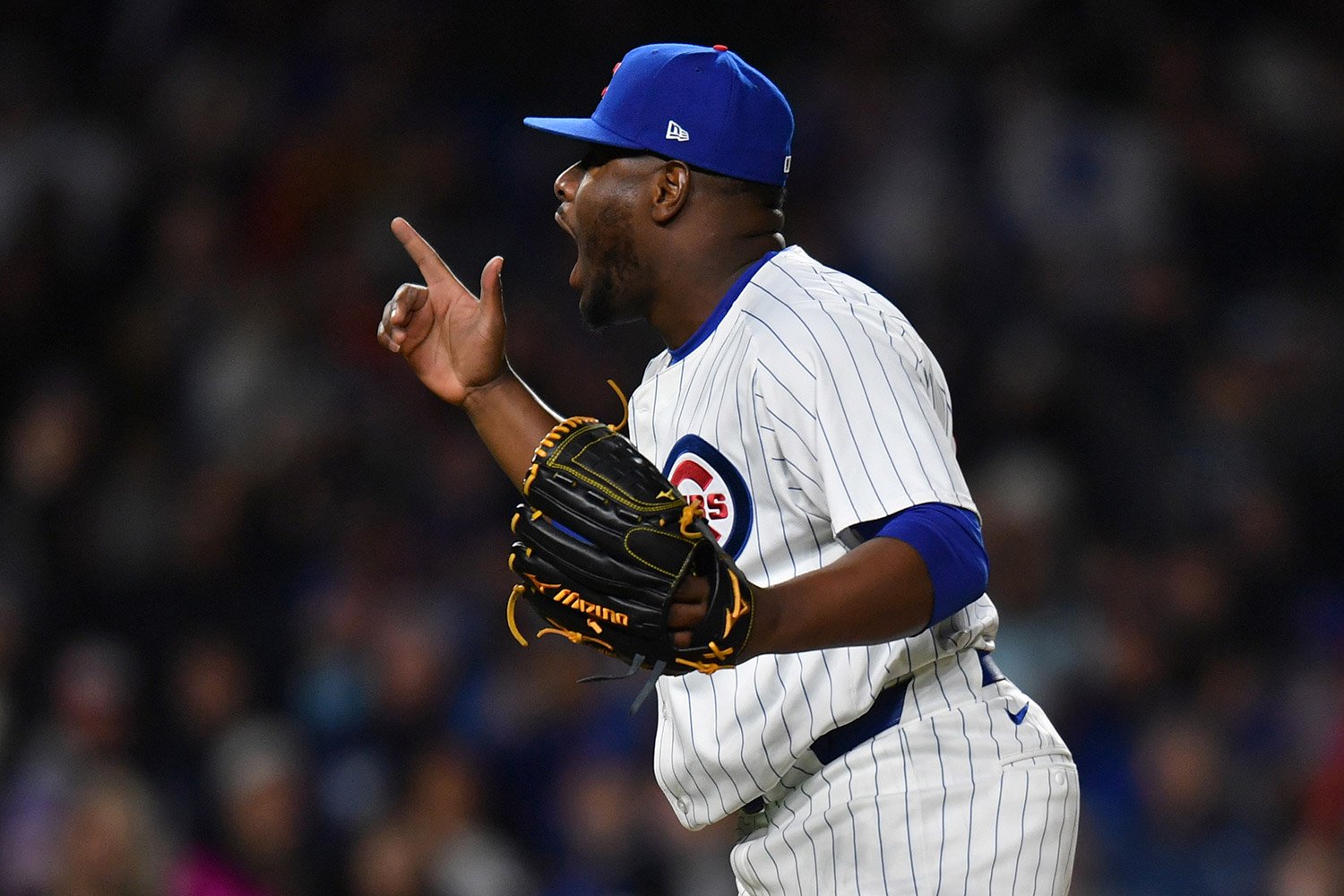 We’ve suffered through five early-season blown saves from Adbert Alzolay. He hasn’t been the closer since April 20, and that number is still tied for the MLB lead (though he did register a blown save in the eighth inning on May 3). Since that April 20 blown save, the back end of the Cubs’ bullpen has found stability from Mark Leiter Jr., who I wrote about a couple of weeks back, and Hector Neris. Wait, have they found stability in Neris? My blood pressure says no. Remember the leadoff walks to Yordan Alvarez and Kyle Tucker when he was protecting a 3-1 lead in the ninth? Or when three of the first four Brewers reached against him when he was protecting a 6-4 lead? How about the improbable replay reviewed out at home plate against the Mets? Somehow, some way, Neris always manages to wiggle out of these jams. Thus, his 3.00 ERA and six saves in seven chances say that the Cubs have found stability there. If the current year were, say, 2007, I’d throw my hands up, use some cliche about him knowing how to pitch to the score of the game, and go on my way. But this is 2024, and we have stats to quantify this now! I’d also argue that walking the leadoff man in the ninth inning of a two-run game is the opposite of pitching to the score. That is the exact situation where you should be challenging a hitter and forcing him to beat you if you fall behind in the count. Baseball Savant tracks the expected ERA for pitchers. This takes into account the strikeouts, walks, and hit by pitches a pitcher records, as well as the quality of contact on the balls that are put in play. The gap between Neris’ ERA (3.00) and xERA (6.36) is 3.36, which is the largest gap in baseball. According to xERA, Neris has been the luckiest pitcher in MLB so far this season. I’d caution anyone against looking at a pitcher’s expected ERA and immediately declaring that they’ve been lucky or unlucky. There is a lot that can go into a figure like that. If you see the largest gap in baseball, though, I’d say it warrants a look into why the expected ERA is so high. Unfortunately for the Cubs and Neris, the under-the-hood metrics on the veteran right-hander are rough. His 17.6 percent strikeout rate is a career low. His 18.9 percent walk rate is a career-high. That gives him a -1.4% K-BB%, the fifth worst among qualified relievers. Neris has succeeded to this point in his career on the back of mostly three pitches. He gets ahead of the hitter with a four-seam fastball or a sinker and puts them away with a splitter. All three of those pitches have performed considerably worse this season, but let’s focus on the splitter since that is his out-getter. According to FanGraphs, Neris has had a swinging strike percentage in the 20s on the splitter every year of his career (save for a one-inning debut in 2014). This season? It’s all the way down to 17.1 percent, a career low. He’s inducing swings on the splitter just 46.3 percent of the time, which is also a career low. The issue? He is in the zone with the splitter just 28.5 percent of the time, which is, you guessed it, also a career low. Looking at his heat map for the pitch in 2024 vs. 2023, it’s clear to see he is not executing the pitch to a location that he typically likes to: If the splitter isn’t even close to the strike zone, it won’t get chases, and it will not get swings and misses, which is partially responsible for the depressed strikeout rate. If it’s that far out of the zone, it will just get taken for a ball, which is also partially responsible for the elevated walk rate. Where does that leave the Cubs? I would personally prefer not to see Neris closing games. While it hasn’t bitten them yet, it feels like it’s dangerously close to blowing up on them. However, Craig Counsell seems to disagree and keeps calling on the veteran to close games. Maybe Counsell knows that Neris found a four-leaf clover at some point recently. As fans, all we can do is enjoy the wild ride that is Hector Neris continuing to walk the tightrope.
 -
So much has been made about the Chicago Cubs’ bullpen in the 2024 season. As a matter of fact, this is the third straight week that I have written about them. And can you blame me? The group, as a whole, is now 21st in baseball with a 4.33 ERA, according to FanGraphs. Image courtesy of © Patrick Gorski-USA TODAY Sports We’ve suffered through five early-season blown saves from Adbert Alzolay. He hasn’t been the closer since April 20, and that number is still tied for the MLB lead (though he did register a blown save in the eighth inning on May 3). Since that April 20 blown save, the back end of the Cubs’ bullpen has found stability from Mark Leiter Jr., who I wrote about a couple of weeks back, and Hector Neris. Wait, have they found stability in Neris? My blood pressure says no. Remember the leadoff walks to Yordan Alvarez and Kyle Tucker when he was protecting a 3-1 lead in the ninth? Or when three of the first four Brewers reached against him when he was protecting a 6-4 lead? How about the improbable replay reviewed out at home plate against the Mets? Somehow, some way, Neris always manages to wiggle out of these jams. Thus, his 3.00 ERA and six saves in seven chances say that the Cubs have found stability there. If the current year were, say, 2007, I’d throw my hands up, use some cliche about him knowing how to pitch to the score of the game, and go on my way. But this is 2024, and we have stats to quantify this now! I’d also argue that walking the leadoff man in the ninth inning of a two-run game is the opposite of pitching to the score. That is the exact situation where you should be challenging a hitter and forcing him to beat you if you fall behind in the count. Baseball Savant tracks the expected ERA for pitchers. This takes into account the strikeouts, walks, and hit by pitches a pitcher records, as well as the quality of contact on the balls that are put in play. The gap between Neris’ ERA (3.00) and xERA (6.36) is 3.36, which is the largest gap in baseball. According to xERA, Neris has been the luckiest pitcher in MLB so far this season. I’d caution anyone against looking at a pitcher’s expected ERA and immediately declaring that they’ve been lucky or unlucky. There is a lot that can go into a figure like that. If you see the largest gap in baseball, though, I’d say it warrants a look into why the expected ERA is so high. Unfortunately for the Cubs and Neris, the under-the-hood metrics on the veteran right-hander are rough. His 17.6 percent strikeout rate is a career low. His 18.9 percent walk rate is a career-high. That gives him a -1.4% K-BB%, the fifth worst among qualified relievers. Neris has succeeded to this point in his career on the back of mostly three pitches. He gets ahead of the hitter with a four-seam fastball or a sinker and puts them away with a splitter. All three of those pitches have performed considerably worse this season, but let’s focus on the splitter since that is his out-getter. According to FanGraphs, Neris has had a swinging strike percentage in the 20s on the splitter every year of his career (save for a one-inning debut in 2014). This season? It’s all the way down to 17.1 percent, a career low. He’s inducing swings on the splitter just 46.3 percent of the time, which is also a career low. The issue? He is in the zone with the splitter just 28.5 percent of the time, which is, you guessed it, also a career low. Looking at his heat map for the pitch in 2024 vs. 2023, it’s clear to see he is not executing the pitch to a location that he typically likes to: If the splitter isn’t even close to the strike zone, it won’t get chases, and it will not get swings and misses, which is partially responsible for the depressed strikeout rate. If it’s that far out of the zone, it will just get taken for a ball, which is also partially responsible for the elevated walk rate. Where does that leave the Cubs? I would personally prefer not to see Neris closing games. While it hasn’t bitten them yet, it feels like it’s dangerously close to blowing up on them. However, Craig Counsell seems to disagree and keeps calling on the veteran to close games. Maybe Counsell knows that Neris found a four-leaf clover at some point recently. As fans, all we can do is enjoy the wild ride that is Hector Neris continuing to walk the tightrope. View full article
-
 The rookie right-hander earned the win after entering a tied ball game in the bottom of the fifth inning. He finished with a box score line of 3 ⅔ innings pitched, no runs allowed on two hits and one walk, to go along with six strikeouts. It’s not just Ben Brown's final pitching line that was impressive, but how he got to those results. For the night, Brown threw 22 four-seam fastballs and 16 knuckle curveballs. According to Baseball Savant, he induced 13 swings on those 16 curveballs, and 11 (!) of those swings were swings and misses. That’s an 85 percent whiff rate and a 68.75 percent swinging strike rate, for those that are curious. For context, Fernando Cruz’s split-finger fastball currently has the highest whiff rate in baseball at 64.4 percent. When Brown is at his best, he uses his fastball to fill up the zone and breaks his curveball down and away from a right-handed hitter or down and into a left-handed hitter. He was in the zone with his fastball 64 percent of the time on Friday night, his second-highest figure this season, behind only a brief seven-pitch outing against the Houston Astros last month. This, in turn, led to a 73 percent chase rate on his knuckle curve, his highest figure of the season, and also contributed to the super high number of swings and misses that he generated. Even the balls that were hit in play were mostly hit softly. After immediately giving up a 100mph single to Jared Triolo upon entering the game, Brown induced a pop-out, a lineout, and two groundouts sandwiched between his six strikeouts. Sure, it was one outing, and the Pirates aren’t a great offensive team. Per Fangraphs, their 81 wRC+ is just 27th in baseball, and their 24.6 percent strikeout rate is sixth-worst. However, their 29.1 percent chase rate is fifth best in baseball, and their 11.3 percent swinging strike rate is a little below average at 19th. Despite that, Brown still managed to induce a lot of chases and many swings and misses. It’s just really hard to look at what Ben Brown did on Friday night and not daydream about what he would look like in the bullpen full-time. With Justin Steele back, and hopefully Jordan Wicks not far behind, there will hopefully be no further need for him to start games. With the two-pitch mix that he currently possesses, it feels like he is tailor-made for the bullpen. According to Fangraphs, he has a 130 Stuff+ rating on his knuckle curve, where 100 is considered average. He threw the knuckle curve roughly 33 percent of the time as a starter. So far out of the bullpen this year, his knuckle curve usage is 39.3 percent. So not only is the bullpen where the Cubs currently need him the most, but it’s also where he can be the most effective. He can throw his best pitch more often and doesn’t have to worry about hitters getting too many looks at his two-pitch mix. It will also allow the Cubs to continue to monitor his innings. Notably, he has never thrown more than 94 innings in a professional season. So, here’s to seeing more of what we saw on Friday night: Ben Brown, bullpen ace.
 -
It was only one outing, but we need to talk about Ben Brown’s performance on Friday night in the Cubs’ win over the Pittsburgh Pirates. Image courtesy of © Bob DeChiara-USA TODAY Sports The rookie right-hander earned the win after entering a tied ball game in the bottom of the fifth inning. He finished with a box score line of 3 ⅔ innings pitched, no runs allowed on two hits and one walk, to go along with six strikeouts. It’s not just Ben Brown's final pitching line that was impressive, but how he got to those results. For the night, Brown threw 22 four-seam fastballs and 16 knuckle curveballs. According to Baseball Savant, he induced 13 swings on those 16 curveballs, and 11 (!) of those swings were swings and misses. That’s an 85 percent whiff rate and a 68.75 percent swinging strike rate, for those that are curious. For context, Fernando Cruz’s split-finger fastball currently has the highest whiff rate in baseball at 64.4 percent. When Brown is at his best, he uses his fastball to fill up the zone and breaks his curveball down and away from a right-handed hitter or down and into a left-handed hitter. He was in the zone with his fastball 64 percent of the time on Friday night, his second-highest figure this season, behind only a brief seven-pitch outing against the Houston Astros last month. This, in turn, led to a 73 percent chase rate on his knuckle curve, his highest figure of the season, and also contributed to the super high number of swings and misses that he generated. Even the balls that were hit in play were mostly hit softly. After immediately giving up a 100mph single to Jared Triolo upon entering the game, Brown induced a pop-out, a lineout, and two groundouts sandwiched between his six strikeouts. Sure, it was one outing, and the Pirates aren’t a great offensive team. Per Fangraphs, their 81 wRC+ is just 27th in baseball, and their 24.6 percent strikeout rate is sixth-worst. However, their 29.1 percent chase rate is fifth best in baseball, and their 11.3 percent swinging strike rate is a little below average at 19th. Despite that, Brown still managed to induce a lot of chases and many swings and misses. It’s just really hard to look at what Ben Brown did on Friday night and not daydream about what he would look like in the bullpen full-time. With Justin Steele back, and hopefully Jordan Wicks not far behind, there will hopefully be no further need for him to start games. With the two-pitch mix that he currently possesses, it feels like he is tailor-made for the bullpen. According to Fangraphs, he has a 130 Stuff+ rating on his knuckle curve, where 100 is considered average. He threw the knuckle curve roughly 33 percent of the time as a starter. So far out of the bullpen this year, his knuckle curve usage is 39.3 percent. So not only is the bullpen where the Cubs currently need him the most, but it’s also where he can be the most effective. He can throw his best pitch more often and doesn’t have to worry about hitters getting too many looks at his two-pitch mix. It will also allow the Cubs to continue to monitor his innings. Notably, he has never thrown more than 94 innings in a professional season. So, here’s to seeing more of what we saw on Friday night: Ben Brown, bullpen ace. View full article
-
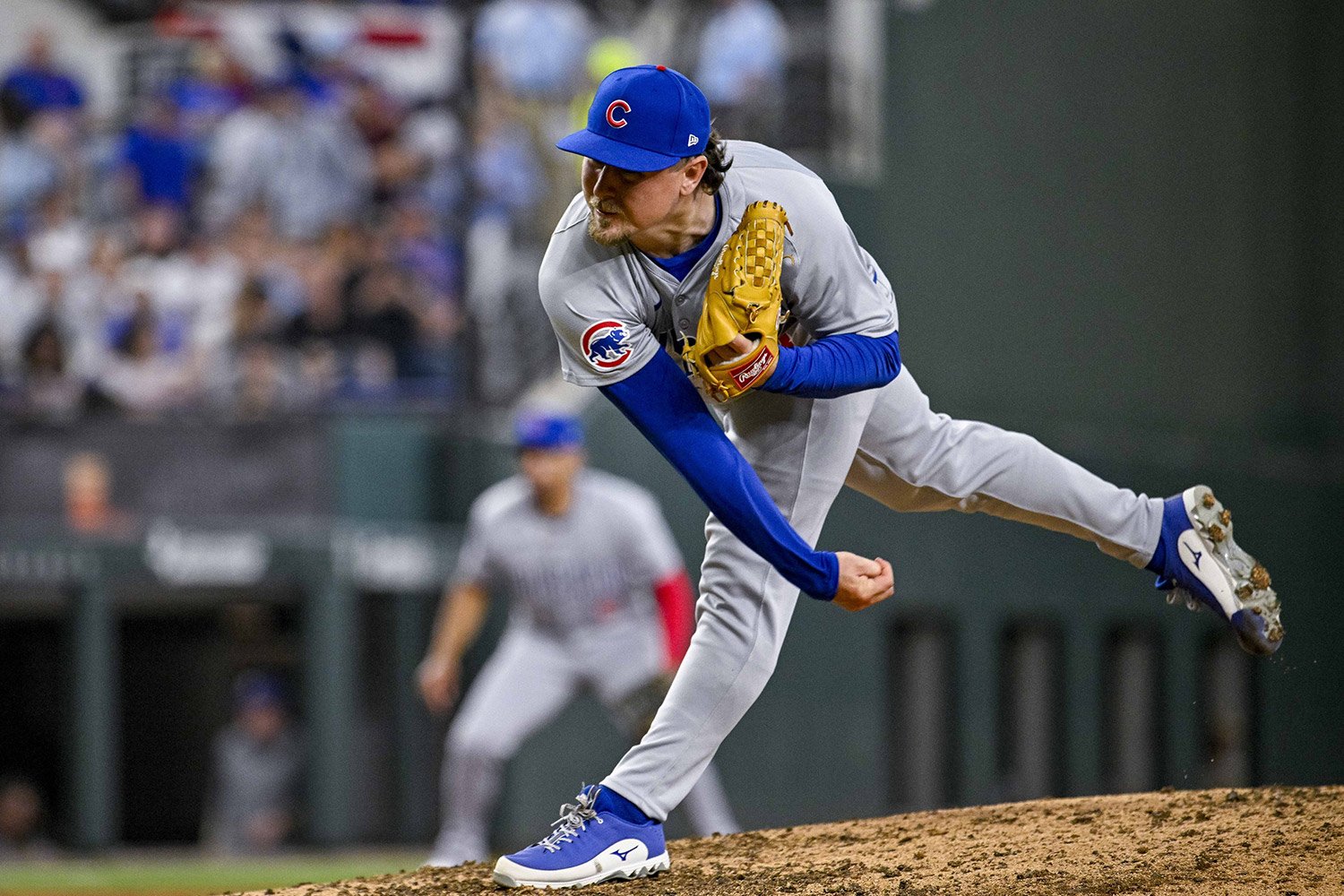 Frankly, I am starved for a normal 7-3 loss in which the Cubs went down early; I could simply chalk it up as a loss early on and then enjoy a game without a constantly elevated heart rate. Talk to a fan of any professional baseball team, and they’ll likely think their team’s bullpen is bad. It’s doubly frustrating to see your favorite team be so close to winning a game only to have it snatched away after a poor performance from one pitcher. If you’re a good enough relief pitcher, you almost exclusively pitch in high-leverage situations, and you’re going to blow some saves. Pitching is really hard! Unfortunately, we’re all inclined to recall those losses more than most. I specifically remember arguing with someone who thought that Pedro Strop was bad, and he had one of the better five-year runs for a relief pitcher in recent Cubs memory. To be clear, this is not a defense of the bullpen, which has, in fact, been bad. According to FanGraphs, they have a 4.67 ERA as a unit, which is 22nd in baseball. That is far too high for a team with playoff aspirations, and with a 4.24 FIP that ranks 22nd, there doesn’t seem to be positive regression coming. However, I don’t think this is all on them: the bullpen has had the most high-leverage plate appearances in baseball. That is on the offense. Everything will be high leverage when the offense is only putting a few runs on the board. There’s no room for error. The impending return of both Seiya Suzuki and Cody Bellinger will hopefully help that situation. Justin Steele will also return shortly, pushing Ben Brown into the bullpen. I have very high expectations for his performance there with the two-pitch mix that he possesses. So help is on the way. But with all that said, let’s look at the one guy who has been reliable every day so far this season and who I would even go so far as to say is the Cubs’ unsung hero through the first month of the season: Mark Leiter Jr. Leiter is a nice reminder that evaluating bullpen arms is really, really hard. Any team could have signed him after the Cubs designated him for assignment in January of 2023, yet nobody did, and all he has done since is lead the Cubs in FanGraphs WAR out of the bullpen. Could you imagine the panic if he did this for another team while the Cubs’ bullpen struggled this badly? Alas, he is still a Cub, and we can all breathe a sigh of relief. Leiter had a career year last season when he was used heavily against left-handed bats, where he could best deploy his splitter. Lefties posted a .254 wOBA against him in 2023, per FanGraphs. His inability to get righties out prevented him from being used more liberally. Not so far this year. After allowing a .373 wOBA against right-handed hitters last year, Leiter is allowing a .295 wOBA against them this season. His strikeout rate against them has almost doubled, from 21.8 percent last year to 39.1 percent this season. That increase has done a lot of the heavy lifting on his overall strikeout rate for the season since lefties are striking out just 18.6 percent of the time, down from 31.9 percent last year. But I am not worried about his ability to get lefties out. The splitter works, and lefties have not recorded a single hit against it this season. What is different about his approach to righties? For one, Leiter throws a sweeper now! After attacking righties last year with his full mix of a four-seam fastball, curveball, cutter, sinker, and, of course, the splitter, Leiter has cut out the four-seamer and replaced it with the sweeper that he has used exclusively against righties. Early returns aren’t, actually, super great, at least regarding how hitters are doing against the sweeper. Hitters have a .538 wOBA against it, but it’s still such a small sample size that we should give it much more time before we judge the pitch's effectiveness. His sinker has performed significantly better against righties: after allowing a .490 wOBA on sinkers to righties last year, Leiter is allowing just a .319 wOBA this year. Has the sweeper's presence allowed the sinker to play up a bit more against righties? Leiter likes to pound hitters inside with the sinker, and a pitch that will break away from a right-hander like a sweeper usually tunnels well with a pitch that will break in on his hands. Combine that with the splitter, which is just as effective against righties as lefties, and the Cubs might have a legitimate bullpen arm on their hands here to be deployed whenever they’d like. With Hector Neris walking as many guys as he is striking out and walking a very thin tightrope every time he is called upon to close a game, I have to wonder if the Cubs make Leiter their closer before it is too late. He is probably best deployed against lefties, and unfortunately, the Cubs don’t have a decent lefty in the bullpen otherwise. But with the addition of his sweeper, he has performed almost as well against righties than lefties this season, and I fear that it is inevitable for Neris to blow a frustrating save soon.
