


Matthew Trueblood
-
Posts
2,481 -
Joined
-
Last visited
-
Days Won
2
Content Type
Profiles
Joomla Posts 1
Chicago Cubs Videos
Chicago Cubs Free Agent & Trade Rumors, Notes, & Tidbits
2026 Chicago Cubs Top Prospects Ranking
News
2023 Chicago Cubs Draft Picks
Guides & Resources
2024 Chicago Cubs Draft Picks
The Chicago Cubs Players Project
2025 Chicago Cubs Draft Pick Tracker
2026 Chicago Cubs Draft Tracker: Picks & Bonuses
Blogs
Events
Forums
Store
Gallery
Everything posted by Matthew Trueblood
-
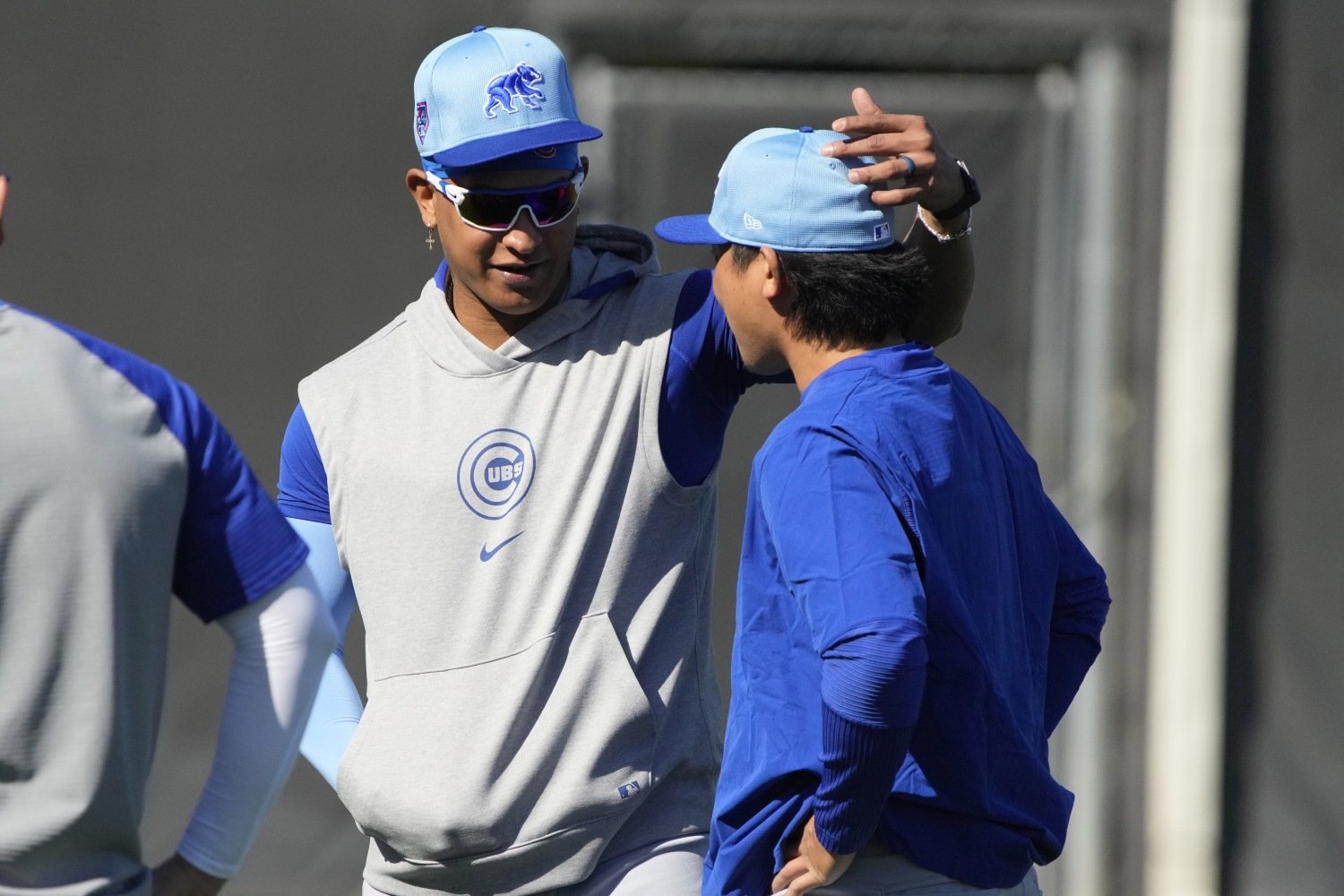 Making the full-time move to a relief role in 2022 unlocked a lot of things for Adbert Alzolay. With an extra mile per hour or two on his fastball (thanks to being able to cut loose so much more in short bursts), everything has played up, but Alzolay's breakout 2023 campaign seemed to be primarily about his slider. Opponents whiffed on 40.6 percent of their swings against the slider, leading to 38 of his 67 strikeouts. Superficially, it was a power arsenal, and a neat pairing for the right-handed Venezuela native. In reality, though, Alzolay has developed three distinct breaking balls--his bread-and-butter slider, a cutter (thrown harder, and primarily to lefties) and a sweeper (slower, and primarily to righties). Those lesser cousins to the true slider play underrated roles in helping Alzolay dominate the way he did when he was healthy in 2023. Rounding out and defining that suite of breaking balls was a pivotal development for Alzolay last year. He found a consistent shape for the slider, and swapped out what had been a mostly ineffecitve curveball for the sweeper, while gaining greater utility on the cutter by focusing its deployment on left-handed batters. Unlike many relievers (who confine themselves to one fastball look in the simple showdown of a single inning), Alzolay employs both a four-seamer and a sinker, leaning toward the former against lefties and the latter against righties. The four-seam heater has above-average run to his arm side, so it and the slider pair nicely. For that same reason, though, when Alzolay wants to get up and in on a lefty, the cutter is highly valuable. It stops those hitters from eliminating that quadrant of the zone and sitting on the slider low and in, and it makes them less aggressive in their swings against the four-seamer on the outer half. Against righties, the slider's tight but sweepy shape is a good match for the sinker, but for bigger movement and a change of speeds that can make the sinker more effective inside, the sweeper was a key addition. Alzolay's curveball was, briefly, his best breaking pitch, but see how the sweeper has greater lift? That makes it a much better partner to his sinker than the curve could ever be, and the slider is better with his four-seamer than the curve is. Five-pitch relievers are a rarity for a reason. It can be viciously difficult to sustain the feel for that deep a repertoire, given the constraints of being a reliever. A closer like Alzolay doesn't have the luxury of doing side work on a fixed schedule. They don't get the same opportunities to implement new things or make adjustments. With the four-seamer, the sinker, the slider, the sweeper, and the cutter, though, Alzolay has enough ways to find outs to succeed in all kinds of game situations and against all kinds of hitters. He might not be as consistent as a conventional two-pitch monster with triple-digit heat and a slider with an optimal spin axis, because there will be days when one of his indispensable weapons will not be at full power. He's going to be versatile and impressive, though, and his steady improvement to reach this level of excellence in relief is a credit to both the player and the Cubs' pitching infrastructure, which improves with each passing season. Research assistance provided by TruMedia.
 -
We've all talked at length about the reduced strikeout rate Cody Bellinger enjoyed in 2023. Today, though, let's focus on the one area of the zone where he saw the greatest transformation from his previous period of struggle. Image courtesy of © David Kohl-USA TODAY Sports If Cody Bellinger can hold onto the gains he made in 2023 in terms of strikeout rate, it will certainly boost his production for 2024. On its own, though, putting the ball in play isn't enough. It's perfectly possible to hit the ball meekly and poorly and come up with results not far removed from the ones you'd have had if you'd taken a more fearless swing and just missed altogether. Last year, though, Bellinger did quite a bit more than that. What got attention was that he even touched the ball in many of those situations, but what made him phenomenally valuable was the way he hit it. Specifically, Bellinger started genuinely going with that pitch, rather than being so much in a mode of trying to create power that he rolled over and hit weak ground balls to the pull side. Here's Bellinger from 2020-22, with his exit velocities and launch angles plotted and the expected wOBA (xwOBA) of those batted balls shown by the color of each data point, but only on pitches on the outer third (or beyond). Right away, let's compare that to the same chart for 2023. Again, this is only batted balls on pitches that were at least on the outer third of home plate. There are a fair number fewer lazy fly balls in the 2023 sample, but they've been replaced mostly by weakly hit balls with a launch angle just above 0. That's still not exactly a recipe for much more production. Yet, he did see such a jump, from a sub-.300 SLG for 2020-22 to a .456 mark in 2023, on those outer-third offerings. Is that evidence that he just got lucky last year, after all? Well, no. Firstly, Bellinger put many more balls in that part of the zone (and beyond it) in play than he had previously. He whiffed much, much less often when swinging at outside pitches in 2023 than from 2020-22. It was easy to ignore and hard to fully articulate when he was hitting 40 home runs per season, but Bellinger has always had great feel for contact. That's why he was an MVP, and even over the previous few years (when he was anything but an MVP), he didn't have a disastrous whiff rate on outer-third pitches. In 2023, though, he shored up what wasn't even a notable weakness, per se. Again, we're not talking about a guy solely getting lucky. He got the ball moving. If he'd hit it precisely the same way he had in previous years, though, there might not have been much value in hitting it more. Bellinger made his bones by being great at pulling fly balls, and it's very hard to pull fly balls on the outer edge of the strike zone. His revelation, of course, came when he realized he didn't need to do that. Instead, Bellinger started going the other way more. His average exit velocity on the outer third plummeted last year, but the direction of those hits earned him plenty of value. Here's where his batted balls on pitches on the outer third went from 2020-22. He stopped trying to yank those pitches last year, and the difference was night and day. Whereas the differences between the plots of his exit velo and launch angle were so subtle you had to study them to see them well, these jump off the page. The gray dots that represent launch angles around 20 degrees were the keys; Bellinger was shooting the left-center gap for soubles, even on pitches where hitting a home run or a more traditional double was out of the question. It would come as a shock if Bellinger went out and hit .307 again this year. That's not his history, and after all, he did have some good luck. However, it's equally silly to assume he'll regress into the .250 range, or worse. We know his strikeout aversion should have some staying power. He returns to Wrigley Field, where there's some incentive for him to keep aiming for left-center field, anyway. Mostly, though, this just seems like a welcome maturation at the plate. Bellinger still will (and still needs to) occasionally turn and burn on a ball in order to hit a home run, but he's improved at knowing when pitchers might work the outside edge on him; seeing the pitch out of the hand when they do; and staying on the ball, to take it to the opposite field. Though it never happened in 2023, we could see Bellinger bat second at times for the Cubs in 2024. With his low ground-ball rate and good overall skill set, he's a terrific candidate for that role. If pitchers continue not to be able to get him out away, they'll have to try him inside more often, and thence could come even more power. In any case, he's a newly versatile offensive weapon. Research assistance provided by TruMedia. View full article
-
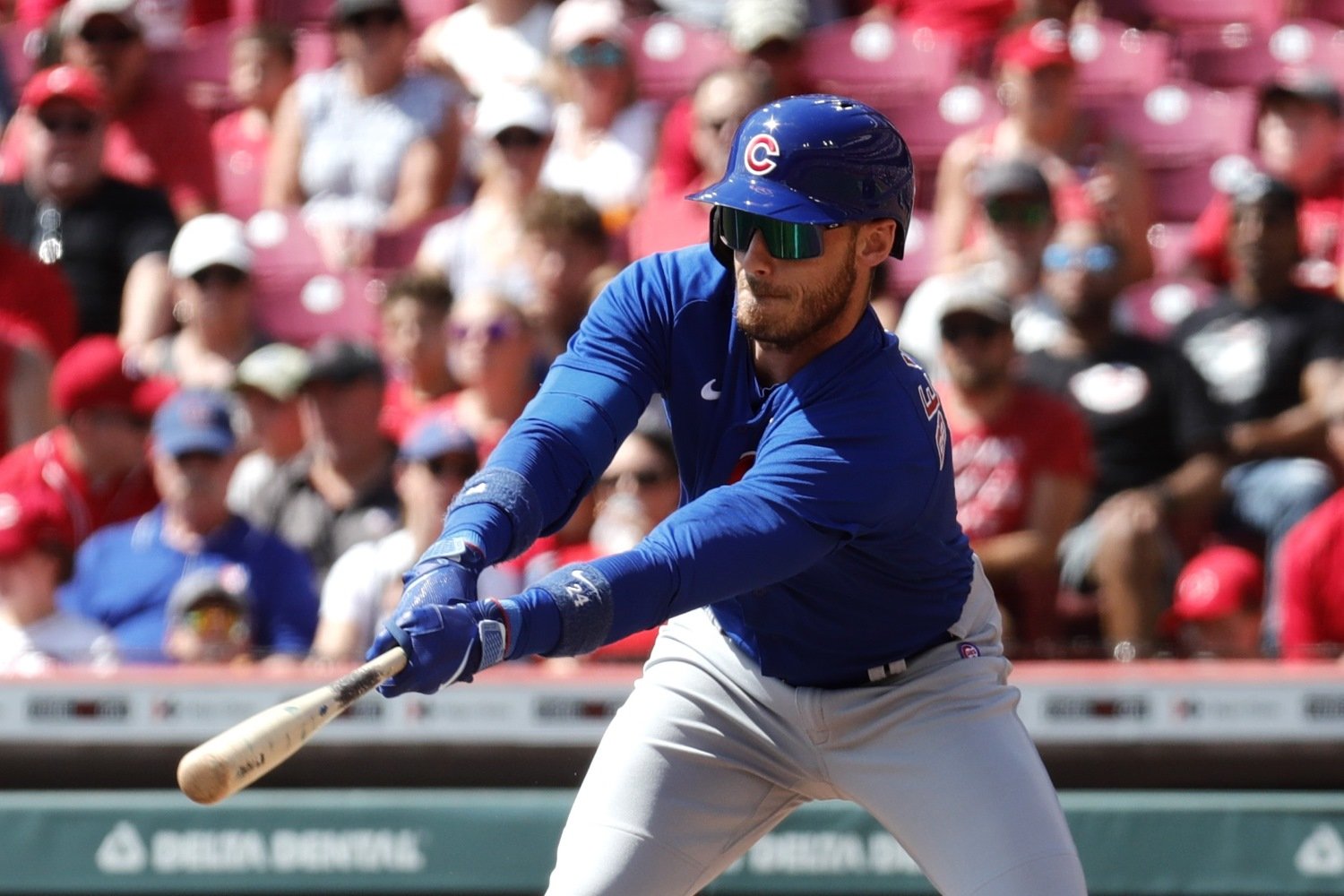 If Cody Bellinger can hold onto the gains he made in 2023 in terms of strikeout rate, it will certainly boost his production for 2024. On its own, though, putting the ball in play isn't enough. It's perfectly possible to hit the ball meekly and poorly and come up with results not far removed from the ones you'd have had if you'd taken a more fearless swing and just missed altogether. Last year, though, Bellinger did quite a bit more than that. What got attention was that he even touched the ball in many of those situations, but what made him phenomenally valuable was the way he hit it. Specifically, Bellinger started genuinely going with that pitch, rather than being so much in a mode of trying to create power that he rolled over and hit weak ground balls to the pull side. Here's Bellinger from 2020-22, with his exit velocities and launch angles plotted and the expected wOBA (xwOBA) of those batted balls shown by the color of each data point, but only on pitches on the outer third (or beyond). Right away, let's compare that to the same chart for 2023. Again, this is only batted balls on pitches that were at least on the outer third of home plate. There are a fair number fewer lazy fly balls in the 2023 sample, but they've been replaced mostly by weakly hit balls with a launch angle just above 0. That's still not exactly a recipe for much more production. Yet, he did see such a jump, from a sub-.300 SLG for 2020-22 to a .456 mark in 2023, on those outer-third offerings. Is that evidence that he just got lucky last year, after all? Well, no. Firstly, Bellinger put many more balls in that part of the zone (and beyond it) in play than he had previously. He whiffed much, much less often when swinging at outside pitches in 2023 than from 2020-22. It was easy to ignore and hard to fully articulate when he was hitting 40 home runs per season, but Bellinger has always had great feel for contact. That's why he was an MVP, and even over the previous few years (when he was anything but an MVP), he didn't have a disastrous whiff rate on outer-third pitches. In 2023, though, he shored up what wasn't even a notable weakness, per se. Again, we're not talking about a guy solely getting lucky. He got the ball moving. If he'd hit it precisely the same way he had in previous years, though, there might not have been much value in hitting it more. Bellinger made his bones by being great at pulling fly balls, and it's very hard to pull fly balls on the outer edge of the strike zone. His revelation, of course, came when he realized he didn't need to do that. Instead, Bellinger started going the other way more. His average exit velocity on the outer third plummeted last year, but the direction of those hits earned him plenty of value. Here's where his batted balls on pitches on the outer third went from 2020-22. He stopped trying to yank those pitches last year, and the difference was night and day. Whereas the differences between the plots of his exit velo and launch angle were so subtle you had to study them to see them well, these jump off the page. The gray dots that represent launch angles around 20 degrees were the keys; Bellinger was shooting the left-center gap for soubles, even on pitches where hitting a home run or a more traditional double was out of the question. It would come as a shock if Bellinger went out and hit .307 again this year. That's not his history, and after all, he did have some good luck. However, it's equally silly to assume he'll regress into the .250 range, or worse. We know his strikeout aversion should have some staying power. He returns to Wrigley Field, where there's some incentive for him to keep aiming for left-center field, anyway. Mostly, though, this just seems like a welcome maturation at the plate. Bellinger still will (and still needs to) occasionally turn and burn on a ball in order to hit a home run, but he's improved at knowing when pitchers might work the outside edge on him; seeing the pitch out of the hand when they do; and staying on the ball, to take it to the opposite field. Though it never happened in 2023, we could see Bellinger bat second at times for the Cubs in 2024. With his low ground-ball rate and good overall skill set, he's a terrific candidate for that role. If pitchers continue not to be able to get him out away, they'll have to try him inside more often, and thence could come even more power. In any case, he's a newly versatile offensive weapon. Research assistance provided by TruMedia.
 -
When trying to determine whether a team should come in for criticism or praise at the end of a season or an offseason, it's important to have one or more objective standards by which to measure. By mine, the Cubs had a sufficiently strong winter. Image courtesy of © Mark J. Rebilas-USA TODAY Sports Two winters ago, Jed Hoyer and his staff brought in Marcus Stroman and Seiya Suzuki on multiyear deals. Last winter, they signed Dansby Swanson and Jameson Taillon. In each offseason, they also made smaller, shorter-term, supplemental moves, like signing Mychal Givens and David Robertson before 2022 and bringing in Cody Bellinger and Michael Fulmer (while also re-signing Drew Smyly) before 2023. While those moves were (obviously) insufficient to turn the Cubs into a playoff team in either campaign, I counted both as successful offseasons. As much as every fan base wants their teams to acquire one or three of the top five free agents in any given winter, the reality is that that's possible only in one of every two or three winters, and then only for certain teams. To be sure, the Cubs are among the teams for whom that should sometimes be possible, and we've discussed the possibility that Jed Hoyer's aversion to long-term deals with superstars will be a lasting problem at some length here. However, as I've tried to shape a consistent standard by which to distinguish successful winters from failures, I've circled back repeatedly to a very simple one: Every winter, a team should be acquiring more than one player they project to be above-average and who are under team control for multiple seasons. They should also be acquiring more than one additional player who makes them better for the coming season, without regard to whether they're a star or whether they'll be around beyond that campaign. By that reckoning, this, too, has been a successful winter. Shota Imanaga and Michael Busch were each solid, valuable additions at non-premium prices, and the Cubs can keep them around for up to five and six years, respectively. Bellinger, Héctor Neris, and Yency Almonte are each likely to be shorter-term members of the team, but they all make the Cubs more robust for 2024, and all three could end up being around for 2025, as well. That, obviously, does not mean that the Cubs shouldn't go make another late addition to their roster. They could use a better left-handed reliever, and they could absolutely use Jordan Montgomery or Blake Snell, as I wrote yesterday. Understanding the team's desire to maintain a balance between its present and future, though, I think the above markers are the right ones by which to judge every offseason for them, and since they checked both boxes this time around, they've had a successful winter. Very often, especially in the modern sports media culture, we allow the perfect to become the enemy of the good. That the Cubs didn't sign Shohei Ohtani or Yoshinobu Yamamoto this winter is undeniably disappointing, because those are generational talents who would have transformed the franchise in a way that none of the players they've brought in (or brought back) do. It's also mildly frustrating that the team didn't cash in some of its trade capital for Juan Soto or Pete Alonso. Notice, though, that each of them would have fallen into the second, lesser bucket of winter acquisition anyway, and recall that the team did use a significant amount of prospect capital to land Busch, and those misses feel much more palatable. There were enough open avenues to asserting themselves as NL Central favorites this winter that the Cubs do have to answer for the fact that they haven't done so. On balance, though, they've checked the right boxes for a third straight offseason. Do that two more times in the winters ahead, and they'll begin to see some of the longer-lasting, sustainable benefits that come from the approach, the way the Yankees, Dodgers, and Cardinals have done over the years. As we turn our eyes away from the winter and toward Opening Day, how would you grade the Cubs' offseason? Why? Comment below. View full article
- 22 replies
-
- 1
-

-
- michael busch
- cody bellinger
- (and 2 more)
-
The Chicago Cubs Had a Successful Offseason, Though Not a Glitzy One
Matthew Trueblood posted an article in Cubs
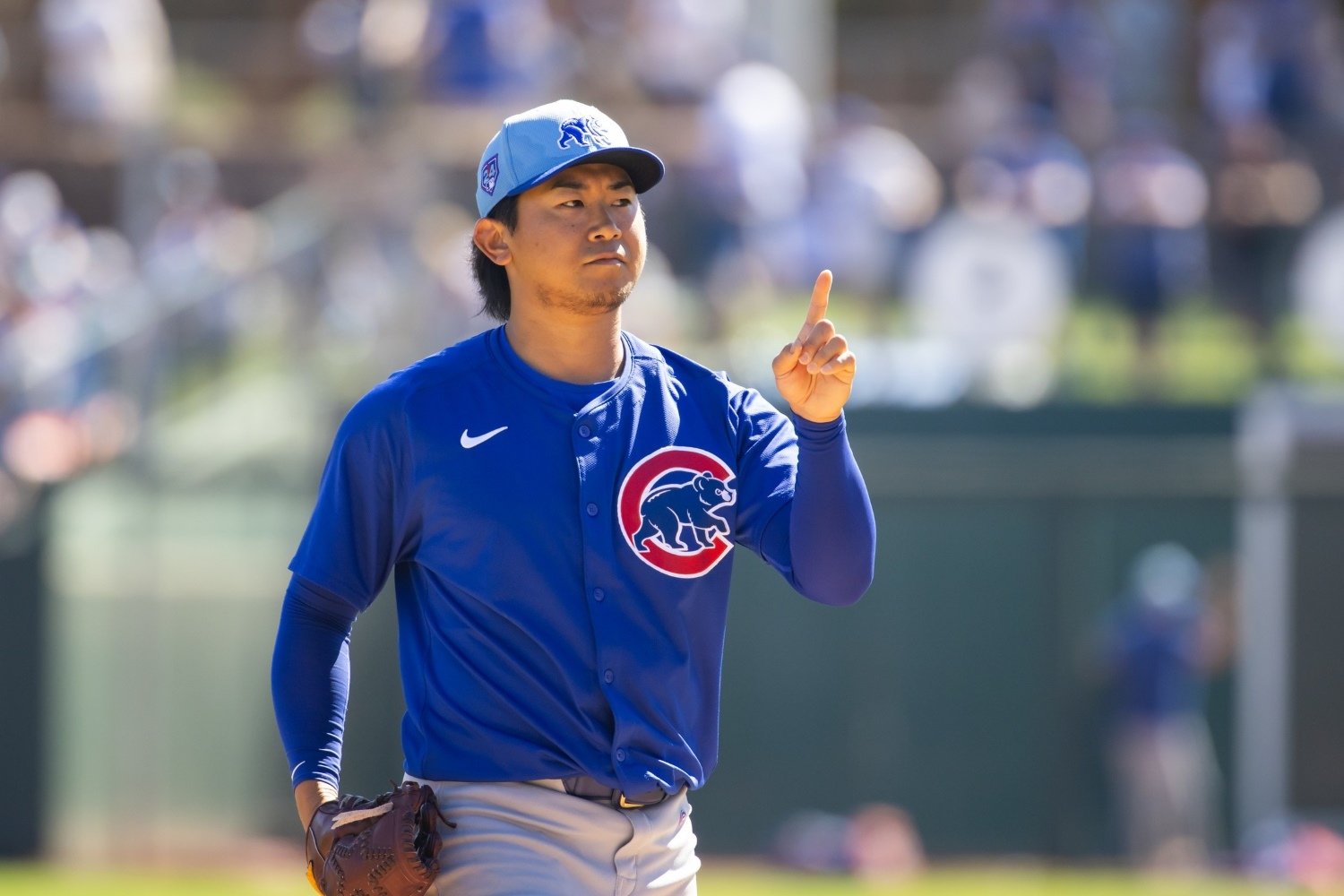 Two winters ago, Jed Hoyer and his staff brought in Marcus Stroman and Seiya Suzuki on multiyear deals. Last winter, they signed Dansby Swanson and Jameson Taillon. In each offseason, they also made smaller, shorter-term, supplemental moves, like signing Mychal Givens and David Robertson before 2022 and bringing in Cody Bellinger and Michael Fulmer (while also re-signing Drew Smyly) before 2023. While those moves were (obviously) insufficient to turn the Cubs into a playoff team in either campaign, I counted both as successful offseasons. As much as every fan base wants their teams to acquire one or three of the top five free agents in any given winter, the reality is that that's possible only in one of every two or three winters, and then only for certain teams. To be sure, the Cubs are among the teams for whom that should sometimes be possible, and we've discussed the possibility that Jed Hoyer's aversion to long-term deals with superstars will be a lasting problem at some length here. However, as I've tried to shape a consistent standard by which to distinguish successful winters from failures, I've circled back repeatedly to a very simple one: Every winter, a team should be acquiring more than one player they project to be above-average and who are under team control for multiple seasons. They should also be acquiring more than one additional player who makes them better for the coming season, without regard to whether they're a star or whether they'll be around beyond that campaign. By that reckoning, this, too, has been a successful winter. Shota Imanaga and Michael Busch were each solid, valuable additions at non-premium prices, and the Cubs can keep them around for up to five and six years, respectively. Bellinger, Héctor Neris, and Yency Almonte are each likely to be shorter-term members of the team, but they all make the Cubs more robust for 2024, and all three could end up being around for 2025, as well. That, obviously, does not mean that the Cubs shouldn't go make another late addition to their roster. They could use a better left-handed reliever, and they could absolutely use Jordan Montgomery or Blake Snell, as I wrote yesterday. Understanding the team's desire to maintain a balance between its present and future, though, I think the above markers are the right ones by which to judge every offseason for them, and since they checked both boxes this time around, they've had a successful winter. Very often, especially in the modern sports media culture, we allow the perfect to become the enemy of the good. That the Cubs didn't sign Shohei Ohtani or Yoshinobu Yamamoto this winter is undeniably disappointing, because those are generational talents who would have transformed the franchise in a way that none of the players they've brought in (or brought back) do. It's also mildly frustrating that the team didn't cash in some of its trade capital for Juan Soto or Pete Alonso. Notice, though, that each of them would have fallen into the second, lesser bucket of winter acquisition anyway, and recall that the team did use a significant amount of prospect capital to land Busch, and those misses feel much more palatable. There were enough open avenues to asserting themselves as NL Central favorites this winter that the Cubs do have to answer for the fact that they haven't done so. On balance, though, they've checked the right boxes for a third straight offseason. Do that two more times in the winters ahead, and they'll begin to see some of the longer-lasting, sustainable benefits that come from the approach, the way the Yankees, Dodgers, and Cardinals have done over the years. As we turn our eyes away from the winter and toward Opening Day, how would you grade the Cubs' offseason? Why? Comment below.
- 22 comments
-
- 1
-

-
- michael busch
- cody bellinger
- (and 2 more)
-
There is a cycle on which MLB free agency operates, whereby (about halfway between any two CBA negotiations, or about twice a decade) the league engages in de facto, nearly undetectable, unpunishable collusion, as a means of putting the squeeze to the players union. It's happening right now. Image courtesy of © Orlando Ramirez-USA TODAY Sports This was all just this side of cute, until about the beginning of February. It still hasn't definitively worked, because Scott Boras has convinced the first three of his high-profile clients to sign this winter to do so on deals that give them opt-outs after every season. Still, we're at the point where it's inarguably troubling to see the same old playbook being run. The owners are trying to corner the players union, and soften the ground for themselves ahead of the next CBA negotiation fight. As a result, they've dug in their heels, and (as it very often is) it's two starting pitchers who are left somewhat out in the cold. Jordan Montgomery is far less likely to be amenable to signing a short-term, opt-out-laden contract than were Cody Bellinger, Matt Chapman, or Rhys Hoskins. Unlike Bellinger and Chapman, he was traded this season and wasn't offered a qualifying offer, and that means he could have one attached to him next winter if he wanders back out into the marketplace. Unlike Chapman and Hoskins, he's coming off one of the best seasons of his career, and can't feel especially confident of being able to go back out there next winter and make any more than this. Some of the same goes for Snell. He does have that qualifying offer hanging around his neck this winter, but he's also coming off his second Cy Young Award in the last six seasons. It would be very difficult for him to raise his stock much from here, and easy to have it sag significantly. For their part, teams aren't likely to like the idea of signing Snell or Montgomery to a Bellinger- or Chapman-type deal, anyway, because those contracts operate very differently for pitchers than for hitters. Carlos Rodón is the illustrative case. He signed a two-year deal worth $44 million with the Giants prior to 2022, but it included the right to opt out of the second, slightly richer season of the pact. At the trade deadline that year, the deal became a poisoned pill. Teams were too afraid that Rodón would get hurt and forego his opt-out, becoming $22.5 million in dead money on their books the following winter, to trade for him, and (since he didn't ultimately get hurt) the Giants lost him via free agency after that season. Snell and Montgomery are both healthier and more established than Rodón was when he signed that contract with San Francisco, too, so they'd have to get something closer to $60 million over two years (or, like Bellinger, $80 million over three) to sign on to such a deal. That's going to be a tough sell on both sides, for all the reasons enumerated above. It's fairly blatant market manipulation. It's in bad faith. In a slightly more just society, the union would be able to make a case to the National Labor Relations Board and get the owners sanctioned for this repeated behavior, which you can also spot in the offseasons entering 2013, 2014, and 2019, always with a dual goal: Put pressure on agents and union leadership by frustrating players and withholding a greater share of their revenues, to establish leverage for the coming negotiations; and Create a false anchor that can then be phonily pulled up in the final offseason before the actual negotiations. This move--giving richer deals right in the shadow (on either side, chronologically) of CBA deals, fighting tooth-and-nail for the last dollar in the years furthest from them--is designed to put the players on the wrong side of public opinion, once conflict (a conflict the owners are inviting, even fabricating) does burble up. Alas, we don't live in that kind of world. So, let's briefly consider a more creative structure of contract for Snell and Montgomery, and ask ourselves whether the Cubs (hardly overcome with great options at the back end of the rotation) are in position to offer them. Instead of a straight opt-out deal, and instead of a traditional long-term deal (which both pitchers deserve, but which sure doesn't seem to be coming at this point), the best solution available to all involved is probably some version of what Boras once dubbed the "swell-opt". In short, these would be deals similar to Bellinger's and Chapman's, but the salaries would be frontloaded, and the team would have the right to void the hurler's opt-out clause by exercising a large, multi-year option instead. To take that from abstract to concrete, let's talk about Snell. He's the one who would give the Cubs rotation a truly different and level-changing new dynamic, but he'd cost a pretty penny. The Cubs could, plausibly, offer a three-year, $67-million deal to the two-time Cy Young winner, but $31 million of that would be paid in 2024. Then, Snell could choose to stick around for $20 million in 2025, or opt out, with the Cubs getting a chance to exercise a five-year, $150-million deal in order to prevent that. After 2025, Snell would also have the right to opt out, or else claim $16 million for 2026. The Cubs could void his opt-out by exercising a four-year, $100-million option for 2026-29. The structure would be different for Montgomery, who is older and doesn't have the QO attached to him this winter, but that's the general idea. It's a deal that includes some substantial risk on both sides, but there's also tremendous upside for both parties. At this point in the spring, it's something Boras should be open to. The Cubs should be willing to simply pay either Montgomery or Snell upward of $150 million for five or six years, but since they clearly aren't (and have the backing of a collusive market in that respect), this is the kind of happy medium place where they could meet Boras. According to Baseball Prospectus, the Cubs' offense is just fine. The PECOTA system projects them for a 102 DRC+, meaning the offense is above-average, as-is. They fall short because they're also projected for a 102 DRA-, meaning the pitching staff is almost exactly as below-average as the hitters are above that line. Montgomery and Snell are the remaining ways they could address that before the season begins. This kind of deal is how that would, in all likelihood, need to look. What do you think of this contract structure as a compromise between the Cubs and the top remaining free agent arms? Do you view the owners' behavior as legitimate? Sound off below. View full article
-
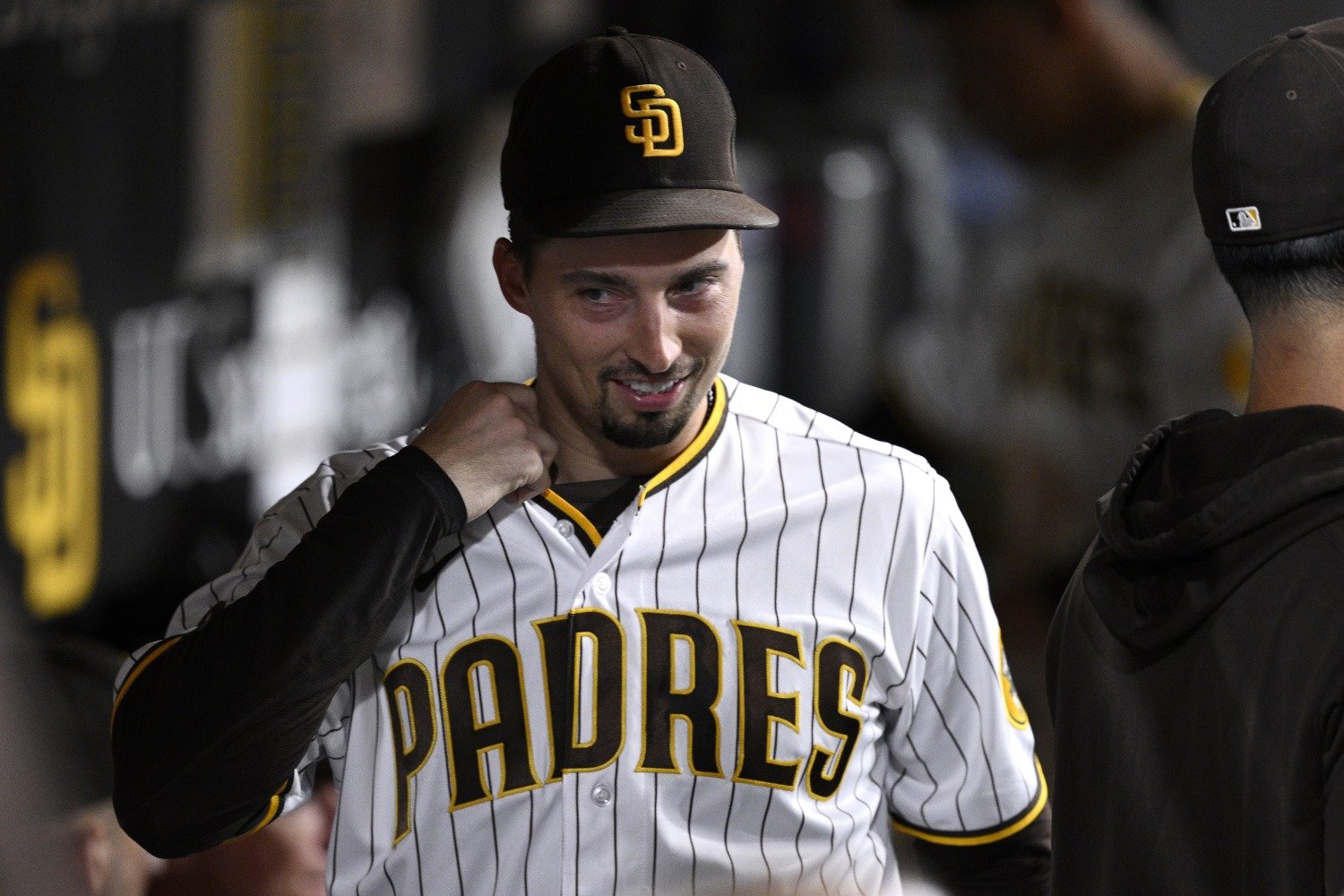 This was all just this side of cute, until about the beginning of February. It still hasn't definitively worked, because Scott Boras has convinced the first three of his high-profile clients to sign this winter to do so on deals that give them opt-outs after every season. Still, we're at the point where it's inarguably troubling to see the same old playbook being run. The owners are trying to corner the players union, and soften the ground for themselves ahead of the next CBA negotiation fight. As a result, they've dug in their heels, and (as it very often is) it's two starting pitchers who are left somewhat out in the cold. Jordan Montgomery is far less likely to be amenable to signing a short-term, opt-out-laden contract than were Cody Bellinger, Matt Chapman, or Rhys Hoskins. Unlike Bellinger and Chapman, he was traded this season and wasn't offered a qualifying offer, and that means he could have one attached to him next winter if he wanders back out into the marketplace. Unlike Chapman and Hoskins, he's coming off one of the best seasons of his career, and can't feel especially confident of being able to go back out there next winter and make any more than this. Some of the same goes for Snell. He does have that qualifying offer hanging around his neck this winter, but he's also coming off his second Cy Young Award in the last six seasons. It would be very difficult for him to raise his stock much from here, and easy to have it sag significantly. For their part, teams aren't likely to like the idea of signing Snell or Montgomery to a Bellinger- or Chapman-type deal, anyway, because those contracts operate very differently for pitchers than for hitters. Carlos Rodón is the illustrative case. He signed a two-year deal worth $44 million with the Giants prior to 2022, but it included the right to opt out of the second, slightly richer season of the pact. At the trade deadline that year, the deal became a poisoned pill. Teams were too afraid that Rodón would get hurt and forego his opt-out, becoming $22.5 million in dead money on their books the following winter, to trade for him, and (since he didn't ultimately get hurt) the Giants lost him via free agency after that season. Snell and Montgomery are both healthier and more established than Rodón was when he signed that contract with San Francisco, too, so they'd have to get something closer to $60 million over two years (or, like Bellinger, $80 million over three) to sign on to such a deal. That's going to be a tough sell on both sides, for all the reasons enumerated above. It's fairly blatant market manipulation. It's in bad faith. In a slightly more just society, the union would be able to make a case to the National Labor Relations Board and get the owners sanctioned for this repeated behavior, which you can also spot in the offseasons entering 2013, 2014, and 2019, always with a dual goal: Put pressure on agents and union leadership by frustrating players and withholding a greater share of their revenues, to establish leverage for the coming negotiations; and Create a false anchor that can then be phonily pulled up in the final offseason before the actual negotiations. This move--giving richer deals right in the shadow (on either side, chronologically) of CBA deals, fighting tooth-and-nail for the last dollar in the years furthest from them--is designed to put the players on the wrong side of public opinion, once conflict (a conflict the owners are inviting, even fabricating) does burble up. Alas, we don't live in that kind of world. So, let's briefly consider a more creative structure of contract for Snell and Montgomery, and ask ourselves whether the Cubs (hardly overcome with great options at the back end of the rotation) are in position to offer them. Instead of a straight opt-out deal, and instead of a traditional long-term deal (which both pitchers deserve, but which sure doesn't seem to be coming at this point), the best solution available to all involved is probably some version of what Boras once dubbed the "swell-opt". In short, these would be deals similar to Bellinger's and Chapman's, but the salaries would be frontloaded, and the team would have the right to void the hurler's opt-out clause by exercising a large, multi-year option instead. To take that from abstract to concrete, let's talk about Snell. He's the one who would give the Cubs rotation a truly different and level-changing new dynamic, but he'd cost a pretty penny. The Cubs could, plausibly, offer a three-year, $67-million deal to the two-time Cy Young winner, but $31 million of that would be paid in 2024. Then, Snell could choose to stick around for $20 million in 2025, or opt out, with the Cubs getting a chance to exercise a five-year, $150-million deal in order to prevent that. After 2025, Snell would also have the right to opt out, or else claim $16 million for 2026. The Cubs could void his opt-out by exercising a four-year, $100-million option for 2026-29. The structure would be different for Montgomery, who is older and doesn't have the QO attached to him this winter, but that's the general idea. It's a deal that includes some substantial risk on both sides, but there's also tremendous upside for both parties. At this point in the spring, it's something Boras should be open to. The Cubs should be willing to simply pay either Montgomery or Snell upward of $150 million for five or six years, but since they clearly aren't (and have the backing of a collusive market in that respect), this is the kind of happy medium place where they could meet Boras. According to Baseball Prospectus, the Cubs' offense is just fine. The PECOTA system projects them for a 102 DRC+, meaning the offense is above-average, as-is. They fall short because they're also projected for a 102 DRA-, meaning the pitching staff is almost exactly as below-average as the hitters are above that line. Montgomery and Snell are the remaining ways they could address that before the season begins. This kind of deal is how that would, in all likelihood, need to look. What do you think of this contract structure as a compromise between the Cubs and the top remaining free agent arms? Do you view the owners' behavior as legitimate? Sound off below.
 -
Having started the Cactus League opener last week, the Chicago Cubs' 2021 first-round pick is clearly on the inside track toward their fifth starter job for 2024. On Wednesday, he took another step toward winning the job, but some yellow flags remain. Image courtesy of © Rick Scuteri-USA TODAY Sports In his exciting and eventual debut last September, Jordan Wicks racked up strikeouts by leaning on the pitch that first made him famous: his changeup. For much of the rest of the season, though, he didn't miss many bats, with that offering or any other. The most memorable outing of his season might have been the last game in which the Cubs seemed to have a clear and unbreakable hold on a playoff berth, on Sept. 6 against the Giants. That day, he faced 27 batters and got 20 outs, giving up just one run, but he only struck out one batter, and he only got three swings and misses in 97 pitches thrown. His three-inning appearance against the Brewers Wednesday in Maryvale, on the northwest side of Phoenix, rhymed with that Giants game. Wicks only allowed two hits, and he held the Brewers scoreless. He even got two strikeouts. On the other hand, he allowed some hard contact, and the ball was always moving. The Brewers would have scored, had Alexander Canario not come up exceptionally quickly and made an accurate, strong throw to nail Garrett Mitchell at the plate on a would-be RBI single in the first frame. A Matt Shaw error didn't help matters. That was similar to Wicks's first game of the spring, when he himself failed to convert an easy out on a dribbler back to the mound. Each play was a byproduct of the fact that Wicks isn't yet keeping the ball out of play the way high-end starters do, though. It was the same way late in his start against San Francisco nearly six months ago, when a grounder back to him started the rally with which the Giants finally pushed him out of the game. When he works inside to set up a right-handed hitter for the changeup away, it really does devastate them. Wicks did just that to both Christian Arroyo and Vinny Capra in the second frame. As much as anything, he might need to adjust the way he thinks about modulating his pitch mix throughout a start, and begin looking for more of those whiffs right away. Establishing the fastball and filling up the zone early sounds good and like it would allow a hurler to have more success late in a game, but that matters relatively little if he gets hit too hard before turning toward his swing-and-miss stuff. These same Brewers taught Wicks that lesson (or tried to) the hard way in his final start of 2023, launching two homers and scoring six runs in a game that saw the southpaw record just five outs. Wicks did a superb job of coming up to the big leagues and pounding the strike zone. That's no small feat, for a southpaw starter without above-average velocity. He's done the same this spring. When we think of pitchers with good enough control to prevent walks, we tend to assume it comes with a different kind of control--control over the whole game, in the sense that things always feel relatively calm. That, alas, is not yet the case for Wicks. I wrote about how he can change that, earlier this month. Tweaks to his pitch mix and sequencing could help him get more whiffs, because that is possible with his stuff--especially the changeup. He already does a good job of remaining poised and bearing down when traffic starts to pile up on the bases, but there are ways for him to turn another corner. In the early returns from spring training, though, it looks like he'll continue to deal with a certain level of chaos in the majority of starts this year. Quelling that chaos through excellent competitiveness and pitchability is admirable, but to consistently win games in the big leagues, Wicks will have to start nipping that chaos in the bud. View full article
-
For Jordan Wicks, Managing Chaos is Good. Avoiding It Would Be Better.
Matthew Trueblood posted an article in Cubs
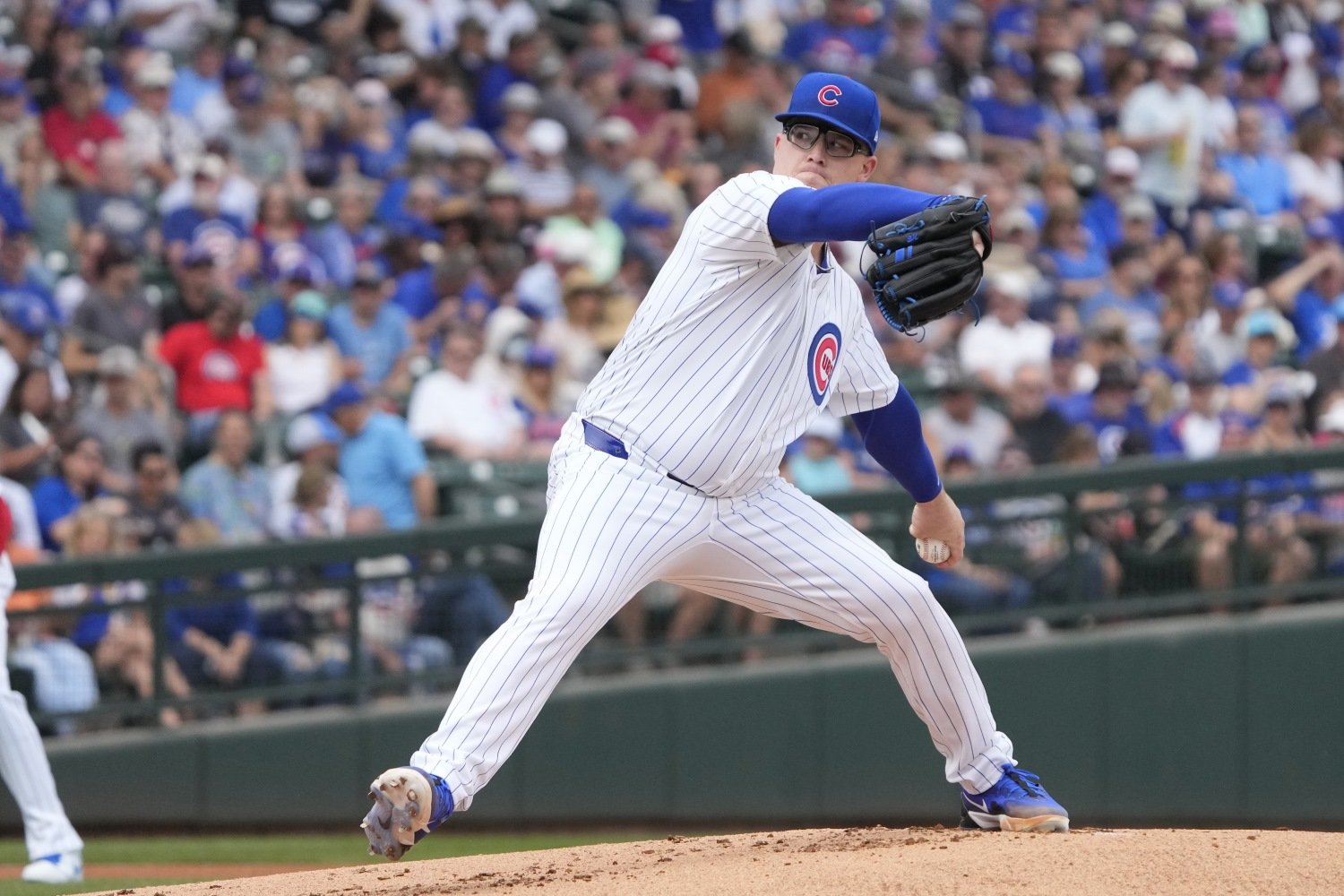 In his exciting and eventual debut last September, Jordan Wicks racked up strikeouts by leaning on the pitch that first made him famous: his changeup. For much of the rest of the season, though, he didn't miss many bats, with that offering or any other. The most memorable outing of his season might have been the last game in which the Cubs seemed to have a clear and unbreakable hold on a playoff berth, on Sept. 6 against the Giants. That day, he faced 27 batters and got 20 outs, giving up just one run, but he only struck out one batter, and he only got three swings and misses in 97 pitches thrown. His three-inning appearance against the Brewers Wednesday in Maryvale, on the northwest side of Phoenix, rhymed with that Giants game. Wicks only allowed two hits, and he held the Brewers scoreless. He even got two strikeouts. On the other hand, he allowed some hard contact, and the ball was always moving. The Brewers would have scored, had Alexander Canario not come up exceptionally quickly and made an accurate, strong throw to nail Garrett Mitchell at the plate on a would-be RBI single in the first frame. A Matt Shaw error didn't help matters. That was similar to Wicks's first game of the spring, when he himself failed to convert an easy out on a dribbler back to the mound. Each play was a byproduct of the fact that Wicks isn't yet keeping the ball out of play the way high-end starters do, though. It was the same way late in his start against San Francisco nearly six months ago, when a grounder back to him started the rally with which the Giants finally pushed him out of the game. When he works inside to set up a right-handed hitter for the changeup away, it really does devastate them. Wicks did just that to both Christian Arroyo and Vinny Capra in the second frame. As much as anything, he might need to adjust the way he thinks about modulating his pitch mix throughout a start, and begin looking for more of those whiffs right away. Establishing the fastball and filling up the zone early sounds good and like it would allow a hurler to have more success late in a game, but that matters relatively little if he gets hit too hard before turning toward his swing-and-miss stuff. These same Brewers taught Wicks that lesson (or tried to) the hard way in his final start of 2023, launching two homers and scoring six runs in a game that saw the southpaw record just five outs. Wicks did a superb job of coming up to the big leagues and pounding the strike zone. That's no small feat, for a southpaw starter without above-average velocity. He's done the same this spring. When we think of pitchers with good enough control to prevent walks, we tend to assume it comes with a different kind of control--control over the whole game, in the sense that things always feel relatively calm. That, alas, is not yet the case for Wicks. I wrote about how he can change that, earlier this month. Tweaks to his pitch mix and sequencing could help him get more whiffs, because that is possible with his stuff--especially the changeup. He already does a good job of remaining poised and bearing down when traffic starts to pile up on the bases, but there are ways for him to turn another corner. In the early returns from spring training, though, it looks like he'll continue to deal with a certain level of chaos in the majority of starts this year. Quelling that chaos through excellent competitiveness and pitchability is admirable, but to consistently win games in the big leagues, Wicks will have to start nipping that chaos in the bud.
 -
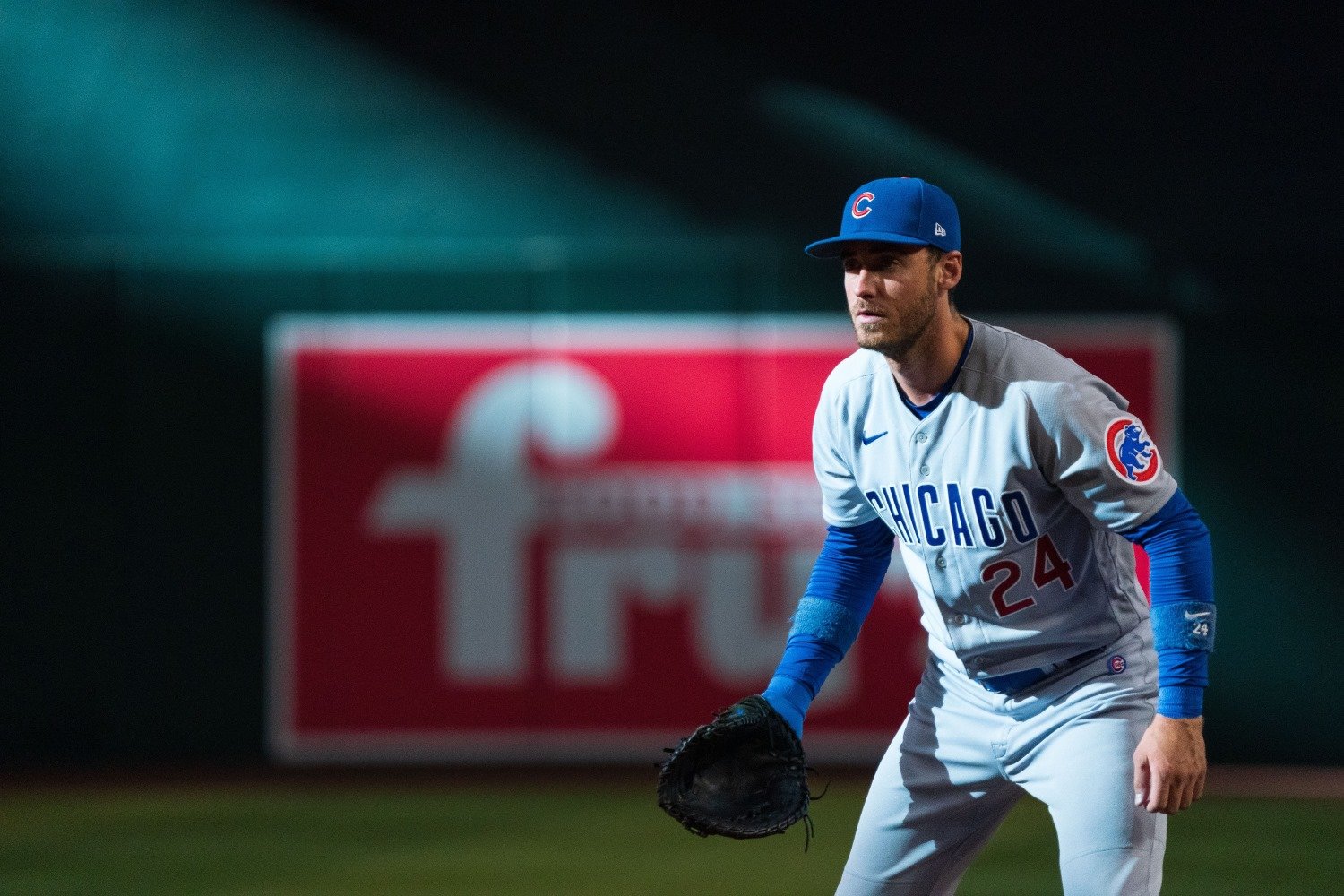 Especially because of the surprising short-term nature of the deal the Cubs and Cody Bellinger struck, it's not fully clear what comes next for the team--or for the player. If the two sides had come to terms for the next five, six, or seven years, it would be pretty easy to envision the team handing first base over to Bellinger right away. That's his long-term position, and both he and the team know it. Instead, though, this deal could keep the best player on the 2023 Cubs around for as little as one more year, and on that term, it makes a little more sense from both sides for him to spend significant time in center field. Of Michael Busch and Pete Crow-Armstrong, it's Busch who is older, Busch whose bat seems more ready for the challenge of regular playing time in the big leagues, and Busch whose upside could have him batting fifth for a playoff-caliber team down the stretch in 2024. Letting Crow-Armstrong start the season with Triple-A Iowa makes a modicum of sense, even if he's the eventual answer in center, and Bellinger makes that easier. Playing out there also helps him sustain and expand upon his case for the megadeal that never quite came together this winter. Before re-signing Bellinger, the Cubs faced a whole bunch of questions about their 2024 roster, especially at first base, third base, center field, and DH. They included: Whether to try Christopher Morel at third base (with Patrick Wisdom, Matt Mervis, David Peralta, and Dominic Smith the best candidates to soak up time at DH) or let Morel be the regular DH and reinstate the late-2023 solution of Nick Madrigal and Wisdom at the hot corner. Whether to start Crow-Armstrong in center immediately, or to have Mike Tauchman and Alexander Canario platoon there while the top prospect completes his apprenticeship in the minors. Whether to platoon Busch with Wisdom at first base, or try the rookie on an everyday basis, and whether to carry Mervis as a matchup-based complement to him. With Bellinger on board, all those decisions get recast under friendlier light. He can move between first and center. When he's at first, does Morel play third, or do he and Busch platoon at DH, while Madrigal shores up the defense and slots in at the bottom of an otherwise thunderous order? When Bellinger is in center, Busch plays first, and it gets easier to justify putting Morel at DH and using Madrigal for his glove. A lineup against righthanders might go: Ian Happ - LF Nico Hoerner - 2B Cody Bellinger - CF Seiya Suzuki - RF Michael Busch - 1B Christopher Morel - DH Dansby Swanson - SS Miguel Amaya - C Nick Madrigal - 3B Having the more robust Bellinger in the middle of the order and the middle of the diamond reduces the urgency of the Morel project at third base, as compared to having the good-OBP, low-SLG Tauchman or the very unproven Crow-Armstrong out there. On the other hand, as the Cubs continued to collect non-roster, bat-first options Sunday, perhaps it's worth wondering whether they've just gained enough confidence to go forward with Morel as the third baseman, In that case, it's a good bet that either Madrigal or Wisdom will soon be traded, clearing the way for the likes of Peralta or newcomer Garrett Cooper (or both). The offensive upside of the team could go through the roof, in that case, almost (but not quite) independent of Bellinger. The re-signed star's versatility just creates more paths to a well-rounded, high-functioning positional roster. Whether the Cubs are done or not remains to be seen. Another move or two could elucidate everything. In the meantime, though, the prevailing feeling from this pact is that the team remains comfortable being uncomfortable. That was the signature of Craig Counsell's extraordinary run as the Brewers' manager, and as things currently stand, his new team will try to leverage that trait.
 -
Bringing back Cody Bellinger doesn't turn the Chicago Cubs into a juggernaut, or even, necessarily, into favorites in the NL Central. It also doesn't immediately clarify the roster decisions they've weighed all winter. It just makes everything better. Image courtesy of © Allan Henry-USA TODAY Sports Especially because of the surprising short-term nature of the deal the Cubs and Cody Bellinger struck, it's not fully clear what comes next for the team--or for the player. If the two sides had come to terms for the next five, six, or seven years, it would be pretty easy to envision the team handing first base over to Bellinger right away. That's his long-term position, and both he and the team know it. Instead, though, this deal could keep the best player on the 2023 Cubs around for as little as one more year, and on that term, it makes a little more sense from both sides for him to spend significant time in center field. Of Michael Busch and Pete Crow-Armstrong, it's Busch who is older, Busch whose bat seems more ready for the challenge of regular playing time in the big leagues, and Busch whose upside could have him batting fifth for a playoff-caliber team down the stretch in 2024. Letting Crow-Armstrong start the season with Triple-A Iowa makes a modicum of sense, even if he's the eventual answer in center, and Bellinger makes that easier. Playing out there also helps him sustain and expand upon his case for the megadeal that never quite came together this winter. Before re-signing Bellinger, the Cubs faced a whole bunch of questions about their 2024 roster, especially at first base, third base, center field, and DH. They included: Whether to try Christopher Morel at third base (with Patrick Wisdom, Matt Mervis, David Peralta, and Dominic Smith the best candidates to soak up time at DH) or let Morel be the regular DH and reinstate the late-2023 solution of Nick Madrigal and Wisdom at the hot corner. Whether to start Crow-Armstrong in center immediately, or to have Mike Tauchman and Alexander Canario platoon there while the top prospect completes his apprenticeship in the minors. Whether to platoon Busch with Wisdom at first base, or try the rookie on an everyday basis, and whether to carry Mervis as a matchup-based complement to him. With Bellinger on board, all those decisions get recast under friendlier light. He can move between first and center. When he's at first, does Morel play third, or do he and Busch platoon at DH, while Madrigal shores up the defense and slots in at the bottom of an otherwise thunderous order? When Bellinger is in center, Busch plays first, and it gets easier to justify putting Morel at DH and using Madrigal for his glove. A lineup against righthanders might go: Ian Happ - LF Nico Hoerner - 2B Cody Bellinger - CF Seiya Suzuki - RF Michael Busch - 1B Christopher Morel - DH Dansby Swanson - SS Miguel Amaya - C Nick Madrigal - 3B Having the more robust Bellinger in the middle of the order and the middle of the diamond reduces the urgency of the Morel project at third base, as compared to having the good-OBP, low-SLG Tauchman or the very unproven Crow-Armstrong out there. On the other hand, as the Cubs continued to collect non-roster, bat-first options Sunday, perhaps it's worth wondering whether they've just gained enough confidence to go forward with Morel as the third baseman, In that case, it's a good bet that either Madrigal or Wisdom will soon be traded, clearing the way for the likes of Peralta or newcomer Garrett Cooper (or both). The offensive upside of the team could go through the roof, in that case, almost (but not quite) independent of Bellinger. The re-signed star's versatility just creates more paths to a well-rounded, high-functioning positional roster. Whether the Cubs are done or not remains to be seen. Another move or two could elucidate everything. In the meantime, though, the prevailing feeling from this pact is that the team remains comfortable being uncomfortable. That was the signature of Craig Counsell's extraordinary run as the Brewers' manager, and as things currently stand, his new team will try to leverage that trait. View full article
-
You can finally stop holding your breath and stamping your feet. The best player on the 2023 Cubs will be back in 2024. For how long? We shall see. Image courtesy of © David Banks-USA TODAY Sports After a months-long staring contest, Jed Hoyer and Scott Boras got together on a deal that will keep Cody Bellinger on the North Side of Chicago for at least the 2024 season, according to Jeff Passan. In some ways, the makeup of this deal makes a lot of sense. Yes, Bellinger wanted his comeback season in 2023 to net him more in free agency, but the Cubs (and clearly other MLB organizations) aren't 100% certain in a complete turnaround. So, instead of something like seven years and $200 million, there was some compromise. Bellinger's deal could be worth $80 million over three years. It also could potentially only cost the Cubs $30 million in 2024, and that's it. This isn't the first time that Scott Boras has worked out a creative deal like this. Two offseasons ago, following the long lockout by owners, Carlos Correa had not yet signed and had just joined Boras Corp. In a 'normal' offseason, he would have received over $300 million, but teams weren't willing to do that with such a short timeline before the season was set to begin. Boras reached out to the Minnesota Twins and the two sides agreed to a three-year, $105 million contract with opt-outs after the first two seasons. No one expected the deal to be more than one season, and Correa did opt-out of it after that 2022 season. A return to the North Side was never a foregone conclusion--not even after the Yankees, Blue Jays, and Giants each ended up filling their needs for left-handed bats in different ways. Bellinger and Boras never really expected that the former MVP would command $300 million in free agency, but they did have a hard line below which they were unwilling to go, and it took a while for the Cubs to decide that the slender slugger was worth that price tag--the heftiest in team history. Still, the fit always made sense, even with Pete Crow-Armstrong nearly set to emerge as a full-fledged big-leaguer. Bellinger is no longer a plus center fielder, and will not even be passable out there much longer, but between Crow-Armstrong, Alexander Canario, and Kevin Alcántara, the Cubs have plenty of potential center fielders in medium term. For now, they'll pencil Bellinger into that spot, and into the heart of their batting order. If Crow-Armstrong is able to assert himself, Bellinger will become a full-time first baseman. Bellinger also will get time at first base where newly-acquired Michael Busch was penciled in. Busch can also play second and third base where he could platoon with Christopher Morel. Regardless, Craig Counsell now has a middle of the order bat and some defensive flexibility. More to come as we sort through the details here, but obviously, this is a very good day (notice the time of Passan's tweets for those who think baseball writing is glamorous). Bellinger, 28, signed a one-year, make-good deal with the Cubs a year ago. He responded by putting up easily his best season since his MVP season of 2019 with the Dodgers. In 130 games for the Cubs in 2023, he hit . 307/.356/.525 with 29 doubles, 26 homers, and 97 RBI. Defensively, he made 81 starts in center field and 44 starts at first base. What are your initial thoughts on Bellinger being back, what you expect his role to be in 2024, and how you feel about the contract that he signed? View full article
-
BELLY UP: Cubs Re-Sign Cody Bellinger to Intriguing Deal
Matthew Trueblood posted an article in Cubs
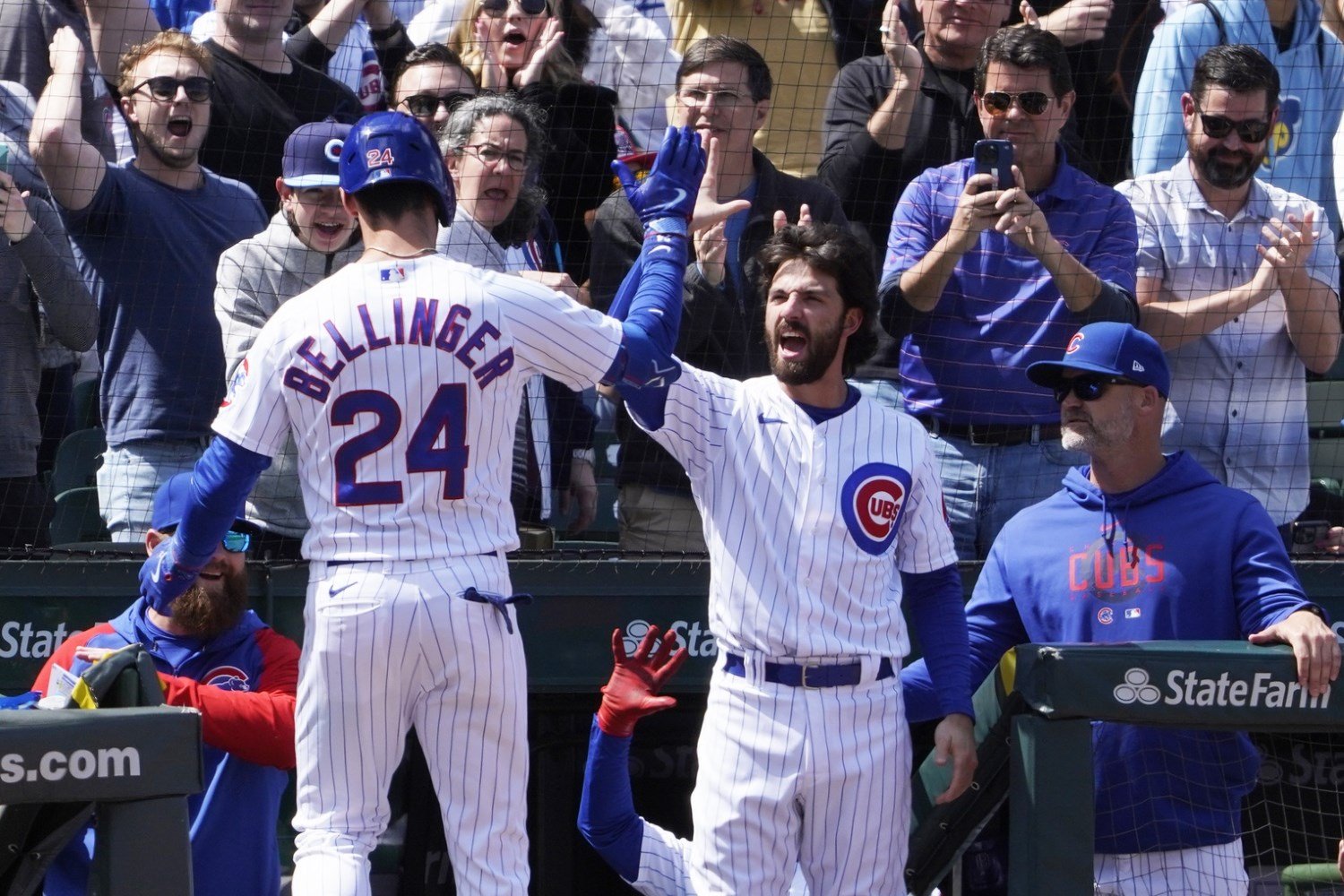 After a months-long staring contest, Jed Hoyer and Scott Boras got together on a deal that will keep Cody Bellinger on the North Side of Chicago for at least the 2024 season, according to Jeff Passan. In some ways, the makeup of this deal makes a lot of sense. Yes, Bellinger wanted his comeback season in 2023 to net him more in free agency, but the Cubs (and clearly other MLB organizations) aren't 100% certain in a complete turnaround. So, instead of something like seven years and $200 million, there was some compromise. Bellinger's deal could be worth $80 million over three years. It also could potentially only cost the Cubs $30 million in 2024, and that's it. This isn't the first time that Scott Boras has worked out a creative deal like this. Two offseasons ago, following the long lockout by owners, Carlos Correa had not yet signed and had just joined Boras Corp. In a 'normal' offseason, he would have received over $300 million, but teams weren't willing to do that with such a short timeline before the season was set to begin. Boras reached out to the Minnesota Twins and the two sides agreed to a three-year, $105 million contract with opt-outs after the first two seasons. No one expected the deal to be more than one season, and Correa did opt-out of it after that 2022 season. A return to the North Side was never a foregone conclusion--not even after the Yankees, Blue Jays, and Giants each ended up filling their needs for left-handed bats in different ways. Bellinger and Boras never really expected that the former MVP would command $300 million in free agency, but they did have a hard line below which they were unwilling to go, and it took a while for the Cubs to decide that the slender slugger was worth that price tag--the heftiest in team history. Still, the fit always made sense, even with Pete Crow-Armstrong nearly set to emerge as a full-fledged big-leaguer. Bellinger is no longer a plus center fielder, and will not even be passable out there much longer, but between Crow-Armstrong, Alexander Canario, and Kevin Alcántara, the Cubs have plenty of potential center fielders in medium term. For now, they'll pencil Bellinger into that spot, and into the heart of their batting order. If Crow-Armstrong is able to assert himself, Bellinger will become a full-time first baseman. Bellinger also will get time at first base where newly-acquired Michael Busch was penciled in. Busch can also play second and third base where he could platoon with Christopher Morel. Regardless, Craig Counsell now has a middle of the order bat and some defensive flexibility. More to come as we sort through the details here, but obviously, this is a very good day (notice the time of Passan's tweets for those who think baseball writing is glamorous). Bellinger, 28, signed a one-year, make-good deal with the Cubs a year ago. He responded by putting up easily his best season since his MVP season of 2019 with the Dodgers. In 130 games for the Cubs in 2023, he hit . 307/.356/.525 with 29 doubles, 26 homers, and 97 RBI. Defensively, he made 81 starts in center field and 44 starts at first base. What are your initial thoughts on Bellinger being back, what you expect his role to be in 2024, and how you feel about the contract that he signed?
 -
Chicago Cubs 2024 X-Factors: Winning Without Velocity in the Rotation
Matthew Trueblood posted an article in Cubs
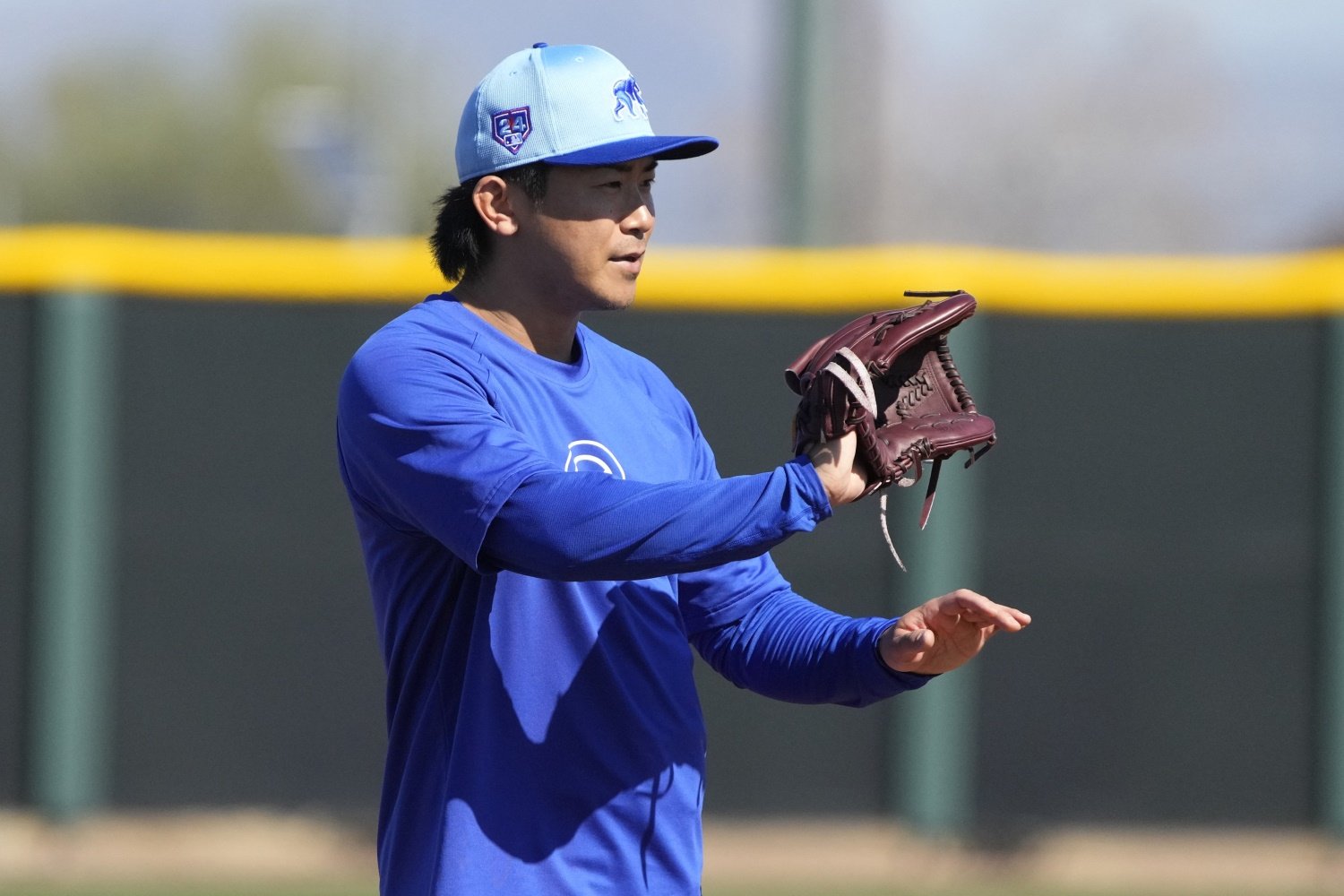 Even at the peak of their domination over the rest of the league (circa 2015 and 2016), the Cubs didn't beat people with sheer power. Jake Arrieta certainly threw hard, but it was (first) Jon Lester and (later) Kyle Hendricks who defined the team's approach and embodied their formula for victory. For at least a decade, they've been a team focused less on raw power on the pitcher's mound than on movement, command, sequencing, and making use of a strong defense. At a certain point, that becomes hard to sustain. The team's luck with that style ran out in 2021 and 2022, as guys like Adrian Sampson found intermittent success but others (like key trade acquisiton Zach Davies and briefly promising swingman Alec Mills) got hit hard. It's great to have interesting characteristics and to limit walks, but at some point, the inability to throw hard and miss bats comes with a heavy cost--to the individual starter, and to the bullpen, and to the defense, and (often, ultimately) to the team as a whole. Last winter, the team signed Jameson Taillon to shore up their staff in that particular regard. Taillon is a big, strong righthander, and while his velocity is far from elite, it's solidly average--which is solidly above the team's recent standard. They made another long-term commitment to a starting pitcher this winter, but it was Shota Imanaga, whose greatest weakness--perhaps his only real, glaring one--is a dearth of velocity. Still, it was a nod in the direction of solving the same problem they were trying to solve by bringing in Taillon. A rotation led by Justin Steele and Kyle Hendricks can be a good one, as those two showed in 2023, but it feels like you have to get just the right dice roll for that to happen. Neither Steele nor Hendricks throws even an average-speed fastball, and neither gets whiffs or strikeouts at an above-average rate. Their game is inducing weak contact, and that approach has plenty of value, but it's riskier than racking up contactless outs. Imanaga, with a devastating splitter and an array of breaking stuff we could see the Cubs tweak this spring, misses more bats than you'd think, and understands how to set up hitters to induce those empty swings, rather than just filling up the strike zone and hoping for the best. Even so, this rotation will probably be the softest-tossing in baseball (or nearly so, with the Rockies and Pirates also in the team photo) again, at least unless and until Cade Horton matriculates and becomes one of the key arms within it. That creates a wide band of potential outcomes, and it puts pressure on the defense, the catchers, and the coaching staff. Every fielder always has to be in the right place. Every plate appearance requires a perfect plan, because getting outs and keeping pitch counts from piling up turns into a delicate balancing act. This group might be up to that tall task. Yan Gomes has shown the ability to call games well enough to keep pitchers on just this highwire, and Tommy Hottovy and the rest of the team's coaching staff is experienced in this area. Gomes was a poor pitch framer last year, so he's unlikely to steal the softer-tossing starters strikes on the edges of the zone, but Miguel Amaya rated well in framing and figures to get more playing time. After the bullpen petered out and let the team down late in 2023, they think they're bringing a deeper and more dynamic relief corps to camp this time around. It's an important question to start seeing an answer to this spring, though. Eight of the 12 playoff teams last year had a better strikeout rate from their rotation than did the Cubs. Seven of 12 had a better FIP. The Cubs were 16th in strikeout rate, 13th in innings, and 12th in FIP by starters last year. To make the playoffs in 2024, they probably need to climb into the top 10 in all three areas. As Steele and Imanaga prove, it's not strictly necessary to throw 97 miles per hour to get those strikeouts. Without that power, though, the team will again be counting on winning all the miniature battles within a game.
 -
In 2023, Chicago Cubs starting pitchers averaged 91.5 miles per hour on their fastballs, dead last in MLB. Yet, that unit was a strength of the team, not its weakness. Can they sustain success this way? Image courtesy of © Rick Scuteri-USA TODAY Sports Even at the peak of their domination over the rest of the league (circa 2015 and 2016), the Cubs didn't beat people with sheer power. Jake Arrieta certainly threw hard, but it was (first) Jon Lester and (later) Kyle Hendricks who defined the team's approach and embodied their formula for victory. For at least a decade, they've been a team focused less on raw power on the pitcher's mound than on movement, command, sequencing, and making use of a strong defense. At a certain point, that becomes hard to sustain. The team's luck with that style ran out in 2021 and 2022, as guys like Adrian Sampson found intermittent success but others (like key trade acquisiton Zach Davies and briefly promising swingman Alec Mills) got hit hard. It's great to have interesting characteristics and to limit walks, but at some point, the inability to throw hard and miss bats comes with a heavy cost--to the individual starter, and to the bullpen, and to the defense, and (often, ultimately) to the team as a whole. Last winter, the team signed Jameson Taillon to shore up their staff in that particular regard. Taillon is a big, strong righthander, and while his velocity is far from elite, it's solidly average--which is solidly above the team's recent standard. They made another long-term commitment to a starting pitcher this winter, but it was Shota Imanaga, whose greatest weakness--perhaps his only real, glaring one--is a dearth of velocity. Still, it was a nod in the direction of solving the same problem they were trying to solve by bringing in Taillon. A rotation led by Justin Steele and Kyle Hendricks can be a good one, as those two showed in 2023, but it feels like you have to get just the right dice roll for that to happen. Neither Steele nor Hendricks throws even an average-speed fastball, and neither gets whiffs or strikeouts at an above-average rate. Their game is inducing weak contact, and that approach has plenty of value, but it's riskier than racking up contactless outs. Imanaga, with a devastating splitter and an array of breaking stuff we could see the Cubs tweak this spring, misses more bats than you'd think, and understands how to set up hitters to induce those empty swings, rather than just filling up the strike zone and hoping for the best. Even so, this rotation will probably be the softest-tossing in baseball (or nearly so, with the Rockies and Pirates also in the team photo) again, at least unless and until Cade Horton matriculates and becomes one of the key arms within it. That creates a wide band of potential outcomes, and it puts pressure on the defense, the catchers, and the coaching staff. Every fielder always has to be in the right place. Every plate appearance requires a perfect plan, because getting outs and keeping pitch counts from piling up turns into a delicate balancing act. This group might be up to that tall task. Yan Gomes has shown the ability to call games well enough to keep pitchers on just this highwire, and Tommy Hottovy and the rest of the team's coaching staff is experienced in this area. Gomes was a poor pitch framer last year, so he's unlikely to steal the softer-tossing starters strikes on the edges of the zone, but Miguel Amaya rated well in framing and figures to get more playing time. After the bullpen petered out and let the team down late in 2023, they think they're bringing a deeper and more dynamic relief corps to camp this time around. It's an important question to start seeing an answer to this spring, though. Eight of the 12 playoff teams last year had a better strikeout rate from their rotation than did the Cubs. Seven of 12 had a better FIP. The Cubs were 16th in strikeout rate, 13th in innings, and 12th in FIP by starters last year. To make the playoffs in 2024, they probably need to climb into the top 10 in all three areas. As Steele and Imanaga prove, it's not strictly necessary to throw 97 miles per hour to get those strikeouts. Without that power, though, the team will again be counting on winning all the miniature battles within a game. View full article
- 7 replies
-
- 1
-
-
- kyle hendricks
- justin steele
- (and 5 more)
-
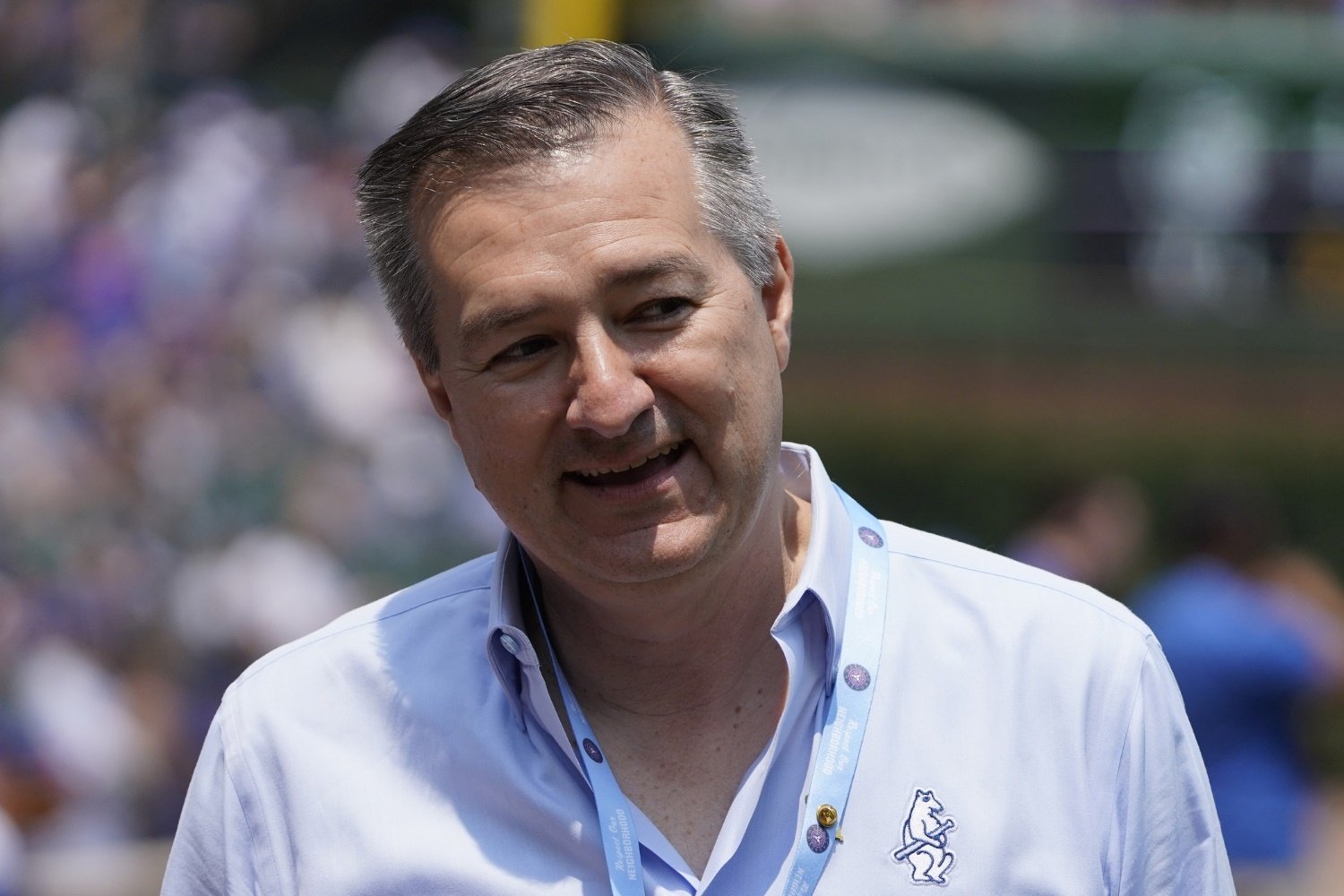 In a brief scrum with reporters (an annual rite of spring for most of the league's owners), Tom Ricketts talked about why he's not closely involved in the Cubs' pursuit of Cody Bellinger, and about what he told the team heading into spring training. The money quote (pun intended), though, was this, as reported by Jesse Rogers of ESPN. "We're right there at CBT levels," Ricketts said. "It's kind of our natural place for us. That should be enough to win our division and be consistent every year." Those remarks stirred some predictable consternation, for a variety of reasons. Some fans balked at the idea that the Cubs' annual goal should be winning the NL Central, rather than fighting for World Series titles. It's worth a separate piece, so I won't belabor it here, but that argument doesn't land with me. Winning the division and winning World Series aren't contradictory goals. They're in harmony with one another. I don't think focusing on winning divisions is a less noble or less aggressive strategy than focusing on chasing a single ring, as the team did in 2016. Other fans, though, were outraged at the notion that Ricketts feels the Cubs should be stopping at the first luxury tax threshold, even if that was more implied than stated outright. That's a perfectly fair reaction. The Cubs are a massively profitable, big-market team, and the Ricketts family sounds both greedy and ghoulish when they try to use their annual spending on maintaining Wrigley Field or their tax payments to deflect demands that they reinvest in the team on the field. The Cubs should spend more than $250 million on payroll in most seasons, under current rules. To suggest otherwise is to further line the Ricketts's pockets at the expense of, frankly, everyone with any last name other than Ricketts. Here's what jumped out to me, though: What Ricketts said is wildly, demonstrably, crucially untrue. Right now, the Cubs' CBT number is just over $205 million, according to Cot's Contracts, the best source on the internet for this kind of information. That's actually about $13 million more than their actual projected payments for the year, because of the way CBT numbers are calculated using the annual average value of all contracts, but it's more than $30 million below the lowest CBT threshold for 2024, which is $237 million. By no plausible modern MLB standard is $205 million "right there at" $237 million. There's a yawning gap there. That means one of two things: Ricketts was lying, in a rather bald-faced and easily falsified way. He was saying something about the team's spending that no one would consider substantially true, knowing it could be easily looked up and rejected as false. In Ricketts's mind, another $30 million or so is there to be spent. I don't want to rule out Option 1, even if the way I presented it above makes it sound like a strategy so deeply stupid and self-defeating that no billionaire would be silly enough to execute it. Ricketts is, by the standard of billionaires or of anyone else, pretty stupid, self-defeating, and silly. If he weren't, the Cubs wouldn't be on a six-year streak of failing to even reach a Division Series. That said, I think Option 2 is the reality. That doesn't mean the Cubs will necessarily spend the $30 million left in Jed Hoyer's budget. Hoyer is, as we've discussed before, insufficiently aggressive in free agency. Ricketts is, as he made plain in his interview this week by saying he refuses to communicate with Scott Boras, insensible of the risks he runs by being so laissez-faire with his front office and failing to engage with top talents. It's possible, therefore, that the Cubs will whiff on Bellinger, and not even collect any of the other Four Borasmen as a consolation. I think it's vanishingly unlikely, though. If Ricketts has given Hoyer a budget that allows him to spend right up to even the first CBT threshold, then Hoyer is most probably waiting out Boras and trying to keep other options open, rather than actually considering leaving that money unspent. I would be shocked, given these statements, if the Cubs haven't added at least one--and quite possibly two--high-end players by the time the season begins late next month. If I'm wrong, then either Hoyer has made his most disastrous error yet, or Ricketts was lying through his teeth into the microphones shoved into his face this week. Both of those things are, alas, possible, but the probability of either remains remote.
 -
This week, as the Chicago Cubs began full-squad spring training work, owner Tom Ricketts met the media and made some controversial remarks about the team's payroll. Let's take a closer look. Image courtesy of © David Banks-USA TODAY Sports In a brief scrum with reporters (an annual rite of spring for most of the league's owners), Tom Ricketts talked about why he's not closely involved in the Cubs' pursuit of Cody Bellinger, and about what he told the team heading into spring training. The money quote (pun intended), though, was this, as reported by Jesse Rogers of ESPN. "We're right there at CBT levels," Ricketts said. "It's kind of our natural place for us. That should be enough to win our division and be consistent every year." Those remarks stirred some predictable consternation, for a variety of reasons. Some fans balked at the idea that the Cubs' annual goal should be winning the NL Central, rather than fighting for World Series titles. It's worth a separate piece, so I won't belabor it here, but that argument doesn't land with me. Winning the division and winning World Series aren't contradictory goals. They're in harmony with one another. I don't think focusing on winning divisions is a less noble or less aggressive strategy than focusing on chasing a single ring, as the team did in 2016. Other fans, though, were outraged at the notion that Ricketts feels the Cubs should be stopping at the first luxury tax threshold, even if that was more implied than stated outright. That's a perfectly fair reaction. The Cubs are a massively profitable, big-market team, and the Ricketts family sounds both greedy and ghoulish when they try to use their annual spending on maintaining Wrigley Field or their tax payments to deflect demands that they reinvest in the team on the field. The Cubs should spend more than $250 million on payroll in most seasons, under current rules. To suggest otherwise is to further line the Ricketts's pockets at the expense of, frankly, everyone with any last name other than Ricketts. Here's what jumped out to me, though: What Ricketts said is wildly, demonstrably, crucially untrue. Right now, the Cubs' CBT number is just over $205 million, according to Cot's Contracts, the best source on the internet for this kind of information. That's actually about $13 million more than their actual projected payments for the year, because of the way CBT numbers are calculated using the annual average value of all contracts, but it's more than $30 million below the lowest CBT threshold for 2024, which is $237 million. By no plausible modern MLB standard is $205 million "right there at" $237 million. There's a yawning gap there. That means one of two things: Ricketts was lying, in a rather bald-faced and easily falsified way. He was saying something about the team's spending that no one would consider substantially true, knowing it could be easily looked up and rejected as false. In Ricketts's mind, another $30 million or so is there to be spent. I don't want to rule out Option 1, even if the way I presented it above makes it sound like a strategy so deeply stupid and self-defeating that no billionaire would be silly enough to execute it. Ricketts is, by the standard of billionaires or of anyone else, pretty stupid, self-defeating, and silly. If he weren't, the Cubs wouldn't be on a six-year streak of failing to even reach a Division Series. That said, I think Option 2 is the reality. That doesn't mean the Cubs will necessarily spend the $30 million left in Jed Hoyer's budget. Hoyer is, as we've discussed before, insufficiently aggressive in free agency. Ricketts is, as he made plain in his interview this week by saying he refuses to communicate with Scott Boras, insensible of the risks he runs by being so laissez-faire with his front office and failing to engage with top talents. It's possible, therefore, that the Cubs will whiff on Bellinger, and not even collect any of the other Four Borasmen as a consolation. I think it's vanishingly unlikely, though. If Ricketts has given Hoyer a budget that allows him to spend right up to even the first CBT threshold, then Hoyer is most probably waiting out Boras and trying to keep other options open, rather than actually considering leaving that money unspent. I would be shocked, given these statements, if the Cubs haven't added at least one--and quite possibly two--high-end players by the time the season begins late next month. If I'm wrong, then either Hoyer has made his most disastrous error yet, or Ricketts was lying through his teeth into the microphones shoved into his face this week. Both of those things are, alas, possible, but the probability of either remains remote. View full article
- 7 replies
-
- 1
-
-
- tom ricketts
- cody bellinger
- (and 4 more)
-
You Have to Stop Talking About a Winter Deadline for Hot Stove Movement
Matthew Trueblood posted an article in Cubs
 It's not your fault that you feel aggrieved and insane at the end of this long, quiet MLB winter. You've been programmed, and much of the programming has been involuntary. The world has slowly become very fast in its processing of everything, and in our rush to banish boredom, we've pulverized pensiveness and obliterated objectivity. The baseball offseason was, within even my relatively short lifetime, as much about the waiting and the quietude and the opportunities for reflection as about moves, but ESPN long ago learned that people flip away from SportsCenter when they tried to put quietude or reflection on TV, so the hot stove became the enormous, insatiable furnace of a runaway train. We went from a daily news cycle centered around the two issues of the paper to a 24-hour cable news iteration, and then to the instant, constant, moment-to-moment frenzy of the social media age. The internet is in your pocket, and it's buzzing (sometimes literally) at all times. You might have the willpower to go an hour without checking Twitter. You might be modernity's answer to the Stoic sages, able to check it as rarely as every eight hours, or every day, and no more. But you're probably not capable of fighting the temptation to catastrophize when, over as many as 12 check-ins (that could be half a day, but it could be up to a week and a half!), nothing happens. The world has conditioned you to expect transactions. The same way you get anxious and frustrated if your latest Instagram post gets too few likes, you get anxious and frustrated when your team doesn't do something. Do something. That's the motto of our times. It's too vague to carry any real value, and its urgency is counterproductive, because it leaves no room for intangible progress. It's better than the last generation's watchwords, which were laissez-faire, because those words ignored the real need for change and progress, but we haven't yet come to the right balance. If you needed more evidence of that, listen to the CHGO Cubs podcast literally any day, or listen to Rob Manfred talk to reporters in Florida this week, or search "MLB deadline" on Twitter. The slow progress of this offseason has people so itchy that they have gone beyond wanting their team to do something. Now, even though a great many of these people are too smart to trust Rob Manfred with literally anything, they want the league he operates to do something. They want the players union to do something. This is madeness. It's indefensibly stupid talk, because any fan engaged enough to feel the real frustration of this winter should be informed enough to know that an offseason deadline would be (paradoxically) both calamitous and fruitless. In any form yet articulated or imagined, it would crater the market for players, but make no material difference beyond that. I am not a protector of players' pocketbooks. I don't think they should make as much money as they do, in a vacuum. Because player salaries aren't the drivers of fan costs or teams' decisions in the modern game, though, this can't be considered in a vacuum. Money taken from players' pockets will only fall back into the owners'. In a deadline-constrained free agency, owners would pin players to the wall. There are always more players than teams with whom a player can sign, and teams can fill needs via trades, whereas free agents have no choice other thatn to find someone who wants them. Deadlines spur action, but they don't permit fair dealing between two sides. The leverage would all be with the clubs, and they would abuse that leverage. Scott Boras is probably not your favorite person right now, but he's fighting the good fight. It is more than bizarre--it is patently absurd, and not a little outrageous--that Blake Snell is in a position of even beginning to entertain having to take a short-term deal this winter, coming off not only a Cy Young Award season, but his second one. Boras certainly takes a unique approach to free agency with his guys, treating them more like items in a department store window--merchandise that will be sold only when the price is met--than like produce that needs to be moved before it spoils. That can be maddening, when the price he sets feels unreasonable, but much more often than not, it's teams who are being unreasonable by refusing to meet what is a relatively fair price. Sometimes, teams do that just to make a point, and that's more damnable than Boras's conduct. Now that analytically sound executives have taken over the sport (thanks to cost-conscious owners), we're stuck in this state of affairs, unless and until a cap-and-floor system comes into effect in MLB. The players will never agree to an offseason signing or trade deadline. Nor should they. They also won't accept a cap-and-floor concept; I'm less certain that they're right to draw that hard line. On the other hand, owners are unlikely to assent to many forms of cap-and-floor at this point, because they have a great deal of revenue made possible by baseball but which they would not want to count as baseball revenue when it came time to divide the pie. So, we wait. Want to do something? Vote down measures that subsidize ballparks to the tune of hundreds of millions of dollars, be it via tax breaks for the team or new taxes on residents of a given community. Refuse to pay the inflated prices owners have gotten in the habit of charging on everything attached to their product--prices leavened not by players' high salaries, but by the fact that fans have not shown any meaningful resistance to that inflation. Demand legislation that makes it much harder for people as rich as MLB owners (and many players) to hold onto huge shares of their money, to dampen the incentive for such avarice and to improve the lives of yourself and your neighbors. Just don't advocate an offseason activity deadline, in any form. It's a non-starter, and if it did come to fruition, it would be a disaster. We've seen some versions of offseason deadlines before. They were accelerators for owners' efforts to collude against the plaowners' efforts to colludeyers, and nothing more. So it would be again. Your life won't be improved by having more moves happen fast. It'll be improved when you shake off your programming and stop wanting that flurry of moves so badly.
 -
The 2023-24 MLB offseason has been frustrating, if you've chosen to let it be so. It's been the kind of crisis that can spur major change, if you're the kind of person who embraces dangerous change on a whim. Taking a clearer view, though, it's really just been another episode of Greedy Billionaires Seek More Billions. Image courtesy of © Kim Klement Neitzel-USA TODAY Sports It's not your fault that you feel aggrieved and insane at the end of this long, quiet MLB winter. You've been programmed, and much of the programming has been involuntary. The world has slowly become very fast in its processing of everything, and in our rush to banish boredom, we've pulverized pensiveness and obliterated objectivity. The baseball offseason was, within even my relatively short lifetime, as much about the waiting and the quietude and the opportunities for reflection as about moves, but ESPN long ago learned that people flip away from SportsCenter when they tried to put quietude or reflection on TV, so the hot stove became the enormous, insatiable furnace of a runaway train. We went from a daily news cycle centered around the two issues of the paper to a 24-hour cable news iteration, and then to the instant, constant, moment-to-moment frenzy of the social media age. The internet is in your pocket, and it's buzzing (sometimes literally) at all times. You might have the willpower to go an hour without checking Twitter. You might be modernity's answer to the Stoic sages, able to check it as rarely as every eight hours, or every day, and no more. But you're probably not capable of fighting the temptation to catastrophize when, over as many as 12 check-ins (that could be half a day, but it could be up to a week and a half!), nothing happens. The world has conditioned you to expect transactions. The same way you get anxious and frustrated if your latest Instagram post gets too few likes, you get anxious and frustrated when your team doesn't do something. Do something. That's the motto of our times. It's too vague to carry any real value, and its urgency is counterproductive, because it leaves no room for intangible progress. It's better than the last generation's watchwords, which were laissez-faire, because those words ignored the real need for change and progress, but we haven't yet come to the right balance. If you needed more evidence of that, listen to the CHGO Cubs podcast literally any day, or listen to Rob Manfred talk to reporters in Florida this week, or search "MLB deadline" on Twitter. The slow progress of this offseason has people so itchy that they have gone beyond wanting their team to do something. Now, even though a great many of these people are too smart to trust Rob Manfred with literally anything, they want the league he operates to do something. They want the players union to do something. This is madeness. It's indefensibly stupid talk, because any fan engaged enough to feel the real frustration of this winter should be informed enough to know that an offseason deadline would be (paradoxically) both calamitous and fruitless. In any form yet articulated or imagined, it would crater the market for players, but make no material difference beyond that. I am not a protector of players' pocketbooks. I don't think they should make as much money as they do, in a vacuum. Because player salaries aren't the drivers of fan costs or teams' decisions in the modern game, though, this can't be considered in a vacuum. Money taken from players' pockets will only fall back into the owners'. In a deadline-constrained free agency, owners would pin players to the wall. There are always more players than teams with whom a player can sign, and teams can fill needs via trades, whereas free agents have no choice other thatn to find someone who wants them. Deadlines spur action, but they don't permit fair dealing between two sides. The leverage would all be with the clubs, and they would abuse that leverage. Scott Boras is probably not your favorite person right now, but he's fighting the good fight. It is more than bizarre--it is patently absurd, and not a little outrageous--that Blake Snell is in a position of even beginning to entertain having to take a short-term deal this winter, coming off not only a Cy Young Award season, but his second one. Boras certainly takes a unique approach to free agency with his guys, treating them more like items in a department store window--merchandise that will be sold only when the price is met--than like produce that needs to be moved before it spoils. That can be maddening, when the price he sets feels unreasonable, but much more often than not, it's teams who are being unreasonable by refusing to meet what is a relatively fair price. Sometimes, teams do that just to make a point, and that's more damnable than Boras's conduct. Now that analytically sound executives have taken over the sport (thanks to cost-conscious owners), we're stuck in this state of affairs, unless and until a cap-and-floor system comes into effect in MLB. The players will never agree to an offseason signing or trade deadline. Nor should they. They also won't accept a cap-and-floor concept; I'm less certain that they're right to draw that hard line. On the other hand, owners are unlikely to assent to many forms of cap-and-floor at this point, because they have a great deal of revenue made possible by baseball but which they would not want to count as baseball revenue when it came time to divide the pie. So, we wait. Want to do something? Vote down measures that subsidize ballparks to the tune of hundreds of millions of dollars, be it via tax breaks for the team or new taxes on residents of a given community. Refuse to pay the inflated prices owners have gotten in the habit of charging on everything attached to their product--prices leavened not by players' high salaries, but by the fact that fans have not shown any meaningful resistance to that inflation. Demand legislation that makes it much harder for people as rich as MLB owners (and many players) to hold onto huge shares of their money, to dampen the incentive for such avarice and to improve the lives of yourself and your neighbors. Just don't advocate an offseason activity deadline, in any form. It's a non-starter, and if it did come to fruition, it would be a disaster. We've seen some versions of offseason deadlines before. They were accelerators for owners' efforts to collude against the plaowners' efforts to colludeyers, and nothing more. So it would be again. Your life won't be improved by having more moves happen fast. It'll be improved when you shake off your programming and stop wanting that flurry of moves so badly. View full article
-
It's the talk of spring camps throughout MLB. Fans hate the new official jerseys being made for MLB by Fanatics, despite the imprimatur of Nike. The players, if possible, hate them even more. What if both groups are just plain wrong? Again, one way to choose to see that is that it's cheap, or weird, or betrays an inattention to detail. I don't want to rule out that last part, because Fanatics, the company with whom MLB and Nike partnered for these, is infamous for that issue. The MLB logo on players' backs no longer aligns perfectly with the pinstripes, which is an unforced error that does catch the eye all wrong, so there are clear and obvious fixes needed here. Still, ultimately, more pinstripes is the kind of sartorial choice that couldn't have been made by the Yankees, Phillies, Cubs, or others until about 15 years ago, because they would have looked bad on TV. With better-quality video, more stripes are possible, and they might even look good. I don't mean to imply that there aren't any good reasons to be upset or suspicious about this set of changes. To whatever extent producing uniforms and fan merchandise this way is cheaper than by going the previous routes, I have no trouble believing that MLB chose that lower expense and higher profit margin over optimal fan service and player comfort. I don't trust MLB, Nike, or Fanatics at all, because they're all large companies with long histories of cutting corners to ensure profits, at the expense of all other considerations. I do, however, broadly urge everyone (including MLB players, if it comes to it) to be a bit more patient with the rollout of low-stakes change. The uniforms to which we're accustomed, in sports, seem like strokes of brilliant design genius handed down from sages of ages past, but the reality is that they're all the result of commercially-motivated, iterative change over decades, and the latest iteration in that process might turn out to be a bit better-suited to our times and to the broader evolution of the game than you would first think. Do you share in the general detestation of the new uniforms throughout the league? Is this an issue about which you care deeply? Will these changes affect your likelihood to make a purchase this year? Let's discuss it below. View full article
- 1 reply
-
- 1
-
-
 I have to lead with a confession, here: I have never bought a baseball jersey. I doubt that will ever change. I used to buy player t-shirts (shirseys), but I even stopped that about a decade ago. I don't want to tell fans or players how to react to the look of a uniform, or certainly about the feel of one, because I don't engage with those products directly, and I'm not someone who cares overmuch about the uniforms. They could play in batting practice gear, including shorts and performance tights, and I'd be fine with it. Some folks obsess over the details of these things, and I think that's fine, but I leave it to them to do. Here's what I think does need to be said, though: All people fear and hate most change, but baseball's players and fans fear and hate it more than most, and I'm not sure that's justified--in general, or in this specific instance. One thing I have thought a lot about over the years, aesthetically, is how the game has been and will continue to be changed by the ways in which we observe and consume it. One of the most important ways in which our consumption of the game has changed is that we watch it on TV more than we watch it in person. Another is that, when we watch it in person, it's in much, much higher definition than it used to be. Once picture quality improved to the point where every fan could clearly see every bad call, the game had to adopt new rules and practices to ensure that it maintained its integrity and legitimacy. Umpires started being systematically evaluated by technology (remember QuesTec?) over two decade ago, and it's not a coincidence that that happened at the same time as HD technology hit the home TV market. When we took another leap beyond the original version of HD and into the age of digital video (that could also be captured and shared on the internet with high resolution), instant replay came into the game. Uniforms have already changed over time, because the quality of the video feeds we use to watch games has improved so vastly. Logos on caps and batting helmets have shrunk, because you don't need them to be as big as you used to need them to be in order to instantly identify a team when you alight on Sunday Night Baseball by coincidence. Go back and look at a picture of Johnny Bench from half a century ago, and his name was plastered across his broad back in roughly 360-point font, because they wanted you to be able to see that that was Johnny Bench, even if you were watching from the upper deck or on a 13-inch black-and-white TV in Oklahoma. Compare pictures of Michael Jordan from early in his career (tall, plain white letters across the red of his road Bulls jersey) and from the end of if (smaller font, a slightly greater arc to them, black letters with white outlines. The Bulls knew most of Jordan's audience, by the mid-1990s, was not in the building. It was tuning in to the NBA on NBC, and it could see his name just fine without an aid that risked gaudiness. I, once again, don't really care about the slight arc in the lettering of names and the smaller size of the lettering on players' backs with the new jerseys. It's been one of the fans' and players' sticking points, though, and I will say that I don't view that as inherently cheap-looking, as many have called them. That seems to me to be a sense gleaned from years of unofficial replica jerseys having smaller lettering than official ones, but again, the official ones probably had bigger ones than they wanted to for some portion of that time. In five years, if there's no further change, we might well wonder why names weren't always thus rendered on players' backs. Another notable change, for teams (like the Cubs) who have pinstriped uniforms, is that those pinstripes seem to be closer together (and thus, there are more of them) than in the past. Again, one way to choose to see that is that it's cheap, or weird, or betrays an inattention to detail. I don't want to rule out that last part, because Fanatics, the company with whom MLB and Nike partnered for these, is infamous for that issue. The MLB logo on players' backs no longer aligns perfectly with the pinstripes, which is an unforced error that does catch the eye all wrong, so there are clear and obvious fixes needed here. Still, ultimately, more pinstripes is the kind of sartorial choice that couldn't have been made by the Yankees, Phillies, Cubs, or others until about 15 years ago, because they would have looked bad on TV. With better-quality video, more stripes are possible, and they might even look good. I don't mean to imply that there aren't any good reasons to be upset or suspicious about this set of changes. To whatever extent producing uniforms and fan merchandise this way is cheaper than by going the previous routes, I have no trouble believing that MLB chose that lower expense and higher profit margin over optimal fan service and player comfort. I don't trust MLB, Nike, or Fanatics at all, because they're all large companies with long histories of cutting corners to ensure profits, at the expense of all other considerations. I do, however, broadly urge everyone (including MLB players, if it comes to it) to be a bit more patient with the rollout of low-stakes change. The uniforms to which we're accustomed, in sports, seem like strokes of brilliant design genius handed down from sages of ages past, but the reality is that they're all the result of commercially-motivated, iterative change over decades, and the latest iteration in that process might turn out to be a bit better-suited to our times and to the broader evolution of the game than you would first think. Do you share in the general detestation of the new uniforms throughout the league? Is this an issue about which you care deeply? Will these changes affect your likelihood to make a purchase this year? Let's discuss it below.
 -
2024 Chicago Cubs Spring Training Position Battles: The Bullpen
Matthew Trueblood posted an article in Cubs
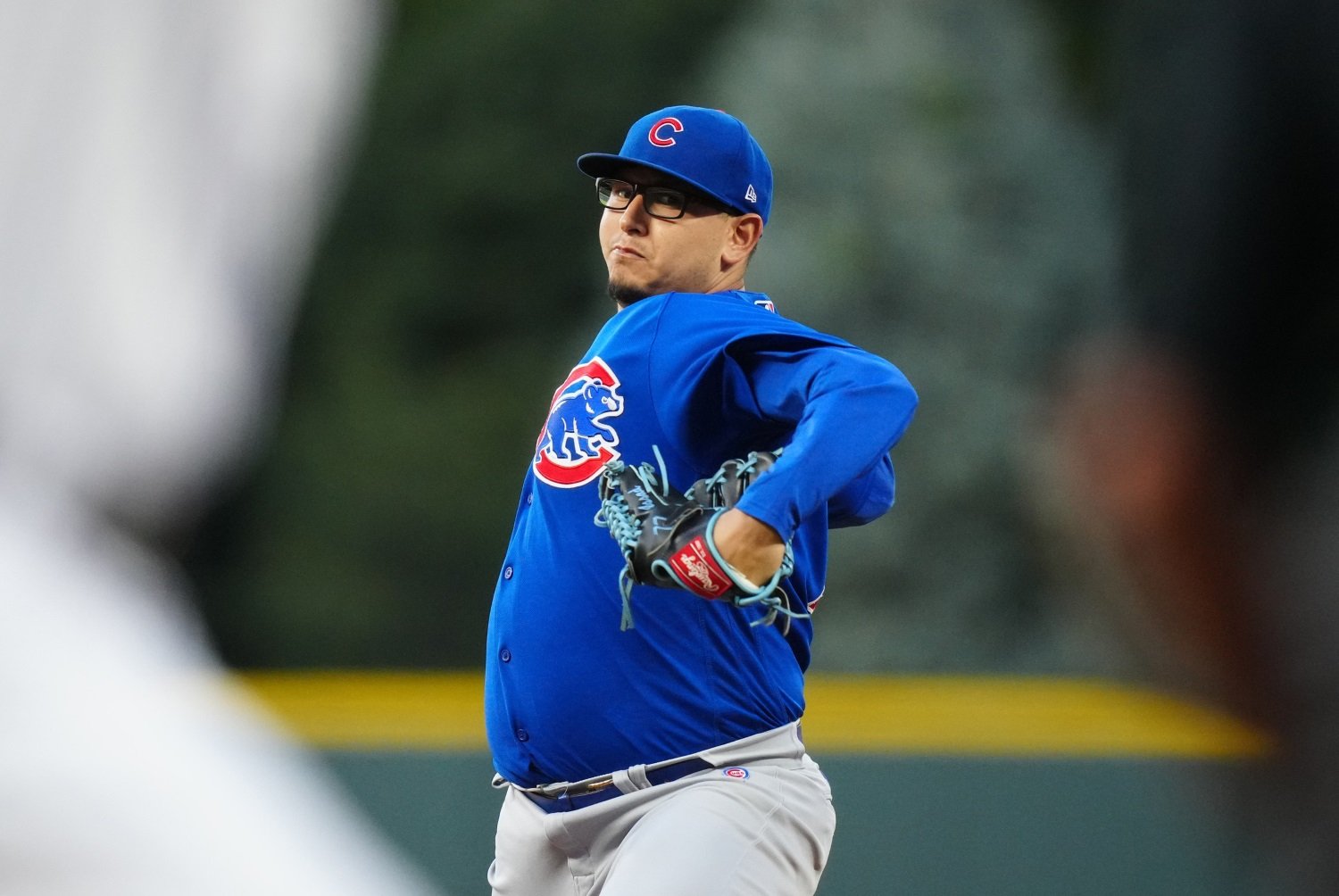 Quietly, the Cubs have locked in over half their bullpen for 2024, assuming health and a reasonable amount of performance carryover from 2023. Adbert Alzolay, Julian Merryweather, and Mark Leiter Jr. anchored the North Siders' relief unit last year, and the one closest to not making the roster in a vacuum (Leiter) happens to be the one guy in the trio without minor-league options remaining. You can write those three in as sure things, unless any of them is injured. Behind them are another couple of locks who are new to the organization. Héctor Neris and Yency Almonte. Neris was a free-agent signee who could stick around for a couple years and earn nearly $20 million of Tom Ricketts's money, so you know he's part of the plan. Almonte is a trickier case, but there's much to like about his arsenal and his very recent track record. He, like Leiter, is also out of minor-league options, so someone else in the team's middle-relief snarl is going to end up missing the cut. Alzolay, Merryweather, Leiter, Neris, and Almonte makes five. The Cubs only have room for eight relievers on their roster, and there are another handful of candidates to consider. They shake out, basically, into two groups. Failed Starters As we've all rehearsed to ourselves a few times by now, every reliever is really a failed starter, but the Cubs have three impressive hurlers whose stuff has played up in fascinating and tempting ways when they've moved to short relief--but who all might be needed as starting depth, instead, and who all still harbor the ambition of starting for this team all year. Hayden Wesneski has a lot of work left to do to reconcile his stuff to his release points and neutralize left-handed batters, but his arm is pure electricity. If he proves able to give up the crutch that has been his sweeper since the Yankees installed that pitch for him a few years ago and start throwing more of a gyro slider instead, he could really break out. Failing that, though, his best role is in relief. The question will be whether he's able to get righties out any more reliably than Almonte, since the bullpen version of Wesneski is pretty much a short-burst, matchup guy, not someone who can give you multiple innings and face the whole lineup without fear. Many of the same things apply, paradoxically, to Drew Smyly, who is otherwise a tough comparison to Wesneski. In his mid-30s and still trying to carve a more coherent legacy for himself in the game, the southpaw had to be consigned to the pen late in 2023. His stuff took on a whole different character there, though. He threw his curveball vastly more often, and his fastball ticked all the way up into the mid-90s. Then, he went to Driveline this winter and tried to design himself a new repertoire that would allow him to stick in the rotation. As with Wesneski, he's either going to be a starter or someone Craig Counsell wants to use purely in single-inning, let-it-eat situations. Thankfully, Javier Assad offers something different. The stocky Mexican righty isn't going to rack up strikeouts even if he moves to the pen. He's not going to give up much high-quality contact in that role either, though. His fastball goes from pedestrian to sizzling when he's pitching with adrenaline in a short burst, but the best form of that pitch still isn't a bat-misser. It's more of a barrel-misser. None of these three are, by any means, guaranteed a spot in the bullpen at all. One or more of them might make the rotation, and both Assad and Wesneski have minor-league options. If we assume Jordan Wicks has the insider track for the fifth starter's job, Smyly makes the most sense for a relief role from this group, and he'd almost surely get one as the team's primary lefty reliever. Whether even one of the other two would stick in the majors can only be answered by considering our other set of remaining candidates. Exciting But Inconsistent Single-Inning Arms with Options Left It's not as snappy a category name as "Failed Starters," but what're you going to do? This crew consists chiefly of Jose Cuas, Daniel Palencia, and Luke Little. Cuas might be a surprising name to see placed down here. The Cubs did proactively acquire him last summer, and he's got an extraordinary combination of stuff and release point that could keep hitters confused and frustrated when facing the bullpen overall. On the other hand, he still has significant walk problems, and he can be optioned to the minors, so if it comes down to Cuas and a healthy Almonte, the rules are heavily in favor of Almonte getting the nod. Palencia and Little have showed some genuinely filthy stuff, but Palencia hasn't yet made smooth the rough edges when a starter cuts down his game to become a reliever, and Little is a huge man with long, sometimes uncontrollable levers. By midseason, either could have emerged as the team's relief ace. On the other hand, both could be relegated to Triple A, or already off the roster. Their talent is tremendous, but neither has shown enough to be assured of a place on the team yet. There are too many other arms in the picture. The Likely Configuration If I had to bet, based on what we've seen this winter and how the roster shapes up at this moment, I would bet on the following: One of the top four projected starters being injured and unavailable to begin the season; Both Wicks and Wesneski making the rotation; Smyly slotting in as the main lefty and sixth arm in the bullpen; Assad sliding into the medium-leverage, multi-inning role in which he did some of his best work in 2023; and Cuas claiming the final spot in the bullpen. This can be a downright dominant relief corps, and they'll be managed by a much savvier skipper in 2024 than they had last year. There are all kinds of possible outcomes of these early catch sessions and Cactus League contests, and all kinds of possible reasons for those outcomes. On balance, Smyly, Assad, and Cuas have the best odds to break camp with the club, but that could change in several ways. I can feel a trade coming to clear up some of this seeming excess, but just as often, injuries pulverize would-be dilemmas like these, anyway.
 -
Today, we continue our series examining some of the positions for which spring training could be decisive for the 2024 Cubs. To do so, let's turn our attention to the relief corps. Image courtesy of © Ron Chenoy-USA TODAY Sports Quietly, the Cubs have locked in over half their bullpen for 2024, assuming health and a reasonable amount of performance carryover from 2023. Adbert Alzolay, Julian Merryweather, and Mark Leiter Jr. anchored the North Siders' relief unit last year, and the one closest to not making the roster in a vacuum (Leiter) happens to be the one guy in the trio without minor-league options remaining. You can write those three in as sure things, unless any of them is injured. Behind them are another couple of locks who are new to the organization. Héctor Neris and Yency Almonte. Neris was a free-agent signee who could stick around for a couple years and earn nearly $20 million of Tom Ricketts's money, so you know he's part of the plan. Almonte is a trickier case, but there's much to like about his arsenal and his very recent track record. He, like Leiter, is also out of minor-league options, so someone else in the team's middle-relief snarl is going to end up missing the cut. Alzolay, Merryweather, Leiter, Neris, and Almonte makes five. The Cubs only have room for eight relievers on their roster, and there are another handful of candidates to consider. They shake out, basically, into two groups. Failed Starters As we've all rehearsed to ourselves a few times by now, every reliever is really a failed starter, but the Cubs have three impressive hurlers whose stuff has played up in fascinating and tempting ways when they've moved to short relief--but who all might be needed as starting depth, instead, and who all still harbor the ambition of starting for this team all year. Hayden Wesneski has a lot of work left to do to reconcile his stuff to his release points and neutralize left-handed batters, but his arm is pure electricity. If he proves able to give up the crutch that has been his sweeper since the Yankees installed that pitch for him a few years ago and start throwing more of a gyro slider instead, he could really break out. Failing that, though, his best role is in relief. The question will be whether he's able to get righties out any more reliably than Almonte, since the bullpen version of Wesneski is pretty much a short-burst, matchup guy, not someone who can give you multiple innings and face the whole lineup without fear. Many of the same things apply, paradoxically, to Drew Smyly, who is otherwise a tough comparison to Wesneski. In his mid-30s and still trying to carve a more coherent legacy for himself in the game, the southpaw had to be consigned to the pen late in 2023. His stuff took on a whole different character there, though. He threw his curveball vastly more often, and his fastball ticked all the way up into the mid-90s. Then, he went to Driveline this winter and tried to design himself a new repertoire that would allow him to stick in the rotation. As with Wesneski, he's either going to be a starter or someone Craig Counsell wants to use purely in single-inning, let-it-eat situations. Thankfully, Javier Assad offers something different. The stocky Mexican righty isn't going to rack up strikeouts even if he moves to the pen. He's not going to give up much high-quality contact in that role either, though. His fastball goes from pedestrian to sizzling when he's pitching with adrenaline in a short burst, but the best form of that pitch still isn't a bat-misser. It's more of a barrel-misser. None of these three are, by any means, guaranteed a spot in the bullpen at all. One or more of them might make the rotation, and both Assad and Wesneski have minor-league options. If we assume Jordan Wicks has the insider track for the fifth starter's job, Smyly makes the most sense for a relief role from this group, and he'd almost surely get one as the team's primary lefty reliever. Whether even one of the other two would stick in the majors can only be answered by considering our other set of remaining candidates. Exciting But Inconsistent Single-Inning Arms with Options Left It's not as snappy a category name as "Failed Starters," but what're you going to do? This crew consists chiefly of Jose Cuas, Daniel Palencia, and Luke Little. Cuas might be a surprising name to see placed down here. The Cubs did proactively acquire him last summer, and he's got an extraordinary combination of stuff and release point that could keep hitters confused and frustrated when facing the bullpen overall. On the other hand, he still has significant walk problems, and he can be optioned to the minors, so if it comes down to Cuas and a healthy Almonte, the rules are heavily in favor of Almonte getting the nod. Palencia and Little have showed some genuinely filthy stuff, but Palencia hasn't yet made smooth the rough edges when a starter cuts down his game to become a reliever, and Little is a huge man with long, sometimes uncontrollable levers. By midseason, either could have emerged as the team's relief ace. On the other hand, both could be relegated to Triple A, or already off the roster. Their talent is tremendous, but neither has shown enough to be assured of a place on the team yet. There are too many other arms in the picture. The Likely Configuration If I had to bet, based on what we've seen this winter and how the roster shapes up at this moment, I would bet on the following: One of the top four projected starters being injured and unavailable to begin the season; Both Wicks and Wesneski making the rotation; Smyly slotting in as the main lefty and sixth arm in the bullpen; Assad sliding into the medium-leverage, multi-inning role in which he did some of his best work in 2023; and Cuas claiming the final spot in the bullpen. This can be a downright dominant relief corps, and they'll be managed by a much savvier skipper in 2024 than they had last year. There are all kinds of possible outcomes of these early catch sessions and Cactus League contests, and all kinds of possible reasons for those outcomes. On balance, Smyly, Assad, and Cuas have the best odds to break camp with the club, but that could change in several ways. I can feel a trade coming to clear up some of this seeming excess, but just as often, injuries pulverize would-be dilemmas like these, anyway. View full article
- 9 replies
-
- 1
-
-
- jose cuas
- luke little
- (and 4 more)
-
The projections on the 2024 Chicago Cubs are out. But are they more negotiable than we tend to think? Image courtesy of © Charles LeClaire-USA TODAY Sports It seems like projection season always leaves fans of the Chicago Cubs in varying states of dismay. Even in past winters wherein the team has been far more active or seems to feature more upside, systems like PECOTA and ZiPS don’t tend to love them—at least not as much as fans want them to. That’s a bit of anecdotal evidence for you, but certainly speaks to where fans are once again, as a collective emotional unit. The projections emerging out of Baseball Prospectus in the past week—and FanGraphs before them—see the Cubs in an almost identical light: roughly 81 wins, about a 35-percent shot at the postseason, and eerily similar runs for and against. It’s a far cry from what we might have expected to feel at this point, given the pleasant shock of the Craig Counsell hire at the onset of the offseason. The good news is that, unlike previous years in which they reached this point in underwhelming shape, the Cubs still have a chance to shake the projection systems up a bit. With a handful of impact free agents still available, the club can hand over some cash to enhance their chances in an otherwise weak division. But regardless of that additional context and whether or not the team will, in fact, add, there are internal factors that could impact whether the Cubs outperform their projections—or underperform them. Either way, there’s plenty of variance waiting to occur underneath the prospective statline presented by said projections. Most notable among them is the catcher position. From a personnel standpoint, this is a spot that looks to be sewn up coming out of Arizona. It’ll be Yan Gomes and Miguel Amaya representing the 1-2 punch behind the plate. At present, PECOTA projects Gomes for 414 plate appearances and a 0.3 WARP. (In fact, when I say PECOTA, I kind of mean me. I’m the Depth Charts analyst for the NL Central at BP, so the playing time projections are partially fueled by my input.) Behind him, Amaya’s projected at 249 plate appearances and a 1.0 WARP. Similarly, ZiPS has Gomes at 0.7 WAR across 378 PAs and Amaya at 1.0 in 237. At first glance, it appears that both PECOTA and ZiPS favor Amaya’s production more in a smaller sample than Gomes’s. What if, in that case, we flipped them? We give Amaya the 414 plate appearances and Gomes the 249? Rough math puts Amaya up to 1.7 WARP, with Gomes slipping slightly back to 0.2. If we go the same route with ZiPS, Amaya gets boosted up to 1.6 WAR, with Gomes coming back to 0.4. Now, there isn’t a whole lot we can glean from just that small bit of information. The main takeaway, however, is that Amaya gets a sizable boost with increased playing time, while what Gomes loses is only marginal. That just makes sense, since on a rate basis, the systems each think Amaya is a better player. From an offensive standpoint, it could behoove the Cubs to give their younger backstop more time behind the plate. Of course, the defensive context matters too, and there’s a reason that the team decided to pick up Gomes’s option in the first place. The upside that Amaya presents with the bat, though, makes it a situation worth monitoring, especially in considering how it could impact their projected win total. Flipping the view over to first base, PECOTA currently has Michael Busch at 0.9 WARP across 444 plate appearances. Matt Mervis is at 0.1 in only 99. ZiPS is just slightly more bullish on Busch, going 0.7 in 308 PAs. Mervis is at 0.3 in 112 through that lens. If we applied the same exercise in reversing their roles, Busch ends up with 0.2 WARP and 0.3 WAR, while Mervis sits 0.5 and 0.3, respectively. The difference there is less than marginal. Regardless of who mans first base, it seems that the overall production could be similar between the two, which doesn’t seem entirely unreasonable when you consider the limited big league experience of either option. Now, were the Cubs to sign one of the remaining free agents—like, say Cody Bellinger—who would log pretty notable time at the spot, then you’d see more of a WARP/WAR increase than merely shuffling pieces around the roster as currently constructed. If we wanted to throw third base into the conversation, we’d look at Nick Madrigal vs. Patrick Wisdom. BP has Madrigal at 1.7 WARP in 363 PAs and Wisdom at 1.1 in 427. (Madrigal is the projected starter, but Wisdom’s versatility gets him more plate appearances overall.) ZiPS is at 1.3 in 357 and 0.3 in 126, respectively, but exclusively at third base. Since the latter bears more positional focus, we’ll stick only with that one. If we swapped their projected roles, you’d get 0.5 WAR from Madrigal and 0.9 WAR from Wisdom. Each of these three positions represents the least “sure” of the things for the Cubs’ Opening Day lineup come Mar. 28, at least if you’re acting under the assumption that Cody Bellinger will be manning center field by then. We know, of course, the likeliest outcome for the configuration of each by that point. But projecting what will happen at that trio of spots beyond then is anything but a certainty. What we can opine on, at the very least, is that the Cubs running out Amaya more often than Gomes could have a larger impact on the offensive side of the ball. For a team that is set to live on the margins yet again, that could have some rather significant bearing on their projected win total. The same cannot be said, however, of the corners. First base doesn’t feature a lot of variance in either case of a post-hype prospect holding it down. Madrigal appears to be the guy at third, and if you flipped them, you’re ending up with less production over 350-ish plate appearances. Behind the plate, though, absolutely holds some intrigue when we measure the outcomes against these preseason projections. Obviously, we’re dealing in hypotheticals and rough math quite a bit here. Nothing is without context, either. It’s easy to say that the Cubs could outperform their projected win total with more of Amaya because they’d score more runs, but would they also surrender more? The projection systems say Amaya is also a better defender than the aging Gomes, who no longer frames pitches as well as he once did, but we know that pitchers love working with Gomes in a way that can’t easily be ignored. In any case, a team like the Cubs presents a fascinating case study for the projection systems from this point until October. They’re an average team. The projections say so, and our collective eyeballs likely feel the same. But the Craig Counsell of it all will likely have a lot to say about how much they outperform or underperform that standing in the middle tier. Purely within the context of the projections themselves, it’s going to be very interesting to watch how much variance occurs as the season progresses and how much that variance is dependent on distribution of playing time. View full article
-
Jordan Wicks is a Grown-Up Now, and He Needs a More Mature Pitch Mix
Matthew Trueblood posted an article in Cubs
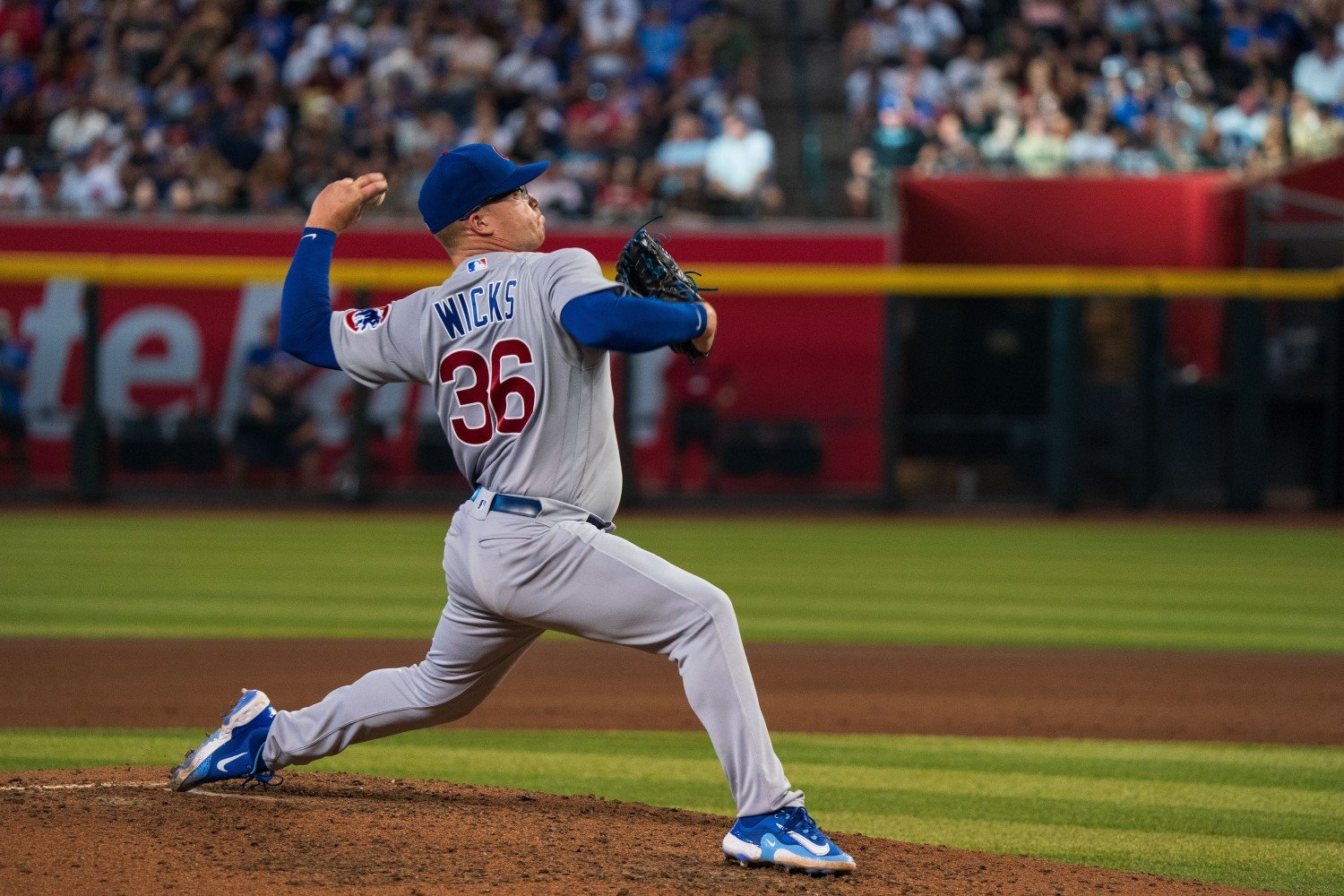 We'll have a full preview of the battle for the fifth spot in the Cubs' starting rotation later this week, but for today, let's talk about Jordan Wicks, and only Jordan Wicks. Almost a month ago, our Jason Ross broke down the shift in the way Wicks attacked hitters that took place when he matriculated to the majors last September. It was a good look, focused especially on the location of the young southpaw's fastballs, and it's worth a revisit. Let's turn our attention in another direction, though. Is Wicks throwing too many fastballs altogether? And more broadly, does he need to streamline his arsenal to tap into his potential as a mid-rotation starter? Last year, Wicks made 14 starts after his promotion to Triple-A Iowa, evenly dividing them between that level and MLB. In those outings, he threw a total of 1,117 pitches. Of those, 583 (52.2%) were either four-seamers or sinkers, with roughly a 60/40 split in favor of the four-seamer. His four-seamer sat at 92 miles per hour on average (with a 93.4-MPH 90th-percentile reading), and his sinker was a tick lower (91, and 92.4 for the 90th percentile). By Stuff+, both Wicks's fastballs graded out south of 80 (where 100 is average and higher is better). Based on the pitches' movement, velocity, and release points, they're considerably worse than the league average. That's probably a bit too unkind an assessment. Factor in location, and his four-seamer is nearly average. The sinker still lags, at a 90 Pitching+ mark, though. For years, the league trended away from sinkers. It was a phenomenon I covered closely at Baseball Prospectus. At the heart of the issue was the fact that the pitch doesn't set up any other offering very well, save perhaps a cutter (if a pitcher has exceptional command of both pitches, and is thus able to locate each on either side of home plate) or a slider (against same-handed batters). The pitch is making a comeback in MLB very recently, but in a limited and focused role. Increasingly, hurlers only throw sinkers when they have the platoon advantage, because that's when the pitch is truly helpful. Wicks, however, is a left-handed starting pitcher. Seventy-three lefties made at least five starts last year, and they faced a total of 27,875 batters. Of those, just 5,413 (19.4%, for those not gifted at quick mental long division) batted left-handed. For a lefty starter, roughly four of every five pitches thrown will be to a righty hitter. Given that information, it doesn't make much sense for Wicks to hold onto his sinker, except to the extent that he needs it to set up his other offerings. Here's his movement chart, by pitch type, from the pitcher's perspective. That chart is a bit of a mess. Wicks threw six different pitches in 2023, but some of them overlapped pretty significantly in terms of movement (and often, thus, of location). Of course, no pitcher uses their arsenal the same way regardless of handedness. Wicks threw his four-seamer or change roughly two-thirds of the time against righties, and divvied up the rest between the sinker (about 16 percent of the time), the cutter, and the curveball (roughly 9 percent each). Against lefties, though, his sinker led the way, and he was pretty much just sinker-fastball-slider; his usage of each of the other three pitches was minimal. The sinker is around, then, because it drives Wicks's approach against lefties. Is it genuinely necessary, though? If only a fifth of opposing batters will be lefties, is the sinker valuable enough to keep around, given the fact that its value against righties is minimal and that it might compromise the command and execution of his other weapons? Based on what Wicks did in 2023, yes, it was probably necessary to have the sinker sinkin'. As the scatter pattern of those green dots above shows, Wicks's command of the slider is a bit shaky, so far. Long-term, though, that pitch has potential. It had a 105 Stuff+ last year, so if he could start spotting it better, it would take off. What's the key to controlling the slider better? It's getting rid of the curveball. Consider the spin rate and tilt of his pitches last season. He's not throwing a slider that's materially different from the curve. It's more like they're two variants on the same breaking ball. We can see this even better by examining the difference between the direction of the spin he imparts on release and the tilt of the actual break on the ball as it flies toward the plate. We can not only see, here, that the curve and slider move differently based mostly on the orientation of the seams, but that the sinker and changeup are really just different-speed versions of the same pitch. They come out of the hand with very similar spin; they actually run more to the arm side and have heavier action than that spin tells the hitter. These are two sets of pitches that, while engineered for opposite sets of opponents (the sinker and the slider for lefties, the change and the curve for righties) do pretty much the same things. We can see, too, that the cutter is not one of those especially slider-like ones; it's mostly a pitch that plays off the sinker. If Wicks isn't going to see many left-handed batters anyway, the sinker just interferes with things. His fastball already has some cut-ride action, so he really doesn't need the cutter for righties. Therefore, he doesn't need the sinker to set it up. He should scrap that pitch, and get used to commanding the four-seamer all over the zone. If he can't do that, nothing else is going to matter. Last year, he showed plenty of ability to work toward the glove side with that four-seamer, anyway. On the other hand, keeping the slider makes sense. If he's going to scrap the sinker, he needs a pitch that works off the fastball to attack the few lefties he will see. Just as importantly, though, the slider can work fine against righties. He just needs to become adept at backfooting it. That battle is more mental than physical, since that's where a lefty wants to throw their slider most naturally. There's merely a hurdle to clear when you're throwing it close to an opposing hitter, and risking a free base. Wicks is famously mentally tough, and he has Justin Steele on whom to rely for advice in this very specific, very familiar regard. He should be fine. Here, with the pitches colored by velocity instead of type (because velocity differential matters a lot when you're trying to fool batters and get whiffs), is Wicks's muddled 2023 arsenal. Now, here's the same chart, with the pitches tagged as sinkers, cutters, and curves taken out, leaving only the four-seamer, changeup, and slider. To really bring the 2024 approach I'm recommending into focus, you need to tighten and enlarge that righthand cluster, where the sliders are. He'll be able to manipulate and modulate that pitch, as this spray pattern shows, but he'll eventually command it much more neatly. There are fewer fastballs in this mix, by a wide margin. There are more changeups to righties, and a few more sliders. There are a lot more sliders to lefties, and probably a few more changeups: get them looking away, let that pitch sink under their hands. This isn't the set of changes someone would advocate in the pursuit of turning Wicks into an ace. He would need four pitches for that, and it's probably plausible for him to hold onto either the cutter or the curveball, albeit with a few tweaks. Realistically, though, Wicks probably isn't ace-caliber, and that's ok. With many savvy teammates, good coaches, his own superb athleticism and a poise that shined through in his brief stint with the team last fall, Wicks should be able to contribute as an average or better starter for the team for much of 2024. He just needs to get some of the stuff that doesn't match his role, his velocity band, or his motor preferences out of the way, so he can do more with the things that make him a top prospect within the organization. What are your hopes for Wicks in 2024? How would you tweak his game in order to ensure he can stick as a valuable starting pitcher? Let's discuss his rookie season more in the comments.
