Matthew Trueblood
-
Posts
2,479 -
Joined
-
Last visited
-
Days Won
2
Content Type
Profiles
Joomla Posts 1
Chicago Cubs Videos
Chicago Cubs Free Agent & Trade Rumors, Notes, & Tidbits
2026 Chicago Cubs Top Prospects Ranking
News
2023 Chicago Cubs Draft Picks
Guides & Resources
2024 Chicago Cubs Draft Picks
The Chicago Cubs Players Project
2025 Chicago Cubs Draft Pick Tracker
2026 Chicago Cubs Draft Tracker: Picks & Bonuses
Blogs
Events
Forums
Store
Gallery
Everything posted by Matthew Trueblood
-
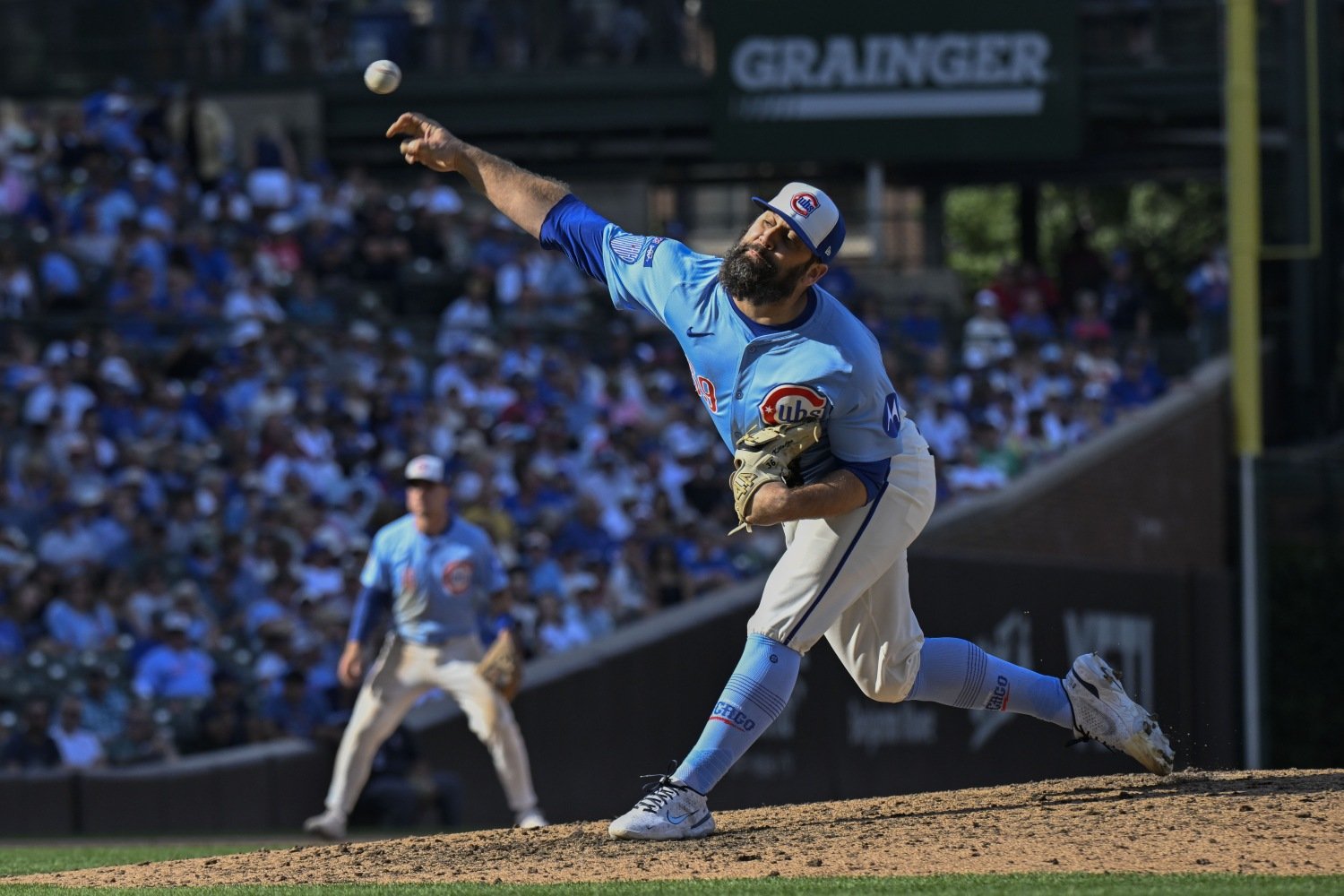 To some extent, Andrew Kittredge is your standard-issue 2025 relief pitcher. He's big and hirsute and a sinker-slider guy. Specifically, before the Cubs dealt for him at the end of July, he was a "95-and-a-slider" guy, which is the get-in cost for a modern high-leverage arm. Everyone throws 95 and has a slider. What makes you special? Historically, Kittredge's answer to that question has been control. He hasn't often stood out from the crowd, in truth, but in his best years (2021, 2024), he's stayed healthy enough to be a reliable arm; walked very few batters; kept the ball in the park; and missed just enough bats to earn late-inning looks. He's been good more often than he's been great, and hurt more often than he's been good, but he's got 95 and a slider and the ability to locate each fairly well. Once the Cubs got hold of him, though, everything about Kittredge glowed up a bit. Ok, he's still beardy and old-looking, but in terms of performance, there's been a tangible change. While with the Orioles, this year, his sinker averaged 94.9 miles per hour, and his slider sat at 88.8. Since coming to the Cubs, the sinker is up to 95.7—and the slider is sizzling even more, relatively speaking, at 89.9. A slider that hard is a true out pitch. Assuming it still has some movement (and his movement numbers are essentially unchanged from one place to the other), a slider at 90 makes you stand out from the crowd in a big way. It makes a huge difference to add a tick to both one's fastball and one's slider. That's why, on the whole, Stuff+ likes Kittredge's arsenal better since he changed laundry. Stuff+ Pitch Type Team Sinker Slider Four-Seamer Orioles 100 102 89 Cubs 104 107 93 It might be tempting to think that that, alone, explains why Kittredge has been so good with the Cubs thus far. He has been tremendous, with a 2.89 ERA, 0.9 Win Probability Added (WPA), 37.7% strikeout rate and 4.3% walk rate in 69 batters faced. But is that just because he's throwing harder, and a slider plays up that much once you crank it into the 90s? No. Location+ Pitch Type Team Sinker Slider Four-Seamer Orioles 91 109 117 Cubs 115 122 112 Although the extra velocity he's found does matter, it's where he's throwing it that has turned Kittredge into the Cubs' latest super-weapon in relief. Since the deadline, 417 pitchers have thrown at least 10 innings in the majors. Kittredge has the sixth-best Location+ in that group, and of the five ahead of him, only one—emerging stud Reid Detmers, converted to the pen this year after flaming out as a starter with the Angels—has a better Stuff+ than Kittredge's. If you're looking for the combination of sheer nastiness and pinpoint location, Kittredge is where you're most likely to find it this October. That assumes, of course, that he can keep this up. To determine whether he can, we had better get some sense of how he's done it. So, first of all, here's where he threw his sinker before the trade, and after it. Notice, here, that he was a one-plan man when it came to the sinker in Baltimore. He tried to throw it, almost exclusively, to the third-base side of home plate. That makes plenty of sense, because his sinker is more of a runner than a true bowling-ball offering. It has heavy action at the bottom of the zone, but it's easier for him to run it sideways than to sink it all that much. With the Cubs, as you can see, there's a big blob of red in the middle of the plate. That's because Kittredge is embracing a more bifurcated plan of attack with the pitch, based on handedness. If I were to split these locations out by handedness (I don't want to oversaturate you with these images, so just imagine, with me), you'd see a lot of his sinkers in the heart of the zone to righties, while they mostly cluster in the lower, outer corner to lefties. To understand fully why that's important, we'll circle back shortly. Let's talk sliders. Between these two pairs of images, one theme that jumps out is how much better Kittredge is keeping the ball down since coming to the Cubs. The slider is just never far above the knees now, whereas it wandered up into a liftable area of the zone more with Baltimore. He's also driving the sinker into the lower reaches of the zone more often since the trade. As I already mentioned, though, that's not a result of a big change in movement data on the pitch. Nor has he materially changed his arm slot or release angle. It's time to talk about how the hurler's two main pitches interact with one another. (He also throws a four-seamer, and he toyed with a splitter earlier this year, but he's basically sinker-slider; we're going to put our focus there.) While with Baltimore, Kittredge had a very traditional plan for attacking righties. The slider started in the middle of the plate and spun down and away from the batter; the sinker started in the same place and bore down and in on them. As we discussed, the sinker didn't always turn down as well as it veered right, but it still worked toward that inner third. The slider would twist toward the low-and-away space, though not always quite get there. The Cubs' innovation with Kittredge has been to have him start everything away from the righties, instead of starting in the middle of anything. Given all the run on that sinker, starting it around the middle of the plate often meant he was losing it off the dish, and batters would be too busy dodging the pitch to swing at it, so it often went for a ball. Meanwhile, his slider is so hard and tight a pitch that it wouldn't always get as low or as away as he wanted. In an attempt to create a tunnel that maximized deception for the hitter, he was trying to get them thinking 'swing' every time, but the ball wasn't always going where it actually needed to go. By aiming at the lower, outer quadrant to righties, he's now ending up with a lot of sinkers that have white on both sides of them. That sounds dangerous, but half the time, the batter gives up on that pitch and takes it for an embarrassingly "hittable" called strike. The other half the time, they're trying to contend with a pitch sitting 96 and running hard toward them; they're not finding the barrel with it. Meanwhile, the slider is dipping out of the zone more often, but he's set the hitter up to be defensive about the zone, and they're chasing it at a good rate. Because of the mental starting point for the pitch, even a slight miss isn't going to get him hurt at all. To lefties, the story is a bit different. Kittredge's plan with them was to throw that sinker on the outer part, but also to start the slider far away from them and nip at the backdoor corner. That's pitching scared, and the Cubs have convinced him to abandon it. The sinker still goes to that outer edge, but starts in the middle of the plate. The slider, meanwhile, is dipping more toward them, and just below the zone. Kittredge's location plan for his stuff to righties while in Baltimore has essentially become his plan to lefties with Chicago, although he's getting everything down just a tiny bit more. To righties, meanwhile, he's devised this whole new way to use the same pitch shapes and interactions. Daniel Palencia will get some rehab work with Triple-A Iowa this weekend. Brad Keller remains an impressive specimen and at least a co-closer in Palencia's absence. As Kittredge has settled into his role with the Cubs, though, he's made a strong case to become the relief ace of this team as it heads into the postseason. His presence gives their bullpen the depth to seriously ponder a deep run into October. Ryan Pressly failed, but the team still found a right-handed graybeard who can anchor their pen with plus stuff and a lot of veteran savvy.
 -
Image courtesy of © Charles LeClaire-Imagn Images The words should have sounded trite, or at least overconfident. When most players talk about winning as much as Dansby Swanson did upon his introduction as a Chicago Cub in January 2023, it comes off as blather. They mean it, of course, but they usually mean it in a slightly self-serving way, or they have a generalized mindset that winning is good but a lack of real, specific concepts that allow them to anchor winning at the center of what they do. So much is beyond the control of any one player on a baseball diamond that boasting about the intent to win feels like so much overheated bravado. With Swanson, though, there was undeniably a little more depth to it. Firstly, his words carried more weight than the same ones would have if uttered by most other players. He'd won one national championship and come up one win short of another with Vanderbilt. He'd won a ring with the team from just outside Atlanta, and during his big-league tenure with them, they were 486-378 when he played. That's a 91-win pace, and it includes the postseason, where they were 22-15 with him. As much as any one player can be a proven winner, in baseball, Swanson is one. Secondly, Swanson wasn't short on specifics. “If I go 4-for-4 and we lose, I’m not a happy camper. You can ask my wife. Like, we don’t do losing. That’s not something we like," he said at his first press conference. “The important goal is winning. That’s the only stat that matters. Bringing that sort of philosophy is really, really important. It’s important to get all the guys to buy into, which they will. That’s just who we are at our core. And who I believe that we will be moving forward.” He's a self-described trash talker, and he brought swagger to the Cubs clubhouse right away—not a flashy, insecure kind, but a real expectation of victory and an understanding that it would be achieved only by being willing to look it right in the eye. “And then when you start to win, it really starts to build confidence in the organization; it starts to build confidence within your teammates," he said. "Winning baseball is really just about playing the game to win. I know it sounds super cliché, but there are so many times and examples where you can tell like, ‘Oh, this guy is doing this for himself.’ Or, ‘He was wanting to do this to get the RBI instead of moving the runner or whatever.’" That does sound cliché, but Swanson has brought that attitude to work every day since the one on which he said it all. By no means has that translated into the success he imagined or expected, at all times. The team limped through two disappointing seasons to start his Cubs career, and he was sometimes the problem, rather than the solution—not because he faltered as a leader or became selfish on the field, but because he probably played at some times when the better part of valor would have been the discretion to spend a bit more time recuperating from a nagging injury. It's worth noting that those two rough seasons were each technically winning ones, since the Cubs' previous two hadn't been and since it speaks a bit to the high standard Swanson helped set and the bar below which he refused to let them sag, but 83 wins per year wasn't what he meant when he walked in the door talking about winning. What the team experienced Wednesday is more like it. They clinched their first real playoff berth since 2017, on a day when Swanson extended his hitting streak to seven games and drew his eighth walk of September. He's been the leader of the team almost since he walked through the door, but over the last month or so, he's also been the engine of their surge to seal a playoff spot and virtually lock up home-field advantage for the Wild Card Series. That starts with his defense, of course, not because he's been his best self at shortstop this year—he's probably permanently lost a step, there—but because he's the captain and the central defender of a unit on which so much of the Cubs' success hinges. He's gotten better as the season has progressed, shaking off a shaky start to remain a solidly above-average fielder. At the plate, though, he's also made some huge contributions of late. Now up to 22 home runs and 17 stolen bases on the year, Swanson is filling up the stat sheet—but as he said so passionately a few years ago, that's not the right way to measure his importance to the team. Lately, he's taken smart, team-oriented at-bats, and it's led to lots of added value in terms of winning the game for the team, even when it hasn't meant getting hits, per se. Here's a three-year look at his rolling 15-game averages for weighted on-base average (a holistic measurement of offensive output) and win probability added (which assigns value to all outcomes based on situation within a game). These numbers usually move together, for any given hitter, and have generally done so for Swanson since he came to Chicago—but that's changed lately. Sometimes, Swanson shows an ability to take over games with great plate appearances or high-leverage breathroughs, even when he's not actually hitting exceptionally. He did it for a stretch late last summer, and he's doing it again over the last three weeks or so. Lately, Swanson is struggling to get to much power—which is peculiar, because he'd just been doing that very thing well last month, when he started to warm up after his midseason slump. However, he's been able to convert more walks lately, and his approach is yielding more singles scattered across the field. It's been fascinating to watch Swanson's approach evolve this year. He clearly got frustrated, after a first half in which he showed good plate discipline but wasn't always being rewarded, and went a bit swing-crazy for a spell. On the whole, though, he's managed the strike zone well. He's been increasingly focused on pulling and lifting the ball as the season has gone on, too. If you watch his at-bats and see a bit past the granularity the numbers can capture, though, there's an important nuance to grasp: swinging for air balls to left field hasn't meant swinging for the fences. Swanson has hit more homers this year, to be sure, and they're certainly going to left, but he's also stroking more line-drive doubles to the gap and down the left-field line. That jibes with the approach we've seen Matt Shaw and Nico Hoerner adopt in the second half, too. That trio is batting .281/.342/.446 since the All-Star break, which indicates that it's a good approach for the group. That's the other thing, too: there really seems to be a group approach, spearheaded by Swanson. His at-bats look intelligent. He's taking pitches he chased in the past, but he's also attacking certain ones to generate sacrifice flies or to move a runner from second to third when there's nobody out. He's finished his walks lately, after struggling to do so in the first half. He's also communicating constantly with his teammates; the flow of information shared between Cubs hitters seems more robust lately. At times, this year, the Cubs have been (almost) too consistent for their own good. They haven't lost four games in a row all year, but they only won five in a row once, and that was within the first 10 games of their season. They couldn't chain together enough good things to go on a streak this summer, which (in a stark contrast) is how they lost touch with the Brewers and their series of long winning streaks. Now, though, they might be getting into that very habit. They've won four in a row and seven out of eight. This is the hottest they've been since May. Swanson is in winner mode, and so is his squad. Whether they can make the magic last (and come back again, after whenever it next ebbs) will be the defining question of the season. View full article
-
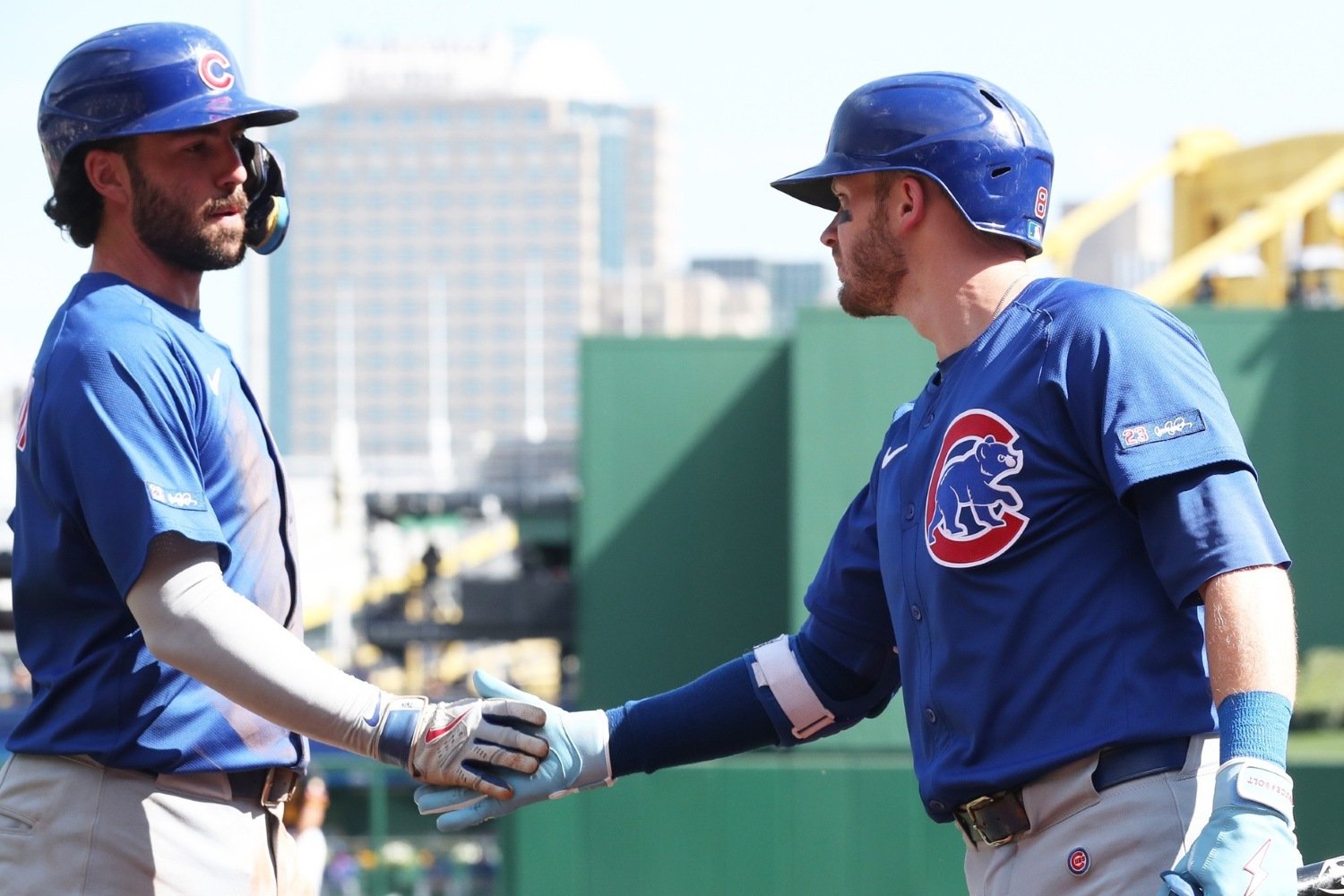 The words should have sounded trite, or at least overconfident. When most players talk about winning as much as Dansby Swanson did upon his introduction as a Chicago Cub in January 2023, it comes off as blather. They mean it, of course, but they usually mean it in a slightly self-serving way, or they have a generalized mindset that winning is good but a lack of real, specific concepts that allow them to anchor winning at the center of what they do. So much is beyond the control of any one player on a baseball diamond that boasting about the intent to win feels like so much overheated bravado. With Swanson, though, there was undeniably a little more depth to it. Firstly, his words carried more weight than the same ones would have if uttered by most other players. He'd won one national championship and come up one win short of another with Vanderbilt. He'd won a ring with the team from just outside Atlanta, and during his big-league tenure with them, they were 486-378 when he played. That's a 91-win pace, and it includes the postseason, where they were 22-15 with him. As much as any one player can be a proven winner, in baseball, Swanson is one. Secondly, Swanson wasn't short on specifics. “If I go 4-for-4 and we lose, I’m not a happy camper. You can ask my wife. Like, we don’t do losing. That’s not something we like," he said at his first press conference. “The important goal is winning. That’s the only stat that matters. Bringing that sort of philosophy is really, really important. It’s important to get all the guys to buy into, which they will. That’s just who we are at our core. And who I believe that we will be moving forward.” He's a self-described trash talker, and he brought swagger to the Cubs clubhouse right away—not a flashy, insecure kind, but a real expectation of victory and an understanding that it would be achieved only by being willing to look it right in the eye. “And then when you start to win, it really starts to build confidence in the organization; it starts to build confidence within your teammates," he said. "Winning baseball is really just about playing the game to win. I know it sounds super cliché, but there are so many times and examples where you can tell like, ‘Oh, this guy is doing this for himself.’ Or, ‘He was wanting to do this to get the RBI instead of moving the runner or whatever.’" That does sound cliché, but Swanson has brought that attitude to work every day since the one on which he said it all. By no means has that translated into the success he imagined or expected, at all times. The team limped through two disappointing seasons to start his Cubs career, and he was sometimes the problem, rather than the solution—not because he faltered as a leader or became selfish on the field, but because he probably played at some times when the better part of valor would have been the discretion to spend a bit more time recuperating from a nagging injury. It's worth noting that those two rough seasons were each technically winning ones, since the Cubs' previous two hadn't been and since it speaks a bit to the high standard Swanson helped set and the bar below which he refused to let them sag, but 83 wins per year wasn't what he meant when he walked in the door talking about winning. What the team experienced Wednesday is more like it. They clinched their first real playoff berth since 2017, on a day when Swanson extended his hitting streak to seven games and drew his eighth walk of September. He's been the leader of the team almost since he walked through the door, but over the last month or so, he's also been the engine of their surge to seal a playoff spot and virtually lock up home-field advantage for the Wild Card Series. That starts with his defense, of course, not because he's been his best self at shortstop this year—he's probably permanently lost a step, there—but because he's the captain and the central defender of a unit on which so much of the Cubs' success hinges. He's gotten better as the season has progressed, shaking off a shaky start to remain a solidly above-average fielder. At the plate, though, he's also made some huge contributions of late. Now up to 22 home runs and 17 stolen bases on the year, Swanson is filling up the stat sheet—but as he said so passionately a few years ago, that's not the right way to measure his importance to the team. Lately, he's taken smart, team-oriented at-bats, and it's led to lots of added value in terms of winning the game for the team, even when it hasn't meant getting hits, per se. Here's a three-year look at his rolling 15-game averages for weighted on-base average (a holistic measurement of offensive output) and win probability added (which assigns value to all outcomes based on situation within a game). These numbers usually move together, for any given hitter, and have generally done so for Swanson since he came to Chicago—but that's changed lately. Sometimes, Swanson shows an ability to take over games with great plate appearances or high-leverage breathroughs, even when he's not actually hitting exceptionally. He did it for a stretch late last summer, and he's doing it again over the last three weeks or so. Lately, Swanson is struggling to get to much power—which is peculiar, because he'd just been doing that very thing well last month, when he started to warm up after his midseason slump. However, he's been able to convert more walks lately, and his approach is yielding more singles scattered across the field. It's been fascinating to watch Swanson's approach evolve this year. He clearly got frustrated, after a first half in which he showed good plate discipline but wasn't always being rewarded, and went a bit swing-crazy for a spell. On the whole, though, he's managed the strike zone well. He's been increasingly focused on pulling and lifting the ball as the season has gone on, too. If you watch his at-bats and see a bit past the granularity the numbers can capture, though, there's an important nuance to grasp: swinging for air balls to left field hasn't meant swinging for the fences. Swanson has hit more homers this year, to be sure, and they're certainly going to left, but he's also stroking more line-drive doubles to the gap and down the left-field line. That jibes with the approach we've seen Matt Shaw and Nico Hoerner adopt in the second half, too. That trio is batting .281/.342/.446 since the All-Star break, which indicates that it's a good approach for the group. That's the other thing, too: there really seems to be a group approach, spearheaded by Swanson. His at-bats look intelligent. He's taking pitches he chased in the past, but he's also attacking certain ones to generate sacrifice flies or to move a runner from second to third when there's nobody out. He's finished his walks lately, after struggling to do so in the first half. He's also communicating constantly with his teammates; the flow of information shared between Cubs hitters seems more robust lately. At times, this year, the Cubs have been (almost) too consistent for their own good. They haven't lost four games in a row all year, but they only won five in a row once, and that was within the first 10 games of their season. They couldn't chain together enough good things to go on a streak this summer, which (in a stark contrast) is how they lost touch with the Brewers and their series of long winning streaks. Now, though, they might be getting into that very habit. They've won four in a row and seven out of eight. This is the hottest they've been since May. Swanson is in winner mode, and so is his squad. Whether they can make the magic last (and come back again, after whenever it next ebbs) will be the defining question of the season.
 -
Image courtesy of © Charles LeClaire-Imagn Images The Cubs didn't sit around in a visiting clubhouse with plastic on the walls Tuesday night. They have a day game Wednesday, and it made much more sense to go get a good night's sleep at the team hotel. In beating Paul Skenes and claiming their third straight series win by taking the first two games in Pittsburgh, they'd done their job. Besides, technically speaking, they couldn't mathematically clinch a playoff berth even when the results came in from the West Coast later in the evening. 'Technically' and 'mathematically' are the most important words in that sentence, though. For all intents and purposes, when the Diamondbacks walked off the Giants to give San Francisco their 76th loss deep in the night (by Pittsburgh's and Chicago's clocks), Chicago finished the thing. The only team left in pursuit of the final Wild Card slot with fewer than 76 losses is Arizona, over whom the Cubs hold the tiebreaker based on head-to-head record. Since the Cubs are now 87-64, they can't lose more than 75 games by season's end. It's a little bit funny to ponder the lone scenario by which the Cubs could still be denied a place in the playoff field, so let's indulge in a laugh. Here's what would have to happen for Chicago to be left out: The Cubs lose their final 11 games; AND The Diamondbacks win their final 10 games; AND The Dodgers go exactly 3-8 the rest of the way; AND The Padres go exactly 5-6 the rest of the way; AND The Mets go at least 9-2 the rest of the way. In that case, the Diamondbacks, Dodgers and Padres would all tie for first in the NL West. Arizona currently stands 5-5 against each of the other two and has three games left with each, so by means of having swept them en route to this miraculous tie, they would claim the three-way tiebreaker and win the division. The Mets would claim the first Wild Card slot, because they'd either be just ahead of the pack or would win the four-way tiebreaker by means of having the best aggregate record in games among the four. That would push the Cubs, Dodgers and Padres into a three-way tiebreaker. The Dodgers would win that, by means of having the best aggregate record in games among the three, mostly because they're 9-4 against San Diego this year. The Cubs and Padres would thus move into a two-team tiebreaker for the final spot, and San Diego would win it, because in this scenario, the Cubs would have lost eight straight intradivisional games to close out the season, finishing with a worse one than San Diego has already guaranteed themselves—and that's the next tiebreaking criterion after head-to-head record. (The Cubs and Padres split their season series, 3-3.) Because there are overlapping games in this picture—the Cubs still play the Mets, the Diamondbacks have those games against the Dodgers and Padres, the Padres still have to finish their current series against the Mets—the math gets hairier than I care to handle. I can't give you the exact odds against this happening. I can, however, tell you that a very fair approximation (not an exaggeration or a joke, but my real best estimate) is 172 million-to-1. It's fair to say, then, that the Cubs effectively clinched their place in the playoffs Tuesday night. The suspense had long been gone on that front, anyway. By getting their act together this month and winning eight of their 10 series since the midpoint of August, they removed any stress from the equation. Six wins in their last seven games have sent them surging so far ahead of the pack that it feels silly even to worry about whether the above counts as having clinched or not. Their magic number to ensure home-field advantage in the Wild Card Series is all the way down to 7, with 22 combined games remaining for them and San Diego. They might as well save their champagne for the moment when they get there, at this point. Playing well from mid-August to mid-September is wonderful; it certainly feels better than backing and tumbling toward a playoff spot. However, the Cubs' failure to keep pace with the Brewers in the NL Central has taken much of the juice out of September. Winning a chip and a chair for October is well and good, but it won't feel like much of an achievement if they don't capitalize on it by winning a series or two in the playoffs. A division title would have been sufficient to call the season a success; getting in as a Wild Card only gives them a second chance to do something really meaningful. Behind Matthew Boyd, the team will try to sweep the Pirates Wednesday and leave town smelling of booze and victory. Either way, though, plenty of work still lies ahead. View full article
-
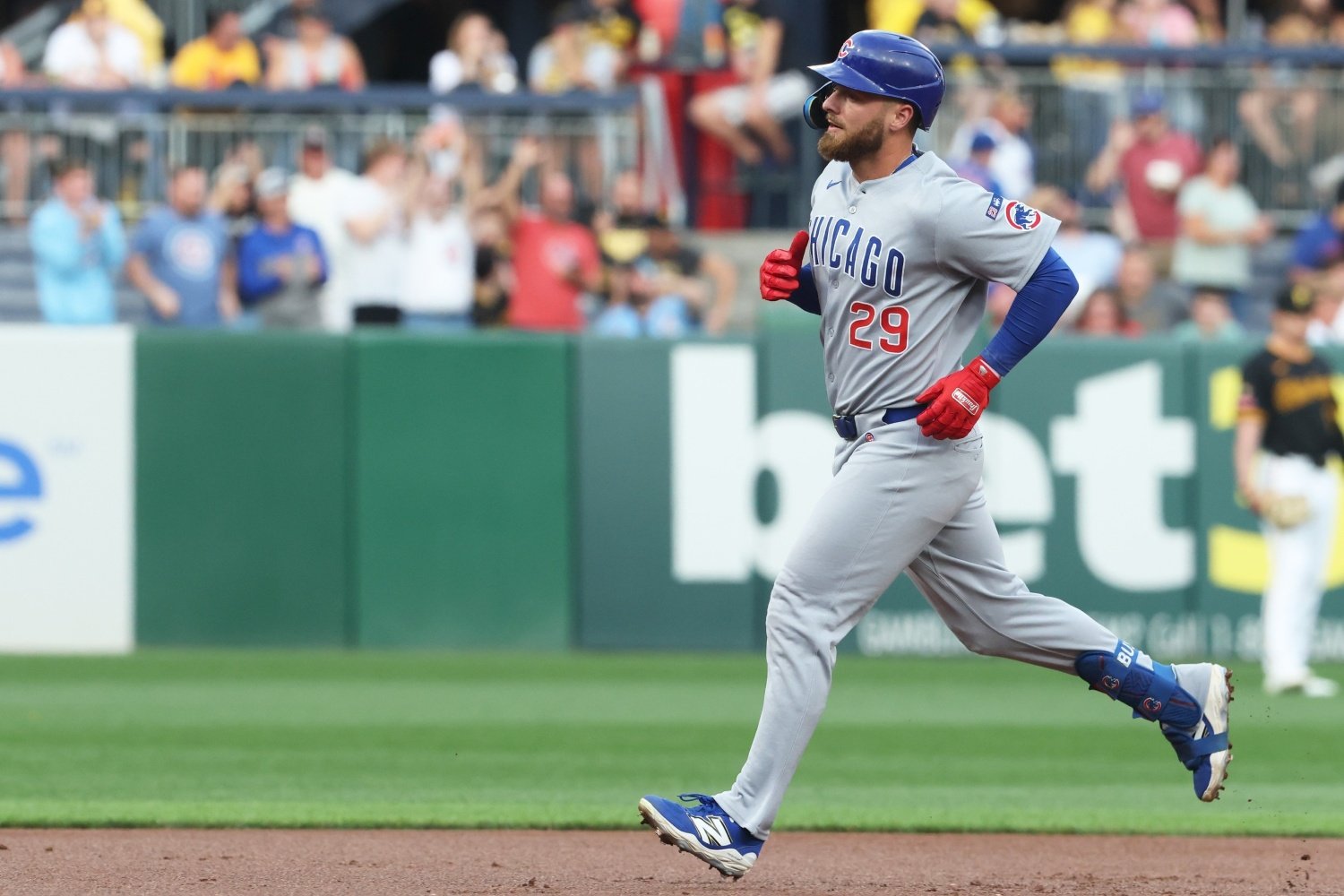 The Cubs didn't sit around in a visiting clubhouse with plastic on the walls Tuesday night. They have a day game Wednesday, and it made much more sense to go get a good night's sleep at the team hotel. In beating Paul Skenes and claiming their third straight series win by taking the first two games in Pittsburgh, they'd done their job. Besides, technically speaking, they couldn't mathematically clinch a playoff berth even when the results came in from the West Coast later in the evening. 'Technically' and 'mathematically' are the most important words in that sentence, though. For all intents and purposes, when the Diamondbacks walked off the Giants to give San Francisco their 76th loss deep in the night (by Pittsburgh's and Chicago's clocks), Chicago finished the thing. The only team left in pursuit of the final Wild Card slot with fewer than 76 losses is Arizona, over whom the Cubs hold the tiebreaker based on head-to-head record. Since the Cubs are now 87-64, they can't lose more than 75 games by season's end. It's a little bit funny to ponder the lone scenario by which the Cubs could still be denied a place in the playoff field, so let's indulge in a laugh. Here's what would have to happen for Chicago to be left out: The Cubs lose their final 11 games; AND The Diamondbacks win their final 10 games; AND The Dodgers go exactly 3-8 the rest of the way; AND The Padres go exactly 5-6 the rest of the way; AND The Mets go at least 9-2 the rest of the way. In that case, the Diamondbacks, Dodgers and Padres would all tie for first in the NL West. Arizona currently stands 5-5 against each of the other two and has three games left with each, so by means of having swept them en route to this miraculous tie, they would claim the three-way tiebreaker and win the division. The Mets would claim the first Wild Card slot, because they'd either be just ahead of the pack or would win the four-way tiebreaker by means of having the best aggregate record in games among the four. That would push the Cubs, Dodgers and Padres into a three-way tiebreaker. The Dodgers would win that, by means of having the best aggregate record in games among the three, mostly because they're 9-4 against San Diego this year. The Cubs and Padres would thus move into a two-team tiebreaker for the final spot, and San Diego would win it, because in this scenario, the Cubs would have lost eight straight intradivisional games to close out the season, finishing with a worse one than San Diego has already guaranteed themselves—and that's the next tiebreaking criterion after head-to-head record. (The Cubs and Padres split their season series, 3-3.) Because there are overlapping games in this picture—the Cubs still play the Mets, the Diamondbacks have those games against the Dodgers and Padres, the Padres still have to finish their current series against the Mets—the math gets hairier than I care to handle. I can't give you the exact odds against this happening. I can, however, tell you that a very fair approximation (not an exaggeration or a joke, but my real best estimate) is 172 million-to-1. It's fair to say, then, that the Cubs effectively clinched their place in the playoffs Tuesday night. The suspense had long been gone on that front, anyway. By getting their act together this month and winning eight of their 10 series since the midpoint of August, they removed any stress from the equation. Six wins in their last seven games have sent them surging so far ahead of the pack that it feels silly even to worry about whether the above counts as having clinched or not. Their magic number to ensure home-field advantage in the Wild Card Series is all the way down to 7, with 22 combined games remaining for them and San Diego. They might as well save their champagne for the moment when they get there, at this point. Playing well from mid-August to mid-September is wonderful; it certainly feels better than backing and tumbling toward a playoff spot. However, the Cubs' failure to keep pace with the Brewers in the NL Central has taken much of the juice out of September. Winning a chip and a chair for October is well and good, but it won't feel like much of an achievement if they don't capitalize on it by winning a series or two in the playoffs. A division title would have been sufficient to call the season a success; getting in as a Wild Card only gives them a second chance to do something really meaningful. Behind Matthew Boyd, the team will try to sweep the Pirates Wednesday and leave town smelling of booze and victory. Either way, though, plenty of work still lies ahead.
 -
Image courtesy of © Charles LeClaire-Imagn Images We've documented this carefully, throughout the summer. Pete Crow-Armstrong started ice-cold this spring, but he quickly got into a mode in which he was consistently able to pull the ball in the air, with thunderous authority. Then, in late June, some grit got into the mechanism. Specifically, he found himself overstriding, which elongated his swing and made him frequently late on the fastball. In turn, that made him more susceptible to chasing and missing (or at least mis-hitting) soft stuff below the strike zone. This is not mere supposition; he explained the problem in clear-eyed detail in the final week before the All-Star break. He focused on fixing that problem throughout early July, and did achieve a revival of his best swing in the week or two just after the break. Thereafter, though, he fell back into the same bad habit—this time, worse, and for longer. For much of the last six weeks, he's looked utterly lost at the plate, despite being aware of the issue and fighting to solve it. Lately, though, there have been important signs of life. Crow-Armstrong's bat woke with a roar Monday night in Pittsburgh, as he hit a long home run and a booming double. Even before that, he'd looked slightly better in September than in August. The big problem he'd run into had been a sharply declining attack angle, indicating that he was late to the ball relative to the best version of his swing. Even before Monday, though, that had started to trend back in the right direction. That chart shows the whole narrative given in words and links above, in one image. Crow-Armstrong was consistently able to get his barrel beneath and working up through the ball, and then he wasn't. Then he very briefly was again, and then he wasn't. So the key question is: can this second recovery be a more lasting one? There's some reason to believe so. To understand why, consider a few shots of Crow-Armstrong addressing an incoming pitch, at the moment when his front foot lands. On the left, you can see a pitch that turned into a harmless flyout to left field, a month ago in Toronto. In the center, he's about to ground out to first base in the suburbs of Atlanta, last week. On the right, he's en route to hitting that home run in Pittsburgh. The difference should be immediately apparent. It doesn't take an expert hitting coach. Crow-Armstrong has, progressively, eliminated the hitch in his swing. A month ago, he wasn't even really pushing off his back leg until his front foot landed, which both sapped some of the force from his swing and led to his hands being late. Even a week ago, as he was more consciously driving off the back leg even as he came forward, the hands weren't getting started early enough. As a result, he had to rush the barrel to the zone, and even when he got there, he was never in full control of his swing. He was missing a lot of hittable pitches, tapping them unthreateningly because the good part of the bat was somewhere else when he found the ball. Twice, Monday night, he got the barrel all the way to the ball, because his swing had rhythm and connection. His upper and lower halves were in sync in a way that had been missing for weeks. Encouragingly, the homer came on a fat fastball, but the double came on a decent strike-to-ball offspeed offering. He's on time for both kinds of pitches, because he's also more adaptable when he's working fluidly from head to toe. That does not, alas, mean he's permanently fixed and will sustain this brilliance now for the balance of the year. He's made progress, and Monday marked a big mile marker on the road back to his first-half excellence, but he's still a very free swinger whose swing has proved hard to calibrate and repeat over long periods. He still has some issues with stride length; he's just mitigating them by making his move sooner and quicker. However, it's not unreasonable to draw major optimism from Monday's explosion. Crow-Armstrong has addressed an important weakness in his game, and if it proves to be a fix he can maintain, he can get right back to being the superstar we saw in the first half. That would be an improbable recovery, given the nature of his shortcomings and how little time is left in the year, but he's already done a substantial piece of the work. View full article
-
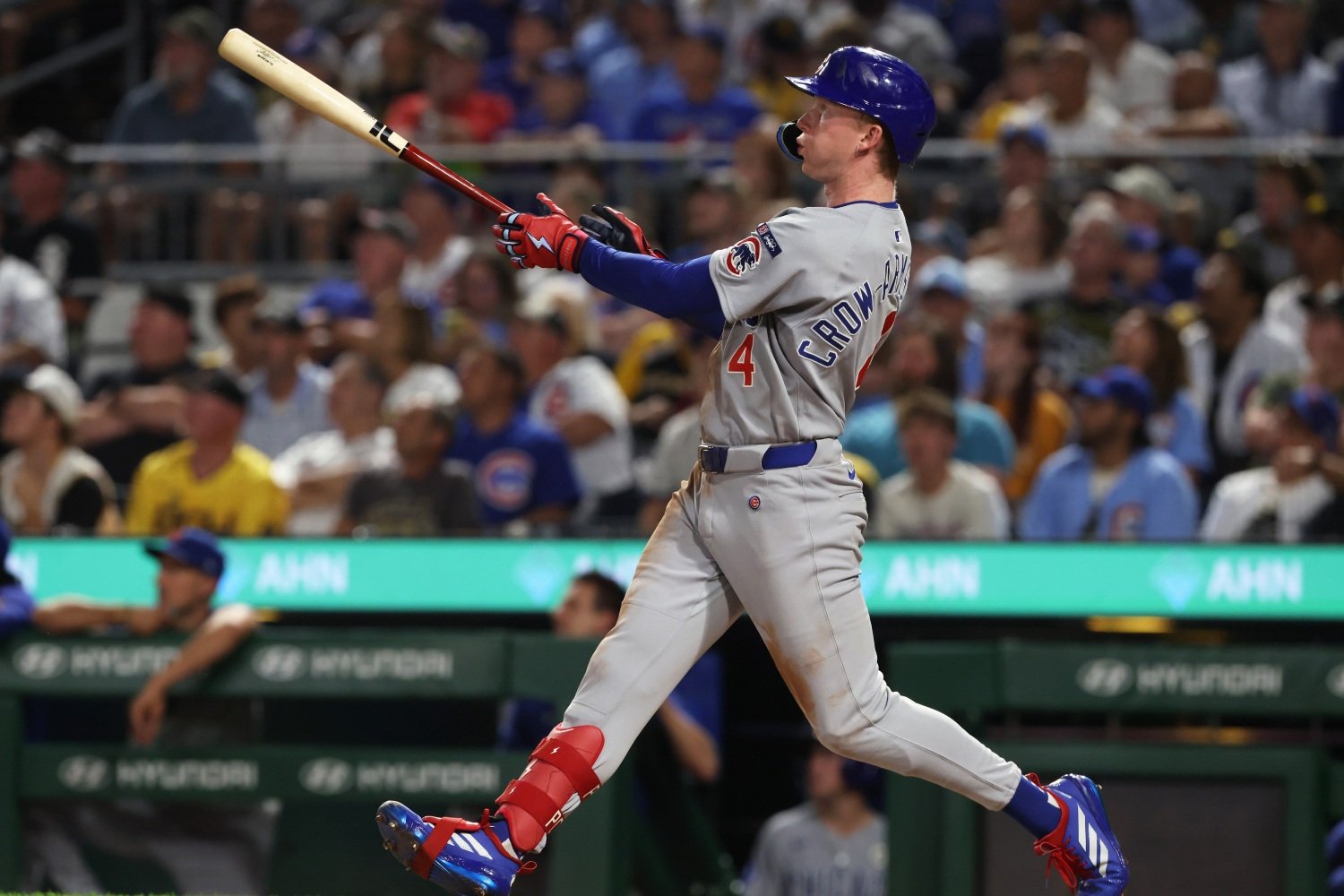 We've documented this carefully, throughout the summer. Pete Crow-Armstrong started ice-cold this spring, but he quickly got into a mode in which he was consistently able to pull the ball in the air, with thunderous authority. Then, in late June, some grit got into the mechanism. Specifically, he found himself overstriding, which elongated his swing and made him frequently late on the fastball. In turn, that made him more susceptible to chasing and missing (or at least mis-hitting) soft stuff below the strike zone. This is not mere supposition; he explained the problem in clear-eyed detail in the final week before the All-Star break. He focused on fixing that problem throughout early July, and did achieve a revival of his best swing in the week or two just after the break. Thereafter, though, he fell back into the same bad habit—this time, worse, and for longer. For much of the last six weeks, he's looked utterly lost at the plate, despite being aware of the issue and fighting to solve it. Lately, though, there have been important signs of life. Crow-Armstrong's bat woke with a roar Monday night in Pittsburgh, as he hit a long home run and a booming double. Even before that, he'd looked slightly better in September than in August. The big problem he'd run into had been a sharply declining attack angle, indicating that he was late to the ball relative to the best version of his swing. Even before Monday, though, that had started to trend back in the right direction. That chart shows the whole narrative given in words and links above, in one image. Crow-Armstrong was consistently able to get his barrel beneath and working up through the ball, and then he wasn't. Then he very briefly was again, and then he wasn't. So the key question is: can this second recovery be a more lasting one? There's some reason to believe so. To understand why, consider a few shots of Crow-Armstrong addressing an incoming pitch, at the moment when his front foot lands. On the left, you can see a pitch that turned into a harmless flyout to left field, a month ago in Toronto. In the center, he's about to ground out to first base in the suburbs of Atlanta, last week. On the right, he's en route to hitting that home run in Pittsburgh. The difference should be immediately apparent. It doesn't take an expert hitting coach. Crow-Armstrong has, progressively, eliminated the hitch in his swing. A month ago, he wasn't even really pushing off his back leg until his front foot landed, which both sapped some of the force from his swing and led to his hands being late. Even a week ago, as he was more consciously driving off the back leg even as he came forward, the hands weren't getting started early enough. As a result, he had to rush the barrel to the zone, and even when he got there, he was never in full control of his swing. He was missing a lot of hittable pitches, tapping them unthreateningly because the good part of the bat was somewhere else when he found the ball. Twice, Monday night, he got the barrel all the way to the ball, because his swing had rhythm and connection. His upper and lower halves were in sync in a way that had been missing for weeks. Encouragingly, the homer came on a fat fastball, but the double came on a decent strike-to-ball offspeed offering. He's on time for both kinds of pitches, because he's also more adaptable when he's working fluidly from head to toe. That does not, alas, mean he's permanently fixed and will sustain this brilliance now for the balance of the year. He's made progress, and Monday marked a big mile marker on the road back to his first-half excellence, but he's still a very free swinger whose swing has proved hard to calibrate and repeat over long periods. He still has some issues with stride length; he's just mitigating them by making his move sooner and quicker. However, it's not unreasonable to draw major optimism from Monday's explosion. Crow-Armstrong has addressed an important weakness in his game, and if it proves to be a fix he can maintain, he can get right back to being the superstar we saw in the first half. That would be an improbable recovery, given the nature of his shortcomings and how little time is left in the year, but he's already done a substantial piece of the work.
 -
Image courtesy of © Charles LeClaire-Imagn Images The nominees for the 2025 Roberto Clemente Award were announced Monday, as each of the 30 MLB teams selected the player they believe best embodies the league's values of character, community involvement, philanthropy and positive contributions on and off the field. The award is, in effect, the league's Man of the Year trophy, named after a player who had an enormous, transformative impact on the game—one very much akin to Robinson's. Though not the first Black player from Latin America to play in the majors, Clemente was very much the first star from that demographic, and like Robinson, he was unafraid to speak his mind or to back his thoughts and words with action. He endured slightly less focused racial animus than did Robinson, coming along more than half a decade into the integration of the National and American Leagues, but he had to deal with different prejudices, too—of culture and language, as well as skin color. Clemente was mercurial, but deeply dedicated to that which he believed in. He died in a plane crash, after he was so irrepressible in collecting and delivering relief supplies to an earthquake-stricken Nicaragua that he chartered a plane that wasn't airworthy and couldn't handle the load he'd amassed. That made Clemente baseball's closest facsimile of a saint, and has made it easy for the league to deify him as a symbol of charity and nobility ever since. That's not an inaccurate image of the man, but nor is it complete. The institution of baseball has always been comfortable with that. For that very reason, they're not sweating as much at the league's central office in New York today. Robinson, who died the same year as Clemente but had spent 15 years in post-playing career public life by then, left a legacy that could never be untangled from the racism and inequality that made up so much of the game's history. Clemente, however, had never been heralded as the same sort of trailblazer as Robinson; his story was mixed in with others somewhat like it. He was a phenomenal player with such a leonine off-field reputation that he could be upheld as the perfect confluence of baseball and personal virtue, in an uncomplicated narrative. Just as three rivers (not two) flow into one another in the city where Clemente became a baseball legend, though, there's a third element that needs to be part of a serious conversation about his impact. Clemente was born in Carolina, Puerto Rico, a majority-Black city that lies cheek-by-jowl alongside the larger, better-resourced, majority-White capital of San Juan. From a young age, he was aware of the tension of his own existence, and when he journeyed to the States and became a professional ballplayer, he never ceased to be. Clemente was born into a Puerto Rico whose future was still very much undecided, as the post-Spanish Caribbean basin took shape under the heavy influence of the United States. Throughout his childhood, though, the U.S. firmed up its control of the archipelago. Clemente was 16 years old when the U.S. military violently quashed a revolution by Puerto Rican nationalists, including by bombing the town of Jayuya and killing civilians who were American citizens. Clemente himself never took up the cause of Puerto Rican independence, but nor did he denounce it. He signed up to serve as an American military reservist, but as he experienced more of the country and its contradictions, he would go on to consider himself a "double outsider," which itself seemed to be a double-entendre. Both his Blackness and his Latino heritage alienated him from neighbors and fans in the States, while his life as a rich and famous boricua made him occasionally feel less welcome on his own home soil—though, of course, he's now virtually venerated there, as some idealized (and partially silenced) version of him is here. Though they have always wanted to trade on his exemplary attitude of service and his extraordinary, stylish play, the league has never wanted much to do with the third current of Clemente's story. Even in times when the political and cultural climate invited more attention to the history and the modern reality of racism and xenophobia, the league never used Roberto Clemente Day to talk much about it. In this climate—one that actively discourages such conversation and whitewashes history to serve the maintenance of an inequitable social order—they've been especially quiet on that front. In fact, in each of the past three years, the league announced the Clemente Award nominees earlier in September, leaving at least a bit more space to (specifically) honor Clemente and (generally) celebrate Hispanic Heritage Month. This year, they've held back those nominations until the day designated for Clemente, crowding the schedule. As for the nominees themselves, whereas 14 players of color were nominated in 2022 and 2023 and 12 in 2024, only seven of this year's 30 are people of color. It's a real shame that the league finds the waters of that third river too swift and too dangerous, because there's great power to be drawn from that current. At a moment when the world seems increasingly obsessed with mutual protection between self-selected tribes, it might be wonderful to make a bigger deal of the fact that Clemente wasn't rushing to his own home with the relief shipment that never made it. Nor was he seeking to serve his adopted hometown, or home nation. He'd only visited Nicaragua a few months earlier, while coaching Team Puerto Rico in the Amateur World Series, but that was enough to make him feel an obligation to his fellow humans. Clemente, who got used to being slapped with labels throughout his life and who came from a place that has lived in a colonialized limbo for over a century now, didn't pause a moment to consider whether the people affected by a disaster thousands of miles away were within his required circle of empathy or help. He took action, with conviction, because those people were worth as much to him as he himself was. We haven't resolved the colonial status of Puerto Rico in any satisfactory way, and life there gets more precarious by the year, as economic forces and climate change conspire against it. We also haven't resolved the sense of twice-baked alienation Clemente so often felt early in his baseball career. Preferring to read the direction of the wind and blow with it, the Commissioner's Office has abdicated any responsibility to address either issue. It can't be that way, for those of us who care a bit more about the game and the world it's played in than do Rob Manfred and his cohort. The history of American influence (sometimes imperialist, sometimes colonialist, sometimes covert, sometimes salutary, sometimes calamitous) in Puerto Rico, the Dominican Republic, Cuba, Venezuela and other places is inextricably connected to the growth and development of baseball. In a sport awash in Spanish speakers and immigrants and supported by no small number of people who sound and look like those players, baseball has a huge, urgent duty to speak up each September—not just about the virtue of a great throwing arm and mission work, but about the relationship between the U.S. and many of its neighbors, and about how wide our circles of empathy ought to sweep. The league doesn't want that conversation right now, so please, start it yourselves. Otherwise, we'll be paying just two-thirds tribute to the legacy of Clemente—and letting too much water flow under the bridge. View full article
-
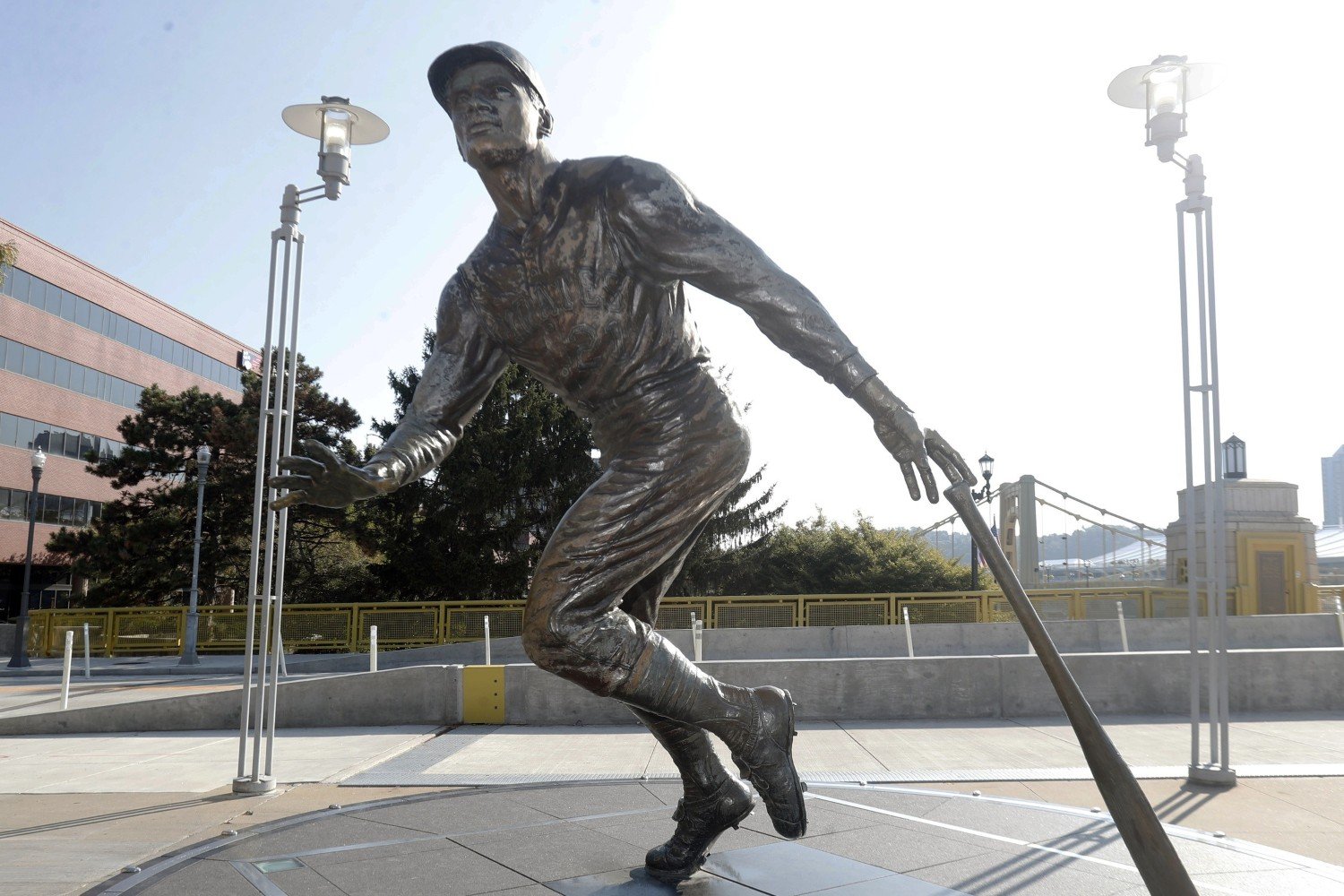 The nominees for the 2025 Roberto Clemente Award were announced Monday, as each of the 30 MLB teams selected the player they believe best embodies the league's values of character, community involvement, philanthropy and positive contributions on and off the field. The award is, in effect, the league's Man of the Year trophy, named after a player who had an enormous, transformative impact on the game—one very much akin to Robinson's. Though not the first Black player from Latin America to play in the majors, Clemente was very much the first star from that demographic, and like Robinson, he was unafraid to speak his mind or to back his thoughts and words with action. He endured slightly less focused racial animus than did Robinson, coming along more than half a decade into the integration of the National and American Leagues, but he had to deal with different prejudices, too—of culture and language, as well as skin color. Clemente was mercurial, but deeply dedicated to that which he believed in. He died in a plane crash, after he was so irrepressible in collecting and delivering relief supplies to an earthquake-stricken Nicaragua that he chartered a plane that wasn't airworthy and couldn't handle the load he'd amassed. That made Clemente baseball's closest facsimile of a saint, and has made it easy for the league to deify him as a symbol of charity and nobility ever since. That's not an inaccurate image of the man, but nor is it complete. The institution of baseball has always been comfortable with that. For that very reason, they're not sweating as much at the league's central office in New York today. Robinson, who died the same year as Clemente but had spent 15 years in post-playing career public life by then, left a legacy that could never be untangled from the racism and inequality that made up so much of the game's history. Clemente, however, had never been heralded as the same sort of trailblazer as Robinson; his story was mixed in with others somewhat like it. He was a phenomenal player with such a leonine off-field reputation that he could be upheld as the perfect confluence of baseball and personal virtue, in an uncomplicated narrative. Just as three rivers (not two) flow into one another in the city where Clemente became a baseball legend, though, there's a third element that needs to be part of a serious conversation about his impact. Clemente was born in Carolina, Puerto Rico, a majority-Black city that lies cheek-by-jowl alongside the larger, better-resourced, majority-White capital of San Juan. From a young age, he was aware of the tension of his own existence, and when he journeyed to the States and became a professional ballplayer, he never ceased to be. Clemente was born into a Puerto Rico whose future was still very much undecided, as the post-Spanish Caribbean basin took shape under the heavy influence of the United States. Throughout his childhood, though, the U.S. firmed up its control of the archipelago. Clemente was 16 years old when the U.S. military violently quashed a revolution by Puerto Rican nationalists, including by bombing the town of Jayuya and killing civilians who were American citizens. Clemente himself never took up the cause of Puerto Rican independence, but nor did he denounce it. He signed up to serve as an American military reservist, but as he experienced more of the country and its contradictions, he would go on to consider himself a "double outsider," which itself seemed to be a double-entendre. Both his Blackness and his Latino heritage alienated him from neighbors and fans in the States, while his life as a rich and famous boricua made him occasionally feel less welcome on his own home soil—though, of course, he's now virtually venerated there, as some idealized (and partially silenced) version of him is here. Though they have always wanted to trade on his exemplary attitude of service and his extraordinary, stylish play, the league has never wanted much to do with the third current of Clemente's story. Even in times when the political and cultural climate invited more attention to the history and the modern reality of racism and xenophobia, the league never used Roberto Clemente Day to talk much about it. In this climate—one that actively discourages such conversation and whitewashes history to serve the maintenance of an inequitable social order—they've been especially quiet on that front. In fact, in each of the past three years, the league announced the Clemente Award nominees earlier in September, leaving at least a bit more space to (specifically) honor Clemente and (generally) celebrate Hispanic Heritage Month. This year, they've held back those nominations until the day designated for Clemente, crowding the schedule. As for the nominees themselves, whereas 14 players of color were nominated in 2022 and 2023 and 12 in 2024, only seven of this year's 30 are people of color. It's a real shame that the league finds the waters of that third river too swift and too dangerous, because there's great power to be drawn from that current. At a moment when the world seems increasingly obsessed with mutual protection between self-selected tribes, it might be wonderful to make a bigger deal of the fact that Clemente wasn't rushing to his own home with the relief shipment that never made it. Nor was he seeking to serve his adopted hometown, or home nation. He'd only visited Nicaragua a few months earlier, while coaching Team Puerto Rico in the Amateur World Series, but that was enough to make him feel an obligation to his fellow humans. Clemente, who got used to being slapped with labels throughout his life and who came from a place that has lived in a colonialized limbo for over a century now, didn't pause a moment to consider whether the people affected by a disaster thousands of miles away were within his required circle of empathy or help. He took action, with conviction, because those people were worth as much to him as he himself was. We haven't resolved the colonial status of Puerto Rico in any satisfactory way, and life there gets more precarious by the year, as economic forces and climate change conspire against it. We also haven't resolved the sense of twice-baked alienation Clemente so often felt early in his baseball career. Preferring to read the direction of the wind and blow with it, the Commissioner's Office has abdicated any responsibility to address either issue. It can't be that way, for those of us who care a bit more about the game and the world it's played in than do Rob Manfred and his cohort. The history of American influence (sometimes imperialist, sometimes colonialist, sometimes covert, sometimes salutary, sometimes calamitous) in Puerto Rico, the Dominican Republic, Cuba, Venezuela and other places is inextricably connected to the growth and development of baseball. In a sport awash in Spanish speakers and immigrants and supported by no small number of people who sound and look like those players, baseball has a huge, urgent duty to speak up each September—not just about the virtue of a great throwing arm and mission work, but about the relationship between the U.S. and many of its neighbors, and about how wide our circles of empathy ought to sweep. The league doesn't want that conversation right now, so please, start it yourselves. Otherwise, we'll be paying just two-thirds tribute to the legacy of Clemente—and letting too much water flow under the bridge.
 -
Why Nico Hoerner is So Unusual—and How He's Learned to Be His Best Self
Matthew Trueblood posted an article in Cubs
 In another sporting culture, Nico Hoerner almost certainly would have become a soccer player. That would probably be his best sport. He's gifted with some speed, but by the standards of the major American sports (basketball, football, and yes, even baseball), he's on the small side. His body type is best-suited to baseball, of those options, but there's a problem: baseball is all about explosive rotation, and Hoerner is not an explosive rotational athlete. You can see this in all the major aspects of the game. It's the key to understanding why he looks different making so many kinds of plays than many of his peers do. It's why he'll never hit for much power, but it's also why he makes some plays that other second basemen can't—and it's starting to work in his favor when it comes to hitting for a consistent average and scattering just enough doubles and triples to be a major offensive contributor. Hoerner runs differently than most guys do, on the basepaths. It's why he's a fine basestealer, but better when going first-to-third or first-to-home. You've probably noticed it before; he seems to pump his arms and legs in a more powerful, compact way than many players do. Yet, he's not elite in terms of raw speed. Most ballplayers run a bit looser and a bit more languidly, even if they're faster, because most of them are exceptional athletes primarily in the way their hips and shoulders can rotate—their range of motion, in combination with strength and coordination. Hoerner is a straight-line mover. The problem with that, of course, is that most ballplayers excel in rotation for a reason. The most important actions on the diamond are the swing and the throwing motion, and both are (primarily) rotational movements. A player who lacks the ability to turn exceptionally fast (not just with their arms, but with those hips and shoulders) will always lack sheer swing speed and arm strength, relative to the rest of the league, and that's very limiting. To wit, Hoerner has a swing that most observers would call quick. His hands actually are much quicker than most players', which makes it look like he's swinging a quick stick. In reality, though, great bat speed comes from having lightning in your core, and Hoerner doesn't. Thus, his swing speed ranks in the bottom decile of the league. So does his arm strength. Some of that comes from his choice to play under control at all times, but only a small part. You've heard the old talk about Ichiro Suzuki having been capable of hitting for power if he so chose. That was true; the same is not true of Hoerner. Even if he cut it completely loose, he would be a below-average baseball athlete, in those key areas. That's why he doesn't hit the ball very hard or (especially) lift it with authority on any kind of regular basis. Because he's also a tenacious worker and a student of the game, though, Hoerner has found ways to turn the set of athletic gifts he does have to his advantage, and to mitigate some of the downsides. First, let's talk about how that shows up defensively. Hoerner knows he can't throw hard enough to make many plays ranging far to his right, which would force him to twist and throw back across his body. That informs the way he positions himself in the field. Hoerner plays as deep as the rules allow, almost no matter what. He trusts that he can gain ground with that straight-line speed, on slowly hit grounders. Playing deep gives him more time to read harder-hit balls and move to them in ways that suit his movement profile. He also plays closer to second base than the average second baseman. In other words, he's putting more batted balls on his left and giving himself more time to navigate ones hit to his right. You can see that in the images below on the left and the right, where he's highlighted as a big red circle amid the cluster of all second basemen's average positioning against lefty batters (on the left) and righties (on the right). The middle image, meanwhile, shows Hoerner's Statcast Outs Above Average based on his starting position, which reveals (unsurprisingly) that he's at his best when he starts closer to the bag. A few actual plays can illustrate this more concretely. First, here's Hoerner using the space he makes to his left, knowing that with it comes plenty of time to make the short throw if he can just get there. YVkyVmVfWGw0TUFRPT1fVXdrQVZGeFdCd1VBWFZKV1ZBQUhWd2RXQUZnQVV3SUFCRjFVQVFvRUF3UldCUUJm.mp4 A lot of second basemen—even or especially some who twist more explosively and flexibly than Hoerner—don't get to this ball, because they try to use that rapid rotation to race to their left on a flat route. Hoerner, however, has learned to make plays like this by giving ground. He turns and gets his shoulders square to his eventual destination, going away from the ball, making the play into a straight-line pursuit. Few infielders are comfortable doing this; it's more like an outfielder cutting off the ball in the gap or a safety taking an angle on a ball carrier. For Hoerner, though, it's the right way to make the play. Here's a play to his right. OHl3UGVfWGw0TUFRPT1fVTFCVlVRWU5CMVlBQ0ZvR1V3QUhWRkFFQUFCUlZnUUFCRlFIQTFKWFVBRUVVMVJS.mp4 Two things work in Hoerner's favor, here. First, William Contreras is a slow runner. Second, the ball hits the mound and takes a high bounce, slowing it down somewhat. Still, it's a hard-hit ball he has to field on the third-base side of second, but he makes it a relatively easy play. What's interesting, though, is how. He started quite close to the bag, given that Contreras is more likely than most righty batters to hit a ball sharply the other way. If Contreras had done so, Hoerner would have trusted himself to try fielding it the same way he got T.J. Friedl in the previous clip. By playing where he did, though, he essentially eliminated the chance that he'd have to make a play moving any faster to his right than he did. Once he fields the ball, he also uses the time he has with Contreras going down the line to turn and (effectively) run toward his target. That backhand play where a fielder plants their foot and fires like a pitcher? It's only a last resort for Hoerner, and not an effective one. Here's the hardest throw he's managed on a non-relay this year, a mere 76 miles per hour. M3lxNHlfWGw0TUFRPT1fVUFOUkFWRldCUVlBRDFJR0JRQUhCZ1ZYQUZnTUJRQUFWMVFCQmdCWENRWURCZ0lB.mp4 For context, here's Ketel Marte making a play similar to the one we just studied from Hoerner, in a very different way—punctuated by a throw at 81 mph. bmJNYmdfWGw0TUFRPT1fQkFrRUIxMEdBd1VBQVZCUlh3QUhCMWRUQUZrTkFWSUFVMUZXQ0FRR0FRTlVVMU1I.mp4 Another way to make that play is the one seen here from Andrés Giménez: starting more toward first base, running faster to field the ball, choppy steps to get the feet set, and then a hard throw. OTc5WnlfWGw0TUFRPT1fQUFkWUJRZFZVUW9BWGxRTFV3QUhBUTRFQUZoV0FWZ0FCMTFUQkFJQ0FBY0FCZ1Zl.mp4 There's no question, really, that Giménez and Marte have better suites of baseball tools than Hoerner's. Yet, he's a better defender than either, at this stage of their respective careers. He's had to figure out different ways to make plays than they have, but he's done it so well that it looks more like they're the desperate problem-solvers and he's the natural. There's something similar happening with his offense. Entering Sunday, Hoerner was batting .307/.361/.423 since the middle of May. He's exceptional at making contact, of course, but that's not the primary driver of his offensive value. Rather, he's figured out how to consistently pull the ball effectively—and how to avoid the prolonged periods of weak contact and empty at-bats that cannibalized his production in each of his previous full (or near-full) seasons. Hoerner never will hit for power, because his hips and shoulders don't permit it. To understand that batter, let's compare his swing to those of some of his right-handed teammates. This is the moment at which each player's swing finishes working down into the back of the hitting zone and starts to work through it. Notice that Matt Shaw and Dansby Swanson are much more open, already, in terms of the orientation of their front shoulder. Seiya Suzuki is in a similar position to Hoerner, with the front shoulder, but notice that his hands are farther from his body; he's already extending his arms more. Finally, take note of the position of the back elbow of each hitter, relative to the back side of their torso—and of their respective attack directions (the angle of the barrel of their bat, relative to an imaginary line from the mound to the plate) at this instant. That Hoerner is closer to square to the incoming pitch than the others tells you this moment when he starts to work uphill comes later in his swing than it does for the others. Yet, as you can see, they're all farther along in the process of working under their front half (and thus, their top hands are all driving forward more) than Hoerner is. In short, because Hoerner has less rotation and less bend in his core, his hands do much more of the work of his swing. He's brought his bat around his body more than the others have, but isn't actually getting the bat out front to the same extent, because that front shoulder is staying home. Part of that is a choice Hoerner makes, to utilize the whole field and cover a wide variety of pitch types and locations. A much larger part, though, is simply what his body is (and isn't) good at. He could try to open up more, but it would only pull him off the ball and cause problems. He can't rotate various parts of his core as independently and create as much torque within his frame as other hitters can. The compensation for that dearth of power lies in the fact that his swing is all hands. That's why he's able to make contact so well. He's endlessly adaptable; there's just a low ceiling on the sheer force he can generate with his cut. From that full embrace of adaptability has come a forward leap in his contact skills this year. His in-zone contact rate is up to 94.5%; his strikeout rate is down to 7.2%. Rather than chase power that will remain beyond his reach, Hoerner has gotten comfortable this year simply pulling a clean and undefendable line drive to left field. That's been the genius of this season for him. Entering Sunday, he had 37 pulled batted balls at a launch angle between 5° and 12° this year, up from 17 in 2022, 23 in 203, and 21 in 2024. That's important, because he's hitting a cool .757 on those balls. Those are the singles (and sometimes doubles) that aren't BABIP luck; they're perfect process, resulting in a near-certain outcome. They often look like this: a0Q5TU1fWGw0TUFRPT1fRGdaVlVnSlhBd0lBV3dOUlZ3QUhVd2NGQUFBQVYxSUFVd0ZRQ1FvQkJGVlhCUW9B.mp4 But sometimes, of course, they also look like this. Hoerner's overall pull rate is up this year, but the way he's locked in his swing over the last few months has resulted in a particular spike in this kind of hit. No defensive alignment a team can reasonably play against you can stop that from being a hit, and no player in baseball has more hits of this kind this season; Hoerner is tied with José Ramírez for the league lead. It's become a relentless joy to watch Hoerner play, in all phases. He's never going to find 15 homers per year, let alone 20. In a game that runs on power and demands superb athleticism, he'll never be the best player in the league, and he might not age all that well. At this moment, though, he's at his peak, because he's blending good athleticism (albeit of an unorthodox kind, for a baseball player) with intelligence, skill, and endless adjustments to get the most out of his talent. The Cubs would be lost without him, but as it is, they're hitting their stride at just the right time.
 -
Image courtesy of © Matt Marton-Imagn Images In another sporting culture, Nico Hoerner almost certainly would have become a soccer player. That would probably be his best sport. He's gifted with some speed, but by the standards of the major American sports (basketball, football, and yes, even baseball), he's on the small side. His body type is best-suited to baseball, of those options, but there's a problem: baseball is all about explosive rotation, and Hoerner is not an explosive rotational athlete. You can see this in all the major aspects of the game. It's the key to understanding why he looks different making so many kinds of plays than many of his peers do. It's why he'll never hit for much power, but it's also why he makes some plays that other second basemen can't—and it's starting to work in his favor when it comes to hitting for a consistent average and scattering just enough doubles and triples to be a major offensive contributor. Hoerner runs differently than most guys do, on the basepaths. It's why he's a fine basestealer, but better when going first-to-third or first-to-home. You've probably noticed it before; he seems to pump his arms and legs in a more powerful, compact way than many players do. Yet, he's not elite in terms of raw speed. Most ballplayers run a bit looser and a bit more languidly, even if they're faster, because most of them are exceptional athletes primarily in the way their hips and shoulders can rotate—their range of motion, in combination with strength and coordination. Hoerner is a straight-line mover. The problem with that, of course, is that most ballplayers excel in rotation for a reason. The most important actions on the diamond are the swing and the throwing motion, and both are (primarily) rotational movements. A player who lacks the ability to turn exceptionally fast (not just with their arms, but with those hips and shoulders) will always lack sheer swing speed and arm strength, relative to the rest of the league, and that's very limiting. To wit, Hoerner has a swing that most observers would call quick. His hands actually are much quicker than most players', which makes it look like he's swinging a quick stick. In reality, though, great bat speed comes from having lightning in your core, and Hoerner doesn't. Thus, his swing speed ranks in the bottom decile of the league. So does his arm strength. Some of that comes from his choice to play under control at all times, but only a small part. You've heard the old talk about Ichiro Suzuki having been capable of hitting for power if he so chose. That was true; the same is not true of Hoerner. Even if he cut it completely loose, he would be a below-average baseball athlete, in those key areas. That's why he doesn't hit the ball very hard or (especially) lift it with authority on any kind of regular basis. Because he's also a tenacious worker and a student of the game, though, Hoerner has found ways to turn the set of athletic gifts he does have to his advantage, and to mitigate some of the downsides. First, let's talk about how that shows up defensively. Hoerner knows he can't throw hard enough to make many plays ranging far to his right, which would force him to twist and throw back across his body. That informs the way he positions himself in the field. Hoerner plays as deep as the rules allow, almost no matter what. He trusts that he can gain ground with that straight-line speed, on slowly hit grounders. Playing deep gives him more time to read harder-hit balls and move to them in ways that suit his movement profile. He also plays closer to second base than the average second baseman. In other words, he's putting more batted balls on his left and giving himself more time to navigate ones hit to his right. You can see that in the images below on the left and the right, where he's highlighted as a big red circle amid the cluster of all second basemen's average positioning against lefty batters (on the left) and righties (on the right). The middle image, meanwhile, shows Hoerner's Statcast Outs Above Average based on his starting position, which reveals (unsurprisingly) that he's at his best when he starts closer to the bag. A few actual plays can illustrate this more concretely. First, here's Hoerner using the space he makes to his left, knowing that with it comes plenty of time to make the short throw if he can just get there. YVkyVmVfWGw0TUFRPT1fVXdrQVZGeFdCd1VBWFZKV1ZBQUhWd2RXQUZnQVV3SUFCRjFVQVFvRUF3UldCUUJm.mp4 A lot of second basemen—even or especially some who twist more explosively and flexibly than Hoerner—don't get to this ball, because they try to use that rapid rotation to race to their left on a flat route. Hoerner, however, has learned to make plays like this by giving ground. He turns and gets his shoulders square to his eventual destination, going away from the ball, making the play into a straight-line pursuit. Few infielders are comfortable doing this; it's more like an outfielder cutting off the ball in the gap or a safety taking an angle on a ball carrier. For Hoerner, though, it's the right way to make the play. Here's a play to his right. OHl3UGVfWGw0TUFRPT1fVTFCVlVRWU5CMVlBQ0ZvR1V3QUhWRkFFQUFCUlZnUUFCRlFIQTFKWFVBRUVVMVJS.mp4 Two things work in Hoerner's favor, here. First, William Contreras is a slow runner. Second, the ball hits the mound and takes a high bounce, slowing it down somewhat. Still, it's a hard-hit ball he has to field on the third-base side of second, but he makes it a relatively easy play. What's interesting, though, is how. He started quite close to the bag, given that Contreras is more likely than most righty batters to hit a ball sharply the other way. If Contreras had done so, Hoerner would have trusted himself to try fielding it the same way he got T.J. Friedl in the previous clip. By playing where he did, though, he essentially eliminated the chance that he'd have to make a play moving any faster to his right than he did. Once he fields the ball, he also uses the time he has with Contreras going down the line to turn and (effectively) run toward his target. That backhand play where a fielder plants their foot and fires like a pitcher? It's only a last resort for Hoerner, and not an effective one. Here's the hardest throw he's managed on a non-relay this year, a mere 76 miles per hour. M3lxNHlfWGw0TUFRPT1fVUFOUkFWRldCUVlBRDFJR0JRQUhCZ1ZYQUZnTUJRQUFWMVFCQmdCWENRWURCZ0lB.mp4 For context, here's Ketel Marte making a play similar to the one we just studied from Hoerner, in a very different way—punctuated by a throw at 81 mph. bmJNYmdfWGw0TUFRPT1fQkFrRUIxMEdBd1VBQVZCUlh3QUhCMWRUQUZrTkFWSUFVMUZXQ0FRR0FRTlVVMU1I.mp4 Another way to make that play is the one seen here from Andrés Giménez: starting more toward first base, running faster to field the ball, choppy steps to get the feet set, and then a hard throw. OTc5WnlfWGw0TUFRPT1fQUFkWUJRZFZVUW9BWGxRTFV3QUhBUTRFQUZoV0FWZ0FCMTFUQkFJQ0FBY0FCZ1Zl.mp4 There's no question, really, that Giménez and Marte have better suites of baseball tools than Hoerner's. Yet, he's a better defender than either, at this stage of their respective careers. He's had to figure out different ways to make plays than they have, but he's done it so well that it looks more like they're the desperate problem-solvers and he's the natural. There's something similar happening with his offense. Entering Sunday, Hoerner was batting .307/.361/.423 since the middle of May. He's exceptional at making contact, of course, but that's not the primary driver of his offensive value. Rather, he's figured out how to consistently pull the ball effectively—and how to avoid the prolonged periods of weak contact and empty at-bats that cannibalized his production in each of his previous full (or near-full) seasons. Hoerner never will hit for power, because his hips and shoulders don't permit it. To understand that batter, let's compare his swing to those of some of his right-handed teammates. This is the moment at which each player's swing finishes working down into the back of the hitting zone and starts to work through it. Notice that Matt Shaw and Dansby Swanson are much more open, already, in terms of the orientation of their front shoulder. Seiya Suzuki is in a similar position to Hoerner, with the front shoulder, but notice that his hands are farther from his body; he's already extending his arms more. Finally, take note of the position of the back elbow of each hitter, relative to the back side of their torso—and of their respective attack directions (the angle of the barrel of their bat, relative to an imaginary line from the mound to the plate) at this instant. That Hoerner is closer to square to the incoming pitch than the others tells you this moment when he starts to work uphill comes later in his swing than it does for the others. Yet, as you can see, they're all farther along in the process of working under their front half (and thus, their top hands are all driving forward more) than Hoerner is. In short, because Hoerner has less rotation and less bend in his core, his hands do much more of the work of his swing. He's brought his bat around his body more than the others have, but isn't actually getting the bat out front to the same extent, because that front shoulder is staying home. Part of that is a choice Hoerner makes, to utilize the whole field and cover a wide variety of pitch types and locations. A much larger part, though, is simply what his body is (and isn't) good at. He could try to open up more, but it would only pull him off the ball and cause problems. He can't rotate various parts of his core as independently and create as much torque within his frame as other hitters can. The compensation for that dearth of power lies in the fact that his swing is all hands. That's why he's able to make contact so well. He's endlessly adaptable; there's just a low ceiling on the sheer force he can generate with his cut. From that full embrace of adaptability has come a forward leap in his contact skills this year. His in-zone contact rate is up to 94.5%; his strikeout rate is down to 7.2%. Rather than chase power that will remain beyond his reach, Hoerner has gotten comfortable this year simply pulling a clean and undefendable line drive to left field. That's been the genius of this season for him. Entering Sunday, he had 37 pulled batted balls at a launch angle between 5° and 12° this year, up from 17 in 2022, 23 in 203, and 21 in 2024. That's important, because he's hitting a cool .757 on those balls. Those are the singles (and sometimes doubles) that aren't BABIP luck; they're perfect process, resulting in a near-certain outcome. They often look like this: a0Q5TU1fWGw0TUFRPT1fRGdaVlVnSlhBd0lBV3dOUlZ3QUhVd2NGQUFBQVYxSUFVd0ZRQ1FvQkJGVlhCUW9B.mp4 But sometimes, of course, they also look like this. Hoerner's overall pull rate is up this year, but the way he's locked in his swing over the last few months has resulted in a particular spike in this kind of hit. No defensive alignment a team can reasonably play against you can stop that from being a hit, and no player in baseball has more hits of this kind this season; Hoerner is tied with José Ramírez for the league lead. It's become a relentless joy to watch Hoerner play, in all phases. He's never going to find 15 homers per year, let alone 20. In a game that runs on power and demands superb athleticism, he'll never be the best player in the league, and he might not age all that well. At this moment, though, he's at his peak, because he's blending good athleticism (albeit of an unorthodox kind, for a baseball player) with intelligence, skill, and endless adjustments to get the most out of his talent. The Cubs would be lost without him, but as it is, they're hitting their stride at just the right time. View full article
-
Image courtesy of © Brett Davis-Imagn Images It would be ungenerous to suggest that Craig Counsell has a particular way he wins games. No successful big-league manager can win in just one way (sorry, Mike Matheny), and for a solid decade, Counsell has proved himself to be a very successful big-league manager. He tries hard to enter every game with multiple road maps to the 27th out and the singing of 'Go, Cubs, Go' in mind. The Cubs brought him in at the highest annual salary in managerial history because they believe his genius is flexible enough to take them to the end of the season and beyond. That said, even good, creative managers fall into patterns and have certain comfort zones. Some like a quick hook; some use a slower one. Some will take early risks to create a run or two, while others prefer to sit back and let their offense work. As important as fluidity is, you can't win 90 different ways in a 162-game grind. There has to be a Plan A, to which one is most eager to hew when circumstances allow. For Counsell, that plan is as follows: play great defense. Let it be a low-scoring game, but win not by playing small ball, but by creating more chances than the other team. That can mean having some power in the lineup and/or taking an exceptionally patient approach. It just has to mean keeping the pressure on the opponent. In the middle innings, take a lead (even if it be a narrow one). Then, just hold on, baby. Here are the records in one-run games for Counsell-managed teams, going back to 2016 (his first full season at the helm for Milwaukee). 2016: 23-28 2017: 25-22 2018: 33-19 2019: 27-18 2021: 21-15 2022: 28-23 2023: 29-18 2024: 23-28 2025: 24-16 Once he got his team together a bit, Counsell consistently won the close ones throughout his time with Milwaukee. He wasn't able to bring that skill to bear in his first year with the Cubs, but this season, he's back at it. Let's look at a different number, too, though. Here's the record of each year's Counsell-led team in games in which they led after six innings. (For ease of reference, I'm also adding the number of total games in which they had such a lead, in parentheses.) 2016: 60-9 (69) 2017: 71-9 (80) 2018: 73-6 (79) 2019: 67-6 (73) 2021: 74-10 (84) 2022: 61-13 (74) 2023: 65-9 (74) 2024: 62-13 (75) 2025: 70-10 (80) The number in parentheses is almost more important than the record, of course, because teams who lead games after six innings go on to win them an overwhelming percentage of the time. However, Counsell-led teams have also been better than average even in that regard. The only year in which Counsell's Brewers were worse than the .870 average winning percentage for all teams over this span was 2022. When he came to the Cubs last year, though, they were very much like that frustrating 2022 club. This year, they're back on track, in both important respects. This team still doesn't convert leads into wins over the late innings as efficiently as the 2017-21 Brewers did (and the Brewers themselves are an extraordinary 75-5 when they lead after six this year), but they're much better than they were last season. They're also looking likely to have more leads after six than all but that 2021 Brewers team. Just as importantly, after a great start to the season during which the offense was humming so well that Counsell didn't have to do much to get them across the finish line, it feels like the team is now getting used to winning his way, even on tough days. They ground out a win Wednesday in the outskirts of Atlanta, to sew up a series victory. Jameson Taillon wasn't overpowering, but he pitched around an early threat. Trailing 1-0 entering the third inning, the Cubs got a home run from Carson Kelly, an RBI double from Justin Turner, and then a tack-on run on a Seiya Suzuki sacrifice fly. Then, a parade of relievers held the home side scoreless to lock down the win. Eight days earlier, they did the same thing to the same opponents at Wrigley Field, when a three-run Kyle Tucker home run in the third inning helped them run out to a 4-0 lead. They held on for a 4-3 victory that night. On August 30 in Colorado, it was much the same story. Ditto for August 24 in Anaheim, and for August 20, against the Brewers. He couldn't just cruise to those victories; they were close games. Those previous instances included six-inning starts and came when Counsell still had Daniel Palencia to turn to for three of the outs between those starters and the end of the game, but on Wednesday, he got to out No. 27 even though Taillon only took him halfway to that destination, and without Palencia. Of course, it hasn't always worked out, even recently. The Cubs led after six on September 3 and September 7, and lost each time. As the Cubs knuckle down for a fight to hold onto the top NL Wild Card spot the rest of the way, though, it's encouraging that they seem to have tapped fully into Counsell's favorite blueprint. This team isn't going to blow teams out as often as they did early in the season, especially when they get to the playoffs and have to face a higher level of competition. However, they have the right pieces to finagle lots of wins, by scratching their way to a lead and then clinging tightly to it. Counsell teams don't specialize in comebacks—not because he fails to instill resiliency in them, but because he doesn't chase wins. Desperate pinch-hitting or pinch-running moves aren't his style. Nor will he use his top relievers to keep a game within a run or two, unless they're in need of work, anyway. Although he's had a reputation for bullpenning, Counsell really doesn't lean in that direction, by modern standards. His best teams have had deep and capable starting rotations. He tries to spread his relievers' workload evenly, and if he can trust a starter, he will. Joe Maddon, the last Cubs manager with any reputation for genius, craved and cultivated that. He exalted in the extravagant strategy. He wanted to get weird. Counsell, by contrast, likes an early lead and a slow choke-out. He wins boringly, on purpose. The three-batter minimum and curtailed September roster expansion have made that plan a bit tougher to execute than it was when he first started, but he's shown the flexibility to work around the tighter constraints. Now, his charges are showing the balance of talent and execution to consistently win in his preferred way—just in time for their final test. View full article
-
Two Years In, Cubs Are (Finally) Learning to Win the Craig Counsell Way
Matthew Trueblood posted an article in Cubs
 It would be ungenerous to suggest that Craig Counsell has a particular way he wins games. No successful big-league manager can win in just one way (sorry, Mike Matheny), and for a solid decade, Counsell has proved himself to be a very successful big-league manager. He tries hard to enter every game with multiple road maps to the 27th out and the singing of 'Go, Cubs, Go' in mind. The Cubs brought him in at the highest annual salary in managerial history because they believe his genius is flexible enough to take them to the end of the season and beyond. That said, even good, creative managers fall into patterns and have certain comfort zones. Some like a quick hook; some use a slower one. Some will take early risks to create a run or two, while others prefer to sit back and let their offense work. As important as fluidity is, you can't win 90 different ways in a 162-game grind. There has to be a Plan A, to which one is most eager to hew when circumstances allow. For Counsell, that plan is as follows: play great defense. Let it be a low-scoring game, but win not by playing small ball, but by creating more chances than the other team. That can mean having some power in the lineup and/or taking an exceptionally patient approach. It just has to mean keeping the pressure on the opponent. In the middle innings, take a lead (even if it be a narrow one). Then, just hold on, baby. Here are the records in one-run games for Counsell-managed teams, going back to 2016 (his first full season at the helm for Milwaukee). 2016: 23-28 2017: 25-22 2018: 33-19 2019: 27-18 2021: 21-15 2022: 28-23 2023: 29-18 2024: 23-28 2025: 24-16 Once he got his team together a bit, Counsell consistently won the close ones throughout his time with Milwaukee. He wasn't able to bring that skill to bear in his first year with the Cubs, but this season, he's back at it. Let's look at a different number, too, though. Here's the record of each year's Counsell-led team in games in which they led after six innings. (For ease of reference, I'm also adding the number of total games in which they had such a lead, in parentheses.) 2016: 60-9 (69) 2017: 71-9 (80) 2018: 73-6 (79) 2019: 67-6 (73) 2021: 74-10 (84) 2022: 61-13 (74) 2023: 65-9 (74) 2024: 62-13 (75) 2025: 70-10 (80) The number in parentheses is almost more important than the record, of course, because teams who lead games after six innings go on to win them an overwhelming percentage of the time. However, Counsell-led teams have also been better than average even in that regard. The only year in which Counsell's Brewers were worse than the .870 average winning percentage for all teams over this span was 2022. When he came to the Cubs last year, though, they were very much like that frustrating 2022 club. This year, they're back on track, in both important respects. This team still doesn't convert leads into wins over the late innings as efficiently as the 2017-21 Brewers did (and the Brewers themselves are an extraordinary 75-5 when they lead after six this year), but they're much better than they were last season. They're also looking likely to have more leads after six than all but that 2021 Brewers team. Just as importantly, after a great start to the season during which the offense was humming so well that Counsell didn't have to do much to get them across the finish line, it feels like the team is now getting used to winning his way, even on tough days. They ground out a win Wednesday in the outskirts of Atlanta, to sew up a series victory. Jameson Taillon wasn't overpowering, but he pitched around an early threat. Trailing 1-0 entering the third inning, the Cubs got a home run from Carson Kelly, an RBI double from Justin Turner, and then a tack-on run on a Seiya Suzuki sacrifice fly. Then, a parade of relievers held the home side scoreless to lock down the win. Eight days earlier, they did the same thing to the same opponents at Wrigley Field, when a three-run Kyle Tucker home run in the third inning helped them run out to a 4-0 lead. They held on for a 4-3 victory that night. On August 30 in Colorado, it was much the same story. Ditto for August 24 in Anaheim, and for August 20, against the Brewers. He couldn't just cruise to those victories; they were close games. Those previous instances included six-inning starts and came when Counsell still had Daniel Palencia to turn to for three of the outs between those starters and the end of the game, but on Wednesday, he got to out No. 27 even though Taillon only took him halfway to that destination, and without Palencia. Of course, it hasn't always worked out, even recently. The Cubs led after six on September 3 and September 7, and lost each time. As the Cubs knuckle down for a fight to hold onto the top NL Wild Card spot the rest of the way, though, it's encouraging that they seem to have tapped fully into Counsell's favorite blueprint. This team isn't going to blow teams out as often as they did early in the season, especially when they get to the playoffs and have to face a higher level of competition. However, they have the right pieces to finagle lots of wins, by scratching their way to a lead and then clinging tightly to it. Counsell teams don't specialize in comebacks—not because he fails to instill resiliency in them, but because he doesn't chase wins. Desperate pinch-hitting or pinch-running moves aren't his style. Nor will he use his top relievers to keep a game within a run or two, unless they're in need of work, anyway. Although he's had a reputation for bullpenning, Counsell really doesn't lean in that direction, by modern standards. His best teams have had deep and capable starting rotations. He tries to spread his relievers' workload evenly, and if he can trust a starter, he will. Joe Maddon, the last Cubs manager with any reputation for genius, craved and cultivated that. He exalted in the extravagant strategy. He wanted to get weird. Counsell, by contrast, likes an early lead and a slow choke-out. He wins boringly, on purpose. The three-batter minimum and curtailed September roster expansion have made that plan a bit tougher to execute than it was when he first started, but he's shown the flexibility to work around the tighter constraints. Now, his charges are showing the balance of talent and execution to consistently win in his preferred way—just in time for their final test.
 -
 The Cubs get Jameson Taillon back in their rotation Wednesday evening, as they wrap up a series in the wealthy White suburbs of Atlanta. Taillon will make his first start since August 24, and just his third for the big-league team since the end of June. Calf and groin injuries have sidelined him for much of the second half. Even when he's been available, Taillon has been underwhelming this year—not poor, but certainly not the stabilizing workhorse the rotation has craved. After a volatile first two seasons in Chicago, he's settled into the middle: he had a 4.84 ERA in 2023, then a 3.27 in 2024, and it's 4.15 in 2025. This summer's volatility has come in the form of those trips to the injured list. In the process, he's faded from (at times) second or third in the team's pecking order to a clear fourth. When the team uses the final week of the season to set their rotation for the Wild Card Series, it will be Shota Imanaga, Matthew Boyd and Cade Horton whom they position to start, as long as all three stay healthy between now and then. Taillon is still very much in the starting mix for Chicago, alongside Colin Rea, Javier Assad, Aaron Civale and Michael Soroka. He could end up starting Game 1 of the National League Division Series, should the Cubs advance that far but require all three games of the Wild Card Series to do so. However, there are a few things the team will try to suss out over the next few turns in the rotation, as they arrange their plans for that possible series and their roster for the Wild Card round. Firstly, let's take notice of the coincidence of Soroka's first rehab appearance with Triple-A Iowa and Taillon's return to the Cubs. Soroka will work multiple innings tonight for Iowa, putting him in the same spot in a hypothetical rotation as Taillon now occupies in the current one. That speaks to one possible way the team might handle games not started by Imanaga, Boyd or Horton, come the postseason (and even how they might navigate the middle of those games, depending on hwo they unfold): piggybacking and other multi-inning bridge appearances, making use of the fact that they have so many usable guys who are accustomed to working in bulk roles. Bullpen games in the playoffs are no scandalous notion anymore, and the Cubs would be especially well-positioned to run one, given their three left-handed relievers. If they want to, they can easily use Taylor Rogers and/or Drew Pomeranz to break up two bulk appearances by righties like Taillon, Soroka, Assad or Civale, slicing through a lefty-heavy pocket of the opposing order without stretching the staff too thin. They could also have one or more of those guys become a dedicated partner to Boyd or Imanaga down the stretch, soaking up innings while shortening the leash to keep those veteran lefties fresh for the playoffs—and flipping the platoon equation for the opposing lineup, along the way. This gallimaufry of swingmen has value over the final few weeks of the season, and that value will stretch into the postseason, for however long they play. A somewhat more intriguing alternative, though, could be to move Taillon himself into a short relief role, helping backfill for the loss of Daniel Palencia. In his start with Iowa last week, Taillon's stuff was a bit diminished. He was only sitting at 91 mph with his fastball, which is a tick off his usual register and two ticks down from where he sits when he's at his best. His pitch shapes were also a bit off. Here's the relationship between his horizontal and vertical movement by pitch type for that outing. (I've connected the dots representing each of his offerings in that contest, using the red lines you see.) He had good sweep on his slider, but his cutter didn't have the lift it sports when it's working. Nor did his sinker or changeup have the depth he tries to get from them (though, to be fair, he only threw one sinker in the game). Compare the above to the shapes Taillon had in his best game this year by Stuff+, against the Diamondbacks in April. Taillon's heater might warm back up with a bit of adrenaline once he toes big-league rubber in front of bigger crowds and with bigger stakes. The surest way to get him throwing 93 (or better) again, though, might be to invite him not to pace himself—but rather, to cut it loose in appearances of 10-20 pitches. With his feel for spin, when he's throwing in the mid-90s, he has the capacity to dominate. He could get back into that range by moving to short relief, and since the Cubs have an apparent need in the back end of their bullpen, that's not an outlandish notion. On balance, it's still less likely than leaving Taillon in the rotation and asking him to eat some innings. Soroka is a candidate to make the transition to the pen instead, and isn't as built up for starting as is Taillon. Other than (arguably) Assad, no one on the roster has as much upside as a fourth playoff starter as Taillon does. Either way, the Cubs need to see more sheer stuff from him than he's shown in his last few appearances (dating back, now, multiple months), but they've been cautious with him for exactly this reason. They need to play well to secure good position in the playoff bracket come the end of the regular season, and Taillon should contribute to that effort. After that, things could unfold in any number of ways.
 -
Image courtesy of © Jonathan Hui-Imagn Images The Cubs get Jameson Taillon back in their rotation Wednesday evening, as they wrap up a series in the wealthy White suburbs of Atlanta. Taillon will make his first start since August 24, and just his third for the big-league team since the end of June. Calf and groin injuries have sidelined him for much of the second half. Even when he's been available, Taillon has been underwhelming this year—not poor, but certainly not the stabilizing workhorse the rotation has craved. After a volatile first two seasons in Chicago, he's settled into the middle: he had a 4.84 ERA in 2023, then a 3.27 in 2024, and it's 4.15 in 2025. This summer's volatility has come in the form of those trips to the injured list. In the process, he's faded from (at times) second or third in the team's pecking order to a clear fourth. When the team uses the final week of the season to set their rotation for the Wild Card Series, it will be Shota Imanaga, Matthew Boyd and Cade Horton whom they position to start, as long as all three stay healthy between now and then. Taillon is still very much in the starting mix for Chicago, alongside Colin Rea, Javier Assad, Aaron Civale and Michael Soroka. He could end up starting Game 1 of the National League Division Series, should the Cubs advance that far but require all three games of the Wild Card Series to do so. However, there are a few things the team will try to suss out over the next few turns in the rotation, as they arrange their plans for that possible series and their roster for the Wild Card round. Firstly, let's take notice of the coincidence of Soroka's first rehab appearance with Triple-A Iowa and Taillon's return to the Cubs. Soroka will work multiple innings tonight for Iowa, putting him in the same spot in a hypothetical rotation as Taillon now occupies in the current one. That speaks to one possible way the team might handle games not started by Imanaga, Boyd or Horton, come the postseason (and even how they might navigate the middle of those games, depending on hwo they unfold): piggybacking and other multi-inning bridge appearances, making use of the fact that they have so many usable guys who are accustomed to working in bulk roles. Bullpen games in the playoffs are no scandalous notion anymore, and the Cubs would be especially well-positioned to run one, given their three left-handed relievers. If they want to, they can easily use Taylor Rogers and/or Drew Pomeranz to break up two bulk appearances by righties like Taillon, Soroka, Assad or Civale, slicing through a lefty-heavy pocket of the opposing order without stretching the staff too thin. They could also have one or more of those guys become a dedicated partner to Boyd or Imanaga down the stretch, soaking up innings while shortening the leash to keep those veteran lefties fresh for the playoffs—and flipping the platoon equation for the opposing lineup, along the way. This gallimaufry of swingmen has value over the final few weeks of the season, and that value will stretch into the postseason, for however long they play. A somewhat more intriguing alternative, though, could be to move Taillon himself into a short relief role, helping backfill for the loss of Daniel Palencia. In his start with Iowa last week, Taillon's stuff was a bit diminished. He was only sitting at 91 mph with his fastball, which is a tick off his usual register and two ticks down from where he sits when he's at his best. His pitch shapes were also a bit off. Here's the relationship between his horizontal and vertical movement by pitch type for that outing. (I've connected the dots representing each of his offerings in that contest, using the red lines you see.) He had good sweep on his slider, but his cutter didn't have the lift it sports when it's working. Nor did his sinker or changeup have the depth he tries to get from them (though, to be fair, he only threw one sinker in the game). Compare the above to the shapes Taillon had in his best game this year by Stuff+, against the Diamondbacks in April. Taillon's heater might warm back up with a bit of adrenaline once he toes big-league rubber in front of bigger crowds and with bigger stakes. The surest way to get him throwing 93 (or better) again, though, might be to invite him not to pace himself—but rather, to cut it loose in appearances of 10-20 pitches. With his feel for spin, when he's throwing in the mid-90s, he has the capacity to dominate. He could get back into that range by moving to short relief, and since the Cubs have an apparent need in the back end of their bullpen, that's not an outlandish notion. On balance, it's still less likely than leaving Taillon in the rotation and asking him to eat some innings. Soroka is a candidate to make the transition to the pen instead, and isn't as built up for starting as is Taillon. Other than (arguably) Assad, no one on the roster has as much upside as a fourth playoff starter as Taillon does. Either way, the Cubs need to see more sheer stuff from him than he's shown in his last few appearances (dating back, now, multiple months), but they've been cautious with him for exactly this reason. They need to play well to secure good position in the playoff bracket come the end of the regular season, and Taillon should contribute to that effort. After that, things could unfold in any number of ways. View full article
-
WOW: Anthony Rizzo to Retire as a Chicago Cub in Weekend Ceremony
Matthew Trueblood posted an article in Cubs
 It hasn't even been a decade since Anthony Rizzo was the (admittedly, relatively veteran) heart and soul of an exceptionally young World Series championship team. It's not supposed to be time, yet, for him to come home solely for a sunshine sendoff. Rizzo, 36, was still supposed to be coming up with big hits right now, whether it be for the Cubs or for some other team. Injuries played a role in his early decline, but that doesn't make it any less disappointing. Of the potential future Hall of Famers on that 2016 team, it felt like Rizzo had the easiest path. He'd already accomplished so much, so young. He could do so many things, and he brought such extraordinary charisma to the field and the clubhouse. He was a great player with a Tony Perez-like marathon career left before him. Obviously, it didn't pan out that way. Instead, the last anyone saw of Rizzo in competitive play was when he and Gerrit Cole were unable to convert a tricky ground ball by Mookie Betts into the final out of the fifth inning in Game 5 of the 2024 World Series. Rizzo looked old and broken throughout New York's run to the pennant, and his lack of mobility was part of the reason why the Yankees lost the Fall Classic. His whole post-Cubs career has been a bitter disappointment, just as (for practically everyone involved) the very fact of his departure from the team was a major disappointment. Nothing has been quite right on the North Side since Rizzo left, but on the other hand, nothing was quite right there even for the last three years of his time with the team. And you know what? Come Saturday, all of that frustration and bitterness and tarnished memory gets wiped away. The happy beginning of Rizzo's career gave way to a stormier middle than anyone would have preferred, but now, he and the team get a happy ending. Rizzo batted .272/.372/.489 in 1,308 games in a Cubs uniform. He was the first major acquisition of the Theo Epstein/Jed Hoyer era, and the first pillar they put in place for what became the redemptive championship team. He turned out to be perfect for that uniquely challenging role, with the blend of sheer talent, dedication to craft, humor, grace, and fearless tenacity required to obliterate a century of futility. He was the leader of that team, in every sense, and while some of their later failures might rest partially at his feet, their early successes all have to be draped on his shoulders. It's been a season of mixed vibes at Wrigley Field. The Cubs are October-bound, but they've underachieved for much of the summer. An infusion of sheer joy (and, perhaps, a bit of magic) could be just what the doctor ordered. Rizzo and the team have already sketched out a long-term relationship that will bring a great community benefactor back into the picture. This is good news, and it should make for an unexpectedly festive atmosphere this weekend in Wrigleyville.
 -
Image courtesy of © Kamil Krzaczynski-Imagn Images It hasn't even been a decade since Anthony Rizzo was the (admittedly, relatively veteran) heart and soul of an exceptionally young World Series championship team. It's not supposed to be time, yet, for him to come home solely for a sunshine sendoff. Rizzo, 36, was still supposed to be coming up with big hits right now, whether it be for the Cubs or for some other team. Injuries played a role in his early decline, but that doesn't make it any less disappointing. Of the potential future Hall of Famers on that 2016 team, it felt like Rizzo had the easiest path. He'd already accomplished so much, so young. He could do so many things, and he brought such extraordinary charisma to the field and the clubhouse. He was a great player with a Tony Perez-like marathon career left before him. Obviously, it didn't pan out that way. Instead, the last anyone saw of Rizzo in competitive play was when he and Gerrit Cole were unable to convert a tricky ground ball by Mookie Betts into the final out of the fifth inning in Game 5 of the 2024 World Series. Rizzo looked old and broken throughout New York's run to the pennant, and his lack of mobility was part of the reason why the Yankees lost the Fall Classic. His whole post-Cubs career has been a bitter disappointment, just as (for practically everyone involved) the very fact of his departure from the team was a major disappointment. Nothing has been quite right on the North Side since Rizzo left, but on the other hand, nothing was quite right there even for the last three years of his time with the team. And you know what? Come Saturday, all of that frustration and bitterness and tarnished memory gets wiped away. The happy beginning of Rizzo's career gave way to a stormier middle than anyone would have preferred, but now, he and the team get a happy ending. Rizzo batted .272/.372/.489 in 1,308 games in a Cubs uniform. He was the first major acquisition of the Theo Epstein/Jed Hoyer era, and the first pillar they put in place for what became the redemptive championship team. He turned out to be perfect for that uniquely challenging role, with the blend of sheer talent, dedication to craft, humor, grace, and fearless tenacity required to obliterate a century of futility. He was the leader of that team, in every sense, and while some of their later failures might rest partially at his feet, their early successes all have to be draped on his shoulders. It's been a season of mixed vibes at Wrigley Field. The Cubs are October-bound, but they've underachieved for much of the summer. An infusion of sheer joy (and, perhaps, a bit of magic) could be just what the doctor ordered. Rizzo and the team have already sketched out a long-term relationship that will bring a great community benefactor back into the picture. This is good news, and it should make for an unexpectedly festive atmosphere this weekend in Wrigleyville. View full article
-
Image courtesy of © Brett Davis-Imagn Images After a week of "will they, won't they," the Cubs finally did: Kyle Tucker was placed on the injured list, retroactive to September 6, as he deals with a calf issue. It's the latest setback in a long saga of trouble for Tucker, who is beginning to give off Kris Bryant vibes: a phenomenal player with a studiously professional approach to the game, but one who struggles both to avoid getting hurt and to play well when dealing with even a nagging problem. He's still batted a solid .258/.371/.428 since the finger injury he suffered June 1, but that includes a seven-week stretch in which he had a .560 OPS. Perversely, he hasn't been quite good enough for this to feel like the crushing blow it would normally be. In Tucker's place, the team called up not Owen Caissie, but Moisés Ballesteros. Presumably, they intend to use Seiya Suzuki as the primary right fielder for as long as Tucker is out, and Ballesteros will fill in as a part-time designated hitter. He adds a good left-handed bat to their position-player mix, just as Caissie would, but the reality is that the Cubs are running out of hitters who are actually hitting. Suzuki is struggling to generate any power since the All-Star break. Pete Crow-Armstrong now has a knee contusion to deal with, a change unlikely to ameliorate what has been an awful second half in its own right. Lately, the engines of this offense are Dansby Swanson, Ian Happ and Nico Hoerner—fine players, all, but the guys the team counted on only to be secondary weapons at the plate. With Tucker out, the most important player on the team is Michael Busch. He's been their best overall hitter this season, despite ugly numbers in the second half. He needs to lock in and get hot to finish the season. The Cubs need someone to carry them to the Wild Card Series, where they can hope for recoveries and big adjustments to get Tucker, Crow-Armstrong or Suzuki going again. The only player who appears capable of that right now is Busch. For Ballesteros, the promotion is a welcome third chance to make some degree of an impression. He's been used only sparingly and during very short stints in the majors so far, but his bat shows every sign of being ready for the big leagues. It's not as high-ceiling a profile as the team might hope it will be in a few years, and if he can't catch, he might not be able to find enough playing time develop into the best offensive version of himself on this roster. For the balance of this campaign, though, Craig Counsell's challenge is to get him (and Kevin Alcántara) enough playing time both to get each of them into some kind of rhythm and to rest more senior players. Come October, the team might turn out to need both young hitters in bigger roles than they'd imagined. In the meantime, they need to at least give those struggling veterans a bit more of a chance to reset and unwind the grind of the long season. View full article
-
 After a week of "will they, won't they," the Cubs finally did: Kyle Tucker was placed on the injured list, retroactive to September 6, as he deals with a calf issue. It's the latest setback in a long saga of trouble for Tucker, who is beginning to give off Kris Bryant vibes: a phenomenal player with a studiously professional approach to the game, but one who struggles both to avoid getting hurt and to play well when dealing with even a nagging problem. He's still batted a solid .258/.371/.428 since the finger injury he suffered June 1, but that includes a seven-week stretch in which he had a .560 OPS. Perversely, he hasn't been quite good enough for this to feel like the crushing blow it would normally be. In Tucker's place, the team called up not Owen Caissie, but Moisés Ballesteros. Presumably, they intend to use Seiya Suzuki as the primary right fielder for as long as Tucker is out, and Ballesteros will fill in as a part-time designated hitter. He adds a good left-handed bat to their position-player mix, just as Caissie would, but the reality is that the Cubs are running out of hitters who are actually hitting. Suzuki is struggling to generate any power since the All-Star break. Pete Crow-Armstrong now has a knee contusion to deal with, a change unlikely to ameliorate what has been an awful second half in its own right. Lately, the engines of this offense are Dansby Swanson, Ian Happ and Nico Hoerner—fine players, all, but the guys the team counted on only to be secondary weapons at the plate. With Tucker out, the most important player on the team is Michael Busch. He's been their best overall hitter this season, despite ugly numbers in the second half. He needs to lock in and get hot to finish the season. The Cubs need someone to carry them to the Wild Card Series, where they can hope for recoveries and big adjustments to get Tucker, Crow-Armstrong or Suzuki going again. The only player who appears capable of that right now is Busch. For Ballesteros, the promotion is a welcome third chance to make some degree of an impression. He's been used only sparingly and during very short stints in the majors so far, but his bat shows every sign of being ready for the big leagues. It's not as high-ceiling a profile as the team might hope it will be in a few years, and if he can't catch, he might not be able to find enough playing time develop into the best offensive version of himself on this roster. For the balance of this campaign, though, Craig Counsell's challenge is to get him (and Kevin Alcántara) enough playing time both to get each of them into some kind of rhythm and to rest more senior players. Come October, the team might turn out to need both young hitters in bigger roles than they'd imagined. In the meantime, they need to at least give those struggling veterans a bit more of a chance to reset and unwind the grind of the long season.
 -
Image courtesy of © Matt Marton-Imagn Images At the end of the day Friday, the Cubs had a magic number of 13 to reach the postseason. Any combination of their wins and Reds or Giants losses adding up to 13 would get them into October. Almost as important, though, they had a magic number of 17 to beat out the Padres, which would effectively ensure that they host the Wild Card Series starting September 30. With 21 games to play, that seemed very doable. Alas, since then, the Padres haven't lost; the Reds have only lost to the Padres; and the Giants are 1-2, while the Cubs are 0-3. Chicago's magic number is down to 11, but with only 18 games left on the schedule, they'd need to play .500 ball to completely indemnify themselves against a crazy hot streak by San Francisco or Cincinnati to close out the season. The Cubs and Reds still play four games in Cincinnati next week, which will be Chicago's chance to knock out that particular pursuer, but the Giants are beyond their control. San Francisco does play a Dodgers team that still needs to win to hold onto the NL West seven more times, so hopefully, the Cubs are safe in terms of simply making the playoffs. Holding onto the top Wild Card berth, however, is a very different story. The Padres are heating up, and have a much easier remaining schedule than the Giants do. It wouldn't be at all surprising if San Diego went 11-7 or 12-6 the rest of the way, which would force the Cubs to win 10 or 11 of their final 18 to edge them out. That, too, is doable, but the three days without progress are a real problem. Daniel Palencia is done for the regular season, at least. Pete Crow-Armstrong was only available as the designated hitter Monday night, and he's woefully underqualified for that role. Kyle Tucker is hurt, again, and has missed a week despite being on the active roster the whole time. Seiya Suzuki isn't hitting well since the All-Star break. This team is limping, just when others are surging toward the finish line. Making the playoffs is an important objective. The right goal coming into the season was to win the National League Central, and the Cubs have already failed in that endeavor. Part of the reason for that, though, is the dominance of the Brewers, so making the postseason and playing past the best-of-three Wild Card Series is a respectable way to salvage the season. At this moment, it doesn't feel automatic, but in a way, that's a good thing, too. It adds drama to the final few weeks of the season. Since the team is already playing for a consolation prize, it's nice that it will come with a fight down the stretch. Stumbling backward into October would be a deep disappointment; getting crucial wins just in time to make it would give at least the facade of a true pennant race. View full article
-
 At the end of the day Friday, the Cubs had a magic number of 13 to reach the postseason. Any combination of their wins and Reds or Giants losses adding up to 13 would get them into October. Almost as important, though, they had a magic number of 17 to beat out the Padres, which would effectively ensure that they host the Wild Card Series starting September 30. With 21 games to play, that seemed very doable. Alas, since then, the Padres haven't lost; the Reds have only lost to the Padres; and the Giants are 1-2, while the Cubs are 0-3. Chicago's magic number is down to 11, but with only 18 games left on the schedule, they'd need to play .500 ball to completely indemnify themselves against a crazy hot streak by San Francisco or Cincinnati to close out the season. The Cubs and Reds still play four games in Cincinnati next week, which will be Chicago's chance to knock out that particular pursuer, but the Giants are beyond their control. San Francisco does play a Dodgers team that still needs to win to hold onto the NL West seven more times, so hopefully, the Cubs are safe in terms of simply making the playoffs. Holding onto the top Wild Card berth, however, is a very different story. The Padres are heating up, and have a much easier remaining schedule than the Giants do. It wouldn't be at all surprising if San Diego went 11-7 or 12-6 the rest of the way, which would force the Cubs to win 10 or 11 of their final 18 to edge them out. That, too, is doable, but the three days without progress are a real problem. Daniel Palencia is done for the regular season, at least. Pete Crow-Armstrong was only available as the designated hitter Monday night, and he's woefully underqualified for that role. Kyle Tucker is hurt, again, and has missed a week despite being on the active roster the whole time. Seiya Suzuki isn't hitting well since the All-Star break. This team is limping, just when others are surging toward the finish line. Making the playoffs is an important objective. The right goal coming into the season was to win the National League Central, and the Cubs have already failed in that endeavor. Part of the reason for that, though, is the dominance of the Brewers, so making the postseason and playing past the best-of-three Wild Card Series is a respectable way to salvage the season. At this moment, it doesn't feel automatic, but in a way, that's a good thing, too. It adds drama to the final few weeks of the season. Since the team is already playing for a consolation prize, it's nice that it will come with a fight down the stretch. Stumbling backward into October would be a deep disappointment; getting crucial wins just in time to make it would give at least the facade of a true pennant race.
 -
Piecing Together a Cubs Playoff Bullpen if Daniel Palencia Can't Pitch
Matthew Trueblood posted an article in Cubs
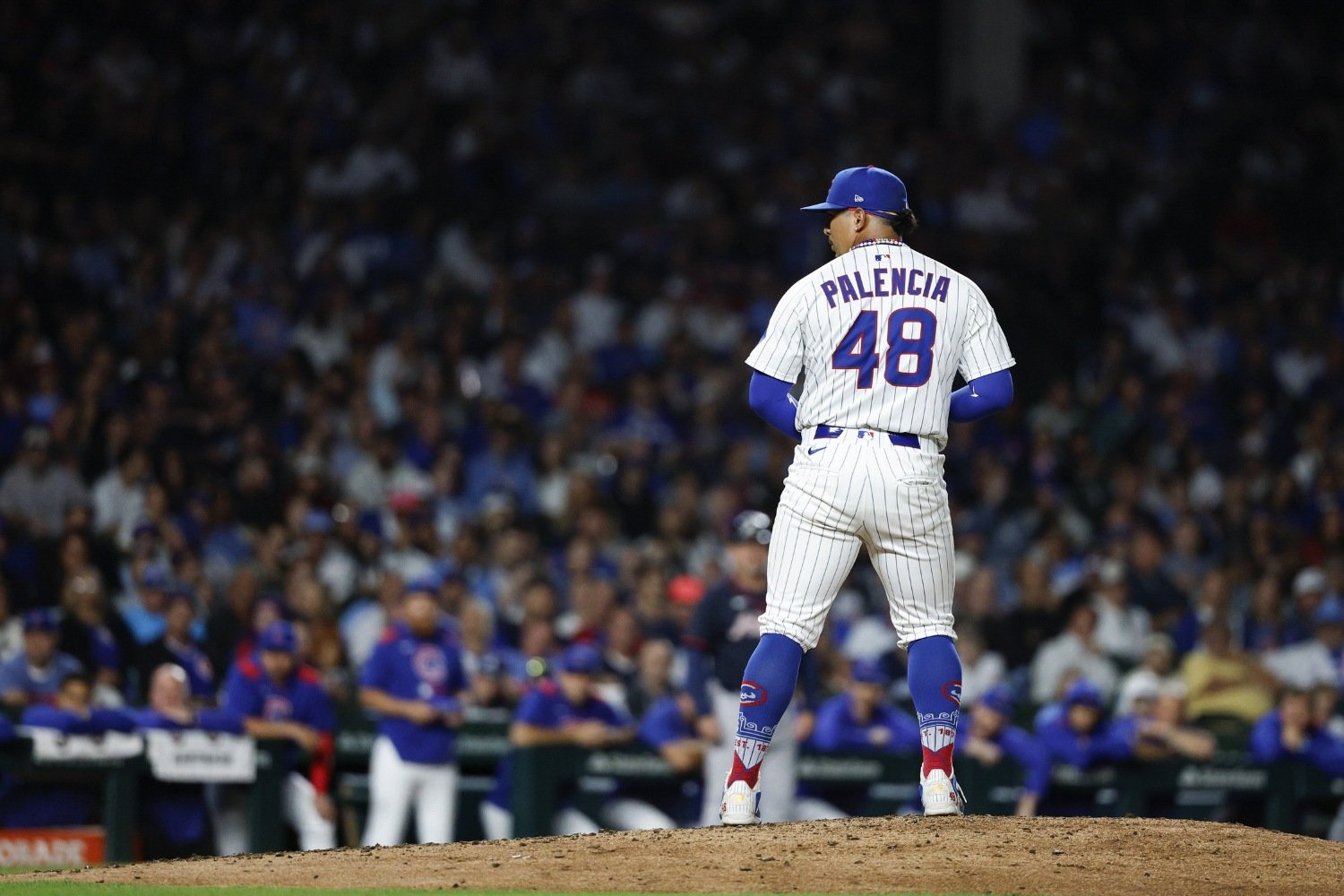 The 2023 Cubs fell apart when, down the stretch, they couldn't find a reliable set of relievers to keep them in games. Adbert Alzolay pitched much of the final two months with his arm hanging by a thread. Michael Fulmer tore his elbow. Mark Leiter Jr. stayed just healthy enough to keep pitching (although he pitched much less as September went along) and blew two games during the team's collapse over the final fortnight. The players on whom the team had relied throughout their late-summer surge couldn't keep things together in the fall. In 2024, the team largely fell out of contention early, but they did make a half-hearted surge in August and early September to get back onto the fringes of the playoff race. That hope fizzled, too, because pitchers couldn't hold up. They entered their Labor Day game against the Pirates just three games out of the final Wild Card spot, but Jorge López blew that game and then went on the injured list, missing most of the balance of the season. If they still held onto any gasp of hope, it flickered out in mid-September, when they made a brave mid-game comeback against the Dodgers but blew the game late, then went to Colorado and watched Drew Smyly (his career flaming out, at last) fail to hold leads on back-to-back nights as Craig Counsell tried to find anyone he could still trust. You could be forgiven, therefore, for getting a pit in your stomach when thinking about this Cubs bullpen. Constructed the same way as each of the last two seasons' pens were—with remarkable veteran reclamation projects as complements for one hard-throwing product of the farm system—this year's group has stumbled a bit in the second half. Daniel Palencia's August was rough; he had four truly poor outings and two more very shaky saves. He added injury to that injury on Sunday, when he left after having already blown the save against the Nationals with a "posterior shoulder area" problem, as Counsell termed it. That could be a lat issue, something in his teres major, or one of the major shoulder structures (labrum and rotator cuff) we think of more readily, but whatever the case, it'd be a minor miracle if he avoids the injured list. These do not tend to be false alarms, and even mild versions of such injuries tend to take weeks, rather than days, to heal. The Cubs should plan not to have Palencia available at least until the Wild Card Series, and even then, it's not a sure thing. Counsell will have to make a new plan for his pen, on the fly—and then, perhaps, he might get lucky and get Palencia back quite soon, after all. For the purposes of this exercise, though, let's assume that the Cubs (as usual) don't get that lucky. What would a viable postseason bullpen look like, if Palencia can't be a member thereof? The team will start Matthew Boyd, Shota Imanaga and Cade Horton in the three potential games of a Wild Card Series. They're likely to hold Jameson Taillon off the roster for that series so that he can start Game 1 if they get as far as the Division Series. With those four names off the board, then, who fits into the relief corps if the Cubs do start the playoffs without Palencia? The Locks Though Palencia had emerged as the unquestioned closer, he wasn't the only trusted arm in high-leverage spots. The Cubs will simply slot Brad Keller into the role Palencia looks likely to vacate. That would move Andrew Kittredge up from his secondary setup role to the primary one, from the right side. Caleb Thielbar, Drew Pomeranz and Taylor Rogers will be the three lefties in middle relief. For the three-game Wild Card Series, the team will peobably carry 12 pitchers. Three will be the aforementioned starters, and in Keller, Kittredge, Thielbar, Pomeranz and Rogers, we've penciled in five relievers. That leaves us four more spots. The Bubble Guys Again, let's assume Taillon will be held back for use in the opening game of a Division Series. That would mean that, in addition to the starters already named, the team would have Javier Assad, Colin Rea and Aaron Civale as bulk innings/long relief options. That role isn't given much weight or consideration come October, most of the time, but in various ways, each of these three offers a more valuable twist on the traditional version of that job. All are kitchen-sink guys, but all also have a couple of pitches they can focus on in any given at-bat and the average caliber of stuff that can tick up importantly when switching from starting to relieving. In terms of more traditional playoff relievers, though, the cupboard is pretty bare. I'm sure Porter Hodge can do enough to convince some people to believe in him again even with a season on the line, but don't count me among that group. Ben Brown has big upside in short relief, but the team has been slow to move him into that mode. It's understandable, given his health history, but they should embrace the attendant risks down the stretch and make him a one-inning arm, to see what they have. Ryan Brasier is much less sexy a possibility, but he is one. The wild card is Michael Soroka, currently working his way back from the shoulder issue that sidelined him after just two innings of work for the Cubs in early August. His stuff could play up even more than Assad's, Rea's or Civale's in a bullpen role, as he showed late last season with the White Sox. He hasn't yet made an official rehab appearance, but is scheduled to do so Wednesday. If that goes well, it's not hard to imagine him stepping into a bullpen job for the final two weeks of the regular season. The Verdict Were I making out the roster, I would list the following pitching staff for the Cubs when they start the Wild Card Series on Sept. 30—assuming no more losses between now and then: Shota Imanaga Matthew Boyd Cade Horton Brad Keller Andrew Kittredge Caleb Thielbar Drew Pomeranz Taylor Rogers Colin Rea Javier Assad Ben Brown Michael Soroka That's far from a dominant pitching staff, but it's not an untenable one, either. With lefties likely to start the first (and perhaps only) two games of the series, it could pay off in a huge way for Counsell to have three righties (Rea, Assad and Soroka) who can be trusted with multiple innings even in the playoff pressure cooker, in case Boyd or Imanaga is knocked out of the box early or runs up a high pitch count and faces a fifth-inning jam. Ideally, of course, this will be rendered moot, because Palencia will turn out to be ok. At this moment, that feels unlikely. The Cubs have a much better record and are in much better position to weather this storm than they've been the last two Septembers. The storm is still here, though, and surviving it will require all of Counsell's considerable creative faculties in pitching staff management.
 -
Image courtesy of © Kamil Krzaczynski-Imagn Images The 2023 Cubs fell apart when, down the stretch, they couldn't find a reliable set of relievers to keep them in games. Adbert Alzolay pitched much of the final two months with his arm hanging by a thread. Michael Fulmer tore his elbow. Mark Leiter Jr. stayed just healthy enough to keep pitching (although he pitched much less as September went along) and blew two games during the team's collapse over the final fortnight. The players on whom the team had relied throughout their late-summer surge couldn't keep things together in the fall. In 2024, the team largely fell out of contention early, but they did make a half-hearted surge in August and early September to get back onto the fringes of the playoff race. That hope fizzled, too, because pitchers couldn't hold up. They entered their Labor Day game against the Pirates just three games out of the final Wild Card spot, but Jorge López blew that game and then went on the injured list, missing most of the balance of the season. If they still held onto any gasp of hope, it flickered out in mid-September, when they made a brave mid-game comeback against the Dodgers but blew the game late, then went to Colorado and watched Drew Smyly (his career flaming out, at last) fail to hold leads on back-to-back nights as Craig Counsell tried to find anyone he could still trust. You could be forgiven, therefore, for getting a pit in your stomach when thinking about this Cubs bullpen. Constructed the same way as each of the last two seasons' pens were—with remarkable veteran reclamation projects as complements for one hard-throwing product of the farm system—this year's group has stumbled a bit in the second half. Daniel Palencia's August was rough; he had four truly poor outings and two more very shaky saves. He added injury to that injury on Sunday, when he left after having already blown the save against the Nationals with a "posterior shoulder area" problem, as Counsell termed it. That could be a lat issue, something in his teres major, or one of the major shoulder structures (labrum and rotator cuff) we think of more readily, but whatever the case, it'd be a minor miracle if he avoids the injured list. These do not tend to be false alarms, and even mild versions of such injuries tend to take weeks, rather than days, to heal. The Cubs should plan not to have Palencia available at least until the Wild Card Series, and even then, it's not a sure thing. Counsell will have to make a new plan for his pen, on the fly—and then, perhaps, he might get lucky and get Palencia back quite soon, after all. For the purposes of this exercise, though, let's assume that the Cubs (as usual) don't get that lucky. What would a viable postseason bullpen look like, if Palencia can't be a member thereof? The team will start Matthew Boyd, Shota Imanaga and Cade Horton in the three potential games of a Wild Card Series. They're likely to hold Jameson Taillon off the roster for that series so that he can start Game 1 if they get as far as the Division Series. With those four names off the board, then, who fits into the relief corps if the Cubs do start the playoffs without Palencia? The Locks Though Palencia had emerged as the unquestioned closer, he wasn't the only trusted arm in high-leverage spots. The Cubs will simply slot Brad Keller into the role Palencia looks likely to vacate. That would move Andrew Kittredge up from his secondary setup role to the primary one, from the right side. Caleb Thielbar, Drew Pomeranz and Taylor Rogers will be the three lefties in middle relief. For the three-game Wild Card Series, the team will peobably carry 12 pitchers. Three will be the aforementioned starters, and in Keller, Kittredge, Thielbar, Pomeranz and Rogers, we've penciled in five relievers. That leaves us four more spots. The Bubble Guys Again, let's assume Taillon will be held back for use in the opening game of a Division Series. That would mean that, in addition to the starters already named, the team would have Javier Assad, Colin Rea and Aaron Civale as bulk innings/long relief options. That role isn't given much weight or consideration come October, most of the time, but in various ways, each of these three offers a more valuable twist on the traditional version of that job. All are kitchen-sink guys, but all also have a couple of pitches they can focus on in any given at-bat and the average caliber of stuff that can tick up importantly when switching from starting to relieving. In terms of more traditional playoff relievers, though, the cupboard is pretty bare. I'm sure Porter Hodge can do enough to convince some people to believe in him again even with a season on the line, but don't count me among that group. Ben Brown has big upside in short relief, but the team has been slow to move him into that mode. It's understandable, given his health history, but they should embrace the attendant risks down the stretch and make him a one-inning arm, to see what they have. Ryan Brasier is much less sexy a possibility, but he is one. The wild card is Michael Soroka, currently working his way back from the shoulder issue that sidelined him after just two innings of work for the Cubs in early August. His stuff could play up even more than Assad's, Rea's or Civale's in a bullpen role, as he showed late last season with the White Sox. He hasn't yet made an official rehab appearance, but is scheduled to do so Wednesday. If that goes well, it's not hard to imagine him stepping into a bullpen job for the final two weeks of the regular season. The Verdict Were I making out the roster, I would list the following pitching staff for the Cubs when they start the Wild Card Series on Sept. 30—assuming no more losses between now and then: Shota Imanaga Matthew Boyd Cade Horton Brad Keller Andrew Kittredge Caleb Thielbar Drew Pomeranz Taylor Rogers Colin Rea Javier Assad Ben Brown Michael Soroka That's far from a dominant pitching staff, but it's not an untenable one, either. With lefties likely to start the first (and perhaps only) two games of the series, it could pay off in a huge way for Counsell to have three righties (Rea, Assad and Soroka) who can be trusted with multiple innings even in the playoff pressure cooker, in case Boyd or Imanaga is knocked out of the box early or runs up a high pitch count and faces a fifth-inning jam. Ideally, of course, this will be rendered moot, because Palencia will turn out to be ok. At this moment, that feels unlikely. The Cubs have a much better record and are in much better position to weather this storm than they've been the last two Septembers. The storm is still here, though, and surviving it will require all of Counsell's considerable creative faculties in pitching staff management. View full article
-
 I've fallen in love—what I now know to be love, and not some childish infatuation or passing crush—six times in my life: the first time I held each of my four children; some night in the spring of 2008, walking along the shore of Lake Michigan long after dark with the young woman who would eventually become my wife; and, first, in late August of 2007, when I first drank in Chicago. I arrived for college that month at Loyola University Chicago, and while I made friends fast enough, really, I spent most of the first six weeks I was there making the acquaintance of the city. I'd visited it some uncountable number of times, over the previous decade, but that was as a kid, and it was as an outsider. Now, the city was (in some tiny part) mine, and I wanted to fully feel it. That, of course, was the summer of Carlos Zambrano and Michael Barrett redecorating the clubhouse; Lou Piniella's reflection in Mark Wegner's sunglasses; Aramis Ramírez's walkoff homer to beat the Brewers; and Alfonso Soriano's scorching September, to secure the division title. Naturally, I spent a huge amount of time at Wrigley Field that summer and fall; I attended 12 of the last 15 Cubs home games. Because I was a frugal college student, though, I wasn't buying good tickets. Most days, I would either get out of the earliest class the Lake Shore campus offered and hop straight onto the Red Line, or get an early start toward my 10:15 class downtown so that I could hop off at Addison on the way. Those were the days when you could line up on game day to grab whatever few tickets remained available, or to purchase standing-room tickets, for anywhere from $8 to $12. That's how I became a connoisseur of the smell of Wrigleyville in the morning. Life is best savored via its bouquet. All our senses are important, but none is as vivid or visceral as smell. Immediately, I found the scent of the city more enthralling than anything else about it—the color, the heat, the volume of people, anything. Plenty of Chicagoans (and nearly all outsiders) lament the places where sour smells like liquor, trash or urine dominate, but those are relatively few, really. Anyone who's really spent a morning with the city—especially this time of year, the late summer or early fall—has to admit that it offers one of life's truly wonderful symphonies of aroma. The layers are simple, but together, they're magic. First, there's the smell of the greenery in glory. Even into September, clematis climbing many walls and fences throughout the city blooms and offers up a sweet hint of nectar. The trees aren't yet rounding the corner toward fall; that's a few more weeks away. Then, there's the lake. Wrigley's about as far off the lake as you can go while still getting a noseful of it, but it's there as a subtler note even farther west. There's a tactile element to this part, of course, because the air is pregnant with water and you can feel that in your nose, but it's also about the lively smell the lake takes on from spring to fall, when algae is in bloom and the activity in and on the water stirs up more organic material. The best time of day to experience that smell swings, from one end of the season to the other. You want to catch it at about 10 PM in the spring, but by early September, that layer of the city's smell is strongest and best in the morning. Finally, there are the people smells—especially food. It quickly got to be my habit, way back when I first hit the city, to walk the stretch of Clark St. from Addison down to Belmont each Saturday or Sunday morning, even if the Cubs were out of town. Wrigley didn't have to be occupied, on those days, for the smells of the strip of pubs and grills coming to life to be delightful. I've spent plenty of time in remote locales, marveling at nature. I've lived a long time in suburbs, which have their own charms and their own noses. But you'll never convince me that the smells of a Midwest city revving up for a festival day in September can be beaten—especially Chicago. As you've surely heard, President Donald Trump posted a message of war and malice on social media Saturday, aimed directly at Chicago. He chose (or, clearly but unimportantly, an underling like Stephen Miller or Pete Hegseth chose) to invoke both the language and the imagery of the 1979 film Apocalypse Now to get that message across. This was posted at 10:38 AM Central. The Cubs began a game against the Washington Nationals at 1:20 PM. It's extraordinary, when framed that way, isn't it? The president declared war on a city, and the baseball game scheduled for less than four hours later took place as though nothing had happened. It's a juxtaposition as poignant as another that had to do with the same movie. In 1981, when martial law was enacted in Poland so that the Soviet-supported puppet government could viciously put down a worker-led resistance, tanks rolled into Warsaw. An astute photographer named Christopher Niedenthal snapped a photo of one in front of a theater in which a Polish dub of Apocalypse Now was the headline attraction. Soon, in the wake of Trump's self-styled poster, there might be a similar photo of an unwelcome military vehicle in Chicago, which has famously called itself the second-most Polish city in the world. (That's never quite been true, but nor has it been baseless. My wife and I got a dog, between getting married and beginning to have our kids, from a shelter in West Rogers Park. His name was Dyzio, and he only understood Polish.) Trump's post specifically paraphrased the most famous line from the film, wherein Lt. Col. Bill Kilgore (Robert Duvall) says, "I love the smell of napalm in the morning." That line is meant as a warning, fairly early in the movie, about just how deep the protagonists are about to plumb the depths of human nature through their mission into a war zone. It's the clearest distillation of the insanity at the heart of war (and, perhaps, the human condition), and it's certainly not meant as a sentiment to celebrate. Too often, though, it's also condensed. To the quote itself is appended the sentence that bookends the monologue: "Smells like... victory." But the full quotation is: Although Apocalypse Now is a somewhat problematic war epic—so dedicated to its propounding of the complicated, ugly dual truths at the core of its source material (1899 novella Heart of Darkness) that it sometimes seems to glorify war, and certainly leaves much unsaid about the specifics of the Vietnam War, in which it's set—the scene in which Kilgore brutally conquers a beach (partially) for the pleasure of surfing the waves next to it is as unvarnished an excoriation of war's absurdity and evil as any image Trump and his team might have picked. In the AI image appended to the post, Trump is dressed as Duvall's insane character. Being an utter fool is not a sufficient explanation for that; it's an intentional repudiation of the scene's initial message. It's an argument that wanton violence and destruction is a good idea, after all, as long as you're the victor, extravagantly stripping to a bare chest and casting about for a surf board amid the mortars and the smell of burning flesh. It takes a knowing, bad-faith malefactor to post that image. What has any of this to do with baseball? Not as much as I wish it did, to be honest. We leave the firewalls nice and high, between here and there. We are all, in a sense, surfing just off the beach as the yellow-orange smoke curls outward. We're still paying attention to the Cubs, and to the Bears (whose season begins Monday night). We refuse to be denied our small and selfish entertainment, just as Kilgore did. If we're willing to drop those blinders and see the big picture, though, these things could not be more intertwined. Sports, if they are mere entertainment, are unjustifiable. I prefer to think they're more than that—that they are, like rock music or movies, light art. Maybe we spend 90% of our time watching them simply enjoying (or decrying) what's going on, within the specific context of the game or the song or the story, but if any of these media deserve to exist at all, then they come back to us in other moments. When we lay down to sleep at night, or when we walk the street and breathe deeply to smell the wondrous morning, or months later when we long for summer, or years later when we need some inspiration or some bracing memory of grace under pressure, we return to those experiences and see something in them that didn't feel as important when they were happening. If that's true, then sports are as vital to a community as great theater or a vibrant music scene—and, because all art is in conversation with its audience, the community is vital to sports. Teams are sources of civic pride and unity, but civics are also the sources of the teams. The Cubs don't matter, except insofar as there is a community of people who care about them. What Trump is threatening is a deep and ghoulish fracture of that community, and of the community of White Sox fans. "Deportations" might sound less ghastly than "napalm" when substituted into that original quote, but what Trump is threatening is a nightmarish burning-down of communities, all right. Chicago without immigrants is not Chicago, just as America without immigrants is not America. Alas, that is what this administration wants: a Kilgore-like sense of victory, made up of eerie silence and the utter absence of the victims they view as enemies. It's an unfortunately widespread fiction that Wrigleyville and downtown Chicago are wealthy bastions within an otherwise unclean, dying or lethal city. Like all big cities (and all small towns, and all farm communities, and all coral reefs), Chicago has real problems, but they are outweighed by its potential and its beauty. Those things—the "lifted head singing so proud to be alive and coarse and strong and cunning," as Carl Sandburg called it, responding to the very same generalized accusations still being lobbed at the city 111 years later—are what the Trump administration can't seem to appreciate, and that makes it doubly important that we do. "Deportations" coming to Chicago via militarized sweeps and enforcement is likely to mean many, many people who have lived here all their lives being unjustly arrested and separated from their families. My now-wife and I volunteered many sweet-smelling Sunday mornings at Su Casa Catholic Worker, on the South Side. It's a wonderful community resource—an intentional community where families (many of them sheltering from homelessness or domestic violence, but in a much safer and more stable way than other places can offer) live and work together, serving the neighborhood as well as themselves. It was founded, initially, to serve refugees of war in Central America; that's the kind of family that could easily be targeted by incautious military invaders. Those refugees and their descendants look a lot like many of the players who will continue, for now, to suit up and play at Wrigley Field (and Sox Park) in the coming weeks. Those conflicts have burned out, but ones not unlike them have flared up, too. Just as the administration is gearing up for this police action, too, they've moved back toward a Teddy Roosevelt-era relationship with much of the Caribbean basin, where a great many professional baseball players are actually from. Baseball will continue to move forward, trying as hard as it can to ignore all of this. Many fans will, too—or at least, they will continue to treat baseball as an escape and a reprieve from all worries about the wider world. That's understandable. The league itself has little choice; most individual fans don't know how to do anything other than pursue their established routines. Because sports are art and are always interacting with the world around them, though, this firewall will continue to be breached. It will be breached more and more often, as teams try to celebrate Roberto Clemente Day later this month in a way that doesn't draw hard scrutiny from the administration. Just as many teams scaled down or sanitized the language of their statements on Jackie Robinson Day, they will do so with Clemente's. The league will quietly lobby for ongoing protection of their players from the worst consequences of the administration's policies, but they won't publicly speak up for the millions of people being endangered for looking or speaking like those players. With each big-league city into which troops are sent, that silence will seem more ludicrous, and more people's lives will be materially affected. It will feel sillier and sillier to pretend that baseball—an everyday game, a sport that measures and marks our seasons and gives us daily reassurance that all is normal, all kosher, all good—really makes sense. The community that makes up baseball will be strained more and more. We can't immediately reverse this, but nor should we ignore it. If nothing else, it's important that we remember the smell of Wrigleyville in the morning—and the scents we ought to refuse to let the Trump administration mix into that potpourri.
 -
Image courtesy of © Patrick Gorski-Imagn Images I've fallen in love—what I now know to be love, and not some childish infatuation or passing crush—six times in my life: the first time I held each of my four children; some night in the spring of 2008, walking along the shore of Lake Michigan long after dark with the young woman who would eventually become my wife; and, first, in late August of 2007, when I first drank in Chicago. I arrived for college that month at Loyola University Chicago, and while I made friends fast enough, really, I spent most of the first six weeks I was there making the acquaintance of the city. I'd visited it some uncountable number of times, over the previous decade, but that was as a kid, and it was as an outsider. Now, the city was (in some tiny part) mine, and I wanted to fully feel it. That, of course, was the summer of Carlos Zambrano and Michael Barrett redecorating the clubhouse; Lou Piniella's reflection in Mark Wegner's sunglasses; Aramis Ramírez's walkoff homer to beat the Brewers; and Alfonso Soriano's scorching September, to secure the division title. Naturally, I spent a huge amount of time at Wrigley Field that summer and fall; I attended 12 of the last 15 Cubs home games. Because I was a frugal college student, though, I wasn't buying good tickets. Most days, I would either get out of the earliest class the Lake Shore campus offered and hop straight onto the Red Line, or get an early start toward my 10:15 class downtown so that I could hop off at Addison on the way. Those were the days when you could line up on game day to grab whatever few tickets remained available, or to purchase standing-room tickets, for anywhere from $8 to $12. That's how I became a connoisseur of the smell of Wrigleyville in the morning. Life is best savored via its bouquet. All our senses are important, but none is as vivid or visceral as smell. Immediately, I found the scent of the city more enthralling than anything else about it—the color, the heat, the volume of people, anything. Plenty of Chicagoans (and nearly all outsiders) lament the places where sour smells like liquor, trash or urine dominate, but those are relatively few, really. Anyone who's really spent a morning with the city—especially this time of year, the late summer or early fall—has to admit that it offers one of life's truly wonderful symphonies of aroma. The layers are simple, but together, they're magic. First, there's the smell of the greenery in glory. Even into September, clematis climbing many walls and fences throughout the city blooms and offers up a sweet hint of nectar. The trees aren't yet rounding the corner toward fall; that's a few more weeks away. Then, there's the lake. Wrigley's about as far off the lake as you can go while still getting a noseful of it, but it's there as a subtler note even farther west. There's a tactile element to this part, of course, because the air is pregnant with water and you can feel that in your nose, but it's also about the lively smell the lake takes on from spring to fall, when algae is in bloom and the activity in and on the water stirs up more organic material. The best time of day to experience that smell swings, from one end of the season to the other. You want to catch it at about 10 PM in the spring, but by early September, that layer of the city's smell is strongest and best in the morning. Finally, there are the people smells—especially food. It quickly got to be my habit, way back when I first hit the city, to walk the stretch of Clark St. from Addison down to Belmont each Saturday or Sunday morning, even if the Cubs were out of town. Wrigley didn't have to be occupied, on those days, for the smells of the strip of pubs and grills coming to life to be delightful. I've spent plenty of time in remote locales, marveling at nature. I've lived a long time in suburbs, which have their own charms and their own noses. But you'll never convince me that the smells of a Midwest city revving up for a festival day in September can be beaten—especially Chicago. As you've surely heard, President Donald Trump posted a message of war and malice on social media Saturday, aimed directly at Chicago. He chose (or, clearly but unimportantly, an underling like Stephen Miller or Pete Hegseth chose) to invoke both the language and the imagery of the 1979 film Apocalypse Now to get that message across. This was posted at 10:38 AM Central. The Cubs began a game against the Washington Nationals at 1:20 PM. It's extraordinary, when framed that way, isn't it? The president declared war on a city, and the baseball game scheduled for less than four hours later took place as though nothing had happened. It's a juxtaposition as poignant as another that had to do with the same movie. In 1981, when martial law was enacted in Poland so that the Soviet-supported puppet government could viciously put down a worker-led resistance, tanks rolled into Warsaw. An astute photographer named Christopher Niedenthal snapped a photo of one in front of a theater in which a Polish dub of Apocalypse Now was the headline attraction. Soon, in the wake of Trump's self-styled poster, there might be a similar photo of an unwelcome military vehicle in Chicago, which has famously called itself the second-most Polish city in the world. (That's never quite been true, but nor has it been baseless. My wife and I got a dog, between getting married and beginning to have our kids, from a shelter in West Rogers Park. His name was Dyzio, and he only understood Polish.) Trump's post specifically paraphrased the most famous line from the film, wherein Lt. Col. Bill Kilgore (Robert Duvall) says, "I love the smell of napalm in the morning." That line is meant as a warning, fairly early in the movie, about just how deep the protagonists are about to plumb the depths of human nature through their mission into a war zone. It's the clearest distillation of the insanity at the heart of war (and, perhaps, the human condition), and it's certainly not meant as a sentiment to celebrate. Too often, though, it's also condensed. To the quote itself is appended the sentence that bookends the monologue: "Smells like... victory." But the full quotation is: Although Apocalypse Now is a somewhat problematic war epic—so dedicated to its propounding of the complicated, ugly dual truths at the core of its source material (1899 novella Heart of Darkness) that it sometimes seems to glorify war, and certainly leaves much unsaid about the specifics of the Vietnam War, in which it's set—the scene in which Kilgore brutally conquers a beach (partially) for the pleasure of surfing the waves next to it is as unvarnished an excoriation of war's absurdity and evil as any image Trump and his team might have picked. In the AI image appended to the post, Trump is dressed as Duvall's insane character. Being an utter fool is not a sufficient explanation for that; it's an intentional repudiation of the scene's initial message. It's an argument that wanton violence and destruction is a good idea, after all, as long as you're the victor, extravagantly stripping to a bare chest and casting about for a surf board amid the mortars and the smell of burning flesh. It takes a knowing, bad-faith malefactor to post that image. What has any of this to do with baseball? Not as much as I wish it did, to be honest. We leave the firewalls nice and high, between here and there. We are all, in a sense, surfing just off the beach as the yellow-orange smoke curls outward. We're still paying attention to the Cubs, and to the Bears (whose season begins Monday night). We refuse to be denied our small and selfish entertainment, just as Kilgore did. If we're willing to drop those blinders and see the big picture, though, these things could not be more intertwined. Sports, if they are mere entertainment, are unjustifiable. I prefer to think they're more than that—that they are, like rock music or movies, light art. Maybe we spend 90% of our time watching them simply enjoying (or decrying) what's going on, within the specific context of the game or the song or the story, but if any of these media deserve to exist at all, then they come back to us in other moments. When we lay down to sleep at night, or when we walk the street and breathe deeply to smell the wondrous morning, or months later when we long for summer, or years later when we need some inspiration or some bracing memory of grace under pressure, we return to those experiences and see something in them that didn't feel as important when they were happening. If that's true, then sports are as vital to a community as great theater or a vibrant music scene—and, because all art is in conversation with its audience, the community is vital to sports. Teams are sources of civic pride and unity, but civics are also the sources of the teams. The Cubs don't matter, except insofar as there is a community of people who care about them. What Trump is threatening is a deep and ghoulish fracture of that community, and of the community of White Sox fans. "Deportations" might sound less ghastly than "napalm" when substituted into that original quote, but what Trump is threatening is a nightmarish burning-down of communities, all right. Chicago without immigrants is not Chicago, just as America without immigrants is not America. Alas, that is what this administration wants: a Kilgore-like sense of victory, made up of eerie silence and the utter absence of the victims they view as enemies. It's an unfortunately widespread fiction that Wrigleyville and downtown Chicago are wealthy bastions within an otherwise unclean, dying or lethal city. Like all big cities (and all small towns, and all farm communities, and all coral reefs), Chicago has real problems, but they are outweighed by its potential and its beauty. Those things—the "lifted head singing so proud to be alive and coarse and strong and cunning," as Carl Sandburg called it, responding to the very same generalized accusations still being lobbed at the city 111 years later—are what the Trump administration can't seem to appreciate, and that makes it doubly important that we do. "Deportations" coming to Chicago via militarized sweeps and enforcement is likely to mean many, many people who have lived here all their lives being unjustly arrested and separated from their families. My now-wife and I volunteered many sweet-smelling Sunday mornings at Su Casa Catholic Worker, on the South Side. It's a wonderful community resource—an intentional community where families (many of them sheltering from homelessness or domestic violence, but in a much safer and more stable way than other places can offer) live and work together, serving the neighborhood as well as themselves. It was founded, initially, to serve refugees of war in Central America; that's the kind of family that could easily be targeted by incautious military invaders. Those refugees and their descendants look a lot like many of the players who will continue, for now, to suit up and play at Wrigley Field (and Sox Park) in the coming weeks. Those conflicts have burned out, but ones not unlike them have flared up, too. Just as the administration is gearing up for this police action, too, they've moved back toward a Teddy Roosevelt-era relationship with much of the Caribbean basin, where a great many professional baseball players are actually from. Baseball will continue to move forward, trying as hard as it can to ignore all of this. Many fans will, too—or at least, they will continue to treat baseball as an escape and a reprieve from all worries about the wider world. That's understandable. The league itself has little choice; most individual fans don't know how to do anything other than pursue their established routines. Because sports are art and are always interacting with the world around them, though, this firewall will continue to be breached. It will be breached more and more often, as teams try to celebrate Roberto Clemente Day later this month in a way that doesn't draw hard scrutiny from the administration. Just as many teams scaled down or sanitized the language of their statements on Jackie Robinson Day, they will do so with Clemente's. The league will quietly lobby for ongoing protection of their players from the worst consequences of the administration's policies, but they won't publicly speak up for the millions of people being endangered for looking or speaking like those players. With each big-league city into which troops are sent, that silence will seem more ludicrous, and more people's lives will be materially affected. It will feel sillier and sillier to pretend that baseball—an everyday game, a sport that measures and marks our seasons and gives us daily reassurance that all is normal, all kosher, all good—really makes sense. The community that makes up baseball will be strained more and more. We can't immediately reverse this, but nor should we ignore it. If nothing else, it's important that we remember the smell of Wrigleyville in the morning—and the scents we ought to refuse to let the Trump administration mix into that potpourri. View full article