


Matthew Trueblood
-
Posts
2,477 -
Joined
-
Last visited
-
Days Won
2
Content Type
Profiles
Joomla Posts 1
Chicago Cubs Videos
Chicago Cubs Free Agent & Trade Rumors, Notes, & Tidbits
2026 Chicago Cubs Top Prospects Ranking
News
2023 Chicago Cubs Draft Picks
Guides & Resources
2024 Chicago Cubs Draft Picks
The Chicago Cubs Players Project
2025 Chicago Cubs Draft Pick Tracker
2026 Chicago Cubs Draft Tracker: Picks & Bonuses
Blogs
Events
Forums
Store
Gallery
Everything posted by Matthew Trueblood
-
I agree with *almost* all of this. The key difference is, I actually don't think you can do some of this mental work over the offseason. In those months, you go into an offseason mode. It's a lot easier to be clear-eyed, to make plans, to be patient. I think you have to learn those things during seasons. My disappointment in PCA lies in the fact that I don't see him making those strides as well or as quickly as he should, because he seems in such a rush to reach the pinnacle. Eventually, he (and the team) will have to accept that it will take time to go from good to great.
-
Image courtesy of © Charles LeClaire-Imagn Images Turn on a Cubs game, lately, and you won't have to wait long for confirmation that the team is fighting it—not only losing, but panicking about it, and trying to turn a losing streak into their next winning streak in a way that's only pushing them deeper into the losing spiral. At this point, you almost—almost—can't even blame them. The predicament they face is very real. This is a team built to win now, if ever, and it doesn't look like they're built to win now, after all. In a highly competitive NL Central, they're dead last, and the only team they really need to worry about (the perennial, inevitable Central champions, the Brewers) sits comfortably in first, even if it's only 4.5 games from penthouse to cellar right now. They're in scramble mode, because they really can't afford the way things have gone, and they certainly can't allow it to go on any longer. No one ever got out of a hole by digging frantically, though, and that's what the Cubs have been doing lately. Injuries and a collective slump by half their lineup have played big roles in throwing them into this pit of despair, but their desperation to escape is increasingly counterproductive. Nowhere is that more clear than in center field, where Pete Crow-Armstrong has lost it and is playing like an extremely talented, extremely dysregulated fool. Because Cade Horton, Matthew Boyd and Edward Cabrera are all on the injured list, Jordan Wicks was recalled from Triple-A Iowa to take Cabrera's turn in the rotation Tuesday night. That was an utterly doomed endeavor, and Wicks wasted no time proving that. However, his woes were exacerbated just moments after he toed the rubber. That Wicks gave up hits to the first two batters he faced can hardly have surprised anyone. Unfortunately, it also didn't come as any surprise when Crow-Armstrong tried to do way too much and wound up making the situation instantly worse. He had no hope of throwing out Konnor Griffin at third base on this line-drive single, but because he's become convinced that he needs to lift the team out of its torpor through the sheer force of his will, he tried, anyway. His errant throw gave Brandon Lowe a free base and made Wicks's job harder, rather than easier. Crow-Armstrong is very lucky, too, that the ball didn't sail or skip a bit higher, landing in the Pirates dugout. He gave away one base (though, unaccountably, he wasn't charged with an error on the play), but it could easily have been more. To call this a pattern would, by now, be an understatement. Crow-Armstrong should have come into this season with a certain measure of security and comfort, after a breakout 2025 season and a strong showing in the World Baseball Classic. Instead, he's played all year like a starving man forever trying to start a brawl over half a rotisserie chicken. So insatiable is Crow-Armstrong's appetite for greatness and championship glory that it's eating him, from the inside out. Lamentably, the final note in the stirring song of Crow-Armstrong's 2025 was a pair of plays on which he tried to scale the center-field wall in Milwaukee to pull back clutch homers by the Brewers in the NLDS—despite each ball clearing the fence by dozens of feet. One image summed up the futility especially tidily, and seemed like the universe itself taunting Crow-Armstrong for his unbridled ambition. Maybe he stewed on that more over the winter than he let on. Maybe he so hated losing that playoff series that he lost all sense of patience or perspective as he looked forward to beating the Brewers this year. Whatever the reason, Crow-Armstrong has showed up this year with exactly the same energy with which he finished last year—and that's a problem. We've already talked about the drawbacks of Crow-Armstrong's huge increase in bat speed this year. It's a change that has the chance to make him a lethal slugger, but so far, it's mostly produced more pop-ups and rolled-over grounders, however sharply hit. You'd like to see him swinging more under control. To his credit, though, he has at least swung less often, by a considerable margin. In the past, his difficulty harnessing his immense talent has mostly taken the form of chasing everything. This year, though his swing is faster than he can handle and isn't generating the right kind of contact, he's found a bit of restraint about when to swing. Even when that falters, sometimes, good things can happen. He swung at a 3-1 pitch he absolutely should not have chased in the bottom of the ninth inning against the Reds on May 6. It was a dumb, overcooked swing, at a moment when reaching base would have meant bringing the winning run to the plate and having Crow-Armstrong's speed carrying the tying one. On the next pitch, he chased outside the zone again, but he connected on a low-flying missile of an opposite-field homer, tying the game. He was playing out of control, governed only by adrenaline. That's how he's looked at all big moments this year. On that pitch, though, that adrenaline and his remarkable talent created an explosive play. All year, Crow-Armstrong's bat speed has climbed. It's still climbing. Five of the six fastest swings of his career have come since April 27, peaking with this pass at a Jacob deGrom slider on Mothers Day. WU9WMzdfVjBZQUhRPT1fQUFCWlYxeFhVRlFBQVZWVEFBQUhBUVlGQUFNREJ3Y0FCMU5SQUFzQ0JRRmNBRkJR.mp4 The Statcast-reported swing speed on this was 87.9 MPH, the only time Crow-Armstrong has reached the maximum value the system spits out for public data purposes. As you can see, though, the result was another mishit, and watching the swing leaves one wondering more why he traded so much barrel accuracy for sheer swing speed on a two-strike count than how he can achieve such a thing. On balance. you'd like to see Crow-Armstrong rein all that in, because the lineup needs him badly and he can't be his best self until he regains control of his swing. However, being slightly out of control in the batter's box is normal for Crow-Armstrong; he's just doing it in a different way this year. You can live with his indiscretions at bat. You can't live with that throw we saw above. You can't live with this one, either, from April 13. a0R2Uk9fWGw0TUFRPT1fVWdsVUFsY0hVVmNBV3dFRVZRQUhBUTVmQUFBRlVWUUFDbE1DQVF0UVVBWlVDUUJU.mp4 It's a testament to Crow-Armstrong's brilliance as a fielder that Brandon Marsh actually waited before heading home on this play. If The Flash had a jetpack, he still couldn't have caught that ball, but Crow-Armstrong got such a great jump and sold it so well that Marsh held at third a bit. That Crow-Armstrong then airmailed his cutoff men and fired all the way home, however, testifies only to his erratic mindset in the field this year. This throw, too, cost the Cubs a base. It left his hand at over 101 miles per hour, the hardest throw of his career. His form in charging and firing was, as always, superb. But the decision was dreadful—a bit of hubris that the Phillies easily punished. Almost every mistake Crow-Armstrong has made this season has come because he was trying to do way, way too much. He wants to be the best player in the sport, and to take over the game and will the Cubs to win. Instead, he's willing them closer to losses, at times. On the David Hamilton single which Crow-Armstrong played into a three-run round-tripper last week against Milwaukee, Crow-Armstrong was plotting another heroic bit of scoop-and-fire. He's trying to make up for the failure of his teammates to score runs in bunches. He's trying to mitigate his pitching staff's inability to rack up enough strikeouts. He's trying to deal with the fact that they keep giving up long fly balls, by hunting outs even when there are none to be found. His wild desire for excellence has positives in the field, too. We've never seen a player get jumps on fly balls as good as Crow-Armstrong's. He's devised a pre-pitch setup and movement unique to him, which almost pushes him into some kind of magnetic suspension as he reads contact and begins to chase fly balls. He's dedicated himself to his craft, and he's doing some freakish things, in the field and at the plate. At too many crucial moments—within games, but even within swings or just when he gets to the ball after some blindingly fast, arrow-straight route—he's way out of control, and it shows. That was more apparent than ever when he collided with the fence at Rate Field after a valiant but ludicrous attempt to catch something uncatchable. Taunted by a fan who'd ragged on him all game, he lashed out with profane and offensive ferocity. It was ugly, and Crow-Armstrong has been appropriately remorseful. It was also very real. That's where he is right now, mentally—on such a sharp, fine edge that any tip off the right track will leave someone wounded. He's too good to be making the mistakes he's making this year, just as the Cubs are too good to have lost 14 of 16 games and be getting their doors blown off in most of those contests. As baseball people always say, though, you are what your record says you are after 162 games. The Cubs haven't played that many in 2026. They have time to get right. So does Crow-Armstrong. To begin fixing the problems at hand, though, both the team and the player have to reckon with an excruciating dual truth: their margin for error is gone, but they must stop playing like it. Their sense of urgency has become its own emergency. View full article
-
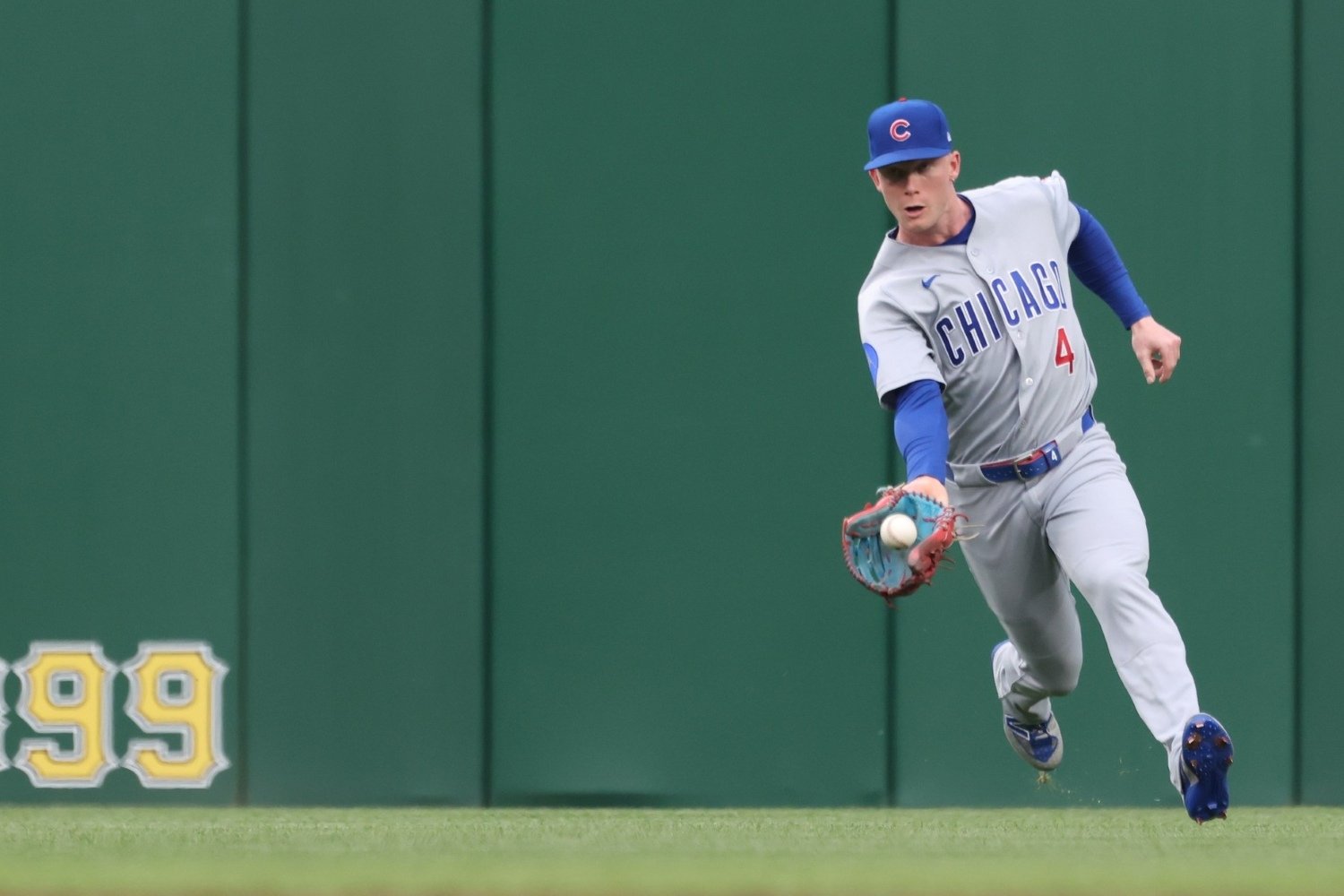 Turn on a Cubs game, lately, and you won't have to wait long for confirmation that the team is fighting it—not only losing, but panicking about it, and trying to turn a losing streak into their next winning streak in a way that's only pushing them deeper into the losing spiral. At this point, you almost—almost—can't even blame them. The predicament they face is very real. This is a team built to win now, if ever, and it doesn't look like they're built to win now, after all. In a highly competitive NL Central, they're dead last, and the only team they really need to worry about (the perennial, inevitable Central champions, the Brewers) sits comfortably in first, even if it's only 4.5 games from penthouse to cellar right now. They're in scramble mode, because they really can't afford the way things have gone, and they certainly can't allow it to go on any longer. No one ever got out of a hole by digging frantically, though, and that's what the Cubs have been doing lately. Injuries and a collective slump by half their lineup have played big roles in throwing them into this pit of despair, but their desperation to escape is increasingly counterproductive. Nowhere is that more clear than in center field, where Pete Crow-Armstrong has lost it and is playing like an extremely talented, extremely dysregulated fool. Because Cade Horton, Matthew Boyd and Edward Cabrera are all on the injured list, Jordan Wicks was recalled from Triple-A Iowa to take Cabrera's turn in the rotation Tuesday night. That was an utterly doomed endeavor, and Wicks wasted no time proving that. However, his woes were exacerbated just moments after he toed the rubber. That Wicks gave up hits to the first two batters he faced can hardly have surprised anyone. Unfortunately, it also didn't come as any surprise when Crow-Armstrong tried to do way too much and wound up making the situation instantly worse. He had no hope of throwing out Konnor Griffin at third base on this line-drive single, but because he's become convinced that he needs to lift the team out of its torpor through the sheer force of his will, he tried, anyway. His errant throw gave Brandon Lowe a free base and made Wicks's job harder, rather than easier. Crow-Armstrong is very lucky, too, that the ball didn't sail or skip a bit higher, landing in the Pirates dugout. He gave away one base (though, unaccountably, he wasn't charged with an error on the play), but it could easily have been more. To call this a pattern would, by now, be an understatement. Crow-Armstrong should have come into this season with a certain measure of security and comfort, after a breakout 2025 season and a strong showing in the World Baseball Classic. Instead, he's played all year like a starving man forever trying to start a brawl over half a rotisserie chicken. So insatiable is Crow-Armstrong's appetite for greatness and championship glory that it's eating him, from the inside out. Lamentably, the final note in the stirring song of Crow-Armstrong's 2025 was a pair of plays on which he tried to scale the center-field wall in Milwaukee to pull back clutch homers by the Brewers in the NLDS—despite each ball clearing the fence by dozens of feet. One image summed up the futility especially tidily, and seemed like the universe itself taunting Crow-Armstrong for his unbridled ambition. Maybe he stewed on that more over the winter than he let on. Maybe he so hated losing that playoff series that he lost all sense of patience or perspective as he looked forward to beating the Brewers this year. Whatever the reason, Crow-Armstrong has showed up this year with exactly the same energy with which he finished last year—and that's a problem. We've already talked about the drawbacks of Crow-Armstrong's huge increase in bat speed this year. It's a change that has the chance to make him a lethal slugger, but so far, it's mostly produced more pop-ups and rolled-over grounders, however sharply hit. You'd like to see him swinging more under control. To his credit, though, he has at least swung less often, by a considerable margin. In the past, his difficulty harnessing his immense talent has mostly taken the form of chasing everything. This year, though his swing is faster than he can handle and isn't generating the right kind of contact, he's found a bit of restraint about when to swing. Even when that falters, sometimes, good things can happen. He swung at a 3-1 pitch he absolutely should not have chased in the bottom of the ninth inning against the Reds on May 6. It was a dumb, overcooked swing, at a moment when reaching base would have meant bringing the winning run to the plate and having Crow-Armstrong's speed carrying the tying one. On the next pitch, he chased outside the zone again, but he connected on a low-flying missile of an opposite-field homer, tying the game. He was playing out of control, governed only by adrenaline. That's how he's looked at all big moments this year. On that pitch, though, that adrenaline and his remarkable talent created an explosive play. All year, Crow-Armstrong's bat speed has climbed. It's still climbing. Five of the six fastest swings of his career have come since April 27, peaking with this pass at a Jacob deGrom slider on Mothers Day. WU9WMzdfVjBZQUhRPT1fQUFCWlYxeFhVRlFBQVZWVEFBQUhBUVlGQUFNREJ3Y0FCMU5SQUFzQ0JRRmNBRkJR.mp4 The Statcast-reported swing speed on this was 87.9 MPH, the only time Crow-Armstrong has reached the maximum value the system spits out for public data purposes. As you can see, though, the result was another mishit, and watching the swing leaves one wondering more why he traded so much barrel accuracy for sheer swing speed on a two-strike count than how he can achieve such a thing. On balance. you'd like to see Crow-Armstrong rein all that in, because the lineup needs him badly and he can't be his best self until he regains control of his swing. However, being slightly out of control in the batter's box is normal for Crow-Armstrong; he's just doing it in a different way this year. You can live with his indiscretions at bat. You can't live with that throw we saw above. You can't live with this one, either, from April 13. a0R2Uk9fWGw0TUFRPT1fVWdsVUFsY0hVVmNBV3dFRVZRQUhBUTVmQUFBRlVWUUFDbE1DQVF0UVVBWlVDUUJU.mp4 It's a testament to Crow-Armstrong's brilliance as a fielder that Brandon Marsh actually waited before heading home on this play. If The Flash had a jetpack, he still couldn't have caught that ball, but Crow-Armstrong got such a great jump and sold it so well that Marsh held at third a bit. That Crow-Armstrong then airmailed his cutoff men and fired all the way home, however, testifies only to his erratic mindset in the field this year. This throw, too, cost the Cubs a base. It left his hand at over 101 miles per hour, the hardest throw of his career. His form in charging and firing was, as always, superb. But the decision was dreadful—a bit of hubris that the Phillies easily punished. Almost every mistake Crow-Armstrong has made this season has come because he was trying to do way, way too much. He wants to be the best player in the sport, and to take over the game and will the Cubs to win. Instead, he's willing them closer to losses, at times. On the David Hamilton single which Crow-Armstrong played into a three-run round-tripper last week against Milwaukee, Crow-Armstrong was plotting another heroic bit of scoop-and-fire. He's trying to make up for the failure of his teammates to score runs in bunches. He's trying to mitigate his pitching staff's inability to rack up enough strikeouts. He's trying to deal with the fact that they keep giving up long fly balls, by hunting outs even when there are none to be found. His wild desire for excellence has positives in the field, too. We've never seen a player get jumps on fly balls as good as Crow-Armstrong's. He's devised a pre-pitch setup and movement unique to him, which almost pushes him into some kind of magnetic suspension as he reads contact and begins to chase fly balls. He's dedicated himself to his craft, and he's doing some freakish things, in the field and at the plate. At too many crucial moments—within games, but even within swings or just when he gets to the ball after some blindingly fast, arrow-straight route—he's way out of control, and it shows. That was more apparent than ever when he collided with the fence at Rate Field after a valiant but ludicrous attempt to catch something uncatchable. Taunted by a fan who'd ragged on him all game, he lashed out with profane and offensive ferocity. It was ugly, and Crow-Armstrong has been appropriately remorseful. It was also very real. That's where he is right now, mentally—on such a sharp, fine edge that any tip off the right track will leave someone wounded. He's too good to be making the mistakes he's making this year, just as the Cubs are too good to have lost 14 of 16 games and be getting their doors blown off in most of those contests. As baseball people always say, though, you are what your record says you are after 162 games. The Cubs haven't played that many in 2026. They have time to get right. So does Crow-Armstrong. To begin fixing the problems at hand, though, both the team and the player have to reckon with an excruciating dual truth: their margin for error is gone, but they must stop playing like it. Their sense of urgency has become its own emergency.
 -
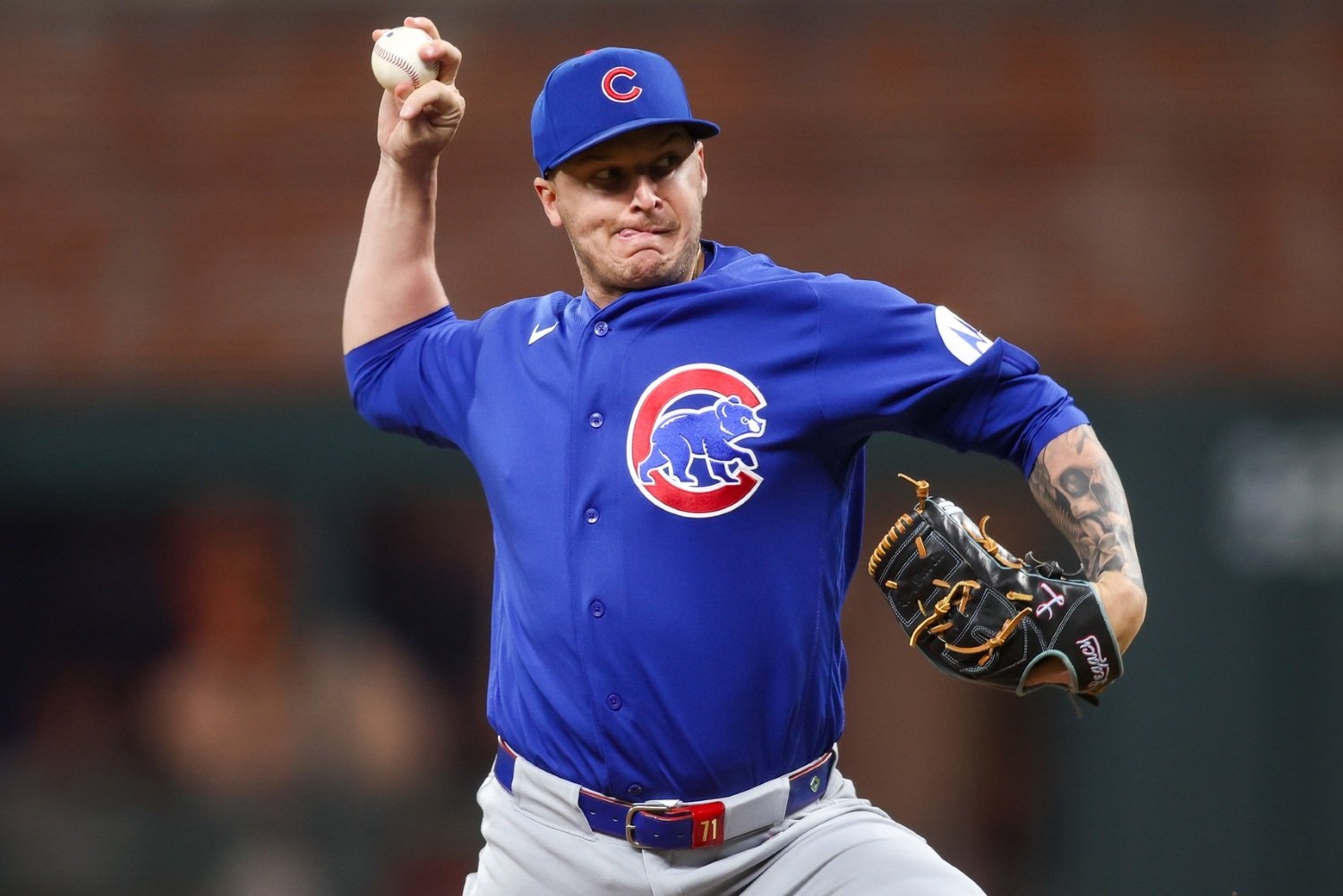 Things aren't good for the Chicago Cubs right now. They've lost nine in a row and 13 of 15, and it looks every bit as bad as it sounds. If you believe PECOTA, from Baseball Prospectus, the Cubs and Brewers are now flipping a metaphorical coin for the NL Central title. If you believe FanGraphs's Playoff Odds, then, uh, things are a lot worse than that. It felt a lot worse than that as the Brewers ran roughshod over the Cubs last week at Wrigley Field, and things have only gotten worse still. At such moments, it's difficult but important to seek some positives. Surely, somewhere, something is going right. Michael Busch is getting untracked. Ben Brown's lower arm slot and conversion to a sinker guy against righties has made him a viable starting pitcher, for as long as he can keep throwing 97 in that role. Beyond that, though, the good news goes scarce in a hurry. Here's one more tidbit that engenders some optimism: Jacob Webb has turned out to be a pretty good bullpen-saver. The erstwhile Texas righty signed an extremely under-the-radar deal this winter. The team spent more on Phil Maton, and they spent more on Hunter Harvey. They came into the season planning to lean more on Daniel Palencia, Maton, Harvey, and two lefties on whom they also spent more free-agent dollars (Caleb Thielbar and Hoby Milner) than on Webb; he was just meant to be an extra piece in a deep pen. Once Brown began the season in the bullpen, even he profiled as a more important relief arm than Webb. Almost immediately, though, things started going wrong. Harvey got hurt. Palencia got hurt. Thielbar got hurt. Three starting pitchers got hurt, forcing Brown (and Colin Rea) to move into the rotation. Maton stunk—and he got hurt. Riley Martin looked like a nice find who could fit into the picture and stop a gap—but then he got hurt. Webb's role got a lot more important than first hoped, in a hurry. That was bad news, because Webb wasn't very good. Through the end of April, Webb had a 5.06 ERA. In 13 appearances, he pitched 10 2/3 innings, striking out 12 and walking six of the 52 batters he faced. He gave up three homers. He was a middling middle reliever, and when Craig Counsell had no choice but to push him into more important innings, things went pear-shaped. That hasn't happened in a while, though. Webb has essentially become the team's relief ace, proving more durable and available than Palencia and just plain better than everyone else Counsell has had to call upon. He has a save and two holds. In 12 innings over 10 appearances, he's faced 47 batters, striking out 15 and walking two. He hasn't allowed a homer; he's only allowed one run. He's even stranded all three runners he's inherited this month. A good reliever is only as important as the leads they've given, and the Cubs haven't gotten their pen any leads lately. Webb has been sparkling, though—thanks mostly to a devastating changeup that he seems to have finally dialed in, location-wise. Most good changeups have much more depth than Webb's. His is more like a two-seam fastball than a heavy sinker, with run to the arm side but little added drop relative to his four-seamer. When a batter anticipates the change and Webb is anything less than perfect with his location, the hitter can lift it pretty effectively. However, the pitch has a healthy velocity gap from his heater, and because that fastball has some carry to it and holds its line, there's plenty of room for the change to run away and create the differential needed for lots of whiffs. After leaving the pitch up too often early, Webb now seems to be hitting his spots with it more consistently. He's also matching the pitch to the delivery of his fastball better. Hitters are having a hard time distinguishing the change from the fastball, and it's leading to both ample swings and misses and a lot of weak contact on the ground. YVlkam5fV0ZRVkV3dEdEUT09X0J3TlVVUUZSVlZRQVdRQUNVZ0FIVlE0RUFBTU5XZ1VBQ3dCV0FsRUZCUXRWQkZRRQ==.mp4 Webb has added a curveball this year, to pair with his sweeper, and he's made some small mechanical tweaks. Mostly, though, he just needed to execute better than he did in April. So far in May, he's executing exceptionally well. The Cubs still need to regain confidence in some other arms. Hopefully, Harvey can eventually return to patch things, and Maton can take care of the habitual misses that have plagued him all year. Webb can't be their second- or even third-most trusted reliever all season, if the team hopes to make the playoffs. For now, though, he's been a lifesaver. Things are so, so bad. If it weren't for Webb, they'd be even worse.
 -
Image courtesy of © Brett Davis-Imagn Images Things aren't good for the Chicago Cubs right now. They've lost nine in a row and 13 of 15, and it looks every bit as bad as it sounds. If you believe PECOTA, from Baseball Prospectus, the Cubs and Brewers are now flipping a metaphorical coin for the NL Central title. If you believe FanGraphs's Playoff Odds, then, uh, things are a lot worse than that. It felt a lot worse than that as the Brewers ran roughshod over the Cubs last week at Wrigley Field, and things have only gotten worse still. At such moments, it's difficult but important to seek some positives. Surely, somewhere, something is going right. Michael Busch is getting untracked. Ben Brown's lower arm slot and conversion to a sinker guy against righties has made him a viable starting pitcher, for as long as he can keep throwing 97 in that role. Beyond that, though, the good news goes scarce in a hurry. Here's one more tidbit that engenders some optimism: Jacob Webb has turned out to be a pretty good bullpen-saver. The erstwhile Texas righty signed an extremely under-the-radar deal this winter. The team spent more on Phil Maton, and they spent more on Hunter Harvey. They came into the season planning to lean more on Daniel Palencia, Maton, Harvey, and two lefties on whom they also spent more free-agent dollars (Caleb Thielbar and Hoby Milner) than on Webb; he was just meant to be an extra piece in a deep pen. Once Brown began the season in the bullpen, even he profiled as a more important relief arm than Webb. Almost immediately, though, things started going wrong. Harvey got hurt. Palencia got hurt. Thielbar got hurt. Three starting pitchers got hurt, forcing Brown (and Colin Rea) to move into the rotation. Maton stunk—and he got hurt. Riley Martin looked like a nice find who could fit into the picture and stop a gap—but then he got hurt. Webb's role got a lot more important than first hoped, in a hurry. That was bad news, because Webb wasn't very good. Through the end of April, Webb had a 5.06 ERA. In 13 appearances, he pitched 10 2/3 innings, striking out 12 and walking six of the 52 batters he faced. He gave up three homers. He was a middling middle reliever, and when Craig Counsell had no choice but to push him into more important innings, things went pear-shaped. That hasn't happened in a while, though. Webb has essentially become the team's relief ace, proving more durable and available than Palencia and just plain better than everyone else Counsell has had to call upon. He has a save and two holds. In 12 innings over 10 appearances, he's faced 47 batters, striking out 15 and walking two. He hasn't allowed a homer; he's only allowed one run. He's even stranded all three runners he's inherited this month. A good reliever is only as important as the leads they've given, and the Cubs haven't gotten their pen any leads lately. Webb has been sparkling, though—thanks mostly to a devastating changeup that he seems to have finally dialed in, location-wise. Most good changeups have much more depth than Webb's. His is more like a two-seam fastball than a heavy sinker, with run to the arm side but little added drop relative to his four-seamer. When a batter anticipates the change and Webb is anything less than perfect with his location, the hitter can lift it pretty effectively. However, the pitch has a healthy velocity gap from his heater, and because that fastball has some carry to it and holds its line, there's plenty of room for the change to run away and create the differential needed for lots of whiffs. After leaving the pitch up too often early, Webb now seems to be hitting his spots with it more consistently. He's also matching the pitch to the delivery of his fastball better. Hitters are having a hard time distinguishing the change from the fastball, and it's leading to both ample swings and misses and a lot of weak contact on the ground. YVlkam5fV0ZRVkV3dEdEUT09X0J3TlVVUUZSVlZRQVdRQUNVZ0FIVlE0RUFBTU5XZ1VBQ3dCV0FsRUZCUXRWQkZRRQ==.mp4 Webb has added a curveball this year, to pair with his sweeper, and he's made some small mechanical tweaks. Mostly, though, he just needed to execute better than he did in April. So far in May, he's executing exceptionally well. The Cubs still need to regain confidence in some other arms. Hopefully, Harvey can eventually return to patch things, and Maton can take care of the habitual misses that have plagued him all year. Webb can't be their second- or even third-most trusted reliever all season, if the team hopes to make the playoffs. For now, though, he's been a lifesaver. Things are so, so bad. If it weren't for Webb, they'd be even worse. View full article
-
Image courtesy of © Matt Marton-Imagn Images Craig Counsell sat Ian Happ down for two days this weekend, to give his struggling veteran should-be slugger a mental reset. This week, he might be wise to do the same with his other corner outfielder. Seiya Suzuki has always run in streaks and slumps, with an approach even more dependent on seeing the ball well (and even more vulnerable to stretches in which he simply can't do so) than most hitters'. He's gone through some prolonged funks before, but it's literally never been this bad. For the month of May, Suzuki is batting an anemic .179/.270/.295 in 89 plate appearances. Somehow, that understates how ugly things have gotten. Since hitting his last home run on May 8, Suzuki has gone 8-for-53, with just one extra-base hit (a double) and strikeouts in a third of his trips to the plate. He's never had a 50-plate appearance sample worse than this one, according to expected weighted on-base average (xwOBA). Normally great at controlling the strike zone, Suzuki is lost right now, chasing outside the zone and whiffing within it. Unsurprisingly, he's lost the ability to hit the ball hard. In fact, he's also never had a worse stretch of 50 batted balls in terms of average exit velocity than the one he's in right now. This comes, of course, at the worst of all possible times. The Cubs' offense is the biggest culprit in the team's hideous spiral, and with Dansby Swanson, Nico Hoerner, Pete Crow-Armstrong, Alex Bregman and Carson Kelly essentially locked into the lineup, the team badly needs its bat-first guys to deliver while many of those morse two-way options are mired in slumps at the plate. Instead, Ian Happ, Moisés Ballesteros and Suzuki are all scuffling. Only Michael Conforto and Michael Busch have kept the offense going at all. It's also dreadful timing for Suzuki himself. Free agency looms for him this fall, and because of his shaky defense and his age (he turns 32 this August), he has to rake in order to maintain a high level of appeal to teams. He's not doing it. Counsell has only allowed Conforto to see left-handed pitchers four times all year (out of 80 total plate appearances), but the Pirates will send right-handed hurlers to the mound for all four games of the Cubs' upcoming series there. As Happ (presumably) reenters the lineup, it feels both likely and advisable that Counsell will shift Conforto to right field for a day or two to spell Suzuki and give him a mental reset of his own. The Cubs have only scored 3.8 runs per game this month. They have to wake up and get hitting again, and that doesn't mean handing a full-time job to the hilariously whiff-prone Kevin Alcántara; it means getting Suzuki right. At the moment, that probably means offering him a break from the mental grind. View full article
-
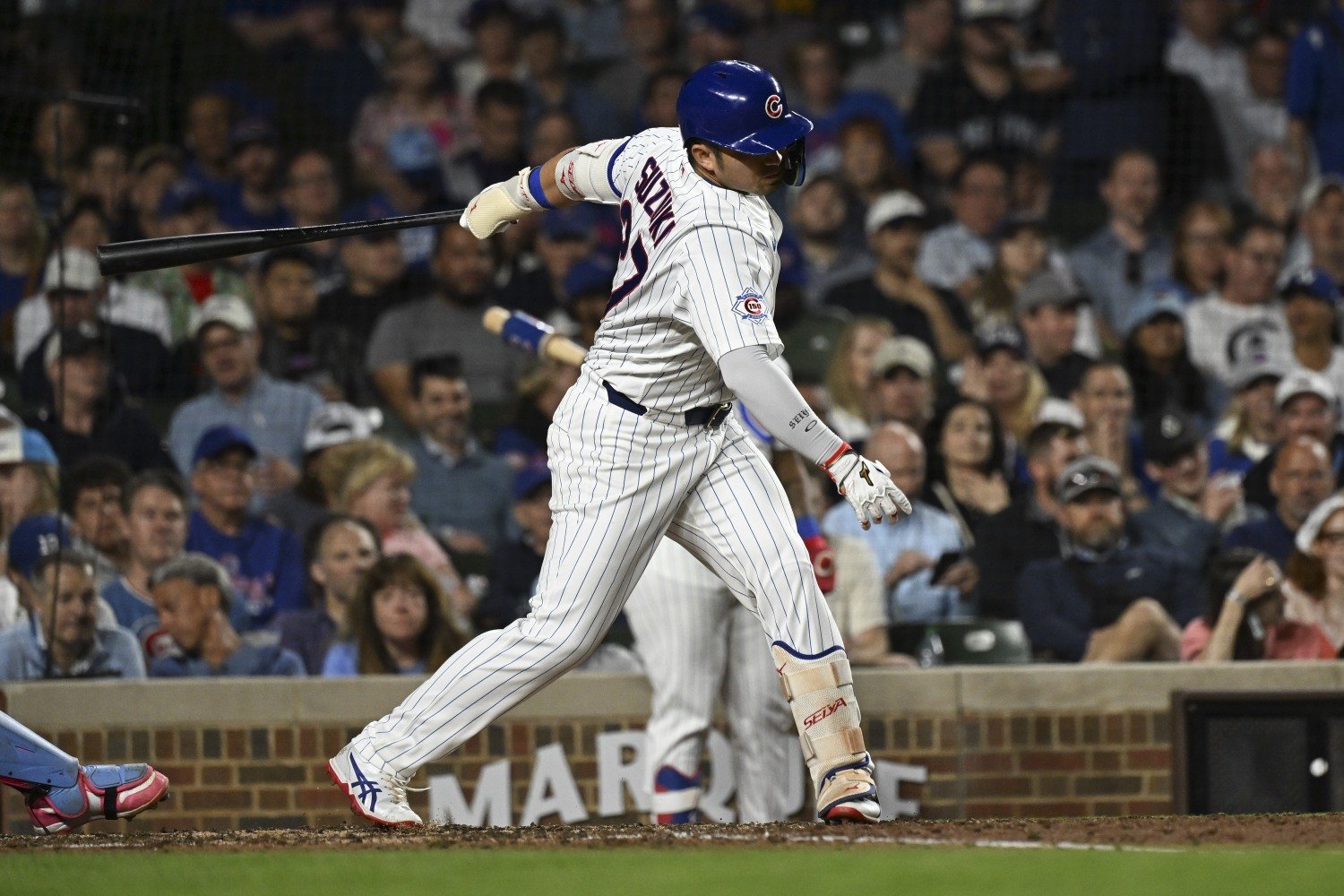 Craig Counsell sat Ian Happ down for two days this weekend, to give his struggling veteran should-be slugger a mental reset. This week, he might be wise to do the same with his other corner outfielder. Seiya Suzuki has always run in streaks and slumps, with an approach even more dependent on seeing the ball well (and even more vulnerable to stretches in which he simply can't do so) than most hitters'. He's gone through some prolonged funks before, but it's literally never been this bad. For the month of May, Suzuki is batting an anemic .179/.270/.295 in 89 plate appearances. Somehow, that understates how ugly things have gotten. Since hitting his last home run on May 8, Suzuki has gone 8-for-53, with just one extra-base hit (a double) and strikeouts in a third of his trips to the plate. He's never had a 50-plate appearance sample worse than this one, according to expected weighted on-base average (xwOBA). Normally great at controlling the strike zone, Suzuki is lost right now, chasing outside the zone and whiffing within it. Unsurprisingly, he's lost the ability to hit the ball hard. In fact, he's also never had a worse stretch of 50 batted balls in terms of average exit velocity than the one he's in right now. This comes, of course, at the worst of all possible times. The Cubs' offense is the biggest culprit in the team's hideous spiral, and with Dansby Swanson, Nico Hoerner, Pete Crow-Armstrong, Alex Bregman and Carson Kelly essentially locked into the lineup, the team badly needs its bat-first guys to deliver while many of those morse two-way options are mired in slumps at the plate. Instead, Ian Happ, Moisés Ballesteros and Suzuki are all scuffling. Only Michael Conforto and Michael Busch have kept the offense going at all. It's also dreadful timing for Suzuki himself. Free agency looms for him this fall, and because of his shaky defense and his age (he turns 32 this August), he has to rake in order to maintain a high level of appeal to teams. He's not doing it. Counsell has only allowed Conforto to see left-handed pitchers four times all year (out of 80 total plate appearances), but the Pirates will send right-handed hurlers to the mound for all four games of the Cubs' upcoming series there. As Happ (presumably) reenters the lineup, it feels both likely and advisable that Counsell will shift Conforto to right field for a day or two to spell Suzuki and give him a mental reset of his own. The Cubs have only scored 3.8 runs per game this month. They have to wake up and get hitting again, and that doesn't mean handing a full-time job to the hilariously whiff-prone Kevin Alcántara; it means getting Suzuki right. At the moment, that probably means offering him a break from the mental grind.
 -
Sounds harsh when put in these terms, but I agree. The Cubs are locked out of the penthouse right now, and that doesn't feel like a transient state of affairs. It's a huge problem.
-
Can Michael Busch Get His Power Back Despite Lost Bat Speed?
Matthew Trueblood posted an article in Cubs
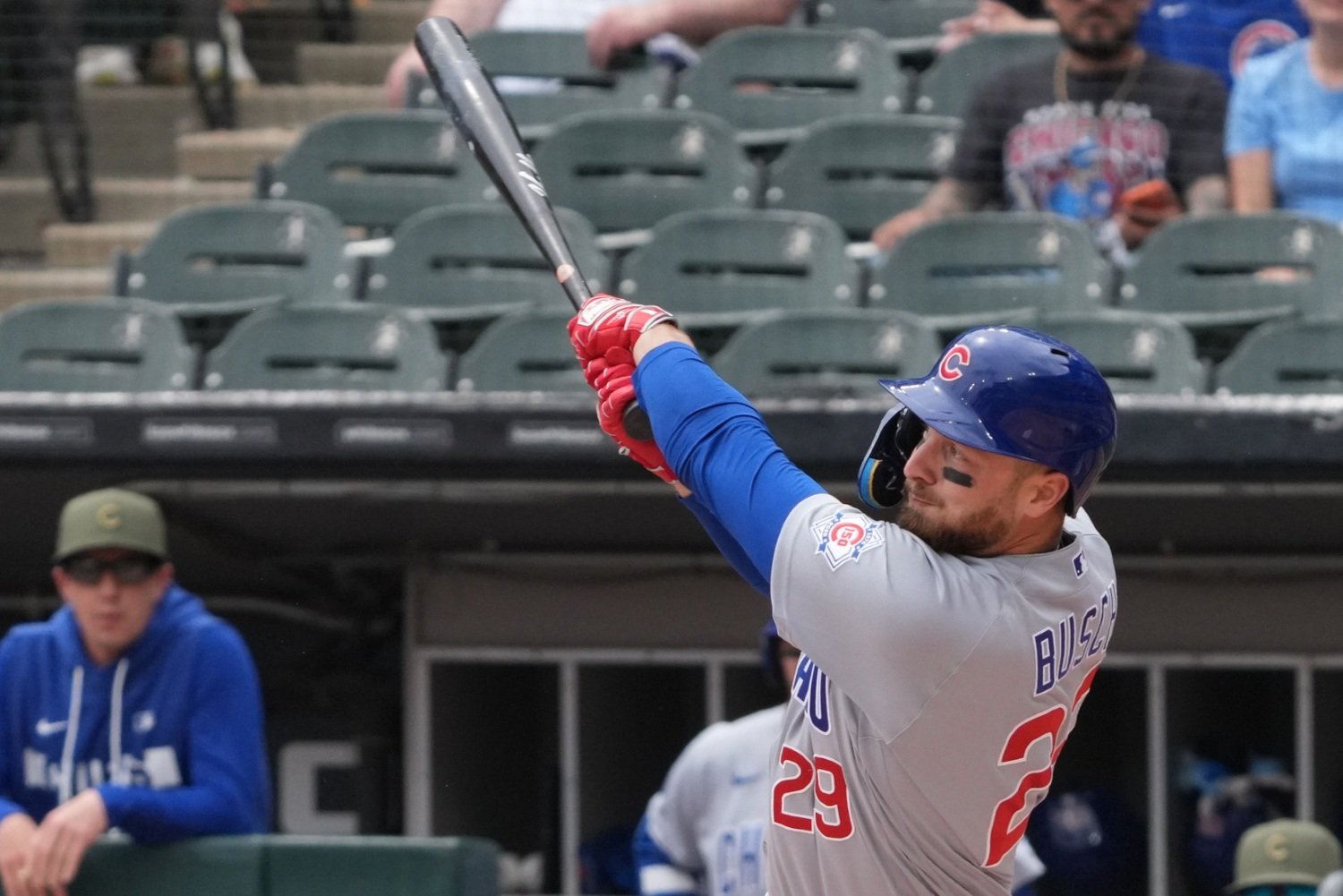 The Cubs offense got off to a great start. They batted .261/.353/.427 as a team through the end of April, and scored nearly 5.5 runs per game. That was never going to prove sustainable, of course. The only two teams in Cubs history to score at that kind of pace all year were the 1929 and 1930 clubs, and in those years, offense was at such a frenzy that they could hardly help it. It didn't have to get this bad, though. Since May 1, the Cubs are batting .202/.306/.331. That's why they're currently mired in a stretch of seven straight losses, and 11 in their last 13 games. Technically, none of that is Michael Busch's fault. In fact, his was the last piece of slumbering lumber to limber up this spring. He had a .576 OPS through the end of April, but is batting .275/.440/.493 in May. That's a tremendous line, indicative of a player who has tapped into the value of a shrunken strike zone and become an unstoppable OBP guy. He's walked 19 times and struck out just 20 times in 91 plate appearances this month, entering Sunday's games. Even over the last four contests, in which he's gone 0-for-13, he's managed a pair of free passes. However, something really is amiss with Busch, even now. He's missing some serious bat speed, and more than that, the timing and angle of his swing are a hair off. He's still making good swing decisions, which has kept him afloat in the OBP department, but the power that made him such a dynamo at the top of the lineup last season is absent. Can he get it back? Well, firstly, of course he can. What we really want to know is how likely he is to actually do it, and to estimate that, we need to reacquaint ourselves with Busch's swing a bit. As you surely remember, last year, he found something that turned him from a good hitter with slightly above-average power to a borderline All-Star who hit 34 homers. He actually swung a tick less fast than he had in 2024, but he made more solid contact, thanks to a superb bat path that matched a well-organized plan of attack. He hit the ball hard, and he hit it hard in the air, often to the pull field. This season, that's just not happening. Busch's average exit velocity is down from 92.2 MPH in 2025 to 88.5. His average exit velocity on batted balls in the launch angle sweet spot (8°-32°) is down 2.4 MPH. His average launch angle on hard hit balls (95+ MPH) is down 5°. As good as Busch has been in May, it's still mostly because he's drawing walks and putting the ball in play. There's little sign of the power he had in 2025. Here, in two videos, is why. The first is a home run Busch hit against Miles Mikolas last year, on the 4th of July. WU9rbDJfV0ZRVkV3dEdEUT09X1ZWTlZBVjBCVXdFQUNWRlJYd0FIQWxkUUFGbFhCd1VBVkZRTkJBY0ZVd0FHVXdJQQ==.mp4 The second is a similar pitch from last month, on which he hit a well-struck but harmless flyout. TUFYS05fWGw0TUFRPT1fQmxWUVUxWldVd0VBWEZzS0FnQUhCUVJTQUZoVEFsa0FBMU1CQUFRSENWQUhWZ2RU.mp4 The telling moment in the two swings comes, perhaps unsurprisingly, just as he's making contact. To illustrate the difference, I've added an arc to each, going from his belt buckle to his left elbow by way of his armpit. Now, to be clear, that arc is not quite how any hitter would or should think about the problem in Busch's swing this year. Nobody's mental cue for a successful power stroke is the angle of this imagined arc. But it does a fine job of highlighting what's happening. Busch's hands get farther from his body earlier in his swing this season. He's not tucking his back elbow in and powering his swing by forcing that top hand through a firm front side, the way he did last year. That's led to a slight flattening of his swing. In the above examples, there's another key variable. Last year's homer came when Busch was ahead in the count, 1-0. He could sit on a fastball in and be ready to turn on it, with his front shoulder rolling backward and his torso twisting at top speed to power a short stroke with lots of long-ball potential. This season's pitch came with two strikes, so part of the reason Busch is letting his hands get away from his body is to cover the outer edge. He can't be as aggressive with that turn of his upper half, either, because he has to respect the possibility of a breaking ball a bit more. This is a real difference, but if it were an isolated case, it wouldn't be especially telling. It's not isolated, though. In fact, here's Busch getting all over a two-strike pitch that was a bit away from him (and harder) last year. eHk5b0RfVjBZQUhRPT1fVWdRRkFGSlNVQXNBRGdZTFVRQUhBZ2RYQUFBRlVRTUFDZ1lOVWdVQVYxY0FWVmNG.mp4 And here's him scorching a ball, but to the big part of the field, on a 1-0 count, just this Friday. YVlkam5fV0ZRVkV3dEdEUT09X1VGZFFVRk1NVWdjQVhWUlFVQUFIQUFaVUFGa0RBVkVBQUFNQkNRc0VWMVVIVkZOVw==.mp4 Once again, we'll look at the moment of contact on each swing. Even when he extends his arms, this year, Busch is going around his front side, more than through it. Some of the difference lies in him letting energy flow through his whole frame better, from his feet to the end of his bat, but some, again, lies in him flattening out slightly. He's a bit more focused on hitting the ball, this year, and a bit less focused on hitting the ball hard, in the air, to a productive part of the park. The specifict of the focus and conviction he had at the plate last year is just not quite as fine this spring, and the results have spoken to that. If his bat speed remains down—and it's markedly down, about 1.5 MPH from last year—he might have to make a larger adjustment to his plan at the plate than he's made so far. He saw a surge in bat speed once the weather ceased to be frigid, but he's plunged back down on that front over the last fortnight. He'll need to organize his zone differently, if he's no longer able to rotate as quickly as he did last season and/or if the flattening of his bat path is permanent. Otherwise, some of his best contact will continue to be wasted, and Busch will settle back into being what he was in 2024. That was a solid hitter, but the Cubs' offense needs him to be more than that. They're relying on him much more now than they were in 2024, when they platooned him and when they had Cody Bellinger to help them punish righties. Busch doesn't have to hit 34 home runs again, but walking at a career-high rate isn't worth it if he trades in his power in the process. Right now, that's exactly what he's doing, because his swing isn't right.
 -
Image courtesy of © David Banks-Imagn Images The Cubs offense got off to a great start. They batted .261/.353/.427 as a team through the end of April, and scored nearly 5.5 runs per game. That was never going to prove sustainable, of course. The only two teams in Cubs history to score at that kind of pace all year were the 1929 and 1930 clubs, and in those years, offense was at such a frenzy that they could hardly help it. It didn't have to get this bad, though. Since May 1, the Cubs are batting .202/.306/.331. That's why they're currently mired in a stretch of seven straight losses, and 11 in their last 13 games. Technically, none of that is Michael Busch's fault. In fact, his was the last piece of slumbering lumber to limber up this spring. He had a .576 OPS through the end of April, but is batting .275/.440/.493 in May. That's a tremendous line, indicative of a player who has tapped into the value of a shrunken strike zone and become an unstoppable OBP guy. He's walked 19 times and struck out just 20 times in 91 plate appearances this month, entering Sunday's games. Even over the last four contests, in which he's gone 0-for-13, he's managed a pair of free passes. However, something really is amiss with Busch, even now. He's missing some serious bat speed, and more than that, the timing and angle of his swing are a hair off. He's still making good swing decisions, which has kept him afloat in the OBP department, but the power that made him such a dynamo at the top of the lineup last season is absent. Can he get it back? Well, firstly, of course he can. What we really want to know is how likely he is to actually do it, and to estimate that, we need to reacquaint ourselves with Busch's swing a bit. As you surely remember, last year, he found something that turned him from a good hitter with slightly above-average power to a borderline All-Star who hit 34 homers. He actually swung a tick less fast than he had in 2024, but he made more solid contact, thanks to a superb bat path that matched a well-organized plan of attack. He hit the ball hard, and he hit it hard in the air, often to the pull field. This season, that's just not happening. Busch's average exit velocity is down from 92.2 MPH in 2025 to 88.5. His average exit velocity on batted balls in the launch angle sweet spot (8°-32°) is down 2.4 MPH. His average launch angle on hard hit balls (95+ MPH) is down 5°. As good as Busch has been in May, it's still mostly because he's drawing walks and putting the ball in play. There's little sign of the power he had in 2025. Here, in two videos, is why. The first is a home run Busch hit against Miles Mikolas last year, on the 4th of July. WU9rbDJfV0ZRVkV3dEdEUT09X1ZWTlZBVjBCVXdFQUNWRlJYd0FIQWxkUUFGbFhCd1VBVkZRTkJBY0ZVd0FHVXdJQQ==.mp4 The second is a similar pitch from last month, on which he hit a well-struck but harmless flyout. TUFYS05fWGw0TUFRPT1fQmxWUVUxWldVd0VBWEZzS0FnQUhCUVJTQUZoVEFsa0FBMU1CQUFRSENWQUhWZ2RU.mp4 The telling moment in the two swings comes, perhaps unsurprisingly, just as he's making contact. To illustrate the difference, I've added an arc to each, going from his belt buckle to his left elbow by way of his armpit. Now, to be clear, that arc is not quite how any hitter would or should think about the problem in Busch's swing this year. Nobody's mental cue for a successful power stroke is the angle of this imagined arc. But it does a fine job of highlighting what's happening. Busch's hands get farther from his body earlier in his swing this season. He's not tucking his back elbow in and powering his swing by forcing that top hand through a firm front side, the way he did last year. That's led to a slight flattening of his swing. In the above examples, there's another key variable. Last year's homer came when Busch was ahead in the count, 1-0. He could sit on a fastball in and be ready to turn on it, with his front shoulder rolling backward and his torso twisting at top speed to power a short stroke with lots of long-ball potential. This season's pitch came with two strikes, so part of the reason Busch is letting his hands get away from his body is to cover the outer edge. He can't be as aggressive with that turn of his upper half, either, because he has to respect the possibility of a breaking ball a bit more. This is a real difference, but if it were an isolated case, it wouldn't be especially telling. It's not isolated, though. In fact, here's Busch getting all over a two-strike pitch that was a bit away from him (and harder) last year. eHk5b0RfVjBZQUhRPT1fVWdRRkFGSlNVQXNBRGdZTFVRQUhBZ2RYQUFBRlVRTUFDZ1lOVWdVQVYxY0FWVmNG.mp4 And here's him scorching a ball, but to the big part of the field, on a 1-0 count, just this Friday. YVlkam5fV0ZRVkV3dEdEUT09X1VGZFFVRk1NVWdjQVhWUlFVQUFIQUFaVUFGa0RBVkVBQUFNQkNRc0VWMVVIVkZOVw==.mp4 Once again, we'll look at the moment of contact on each swing. Even when he extends his arms, this year, Busch is going around his front side, more than through it. Some of the difference lies in him letting energy flow through his whole frame better, from his feet to the end of his bat, but some, again, lies in him flattening out slightly. He's a bit more focused on hitting the ball, this year, and a bit less focused on hitting the ball hard, in the air, to a productive part of the park. The specifict of the focus and conviction he had at the plate last year is just not quite as fine this spring, and the results have spoken to that. If his bat speed remains down—and it's markedly down, about 1.5 MPH from last year—he might have to make a larger adjustment to his plan at the plate than he's made so far. He saw a surge in bat speed once the weather ceased to be frigid, but he's plunged back down on that front over the last fortnight. He'll need to organize his zone differently, if he's no longer able to rotate as quickly as he did last season and/or if the flattening of his bat path is permanent. Otherwise, some of his best contact will continue to be wasted, and Busch will settle back into being what he was in 2024. That was a solid hitter, but the Cubs' offense needs him to be more than that. They're relying on him much more now than they were in 2024, when they platooned him and when they had Cody Bellinger to help them punish righties. Busch doesn't have to hit 34 home runs again, but walking at a career-high rate isn't worth it if he trades in his power in the process. Right now, that's exactly what he's doing, because his swing isn't right. View full article
-
Image courtesy of © David Banks-Imagn Images It's just three games. Right? Sure, the Brewers came into town and beat the Cubs in both convincing and ominous fashion. They used three pitchers they acquired over the winter through proactive trades and one guy they've developed into the best pitcher in the world to overmatch an ostensibly high-powered, unquestionably expensive Cubs offense. They got crucial home runs from the second baseman who has blossomed into the superstar Cubs fans have longed for Nico Hoerner to be, and from a scrapheap scoop-up who now seems to be a legitimately above-average first baseman, and from the Cubs' gleefully antagonistic long-time nemesis, Christian Yelich. Sure, Pete Crow-Armstrong made embarrassing mistakes. Alex Bregman, Ian Happ and Seiya Suzuki missed opportunities to turn the tides of two of the three losses. The Brewers clearly have Shota Imanaga's number, and Edward Cabrera left his fourth straight ineffective start with a blister. The Brewers pulled into first place, where they've spent the majority of the past half-decade. But it's just three games. Right? Increasingly, it feels like it's more than that. The Brewers keep resoundingly beating the Cubs when it really matters. They keep frustrating their former manager and proving to be more fundamentally sound and smarter, as well as immensely talented. More importantly, they're never just winning three games. They came to town having won eight of 10 and 13 of 18. They leave town looking like they're back into the groove they found last summer, with 16 wins in 21 games. The Cubs won 20 of 23 at one point this season, of course, but they haven't showed the same capacity for dominance as the Brewers have this year. Chicago has scored 4.9 runs per game and allowed 4.4. Milwaukee has scored 5.0 per game and allowed only 3.4. Were this because Milwaukee was all-in this year, it would be easier to feel ok about it. In reality, though, it's the Cubs who are closer to that end of the spectrum of timeline plans. As we've talked about at length, this team faces the losses of both corner outfielders and several starting pitchers (Jameson Taillon, Matthew Boyd, Imanaga) to free agency this winter. They can spend money to replace those guys, but not without constraints, because they owe a nine-figure sum to a group headlined by Bregman, Crow-Armstrong Hoerner and Dansby Swanson. Justin Steele and Edward Cabrera will be expensive arbitration cases. Michael Busch, Miguel Amaya, Daniel Palencia and Ben Brown will be relatively cheap ones, but they'll get at least $10 million more expensive as a group than they are this year. Bregman, Swanson, and Carson Kelly are likely in the last years of their respective primes. The farm system is not robust. The Cubs need to be good this year; they're very likely to be a bit worse next year and the year after. Meanwhile, the Brewers are a perpetual motion machine. Kyle Harrison became the most salient symbol of that this week at Wrigley Field, but he won't be the most visible one for long. Milwaukee is younger and cheaper than the Cubs, but they're also much deeper, and—this, given the disparity in their payrolls, is the big blow—their stars are better than the Cubs'. On top of all that, with a couple of other top prospects graduating, Milwaukee now has the top overall prospect in baseball, in infielder Jesus Made. They're not necessarily better this year than they were last year, but they're almost certainly going to be better next year than they are right now, and they should even be better the year after that than they are next year. No cavalry is coming for the Cubs. They don't have savior-caliber prospects on either side of the runs ledger, either long-term or short-term. They aren't going to get a front-office overhaul and a creative spark, because Jed Hoyer got an extension to remain the team's president of baseball operations for the balance of the decade. It feels silly to talk about farm systems and long-term concerns around a good team in late May most of the time, but in this case, the long-term concerns are also short-term ones. The Cubs have to win now. Can they do it? Only if they start getting better performances from the guys on the roster, because they have no mechanism by which to add much to the roster this year. That made this week's reminder that the Brewers are better than the Cubs for the eighth full season in a row especially painful. Locking in this core made some sense, but it raised the stakes of the team's efforts to improve its player development. So far, the jury is out on that. Signing Bregman and trading for Cabrera this winter made sense, but it moved forward the team's timeline for geting back to the top of the NL Central at the cost of sustainable excellence. The jury is certainly out on that, too. Signing Hoyer to that extension last summer, meanwhile, remains a head-scratcher. It came at a strange point in the calendar. It seemed to take pressure off a team that needed to embrace the very real pressure it faced. It certainly locked them into the philosophies and capacities of Hoyer, which are not on par with those of some of the top front offices with which Cubs fans hope the team will be fighting for supremacy in the years ahead. It rewarded Hoyer for a job he hadn't actually completed, and still hasn't: reasserting the Cubs' place as the team to beat in the NL Central. Hoyer tried to finish that work over the winter, but this week demonstrated how profoundly he failed. The Cubs can still win the division this year. In a season when no team feels like an unbeatable colossus, they can still dream of a pennant. At the moment, though, it's hard not to feel like the team overcommitted to a bunch of second-tier commodities: a second-tier front office, second-tier big winter moves, and a second-tier homegrown core. Eventually, even in the Second City, the second tier isn't good enough. How the team can get to the first tier from here, though, is hard to say. View full article
-
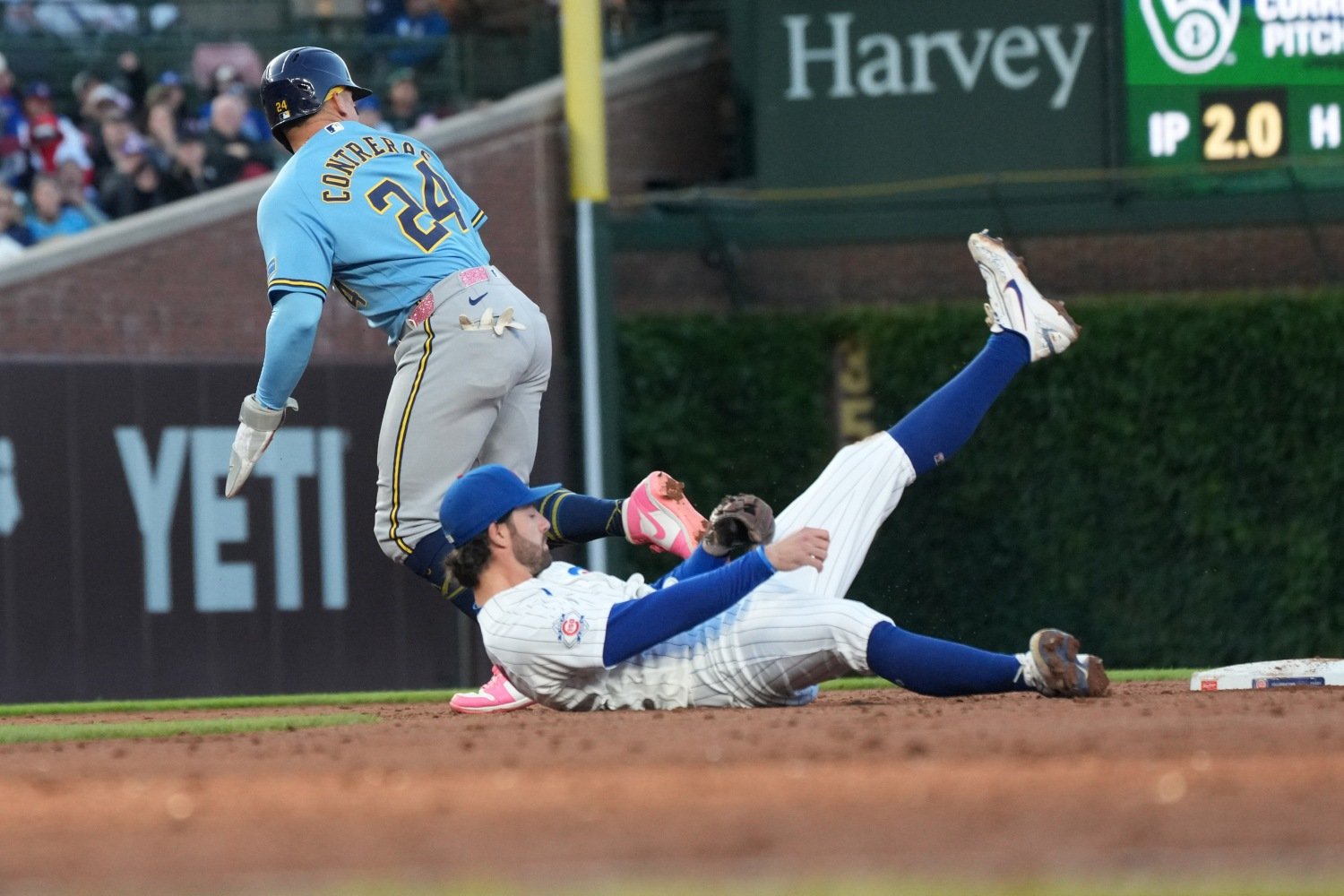 It's just three games. Right? Sure, the Brewers came into town and beat the Cubs in both convincing and ominous fashion. They used three pitchers they acquired over the winter through proactive trades and one guy they've developed into the best pitcher in the world to overmatch an ostensibly high-powered, unquestionably expensive Cubs offense. They got crucial home runs from the second baseman who has blossomed into the superstar Cubs fans have longed for Nico Hoerner to be, and from a scrapheap scoop-up who now seems to be a legitimately above-average first baseman, and from the Cubs' gleefully antagonistic long-time nemesis, Christian Yelich. Sure, Pete Crow-Armstrong made embarrassing mistakes. Alex Bregman, Ian Happ and Seiya Suzuki missed opportunities to turn the tides of two of the three losses. The Brewers clearly have Shota Imanaga's number, and Edward Cabrera left his fourth straight ineffective start with a blister. The Brewers pulled into first place, where they've spent the majority of the past half-decade. But it's just three games. Right? Increasingly, it feels like it's more than that. The Brewers keep resoundingly beating the Cubs when it really matters. They keep frustrating their former manager and proving to be more fundamentally sound and smarter, as well as immensely talented. More importantly, they're never just winning three games. They came to town having won eight of 10 and 13 of 18. They leave town looking like they're back into the groove they found last summer, with 16 wins in 21 games. The Cubs won 20 of 23 at one point this season, of course, but they haven't showed the same capacity for dominance as the Brewers have this year. Chicago has scored 4.9 runs per game and allowed 4.4. Milwaukee has scored 5.0 per game and allowed only 3.4. Were this because Milwaukee was all-in this year, it would be easier to feel ok about it. In reality, though, it's the Cubs who are closer to that end of the spectrum of timeline plans. As we've talked about at length, this team faces the losses of both corner outfielders and several starting pitchers (Jameson Taillon, Matthew Boyd, Imanaga) to free agency this winter. They can spend money to replace those guys, but not without constraints, because they owe a nine-figure sum to a group headlined by Bregman, Crow-Armstrong Hoerner and Dansby Swanson. Justin Steele and Edward Cabrera will be expensive arbitration cases. Michael Busch, Miguel Amaya, Daniel Palencia and Ben Brown will be relatively cheap ones, but they'll get at least $10 million more expensive as a group than they are this year. Bregman, Swanson, and Carson Kelly are likely in the last years of their respective primes. The farm system is not robust. The Cubs need to be good this year; they're very likely to be a bit worse next year and the year after. Meanwhile, the Brewers are a perpetual motion machine. Kyle Harrison became the most salient symbol of that this week at Wrigley Field, but he won't be the most visible one for long. Milwaukee is younger and cheaper than the Cubs, but they're also much deeper, and—this, given the disparity in their payrolls, is the big blow—their stars are better than the Cubs'. On top of all that, with a couple of other top prospects graduating, Milwaukee now has the top overall prospect in baseball, in infielder Jesus Made. They're not necessarily better this year than they were last year, but they're almost certainly going to be better next year than they are right now, and they should even be better the year after that than they are next year. No cavalry is coming for the Cubs. They don't have savior-caliber prospects on either side of the runs ledger, either long-term or short-term. They aren't going to get a front-office overhaul and a creative spark, because Jed Hoyer got an extension to remain the team's president of baseball operations for the balance of the decade. It feels silly to talk about farm systems and long-term concerns around a good team in late May most of the time, but in this case, the long-term concerns are also short-term ones. The Cubs have to win now. Can they do it? Only if they start getting better performances from the guys on the roster, because they have no mechanism by which to add much to the roster this year. That made this week's reminder that the Brewers are better than the Cubs for the eighth full season in a row especially painful. Locking in this core made some sense, but it raised the stakes of the team's efforts to improve its player development. So far, the jury is out on that. Signing Bregman and trading for Cabrera this winter made sense, but it moved forward the team's timeline for geting back to the top of the NL Central at the cost of sustainable excellence. The jury is certainly out on that, too. Signing Hoyer to that extension last summer, meanwhile, remains a head-scratcher. It came at a strange point in the calendar. It seemed to take pressure off a team that needed to embrace the very real pressure it faced. It certainly locked them into the philosophies and capacities of Hoyer, which are not on par with those of some of the top front offices with which Cubs fans hope the team will be fighting for supremacy in the years ahead. It rewarded Hoyer for a job he hadn't actually completed, and still hasn't: reasserting the Cubs' place as the team to beat in the NL Central. Hoyer tried to finish that work over the winter, but this week demonstrated how profoundly he failed. The Cubs can still win the division this year. In a season when no team feels like an unbeatable colossus, they can still dream of a pennant. At the moment, though, it's hard not to feel like the team overcommitted to a bunch of second-tier commodities: a second-tier front office, second-tier big winter moves, and a second-tier homegrown core. Eventually, even in the Second City, the second tier isn't good enough. How the team can get to the first tier from here, though, is hard to say.
 -
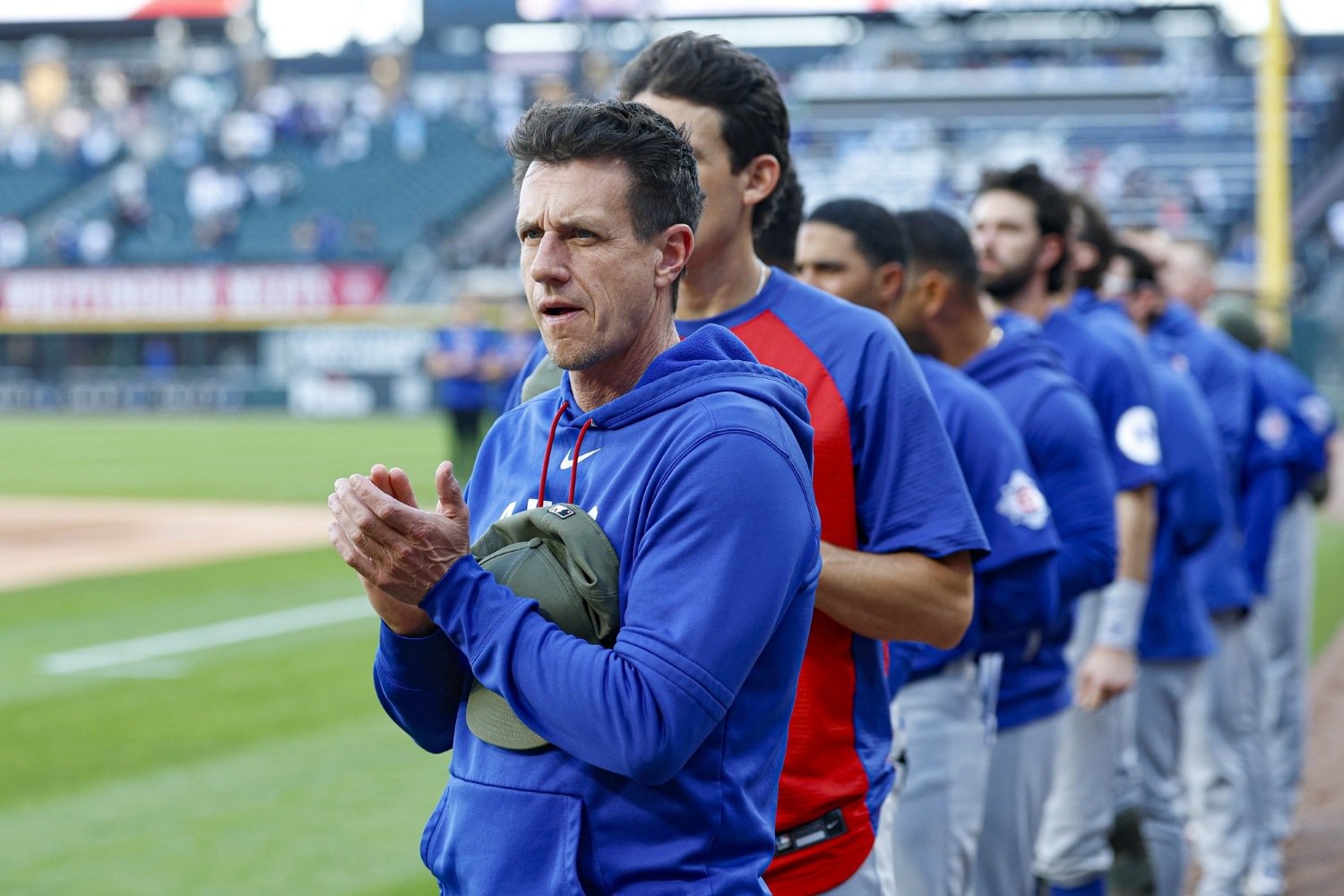 The Cubs were an unimpressive (but not concerning) 7-9 through their first 16 games of the 2026 campaign. It was too early to tell how good they had a chance to be—especially because Cade Horton was already gone for the year but they were just getting Seiya Suzuki back—but they were gradually coming into focus. It seemed like things would be clearer in a month or so. As is true when cleaning your mirrors, though, in baseball, streaks make everything blurrier. Since that 7-9 start, the Cubs have: Won 10 Lost 3 Won 10 Lost 4 Won 2 Lost 4 In a 33-game slice of a 162-game season, the team hasn't alternated wins and losses over any three-game span. They're 22-11 over this period, which is the most salient fact to take away from it, but they're also a team that seems to oscillate between great and ghastly in longer arcs than others. The offense has been hit-or-miss. The pitching has been unable to demonstrate consistency amid all their injury problems, even as the bullpen has gradually become (almost) whole again. Even their vaunted defense has unexpected hiccups. Heading into Wednesday's series finale against the Brewers, the Cubs have already lost the set and (for now, anyway) have fallen out of first place in the NL Central. They're slumping badly, and that's no longer to be considered a minor aberration. They might end up with a very good record, or not, but this team has a lot of volatility to it. Nico Hoerner's season has seen him start with four scorching weeks, then slog through four dreadful ones. He showed signs of getting back into the groove in Tuesday night's loss, which is encouraging. Dansby Swanson started with a miniature barrage of homers and drew a ton of walks over the first month, but has been a strikeout machine of late. He, too, looks like he might be rounding back into form. Pete Crow-Armstrong is the opposite of those two: he started abysmally, but has been (if not quite his best self) a very productive hitter over the last month. Ditto for Michael Busch. The lineup is full of stories like these; so is the starting rotation. Suzuki has always been streaky at the plate, but he's avoided two-week nadirs so far. His source of volatility is defense, where he's made more difficult plays this year but spent most of the last road trip watching balls land just beyond his reach. Streakiness doesn't disqualify a team from being good, but it puts a big dent in ambitions to be great. The Brewers are reminding the Cubs of that, forcefully. Milwaukee came to town having weathered many of the same kinds of losses and frustrations as Chicago so far this year, and they haven't had a run where they got red-hot—until now. But they've also avoided losing more than six out of 10 in any stretch. This is the recipe with which they've beaten the Cubs in the division race for three straight years: the same preparedness to ride a wave and get hot, but better insulation against going cold. The most consistent player on the 2026 Cubs, unsurprisingly, has been Alex Bregman. He's not firing on all cylinders yet, but he's put together competitive at-bats even during his colder snaps. Jed Hoyer spent big on Bregman on the premise that he would have a hugely positive influence on his teammates; that needs to show up in the weeks and months ahead. If Bregman continues to warm up as he works through some of the timing issues that have plagued him so far, he can pull the Cubs up with him, and the team might discover greater, more durable consistency. For now, though, they look like one of those teams who could still with 96 games, or 83, based solely on whether they happen to be hot or cold when the music stops in late September. For a roster built to be as good this year as they'll be any time in the next half-decade, that's not especially comforting—but it does give them upside, and they have plenty of time to realize it. Streaks and slumps make it feel late early; the reality is that we know less about this team right now than we know about most clubs after 50 games. The next 50 should be more telling. For now, it's important to avoid both panic and Pollyanna.
 -
Image courtesy of © Kamil Krzaczynski-Imagn Images The Cubs were an unimpressive (but not concerning) 7-9 through their first 16 games of the 2026 campaign. It was too early to tell how good they had a chance to be—especially because Cade Horton was already gone for the year but they were just getting Seiya Suzuki back—but they were gradually coming into focus. It seemed like things would be clearer in a month or so. As is true when cleaning your mirrors, though, in baseball, streaks make everything blurrier. Since that 7-9 start, the Cubs have: Won 10 Lost 3 Won 10 Lost 4 Won 2 Lost 4 In a 33-game slice of a 162-game season, the team hasn't alternated wins and losses over any three-game span. They're 22-11 over this period, which is the most salient fact to take away from it, but they're also a team that seems to oscillate between great and ghastly in longer arcs than others. The offense has been hit-or-miss. The pitching has been unable to demonstrate consistency amid all their injury problems, even as the bullpen has gradually become (almost) whole again. Even their vaunted defense has unexpected hiccups. Heading into Wednesday's series finale against the Brewers, the Cubs have already lost the set and (for now, anyway) have fallen out of first place in the NL Central. They're slumping badly, and that's no longer to be considered a minor aberration. They might end up with a very good record, or not, but this team has a lot of volatility to it. Nico Hoerner's season has seen him start with four scorching weeks, then slog through four dreadful ones. He showed signs of getting back into the groove in Tuesday night's loss, which is encouraging. Dansby Swanson started with a miniature barrage of homers and drew a ton of walks over the first month, but has been a strikeout machine of late. He, too, looks like he might be rounding back into form. Pete Crow-Armstrong is the opposite of those two: he started abysmally, but has been (if not quite his best self) a very productive hitter over the last month. Ditto for Michael Busch. The lineup is full of stories like these; so is the starting rotation. Suzuki has always been streaky at the plate, but he's avoided two-week nadirs so far. His source of volatility is defense, where he's made more difficult plays this year but spent most of the last road trip watching balls land just beyond his reach. Streakiness doesn't disqualify a team from being good, but it puts a big dent in ambitions to be great. The Brewers are reminding the Cubs of that, forcefully. Milwaukee came to town having weathered many of the same kinds of losses and frustrations as Chicago so far this year, and they haven't had a run where they got red-hot—until now. But they've also avoided losing more than six out of 10 in any stretch. This is the recipe with which they've beaten the Cubs in the division race for three straight years: the same preparedness to ride a wave and get hot, but better insulation against going cold. The most consistent player on the 2026 Cubs, unsurprisingly, has been Alex Bregman. He's not firing on all cylinders yet, but he's put together competitive at-bats even during his colder snaps. Jed Hoyer spent big on Bregman on the premise that he would have a hugely positive influence on his teammates; that needs to show up in the weeks and months ahead. If Bregman continues to warm up as he works through some of the timing issues that have plagued him so far, he can pull the Cubs up with him, and the team might discover greater, more durable consistency. For now, though, they look like one of those teams who could still with 96 games, or 83, based solely on whether they happen to be hot or cold when the music stops in late September. For a roster built to be as good this year as they'll be any time in the next half-decade, that's not especially comforting—but it does give them upside, and they have plenty of time to realize it. Streaks and slumps make it feel late early; the reality is that we know less about this team right now than we know about most clubs after 50 games. The next 50 should be more telling. For now, it's important to avoid both panic and Pollyanna. View full article
-
Image courtesy of © Jerome Miron-Imagn Images For roughly the first half of what has been the 2026 season to date, Nico Hoerner was a dynamo. In fact, the Cubs have played 48 games, and in their first 24, Hoerner batted .320/.393/.515. He had several outlets—including this one, of course, but even nationally—singing his praises. He continued to play excellent defense and run the bases well. Along the way, of course, he signed a six-year deal with the Cubs, making him a long-term part of the team's plans and heading off his free agency, which had loomed over him and the team until that point. It looked like everything was lining up for Hoerner to be the face of the Cubs for the balance of this decade and beyond. Then, the second half of this season happened. Sure, it's only 24 games, but so was that remarkable start. In this segment of the year, he's hitting .194/.290/.247. In 107 plate appearances, he's walked 12 times and struck out just five times, but he also has just five extra-base hits (all doubles) and has become a problem at the top of the team's batting order, rather than a source of stability and electricity. Before he signed his extension, if Hoerner had gone through a prolonged slump this ugly, the Cubs would have had to seriously consider changing their tack for the future. After all, there's always been a ceiling here. Hoerner's lack of bat speed and over-the-fence power make him a risky proposition, in terms of the aging curve. In the short term, though, he was always going to be allowed to keep hitting high in the lineup and try to get right, because for this season (at the very least), he's a good player whom the team needs badly. The stakes, then, weren't whether or not to play Hoerner, anyway, but those stakes nonetheless feel higher now. This guy is locked into the team's lineup for the next half-decade. It's crucially important, now, to know this: How can Hoerner get right? What's going wrong, and what will fix it? Firstly, it might be wise to take him out of the leadoff spot. While his skill set begs to be used that way, his approach since being thus elevated has ended up being detrimental. Hoerner is swinging at the first pitch just 16.4% of the time this year. For any player whose game is more about singles and doubles than walks, that's far too little. Patience is a virtue, but Hoerner has tipped over that line into passivity. He's swinging at just 54.3% of pitches inside the zone, down from roughly 63.5% over the last two years. He's still avoiding strikeouts exceptionally well, which traces to his almost unbelievable 98.5% contact rate on swings within the zone. However, he's not making solid enough contact, because he's often working from behind in counts. None of Hoerner's essential public-facing bat-tracking data are meaningfully changed during this slump. His bat speed, swing tilt, attack angle and attack direction are all virtually identical to what they were when he was red-hot. Ditto for his average contact point. The problems, then, lie in what he's swinging (or not swinging) at, and on where the ball is going when he hits it. Here's where Hoerner's batted balls were going through April 23. Here's where they've gone since then: All the plaudits we've given Hoerner over the last year have been about how, since the middle of 2024, he steadfastly and smartly reoriented his approach to produce more pulled line drives. Right now, he's back to "using the big part of the field," old-school baseball advice that sounds good but results in nothing but heartache. Again, the swing is fundamentally unchanged in both its timing and its shape, so the key reasons for this are: Pitchers are pitching Hoerner differently; and He's not reacting properly to it. Here's the FanGraphs heat map for Hoerner's swing rate through April 23: Here's the same graphic for the games since: If Hoerner's passivity in the zone had taken the form of only swinging at pitches from the middle of the plate in, he might have remained productive even as the league adjusted to him. Instead, he's falling behind by taking too many pitches, then being forced to go after pitcher-friendly offerings low and away. His swing is better geared to produce those pulled batted balls than it used to be, but if he's consistently putting balls in the lower and outer thirds of the zone in play, he's going to end up hitting them up the middle—and not as sharply. Hoerner does still seem to have the knack for keeping the ball off the ground, but lately, even his liners are finding gloves. That's only partially bad luck. It's also the product of a flawed approach, leading to swings at the wrong pitches to match a consciously reengineered swing. The good news, here, is that Hoerner isn't permanently broken. He's just responded badly to the league's latest round of adjustments to him. He has to get back to being more aggressive early in counts. He has to occasionally anticipate the pitch away and look to shoot it down the right-field line, but otherwise be more selective on the outer third and punishy pitchers who miss over the middle or inner lanes. If he does all of that, he'll be back to batting .300 with gap power in no time. That might not be permanent, either, but maybe the next round of adjustment and counter-adjustment can be a bit less painful than this one has been. View full article
-
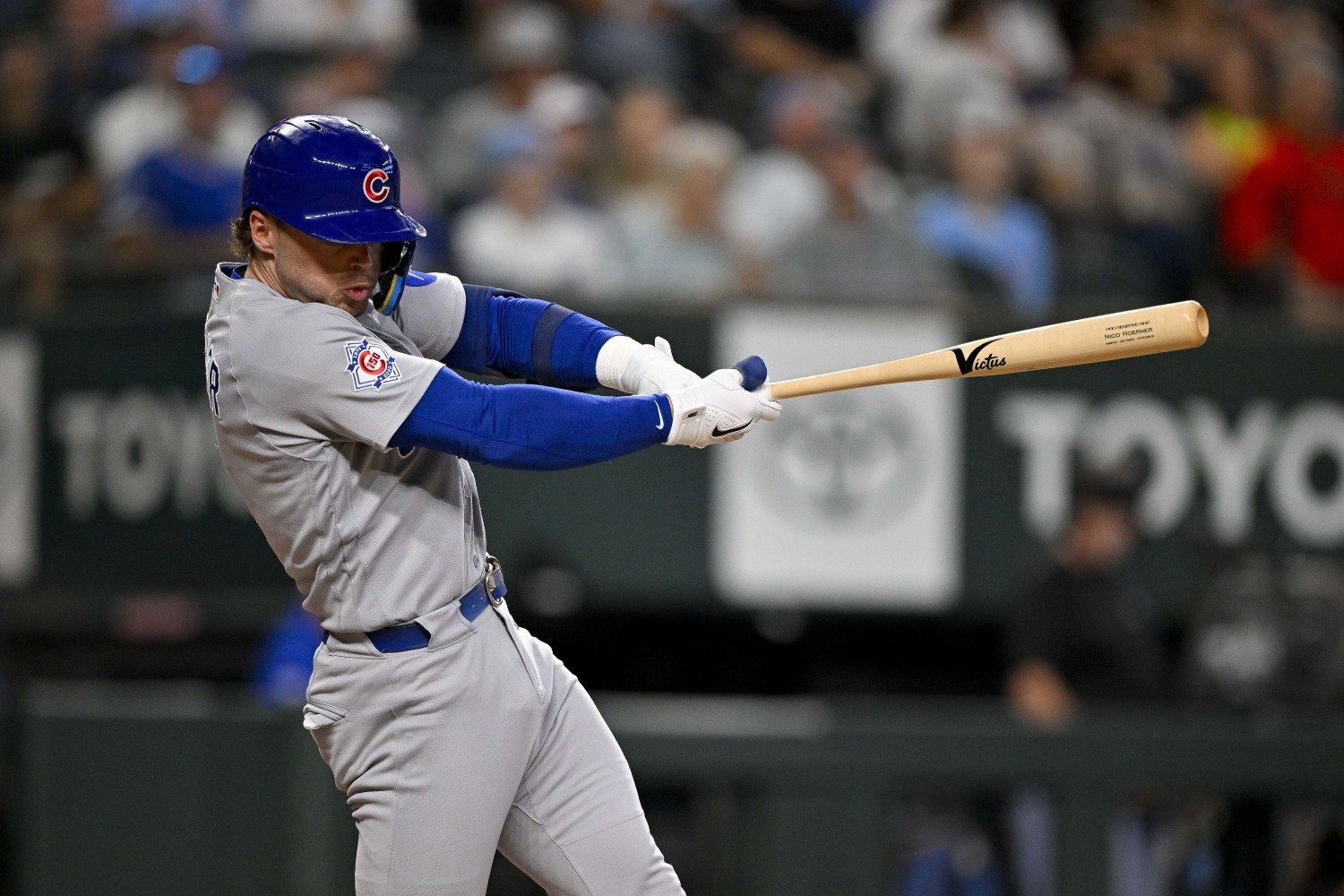 For roughly the first half of what has been the 2026 season to date, Nico Hoerner was a dynamo. In fact, the Cubs have played 48 games, and in their first 24, Hoerner batted .320/.393/.515. He had several outlets—including this one, of course, but even nationally—singing his praises. He continued to play excellent defense and run the bases well. Along the way, of course, he signed a six-year deal with the Cubs, making him a long-term part of the team's plans and heading off his free agency, which had loomed over him and the team until that point. It looked like everything was lining up for Hoerner to be the face of the Cubs for the balance of this decade and beyond. Then, the second half of this season happened. Sure, it's only 24 games, but so was that remarkable start. In this segment of the year, he's hitting .194/.290/.247. In 107 plate appearances, he's walked 12 times and struck out just five times, but he also has just five extra-base hits (all doubles) and has become a problem at the top of the team's batting order, rather than a source of stability and electricity. Before he signed his extension, if Hoerner had gone through a prolonged slump this ugly, the Cubs would have had to seriously consider changing their tack for the future. After all, there's always been a ceiling here. Hoerner's lack of bat speed and over-the-fence power make him a risky proposition, in terms of the aging curve. In the short term, though, he was always going to be allowed to keep hitting high in the lineup and try to get right, because for this season (at the very least), he's a good player whom the team needs badly. The stakes, then, weren't whether or not to play Hoerner, anyway, but those stakes nonetheless feel higher now. This guy is locked into the team's lineup for the next half-decade. It's crucially important, now, to know this: How can Hoerner get right? What's going wrong, and what will fix it? Firstly, it might be wise to take him out of the leadoff spot. While his skill set begs to be used that way, his approach since being thus elevated has ended up being detrimental. Hoerner is swinging at the first pitch just 16.4% of the time this year. For any player whose game is more about singles and doubles than walks, that's far too little. Patience is a virtue, but Hoerner has tipped over that line into passivity. He's swinging at just 54.3% of pitches inside the zone, down from roughly 63.5% over the last two years. He's still avoiding strikeouts exceptionally well, which traces to his almost unbelievable 98.5% contact rate on swings within the zone. However, he's not making solid enough contact, because he's often working from behind in counts. None of Hoerner's essential public-facing bat-tracking data are meaningfully changed during this slump. His bat speed, swing tilt, attack angle and attack direction are all virtually identical to what they were when he was red-hot. Ditto for his average contact point. The problems, then, lie in what he's swinging (or not swinging) at, and on where the ball is going when he hits it. Here's where Hoerner's batted balls were going through April 23. Here's where they've gone since then: All the plaudits we've given Hoerner over the last year have been about how, since the middle of 2024, he steadfastly and smartly reoriented his approach to produce more pulled line drives. Right now, he's back to "using the big part of the field," old-school baseball advice that sounds good but results in nothing but heartache. Again, the swing is fundamentally unchanged in both its timing and its shape, so the key reasons for this are: Pitchers are pitching Hoerner differently; and He's not reacting properly to it. Here's the FanGraphs heat map for Hoerner's swing rate through April 23: Here's the same graphic for the games since: If Hoerner's passivity in the zone had taken the form of only swinging at pitches from the middle of the plate in, he might have remained productive even as the league adjusted to him. Instead, he's falling behind by taking too many pitches, then being forced to go after pitcher-friendly offerings low and away. His swing is better geared to produce those pulled batted balls than it used to be, but if he's consistently putting balls in the lower and outer thirds of the zone in play, he's going to end up hitting them up the middle—and not as sharply. Hoerner does still seem to have the knack for keeping the ball off the ground, but lately, even his liners are finding gloves. That's only partially bad luck. It's also the product of a flawed approach, leading to swings at the wrong pitches to match a consciously reengineered swing. The good news, here, is that Hoerner isn't permanently broken. He's just responded badly to the league's latest round of adjustments to him. He has to get back to being more aggressive early in counts. He has to occasionally anticipate the pitch away and look to shoot it down the right-field line, but otherwise be more selective on the outer third and punishy pitchers who miss over the middle or inner lanes. If he does all of that, he'll be back to batting .300 with gap power in no time. That might not be permanent, either, but maybe the next round of adjustment and counter-adjustment can be a bit less painful than this one has been.
 -
Shota Imanaga Needs a New Way to Change Up on the Brewers
Matthew Trueblood posted an article in Cubs
 Entering his start against the Brewers on May 29, 2024, Shota Imanaga had a 0.84 ERA in his first ride of the MLB circuit. That didn't last. Milwaukee put a hurt on him, scoring seven runs on eight hits in 4 1/3 innings. Ever since, the team has been Imanaga's bugaboo—just as they have been for the Cubs, as a whole. Last May 4, Imanaga had a very good start going at Uecker Field in Milwaukee, before he pulled up lame while covering first base. The hamstring strain sidelined him for the better part of two months, and he wasn't the same down the stretch. However, last August 21, he did have a great start: seven innings of two-run ball (albeit in a disappointing 4-1 loss) against the then-rolling Brewers, at Wrigley Field. That was a brilliant piece of pitchcraft, too, because it came via a major departure from his usual plan of attack. Here are all of Imanaga's starts from last season (including the playoffs), by pitch mix: In only one regular-season game did his splitter usage dip beneath 20%: August 21. Imanaga felt that the Brewers had a tell they were using to sit on his splitter, going back to 2024, so he shoved that pitch to the back burner and went after them another way. It wasn't enough to win, because of a lack of run support, but it was a great tactic. It worked, in that he pitched deep into the game and kept Milwaukee from breaking away. When the two teams met again in October, though, the magic ran out. Imanaga tried to lean on his fastball and away from the splitter again, but this time, the Brewers punished him. Coming into 2026, he knew he'd need a new wrinkle against the Cubs' top rivals. Suffice it to say, the one he tried did not work. Here's the same chart as above, but for 2026. This year, Imanaga has had good feel for the splitter, and he's trusted it as much as ever. He still doesn't think he can sneak it past the Brewers, thouygh, so he tried something truly novel: going to his sinker a lot. Having multiple lefties in the Milwaukee batting order (Brice Turang, Jake Bauers, Christian Yelich, Sal Frelick) made that more viable, but it's clear that Imanaga would have done something different even if he'd faced a righty-loaded version of the Crew. He threw 11 of his 16 sinkers to righties. Clearly, he was hoping to give his toughest opponents a look so different that it would take them aback. Just as clearly, it didn't work. The Brewers tagged him for eight runs, this time, and he didn't escape the fifth inning. One way or another, for the Cubs to get where they want to go this season, they'll need to beat the Brewers. Right now, one of their few remaining reliable starters doesn't have a roadmap in which he's confident against that team. That's bad news, and Monday's was a bad game—but Imanaga is a master of adjustments, and might have a better plan next time he runs into Milwaukee.
 -
Image courtesy of © David Banks-Imagn Images Entering his start against the Brewers on May 29, 2024, Shota Imanaga had a 0.84 ERA in his first ride of the MLB circuit. That didn't last. Milwaukee put a hurt on him, scoring seven runs on eight hits in 4 1/3 innings. Ever since, the team has been Imanaga's bugaboo—just as they have been for the Cubs, as a whole. Last May 4, Imanaga had a very good start going at Uecker Field in Milwaukee, before he pulled up lame while covering first base. The hamstring strain sidelined him for the better part of two months, and he wasn't the same down the stretch. However, last August 21, he did have a great start: seven innings of two-run ball (albeit in a disappointing 4-1 loss) against the then-rolling Brewers, at Wrigley Field. That was a brilliant piece of pitchcraft, too, because it came via a major departure from his usual plan of attack. Here are all of Imanaga's starts from last season (including the playoffs), by pitch mix: In only one regular-season game did his splitter usage dip beneath 20%: August 21. Imanaga felt that the Brewers had a tell they were using to sit on his splitter, going back to 2024, so he shoved that pitch to the back burner and went after them another way. It wasn't enough to win, because of a lack of run support, but it was a great tactic. It worked, in that he pitched deep into the game and kept Milwaukee from breaking away. When the two teams met again in October, though, the magic ran out. Imanaga tried to lean on his fastball and away from the splitter again, but this time, the Brewers punished him. Coming into 2026, he knew he'd need a new wrinkle against the Cubs' top rivals. Suffice it to say, the one he tried did not work. Here's the same chart as above, but for 2026. This year, Imanaga has had good feel for the splitter, and he's trusted it as much as ever. He still doesn't think he can sneak it past the Brewers, thouygh, so he tried something truly novel: going to his sinker a lot. Having multiple lefties in the Milwaukee batting order (Brice Turang, Jake Bauers, Christian Yelich, Sal Frelick) made that more viable, but it's clear that Imanaga would have done something different even if he'd faced a righty-loaded version of the Crew. He threw 11 of his 16 sinkers to righties. Clearly, he was hoping to give his toughest opponents a look so different that it would take them aback. Just as clearly, it didn't work. The Brewers tagged him for eight runs, this time, and he didn't escape the fifth inning. One way or another, for the Cubs to get where they want to go this season, they'll need to beat the Brewers. Right now, one of their few remaining reliable starters doesn't have a roadmap in which he's confident against that team. That's bad news, and Monday's was a bad game—but Imanaga is a master of adjustments, and might have a better plan next time he runs into Milwaukee. View full article
-
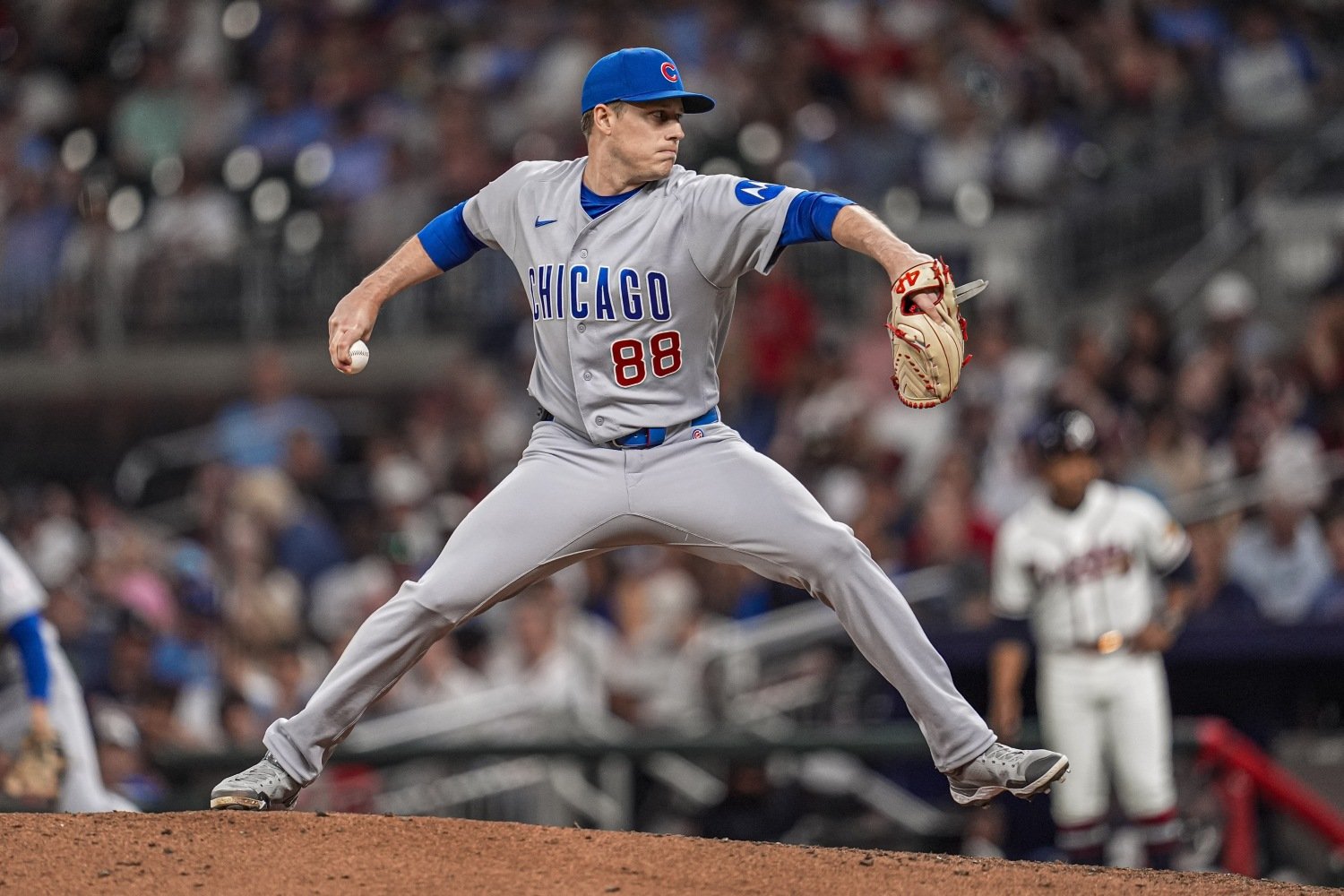 There are little things. The cutter that the team loved is coming in a tick slower this year, putting more pressure on every other facet of his game. It also has a bit less ride than it did last year, which gives it less separation from his sweeper. The curveball has a bit less of the extreme horizontal movement it's showed in the past. But mostly, Phil Maton looks like himself. That's what's worrying everyone. When the Cubs signed Maton to a two-year deal worth $14.5 million this winter, many lamented that the team was investing in yet another reliever who doesn't throw hard. That was unfair, though. What teams should really prioritize isn't velocity itself, but the two things that tend to correlate with velocity when it comes to results: whiffs, and weak contact. Maton was excellent in both regards in 2025. He's spent a long career consistently inducing weak contact because of a deceptive delivery and that peculiar cutter, and last season, he also sported an excellent strikeout rate. So far, though, his Cubs tenure has been an unmitigated disaster. He's struggled mightily on both sides of a three-week stint on the injured list, and it just doesn't look like he's fully healthy, even now that he's back on the mound. Already, he's put up a Win Probability Added of -0.288 or worse in three games for the Cubs. He cost them 29.7% of a win in their 4-1 loss to the team from suburban Atlanta Wednesday, and 40.8% of one on the South Side on Sunday. He's killing the team, especially because they need him even more than they'd planned to, with Hunter Harvey (unsurprisingly) sidelined for the long haul by arm trouble; Daniel Palencia being used carefully after his own stint on the IL; and Ben Brown dragooned into starting again because of injuries to the team's top two starters. Here's the thing: Maton can still miss bats. His whiff rate is down, but still above average, and when he executes properly, you can see how he keeps hitters so defensive. Unfortunately, he's not executing with any consistency—and, in particular, he's leaving a lot of balls in the fat part of the strike zone. Here are Maton's heatmaps for location by pitch type for 2025. This is what an elite contact manager-slash-whiff guy looks like. His curveball consistently hit the edge on the glove side; his cutter stayed at the top of the zone, tending toward the arm side to tunnel with his breaking stuff; and his sweeper was used to generate chases and the poor results that come with them. His sinker tucked into the one quadrant of the zone untouched by his other pitches, forcing righty batters to defend a big zone and inviting more weak contact. Here's the same visual for 2026. Wwwh, uh-oh. Everything is missing arm-side, with predictable results. The cutter has gone for a ball way too often, putting him behind in counts. You can (sort of) live with that, though. If the main problem were that the cutter is getting lost off the arm-side edge, we'd expect Maton's problems to be taking the shape of lots and lots of walks. That's not what's happening. Maton only has one walk in his last six appearances, but in the aforementioned pair of clunkers last week, he gave up two homers and a double. That's because of what's happening to the two breaking balls. Missing arm-side with the cutter has put him behind in counts; missing arm-side with the curveball and sweeper have brought those pitches right into the middle of the zone to be hammered. That's what happened on Mike Yastrzemski's double and Mauricio Dubón's home run in the armpit of the Atlanta interstate nexus. It's what happened when Tristan Peters took him deep for a three-run gut punch on Sunday. Patterned misses like this tell a story. In Maton's case, it's one of lost athleticism, either due to injury or due to age. Maton is only 33, though, and he's tall and thickly built. It looks like he's nursing an injury, be it the tendinitis in his right knee that shelved him earlier this season or something in his lower back. Either way, he's not getting through his front side as well when he delivers; he looks creakier and stiffer. It's not surprising, then, that he's missing in the same direction over and over. The question is whether he can fix that. If so, he'll go right back to being a good reliever, and the Cubs' most important setup man. The stuff, as we said, is essentially intact. If player and team can't find a way to get him moving better down the mound again, though, that won't matter. Right now, Craig Counsell can't trust Maton, which is a huge problem for a team that doesn't enjoy a big margin for error.
 -
Image courtesy of © Dale Zanine-Imagn Images There are little things. The cutter that the team loved is coming in a tick slower this year, putting more pressure on every other facet of his game. It also has a bit less ride than it did last year, which gives it less separation from his sweeper. The curveball has a bit less of the extreme horizontal movement it's showed in the past. But mostly, Phil Maton looks like himself. That's what's worrying everyone. When the Cubs signed Maton to a two-year deal worth $14.5 million this winter, many lamented that the team was investing in yet another reliever who doesn't throw hard. That was unfair, though. What teams should really prioritize isn't velocity itself, but the two things that tend to correlate with velocity when it comes to results: whiffs, and weak contact. Maton was excellent in both regards in 2025. He's spent a long career consistently inducing weak contact because of a deceptive delivery and that peculiar cutter, and last season, he also sported an excellent strikeout rate. So far, though, his Cubs tenure has been an unmitigated disaster. He's struggled mightily on both sides of a three-week stint on the injured list, and it just doesn't look like he's fully healthy, even now that he's back on the mound. Already, he's put up a Win Probability Added of -0.288 or worse in three games for the Cubs. He cost them 29.7% of a win in their 4-1 loss to the team from suburban Atlanta Wednesday, and 40.8% of one on the South Side on Sunday. He's killing the team, especially because they need him even more than they'd planned to, with Hunter Harvey (unsurprisingly) sidelined for the long haul by arm trouble; Daniel Palencia being used carefully after his own stint on the IL; and Ben Brown dragooned into starting again because of injuries to the team's top two starters. Here's the thing: Maton can still miss bats. His whiff rate is down, but still above average, and when he executes properly, you can see how he keeps hitters so defensive. Unfortunately, he's not executing with any consistency—and, in particular, he's leaving a lot of balls in the fat part of the strike zone. Here are Maton's heatmaps for location by pitch type for 2025. This is what an elite contact manager-slash-whiff guy looks like. His curveball consistently hit the edge on the glove side; his cutter stayed at the top of the zone, tending toward the arm side to tunnel with his breaking stuff; and his sweeper was used to generate chases and the poor results that come with them. His sinker tucked into the one quadrant of the zone untouched by his other pitches, forcing righty batters to defend a big zone and inviting more weak contact. Here's the same visual for 2026. Wwwh, uh-oh. Everything is missing arm-side, with predictable results. The cutter has gone for a ball way too often, putting him behind in counts. You can (sort of) live with that, though. If the main problem were that the cutter is getting lost off the arm-side edge, we'd expect Maton's problems to be taking the shape of lots and lots of walks. That's not what's happening. Maton only has one walk in his last six appearances, but in the aforementioned pair of clunkers last week, he gave up two homers and a double. That's because of what's happening to the two breaking balls. Missing arm-side with the cutter has put him behind in counts; missing arm-side with the curveball and sweeper have brought those pitches right into the middle of the zone to be hammered. That's what happened on Mike Yastrzemski's double and Mauricio Dubón's home run in the armpit of the Atlanta interstate nexus. It's what happened when Tristan Peters took him deep for a three-run gut punch on Sunday. Patterned misses like this tell a story. In Maton's case, it's one of lost athleticism, either due to injury or due to age. Maton is only 33, though, and he's tall and thickly built. It looks like he's nursing an injury, be it the tendinitis in his right knee that shelved him earlier this season or something in his lower back. Either way, he's not getting through his front side as well when he delivers; he looks creakier and stiffer. It's not surprising, then, that he's missing in the same direction over and over. The question is whether he can fix that. If so, he'll go right back to being a good reliever, and the Cubs' most important setup man. The stuff, as we said, is essentially intact. If player and team can't find a way to get him moving better down the mound again, though, that won't matter. Right now, Craig Counsell can't trust Maton, which is a huge problem for a team that doesn't enjoy a big margin for error. View full article
-
Image courtesy of © Brett Davis-Imagn Images Let's start here: Bat speed is good. All else equal, you'd rather swing faster, rather than slower. All else is often not equal, of course, but bat speed gives you a greater margin for error, just as foot speed or arm strength do. The faster you can move the barrel through the zone, the later you can make swing decisions, and the harder you can hit the ball even if you don't quite catch it flush. It is, on balance, a good thing—or, to draw a tricky but important distinction, an encouraging thing—that Pete Crow-Armstrong has more bat speed this season than he had in 2025. There's no mistaking that fact, at least. According to Statcast, Crow-Armstrong's average swing speed is 74.3 miles per hour this year, up from 72.7 MPH in 2025 and up nearly 4.0 MPH since 2024, when he first got a meaningful run in the majors. He swings as fast as some of the top sluggers in the game, which was certainly not true even as he enjoyed a breakout, 30-homer season last year. The first thing you should look for, to assess the efficacy of a bat-speed bump, is increased exit velocity. With Crow-Armstrong, we have it. Crow-Armstrong's average exit velocity is up by 1.5 MPH this season, and his hard-hit rate has gone from average to plus, in lockstep with the bat speed itself. The second thing you should check is whether a hitter has sacrificed contact by swinging harder, and have thus set themselves up to strike out a ton. That's not happening here, though. Crow-Armstrong has gotten slightly more selective this year, especially early in counts, and his contact rate on swings is actually up slightly. All the news, to this point, is good. Here's the bad: Last season, a solid 33.9% of Crow-Armstrong's batted balls clustered in the Statcast-denoted sweet spot for launch angle, between 8° and 32°. Those are line drives and fly balls with the best chance to carry through or over the infield, and to land before an outfielder can run underneath them—while still having a chance to clear the fence, if hit hard enough. That 33.9% number was unbremarkable, but it was good enough to make Crow-Armstrong a star slugger. This season, that figure is down to 23.0%, one of the worst in the league. Crow-Armstrong is just not hitting the ball flush often enough. At first blush, you might struggle to explain this. Statcast has a metric to estimate the solidity of a player's contact, by using physics to estimate the maximum possible exit velocity given the player's swing speed and the speed of the incoming pitch and then calling a ball Squared Up if it exceeds 80% of that possible maximum. Crow-Armstrong's Squared Up rate is flat (or even up, albeit very slightly) in 2026, so he hasn't lost the ability to catch a fair piece of the ball. If he had, we would also have seen that in his exit velocity distributions, despite the boosted bat speed. It's easier to see it this way. Here's a plot of all Crow-Armstrong's batted balls from 2025, by launch angle and exit velocity. He found all that offensive value last year because he got quite good at hitting the ball hard in that launch-angle sweet spot—but also because, when you find that sweet spot, you don't have to hit it hard to get some value out of it. Soft line-drive singles live there, too. Crow-Armstrong hit a good number of those last season. Here's the same chart for 2026. I've highlighted two areas to which we should pay special attention. He's hitting more balls hard, although very weakly hit balls are also slightly more frequent. What's missing? A bunch of medium-speed liners that should be inside that blue square. Many of those would be hits, but they're simply not there. Meanwhile, look up at the top of the chart. Crow-Armstrong isn't hitting more lazy, routine flies this year. In fact, he's hitting fewer. But he's hit a bunch of unusually hard-hit balls straight up, which tells us something. Those are the balls that are still counting as Squared Up, and that are propping up his hard-hit rate—but they're still easy outs. They look like this. NXk5bktfWGw0TUFRPT1fVWdBRUIxSURWVkFBWGdSUlVBQUhBd0JWQUZnQ1dsY0FVMWRRQkFWUUJnUmRVMVpX.mp4 That left Crow-Armstrong's bat at exactly 100.0 MPH, but you don't care, because he hit it way up in the air and it never had a chance to be anything but a flyout. This is a frequent problem for him this year, and it stems from the increase in his bat speed—but not necessarily in the way you might think. Crow-Armstrong isn't out of control and unable to deliver his barrel to the right part of the hitting zone. He's just habitually, almost unavoidably early, and the nature of his swing yields lots of these kinds of batted balls. Crow-Armstrong has a steeper than average swing, and he catches the ball well out in front of him. That much, we already knew. It's why the Cubs were willing to invest in him for the long term, with a nine-figure payout that will look wise only if he at least sometimes flashes what he did for the first two-thirds of 2025. That type of swing gets the barrel working uphill toward the ball, and when it's on time, it generates a lethal combination of loft and ball speed. It looks like this: eHk5VmtfWGw0TUFRPT1fVXdsVFZRWlhBMU1BQzFGUlZ3QUhCQUZUQUZnTlZGZ0FDZ1lDVWxCUVVsZFFBRkFG (1).mp4 Or this: N3lSR3JfWGw0TUFRPT1fVndGWFZBVUZVZ1VBWGxJRlVRQUhBZ2NDQUFOWFVGRUFCbFlCVkZBTUF3WUhBUVlI.mp4 However, it's possible for hitters who work this far in front of their bodies to get too far out there, for long stretches. Crow-Armstrong reinvented himself offensively in 2024 and had a different contact point in 2025 than before. It also came with a different attack direction, which is the orientation of the barrel relative to the front edge of home plate at contact. Season Contact Point (in. in front of center of mass) Attack Direction 2024 32.8 0° 2025 36.2 4° Pull 2026 37.3 6° Pull It's possible to consistently barrel the ball at 36 inches in front of your body, but that's about the maximum. Beyond that, you're basically too early. Meanwhile, Crow-Armstrong's barrel is still moving. Once it passes that 33-36 inch zone in front of him, it's turning enough that (despite that loft that keeps him capable of getting good wood on the ball and slicing one the other way) a mishit is likely. It'll be a specific mishit, too, most of the time. It'll look like this. M3k2WnlfWGw0TUFRPT1fQmdaWFZGSU5VZ0FBQVFBRFZRQUhDRk5XQUFCUkFGa0FDZ1JRQUFSV0FGZFVBQUFB.mp4 The point of that tilt and that pull orientation in Crow-Armstrong's swing is to get behind the ball and send it screaming toward or over the right-field fence. Obviously, that won't always happen, but the swing is geared to maximize the chances of it on any given cut. When he misses, though—when he's not rolling over on the ball, but has just swept past the optimal zone in that arc before he meets the ball—it hits the upper, outer side of the bat and goes way up. The bat speed was still delivered to the ball, but the angle is all wrong. Flatter swings usually do better farther out in front; most hitters with tilt similar to Crow-Armstrong do better with deeper contact points. Right now, he's not missing because he's moving the bat too fast to maintain control. Rather, the ball is where he means for the barrel to go, but by the time it gets there, the barrel has already come and gone from that optimal zone. A flatter swing on which a hitter was similarly early would produce rollover grounders and whiffs. Crow-Amrstrong's swing creates, technically, better contact even when he's early. He's getting a lot of the bat on the ball, for a hitter who's early. In practice, though, it's a glancing blow, steered forward by the angle of the bat but much like a foul ball. It comes to the same thing as if he were hitting the ball much less well (or not at all), because those are virtually guaranteed outs. This isn't bad news, really. There are worse ways Crow-Armstrong could be getting to his underwhelming .675 OPS, in general. There are even worse ways he could specifically be suffering from his own increase in bat speed. Instead, he's still in control of his swing, and if anything, his swing decisions have improved. Swinging faster still should be good for him, in time. For now, though, he's yet to figure out how to alter his timing in a small enough way to compensate for being early, without falling into the trap of being late, as he was for some stretches last season. It's not easy to make that adjustment, small though it might sound. There are no guarantees that Crow-Armstrong will lock in and start producing a .900 OPS again any time soon. There is, however, a real chance of that—because his bat speed is up, and bat speed is good. It's just a matter of paying the cost of it. View full article
-
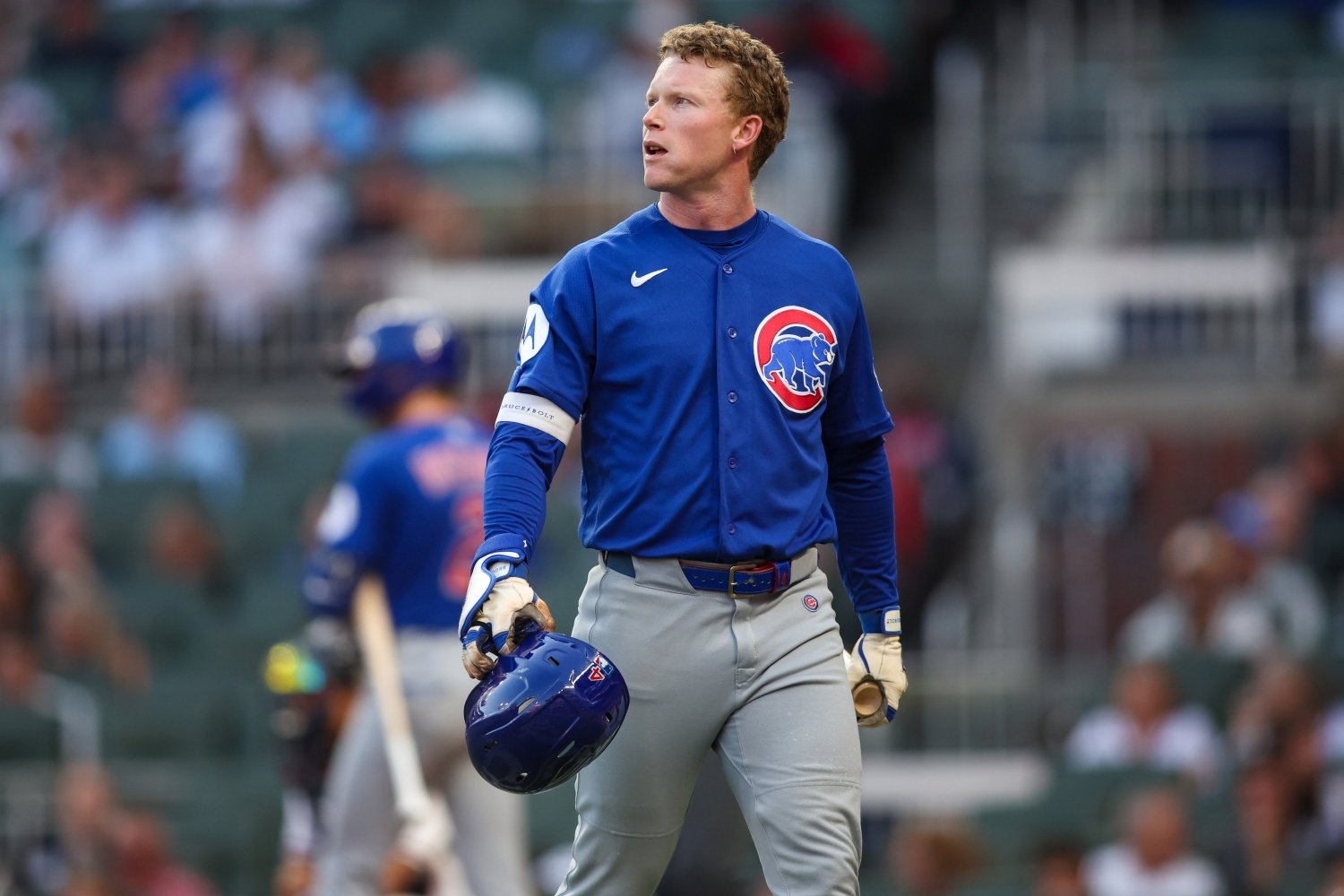 Let's start here: Bat speed is good. All else equal, you'd rather swing faster, rather than slower. All else is often not equal, of course, but bat speed gives you a greater margin for error, just as foot speed or arm strength do. The faster you can move the barrel through the zone, the later you can make swing decisions, and the harder you can hit the ball even if you don't quite catch it flush. It is, on balance, a good thing—or, to draw a tricky but important distinction, an encouraging thing—that Pete Crow-Armstrong has more bat speed this season than he had in 2025. There's no mistaking that fact, at least. According to Statcast, Crow-Armstrong's average swing speed is 74.3 miles per hour this year, up from 72.7 MPH in 2025 and up nearly 4.0 MPH since 2024, when he first got a meaningful run in the majors. He swings as fast as some of the top sluggers in the game, which was certainly not true even as he enjoyed a breakout, 30-homer season last year. The first thing you should look for, to assess the efficacy of a bat-speed bump, is increased exit velocity. With Crow-Armstrong, we have it. Crow-Armstrong's average exit velocity is up by 1.5 MPH this season, and his hard-hit rate has gone from average to plus, in lockstep with the bat speed itself. The second thing you should check is whether a hitter has sacrificed contact by swinging harder, and have thus set themselves up to strike out a ton. That's not happening here, though. Crow-Armstrong has gotten slightly more selective this year, especially early in counts, and his contact rate on swings is actually up slightly. All the news, to this point, is good. Here's the bad: Last season, a solid 33.9% of Crow-Armstrong's batted balls clustered in the Statcast-denoted sweet spot for launch angle, between 8° and 32°. Those are line drives and fly balls with the best chance to carry through or over the infield, and to land before an outfielder can run underneath them—while still having a chance to clear the fence, if hit hard enough. That 33.9% number was unbremarkable, but it was good enough to make Crow-Armstrong a star slugger. This season, that figure is down to 23.0%, one of the worst in the league. Crow-Armstrong is just not hitting the ball flush often enough. At first blush, you might struggle to explain this. Statcast has a metric to estimate the solidity of a player's contact, by using physics to estimate the maximum possible exit velocity given the player's swing speed and the speed of the incoming pitch and then calling a ball Squared Up if it exceeds 80% of that possible maximum. Crow-Armstrong's Squared Up rate is flat (or even up, albeit very slightly) in 2026, so he hasn't lost the ability to catch a fair piece of the ball. If he had, we would also have seen that in his exit velocity distributions, despite the boosted bat speed. It's easier to see it this way. Here's a plot of all Crow-Armstrong's batted balls from 2025, by launch angle and exit velocity. He found all that offensive value last year because he got quite good at hitting the ball hard in that launch-angle sweet spot—but also because, when you find that sweet spot, you don't have to hit it hard to get some value out of it. Soft line-drive singles live there, too. Crow-Armstrong hit a good number of those last season. Here's the same chart for 2026. I've highlighted two areas to which we should pay special attention. He's hitting more balls hard, although very weakly hit balls are also slightly more frequent. What's missing? A bunch of medium-speed liners that should be inside that blue square. Many of those would be hits, but they're simply not there. Meanwhile, look up at the top of the chart. Crow-Armstrong isn't hitting more lazy, routine flies this year. In fact, he's hitting fewer. But he's hit a bunch of unusually hard-hit balls straight up, which tells us something. Those are the balls that are still counting as Squared Up, and that are propping up his hard-hit rate—but they're still easy outs. They look like this. NXk5bktfWGw0TUFRPT1fVWdBRUIxSURWVkFBWGdSUlVBQUhBd0JWQUZnQ1dsY0FVMWRRQkFWUUJnUmRVMVpX.mp4 That left Crow-Armstrong's bat at exactly 100.0 MPH, but you don't care, because he hit it way up in the air and it never had a chance to be anything but a flyout. This is a frequent problem for him this year, and it stems from the increase in his bat speed—but not necessarily in the way you might think. Crow-Armstrong isn't out of control and unable to deliver his barrel to the right part of the hitting zone. He's just habitually, almost unavoidably early, and the nature of his swing yields lots of these kinds of batted balls. Crow-Armstrong has a steeper than average swing, and he catches the ball well out in front of him. That much, we already knew. It's why the Cubs were willing to invest in him for the long term, with a nine-figure payout that will look wise only if he at least sometimes flashes what he did for the first two-thirds of 2025. That type of swing gets the barrel working uphill toward the ball, and when it's on time, it generates a lethal combination of loft and ball speed. It looks like this: eHk5VmtfWGw0TUFRPT1fVXdsVFZRWlhBMU1BQzFGUlZ3QUhCQUZUQUZnTlZGZ0FDZ1lDVWxCUVVsZFFBRkFG (1).mp4 Or this: N3lSR3JfWGw0TUFRPT1fVndGWFZBVUZVZ1VBWGxJRlVRQUhBZ2NDQUFOWFVGRUFCbFlCVkZBTUF3WUhBUVlI.mp4 However, it's possible for hitters who work this far in front of their bodies to get too far out there, for long stretches. Crow-Armstrong reinvented himself offensively in 2024 and had a different contact point in 2025 than before. It also came with a different attack direction, which is the orientation of the barrel relative to the front edge of home plate at contact. Season Contact Point (in. in front of center of mass) Attack Direction 2024 32.8 0° 2025 36.2 4° Pull 2026 37.3 6° Pull It's possible to consistently barrel the ball at 36 inches in front of your body, but that's about the maximum. Beyond that, you're basically too early. Meanwhile, Crow-Armstrong's barrel is still moving. Once it passes that 33-36 inch zone in front of him, it's turning enough that (despite that loft that keeps him capable of getting good wood on the ball and slicing one the other way) a mishit is likely. It'll be a specific mishit, too, most of the time. It'll look like this. M3k2WnlfWGw0TUFRPT1fQmdaWFZGSU5VZ0FBQVFBRFZRQUhDRk5XQUFCUkFGa0FDZ1JRQUFSV0FGZFVBQUFB.mp4 The point of that tilt and that pull orientation in Crow-Armstrong's swing is to get behind the ball and send it screaming toward or over the right-field fence. Obviously, that won't always happen, but the swing is geared to maximize the chances of it on any given cut. When he misses, though—when he's not rolling over on the ball, but has just swept past the optimal zone in that arc before he meets the ball—it hits the upper, outer side of the bat and goes way up. The bat speed was still delivered to the ball, but the angle is all wrong. Flatter swings usually do better farther out in front; most hitters with tilt similar to Crow-Armstrong do better with deeper contact points. Right now, he's not missing because he's moving the bat too fast to maintain control. Rather, the ball is where he means for the barrel to go, but by the time it gets there, the barrel has already come and gone from that optimal zone. A flatter swing on which a hitter was similarly early would produce rollover grounders and whiffs. Crow-Amrstrong's swing creates, technically, better contact even when he's early. He's getting a lot of the bat on the ball, for a hitter who's early. In practice, though, it's a glancing blow, steered forward by the angle of the bat but much like a foul ball. It comes to the same thing as if he were hitting the ball much less well (or not at all), because those are virtually guaranteed outs. This isn't bad news, really. There are worse ways Crow-Armstrong could be getting to his underwhelming .675 OPS, in general. There are even worse ways he could specifically be suffering from his own increase in bat speed. Instead, he's still in control of his swing, and if anything, his swing decisions have improved. Swinging faster still should be good for him, in time. For now, though, he's yet to figure out how to alter his timing in a small enough way to compensate for being early, without falling into the trap of being late, as he was for some stretches last season. It's not easy to make that adjustment, small though it might sound. There are no guarantees that Crow-Armstrong will lock in and start producing a .900 OPS again any time soon. There is, however, a real chance of that—because his bat speed is up, and bat speed is good. It's just a matter of paying the cost of it.
 -
Image courtesy of © Raymond Carlin III-Imagn Images Ben Brown will start for the Cubs Thursday evening at one of the more successful attractions on The Battery, a suburban entertainment district in the northwest suburbs of Atlanta. It's his second turn in the starting rotation since the team lost left-hander Matthew Boyd to a torn meniscus in his knee, and Brown will be hoping to play stopper, opposite future Hall of Famer Chris Sale. The Cubs are in danger of losing five games in a row; their last win came in Brown's last start. In that outing, Brown managed four scoreless, hitless innings against the Texas Rangers, though he did issue one walk. Working on three days' rest after spending most of the season in the bullpen, he threw 46 pitches. Presumably, this time around, he will have a longer leash, and he might need to pace himself more. Normally, that would spell trouble for Brown. His fastball has sat comfortably around 96.5 miles per hour this season, which is where he's always needed it to be in order to find success. The shape of his heater has always been pretty much what a hitter would expect, based on his high three-quarter arm slot, so the only ways for him to avoid getting hurt on the pitch were to locate well and to throw very hard. For almost no pitcher is there a bigger difference between throwing 95 and throwing 98 than for Brown, as we've known him dating back to 2024. There's also his limited arsenal to consider. For most of his career, Brown has functionally been a two-pitch pitcher. He's tinkered with a cutter, a slider and multiple flavors of changeup, but he's only ever been able to rely on his four-seamer and a sharp (though short) knuckle-curve. Starting has tended to strain his capacity for fooling hitters with only two options at his disposal. Everything is different, now. That doesn't mean the results will follow, or that Brown is now set up to enjoy a long run of success as a starter, but to the hard questions posed by those past problems, Brown now has pretty robust answers. First, let's tackle that dead-zone fastball problem. The solution there (if, indeed, it turns out to be one): lower the arm angle, and change the profile. Arm Angle Pitch Type 2025 Apr. 2026 May 2026 Four-Seamer 44.1 42.6 39 Curveball 46.5 45.1 42.8 Kick-Change 42.7 41.5 37.3 Sinker - 41.7 40.7 From last year to this year, Brown made one slight downward move in his arm angle. Since the season began, he's made another. You can see the progression, below, in the way his arm works at release. A lower slot has meant a bit less carry on his four-seamer, but it's also given his curveball a bit more depth. The kick-change he's developed has more depth on it than it would from the higher slot, too. His sinker can run to the arm side more. The change takes his fastball slightly out of the dead zone, but more importantly, it frees up his arm to work more naturally. His other pitches have improved because of the tweak. That, of course, also answers the other problem. Brown's sinker is exclusively a weapon against righties, giving him two different heaters to work two different lanes horizontally and three different levels of vertical movement to force the hitter to cover a bigger zone. The kick-change is used exclusively against lefties, and it, too, rounds out his arsenal just enough. The fleshing-out of each as part of his attack has been made possible by the change in his arm angle. Brown's command and variety of shapes still aren't good enough for him to succeed as a starter without throwing hard, but the mechanical changes he's made appear to have helped him maintain his velocity better. The Cubs need to stop suffering losses to their rotation, but for the moment, there's reason to hope that they've found another good solution at the back end of it. Brown has shown more adaptability over the last several months, as he's discovered the limits of the simple, unrefined approach he used in the past, and he's been healthy enough to implement some new things. They're working. View full article
-
Ben Brown's Most Important Adjustment Isn't Either of His New Pitches
Matthew Trueblood posted an article in Cubs
 Ben Brown will start for the Cubs Thursday evening at one of the more successful attractions on The Battery, a suburban entertainment district in the northwest suburbs of Atlanta. It's his second turn in the starting rotation since the team lost left-hander Matthew Boyd to a torn meniscus in his knee, and Brown will be hoping to play stopper, opposite future Hall of Famer Chris Sale. The Cubs are in danger of losing five games in a row; their last win came in Brown's last start. In that outing, Brown managed four scoreless, hitless innings against the Texas Rangers, though he did issue one walk. Working on three days' rest after spending most of the season in the bullpen, he threw 46 pitches. Presumably, this time around, he will have a longer leash, and he might need to pace himself more. Normally, that would spell trouble for Brown. His fastball has sat comfortably around 96.5 miles per hour this season, which is where he's always needed it to be in order to find success. The shape of his heater has always been pretty much what a hitter would expect, based on his high three-quarter arm slot, so the only ways for him to avoid getting hurt on the pitch were to locate well and to throw very hard. For almost no pitcher is there a bigger difference between throwing 95 and throwing 98 than for Brown, as we've known him dating back to 2024. There's also his limited arsenal to consider. For most of his career, Brown has functionally been a two-pitch pitcher. He's tinkered with a cutter, a slider and multiple flavors of changeup, but he's only ever been able to rely on his four-seamer and a sharp (though short) knuckle-curve. Starting has tended to strain his capacity for fooling hitters with only two options at his disposal. Everything is different, now. That doesn't mean the results will follow, or that Brown is now set up to enjoy a long run of success as a starter, but to the hard questions posed by those past problems, Brown now has pretty robust answers. First, let's tackle that dead-zone fastball problem. The solution there (if, indeed, it turns out to be one): lower the arm angle, and change the profile. Arm Angle Pitch Type 2025 Apr. 2026 May 2026 Four-Seamer 44.1 42.6 39 Curveball 46.5 45.1 42.8 Kick-Change 42.7 41.5 37.3 Sinker - 41.7 40.7 From last year to this year, Brown made one slight downward move in his arm angle. Since the season began, he's made another. You can see the progression, below, in the way his arm works at release. A lower slot has meant a bit less carry on his four-seamer, but it's also given his curveball a bit more depth. The kick-change he's developed has more depth on it than it would from the higher slot, too. His sinker can run to the arm side more. The change takes his fastball slightly out of the dead zone, but more importantly, it frees up his arm to work more naturally. His other pitches have improved because of the tweak. That, of course, also answers the other problem. Brown's sinker is exclusively a weapon against righties, giving him two different heaters to work two different lanes horizontally and three different levels of vertical movement to force the hitter to cover a bigger zone. The kick-change is used exclusively against lefties, and it, too, rounds out his arsenal just enough. The fleshing-out of each as part of his attack has been made possible by the change in his arm angle. Brown's command and variety of shapes still aren't good enough for him to succeed as a starter without throwing hard, but the mechanical changes he's made appear to have helped him maintain his velocity better. The Cubs need to stop suffering losses to their rotation, but for the moment, there's reason to hope that they've found another good solution at the back end of it. Brown has shown more adaptability over the last several months, as he's discovered the limits of the simple, unrefined approach he used in the past, and he's been healthy enough to implement some new things. They're working.
 -
 The numbers are a bit deceiving. The Cubs entered their series in Smyrna, Georgia Tuesday night with the third-most runs per game in the league so far this season, but that doesn't feel like an accurate depiction of the quality of their lineup. They've benefited, within one quarter of the campaign, from seeing a few teams overwhelmed by pitching problems. They've benefited, too, from loud hot streaks by Nico Hoerner and Ian Happ. They were a bit over their skis. Over the last three days, though, they've been exposed—and, of course, suffered disproportionately, just as they thrived disproportionately at other points. Alex Bregman hit a very timely home run to give the team a short-lived lead Tuesday night, but they eventually lost, 5-2, and Bregman's homer was the only hit they mustered. They're struggling. Since hitting his last home run on April 21, Nico Hoerner is batting .205/.280/.274. Dansby Swanson is 6-for-39 in May, with just one extra-base hit, and his walk rate has tapered off, too. Bregman entered Tuesday with a .661 OPS for the season, and Pete Crow-Armstrong's is on the wrong side of .700, too. Those four players will be in the lineup just about every day, though, as much for their defense and intangibles as for their bats. When they flounder the way they have of late, therefore, Craig Counsell has to look for ways to make up for them. On Tuesday night, that took the form of a second start behind the plate this year for Moisés Ballesteros. When Ballesteros catches, Michael Conforto can serve as the designated hitter, putting both of them in the lineup without taking out any of Happ, Seiya Suzuki or Michael Busch. It's a way to trade some run prevention for run production, and given the way Miguel Amaya is playing, it's a reasonable thing to try. Unfortunately, Ballesteros is hitting a bit below his best, too. He's 2-for-30 in May and hitless in his last 21 at-bats. He hit into tough luck Tuesday night in the shadows of the freeway, next to the outlet mall, with a 106-MPH lineout and a 107-MPH fielder's choice, but both were playable because they were hit too low. Worse, he's still looking like a shaky defensive catcher, struggling to navigate tough spots for his pitchers; framing poorly; and wasting challenges early in the game, as he did in the bottom of the first Tuesday. Conforto is the offensive bright spot for the team right now. He probably won't produce power all season to match the binge he's been on lately, but hitting the ball hard is just part of his early success. He's also dramatically reduced his swing rate this year, leading to a walk rate over 18%. Last season (and throughout his long career), Conforto maintained roughly a 45% overall swing rate, with good discipline outside the zone. This season, though, he's ratcheted that all the way up. His chase rate (the percentage of pitches outside the zone at which he swings) is all the way down to 16.4%, without a concomitant loss of swing rate inside the zone. His overall swing rate is down to 39%. He's honed his swing to catch the barrel within the zone, and isn't worrying about whiffs on the rare occasions when he does chase. The slightly smaller zone this year, thanks to the implementation of ABS, has been a boon to Conforto. He won't be able to sustain his extraordinary plate discipline, either, but he should be able to hold onto enough of it to keep getting on base well. That makes it very tempting, for Counsell, to look for ways to get both Conforto and Ballesteros into the lineup at the same time. There just isn't a good one. Conforto is a markedly worse defender in each outfield corner than Happ or Suzuki, and anyway, those two are impending free agents who rightfully want to be in the lineup every day. Politically and logistically, the only viable way to play both Conforto and Ballesteros regularly is to have Ballesteros get some reps behind the plate. Gambits like that don't often pay off, and this one didn't on Tuesday. Counsell might continue trying it from time to time, though—at least until one or two of his four slumping stars get going again. Managers have to make tradeoffs, and the Cubs might have to give up a few extra runs as they fight to score more consistently in the weeks ahead.

