.jpg.900f6d1bc80a5a156f3ba09ea0e4b3d7.jpg)

Jason Ross
-
Posts
8,154 -
Joined
-
Last visited
-
Days Won
74
Content Type
Profiles
Joomla Posts 1
Chicago Cubs Videos
Chicago Cubs Free Agent & Trade Rumors, Notes, & Tidbits
2026 Chicago Cubs Top Prospects Ranking
News
2023 Chicago Cubs Draft Picks
Guides & Resources
2024 Chicago Cubs Draft Picks
The Chicago Cubs Players Project
2025 Chicago Cubs Draft Pick Tracker
2026 Chicago Cubs Draft Tracker: Picks & Bonuses
Blogs
Events
Forums
Store
Gallery
Everything posted by Jason Ross
-
W
-
Not egregious. Hard to tell if it caught the zone or if it's right on the edge of the zone. I think it's *probably* a ball, and he's missed a few calls. Seiya is probably fed up with the borderlines going against him, thus his reaction.

-
Cal Raleigh can go back to Seattle.
-
It's hot out there today, but guy behind the plate ain't got his best stuff on the strikes and balls today.
-
My hope is that Ricketts doesn't really care much about how the money is spent, and cares more about the total number of the budget is. I think Hoyer would sign Tucker to a big contract.
-
It could be! But I'll say this; I think any contract that starts with a 5 or a 6 for Tucker will be heavily laden with differed money. Real world value probably is between $425-$475m.
-
I know everyone is super down on signing him back...sneaky feeling it gets done. I don't know. Maybe I'm an optimist, but I think the Cubs will come to the conclusion that this is the guy to go all in on. We'll see. I've been wrong...oh man, so many times (he says trying to find any post from 2021 defending Burl Carroway's control and that he'd get it together just to make sure it's scrubbed from the internet)...just a hunch here. At least, I'll say this; I think we gave up fair amounts. Really you can boil it down to Parades, Smith and Wesneski. Or in other words, Morel, Bigge, Smith and Wesneski. Morel has been terrible, Wes had TJS, Bigge looks like a good reliever (but not as good as his first run - hope he's okay after the scare!) and Smith has had his first good run in the pros, but I'm still kind of bearish on him. I think we'll be okay even if we don't keep Tuck,
-
But if we did that, then we couldn't make weird double plays happen. Think of the entertainment factor, man.
-
One is an OF'er and the other is a DH, Tucker has 20 extra points of wRC+ and is a far better runner too. The age here, is doing a lot of work for the contract, but one of them is clearly the better player. I suspect more teams will be interested in Tucker because he's more versatile. I also suspect he will make less than Vlad on the back end, at least in terms of total dollars. Less years = less $$$$ overall.
-
Owen Caissie Is Progressing More Than We May Have Realized
Jason Ross replied to Jason Ross's topic in Cubs Minor League Talk
1st off - welcome to NSBB! Glad you're here. The Cubs should in no way let Tucker walk to play Caissie. There's probably room for both if they want, but Tucker is a better player than Caissie will be in 99.5% of outcomes. Tucker's on pace for 6-7 fWAR this year. I really cannot imagine a path for Caissie getting there without him turning into a 50 home run guy...which, let's be real, is pretty unlikely. But they may have to make a choice between Happ and Seiya this offseason. Both are signed only one more year, and if they do keep Tucker, I am not sure how much spending they will do. Caissie could conceivably be a DH or a corner OF'er in either spot (he's seen a little run in LF and shouldn't have an issue moving from RF to LF if you think he's capable, which I do, or the interim). -
Good thing for Horton then.
-
Nate Pearson Recalled; Génesis Cabrera DFA'd
Jason Ross replied to Matthew Lenz's topic in Chicago Cubs Talk
Checks out. Hasn't pitched since Wednesday so he'll have innings. Capable of being returned to Iowa when Shota is ready in a few days. -
Absolutely. And even if you believed PCA was going to do this again for sure, there's no limit on "really good players". They play different positions. The more the merrier.
-
Owen Caissie Is Progressing More Than We May Have Realized
Jason Ross replied to Jason Ross's topic in Cubs Minor League Talk
I'm a far bigger fan of moving Alcantara over Caissie. Granted, that's probably for a few reasons; Owen has always kind of been "my guy" so I'm a little biased. Beyond just that, Alcantara's not having as good of a year and he's super struggling on anything not-a-fastball this year. His defensive position gives him a wider runway, but the bat has some concerning flags in it. I do think the Cubs kind of have to start hitching some wagons to some guys. Even if they don't sign Tucker, there's probably only two, maximum spots for the crew of Alcantara, Caissie, Ballesteros, and Long. At some point you have to pick some and move others. The Cubs are too good this year to skip the deadline and if you can use some of these prospects to get controllable pieces, I think you have to do it. My personal hope would be that teams see Alcantara's ceiling (6"6 CF'er who can play the position at a 55-60 grade with power) and tend to overlook the flags I see; or see a fix and that the Cubs can use him (plus some others) to fill the rotation in a nice way. Others are probably more interested in moving Caissie. -
Owen Caissie Is Progressing More Than We May Have Realized
Jason Ross replied to Jason Ross's topic in Cubs Minor League Talk
I'm fairly encouraged, myself. He's still more-than-young-enough that I think we're short of "repeated bias" on him, and I think the improvement he's showing is more along the lines of real change. The good news is that if he can show up at, say, age-23 or age-24 and repeat what Kyle Stowers is doing, that there's probably more ceiling in there than even Kyle has at his age. But I think Kyle Stowers is a pretty good blueprint for what we could see Caissie become, albeit, potentially a slightly better fielder. I think there's a bit more athleticism to Caissie's game (at least at his age), than Kyle's statcast page suggests he possesess but I also cannot say I've seen enough of Stowers out there to make a definitive answer. -
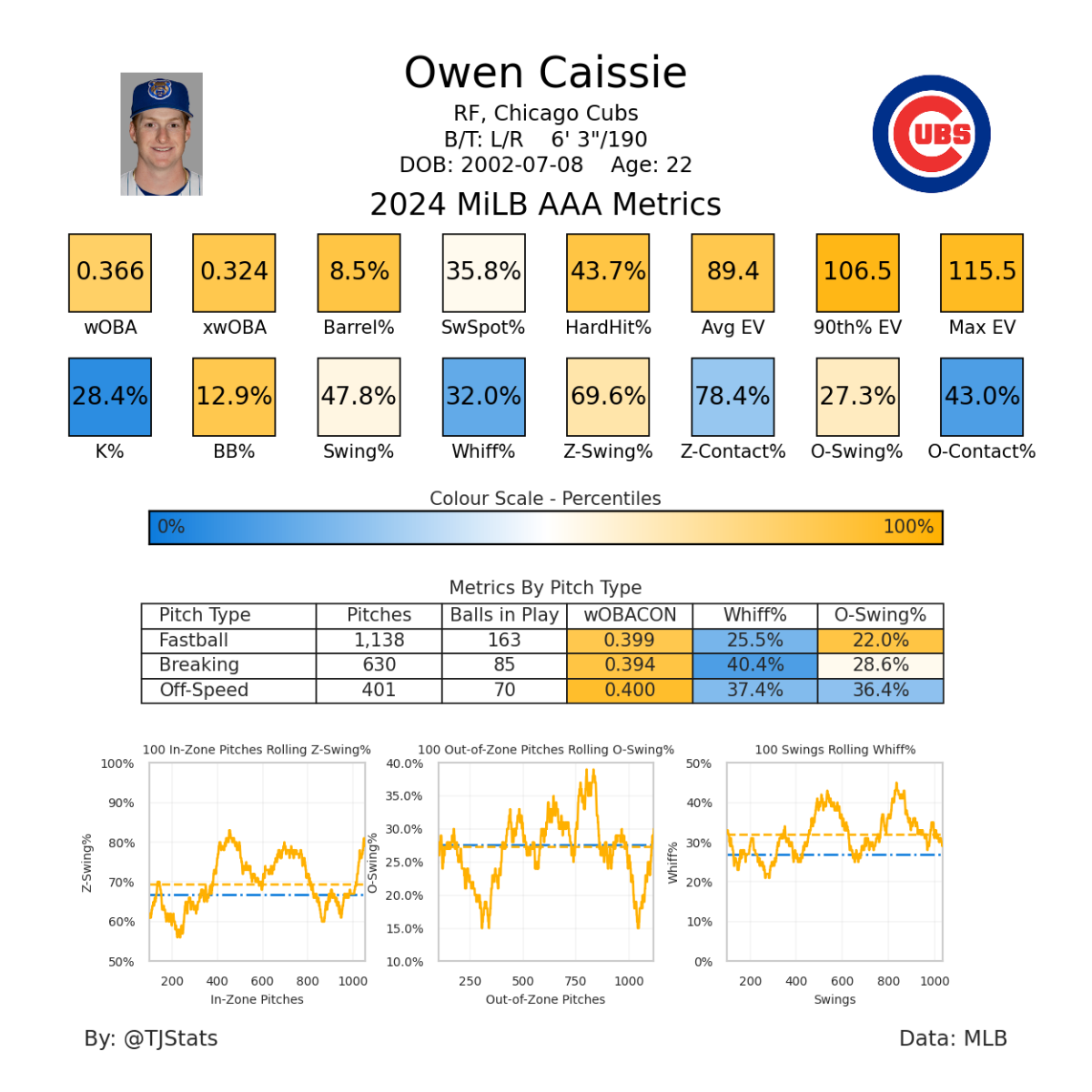
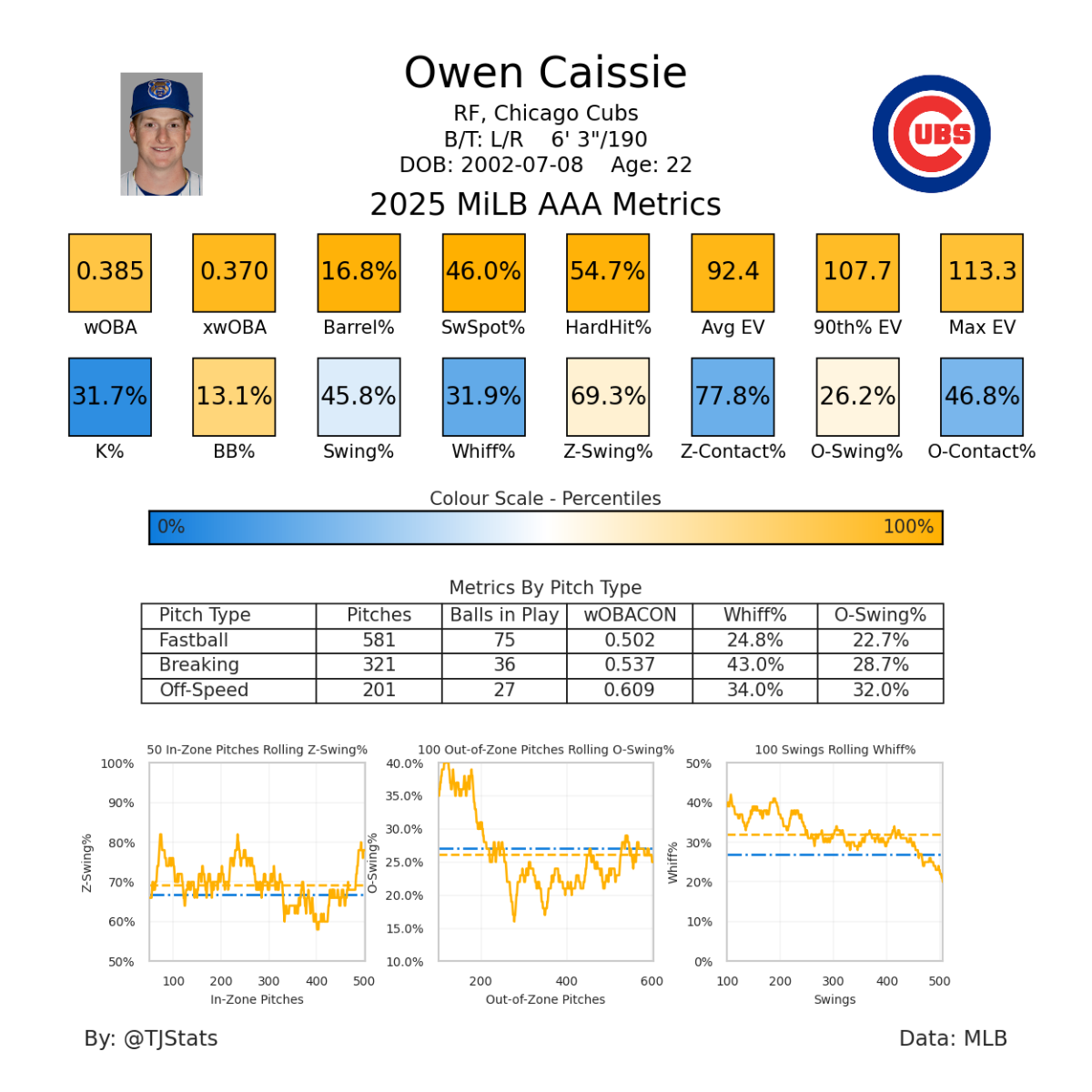
Image courtesy of © Lily Smith/The Register / USA TODAY NETWORK via Imagn Images Owen Caissie feels like he's been in the Cubs' system forever, to the point where it's easy to forget that he's not even 23 yet. To put it another way, Owen Caissie is younger than Pete Crow-Armstrong (who was in the same draft class as Owen) and Matt Shaw, despite being acquired before either of them. With that, I do believe prospect fatigue can creep in, a real-life version of the Toy Story meme where we want to focus on the new and forget the old. Don't feel like I'm coming at you, I've spent more time paying attention to Ivan Brethowr this year than Owen Caissie, and I've been the self-anointed captain of the Caissie Fan Club dating back to the 2020 draft! Beyond just prospect fatigue, however, it's easy for progress to hide in plain sight. Jumping over to Caissie's FanGraphs page will show you his 2025 season line. On the year, the left-hander has a pretty darn good 131 wRC+, a .273/.377/.518 batting line, a 13.2 walk rate, and a pretty uninspiring 31.2 strikeout rate. Reading that line lets you know some important things: Caissie has hit the ball really well, but has struck out more than you'd like (and more than he's done in recent times). However, I think diving deeper into what our protagonist is doing will help us see that some impressive progress has been happening under the hood, and that, coupled with prospect fatigue, suggests he's been better than those numbers indicate. To do so, we'll have to go all the way back to 2024, when Caissie was first promoted to Iowa. Through the MiLB All-Star break, Caissie showed improved contact, striking out 27.8% of the time, while also posting a solid 113 wRC+. He wasn't hitting the ball out of the ballpark, but it was progress. After the ASB, something changed in Caissie. The wRC+ remained virtually identical, as after the pause, he had a 117 wRC+, but the change was hidden; Caissie started hitting the ball in the air more and with authority. We can see this reflected in his isolated slugging, which jumped nearly .80 points, from .164 to .240; a massive shift. We can see this just in the raw numbers as well, as he hit eight home runs through his first 331 plate appearances and then 11 over his last 218. There was an associated launch angle shift that helped this out. Not everything was perfect, as this shift also saw Caissie's K% and contact rate go backward. He was sacrificing some contact for home runs. But the progress was happening. Entering this year, and being blocked at the highest level, Caissie was again placed in Iowa. As I've already pointed out, Caissie is having a better season in terms of wRC+, jumping from good-not-great to being a top-10 wRC+ hitter in all of Triple-A, but the K% appears to be improving as the year has moved along. According to Bryan Smith, Caissie has dropped his whiff rate for three consecutive months, and his K% in June is currently sitting at 28.4%. This is right around where Caissie was in the first half of last season, which suggests he's getting more comfortable with his approach and swing change and seeing the ball better. As the year has gone on, there's been a significant increase in zone-swing, in not chasing pitching out of the zone and a downward trend in strikeouts on the whole have gone with it. By looking just at the 2025 K%, you'd come away thinking he's not making progress, but these trends have been occurring all year. By swinging more often in the zone, he can avoid getting into bad counts. There's been a further evolution in his approach over his last 100 plate appearances or so. If you're going to hold out hope that the Cubs' prospect is going to magically drop to a sub-25% strikeout rate, then I have bad news for you; it's not going to happen. He's likely to always run inflated K rates; it's a feature not a bug. But with the improvements in his launch angle, his willingness to hit more home runs, with the excellent exit velocity, he's more than capable of trading some strikeouts for home runs. The approach change of swinging more often in the zone while whiffing less will help to keep these down. He's a patient hitter, and has probably been too patient. Jumping on strikes early in the count (and specifically, fastballs) will help eliminate these issues. There's a common saying in prospect-land and that "development is not linear" and I think the last one and a half months of Caissie's time in Iowa can help show that. It looked like he had taken a step forward with his contact rates at the beginning of last year only to look like he had taken two steps backwards. But within those steps we can see the progression of his power, his swing, and his approach. His contact rate over his last 100 PA's mirrors that of his first-100, just now with much more power and damage. We're seeing the best version of the outfielder right now, someone who's capable of keeping the strikeouts in check just enough to where he is a menace at the plate. If you're concerned that all of this is just him being a repeater at the level, I think that's a fair critique but one that I'm not entirely sure is the answer here. With a swing change and an approach change, as well as being just 22-years-of-age (as of this writing, his birthday is just in a few days) I believe that this is likely something else; that Caissie has been specifically working on fixing his swing and his approach. To assuage those fears a bit more, Michael Busch was already 24 in his first go at Triple-A with the Dodgers when he posted a middling 111 wRC+ only to come back a year later at the not-as-ripe-age of 25, hitting to the tune of a 155 wRC+ in his second go. While anecdotal, his career has been just fine, and it's pretty clear that progress was made over those two years and it wasn't just repeating. I think we're seeing something more akin to what Michael Busch was able to do over his time than just saying "well, he's just a repeater". Nuance is key. What happens with Owen Caissie and the Cubs will be interesting moving forward. There's an argument to be made that if the Cubs are unwilling to spend on Kyle Tucker that their best internal option in right-field next year may be the former 2020 second-round selection which creates an interesting conundrum for the team as the deadline approaches. If they're willing to pony up for Tucker, it means that Caissie may not realistically have a spot with the organization if they view him behind potential DH Moises Ballesteros in the prospect pecking order. As well, it's likely that teams will also be privy to the approach improvement and that the will coming asking for him as a primary return in any trade. How the Cubs approach that this will be important and could help signal how they internally feel about his long term projections. The overall point, however, is that while it's easy to look at the data and think that he's had a down-season or hasn't lived up to the hype, that I think there's things occurring below the surface that point to the outfielder rounding into the player we hoped for. And whether or not this aides the Cubs directly on the field (either in 2025 or 2026) or through trade, that real progress is happening. Don't let a shiny new toy or a full-season line cloud the change; Owen Caissie is turning into a much better player right before our eyes. What do you think of Owen Caissie? Do you think he's tradebait? Are you encouraged with the approach improvements? Let us know in the comment section below View full article
-
Owen Caissie Is Progressing More Than We May Have Realized
Jason Ross posted an article in Minor Leagues
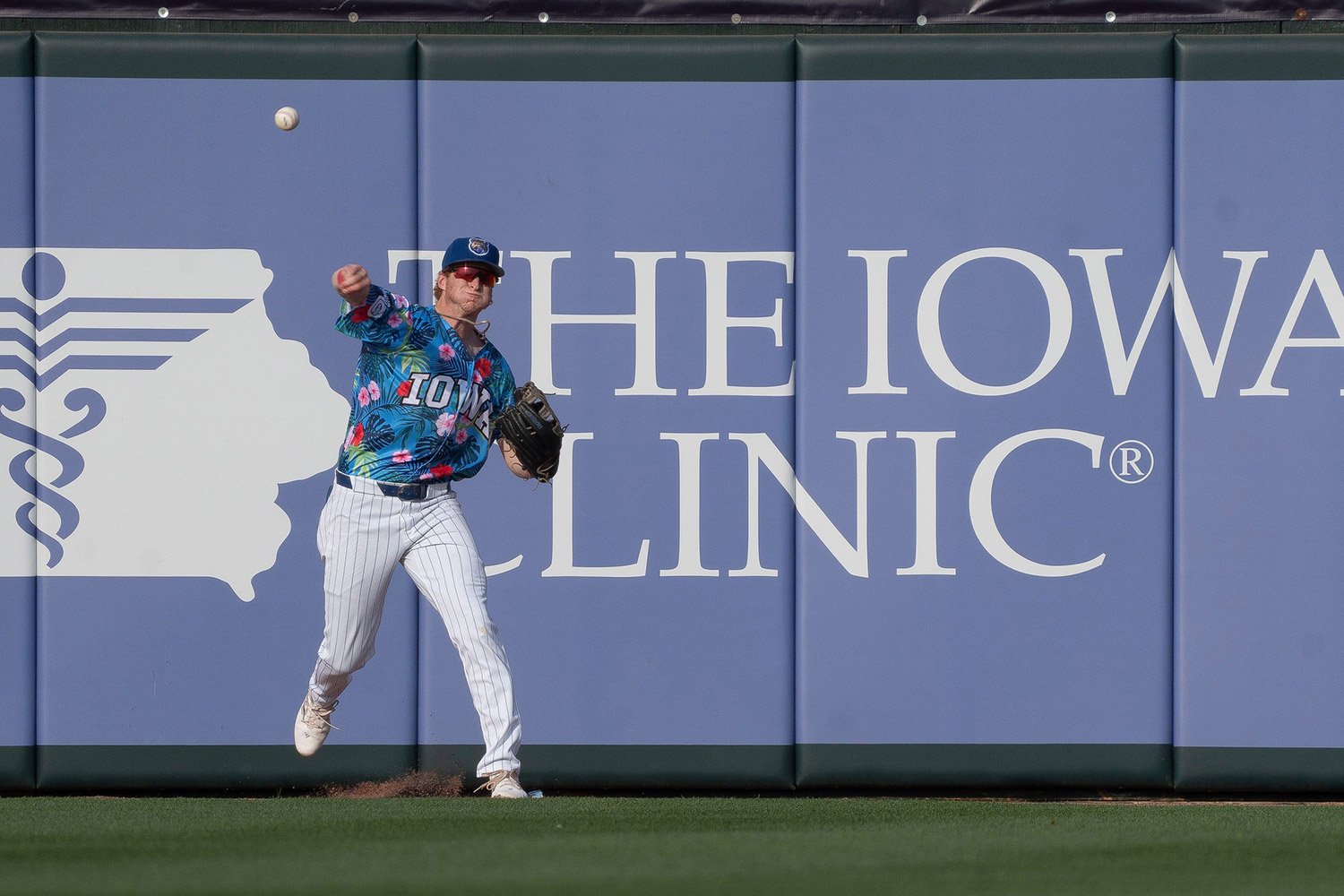 Owen Caissie feels like he's been in the Cubs' system forever, to the point where it's easy to forget that he's not even 23 yet. To put it another way, Owen Caissie is younger than Pete Crow-Armstrong (who was in the same draft class as Owen) and Matt Shaw, despite being acquired before either of them. With that, I do believe prospect fatigue can creep in, a real-life version of the Toy Story meme where we want to focus on the new and forget the old. Don't feel like I'm coming at you, I've spent more time paying attention to Ivan Brethowr this year than Owen Caissie, and I've been the self-anointed captain of the Caissie Fan Club dating back to the 2020 draft! Beyond just prospect fatigue, however, it's easy for progress to hide in plain sight. Jumping over to Caissie's FanGraphs page will show you his 2025 season line. On the year, the left-hander has a pretty darn good 131 wRC+, a .273/.377/.518 batting line, a 13.2 walk rate, and a pretty uninspiring 31.2 strikeout rate. Reading that line lets you know some important things: Caissie has hit the ball really well, but has struck out more than you'd like (and more than he's done in recent times). However, I think diving deeper into what our protagonist is doing will help us see that some impressive progress has been happening under the hood, and that, coupled with prospect fatigue, suggests he's been better than those numbers indicate. To do so, we'll have to go all the way back to 2024, when Caissie was first promoted to Iowa. Through the MiLB All-Star break, Caissie showed improved contact, striking out 27.8% of the time, while also posting a solid 113 wRC+. He wasn't hitting the ball out of the ballpark, but it was progress. After the ASB, something changed in Caissie. The wRC+ remained virtually identical, as after the pause, he had a 117 wRC+, but the change was hidden; Caissie started hitting the ball in the air more and with authority. We can see this reflected in his isolated slugging, which jumped nearly .80 points, from .164 to .240; a massive shift. We can see this just in the raw numbers as well, as he hit eight home runs through his first 331 plate appearances and then 11 over his last 218. There was an associated launch angle shift that helped this out. Not everything was perfect, as this shift also saw Caissie's K% and contact rate go backward. He was sacrificing some contact for home runs. But the progress was happening. Entering this year, and being blocked at the highest level, Caissie was again placed in Iowa. As I've already pointed out, Caissie is having a better season in terms of wRC+, jumping from good-not-great to being a top-10 wRC+ hitter in all of Triple-A, but the K% appears to be improving as the year has moved along. According to Bryan Smith, Caissie has dropped his whiff rate for three consecutive months, and his K% in June is currently sitting at 28.4%. This is right around where Caissie was in the first half of last season, which suggests he's getting more comfortable with his approach and swing change and seeing the ball better. As the year has gone on, there's been a significant increase in zone-swing, in not chasing pitching out of the zone and a downward trend in strikeouts on the whole have gone with it. By looking just at the 2025 K%, you'd come away thinking he's not making progress, but these trends have been occurring all year. By swinging more often in the zone, he can avoid getting into bad counts. There's been a further evolution in his approach over his last 100 plate appearances or so. If you're going to hold out hope that the Cubs' prospect is going to magically drop to a sub-25% strikeout rate, then I have bad news for you; it's not going to happen. He's likely to always run inflated K rates; it's a feature not a bug. But with the improvements in his launch angle, his willingness to hit more home runs, with the excellent exit velocity, he's more than capable of trading some strikeouts for home runs. The approach change of swinging more often in the zone while whiffing less will help to keep these down. He's a patient hitter, and has probably been too patient. Jumping on strikes early in the count (and specifically, fastballs) will help eliminate these issues. There's a common saying in prospect-land and that "development is not linear" and I think the last one and a half months of Caissie's time in Iowa can help show that. It looked like he had taken a step forward with his contact rates at the beginning of last year only to look like he had taken two steps backwards. But within those steps we can see the progression of his power, his swing, and his approach. His contact rate over his last 100 PA's mirrors that of his first-100, just now with much more power and damage. We're seeing the best version of the outfielder right now, someone who's capable of keeping the strikeouts in check just enough to where he is a menace at the plate. If you're concerned that all of this is just him being a repeater at the level, I think that's a fair critique but one that I'm not entirely sure is the answer here. With a swing change and an approach change, as well as being just 22-years-of-age (as of this writing, his birthday is just in a few days) I believe that this is likely something else; that Caissie has been specifically working on fixing his swing and his approach. To assuage those fears a bit more, Michael Busch was already 24 in his first go at Triple-A with the Dodgers when he posted a middling 111 wRC+ only to come back a year later at the no-as-ripe-age of 25, hitting to the tune of a 155 wRC+ in his second go. While anecdotal, his career has been just fine, and it's pretty clear that progress was made over those two years and it wasn't just repeating. I think we're seeing something more akin to what Michael Busch was able to do over his time than just saying "well, he's just a repeater". Nuance is key. What happens with Owen Caissie and the Cubs will be interesting moving forward. There's an argument to be made that if the Cubs are unwilling to spend on Kyle Tucker that their best internal option in right-field next year may be the former 2020 second-round selection which creates an interesting conundrum for the team as the deadline approaches. If they're willing to pony up for Tucker, it means that Caissie may not realistically have a spot with the organization if they view him behind potential DH Moises Ballesteros in the prospect pecking order. As well, it's likely that teams will also be privy to the approach improvement and that the will coming asking for him as a primary return in any trade. How the Cubs approach that this will be important and could help signal how they internally feel about his long term projections. The overall point, however, is that while it's easy to look at the data and think that he's had a down-season or hasn't lived up to the hype, that I think there's things occurring below the surface that point to the outfielder rounding into the player we hoped for. And whether or not this aides the Cubs directly on the field (either in 2025 or 2026) or through trade, that real progress is happening. Don't let a shiny new toy or a full-season line cloud the change; Owen Caissie is turning into a much better player right before our eyes. What do you think of Owen Caissie? Do you think he's tradebait? Are you encouraged with the approach improvements? Let us know in the comment section below
 -
Those guys suck on ice.
-
He's a career 127 wRC+. This year he has made significant changes to his bat. He's making more contact, swinging at less balls, increased his barrel rate, and his launch angle. His xdata is very close to his real data. Entered today with a .417 wOBA and an xwOBA of .393. That's the 17th best in baseball. Nothing he's doing this year suggests this is just a heater. He's a much better hitter than he's been and he's been a good hitter. It's okay to just say he's really good. He's really good.
-
To be fair: He probably isn't on talent. But so far, his xERA is under 2.00. So it ain't like he's been lucky.
-
Damnit. Cal Raleigh is really good.
-
Tommy Edman career wRC+: 100 He's been an alright hitter over his career, but let's not act like he's a star. I don't expect April Carson Kelly going forward. But I also don't expect black hole Carson Kelly going forward. The likely outcome is like a 90-95 wRC+ Carson Kelly which is just fine from the catcher position. But I also don't expect the Cubs to get an 44 wRC+ at 3b like they got before Matt Shaw returned to the MLB roster either. So it'll balance out. I don't disagree, they could certainly use some pitching. But I think you're overselling the offensive issues here. The Cubs have a good offense.
-
Ryan Pressly has been really good for the last 15 innings. He's made slight mechanical tweaks, his fastball has been much better; it's not luck. I get he gave up a home run today, but I'm not sure putting in Pressly there was a bad choice. It just had a bad outcome. Sadly, Craig doesn't have the benefit of hindsight like we do.
-
Tommy Edman over his last 123 PA's: 82 wRC+ Teoscar Hernandez over his last 93 PA's: 52 wRC+ The Cubs having players in a slump isn't special to the Cubs. You don't recognize when Tommy Edman has 120 PA's of being worthless because you don't follow the Dodgers like you do the Cubs. No shame - no one has time to follow 30 teams of 26 players (plus all of the other roster ups and downs). That's hundreds and hundreds of players! Point is; every team has players who go through slumps. The Cubs offense is plenty good enough. We gotta stop pretending like this isn't normal.
-
June prospect voting results
Jason Ross replied to Brock Beauchamp's topic in Cubs Minor League Talk
He had like 20 PA's, if you didn't love his MLB debut, then you probably don't think much of Roman Anthony, who is considered one of the 3 best (if not the best) prospects in baseball. He has been real bad in 30 PA's. We can't judge prospects in samples like that. I understand the defensive questions; I think that's a legitimate criticism. If you think he's DH, then it's a lot harder to get to being a great player. Even if he had 35 home run power, it's hard to make it as a DH. But the MLB debut? That's a nothing burger. That said, I do have good news for you; article coming out tomorrow. There's more growth in Owen Caissie's game than you're giving him credit for. In fact, I think the growth he's showing right now might be one of the more underrated stories in the system right now.