.jpg.900f6d1bc80a5a156f3ba09ea0e4b3d7.jpg)

Jason Ross
-
Posts
8,154 -
Joined
-
Last visited
-
Days Won
74
Content Type
Profiles
Joomla Posts 1
Chicago Cubs Videos
Chicago Cubs Free Agent & Trade Rumors, Notes, & Tidbits
2026 Chicago Cubs Top Prospects Ranking
News
2023 Chicago Cubs Draft Picks
Guides & Resources
2024 Chicago Cubs Draft Picks
The Chicago Cubs Players Project
2025 Chicago Cubs Draft Pick Tracker
2026 Chicago Cubs Draft Tracker: Picks & Bonuses
Blogs
Events
Forums
Store
Gallery
Everything posted by Jason Ross
-
Cubs (Rea) vs Phillies (Abel): 6/10/25, 5:45pm
Jason Ross replied to Brandon Glick's topic in Fred Hornkohl Game Thread Forum
That swing had an xBA of .690 We have to accept some poor EV's with Shaw. His average EV is likely going to be low because he has the great ability to take a pitch like he did, and a swing he did and single on it (that ball usually gets down). He trades K's for weak singles (and some weak contact overall). He also had a 97 EV on the single before. It's just the Matt Shaw experience. -
Cubs (Rea) vs Phillies (Abel): 6/10/25, 5:45pm
Jason Ross replied to Brandon Glick's topic in Fred Hornkohl Game Thread Forum
Rare Tucker awkward swing. -
Cubs (Rea) vs Phillies (Abel): 6/10/25, 5:45pm
Jason Ross replied to Brandon Glick's topic in Fred Hornkohl Game Thread Forum
He's an aggressive swinger. We saw this from PCA when he first came up. Saw this with Ballesteros. Nico is this as well. The Cubs like the profile of "aggressive swinger, lots of contact". It takes a bit of time for these types of rookies to adjust to the concept of "just because I can hit it doesn't mean I should hit it". -
Cubs (Rea) vs Phillies (Abel): 6/10/25, 5:45pm
Jason Ross replied to Brandon Glick's topic in Fred Hornkohl Game Thread Forum
Nothing has been reported that the Cubs basically phoned it in and "just drafted the popular Chicago kid". Kantrovitz has been in this role since 2019 and he's crushed most drafts. It's okay to not have liked the Howard pick! But let's stop short of claiming every one was lazy and phoned in a draft, yeah? Howard was essentially the consensus prep-SS in the draft with a decent floor with his glove. Nothing about that is phoning it in. -
Just to be fair to Squal, he highlighted a few players who were really struggling and said "the rest" of the offense had picked up the slack. Which...is true. Over the last two weeks: Happ - 108 wRC+ PCA - 132 wRC+ Suzuki - 97 wRC+ (but to be fair, if you add one game to this sample he's at a 106 wRC+ and a second gets him to a 146 wRC+ - it's the issue with looking at arbitrary end points) Tucker - 164 wRC+
-
Just to add on to this even a bit more, this is just baseball. Fans want consistency (players, teams, etc) but it doesn't exist. There's no such thing as a team that just stays level. There will be times when everyone is playing well, and others when they're not. And far too often people get caught up in the minutia because they're living and dying on every game. It's a grind. Every year the World Series winning team has these kinds of stretches a few times a year.
-
Blah.
-
Bu you're actively looking for reasons why they'll fail. If you think the Cubs are a good team, you probably wouldn't be actively searching under every 10 game sample size to find the fatal flaw or the reason they'll do bad. The Cubs are a good team. That's really what matters. Flawed? Yeah! Every team is flawed. The TDL should hopefully help that.
-
Just...building the drama...right? Right? ...right?
-
And when that was happening there was a contingent of fans who kept pointing to the BP as the reason the Cubs season would collapse; all they've done is turn in the best ERA in baseball since late-April in that regards. The reality of baseball (and anything) is that if you go looking for a reason to be skeptical, you'll always find one. If the Cubs win tonight, you can point to the RISP hitting, or the lack of runs. If they win 7-6 it's the pitching or the defense. If they lose 4-3, there's a reason. We're deep enough into the season that it's pretty obvious that the Cubs are a good team. They have flaws, but every team does (for example, the Dodgers SP is a mess of injury right now). I don't think every stretch requires a referendum.
-
Pete!
-
BP's stuffpro+ and pitchpro+ like it more than fangraph's Stuff+ right now and stuffpro+ sees it as an average-shape. This has been a decent trend across Cub pitchers this year, there Stuff+ doesn't love a pitch, but the results for the pitcher have been strong. My guess is that while the shapes of these pitches don't grade out as elite or excellent, that what the Cubs are doing well is using these pitches in good counts, and they're "sum of the parts" pitches. They might not stand out on their own, but with everything else, they're much better in conjunction.
-
I don't think anyone is entirely off the table prospect wise. Matt just wrote an article saying the Cubs were even considering Matt Shaw trade situations (I would imagine those are very narrow and the return would be crazy good). Wiggins could go! But it'd probably be in a trade that would be very exciting on the return, as well. But I do expect that if the Cubs go big on a trade, it'll likely mainly centered around their Iowa talent, ultimately.
-
I would say quite the opposite. Wiggins is in a tier of his own when it comes to P-prospects for the Cubs. I would expect he's among the least likely to go.
-
Yup. He either offered the kindest "horsefeathers you" ever, or he got his feelings hurt because Nico dared, and kindly, mentioned it wasn't a strike. I'll guess it's closer to the latter.
-
THEY horsefeathers TOSSED NICO? What a bitch.
-
This might be his best start yet. 10 whiffs already, I like the fastball placement overall. I know he gave up a few runs at the top, but hes looked really good so far, IMO.
-
Correct send. Things are just coming up Detroit very often right now. Sometimes luck is on your side. Detroit has that advantage right now, it seems. Still plenty winnable.
-
I think his hand got in.
-
Busch probably isn't going to learn enough for it to matter. Finding short-side platoon partners isn't particularly expensive, nor overly difficult. I'd guess the true talent of Busch against LHP is somewhere between like 80-90 wRC+ right now, so even if he improves it's still going to be in the "not very good " territory, and not worthwhile to experiment. Easier and better off just having a platoon partner. I realize Turner hasn't lit the world on fire this year, but there's more than enough platoon partners out there. In the end, I wouldn't call this as a "limiting" your offense; it is what it is. Platoons are becoming increasingly more common as LHH hit LHP worse and worse. It's just specialization.
-
He's not good against LHP, the OPS+ is hiding the reality. Last year he had a 103 wRC+ against LHP, yes. But he did so with a .344 BABIP that was very FB% heavy. He saw a significant reduction in hard hits against LHP as well while keeping similar K% and BB%. So the 103 wRC+ is likely inflated by some soft-flyball BABIP luck and is unsustainable. It was also in 90 PA's, likely more curated than most samples...he hit against the lefties the Cubs wanted him to and the tough ones he was shielded against, another reason to believe the 103 wRC+ is inflated. Secondly he's been terrible against them when he's gotten chances this year, rocking a 47 wRC+. Is that probably affected a bit by small sample, bad luck and playing sparingly? Yeah probably! Meaning the truth of "how well does Busch hit LHP?" is between the 47 wRC+ and the 103 wRC+ last year. It's likely not good enough for him to play against LHP. He's not entirely futile against them, but there's no reason the Cubs should feel the need to play a 90 wRC+ hitter if they don't have to. The Cubs still believe that Turner's the better option.
-
Certainly not the case. Most prep pitchers are running a fastball + one other pitch set up. They might occasionally work in a third, but any prep pitcher who's got three developed pitches out of HS is pretty much a unicorn now a days. Slider is very popular for the 2nd pitch. There are some who have better feels for the changeup but its not a very popular pitch in the HS ranks outside of a show me.
-
Hey, not me!
-
Image courtesy of Gregory Fisher-Imagn Images Not every important plate appearance of the year comes in a critical moment, but it doesn't mean that something significant can't still occur. One of these moments happened during Tuesday's game against the Washington Nationals for Cubs' rookie starter Cade Horton. And even if it didn't have game-changing implications in the moment, it's the kind of at-bat that can be a glimpse into the future. To paint the picture of the at-bat, the game between the Cubs and the Nationals is currently 7-3 in favor of Chicago as we enter into the bottom of the fifth inning. The North Siders have just tallied four runs in the top-half of the frame and the Nationals find themselves behind in the game. For the Cubs, and for Cade Horton, this is a great time for the rookie to close the door on the Nationals. The inning starts with two quick outs, as Nationals' third baseman Jose Tena (hitting eighth) is caught watching strike three for the first out of the inning, and then ninth-hitter Daylen Lile grounds out, bringing up leadoff hitter CJ Abrams. On the day, Abrams already has a single off of Horton, and hitting in front of James Wood, this could quickly snowball if the rookie isn't able to end the inning. CJ Abrams is a tough out for almost anyone nowadays, as he's currently in the middle of a real breakout season. The 24-year-old shortstop is beginning to live up to his top-prospect billing, sporting a wRC+ of 132 as he entered the game. His wRC+ on the season was fifth for all shortstops league-wide. Abrams is a pretty good hitter against fastballs, sporting a .360 wOBA on the pitch on the season. He's significantly decreased his ground ball rate this year, This will be a challenging plate appearance for Horton (even up four runs) and should not be taken lightly. Before breaking down the at-bat in question, I'd like to go back and make mention of something I've spoken about Horton in the past. In an article I wrote previously,, one of the things I mentioned was that Horton needs to learn to use his fastball like Justin Steele does; specifically, jamming it inside on opposite-handed hitters. This remains a work in progress, but is something important to keep in the back of our minds' in looking at how this specific event plays out. As the shortstop strides to the plate and takes his place in the box, Horton coils himself upon the rubber ready to go; he likes to work fast. Horton goes directly to the fastball against Abrams, which shouldn't be surprising — he uses the pitch nearly 50% of the time. The pitch isn't a bad offering, as it registered 96mph on the gun and induced a foul ball. It's far enough on the shadows that it's unlikely that Abrams kills the pitch, but it's probably not the ideal placement, as if he misses by a little, it would run towards the heart of the plate. Regardless of some nitpicks, the result is fine: 0-1. Now with count-leverage on his side, Horton goes right back to the well as the next call is once again heater. Despite Abrams being a great hitter against the fastball, Horton and Carson Kelly feel confident going back at the lanky youngster once again with the pitch. Horton gets nearly perfect placement this time, hitting 96mph on the radar while getting the ball just at the top of the zone and on the inner-third. There's nothing a hitter can do against this pitch if they swing, and if they don't, it's likely a called strike. This pitch gets the exact thing the fireballer was looking for, a swing and miss: 0-2. I love this pitch for a lot of reasons. First, Horton was able to use his fastball to get up in the zone a bit more than he's done throughout his time with the Cubs so far. Far too often, Horton has caught the upper-third of the zone without elevating the pitch high enough to generate more whiff. Not this time. Secondly, he used his glove-side-run, or in other words, his cut, in his favor, allowing the pitch to eat up Abrams inside. This is a dangerous hitter, and Horton has him down 0-2 using just fastballs. Now way up in the count, Cade Horton can do almost whatever he wants, so what will he do? Will he go to his bread-and-butter slider down and inside? Maybe he'll use it on the backdoor instead, hitting it low and away? Maybe he'll conclude that sliders don't typically do well against opposite handed-hitters and go with his burgeoning changeup? Horton has already featured the changeup quite often today against the left-handed-heavy lineup in front of him. No, the answer appears to be none-of-the-above, as the call seems to be made by fictitious manager of Cleveland from the movie Major League. "Forget about the slider, Cade, throw the heater." If you're familiar with the source, you can almost hear Lou grit it out through his teeth through the broadcast. Horton, after going fastball-fastball, decides that he's not done with the pitch just yet and dials up a third straight "number one". And while I waxed poetic about the pitch prior, this might be my favorite pitch of the night for the rookie. Horton uncorks a third straight 96mph fastball, but this time he buries it in, and right on the hands of the Nationals' hitter. This is exactly where veteran catcher Carson Kelly wanted it, too, as you can see from the set up. It'd be really fun if this at-bat ended up in a rousing, hype-inducing strike out, the rookie pitcher beating his chest Kenny Power-style as he walked off the mound, but alas, it doesn't. Instead the result of the pitch was an 83 mph ground ball that had an expected batting average of just .110. It's an at-bat that will likely be forgotten in the grand scheme of things, but this at-bat is bigger then the result and it's bigger than the game... it's progress. Horton used what makes his fastball special and he got a very good hitter to hit a harmless groundball at Michael Busch. To highlight this a little more, let me take you back to the third pitch of the entire game. Leadoff hitter, and antagonist of this article, CJ Abrams was up against Horton in this scenario as well. The count was even at one ball and one strike. Horton has gone fastball-fastball already. just like the at-bat he'll have later in the game in the bottom of the fifth. Abrams has already fouled off a fastball that was a little off the plate and up on the first pitch (sound familiar?) but Horton missed with a waste-pitch on 0-1, setting up this specific juncture. Once again, Horton goes back to the fastball, but instead of getting it in on the hands, or getting it on the inner-third-at-all, he leaves it up and over the middle of the plate, and the left-hander smacks a single up the middle. A mistake pitch that ended up with a hit. Eventually, the Nationals leadoff hitter would come around and score the first run of the game after reaching, something that would thankfully not spell defeat for the Cubs. So, sure, the fifth inning battle against Abrams probably won't go down in Cub lore with, say, Ben Zobrist's double in the World Series, but not every interaction has game-changing importance in that way. However, significance comes in many forms, and the rookie starting pitcher showed significant learning by getting Abrams to ground out weakly on a pitch inside on the hands, instead of falling in the same trap he did in the first. He found a better way forward against a dangerous hitter and the results were much better, I doubt it means that he'll be perfect moving forward, and we should continue to expect missteps and mistakes, hanging sliders that stay up just a little too long and fastballs that get just a little too much of the heart of the plate. After all, Horton is an imperfect rookie pitcher. But the more Horton can make these pitches to left-handed-hitters like CJ Abrams, the closer that the best version of Cade Horton we get. And if the Cubs can get the best version of Cade Horton through these baby steps, then that could be just as important as any specific moment of the Cubs' season. What'd you think of Cade Horton's last start? Do you think he's on the correct path? Are you seeing the progress? Let us know in the comment section below! View full article
-
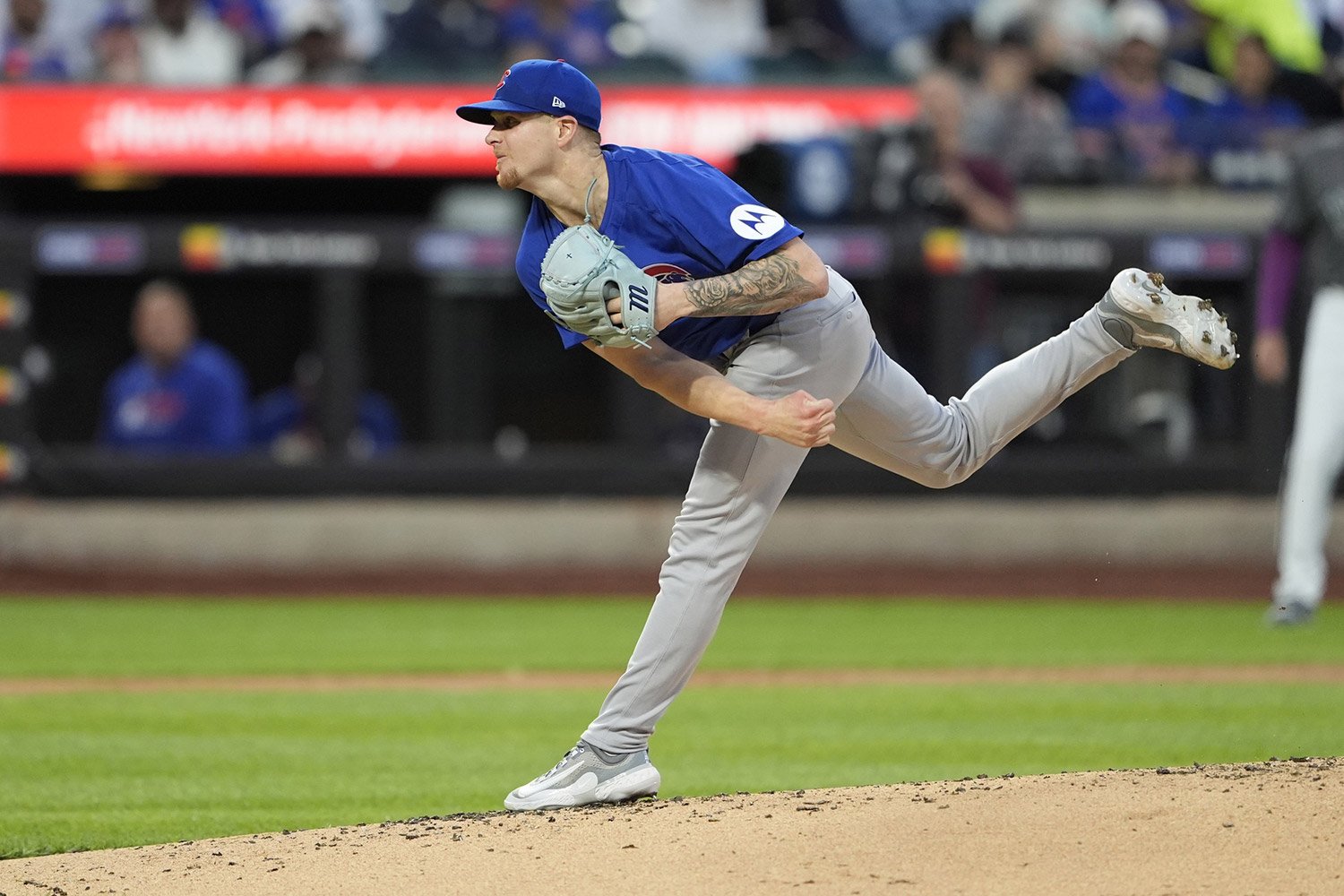 Not every important plate appearance of the year comes in a critical moment, but it doesn't mean that something significant can't still occur. One of these moments happened during Tuesday's game against the Washington Nationals for Cubs' rookie starter Cade Horton. And even if it didn't have game-changing implications in the moment, it's the kind of at-bat that can be a glimpse into the future. To paint the picture of the at-bat, the game between the Cubs and the Nationals is currently 7-3 in favor of Chicago as we enter into the bottom of the fifth inning. The North Siders have just tallied four runs in the top-half of the frame and the Nationals find themselves behind in the game. For the Cubs, and for Cade Horton, this is a great time for the rookie to close the door on the Nationals. The inning starts with two quick outs, as Nationals' third baseman Jose Tena (hitting eighth) is caught watching strike three for the first out of the inning, and then ninth-hitter Daylen Lile grounds out, bringing up leadoff hitter CJ Abrams. On the day, Abrams already has a single off of Horton, and hitting in front of James Wood, this could quickly snowball if the rookie isn't able to end the inning. CJ Abrams is a tough out for almost anyone nowadays, as he's currently in the middle of a real breakout season. The 24-year-old shortstop is beginning to live up to his top-prospect billing, sporting a wRC+ of 132 as he entered the game. His wRC+ on the season was fifth for all shortstops league-wide. Abrams is a pretty good hitter against fastballs, sporting a .360 wOBA on the pitch on the season. He's significantly decreased his ground ball rate this year, This will be a challenging plate appearance for Horton (even up four runs) and should not be taken lightly. Before breaking down the at-bat in question, I'd like to go back and make mention of something I've spoken about Horton in the past. In an article I wrote previously,, one of the things I mentioned was that Horton needs to learn to use his fastball like Justin Steele does; specifically, jamming it inside on opposite-handed hitters. This remains a work in progress, but is something important to keep in the back of our minds' in looking at how this specific event plays out. As the shortstop strides to the plate and takes his place in the box, Horton coils himself upon the rubber ready to go; he likes to work fast. Horton goes directly to the fastball against Abrams, which shouldn't be surprising — he uses the pitch nearly 50% of the time. The pitch isn't a bad offering, as it registered 96mph on the gun and induced a foul ball. It's far enough on the shadows that it's unlikely that Abrams kills the pitch, but it's probably not the ideal placement, as if he misses by a little, it would run towards the heart of the plate. Regardless of some nitpicks, the result is fine: 0-1. Now with count-leverage on his side, Horton goes right back to the well as the next call is once again heater. Despite Abrams being a great hitter against the fastball, Horton and Carson Kelly feel confident going back at the lanky youngster once again with the pitch. Horton gets nearly perfect placement this time, hitting 96mph on the radar while getting the ball just at the top of the zone and on the inner-third. There's nothing a hitter can do against this pitch if they swing, and if they don't, it's likely a called strike. This pitch gets the exact thing the fireballer was looking for, a swing and miss: 0-2. I love this pitch for a lot of reasons. First, Horton was able to use his fastball to get up in the zone a bit more than he's done throughout his time with the Cubs so far. Far too often, Horton has caught the upper-third of the zone without elevating the pitch high enough to generate more whiff. Not this time. Secondly, he used his glove-side-run, or in other words, his cut, in his favor, allowing the pitch to eat up Abrams inside. This is a dangerous hitter, and Horton has him down 0-2 using just fastballs. Now way up in the count, Cade Horton can do almost whatever he wants, so what will he do? Will he go to his bread-and-butter slider down and inside? Maybe he'll use it on the backdoor instead, hitting it low and away? Maybe he'll conclude that sliders don't typically do well against opposite handed-hitters and go with his burgeoning changeup? Horton has already featured the changeup quite often today against the left-handed-heavy lineup in front of him. No, the answer appears to be none-of-the-above, as the call seems to be made by fictitious manager of Cleveland from the movie Major League. "Forget about the slider, Cade, throw the heater." If you're familiar with the source, you can almost hear Lou grit it out through his teeth through the broadcast. Horton, after going fastball-fastball, decides that he's not done with the pitch just yet and dials up a third straight "number one". And while I waxed poetic about the pitch prior, this might be my favorite pitch of the night for the rookie. Horton uncorks a third straight 96mph fastball, but this time he buries it in, and right on the hands of the Nationals' hitter. This is exactly where veteran catcher Carson Kelly wanted it, too, as you can see from the set up. It'd be really fun if this at-bat ended up in a rousing, hype-inducing strike out, the rookie pitcher beating his chest Kenny Power-style as he walked off the mound, but alas, it doesn't. Instead the result of the pitch was an 83 mph ground ball that had an expected batting average of just .110. It's an at-bat that will likely be forgotten in the grand scheme of things, but this at-bat is bigger then the result and it's bigger than the game... it's progress. Horton used what makes his fastball special and he got a very good hitter to hit a harmless groundball at Michael Busch. To highlight this a little more, let me take you back to the third pitch of the entire game. Leadoff hitter, and antagonist of this article, CJ Abrams was up against Horton in this scenario as well. The count was even at one ball and one strike. Horton has gone fastball-fastball already. just like the at-bat he'll have later in the game in the bottom of the fifth. Abrams has already fouled off a fastball that was a little off the plate and up on the first pitch (sound familiar?) but Horton missed with a waste-pitch on 0-1, setting up this specific juncture. Once again, Horton goes back to the fastball, but instead of getting it in on the hands, or getting it on the inner-third-at-all, he leaves it up and over the middle of the plate, and the left-hander smacks a single up the middle. A mistake pitch that ended up with a hit. Eventually, the Nationals leadoff hitter would come around and score the first run of the game after reaching, something that would thankfully not spell defeat for the Cubs. So, sure, the fifth inning battle against Abrams probably won't go down in Cub lore with, say, Ben Zobrist's double in the World Series, but not every interaction has game-changing importance in that way. However, significance comes in many forms, and the rookie starting pitcher showed significant learning by getting Abrams to ground out weakly on a pitch inside on the hands, instead of falling in the same trap he did in the first. He found a better way forward against a dangerous hitter and the results were much better, I doubt it means that he'll be perfect moving forward, and we should continue to expect missteps and mistakes, hanging sliders that stay up just a little too long and fastballs that get just a little too much of the heart of the plate. After all, Horton is an imperfect rookie pitcher. But the more Horton can make these pitches to left-handed-hitters like CJ Abrams, the closer that the best version of Cade Horton we get. And if the Cubs can get the best version of Cade Horton through these baby steps, then that could be just as important as any specific moment of the Cubs' season. What'd you think of Cade Horton's last start? Do you think he's on the correct path? Are you seeing the progress? Let us know in the comment section below!