.jpg.900f6d1bc80a5a156f3ba09ea0e4b3d7.jpg)

Jason Ross
-
Posts
8,149 -
Joined
-
Last visited
-
Days Won
74
Content Type
Profiles
Joomla Posts 1
Chicago Cubs Videos
Chicago Cubs Free Agent & Trade Rumors, Notes, & Tidbits
2026 Chicago Cubs Top Prospects Ranking
News
2023 Chicago Cubs Draft Picks
Guides & Resources
2024 Chicago Cubs Draft Picks
The Chicago Cubs Players Project
2025 Chicago Cubs Draft Pick Tracker
2026 Chicago Cubs Draft Tracker: Picks & Bonuses
Blogs
Events
Forums
Store
Gallery
Everything posted by Jason Ross
-
Image courtesy of Rick Scuteri-Imagn Images This week at North Side Baseball, we've covered a few players who we think could be on the precipice of being a September call-up as rosters set to expand next week. Teams will be permitted to bring up two more players on their 40-man roster for the final month of the season. We looked specifically at pitcher Jaxon Wiggins and catcher Owen Ayers. Both of these players are the "typical" kind of player we see teams add with expanded rosters: prospects with a specific skillset that could help a team down the stretch, but who have yet to establish themselves. Shelby Miller, who has accrued over 920 innings in the majors to date, certainly breaks this mold, but he could be due for the same type of treatment as his much younger counterparts. Miller, a 35-year-old converted starting pitcher, has had his share of ups and downs over a long career. He was a first-round pick by the St. Louis Cardinals in 2009, and after being part of some very good Cardinals teams, he was traded to Atlanta for a strapping outfielder named Jason Heyward. He posted a promising 3.7-fWAR season in 2015 as a 24-year-old with the Braves. This excellent start to his career caused the Arizona Diamondbacks to become enamored with him, going as far as to trade their recently drafted top prospect, Dansby Swanson, to Atlanta to acquire him as a lead in their new-look rotation. After his strong start, however, the right-handed pitcher really struggled to find his place in the league, having a terrible 2016 in the desert and then eventually bouncing from organization to organization. He even made three appearances for the Cubs in 2021. (If you don't remember it, don't worry. It was just for two innings total and they were highly forgettable.) Things started to look up for the journeyman at last in 2023. While Miller had what seemed like a successful 42 innings with the Dodgers (posting an ERA of 1.70), however, the underlying data suggests that this may have been smoke-and-mirrors. Another down year in 2024 while pitching out of the Tigers' bullpen put his career on ice. Miller, once again, looked like he would struggle to find his place. Then, just last year, a return engagement with the Diamondbacks revived Miller's career—and the under-the-hood numbers looked a lot better this time. He was traded to Milwaukee at the deadline, and for the Brewers, he was considered a pretty big get. In a cruel twist of fate, Miller suffered a major injury just when he seemed to be reestablishing himself. He went down with elbow trouble in early September and underwent Tommy John surgery in October. Without much of a market, the Chicago Cubs scooped him up on a two-year contract late in the offseason, hoping that they could use him in 2027. Little did they know the reliever had other ideas. He's zoomed through his recovery, and might pitch in the majors less than 12 months after having been on Dr. Keith Meister's table. The Case for Cubs Calling Up Shelby Miller First and foremost, we have to forget what we remember about Shelby Miller. The "old" Shelby Miller was a starting pitcher that relied heavily on a diet of four-seam fastballs, sinkers and cutters. He would also mix in a curveball (pretty regularly) and a changeup (sparingly). He got more groundballs than flyballs. He gave up a decent amount of contact. That guy is gone; long, long gone. This is also not the same version of Miller whom the Dodgers and the Tigers had in their bullpens during the 2023 and 2024 season. During those years, Miller's average fastball velocity sat at 93.6 MPH. He had scrapped most of the noise around the fastball, ditching the sinker, cutter, curveball and changeup almost entirely. Instead, while he still relied on the four-seamer nearly 60% of the time, he mixed in a splitter around 20% of the time and a sweeper the rest of the time. The foundation was set for a reinvention, but his fastball velocity was keeping him back. Something had to change for him to really become a weapon. Last season, he rediscovered the lost electricity in his arm. His fastball sat a full two ticks higher than it had the prior two years, and sometimes touched 97 MPH. The results were fantastic: elite chase, whiff and strikeout rates, a 2.74 ERA and a 3.67 xFIP. He specifically became a deadly weapon against left-handed batters, striking out 32.4% of lefties last season. That was a whole new guy. That was, at least, until Miller went down with the injury that keeps pitchers up at night: a torn UCL, requiring Tommy John surgery. These operations can keep pitchers out quite some time. Just look at starting pitcher Justin Steele, who's still working back from an internal elbow brace surgery, the "younger brother" of TJ. Corbin Burnes underwent Tommy John last spring and looks like he won't pitch in 2026, either. Miller, however, has had a near-miraculous recovery and started throwing in Mesa back in July. Since then, he's rocketed from "throwing to hitters on the side" of the Complex backfields to "promoted to Triple-A Iowa" in just a matter of weeks. Best of all, the velocity hasn't gone anywhere. He's averaging 95.5 MPH so far at Triple-A. It very much looks like the player who emerged last summer survived his unhappy fall and winter. In just under six innings so far at Iowa, Miller has struck out 10 hitters and walked only one. He's running the kind of chase, whiff, zone, and stuff ratings you would hope for from a veteran big-leaguer just visiting the minors. His stuff grades out well, too. Everything here points to a healthy and viable reliever for a team who has been searching up and down for as much pitching as they can get. The Case Against Cubs Calling Up Shelby Miller The biggest case against calling up Miller is that it's just hard to know how much you can count on him. The timeline for his recovery is miraculous. With that said, he's yet to go on back-to-back days. instead, the Cubs have cautiously given him at least a few days off in between every inning he's thrown. That's not a luxury the team would have if they tried to carry him for, say, a postseason series. If Miller was the only reliever on the team after rosters expand that may need to be micromanaged in terms of his usage, you could probably find a way around that, especially with the added number of arms at your disposal. The problem, of course, is that the Miller's usage issues aren't in a vacuum. They have a handful of pitchers who may also be on some innings limitations. Justin Steele, Ben Brown, Edward Cabrera and Hoby Milner are all possible reinforcements who might return from injuries of their own, and the Cubs will have to be cognizant of how they use them all. Adding another arm into that mix could prove difficult and may make it impossible to keep a keen on every single inning. Another reason the Cubs may not call up Miller: they don't have to. Because Miller is on the 60-day IL and coming back from elbow reconstruction surgery, he gets to play by different rehab rules. Normally, a pitcher is allowed a 30-day rehab window. For Miller, that begun at the start of August. But because of the specific nature of Miller's ailment, the Cubs are granted a 60-day window. It means that the team doesn't have to make that decision this year, like they would if he was coming back from a hamstring pull. The Cubs can, in essence, "have their cake and eat it, too" by keeping Miller in Iowa for the remainder of the season while still keeping pitchers like Aaron Civale (who's been quite good in long relief) or Caleb Thielbar for as long as they can. It's a decision that they can kick down the road to 2027, and they may be forced to do just that, simply in the name of maintaining as much depth as possible. Should the Cubs Call Up Shelby Miller? The goal of the Chicago Cubs at this point is very clear: to win the last game in the postseason. This is not a team who is in for half-measures; trades like Jefferson Rojas for two players on expiring contracts (Clay Holmes and Tyrone Taylor) make that very clear. The best way for the team to achieve that goal is to ensure that their 26 best players see as much game action as possible. I believe a 100% healthy Miller is among those 26 best players. Miller fills a pretty obvious space in a bullpen. He's a right handed pitcher with reverse splits (due to his high splitter usage). He adds a lot of strikeouts, chase and whiff to a bullpen; all things that are quite useful. He'd allow the Cubs to move on from a struggling left-handed pitcher like Caleb Thielbar without feeling like they'd be short in the bullpen against left-handed hitters. Miller could essentially fill the role that Jacob Webb was filling early in the year and has since been vacated as he's risen to the team's defacto closer. But the sticking point that the Cubs' will have to wrestle with is a tricky one: how close to being 100% is Miller right now? And if he isn't 100%, at what percent is the cross-over point? The velocity suggests that his arm is feeling quite good, but his usage suggests some reservations in how often he can go. And to be fair to everyone involved; no one thought Miller would be pitching in Iowa in August, so being cautious with his usage feels entirely warranted. I think Miller will throw innings for the Chicago Cubs in 2026, because I don't believe the Cubs would have been as aggressive with him if they didn't think it was possible. Whether or not they call him up the moment rosters expand is another question, but it's likely that someone on the pitching staff will need an IL stint between now and October. This is a new, reinvented Shelby Miller, who has busted his hump to come back from TJS this year. He's had the tenacity to stick in a league that rarely wanted him, and the drive to not allow a serious elbow injury to keep him down. If you're putting together 26 men to win that last game of the playoffs, it's that kind of stubbornness you want to see in a reliever when you call upon them in tight situations. View full article
-
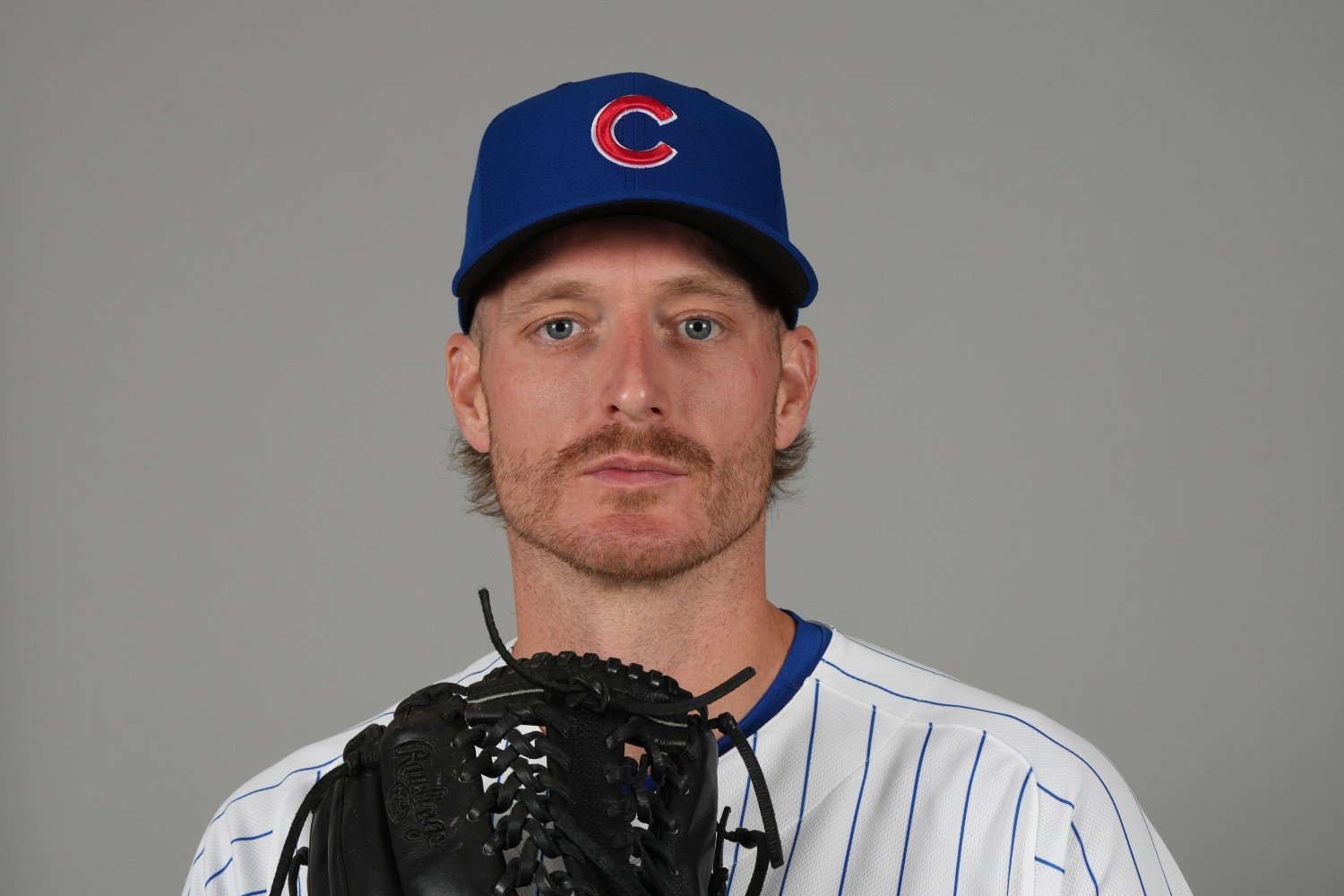 This week at North Side Baseball, we've covered a few players who we think could be on the precipice of being a September call-up as rosters set to expand next week. Teams will be permitted to bring up two more players on their 40-man roster for the final month of the season. We looked specifically at pitcher Jaxon Wiggins and catcher Owen Ayers. Both of these players are the "typical" kind of player we see teams add with expanded rosters: prospects with a specific skillset that could help a team down the stretch, but who have yet to establish themselves. Shelby Miller, who has accrued over 920 innings in the majors to date, certainly breaks this mold, but he could be due for the same type of treatment as his much younger counterparts. Miller, a 35-year-old converted starting pitcher, has had his share of ups and downs over a long career. He was a first-round pick by the St. Louis Cardinals in 2009, and after being part of some very good Cardinals teams, he was traded to Atlanta for a strapping outfielder named Jason Heyward. He posted a promising 3.7-fWAR season in 2015 as a 24-year-old with the Braves. This excellent start to his career caused the Arizona Diamondbacks to become enamored with him, going as far as to trade their recently drafted top prospect, Dansby Swanson, to Atlanta to acquire him as a lead in their new-look rotation. After his strong start, however, the right-handed pitcher really struggled to find his place in the league, having a terrible 2016 in the desert and then eventually bouncing from organization to organization. He even made three appearances for the Cubs in 2021. (If you don't remember it, don't worry. It was just for two innings total and they were highly forgettable.) Things started to look up for the journeyman at last in 2023. While Miller had what seemed like a successful 42 innings with the Dodgers (posting an ERA of 1.70), however, the underlying data suggests that this may have been smoke-and-mirrors. Another down year in 2024 while pitching out of the Tigers' bullpen put his career on ice. Miller, once again, looked like he would struggle to find his place. Then, just last year, a return engagement with the Diamondbacks revived Miller's career—and the under-the-hood numbers looked a lot better this time. He was traded to Milwaukee at the deadline, and for the Brewers, he was considered a pretty big get. In a cruel twist of fate, Miller suffered a major injury just when he seemed to be reestablishing himself. He went down with elbow trouble in early September and underwent Tommy John surgery in October. Without much of a market, the Chicago Cubs scooped him up on a two-year contract late in the offseason, hoping that they could use him in 2027. Little did they know the reliever had other ideas. He's zoomed through his recovery, and might pitch in the majors less than 12 months after having been on Dr. Keith Meister's table. The Case for Cubs Calling Up Shelby Miller First and foremost, we have to forget what we remember about Shelby Miller. The "old" Shelby Miller was a starting pitcher that relied heavily on a diet of four-seam fastballs, sinkers and cutters. He would also mix in a curveball (pretty regularly) and a changeup (sparingly). He got more groundballs than flyballs. He gave up a decent amount of contact. That guy is gone; long, long gone. This is also not the same version of Miller whom the Dodgers and the Tigers had in their bullpens during the 2023 and 2024 season. During those years, Miller's average fastball velocity sat at 93.6 MPH. He had scrapped most of the noise around the fastball, ditching the sinker, cutter, curveball and changeup almost entirely. Instead, while he still relied on the four-seamer nearly 60% of the time, he mixed in a splitter around 20% of the time and a sweeper the rest of the time. The foundation was set for a reinvention, but his fastball velocity was keeping him back. Something had to change for him to really become a weapon. Last season, he rediscovered the lost electricity in his arm. His fastball sat a full two ticks higher than it had the prior two years, and sometimes touched 97 MPH. The results were fantastic: elite chase, whiff and strikeout rates, a 2.74 ERA and a 3.67 xFIP. He specifically became a deadly weapon against left-handed batters, striking out 32.4% of lefties last season. That was a whole new guy. That was, at least, until Miller went down with the injury that keeps pitchers up at night: a torn UCL, requiring Tommy John surgery. These operations can keep pitchers out quite some time. Just look at starting pitcher Justin Steele, who's still working back from an internal elbow brace surgery, the "younger brother" of TJ. Corbin Burnes underwent Tommy John last spring and looks like he won't pitch in 2026, either. Miller, however, has had a near-miraculous recovery and started throwing in Mesa back in July. Since then, he's rocketed from "throwing to hitters on the side" of the Complex backfields to "promoted to Triple-A Iowa" in just a matter of weeks. Best of all, the velocity hasn't gone anywhere. He's averaging 95.5 MPH so far at Triple-A. It very much looks like the player who emerged last summer survived his unhappy fall and winter. In just under six innings so far at Iowa, Miller has struck out 10 hitters and walked only one. He's running the kind of chase, whiff, zone, and stuff ratings you would hope for from a veteran big-leaguer just visiting the minors. His stuff grades out well, too. Everything here points to a healthy and viable reliever for a team who has been searching up and down for as much pitching as they can get. The Case Against Cubs Calling Up Shelby Miller The biggest case against calling up Miller is that it's just hard to know how much you can count on him. The timeline for his recovery is miraculous. With that said, he's yet to go on back-to-back days. instead, the Cubs have cautiously given him at least a few days off in between every inning he's thrown. That's not a luxury the team would have if they tried to carry him for, say, a postseason series. If Miller was the only reliever on the team after rosters expand that may need to be micromanaged in terms of his usage, you could probably find a way around that, especially with the added number of arms at your disposal. The problem, of course, is that the Miller's usage issues aren't in a vacuum. They have a handful of pitchers who may also be on some innings limitations. Justin Steele, Ben Brown, Edward Cabrera and Hoby Milner are all possible reinforcements who might return from injuries of their own, and the Cubs will have to be cognizant of how they use them all. Adding another arm into that mix could prove difficult and may make it impossible to keep a keen on every single inning. Another reason the Cubs may not call up Miller: they don't have to. Because Miller is on the 60-day IL and coming back from elbow reconstruction surgery, he gets to play by different rehab rules. Normally, a pitcher is allowed a 30-day rehab window. For Miller, that begun at the start of August. But because of the specific nature of Miller's ailment, the Cubs are granted a 60-day window. It means that the team doesn't have to make that decision this year, like they would if he was coming back from a hamstring pull. The Cubs can, in essence, "have their cake and eat it, too" by keeping Miller in Iowa for the remainder of the season while still keeping pitchers like Aaron Civale (who's been quite good in long relief) or Caleb Thielbar for as long as they can. It's a decision that they can kick down the road to 2027, and they may be forced to do just that, simply in the name of maintaining as much depth as possible. Should the Cubs Call Up Shelby Miller? The goal of the Chicago Cubs at this point is very clear: to win the last game in the postseason. This is not a team who is in for half-measures; trades like Jefferson Rojas for two players on expiring contracts (Clay Holmes and Tyrone Taylor) make that very clear. The best way for the team to achieve that goal is to ensure that their 26 best players see as much game action as possible. I believe a 100% healthy Miller is among those 26 best players. Miller fills a pretty obvious space in a bullpen. He's a right handed pitcher with reverse splits (due to his high splitter usage). He adds a lot of strikeouts, chase and whiff to a bullpen; all things that are quite useful. He'd allow the Cubs to move on from a struggling left-handed pitcher like Caleb Thielbar without feeling like they'd be short in the bullpen against left-handed hitters. Miller could essentially fill the role that Jacob Webb was filling early in the year and has since been vacated as he's risen to the team's defacto closer. But the sticking point that the Cubs' will have to wrestle with is a tricky one: how close to being 100% is Miller right now? And if he isn't 100%, at what percent is the cross-over point? The velocity suggests that his arm is feeling quite good, but his usage suggests some reservations in how often he can go. And to be fair to everyone involved; no one thought Miller would be pitching in Iowa in August, so being cautious with his usage feels entirely warranted. I think Miller will throw innings for the Chicago Cubs in 2026, because I don't believe the Cubs would have been as aggressive with him if they didn't think it was possible. Whether or not they call him up the moment rosters expand is another question, but it's likely that someone on the pitching staff will need an IL stint between now and October. This is a new, reinvented Shelby Miller, who has busted his hump to come back from TJS this year. He's had the tenacity to stick in a league that rarely wanted him, and the drive to not allow a serious elbow injury to keep him down. If you're putting together 26 men to win that last game of the playoffs, it's that kind of stubbornness you want to see in a reliever when you call upon them in tight situations.
 -
Ah, damn. Woke up and saw it was Waldschmidt who walked us off. I really liked him that draft cycle. Bummer.
-
Should the Cubs Call Up Catcher Owen Ayers in September?
Jason Ross replied to Jason Ross's topic in Chicago Cubs Talk
Careful, PTR is going to find a way to monetize that. Sounds like a special game-day experience. -
Should the Cubs Call Up Catcher Owen Ayers in September?
Jason Ross replied to Jason Ross's topic in Chicago Cubs Talk
Yeah, we're just not going to agree, then. For example, while I do believe that Owen Ayers will face MLB competition for the position, I think that competition is going to be far more akin to the competition Justin Turner provided for Matt Shaw versus the a competition that you're suggesting; that Ayers is walking into 2027 as the third C. I would expect much more of a Reese McGwuire type: the kind who provides MLB experience, who offers strong defense, but is not a threat to Ayers spot out of ST presuming he's healthy and doesn't fall flat on his face. They have Miguel Amaya who's having a very nice season in the 1a/1b slot: he's rocking a 103 wRC+, and will finish the season around the 1.3 (or so) win mark. He's got 270 games under his belt; he's not young any more. Secondly, I never said it was "in Counsell's mind". But a third catcher probably is. A 1b option probably is. The Cubs let Moises Ballesteros catch last year at the end of the season; Owen Ayers (a much better defender) getting two games behind the dish and two at first feel...very possible. You don't have to be thinking about the 2027 roster from a manager's perspective to see a pathway for that. Lastly, I do think you're underselling him still. The context for that is that you said it would be "just to get a rookie's feet wet". That supposes there's some other player (rookie or non-rookie) who would help the club. Who would that be? I don't think Owen Ayers would be here just to get his feet wet. I think it's a great byproduct. But I also think as a third catcher and 1b he offers the Cubs a legitimate roster fit over other spurious options, the ones I listed. None of the other options stand out over Ayers. They may go that route yet, and I think you can make perfectly fine arguments for why Kevin Alcantara, or Justin Dean could add value...but it's likely nothing worthwhile over what Ayers could, either. I'd be shocked if anyone in this spot came up and saw more than 20 PAs. -
Should the Cubs Call Up Catcher Owen Ayers in September?
Jason Ross replied to Jason Ross's topic in Chicago Cubs Talk
Jerry won't stop tweeting about his defense, either, -
It must be a league wide conspiracy against Merril Kelly and his signs because Boston tagged him for 6 runs (all earned) in his last start. Kelly had just 2 strikeouts. The daunting Rockies and Guardians lineups, as well, knocked him around for 6 a piece, too. In his last 25 IP he's given up 21 runs, good for a 7.46 ERA and a 7.27 xERA. Poor guy, everyone must be stealing his precious little signs.
-
Should the Cubs Call Up Catcher Owen Ayers in September?
Jason Ross replied to Jason Ross's topic in Chicago Cubs Talk
I think the playing time he will miss is pretty minimal all things considered. Iowa isn't going to make the playoffs, they have been bad all year record wise. There are 18 games left in their season (come September 1st) - roughly three weeks. He'd not play in every single one of those 18, to begin with. This will be offset with likely a handful of MLB games (let's call it 4-5) down to maybe two weeks of actual MiLB PA's. Offset it more with soft skills, working directly with the Cubs hitting coaches, the Trajekt machine that can reproduce any pitcher on the planet (stuff, movement, velocity, arm slot, throws strikes and balls, mixes pitches) and it's a footnote in his development. -
Should the Cubs Call Up Catcher Owen Ayers in September?
Jason Ross replied to Jason Ross's topic in Chicago Cubs Talk
Owen Ayers can do both, though. I think we're kind of underselling him here. There isn't a clear-cut "guy who's going to help out". Every argument has a massive caveat: - Triantos is versatile, but versatility on it's own isn't really needed - Kevin Alcantara might hit lefties, but he hasn't yet - Justin Deal might steal a few bases, but other than that, what's he adding? - Owen Miller could be a backup SS, but outside of that, what his deal? Owen Ayers might not be, completely, 100% ready bat wise, but he fills a need both as a 3rd catcher (giving you options) and as an actual, human who can play 1b. He's a switch hitter so he gives you the ability to protect a bad LHH. If there was an obvious candidate, it might work out that Ayers being called up wouldn't be the best option. But I also think we need to remember that the 14th best position player on your roster is going to have a flaw unless it's a top-prospect who's ready or a very good player returning from injury, and those aren't very normal circumstances. -
Should the Cubs Call Up Catcher Owen Ayers in September?
Jason Ross replied to Jason Ross's topic in Chicago Cubs Talk
The Cubs won't carry him on the playoff roster. But the 40 man thing matters next to nothing to me. Maybe they lose a BJ Murray if there is a Rule 5 draft. But whatever. He's the classic "a bunch of people get upset online about losing" only to turn into Michael Arias and Alexander Canario, two players no one has thought of since they were initially upset. Before then you can DFA Jayden Murray types with impunity. If he was ever going to be on a playoff roster then you were likely in a world of hurt. -
Should the Cubs Call Up Catcher Owen Ayers in September?
Jason Ross replied to Jason Ross's topic in Chicago Cubs Talk
I'm surprised I convinced myself on it. A few weeks ago I thought "no way". After how the deadline went, his mechanical cleanups and just how strong the arm has looked...I'm pretty convinced today that the team has an Amaya/Ayers combo planned for 2027. If that's the case, I just think it makes sense to get him here now, on-board him in September as a third catcher and get his feet on the ground. -
Should the Cubs Call Up Catcher Owen Ayers in September?
Jason Ross replied to Jason Ross's topic in Chicago Cubs Talk
I wouldn't *super* worry about that wRC+. First, it's the International League and league numbers are stupid there. He's running a super respectable .270/.387/.370 line. The only thing holding the wRC+ is the power, but he's currently working on some mechanic changes that he's just been putting into motion. And his batting ball data is running around league averagish regardless. His swing decisions are really great 74th percentile contact rate, 90th percentile walk rate. And he's had a few hard hit balls recently that just didn't get out or just barely missed. TJ Nestico runs a "TJBat" number which is essentially a wRC+ type number for hitters, and he's sitting 60th percentile for Triple-A. His wOBA is 55th percentile, too. I think for a catcher, especially one who hasn't had a lot of time there, these things outweigh the 101 wRC+. Overall, I think the story is lot more positive than the wRC+ and I am a wRC+ fiend. Truthfully, I think he's looked really good. Just to prove it, since his mechanical adjustment: 91 MPH EV, 107 Max, .424 xWOBA Plus, I think the argument for him being up is that the development with the Cubs and their pitching staff (as well as using Traject, working with Cubs' hitting coaches etc) would outweigh a few more weeks in Iowa. We have a tendency to think development=PA's we can see but so often the real development happens behind closed doors. In that vein, if it's development we're worried about missing, I tend to chalk it up as "probably not a big deal" if it's just a few weeks. -
We're getting a point where the goalposts are moving, so I'm going to pull us back. This isn't about Aaron Civale in specific. The Cubs have three P's returning and four pitchers (Thornton, Civale, Thielbar, Rea) who are the most likely to go. What prompted all of this was a discussion about Shelby Miller - let's keep it on him. Both can exist on the same roster. You have yet to provide anything that makes me understand why you're more "confident" in those four than Shelby Miller. My best guess is that it's simple proximity; you see those guys on the Cubs now, and you likely haven't watched any Shelby Miller outings in a long time. That's not a dig, I haven't watched a lot of Shelby Miller prior to the Cubs picking him, and his resurgence has largely gone under the radar. But here's the rub: what Miller does those others don't do. Miller has better stuff right now. He's much more of a strikeout artist. If you told me Shelby Miller is healthy and 100% back, he's just got a bigger ceiling right now than the others. I think he's a better reliever than the others in that state. If you want an argument for why we shouldn't be as confident. I'll give you one: he's coming back from TJS and I don't know if he can go back-to-back so I'm not confident he's 100% back. If he can't go back-to-back games than it creates a bit of a bind for a team who won't see a lot of off-days and still has a rotation you can't always bank on for eating innings. Especially if you're going to surround him with Ben Brown and Justin Steele both returning from injury.
-
I mean, have you paid any attention to Shelby Miller over the last two years? If not, probably best just to say you really aren't familiar with new-look Shelby than to say something like "I have more confidence in Aaron Civale" a pitcher who's been awful outside of Chicago for 33 IP over two years. Which, is less than the amount of successful MLB innings that Shelby Miller has put up over the last two years. And to be clear: I think Aaron Civale has done a good job with the Cubs over those 33 IP over two years. I have no problem with him in the bullpen now, and if the Cubs wanted to not bring back Rea and instead give that spot to Civale in 2027, I'd be just fine with it. The Cubs have clearly identified that he needs to lean on the splitter and the cutter while other orgs have not. But he's been DFA'd from two orgs for a reason, as well. So let's also maybe pump the brakes on being more confident with Civale over Miller. Miller has better stuff. He was better in 2025 than anything I believe Civale is capable of doing and his stuff since returning this year mirrors his 2025 stuff.
-
What does that have to do with anything? Shelby Miller is on an MLB-contract that extends into next season. He's currently on the 60-day IL. The second they call him up, whether it's tomorrow or a week from tomorrow for September callups, he goes immediately on the 40-man. He has to force someone off of the 40 to get there if it's full and they aren't going to DFA him later. They will also have to take Justin Steele and Ben Brown off the IL-60 to add them in the next few weeks. It just doesn't matter what day they call him up. Someone, probably a few people, are about to be forced off the roster. The most likely person to get forced off the 40-man will likely be the reliever he replaces. Maybe they want to keep Thielbar around as long as possible, so they just hold off on a week, DFA someone like Jayden Murray and call up Miller, but I'd guess the order of operations will be something like: 1. DFA Thielbar, call-up Miller (whenever it happens) 2. Assad as September 1st addition in the bullpen 3. Rea, Civale and Thornton, two of which will go when Steele and Brown return.
-
Because Shelby Miller looks like he's a very good reliever right now. Something clicked for the dude last year, at age-34 (I know). His velocity jumped significantly, his secondaries got much, much better and he struck out 29% of hitters. His ERA was under 3.00, his xERA was 3.50 and he had elite chase and whiff rates. The velo in Iowa is right back where it was last year despite the injury and the short recovery time. The goal for the 2026 Cubs is to win the last baseball game they play. To do that, they need to roster the best 26-players in the organization. A healthy Shelby Miller is likely one of those best-26. I realize the name "Shelby Miller" isn't an exciting one based on who he was but I don't believe today he is that guy any more. Which, let me tell you, if you had told me a decade ago I'd be excited about a Shelby Miller return, I'd have been floored. The same for five years ago. But I think we have to place aside what we used to know about him.
-
Honestly? No idea. Haven't seen either in a proper MiLB stint yet. Team is mum. But even on one-inning basis...they have the ability to be exciting and to extend out the pen.
-
Image courtesy of Mark J. Rebilas-Imagn Images If not for Josiah Hartshorn becoming the first Cubs teenage farmhand to knock 20 round trippers in a season since Corey Patterson, Owen Ayers would be an easy pick for the organization's Minor League Hitter of the Year. Despite Hartshorn's heroics, you can make a strong argument that Ayers deserves the accolades, considering the rocket ship the former 19th-round pick has been on and how good he's been at every level. As the season winds down, the switch-hitting catcher has done so well that he may earn an even more sought-after prize: a major-league call-up when rosters' expand to 28 players on September 1. Being called up would be a dream come true for any young player; it has to be. It's the culmination of years of hard work. It's reward for all of the training, practice, blood, sweat and tears. If that isn't enough, it comes with a nifty raise to MLB's league-minimum salary, which is just under $800,000 a year. Ayers signed for $50,000 in 2024, so even a four-week stay on the roster this fall would roughly double his career earnings. The Cubs can't make decisions based on their desire to help dreams come true, though. The call has to be grounded in logistical considerations, as the team tries to make the most of its roster. The Case for Cubs to Call Up Owen Ayers Ayers is a player the Chicago Cubs really like. We can see this just based on how they have handled him over the last 365 days. First, they sent him to the Arizona Fall League, an early signal that this wasn't your run-of-the-mill late-round pick. They also acted decisively each time the catcher showed he was too good for a level this season, promoting him from High-A South Bend to Double-A Knoxville after just 11 games, and again from Knoxville to Triple-A Iowa after just 65 more. At the trade deadline, they reportedly made him a sticking point in trade negotiations, opting instead to trade other top prospects Jefferson Rojas and Moisés Ballesteros. It's fair to guess that the team has him in their plans at the MLB level come the 2027 season; they wouldn't have made him such an important factor at the deadline if they didn't. While it's impossible to know exactly what the plan is, it's fair to assume that it includes the 25-year-old getting a very real chance to make the Cubs out of spring training. If that's the case, it wouldn't be surprising to see the Cubs give him a 30-day trial period in September. He wouldn't be asked to do a lot as the third catcher, but it would give him a leg up on the upcoming year. While he may not be catching guys in game a lot, it's likely that he would get work on the side to build rapport with the team's pitching staff before turning the keys to the kingdom over to him. The team has made clear that they like to give young players a taste of the big-league life. In other recent Septembers, they've called up Pete Crow-Armstrong, Ballesteros, Owen Caissie, and Kevin Alcántara to acclimate them to the roster, while limiting their playing time with an eye toward the future. From a roster-construction perspective, it would make sense, too. Currently, the team has no viable first-base backup option. Pedro Ramírez filled in there a few days ago, but is now needed at second base. The injury that stopped Tyler Austin's season before it began really derailed the Cubs' hopes to have a backup or platoon option for Michael Busch. Ayers has history playing first dating back to his time in college, allowing him to fill a need the team has right now. Having a third catcher can also give you more choices, like using Carson Kelly as the DH against certain lefties. It can allow you to pinch-run for Kelly or Miguel Amaya, knowing you have some flexibility left after that move. The Case Against Cubs Calling Up Owen Ayers Not all pertinent factors point toward this move, though. First, you don't have to add him in September. Ayers, despite his age, is not eligible to be selected in the Rule 5 draft this offseason. The Cubs could keep him off the 40-man roster all offseason, allowing them to protect other players, instead. Spots on the 40-man are always valuable during the winter, and that will only be more true in what's sure to be a freneic and disrupted offseason this year. Relatedly, with the CBA set to expire this December and a lockout looming, another aspect of the call-up needs to be considered. Players who have not been added to the 40-man roster can play minor-league baseball next spring and start spring training on time, even if the MLBPA is locked out. This could mean anything from a couple extra weeks of work at the team facility to a month of extra games the big-leaguers won't get to participate in, but either way, calling Ayers up next month would expose him to the vagaries of the labor battle. Leaving him in Iowa (where he can also play every day, or nearly so) would shield him from that. Should the Cubs Call Up Owen Ayers? While there is no definitive answer, I think calling up Ayers makes sense. Catcher is a position like no other; building trust through reps can never start too soon. Having an eye toward 2027, in that regard, is a good thing. While it's possible that Kelly will remain with the Cubs in 2027 (and beyond), he's a free agent this winter. The team has to make a succession plan, and then adapt that plan if he unexpectedly sticks around on a new deal. Using the 40-man spot is a real factor, but the team has plenty of flotsam on that list right now that they can turn into jetsam. They might lose a player like BJ Murray in the Rule 5 Draft as a result of using a 40-man spot on Ayers sooner than is needed, but that's not likely to be a big loss. Another sticking point: it might not even matter. In 2021, just five years ago, we saw a similar issue at hand; the prior CBA expired in December and the league just flat-out cancelled the Rule 5 draft. It may not actually matter if the Cubs expose someone like Murray in the draft; if there's no draft, he's not going anywhere, anyway. The labor questions are too big and unwieldy to govern a decision like this. Instead, it should come down to whether the team thinks that's the best use of their extra roster spot for a position player, and to whether they think being with the parent club is the best thing for Ayers's development. Ultimately, I think the balance tips in favor of the Cubs' calling up Ayers, as long as he's the planned "next up" to fill Kelly's spot in 2027. He'd get invaluable time with the pitchers he'll be working with; provide the Cubs options off the bench; and get a chance to gel with the clubhouse. This likely offsets any concern about the Rule 5 draft and 40-man considerations. And if the Cubs end up calling up someone like James Triantos instead? It's not the end of the world, and would be fine. It does keep the roster picture uncluttered. It may give Ayers some reps during a lockout. And it's not like the Cubs' fates are going to be shifted that greatly by the 14th hitter on the roster, whoever it is. With just a week to go before these decisions need to be made, we'll see which side the team actually sits on shortly. But if the team does give Ayers a chance in September, it will be a fun little peek into the future of the team at the catching position. View full article
-
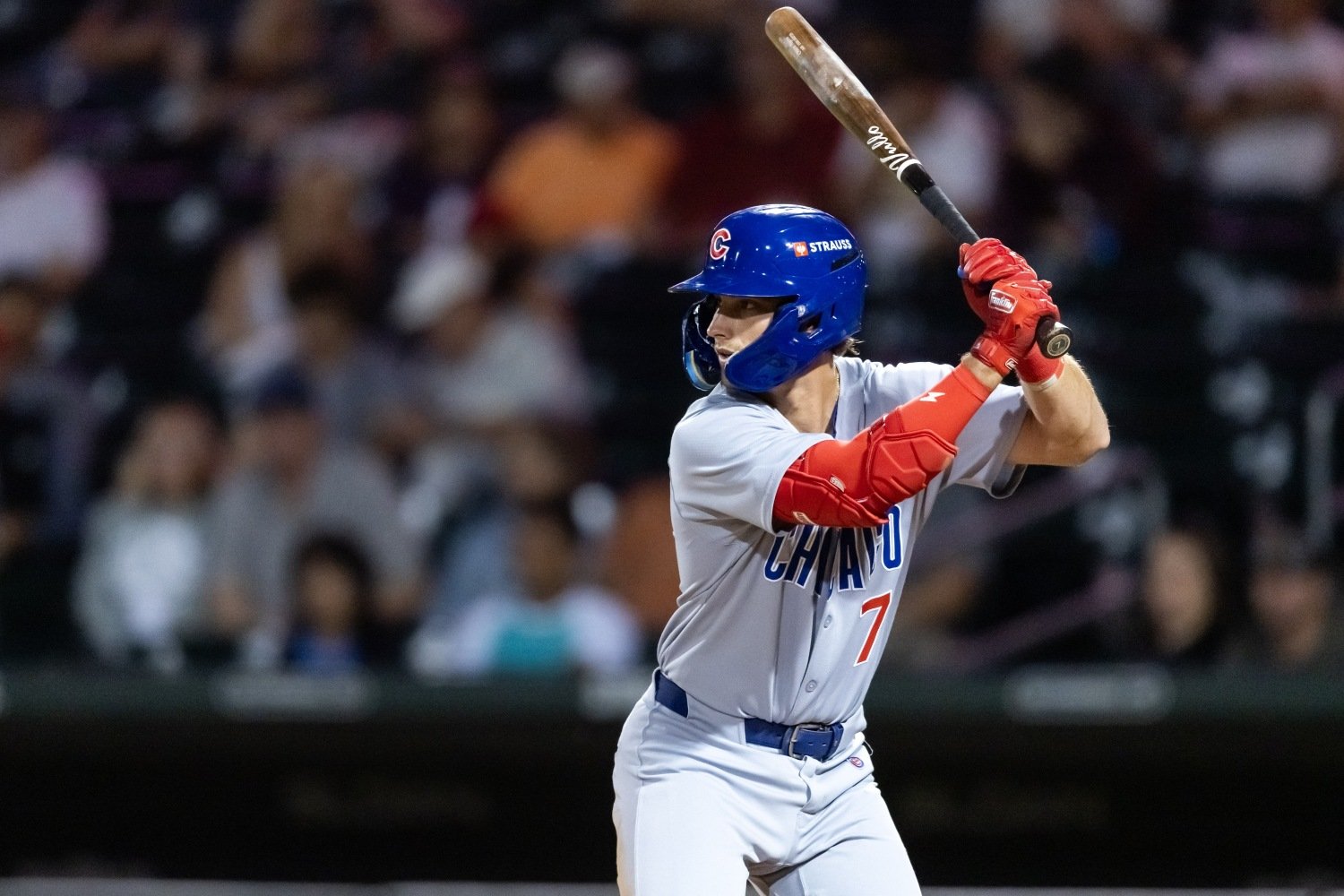 If not for Josiah Hartshorn becoming the first Cubs teenage farmhand to knock 20 round trippers in a season since Corey Patterson, Owen Ayers would be an easy pick for the organization's Minor League Hitter of the Year. Despite Hartshorn's heroics, you can make a strong argument that Ayers deserves the accolades, considering the rocket ship the former 19th-round pick has been on and how good he's been at every level. As the season winds down, the switch-hitting catcher has done so well that he may earn an even more sought-after prize: a major-league call-up when rosters' expand to 28 players on September 1. Being called up would be a dream come true for any young player; it has to be. It's the culmination of years of hard work. It's reward for all of the training, practice, blood, sweat and tears. If that isn't enough, it comes with a nifty raise to MLB's league-minimum salary, which is just under $800,000 a year. Ayers signed for $50,000 in 2024, so even a four-week stay on the roster this fall would roughly double his career earnings. The Cubs can't make decisions based on their desire to help dreams come true, though. The call has to be grounded in logistical considerations, as the team tries to make the most of its roster. The Case for Cubs to Call Up Owen Ayers Ayers is a player the Chicago Cubs really like. We can see this just based on how they have handled him over the last 365 days. First, they sent him to the Arizona Fall League, an early signal that this wasn't your run-of-the-mill late-round pick. They also acted decisively each time the catcher showed he was too good for a level this season, promoting him from High-A South Bend to Double-A Knoxville after just 11 games, and again from Knoxville to Triple-A Iowa after just 65 more. At the trade deadline, they reportedly made him a sticking point in trade negotiations, opting instead to trade other top prospects Jefferson Rojas and Moisés Ballesteros. It's fair to guess that the team has him in their plans at the MLB level come the 2027 season; they wouldn't have made him such an important factor at the deadline if they didn't. While it's impossible to know exactly what the plan is, it's fair to assume that it includes the 25-year-old getting a very real chance to make the Cubs out of spring training. If that's the case, it wouldn't be surprising to see the Cubs give him a 30-day trial period in September. He wouldn't be asked to do a lot as the third catcher, but it would give him a leg up on the upcoming year. While he may not be catching guys in game a lot, it's likely that he would get work on the side to build rapport with the team's pitching staff before turning the keys to the kingdom over to him. The team has made clear that they like to give young players a taste of the big-league life. In other recent Septembers, they've called up Pete Crow-Armstrong, Ballesteros, Owen Caissie, and Kevin Alcántara to acclimate them to the roster, while limiting their playing time with an eye toward the future. From a roster-construction perspective, it would make sense, too. Currently, the team has no viable first-base backup option. Pedro Ramírez filled in there a few days ago, but is now needed at second base. The injury that stopped Tyler Austin's season before it began really derailed the Cubs' hopes to have a backup or platoon option for Michael Busch. Ayers has history playing first dating back to his time in college, allowing him to fill a need the team has right now. Having a third catcher can also give you more choices, like using Carson Kelly as the DH against certain lefties. It can allow you to pinch-run for Kelly or Miguel Amaya, knowing you have some flexibility left after that move. The Case Against Cubs Calling Up Owen Ayers Not all pertinent factors point toward this move, though. First, you don't have to add him in September. Ayers, despite his age, is not eligible to be selected in the Rule 5 draft this offseason. The Cubs could keep him off the 40-man roster all offseason, allowing them to protect other players, instead. Spots on the 40-man are always valuable during the winter, and that will only be more true in what's sure to be a freneic and disrupted offseason this year. Relatedly, with the CBA set to expire this December and a lockout looming, another aspect of the call-up needs to be considered. Players who have not been added to the 40-man roster can play minor-league baseball next spring and start spring training on time, even if the MLBPA is locked out. This could mean anything from a couple extra weeks of work at the team facility to a month of extra games the big-leaguers won't get to participate in, but either way, calling Ayers up next month would expose him to the vagaries of the labor battle. Leaving him in Iowa (where he can also play every day, or nearly so) would shield him from that. Should the Cubs Call Up Owen Ayers? While there is no definitive answer, I think calling up Ayers makes sense. Catcher is a position like no other; building trust through reps can never start too soon. Having an eye toward 2027, in that regard, is a good thing. While it's possible that Kelly will remain with the Cubs in 2027 (and beyond), he's a free agent this winter. The team has to make a succession plan, and then adapt that plan if he unexpectedly sticks around on a new deal. Using the 40-man spot is a real factor, but the team has plenty of flotsam on that list right now that they can turn into jetsam. They might lose a player like BJ Murray in the Rule 5 Draft as a result of using a 40-man spot on Ayers sooner than is needed, but that's not likely to be a big loss. Another sticking point: it might not even matter. In 2021, just five years ago, we saw a similar issue at hand; the prior CBA expired in December and the league just flat-out cancelled the Rule 5 draft. It may not actually matter if the Cubs expose someone like Murray in the draft; if there's no draft, he's not going anywhere, anyway. The labor questions are too big and unwieldy to govern a decision like this. Instead, it should come down to whether the team thinks that's the best use of their extra roster spot for a position player, and to whether they think being with the parent club is the best thing for Ayers's development. Ultimately, I think the balance tips in favor of the Cubs' calling up Ayers, as long as he's the planned "next up" to fill Kelly's spot in 2027. He'd get invaluable time with the pitchers he'll be working with; provide the Cubs options off the bench; and get a chance to gel with the clubhouse. This likely offsets any concern about the Rule 5 draft and 40-man considerations. And if the Cubs end up calling up someone like James Triantos instead? It's not the end of the world, and would be fine. It does keep the roster picture uncluttered. It may give Ayers some reps during a lockout. And it's not like the Cubs' fates are going to be shifted that greatly by the 14th hitter on the roster, whoever it is. With just a week to go before these decisions need to be made, we'll see which side the team actually sits on shortly. But if the team does give Ayers a chance in September, it will be a fun little peek into the future of the team at the catching position.
 -
Zero. His velo hasn't been right, he isn't on the 40 and the Cubs have plenty of other relievers who are ready to come up.
-
Yes. He's pitching very well right now and he has not been getting, what seems, especially lucky. 20 IP and a 1.80 ERA, 2.78 xERA, 2.83 FIP, 3.92 xFIP. There is a split between the ERA and xData and we shouldn't expect a sub 2.00 ERA. But he is pitching like someone who belongs on an MLB roster. Under the hood he's seen his K% jump, his walk rate drop, his barrel rate drop, his hard hit drop...so that checks out, too. We're also seeing a change in pitch usage. Far more cutter and split finger. And go figure, both are pitches used to attack off-handed hitters. Guess who sucked with the A's against lefties? *hint, his name rhymes with Shmaron Shimale* His numbers against RHP weren't elite, but they were fine and they're pretty close to what he's doing now on the whole: vs RHP: 22.2 K%, 4.4 BB%, 4.06 xFIP With Cubs (overall): 22 K%, 6.1 BB%, 3.94 xFIP It's his lefties splits that were terrible. The simple fix was always "IDK have you tried throwing the pitches that get lefties out? No? Try that and get back to me." and it's working. Frankly, it's a pretty easy fix. Fun fact, he did it last year when he was good with the Cub, too, so I have no idea why the A's decided to scrap that plan and go back to the old version. Here is his 2025 pitch usage for comparison: We'll see how long it keeps up, if it can keep up. At some point someone's going to figure out he's throwing differently again and how they adjust to it has yet to be seen, really. But yeah, you can use him with confidence that won't implode like he was in Sacramento as of now.

-
So, like, is Bregman still the worst contract ever...or...?
-
Article on Fangraphs today. Jay Jaffe, NSBB reader, confirmed. He may even be one of us.
-
A very worthwhile watch for anyone who wants a good primer/idea about the possible lockout and salary cap. It's short, easy to digest and quite informative.
-
Their bullpen just hasn't been in a place this year to do that. There have been times, significant times, where Tyler Ferguson was your second or third best RHP out of the pen. And while I do think he did an admirable job especially against RHH, but I also don't think he ever gained enough trust to really be that kind of guy. Nor had the others gained trust that you could use Ferguson as the opener and feel good about the back end. I do things will change up if the Cubs bullpen gets most of these guys coming back to actually...ya know...get back. Knock on wood.



.png.fd97a7f53dffe510a124eff14c11f6fe.png)