


Cubs Video
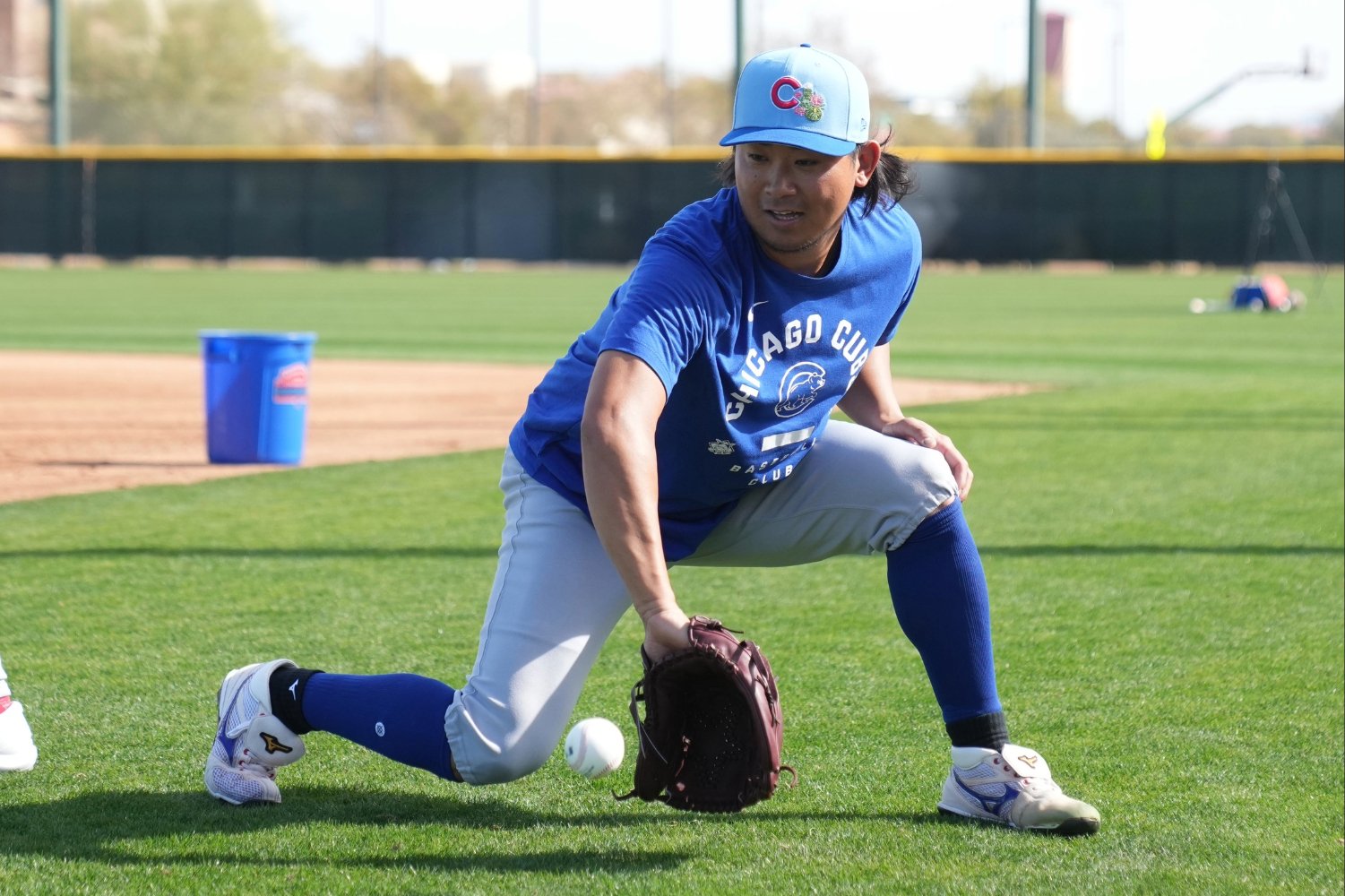
The moment Shota Imanaga first took the mound in Chicago, there was an electricity in the air. On a cold night, with the help of the Wrigley wind, against a hapless Colorado Rockies lineup, Imanaga carved up hitters left and right. Through his first 53 innings in Major League Baseball, the left-handed pitcher had a sub 1.00 ERA, and hadn't recorded a loss; a phenom was born, albeit, one that could never live up to that kind of hype. The rest of his debut season was good, but wasn't as good, as over his next 119 innings, Imanaga posted a 3.82 ERA, a 3.78 xFIP, to go along with a 23.9 K%. These are good, nearly very good, numbers, but short of "ace" territory — the kind of pitcher you want in your rotation but probably not good enough to lead your rotation. Heading into 2025, he was probably a bit overrated by the general populace.
Then, 2025 happened. The narrative around Imanaga has shifted dramatically as a result.
To put it lightly, last year was not a good one for the Cubs' left-handed pitcher. Right away, Imanaga struggled in the Tokyo Dome in front of a raucous crowd and against a tough Dodgers team. On May 4, Imanaga would suffer a hamstring injury that would hamper the rest of his season. The left-hander showed diminished velocity all year long, with a fastball down a few MPH. He never got fully right in 2025, struggling with (potentially) tipping pitches against the lowly White Sox and never really getting back to the guy we saw the year before. It looked like maybe he was bouncing back after the rough start, posted a 3.54 ERA (with a 3.61 xFIP) over his next 54 innings after facing the Pale Hose, but the wheels fell off in his last two regular season starts, then once again in the playoffs. Something was wrong and the Cubs decided to skip over their Opening Day starting pitcher in the do-or-die Game 5 of the NLDS.
This led the team to difficult decisions when it came to his contract; eventually, both sides decided that playing out 2026 on the qualifying offer, a one-year, $22.025 million pact, would be best for everyone involved. For the pitcher, this represents a pay-increase over what he was expecting, but a loss of guaranteed years behind; for the team, it's a chance to evaluate the hurler before they commit to more seasons. It's an imperfect solution for both, however, the two probably need each other still and this allows that partnership to continue.
Entering the 2026 season, it's hard to figure out what to make of Imanaga, however (and why the team was so hesitant to pick up his three-year option). Is he the 2024 guy, who, even when taking out his amazing start, was the kind of arm you'd slot into a top-three spot in your rotation? Is he the home-run-soft-tosser he looked like in 2025? A lot of this is going to come down to one thing: velocity. The worst part is we probably won't know the answer to that concern until the season truly begins.
Chris Langin, a former Driveline instructor, expertly broke down the velocity cliff that Imanaga faced last year. His best pitch is his fastball and it's not particularly close. Because his fastball is so good, it allows his other stuff to play up despite mediocre shapes. But he's also living in a razor-thin land of velocity; at 92-93mph, his fastball has such unique outlier characteristics that allow it to front his arsenal. Hitters have to protect against the fastball, and thus, they swing at the sweeper and the splitter which generate a ton of chase. However, at 90-91mph, the fastball loses much of it's uniqueness, and now instead of protecting against the pitch hitters are hunting the fastball. And this is where he sat last year. It's a no-man's land and Imanaga suffered the consequences.
This can be easily seen with a quick glance at Imanaga's Baseball Savant page, as well. He still generated a lot of chases, as outlined in the above tweet-thread by Langin, but his whiff and K% dropped significantly. Hitters made significantly better contact as well. Imanaga's fastball value plummeted, so while hitters still struggled against his off-speed offerings, his fastball was the clear issue.

Diving into his individual offerings, the whiff% is also highlighted there. While Imanaga's whiff% on his fastball wasn't significantly lower year over year, the batted ball data against that pitch (especially his expected data) was much worse. But beyond jus the fastball, his whiff% against his split-finger is telling, as hitters simply weren't swinging and missing as much on that pitch or getting put away as often. Imanaga is a primary fastball-splitter guy, and if both pitches aren't getting the same results, it's not shocking that the overall results suffered.

So, then, what's the fix? For the Cubs and Imanaga, the hope here is clear: health. Craig Counsell spoke before the Cubs' first spring training game and voiced that he believed that the hamstring injury took velocity out of Imanaga's game in 2025. And it would appear as though his velocity is up, at least from the team. This is all good news. As Langin outlined, if Imanaga gets back to the velocity shown in 2024, there's top-30 starter upside there.
The fastball velocity tracking seems to support this to a degree. Before his hamstring injury, Shota was averaging 91.2 mph on his fastball, while after, it dipped to 90.7 mph. And while 91.2 mph is still down from Imanaga's 91.9 mph average in 2024, some of that may be attributed to throwing a bunch in a very cold Wrigley Field early in the season.
The other good news is that the fastball velocity isn't the only thing that stands out in his data. Following his injury, his arm angle also dropped significantly. While this could have been designed to give him extra run on his sweeper, it could also be because of the injury to his left hamstring. Because he's left-handed, that hamstring is his anchor and where he's driving from to generate power. Not only could that cause velocity drop, but it could also create those bad mechanics that led to a homer binge at the end of the campaign.

If you're following the Cubs this spring, we're in luck: Sloan Park, the home of the Cubs in Mesa, will have Statcast tracking this year for all of their spring training games (as will all spring stadiums)! There will be plenty of fun things to keep an eye on, but maybe none as important as the velocity that Imanaga shows. If he's hitting 92-93mph, there's probably a good reason to believe he's back, at least to some degree, to his 2024 self.
The Cubs have done a good job of making sure they're not too invested in his fastball velocity. So, while the team will be significantly better if Imanaga is significantly better, they aren't counting on him in 2026 like they were last year. The team has Cade Horton, Matthew Boyd, Jameson Taillon, and Edward Cabrera slotting in ahead of the lefty in the rotational pecking order, while also rostering a returning Justin Steele. Rookie Jaxon Wiggins is also waiting in the wings, and swing starters such as Colin Rea, Javier Assad, Jordan Wicks and Ben Brown could slot in if Imanaga continues to falter. But the Cubs could also be in a situation in which they have an embarrassment of riches if Imanaga shows 2024-type-velocity on his fastball as well.
It's a worthwhile gamble, and heading into this upcoming season, it likely means Shota Imanaga has once again become underrated by the fanbase to a degree, much like he was when he made his first fateful start in Chicago.
What do you think about Shota Imanaga as we head into 2026? Do you think he will be an asset to the team? Or was it a mistake to give him a qualifying offer? Let us know in the comments below!





Recommended Comments
Create an account or sign in to comment
You need to be a member in order to leave a comment
Create an account
Sign up for a new account in our community. It's easy!
Register a new accountSign in
Already have an account? Sign in here.
Sign In Now