.jpg.900f6d1bc80a5a156f3ba09ea0e4b3d7.jpg)

Jason Ross
-
Posts
8,154 -
Joined
-
Last visited
-
Days Won
74
Content Type
Profiles
Joomla Posts 1
Chicago Cubs Videos
Chicago Cubs Free Agent & Trade Rumors, Notes, & Tidbits
2026 Chicago Cubs Top Prospects Ranking
News
2023 Chicago Cubs Draft Picks
Guides & Resources
2024 Chicago Cubs Draft Picks
The Chicago Cubs Players Project
2025 Chicago Cubs Draft Pick Tracker
2026 Chicago Cubs Draft Tracker: Picks & Bonuses
Blogs
Events
Forums
Store
Gallery
Everything posted by Jason Ross
-
Jaxon Wiggins Promoted to AAA
Jason Ross replied to CaliforniaRaisin's topic in Cubs Minor League Talk
It's hard to say the Cubs are "awful" with pitching. They have frankly, done very well. Shota has outpitched his salary, the Cubs have found interesting BP options others ignored (Brad Keller, Caleb Theilbar, etc) and when everyone was freaking out about Boyd/Rea both were better than expected. The Cubs do need another horse in the rotation, but let's not undersell the team's ability to find pitchers, either by calling it awful. -
Jaxon Wiggins Promoted to AAA
Jason Ross replied to CaliforniaRaisin's topic in Cubs Minor League Talk
I think there is a non-zero chance he could end up winning a spot in the Cubs rotation out of the gate, but it's almost assuredly a bad thing overall. It would likely mean that a pitcher the Cubs didn't want to be hurt is. And while I like Wiggins a lot, I do think there's progress to be made on the secondaries yet. Horton was a little further along, IMO, as a pitcher. His strike throwing gave him a leg up over a lot, and he's tinkered and changed even in the MLB, but he's capable of doing that with how many strikes he throws. Wiggins doesn't tend to throw as many strikes and the secondaries need some tinkering. Not a negative, he's just a young pitcher. I do think we'll 100% see him next year baring catastrophic injury, but don't think he'll be in the April plans. -
They will carry as many arms as possible. This team loves flexibility with pitchers, has consistently ignored the 26th player on the roster under Counsell and in the playoffs the BP becomes even more stressed and used.
-
Yeah, I don't think Santana will be rostered. He will likely be on the taxi squad, capable of being placed on the roster if an injury were to occur. I don't think he will be on the actual roster
-
Yeah, this offseason is going to be interesting. We know that the team really seems to value flexibility and depth, shies away from trades they don't feel are of very equal value, and have really not flexed financial muscle on long term deals. They feel a little overloaded on ready-now prospects, a little underbaked on SP depth you can count on at the MLB level, and then you have the Tucker thing. On top of that, the roster cliff of 2026 looms. Ballesteros himself is in a unique spot because I think the team does not feel he's ready for catching duties at the MLB level today and how much he can really do to improve his stock there over the offseason is questionable. The bat is clearly MLB ready. The glove may or may not be.
-
The Padres have a bottom 5 or so SP group post-ASB. I know we get wrapped up in how the Cubs are going, but the Padres have not been some banner team in this aspect. They struggle through the first 5 or 6 innings. There really isn't much of a correlation between winning playoff series and momentum at the end of the year, either. Really, almost all of these series boil down to series of coinflips. It's not entirely luck based, but I think both fanbases will be relatively tepid on how their team has performed.
-
I think he's been good, but I'd stop short of calling him one of the best right now As a low-pull, low EV guy right now, I do think he will be exposed a little by really good pitching. The Padres will probably throw King, Cease, and Pivetta while also dropping one of the best BPs in baseball. He has a decent shot at making the roster as a backup to give the Cubs a fun, contact heavy option off the bench, but his current form doesn't fill me with a lot of confidence until he begins pulling the ball a bit more.
-
I wouldn't call that unfortunate. Kyle Tucker is a very good player, a top-15 hitter in baseball. Prior to his calf injury, he was absolutely on fire. He is equally as good against LHP and RHP. He has a 139 wRC+ on the season. Moises Ballesteros has 62 major league plate appearances. He had a 121 wRC+ against far worse pitching in Iowa. He also is looking far more like a platoon hitter, as his splits in Iowa were skewed very heavily in favor of RHP over LHP. Big Mo has had a few fun games. I like his outlook. Anyone upset that the Cubs will have Kyle Tucker in the lineup over a rookie is falling into a trap. Even if he's coming off an injury, the better bet here is clear. Don't fall into shiny new toy trap.
-
Probably. Even if he's struggling right now, he's a $13.5m AAV pitcher. That's really cheap comparatively. You don't need him to be a star at that number.
-
I think he's a streaky hitter. Most hitters have peaks and vallyes regardless of how good they are (Juan Soto is as generational as they come and he's prone to them as well, for example). But I think Pete runs with the winds of success and failure more than most. He's young, emotional, and when I see those things they tend to breed that. I'm not sure he's ever going to be a 115 wRC+ hitter on the year, though. Part of this is because of who he is; he's terrible against LHP, and I'm not sure that'll change. Unlike many platoon hitters, he's so wildly good defensively and on the bases that you can't just platoon him. What we would see with someone else who might only be decent defensively or play a less premium position is that a team would shield him; say, Michael Busch against LHP. But Pete gets dragged down. His 124 wRC+ against RHP is offset by a 60 wRC+ against LHP. He had the lowest wRC+ (as a left handed hitter) against LHP who had at least 180 PA's on the year...because of his defense. So those things together are going to create what we have. I think he's a great hitter against RHP. And defensively, he's too good to bench against lefties. So he'll probably have years where he's around a 105 wRC+ on the year, but I also don't think that numbers tells us a lot without all of the context.
-
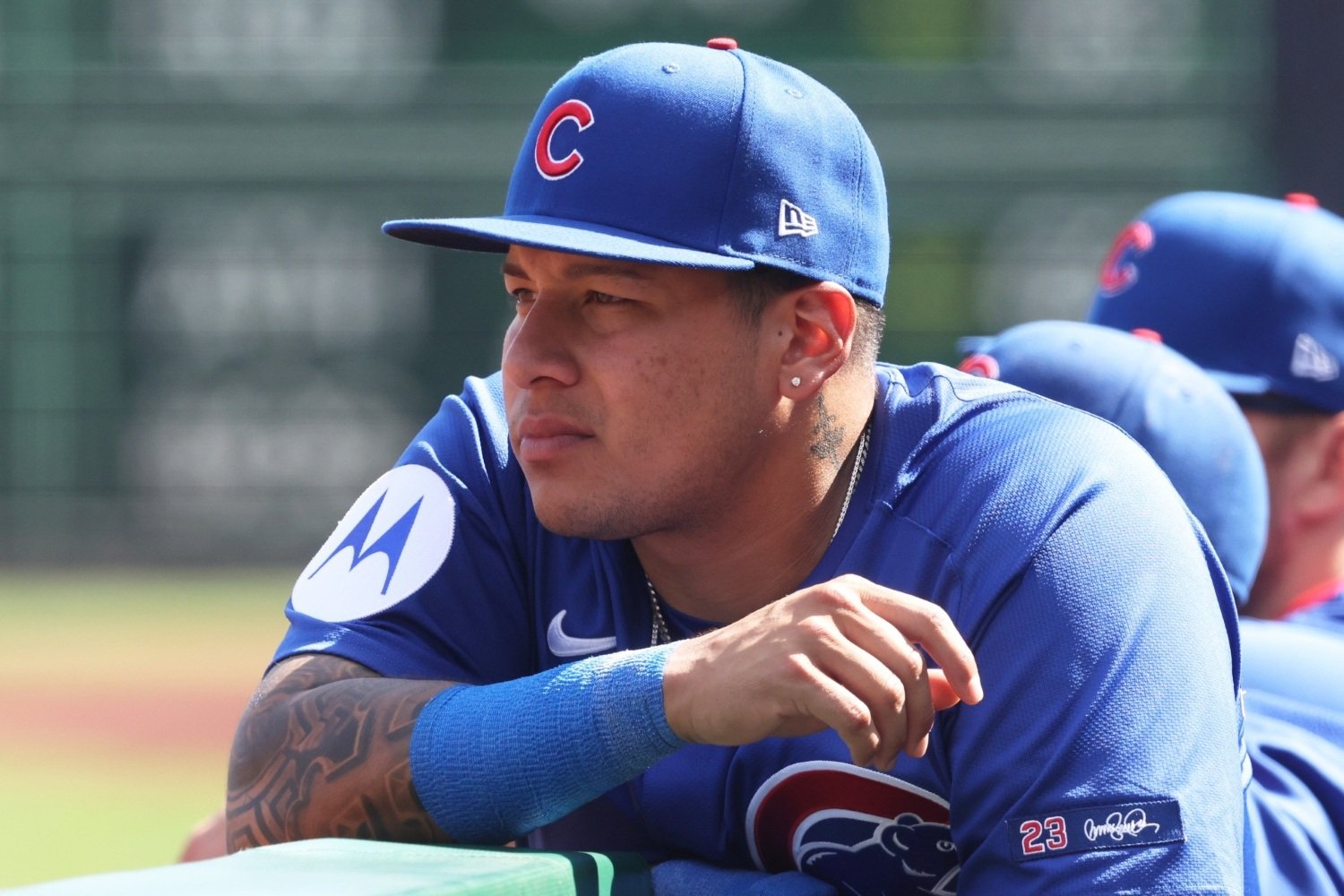 The story of the 2025 Chicago Cubs has yet to be fully written, but you'd be hard-pressed to find a more fun singular moment than Moisés Ballesteros' first major-league home run. In the second inning on a beautiful September day at Wrigley Field, the Cubs rookie laced a 103-mph line drive into the left-field bleachers. On its own, the home run was fun; there's always something special about a rookie's first bomb at Wrigley Field (go back and re-watch Christopher Morel or Willson Contreras's first round-trippers if you don't believe me), but there was something extra in the air (and the bleachers) that weekend: former Cub Anthony Rizzo. Rizzo had signed a one-day contract and retired as a Cub, and the team was honoring their iconic first baseman, who just so happened to be sitting in the bleachers to soak in the adulation. In a crazy coincidence, the rookie hit the ball directly to the legend... who dropped it. "That's why I'm retired," the retired Rizzo was caught saying. It was a great moment, and one I won't soon forget. Since returning due to to Kyle Tucker's calf strain, the Cub's youngster has put up an impressive .323/.446/.581 line, which has been good for a .483 wOBA and a 183 wRC+; that's a really great line. Better yet, he's got a .254 isolated slugging during that span, and a pretty fantastic 7:8 BB:K. This is a huge improvement over his first stint in the majors, when in a five-game sample size in May, he looked largely toothless. There are a few reasons we can point to as to why he's improved. First, one of the things I spoke about in an article way back in May was that the left-handed hitter was simply swinging too often. One of the hardest things for hitters of Ballesteros's profile is to learn that just because you can hit it, doesn't mean you should hit it. Over his first cup of coffee (and his one game in July), Ballesteros had a 27.3% chase rate, and a 45.7% swing rate. Compare that, then, to his time in September. His chase rate is down to 21.4%, and his swing rate is also down to 44.5%. This means not only is he chasing less, but he's swinging more at strikes. The sample sizes are too small to make a definitive comment on how these will continue, but it's a good sign that something is clicking for the rookie. While there are some positives in his outcomes since he's returned, there are still some things that are clearly a work in progress. The most noticeable point of emphasis is in his swing. So far, in his return, Ballesteros has gotten more open in his stance, and moved closer to the front of the plate by almost four inches. What this has allowed him to do is catch the ball a bit more out front; almost three inches of improvement. He's still catching the ball well behind the front of the plate, but it's better. This is something we saw the Cubs work on with fellow rookie, Matt Shaw, throughout the year, and it should probably continue with Ballesteros, as well. The clear-cut underlying cause for this: neither are exit velocity monsters. One of the positives that Ballesteros has over Shaw is that his pre-swing stance is far less of a mess than Shaw's was, but they share a lot of similarities in profile. Both hitters fall into a category of "high swing/high contact" types, and neither hit the ball particularly hard. In September, Ballesteros's average EV is 87.9 mph; that's below league average. Shaw, who's had an impressive mid-season revelation as a hitter, has an EV of 85.5 mph in the second half himself. Where the Cubs' third baseman has managed to help himself out is by moving his point of contact further in front of the plate and heavily increasing his pull rate. I expect to see Ballesteros creep further up in the box himself, to replicate Shaw's high pull rate. Getting Ballesteros to catch the ball in front of the plate a little more often would allow him to clean up how often he's hitting the ball up the middle. A lot of the reason Ballesteros is hitting the ball to his pull side only 34.8% of the time is because of where he's swinging and hitting the ball in play: low and away (the hexbin map on the left). When we compare where Ballesteros swings and puts the ball in play and his overall location heatmap (the heatmap on the right), we can see that there are more opportunities for the rookie to pull the ball than he's currently taking. One of the reasons that so many of his balls are going up the middle (or the other way) is likely due to where he catches the ball. By catching it so deep compared to the plate, he's struggling to pull the ball with authority. We can see this represented in his spray chart (pictured below); he has essentially ignored right field so far. Instead, most of his hits have either been up the middle or the other way. Even his triple landed on the infield before it ever got to the outfield. That special moment I mentioned early? Yeah, it went to left field. Now, the pitch that he took out was certainly a pitch you'd go the other way on, but perhaps a more pull-capable hitter would have already smoked one out to right field by then. So while that special moment wasn't entirely a function of his currently limitations, it kind of is, as well, considering the nature of it being just his first one. I know this sounds negative, but it's anything but; there's a lot to like about the Cubs' rookie right now. He makes a lot of contact, he's learning the big-league strike zone, and he's been a bright spot in the Cubs' lineup over a span in which there hasn't been a ton to get excited about. Instead, this is meant to highlight the work that can be done. The best version of Ballesteros probably looks more in line with the best version of Shaw: a hitter who makes a lot of contact and uses mediocre exit velocities to the best of his ability by turning into a heavy pull guy. The best news is that with how deep Ballesteros is currently making contact with the baseball, there's plenty of ways to maximize that. His foundation as a hitter is probably better than those of Pete Crow-Armstrong and the aforementioned Shaw, and the Cubs have managed to maximize each of their profiles, albeit only inconsistently. It should give us a lot of hope that similar things will be done to get him to a similar spot as those two young hitters. There are still lots of plate appearances to get him anywhere close to their experience level, and we're already seeing positive momentum in that direction. While there's certainly going to be plenty of debate to be had about what the future holds for the left-handed hitter when it comes to his defensive home, offensively, I'm filled with a lot of optimism. He's clearly not a finished product, and there will be things that occur over the offseason and the 2026 regular season that will help make him the best version of himself; but I think the pathway for that has become clear: just pull the ball more. Once he's able to do that, he's going to be a real problem for pitchers. Even in the event that he's just a designated hitter, getting him to pull the ball more, and maximize his profile will help him be a useful hitter. If the Cubs can do that and get him to a place where you can allow him to catch 60-70 games a season? Well, the Cubs would then have a very special player on their hands; let's hope they can make this outcome a reality. What have you thought about Moises Ballesteros' second real-stint with the big league club? Do you think he will be on the MLB side of things to start 2026? Let us know in the comment section below!
 -
Image courtesy of © Charles LeClaire-Imagn Images The story of the 2025 Chicago Cubs has yet to be fully written, but you'd be hard-pressed to find a more fun singular moment than Moisés Ballesteros' first major-league home run. In the second inning on a beautiful September day at Wrigley Field, the Cubs rookie laced a 103-mph line drive into the left-field bleachers. On its own, the home run was fun; there's always something special about a rookie's first bomb at Wrigley Field (go back and re-watch Christopher Morel or Willson Contreras's first round-trippers if you don't believe me), but there was something extra in the air (and the bleachers) that weekend: former Cub Anthony Rizzo. Rizzo had signed a one-day contract and retired as a Cub, and the team was honoring their iconic first baseman, who just so happened to be sitting in the bleachers to soak in the adulation. In a crazy coincidence, the rookie hit the ball directly to the legend... who dropped it. "That's why I'm retired," the retired Rizzo was caught saying. It was a great moment, and one I won't soon forget. Since returning due to to Kyle Tucker's calf strain, the Cub's youngster has put up an impressive .323/.446/.581 line, which has been good for a .483 wOBA and a 183 wRC+; that's a really great line. Better yet, he's got a .254 isolated slugging during that span, and a pretty fantastic 7:8 BB:K. This is a huge improvement over his first stint in the majors, when in a five-game sample size in May, he looked largely toothless. There are a few reasons we can point to as to why he's improved. First, one of the things I spoke about in an article way back in May was that the left-handed hitter was simply swinging too often. One of the hardest things for hitters of Ballesteros's profile is to learn that just because you can hit it, doesn't mean you should hit it. Over his first cup of coffee (and his one game in July), Ballesteros had a 27.3% chase rate, and a 45.7% swing rate. Compare that, then, to his time in September. His chase rate is down to 21.4%, and his swing rate is also down to 44.5%. This means not only is he chasing less, but he's swinging more at strikes. The sample sizes are too small to make a definitive comment on how these will continue, but it's a good sign that something is clicking for the rookie. While there are some positives in his outcomes since he's returned, there are still some things that are clearly a work in progress. The most noticeable point of emphasis is in his swing. So far, in his return, Ballesteros has gotten more open in his stance, and moved closer to the front of the plate by almost four inches. What this has allowed him to do is catch the ball a bit more out front; almost three inches of improvement. He's still catching the ball well behind the front of the plate, but it's better. This is something we saw the Cubs work on with fellow rookie, Matt Shaw, throughout the year, and it should probably continue with Ballesteros, as well. The clear-cut underlying cause for this: neither are exit velocity monsters. One of the positives that Ballesteros has over Shaw is that his pre-swing stance is far less of a mess than Shaw's was, but they share a lot of similarities in profile. Both hitters fall into a category of "high swing/high contact" types, and neither hit the ball particularly hard. In September, Ballesteros's average EV is 87.9 mph; that's below league average. Shaw, who's had an impressive mid-season revelation as a hitter, has an EV of 85.5 mph in the second half himself. Where the Cubs' third baseman has managed to help himself out is by moving his point of contact further in front of the plate and heavily increasing his pull rate. I expect to see Ballesteros creep further up in the box himself, to replicate Shaw's high pull rate. Getting Ballesteros to catch the ball in front of the plate a little more often would allow him to clean up how often he's hitting the ball up the middle. A lot of the reason Ballesteros is hitting the ball to his pull side only 34.8% of the time is because of where he's swinging and hitting the ball in play: low and away (the hexbin map on the left). When we compare where Ballesteros swings and puts the ball in play and his overall location heatmap (the heatmap on the right), we can see that there are more opportunities for the rookie to pull the ball than he's currently taking. One of the reasons that so many of his balls are going up the middle (or the other way) is likely due to where he catches the ball. By catching it so deep compared to the plate, he's struggling to pull the ball with authority. We can see this represented in his spray chart (pictured below); he has essentially ignored right field so far. Instead, most of his hits have either been up the middle or the other way. Even his triple landed on the infield before it ever got to the outfield. That special moment I mentioned early? Yeah, it went to left field. Now, the pitch that he took out was certainly a pitch you'd go the other way on, but perhaps a more pull-capable hitter would have already smoked one out to right field by then. So while that special moment wasn't entirely a function of his currently limitations, it kind of is, as well, considering the nature of it being just his first one. I know this sounds negative, but it's anything but; there's a lot to like about the Cubs' rookie right now. He makes a lot of contact, he's learning the big-league strike zone, and he's been a bright spot in the Cubs' lineup over a span in which there hasn't been a ton to get excited about. Instead, this is meant to highlight the work that can be done. The best version of Ballesteros probably looks more in line with the best version of Shaw: a hitter who makes a lot of contact and uses mediocre exit velocities to the best of his ability by turning into a heavy pull guy. The best news is that with how deep Ballesteros is currently making contact with the baseball, there's plenty of ways to maximize that. His foundation as a hitter is probably better than those of Pete Crow-Armstrong and the aforementioned Shaw, and the Cubs have managed to maximize each of their profiles, albeit only inconsistently. It should give us a lot of hope that similar things will be done to get him to a similar spot as those two young hitters. There are still lots of plate appearances to get him anywhere close to their experience level, and we're already seeing positive momentum in that direction. While there's certainly going to be plenty of debate to be had about what the future holds for the left-handed hitter when it comes to his defensive home, offensively, I'm filled with a lot of optimism. He's clearly not a finished product, and there will be things that occur over the offseason and the 2026 regular season that will help make him the best version of himself; but I think the pathway for that has become clear: just pull the ball more. Once he's able to do that, he's going to be a real problem for pitchers. Even in the event that he's just a designated hitter, getting him to pull the ball more, and maximize his profile will help him be a useful hitter. If the Cubs can do that and get him to a place where you can allow him to catch 60-70 games a season? Well, the Cubs would then have a very special player on their hands; let's hope they can make this outcome a reality. What have you thought about Moises Ballesteros' second real-stint with the big league club? Do you think he will be on the MLB side of things to start 2026? Let us know in the comment section below! View full article
-
His feet are essentially no different in September than they were in August, so I don't think data supports the idea that his footwork at the plate is an issue. It's fractionally different (like a quarter of an inch on way or another). He has moved a little up in the box, but I don't think there is anything mechanically an issue. If we want to talk approach, he's chasing less in September (27.9%) than August (37.9%) and less overall by around 6% in the zone. His contact rate is a little down, but still at nearly 78% so it's fine. Teams are giving him far less first pitch strikes (almost 20%) so seeing him drop the o-swing% is good. His quality of contact is down over the last month, but pitchers have adjusted to his super-pull heavy approach lately, and changed how they're attacking him; much more low and away. Left is August, right is Sept. So I don't think this is anything to do with footwork. It's a natural progression of pitchers reacting to his new approach. It's much harder to pull pitches in that zone than it is the other. This is likely why his hard hit% is down over the last month; his new approach is very much geared to take advantage of his mediocre EV rates and one of the ways you can beat that is by letting a pull-heavy hitter roll over on those pitches. If there's a positive it's that a lot of the really bad contact in September was early-to-mid month. Over his last 27 PA's the EV's are shooting way up again. And here's the positive, compare his pitch% heat map to the two above. Remember, left is August and right is September, where the league has adjusted: Notice how it mirrors September? What this suggests is that Shaw has readjusted to how he's being attacked. He's letting the ball travel more, almost 3 inches (he's making contact deeper in the box compared to the plate than he was early in the month). His intercept has dropped from 8.6 inches in front of the plate early in the month to 5.5 inches over his last week. That's a massive shift and not an accident. How do you get to pitches on the outer end better? Well, you let it travel more, exactly what he's doing. And go figure, the EV and batted ball quality has once again shot back up. Baseball is truly a cat-and-mouse game in which both sides are constantly trying to evolve to surprise the other side. The long story short is that I don't really have concerns about how he's hitting or his approach. He's refining his swing decisions even as pitchers are offering less strikes, and we're seeing a refinement on his ability to hit that pitch low-and-away despite the pull-heavy approach.

-
If there is one guy in the organization who I feel confident would run through a brick wall, It's Horton. So as much as I wish he wasn't hurt, I think he's going to have one of the best chances to mentally force himself through it.
-
Guessing, what I think we will see, in a longer, 5 game set is this: Shota, Boyd and Taillon will be afforded slightly longer rope, think 5, maybe six innings, where as a fourth game will be started by Rea/Assad/Civale types but will be used in short stints - 2-3 innings max. So, sure, Rea or Assad (these two are most likely) will "start" but these will be largely bullpen days.
-
Nope. No thank you. Really love Jaxon Wiggins, but there is no world in which the Cubs are doing themselves a service letting him pitch in a playoff game right now. If the Cubs are at the point where they are throwing someone who has under 10 IP in Iowa, and they haven't been super clean innings at that, the Cubs are in incredible trouble.
-
Right. I think Wicks is going to become a solid #4 somewhere once he's healthy and given some rope. But he's not on the playoff radar right now. Probably going to be a Civale or Hodge type thing where you either go with another innings eater and go BP days or you just roll the dice and say "Hodge has really good stuff maybe we gamble and we get 5 good innings"
-
Mike Soroka had a K% of over 30% last season during his time in the BP. This came with a 2.75 ERA, a 3.26 xFIP, and an increase in his average velocity. The 36+ inning sample size isn't too small for it to mean something, as well. As well, in 2025, Soroka was very good in Washington as a SP. His ERA was high, but this was almost assuredly a function of his defense (Washington's defense is among the league's very, very worst) and all of his underlying data was good - the only thing that was high was his ERA. We can point to this being his defense's issues as well because his left on base% was super low. This is usually a number that hovers league wide, regardless of talent levels around the low-to-mid 70's. His was incredibly low - this is rarely a pitcher controlled thing and is due to sequencing and poor defense, especially when the other data (K's, walks, home runs allowed) are all good. His velocity has spiked to sitting around 95mph since moving back to the pen in Chicago. The idea that this type of an arm doesn't even deserve a spot on the playoff roster (in lieu of whom, exactly?) is silly. As a multi-inning pitcher during a time in which bullpen innings are at a premium (even in losing efforts, arms who can keep the game close, which give you a chance to make a comeback or simply eating innings so you can save your good arms for tomorrow in quick succession games) having a Mike Soroka is a good thing.
-
I'll admit I thought there were some versions of a Hoerner trade that made sense (Bryan Woo was a guy I had mentioned and I'll defend that one as probably a fine outcome for the Cubs based on how good Woo's been). But it would have been a very narrow landing strip to happen (trade Hoerner, sign Bregman, get Woo, etc) that was always unlikely to happen. Credit to Hoerner as well for being this damn good this year. He's had some similar fWAR seasons, but his underlying data is better than those years, so I think it's fair to say even with fractional fWAR advantages this year (though a bit of that is due to games played) he's out here having a career year even after the injury.
-
Mets (Tong) vs Cubs (Boyd): 9/24/25, 7:05pm
Jason Ross replied to Brandon Glick's topic in Fred Hornkohl Game Thread Forum
Tong is a funky pitcher. For the uninitiated, he has one of the most over the top motions in any league, coming with a 64-degree arm angle. It's pretty nuts if you haven't seen it. If you're in your 30's, he will instantly remind you of Tim Lincicum. He hasn't been good yet at the MLB level but he's funky enough that any given night could be a shut down night from such an awkward motion. His stuff only grades out as mediocre outside of a really good fastball. He should be hittable, but like I said, could be night where funk reigns supreme. -
Why is "this" the team they are? Don't get me wrong, the first half and the second halfdifference has certainly been a vibe, but other than recency bias, there is about equal amount of information to suggest either is "who they are". We are currently seeing all across baseball that over 162 games, very few teams have any sort of singular identity. The Tigers, Mets, Guardians, Cubs, and Dodgers have all had vastly different and inconsistent seasons. I'd be remiss if I didn't say that I'm a little concerned about their recent play as we move forward and that it's pretty easy to say "here we go again" on a lot of things right now. At the same time, it feels incredibly pessimistic to just claim things like "this" is who they have always been. Not everything needs to be negative, man. There's a middle ground where we can accept that baseball is a weird sport, over 162 games things go up and down, and remember that while yesterday sucked, the last five games have sucked, that it's going to take two wins next week to change everyone's feelings.
-
Cubs (Rea) vs Reds (Greene): 9/18/25, 6:15pm
Jason Ross replied to Brandon Glick's topic in Fred Hornkohl Game Thread Forum
It isn't necessarily "conflicting", to be fair. It's that wRC+ is designed specifically to fix the flaws in OPS+. -
Cubs (Rea) vs Reds (Greene): 9/18/25, 6:15pm
Jason Ross replied to Brandon Glick's topic in Fred Hornkohl Game Thread Forum
This is correct. Less pull, less flyballs. -
Cubs (Rea) vs Reds (Greene): 9/18/25, 6:15pm
Jason Ross replied to Brandon Glick's topic in Fred Hornkohl Game Thread Forum
To be fair, being aggressive early in the count is only good if you're getting strikes to swing at and that are good strikes. He's gotten less first pitch strikes, less pitches in the zone in general since the ASB. Part of his lack of aggressiveness is because he's simply being shown less strikes. -
Cubs (Rea) vs Reds (Greene): 9/18/25, 6:15pm
Jason Ross replied to Brandon Glick's topic in Fred Hornkohl Game Thread Forum
He has struggled against sliders and sweepers in 2025. It has not been an issue in any year in the past. In 2024, 2023, and 2022 he's either been neutral or a +run value against the pitch. This likely more a blip than anything.