


Cubs Video
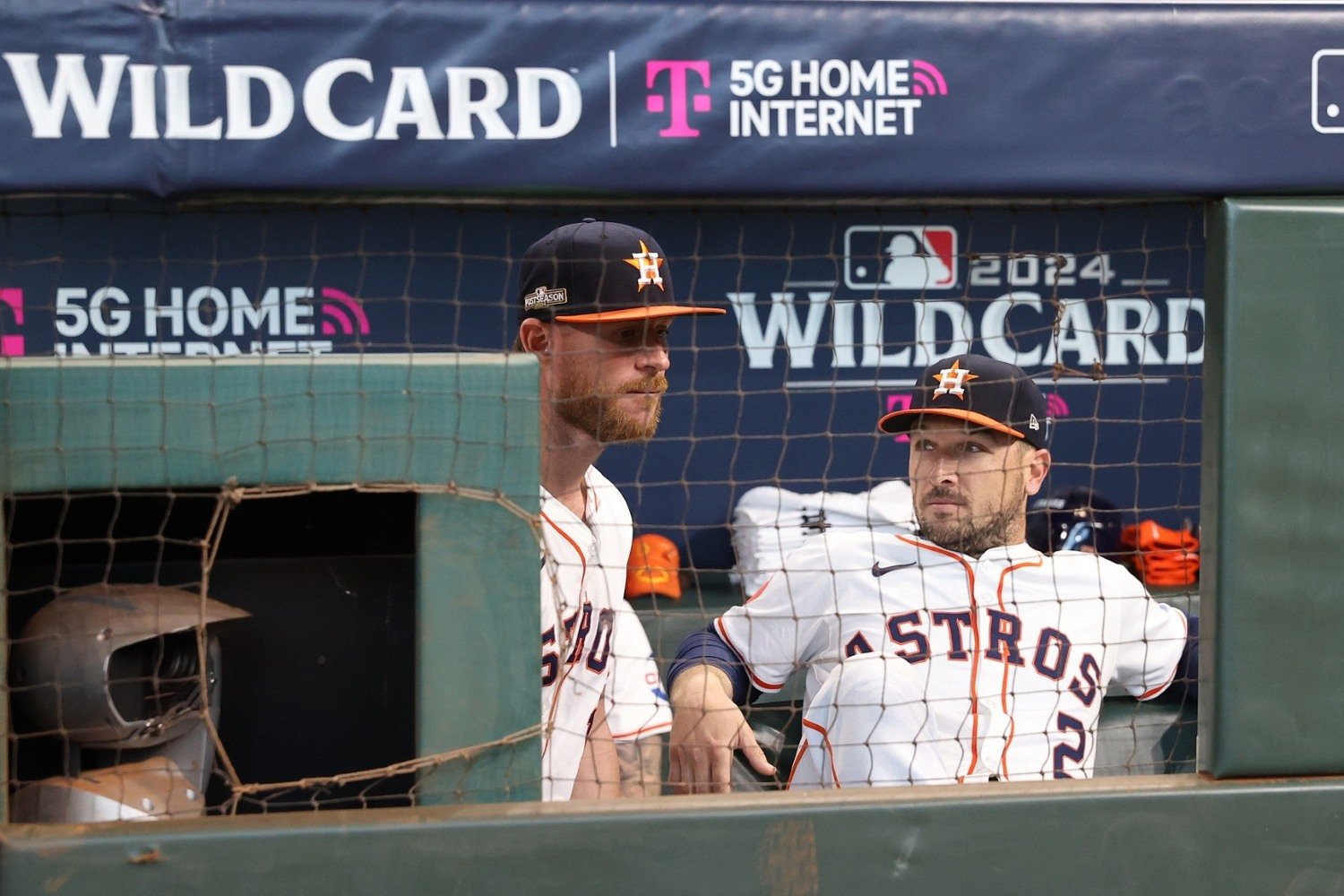
Alex Bregman has had a long and productive career with the Houston Astros. He peaked in 2019, with 8.7 wins above replacement and a 167 wRC+. Without factoring in the sign-stealing scandal in which he admits to having played a part, there has been a decline offensively in the past three years. His wRC+ has gone from 137 to 126 to 118 since 2022. His 2024 walk rate plunge was particularly concerning. It could be a one-year outlier, but it did crater as he geared up for free agency.
The main issue with adding Bregman would be the cost. Rumors are that he has a six-year offer that would total over $160 million. The Cubs, given their aversion to spending over the luxury tax, really cannot afford another infielder on a high-dollar deal that might not age well. So, if they were to sign Bregman to a (shorter, perhaps richer on a per-year basis) deal, what would happen next?
The Internet's Favorite Option: Sign Bregman, trade Nico Hoerner to balance out the payroll, Matt Shaw starts at second
WAR-wise, this is net neutral. The decrease in defensive value theoretically would be balanced out by the added power Bregman would provide. Matt Shaw, in this hypothetical, would man second base, which many scouts believe is his best long-term position anyway. Hoerner would net some trade return, to balance out the lost long-term value of surrendering draft picks to sign Bregman.
The Case For: The Cubs' lineup is really not a deep one, especially in terms of power. Bregman would address this and slot somewhere in the top four spots in the lineup. Nico would command some type of value, perhaps an arm or two to lengthen the pitching staff. Matt Shaw is ready, and slots more ably into the spot Hoerner would vacate than into the one for which he's currently projected.
This is a somewhat compelling argument. When you look at the OPS for Nico vs. Bregman (.722 to .856), the increase in pop would be massive. Matt Shaw is smothered in hype, and recently was given a top-20 global prospect ranking by MLB.com. He does deserve a chance to get at-bats at the major-league level.
The Case Against: This risks overpaying for Bregman's decline years, complete with worsening defense, and could leave the team overly reliant on Shaw. Bregman already is showing signs of decline. Paying a premium price for his early and mid-30s doesn't seem to be how the Cubs should operate, given their budget. Shaw also is no sure thing; his floor is sub-replacement level. With Pete Crow-Armstrong's bat still in question, Michael Busch's scary projections for 2025, the catcher position, and the ever-present question of whether Dansby Swanson can recapture his 117 wRC+ from before he arrived on the North Side, the Cubs can ill afford another iffy proposition in the lineup.
An Unintended Consequence: Even if we charitably assume Bregman signs for $25 million per year, that locks up $52 million in payroll on two infielders who are over 30. Their age suggests that simply living up to that spending is the best we can expect from Bregman and Swanson. Over 20% of the team's self-imposed salary cap would be taken by two players.
Kyle Tucker needs to be the only priority here. The Cubs have their linchpin, their star, the elite bat fans have been clamoring for since 2021. Any move that lowers the probability of his return needs to simply not happen. Tom Ricketts, he of the instantly infamous "break even" line, said in a recent interview that dollars aren't as big an issue to him as years. Assuming Tucker nets $40 million per season, there's no way the front office will be allowed to tie up $90 million dollars on three players. So Bregman on a long-term deal would be like Hubba Bubba: satisfying for a bit, but with a flavor that will fade as Tucker moves to greener pastures. The flexibility is necessary for the Cubs, if they want any chance of retaining Tucker in the deep green environs of Wrigley Field for the next decade and change.
Option 2: The Ricketts Operate Their Team the Way They Actually Should
This one is simple: sign Bregman, and do not trade salary to offset his addition. You then have the best infield defense in the game. Shaw plays the Javier Báez role from 2016, filling in when a day off is needed. All players get needed rest days, and Shaw gets needed developmental reps. Tucker's potential extension is not affected by these payroll constraints, and the Cubs commit to spending into the luxury tax. (Fans can dream, right?)
If Bregman does sign in Chicago, we can anticipate multiple opt-outs being involved. Those save the team extra years and/or dollars committed, but the added cost is increased risk associated with Bregman having any kind of decline, and eschewing his opt-outs while taking up payroll and roster space and returning too little value. We just saw a tepid result on this kind of deal, with Cody Bellinger in 2024.
In the end, the Cubs are not likely to land Alex Bregman. In that case, this pursuit will be but a footnote in the next book Joe Posnanski writes. This isn't a bad thing, long-term, for the Cubs. They should save their cash and go all-in on a Tucker extension. (Of course, there's no guarantee that Tucker is even open to such a deal, let alone willing to consider one at a price point that matches the Cubs' comfort zone. But that should be the goal.) Bregman isn't worth the risk and the amount of payroll space he will take up. Just let Shaw and Hoerner play, save some space for Tucker, and go over the tax for one season in 2026. With the amounts of salary falling off the books after that season, a tax reset would be simple.
Bregman is a fine player, but not at the price he wants or the cost of another solid player, like Hoerner. The Cubs have more pressing needs than the marginal upgrade Bregman would bring. Let's not bang the trash can for him any longer.





.thumb.JPG.19c99ddd60a76edf810c77d321439828.JPG)


Recommended Comments
Create an account or sign in to comment
You need to be a member in order to leave a comment
Create an account
Sign up for a new account in our community. It's easy!
Register a new accountSign in
Already have an account? Sign in here.
Sign In Now