

.png.396d29669b786f3e4cefa11ecc4b9eac.png)

Brian Kelder
-
Posts
291 -
Joined
-
Last visited
Content Type
Profiles
Joomla Posts 1
Chicago Cubs Videos
Chicago Cubs Free Agent & Trade Rumors, Notes, & Tidbits
2026 Chicago Cubs Top Prospects Ranking
News
2023 Chicago Cubs Draft Picks
Guides & Resources
2024 Chicago Cubs Draft Picks
The Chicago Cubs Players Project
2025 Chicago Cubs Draft Pick Tracker
2026 Chicago Cubs Draft Tracker: Picks & Bonuses
Blogs
Events
Forums
Store
Gallery
Everything posted by Brian Kelder
-
Image courtesy of © Jeffrey Becker-Imagn Images It's an old sports adage that the final leap to true contention is the hardest to make. It's one thing to improve, like the 2025 Chicago Cubs, from 83 wins to 92. The next season is the key. Making the final leap is the most difficult one. For a (not so fun) example, let's look back 40 years into the past. The 1984 Cubs were flying high; 96 wins, an MVP season from young superstar Ryne Sandberg, and young prospects coming up like Shawon Dunston seemed to portend success. The entire rotation was brought back for the following year, including Cy Young Award winner Rick Sutcliffe (currently an announcer for ESPN) and future Hall of Fame righties Dennis Eckersley and closer Lee Smith. Wrigley was rocking, and surely this was the start of something special. Then, 1985 hit. While not an awful team, the '85 squad could only muster 77 wins, good for a fourth-place finish. A 13-game losing streak and a separate seven-game skid was too much to overcome. During that big losing streak, the entire five man pitching rotation was on the disabled list. Starting guys like 37-year-old Larry Gura and someone named Derek Botelho, the Cubs just could not build on 1984. Crowds by September were back in the 6,000 range and the excitement had fled. So, what can we learn from then? What did the 1985 Cubs do that the current front office can avoid? For starters, the 1984 Cubs featured Lee Smith in the bullpen, who remained a stalwart throughout his career. Beyond him, 31-year-old Tim Stoddard, 29-year-old George Frazier, and 32-year-old Warren Brusstar had solid years as well in 1984. In the offseason, Brusstar and Frazier were retained, while Tim Stoddard was allowed to walk to San Diego, the team that eliminated Chicago in 1984. The 1985 bullpen could not replicate their success. Frazier's ERA ballooned from 4.10 to 6.39 the following season. Brusstar's decline was even more pronounced; he almost doubled ERA his from 3.11 to 6.05. Stoddard, who regressed back to a 4.65 ERA in San Diego, was replaced by Lary Sorenson, who checked in with a 4.26 ERA. What does this mean for the current Cubs? Well, they can't count on aging pitchers with track records of spotty success to replicate career seasons. Caleb Theilbar is 38 years old; he's more likely to have a season like his 2024 (5.32 ERA) than continue a late career renaissance. Andrew Kittredge has a nine million dollar option that should arguably be picked up, but relying on him to be a late-inning fireman is probably a fool's errand. The bullpen can't be counted on to replicate these outlier performances. Jed Hoyer has long been great at putting together solid relief corps with minimal investment, but part of that formula has been excessive change year over year. I don't see a reason to mess with that concept for 2026. What else plagued those Cubs of 40 years ago? The rotation was beset by injury, and really, it was not easy to expect that. Sutcliffe had three consecutive 200-inning seasons before a hamstring tear the next season. Dennis Eckersley had ten seasons of over 150 before shoulder issues in 1985, and Steve Trout had no injury history to speak of until an ulnar nerve issue that season. Scott Sanderson was the only Cub with an injury riddled past, but he had a long career beyond that campaign. Looking at this past team and comparing it to this year's Cubs team is a difficult task. The 1985 Cubs were built around a solid staff who they thought would last through the season; the 2025 Cubs were built similarly. But Justin Steele broke, Shota Imanaga was hurt and never came back to full strength, and Jameson Taillon missed time. They were saved by Matthew Boyd and Cade Horton, both of whom carry their own injury history question marks. The Cubs need to be careful and not enter their season with the aforementioned players as their only options in the five-man rotation. There are higher-than-comfortable probabilities that all five miss time to injury. Cade Horton, for example, just pitched more innings than he has in his career, and has two major injuries in his recent past. Matthew Boyd similarly had an innings spike and was less effective as the year went along. It's not breaking news that the Cubs need to address their depth on the rotation. They will not have 30 starts from these five starters; they will need to supplement somewhere. The Cubs already are putting a ton of hope in Cade Horton's basket; some risk mitigation and additions would be beneficial. Even if it doesn't come in the form of an ace like Tarik Skubal or Hunter Greene, some more middle-of-the-rotation depth (á la Colin Rea) should be treated as a necessity, not a luxury. As you can see, there are some parallels between what the current and 1985 Cubs would try to do in the pitching staff. The bullpen will be a greater challenge to rebuild in numbers; the rotation will be a task in how to upgrade in quality and risk mitigation. As always, the rotation can make or break a season. It's up to Jed Hoyer to learn from the past and make the decisions that will make for a special future. While the names and eras change, the lessons are timeless. View full article
-
Which Arbitration-Eligible Cubs Will Be Tendered Contracts Next Month?
Brian Kelder posted an article in Cubs
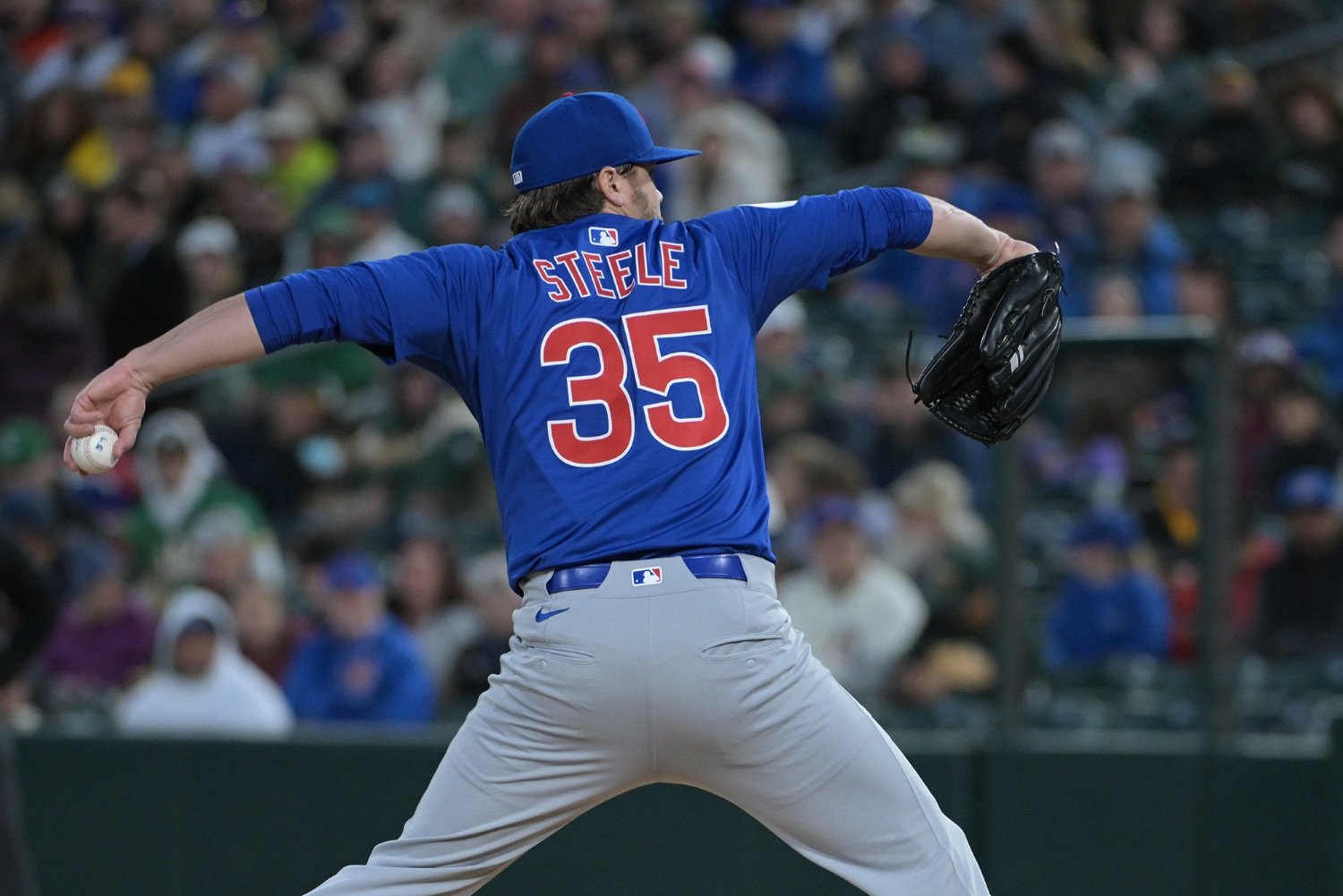 Often, teams enter the winter knowing that decisions about whether to offer arbitration to eligible players will be crucial to their plans. This off-season, however, that will be a relatively small part of the Cubs' planning. They have only four arbitration-eligible players. None project to be high-dollar signings, but in the Tom Ricketts era, every penny needs to be scrutinized, if not pinched. Of the four, two players feel like no-brainers, but each one is worth a brief discussion. Here's the list, along with the projections from MLB Trade Rumors for each player's salary via the arbitration system: Reese McGuire (5.110): $1.9 million Justin Steele (4.143): $6.55 million Eli Morgan (4.091): $1.1 million Javier Assad (3.027): $1.9 million Reese McGuire, C McGuire had his moments as an unexpected fill-in when Miguel Amaya went down with injury. Perhaps 'unexpected' is the wrong word, though; Amaya does have an extensive injury history. The veteran backup catcher's first game was electric. He hit two home runs in Cincinnati hours after his emergency call-up. That, however, was his zenith. McGuire ended with a .225 batting average and only a .245 on-base percentage, though he did continue to run into long balls on occasion. Advanced metrics paint a dire picture of his offensive skill set, too. His wRC+ was only 86, which is 14 percent below a league-average hitter. He did make major changes to his swing this year, and it now profiles more like left-handed José Ramírez (exciting!) or Kyle Massey (less so), after looking a lot like fellow backstops Jonah Heim (yuck) and Ben Rortvedt (double yuck) in 2024. However, he made disastrously bad swing decisions, leading to a low strikeout rate but a virtually non-existent walk rate and a lot of weak contact. There's no reason to think he will improve much at bat as he enters his 30s. McGuire is likely to leave the Cubs this offseason. They will hope for another solid season from starting backstops Carson Kelly and Amaya, and with more reps in Iowa, Moisés Ballesteros might just earn a look behind the plate in the majors. McGuire had some moments, but there's no chance the Cubs will pay $1.9 million to retain him. They might be able to trade him for an out-of-options reliever with upside or something, but either way, he will be off the roster by the start of December. Justin Steele, LHP A projected $6.55-million salary is enough to matter, given that Steele probably won't be back until at least midseason. It's not nearly enough to make the team consider non-tendering him, though. Steele underwent Tommy John surgery in April and should be ready for a significant contribution, but it'll come after a slow first-half ramp-up. There's no real decision to make here; Steele will be back at Wrigley as soon as he is healthy enough to toe the mound. The interesting question is whether the Cubs will view this injury as an opportunity to lock Steele up on a medium-length deal on team-friendly terms, rather than go year-to-year and pay a full-season salary for a partial season of work. The main area of concern with Steele is workload. He'll be treated much like Cade Horton was in 2025. We won't know how Steele looks until he's out there, of course, but there's no choice but to wait and see. Eli Morgan, RHP A mere $1.1 million seems a small price for a cromulent reliever. Questions remain on if Morgan is that, though. The right-handed relief pitcher could only total 20 innings on the season while battling elbow injuries. The decision on Morgan will be if he is worth a coveted 40-man roster spot throughout the winter. They may prefer to protect Rule 5-eligible players like Brandon Birdsell or James Triantos, if they are concerned another organization would select them. They also could non-tender him to free up his space for another reliever reclamation project. This one could come down to how much the front office feels they have to spend this winter. If the wallet is wide open, they could retain Andrew Kittredge (which would cost $9 million) and/or Colin Rea ($6 million), and that would likely squeeze Morgan out of the picture. If they foresee a tighter budget, Morgan's much lower salary (and the chance to have him under control again for 2027) might appeal to them. Javier Assad, RHP Like the other two pitchers in the list, Assad battled injuries in 2025. Assad hurt his oblique, then hurt it again, and never really got his footing. Unlike Morgan, however, Assad can start and pitch in relief. For what looks to be less than $2 million, he'll likely stick around for another season. At the very least, he's worth more than that on the open market, so he'd have trade value. It's hard not to assign significant weight to the fact that the Cubs left him off a pitching-hungry NLDS roster; they might like something they're offered for him more than they like the man himself. Non-tendering him, however, would be a bizarre choice. And that's it! The Cubs (probably) let two go and keep the other two around, and can then go about their bigger business, filling in the gap between their high-priced veterans and their rough-edged pre-arbitration stars.
 -
Image courtesy of © Ed Szczepanski-Imagn Images Often, teams enter the winter knowing that decisions about whether to offer arbitration to eligible players will be crucial to their plans. This off-season, however, that will be a relatively small part of the Cubs' planning. They have only four arbitration-eligible players. None project to be high-dollar signings, but in the Tom Ricketts era, every penny needs to be scrutinized, if not pinched. Of the four, two players feel like no-brainers, but each one is worth a brief discussion. Here's the list, along with the projections from MLB Trade Rumors for each player's salary via the arbitration system: Reese McGuire (5.110): $1.9 million Justin Steele (4.143): $6.55 million Eli Morgan (4.091): $1.1 million Javier Assad (3.027): $1.9 million Reese McGuire, C McGuire had his moments as an unexpected fill-in when Miguel Amaya went down with injury. Perhaps 'unexpected' is the wrong word, though; Amaya does have an extensive injury history. The veteran backup catcher's first game was electric. He hit two home runs in Cincinnati hours after his emergency call-up. That, however, was his zenith. McGuire ended with a .225 batting average and only a .245 on-base percentage, though he did continue to run into long balls on occasion. Advanced metrics paint a dire picture of his offensive skill set, too. His wRC+ was only 86, which is 14 percent below a league-average hitter. He did make major changes to his swing this year, and it now profiles more like left-handed José Ramírez (exciting!) or Kyle Massey (less so), after looking a lot like fellow backstops Jonah Heim (yuck) and Ben Rortvedt (double yuck) in 2024. However, he made disastrously bad swing decisions, leading to a low strikeout rate but a virtually non-existent walk rate and a lot of weak contact. There's no reason to think he will improve much at bat as he enters his 30s. McGuire is likely to leave the Cubs this offseason. They will hope for another solid season from starting backstops Carson Kelly and Amaya, and with more reps in Iowa, Moisés Ballesteros might just earn a look behind the plate in the majors. McGuire had some moments, but there's no chance the Cubs will pay $1.9 million to retain him. They might be able to trade him for an out-of-options reliever with upside or something, but either way, he will be off the roster by the start of December. Justin Steele, LHP A projected $6.55-million salary is enough to matter, given that Steele probably won't be back until at least midseason. It's not nearly enough to make the team consider non-tendering him, though. Steele underwent Tommy John surgery in April and should be ready for a significant contribution, but it'll come after a slow first-half ramp-up. There's no real decision to make here; Steele will be back at Wrigley as soon as he is healthy enough to toe the mound. The interesting question is whether the Cubs will view this injury as an opportunity to lock Steele up on a medium-length deal on team-friendly terms, rather than go year-to-year and pay a full-season salary for a partial season of work. The main area of concern with Steele is workload. He'll be treated much like Cade Horton was in 2025. We won't know how Steele looks until he's out there, of course, but there's no choice but to wait and see. Eli Morgan, RHP A mere $1.1 million seems a small price for a cromulent reliever. Questions remain on if Morgan is that, though. The right-handed relief pitcher could only total 20 innings on the season while battling elbow injuries. The decision on Morgan will be if he is worth a coveted 40-man roster spot throughout the winter. They may prefer to protect Rule 5-eligible players like Brandon Birdsell or James Triantos, if they are concerned another organization would select them. They also could non-tender him to free up his space for another reliever reclamation project. This one could come down to how much the front office feels they have to spend this winter. If the wallet is wide open, they could retain Andrew Kittredge (which would cost $9 million) and/or Colin Rea ($6 million), and that would likely squeeze Morgan out of the picture. If they foresee a tighter budget, Morgan's much lower salary (and the chance to have him under control again for 2027) might appeal to them. Javier Assad, RHP Like the other two pitchers in the list, Assad battled injuries in 2025. Assad hurt his oblique, then hurt it again, and never really got his footing. Unlike Morgan, however, Assad can start and pitch in relief. For what looks to be less than $2 million, he'll likely stick around for another season. At the very least, he's worth more than that on the open market, so he'd have trade value. It's hard not to assign significant weight to the fact that the Cubs left him off a pitching-hungry NLDS roster; they might like something they're offered for him more than they like the man himself. Non-tendering him, however, would be a bizarre choice. And that's it! The Cubs (probably) let two go and keep the other two around, and can then go about their bigger business, filling in the gap between their high-priced veterans and their rough-edged pre-arbitration stars. View full article
-
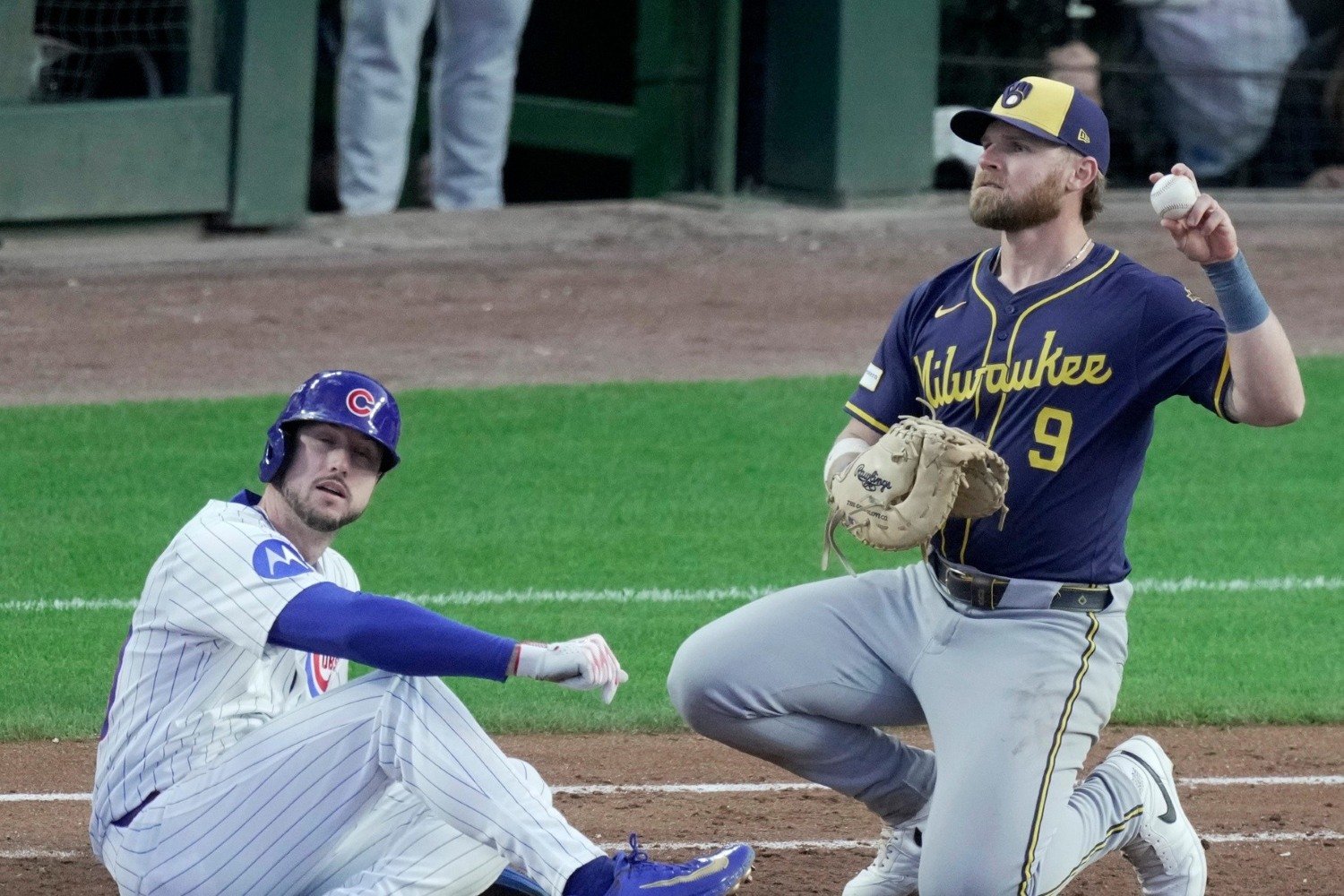 By most measures, the Chicago Cubs had a successful season. Any season that results in 92 wins and a Wild Card victory can be considered a job well done. But this specific season, this postseason and the way it all played out, feels unsatisfying. The issue was the front office and manager, and the losses on the margins that felt as though they might have been avoided, or mitigated. In the end, it feels maddeningly as though the Cubs' goal wasn't a championship. Their goal, instead, was to keep the front office employed. Mistake 1: The Cody Bellinger Debacle After being dealt to the New York Yankees for soon-to-be waiver bait Cody Poteet, Cody Bellinger went on to hit .279 with 29 home runs and 98 RBIs. This was good, overall, for a wRC+ of 125, far above average and an improvement from his 2024 season of 109. Health played a factor in this; he avoided major injury in New York. Letting a good player go for monetary reasons is something a major market team that sells out every game and has their own TV network should never have to do. Aside from general rest days across the outfield and first base that Bellinger could have provided, here's a list of other times the left-handed power bat would have helped: Kyle Tucker could have rested for a few weeks when he was injured Bellinger was the guy that would have taken Justin Turner's at bats vs. left-handed pitching at first base. Pete Crow-Armstrong would have had more opportunity to rest, recharge, learn, and avoid left-handed pitching, if needed. Ian Happ could have been sat down in the playoffs, instead of having three hits and a .190 OBP in the Cubs' eight playoff games. Losing Bellinger forced the Cubs into playing their position players more than they would have preferred. The late-season offensive inconsistency was at least partially due to mental and physical fatigue. Since they cut the return in the trade before the season and still were $30 million below the luxury tax, Bellinger staying would have been much more helpful than what they did with the money saved—except for the Ricketts family, who had an extra $30 million in their coffers during their never-ending quest to break even financially. Granted, Bellinger landed in the perfect location for his skill set and would not have replicated his numbers in Wrigley. He was also expensive, and in theory, that money would have been repurposed. They did not do so, and the bench was an issue for the entire season. Obviously, it's not that simple. Once the team committed to bringing in Tucker, they didn't have an everyday role for Bellinger, and he would have been very unhappy as a part-time player, even if there should theoretically have been lots of ways for him to find playing time. The Cubs (rightfully) didn't really trust him to play center field anymore. One of Bellinger, Happ and Seiya Suzuki had to go, lest they create a major clubhouse issue, and Happ and Suzuki had no-trade clauses. They absolutely needed Bellinger-like offensive production; they just kind of cornered themselves into losing Bellinger himself, and failed to replace him adequately. Mistake 2: At some point, they had to add reliable innings. This could have been in the offseason, after Bellinger's money was shed. This could have been early on, when Justin Steele's elbow finally gave out. The trade deadline seems like it could have been a good time to do so, especially given their estimated payroll was far short of the luxury tax threshold. This one feels like penny-pinching. It was clear as the Division Series moved on that Craig Counsell had no trust in any starting pitching option besides Matthew Boyd (whom he arguably had too much trust in, starting him on short rest). But it's not really about the playoffs. Cade Horton, Boyd, Jameson Taillon, and Shota Imanaga were a good enough starting rotation to advance past the Brewers. Unfortunately, Imanaga was not the same pitcher after his hamstring injury. Horton had a non-pitching-related rib injury, but if he were that sick to cough enough to break a rib, clearly some rest was needed. (If he hurt it any other way, well, that's a separate issue.) Boyd was forced to go on short rest in Game 1 despite blowing past his innings total from the past four years at age 35. You may read these above points as bad luck, but they were predictable results. Steele's injury felt like an inevitability after two seasons interrupted by elbow injuries, and perversely, the team was too reliant on their pitchers to hold up. Nobody should have expected Boyd to pitch nearly 180 innings. Horton, despite keeping his pitch count down, predictably went down. The Cubs had to anticipate these guys wouldn't be available, and they just didn't—or else, they thought they'd be ok without them, which was also unreasonable. The Cubs had to get someone during the season who would have allowed more rest for the starters. Not having Horton and Imanaga at full strength was the deciding factor in the Brewers series. Whether it was money or prospect cost, the Cubs failed to support their solid pitching staff enough. Mistake 3: The Kyle Tucker Situation When it's all said and done, obtaining Kyle Tucker for Isaac Paredes, Cam Smith, and Hayden Wesneski feels like a deal that was designed to get Jed Hoyer an extension. Look at how this will now play out. Kyle Tucker leaves as a free agent. Suzuki goes to right field again for a year, until his contract expires. Owen Caissie, Moisés Ballesteros, and Kevin Alcántara battle for the Tucker at-bats. Now, the Cubs are looking at an offseason where they need a star bat, an elite starter, and an entire bullpen. This is the exact situation they were in last offseason. They spent elite prospect capital, in Smith (although it's not yet clear whether his talent will survive the abuse of being rushed to the big leagues; he was a Matt Shaw-first-half or Pete Crow-Armstrong-second-half level of awful after the break, without the defensive value) and a serviceable third baseman for one year of a player who has already wished his teammates the best of luck. The team had steadily built toward this kind of pedal-down move over the last two seasons, and it was time for it, but it's becoming clear how much it swapped the future for the present. Of course, Smith was clearly not ready to help this season, and the Cubs' recent track record in player development casts doubt on what they'd have gotten from him even in the long term. Isaac Paredes didn't fit New Wrigley and its constant wind-blowing-in home run suppression. Wesneski succumbed to Tommy John surgery. The book is still to be written on the Astros' return. Unfortunately for the Cubs, it seems like their portion is already written, and has been submitted to the editor. Even if Smith ends up a bust, the book for the Cubs will not be a best-selling blockbuster with movie rights attached. Smith, Paredes and Wesneski need not be the Cubs' business. But Tucker himself didn't produce enough, at the right times, to make the trade worthwhile. He proved unable to play well through injuries, and unable to avoid them, too. The Cubs have a ton of work to do to make the playoffs in 2026 and in the future. Replacing Tucker's production is job number one if they want the playoffs to be an annual thing, not just a one-off. The Tucker trade masked the lack of development that the Cubs have had in the system. Their minors are now ranked in the bottom half of the league; their assets after 2026 are ranked 19th by ESPN for future value. Trading Smith, who arguably has the most upside of any of them, was a risky move. For a team that is supposed to be future-focused, breaking their process for this was jarring. (Maybe it would have been less so, if Tucker had played just a bit better, especially after the break.) Ah, now that was therapeutic! It's time now to relax, enjoy the rest of the postseason and watch some Chicago Bulls and Bears action this winter. Given all the research about people and their lack of sports diversification, this is the healthy thing to do. We'll keep you posted, here at North Side Baseball, on the offseason happenings. Thanks for reading all season long. It's truly a privilege that so many people still read and choose to read my articles. Thanks again!
 -
Image courtesy of © Mark Hoffman / Milwaukee Journal Sentinel / USA TODAY NETWORK via Imagn Images By most measures, the Chicago Cubs had a successful season. Any season that results in 92 wins and a Wild Card victory can be considered a job well done. But this specific season, this postseason and the way it all played out, feels unsatisfying. The issue was the front office and manager, and the losses on the margins that felt as though they might have been avoided, or mitigated. In the end, it feels maddeningly as though the Cubs' goal wasn't a championship. Their goal, instead, was to keep the front office employed. Mistake 1: The Cody Bellinger Debacle After being dealt to the New York Yankees for soon-to-be waiver bait Cody Poteet, Cody Bellinger went on to hit .279 with 29 home runs and 98 RBIs. This was good, overall, for a wRC+ of 125, far above average and an improvement from his 2024 season of 109. Health played a factor in this; he avoided major injury in New York. Letting a good player go for monetary reasons is something a major market team that sells out every game and has their own TV network should never have to do. Aside from general rest days across the outfield and first base that Bellinger could have provided, here's a list of other times the left-handed power bat would have helped: Kyle Tucker could have rested for a few weeks when he was injured Bellinger was the guy that would have taken Justin Turner's at bats vs. left-handed pitching at first base. Pete Crow-Armstrong would have had more opportunity to rest, recharge, learn, and avoid left-handed pitching, if needed. Ian Happ could have been sat down in the playoffs, instead of having three hits and a .190 OBP in the Cubs' eight playoff games. Losing Bellinger forced the Cubs into playing their position players more than they would have preferred. The late-season offensive inconsistency was at least partially due to mental and physical fatigue. Since they cut the return in the trade before the season and still were $30 million below the luxury tax, Bellinger staying would have been much more helpful than what they did with the money saved—except for the Ricketts family, who had an extra $30 million in their coffers during their never-ending quest to break even financially. Granted, Bellinger landed in the perfect location for his skill set and would not have replicated his numbers in Wrigley. He was also expensive, and in theory, that money would have been repurposed. They did not do so, and the bench was an issue for the entire season. Obviously, it's not that simple. Once the team committed to bringing in Tucker, they didn't have an everyday role for Bellinger, and he would have been very unhappy as a part-time player, even if there should theoretically have been lots of ways for him to find playing time. The Cubs (rightfully) didn't really trust him to play center field anymore. One of Bellinger, Happ and Seiya Suzuki had to go, lest they create a major clubhouse issue, and Happ and Suzuki had no-trade clauses. They absolutely needed Bellinger-like offensive production; they just kind of cornered themselves into losing Bellinger himself, and failed to replace him adequately. Mistake 2: At some point, they had to add reliable innings. This could have been in the offseason, after Bellinger's money was shed. This could have been early on, when Justin Steele's elbow finally gave out. The trade deadline seems like it could have been a good time to do so, especially given their estimated payroll was far short of the luxury tax threshold. This one feels like penny-pinching. It was clear as the Division Series moved on that Craig Counsell had no trust in any starting pitching option besides Matthew Boyd (whom he arguably had too much trust in, starting him on short rest). But it's not really about the playoffs. Cade Horton, Boyd, Jameson Taillon, and Shota Imanaga were a good enough starting rotation to advance past the Brewers. Unfortunately, Imanaga was not the same pitcher after his hamstring injury. Horton had a non-pitching-related rib injury, but if he were that sick to cough enough to break a rib, clearly some rest was needed. (If he hurt it any other way, well, that's a separate issue.) Boyd was forced to go on short rest in Game 1 despite blowing past his innings total from the past four years at age 35. You may read these above points as bad luck, but they were predictable results. Steele's injury felt like an inevitability after two seasons interrupted by elbow injuries, and perversely, the team was too reliant on their pitchers to hold up. Nobody should have expected Boyd to pitch nearly 180 innings. Horton, despite keeping his pitch count down, predictably went down. The Cubs had to anticipate these guys wouldn't be available, and they just didn't—or else, they thought they'd be ok without them, which was also unreasonable. The Cubs had to get someone during the season who would have allowed more rest for the starters. Not having Horton and Imanaga at full strength was the deciding factor in the Brewers series. Whether it was money or prospect cost, the Cubs failed to support their solid pitching staff enough. Mistake 3: The Kyle Tucker Situation When it's all said and done, obtaining Kyle Tucker for Isaac Paredes, Cam Smith, and Hayden Wesneski feels like a deal that was designed to get Jed Hoyer an extension. Look at how this will now play out. Kyle Tucker leaves as a free agent. Suzuki goes to right field again for a year, until his contract expires. Owen Caissie, Moisés Ballesteros, and Kevin Alcántara battle for the Tucker at-bats. Now, the Cubs are looking at an offseason where they need a star bat, an elite starter, and an entire bullpen. This is the exact situation they were in last offseason. They spent elite prospect capital, in Smith (although it's not yet clear whether his talent will survive the abuse of being rushed to the big leagues; he was a Matt Shaw-first-half or Pete Crow-Armstrong-second-half level of awful after the break, without the defensive value) and a serviceable third baseman for one year of a player who has already wished his teammates the best of luck. The team had steadily built toward this kind of pedal-down move over the last two seasons, and it was time for it, but it's becoming clear how much it swapped the future for the present. Of course, Smith was clearly not ready to help this season, and the Cubs' recent track record in player development casts doubt on what they'd have gotten from him even in the long term. Isaac Paredes didn't fit New Wrigley and its constant wind-blowing-in home run suppression. Wesneski succumbed to Tommy John surgery. The book is still to be written on the Astros' return. Unfortunately for the Cubs, it seems like their portion is already written, and has been submitted to the editor. Even if Smith ends up a bust, the book for the Cubs will not be a best-selling blockbuster with movie rights attached. Smith, Paredes and Wesneski need not be the Cubs' business. But Tucker himself didn't produce enough, at the right times, to make the trade worthwhile. He proved unable to play well through injuries, and unable to avoid them, too. The Cubs have a ton of work to do to make the playoffs in 2026 and in the future. Replacing Tucker's production is job number one if they want the playoffs to be an annual thing, not just a one-off. The Tucker trade masked the lack of development that the Cubs have had in the system. Their minors are now ranked in the bottom half of the league; their assets after 2026 are ranked 19th by ESPN for future value. Trading Smith, who arguably has the most upside of any of them, was a risky move. For a team that is supposed to be future-focused, breaking their process for this was jarring. (Maybe it would have been less so, if Tucker had played just a bit better, especially after the break.) Ah, now that was therapeutic! It's time now to relax, enjoy the rest of the postseason and watch some Chicago Bulls and Bears action this winter. Given all the research about people and their lack of sports diversification, this is the healthy thing to do. We'll keep you posted, here at North Side Baseball, on the offseason happenings. Thanks for reading all season long. It's truly a privilege that so many people still read and choose to read my articles. Thanks again! View full article
-
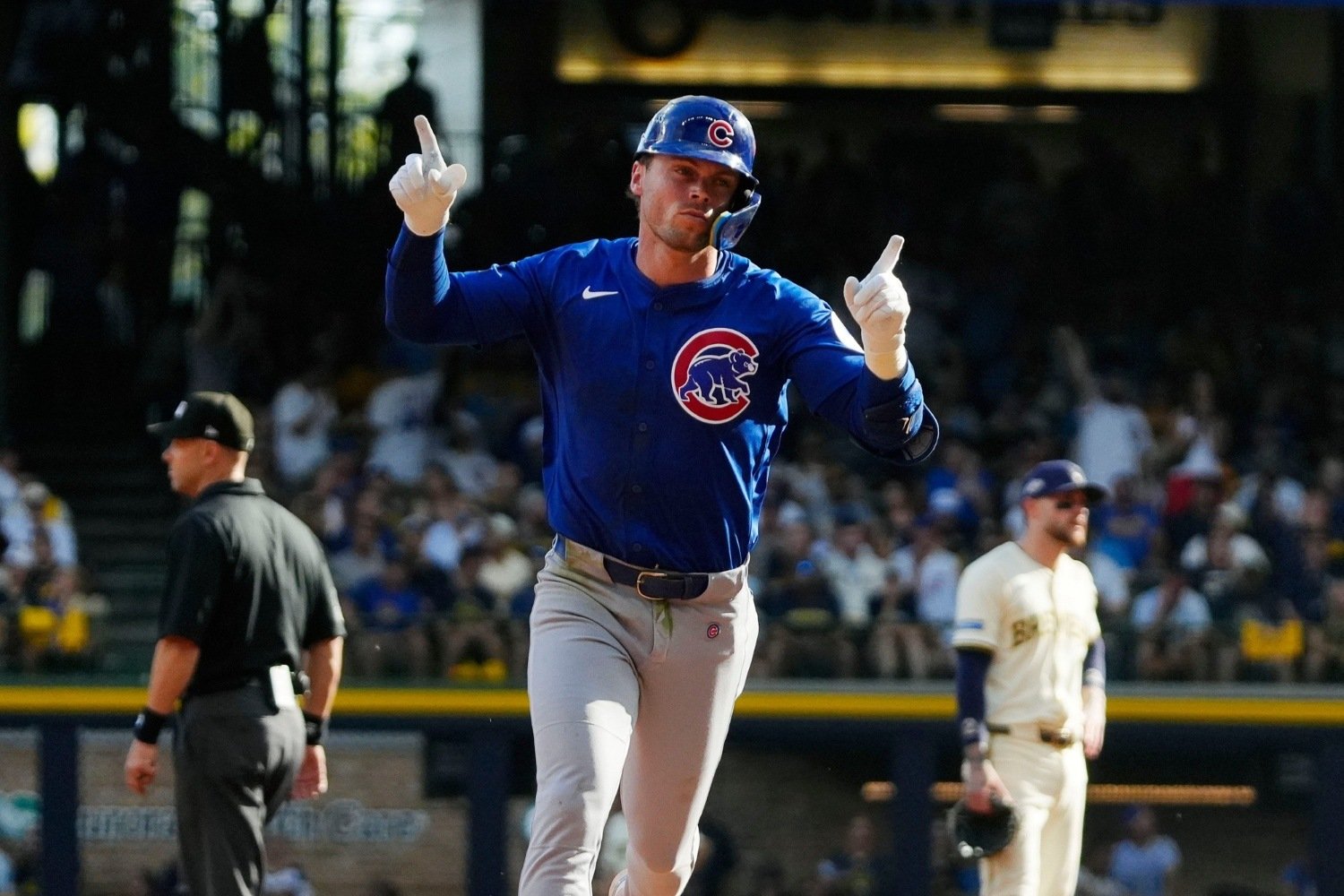 Consistency. This award, the Cubs' Hitter of the Year, will not go to the most exciting Cub. It won't go to the highest-paid Cub. It won't go to a flashy acquisition, who may or may not have a major calf issue. In May, the Cubs offense was flying high, and Kyle Tucker and Pete Crow-Armstrong were legitimate MVP candidates. Michael Busch was looking like the 2025 version of Leon Durham. For the first half, the team averaged over five runs per game. In a league with an average OPS of .720, the Cubs far exceeded that, with a stellar .771. Then, the second half hit. These are not great trends: Batting Average: from .256 first half to .240 in the second OBP: 325 down to .314 SLG: .446 to .407 wRC+: from 115 to 102 The Cubs struggled in the second half, except for one man. For this award, let's acknowledge the one person (and one only) who remained consistent for the entire season. The Hitter of the Year is Nico Hoerner. Month AVG OBP SLG wOBA Mar/Apr .295 .339 .362 .308 May .290 .339 .383 .318 Jun .295 .330 .411 .324 Jul .284 .347 .375 .319 Aug .283 .333 .364 .308 Sep/Oct .333 .375 .467 .366 Postseason .419 .424 .548 .416 Just look at that. Never below a .283 batting average. Never below a .330 OBP. In a season marked with inconsistency of key players, Hoerner has been a pillar of safe production. But there's more when the numbers are dug into. With two outs: .321/.367/.425. He kept innings alive. With runners in scoring position: .370/.422/.459. He's performed in clutch situations. High leverage: .333/.375/.441. That's to say nothing of a toerrid postseason. Although wRC+ only has Hoerner at 112, or 12% over an average hitter, he's the kind of hitter who is hard to measure in a catch-all stat. Don't be fooled by the One Stat; Hoerner has been the best and most valuable Cubs hitter for the season. Also Considered: Carson Kelly: Kelly was projected (by ZiPS) to have a slash line of .220/.298/.347. Instead, he hit a robust .249/.333/.428. He also had 17 home runs, much higher than his projected 8. Kelly was incredible in April. He hit seven of his longballs in that month, with 21 RBIs and a .360 batting average. When Jed Hoyer took some heat for talking about "overperforming projections," this is exactly what he meant. Kelly couldn't maintain his historic pace, but those stats still count in the aggregate. It's a home run signing for Hoyer, and while he never really had a chance at this award, he does deserve mention. Kyle Tucker: The favorite for this award until that pesky finger injury, and then that even peskier calf. A 22-home run, 25-stolen base season is impressive, and his 136 wRC+ was in line with his career norms. The Cubs got what they paid for, but not at the volume (or in the shape, over the spread of the season) they would have hoped. One can only wonder if buyer's remorse has set in. Now, the debate and fascinating part of Tucker is that he's a free agent, and Cam Smith is a promising rookie with six years of control—although he had a calamitous second half after being rushed to the majors, batting .157/.247/.242 in the second half. It will be fascinating to see how much money free agency can net Tucker, and how much risk teams will assume based on his last two seasons and the injury risk they imply. Time will tell this, but his agent will not be able to hold the prestigious North Side Baseball Hitter of the Year award up as proof of worth. Michael Busch: Arguably, the best hitter on the team. He wasn't as consistent as Hoerner, either, but he was much more explosive. His 140 wRC+ and 34 home runs led the team. Other players had stretches that were notable, such as Pete Crow-Armstrong, Seiya Suzuki, and Matt Shaw. Ultimately, though, their cold streaks were just too damaging to be considered. The Cubs had a solid offensive season, just not a consistent one. Hoerner was an outlier here; Craig Counsell surely enjoyed penciling his production in the lineup every day. An unexpected award, but it is truly a deserved one.
 -
If Cubs Stretch Out Shota Imanaga Monday Night, Here's How They'll Do It
Brian Kelder posted an article in Cubs
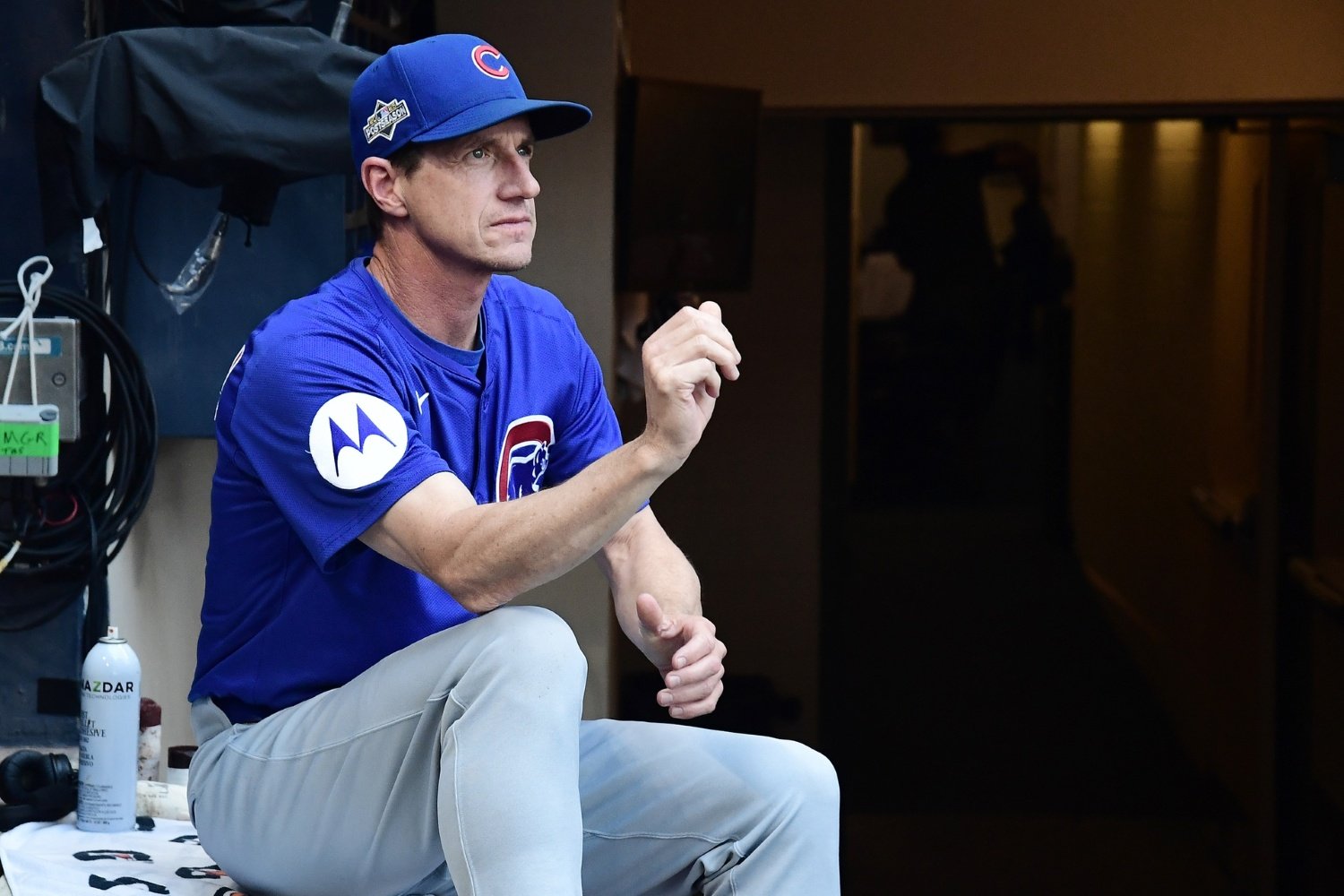 Game 2 of the National League Division Series is a crucial matchup for the Chicago Cubs. Lose this one, and the squad will have to rattle off three consecutive wins. But if it results in a win, the Cubs can fly high into Wrigley in a best-of-three situation. Longtime Cubs fans will remember Ted Lilly in 2007, slamming his glove in frustration after giving up a home run in the process of going down 2-0 to the lousy Diamondbacks. Chicago would be swept in that Division Series, and the next year's team met the same fate, at the hands of the Dodgers. A win in this game means a series; a loss means the season is likely over. Game 2 in Milwaukee will hinge on the starting pitching. Shota Imanaga can have a short outing, and the team can still be successful. He absolutely cannot go off of the rails completely, though, like Matthew Boyd did in Game 1. If Imanaga gives up multiple runs in the early going, the Cubs' plan (and their season) will have been derailed. But let's think positive. Here's what it might look like if, in contrast with the bullpen-style plan Matthew Trueblood put forth earlier today, Imanaga works deeper into the contest. Shota Imanaga As the starter, he will not pitch to more than 18 batters, which is twice through the order. It's likely he will be pulled at the first signs of struggle or hard contact, but perhaps that eventuality can be warded off until the middle innings. Imanaga did face the Brewers three times this season, posting a 3.57 ERA, 0.85 WHIP, and three home runs allowed. Concern over the starting pitcher is warranted; he's struggled of late and the Brewers' 108 WRC+ against lefties is eighth in the league. His second half was unimpressive, with a 4.76 ERA. In September, it ballooned to 6.51. The Brewers aren't a home run-hitting juggernaut, though, and if he can maintain his control, the dingers can be held in check. Imanaga's velocity readings were up on all pitches against the Padres; maybe he can relax and give enough length to get to the later innings relievers. Counsell likely only would ask for five innings from him. The Craig Counsell Circle of Trust Colin Rea: Long relief (Aaron Civale pitched four innings and is likely out, Ben Brown and Mike Soroka's struggles rule them out of a close game). If Imanaga can't go five innings, look for Rea to cover the rest of those frames. If things go right, though, he could be withheld for work in Game 3. Daniel Palencia: The fire-balling reliever was a multi-inning guy in the Wild Card Series. He didn't allow a run, and held his velocity as he pitched. The off day on Tuesday means he can pitch, rest, and recover for the Wednesday night Wrigley tilt. Caleb Thielbar: Comes in to face tough left-handed hitting. If it's a dirty inning, he's the cleanup guy. You need to get through the sixth with some combination of Imanaga, Palencia and Thielbar, to set up the set-up men. Drew Pomeranz/Andrew Kittredge: They get the seventh and eighth inning; the order depends on the left-handed hitters coming up. Pomeranz has great splits when he enjoys the platoon edge this season. Brad Keller: Ninth inning guy. He struggled in a multi-inning stint in Game 3, so likely only a one-inning reliever at this point. The Cubs' risky move to start Matthew Boyd on short rest in Game 1 of the Division Series backfired. Fans are understandably worried about Monday night's game; the above plan gives them their best setup for success. Imanaga has been this team's lion for the last two years; they need him to roar again in Game 2.
 -
Image courtesy of © Benny Sieu-Imagn Images Game 2 of the National League Division Series is a crucial matchup for the Chicago Cubs. Lose this one, and the squad will have to rattle off three consecutive wins. But if it results in a win, the Cubs can fly high into Wrigley in a best-of-three situation. Longtime Cubs fans will remember Ted Lilly in 2007, slamming his glove in frustration after giving up a home run in the process of going down 2-0 to the lousy Diamondbacks. Chicago would be swept in that Division Series, and the next year's team met the same fate, at the hands of the Dodgers. A win in this game means a series; a loss means the season is likely over. Game 2 in Milwaukee will hinge on the starting pitching. Shota Imanaga can have a short outing, and the team can still be successful. He absolutely cannot go off of the rails completely, though, like Matthew Boyd did in Game 1. If Imanaga gives up multiple runs in the early going, the Cubs' plan (and their season) will have been derailed. But let's think positive. Here's what it might look like if, in contrast with the bullpen-style plan Matthew Trueblood put forth earlier today, Imanaga works deeper into the contest. Shota Imanaga As the starter, he will not pitch to more than 18 batters, which is twice through the order. It's likely he will be pulled at the first signs of struggle or hard contact, but perhaps that eventuality can be warded off until the middle innings. Imanaga did face the Brewers three times this season, posting a 3.57 ERA, 0.85 WHIP, and three home runs allowed. Concern over the starting pitcher is warranted; he's struggled of late and the Brewers' 108 WRC+ against lefties is eighth in the league. His second half was unimpressive, with a 4.76 ERA. In September, it ballooned to 6.51. The Brewers aren't a home run-hitting juggernaut, though, and if he can maintain his control, the dingers can be held in check. Imanaga's velocity readings were up on all pitches against the Padres; maybe he can relax and give enough length to get to the later innings relievers. Counsell likely only would ask for five innings from him. The Craig Counsell Circle of Trust Colin Rea: Long relief (Aaron Civale pitched four innings and is likely out, Ben Brown and Mike Soroka's struggles rule them out of a close game). If Imanaga can't go five innings, look for Rea to cover the rest of those frames. If things go right, though, he could be withheld for work in Game 3. Daniel Palencia: The fire-balling reliever was a multi-inning guy in the Wild Card Series. He didn't allow a run, and held his velocity as he pitched. The off day on Tuesday means he can pitch, rest, and recover for the Wednesday night Wrigley tilt. Caleb Thielbar: Comes in to face tough left-handed hitting. If it's a dirty inning, he's the cleanup guy. You need to get through the sixth with some combination of Imanaga, Palencia and Thielbar, to set up the set-up men. Drew Pomeranz/Andrew Kittredge: They get the seventh and eighth inning; the order depends on the left-handed hitters coming up. Pomeranz has great splits when he enjoys the platoon edge this season. Brad Keller: Ninth inning guy. He struggled in a multi-inning stint in Game 3, so likely only a one-inning reliever at this point. The Cubs' risky move to start Matthew Boyd on short rest in Game 1 of the Division Series backfired. Fans are understandably worried about Monday night's game; the above plan gives them their best setup for success. Imanaga has been this team's lion for the last two years; they need him to roar again in Game 2. View full article
-
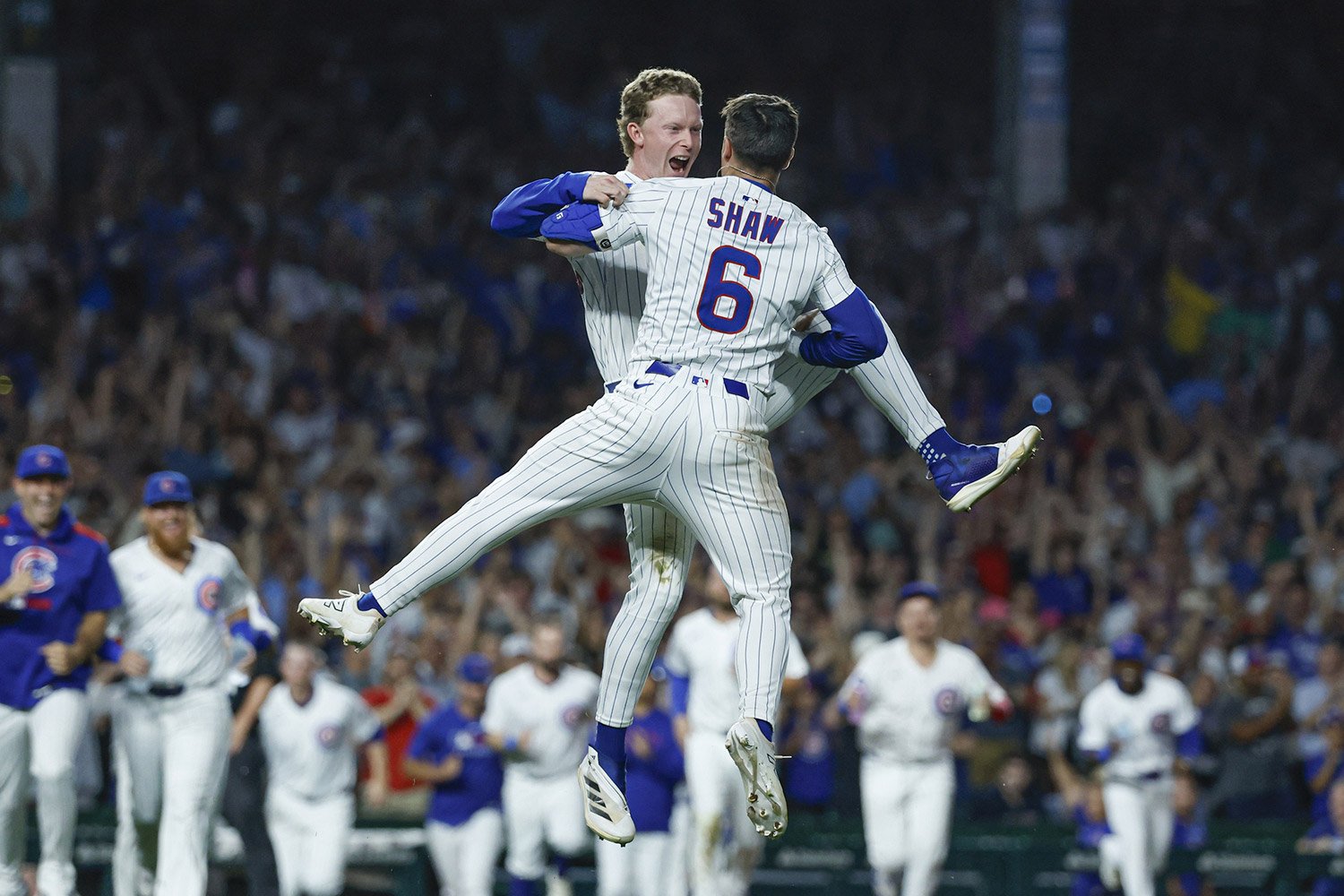 Defense never slumps. This is one of the old adages that coaches on every level preach. My high school coach in western Wisconsin preached it. I preached it as a varsity coach in my 20s. The Cubs are the embodiment of this axiom. In game two, the Cubs did not score. Pete Crow-Armstrong came up in the fourth inning, two outs, runners on first and second. The center fielder has been scuffling for months. At that time, he was striking out five of his first six at-bats in the postseason. Predictably, Crow-Armstrong failed to come through, weakly grounding out to first base. In game three, Matt Shaw stepped to the plate in a similar situation. Shaw ended the series with no hits in seven at-bats, striking out in five of them. None was as noteworthy as the sixth inning, with two runners on in a tight, tense atmosphere. Shaw did not rise to meet that moment and went down swinging, never looking like he had a chance. The Cubs left in two young, struggling hitters in tight situations. And it was the right call. Even when things didn't work out well, the managerial decisions here were sound. Counsell never blinked and left his struggling youngsters. When Craig Counsell speaks, he consistently emphasizes process over results. The Cubs have slavishly followed their process. Center Field has exclusively been Crow-Armstrong's domain, even when the hitting wasn't there. The defense was keeping him in the lineup. Matt Shaw has similarly been allowed to let his offense ebb and flow all season long, as long as his defense showed up every game. This was never going to change in October. Craig Counsell is a process-over-results manager. All season long, the Cubs have ridden the defense first. It's been the one constant this season and the main reason they won 92 games. There was no way that Counsell was going to compromise the defense. This time, the Cubs won the series against the San Diego Padres. The process was followed, and both players whom some fans clamored to be pinch-hit for made key defensive plays in their games. Matt Shaw, specifically, made a terrific play in the ninth inning in Game 3. Crow-Armstrong also made every play, giving fans a sense of calm any time a ball was hit to center. Nobody agrees with their manager all of the time. Craig Counsell, with his devotion to analytics, invokes a certain ire among Cub fans. But it is good to know what to expect going forward in the playoffs. Unless it's a ninth-inning, crucial at-bat, or tight spot, he will default to leaving his incredible defense intact. It paid off in the season, and it paid off in the Wild Card Series. Off to Milwaukee, where we shall see what twists and turns baseball hoists upon us. But we do know one thing: the defense is what has gotten the Cubs to this point. There's no need to change priorities now. They'll ride their gloves into Milwaukee and see what happens.
 -
Image courtesy of © Kamil Krzaczynski-Imagn Images Defense never slumps. This is one of the old adages that coaches on every level preach. My high school coach in western Wisconsin preached it. I preached it as a varsity coach in my 20s. The Cubs are the embodiment of this axiom. In game two, the Cubs did not score. Pete Crow-Armstrong came up in the fourth inning, two outs, runners on first and second. The center fielder has been scuffling for months. At that time, he was striking out five of his first six at-bats in the postseason. Predictably, Crow-Armstrong failed to come through, weakly grounding out to first base. In game three, Matt Shaw stepped to the plate in a similar situation. Shaw ended the series with no hits in seven at-bats, striking out in five of them. None was as noteworthy as the sixth inning, with two runners on in a tight, tense atmosphere. Shaw did not rise to meet that moment and went down swinging, never looking like he had a chance. The Cubs left in two young, struggling hitters in tight situations. And it was the right call. Even when things didn't work out well, the managerial decisions here were sound. Counsell never blinked and left his struggling youngsters. When Craig Counsell speaks, he consistently emphasizes process over results. The Cubs have slavishly followed their process. Center Field has exclusively been Crow-Armstrong's domain, even when the hitting wasn't there. The defense was keeping him in the lineup. Matt Shaw has similarly been allowed to let his offense ebb and flow all season long, as long as his defense showed up every game. This was never going to change in October. Craig Counsell is a process-over-results manager. All season long, the Cubs have ridden the defense first. It's been the one constant this season and the main reason they won 92 games. There was no way that Counsell was going to compromise the defense. This time, the Cubs won the series against the San Diego Padres. The process was followed, and both players whom some fans clamored to be pinch-hit for made key defensive plays in their games. Matt Shaw, specifically, made a terrific play in the ninth inning in Game 3. Crow-Armstrong also made every play, giving fans a sense of calm any time a ball was hit to center. Nobody agrees with their manager all of the time. Craig Counsell, with his devotion to analytics, invokes a certain ire among Cub fans. But it is good to know what to expect going forward in the playoffs. Unless it's a ninth-inning, crucial at-bat, or tight spot, he will default to leaving his incredible defense intact. It paid off in the season, and it paid off in the Wild Card Series. Off to Milwaukee, where we shall see what twists and turns baseball hoists upon us. But we do know one thing: the defense is what has gotten the Cubs to this point. There's no need to change priorities now. They'll ride their gloves into Milwaukee and see what happens. View full article
-
Consistency. This award, the Cubs Hitter of the Year, will not go to the most exciting Cub. It won't go to the highest paid Cub. It won't go to a flashy acquisition who may or may not have a major calf issue. In May, the Cubs offense was flying high, and Kyle Tucker and Pete Crow-Armstrong were legitimate MVP candidates. Michael Busch was looking like the 2025 Leon Durham. For the first half, the team averaged over five runs per game. Based on a league average OPS of .720, the Cubs far exceeded that total as a group with a stellar .771. Then, the second half hit. These are not great trends: Batting Average: from .256 first half to .237 in the second OBP: 325 down to .311 SLG: .446 to .390 WRC+ Team total 108 at the time of this writing. The Cubs struggled in the second half, except for one man. For this award, there will be one person and one only who remained consistent for the entire season. The Hitter of the Year is Nico Hoerner. Just look at that. Never below a .284 batting average. Never below a .330 OBP. In a season marked with inconsistency of key players, Nico has been a pillar of safe production. But there's more when the numbers are dug into. With two outs: .321/.367/.425. Nico has kept innings alive With runners in scoring position: .370/.422/.459. He's performed in clutch situations. High leverage: .333/.375/.441. WRC+ only has Hoerner at 112, or 12% over an average hitter. He's the kind of hitter that is hard to measure in a catch all stat, though. Don't be fooled by the One Stat; Nico Hoerner has been the best and most valuable Cub hitter for the season. Also Considered: Carson Kelly: Kelly was projected according to ZIPS to have a slash line of .220/.298/.347 in the preseason. With five games to go, he crushed the projections with a .252/.337/.437. He also has 17 home runs, much higher than his projected 8. Kelly was incredible in April. He hit seven of his longballs in that month with 21 RBI and a .360 batting average. When Jed Hoyer took some heat for talking about "overperforming projections," this is exactly what he meant. Kelly couldn't maintain his historic pace, but those stats still count in the aggregate. Home run signing for Hoyer, and while he never really had a chance at this award he does deserve mention. Kyle Tucker: The favorite for this award until that pesky finger, and then that even peskier calf. A 22 home run, 25 stolen base season is impressive, and his 139 WRC+ is in line with his career norms. The Cubs got what they paid for, but not at the volume they would have hoped. One can only wonder if buyer's remorse has set in. Now, the debate and fascinating part of Tucker is that he's a free agent, and Cam Smith is a promising rookie with six years of control. It will be fascinating to see how much money free agency can net him, and how much risk teams will assume based on his last two season's injury risk. Time will tell this, but it is a guarantee his agent will not be able to hold the prestigious Northside Baseball Hitter of the Year award up as proof of worth. Other players had stretches that were notable, such as Pete Crow-Armstrong, Michael Busch, and Matt Shaw. Ultimately, though, their cold streaks were just too damaging to be considered. The Cubs have had a solid offensive season, just not a consistent one. Nico Hoerner was an outlier here; Craig Counsell surely enjoyed penciling his production in the lineup every day. An unexpected award, but it is truly a deserved one. View full article
-
Image courtesy of © Dennis Wierzbicki-Imagn Images The Cubs will have some interesting decisions to make with their postseason roster once September 30 rolls around. First and foremost: Will they have 12 or 13 pitchers? If they opt for 12, which seems likely due to only needing three starting pitchers (at least for the Wild Card Round), they very well might add an unexpected piece to the mix on the bench. Billy Hamilton had not played a major league game since 2023, where he played just three games for the Chicago White Sox. He spent 2024 and most of 2025 in the Mexican League. In 2024, on four different teams, Hamilton stole 80 bases, and in 2025, had seven swipes in limited playing time. There's no doubting that the speed is still there. The Cubs saw the speed, and convinced Hamilton to come to Iowa just in time to remain postseason eligible. He isn't pretending to be a hitter; Hamilton has only stepped up to the plate twice. He has played defense and stolen bases. This would be the role the Cubs would envision for the playoffs. If, in a tight game, someone who is speed challenged laces a single, there would be Hamilton, trotting out to the bases. Really, that's the only thing he would be asked to do. It's a roster luxury to have a pinch runner like Hamilton. Terrance Gore played this role for the Kansas City Royals in 2015 in their championship run. He also filled the role for the Cubs in 2018 and scored their lone Wild Card Game run. Unfortunately, due to the 13-inning game, he tallied two other at bats which were both strikeouts. Gore would be the nearest comparison for Hamilton. If the Cubs do add him for the Wild Card Round, they will have to ensure he's not at the plate in any key moments. Michael Martinez was never intended by Cleveland to bat with the World Series on the line in 2016; he was pressed into action as a defensive replacement. Hamilton absolutely cannot be placed in that situation. It would be ideal to have, say, Kevin Alcantara in that role, or someone else who could pinch run and also hit if needed. The Cubs roster is not optimized at this point. But, Hamilton could result in an extra run every time he plays, and in any given game that can be valuable. Time will tell, but don't be surprised if Hamilton runs the bases in a crucial moment in the playoffs. He could swing a game without even swinging a bat. The speedster's time on the roster would likely be as fast as his sprint speed, though. The Cubs will surely roster 13 pitchers for the NLDS, assuming they get that far. Hamilton would then be a fun luxury and historical footnote. And if the Cubs go all the way, Hamilton's ring will bling just as brightly. View full article
-
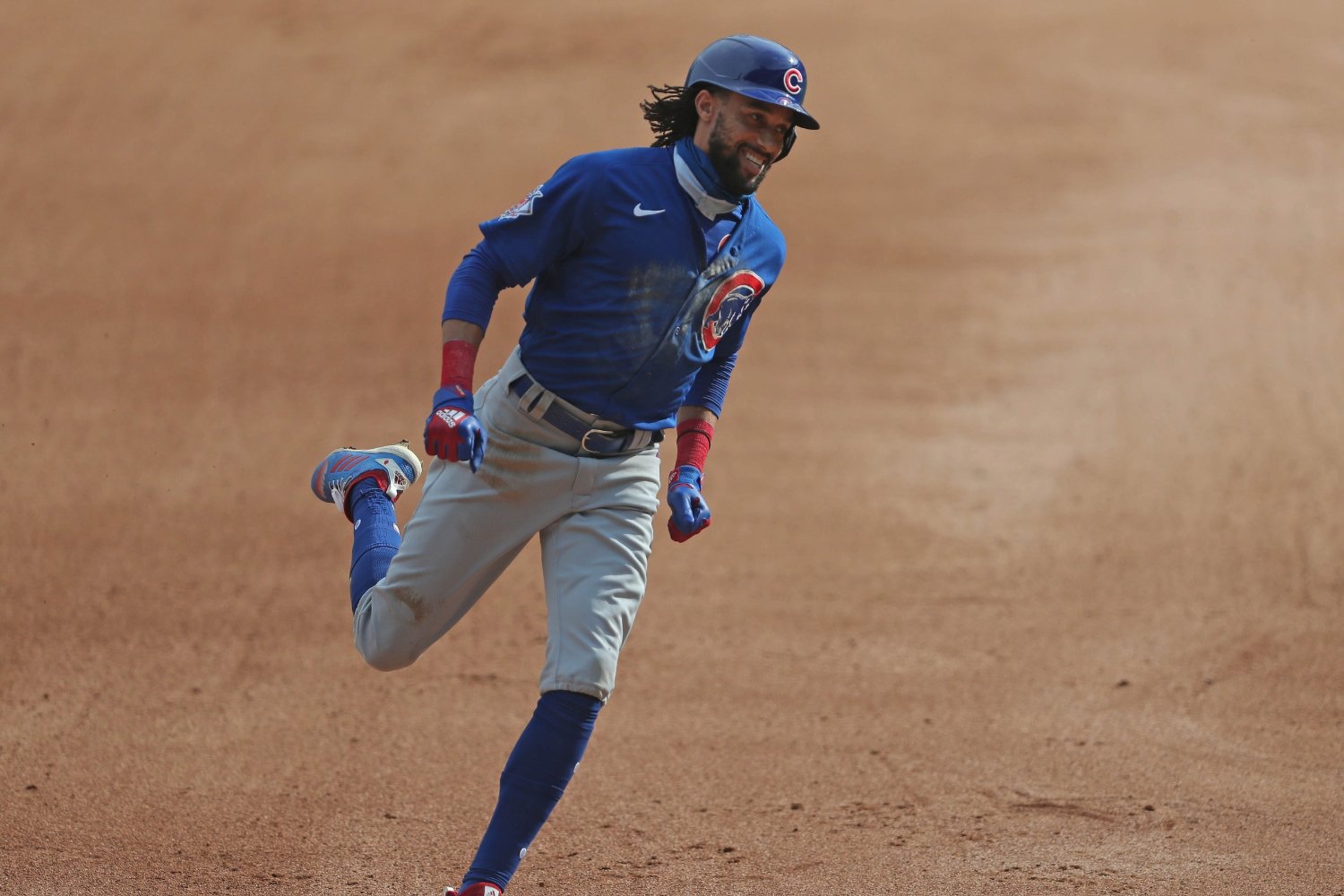 The Cubs will have some interesting decisions to make with their postseason roster once September 30 rolls around. First and foremost: Will they have 12 or 13 pitchers? If they opt for 12, which seems likely due to only needing three starting pitchers (at least for the Wild Card Round), they very well might add an unexpected piece to the mix on the bench. Billy Hamilton had not played a major league game since 2023, where he played just three games for the Chicago White Sox. He spent 2024 and most of 2025 in the Mexican League. In 2024, on four different teams, Hamilton stole 80 bases, and in 2025, had seven swipes in limited playing time. There's no doubting that the speed is still there. The Cubs saw the speed, and convinced Hamilton to come to Iowa just in time to remain postseason eligible. He isn't pretending to be a hitter; Hamilton has only stepped up to the plate twice. He has played defense and stolen bases. This would be the role the Cubs would envision for the playoffs. If, in a tight game, someone who is speed challenged laces a single, there would be Hamilton, trotting out to the bases. Really, that's the only thing he would be asked to do. It's a roster luxury to have a pinch runner like Hamilton. Terrance Gore played this role for the Kansas City Royals in 2015 in their championship run. He also filled the role for the Cubs in 2018 and scored their lone Wild Card Game run. Unfortunately, due to the 13-inning game, he tallied two other at bats which were both strikeouts. Gore would be the nearest comparison for Hamilton. If the Cubs do add him for the Wild Card Round, they will have to ensure he's not at the plate in any key moments. Michael Martinez was never intended by Cleveland to bat with the World Series on the line in 2016; he was pressed into action as a defensive replacement. Hamilton absolutely cannot be placed in that situation. It would be ideal to have, say, Kevin Alcantara in that role, or someone else who could pinch run and also hit if needed. The Cubs roster is not optimized at this point. But, Hamilton could result in an extra run every time he plays, and in any given game that can be valuable. Time will tell, but don't be surprised if Hamilton runs the bases in a crucial moment in the playoffs. He could swing a game without even swinging a bat. The speedster's time on the roster would likely be as fast as his sprint speed, though. The Cubs will surely roster 13 pitchers for the NLDS, assuming they get that far. Hamilton would then be a fun luxury and historical footnote. And if the Cubs go all the way, Hamilton's ring will bling just as brightly.
 -
A Comprehensive Chicago Cubs Wild Card Series Starting Rotation Plan
Brian Kelder posted an article in Cubs
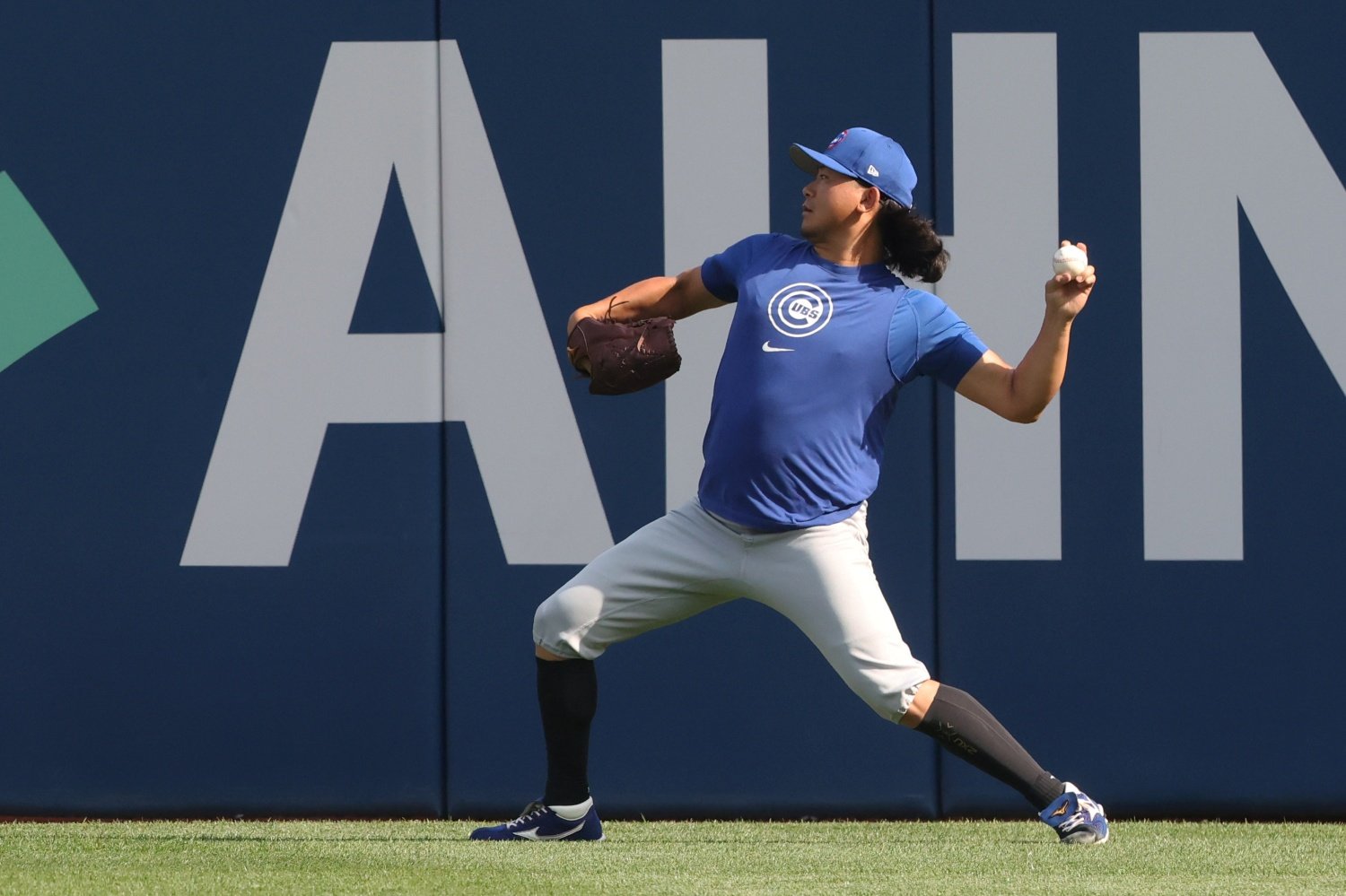 Craig Counsell was hired for this. Eight million dollars should buy a great strategist for the playoffs. Luckily for Counsell, though, he doesn't have to put that massive brain to work right now. He can just read this article, set his pitching lineups, and go puff a victory cigar. Here is the Cubs' optimal pitching plan for the Wild Card Series. Game 1: Shota Imanaga The Padres have a number of left-handed bats in the lineup. Two of them, Luis Arraez and Jackson Merrill, have greater than 50-point drops in their on-base percentage against left-handed pitching this year. Gavin Sheets and Ryan O'Hearn also hit left-handed, and while they have been fairly split-neutral this season, historically, they struggle against same-handed pitching. Even ultra-talented right fielder Fernando Tatis Jr. is less effective against southpaws: his batting average drops 55 points, and his slugging craters down to .344. Manny Machado and Xander Bogaerts, although dangerous bats, are not lefty mashers. It makes sense to weaken the Padres from the start. Imanaga is the most likely Cubs starter to go deep into a game, which is important with a three-game set. A short series is always a challenge for a staff. Imanaga has averaged almost six innings per start. More importantly, only once has he failed to go five innings (two, if you count the Tokyo game). This stability will give Counsell more options in the later games, as you will see. After Imanaga tires, the short relievers can take over. Caleb Thielbar and Drew Pomeranz can handle lefty-heavy parts of the lineup, Brad Keller can take the toughest stretch in the later innings, and Andrew Kittredge can act as the nominal closer. The bulk relievers would be fresh for the next game or two. Game 2: Cade Horton Everyone knows he's been good. No—he's been better. With a 1.03 ERA and a 0.77 WHIP over his last 12 starts, Horton is giving 2015 Jake Arrieta vibes. His duel with Paul Skenes on September 16 was electric; he's clearly not fazed by the spotlight. So why not use him in the first game? It's the uncertainty. Not performance, although his metrics don't support this level of performance. It's the stamina portion. Since August began, Horton has averaged 74 pitches thrown per game—and that's if you throw out his truncated appearance Tuesday. His maximum in this time is 87, and the minimum is 61 (or 29, now). We're also in uncharted territory for innings pitched in Horton's career. Due to injuries and extremely careful pitch count monitoring, he's at a career high 118 innings pitched in 23 games, an average barely over 5 per start. Playoff baseball is also a step up in intensity; nobody really knows how the rookie will respond. The Cubs should be confident in this start, but cautious, as well. For this reason, Colin Rea should be warmed and ready to come in at early signs of fatigue or struggle. If this happens earlier than expected—say, the third inning—Rea could pitch several innings. While he has been primarily a starter in his career, in 62 relief innings, Rea has an outstanding 2.32 ERA. Ideally, Horton would nail down five hitless innings, but Rea gives that buffer. If Horton and Rea get through the sixth inning, the Keller/Pomeranz/Thielbar/Kittredge combo should be able to piece together nine more outs. The strategy changes some based on the Game 1 outcome. If the Cubs lose that, it's an all-hands-on-deck situation in Game 2. In that case, you would cycle through shorter-inning relievers faster, hoping to cobble together scoreless frames that way. Michael Soroka would be instrumental there, for example. If one of the first two games is a blowout, Aaron Civale or Javier Assad would be available to soak up those innings and save the higher-leverage pitchers for game 3. Speaking of......... Game 3: Matthew Boyd No, Boyd has not finished the season in the All-Star form he began it in. His ERA is an unsightly 4.74 in the second half. The aforementioned left-handedness should get him the nod in Game 3, though. Jameson Taillon would pitch in an emergency situation—unless Daniel Palencia is there for his spot, adding another electric arm to the late innings. This would be a short outing for Boyd, only two times through the order at most, and less if the stuff isn't sharp. The Cubs will have six short relievers to finish the game off. A rough sketch: Boyd: 9-12 batters, 3-4 innings Civale/Assad: 1-2 innings, bridge to the back of the bullpen OR Boyd: early departure Taillon: gets into the sixth inning Here's a predicted list of pitchers for the postseason roster, and their roles. Starters: Cade Horton, Shota Imanaga, Matthew Boyd Short Relievers: Andrew Kittredge, Brad Keller, Drew Pomeranz, Caleb Thielbar, Taylor Rogers, Michael Soroka Long Relief: Colin Rea, Javier Assad, Jameson Taillon Health Wild Cards: Daniel Palencia, Soroka, Aaron Civale Stay Away: Ben Brown, Porter Hodge. It's been Counsell's strength as a manager this season: managing the pitching staff. From navigating Justin Steele's elbow injury to avoiding overuse of relief arms, this area has been Counsell's biggest source of obvious value to the team. He'll be tested this October, but should be ready for the challenge. It's then up to the arms on the roster to produce.
 -
Image courtesy of © Charles LeClaire-Imagn Images Craig Counsell was hired for this. Eight million dollars should buy a great strategist for the playoffs. Luckily for Counsell, though, he doesn't have to put that massive brain to work right now. He can just read this article, set his pitching lineups, and go puff a victory cigar. Here is the Cubs' optimal pitching plan for the Wild Card Series. Game 1: Shota Imanaga The Padres have a number of left-handed bats in the lineup. Two of them, Luis Arraez and Jackson Merrill, have greater than 50-point drops in their on-base percentage against left-handed pitching this year. Gavin Sheets and Ryan O'Hearn also hit left-handed, and while they have been fairly split-neutral this season, historically, they struggle against same-handed pitching. Even ultra-talented right fielder Fernando Tatis Jr. is less effective against southpaws: his batting average drops 55 points, and his slugging craters down to .344. Manny Machado and Xander Bogaerts, although dangerous bats, are not lefty mashers. It makes sense to weaken the Padres from the start. Imanaga is the most likely Cubs starter to go deep into a game, which is important with a three-game set. A short series is always a challenge for a staff. Imanaga has averaged almost six innings per start. More importantly, only once has he failed to go five innings (two, if you count the Tokyo game). This stability will give Counsell more options in the later games, as you will see. After Imanaga tires, the short relievers can take over. Caleb Thielbar and Drew Pomeranz can handle lefty-heavy parts of the lineup, Brad Keller can take the toughest stretch in the later innings, and Andrew Kittredge can act as the nominal closer. The bulk relievers would be fresh for the next game or two. Game 2: Cade Horton Everyone knows he's been good. No—he's been better. With a 1.03 ERA and a 0.77 WHIP over his last 12 starts, Horton is giving 2015 Jake Arrieta vibes. His duel with Paul Skenes on September 16 was electric; he's clearly not fazed by the spotlight. So why not use him in the first game? It's the uncertainty. Not performance, although his metrics don't support this level of performance. It's the stamina portion. Since August began, Horton has averaged 74 pitches thrown per game—and that's if you throw out his truncated appearance Tuesday. His maximum in this time is 87, and the minimum is 61 (or 29, now). We're also in uncharted territory for innings pitched in Horton's career. Due to injuries and extremely careful pitch count monitoring, he's at a career high 118 innings pitched in 23 games, an average barely over 5 per start. Playoff baseball is also a step up in intensity; nobody really knows how the rookie will respond. The Cubs should be confident in this start, but cautious, as well. For this reason, Colin Rea should be warmed and ready to come in at early signs of fatigue or struggle. If this happens earlier than expected—say, the third inning—Rea could pitch several innings. While he has been primarily a starter in his career, in 62 relief innings, Rea has an outstanding 2.32 ERA. Ideally, Horton would nail down five hitless innings, but Rea gives that buffer. If Horton and Rea get through the sixth inning, the Keller/Pomeranz/Thielbar/Kittredge combo should be able to piece together nine more outs. The strategy changes some based on the Game 1 outcome. If the Cubs lose that, it's an all-hands-on-deck situation in Game 2. In that case, you would cycle through shorter-inning relievers faster, hoping to cobble together scoreless frames that way. Michael Soroka would be instrumental there, for example. If one of the first two games is a blowout, Aaron Civale or Javier Assad would be available to soak up those innings and save the higher-leverage pitchers for game 3. Speaking of......... Game 3: Matthew Boyd No, Boyd has not finished the season in the All-Star form he began it in. His ERA is an unsightly 4.74 in the second half. The aforementioned left-handedness should get him the nod in Game 3, though. Jameson Taillon would pitch in an emergency situation—unless Daniel Palencia is there for his spot, adding another electric arm to the late innings. This would be a short outing for Boyd, only two times through the order at most, and less if the stuff isn't sharp. The Cubs will have six short relievers to finish the game off. A rough sketch: Boyd: 9-12 batters, 3-4 innings Civale/Assad: 1-2 innings, bridge to the back of the bullpen OR Boyd: early departure Taillon: gets into the sixth inning Here's a predicted list of pitchers for the postseason roster, and their roles. Starters: Cade Horton, Shota Imanaga, Matthew Boyd Short Relievers: Andrew Kittredge, Brad Keller, Drew Pomeranz, Caleb Thielbar, Taylor Rogers, Michael Soroka Long Relief: Colin Rea, Javier Assad, Jameson Taillon Health Wild Cards: Daniel Palencia, Soroka, Aaron Civale Stay Away: Ben Brown, Porter Hodge. It's been Counsell's strength as a manager this season: managing the pitching staff. From navigating Justin Steele's elbow injury to avoiding overuse of relief arms, this area has been Counsell's biggest source of obvious value to the team. He'll be tested this October, but should be ready for the challenge. It's then up to the arms on the roster to produce. View full article
-
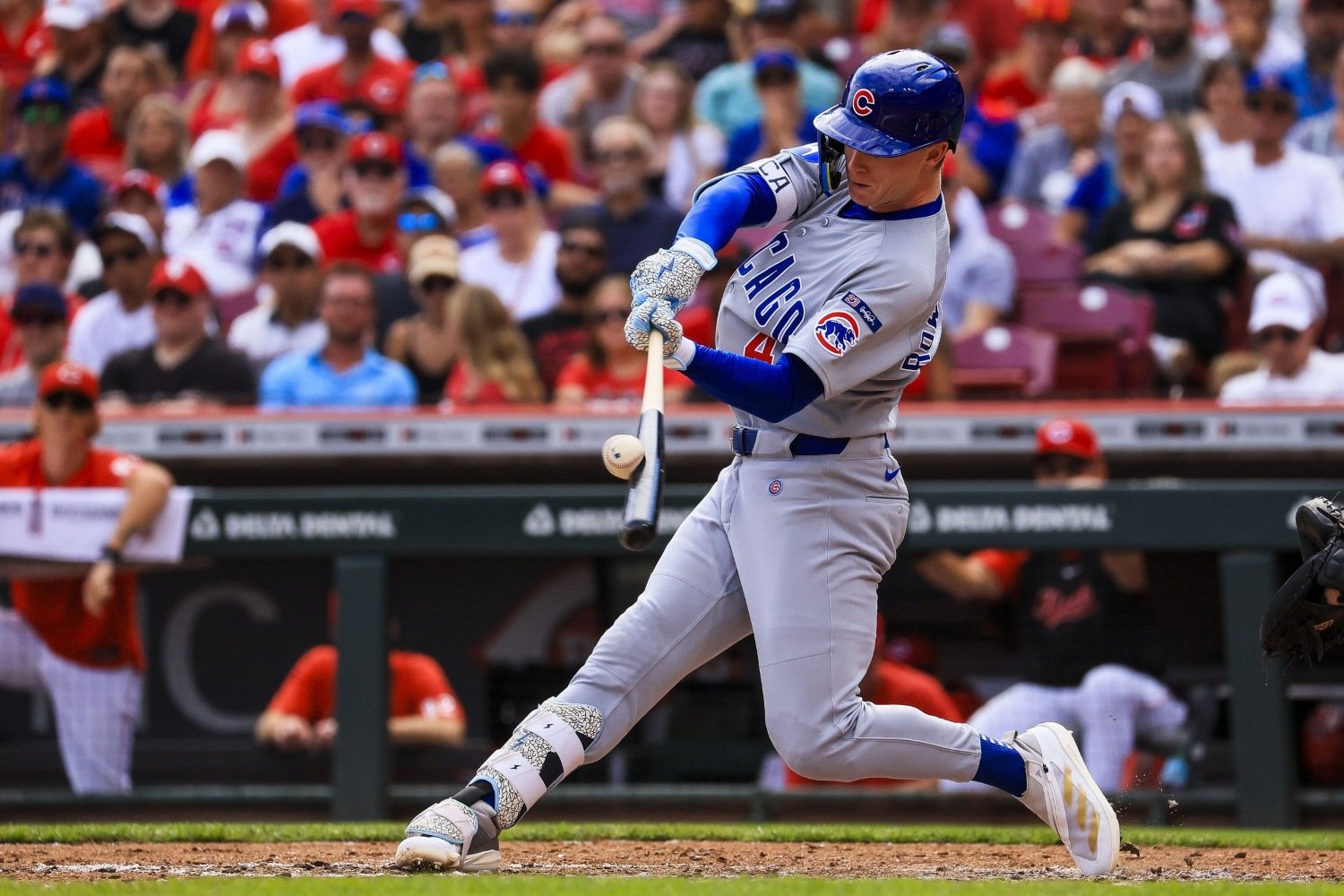 Cub fans can be a cynical lot. The second half of Pete Crow-Armstrong's 2025 season feeds into that. He's been bad in the second half. He has a woeful .259 on-base percentage and a lousy .352 slugging average in the second half, a far cry from the first half (.302 and .544). Memories of 2023 Christopher Morel popped into a few people's heads. Are the comparisons apt? Morel—a high-energy, nose-pierced, toolsy player—first came up in 2022, but his breakout came in 2023, when he socked 26 home runs and slugged .508. Much hype was attached to his 2024; he did not deliver. Morel didn't top .200 in batting average before he was traded to Tampa Bay as part of the Isaac Paredes trade. On the surface, the two players seem similar at the plate. They employ a pull-heavy, power-oriented swing, and are similarly built physically. Both have had electric stretches at the plate. Morel hit .281/.345/.545 over his first 250 plate appearances of 2023. Crow-Armstrong had a span of 328 trips to the plate that ran into the All-Star break over which he batted .280/.311/.606. Morel fell off badly (.268 OBP for the rest of 2023), though, and hasn't rebounded (.692 OPS in Tampa); Crow-Armstrong has cratered, as well. The question is: can we expect a different fate for Crow-Armstrong, in the medium term? The superficial similarities leap out, but the truth is: They aren't that similar! Morel was a much more patient hitter, waiting for his pitch and hitting it hard at a high rate. Crow-Armstrong, conversely, does not walk at a high level, but makes more contact. Crow-Armstrong's swing is very steep; Morel's is one of the league's flattest. The destination is about the same, but the journeys that take them there are quite different. Let's talk batted-ball profile. Stat Category Crow-Armstrong Morel League Average Launch Angle 18.9 12.4 12.4 Pull % 44 47 37 Pull in Air 28.7 26.7 16.7 Ground Ball % 42 42 42 Tilt 35° 29° 32 These are fascinating. They both pull the ball at roughly the same rate, and also pull the ball in the air at nearly identical ones. Their ground ball rate is identical. An astute fan would point out the extreme value that Crow-Armstrong has in the field and on the bases; Morel has turned out to work only as a mediocre defensive left fielder. This is all true, and will ensure a higher overall floor for Crow-Armstrong. Purely at the plate, though, he's struggled, and that has stripped him of MVP candidate talk. Some great players do have a tilt higher than his, but Crow-Armstrong is an outlier in plate approach. To make the leap, he'll have to choose his pitches better, and strike on his terms more. The list below is notable for the walk rates: Player Tilt Walk Rate Riley Greene 45 33% Aaron Judge 38 100% Freddie Freeman 42 67% James Wood 42 90% Pete Crow-Armstrong 35 7% Crow-Armstrong's average launch angle is 20°, which places him 18th in the league. Cal Raleigh leads the league at 25°, and he's obviously been a great power hitter. Crow-Armstrong's is higher than noted sluggers Aaron Judge and Kyle Schwarber. He doesn't have a power hitter's frame, but he does have a power hitter's approach. The average player swings at 45% of pitches. Crow-Armstrong swings at 61%. He needs to fix this, or risk a boom-and-bust profile for the rest of his career. Players with his swing profile who have had success had much more patient plate approaches. They selectively look for their pitch and attack it. Crow-Armstrong has just looked to attack. Crow-Armstrong and Morel have shown similar results at some similar career junctures, but the approach they have taken is vastly different. In hindsight, metrics did agree with Morel being a solid player. He just lacked the bat control to make consistent contact. Crow-Armstrong does not lack bat control. He simply lacks a command of the strike zone, and his approach is to seek and destroy any pitch, not wait for his. Yes, the second-half slump stings. But Crow-Armstrong’s combination of defense, speed, and a unique swing profile makes him a different case than Morel. If he finds even league-average discipline at the plate, the MVP chatter that briefly swirled in the first half could return for good.
 -
Image courtesy of © Katie Stratman-Imagn Images Cub fans can be a cynical lot. The second half of Pete Crow-Armstrong's 2025 season feeds into that. He's been bad in the second half. He has a woeful .259 on-base percentage and a lousy .352 slugging average in the second half, a far cry from the first half (.302 and .544). Memories of 2023 Christopher Morel popped into a few people's heads. Are the comparisons apt? Morel—a high-energy, nose-pierced, toolsy player—first came up in 2022, but his breakout came in 2023, when he socked 26 home runs and slugged .508. Much hype was attached to his 2024; he did not deliver. Morel didn't top .200 in batting average before he was traded to Tampa Bay as part of the Isaac Paredes trade. On the surface, the two players seem similar at the plate. They employ a pull-heavy, power-oriented swing, and are similarly built physically. Both have had electric stretches at the plate. Morel hit .281/.345/.545 over his first 250 plate appearances of 2023. Crow-Armstrong had a span of 328 trips to the plate that ran into the All-Star break over which he batted .280/.311/.606. Morel fell off badly (.268 OBP for the rest of 2023), though, and hasn't rebounded (.692 OPS in Tampa); Crow-Armstrong has cratered, as well. The question is: can we expect a different fate for Crow-Armstrong, in the medium term? The superficial similarities leap out, but the truth is: They aren't that similar! Morel was a much more patient hitter, waiting for his pitch and hitting it hard at a high rate. Crow-Armstrong, conversely, does not walk at a high level, but makes more contact. Crow-Armstrong's swing is very steep; Morel's is one of the league's flattest. The destination is about the same, but the journeys that take them there are quite different. Let's talk batted-ball profile. Stat Category Crow-Armstrong Morel League Average Launch Angle 18.9 12.4 12.4 Pull % 44 47 37 Pull in Air 28.7 26.7 16.7 Ground Ball % 42 42 42 Tilt 35° 29° 32 These are fascinating. They both pull the ball at roughly the same rate, and also pull the ball in the air at nearly identical ones. Their ground ball rate is identical. An astute fan would point out the extreme value that Crow-Armstrong has in the field and on the bases; Morel has turned out to work only as a mediocre defensive left fielder. This is all true, and will ensure a higher overall floor for Crow-Armstrong. Purely at the plate, though, he's struggled, and that has stripped him of MVP candidate talk. Some great players do have a tilt higher than his, but Crow-Armstrong is an outlier in plate approach. To make the leap, he'll have to choose his pitches better, and strike on his terms more. The list below is notable for the walk rates: Player Tilt Walk Rate Riley Greene 45 33% Aaron Judge 38 100% Freddie Freeman 42 67% James Wood 42 90% Pete Crow-Armstrong 35 7% Crow-Armstrong's average launch angle is 20°, which places him 18th in the league. Cal Raleigh leads the league at 25°, and he's obviously been a great power hitter. Crow-Armstrong's is higher than noted sluggers Aaron Judge and Kyle Schwarber. He doesn't have a power hitter's frame, but he does have a power hitter's approach. The average player swings at 45% of pitches. Crow-Armstrong swings at 61%. He needs to fix this, or risk a boom-and-bust profile for the rest of his career. Players with his swing profile who have had success had much more patient plate approaches. They selectively look for their pitch and attack it. Crow-Armstrong has just looked to attack. Crow-Armstrong and Morel have shown similar results at some similar career junctures, but the approach they have taken is vastly different. In hindsight, metrics did agree with Morel being a solid player. He just lacked the bat control to make consistent contact. Crow-Armstrong does not lack bat control. He simply lacks a command of the strike zone, and his approach is to seek and destroy any pitch, not wait for his. Yes, the second-half slump stings. But Crow-Armstrong’s combination of defense, speed, and a unique swing profile makes him a different case than Morel. If he finds even league-average discipline at the plate, the MVP chatter that briefly swirled in the first half could return for good. View full article
-
Image courtesy of © Gregory Fisher-Imagn Images Daniel Palencia, newly minted Closer With Entrance Music™️, left Sunday's loss to the Nationals with what has been diagnosed as a posterior scapular strain in his throwing shoulder. The Cubs will be forced to scramble to fill bullpen roles in the last month of the season and (in all likelihood) the postseason. What will they do to patch the hole? Strains in the area where Palencia suffered his generally require weeks to heal, followed by ramp-up and rehab. If you remove injuries like this one that happened in September (to avoid the bad data of players whose time missed was artificially curtailed by the end of the season), the average return time is roughly 10 weeks, and the median is eight weeks. Game 7 of the 2025 World Series is just under eight weeks from now; Palencia's season is almost certainly over. Palencia has been struggling since August, when his ERA hit its lowest mark of 1.36 and he was maintaining a .174 batting average against. Since then, his ERA has been 8.74 ,with a .377 batting average against; it's fair to wonder if this has been an issue since then. Craig Counsell also alluded to a previous shoulder ailment that wasn't a "big deal," but it's become a big deal this time. The Cubs do have options, but it will require a shuffling of roles. BRAD KELLER Keller has been a complete revelation this season, but really found his groove in August. Since August 1, he's struck out 20 of the 55 batters he's faced; allowed just nine baserunners; and given up no earned runs. He doesn'tt have concerning split numbers (.451 OPS vs. right-handed bats, .576 vs. left-handed ones). He's been the relief ace who doesn't pitch in the ninth inning, allowing Counsell to utilize him in the highest-leverage situations. It would be a fitting decision to slot him as closer, but understandable if they utilize him in the role in which he's excelled all season. ANDREW KITTREDGE At 34, Kittredge has never filled a full-time closer role, but that doesn't mean he's incapable of it. He does have wipeout stuff, as evidenced by 18 strikeouts in his 14 innings as a Cub. Home runs have led to his two poor outings, leading to a blown save (which the Cubs eventually won on August 22 vs. the Angels) and a complete meltdown on August 5 vs. the Reds. Besides these, he's been a solid reliever. He has tallied two saves on the team, as well. Paired with his high-leverage usage, six holds and an extra-innings win last week, the case could be made that Counsell will trust him first to man the ninth. CALEB THIELBAR Thielbar's performance would merit a look in the later innings. A 2.12 ERA with a WHIP of 0.82 plays in any inning, especially the ninth. Thielbar is a lefty, though, and has allowed only a .132 batting average to lefty batters. The Cubs will continue to deploy him as their lefty destroyer, giving them flexibility in the earlier innings. JAVIER ASSAD This won't happen, but remember those games in the World Baseball Classic? Assad was used as a reliever, and was electric in his short bursts, hitting 97 and fist pumping his way around the mound. As the cool kids say, he had aura. It's unlikely—they'll need bulk innings from him—but it would be a fun option. JAXON WIGGINS Brett Taylor at Bleacher Nation wrote on this possibility, and it is interesting, but terrifying. The Athletic reported that Counsell watched Wiggins's last start in Iowa. Wiggins debuted this season in High A, and has made it to the Triple-A level. He's a top-100 prospect who would routinely hit 100 miles per hour with his heater out of the pen. There are some famous, recent examples of top prospects coming and helping in playoff runs: 2002 Francisco Rodriguez: 5 IP in regular season, 18.2 in playoffs as the Angels won the World Series 2008 David Price: 14 IP in regular season, pitched in 5 of the Rays' wins in their postseason run Wiggins would be fun, exciting, and extremely risky. Given the caution used in playing time for youngsters like Owen Caissie and Moisés Ballesteros, this would be a Hail Mary move from an organization that typically eschews such nonsense. The reality is that the team will probably just backfill with one of their returning, injured starter types (Jameson Taillon and/or Michael Soroka) and shove everyone up the bullpen ladder one rung, without Palencia. It's a huge bummer to think about, but baseball can be a series of bummers. The Cubs are blessed with a great bullpen. No team wants this type of disruption, but the Cubs are well suited to handle it. Expect Kittredge to get the first crack at the ninth, with Keller waiting in the wings and Thielbar as the matchup weapon. Losing Palencia stings, but this bullpen is built to survive September turbulence. We can all hope that it further solidifies the Cubs' ability to perform under suboptimal circumstances. View full article
-
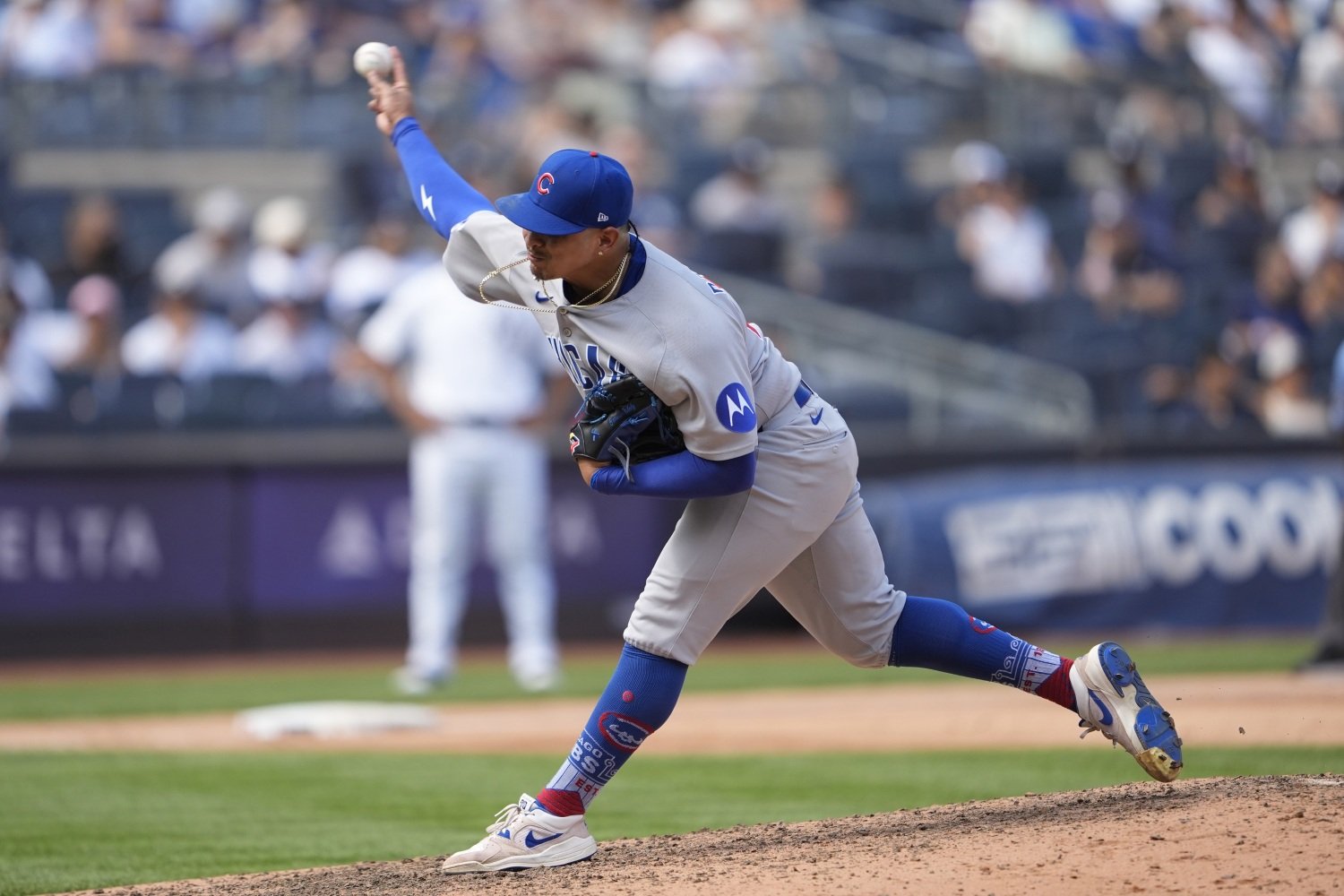 Daniel Palencia, newly minted Closer With Entrance Music™️, left Sunday's loss to the Nationals with what has been diagnosed as a posterior scapular strain in his throwing shoulder. The Cubs will be forced to scramble to fill bullpen roles in the last month of the season and (in all likelihood) the postseason. What will they do to patch the hole? Strains in the area where Palencia suffered his generally require weeks to heal, followed by ramp-up and rehab. If you remove injuries like this one that happened in September (to avoid the bad data of players whose time missed was artificially curtailed by the end of the season), the average return time is roughly 10 weeks, and the median is eight weeks. Game 7 of the 2025 World Series is just under eight weeks from now; Palencia's season is almost certainly over. Palencia has been struggling since August, when his ERA hit its lowest mark of 1.36 and he was maintaining a .174 batting average against. Since then, his ERA has been 8.74 ,with a .377 batting average against; it's fair to wonder if this has been an issue since then. Craig Counsell also alluded to a previous shoulder ailment that wasn't a "big deal," but it's become a big deal this time. The Cubs do have options, but it will require a shuffling of roles. BRAD KELLER Keller has been a complete revelation this season, but really found his groove in August. Since August 1, he's struck out 20 of the 55 batters he's faced; allowed just nine baserunners; and given up no earned runs. He doesn'tt have concerning split numbers (.451 OPS vs. right-handed bats, .576 vs. left-handed ones). He's been the relief ace who doesn't pitch in the ninth inning, allowing Counsell to utilize him in the highest-leverage situations. It would be a fitting decision to slot him as closer, but understandable if they utilize him in the role in which he's excelled all season. ANDREW KITTREDGE At 34, Kittredge has never filled a full-time closer role, but that doesn't mean he's incapable of it. He does have wipeout stuff, as evidenced by 18 strikeouts in his 14 innings as a Cub. Home runs have led to his two poor outings, leading to a blown save (which the Cubs eventually won on August 22 vs. the Angels) and a complete meltdown on August 5 vs. the Reds. Besides these, he's been a solid reliever. He has tallied two saves on the team, as well. Paired with his high-leverage usage, six holds and an extra-innings win last week, the case could be made that Counsell will trust him first to man the ninth. CALEB THIELBAR Thielbar's performance would merit a look in the later innings. A 2.12 ERA with a WHIP of 0.82 plays in any inning, especially the ninth. Thielbar is a lefty, though, and has allowed only a .132 batting average to lefty batters. The Cubs will continue to deploy him as their lefty destroyer, giving them flexibility in the earlier innings. JAVIER ASSAD This won't happen, but remember those games in the World Baseball Classic? Assad was used as a reliever, and was electric in his short bursts, hitting 97 and fist pumping his way around the mound. As the cool kids say, he had aura. It's unlikely—they'll need bulk innings from him—but it would be a fun option. JAXON WIGGINS Brett Taylor at Bleacher Nation wrote on this possibility, and it is interesting, but terrifying. The Athletic reported that Counsell watched Wiggins's last start in Iowa. Wiggins debuted this season in High A, and has made it to the Triple-A level. He's a top-100 prospect who would routinely hit 100 miles per hour with his heater out of the pen. There are some famous, recent examples of top prospects coming and helping in playoff runs: 2002 Francisco Rodriguez: 5 IP in regular season, 18.2 in playoffs as the Angels won the World Series 2008 David Price: 14 IP in regular season, pitched in 5 of the Rays' wins in their postseason run Wiggins would be fun, exciting, and extremely risky. Given the caution used in playing time for youngsters like Owen Caissie and Moisés Ballesteros, this would be a Hail Mary move from an organization that typically eschews such nonsense. The reality is that the team will probably just backfill with one of their returning, injured starter types (Jameson Taillon and/or Michael Soroka) and shove everyone up the bullpen ladder one rung, without Palencia. It's a huge bummer to think about, but baseball can be a series of bummers. The Cubs are blessed with a great bullpen. No team wants this type of disruption, but the Cubs are well suited to handle it. Expect Kittredge to get the first crack at the ninth, with Keller waiting in the wings and Thielbar as the matchup weapon. Losing Palencia stings, but this bullpen is built to survive September turbulence. We can all hope that it further solidifies the Cubs' ability to perform under suboptimal circumstances.
- 1 comment
-
- 1
-

-
- daniel palencia
- jaxon wiggins
- (and 2 more)
-
ESPN Doesn't Project a Rosy Future for the Cubs. Are They Right?
Brian Kelder posted an article in Cubs
 Outstanding ESPN reporter Kiley McDaniel published earlier this week that has quite a lot to say about the state of Major League Baseball. It's an outstanding read, focusing on the core talent that MLB teams have locked in for two full seasons after this one. The Cubs did not fare particularly well in this. The article placed them 17th, in the bottom half of teams in the league. Players are broken down into the following tiers: Elite (5+WAR, All-Star talent, MVP potential), Plus (3-5 WAR types), and Solid (1-3 WAR, solid starter or good role player). The Cubs had one Elite (Pete Crow-Armstrong), two Plus (Dansby Swanson and Michael Busch), and 13 Solid players (too numerous to place a cumbersome list in front of you). Of the solid players, seven of the 13 are prospects, one is an injured Justin Steele, and Miguel Amaya is a debatable add given his struggles to stay on the field. The first takeaway here is that the Cubs have a ton of work to do on this front. They only have three players in their lineup in the top two tiers that are under control beyond 2026. Given past history, it's quite unlikely that Ian Happ, Seiya Suzuki, and Kyle Tucker make up the Cubs outfield in 2027. The rotation is similarly not locked up, with only Cade Horton guaranteed to be around at that time (who McDaniel grossly underestimates as a "Solid" piece). This season has (mostly) been a pleasure to watch, but there's always been a bit of a stain to it; since the beginning, it has felt like a one-year situation. The position players whose contracts are ending soon are going to be over 30, not the type of players that Jed Hoyer typically invests in. A quick look at the pitching staff reveals mostly the same. Matthew Boyd, Caleb Thielbar, and the parade of elderly relievers have been great, but is this repeatable? The stench of a one-year wonder in the vein of the 2021 Giants or the White Sox of that same season follows this team. Hoyer surely planned to have the farm system replace the aging veterans. That system has produced some great talent, but it hasn't kept up with graduations and trades, getting ranked 19th by ESPN and 22 by Fangraphs in mid-season updates. None of the prospects according to the Fangraphs' Future Value system project to have more WAR than the players currently on the roster. Players like Jonathan Long, Owen Caissie, and Jefferson Rojas simply don't project to outperform Ian Happ, Nico Hoerner, and Seiya Suzuki, though they do at least have relatively high ceilings. Pitching development, a major plank in the Cubs' platform, has basically failed in the minors. Look at the top prospects in pitching for Chicago: Brandon Birdsell: Injured after just eight starts and 32 innings, likely to miss most or all of 2026 Jordan Wicks: 8.71 ERA while riding the Iowa to Chicago shuttle Jaxon Wiggins: missed significant time with injury, which is to be expected with a 100 MPH fastball The rest of the top 30 organizational prospects are toiling in the low minors. The Cubs will have to roll the dice and try to find the next Matthew Boyd. They'll also have to pray Cade Horton stays healthy, an iffy proposition given his past. The pipeline is otherwise dry as far as pitching in the minors. With the farm system drying up, the Cubs will have to adjust their spending strategy. In short, they will have to maybe pass the arbitrary line that the IVY model spits out for contracts. It's probably asking too much for, say, Kevin Alcantara to come in and do what Ian Happ did, especially given his struggles against breaking balls. This farm system does not look to be ready to replace what will be leaving. This is the major challenge the Cubs will have after this year. "Contention Window" needs to be a phrase this organization does not use. Every year should be an attempt to contend in a market like Chicago. Hopefully, Jed Hoyer and the front office will be able to pull a rabbit out of their hats and prove ESPN wrong.
 -
Image courtesy of © Kamil Krzaczynski-Imagn Images Outstanding ESPN reporter Kiley McDaniel published earlier this week that has quite a lot to say about the state of Major League Baseball. It's an outstanding read, focusing on the core talent that MLB teams have locked in for two full seasons after this one. The Cubs did not fare particularly well in this. The article placed them 17th, in the bottom half of teams in the league. Players are broken down into the following tiers: Elite (5+WAR, All-Star talent, MVP potential), Plus (3-5 WAR types), and Solid (1-3 WAR, solid starter or good role player). The Cubs had one Elite (Pete Crow-Armstrong), two Plus (Dansby Swanson and Michael Busch), and 13 Solid players (too numerous to place a cumbersome list in front of you). Of the solid players, seven of the 13 are prospects, one is an injured Justin Steele, and Miguel Amaya is a debatable add given his struggles to stay on the field. The first takeaway here is that the Cubs have a ton of work to do on this front. They only have three players in their lineup in the top two tiers that are under control beyond 2026. Given past history, it's quite unlikely that Ian Happ, Seiya Suzuki, and Kyle Tucker make up the Cubs outfield in 2027. The rotation is similarly not locked up, with only Cade Horton guaranteed to be around at that time (who McDaniel grossly underestimates as a "Solid" piece). This season has (mostly) been a pleasure to watch, but there's always been a bit of a stain to it; since the beginning, it has felt like a one-year situation. The position players whose contracts are ending soon are going to be over 30, not the type of players that Jed Hoyer typically invests in. A quick look at the pitching staff reveals mostly the same. Matthew Boyd, Caleb Thielbar, and the parade of elderly relievers have been great, but is this repeatable? The stench of a one-year wonder in the vein of the 2021 Giants or the White Sox of that same season follows this team. Hoyer surely planned to have the farm system replace the aging veterans. That system has produced some great talent, but it hasn't kept up with graduations and trades, getting ranked 19th by ESPN and 22 by Fangraphs in mid-season updates. None of the prospects according to the Fangraphs' Future Value system project to have more WAR than the players currently on the roster. Players like Jonathan Long, Owen Caissie, and Jefferson Rojas simply don't project to outperform Ian Happ, Nico Hoerner, and Seiya Suzuki, though they do at least have relatively high ceilings. Pitching development, a major plank in the Cubs' platform, has basically failed in the minors. Look at the top prospects in pitching for Chicago: Brandon Birdsell: Injured after just eight starts and 32 innings, likely to miss most or all of 2026 Jordan Wicks: 8.71 ERA while riding the Iowa to Chicago shuttle Jaxon Wiggins: missed significant time with injury, which is to be expected with a 100 MPH fastball The rest of the top 30 organizational prospects are toiling in the low minors. The Cubs will have to roll the dice and try to find the next Matthew Boyd. They'll also have to pray Cade Horton stays healthy, an iffy proposition given his past. The pipeline is otherwise dry as far as pitching in the minors. With the farm system drying up, the Cubs will have to adjust their spending strategy. In short, they will have to maybe pass the arbitrary line that the IVY model spits out for contracts. It's probably asking too much for, say, Kevin Alcantara to come in and do what Ian Happ did, especially given his struggles against breaking balls. This farm system does not look to be ready to replace what will be leaving. This is the major challenge the Cubs will have after this year. "Contention Window" needs to be a phrase this organization does not use. Every year should be an attempt to contend in a market like Chicago. Hopefully, Jed Hoyer and the front office will be able to pull a rabbit out of their hats and prove ESPN wrong. View full article
-
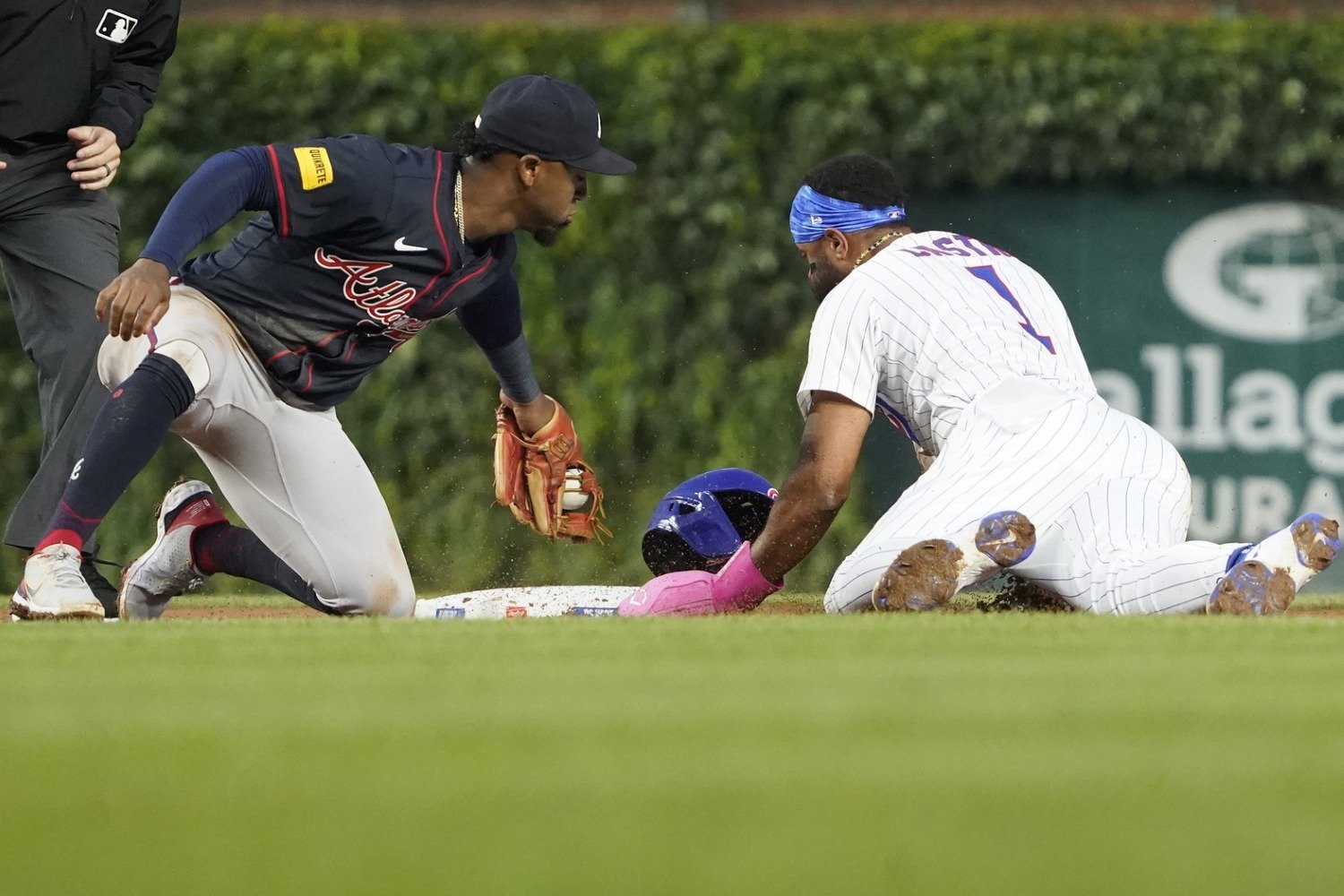 The Cubs are in an enviable position this September. As a fan, it's understandable to feel some fatigue, watch some football, and forget all of this. After all, there's no stress, and the stakes don't really rise until September 30 now, right? Wrong. The Cubs are setting themselves up for October. Here is a watcher's guide to the Cubs in September. 1: POSTSEASON ROSTER The Cubs can keep 26 on their postseason roster. With the Wild Card Series being only three games, pitching depth is less important. They can keep 13, but may just opt to keep 11 or 12 arms, especially for that first series. The roster locks are obvious: Kyle Tucker, Pete Crow-Armstrong, Ian Happ, Seiya Suzuki, Michael Busch, Nico Hoerner, Dansby Swanson, Matt Shaw, and Carson Kelly will start. Willi Castro, Justin Turner, and Reese Maguire comprise the established depth. Shota Imanaga, Matthew Boyd, and Cade Horton are likely to be the starters in a three-game series. Similarly, Daniel Palencia, Caleb Thielbar, Andrew Kittridge, and Brad Keller will comprise the back end of the bullpen. At this point, there are 19 stone-cold locks for the postseason. That leaves: Position Player Competition: Carlos Santana, Owen Caissie, Kevin Alcántara Pitching Competition: Drew Pomeranz, Colin Rea, Javier Assad, Taylor Rogers, Jameson Taillon, Porter Hodge, Ryan Brasier, Ben Brown September performances and health will dictate the postseason roster. Alcántara would seem to be a hedge on a Crow-Armstrong substitution, and Santana an extra bat in that situation, leaving Caissie off. That would leave five pitchers from the above list of eight, with three being left off. Pitching Questions to answer: Is Ben Brown reliable enough for the postseason? Is Brasier cooked? Are Taillon and Assad healthy enough? Is Rea good enough? It seems very likely that at least one of Taillon and Assad makes the squad. Rea and Brown have been bulk-innings guys for the team, but if they end up on the playoff roster, it will almost certainly be as short relievers. Can they demonstrate that their stuff can play up under those constraints? 2: AUGUST SLUMPERS Will Pete Crow-Armstrong rebound? The starting center fielder's .446 OPS in August needs to come up if the Cubs are going to have confidence in him. His .188/.218/.388 slash line against left-handed pitching this year will also impact planning for the playoff run. The former MVP candidate has fallen into a deep, long slump. Coming out in October is crucial for the lineup. Will Seiya Suzuki recapture his career form? Suzuki's approach has been inconsistent in 2025. You can see it in his walk rate. In August, he did tally 21 walks, good for a .375 OBP, but he only totaled 18 in June and July combined. The real problem, of course, is that the walks he did collect last month appear to be a symptom of an inability to drive the ball. Since the All-Star break, Suzuki's slugging average is a lowly .271. Long gone are the days when we wondered if he could reach 150 RBIs. The Cubs need him to get right, even if that means something less than what he did during the first half. WHO WILL HIT LEADOFF? The leadoff spot has not been kind to Michael Busch. Maybe he'd have slumped either way, but ever since Craig Counsell pressed him into leadoff duty because of other players' struggles, he's gone from red-hot to ice-cold. He has a .264 OBP in the last 30 days. Nico Hoerner snagged a start at leadoff on September 3 against Atlanta, and his OBP is comparable to that of other bats in the lineup. Matt Shaw has done well, but moving a rookie out of his comfortable spot seems too risky. FINAL THOUGHTS I implore you to not stress about an individual game or performance down the stretch. The Cubs are playing the long game and trying to optimize their roster for what is to come. Guys will be taken out of no-hitters in the sixth inning. Others will sit games for slight tightness, in order to avoid long-term injuries. It's all fine. Annoyance is fine, of course. It is the Cubs, and they can be annoying. The Cubs are trying to win games, but the subplots here will take precedence. You need to run Hodge out there to see if he can recapture last year's magic, for example. If and as Michael Soroka gets healthy, the team will want to see what he can do, too. The Cubs are good and they're going to the playoffs. Let's give them some space to make the best decisions about who to bring along.
 -
Image courtesy of © David Banks-Imagn Images The Cubs are in an enviable position this September. As a fan, it's understandable to feel some fatigue, watch some football, and forget all of this. After all, there's no stress, and the stakes don't really rise until September 30 now, right? Wrong. The Cubs are setting themselves up for October. Here is a watcher's guide to the Cubs in September. 1: POSTSEASON ROSTER The Cubs can keep 26 on their postseason roster. With the Wild Card Series being only three games, pitching depth is less important. They can keep 13, but may just opt to keep 11 or 12 arms, especially for that first series. The roster locks are obvious: Kyle Tucker, Pete Crow-Armstrong, Ian Happ, Seiya Suzuki, Michael Busch, Nico Hoerner, Dansby Swanson, Matt Shaw, and Carson Kelly will start. Willi Castro, Justin Turner, and Reese Maguire comprise the established depth. Shota Imanaga, Matthew Boyd, and Cade Horton are likely to be the starters in a three-game series. Similarly, Daniel Palencia, Caleb Thielbar, Andrew Kittridge, and Brad Keller will comprise the back end of the bullpen. At this point, there are 19 stone-cold locks for the postseason. That leaves: Position Player Competition: Carlos Santana, Owen Caissie, Kevin Alcántara Pitching Competition: Drew Pomeranz, Colin Rea, Javier Assad, Taylor Rogers, Jameson Taillon, Porter Hodge, Ryan Brasier, Ben Brown September performances and health will dictate the postseason roster. Alcántara would seem to be a hedge on a Crow-Armstrong substitution, and Santana an extra bat in that situation, leaving Caissie off. That would leave five pitchers from the above list of eight, with three being left off. Pitching Questions to answer: Is Ben Brown reliable enough for the postseason? Is Brasier cooked? Are Taillon and Assad healthy enough? Is Rea good enough? It seems very likely that at least one of Taillon and Assad makes the squad. Rea and Brown have been bulk-innings guys for the team, but if they end up on the playoff roster, it will almost certainly be as short relievers. Can they demonstrate that their stuff can play up under those constraints? 2: AUGUST SLUMPERS Will Pete Crow-Armstrong rebound? The starting center fielder's .446 OPS in August needs to come up if the Cubs are going to have confidence in him. His .188/.218/.388 slash line against left-handed pitching this year will also impact planning for the playoff run. The former MVP candidate has fallen into a deep, long slump. Coming out in October is crucial for the lineup. Will Seiya Suzuki recapture his career form? Suzuki's approach has been inconsistent in 2025. You can see it in his walk rate. In August, he did tally 21 walks, good for a .375 OBP, but he only totaled 18 in June and July combined. The real problem, of course, is that the walks he did collect last month appear to be a symptom of an inability to drive the ball. Since the All-Star break, Suzuki's slugging average is a lowly .271. Long gone are the days when we wondered if he could reach 150 RBIs. The Cubs need him to get right, even if that means something less than what he did during the first half. WHO WILL HIT LEADOFF? The leadoff spot has not been kind to Michael Busch. Maybe he'd have slumped either way, but ever since Craig Counsell pressed him into leadoff duty because of other players' struggles, he's gone from red-hot to ice-cold. He has a .264 OBP in the last 30 days. Nico Hoerner snagged a start at leadoff on September 3 against Atlanta, and his OBP is comparable to that of other bats in the lineup. Matt Shaw has done well, but moving a rookie out of his comfortable spot seems too risky. FINAL THOUGHTS I implore you to not stress about an individual game or performance down the stretch. The Cubs are playing the long game and trying to optimize their roster for what is to come. Guys will be taken out of no-hitters in the sixth inning. Others will sit games for slight tightness, in order to avoid long-term injuries. It's all fine. Annoyance is fine, of course. It is the Cubs, and they can be annoying. The Cubs are trying to win games, but the subplots here will take precedence. You need to run Hodge out there to see if he can recapture last year's magic, for example. If and as Michael Soroka gets healthy, the team will want to see what he can do, too. The Cubs are good and they're going to the playoffs. Let's give them some space to make the best decisions about who to bring along. View full article
-
Image courtesy of © Cody Scanlan/The Register / USA TODAY NETWORK via Imagn Images It's time to forget about the most recent game, the Cubs' possible pitching woes, and Craig Counsell's game management for a second. The Cubs are 76-58, 18 games over .500 and just 1.0 games out from having the second-best record in the National League. Fangraphs gives the squad a 99.6% chance of making the playoffs. Barring an epic collapse, we will be watching the Cubs in October. As such, there are a number of scenarios that could await the Cubs once the postseason begins. We'll go from the best-case scenario first and then get progressively worse after that. First of all, a quick refresh on the playoff system. Wild Card series are best-of-three, and played in the home stadium of the higher seeded team. The NLDS will be a best-of-five series, with three games played in the higher seed's home. All other series are best of seven, with four games in the higher seeded park. Scenario 1: Cubs win NL Central Fangraphs does have Milwaukee at 92.8% projected odds to win the division, so this is rather unlikely. However, the Cubs in 2023 had similar odds to make the playoffs and, of course, did not. The Brewers are dealing with a bit of adversity as well. While winning four of their last ten games is less than ideal for them, losing closer Trevor Megill due to a flexor strain makes it sting just a bit more. Andrew Vaughn has a .595 OPS over the past fourteen days and likely will return to the bench when Rhys Hoskins returns. However, they should be buoyed by Jackson Chourio's return, and the bullpen figures to have the depth to manage. This is unlikely, but if it does work out that the Cubs win their division, they likely would finish with the top seed in the Senior Circuit, meaning they'd get a bye in the Wild Card Round. There's only a 7% chance here, but baseball is baseball and it could happen. The team they would be hosting would be dictated by the Wild Card Round results. Scenario 2: Cubs nail down first NL Wild Card This is the most likely based on statistical projections. They would then face the fifth seed in the National League. Currently, that team is the San Diego Padres, two games behind the Los Angeles Dodgers. The New York Mets lurk, with a 4.5-game lead over the nearest contender, the Cincinnati Reds. This seems like a good time to see how the Cubs match up with all three of these squads. LOS ANGELES DODGERS This is the worst-case scenario for Chicago. The Dodgers have had a post-Series slump all season and haven't seemed truly locked in to their true talent projections. At this point, they are healthy in their starting rotation and it's truly fearsome. Imagine the hitters' meetings going in to a series facing these pitchers: Game 1: Yoshinobu Yamamoto: .2.90 ERA, 157 K in 139 2/3 IP Game 2: Tyler Glasnow: 3.36 ERA, 75 K in 62 IP Game 3: Blake Snell: 1.97 ERA in his healthy six games Game 4: Shohei Ohtani, Clayton Kershaw, and the bullpen. Do you see my point here? This is a championship-level rotation if they stay healthy. The Cubs, featuring Matthew Boyd, rookie Cade Horton, and Shota Imanaga have room in the discussion, but they are blown out of the water by this group. Offensively, the lineup is still top-heavy, with Ohtani, Freddie Freeman, and Will Smith having typical seasons. Mookie Betts and Teoscar Hernandez loom as dangerous hitters with playoff experience, despite their batting averages still hanging out in the .240 range. Max Muncy has also been resurgent since he started wearing glasses. Really, only Michael Conforto has failed to contribute. Breathe here, people, just a bit. As things currently stand, Cubs would not face this team until the NLCS. In that world, if the Cubs were to defeat the Padres (more coming on them momentarily), the Brewers would stand in their way. Daunting, perhaps, but the Cubs can enter that series with confidence that they are on the same level. SAN DIEGO PADRES The Padres are a bit of a harder team to figure out. The name brand value of their players is quite high. The production for nearly every player is slightly lower than you would expect. For sure, though, they would be a tough matchup. Look at this rotation, and keep in mind that the Wild Card series is, at most, just three games long: Dylan Cease: 4.82 ERA but 3.73 FIP, 11.6 K/9 innings Nick Pivetta: 2.82 ERA and 0.94 WHIP, 9.5 K/9 Michael King (currently out with knee injury): 2.81 ERA, 1.09 WHIP That's a formidable trio. Now factor in that they only may need 4-5 innings from a starter with this elite bullpen: Jason Adam, Wandy Peralta, former Cub Jeremiah Estrada, Adrian Morejon, and closer Robert Suarez. Adam, Suarez, and Morejon were named to the All-Star team this year, Estrada has a 12.7 K/9, and Peralta a 2.73 ERA. Oh, and they acquired human flamethrower Mason Miller at the trade deadline. Pitching would make the Padres a tough out for the Cubs. The lineup is solid, featuring bats like Manny Machado and Fernando Tatis, Jr. Jackson Merrill has had an injury-plagued campaign, but the talent is electric. It's not hard to imagine him making noise in October. Add experienced bats in Xander Bogaerts, hit merchant Luis Arraez, and solid former Orioles Ramon Laureano and Ryan O'Hearn, and this would be a toss-up at best in a three-game series. The New York Mets seem to have a lock on the sixth seed. At this point, the Cubs are unlikely to face them in the first round. If the Phillies phalter (sorry) with the loss of Zach Wheeler and decline of Bryce Harper and Aaron Nola continuing, the positions could flip. My brain can't handle these permutations right now, though, so it seems like it's the Padres, then possibly the Dodgers. The time to worry about the Phillies or Mets is not now. The Padres could pass the Cubs, as they are only 1.0 game behind. This would be significant if you are just now learning that the entire series is in the higher seed's home park. Tom Ricketts is likely dreaming of this event; picture him swimming Scrooge McDuck-style through the piles of revenue this would generate. Surely he would repurpose the money earned from a Wild Card into the team next season, blowing past the luxury tax, right? Cub fans, you have permission to get excited. For the first true season since 2018, the Cubs are going to be in the playoffs. It will be a tough hill to climb, as it always is. Just keep this reality in mind the next time Counsell has a dumb lineup, Dansby Swanson leaves men on base, or a reliever blows a lead. Prediction: Feel free to keep receipts. The Brewers fade a little bit, but a 6.5-game lead in September keeps them in the division race. The Dodgers and Phillies round out the division winners. The Padres likely win the home field advantage vs. the Cubs, cursing Cub fans with a 10pm eastern start time, or it could be at 4:07, right during work! The Mets easily win the sixth seed. So, here's the Cubs' most likely scenarios: Either a home series vs. the Padres, or a long trip to San Diego for a best-of-three with this solid squad. A division win and a bye are probably out of reach at this point, but it is still in the realm of possibility. Enjoy the last month of the season! October awaits. View full article
-
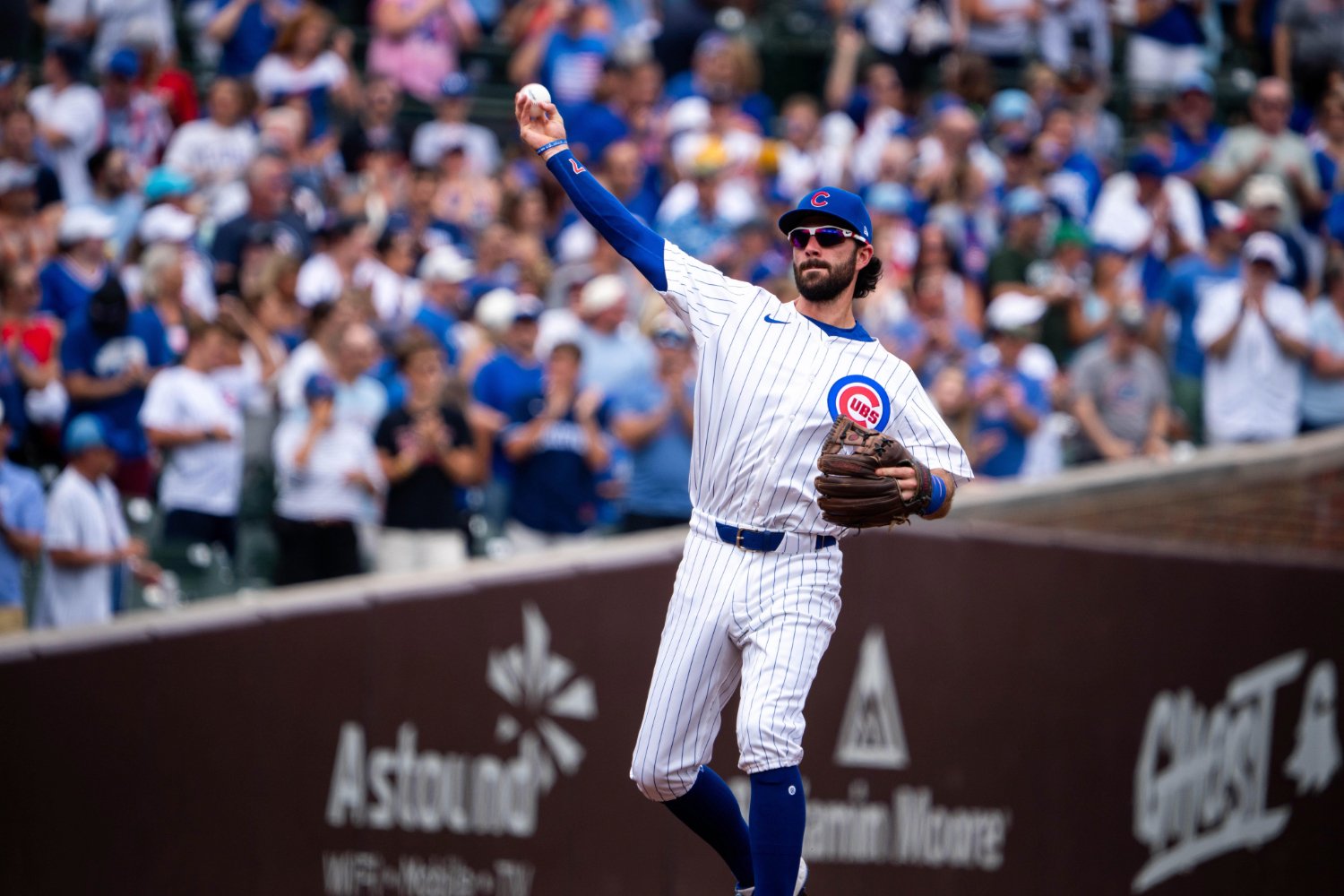 It's time to forget about the most recent game, the Cubs' possible pitching woes, and Craig Counsell's game management for a second. The Cubs are 76-58, 18 games over .500 and just 1.0 games out from having the second-best record in the National League. Fangraphs gives the squad a 99.6% chance of making the playoffs. Barring an epic collapse, we will be watching the Cubs in October. As such, there are a number of scenarios that could await the Cubs once the postseason begins. We'll go from the best-case scenario first and then get progressively worse after that. First of all, a quick refresh on the playoff system. Wild Card series are best-of-three, and played in the home stadium of the higher seeded team. The NLDS will be a best-of-five series, with three games played in the higher seed's home. All other series are best of seven, with four games in the higher seeded park. Scenario 1: Cubs win NL Central Fangraphs does have Milwaukee at 92.8% projected odds to win the division, so this is rather unlikely. However, the Cubs in 2023 had similar odds to make the playoffs and, of course, did not. The Brewers are dealing with a bit of adversity as well. While winning four of their last ten games is less than ideal for them, losing closer Trevor Megill due to a flexor strain makes it sting just a bit more. Andrew Vaughn has a .595 OPS over the past fourteen days and likely will return to the bench when Rhys Hoskins returns. However, they should be buoyed by Jackson Chourio's return, and the bullpen figures to have the depth to manage. This is unlikely, but if it does work out that the Cubs win their division, they likely would finish with the top seed in the Senior Circuit, meaning they'd get a bye in the Wild Card Round. There's only a 7% chance here, but baseball is baseball and it could happen. The team they would be hosting would be dictated by the Wild Card Round results. Scenario 2: Cubs nail down first NL Wild Card This is the most likely based on statistical projections. They would then face the fifth seed in the National League. Currently, that team is the San Diego Padres, two games behind the Los Angeles Dodgers. The New York Mets lurk, with a 4.5-game lead over the nearest contender, the Cincinnati Reds. This seems like a good time to see how the Cubs match up with all three of these squads. LOS ANGELES DODGERS This is the worst-case scenario for Chicago. The Dodgers have had a post-Series slump all season and haven't seemed truly locked in to their true talent projections. At this point, they are healthy in their starting rotation and it's truly fearsome. Imagine the hitters' meetings going in to a series facing these pitchers: Game 1: Yoshinobu Yamamoto: .2.90 ERA, 157 K in 139 2/3 IP Game 2: Tyler Glasnow: 3.36 ERA, 75 K in 62 IP Game 3: Blake Snell: 1.97 ERA in his healthy six games Game 4: Shohei Ohtani, Clayton Kershaw, and the bullpen. Do you see my point here? This is a championship-level rotation if they stay healthy. The Cubs, featuring Matthew Boyd, rookie Cade Horton, and Shota Imanaga have room in the discussion, but they are blown out of the water by this group. Offensively, the lineup is still top-heavy, with Ohtani, Freddie Freeman, and Will Smith having typical seasons. Mookie Betts and Teoscar Hernandez loom as dangerous hitters with playoff experience, despite their batting averages still hanging out in the .240 range. Max Muncy has also been resurgent since he started wearing glasses. Really, only Michael Conforto has failed to contribute. Breathe here, people, just a bit. As things currently stand, Cubs would not face this team until the NLCS. In that world, if the Cubs were to defeat the Padres (more coming on them momentarily), the Brewers would stand in their way. Daunting, perhaps, but the Cubs can enter that series with confidence that they are on the same level. SAN DIEGO PADRES The Padres are a bit of a harder team to figure out. The name brand value of their players is quite high. The production for nearly every player is slightly lower than you would expect. For sure, though, they would be a tough matchup. Look at this rotation, and keep in mind that the Wild Card series is, at most, just three games long: Dylan Cease: 4.82 ERA but 3.73 FIP, 11.6 K/9 innings Nick Pivetta: 2.82 ERA and 0.94 WHIP, 9.5 K/9 Michael King (currently out with knee injury): 2.81 ERA, 1.09 WHIP That's a formidable trio. Now factor in that they only may need 4-5 innings from a starter with this elite bullpen: Jason Adam, Wandy Peralta, former Cub Jeremiah Estrada, Adrian Morejon, and closer Robert Suarez. Adam, Suarez, and Morejon were named to the All-Star team this year, Estrada has a 12.7 K/9, and Peralta a 2.73 ERA. Oh, and they acquired human flamethrower Mason Miller at the trade deadline. Pitching would make the Padres a tough out for the Cubs. The lineup is solid, featuring bats like Manny Machado and Fernando Tatis, Jr. Jackson Merrill has had an injury-plagued campaign, but the talent is electric. It's not hard to imagine him making noise in October. Add experienced bats in Xander Bogaerts, hit merchant Luis Arraez, and solid former Orioles Ramon Laureano and Ryan O'Hearn, and this would be a toss-up at best in a three-game series. The New York Mets seem to have a lock on the sixth seed. At this point, the Cubs are unlikely to face them in the first round. If the Phillies phalter (sorry) with the loss of Zach Wheeler and decline of Bryce Harper and Aaron Nola continuing, the positions could flip. My brain can't handle these permutations right now, though, so it seems like it's the Padres, then possibly the Dodgers. The time to worry about the Phillies or Mets is not now. The Padres could pass the Cubs, as they are only 1.0 game behind. This would be significant if you are just now learning that the entire series is in the higher seed's home park. Tom Ricketts is likely dreaming of this event; picture him swimming Scrooge McDuck-style through the piles of revenue this would generate. Surely he would repurpose the money earned from a Wild Card into the team next season, blowing past the luxury tax, right? Cub fans, you have permission to get excited. For the first true season since 2018, the Cubs are going to be in the playoffs. It will be a tough hill to climb, as it always is. Just keep this reality in mind the next time Counsell has a dumb lineup, Dansby Swanson leaves men on base, or a reliever blows a lead. Prediction: Feel free to keep receipts. The Brewers fade a little bit, but a 6.5-game lead in September keeps them in the division race. The Dodgers and Phillies round out the division winners. The Padres likely win the home field advantage vs. the Cubs, cursing Cub fans with a 10pm eastern start time, or it could be at 4:07, right during work! The Mets easily win the sixth seed. So, here's the Cubs' most likely scenarios: Either a home series vs. the Padres, or a long trip to San Diego for a best-of-three with this solid squad. A division win and a bye are probably out of reach at this point, but it is still in the realm of possibility. Enjoy the last month of the season! October awaits.
