Brandon Glick
-
Posts
1,153 -
Joined
-
Last visited
Content Type
Profiles
Joomla Posts 1
Chicago Cubs Videos
Chicago Cubs Free Agent & Trade Rumors, Notes, & Tidbits
2026 Chicago Cubs Top Prospects Ranking
News
2023 Chicago Cubs Draft Picks
Guides & Resources
2024 Chicago Cubs Draft Picks
The Chicago Cubs Players Project
2025 Chicago Cubs Draft Pick Tracker
2026 Chicago Cubs Draft Tracker: Picks & Bonuses
Blogs
Events
Forums
Store
Gallery
Everything posted by Brandon Glick
-
The Cubs exit their series with Arizona below .500 thanks to some bullpen mishaps, but at least their offensive stars are producing early. View full video
-
The Cubs exit their series with Arizona below .500 thanks to some bullpen mishaps, but at least their offensive stars are producing early.
-
Cameron Maybin spent 15 years in Major League Baseball, including a brief 18-game appearance with the Chicago Cubs in 2020. Maybin began his career as the tenth overall pick in the 2005 MLB Draft out of high school. He rose quickly through the Detroit Tigers' farm system, earning numerous accolades on the way to becoming the best prospect in the organization. Two years after being drafted, Maybin made his debut in 2007 at just 20 years old. Fun fact: he hit his first career home run off Roger Clemens, becoming the first player to hit a home run off a pitcher who won a Cy Young Award before he was born. Then, following the 2007 season, Maybin was included as a centerpiece in the Miguel Cabrera blockbuster with the then-Florida Marlins. Besides Maybin, Andrew Miller, Mike Rabelo, Dallas Trahern, Eulogio De La Cruz, and Burke Badenhop were shipped out to Florida for Dontrelle Willis and Cabrera. He spent limited time with the major league club over the next three seasons before being dealt to the San Diego Padres for Ryan Webb and Edward Mujica. Maybin had the best few seasons of his career with the Padres, famously getting snubbed out of the 2011 Gold Glove Award in centerfielder for second-place MVP finisher Matt Kemp. Maybin signed an extension with San Diego for five years, though he was traded to the Atlanta Braves just two seasons into that deal. At that point, the center fielder became a true journeyman, spending short stints with the Braves, Tigers, Angels, Astros, Marlins, Mariners, and Yankees between 2015-2019. Prior to the 2020 season, he signed with the Tigers for the third time in his career, though due to the Covid-shortened season, he spent just 14 games in Detroit that season. During the 2020 trade deadline (which took place at the end of August), the Cubs acquired Maybin for infielder Zack Short. In 18 games (56 plate appearances), the forgotten Cubs outfielder slashed .250/.304/.365. He had more triples (one) than home runs (zero) and stole as many bases as walks he drew (three). In truth, there was little remarkable about his tenure on the North Side, though he did draw two postseason pinch-hit at-bats for manager David Ross in that disgusting two-game sweep against the Marlins. He also drew a walk-off on a hit by pitch against the Guardians. Those were the highlights. Like much of that 2020 campaign, Maybin's tenure with the Cubs has been almost lost to time and memory. For what it's worth, Maybin's time with the Cubs ended in carousel-like fashion. He signed a minor league deal with the team in February 2021 and spent spring training with the organization. Then, on March 27, 2021, Maybin was granted his release by the Cubs, making him a free agent, but he re-signed with Chicago on a new minor league contract the next day. Finally, the Cubs traded him to the Mets for cash considerations in May. He appeared in just nine games in Queens that season and decided enough was enough. He officially retired in January 2022. After retiring, Maybin became a broadcaster, earning color commentator roles for the Cubs (Marquee), Yankees (YES), and MLB Network. He now serves as a studio analyst and occasional in-game analyst for the Detroit Tigers. View full player
-
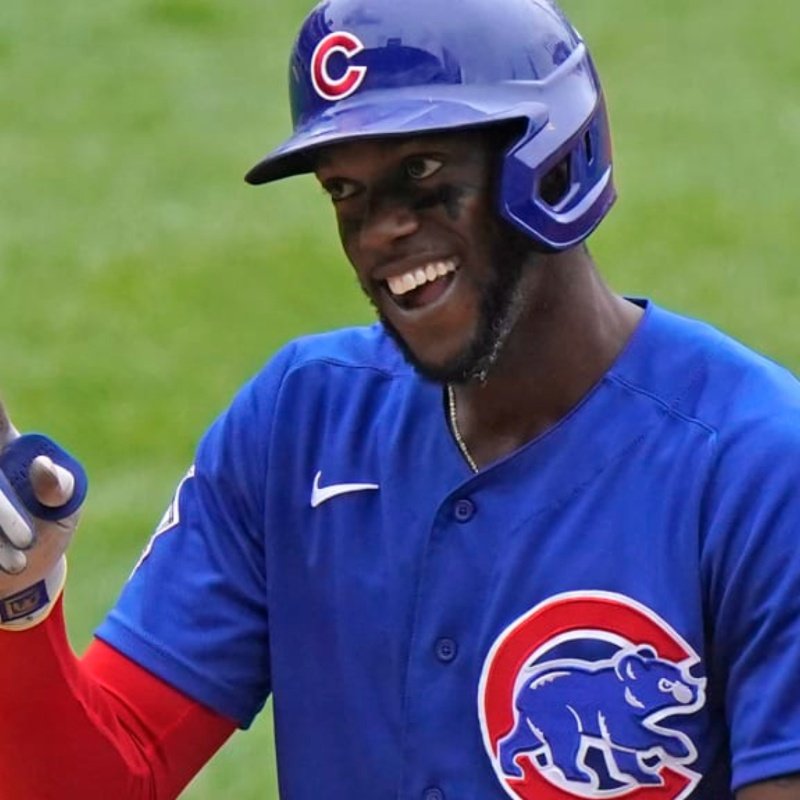 Cameron Maybin spent 15 years in Major League Baseball, including a brief 18-game appearance with the Chicago Cubs in 2020. Maybin began his career as the tenth overall pick in the 2005 MLB Draft out of high school. He rose quickly through the Detroit Tigers' farm system, earning numerous accolades on the way to becoming the best prospect in the organization. Two years after being drafted, Maybin made his debut in 2007 at just 20 years old. Fun fact: he hit his first career home run off Roger Clemens, becoming the first player to hit a home run off a pitcher who won a Cy Young Award before he was born. Then, following the 2007 season, Maybin was included as a centerpiece in the Miguel Cabrera blockbuster with the then-Florida Marlins. Besides Maybin, Andrew Miller, Mike Rabelo, Dallas Trahern, Eulogio De La Cruz, and Burke Badenhop were shipped out to Florida for Dontrelle Willis and Cabrera. He spent limited time with the major league club over the next three seasons before being dealt to the San Diego Padres for Ryan Webb and Edward Mujica. Maybin had the best few seasons of his career with the Padres, famously getting snubbed out of the 2011 Gold Glove Award in centerfielder for second-place MVP finisher Matt Kemp. Maybin signed an extension with San Diego for five years, though he was traded to the Atlanta Braves just two seasons into that deal. At that point, the center fielder became a true journeyman, spending short stints with the Braves, Tigers, Angels, Astros, Marlins, Mariners, and Yankees between 2015-2019. Prior to the 2020 season, he signed with the Tigers for the third time in his career, though due to the Covid-shortened season, he spent just 14 games in Detroit that season. During the 2020 trade deadline (which took place at the end of August), the Cubs acquired Maybin for infielder Zack Short. In 18 games (56 plate appearances), the forgotten Cubs outfielder slashed .250/.304/.365. He had more triples (one) than home runs (zero) and stole as many bases as walks he drew (three). In truth, there was little remarkable about his tenure on the North Side, though he did draw two postseason pinch-hit at-bats for manager David Ross in that disgusting two-game sweep against the Marlins. He also drew a walk-off on a hit by pitch against the Guardians. Those were the highlights. Like much of that 2020 campaign, Maybin's tenure with the Cubs has been almost lost to time and memory. For what it's worth, Maybin's time with the Cubs ended in carousel-like fashion. He signed a minor league deal with the team in February 2021 and spent spring training with the organization. Then, on March 27, 2021, Maybin was granted his release by the Cubs, making him a free agent, but he re-signed with Chicago on a new minor league contract the next day. Finally, the Cubs traded him to the Mets for cash considerations in May. He appeared in just nine games in Queens that season and decided enough was enough. He officially retired in January 2022. After retiring, Maybin became a broadcaster, earning color commentator roles for the Cubs (Marquee), Yankees (YES), and MLB Network. He now serves as a studio analyst and occasional in-game analyst for the Detroit Tigers.
 -
I hear a broomstick making noise in my closet. Is a sweep coming?

-
Would you prefer he be bald?
-
Justin Steele tries to lower his 8.00 ERA against the Las Vegas Sacramento A's. Is this the day they get back to .500?
-
A fascinating query. I hadn't considered this. Keep a close eye on the polls section in the coming days...
-
It's another late-night affair on the west coast, this time versus the Athletics of Oakland Sacramento. The Cubs really need to win this series.
-
Jason Kipnis spent ten years in Major League Baseball as a second baseman, including the 2020 pandemic season with the Chicago Cubs, Kipnis, a Glenbrook North High School alumnus, was drafted in the second round of the 2009 MLB Draft by the then-Cleveland Indians, one year after being drafted in the fourth round by the San Diego Padres. In rapid fashion, Kipnis quickly became one of the best prospects in baseball, earning consensus top-30 status after winning Minor League Player of the Year honors in Cleveland's organization in 2010. After representing Cleveland in the 2011 All-Star Futures Game, Kipnis finally got the call to the big leagues on July 22, 2011. Though he went about his work quietly, Kipnis was literally one of the best second basemen in baseball in the five-year stretch from 2012-16. In that time, he slashed .272/.346/.419 with 69 home runs and 110 stolen bases, accruing 17.2 WAR. He was also incredibly durable, playing an average of 145.4 games per season. He was an All-Star in both 2013 and 2015, receiving down-ballot MVP support in both campaigns as well. Of course, as it relates to the Cubs, Kipnis was the starting second baseman for the opposition in the 2016 World Series. He was a huge thorn in the Cubs' side, slashing .290/.313/.581 with two home runs while playing all seven games. He very well could have been named series MVP had Cleveland won the decisive Game 7, at least had it not been for that Rajai Davis home run. The Arizona State alum's career took a downswing from there, as he dealt with injuries in 2017 and never returned to All-Star form in the following seasons. After nine seasons with the Guardians, Kipnis had his option declined and was made a free agent in the 2019-20 offseason. "If you can't beat 'em, join 'em" proved to be the mantra of his free agency, as Kipnis joined the Cubs on a minor league deal prior to the 2020 season. Of course, the Covid-19 pandemic then shut everything down for months, but Kipnis did make the 40-man roster once the season got going in July. It was a rather nondescript tenure, as Kipnis hit .237/.341/.404 in 44 games. He was the team's primary second baseman that season, and fun fact, he hit third more often than anyone else in manager David Ross' lineup that year. That 2020 season was so, so weird. I don't remember much of that season, but I do remember that Kipnis was weirldly on fire in the early going. In his first four starts with the team, he had four extra-base hits, including two home runs. He only hit one more the rest of the way. Kipnis played the 2021 season in the Atlanta Braves organization. After being released, he spent the next year away from baseball. He officially retired from the game prior to the 2023 season. As a bit of fun trivia, he played in a Savannah Bananas game as an honorary Banana in 2024, getting a single in front of a sold-out Progressive Field in Cleveland. View full player
-
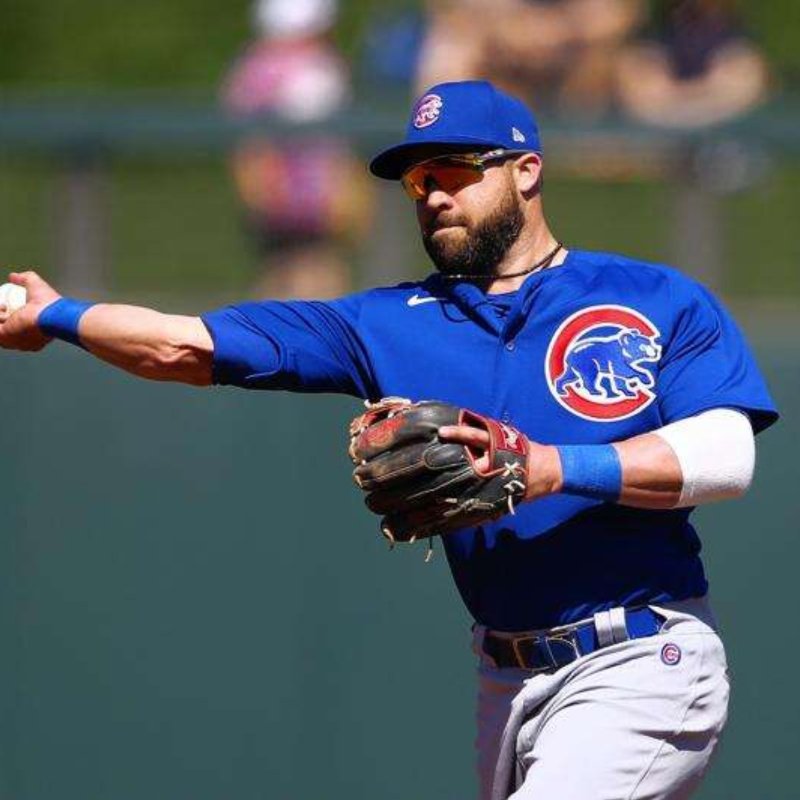 Jason Kipnis spent ten years in Major League Baseball as a second baseman, including the 2020 pandemic season with the Chicago Cubs, Kipnis, a Glenbrook North High School alumnus, was drafted in the second round of the 2009 MLB Draft by the then-Cleveland Indians, one year after being drafted in the fourth round by the San Diego Padres. In rapid fashion, Kipnis quickly became one of the best prospects in baseball, earning consensus top-30 status after winning Minor League Player of the Year honors in Cleveland's organization in 2010. After representing Cleveland in the 2011 All-Star Futures Game, Kipnis finally got the call to the big leagues on July 22, 2011. Though he went about his work quietly, Kipnis was literally one of the best second basemen in baseball in the five-year stretch from 2012-16. In that time, he slashed .272/.346/.419 with 69 home runs and 110 stolen bases, accruing 17.2 WAR. He was also incredibly durable, playing an average of 145.4 games per season. He was an All-Star in both 2013 and 2015, receiving down-ballot MVP support in both campaigns as well. Of course, as it relates to the Cubs, Kipnis was the starting second baseman for the opposition in the 2016 World Series. He was a huge thorn in the Cubs' side, slashing .290/.313/.581 with two home runs while playing all seven games. He very well could have been named series MVP had Cleveland won the decisive Game 7, at least had it not been for that Rajai Davis home run. The Arizona State alum's career took a downswing from there, as he dealt with injuries in 2017 and never returned to All-Star form in the following seasons. After nine seasons with the Guardians, Kipnis had his option declined and was made a free agent in the 2019-20 offseason. "If you can't beat 'em, join 'em" proved to be the mantra of his free agency, as Kipnis joined the Cubs on a minor league deal prior to the 2020 season. Of course, the Covid-19 pandemic then shut everything down for months, but Kipnis did make the 40-man roster once the season got going in July. It was a rather nondescript tenure, as Kipnis hit .237/.341/.404 in 44 games. He was the team's primary second baseman that season, and fun fact, he hit third more often than anyone else in manager David Ross' lineup that year. That 2020 season was so, so weird. I don't remember much of that season, but I do remember that Kipnis was weirldly on fire in the early going. In his first four starts with the team, he had four extra-base hits, including two home runs. He only hit one more the rest of the way. Kipnis played the 2021 season in the Atlanta Braves organization. After being released, he spent the next year away from baseball. He officially retired from the game prior to the 2023 season. As a bit of fun trivia, he played in a Savannah Bananas game as an honorary Banana in 2024, getting a single in front of a sold-out Progressive Field in Cleveland.
 -
Matthew Boyd is making his Cubs debut today. Can the Cubs get back to .500 on the season under him?
-
This has been a pretty fun game so far with a lot of notable highlights, but that PCA throw remains in my head. That was unbelievable.
-
In the third game of this four-game series, Shota Imanaga looks to continue his strong start from Tokyo.
-
I'll give you all a hint: he managed three other teams.
-
Jameson Taillon toes the rubber for the first time in 2025 as the Cubs look to sneak back to .500 on the year.
-
I feel confident in Steele. Arizona has a really good lineup, but over the course of the season, JS should be alright.
-
I'm of the belief the Diamondbacks are the 2nd best team in the NL. Hoping the Cubs can prove me wrong, at least on Opening Day Part II
-
Zac Gallen gets the Opening Day nod over Corbin Burnes as the Cubs look to wash away the bad taste lingering from the Tokyo Series.
-
Despite rough numbers on the surface, the Cubs' two new additions to their lineup showed some impressive fortitude in the Tokyo Series against the Dodgers. View full video
-
Despite rough numbers on the surface, the Cubs' two new additions to their lineup showed some impressive fortitude in the Tokyo Series against the Dodgers.
-
I'm the guy who picked this player for this image and even I don't remember who this is lol
-
Ryan Theriot is a former professional baseball player who played both shortstop and second base for eight years in the MLB, including parts of six seasons with the Chicago Cubs. Theriot was a brilliant college player for Louisiana State University (LSU), where he actually had quite a few run-ins with future Cubs teammates. On June 12, 2000, Theriot broke up a no-hitter that was being thrown by Mark Prior, then pitching for the University of Southern California (USC). He moved off second base that season to shortstop in order to accommodate Mike Fontenot. For what it's worth, he also scored the game-winning run in the 2000 national championship game, marking the fifth CWS title for LSU in nine seasons. Selected in the third round of the 2001 MLB Draft by the Cubs, Theriot toiled away in the minors for a few seasons before breaking out at Double-A in 2005 with a .303 batting average and .755 OPS in 120 games. He was promoted to the majors for an end-of-season cup of coffee, but it wasn't until 2006 that Theriot became a cult hero. After spending most of the season at Triple-A, Theriot got 53 starts worth of action at second base and hit like an MVP, slashing .328/.412/.522 with 13 steals in just 134 at-bats. Ostensibly, he was tasked with winning a starting job in the infield for the 2007 season, but César Izturis didn't provide much resistance. For the second time in his life, Theriot moved off second base to shortstop for the sake of second baseman Mike Fontenot, and the two would form the double-play tandem for the Cubs for the next three years. Theriot kind of peaked in that 2006 spurt, though he did rank first in the NL for most singles in 2008, 2009, and 2010, coming in sixth in the NL Batting Title race in 2008 (.307 average). Unfortunately, the good times came to an end in 2010, when the Cubs took Theriot to an arbitration hearing, marking the first time since 1993 they had done so with a player (the Cubs won the case). Theriot moved back to second base once Starlin Castro debuted in May, and the writing was on the wall. At the trade deadline, the Cubs dealt Theriot and Ted Lilly to the Los Angeles Dodgers for Blake DeWitt (and, just a few weeks later, sent Fontenot packing in a separate trade). The second baseman lasted just a half-season with the Dodgers before getting traded to the St. Louis Cardinals for the 2011 season. Of course, Theriot won the 2011 World Series with the Cardinals, notching eight hits in the postseason with St. Louis. In free agency that winter, he joined the San Francisco Giants on a one-year deal. Against all odds, Theriot competed with Fontenot for a job on the Giants' 2012 roster in spring training, ultimately winning out. He won his second straight World Series with the team, scoring the series-clinching run in Game 4 in what turned out to be his final MLB action. After sitting out the 2013 season, Theriot retired in January 2014. View full player
-
 Ryan Theriot is a former professional baseball player who played both shortstop and second base for eight years in the MLB, including parts of six seasons with the Chicago Cubs. Theriot was a brilliant college player for Louisiana State University (LSU), where he actually had quite a few run-ins with future Cubs teammates. On June 12, 2000, Theriot broke up a no-hitter that was being thrown by Mark Prior, then pitching for the University of Southern California (USC). He moved off second base that season to shortstop in order to accommodate Mike Fontenot. For what it's worth, he also scored the game-winning run in the 2000 national championship game, marking the fifth CWS title for LSU in nine seasons. Selected in the third round of the 2001 MLB Draft by the Cubs, Theriot toiled away in the minors for a few seasons before breaking out at Double-A in 2005 with a .303 batting average and .755 OPS in 120 games. He was promoted to the majors for an end-of-season cup of coffee, but it wasn't until 2006 that Theriot became a cult hero. After spending most of the season at Triple-A, Theriot got 53 starts worth of action at second base and hit like an MVP, slashing .328/.412/.522 with 13 steals in just 134 at-bats. Ostensibly, he was tasked with winning a starting job in the infield for the 2007 season, but César Izturis didn't provide much resistance. For the second time in his life, Theriot moved off second base to shortstop for the sake of second baseman Mike Fontenot, and the two would form the double-play tandem for the Cubs for the next three years. Theriot kind of peaked in that 2006 spurt, though he did rank first in the NL for most singles in 2008, 2009, and 2010, coming in sixth in the NL Batting Title race in 2008 (.307 average). Unfortunately, the good times came to an end in 2010, when the Cubs took Theriot to an arbitration hearing, marking the first time since 1993 they had done so with a player (the Cubs won the case). Theriot moved back to second base once Starlin Castro debuted in May, and the writing was on the wall. At the trade deadline, the Cubs dealt Theriot and Ted Lilly to the Los Angeles Dodgers for Blake DeWitt (and, just a few weeks later, sent Fontenot packing in a separate trade). The second baseman lasted just a half-season with the Dodgers before getting traded to the St. Louis Cardinals for the 2011 season. Of course, Theriot won the 2011 World Series with the Cardinals, notching eight hits in the postseason with St. Louis. In free agency that winter, he joined the San Francisco Giants on a one-year deal. Against all odds, Theriot competed with Fontenot for a job on the Giants' 2012 roster in spring training, ultimately winning out. He won his second straight World Series with the team, scoring the series-clinching run in Game 4 in what turned out to be his final MLB action. After sitting out the 2013 season, Theriot retired in January 2014.
 -
It upsets me that his HOF candidacy was basically sapped by other players from his era cheating like hell. His numbers in any era would have been extraordinary, but they were especially gaudy for a (as far as we know) clean guy.