Brandon Glick
-
Posts
1,153 -
Joined
-
Last visited
Content Type
Profiles
Joomla Posts 1
Chicago Cubs Videos
Chicago Cubs Free Agent & Trade Rumors, Notes, & Tidbits
2026 Chicago Cubs Top Prospects Ranking
News
2023 Chicago Cubs Draft Picks
Guides & Resources
2024 Chicago Cubs Draft Picks
The Chicago Cubs Players Project
2025 Chicago Cubs Draft Pick Tracker
2026 Chicago Cubs Draft Tracker: Picks & Bonuses
Blogs
Events
Forums
Store
Gallery
Everything posted by Brandon Glick
-
My heart can't handle another game like yesterday's. A blowout (that the bullpen actually holds) would be nice.

-
Pretty lowkey ninth inning all things considered. Good job Prez
-
Well now it's 1.675 so might as well DFA him
-
Going into this at-bat, Kelly has a 1.700 OPS
-
There have been 21 runs scored in the last four outs.
-
I gotta turn this game off. My vocal cords hurt
-
I say this in the nicest way possible, but Carson Kelly is totally cheating, right?
-
This is the best Linsanity run of all time. Carson Kelly is my GOAT
-
The Cubs spent all winter accumulating depth, but do they have the impact talent to replace their star southpaw? View full video
-
The Cubs spent all winter accumulating depth, but do they have the impact talent to replace their star southpaw?
-
Yuuuuuup. He is shredded beyond belief nowadays. I hope Paul Wilson never planned on getting revenge. https://www.mlb.com/news/kyle-farnsworth-is-absolutely-jacked-now
-
Fun fact: the 12-9 Cubs are in first place in the NL Central. The 12-7 Diamondbacks are in 4th place in the NL West. Thank you, geography.
-
Kyle Farnsworth is a former MLB relief pitcher who played for nine teams across 16 seasons, including parts of six years with the Chicago Cubs. Originally drafted in the now-defunct 47th round of the 1994 MLB Draft out of high school, though he didn't sign until May 12, 1995, after playing briefly at Abraham Baldwin Agricultural College. A brash, hard-throwing pitcher with all the confidence in the world, Farnsworth trudged through the minor leagues for nearly half of a decade before finally getting the call to the big leagues as a starting pitcher. In his rookie campaign in 1999, Farnsworth made 27 appearances (21 start), pitching 130 innings and allowing a 5.05 ERA with ugly peripherals, including a 70-52 strikeout-to-walk ratio. He was officially converted to a reliever at the beginning of the 2000 season, though he would oscillate between terrible seasons and great ones out of the Cubs bullpen for the better part of the next five years. Ultimately, he pitched in 343 games for the North Siders (478 2/3 innings), accumulating 0.1 WAR and a 4.78 ERA. The consistency just never matched the overwhelming (at times) stuff, as Farnsworth would spend some years as the team's primary set-up man (2001) and then the next exclusively in mop-up duty. But, you're not here for the stats, are you? Farnsworth was a walking headline, generating outrageous stories on an annual basis. The one I'll focus on here is obviously the most infamous: a suplex of Paul Wilson. Yes, on June 19, 2003, Farnsworth upset Reds pitcher (and former No. 1 overall pick) Paul Wilson by pitching him a little too far inside, leading to Wilson taking one too many steps toward the pitcher's mound. Farnsworth needed no further invitation, pile-driving Wilson into the dirt before landing a few haymakers as the benches cleared. It's one of the most one-sided baseball fights in history (no fact-check needed) — look at Farnsworth and Wilson at the end of the video. There is a discrepancy in the punishment each one took. Speaking of punishment, Farnsworth received a three-game suspension for his role in the brawl, eventually getting it reduced to two. All in all, I'd say he got off pretty light. In terms of other notable stories from Farnsworth's Cubs tenure, he was the winning pitcher in the final baseball game played at Three Rivers Stadium on October 1, 2000. Also, he served a disabled list stint in 2004 after severely injuring his leg by kicking an electrical fan in the Cubs dugout after getting lit up by the Houston Astros. Ah, good times. Anyway, after the 2004 season, Farnsworth was traded to the Detroit Tigers for for Roberto Novoa, Scott Moore and Bo Flowers. That would begin the journeyman phase of his career, as he pitched for the Tigers, Braves, Yankees, Tigers (again), Royals, Braves (again), Rays, Pirates, Mets, and Astros between 2005-14. He was never particularly great outside of one dominant year as the Rays' closer in 2011, but he was a bullpen tone-setter everywhere he went. He also pitched in four different postseasons, including 2003 with the Cubs, but I've chosen to skip his performance during that playoff run for (what should be obvious) reasons. Farnsworth retired officially following the 2016 season, eventually becoming an amateur league linebacker as God intended. View full player
-
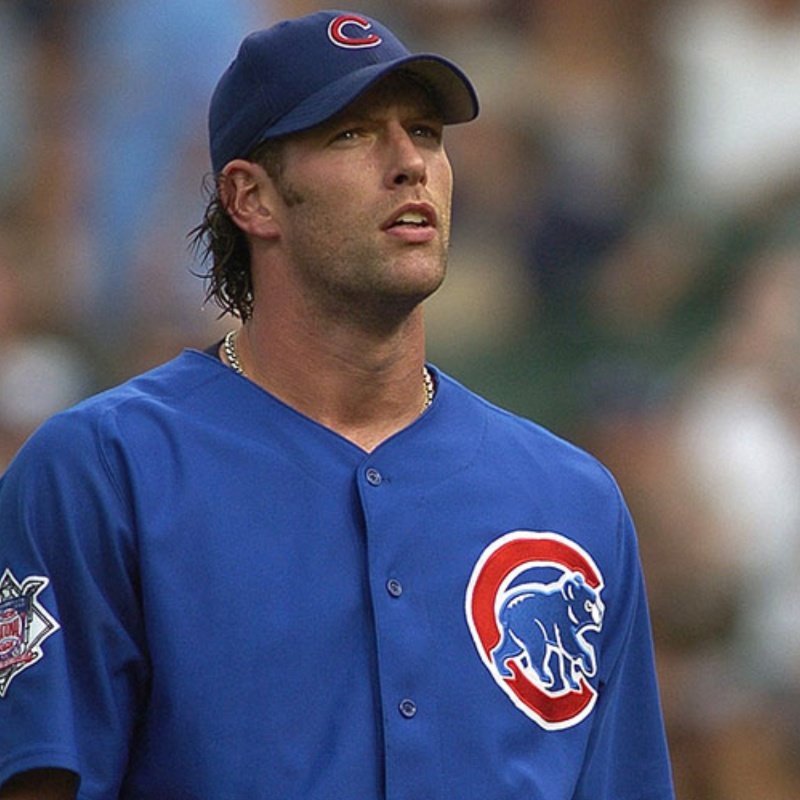 Kyle Farnsworth is a former MLB relief pitcher who played for nine teams across 16 seasons, including parts of six years with the Chicago Cubs. Originally drafted in the now-defunct 47th round of the 1994 MLB Draft out of high school, though he didn't sign until May 12, 1995, after playing briefly at Abraham Baldwin Agricultural College. A brash, hard-throwing pitcher with all the confidence in the world, Farnsworth trudged through the minor leagues for nearly half of a decade before finally getting the call to the big leagues as a starting pitcher. In his rookie campaign in 1999, Farnsworth made 27 appearances (21 start), pitching 130 innings and allowing a 5.05 ERA with ugly peripherals, including a 70-52 strikeout-to-walk ratio. He was officially converted to a reliever at the beginning of the 2000 season, though he would oscillate between terrible seasons and great ones out of the Cubs bullpen for the better part of the next five years. Ultimately, he pitched in 343 games for the North Siders (478 2/3 innings), accumulating 0.1 WAR and a 4.78 ERA. The consistency just never matched the overwhelming (at times) stuff, as Farnsworth would spend some years as the team's primary set-up man (2001) and then the next exclusively in mop-up duty. But, you're not here for the stats, are you? Farnsworth was a walking headline, generating outrageous stories on an annual basis. The one I'll focus on here is obviously the most infamous: a suplex of Paul Wilson. Yes, on June 19, 2003, Farnsworth upset Reds pitcher (and former No. 1 overall pick) Paul Wilson by pitching him a little too far inside, leading to Wilson taking one too many steps toward the pitcher's mound. Farnsworth needed no further invitation, pile-driving Wilson into the dirt before landing a few haymakers as the benches cleared. It's one of the most one-sided baseball fights in history (no fact-check needed) — look at Farnsworth and Wilson at the end of the video. There is a discrepancy in the punishment each one took. Speaking of punishment, Farnsworth received a three-game suspension for his role in the brawl, eventually getting it reduced to two. All in all, I'd say he got off pretty light. In terms of other notable stories from Farnsworth's Cubs tenure, he was the winning pitcher in the final baseball game played at Three Rivers Stadium on October 1, 2000. Also, he served a disabled list stint in 2004 after severely injuring his leg by kicking an electrical fan in the Cubs dugout after getting lit up by the Houston Astros. Ah, good times. Anyway, after the 2004 season, Farnsworth was traded to the Detroit Tigers for for Roberto Novoa, Scott Moore and Bo Flowers. That would begin the journeyman phase of his career, as he pitched for the Tigers, Braves, Yankees, Tigers (again), Royals, Braves (again), Rays, Pirates, Mets, and Astros between 2005-14. He was never particularly great outside of one dominant year as the Rays' closer in 2011, but he was a bullpen tone-setter everywhere he went. He also pitched in four different postseasons, including 2003 with the Cubs, but I've chosen to skip his performance during that playoff run for (what should be obvious) reasons. Farnsworth retired officially following the 2016 season, eventually becoming an amateur league linebacker as God intended.
 -
The Cubs took two of three on the road against the mighty Dodgers, offering hope that they can compete with the National League's best in the race for the pennant. View full video
-
The Cubs took two of three on the road against the mighty Dodgers, offering hope that they can compete with the National League's best in the race for the pennant.
-
Matt Franco is a former MLB infielder who spent eight years in the big leagues, including 16 games in his rookie season with the Chicago Cubs. Recently, I was told that my picks for the North Side Baseball Chicago Cubs Players Project (or NSBBCCPP, if you will) haven't been obscure enough. One user and I were chatting, and he lamented that I was exploring too many recent or notable players — perhaps a change in scenery would spice things up around here? Ignoring the fact that there's no way any of you possibly remember Steven Souza Jr. playing in 11 games for the Cubs in 2020, I'll admit that I could stand to add more variety to the players the project covers. Again, I highly encourage all of you to participate yourself and write up any of your favorite players from Cubs history. Any North Side Baseball user can do it, and I'm happy to help on that front with anything you may need. With that preamble out of the way, I introduce you to Matt Franco, a seventh-round pick of the Cubs in the 1987 draft out of high school. After scratching and clawing for seven years in the minor leagues — including an impressive 1993 season when he hit .305 in 130 games across two levels — he finally got the call to the big leagues. On September 6, 1995, Franco made his MLB debut as a pinch-hitter against the Colorado Rockies. That would set the tone for his Cubs tenure, as he made 16 appearances in the final month of the season as a pinch-hitter or defensive substitute. He never started a game for the North Siders, drawing all of 17 at-bats and slashing .294/.294/.353 in his initial taste of the majors. It was evident that first-year manager Jim Riggleman did not have faith in his rookie infielder, though Franco did draw defensive opportunities at first base, second base, and third base. Also, here's a fun fact for you: Despite having the last name "Franco", Matt is actually related to a famous actor that isn't James or Dave Franco. His uncle is none other than Kurt Russell, a former baseball player in his own right. Here's another fun fact for you: Kurt Russell has more Emmy nominations (one) than he does Oscar nominations (zero). How is that possible? After spending that brief cup of coffee with the Cubs in 1995, Franco was traded to the New York Mets shortly before Opening Day 1996 for a player to be named later (Chris DeWitt). Over the next five years, Franco and the Mets had a tenuous partnership, as he was released several times before signing back with the team. He played fine for New York, slashing .254/.345/.359 across 452 games in Queens, though his best season came in 2002 with the Atlanta Braves, when he hit .317 and posted a .912 OPS in 205 at-bats. That earned him a contract for the 2003 season, though he accrued -0.4 WAR in 112 games. Franco officially retired after the conclusion of the 2003 MLB campaign. View full player
-
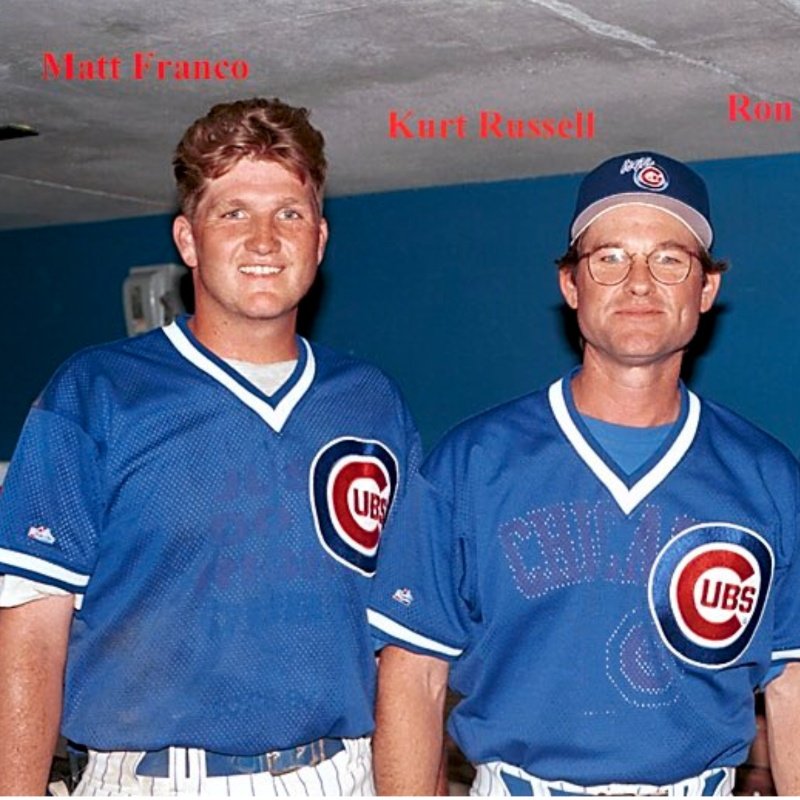 Matt Franco is a former MLB infielder who spent eight years in the big leagues, including 16 games in his rookie season with the Chicago Cubs. Recently, I was told that my picks for the North Side Baseball Chicago Cubs Players Project (or NSBBCCPP, if you will) haven't been obscure enough. One user and I were chatting, and he lamented that I was exploring too many recent or notable players — perhaps a change in scenery would spice things up around here? Ignoring the fact that there's no way any of you possibly remember Steven Souza Jr. playing in 11 games for the Cubs in 2020, I'll admit that I could stand to add more variety to the players the project covers. Again, I highly encourage all of you to participate yourself and write up any of your favorite players from Cubs history. Any North Side Baseball user can do it, and I'm happy to help on that front with anything you may need. With that preamble out of the way, I introduce you to Matt Franco, a seventh-round pick of the Cubs in the 1987 draft out of high school. After scratching and clawing for seven years in the minor leagues — including an impressive 1993 season when he hit .305 in 130 games across two levels — he finally got the call to the big leagues. On September 6, 1995, Franco made his MLB debut as a pinch-hitter against the Colorado Rockies. That would set the tone for his Cubs tenure, as he made 16 appearances in the final month of the season as a pinch-hitter or defensive substitute. He never started a game for the North Siders, drawing all of 17 at-bats and slashing .294/.294/.353 in his initial taste of the majors. It was evident that first-year manager Jim Riggleman did not have faith in his rookie infielder, though Franco did draw defensive opportunities at first base, second base, and third base. Also, here's a fun fact for you: Despite having the last name "Franco", Matt is actually related to a famous actor that isn't James or Dave Franco. His uncle is none other than Kurt Russell, a former baseball player in his own right. Here's another fun fact for you: Kurt Russell has more Emmy nominations (one) than he does Oscar nominations (zero). How is that possible? After spending that brief cup of coffee with the Cubs in 1995, Franco was traded to the New York Mets shortly before Opening Day 1996 for a player to be named later (Chris DeWitt). Over the next five years, Franco and the Mets had a tenuous partnership, as he was released several times before signing back with the team. He played fine for New York, slashing .254/.345/.359 across 452 games in Queens, though his best season came in 2002 with the Atlanta Braves, when he hit .317 and posted a .912 OPS in 205 at-bats. That earned him a contract for the 2003 season, though he accrued -0.4 WAR in 112 games. Franco officially retired after the conclusion of the 2003 MLB campaign.
 -
I can't watch the game this afternoon. Just gonna have to hope Matthew Boyd continues to be a dude™.
-
I know the Cubs didn't choose this, but man, these late-night West Coast starts are getting to me. Hoping for a tight 90-minute no-hitter from Shota tonight.
-
That was an incredible series win against the Dodgers, but the Steele news is still bumming me out. Another win against the Padres would make me feel a bit better...
-
I would settle for a tie given the pitching matchup
-
Colin Rea takes his first start of the season agains the Dodgers on Sunday Night Baseball. Let's win this series, shall we?
-
I know it's only April, but it would be really nice to see the Cubs take even one from the Dodgers at this point...
-
I'm not sure why, but he was my favorite player from the rebuild era (not including Castro). Felt like he was one of the few guys the team trusted, and someone everyone always cheered for.