


RandallPnkFloyd
-
Posts
511 -
Joined
-
Last visited
Content Type
Profiles
Joomla Posts 1
Chicago Cubs Videos
Chicago Cubs Free Agent & Trade Rumors, Notes, & Tidbits
2026 Chicago Cubs Top Prospects Ranking
News
2023 Chicago Cubs Draft Picks
Guides & Resources
2024 Chicago Cubs Draft Picks
The Chicago Cubs Players Project
2025 Chicago Cubs Draft Pick Tracker
2026 Chicago Cubs Draft Tracker: Picks & Bonuses
Blogs
Events
Forums
Store
Gallery
Everything posted by RandallPnkFloyd
-
Image courtesy of © Kamil Krzaczynski-Imagn Images It's hardly top-of-mind within what had been a stagnant Chicago Cubs offseason prior to Wednesday afternoon, but filling out the bench still remains a part of Jed Hoyer's to-do list this winter. There was enough turnover within the reserve group last year that one imagines leadership would want to solidify that corps a bit more ahead of the 2026 campaign. In general, the Cubs have their starting lineup in place. This week's trade of Owen Caissie and prospects to the Miami Marlins in exchange for starting pitcher Edward Cabrera likely settled the awkward setup between right field and designated hitter spot. What could have been a logjam of Caissie, Seiya Suzuki, Moisés Ballesteros, and even Kevin Alcántara for two spots now figures to feature Suzuki on the grass, Ballesteros as the designated hitter, and Alcántara providing support either way. But between Matt Shaw's 2025 inconsistency and injuries that will inevitably manifest, the team will have to do better than last season's collection of Jon Berti, Gage Workman, Vidal Bruján, Nicky Lopez, Willi Castro, and Carlos Santana. Thus, with little room remaining with which to operate on the backup side of things, the team will want to get their moves correct. We know, at present, what shape the majority of the bench will take. The automatic call is that the team will have one of Carson Kelly or Miguel Amaya holding down a spot as the No. 2 catcher. For the purpose of this discussion, we'll assume Kelly gets the edge in playing time over Amaya. Tyler Austin signing a major-league deal with the team indicates he'll slot into the Justin Turner role as a supplement to Michael Busch at first base and work in as a designated hitter and pinch hitter. Perhaps some corner outfield time is in the cards for him, as well. Assuming the Cubs run with a four-man bench, that's already half the group sorted. And potentially a third player already in the mix in the form of a young outfielder. Following the Caissie-for-Cabrera trade, it's now difficult to visualize a world in which Kevin Alcántara isn't on the team's bench to start the year. While Ballesteros would likely only be on the roster as a regular designated hitter as opposed to a pure bench bat, Alcántara would offer coverage for the outfield while allowing Suzuki to rotate into that spot in the event that Ballesteros is not holding it down regularly. In terms of a pure bench role, Alcántara's ability to play center field should also leave him well-suited to provide the occasional breather for Pete Crow-Armstrong. Regardless of those logistics, he should get the first crack at a gig as the fourth outfielder. From there, things start to get dicey in terms of players actually in the organization. While a bench featuring each of Caissie and Alcántara was possible prior to the trade, it also wouldn't have been ideal. This presents an opportunity to pursue an upgrade to the infield depth. It's not complete necessity given how consistent Nico Hoerner and Dansby Swanson have been over a 162-game season, but considering Shaw's history and the natural aim of maximizing flexibility, you'd like someone adept at handling infield work in a reserve role. The issue is that the Cubs don't employ such a player at present, save for minor-league signing Scott Kingery. While versatile, Kingery hasn't hit in nearly a half-decade. You'd be looking at a continuation of the hellish Workman-Berti-Bruján-Lopez cycle in that case. It's not out of the realm of possibility, but it would also assume that the Cubs don't seek to add at least competition for him in that spot or outright sign someone to a big league deal to handle the job. If they prefer to stay in house, the Cubs will have to determine if James Triantos is worthy of a big-league spot and are comfortable with him on the bench the majority of the time. Either scenario might force the Cubs to bring in another outside addition on some level. Thus, the current shape of the bench can go a couple of (wildly) different routes. The first scenario is simple. You have the assumed trio of Amaya, Austin, and Alcántara to supplement the starters and roll out one of Kingery — who would have to win the job and be added to the 40-man during spring training — or Triantos as the fourth guy. Triantos would be the wild card in this first scenario. He didn't hit at all last year (76 wRC+ in Iowa), but was added to the 40-man this offseason all the same. He has a bit of positional versatility in the tank, too, which could help the Cubs if they're reluctant to add another contract to the books for what would amount to a depth player on the infield. It's certainly the path of least resistance. Of course, another iteration of the Kingery minor-league deal could also present itself and further complicate the picture at a low price point. Scenario No. 2 would be the much more significant of the two. We know the team has been linked to free agent infielders Alex Bregman and Bo Bichette to varying degrees over the past few weeks. Should the team succeed in signing one of the two, we can assume that it would kick Shaw to the bench to serve a utility role in support of the signee, Swanson, and Hoerner. It allows Craig Counsell to play matchups for his young hitter while providing a breather for the heavy game load of the other three and opens up the ability to more comfortably rotate one of them into the DH role for a spell, should he choose to do so. There is, technically, an additional leg to that scenario to be opened up by the second one where a signing takes place, Hoerner is traded, and Shaw is moved over to the keystone. In which case the Cubs would have to circle back to the Kingery-Triantos quandary as the reserve infielder. Now that the team has their coveted cost-controlled starter, though, it's harder to imagine they move a top contact hitter with baserunning prowess. They'd likely let him play out the final year of his contract before flipping Shaw over the second base in 2027. These would appear, at least broadly, to be the two most likely scenarios. The first is the simplest from a logistical standpoint, wherein you create competition for the last bench spot and let it play out amongst non-guaranteed contracts and the prospect. The second requires quite a bit more legwork in relation to the payroll. Ultimately, as structurally sound as the positional side of the Cubs roster has been all offseason (on paper), the bench situation remains a muddled one. There are 40-man spots and player development considerations involved. Perhaps the remaining time this winter will present some answers on this front. If not, the spring exhibition season will lend itself to solutions on its own. But there still remains plenty of uncertainty as to how this picture could find a bit of lucidity by March and April. View full article
-
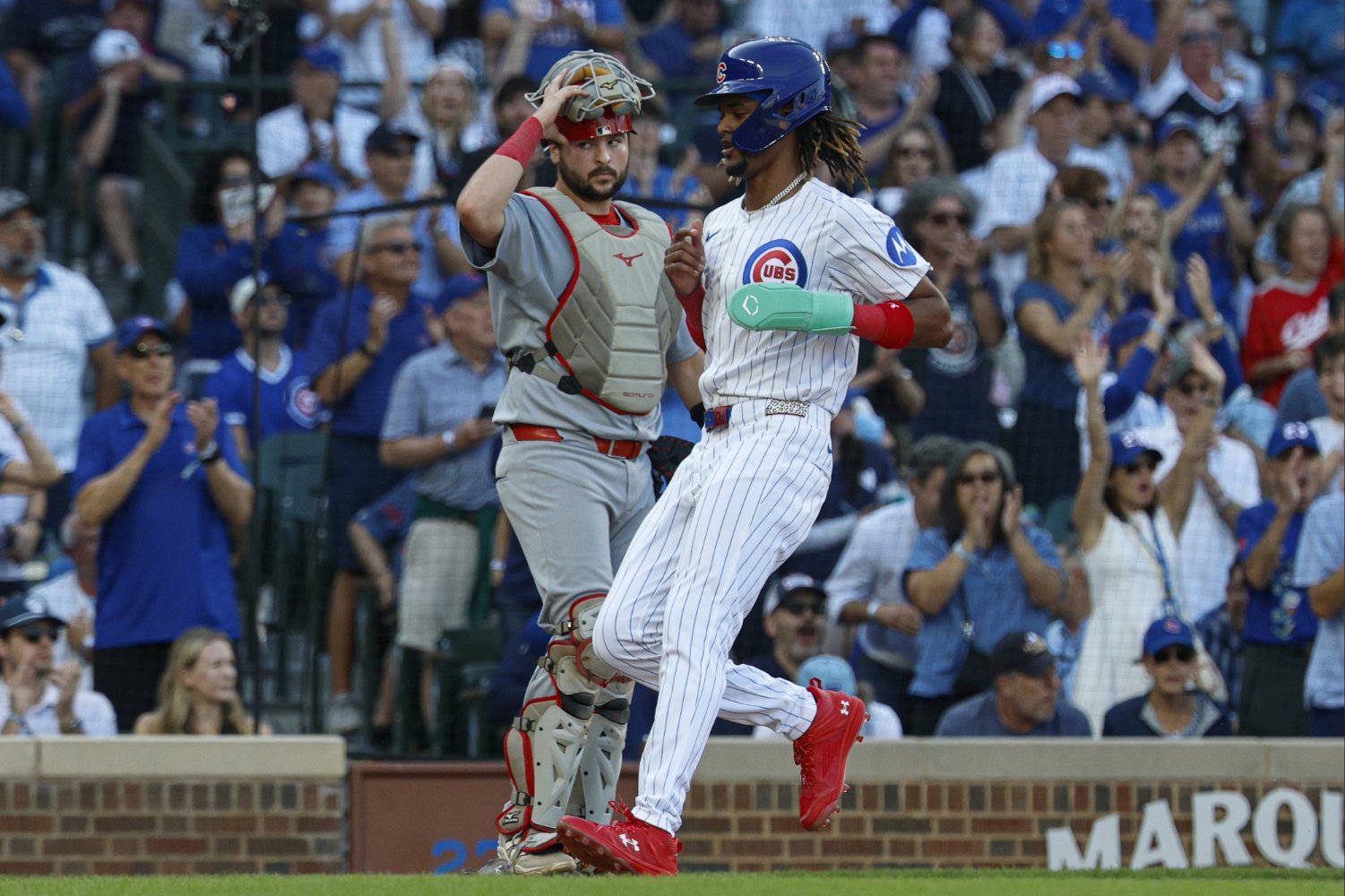 It's hardly top-of-mind within what had been a stagnant Chicago Cubs offseason prior to Wednesday afternoon, but filling out the bench still remains a part of Jed Hoyer's to-do list this winter. There was enough turnover within the reserve group last year that one imagines leadership would want to solidify that corps a bit more ahead of the 2026 campaign. In general, the Cubs have their starting lineup in place. This week's trade of Owen Caissie and prospects to the Miami Marlins in exchange for starting pitcher Edward Cabrera likely settled the awkward setup between right field and designated hitter spot. What could have been a logjam of Caissie, Seiya Suzuki, Moisés Ballesteros, and even Kevin Alcántara for two spots now figures to feature Suzuki on the grass, Ballesteros as the designated hitter, and Alcántara providing support either way. But between Matt Shaw's 2025 inconsistency and injuries that will inevitably manifest, the team will have to do better than last season's collection of Jon Berti, Gage Workman, Vidal Bruján, Nicky Lopez, Willi Castro, and Carlos Santana. Thus, with little room remaining with which to operate on the backup side of things, the team will want to get their moves correct. We know, at present, what shape the majority of the bench will take. The automatic call is that the team will have one of Carson Kelly or Miguel Amaya holding down a spot as the No. 2 catcher. For the purpose of this discussion, we'll assume Kelly gets the edge in playing time over Amaya. Tyler Austin signing a major-league deal with the team indicates he'll slot into the Justin Turner role as a supplement to Michael Busch at first base and work in as a designated hitter and pinch hitter. Perhaps some corner outfield time is in the cards for him, as well. Assuming the Cubs run with a four-man bench, that's already half the group sorted. And potentially a third player already in the mix in the form of a young outfielder. Following the Caissie-for-Cabrera trade, it's now difficult to visualize a world in which Kevin Alcántara isn't on the team's bench to start the year. While Ballesteros would likely only be on the roster as a regular designated hitter as opposed to a pure bench bat, Alcántara would offer coverage for the outfield while allowing Suzuki to rotate into that spot in the event that Ballesteros is not holding it down regularly. In terms of a pure bench role, Alcántara's ability to play center field should also leave him well-suited to provide the occasional breather for Pete Crow-Armstrong. Regardless of those logistics, he should get the first crack at a gig as the fourth outfielder. From there, things start to get dicey in terms of players actually in the organization. While a bench featuring each of Caissie and Alcántara was possible prior to the trade, it also wouldn't have been ideal. This presents an opportunity to pursue an upgrade to the infield depth. It's not complete necessity given how consistent Nico Hoerner and Dansby Swanson have been over a 162-game season, but considering Shaw's history and the natural aim of maximizing flexibility, you'd like someone adept at handling infield work in a reserve role. The issue is that the Cubs don't employ such a player at present, save for minor-league signing Scott Kingery. While versatile, Kingery hasn't hit in nearly a half-decade. You'd be looking at a continuation of the hellish Workman-Berti-Bruján-Lopez cycle in that case. It's not out of the realm of possibility, but it would also assume that the Cubs don't seek to add at least competition for him in that spot or outright sign someone to a big league deal to handle the job. If they prefer to stay in house, the Cubs will have to determine if James Triantos is worthy of a big-league spot and are comfortable with him on the bench the majority of the time. Either scenario might force the Cubs to bring in another outside addition on some level. Thus, the current shape of the bench can go a couple of (wildly) different routes. The first scenario is simple. You have the assumed trio of Amaya, Austin, and Alcántara to supplement the starters and roll out one of Kingery — who would have to win the job and be added to the 40-man during spring training — or Triantos as the fourth guy. Triantos would be the wild card in this first scenario. He didn't hit at all last year (76 wRC+ in Iowa), but was added to the 40-man this offseason all the same. He has a bit of positional versatility in the tank, too, which could help the Cubs if they're reluctant to add another contract to the books for what would amount to a depth player on the infield. It's certainly the path of least resistance. Of course, another iteration of the Kingery minor-league deal could also present itself and further complicate the picture at a low price point. Scenario No. 2 would be the much more significant of the two. We know the team has been linked to free agent infielders Alex Bregman and Bo Bichette to varying degrees over the past few weeks. Should the team succeed in signing one of the two, we can assume that it would kick Shaw to the bench to serve a utility role in support of the signee, Swanson, and Hoerner. It allows Craig Counsell to play matchups for his young hitter while providing a breather for the heavy game load of the other three and opens up the ability to more comfortably rotate one of them into the DH role for a spell, should he choose to do so. There is, technically, an additional leg to that scenario to be opened up by the second one where a signing takes place, Hoerner is traded, and Shaw is moved over to the keystone. In which case the Cubs would have to circle back to the Kingery-Triantos quandary as the reserve infielder. Now that the team has their coveted cost-controlled starter, though, it's harder to imagine they move a top contact hitter with baserunning prowess. They'd likely let him play out the final year of his contract before flipping Shaw over the second base in 2027. These would appear, at least broadly, to be the two most likely scenarios. The first is the simplest from a logistical standpoint, wherein you create competition for the last bench spot and let it play out amongst non-guaranteed contracts and the prospect. The second requires quite a bit more legwork in relation to the payroll. Ultimately, as structurally sound as the positional side of the Cubs roster has been all offseason (on paper), the bench situation remains a muddled one. There are 40-man spots and player development considerations involved. Perhaps the remaining time this winter will present some answers on this front. If not, the spring exhibition season will lend itself to solutions on its own. But there still remains plenty of uncertainty as to how this picture could find a bit of lucidity by March and April.
 -
Image courtesy of © John E. Sokolowski-Imagn Images Jed Hoyer got his man on Wednesday, as the Chicago Cubs were able to pull off their long-awaited deal for a starting pitcher, in Miami's Edward Cabrera. He'll join Cade Horton and (eventually) Justin Steele in a formidable trio atop the team's rotation. Naturally, in order to acquire an arm as valuable as Cabrera's, you need to give up value in return. The Cubs sent outfielder Owen Caissie, shortstop prospect Cristian Hernández, and 18-year-old infield prospect Edgardo De Leon to Miami. Caissie is ready to take on the top level on a full-time basis and was expected to challenge heavily for regular time for the 2026 Cubs. Hernández was a massive international prospect signing for the team in January 2021, and checked in at No. 8 on our list of the organization's top prospects. Much of the attention to the Cubs' end of things is, obviously, going to surround what Cabrera adds to the roster. When he's healthy, he can be a frontline arm. Yet, it's also important to explore what the acquisition cost means, in terms of the 2026 roster and the longer-term picture. The most significant component in this deal is Caissie. The 2025 campaign saw his first action at the top level, but he only got 27 big-league plate appearances, so he maintains rookie status ahead of this year (he sat at the top of our list of Cubs prospects). In his cup of coffee with the Cubs, fans got a concentrated dose of what Caissie does both well and poorly. He notched only five hits and struck out 11 times, but added a homer and a 13.3% Barrel rate to the equation. His 27.9% strikeout rate in Iowa was Caissie's lowest in his minor-league career, while the Cubs fanned just 20.7% of the time. Plus-plus raw power is Caissie's hallmark, and there's an argument to be made that he didn't neatly fit the philosophy the Cubs prefer to instill in their hitters, wherein they rely more on efficient swings than loud ones. Nevertheless, Caissie was projected to play a significant role for this group in the upcoming season. Whether right field was a timeshare with Seiya Suzuki or he was serving more as a designated hitter, there was finally a path to playing time upon Kyle Tucker's departure. It's not out of the question that his profile played a role in their willingness to move him. They preferred what Moisés Ballesteros brings at the plate, even if he lacks an actual defensive position. It's likely that with this deal, Suzuki assumes full-time duty in right field, while Ballesteros gets plenty of run as the team's designated hitter. Hernández is an interesting inclusion, as he was certainly a name in the system; he drew Álex Rodríguez comparisons when he was signed out of the Dominican Republic. His bat never got going throughout his time in the system, however, even if he drew rave reviews for his glovework and totaled 97 steals in the last two seasons. His absence will be noteworthy within the system. It'll be interesting to see the shape the team's middle infield takes in the long term now, with Hernández plying his trade in Miami and Nico Hoerner set to hit free agency next winter. Holding onto both Jefferson Rojas and Juan Cabada was key for the Cubs. De Leon is the wild card here, as he'll turn just 19 next month and was a fresh name in the team's system. He turned in impressive numbers in his first year with the organization in the Arizona Complex League, with a .353 on-base percentage and .500 slugging average. He provides the type of upside you often need to complete a deal of this nature, but at this stage of development, it's impossible to know what his trajectory will be. He's not a valuable defensive player. As such, the departure in this trade that immediately impacts the Cubs is Caissie. It makes things easier for Craig Counsell this year (on paper), but also saps some of the power the team was poised to get from the corner outfield spots. They may have to look elsewhere to compensate for that. Overall, though, given Caissie's swing-and-miss profile, Hernández's uncertain offensive future, and the early stages of De Leon's development, the Cubs were able to get a guy they coveted for a long time without cannibalizing their farm system. The needle was threaded, if you will. View full article
-
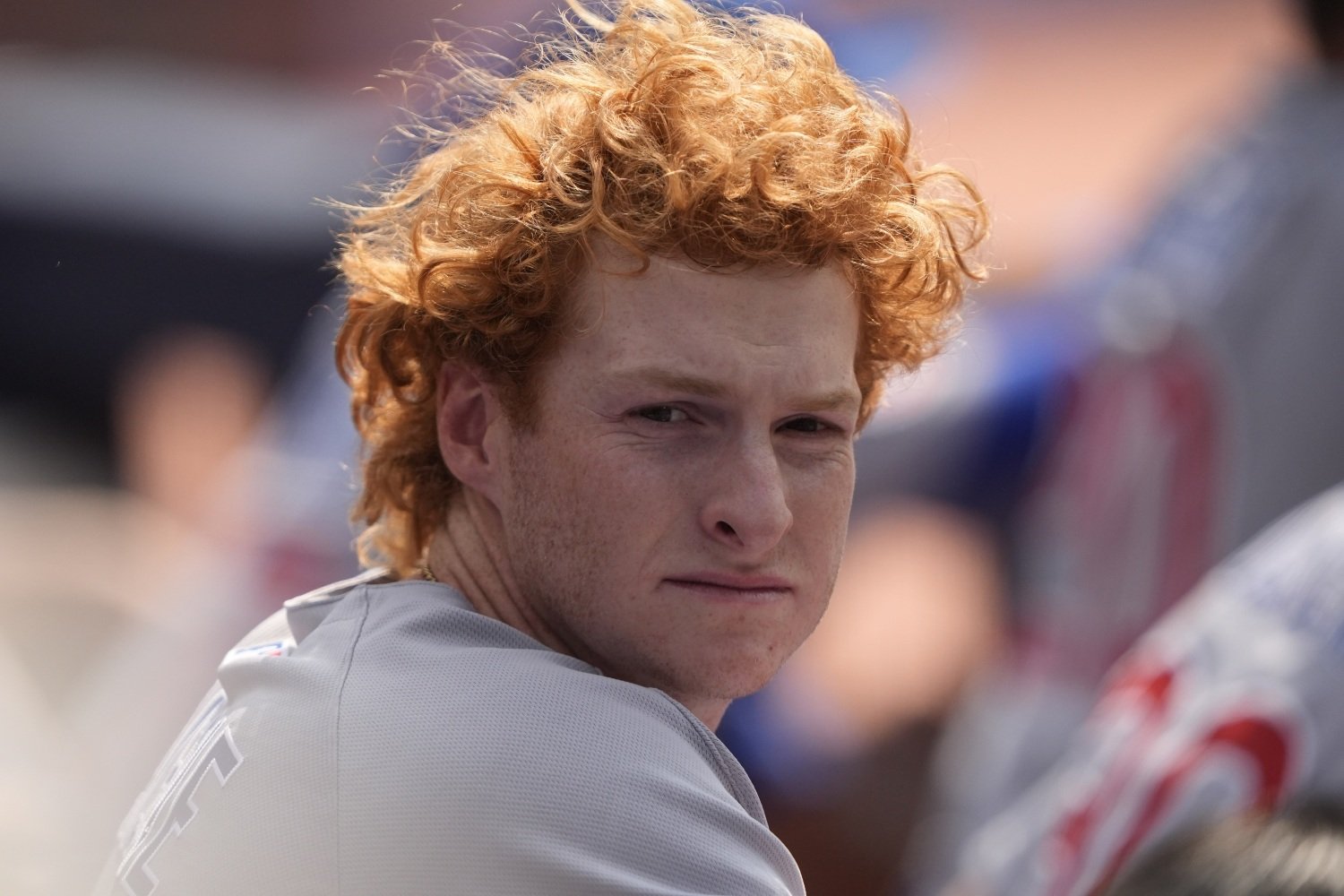 Jed Hoyer got his man on Wednesday, as the Chicago Cubs were able to pull off their long-awaited deal for a starting pitcher, in Miami's Edward Cabrera. He'll join Cade Horton and (eventually) Justin Steele in a formidable trio atop the team's rotation. Naturally, in order to acquire an arm as valuable as Cabrera's, you need to give up value in return. The Cubs sent outfielder Owen Caissie, shortstop prospect Cristian Hernández, and 18-year-old infield prospect Edgardo De Leon to Miami. Caissie is ready to take on the top level on a full-time basis and was expected to challenge heavily for regular time for the 2026 Cubs. Hernández was a massive international prospect signing for the team in January 2021, and checked in at No. 8 on our list of the organization's top prospects. Much of the attention to the Cubs' end of things is, obviously, going to surround what Cabrera adds to the roster. When he's healthy, he can be a frontline arm. Yet, it's also important to explore what the acquisition cost means, in terms of the 2026 roster and the longer-term picture. The most significant component in this deal is Caissie. The 2025 campaign saw his first action at the top level, but he only got 27 big-league plate appearances, so he maintains rookie status ahead of this year (he sat at the top of our list of Cubs prospects). In his cup of coffee with the Cubs, fans got a concentrated dose of what Caissie does both well and poorly. He notched only five hits and struck out 11 times, but added a homer and a 13.3% Barrel rate to the equation. His 27.9% strikeout rate in Iowa was Caissie's lowest in his minor-league career, while the Cubs fanned just 20.7% of the time. Plus-plus raw power is Caissie's hallmark, and there's an argument to be made that he didn't neatly fit the philosophy the Cubs prefer to instill in their hitters, wherein they rely more on efficient swings than loud ones. Nevertheless, Caissie was projected to play a significant role for this group in the upcoming season. Whether right field was a timeshare with Seiya Suzuki or he was serving more as a designated hitter, there was finally a path to playing time upon Kyle Tucker's departure. It's not out of the question that his profile played a role in their willingness to move him. They preferred what Moisés Ballesteros brings at the plate, even if he lacks an actual defensive position. It's likely that with this deal, Suzuki assumes full-time duty in right field, while Ballesteros gets plenty of run as the team's designated hitter. Hernández is an interesting inclusion, as he was certainly a name in the system; he drew Álex Rodríguez comparisons when he was signed out of the Dominican Republic. His bat never got going throughout his time in the system, however, even if he drew rave reviews for his glovework and totaled 97 steals in the last two seasons. His absence will be noteworthy within the system. It'll be interesting to see the shape the team's middle infield takes in the long term now, with Hernández plying his trade in Miami and Nico Hoerner set to hit free agency next winter. Holding onto both Jefferson Rojas and Juan Cabada was key for the Cubs. De Leon is the wild card here, as he'll turn just 19 next month and was a fresh name in the team's system. He turned in impressive numbers in his first year with the organization in the Arizona Complex League, with a .353 on-base percentage and .500 slugging average. He provides the type of upside you often need to complete a deal of this nature, but at this stage of development, it's impossible to know what his trajectory will be. He's not a valuable defensive player. As such, the departure in this trade that immediately impacts the Cubs is Caissie. It makes things easier for Craig Counsell this year (on paper), but also saps some of the power the team was poised to get from the corner outfield spots. They may have to look elsewhere to compensate for that. Overall, though, given Caissie's swing-and-miss profile, Hernández's uncertain offensive future, and the early stages of De Leon's development, the Cubs were able to get a guy they coveted for a long time without cannibalizing their farm system. The needle was threaded, if you will.
 -
Image courtesy of © Daniel Kucin Jr.-Imagn Images There was a time (roughly the spring of 2018) when Scott Kingery represented one of the more intriguing names across the baseball landscape. Had the Chicago Cubs brought him into their organization at any point around that particular moment, then his involvement in a potential roster would've had a bit of juice to it. We're far removed from such a time, however. Kingery signed a pre-debut extension as a top prospect with the Philadelphia Phillies in March of 2018. The contract carried club options for 2024 through 2026. Unlike many of his counterparts that have signed that type of deal, there wasn't really a point where the contract looked like a win for the Phillies. Kingery posted a wRC+ of just 61 across 484 plate appearances in 2018. He improved to 100 in 500 PA the following season and showed a bit of pop (.216 ISO), but flamed out entirely during the COVID sprint of 2020 (36 wRC+). After toiling largely in Triple-A for the next four seasons — the final two of which he never appeared at the major-league level — Kingery was sent to the Los Angeles Angels for cash last November. After an uninspiring 29 plate appearances, he was outrighted off the 40-man roster and elected free agency. That's where the Cubs enter the picture. Kingery signed a minor-league deal with the Cubs earlier this month. It's entirely possible that his initial signing on December 2 is the last we hear of him as a noteworthy member of the organization. With the way his career has transpired, one would really have to stretch to see this as a signing anything beyond its literal significance: depth. There's no logical reason to expect him to ply his trade at Wrigley Field outside of injury to one of the team's current position players. With that said, there's been almost no activity to speak of on the part of the Cubs in building up their positional depth this winter (let alone adding a legitimate component to their lineup), save for their very cheap acquisition of Tyler Austin. They've made signings to build up their bullpen again, but outside of the odd Alex Bregman whispers, there's been nothing even speculated. Such is the nature of a tight-lipped franchise like the Cubs, compounded with their relative inactivity in making outside additions. That context does add a least a little bit of uncertainty as to whether the Cubs will seek additional roster depth or give Kingery a legitimate shot to win a bench job in the spring. Even if it's unwise to award a roster spot to a player who hasn't posted a positive fWAR at the top level since 2019, it's also not an impossible image to project. Kingery's value at this point lies almost exclusively in his versatility. He logged time in the Angels organization last year at second base, third base, shortstop, and all three outfield spots. He was perfectly adequate at each, with his worst Outs Above Average in small samples unfolding at second (-1 in 53 innings) and shortstop (also -1 in 13 innings) while with the big-league club. Of course, the caveat to that is that you're not getting anything with the bat. Kingery's wRC+ in his 19 games with the Angels was just nine, and it was only 58 while in Triple-A. Factor in a career strikeout rate over 28 percent that is hardly compensated for with a walk rate under seven percent, and there's very little to speak of in terms of offensive value. At the same time, the Cubs just spent a season rolling out the likes of Jon Berti, Vidal Bruján, Gage Workman, Nicky Lopez, and a post-deadline Willi Castro among their reserves last year. It's not entirely unreasonable to think they'd give Kingery a little bit of run as a versatile bench piece if they're unable to fill such a role elsewhere. At least with his presence, you have coverage for Nico Hoerner and Dansby Swanson and a late-game insertion option in the event that you need to deploy a pinch hitter whose defensive chops aren't completely trustworthy (like Moisés Ballesteros). In an ideal world, the Cubs are thinking bigger for their lineup than Scott Kingery. While the versatility will play, the absence of any offensive value is something we saw become a major issue for Chicago out of their depth last year. If lessons were learned, then perhaps they shoot higher as the offseason wears on. But it's also not entirely unreasonable to imagine a path to playing time considering the lack of movement for the Cubs thus far. View full article
-
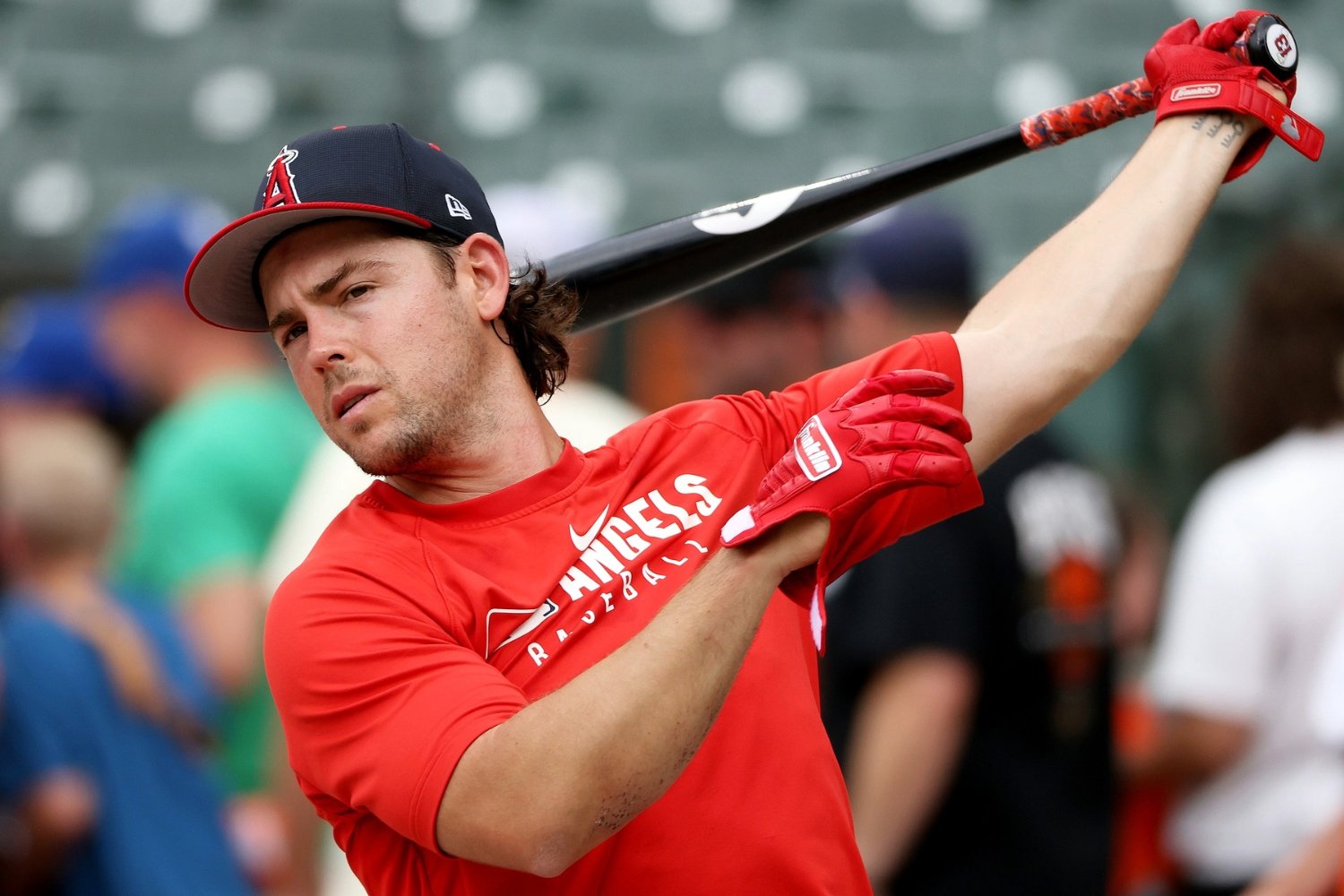 There was a time (roughly the spring of 2018) when Scott Kingery represented one of the more intriguing names across the baseball landscape. Had the Chicago Cubs brought him into their organization at any point around that particular moment, then his involvement in a potential roster would've had a bit of juice to it. We're far removed from such a time, however. Kingery signed a pre-debut extension as a top prospect with the Philadelphia Phillies in March of 2018. The contract carried club options for 2024 through 2026. Unlike many of his counterparts that have signed that type of deal, there wasn't really a point where the contract looked like a win for the Phillies. Kingery posted a wRC+ of just 61 across 484 plate appearances in 2018. He improved to 100 in 500 PA the following season and showed a bit of pop (.216 ISO), but flamed out entirely during the COVID sprint of 2020 (36 wRC+). After toiling largely in Triple-A for the next four seasons — the final two of which he never appeared at the major-league level — Kingery was sent to the Los Angeles Angels for cash last November. After an uninspiring 29 plate appearances, he was outrighted off the 40-man roster and elected free agency. That's where the Cubs enter the picture. Kingery signed a minor-league deal with the Cubs earlier this month. It's entirely possible that his initial signing on December 2 is the last we hear of him as a noteworthy member of the organization. With the way his career has transpired, one would really have to stretch to see this as a signing anything beyond its literal significance: depth. There's no logical reason to expect him to ply his trade at Wrigley Field outside of injury to one of the team's current position players. With that said, there's been almost no activity to speak of on the part of the Cubs in building up their positional depth this winter (let alone adding a legitimate component to their lineup), save for their very cheap acquisition of Tyler Austin. They've made signings to build up their bullpen again, but outside of the odd Alex Bregman whispers, there's been nothing even speculated. Such is the nature of a tight-lipped franchise like the Cubs, compounded with their relative inactivity in making outside additions. That context does add a least a little bit of uncertainty as to whether the Cubs will seek additional roster depth or give Kingery a legitimate shot to win a bench job in the spring. Even if it's unwise to award a roster spot to a player who hasn't posted a positive fWAR at the top level since 2019, it's also not an impossible image to project. Kingery's value at this point lies almost exclusively in his versatility. He logged time in the Angels organization last year at second base, third base, shortstop, and all three outfield spots. He was perfectly adequate at each, with his worst Outs Above Average in small samples unfolding at second (-1 in 53 innings) and shortstop (also -1 in 13 innings) while with the big-league club. Of course, the caveat to that is that you're not getting anything with the bat. Kingery's wRC+ in his 19 games with the Angels was just nine, and it was only 58 while in Triple-A. Factor in a career strikeout rate over 28 percent that is hardly compensated for with a walk rate under seven percent, and there's very little to speak of in terms of offensive value. At the same time, the Cubs just spent a season rolling out the likes of Jon Berti, Vidal Bruján, Gage Workman, Nicky Lopez, and a post-deadline Willi Castro among their reserves last year. It's not entirely unreasonable to think they'd give Kingery a little bit of run as a versatile bench piece if they're unable to fill such a role elsewhere. At least with his presence, you have coverage for Nico Hoerner and Dansby Swanson and a late-game insertion option in the event that you need to deploy a pinch hitter whose defensive chops aren't completely trustworthy (like Moisés Ballesteros). In an ideal world, the Cubs are thinking bigger for their lineup than Scott Kingery. While the versatility will play, the absence of any offensive value is something we saw become a major issue for Chicago out of their depth last year. If lessons were learned, then perhaps they shoot higher as the offseason wears on. But it's also not entirely unreasonable to imagine a path to playing time considering the lack of movement for the Cubs thus far.
 -
Is There Actually Room for Moisés Ballesteros on the 2026 Cubs?
RandallPnkFloyd posted an article in Cubs
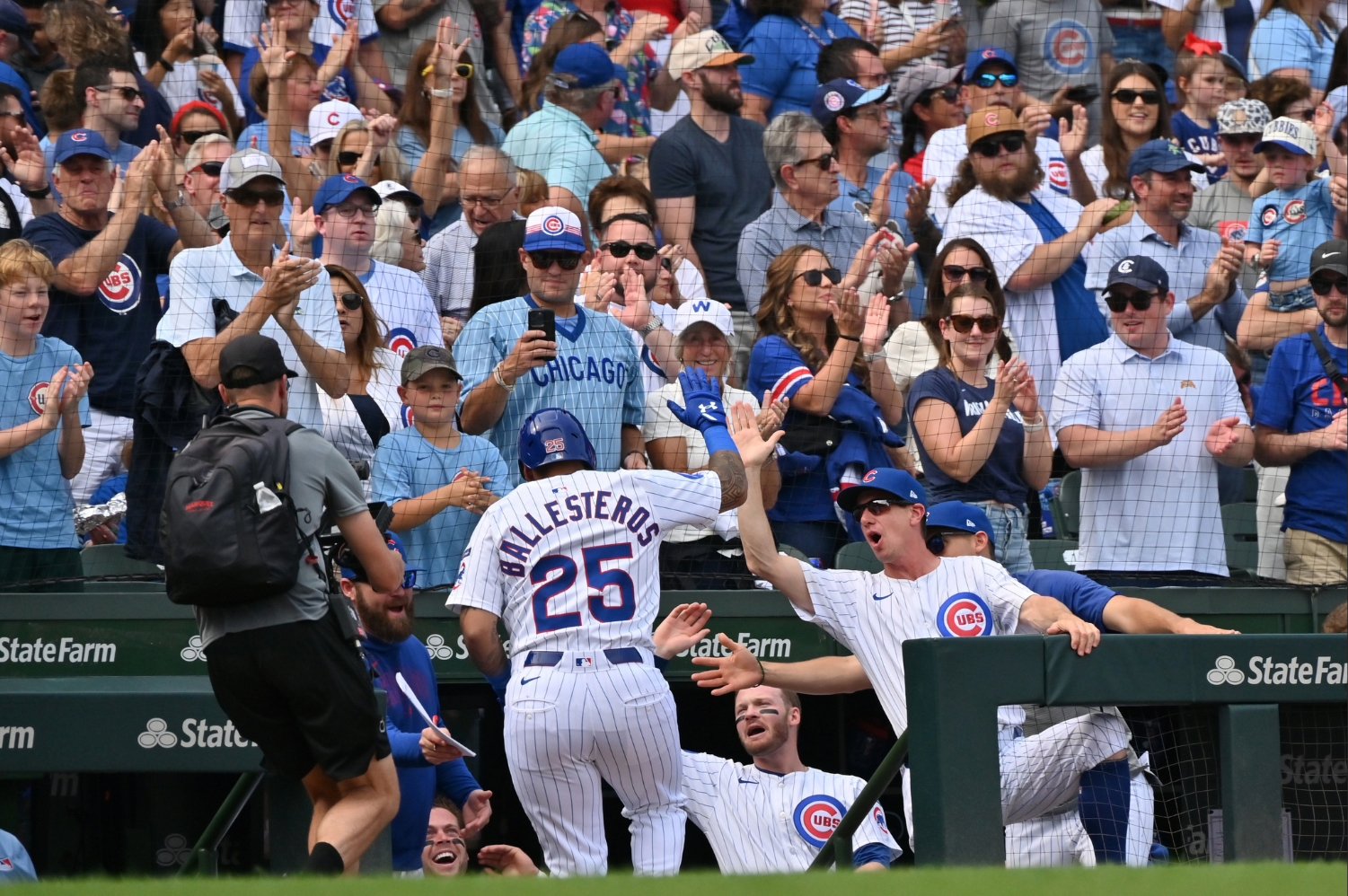 In many ways, we know what shape the 2026 Chicago Cubs will take on the positional side. While there's still a bench to sort, the catchers, the infield, and two-thirds of the outfield are settled. That's seven spots in the lineup that are largely set in December, barring an impact addition or subtraction (which would be a shock given how Jed Hoyer & co. typically operate). There's still the matter of right field to be sorted, and how things shake out between Seiya Suzuki and Owen Caissie should have some bearing on the designated hitter spot. It's this portion of the equation where we start to wonder about what role Moisés Ballesteros will serve for next year's group. Given the departure of Kyle Tucker and Ballesteros' performance down the stretch for the 2025 Cubs, there's an assumption that exists that he'll factor in heavily as the team's designated hitter. On paper, there's plenty of logic to it. After carrying a .316/.385/.473 line and 121 wRC+ in Iowa, Ballesteros was called up permanently in September, appearing in 14 games and landing as an extra bat on the postseason roster. He finished his first 20 big league games (which also included five games in May and one in July) with a .298/.394/.474 line, a 143 wRC+, and strikeout (18.2 K%) and walk rates (13.6 BB%) that matched up well with one another. His approach and contact ability were on full display, leaving the Cubs with an admirable skill set in a lineup that needs every bit of consistency it can find. The aforementioned departure of Tucker lends itself to a roster shuffle that should, in theory, land Ballesteros the gig as the top option at DH. But theory will get you only so far. Craig Counsell likes a bit of flexibility out of his DH. Suzuki might've been the team's primary option in that role last year, but injuries necessitated plenty of time for him all across the outfield grass. He was hardly a full-time DH in the way that one might have expected through the combination of Tucker's arrival and Pete Crow-Armstrong's breakout. Ballesteros assuming the role would change the calculus in that spot entirely. At present, Moisés Ballesteros is a man without a position. The Cubs are not inclined to let him catch, with questions long persisting about his ability to handle the defensive nuance of the position. With Carson Kelly and Miguel Amaya each set to return, it's likely that the team goes the Reese McGuire route and stashes a defensive catcher as depth in Iowa until needed. If they had any intention of letting Ballesteros catch, we likely would've seen it for more than six innings of a single game throughout his stretch on the roster in September. And while the Cubs got him a bit of time at first base at the very end, it's unlikely he'll assume a role there (other than a legitimate off day or injury to Michael Busch). In Busch, the Cubs employ a full-time first baseman with upper-tier offensive upside. The only supplement he'll see if of the right-handed variety, though it stands to reason that he'll also see additional time against southpaws in 2026. That Ballesteros is also a lefty essentially eliminates any shot there. Which means that the outcome in right field is going to directly correspond with the space with which Ballesteros will have to operate. Let's assume, for a moment, that Suzuki gets his time back on the grass as the full-time right fielder. In that case, are the Cubs going to be content to rotate Owen Caissie through left, right, and the DH spot depending on the day? Or would that not offer up enough of a timeshare to justify his place on the roster in favor of a yet-to-be-signed veteran backup? Such a scenario lands Caissie back in Iowa (operating under the safe assumption that he's not included in a trade for an upper-tier starting pitcher before then). In that case, then you likely have the ability to let Ballesteros ply his trade as the everyday designated hitter. But what if Caissie forces the collective hand of the brass with a strong showing in the spring? His presence on the roster would unlock far more flexibility in both providing breaks for the other outfielders and ensuring you don't have to rely on Suzuki's glove on a daily basis. On paper, having Caissie on the roster serves the group more effectively than Ballesteros might considering the more dynamic opportunities available via his presence. Of course, the possibility exists that both are on the roster. It's a tough sell, however; a pair of left-handed bats, one pinned exclusively to the outfield and another without a firm position, really tamp down on Counsell's job to operate as effectively as he may prefer. If there's any indication of where things may stand at present, perhaps we can turn to a couple of key outlets for some insight. FanGraphs currently projects Caissie to occupy seven percent of the timeshare in left field, 20 percent in right, and 20 percent as the designated hitter. Ballesteros, meanwhile, projects for 44 percent of the time as the DH, four percent behind the plate, and nine percent at first base. In terms of playing time, the score is 1-0 Ballesteros, it would seem. Baseball Prospectus has something similar on their depth charts. Caissie is projected for 10 percent of the time in left, 25 percent of the time in right, and 20 percent as the DH. Ballesteros is projected for five percent of the plate appearances at each of catcher and first base, with 40 percent of the time sent his way as the DH. Prospectus lines up a bit more favorably for Caissie than it does for Ballesteros. Which means that even the roster prognosticators are working within the same muddled framework alongside the general public. The wide assumption from both is that Suzuki will grab the majority of the time in right field, with the other two factoring in in a more supplemental fashion as far as playing time distribution goes. While neither FanGraphs or Prospectus are particularly revealing of how things could shake out, it does speak to the idea that there may only be room on the roster for one at a time. The good news is that it's only December and there's time for the roster to be sorted. We don't yet know how that'll transpire, but there should be at least one notable positional addition to the roster for some extra depth. That addition should go a long way toward indicating whether it'll be Ballesteros or Caissie with the first crack at a regular role for the Cubs in 2026.
 -
Image courtesy of © Patrick Gorski-Imagn Images In many ways, we know what shape the 2026 Chicago Cubs will take on the positional side. While there's still a bench to sort, the catchers, the infield, and two-thirds of the outfield are settled. That's seven spots in the lineup that are largely set in December, barring an impact addition or subtraction (which would be a shock given how Jed Hoyer & co. typically operate). There's still the matter of right field to be sorted, and how things shake out between Seiya Suzuki and Owen Caissie should have some bearing on the designated hitter spot. It's this portion of the equation where we start to wonder about what role Moisés Ballesteros will serve for next year's group. Given the departure of Kyle Tucker and Ballesteros' performance down the stretch for the 2025 Cubs, there's an assumption that exists that he'll factor in heavily as the team's designated hitter. On paper, there's plenty of logic to it. After carrying a .316/.385/.473 line and 121 wRC+ in Iowa, Ballesteros was called up permanently in September, appearing in 14 games and landing as an extra bat on the postseason roster. He finished his first 20 big league games (which also included five games in May and one in July) with a .298/.394/.474 line, a 143 wRC+, and strikeout (18.2 K%) and walk rates (13.6 BB%) that matched up well with one another. His approach and contact ability were on full display, leaving the Cubs with an admirable skill set in a lineup that needs every bit of consistency it can find. The aforementioned departure of Tucker lends itself to a roster shuffle that should, in theory, land Ballesteros the gig as the top option at DH. But theory will get you only so far. Craig Counsell likes a bit of flexibility out of his DH. Suzuki might've been the team's primary option in that role last year, but injuries necessitated plenty of time for him all across the outfield grass. He was hardly a full-time DH in the way that one might have expected through the combination of Tucker's arrival and Pete Crow-Armstrong's breakout. Ballesteros assuming the role would change the calculus in that spot entirely. At present, Moisés Ballesteros is a man without a position. The Cubs are not inclined to let him catch, with questions long persisting about his ability to handle the defensive nuance of the position. With Carson Kelly and Miguel Amaya each set to return, it's likely that the team goes the Reese McGuire route and stashes a defensive catcher as depth in Iowa until needed. If they had any intention of letting Ballesteros catch, we likely would've seen it for more than six innings of a single game throughout his stretch on the roster in September. And while the Cubs got him a bit of time at first base at the very end, it's unlikely he'll assume a role there (other than a legitimate off day or injury to Michael Busch). In Busch, the Cubs employ a full-time first baseman with upper-tier offensive upside. The only supplement he'll see if of the right-handed variety, though it stands to reason that he'll also see additional time against southpaws in 2026. That Ballesteros is also a lefty essentially eliminates any shot there. Which means that the outcome in right field is going to directly correspond with the space with which Ballesteros will have to operate. Let's assume, for a moment, that Suzuki gets his time back on the grass as the full-time right fielder. In that case, are the Cubs going to be content to rotate Owen Caissie through left, right, and the DH spot depending on the day? Or would that not offer up enough of a timeshare to justify his place on the roster in favor of a yet-to-be-signed veteran backup? Such a scenario lands Caissie back in Iowa (operating under the safe assumption that he's not included in a trade for an upper-tier starting pitcher before then). In that case, then you likely have the ability to let Ballesteros ply his trade as the everyday designated hitter. But what if Caissie forces the collective hand of the brass with a strong showing in the spring? His presence on the roster would unlock far more flexibility in both providing breaks for the other outfielders and ensuring you don't have to rely on Suzuki's glove on a daily basis. On paper, having Caissie on the roster serves the group more effectively than Ballesteros might considering the more dynamic opportunities available via his presence. Of course, the possibility exists that both are on the roster. It's a tough sell, however; a pair of left-handed bats, one pinned exclusively to the outfield and another without a firm position, really tamp down on Counsell's job to operate as effectively as he may prefer. If there's any indication of where things may stand at present, perhaps we can turn to a couple of key outlets for some insight. FanGraphs currently projects Caissie to occupy seven percent of the timeshare in left field, 20 percent in right, and 20 percent as the designated hitter. Ballesteros, meanwhile, projects for 44 percent of the time as the DH, four percent behind the plate, and nine percent at first base. In terms of playing time, the score is 1-0 Ballesteros, it would seem. Baseball Prospectus has something similar on their depth charts. Caissie is projected for 10 percent of the time in left, 25 percent of the time in right, and 20 percent as the DH. Ballesteros is projected for five percent of the plate appearances at each of catcher and first base, with 40 percent of the time sent his way as the DH. Prospectus lines up a bit more favorably for Caissie than it does for Ballesteros. Which means that even the roster prognosticators are working within the same muddled framework alongside the general public. The wide assumption from both is that Suzuki will grab the majority of the time in right field, with the other two factoring in in a more supplemental fashion as far as playing time distribution goes. While neither FanGraphs or Prospectus are particularly revealing of how things could shake out, it does speak to the idea that there may only be room on the roster for one at a time. The good news is that it's only December and there's time for the roster to be sorted. We don't yet know how that'll transpire, but there should be at least one notable positional addition to the roster for some extra depth. That addition should go a long way toward indicating whether it'll be Ballesteros or Caissie with the first crack at a regular role for the Cubs in 2026. View full article
-
Image courtesy of © Dan Hamilton-Imagn Images The 2025-26 Major League Baseball offseason remains in its relative infancy, but things are beginning to pick up with the Winter Meetings in full swing. One of the more notable developments thus far for the Chicago Cubs is their connection with a pair of high-profile third basemen. This offseason has already brought renewed reports of the team's interest in Alex Bregman. The Cubs were reported to have offered Bregman a deal last winter before he ultimately landed in Boston. From the time he opted out of his deal with the Red Sox this winter, though, the Cubs have been a team whose name has been floating around in connection with the veteran. More recently, we've heard the Cubs and Eugenio Suárez's name mentioned in tandem with one another. Suárez was a popular name that appeared in conjunction with the Cubs' trade deadline pursuits this past year before he wound up traded to the Seattle Mariners. Of course, July also wasn't the first time that we've heard his name come across the rumor circuit as a potential addition. Either player presents a certain level of logic for the team to target as an addition for 2026. Bregman offers more of an all-around game while Suárez would add a massive power component (.298 ISO in 2025). Both would provide a boost to an offensive team to help cover for Kyle Tucker's imminent departure. And given the prominence of each name in connection with the Cubs, there's plenty of time to hash out what their respective fits look like from a skill set standpoint. Regardless of how either pursuit shakes out, however, there's a crucial element worth discussing in relation to the team's current roster construction. Heading into this offseason, the infield group looked like as stable a phase as the roster had to offer: Carson Kelly and a healthy Miguel Amaya behind the plate, Michael Busch at first base, Nico Hoerner at second, Dansby Swanson at shortstop, and Matt Shaw resuming his post at third base. The latter's role now becomes something of a question considering this recent batch of hot-stove rumors. There isn't any question that Shaw's bat still has a ways to go in its development. As good as his defense was as the season wore on, his total body of work included a .226/.295/.394 line and a 93 wRC+. The power manifested at points during the summer but disappeared again toward the end of the year. His only contributions during the team's brief playoff run came by way of his five walks. His swing mechanics remain inconsistent, and there are some zone issues to be worked out. None of these are things that can't be fixed, but if the Cubs fancy themselves within a contention window, then that changes the calculus on how long the team is willing to wait with him entrenched as an everyday third baseman. Should the Cubs ultimately sign one of Bregman or Suárez (or acquire a different yet-to-be-named everyday type), it changes the perception of Shaw's role entirely. In general, we're left to wonder if there's more development on the horizon for Shaw in Iowa or if he becomes part of a trade to a rebuilding club for a starting pitcher. Those would appear to be the most likely outcomes in a situation such as this. It's also possible that the outcome becomes dependent on which third baseman is signed. That's because there's something of a possibility that Shaw remains on the big-league roster as a utility-type as the bat comes along, but only if it's Suárez that puts ink to paper. Benefits exist with that approach, at least in the sense that he'd provide coverage in the middle infield for a pair of players that rarely get a break while also rotating in at third should the Cubs choose to occasionally deploy Suárez as the designated hitter. But teams are not always compelled to turn to such a role with a high-upside prospect, as it can tend to stifle their actual playing time. It would be a delicate balancing act if required. That said, such a scenario is less likely to exist in the event of a Bregman signing. In that instance, Shaw is likely destined for a pure backup role, rotating in on more of an as-needed basis. It's also not as if Shaw is the only one that could be impacted by a third base signing. Nico Hoerner is a free agent after 2026 coming off a career year in which he garnered down-ballot MVP votes. We don't know if the Cubs are interested in retaining Hoerner on a new deal or what terms might look like. We do know that his name was making the rounds in trade rumors as recently as last winter. Would the Cubs sign a third baseman, flip Shaw and his multiple years of team control over to the keystone, and move Hoerner as part of a deal for a coveted starting pitcher via trade? Again, that's purely speculation. But it fits another logical route that could be traversed if the team were to bring in a fresh face at the hot corner. This is all completely hypothetical, of course. Then again, everything is this time of year. What's important is that the Cubs are clearly interested in retooling their roster given some of the names to which we've seen them attached. The fallout from a deal, were they successful in pursuit, would lead to some fascinating outcomes within the rest of the roster. View full article
-
What Cubs' Third Base Buzz Could Mean For Matt Shaw, Other Infielders
RandallPnkFloyd posted an article in Cubs
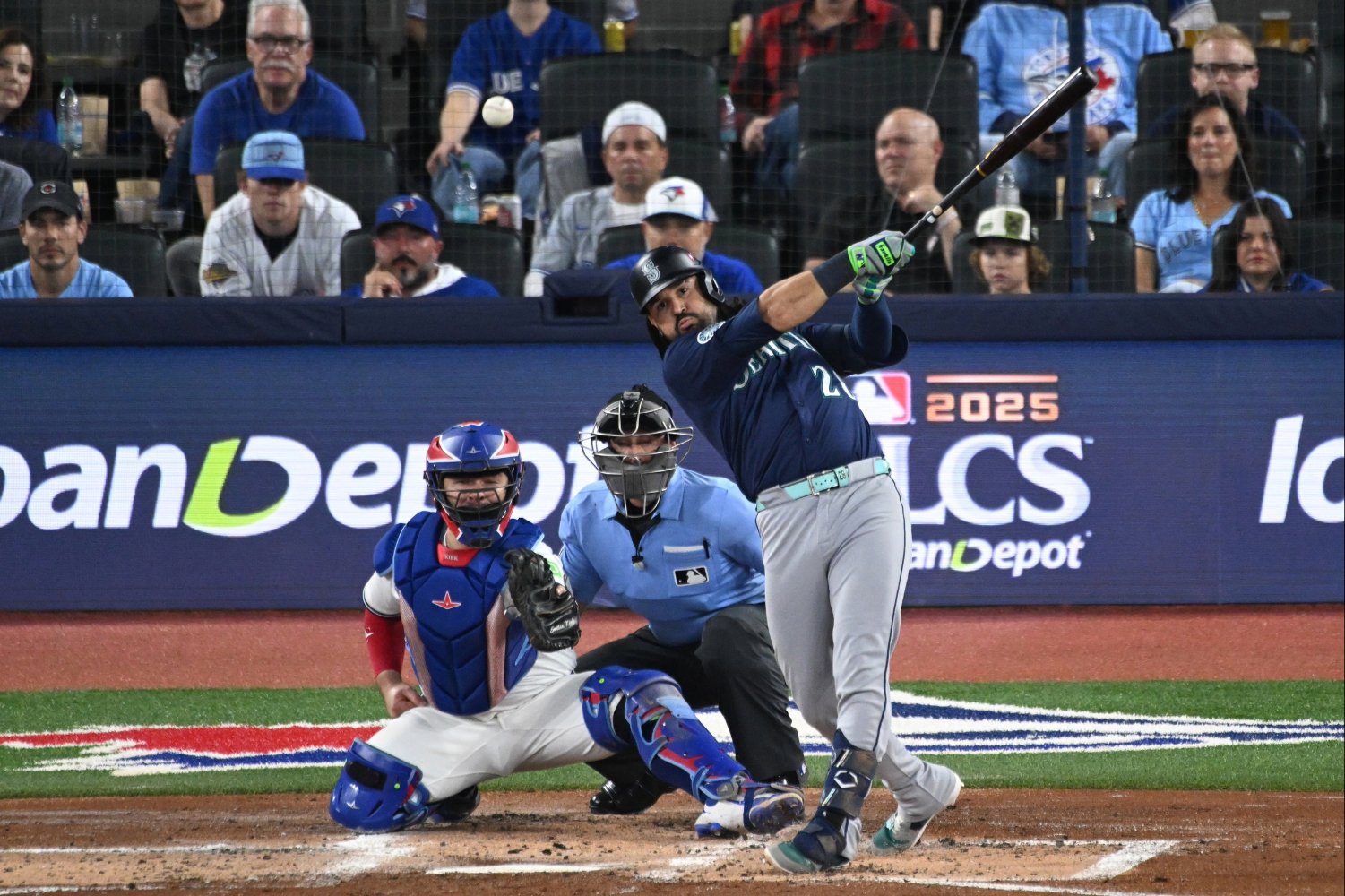 The 2025-26 Major League Baseball offseason remains in its relative infancy, but things are beginning to pick up with the Winter Meetings in full swing. One of the more notable developments thus far for the Chicago Cubs is their connection with a pair of high-profile third basemen. This offseason has already brought renewed reports of the team's interest in Alex Bregman. The Cubs were reported to have offered Bregman a deal last winter before he ultimately landed in Boston. From the time he opted out of his deal with the Red Sox this winter, though, the Cubs have been a team whose name has been floating around in connection with the veteran. More recently, we've heard the Cubs and Eugenio Suárez's name mentioned in tandem with one another. Suárez was a popular name that appeared in conjunction with the Cubs' trade deadline pursuits this past year before he wound up traded to the Seattle Mariners. Of course, July also wasn't the first time that we've heard his name come across the rumor circuit as a potential addition. Either player presents a certain level of logic for the team to target as an addition for 2026. Bregman offers more of an all-around game while Suárez would add a massive power component (.298 ISO in 2025). Both would provide a boost to an offensive team to help cover for Kyle Tucker's imminent departure. And given the prominence of each name in connection with the Cubs, there's plenty of time to hash out what their respective fits look like from a skill set standpoint. Regardless of how either pursuit shakes out, however, there's a crucial element worth discussing in relation to the team's current roster construction. Heading into this offseason, the infield group looked like as stable a phase as the roster had to offer: Carson Kelly and a healthy Miguel Amaya behind the plate, Michael Busch at first base, Nico Hoerner at second, Dansby Swanson at shortstop, and Matt Shaw resuming his post at third base. The latter's role now becomes something of a question considering this recent batch of hot-stove rumors. There isn't any question that Shaw's bat still has a ways to go in its development. As good as his defense was as the season wore on, his total body of work included a .226/.295/.394 line and a 93 wRC+. The power manifested at points during the summer but disappeared again toward the end of the year. His only contributions during the team's brief playoff run came by way of his five walks. His swing mechanics remain inconsistent, and there are some zone issues to be worked out. None of these are things that can't be fixed, but if the Cubs fancy themselves within a contention window, then that changes the calculus on how long the team is willing to wait with him entrenched as an everyday third baseman. Should the Cubs ultimately sign one of Bregman or Suárez (or acquire a different yet-to-be-named everyday type), it changes the perception of Shaw's role entirely. In general, we're left to wonder if there's more development on the horizon for Shaw in Iowa or if he becomes part of a trade to a rebuilding club for a starting pitcher. Those would appear to be the most likely outcomes in a situation such as this. It's also possible that the outcome becomes dependent on which third baseman is signed. That's because there's something of a possibility that Shaw remains on the big-league roster as a utility-type as the bat comes along, but only if it's Suárez that puts ink to paper. Benefits exist with that approach, at least in the sense that he'd provide coverage in the middle infield for a pair of players that rarely get a break while also rotating in at third should the Cubs choose to occasionally deploy Suárez as the designated hitter. But teams are not always compelled to turn to such a role with a high-upside prospect, as it can tend to stifle their actual playing time. It would be a delicate balancing act if required. That said, such a scenario is less likely to exist in the event of a Bregman signing. In that instance, Shaw is likely destined for a pure backup role, rotating in on more of an as-needed basis. It's also not as if Shaw is the only one that could be impacted by a third base signing. Nico Hoerner is a free agent after 2026 coming off a career year in which he garnered down-ballot MVP votes. We don't know if the Cubs are interested in retaining Hoerner on a new deal or what terms might look like. We do know that his name was making the rounds in trade rumors as recently as last winter. Would the Cubs sign a third baseman, flip Shaw and his multiple years of team control over to the keystone, and move Hoerner as part of a deal for a coveted starting pitcher via trade? Again, that's purely speculation. But it fits another logical route that could be traversed if the team were to bring in a fresh face at the hot corner. This is all completely hypothetical, of course. Then again, everything is this time of year. What's important is that the Cubs are clearly interested in retooling their roster given some of the names to which we've seen them attached. The fallout from a deal, were they successful in pursuit, would lead to some fascinating outcomes within the rest of the roster.
 -
Image courtesy of © Patrick Gorski-Imagn Images We don't know the extent to which the Chicago Cubs attempted (or might still attempt) to keep Kyle Tucker on the North Side long-term. The fact that they (seemingly) aren't pushing to retain him is an indictment of the organization's way of doing business. In all likelihood, they'll have a new right fielder in 2026—and it's likely someone already in-house. The most likely scenario is that Seiya Suzuki resumes his role (at least part-time) on the outfield grass, freeing up the team to rotate different bats through the designated hitter spot. While his defensive shortcomings were part of the reason he was pushed out upon Tucker's arrival last offseason, there's a certain flexibility attached to not having a permanent designated hitter. It would also allow the Cubs to ease in some of their imminent arrivals from the farm who are destined for more permanent roles in 2026. Most notable among that cohort is Owen Caissie. Let's step into fantasy land for a moment. Assume a world wherein Suzuki retains his post as the team's designated hitter, with Caissie taking the full-time gig in right field. If such a world exists, is it possible that he'd be able to approximate the production that Tucker generated in his lone season with the Cubs? The important distinction to make before diving into such an imaginary world is that this thread is not about whether Caissie can be Tucker, in a broad sense. When healthy, Tucker is one of the best all-around players in the major leagues. It’s fairer, though, to ponder whether the 2026 iteration of Caissie can provide the Cubs with something akin to what they got from 2025 Kyle Tucker, and only that version of him. Tucker's 2025 campaign included a .266/.377/.464 line, with nearly identical strikeout (14.7%) and walk (14.6%) rates. He hit 22 homers, stole 25 bases, and ended the year with a 136 wRC+ that trailed only Michael Busch among Cubs regulars. His 4.5 fWAR lagged only Pete Crow-Armstrong (5.4) and Nico Hoerner (4.8). His defense wasn't quite at the level of years prior in the eyes of the metrics, but his Fielding Run Value (which accounts for both range and arm) was 0, so he was essentially average. That year was far from Tucker's best, but the all-around play for which he's known shone through. The approach was elite; the power showed up when he was healthy; and he was strong on the bases. Factor in the adequate defense and you've got a player succeeding from pretty much every angle, even when accounting for some second half struggles wrought by health issues. Is that something that the Cubs could possibly hope for Caissie to replicate? Probably not. Caissie made 433 trips to the plate with Iowa in 2025. He carried a .286/.386/.551 line, with 22 home runs and five steals. His strikeout rate lingered around 28%, while he walked at a 13.2% clip. His wRC+ came in at 139. His 27 plate appearances in the big leagues showed where the adjustment will be needed, as he struck out 11 times, walked just once, and wasn't able to get the power going within such a minuscule sample (.154 ISO). Even if you translated Caissie’s production from Triple A directly to the next level, you're not getting the all-around production someone like Tucker provides. He lacks the approach, and he's not the same quality of baserunner. At best, you're getting the power that Tucker had and some of the ability to work a walk. Perhaps even more so, considering Caissie’s power upside. The strikeout avoidance and the steals are glaring areas where Tucker's departure would be notable, should Caissie assume a full-time role. One does have to wonder, though, the impact that an upgrade in the power alone could have on the offense considering the wealth of contact and baserunning skills that exist throughout the rest of this lineup. For what it's worth, STEAMER projects a .237/.315/.405 line (good for a 103 wRC+) in 322 plate appearances for Caissie in 2026. Given that we don't know what his role for next season will look like, it's a justifiably conservative projection. It would, though, seem to indicate that Caissie would be cycling through as more of a reserve outfielder and designated hitter than an actual outfield regular. That should probably be the expectation at this point, given Suzuki's prior work in right field. It’s also important to consider the idea that perhaps the Cubs don’t need the replication of Tucker’s production to come solely from that position. Moisés Ballesteros is going to be a factor in all of this, too. STEAMER likes him for a .266/.330/.408 line (108 wRC+) and a more aesthetically pleasing output in the strikeout (17.2%) and walk (8.2%) rates. With him as part of the equation, you’re introducing two left-handed hitters with different swings and different skill sets. Add Suzuki in and you’re cycling three players through two spots, allowing Craig Counsell to deploy any of the trio within the platoon advantage that can maximize outcomes. That element starts to get the Cubs in a direction where they’re able to work toward getting the same (if not better) production in the aggregate, rather than relying on a single player to do so. It changes the calculus altogether. Ultimately, the Cubs don't need Caissie (or Ballesteros, for that matter) to be Tucker, but they're going to need to find ways to at least replicate some of the all-around production he provided throughout much of last season. If Caissie can provide coverage in the areas where he excels (power and getting on base), that would be a massive boon to the group at large, even if the other areas where Tucker contributed suffer as a result. View full article
-
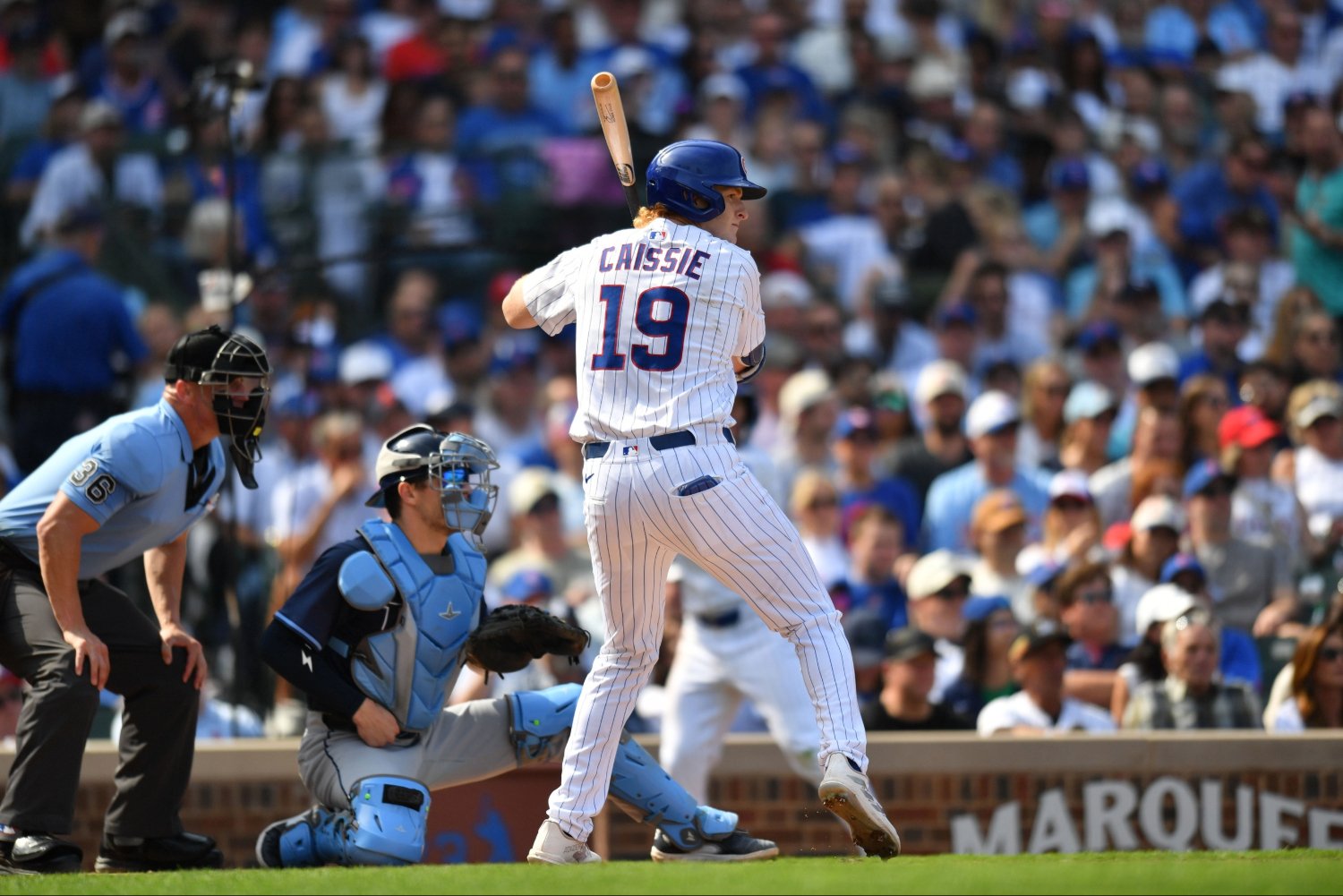 We don't know the extent to which the Chicago Cubs attempted (or might still attempt) to keep Kyle Tucker on the North Side long-term. The fact that they (seemingly) aren't pushing to retain him is an indictment of the organization's way of doing business. In all likelihood, they'll have a new right fielder in 2026—and it's likely someone already in-house. The most likely scenario is that Seiya Suzuki resumes his role (at least part-time) on the outfield grass, freeing up the team to rotate different bats through the designated hitter spot. While his defensive shortcomings were part of the reason he was pushed out upon Tucker's arrival last offseason, there's a certain flexibility attached to not having a permanent designated hitter. It would also allow the Cubs to ease in some of their imminent arrivals from the farm who are destined for more permanent roles in 2026. Most notable among that cohort is Owen Caissie. Let's step into fantasy land for a moment. Assume a world wherein Suzuki retains his post as the team's designated hitter, with Caissie taking the full-time gig in right field. If such a world exists, is it possible that he'd be able to approximate the production that Tucker generated in his lone season with the Cubs? The important distinction to make before diving into such an imaginary world is that this thread is not about whether Caissie can be Tucker, in a broad sense. When healthy, Tucker is one of the best all-around players in the major leagues. It’s fairer, though, to ponder whether the 2026 iteration of Caissie can provide the Cubs with something akin to what they got from 2025 Kyle Tucker, and only that version of him. Tucker's 2025 campaign included a .266/.377/.464 line, with nearly identical strikeout (14.7%) and walk (14.6%) rates. He hit 22 homers, stole 25 bases, and ended the year with a 136 wRC+ that trailed only Michael Busch among Cubs regulars. His 4.5 fWAR lagged only Pete Crow-Armstrong (5.4) and Nico Hoerner (4.8). His defense wasn't quite at the level of years prior in the eyes of the metrics, but his Fielding Run Value (which accounts for both range and arm) was 0, so he was essentially average. That year was far from Tucker's best, but the all-around play for which he's known shone through. The approach was elite; the power showed up when he was healthy; and he was strong on the bases. Factor in the adequate defense and you've got a player succeeding from pretty much every angle, even when accounting for some second half struggles wrought by health issues. Is that something that the Cubs could possibly hope for Caissie to replicate? Probably not. Caissie made 433 trips to the plate with Iowa in 2025. He carried a .286/.386/.551 line, with 22 home runs and five steals. His strikeout rate lingered around 28%, while he walked at a 13.2% clip. His wRC+ came in at 139. His 27 plate appearances in the big leagues showed where the adjustment will be needed, as he struck out 11 times, walked just once, and wasn't able to get the power going within such a minuscule sample (.154 ISO). Even if you translated Caissie’s production from Triple A directly to the next level, you're not getting the all-around production someone like Tucker provides. He lacks the approach, and he's not the same quality of baserunner. At best, you're getting the power that Tucker had and some of the ability to work a walk. Perhaps even more so, considering Caissie’s power upside. The strikeout avoidance and the steals are glaring areas where Tucker's departure would be notable, should Caissie assume a full-time role. One does have to wonder, though, the impact that an upgrade in the power alone could have on the offense considering the wealth of contact and baserunning skills that exist throughout the rest of this lineup. For what it's worth, STEAMER projects a .237/.315/.405 line (good for a 103 wRC+) in 322 plate appearances for Caissie in 2026. Given that we don't know what his role for next season will look like, it's a justifiably conservative projection. It would, though, seem to indicate that Caissie would be cycling through as more of a reserve outfielder and designated hitter than an actual outfield regular. That should probably be the expectation at this point, given Suzuki's prior work in right field. It’s also important to consider the idea that perhaps the Cubs don’t need the replication of Tucker’s production to come solely from that position. Moisés Ballesteros is going to be a factor in all of this, too. STEAMER likes him for a .266/.330/.408 line (108 wRC+) and a more aesthetically pleasing output in the strikeout (17.2%) and walk (8.2%) rates. With him as part of the equation, you’re introducing two left-handed hitters with different swings and different skill sets. Add Suzuki in and you’re cycling three players through two spots, allowing Craig Counsell to deploy any of the trio within the platoon advantage that can maximize outcomes. That element starts to get the Cubs in a direction where they’re able to work toward getting the same (if not better) production in the aggregate, rather than relying on a single player to do so. It changes the calculus altogether. Ultimately, the Cubs don't need Caissie (or Ballesteros, for that matter) to be Tucker, but they're going to need to find ways to at least replicate some of the all-around production he provided throughout much of last season. If Caissie can provide coverage in the areas where he excels (power and getting on base), that would be a massive boon to the group at large, even if the other areas where Tucker contributed suffer as a result.
 -
Should the Cubs Reconsider the Lack of a Safety Net for Matt Shaw?
RandallPnkFloyd posted an article in Cubs
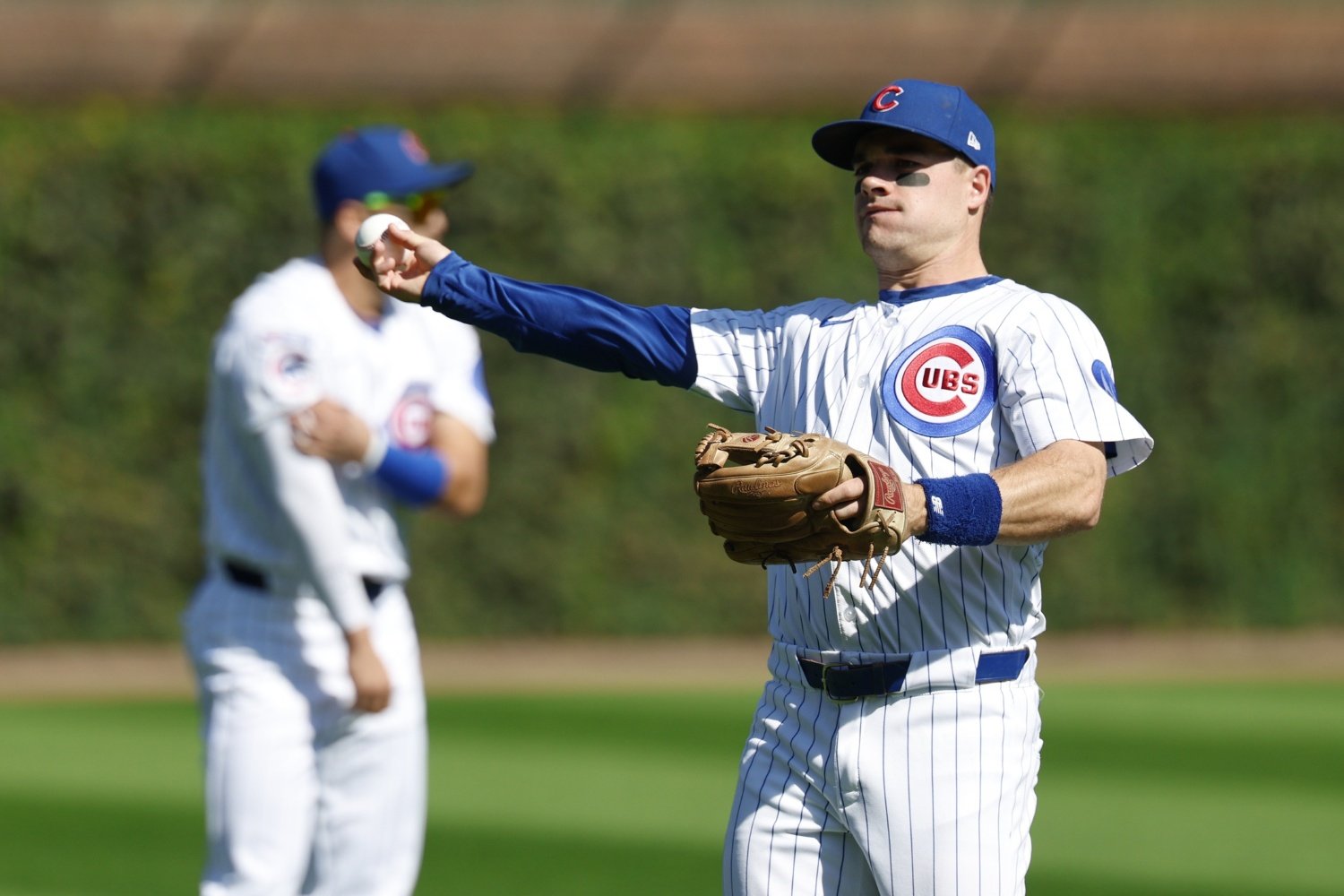 While there was room for discussion around the extent of it, we know that the Chicago Cubs attempted to sign third baseman Alex Bregman last winter. He eventually landed in Boston, though an opt-out in his contract has him back on the free agent market. The Cubs have already been connected, and such a signing could have a bearing on what shape their infield takes for the remainder of this offseason. That's in an entirely hypothetical world, however, and we have little reason to think the chances of a Bregman signing are good at this point. As such, we continue to operate under the assumption that the team's infield will look much the same as it did for most of 2025: Carson Kelly and Miguel Amaya behind the plate, and Michael Busch, Nico Hoerner, Dansby Swanson, and Matt Shaw occupying their spots around the remainder of the dirt. At the same time, third base does offer a position of intrigue. Shaw demonstrated improvement as the season wore on, but stretches throughout the regular season and into October showed us that as good as he can be on the defensive side, his offense remains a work in progress. Given that, it might behoove the Cubs to explore more of a safety net than they had at any point in 2025. The team's failed pursuit of Bregman left them without a true alternative to Shaw. When he struggled out of the gate (61 wRC+ in April), Craig Counsell was forced to reckon with the absence of a suitable supplement. A collection of Jon Berti, Vidal Bruján, Nicky Lopez, Justin Turner, and Gage Workman filled space both during Shaw's time back in Iowa and other parts of the year. Only Turner finished the year still in the organization, with trade deadline acquisition Willi Castro offering more depth at the position in the season's final two months. Turner and Castro hit free agency this winter, with no clear indicator that either would (or should) be back. That means that the Cubs—who finished with exactly 0.0 fWAR from third base in 2025—are going to once again rely on Shaw realizing his next stages of development. That's easier said than done, considering some of the areas of concern around him. Shaw was far better in the second half of 2025 than in the first. His line after the All-Star break read .258/.317/.522 with a 130 wRC+, versus a .198/.276/.280 (60 wRC+) slash from the first half. The increase in power output is notable, as Shaw was able to elevate at a rate 11 percentage points above his flyball rate from the first half (46.0 percent). The way he closed the year, however, leaves a much more muddled picture than the splits imply. For one, Shaw's strikeout rate was up about 4.5 percentage points in the second half (23.9% overall), while his walk rate was down (8.3%). His swing-and-miss rate in September was his second-highest in an individual month, with the 25.5% whiff rate trailing only April (30.8%). His hard-hit rate, which rose steadily as the months wore on, cratered in September, with a 22.0% rate checking in 15 percentage points below his August peak. It all carried into October, where he notched only a pair of hits in 15 plate appearances and provided his only value via the walk (of which he had five). That's not to say that Shaw is destined to have another volatile season in 2026. We'll likely continue to see the ups and downs associated with natural development. We just don't know what the peaks and valleys could look like at this point. That's all the more reason for the Cubs to pursue a legitimate safety net for Shaw this time around. The goal with such an addition isn't necessarily to prepare for a worst-case scenario. Instead, it's to supplement Shaw in those moments where you don't love a matchup or he needs an opportunity to reset for a day or two. As such, it's not about signing or acquiring a pure third baseman as said safety net. You're looking for a versatile player who can bring at least one particular skill, while not being a total loss filling in at third base defensively—especially given what you lose with Shaw's glove when he's on the bench. Consider someone like Luis Urías, who has a career walk rate around 10% and is coming off a year in which he struck out a career-low 13.6 percent of the time. Former Cub Ildemaro Vargas doesn't offer the same level of contact ability, but he hit well enough last year (85 wRC+) and was perfectly average in a small sample at third to offer at least an upgrade over how the team supplemented third base last season. Miguel Andujar could provide a little bit more in the way of power and contact ability, even if his ability to draw walks and his defensive shortcomings don't entirely fit the bill. None are exciting options in a thin free-agent class this side of Bregman, but they could at least provide the type of supplementation that's needed as Shaw continues his development. That's something that the Cubs need to prioritize when they build the bench. Swanson and Hoerner are going to provide you with playing time volume and established skill sets. The same largely goes for Busch, even if the team maintains a desire to protect him against certain left-handed arms. It's not just about acquiring a player who can fill in as a body at third base, either. It's about a clear offensive skill set, so that the lineup can hold together when Shaw's development is at the wrong end of its volatility.
 -
Image courtesy of © Kamil Krzaczynski-Imagn Images While there was room for discussion around the extent of it, we know that the Chicago Cubs attempted to sign third baseman Alex Bregman last winter. He eventually landed in Boston, though an opt-out in his contract has him back on the free agent market. The Cubs have already been connected, and such a signing could have a bearing on what shape their infield takes for the remainder of this offseason. That's in an entirely hypothetical world, however, and we have little reason to think the chances of a Bregman signing are good at this point. As such, we continue to operate under the assumption that the team's infield will look much the same as it did for most of 2025: Carson Kelly and Miguel Amaya behind the plate, and Michael Busch, Nico Hoerner, Dansby Swanson, and Matt Shaw occupying their spots around the remainder of the dirt. At the same time, third base does offer a position of intrigue. Shaw demonstrated improvement as the season wore on, but stretches throughout the regular season and into October showed us that as good as he can be on the defensive side, his offense remains a work in progress. Given that, it might behoove the Cubs to explore more of a safety net than they had at any point in 2025. The team's failed pursuit of Bregman left them without a true alternative to Shaw. When he struggled out of the gate (61 wRC+ in April), Craig Counsell was forced to reckon with the absence of a suitable supplement. A collection of Jon Berti, Vidal Bruján, Nicky Lopez, Justin Turner, and Gage Workman filled space both during Shaw's time back in Iowa and other parts of the year. Only Turner finished the year still in the organization, with trade deadline acquisition Willi Castro offering more depth at the position in the season's final two months. Turner and Castro hit free agency this winter, with no clear indicator that either would (or should) be back. That means that the Cubs—who finished with exactly 0.0 fWAR from third base in 2025—are going to once again rely on Shaw realizing his next stages of development. That's easier said than done, considering some of the areas of concern around him. Shaw was far better in the second half of 2025 than in the first. His line after the All-Star break read .258/.317/.522 with a 130 wRC+, versus a .198/.276/.280 (60 wRC+) slash from the first half. The increase in power output is notable, as Shaw was able to elevate at a rate 11 percentage points above his flyball rate from the first half (46.0 percent). The way he closed the year, however, leaves a much more muddled picture than the splits imply. For one, Shaw's strikeout rate was up about 4.5 percentage points in the second half (23.9% overall), while his walk rate was down (8.3%). His swing-and-miss rate in September was his second-highest in an individual month, with the 25.5% whiff rate trailing only April (30.8%). His hard-hit rate, which rose steadily as the months wore on, cratered in September, with a 22.0% rate checking in 15 percentage points below his August peak. It all carried into October, where he notched only a pair of hits in 15 plate appearances and provided his only value via the walk (of which he had five). That's not to say that Shaw is destined to have another volatile season in 2026. We'll likely continue to see the ups and downs associated with natural development. We just don't know what the peaks and valleys could look like at this point. That's all the more reason for the Cubs to pursue a legitimate safety net for Shaw this time around. The goal with such an addition isn't necessarily to prepare for a worst-case scenario. Instead, it's to supplement Shaw in those moments where you don't love a matchup or he needs an opportunity to reset for a day or two. As such, it's not about signing or acquiring a pure third baseman as said safety net. You're looking for a versatile player who can bring at least one particular skill, while not being a total loss filling in at third base defensively—especially given what you lose with Shaw's glove when he's on the bench. Consider someone like Luis Urías, who has a career walk rate around 10% and is coming off a year in which he struck out a career-low 13.6 percent of the time. Former Cub Ildemaro Vargas doesn't offer the same level of contact ability, but he hit well enough last year (85 wRC+) and was perfectly average in a small sample at third to offer at least an upgrade over how the team supplemented third base last season. Miguel Andujar could provide a little bit more in the way of power and contact ability, even if his ability to draw walks and his defensive shortcomings don't entirely fit the bill. None are exciting options in a thin free-agent class this side of Bregman, but they could at least provide the type of supplementation that's needed as Shaw continues his development. That's something that the Cubs need to prioritize when they build the bench. Swanson and Hoerner are going to provide you with playing time volume and established skill sets. The same largely goes for Busch, even if the team maintains a desire to protect him against certain left-handed arms. It's not just about acquiring a player who can fill in as a body at third base, either. It's about a clear offensive skill set, so that the lineup can hold together when Shaw's development is at the wrong end of its volatility. View full article
-
Image courtesy of © Katie Stratman-Imagn Images When the Chicago Cubs acquired Michael Busch ahead of the 2024 season, it was clear where the upside existed. He was a bat-first prospect without a true defensive home and, as a result, without a pathway to playing time with his former team in Los Angeles. Typically with a prospect that fits that profile, you worry about the athleticism aspect and whether there's a glove to play at all, let alone where to play it. In Busch's case, though, he had the athleticism; the Dodgers had deployed him primarily at second and third base as an upper-level prospect in their minor-league ranks. The Cubs, however, made the almost-immediate decision to entrench him at first base, a position where the team lacked a long-term solution. The immediate returns were promising, too. Over the course of that first season, Busch demonstrated improvement on both sides of the ball. He finished above average by wRC+ in each individual month (save one), progressively cut down on his strikeout rate throughout the season, and ended the year with his highest isolated power figure in an individual month (.243). Defensively, he landed on the positive side of the Outs Above Average threshold, finishing with 2 OAA. Even with such steady improvement throughout his rookie campaign, the needed areas of improvement were clear. The ideal progression would've included a continued decrease in what landed as a 28.6 percent strikeout rate, more consistency on the power side (.192 ISO for the full year), and further (and sustainable) development on the defensive side. There were intricacies therein, but those represented the simple version of the pathway toward improvement for Busch ahead of '25. Busch's percentile distribution from this season alone is indicative of him meeting the moment: Above all, Busch was able to drive his power numbers way up via his quality of contact. The fact that he ended the year with a .261 ISO is indicative of a hard-hit rate that graduated from 39.9 percent in 2024 to 47.3 percent in 2025. That output came against fastballs and off-speed pitches, each of which represented his two highest swing rates among the three pitch groups (breaking balls being the other). They sat neck-and-neck, with fastballs accounting for a 48.2 percent swing rate and off-speed at a 48.3 percent mark. While there were still some swing-and-miss issues, the approach was illustrative of a good process on Busch's part. Good process begets hard contact which, in turn, begets impact output. Hence, the near-70-point ISO jump year over year. Busch didn't demonstrate quite the same growth defensively, however, as his OAA dropped to -2. Of course, first base is a difficult position to judge on metrics alone. It is worth noting, though, that his work to his right dropped from 1 OAA in '24 to -4 OAA in '25. It's a strange development considering the defensive wizardry occurring to his right in the form of Nico Hoerner. Nevertheless, the metrics are indicative of a step back with the glove. Which, at least, offers continued clarity in what shape Busch's next phase of development could take. There's a need for continued improvement in the contact game. The quality of contact and chase rates are each, in their own way, indicative of a player with a keen awareness of the zone. Approach isn't the concern. Instead, Busch needs to demonstrate continued improvement in the swing-and-miss element of his game, particularly on off-speed pitches. Given the high volume of swings against that pitch type, the fact that Busch is whiffing at off-speed 37.9 percent of the time (easily his highest against any of the three primary pitch groups) represents a clear developmental target. The outcomes with contact are positive. He simply needs to make more of it. That lands in conjunction with additional consistency on the defensive end. Again, it's hard to judge first base on the merits of analytics alone. But given Busch's decline that unfolded specifically in moving to his right, there's some work to be done. Doing so as a right-handed fielder at this particular position isn't easy (and that fact is likely some of what pinned down his OAA last year), but when you're working with a second baseman who thrives to his left (4 OAA for Hoerner in that direction), the statistical outcomes should look at least a little bit better in a larger, multi-year sample. It almost feels somewhat "nit-picky" given the massive strides that Michael Busch made between 2024 and 2025 to suggest he needs to find another gear. He finished this past year as an upper-tier power bat with a refined approach. Now in possession of a clear skill set and a defensive home, it's a matter of more specific improvement. Development isn't linear, but the fine-tuning stage should yield only a better player, not one in need of a total profile overhaul. View full article
-
Searching for Michael Busch's Next Frontier of Development
RandallPnkFloyd posted an article in Cubs
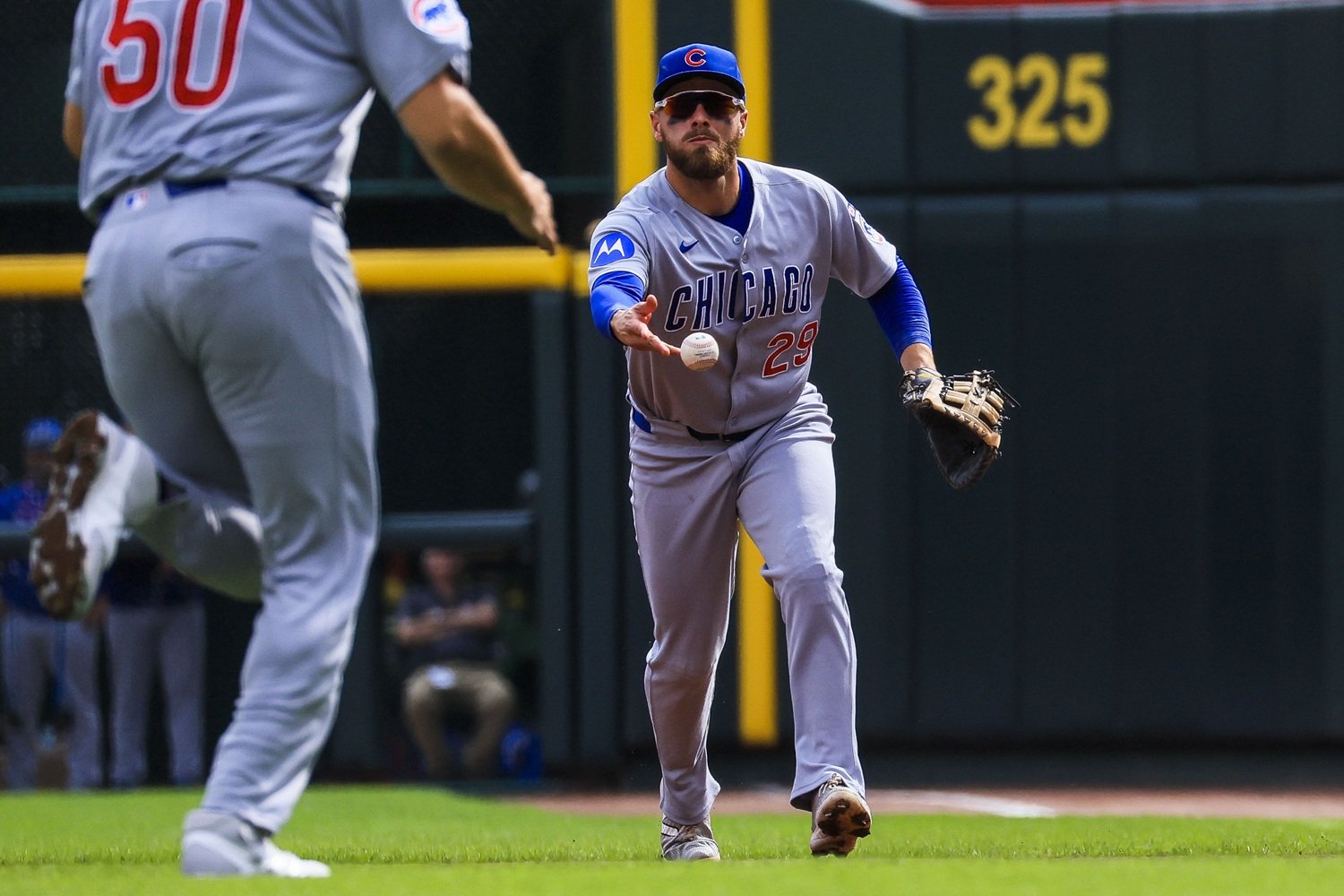 When the Chicago Cubs acquired Michael Busch ahead of the 2024 season, it was clear where the upside existed. He was a bat-first prospect without a true defensive home and, as a result, without a pathway to playing time with his former team in Los Angeles. Typically with a prospect that fits that profile, you worry about the athleticism aspect and whether there's a glove to play at all, let alone where to play it. In Busch's case, though, he had the athleticism; the Dodgers had deployed him primarily at second and third base as an upper-level prospect in their minor-league ranks. The Cubs, however, made the almost-immediate decision to entrench him at first base, a position where the team lacked a long-term solution. The immediate returns were promising, too. Over the course of that first season, Busch demonstrated improvement on both sides of the ball. He finished above average by wRC+ in each individual month (save one), progressively cut down on his strikeout rate throughout the season, and ended the year with his highest isolated power figure in an individual month (.243). Defensively, he landed on the positive side of the Outs Above Average threshold, finishing with 2 OAA. Even with such steady improvement throughout his rookie campaign, the needed areas of improvement were clear. The ideal progression would've included a continued decrease in what landed as a 28.6 percent strikeout rate, more consistency on the power side (.192 ISO for the full year), and further (and sustainable) development on the defensive side. There were intricacies therein, but those represented the simple version of the pathway toward improvement for Busch ahead of '25. Busch's percentile distribution from this season alone is indicative of him meeting the moment: Above all, Busch was able to drive his power numbers way up via his quality of contact. The fact that he ended the year with a .261 ISO is indicative of a hard-hit rate that graduated from 39.9 percent in 2024 to 47.3 percent in 2025. That output came against fastballs and off-speed pitches, each of which represented his two highest swing rates among the three pitch groups (breaking balls being the other). They sat neck-and-neck, with fastballs accounting for a 48.2 percent swing rate and off-speed at a 48.3 percent mark. While there were still some swing-and-miss issues, the approach was illustrative of a good process on Busch's part. Good process begets hard contact which, in turn, begets impact output. Hence, the near-70-point ISO jump year over year. Busch didn't demonstrate quite the same growth defensively, however, as his OAA dropped to -2. Of course, first base is a difficult position to judge on metrics alone. It is worth noting, though, that his work to his right dropped from 1 OAA in '24 to -4 OAA in '25. It's a strange development considering the defensive wizardry occurring to his right in the form of Nico Hoerner. Nevertheless, the metrics are indicative of a step back with the glove. Which, at least, offers continued clarity in what shape Busch's next phase of development could take. There's a need for continued improvement in the contact game. The quality of contact and chase rates are each, in their own way, indicative of a player with a keen awareness of the zone. Approach isn't the concern. Instead, Busch needs to demonstrate continued improvement in the swing-and-miss element of his game, particularly on off-speed pitches. Given the high volume of swings against that pitch type, the fact that Busch is whiffing at off-speed 37.9 percent of the time (easily his highest against any of the three primary pitch groups) represents a clear developmental target. The outcomes with contact are positive. He simply needs to make more of it. That lands in conjunction with additional consistency on the defensive end. Again, it's hard to judge first base on the merits of analytics alone. But given Busch's decline that unfolded specifically in moving to his right, there's some work to be done. Doing so as a right-handed fielder at this particular position isn't easy (and that fact is likely some of what pinned down his OAA last year), but when you're working with a second baseman who thrives to his left (4 OAA for Hoerner in that direction), the statistical outcomes should look at least a little bit better in a larger, multi-year sample. It almost feels somewhat "nit-picky" given the massive strides that Michael Busch made between 2024 and 2025 to suggest he needs to find another gear. He finished this past year as an upper-tier power bat with a refined approach. Now in possession of a clear skill set and a defensive home, it's a matter of more specific improvement. Development isn't linear, but the fine-tuning stage should yield only a better player, not one in need of a total profile overhaul.
 -
Ben Brown's Role Has Been Set In Stone By His Own Failures
RandallPnkFloyd posted an article in Cubs
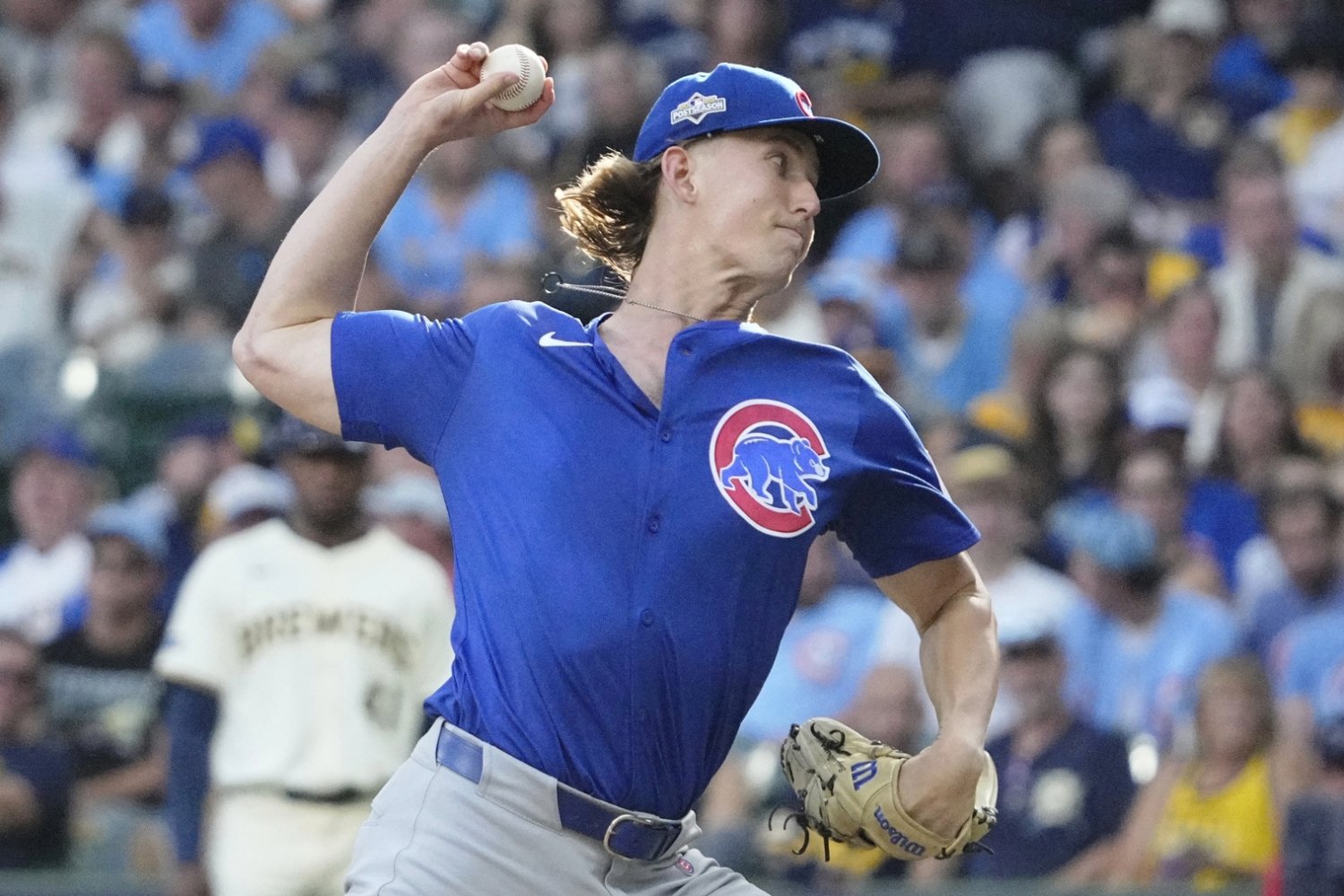 Ben Brown's trajectory over the course of 2025 landed as one of the more enigmatic episodes of the 2025 Chicago Cubs. On one hand, his mix of an upper-90s fastball and destructive knuckle-curve led to some strong results in matters of balls and strikes. Brown's 25.6 percent strikeout rate sat in the 73rd percentile and his 6.8 percent walk rate finished in the 71st. Of course, on the other hand, he got touched up in the contact game to the tune of a sixth-percentile hard-hit rate (47.3 percent) and a seventh-percentile barrel rate (11.4 percent). That somewhat paradoxical mix left him with an unsightly 5.92 ERA, an eventual demotion to Iowa, and larger questions about his future role as a member of this pitching staff. Namely, the following question: Is there a path toward continued starting opportunities for Ben Brown, or is he destined for relief work in some form? While not initially a rotation candidate, a strong spring performance during the exhibition season afforded Brown a legitimate shot at being part of the starting five from 2025's outset. A competition that seemingly came down to he and Colin Rea resulted in Brown winning the job on the heels of the tantalizing stuff wrought by that two-pitch mix. While Rea became a necessity within the rotation in his own right, Brown held onto regular duty for most of the first two months of the season. By the end of May, however, Craig Counsell experimented with an opener given Brown's struggles that resulted in starts in which he allowed five, six, six, and eight earned runs. Injuries necessitated continued turns, but Brown found himself out of the starting five permanently by the end of July. From there, he was deployed in relief (primarily as a bulk arm) for the remaining 18 of his 106 1/3 total innings for the year. Split between starting and bullpen work, the following is how Brown's numbers shook out in 2025: As a Starter: 75 2/3 IP, 6.30 ERA (4.47 FIP), 23.8 K%, 6.7 BB%, .362 wOBA against As a Reliever: 30 2/3 IP, 4.99 ERA (3.10 FIP), 30.5 K%, 6.9 BB%, .300 wOBA against Despite the innings sample heavily leaning toward the starting side, there's immediately sort of a clear picture as to which path makes more sense for Brown. Such an idea is furthered by a 4.19 ERA the first time facing hitters as a reliever against a 5.70 ERA the first time facing hitters as a starter. His 35.3 percent strikeout rate the first time through the order as a reliever was also his best individual mark in any trip through the order, regardless of role. In relief, Brown was also able to work at an eight-percent dip in hard contact (by FanGraphs' definition), a decreased fly-ball rate, and a subsequent decrease in his homer-to-fly-ball ratio. In a number of different ways, the numbers pretty easily support Ben Brown making a transition to full-time relief duty. But it's also not as simple as "this guy is performing better in this scenario, so we should drop him into said scenario full time." Instead, the reason for keeping Brown in relief is the same as it's always been: his failure to develop a third pitch. Brown attempted to incorporate a changeup as the season wore on. It was a journey that would prove to be unsuccessful, not only in terms of usage, but outcomes. Brown threw the changeup just 4.5 percent of the time in 2025, with its usage peaking at 10 percent in July. By the time he entered regular work out of the bullpen, it dropped to 3.5 and 4.3 percent usage in the season's final two months, respectively. And it's not just a matter of his struggling to incorporate the pitch. It's what happened when he did. Even with a smaller sample in its use, Brown's changeup was touched for hard contact exactly 50 percent of the time, with a barrel rate of 20 percent and a fly-ball rate lingering around 30. Obviously, none of those trends represent a recipe for success. On just about every level, Brown struggled to maintain anything effective with that pitch despite the movement he was able to generate with it. The following is the contour of each of Brown's two primary pitches from 2025 (the fastball and the knuckle-curve): For the most part, that's exactly how those should look. You want a concentrated area with a pitch like a fastball. Something like a knuckle-curve is going to expand that concentration a little, but the vertical nature of the contour's trend still reads in exactly the way it should. And then you get to the changeup: Again, it's not only a matter of Brown's inability to know when to use the pitch, but throwing the pitch at all. It's not that it got touched up by opposing hitters—it's that he had very little command over the pitch at large. Part of that is the nature of trying to add a pitch on the fly. The pitch flailing so erratically doesn't lend itself to much confidence that Brown would be able to do it over the long-term, either. Without that third pitch coming to fruition, there's no argument for providing Brown with an opportunity to get back into the starting five. The other two pitches would have to be elite. And while the knuckle-curve might offer that (121 Stuff+), the fastball does not (84 Stuff+). Barring some massive development in the lab this winter, it almost becomes impossible to justify as a result. If the splits don't say so, the absence of a meaningful third pitch certainly does.
 -
Image courtesy of © Michael McLoone-Imagn Images Ben Brown's trajectory over the course of 2025 landed as one of the more enigmatic episodes of the 2025 Chicago Cubs. On one hand, his mix of an upper-90s fastball and destructive knuckle-curve led to some strong results in matters of balls and strikes. Brown's 25.6 percent strikeout rate sat in the 73rd percentile and his 6.8 percent walk rate finished in the 71st. Of course, on the other hand, he got touched up in the contact game to the tune of a sixth-percentile hard-hit rate (47.3 percent) and a seventh-percentile barrel rate (11.4 percent). That somewhat paradoxical mix left him with an unsightly 5.92 ERA, an eventual demotion to Iowa, and larger questions about his future role as a member of this pitching staff. Namely, the following question: Is there a path toward continued starting opportunities for Ben Brown, or is he destined for relief work in some form? While not initially a rotation candidate, a strong spring performance during the exhibition season afforded Brown a legitimate shot at being part of the starting five from 2025's outset. A competition that seemingly came down to he and Colin Rea resulted in Brown winning the job on the heels of the tantalizing stuff wrought by that two-pitch mix. While Rea became a necessity within the rotation in his own right, Brown held onto regular duty for most of the first two months of the season. By the end of May, however, Craig Counsell experimented with an opener given Brown's struggles that resulted in starts in which he allowed five, six, six, and eight earned runs. Injuries necessitated continued turns, but Brown found himself out of the starting five permanently by the end of July. From there, he was deployed in relief (primarily as a bulk arm) for the remaining 18 of his 106 1/3 total innings for the year. Split between starting and bullpen work, the following is how Brown's numbers shook out in 2025: As a Starter: 75 2/3 IP, 6.30 ERA (4.47 FIP), 23.8 K%, 6.7 BB%, .362 wOBA against As a Reliever: 30 2/3 IP, 4.99 ERA (3.10 FIP), 30.5 K%, 6.9 BB%, .300 wOBA against Despite the innings sample heavily leaning toward the starting side, there's immediately sort of a clear picture as to which path makes more sense for Brown. Such an idea is furthered by a 4.19 ERA the first time facing hitters as a reliever against a 5.70 ERA the first time facing hitters as a starter. His 35.3 percent strikeout rate the first time through the order as a reliever was also his best individual mark in any trip through the order, regardless of role. In relief, Brown was also able to work at an eight-percent dip in hard contact (by FanGraphs' definition), a decreased fly-ball rate, and a subsequent decrease in his homer-to-fly-ball ratio. In a number of different ways, the numbers pretty easily support Ben Brown making a transition to full-time relief duty. But it's also not as simple as "this guy is performing better in this scenario, so we should drop him into said scenario full time." Instead, the reason for keeping Brown in relief is the same as it's always been: his failure to develop a third pitch. Brown attempted to incorporate a changeup as the season wore on. It was a journey that would prove to be unsuccessful, not only in terms of usage, but outcomes. Brown threw the changeup just 4.5 percent of the time in 2025, with its usage peaking at 10 percent in July. By the time he entered regular work out of the bullpen, it dropped to 3.5 and 4.3 percent usage in the season's final two months, respectively. And it's not just a matter of his struggling to incorporate the pitch. It's what happened when he did. Even with a smaller sample in its use, Brown's changeup was touched for hard contact exactly 50 percent of the time, with a barrel rate of 20 percent and a fly-ball rate lingering around 30. Obviously, none of those trends represent a recipe for success. On just about every level, Brown struggled to maintain anything effective with that pitch despite the movement he was able to generate with it. The following is the contour of each of Brown's two primary pitches from 2025 (the fastball and the knuckle-curve): For the most part, that's exactly how those should look. You want a concentrated area with a pitch like a fastball. Something like a knuckle-curve is going to expand that concentration a little, but the vertical nature of the contour's trend still reads in exactly the way it should. And then you get to the changeup: Again, it's not only a matter of Brown's inability to know when to use the pitch, but throwing the pitch at all. It's not that it got touched up by opposing hitters—it's that he had very little command over the pitch at large. Part of that is the nature of trying to add a pitch on the fly. The pitch flailing so erratically doesn't lend itself to much confidence that Brown would be able to do it over the long-term, either. Without that third pitch coming to fruition, there's no argument for providing Brown with an opportunity to get back into the starting five. The other two pitches would have to be elite. And while the knuckle-curve might offer that (121 Stuff+), the fastball does not (84 Stuff+). Barring some massive development in the lab this winter, it almost becomes impossible to justify as a result. If the splits don't say so, the absence of a meaningful third pitch certainly does. View full article
-
Image courtesy of © Melissa Tamez-Imagn Images There are some areas on the roster where we could or will see turnover, but the Chicago Cubs enter the 2025-26 offseason with their middle infield as stable a position group as any. Under contract through 2029, Dansby Swanson will remain at shortstop, while Nico Hoerner will handle the keystone through at least through the end of 2026. The depth behind those two, however, is somewhat in question. Not that it's a major area of concern. Hoerner logged time at second base in 153 games, while Swanson was at short for 159. Beyond Hoerner, the Cubs deployed a mix of Jon Berti (13 games), Willi Castro (six games), Matt Shaw (four games), Vidal Bruján (three games), and Nicky Lopez (one game). Aside from Hoerner appearing in eight games in Swanson's stead at shortstop, each of Bruján, Lopez, and Gage Workman registered a pair of appearances. None of the names behind the incumbents are still with the organization. Some of them have been gone for months. Thus, as the Cubs build their roster for 2026, they're going to have to at least maintain an eye on who could serve as this year's depth, minimal as the need may be. Second Base Starter: Nico Hoerner (.297/.345/.394, 7 HR, 29 SB, 109 wRC+, 4.8 fWAR) Just about everything Hoerner did in 2025 was a career best. He posted his highest average, his best park-adjusted offense, and his largest Wins Above Replacement output (according to FanGraphs), while cutting his strikeout rate to just 7.6%. Meanwhile, he continued to ply his trade as one of the best defensive infielders in the sport. With a down-ballot MVP vote to his credit, it's hard to imagine we see his name floating around the trade ether in the way that we saw last winter. Depth: James Triantos, Pedro Ramirez Of the two middle infield spots, the Cubs at least have a little bit of security behind Hoerner (albeit no one with any top-level experience). The team added James Triantos to the 40-man roster ahead of last week's deadline, protecting him from the Rule 5 Draft. Should anything happen to Hoerner, it's likely he'd be first in line to get keystone reps. While he's cooled a bit as an offensive prospect (which could at least be partially attributed to a 70-point drop in his batting average on balls in play), he offers some of the same base stealing prowess we see from Hoerner (78 steals across all levels the last two years). Should it not be Triantos, another recent addition to the 40-man could supplement the middle infield as needed. Pedro Ramirez doesn't have experience above Double A yet, but has more recently demonstrated some offensive upside. He slashed .280/.346/.386 and swiped 28 bags in 2025. That's despite a BABIP regression of his own, compared to lower levels. Either way, the team is getting a somewhat similar skill set to that of their starting second baseman. But it's also possible we see the team address this with a versatile option off the bench that could push each one further down the depth chart. Shortstop Starter: Dansby Swanson (.244/.300/.417, 24 HR, 20 SB, 99 wRC+, 3.3 fWAR) It was a strange year for Swanson. On one hand, he demonstrated consistent power in a 20/20 campaign. On the other, his contact rate was his lowest over a full season in his career (71.3%) and his strikeout rate ballooned to 26.0%. His on-base percentage has continued to drop, but the power coming back (after a down year in that regard in 2024) was encouraging. Not that the inconsistency constitutes a big change; Swanson has always had some bewildering variance in his game. The Cubs love his presence in the clubhouse and the steadiness of his glove. He's likely the starter until that contract runs out. Depth: Hoerner This one doesn't merit nearly as deep a discussion. Unlike second base, which has a decent volume on the 40-man, the Cubs have no such presence behind Swanson. Names like Jefferson Rojas or Cristian Hernandez are still at least another year away. Should anything happen to Swanson—a difficult thing to anticipate, given that he's appeared in at least 147 games in each year since 2020—it would be an easy call for the team to flip Hoerner to the other side of the second-base bag. In that case, you're looking at an extended run for a bench bat to be named later, or one of Triantos or Ramirez. Either way, the depth behind Swanson exists almost exclusively in the form of his comrade on the middle infield. The Cubs don't have a great deal of depth at these positions, but the idea is that they shouldn't need any. View full article
-
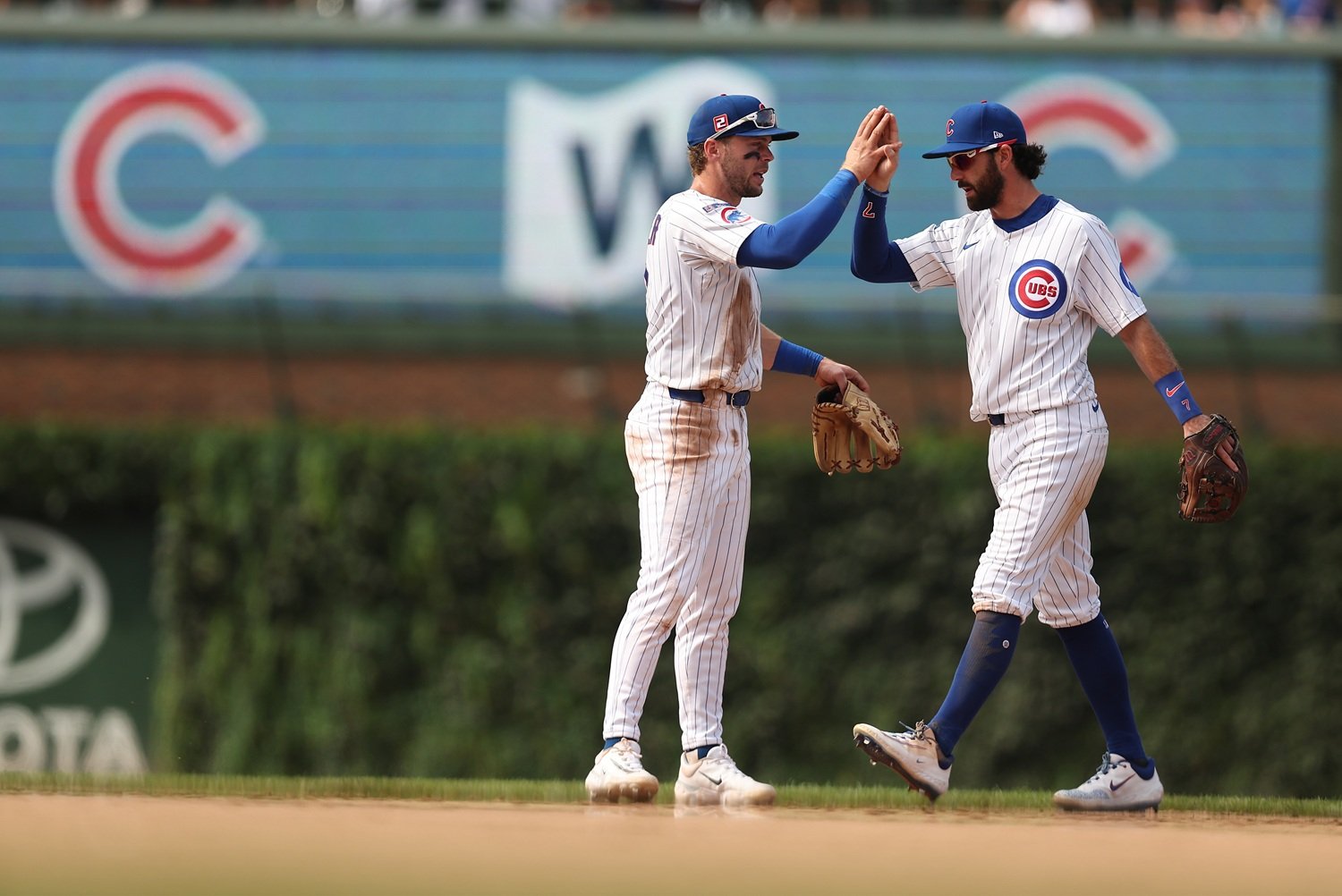 There are some areas on the roster where we could or will see turnover, but the Chicago Cubs enter the 2025-26 offseason with their middle infield as stable a position group as any. Under contract through 2029, Dansby Swanson will remain at shortstop, while Nico Hoerner will handle the keystone through at least through the end of 2026. The depth behind those two, however, is somewhat in question. Not that it's a major area of concern. Hoerner logged time at second base in 153 games, while Swanson was at short for 159. Beyond Hoerner, the Cubs deployed a mix of Jon Berti (13 games), Willi Castro (six games), Matt Shaw (four games), Vidal Bruján (three games), and Nicky Lopez (one game). Aside from Hoerner appearing in eight games in Swanson's stead at shortstop, each of Bruján, Lopez, and Gage Workman registered a pair of appearances. None of the names behind the incumbents are still with the organization. Some of them have been gone for months. Thus, as the Cubs build their roster for 2026, they're going to have to at least maintain an eye on who could serve as this year's depth, minimal as the need may be. Second Base Starter: Nico Hoerner (.297/.345/.394, 7 HR, 29 SB, 109 wRC+, 4.8 fWAR) Just about everything Hoerner did in 2025 was a career best. He posted his highest average, his best park-adjusted offense, and his largest Wins Above Replacement output (according to FanGraphs), while cutting his strikeout rate to just 7.6%. Meanwhile, he continued to ply his trade as one of the best defensive infielders in the sport. With a down-ballot MVP vote to his credit, it's hard to imagine we see his name floating around the trade ether in the way that we saw last winter. Depth: James Triantos, Pedro Ramirez Of the two middle infield spots, the Cubs at least have a little bit of security behind Hoerner (albeit no one with any top-level experience). The team added James Triantos to the 40-man roster ahead of last week's deadline, protecting him from the Rule 5 Draft. Should anything happen to Hoerner, it's likely he'd be first in line to get keystone reps. While he's cooled a bit as an offensive prospect (which could at least be partially attributed to a 70-point drop in his batting average on balls in play), he offers some of the same base stealing prowess we see from Hoerner (78 steals across all levels the last two years). Should it not be Triantos, another recent addition to the 40-man could supplement the middle infield as needed. Pedro Ramirez doesn't have experience above Double A yet, but has more recently demonstrated some offensive upside. He slashed .280/.346/.386 and swiped 28 bags in 2025. That's despite a BABIP regression of his own, compared to lower levels. Either way, the team is getting a somewhat similar skill set to that of their starting second baseman. But it's also possible we see the team address this with a versatile option off the bench that could push each one further down the depth chart. Shortstop Starter: Dansby Swanson (.244/.300/.417, 24 HR, 20 SB, 99 wRC+, 3.3 fWAR) It was a strange year for Swanson. On one hand, he demonstrated consistent power in a 20/20 campaign. On the other, his contact rate was his lowest over a full season in his career (71.3%) and his strikeout rate ballooned to 26.0%. His on-base percentage has continued to drop, but the power coming back (after a down year in that regard in 2024) was encouraging. Not that the inconsistency constitutes a big change; Swanson has always had some bewildering variance in his game. The Cubs love his presence in the clubhouse and the steadiness of his glove. He's likely the starter until that contract runs out. Depth: Hoerner This one doesn't merit nearly as deep a discussion. Unlike second base, which has a decent volume on the 40-man, the Cubs have no such presence behind Swanson. Names like Jefferson Rojas or Cristian Hernandez are still at least another year away. Should anything happen to Swanson—a difficult thing to anticipate, given that he's appeared in at least 147 games in each year since 2020—it would be an easy call for the team to flip Hoerner to the other side of the second-base bag. In that case, you're looking at an extended run for a bench bat to be named later, or one of Triantos or Ramirez. Either way, the depth behind Swanson exists almost exclusively in the form of his comrade on the middle infield. The Cubs don't have a great deal of depth at these positions, but the idea is that they shouldn't need any.
 -
Image courtesy of © Lily Smith/The Register / USA TODAY NETWORK via Imagn Images Among the developments that took shape for the 2025 Chicago Cubs was the establishment of long-term options on either side of the infield dirt. Coming off an impressive rookie campaign in 2024, Michael Busch further cemented himself as the team's first baseman of the future. His offensive output shot up all over the board while he continued capable of providing reliable defense. On the other side, it wasn't without its bumps (including an early demotion to Iowa), but Matt Shaw showed enough flashes to get another run as the team's starter at the hot corner in 2026. His glove is his primary asset (12 Defensive Runs Saved) with the bat showing out occasionally (130 wRC+ in the second half before an atrocious playoff run). What the Cubs possess in terms of contingencies for 2026, however, is anyone's guess. Justin Turner was the primary supplement for Busch at first. While Busch drew 155 appearances (131 starts), Turner's work against left-handed pitching got him in action for 39 games while Moisés Ballesteros drew in for a pair late in the year. Carlos Santana was in the mix for six games of his own. Third base was much more of a hodgepodge. While Shaw worked on his bat in Triple-A, Craig Counsell was forced to run out a rotation of Jon Berti, Vidal Bruján, and Nicky Lopez. Gage Workman got a few appearances early while Willi Castro had a few starts thrown his way after his acquisition at the trade deadline. Turner garnered 14 appearances of his own at the hot corner. That's seven players logging time at third base, with only Shaw remaining in the organization. Shaw's bat remains imperfect. That means that, as the Cubs build their roster for '26, they may want to explore the addition of a bench bat capable of giving him a blow as needed. First base, though, has some depth to work with beyond its current starter. First Base Starter: Michael Busch (.261/.343/.523, 34 HR, 4 SB, 140 wRC+, 3.5 fWAR) Everywhere you look, you see improvement from Michael Busch in 2025. His approach continued its refinement and he raised his contact rates while cutting his strikeout rate by five percent. The power was perhaps the most significant development that took shape for him last season, providing something sustainable in a Cubs lineup that struggled to find it at times. Some of that was due to Counsell playing the matchups and hiding him against lefties. The rest is the upside that was already present when he was acquired from the Los Angeles Dodgers ahead of 2024. He certainly looks the part of a long-term option at the position. Depth: Moisés Ballesteros, Jonathon Long With the impending departure of Kyle Tucker, it certainly looks as if Seiya Suzuki will get his playing time back on the outfield grass. That will, in turn, free up some time for Ballesteros as the team's designated hitter. And if the team is apprehensive about putting him behind the plate — which seems likely considering the presence of Carson Kelly and Miguel Amaya — then Ballesteros could be on the roster as the team's designated hitter to start the year. That leaves him as an option to supplement Busch at first, though as a left-handed hitter, it's not as if he's going to steal starts. Even with limited experience, the fact that Counsell was willing to throw him a bit of time toward the end of the year indicates that we should expect to see him in Busch's stead at least on occasion, however. In the minor league ranks, Jonathon Long possesses some of the same skill set that makes Busch so intriguing. Long has an advanced approach at this stage (13.0 percent walk rate in Triple-A in '25) that feeds into his power upside (20 homers, .173 ISO). Initially a corner infielder, Long logged just nine games at third in 2025 against 115 at first base. Should the Cubs be in need of a longer term option for Busch at any point in 2025, he's likely the guy (barring any outside addition this winter). Third Base Starter: Matt Shaw (.226/.295/.394, 13 HR, 17 SB, 93 wRC+, 1.5 fWAR) It'll be interesting to see what shape Shaw's role will take for the 2026 Cubs considering the team is expected to be in on Alex Bregman again this winter. Would such a signing relegate Shaw to more utility duty on the infield? Would he become an immediate trade candidate? It's difficult to project. At this point, though, we have no reason to believe that the hot corner will belong to anyone other than Shaw next season, even as the offensive side of his game remains a work in progress. Depth: Pedro Ramirez Unlike first base, where you could see a path toward playing time for a couple of notable bats in the system, the Cubs have no such contingency currently in their organization. We've already noted the fact that Long hasn't played the position much recently. As such, Pedro Ramirez, who was just added to the 40-man roster, appears to be the most likely candidate to fill in. He's more of a light-hitting option on the power side (.106 ISO) but offers a solid approach and good on-base skills (28 steals). Where there are questions, though, is about how the glove will play, with reports citing his reaction time and arm. Ultimately, this is a clear area in need of a bench upgrade as the winter gets underway. The good news for the Cubs, at least, is that whatever outside depth they may pursue should provide at least a mild upgrade over what they ran out beyond Shaw last season. View full article
-
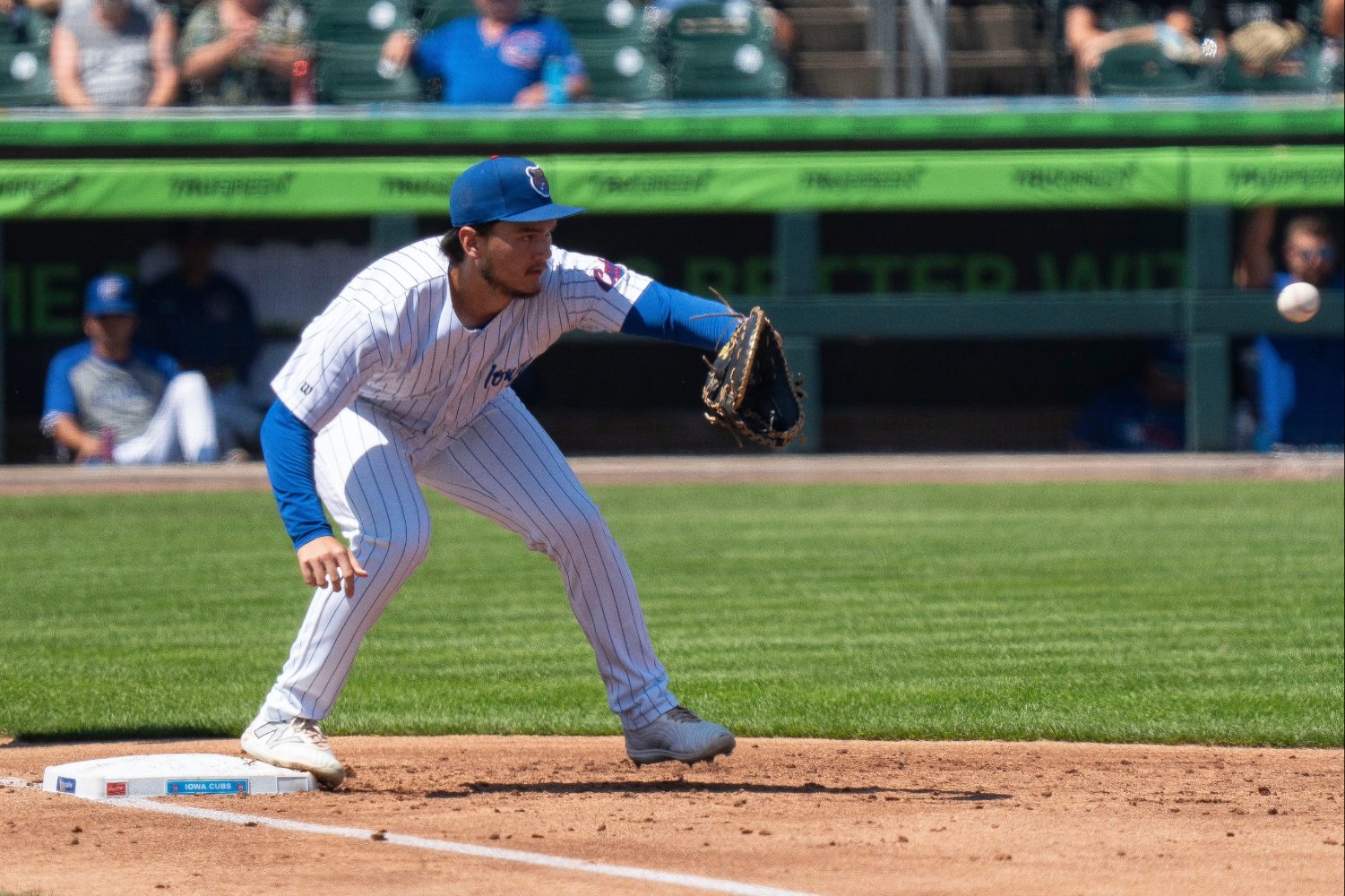 Among the developments that took shape for the 2025 Chicago Cubs was the establishment of long-term options on either side of the infield dirt. Coming off an impressive rookie campaign in 2024, Michael Busch further cemented himself as the team's first baseman of the future. His offensive output shot up all over the board while he continued capable of providing reliable defense. On the other side, it wasn't without its bumps (including an early demotion to Iowa), but Matt Shaw showed enough flashes to get another run as the team's starter at the hot corner in 2026. His glove is his primary asset (12 Defensive Runs Saved) with the bat showing out occasionally (130 wRC+ in the second half before an atrocious playoff run). What the Cubs possess in terms of contingencies for 2026, however, is anyone's guess. Justin Turner was the primary supplement for Busch at first. While Busch drew 155 appearances (131 starts), Turner's work against left-handed pitching got him in action for 39 games while Moisés Ballesteros drew in for a pair late in the year. Carlos Santana was in the mix for six games of his own. Third base was much more of a hodgepodge. While Shaw worked on his bat in Triple-A, Craig Counsell was forced to run out a rotation of Jon Berti, Vidal Bruján, and Nicky Lopez. Gage Workman got a few appearances early while Willi Castro had a few starts thrown his way after his acquisition at the trade deadline. Turner garnered 14 appearances of his own at the hot corner. That's seven players logging time at third base, with only Shaw remaining in the organization. Shaw's bat remains imperfect. That means that, as the Cubs build their roster for '26, they may want to explore the addition of a bench bat capable of giving him a blow as needed. First base, though, has some depth to work with beyond its current starter. First Base Starter: Michael Busch (.261/.343/.523, 34 HR, 4 SB, 140 wRC+, 3.5 fWAR) Everywhere you look, you see improvement from Michael Busch in 2025. His approach continued its refinement and he raised his contact rates while cutting his strikeout rate by five percent. The power was perhaps the most significant development that took shape for him last season, providing something sustainable in a Cubs lineup that struggled to find it at times. Some of that was due to Counsell playing the matchups and hiding him against lefties. The rest is the upside that was already present when he was acquired from the Los Angeles Dodgers ahead of 2024. He certainly looks the part of a long-term option at the position. Depth: Moisés Ballesteros, Jonathon Long With the impending departure of Kyle Tucker, it certainly looks as if Seiya Suzuki will get his playing time back on the outfield grass. That will, in turn, free up some time for Ballesteros as the team's designated hitter. And if the team is apprehensive about putting him behind the plate — which seems likely considering the presence of Carson Kelly and Miguel Amaya — then Ballesteros could be on the roster as the team's designated hitter to start the year. That leaves him as an option to supplement Busch at first, though as a left-handed hitter, it's not as if he's going to steal starts. Even with limited experience, the fact that Counsell was willing to throw him a bit of time toward the end of the year indicates that we should expect to see him in Busch's stead at least on occasion, however. In the minor league ranks, Jonathon Long possesses some of the same skill set that makes Busch so intriguing. Long has an advanced approach at this stage (13.0 percent walk rate in Triple-A in '25) that feeds into his power upside (20 homers, .173 ISO). Initially a corner infielder, Long logged just nine games at third in 2025 against 115 at first base. Should the Cubs be in need of a longer term option for Busch at any point in 2025, he's likely the guy (barring any outside addition this winter). Third Base Starter: Matt Shaw (.226/.295/.394, 13 HR, 17 SB, 93 wRC+, 1.5 fWAR) It'll be interesting to see what shape Shaw's role will take for the 2026 Cubs considering the team is expected to be in on Alex Bregman again this winter. Would such a signing relegate Shaw to more utility duty on the infield? Would he become an immediate trade candidate? It's difficult to project. At this point, though, we have no reason to believe that the hot corner will belong to anyone other than Shaw next season, even as the offensive side of his game remains a work in progress. Depth: Pedro Ramirez Unlike first base, where you could see a path toward playing time for a couple of notable bats in the system, the Cubs have no such contingency currently in their organization. We've already noted the fact that Long hasn't played the position much recently. As such, Pedro Ramirez, who was just added to the 40-man roster, appears to be the most likely candidate to fill in. He's more of a light-hitting option on the power side (.106 ISO) but offers a solid approach and good on-base skills (28 steals). Where there are questions, though, is about how the glove will play, with reports citing his reaction time and arm. Ultimately, this is a clear area in need of a bench upgrade as the winter gets underway. The good news for the Cubs, at least, is that whatever outside depth they may pursue should provide at least a mild upgrade over what they ran out beyond Shaw last season.
- 1 comment
-
- 1
-

-
- matt shaw
- michael busch
- (and 2 more)
-
Image courtesy of © Michael McLoone-Imagn Images There are three components that make the infield collective of the Chicago Cubs perhaps the most stable aspect of their franchise ahead of 2026. The first is on the defensive side, where they succeeded at virtually every position in '25. As a collective, their work with the leather is some of the finest you'll see from the four spots on the dirt. Another is in each of their respective contract statuses, where each starting infielder is under contract through at least the end of next year, including another pre-arbitration offseason for Michael Busch and three more years of it for Matt Shaw. The third is their health. While we watched Kyle Tucker battle injuries in the second half of the season and Pete Crow-Armstrong maybe begin to burn out a bit in September, the Cubs got the full run of virtually all of their infielder defenders. Busch appeared in 155 games. Nico Hoerner was plugged in for 156 and Dansby Swanson for 159. Matt Shaw appeared most of the time when he wasn't in Iowa and reached 126 games in his rookie campaign. It's not all positive, of course. While there were numerous flashes of offensive competency from a couple of their starting infielders, the left side of the infield, in particular, was ravaged by inconsistent play and adjustments that came and went. It's a tough sell to necessarily want this to be the same group ahead of next season given that, but the aspects of defensive quality, financial certainty, and ability to stay on the field do help them to maintain their status as the most stable phase of the Chicago Cubs' operation. With all that being said, let's see how each starter and the *gulp* bench group grade out from their work in 2025. Michael Busch: A It's almost difficult to overstate the offensive value that Busch brought to the group in his second season on the North Side. We knew he was a certified stick when he was acquired from the Los Angeles Dodgers two offseasons ago. But Craig Counsell found a sweet spot of where to deploy him against lefties and where to protect him, which led to some really strong results in '25. Busch's numbers landed at a .261/.343/.523 slash, with a 23.5 percent strikeout rate, a 9.5 walk rate, and a 140 wRC+. The walk rate was the only one of those numbers that (slightly) regressed, as he raised each of his average, on-base, and especially the slug from his first go-round with the Cubs. It all culminated in a wRC+ that sat 22 points higher than the number he posted in 2024. The power is, of course, the most notable element. Busch reached 34 homers and finished in the 90th percentile in average exit velocity (92.2 MPH) and 95th in barrel rate (17.1 percent). Despite questions elsewhere, there's little doubt that they have an impact first baseman in the mix moving forward. The only caveat for him this year was on defense, where he finished just below average (-1) in the eyes of Outs Above Average. It's close enough to the threshold considering the position, though, that there isn't any real reason to be concerned. especially when he's miles ahead of some of the other upper-tier bats at the spot with which he now finds himself in league. Nico Hoerner: A+ If you went by FanGraphs' Wins Above Replacement metric, then Nico Hoerner was a top-10 player in the National League in 2025. If you went by Baseball Reference's Wins Above Replacement metric, then Nico Hoerner was a top-10 player in Major League Baseball in 2025. It's kind of wild for a player we have likely perceived as a lighter-hitting second baseman that brings elite defense to finish with either kind of credential, but it also speaks to the balance that Hoerner was able to bring to each phase of his game this year. On the offensive side, it mostly boils down to Hoerner's contact ability. He was fourth in the league in contact rate (89.9 percent), seventh in whiff rate (4.9 percent), and third in strikeout rate (7.6 percent). His already-modest power regressed slightly (.097 ISO), but he was able to ride a slight uptick in his average on balls in play (.313) to post what would be the highest wRC+ mark of his career (109). He was his typical elite self on the defensive end, posting an OAA of 15 that ranked 11th among all qualifying defenders in the sport. Even sans power, there were simply very few players that had a better blend of offensive and defensive success than Hoerner in 2025. With that said, his future is the murkiest of the four starting infielders. With Busch and Shaw still pre-arb and Swanson locked into his hefty contract, Hoerner is the odd one out in that he's set to be a free agent after 2026. Will the Cubs extend him a second time, or are we in for another season of trade rumors? Dansby Swanson: D+ It's a harsh grade for the captain of the infield, but it's also a harsh reality that Swanson provides up against his contract. Offensively, Swanson's saving grace was his uptick in power. His .173 ISO came in roughly 30 points higher than the previous season. His barrel rate (11.7 percent) and hard-hit rate (47.7 percent) each represented career highs. When he wasn't finding the barrel, though, the results were simply not there. Swanson's strikeout rate (26.0 percent) was his highest in a Cubs uniform, while his walk rate (7.3 percent) was his lowest since 2022. His swing rate and whiff rate were each the highest of his career, too, including a 27.1 swing-and-miss percentage against fastballs that stands as a career-worst figure. As far as trends go, there was certainly a selling-out-for-power component to Swanson's game this year. While the occasional power is nice, the other elements of his game regressing made it too infrequent a contributor on a price tag approaching $30 million. That's especially true because he didn't have the elite defense on which to fall back this time around. While the glove spoke for a lot of his game in the last two years in Chicago (20 OAA in 2023 and 17 OAA in 2024), he posted an OAA of just two in '25. Neither is a particularly encouraging trend with another four years to go on his contract. Matt Shaw: C+ It's true that Matt Shaw was a below-average hitter in his rookie season—his wRC+ finished at 93. It's also true that he showcased growth in the second half, when that number jumped up to 130. While his strikeout rate was higher and his walk rate lower, he was able to generate more quality contact in the second half on his way to a .263 ISO, nearly 200 points higher than the mark he had in the first half of the year. Adjustments came fast and furious for Shaw that allowed him to take off in that respect. They didn't all stick, however, as the strikeout rate catapulted to over 30 percent in the postseason, with just a pair of hits in 23 plate appearances. There's still work to be done, even if the upside was apparent. Where Shaw did impress was with the glove. Despite questions about his ability to stick anywhere but the keystone long-term, he was a regular on the highlight reals and quite adept at run prevention. His 12 Defensive Runs Saved ranked third among big leaguers at the hot corner and earned him a spot as a Gold Glove finalist. So, while the bat remains a mixed bag (and the first half of '25 was truly dismal for him), the glove helps him to salvage a solid grade for this season. The Bench: F That the Cubs lacked positional depth heading into the year was not a secret. Names they rolled out on the infield at various points in 2025 included names (and wRC+ outputs) like Justin Turner (86), Vidal Bruján (42), Gage Workman (57), Nicky Lopez (1), Jon Berti (42), Carlos Santana (-36), and Willi Castro (40). It's a little bit paradoxical to both praise the health and stability of the infield while simultaneously criticizing the depth, since depth is a little bit less crucial when you don't have to ride them out as frequently as a team that didn't have either of the former. Still, with Shaw's early struggles and Swanson's inability to produce in the batter's box any sustained fashion, having some sort of supplement (particularly in October) might've done the Cubs some good. They failed to address the bench in any meaningful way last winter and during the season, leaving no other grade as an option. View full article
-
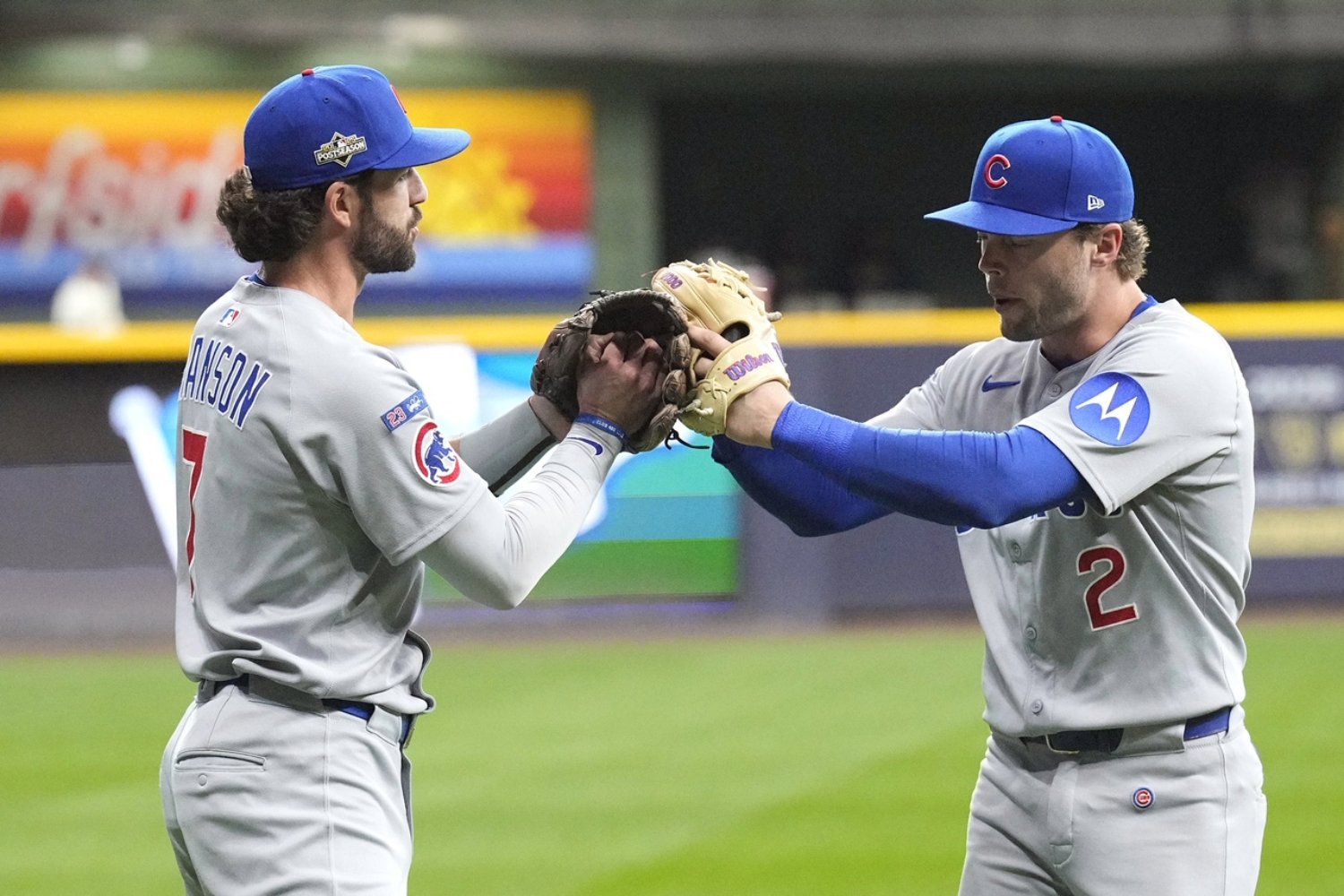 There are three components that make the infield collective of the Chicago Cubs perhaps the most stable aspect of their franchise ahead of 2026. The first is on the defensive side, where they succeeded at virtually every position in '25. As a collective, their work with the leather is some of the finest you'll see from the four spots on the dirt. Another is in each of their respective contract statuses, where each starting infielder is under contract through at least the end of next year, including another pre-arbitration offseason for Michael Busch and three more years of it for Matt Shaw. The third is their health. While we watched Kyle Tucker battle injuries in the second half of the season and Pete Crow-Armstrong maybe begin to burn out a bit in September, the Cubs got the full run of virtually all of their infielder defenders. Busch appeared in 155 games. Nico Hoerner was plugged in for 156 and Dansby Swanson for 159. Matt Shaw appeared most of the time when he wasn't in Iowa and reached 126 games in his rookie campaign. It's not all positive, of course. While there were numerous flashes of offensive competency from a couple of their starting infielders, the left side of the infield, in particular, was ravaged by inconsistent play and adjustments that came and went. It's a tough sell to necessarily want this to be the same group ahead of next season given that, but the aspects of defensive quality, financial certainty, and ability to stay on the field do help them to maintain their status as the most stable phase of the Chicago Cubs' operation. With all that being said, let's see how each starter and the *gulp* bench group grade out from their work in 2025. Michael Busch: A It's almost difficult to overstate the offensive value that Busch brought to the group in his second season on the North Side. We knew he was a certified stick when he was acquired from the Los Angeles Dodgers two offseasons ago. But Craig Counsell found a sweet spot of where to deploy him against lefties and where to protect him, which led to some really strong results in '25. Busch's numbers landed at a .261/.343/.523 slash, with a 23.5 percent strikeout rate, a 9.5 walk rate, and a 140 wRC+. The walk rate was the only one of those numbers that (slightly) regressed, as he raised each of his average, on-base, and especially the slug from his first go-round with the Cubs. It all culminated in a wRC+ that sat 22 points higher than the number he posted in 2024. The power is, of course, the most notable element. Busch reached 34 homers and finished in the 90th percentile in average exit velocity (92.2 MPH) and 95th in barrel rate (17.1 percent). Despite questions elsewhere, there's little doubt that they have an impact first baseman in the mix moving forward. The only caveat for him this year was on defense, where he finished just below average (-1) in the eyes of Outs Above Average. It's close enough to the threshold considering the position, though, that there isn't any real reason to be concerned. especially when he's miles ahead of some of the other upper-tier bats at the spot with which he now finds himself in league. Nico Hoerner: A+ If you went by FanGraphs' Wins Above Replacement metric, then Nico Hoerner was a top-10 player in the National League in 2025. If you went by Baseball Reference's Wins Above Replacement metric, then Nico Hoerner was a top-10 player in Major League Baseball in 2025. It's kind of wild for a player we have likely perceived as a lighter-hitting second baseman that brings elite defense to finish with either kind of credential, but it also speaks to the balance that Hoerner was able to bring to each phase of his game this year. On the offensive side, it mostly boils down to Hoerner's contact ability. He was fourth in the league in contact rate (89.9 percent), seventh in whiff rate (4.9 percent), and third in strikeout rate (7.6 percent). His already-modest power regressed slightly (.097 ISO), but he was able to ride a slight uptick in his average on balls in play (.313) to post what would be the highest wRC+ mark of his career (109). He was his typical elite self on the defensive end, posting an OAA of 15 that ranked 11th among all qualifying defenders in the sport. Even sans power, there were simply very few players that had a better blend of offensive and defensive success than Hoerner in 2025. With that said, his future is the murkiest of the four starting infielders. With Busch and Shaw still pre-arb and Swanson locked into his hefty contract, Hoerner is the odd one out in that he's set to be a free agent after 2026. Will the Cubs extend him a second time, or are we in for another season of trade rumors? Dansby Swanson: D+ It's a harsh grade for the captain of the infield, but it's also a harsh reality that Swanson provides up against his contract. Offensively, Swanson's saving grace was his uptick in power. His .173 ISO came in roughly 30 points higher than the previous season. His barrel rate (11.7 percent) and hard-hit rate (47.7 percent) each represented career highs. When he wasn't finding the barrel, though, the results were simply not there. Swanson's strikeout rate (26.0 percent) was his highest in a Cubs uniform, while his walk rate (7.3 percent) was his lowest since 2022. His swing rate and whiff rate were each the highest of his career, too, including a 27.1 swing-and-miss percentage against fastballs that stands as a career-worst figure. As far as trends go, there was certainly a selling-out-for-power component to Swanson's game this year. While the occasional power is nice, the other elements of his game regressing made it too infrequent a contributor on a price tag approaching $30 million. That's especially true because he didn't have the elite defense on which to fall back this time around. While the glove spoke for a lot of his game in the last two years in Chicago (20 OAA in 2023 and 17 OAA in 2024), he posted an OAA of just two in '25. Neither is a particularly encouraging trend with another four years to go on his contract. Matt Shaw: C+ It's true that Matt Shaw was a below-average hitter in his rookie season—his wRC+ finished at 93. It's also true that he showcased growth in the second half, when that number jumped up to 130. While his strikeout rate was higher and his walk rate lower, he was able to generate more quality contact in the second half on his way to a .263 ISO, nearly 200 points higher than the mark he had in the first half of the year. Adjustments came fast and furious for Shaw that allowed him to take off in that respect. They didn't all stick, however, as the strikeout rate catapulted to over 30 percent in the postseason, with just a pair of hits in 23 plate appearances. There's still work to be done, even if the upside was apparent. Where Shaw did impress was with the glove. Despite questions about his ability to stick anywhere but the keystone long-term, he was a regular on the highlight reals and quite adept at run prevention. His 12 Defensive Runs Saved ranked third among big leaguers at the hot corner and earned him a spot as a Gold Glove finalist. So, while the bat remains a mixed bag (and the first half of '25 was truly dismal for him), the glove helps him to salvage a solid grade for this season. The Bench: F That the Cubs lacked positional depth heading into the year was not a secret. Names they rolled out on the infield at various points in 2025 included names (and wRC+ outputs) like Justin Turner (86), Vidal Bruján (42), Gage Workman (57), Nicky Lopez (1), Jon Berti (42), Carlos Santana (-36), and Willi Castro (40). It's a little bit paradoxical to both praise the health and stability of the infield while simultaneously criticizing the depth, since depth is a little bit less crucial when you don't have to ride them out as frequently as a team that didn't have either of the former. Still, with Shaw's early struggles and Swanson's inability to produce in the batter's box any sustained fashion, having some sort of supplement (particularly in October) might've done the Cubs some good. They failed to address the bench in any meaningful way last winter and during the season, leaving no other grade as an option.
 -
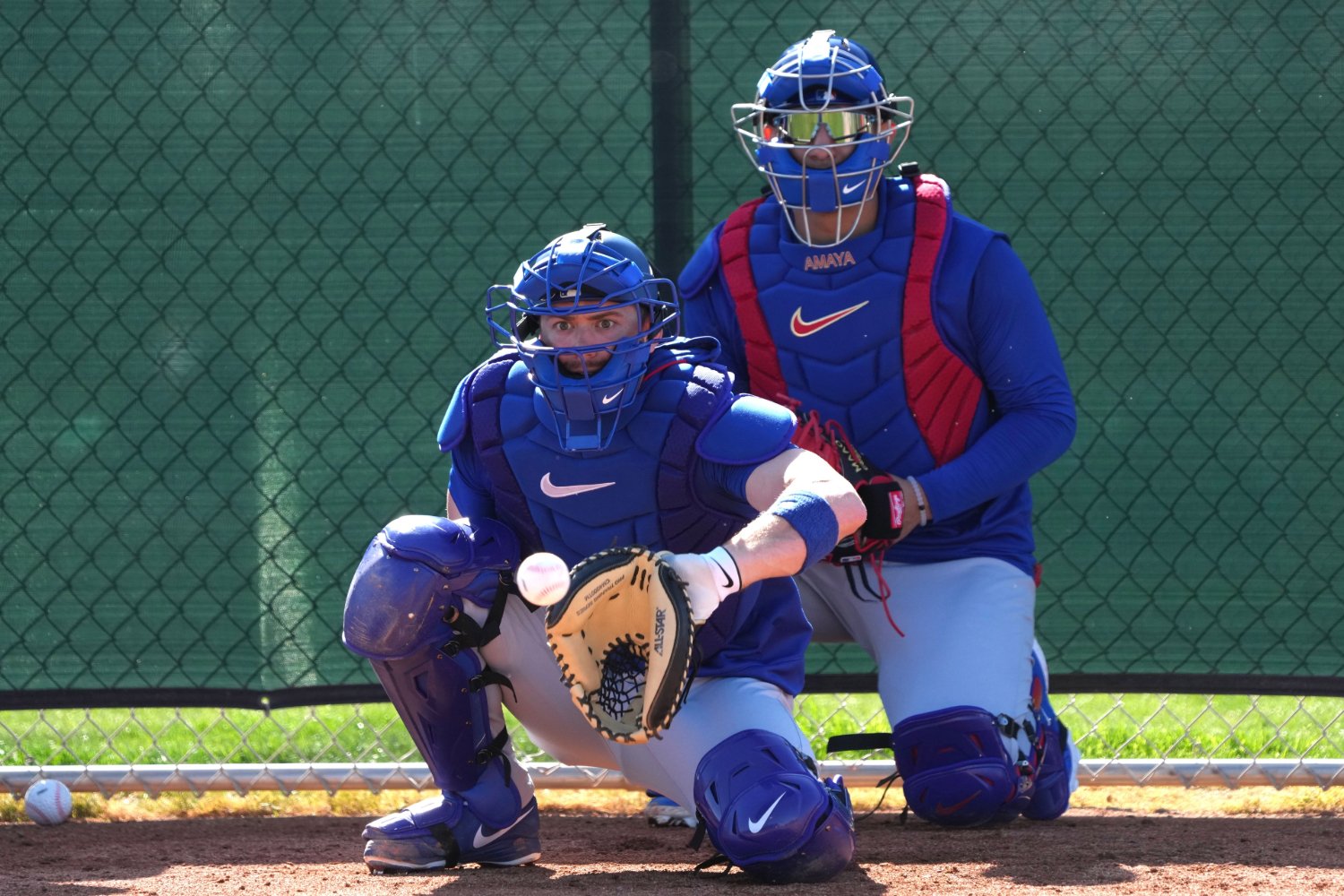 That the Chicago Cubs ended up with one of the best catching groups in all of baseball in 2025 isn't a surprise. How they got there, however, certainly qualifies as one. Despite very mild rumblings about the team seeking to upgrade the position in 2024 and into the subsequent offseason, last year's second-half emergence of Miguel Amaya as a hitter changed the calculus a bit. Rather than seek a pure upgrade, the Cubs shifted their attention to acquiring an effective supplement to Amaya, both in terms of the bat and the glove. That supplement arrived in the form of stable veteran Carson Kelly. Kelly's shocking output in April brought far more than expected, of course. What begin as something of a timeshare graduated to more playing time his way, though Amaya was able to cycle in roughly every two or three days. Distribution of playing time wound up as a moot discussion, however, as an oblique injury sent Amaya to the injured list before May reached its close. He'd return later in the year, but headed back to the IL almost immediately after an ankle injury running through first base would prove to be the ultimate end to his campaign. In his stead, the Cubs called up veteran backstop Reese McGuire. Something of a journeyman over the last couple of years, McGuire went from spring training invitee to crucial backup to Kelly in Amaya's absence. His combination of defense and occasional power proved to be the right balance as a No. 2 backstop, with the Cubs choosing to hold onto him even upon Amaya's one-day return from the IL. The trio were effective enough at various points that the team didn't appear inclined to give even a shred of time behind the plate to Moisés Ballesteros, who appeared in just six innings as a defender. All told, the Cubs finished with three of the top 38 catchers in wRC+ (minimum of 100 plate appearances, to account for Amaya), while Carson Kelly (2.6) landed as the No. 13 catcher in terms of fWAR (minimum of 400 plate appearances). As a collective, their fWAR (4.2) ended the year as the No. 7 catching group in the sport. Let's take a look at how everything broke down for the team's main trio behind the plate. Carson Kelly: B+ It would be really easy to over-grade a player like Kelly, who completely outperformed any expectations that the baseball world might've had for him. His 115 wRC+ was a new career best, while he also maintained the steady strikeout (19.0 percent) and walk (10.7 percent) rates that he reset with Detroit and Texas in 2024. The most notable aspect of Kelly's season, though, lived on the power side. His .179 ISO and 17 home runs were each his best since 2019. At the same time, any conversation about Kelly's offensive success needs to note how much his March & April output buoyed his end-of-season numbers. He wRC+'d 257, checked in at a .480 ISO, and struck out just 9.0 percent of the time against a 22.4 percent walk rate in that first month. He had other flashes throughout the year, but was never able to replicate anything close to what he turned in out of the starting gates. Still, when factoring in the defense — where he was above average everywhere except framing — Kelly was able to provide a healthy bit of stability, even with bouts of inconsistency at the plate throughout the year. Miguel Amaya: C Conversely, attaching a grade to Amaya at all feels unfair given the volume of games lost due to injury. The amount of growth he demonstrated (on both sides of the ball) in 2024 warranted an opportunity to run as the top backstop for the Cubs in '25. And while that was unable to come to fruition given his two injuries, many of the signs of a breakout that he'd flashed last year were still present, primarily on the offensive side. He struck out slightly more and walked slightly less, but the results were there otherwise. Though it was only 103 plate appearances, Amaya's 124 wRC+ indicated continued growth at the plate, while a .219 ISO showed that there's plenty of power to tap into. As far as his defense goes, the small sample wrought by injury left things fairly inconclusive, but he did wind up at least average in just about every regard. Assuming he's healthy from the jump in '26, it'll be interesting to see what the distribution looks like between Kelly & Amaya, given the former's strong performance in the latter's absence. Reese McGuire: B For what the Cubs needed out of their No. 2 spot sans Amaya (and visibly unwilling to hand legitimate time behind the plate to Moises Ballesteros), McGuire was just fine. His .226/.245/.444 slash line and 86 wRC+ don't read as particularly impressive, nor does his mere 2.9 percent walk rate. But he provided plenty of occasional power, indicated by his slugging percentage and a .218 ISO, which he did while grading out as an 80th-percentile pitch framer and above-average blocker behind the plate. And that's really the exact type of profile you'd want to get out of a position that doesn't run deep in offensive talent throughout the league: an occasional contributor on offense who provides stability with the glove. It's not a lot that you're going to get, but considering the injury context and what's needed in that type of role, McGuire was perfectly fine. The context helps his grade here. Moisés Ballesteros: Inconclusive The Cubs' No. 2 offensive prospect behind Owen Caissie, it's tough to justify incorporating Ballesteros as a part of this discussion. From an offensive standpoint, he came on strong to close the year after two brief stints with the team earlier in the season. A final output of .298/.394/.474 with a 143 wRC+ in 66 plate appearances will certainly work. But he also logged only six innings of playing time behind the plate, meaning that we can't really offer a grade from a positional standpoint. Nevertheless, with McGuire now a free agent and Kelly a year away from joining him (to say nothing of the unlikelihood of a Kyle Tucker return), Ballesteros' role in 2026 will be fascinating to watch. Not only in terms of his own distribution between serving as a catcher and designated hitter, but how much he could factor in behind the plate with McGuire likely joining a new club ahead of next year.
